




The NCERT Class 11 Home Science Chapter 5 NCERT Book PDF gives students the official 2026-27 chapter on Fabrics Around Us. The chapter explains fibres, yarns, fabric construction, textile finishing and the everyday properties that help students choose fabrics wisely.
- Download the 16-page official NCERT chapter PDF for offline reading.
- Revise natural fibres, manufactured fibres, yarn processing, weaving, knitting and finishing in NCERT language.
- Use the PDF before moving to notes, handwritten revision or the fabric-burning practical.
Student Feedback: In a Collegedunia survey of 12,460 Class 11 Home Science students, 78% said Chapter 5 became easier after they sorted fibres into natural, manufactured, cellulosic, protein and synthetic groups.
This NCERT Book PDF follows the 2026-27 reprint and should be used as the source text before attempting fibre-property notes, school worksheets or the burning-test practical.
|
Table of Contents |
Fabrics Around Us Class 11 NCERT Book PDF Highlights
Fabrics Around Us starts with the fabrics students meet every day. NCERT connects bedsheets, towels, uniforms, school bags, curtains, mops and durries with fibre, yarn, fabric structure and finishing.
| NCERT area | Main idea | How to revise it |
|---|---|---|
| Fibre to fabric | Fibres form yarns, and yarns form fabrics | Learn the order with one daily example |
| Fibre classification | Natural, manufactured, cellulosic, protein and synthetic fibres | Group examples in a table |
| Fabric construction | Weaving, knitting, braiding, nets and laces | Match each method with a product |
| Finishing | Treatments change appearance, texture or behaviour | Connect each finish with its use |
The safest short answer in this chapter names the fibre or fabric process first and then adds an everyday use.
Fabrics Around Us Video for Class 11 Home Science
Source: Ultimate School by Prerna Rustagi on YouTube
Fibres, Yarns and Fabrics in Home Science
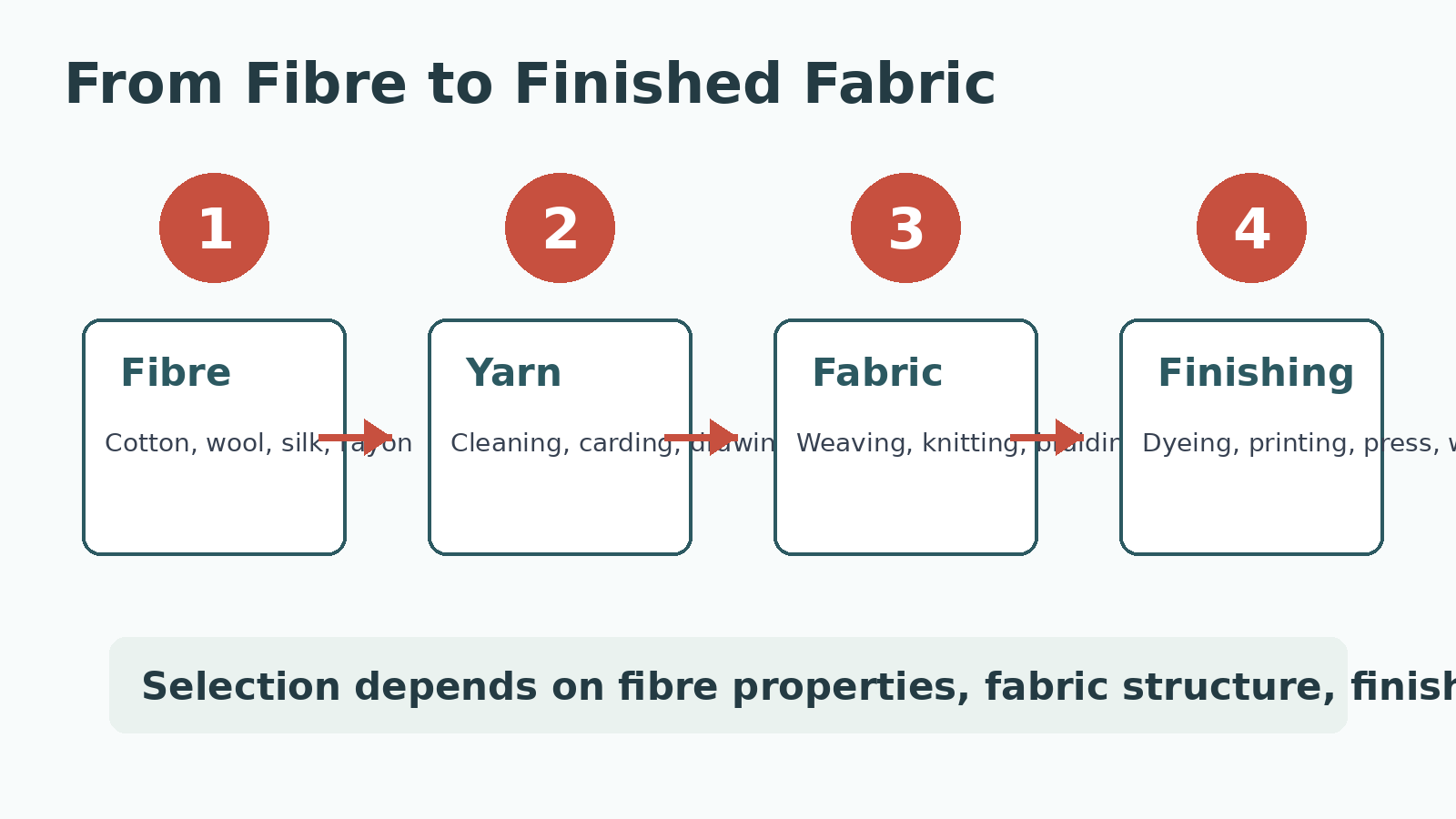
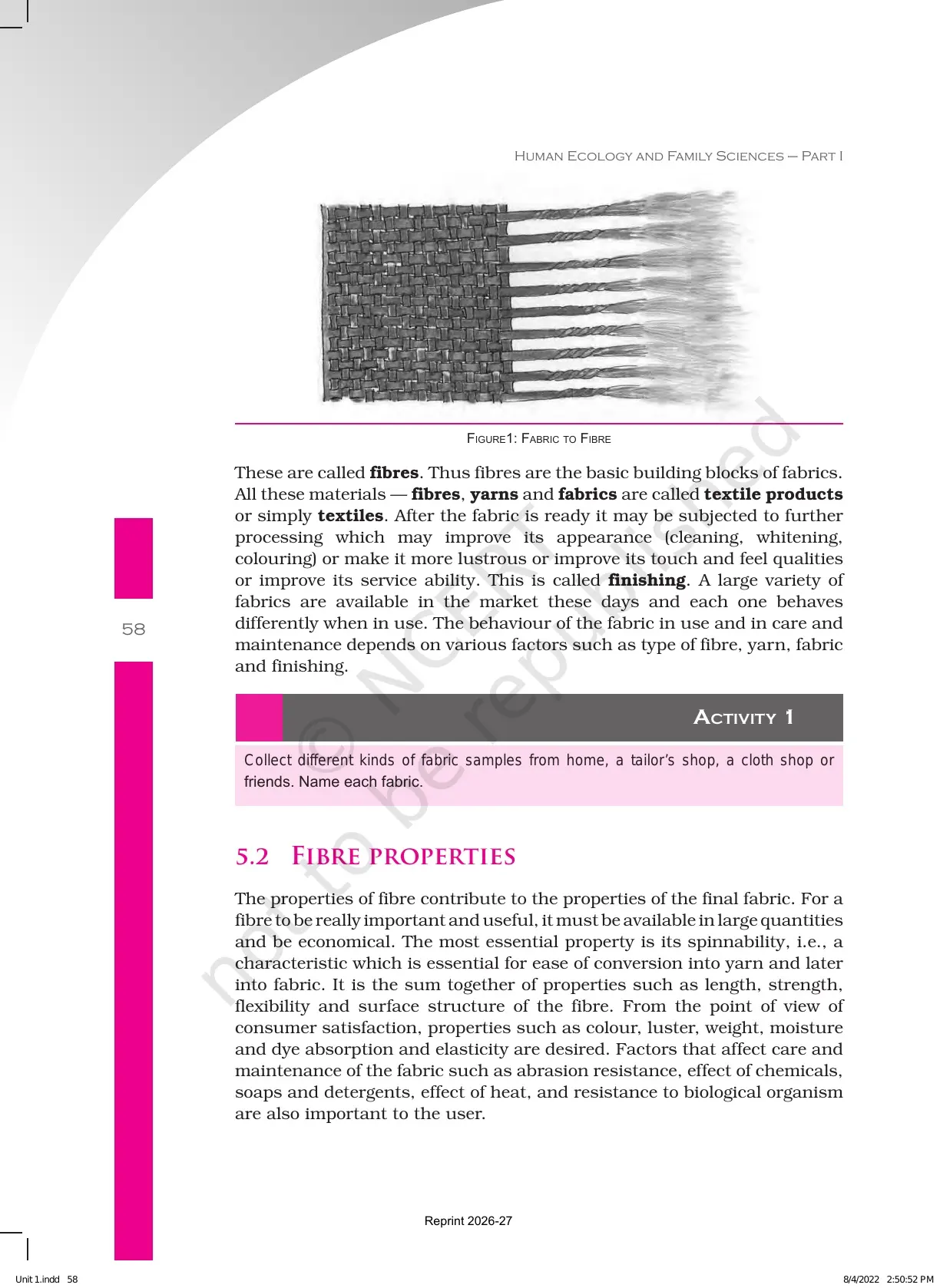
NCERT explains fabrics through a simple chain. Fibres are the basic building blocks of textile products. When fibres are converted into a continuous strand, they form yarn. When yarns are woven, knitted, braided or knotted, they form fabric.
- Fibres: tiny hair-like structures seen when yarn is untwisted.
- Yarns: continuous strands used for weaving, knitting and other fabric-making methods.
- Fabrics: finished material used for clothing, bags, curtains, towels and home products.
Finishing comes after fabric production. It can clean, whiten, colour, smoothen or improve the service quality of the fabric.
Classification of Textile Fibres in Fabrics Around Us
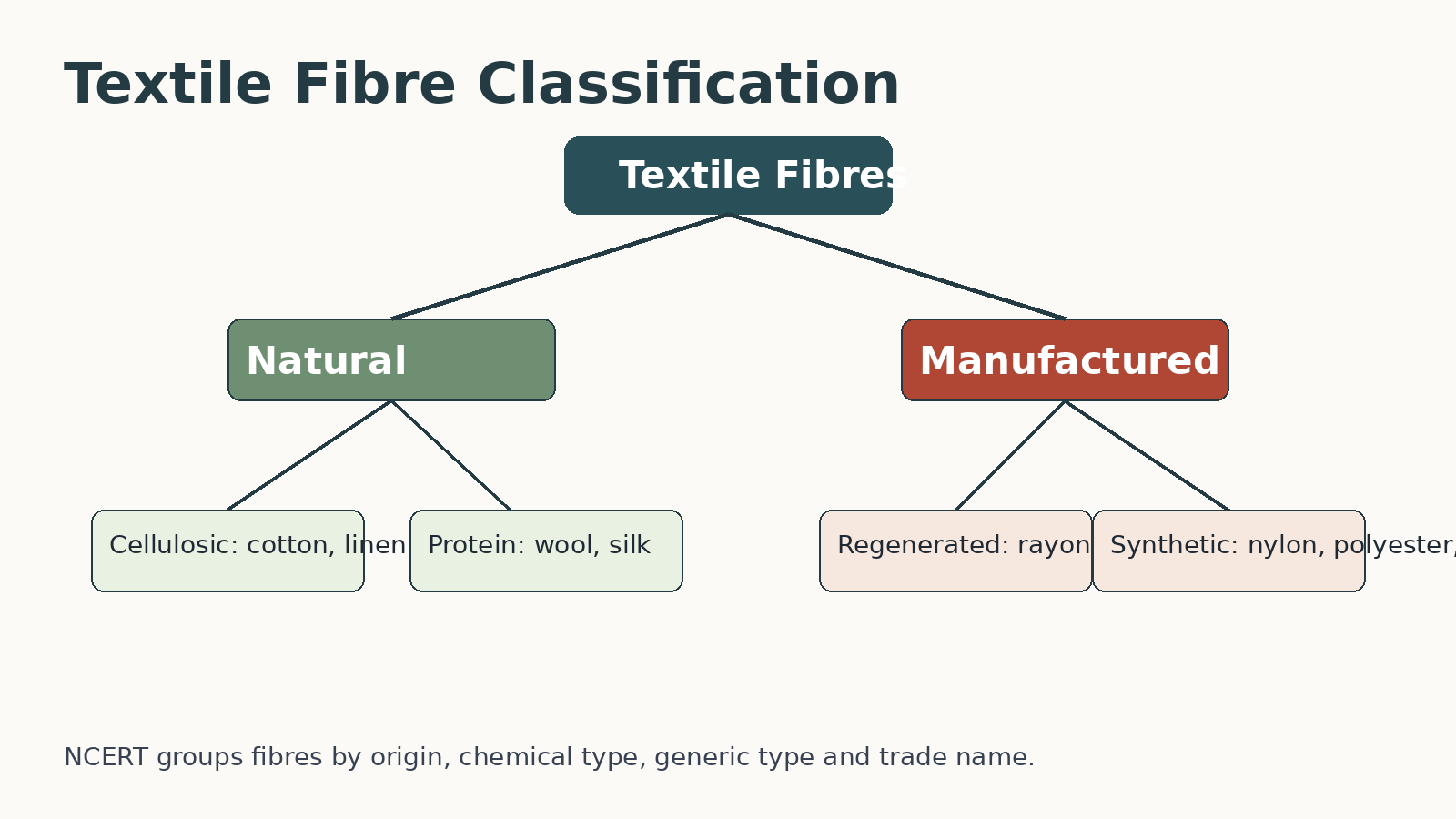
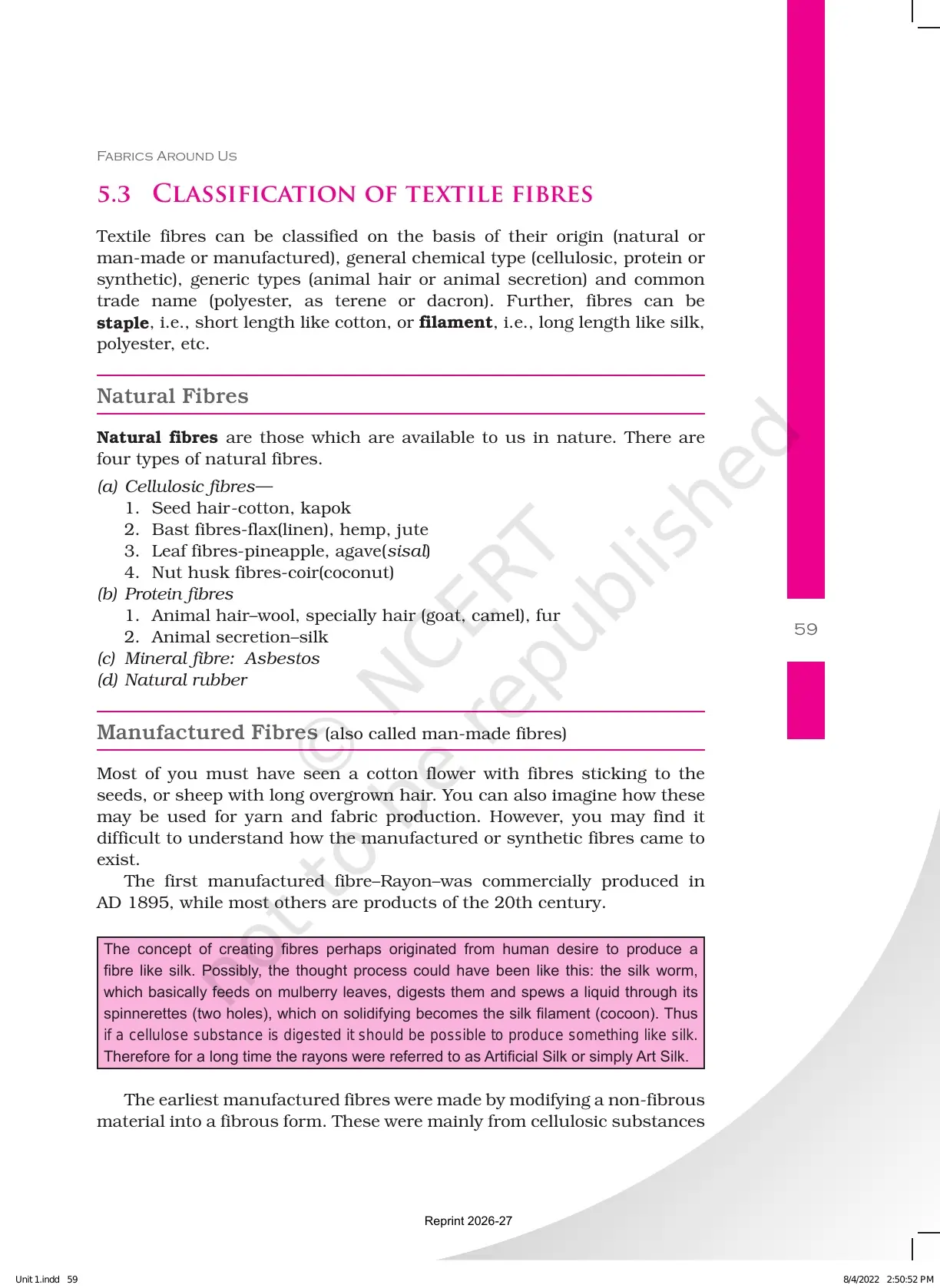
Textile fibres are classified by origin, chemical type, generic type and trade name. NCERT also separates fibres by length. Staple fibres are short, while filament fibres are long.
| Group | Examples from NCERT | Revision cue |
|---|---|---|
| Natural cellulosic | Cotton, kapok, flax, hemp, jute, pineapple, agave, coir | Plant-based fibres |
| Natural protein | Wool, goat hair, camel hair, fur, silk | Animal-based fibres |
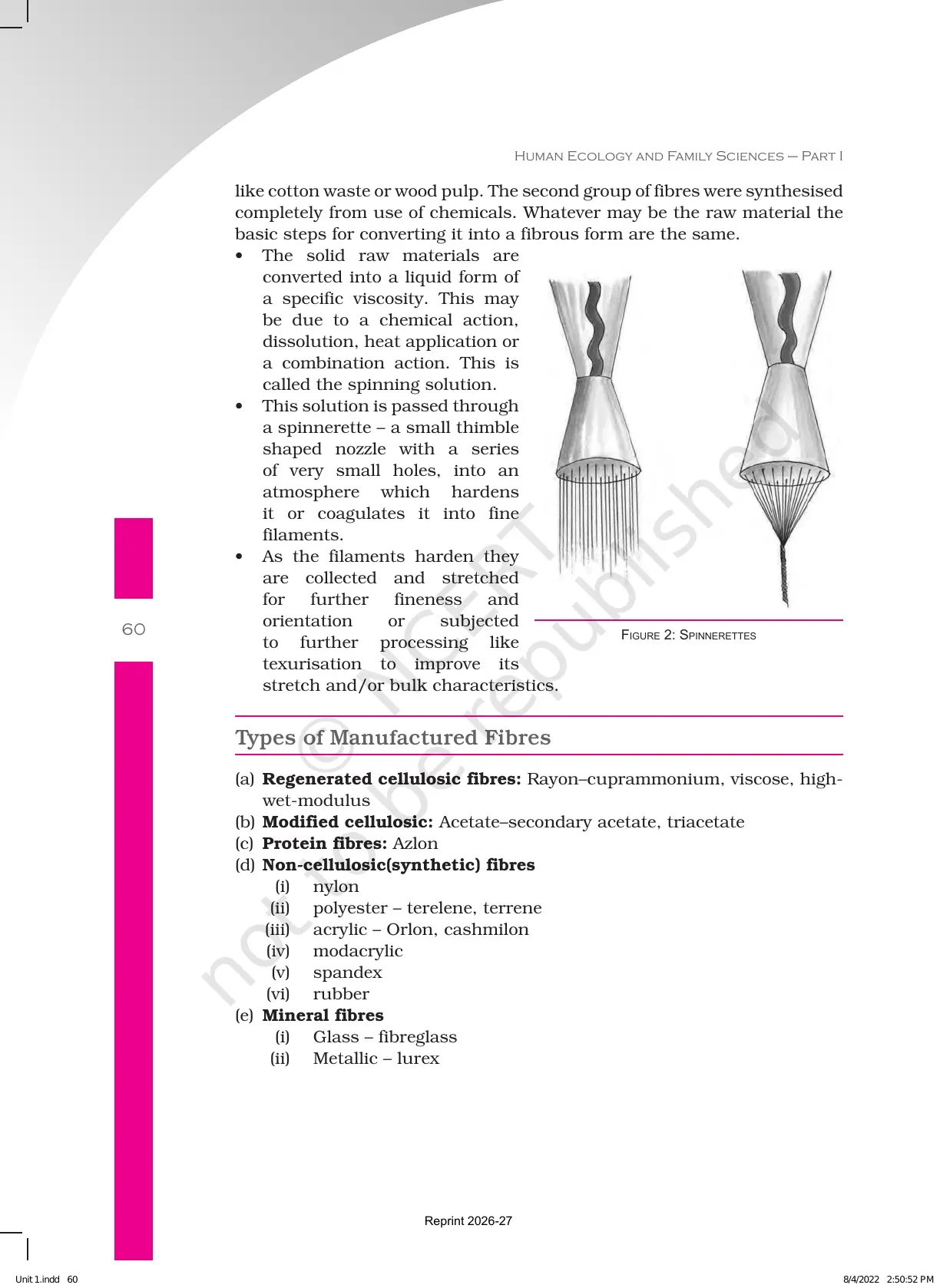
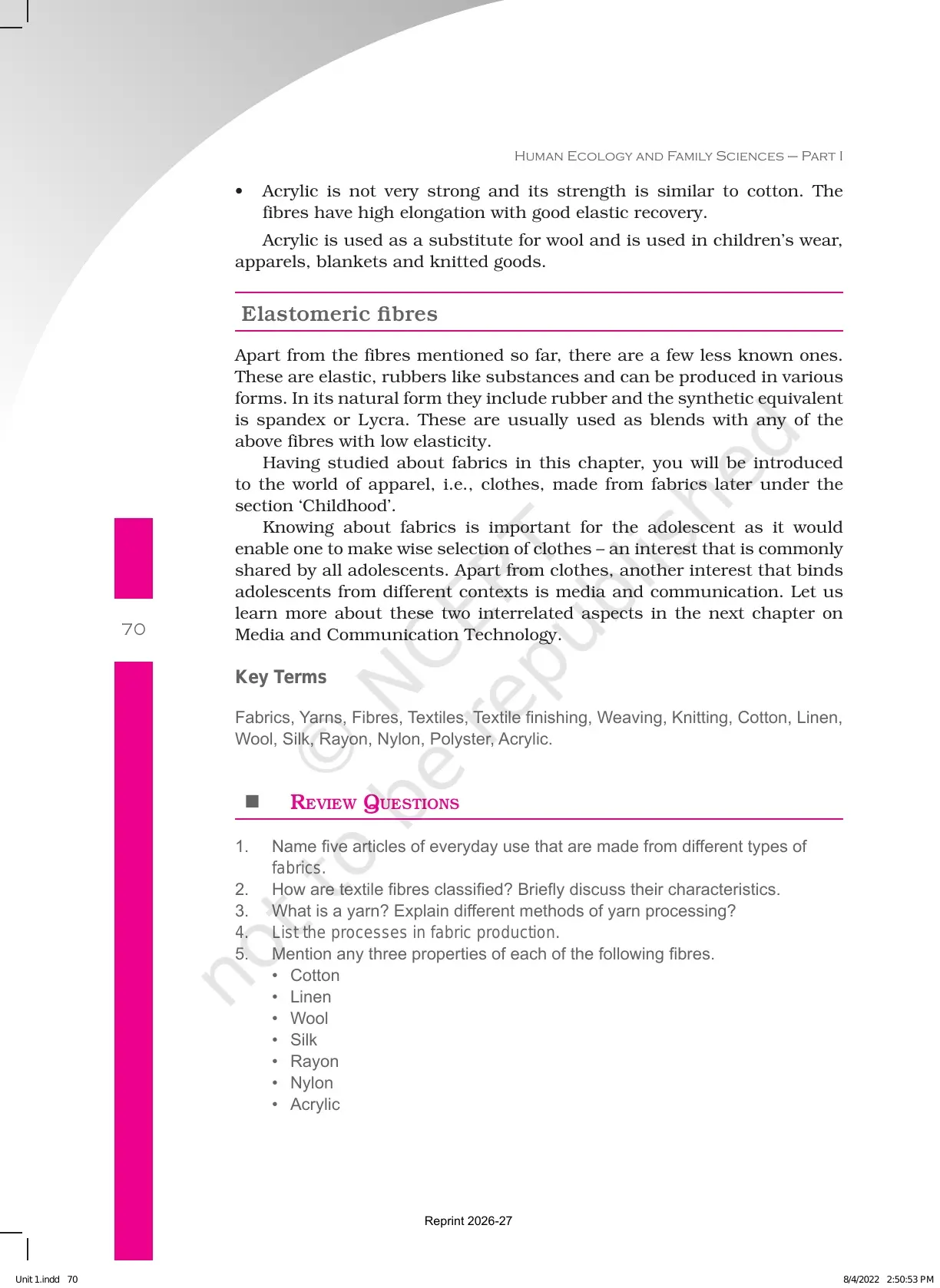
| Regenerated cellulosic | Rayon, viscose, high-wet-modulus rayon | Made from cellulose material |
| Synthetic | Nylon, polyester, acrylic, spandex | Made from chemicals |
Rayon was first commercially produced in 1895 and was once called Artificial Silk.
Yarn Processing and Yarn Terms in Chapter 5
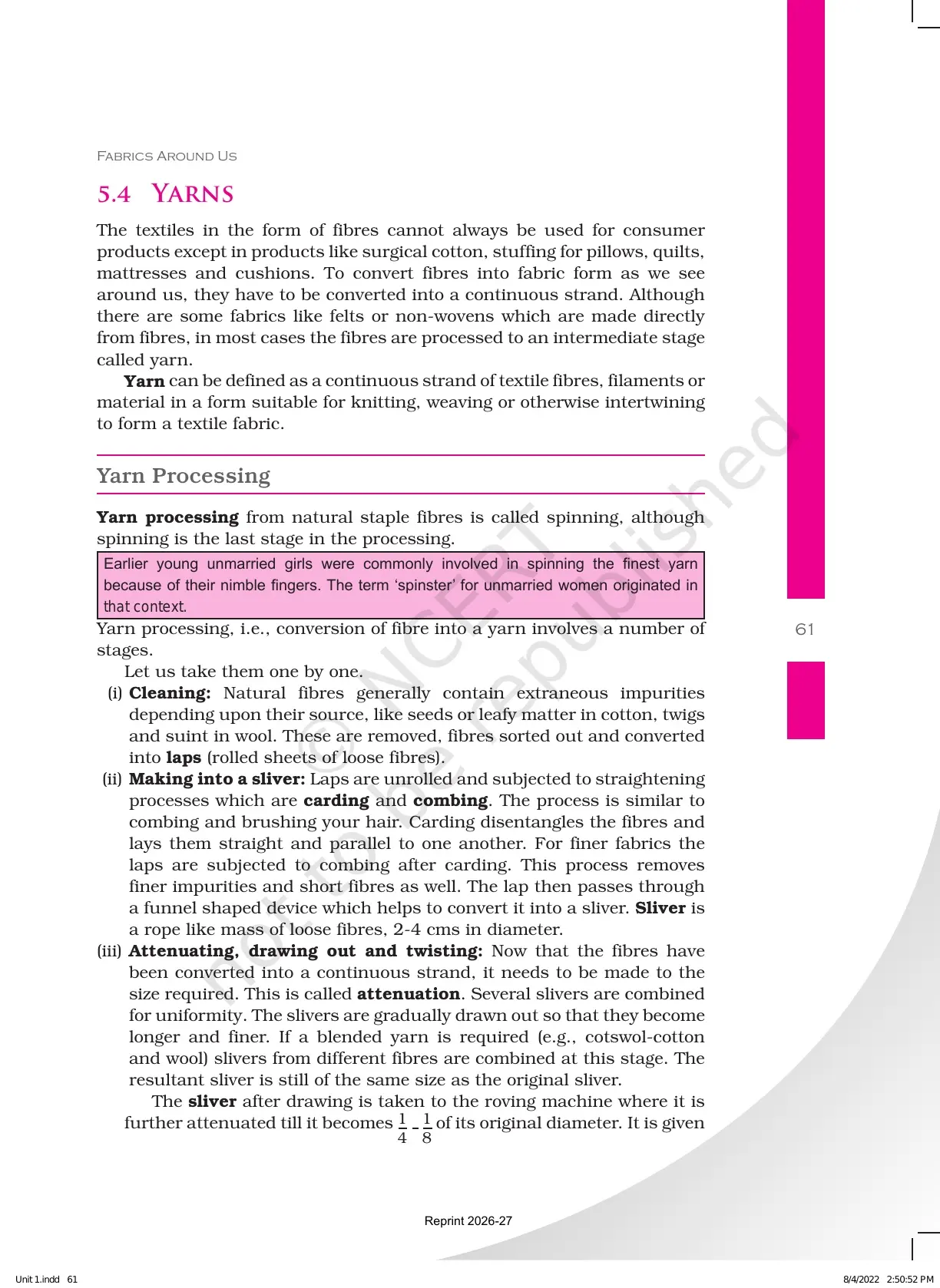
Yarn processing from natural staple fibres is called spinning. NCERT explains cleaning, making a sliver, drawing out, twisting and final spinning. The process removes impurities and turns loose fibres into usable yarn.
- Cleaning: seeds, leafy matter, twigs or grease are removed.
- Carding and combing: fibres are straightened and laid parallel.
- Sliver formation: loose fibres become a rope-like mass.
- Drawing and twisting: the strand becomes finer, stronger and ready for fabric production.
Students should also know yarn number, yarn twist and the difference between yarn and thread. A higher yarn number generally means a finer thread.
Fabric Production Methods in Fabrics Around Us
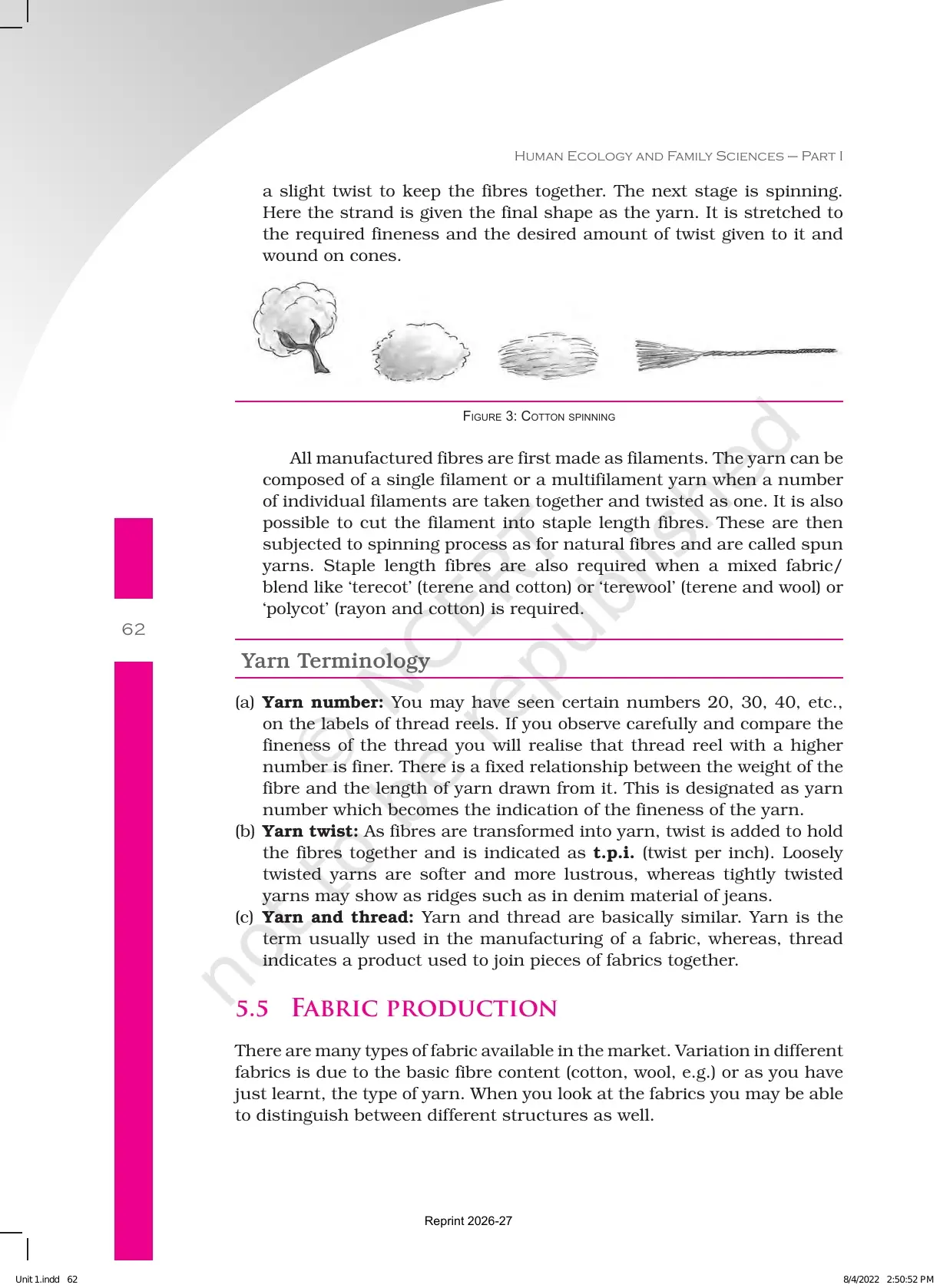
Most fabrics are made from yarns, but felts and non-wovens can be made directly from fibres. NCERT gives weaving and knitting as the main fabric-construction methods.
| Method | Meaning | Examples or use |
|---|---|---|
| Weaving | Two sets of yarns interlace at right angles | Shirts, pants, towels, woven household fabrics |
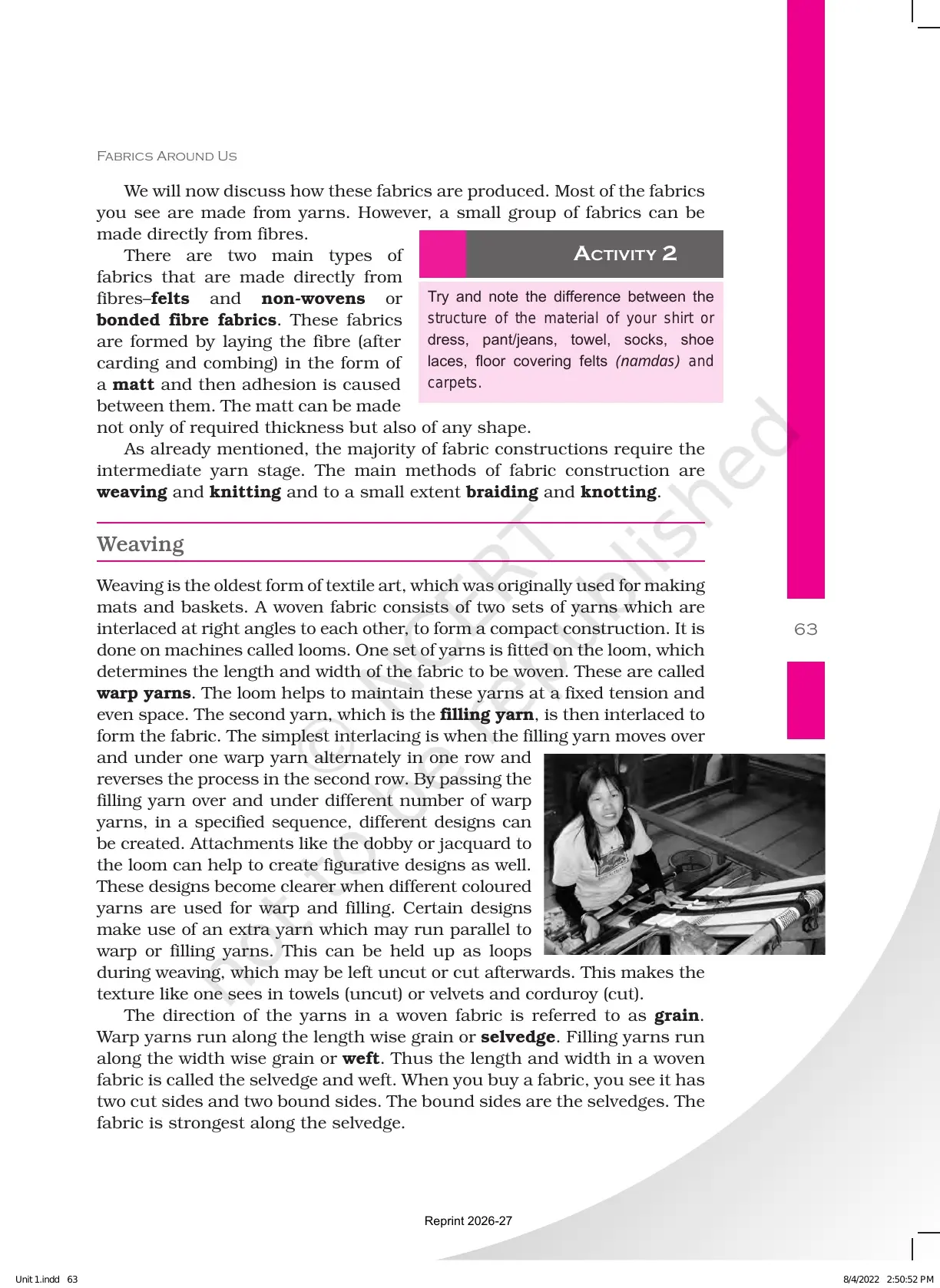
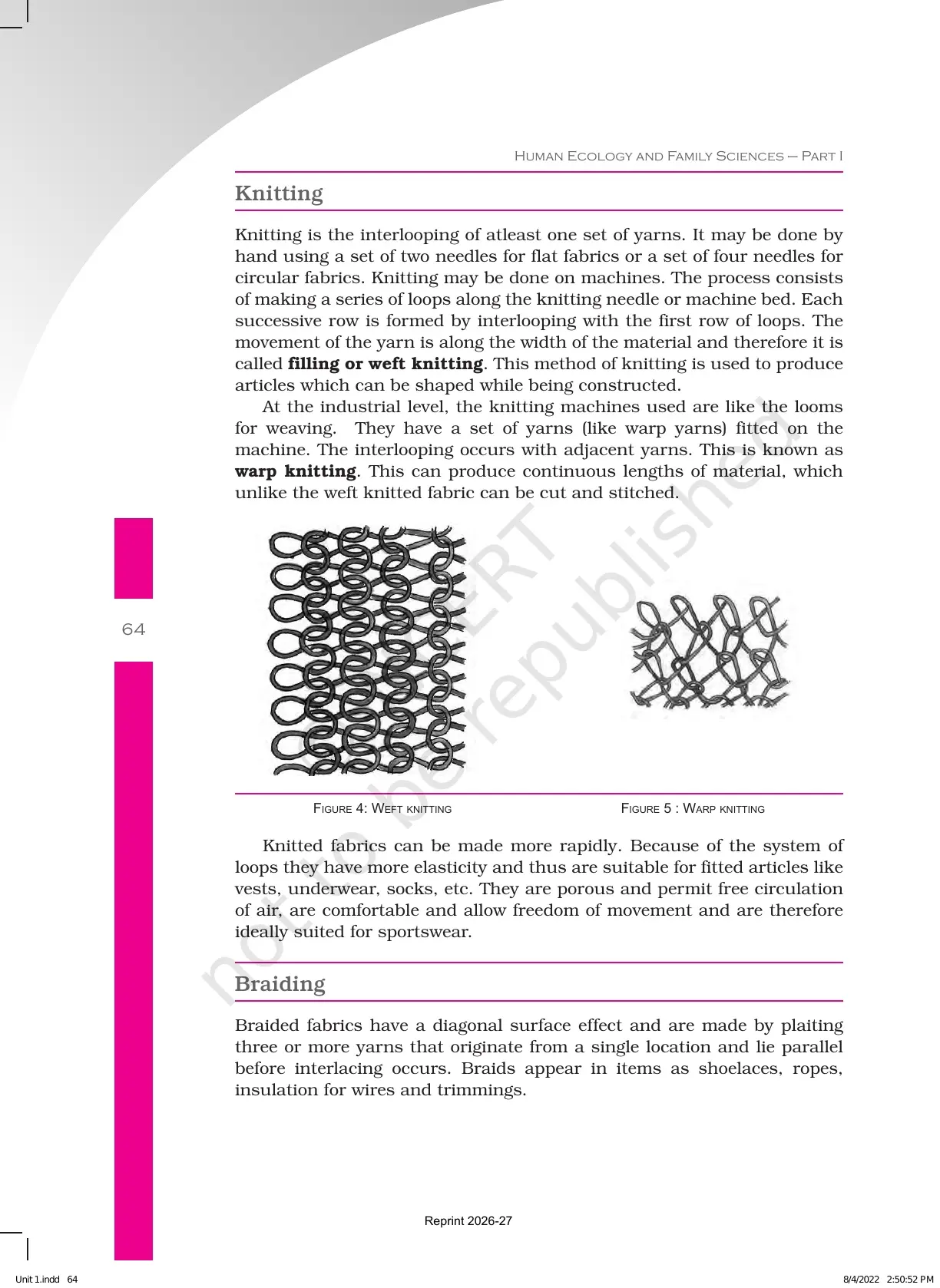
| Knitting | Yarns interloop to make rows of loops | Vests, socks, underwear, sportswear |
| Braiding | Three or more yarns are plaited diagonally | Shoelaces, ropes, wire insulation |
| Nets and laces | Open mesh or openwork designs are formed | Nets, decorative lace and trimmings |
Warp yarns run along the lengthwise grain, while filling yarns run along the widthwise grain.
Textile Finishing and Colour in Class 11 Home Science
A finish is any treatment that changes fabric appearance, texture or behaviour for a specific use. Routine finishes are necessary. Durable finishes stay after washing or dry cleaning, while renewable finishes need to be applied again.
- Appearance finishes: scouring, bleaching, calendering and tentering.
- Texture finishes: starching, sizing and special calendering.
- Behaviour finishes: wash-and-wear, permanent press, water repellent, mothproof, flame retardant and sanforisation.
Colour can be added at the fibre, yarn or fabric stage. Printing is a specialised form of dyeing where colour is applied only within the design area.
Important Fibres in Fabrics Around Us
The chapter closes with common fibres and their properties. Students should revise each fibre with one source, one property and one use. This makes the long-answer question easier to organise.
| Fibre | NCERT source or type | Key property |
|---|---|---|
| Cotton | Natural cellulosic staple fibre | Absorbs moisture and suits summer use |
| Linen | Bast fibre from flax stem | Stronger and more lustrous than cotton |
| Wool | Natural protein fibre from sheep hair | Warm, elastic and useful in cold conditions |
| Silk | Natural filament fibre from silk worms | Smooth, lustrous and strong |
| Rayon | Manufactured cellulosic fibre | Looks like silk but has lower strength than cotton |
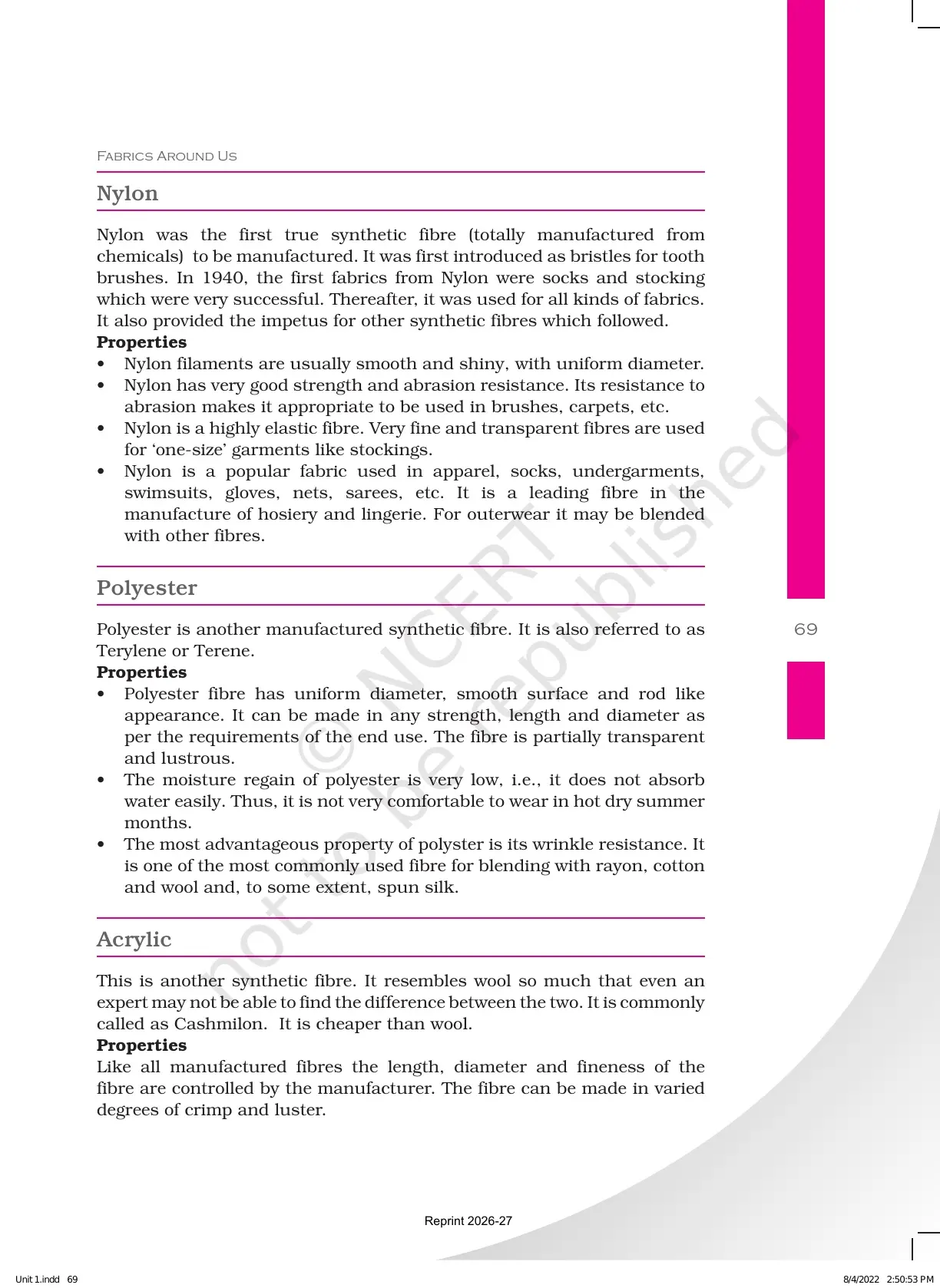
| Nylon | Synthetic fibre | Strong, elastic and abrasion resistant |
| Polyester | Synthetic fibre | Wrinkle resistant but absorbs little moisture |
| Acrylic | Synthetic fibre | Looks like wool and is cheaper than wool |
Related Class 11 Home Science Chapter 5 Resources
Use these related resources when you want Fabrics Around Us in another format. The table stays above the FAQ so students can move from the official book PDF to revision material without losing the chapter context.
| Resource | Best use | Link |
|---|---|---|
| NCERT Book PDF | Read the official 2026-27 source chapter | Open this book PDF |
| NCERT Notes | Revise fibre types, yarn processing, finishing and fabric properties quickly | Open notes |
| Handwritten Notes | Use a topper-style revision copy for short-answer recall | Open handwritten notes |
More NCERT Book PDFs for Home Science Chapters
The table below keeps NCERT Book PDF resources together, so students can continue official textbook reading chapter by chapter.
| Chapter | NCERT chapter title | Book PDF |
|---|---|---|
| Class 11 Chapter 1 | Introduction: Evolution of the Discipline and its Relevance to Quality of Life | Open book PDF |
| Class 11 Chapter 2 | Understanding the Self | Open book PDF |
| Class 11 Chapter 3 | Food, Nutrition, Health and Fitness | Open book PDF |
| Class 11 Chapter 4 | Management of Resources | Open book PDF |
| Class 11 Chapter 5 | Fabrics Around Us | Current book PDF |
Fabrics Around Us Class 11 Home Science NCERT Book FAQs
Ques. What is included in the Class 11 Home Science Chapter 5 NCERT Book PDF?
Ans. The PDF includes the official NCERT chapter on fabrics, fibres, yarns, fabric production, finishing and important fibres such as cotton, linen, wool, silk, rayon, nylon, polyester and acrylic.
Ques. How many pages are there in this Fabrics Around Us PDF?
Ans. The official Class 11 Home Science Chapter 5 PDF used here has 16 pages in the local NCERT chapter file.
Ques. What is the difference between fibre, yarn and fabric?
Ans. Fibres are tiny hair-like structures. Yarns are continuous strands made from fibres. Fabrics are made when yarns are woven, knitted, braided or knotted.
Ques. Which practicals are linked with Fabrics Around Us?
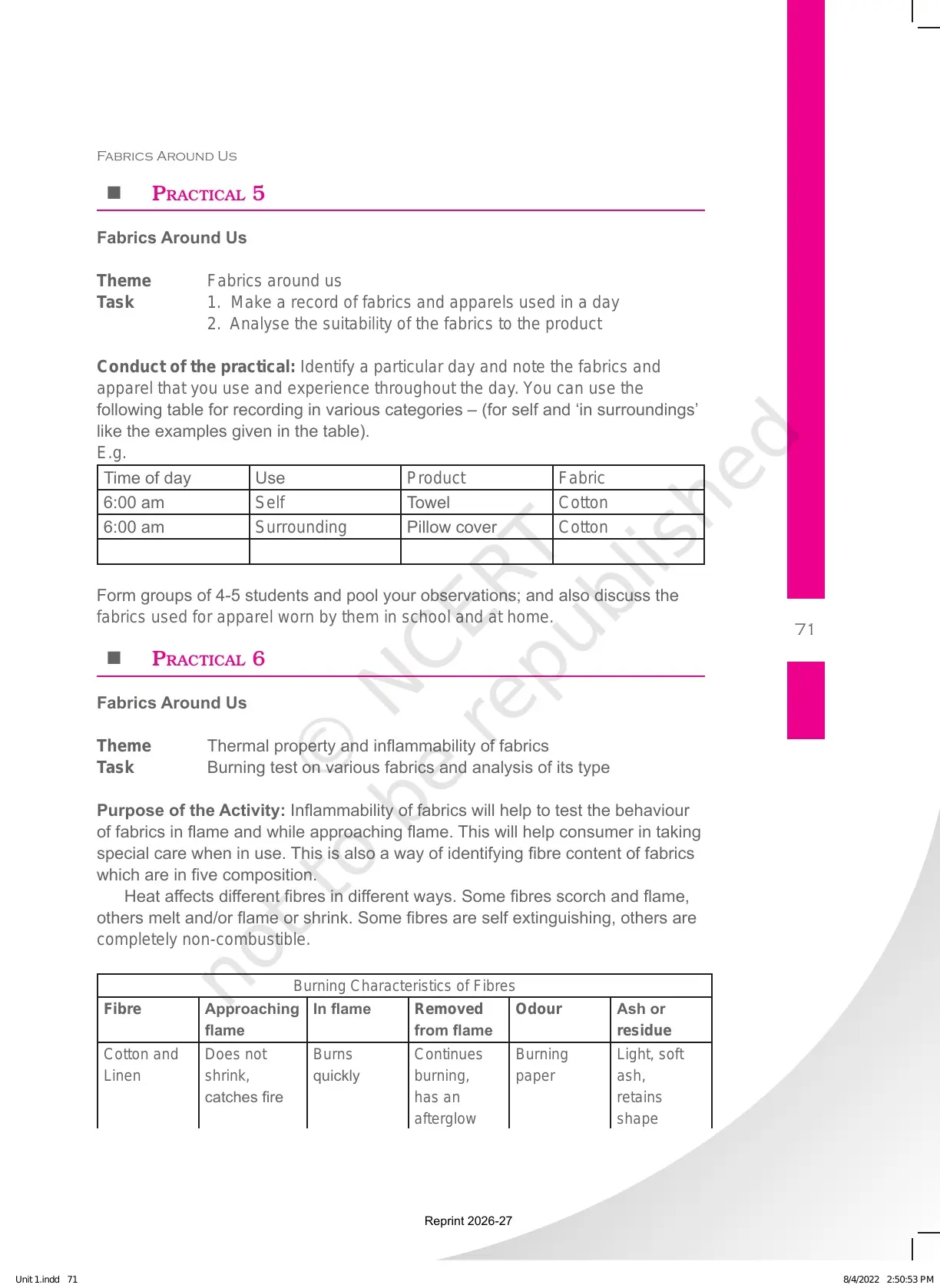
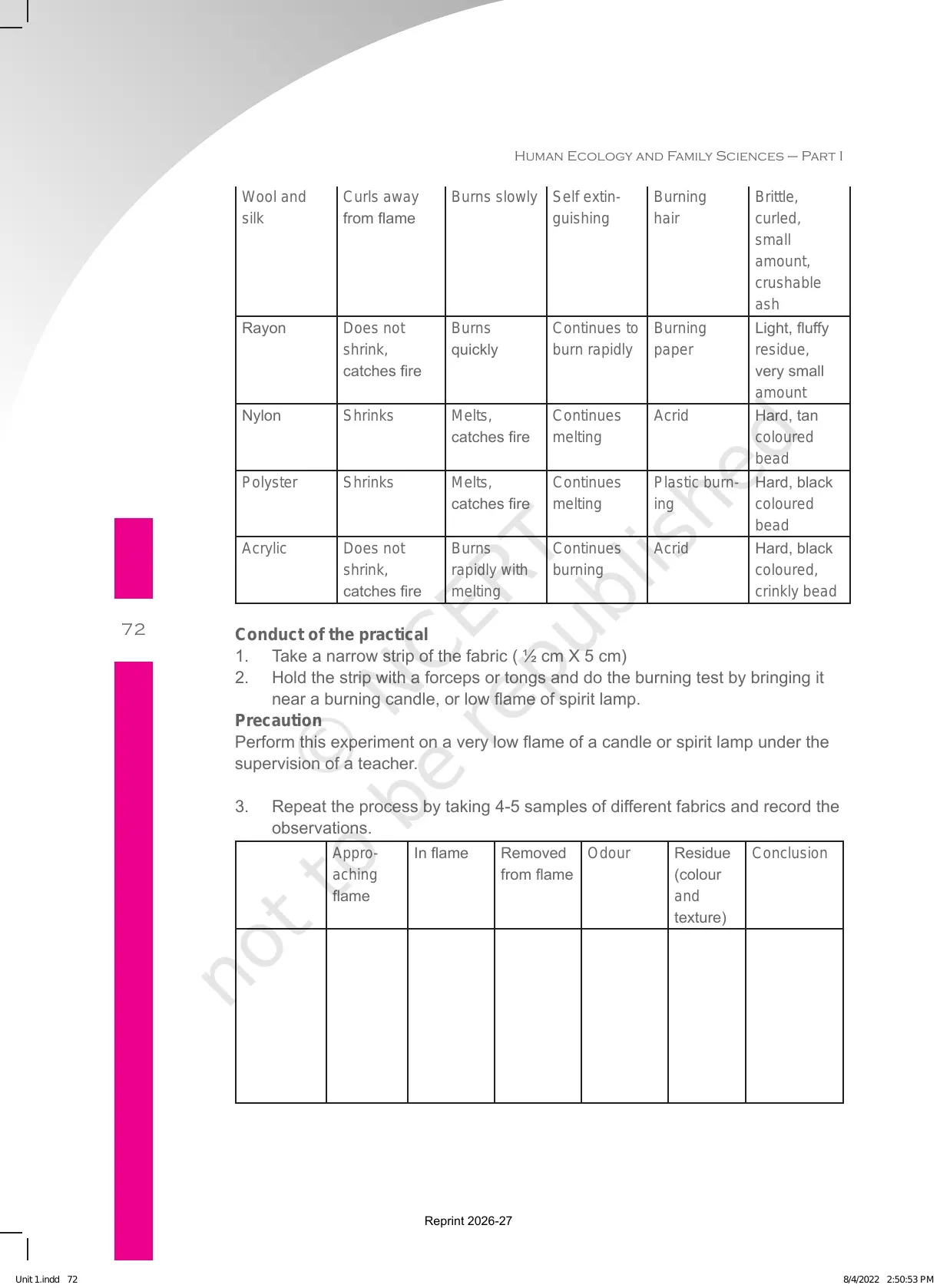
Ans. The chapter includes practical work on recording fabrics used in a day and a burning test to study thermal properties and inflammability of fabrics.



Comments