



The NCERT Class 11 Home Science Chapter 8 NCERT Book PDF gives students the official 2026-27 chapter on Nutrition, Health and Well-being. The PDF covers nutrition needs from infancy to school age, immunisation, complementary feeding, preschool meals, school-age diets and common childhood nutrition problems.
- Download the 20-page official NCERT chapter PDF for offline reading.
- Revise infant, preschool and school-age nutrition in one place.
- Use the PDF before moving to notes, diagrams or class activities.
Student Feedback: In a Collegedunia survey of 12,260 Class 11 Home Science students, 76% said Chapter 8 became easier after they grouped the content by child age instead of reading it page by page.
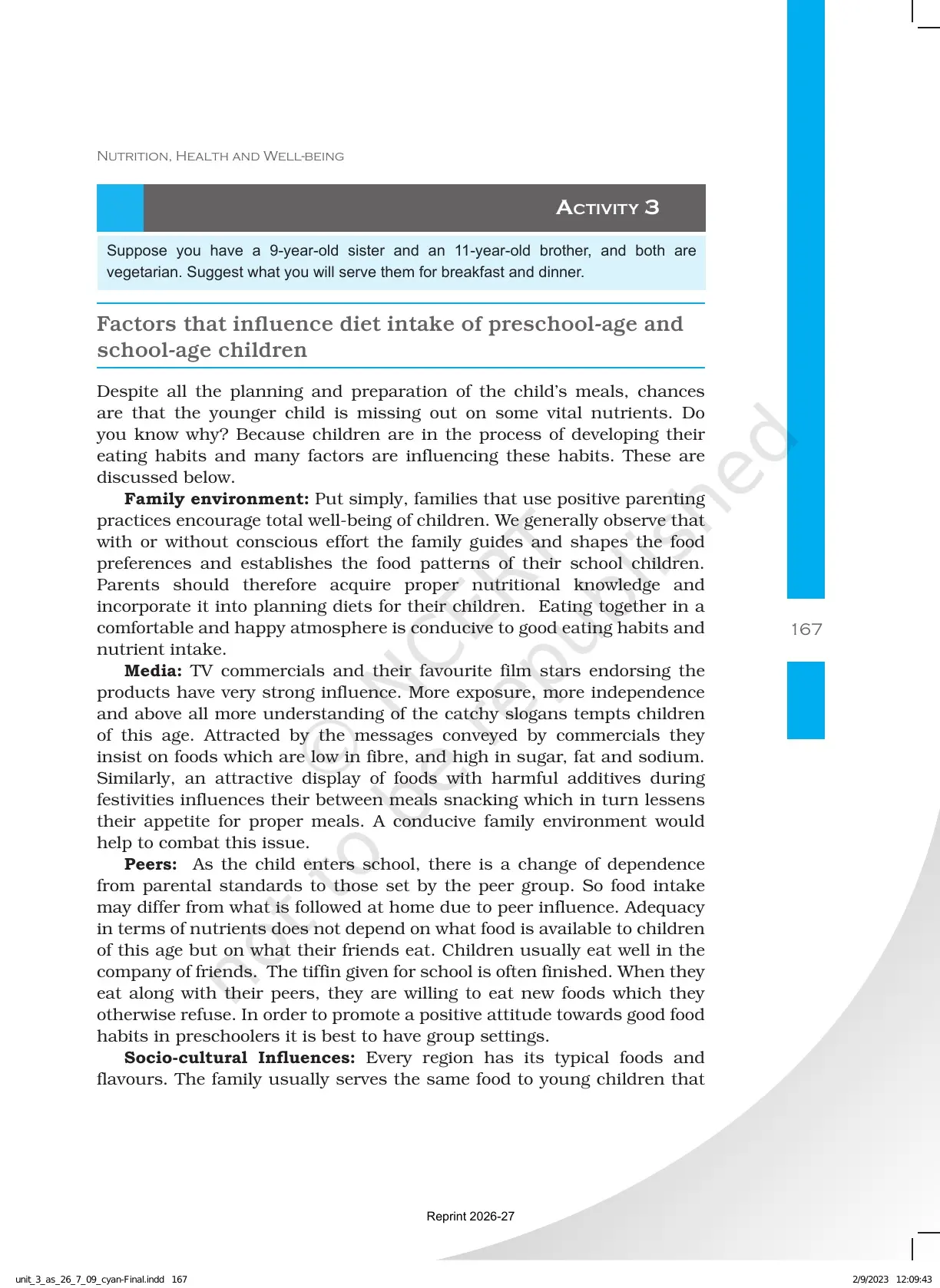
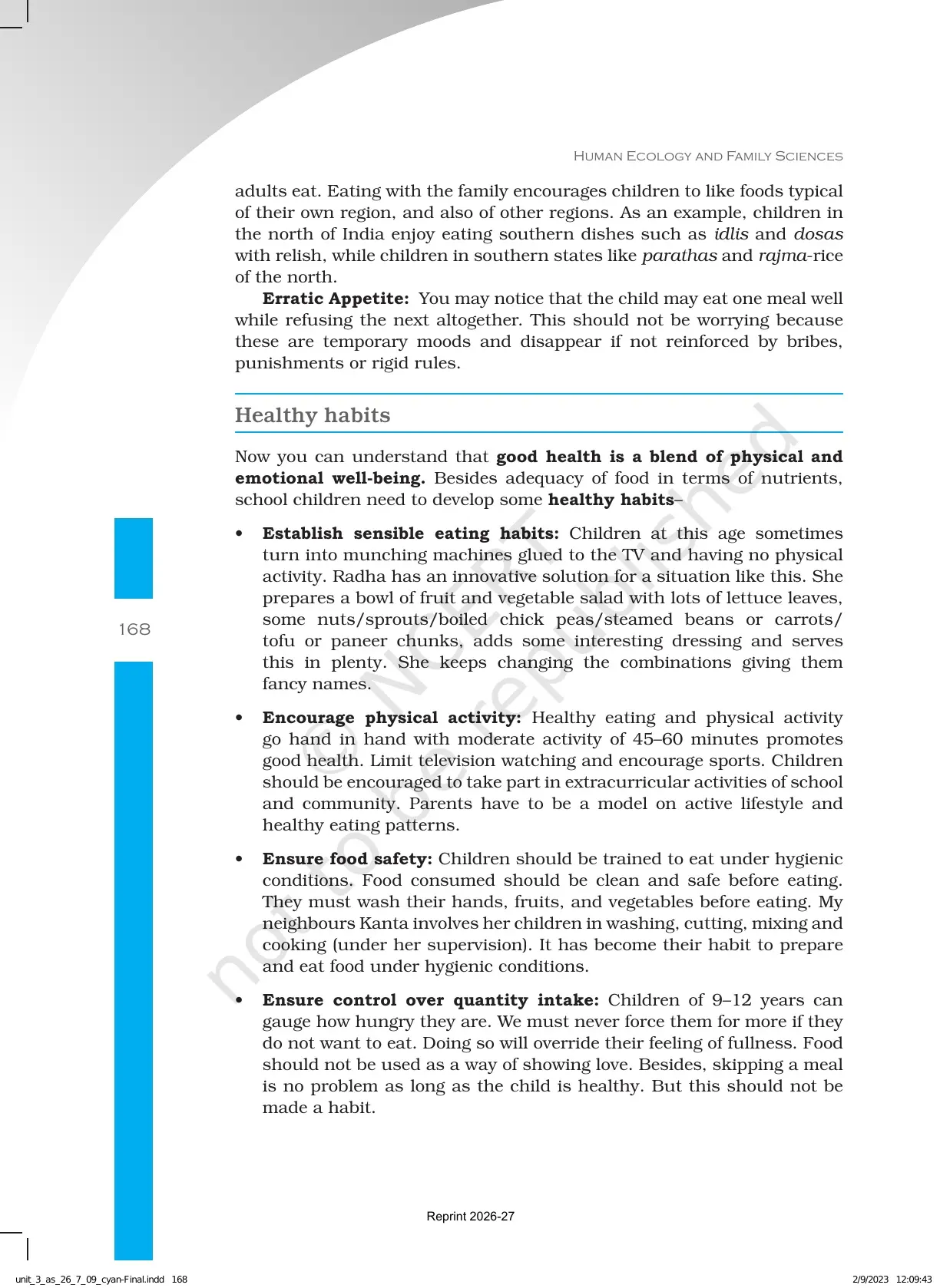
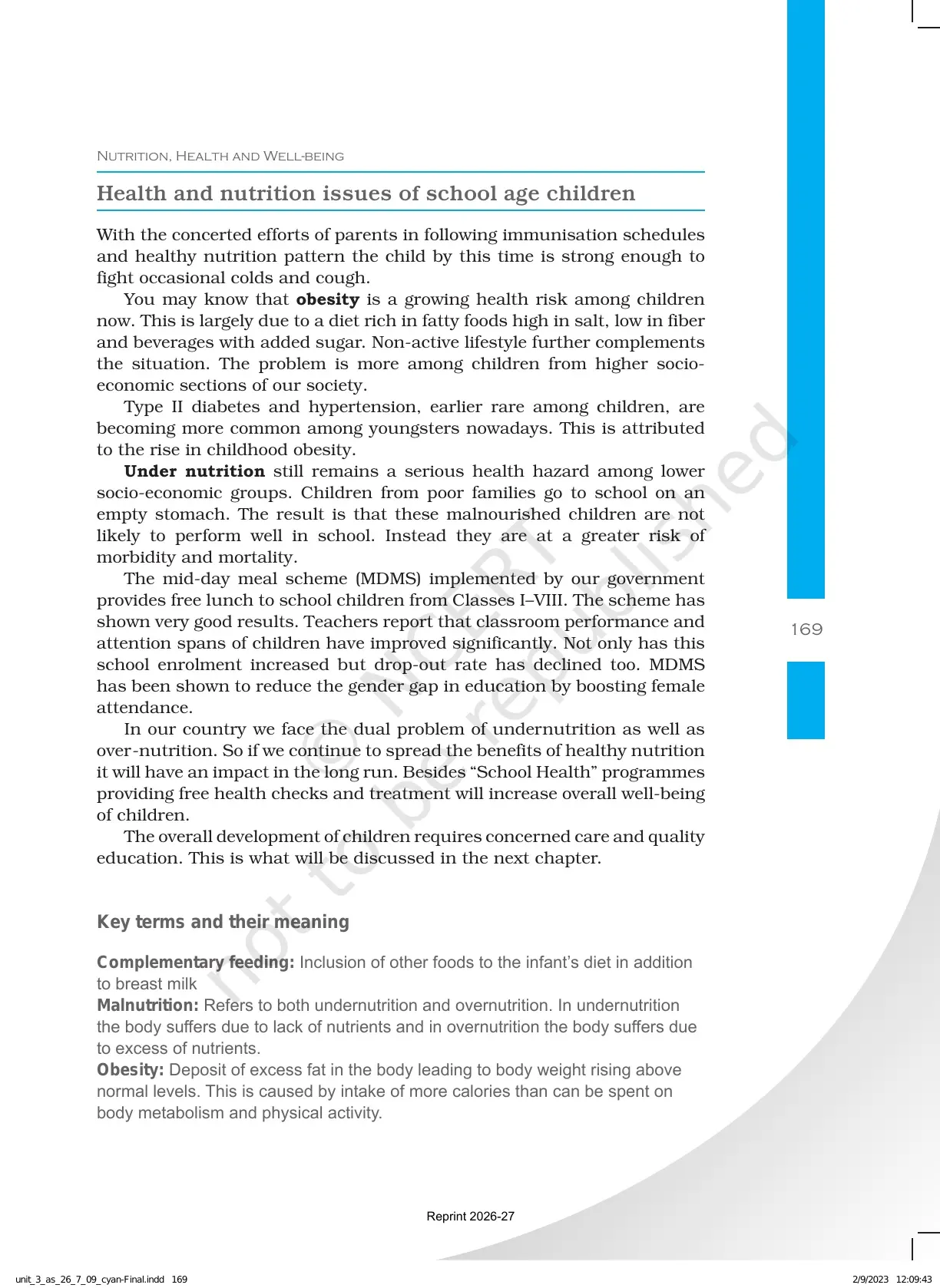
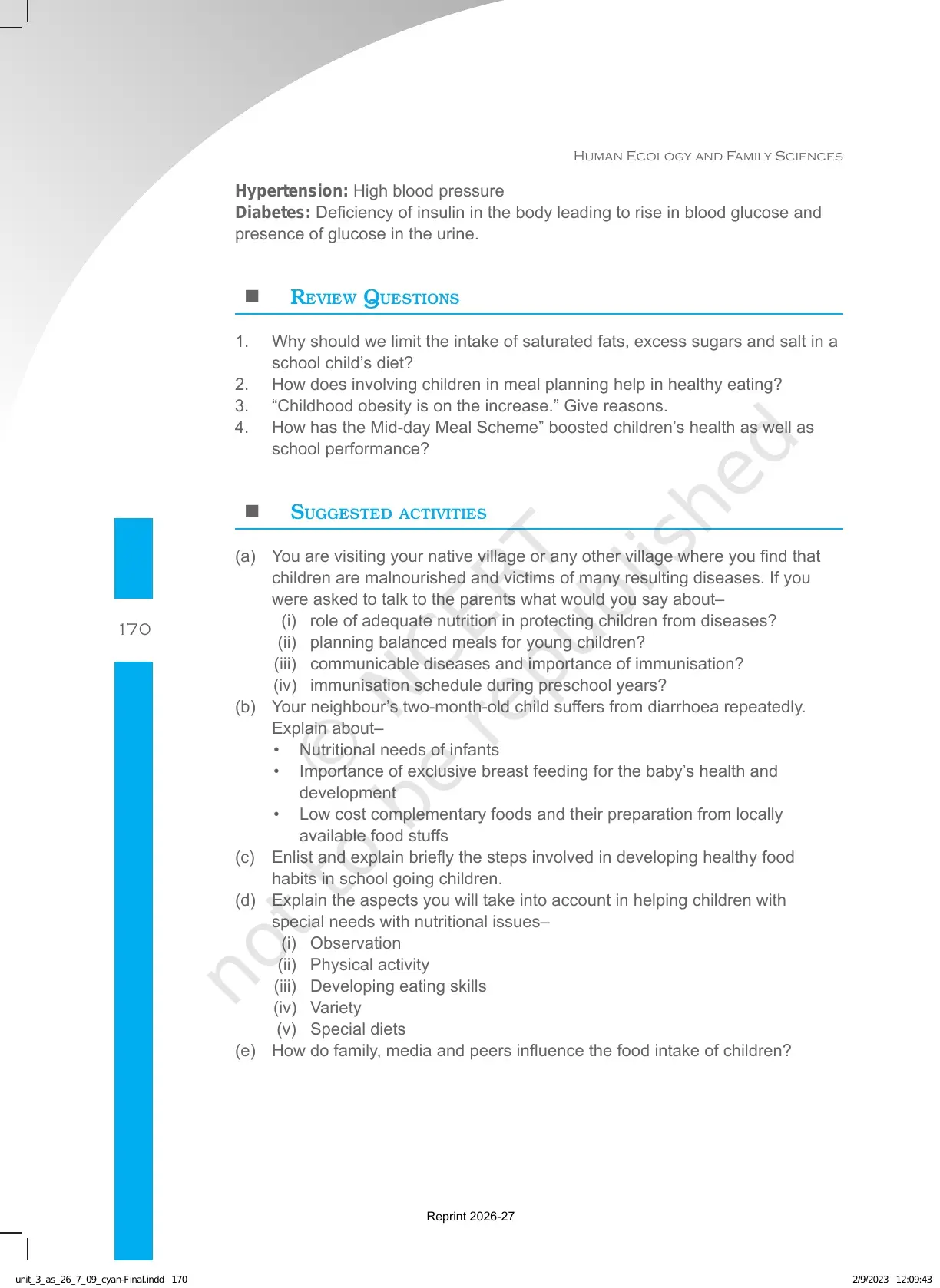
This NCERT Book PDF follows the 2026-27 reprint and should be used as the source text before revising child nutrition, immunisation, feeding plans and health problems.
Nutrition, Health and Well-being NCERT Book PDF Highlights
Chapter 8 sits inside Unit III, Childhood. It explains how food, health care and family habits support child growth. The chapter is direct, but students should separate it by age group.
| NCERT section | Main focus | Best revision method |
|---|---|---|
| Infancy | Breast feeding, complementary feeding, immunisation and deficiency risks | Make a month-wise feeding and vaccine chart |
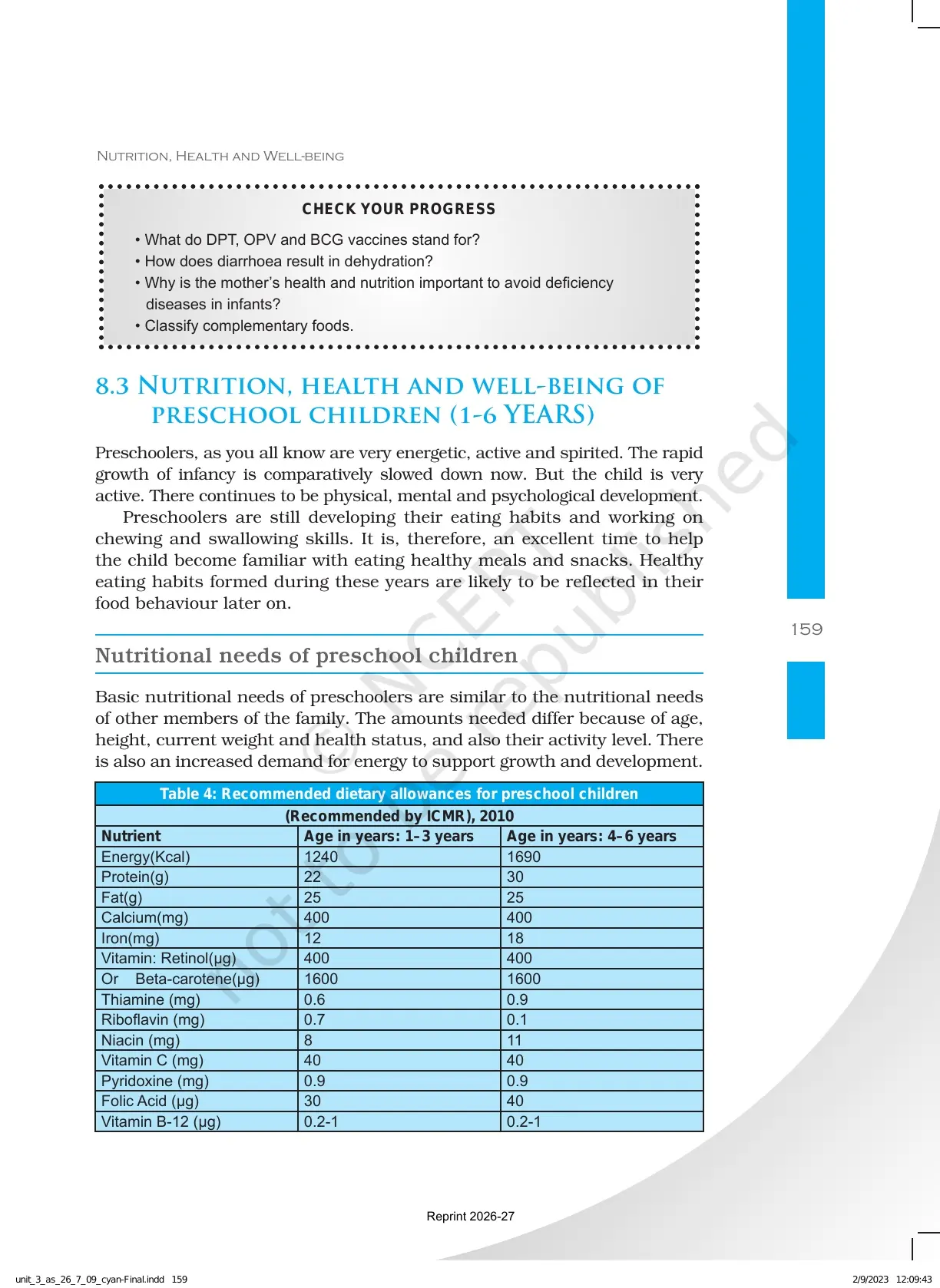
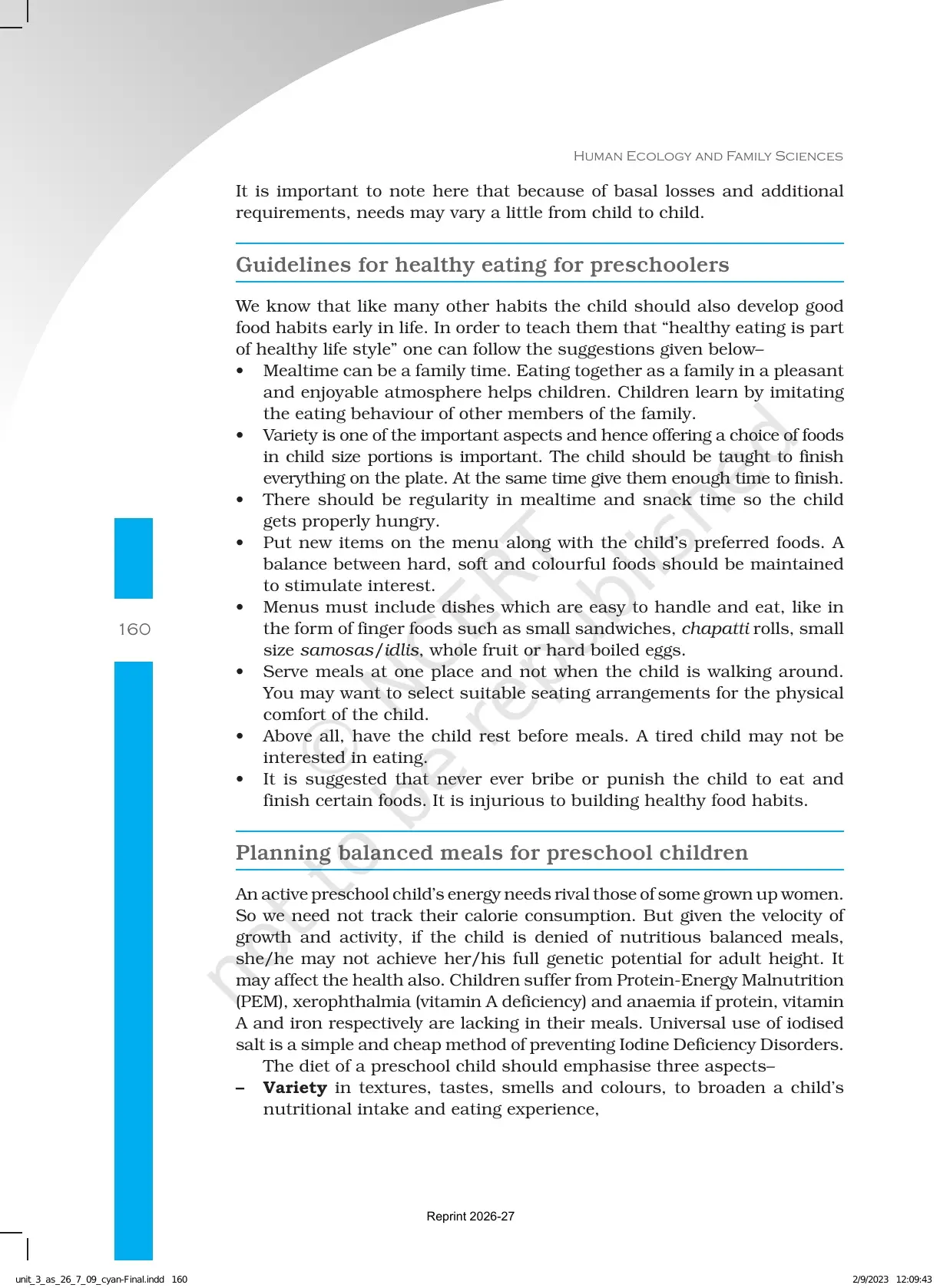
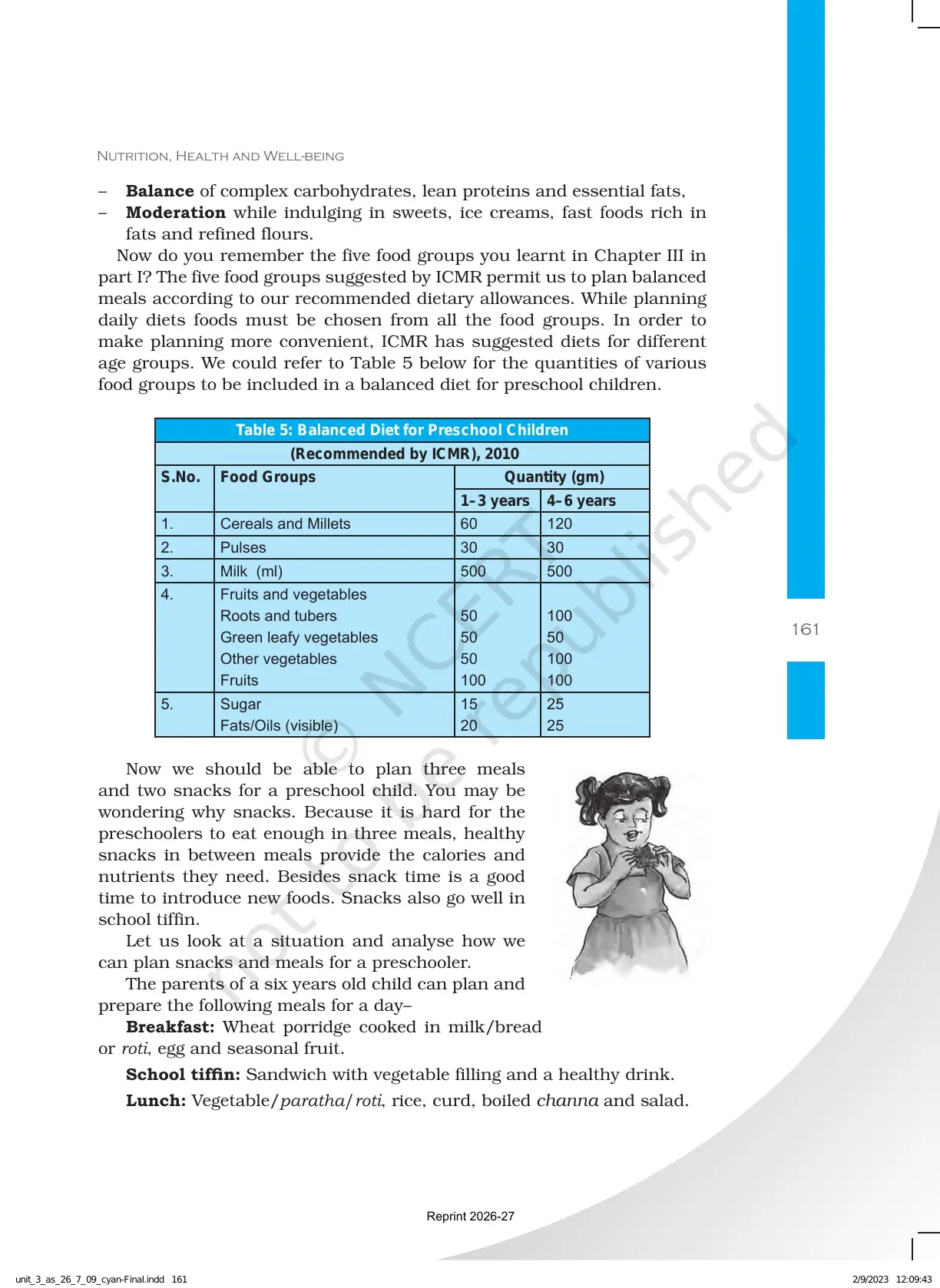
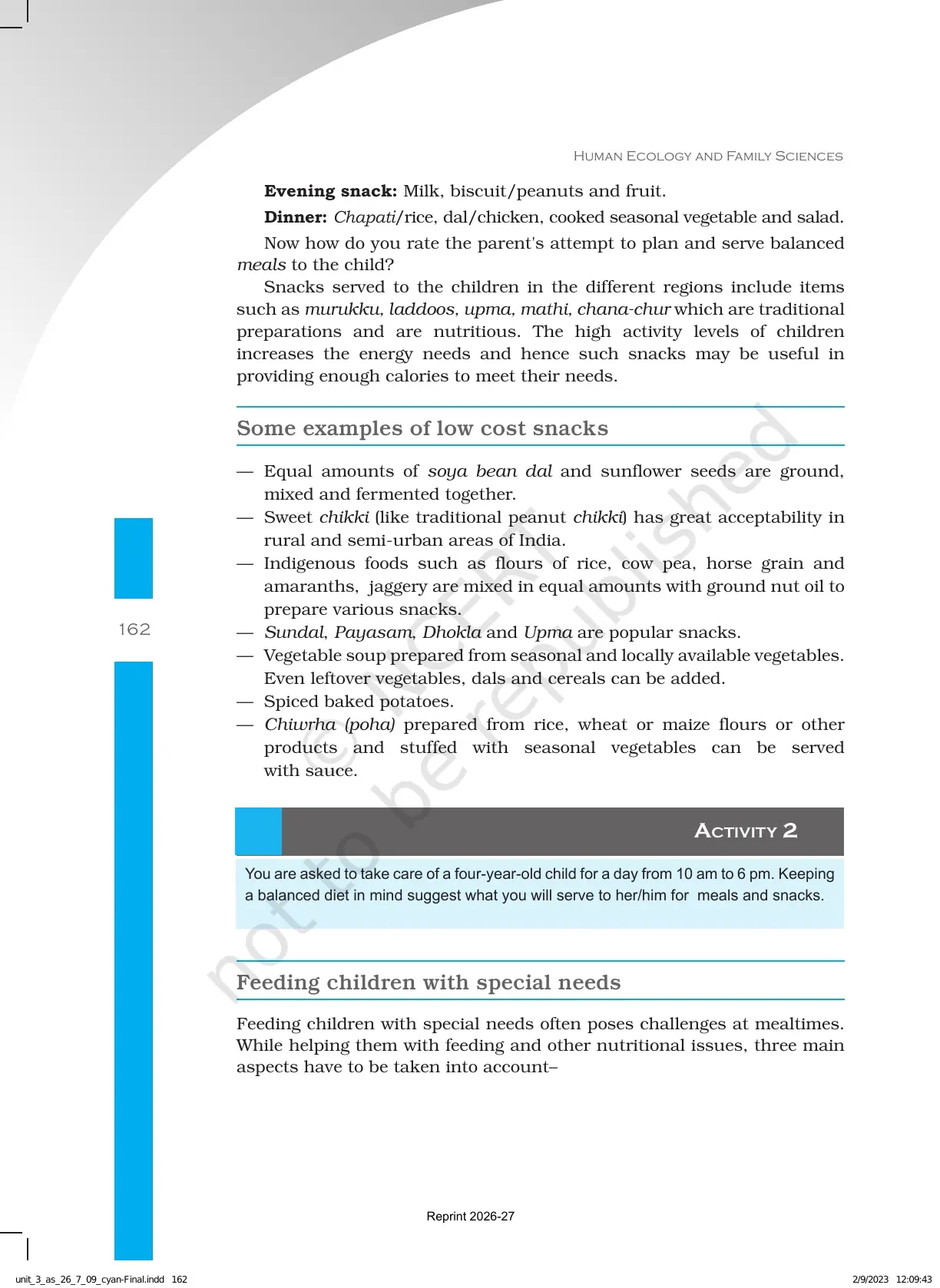
| Preschool years | Balanced meals, snacks, habits and common feeding issues | Revise food groups with daily meal examples |
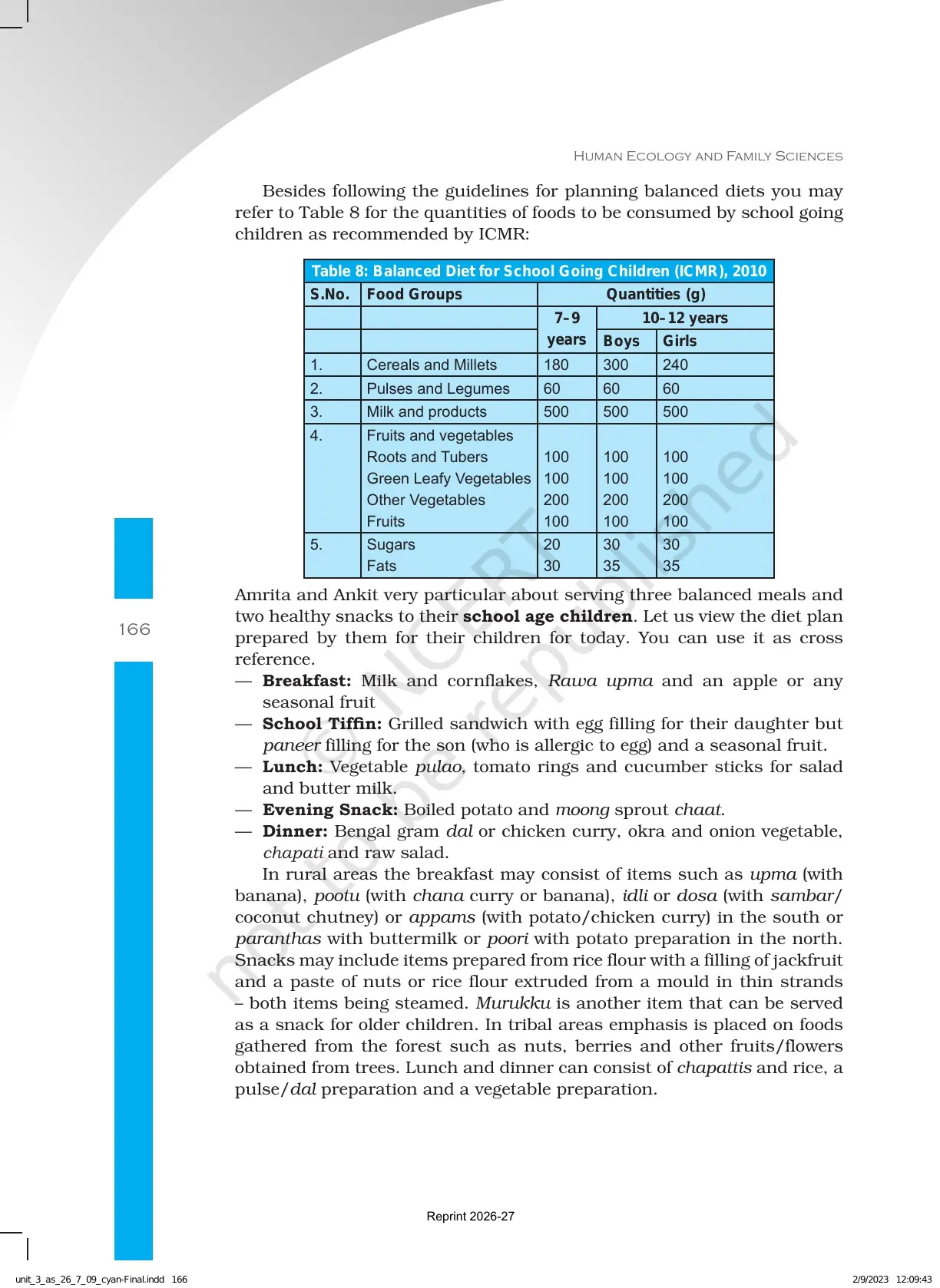
| School age | Energy needs, packed meals, activity and health problems | Compare breakfast, lunch and snack choices |
Chapter 8 is easiest when students revise it as an age-wise nutrition map.
Nutrition, Health and Well-being Class 11 Video
Source: Achieve it on YouTube
Nutrition Needs from Infancy to School Age in Class 11 Home Science
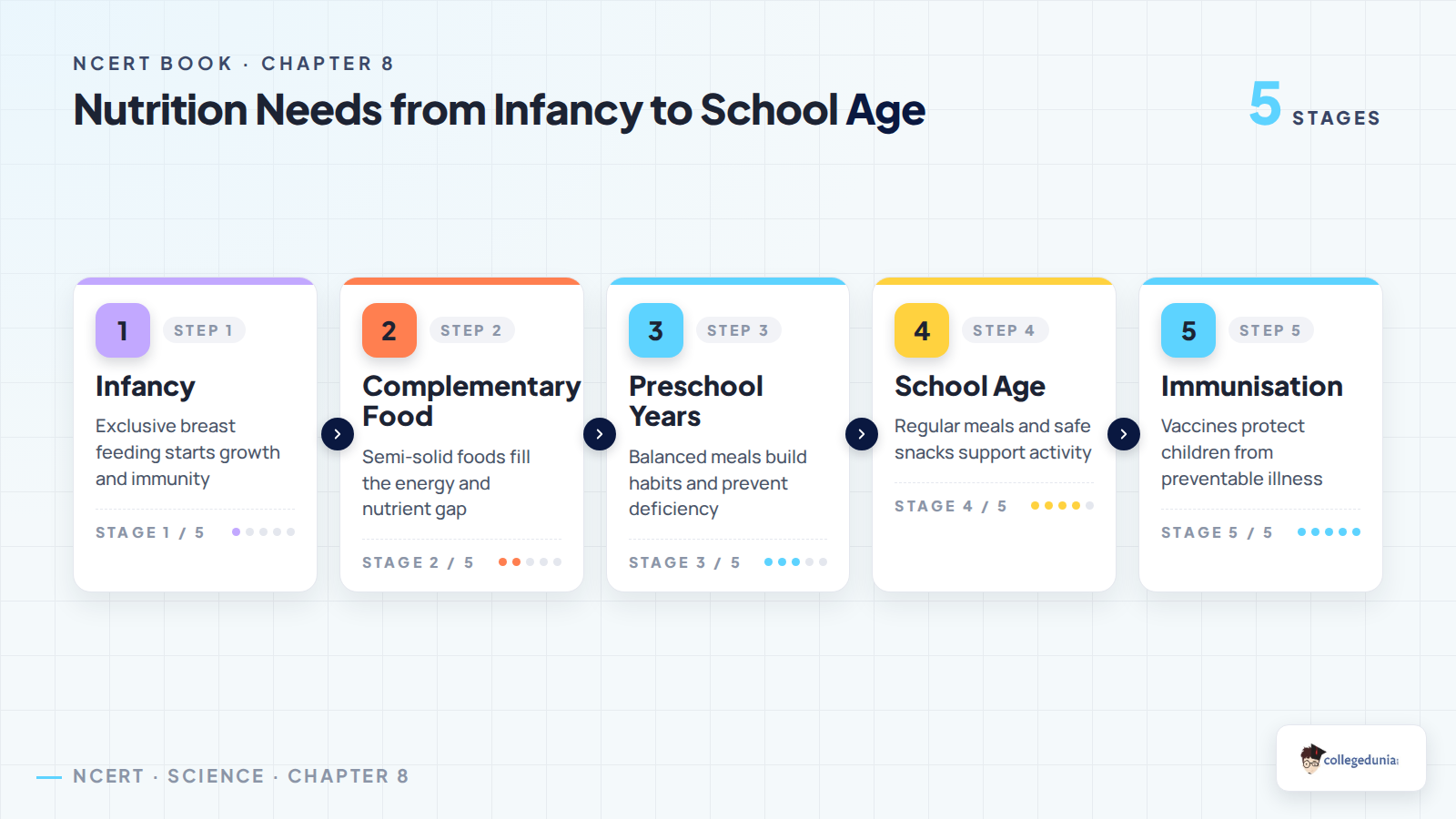
The chapter starts with the idea that nutrition is food at work. Children need food for growth, repair, immunity and activity. The same food groups matter across childhood, but the amount and form change with age.
- Infants: breast milk supports early growth and immunity.
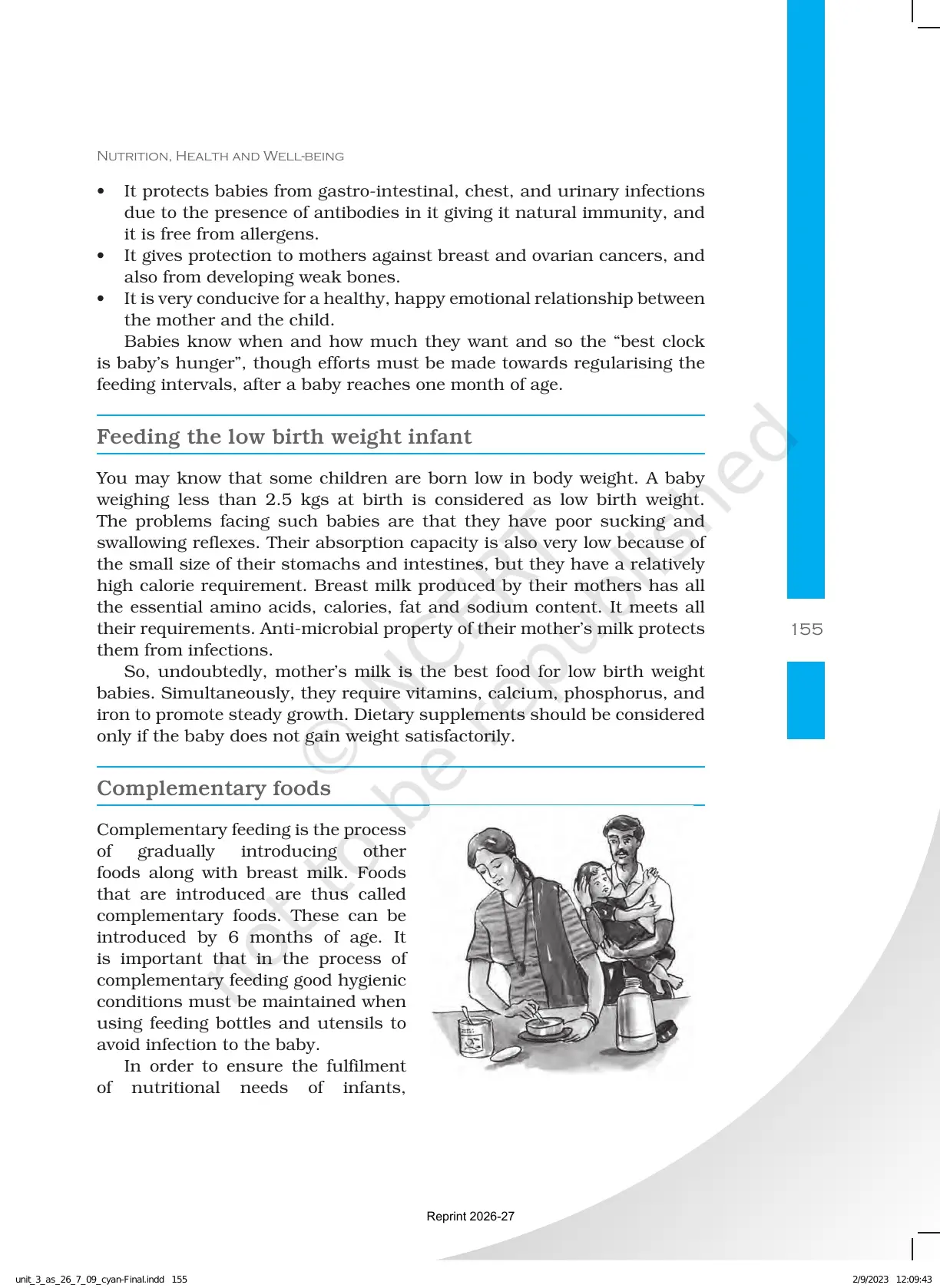
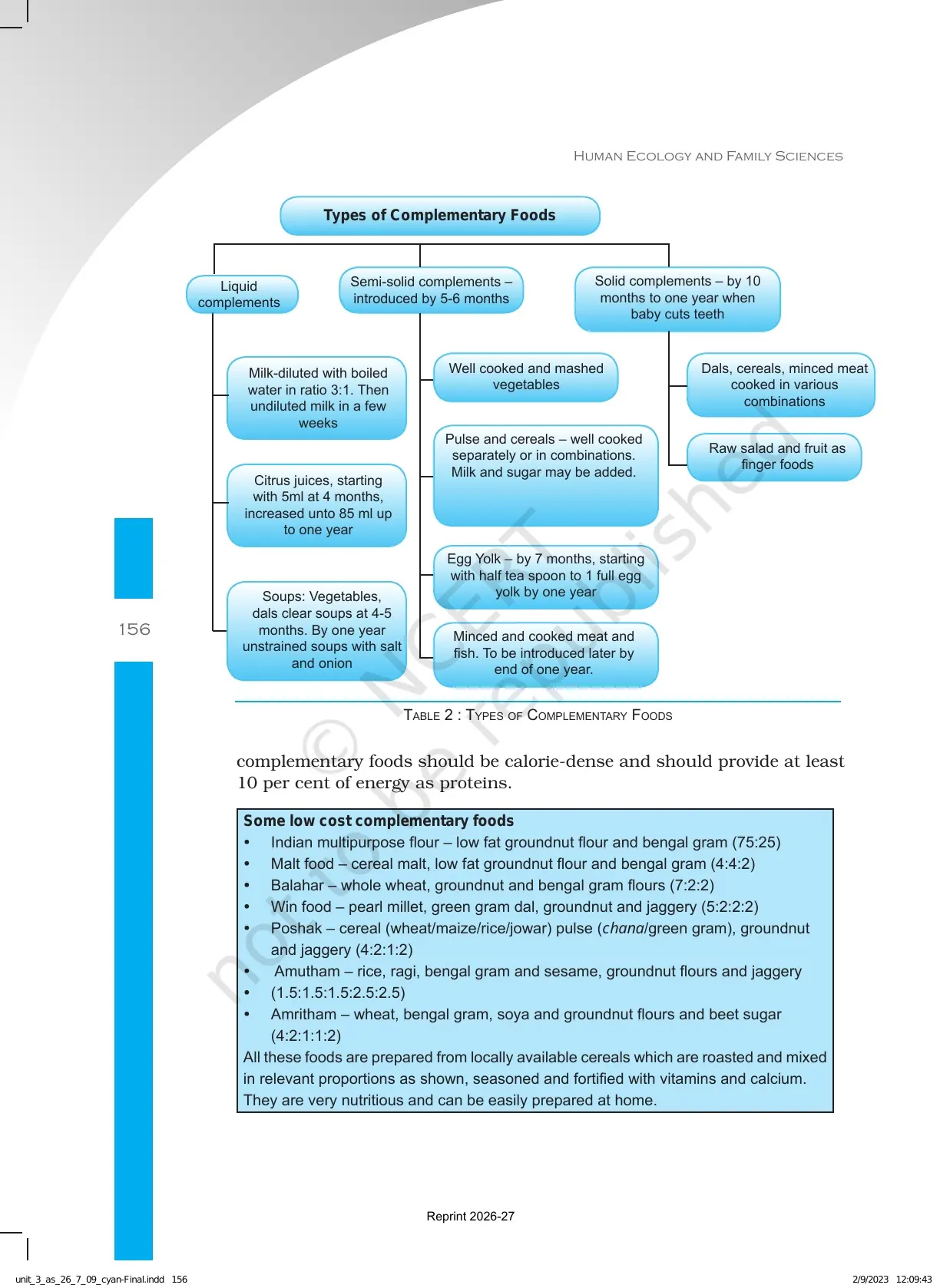
- Complementary food: soft foods fill the gap after six months.
- Preschool children: small meals and snacks build habits.
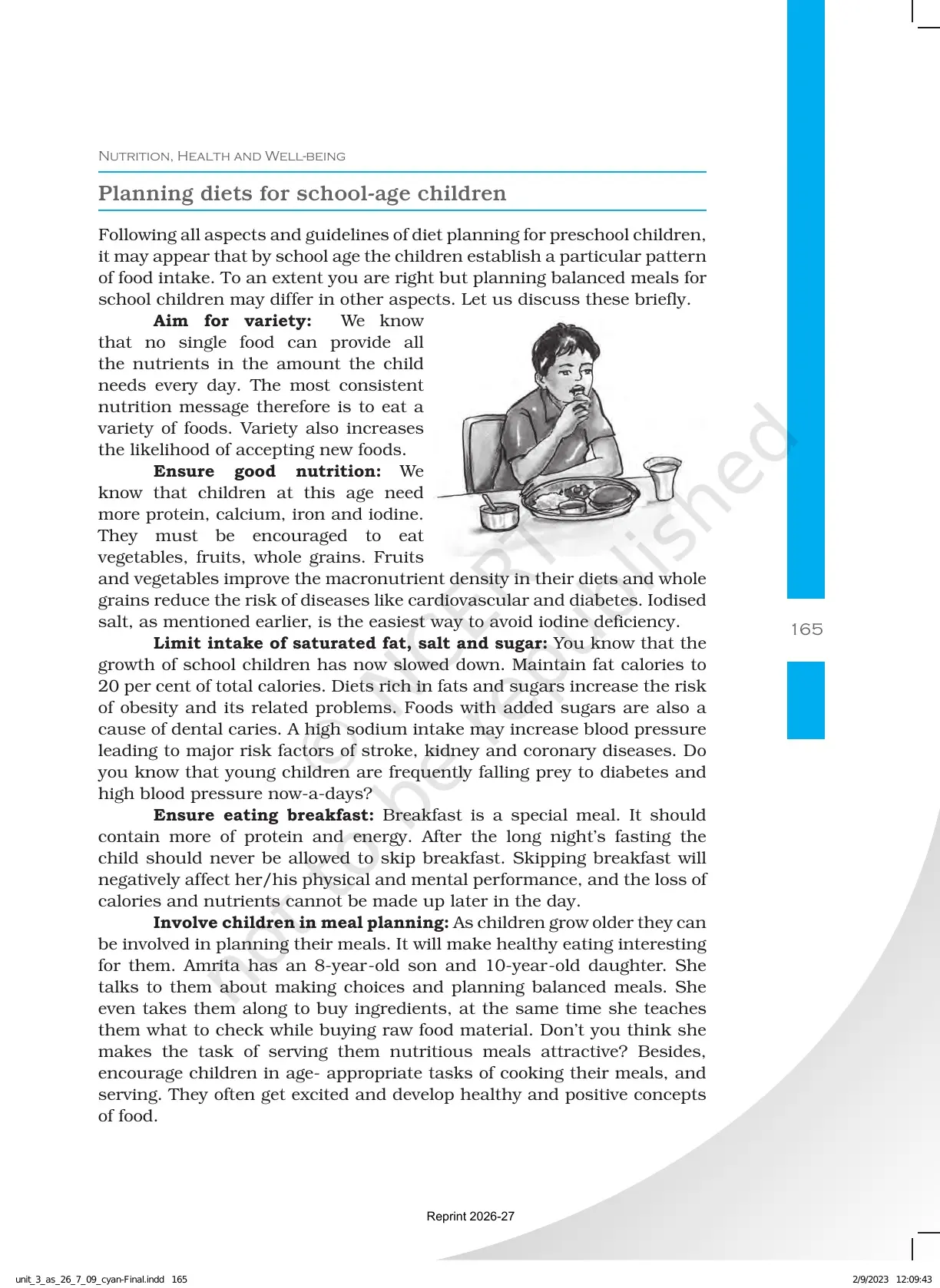
- School-age children: regular meals support study, play and growth.
NCERT's key link is clear: food habits formed in childhood often continue later.
Infancy, Preschool and School-age Nutrition Compared
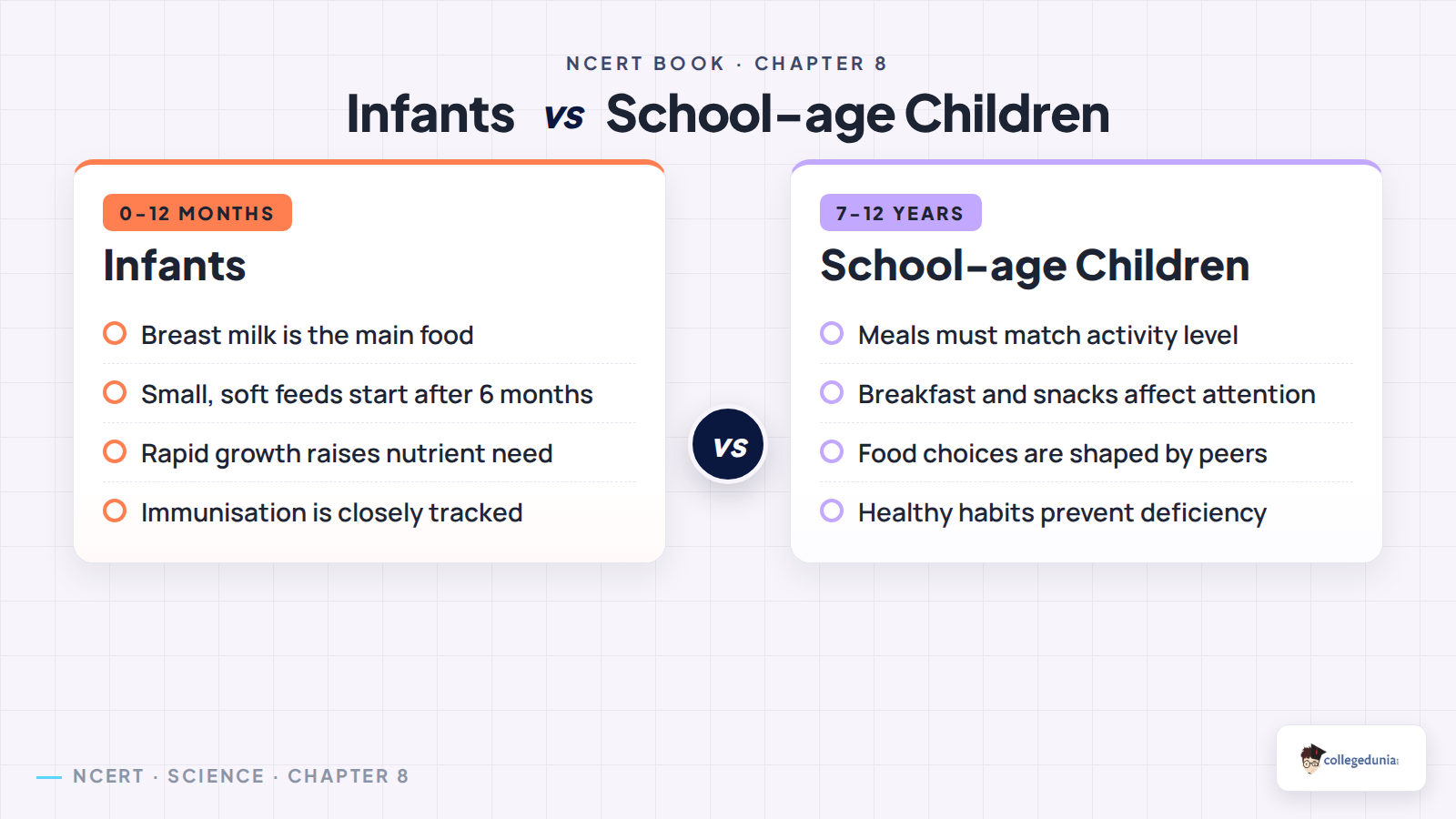
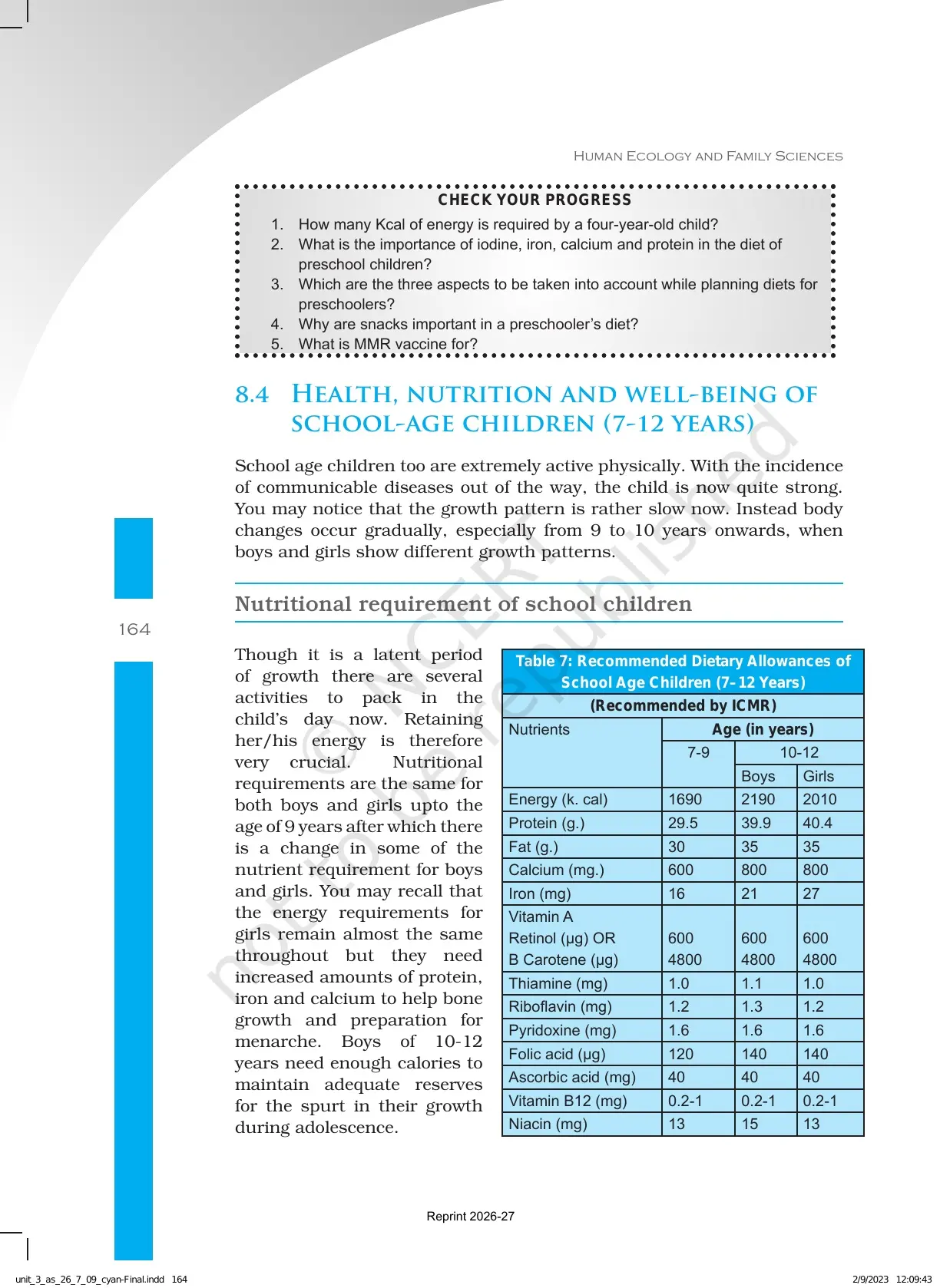
NCERT asks students to notice that growth speed changes across childhood. Infancy is rapid. Preschool years build habits. School-age children need meals that support study, games and daily routines.
| Age group | What NCERT stresses | Student task |
|---|---|---|
| Infants | Breast feeding, complementary feeding and vaccines | Learn the order of feeding stages |
| Preschool children | Balanced meals, attractive food and safe habits | Plan one day's meals and snacks |
| School-age children | Energy, breakfast, lunch box and activity needs | Compare healthy and poor snack choices |
Immunisation and Childhood Health Problems in Nutrition, Health and Well-being
The chapter connects nutrition with disease prevention. It explains immunisation and also lists health problems linked with poor food intake, unsafe feeding or low care.
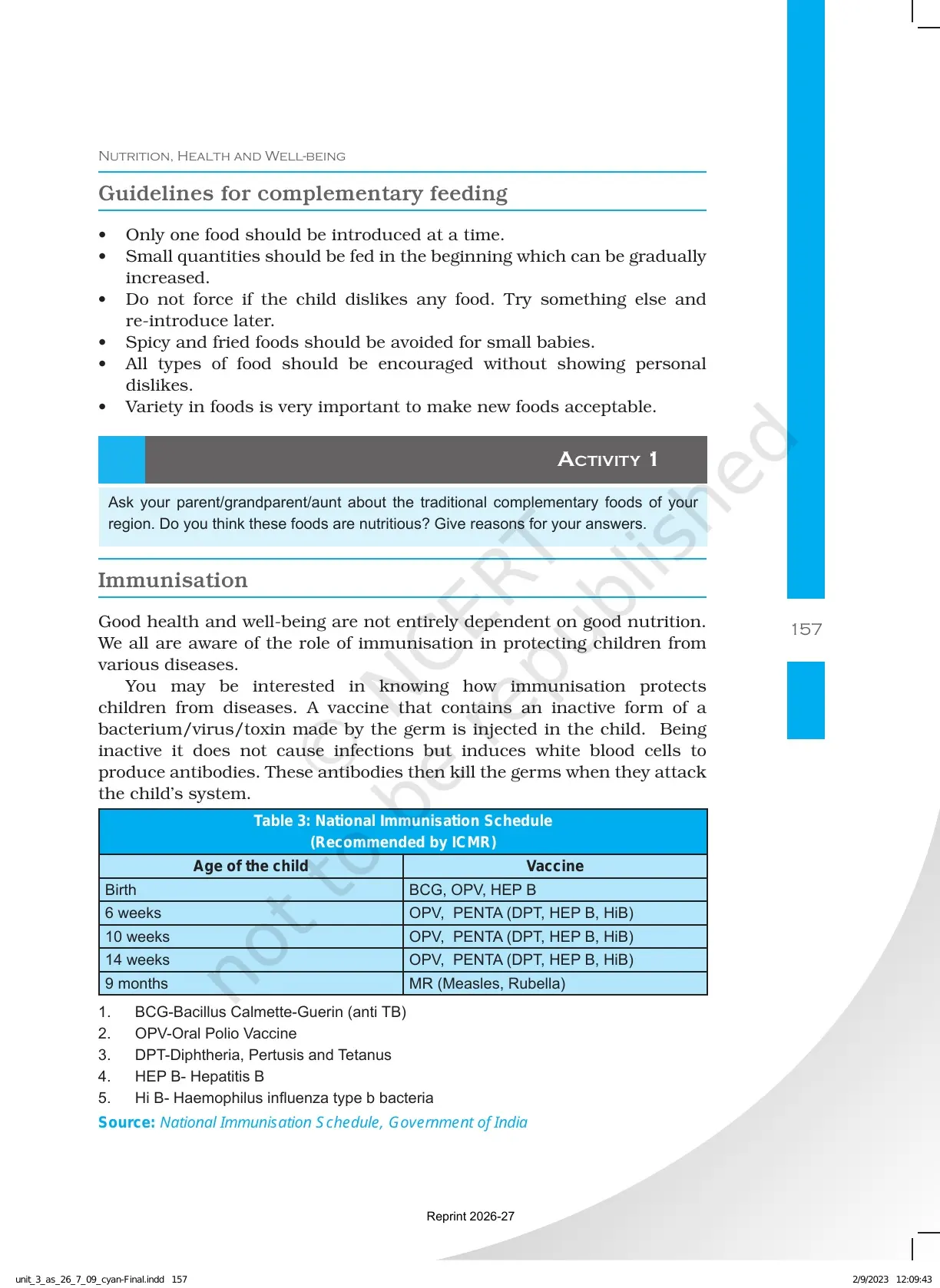
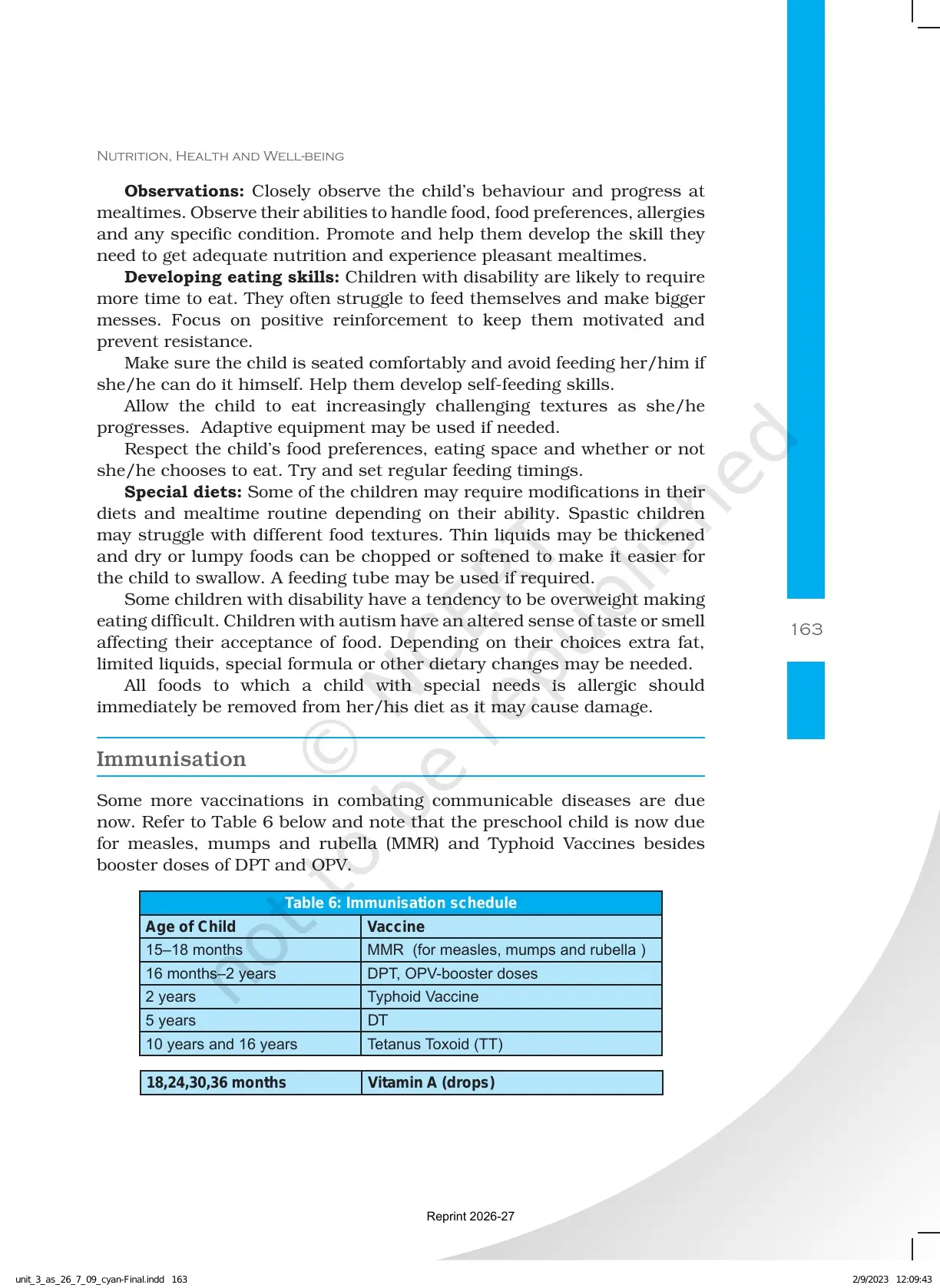
- Immunisation: vaccines protect children from preventable diseases.
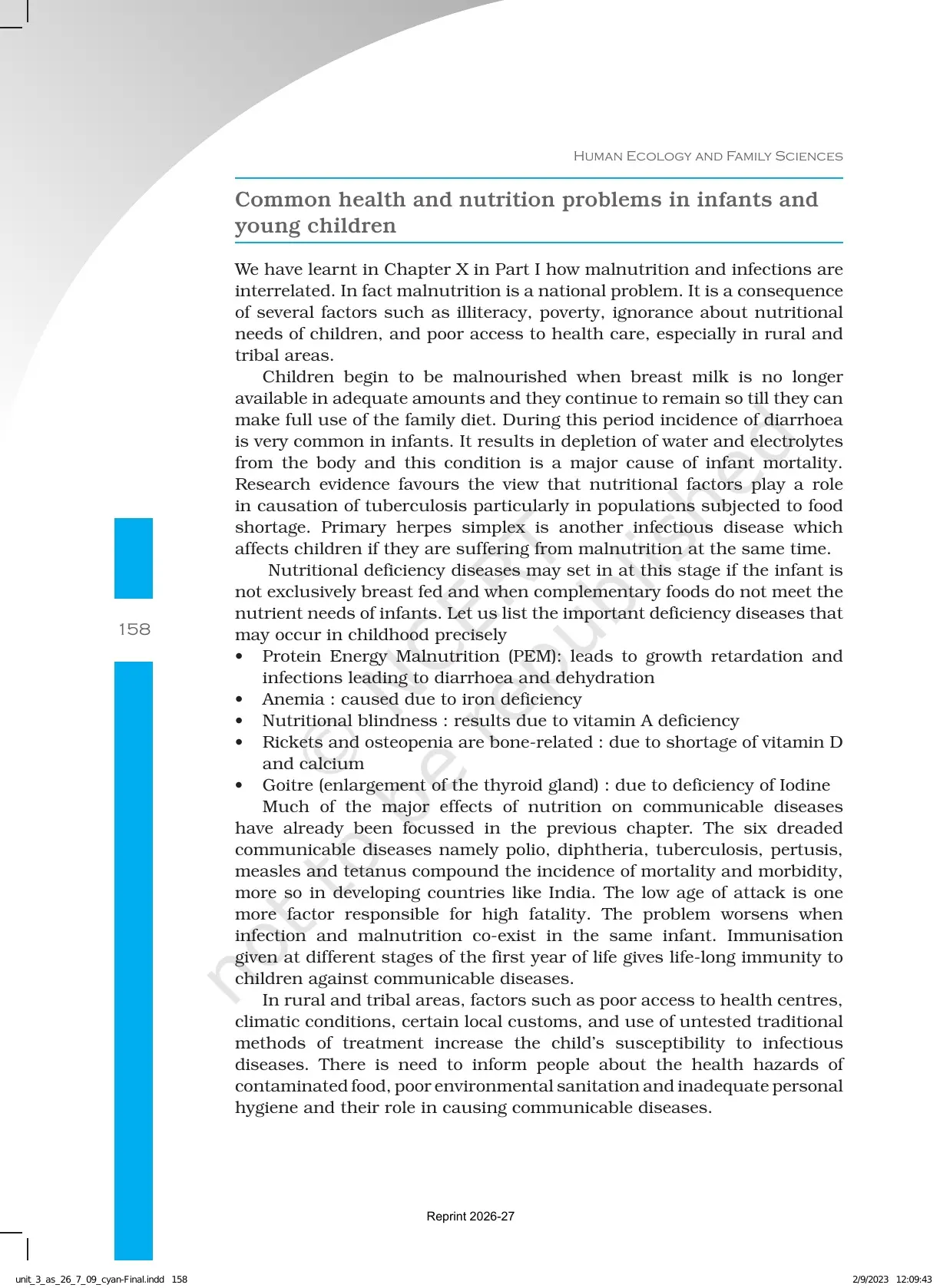
- Protein Energy Malnutrition: poor intake can slow growth and raise infection risk.
- Anemia: iron deficiency can reduce strength and attention.
- Vitamin A deficiency: it may lead to nutritional blindness.
- Rickets: low vitamin D and calcium can affect bones.
Revise vaccine names and deficiency diseases together, because NCERT places both inside child well-being.
Related Class 11 Home Science Chapter 8 Resources
Use these related resources when you want Nutrition, Health and Well-being in another format. The table stays above the FAQ so students can move from the official book PDF to revision material quickly.
| Resource | Best use | Link |
|---|---|---|
| NCERT Book PDF | Read the official 2026-27 source chapter | This page has the book PDF above |
| NCERT Notes | Revise age-wise nutrition needs, immunisation and deficiency diseases | Open notes |
| Handwritten Notes | Use a topper-style revision copy for feeding charts and key terms | Open handwritten notes |
More NCERT Book PDFs for Home Science Chapters
The table below keeps NCERT Book PDF resources together, so students can continue official textbook reading chapter by chapter.
| Chapter | NCERT chapter title | Book PDF |
|---|---|---|
| Class 11 Chapter 1 | Introduction: Evolution of the Discipline and its Relevance to Quality of Life | Open book PDF |
| Class 11 Chapter 2 | Understanding the Self | Open book PDF |
| Class 11 Chapter 3 | Food, Nutrition, Health and Fitness | Open book PDF |
| Class 11 Chapter 4 | Management of Resources | Open book PDF |
| Class 11 Chapter 5 | Fabrics Around Us | Open book PDF |
| Class 11 Chapter 6 | Media and Communication Technology | Open book PDF |
| Class 11 Chapter 7 | Concerns and Needs in Diverse Contexts | Open book PDF |
| Class 11 Chapter 8 | Nutrition, Health and Well-being | Current book PDF |
Nutrition, Health and Well-being Class 11 Home Science NCERT Book FAQs
Ques. What is included in the Class 11 Home Science Chapter 8 NCERT Book PDF?
Ans. The PDF includes the official NCERT chapter on child nutrition, infant feeding, complementary foods, preschool diets, school-age meals, immunisation and deficiency diseases.
Ques. How many pages are there in this Nutrition, Health and Well-being PDF?
Ans. The official Class 11 Home Science Chapter 8 PDF used here has 20 pages in the local NCERT chapter file.
Ques. Which age groups are covered in Chapter 8?
Ans. Chapter 8 covers infancy, preschool children and school-age children, with nutrition and health points for each stage.
Ques. Why is immunisation important in Nutrition, Health and Well-being?
Ans. Immunisation protects children from preventable diseases, so NCERT places it with nutrition and health care while explaining child well-being.



Comments