



The NCERT Class 11 Sociology Chapter 8 Environment and Society PDF gives students the official 2026-27 chapter on ecology, resource use, environmental problems and social movements. Use it to revise how society shapes nature and how nature shapes social life.
- Core focus: ecology, social organisation, resource control, pollution, global warming and environmental movements.
- Best use: read the PDF with one local example of water, forest, land or pollution conflict.
- Exam value: short and long answers often ask why environmental issues are also social issues.
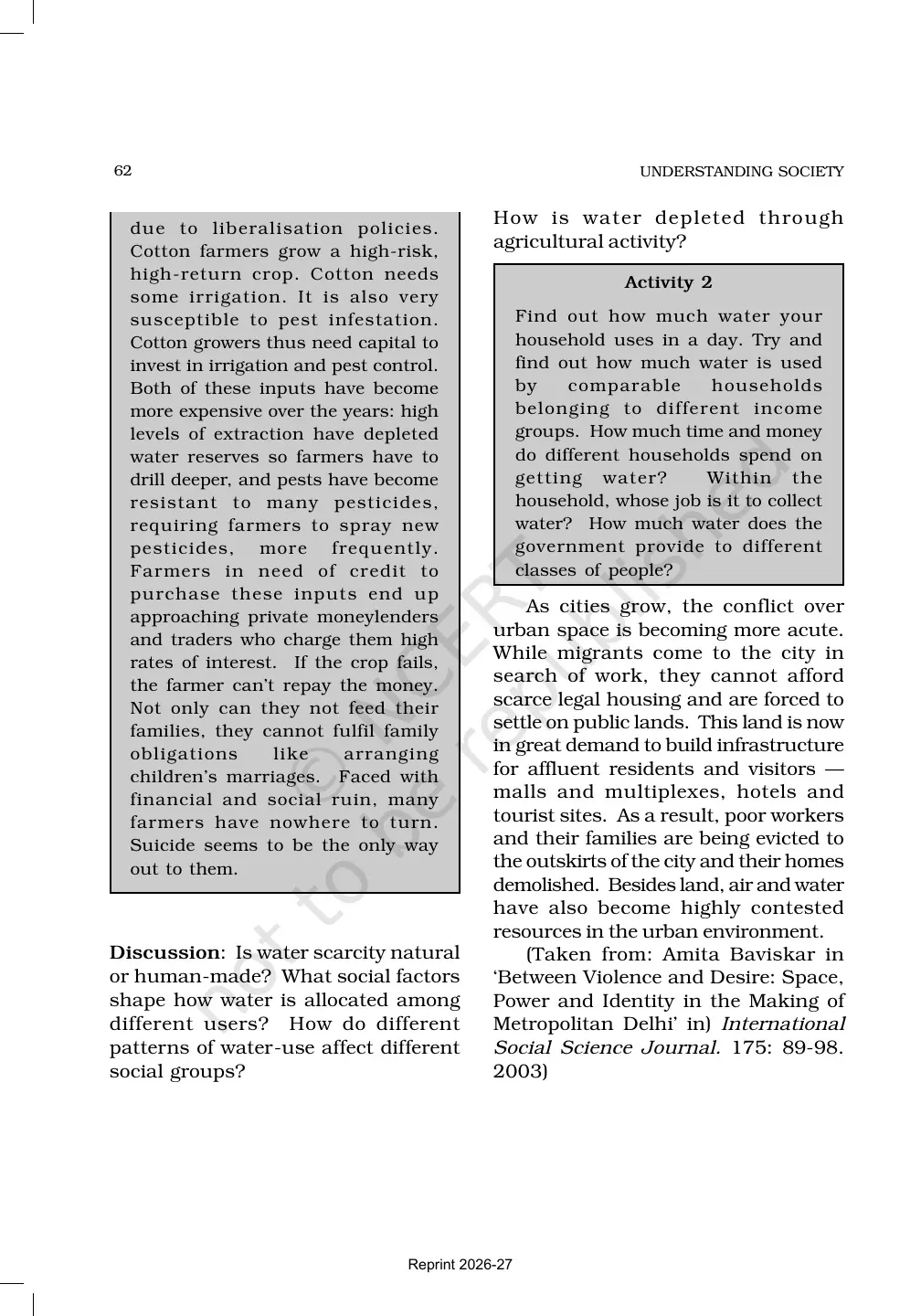
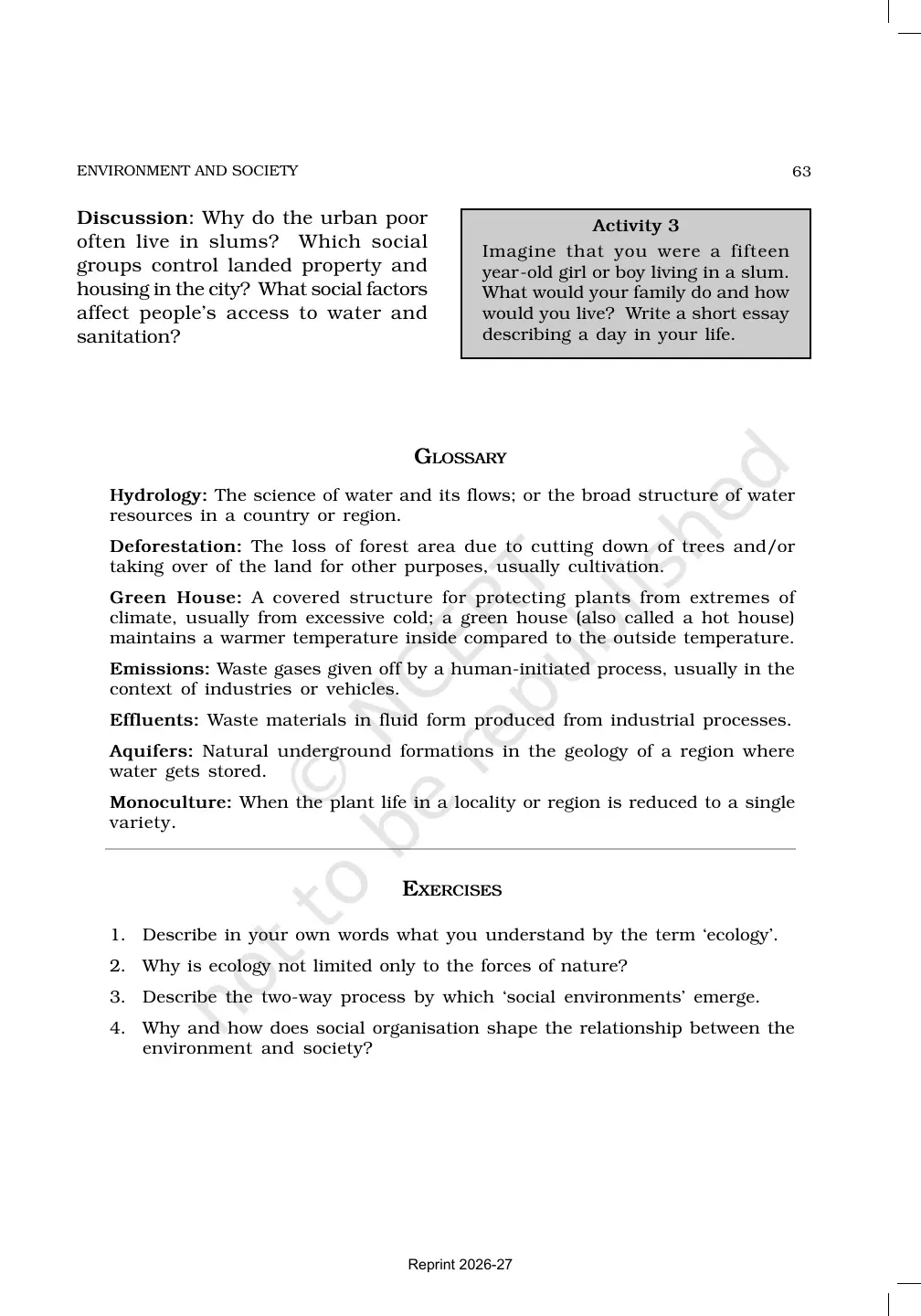
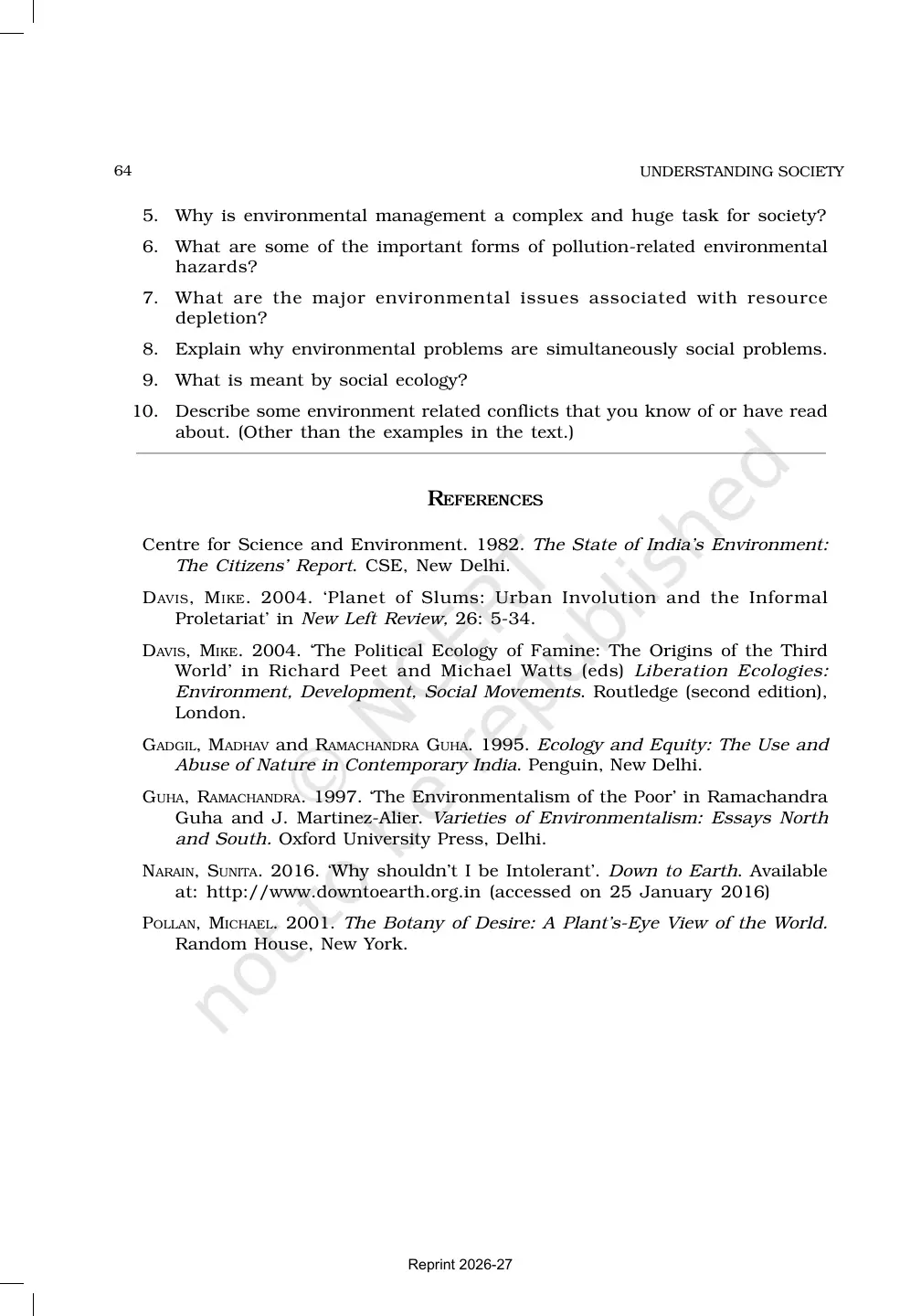
The official NCERT Class 11 Sociology Chapter 8 PDF helps students connect ecology, society, inequality and environmental action in one chapter.
Student Feedback: In a Collegedunia check of 10,480 Class 11 humanities students, most students said this chapter became clearer after they mapped ecology, property relations and environmental movements in one chart.
What the Environment and Society NCERT PDF Covers
NCERT begins with a simple classroom example and asks students to trace where everyday objects come from. The chapter shows that chairs, electricity, books, transport and buildings all depend on natural resources and social labour.
Environment and Society is about a two-way relationship. Ecology shapes how people live, but human action also changes rivers, forests, cities, climate and landscapes. The chapter is sociological because it asks who controls resources, who benefits from them and who faces the costs.
- Ecology: the web of physical and biological systems in which humans are one part.
- Social environment: the result of interaction between biophysical ecology and human intervention.
- Environmental problem: an ecological issue shaped by social power, property and policy.
Ecology and Social Life in Class 11 Sociology
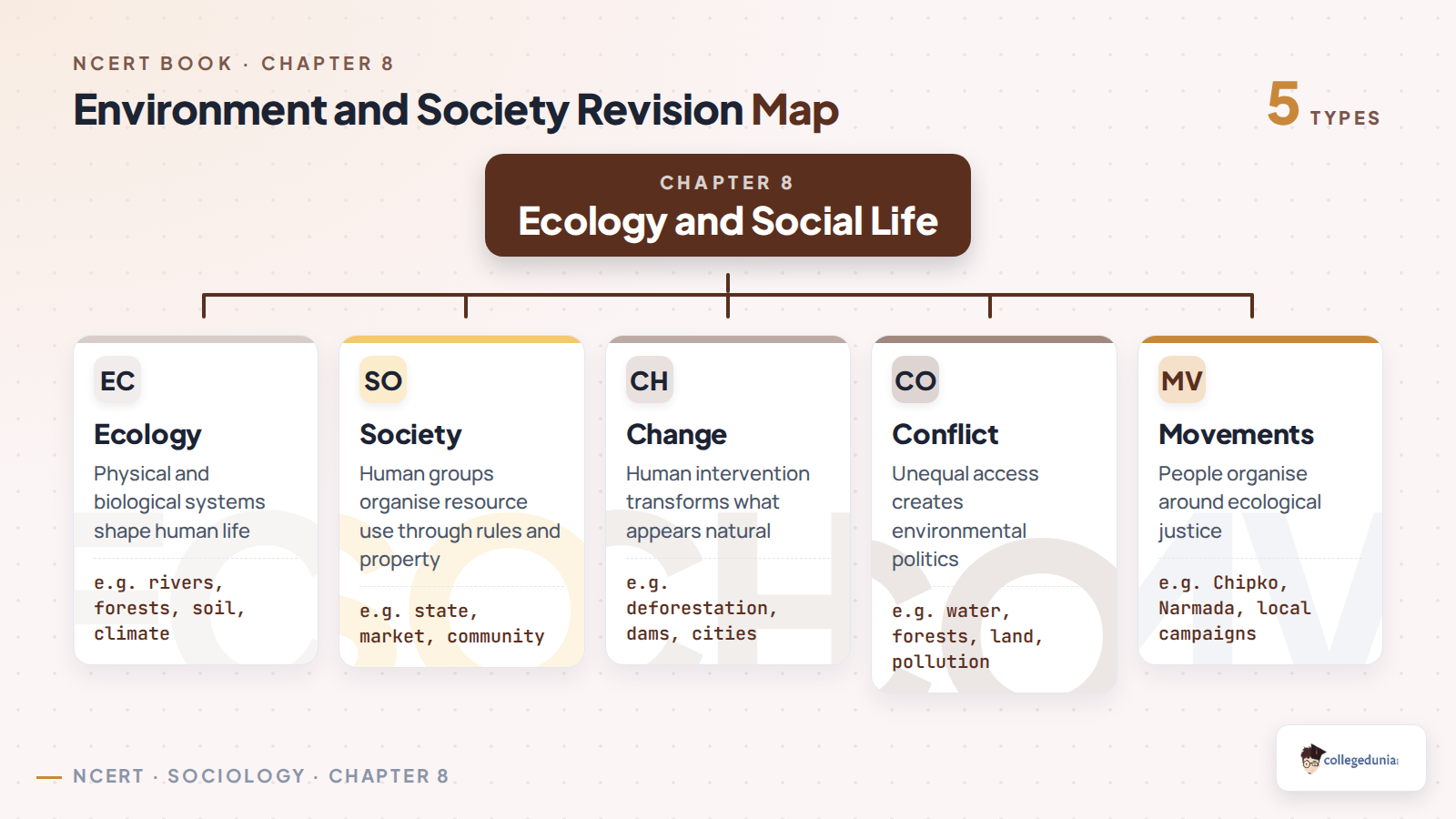
The chapter explains that all societies have an ecological basis. The Indo-Gangetic floodplain supports intensive agriculture and dense settlements because of fertile soil and water. The Rajasthan desert supports more mobile pastoral life because fodder and water are scarce.
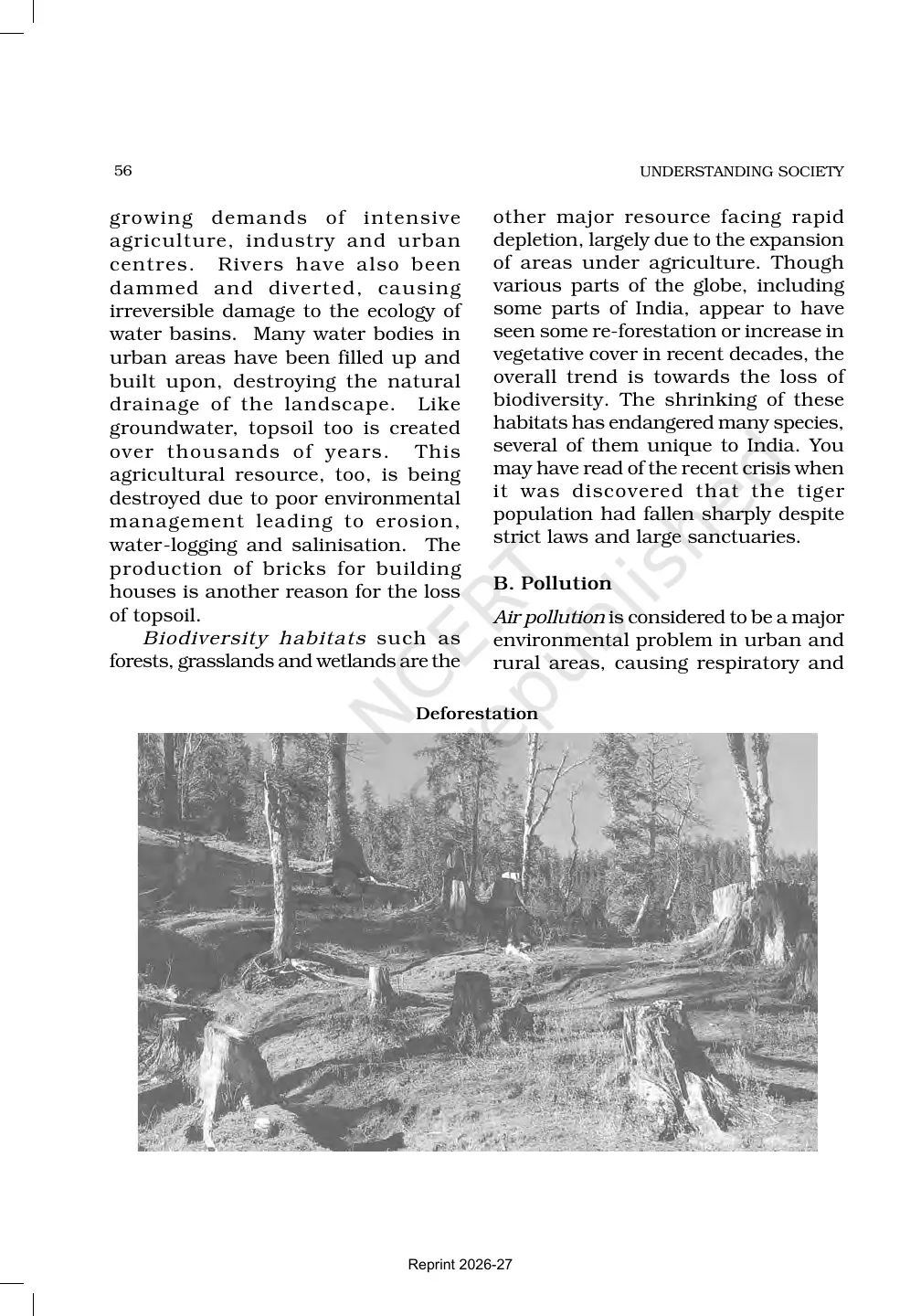
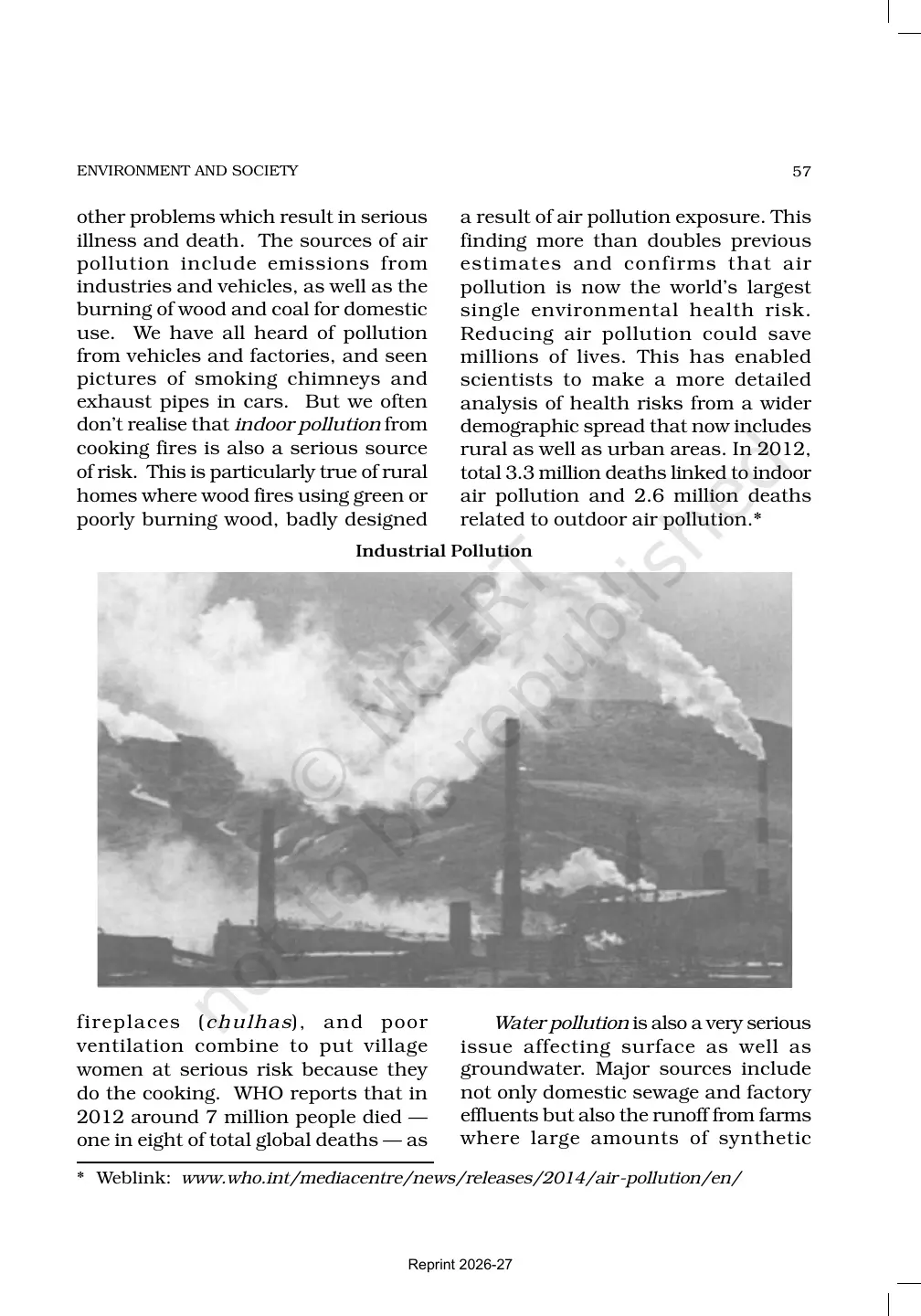
These examples show how ecology can shape human life. But NCERT also shows the reverse. Deforestation can make a river more flood-prone, cities can create air pollution and global warming is linked with large-scale human activity.
| Concept | NCERT meaning | Revision cue |
|---|---|---|
| Ecology | Physical and biological systems and processes around humans | Mountains, rivers, soil, climate, flora and fauna |
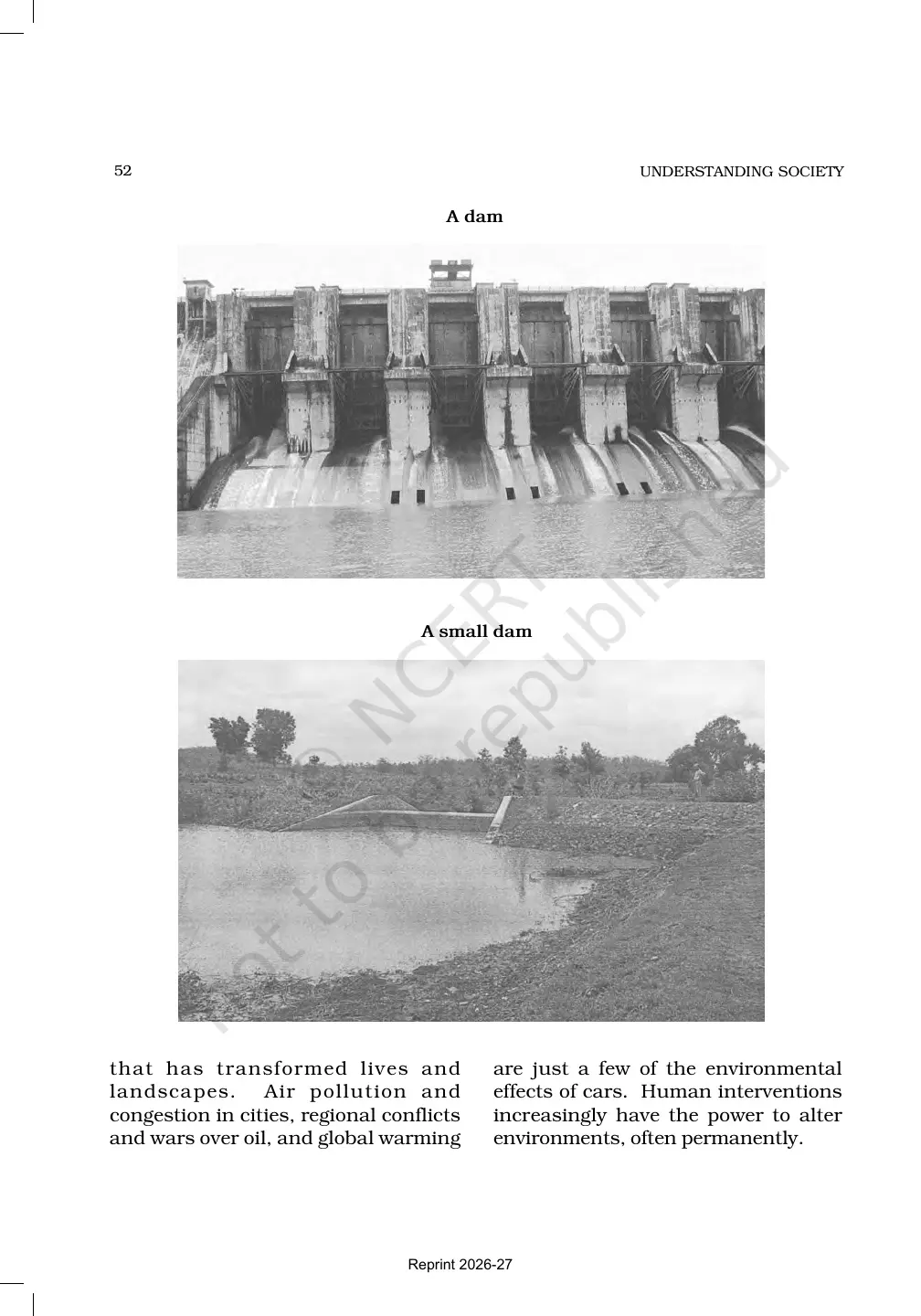
| Human intervention | Ways people modify natural systems | Dams, farms, cities, industry and deforestation |
| Social environment | Nature shaped through social activity and institutions | Rules, property, technology and labour |
| Ecological change | Change caused by natural and human factors together | Floods, pollution and climate change |
Environment and Society Video Recap
The video below supports the NCERT reading flow. Watch it after reading the PDF once, then return to the chapter and mark examples of ecology, resource control and environmental movements.
Source: Magnet Brains on YouTube
Environmental Problems as Social Problems
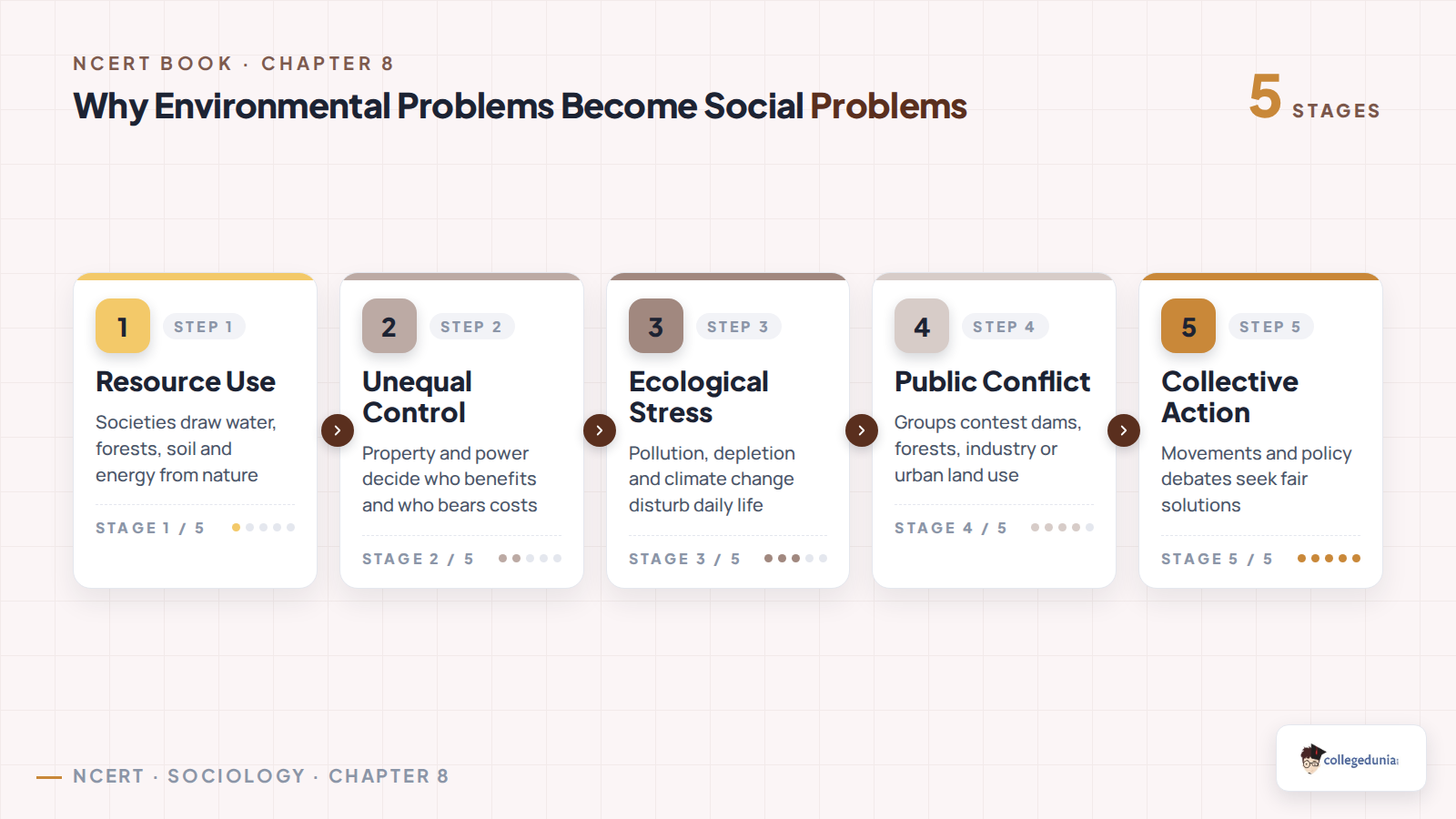
NCERT asks students to see pollution, resource depletion and global warming as social problems, not only natural problems. A polluted river affects farmers, workers, city residents and officials differently because each group has a different relationship with water.
Property relations decide how natural resources can be used. If forests are controlled by the state, policy decides whether timber companies, villagers or conservation authorities get priority. If land or water is private, access depends on ownership and bargaining power.
- Resource depletion: overuse of forests, water, soil, minerals or energy sources.
- Pollution: damage to air, water and land through waste, industry and urban growth.
- Global warming: climate change linked with human activity and unequal responsibility.
- Environmental justice: the question of who gains and who suffers from ecological change.
Industrialisation Cars and Ecological Footprints
The chapter uses industrialisation to show that one production system can leave ecological footprints across many places. Cotton mills in Britain depended on plantations, slave labour, coal smoke, urban labour and large changes in rural landscapes.
The private automobile is another example. Cars changed travel and cities, but they also created air pollution, oil conflicts, road congestion and carbon emissions. A good Sociology answer should connect the object, the resource chain and the social cost.
- Begin with the object or industry being discussed.
- Trace the natural resources and labour involved.
- Explain who benefits from the system.
- Explain who bears the environmental and social cost.
Environmental Movements and Social Ecology
Environmental movements appear when people organise around ecological damage, displacement or unfair resource control. NCERT discusses how environmental concerns become political when local communities, state agencies, companies and activists make competing claims.
Social ecology studies environmental issues through social relationships. It looks at inequality, caste, class, gender, property, state policy and local knowledge. This is why environment questions in Sociology need both ecological and social points.
| Answer point | What to write | Example cue |
|---|---|---|
| Ecological issue | Name the resource or damage involved | Forest, river, dam, pollution or climate |
| Social groups | Identify who is affected and who decides | Villagers, workers, industry, state, consumers |
| Power relation | Explain access, control or exclusion | Property, law, market or policy |
| Movement or solution | Show how people respond collectively | Protest, negotiation, policy change or conservation |
How to Use the Chapter 8 Book PDF for Revision
Use the official PDF in three rounds. First, underline definitions of ecology, social environment and environmental problem. Second, make a cause-effect table for deforestation, pollution and global warming. Third, add one movement or local example to each answer.
- For definitions: write ecology, social environment and social ecology in one line each.
- For examples: connect forests, rivers, dams, cars or cities with social organisation.
- For long answers: explain the environmental issue, then show property, power and inequality.
- For revision: keep the chapter map beside the PDF and recite one example per section.
Environment and Society Class 11 Related Resources
| Resource | Best use |
|---|---|
| Environment and Society NCERT Solutions | Use for exercise answers and examples from the textbook. |
| Environment and Society Notes | Use for concise sociology definitions once the notes page is live. |
| Environment and Society Handwritten Notes | Use for one-shot revision once the handwritten notes page is live. |
All Class 11 Sociology NCERT Book Chapters
| Chapter | NCERT Book PDF |
|---|---|
| 1 | Sociology and Society |
| 2 | Terms, Concepts and Their Use in Sociology |
| 3 | Understanding Social Institutions |
| 4 | Culture and Socialisation |
| 5 | Doing Sociology: Research Methods |
| 6 | Social Structure, Stratification and Social Processes in Society |
| 7 | Social Change and Social Order in Rural and Urban Society |
| 8 | Environment and Society |
| 9 | Introducing Western Sociologists |
| 10 | Indian Sociologists |
Environment and Society Class 11 NCERT Book FAQs
Ques. What is included in the Class 11 Sociology Chapter 8 NCERT PDF?
Ans. It includes the official chapter on ecology, society, resource use, environmental problems, social ecology and environmental movements.
Ques. What does ecology mean in Class 11 Sociology?
Ans. Ecology means the web of physical and biological systems and processes of which humans are one element.
Ques. Why are environmental problems also social problems?
Ans. They involve property, power, inequality and policy because different social groups control and experience resources differently.
Ques. What is social ecology?
Ans. Social ecology studies environmental issues through social relationships such as class, caste, gender, state policy and local community life.
Ques. How should students revise Environment and Society for 2026-27 exams?
Ans. Students should learn the definitions, make a resource-control table and add examples of pollution, deforestation and environmental movements.



Comments