



The Human Health and Disease Class 12 Biology NCERT Book PDF covers common human diseases, immunity types, AIDS, cancer, and drug and alcohol abuse. Chapter 7 is concept-heavy and high-yield for NEET, with steady CBSE Board returns from immunity and AIDS topics. Students can read and download the official NCERT chapter file from the embed above.
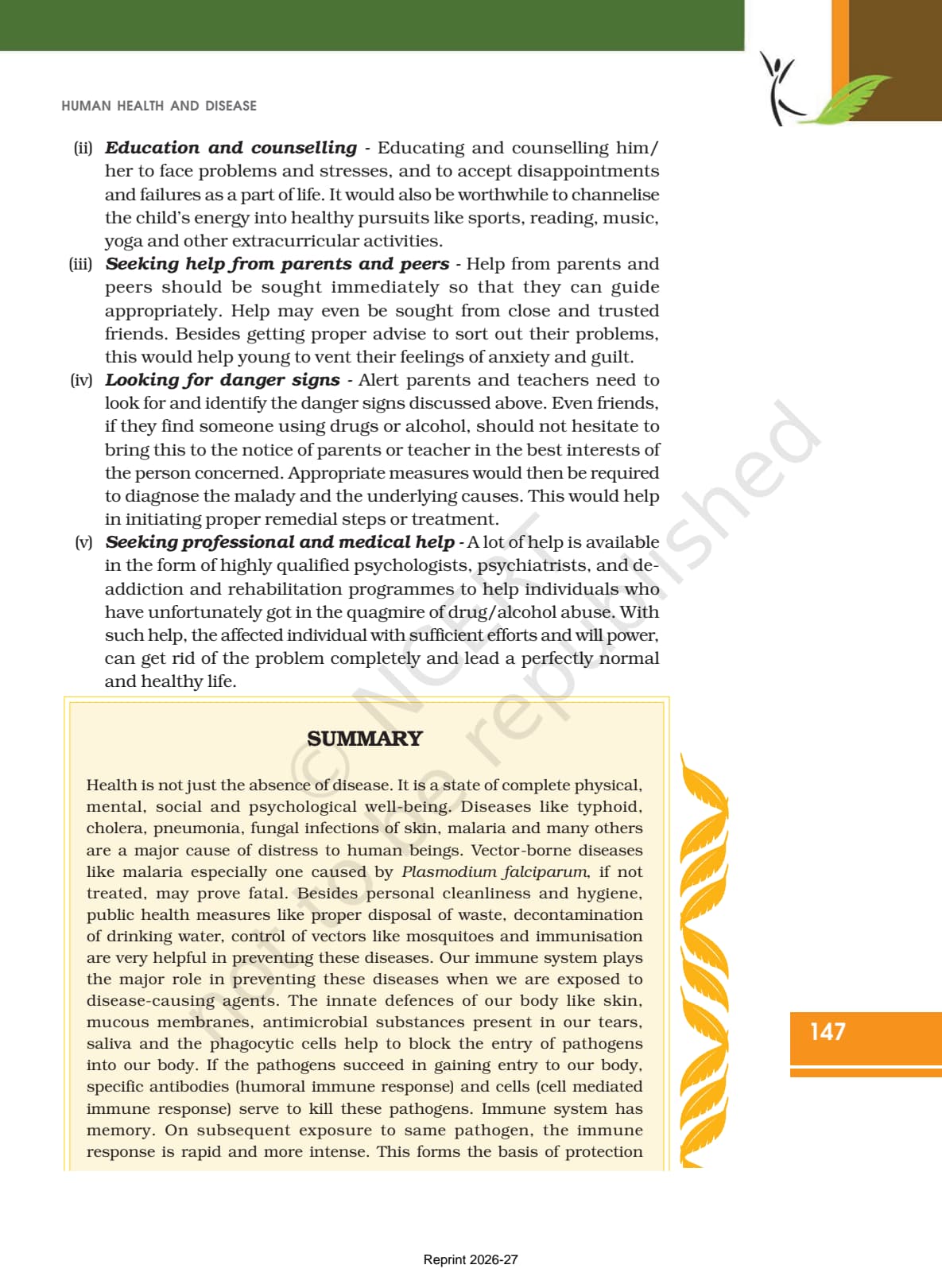
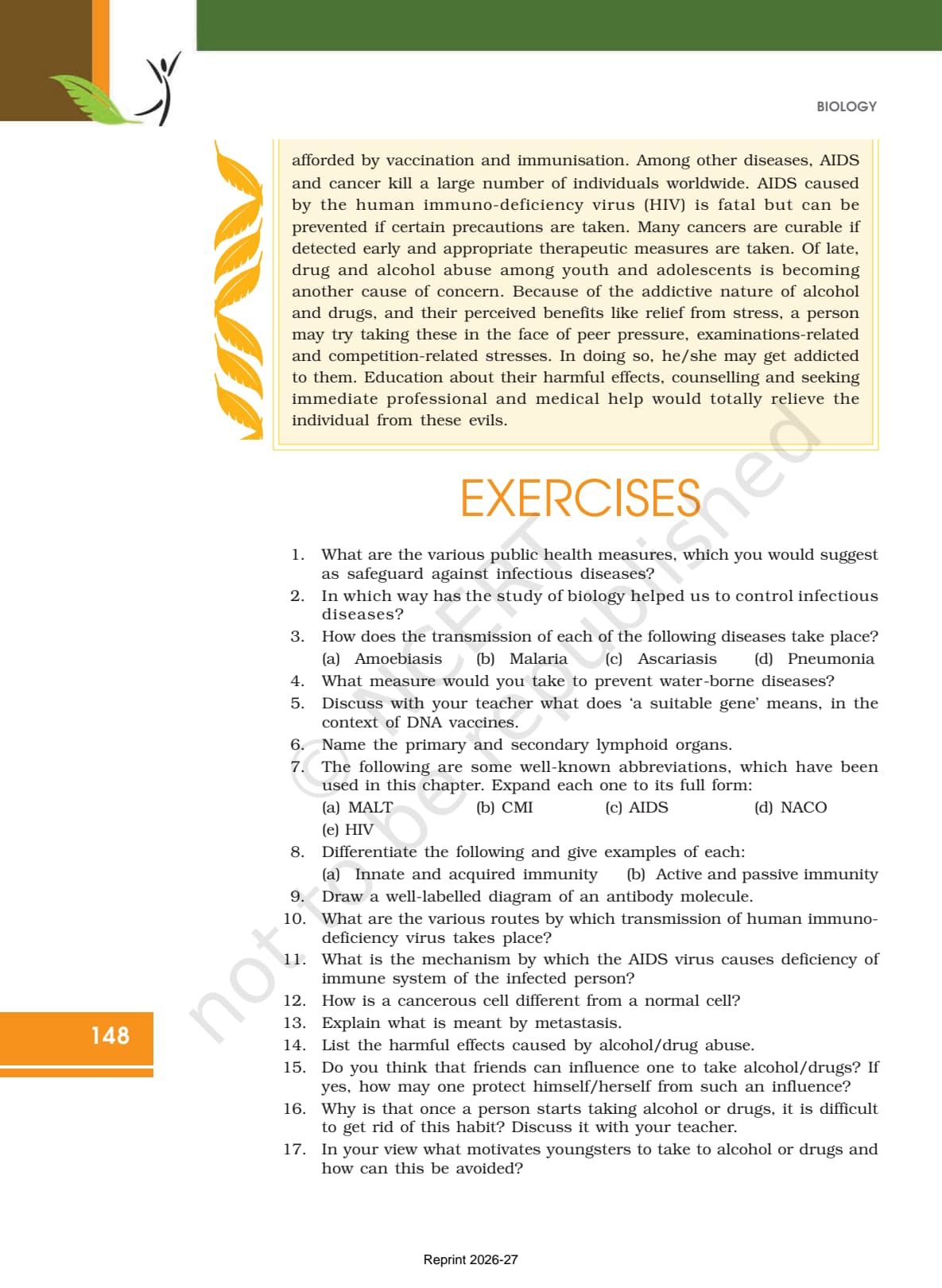
- CBSE Weightage: 6 to 7 marks
- NEET Weightage: 3 to 5 questions per year
- AIIMS / CUET: 1 to 2 questions per paper
How will Collegedunia's NCERT Book PDF Help You with Human Health and Disease?
Collegedunia's NCERT Book PDF page reproduces the official Chapter 7 file and adds navigation aids for focused study.
- 2026-27 NCERT Alignment: Matches the current Reprint 2026-27 with Sections 7.1 through 7.5 intact.
- Section Map: Each section is tagged with its page range so students can jump to the disease list, antibody diagram, or drug-effect table during Exercises.
- Expert Verification: Every Exercise number and figure label cross-checked against the official NCERT print.
What is Inside the Human Health and Disease NCERT Book PDF?
The PDF matches what the NCERT server hosts. Exercises Q3, Q7 and Q14 span more than one section and reward students who read linearly.
Human Health and Disease NCERT Section-by-Section Breakdown for Class 12
Map each section to its page range before attempting an Exercise.
| Section | Title | Pages | Core Idea |
|---|---|---|---|
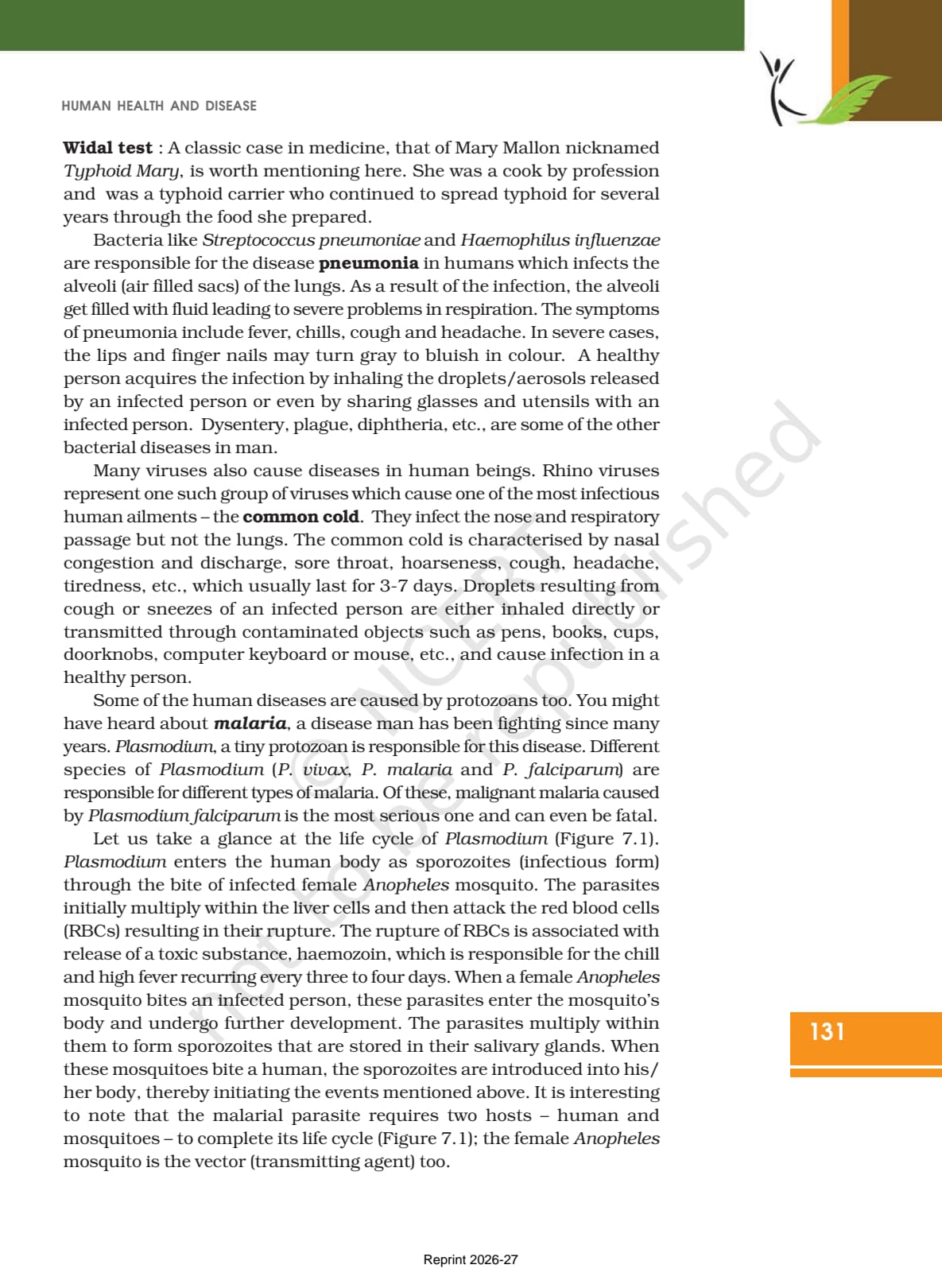
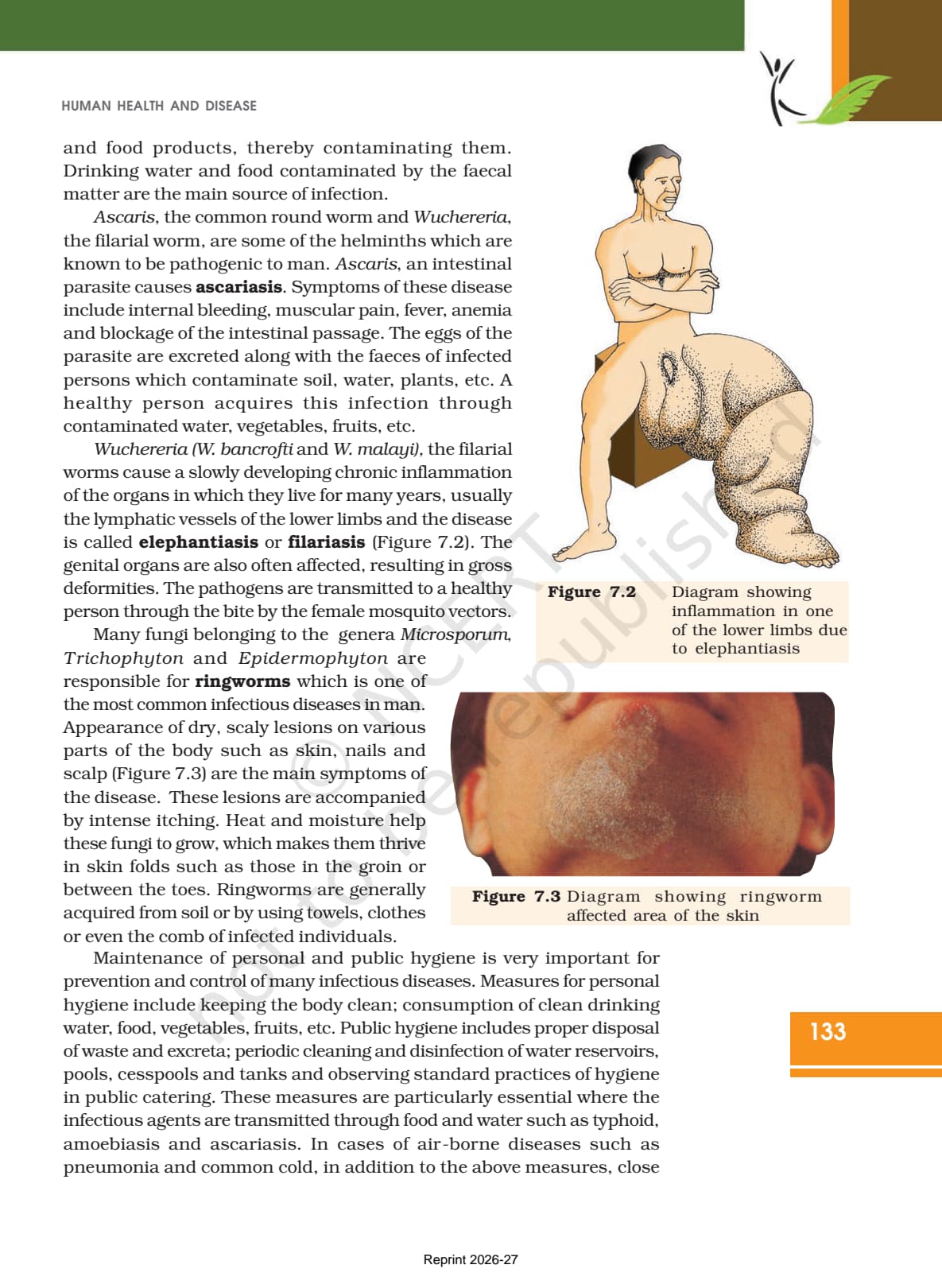
| 7.1 | Common Diseases in Humans | 1 to 6 | Pathogens of seven diseases; vector biology and prevention |
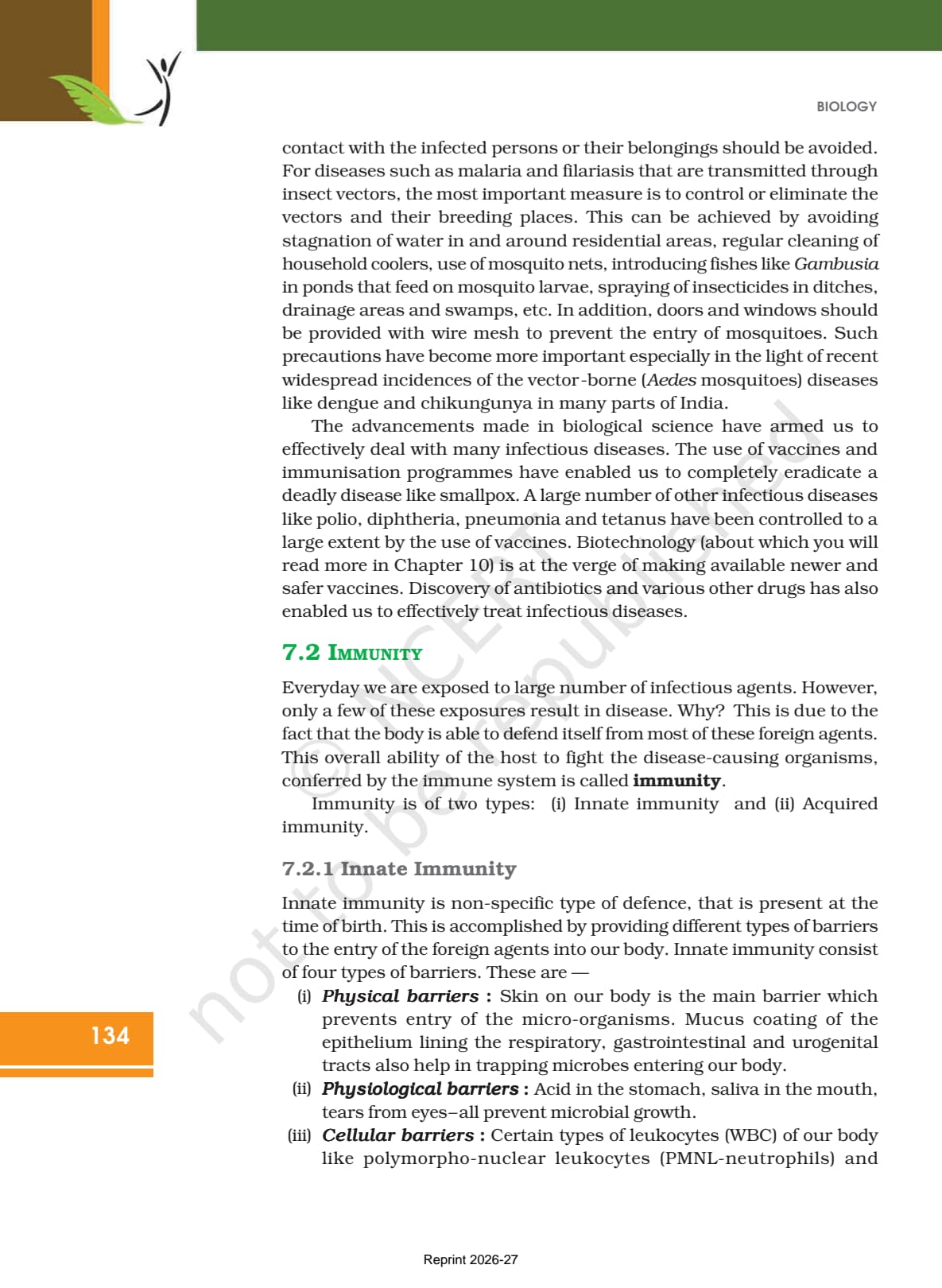
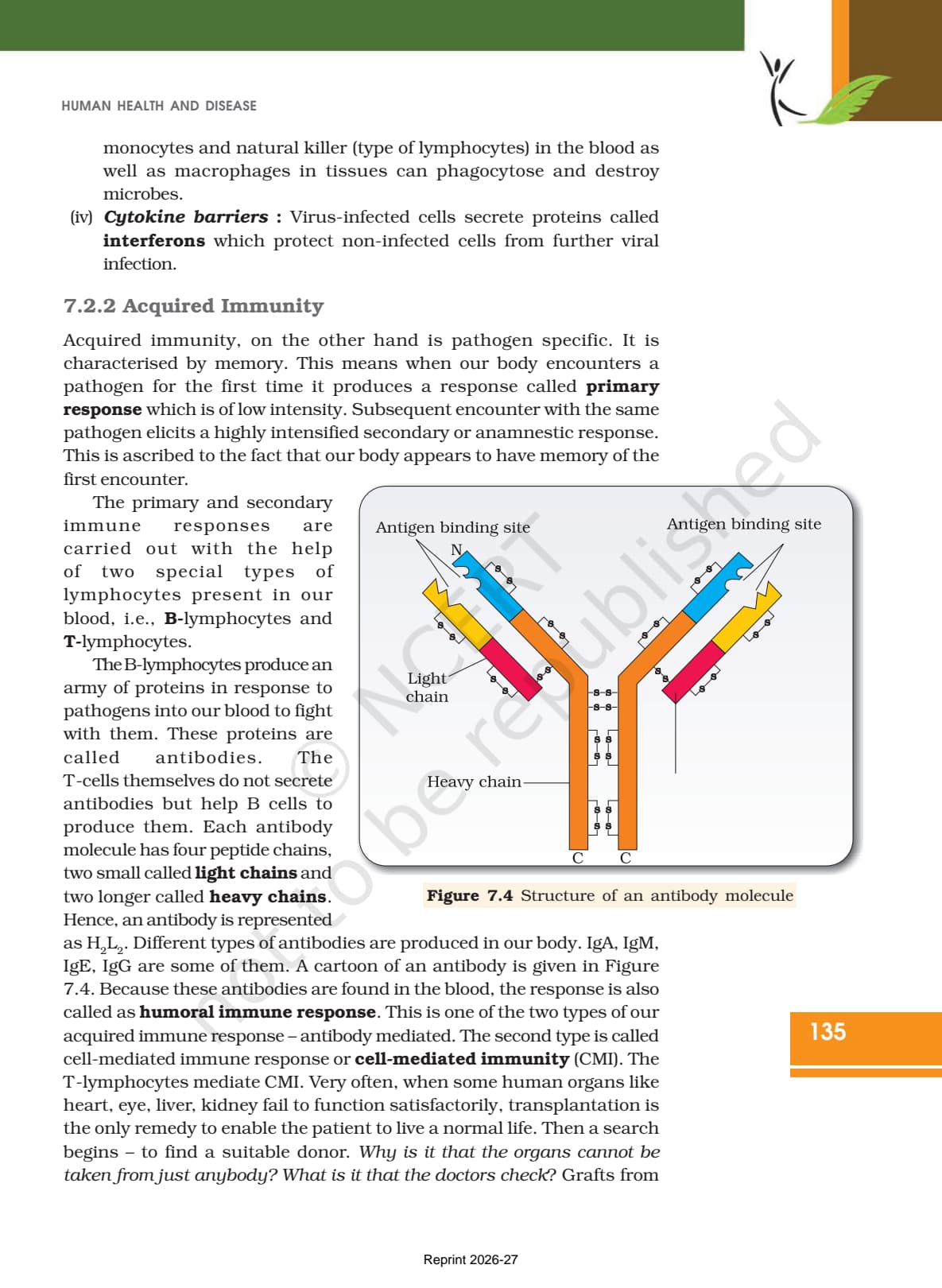
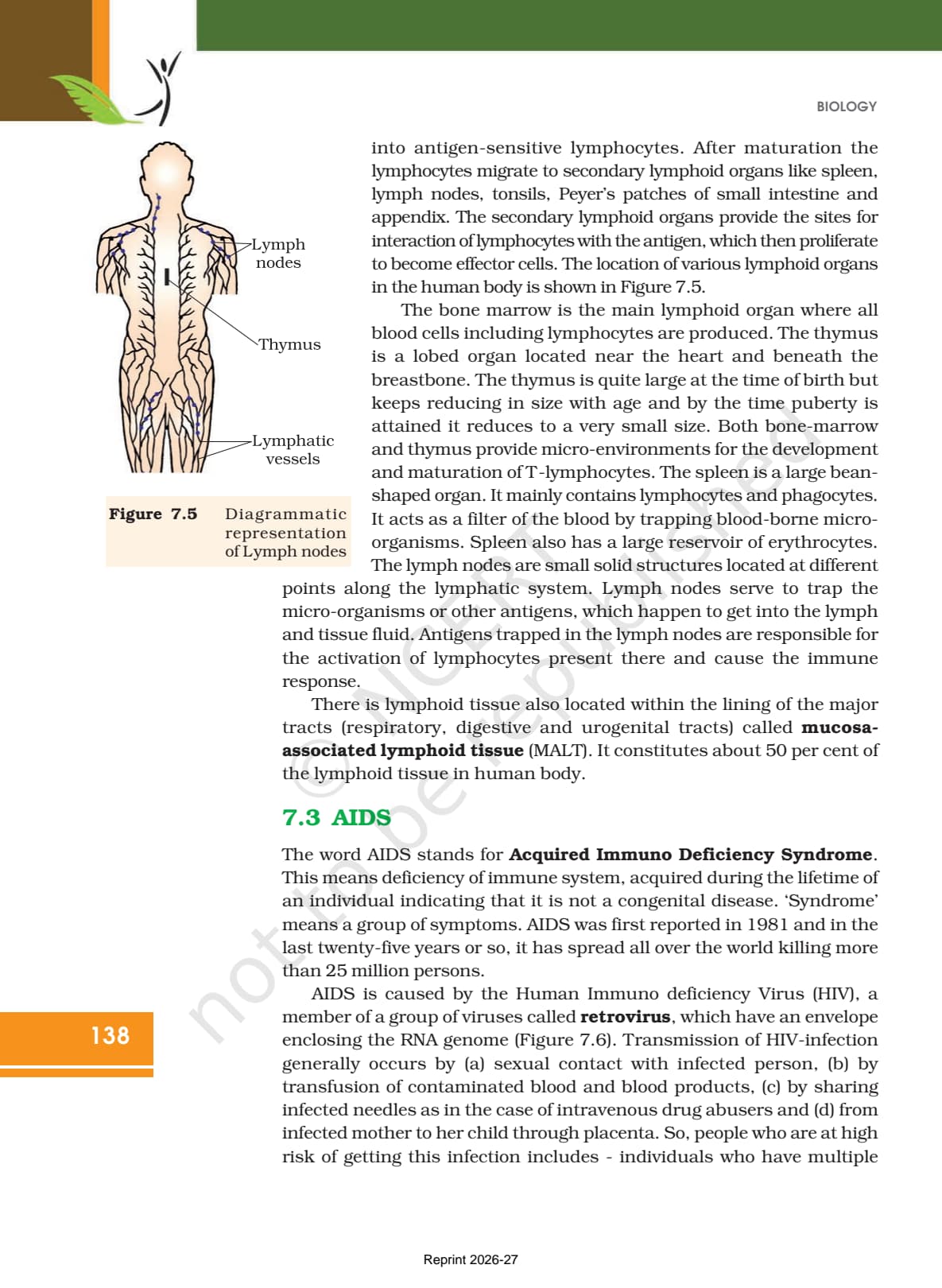
| 7.2 | Immunity | 7 to 12 | Innate vs acquired, antibody structure, lymphoid organs, allergies |
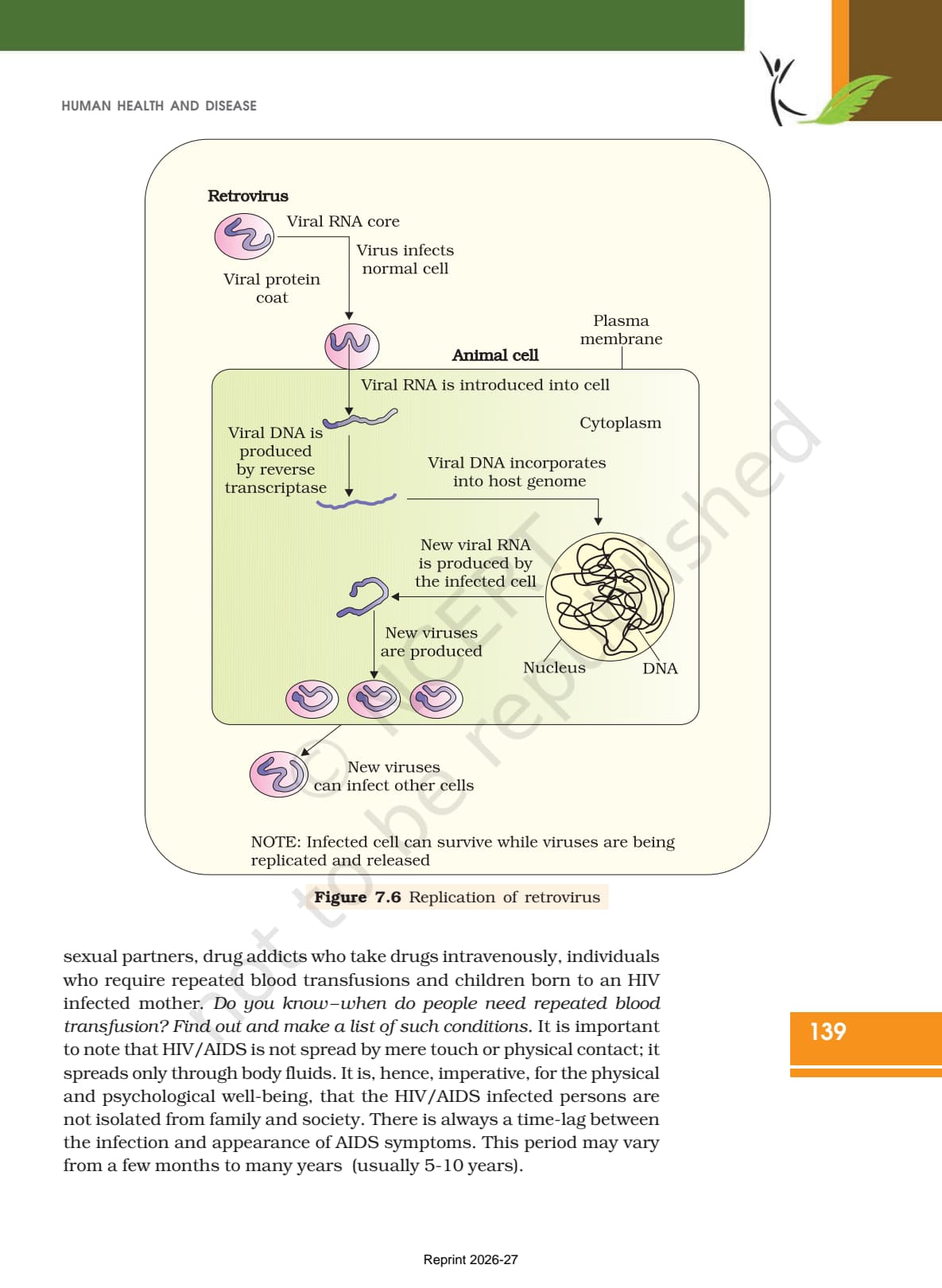
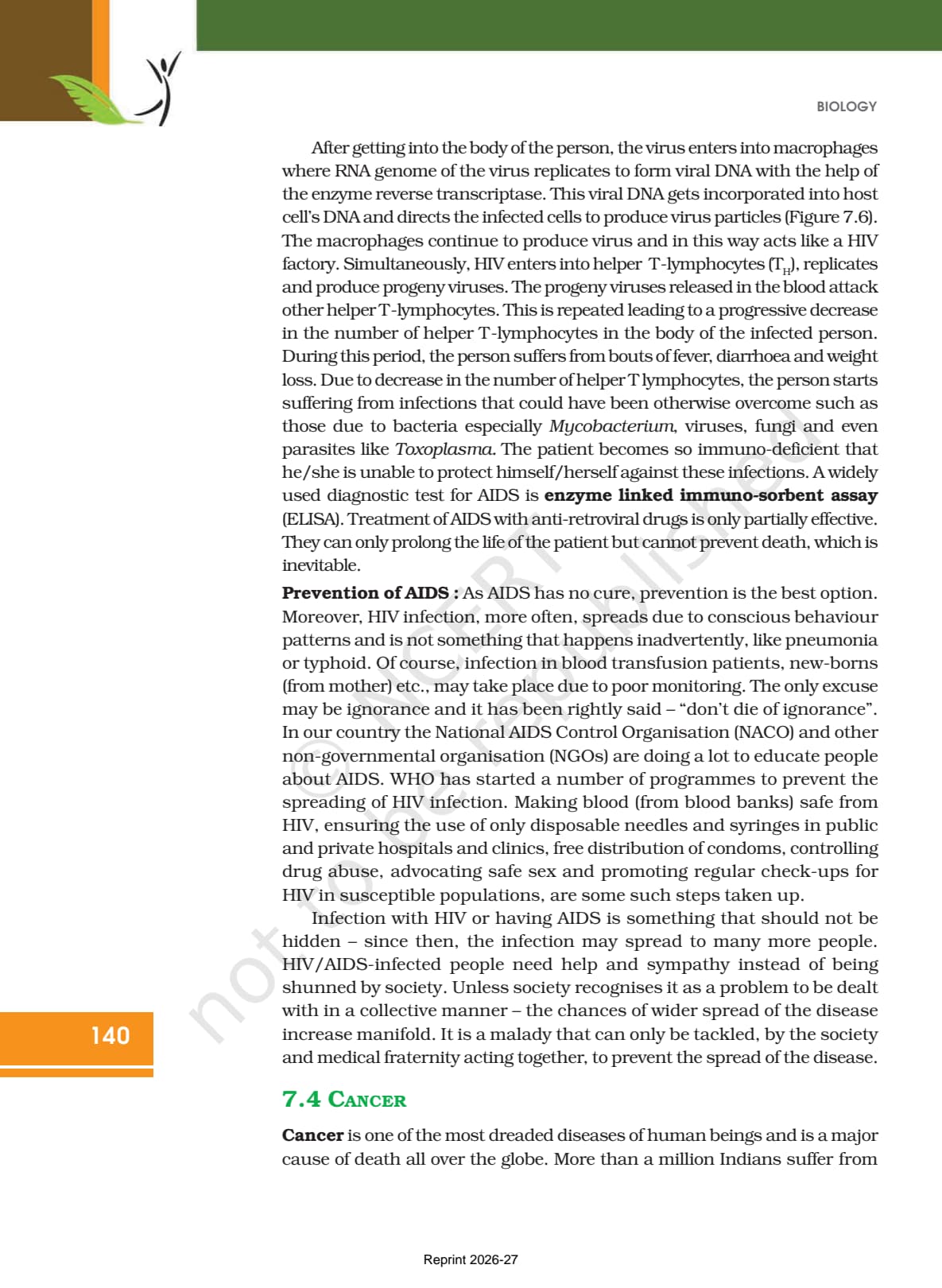
| 7.3 | AIDS | 13 to 15 | HIV replication cycle, transmission, ELISA diagnosis, NACO |
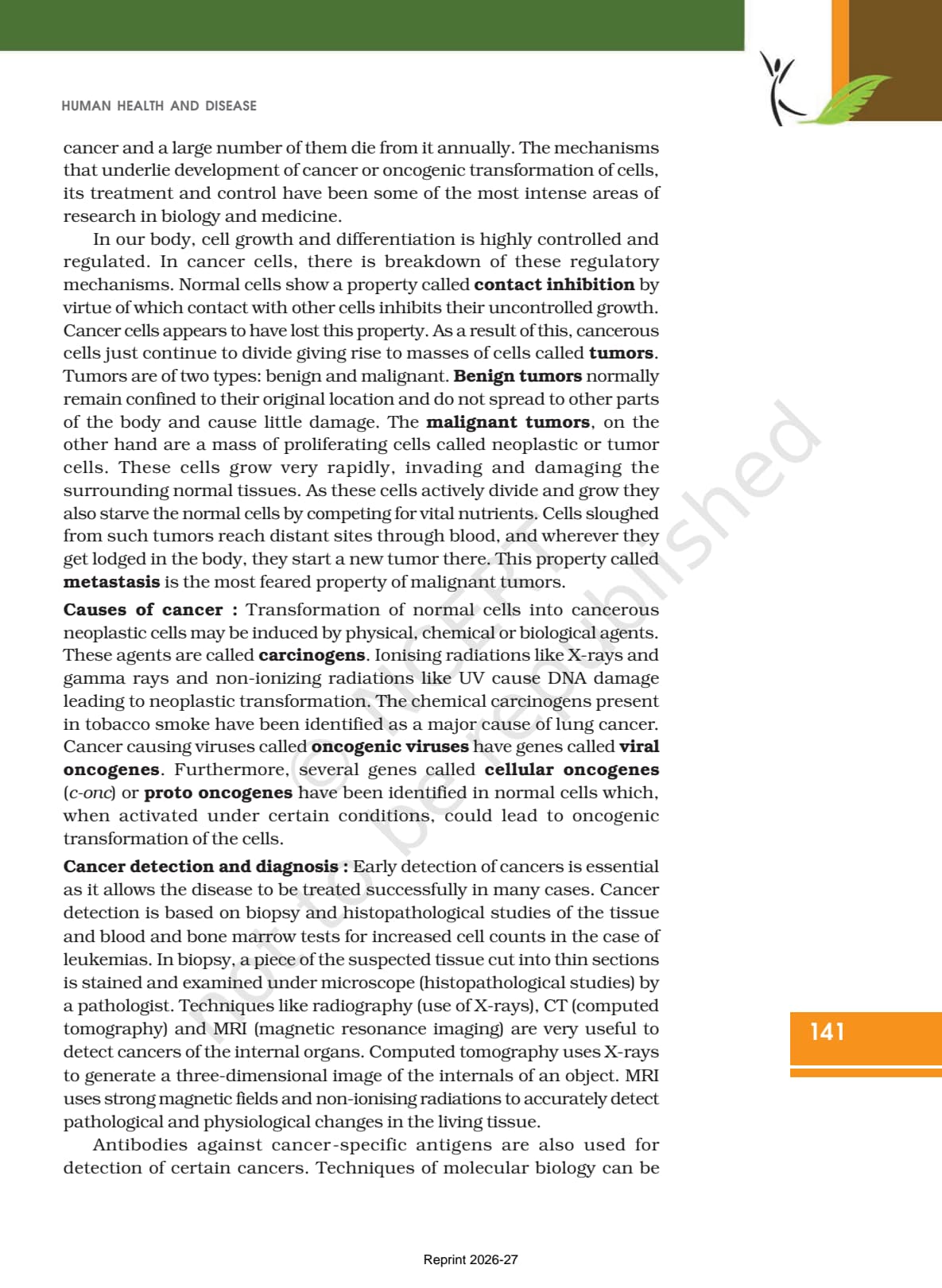
| 7.4 | Cancer | 16 to 18 | Benign vs malignant, metastasis, carcinogens, biopsy and therapy |
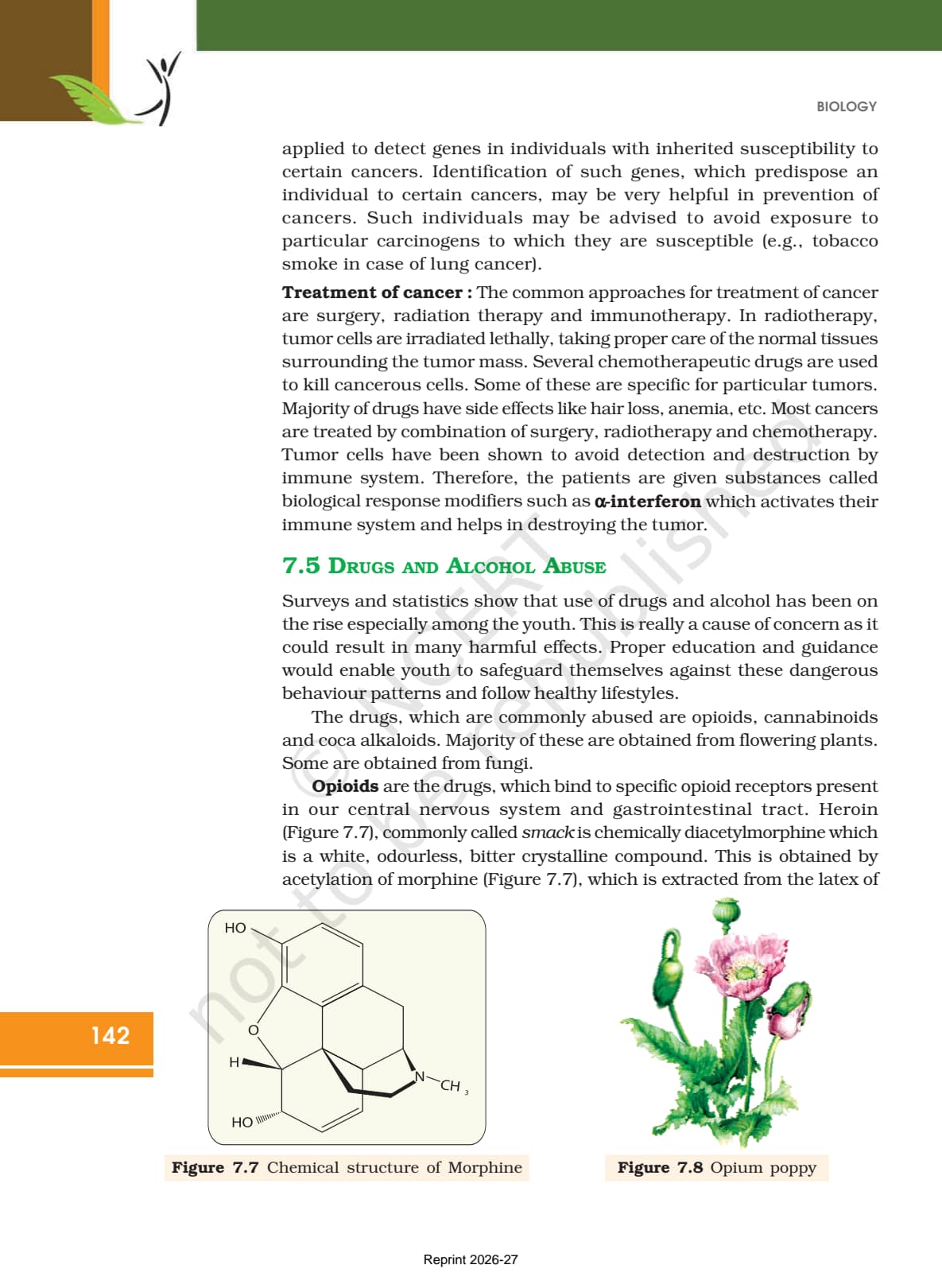
| 7.5 | Drugs and Alcohol Abuse | 19 to 22 | Opioids, cannabinoids, cocaine; addiction, dependence, control |
Sections 7.2 and 7.3 account for nearly half the pages and feed most Board and NEET questions.
Figure and Diagram Inventory for Human Health and Disease Class 12 Biology
High-yield figures from the chapter, each mapped to its most likely exam use:
| Figure | What It Shows | Exam Use |
|---|---|---|
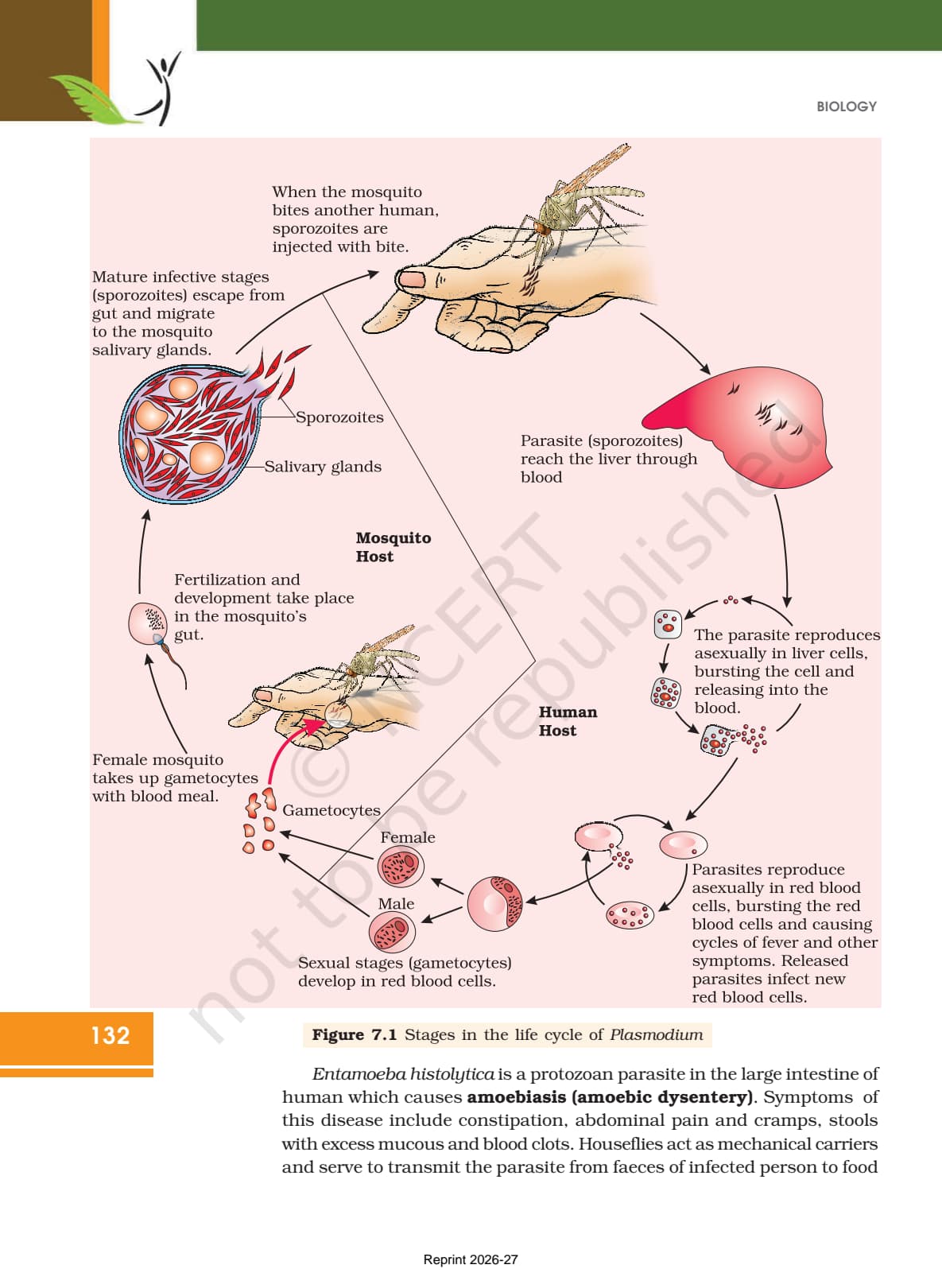
| Fig 7.1 | Plasmodium life cycle | NEET MCQ on stage sequence; CBSE 3-mark diagram |
| Fig 7.2 | Sporozoite and merozoite | NEET identification MCQ |
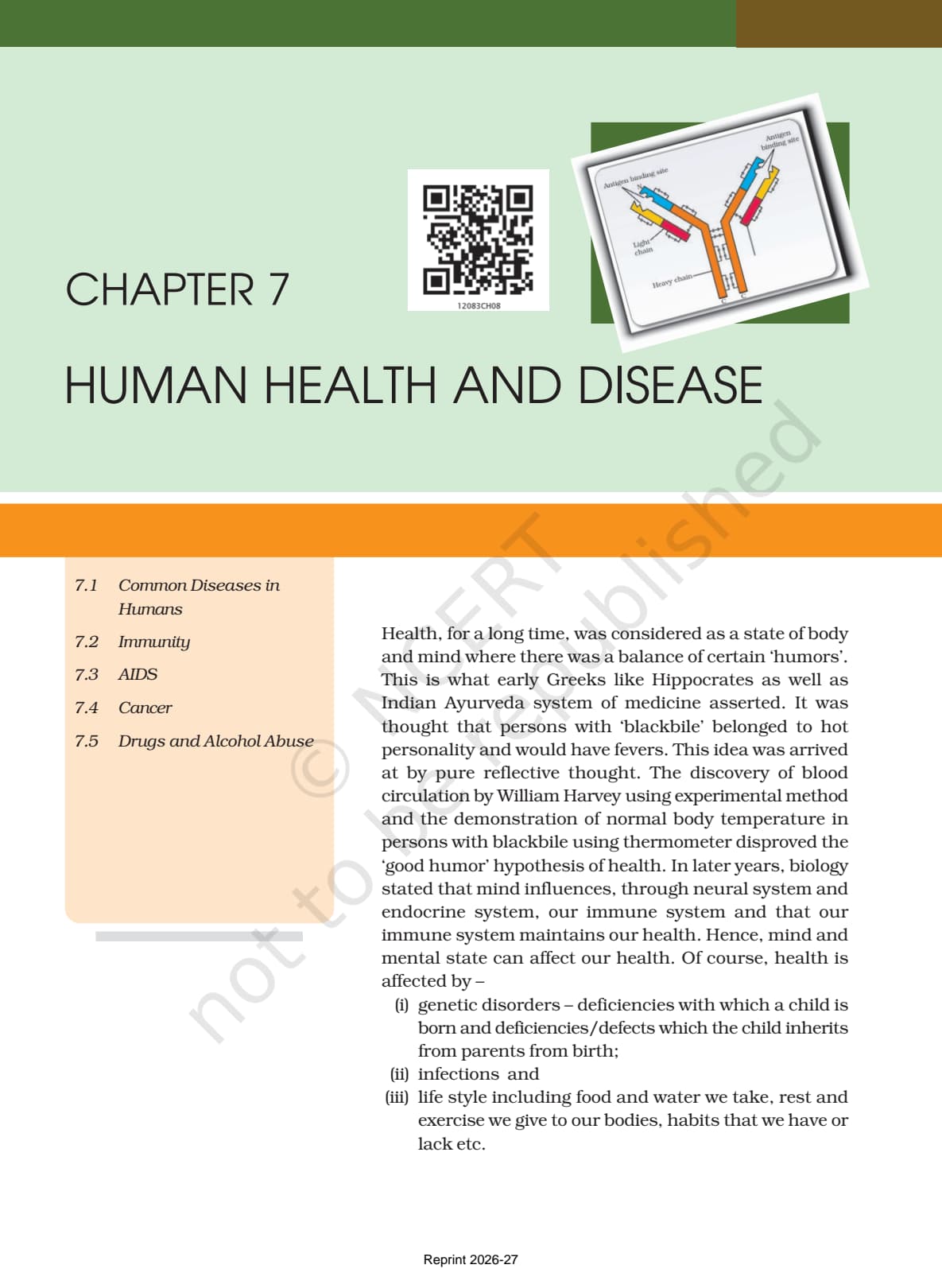
| Fig 7.3 | Antibody structure H2L2 | CBSE 3-mark labelled diagram Q9 |
| Fig 7.4 | HIV replication in host cell | NEET assertion-reason; CBSE 3 to 5-mark Q11 |
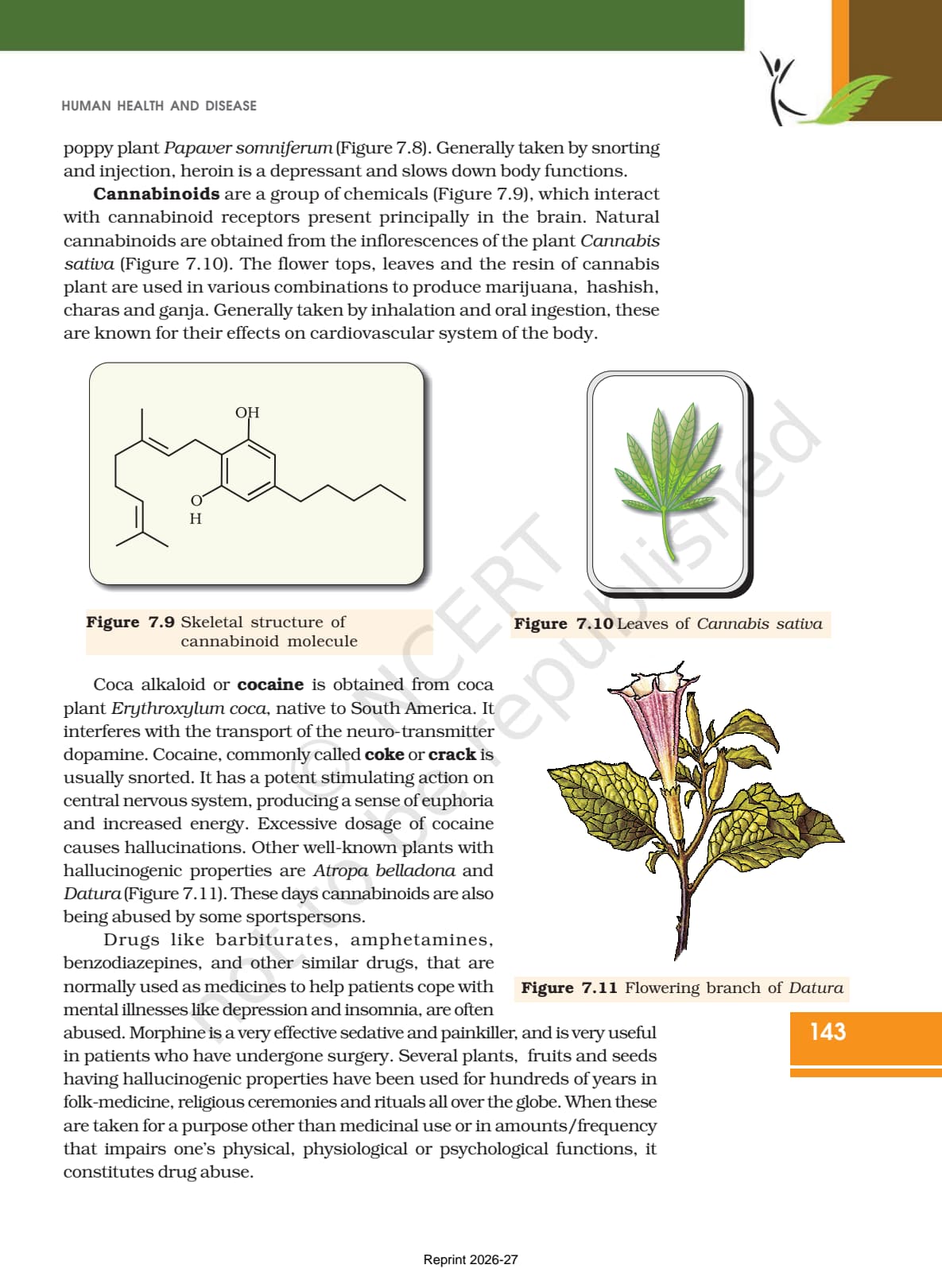
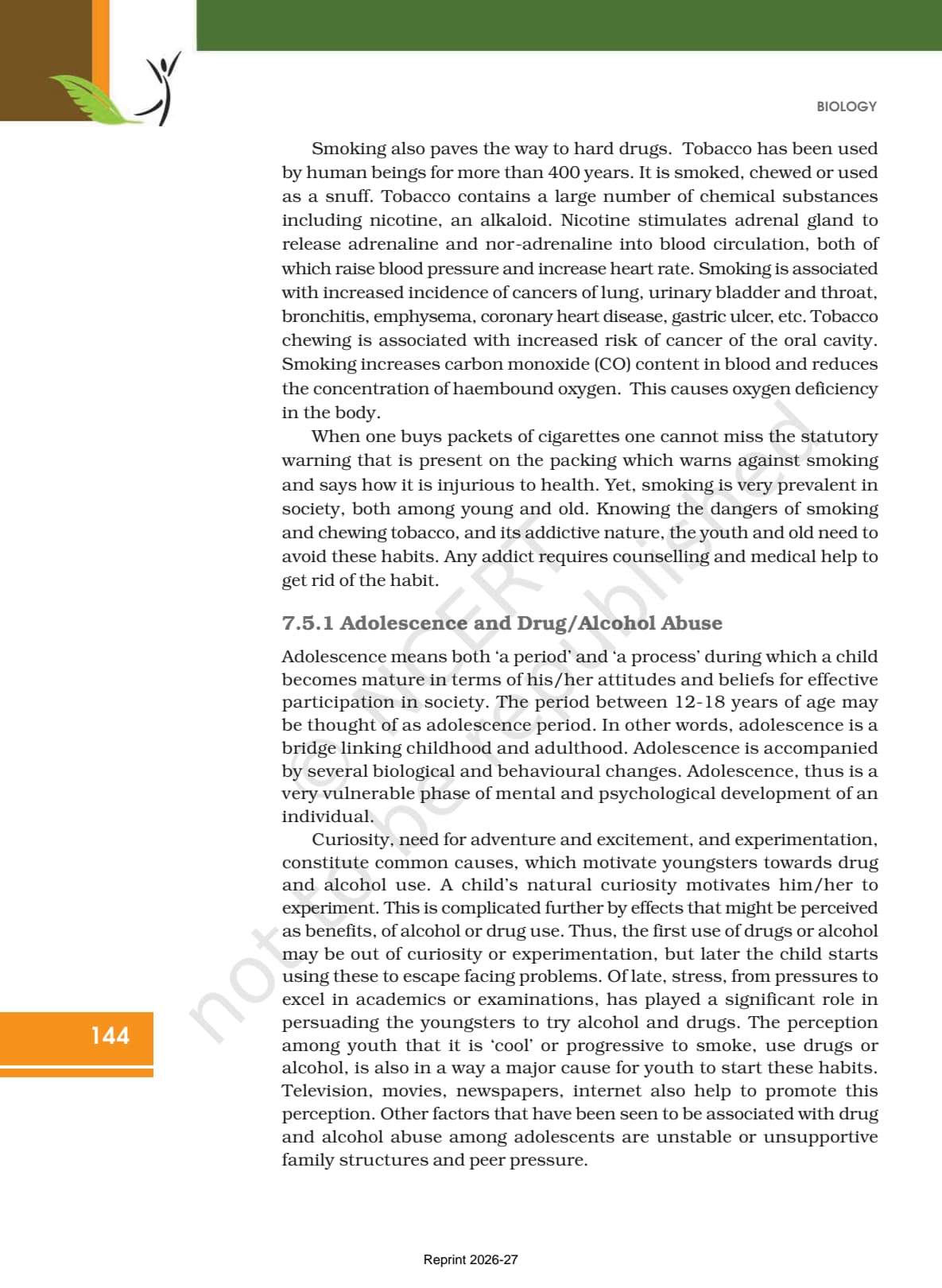
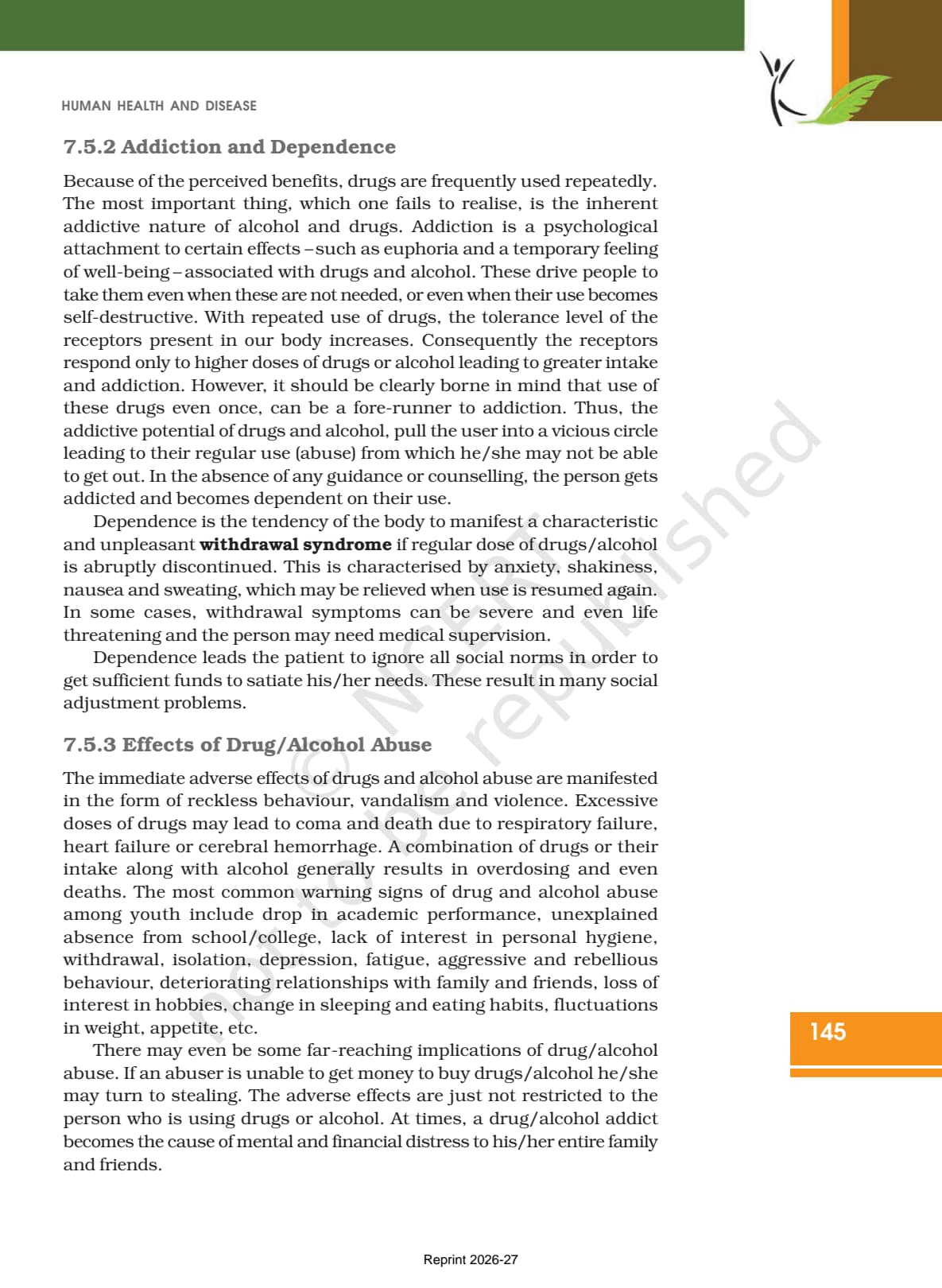
| Fig 7.5 | Source plants for opioids, cannabinoids, coca | NEET MCQ on drug source |
2026-27 NCERT Update Note for Human Health and Disease
The 2026-27 print keeps Chapter 7 identical to the previous edition.
- Retained in full: Sections 7.1 to 7.5, the Plasmodium life cycle, antibody diagram, HIV replication, cancer discussion, and drug classification.
- Not in scope: Interferon molecular structures and named monoclonal-antibody brand drugs are not assessed in CBSE 2026-27.
CBSE follows the textbook scope strictly. Students should not go beyond what Sections 7.2 and 7.5 explicitly state on drug names or interferon sub-types.
How to Read the Human Health and Disease NCERT Chapter PDF Effectively
The three-pass plan below keeps this 22-page chapter under 4 hours of focused study.
- Pass 1 (40 min) | Skim: Read Section 7.1 as a disease table. Note pathogen, transmission, and one symptom for each disease. Skip 7.2 to 7.5 on this pass.
- Pass 2 (90 min) | Deepen: Re-read 7.2 and 7.3 with a pen. Redraw the antibody H2L2 diagram and HIV replication loop. Solve Exercises Q6 to Q11.
- Pass 3 (90 min) | Apply: Read 7.4 and 7.5, then attempt all 17 Exercises. Flag any that combine immunity with AIDS.
Chapter Weightage Bar Chart for Class 12 Biology
CBSE Class 12 Biology marks distribution across all 13 chapters, averaged over the last five board papers.
Human Health and Disease Video Lecture for Class 12 Biology
Source: PW NEET on YouTube
Human Health and Disease Previous Year Question Trends from the NCERT Chapter
Where CBSE and NEET have drawn questions from this chapter over the last three years:
| Trend | Where Tested | NCERT Section |
|---|---|---|
| Antibody structure and types of immunity | CBSE 2025, NEET 2025 | Sec 7.2 |
| HIV replication cycle and AIDS transmission routes | CBSE 2024, NEET 2024 | Sec 7.3 |
| Plasmodium life cycle and vector control of malaria | NEET 2024, CBSE 2023 | Sec 7.1 |
For the full year-wise PYQ map, see Human Health and Disease Class 12 Biology NCERT Solutions.
Top 5 Human Health and Disease Concepts from the NCERT Chapter
These five anchors cover roughly 80% of the Exercises in the chapter.
| Concept | Definition / Mechanism | Section |
|---|---|---|
| Innate immunity | Non-specific from birth; four barriers (physical, physiological, cellular, cytokine) | 7.2 |
| Acquired immunity | Pathogen-specific, memory-based; B and T lymphocyte responses | 7.2 |
| HIV replication | Retrovirus reverse-transcribes, integrates, lyses helper T cells | 7.3 |
| Metastasis | Malignant tumour cells spread via blood or lymph to distant organs | 7.4 |
| Addiction and dependence | Psychological attachment plus withdrawal syndrome on abrupt cessation | 7.5 |
For detailed notes on each concept, see Human Health and Disease Class 12 Biology Notes.
Student Feedback: Chapter 7 Human Health and Disease Class 12 Biology
Student Feedback
What 16,200 Class 12 Biology students told us about Chapter 7:
- 74% of students rated the HIV life-cycle stages flowchart as the hardest sub-topic.
- 70% lost 1-2 marks on differentiating innate from acquired immunity.
- 4 out of 5 students said Fig 7.3 (antibody H2L2) was the most-skipped diagram in their answer sheet.
- Average first-read time: 6.8 hours; focused revision before boards: 2.6 hours.
Source: 2025-26 Class 12 Biology student survey. Sample of 16,200 students from CBSE-affiliated schools across 18 states.
Other Resources for Human Health and Disease Class 12 Biology
All Chapter 7 study resources in one place:
| Resource Type | Link |
|---|---|
| NCERT Book PDF | Human Health and Disease NCERT Book PDF |
| NCERT Solutions | Human Health and Disease Class 12 Biology NCERT Solutions |
| Notes | Human Health and Disease Class 12 Biology Notes |
| Formula Sheet | Human Health and Disease Class 12 Biology Formula Sheet |
| Handwritten Notes | Human Health and Disease Class 12 Biology Handwritten Notes |
| Exemplar Solutions | Human Health and Disease Class 12 Biology Exemplar Solutions |
| Exemplar Book PDF | Human Health and Disease Class 12 Biology Exemplar Book PDF |
NCERT Book PDF for Class 12 Biology: All Chapters
Navigate to any chapter's dedicated Book PDF page:
| Chapter | Resource |
|---|---|
| Chapter 1 | Sexual Reproduction in Flowering Plants NCERT Book PDF |
| Chapter 2 | Human Reproduction NCERT Book PDF |
| Chapter 3 | Reproductive Health NCERT Book PDF |
| Chapter 4 | Principles of Inheritance and Variation NCERT Book PDF |
| Chapter 5 | Molecular Basis of Inheritance NCERT Book PDF |
| Chapter 6 | Evolution NCERT Book PDF |
| Chapter 7 | Human Health and Disease NCERT Book PDF |
| Chapter 8 | Microbes in Human Welfare NCERT Book PDF |
| Chapter 9 | Biotechnology Principles and Processes NCERT Book PDF |
| Chapter 10 | Biotechnology and Its Applications NCERT Book PDF |
| Chapter 11 | Organisms and Populations NCERT Book PDF |
| Chapter 12 | Ecosystem NCERT Book PDF |
| Chapter 13 | Biodiversity and Conservation NCERT Book PDF |
Human Health and Disease Class 12 Biology NCERT Book PDF FAQs
Ques. Where can I download the Human Health and Disease Class 12 Biology NCERT Book PDF?
Ans. You can download the Human Health and Disease Class 12 Biology NCERT Book PDF directly from this page. Both the Normal and HD versions are available, and both are free. The PDF is the official chapter file released by NCERT for the 2026-27 session.
Ques. Is this NCERT Book PDF aligned with the 2026-27 NCERT?
Ans. Yes. This page reflects the current 2026-27 Reprint of NCERT Biology. Chapter 7 retains all five sections from 7.1 Common Diseases in Humans to 7.5 Drugs and Alcohol Abuse, exactly as printed in the latest edition.
Ques. How many pages is the Class 12th Biology Human Health and Disease NCERT Book PDF?
Ans. The Chapter 7 NCERT Book PDF runs to approximately 22 pages and covers five sections, several intext diagrams (antibody, HIV replication, Plasmodium life cycle), and 17 end-of-chapter Exercises. The bulk of the file is taken up by Section 7.2 on Immunity and Section 7.3 on AIDS.
Ques. How many marks does Human Health and Disease carry in CBSE Class 12 Biology?
Ans. Chapter 7 contributes around 6 to 7 marks in the CBSE Class 12 Biology board paper. Marks are typically split across a 3-mark labelled-diagram question (often antibody structure or HIV replication) and a 2 to 5 mark short or long answer on immunity, AIDS or cancer.
Ques. What is the NEET weightage of Human Health and Disease from the NCERT chapter?
Ans. NEET typically asks 3 to 5 questions a year from this chapter, with the most common topics being types of immunity, antibody structure, HIV and AIDS, and the Plasmodium life cycle. Drug abuse and cancer also surface in single-statement MCQs almost every year.
Ques. Which sections of the NCERT chapter are the most important for CBSE Boards?
Ans. Sections 7.2 (Immunity), 7.3 (AIDS) and 7.4 (Cancer) carry the bulk of the marks. CBSE almost always asks a 3-mark labelled-diagram question from 7.2, a short-answer on HIV from 7.3, and either a definition question on metastasis or a contact-inhibition compare-and-contrast from 7.4.
Ques. Was anything removed from Chapter 7 in the latest NCERT edition?
Ans. Section structure is preserved in the latest NCERT print. Earlier edits had trimmed detailed monoclonal-antibody and interferon-subtype content, but Sections 7.1 to 7.5 of the current chapter are all in scope for 2026-27 Boards and NEET.
Ques. How many Exercises does the NCERT Human Health and Disease chapter contain?
Ans. The chapter contains 17 end-of-chapter Exercises spread across all five sections. Several Exercises (such as Q3 on disease transmission and Q7 on abbreviations like MALT, CMI, AIDS, NACO and HIV) deliberately combine multiple sub-topics into one multi-part question.



Comments