




The Class 12 Business Studies Chapter 3 Business Environment textbook PDF is the official NCERT chapter for 2026-27, covering the meaning and features of the environment, its importance, the five dimensions, and the impact of LPG reforms, demonetisation and GST.
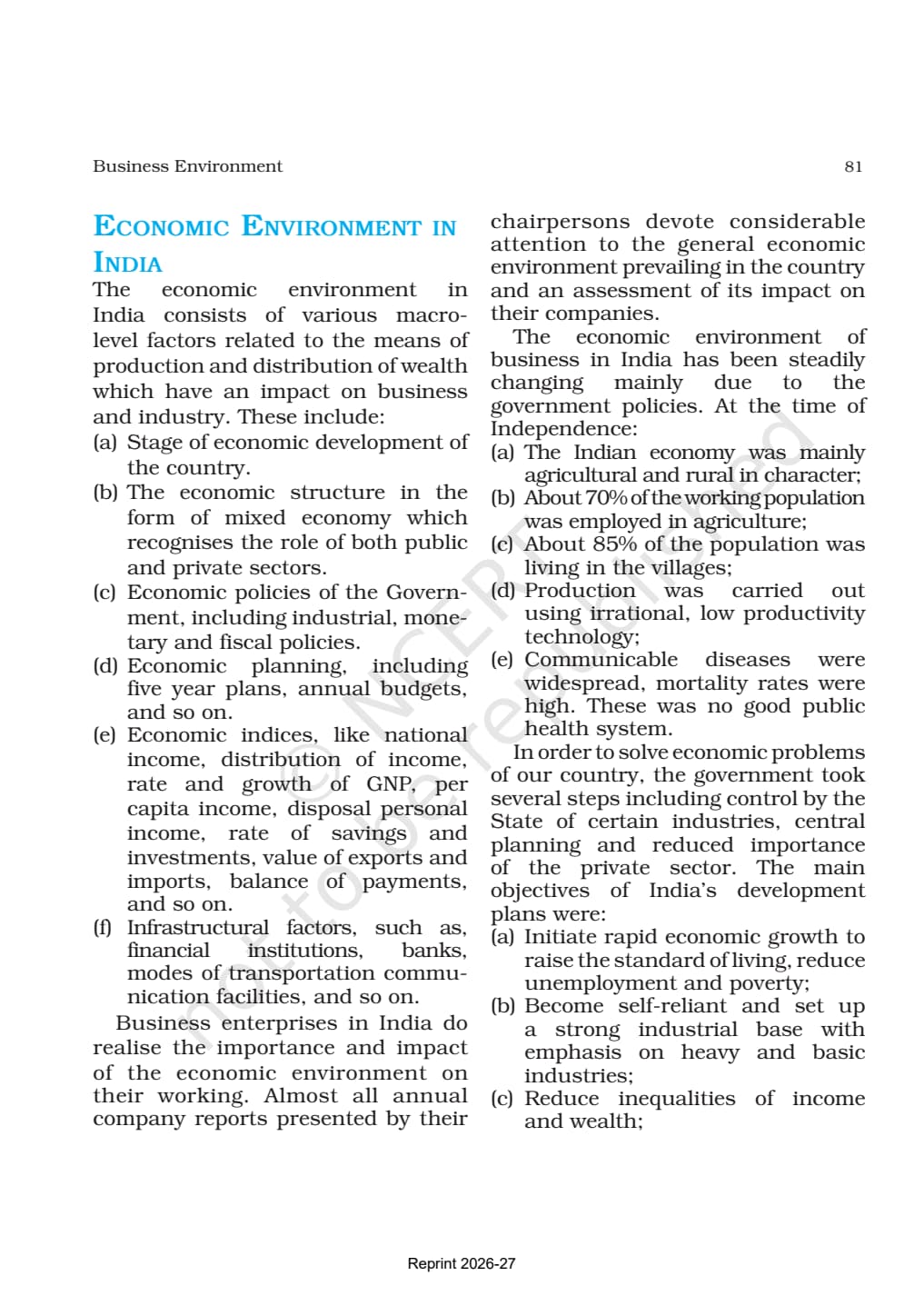
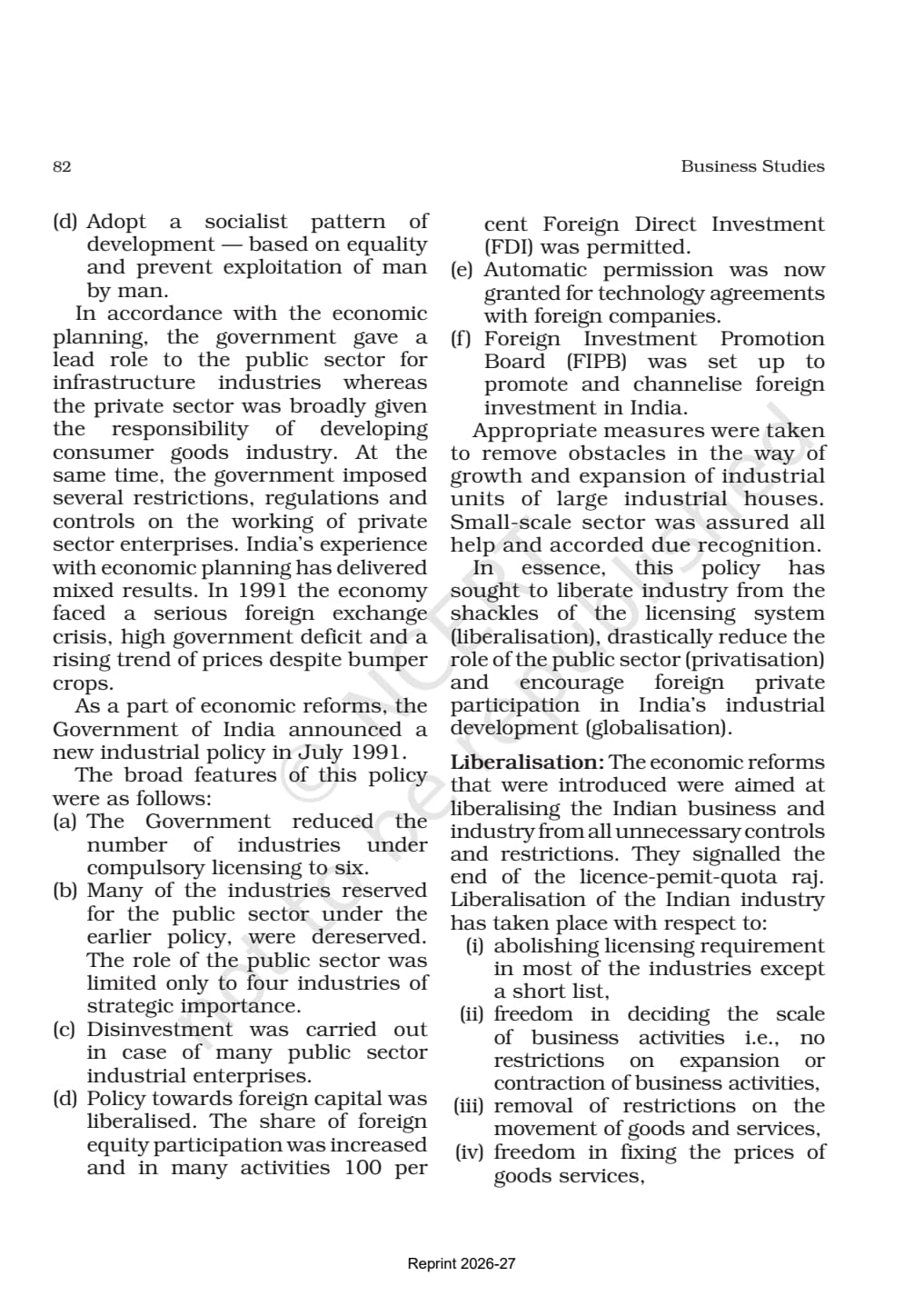
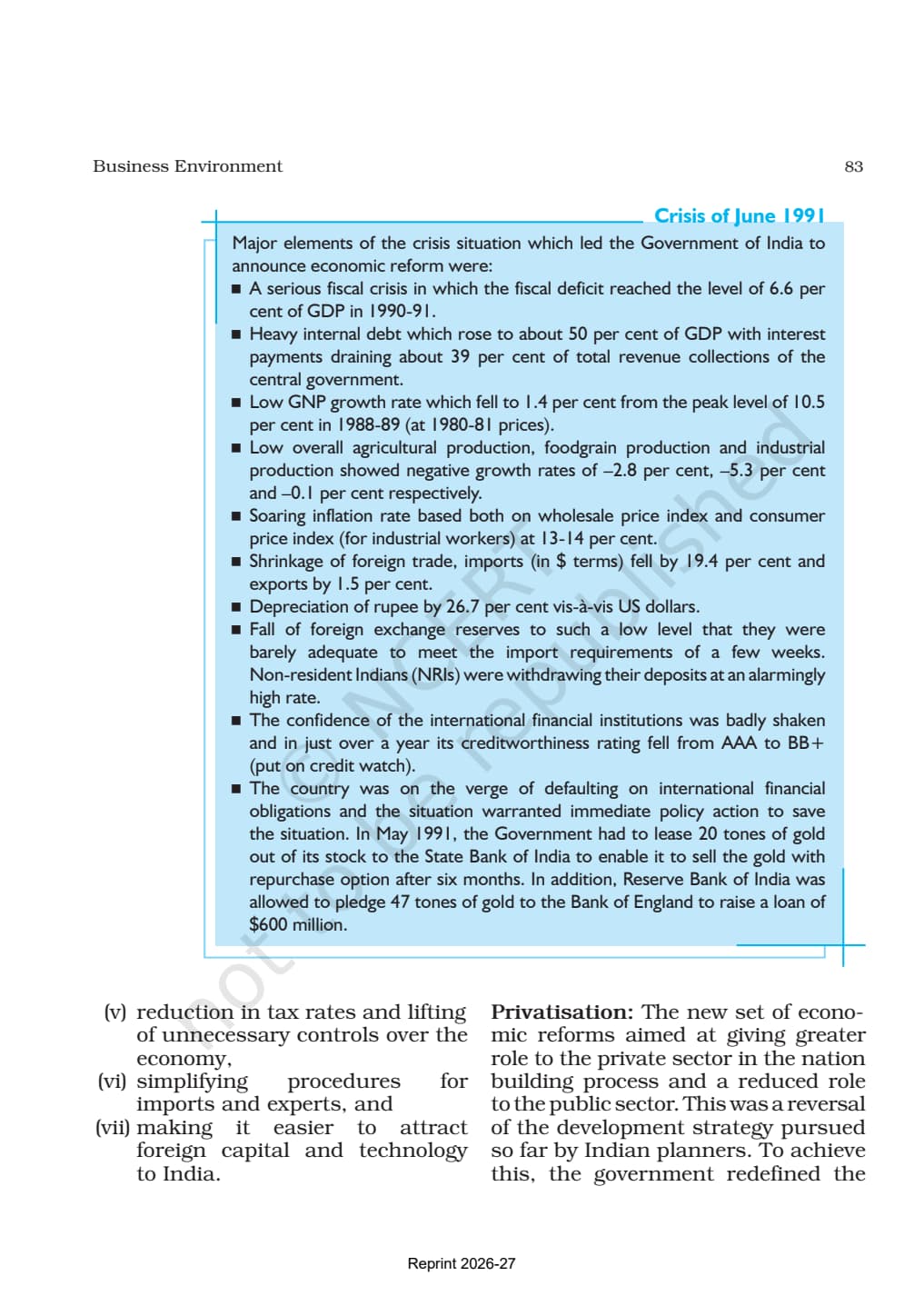
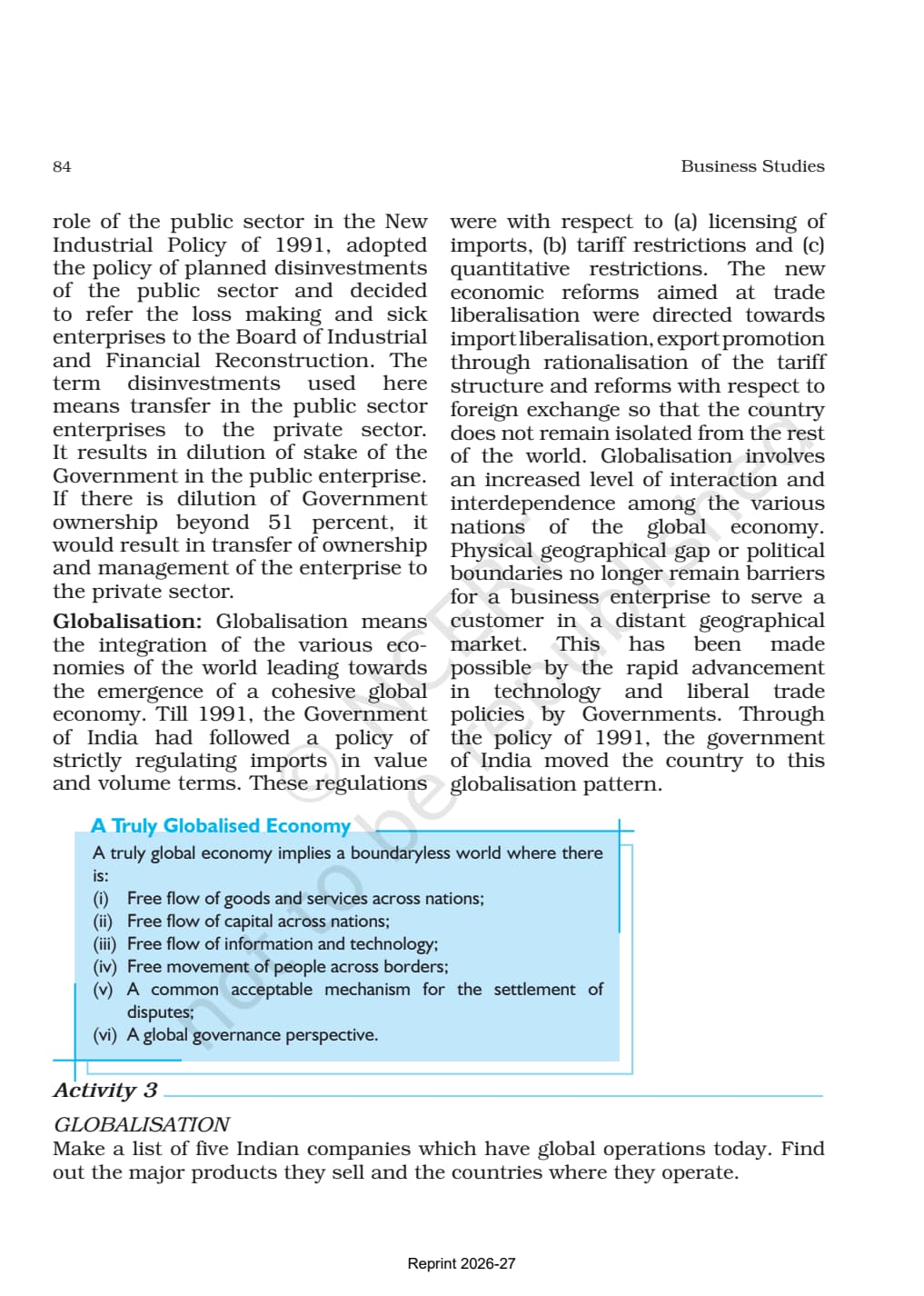
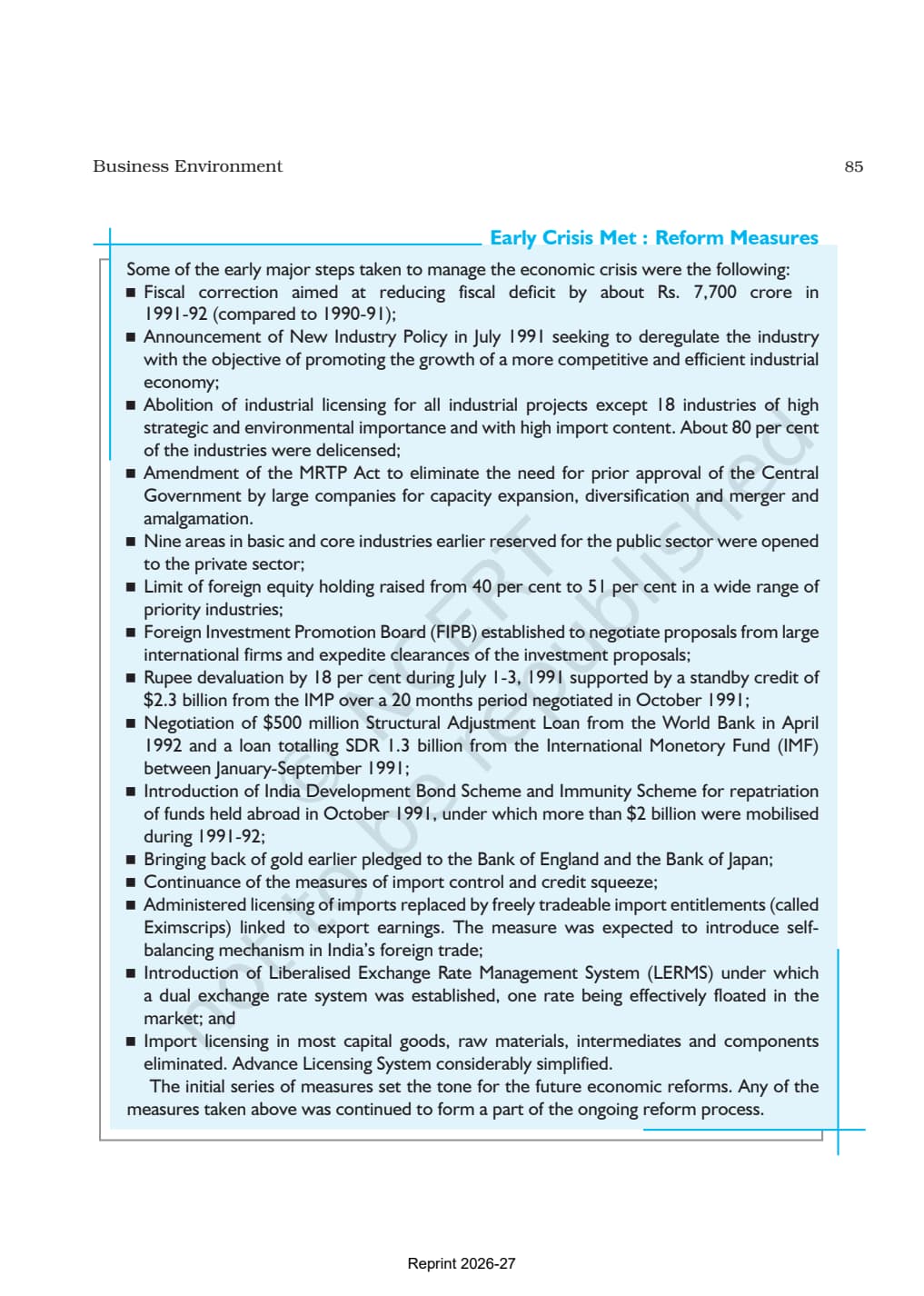
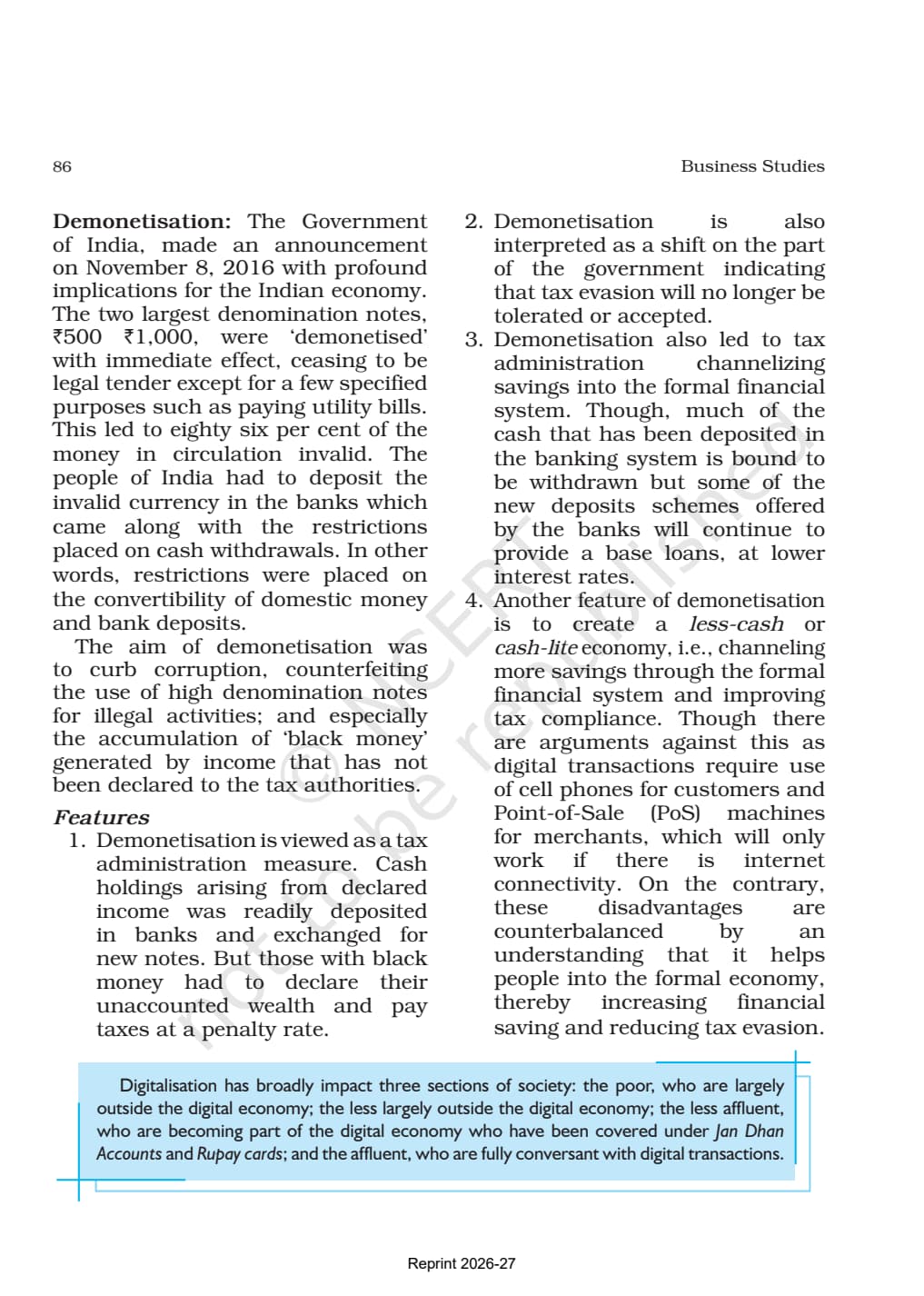

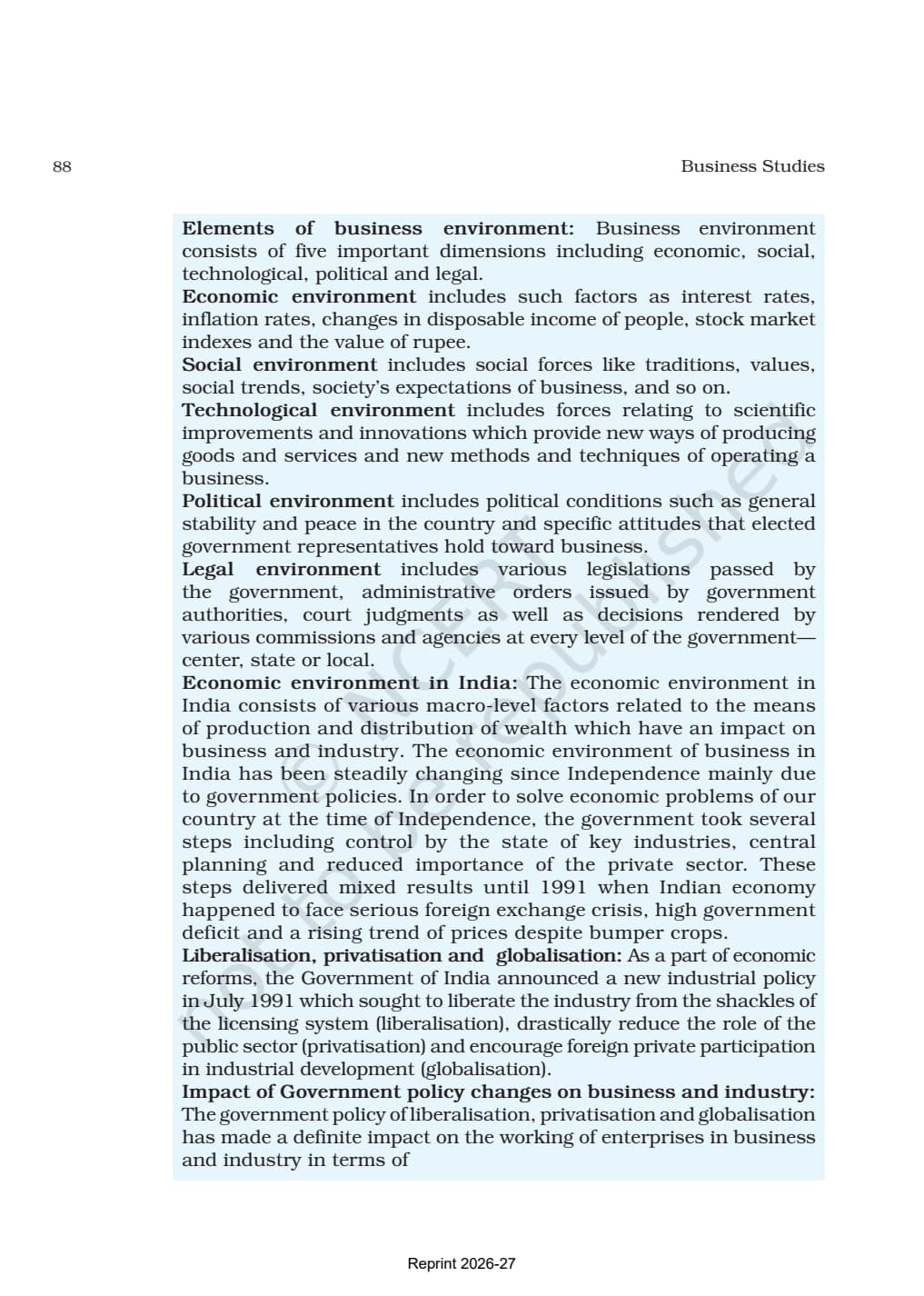
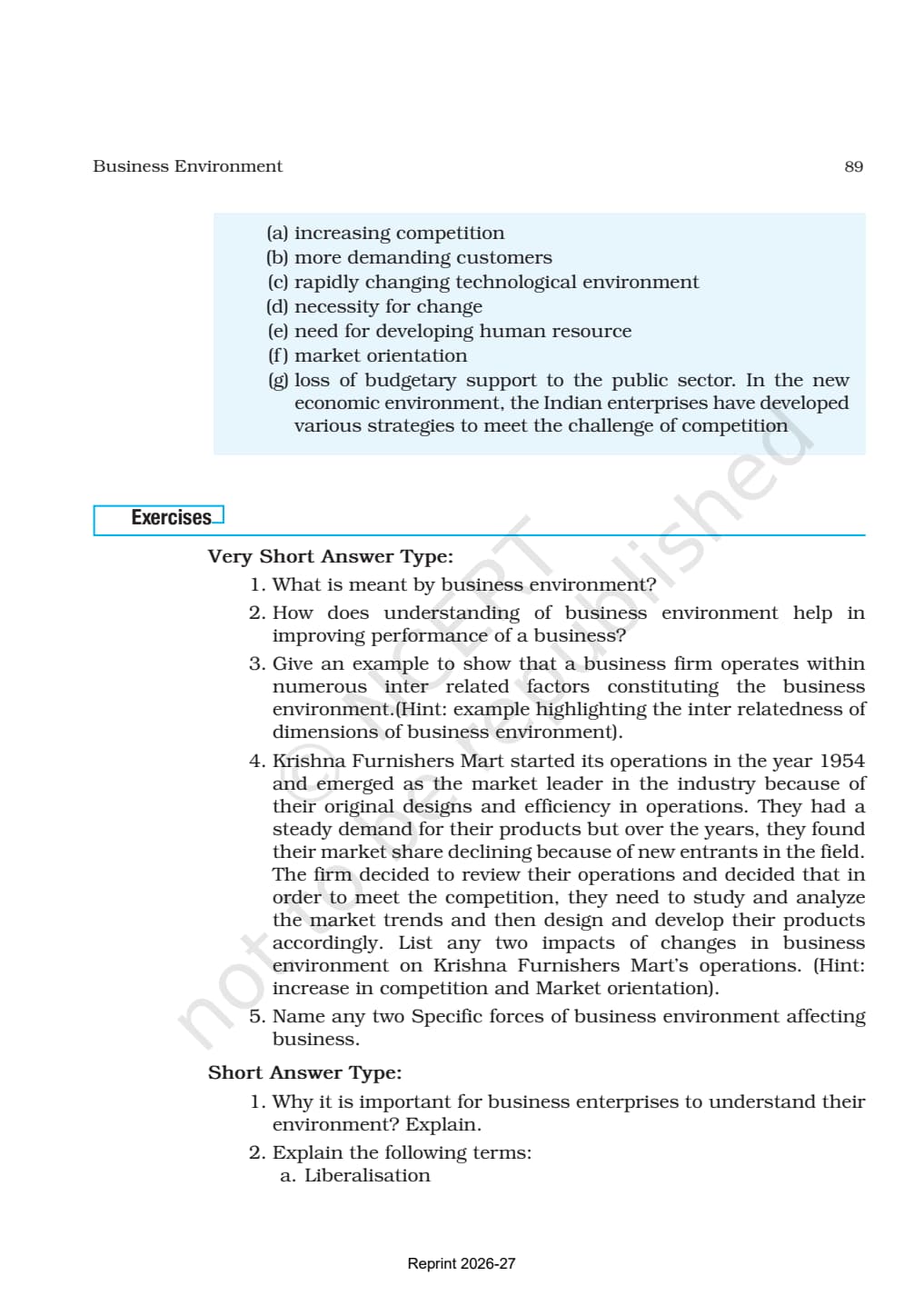
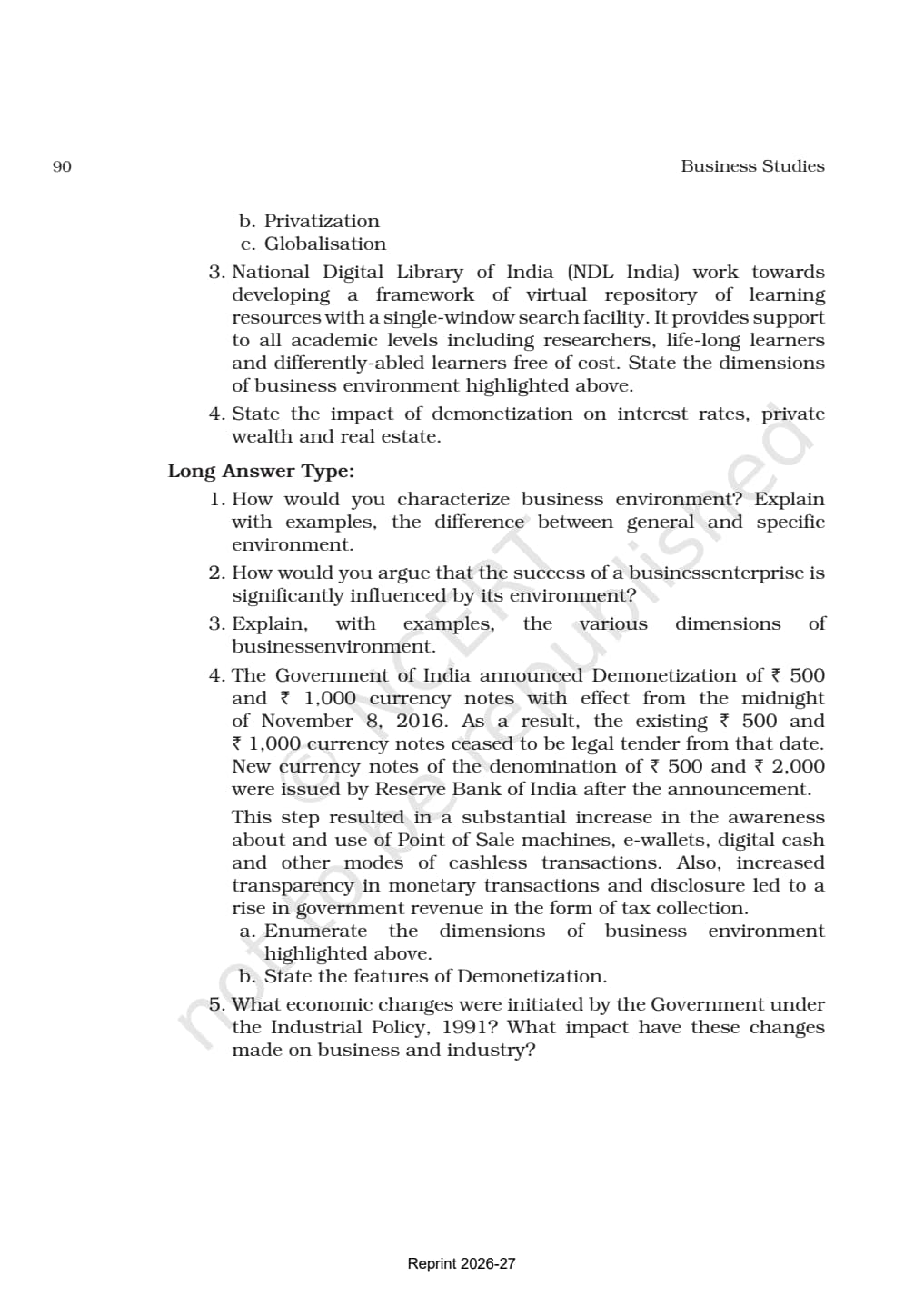
- Publisher: NCERT, Government of India (2026-27 reprint)
- Unit: Unit 1 - Principles and Functions of Management
- This is the official NCERT textbook chapter, not a third-party rewrite.
Class 12 Business Studies Chapter 3 Business Environment Overview
| Section | Topics Covered |
|---|---|
| Meaning and features of business environment | External forces, totality, specific + general forces, dynamic, uncertain |
| Importance of business environment | Identifying opportunities, threats, resource tapping, coping with change |
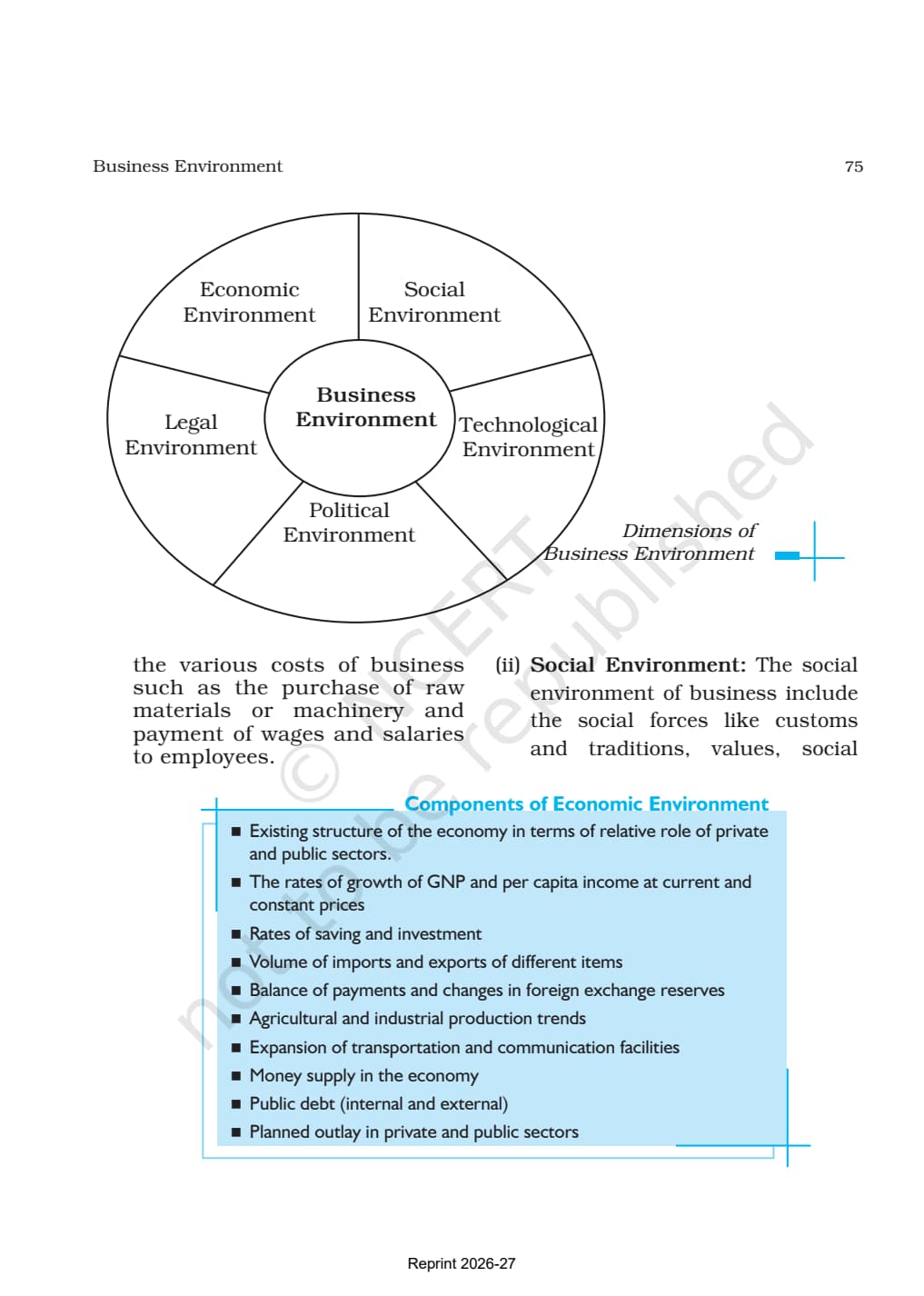
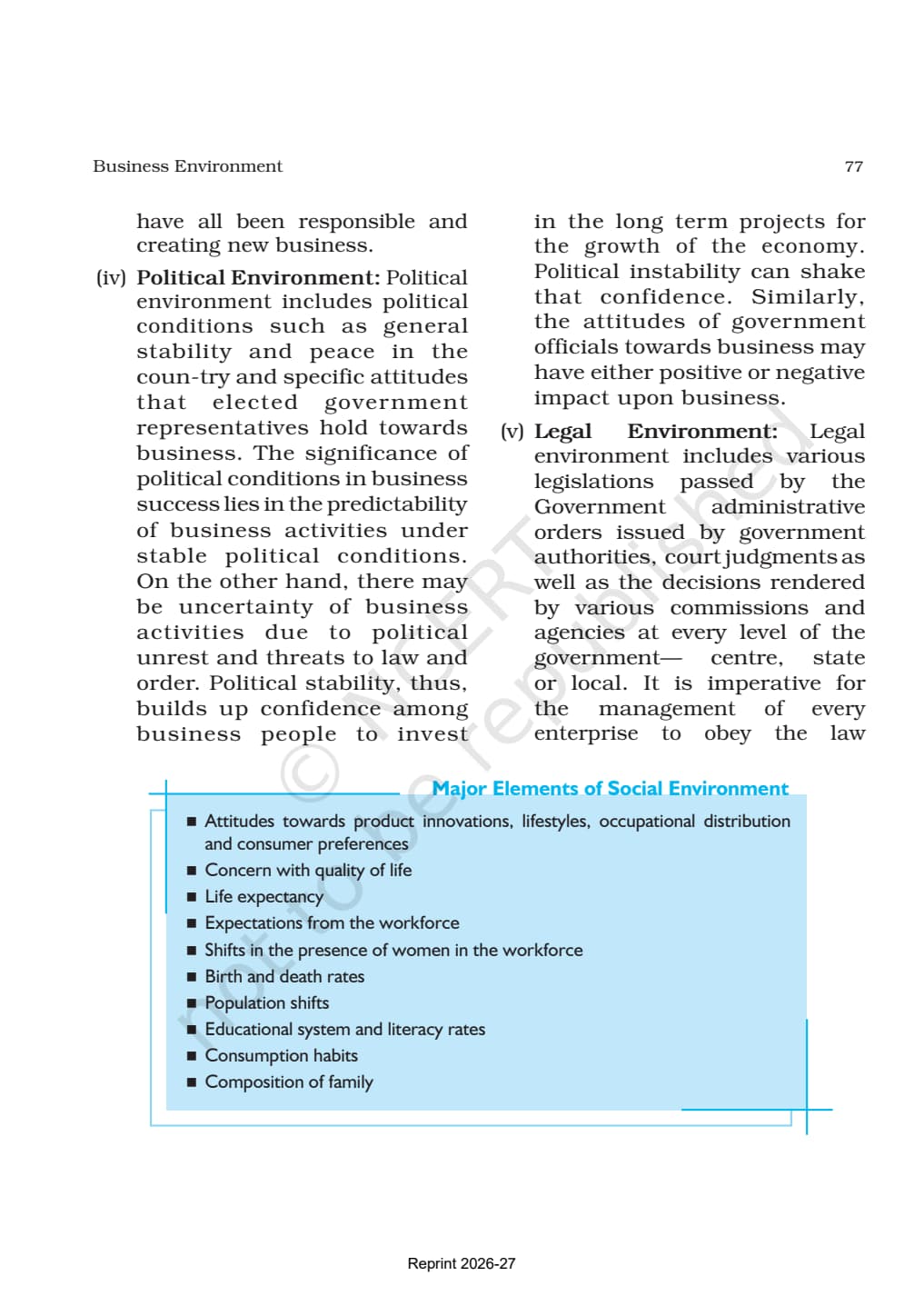
| Five dimensions | Economic, Social, Technological, Political, Legal |
| Economic environment in India | Liberalisation, Privatisation, Globalisation since 1991 |
| Demonetisation 2016 | Cashless economy, banking sector, money supply, interest rates |
| Impact of LPG on Indian business | Greater competition, more demanding customers, change in technology, market orientation, loss of budgetary support |
| Case-based application | Map external change to dimension; recommend managerial response |
Business Environment Video Chapter Walkthrough
Source: Magnet Brains on YouTube
This video recaps the five dimensions of business environment and shows how LPG reforms and demonetisation changed Indian business after 1991.
Student Feedback
In a Collegedunia poll of 470 Class 12 Commerce students, 81% said the NCERT Book PDF helped them connect LPG reforms and demonetisation to the five dimensions of business environment. 3 in 4 said reading the original chapter text made board case-study questions easier than relying on summarized notes alone.
Other Resources for Class 12 Business Studies Chapter 3 Business Environment
| Resource | Link |
|---|---|
| NCERT Solutions | Business Environment NCERT Solutions |
| Revision Notes | Business Environment Class 12 Notes |
| Handwritten Notes | Business Environment Handwritten Notes |
| NCERT Book PDF | Business Environment NCERT Book PDF |
FAQs on Class 12 Business Studies Chapter NCERT Book PDF
FAQs on Class 12 Business Studies Chapter NCERT Book PDF
What is business environment in Class 12 Business Studies?
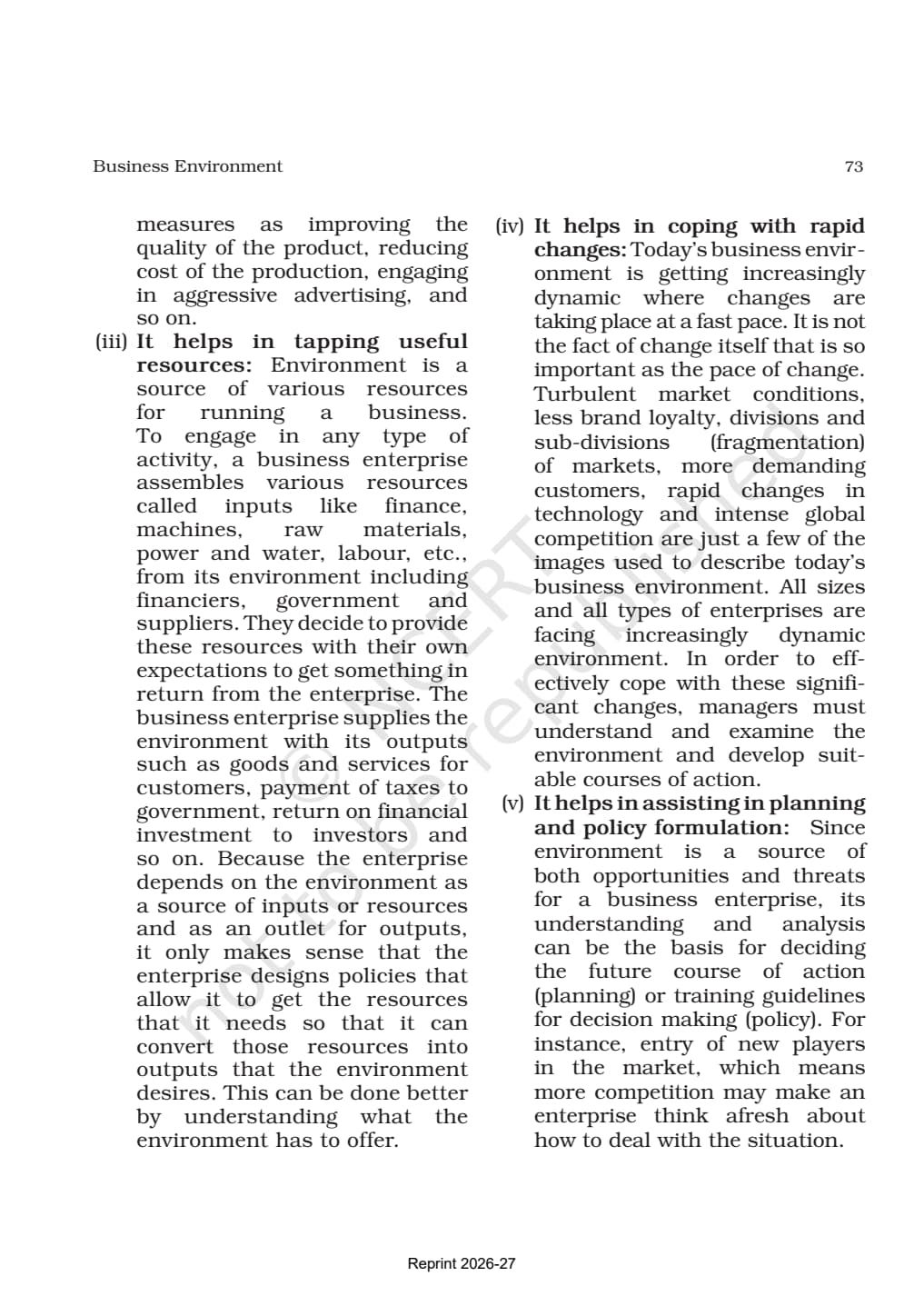
Business environment refers to all external forces (economic, social, technological, political, legal) that have a bearing on the functioning of a business. It is the sum total of all external factors affecting the business; it is dynamic, complex, multi-faceted and has a far-reaching impact on the business.
What are the five dimensions of business environment?
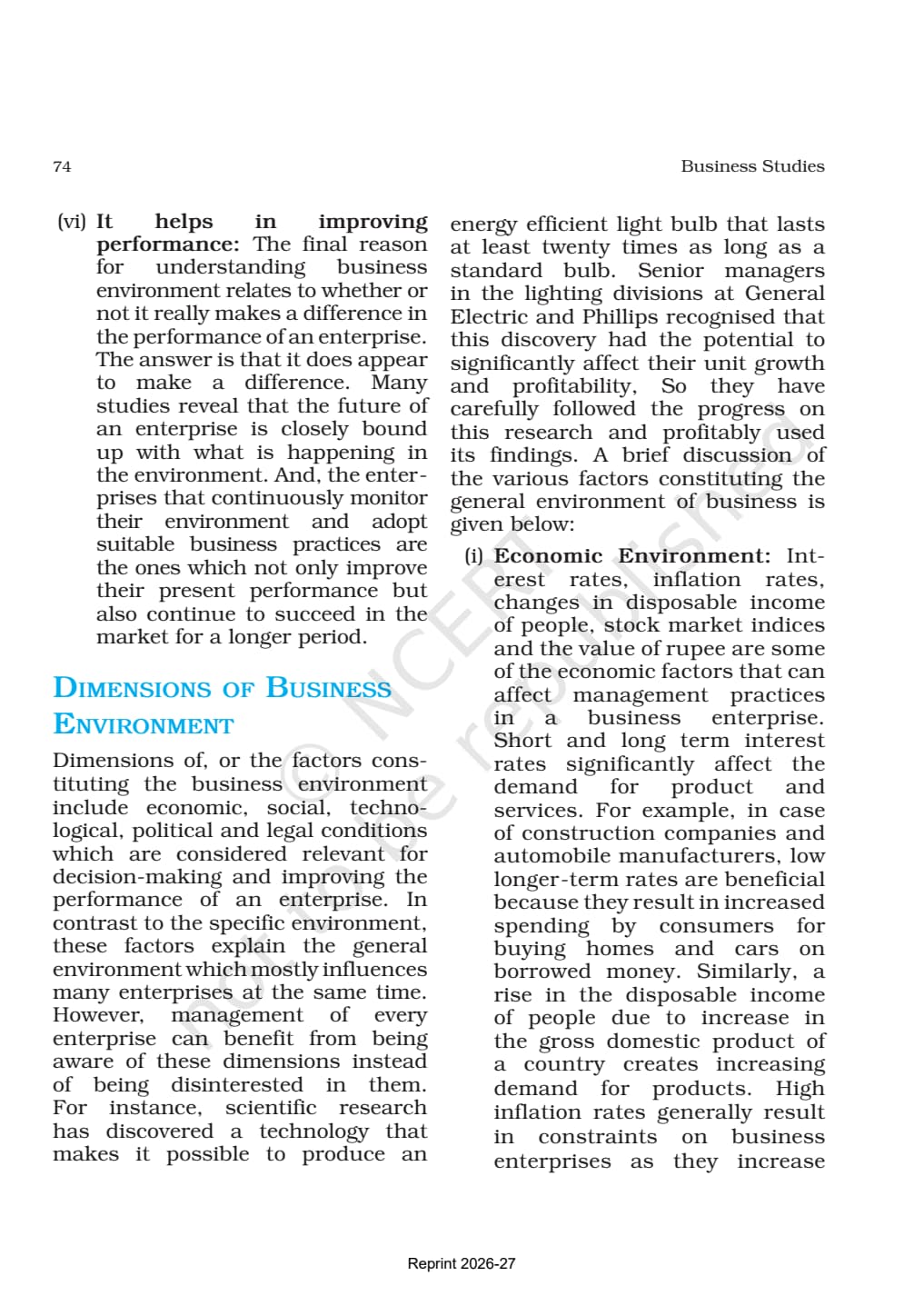
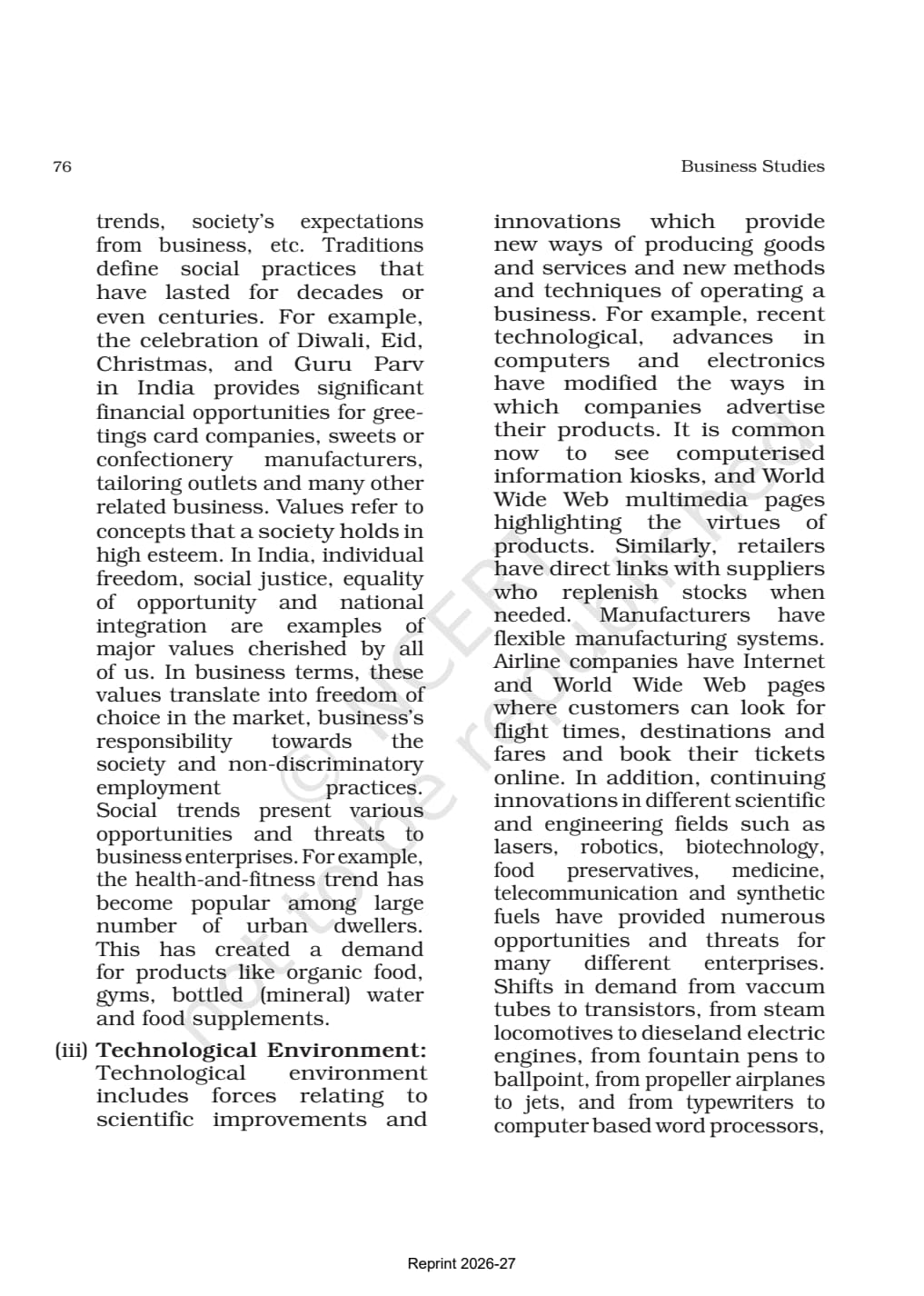
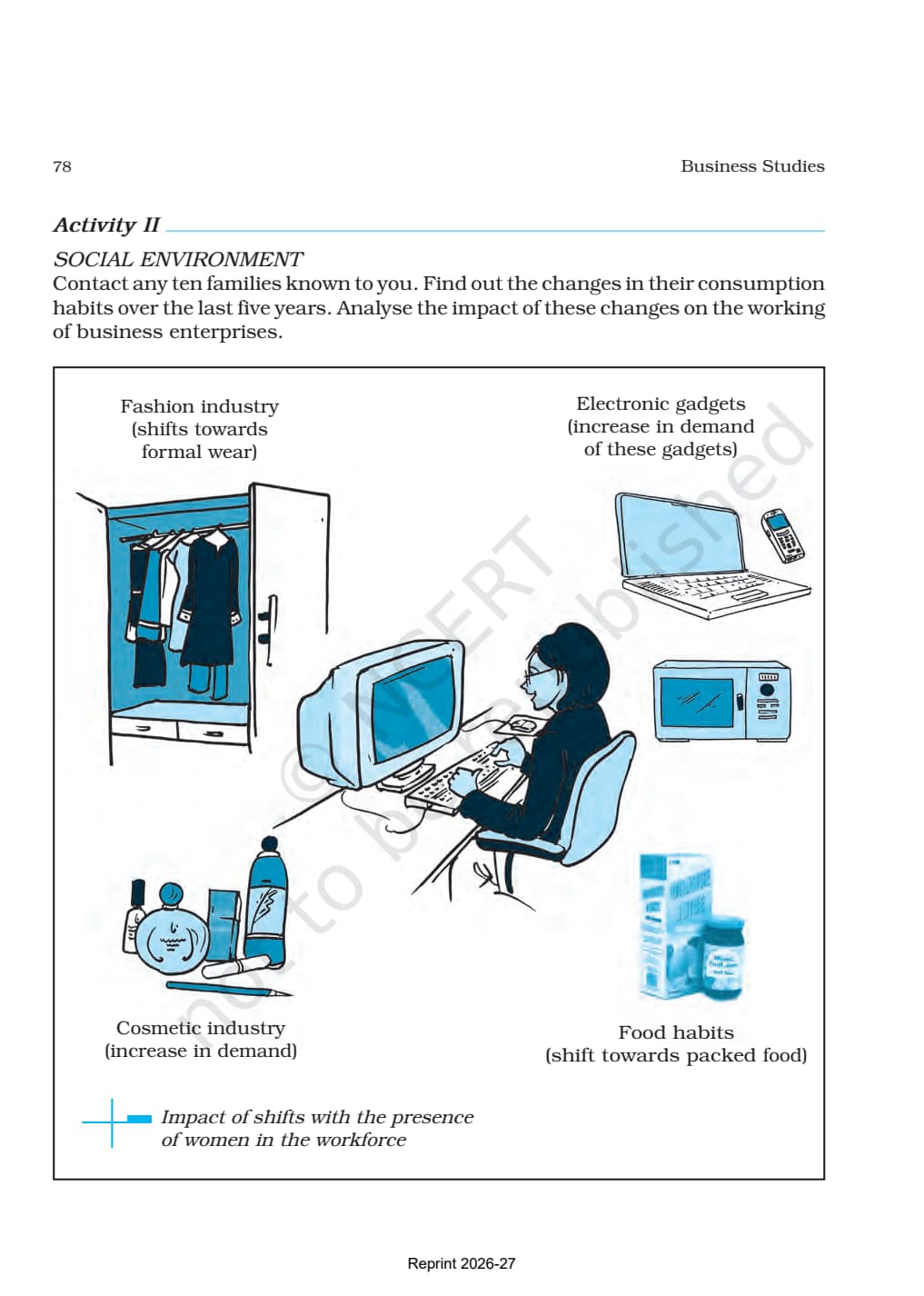
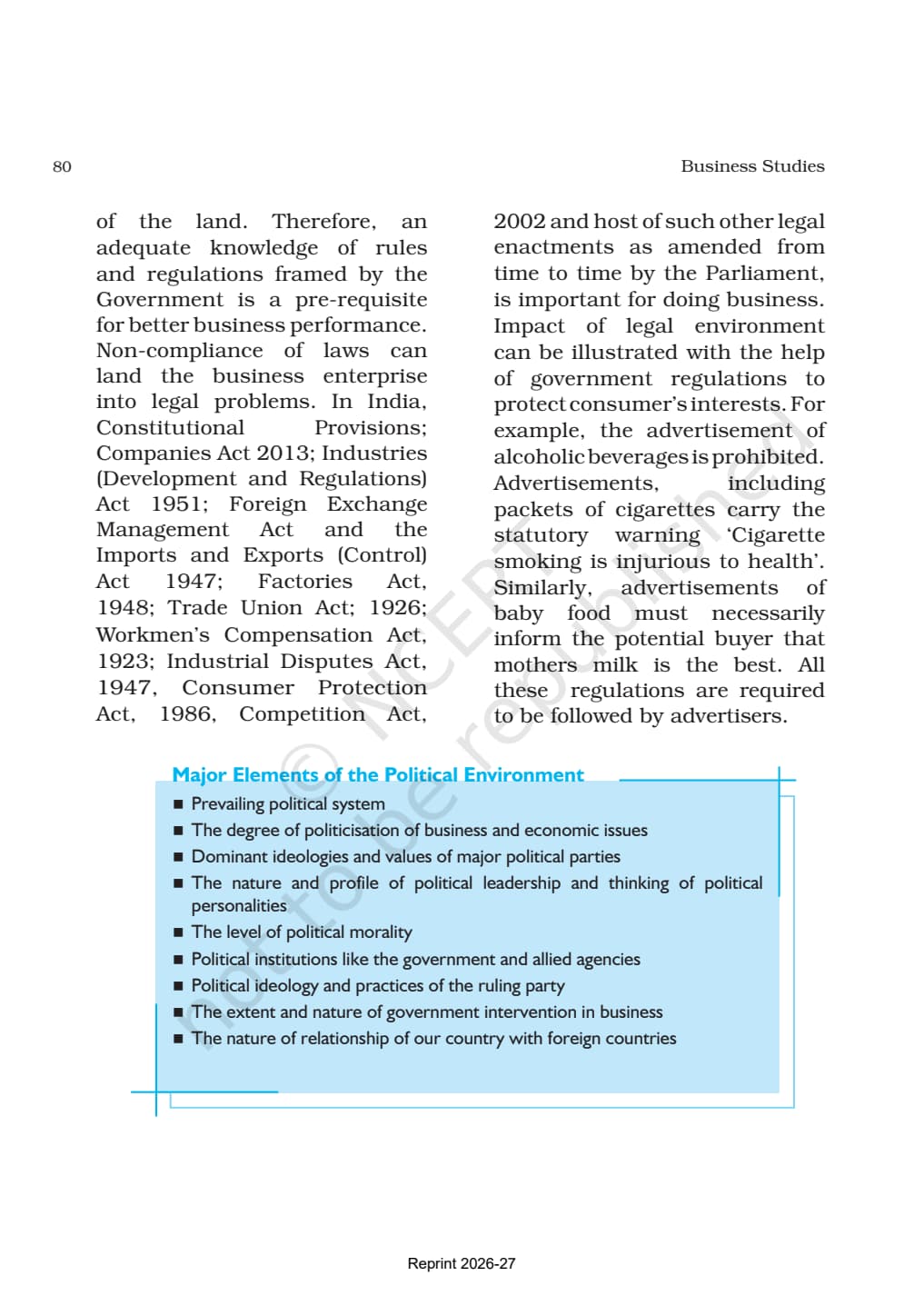
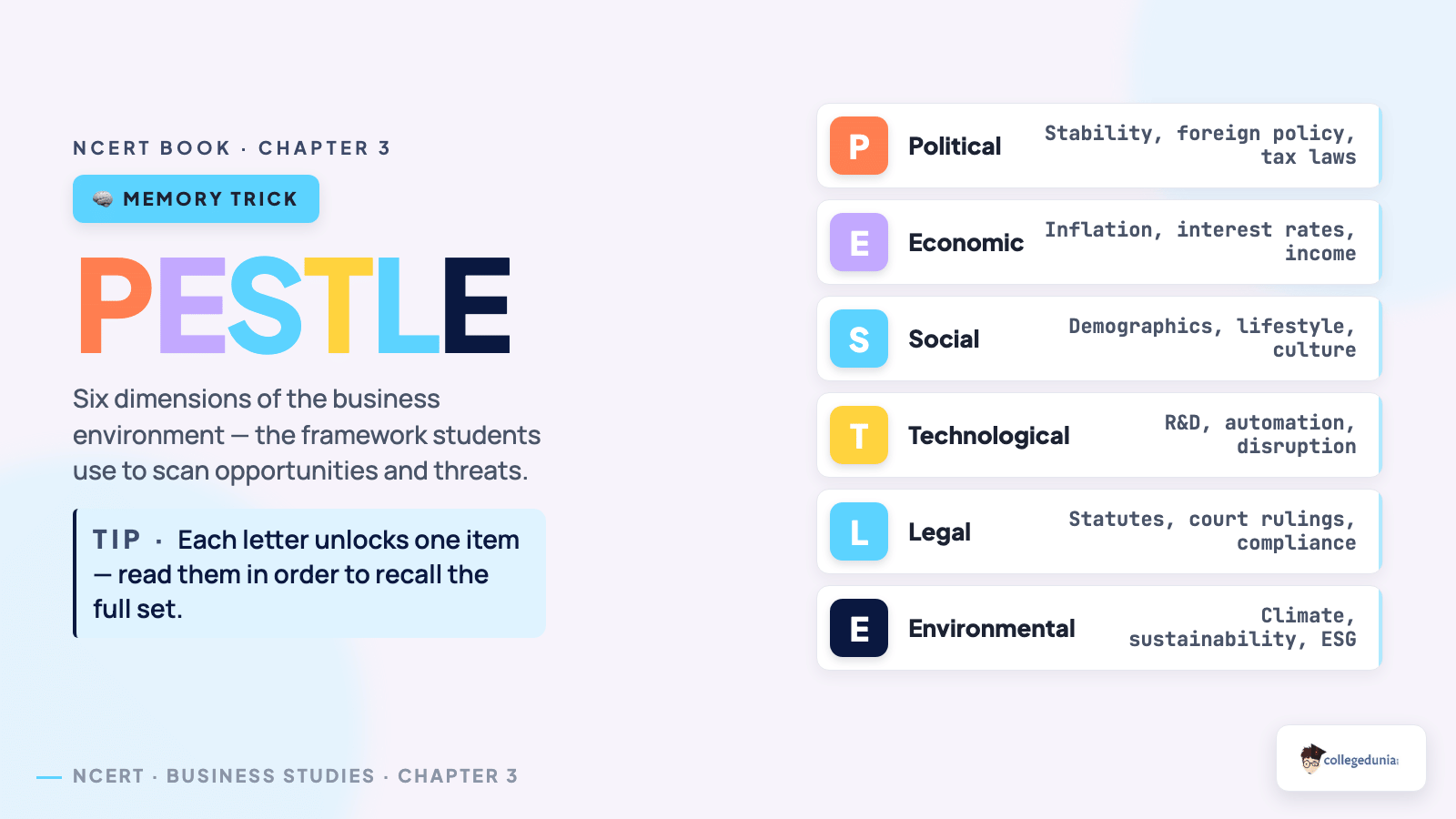
The five dimensions of business environment are: (1) Economic Environment - interest rates, inflation, GDP, household income; (2) Social Environment - customs, values, lifestyle, education levels; (3) Technological Environment - rate of technological change, innovation, R&D; (4) Political Environment - political stability, government attitude, central-state relations; (5) Legal Environment - laws, regulations, court rulings.
What is the importance of business environment?
Business environment is important because it (1) helps the firm identify opportunities and get first-mover advantage; (2) helps identify threats and early warning signals; (3) helps in tapping useful resources; (4) helps in coping with rapid changes; (5) assists in planning and policy formulation; (6) improves performance.
What is the impact of demonetisation on business environment?
Demonetisation (November 2016) impacted the Indian business environment in three main ways: (1) Money supply - immediate fall in cash holdings, rise in deposits in banks; (2) Banking - rise in CASA deposits, lower lending rates; (3) Cashless economy - rapid growth in digital payments (UPI, mobile wallets) and a shift toward formalisation of the economy.
What are liberalisation, privatisation and globalisation (LPG)?
Liberalisation = removal of unnecessary controls and restrictions on business (licensing, quotas, tariffs). Privatisation = transferring ownership of public sector units to private sector. Globalisation = integration of the Indian economy with the world economy. Together they form the 1991 reforms that transformed Indian business.



Comments