



The NCERT Class 12 Home Science Chapter 4 Book PDF gives students the official 2026-27 source chapter for Food Processing and Technology. The scheduler title for this row is HE1: Adulthood and Ageing, but the official PDF attached to Chapter 4 is the food processing chapter, so students should revise the PDF content exactly as printed by NCERT.
- Download the 14-page official NCERT chapter PDF for offline study.
- Revise food science, processing, preservation, packaging, safety and career scope together.
- Use this source text before writing notes or answers for Chapter 4.
Student Feedback: In a Collegedunia study poll of 8,640 Class 12 Home Science students, 71% said Chapter 4 became easier after they linked preservation methods with food safety and career options.
This NCERT Book PDF follows the 2026-27 reprint and should be used as the source text before attempting notes, solutions or quick revision material.
Food Processing and Technology Chapter 4 NCERT Book PDF Highlights
The official chapter title printed in the PDF is Food Processing and Technology. It explains why food is processed, how traditional preservation grew into modern food technology, and why safe processed foods matter in daily life. Read this chapter as a food science and career-linked unit.
| PDF area | NCERT focus | Best use |
|---|---|---|
| Basic concepts | Food science, food processing, food technology and manufacturing | Prepare definitions in NCERT wording |
| Preservation need | Spoilage, shelf life, safety and quality protection | Write cause and method based answers |
| Modern technology | Canning, pasteurisation, packaging and industrial processing | Connect history with present use |
| Career scope | Skills, courses, food industry and entrepreneurship | Build long answers on career pathways |
Food Processing and Technology Video Explanation
Source: The Twin Bros - Humanities on YouTube
Food Processing Revision Flow
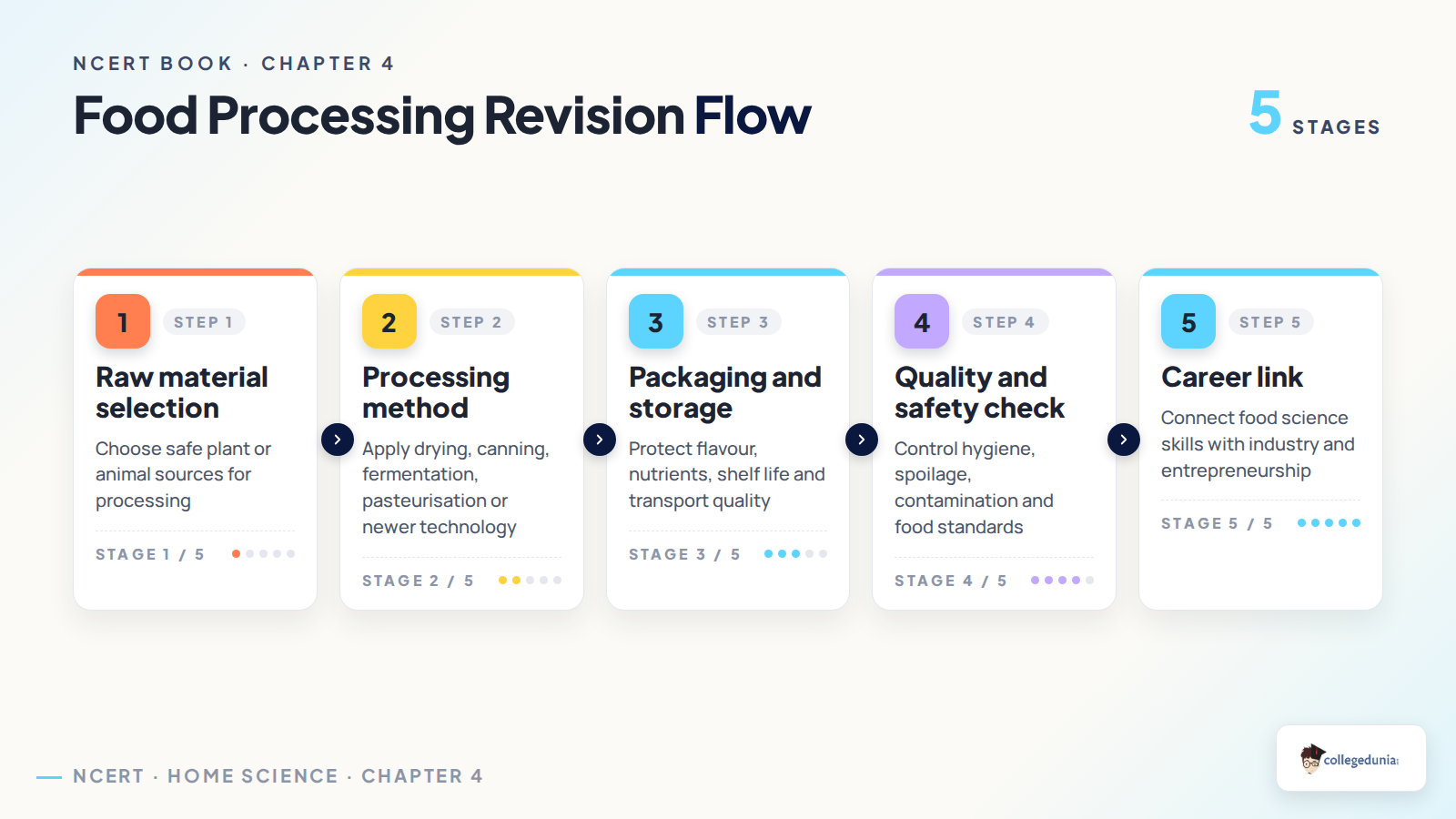
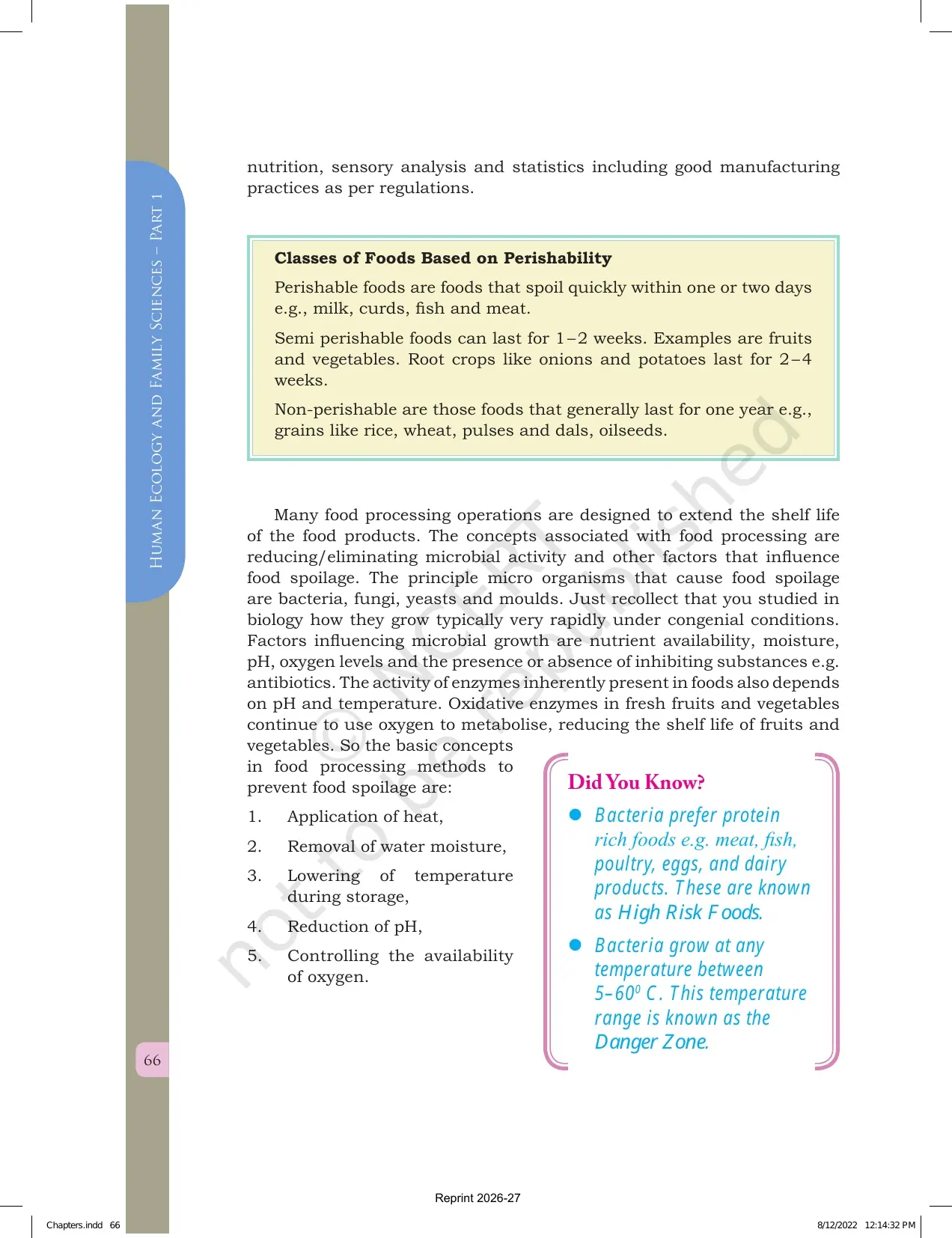
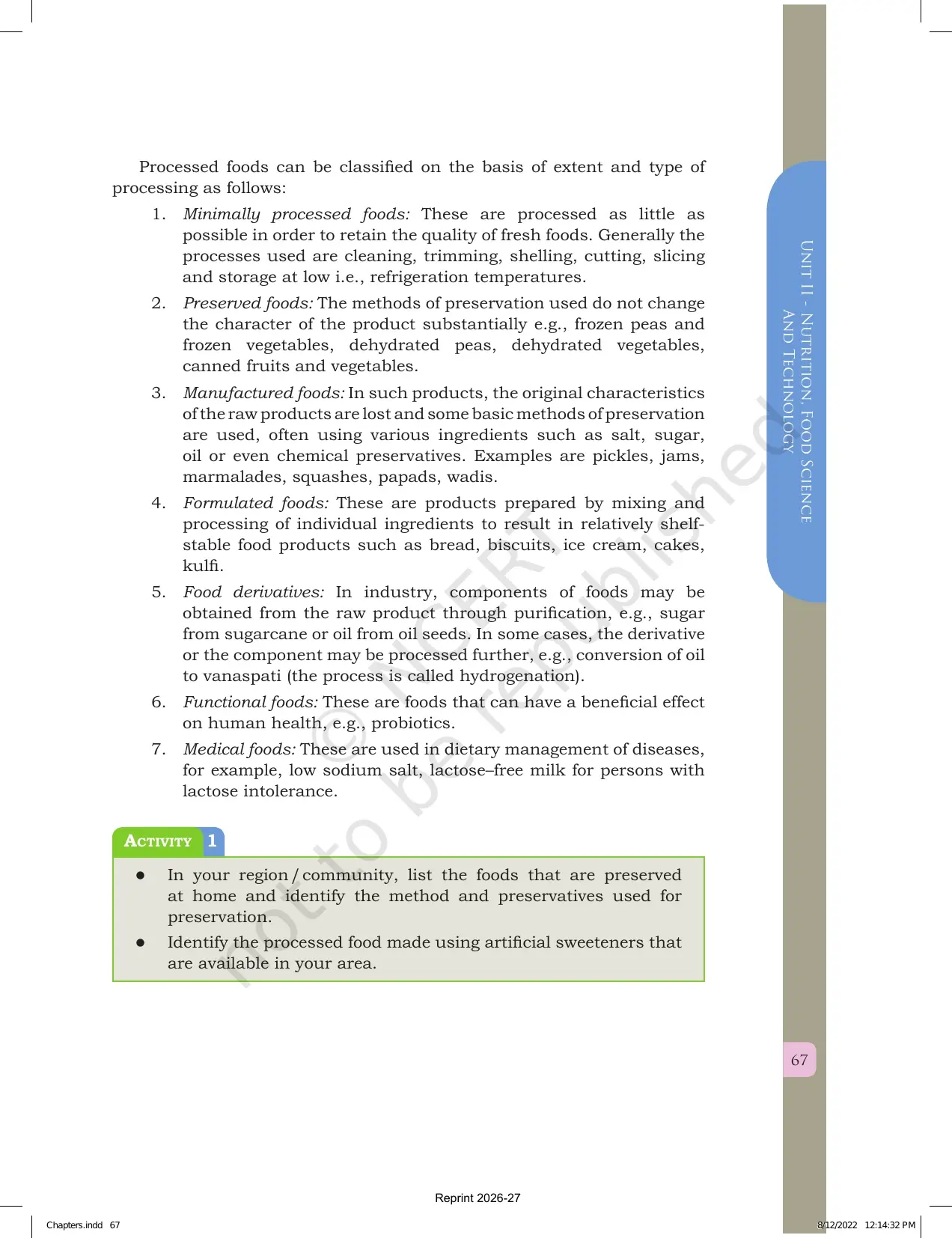
NCERT starts with a simple idea: food is processed to make it safe, useful, palatable and easier to store or transport. Students should connect every method with its purpose. Drying, salting, pickling, fermentation, canning and pasteurisation are not just examples. They show how people protect food from spoilage and make it available for longer periods.
- Raw material: good quality plant or animal food is the starting point.
- Processing method: the chosen technique changes shelf life, texture or safety.
- Storage and packaging: the final product must stay usable during transport and sale.
A strong answer should link the method, the food problem and the benefit in one paragraph.
Food Science vs Food Technology
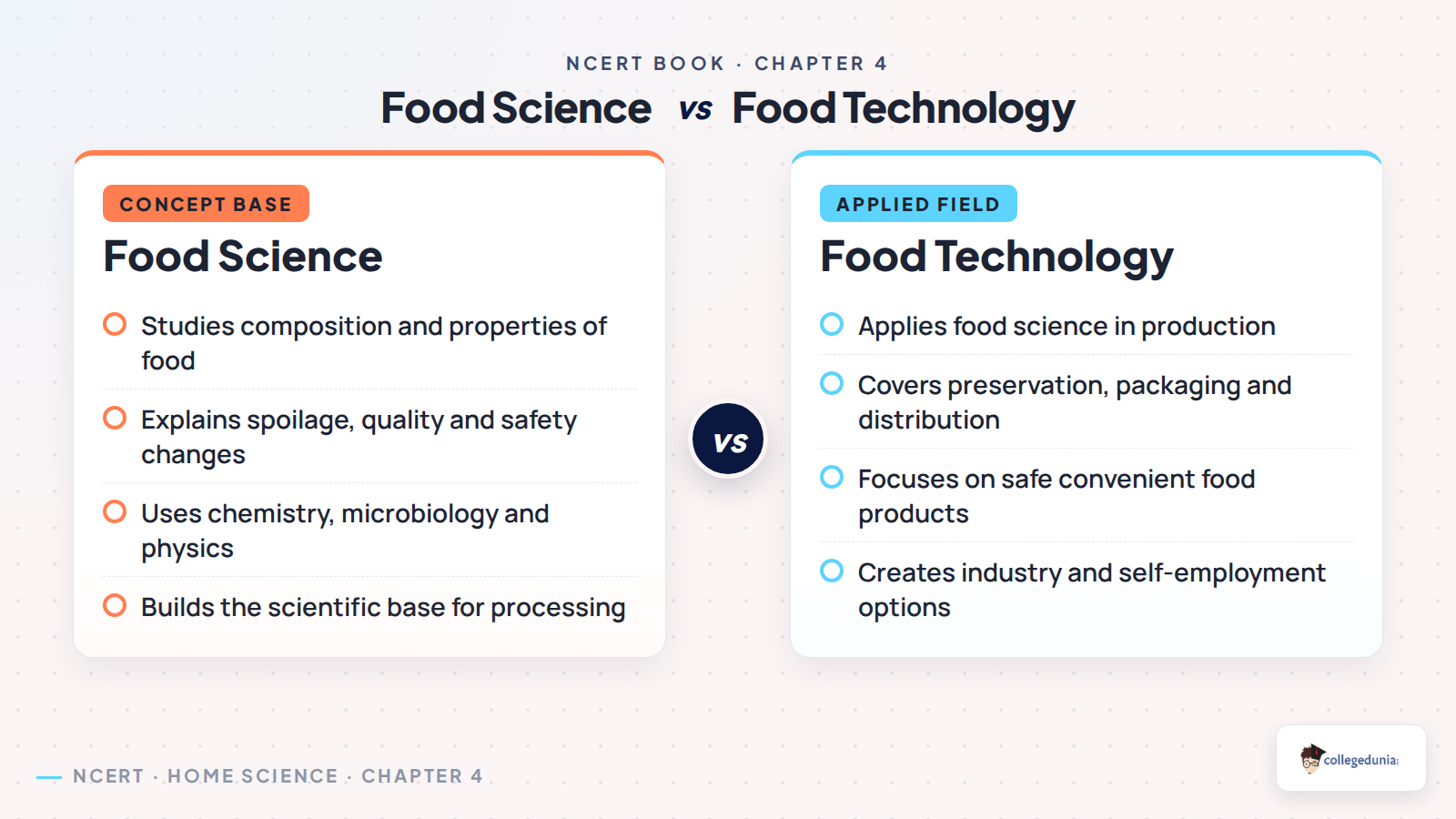
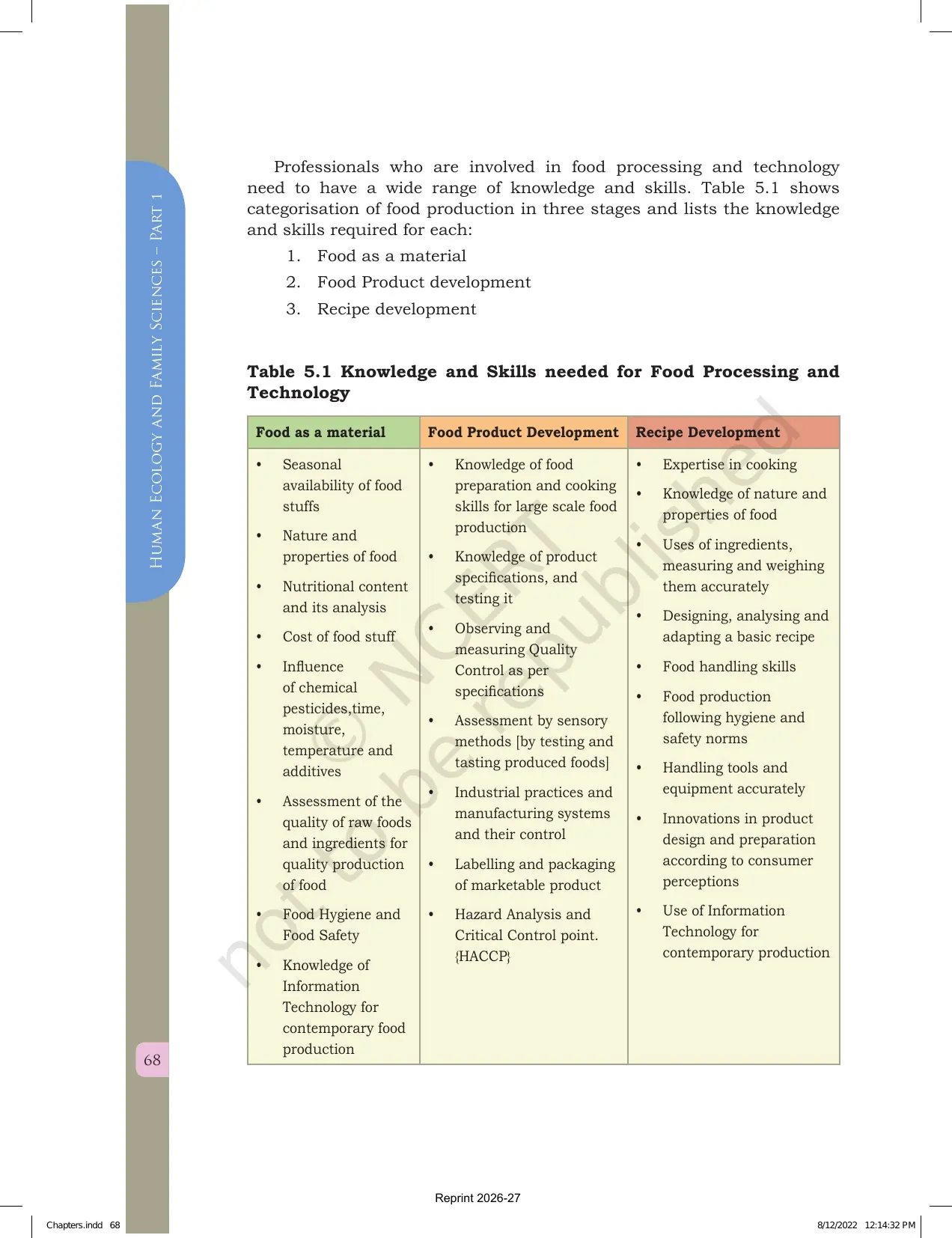
Food science gives the base. It studies food composition, spoilage, quality change and the principles behind processing. Food technology applies that base to make safe, nutritious and convenient products. The chapter also reminds students that food technologists need science, hygiene, packaging, quality control and communication skills.
| Point | Food Science | Food Technology |
|---|---|---|
| Core role | Explains properties and changes in food | Applies science to food production |
| Study focus | Chemistry, microbiology and food quality | Processing, preservation, packaging and distribution |
| Student use | Builds definitions and concepts | Builds application and career answers |
Importance of Food Processing and Preservation
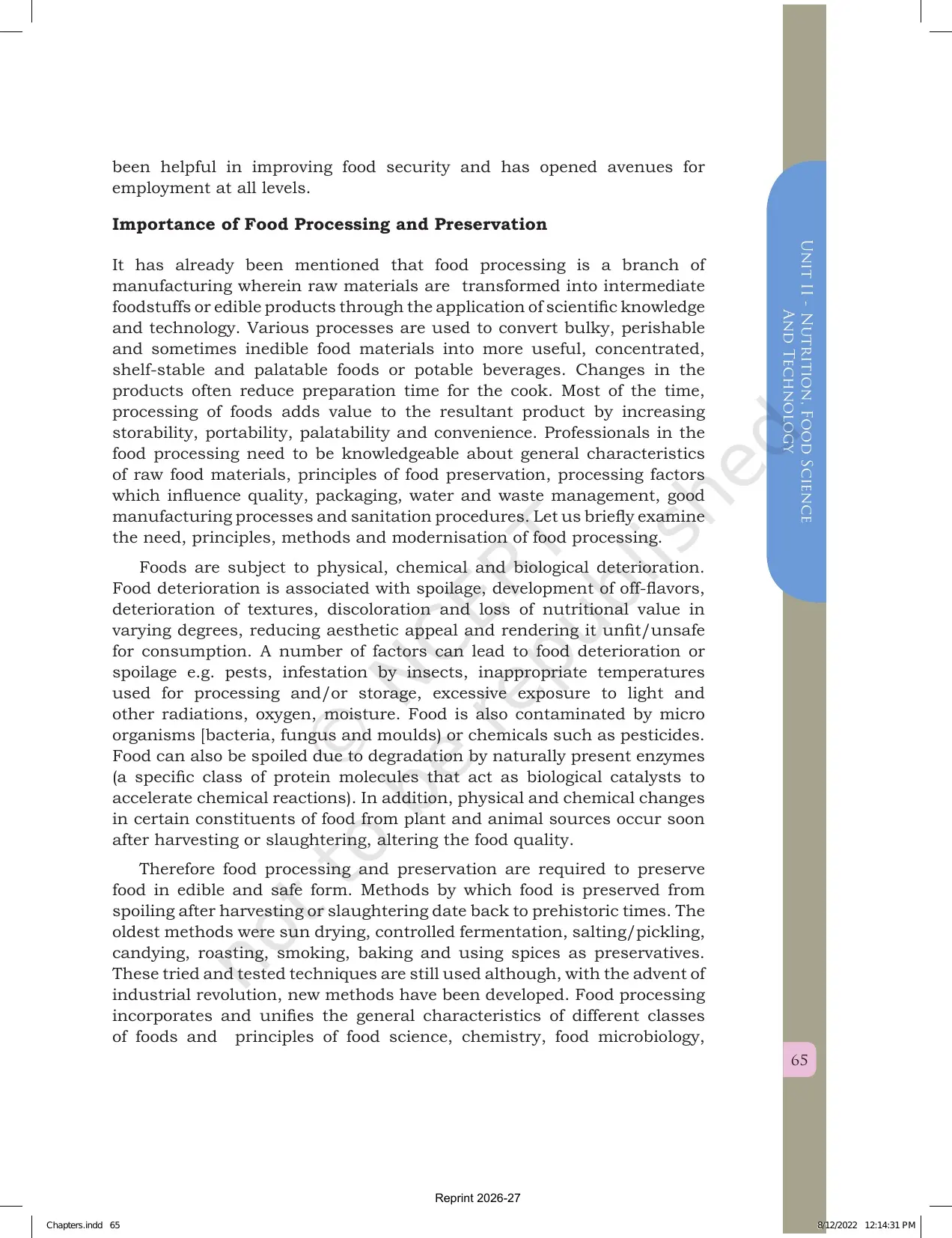
The chapter explains that foods can deteriorate because of insects, unsuitable temperature, light, oxygen, moisture, microorganisms, chemicals and natural enzymes. Processing and preservation help keep food edible and safe. Traditional methods such as sun drying, controlled fermentation, salting, pickling, candying, roasting, smoking and baking are still useful, while modern industry adds better control and large-scale production.
- Processing can increase storability, portability, palatability and convenience.
- Preservation reduces spoilage and helps maintain food safety.
- Packaging and sanitation protect quality during storage and distribution.
Do not memorise preservation as a list only. Link each method to the problem it solves.
How to Use This Home Science Chapter 4 Book PDF
Use the PDF in three rounds. First, underline the definitions of food science, food processing, food technology, food manufacturing and food spoilage. Second, mark the reasons for food deterioration. Third, revise the skills and career scope table so long answers do not become generic.
- Make a one-page chart of old and modern preservation methods.
- Prepare examples such as iodised salt, fortified flour, pasteurised milk and canned foods.
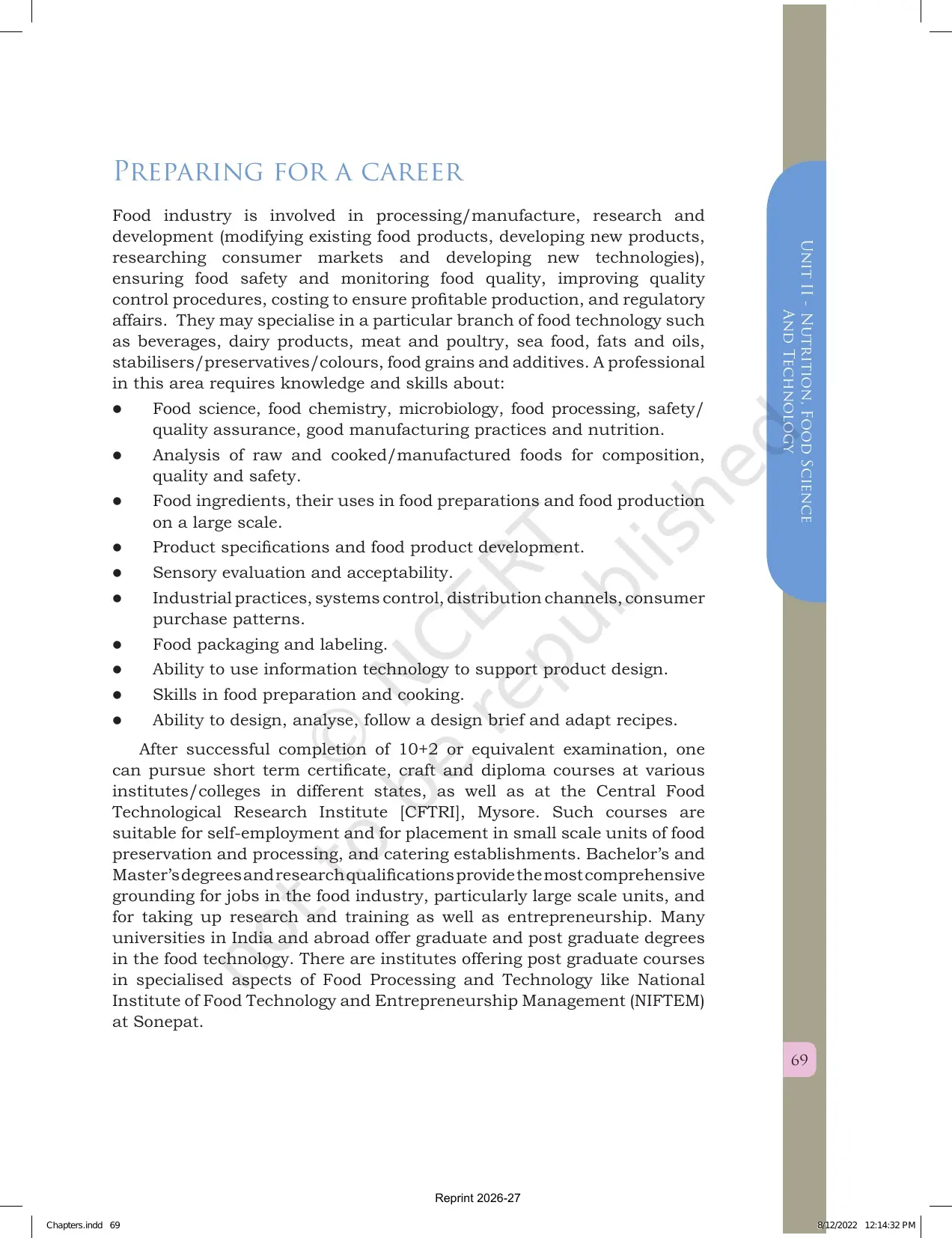
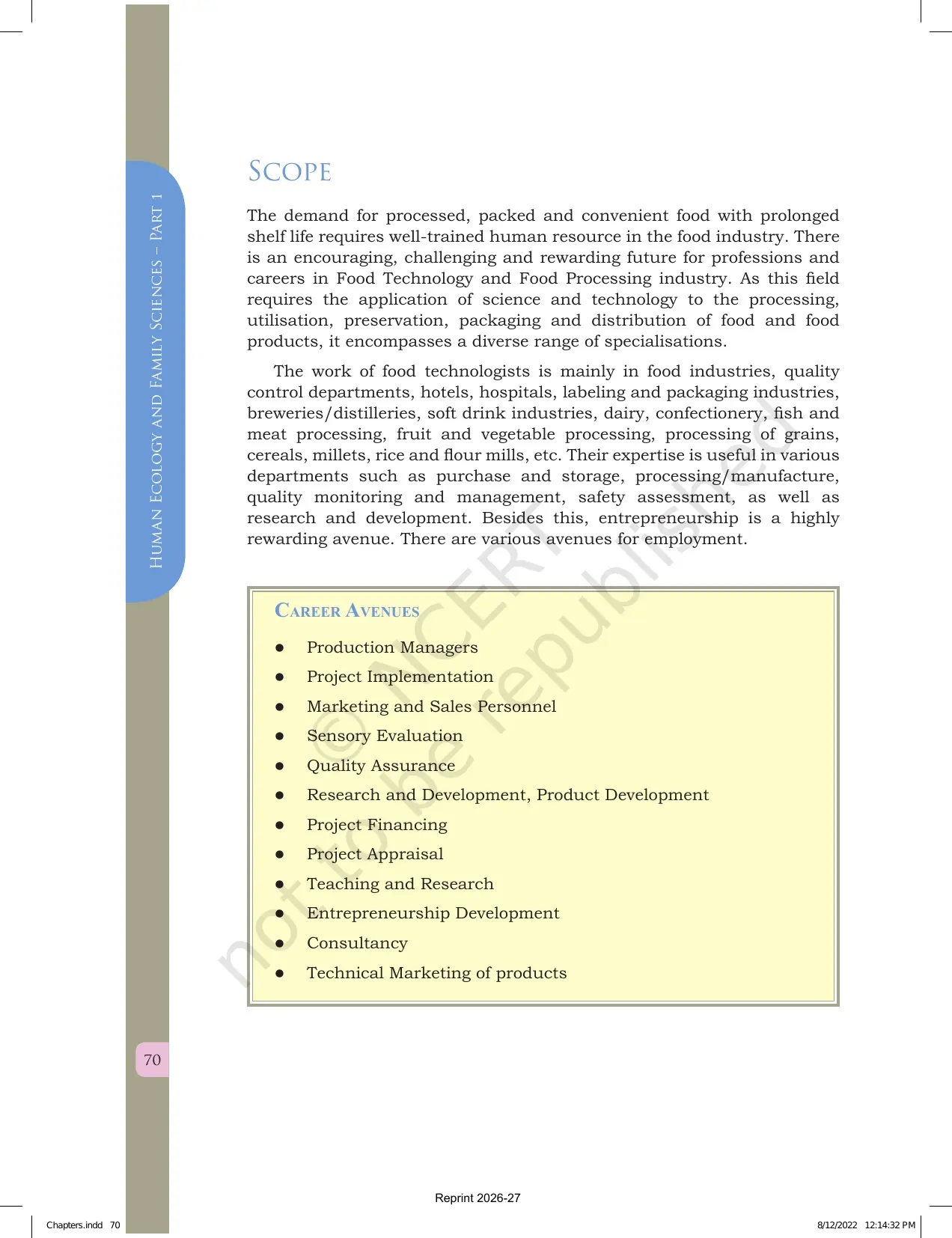
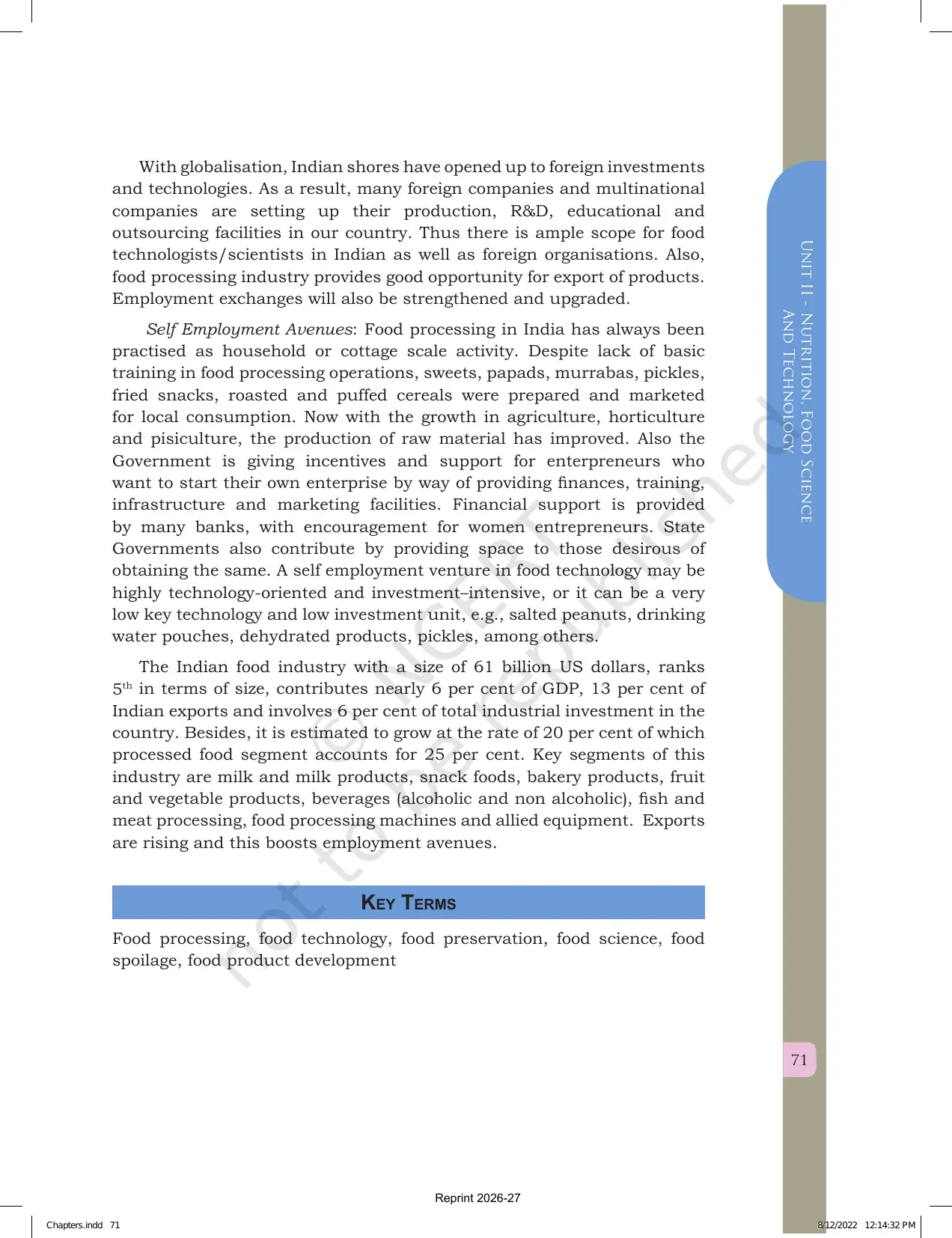
- Revise the career section with institutions, skills and self-employment scope.
Study habit: Keep the official PDF open while writing answers so terms such as fortification, pasteurisation and food manufacturing stay close to NCERT wording.
More Class 12 Home Science Chapter 4 Resources
Use these related resources when you want Chapter 4 in another format. The table stays above the FAQ so students can move from the official book PDF to revision and practice material without losing the chapter context.
| Resource | Best use | Link |
|---|---|---|
| NCERT Book PDF | Read the official 2026-27 source chapter | Open book PDF |
| Notes | Revise concepts, preservation methods and careers | Open notes |
| NCERT Solutions | Practise textbook questions in solved form | Open solutions |
| Handwritten Notes | Use a quick visual revision sheet before tests | Open handwritten notes |
All NCERT Book PDFs for Class 12 Home Science Chapters
The table below keeps the same resource type together, so students can move chapter by chapter through the Class 12 Home Science NCERT book PDFs.
| Chapter | NCERT chapter title | Book PDF |
|---|---|---|
| Chapter 1 | HE1: Work, Livelihood and Career | Open book PDF |
| Chapter 2 | HE1: Nutrition, Health and Wellbeing | Open book PDF |
| Chapter 3 | HE1: Childhood and Adolescence | Open book PDF |
| Chapter 4 | HE1: Adulthood and Ageing | Current book PDF |
| Chapter 5 | HE1: Resource Management | Open book PDF |
| Chapter 6 | HE1: Communication and Extension | Open book PDF |
| Chapter 7 | HE1: Clothing and Textiles | Open book PDF |
| Chapter 8 | HE1: Career Options after Home Science | Open book PDF |
| Chapter 9 | HE1: Family Studies | Open book PDF |
| Chapter 10 | HE1: Foundations of Indian Home Science | Open book PDF |
| Chapter 11 | HE2: Nutrition, Food Science and Technology | Open book PDF |
| Chapter 12 | HE2: Public Nutrition and Health | Open book PDF |
Food Processing and Technology Class 12 Home Science NCERT Book FAQs
Ques. What is included in the Class 12 Home Science Chapter 4 NCERT Book PDF?
Ans. The official PDF includes Food Processing and Technology, covering food science, food processing, preservation, spoilage, food safety, skills and career scope.
Ques. How many pages are there in the Chapter 4 NCERT PDF?
Ans. The official chapter PDF used for this entry has 14 pages in the 2026-27 reprint.
Ques. Why is food processing important in Home Science?
Ans. Food processing improves shelf life, safety, portability, palatability and convenience. It also supports food industry careers and small-scale entrepreneurship.
Ques. What should students revise first from this chapter?
Ans. Students should revise definitions, causes of spoilage, old and modern preservation methods, fortification examples and the skills needed by food technologists.



Comments