




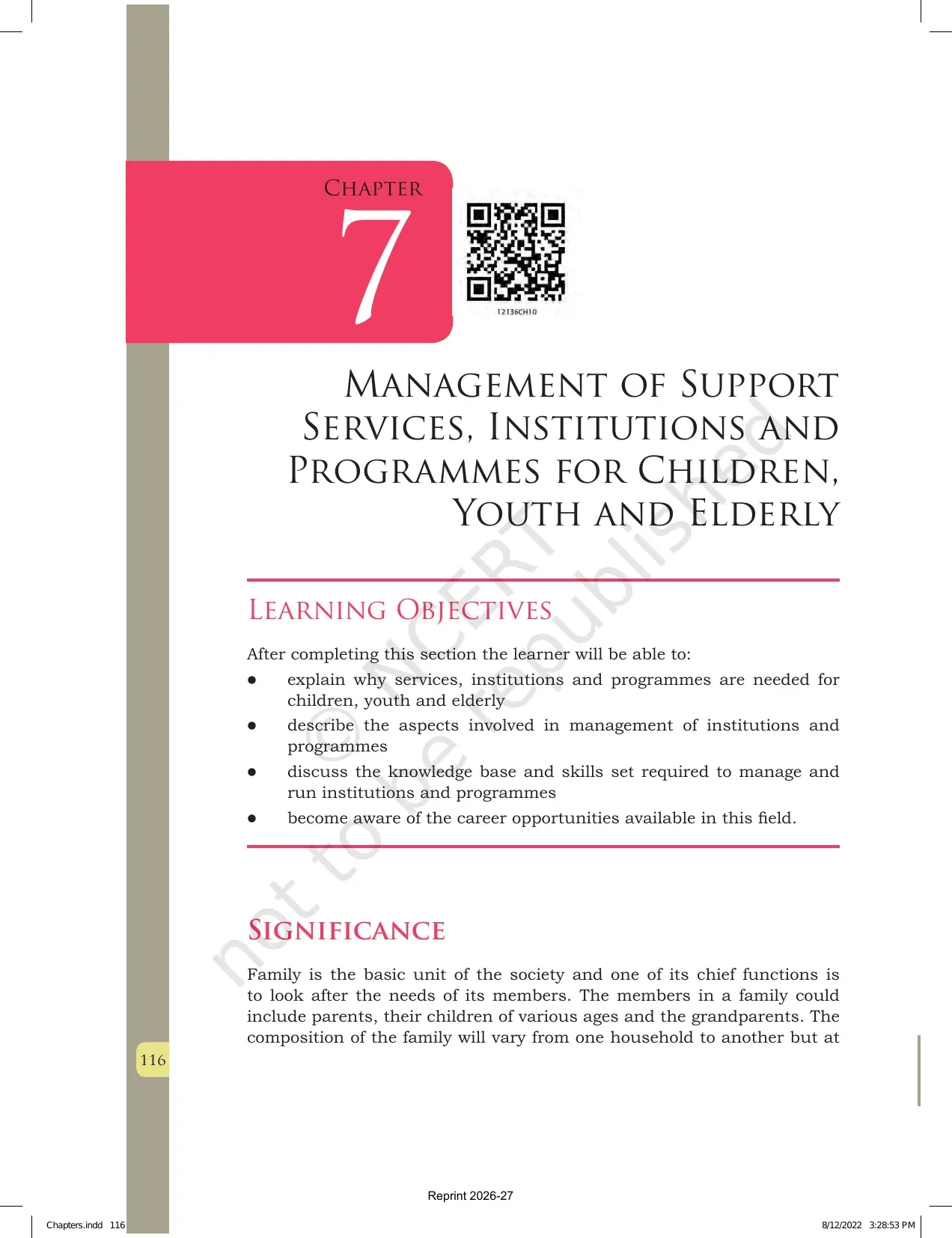
The NCERT Class 12 Home Science Chapter 7 NCERT Book PDF gives students the official 2026-27 source chapter for Human Ecology and Family Sciences. The scheduler title for this row is HE1: Clothing and Textiles, but the official PDF attached to Chapter 7 is Management of Support Services, Institutions and Programmes for Children, Youth and Elderly, so students should revise the PDF content exactly as printed by NCERT.
- Download the 37-page official NCERT chapter PDF for offline study.
- Revise why children, youth and elderly need support services and institutions.
- Use this source text before writing notes or answers on programme management.
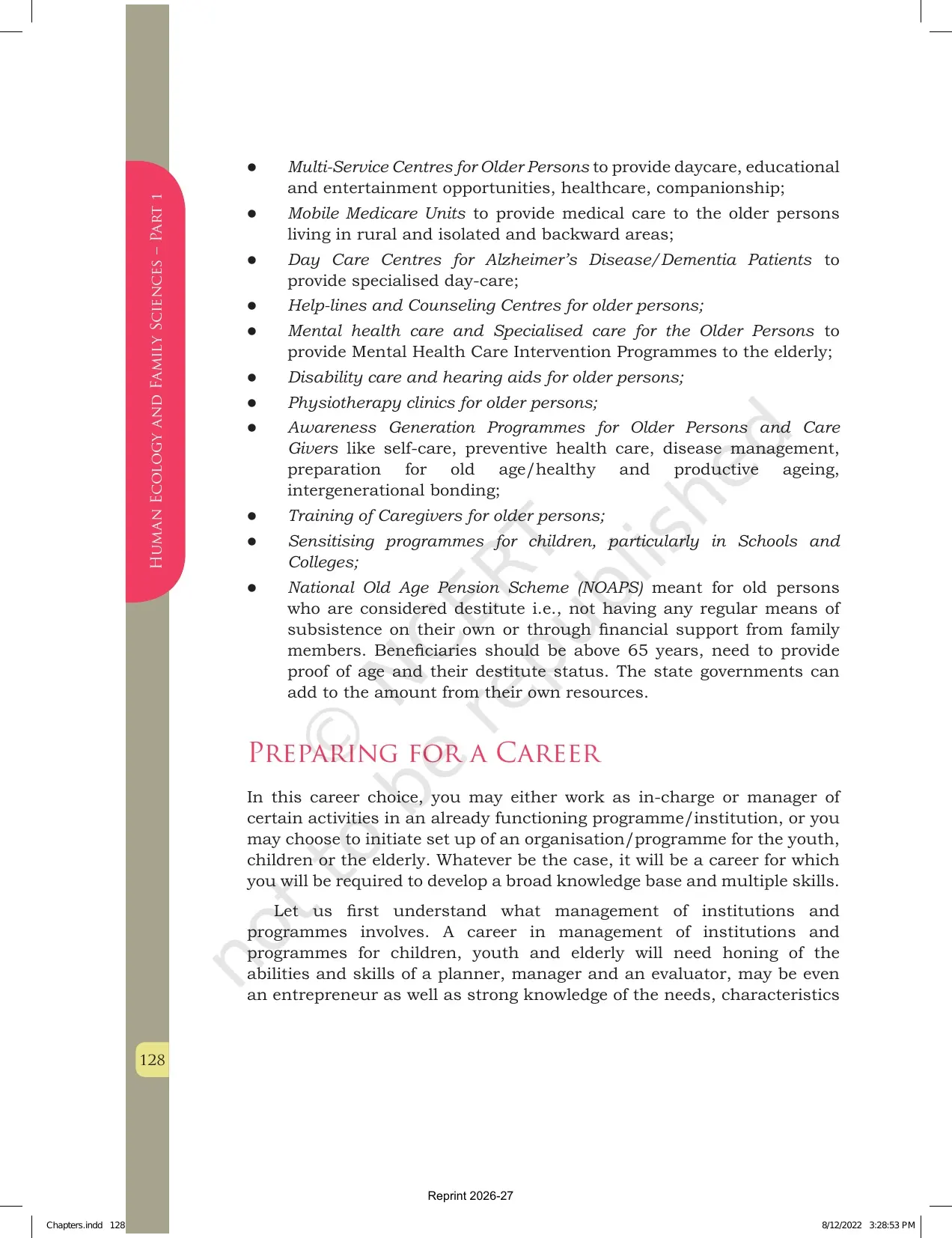
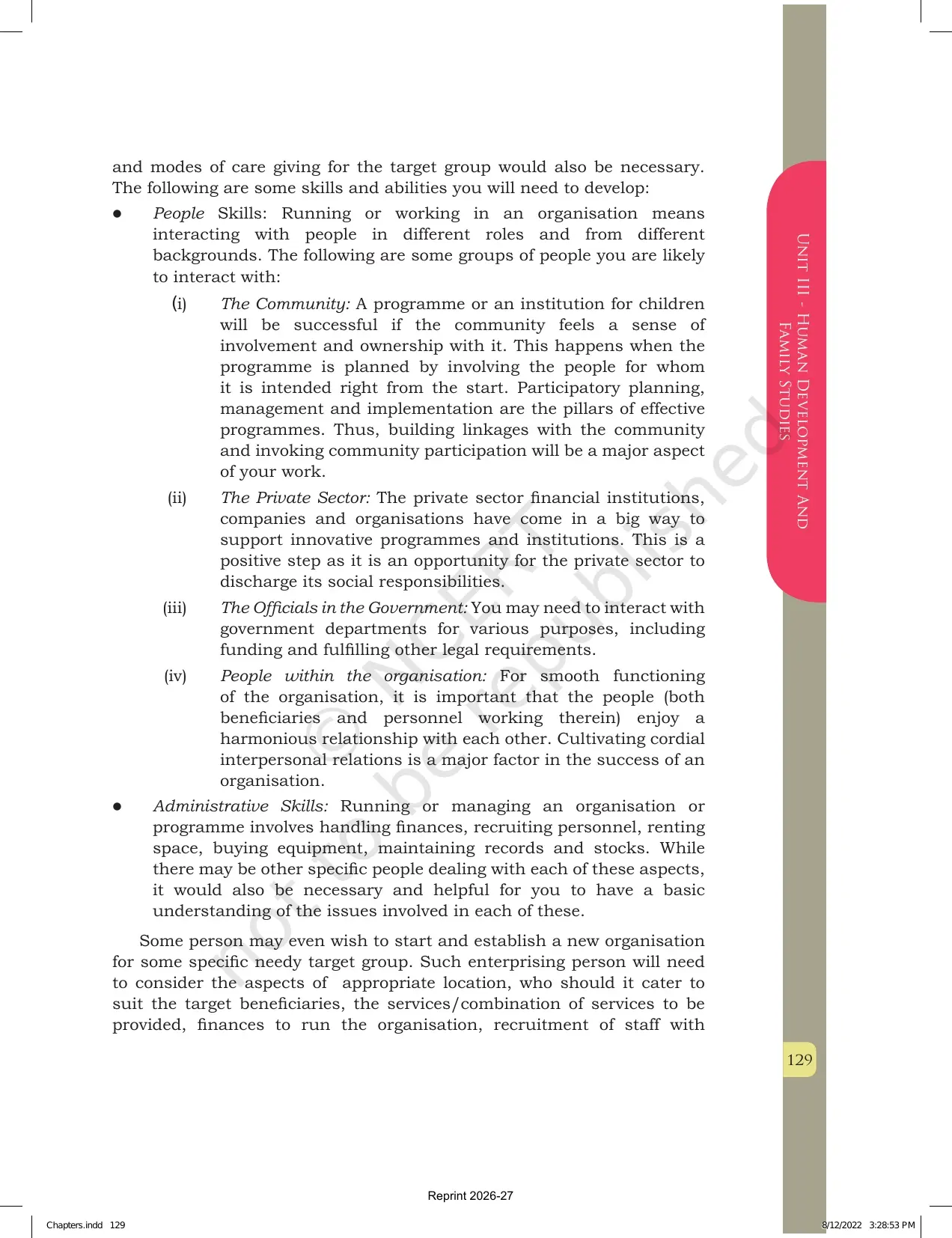
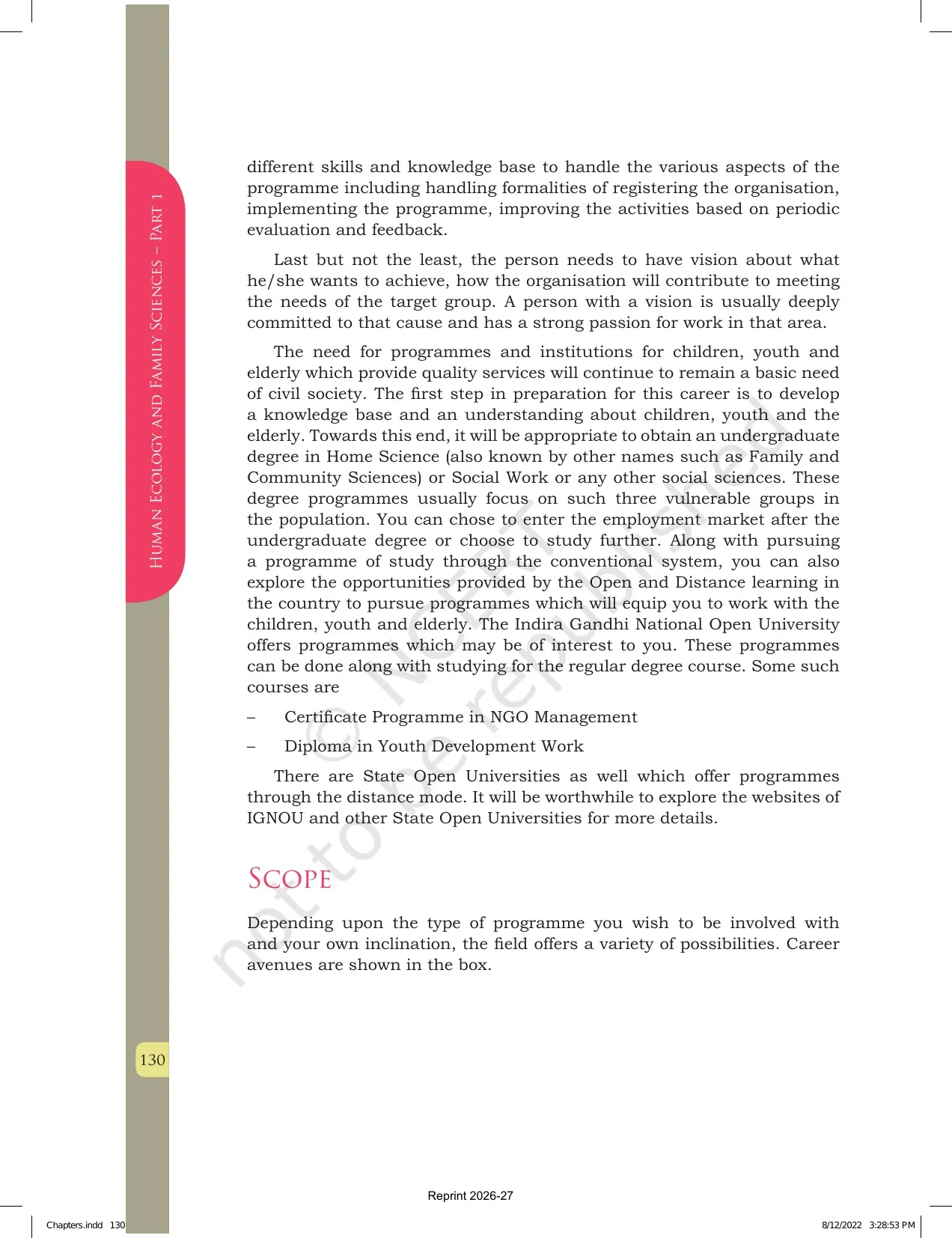
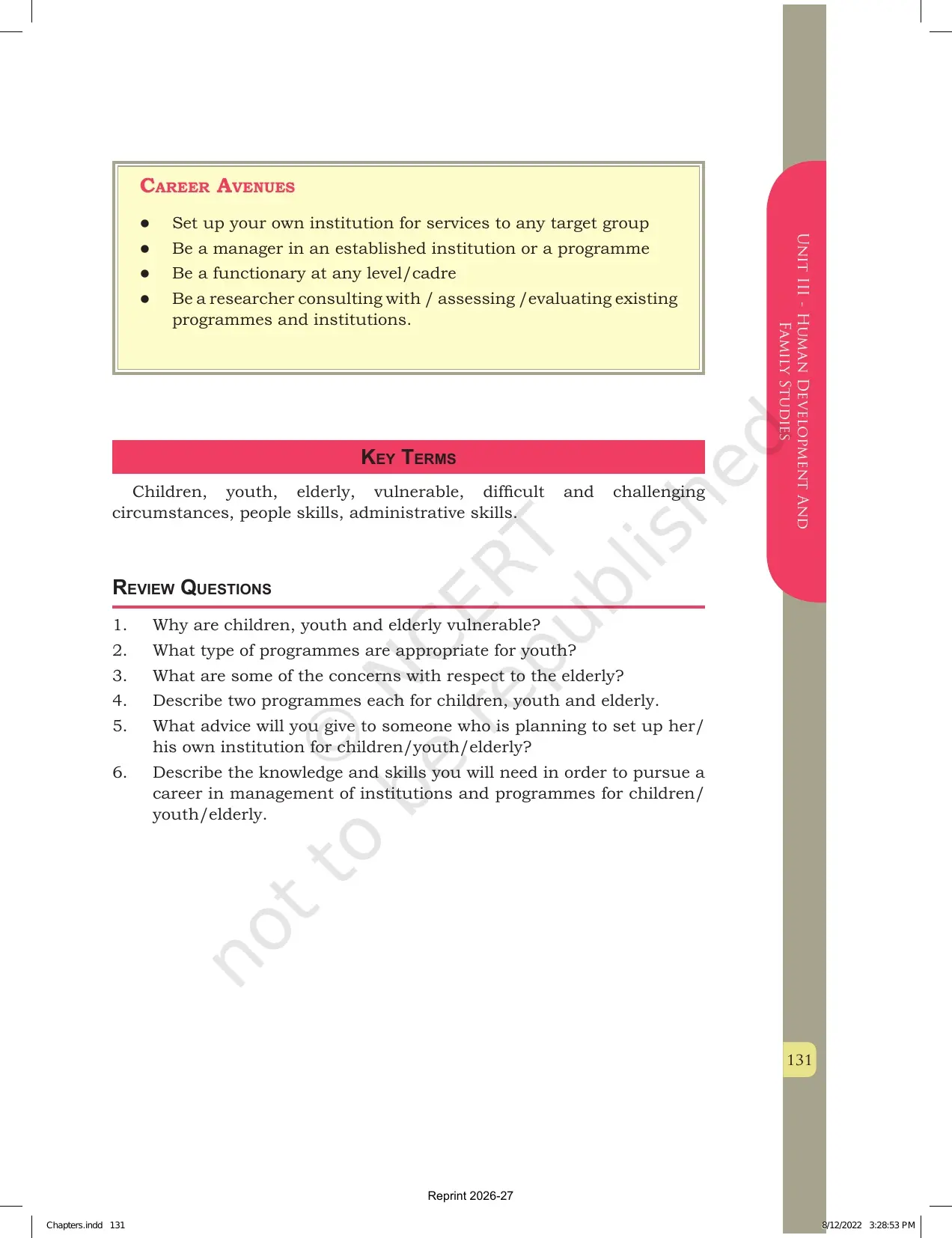
Student Feedback: In a Collegedunia study poll of 8,640 Class 12 Home Science students, 71% said Chapter 7 became easier after they revised vulnerable groups, institutional services and programme management in one flow.
This NCERT Book PDF follows the 2026-27 reprint and should be used as the source text before attempting notes, solutions or quick revision material.
Support Services Chapter 7 NCERT Book PDF Highlights
The official chapter title printed in the PDF is Management of Support Services, Institutions and Programmes for Children, Youth and Elderly. It explains why families and communities need organised services when vulnerable groups cannot meet all needs through family support alone. Read the chapter as a bridge between human development, social responsibility and service management.
| PDF area | NCERT focus | Best use |
|---|---|---|
| Significance | Why support services are needed beyond the family | Write the opening reason for institutions |
| Vulnerable groups | Children, youth and elderly in difficult circumstances | Build group-wise explanations |
| Programme management | Planning, staffing, resources, records and supervision | Prepare application-based answers |
| Career direction | Skills needed to manage social and care institutions | Connect the chapter with Home Science careers |
Support Services and Programme Management Video Explanation
Source: Achieve it on YouTube
Managing Support Services Flow for Home Science
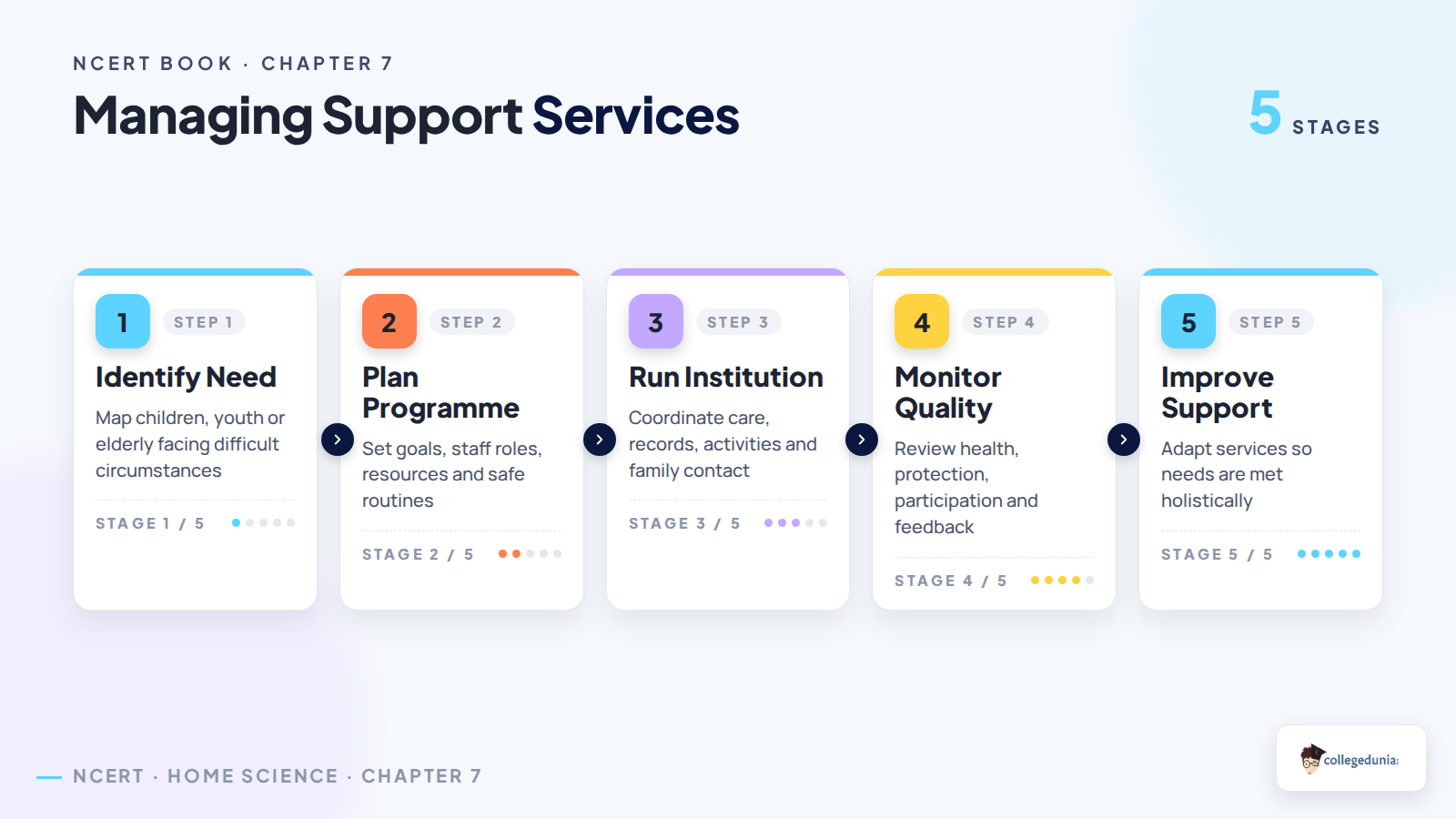
The chapter asks students to think like service planners. A support service begins with a real need, then moves through programme planning, institutional running, supervision and improvement. This helps students avoid writing only emotional points about care. NCERT expects practical management vocabulary as well.
- Identify the need: understand which group needs care, protection, education, health support or rehabilitation.
- Plan the programme: decide goals, staff roles, resources, daily routines and safety procedures.
- Monitor quality: review records, feedback, health, participation and whether needs are met holistically.
A strong Home Science answer links vulnerable group, specific need and management response in one paragraph.
Vulnerable Groups in the NCERT PDF
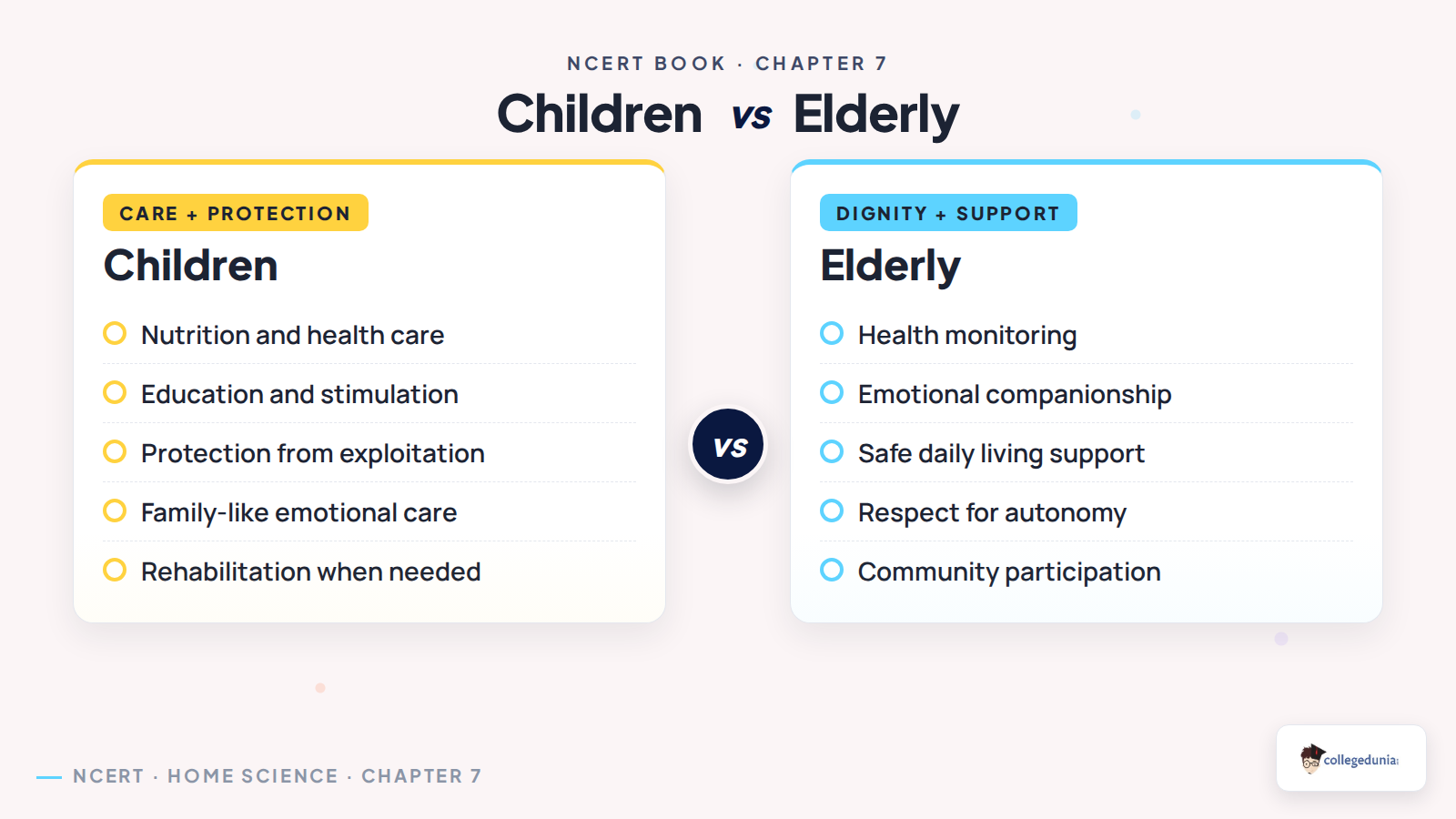
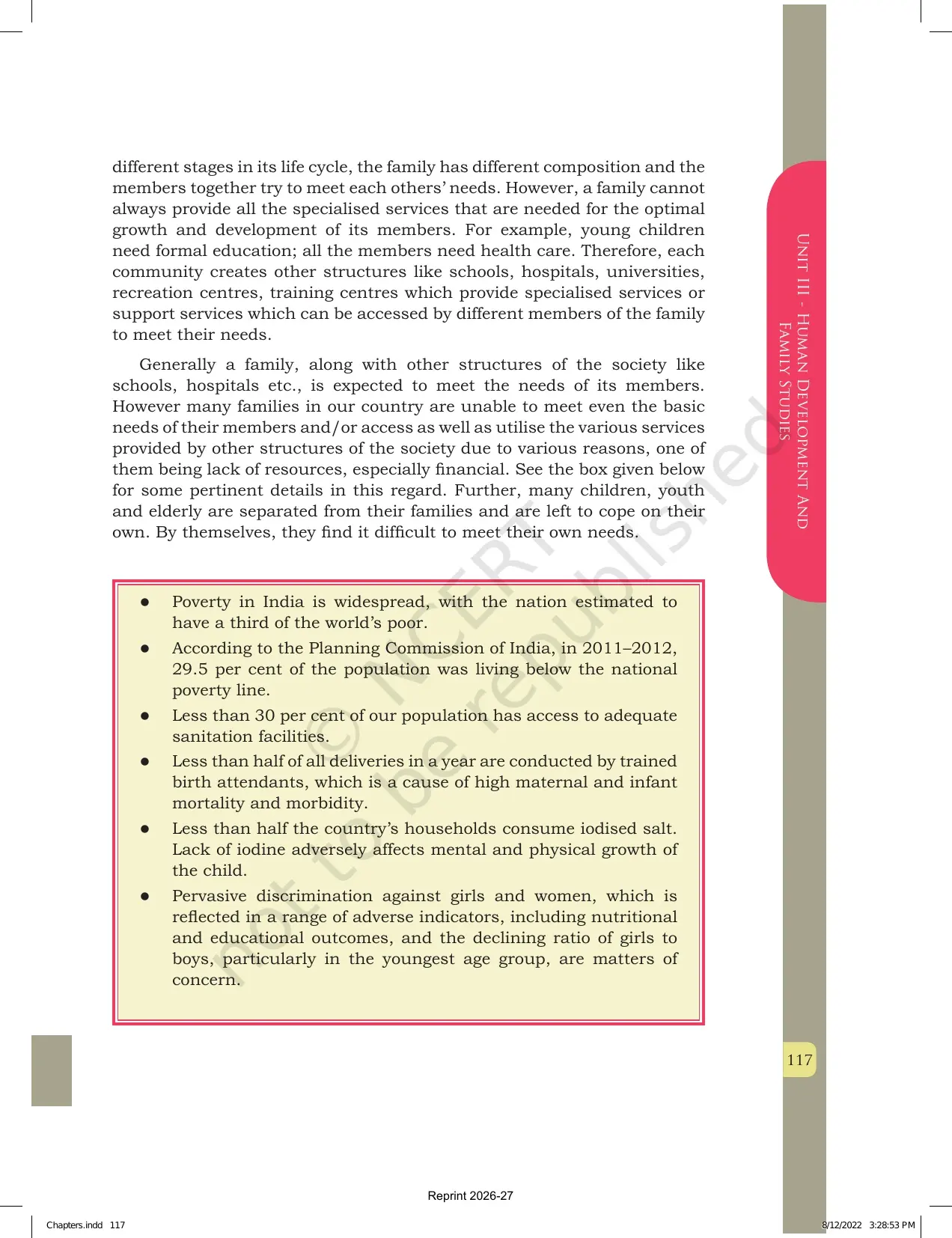
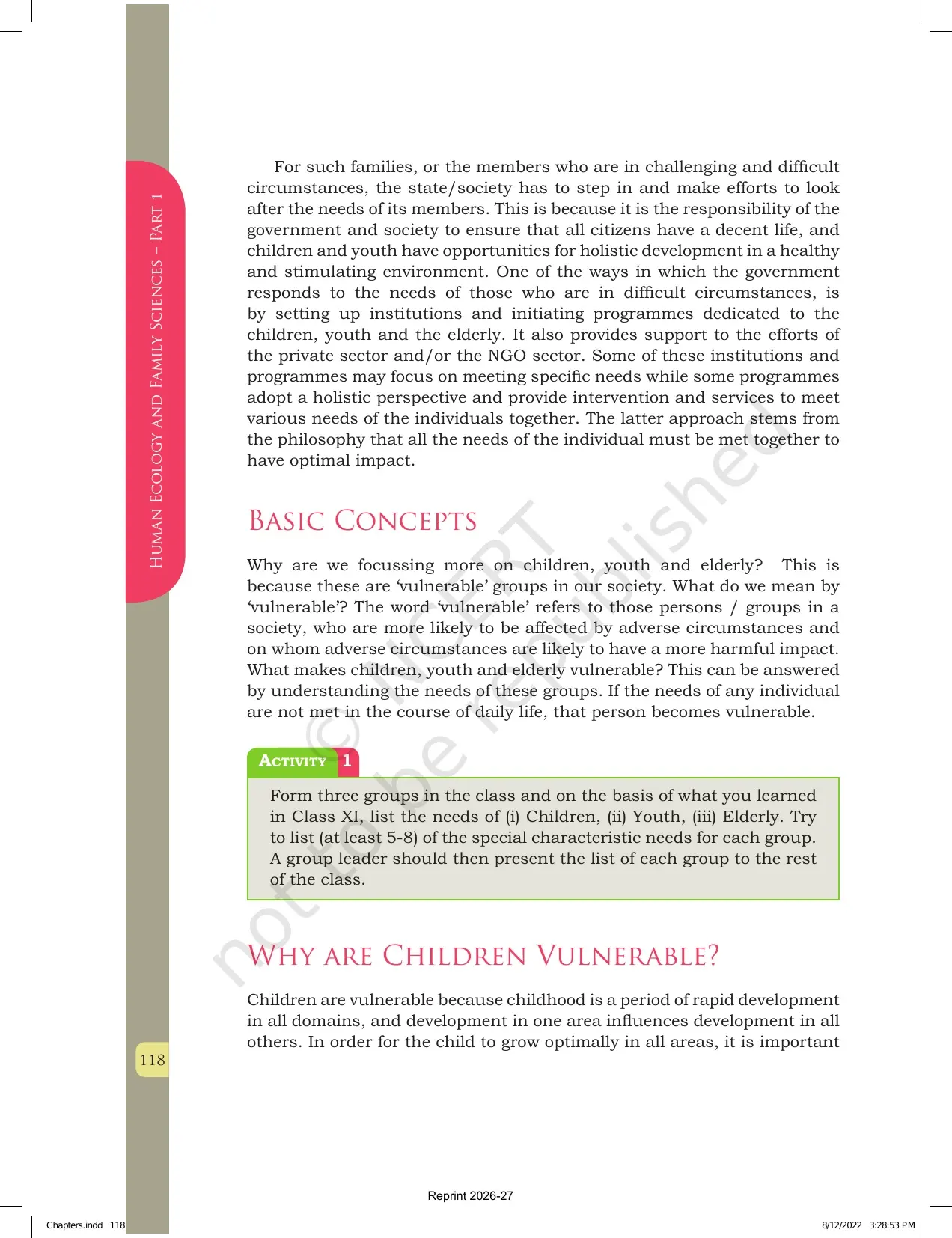
NCERT uses the word vulnerable for groups that are more likely to be affected by adverse circumstances. Children, youth and elderly people may need specialised services when family support, community support or financial resources are not enough. The PDF explains that services can be preventive, protective, developmental and rehabilitative.
| Group | Why support may be needed | Revision cue |
|---|---|---|
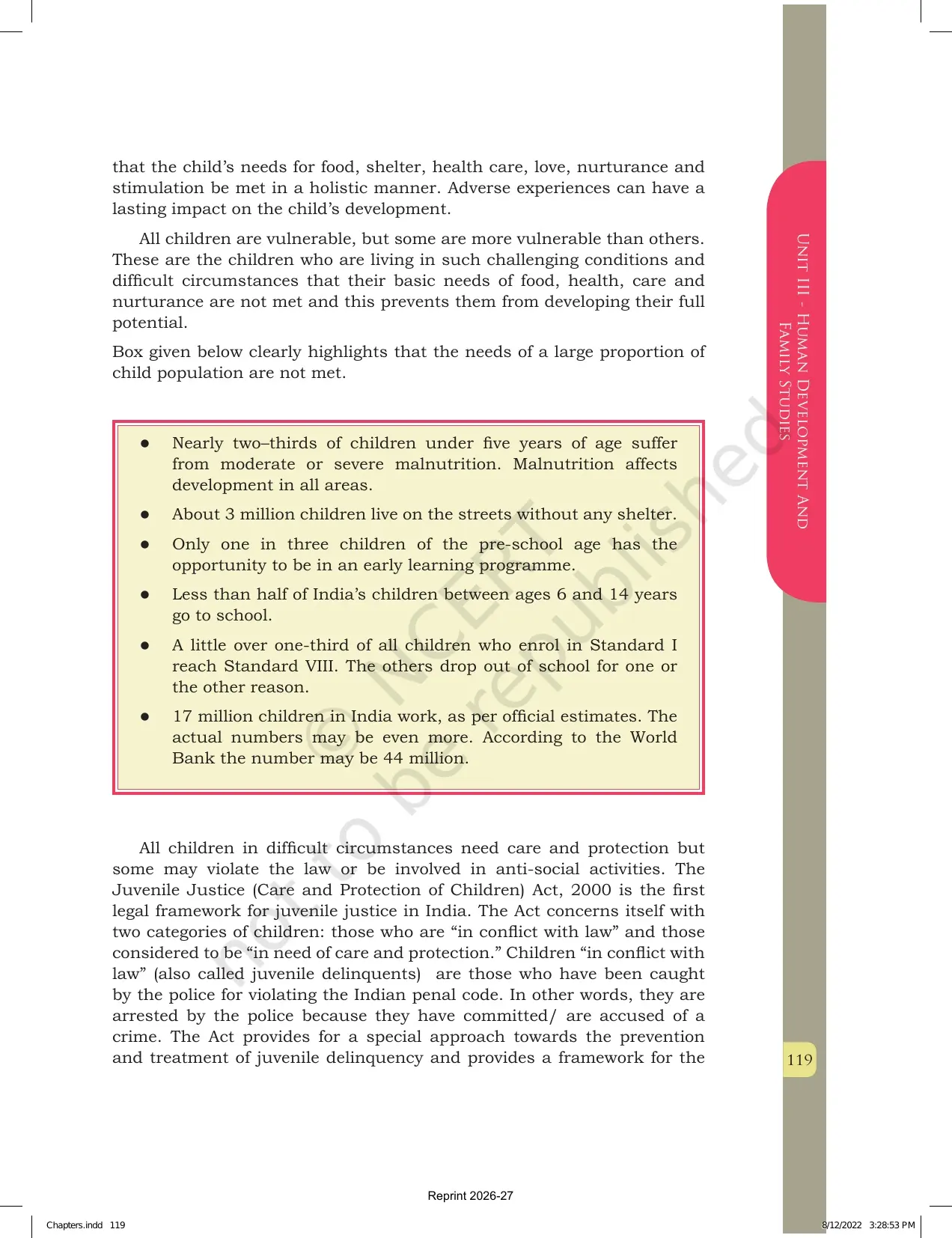
| Children | Rapid development makes food, shelter, health care, education and nurturance essential | Care and protection |
| Youth | Training, guidance, employment support and safe opportunities may be needed | Development and direction |
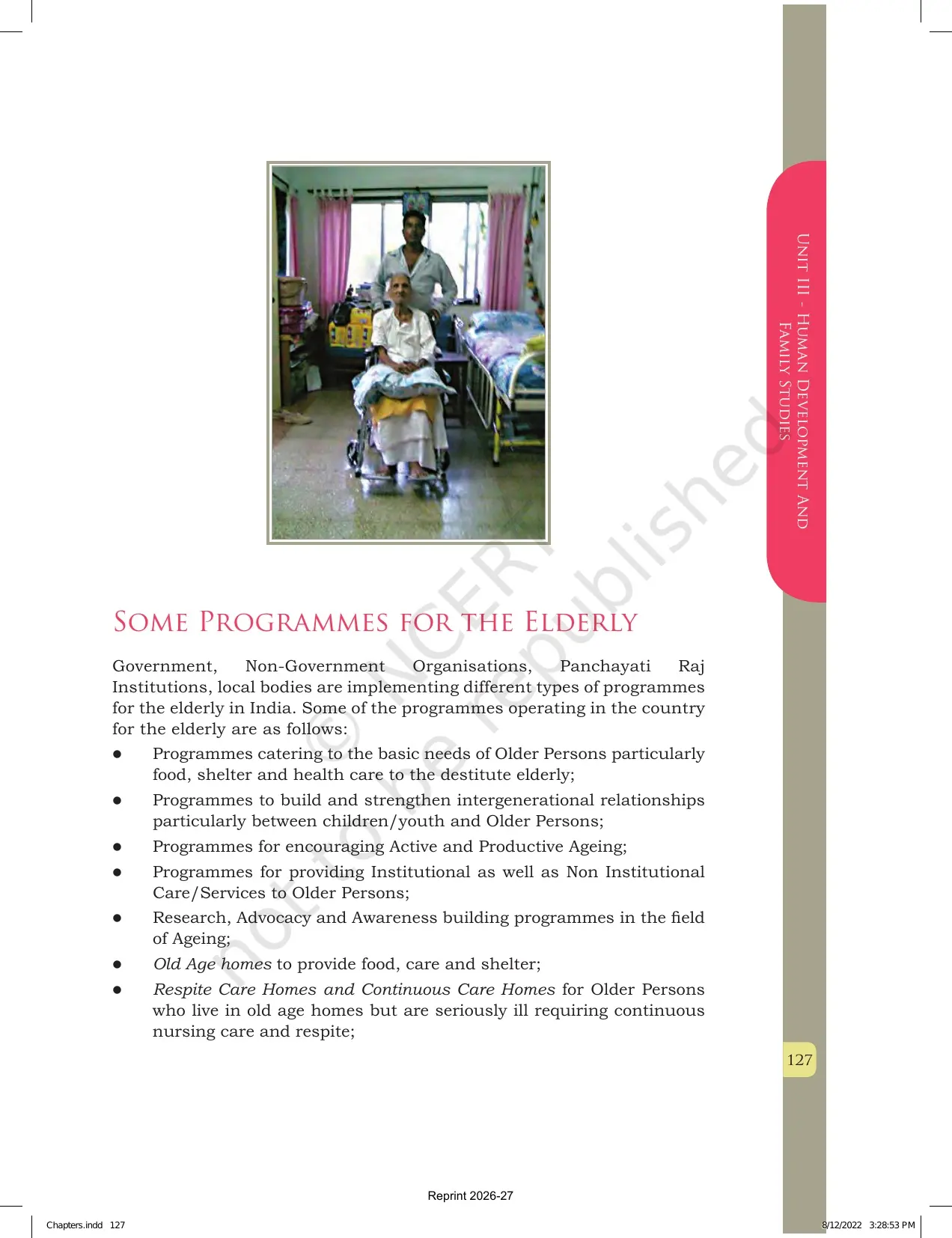
| Elderly | Health care, emotional support, safety, participation and dignity become important | Respect and support |
| Families in difficulty | Financial, social or crisis situations can block access to services | Institutional help |
Key Ideas Students Should Revise from Chapter 7
The 37-page PDF is detailed, so students should revise it through repeated NCERT terms. Focus on the need for support services, the meaning of vulnerability, the role of institutions and the management tasks that make programmes effective.
- Family is central but not sufficient: schools, hospitals, recreation centres, training centres and welfare institutions provide specialised services.
- Needs must be met together: holistic support has better impact than isolated services.
- Institutions need management: planning, staffing, budgeting, records, supervision and evaluation are part of service quality.
- Career work needs skills: communication, sensitivity, record keeping, coordination and leadership matter in this field.
Do not memorise only definitions. Link each concept with children, youth or elderly and the service that responds to their need.
How to Use This Home Science Chapter 7 Book PDF
Use the PDF in three rounds. First, read the significance section and mark why families need community and state support. Second, revise vulnerable groups and list their needs separately. Third, study programme management as a practical sequence from planning to evaluation.
- Make a one-page table for children, youth and elderly needs.
- Underline NCERT phrases such as holistic development, difficult circumstances and support services.
- Prepare one short answer on why institutions are necessary and one long answer on how programmes are managed.
Study habit: Keep the official PDF open while writing notes so terms such as vulnerable groups, rehabilitation, intervention and service management stay close to NCERT wording.
More Class 12 Home Science Chapter 7 Resources
Use these related resources when you want Chapter 7 in another format. The table stays above the FAQ so students can move from the official book PDF to revision and practice material without losing the chapter context.
| Resource | Best use | Link |
|---|---|---|
| NCERT Book PDF | Read the official 2026-27 source chapter | Open book PDF |
| Notes | Revise support services, vulnerable groups and programme management | Open notes |
| NCERT Solutions | Practise textbook questions in solved form | Open solutions |
| Handwritten Notes | Use a quick visual revision sheet before tests | Open handwritten notes |
All NCERT Book PDFs for Class 12 Home Science Chapters
The table below keeps the same resource type together, so students can move chapter by chapter through the Class 12 Home Science NCERT book PDFs.
| Chapter | NCERT chapter title | Book PDF |
|---|---|---|
| Chapter 1 | HE1: Work, Livelihood and Career | Open book PDF |
| Chapter 2 | HE1: Nutrition, Health and Wellbeing | Open book PDF |
| Chapter 3 | HE1: Childhood and Adolescence | Open book PDF |
| Chapter 4 | HE1: Adulthood and Ageing | Open book PDF |
| Chapter 5 | HE1: Resource Management | Open book PDF |
| Chapter 6 | HE1: Communication and Extension | Open book PDF |
| Chapter 7 | HE1: Clothing and Textiles | Current book PDF |
| Chapter 8 | HE1: Career Options after Home Science | Open book PDF |
| Chapter 9 | HE1: Family Studies | Open book PDF |
| Chapter 10 | HE1: Foundations of Indian Home Science | Open book PDF |
| Chapter 11 | HE2: Nutrition, Food Science and Technology | Open book PDF |
| Chapter 12 | HE2: Public Nutrition and Health | Open book PDF |
| Chapter 13 | HE2: Clinical Nutrition and Dietetics | Open book PDF |
| Chapter 14 | HE2: Catering and Food Service Management | Open book PDF |
| Chapter 15 | HE2: Food Processing and Technology | Open book PDF |
| Chapter 16 | HE2: Food Quality and Food Safety | Open book PDF |
Support Services Class 12 Home Science NCERT Book FAQs
Ques. What is included in the Class 12 Home Science Chapter 7 NCERT Book PDF?
Ans. The PDF includes the official NCERT chapter on management of support services, institutions and programmes for children, youth and elderly.
Ques. How many pages are there in the Chapter 7 NCERT PDF?
Ans. The official chapter PDF used for this entry has 37 pages in the 2026-27 reprint.
Ques. Why are children, youth and elderly called vulnerable groups?
Ans. They are called vulnerable because adverse circumstances can affect them strongly, especially when basic needs, protection, care or support services are missing.
Ques. What should students revise first from this PDF?
Ans. Students should revise the need for support services, vulnerable groups, types of institutions, programme planning, staffing, records, supervision and evaluation.



Comments