



NCERT Class 6 Kaushal Bodh Chapter 1 School Kitchen Garden PDF gives students the official Vocational Education chapter for the 2026-27 session. The PDF explains how to plan a school kitchen garden, prepare soil, sow seeds, make compost, care for plants, harvest produce and record the project work.
- Official chapter: 33-page NCERT PDF for Class 6 Vocational Education Kaushal Bodh.
- Project focus: tools, safety, soil preparation, planting, composting, watering and harvesting.
- Best use: keep the PDF open while making the project file or revising activity tables.
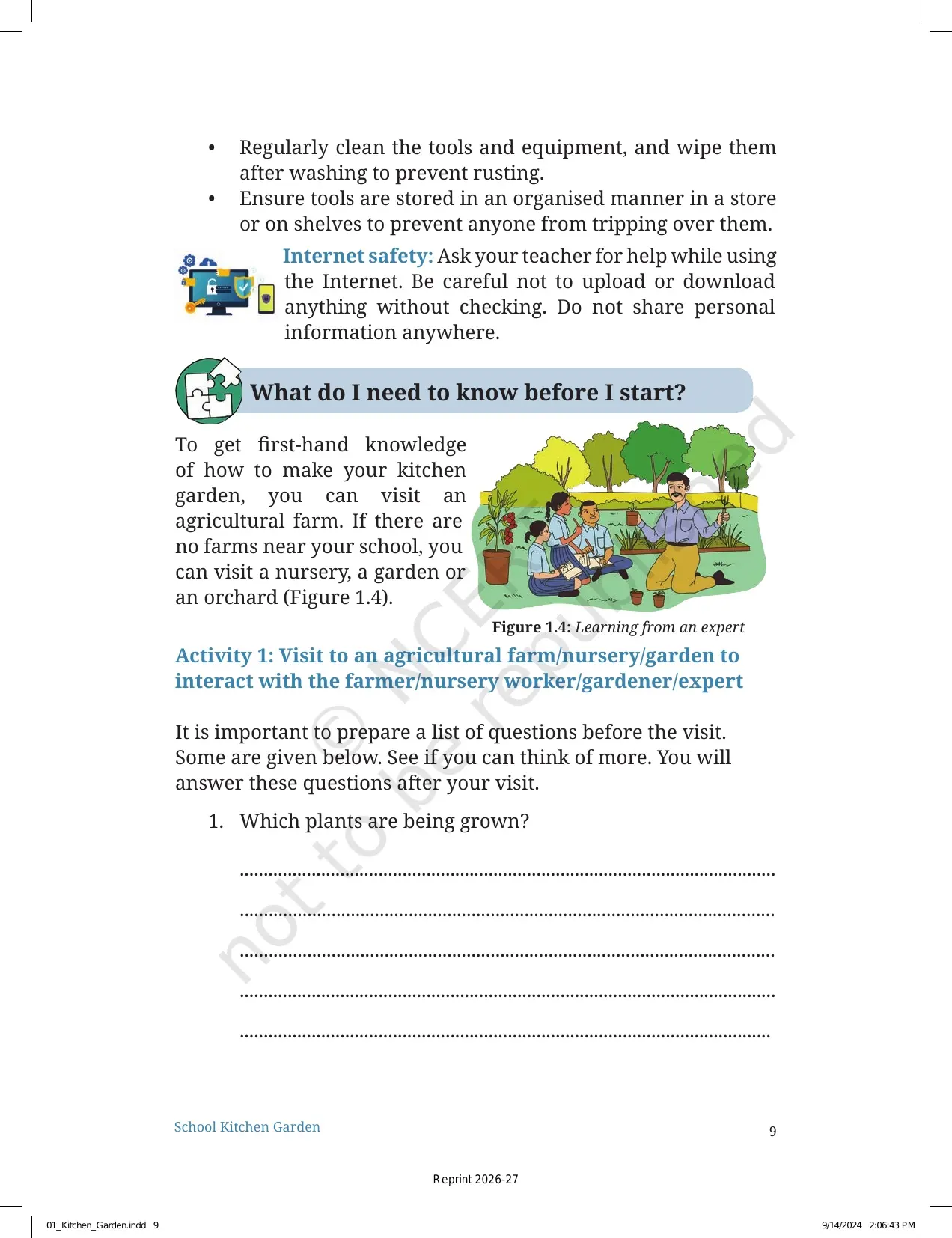
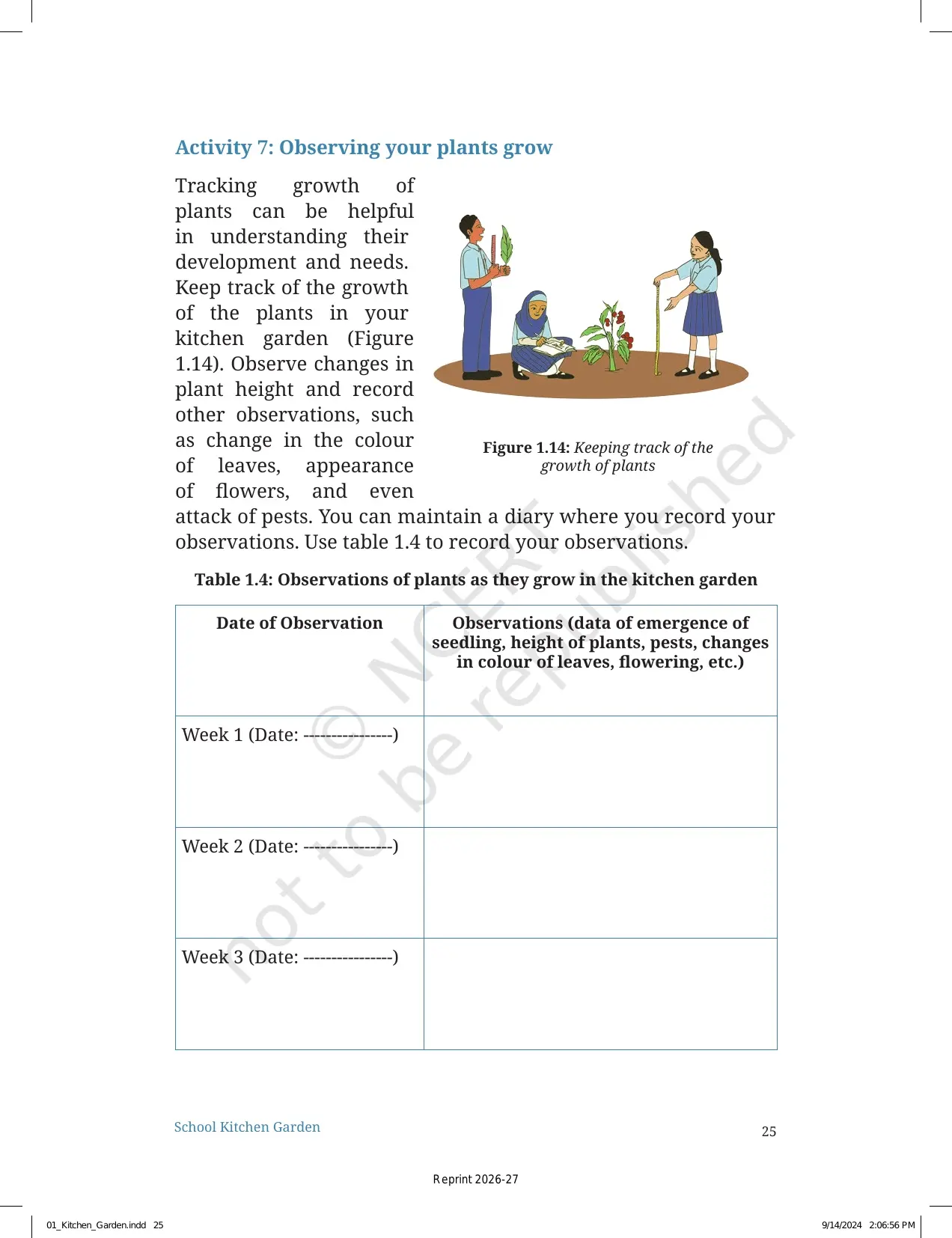
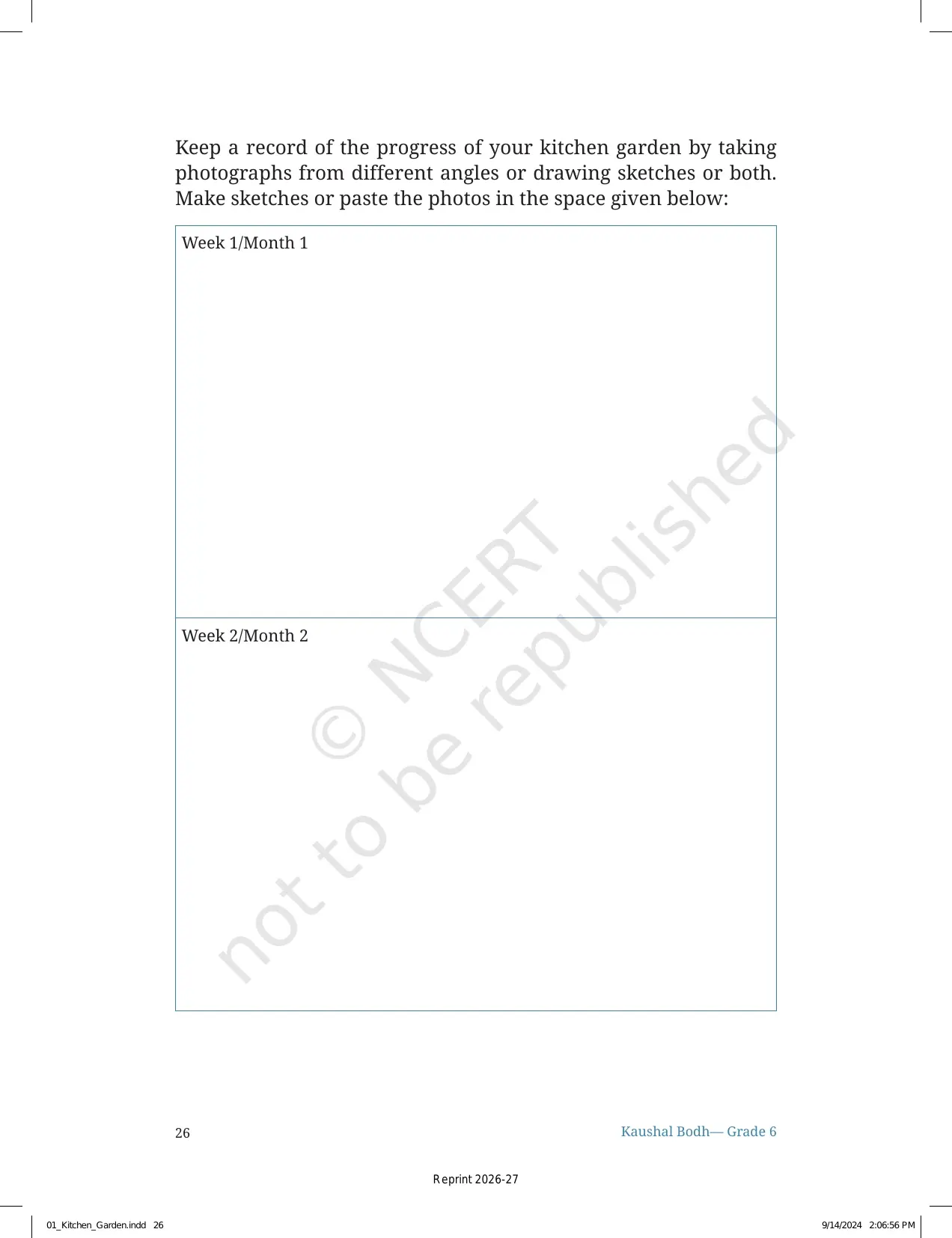
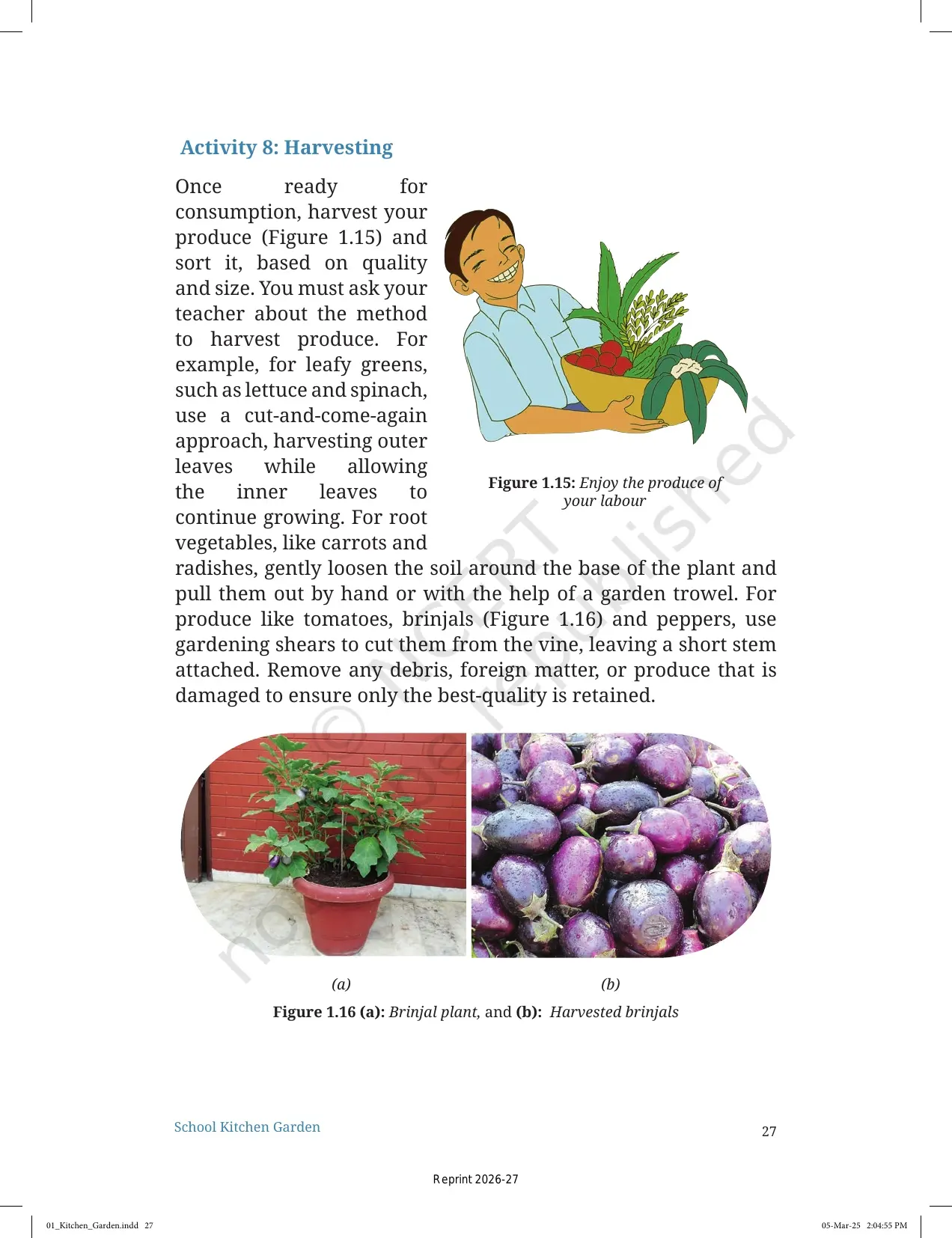
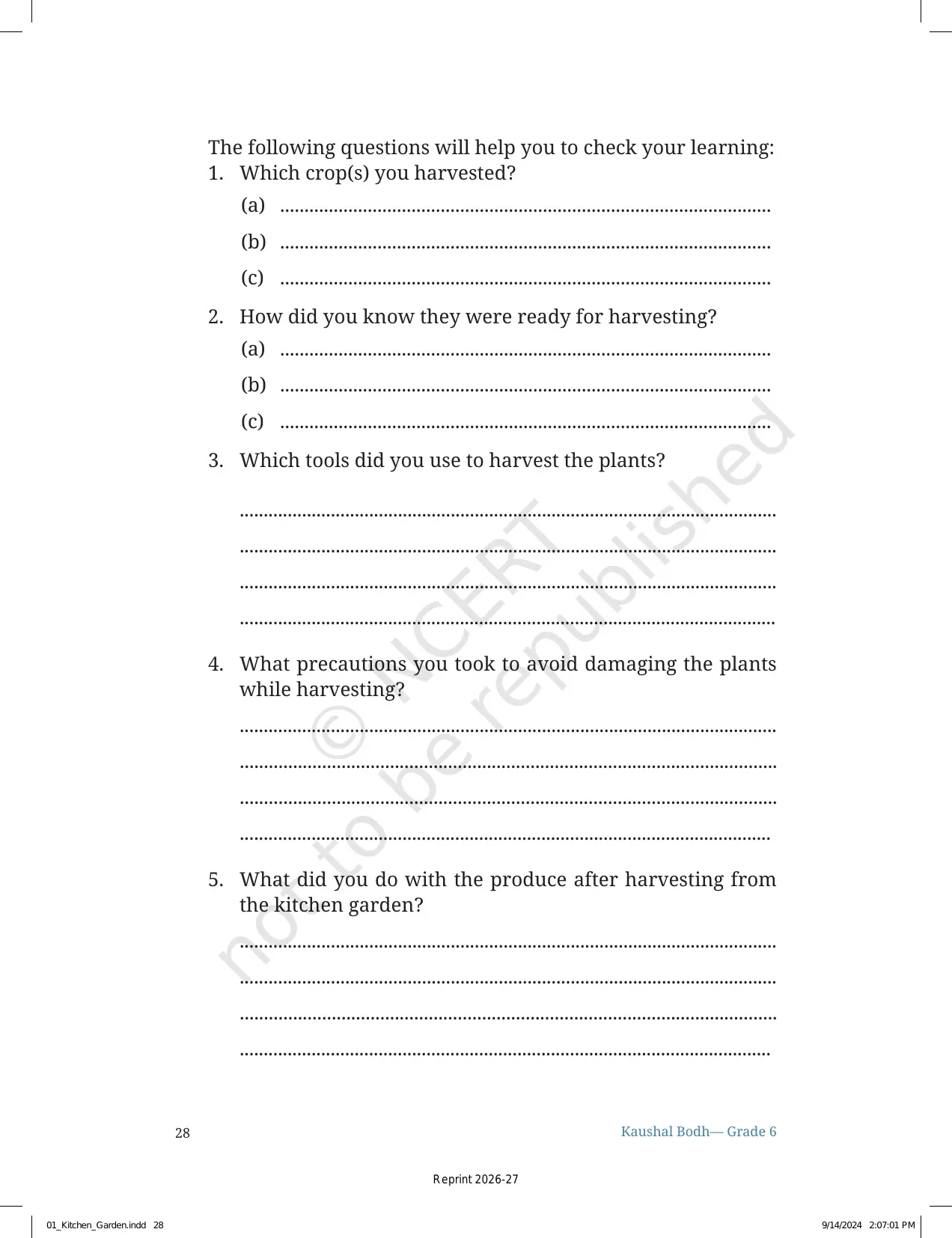
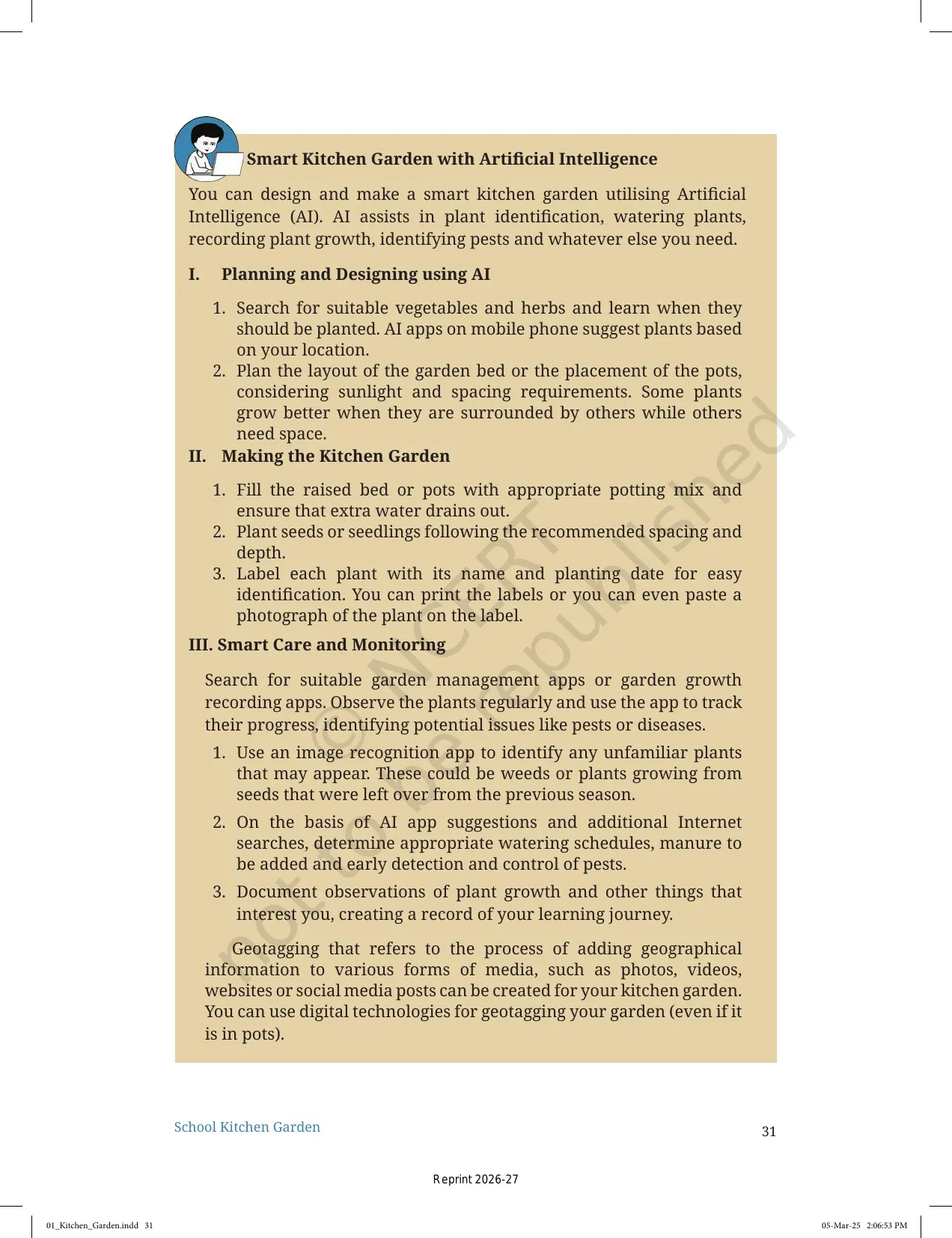
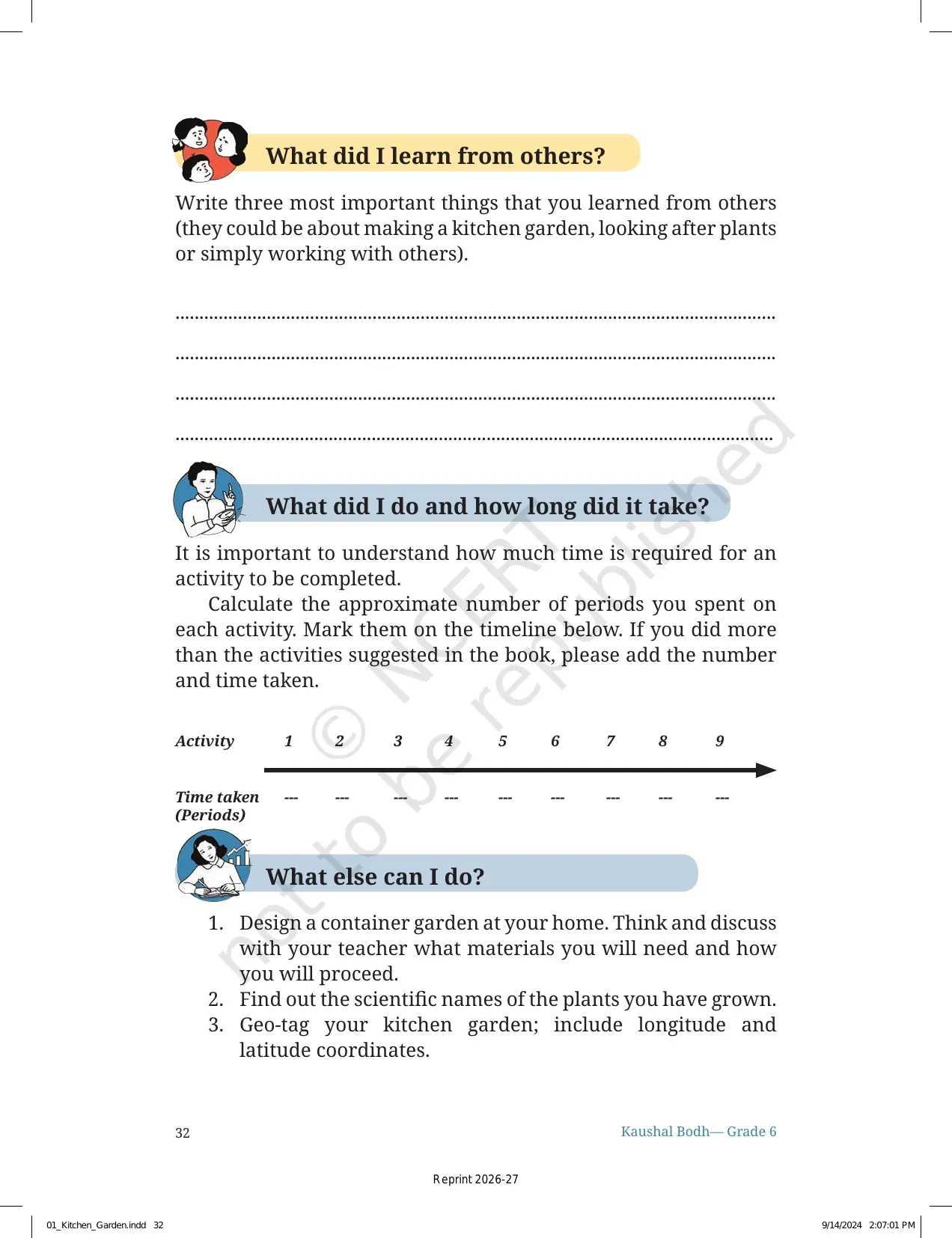
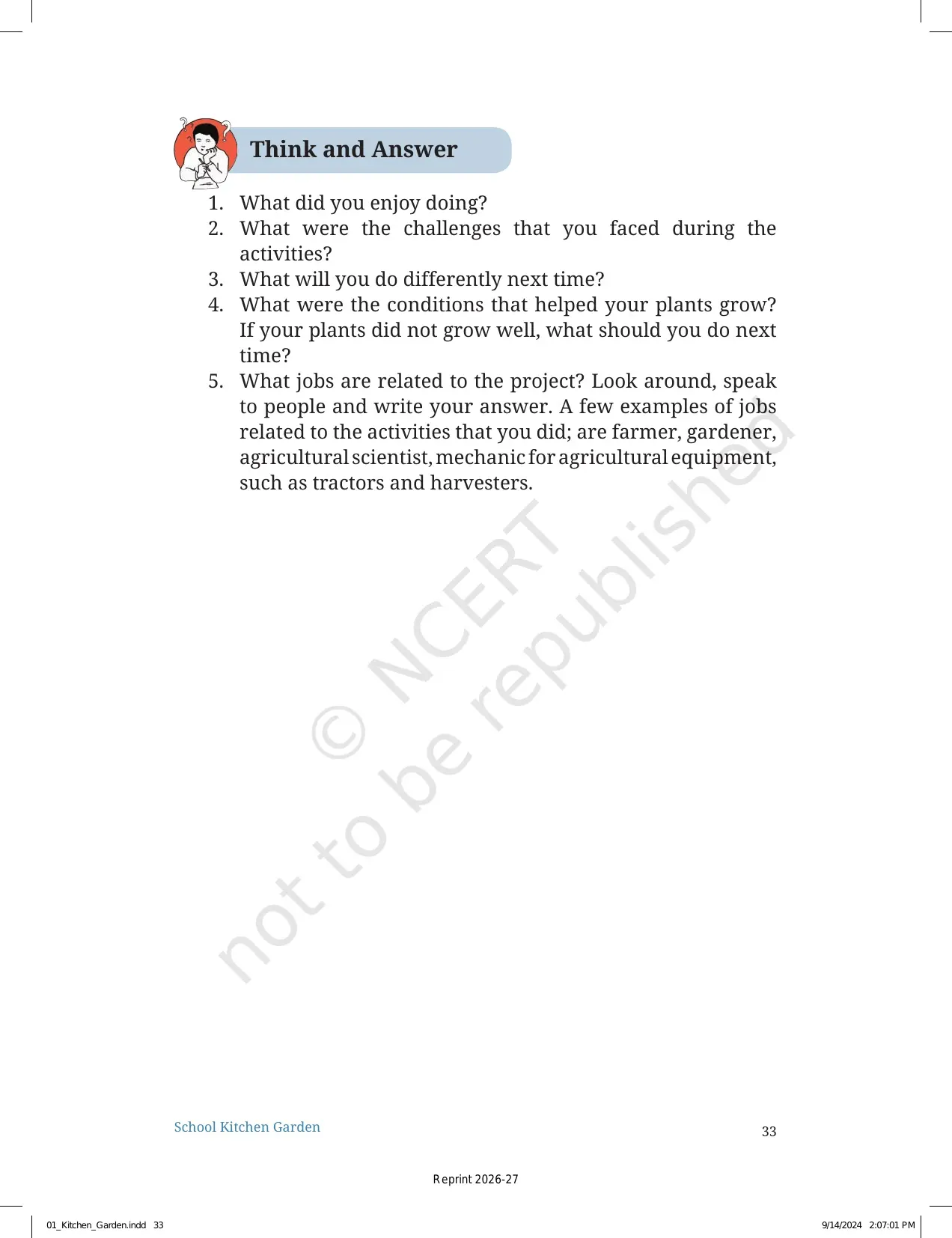
This NCERT Book PDF is the source text for every activity, table and project note in School Kitchen Garden.
Student Feedback: In a Collegedunia survey of 12,860 Class 6 students using Kaushal Bodh in 2026-27, 71% said the garden project became easier after they kept one checklist for tools, one for safety and one for plant-care steps.
School Kitchen Garden NCERT Book PDF for Class 6 Vocational Education
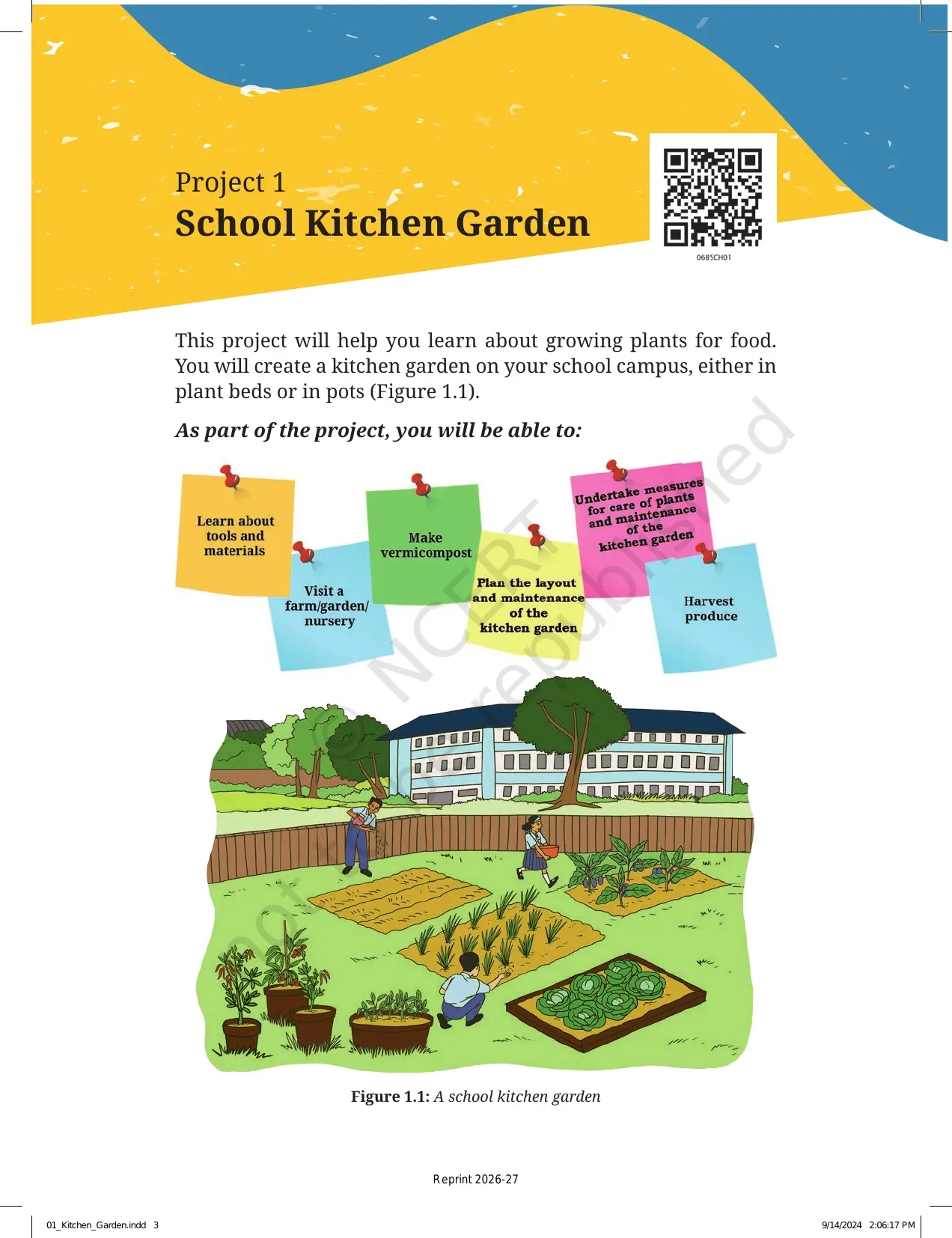
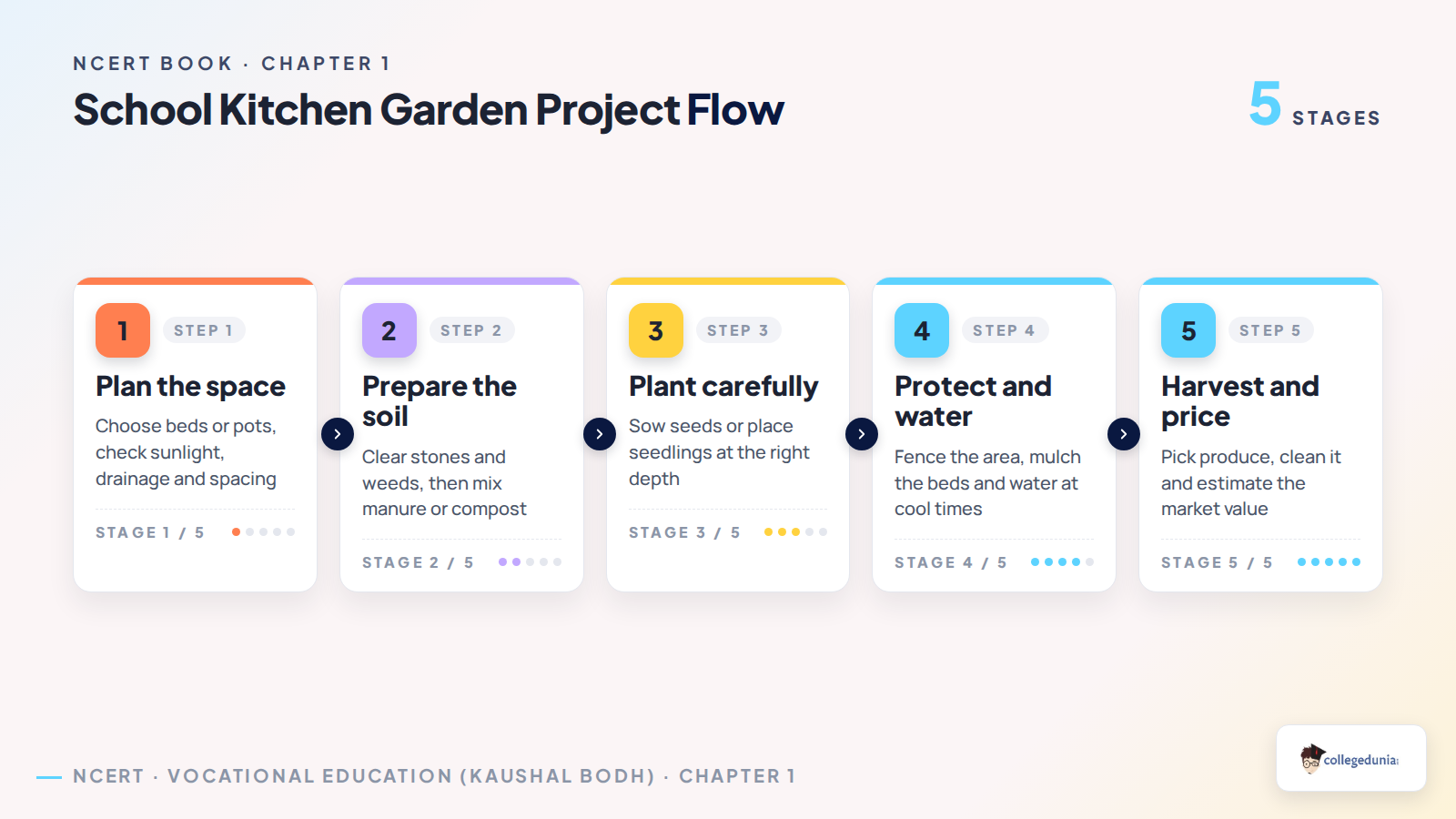
The School Kitchen Garden chapter sits in the Work with Life Forms section of Kaushal Bodh. It asks students to create a small kitchen garden on the school campus, either in plant beds or in pots. The work is practical, so the PDF is more than reading material. It is the reference for what to do, what to observe and what to write in the project file.
| Chapter part | What the PDF covers | Why students should read it |
|---|---|---|
| Project aim | Making a garden with vegetables, herbs or fruit plants | Shows the final task before the activities begin |
| Tools and materials | Trowel, hand cultivator, gloves, watering can, seeds, manure and labels | Helps students identify each tool by use |
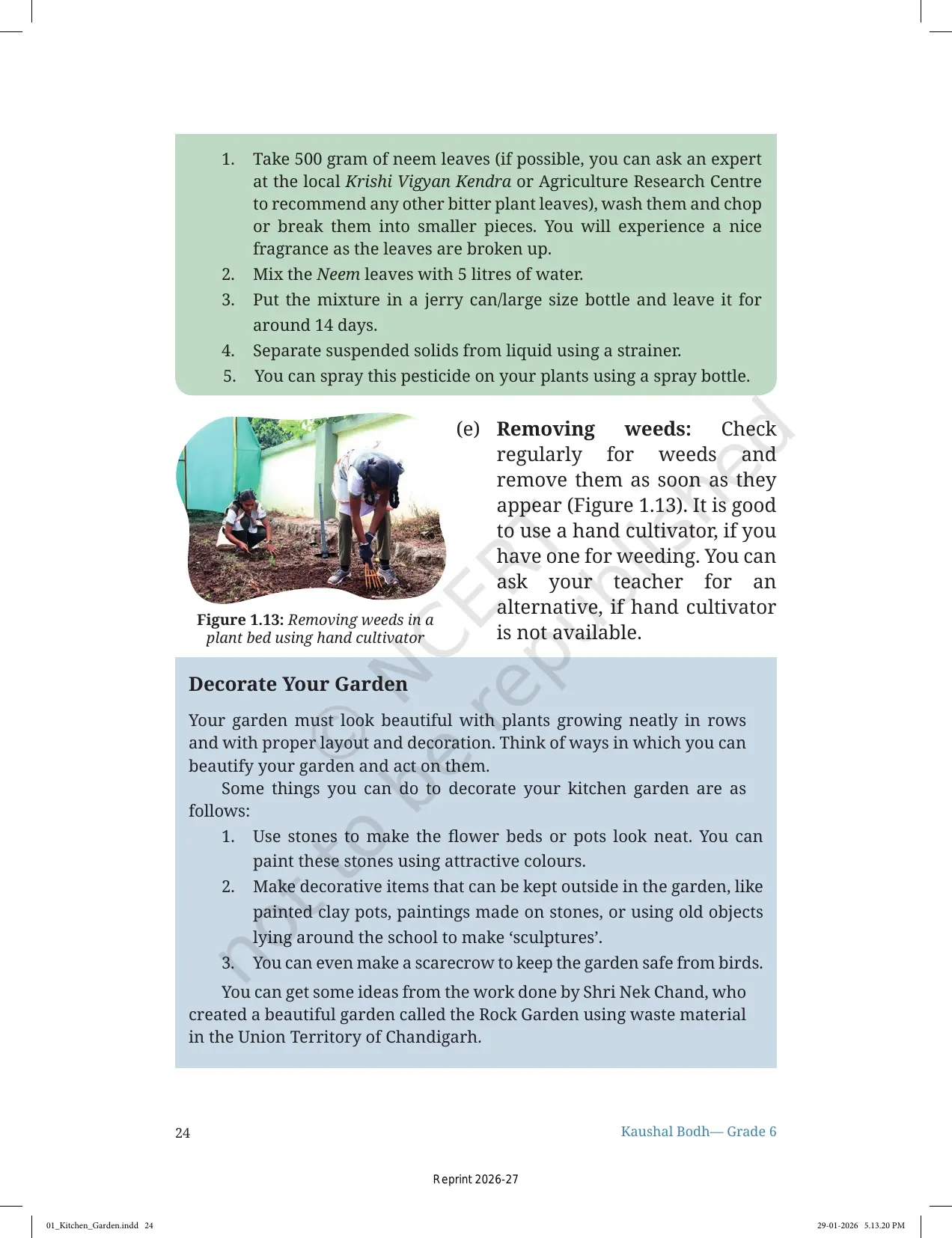
| Plant care | Watering, fencing, staking, weeding, mulching and pest control | Connects daily garden work with chapter questions |
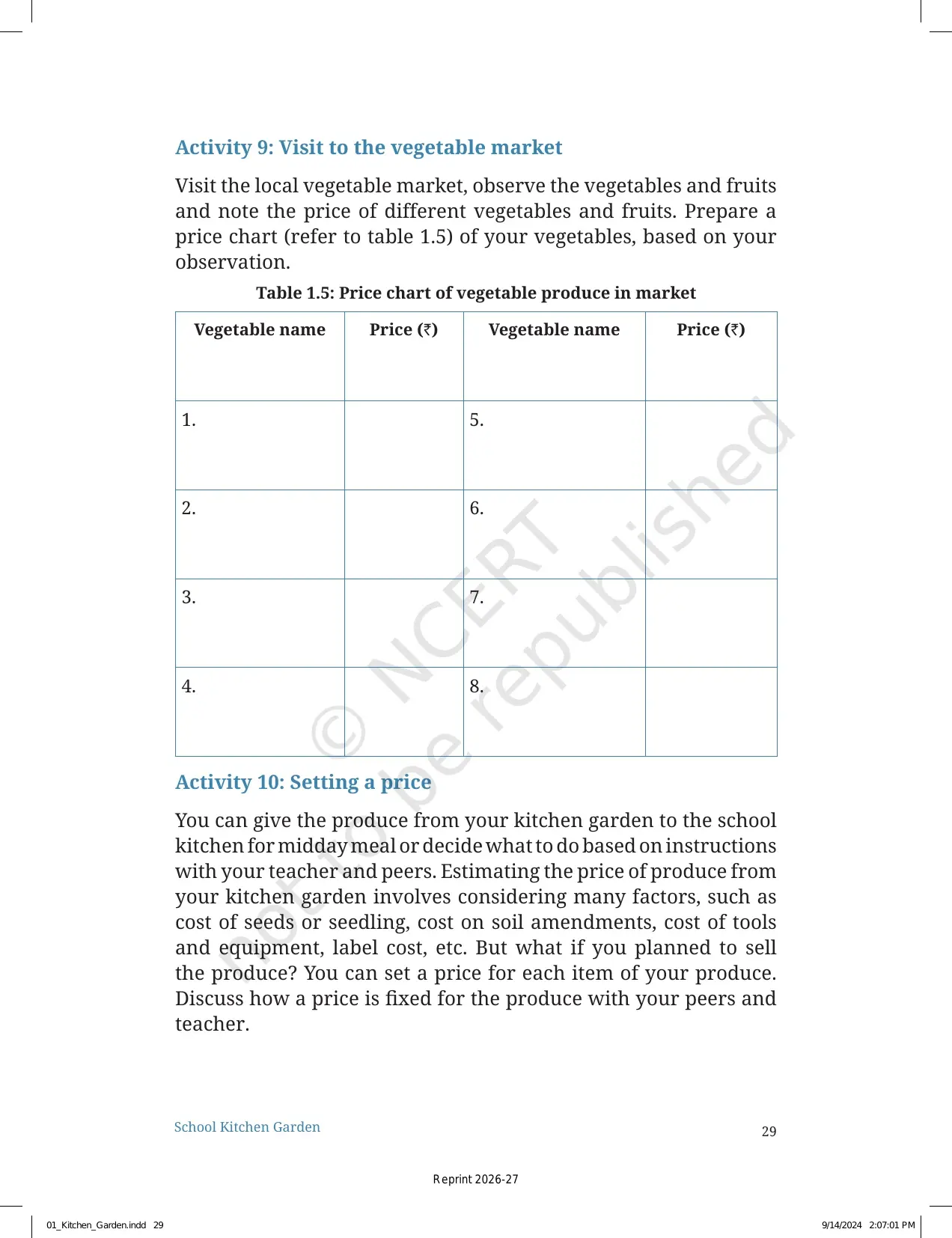
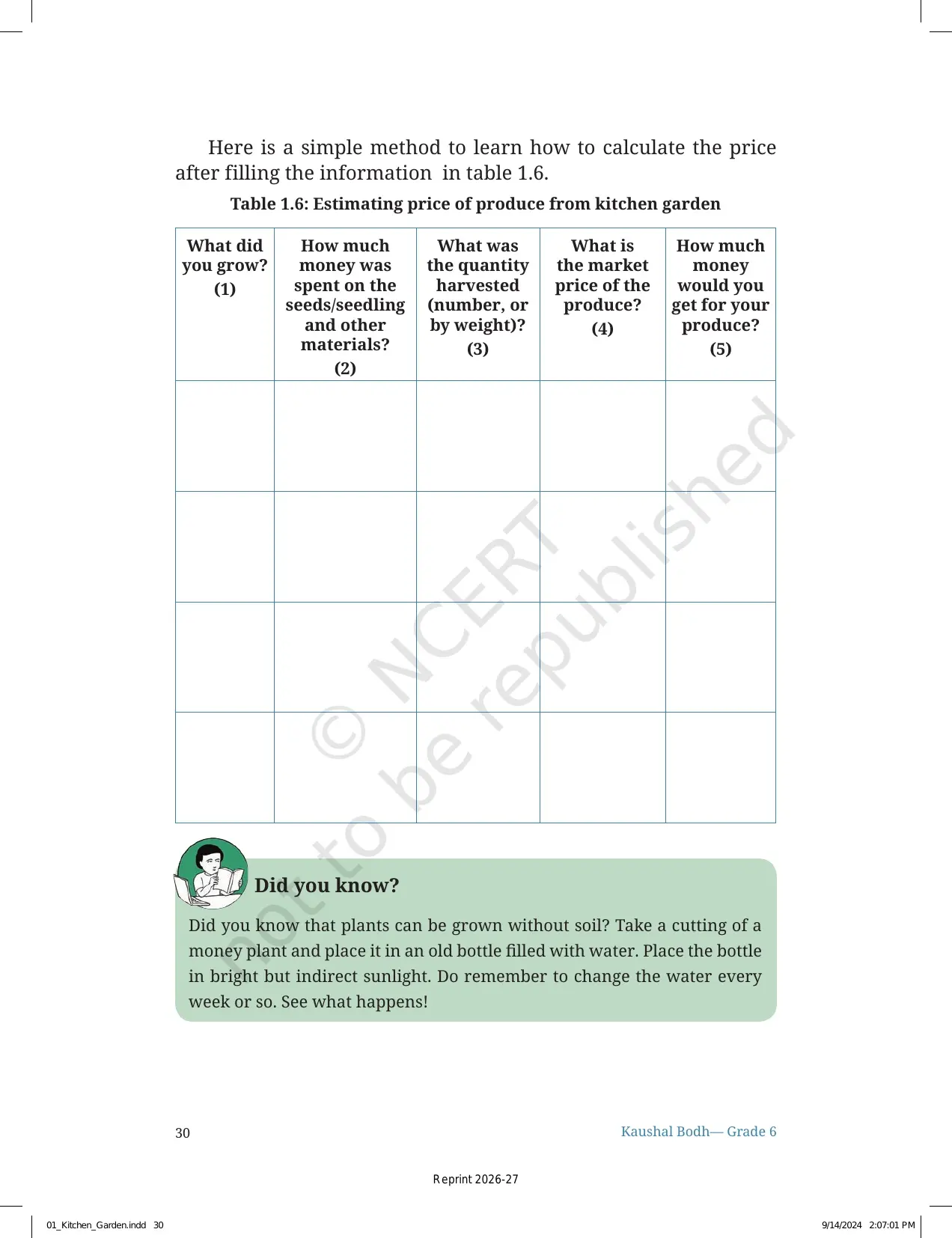
| Harvest and pricing | Collecting produce and estimating market value | Links vocational skill work with simple budgeting |
What Students Learn from the School Kitchen Garden Chapter
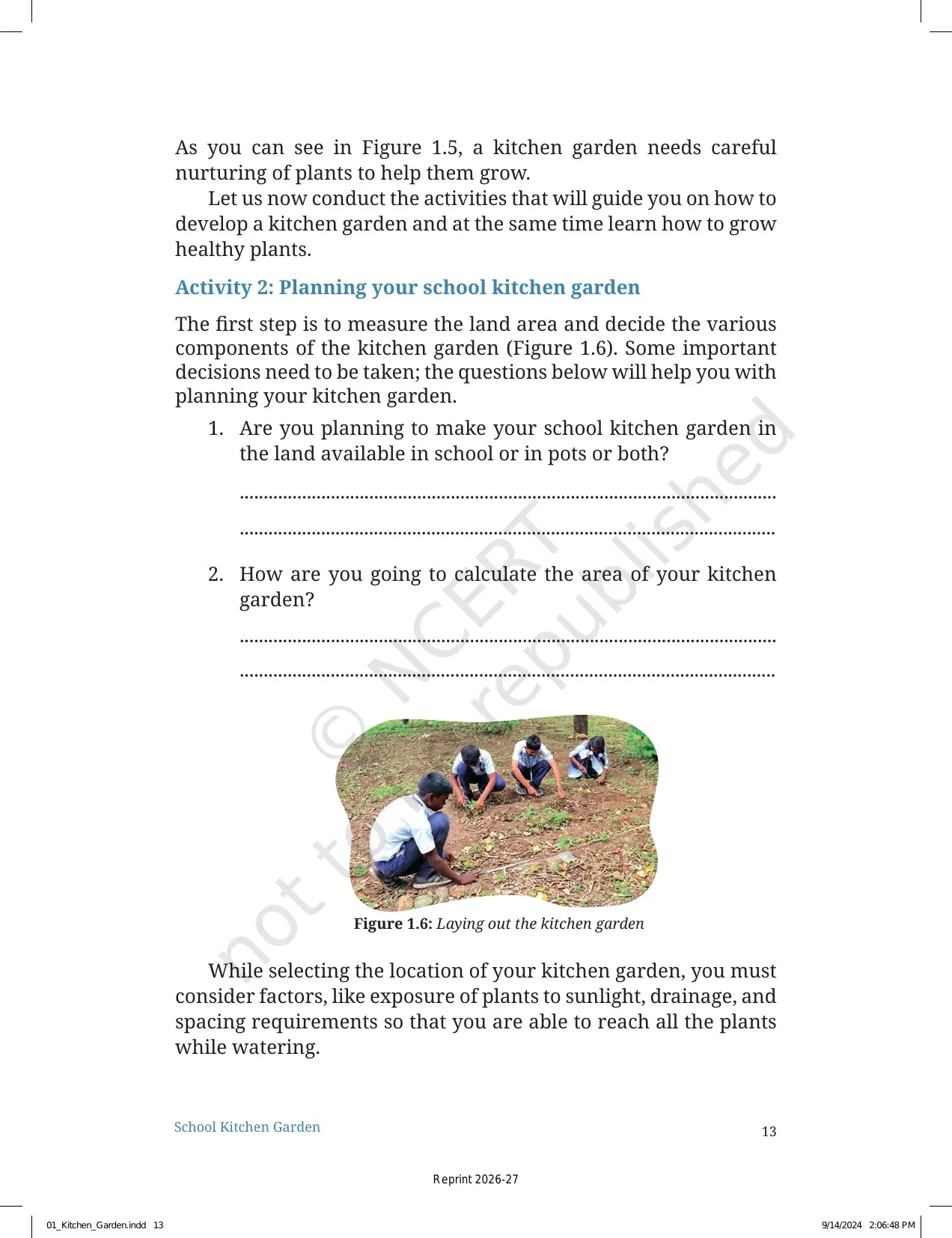
The chapter begins with a simple idea: a kitchen garden is a place where fruits, vegetables and herbs are grown for daily use. From there, it turns the idea into a complete school project. Students first identify the space, then choose plants, prepare the soil and keep a weekly record of growth.
- Observation: measuring plant height, leaf colour, flowering and pest attack.
- Care: watering at the right time, removing weeds and protecting weak stems.
- Responsibility: cleaning tools, following safety rules and asking for help when unsure.
The most important habit in this chapter is to connect every activity with a record table. The PDF gives these tables in the original NCERT order, so students can fill them as the project progresses.
School Kitchen Garden Video Explanation
Source: NCERT OFFICIAL on YouTube
Tools Materials and Safety Points in the Garden Project
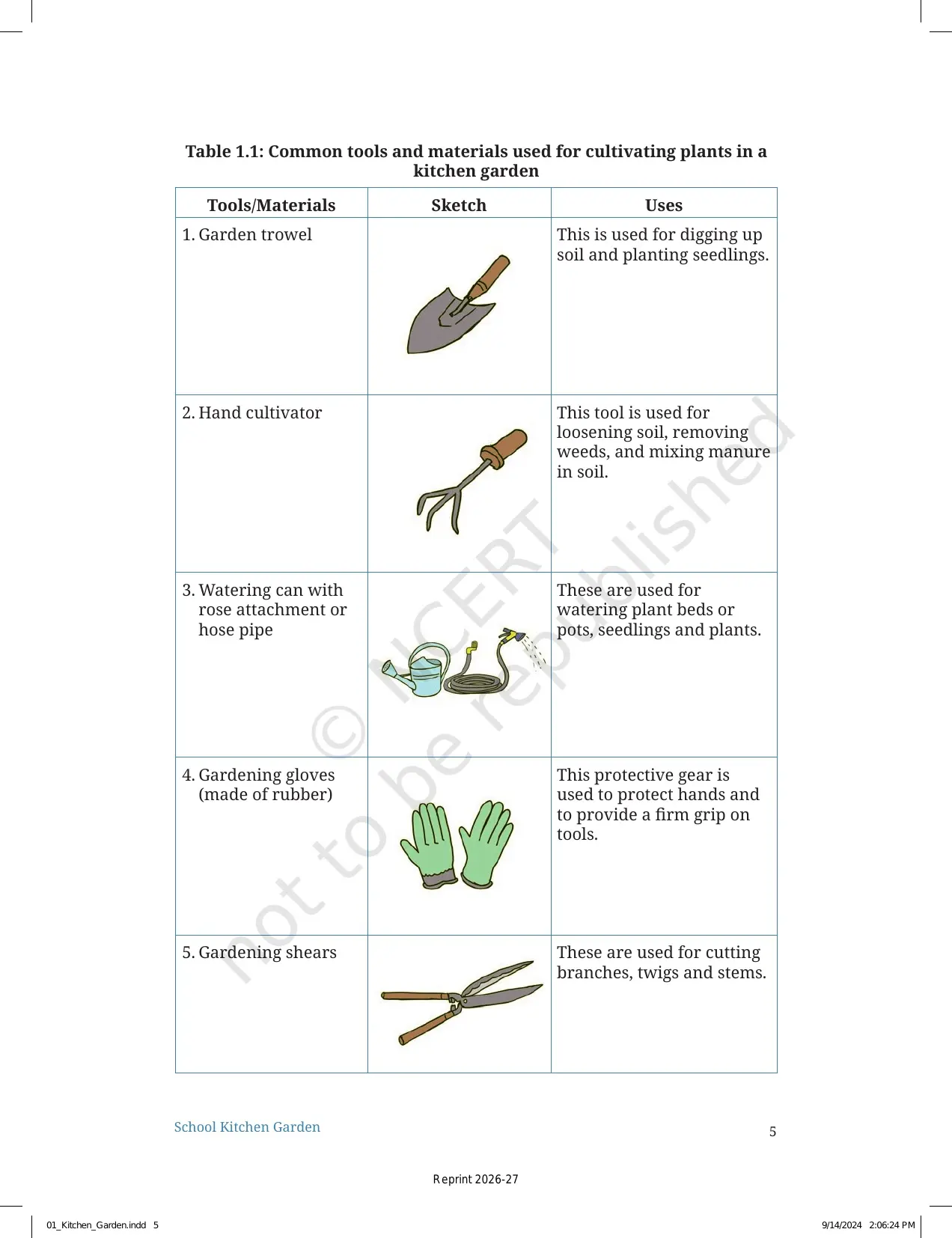
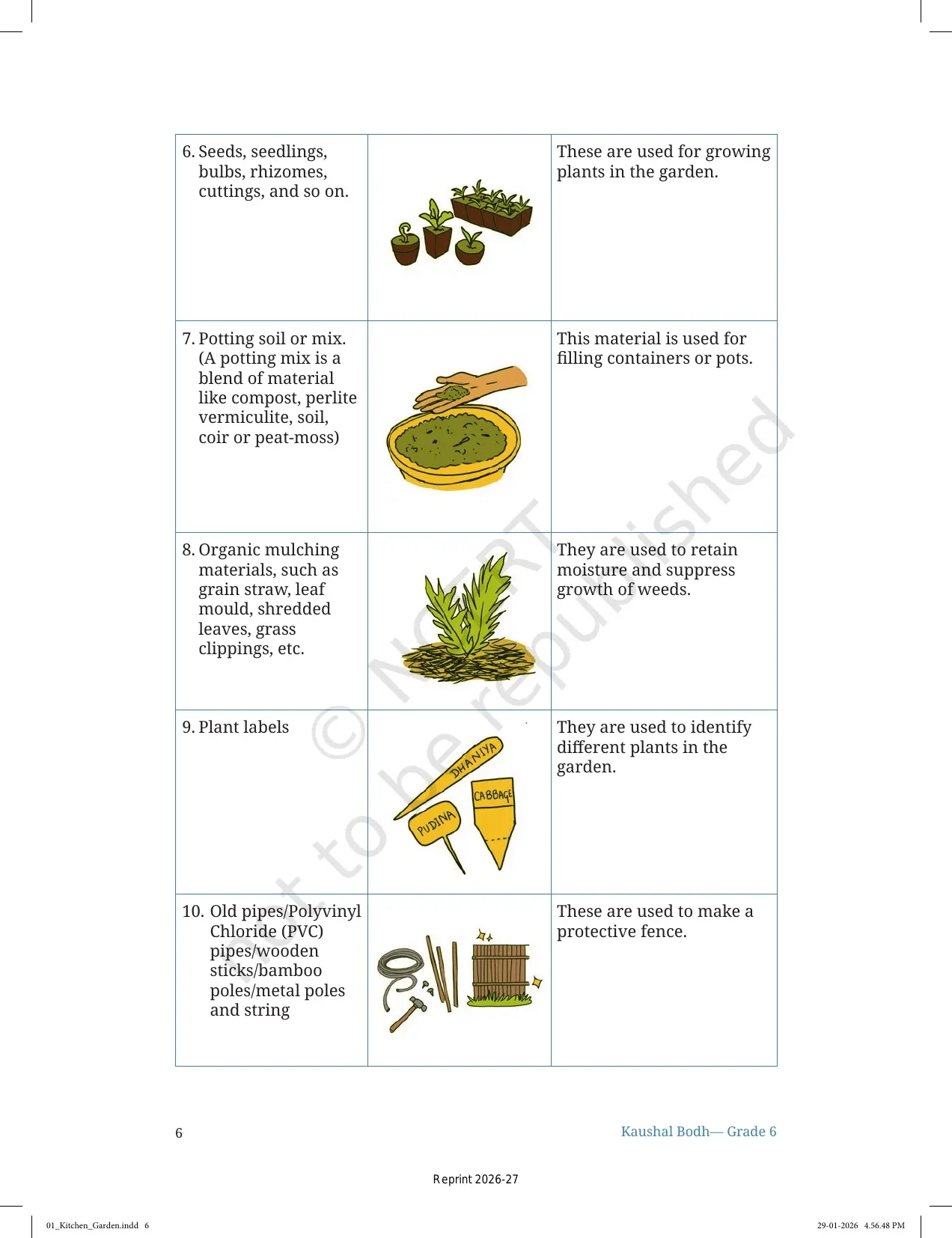
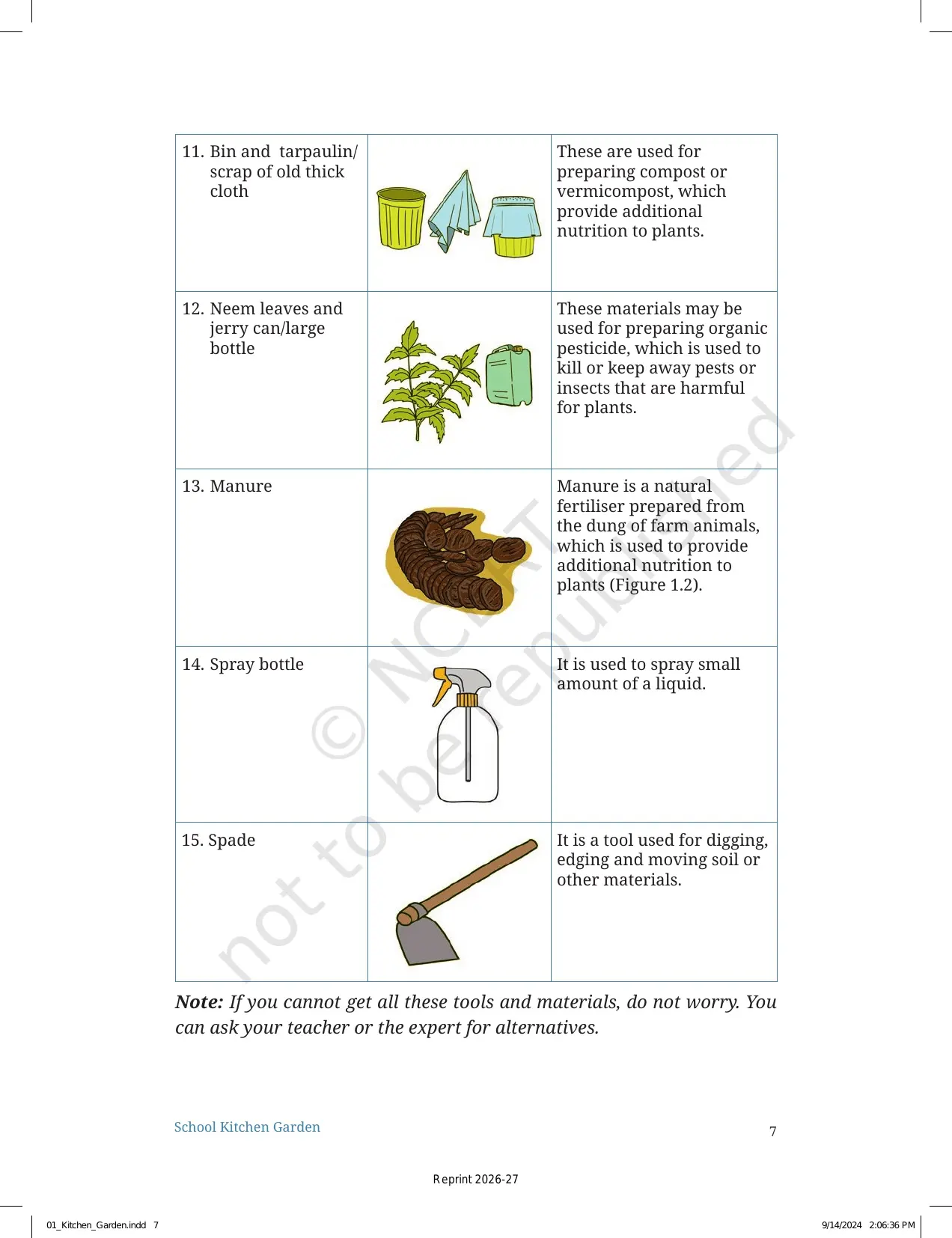
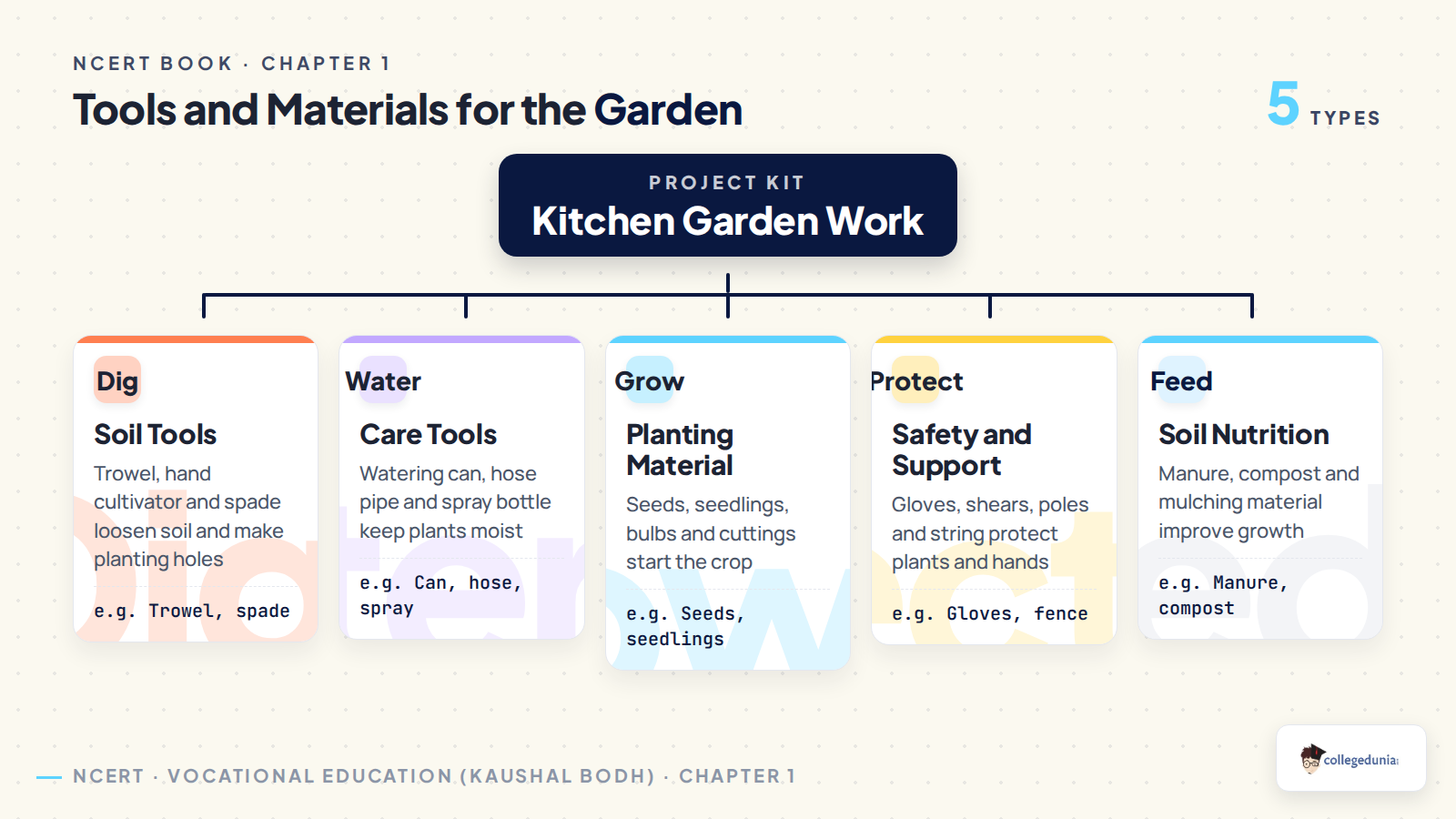
Table 1.1 of the chapter is important because it names the tools and materials used throughout the project. Students should learn the use of each item, not just the name. For example, a trowel is used for digging and planting, while a hand cultivator is used to loosen soil and remove weeds.
| Group | Examples from the PDF | Main use |
|---|---|---|
| Digging tools | Garden trowel, hand cultivator and spade | Preparing soil and making planting spaces |
| Care tools | Watering can, hose pipe, spray bottle and shears | Watering, spraying and trimming plants |
| Planting material | Seeds, seedlings, bulbs, rhizomes and cuttings | Starting new plants in beds or pots |
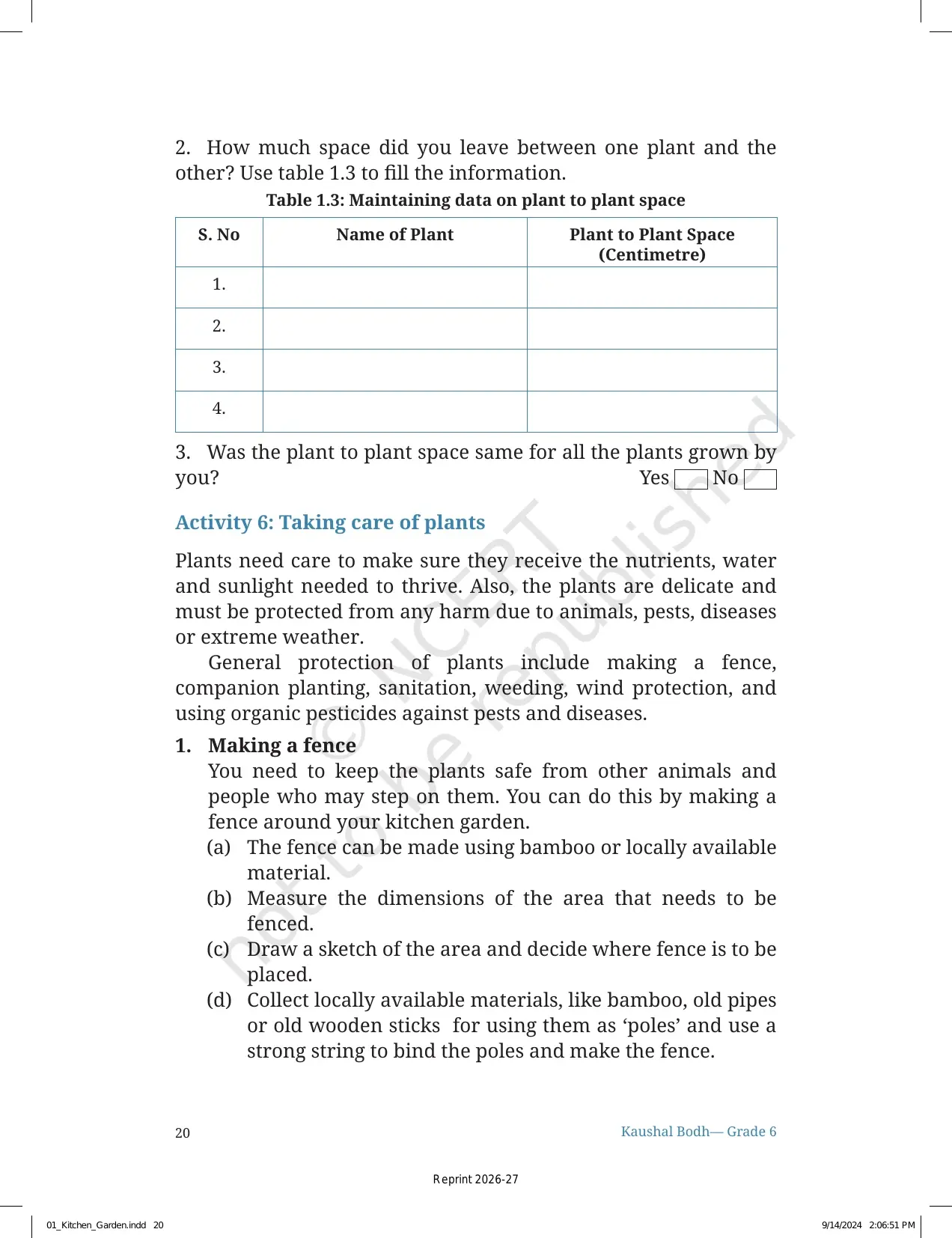
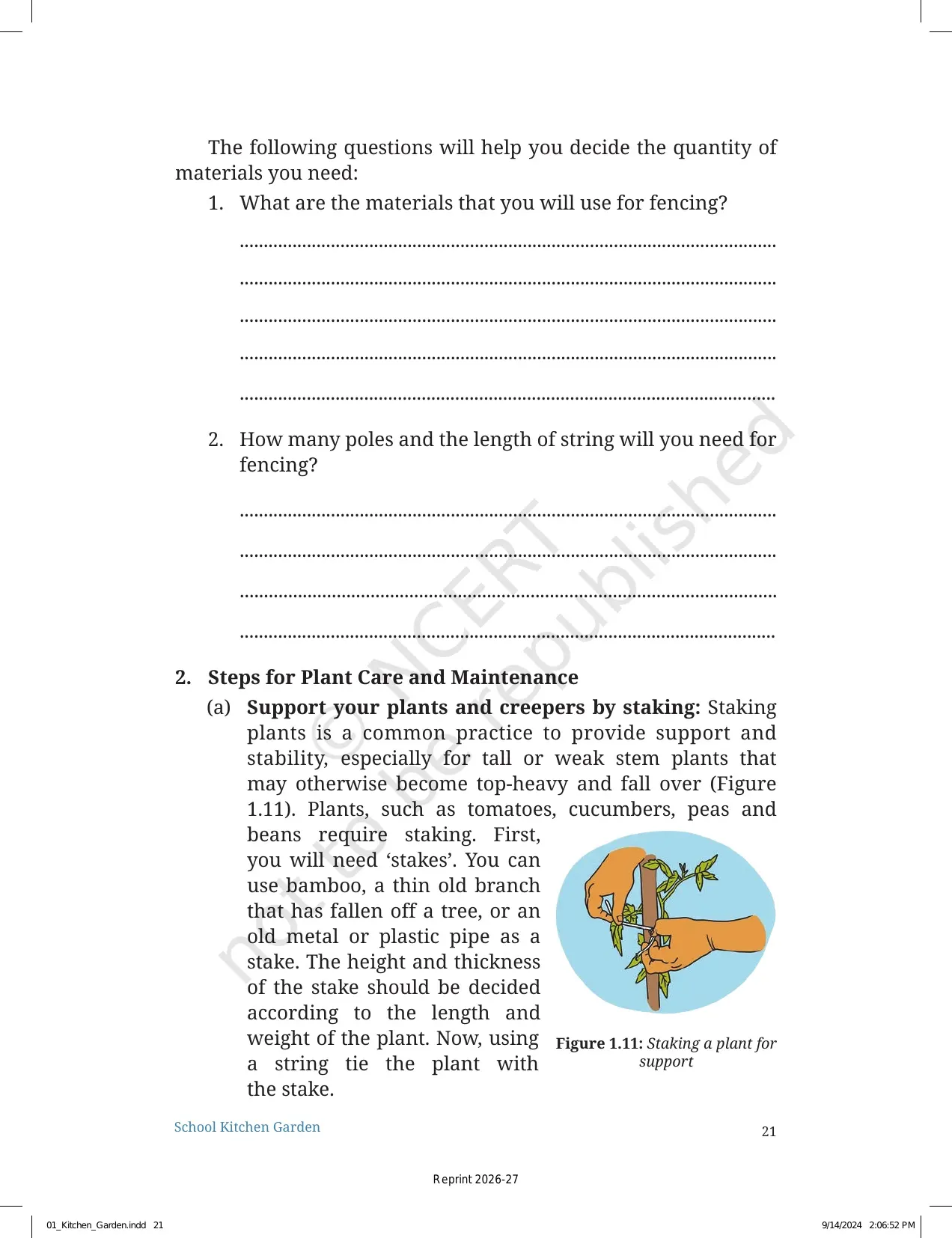
| Support material | Bamboo, old pipes, wooden sticks and string | Making fences and supporting climbers |
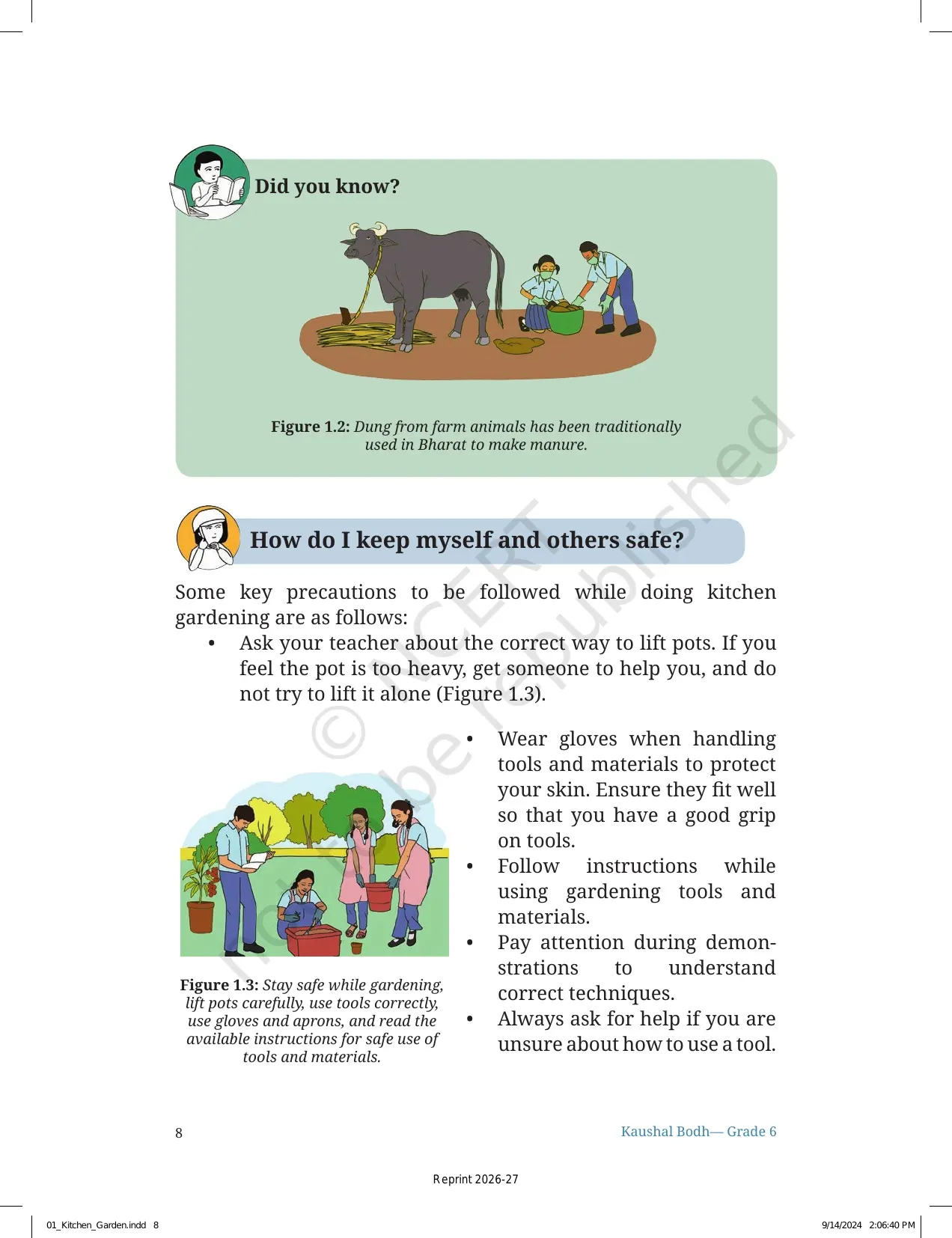
The safety section is short but useful. Students are asked to lift heavy pots carefully, wear gloves, follow tool instructions, clean tools and store them neatly. These safety points should be written in the project file exactly as working rules, not as decoration.
Soil Preparation Sowing Composting and Plant Care
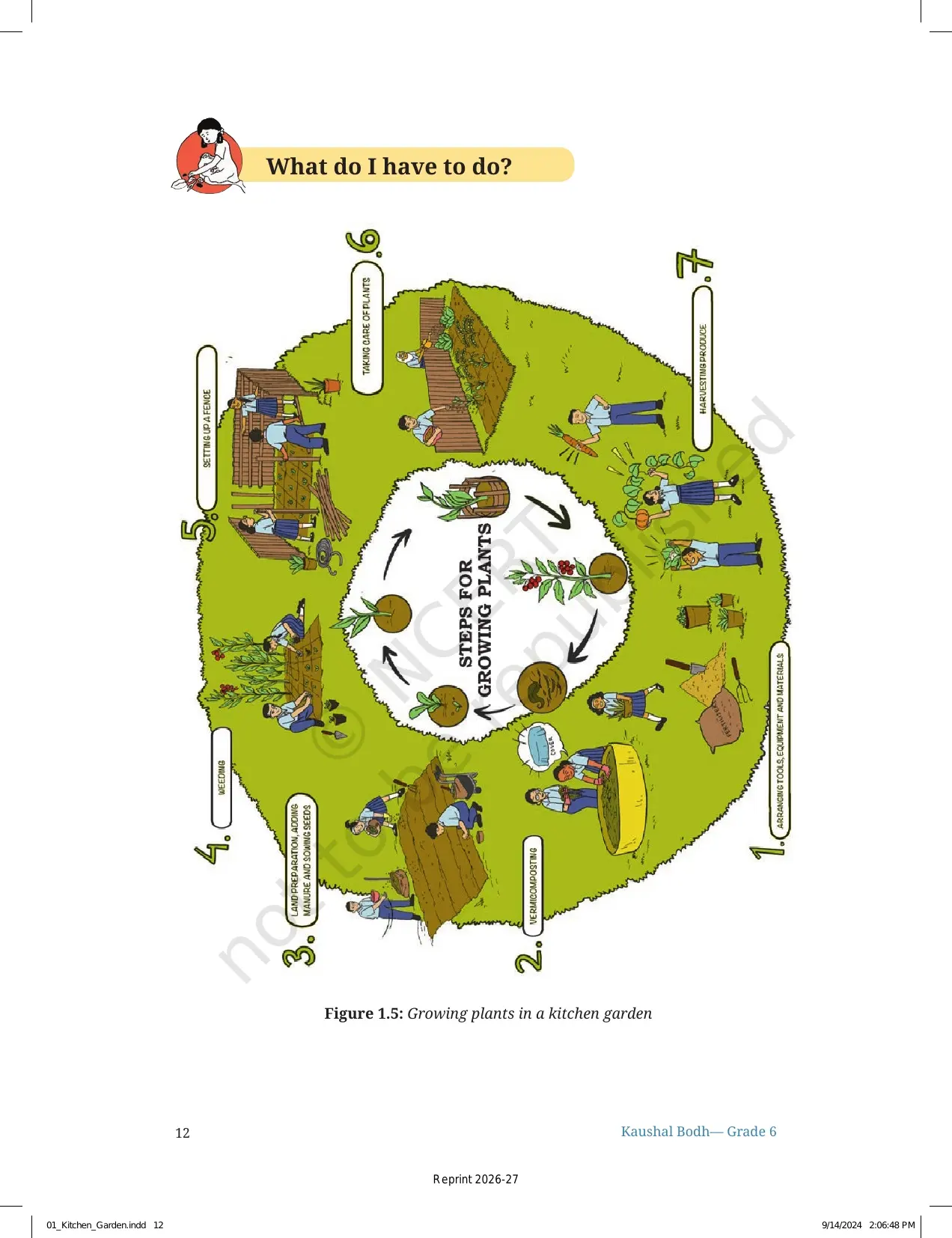
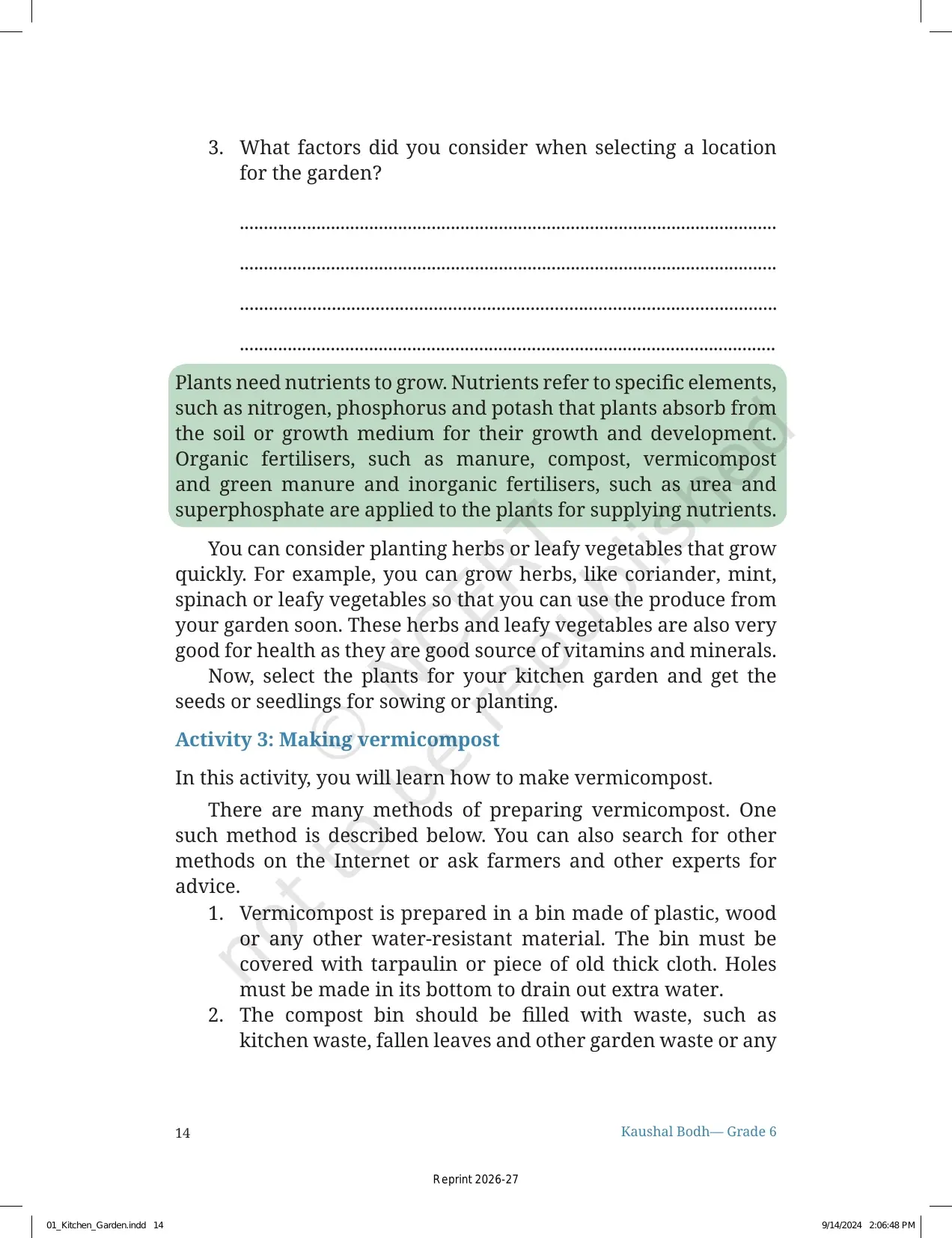
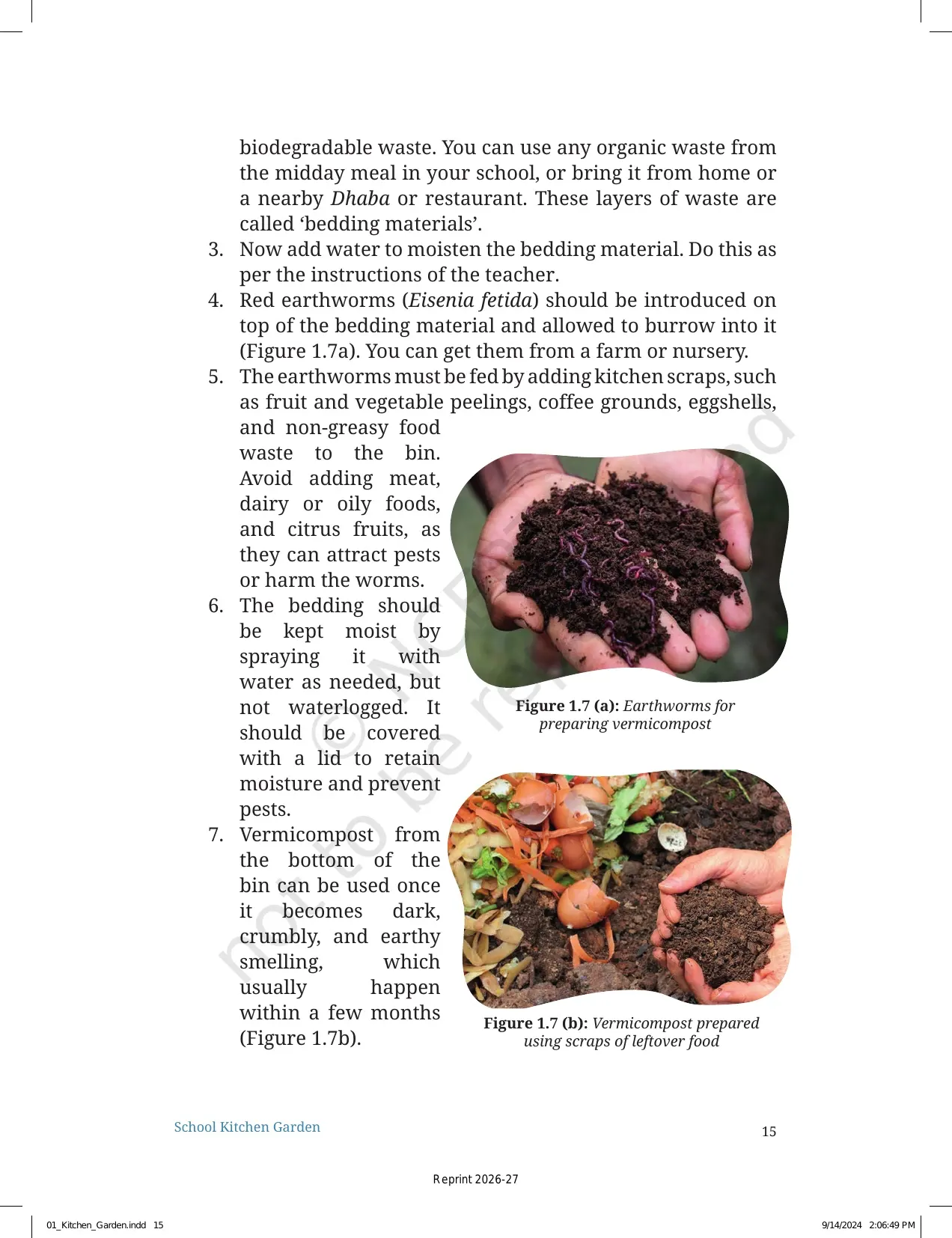
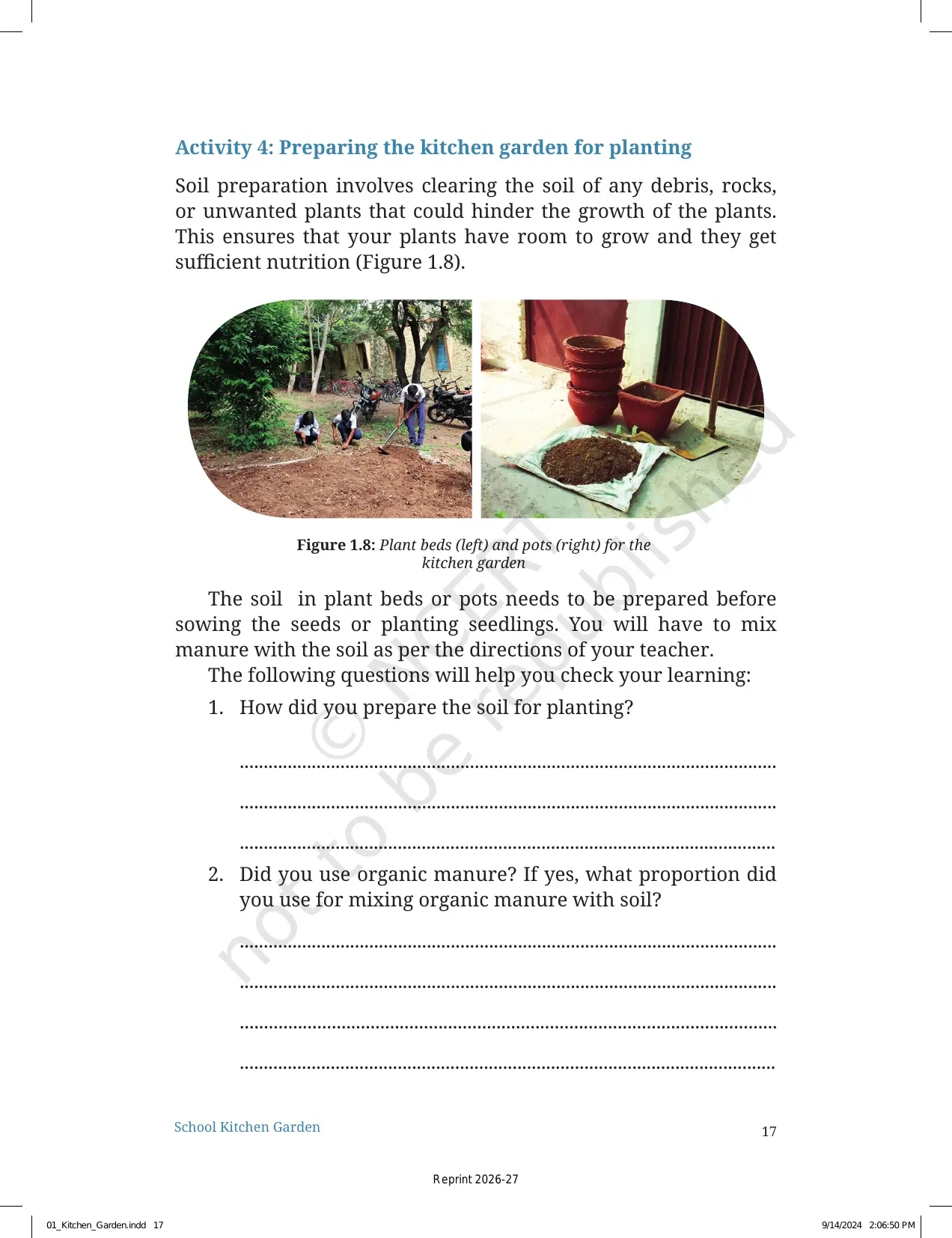
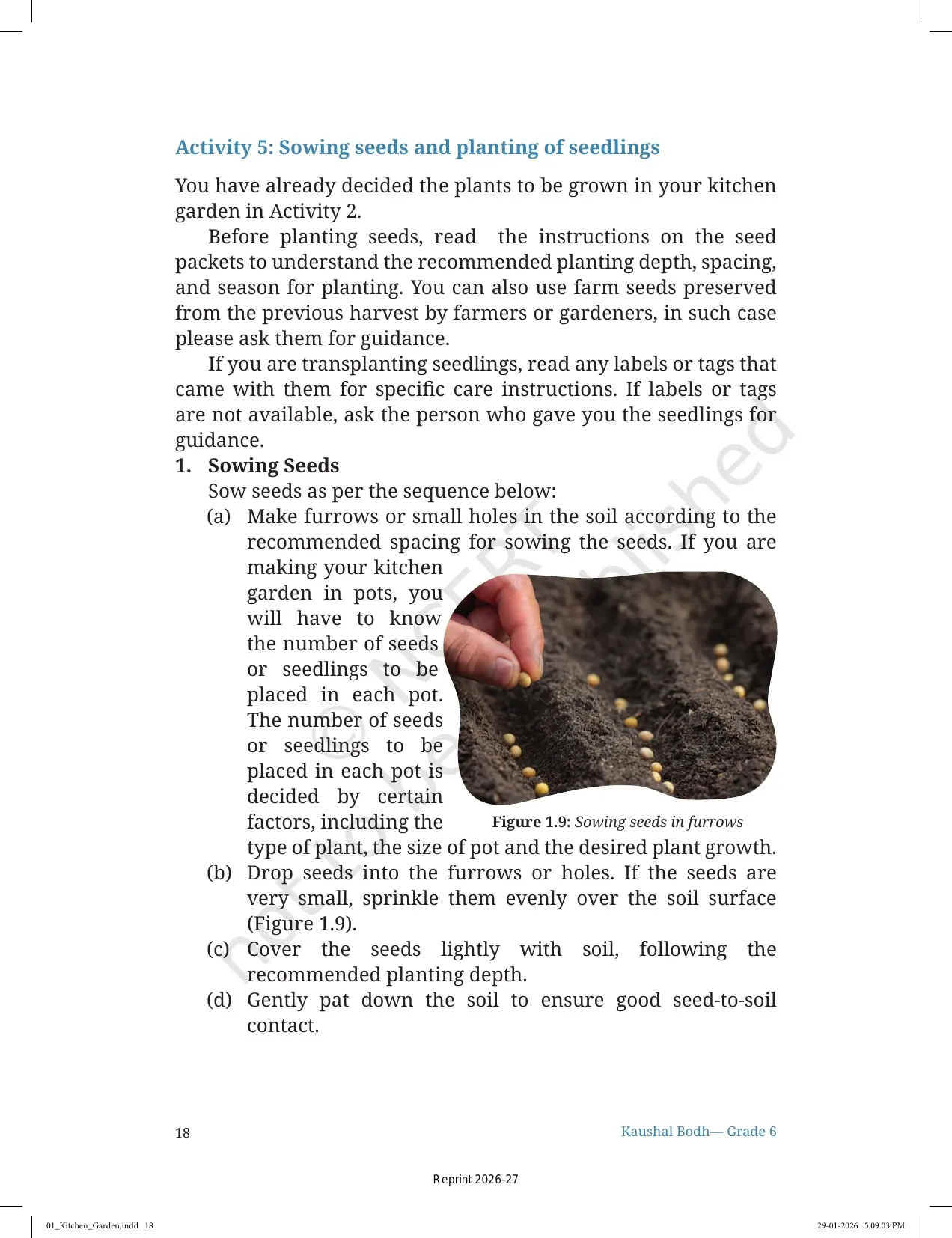
Activities in the middle of the PDF show how the actual garden is made. Students clear the soil, remove stones and weeds, mix manure and then sow seeds or plant seedlings. The PDF also explains vermicompost, which is compost made with red earthworms such as Eisenia fetida.
| Activity | What to remember | Project-file note |
|---|---|---|
| Soil preparation | Clear debris, loosen soil and mix manure | Write what was removed and what was added |
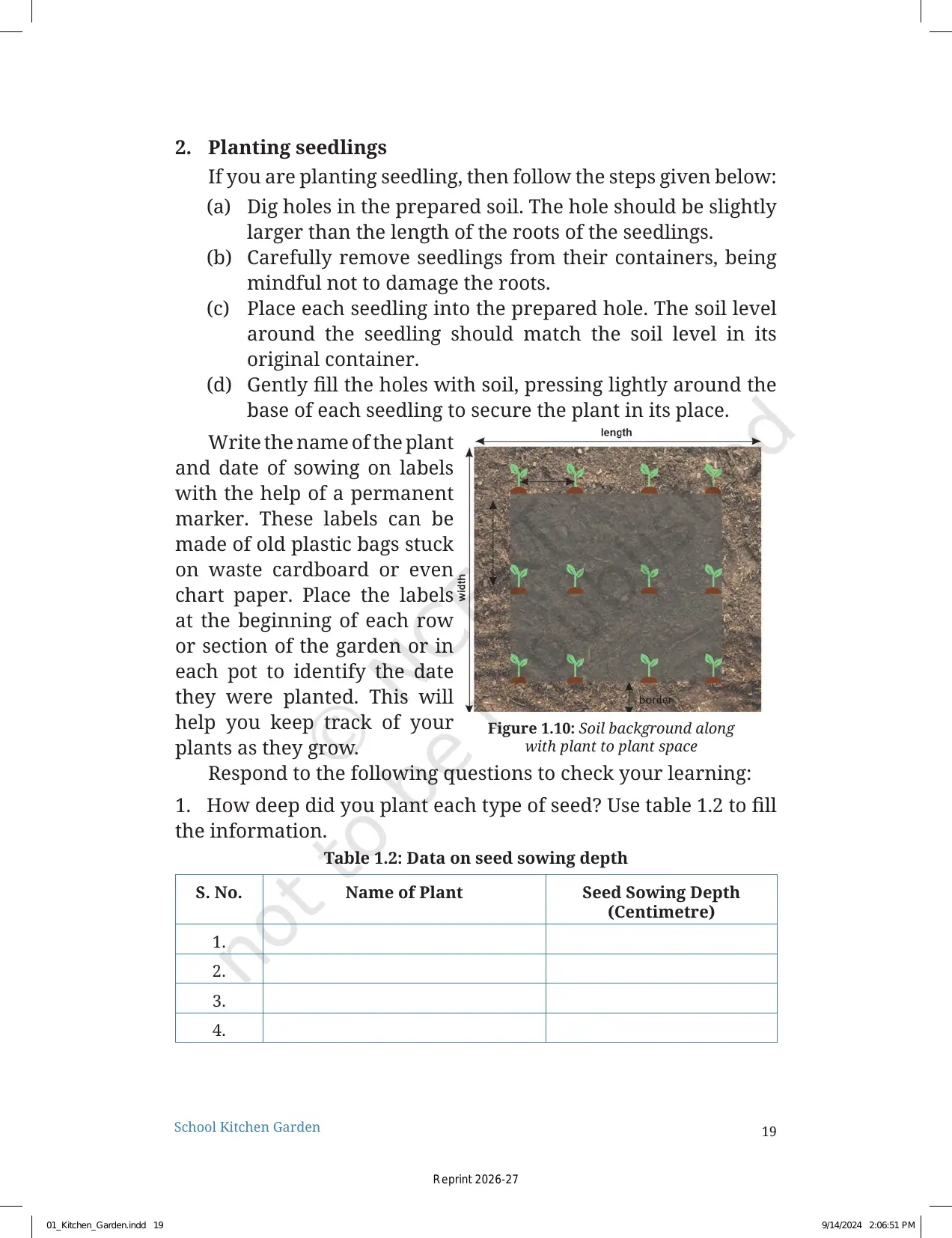
| Sowing seeds | Make small holes or furrows at correct spacing | Record seed depth and date of sowing |
| Planting seedlings | Place roots gently and keep soil level correct | Note plant name, spacing and first watering |
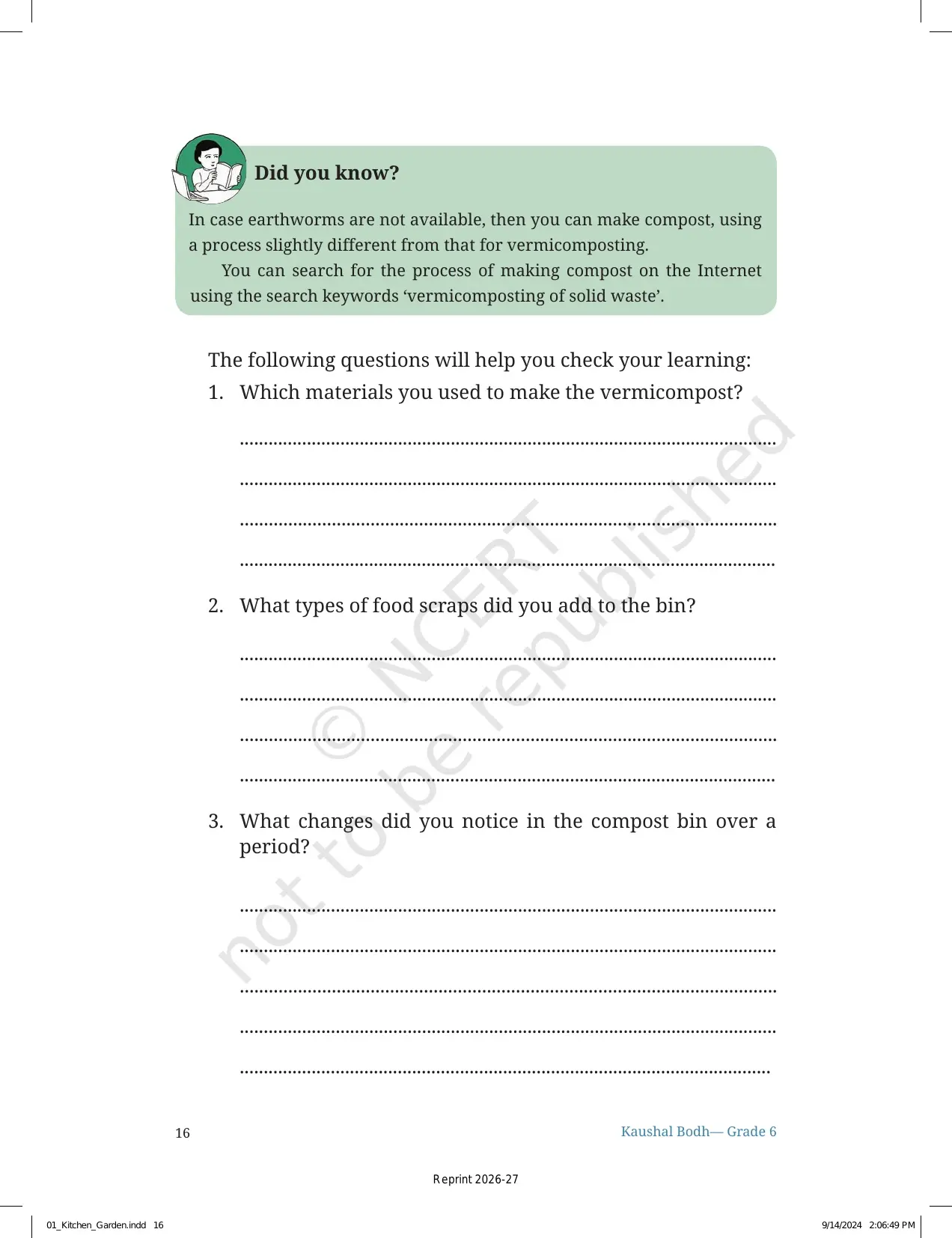
| Vermicompost | Use moist bedding, waste and red earthworms | Write the order of steps and precautions |
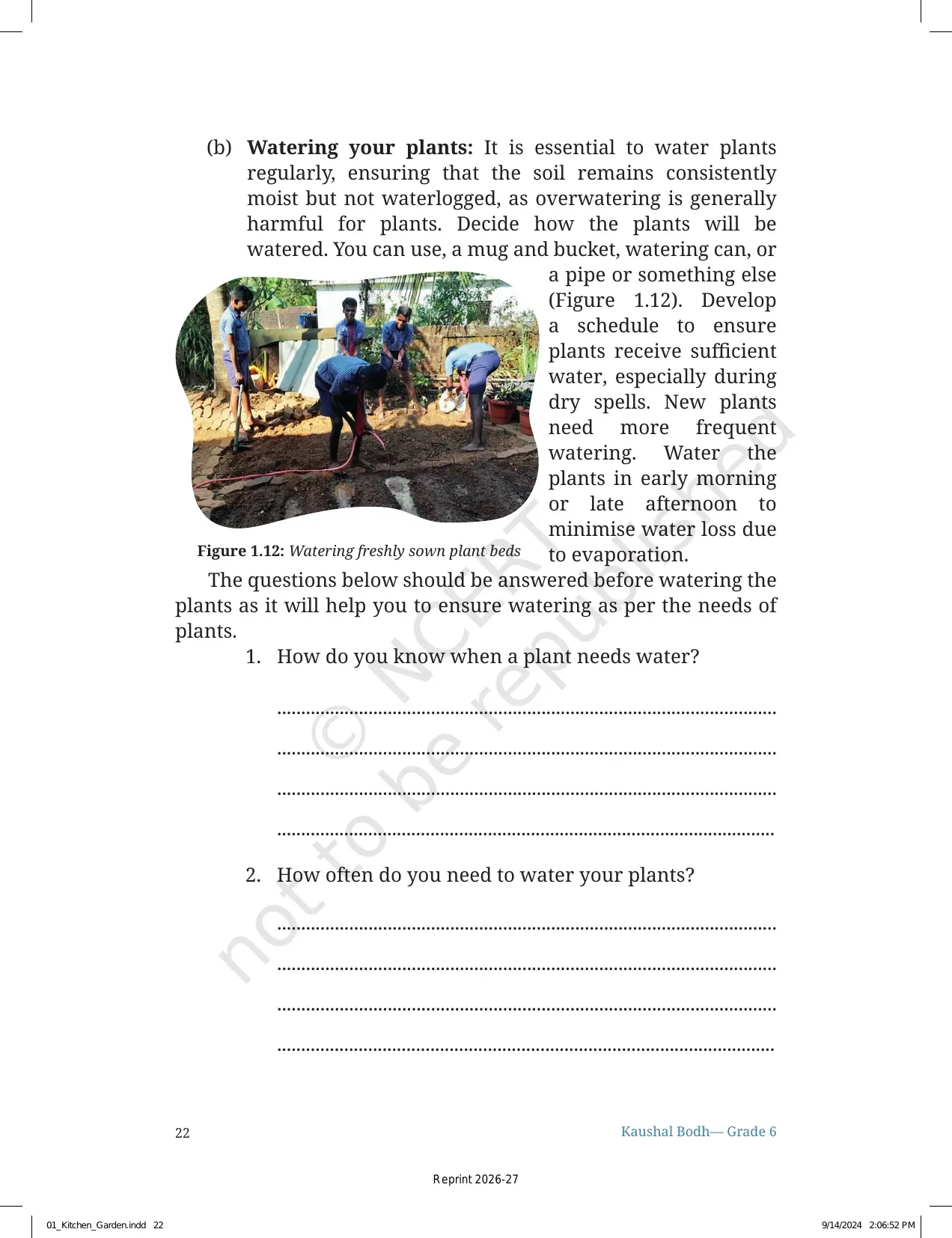
Watering is best done in the early morning or late afternoon. This reduces water loss and protects new plants. The chapter also asks students to watch for pests and use organic options such as neem pesticide under teacher guidance.
How to Use This Class 6 Kaushal Bodh PDF
Use the NCERT Book PDF as the main source while making notes, drawing diagrams or filling observation tables. First read the project aim and tools table. Then read the activity pages in the same order as the work is done in the garden.
- Read pages on tools and safety before touching the garden tools.
- Keep the soil preparation and sowing pages open during the first garden session.
- Use the composting and plant-care sections while writing weekly observations.
- Read the harvesting and pricing section before the final project-file entry.
The PDF has 33 pages, so students can revise it in small blocks. The easiest order is tools, safety, soil, sowing, composting, plant care, harvest and pricing.
Related Class 6 School Kitchen Garden Resources
Also Check: use the official book PDF with the matching notes and handwritten revision pages for the same chapter.
| Resource | Best used for | Open it |
|---|---|---|
| NCERT Book PDF | Official chapter text, figures, tables and project instructions | Current page |
| NCERT Notes | Typed revision of tools, composting, plant care and project steps | School Kitchen Garden Class 6 Notes |
| Handwritten Notes | Quick scanned revision for the same Kaushal Bodh project | School Kitchen Garden Class 6 Handwritten Notes |
Class 6 Vocational Education Kaushal Bodh NCERT Book PDFs for All Chapters
Related Links: download the other NCERT Book PDFs from the Class 6 Kaushal Bodh textbook.
| Chapter | Class 6 Kaushal Bodh NCERT Book PDF |
|---|---|
| Chapter 1 | School Kitchen Garden Class 6 NCERT Book PDF |
| Chapter 2 | Biodiversity Register Class 6 NCERT Book PDF |
| Chapter 3 | Maker Skills Class 6 NCERT Book PDF |
| Chapter 4 | Animation and Games Class 6 NCERT Book PDF |
| Chapter 5 | School Museum Class 6 NCERT Book PDF |
| Chapter 6 | Cooking without Fire Class 6 NCERT Book PDF |
School Kitchen Garden Class 6 NCERT Book PDF FAQs
Ques. What is the School Kitchen Garden chapter in Class 6 Kaushal Bodh about?
Ans. It is a Vocational Education project where students learn to make a kitchen garden in plant beds or pots, prepare soil, sow seeds, care for plants, harvest produce and maintain a project record.
Ques. Is this NCERT Book PDF useful for the 2026-27 syllabus?
Ans. Yes. The PDF follows the 2026-27 Class 6 Kaushal Bodh textbook and carries the official project activities, tables, safety points and garden-care instructions.
Ques. Which tools are listed in the School Kitchen Garden PDF?
Ans. The chapter lists tools and materials such as garden trowel, hand cultivator, watering can, gloves, shears, seeds, seedlings, manure, plant labels, compost bin, neem leaves, spray bottle and spade.
Ques. How should students use this NCERT Book PDF?
Ans. Read the PDF in the same order as the project work: tools, safety, soil preparation, sowing, composting, plant care, harvesting and pricing. Keep it open while filling observation tables.
Ques. What is vermicompost in the School Kitchen Garden chapter?
Ans. Vermicompost is compost made with red earthworms. The chapter explains how to keep organic waste moist, add worms, feed them and collect dark, crumbly compost for plants.



Comments