



NCERT Class 6 Kaushal Bodh Chapter 5 School Museum PDF gives students the official Vocational Education chapter for the 2026-27 session. The PDF explains museums, artefacts, family history, object labels, preservation, presentations and school exhibition planning.
- Official chapter: 22-page NCERT PDF for Class 6 Vocational Education Kaushal Bodh.
- Project focus: collecting artefacts, writing labels, preparing displays and taking visitor feedback.
- Best use: keep the PDF open while planning the class museum and exhibition layout.
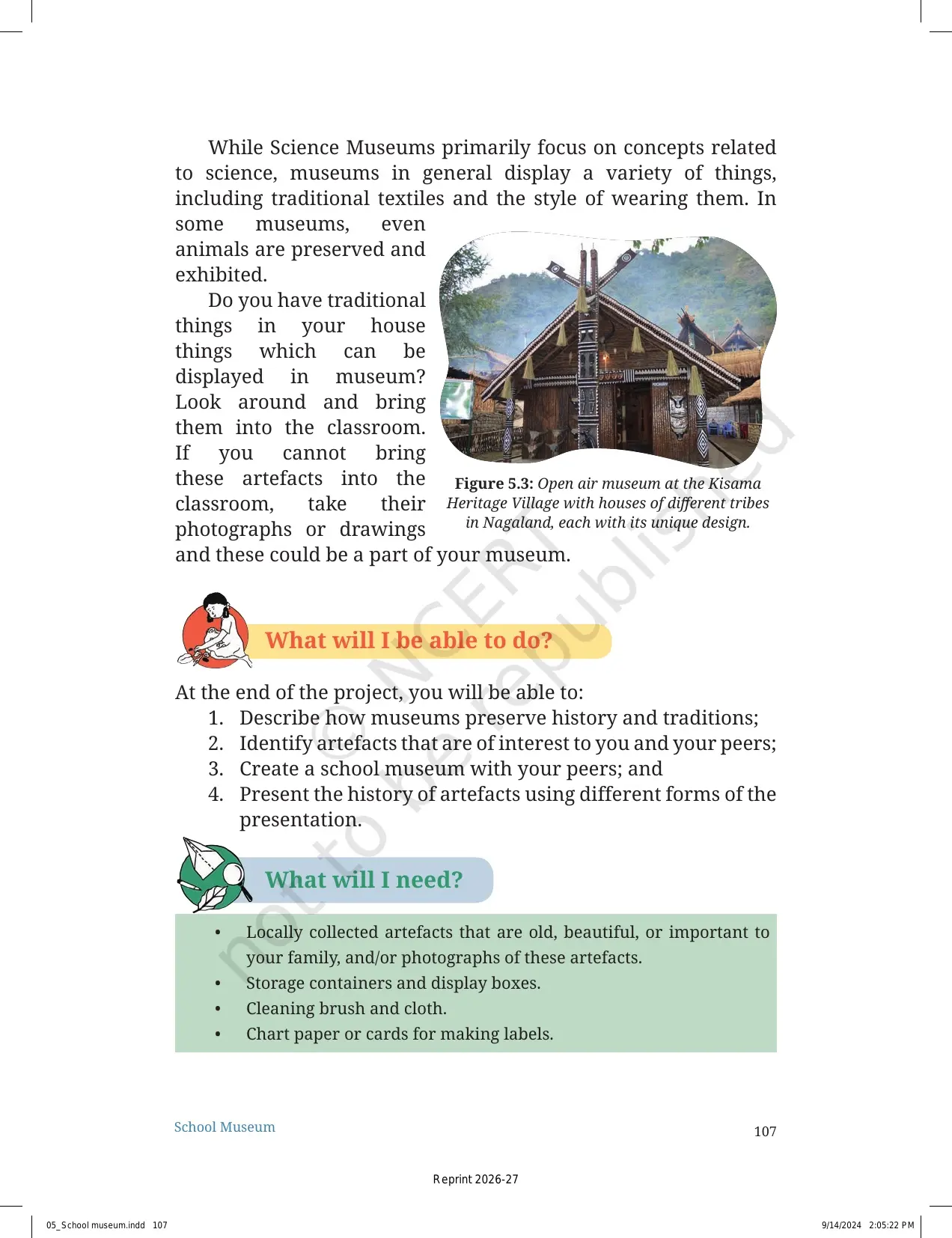
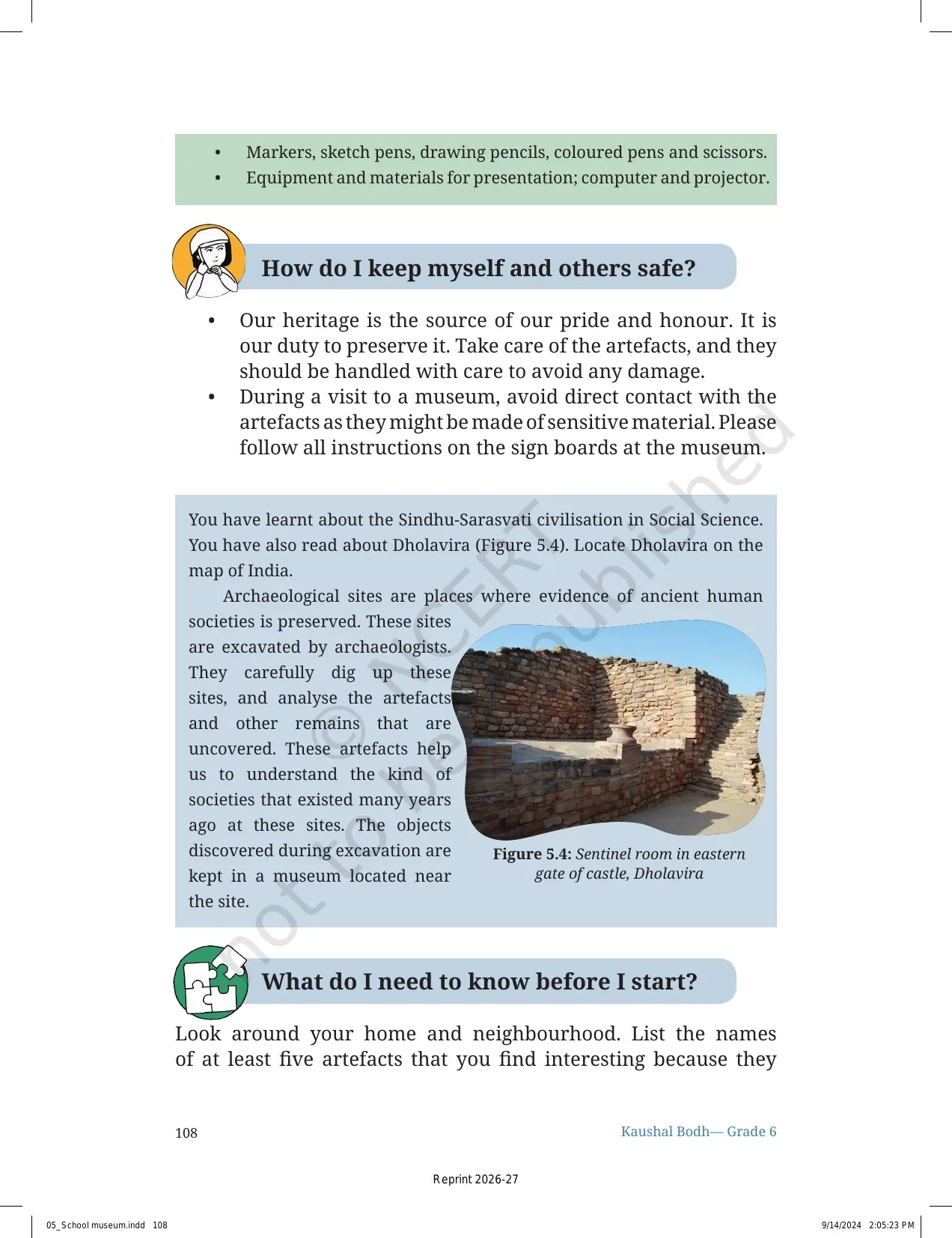
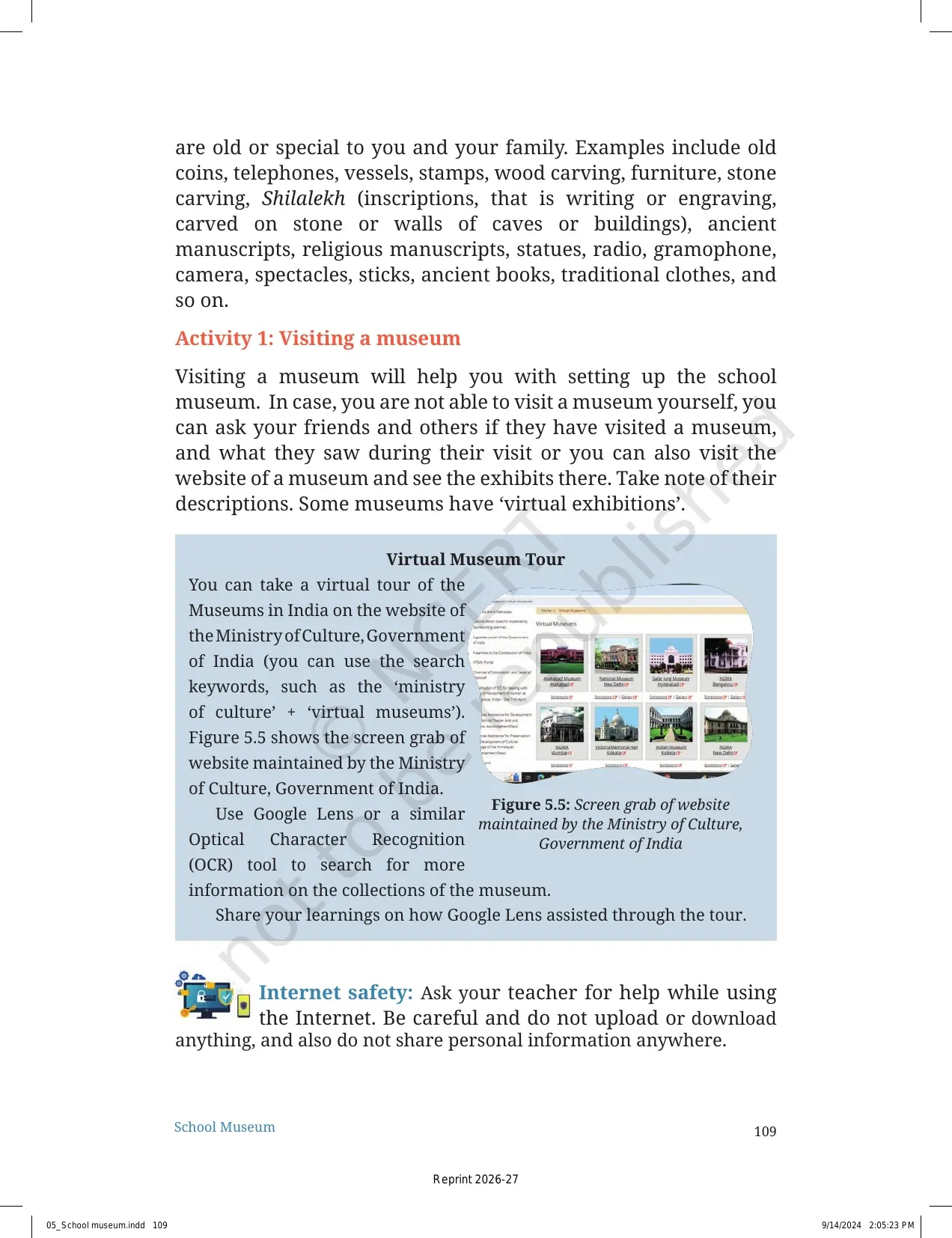
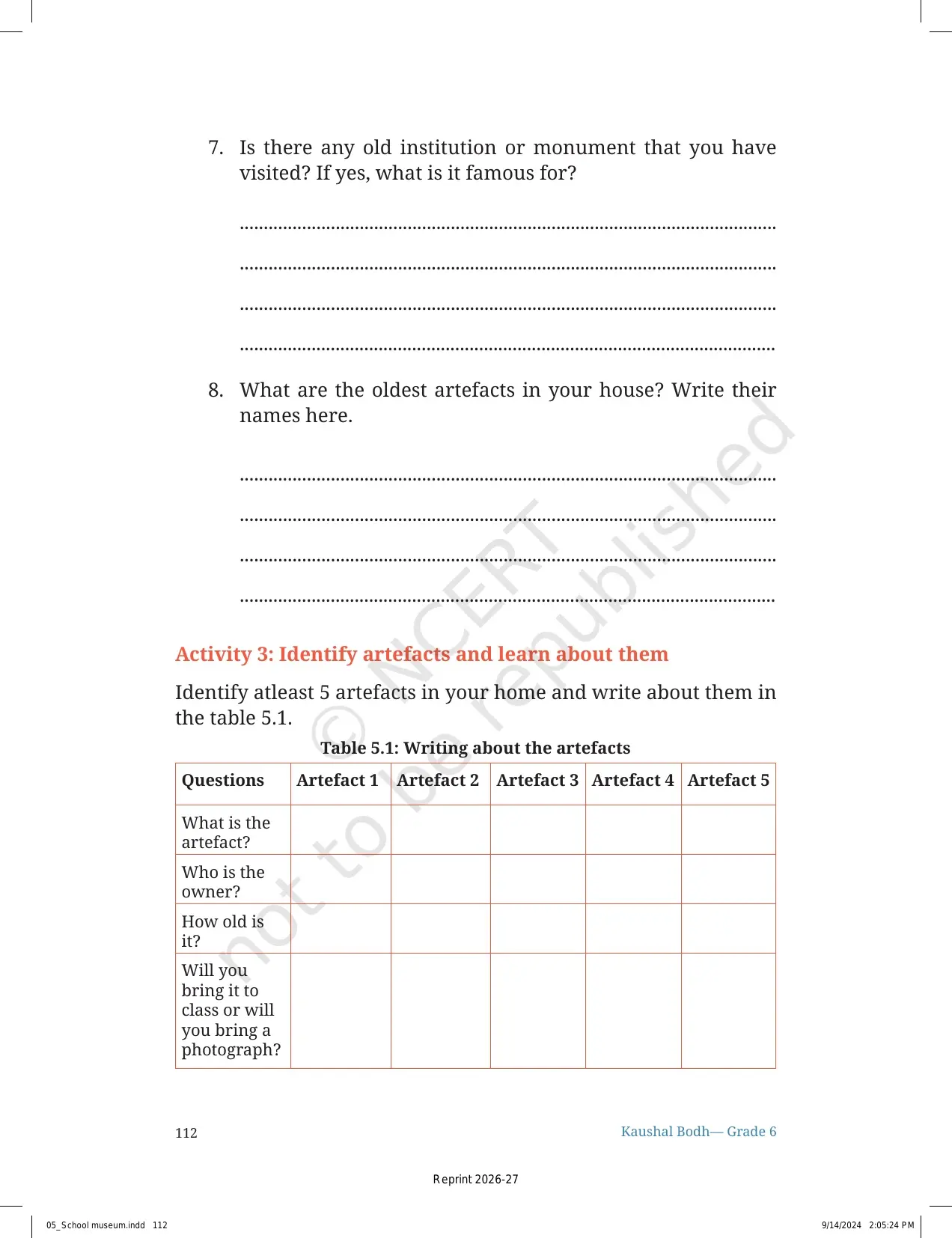
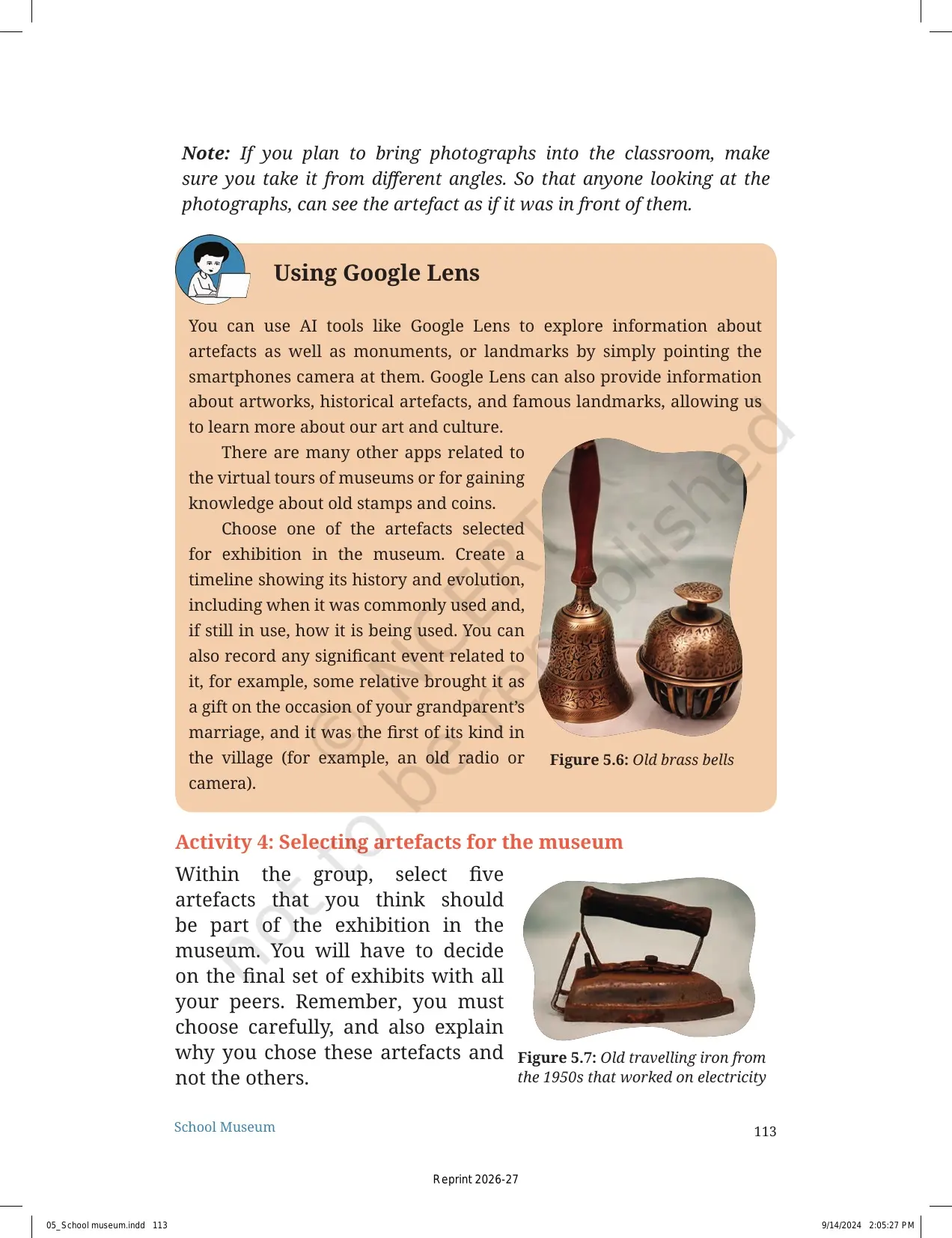
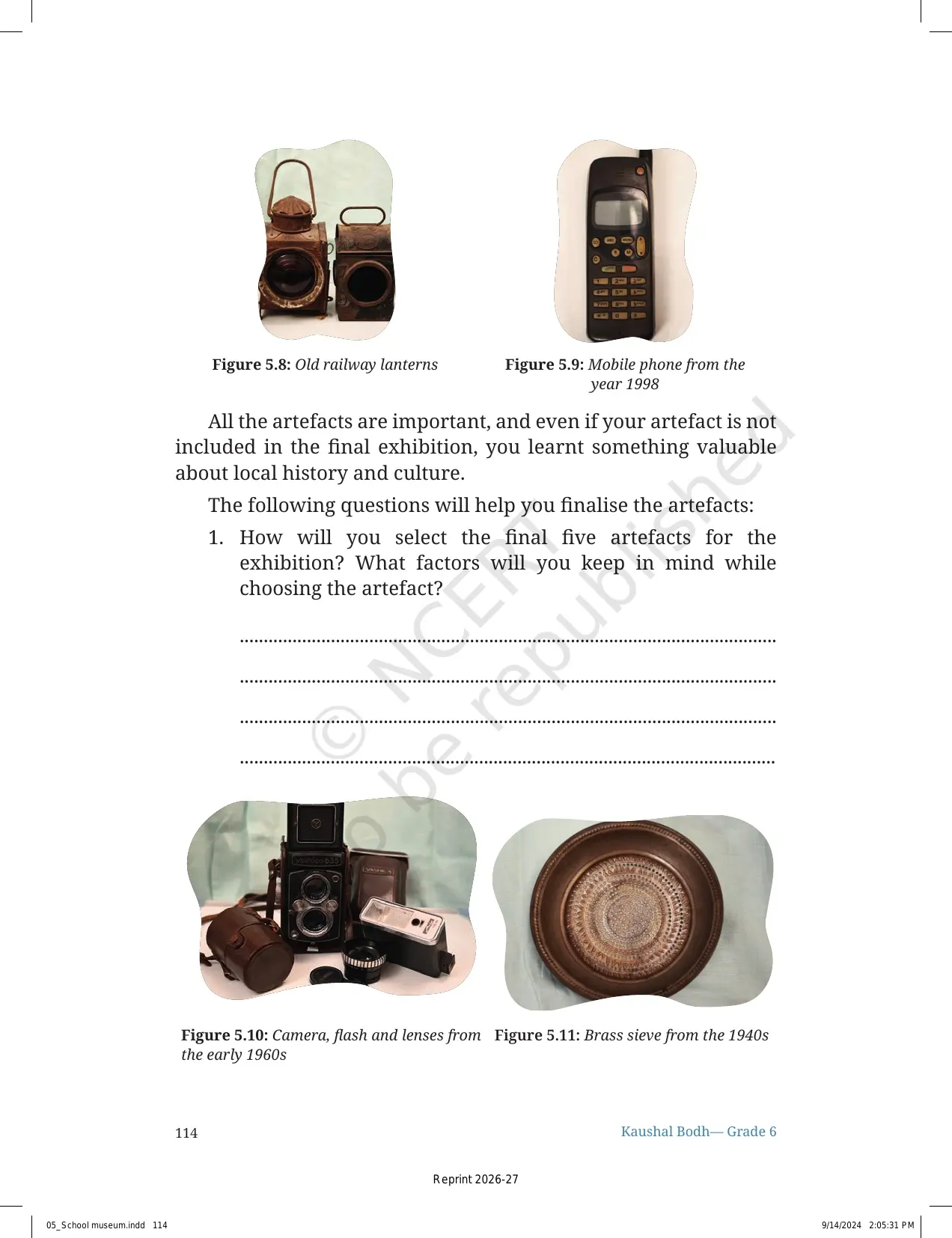
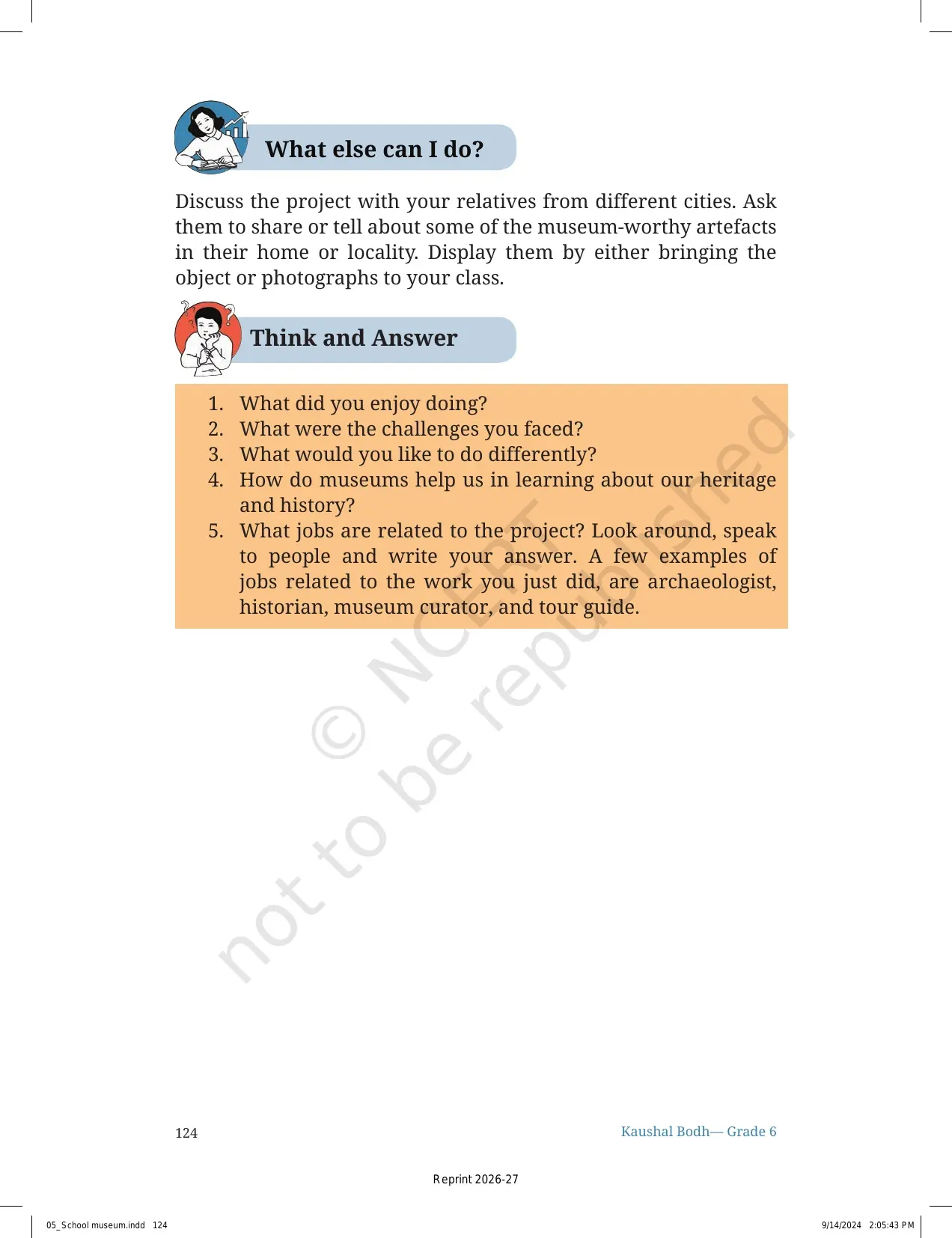
This NCERT Book PDF is the source text for every museum activity, artefact table and exhibition task in the School Museum project.
Student Feedback: In a Collegedunia review of Class 6 Kaushal Bodh project doubts from over 10,800 students, School Museum felt easier when students chose safe artefacts first and wrote short labels before arranging the display.
|
Table of Contents |
School Museum NCERT Book PDF for Class 6 Vocational Education
The School Museum project sits in the Work in Human Services part of Kaushal Bodh. It teaches students how museums preserve history and culture. The chapter helps students turn family objects and local memories into a class exhibition.
| Chapter part | What the PDF covers | Why students should read it |
|---|---|---|
| Museum basics | Meaning of museums, artefacts and preservation | Builds the idea behind the project |
| Family history | Questions on local stories, customs, old places and family objects | Helps students connect the project with home |
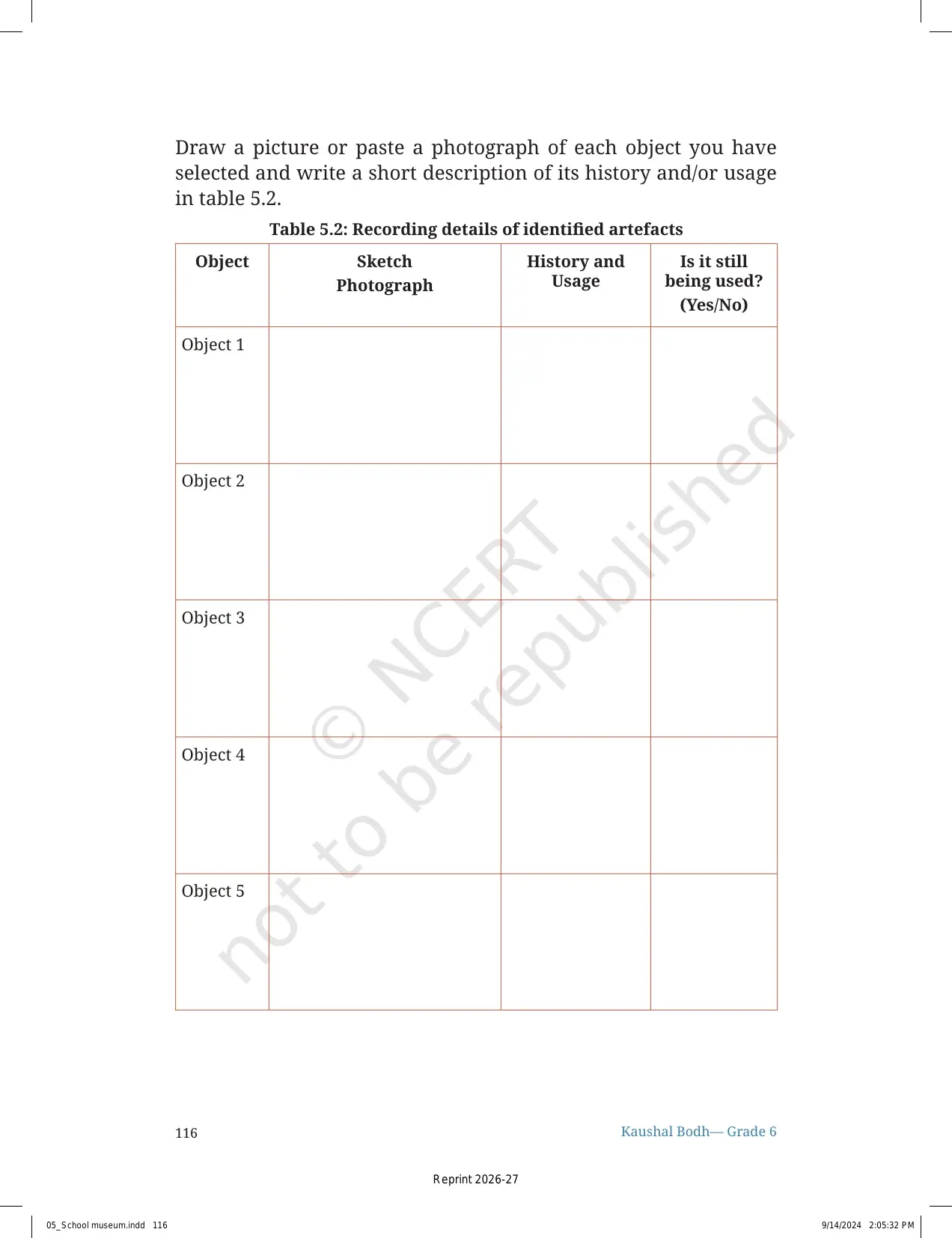
| Artefact records | Tables for object details, owner, age, use and condition | Shows how to document every item clearly |
| Exhibition | Labels, posters, invitations, display layout and visitor feedback | Prepares students for the final class display |
School Museum Project Video for Class 6
Source: Prof.Analysis on YouTube
What Students Learn from the School Museum Project
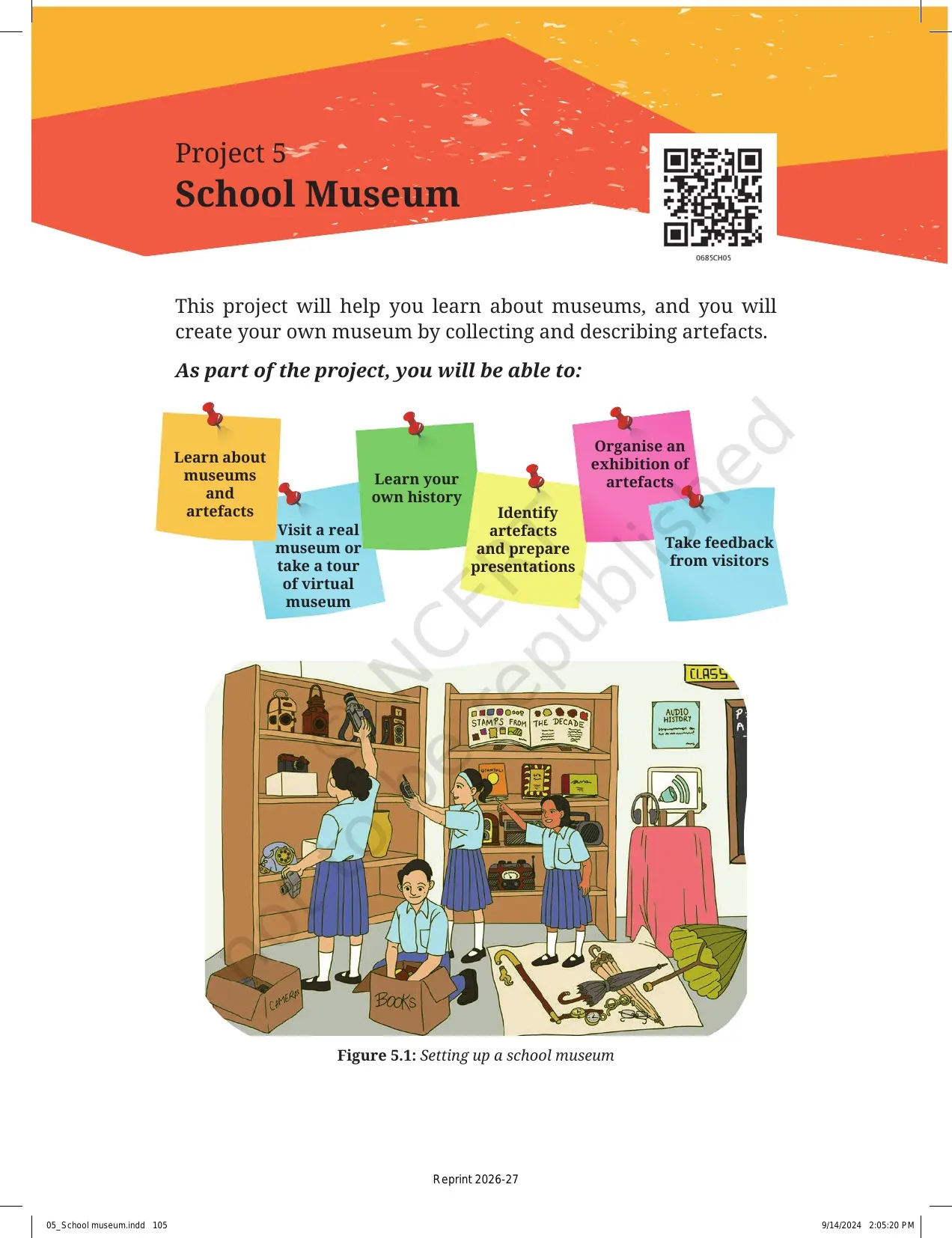
The chapter starts with museums as places that keep artefacts safe. Artefacts may be old tools, coins, books, clothes, stamps, photos, manuscripts or family objects. A good museum item tells a story about people, culture or work.
- Observation: students study exhibits, information panels and museum layout.
- Research: students ask family members about old objects and local history.
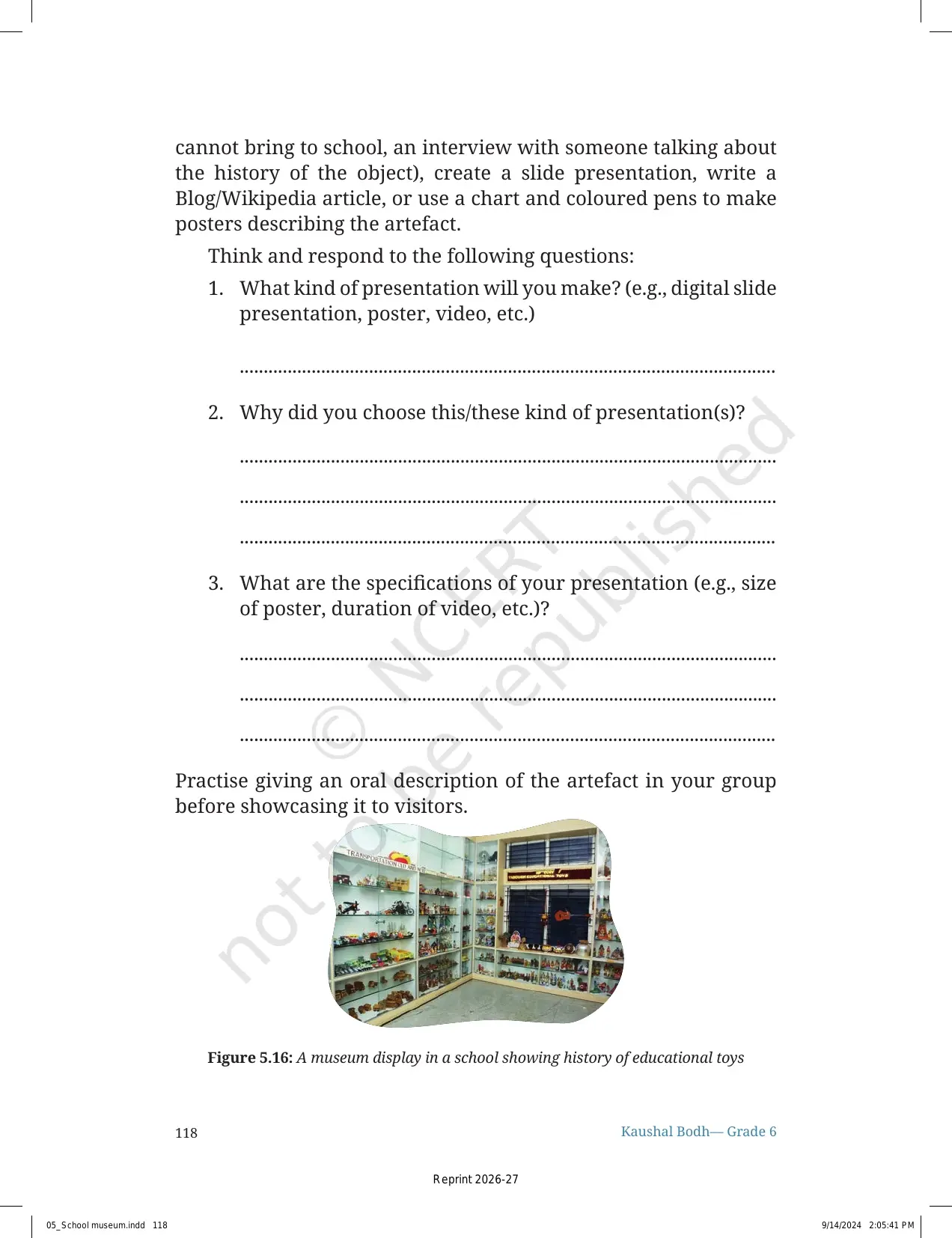
- Presentation: students explain the story of each artefact to visitors.
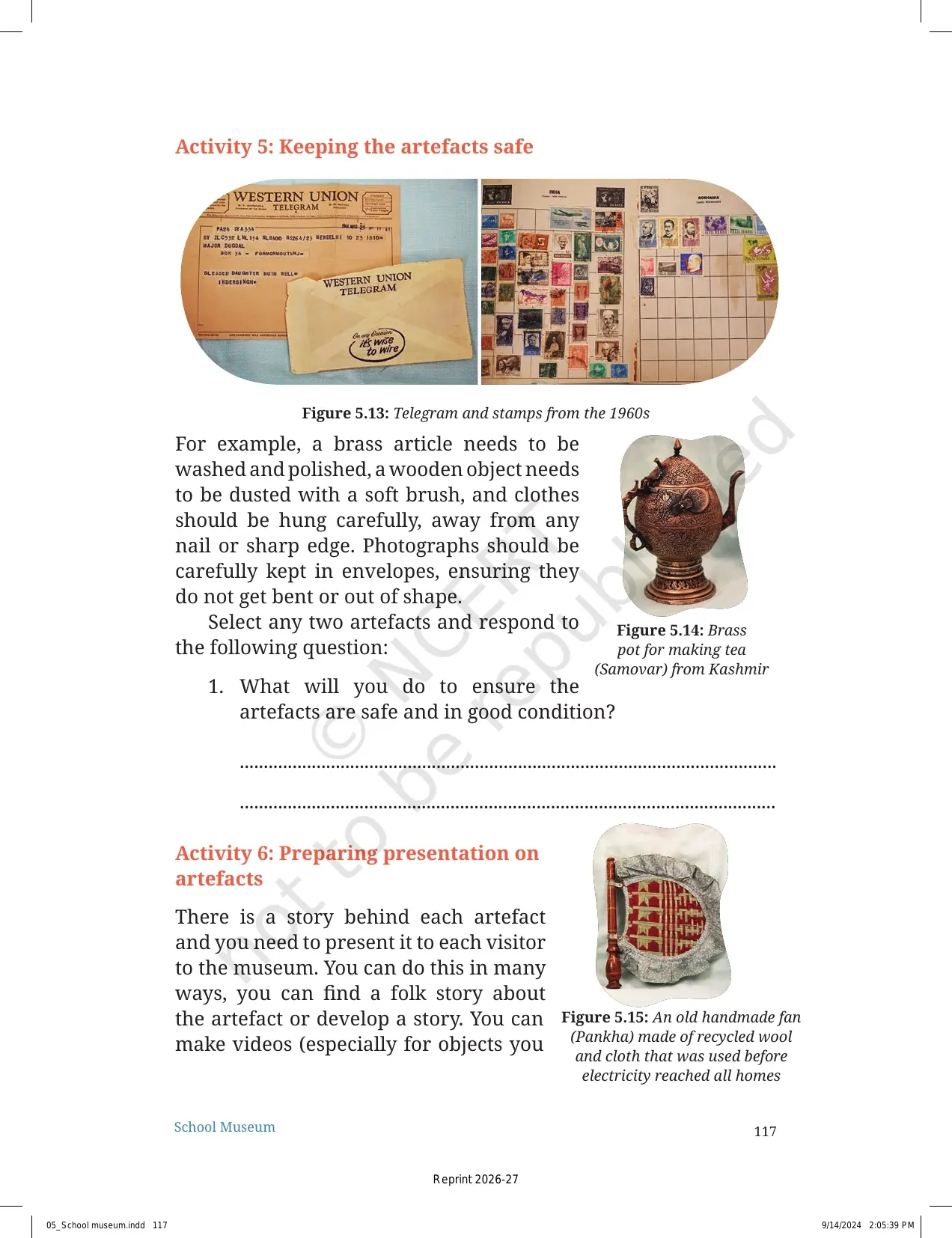
The PDF also teaches care. Students must handle objects gently, keep photographs flat and protect fragile items from damage. Preservation is as important as display in this project.
Artefacts Students Can Collect for a School Museum
NCERT asks students to look around the home and neighbourhood for at least five interesting artefacts. The object may be old, beautiful, rare or important to the family. Students can bring the object only when it is safe to carry.
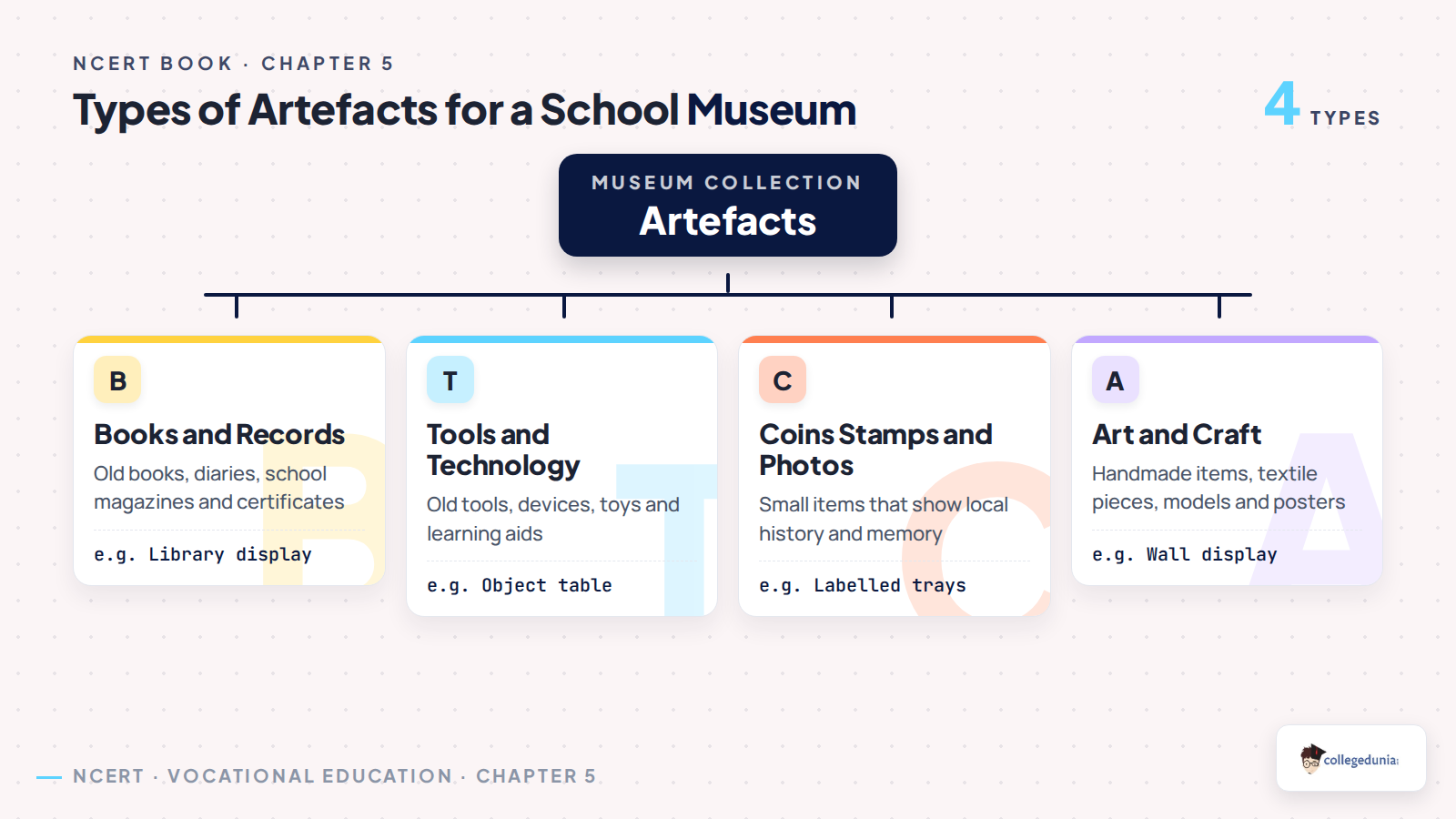
| Artefact type | Examples from the chapter | How to use it in class |
|---|---|---|
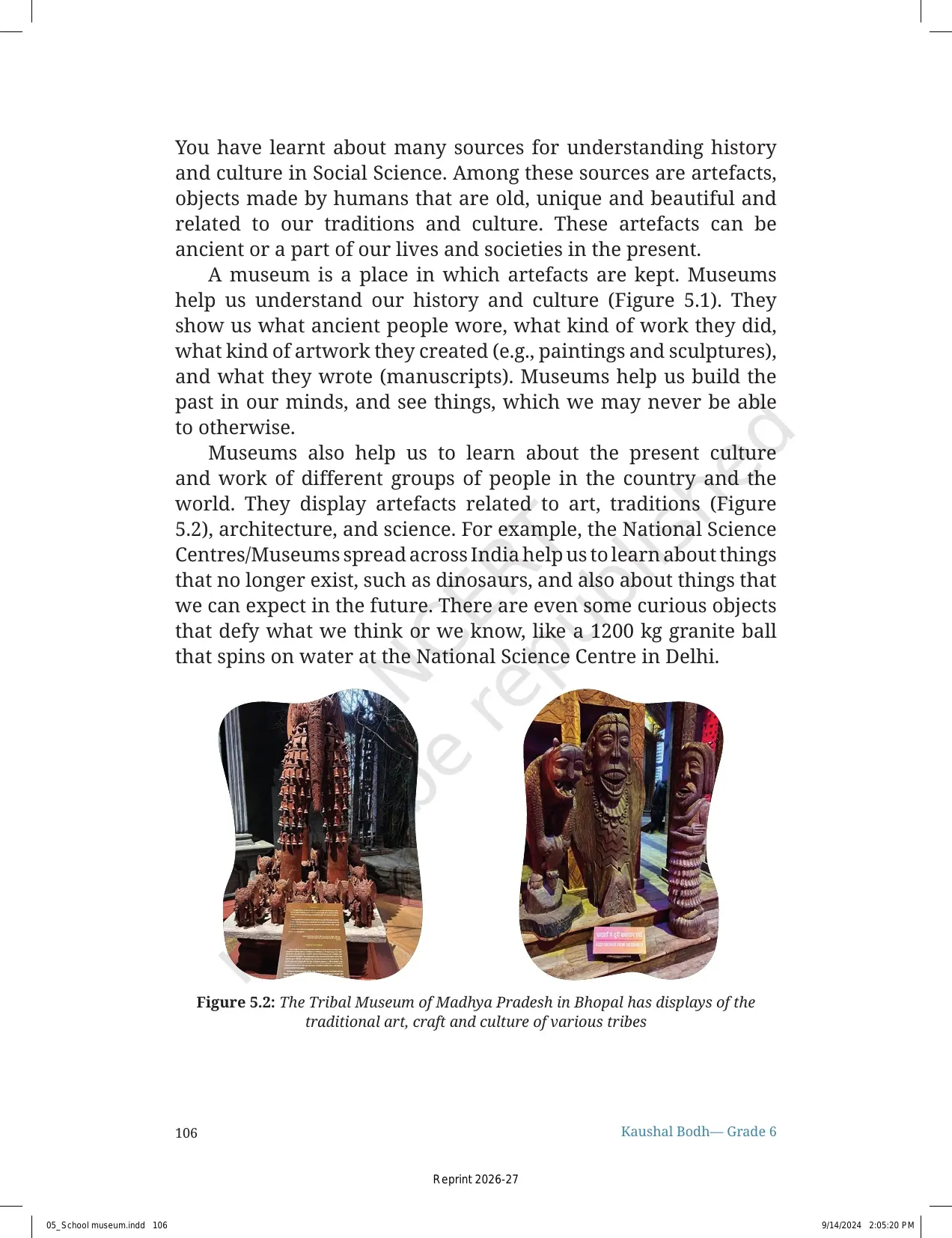
| Old household items | Brass bells, samovar, handmade fan, sieve | Write its use, owner and care method |
| Technology items | Old radio, camera, mobile phone, telephone | Make a timeline of how the item changed |
| Paper records | Stamps, telegrams, old books, manuscripts | Keep in envelopes and label clearly |
| Local-history items | Tools, inscriptions, photographs, craft objects | Connect the object with local people or places |
Using Digital Tools in the School Museum Chapter
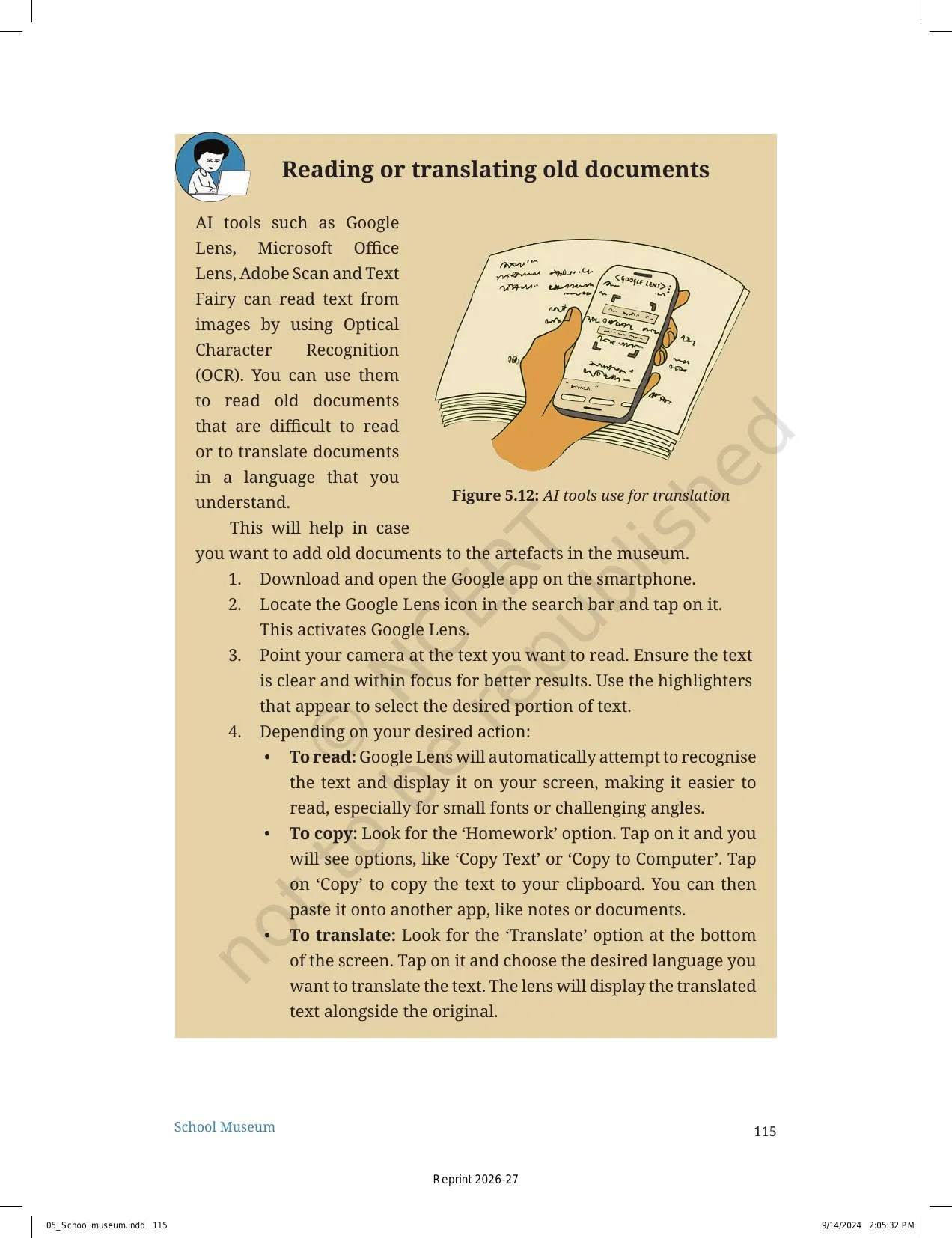
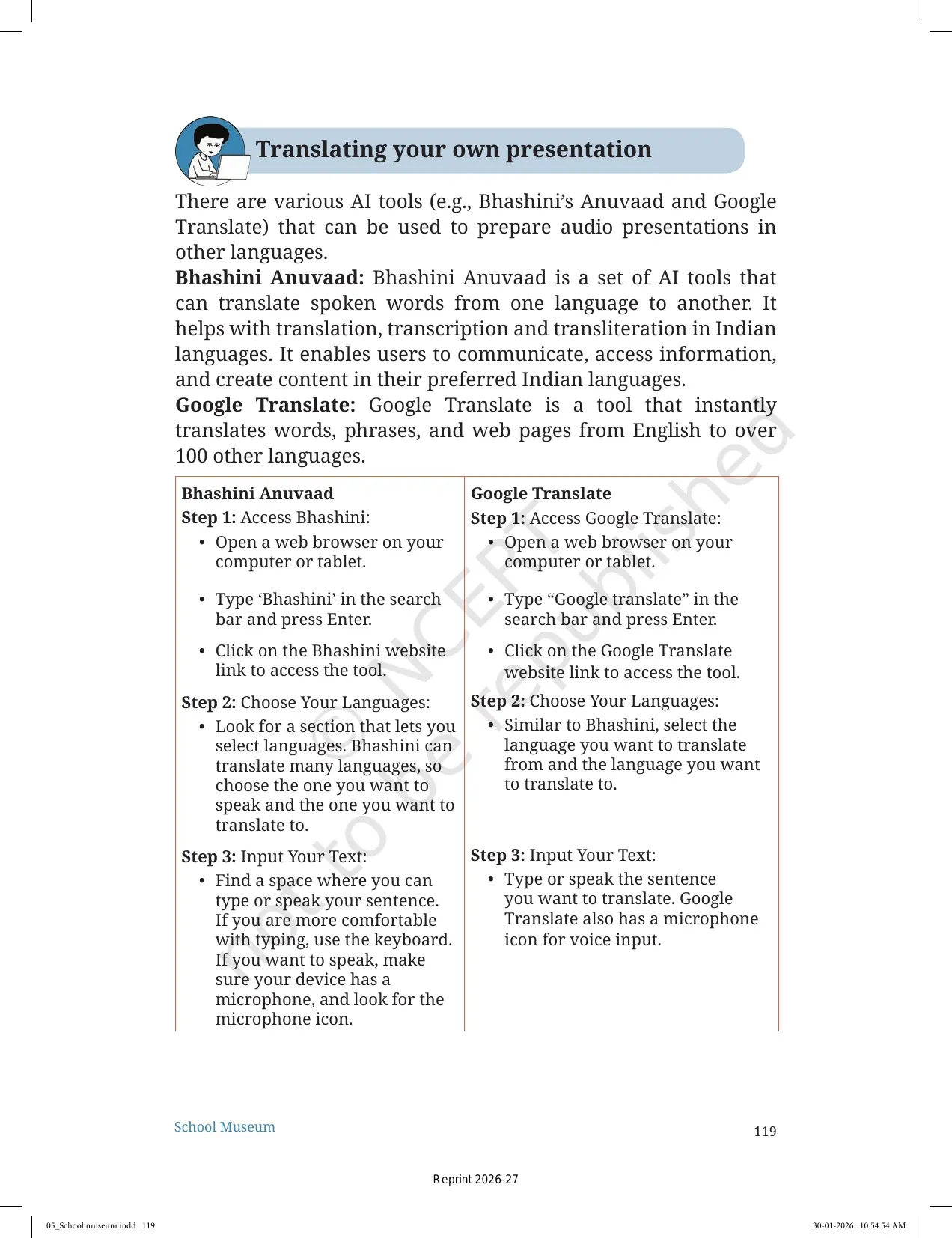
The chapter allows students to use technology with teacher guidance. A virtual museum tour can help when a real visit is not possible. Google Lens or similar OCR tools can help students read text from old documents.
- Virtual tour: explore museum websites and note the exhibit layout.
- OCR tools: read old or unclear text from photographs.
- Translation tools: translate a presentation into another Indian language.
- Internet safety: do not upload personal details or download unknown files.
Students should use these tools only with teacher or family help. The project is about learning from artefacts, not sharing private information online.
How to Organise the Class 6 School Museum Exhibition
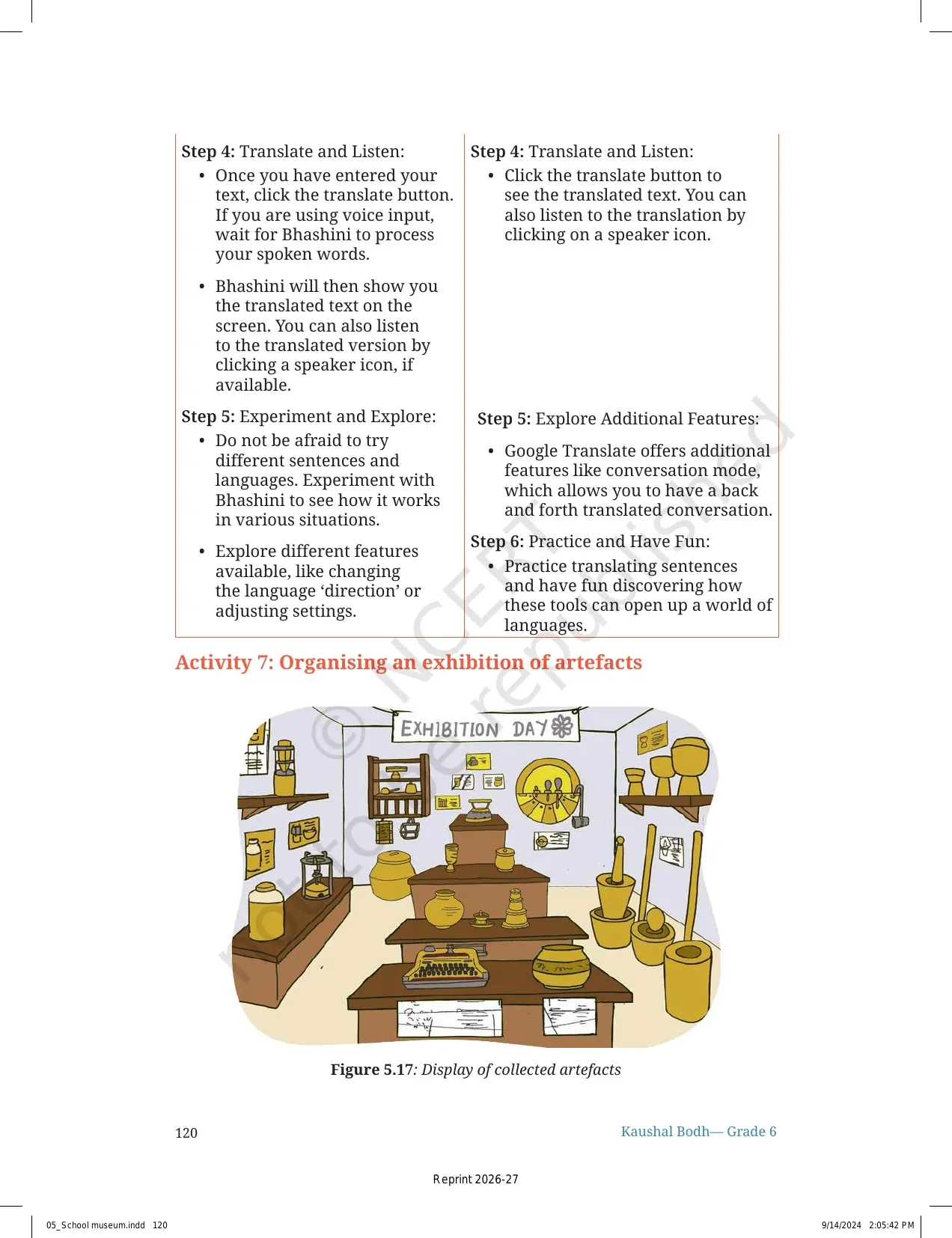
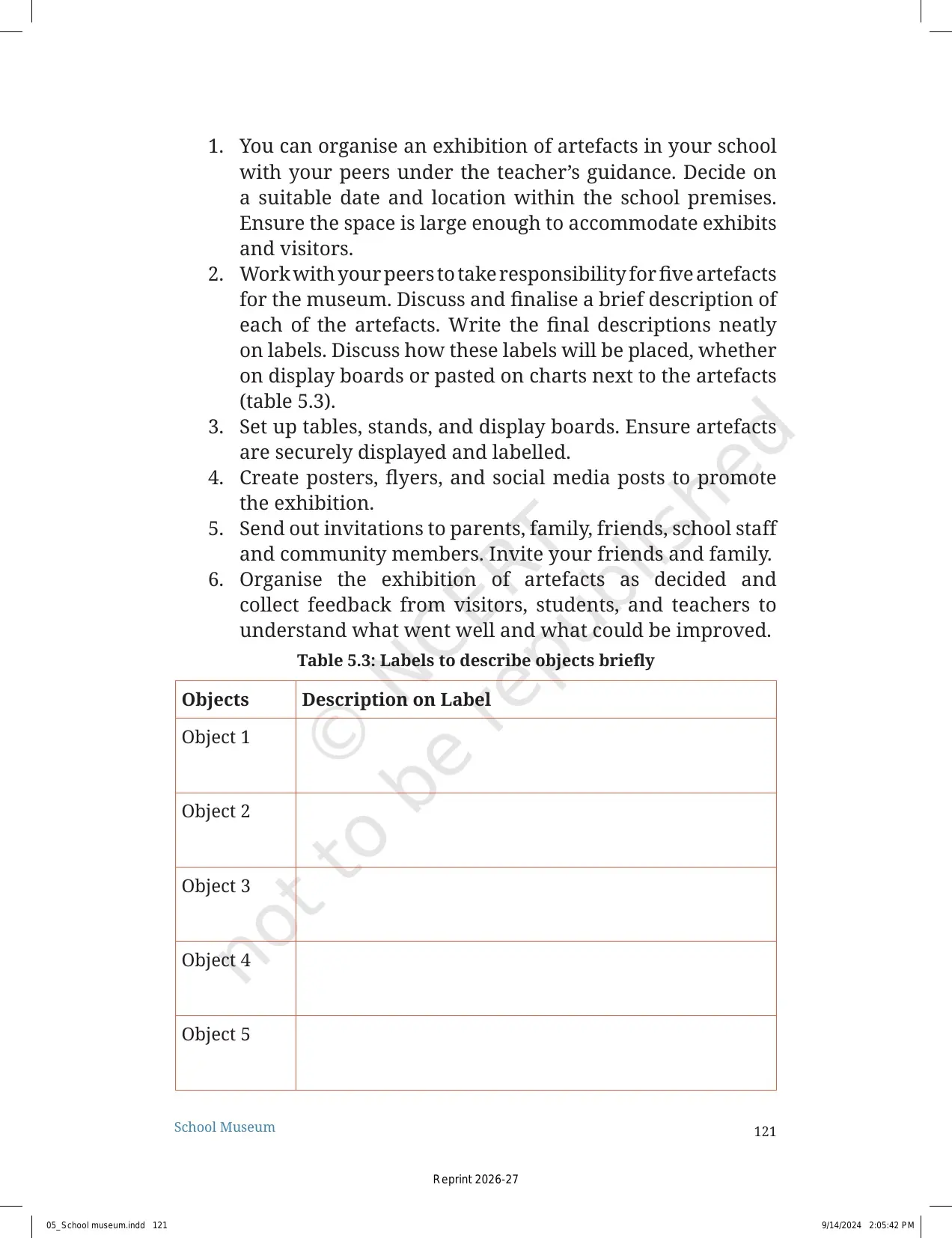
Activity 7 asks students to organise an exhibition in school. The group chooses a date, place and display plan. The space should be large enough for artefacts and visitors.
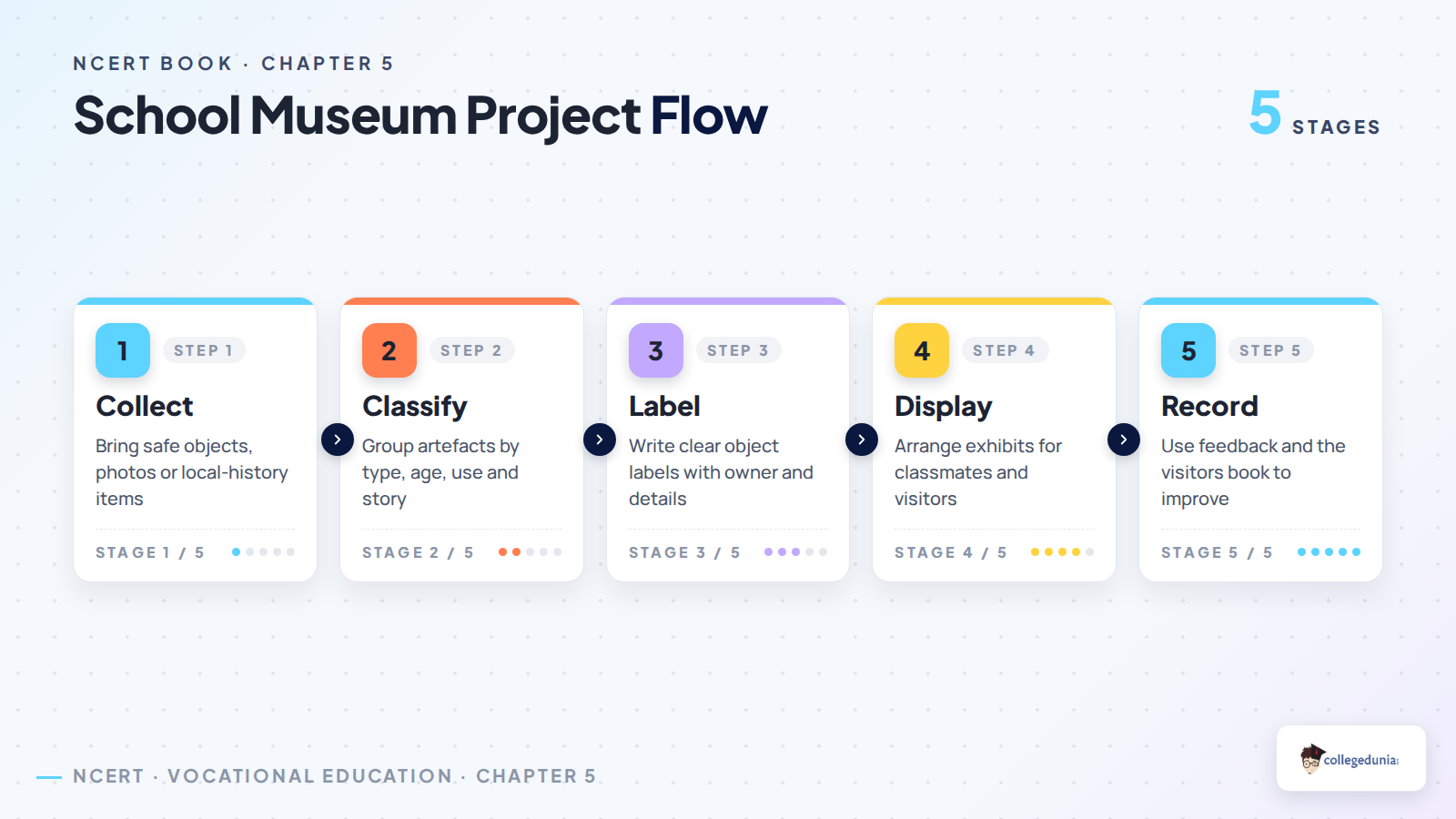
- Choose five artefacts for the final display.
- Write short labels with the object name, owner, age and use.
- Set up tables, stands and display boards safely.
- Make posters, flyers or announcements for visitors.
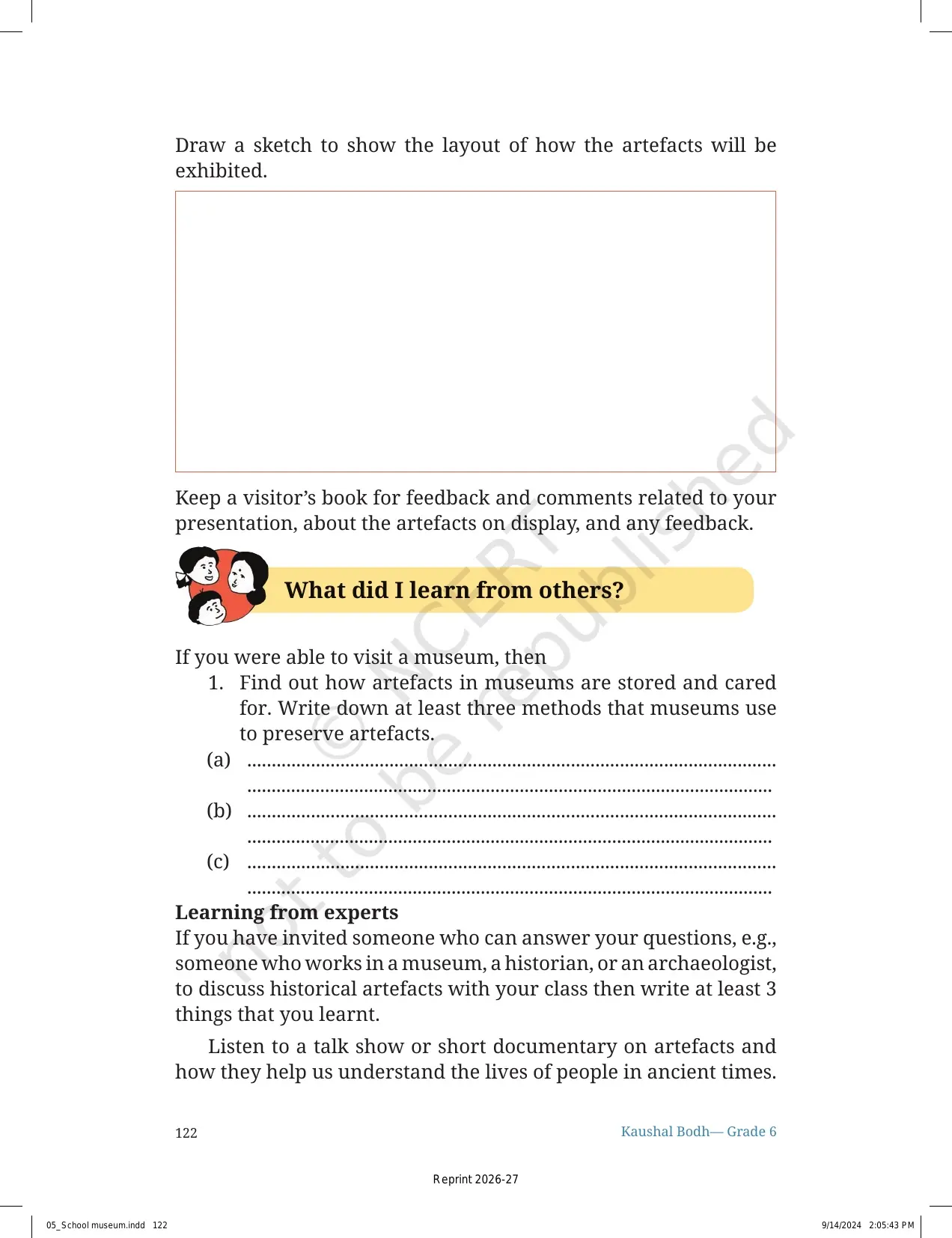
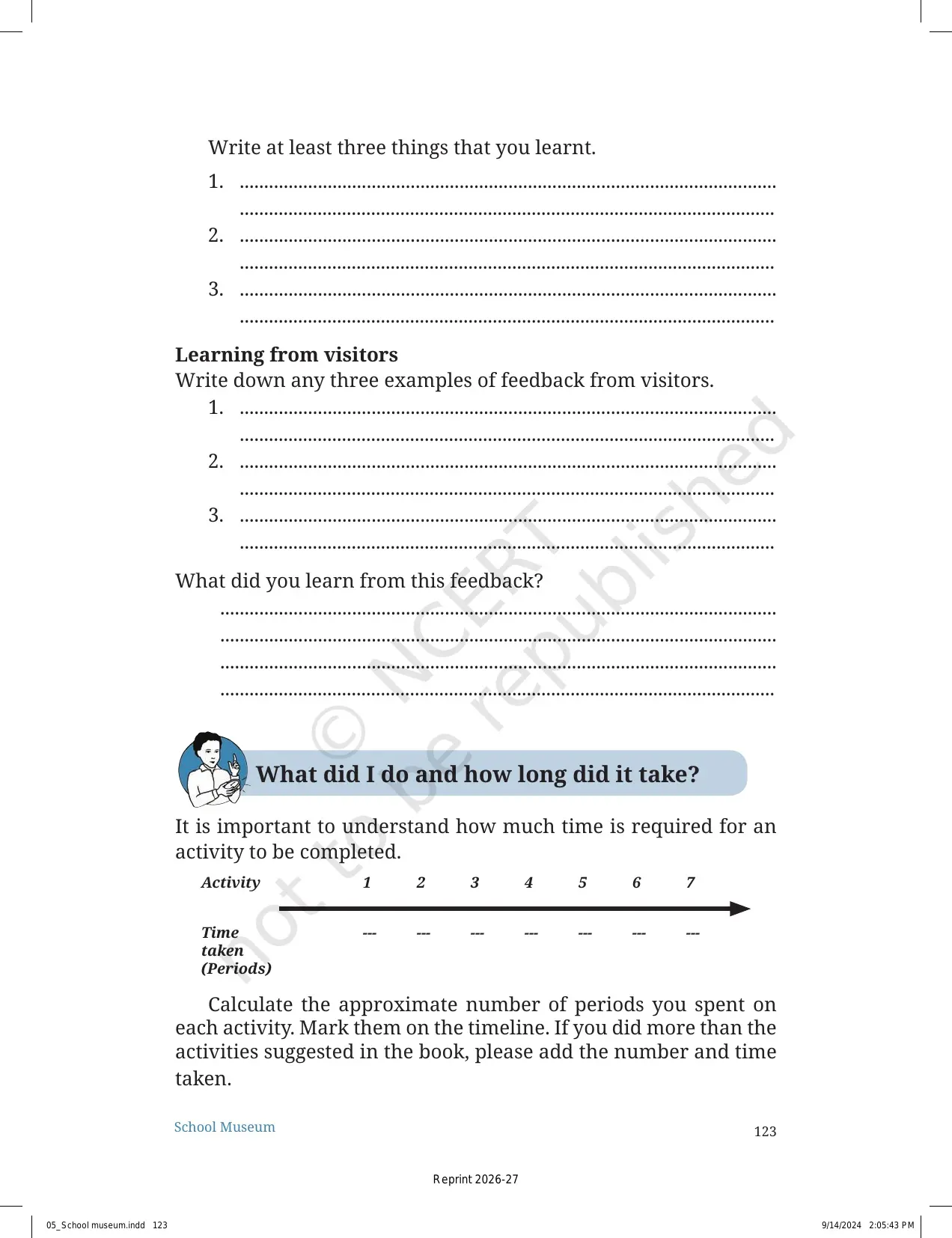
- Keep a visitors book for comments and feedback.
Visitor feedback helps students improve the display after the exhibition. The PDF asks students to write what went well and what they would do differently next time.
How to Use This Class 6 Kaushal Bodh PDF
Use the NCERT Book PDF as the main source while preparing the project file. Read the museum examples first. Then complete the activity tables in order.
- Read the project aim and the safety notes.
- Visit a museum or take a virtual museum tour.
- List old or special objects from home and the neighbourhood.
- Record details in Tables 5.1 and 5.2.
- Prepare labels, presentations and the final exhibition layout.
The PDF has 22 pages, so students can finish it in small project blocks. The easiest order is observe, collect, classify, label, display and reflect.
Related Class 6 School Museum Resources
Also Check: use the official book PDF with the matching notes and handwritten revision pages for the same project.
| Resource | Best used for | Open it |
|---|---|---|
| NCERT Book PDF | Official chapter text, activities, figures and project instructions | Current page |
| NCERT Notes | Typed revision of museum meaning, artefact records, labels and exhibition planning | School Museum Class 6 Notes |
| Handwritten Notes | Quick revision of activities, artefact tables, safety points and feedback questions | School Museum Class 6 Handwritten Notes |
Class 6 Vocational Education Kaushal Bodh NCERT Book PDFs for All Chapters
Related Links: download the other NCERT Book PDFs from the Class 6 Kaushal Bodh textbook.
| Chapter | Class 6 Kaushal Bodh NCERT Book PDF |
|---|---|
| Chapter 1 | School Kitchen Garden Class 6 NCERT Book PDF |
| Chapter 2 | Biodiversity Register Class 6 NCERT Book PDF |
| Chapter 3 | Maker Skills Class 6 NCERT Book PDF |
| Chapter 4 | Animation and Games Class 6 NCERT Book PDF |
| Chapter 5 | School Museum Class 6 NCERT Book PDF |
| Chapter 6 | Cooking without Fire Class 6 NCERT Book PDF |
School Museum Class 6 NCERT Book PDF FAQs
Ques. What is the School Museum chapter in Class 6 Kaushal Bodh about?
Ans. It is a Vocational Education project where students learn about museums, artefacts, local history, object labels, exhibitions and visitor feedback.
Ques. Is this NCERT Book PDF useful for the 2026-27 syllabus?
Ans. Yes. The PDF follows the 2026-27 Class 6 Kaushal Bodh textbook and carries the official activities, figures, tables and exhibition tasks.
Ques. What artefacts can students collect for the School Museum project?
Ans. Students can collect safe old objects, photographs, stamps, books, tools, craft items, family objects and local-history items with teacher or family permission.
Ques. What tables are included in Chapter 5 School Museum?
Ans. The chapter includes tables for writing about artefacts, recording object history and usage, and preparing short labels for the exhibition.
Ques. How should students use this NCERT Book PDF?
Ans. Read the PDF in project order: museum visit, family history, artefact selection, object care, presentation, exhibition layout and visitor feedback.



Comments