



NCERT Solutions for Class 11 Business Studies Chapter 1 Business, Trade and Commerce explain every textbook question from the 2026-27 NCERT book in simple CBSE-ready language. The chapter builds the base for economic activities, industry, trade, commerce, auxiliaries, business risk, profit, and business objectives.
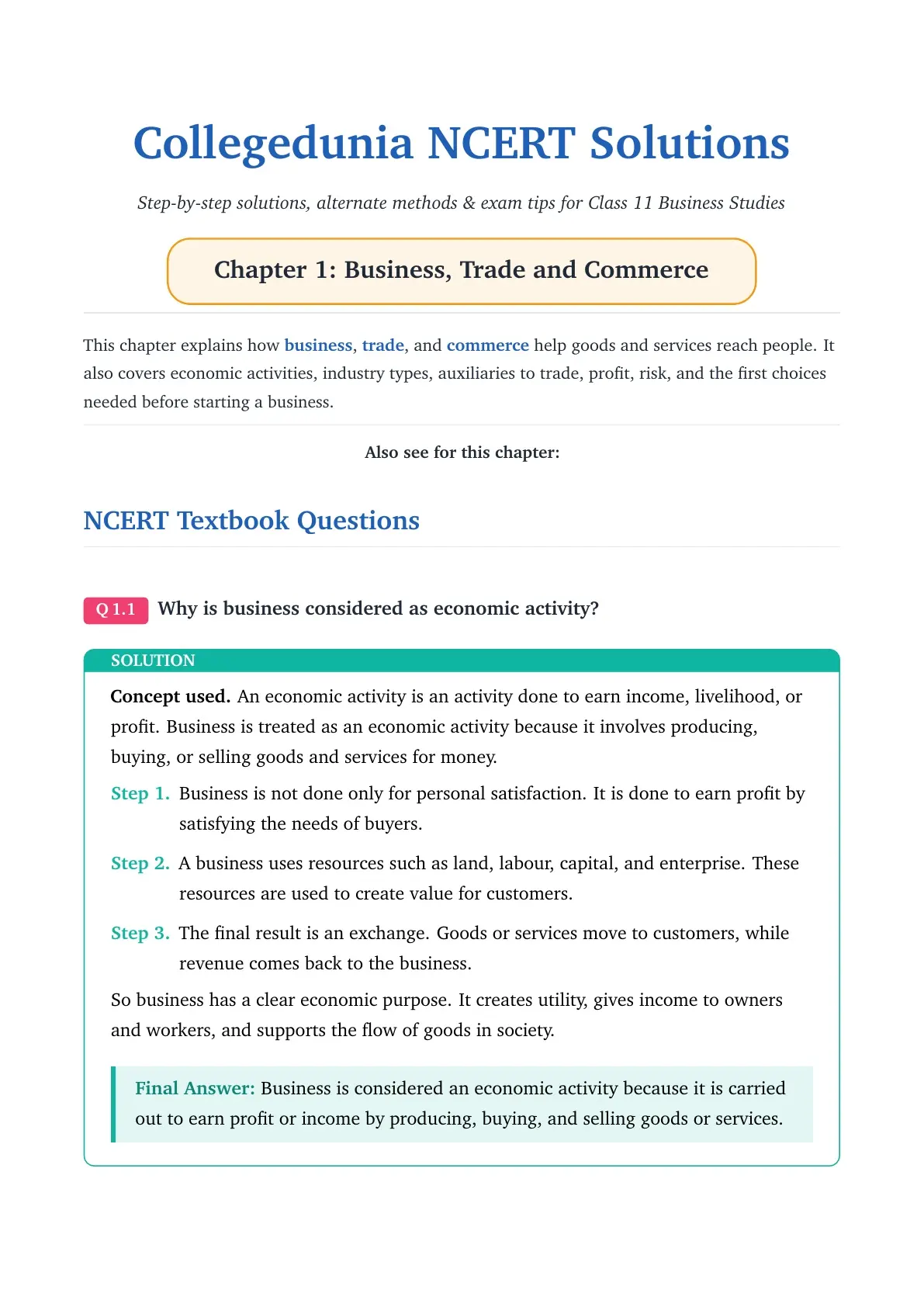
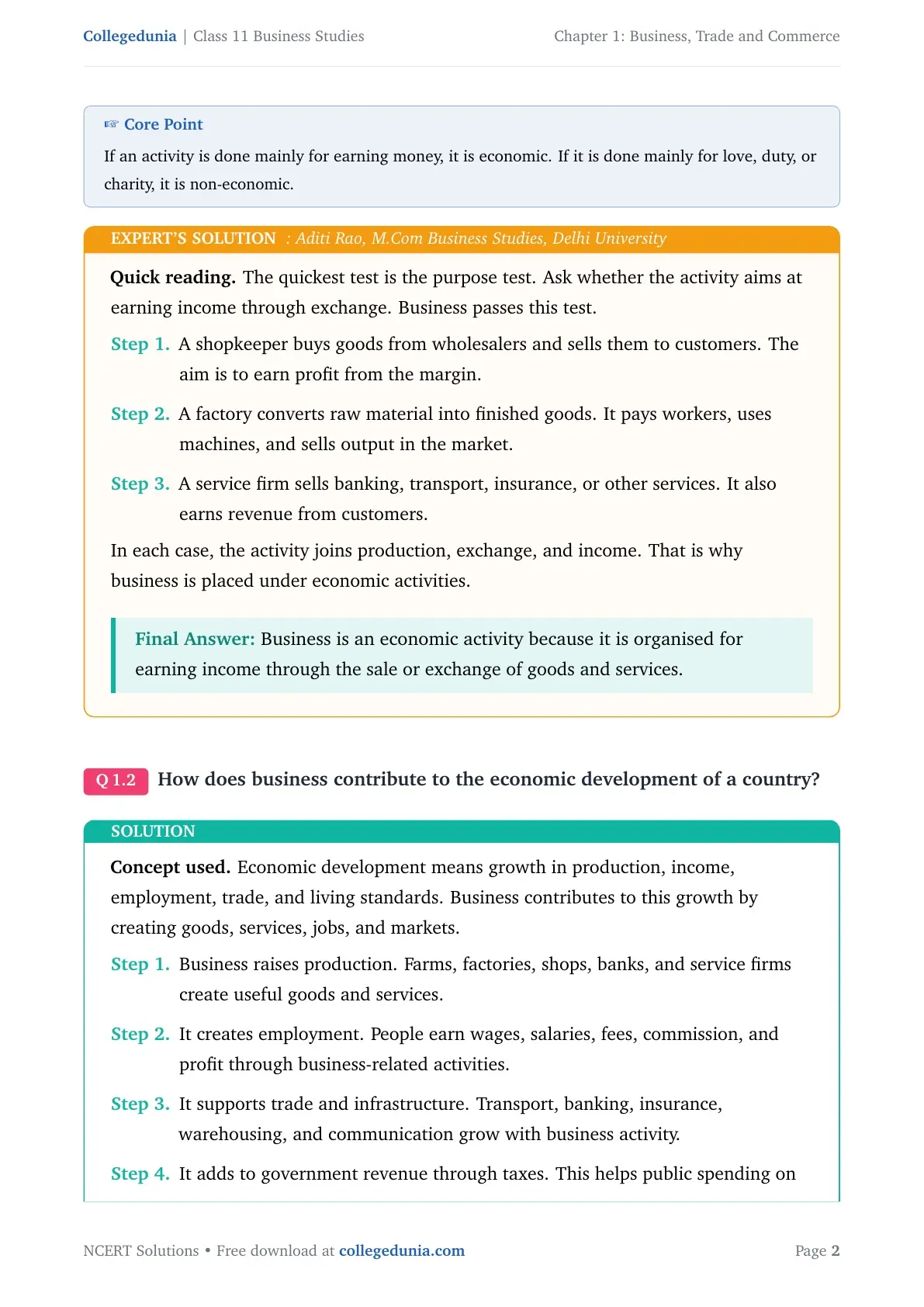
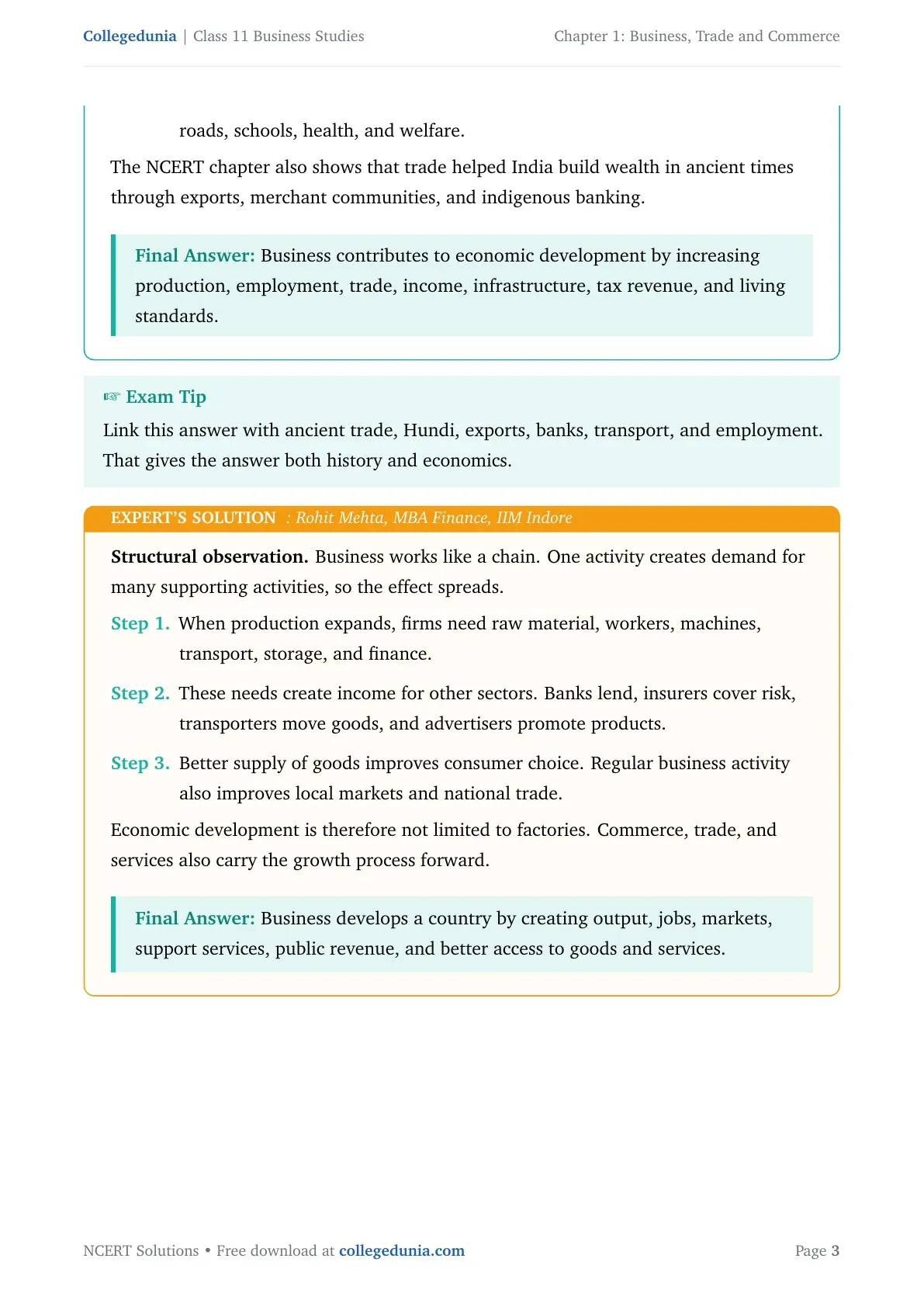
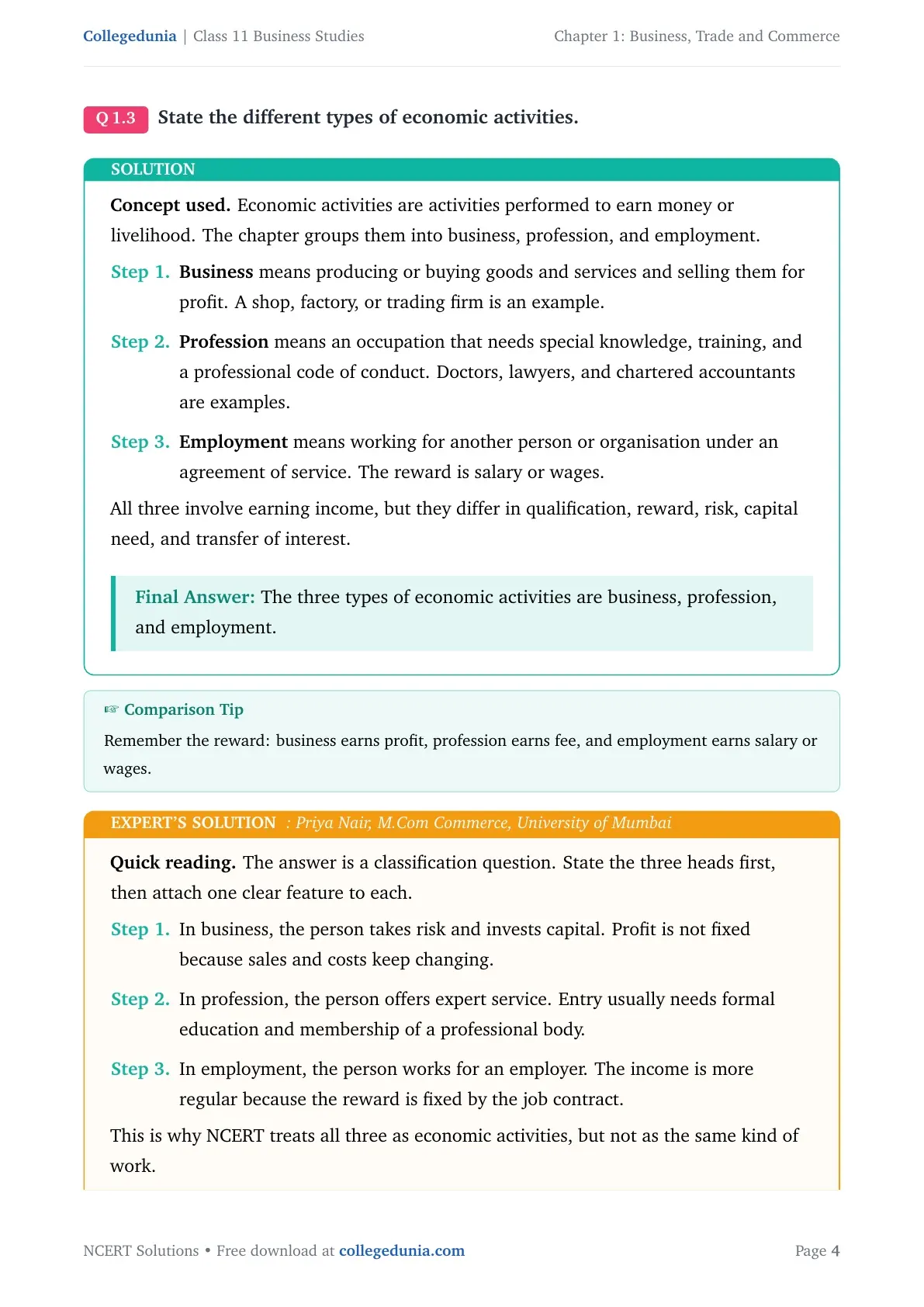
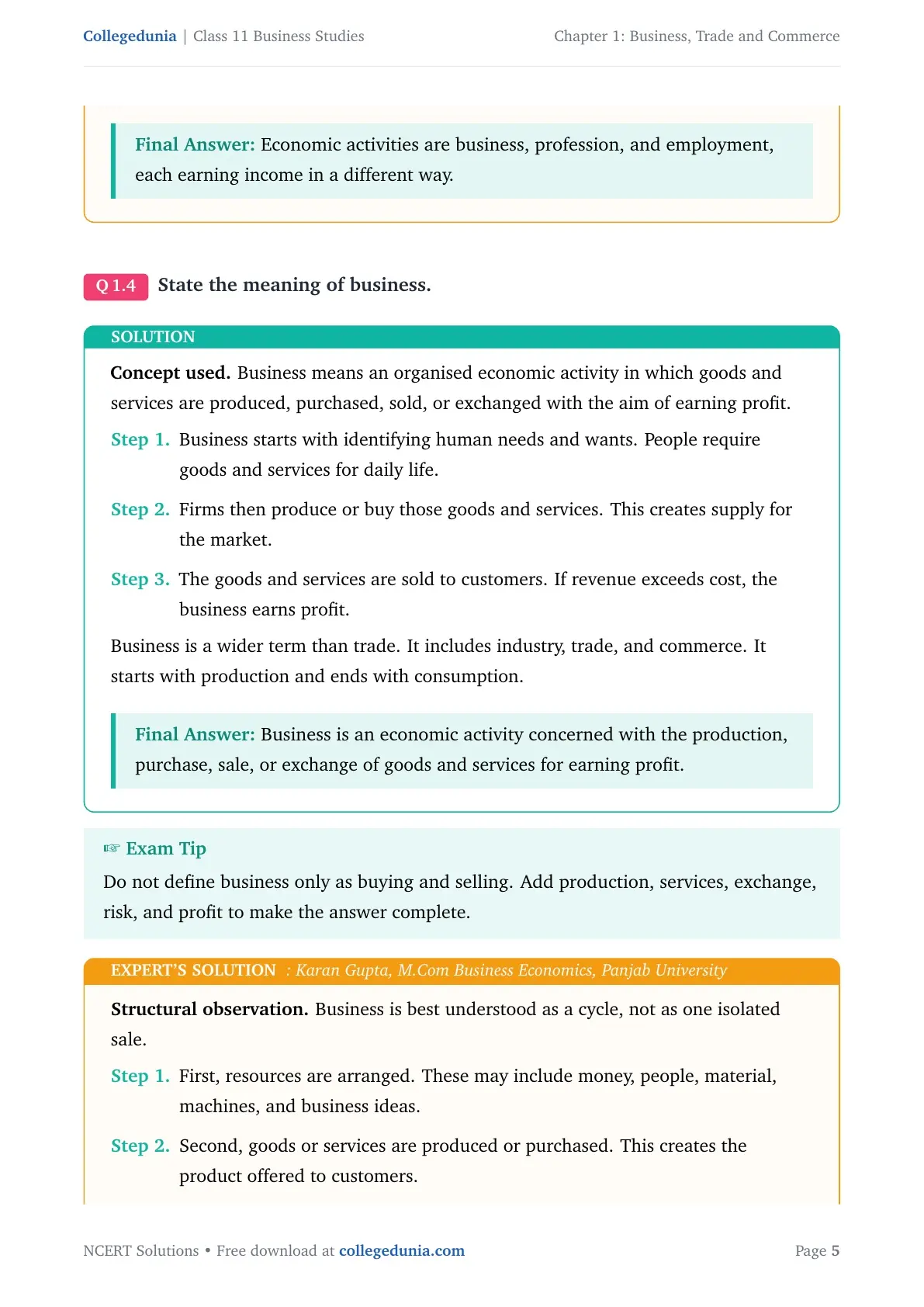
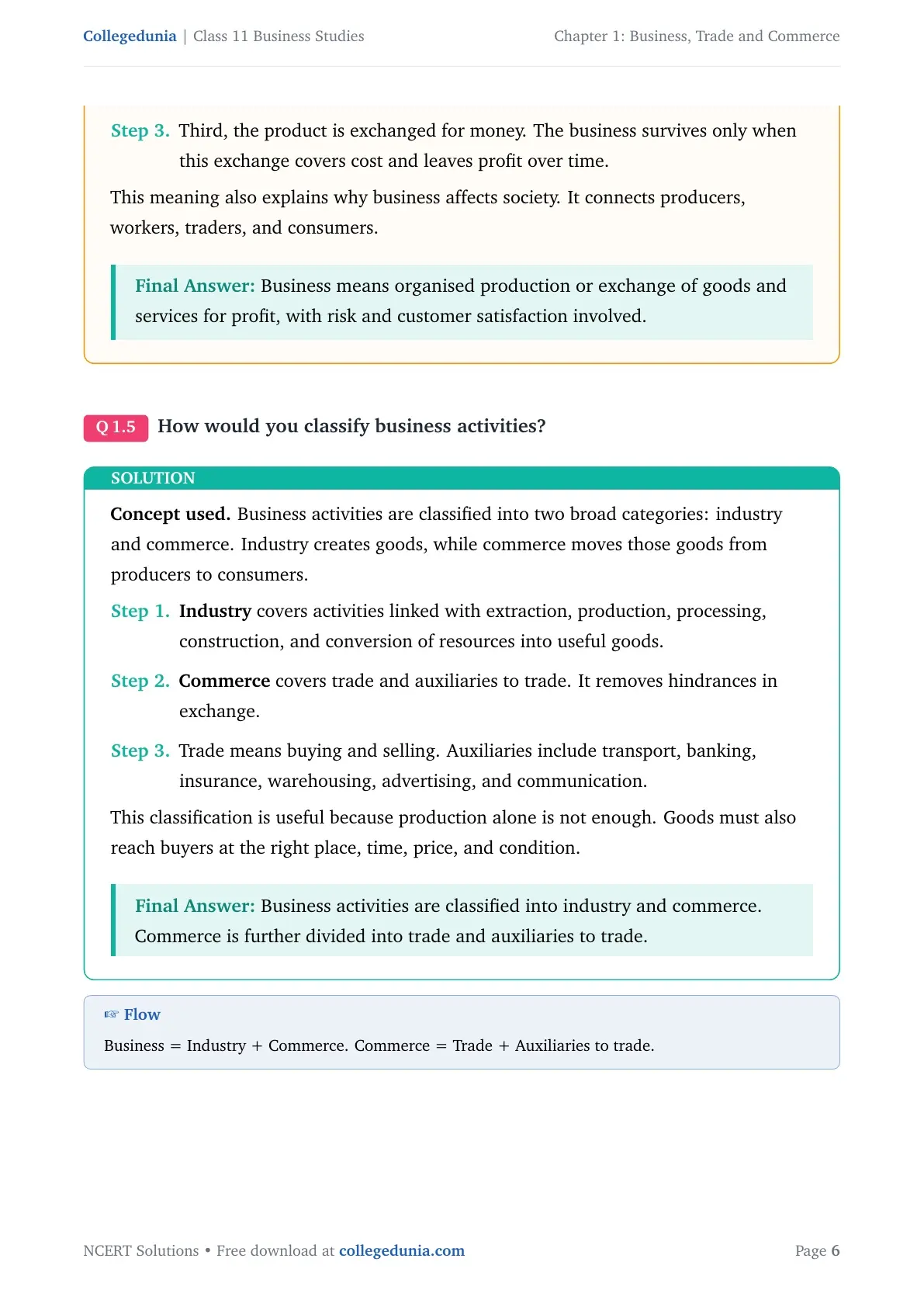
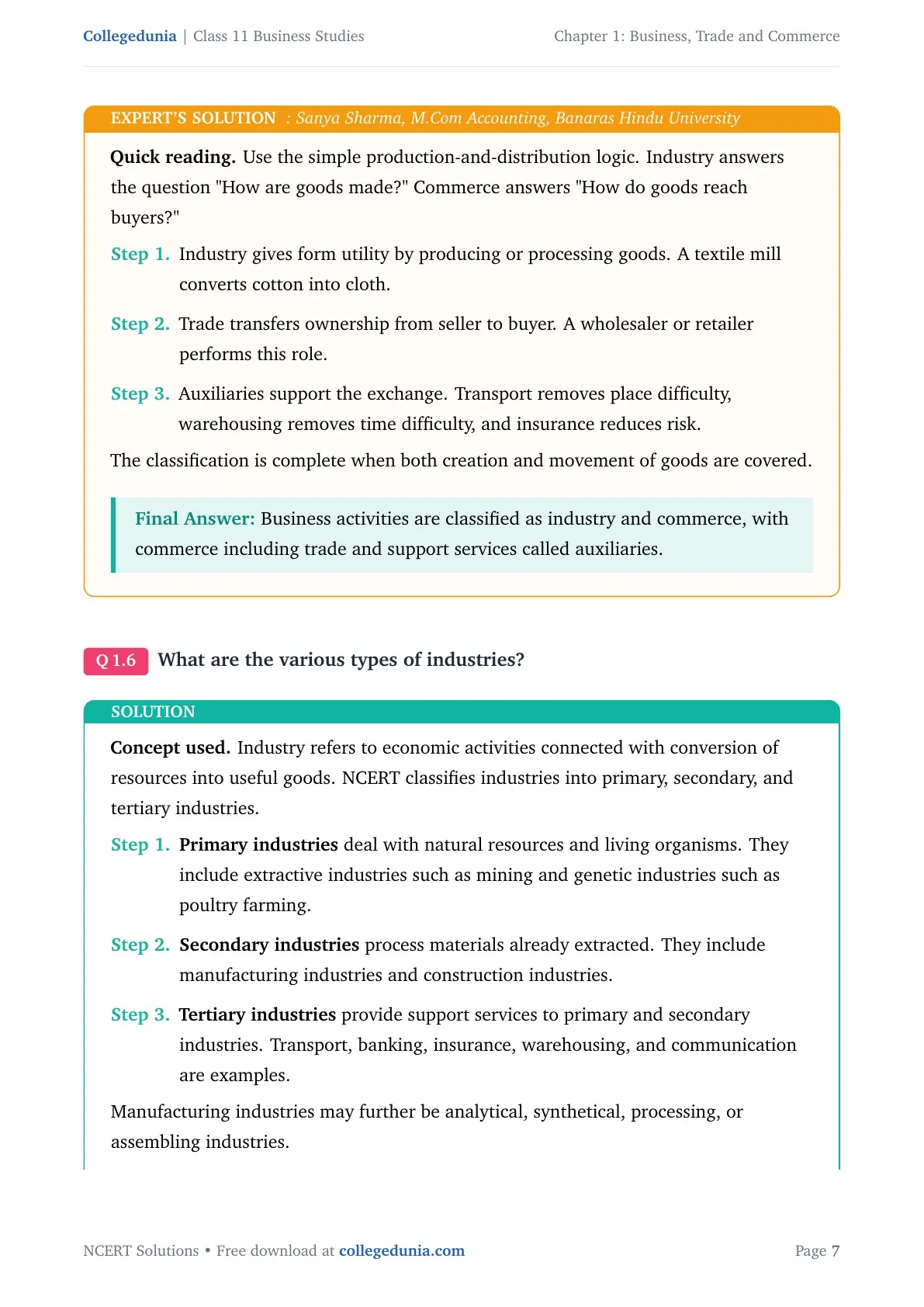
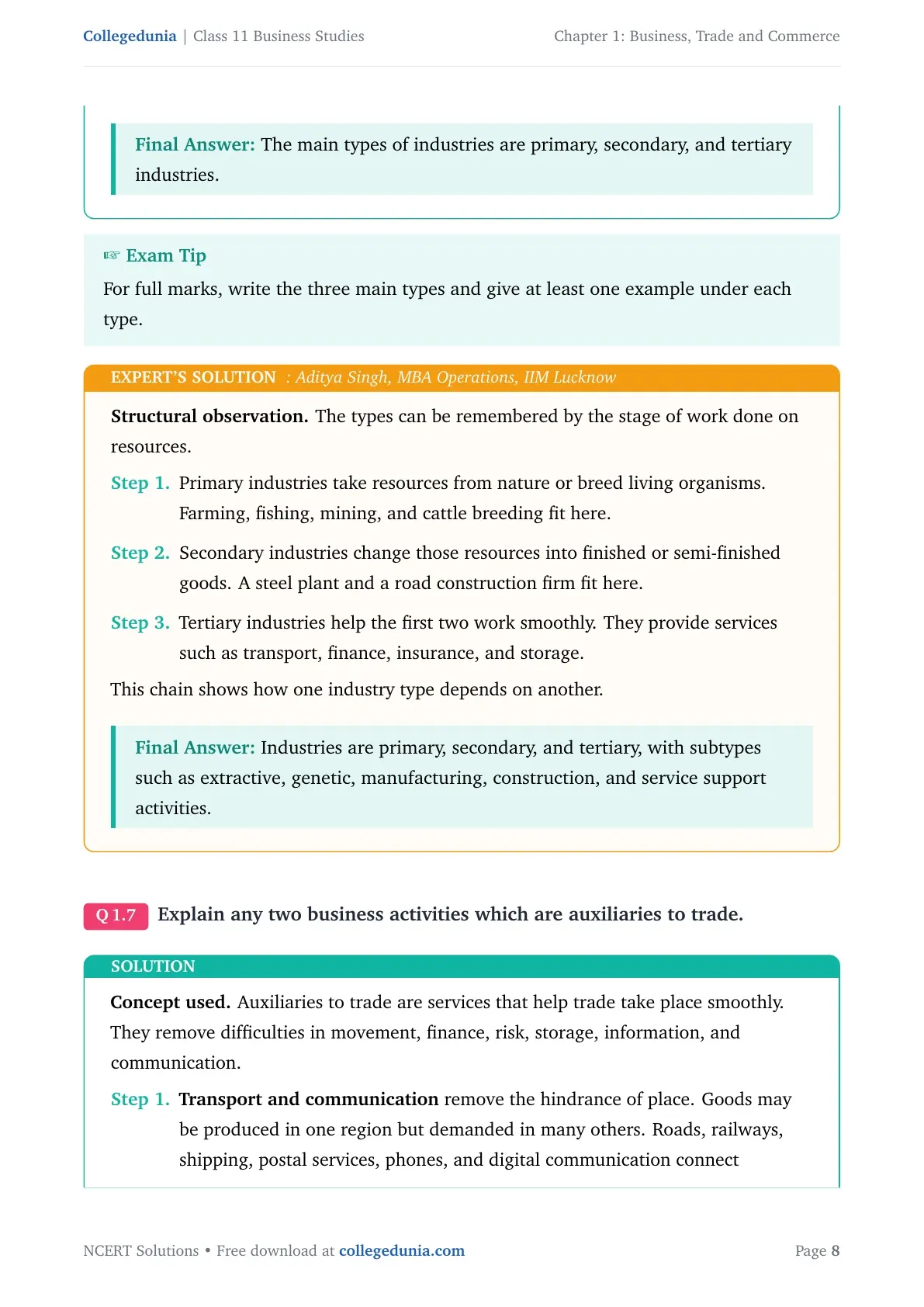
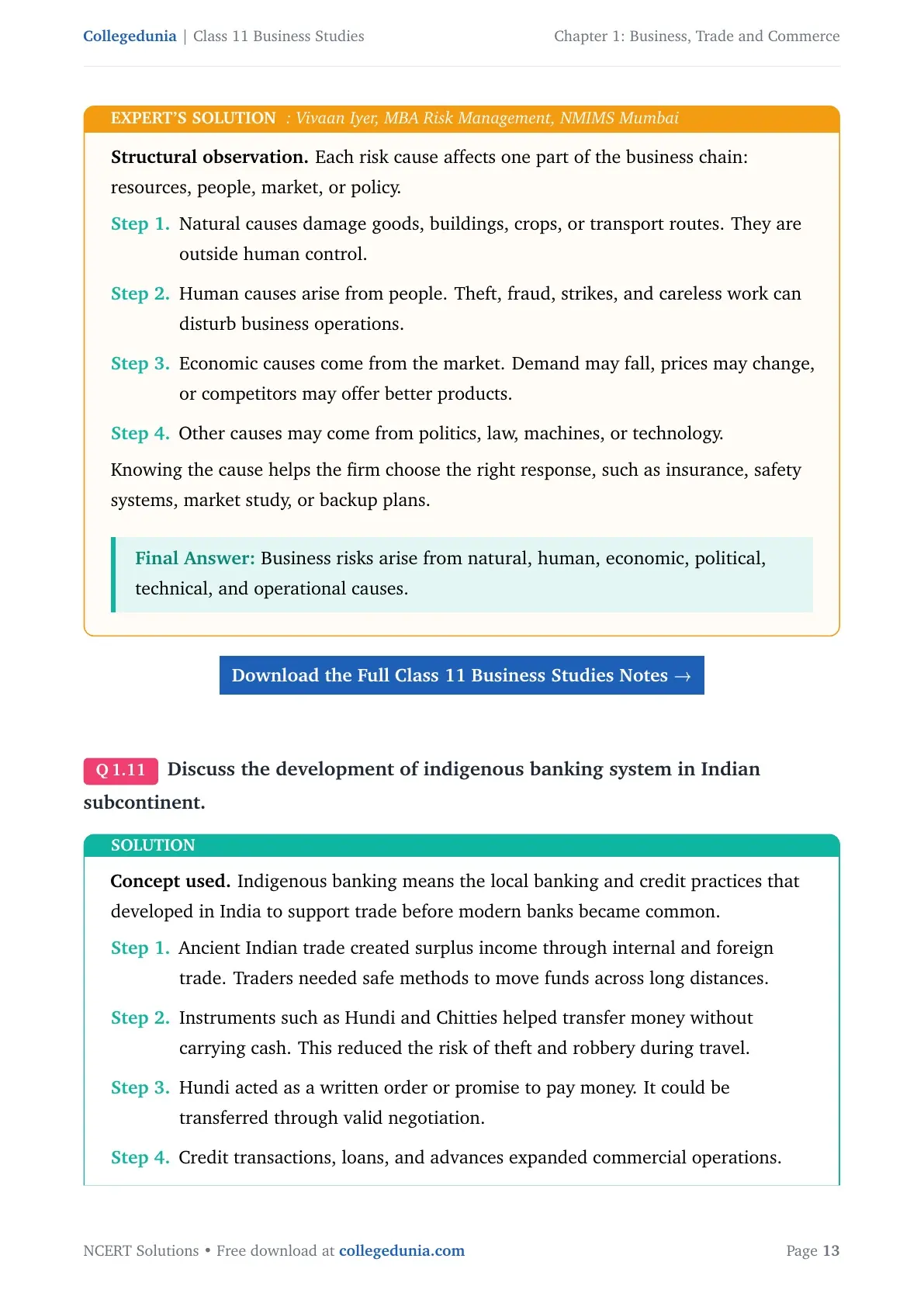
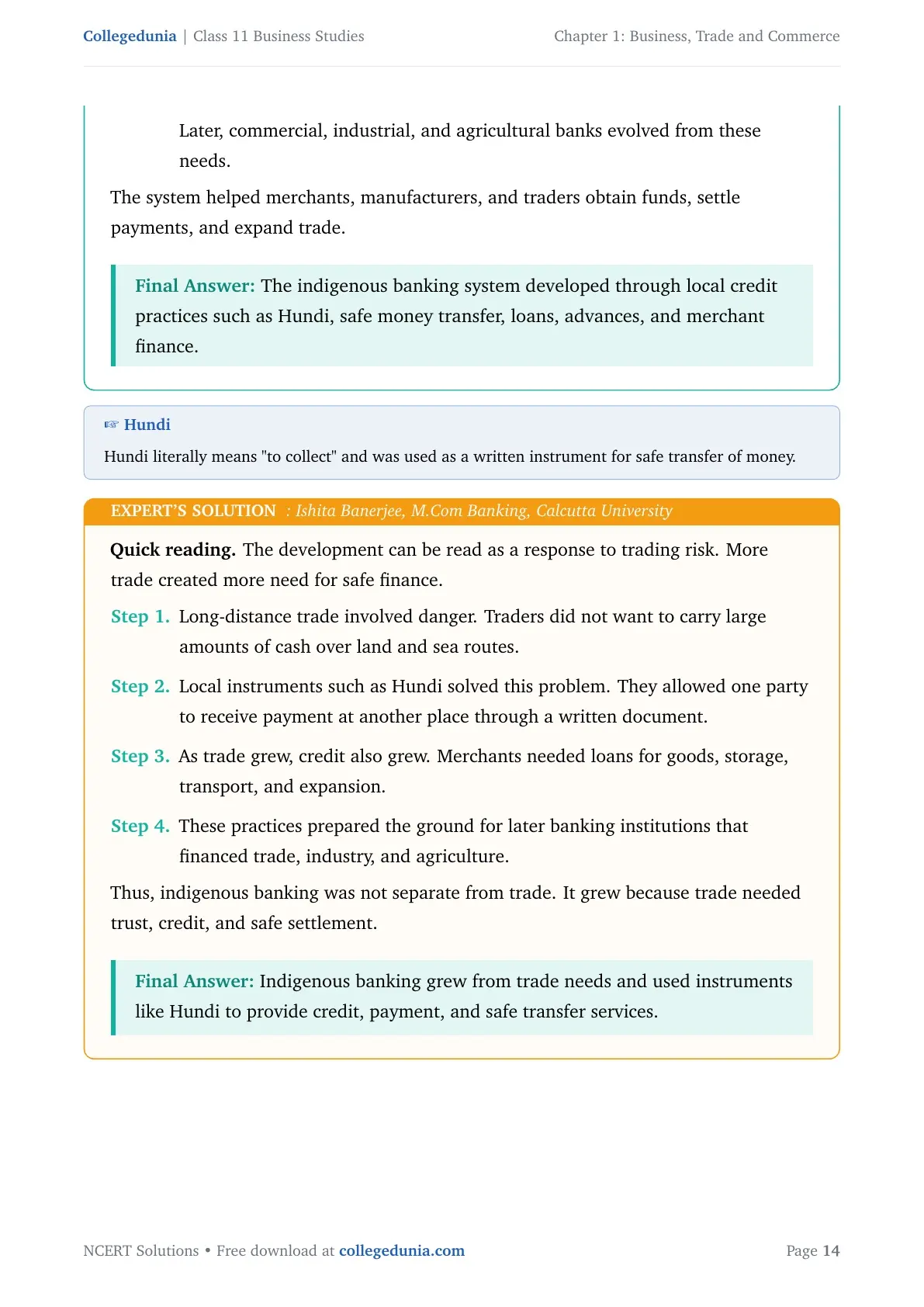
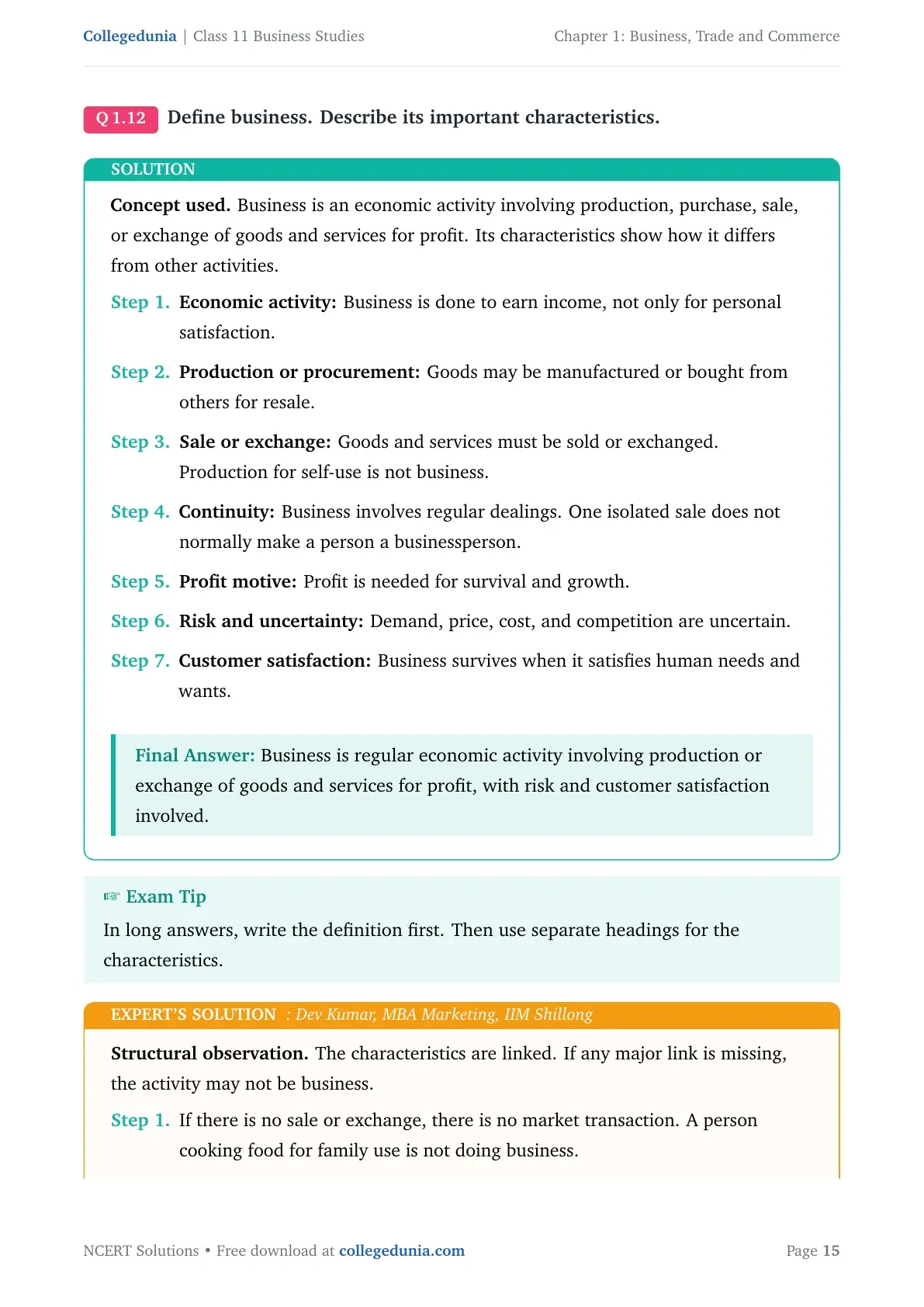
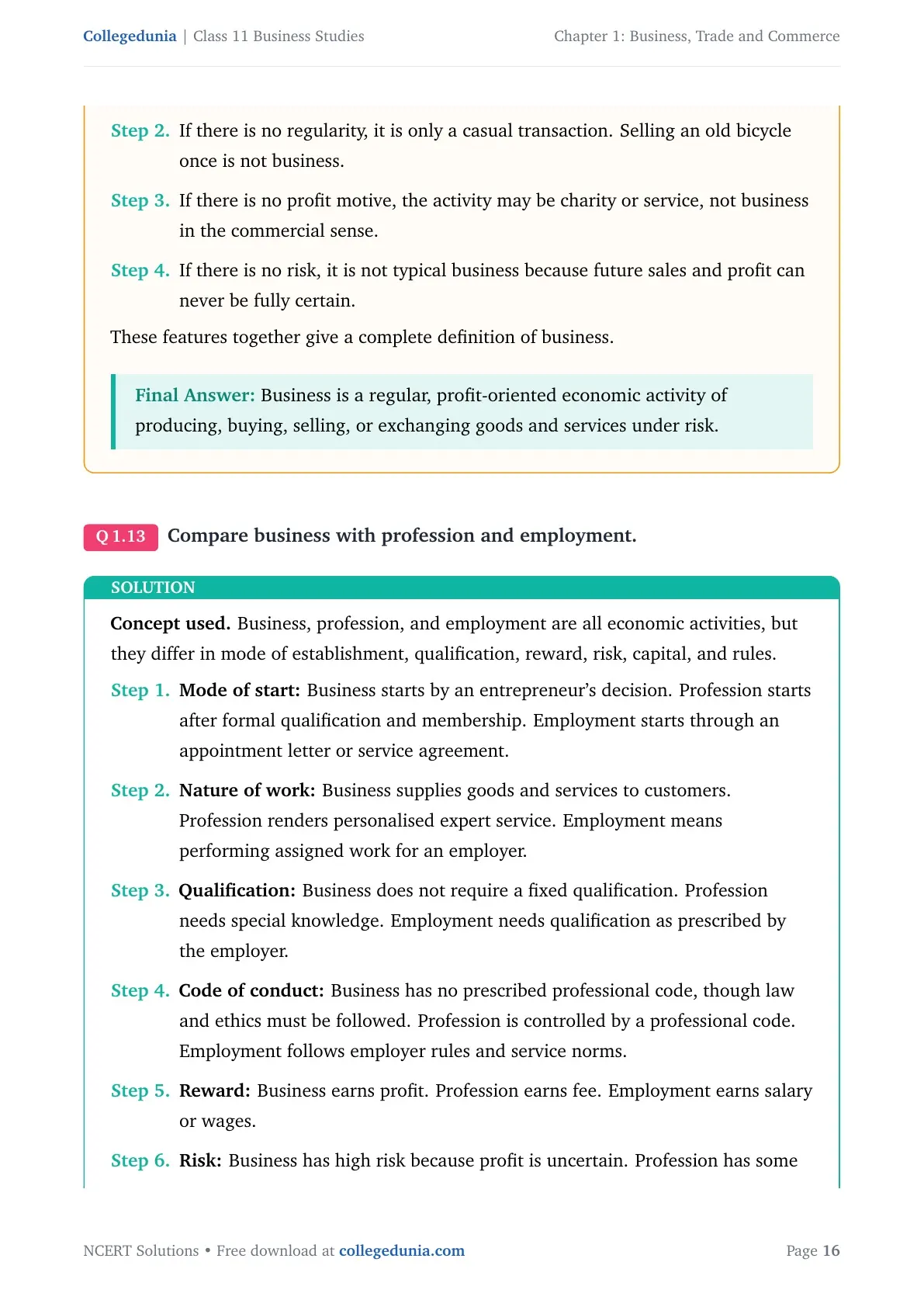
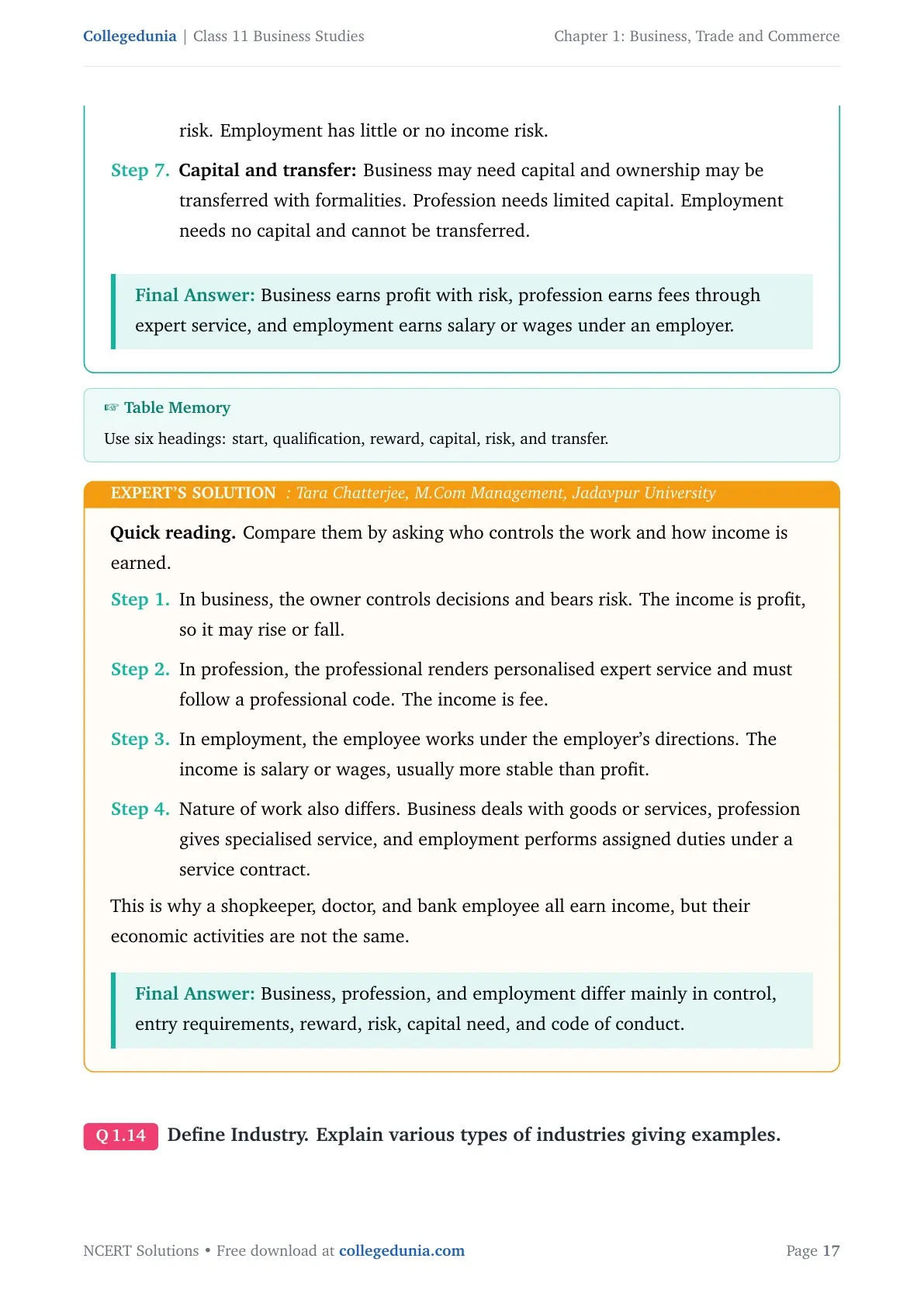
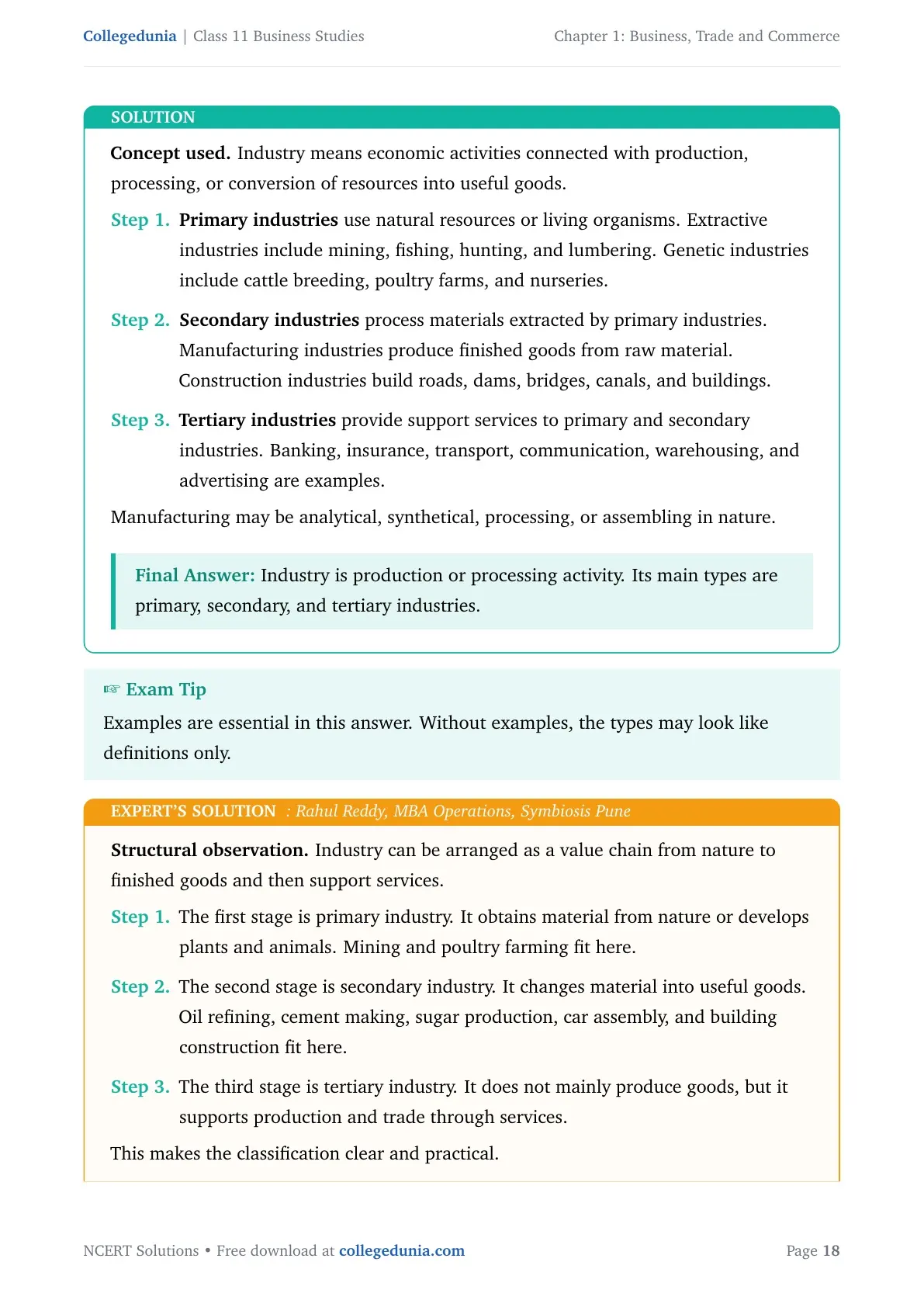
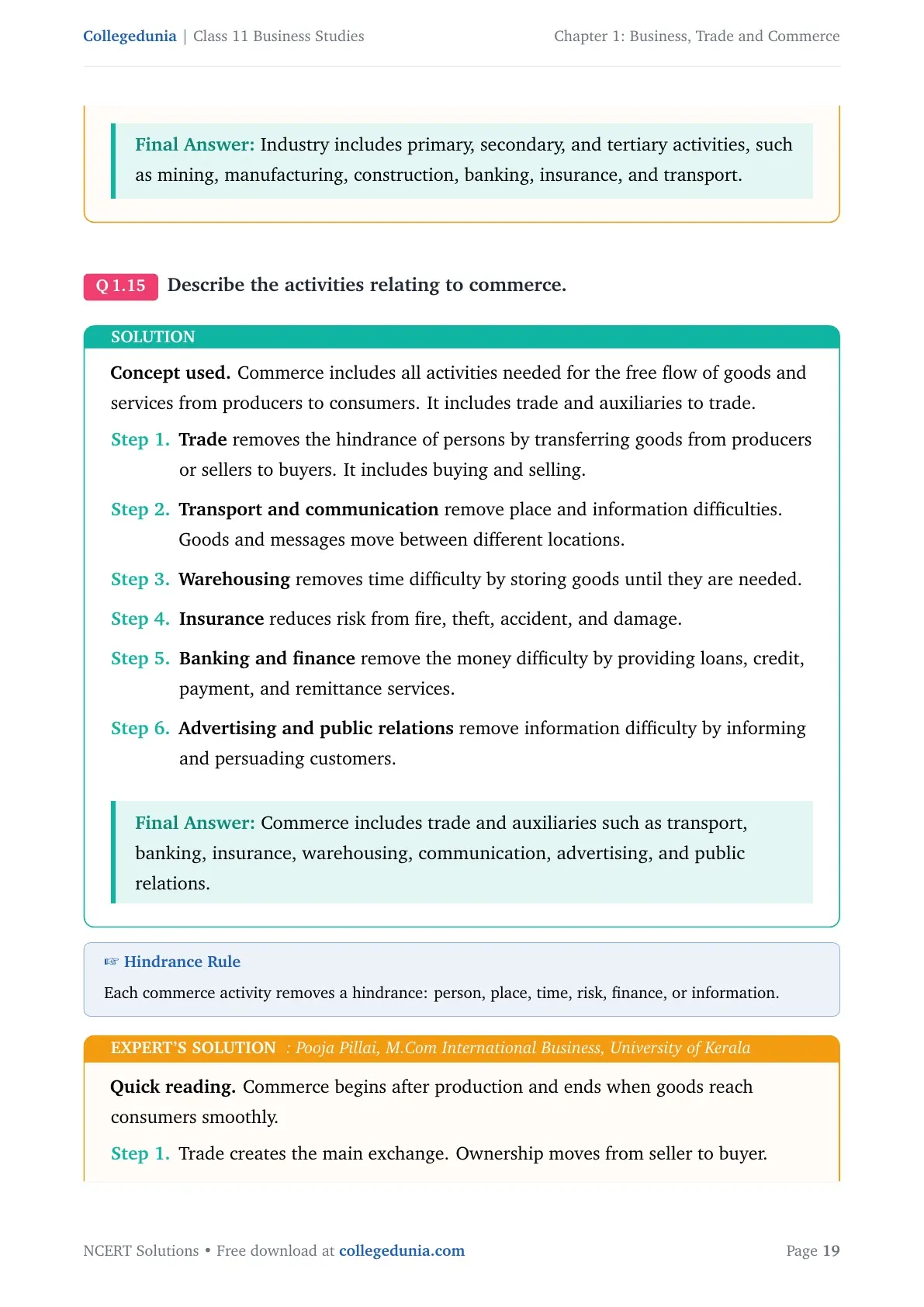
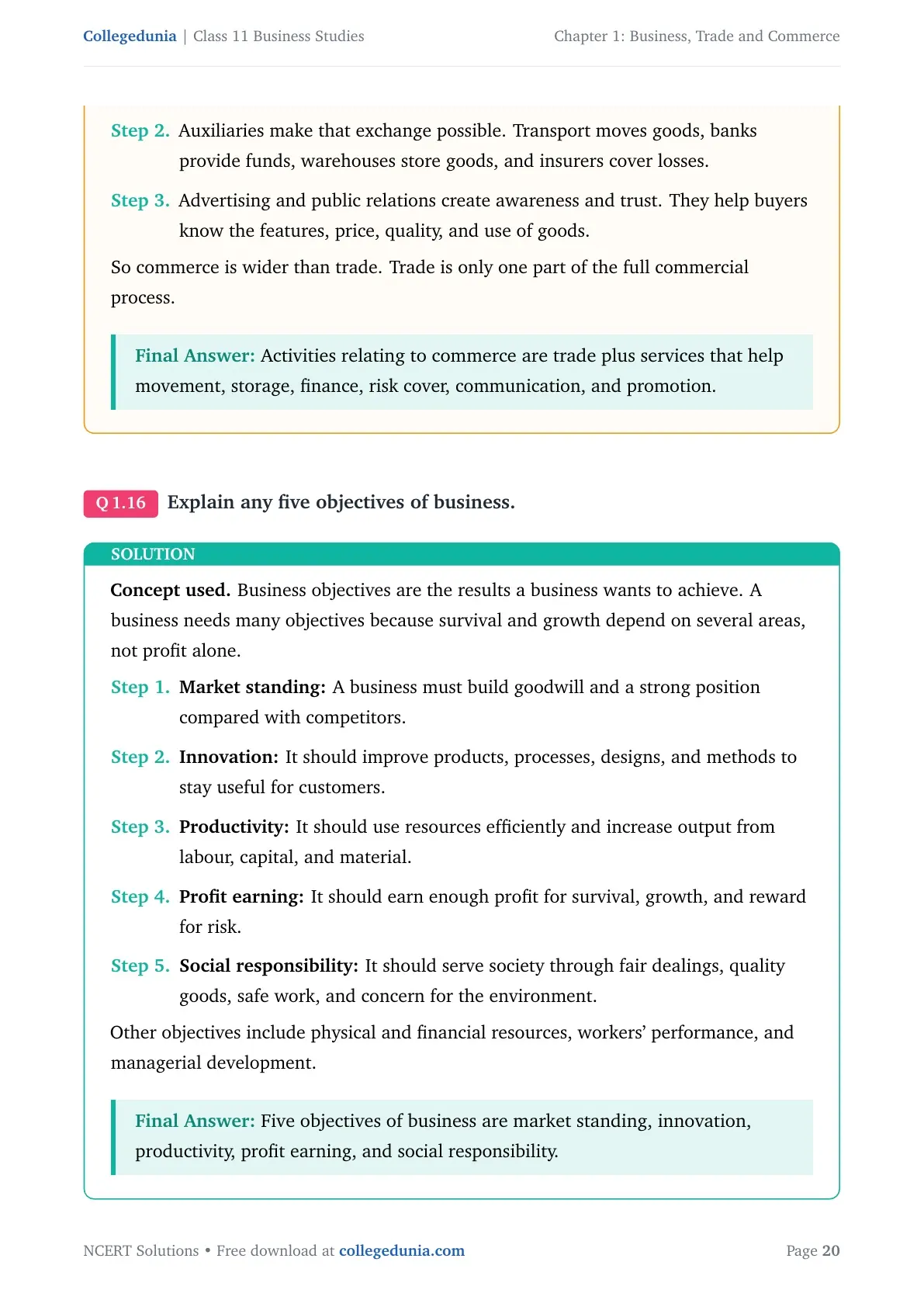
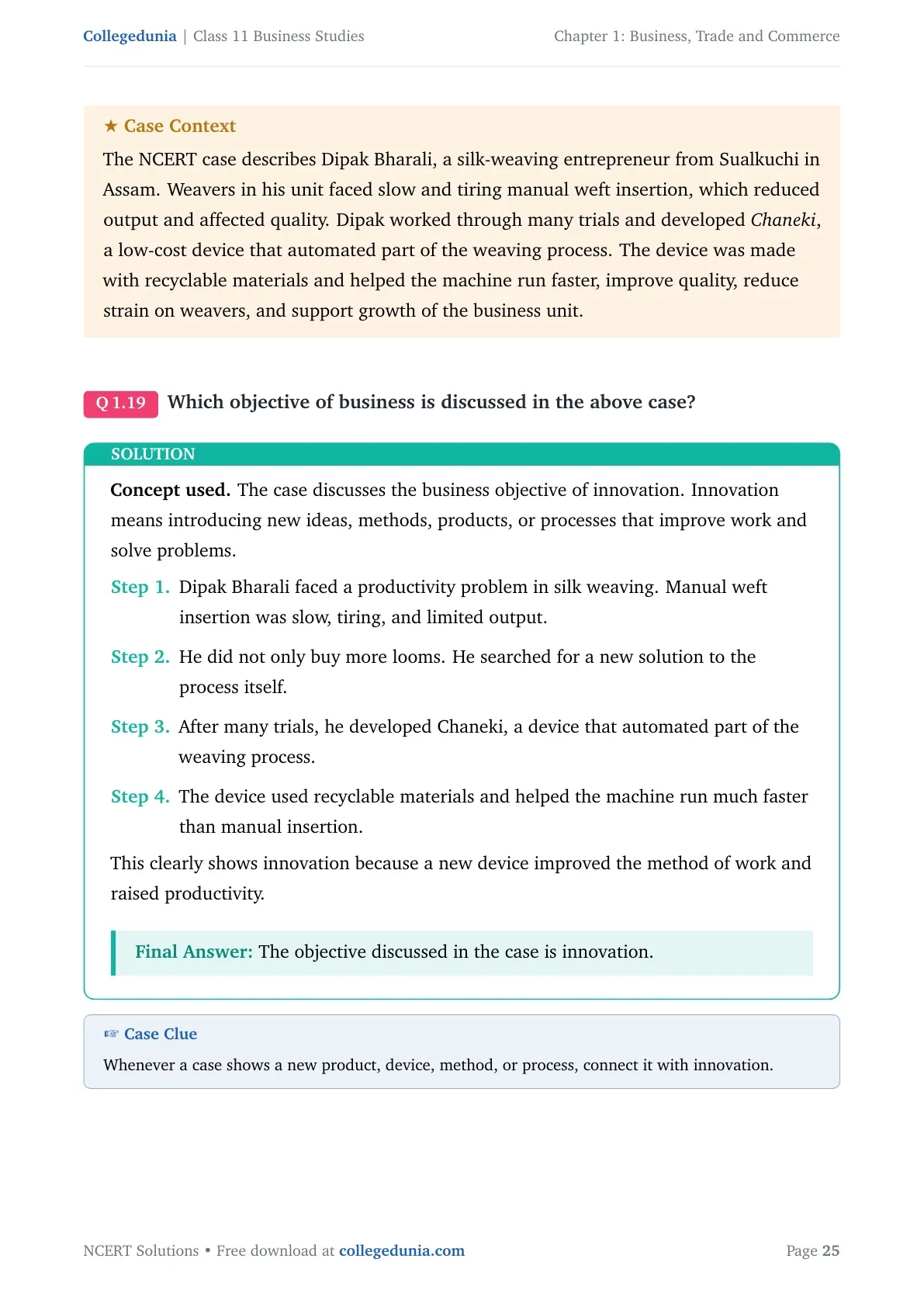
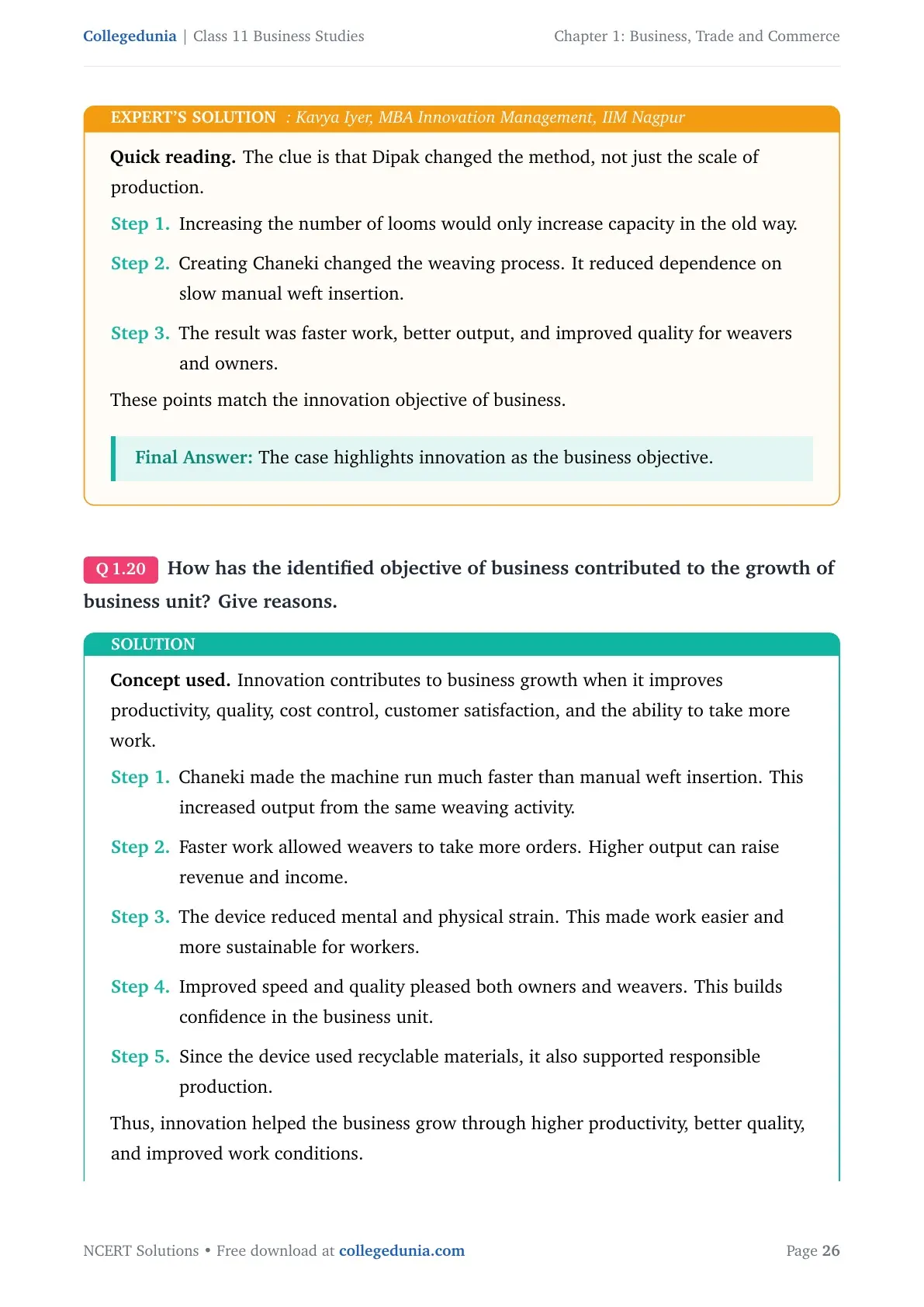
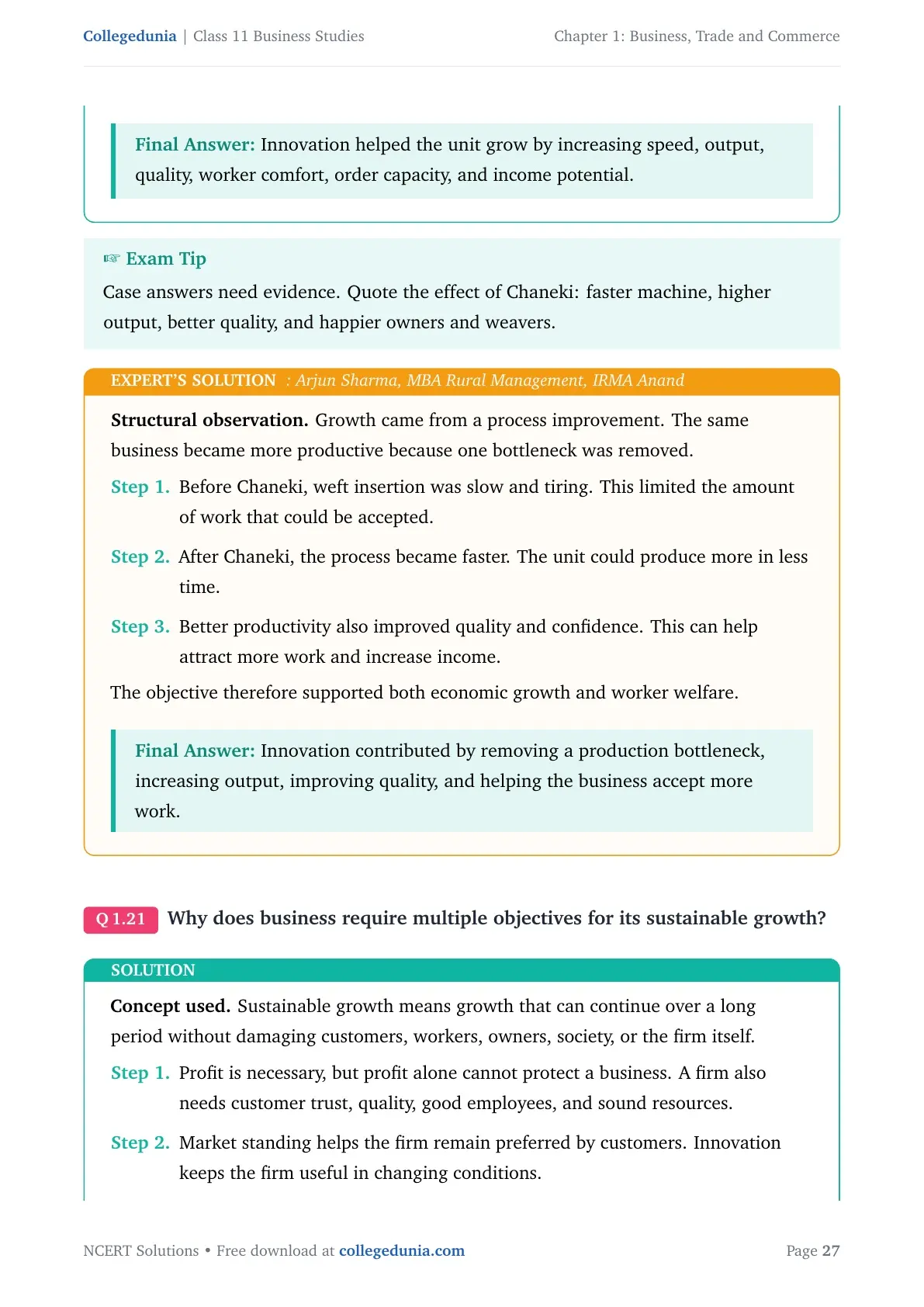
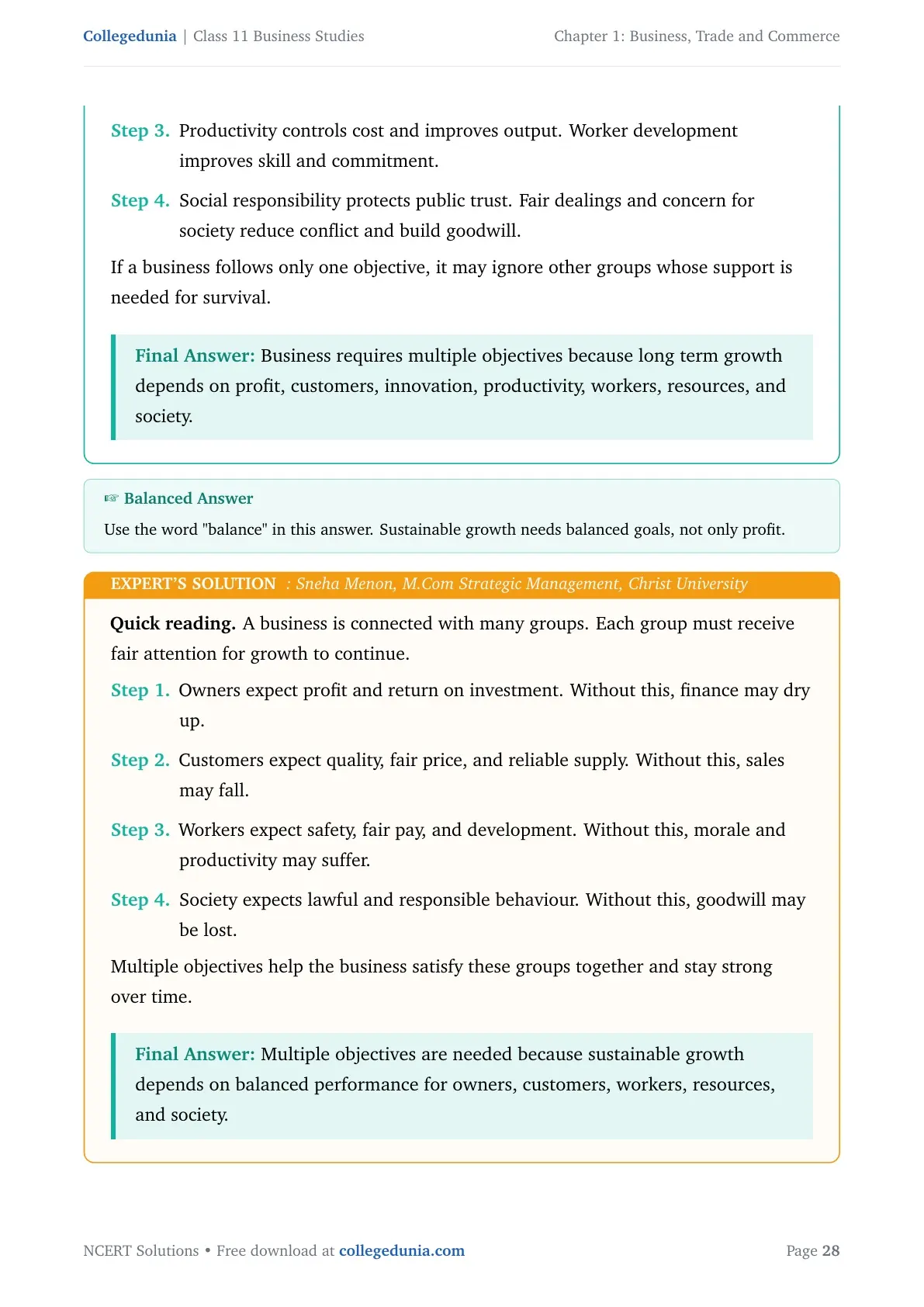
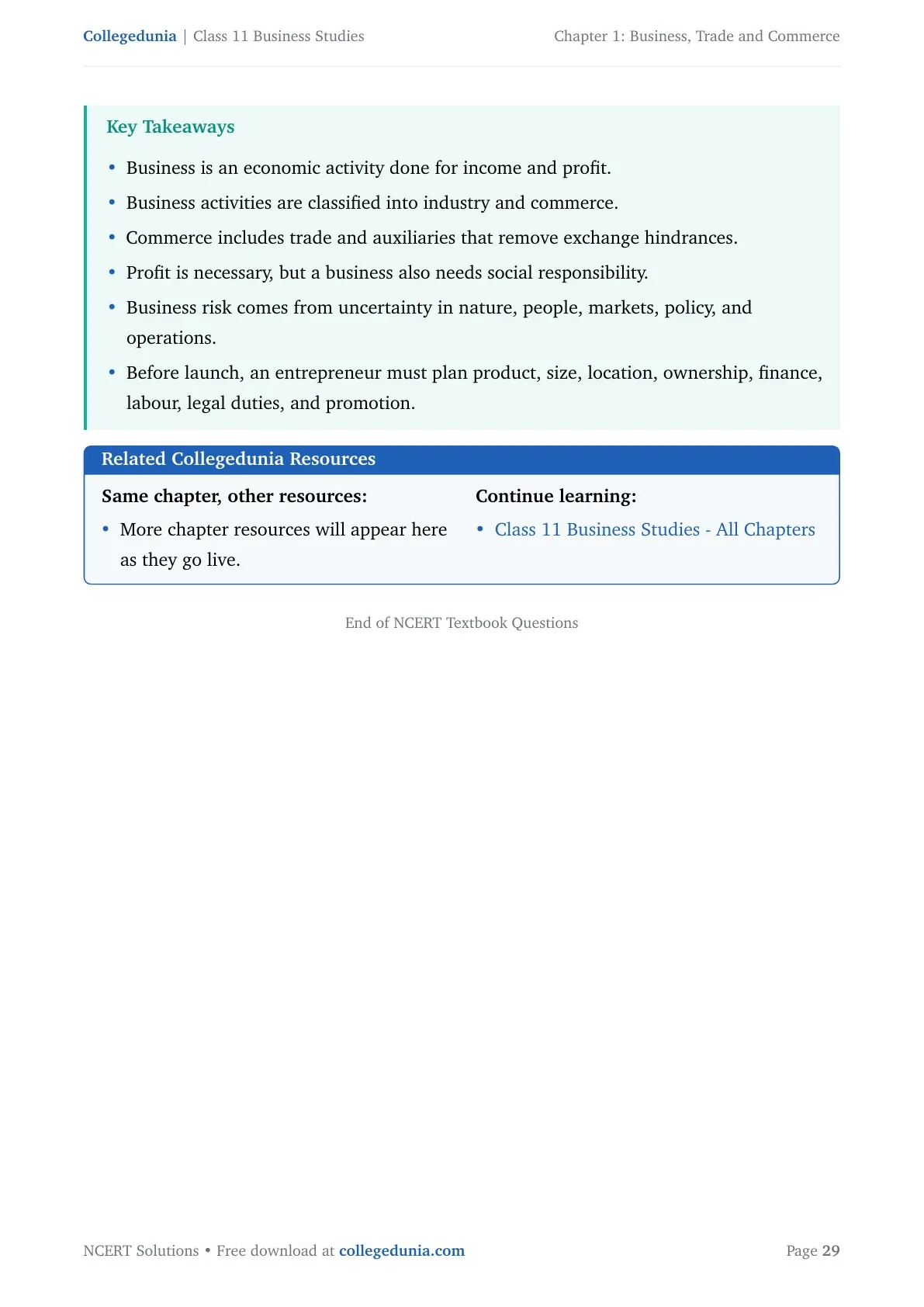
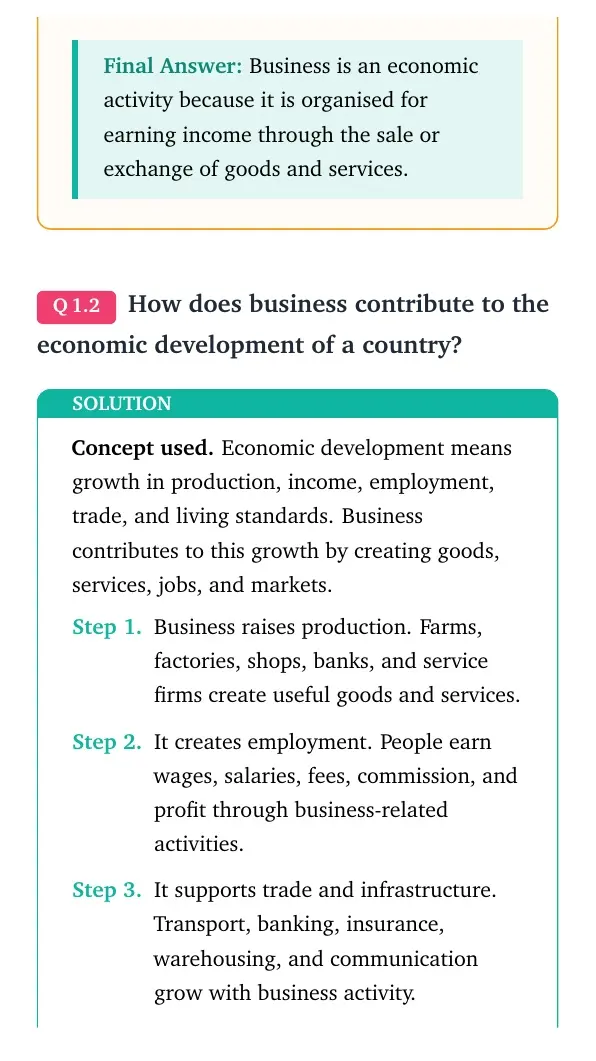
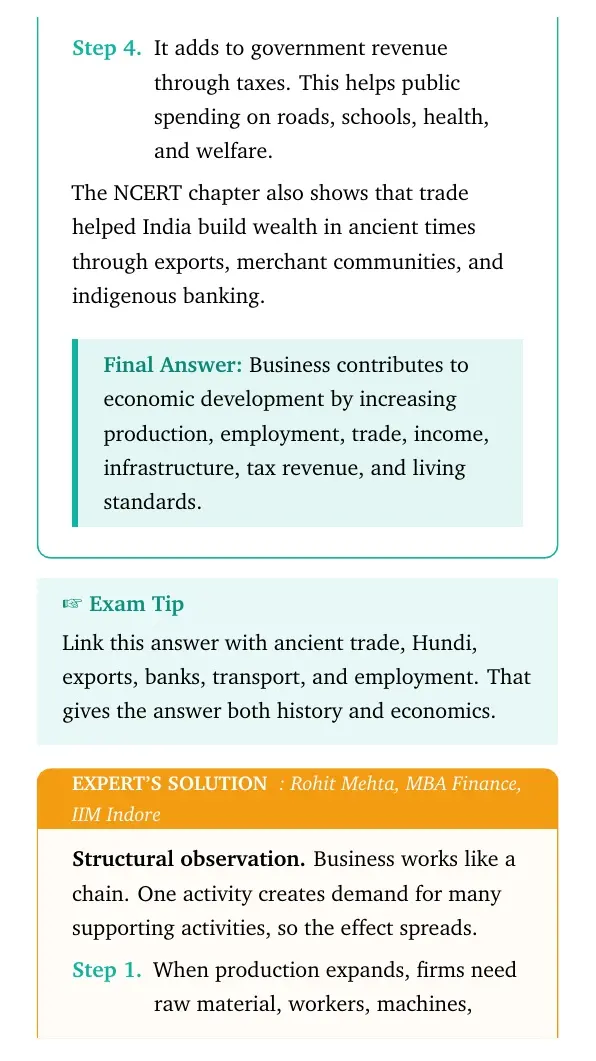
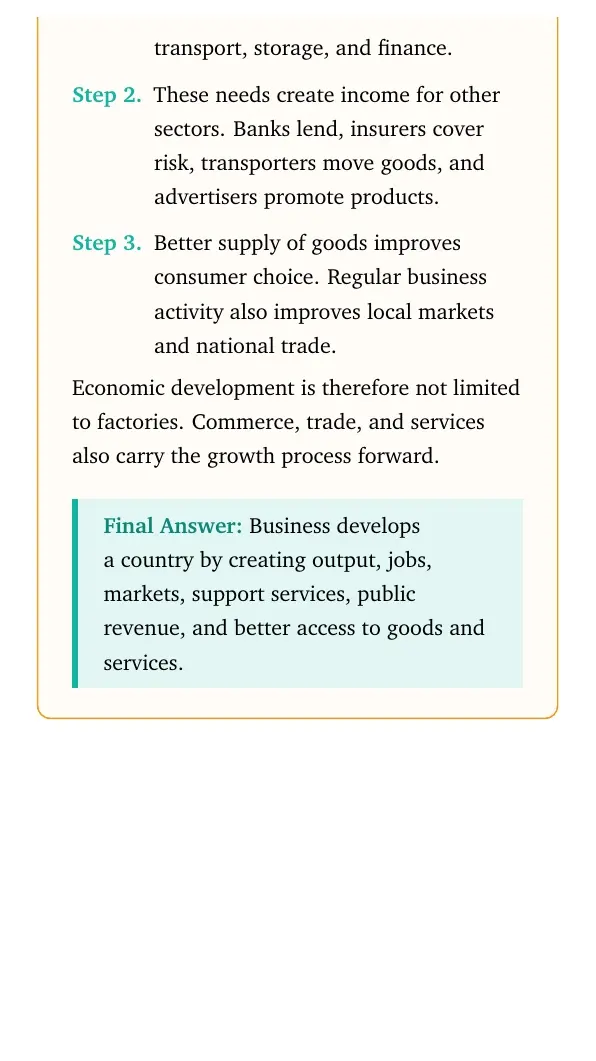
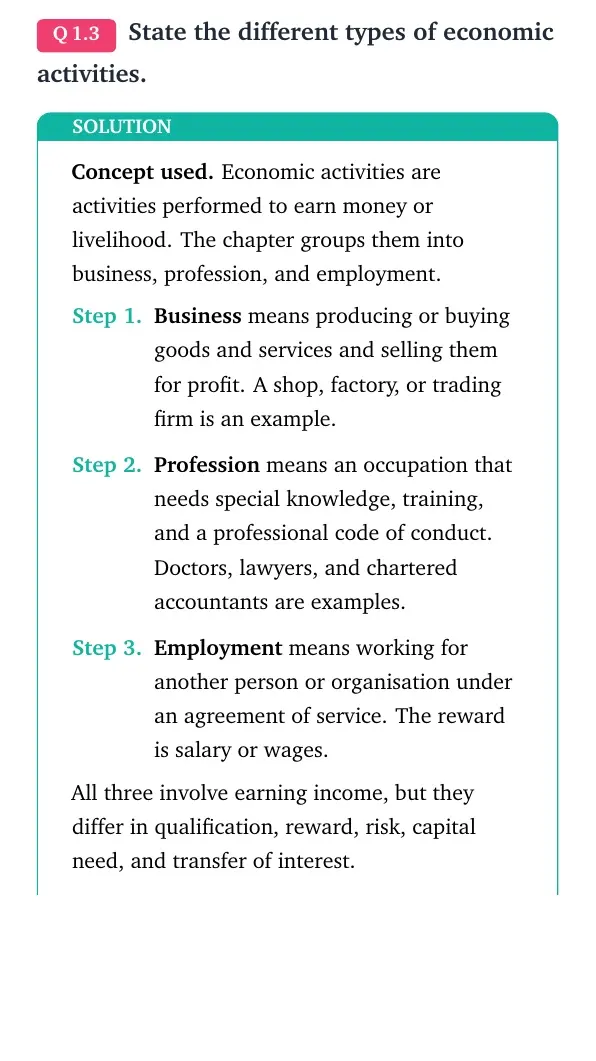
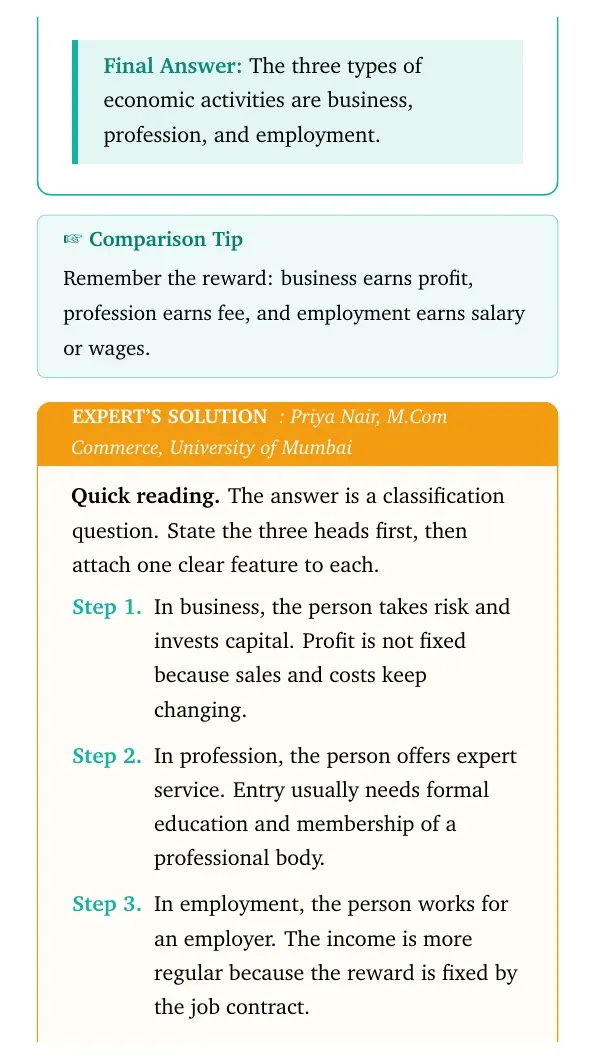
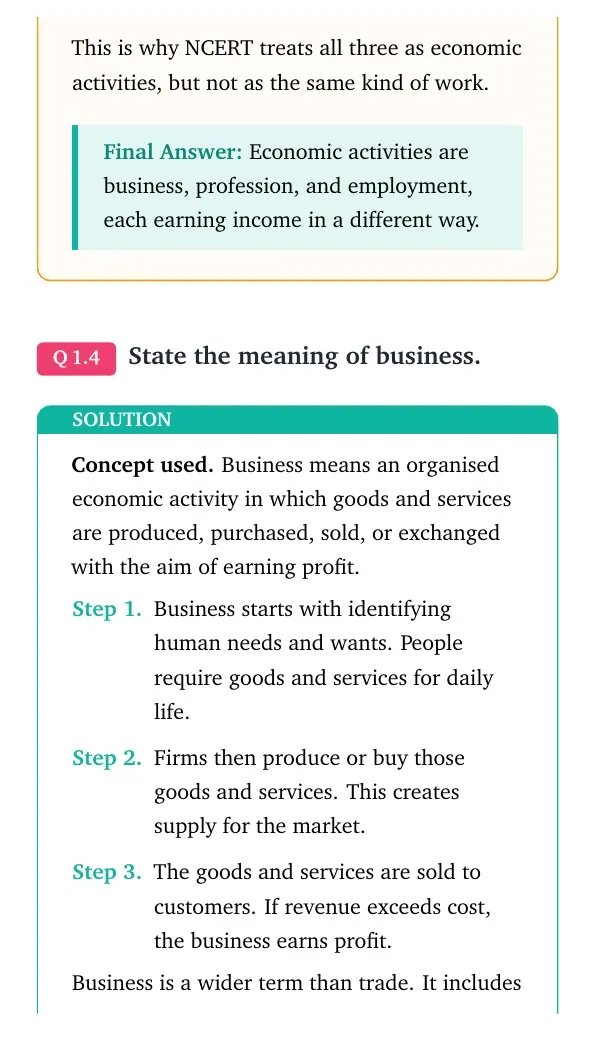
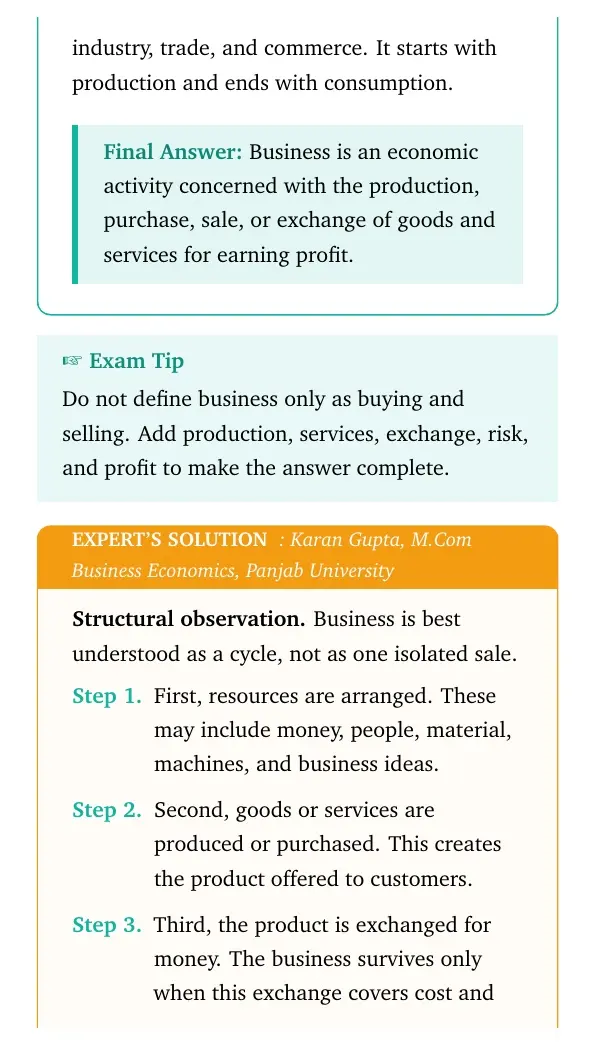
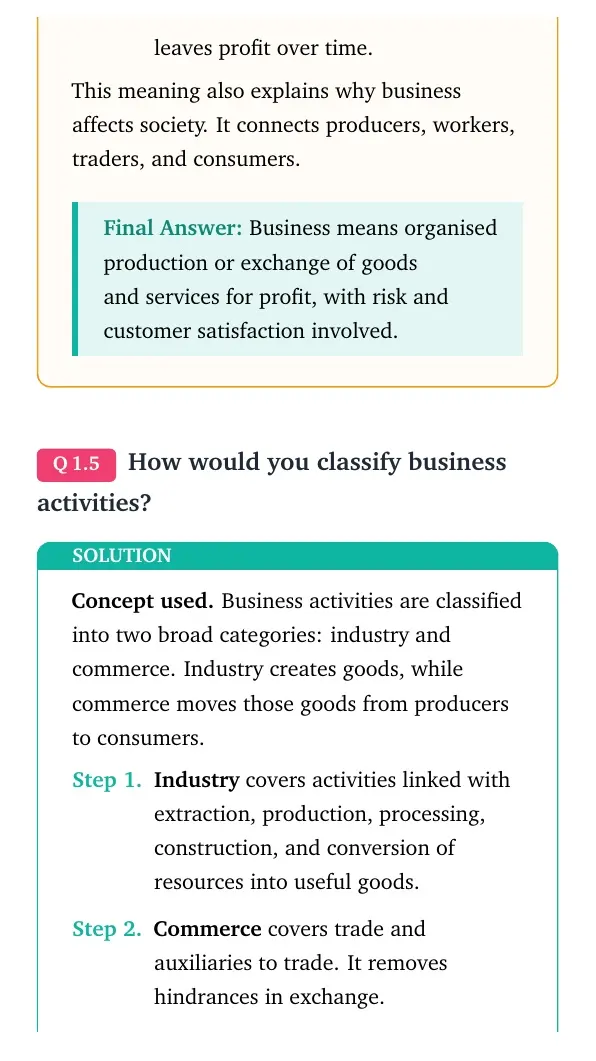
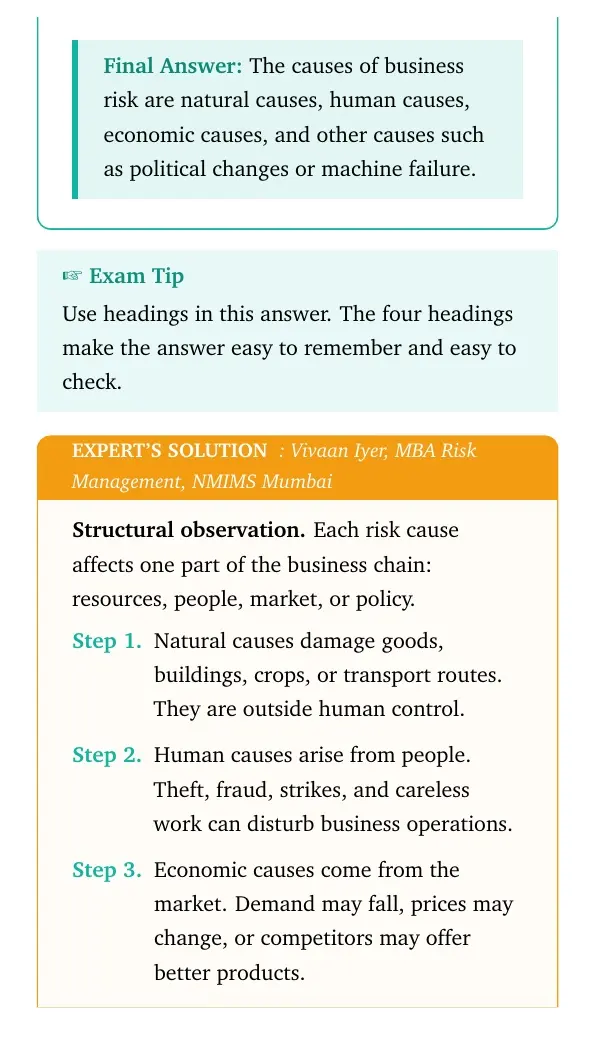
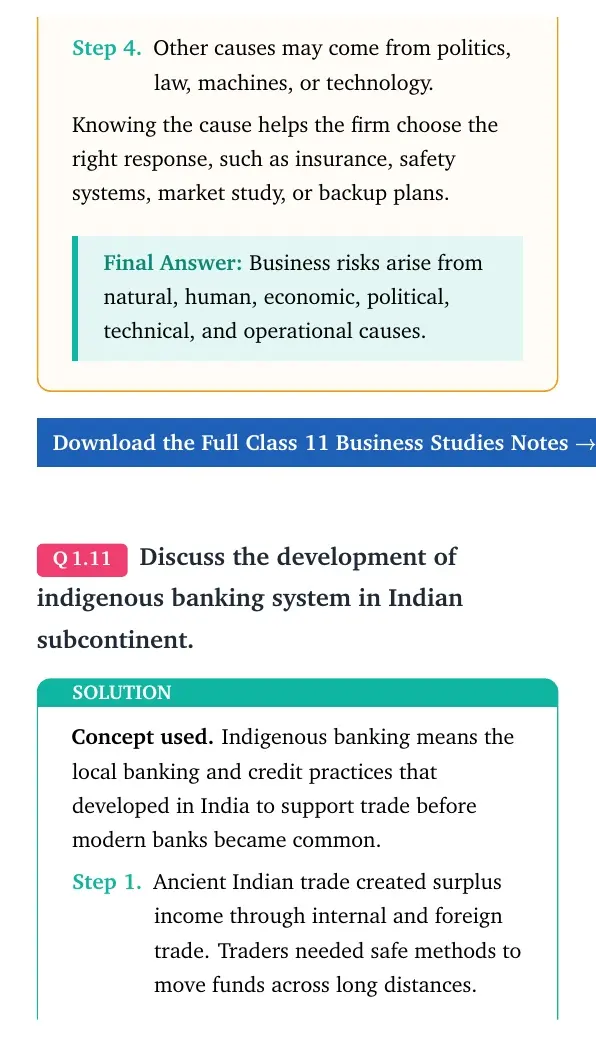
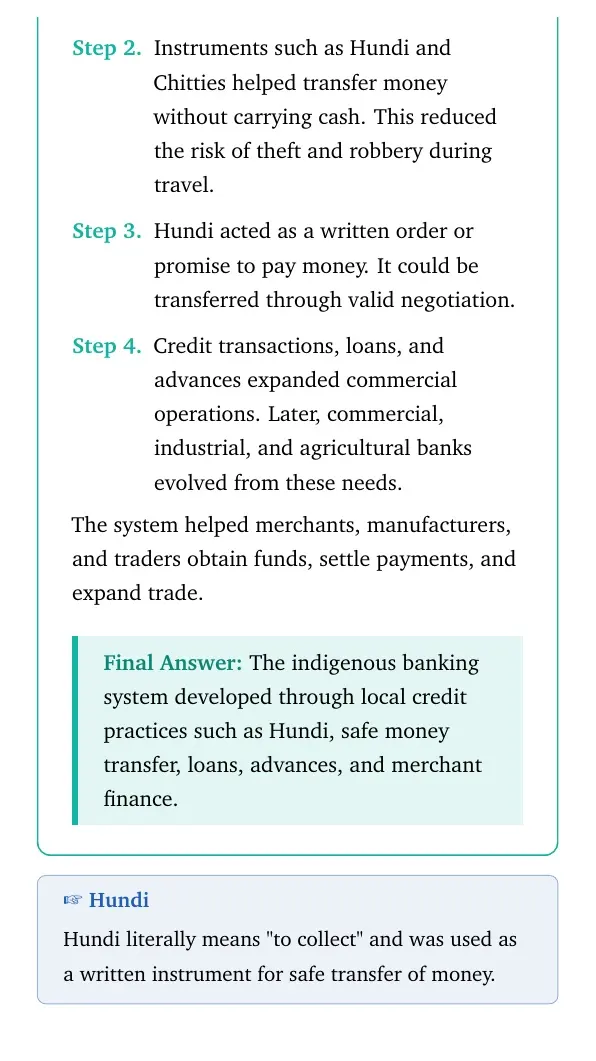
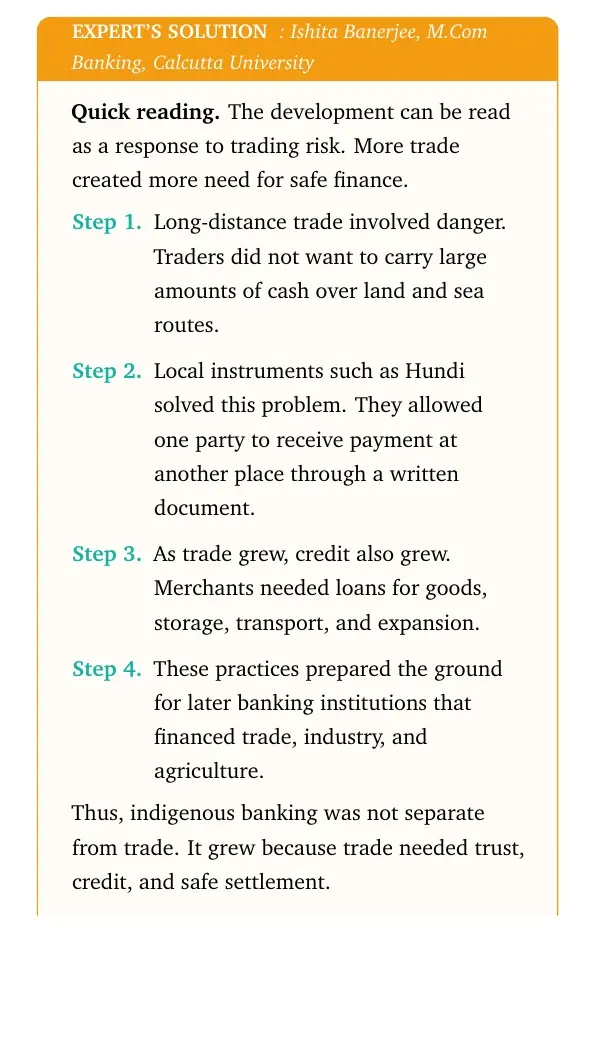
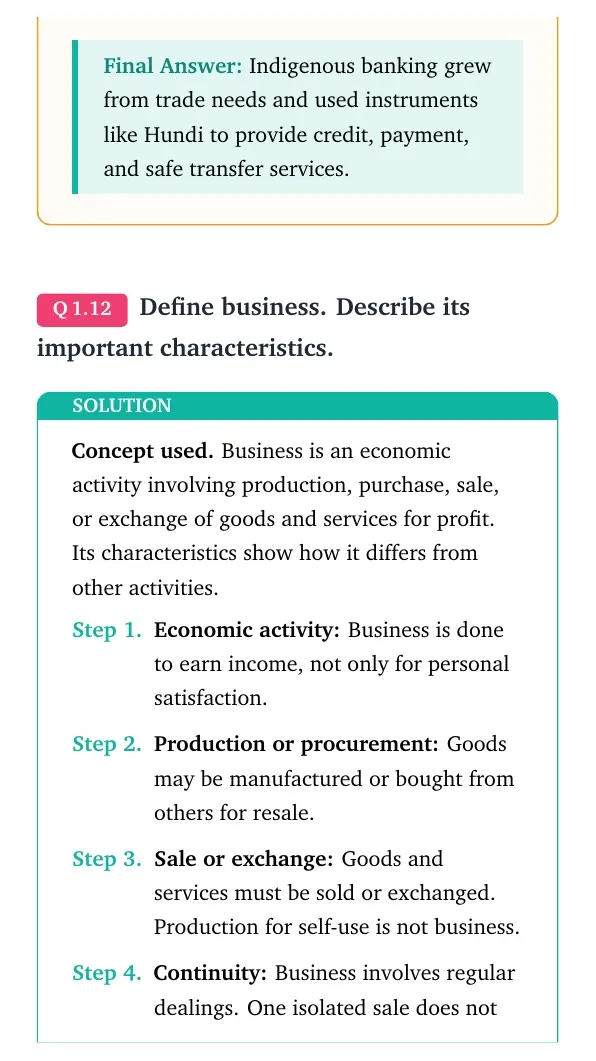
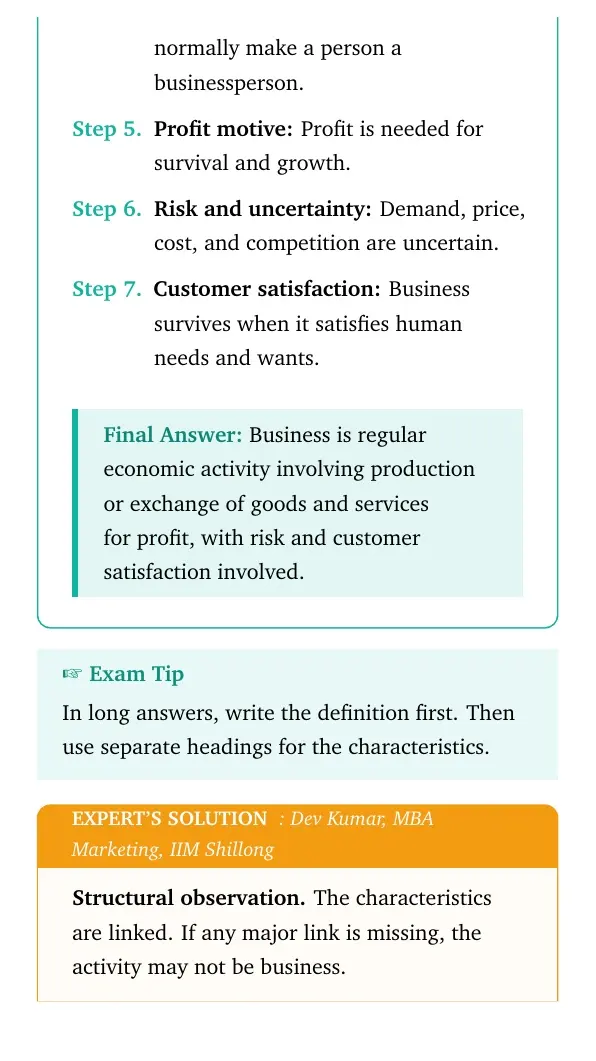
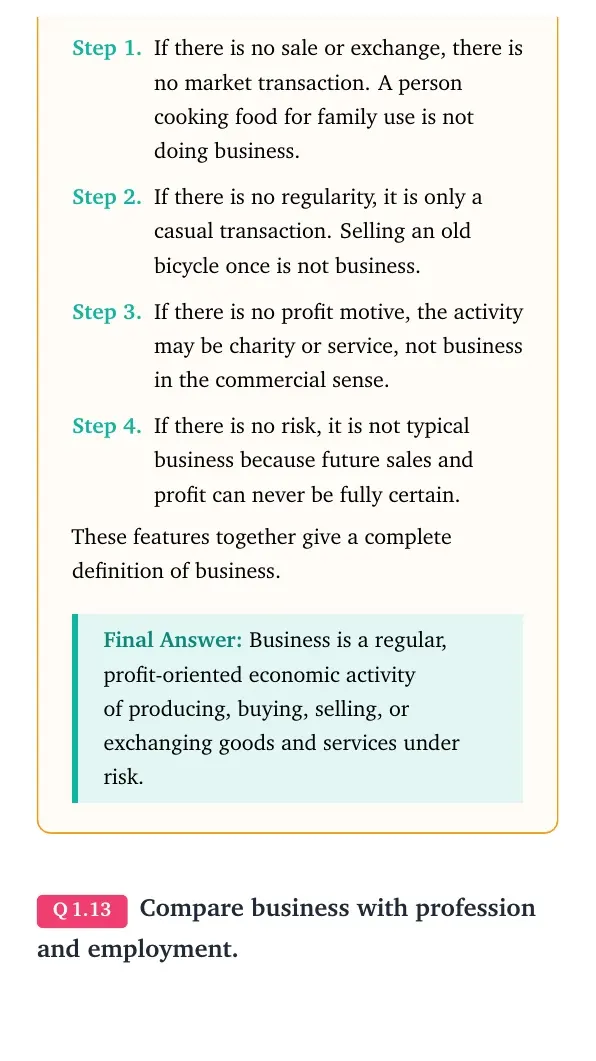
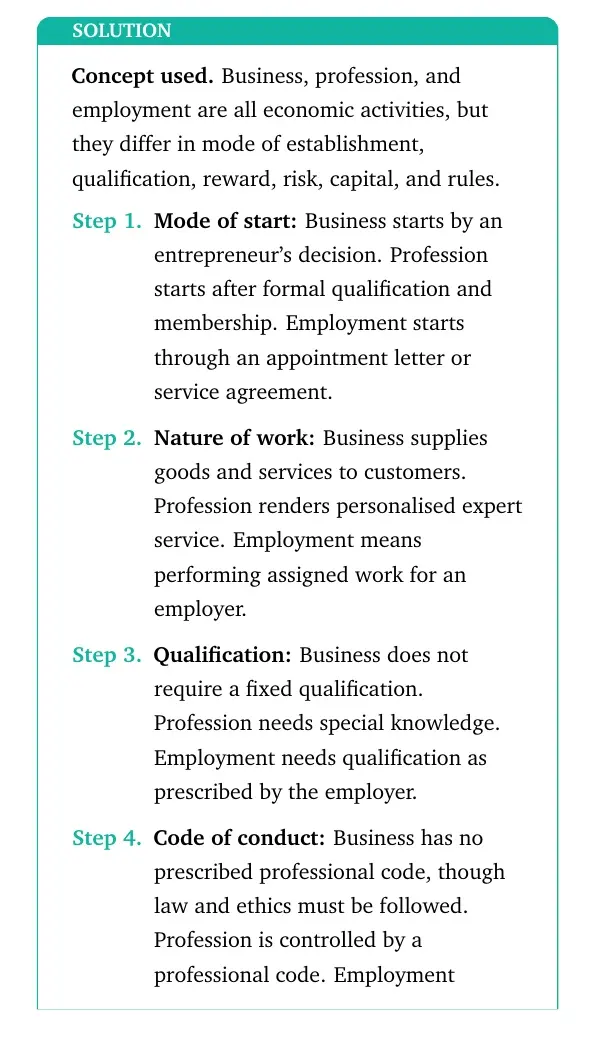
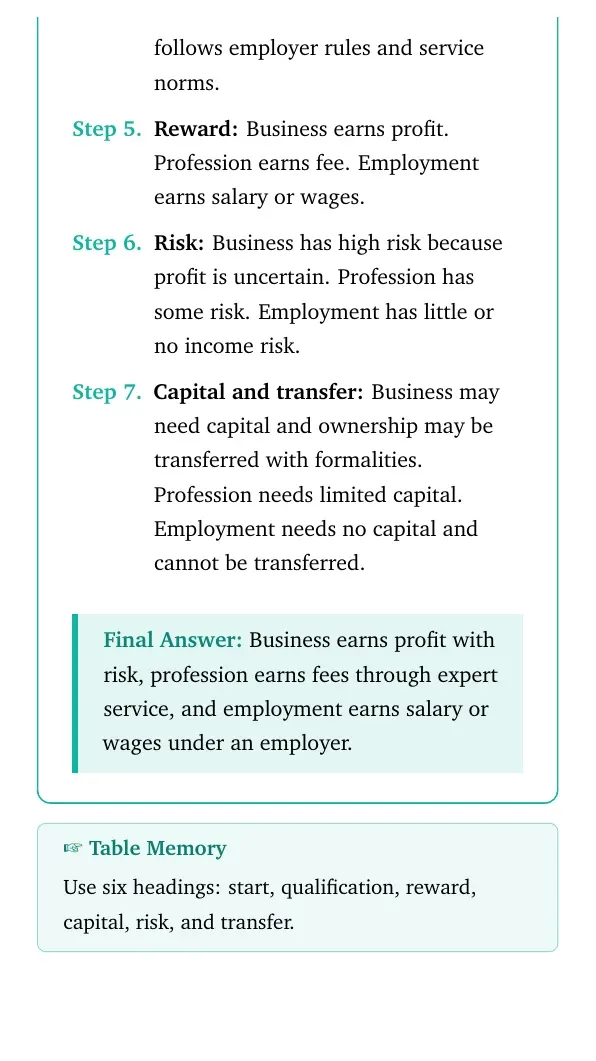
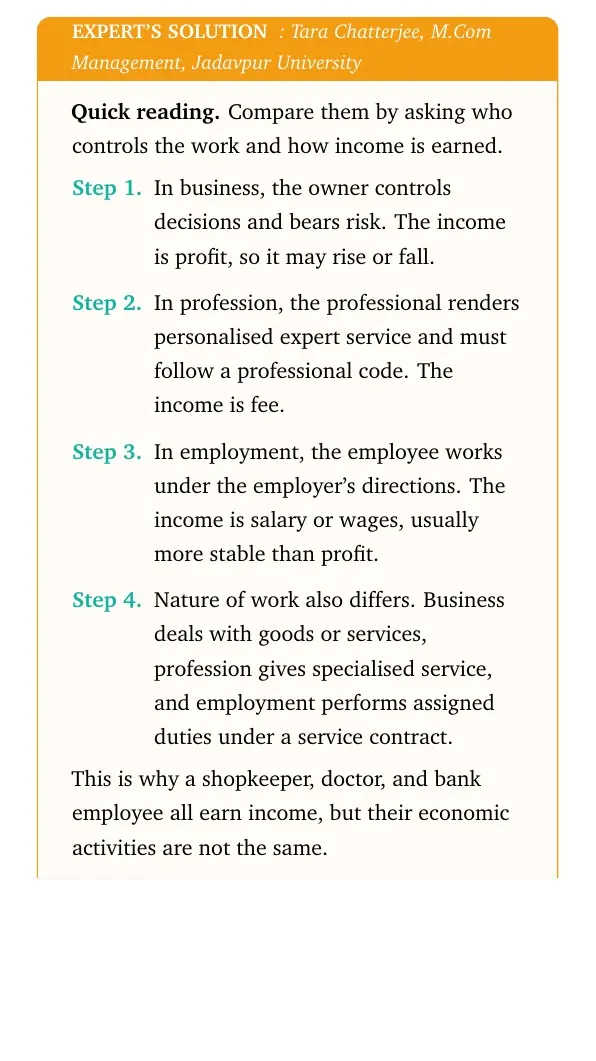
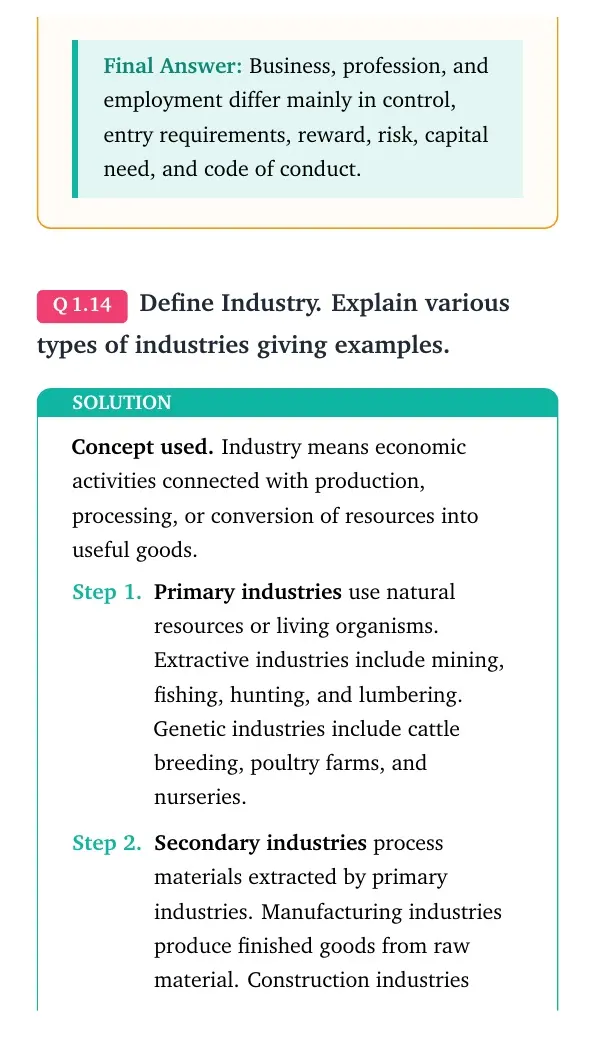
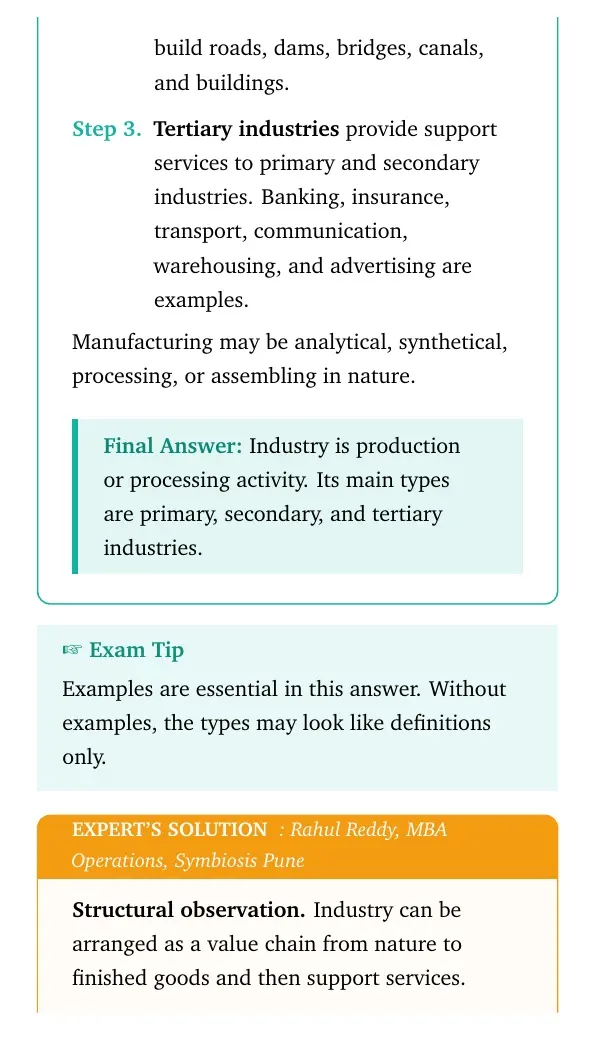
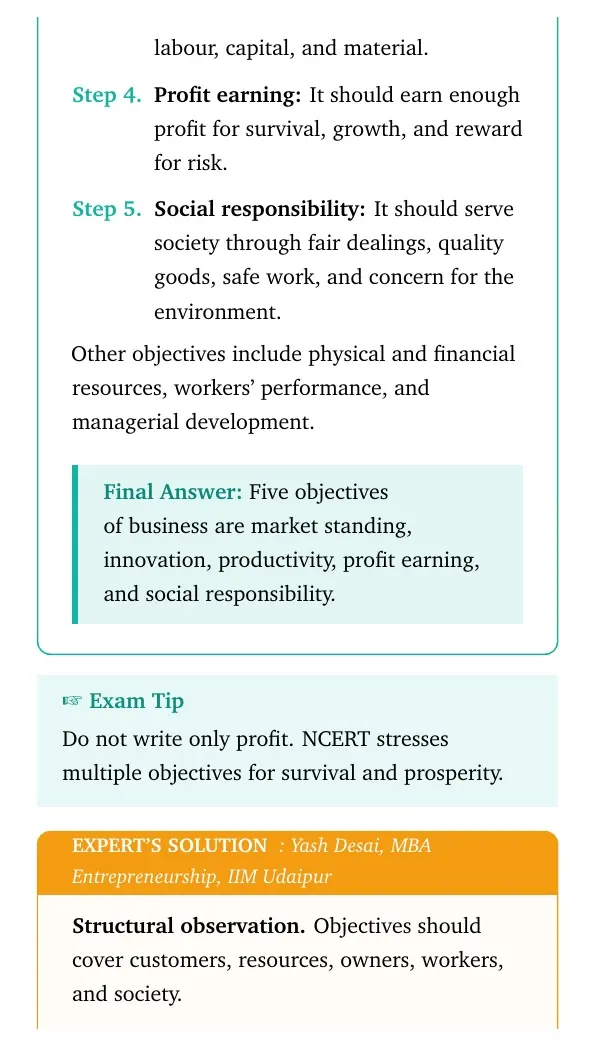
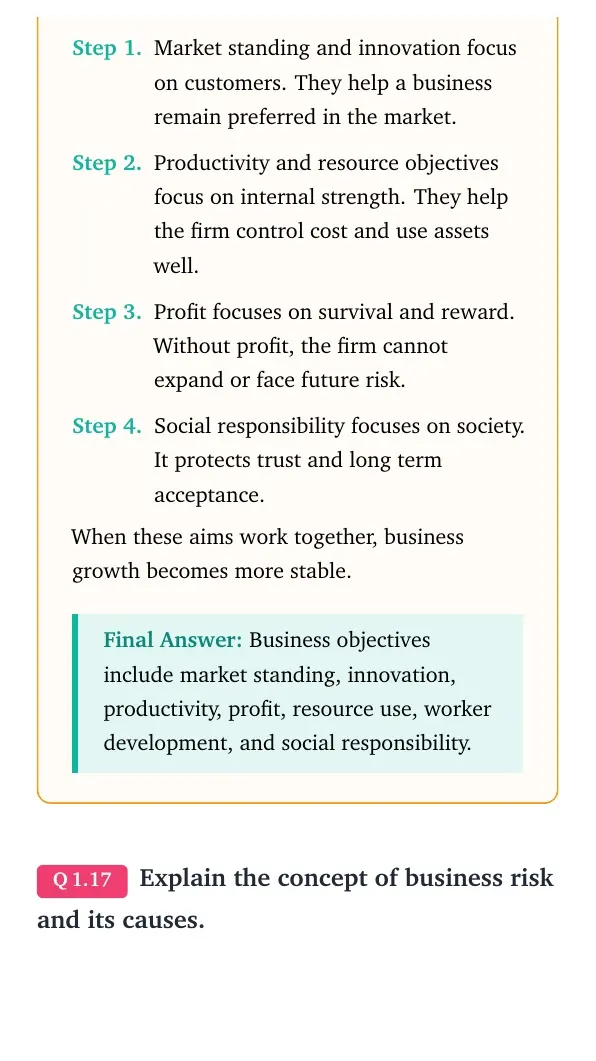
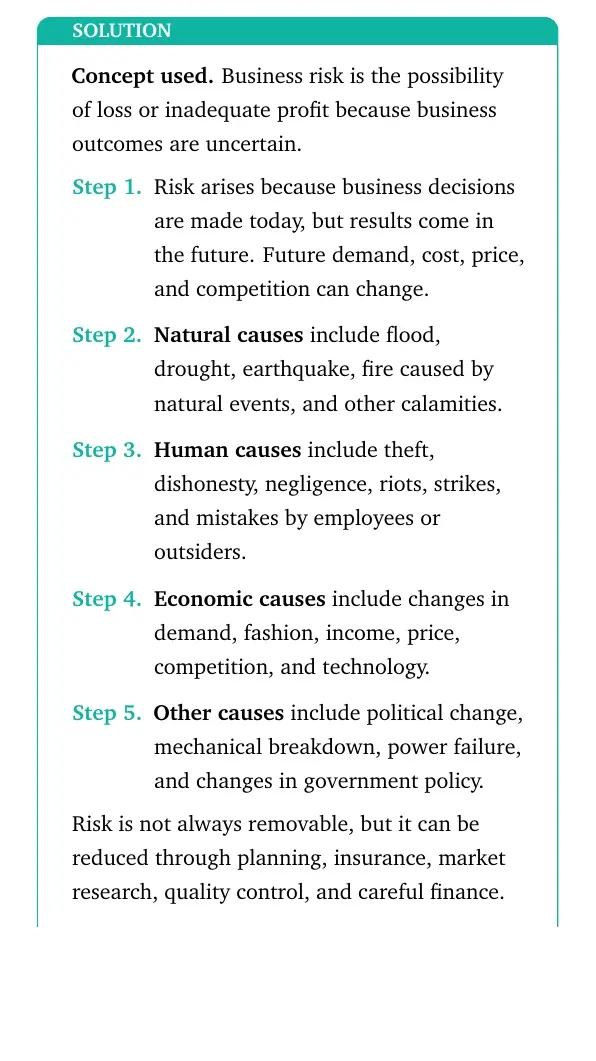
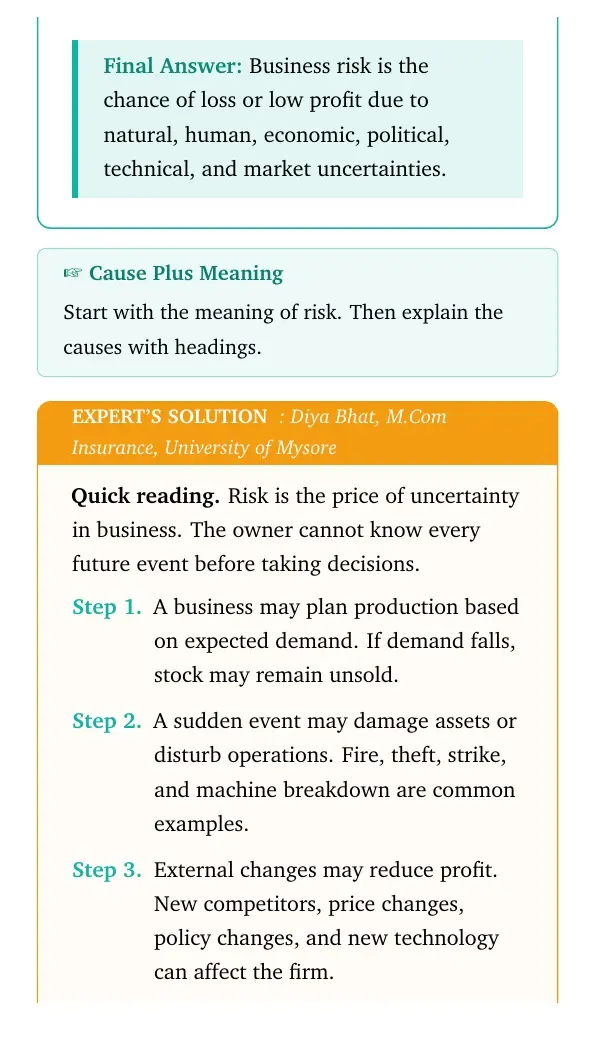
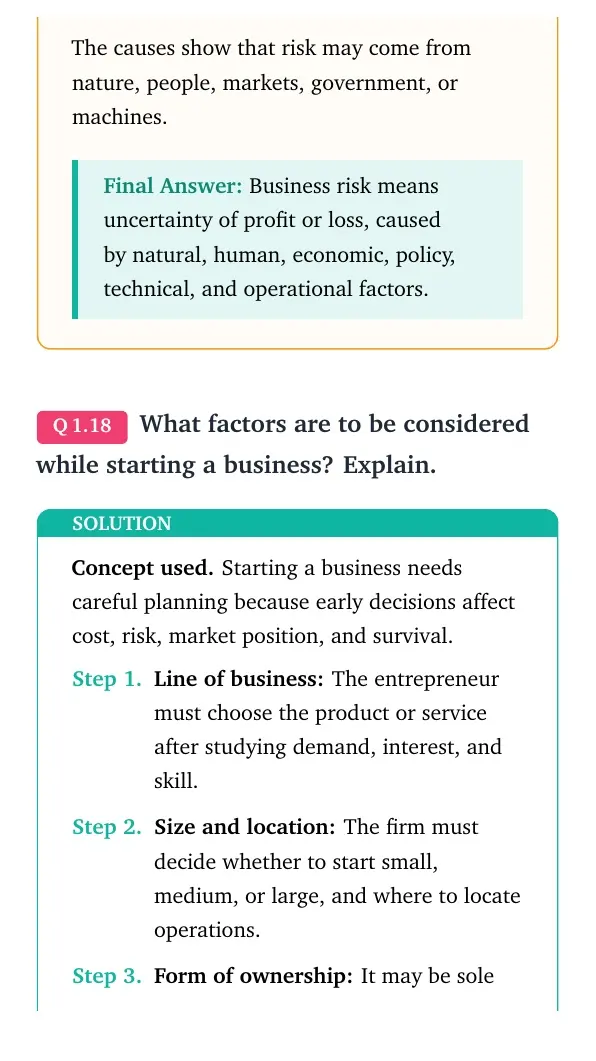
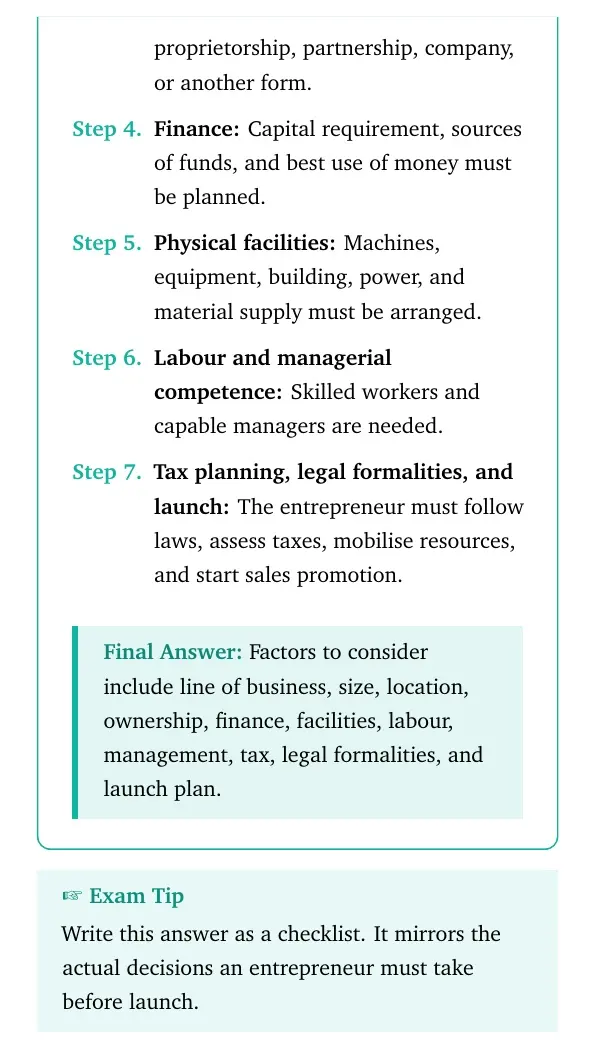
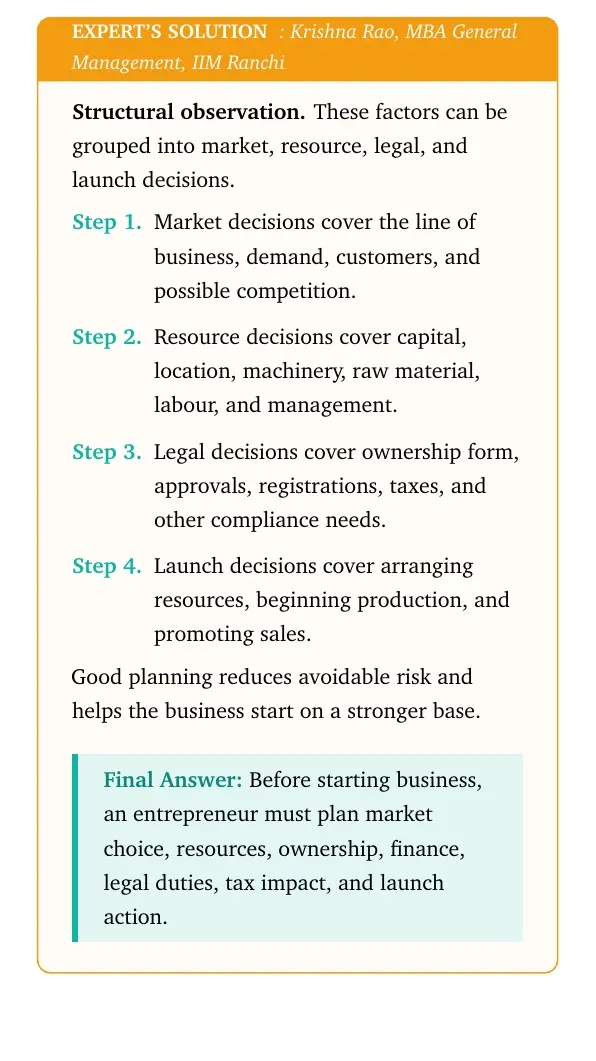

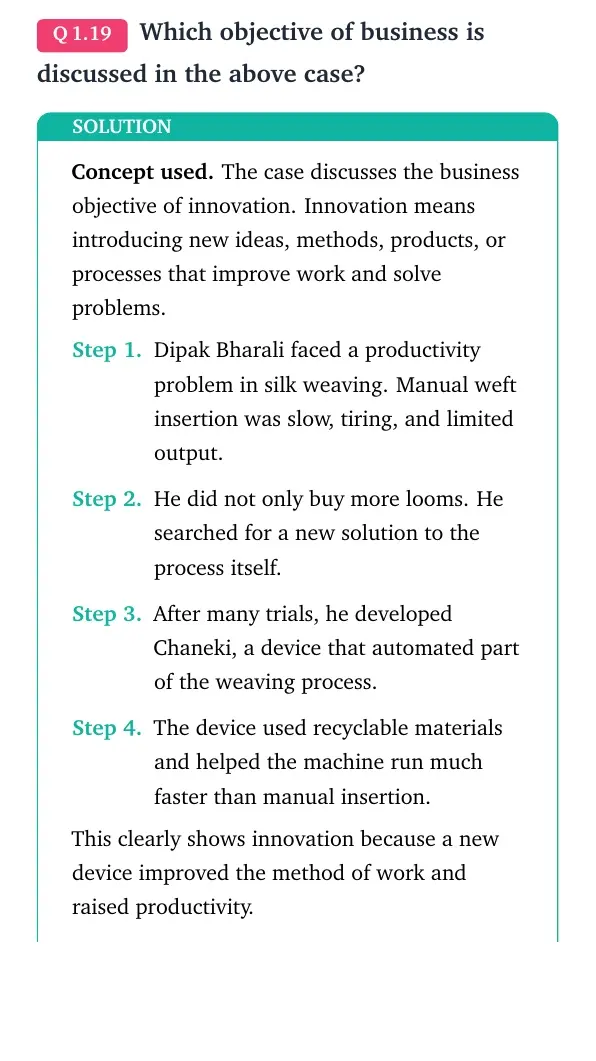
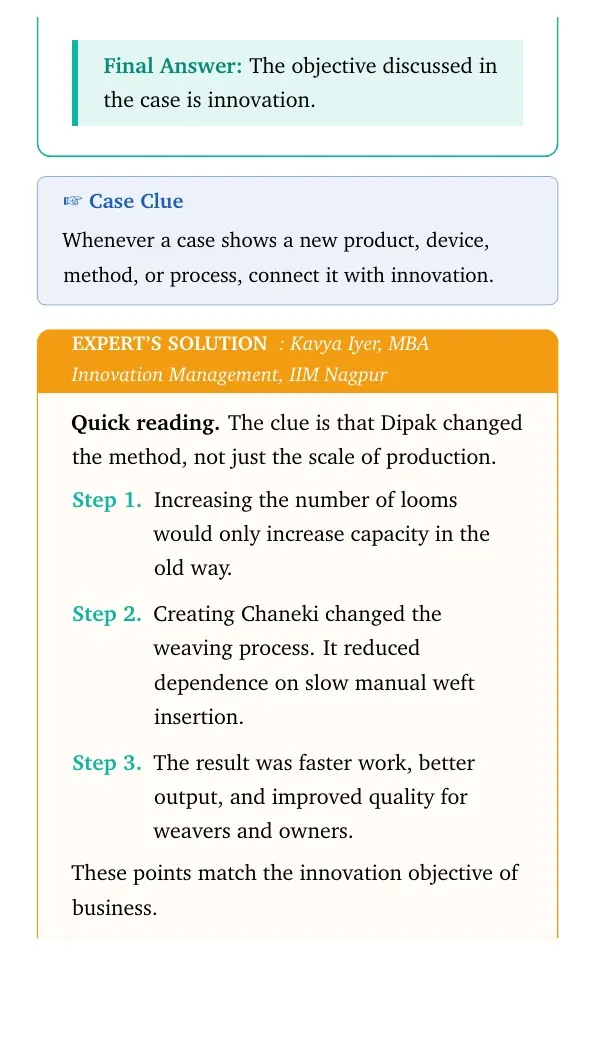
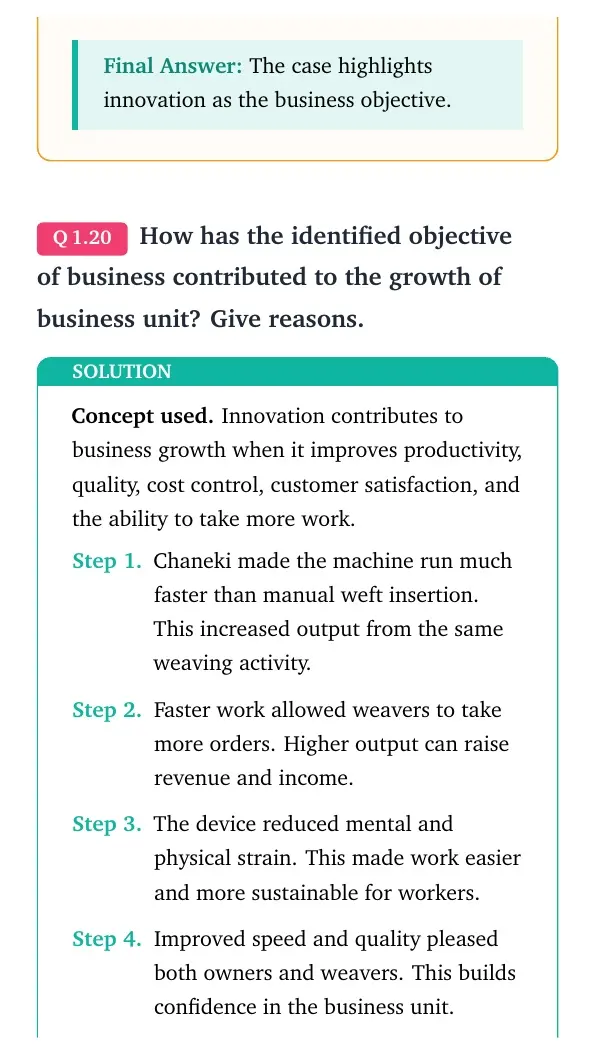
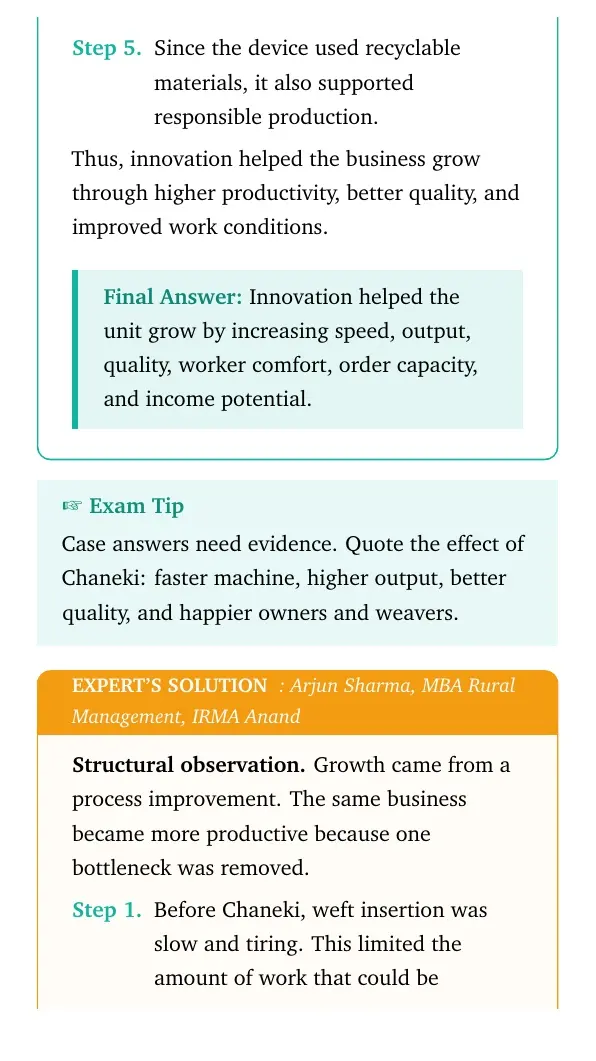
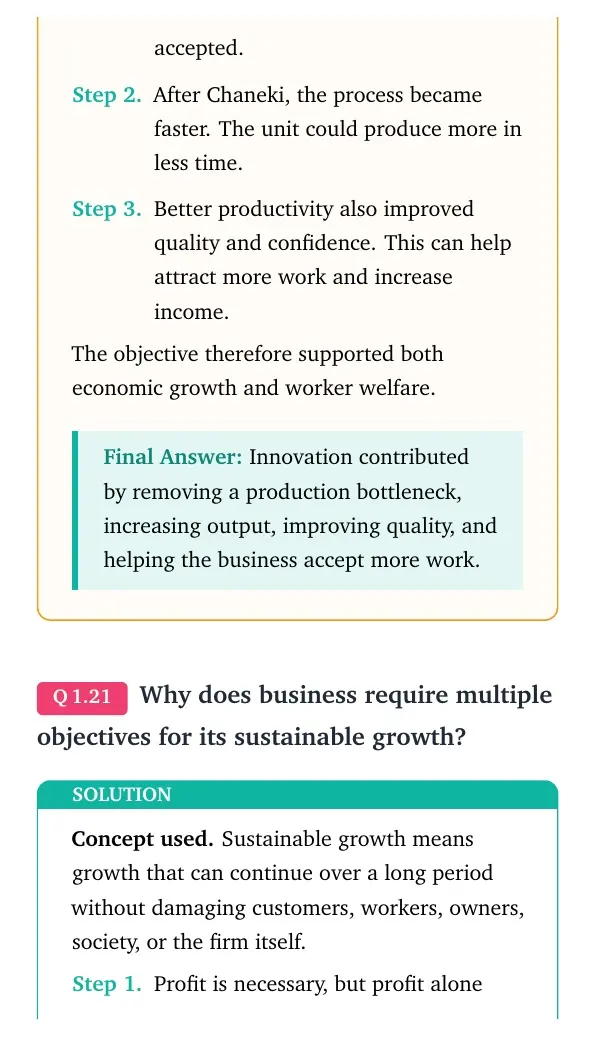

- PDF coverage: 10 short answer questions, 8 long answer questions, and 3 case-based questions from the chapter exercise.
- Best for: quick revision before class tests, board-style answer writing, and concept clarity for accountancy and commerce learners.
- Use this with: the NCERT textbook examples, chapter notes, and the all-chapters solutions table below.
Student Feedback: In a Collegedunia survey of 10,840 Class 11 commerce students, 78% said a single table for industry, commerce, trade, and auxiliaries helped them revise this chapter faster.
Each answer in this Class 11 Business Studies Chapter 1 solutions PDF is checked against the 2026-27 NCERT textbook and written for clear CBSE answer practice.
Class 11 Business Studies Chapter 1 NCERT Solutions PDF
The PDF covers Business, Trade and Commerce in a step-by-step format so that students can understand the meaning first and then write the answer in exam language. It keeps the textbook idea intact: business is an economic activity carried out for income through production, purchase, sale, or exchange.
- Short answers focus on definitions, differences, and direct reasons.
- Long answers expand the same concepts with points such as employment, trade support, and social responsibility.
- Case-based answers connect the chapter with innovation, worker welfare, and sustainable growth.
Business, Trade and Commerce NCERT Solutions Video
Source: Magnet Brains on YouTube
Business Activities and Economic Activity in Chapter 1
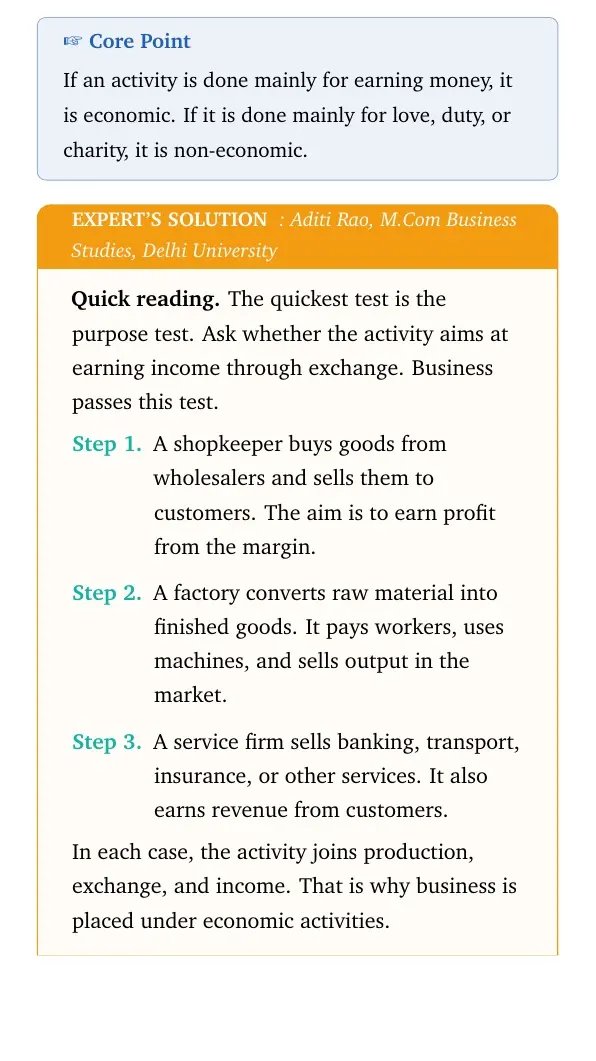
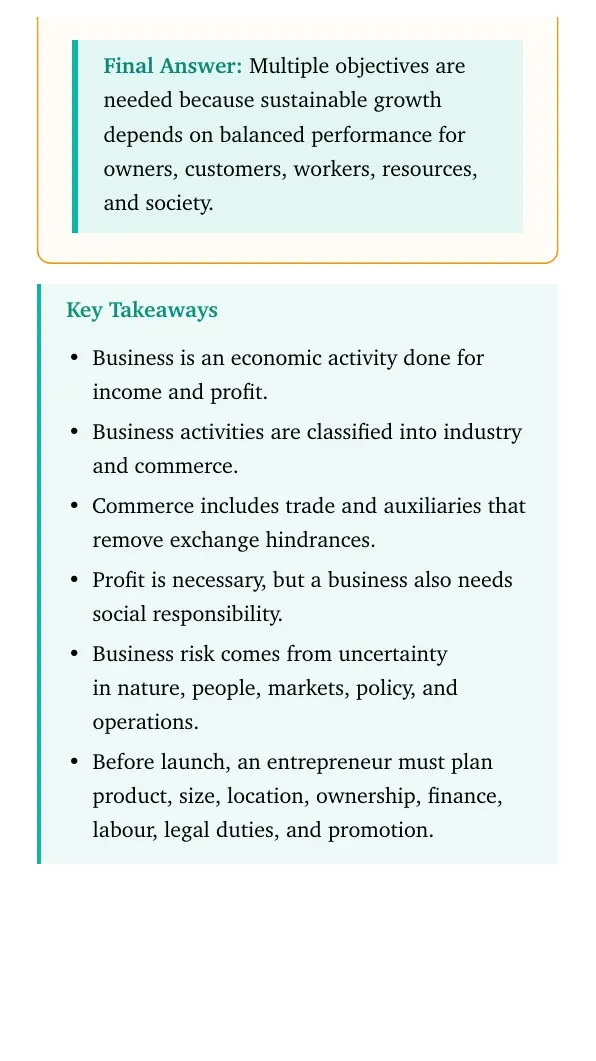
The chapter begins by separating economic and non-economic activities. A family member cooking food at home may do it out of affection, but a restaurant owner cooking for customers does it to earn income. That income motive makes the activity economic. The NCERT solutions use this distinction to explain why business is not just buying and selling, but an organised economic activity.
| Term | Meaning in Chapter 1 | Answer-writing cue |
|---|---|---|
| Economic activity | Activity done to earn livelihood, income, or profit | Mention money motive and exchange |
| Business | Production or exchange of goods and services for profit | Mention regularity, risk, and profit |
| Profession | Specialised service requiring formal knowledge | Use examples such as doctor or chartered accountant |
| Employment | Work done under an employer for salary or wages | Mention service agreement and fixed income |
Commerce, Trade, and Auxiliaries to Trade
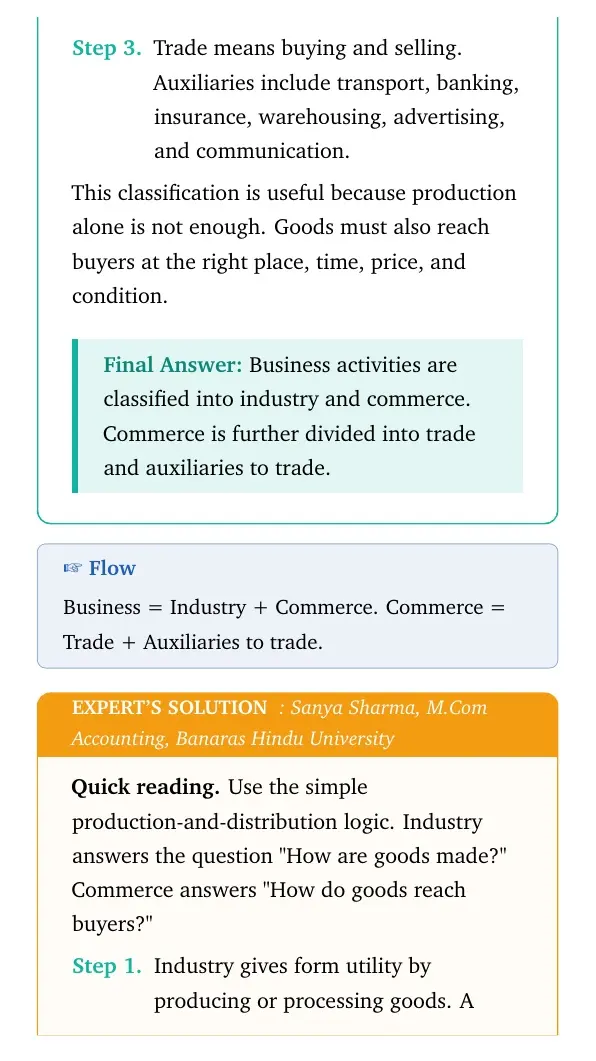
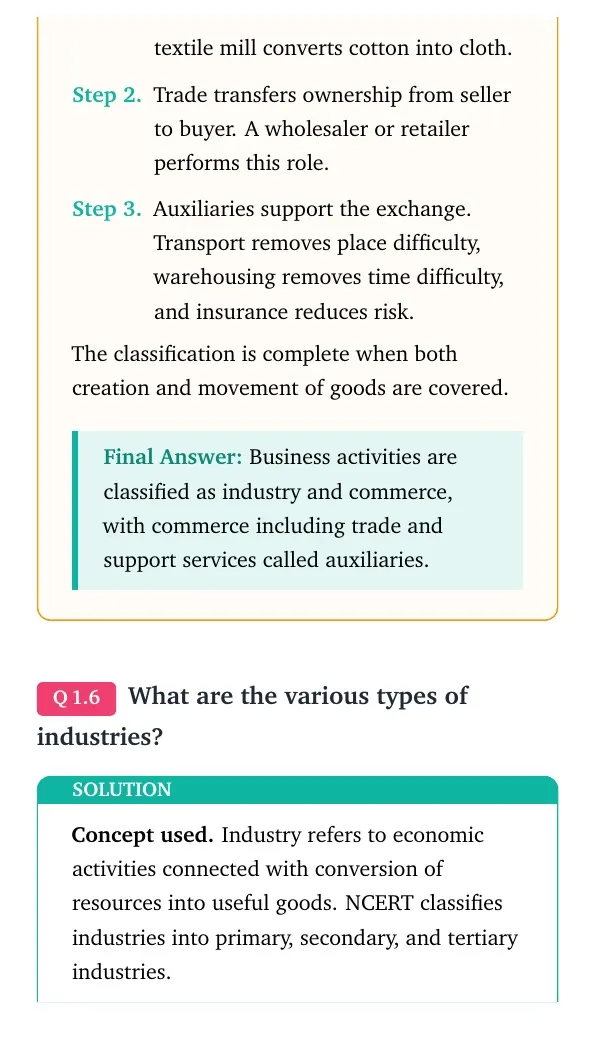
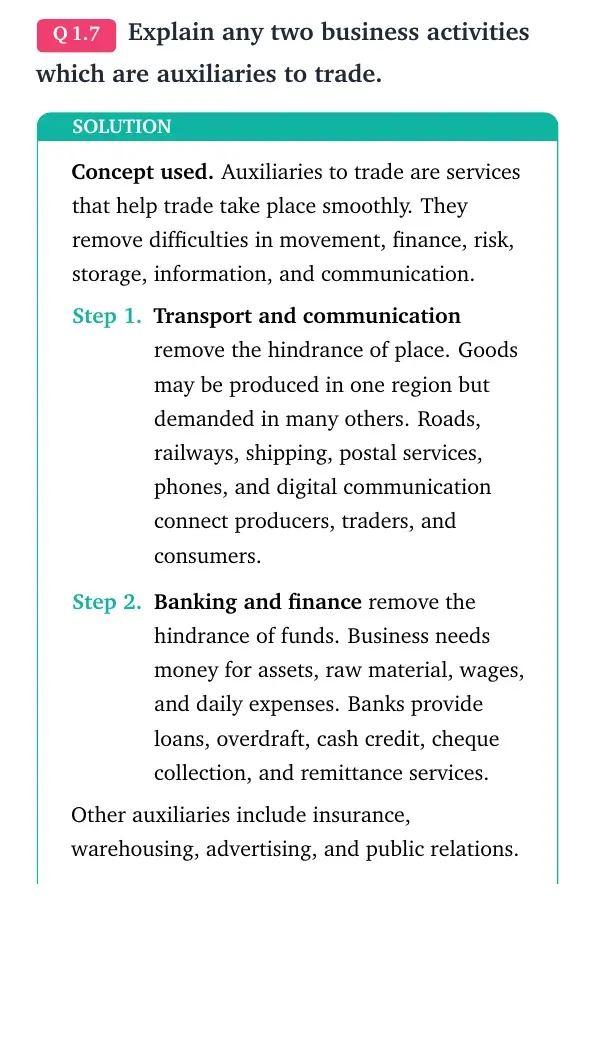
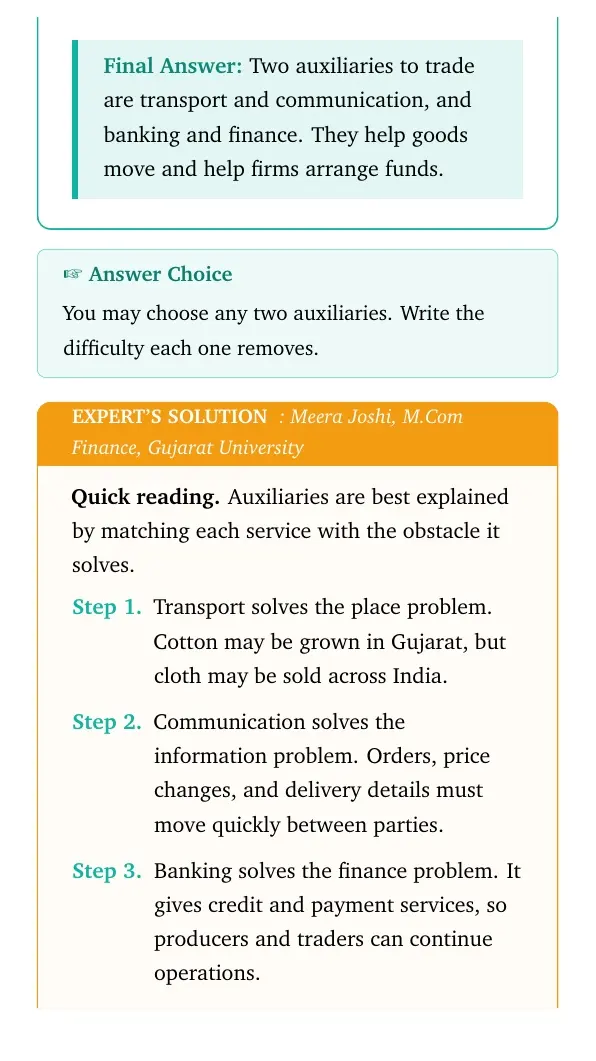
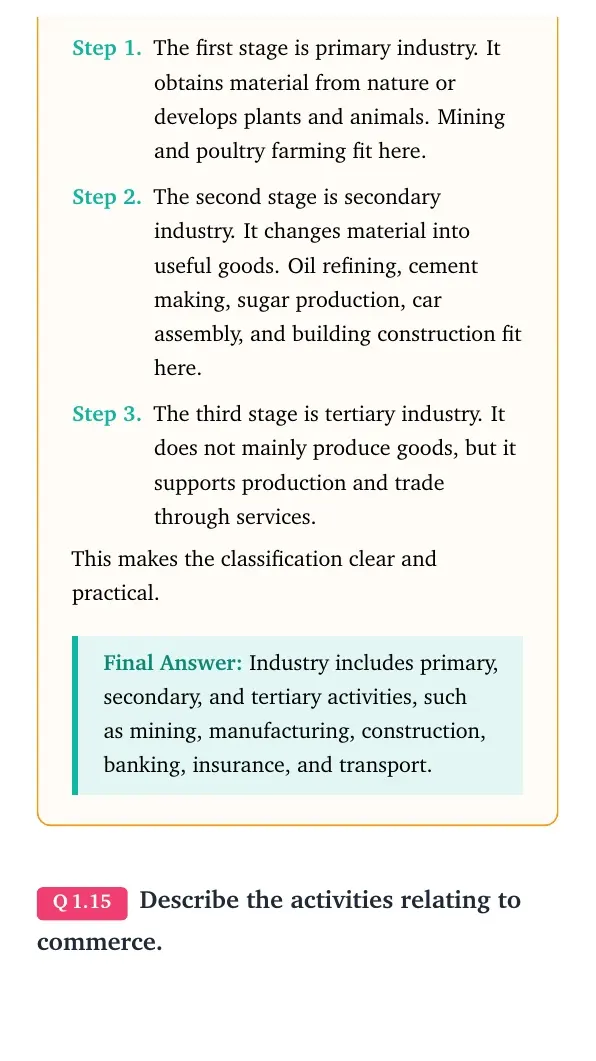
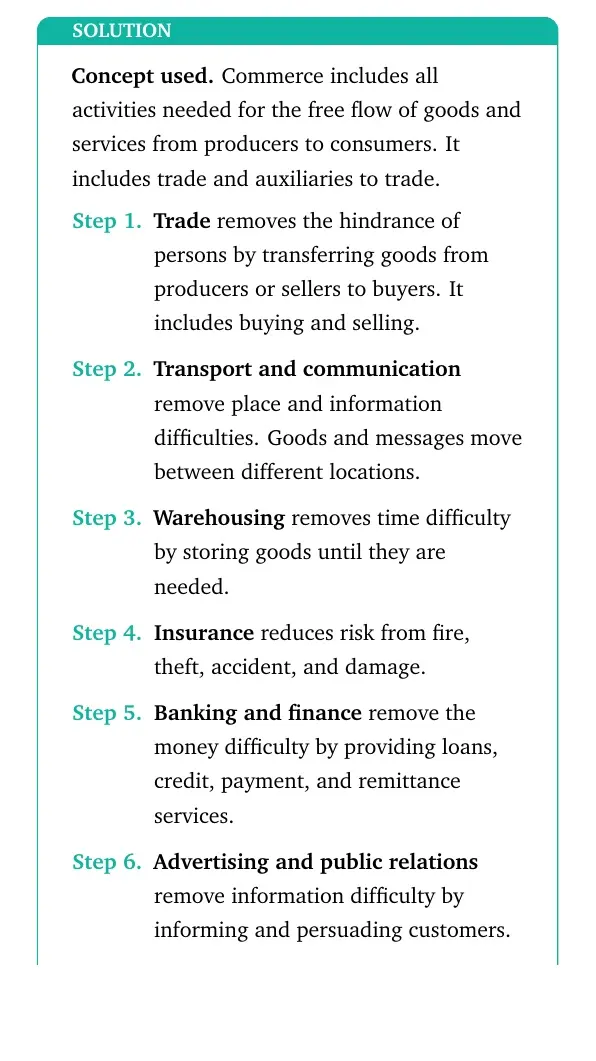
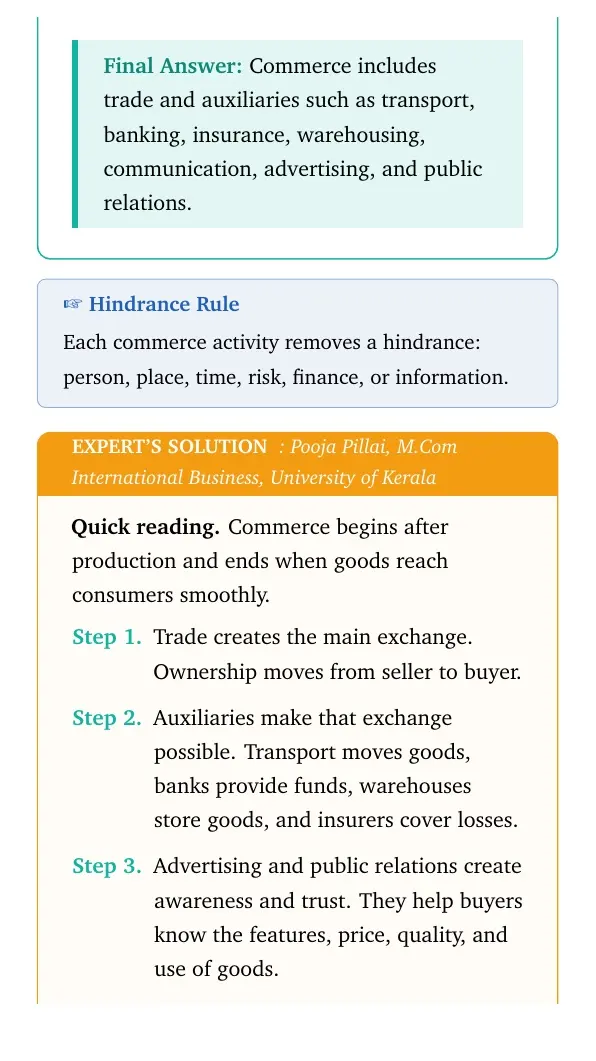
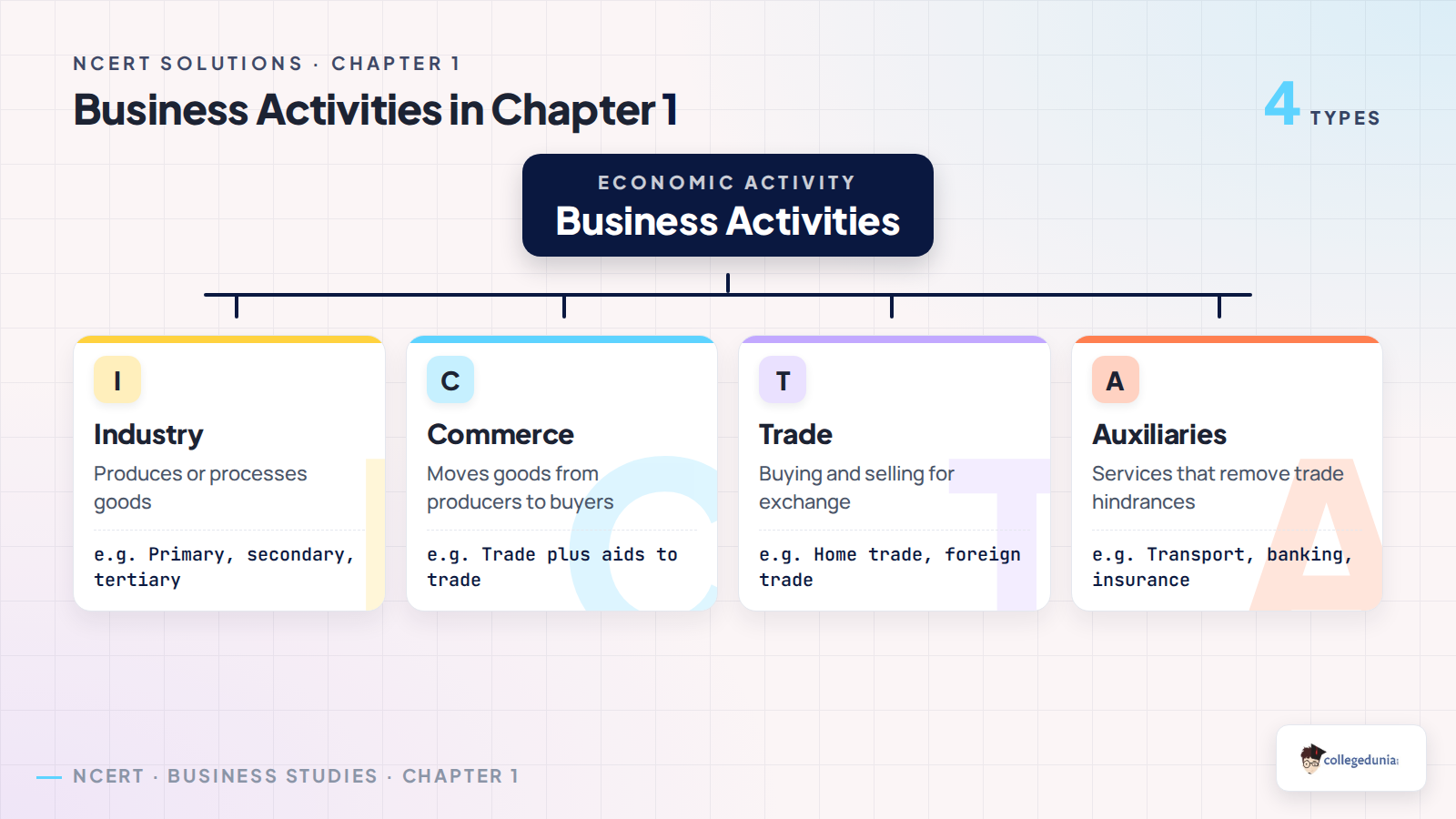
Commerce is wider than trade. Trade is the buying and selling part, while commerce also includes the services that help goods move from producers to consumers. The solutions explain that auxiliaries to trade remove hindrances of place, time, risk, finance, and information.
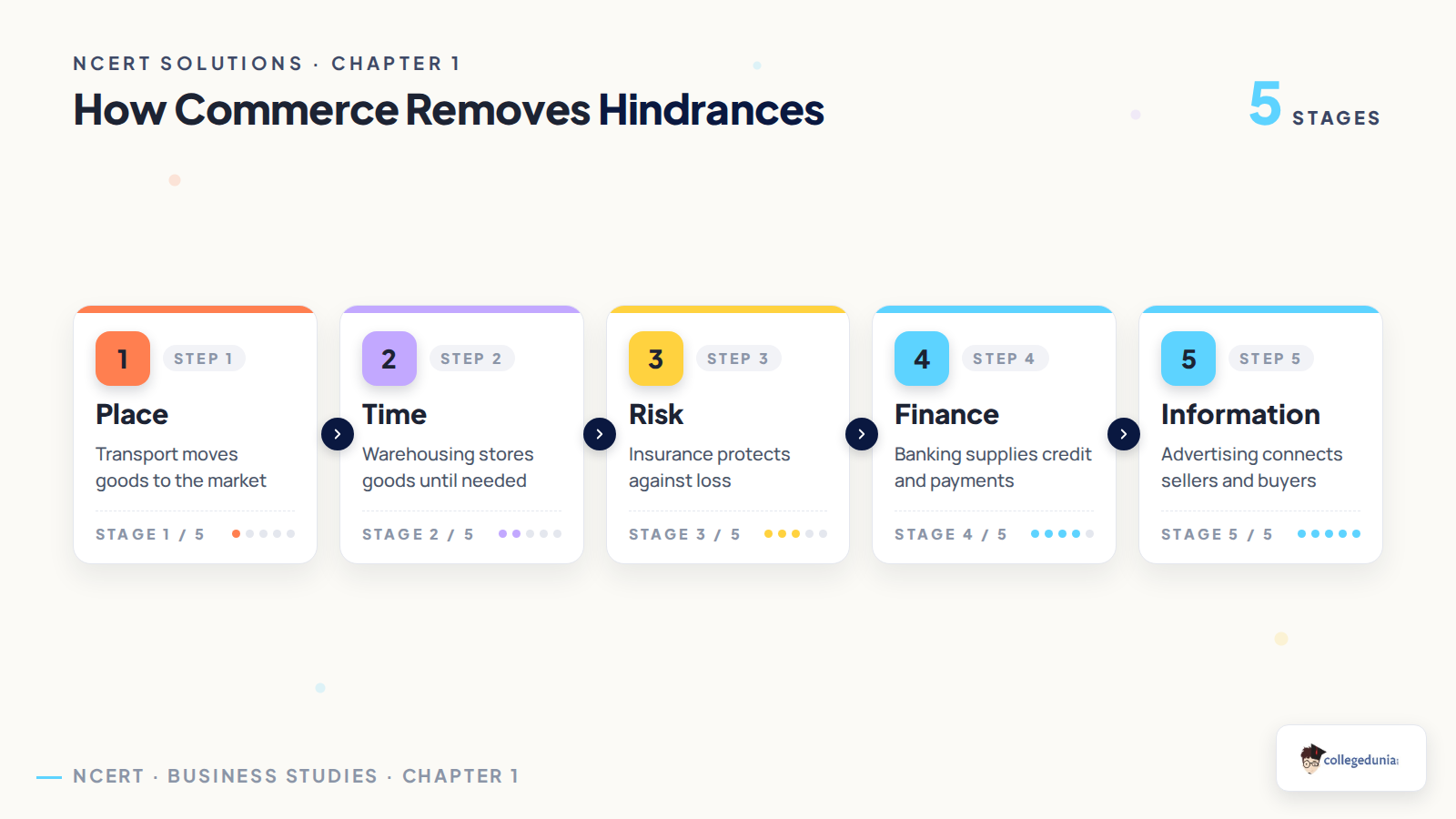
- Transport removes the hindrance of place by carrying goods to the market.
- Warehousing removes the hindrance of time by storing goods until demand arises.
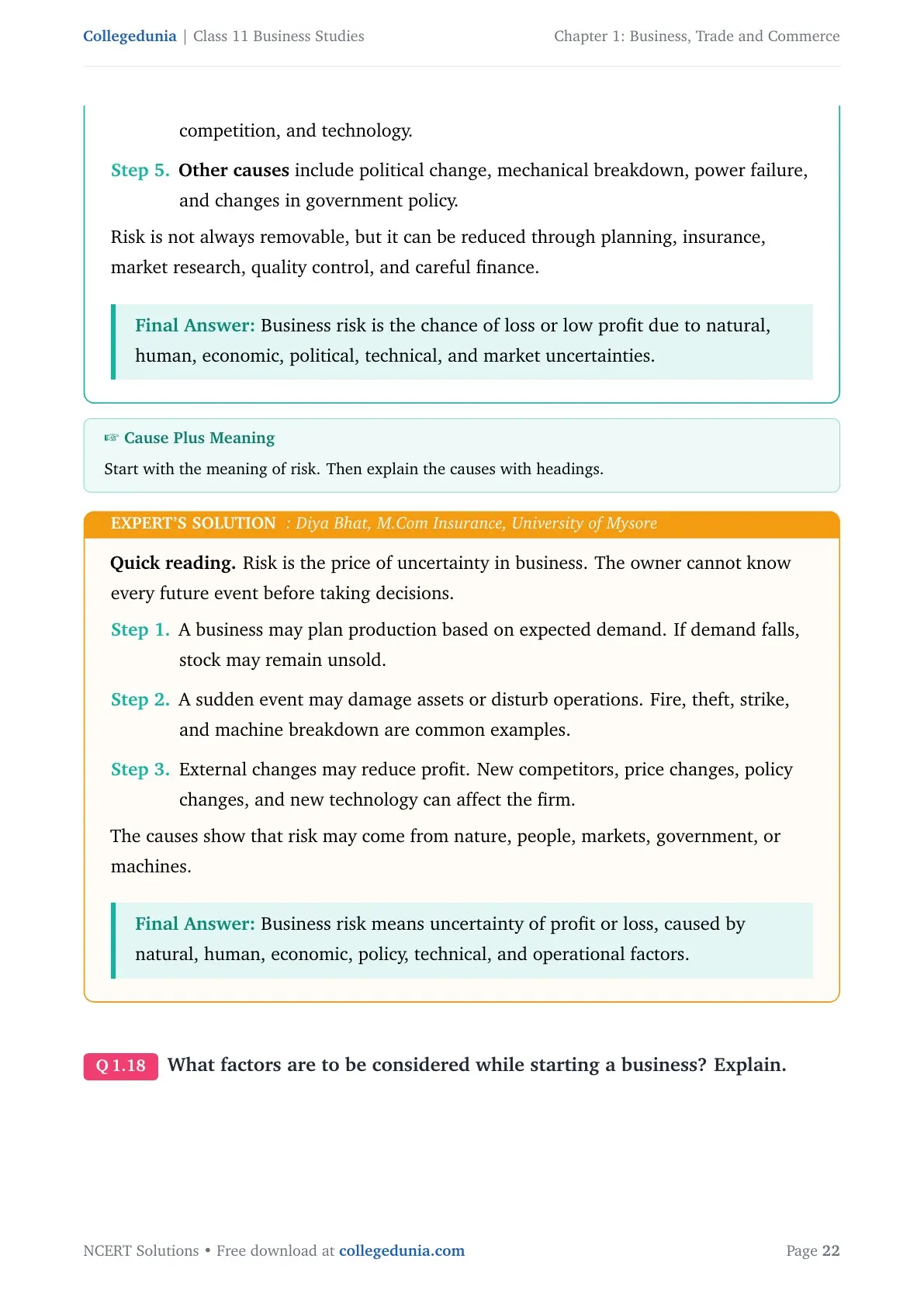
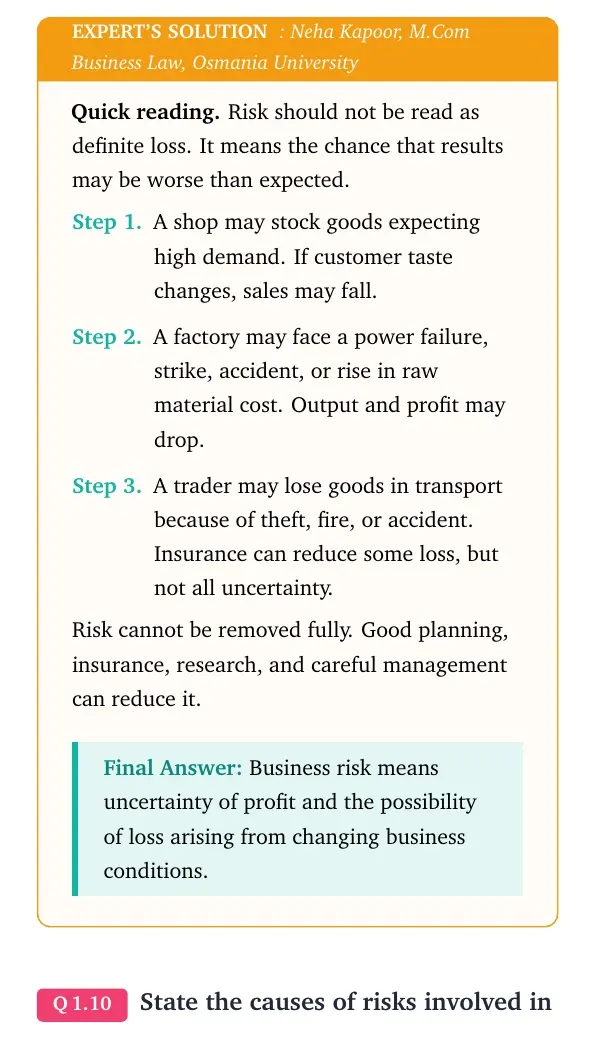
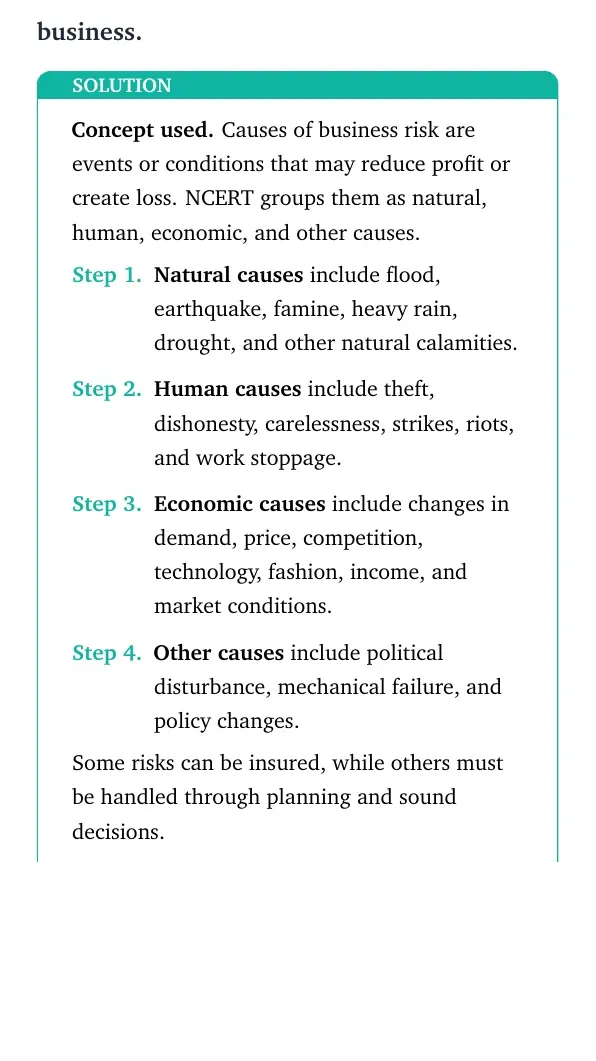
- Insurance reduces business risk from fire, theft, accident, and other losses.
- Banking supports payments, credit, cheque collection, and working capital needs.
- Advertising removes the hindrance of information by informing buyers about goods.
Business Risk, Profit, and Multiple Objectives
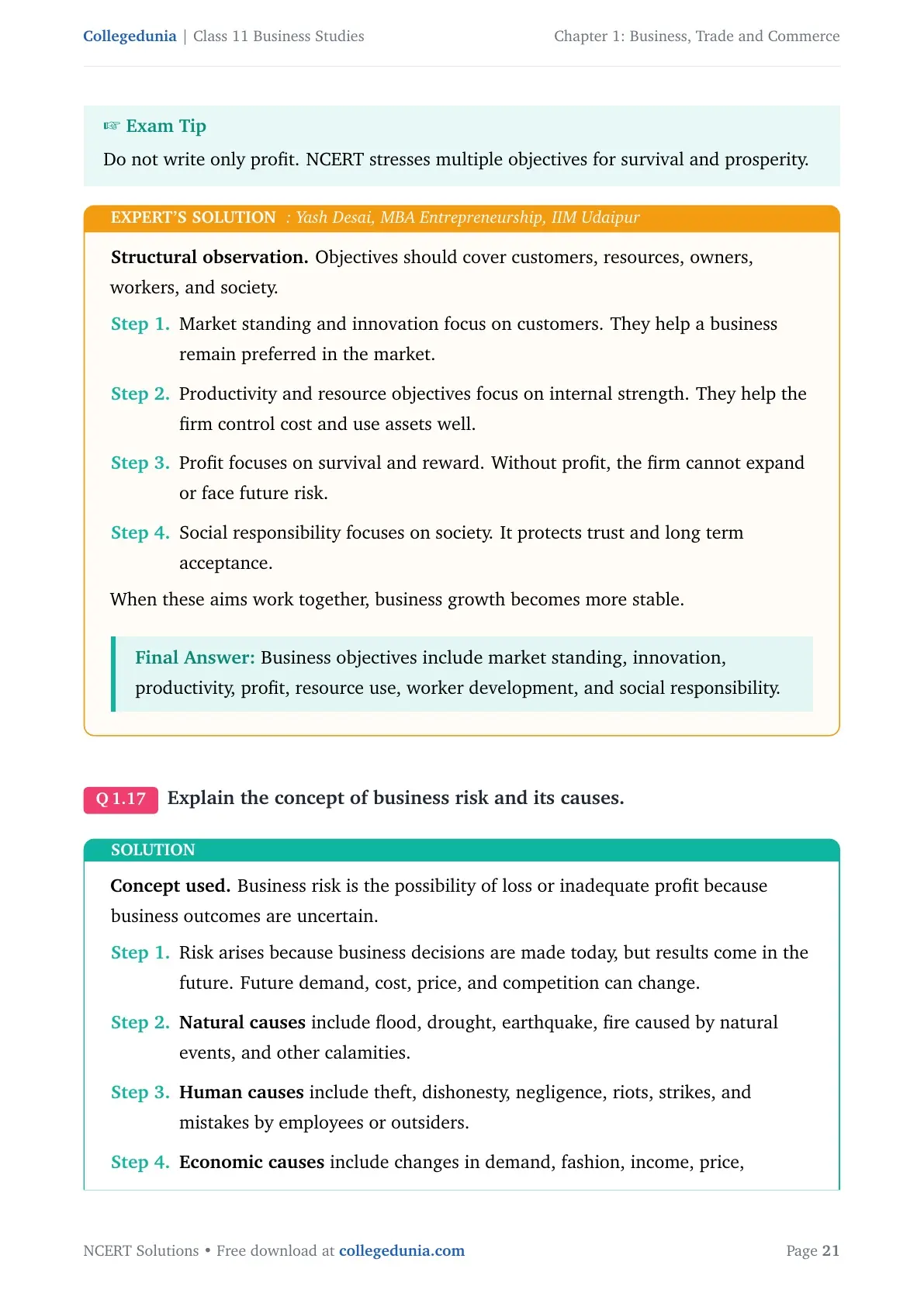
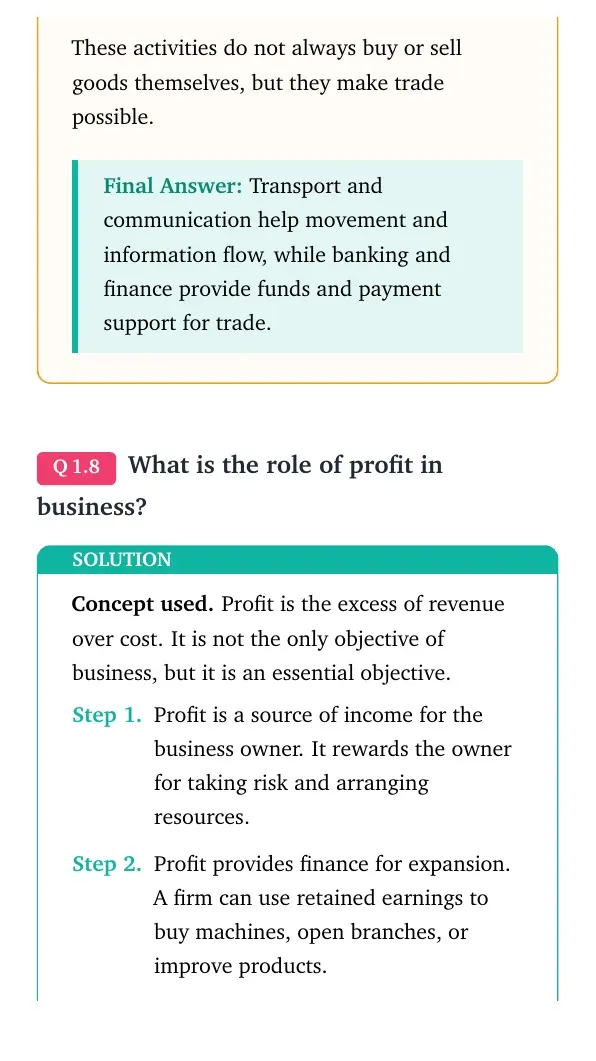
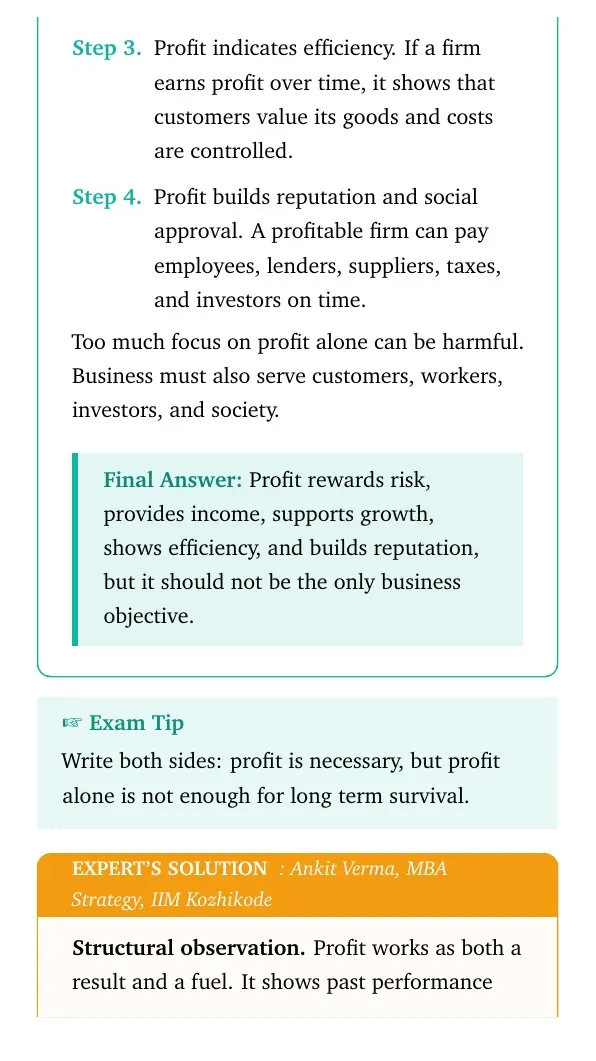
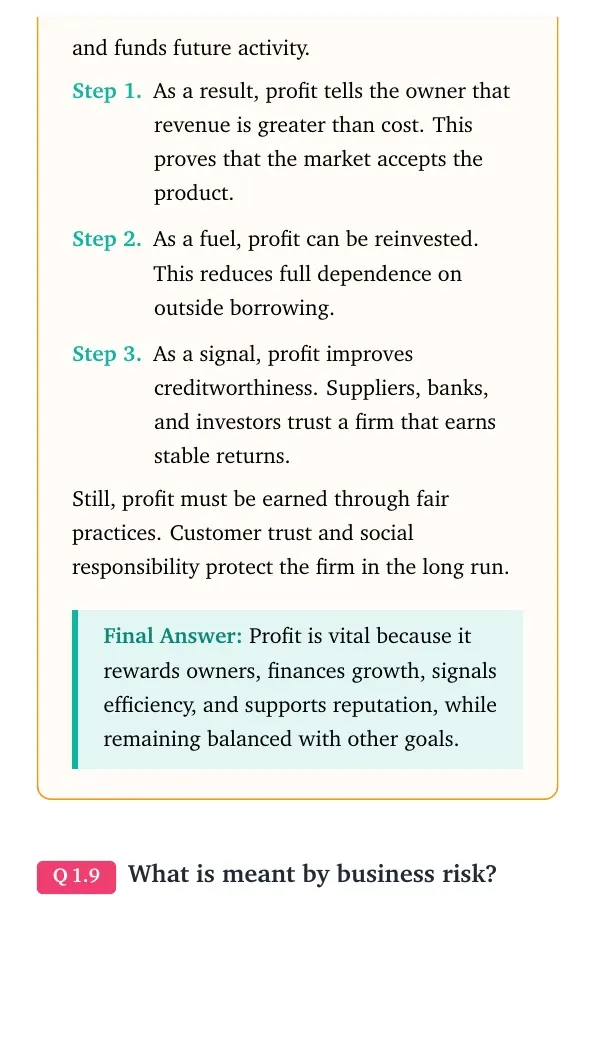
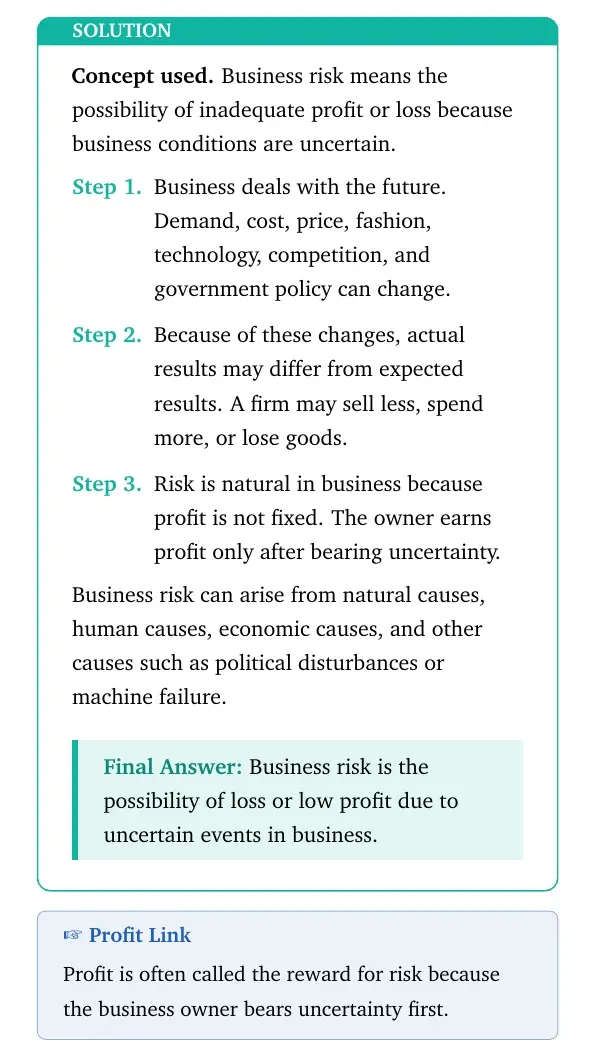
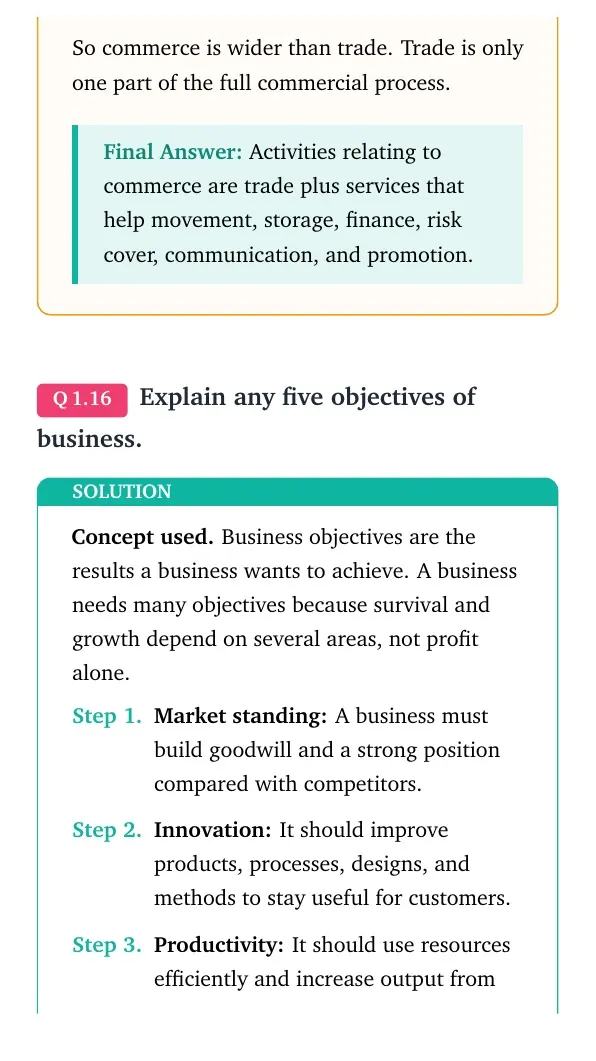
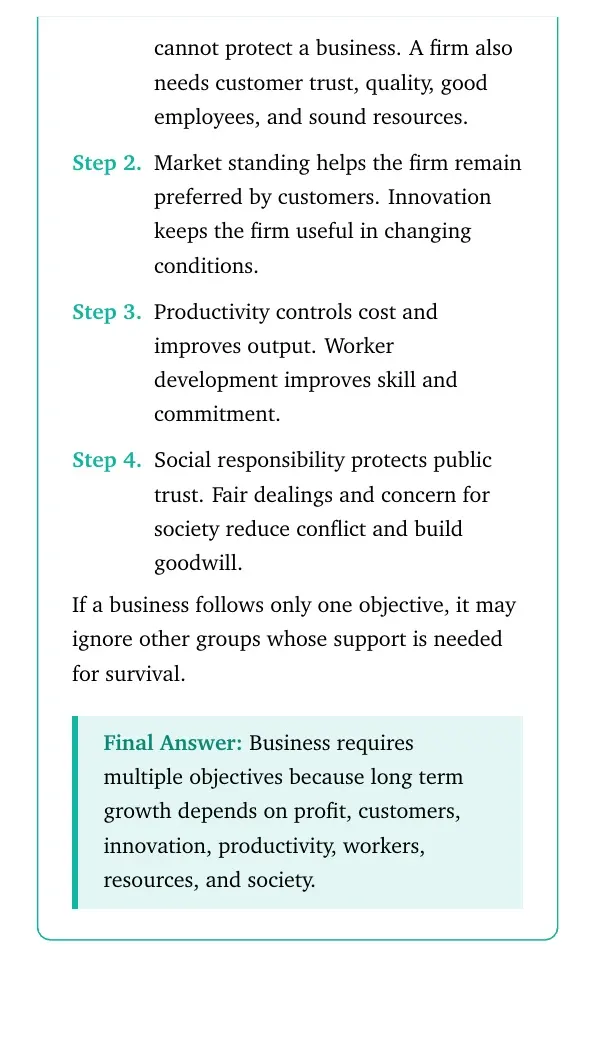
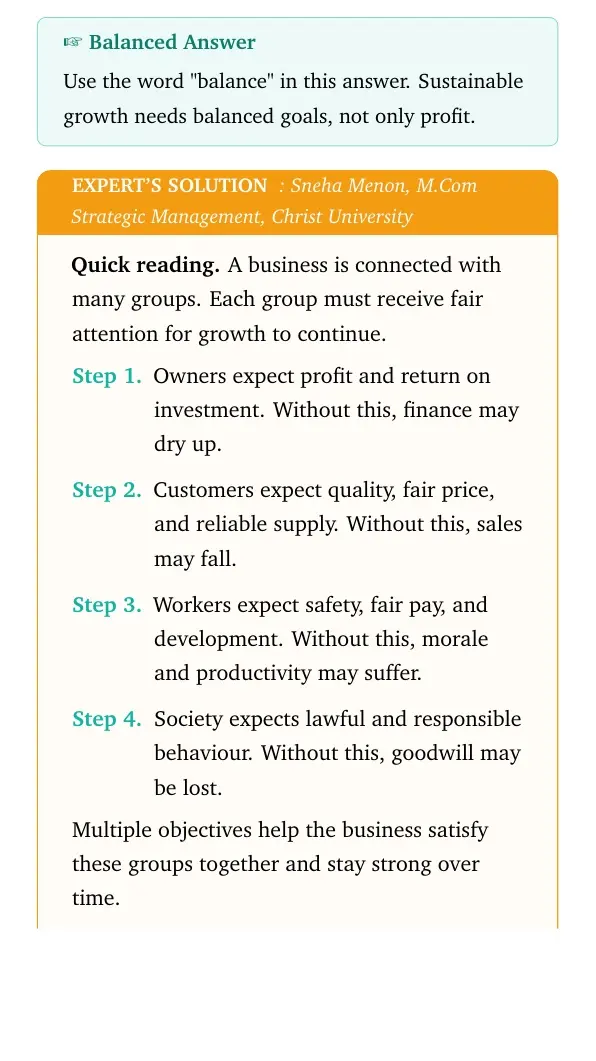
NCERT treats profit as necessary but not the only objective of business. Profit helps survival, growth, reward for risk, and future expansion. At the same time, a business must protect customers, workers, resources, and society. That is why Chapter 1 asks students to discuss multiple objectives rather than write only about earning money.
| Objective | Why it matters |
|---|---|
| Market standing | Builds customer trust and repeat demand |
| Innovation | Keeps the business useful in changing conditions |
| Productivity | Controls cost and improves output quality |
| Worker development | Improves skill, morale, and continuity |
| Social responsibility | Protects goodwill and supports responsible growth |
How to Use These NCERT Solutions for Exam Answers
For this chapter, most questions are theory-based. The best answers are not memorised paragraphs. They are clear pointwise responses that define the term, give the reason, and add an example. Before writing any long answer from Business, Trade and Commerce, students should identify whether the question asks for meaning, features, distinction, importance, or application.
- Definition questions: begin with one clean sentence, then add two features.
- Difference questions: use a table when two concepts are compared.
- Importance questions: write four to six points with one line of explanation each.
- Case questions: quote the business situation, identify the objective, and explain the outcome.
All NCERT Solutions for Class 11 Business Studies Chapter 1 with Step-by-Step Solutions
The companion question page carries the full collapsible Q&A layout for all textbook prompts from this PDF, including detailed solutions and expert explanations. Open it when you want to practise the chapter question by question.
Open question-wise answers: Business, Trade and Commerce NCERT Solutions question bank
Related Class 11 Business Studies Chapter 1 Resources
Use these related resources after finishing the NCERT solutions. They help revise the same chapter through notes, textbook PDF access, and handwritten-style recap.
| Resource | Use it for | Link |
|---|---|---|
| Chapter Notes | Revise definitions, features, and diagrams before tests | Class 11 Business Studies Chapter 1 Notes |
| NCERT Book PDF | Read the official textbook chapter alongside answers | Class 11 Business Studies Chapter 1 NCERT Book PDF |
| Handwritten Notes | Quickly revise the classification of business activities | Class 11 Business Studies Chapter 1 Handwritten Notes |
Class 11 Business Studies NCERT Solutions All Chapters
The table below helps students move across the same resource type for Class 11 Business Studies. Chapter 1 should be revised first because later chapters such as forms of business organisation and business services use the vocabulary introduced here.
| Chapter | NCERT Solutions Link |
|---|---|
| Chapter 1 Business, Trade and Commerce | Open solutions |
| Chapter 2 Forms of Business Organisation | Open solutions |
| Chapter 3 Private, Public and Global Enterprises | Open solutions |
| Chapter 4 Business Services | Open solutions |
| Chapter 5 Emerging Modes of Business | Open solutions |
| Chapter 6 Social Responsibilities of Business and Business Ethics | Open solutions |
| Chapter 7 Formation of a Company | Open solutions |
| Chapter 8 Sources of Business Finance | Open solutions |
| Chapter 9 MSME and Business Entrepreneurship | Open solutions |
| Chapter 10 Internal Trade | Open solutions |
| Chapter 11 International Business | Open solutions |
Business, Trade and Commerce Class 11 NCERT Solutions FAQs
Ques. What does Class 11 Business Studies Chapter 1 mainly cover?
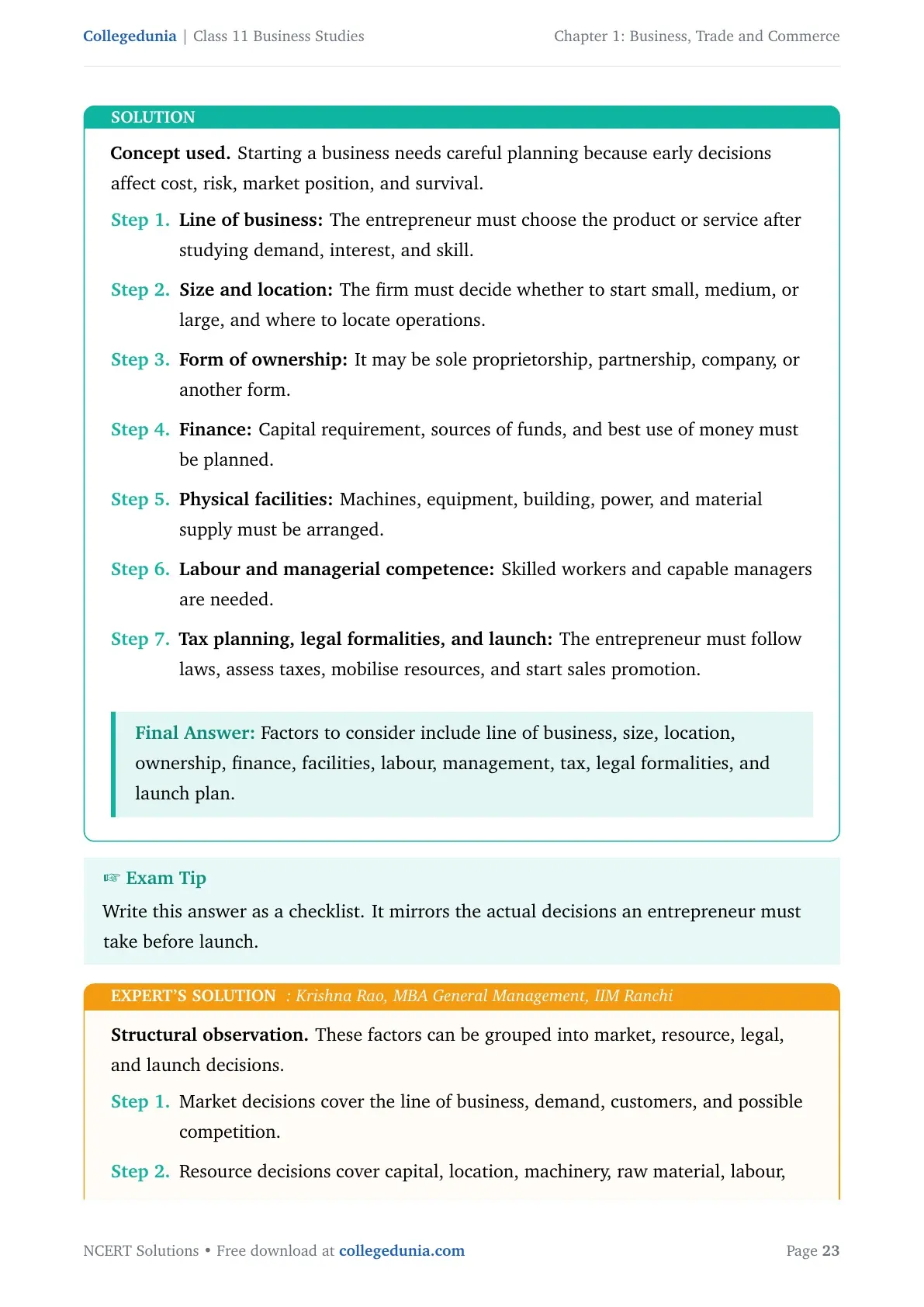
Ans. The chapter covers economic activities, business, profession, employment, industry, commerce, trade, auxiliaries to trade, profit, risk, and the basic factors needed before starting a business.
Ques. Why is business called an economic activity?
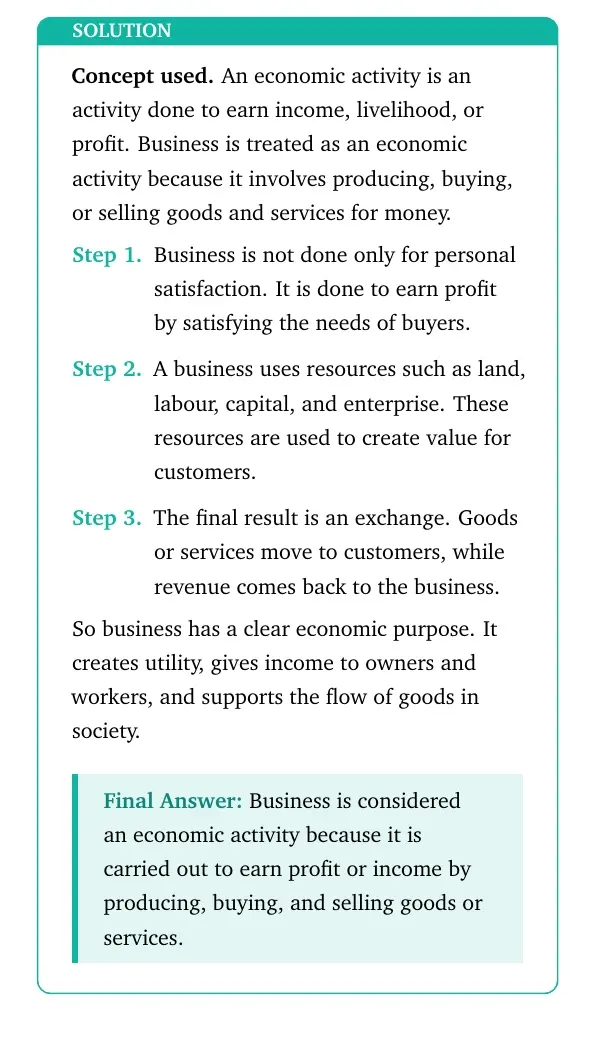
Ans. Business is called an economic activity because it is carried out to earn income or profit through the production, purchase, sale, or exchange of goods and services.
Ques. How many questions are solved in this Chapter 1 PDF?
Ans. The PDF solves 21 textbook prompts, including 10 short answer questions, 8 long answer questions, and 3 case-based questions drawn from the NCERT exercise section.
Ques. What is the difference between trade and commerce?
Ans. Trade means buying and selling goods. Commerce is wider because it includes trade plus auxiliaries such as transport, banking, warehousing, insurance, and advertising.
Ques. Is profit the only objective of business in Chapter 1?
Ans. No. Profit is necessary for survival and growth, but business also needs market standing, innovation, productivity, worker development, resource efficiency, and social responsibility.



Comments