



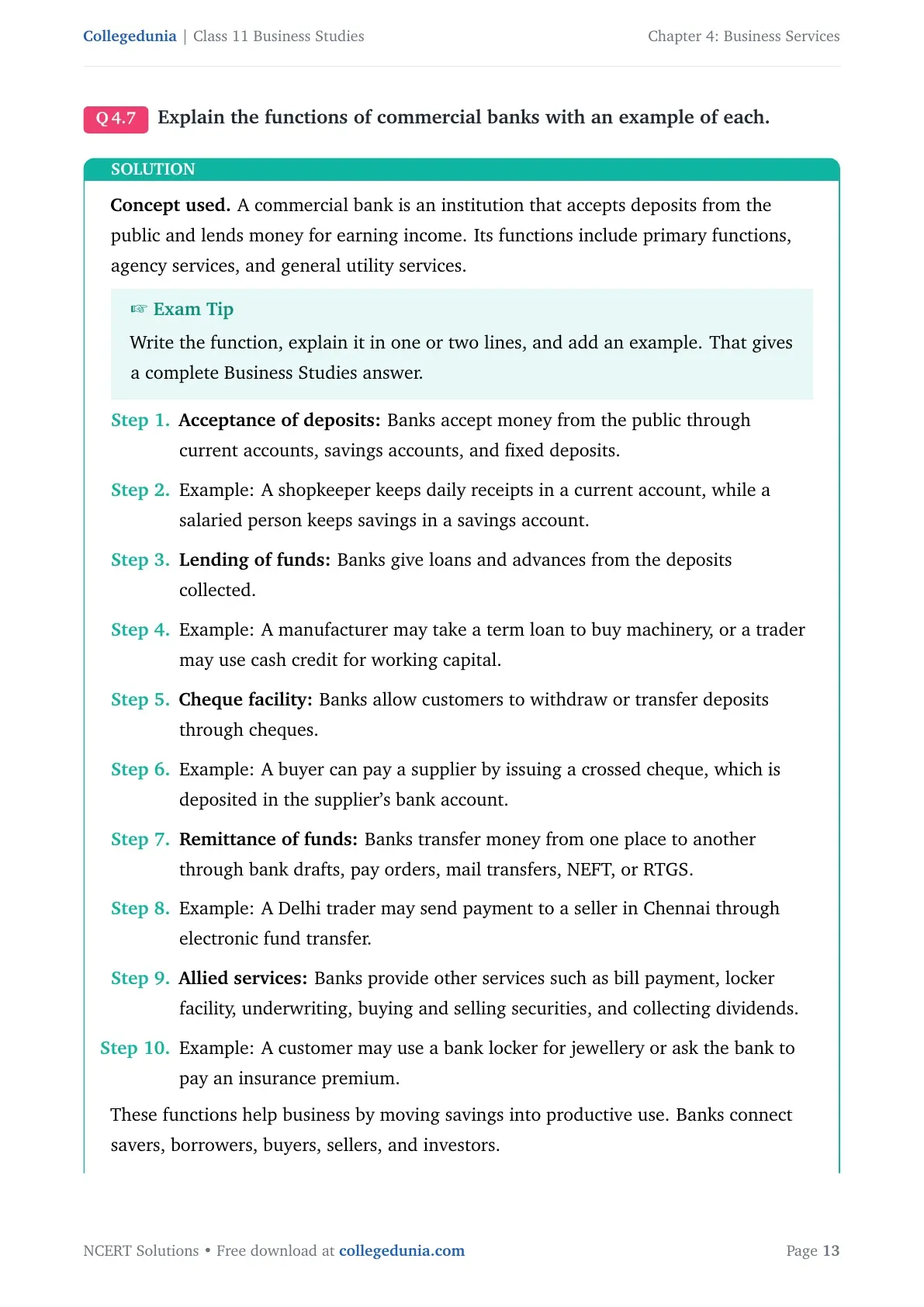
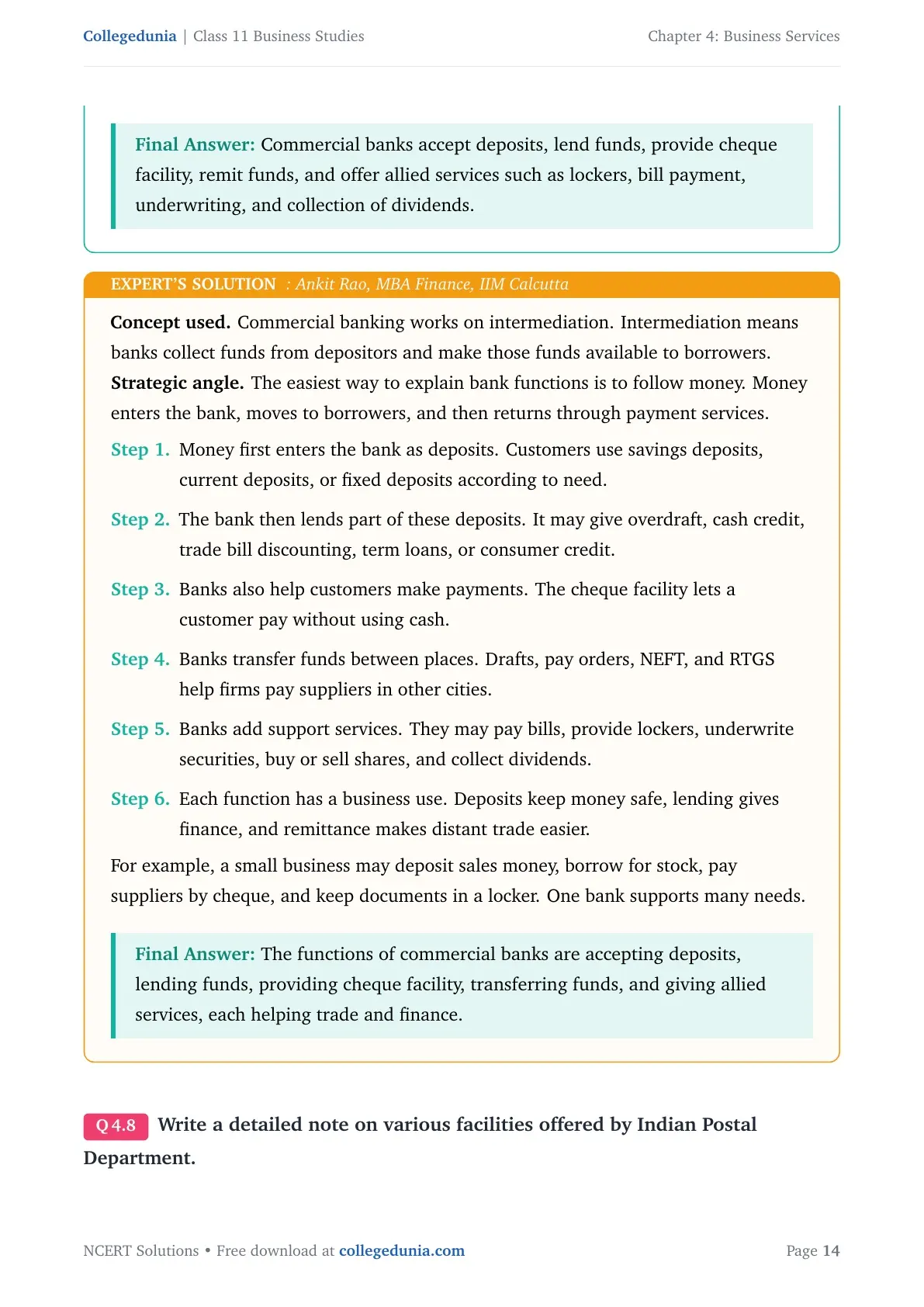
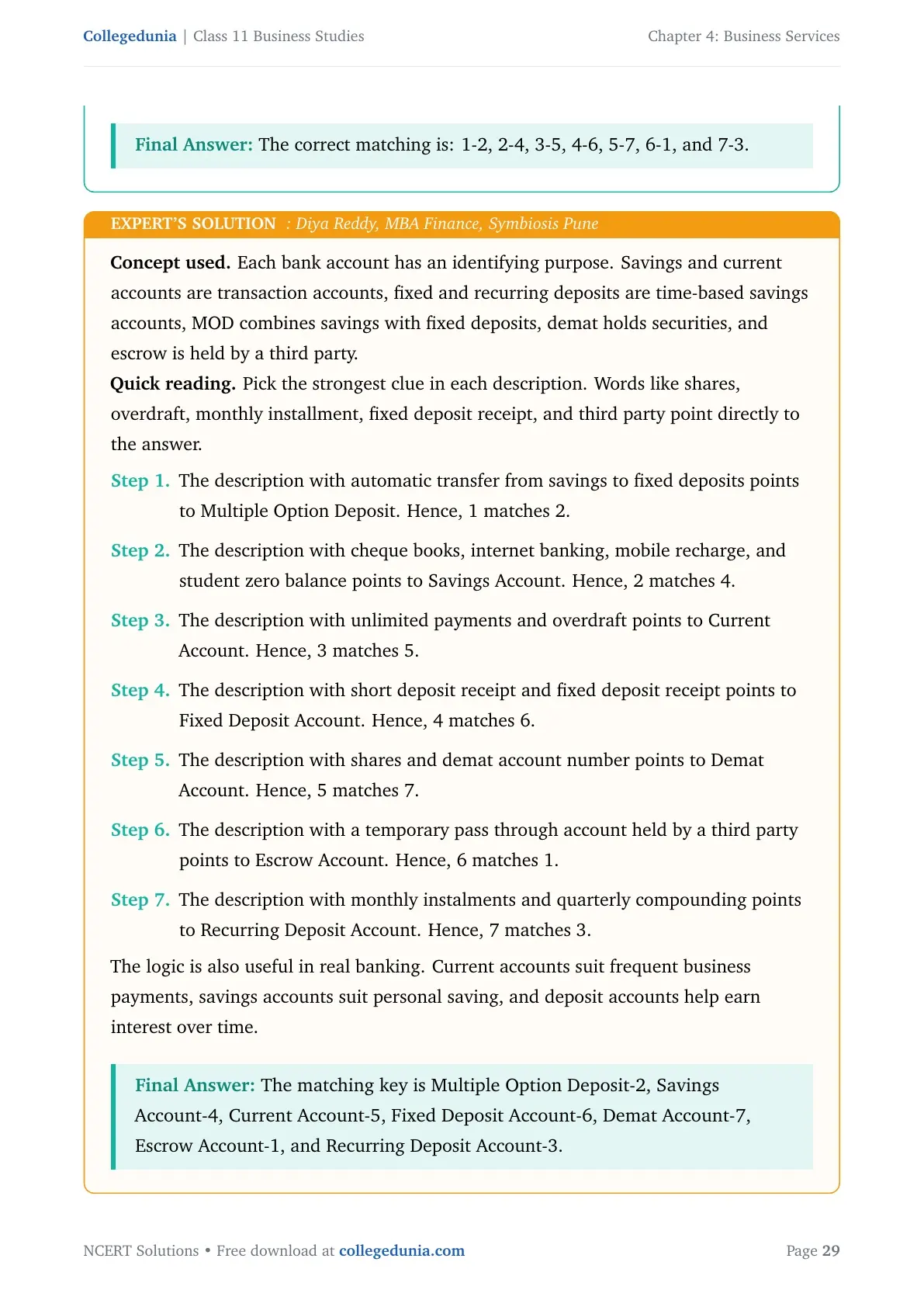
NCERT Solutions for Class 11 Business Studies Chapter 4 Business Services cover all textbook questions from the 2026-27 NCERT book. The answers explain banking, insurance, telecom, transportation, warehousing, and different bank accounts in clear CBSE answer language.
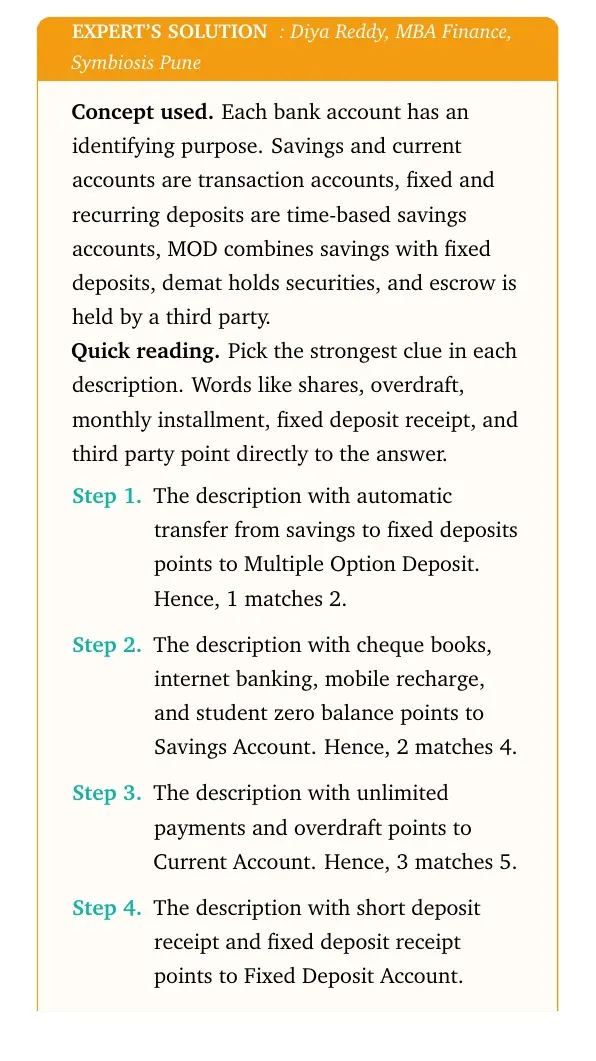
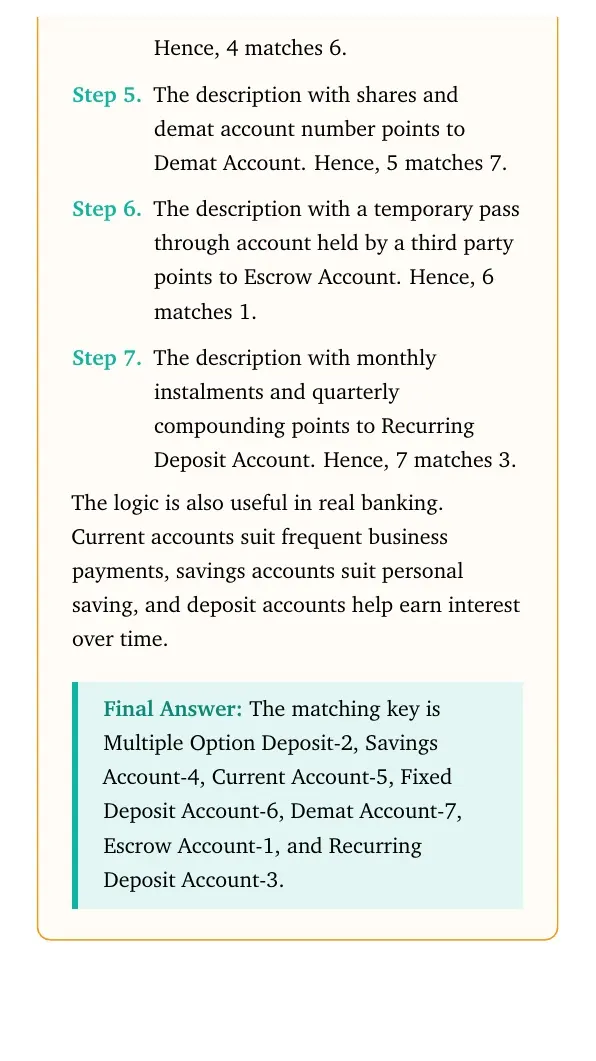
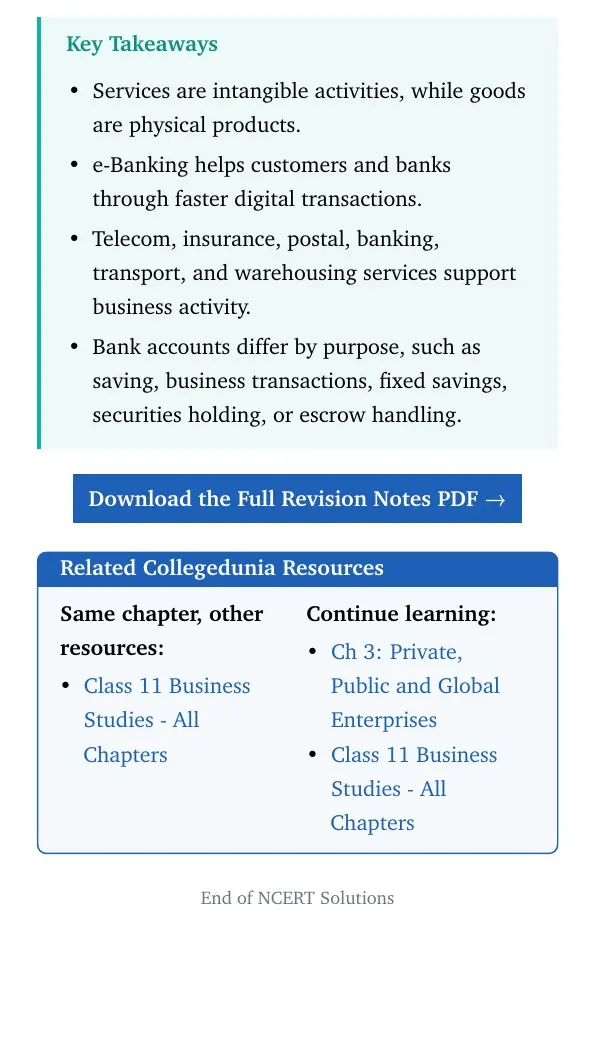
Student Feedback: In a Collegedunia survey of 11,620 Class 11 commerce students, 81% said the goods versus services table helped them write faster short answers before the 2026 boards.
Each answer in this Class 11 Business Studies Chapter 4 solutions PDF is checked against the 2026-27 NCERT textbook and written for direct CBSE answer practice.
- PDF coverage: 13 textbook questions with step-by-step solutions and expert explanations.
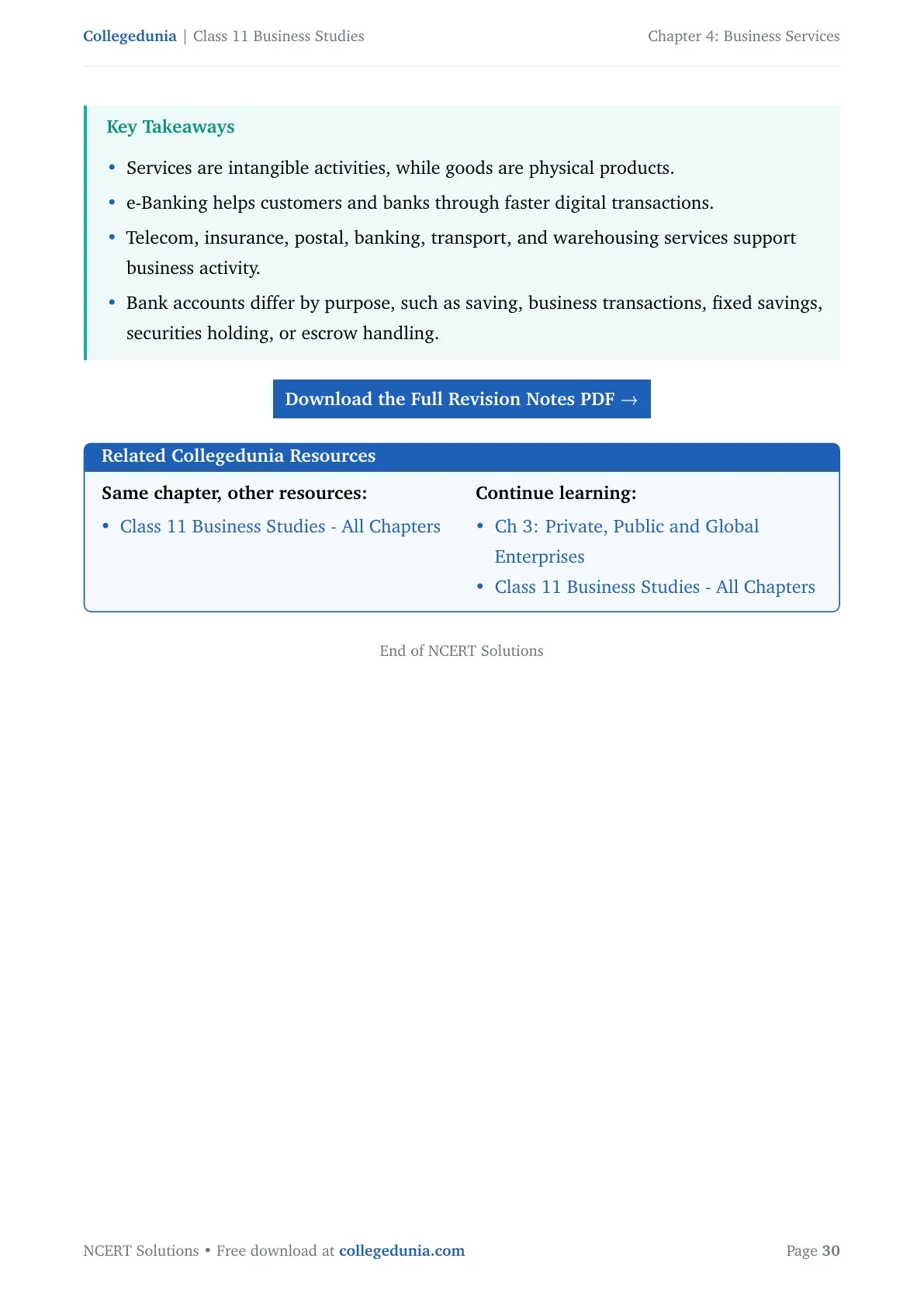
- Best for: revising services, e-banking, insurance principles, telecom services, and warehousing functions.
- Use this with: the official NCERT book, chapter notes, and the all-chapters solutions table below.
Business Services NCERT Solutions PDF
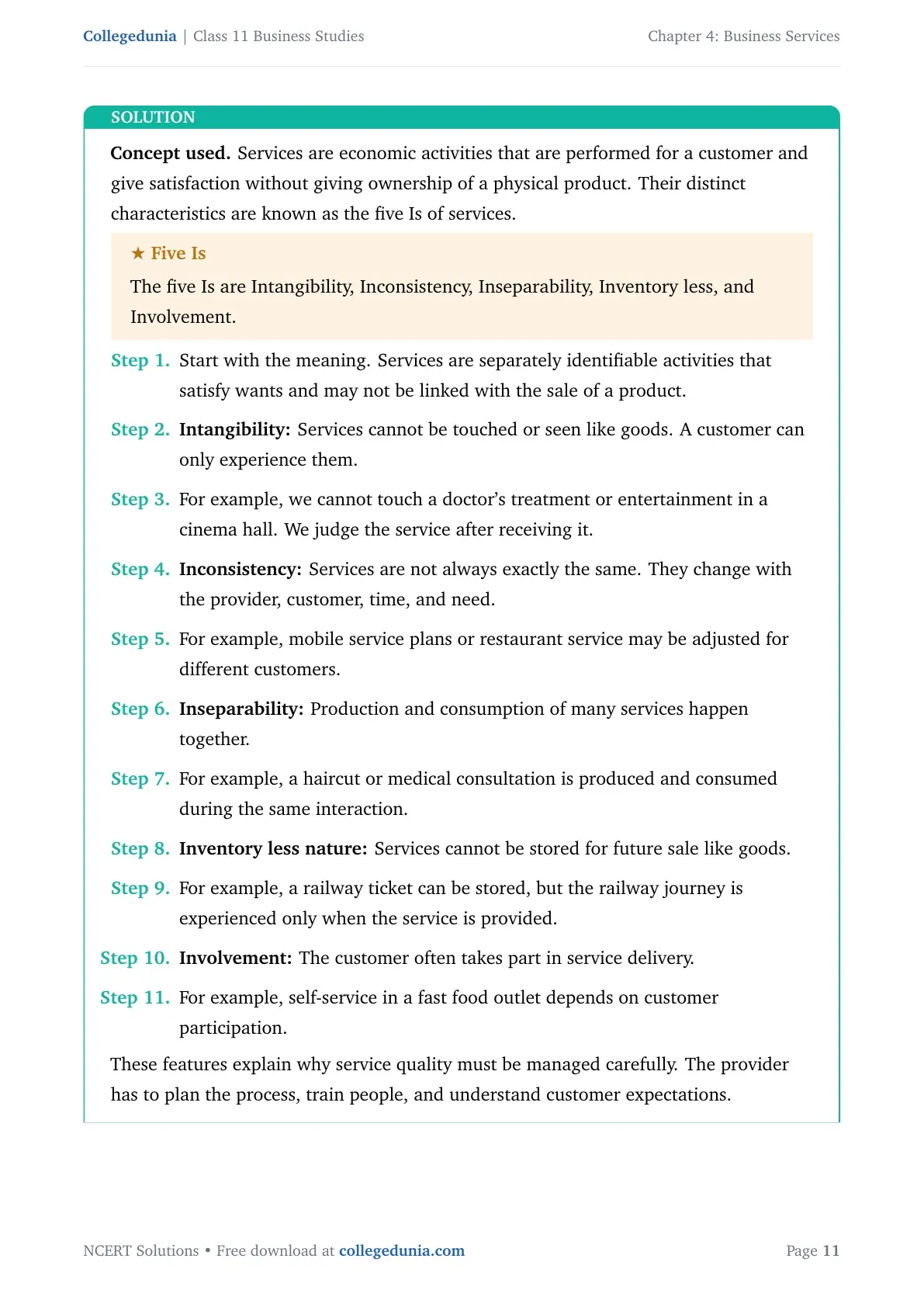
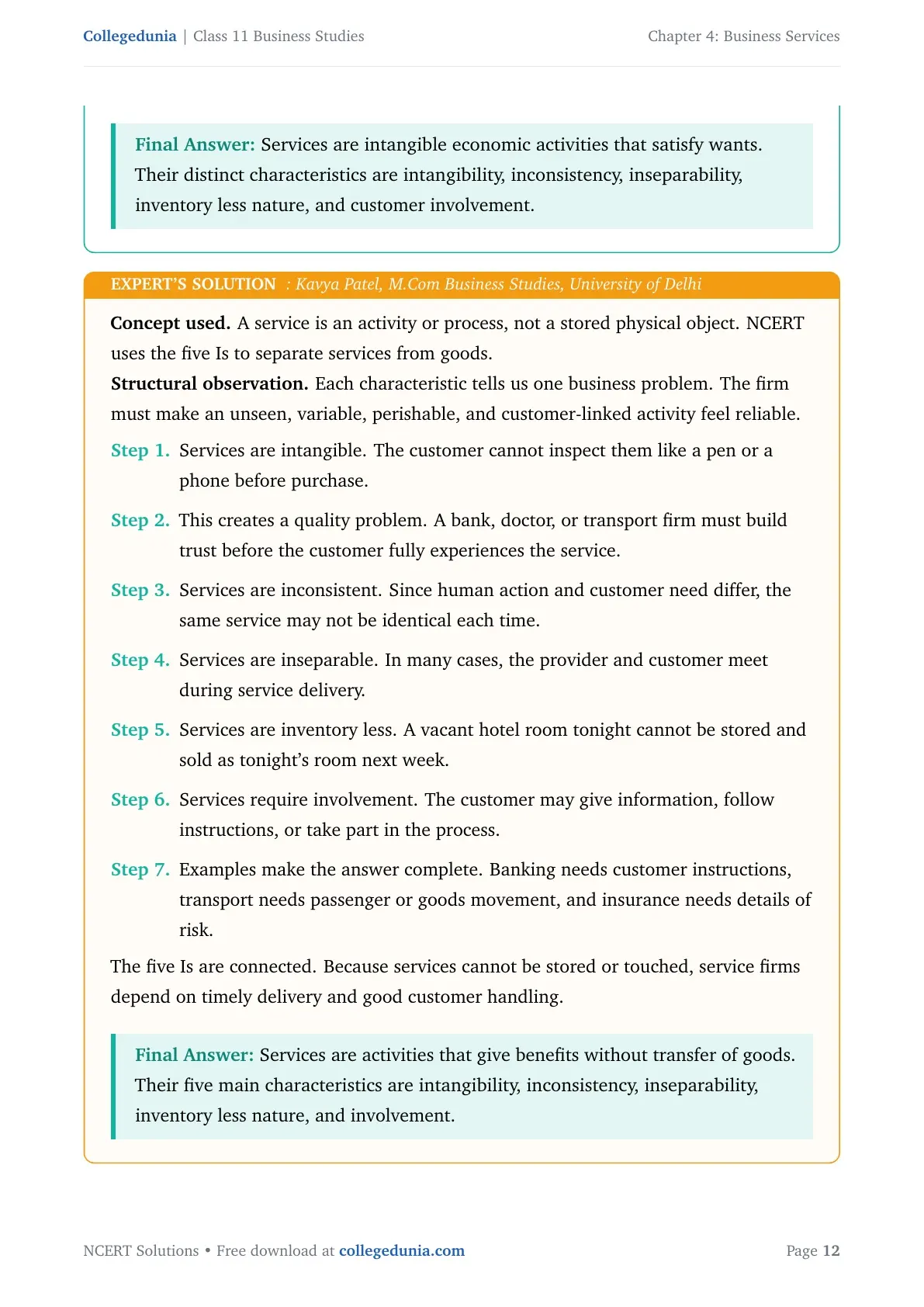
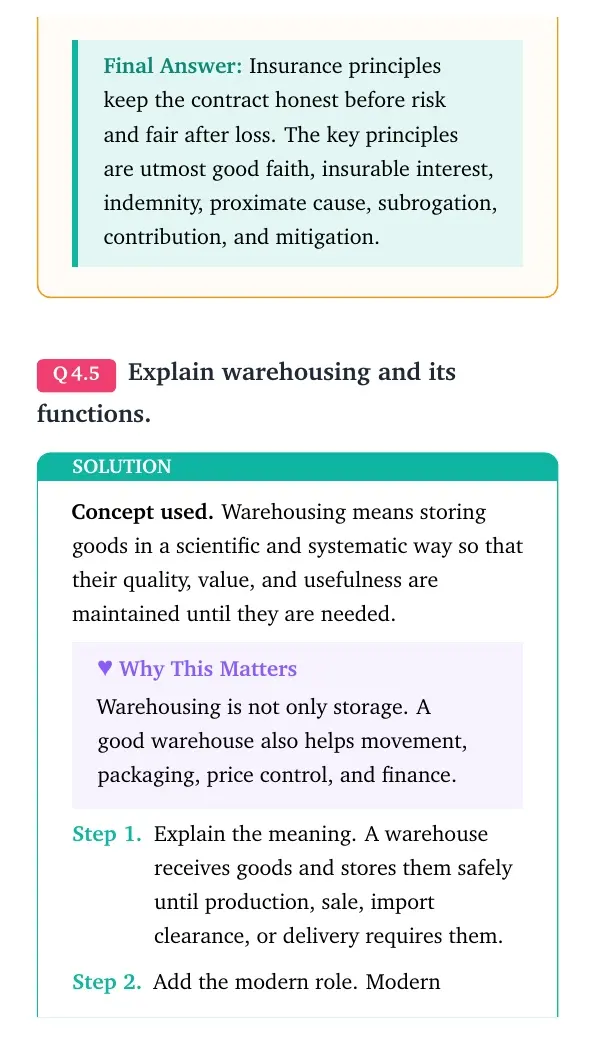
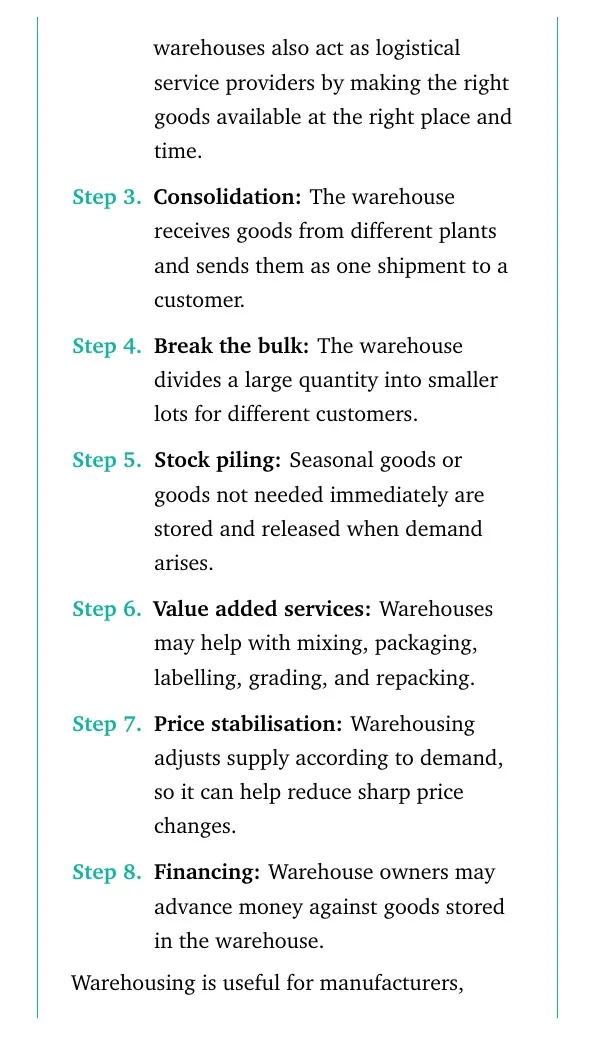
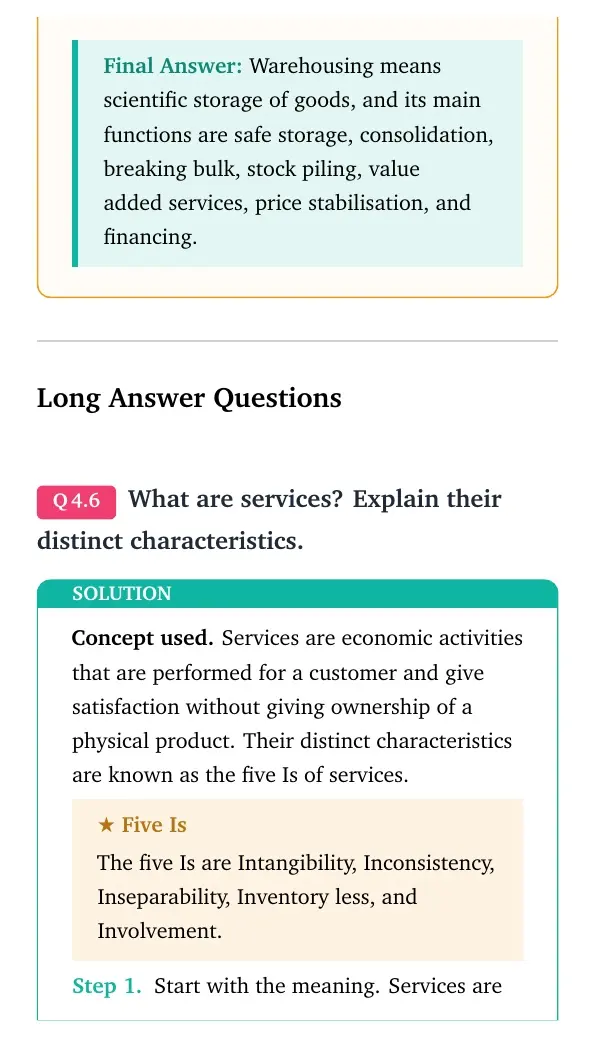
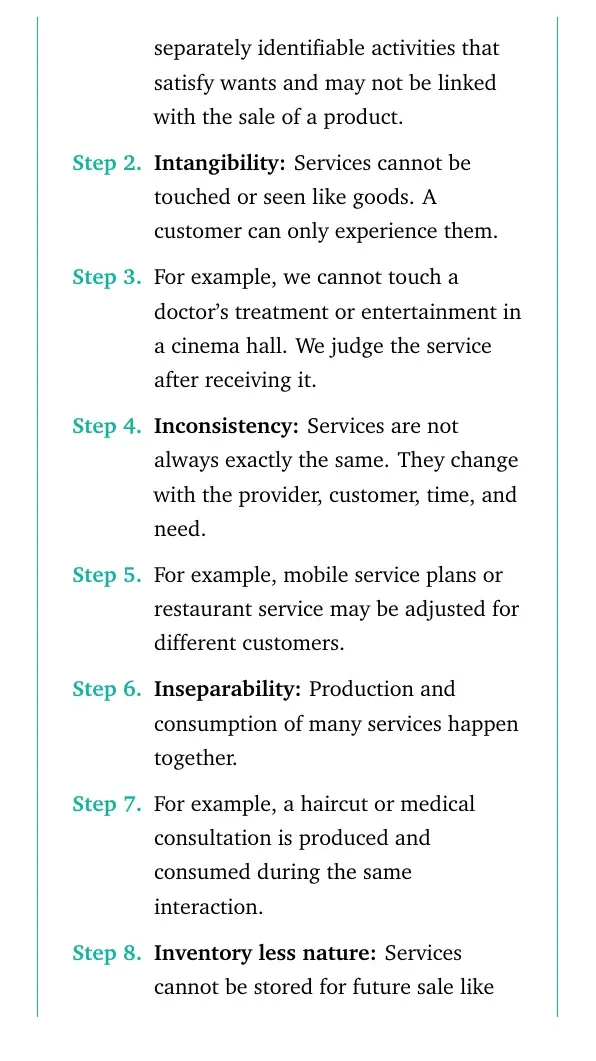
The PDF explains every exercise prompt in direct answer format. Business Services is a scoring chapter because many answers follow fixed headings. Students should focus on the five Is of services, e-banking benefits, insurance principles, and warehousing functions.
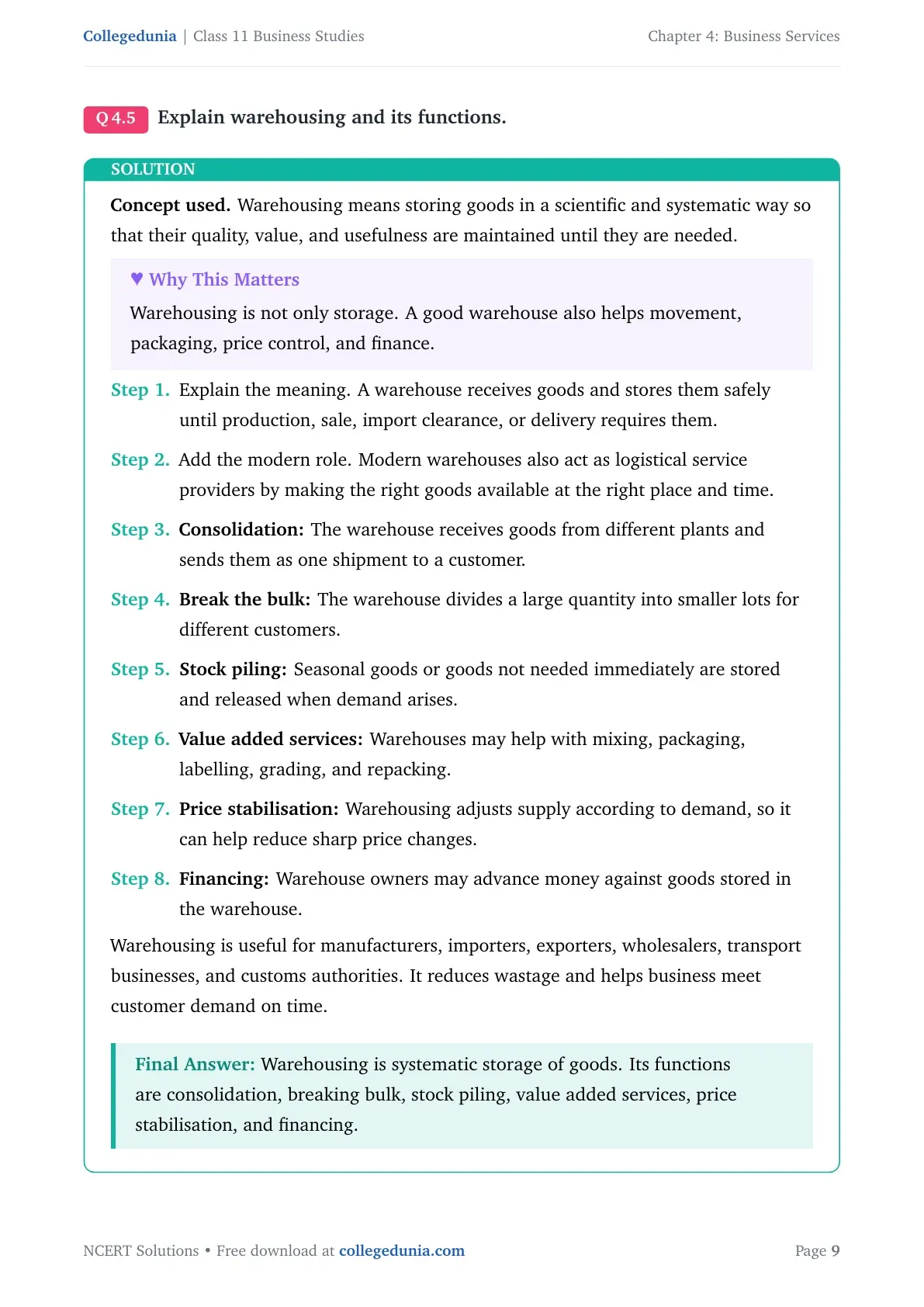
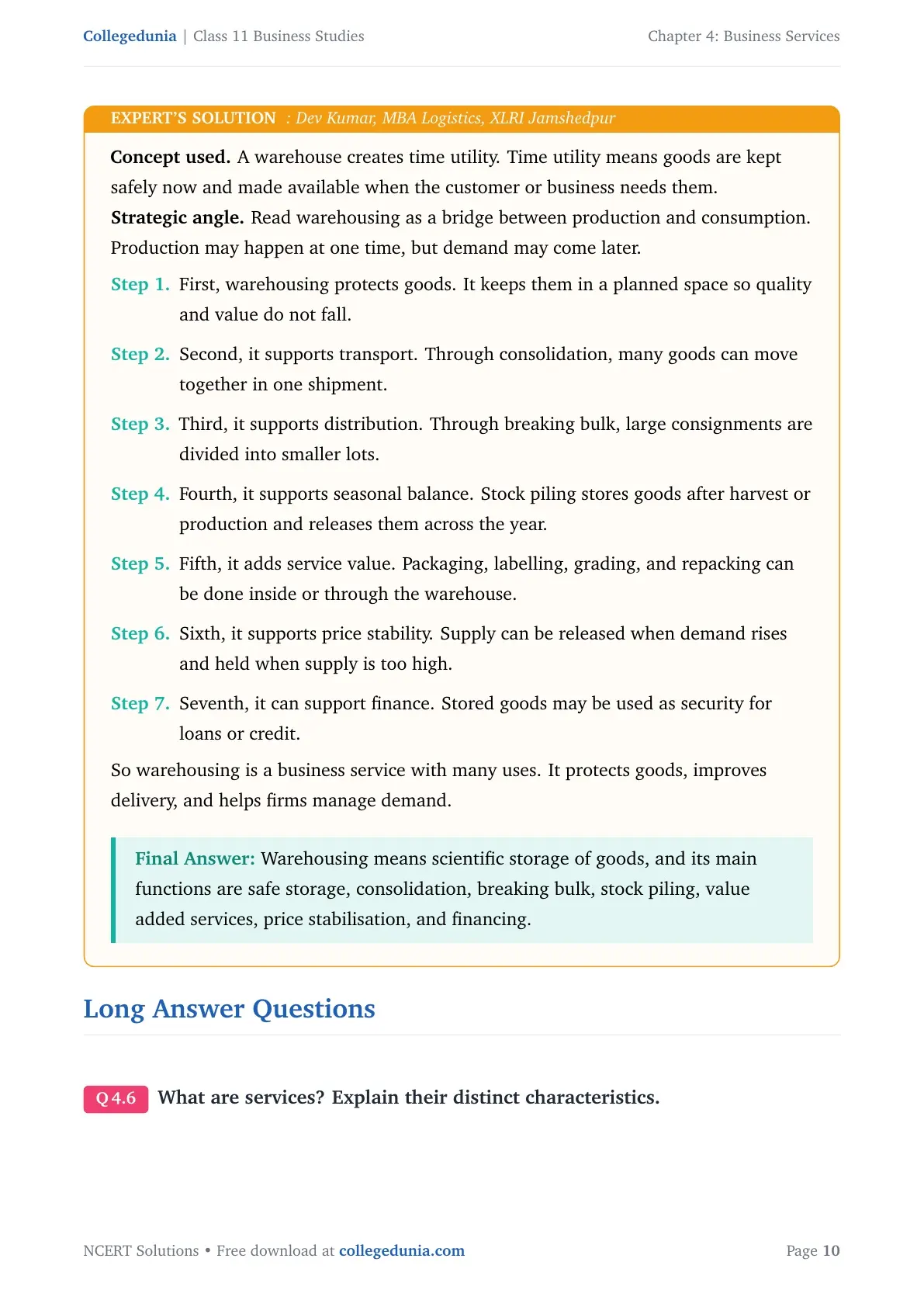
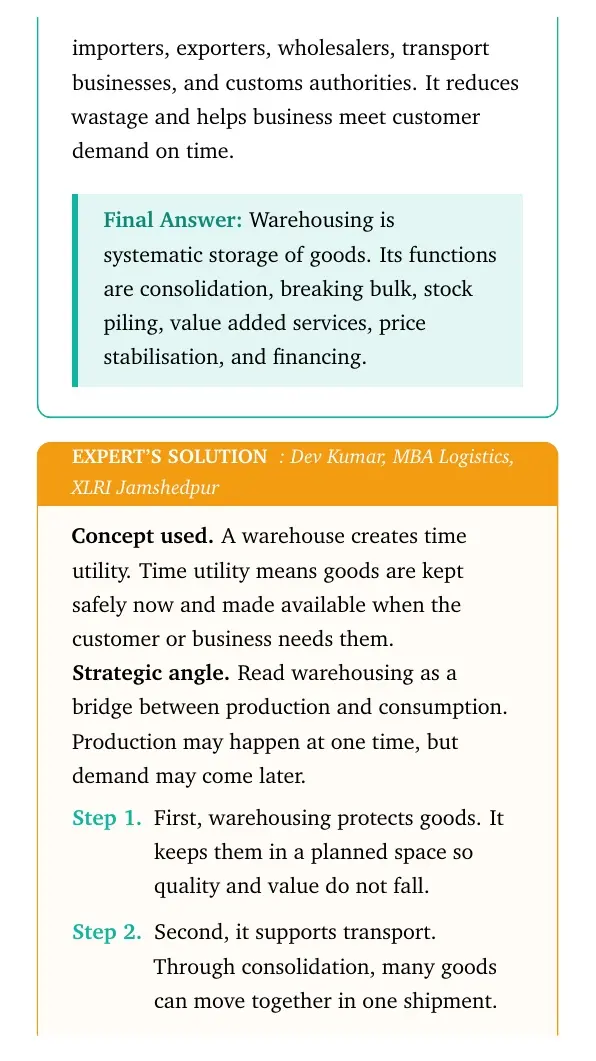
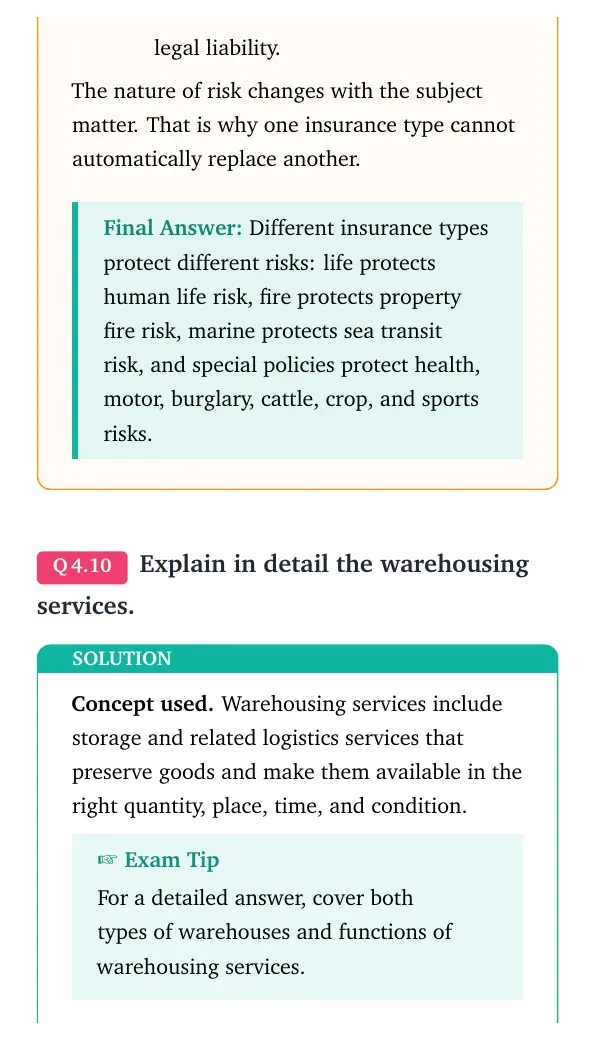
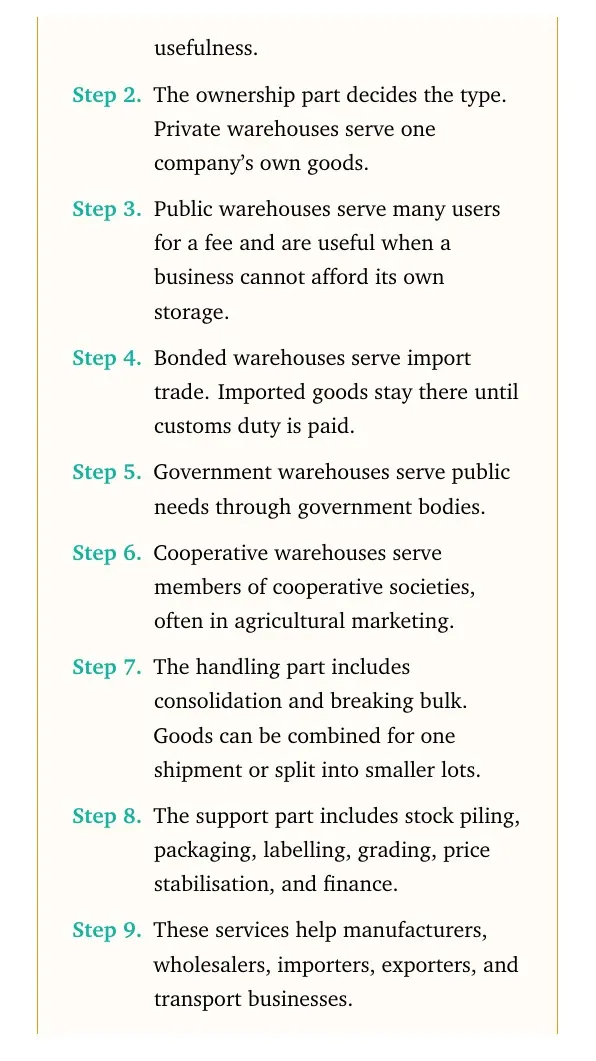
- Short answers define services, goods, e-banking, telecom services, and warehousing.
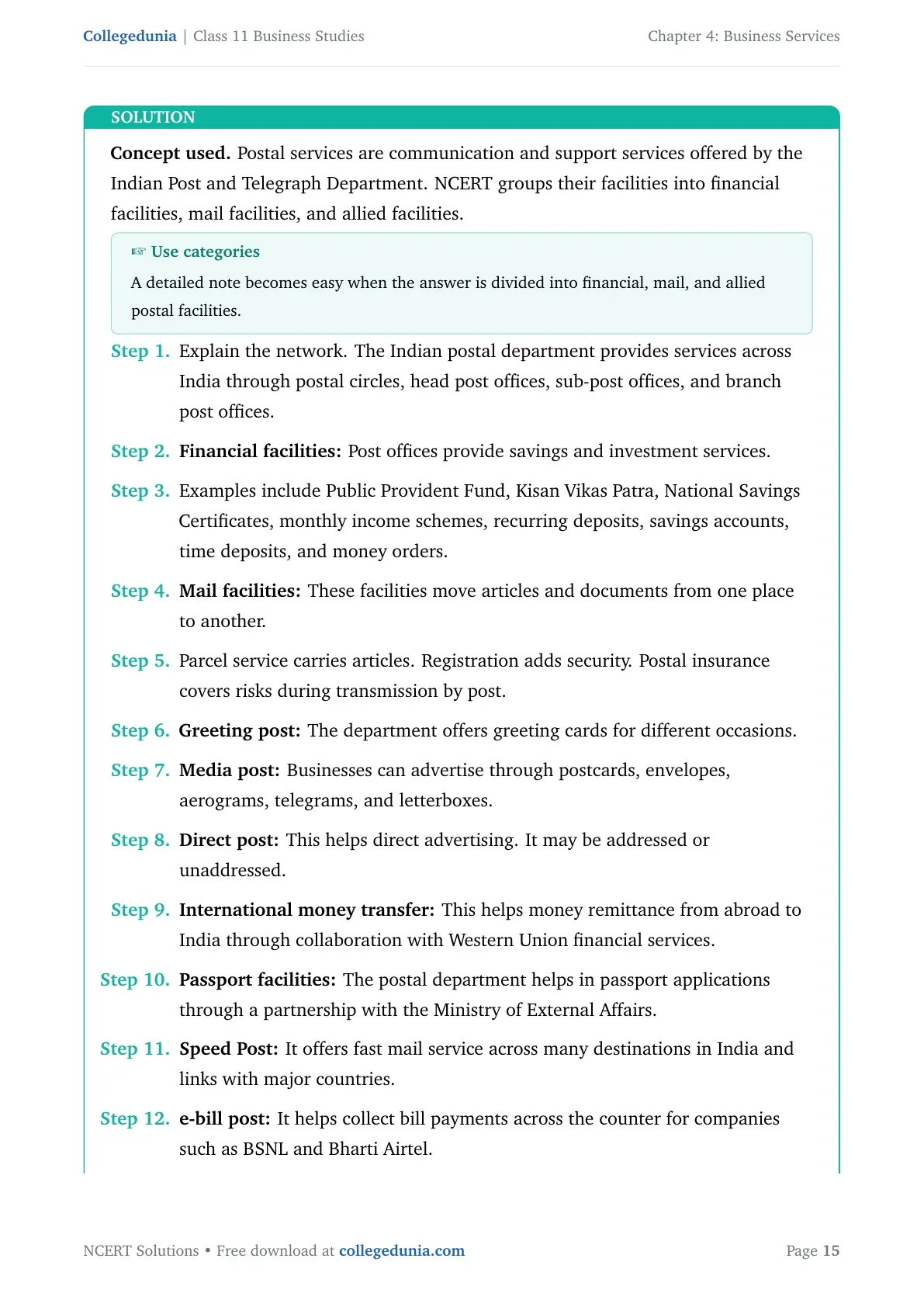
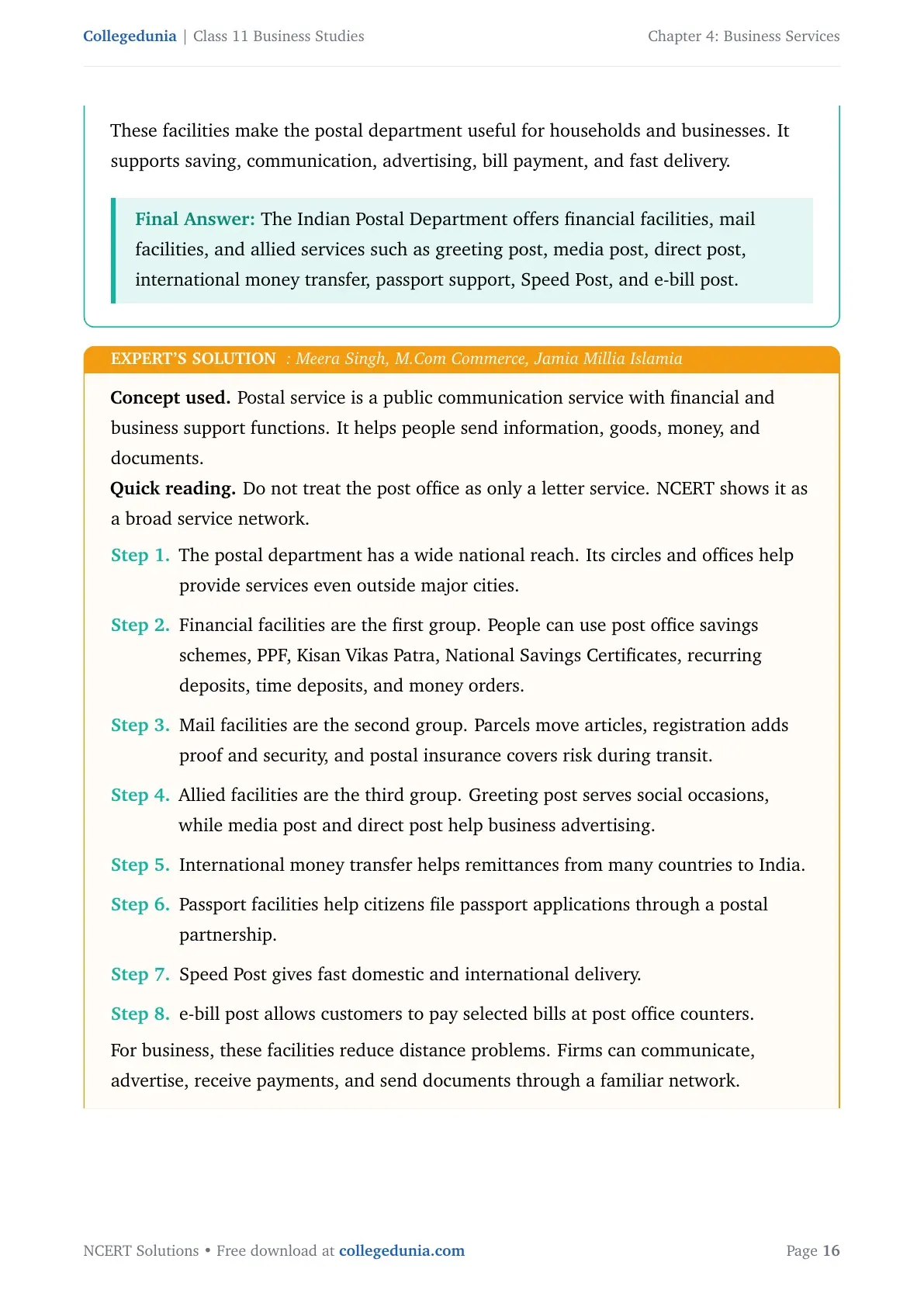
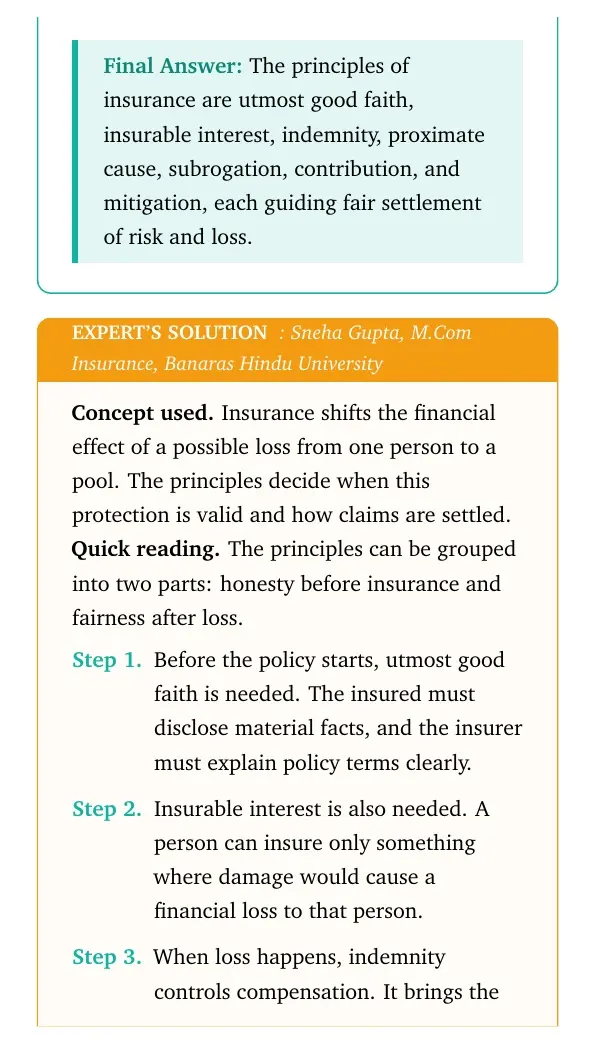
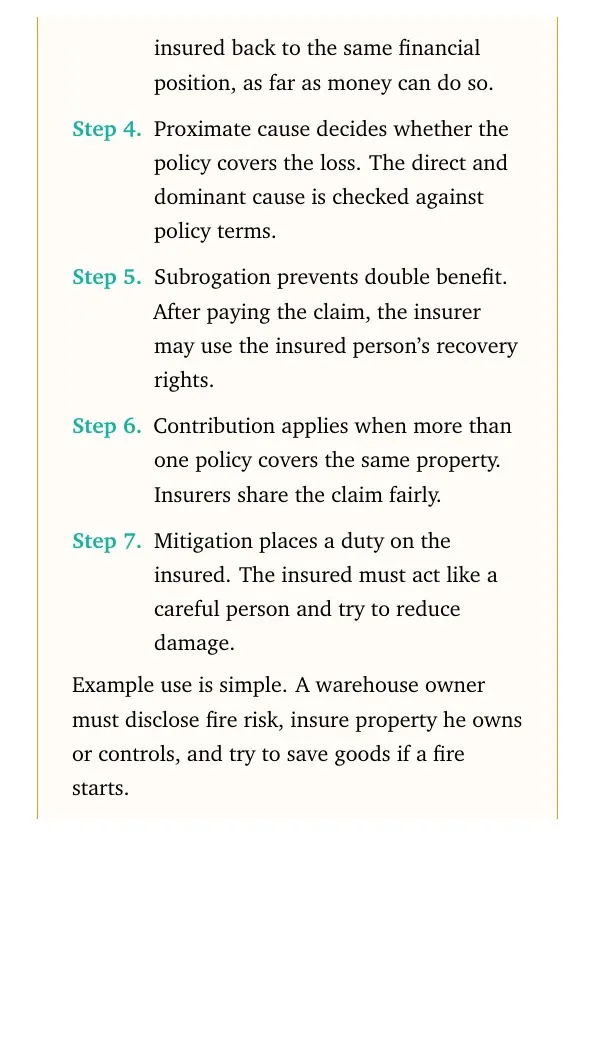
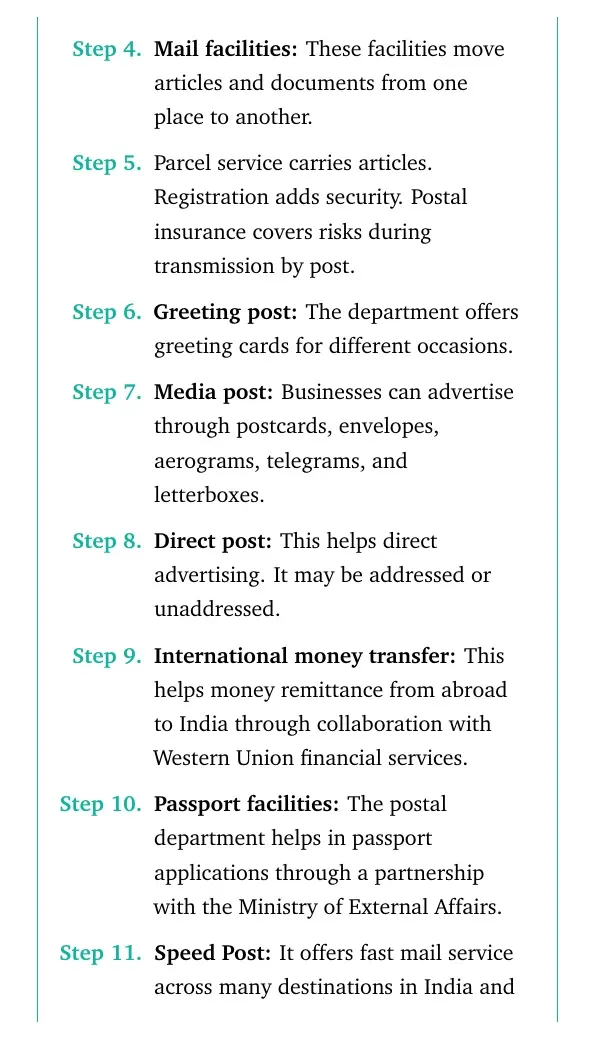
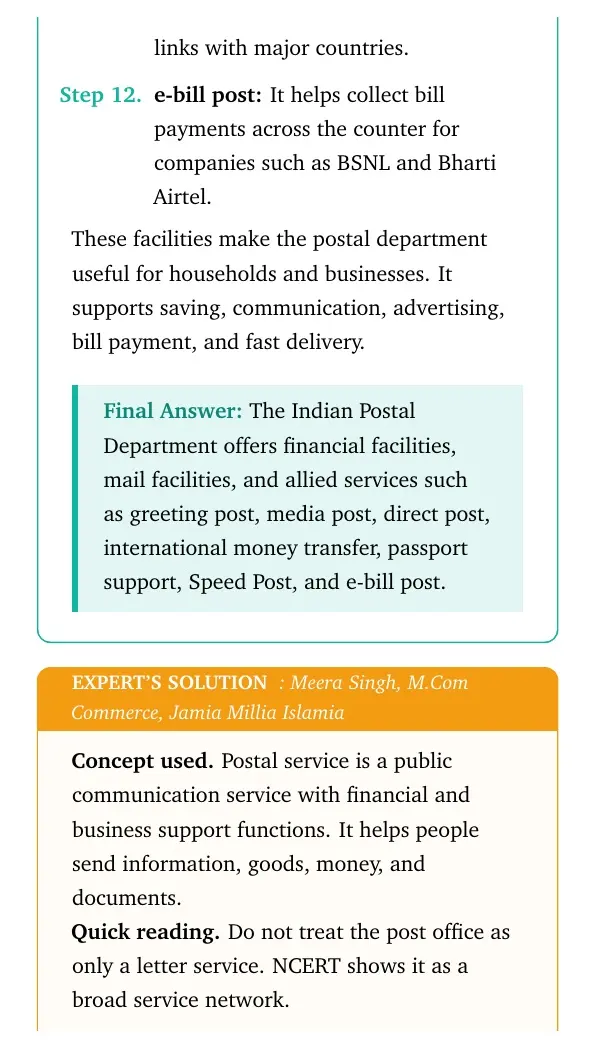
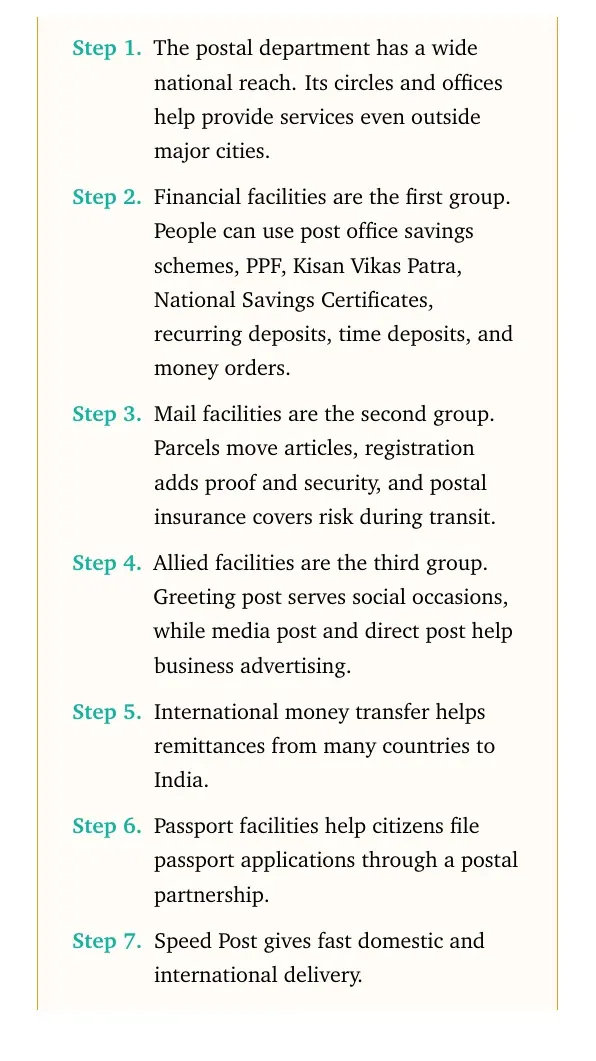
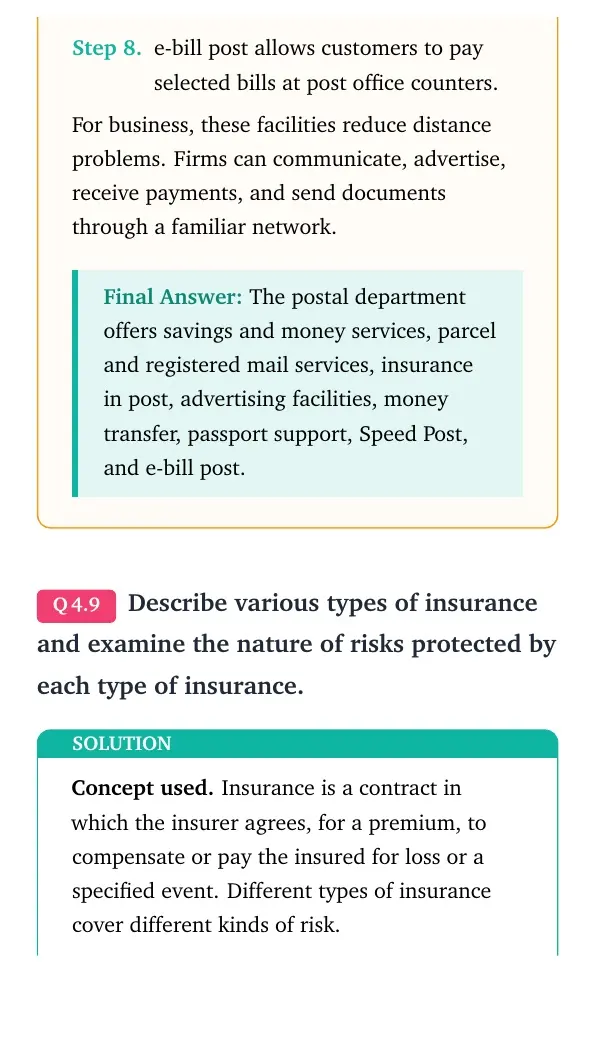
- Long answers explain insurance principles, service types, and postal services.
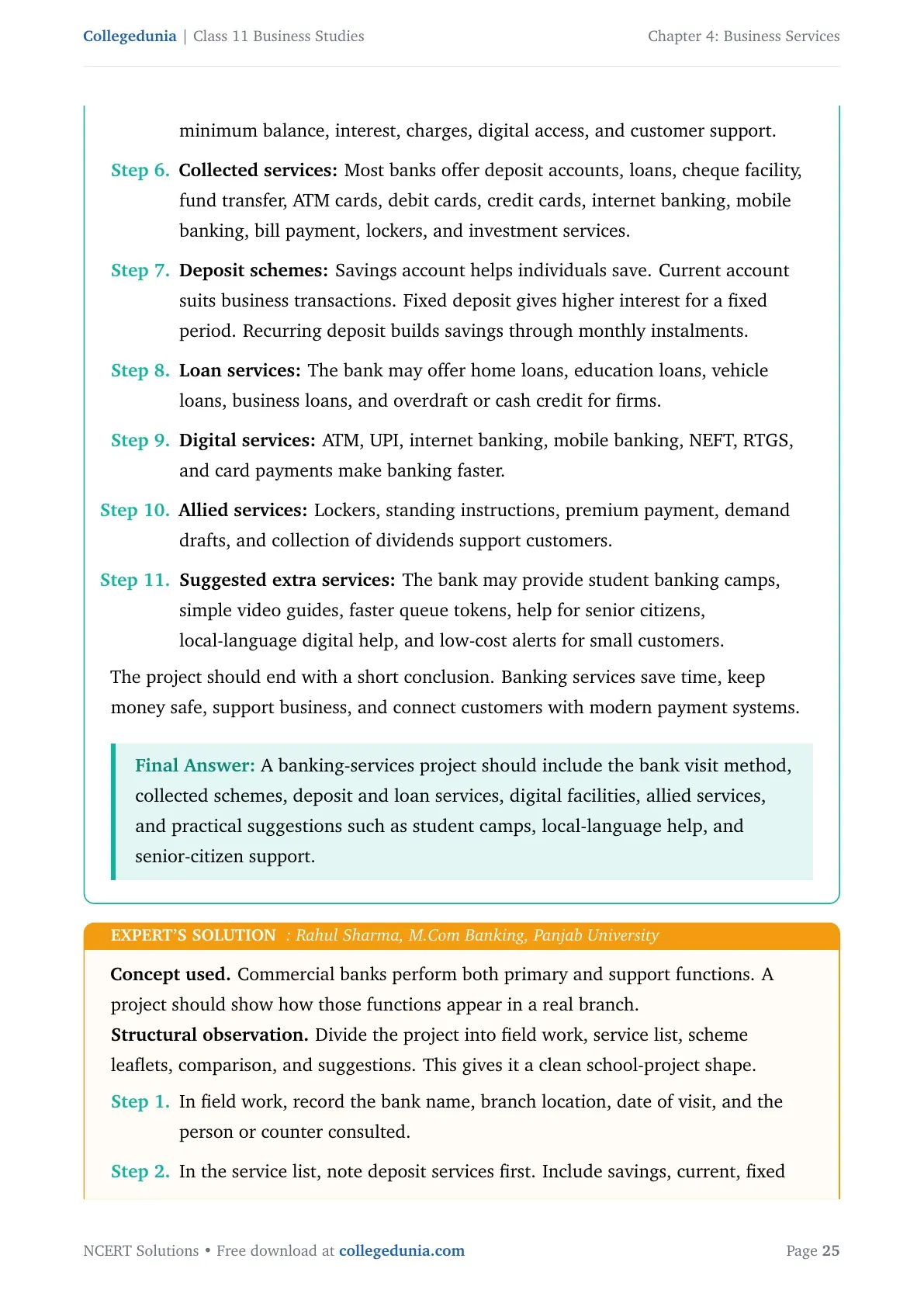
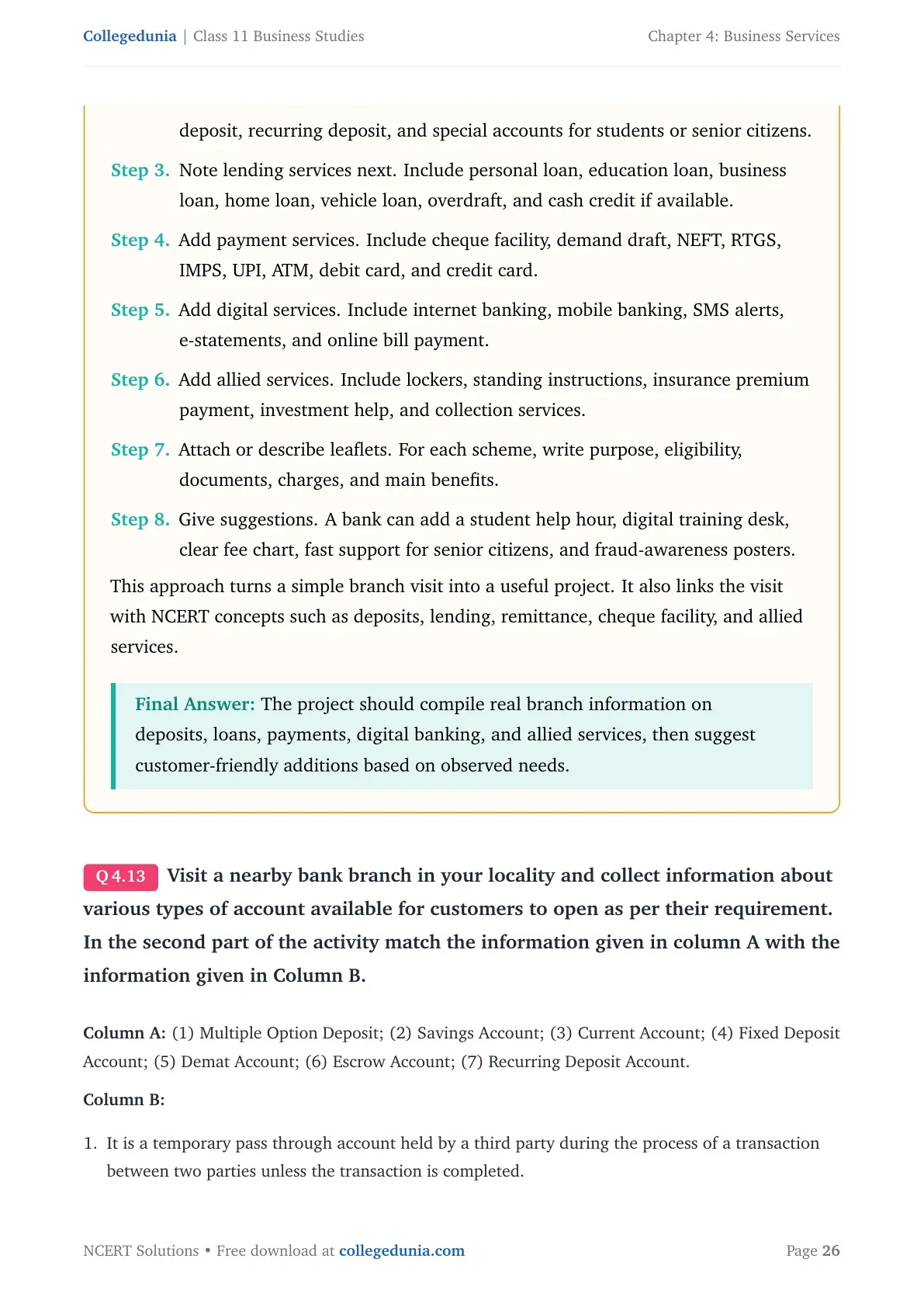
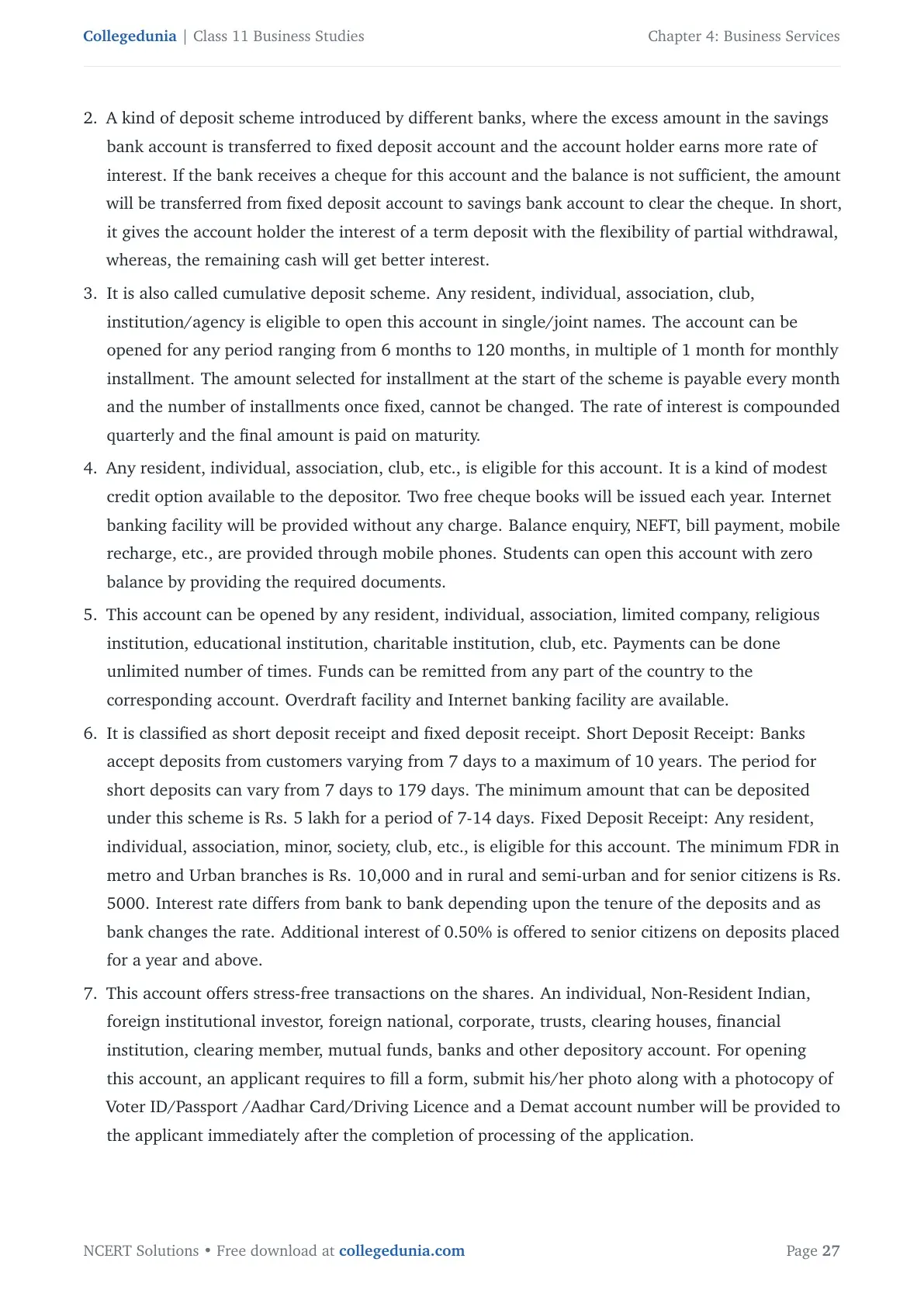
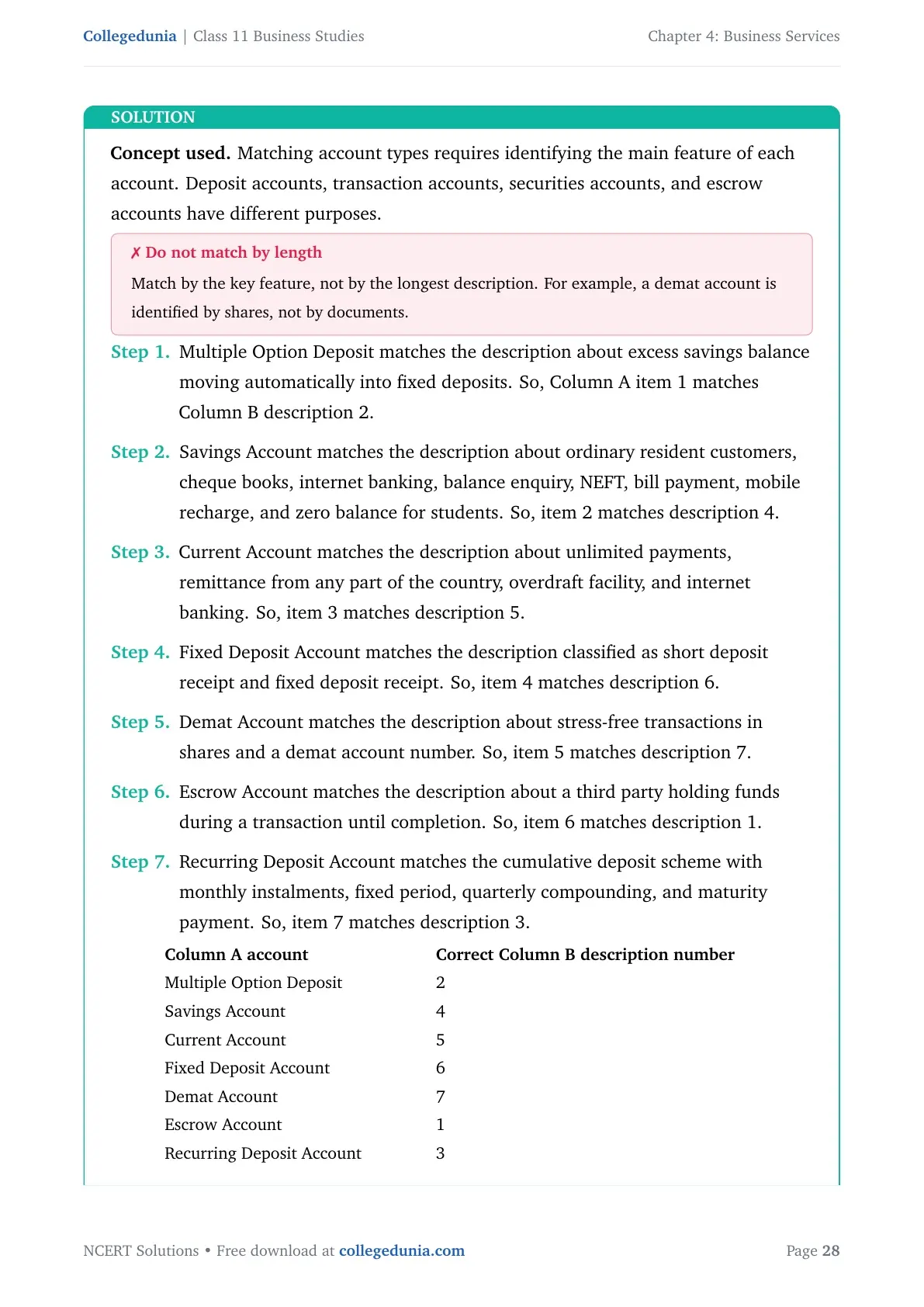
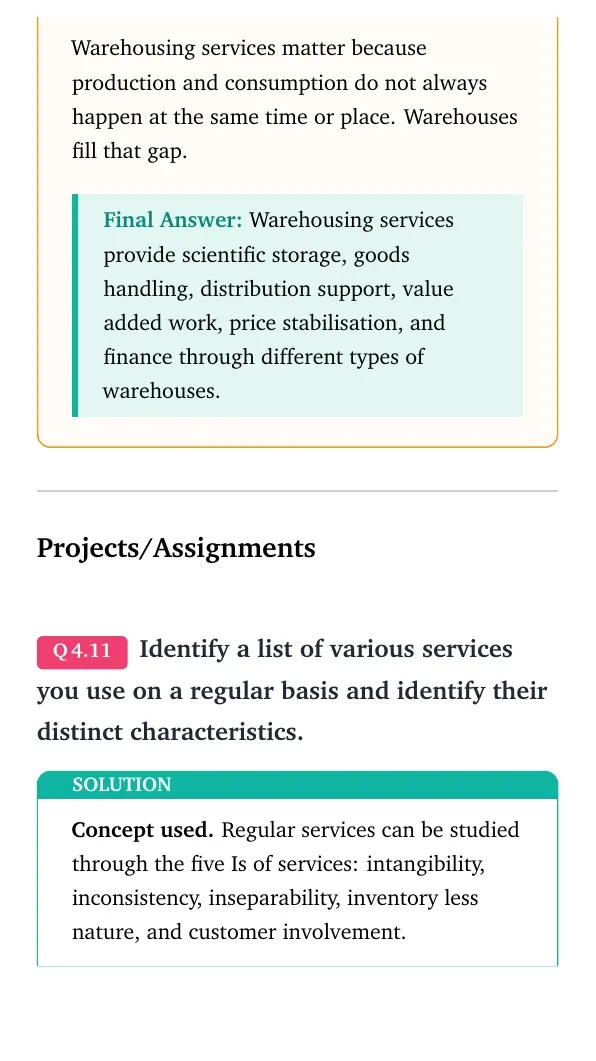
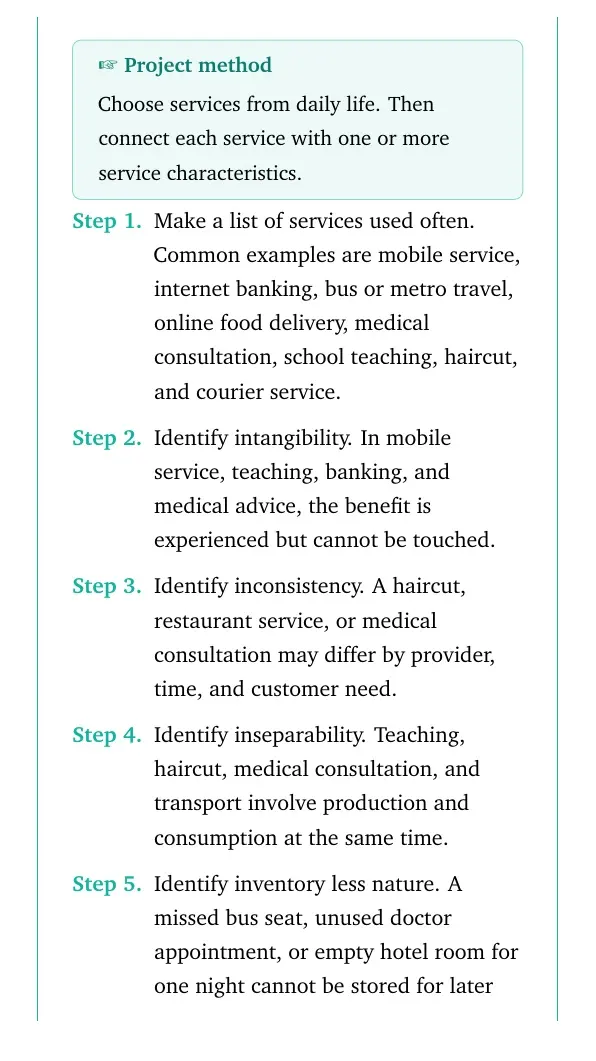
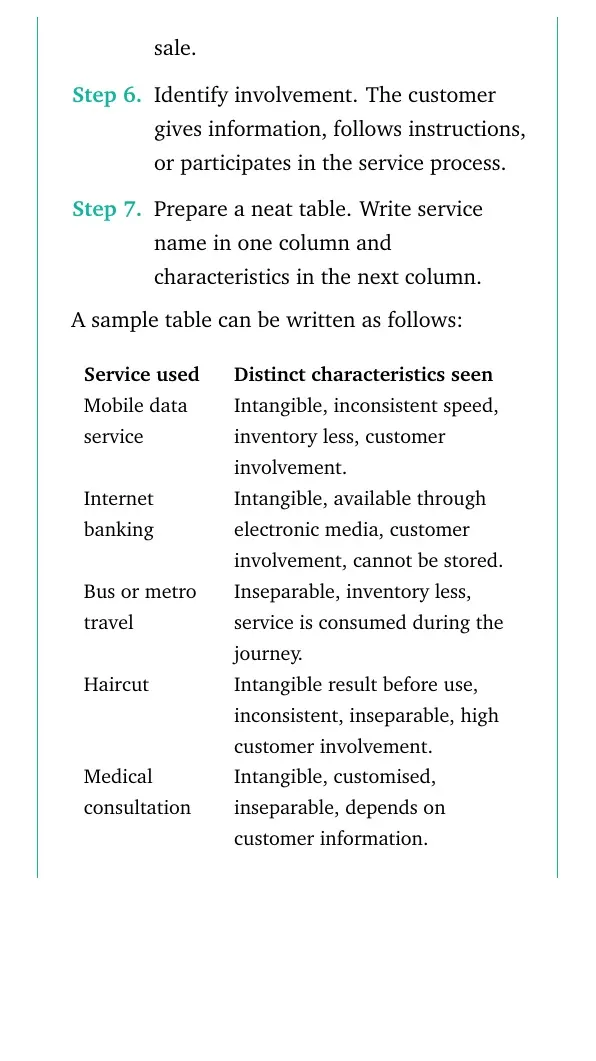
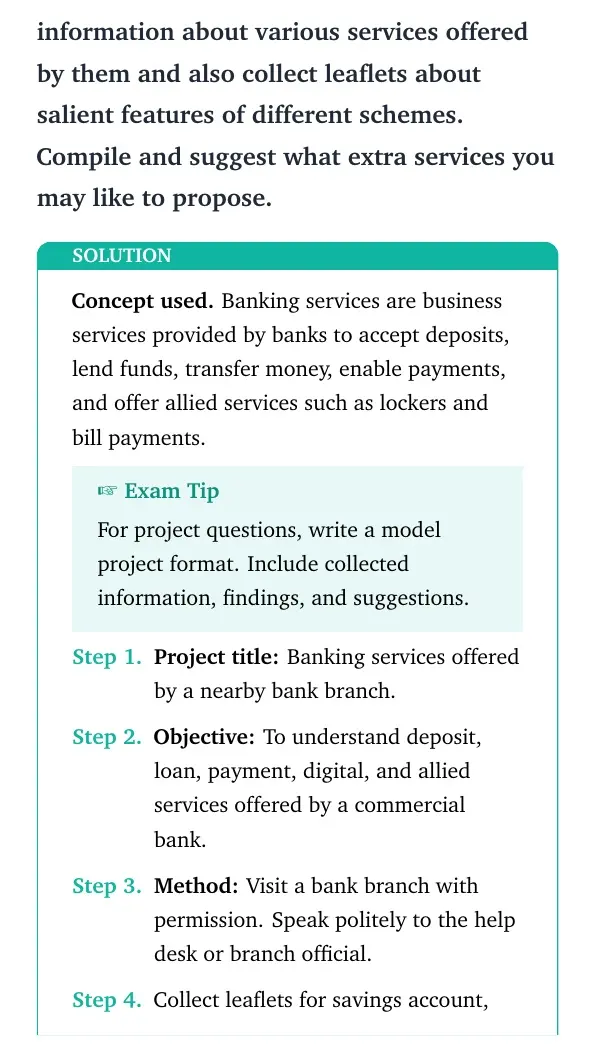
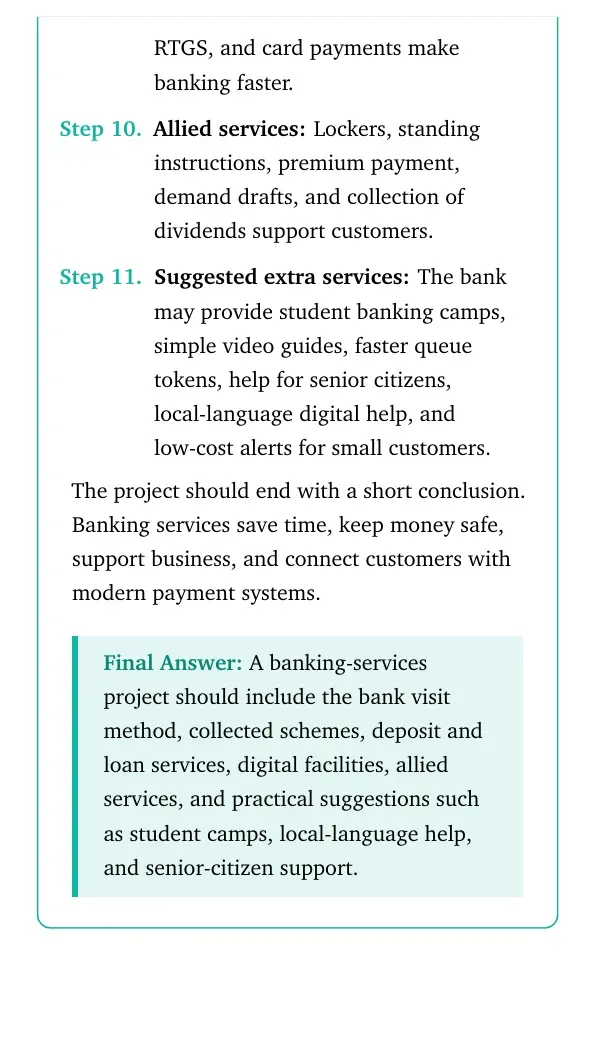
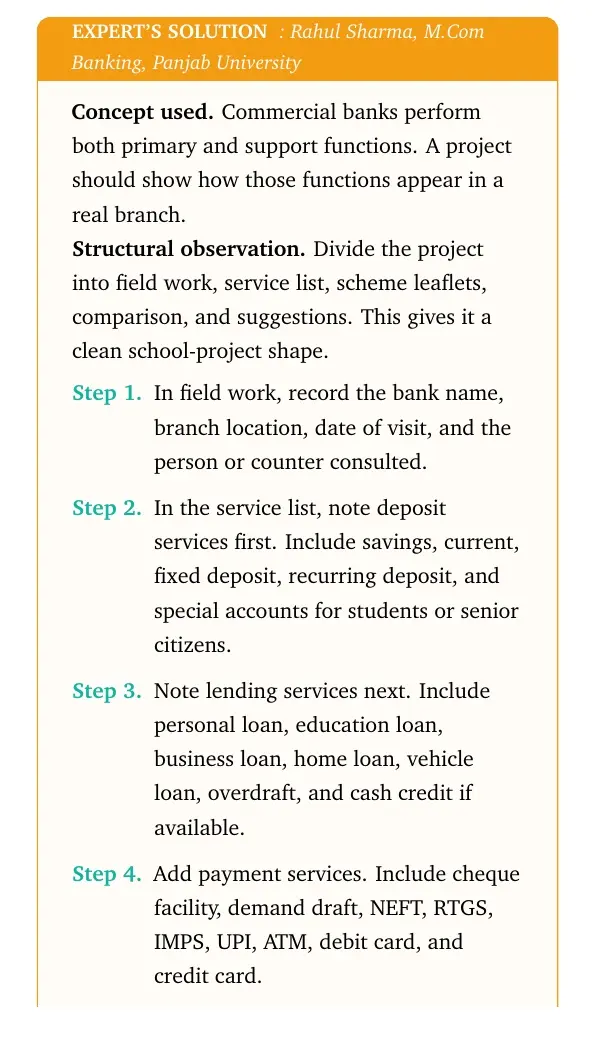
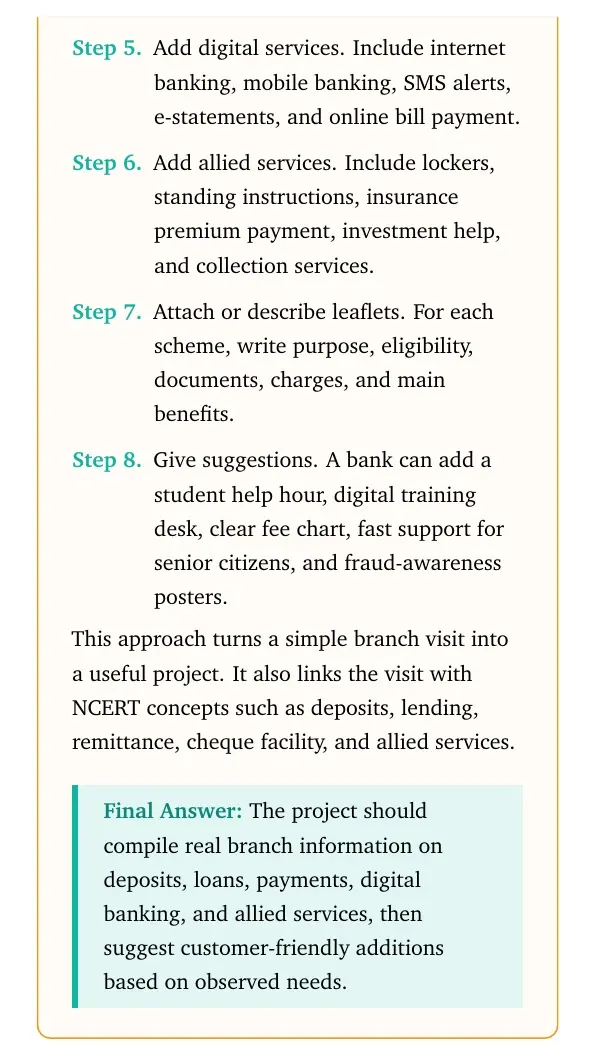
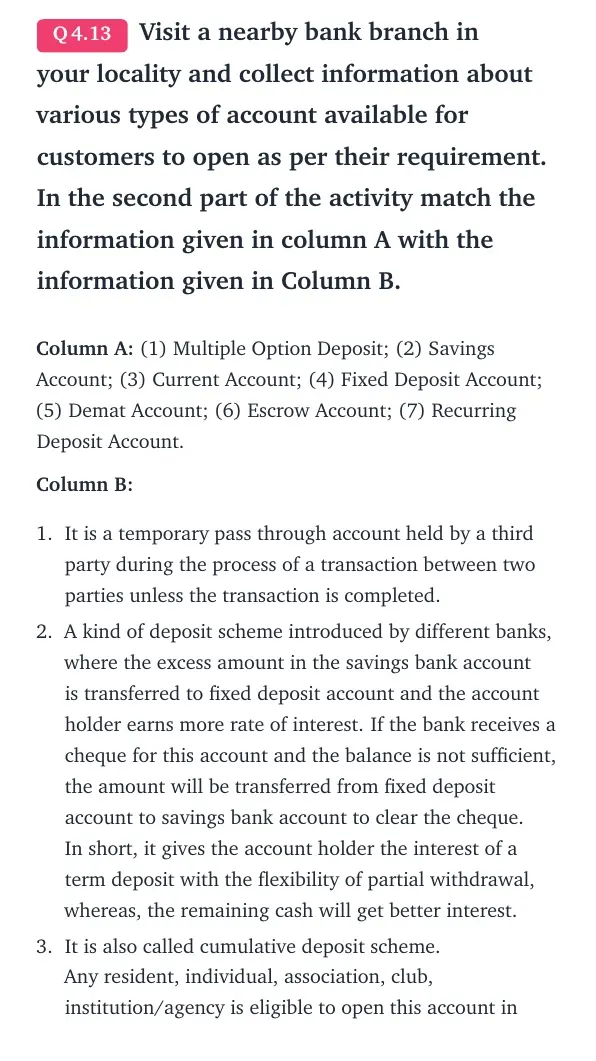
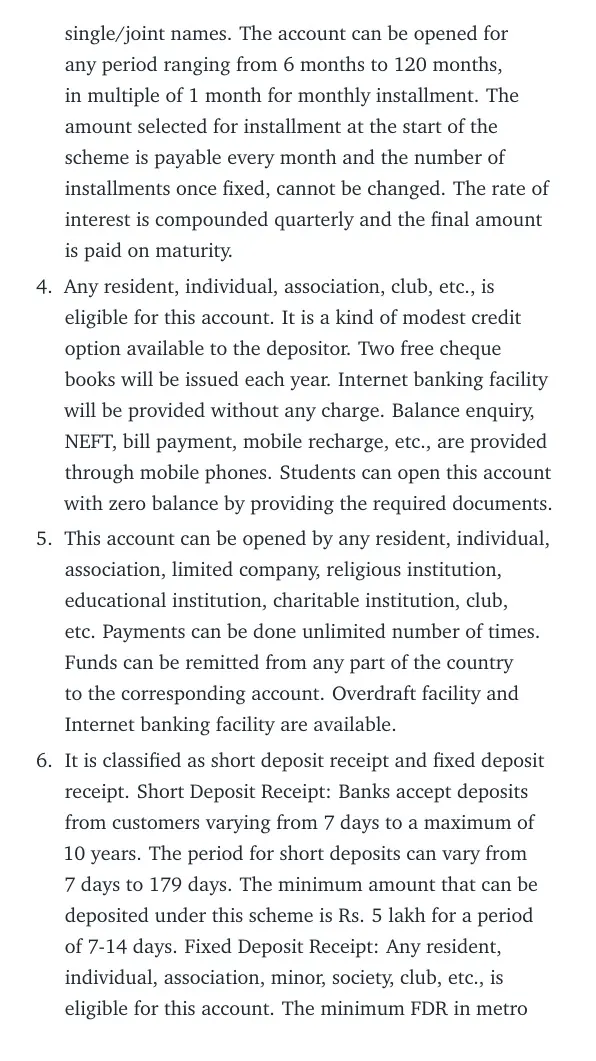
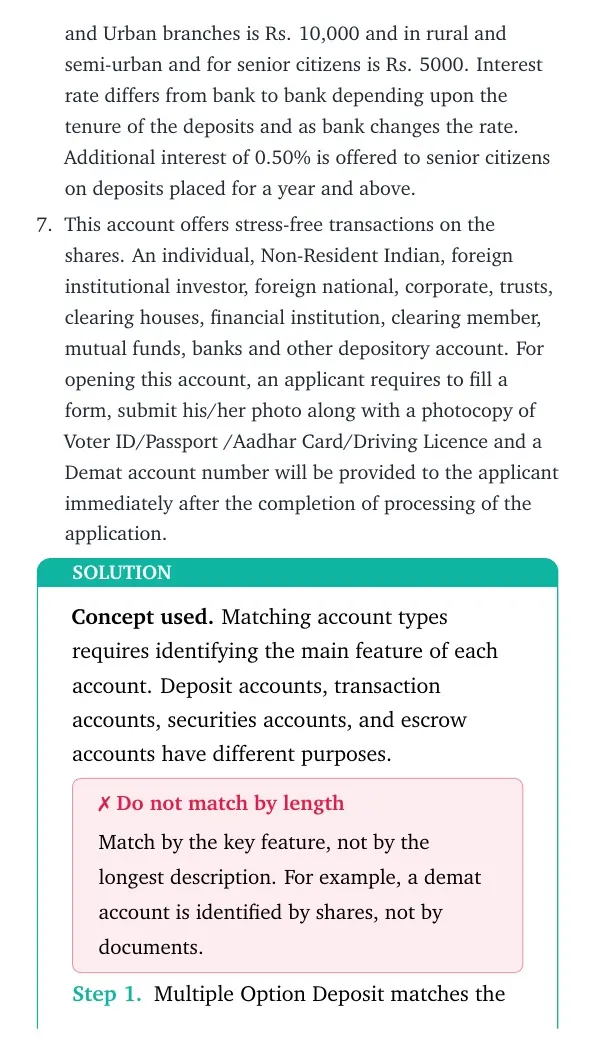
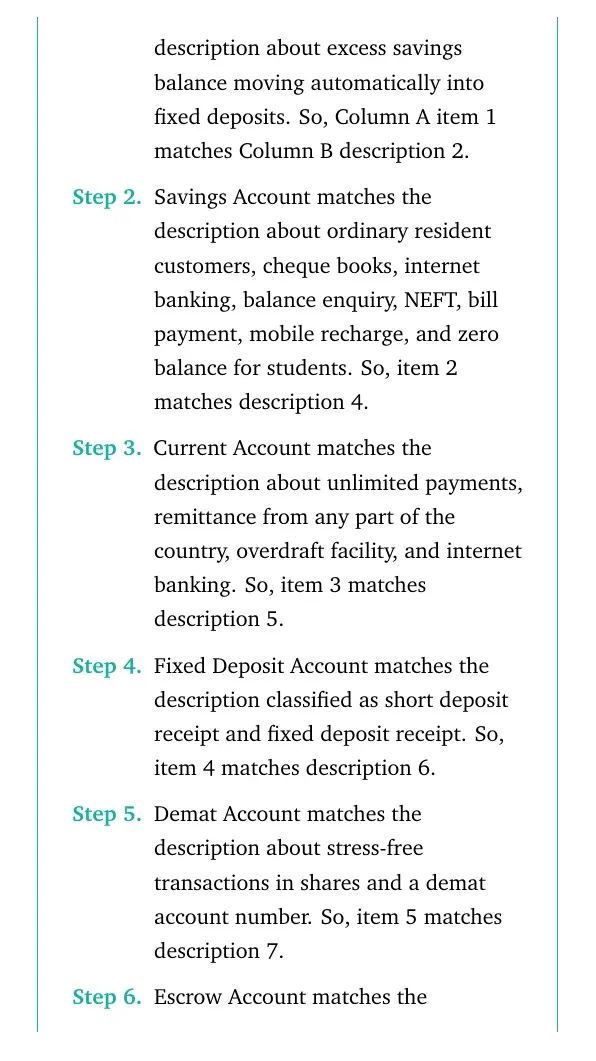
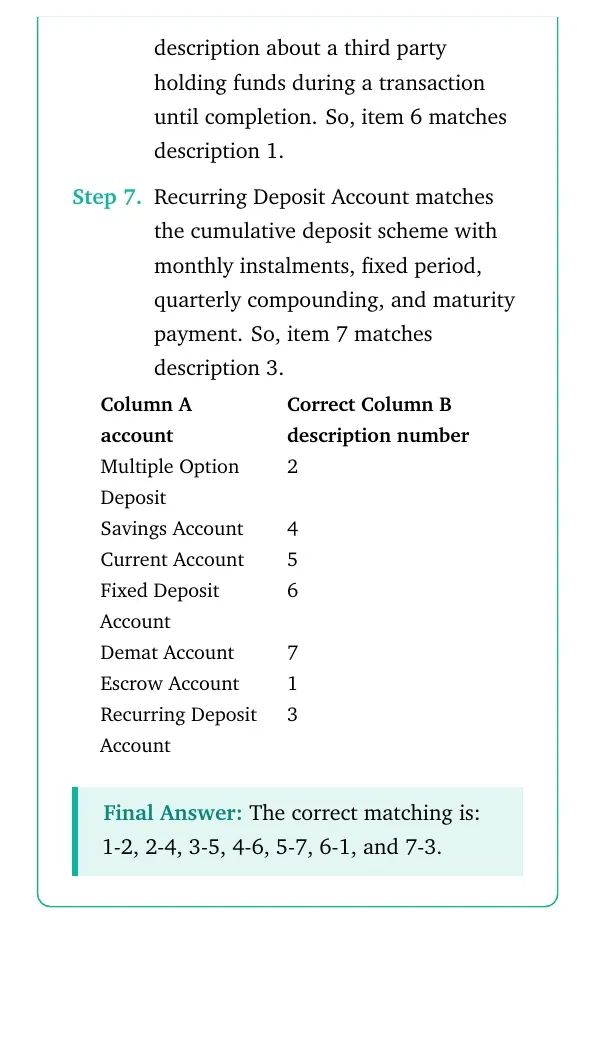
- Project prompts guide students on bank visits, service examples, and account matching.
Goods and Services Difference in Business Services
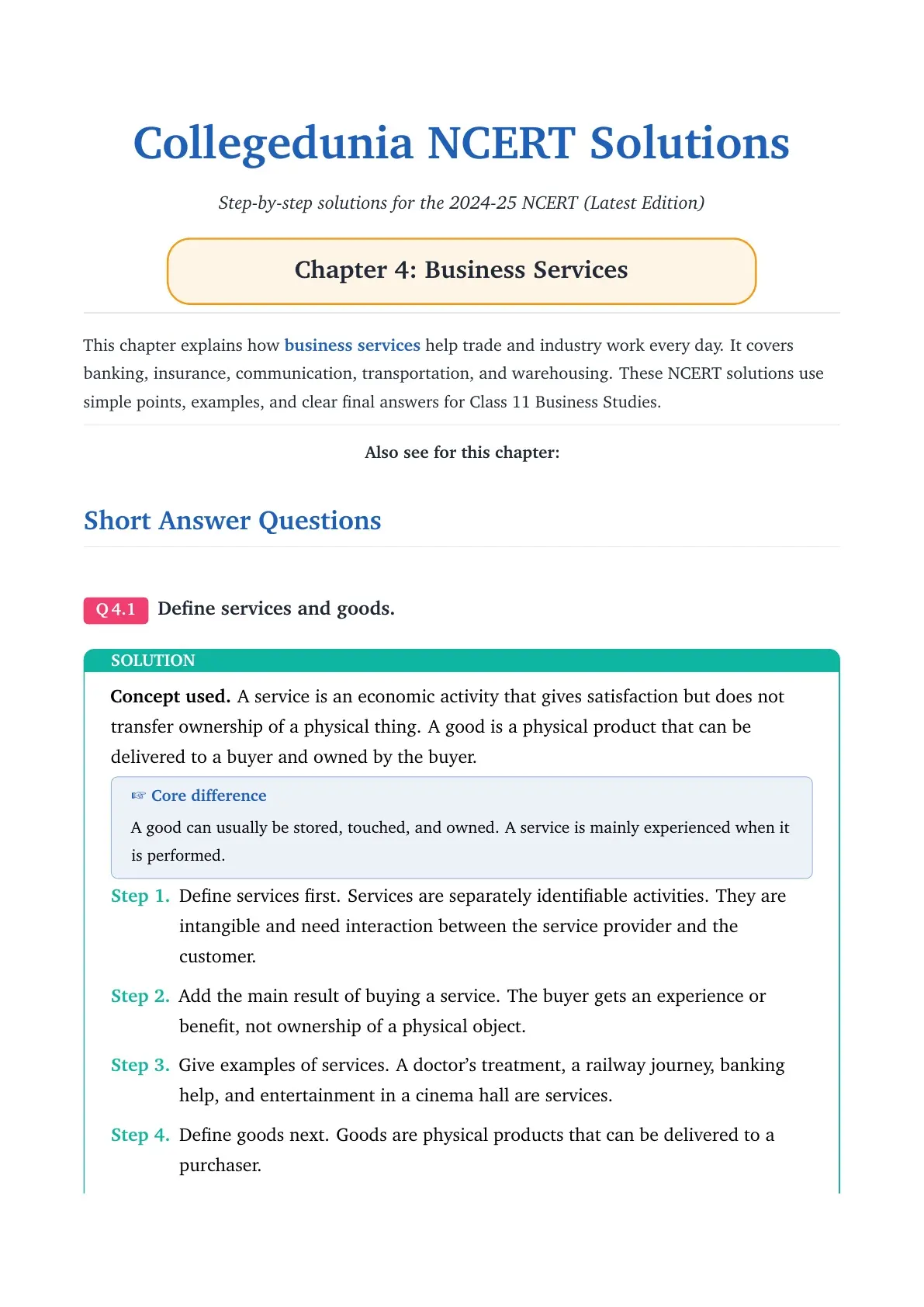
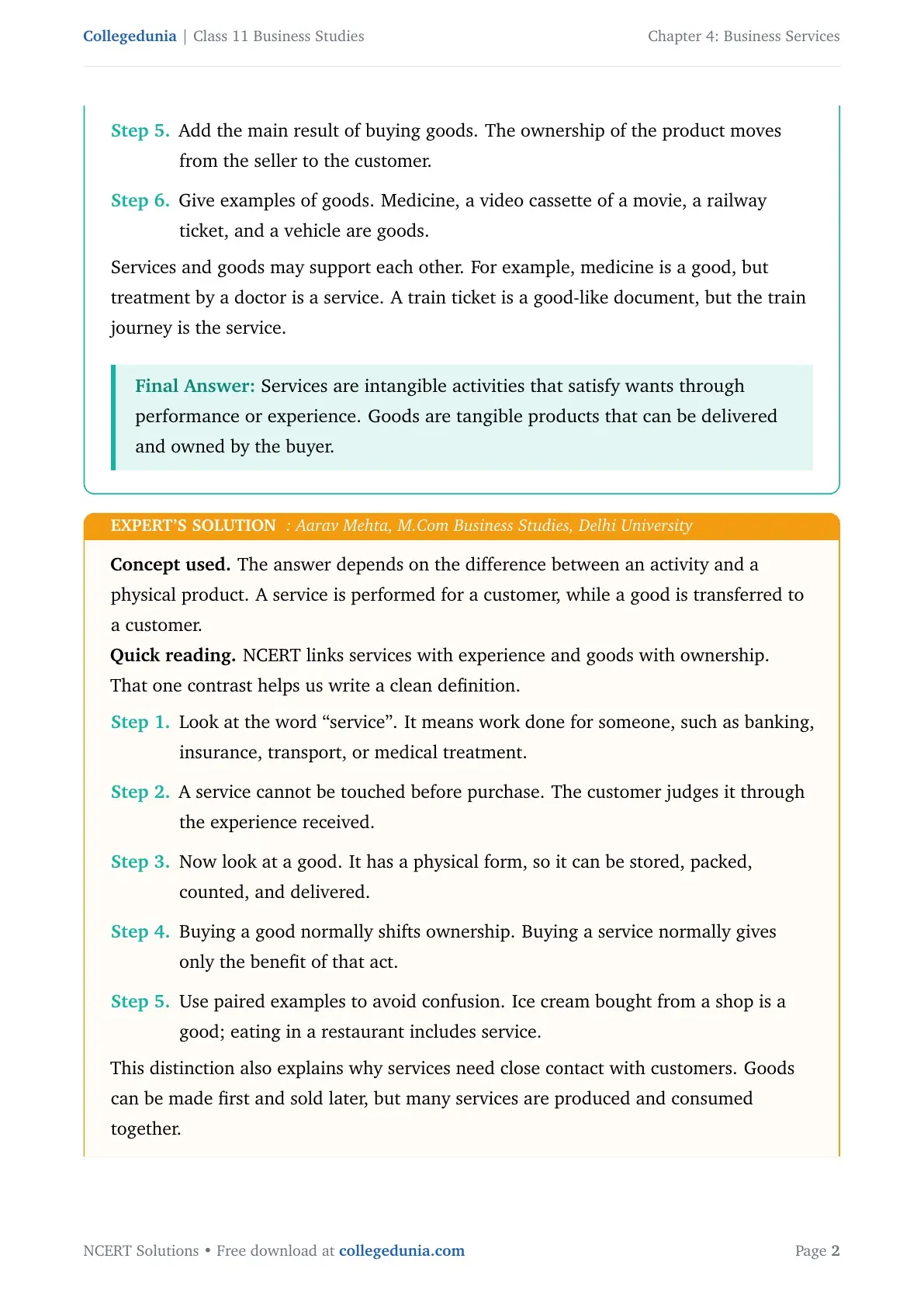
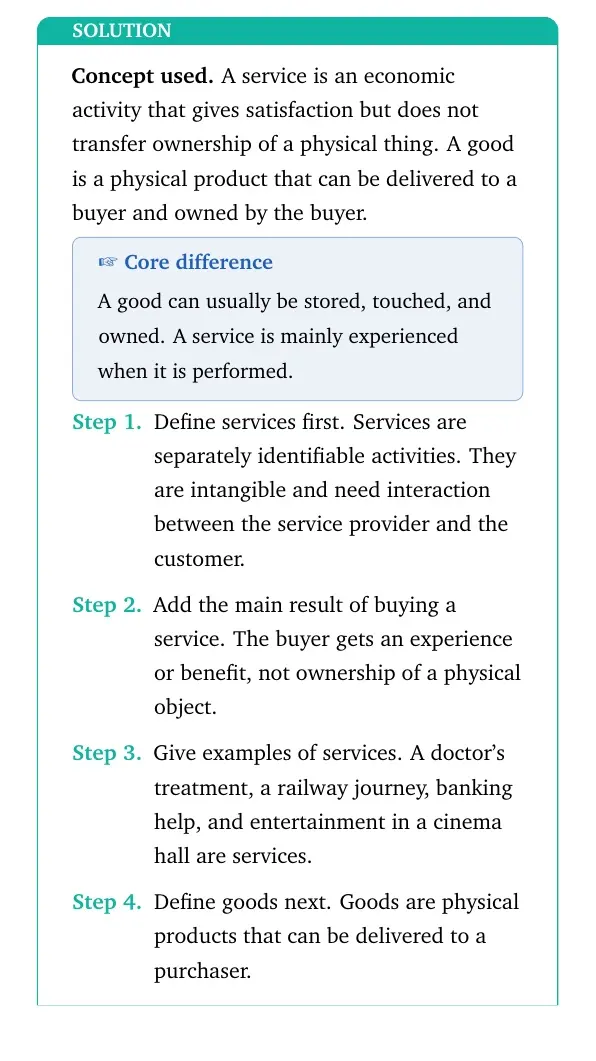
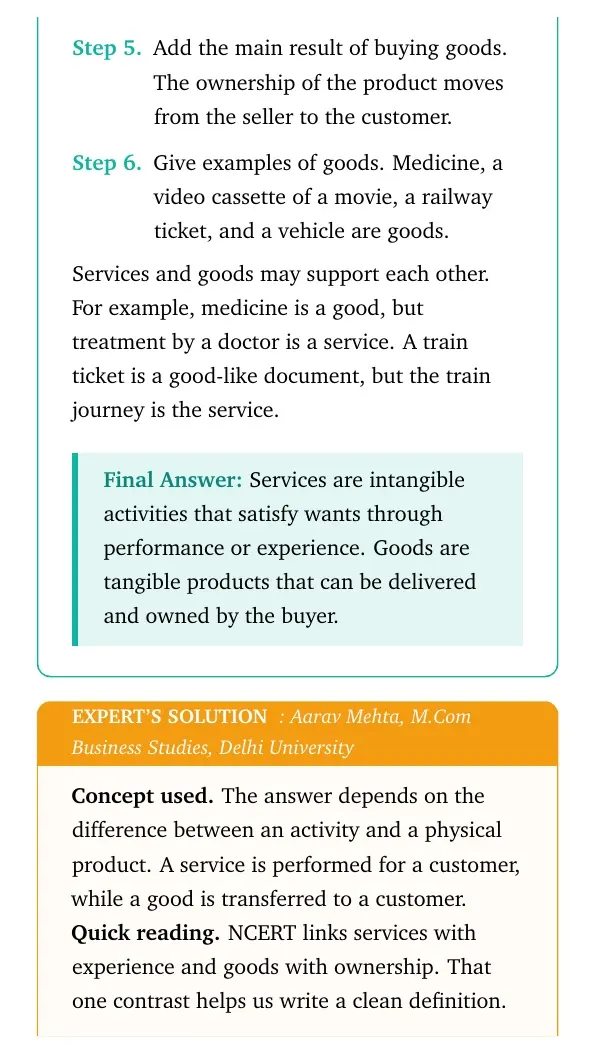
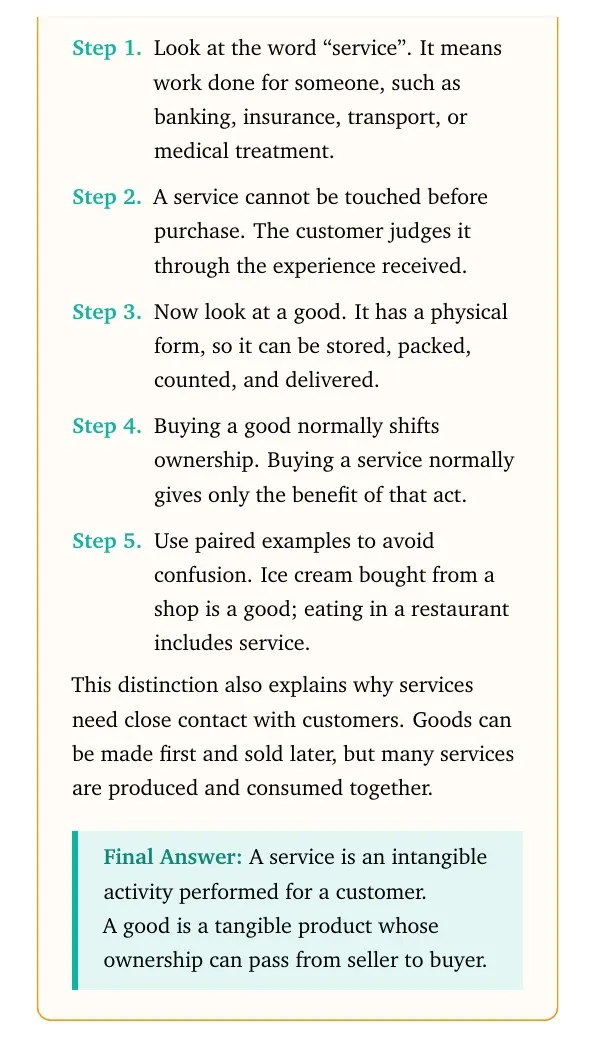
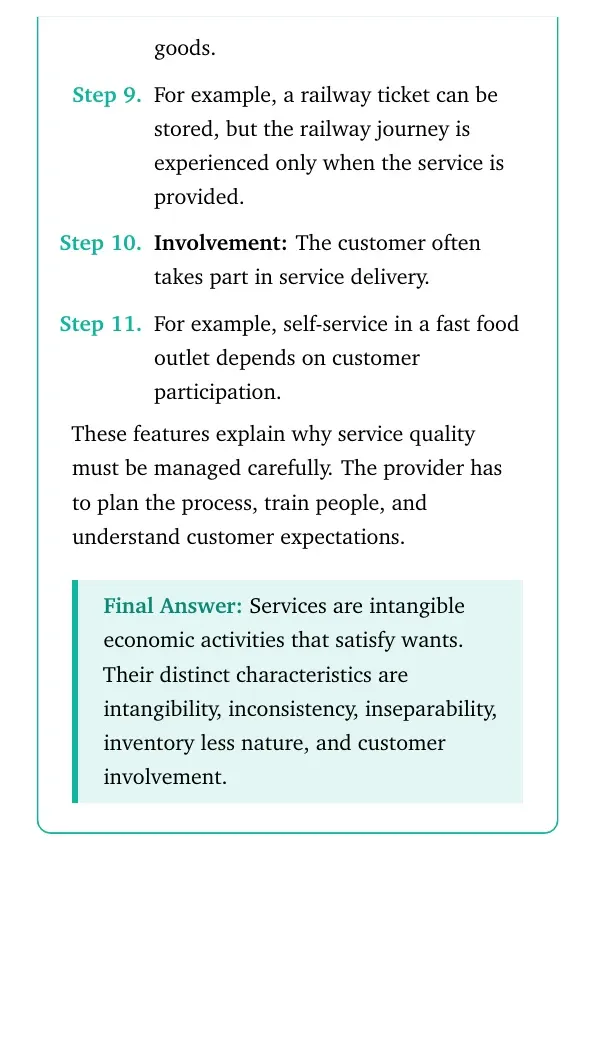
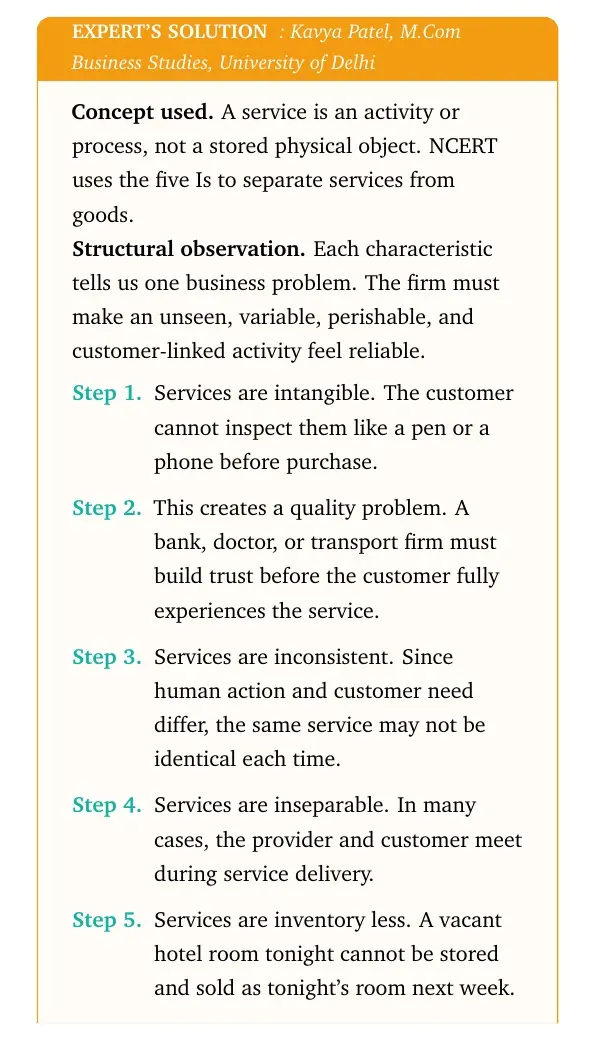
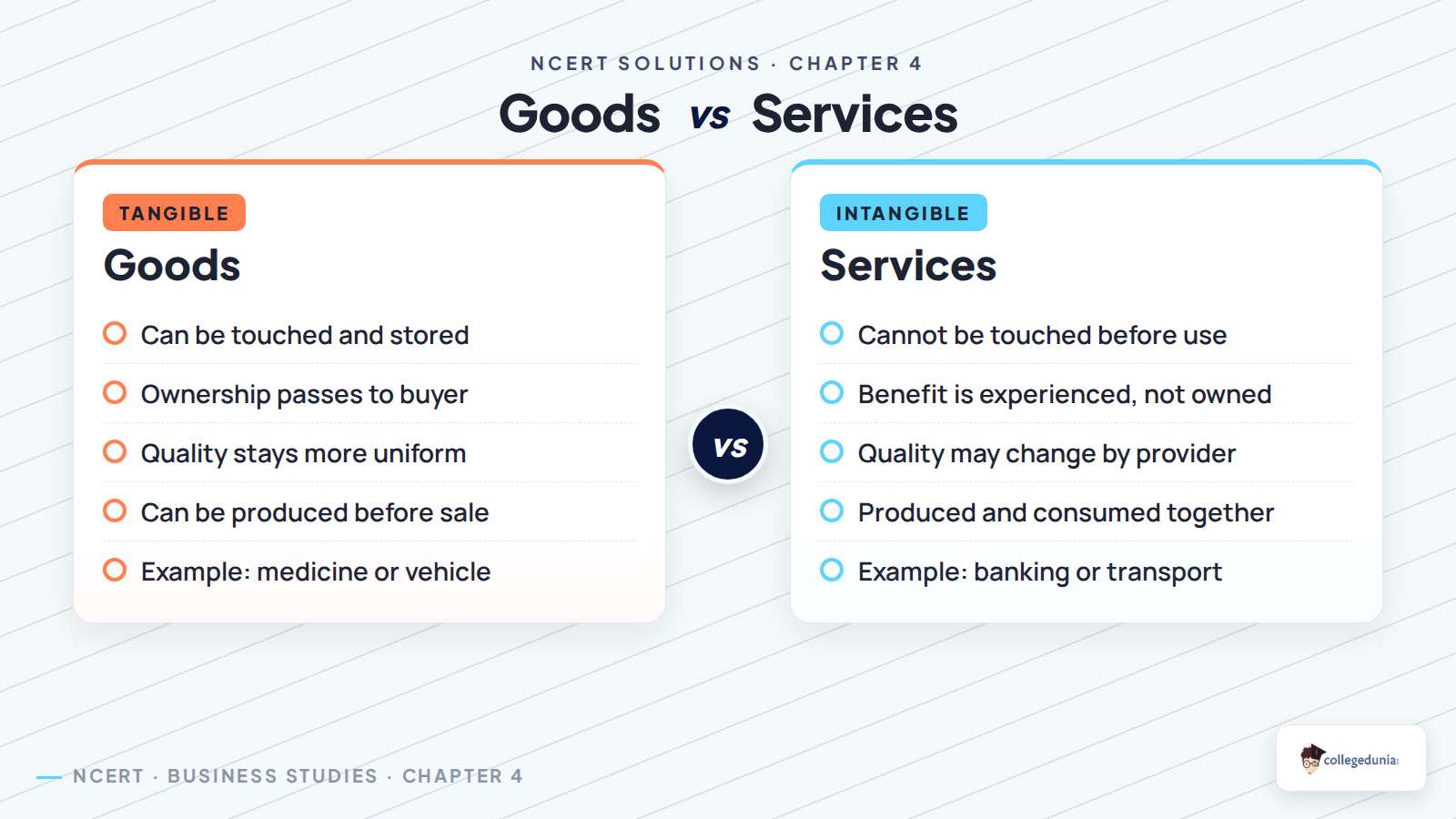
The first NCERT question asks students to separate goods from services. Goods are physical products, while services are performed and experienced. This difference helps students answer banking, transport, insurance, and medical-service examples correctly.
| Basis | Goods | Services |
|---|---|---|
| Nature | Tangible and physical | Intangible and activity-based |
| Ownership | Ownership passes to the buyer | Only the benefit is experienced |
| Example | Medicine, vehicle, or ticket | Medical treatment, transport, or banking |
Business Services Types for Class 11 Business Studies
The chapter groups business support into services that help firms operate daily. Banking, insurance, communication, transport, and warehousing are the most repeated headings in exam answers.
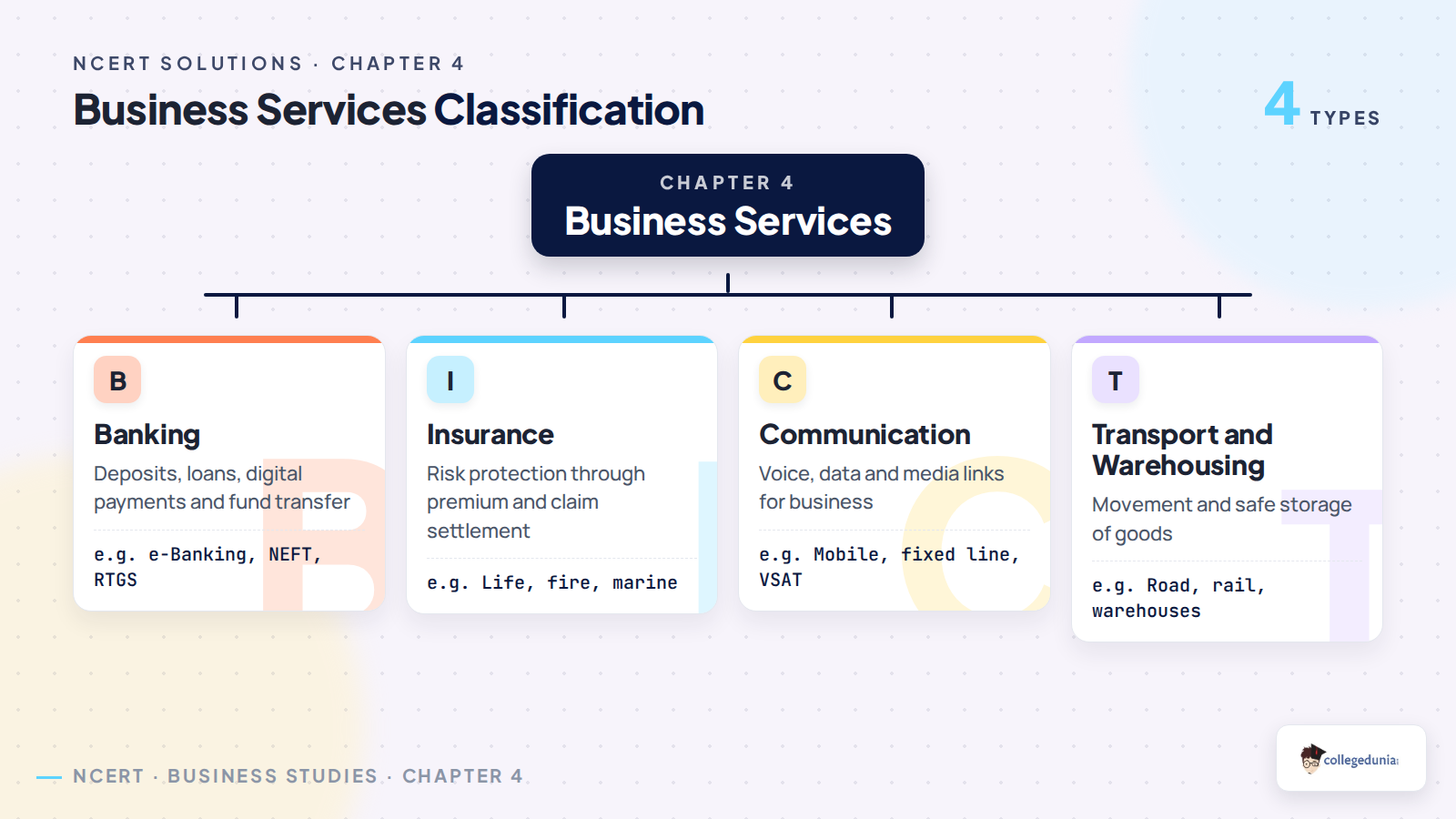
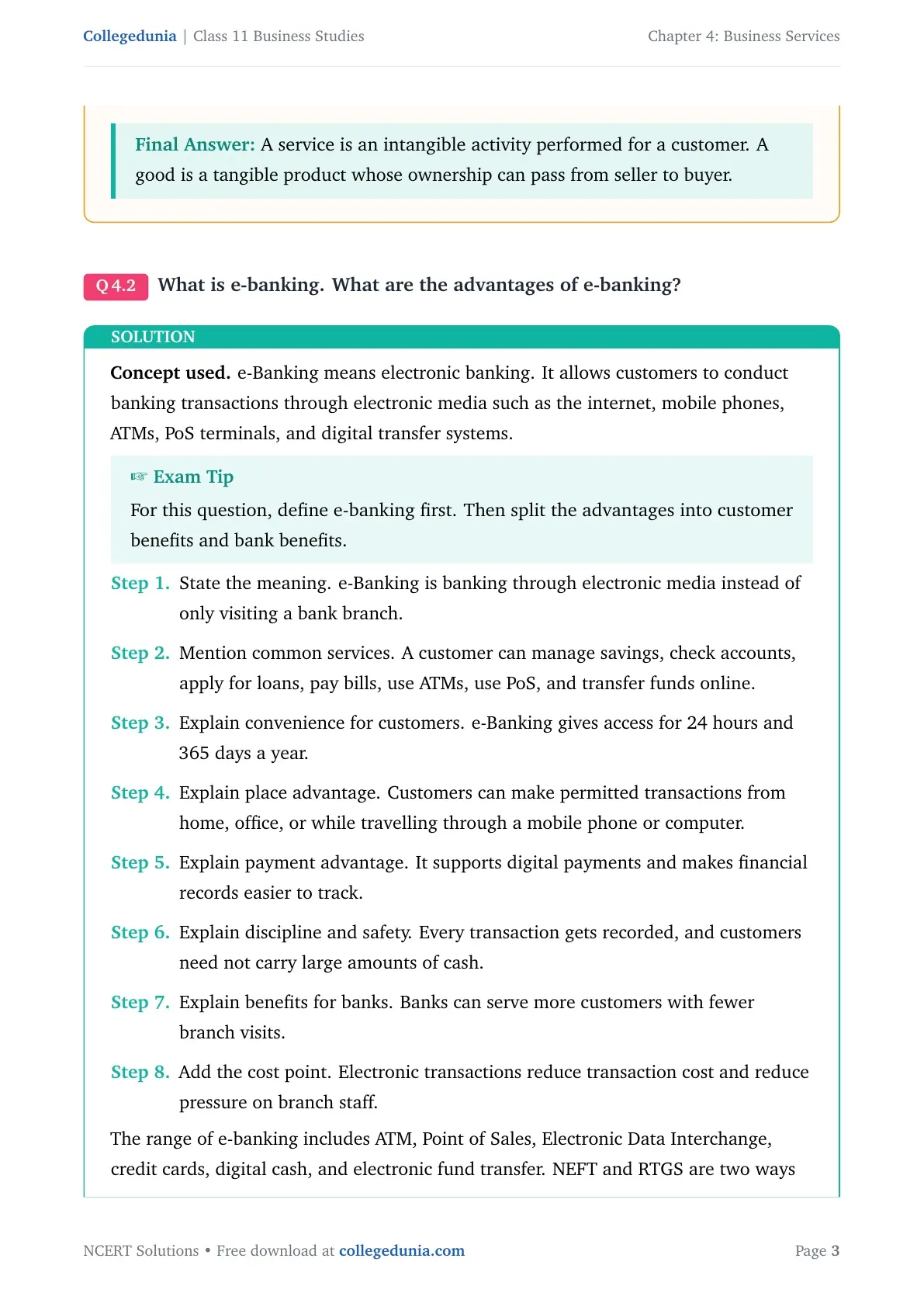
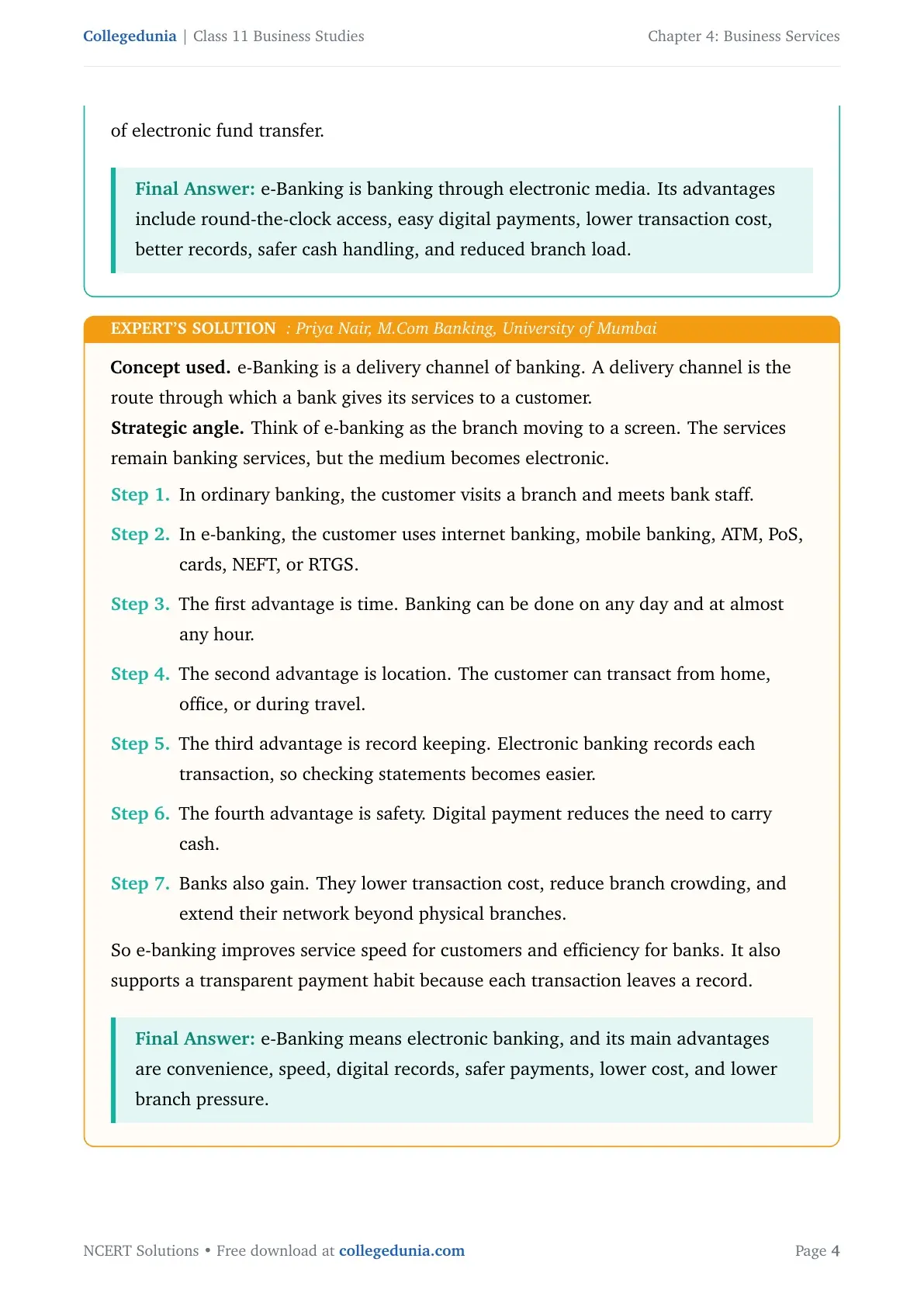
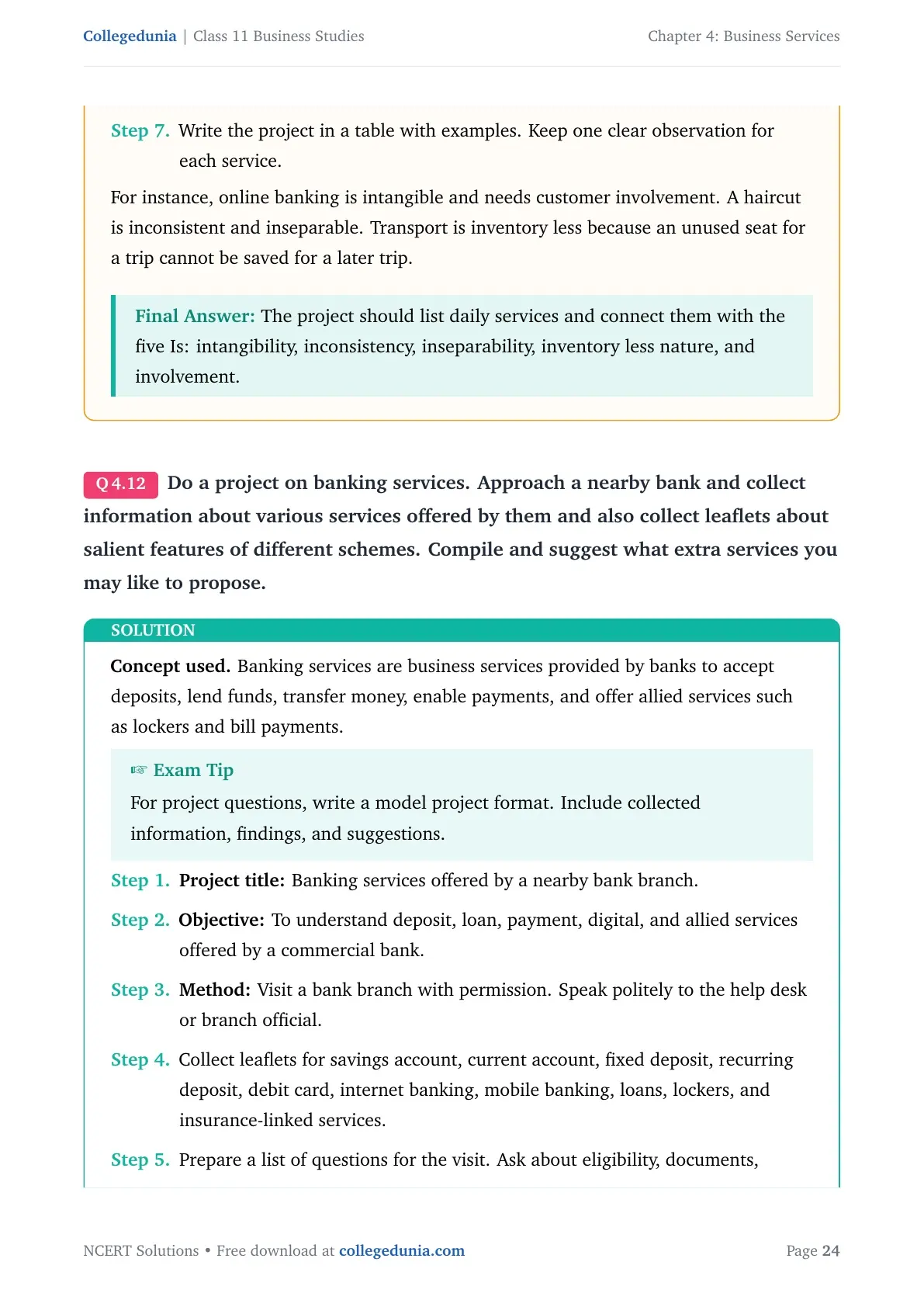
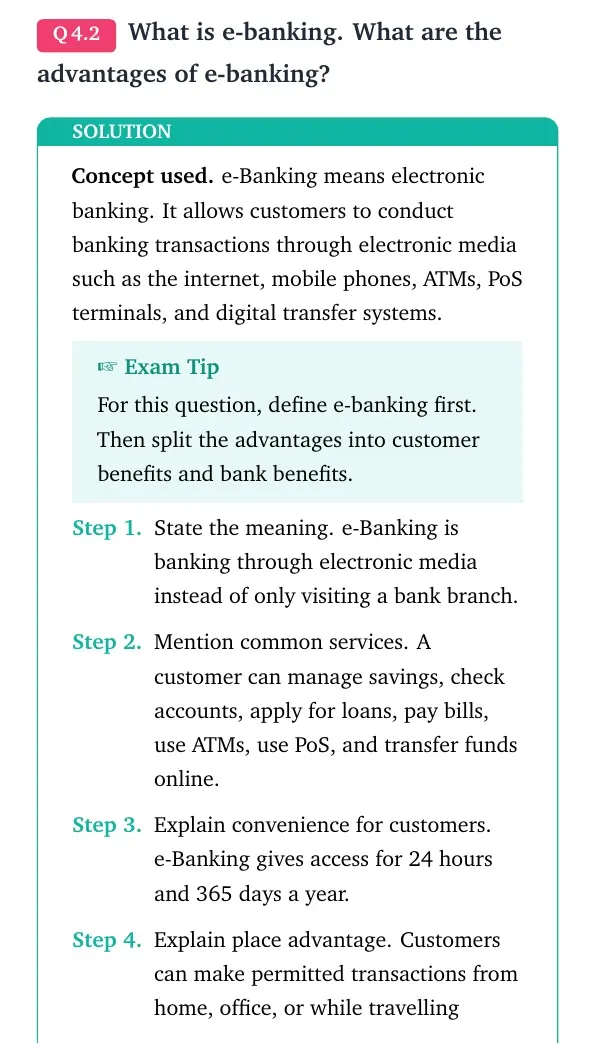
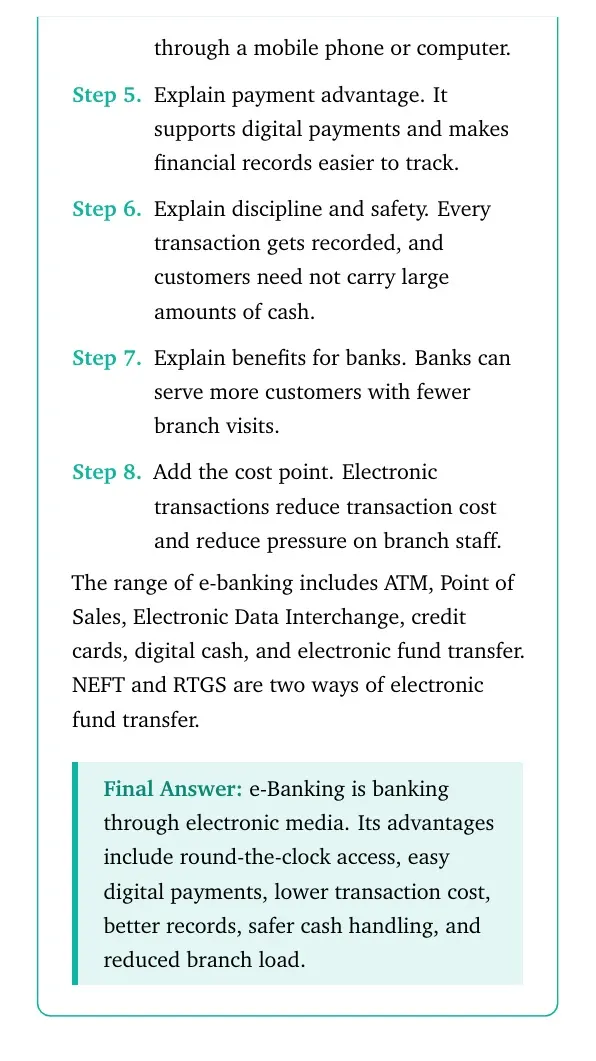
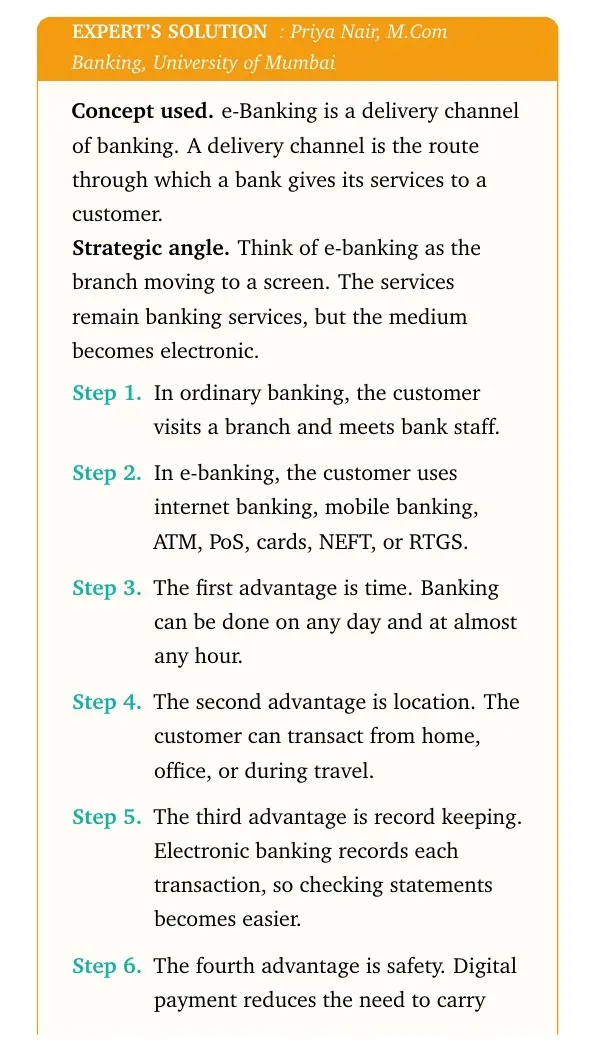
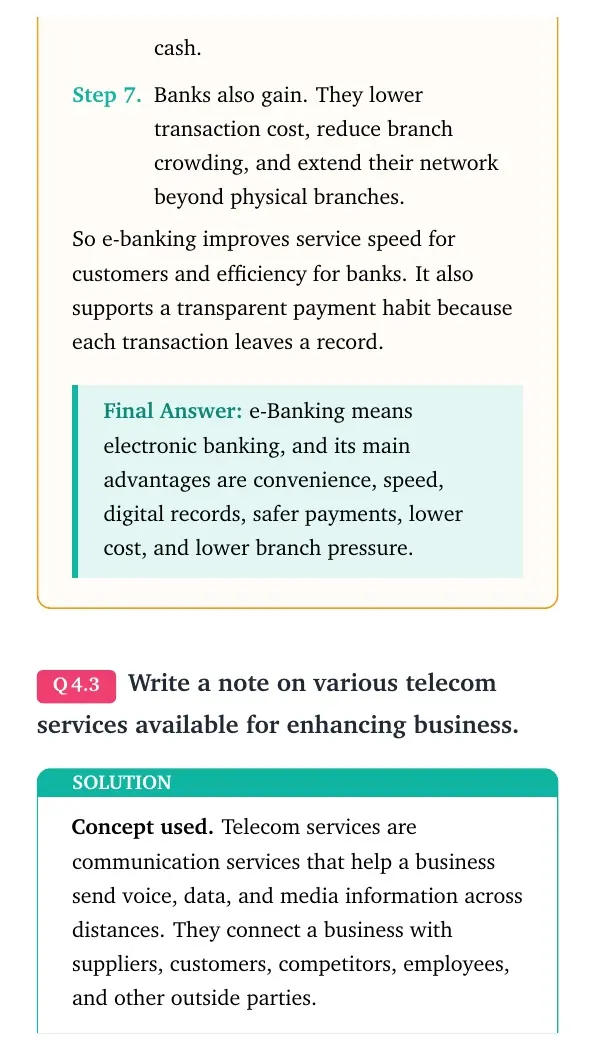
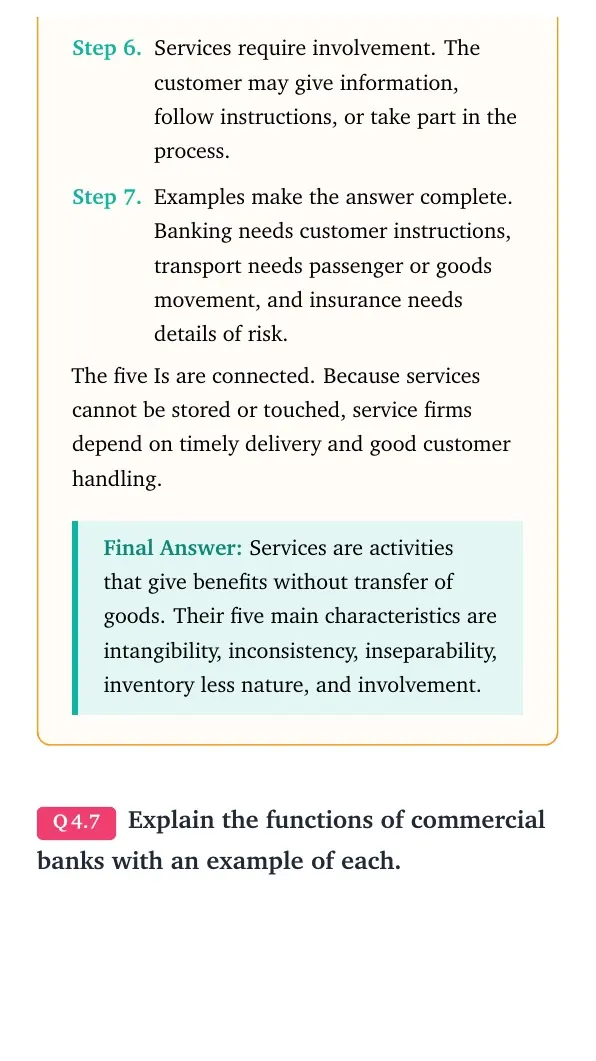
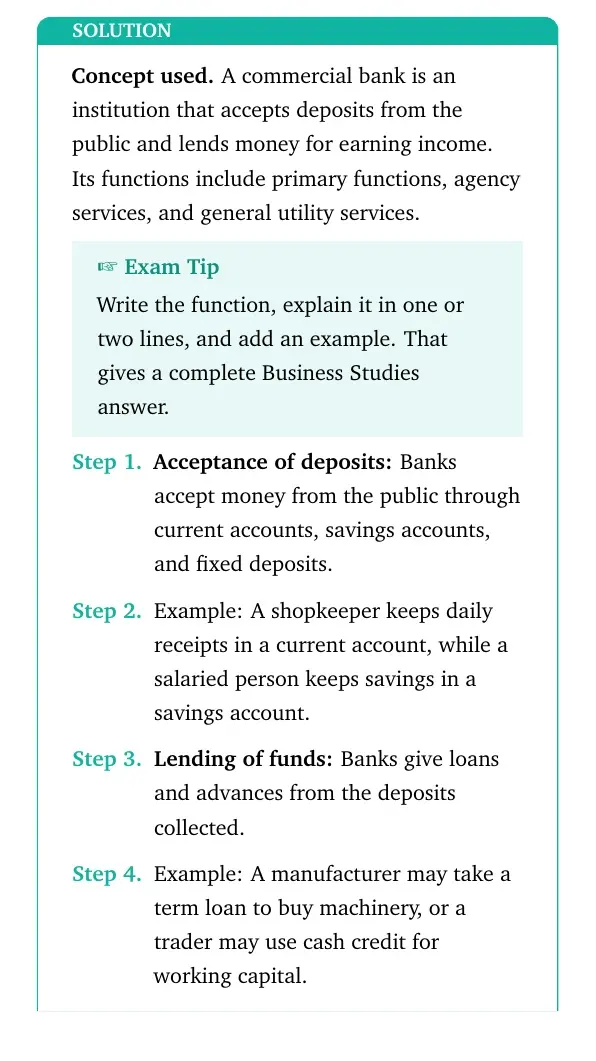
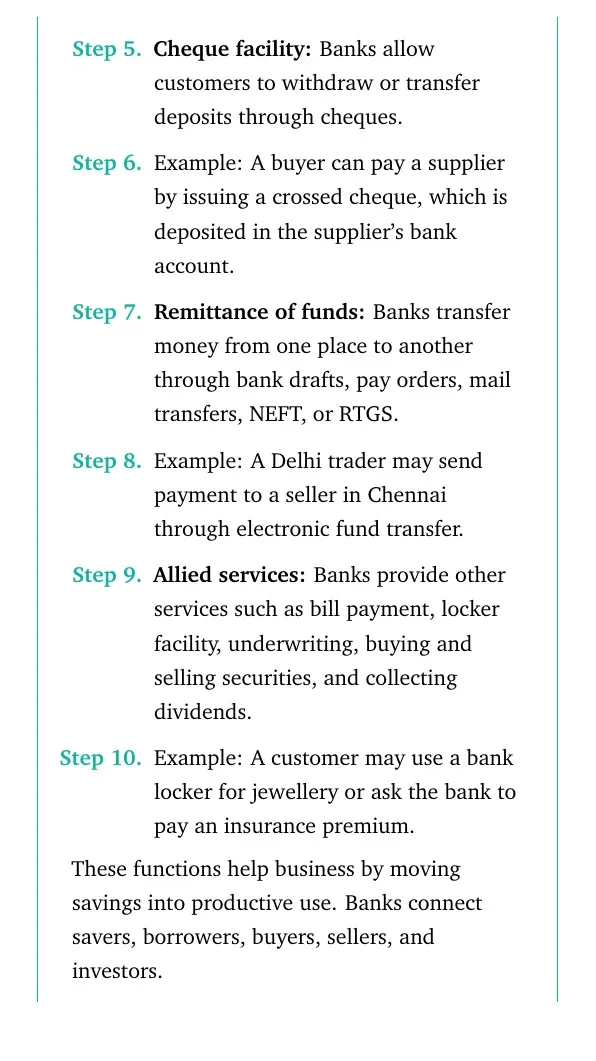
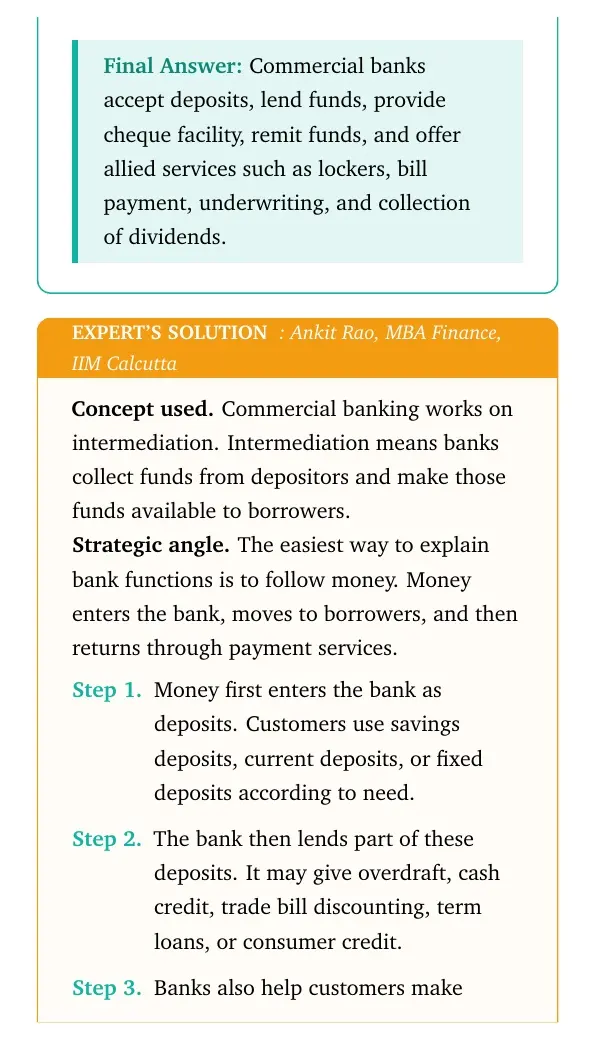
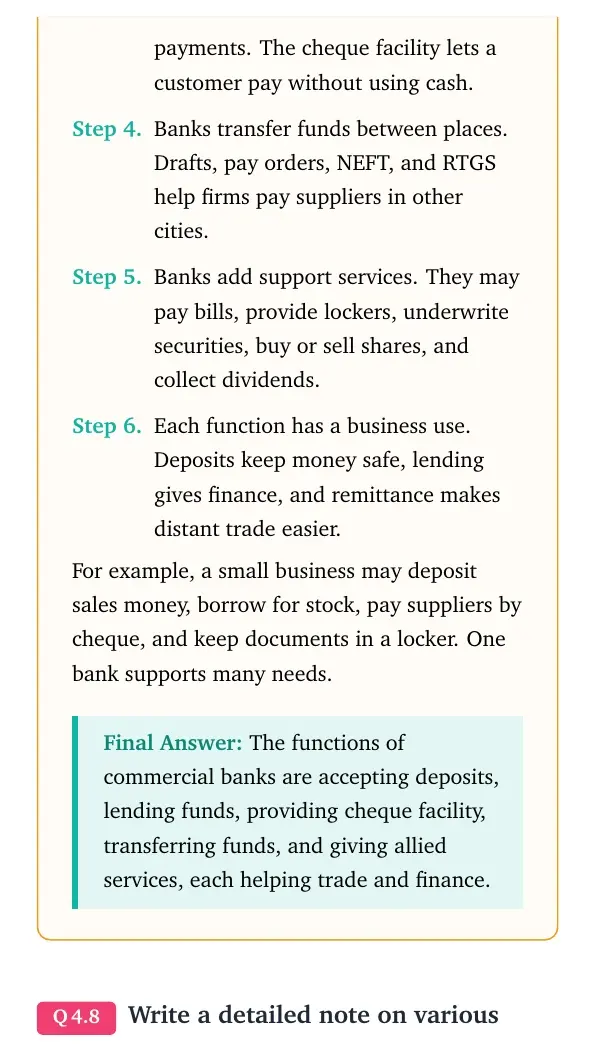
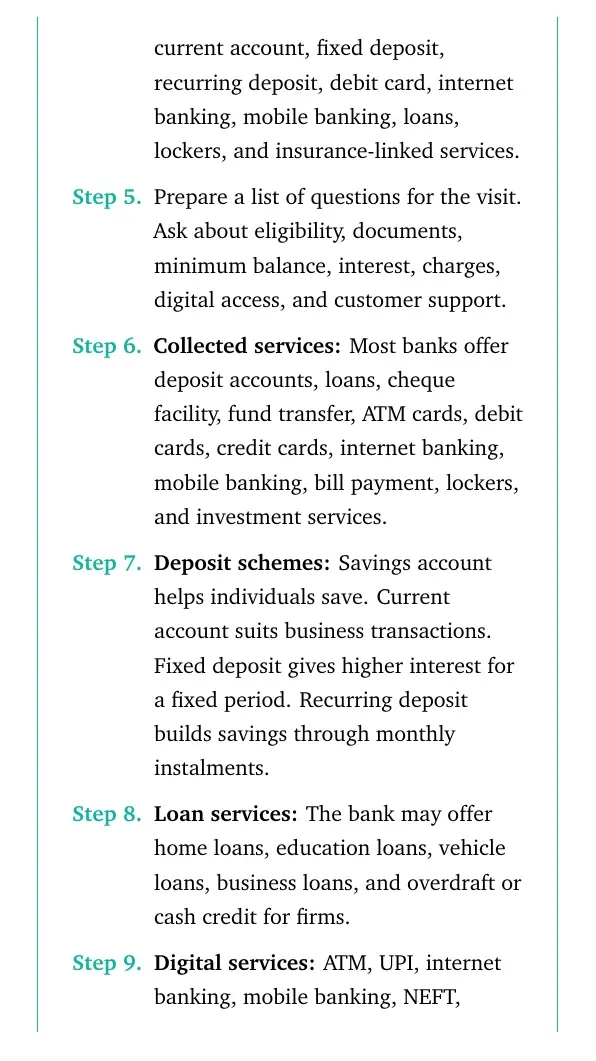
- Banking: deposits, loans, cheque facility, e-banking, NEFT, RTGS, and cards.
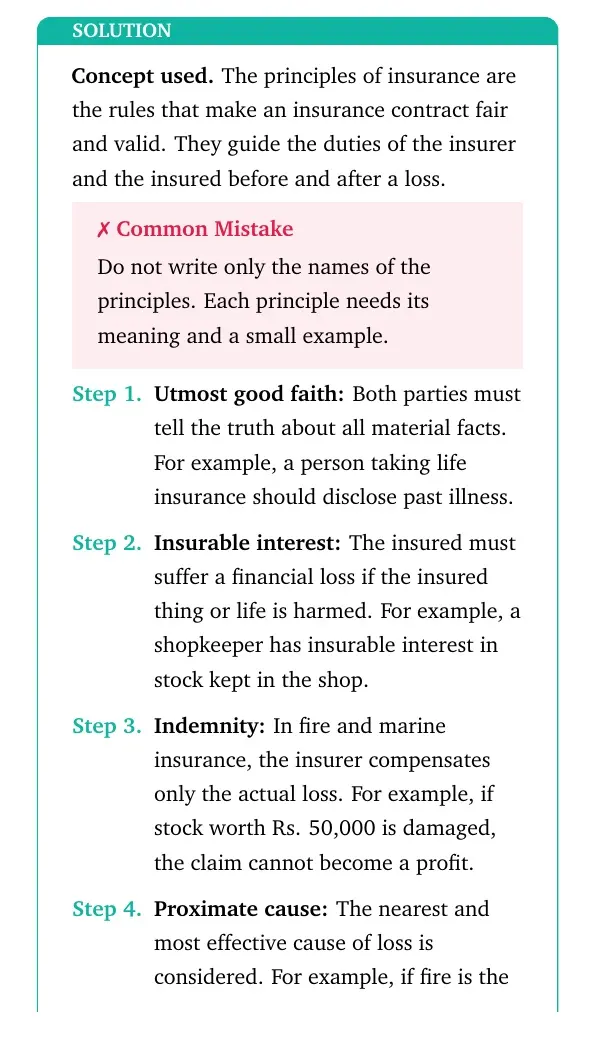
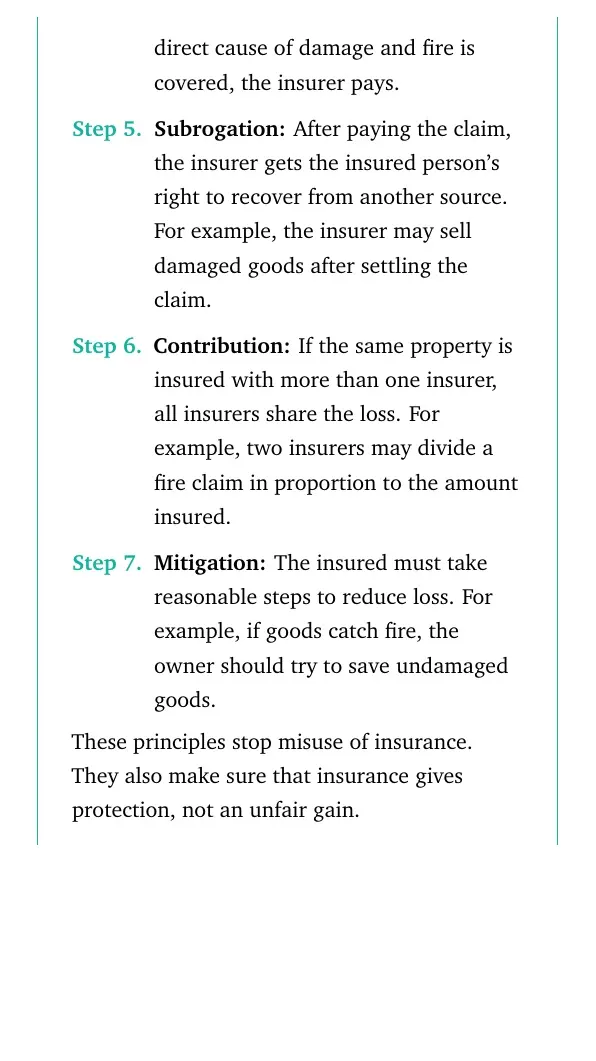
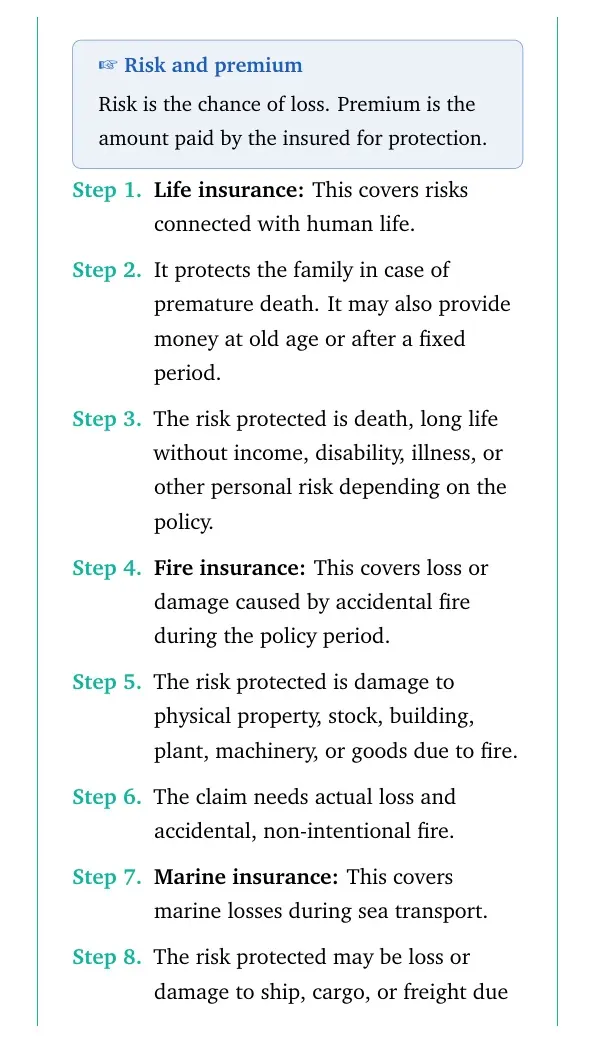
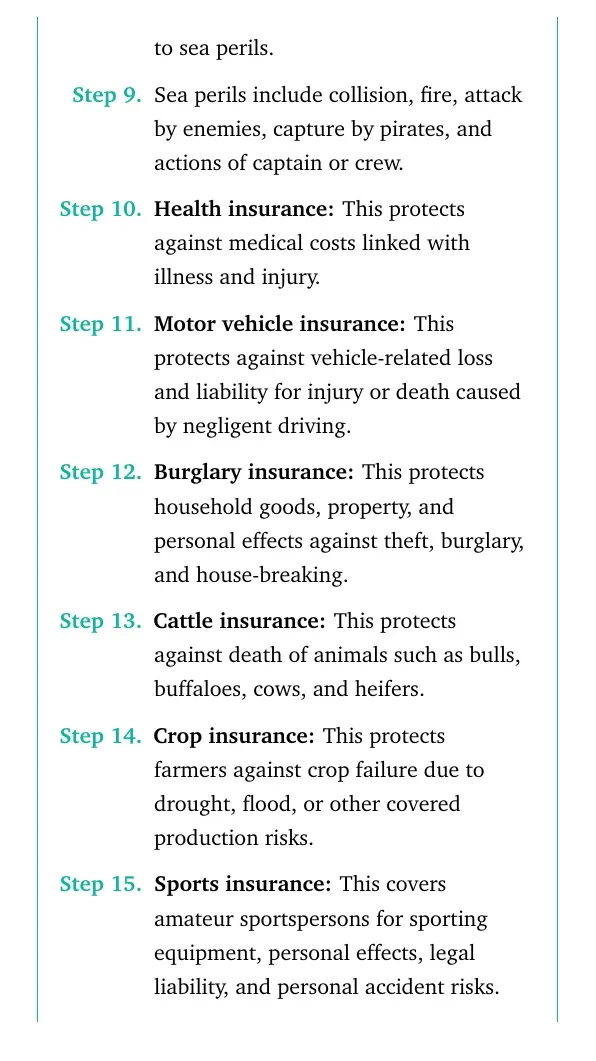
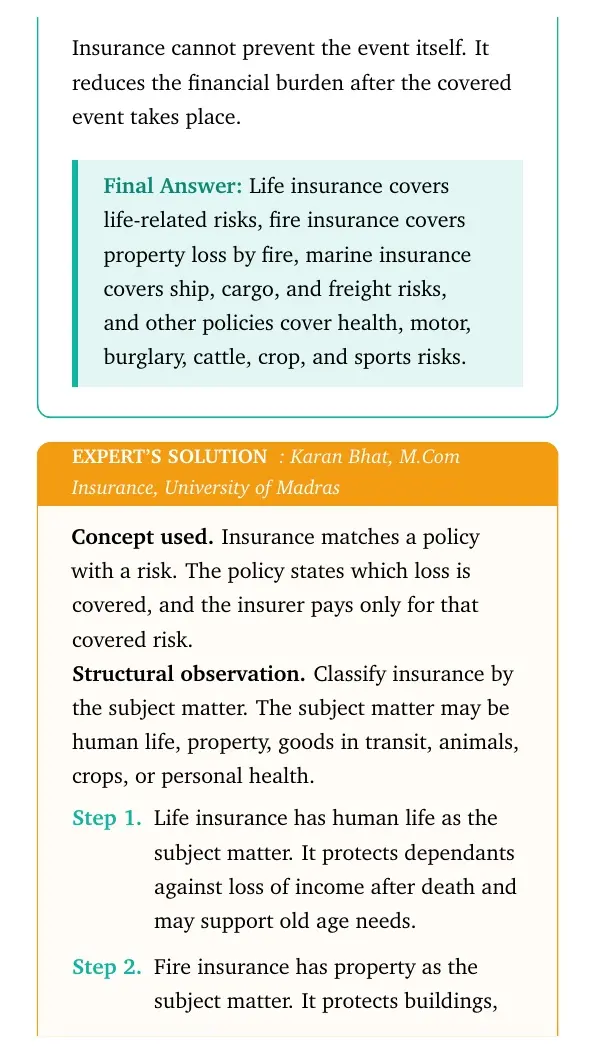
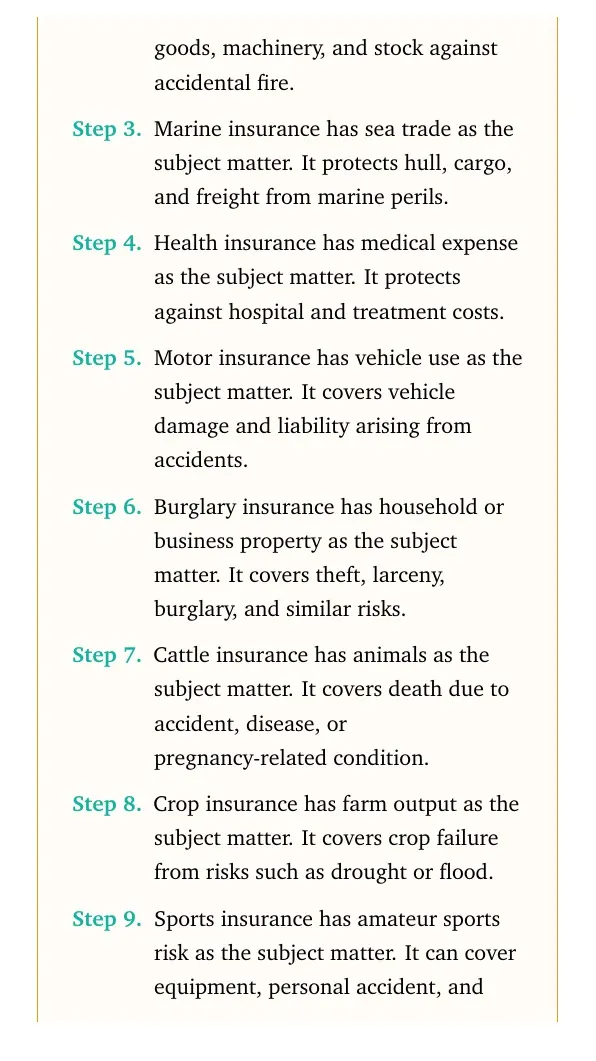
- Insurance: risk protection based on premium, policy, claim, and insurable interest.
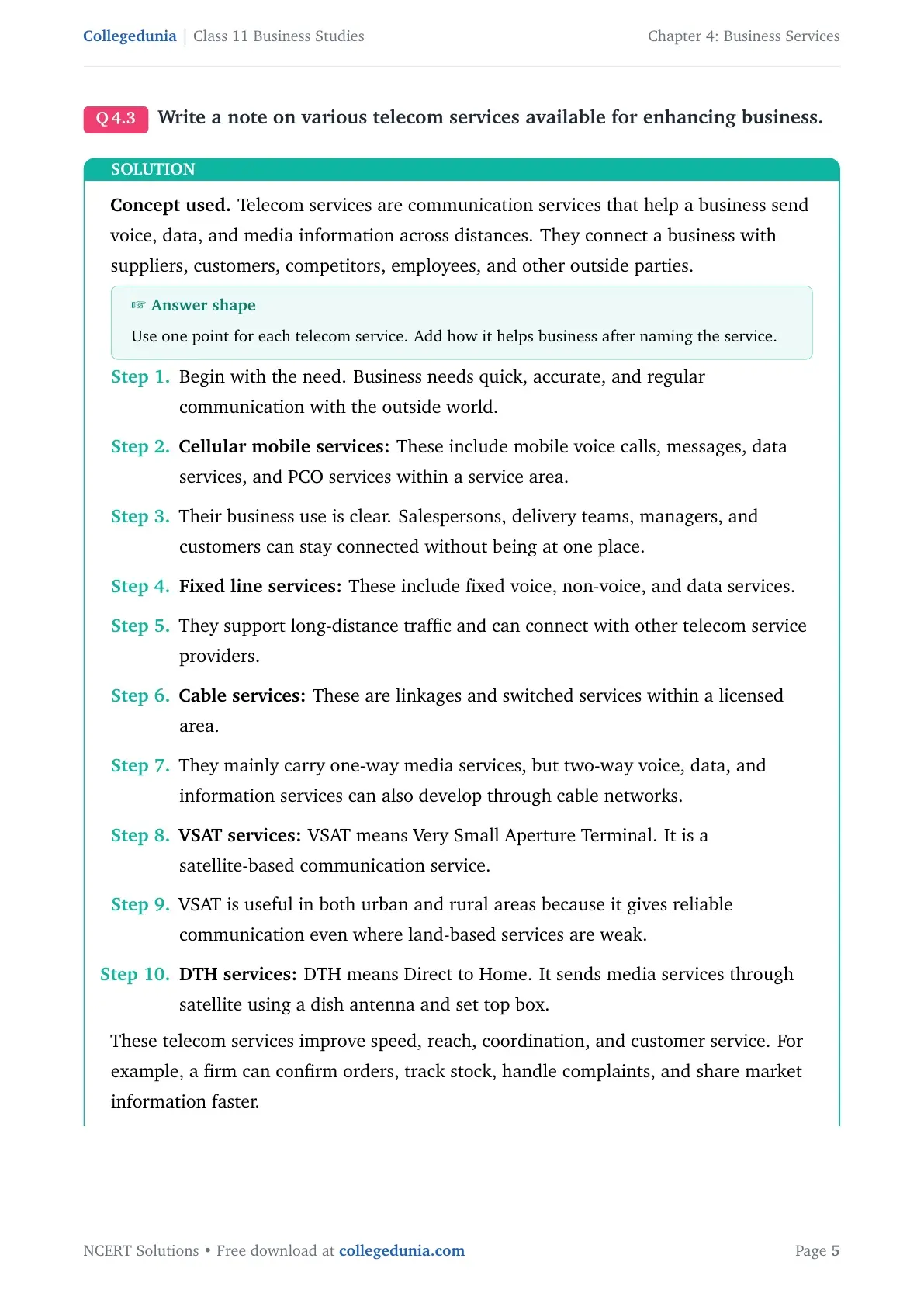
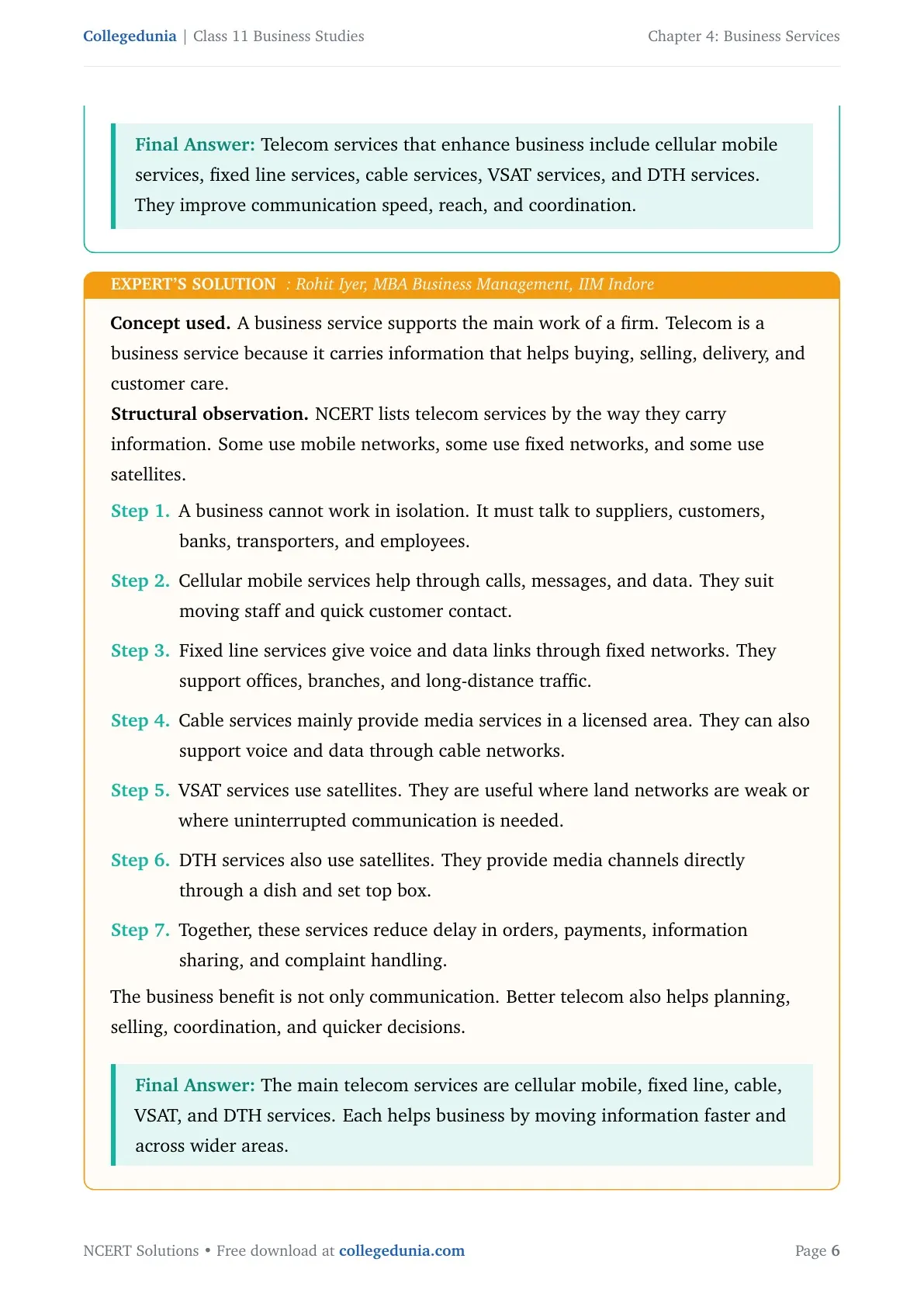
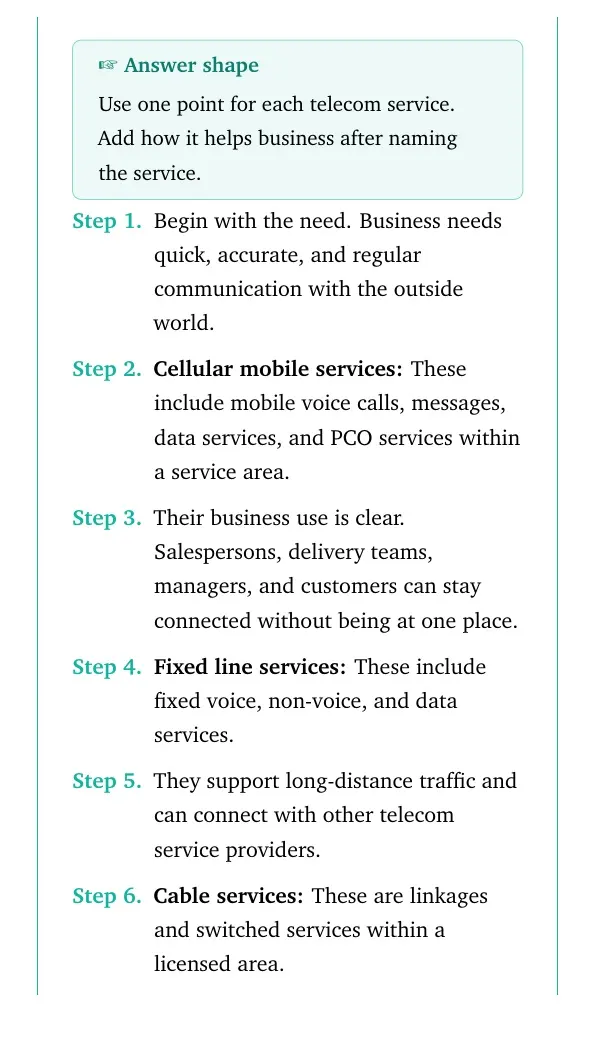
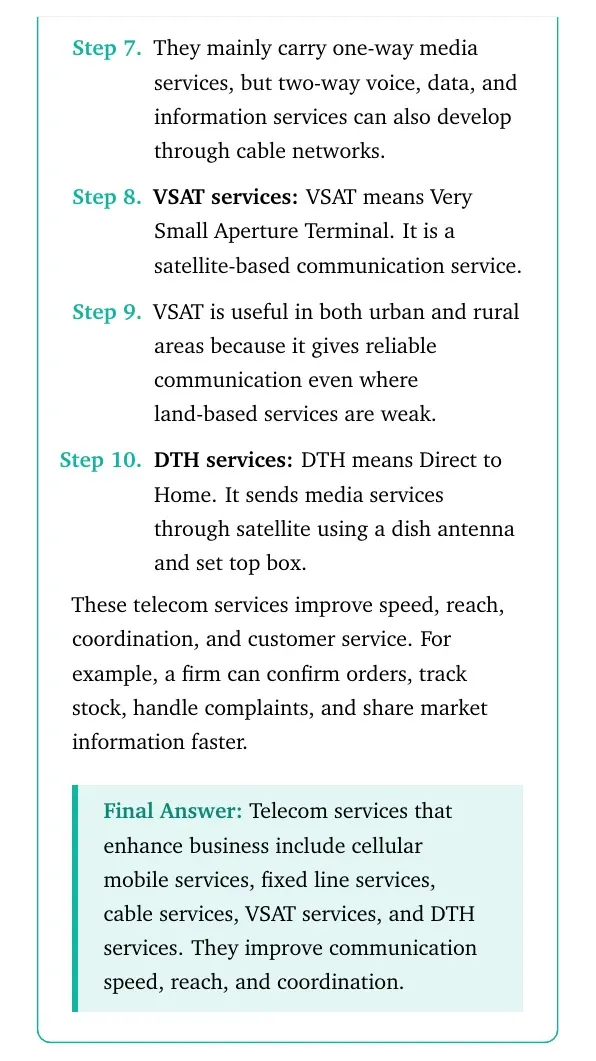
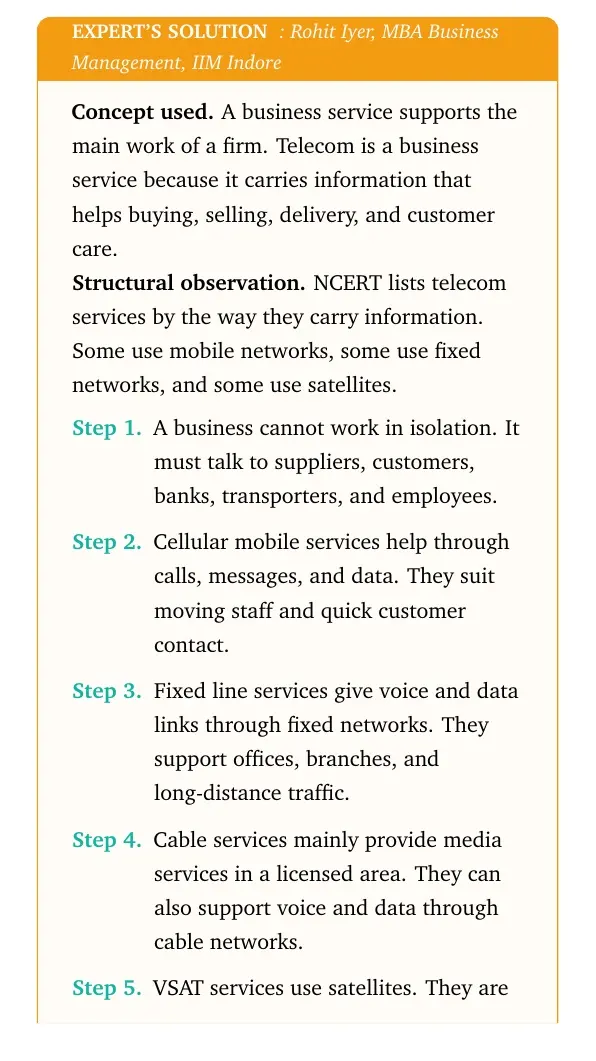
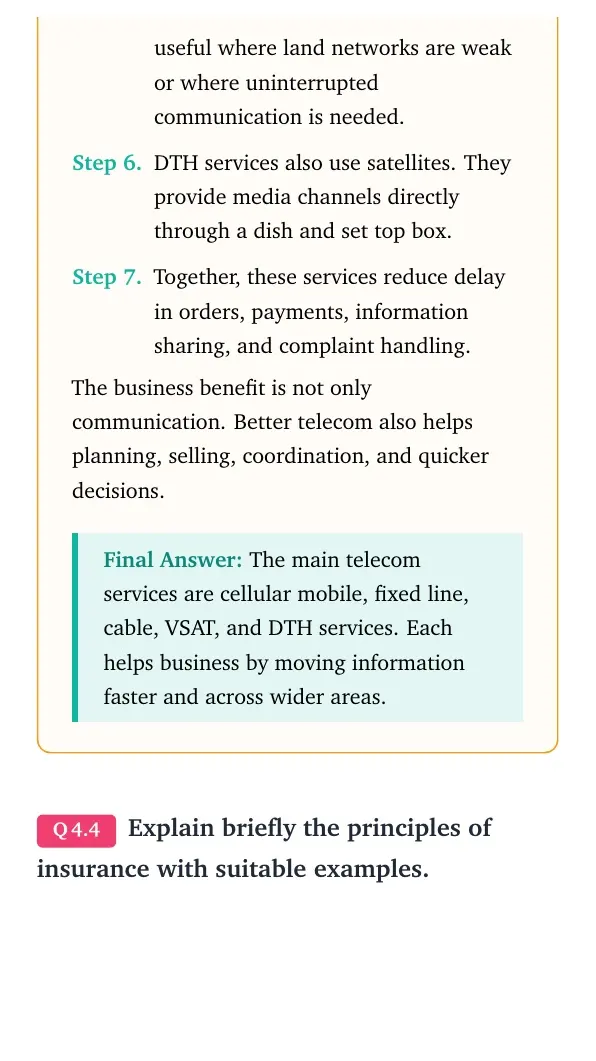
- Communication: mobile, fixed line, cable, VSAT, and DTH services.
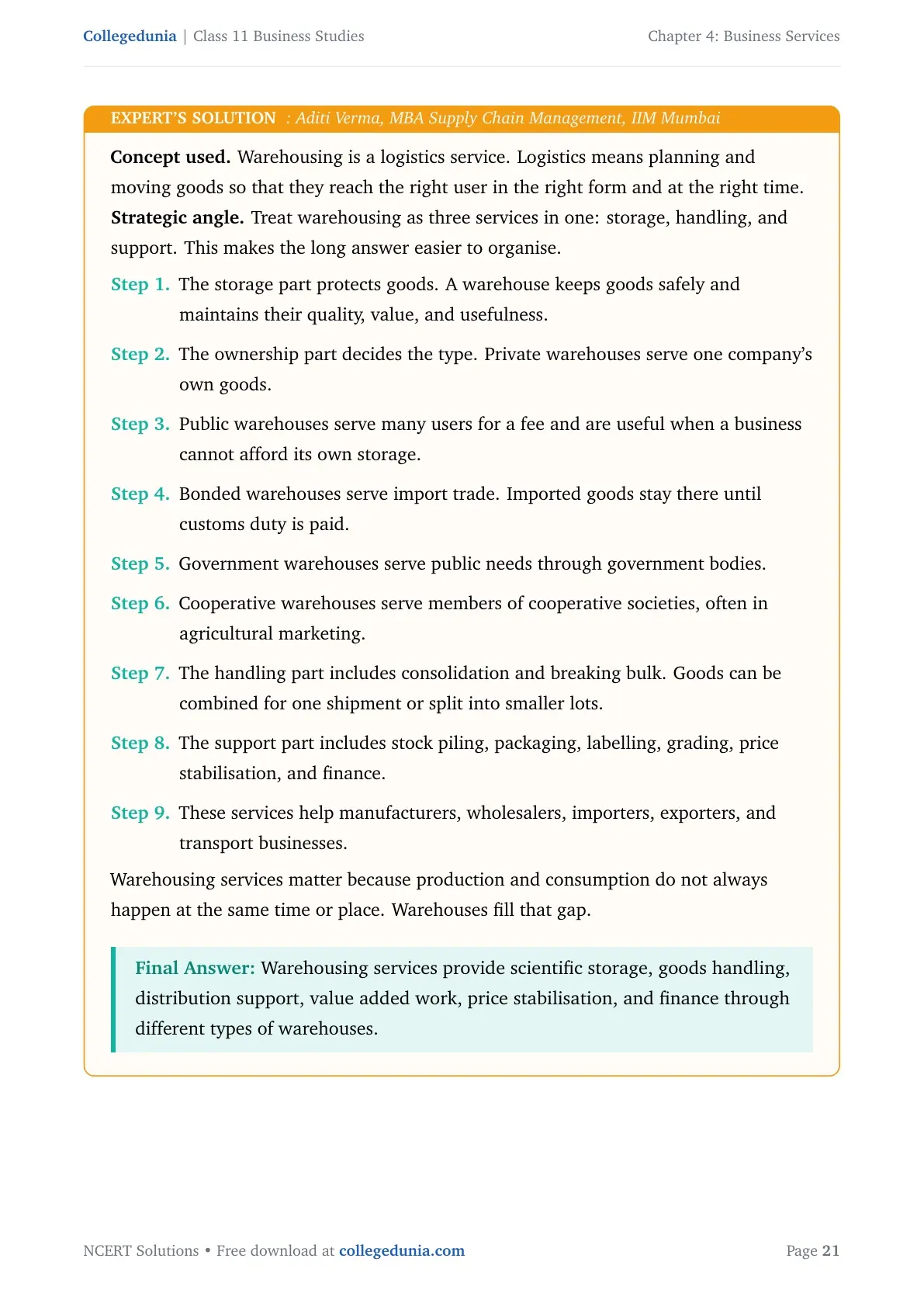
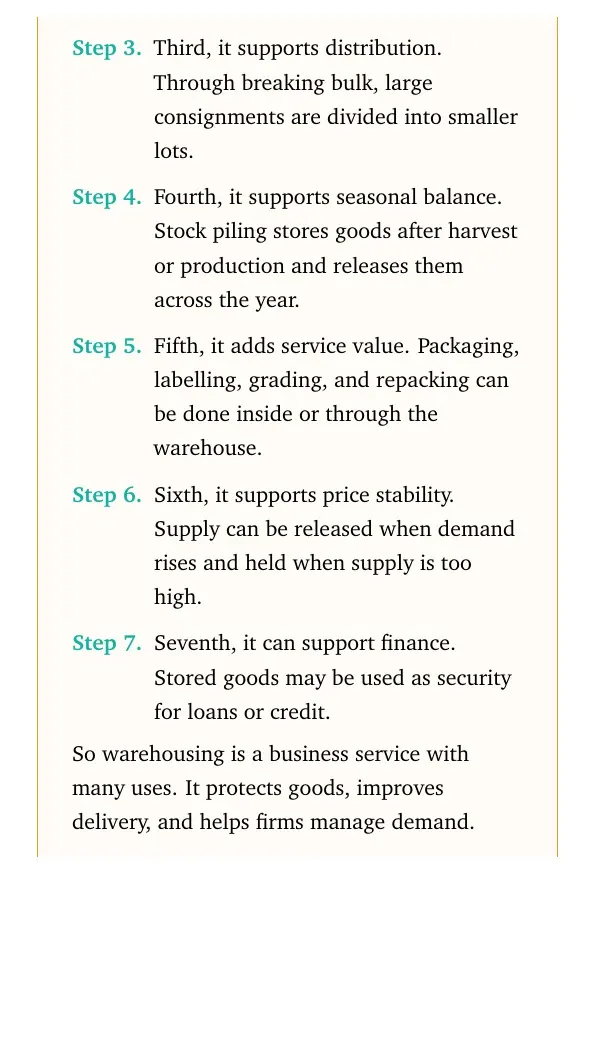
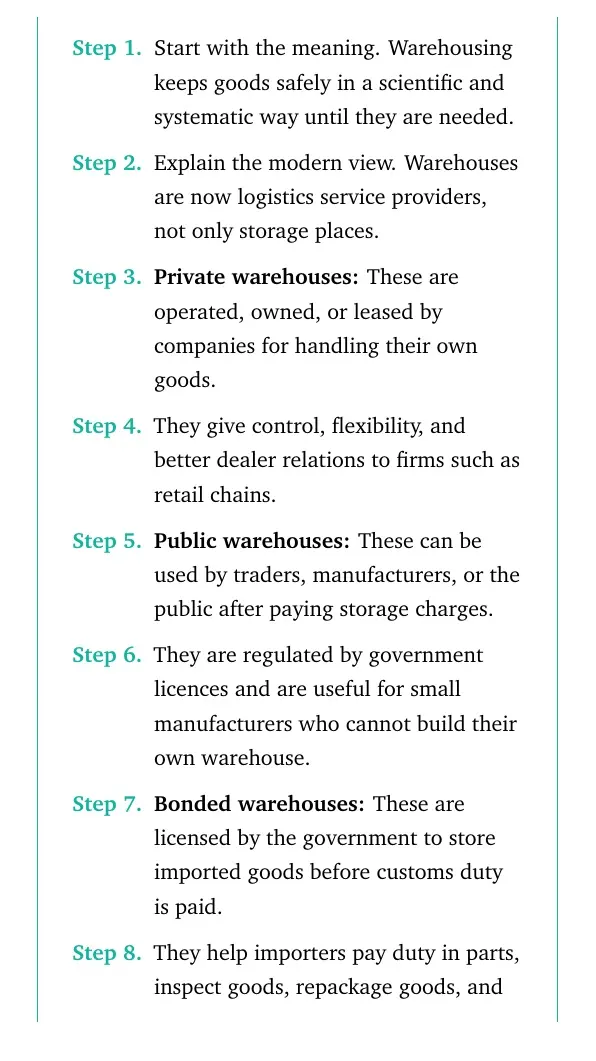
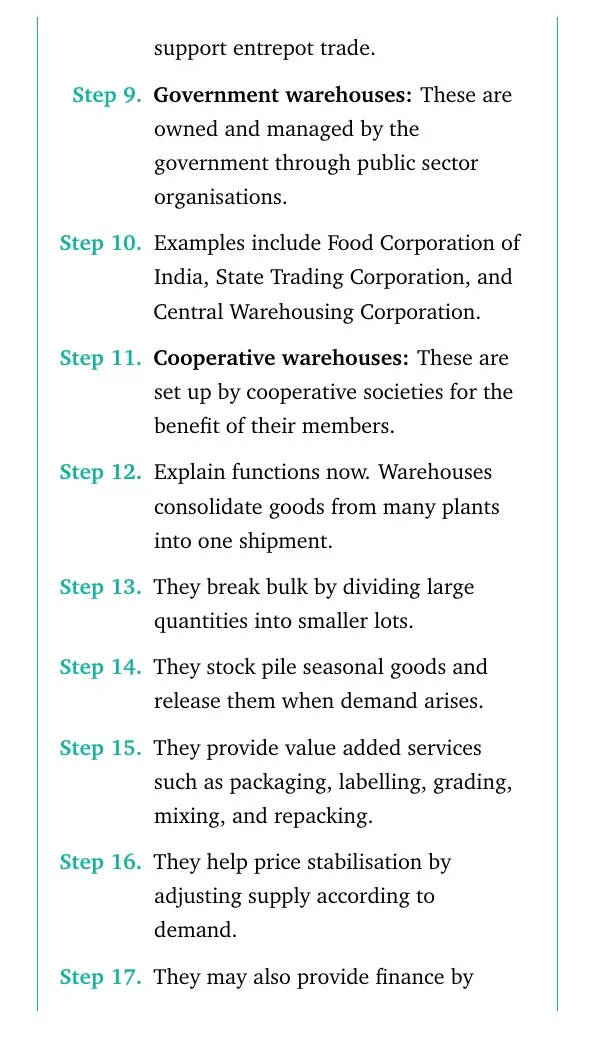
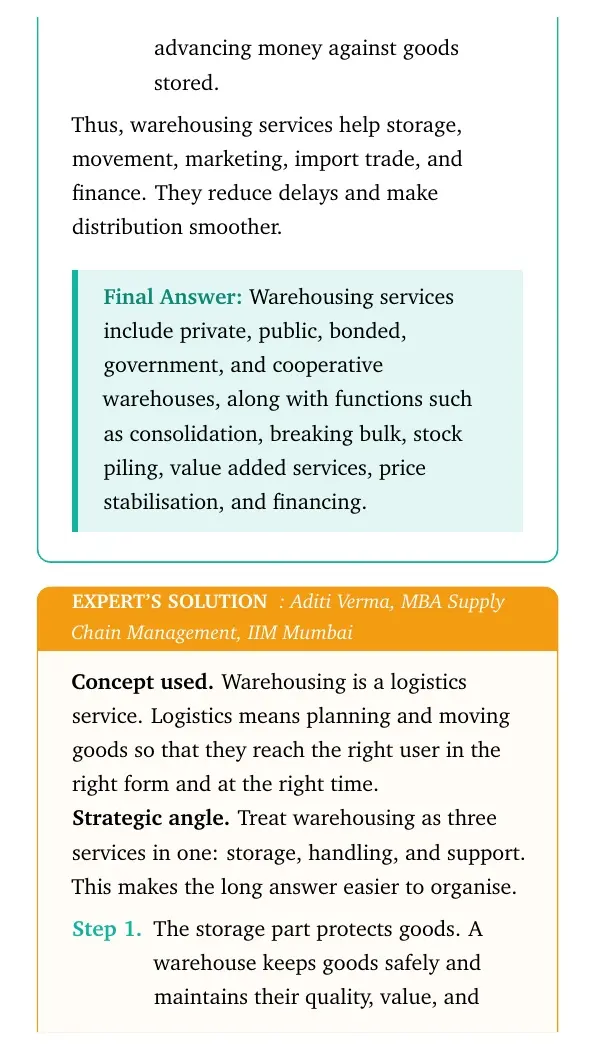
- Transport and warehousing: movement, storage, grading, packaging, and stock protection.
Business Services Video for Class 11
Source: Magnet Brains on YouTube
How to Write Class 11 Business Studies Chapter 4 Answers
Most Business Services answers become easier when students first identify the service type. Then write the meaning, two or three features, and one example from the NCERT question.
- Definition answers: write the meaning first, then add one example.
- Advantage answers: use separate points for customer, business, and bank benefits.
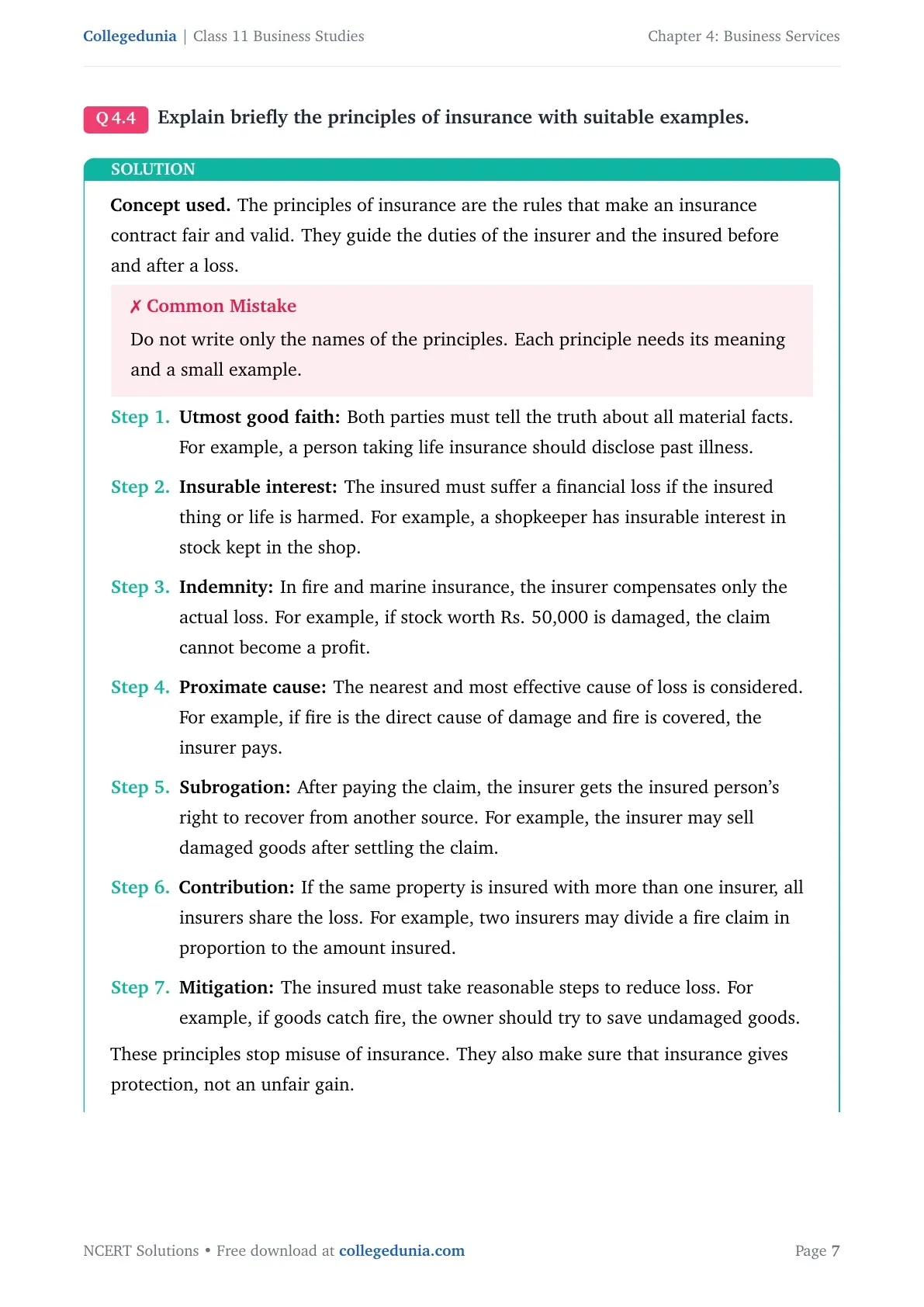
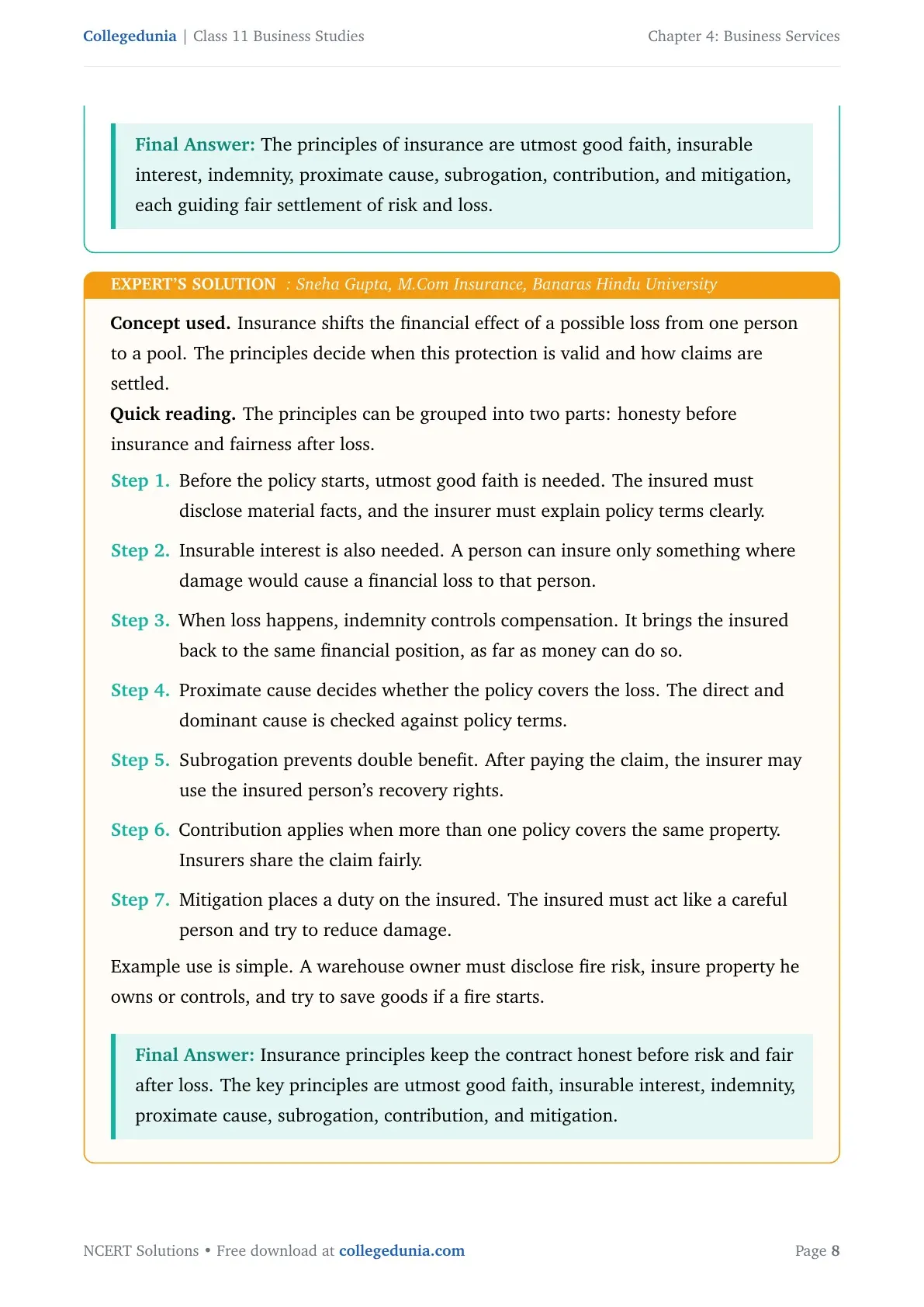
- Insurance answers: name the principle, explain it, and add a small example.
- Project answers: use a report format with objective, method, findings, and suggestions.
All NCERT Solutions for Class 11 Business Studies Chapter 4 with Step-by-Step Solutions
The companion question page carries the full collapsible Q&A layout for all textbook prompts from this PDF. Open it when you want to practise the chapter question by question.
Open question-wise answers: Business Services NCERT Solutions question bank
Related Class 11 Business Studies Chapter 4 Resources
Use these related resources after finishing the NCERT solutions. They help revise the same chapter through notes, textbook PDF access, and handwritten revision support.
| Resource | Use it for | Link |
|---|---|---|
| Chapter Notes | Revise service features, banking, insurance, telecom, and warehousing | Class 11 Business Studies Chapter 4 Notes |
| NCERT Book PDF | Read the official textbook chapter alongside answers | Class 11 Business Studies Chapter 4 NCERT Book PDF |
| Handwritten Notes | Revise definitions, service types, and insurance principles quickly | Class 11 Business Studies Chapter 4 Handwritten Notes |
Class 11 Business Studies NCERT Solutions All Chapters
The table below helps students move across the same resource type for Class 11 Business Studies. Business Services should be revised with Chapter 5 because e-business builds directly on banking, telecom, and digital payment services.
| Chapter | NCERT Solutions Link |
|---|---|
| Chapter 1 Business, Trade and Commerce | Open solutions |
| Chapter 2 Forms of Business Organisation | Open solutions |
| Chapter 3 Private, Public and Global Enterprises | Open solutions |
| Chapter 4 Business Services | Open solutions |
| Chapter 5 Emerging Modes of Business | Open solutions |
| Chapter 6 Social Responsibilities of Business and Business Ethics | Open solutions |
| Chapter 7 Formation of a Company | Open solutions |
| Chapter 8 Sources of Business Finance | Open solutions |
| Chapter 9 MSME and Business Entrepreneurship | Open solutions |
| Chapter 10 Internal Trade | Open solutions |
| Chapter 11 International Business | Open solutions |
Business Services Class 11 NCERT Solutions FAQs
Ques. What does Class 11 Business Studies Chapter 4 mainly cover?
Ans. The chapter covers services, goods, banking, e-banking, insurance, telecom services, transportation, warehousing, postal services, and bank-account matching.
Ques. How many questions are solved in this Chapter 4 PDF?
Ans. The PDF solves 13 textbook prompts from the NCERT exercise, including short answers, long answers, project work, and the bank-account matching activity.
Ques. What are the five Is of services?
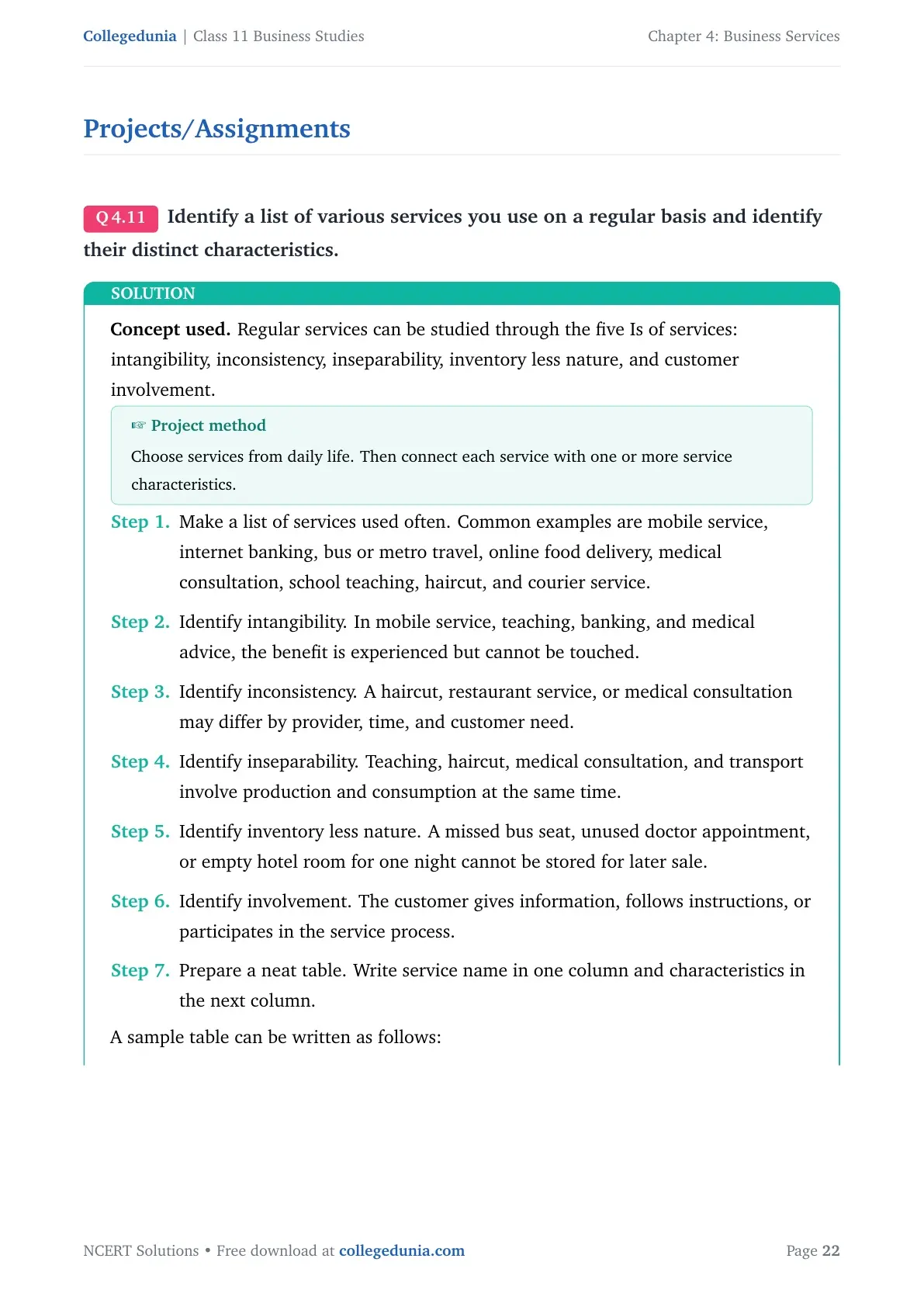
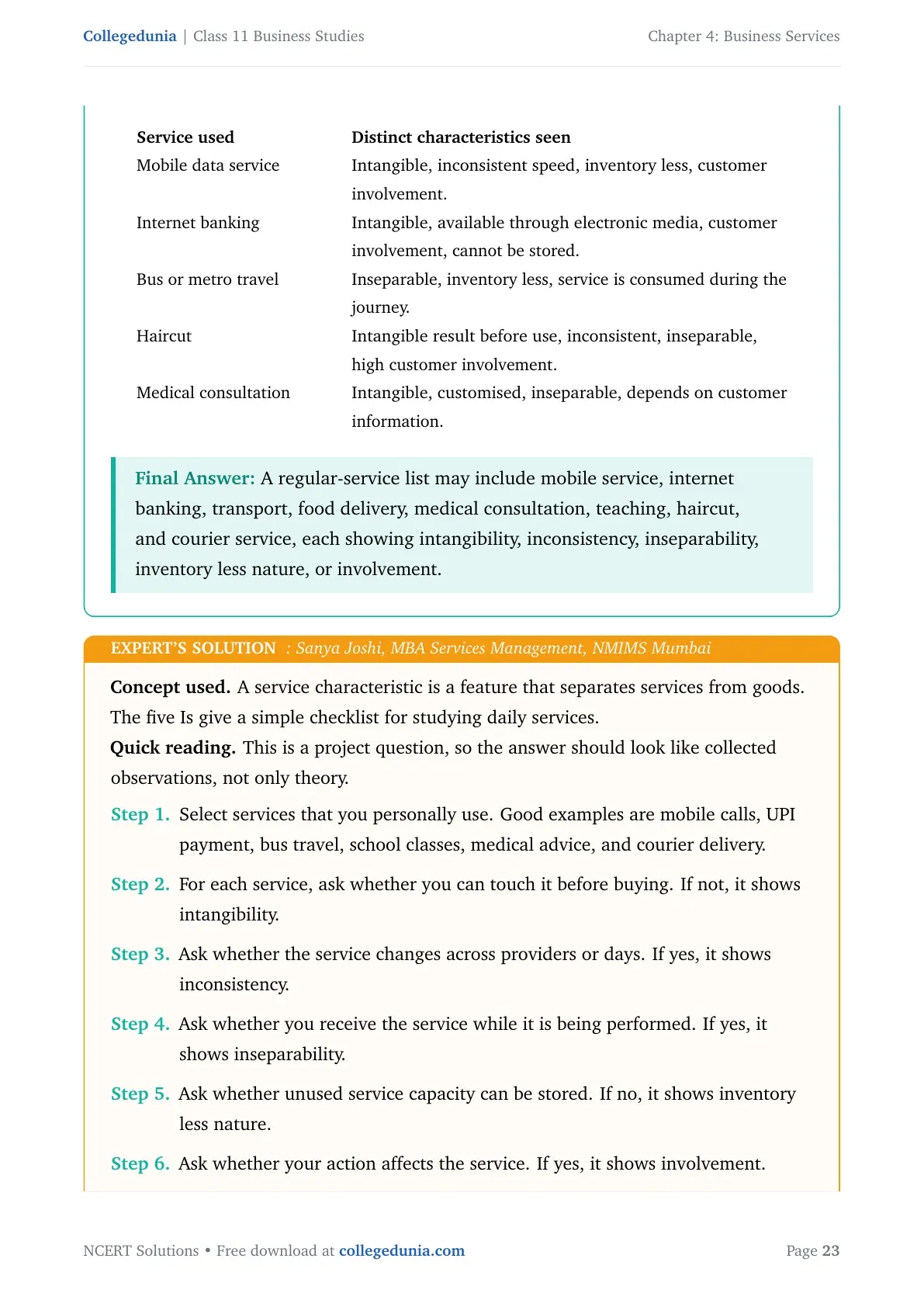
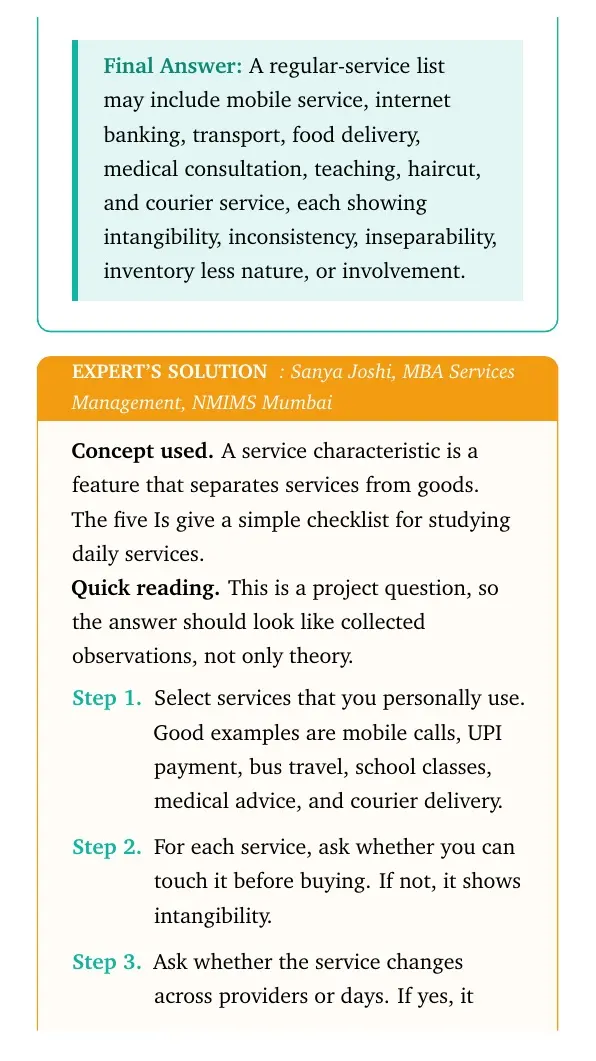
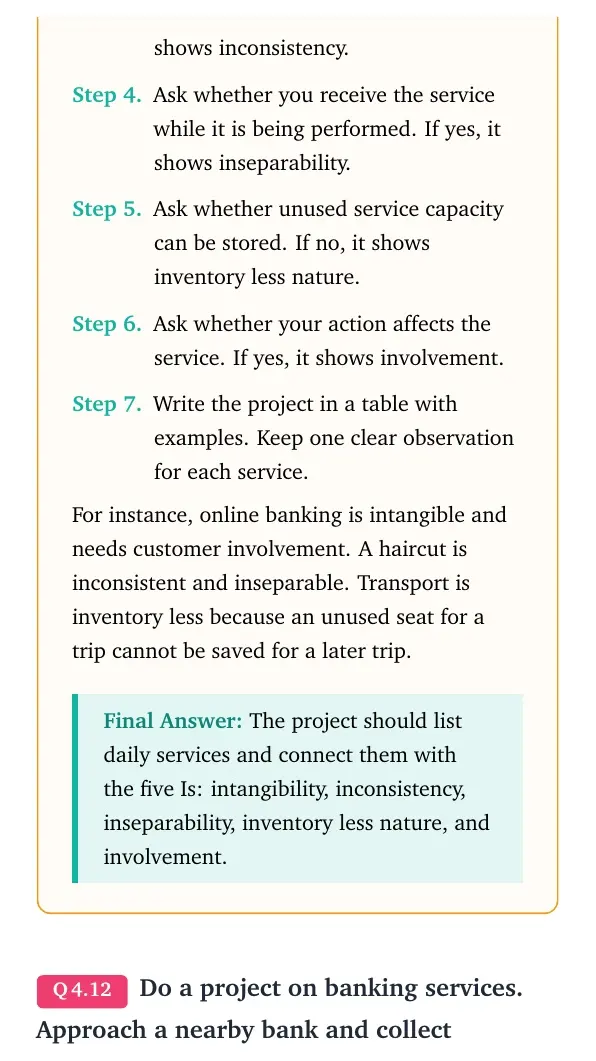
Ans. The five Is are intangibility, inconsistency, inseparability, inventory less nature, and involvement. They explain how services differ from goods.
Ques. Which insurance principles are important in Business Services?
Ans. The important principles are utmost good faith, insurable interest, indemnity, proximate cause, subrogation, contribution, and mitigation.
Ques. Why is e-banking important for businesses?
Ans. e-Banking gives faster payments, round-the-clock access, better records, lower transaction cost, and less pressure on bank branches.



Comments