



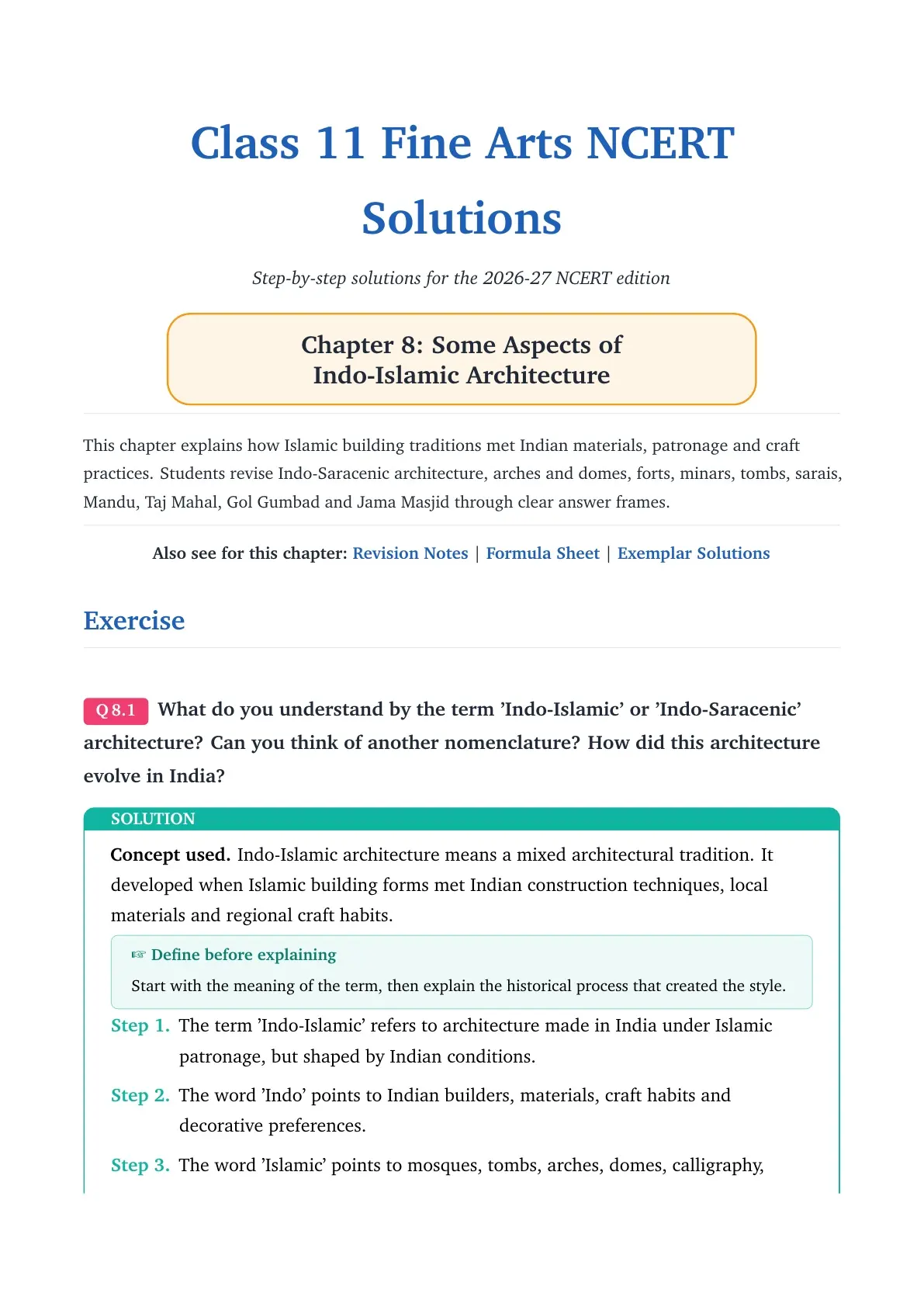
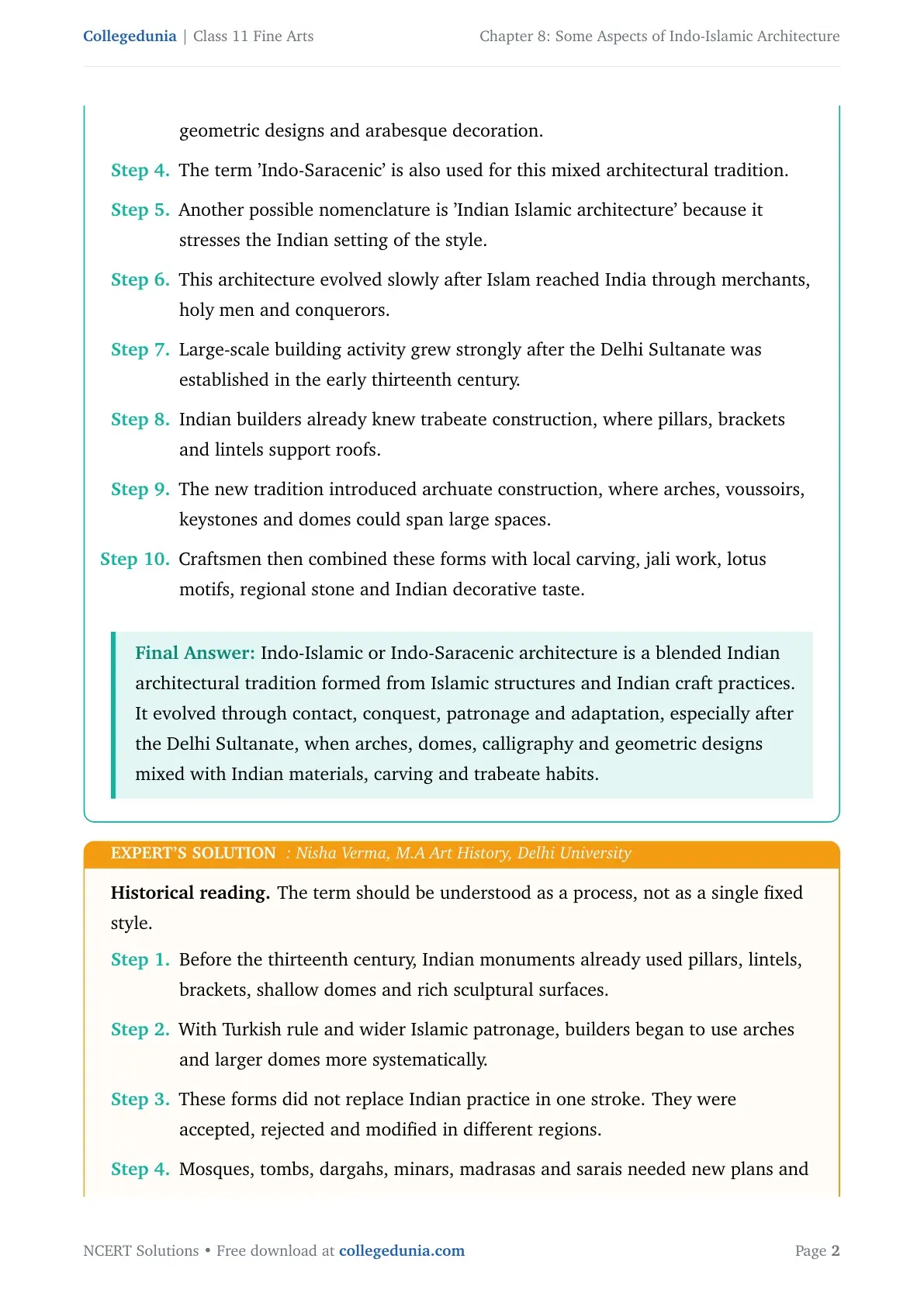
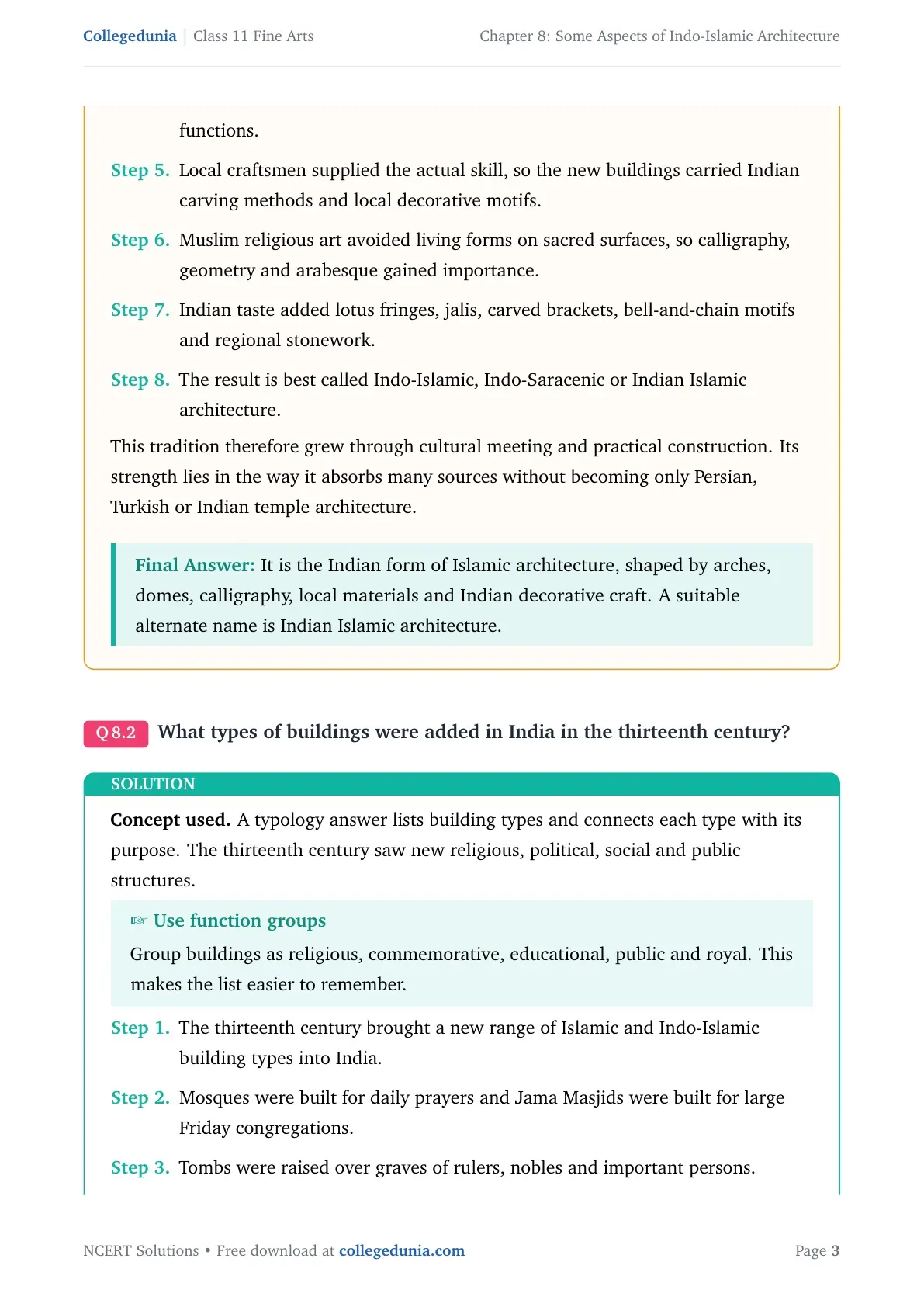
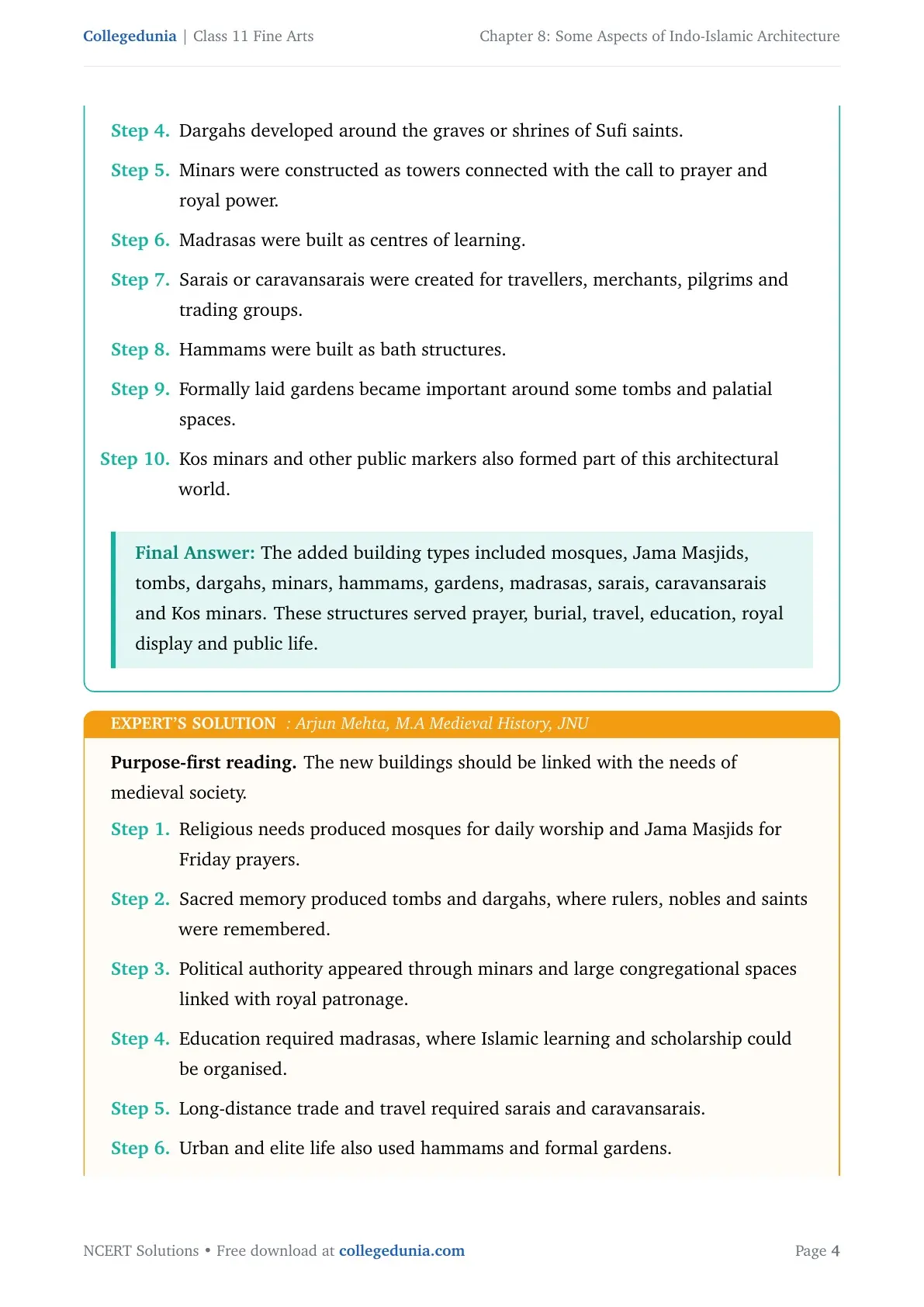
NCERT Solutions Class 11 Fine Arts Chapter 8 Some Aspects of Indo-Islamic Architecture cover all 9 textbook exercise questions for the 2026-27 NCERT chapter. The solved PDF explains Indo-Saracenic architecture, thirteenth-century building types, forts, Mandu, Gol Gumbad, burial architecture and the Taj Mahal.
- Use the PDF for step-by-step answers to all exercise questions.
- Revise mosques, tombs, dargahs, sarais, forts, Mandu and Mughal monuments.
- Open the question cards for Solution and Expert Solution tabs.
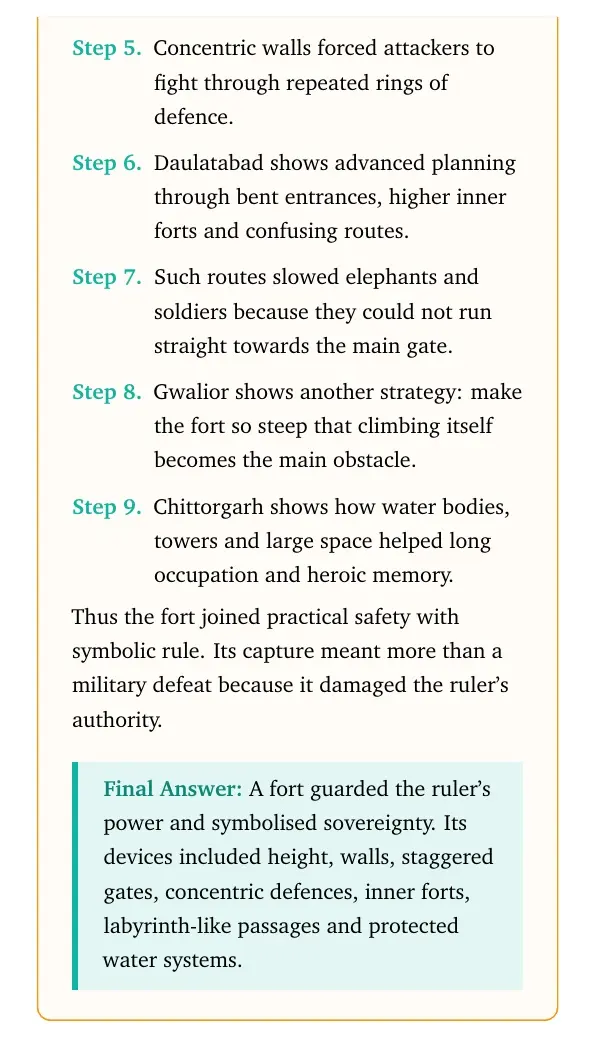
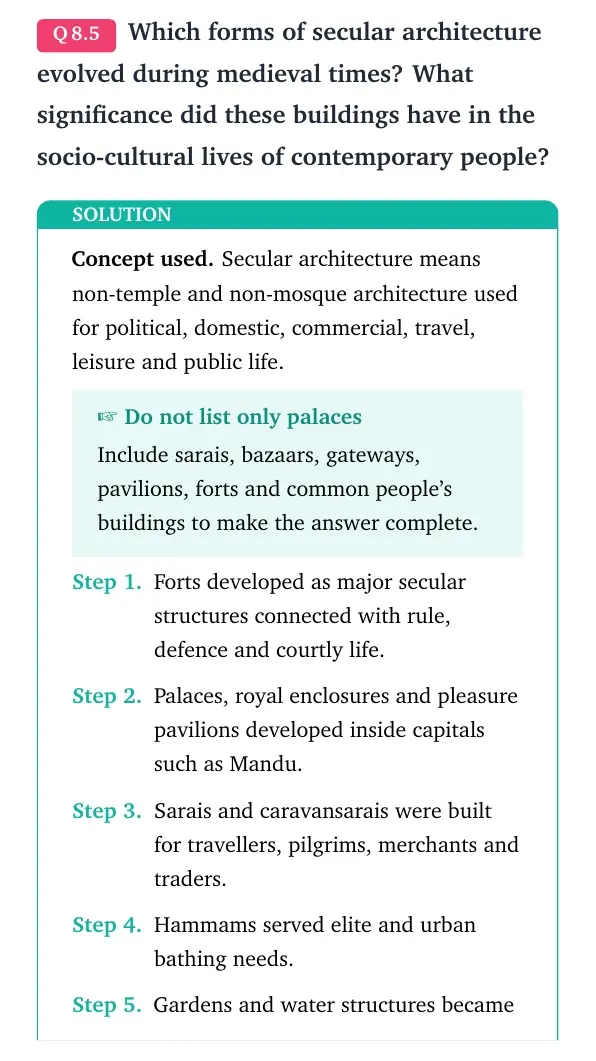
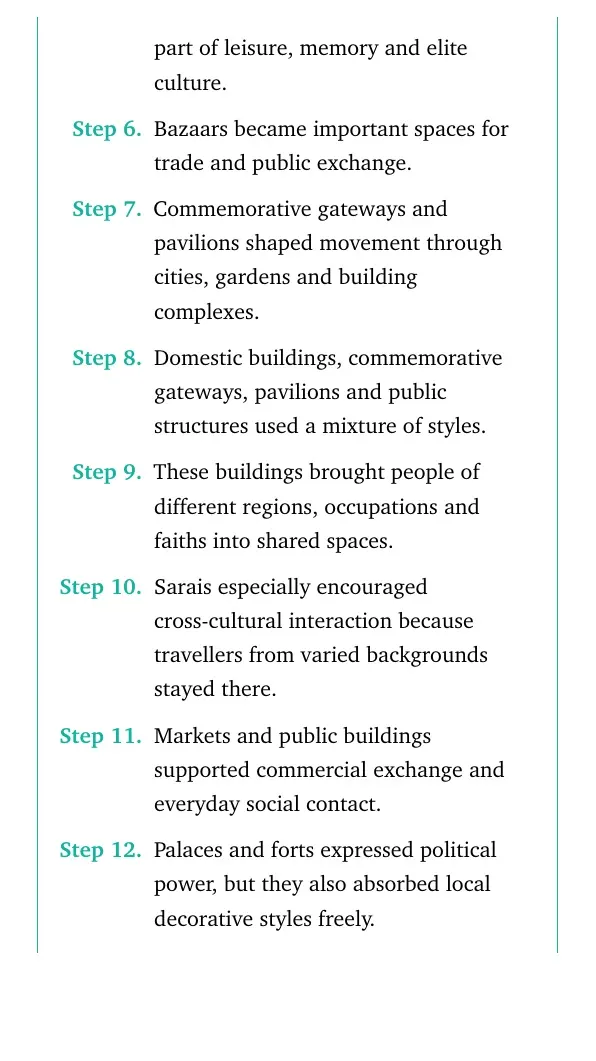
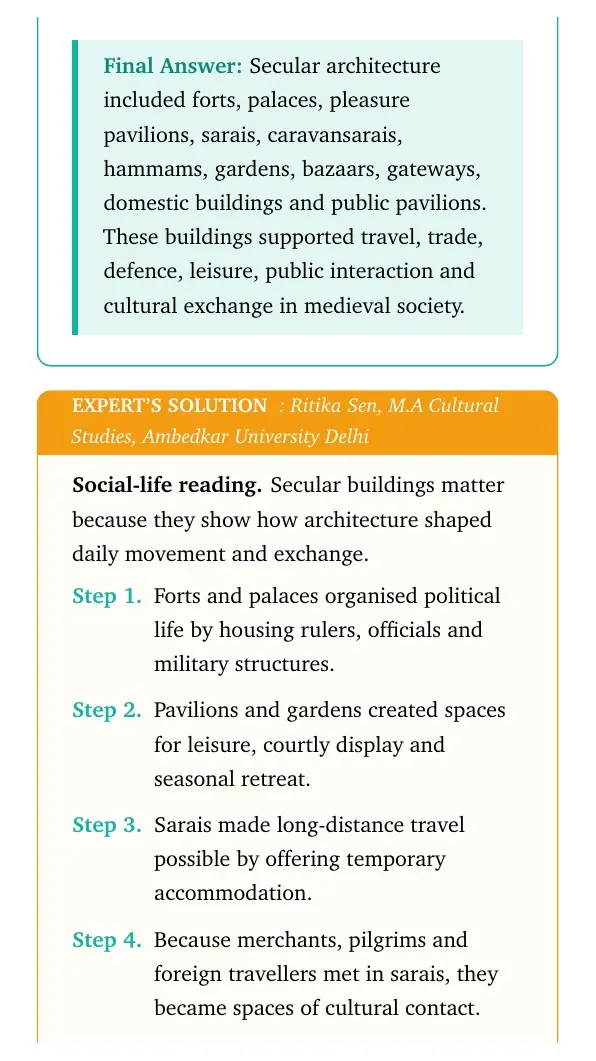
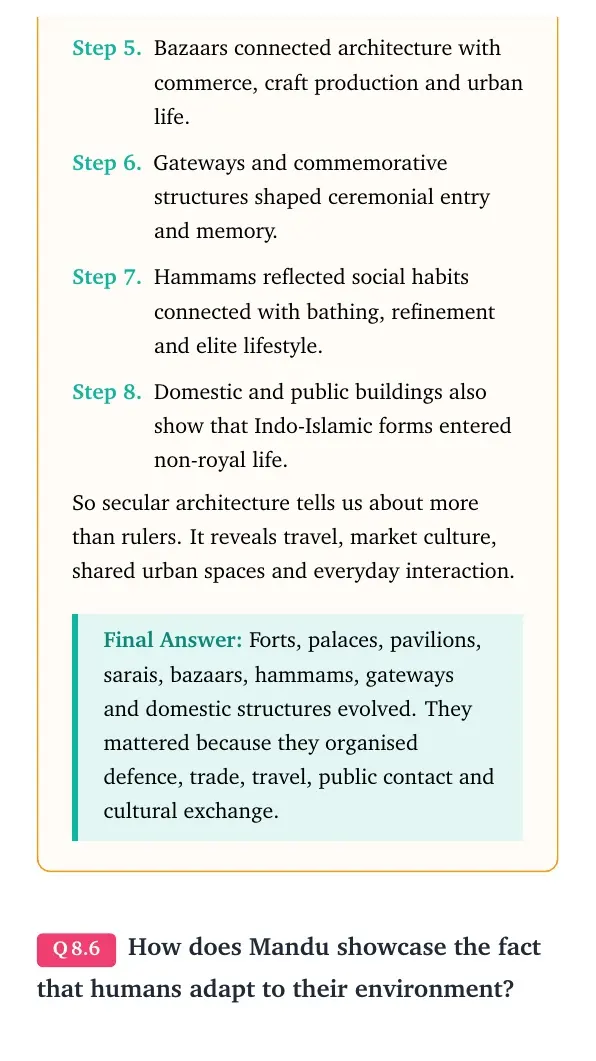
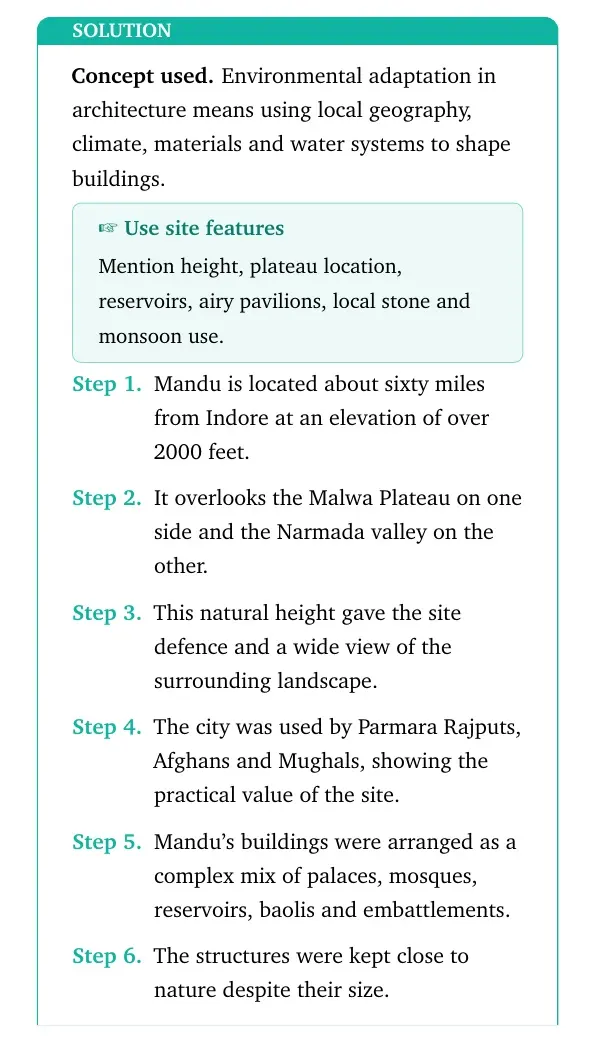
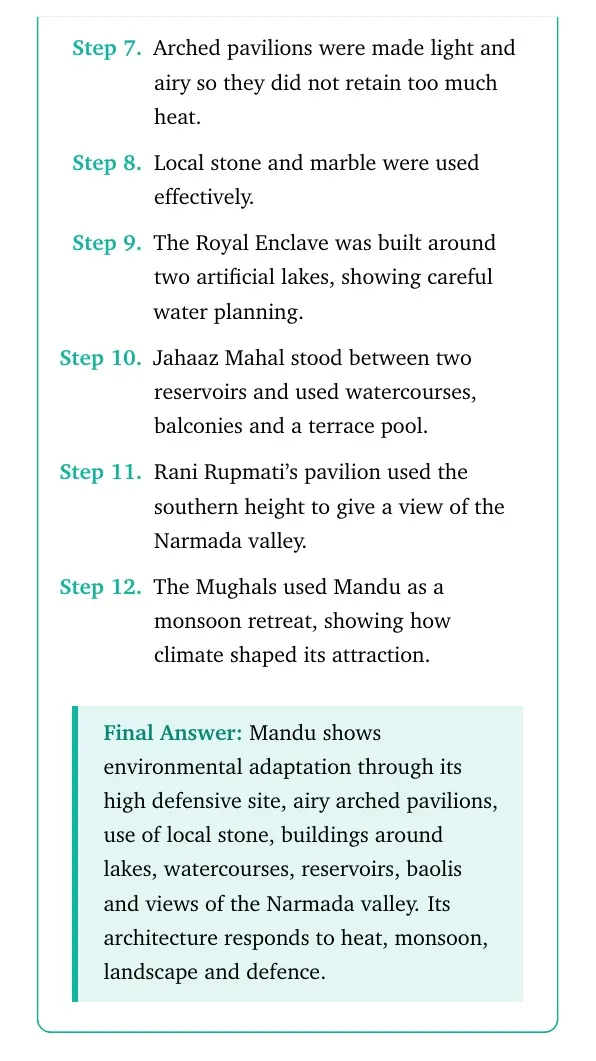
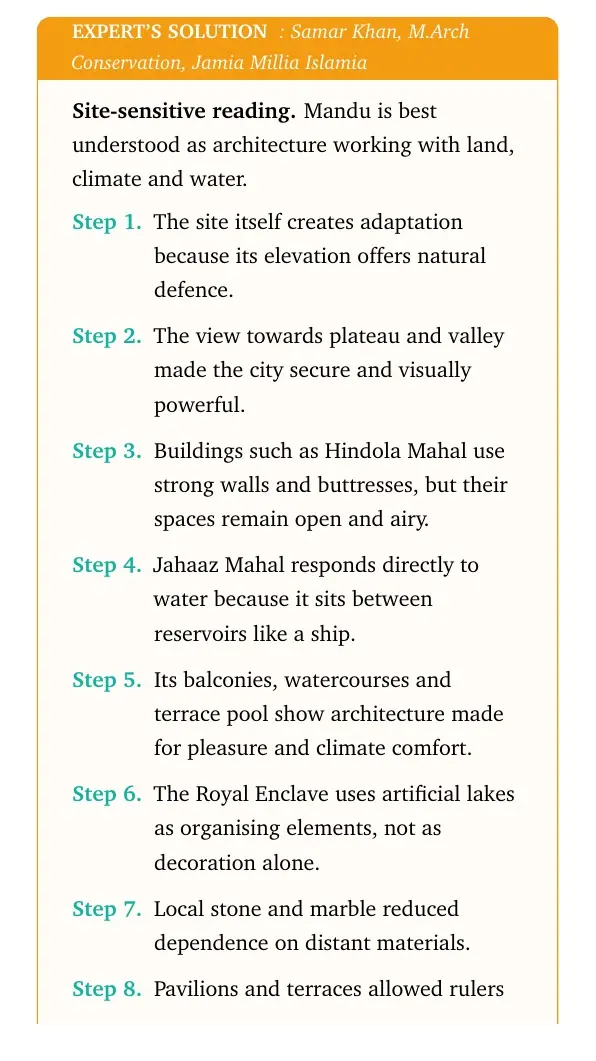
Student Feedback: Students found this chapter easier when monument types were grouped by function: prayer, memory, devotion, travel and defence.
What the Some Aspects of Indo-Islamic Architecture Solutions PDF Covers
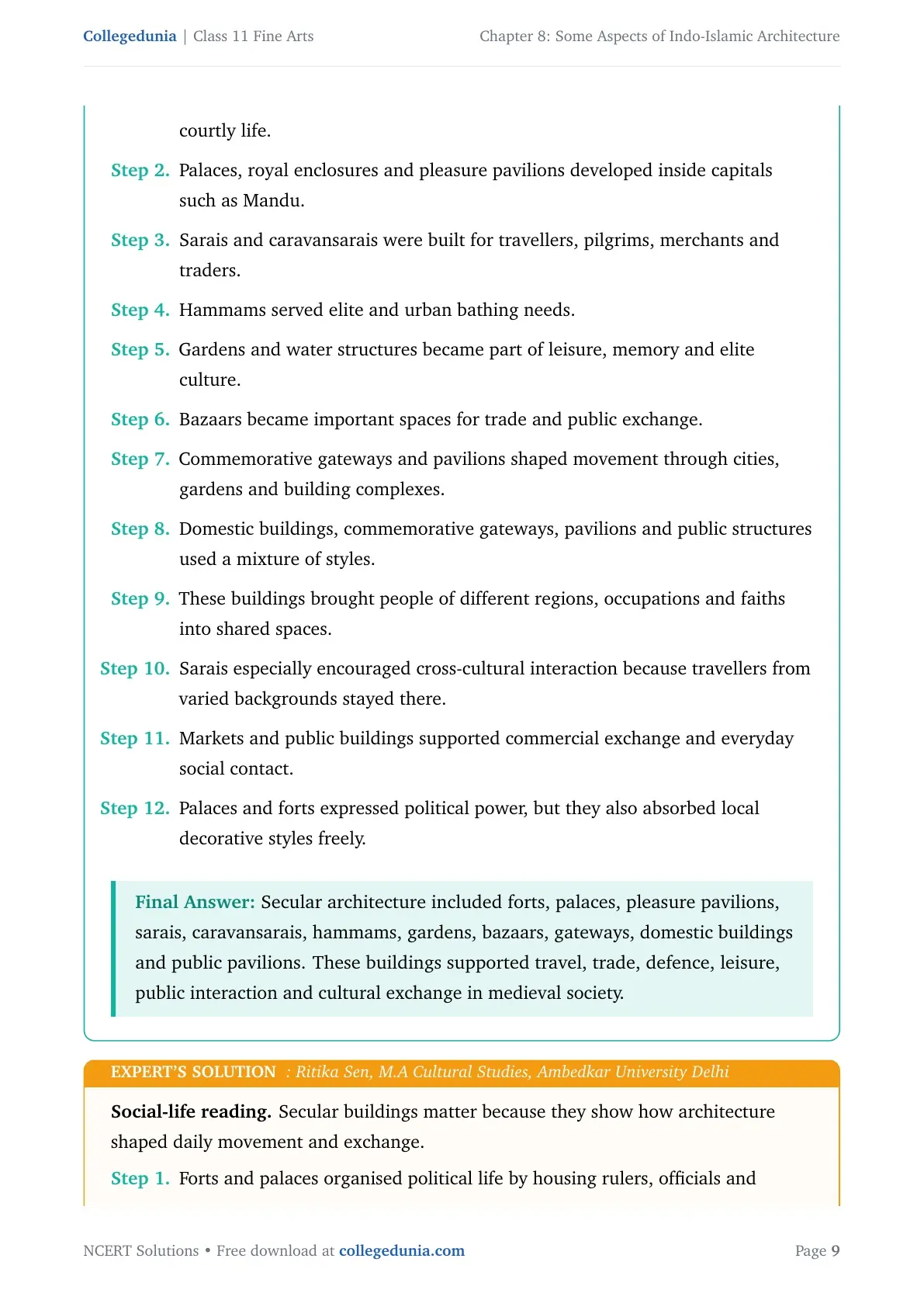
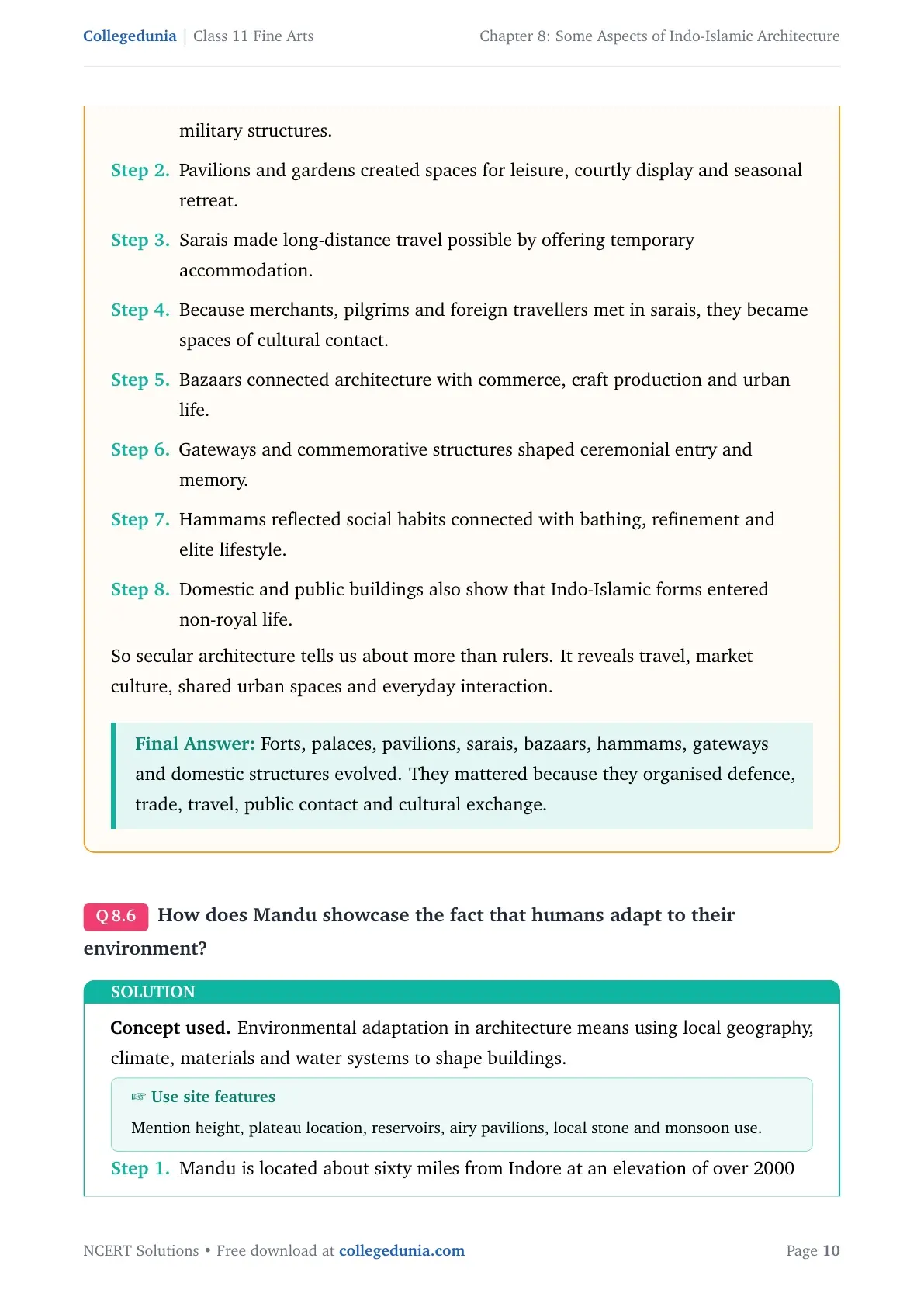
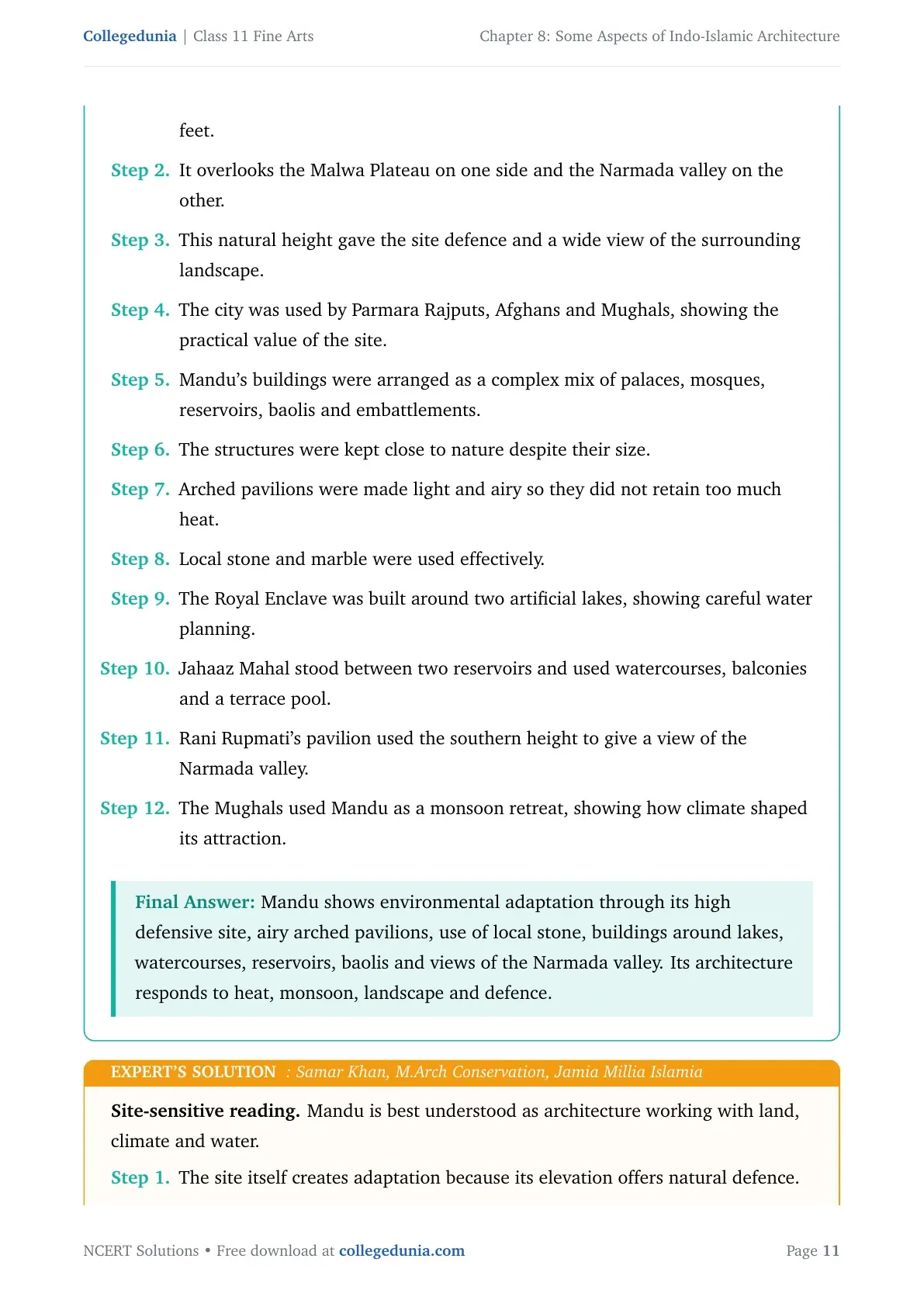
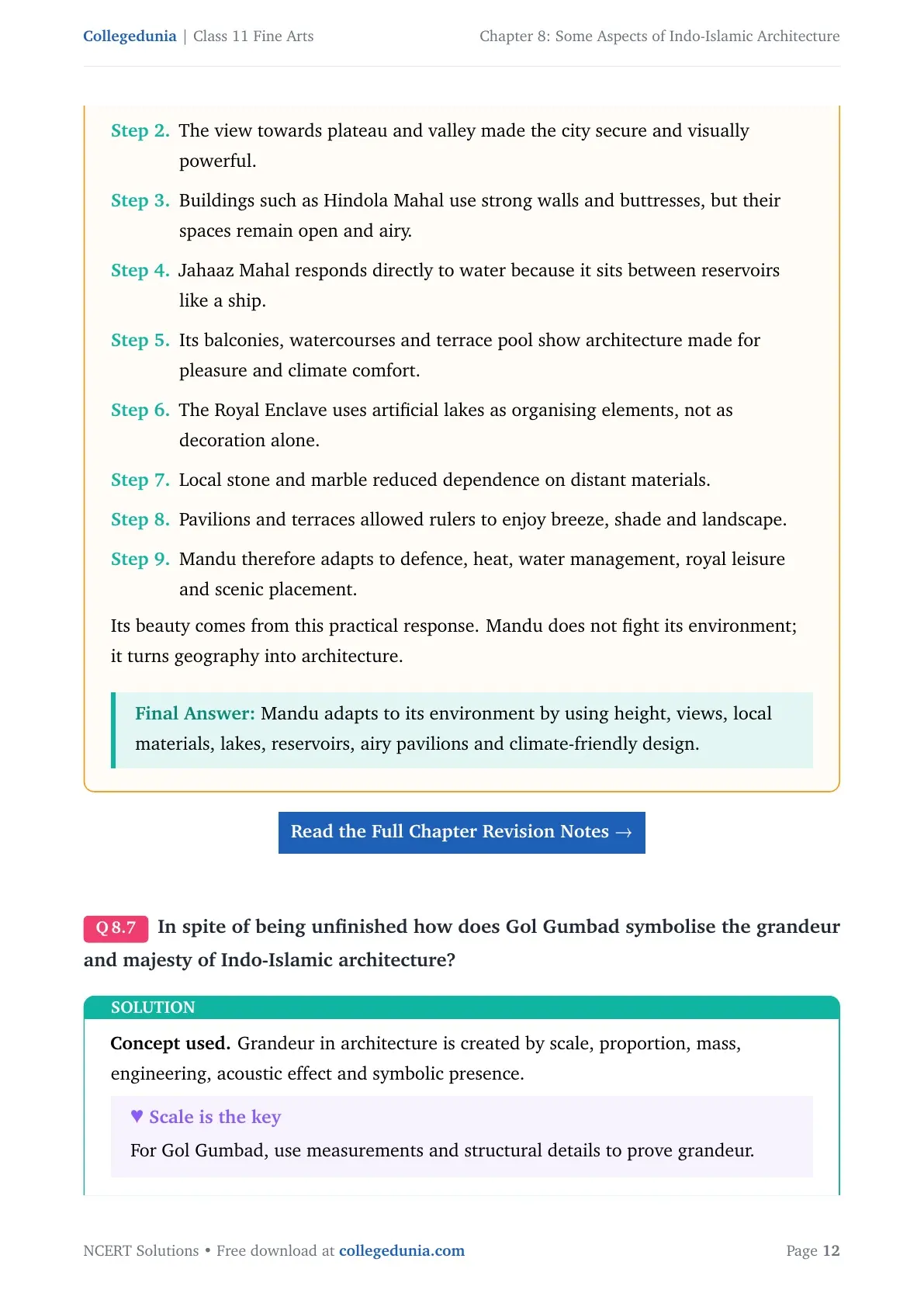
The PDF gives clear answers to the complete NCERT exercise. It explains how Indo-Islamic architecture evolved through contact between West Asian forms and Indian craft traditions. Each answer stays close to the 2026-27 NCERT wording and uses examples from the chapter, including Qutb Minar, Mandu, Gol Gumbad and the Taj Mahal.
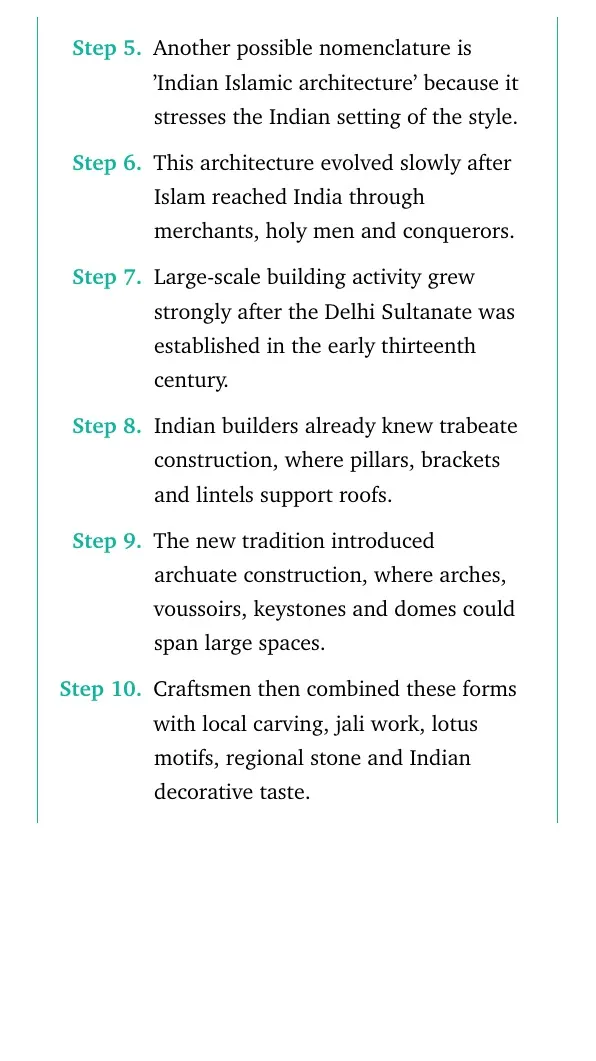
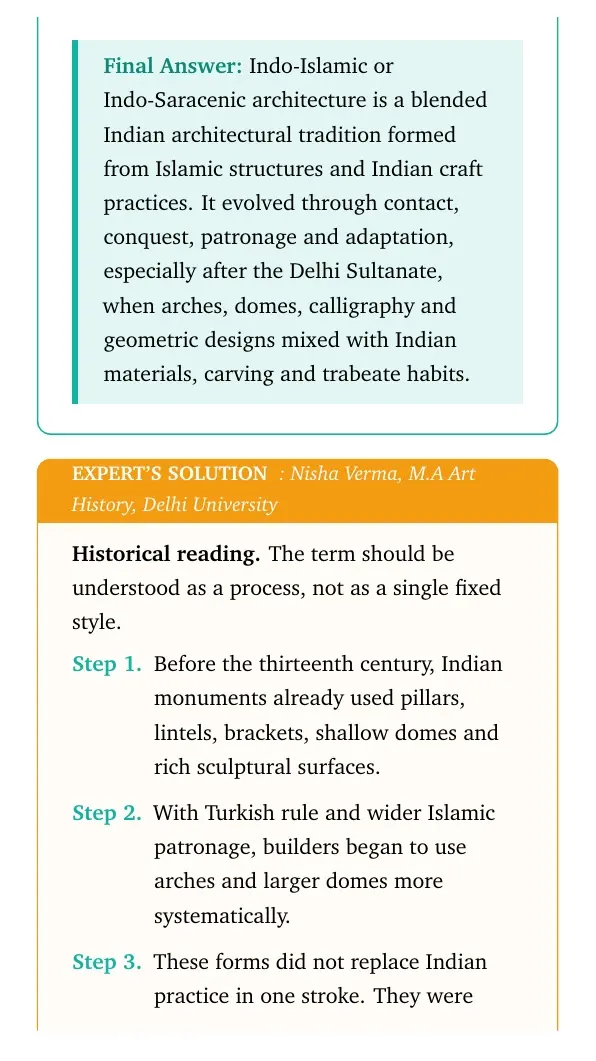
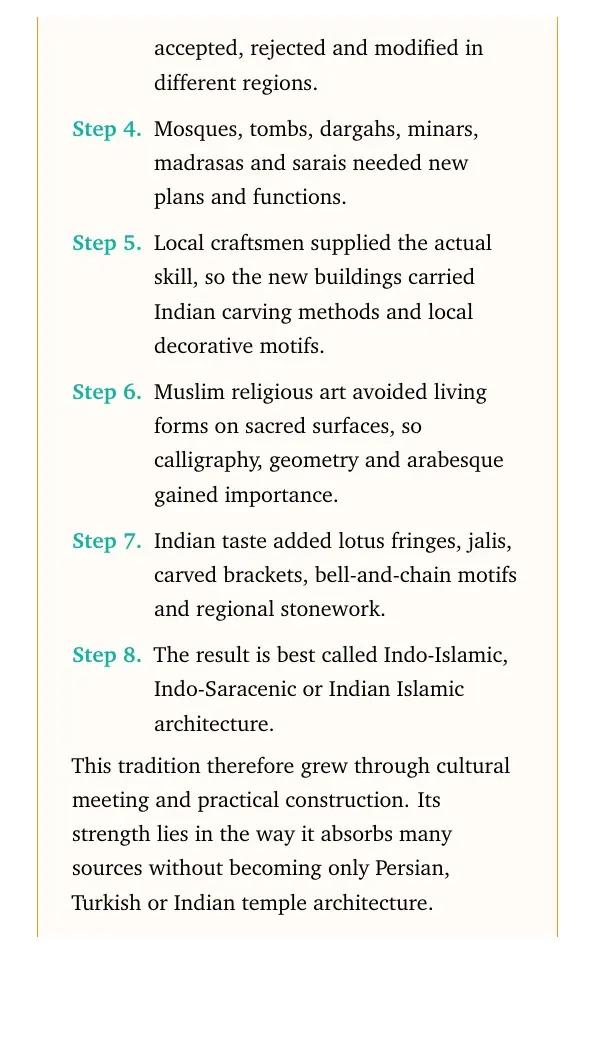
- Question 1: meaning, nomenclature and evolution of Indo-Islamic architecture.
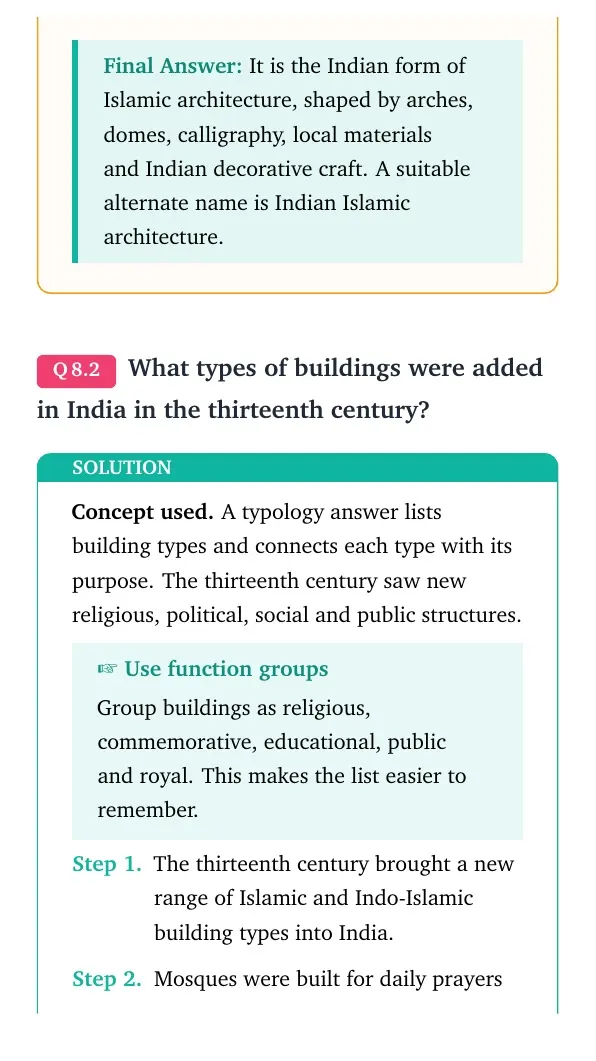
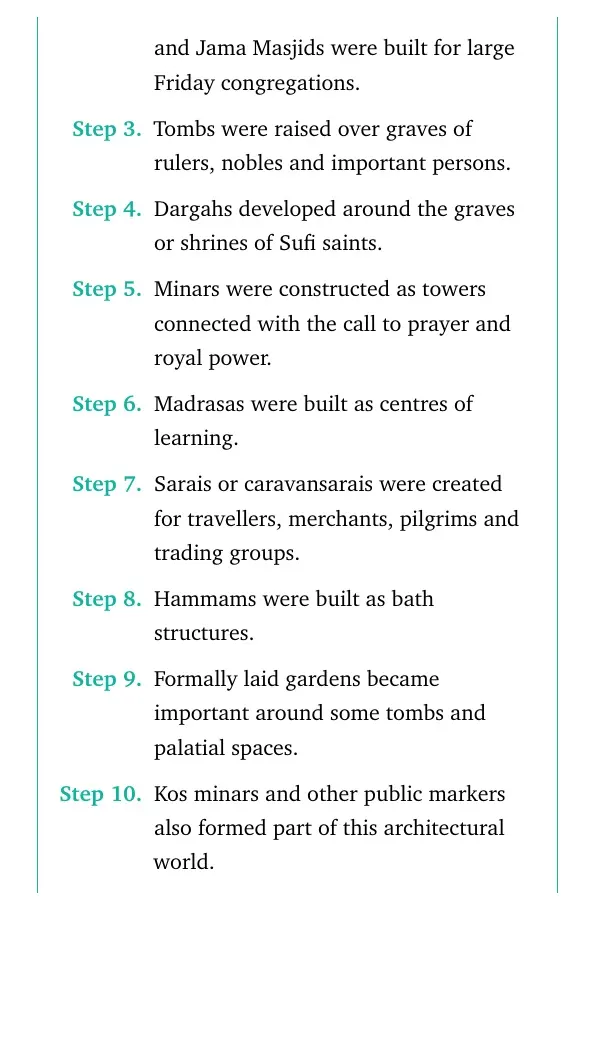
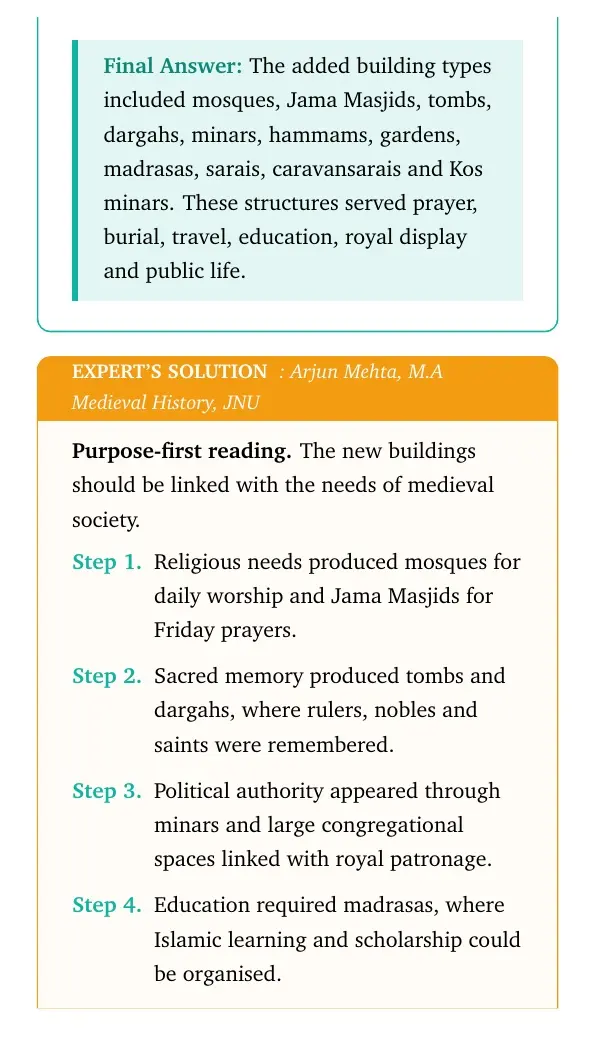
- Question 2: building types added in the thirteenth century.
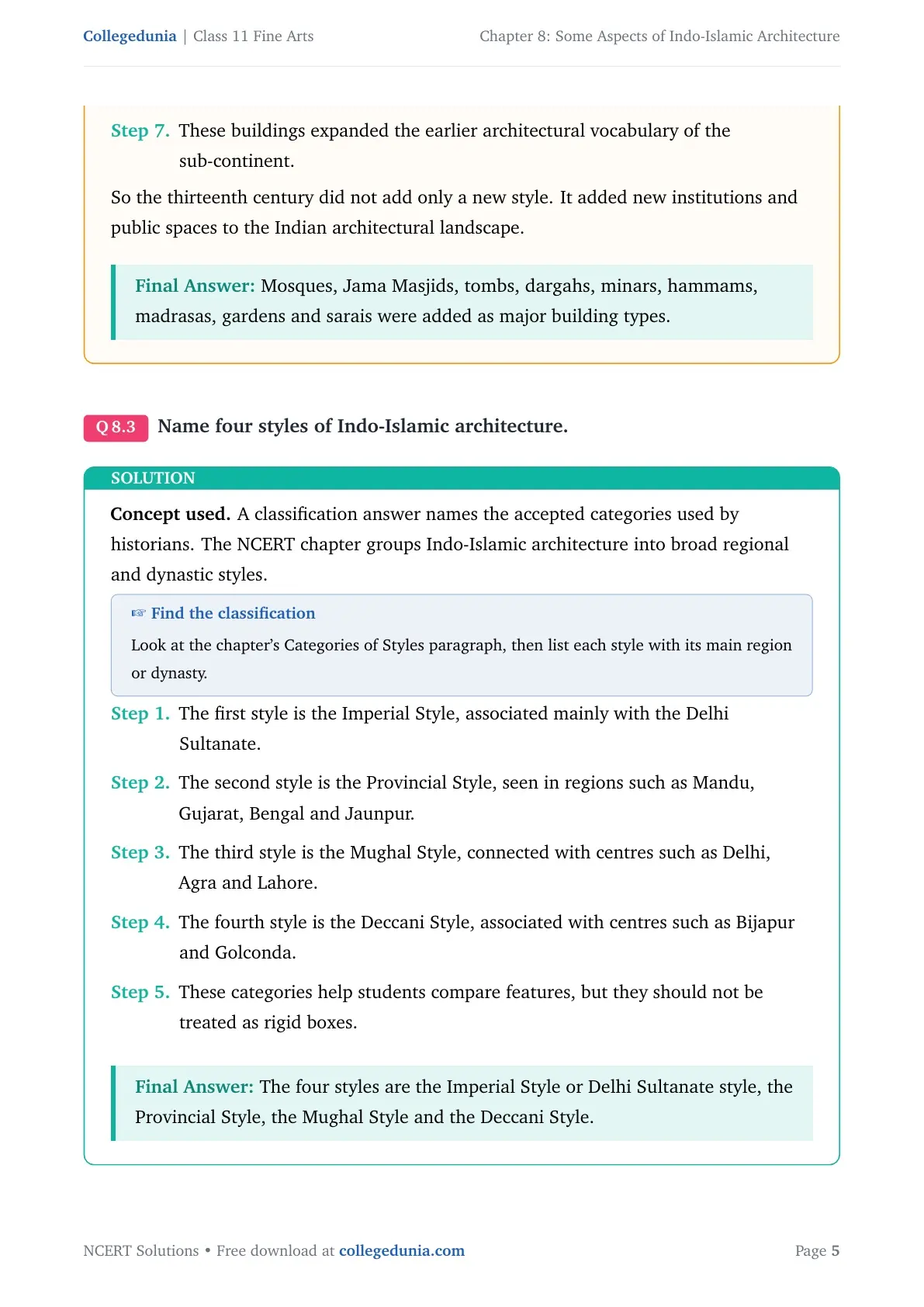
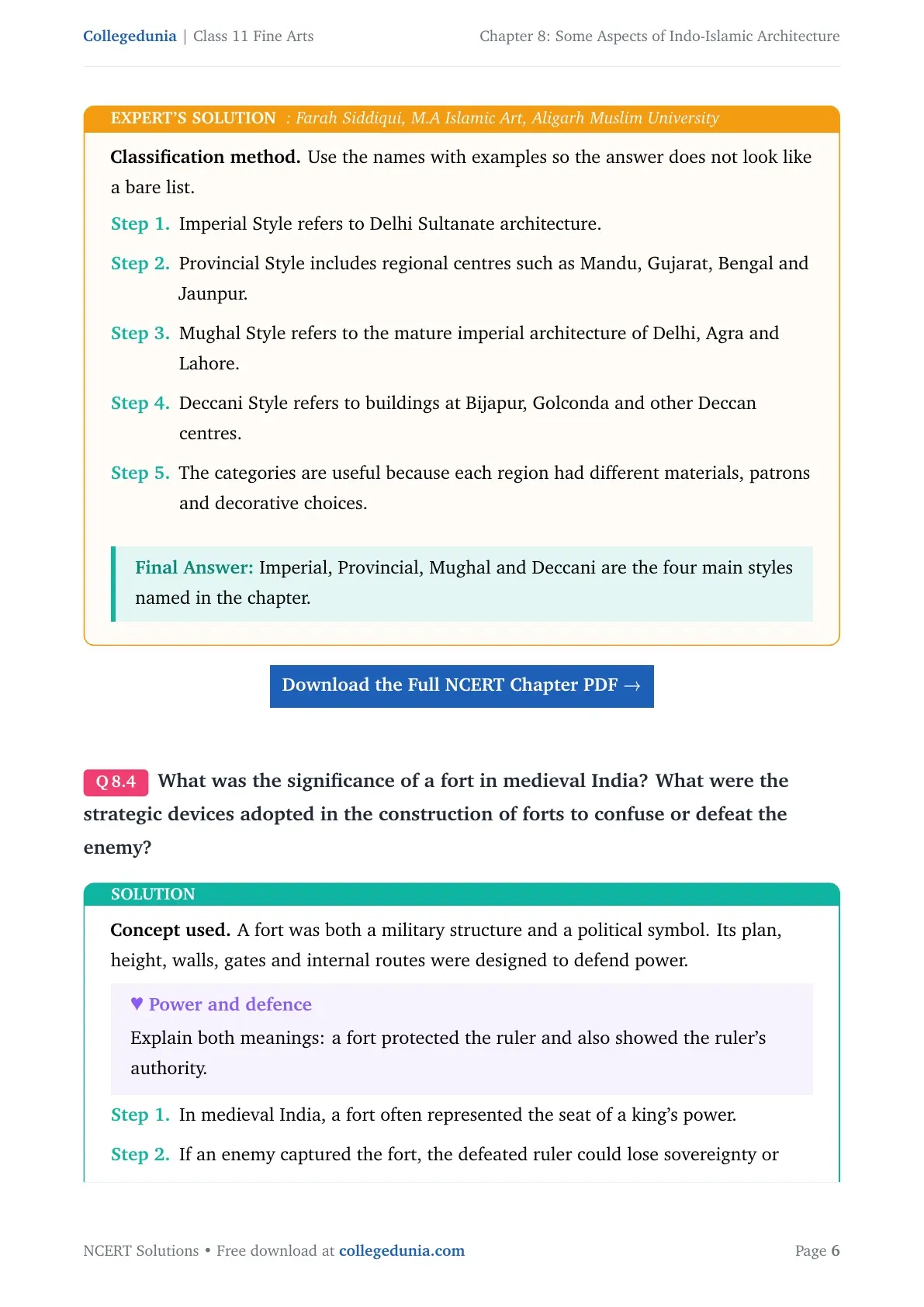
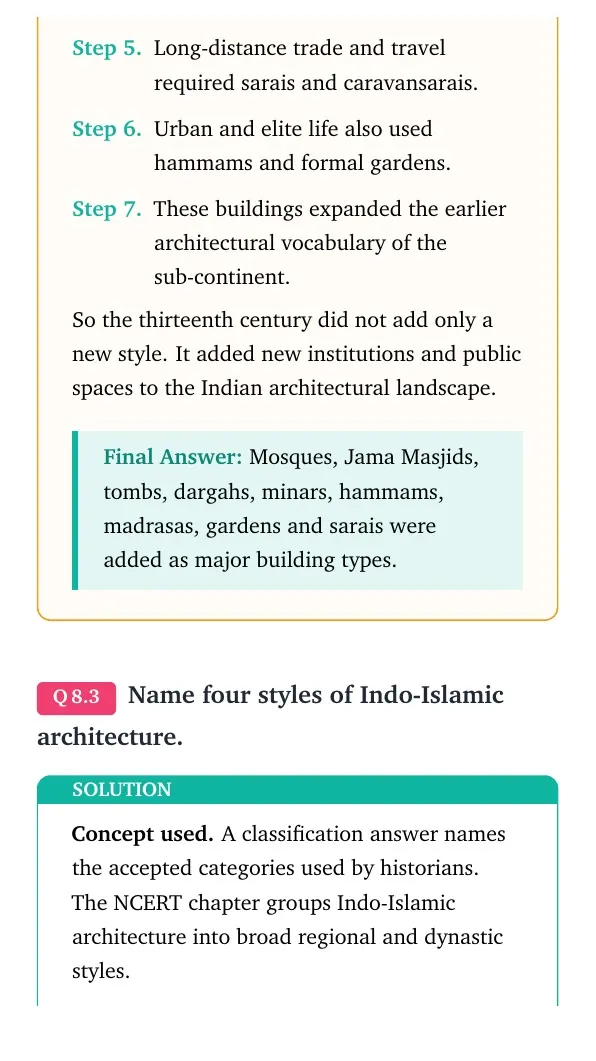
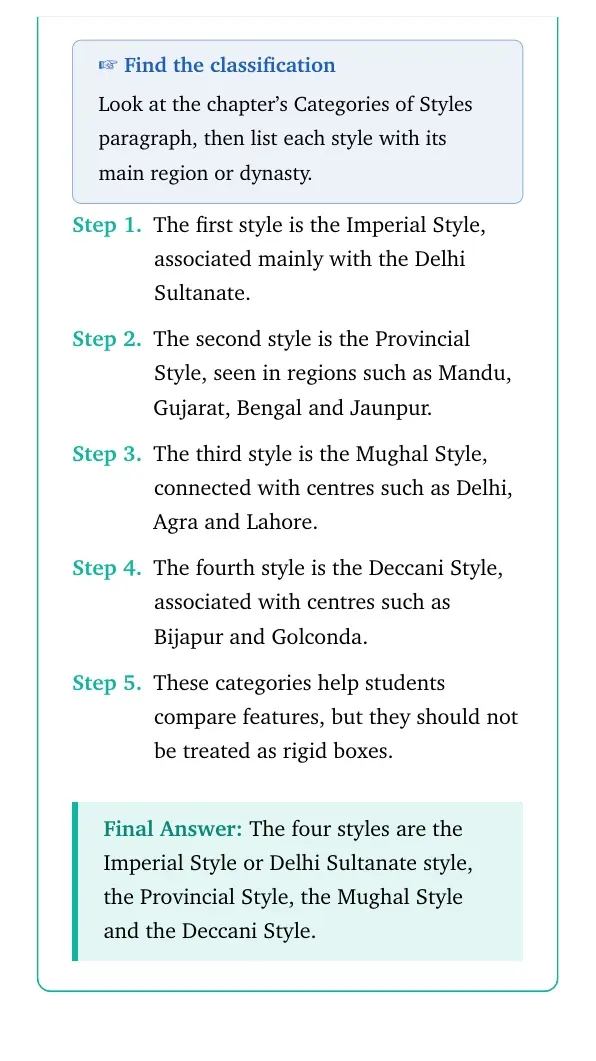
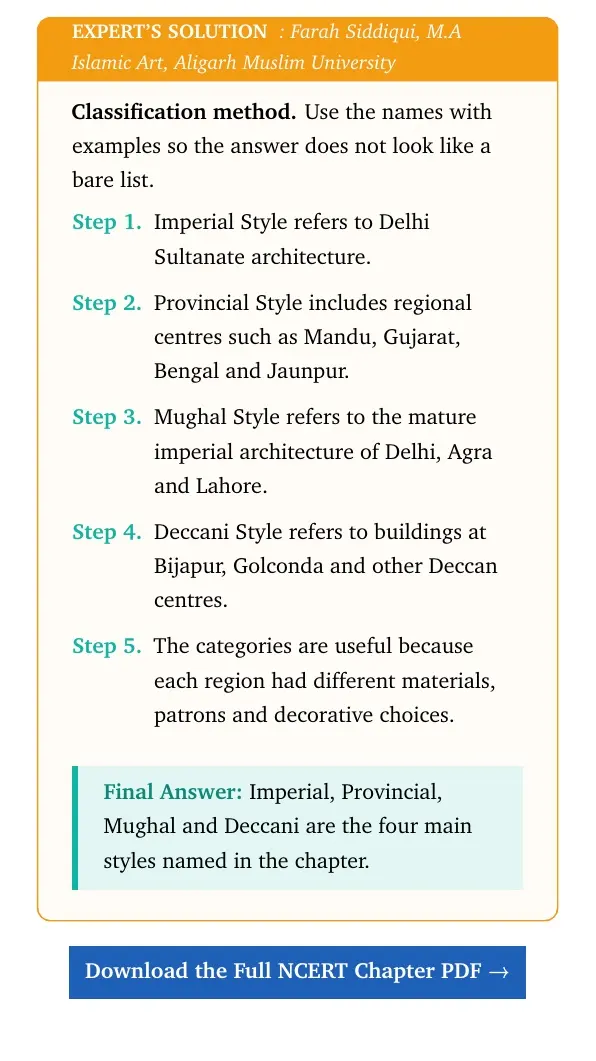
- Question 3: Imperial, Provincial, Mughal and Deccani styles.
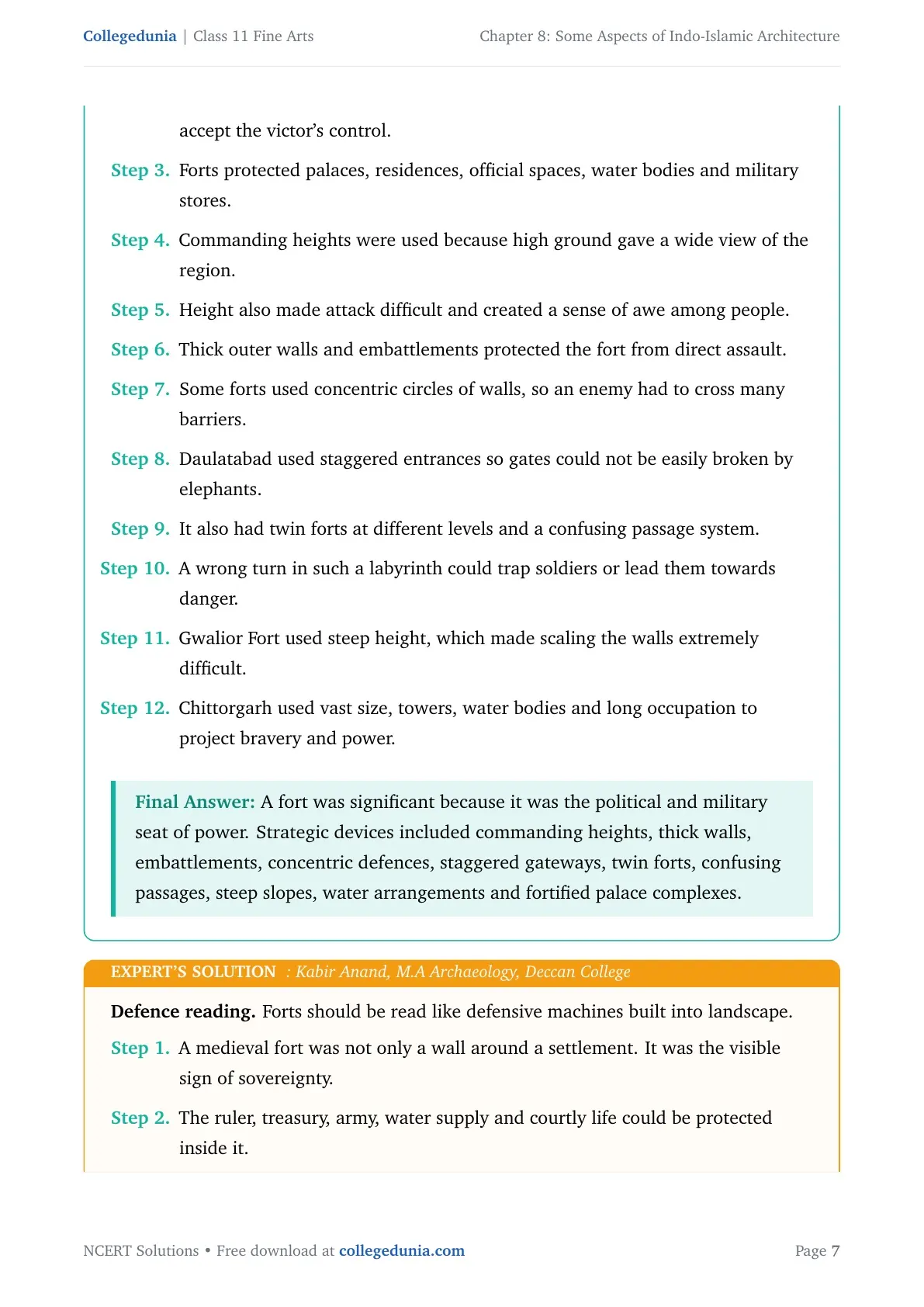
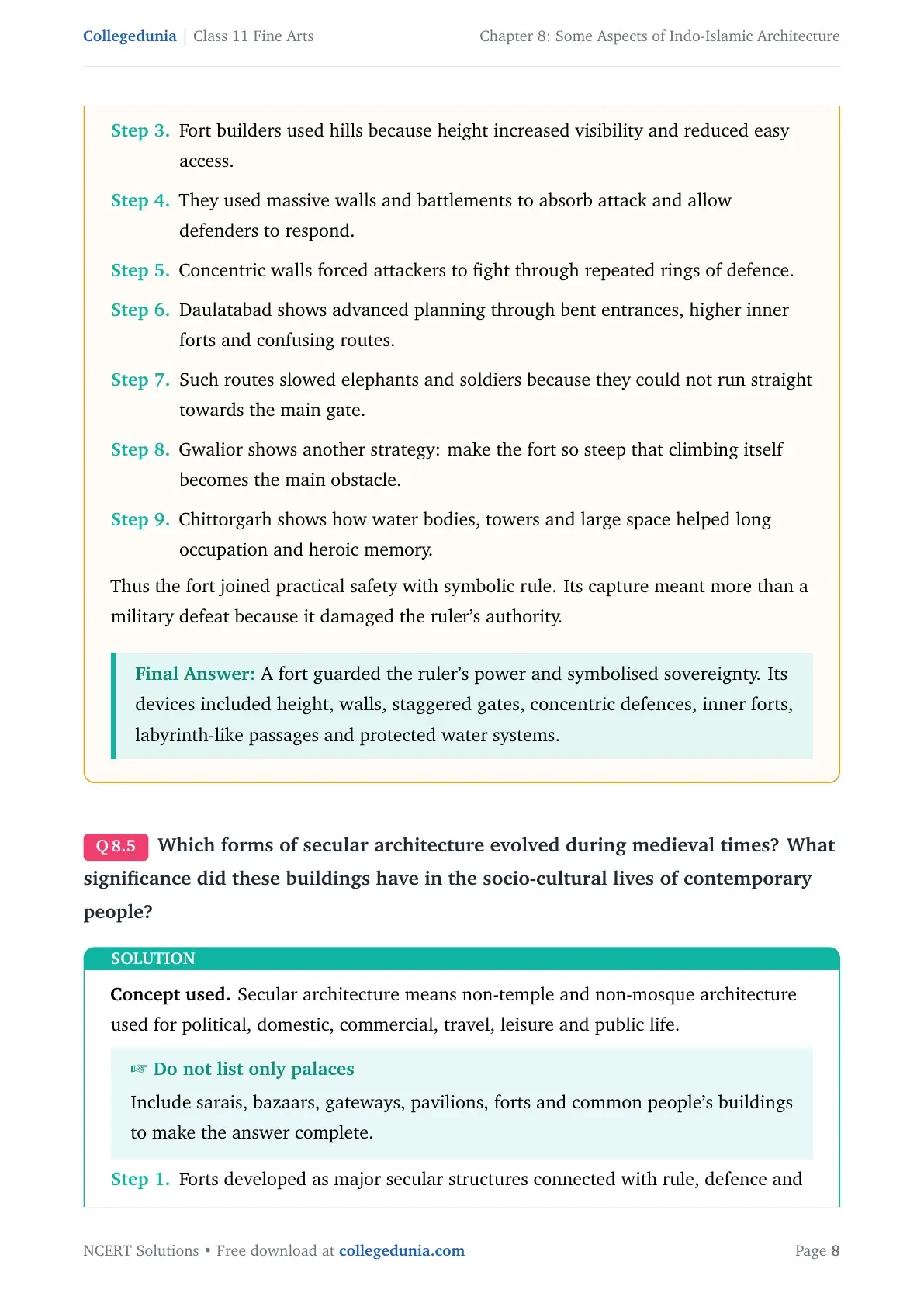
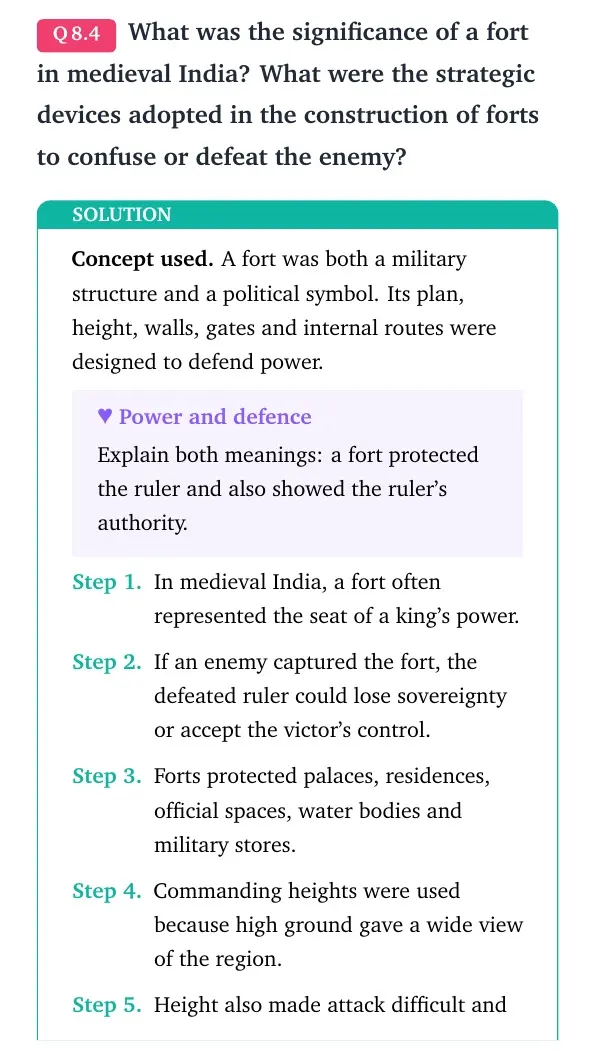
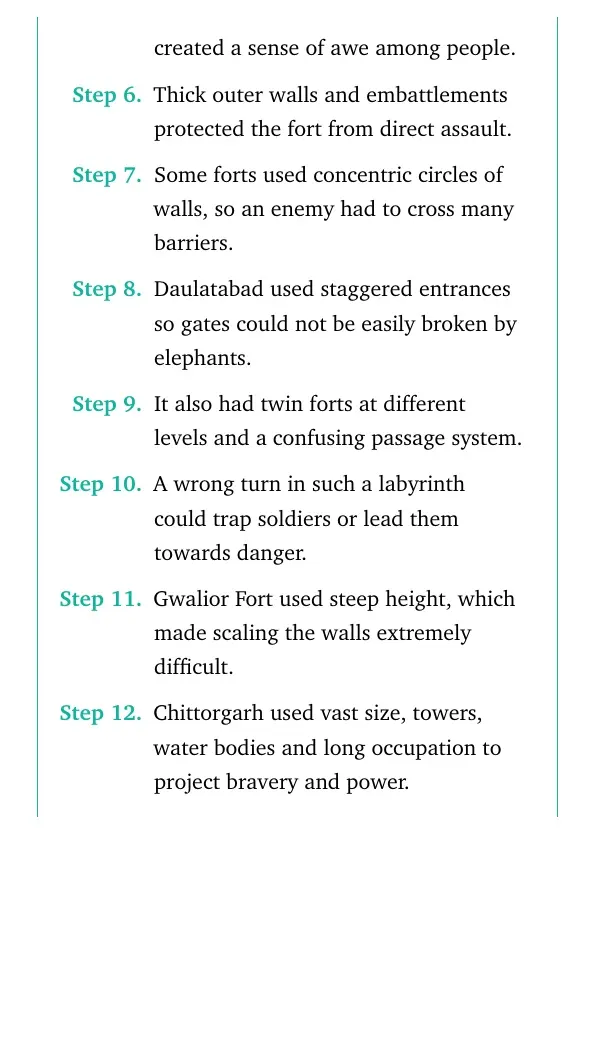
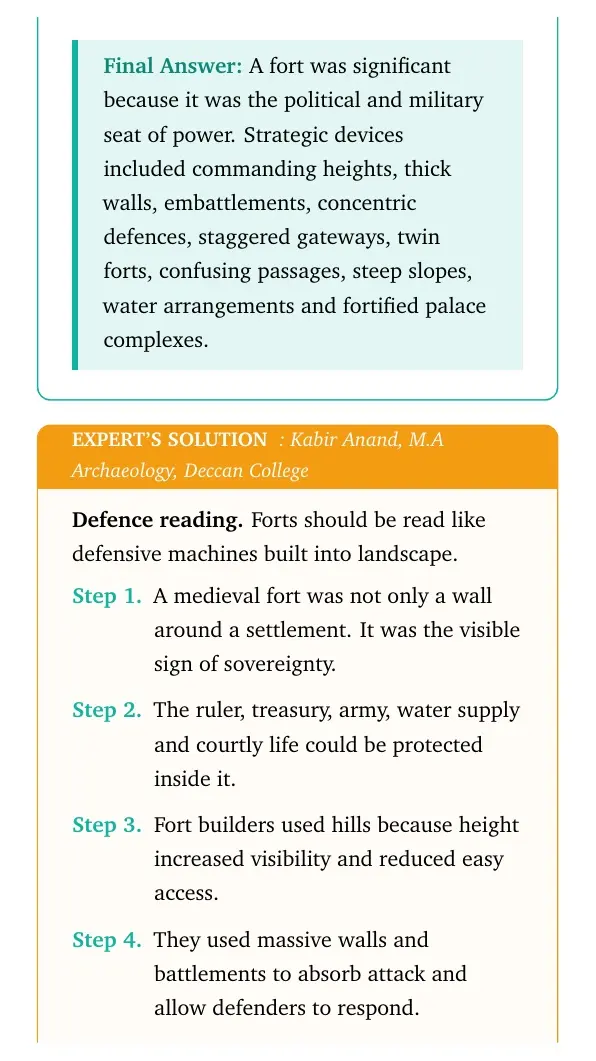
- Questions 4 to 9: forts, secular architecture, Mandu, Gol Gumbad, burial spaces and Taj Mahal perfection.
Indo-Islamic Architecture Video Lesson
Source: the modern sanyasi on YouTube
All NCERT Solutions for Some Aspects of Indo-Islamic Architecture
The solved questions are also available as a separate question-card view. Use it when you want to revise one answer at a time without scrolling through the full PDF.
| Open question cards: | questions-ncert-solutions-class-11-fine-arts-chapter-8-some-aspects-of-indo-islamic-architecture.html |
Indo-Islamic Architecture Forms in Class 11 Fine Arts
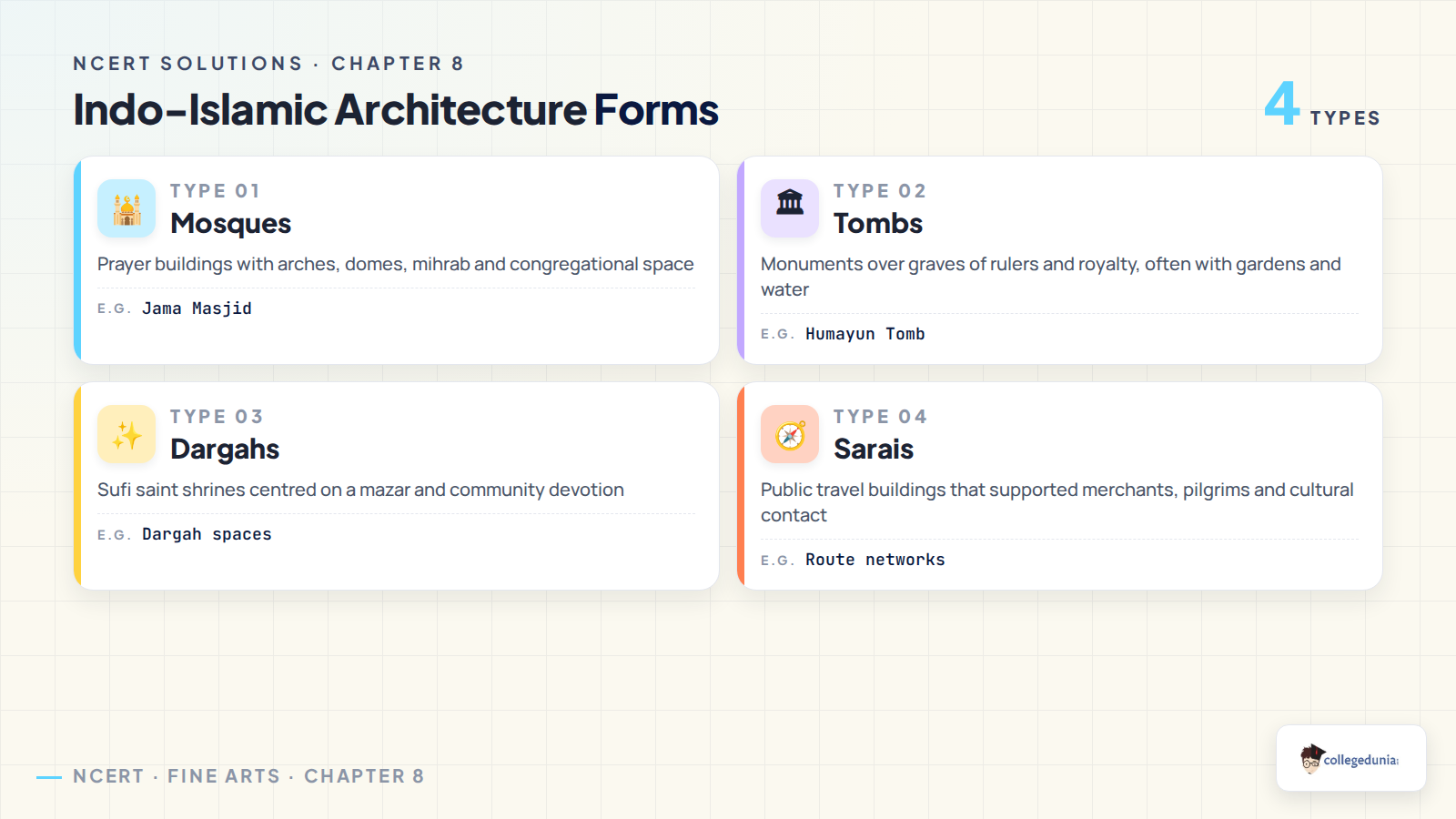
The chapter is easier to revise when the forms are sorted by purpose. Mosques and Jama Masjids serve congregational prayer. Tombs and mausoleums turn graves into architectural monuments. Dargahs are centred on the shrine of a Sufi saint. Sarais and Kos minars show how architecture also supported travel and public movement.
| Form | Answer cue | Example or use |
|---|---|---|
| Mosque | Prayer space with mihrab, arches, domes and inscriptions | Jama Masjid, Qila-i Kuhna Masjid |
| Tomb | Monument over a grave, often with garden and water imagery | Humayun Tomb, Taj Mahal |
| Dargah | Sufi saint shrine centred on a mazar | Devotion and community practice |
| Sarai | Public accommodation on routes | Travel, trade and cultural contact |
Key Sites in Indo-Islamic Architecture for Revision
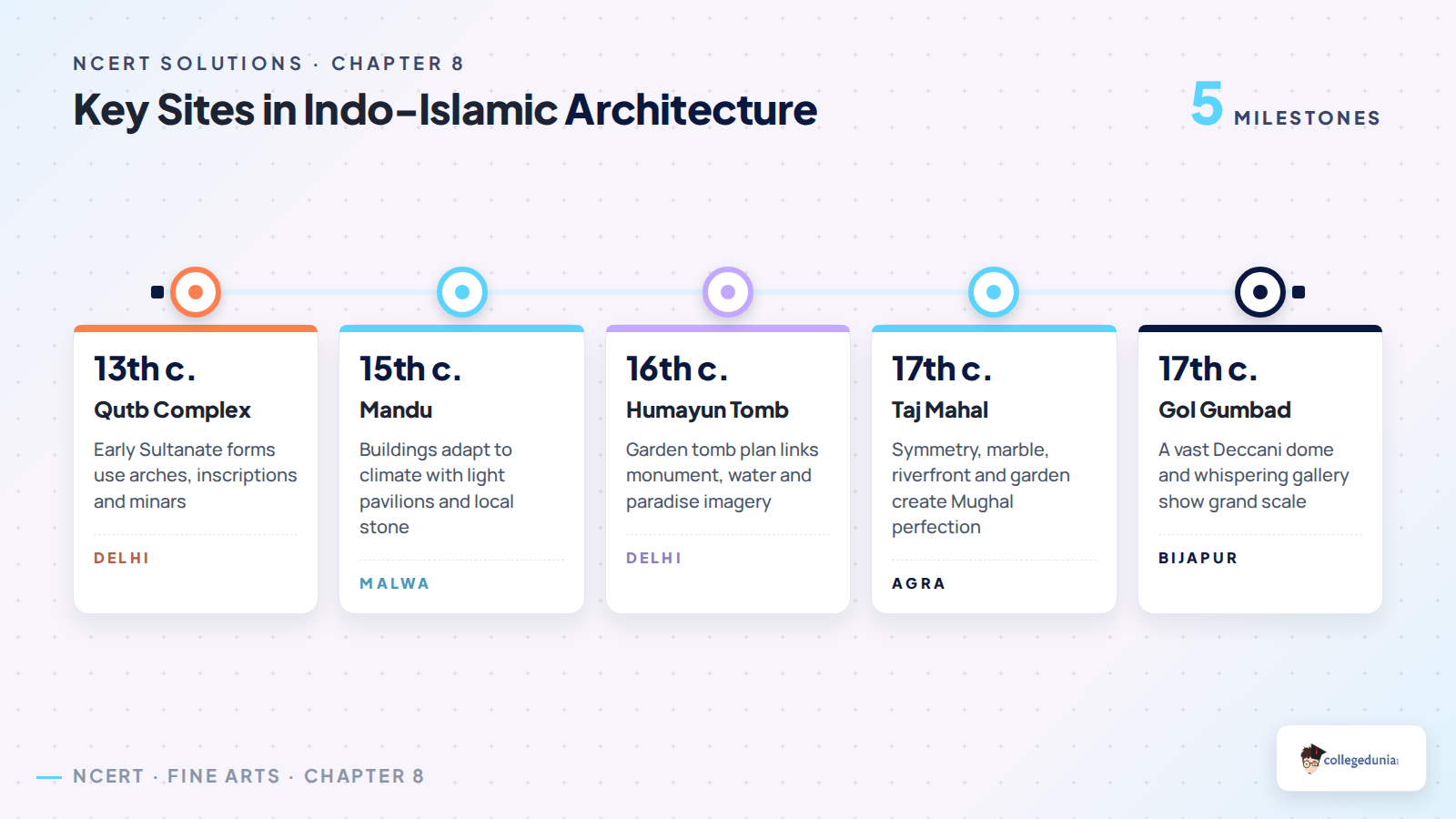
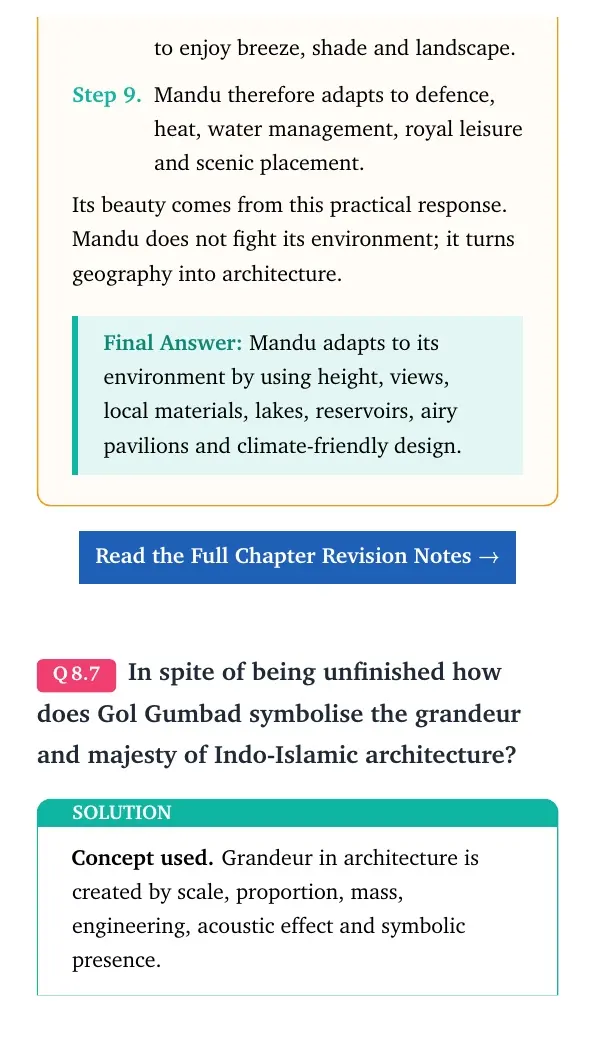
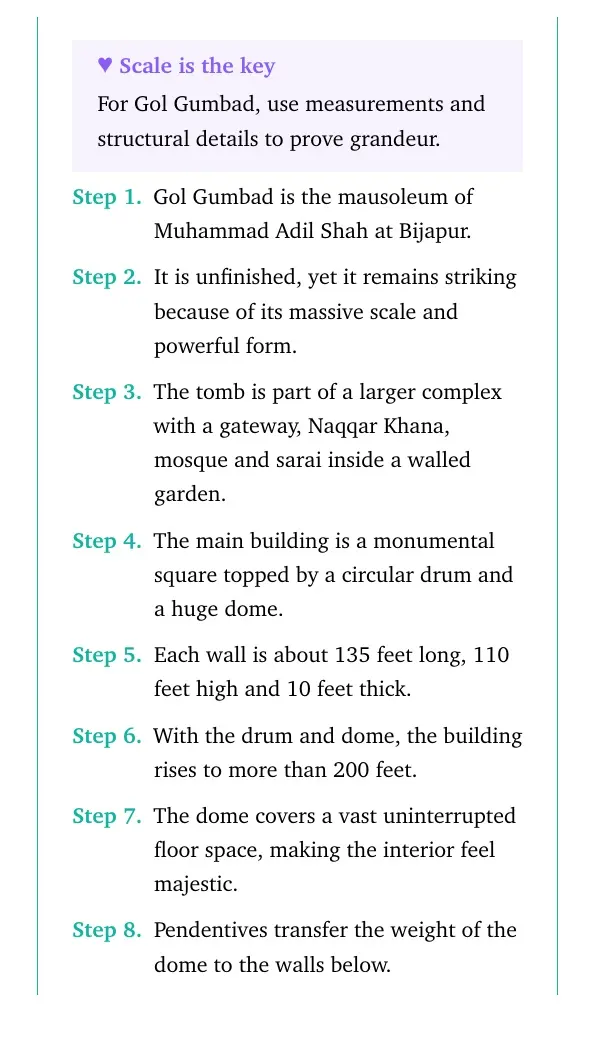
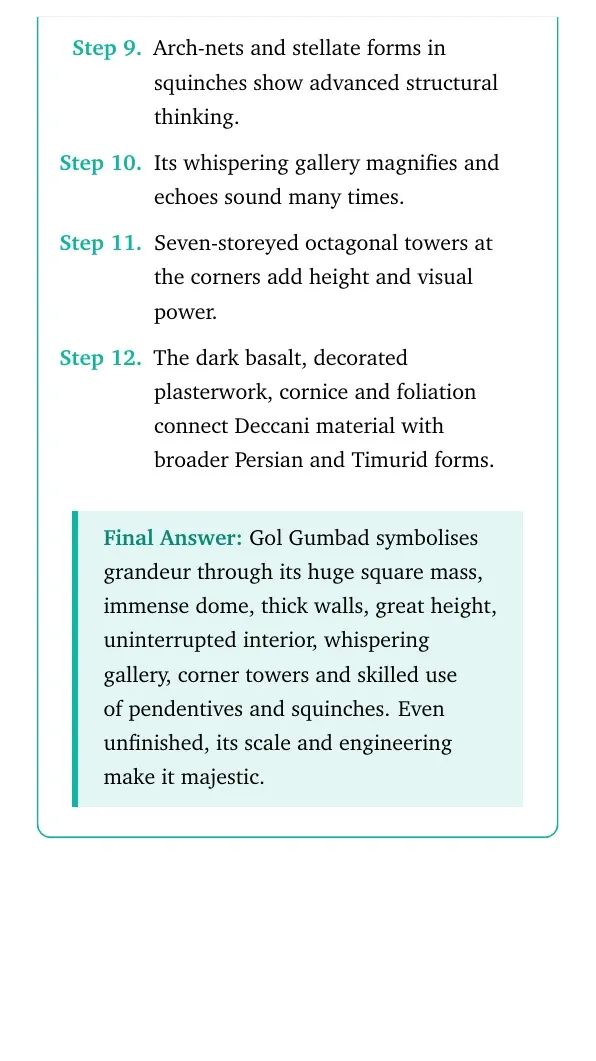
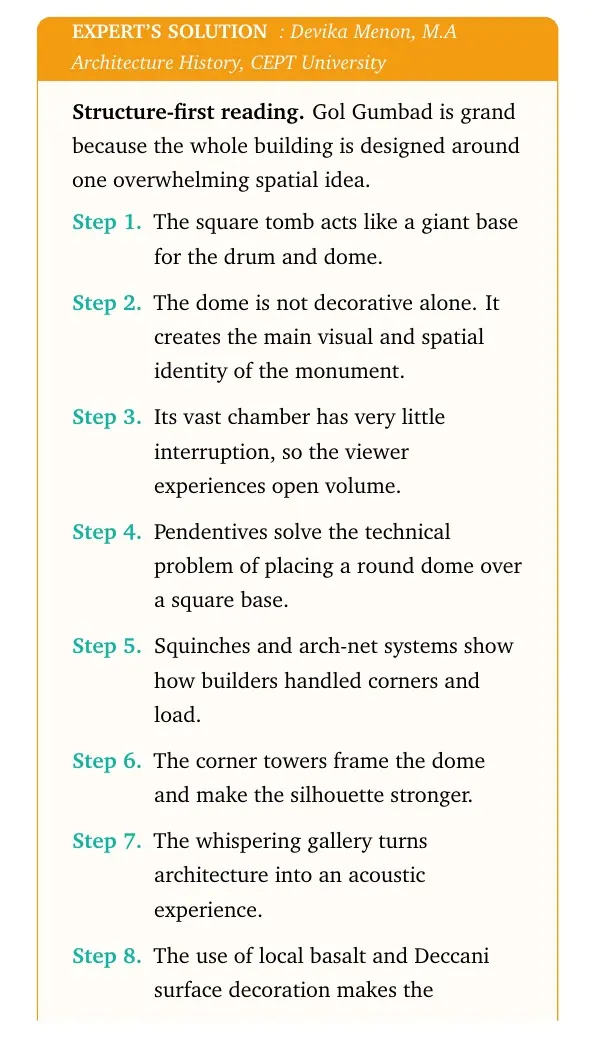
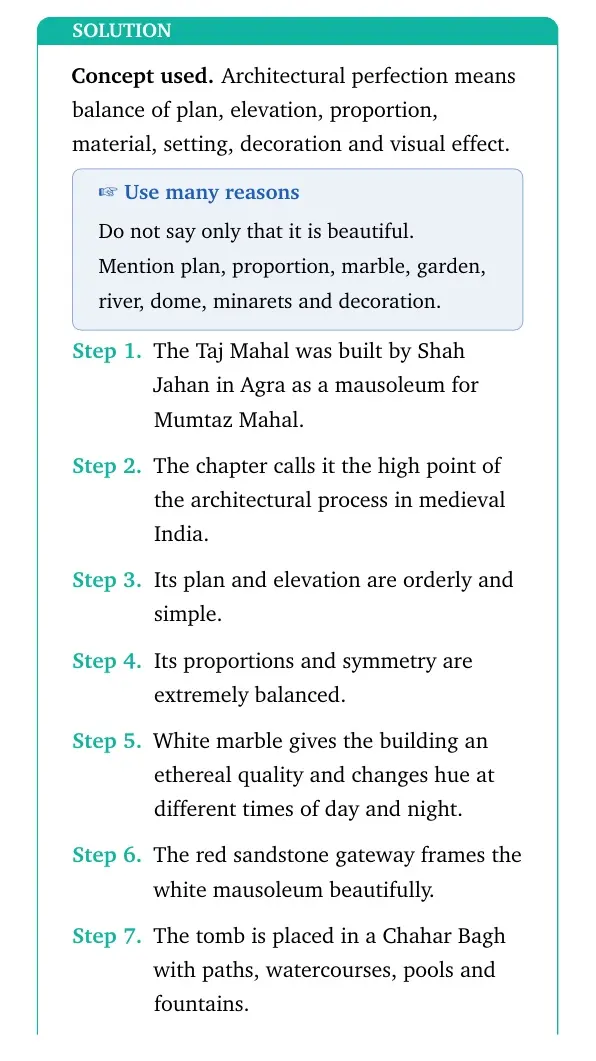
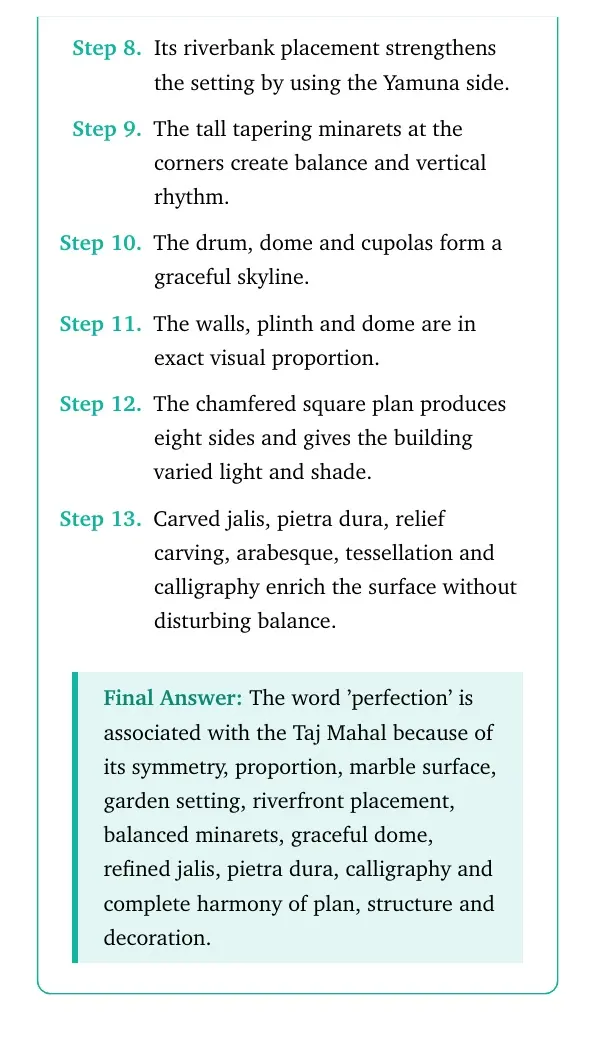
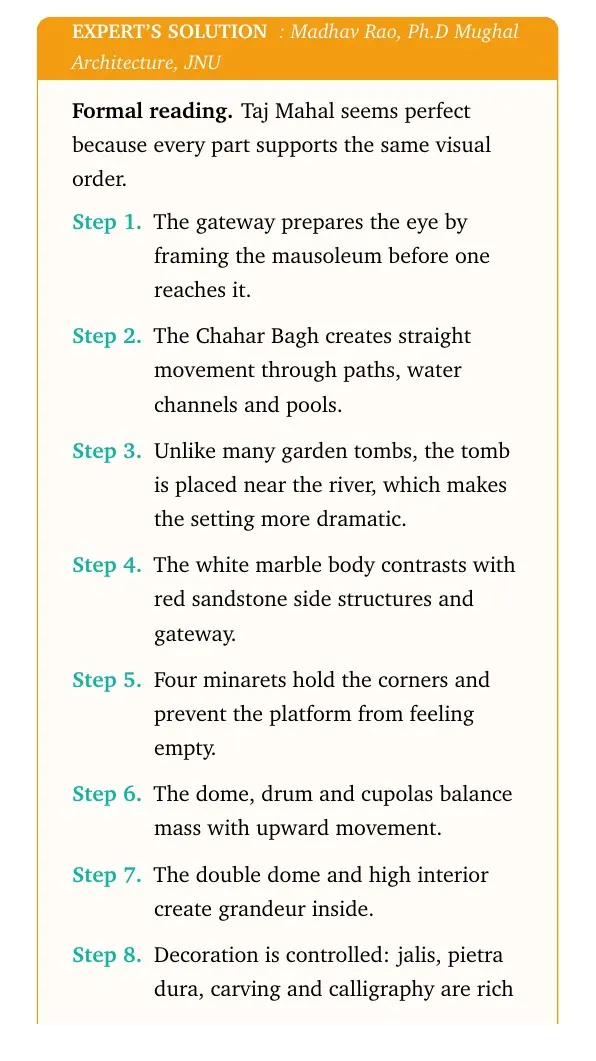
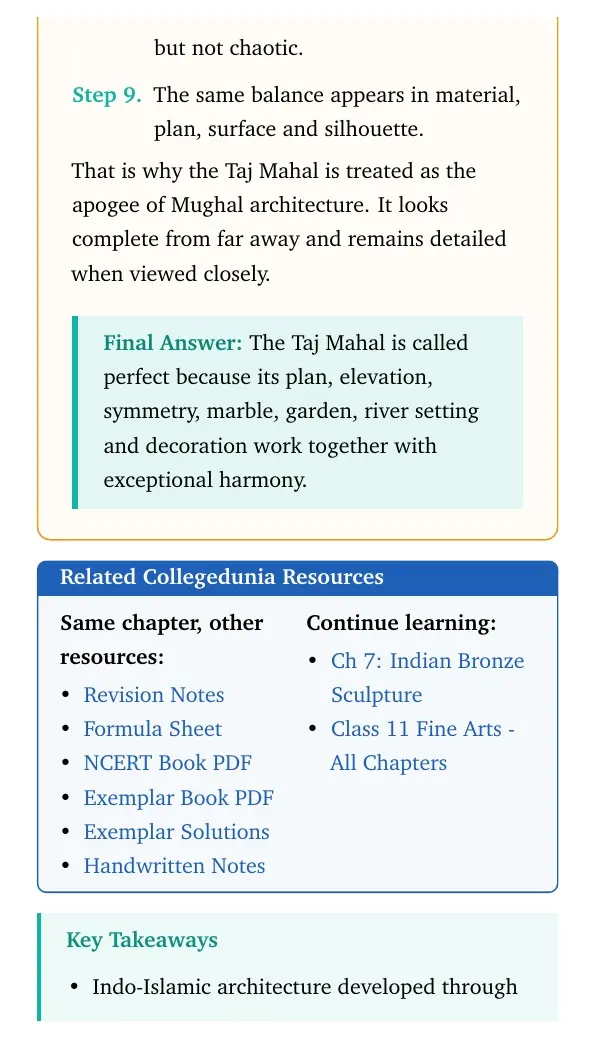
Site-based answers score better when they connect form, material, patronage and environment. Mandu is important because its buildings adapt to climate and terrain. Gol Gumbad is important because its vast dome, square chamber and whispering gallery create a grand Deccani monument. The Taj Mahal is important because its symmetry, marble, garden, riverfront and decoration work together.
Do not write monument names as a list only. Add one function and one visual feature for each monument. This turns a memory-based answer into an art-history answer.
Common Mistakes in Class 11 Fine Arts Chapter 8 Solutions
Students often lose marks by mixing up similar terms. A grave is the direct burial place. A tomb or mausoleum is a larger monument built over a grave. A dargah is a saintly shrine where the saint's grave, called mazar, is located. Another mistake is writing that forts were only military buildings. The NCERT answer should also mention political authority, royal power and settlement protection.
| Mistake | Better answer point |
|---|---|
| Calling every burial place a tomb | Separate graves, tombs, mausoleums and dargahs by purpose. |
| Writing only "beautiful building" | Name plan, proportion, material, dome, garden and decoration. |
| Ignoring regional styles | Use Imperial, Provincial, Mughal and Deccani categories. |
| Listing Mandu buildings only | Explain adaptation to climate, terrain and local material. |
Class 11 Fine Arts Chapter 8 Resources
Use the solutions PDF with the official textbook PDF. The table below keeps same-chapter resource links in one place before the FAQ block.
| Resource | Use | Link |
|---|---|---|
| NCERT Book PDF | Official chapter text | Open book PDF |
| Question cards | Solution and Expert Solution tabs | Open question cards |
NCERT Solutions for Class 11 Fine Arts: All Chapters
| Chapter | Solutions |
|---|---|
| Chapter 1 Prehistoric Rock Paintings | Open Chapter 1 Solutions |
| Chapter 2 Arts of the Indus Valley | Open Chapter 2 Solutions |
| Chapter 3 Arts of the Mauryan Period | Open Chapter 3 Solutions |
| Chapter 4 Post-Mauryan Trends in Indian Art and Architecture | Open Chapter 4 Solutions |
| Chapter 5 Later Mural Traditions | Open Chapter 5 Solutions |
| Chapter 6 Temple Architecture and Sculpture | Open Chapter 6 Solutions |
| Chapter 7 Indian Bronze Sculpture | Open Chapter 7 Solutions |
Some Aspects of Indo-Islamic Architecture Class 11 Fine Arts NCERT Solutions FAQs
Ques. How many questions are solved in the Some Aspects of Indo-Islamic Architecture NCERT Solutions PDF?
Ans. The PDF solves all 9 exercise questions from Class 11 Fine Arts Chapter 8 for the 2026-27 NCERT syllabus.
Ques. Which styles of Indo-Islamic architecture are important in Chapter 8?
Ans. The important styles are Imperial, Provincial, Mughal and Deccani. Students should name each style and add a short feature or example.
Ques. Why is the Taj Mahal called perfect in Class 11 Fine Arts?
Ans. The Taj Mahal is called perfect because its symmetry, proportion, white marble, Chahar Bagh, riverfront setting, dome, minarets and decoration work together.



Comments