




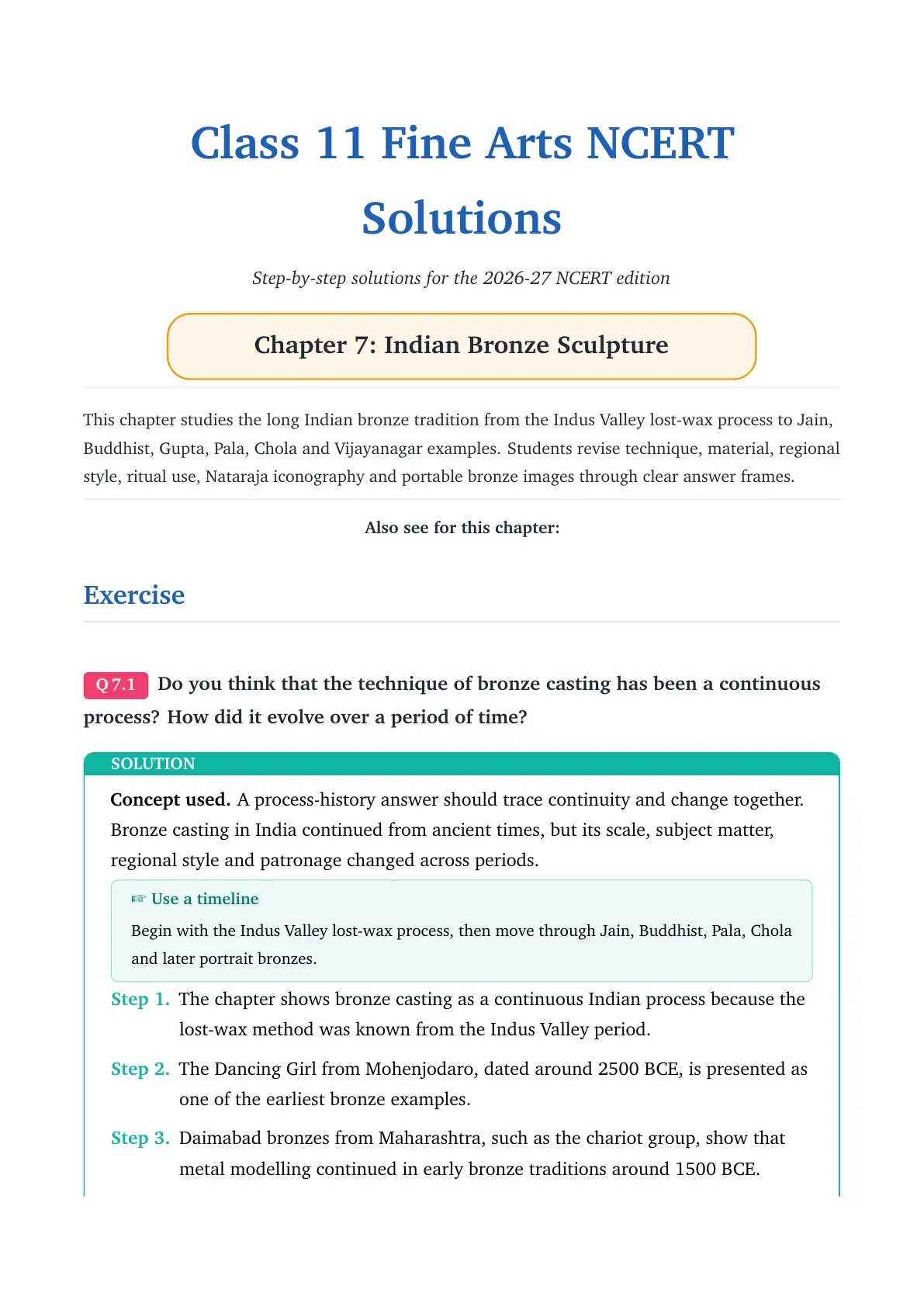
NCERT Solutions Class 11 Fine Arts Chapter 7 Indian Bronze Sculpture help students answer all 4 textbook exercise questions for the 2026-27 NCERT chapter. The solved PDF covers the lost-wax process, stone and metal comparison, Chola bronzes and Buddha bronze examples from other regions.
- Use the PDF for step-by-step answers to all exercise questions.
- Revise cire-perdu casting, Jain bronzes, Gupta Buddha images and Chola Nataraja.
- Open the question cards for Solution and Expert Solution tabs.
Student Feedback: Students found this chapter easier when bronze examples were arranged as technique, period, region and function.
What the Indian Bronze Sculpture Solutions PDF Covers
The PDF gives clear answers to the complete NCERT exercise. It explains whether bronze casting was a continuous process, compares stone and metal sculpture, explains why Chola bronzes are refined and guides students on finding non-Chola Buddha bronze visuals. Every answer stays close to the 2026-27 NCERT chapter.
- Question 1: continuity and evolution of bronze casting.
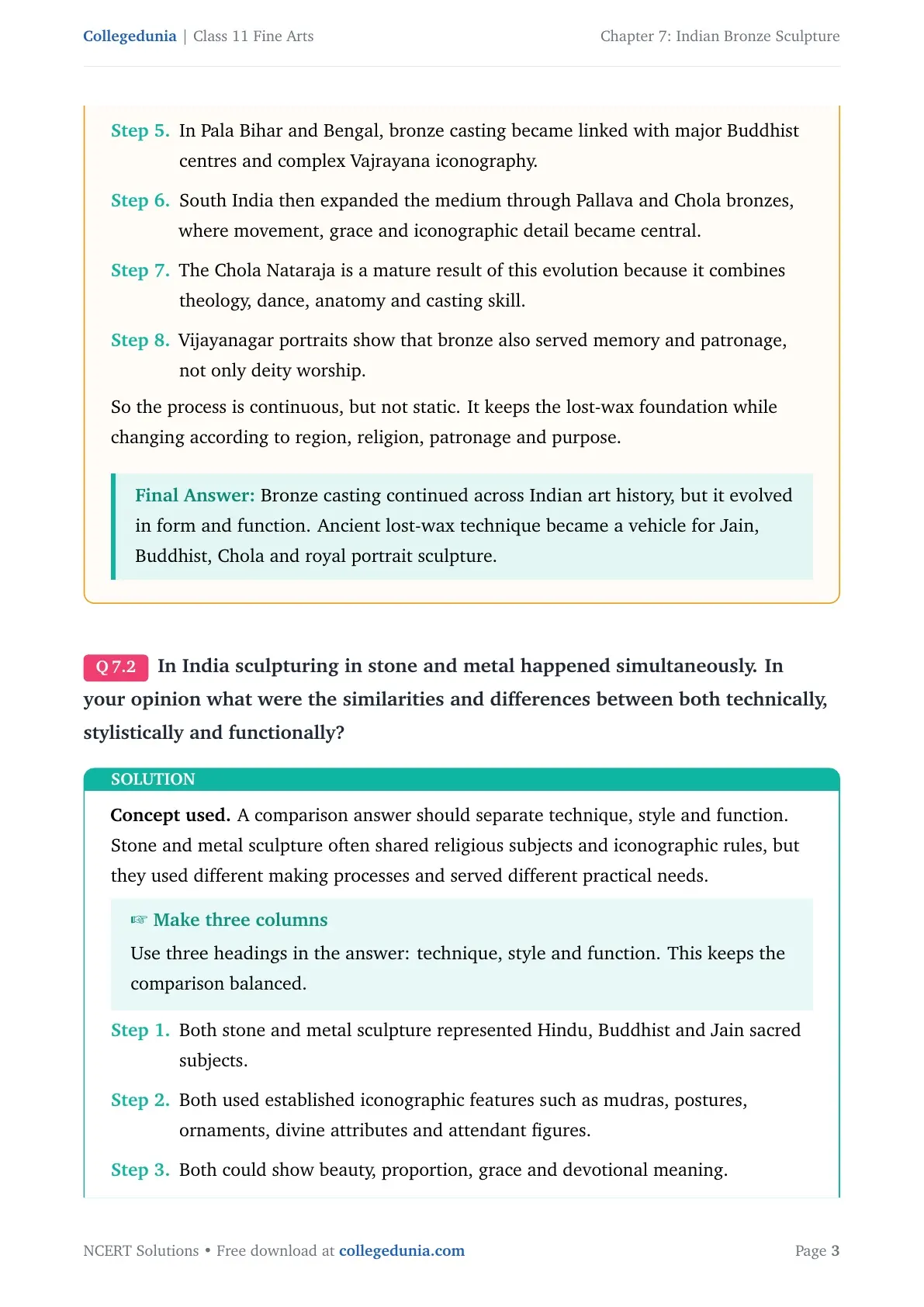
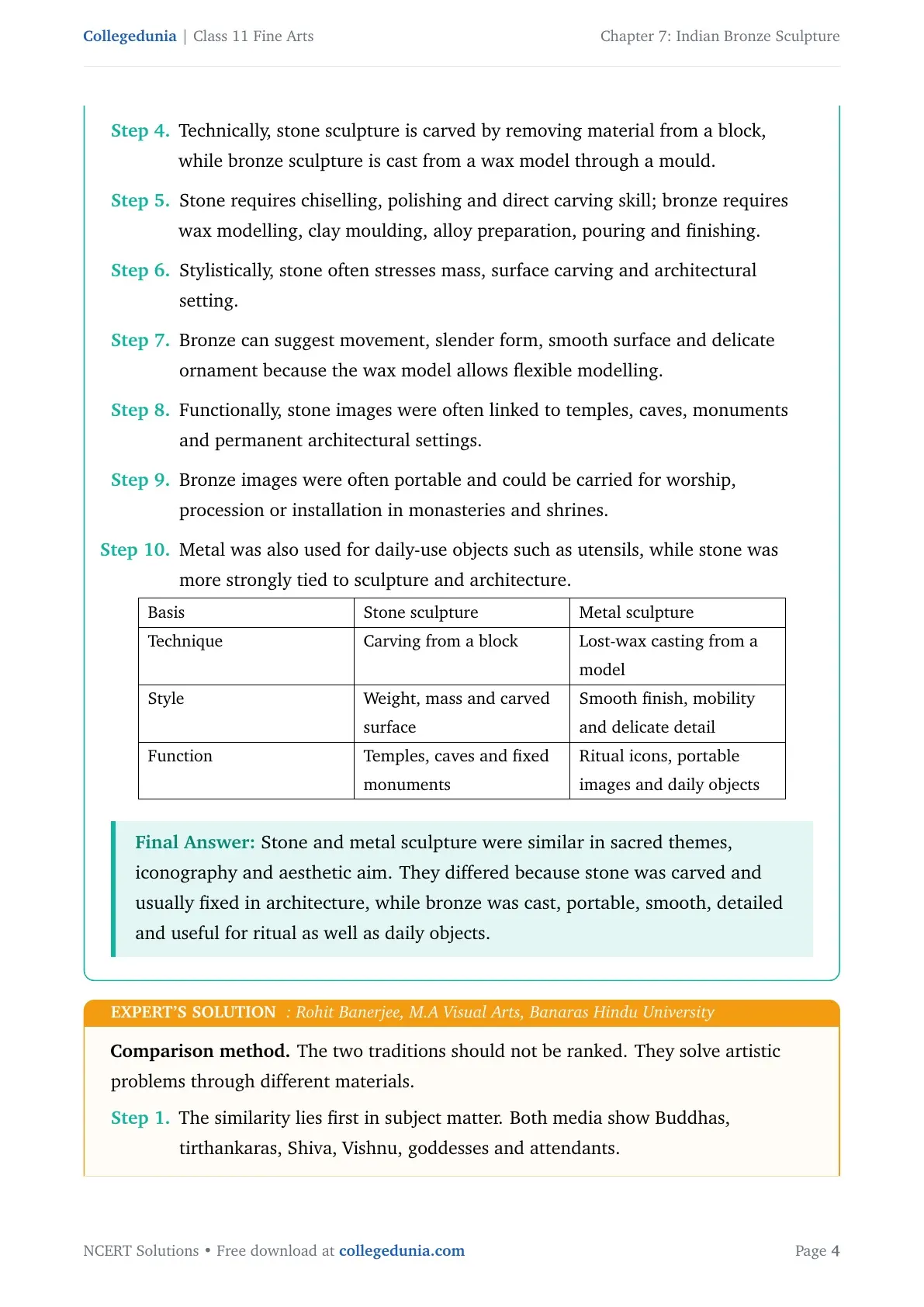
- Question 2: technical, stylistic and functional comparison of stone and metal sculpture.
- Question 3: reasons Chola bronzes are considered refined.
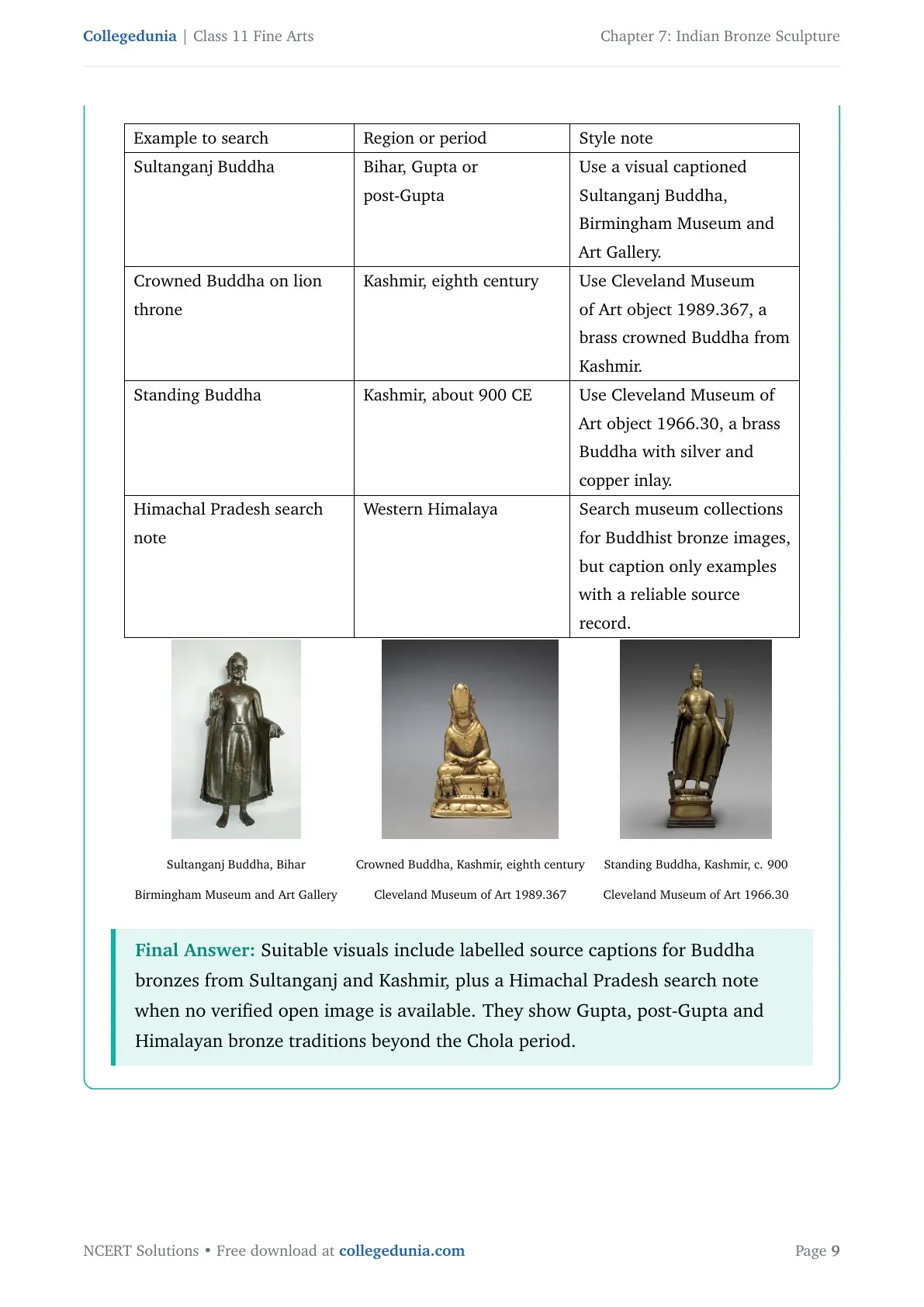
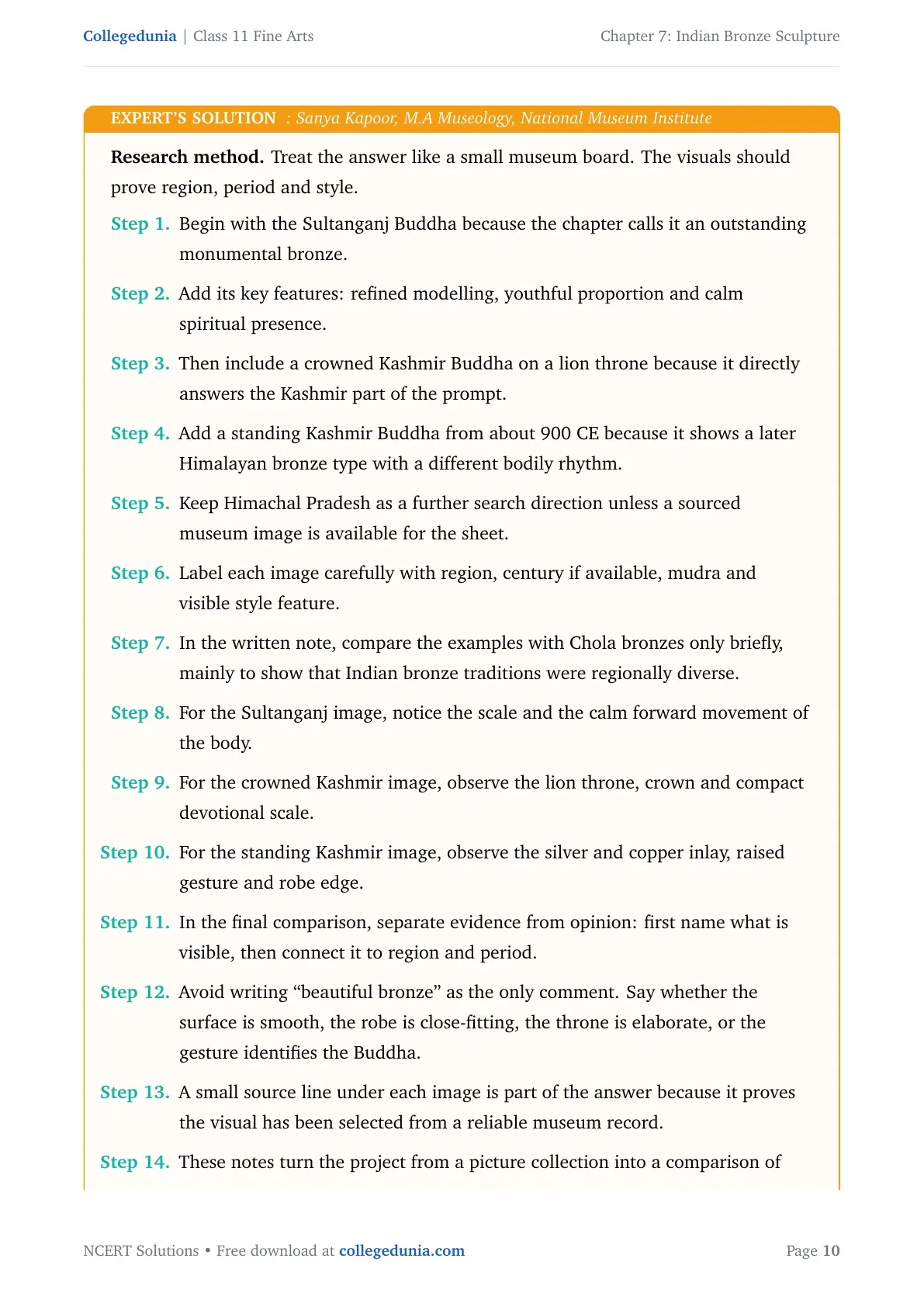
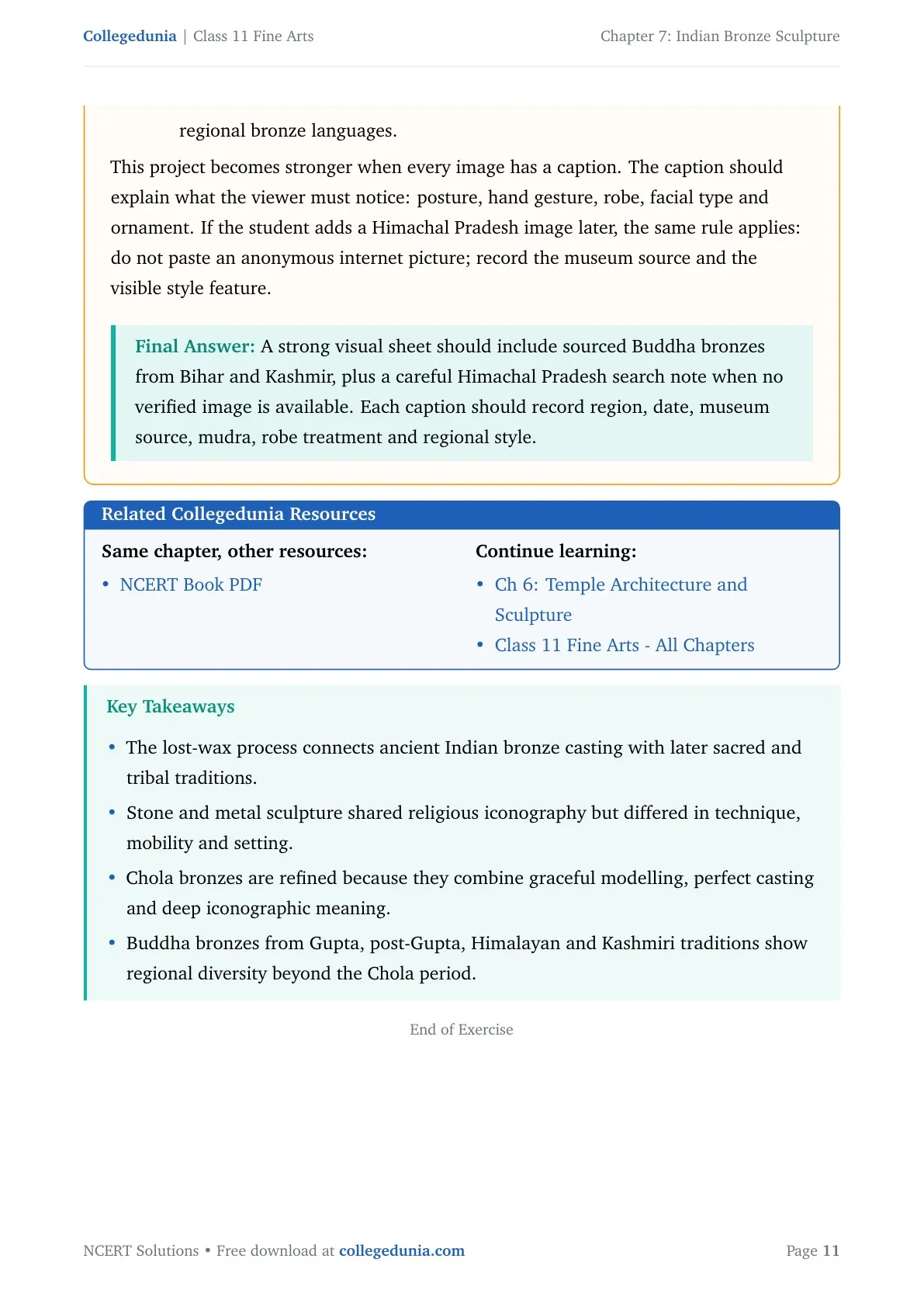
- Question 4: visual research plan for Buddha bronzes from other regions.
Indian Bronze Sculpture Video Lesson for Class 11 Fine Arts
Source: Examrace on YouTube
All NCERT Solutions for Indian Bronze Sculpture with Step-by-Step Answers
The solved questions are available as a separate question-card view with Check Solution and Expert Solution tabs. Use it when you want to revise one answer at a time without opening the full PDF.
| Open question cards: | questions-ncert-solutions-class-11-fine-arts-chapter-7-indian-bronze-sculpture.html |
Lost-Wax Casting Process in Indian Bronze Sculpture
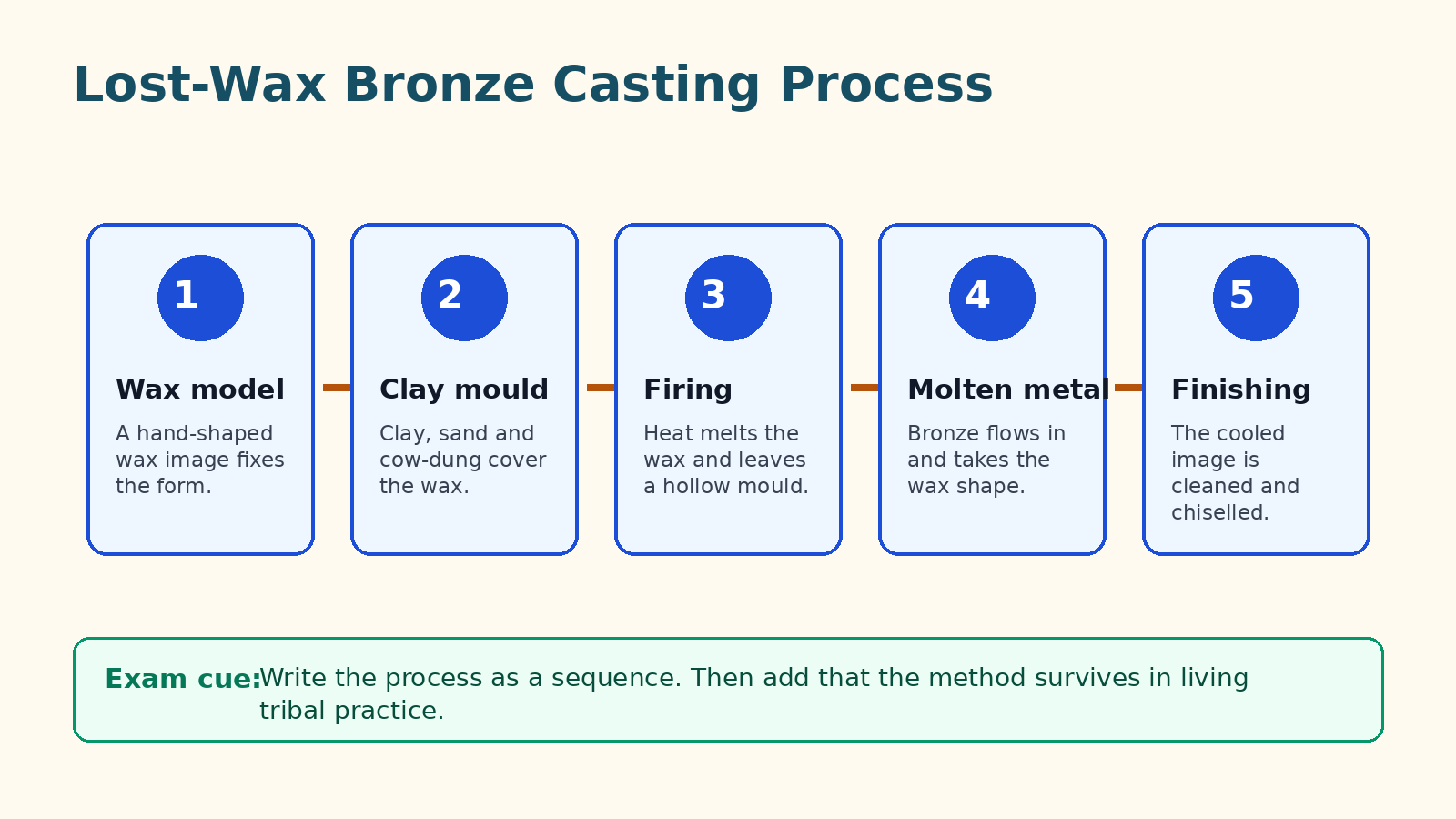
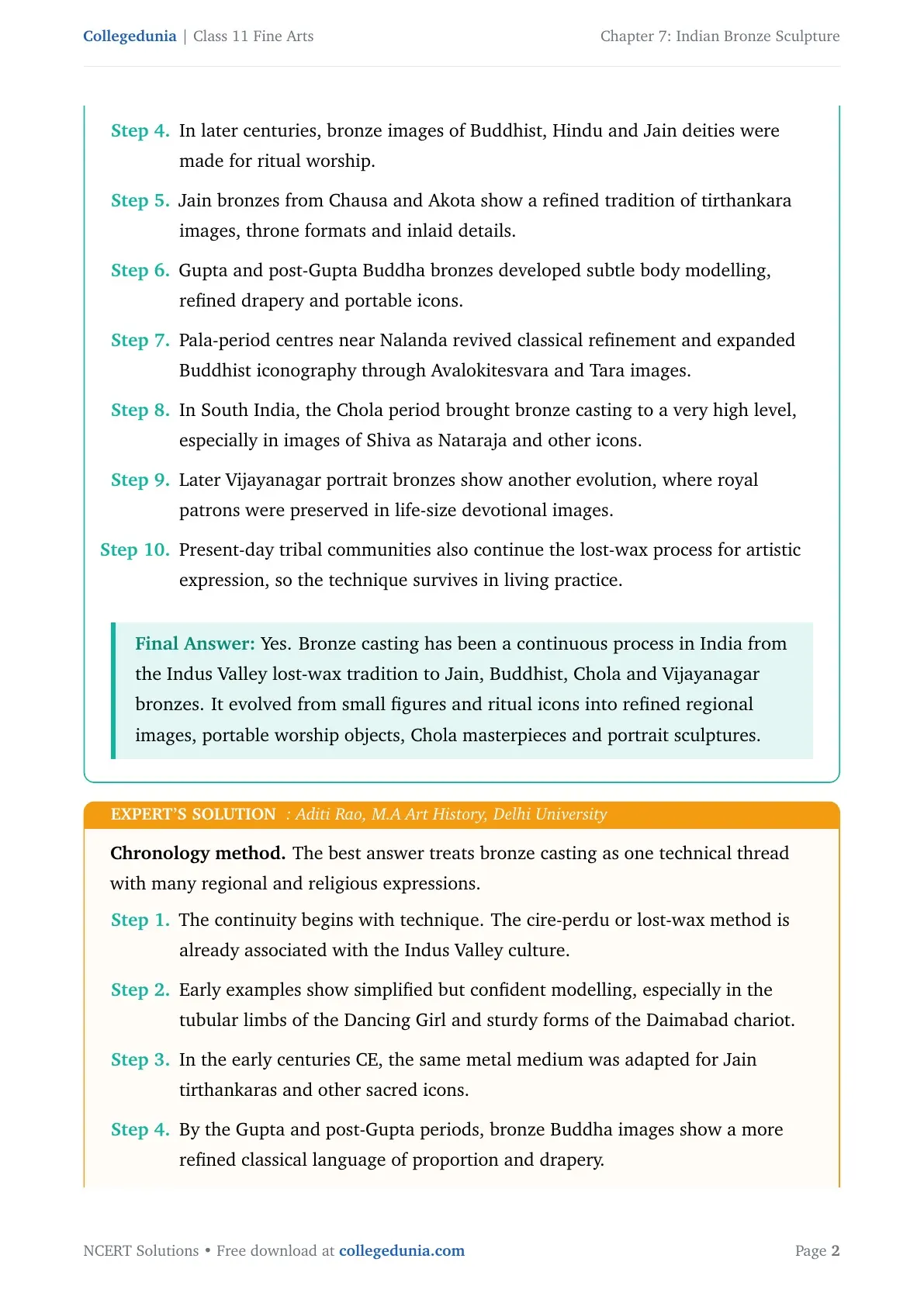
The chapter explains the cire-perdu or lost-wax process as the base technique of Indian bronze casting. Students should write it as a sequence: wax model, clay mould, firing, molten metal and finishing. A process answer becomes stronger when it adds that the method continues in living tribal practice.
| Step | Answer cue |
|---|---|
| Wax model | The image is shaped first in beeswax. |
| Clay covering | The wax form is covered with clay, sand and cow-dung paste. |
| Firing | The wax melts and leaves a hollow channel. |
| Metal pouring | Molten bronze fills the mould and takes the shape. |
| Finishing | The image is cleaned, chiselled and polished. |
Indian Bronze Sculpture Timeline for Revision
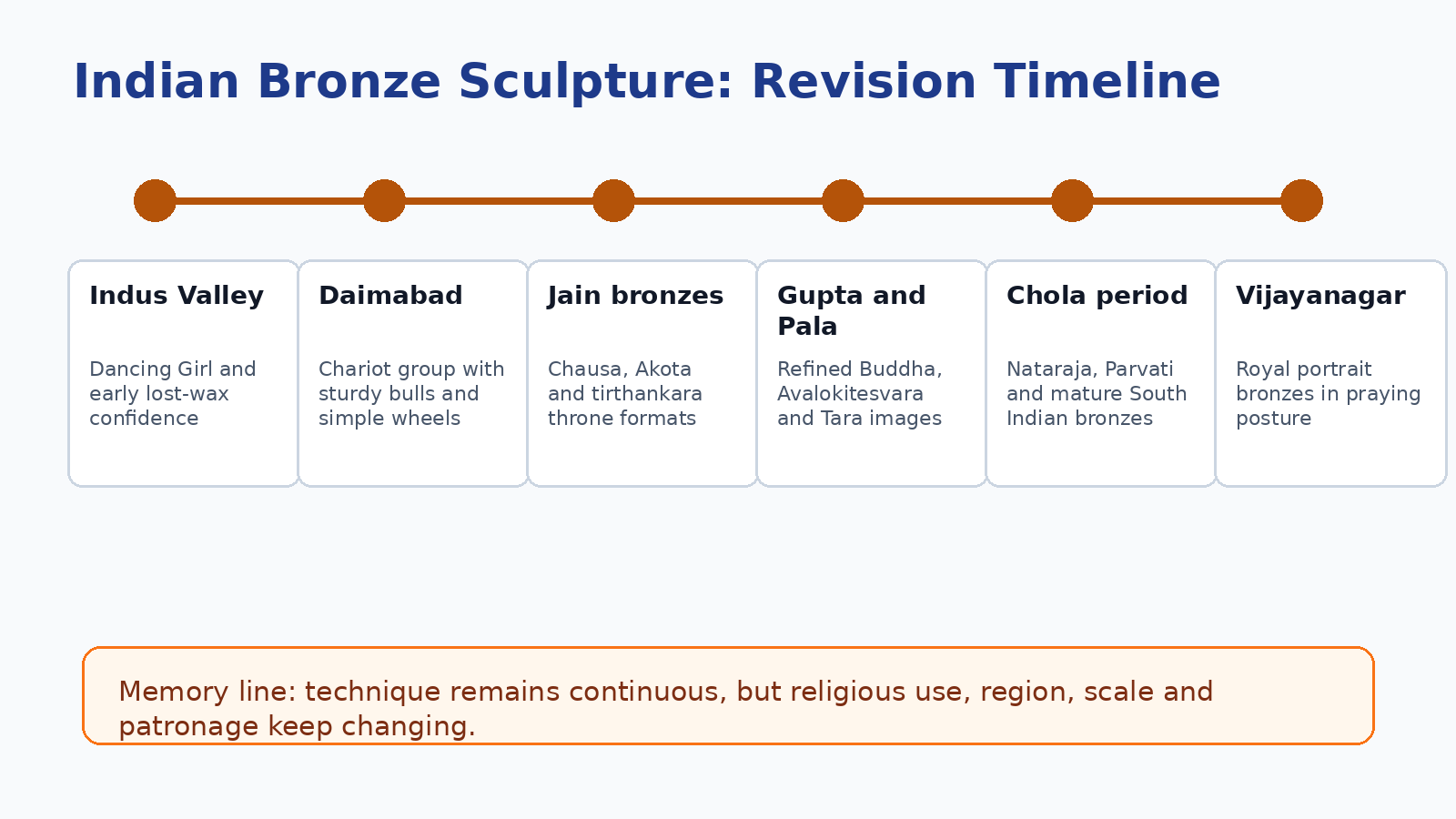
A timeline answer helps students connect continuity with change. Start with Mohenjodaro and Daimabad, then move to Jain bronzes, Gupta and Pala Buddha images, Chola bronzes and Vijayanagar portraits.
- Use Dancing Girl for the earliest bronze example.
- Use Akota, Chausa and tirthankara images for Jain bronze traditions.
- Use Sultanganj, Dhanesar Khera, Phophnar, Himachal Pradesh and Kashmir for Buddha bronzes.
- Use Nataraja, kalyanasundara murti and ardhanarisvara for Chola refinement.
Common Mistakes in Indian Bronze Sculpture Solutions
Students often write only the names of bronze images without linking them to technique or period. Another common mistake is treating all bronze sculpture as Chola art. The safer method is to name the object, region, period, style feature and function.
| Mistake | Better answer point |
|---|---|
| Writing only lost-wax | Add wax model, clay mould, firing, metal pouring and finishing. |
| Calling every bronze Chola | Include Jain, Gupta, Pala, Himalayan and Vijayanagar examples. |
| Listing images without function | Explain ritual worship, portability, daily use or portrait memory. |
Class 11 Fine Arts Chapter 7 Resources
Use the solutions PDF with the official textbook PDF. The table below keeps same-chapter resource links in one place before the FAQ block.
| Resource | Use | Link |
|---|---|---|
| NCERT Book PDF | Official chapter text | Open book PDF |
| Question cards | Solution and Expert Solution tabs | Open question cards |
NCERT Solutions for Class 11 Fine Arts: All Chapters
| Chapter | Solutions |
|---|---|
| Chapter 1 Prehistoric Rock Paintings | Open Chapter 1 Solutions |
| Chapter 2 Arts of the Indus Valley | Open Chapter 2 Solutions |
| Chapter 3 Arts of the Mauryan Period | Open Chapter 3 Solutions |
| Chapter 5 Later Mural Traditions | Open Chapter 5 Solutions |
| Chapter 6 Temple Architecture and Sculpture | Open Chapter 6 Solutions |
| Chapter 7 Indian Bronze Sculpture | Open Chapter 7 Solutions |
Indian Bronze Sculpture Class 11 Fine Arts NCERT Solutions FAQs
Ques. How many questions are solved in the Indian Bronze Sculpture NCERT Solutions PDF?
Ans. The PDF solves all 4 exercise questions from Class 11 Fine Arts Chapter 7 for the 2026-27 NCERT syllabus.
Ques. Which bronze examples are important in Class 11 Fine Arts Chapter 7?
Ans. Dancing Girl, Daimabad chariot, Chausa and Akota Jain bronzes, Sultanganj Buddha, Pala bronzes and Chola Nataraja are important examples.
Ques. Why are Chola bronzes considered refined?
Ans. Chola bronzes combine skilled lost-wax casting, graceful body modelling, symbolic gesture, balanced movement and devotional meaning.



Comments