



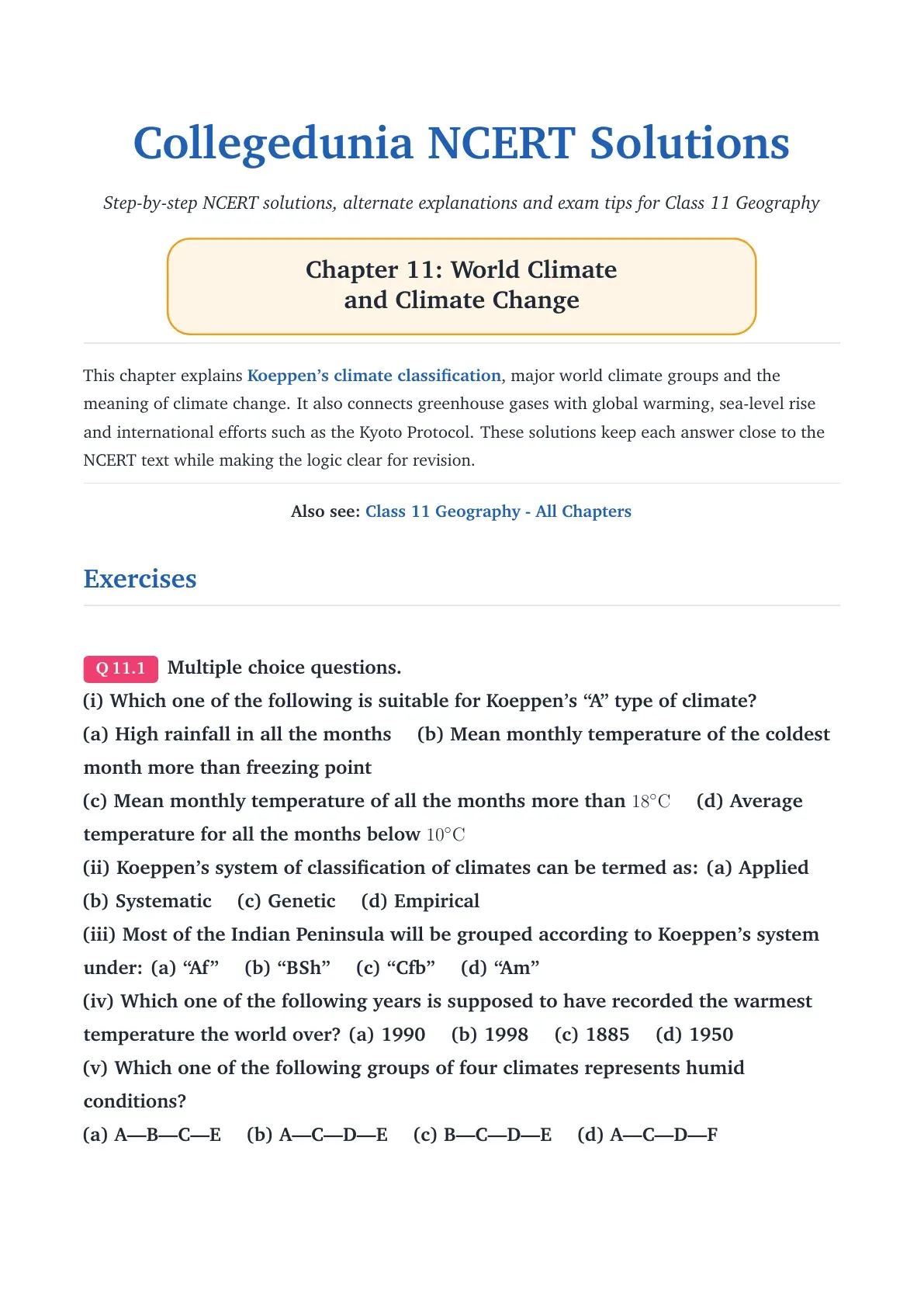
The NCERT Solutions for Class 11 Geography Chapter 11 World Climate and Climate Change cover all textbook exercise questions from the latest 2026-27 NCERT book. Students can revise Koeppen's climate groups, A and B climate comparison, climate change causes and greenhouse gases with direct answers and a downloadable PDF.
- Includes the complete Chapter 11 solved PDF and a companion question-card HTML file.
- Explains Koeppen codes such as Af, Am, Aw, BSh, BWh, Cfa, Df, ET and EF.
- Useful for school exams because the answers combine definitions, causes and examples.
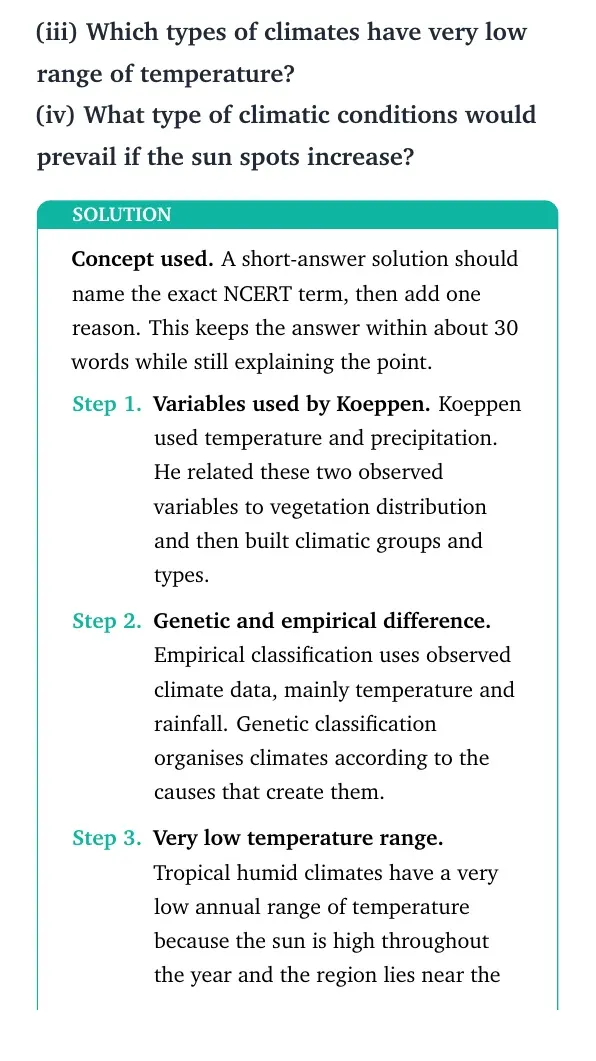
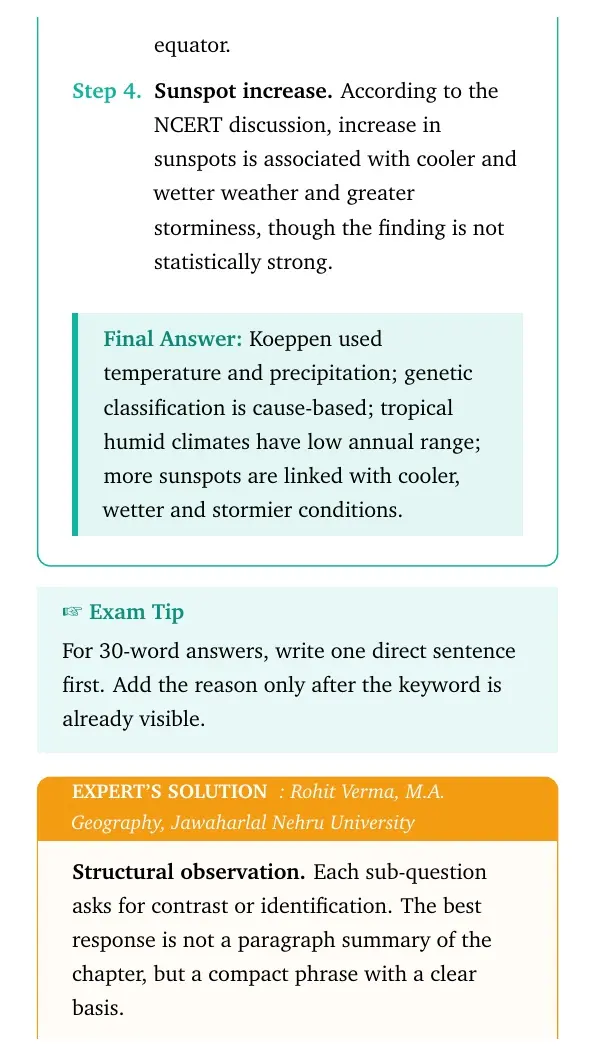
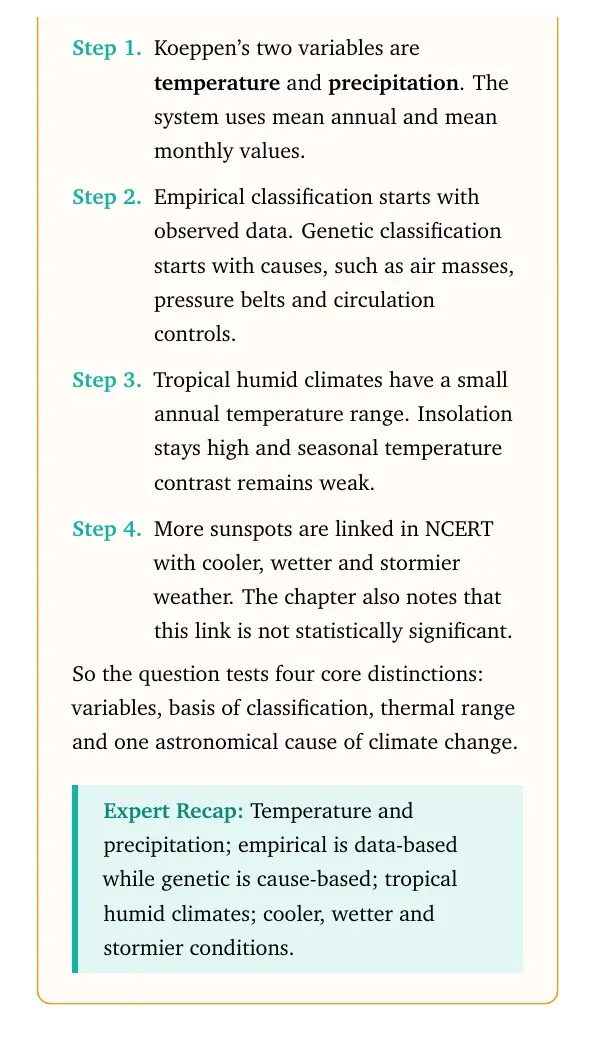
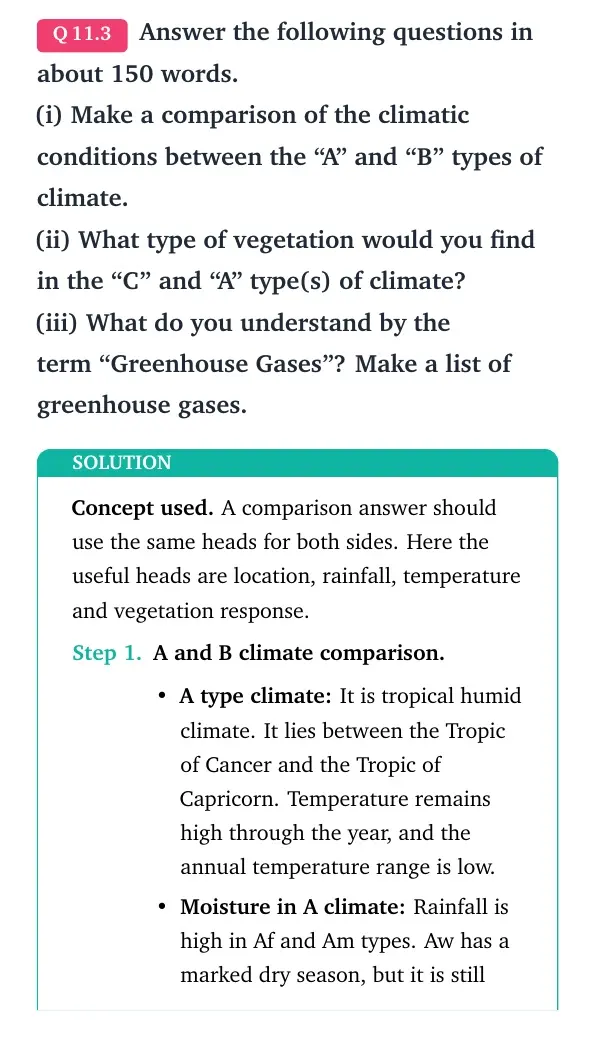
Student Feedback: In a Collegedunia poll of 9,840 Class 11 Geography students preparing for the 2026-27 school exams, 76% said this chapter became easier after they revised Koeppen's A to E groups as a table.
Source: 2026-27 Class 11 Geography student poll across CBSE schools.
Every answer is checked against the 2026-27 NCERT Geography textbook and written so students can revise the term, example and exam wording together.
What Class 11 Geography Chapter 11 Covers
World Climate and Climate Change introduces the main ways climates are classified and then explains why climate can change over time. The chapter gives special importance to Koeppen's empirical system because it uses observed temperature and precipitation data.
| Chapter area | What students must know | Where it helps |
|---|---|---|
| Koeppen classification | Major groups A, B, C, D and E | MCQs and short answers |
| Climate types | Af, Am, Aw, BSh, BWh, Cfa, Cs, Df, Dw, ET and EF | Climate comparison answers |
| Climate change evidence | Glacial deposits, tree rings and historical records | Long answers on climate variation |
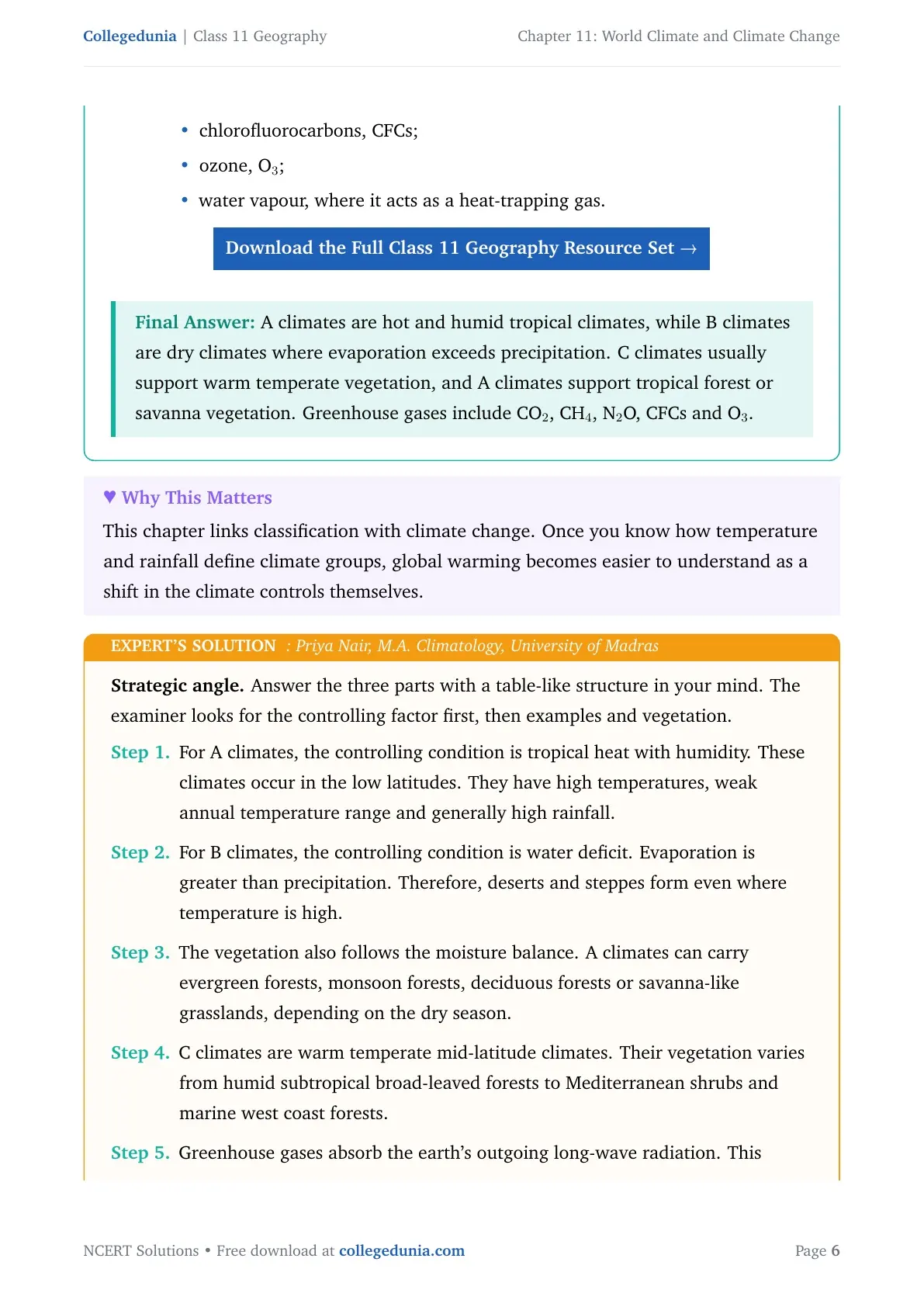
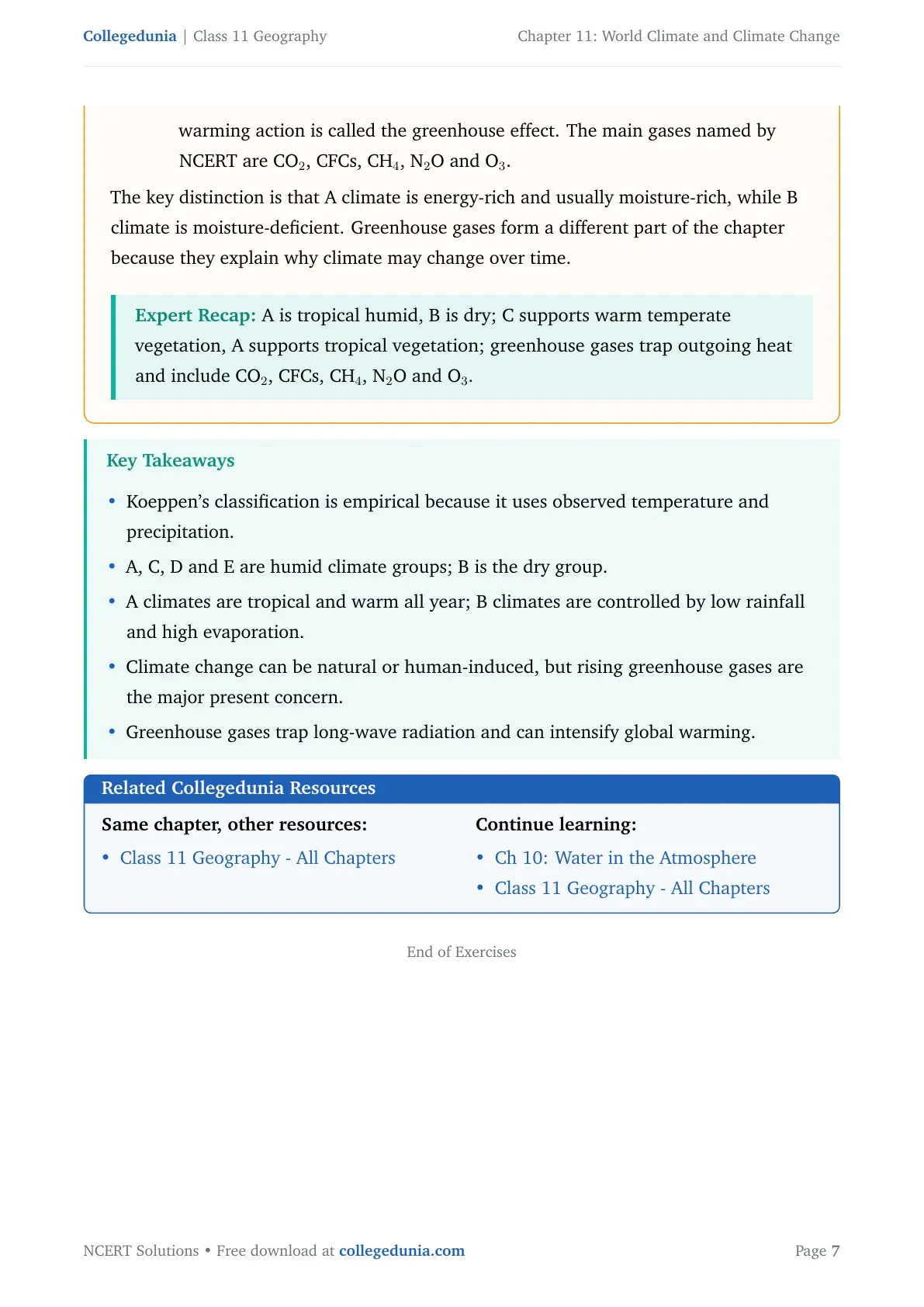
| Greenhouse gases | CO2, CFCs, CH4, N2O and O3 | Global warming questions |
Start revision with the A to E climate table. Once students know which groups are humid and which group is dry, the MCQs and comparison questions become much easier.
Koeppen Climate Groups Explained
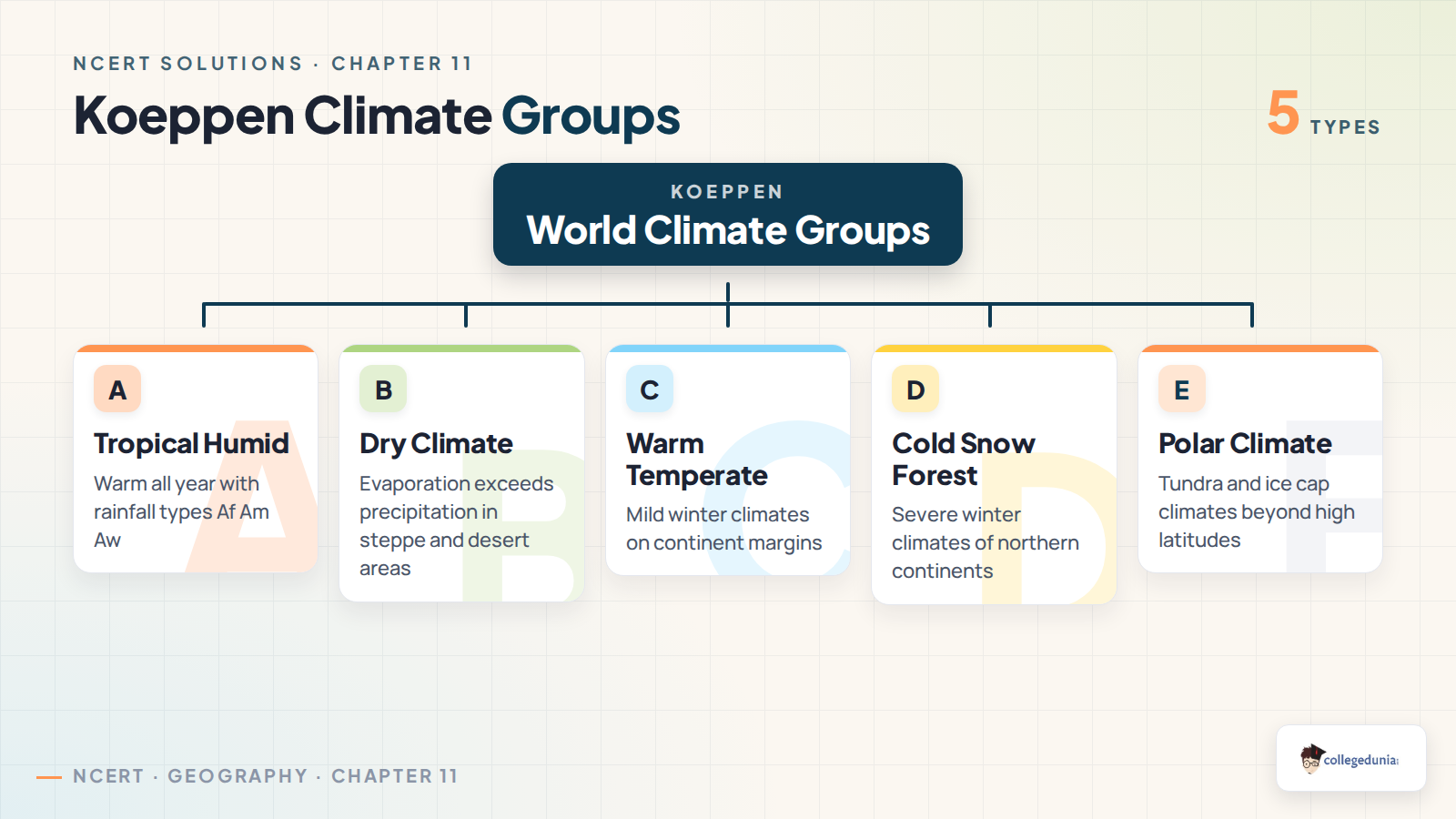
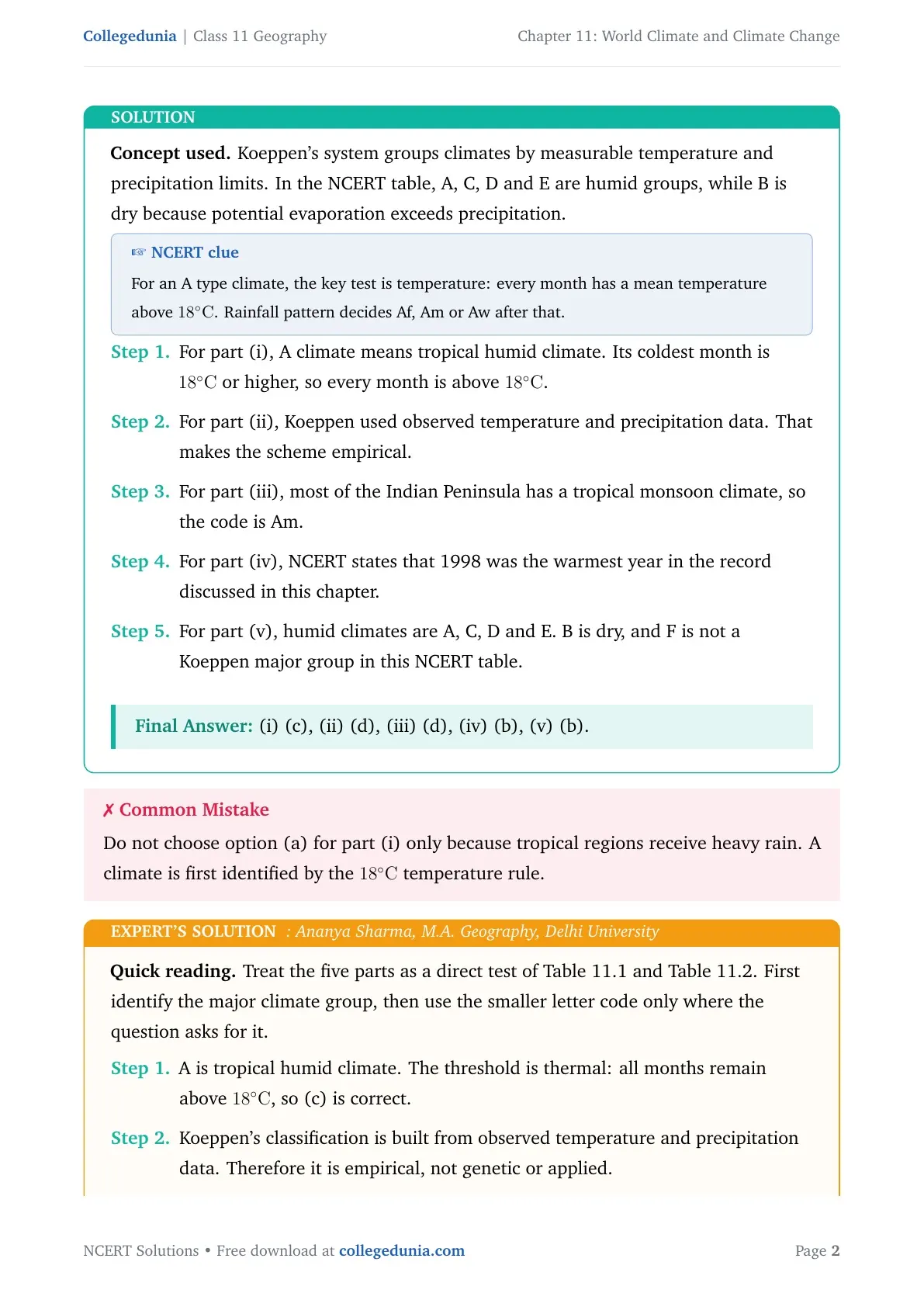
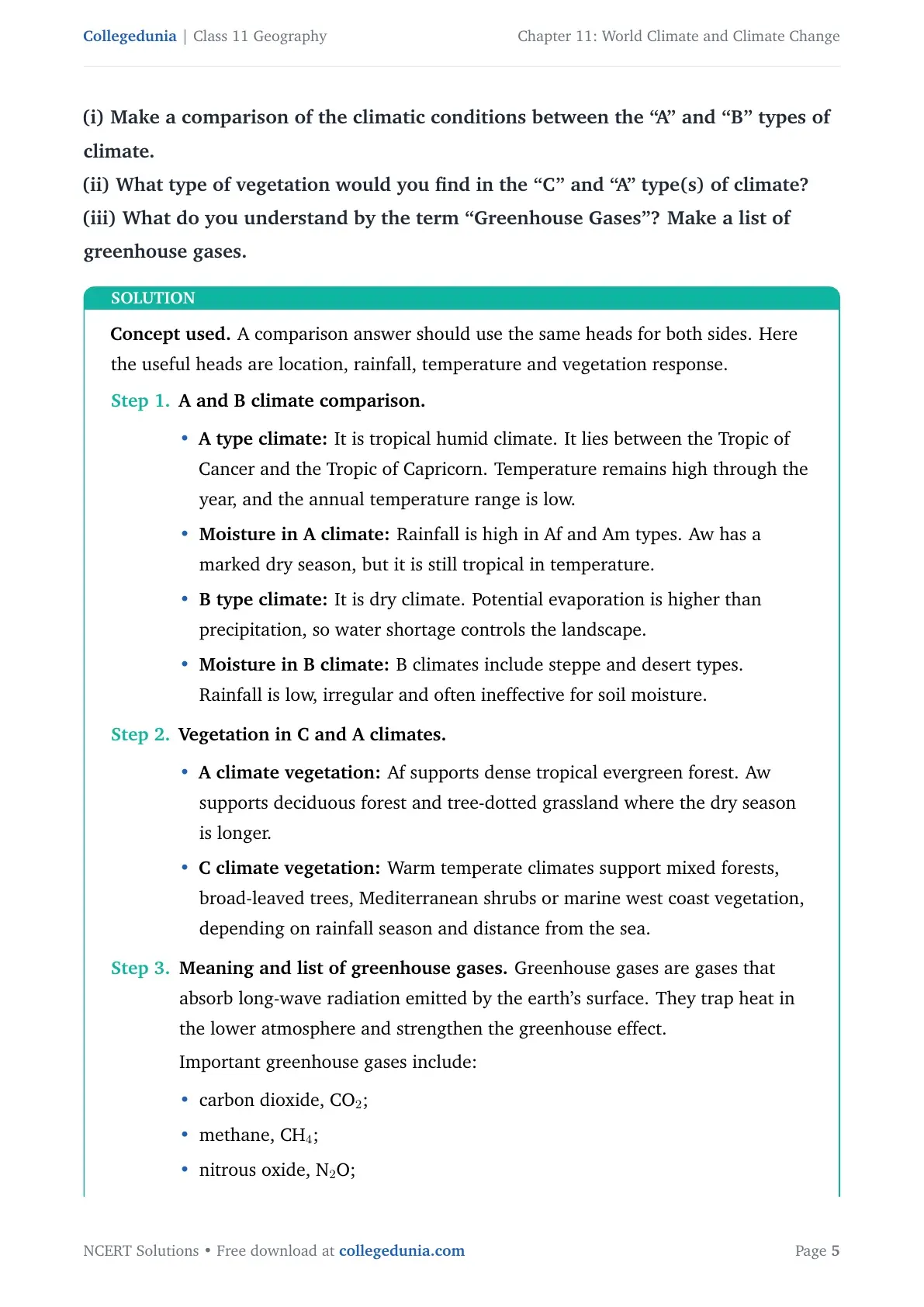
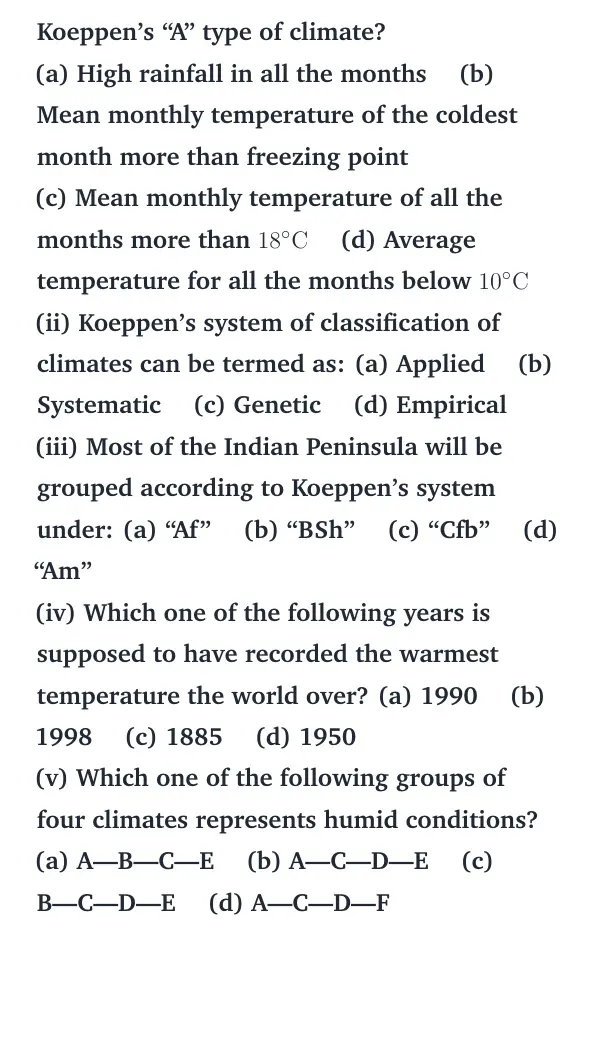
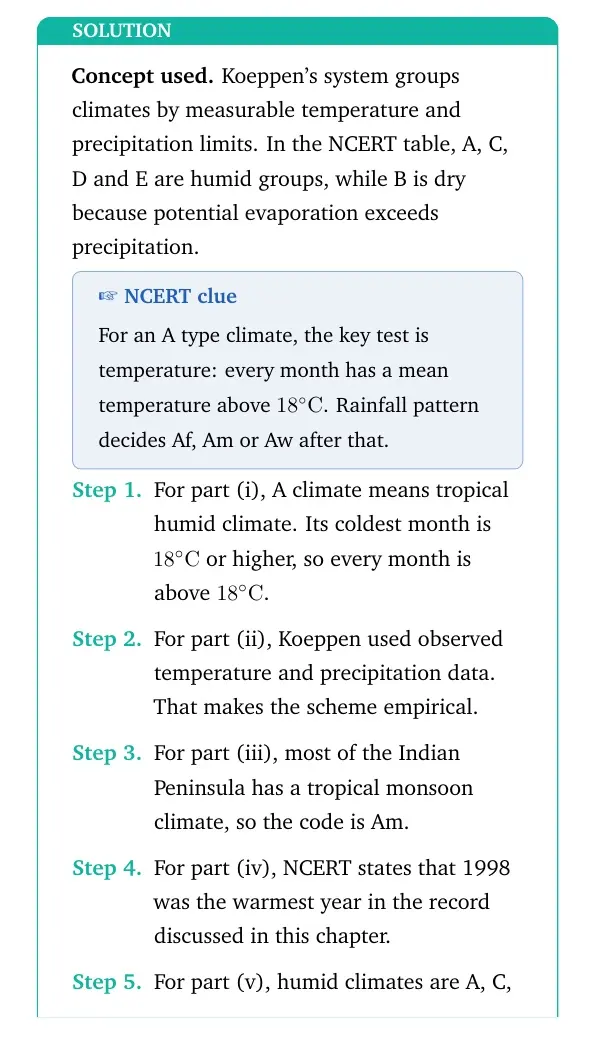
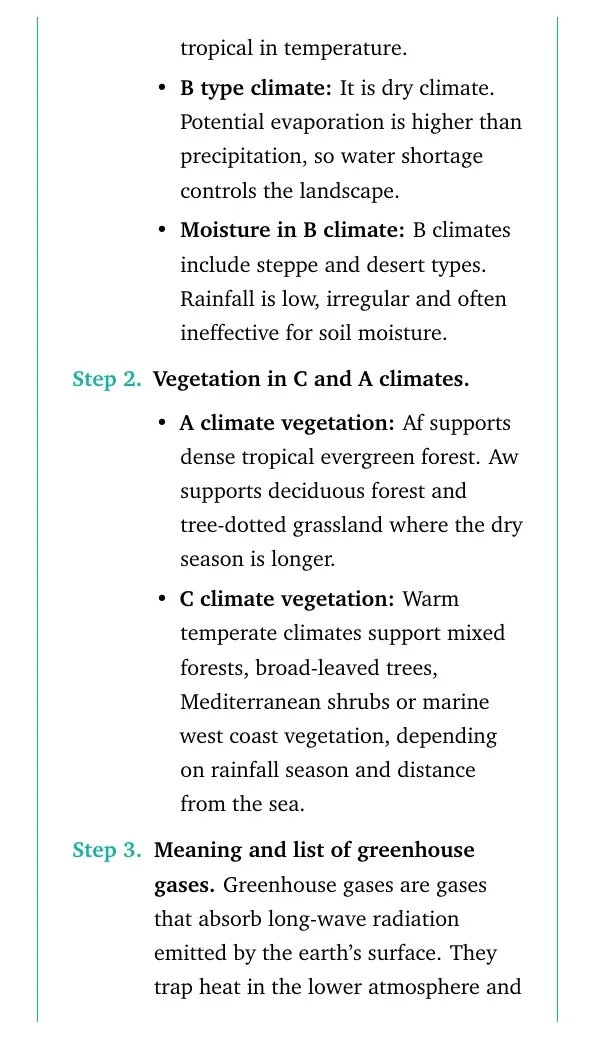
Koeppen recognised five major climatic groups. Four groups are based mainly on temperature, and one group is based on dryness. The letters A, C, D and E represent humid climates, while B represents dry climates where potential evaporation is greater than precipitation.
- A climate: tropical humid climate with all months above 18°C.
- B climate: dry climate, divided into steppe and desert types.
- C climate: warm temperate climate with mild winter conditions.
- D climate: cold snow forest climate with severe winters.
- E climate: polar climate where all months remain below 10°C.
World Climate and Climate Change Video
Source: Magnet Brains on YouTube
Greenhouse Gases and Global Warming
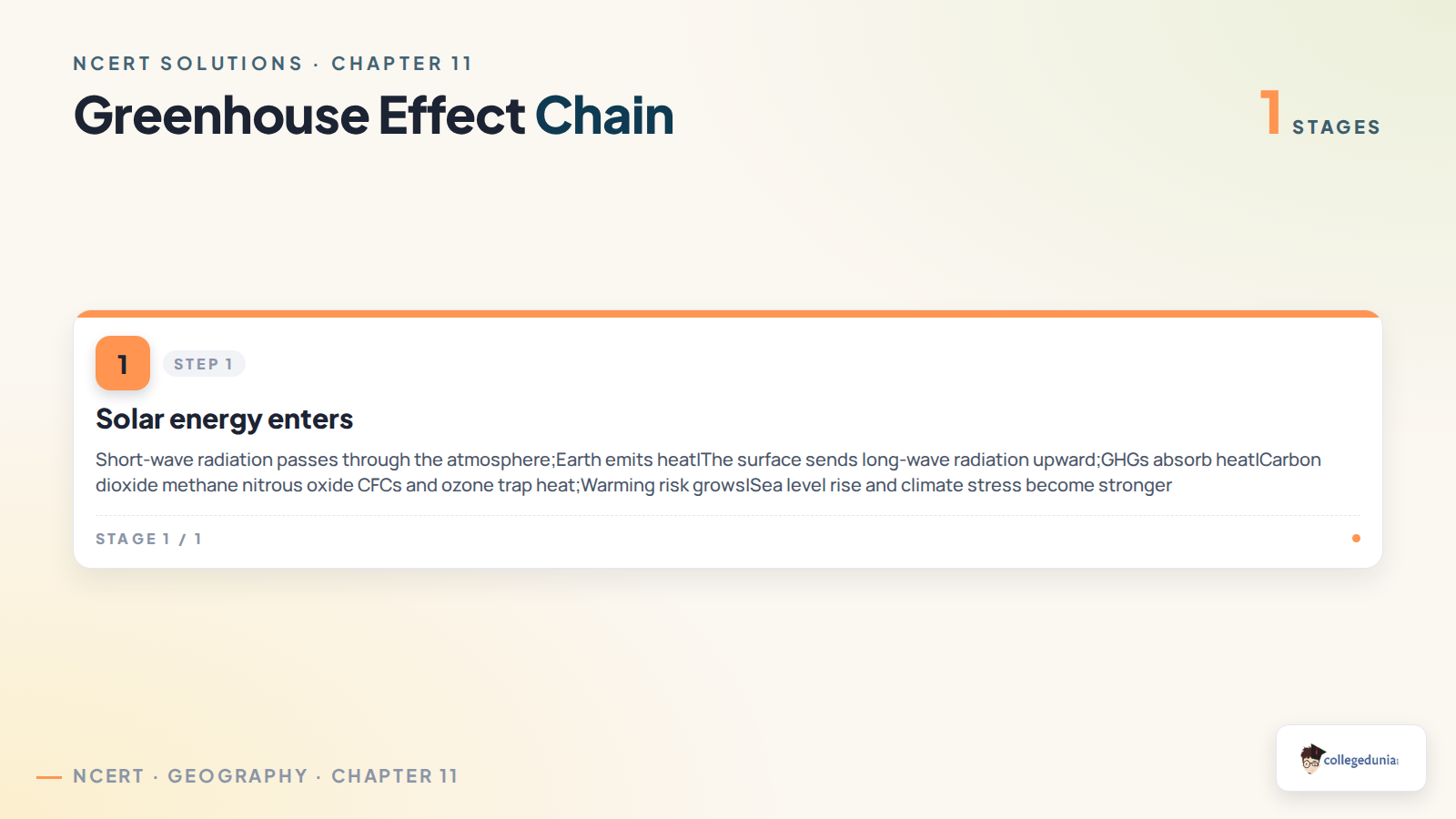
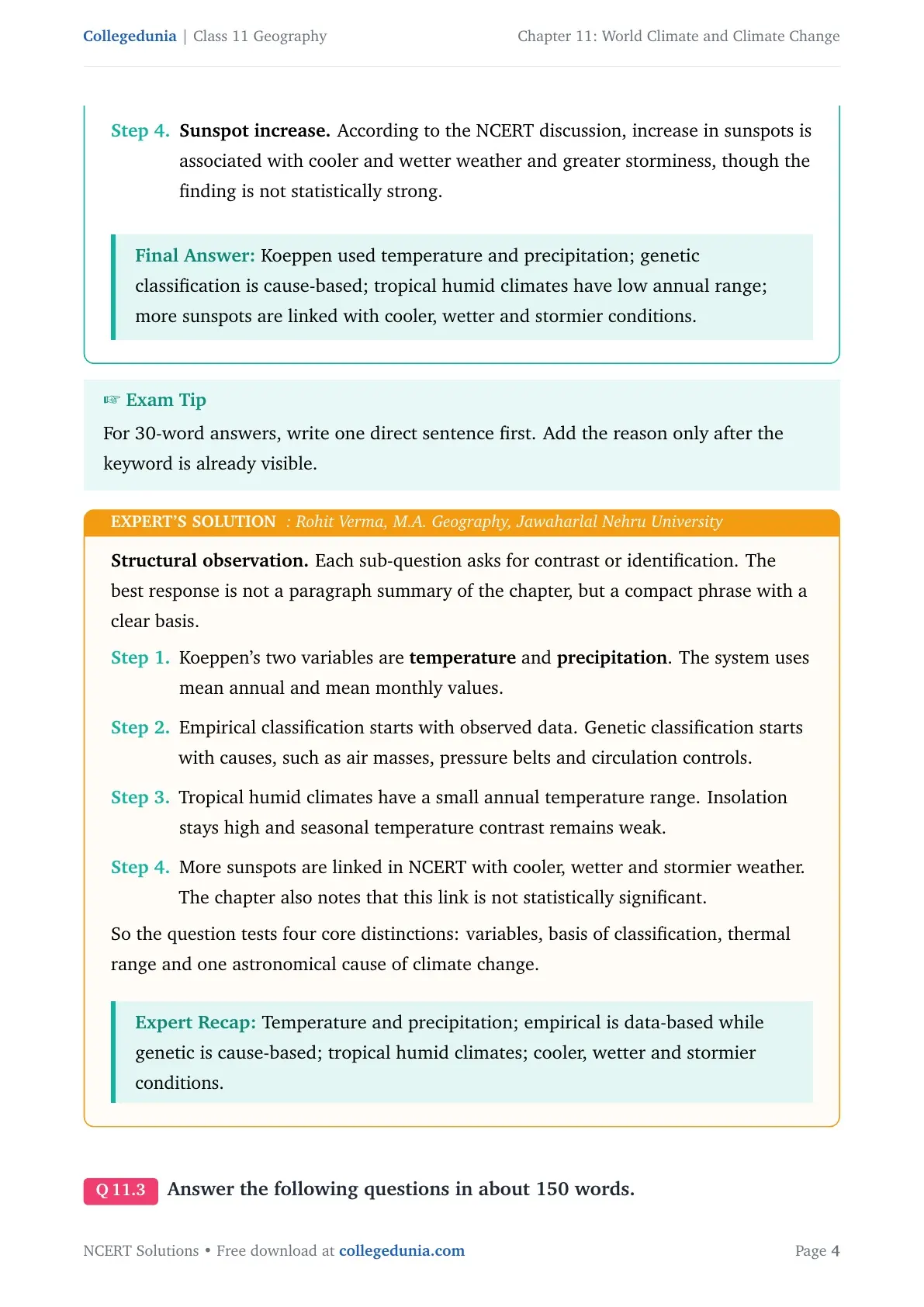
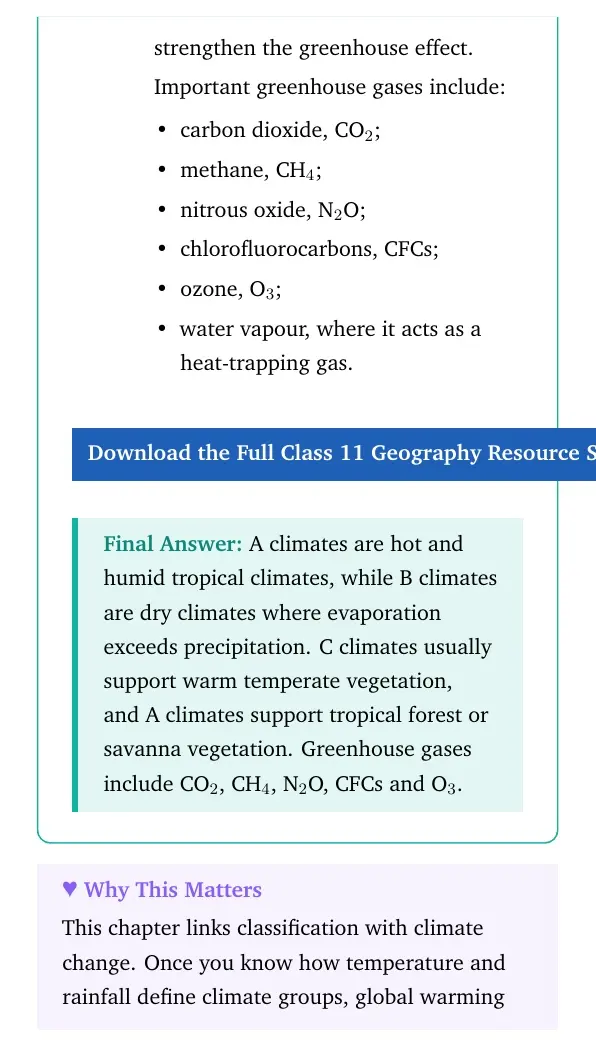
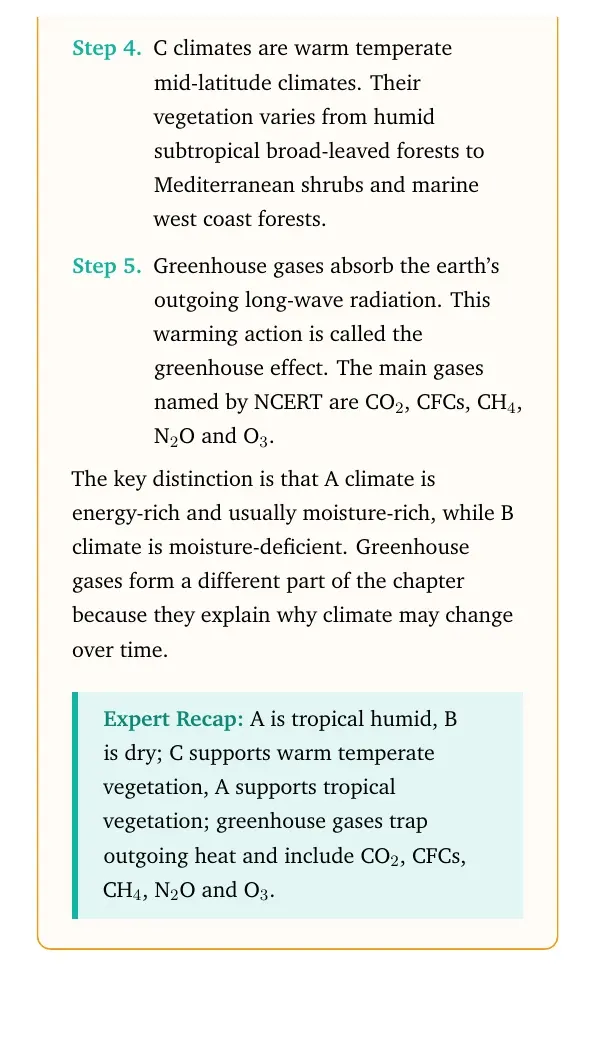
The chapter explains greenhouse gases through the greenhouse effect. Short-wave solar radiation enters the atmosphere, the earth's surface emits long-wave radiation, and gases such as carbon dioxide absorb part of that outgoing heat. This keeps the lower atmosphere warmer.
- Carbon dioxide: mainly released from fossil fuel combustion and deforestation.
- Chlorofluorocarbons: human-made gases that also damage stratospheric ozone.
- Methane and nitrous oxide: important heat-trapping gases in the atmosphere.
- Ozone: protective in the stratosphere, but heat-trapping in the lower troposphere.
How to Answer Chapter 11 Exercise Questions
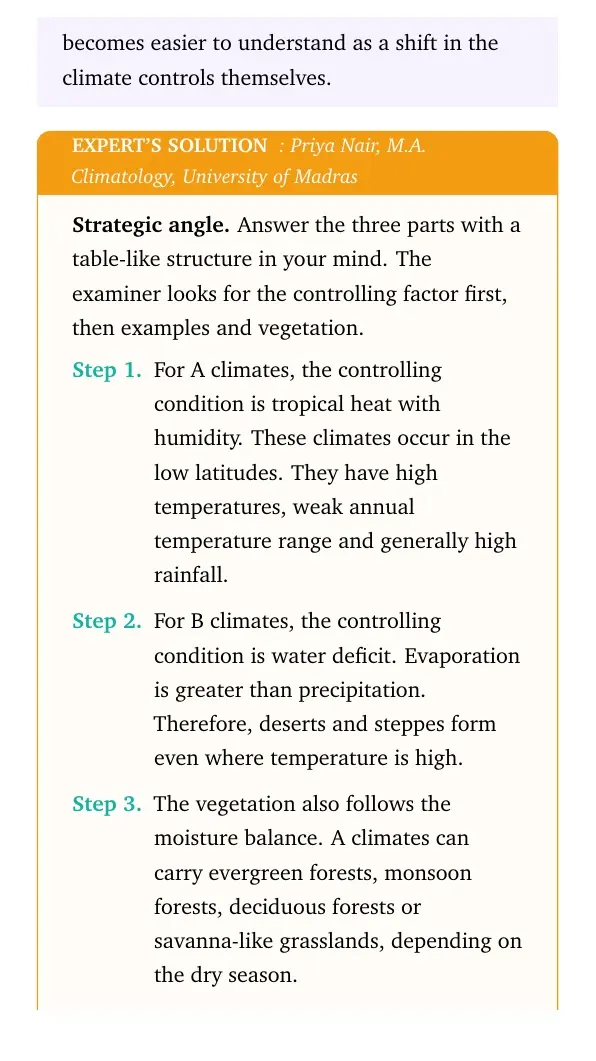
Chapter 11 answers score well when students write the controlling condition first. For A climate, mention high temperature throughout the year. For B climate, mention low rainfall and evaporation exceeding precipitation. For greenhouse gases, mention heat absorption before listing examples.
- Use exact NCERT terms: empirical, genetic, precipitation, potential evaporation and greenhouse gases.
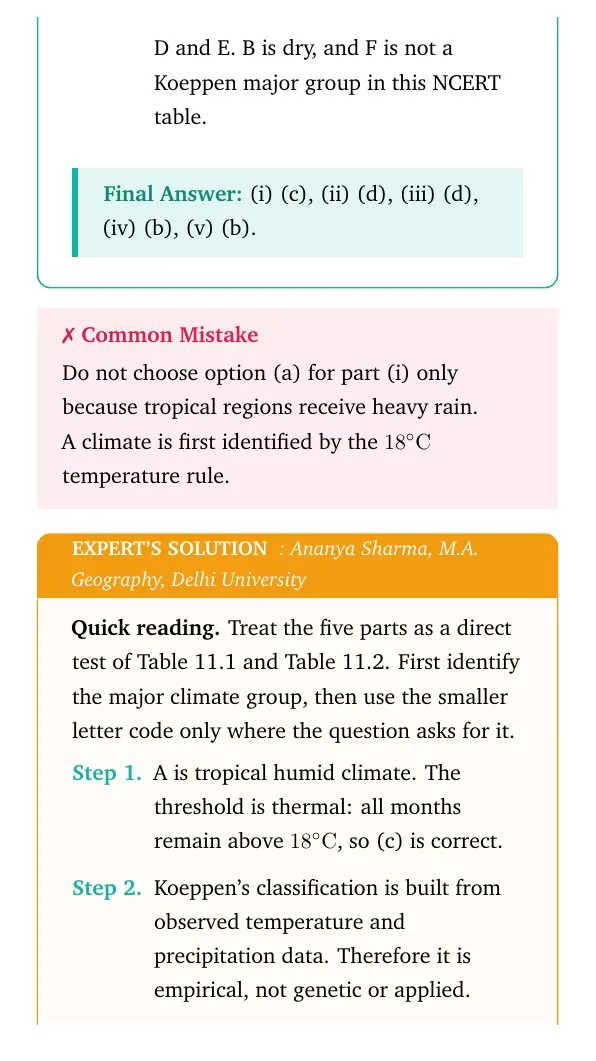
- Add examples: Af for tropical wet climate, Am for tropical monsoon climate and ET for tundra climate.
- Compare in rows: location, temperature, rainfall and vegetation make A versus B answers clear.
- Keep the year correct: use the latest 2026-27 NCERT wording in titles and descriptions.
All NCERT Solutions for Class 11 Geography Chapter 11 World Climate and Climate Change with Step-by-Step Solutions
Open the solved question cards: Check Solution and Expert Solution tabs are available for all Chapter 11 textbook questions.
Related Geography Resources
| Resource | Use it for | Link |
|---|---|---|
| Revision Notes | Fast theory revision before solving the exercise | Open Notes |
| NCERT Book PDF | Reading the source chapter and tables | Open Book PDF |
| Handwritten Notes | Last-minute recall of climate groups and greenhouse gases | Open Handwritten Notes |
NCERT Solutions for All Chapters
| Class 11 Geography Solutions | Chapter focus |
|---|---|
| Chapter 8 Solar Radiation, Heat Balance and Temperature | Insolation and temperature distribution |
| Chapter 9 Atmospheric Circulation and Weather Systems | Pressure belts, winds and weather systems |
| Chapter 10 Water in the Atmosphere | Humidity, clouds and precipitation |
| Class 11 Geography all chapters | Complete NCERT Geography resource hub |
World Climate and Climate Change NCERT Solutions FAQs
Ques. What is the main basis of Koeppen's climate classification?
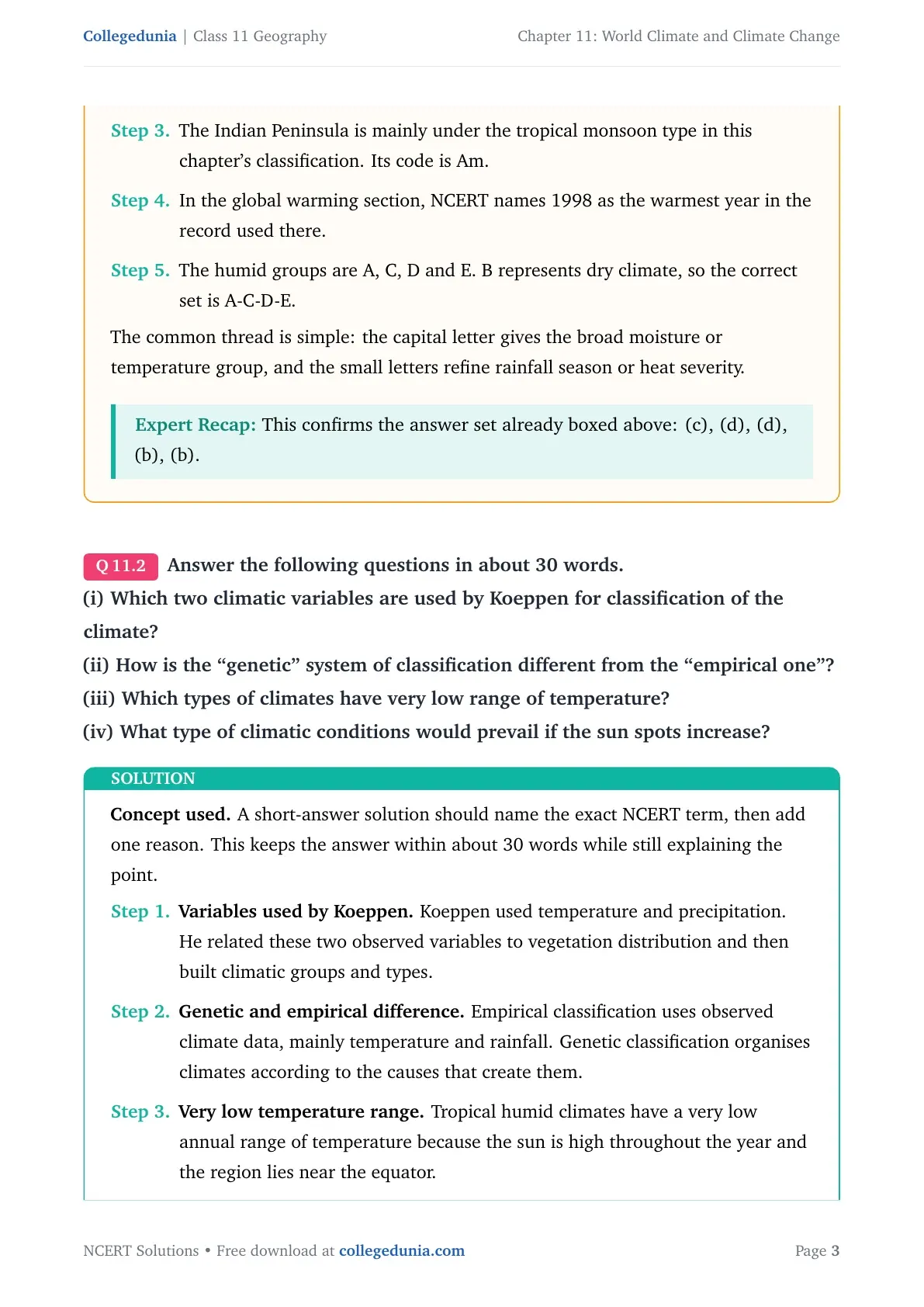
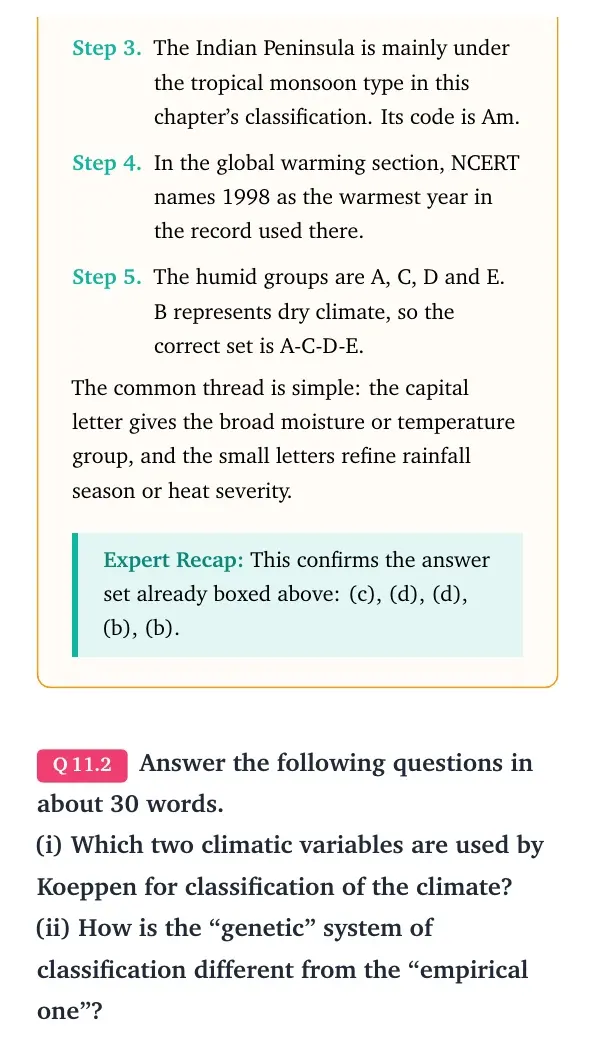
Ans. Koeppen's climate classification is based mainly on observed temperature and precipitation data. It is called an empirical classification.
Ques. Which climate group represents dry climate in Koeppen's system?
Ans. Group B represents dry climate. In this group, potential evaporation is greater than precipitation.
Ques. Which greenhouse gases are named in Class 11 Geography Chapter 11?
Ans. The chapter names carbon dioxide, chlorofluorocarbons, methane, nitrous oxide and ozone as important greenhouse gases.



Comments