




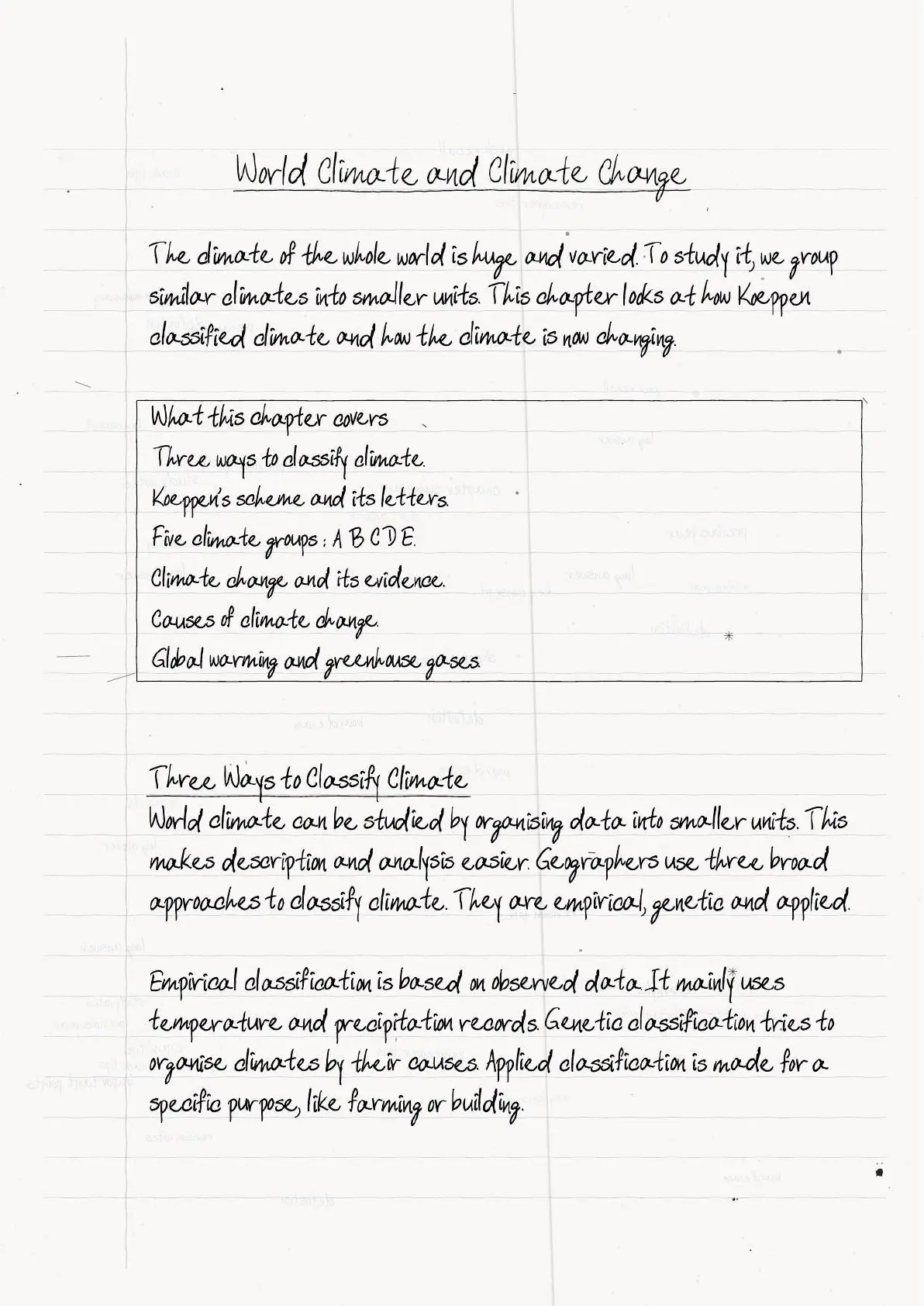
Questions from Class 11 Geography Chapter 11 World Climate and Climate Change come up often in the CBSE Class 11 exam. These class 11 geography handwritten notes chapter 11 World Climate and Climate Change follow the 2026-27 NCERT and cover three ways to classify climate, koeppen's scheme and its letters, five groups a, b, c, d and e..
- CBSE Class 11 Weightage: a scoring chapter in the Geography paper, asked in short and long answers.
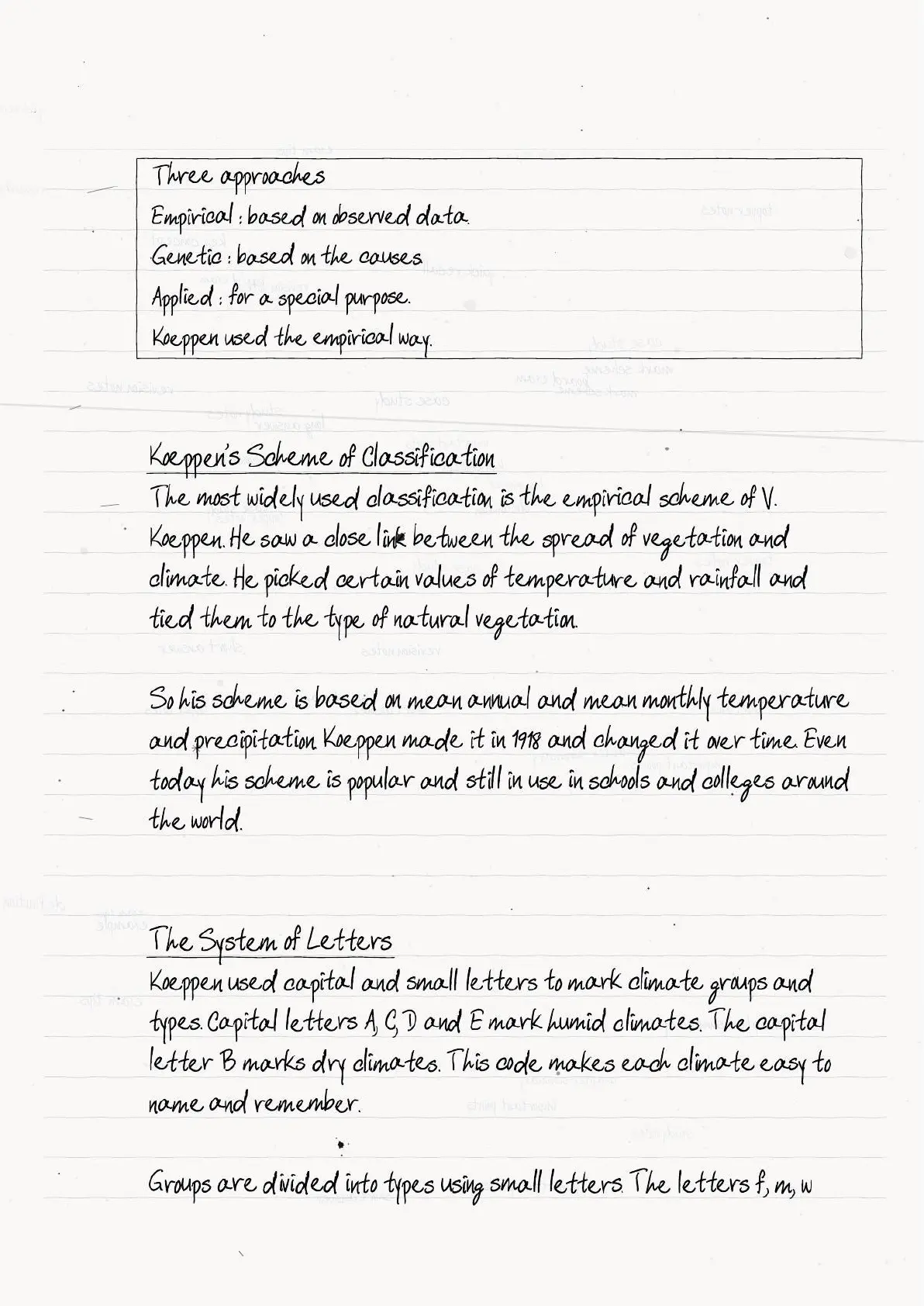
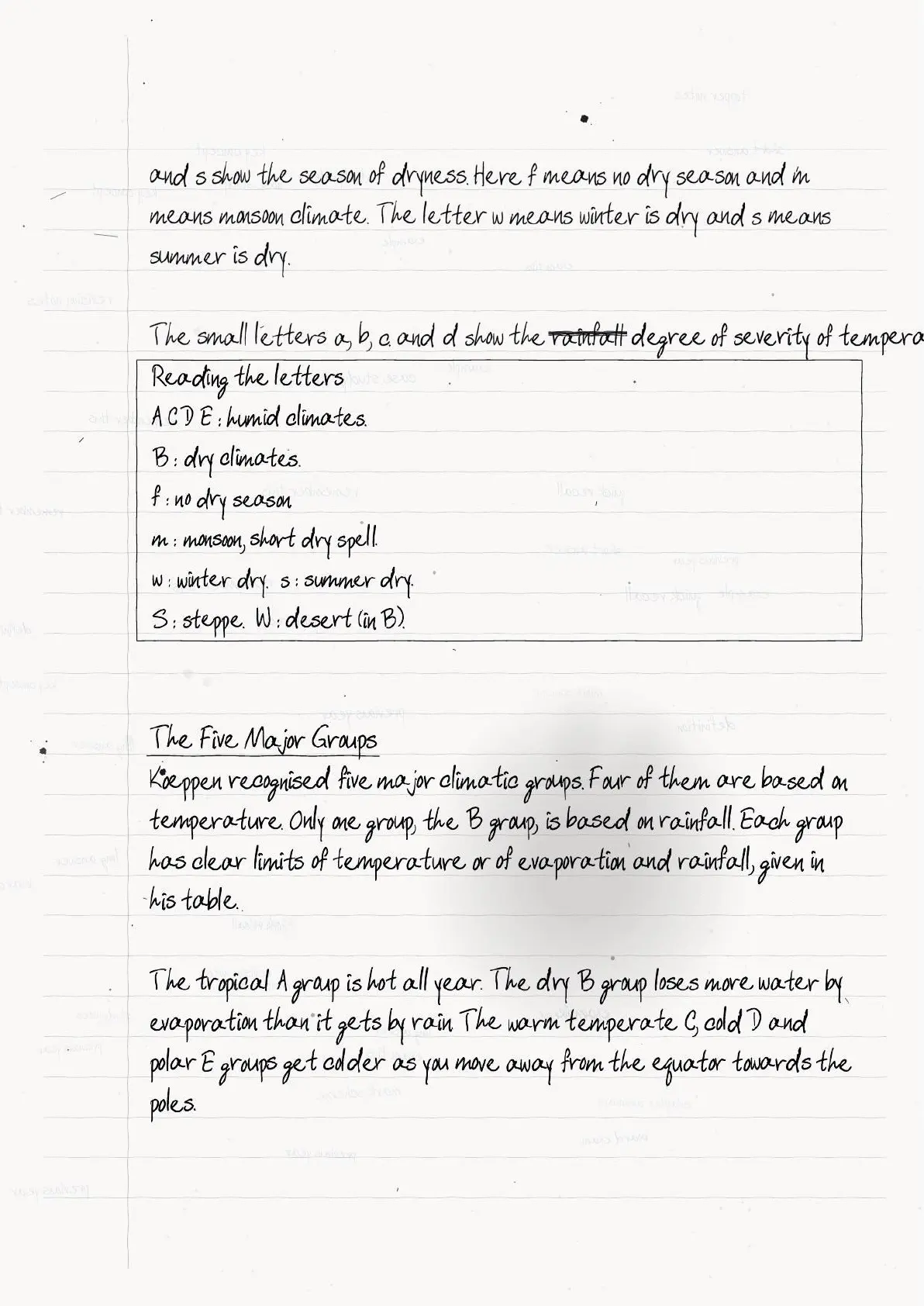
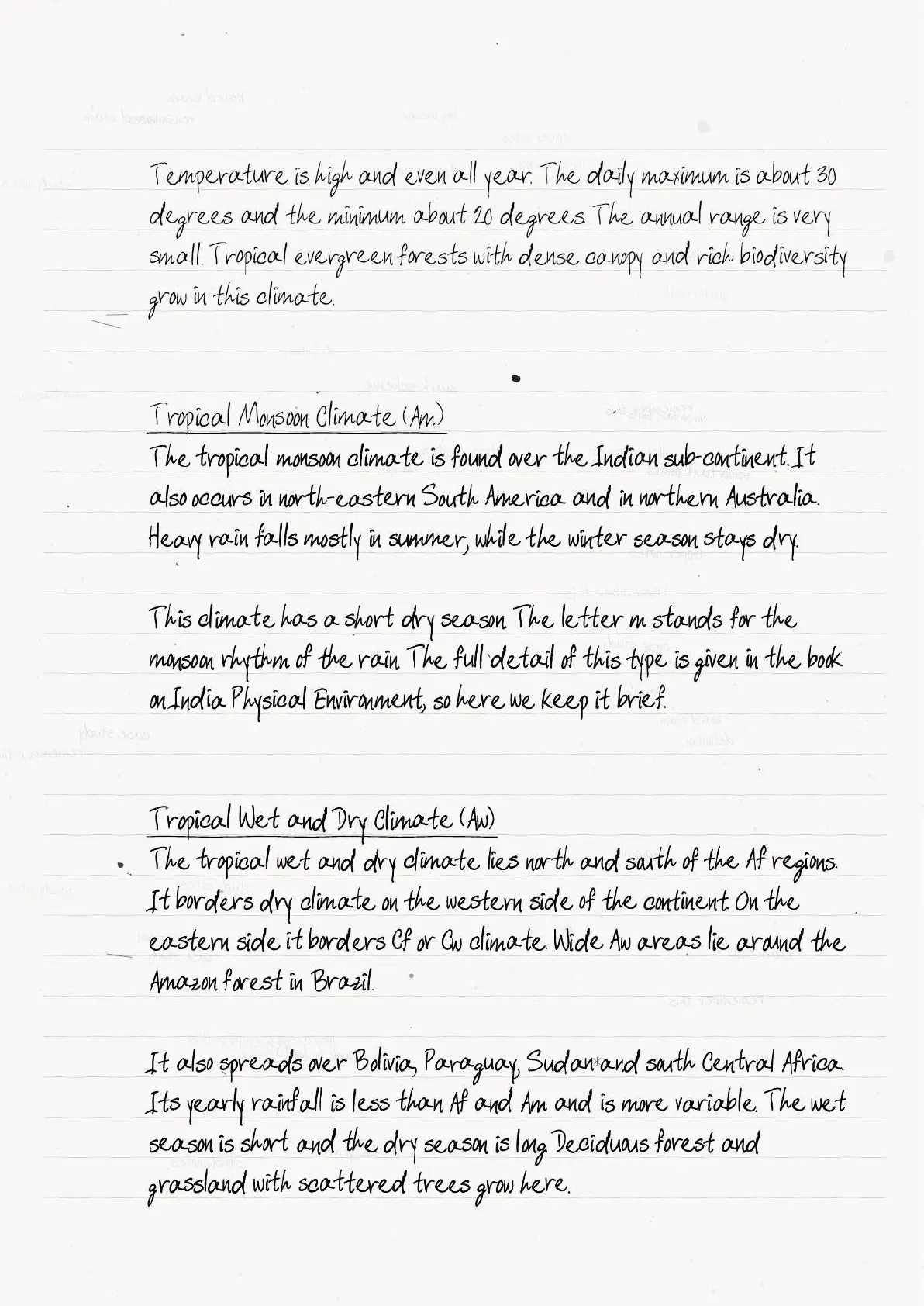
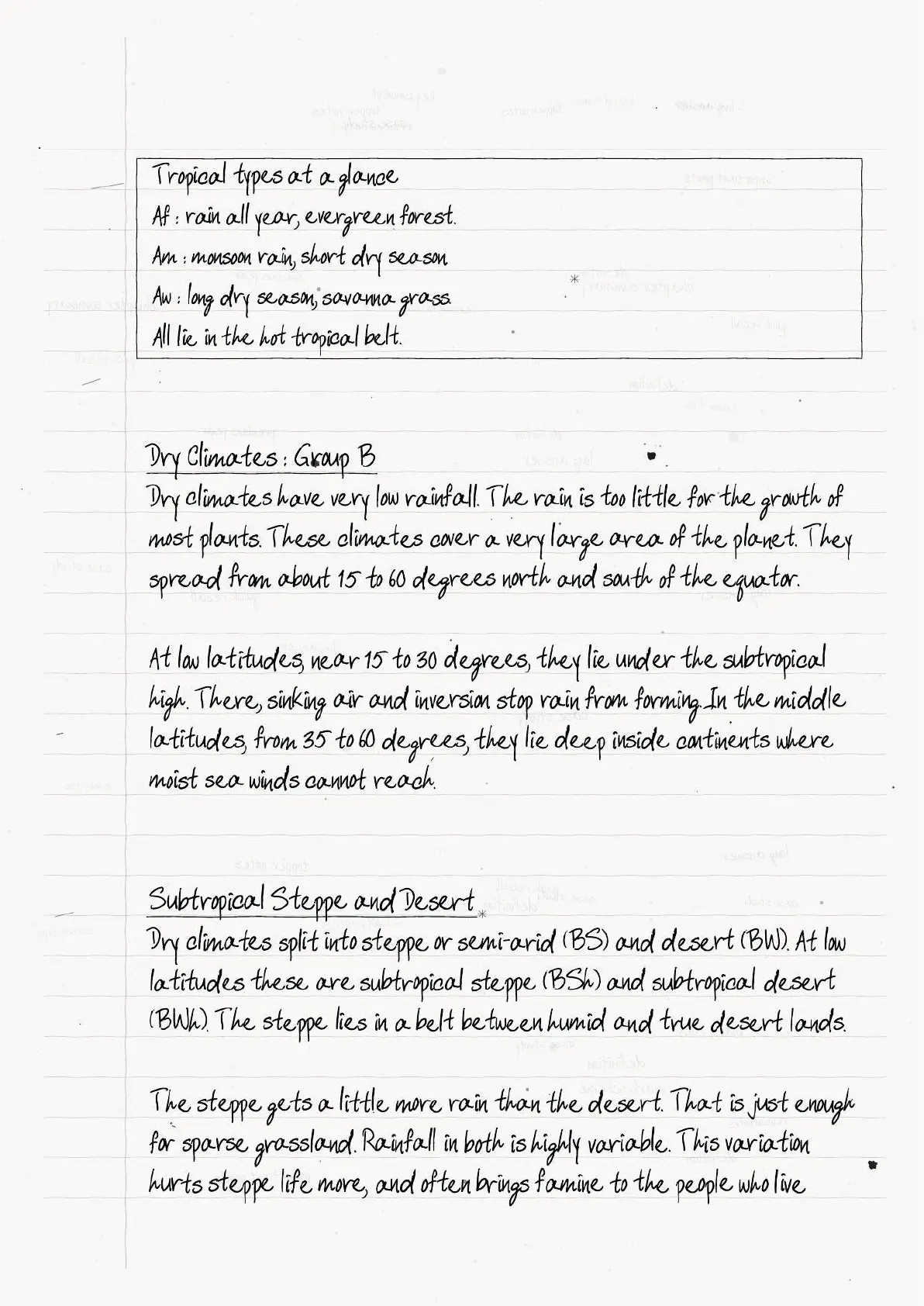
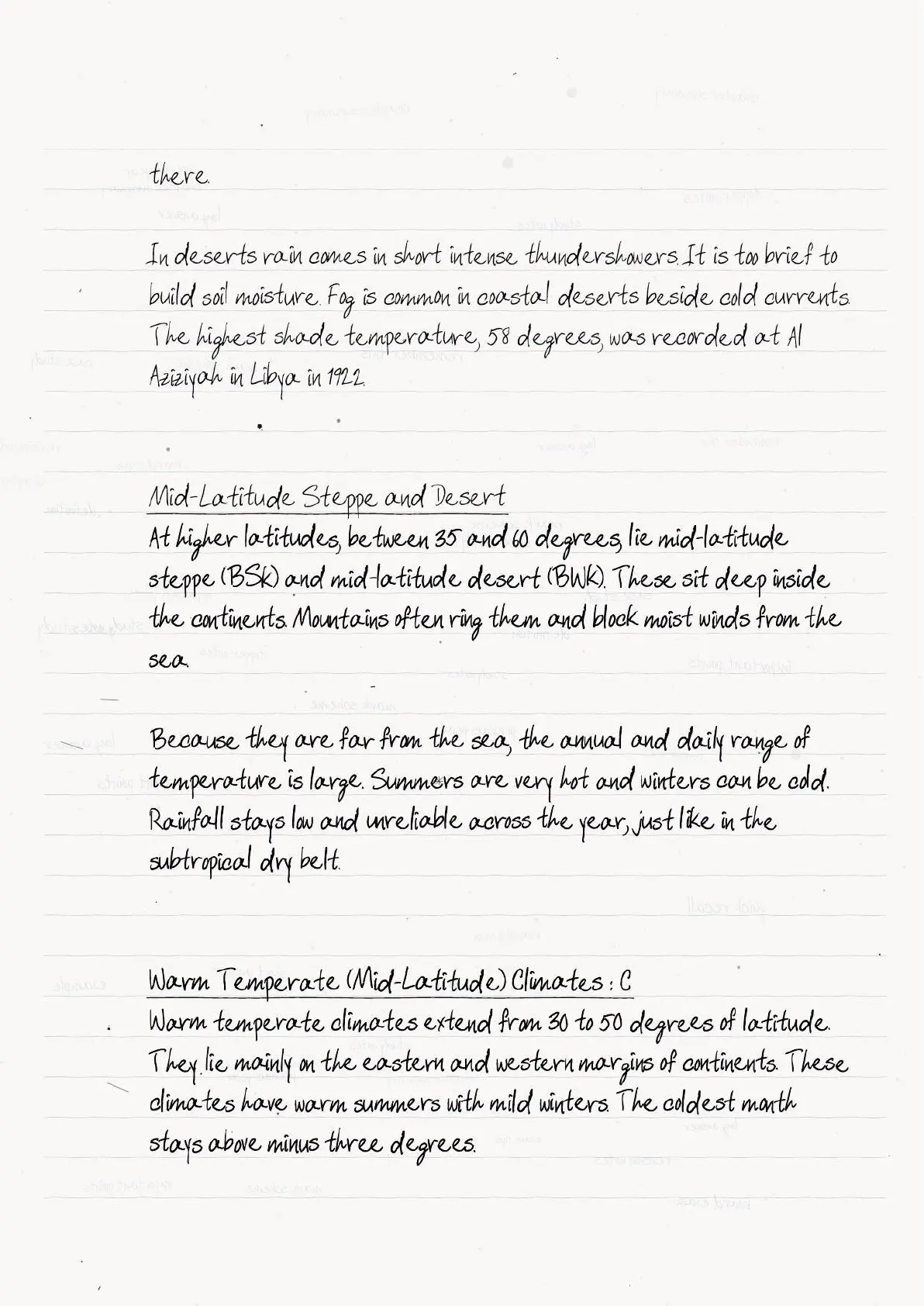
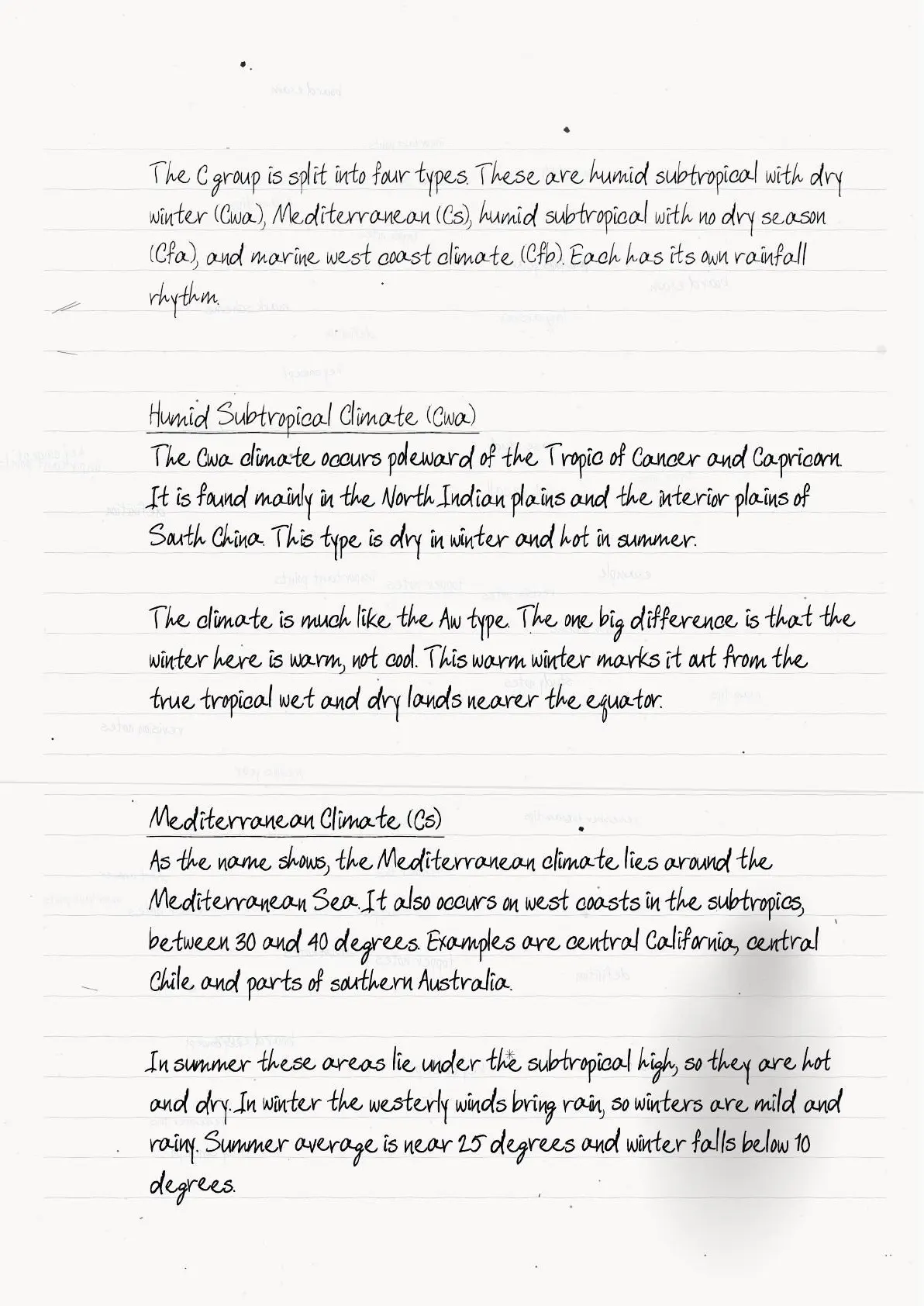
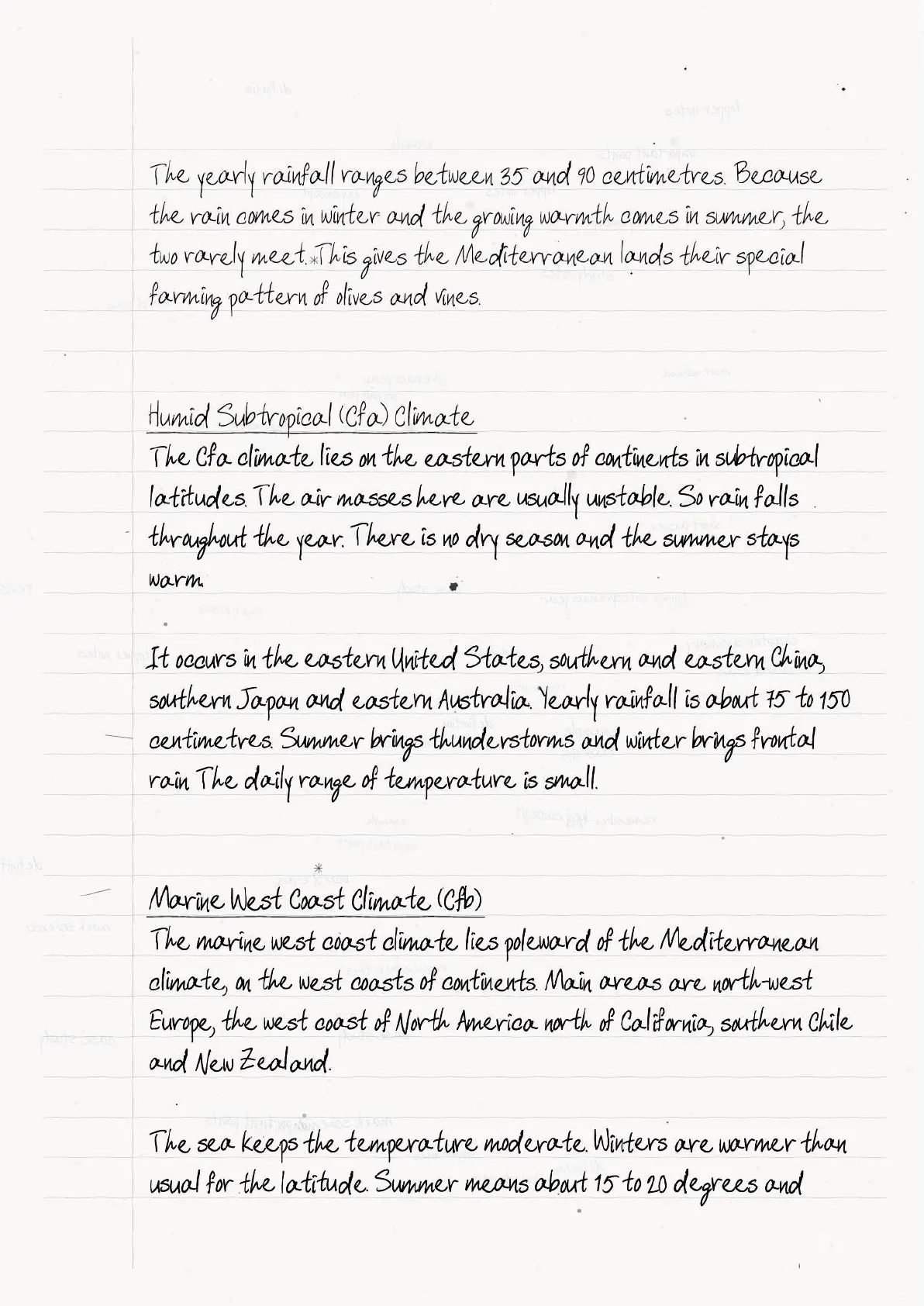
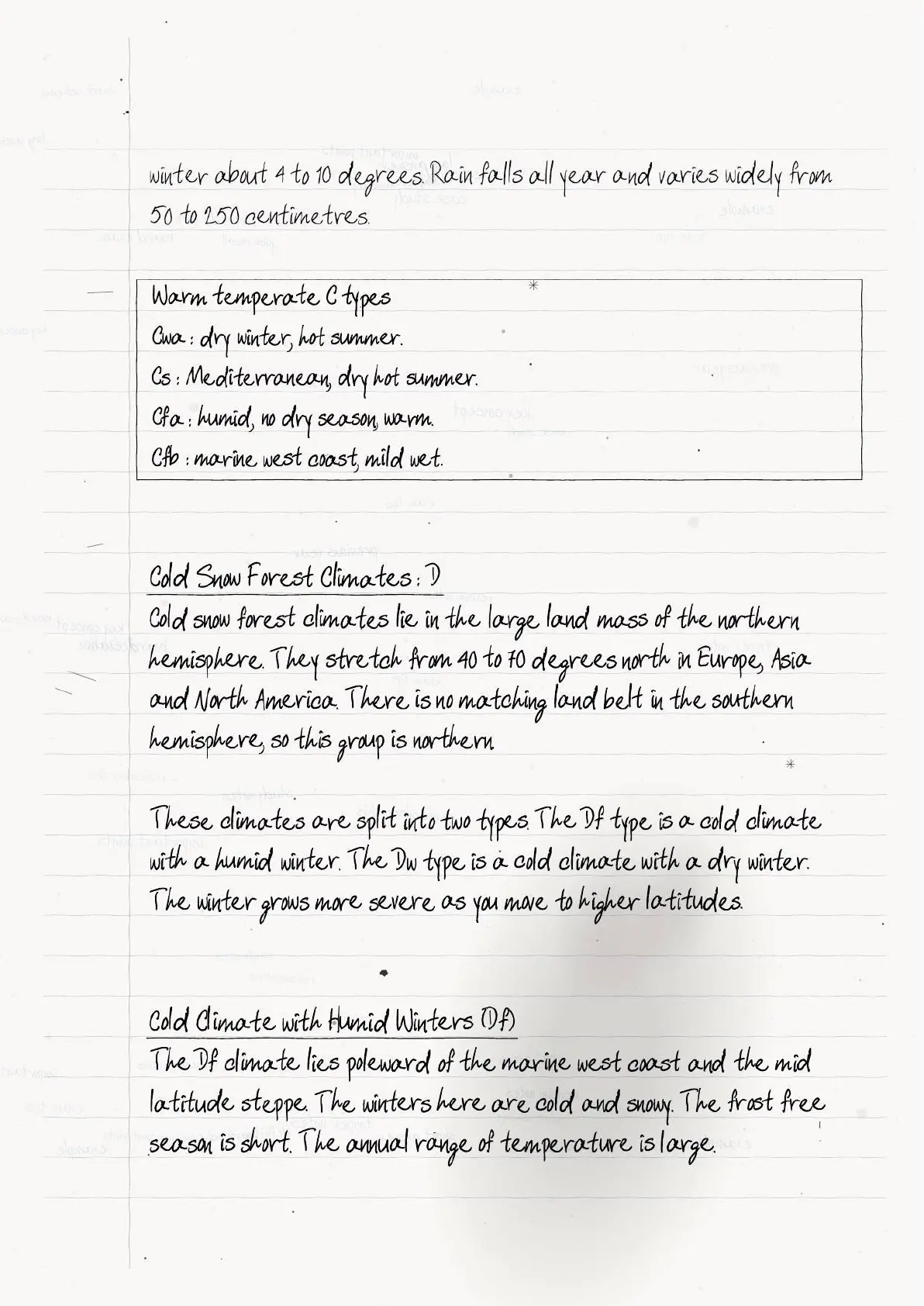
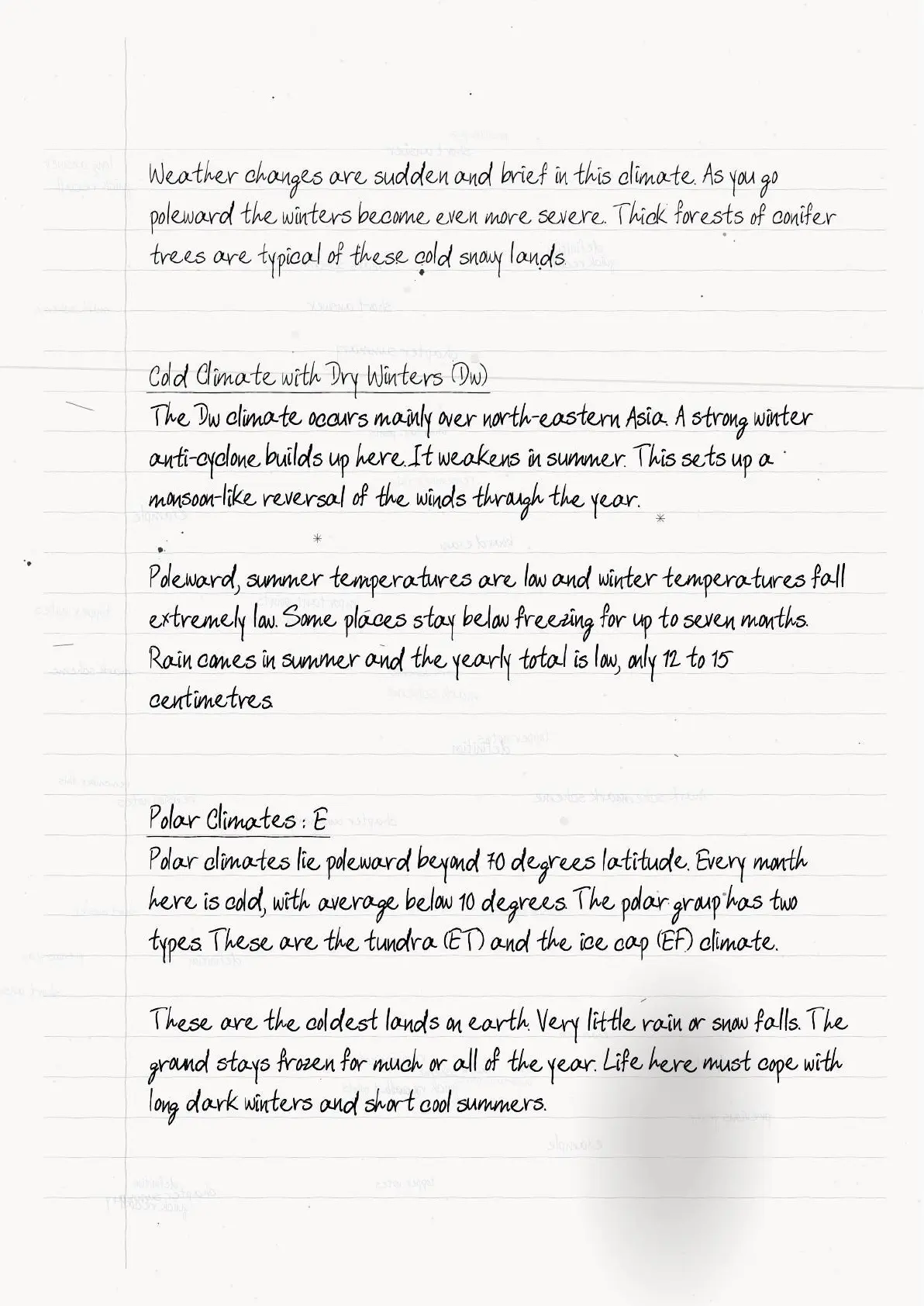
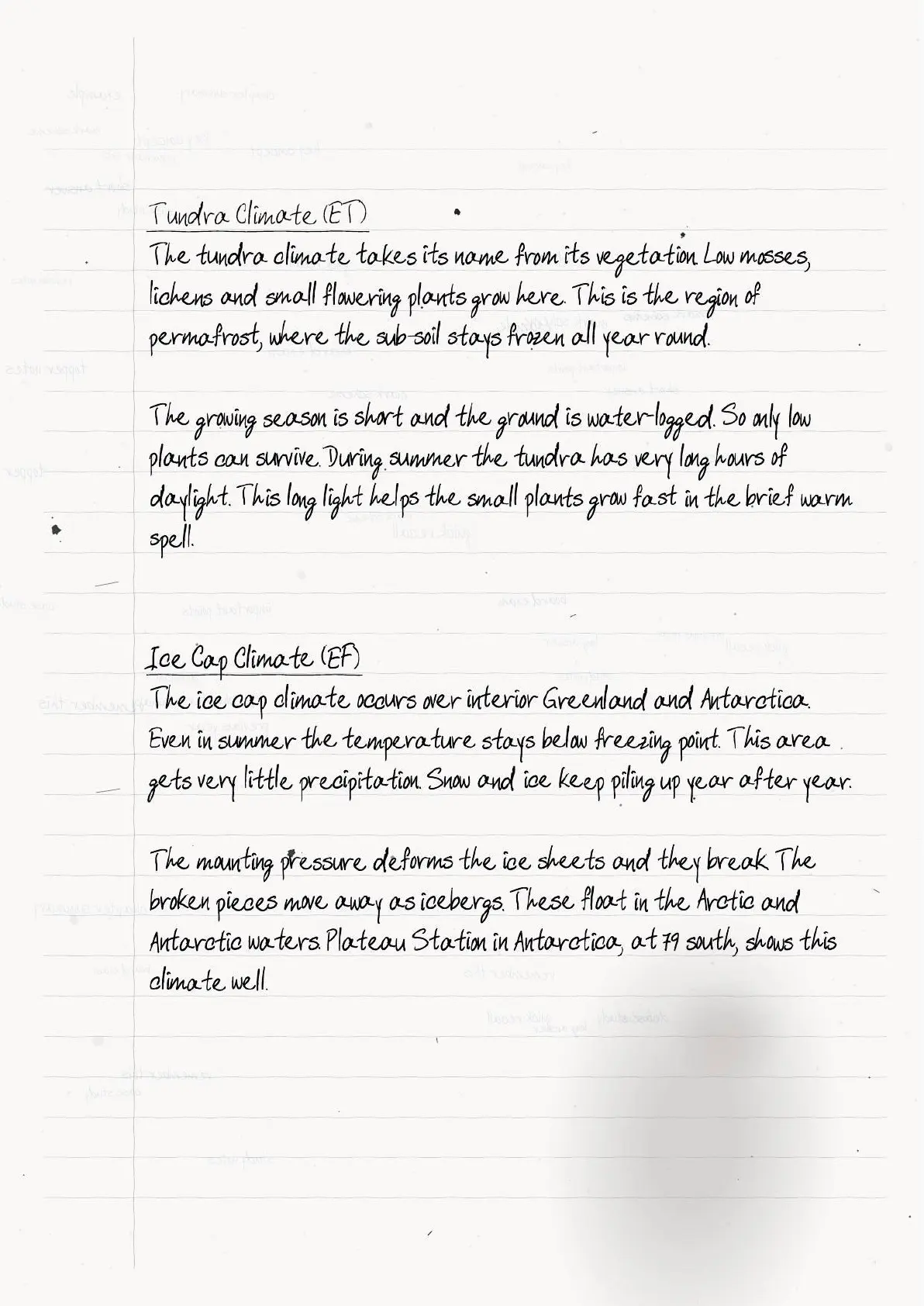
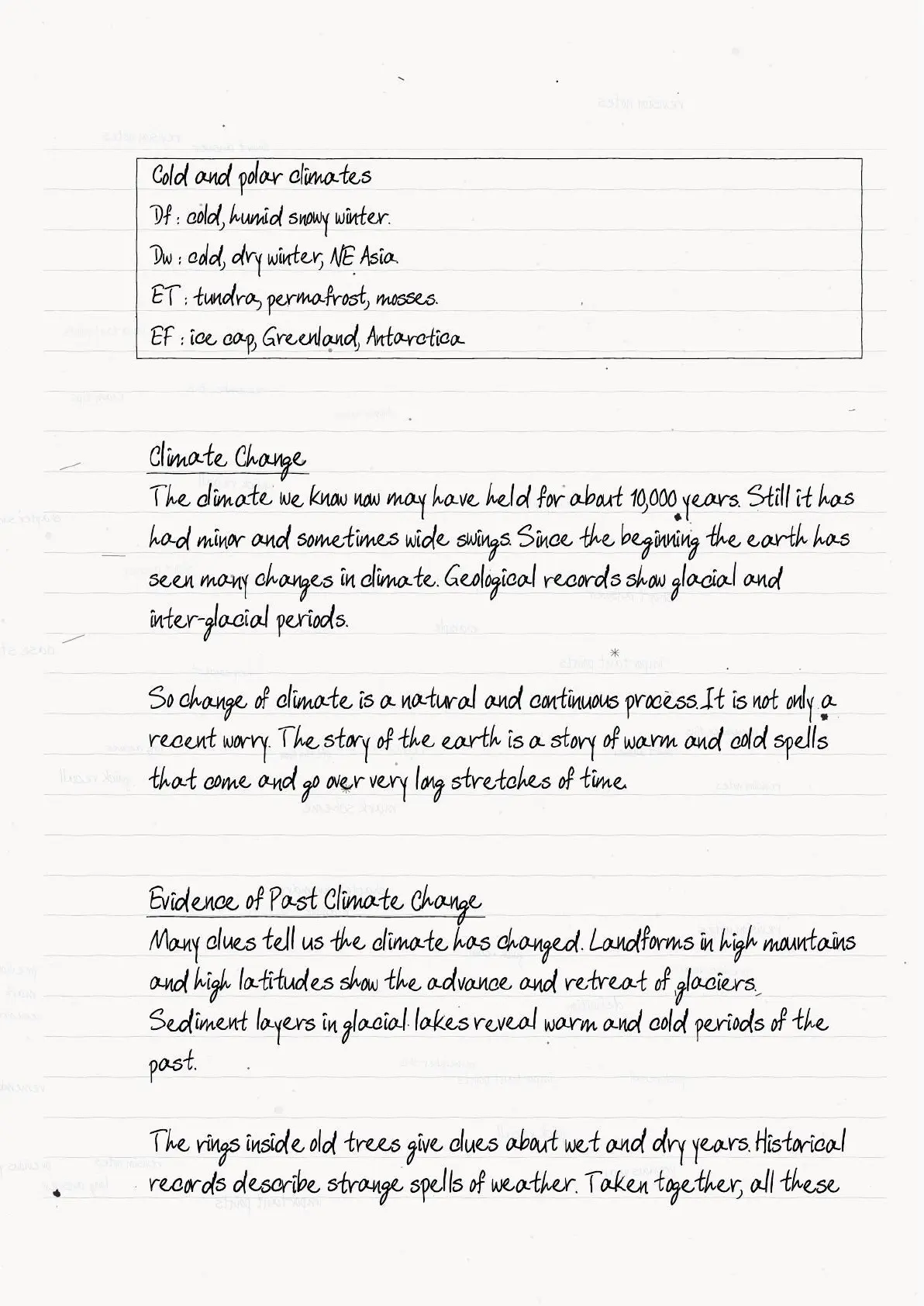
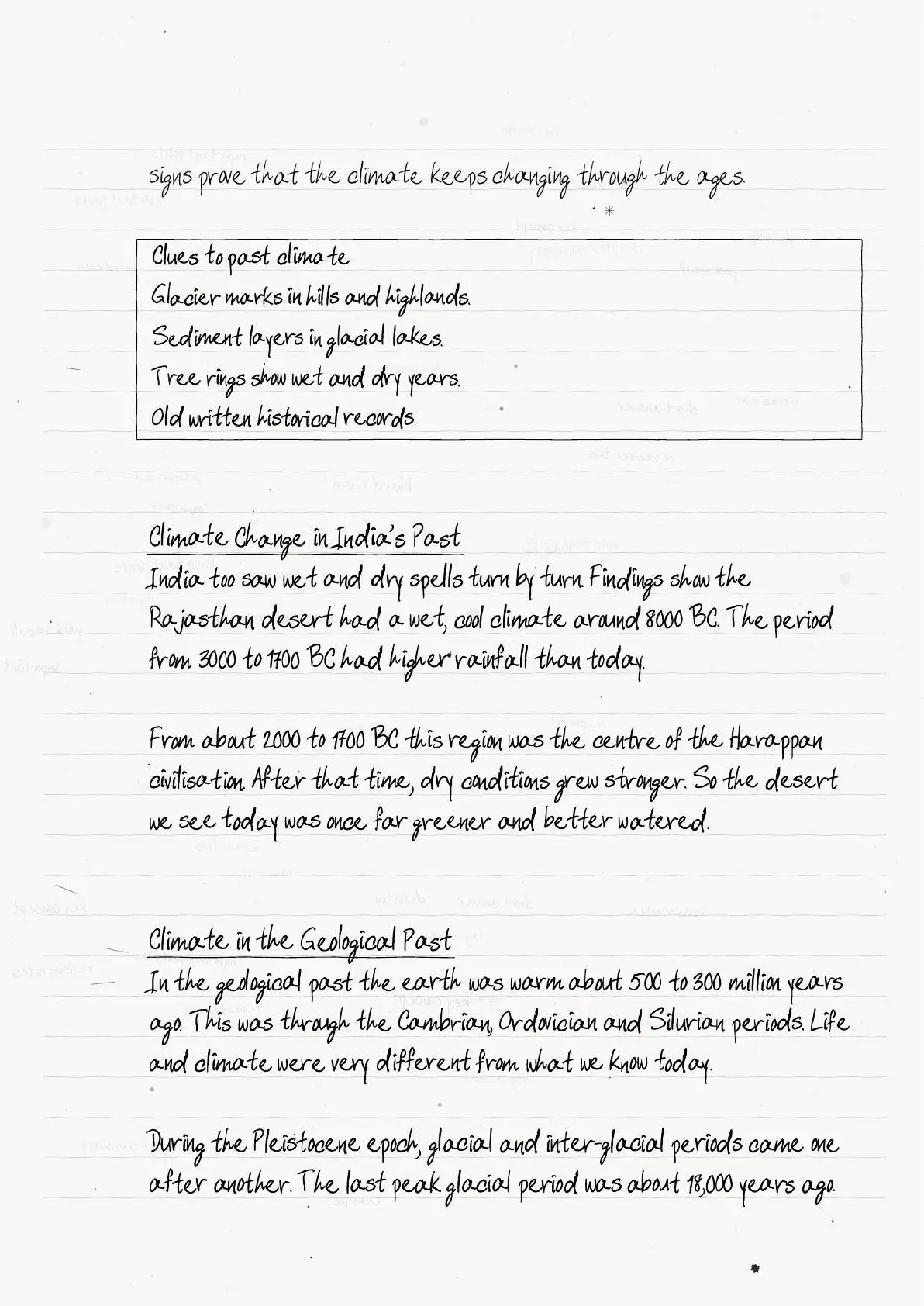
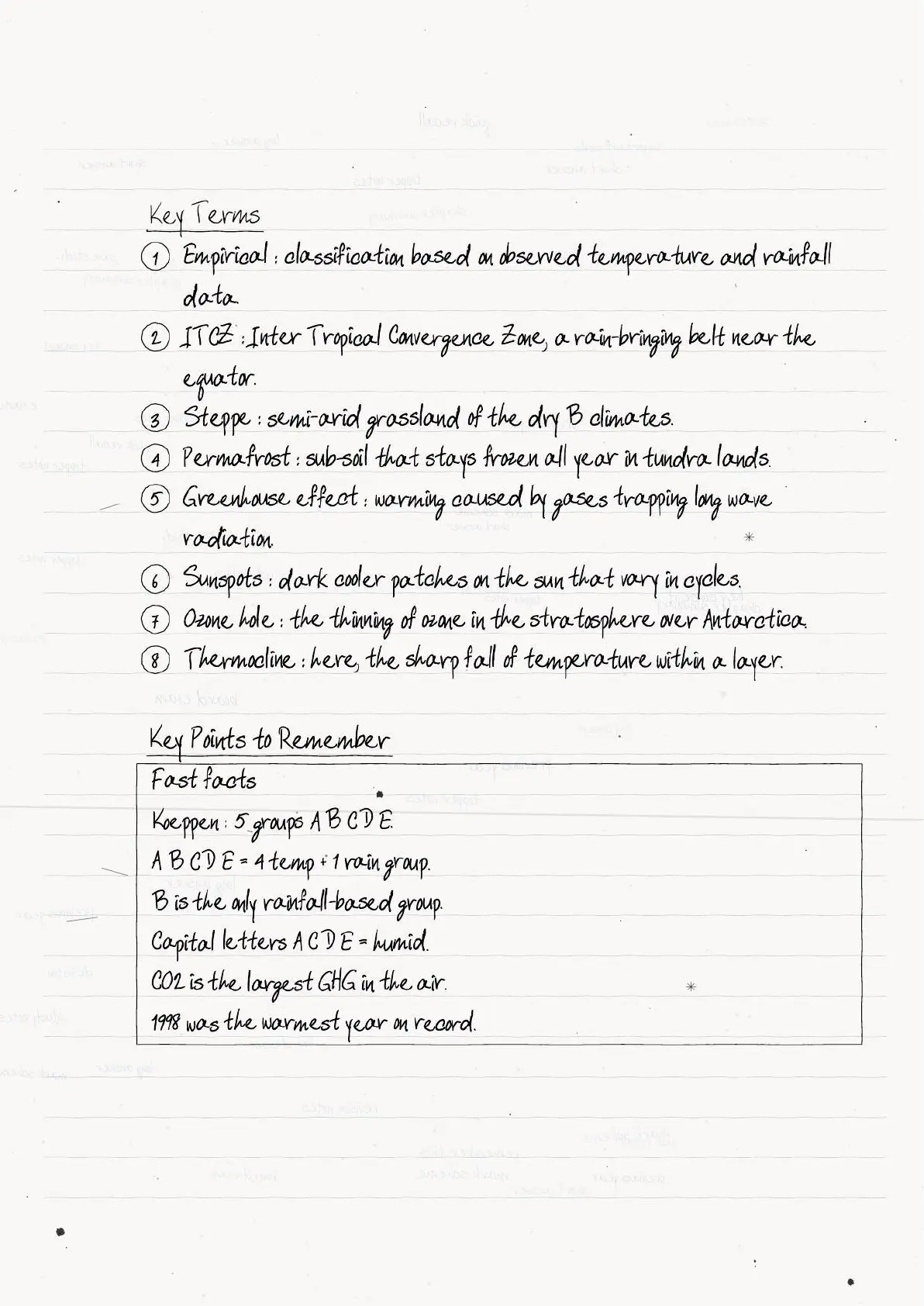
- What the notes cover: three ways to classify climate, koeppen's scheme and its letters, five groups a, b, c, d and e, climate types like af, bsh, cs, df, et.
- Best for: quick revision before Class 11 exams and a base for CUET later.
You can read the complete class 11 geography handwritten notes for World Climate and Climate Change, with key terms, boxed definitions, and quick revision points, in the PDF below.
These handwritten notes are written by subject teachers, mapped to the 2026-27 NCERT, and checked against the last five years of CBSE Class 11 Geography papers.
What the World Climate and Climate Change Handwritten Notes Cover
World climate is grouped into smaller units so it is easy to study. Koeppen used temperature and rainfall to sort climate into five groups. This chapter also covers how the climate is changing and why.
- Three ways to classify climate
- Koeppen's scheme and its letters
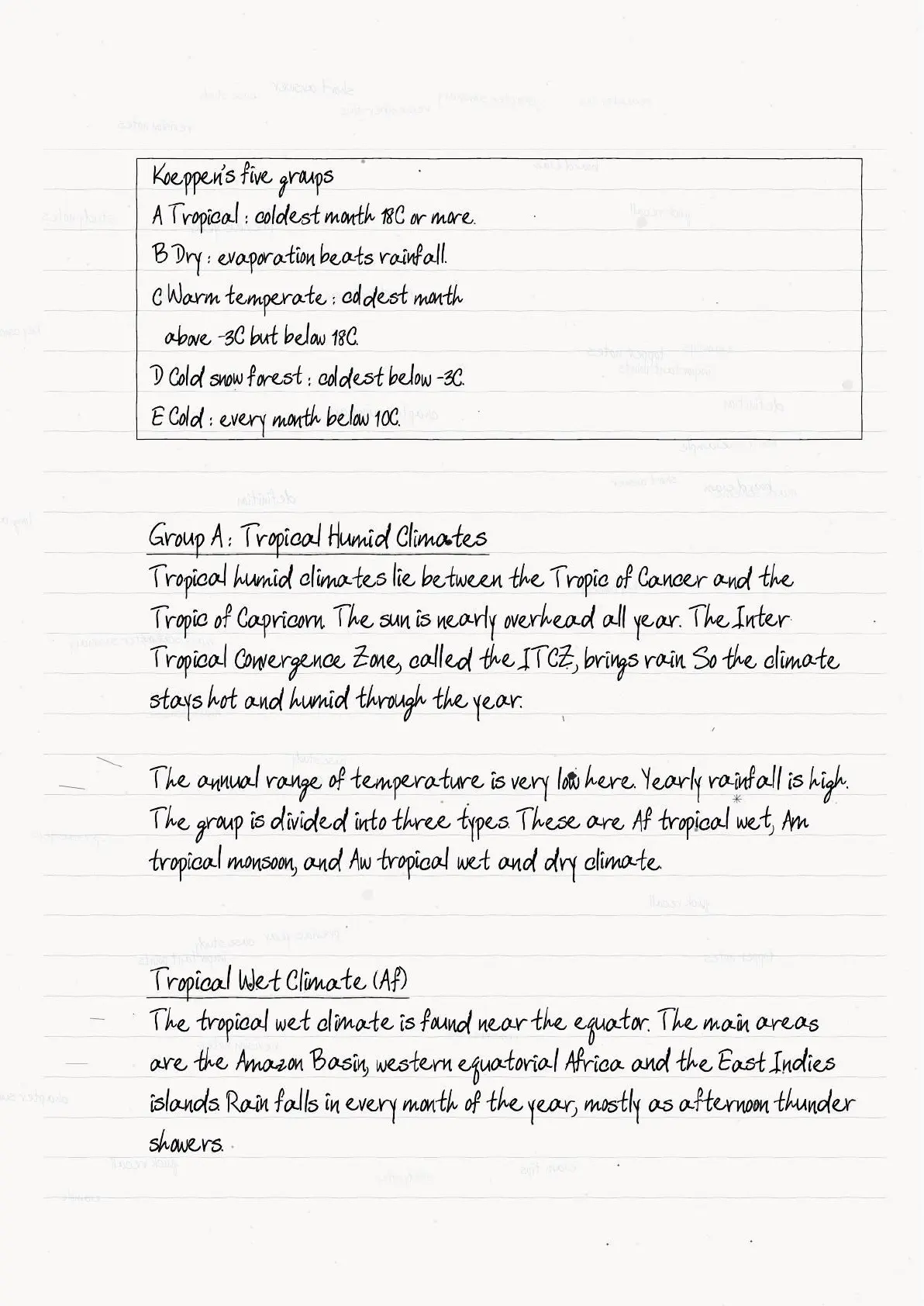
- Five groups A, B, C, D and E
- Climate types like Af, BSh, Cs, Df, ET
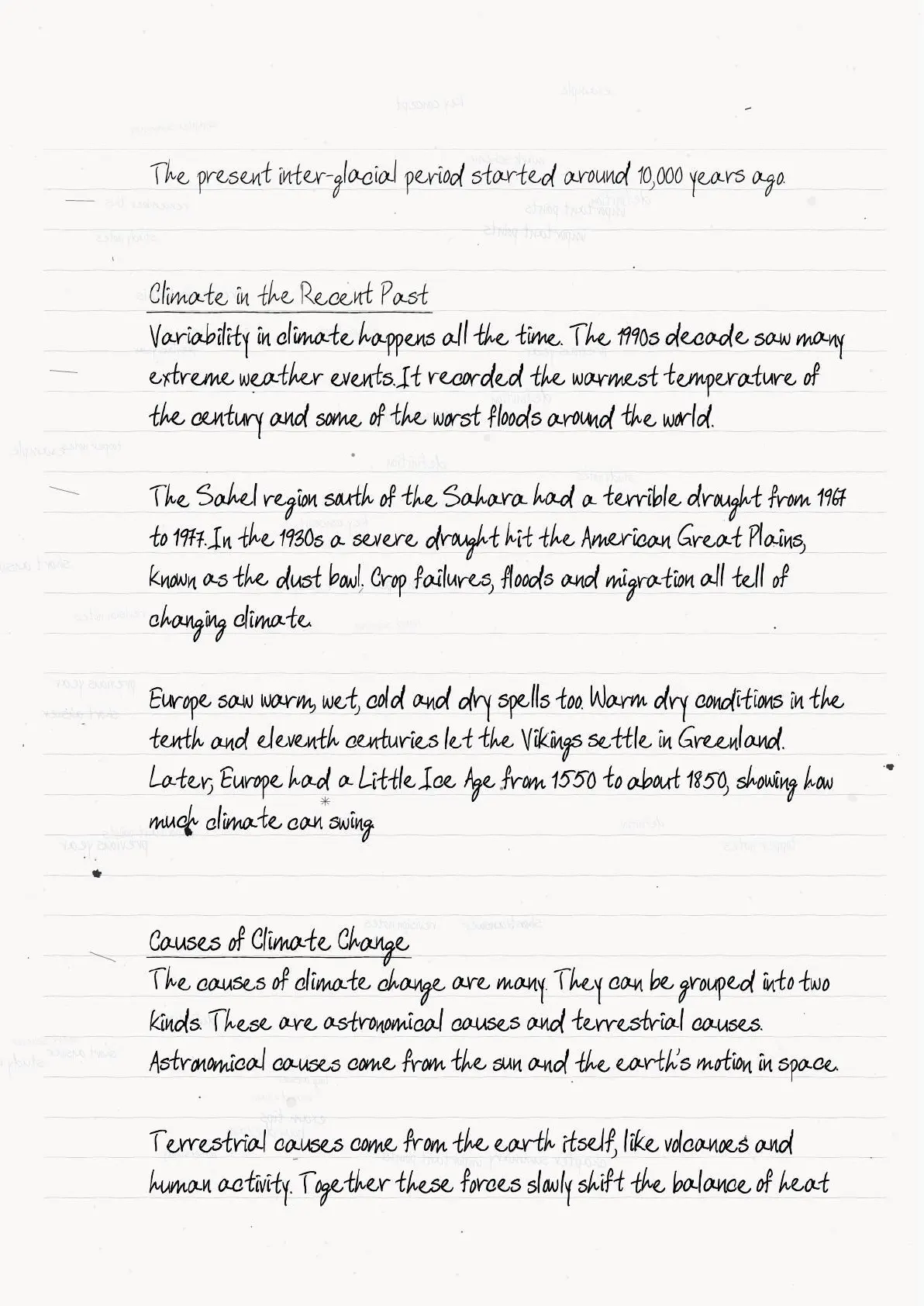
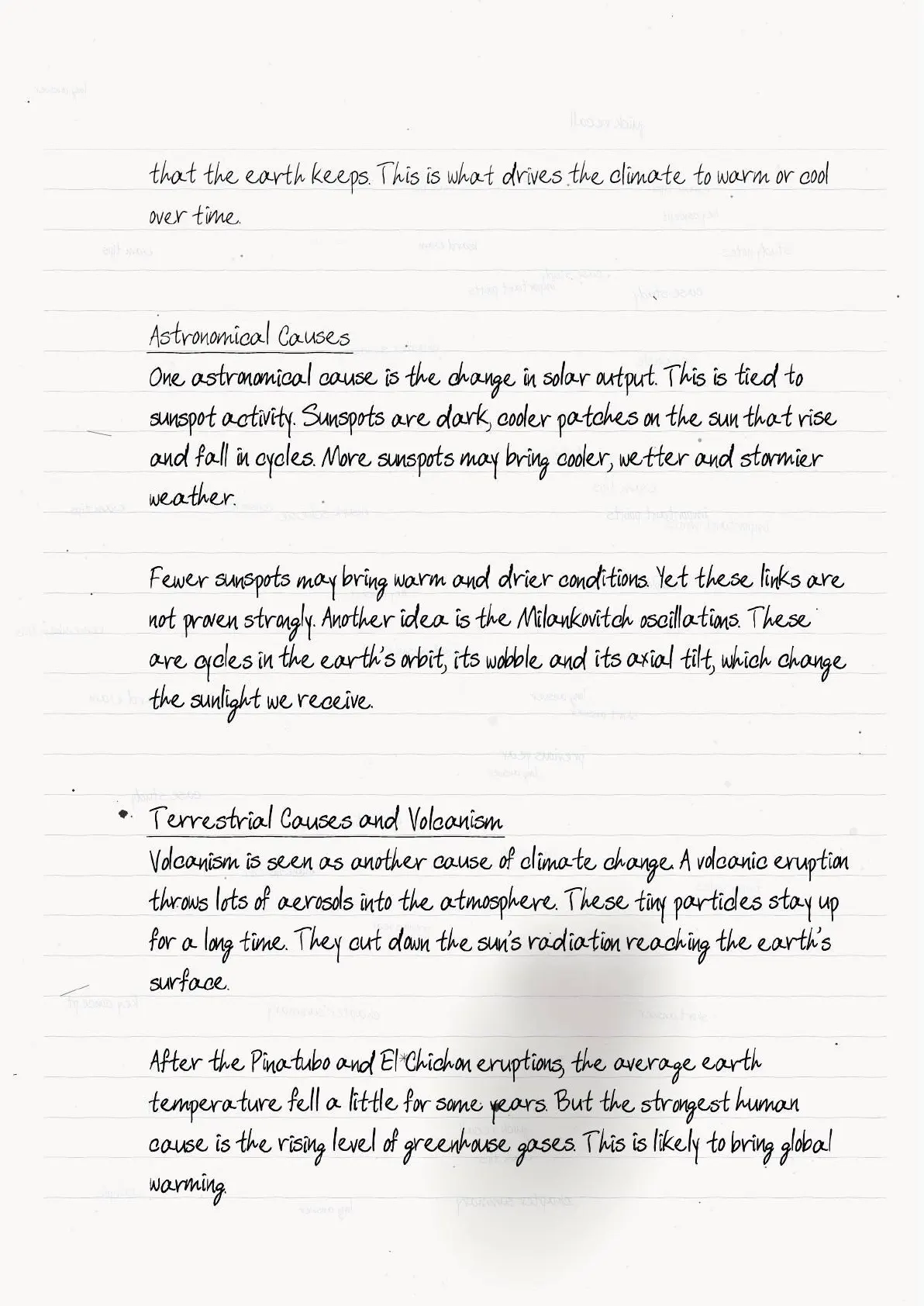
- Evidence and causes of climate change
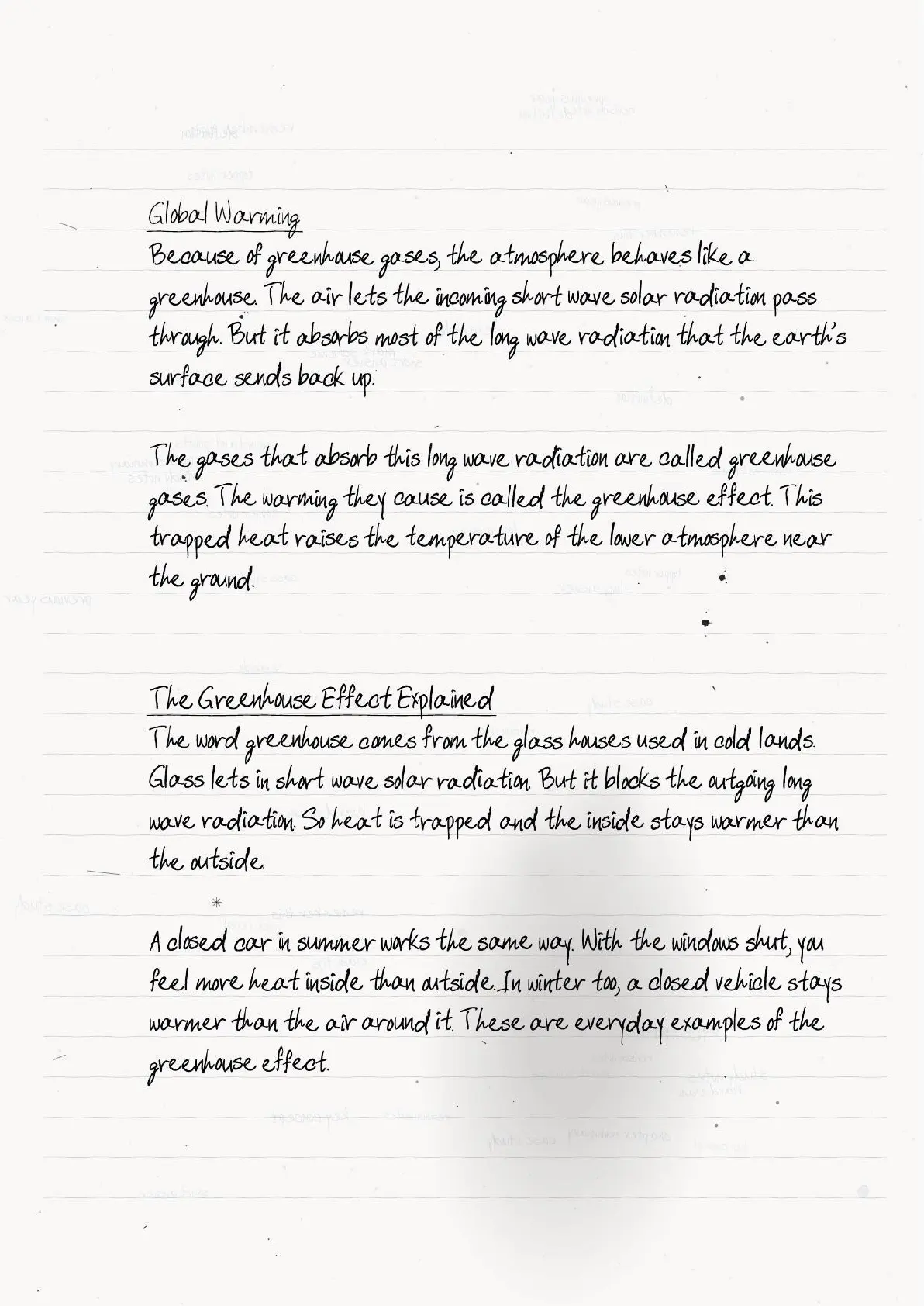
- Global warming and the greenhouse effect
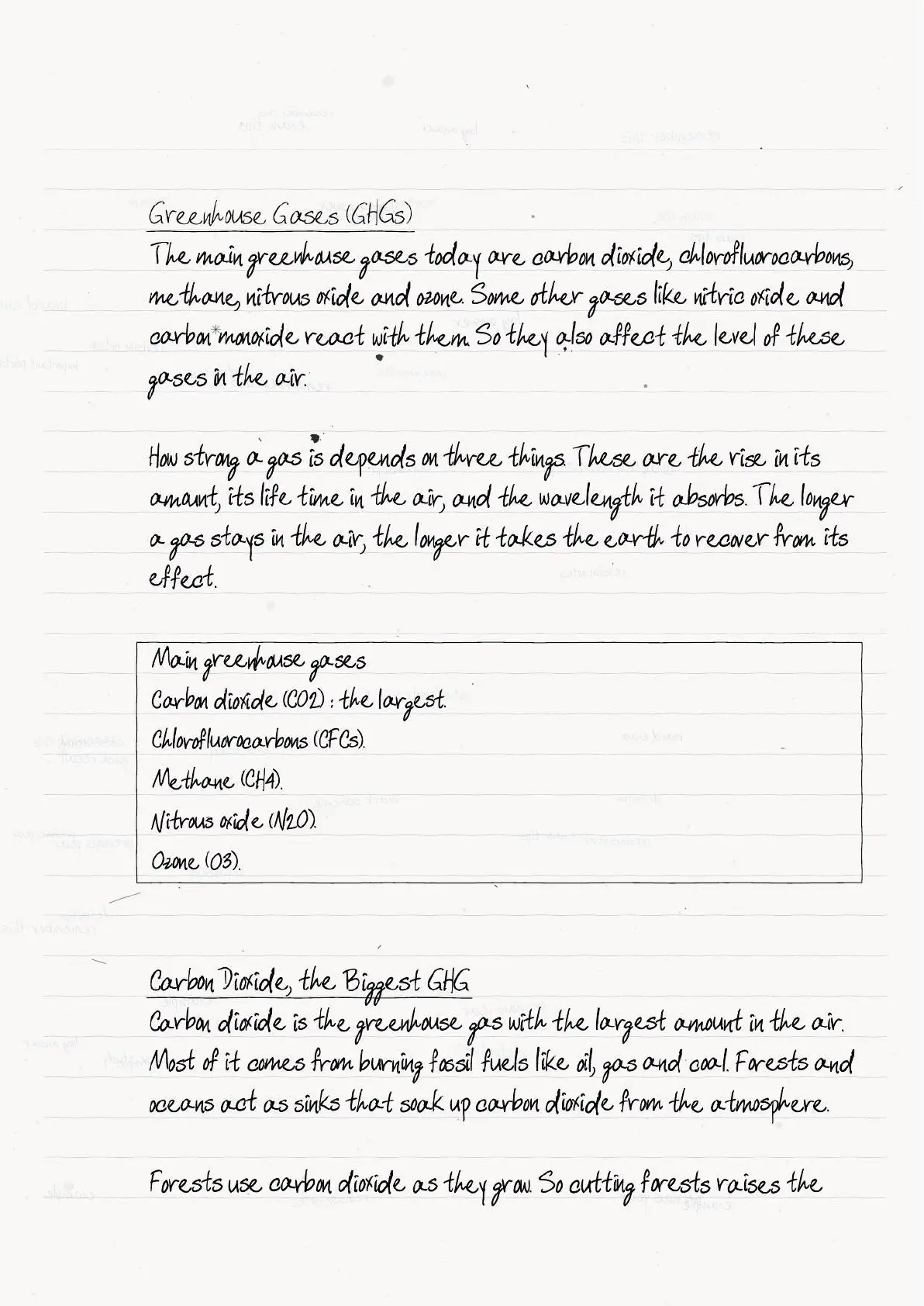
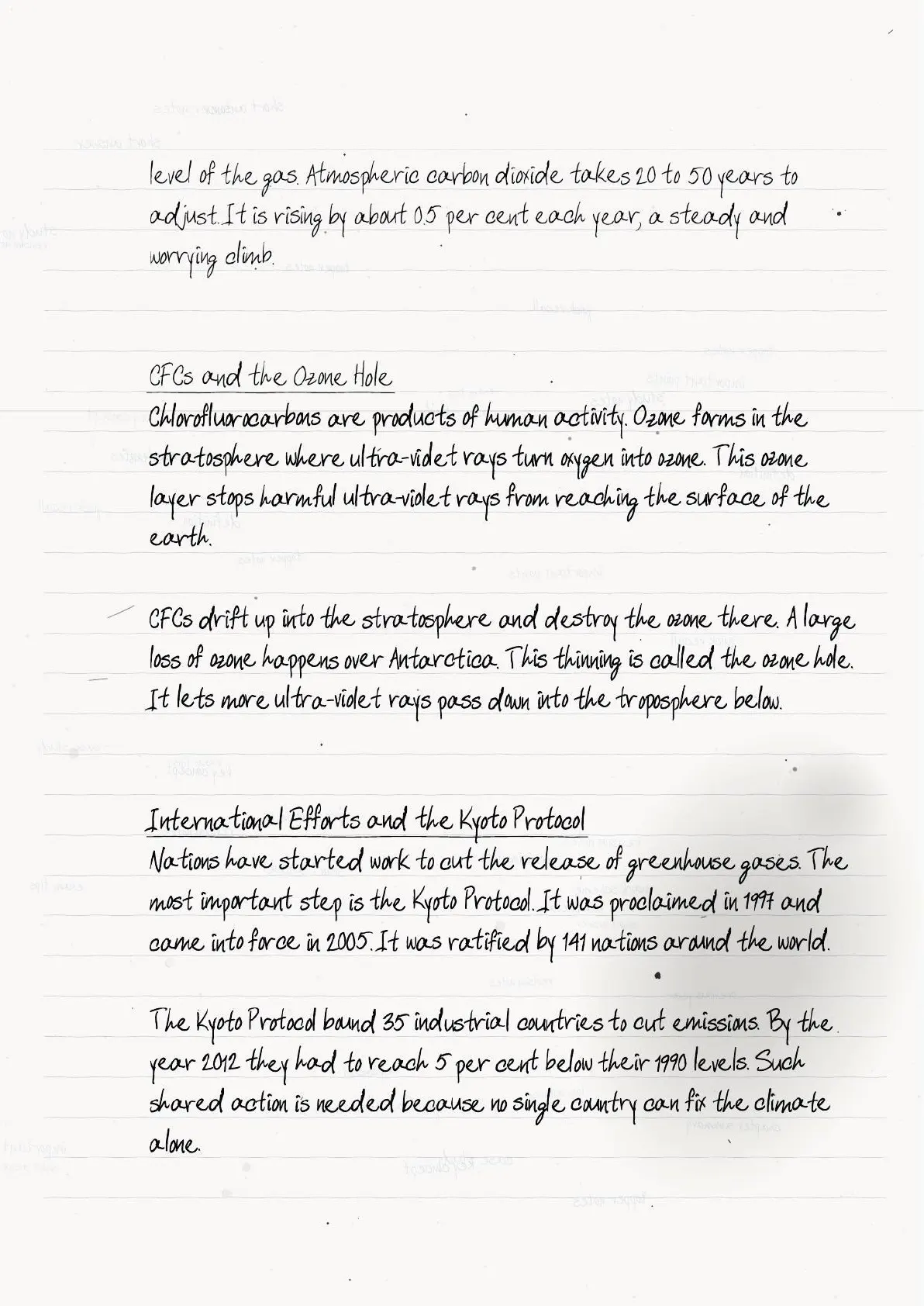
- Greenhouse gases and the Kyoto Protocol
World Climate and Climate Change Topic-wise Weightage for CBSE Class 11 Geography
Some parts of this chapter are asked more often than others. The table below shows which sub-topics to revise first, based on recent CBSE Class 11 question trends.
| Sub-topic | Weightage | CBSE Frequency |
|---|---|---|
| Koeppen's classification and groups | High | very frequent |
| Greenhouse gases and global warming | High | very frequent |
| Causes of climate change | Medium | frequent |
| Climate types and their regions | Medium | frequent |
| Evidence of past climate change | Low | occasional |
Key Terms and Ideas in World Climate and Climate Change
These are the terms and ideas the exam asks about most. Learn each one so you can define it and use it in your answers.
| Term / Idea | What it means |
|---|---|
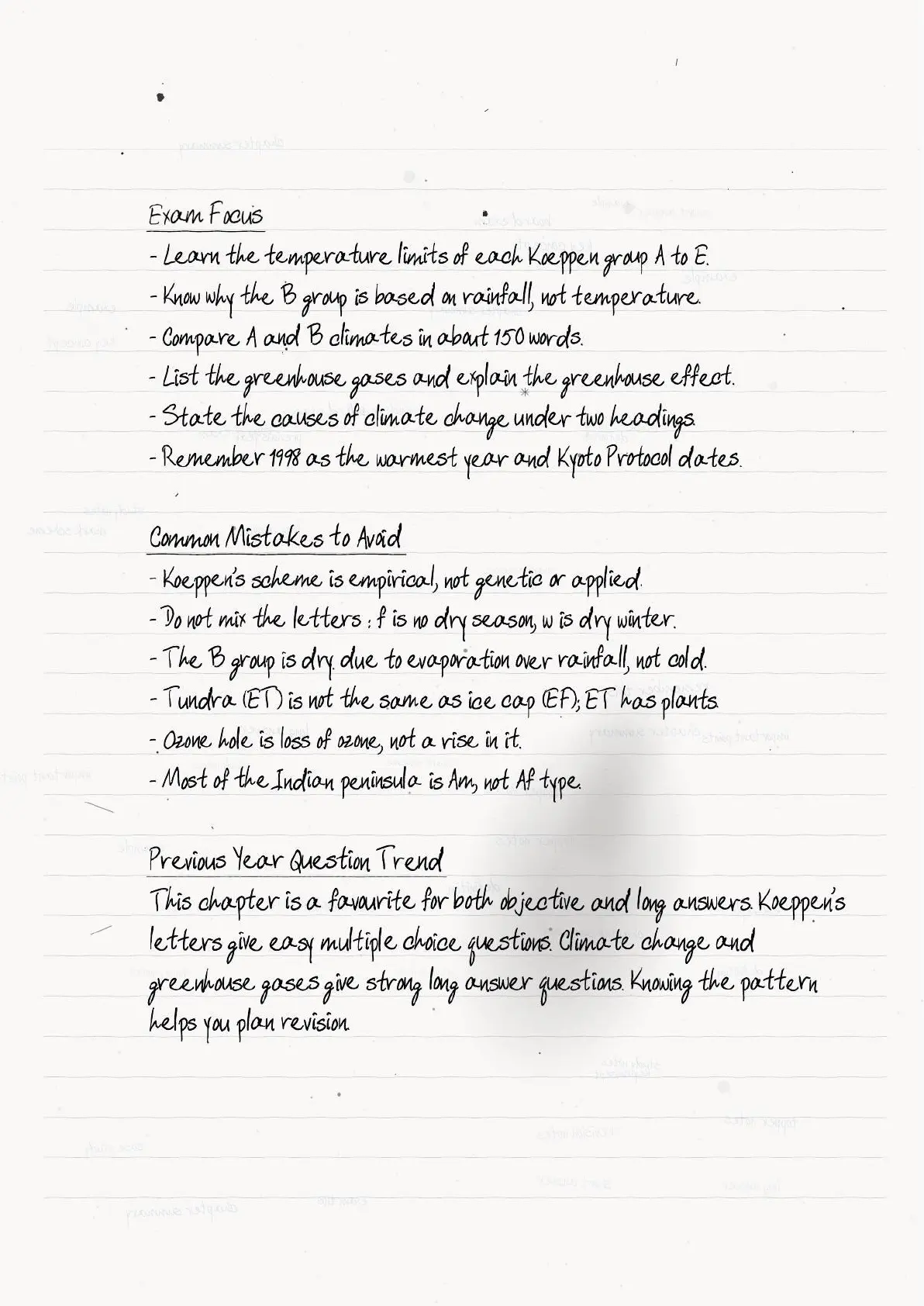
| Koeppen groups | Five groups A, B, C, D, E; four by temperature, one by rainfall |
| Group A | Tropical humid, coldest month 18C or more |
| Group B | Dry climate, evaporation exceeds rainfall |
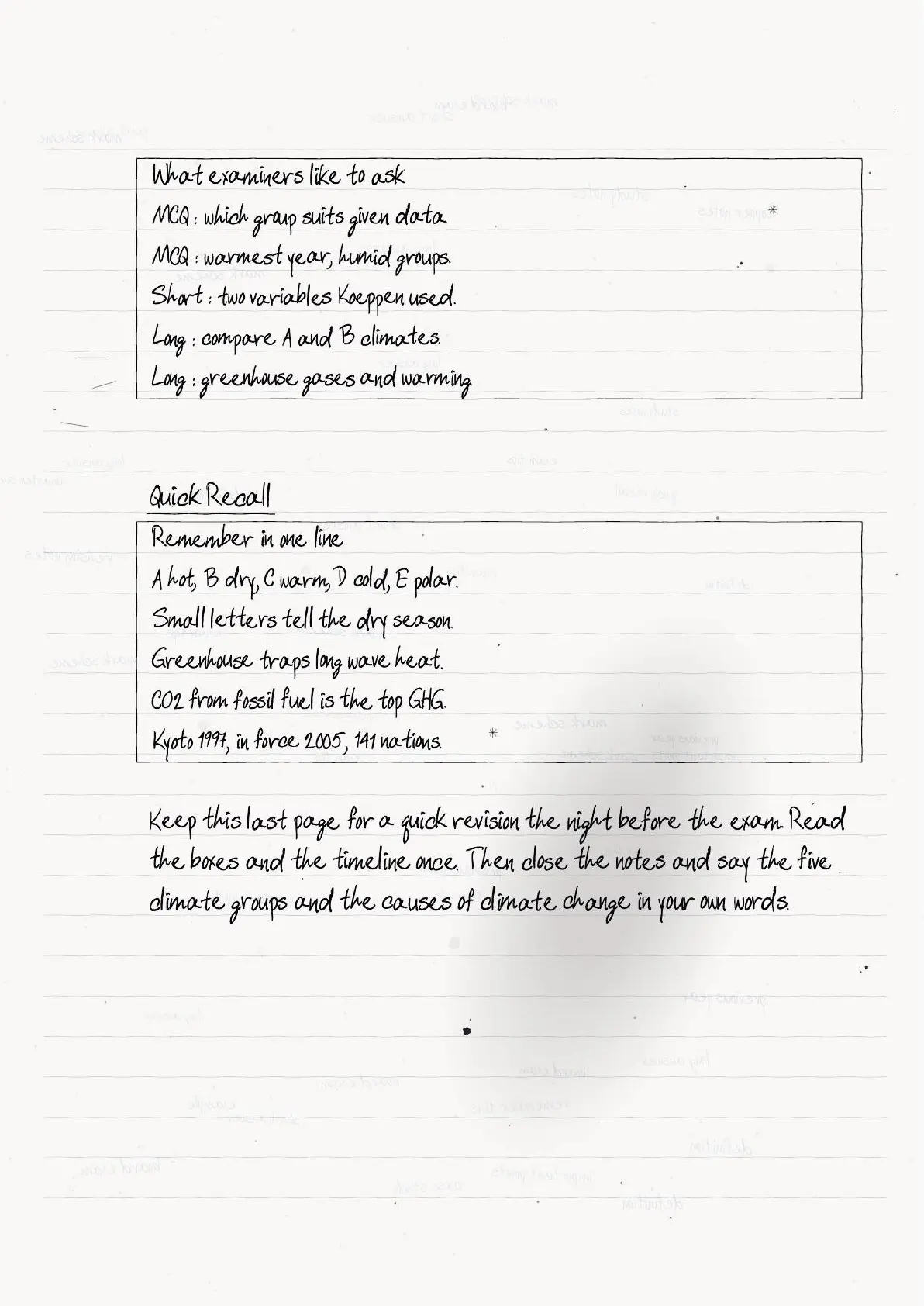
| Group E | Cold polar, every month below 10C |
| Greenhouse effect | Gases trap outgoing long wave radiation and warm the air |
| Largest GHG | Carbon dioxide, mainly from burning fossil fuels |
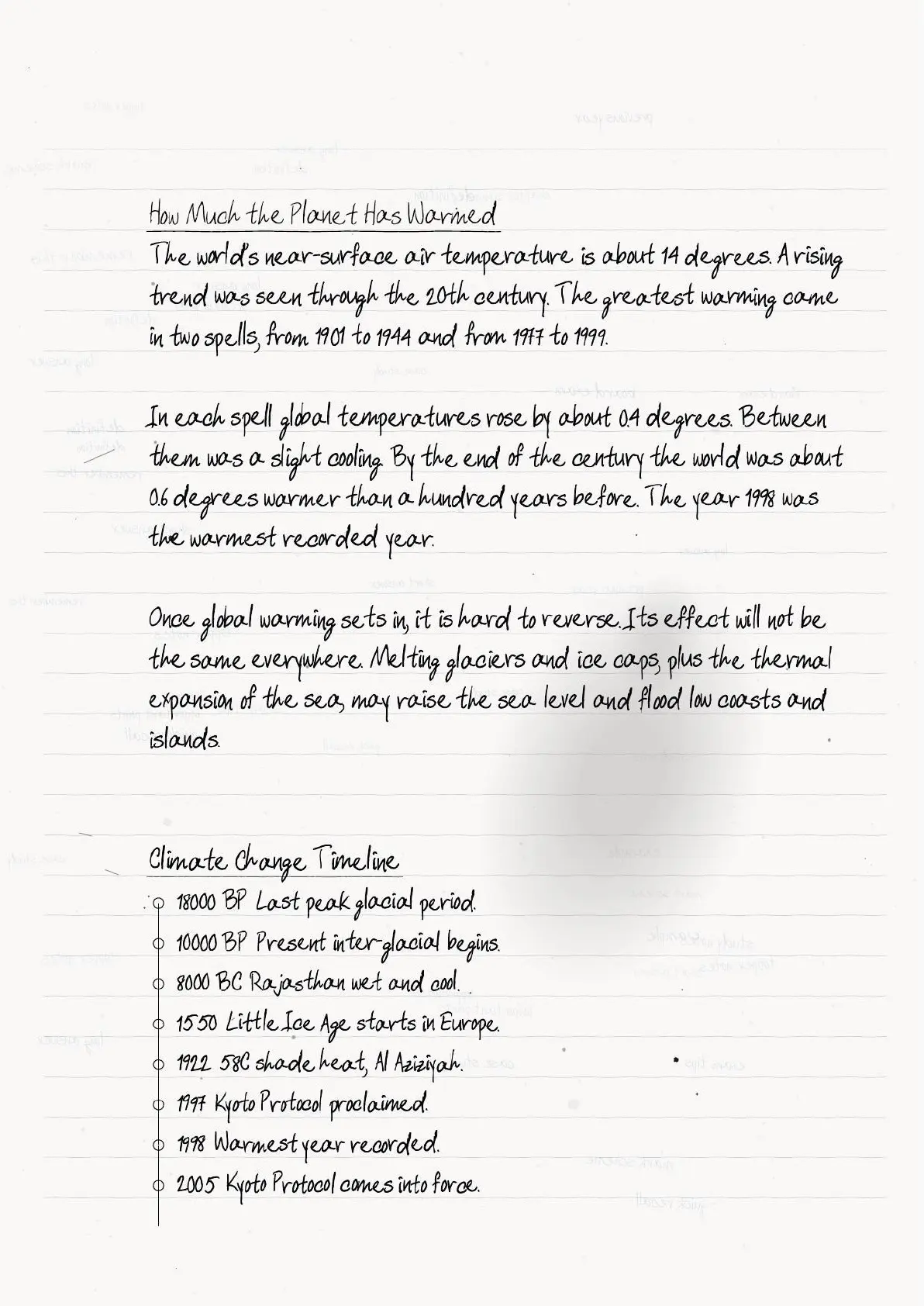
| Warmest year | 1998 was the warmest recorded year |
| Kyoto Protocol | 1997, in force 2005, ratified by 141 nations |
How Collegedunia's Handwritten Notes Help You Revise World Climate and Climate Change
These notes are made for the night before the exam. They keep the facts short and easy to scan. Collegedunia maps every point to the 2026-27 NCERT.
- Clear handwriting: each topic is written in neat, easy-to-read handwriting.
- Boxed key terms: the main terms and definitions are boxed by hand for fast recall.
- Diagrams and tables: simple hand-drawn tables and charts make ideas clear.
- Colour-coded headings: new sub-topics stand out, so you find any section in seconds.
World Climate and Climate Change Self-Assessment Quiz
Try these quick questions after you read the notes. Tap each question to check your answer. They cover the points CBSE asks most often.
Which group suits a climate with every month above 18C?
(a) A (b) B (c) D (d) E
Answer: (a) A correct - tropical humid needs coldest month 18C or more
Koeppen's classification is best termed as?
(a) Applied (b) Genetic (c) Empirical (d) Systematic
Answer: (c) Empirical correct - it uses observed temperature and rainfall data
Which year recorded the warmest temperature worldwide?
(a) 1990 (b) 1998 (c) 1885 (d) 1950
Answer: (b) 1998 correct - the warmest year of the century and likely the millennium
Which is the largest greenhouse gas in the air?
(a) Methane (b) Ozone (c) Carbon dioxide (d) CFC
Answer: (c) Carbon dioxide correct - mostly from fossil fuel combustion
Most of the Indian peninsula falls under which type?
(a) Af (b) BSh (c) Cfb (d) Am
Answer: (d) Am correct - it is tropical monsoon with a short dry season
How to Use These Handwritten Notes for Class 11 Geography Revision
Use these class 11 geography handwritten notes in two passes. Read them slowly once for the full chapter. Then, near the exam, read only the boxes and key terms for a fast recall.
- Read the notes once with the NCERT chapter open beside you.
- Say each key term and idea in your own words.
- Practise one long-answer question from a past paper.
- On the last day, revise only the key terms and the boxes.
Class 11 Geography Handwritten Notes for All Chapters
The table below links the class 11 geography handwritten notes for every chapter. Use it to jump to any other chapter's notes.
World Climate and Climate Change Class 11 Geography Handwritten Notes FAQs
Ques. Where can I download World Climate and Climate Change Class 11 Geography Handwritten Notes PDF?
Ans. You can download the World Climate and Climate Change Class 11 Geography Handwritten Notes PDF directly from this page. Both the Normal and HD versions are free.
Ques. Are these handwritten notes aligned with the 2026-27 NCERT?
Ans. Yes. These notes follow the current 2026-27 syllabus for Class 11 Geography. Difference between weather and the Koeppen climate groups students often confuse.
Ques. How many pages is the Class 11 Geography World Climate and Climate Change Handwritten Notes PDF?
Ans. The notes run about 20 pages. They cover the full chapter with key terms, hand-drawn boxes, and a short self-assessment quiz.
Ques. What is the main idea of the 11th standard Geography chapter World Climate and Climate Change?
Ans. Koeppen grouped world climate into five broad groups using long-term temperature and rainfall data. The groups are A tropical, B dry, C warm temperate, D cold snow forest and E cold polar.
Ques. Are these World Climate and Climate Change notes enough for the CBSE Class 11 exam?
Ans. Yes, for revision. The Collegedunia handwritten notes cover every key point and exam term. Read them with the NCERT chapter and practise past questions.



Comments