




The NCERT Solutions for Class 12 Biotechnology Chapter 1 An Overview of Recombinant DNA Technology cover all 6 exercise questions according to the 2026-27 NCERT textbook. Each answer explains how DNA isolation, restriction enzymes, DNA ligase, plasmids and Cohen-Boyer gene cloning built modern biotechnology.
- Exercise count: 6 solved NCERT questions, including 2 assertion-reason items.
- Key focus: rDNA development, crop improvement, therapeutics, plasmids and multifork replication.
- Use case: quick board revision before moving to Host-Vector System and Gene Cloning.
In This Article
What the Class 12 Biotechnology Chapter 1 Solutions PDF Covers
The PDF gives step-by-step NCERT answers for the full Chapter 1 exercise. It starts with descriptive answers on the early development of recombinant DNA technology and its applications. It then solves the MCQ and assertion-reason questions with clear option checks.
Important: Chapter 1 is a base chapter. It introduces the tools that return in Host-Vector System, Gene Cloning and Applications of Recombinant DNA Technology.
| Question type | What students get |
|---|---|
| Descriptive answers | Development of rDNA technology and use in crops and therapeutics. |
| MCQs | Correct option with reason for plasmid discovery and clot-dissolving drugs. |
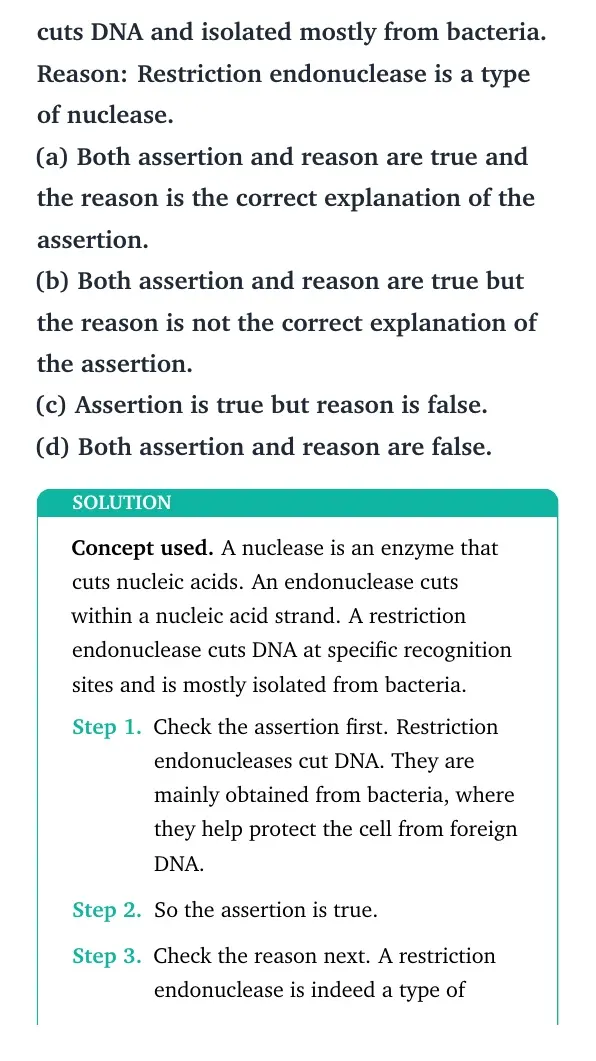
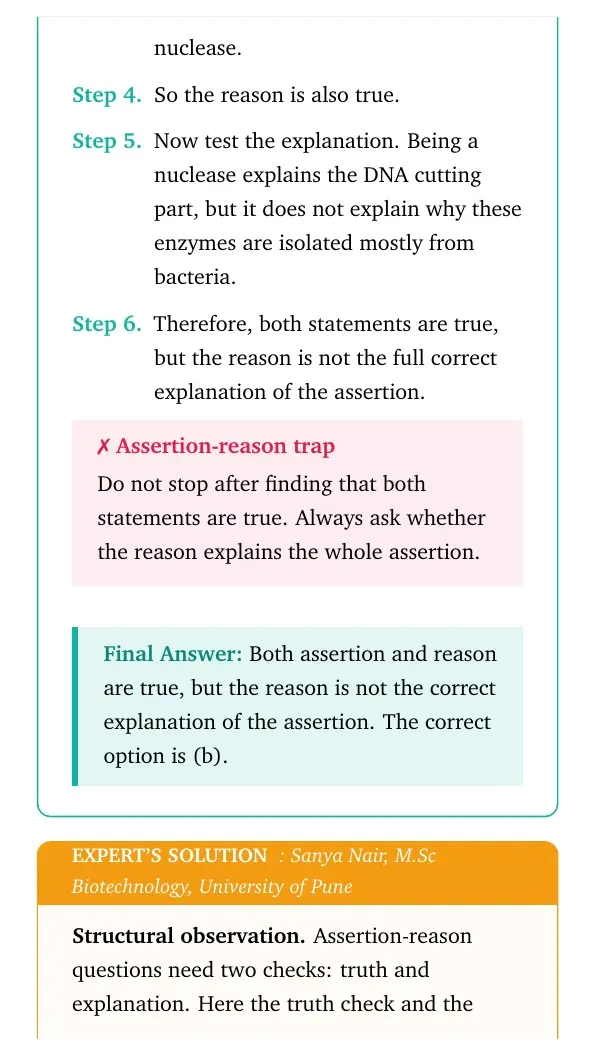
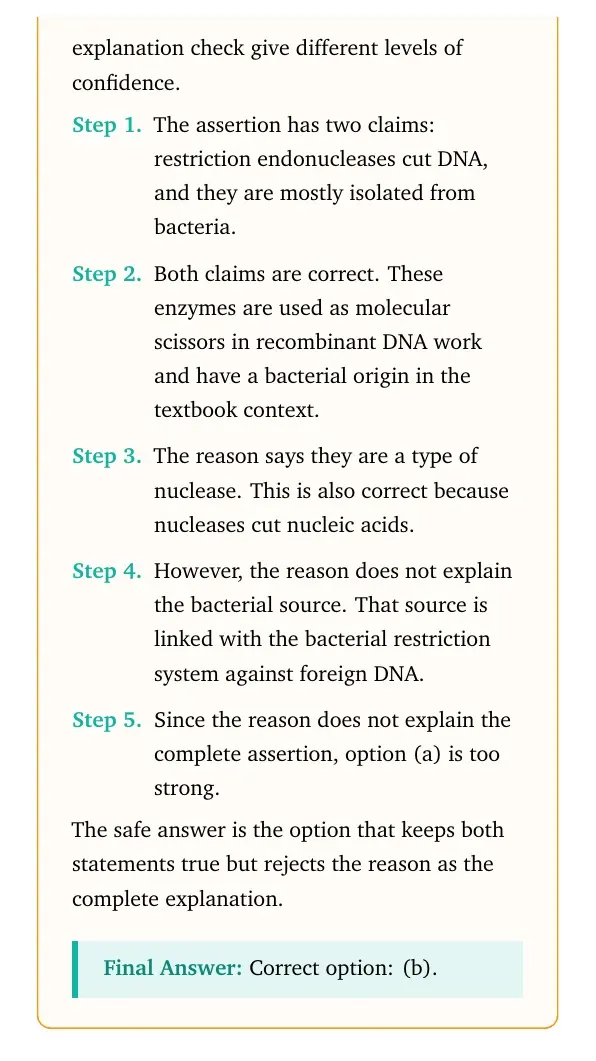
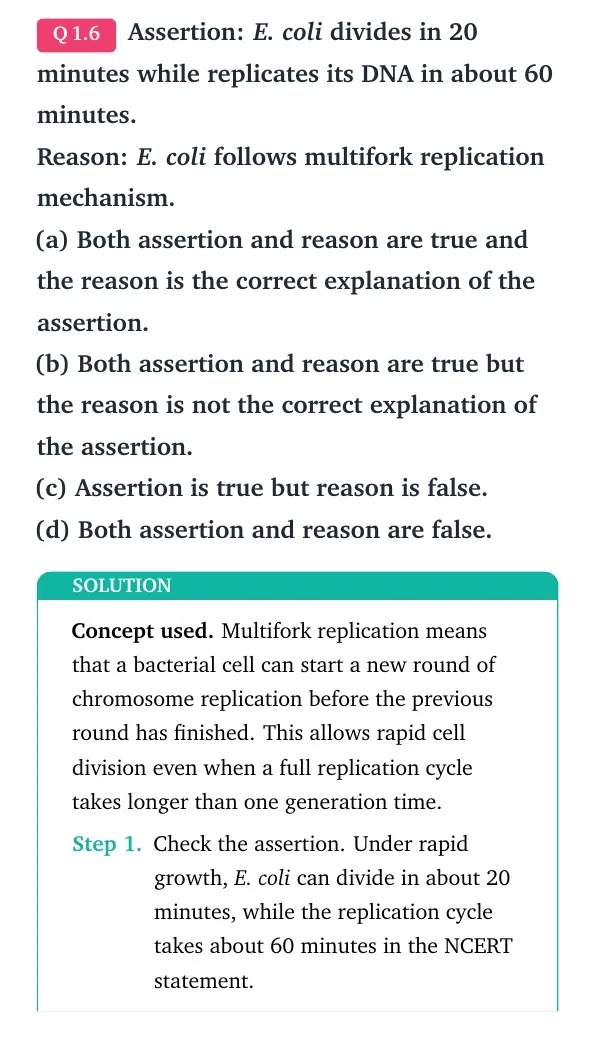
| Assertion-reason | Truth check plus explanation check for restriction endonuclease and E. coli. |
Open all Chapter 1 questions with Check Solution and Expert Solution tabs.
Recombinant DNA Technology Explained for Class 12
Source: Magnet Brains on YouTube
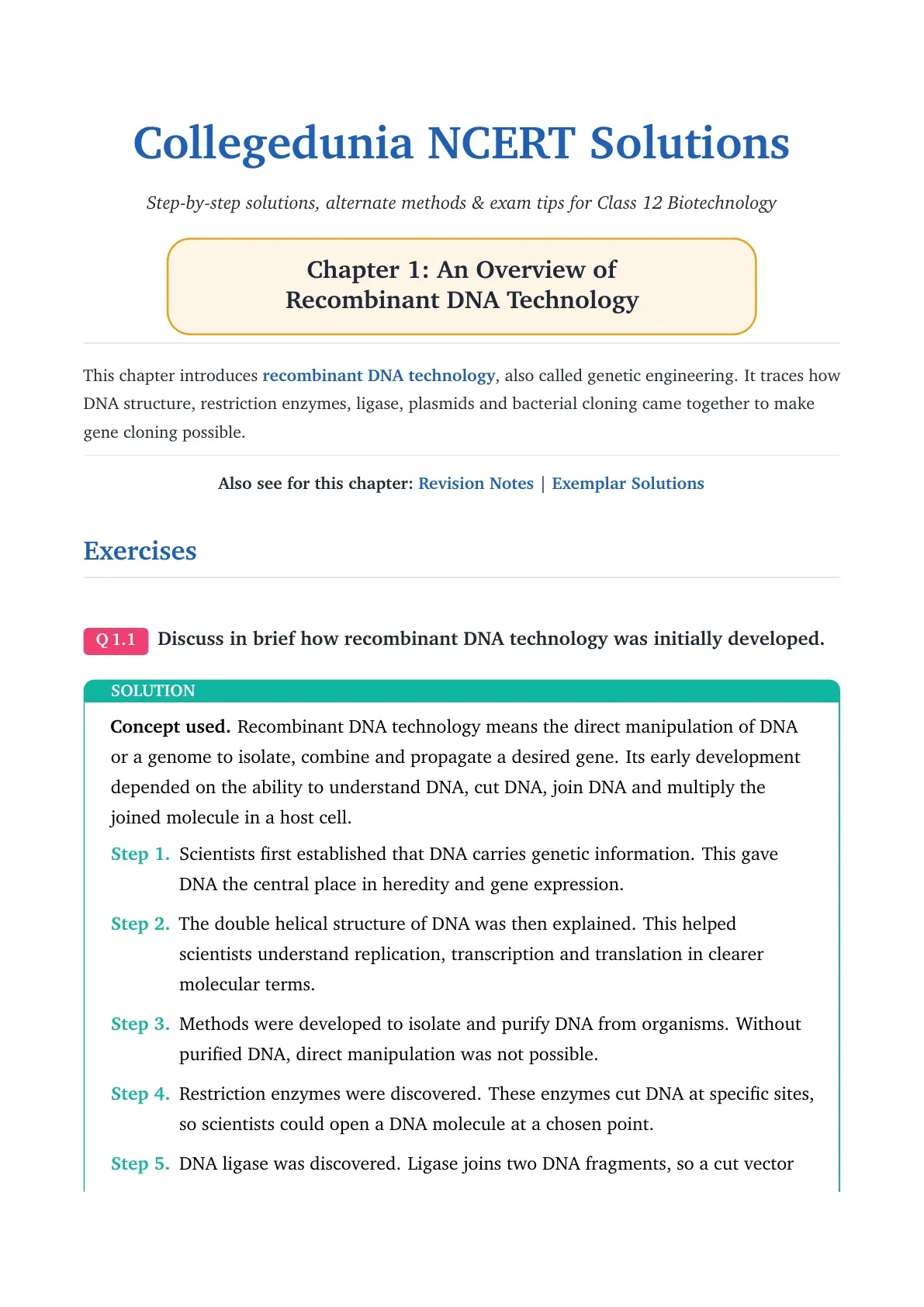
How Recombinant DNA Technology Was Initially Developed
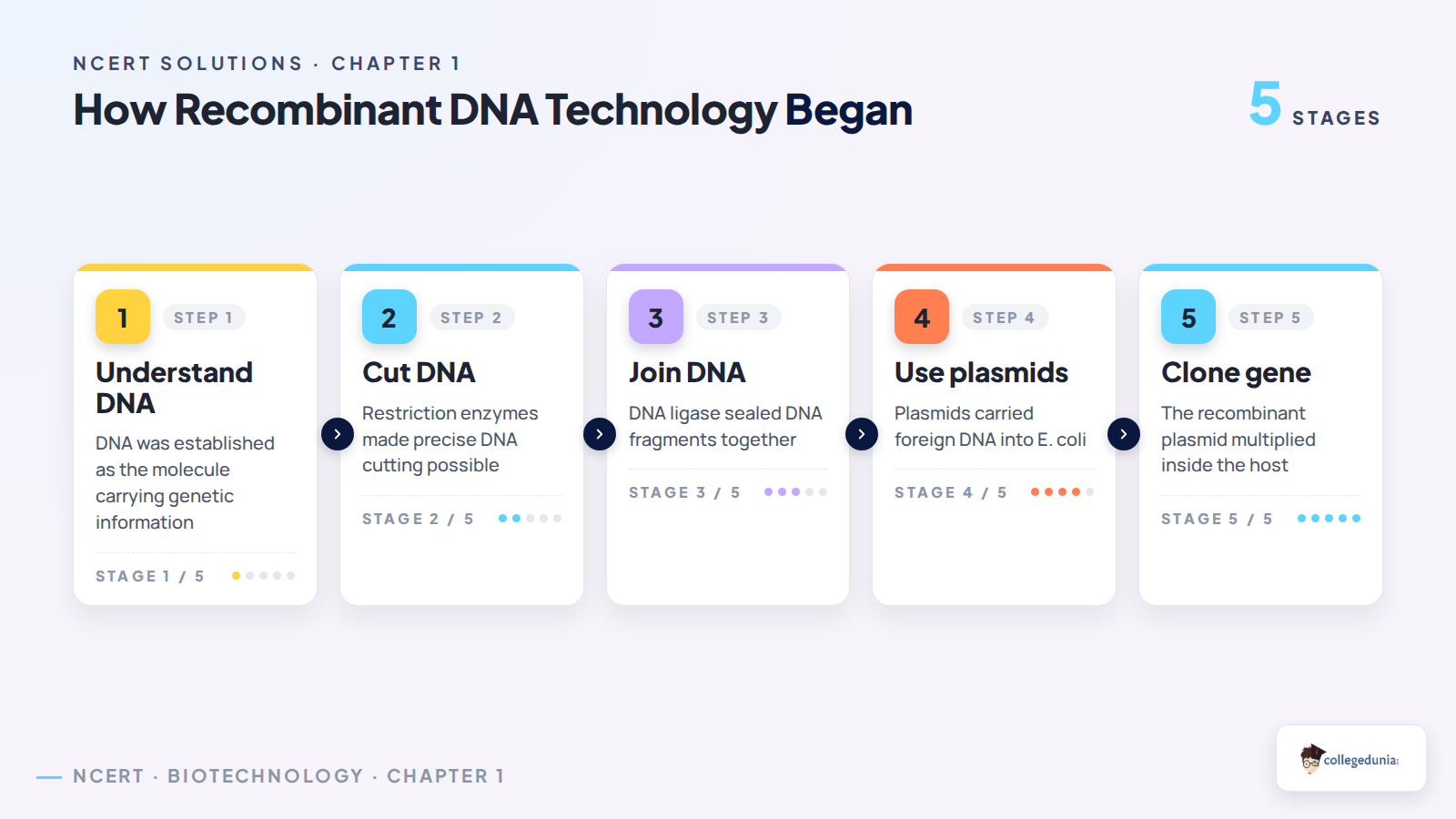
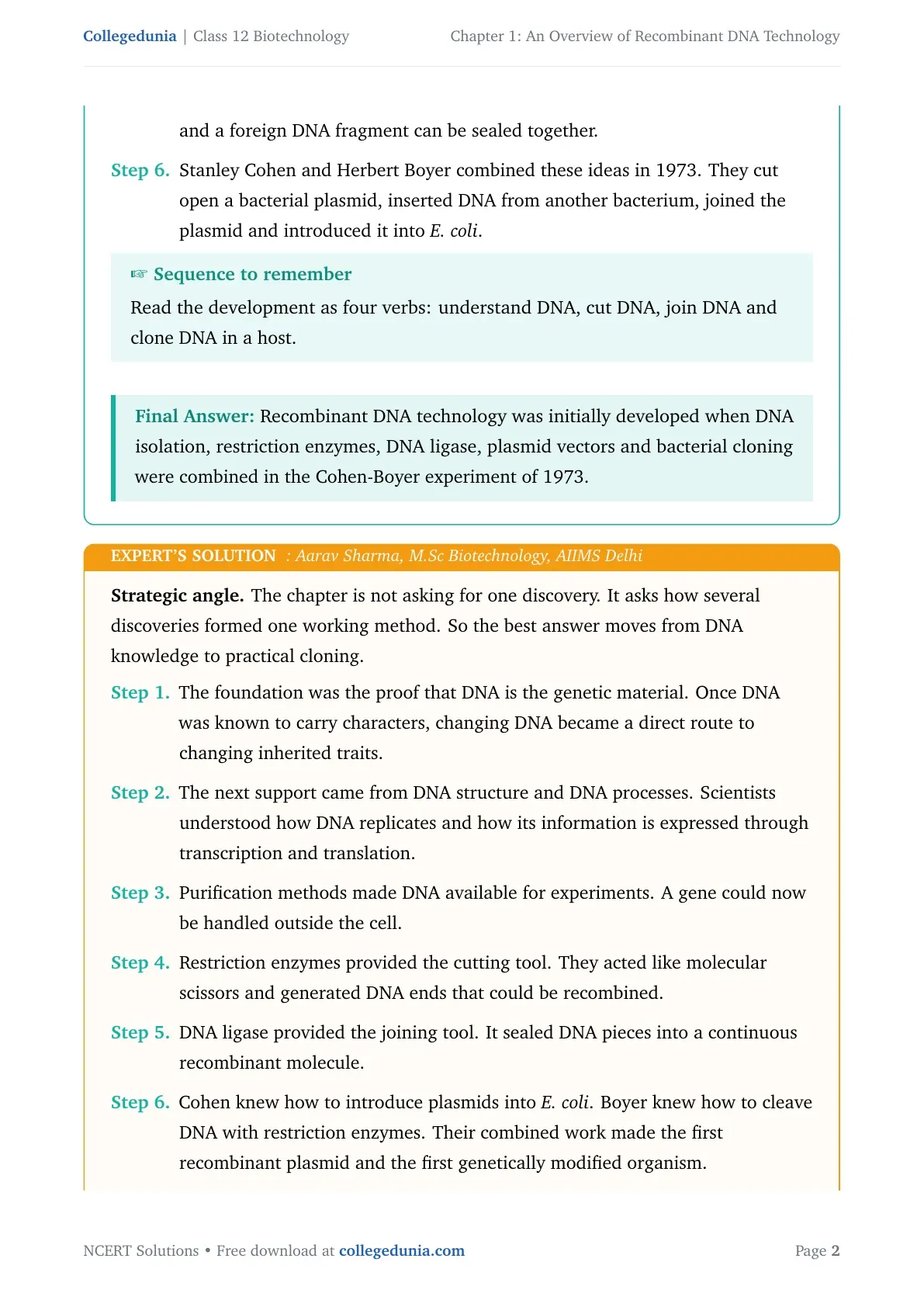
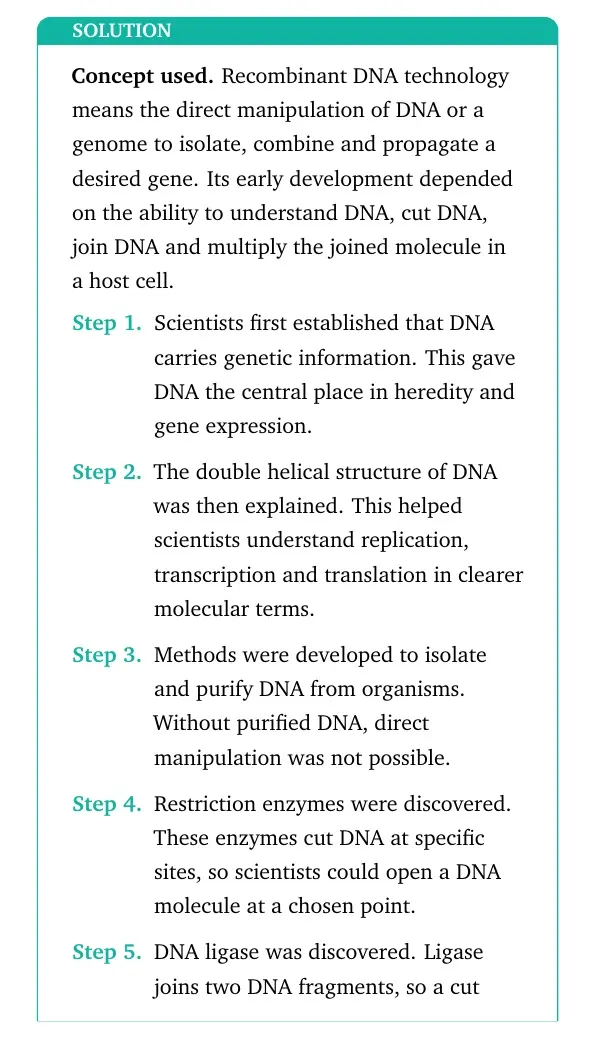
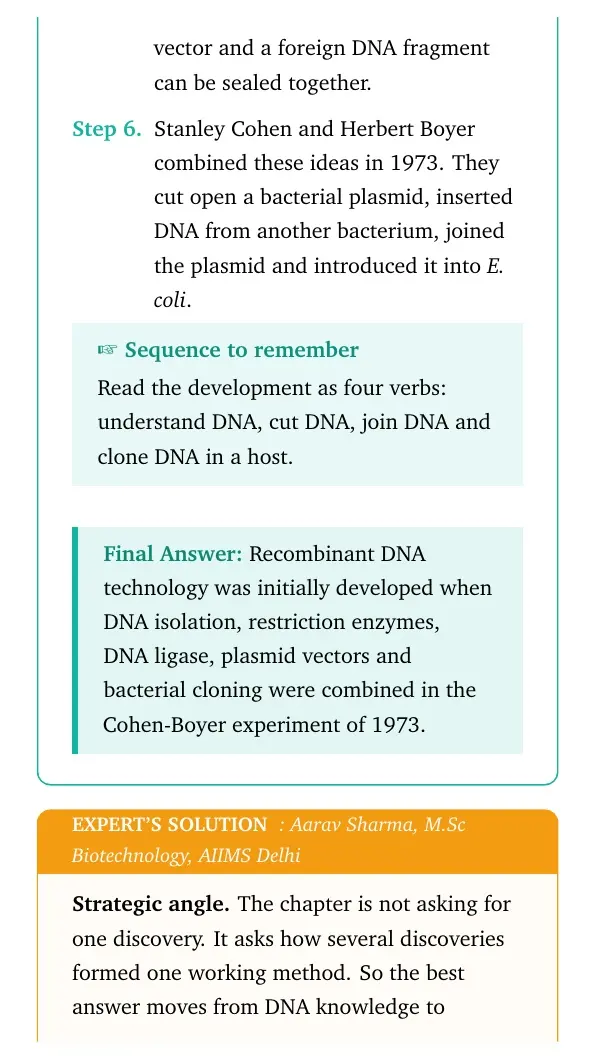
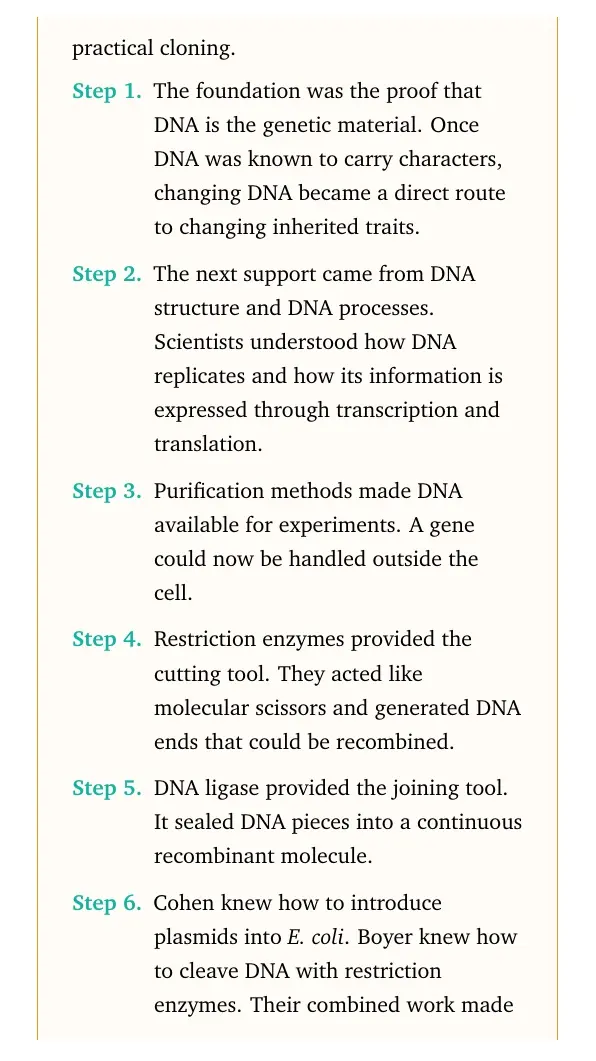
Recombinant DNA technology developed when several discoveries came together. Scientists first proved that DNA carries genetic information. Then they understood the double helix, replication, transcription and translation. After that, they learned to isolate and purify DNA from cells.
The real working method needed two enzyme tools. Restriction enzymes cut DNA at specific sites. DNA ligase joins DNA fragments. Stanley Cohen and Herbert Boyer used these tools with plasmids and E. coli in 1973 to create a recombinant plasmid.
Applications of rDNA Technology in Crop Improvement and Therapeutics
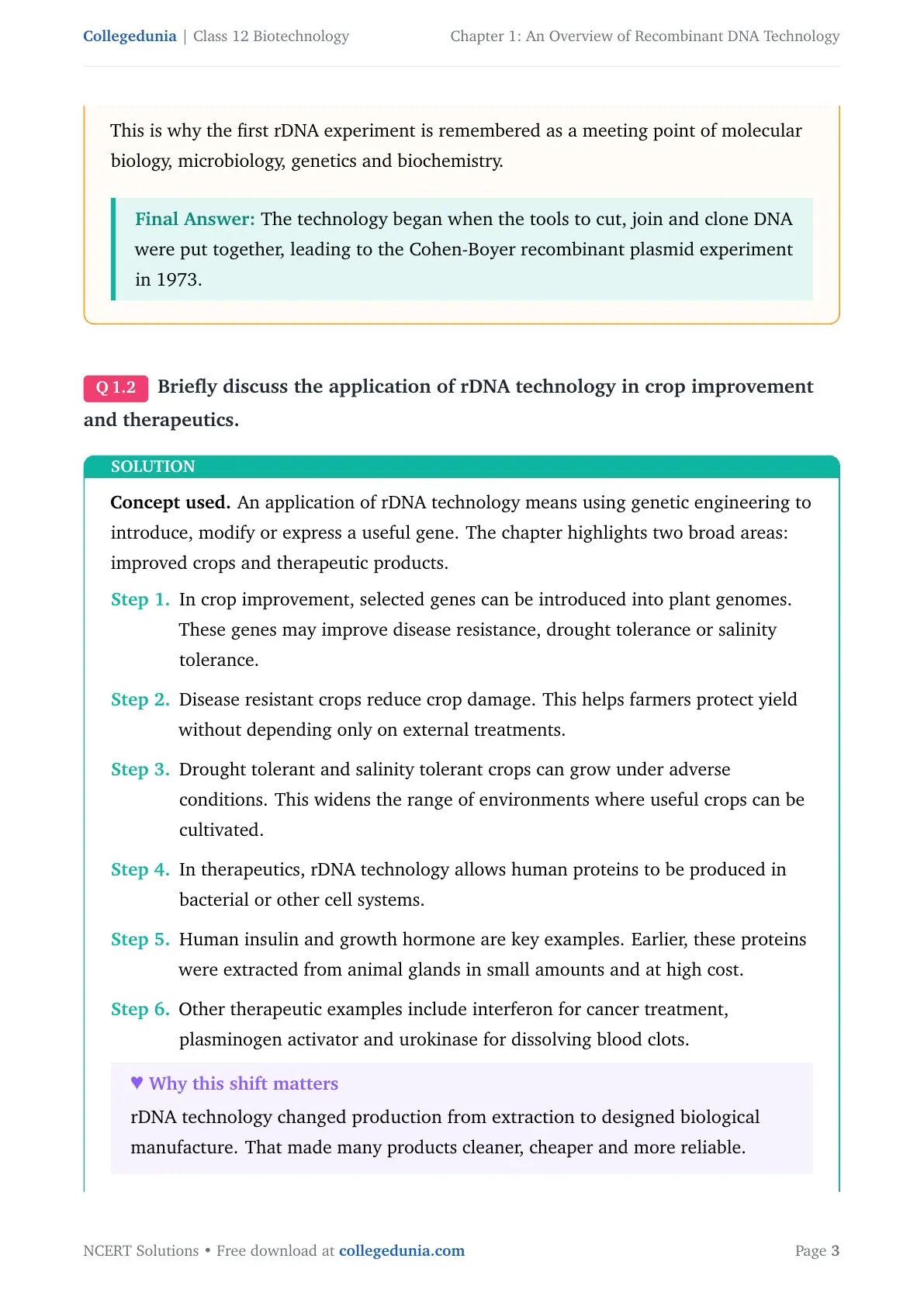
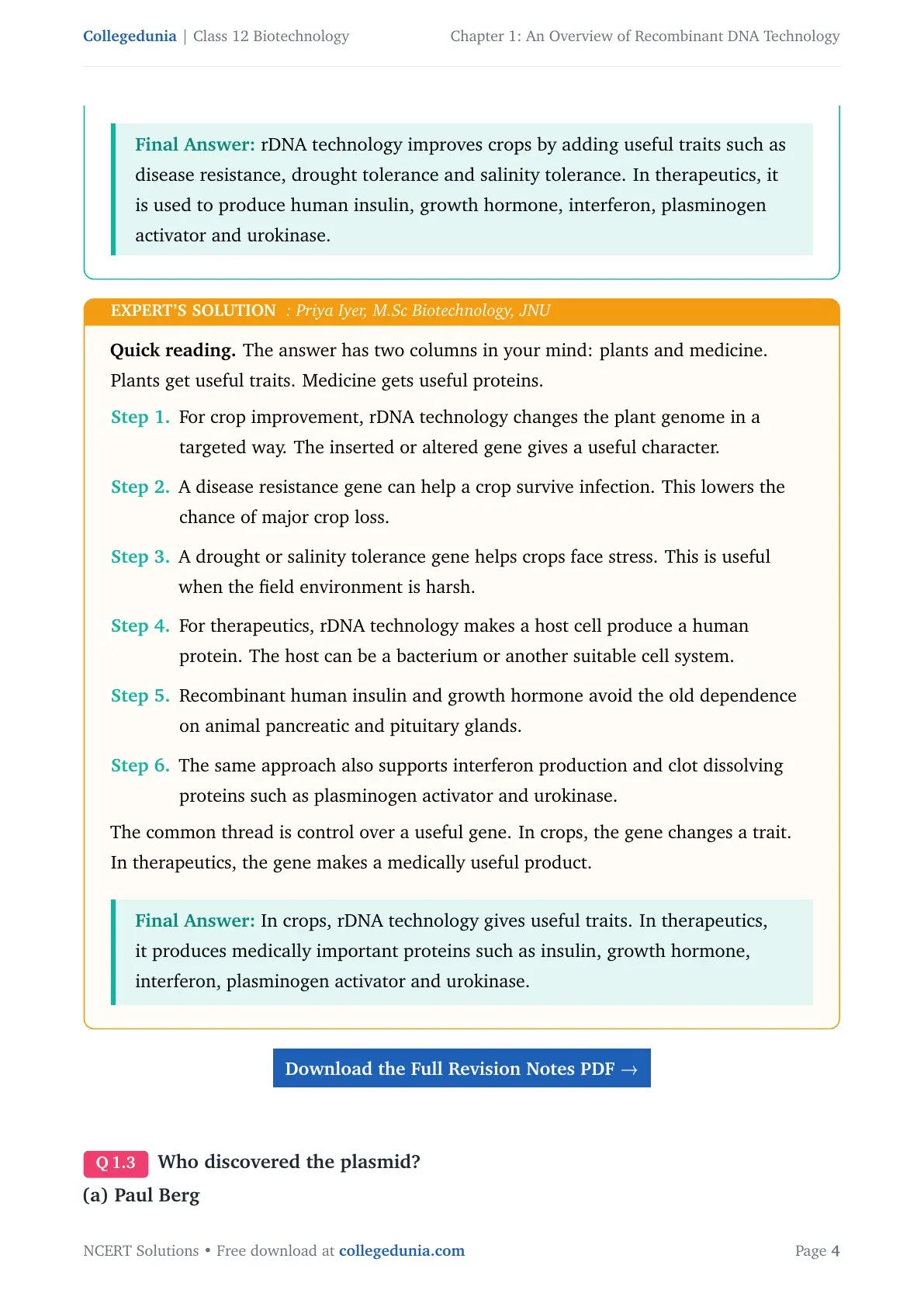
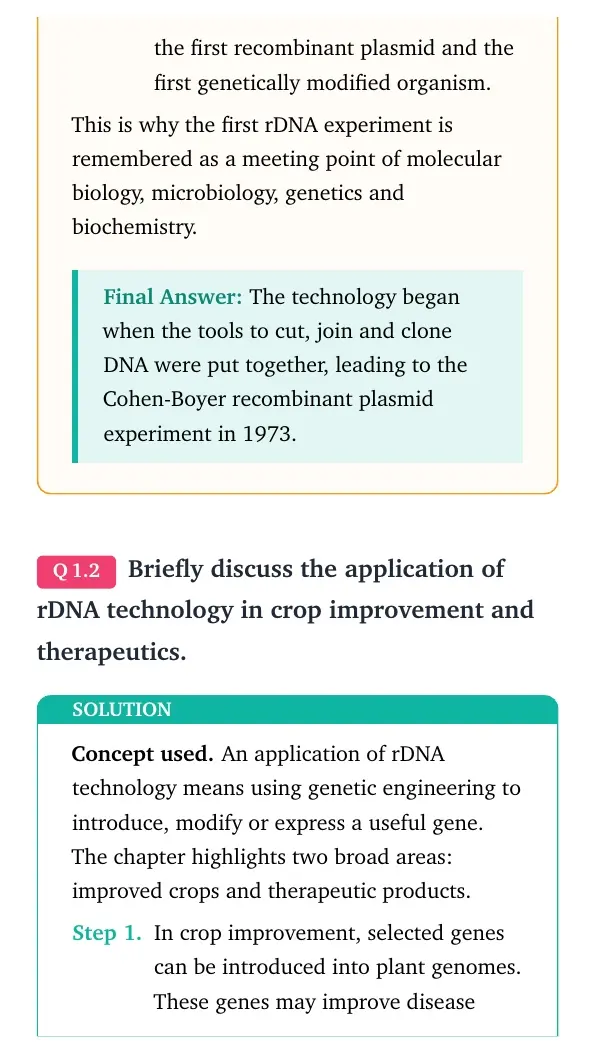
In crop improvement, rDNA technology helps introduce useful changes into plant genomes. These changes may give disease resistance, drought tolerance or salinity tolerance. That helps farmers reduce crop loss in difficult conditions.
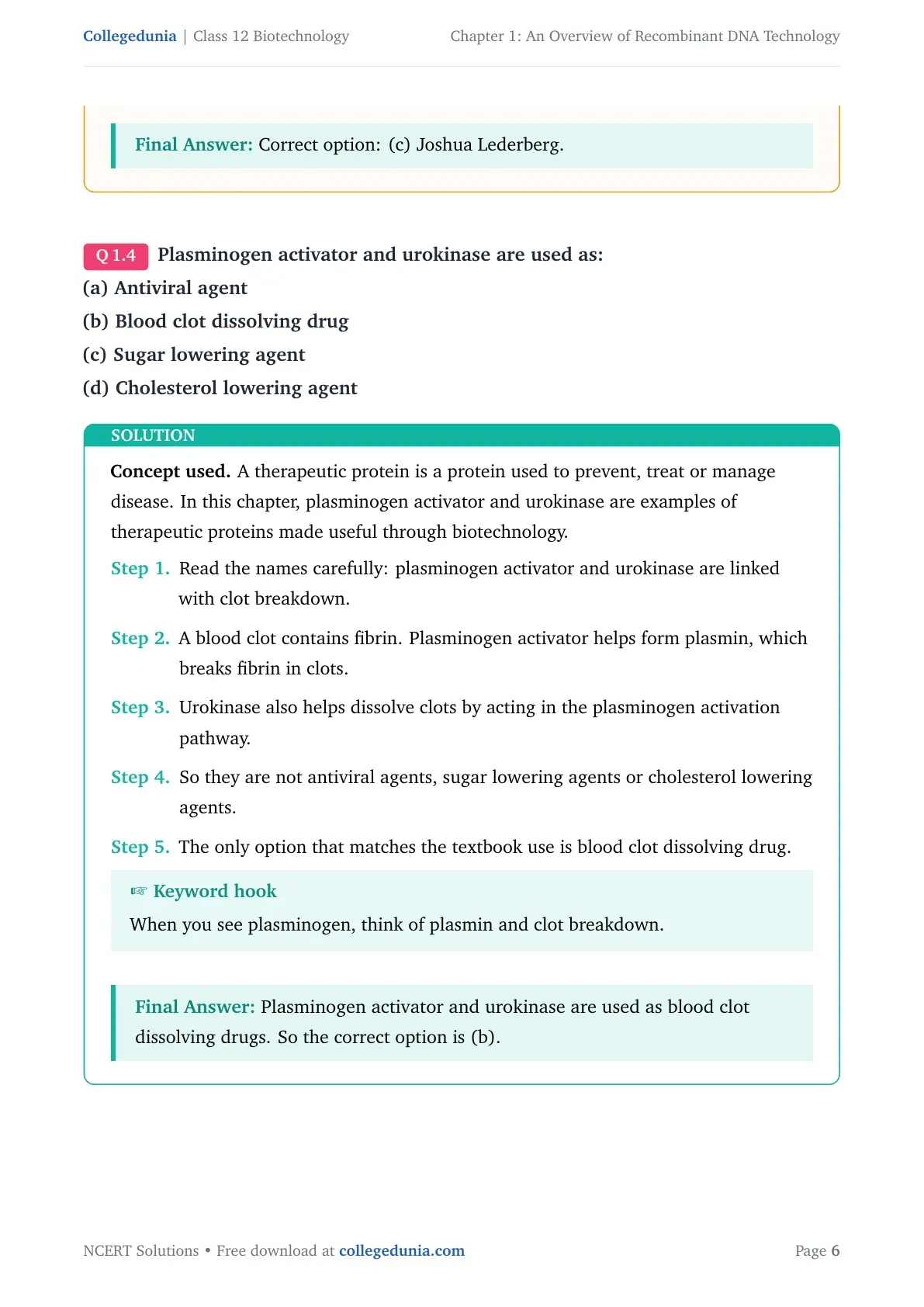
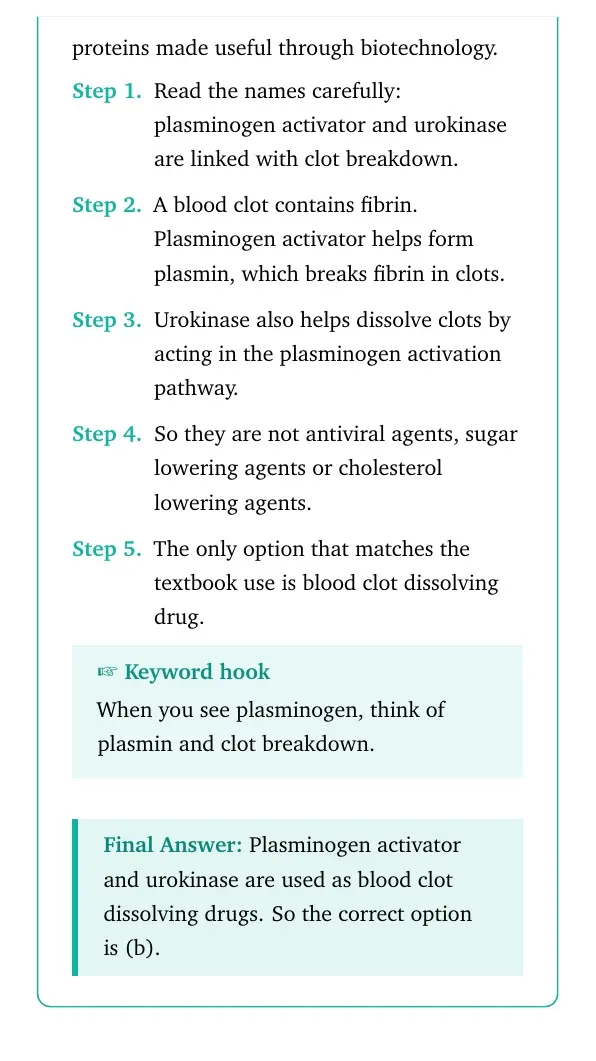
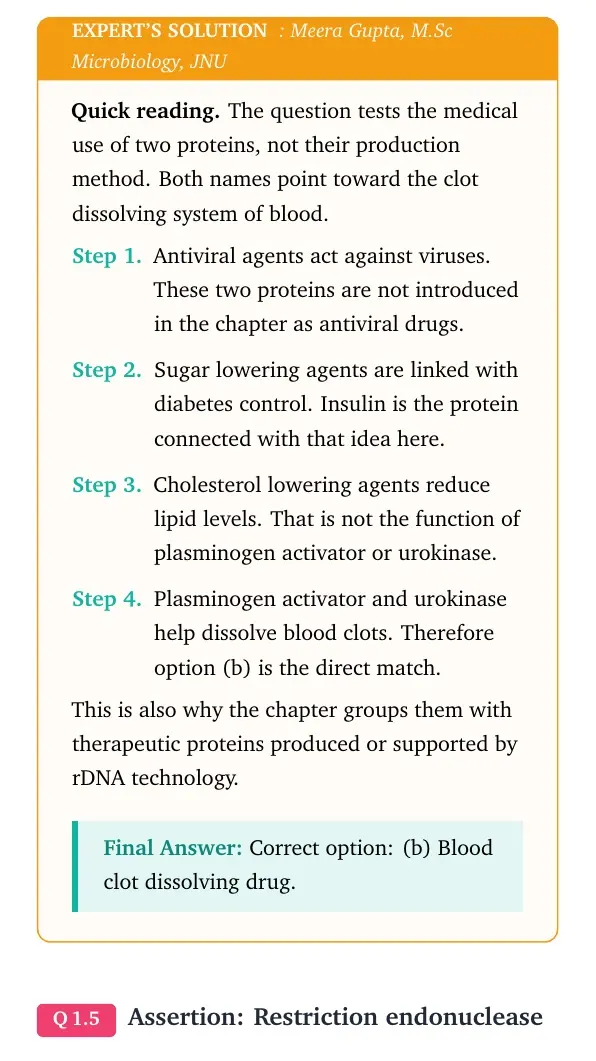
In therapeutics, rDNA technology helps produce human proteins in bacterial or cell systems. The chapter names human insulin, growth hormone, interferon, plasminogen activator and urokinase. Plasminogen activator and urokinase are blood clot dissolving drugs, which is directly tested in the exercise.
Landmark Discoveries Behind Modern Biotechnology
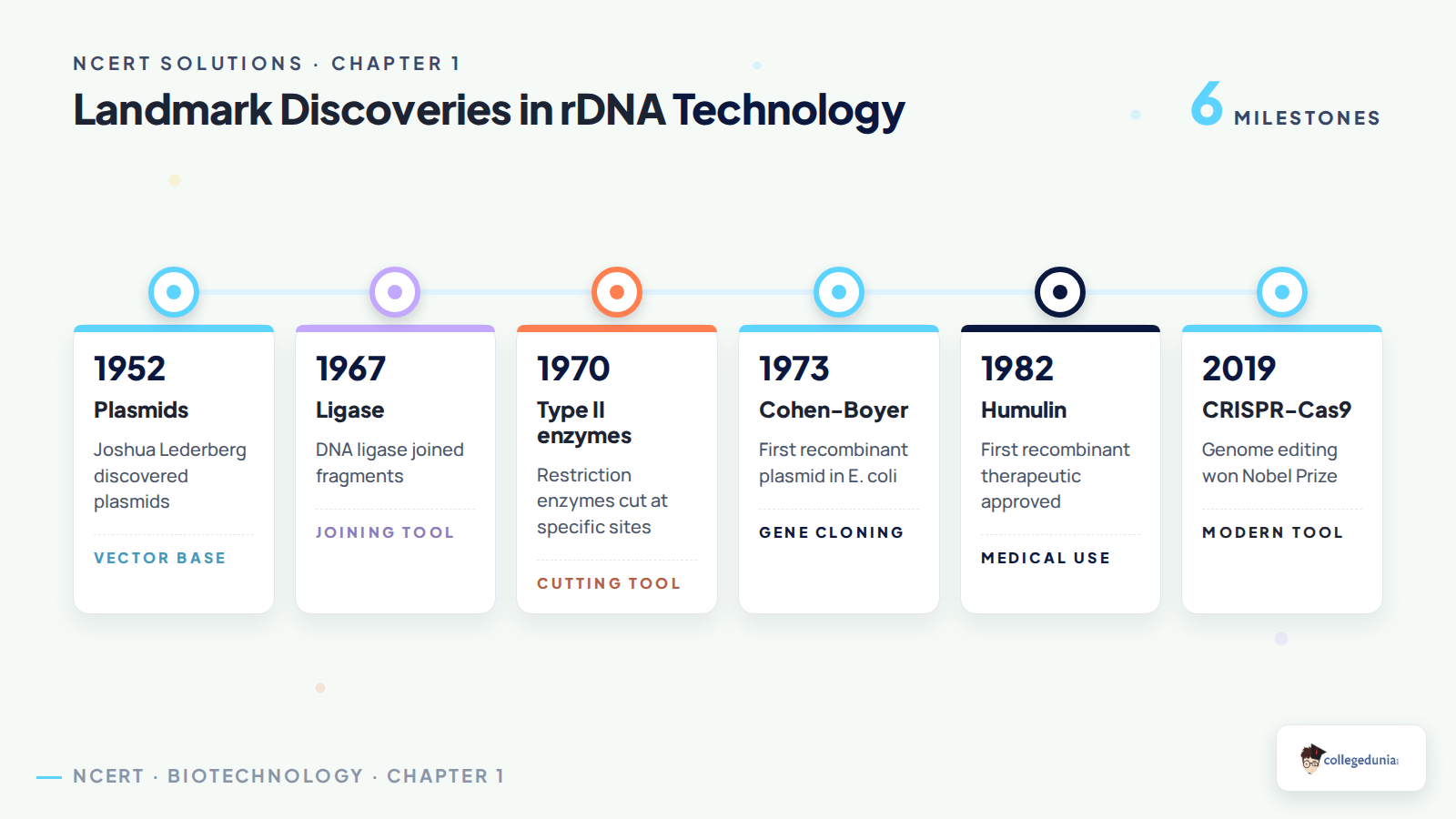
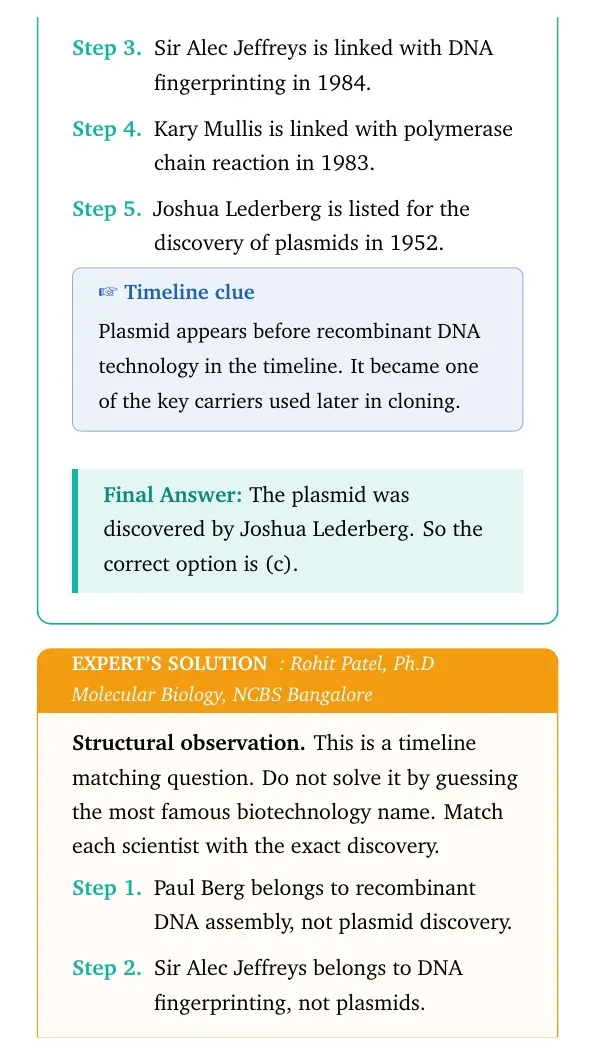
The chapter timeline is useful for quick revision because many questions are direct fact checks. Joshua Lederberg discovered plasmids in 1952. DNA ligase was discovered in 1967. Cohen and Boyer developed DNA cloning and rDNA technology in 1973.
Objective Answers Students Should Remember
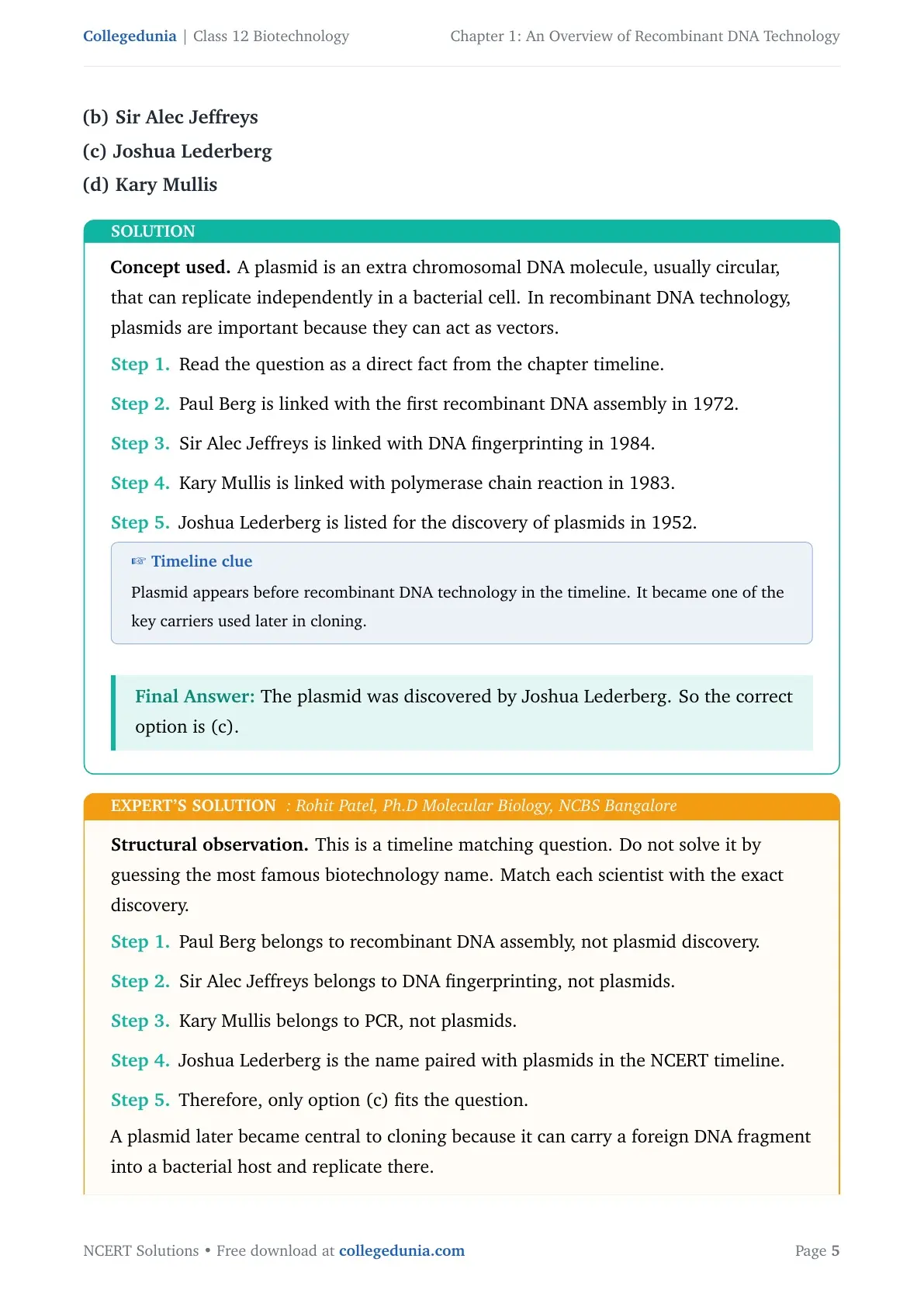
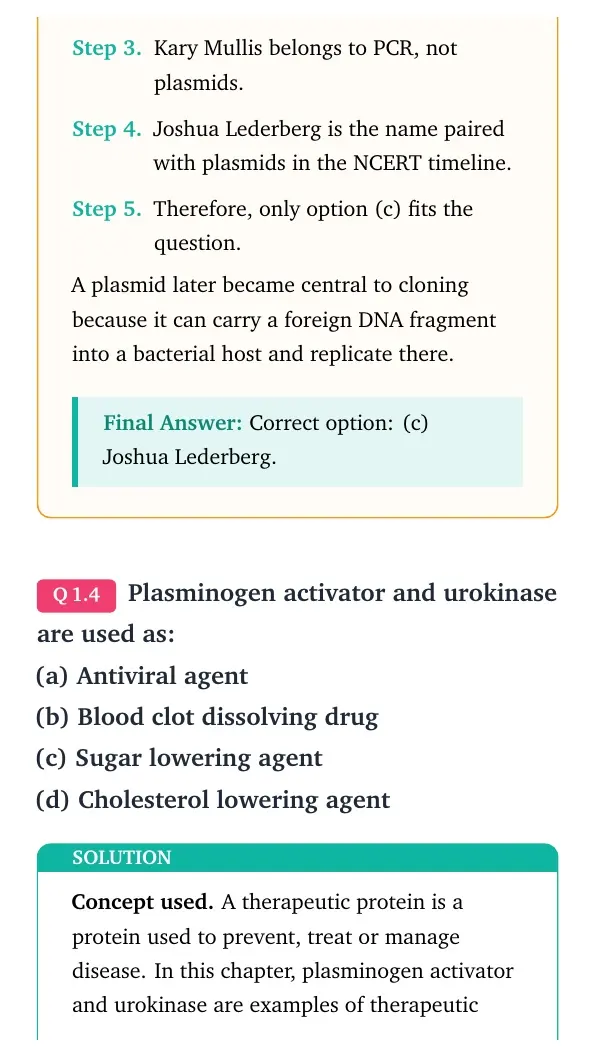
- Plasmid discovery: Joshua Lederberg is the correct answer.
- Plasminogen activator and urokinase: They are blood clot dissolving drugs.
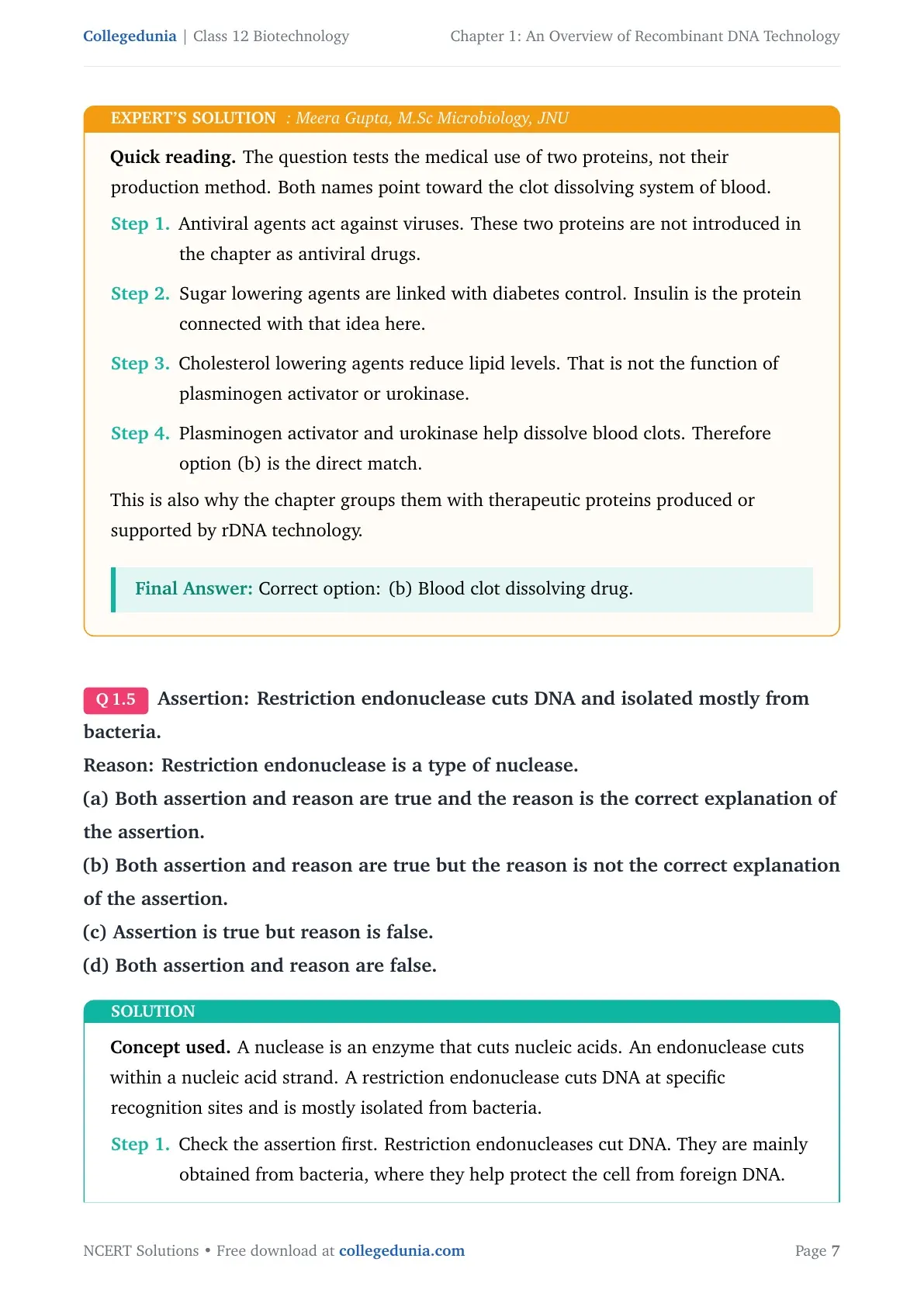
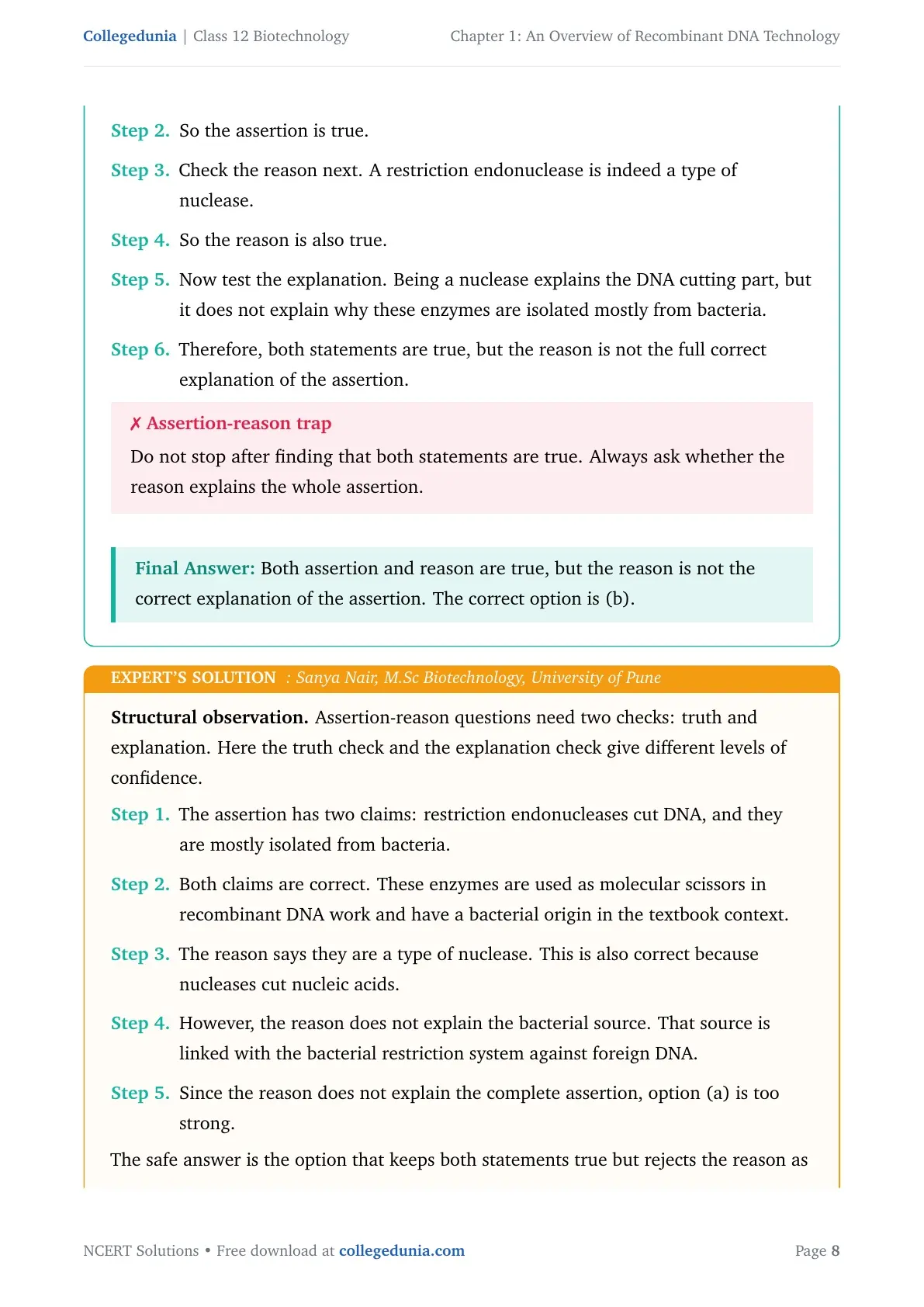
- Restriction endonuclease assertion-reason: Both statements are true, but the reason is not the full explanation.
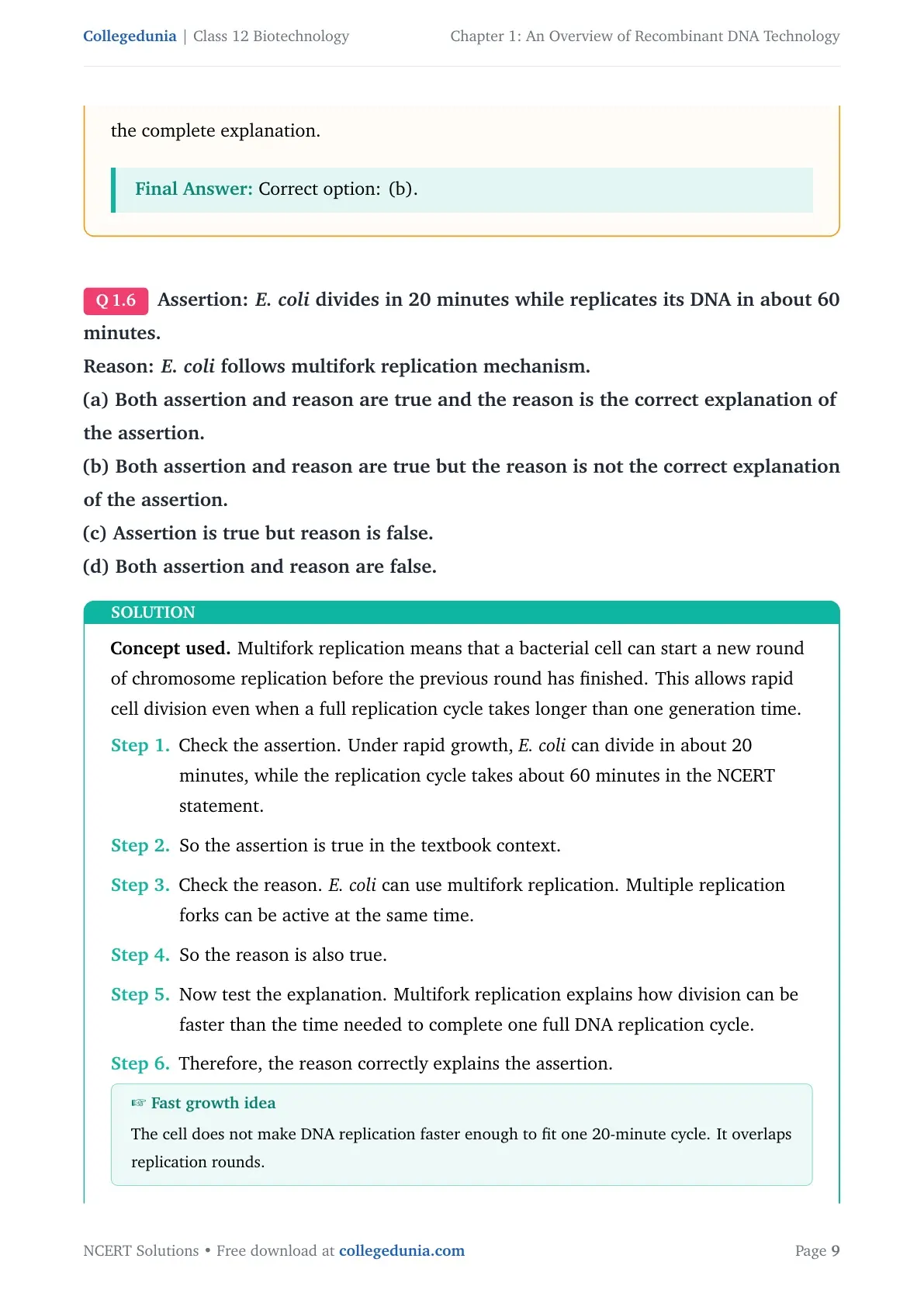
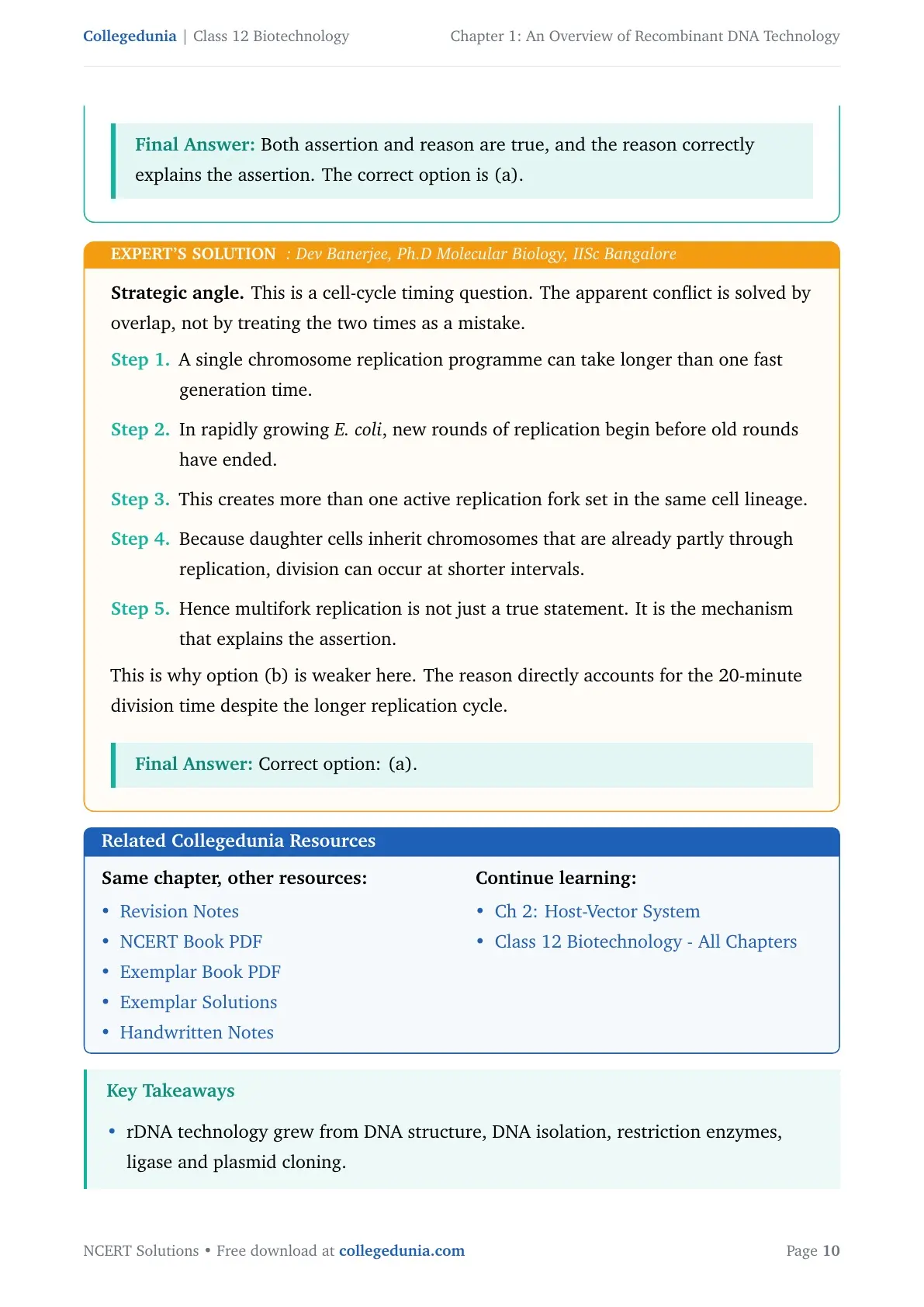
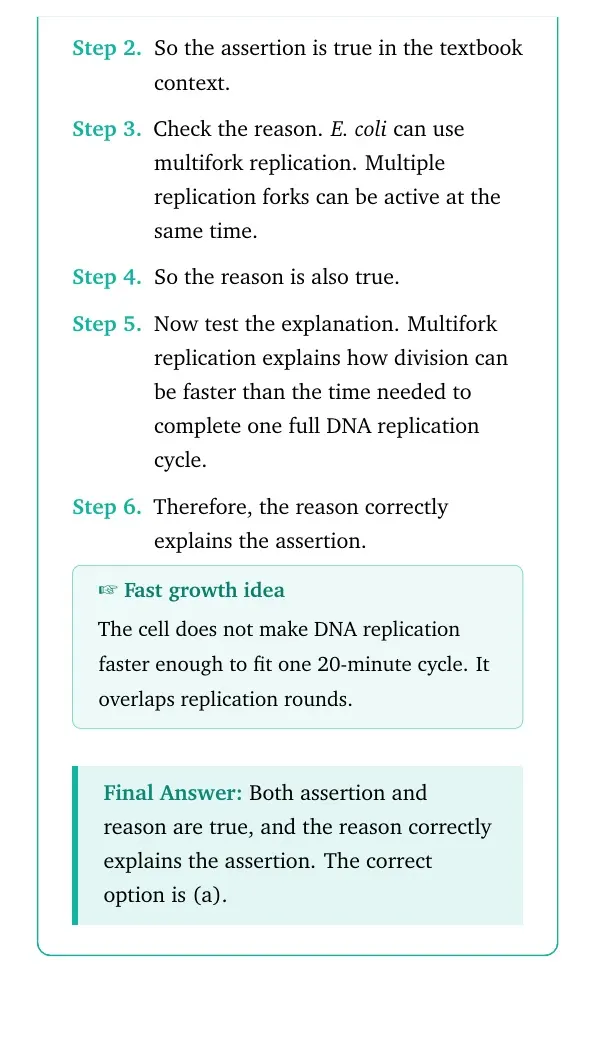
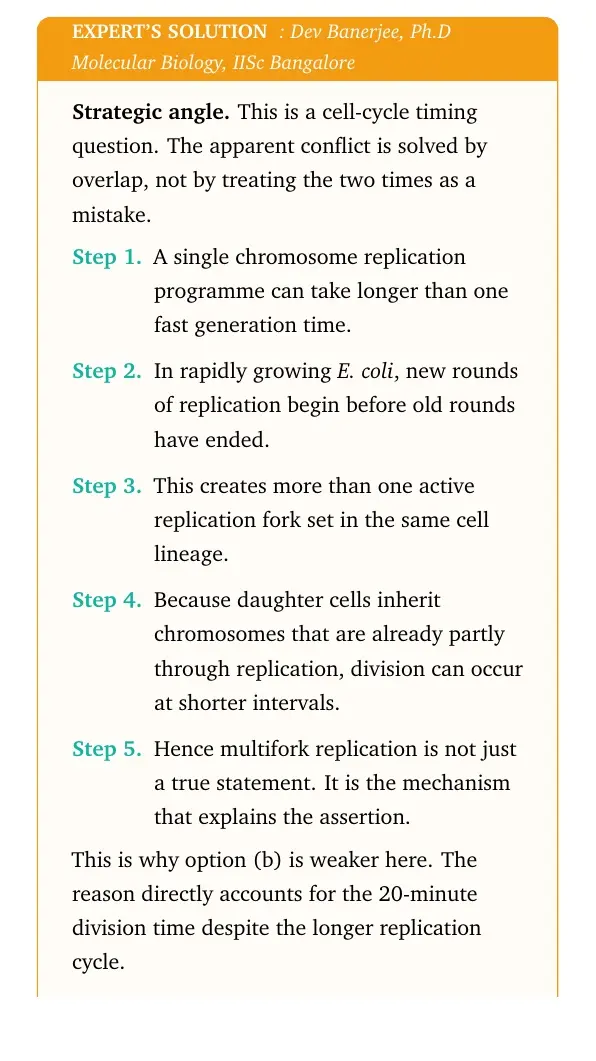
- E. coli assertion-reason: Multifork replication explains the faster division cycle.
Related Class 12 Biotechnology Chapter 1 Resources
| Resource | Link |
|---|---|
| NCERT Book PDF | Chapter 1 Book PDF |
| Revision Notes | Chapter 1 Notes |
| Handwritten Notes | Chapter 1 Handwritten Notes |
Class 12 Biotechnology NCERT Solutions for Other Chapters
| Chapter | Solutions |
|---|---|
| Chapter 2 | Host-Vector System Solutions |
| Chapter 3 | Gene Cloning Solutions |
| Chapter 4 | Applications of Recombinant DNA Technology Solutions |
Class 12 Biotechnology Chapter 1 NCERT Solutions FAQs
Ques. How many questions are solved in Class 12 Biotechnology Chapter 1 NCERT Solutions?
Ans. The PDF solves all 6 NCERT exercise questions from Chapter 1, including MCQ and assertion-reason questions.
Ques. What is the correct answer for the plasmid discovery question?
Ans. The correct answer is Joshua Lederberg. The solution explains why the other options do not match plasmid discovery.
Ques. Why does E. coli divide faster than its DNA replication time?
Ans. E. coli uses multifork replication. New rounds of replication start before previous rounds finish, so rapid division remains possible.
Ques. Are these Biotechnology Chapter 1 solutions useful for 2026-27 board revision?
Ans. Yes. The answers follow the 2026-27 NCERT chapter and explain the key terms tested in the exercise.



Comments