



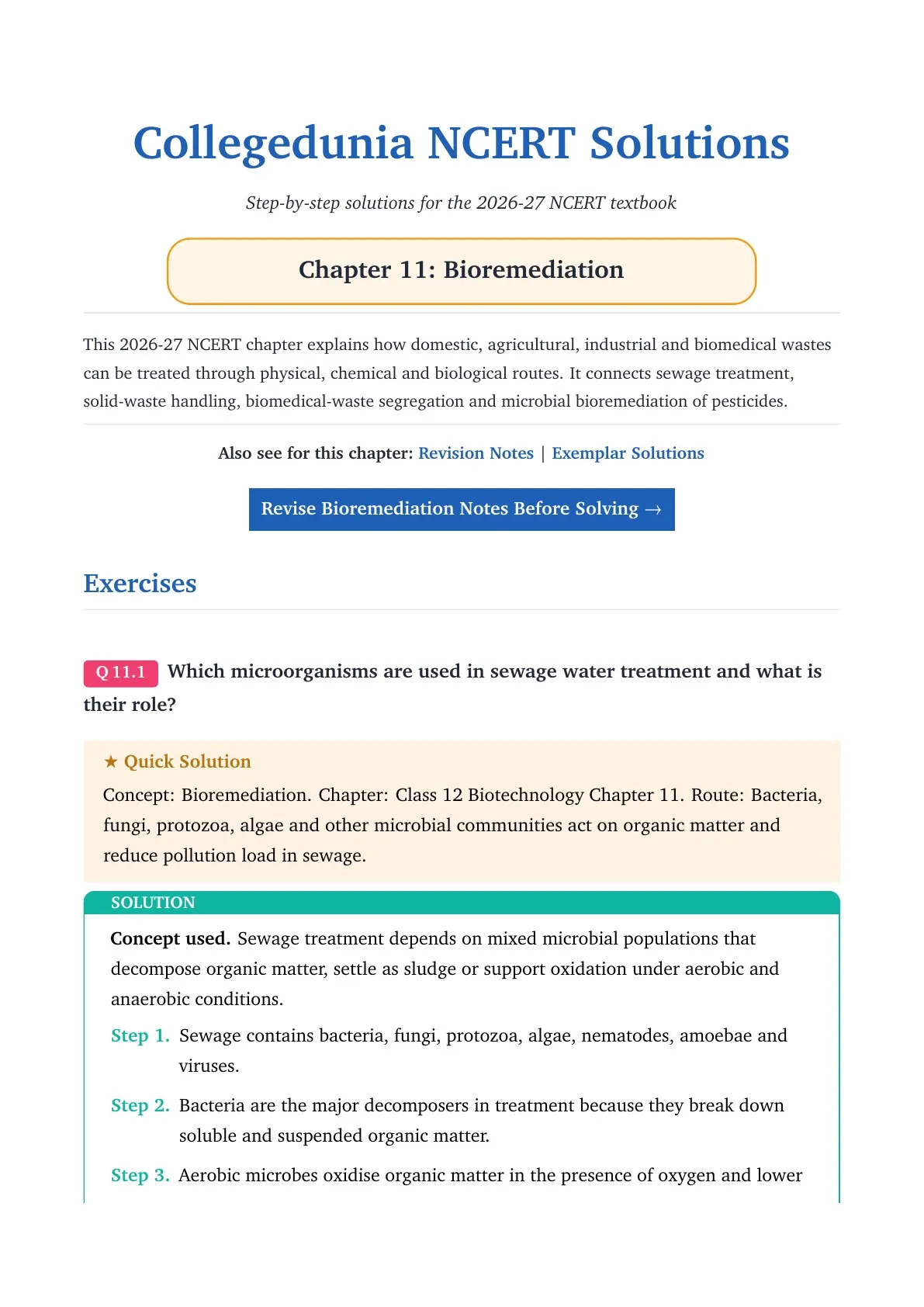
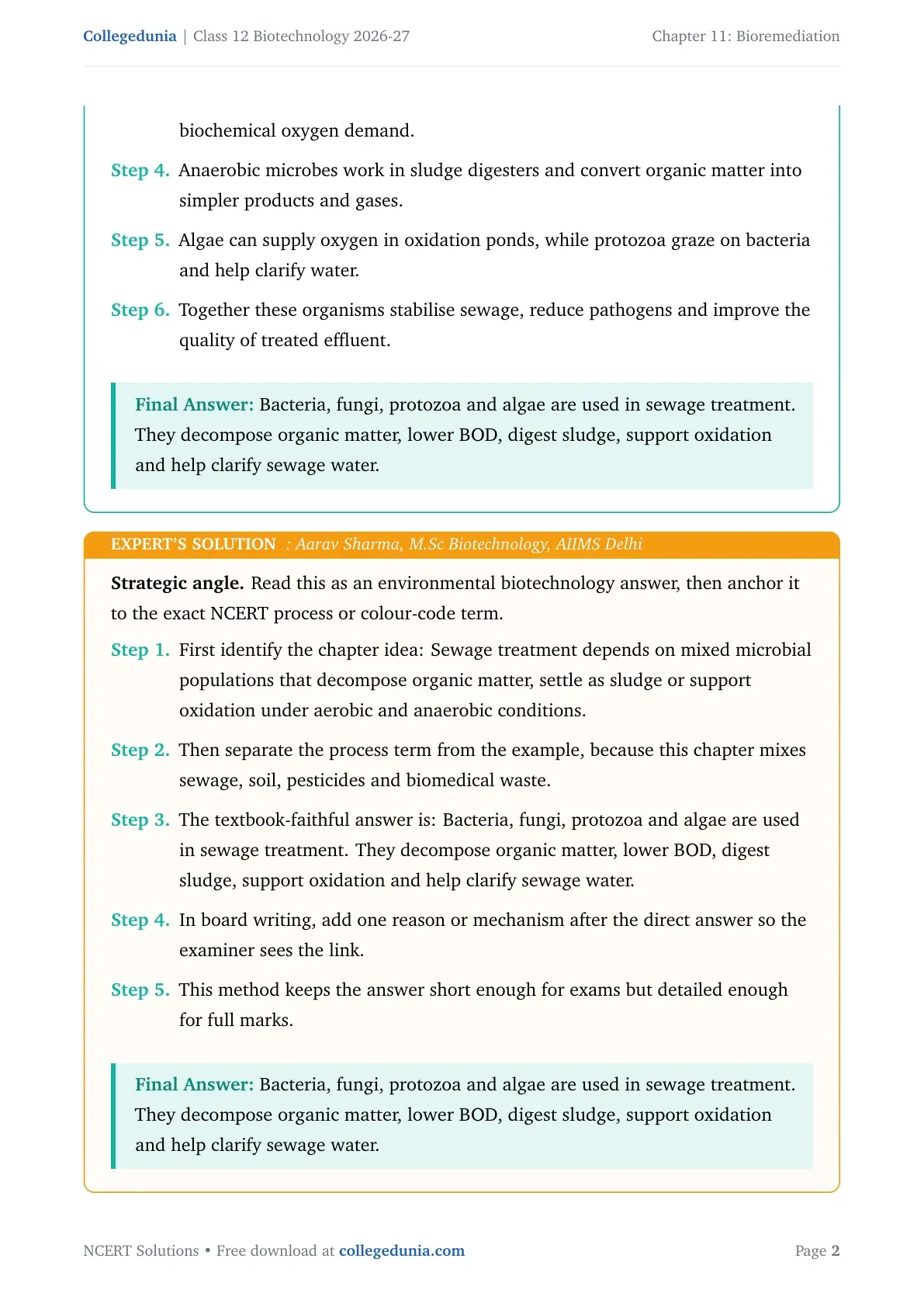
The NCERT Solutions for Class 12 Biotechnology Chapter 11 Bioremediation cover all 16 exercise questions from the latest 2026-27 NCERT textbook. The answers explain BOD, sewage treatment, solid waste, composting, pesticide bioremediation, biomedical waste colour coding and risk groups in direct exam language.
- Question count: 16 solved NCERT exercise questions with MCQ and assertion-reason support.
- Best for: board revision, environmental biotechnology recap and textbook-aligned practice.
- PDF includes: stepwise solutions, expert explanations and boxed final answers.
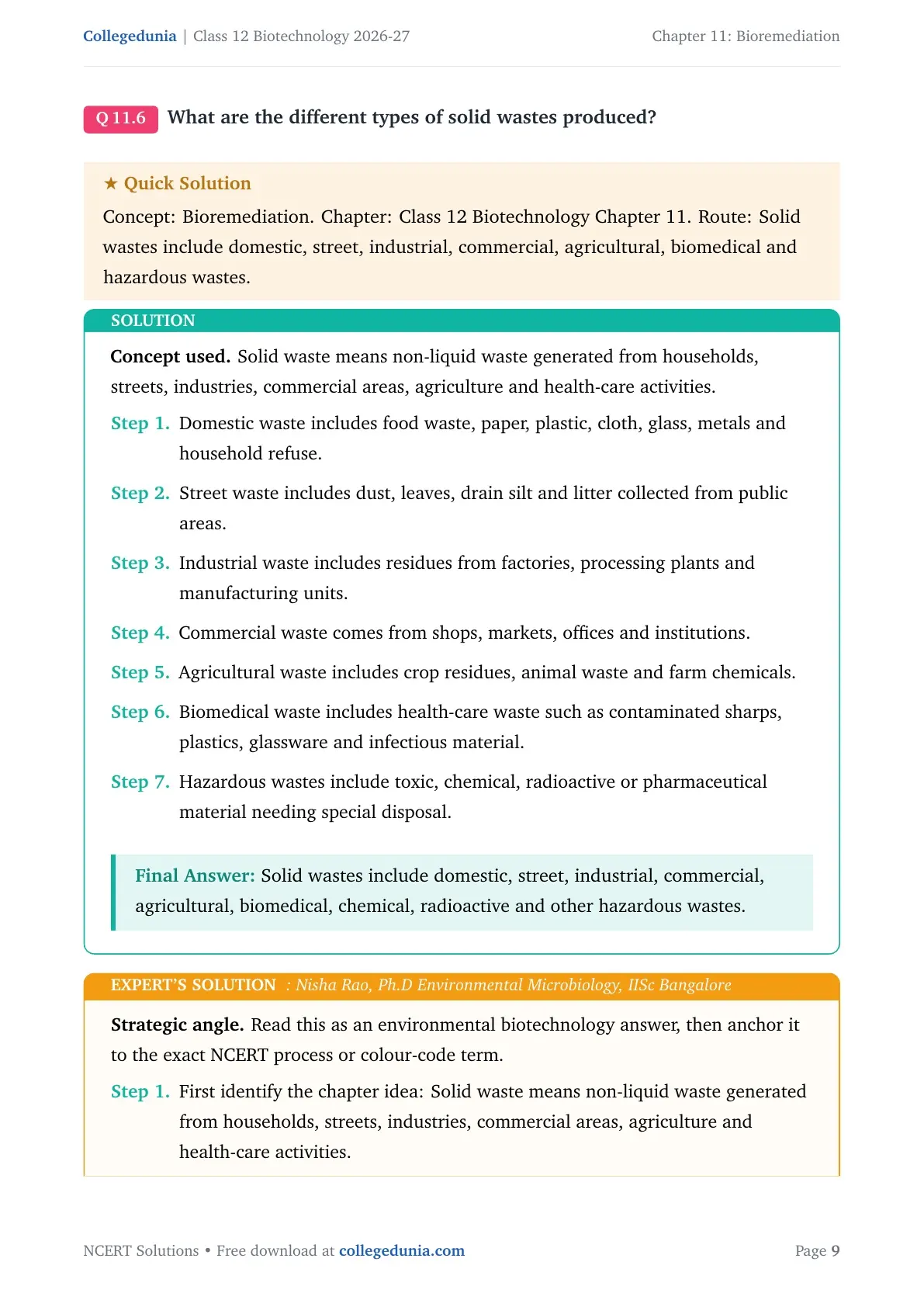
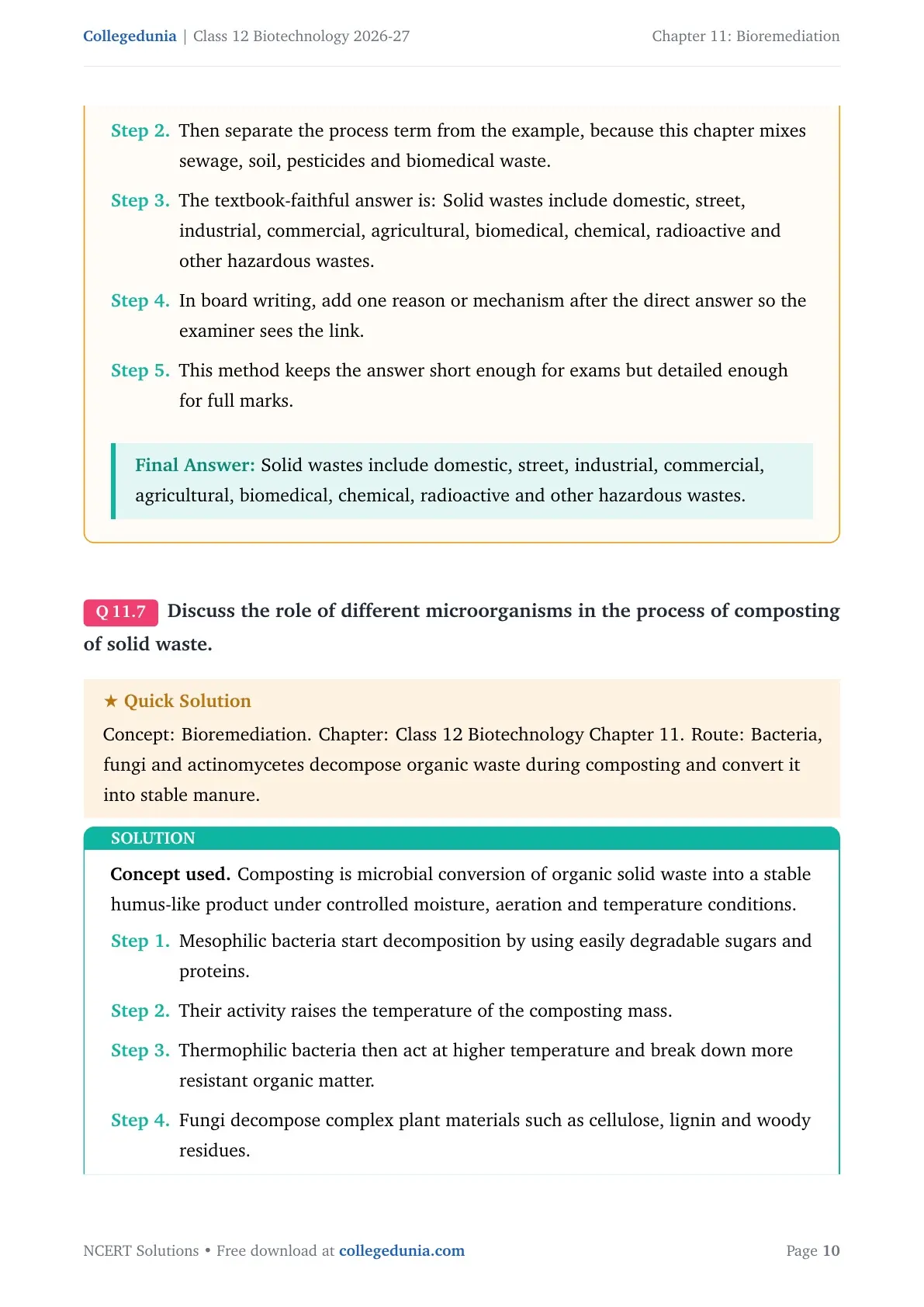
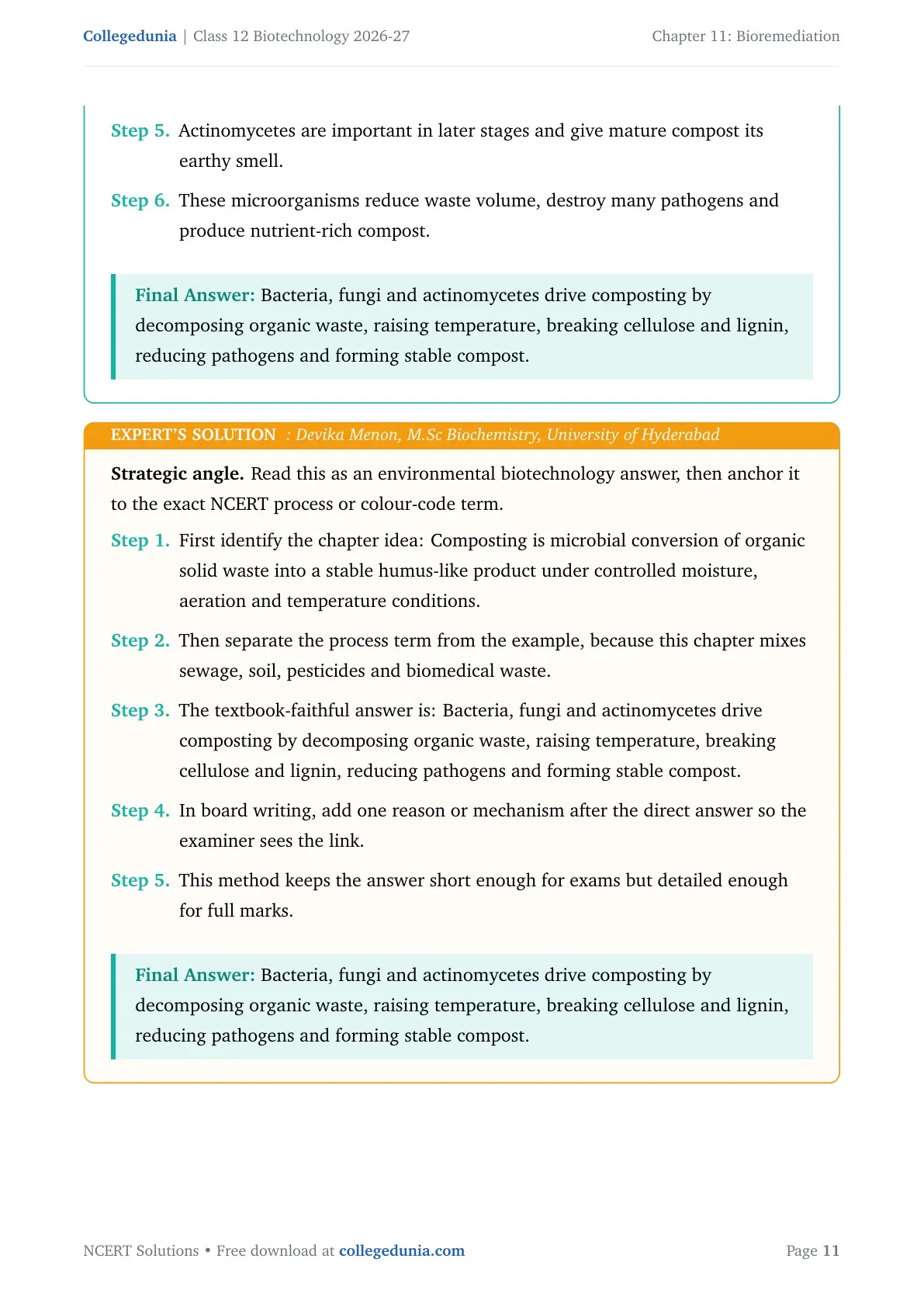
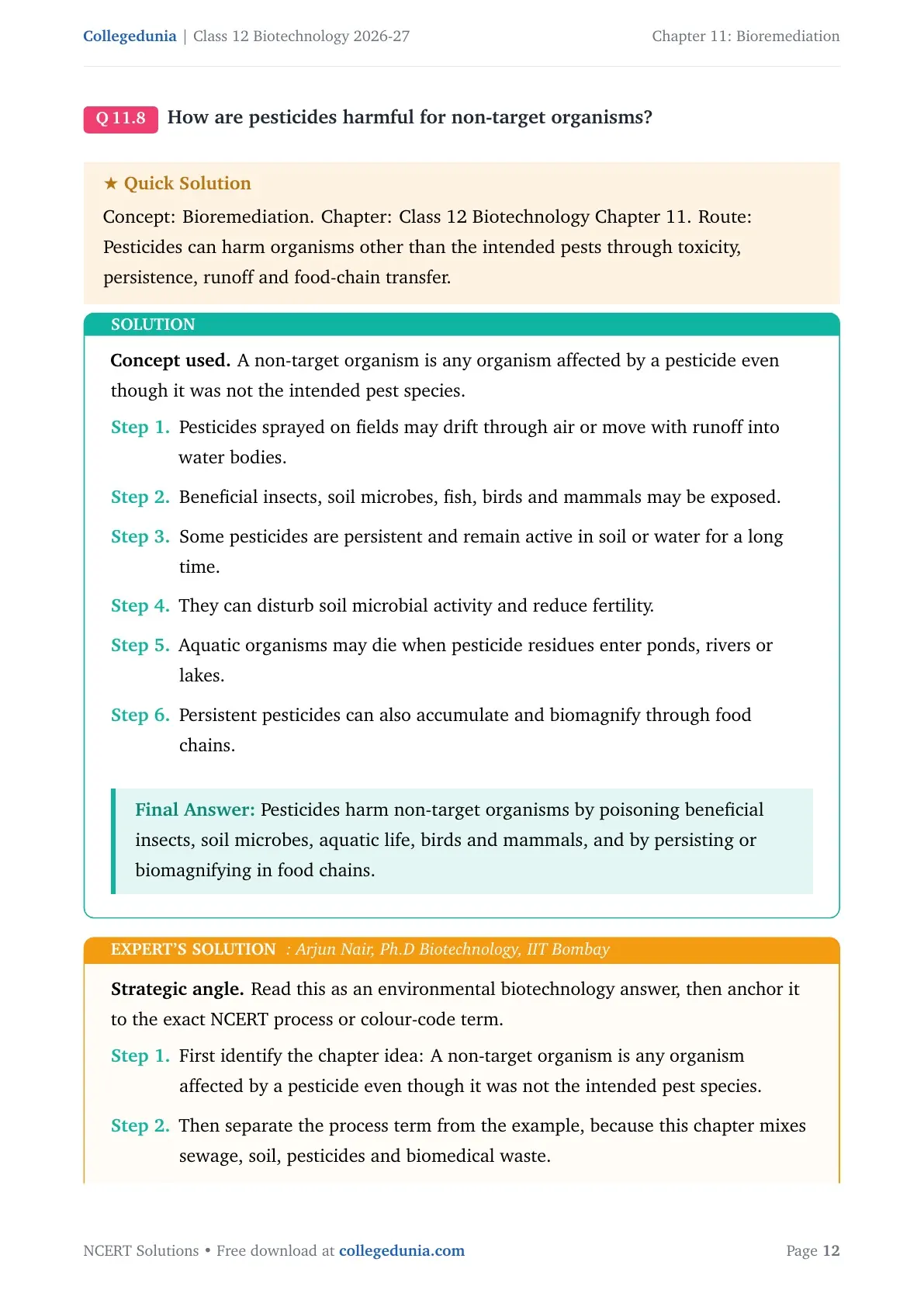
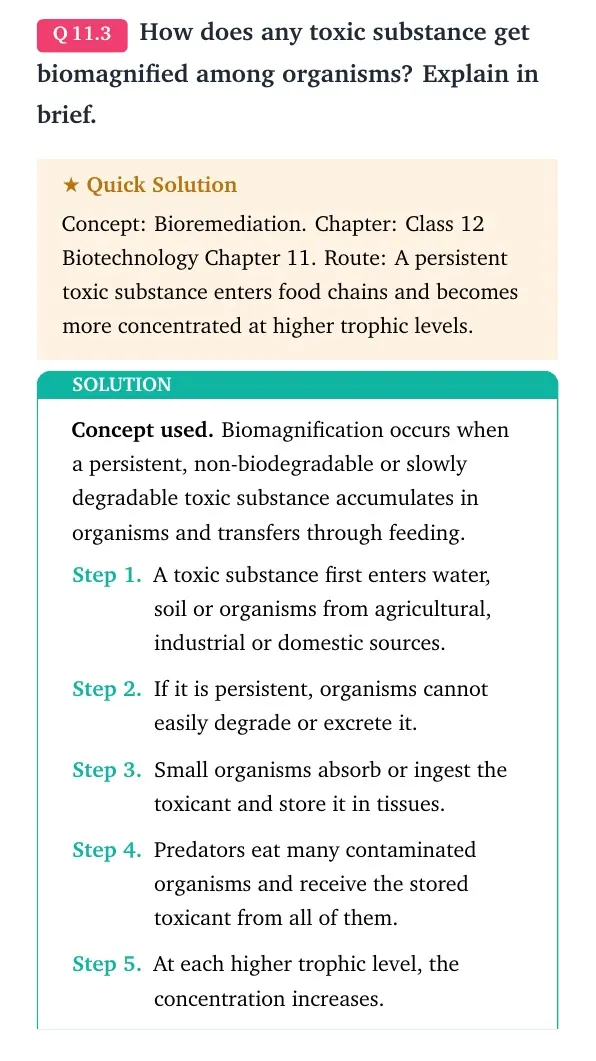
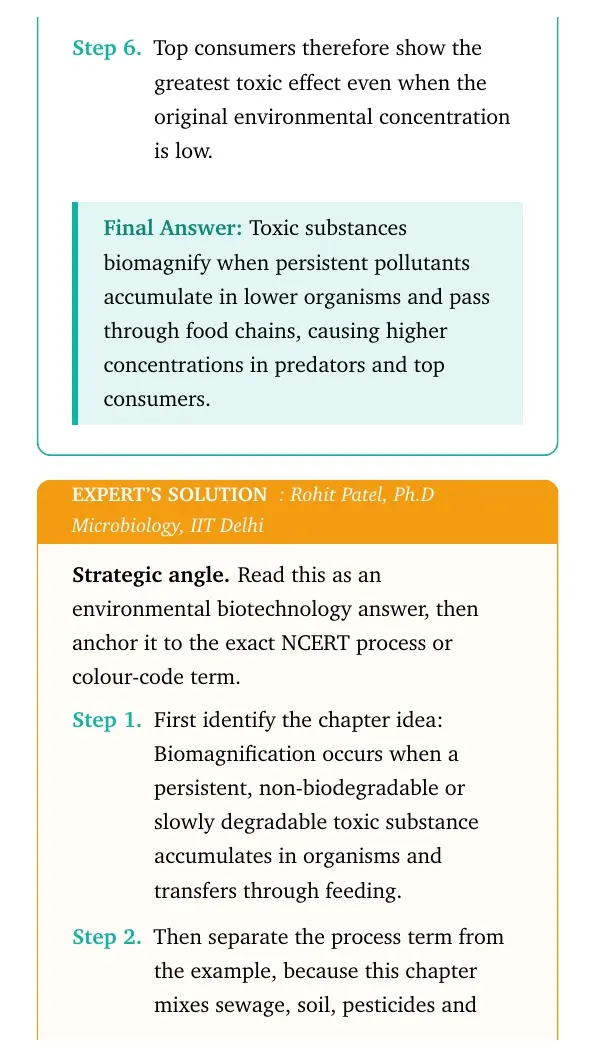
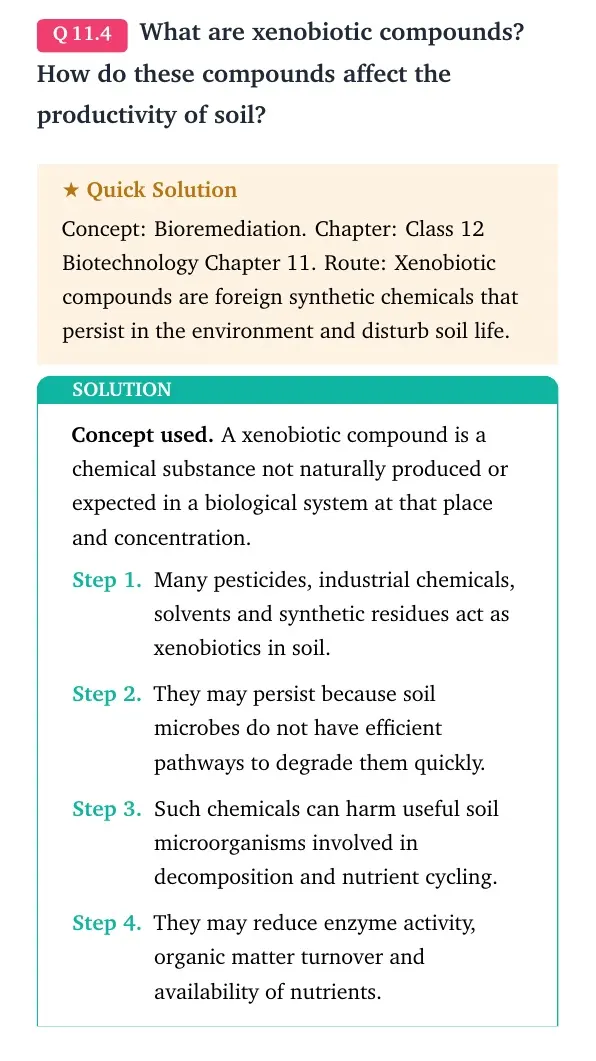
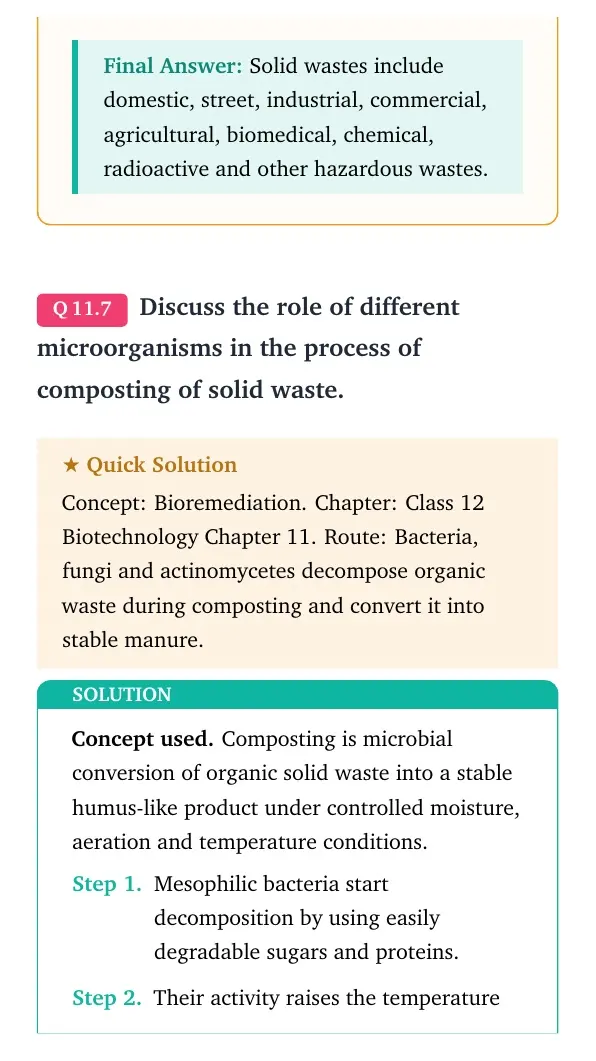
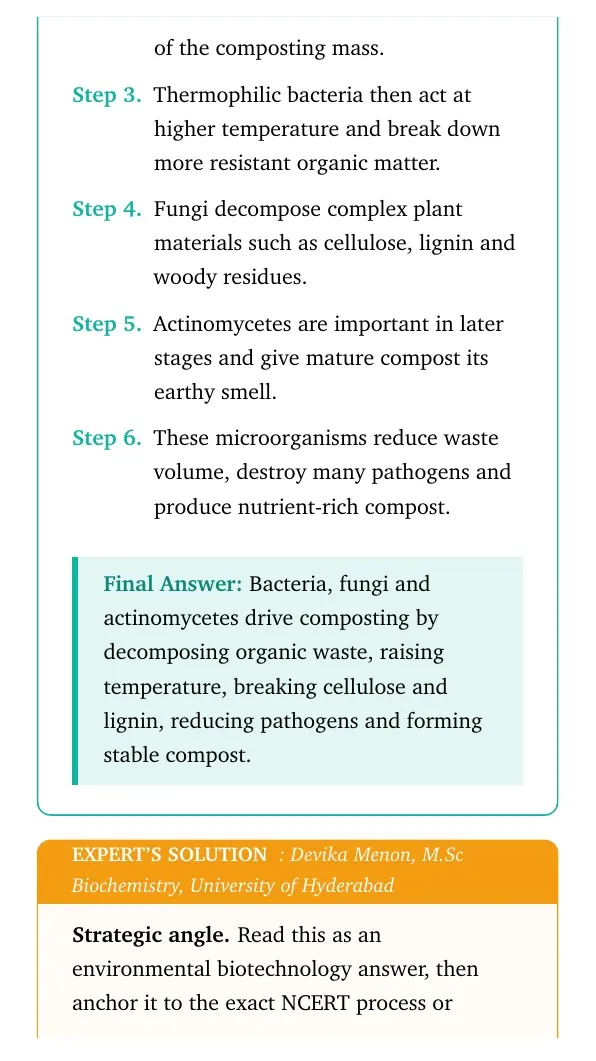
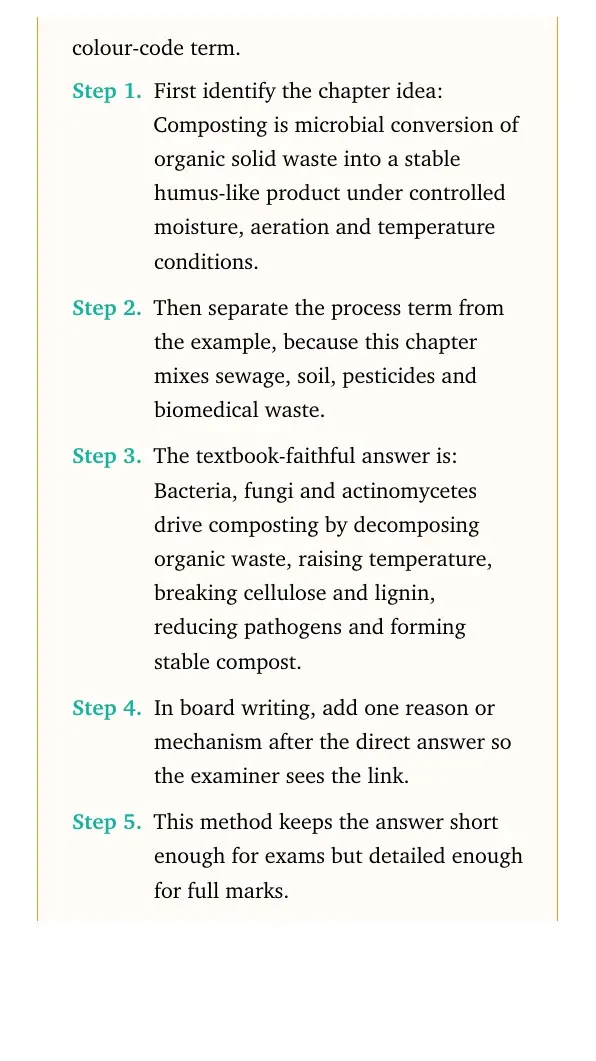
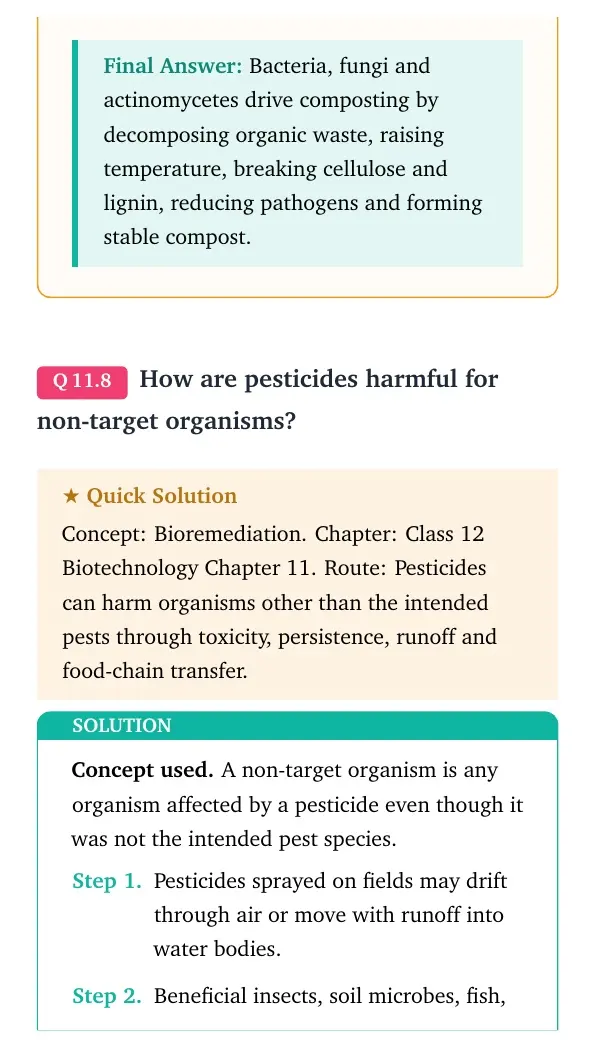
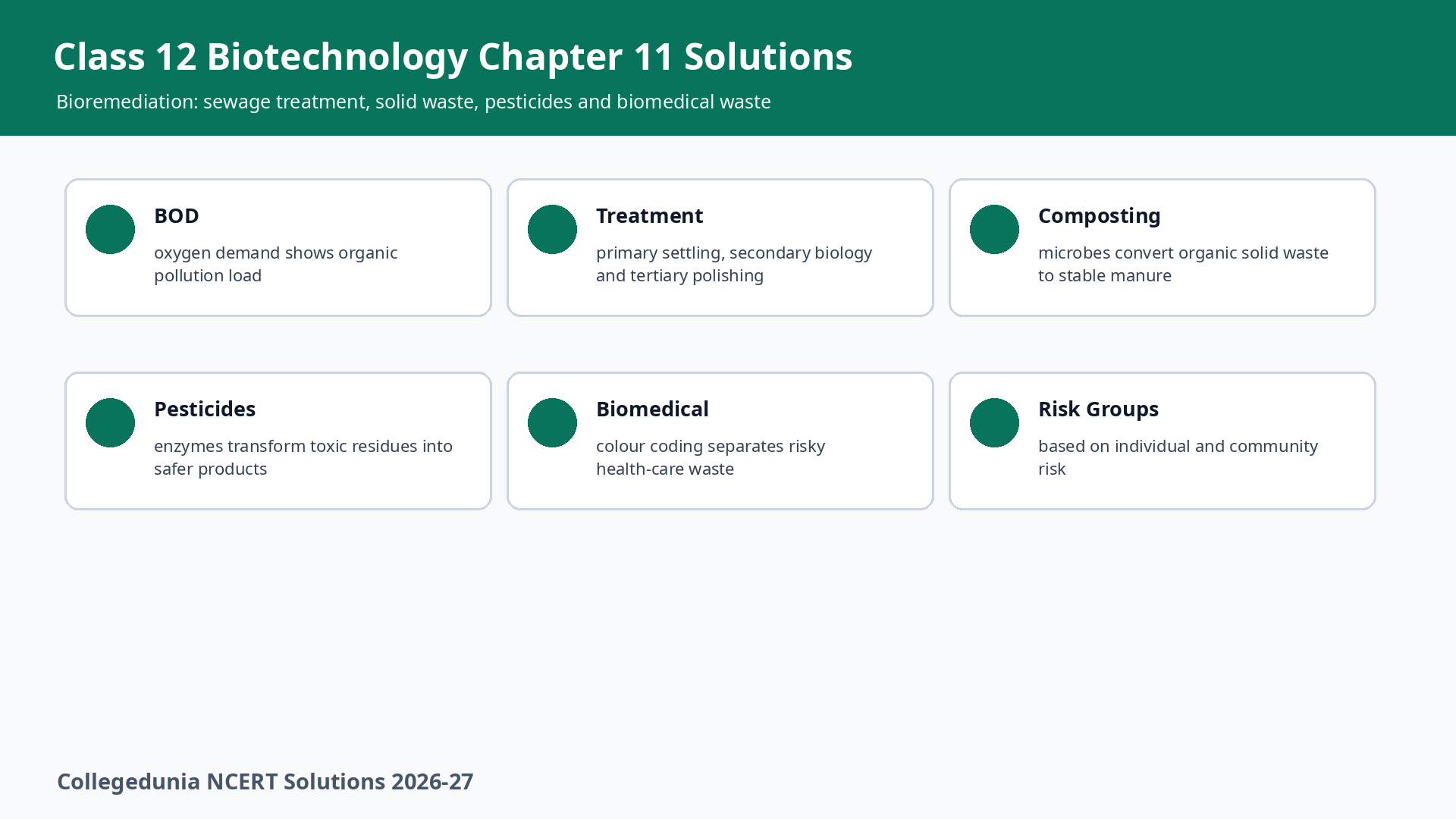
Student Feedback: Students said this chapter becomes easier when they separate sewage treatment, solid-waste management, pesticide bioremediation and biomedical-waste colour coding before solving the exercise.
Class 12 Biotechnology Chapter 11 Bioremediation Solutions PDF
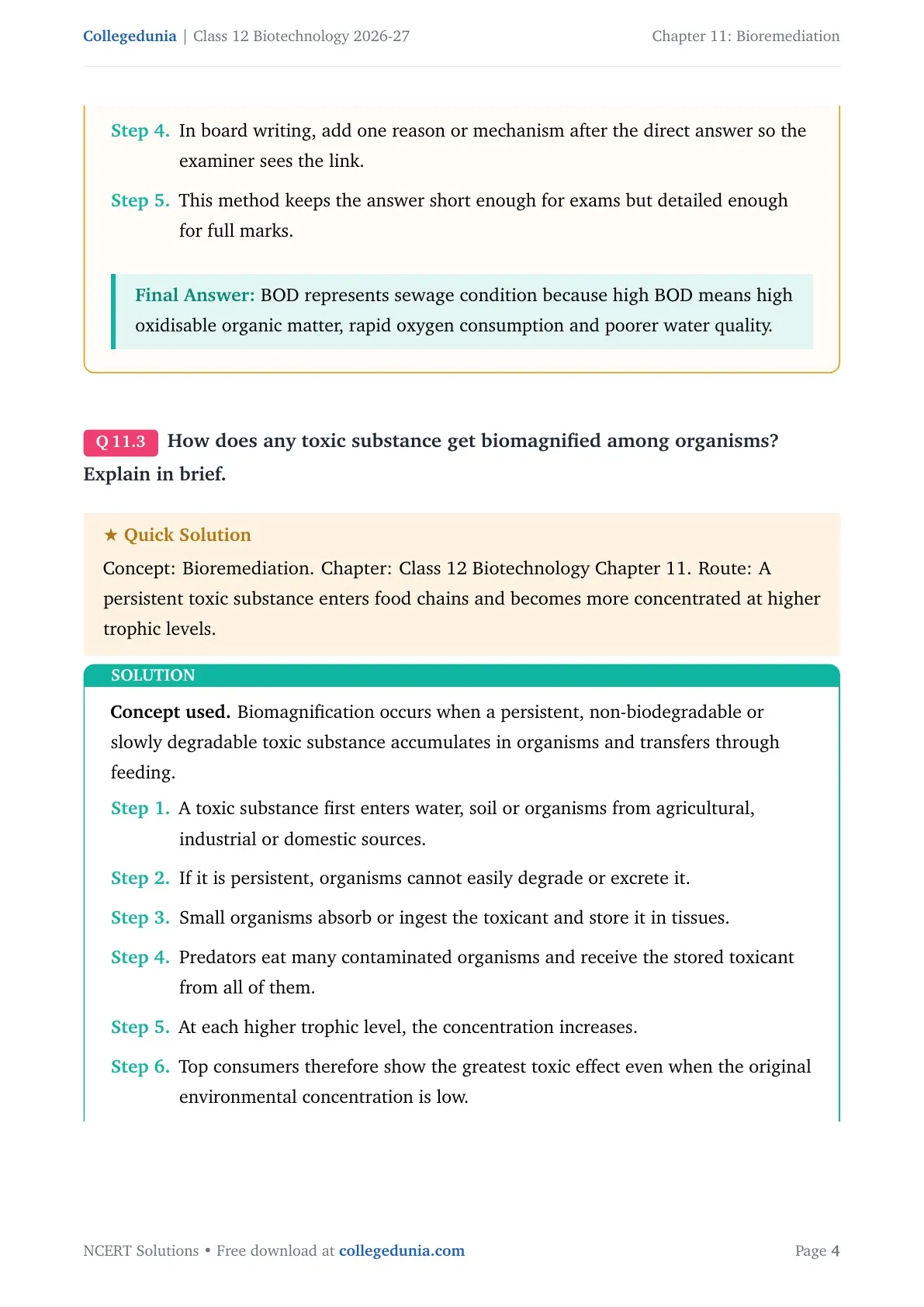
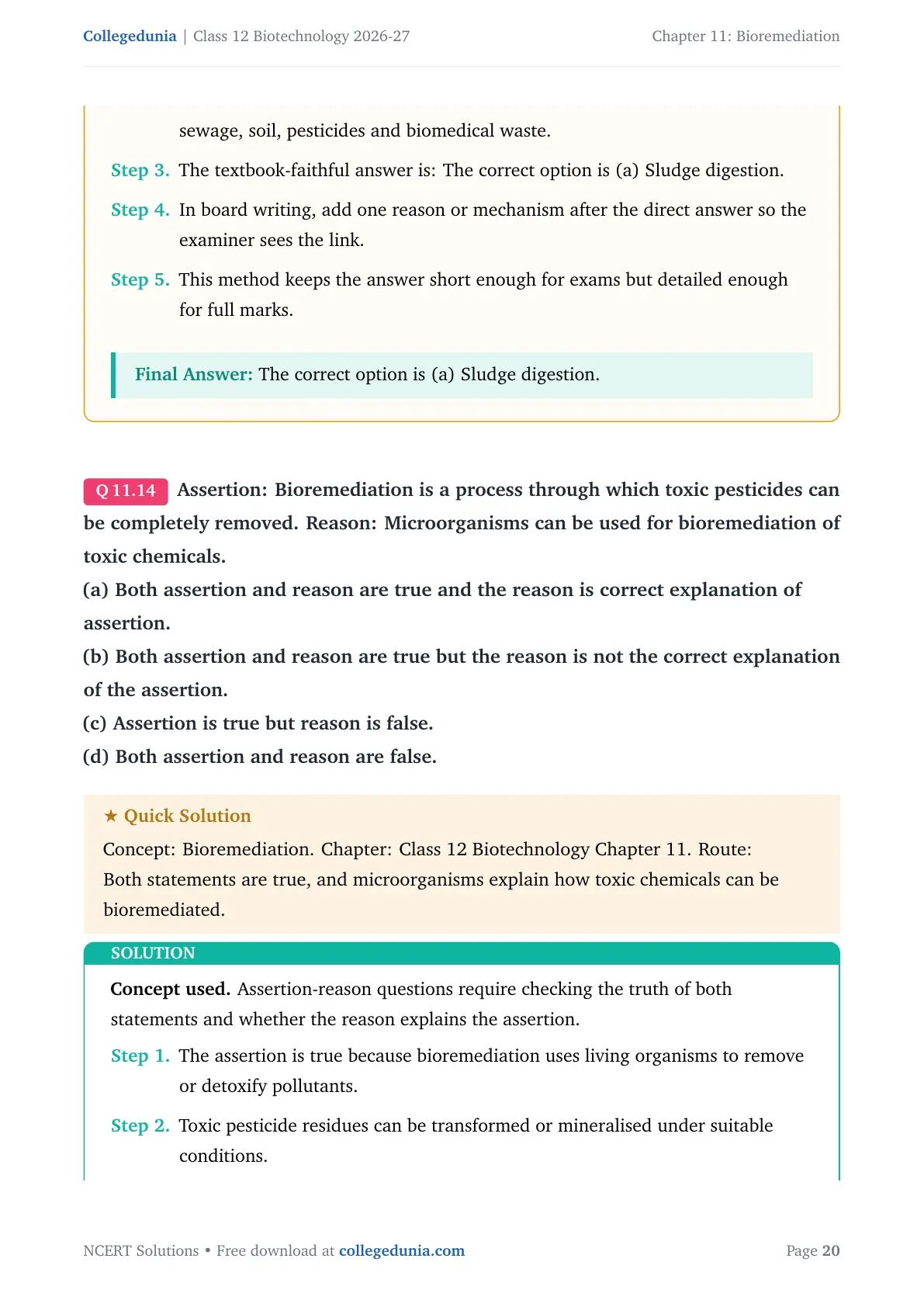
Class 12 Biotechnology Chapter 11 Bioremediation NCERT Solutions help students connect waste management with microbial action. The chapter starts with sewage treatment and BOD, then moves to solid waste, biomedical waste, pesticide toxicity and strategies of bioremediation.
Most answers in this chapter become easy when you remember one core idea: pollutants become safer when physical treatment, chemical treatment and microbial action work in the correct order.
Bioremediation Video for Sewage and Waste Treatment
Source: YouTube education channel
BOD and Wastewater Treatment Flow
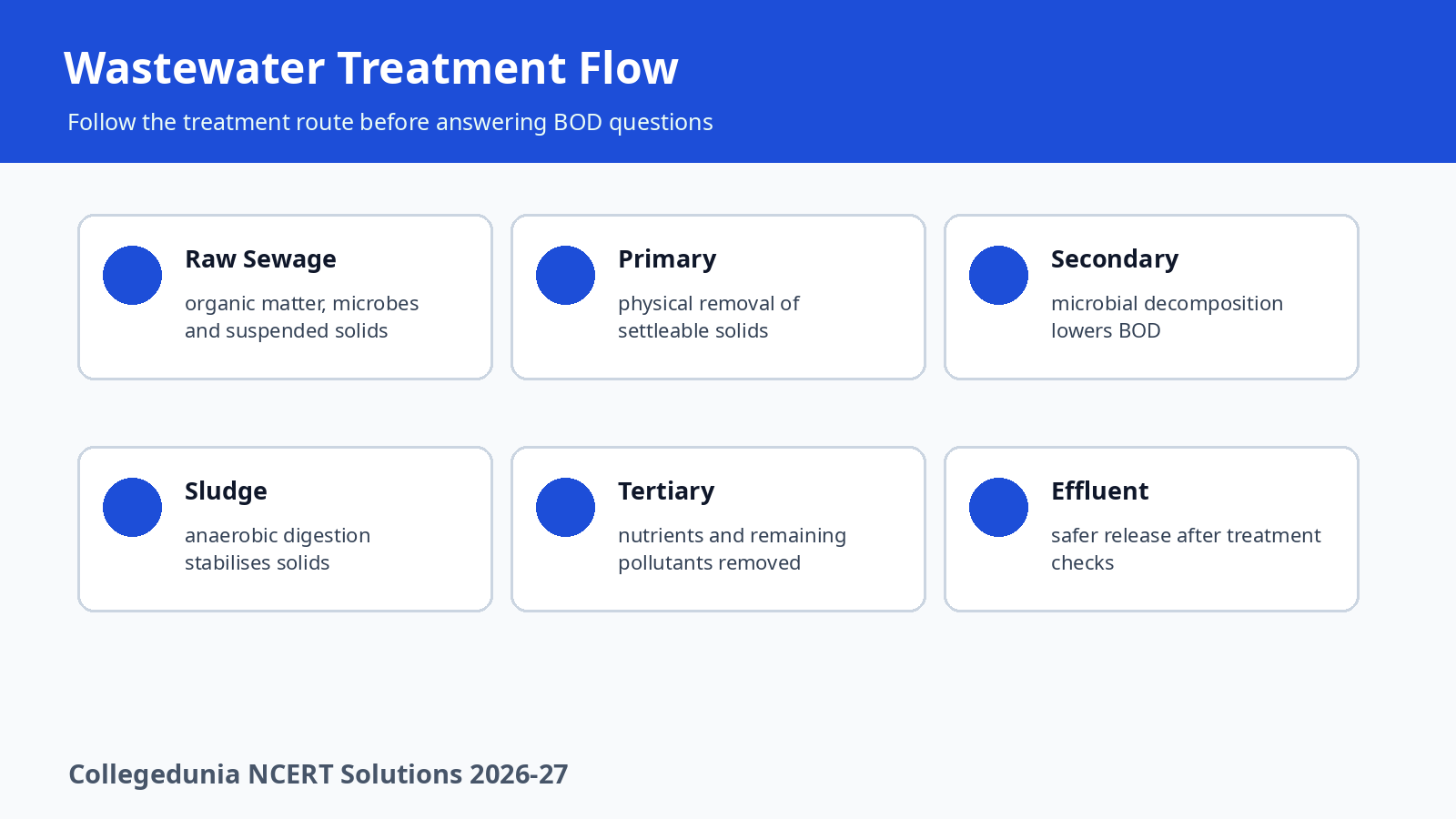
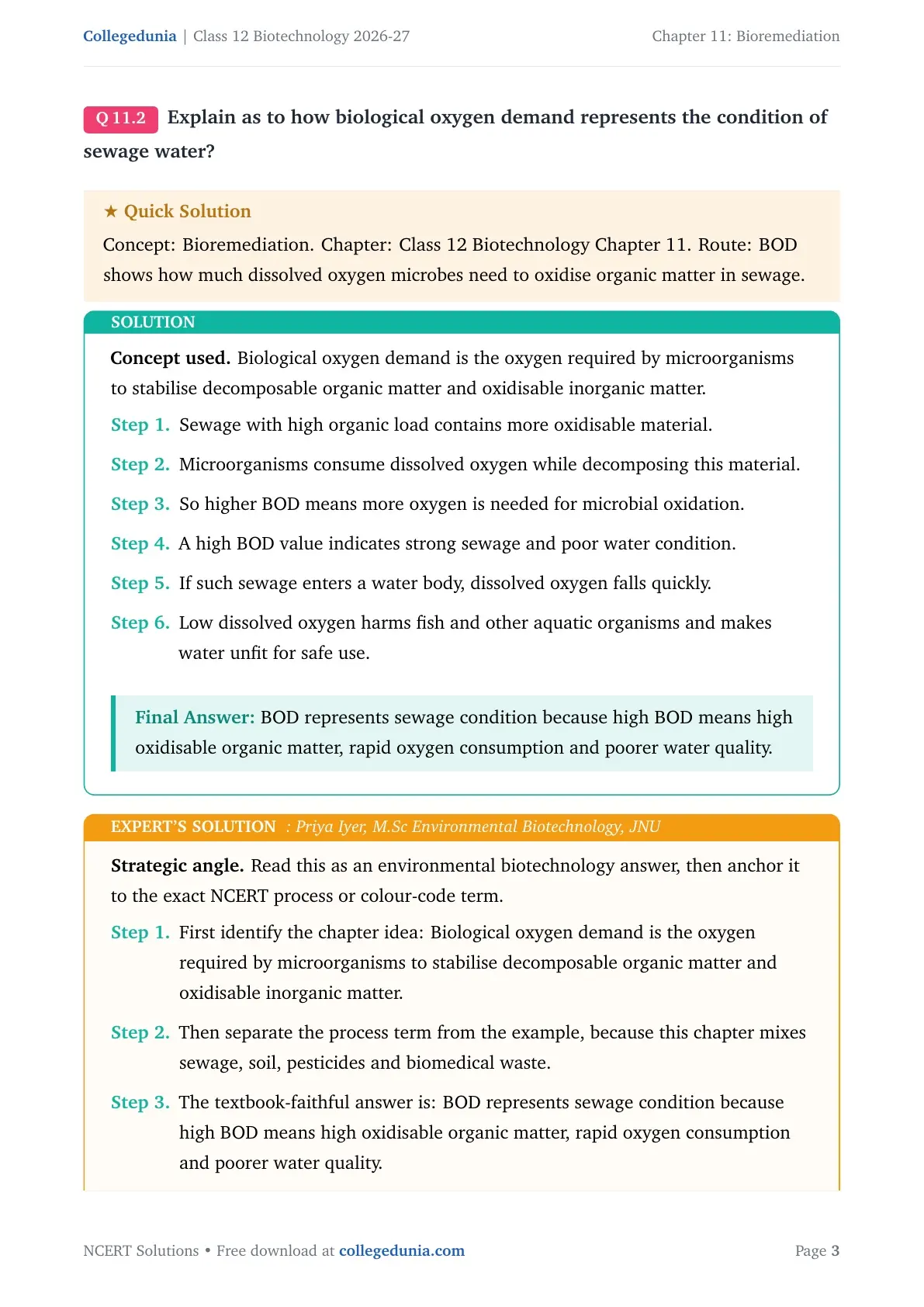
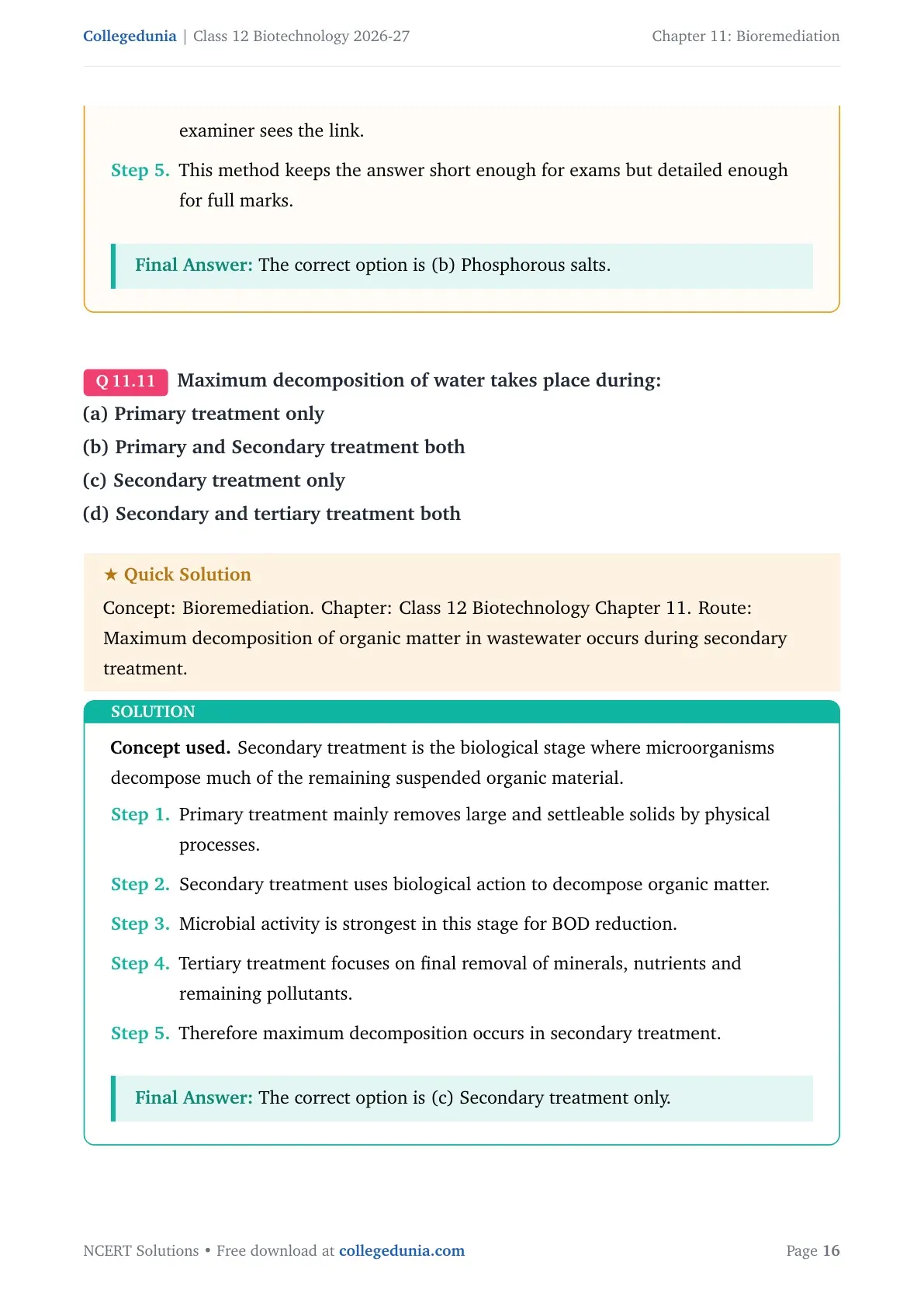
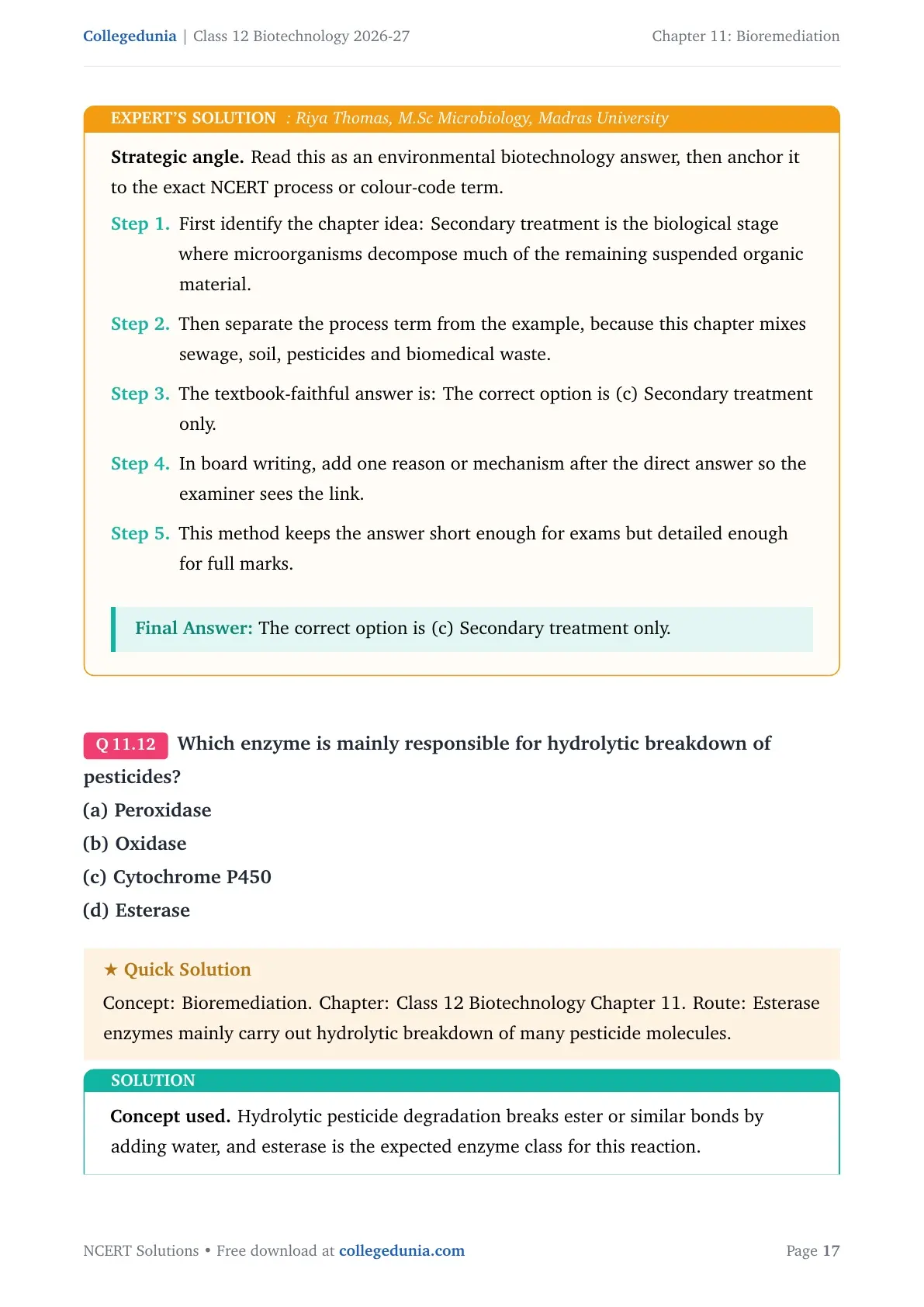
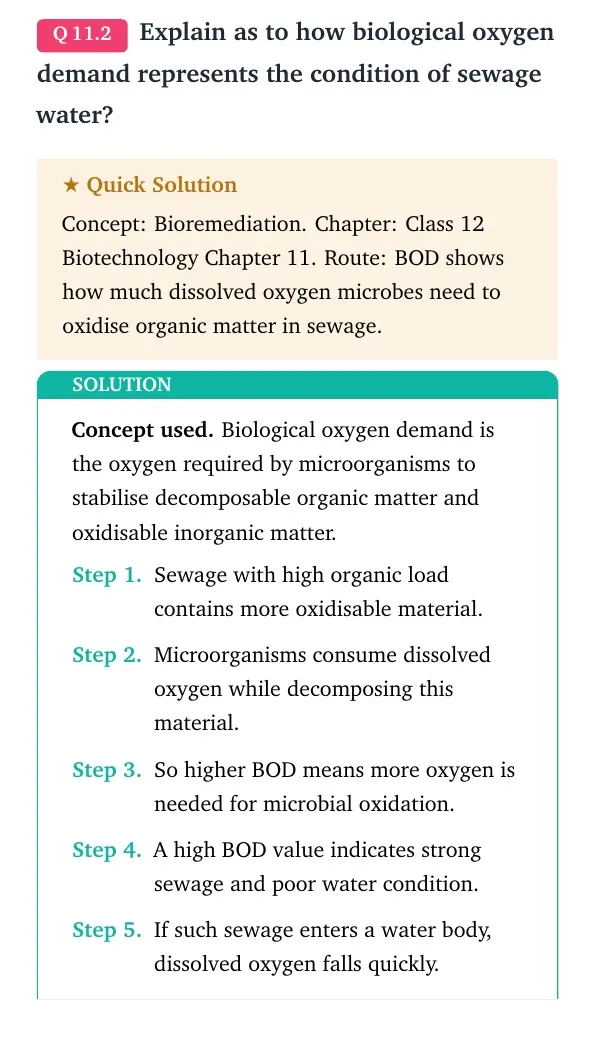
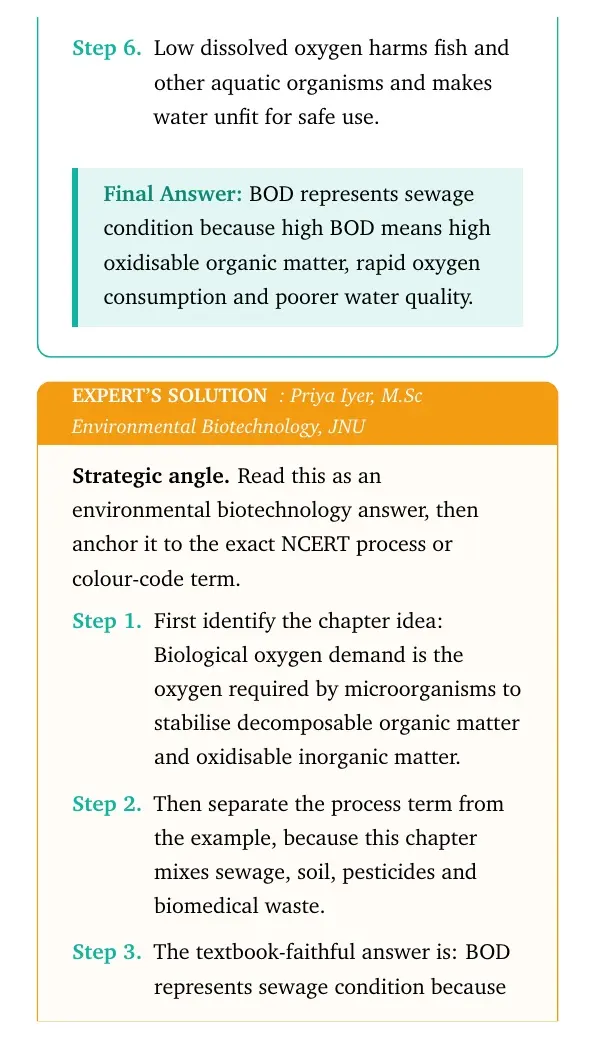
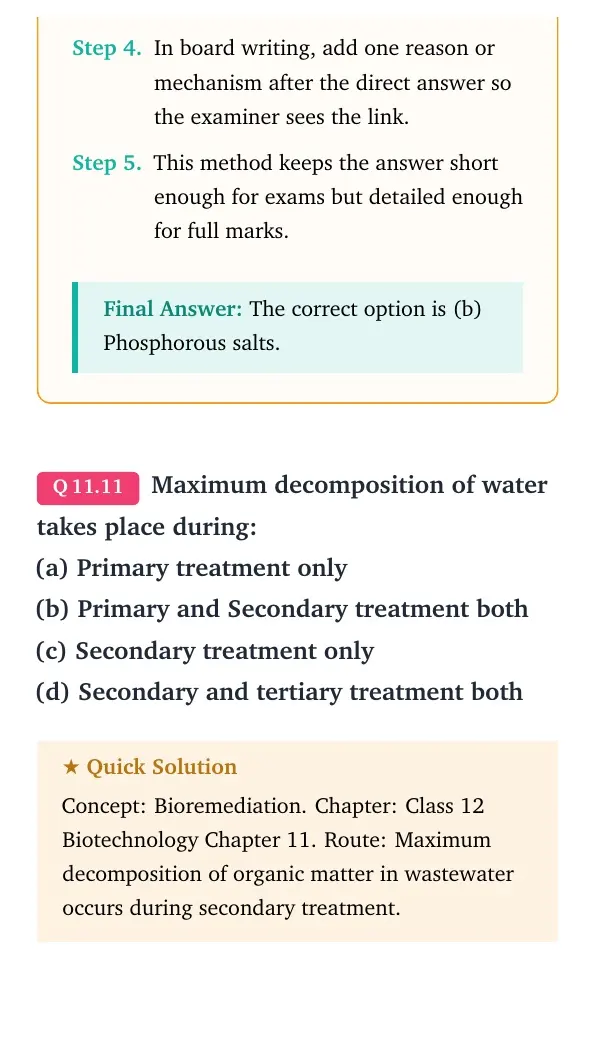
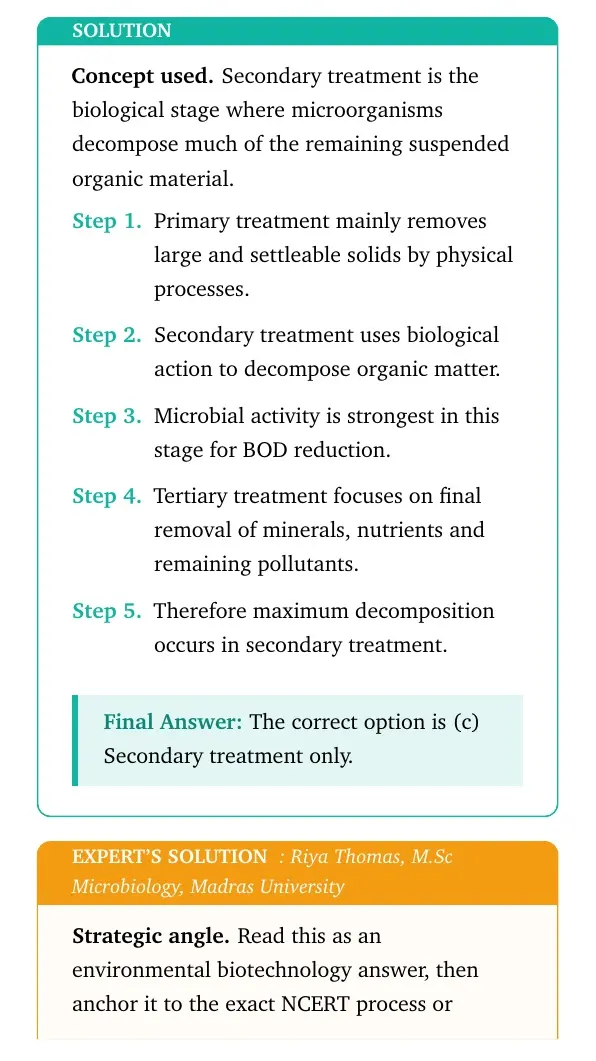
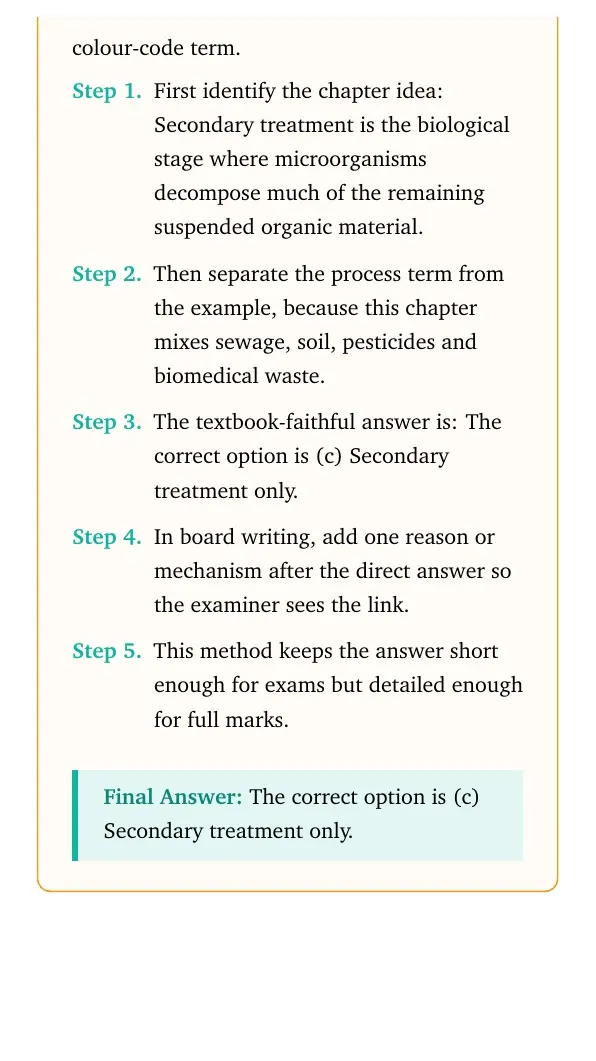
BOD means the oxygen required by microorganisms to stabilise decomposable organic matter. A high BOD value shows strong sewage and poor dissolved-oxygen condition. That is why secondary biological treatment is important: it removes much of the remaining suspended organic material after primary treatment.
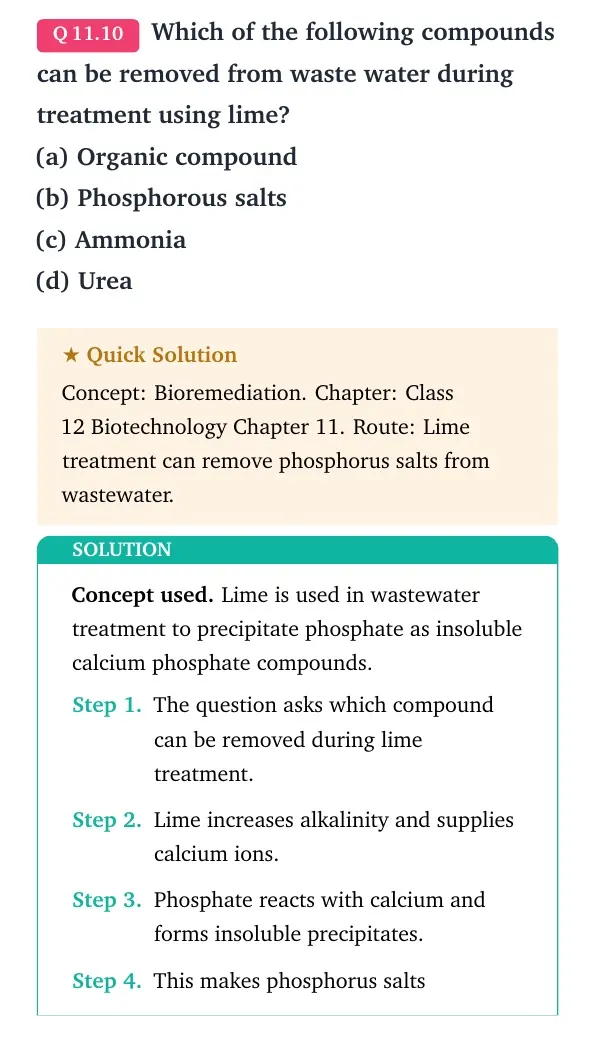
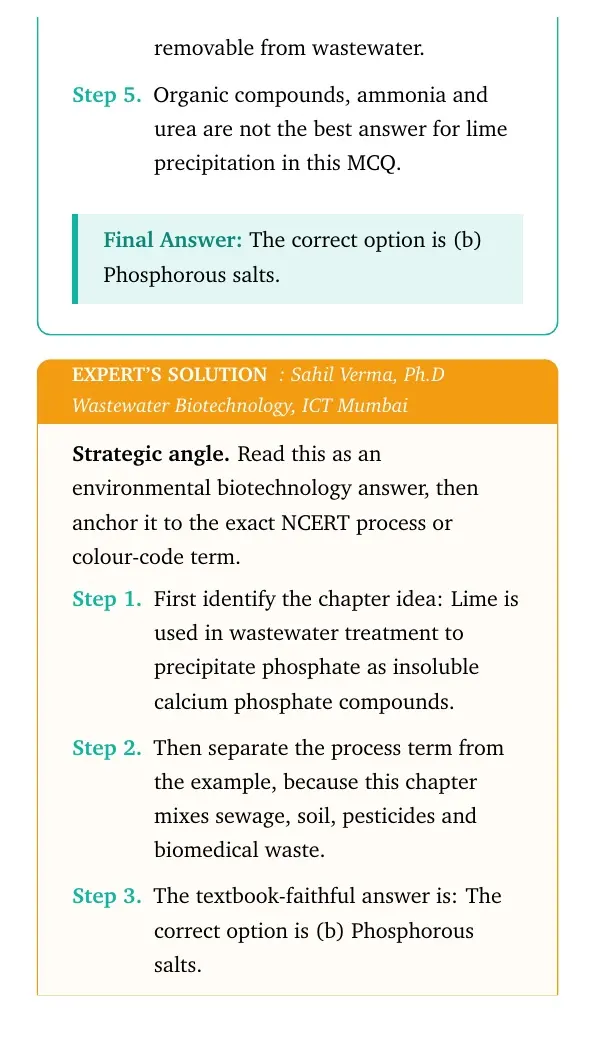
Primary treatment removes settleable solids. Secondary treatment uses microbial decomposition. Tertiary treatment removes remaining nutrients and pollutants, especially when treated effluent still carries nitrogen, phosphorus or other chemical residues.
Pesticide Bioremediation Map
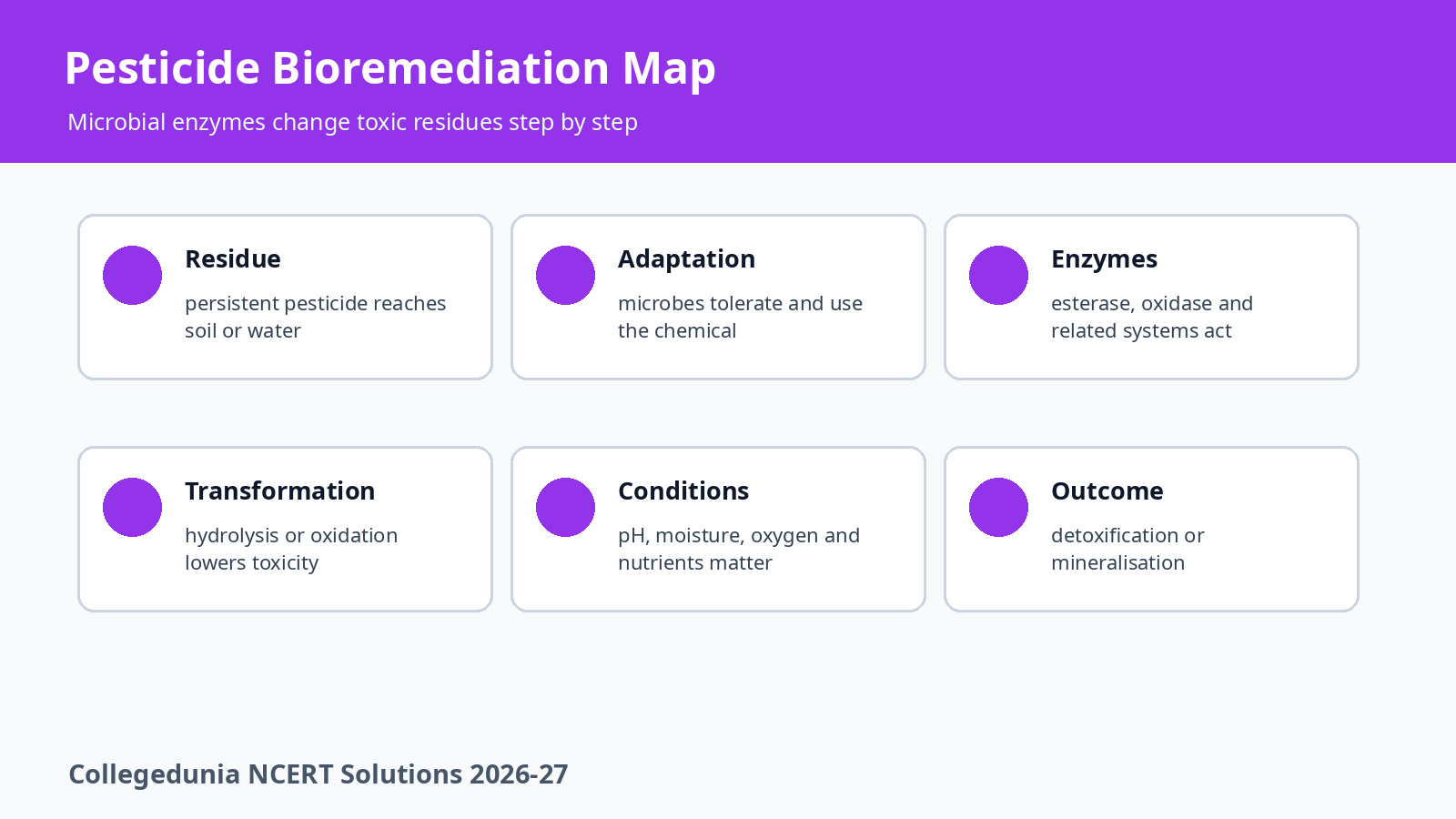
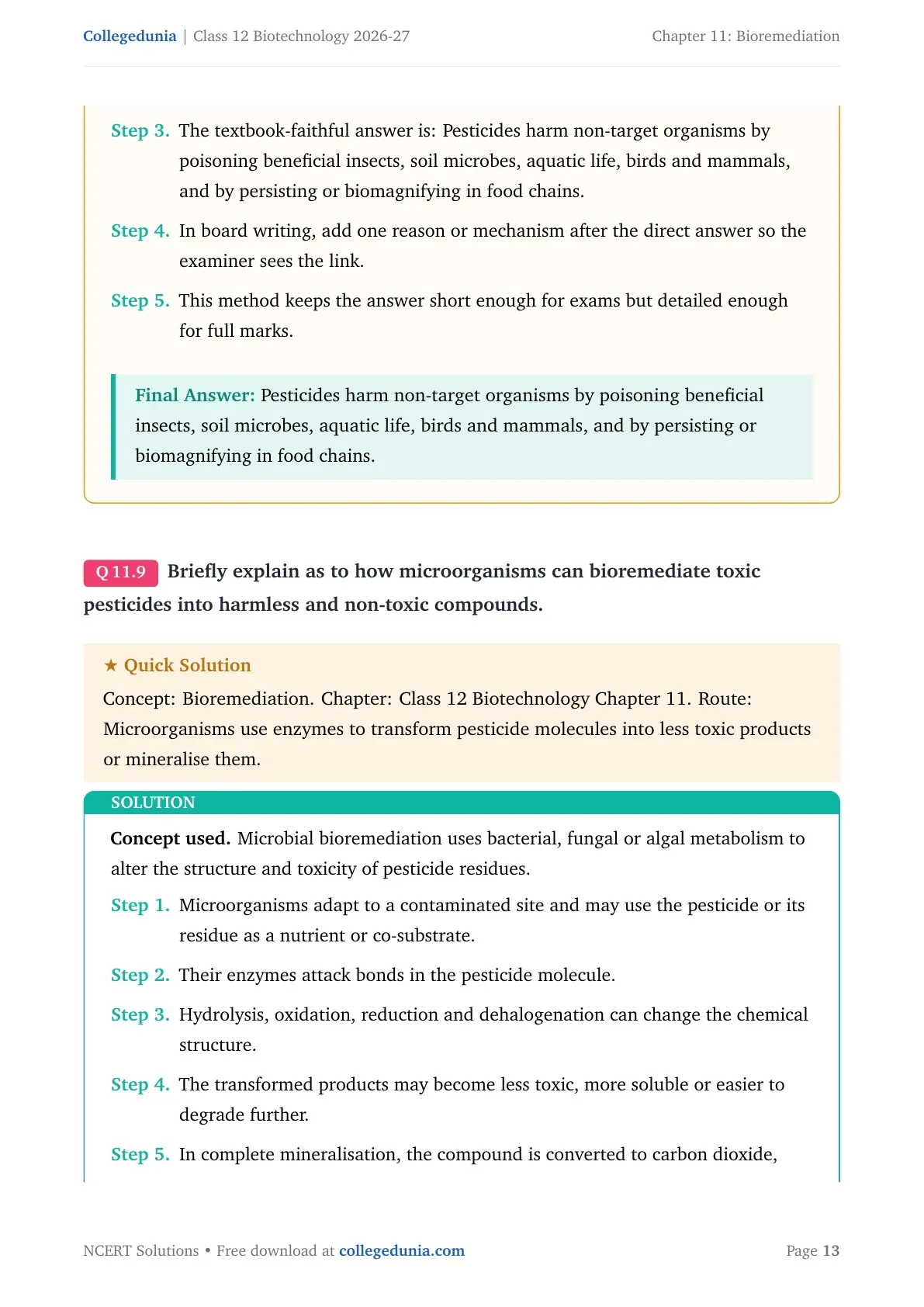
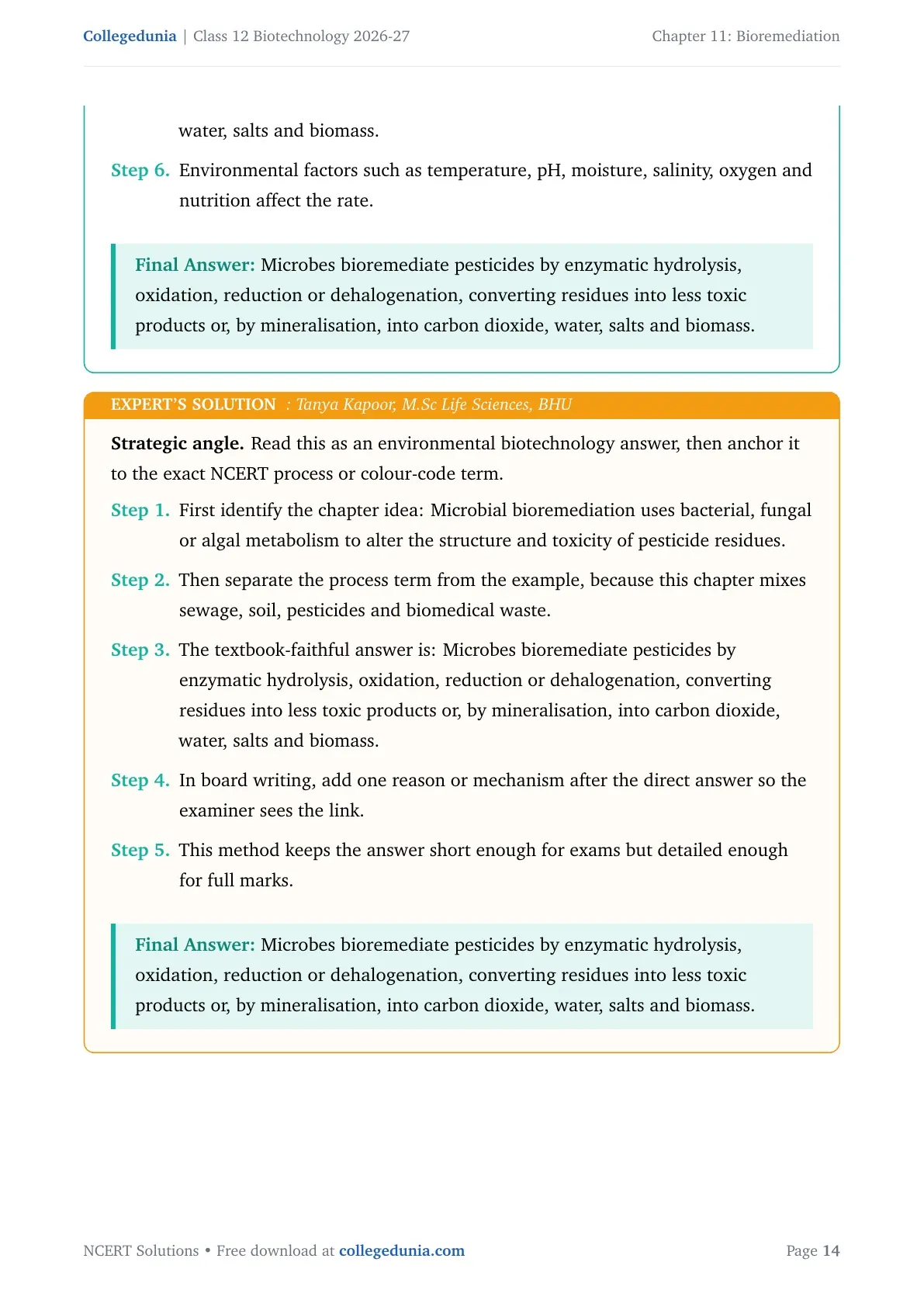
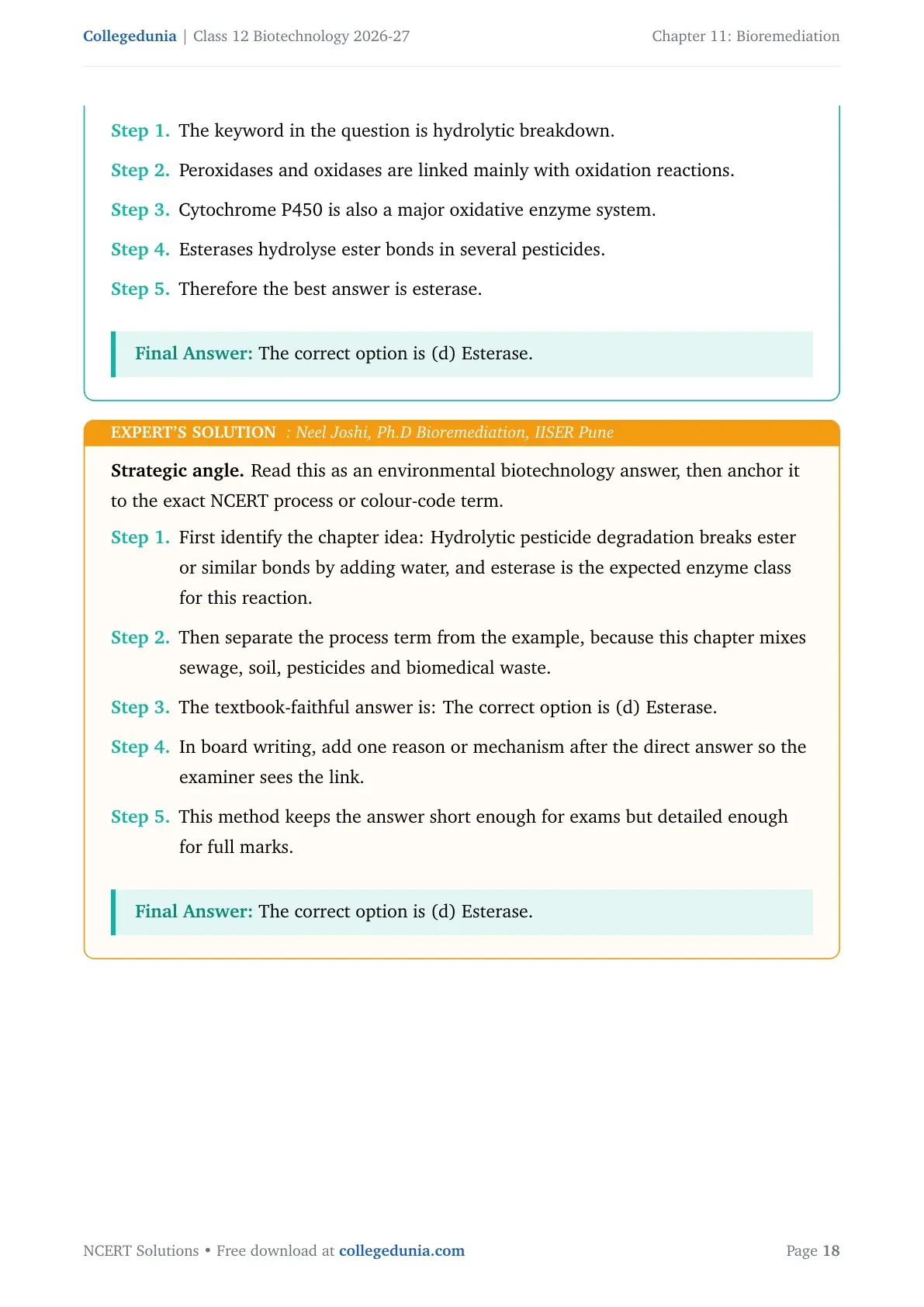
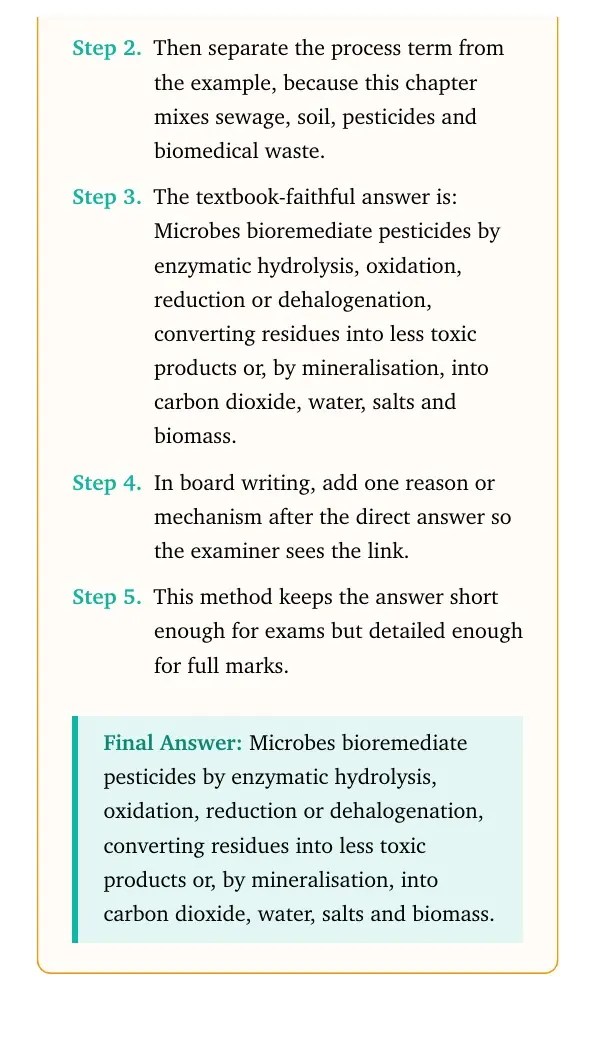
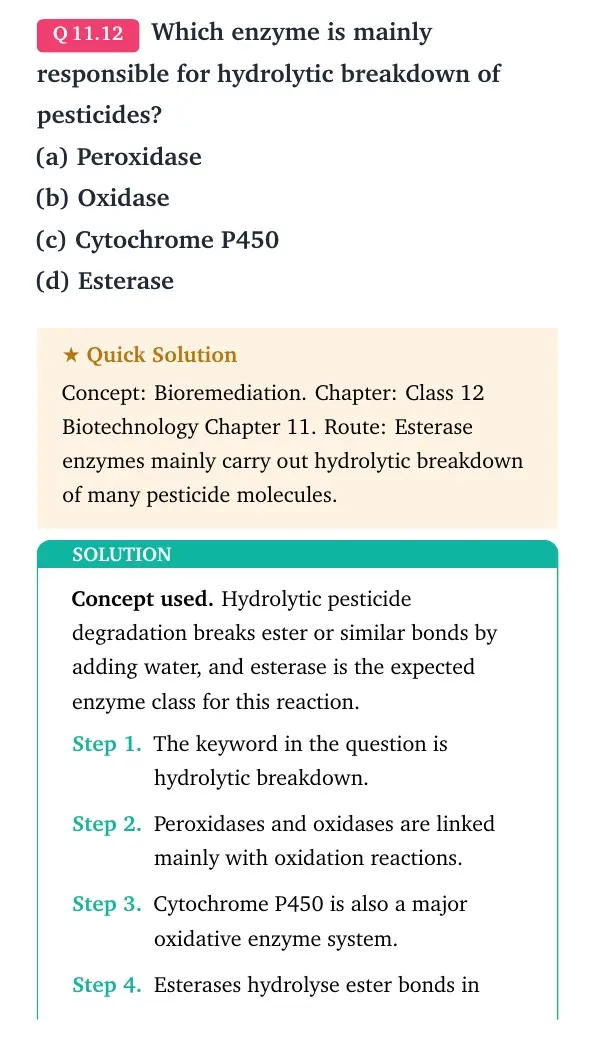
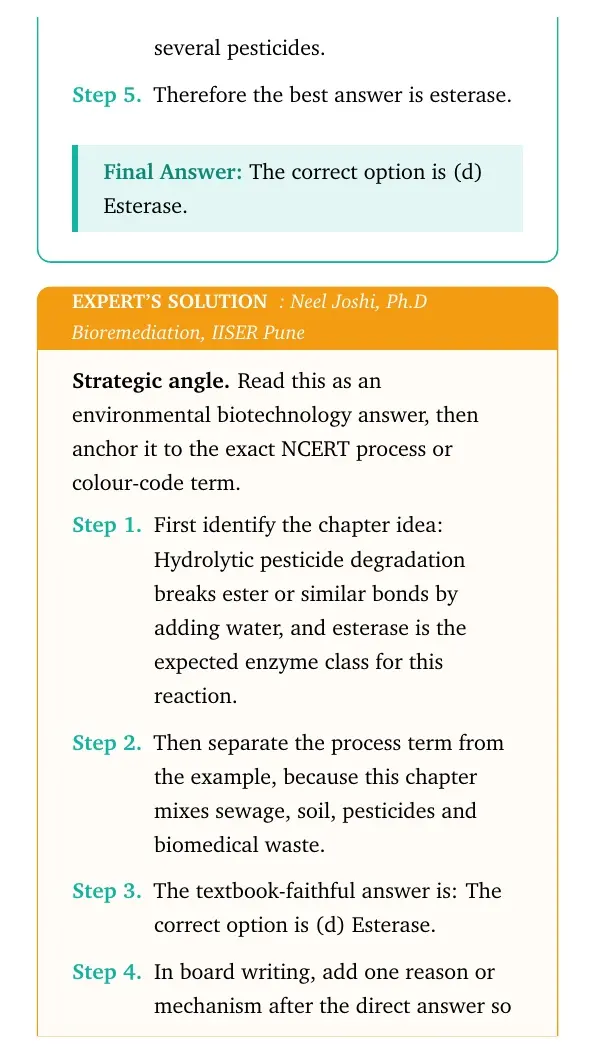
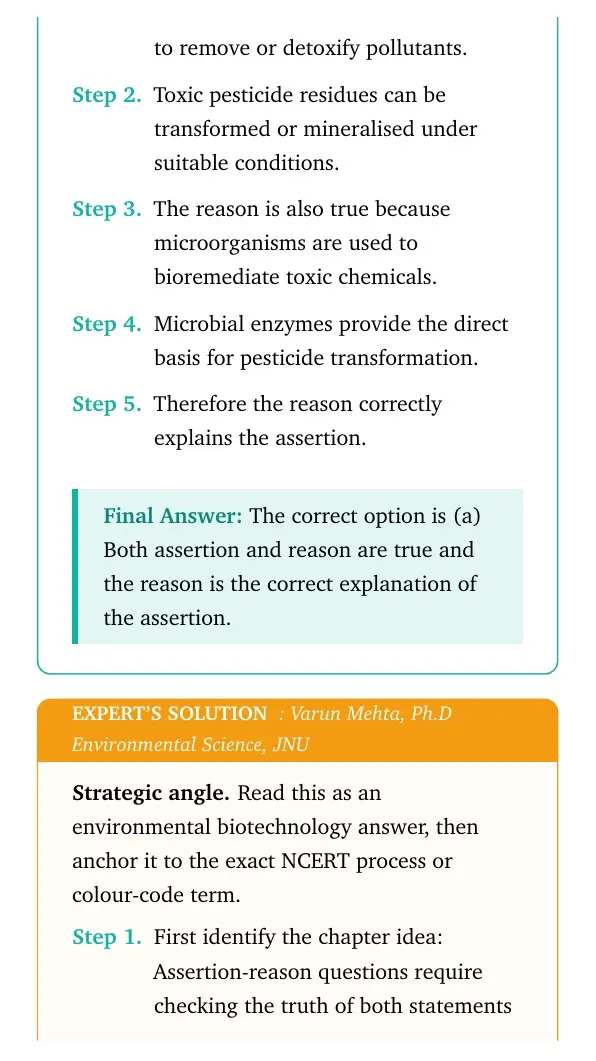
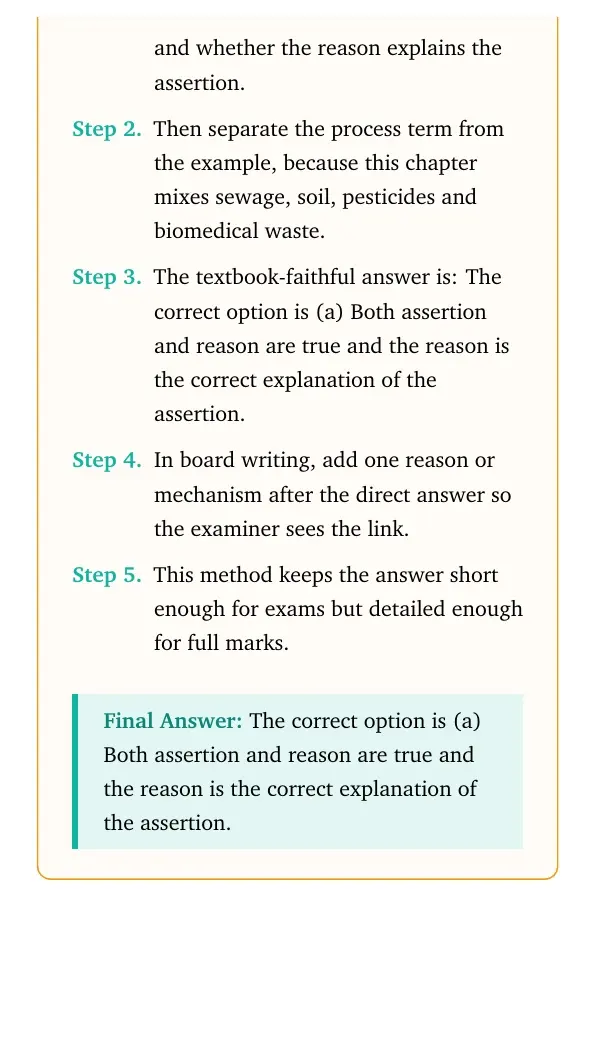
Microorganisms bioremediate pesticide residues through enzyme-driven transformations. Hydrolysis, oxidation, reduction and dehalogenation can lower toxicity or make the compound easier to degrade. The rate depends on temperature, humidity, pH, salinity, nutrition, oxygen and the microbial species present.
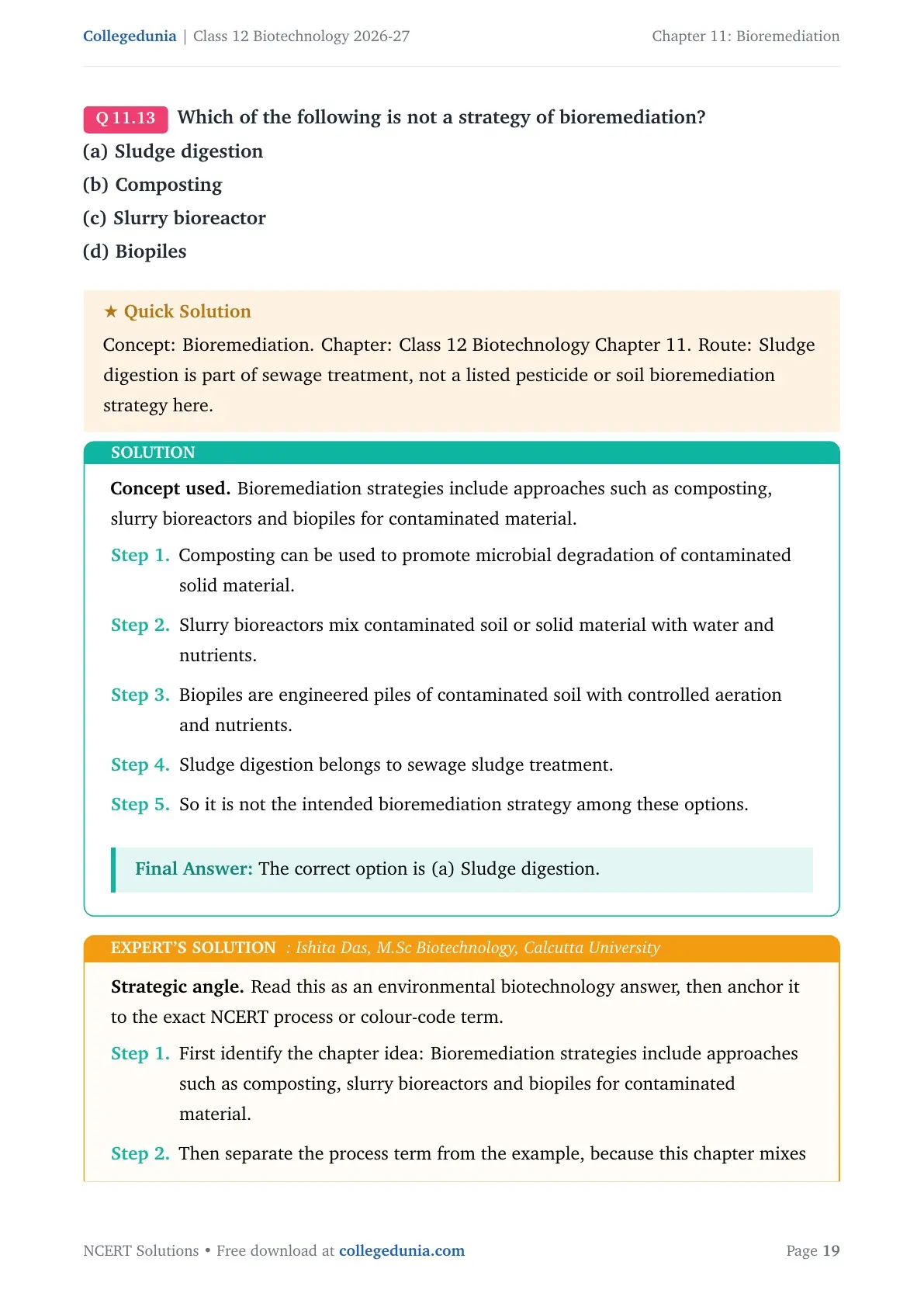
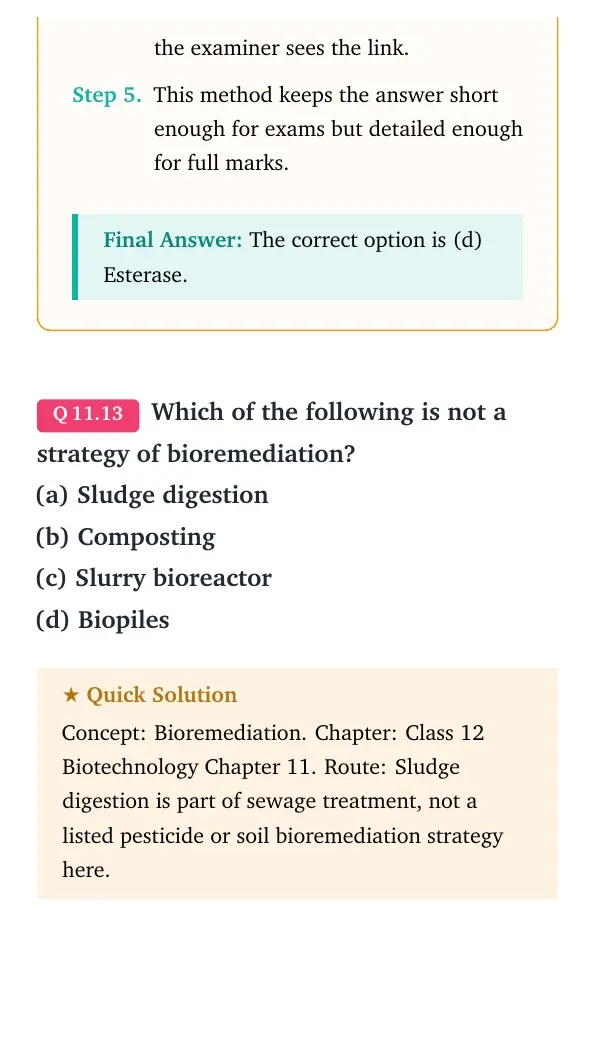
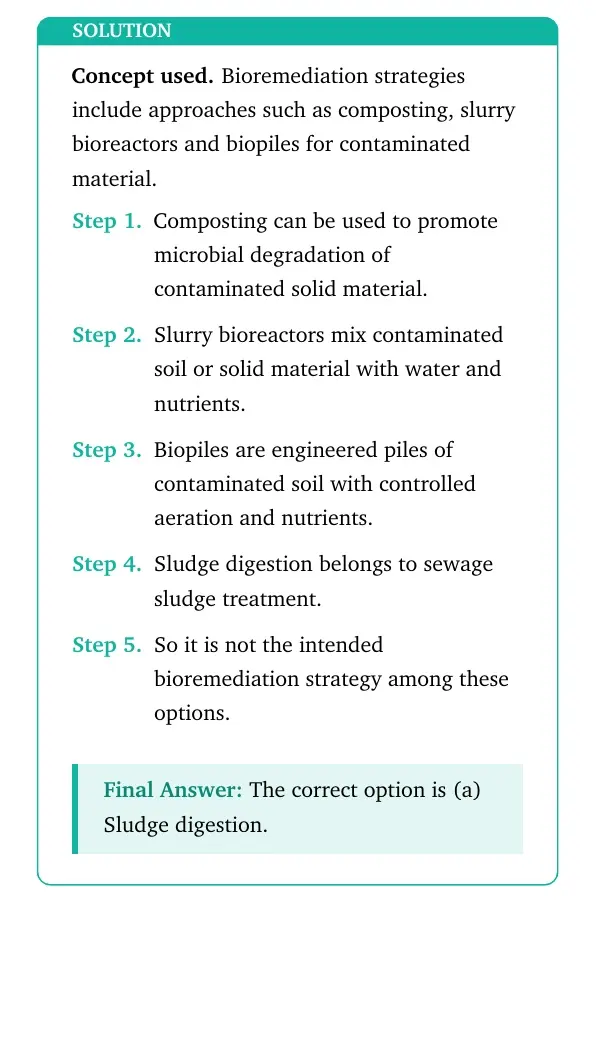
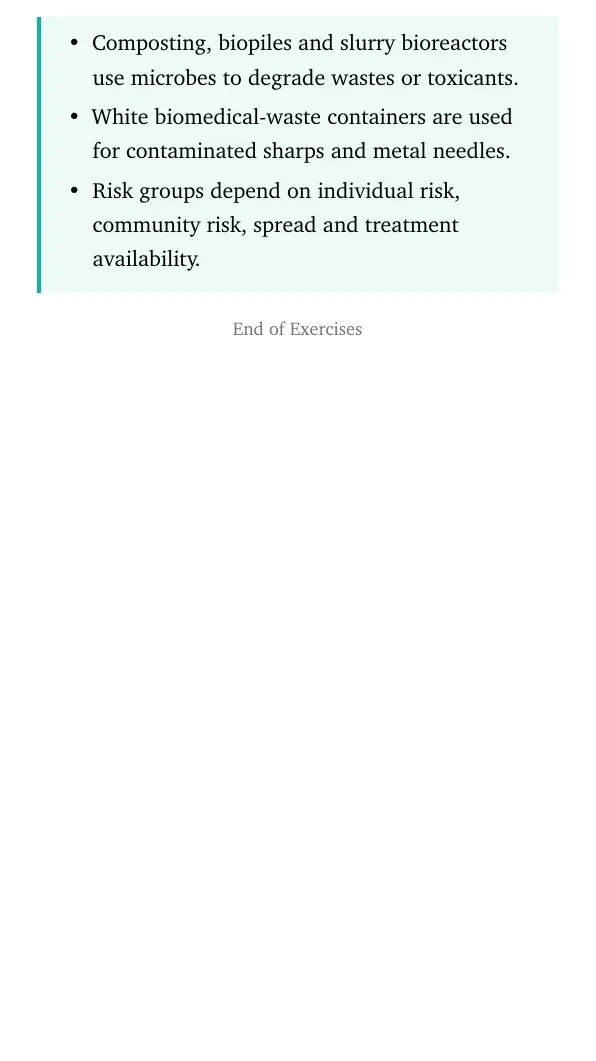
For MCQs, remember that esterase is linked with hydrolytic pesticide breakdown. Composting, slurry bioreactors and biopiles are bioremediation strategies, while sludge digestion belongs to sewage sludge treatment.
Check All Bioremediation Exercise Answers
The solved question cards below let students open the main solution and expert solution separately.
Practice mode: Open the question-wise Bioremediation solutions cards.
Important Question Types in Bioremediation
| Question Type | High-value focus |
|---|---|
| Short answer | BOD, biomagnification, xenobiotics and pesticide toxicity |
| Process answer | Aerobic and anaerobic decomposition in sewage treatment |
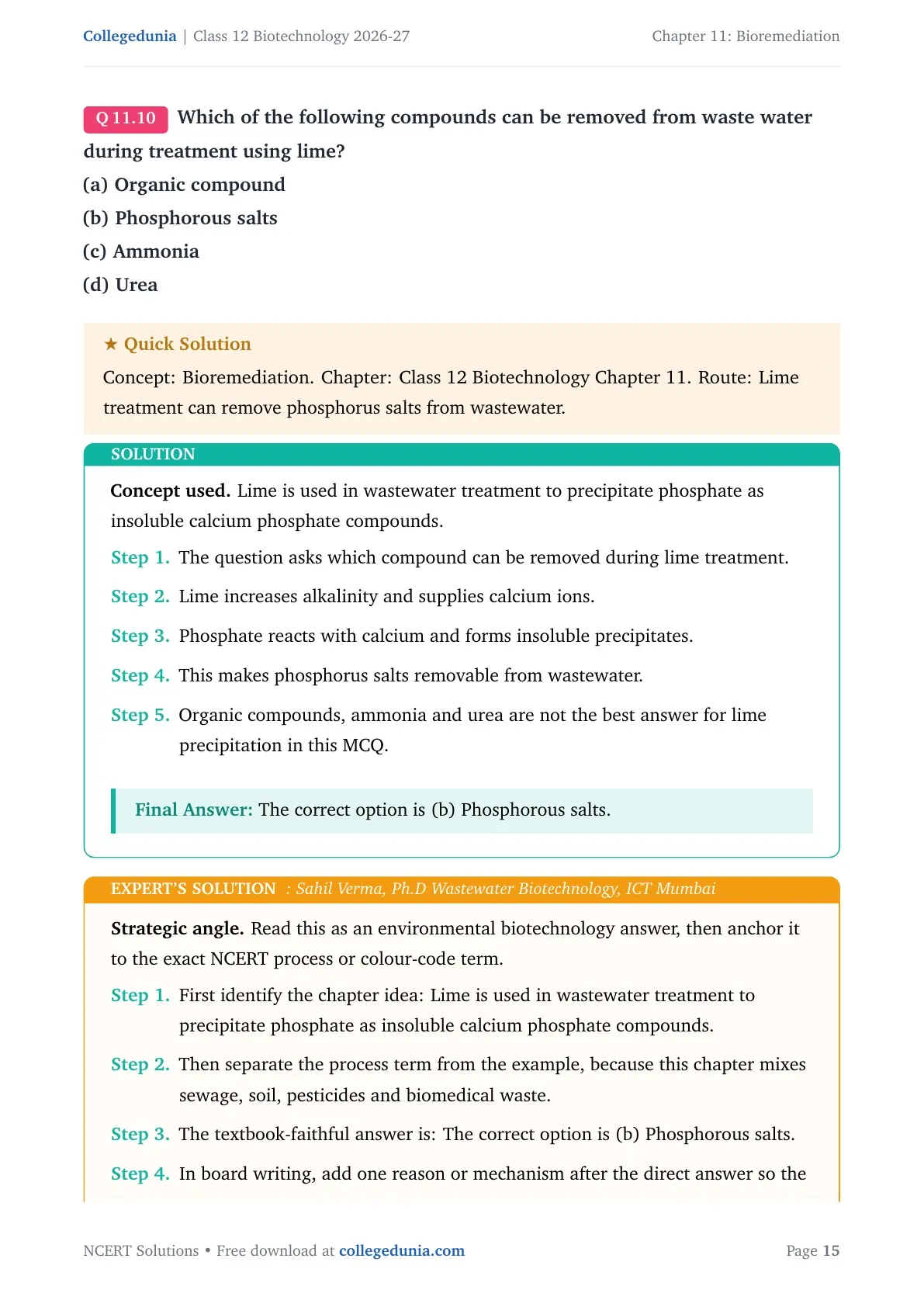
| MCQ | Lime treatment, secondary treatment, esterase and bioremediation strategy |
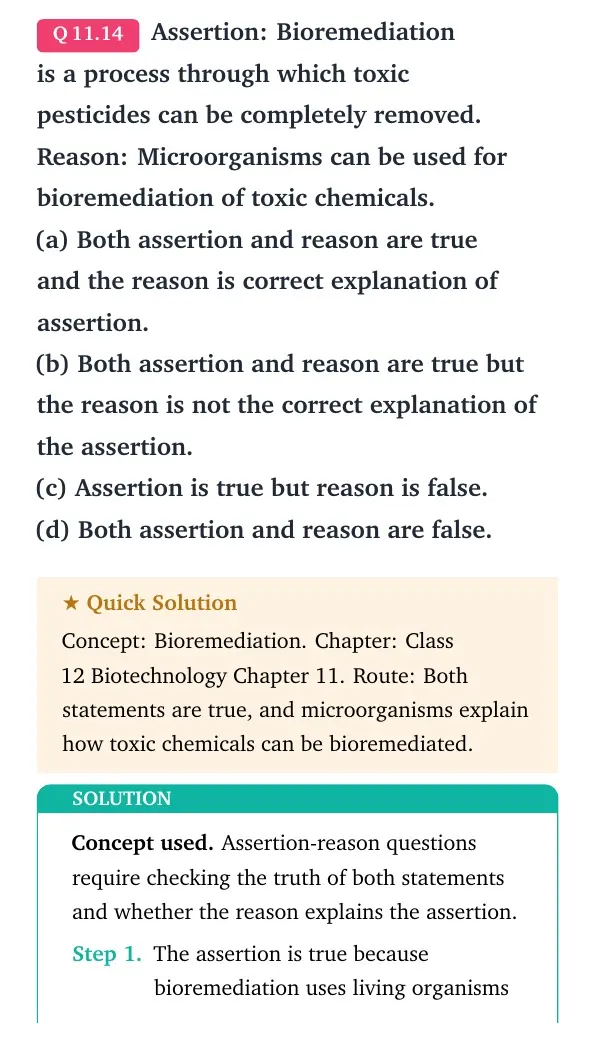
| Assertion-reason | Microorganisms as the basis of bioremediation |
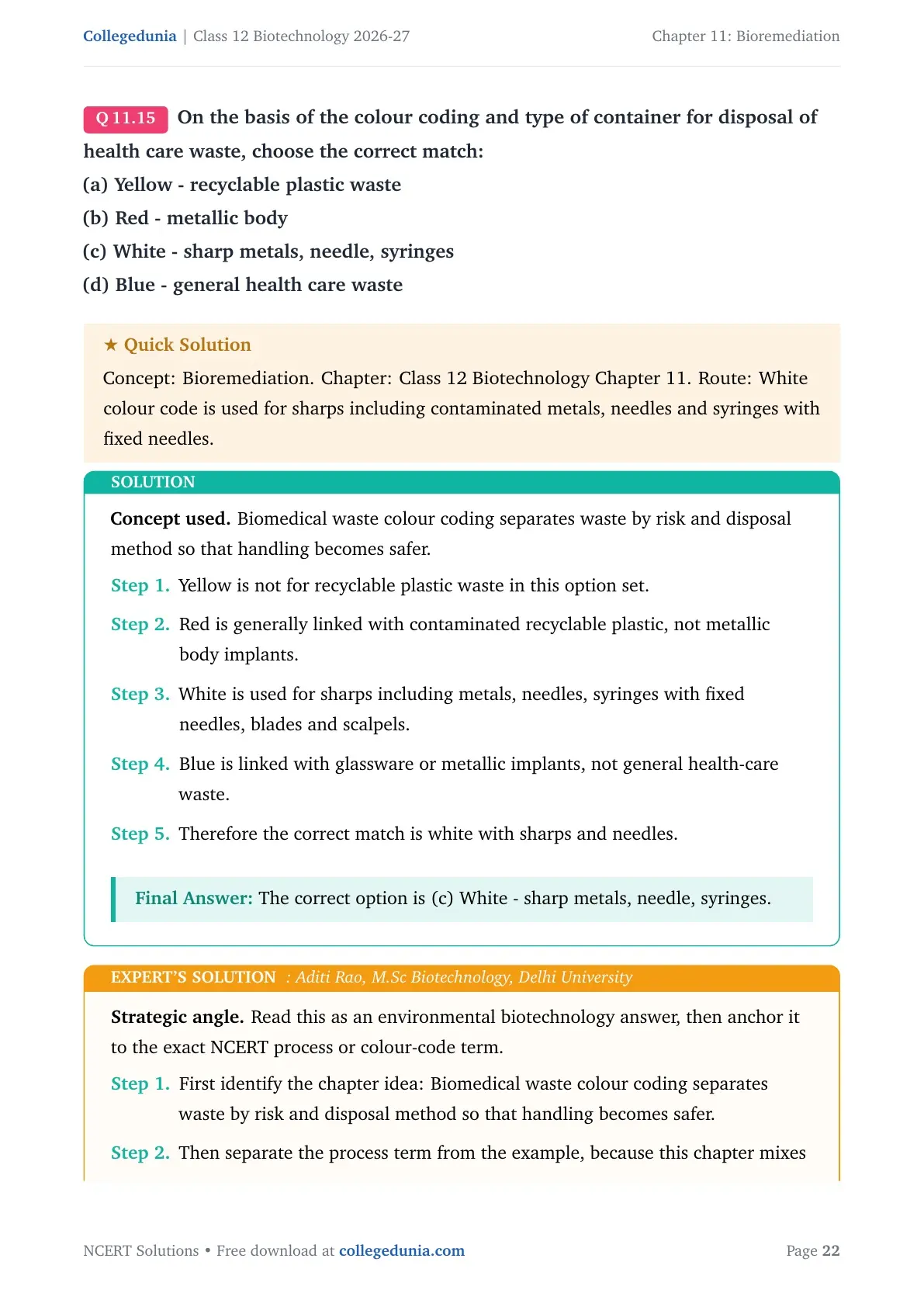
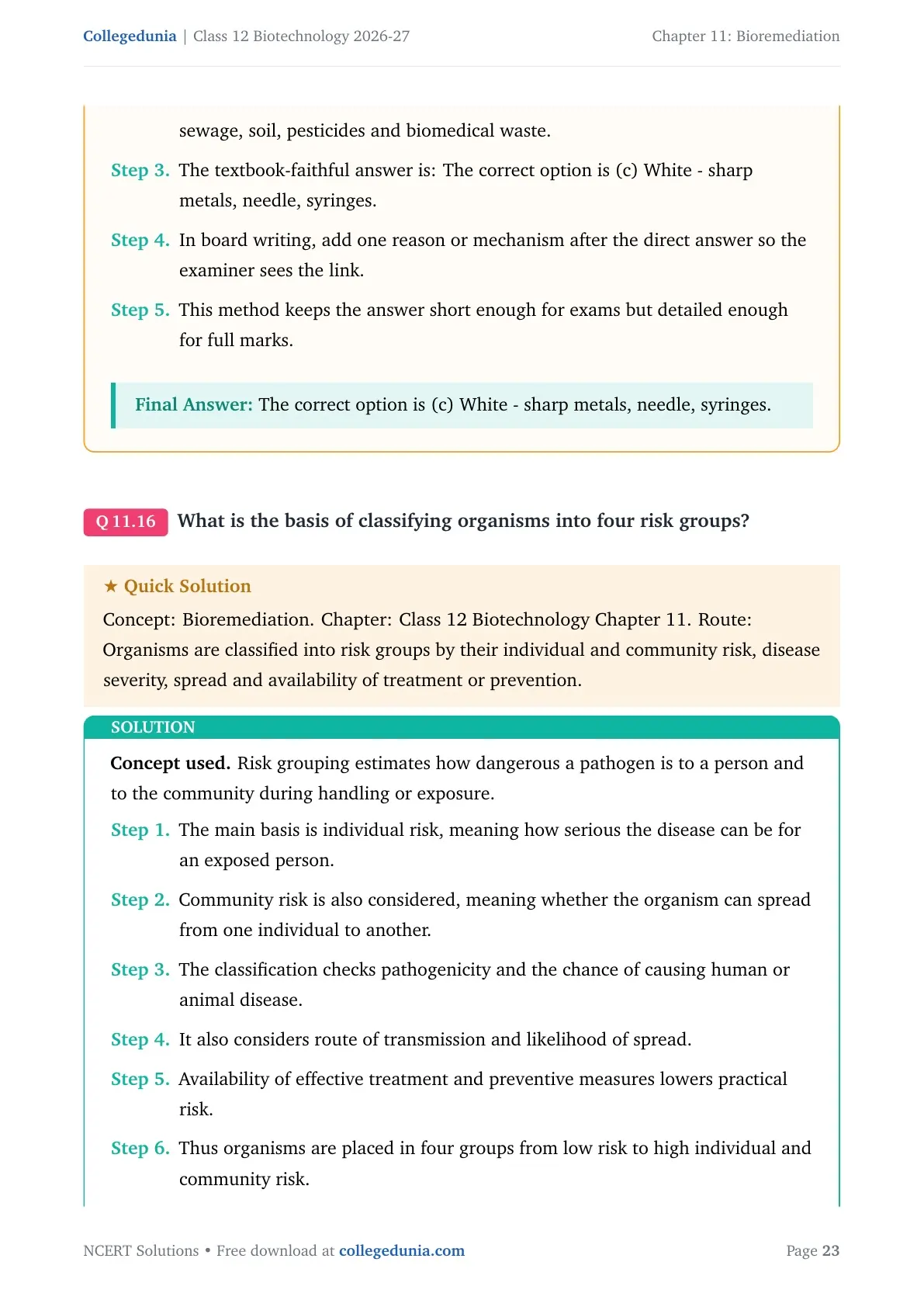
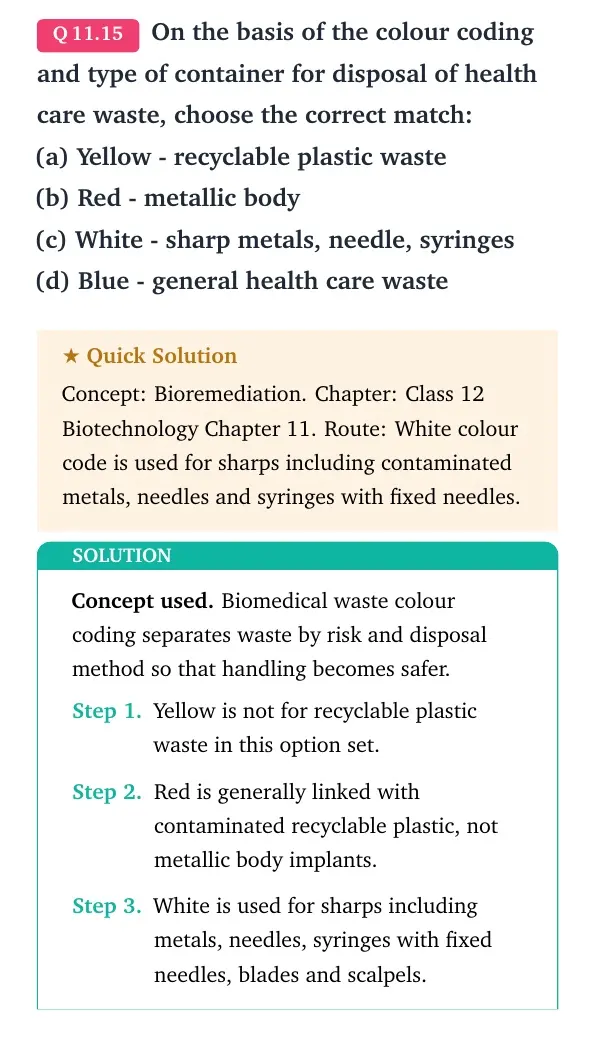
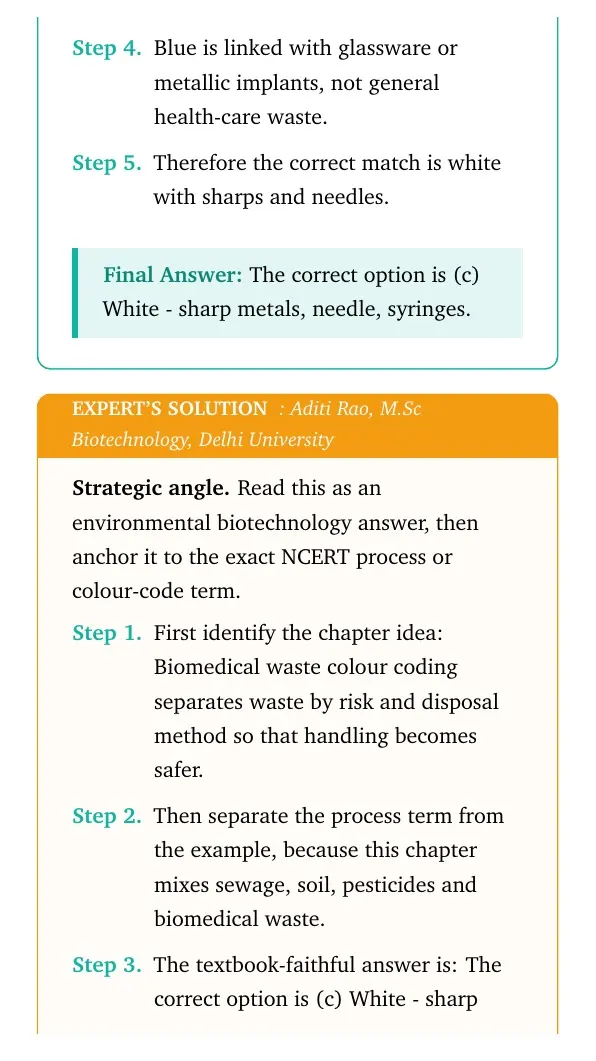
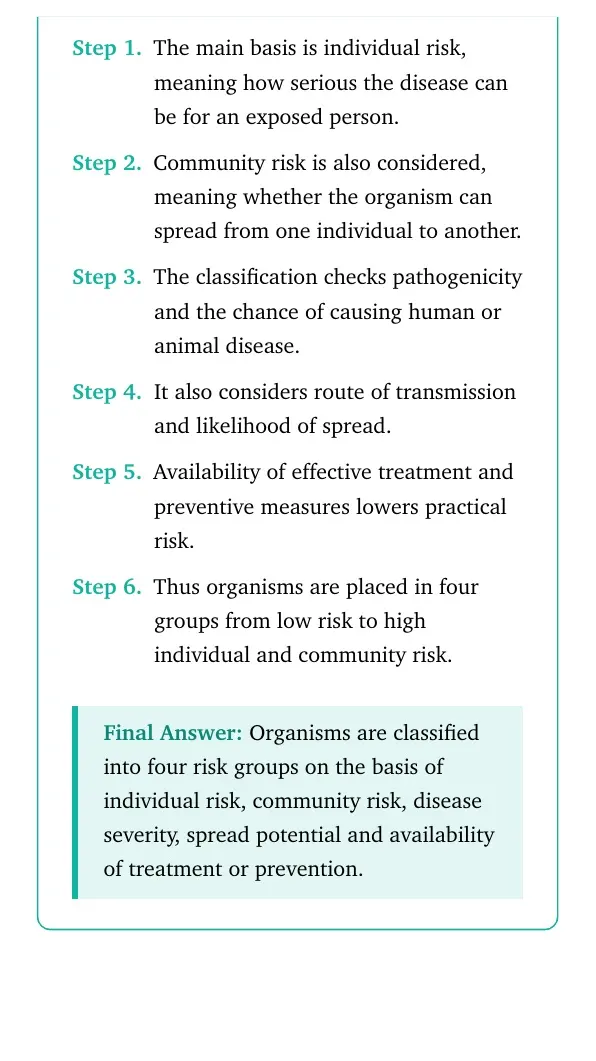
| Biomedical waste | White colour code for sharps and risk-group classification |
Related Class 12 Biotechnology Resources
| Resource | Use it for |
|---|---|
| Bioremediation NCERT Book PDF | Read the official textbook chapter before solving. |
| Bioremediation Notes | Revise BOD, waste treatment and pesticide concepts quickly. |
| Bioremediation Handwritten Notes | Use for one-shot exam recap. |
| Bioprocessing and Biomanufacturing NCERT Solutions | Revise the previous chapter before starting waste-treatment questions. |
| Stem Cell Culture and Organ Culture NCERT Solutions | Review cell and culture concepts used across biotechnology chapters. |
| Animal Cell Culture NCERT Solutions | Connect microbial and cell-culture methods with applied biotechnology. |
All Class 12 Biotechnology NCERT Solutions
| Chapter | NCERT Solutions |
|---|---|
| Chapter 8 Animal Cell Culture | Open Chapter 8 Solutions |
| Chapter 9 Stem Cell Culture and Organ Culture | Open Chapter 9 Solutions |
| Chapter 10 Bioprocessing and Biomanufacturing | Open Chapter 10 Solutions |
| Chapter 11 Bioremediation | Open Chapter 11 Solutions |
Bioremediation Biotechnology NCERT Solutions FAQs
Ques. What is covered in Class 12 Biotechnology Chapter 11 Bioremediation NCERT Solutions?
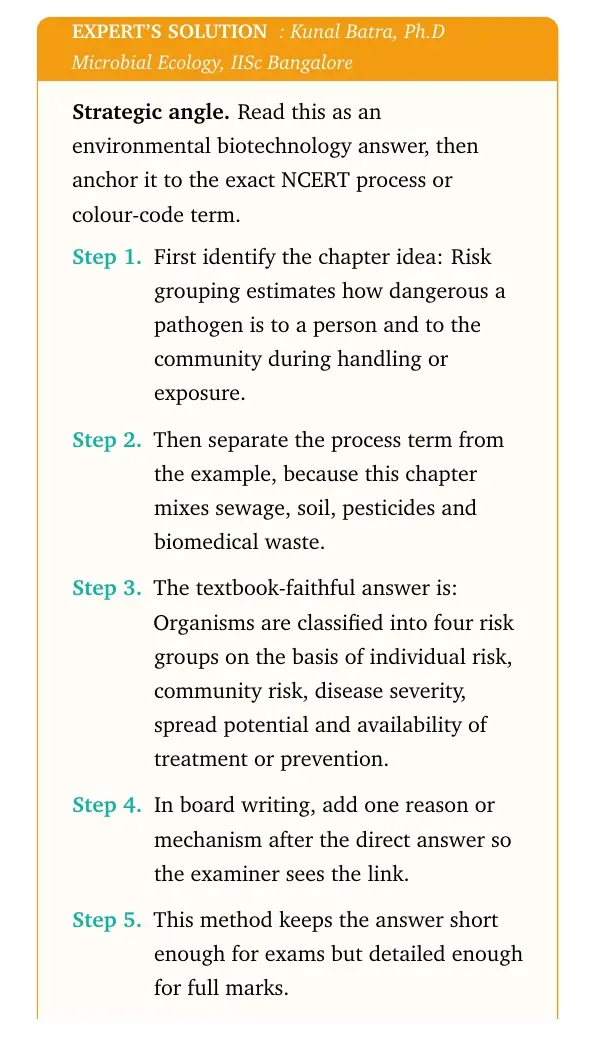
Ans. The solutions cover sewage treatment, BOD, biomagnification, xenobiotics, composting, pesticide bioremediation, biomedical waste and risk groups.
Ques. Which stage has maximum decomposition in wastewater treatment?
Ans. Secondary treatment has maximum biological decomposition because microorganisms remove much of the remaining organic matter.
Ques. Which enzyme is mainly linked with hydrolytic pesticide breakdown?
Ans. Esterase is the expected enzyme for hydrolytic breakdown of many pesticide molecules.
Ques. Which biomedical waste colour code is used for sharps?
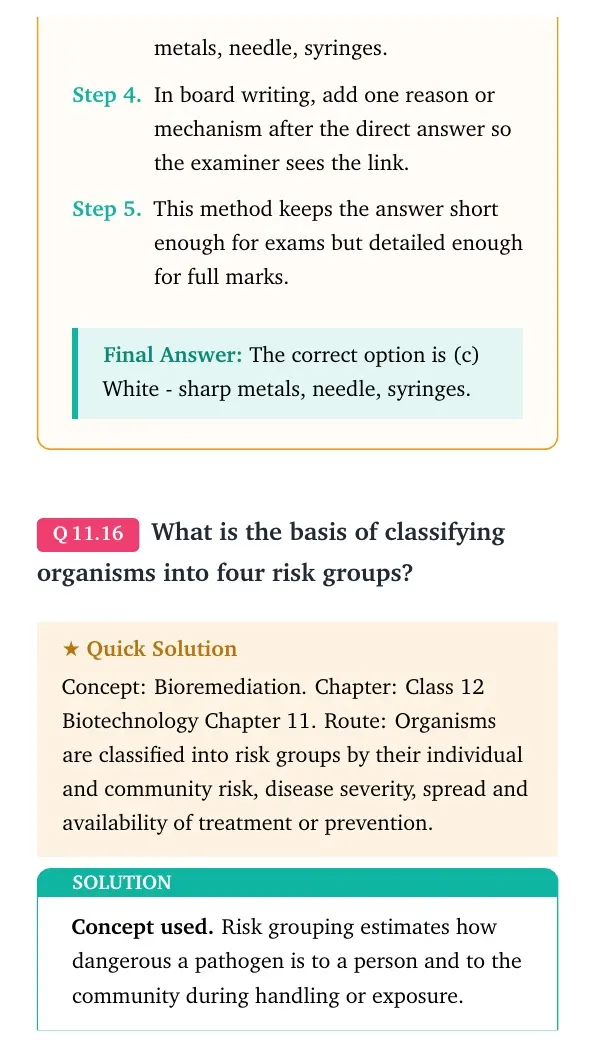
Ans. White colour code is used for sharps including contaminated metals, needles, syringes with fixed needles, blades and scalpels.



Comments