




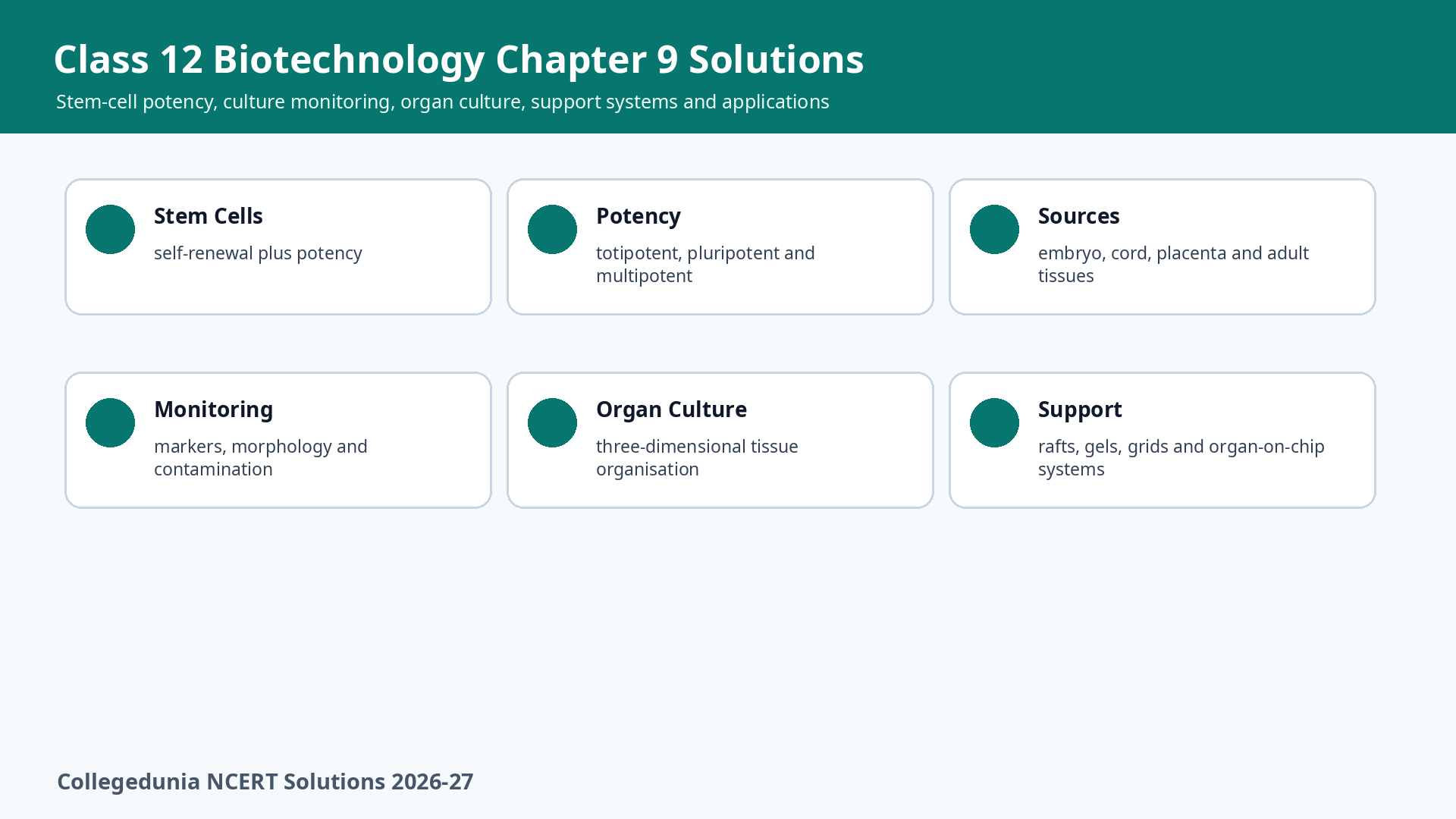
The NCERT Solutions for Class 12 Biotechnology Chapter 9 Stem Cell Culture and Organ Culture cover all 19 exercise questions from the latest 2026-27 NCERT textbook. These answers explain self-renewal, potency, embryonic stem cells, adult stem cells, organ culture, support systems and assertion-reason MCQs in exam-ready language.
- Question count: 19 solved NCERT exercise questions with objective answer checks.
- Best for: board revision, school tests and fast biotechnology recap.
- PDF includes: stepwise solutions, expert explanations and boxed final answers.
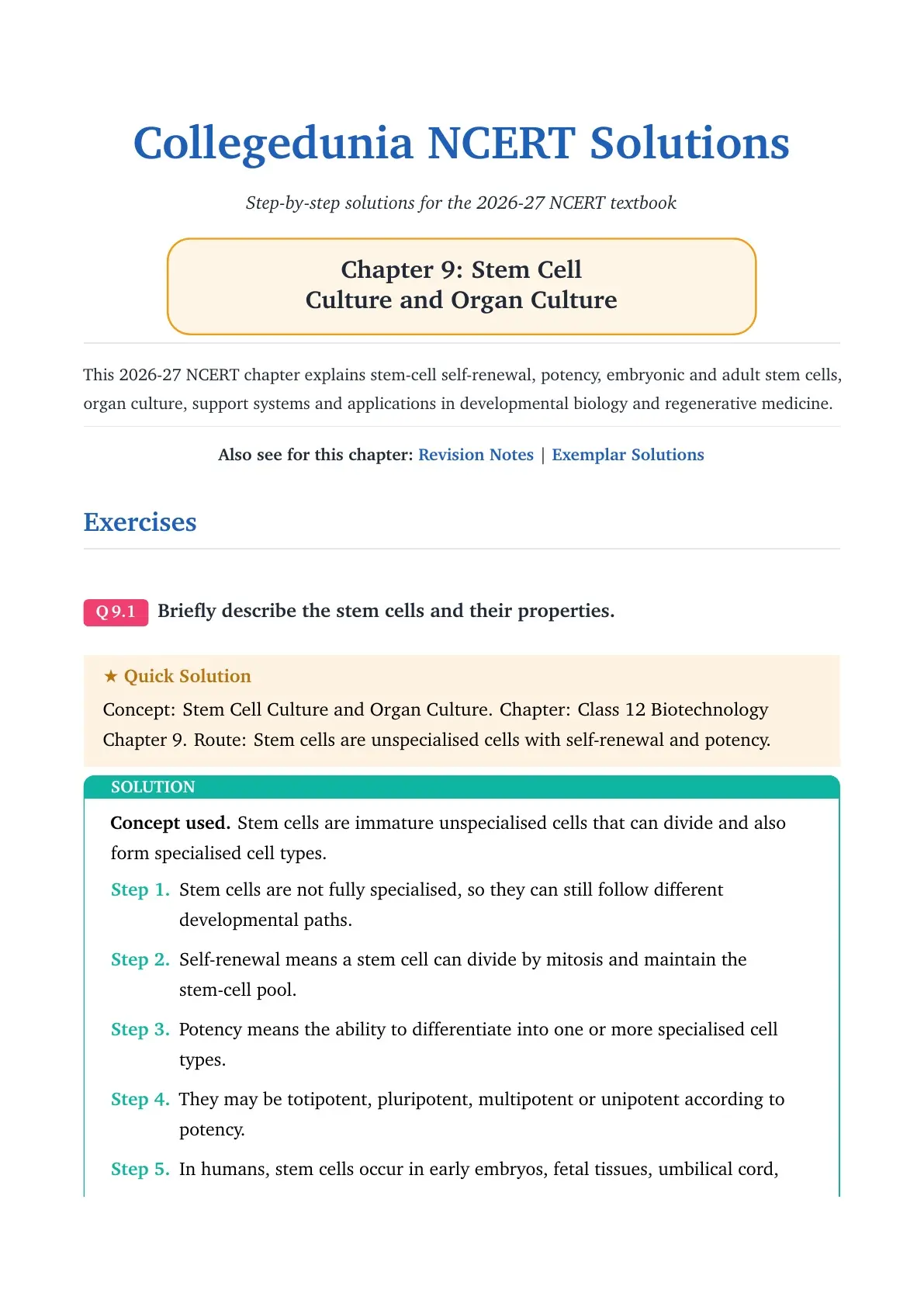
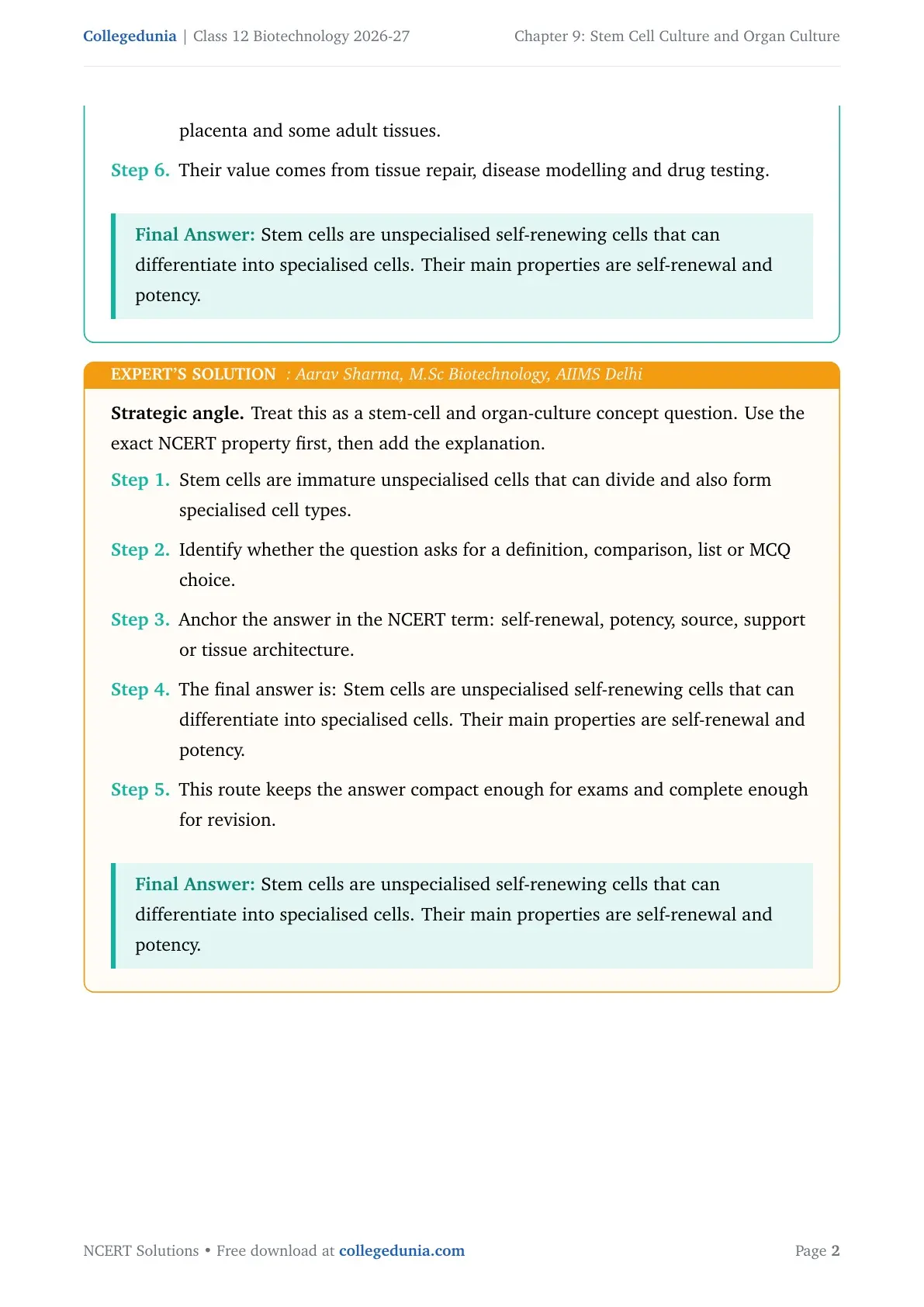
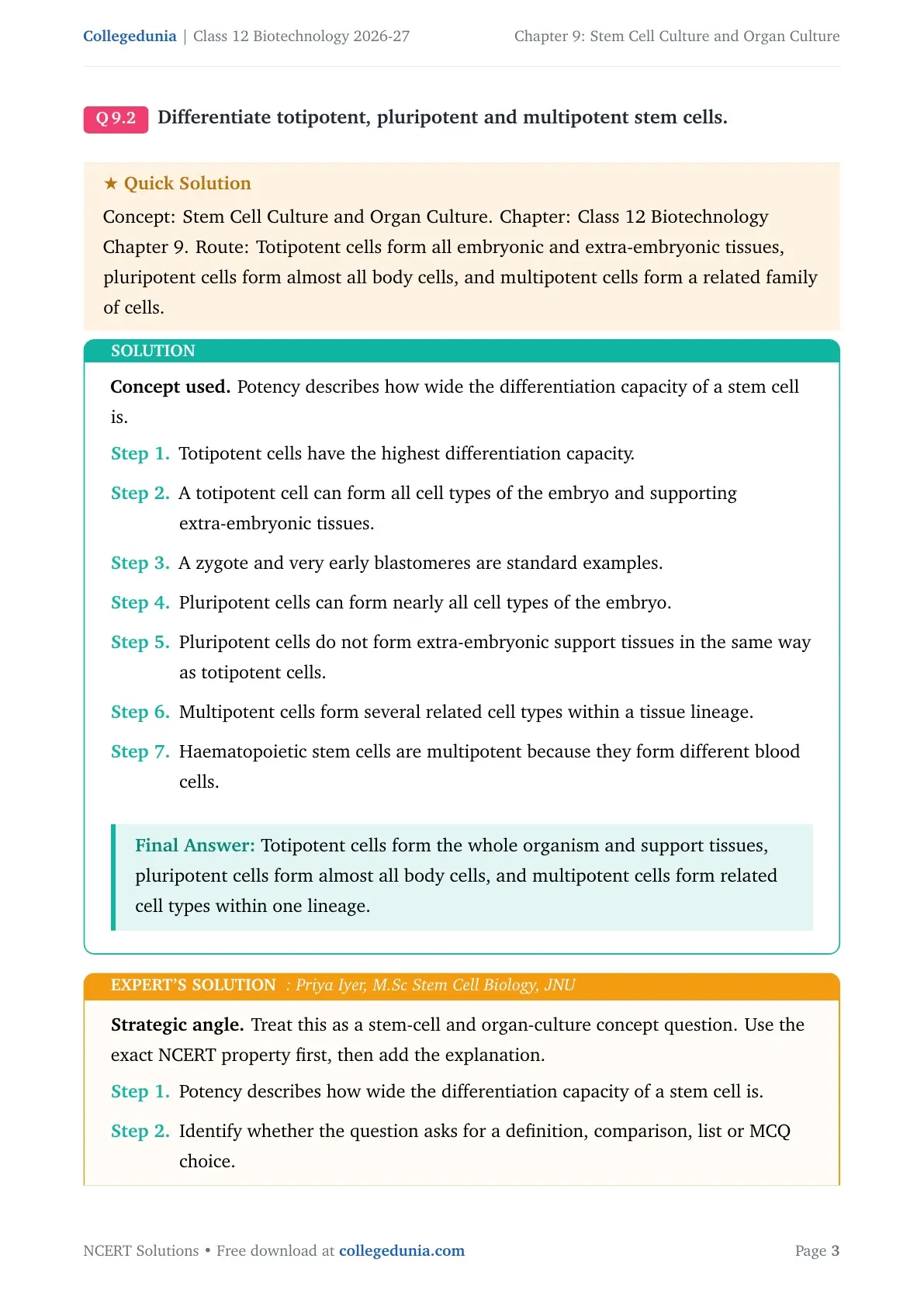
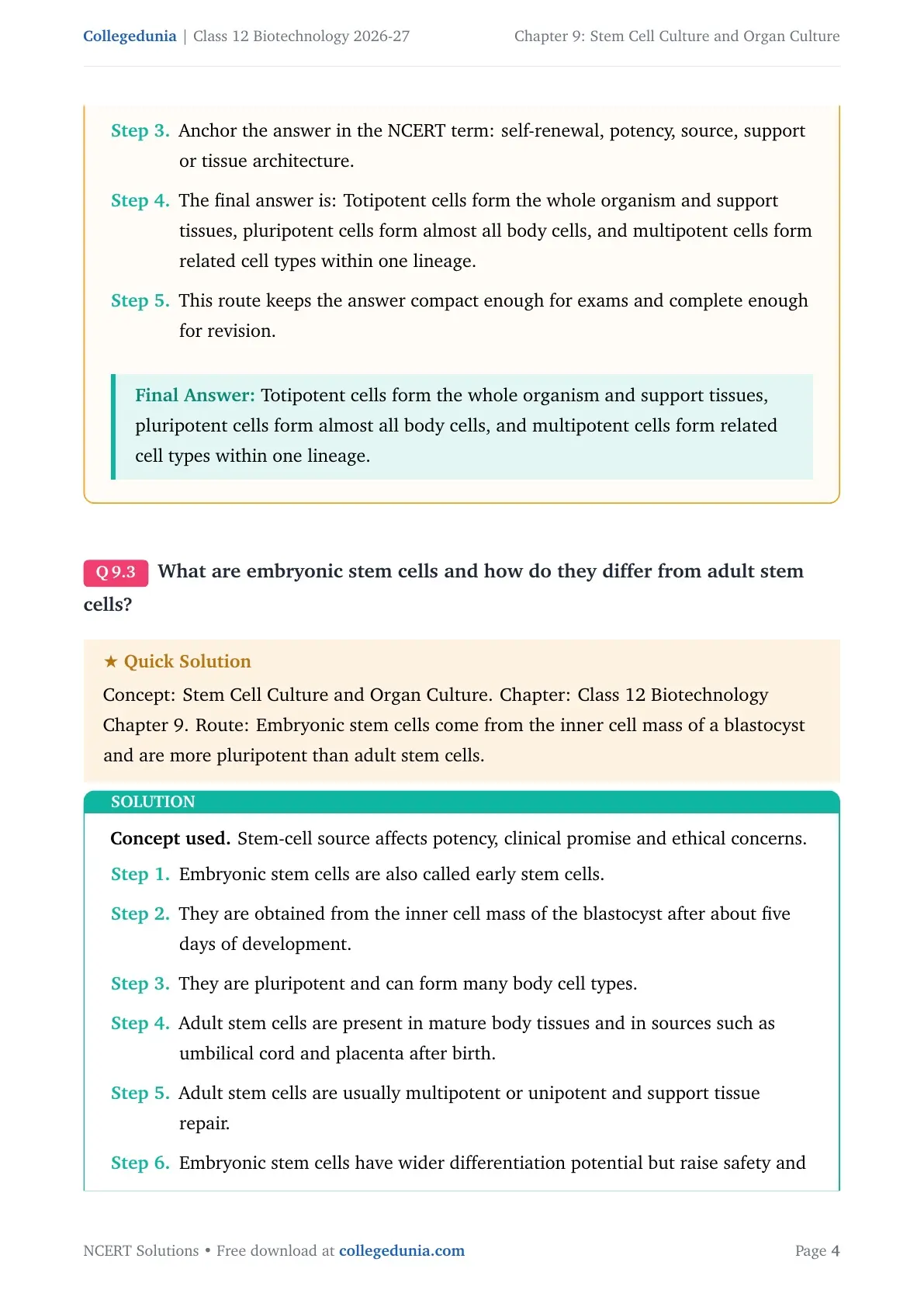
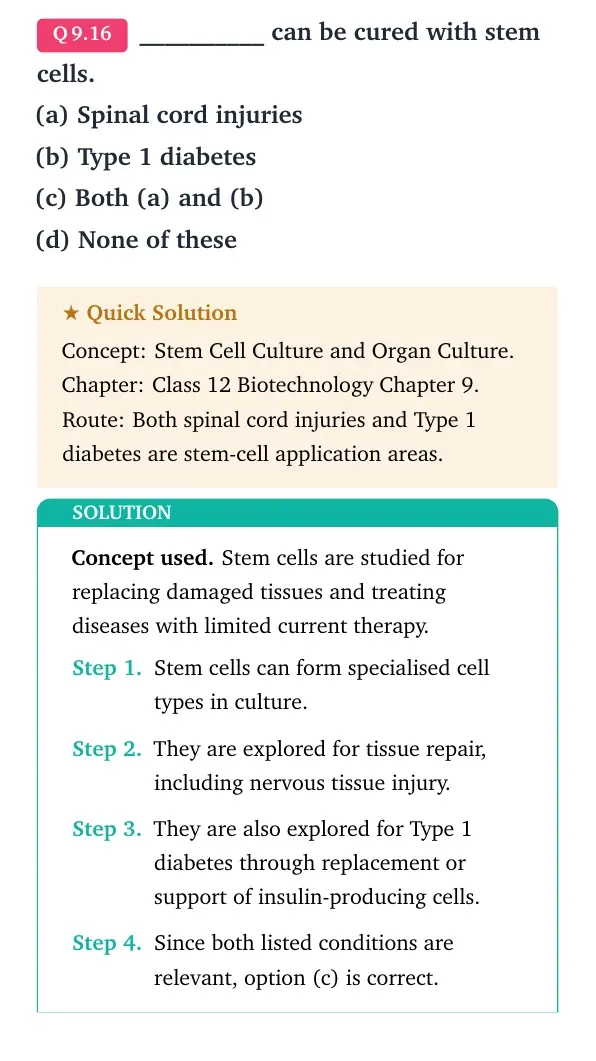
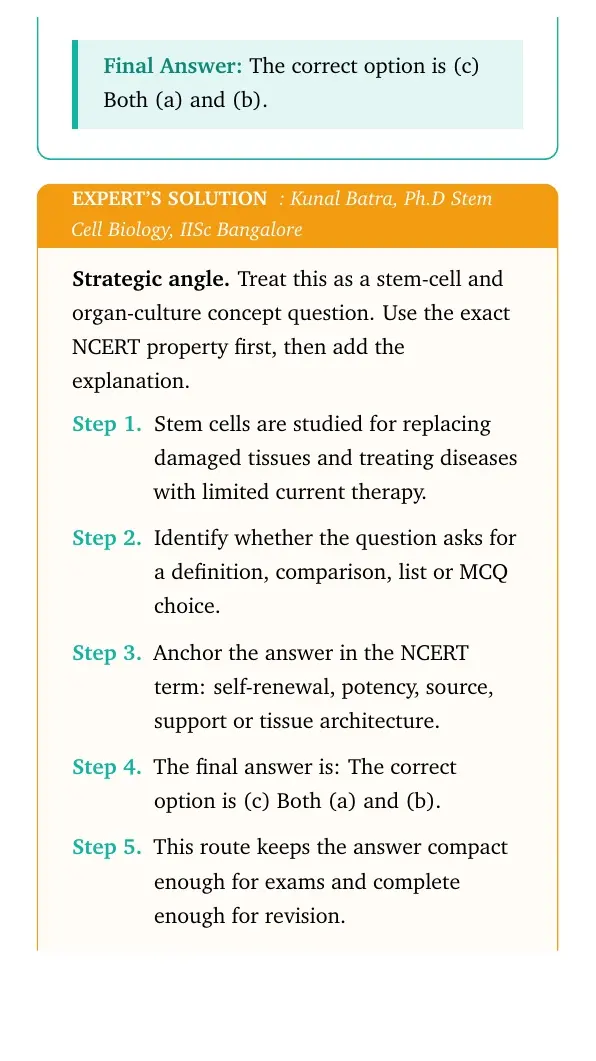
Student Feedback: Students said this chapter becomes easier when they first separate stem-cell potency from organ-culture support systems, then solve the assertion-reason questions.
Class 12 Biotechnology Chapter 9 Solutions PDF
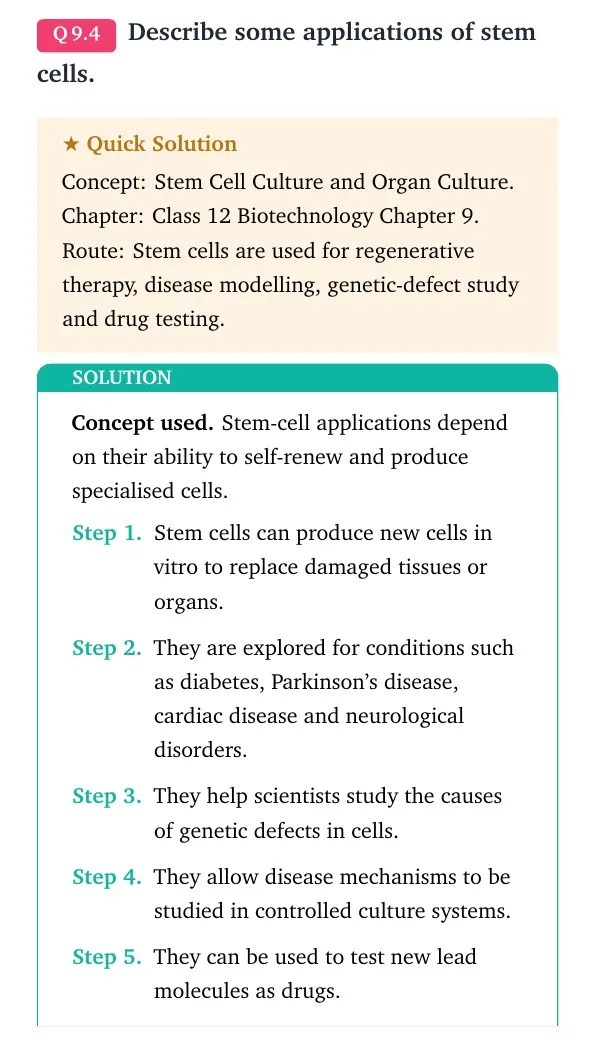
Class 12 Biotechnology Chapter 9 Stem Cell Culture and Organ Culture NCERT Solutions help students revise the two big ideas in the chapter. The first idea is stem-cell behaviour: self-renewal, potency and sources. The second idea is organ culture: how tissues are kept organised in vitro.
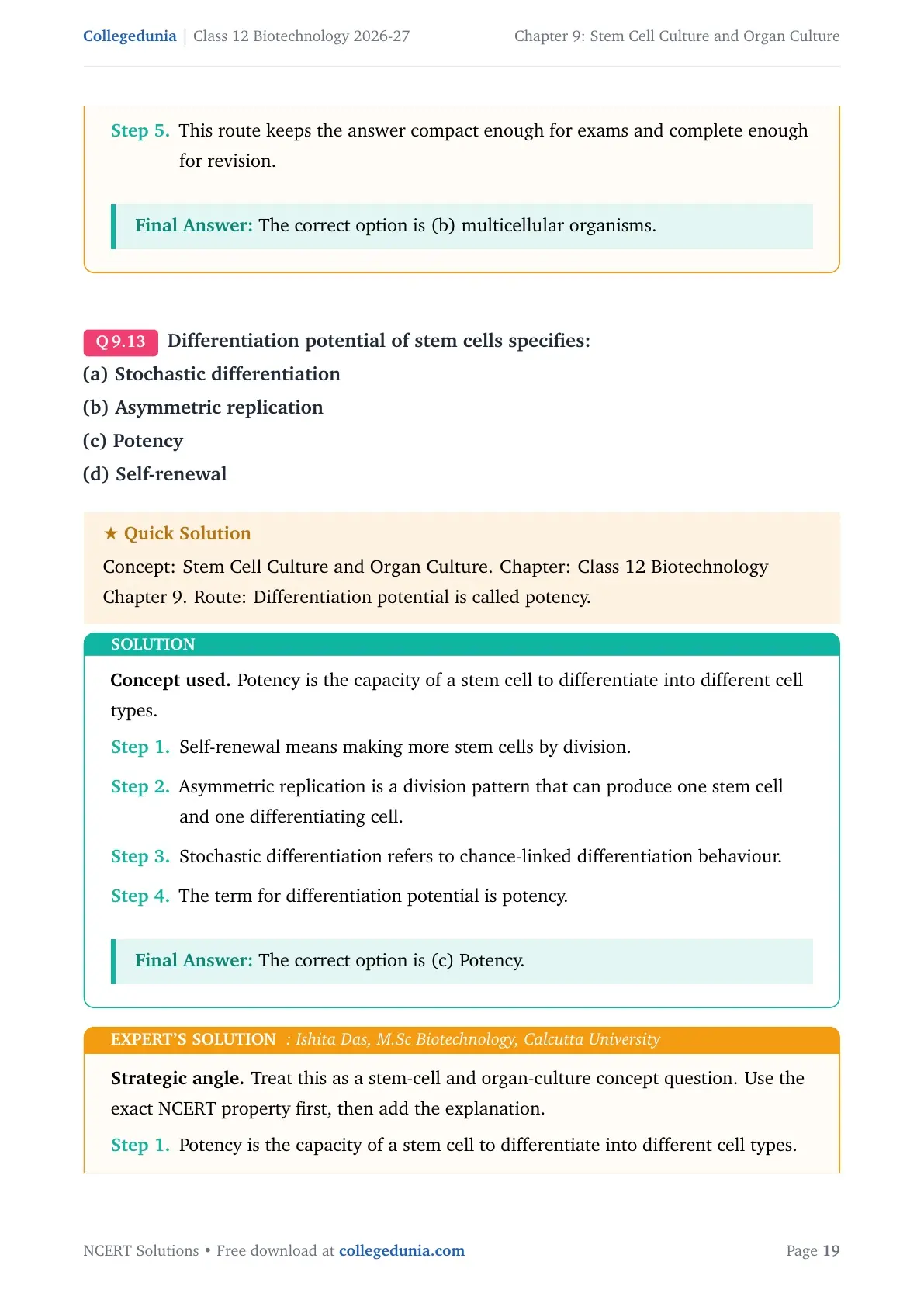
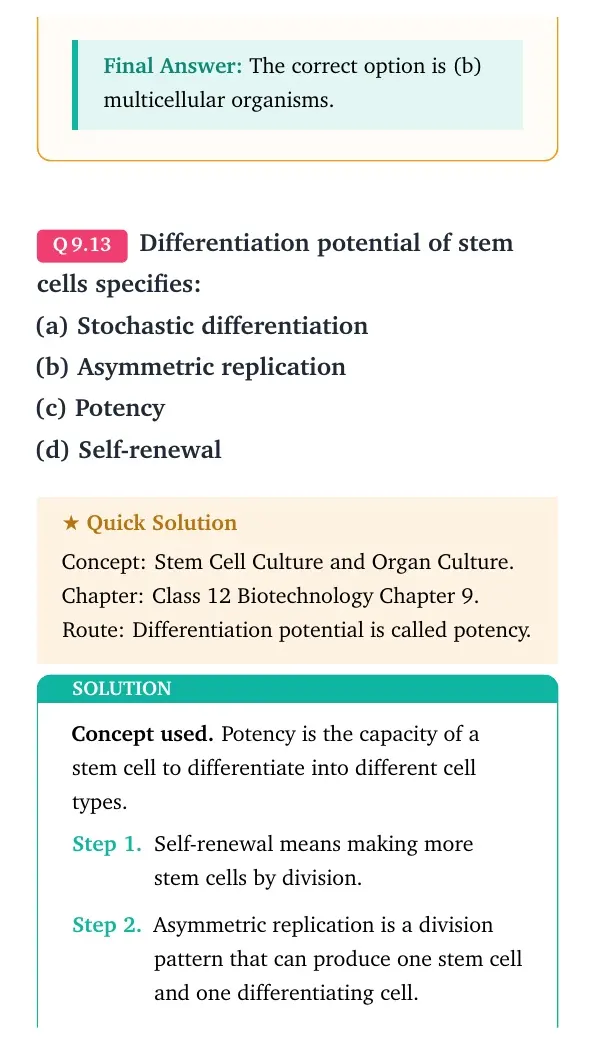
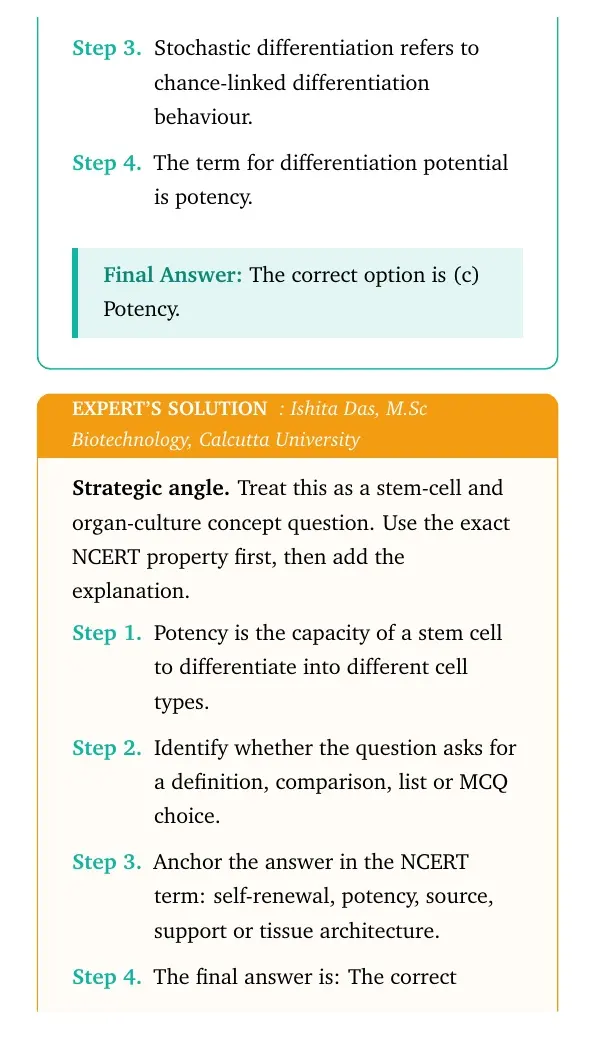
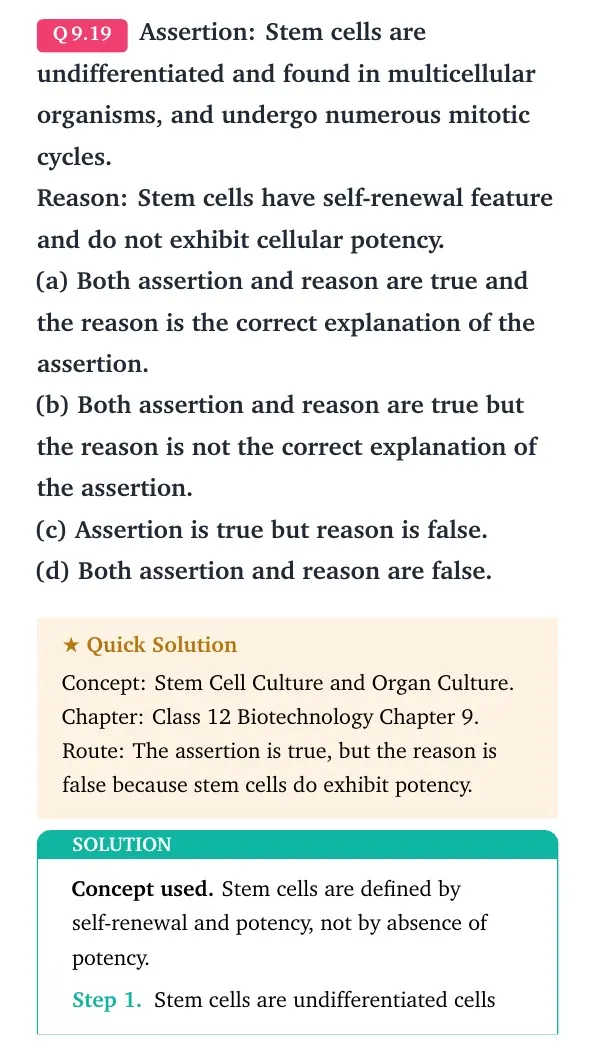
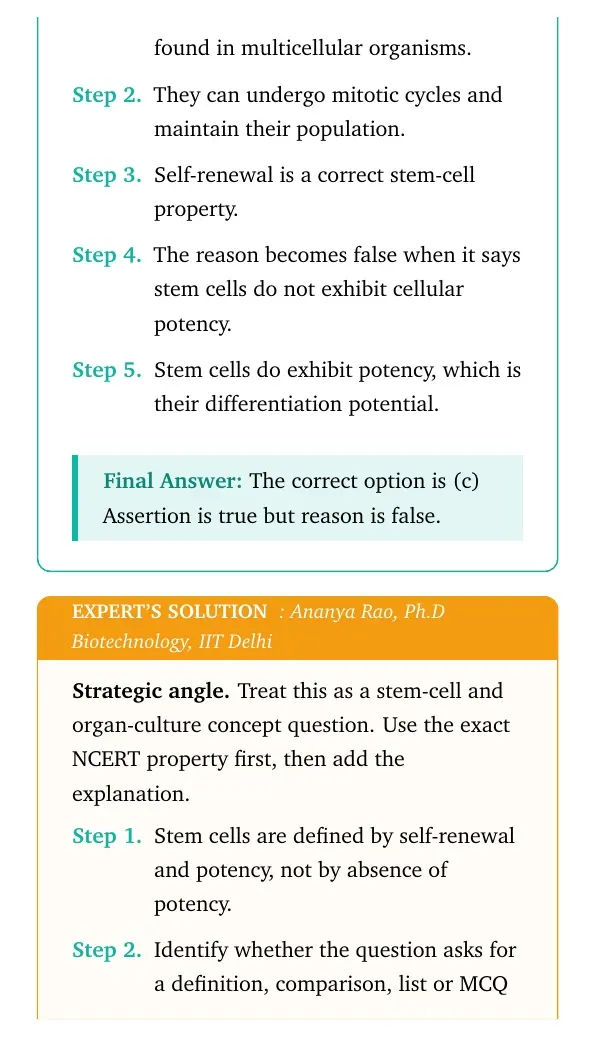
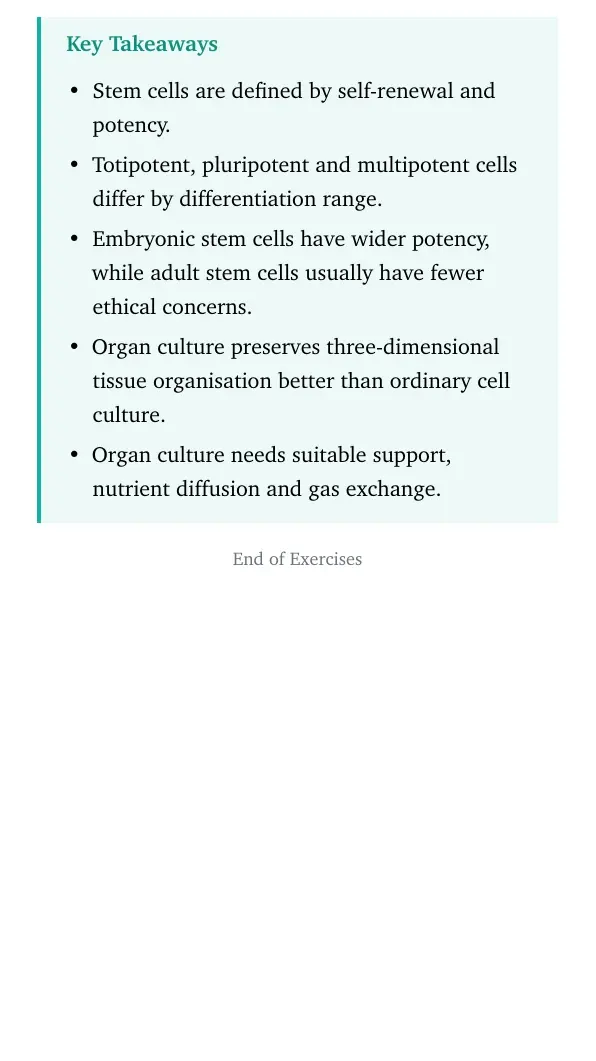
Most students lose marks when they confuse potency with self-renewal. Potency means differentiation range. Self-renewal means making more stem cells.
How to Use These Stem Cell Culture NCERT Solutions
Start with the definitions of stem cells and organ culture. Then revise the comparison of totipotent, pluripotent and multipotent cells. Finish with the MCQs because they directly test NCERT terms.
- Use the boxed answers for last-minute recall.
- Read the expert answer when an MCQ depends on a subtle word.
- Revise support systems before attempting the organ culture questions.
Stem Cell Potency Map
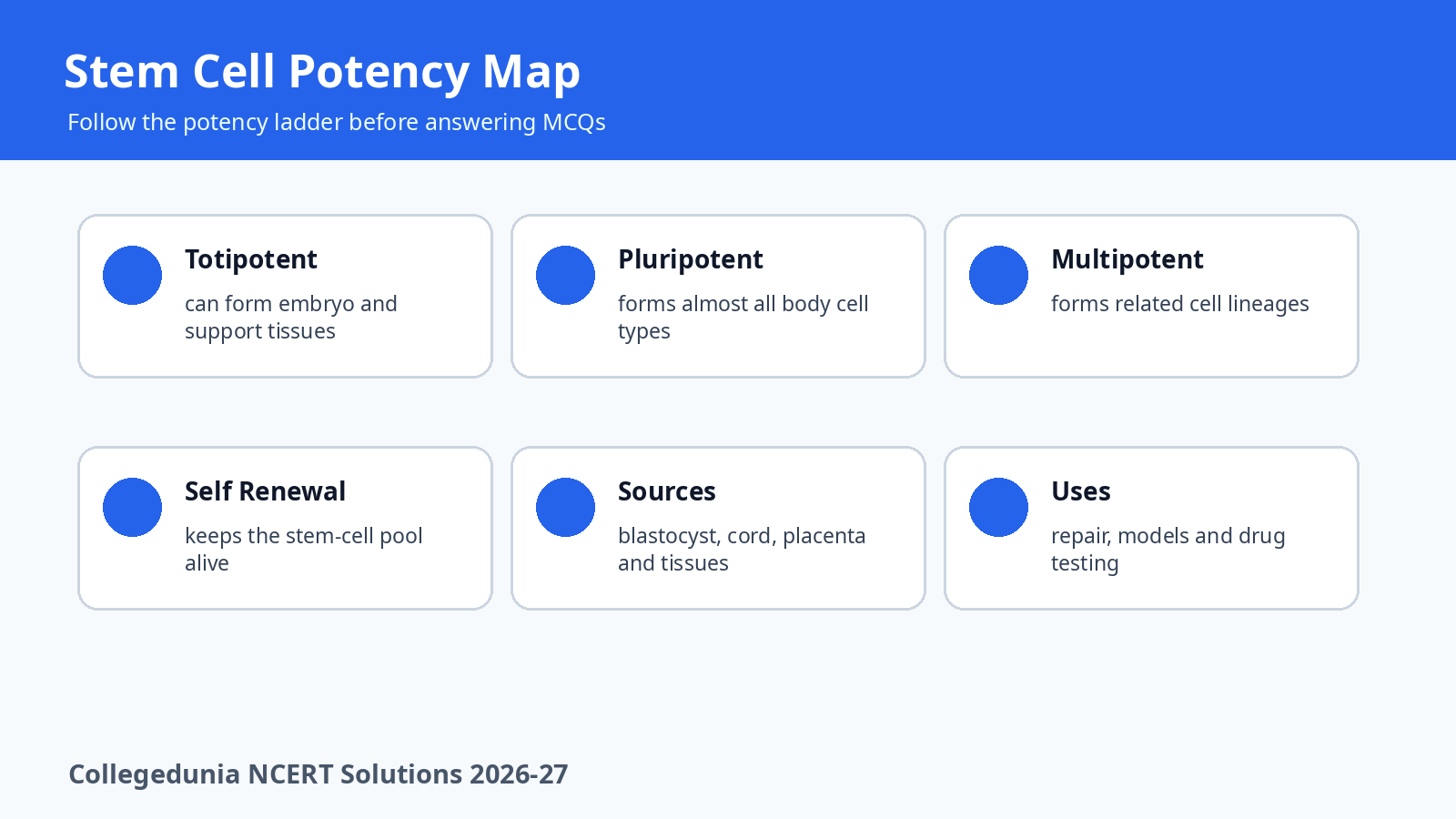
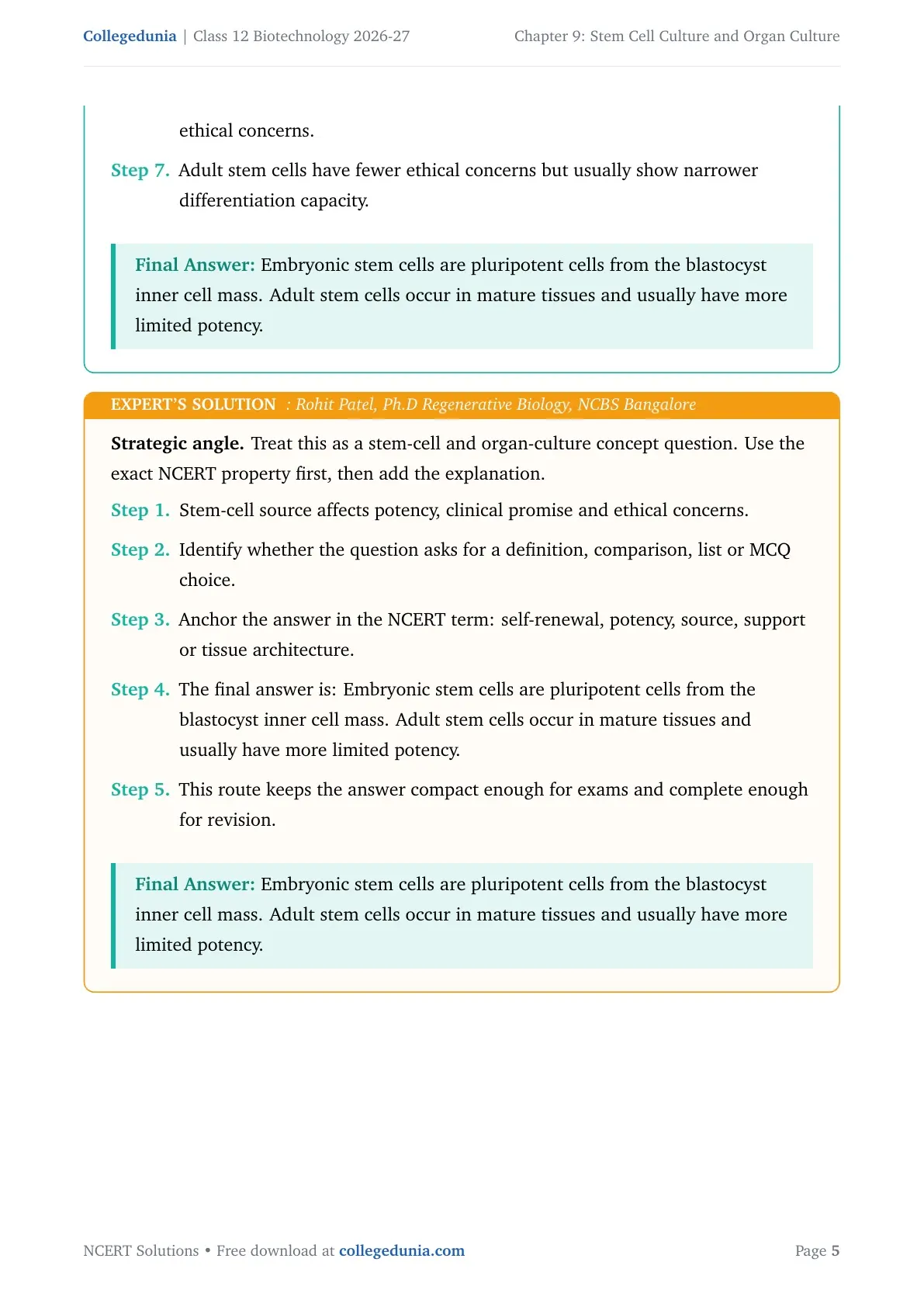
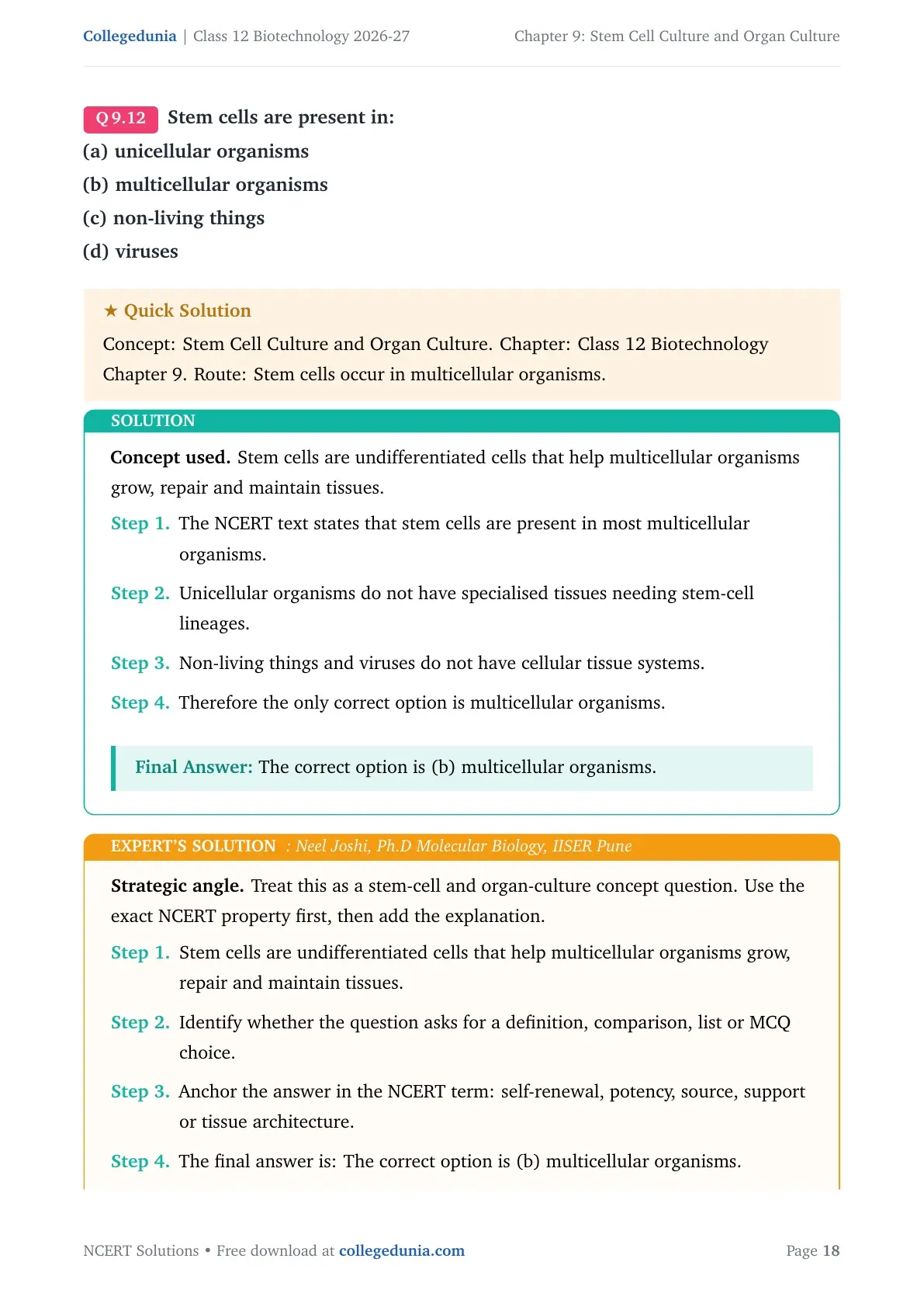
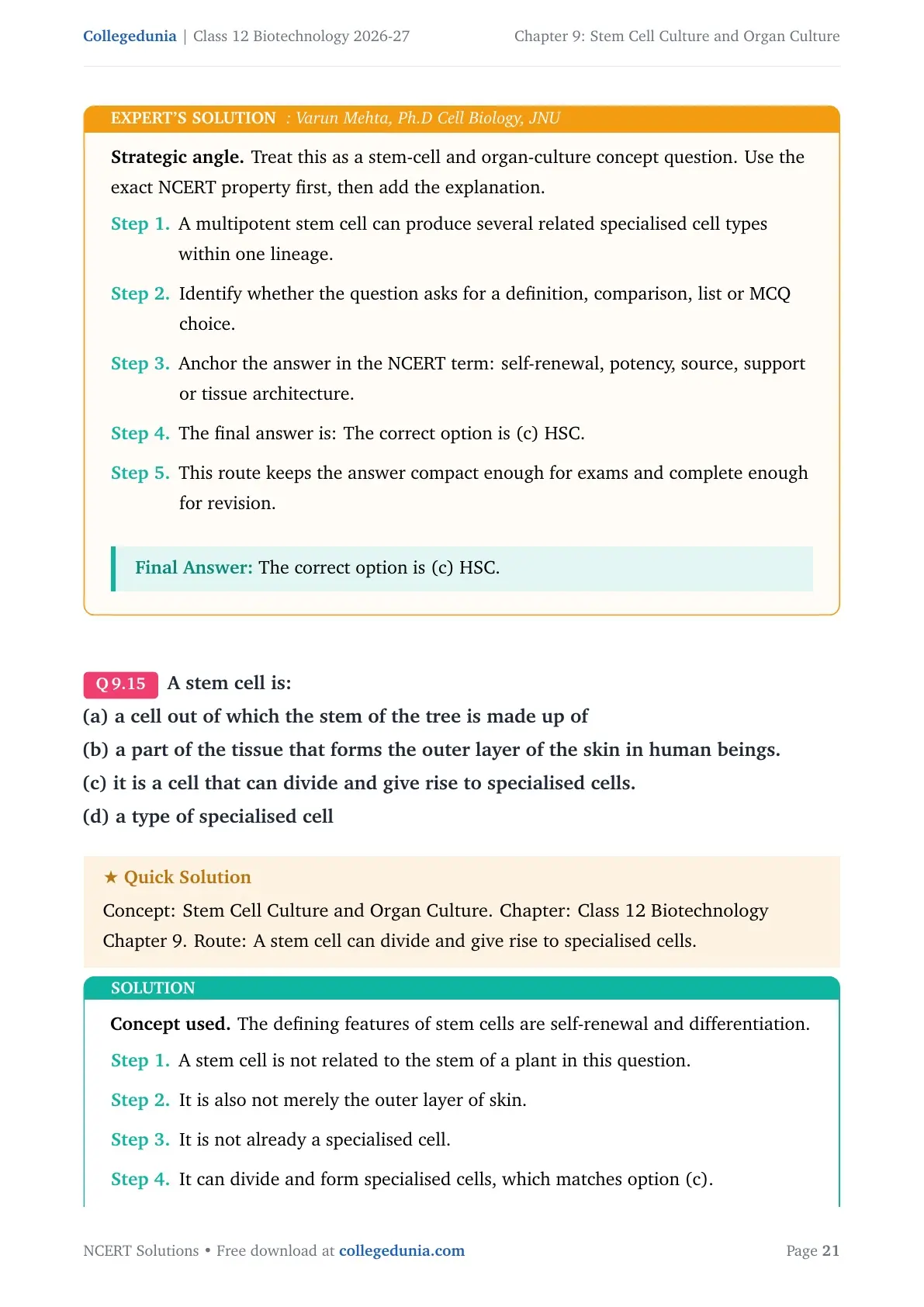
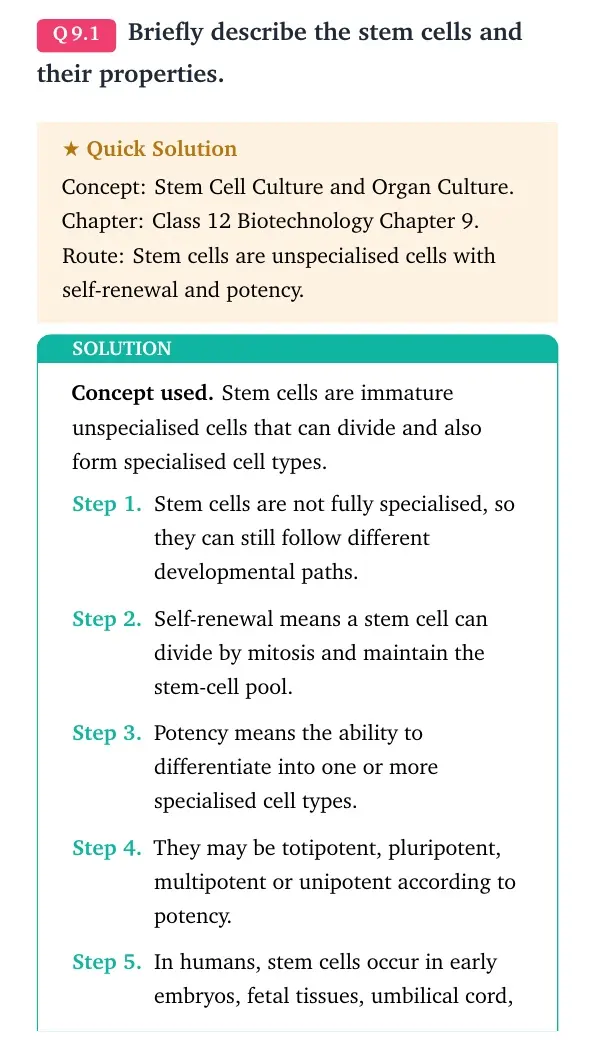
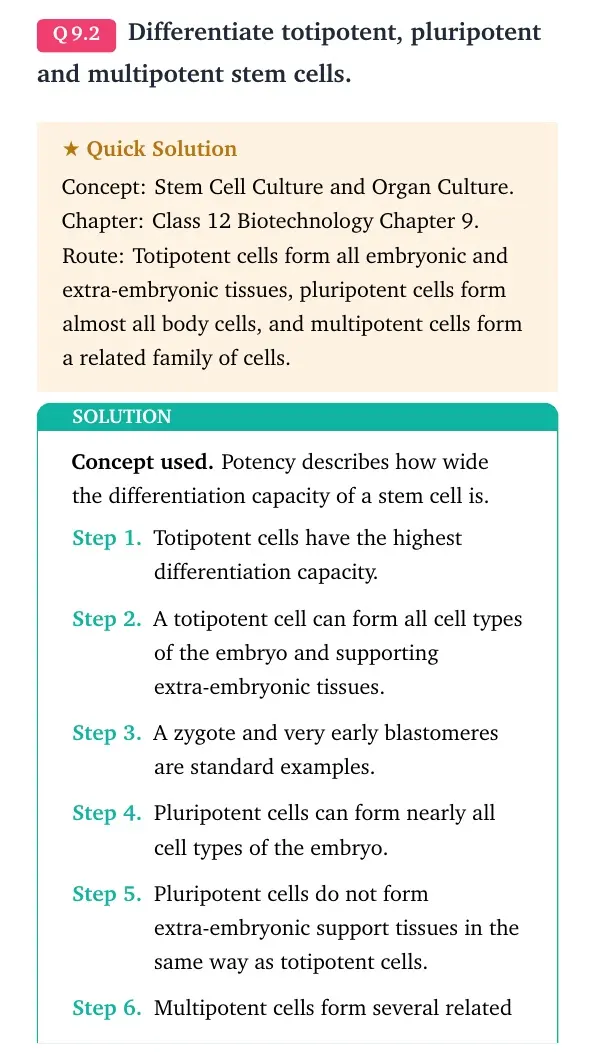
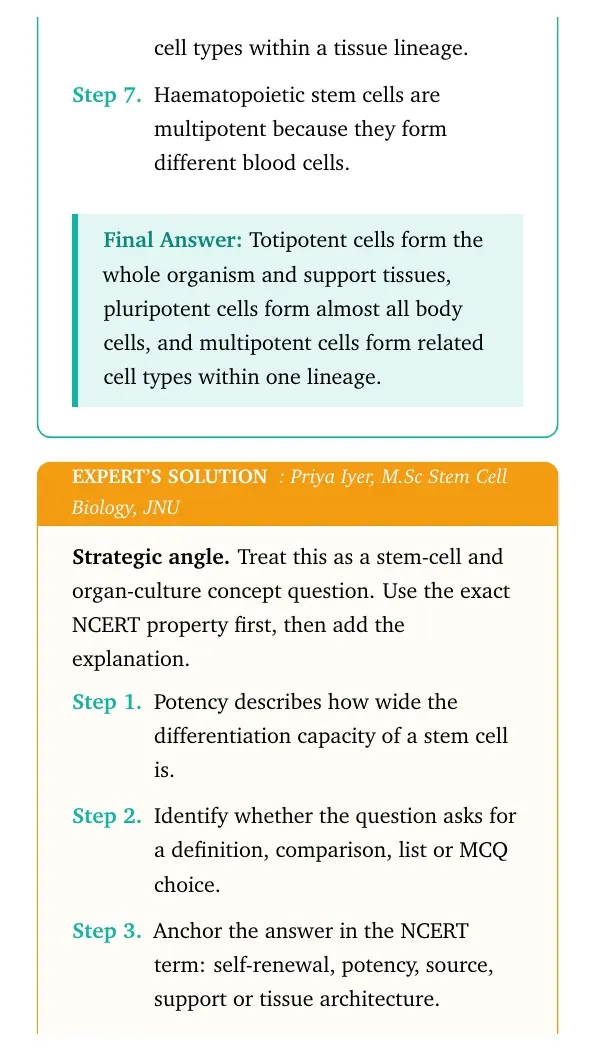
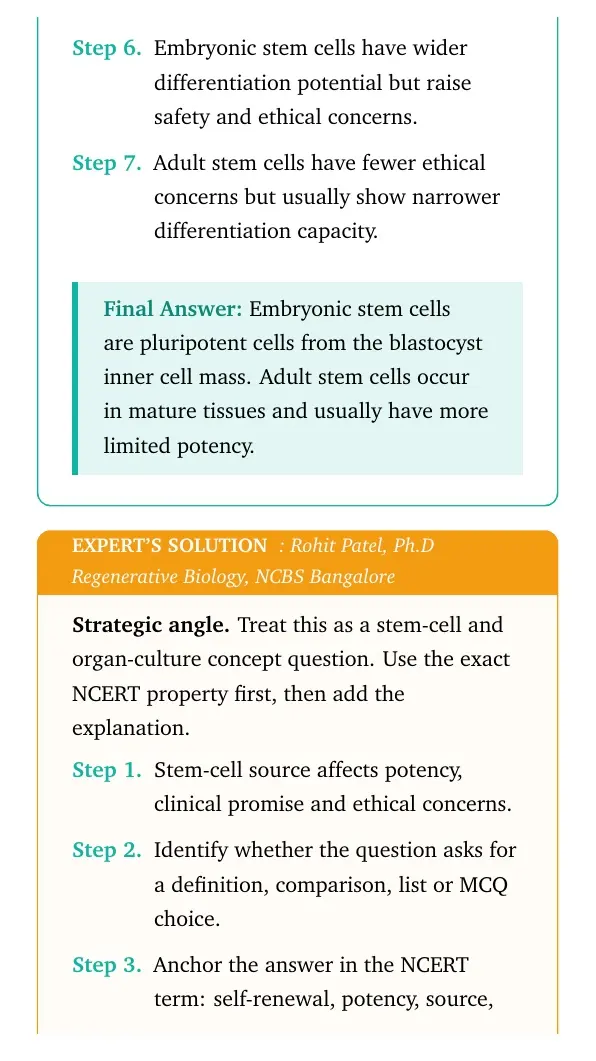
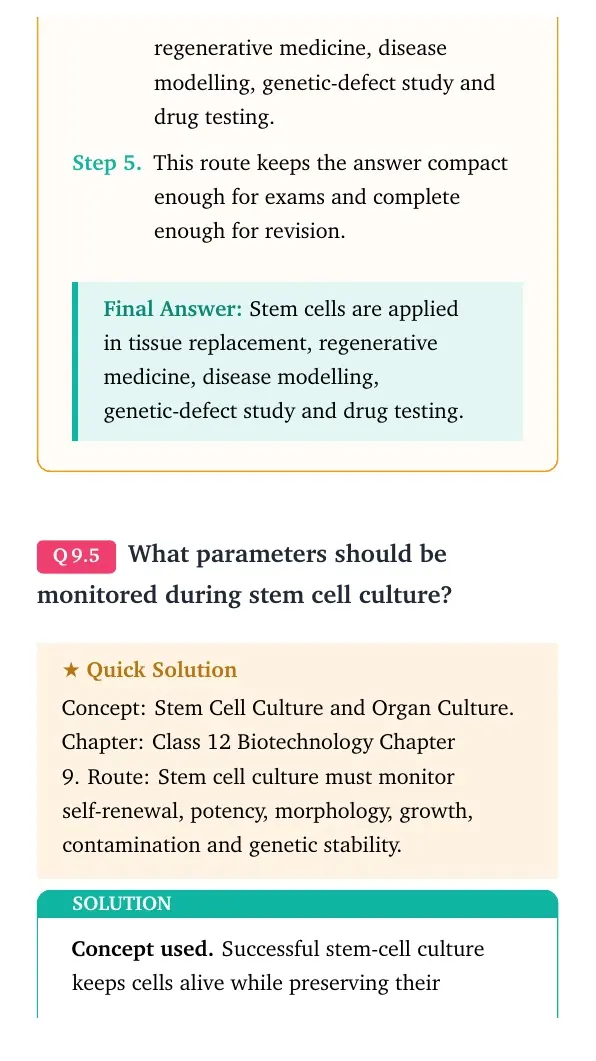
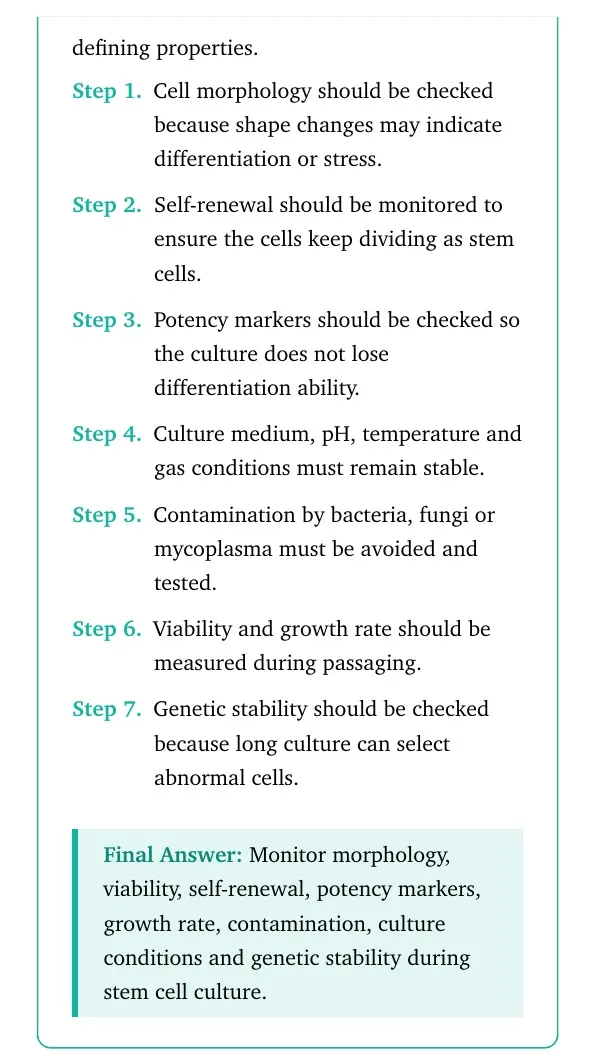
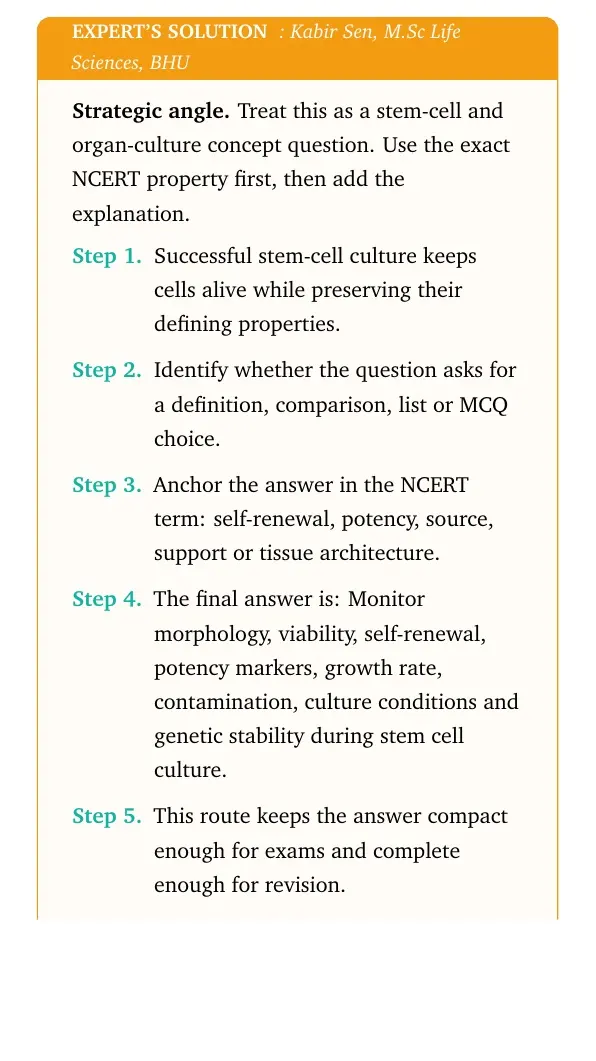
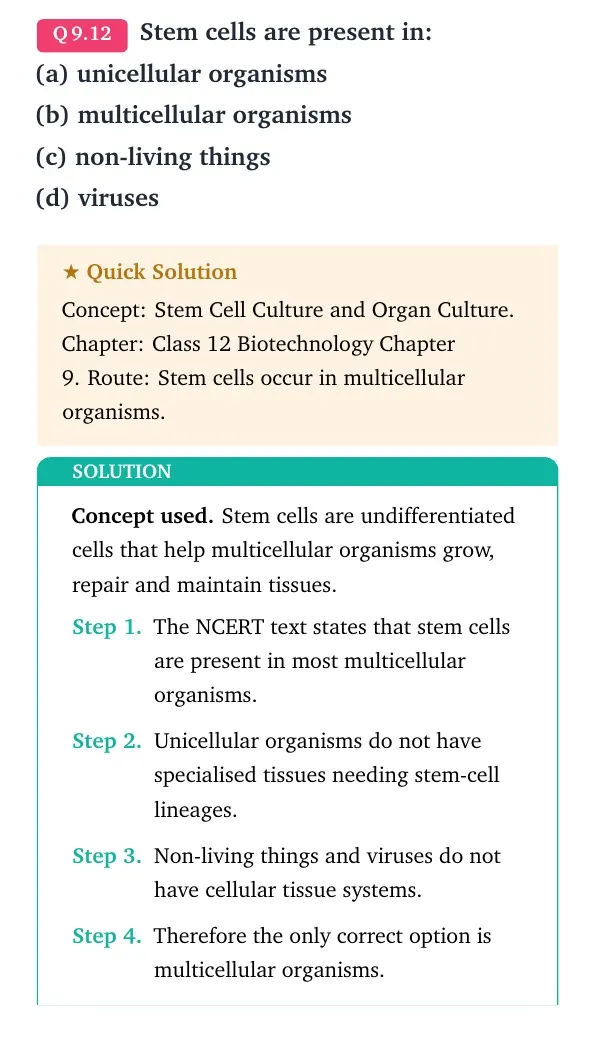
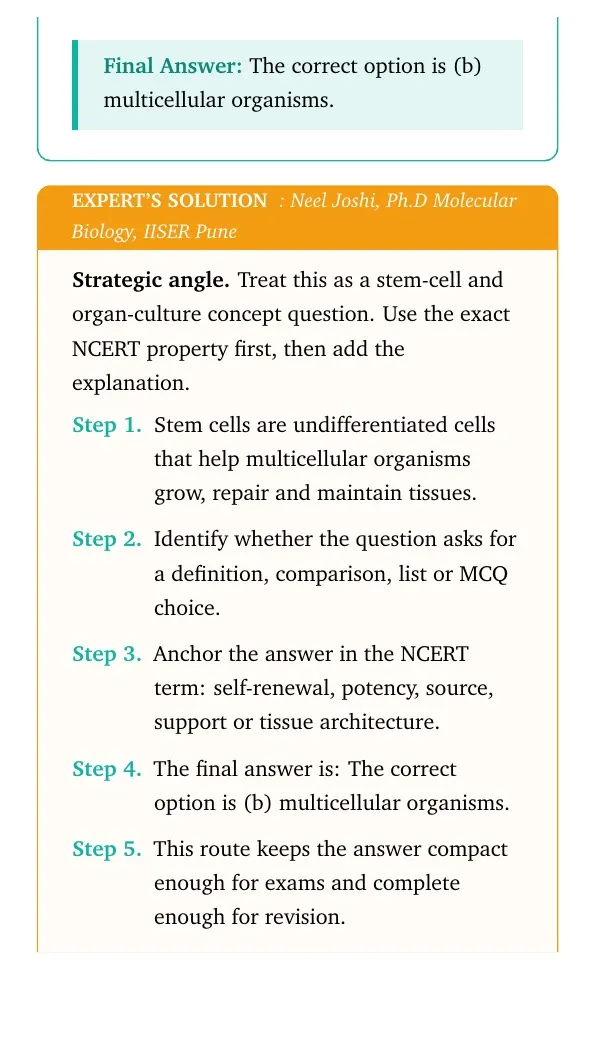
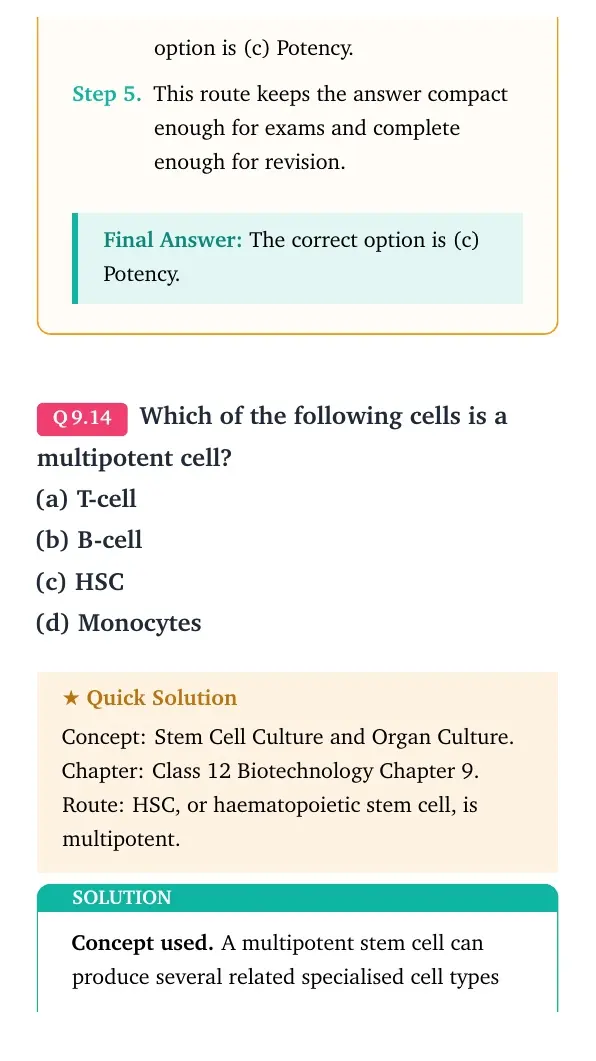
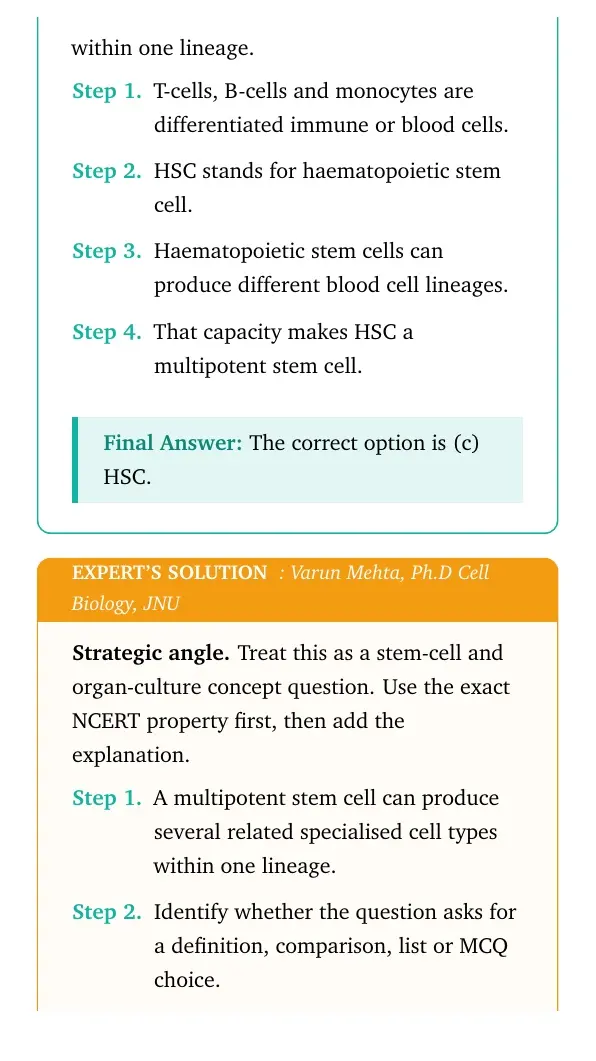
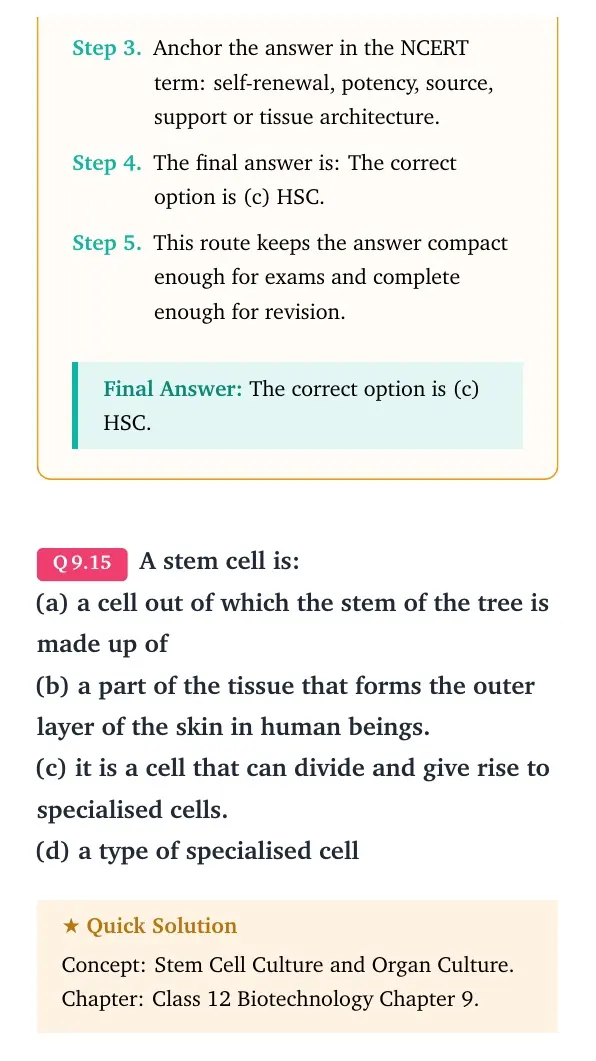
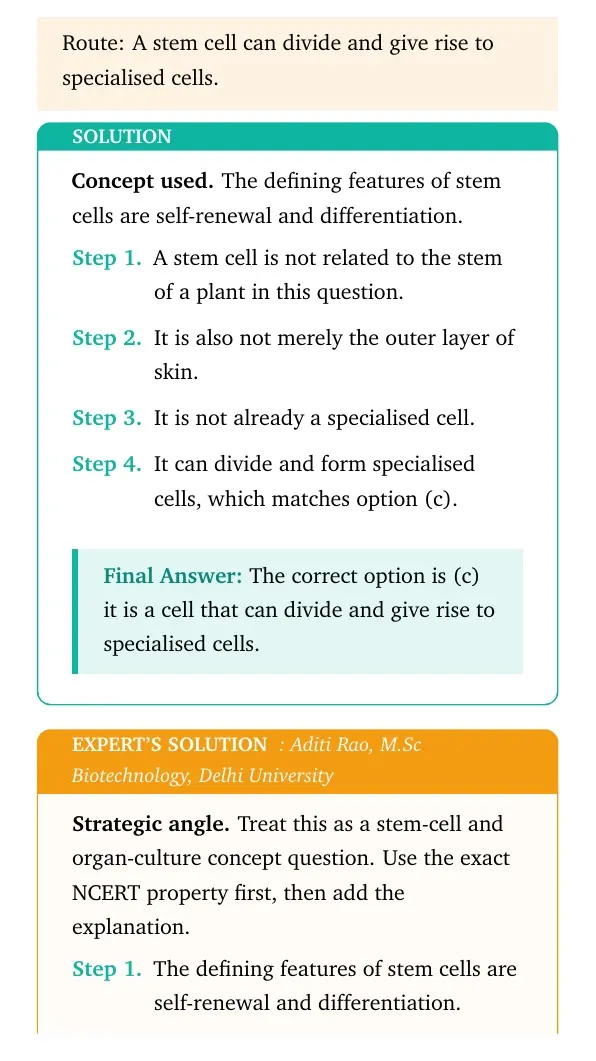
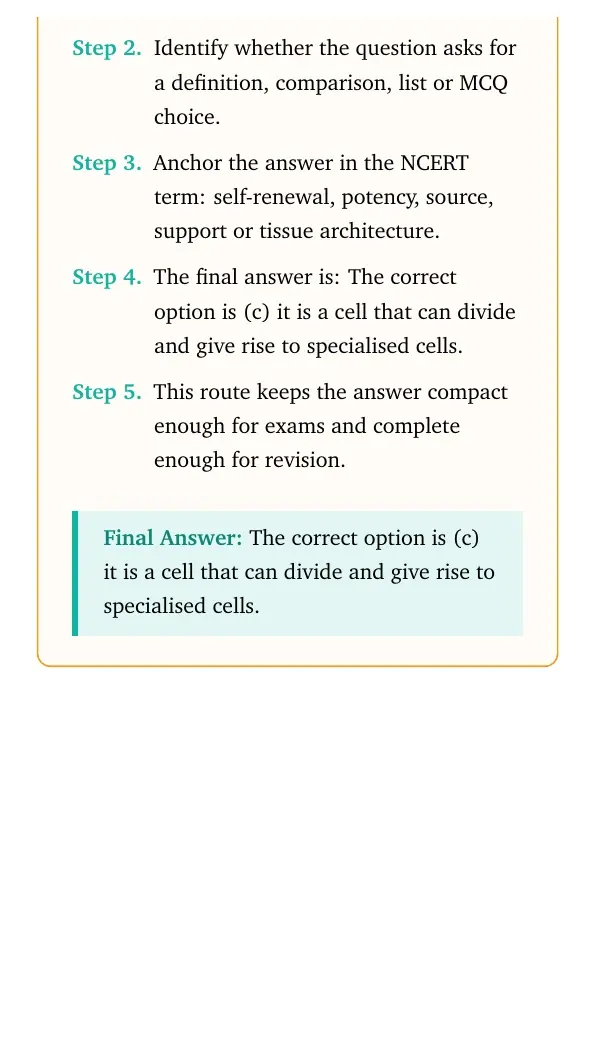
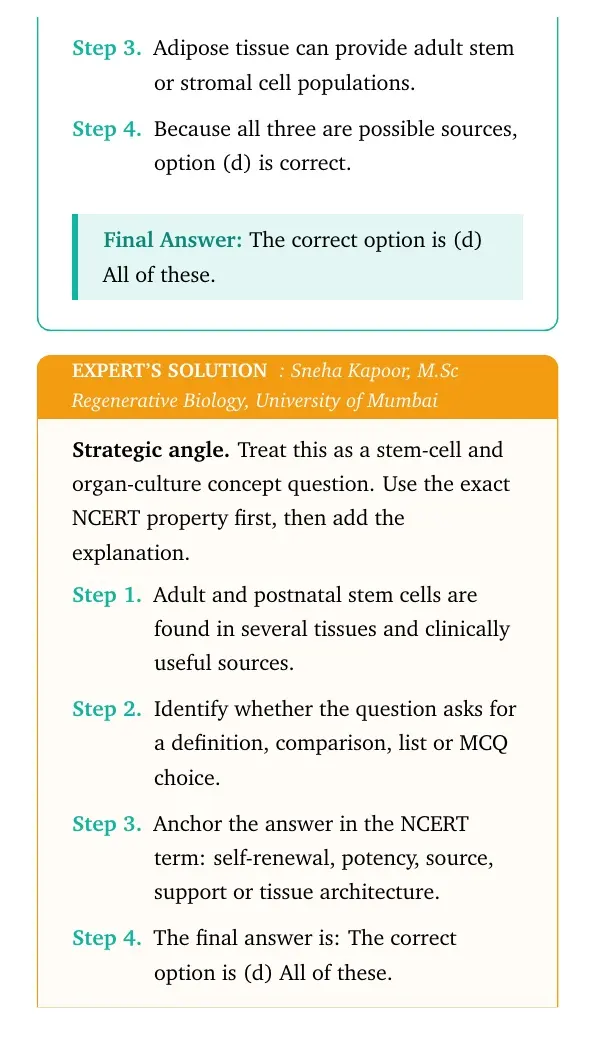
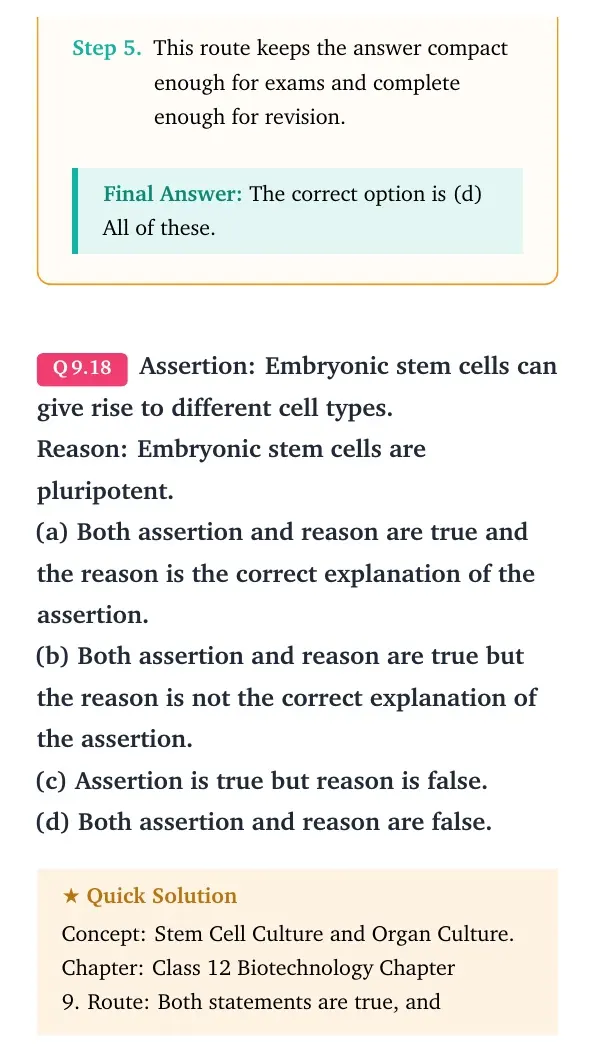
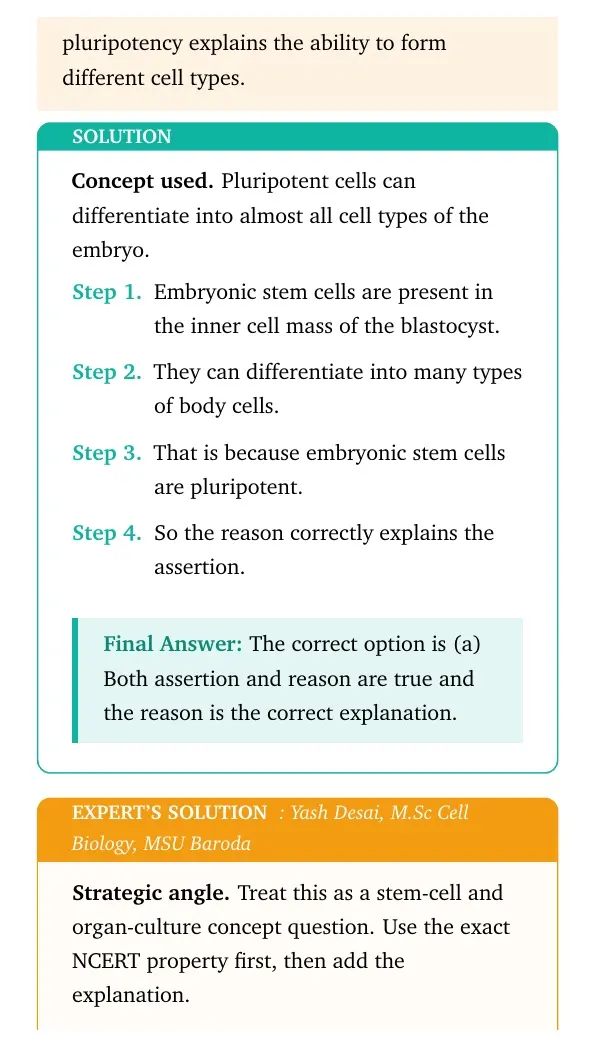
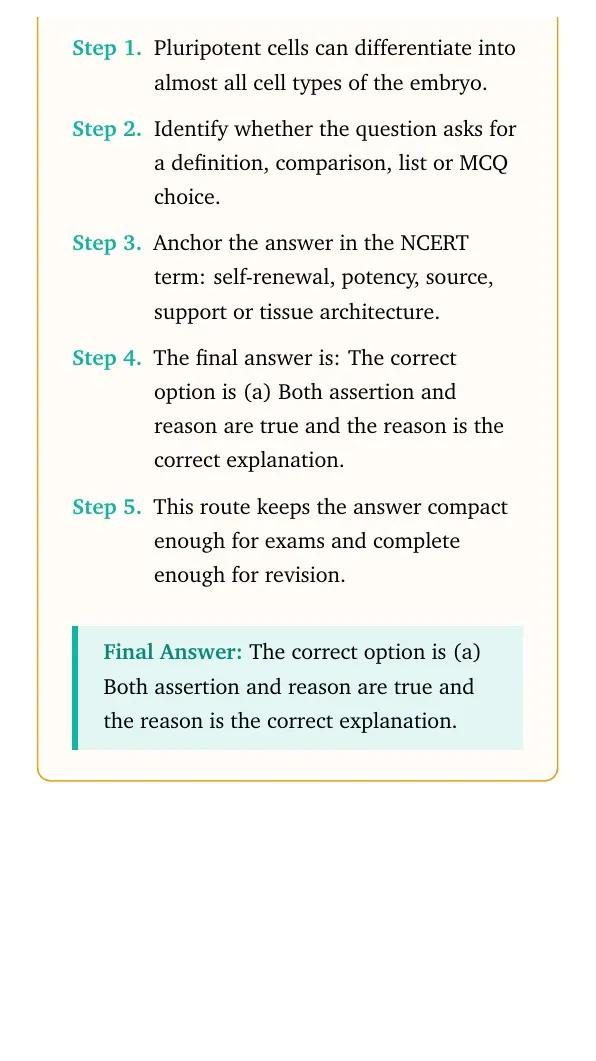
Stem cells are unspecialised cells with self-renewal and potency. Totipotent cells have the widest potential. Pluripotent cells form almost all body cell types. Multipotent cells form a related family of cells, such as blood cells from haematopoietic stem cells.
| Term | Meaning | Example |
|---|---|---|
| Self-renewal | Ability to make more stem cells | Stem cell pool maintenance |
| Potency | Differentiation potential | Totipotent, pluripotent, multipotent |
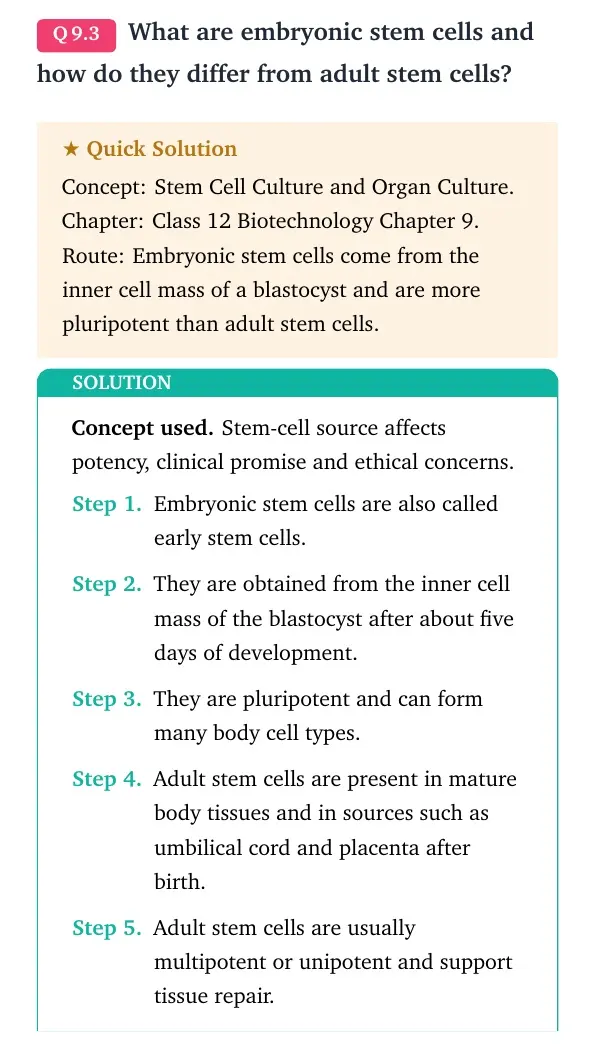
| Embryonic stem cell | Cell from blastocyst inner cell mass | Pluripotent cell |
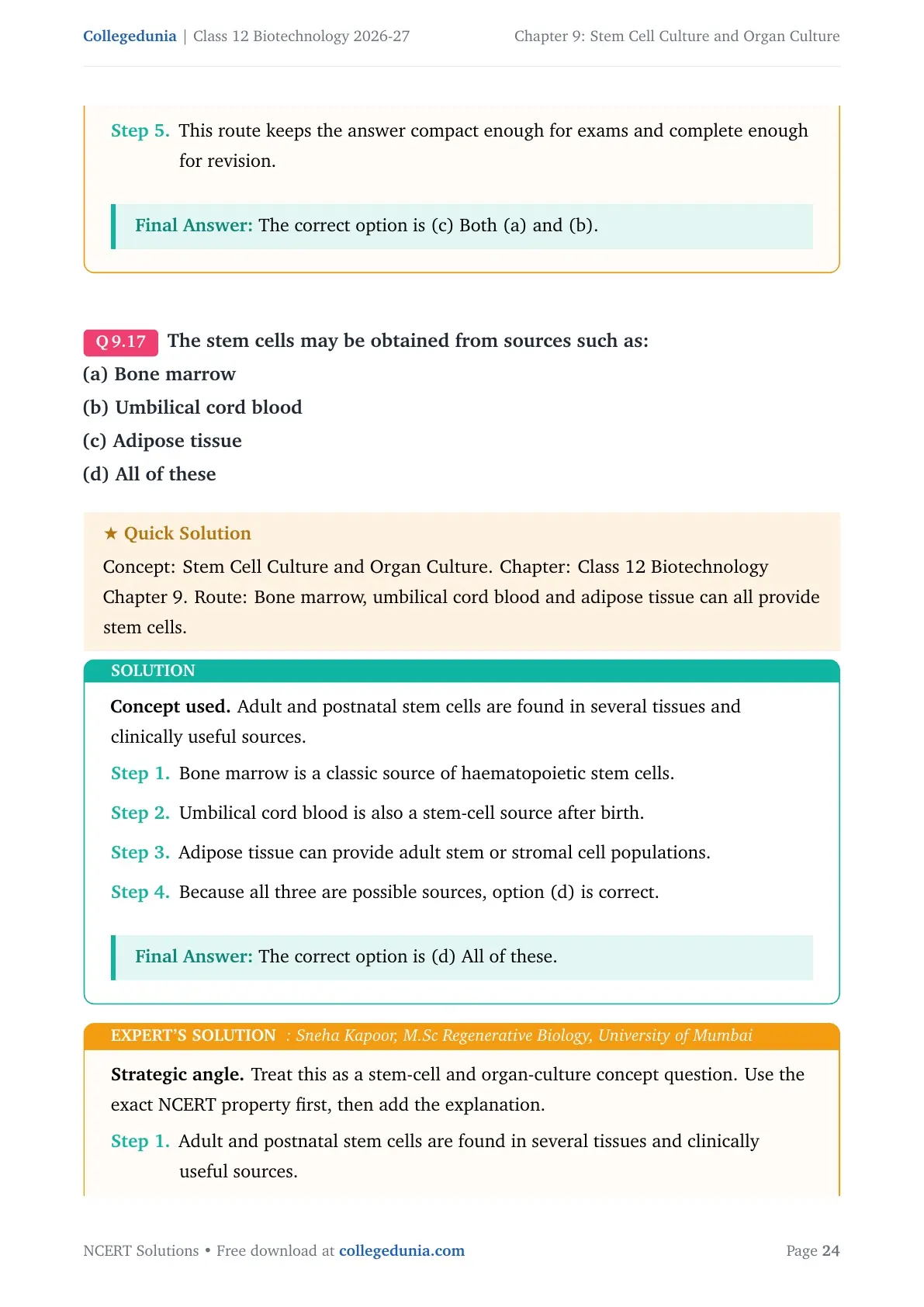
| Adult stem cell | Stem cell in mature tissue | Bone marrow HSC |
Organ Culture Support Systems
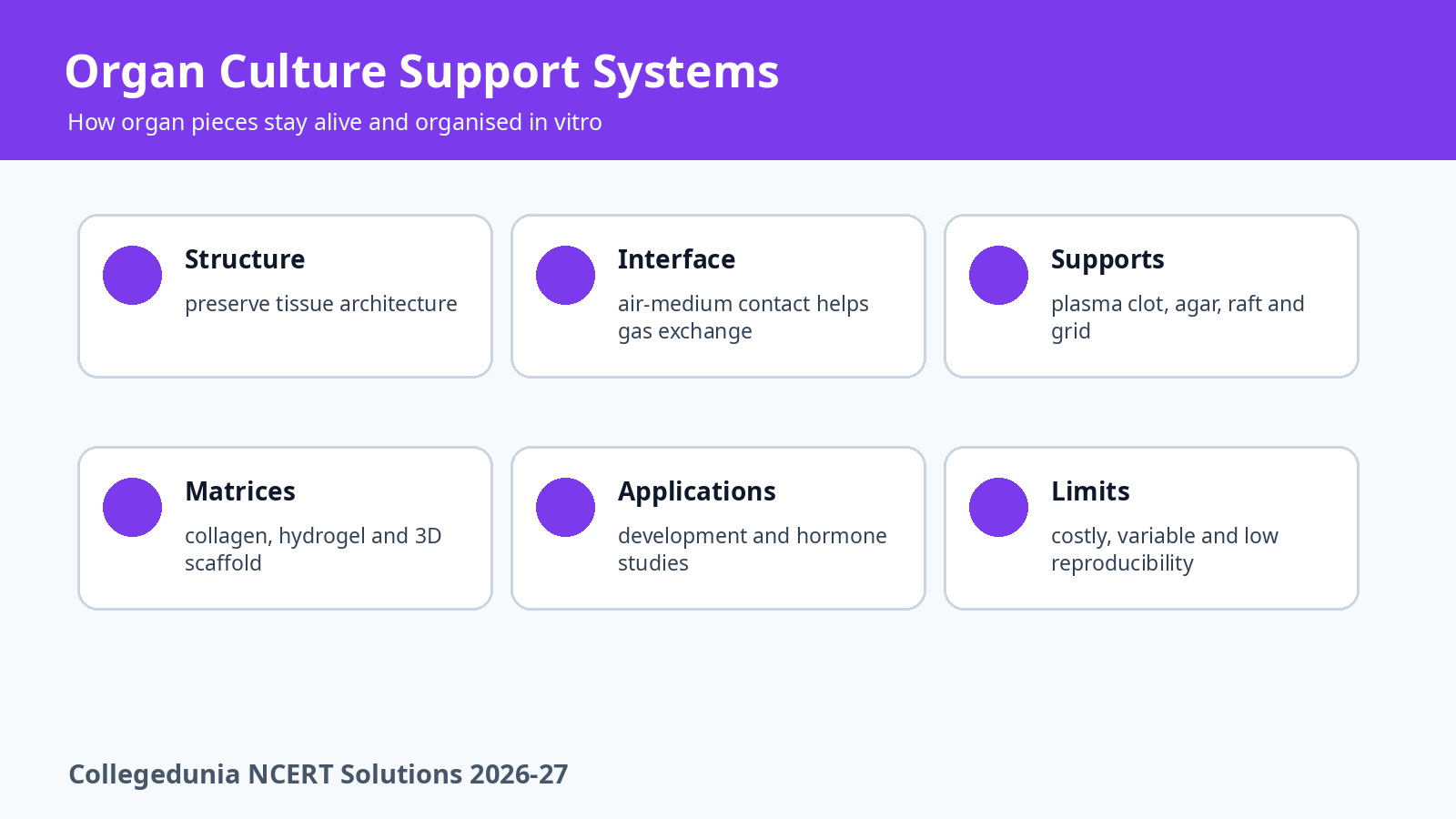
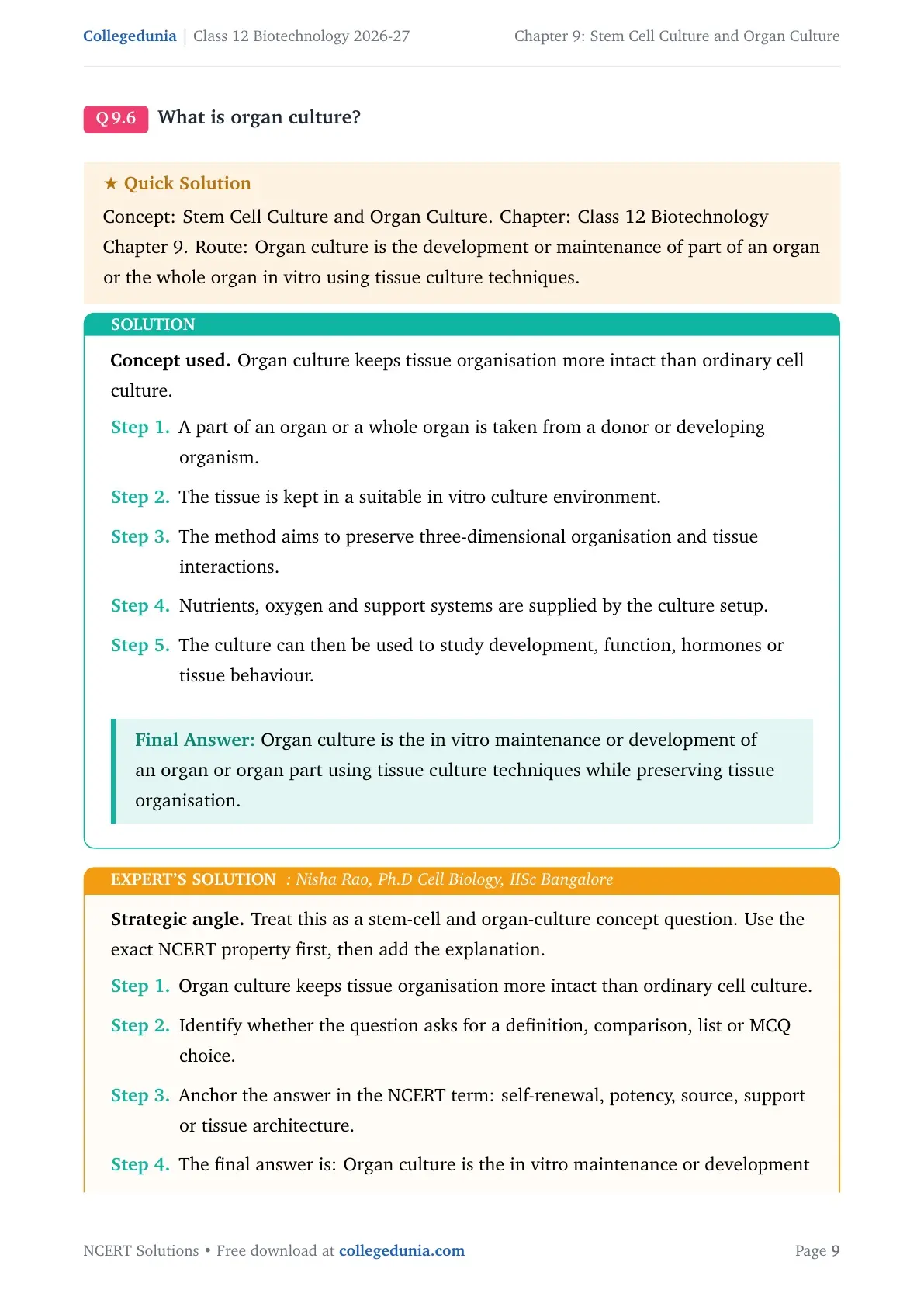
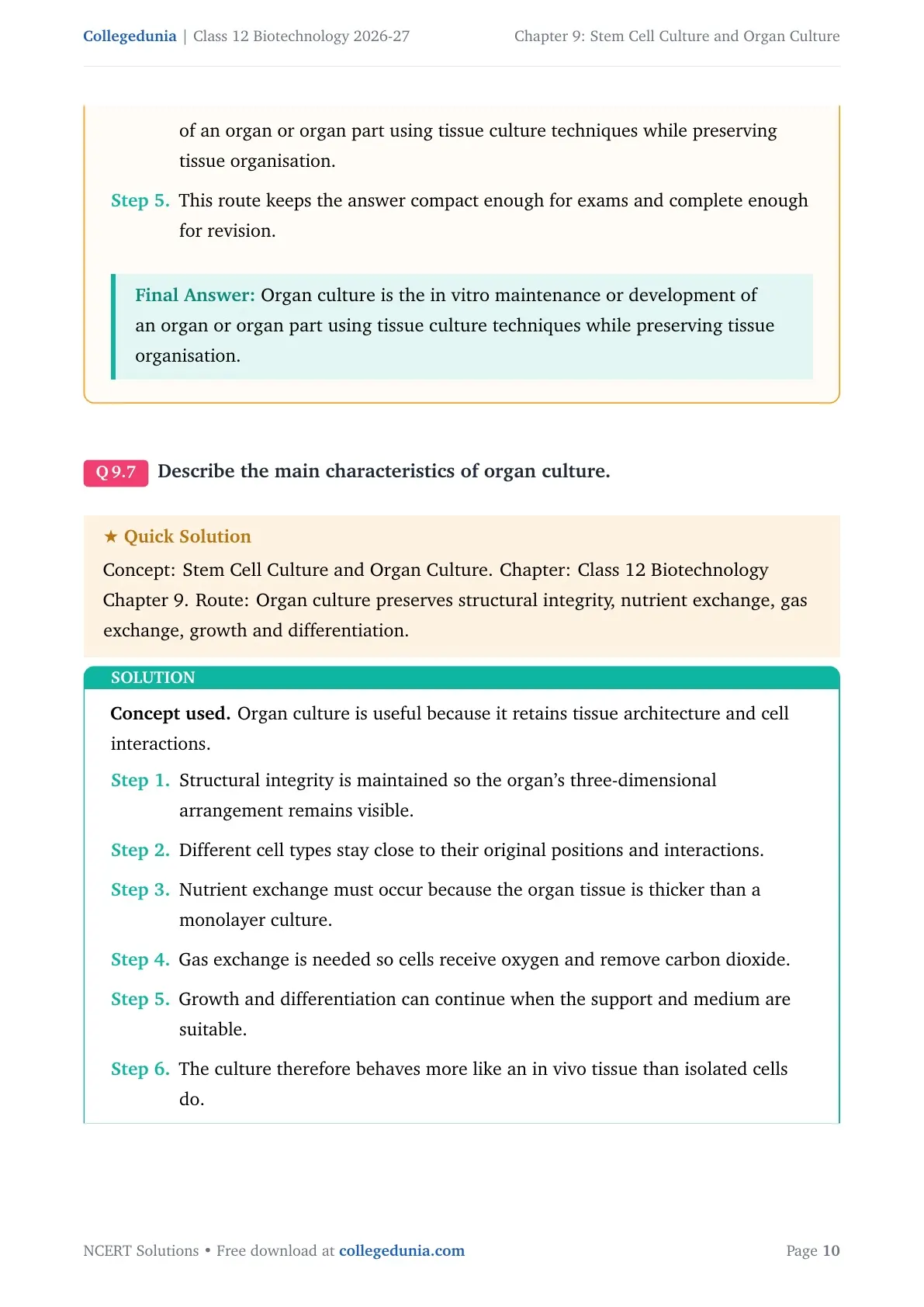
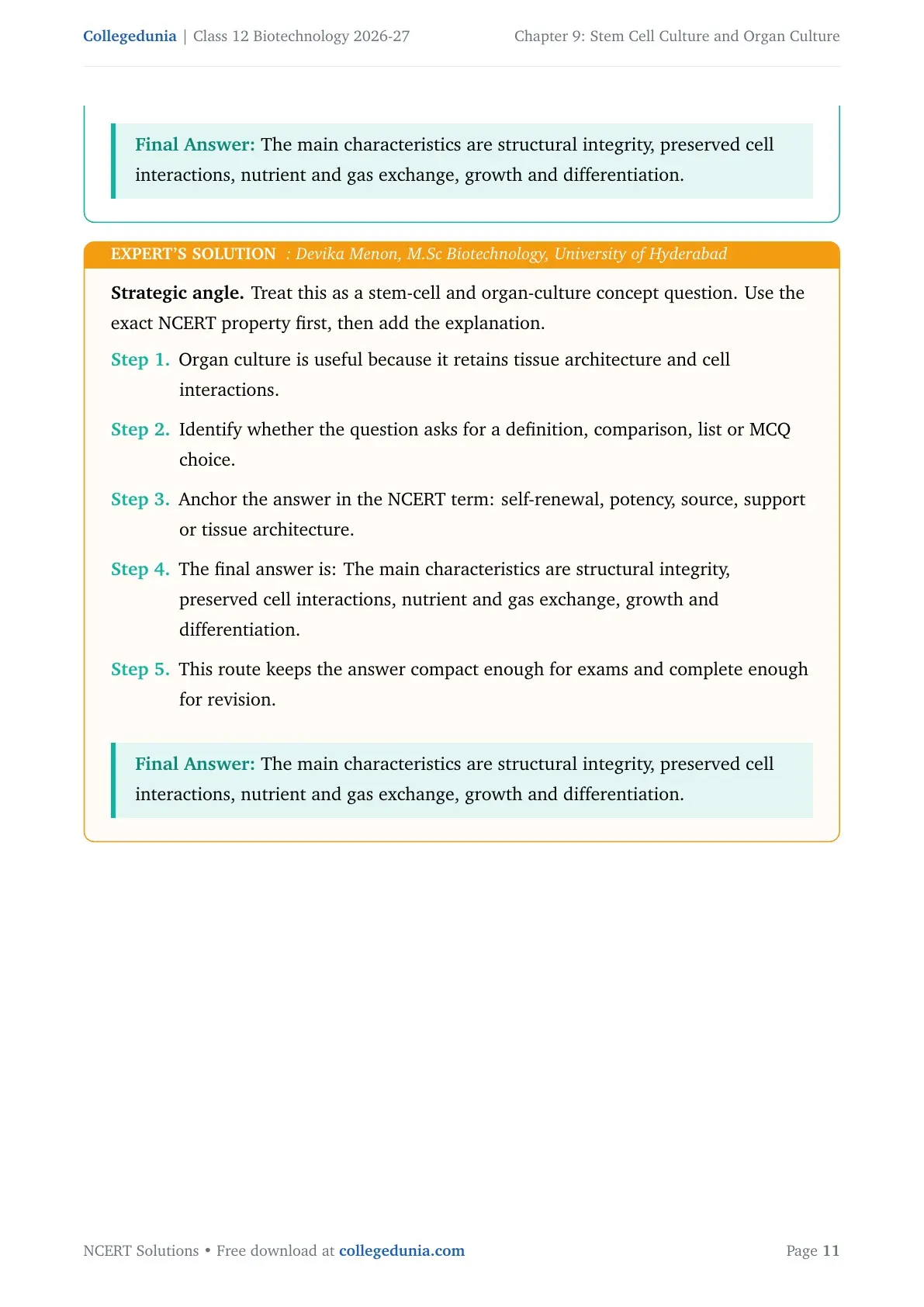
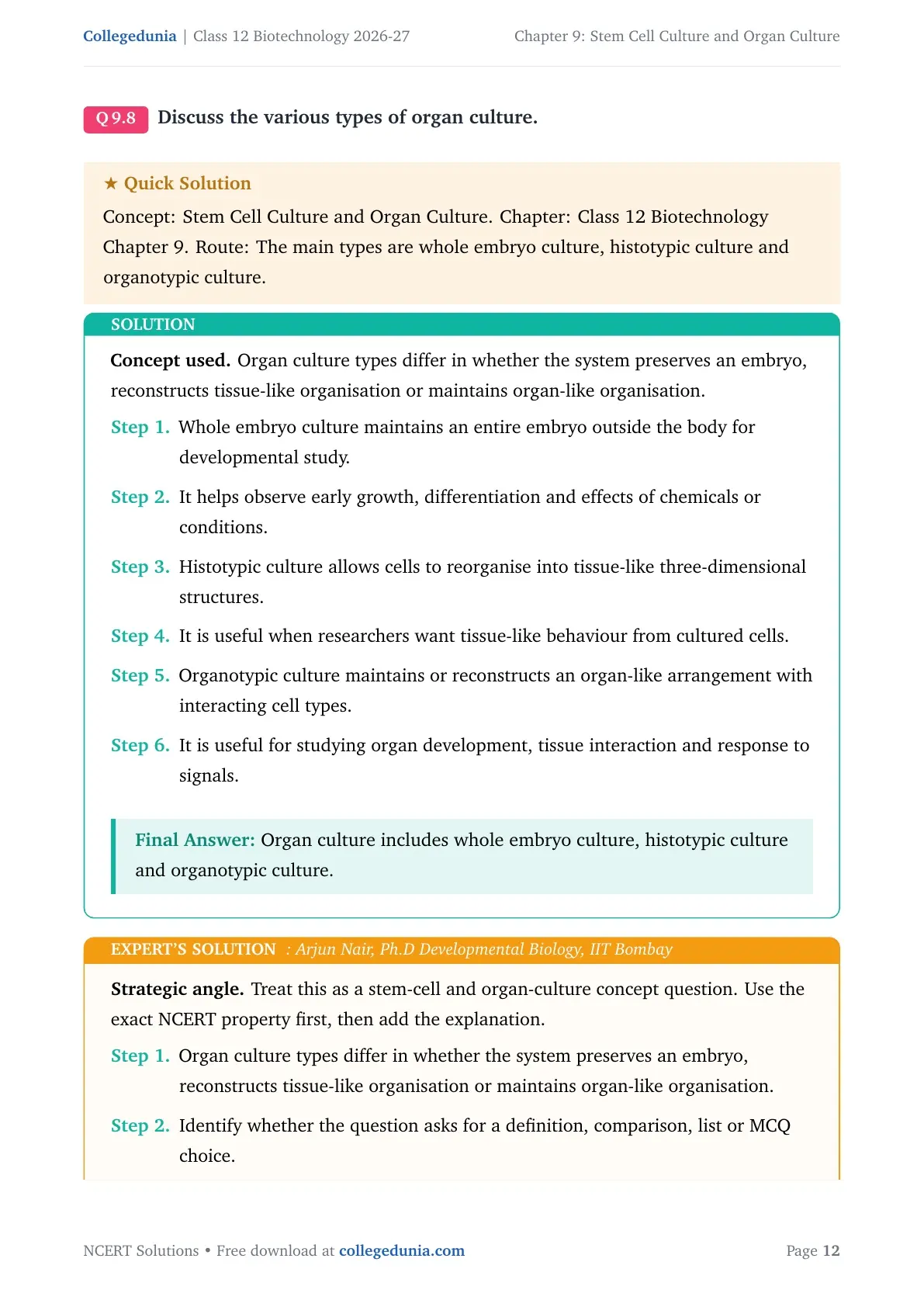
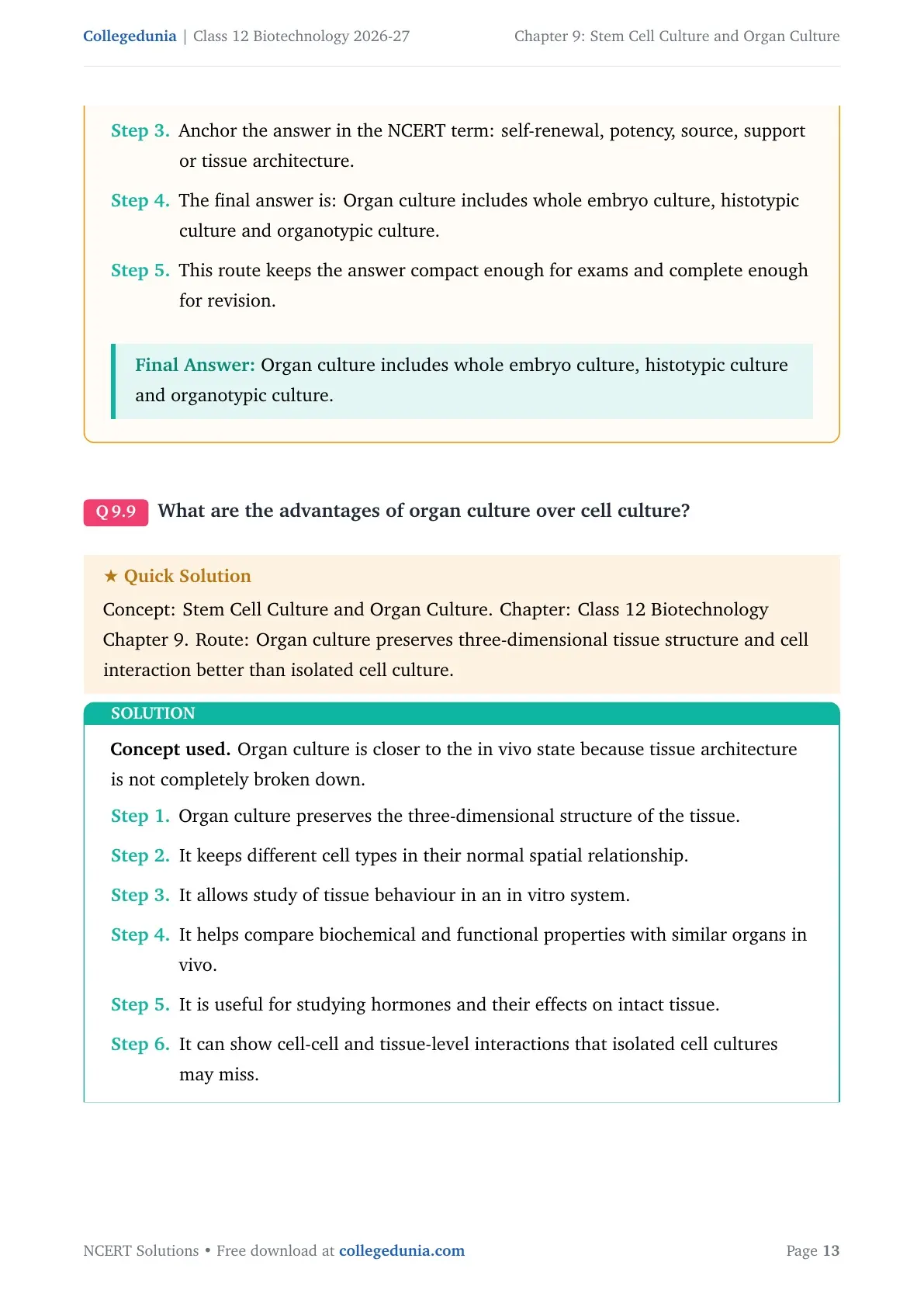
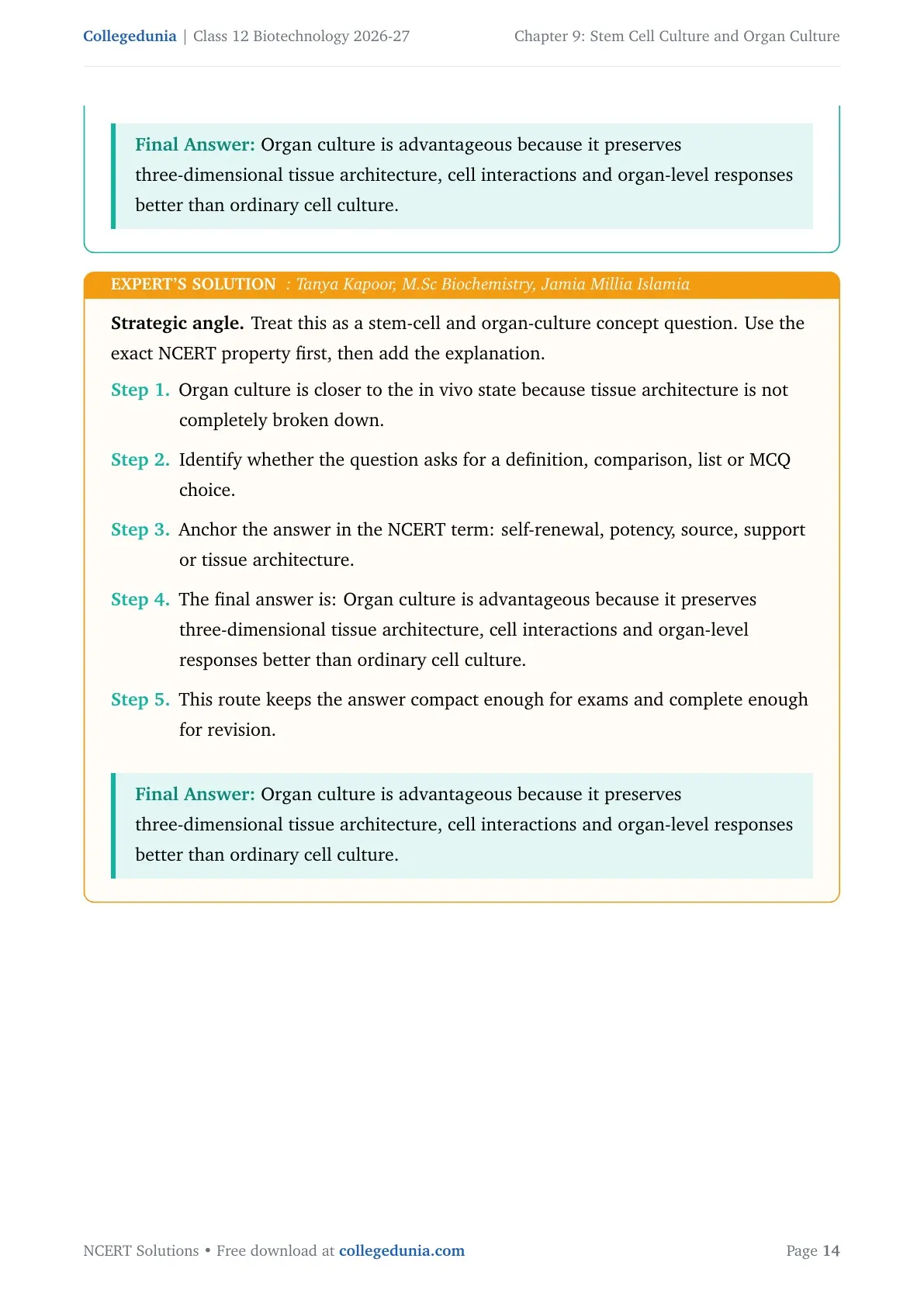
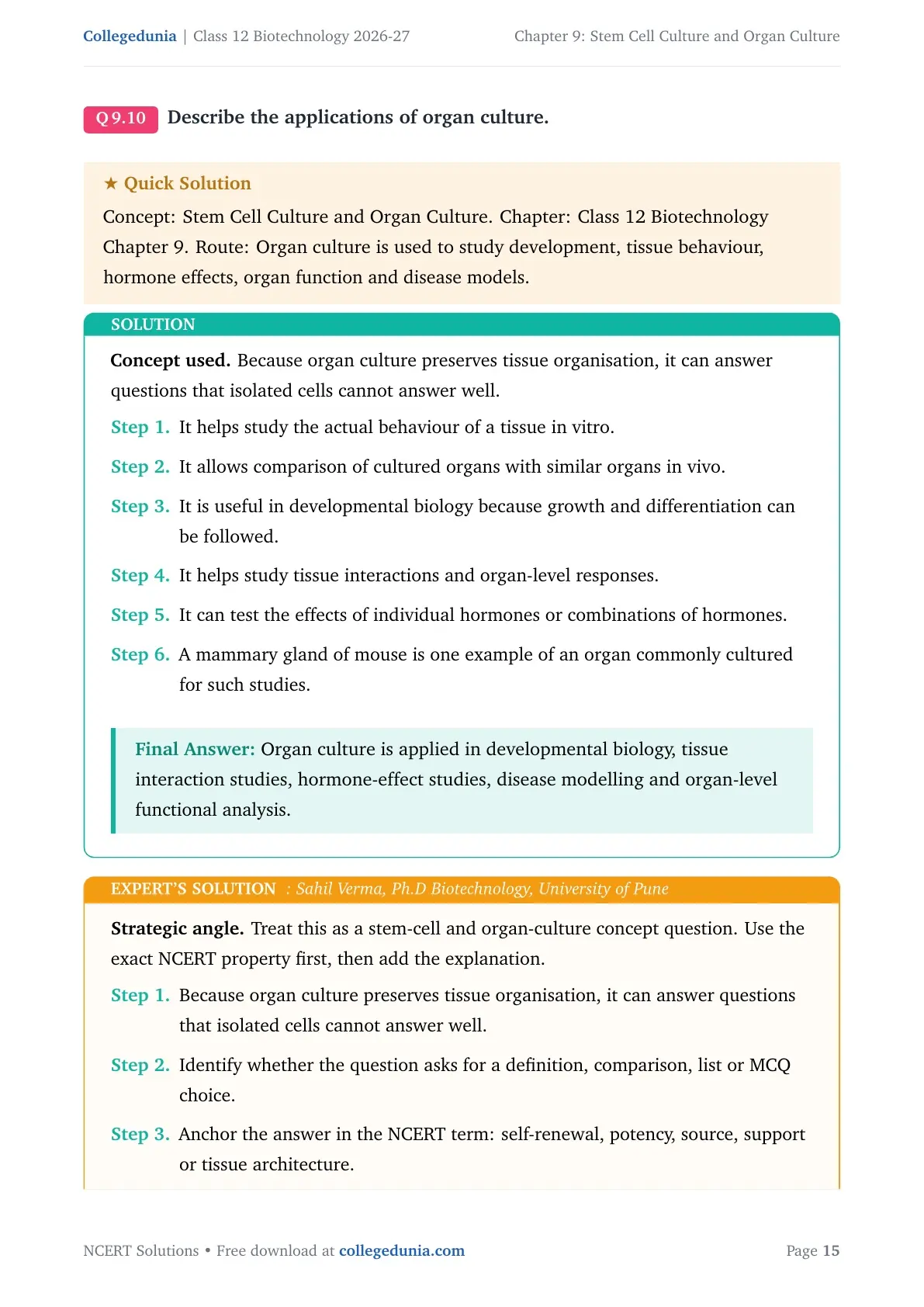
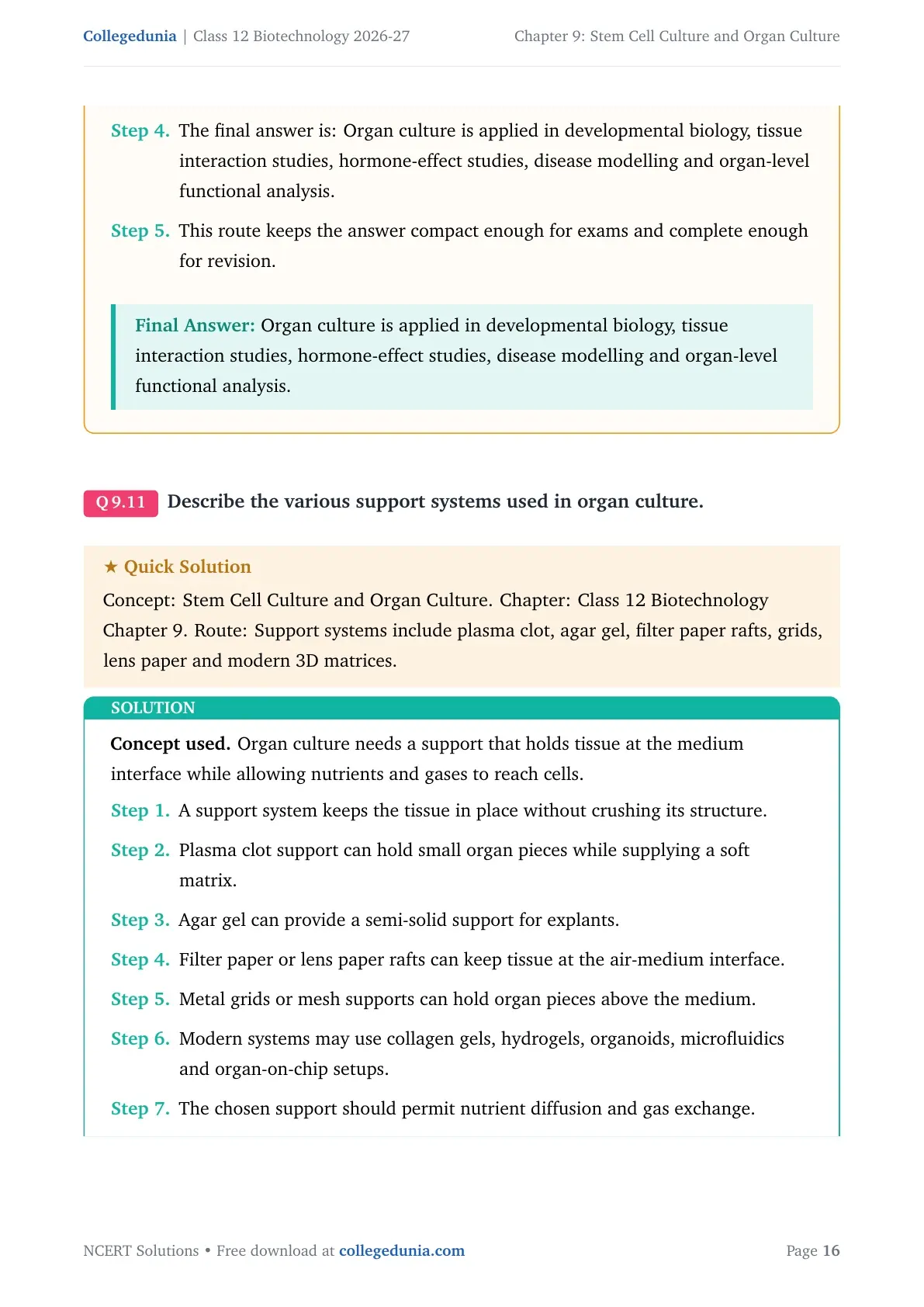
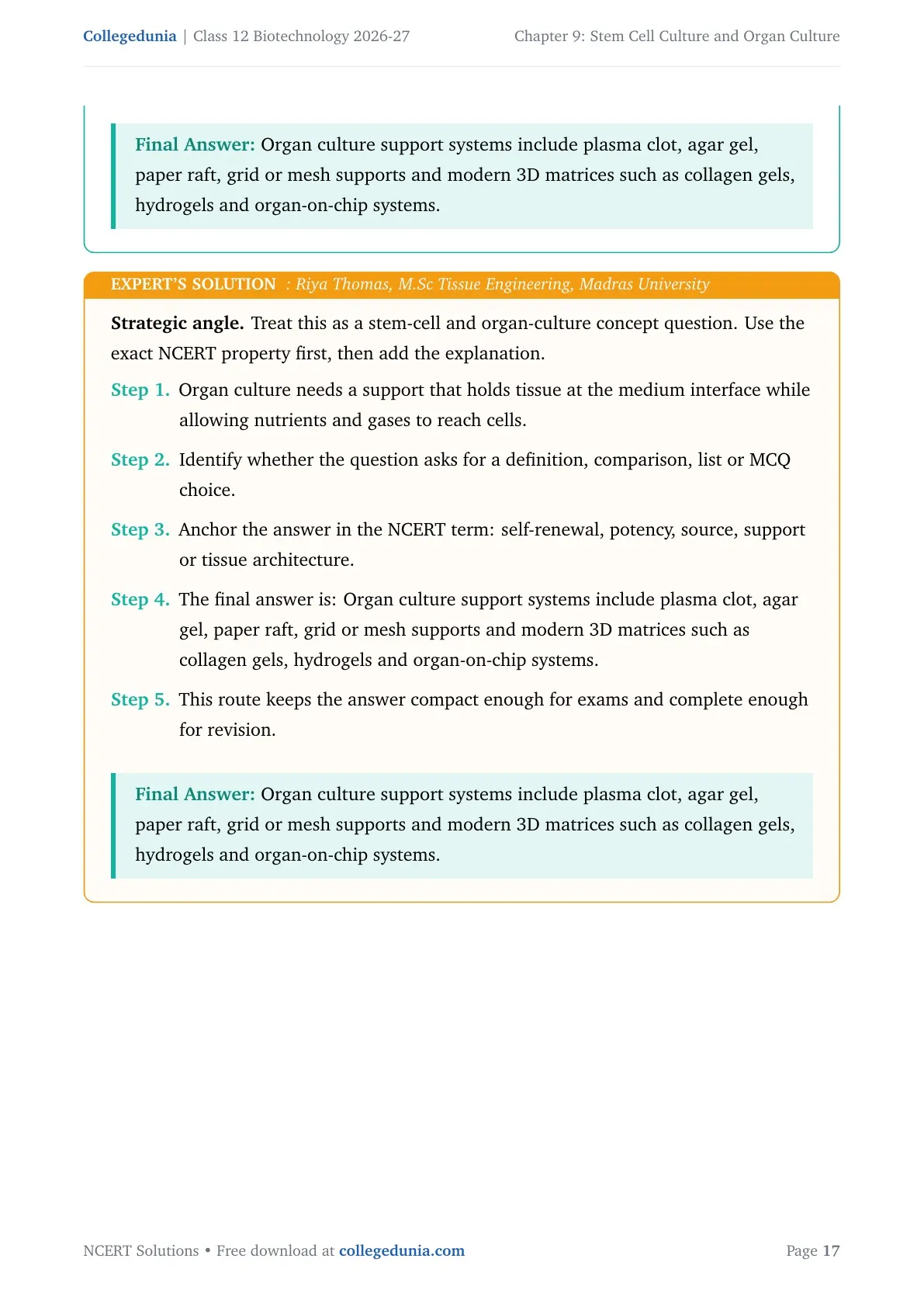
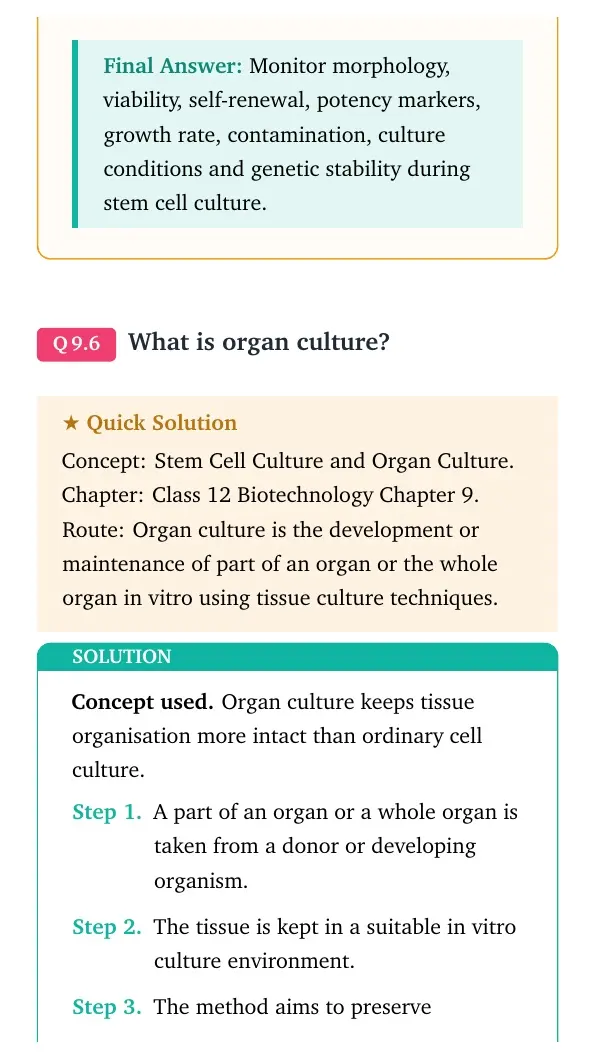
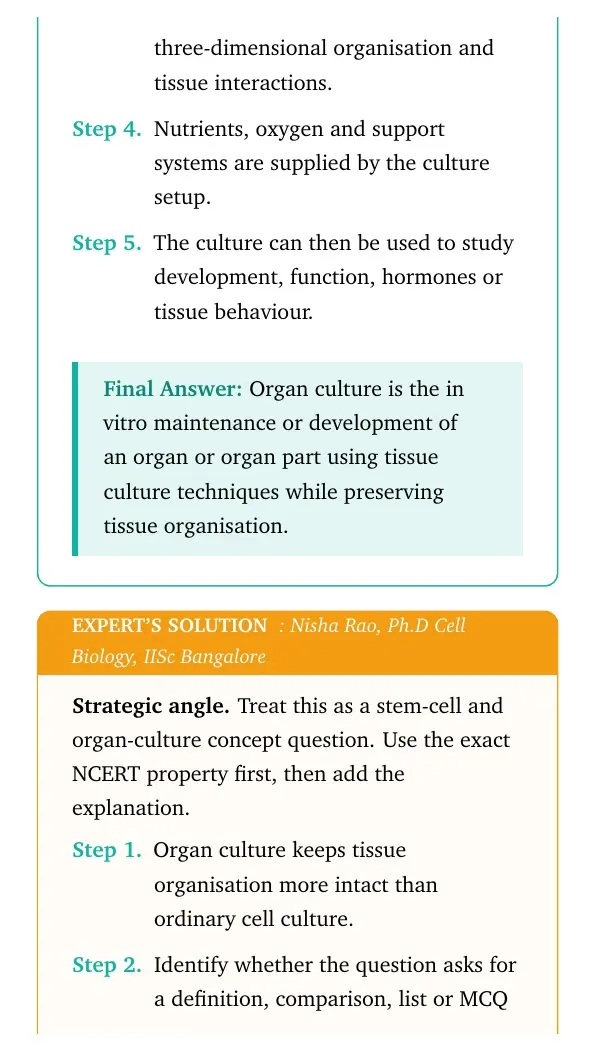
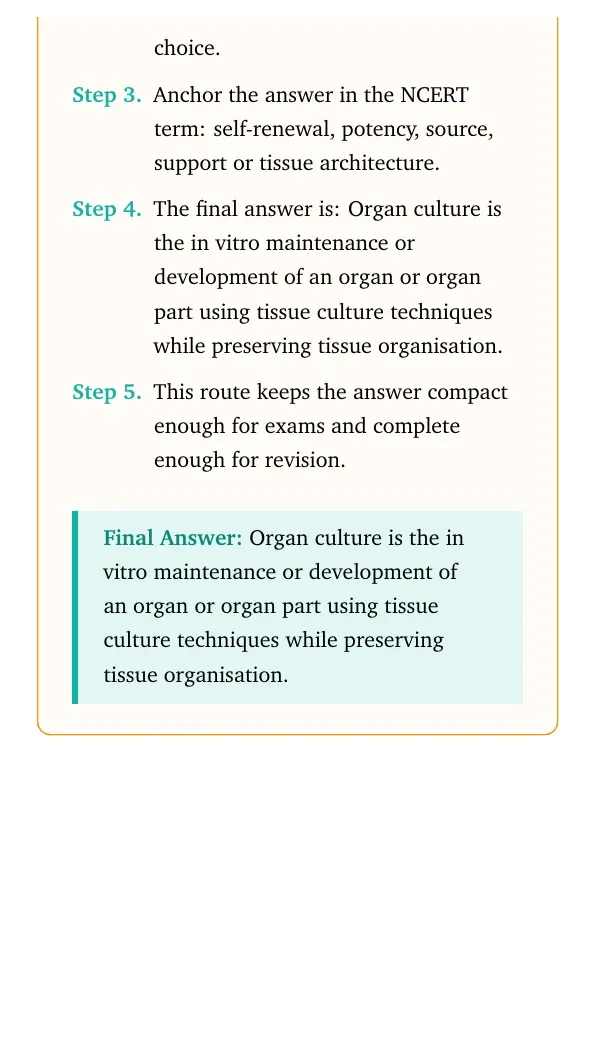
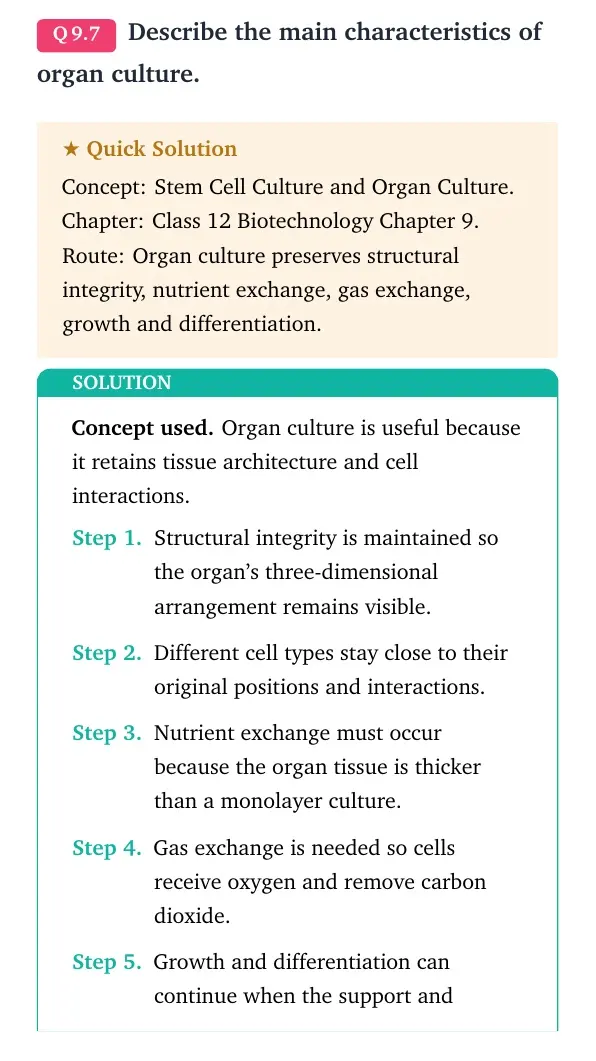
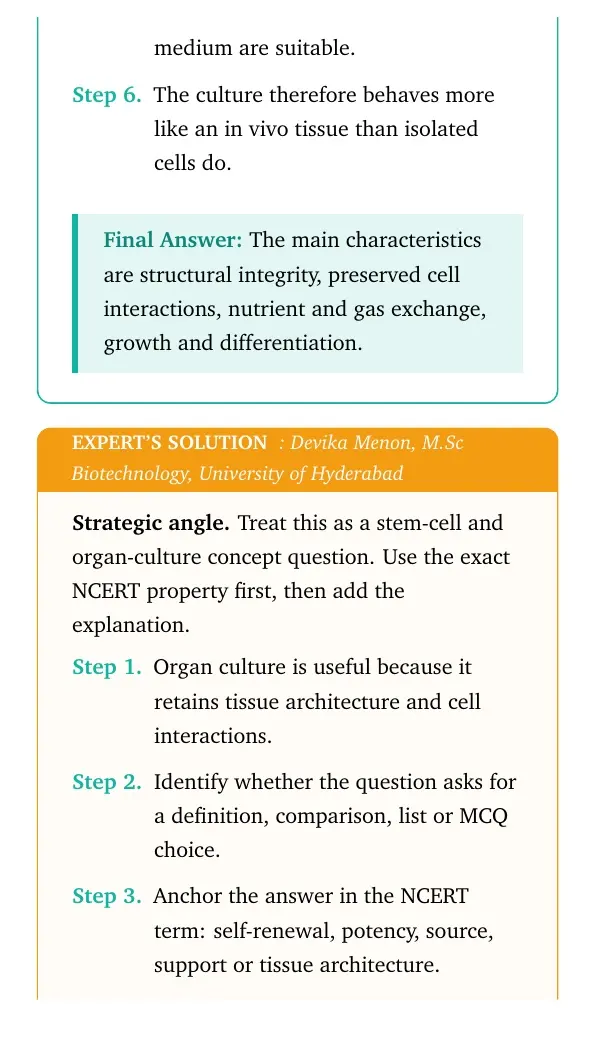
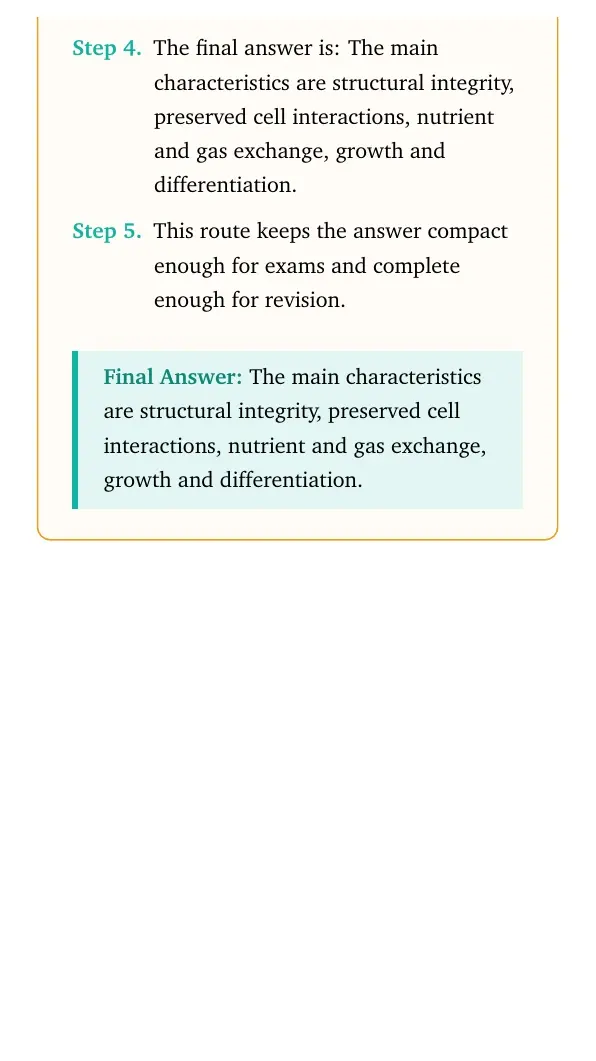
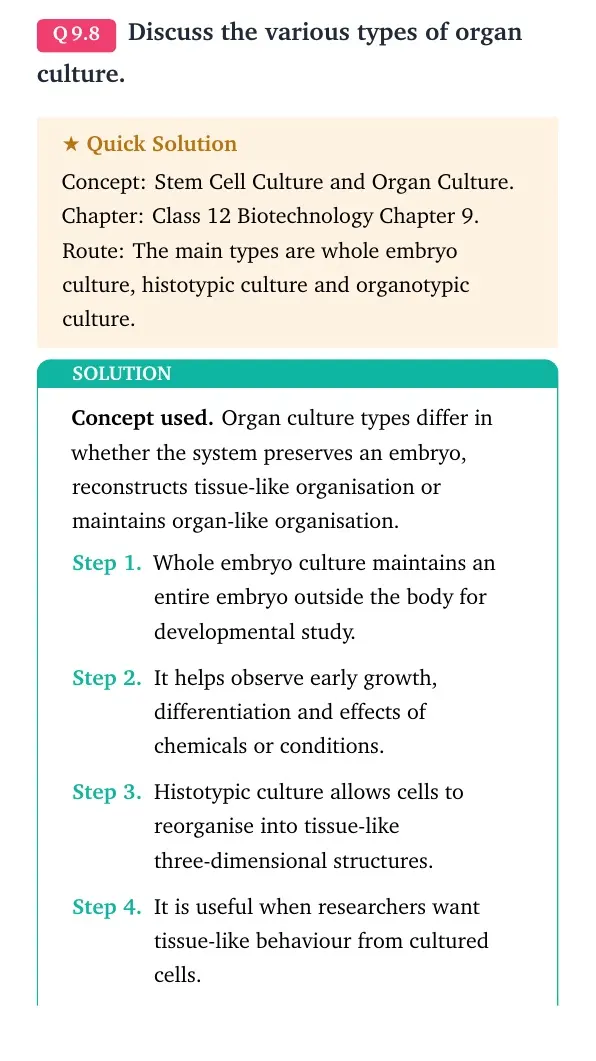
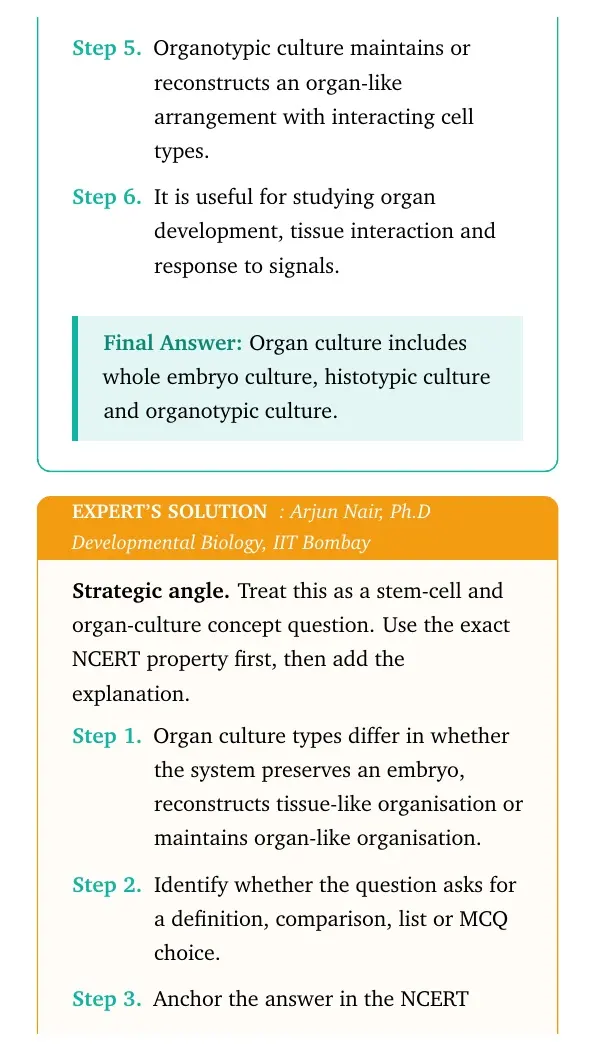
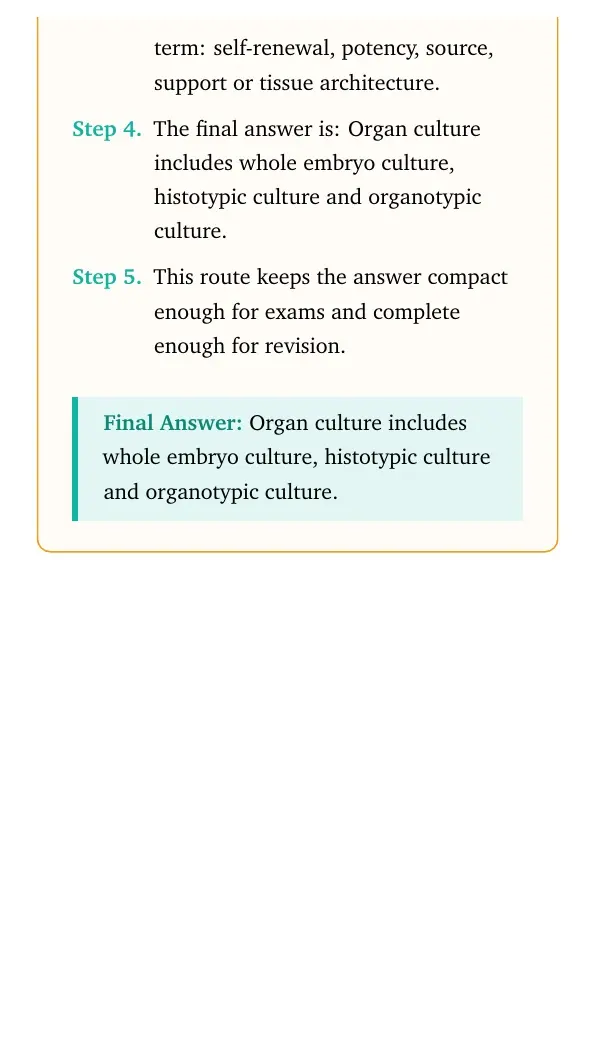
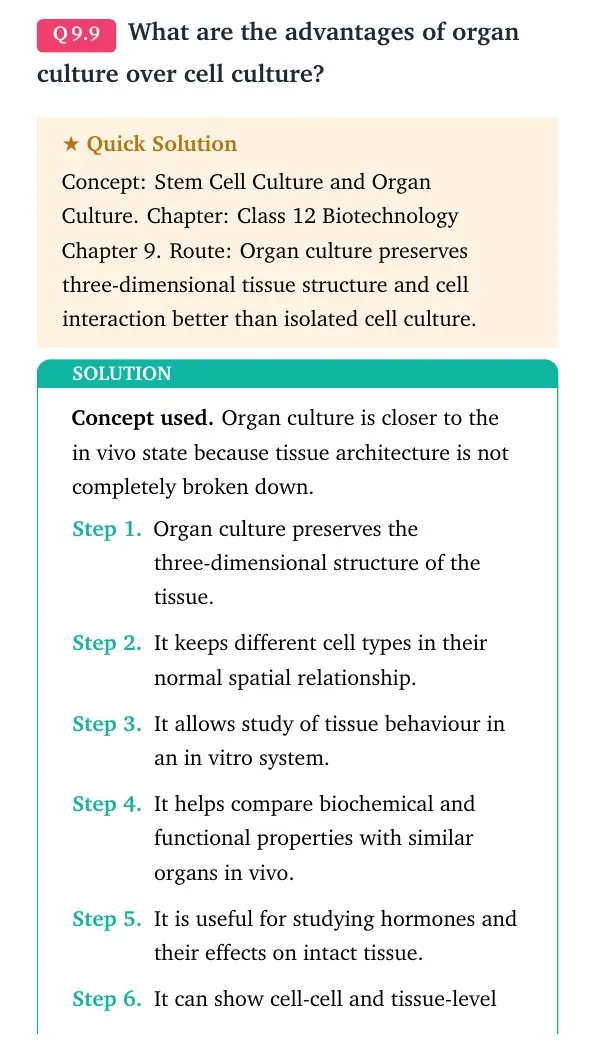
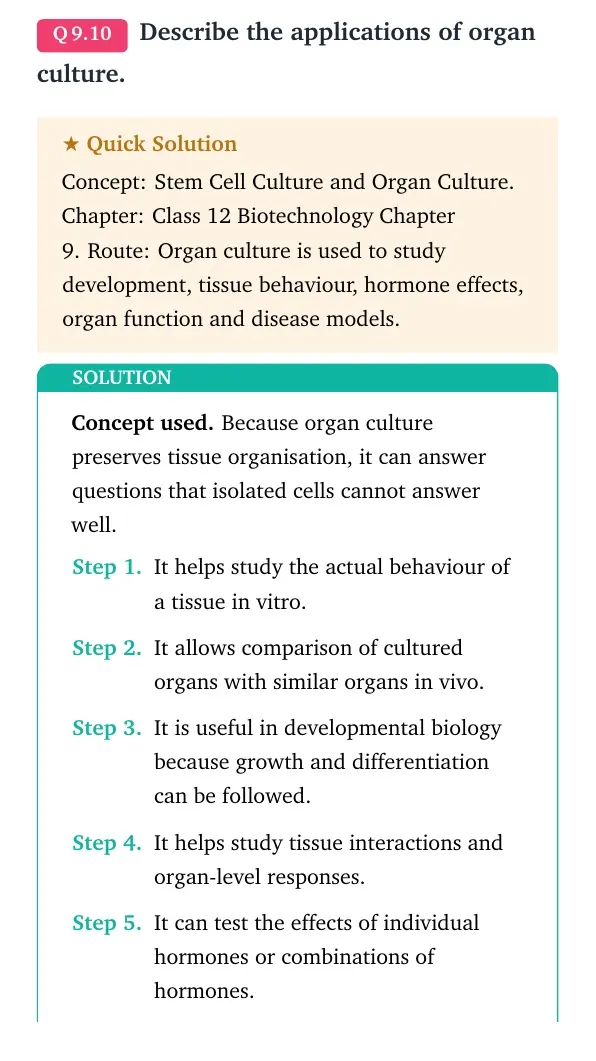
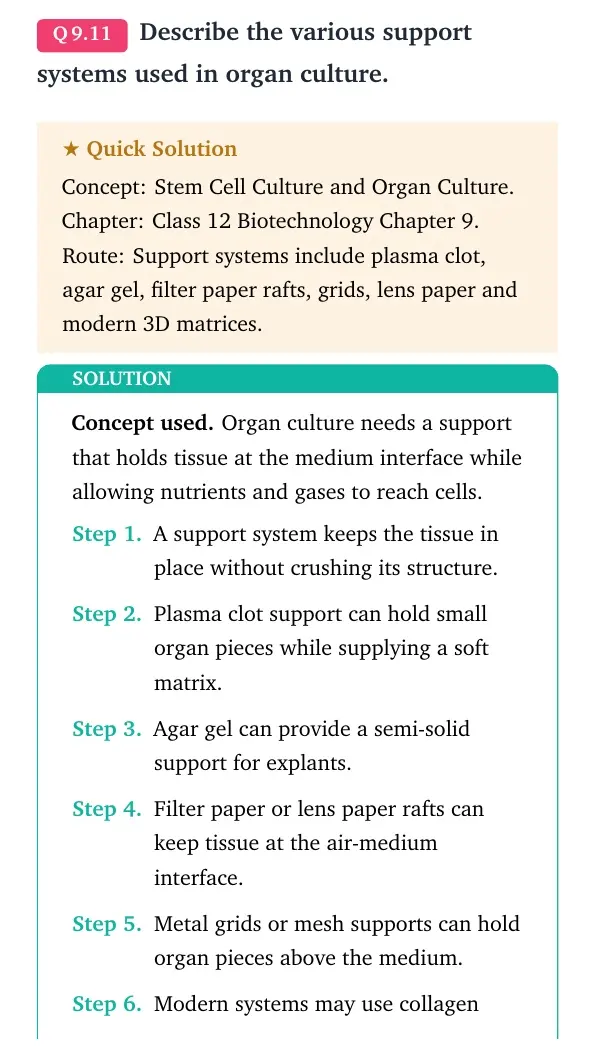
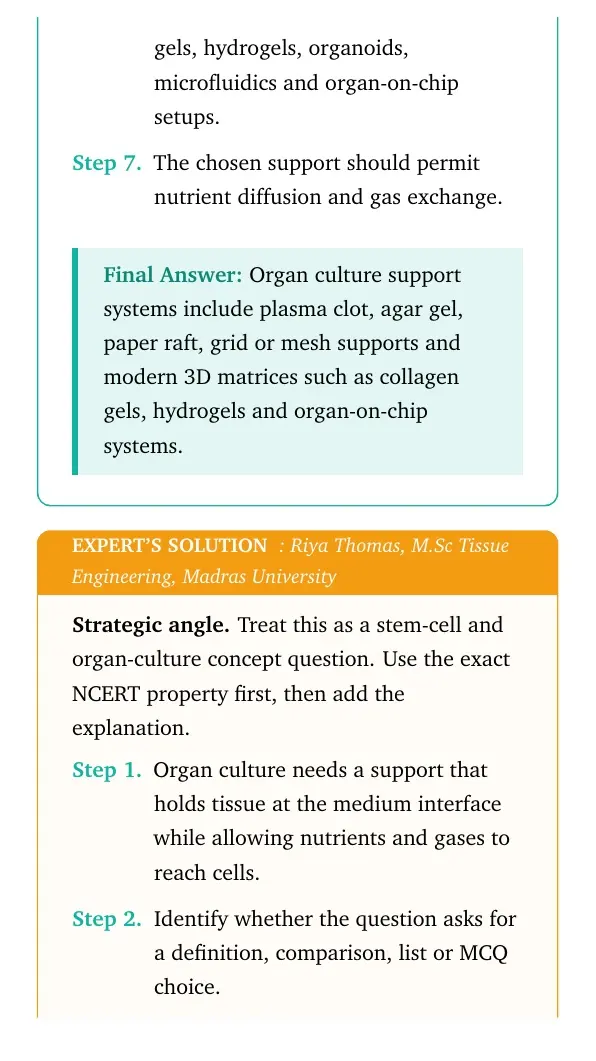
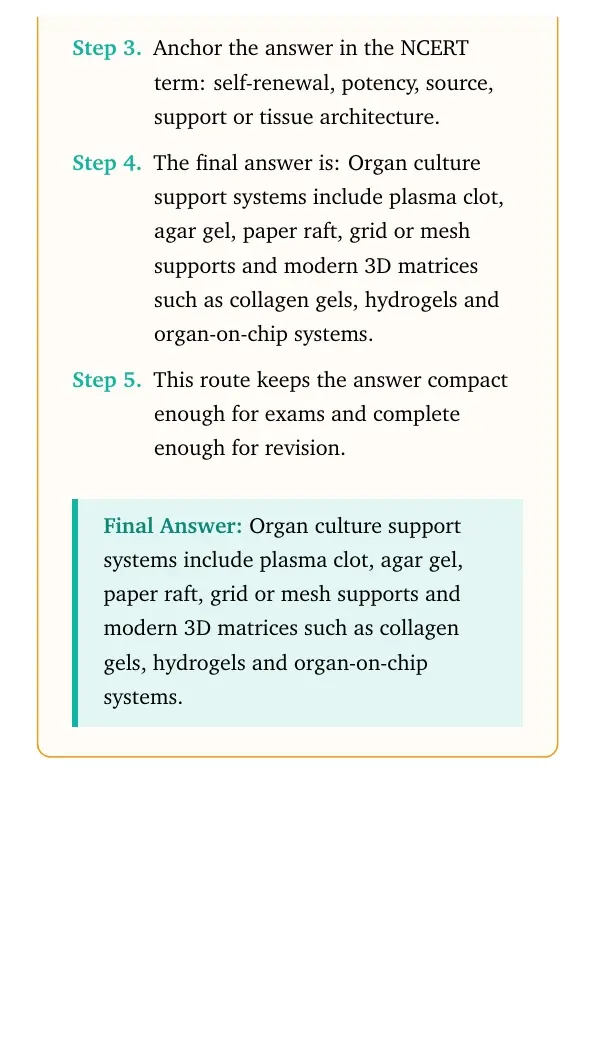
Organ culture keeps tissue architecture more intact than isolated cell culture. This makes it useful for developmental biology, hormone-effect studies and tissue interaction work. The support system must allow nutrient diffusion and gas exchange.
Stem Cell Culture Video Revision
Source: Khan Academy on YouTube
Check All Stem Cell Culture Exercise Answers
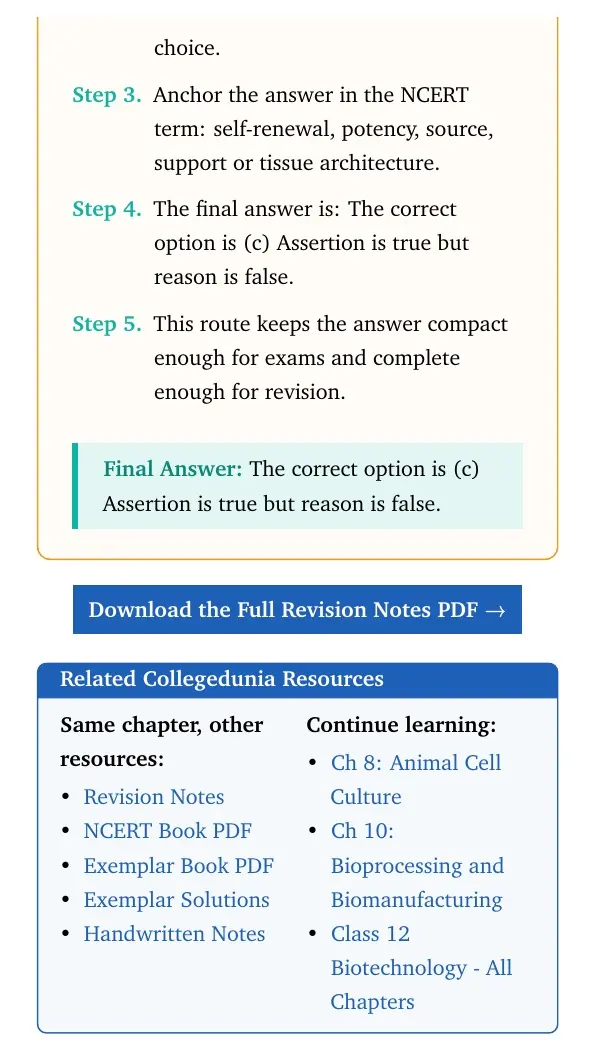
The solved question cards below let students open the main solution and expert solution separately.
Related Class 12 Biotechnology Resources
| Resource | Use it for |
|---|---|
| Stem Cell Culture and Organ Culture NCERT Book PDF | Read the official chapter before solving. |
| Stem Cell Culture and Organ Culture Notes | Revise definitions and process points quickly. |
| Stem Cell Culture and Organ Culture Handwritten Notes | Use for one-shot exam recap. |
All Class 12 Biotechnology NCERT Solutions
| Chapter | NCERT Solutions |
|---|---|
| Chapter 7 Plant Tissue Culture | Open Chapter 7 Solutions |
| Chapter 8 Animal Cell Culture | Open Chapter 8 Solutions |
| Chapter 9 Stem Cell Culture and Organ Culture | Open Chapter 9 Solutions |
Stem Cell Culture and Organ Culture NCERT Solutions FAQs
Ques. What is covered in Class 12 Biotechnology Chapter 9 NCERT Solutions?
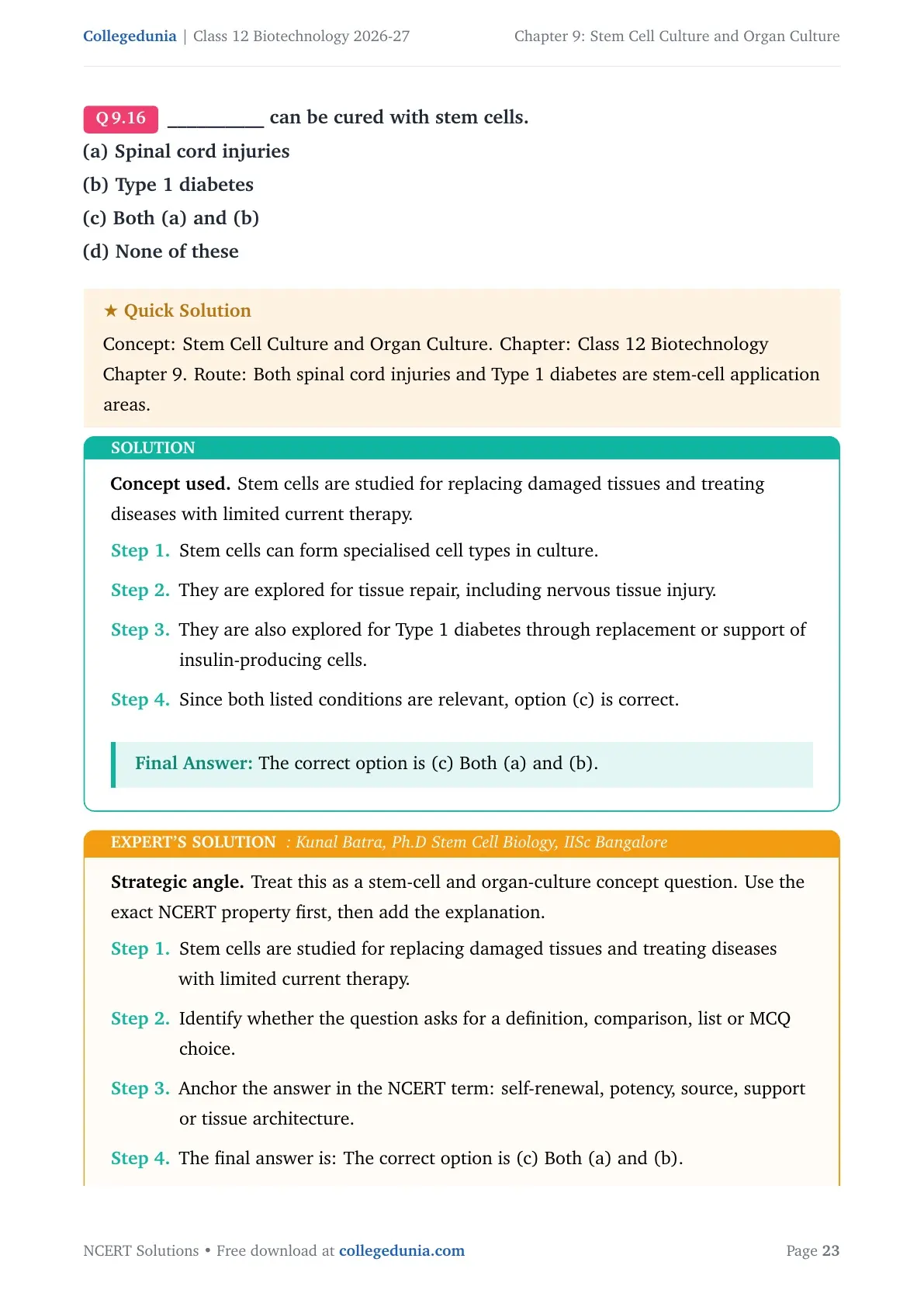
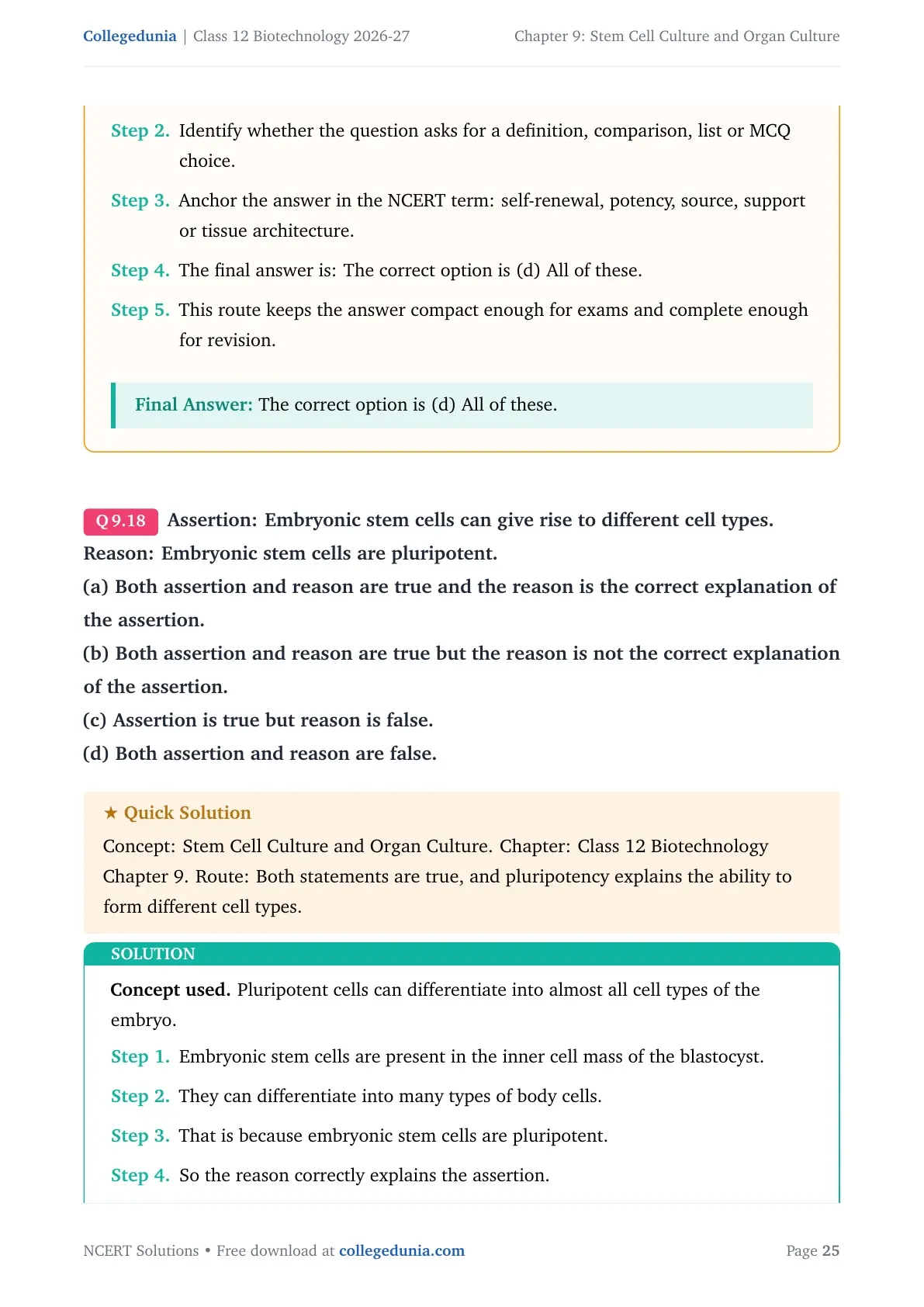
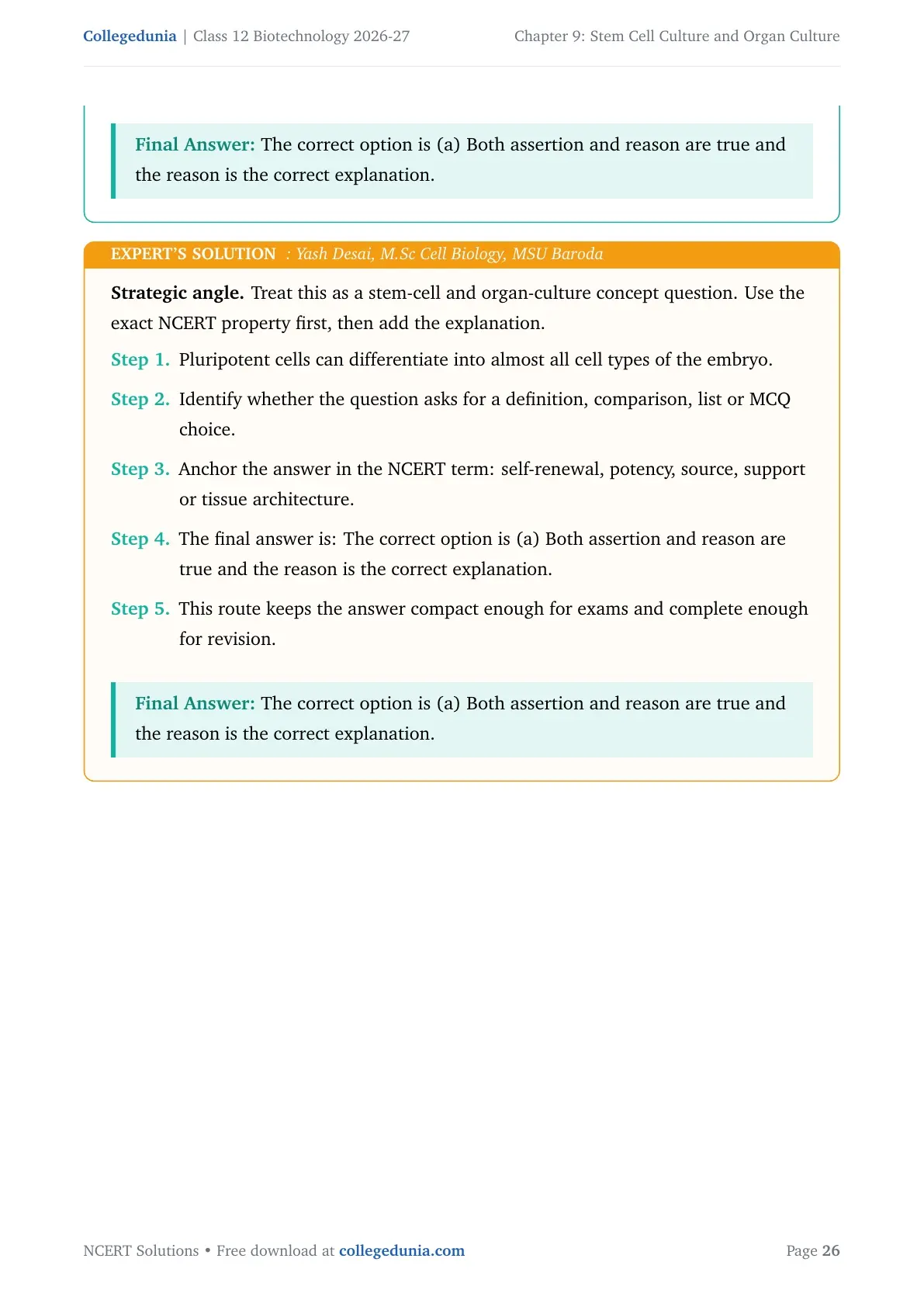
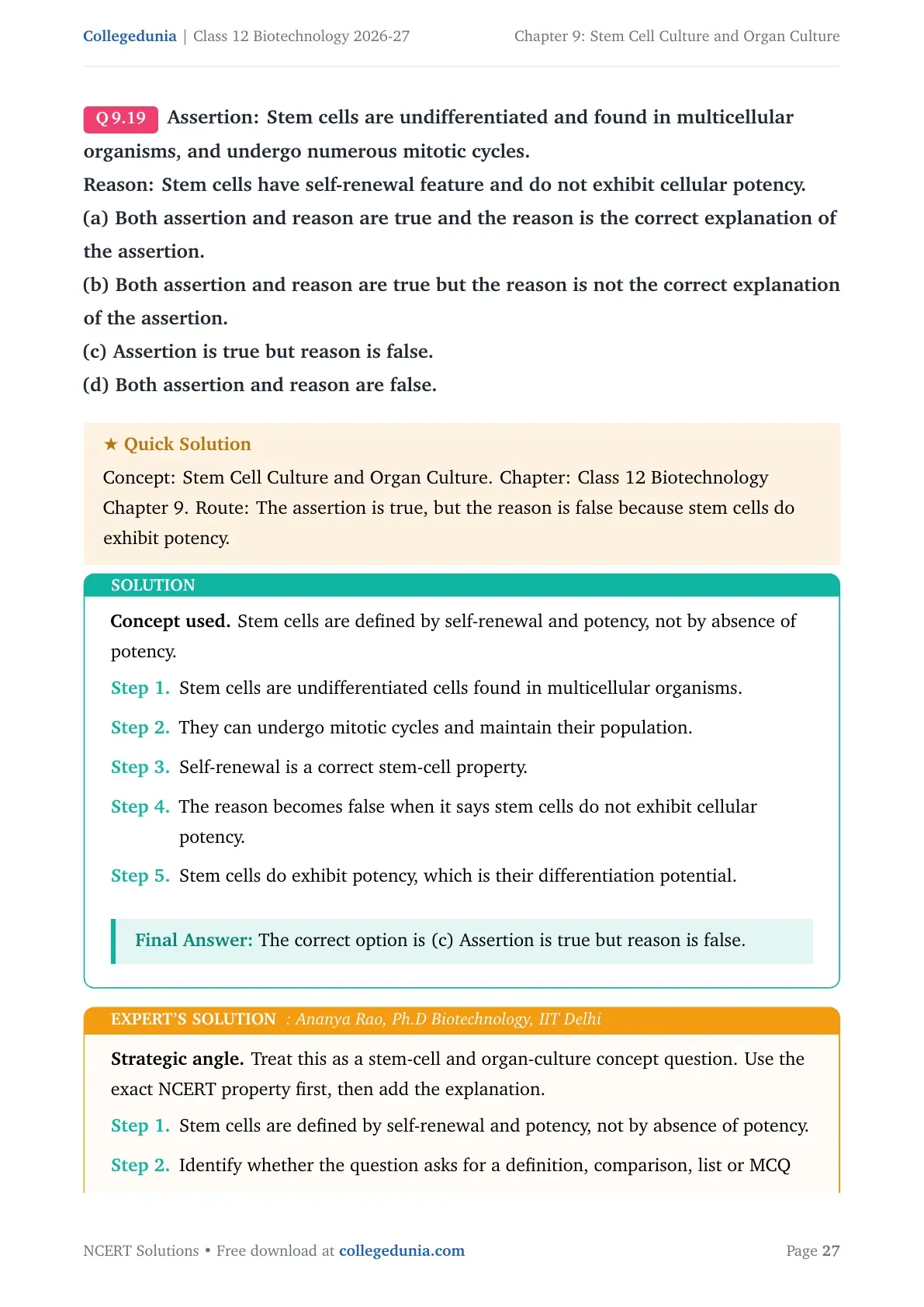
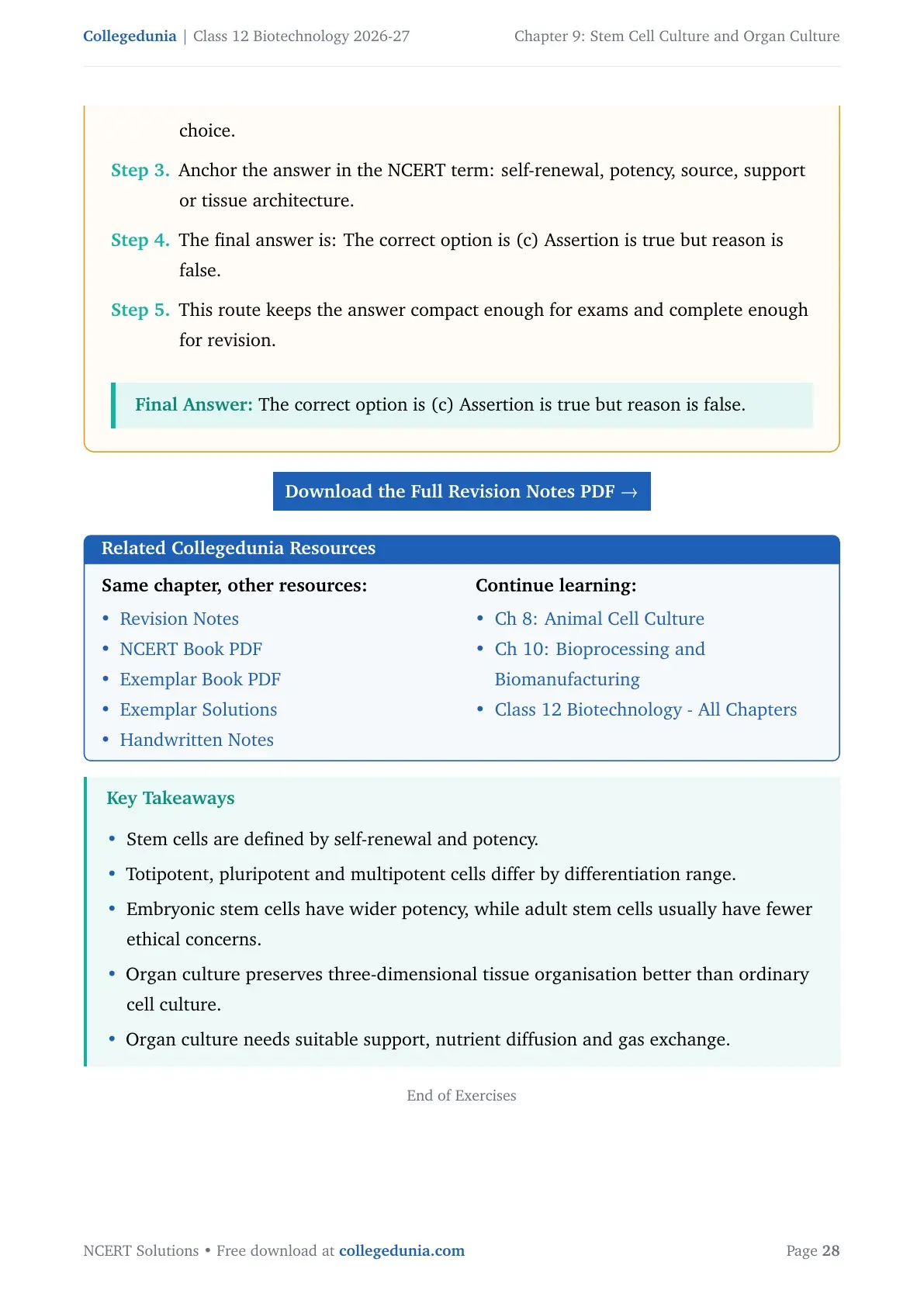
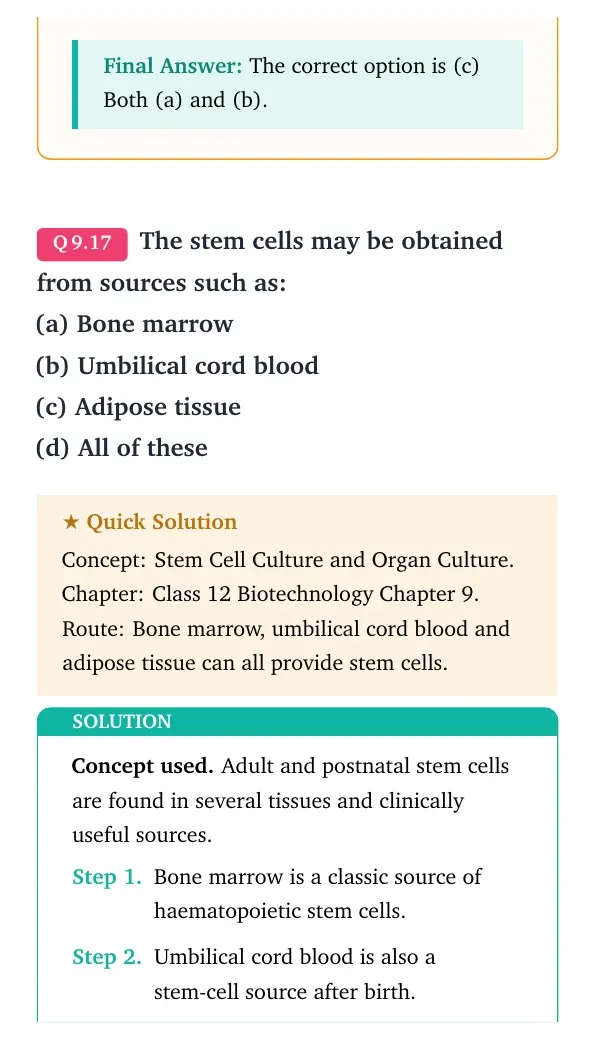
Ans. The solutions cover stem-cell properties, potency, embryonic and adult stem cells, organ culture, support systems, applications and MCQs.
Ques. What is the difference between potency and self-renewal?
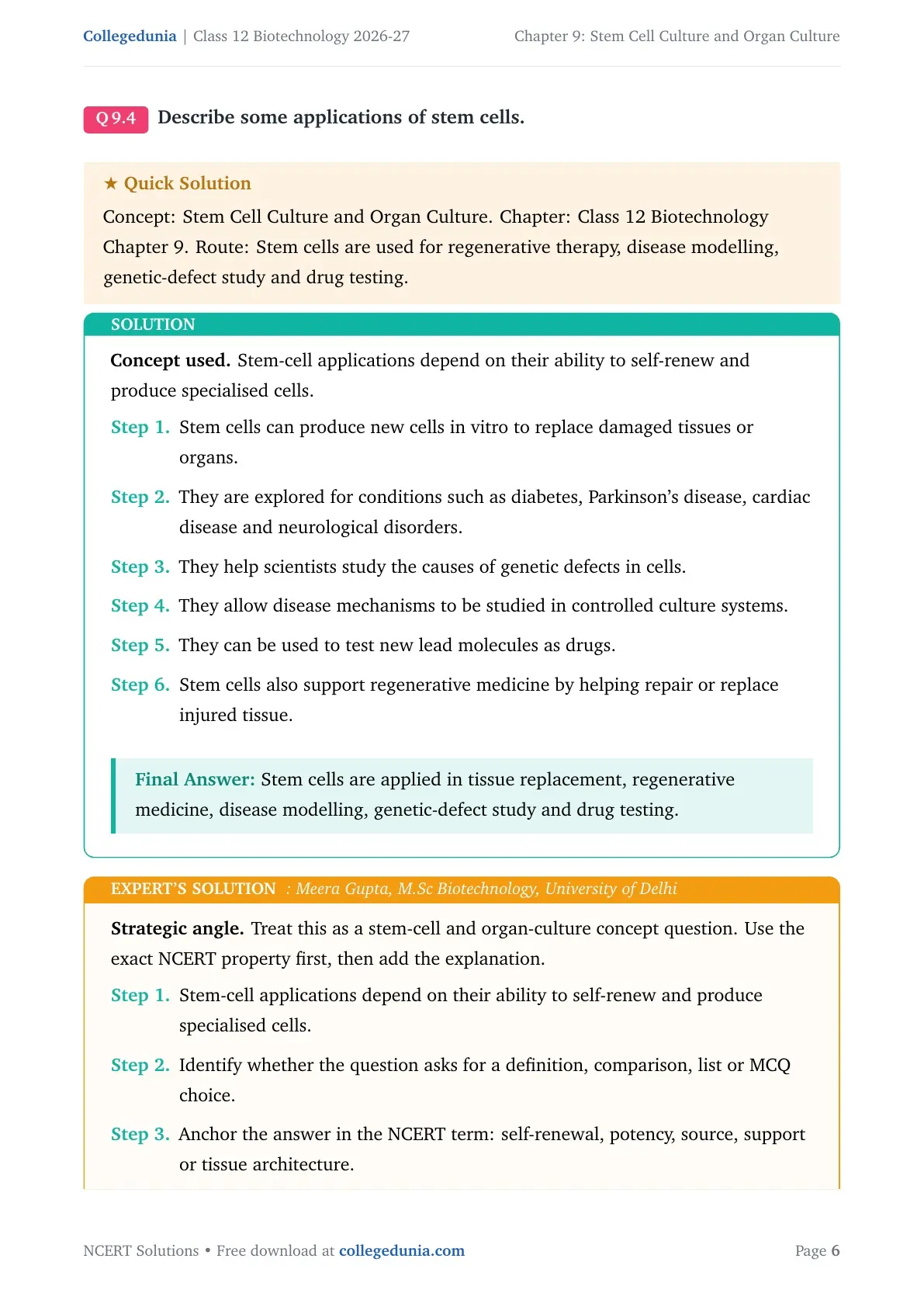
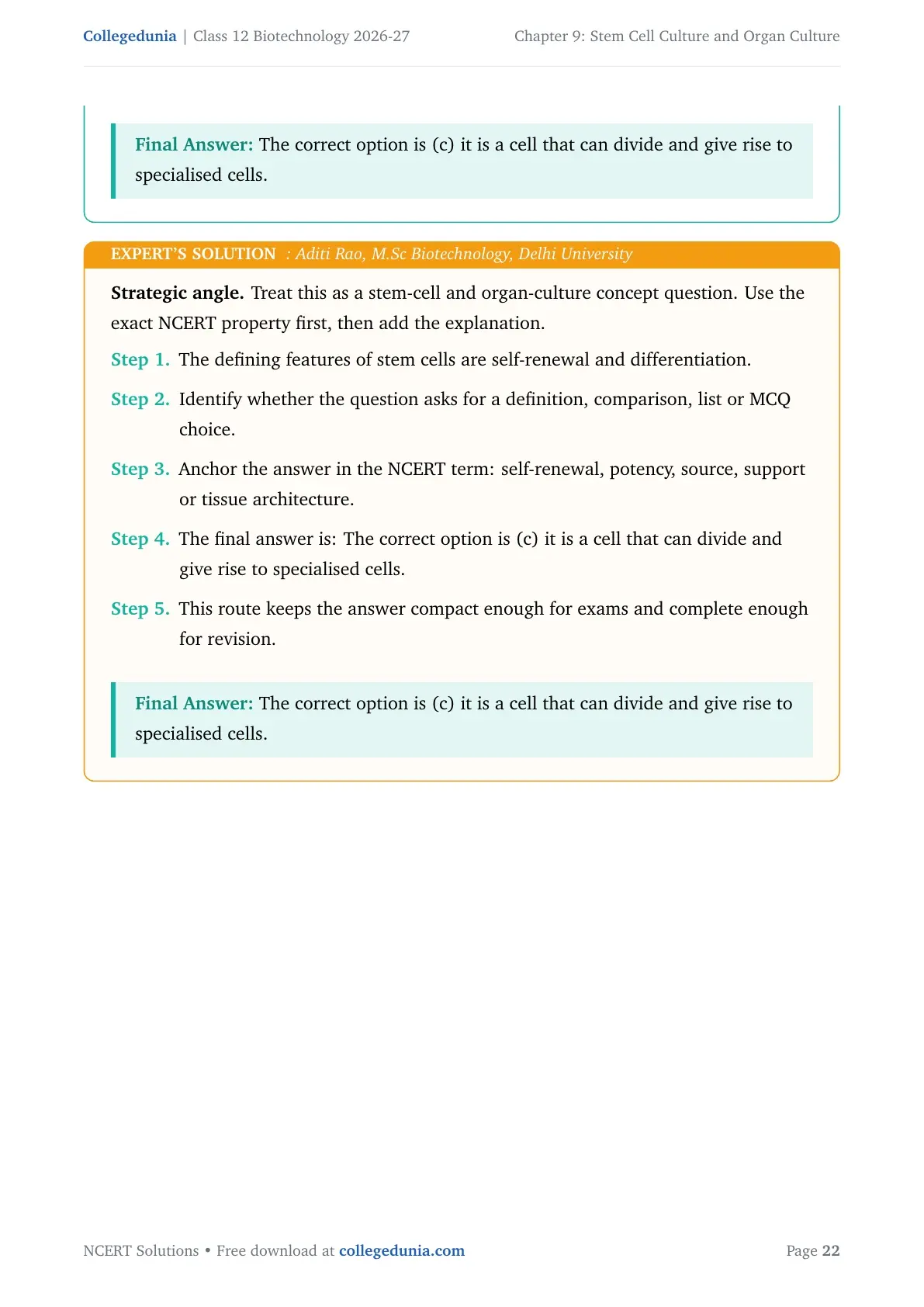
Ans. Potency is the ability to differentiate into specialised cells. Self-renewal is the ability to divide and maintain the stem-cell pool.
Ques. Which cell is multipotent in the exercise?
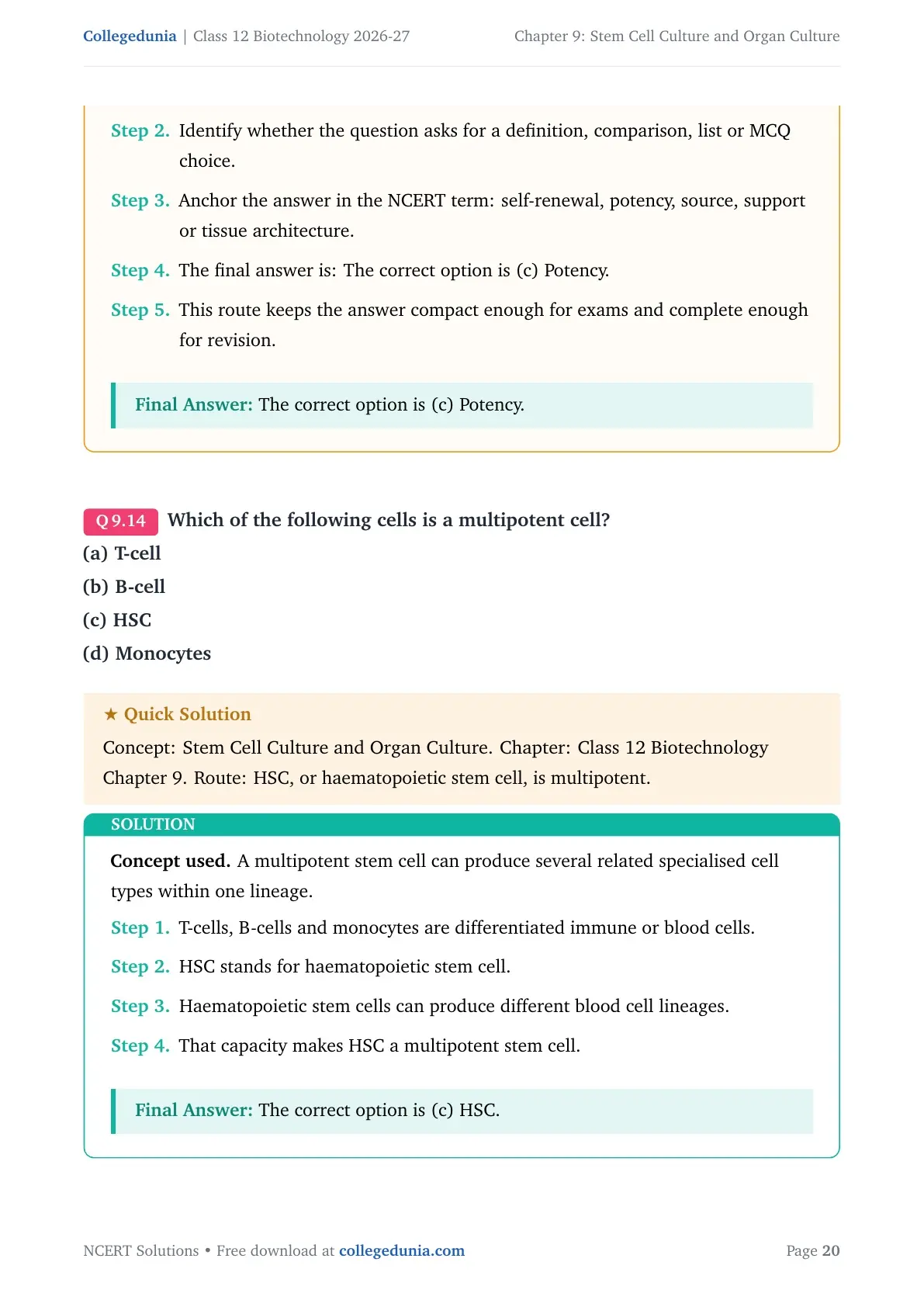
Ans. HSC, or haematopoietic stem cell, is multipotent because it can form different blood cell lineages.
Ques. Why is organ culture useful?
Ans. Organ culture preserves tissue architecture and cell interaction, so it helps study development, hormones and tissue behaviour in vitro.



Comments