



The NCERT Solutions for Class 12 Biotechnology Chapter 7 Plant Tissue Culture cover all 20 exercise questions from the latest 2026-27 NCERT textbook. The answers explain explants, nutrient media, somatic embryogenesis, somatic hybrids, synthetic seeds, virus-free plants and the full MCQ set in simple exam-ready language.
- Question count: 20 solved NCERT exercise questions with MCQ and assertion-reason checks.
- Best for: board revision, biotechnology viva preparation and quick application recall.
- PDF includes: stepwise solutions, expert explanations and boxed final answers.
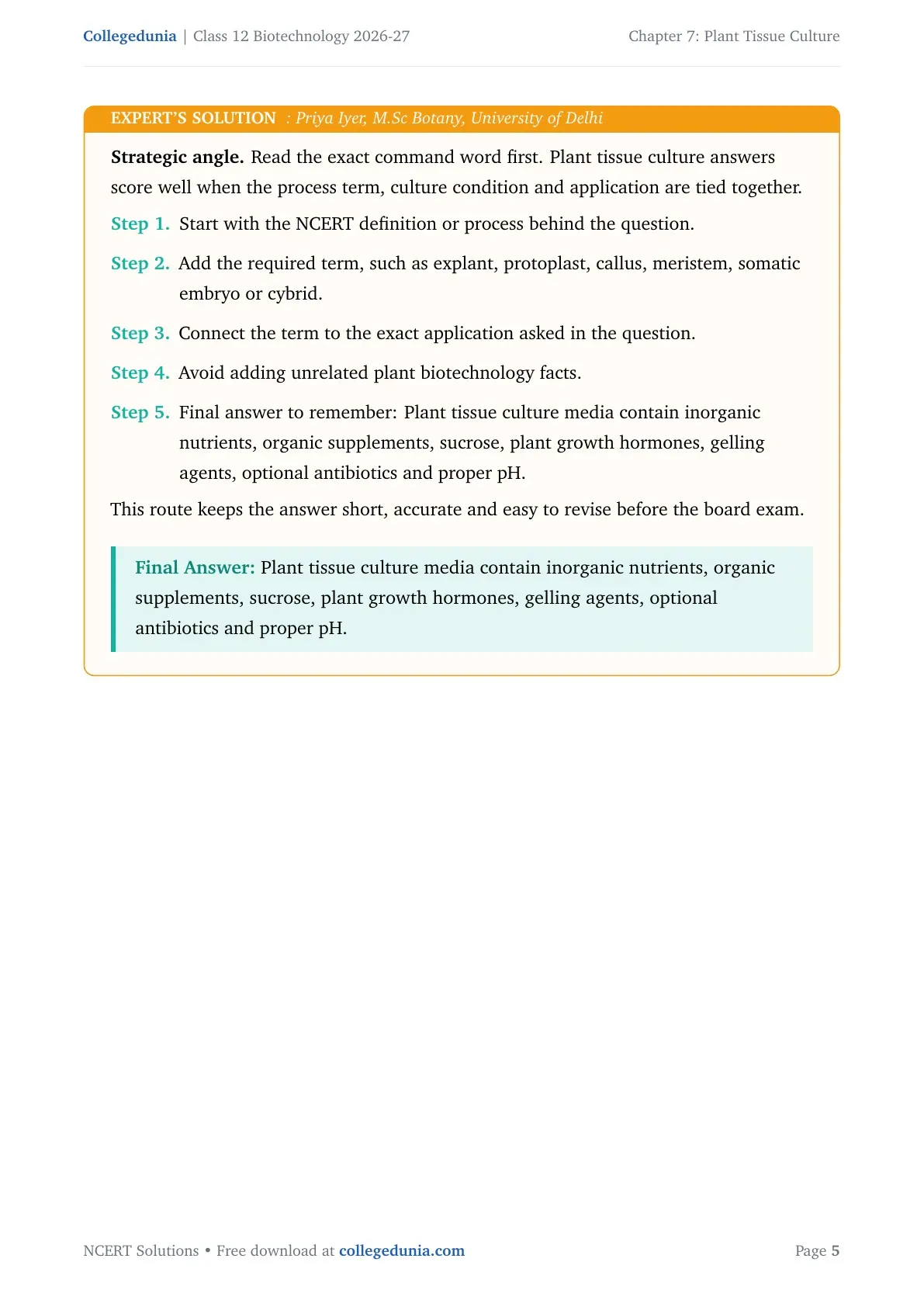
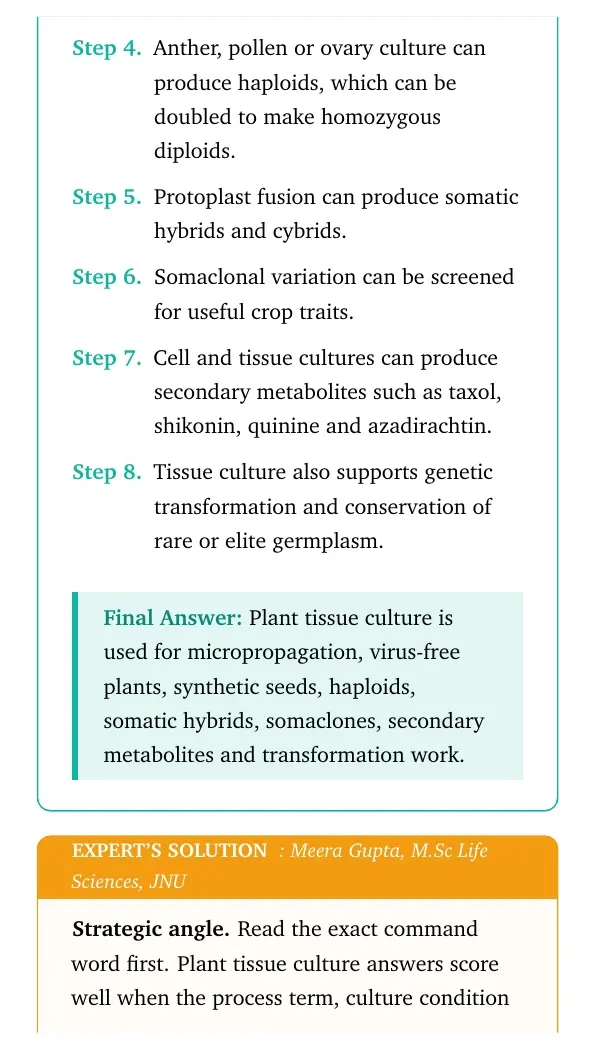
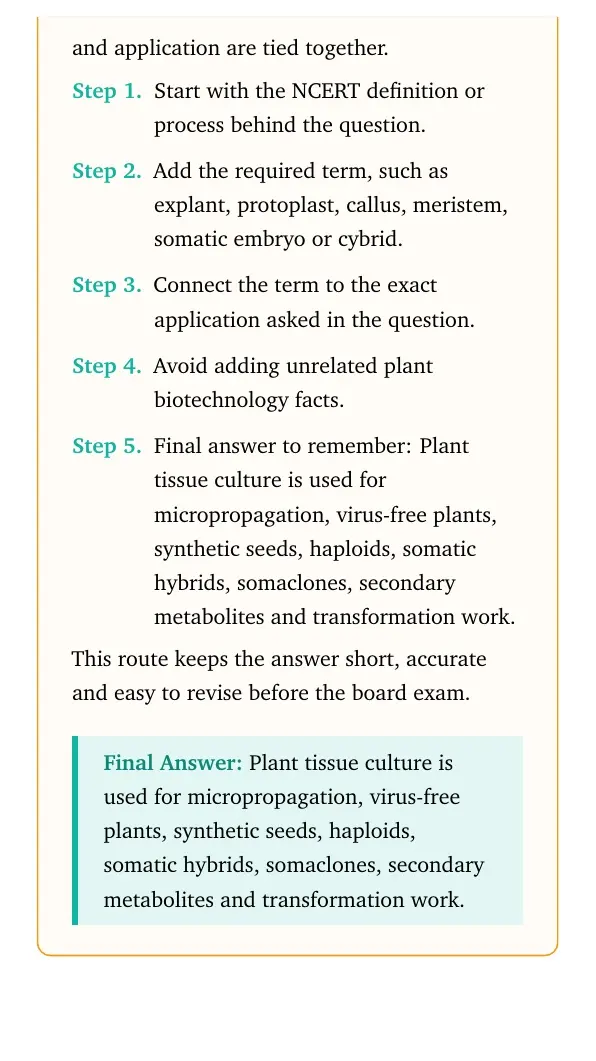
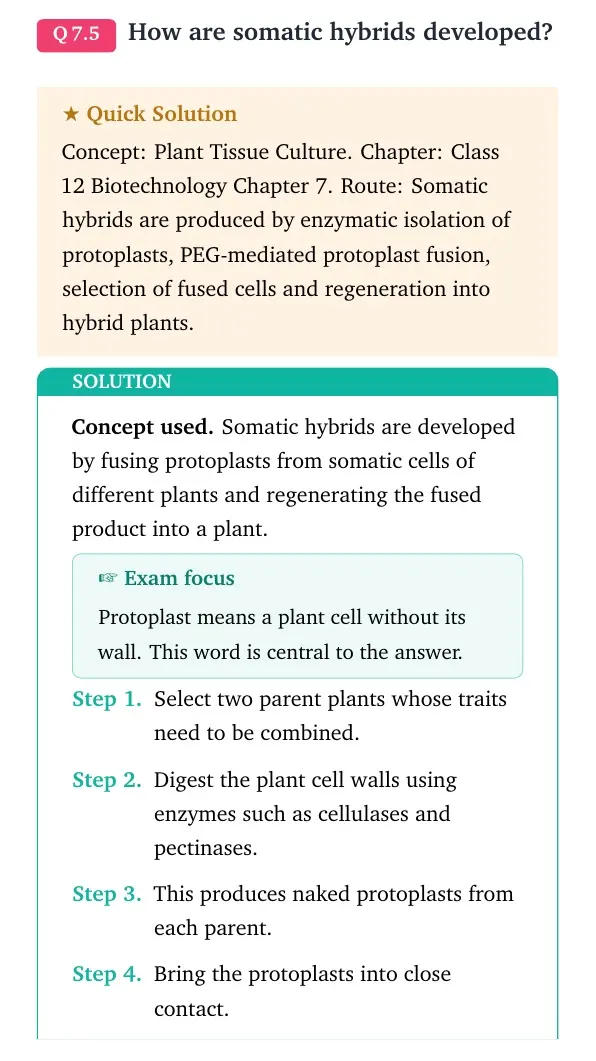
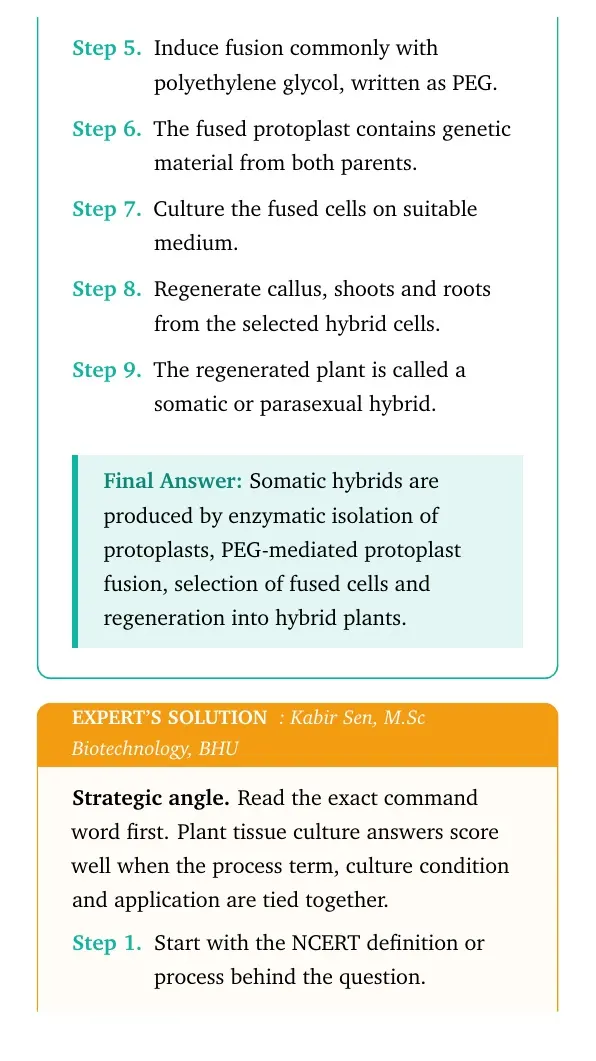
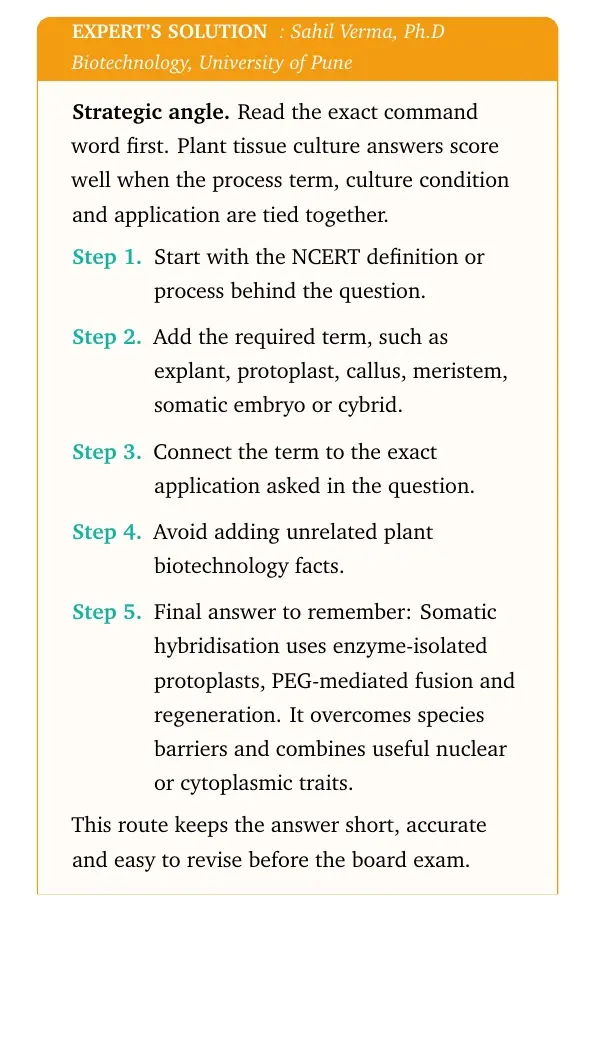
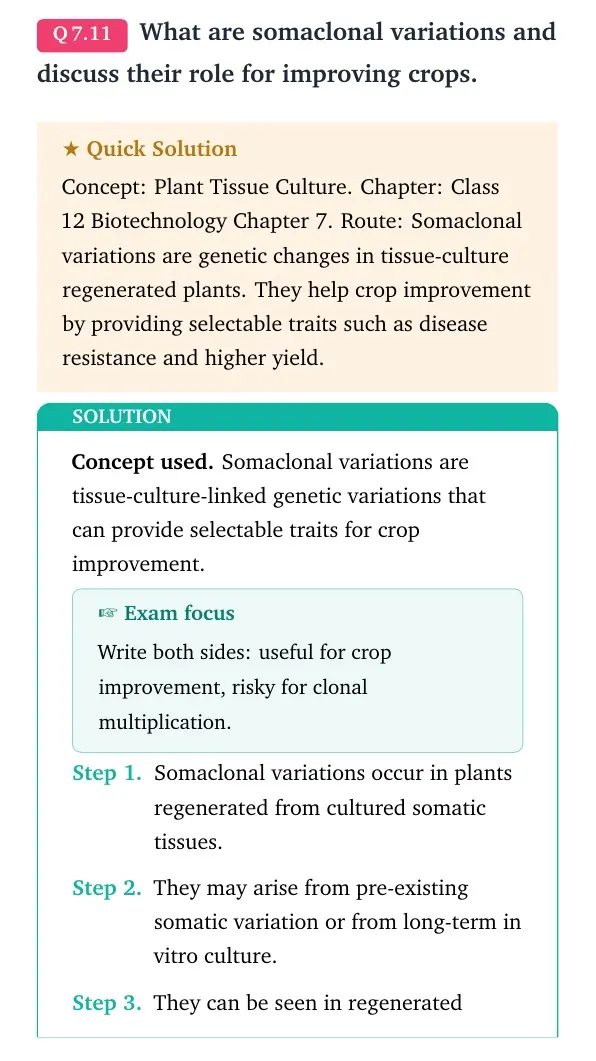
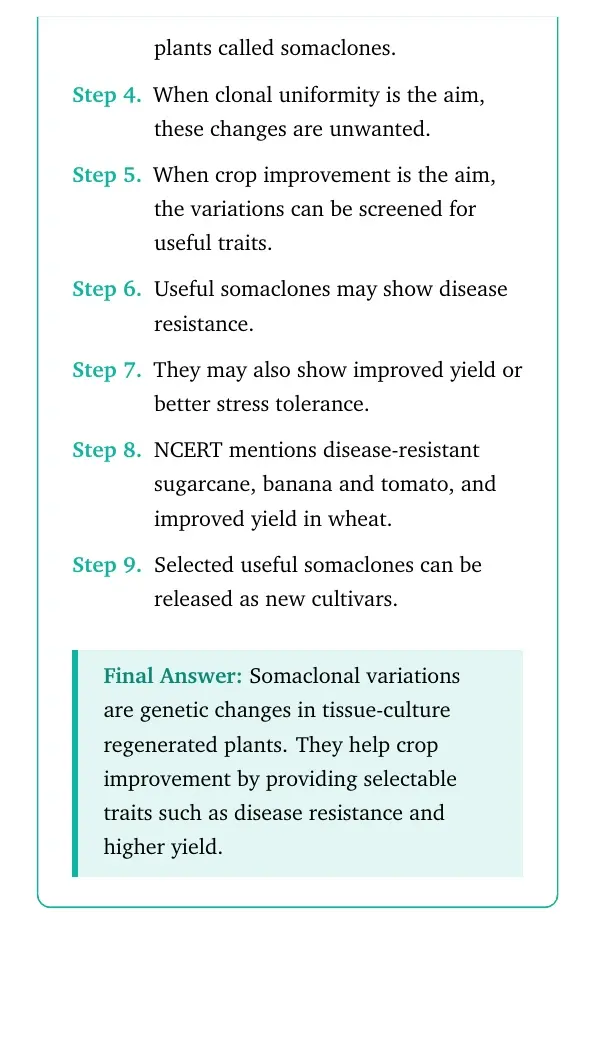





Student Feedback: Students usually find this chapter easier after separating it into three buckets: culture steps, media components and applications such as synthetic seeds and somatic hybrids.
Class 12 Biotechnology Chapter 7 Plant Tissue Culture Solutions PDF
Class 12 Biotechnology Chapter 7 Plant Tissue Culture NCERT Solutions help students revise how complete plants can be regenerated from cultured cells, tissues or organs. The chapter is based on totipotency and connects laboratory steps with commercial uses.
The highest-yield idea is simple: an explant grows on sterile nutrient medium, then hormones and culture conditions guide callus, shoots, roots or somatic embryos.
How to Use These Plant Tissue Culture NCERT Solutions
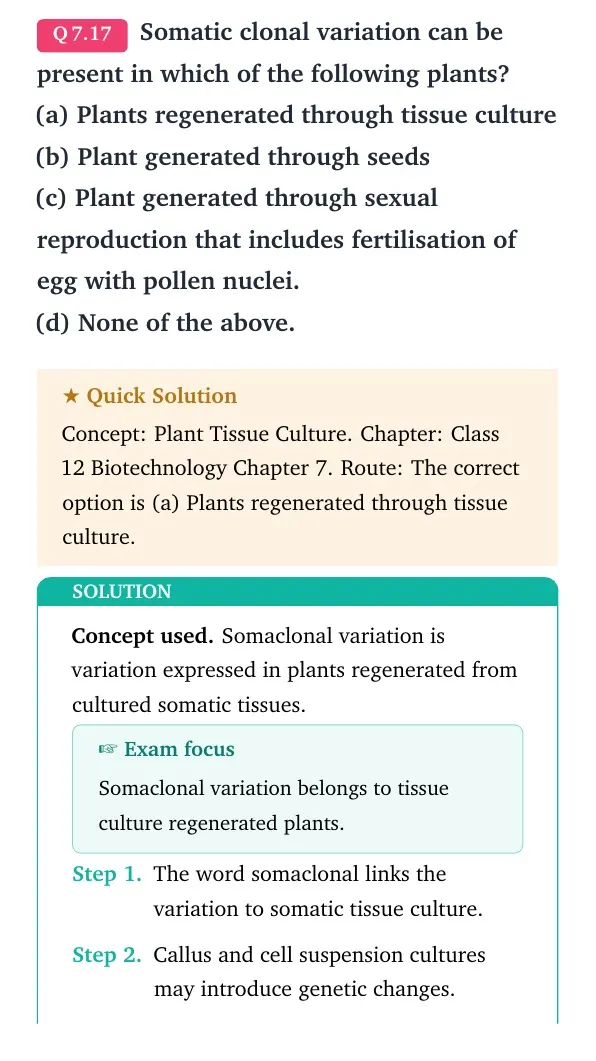
Read the definition questions first because terms such as explant, callus, somatic embryo, somaclone and cybrid repeat across the chapter. Then revise the process questions and finish with the MCQs.
- Use the boxed answer for direct board-style recall.
- Use the expert answer when an MCQ needs the reason behind the option.
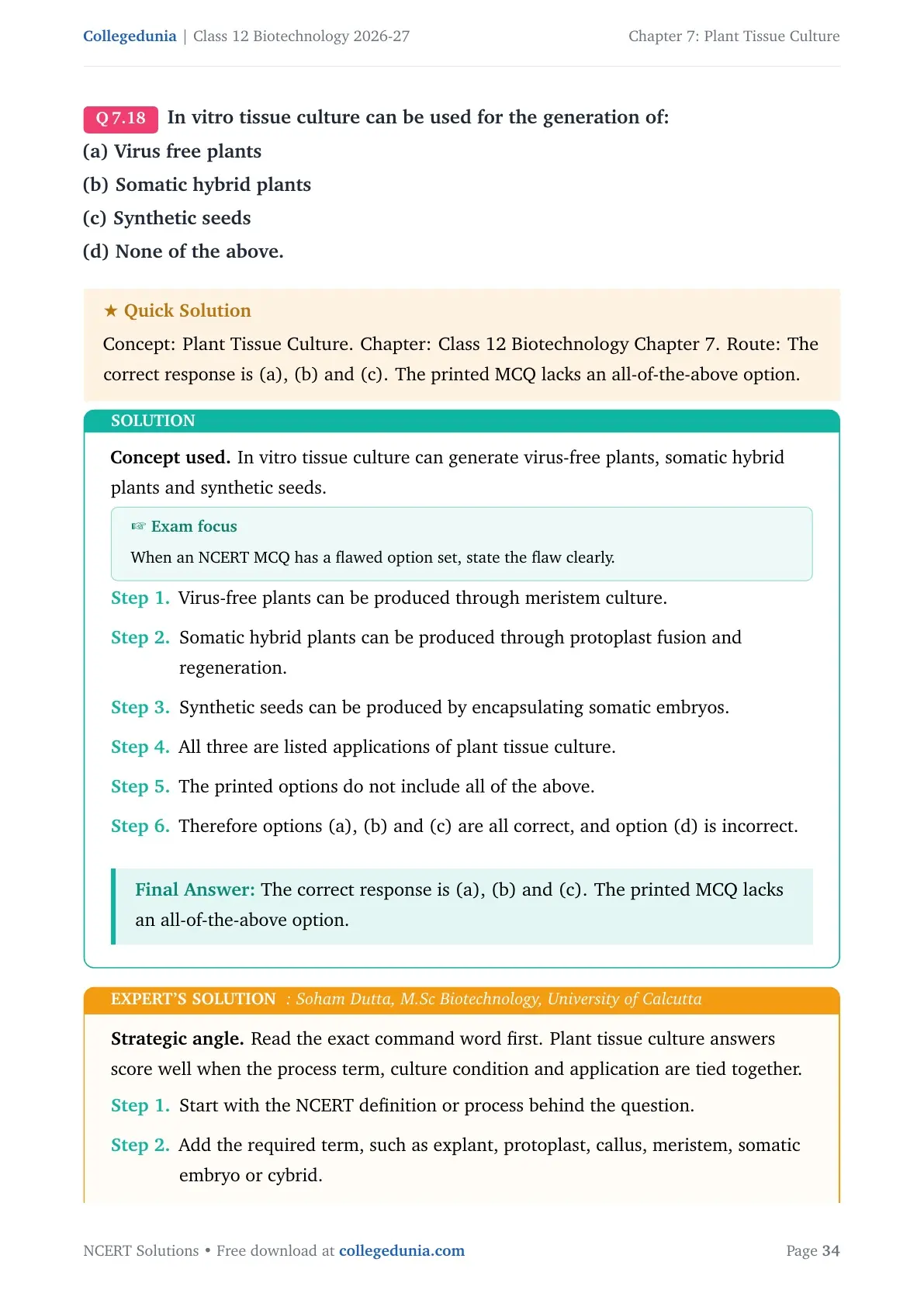
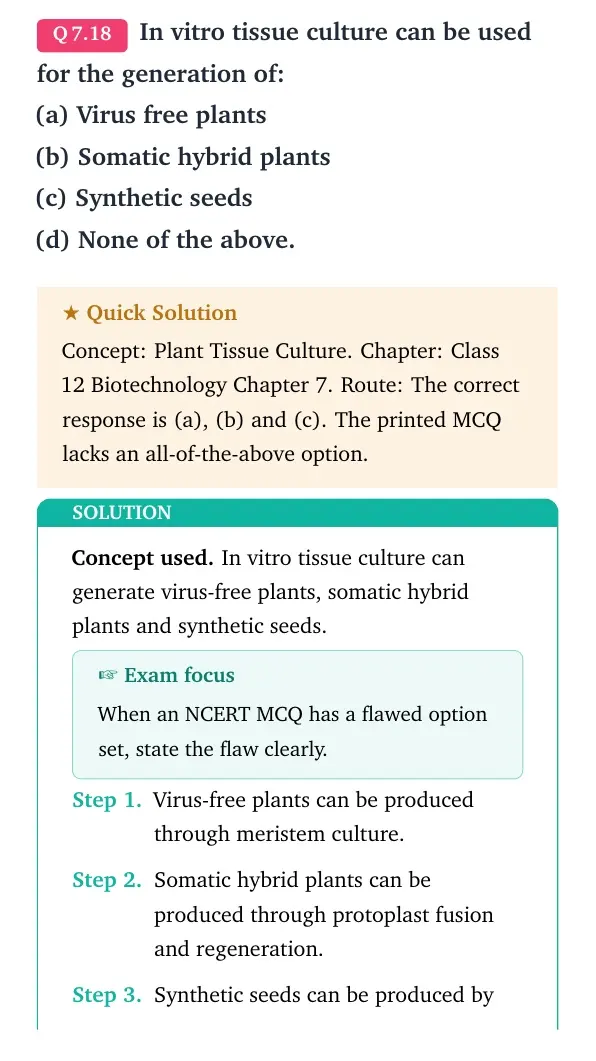
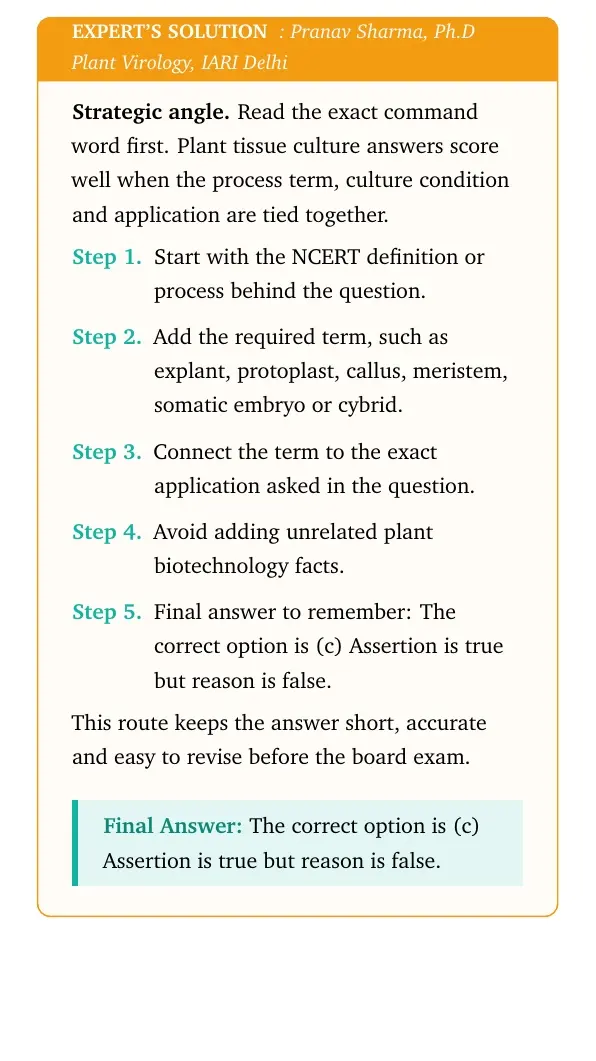
- Mark Question 18 because the printed options do not include all correct choices.
Plant Tissue Culture Process Flow
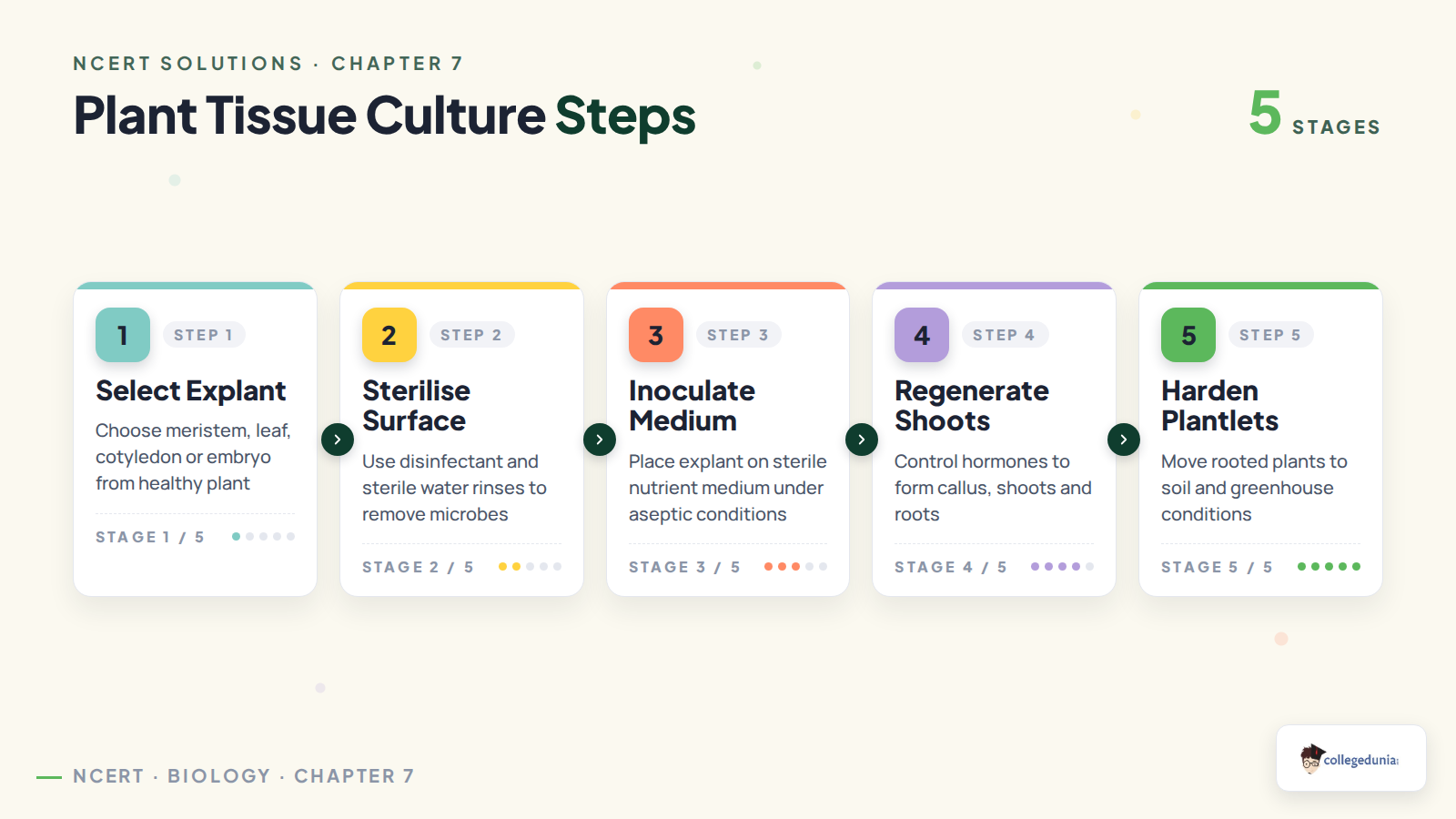
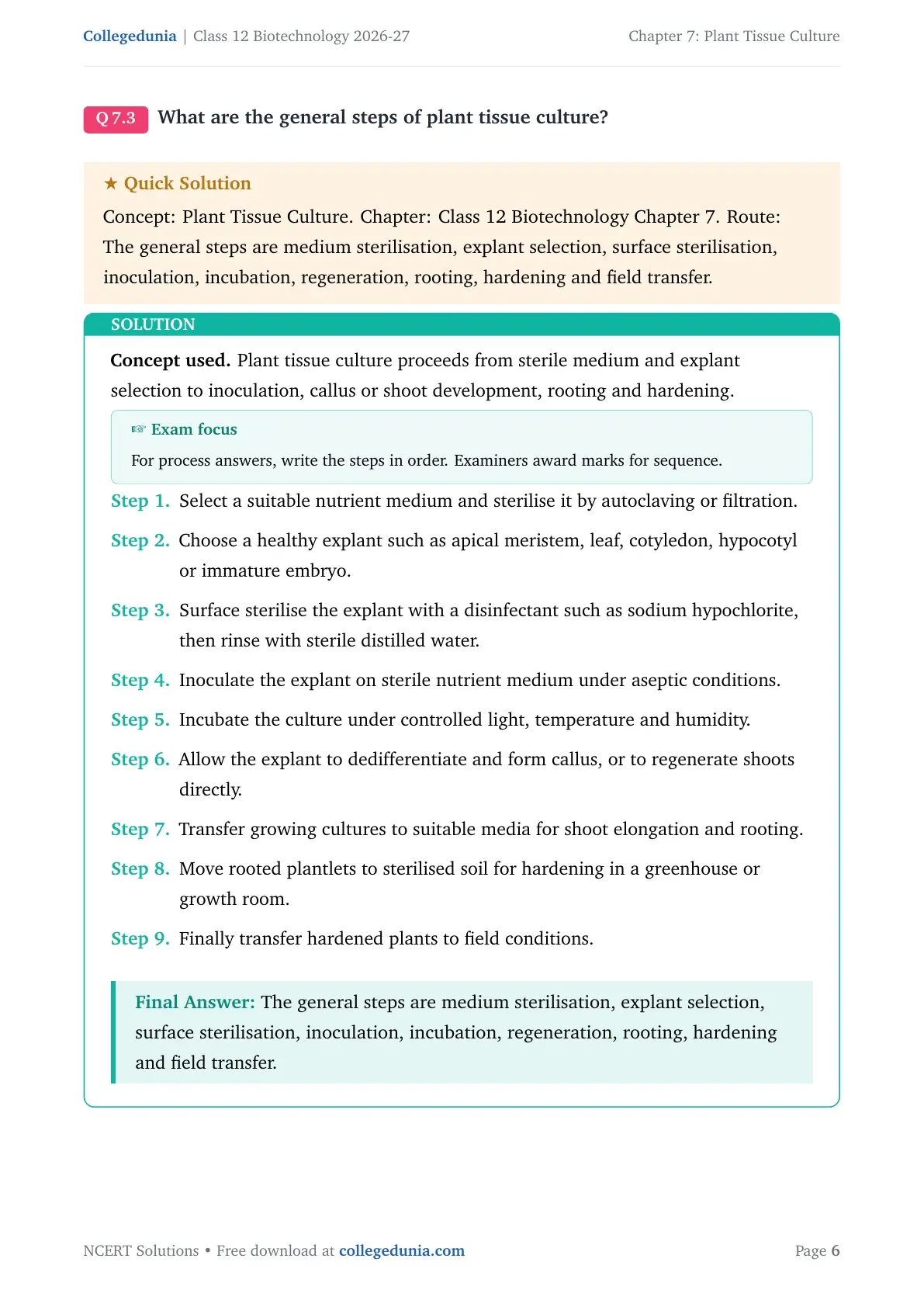
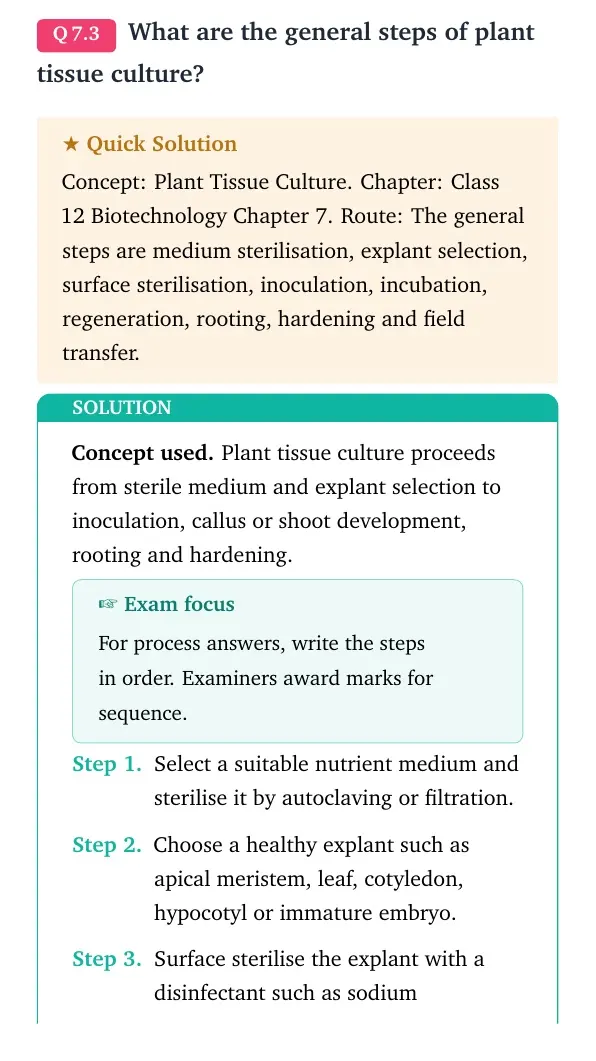
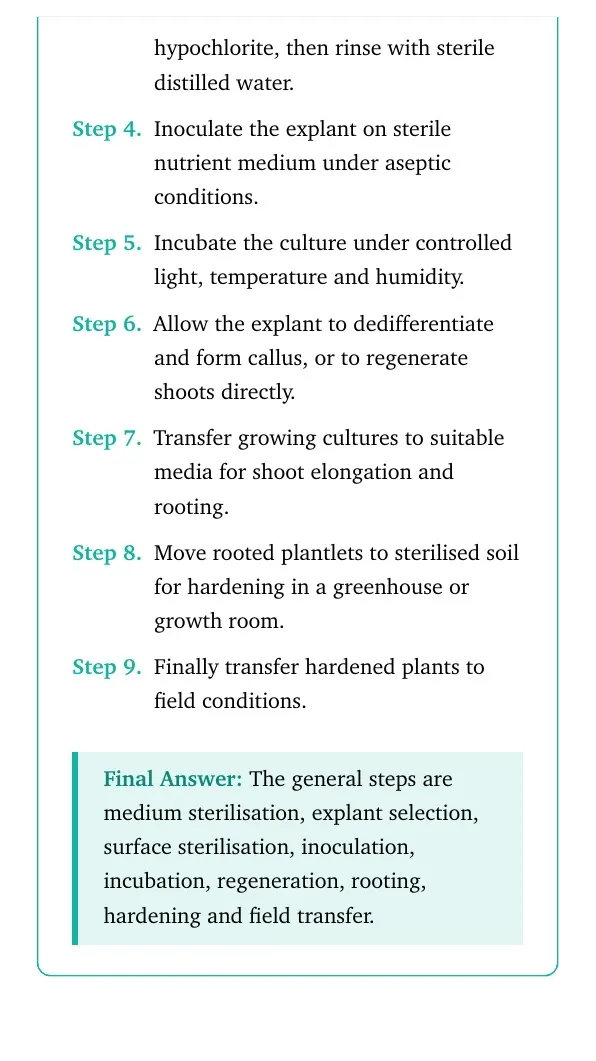
The usual route starts with explant selection and sterile medium preparation. The explant is surface sterilised, inoculated on nutrient medium, incubated under controlled conditions, regenerated into shoots and roots, then hardened before field transfer.
| Step | Main Action | Exam Point |
|---|---|---|
| Explant | Select meristem, leaf, cotyledon, hypocotyl or embryo | Starting material for culture |
| Sterilisation | Remove contaminants with disinfectant and sterile water | Maintains aseptic condition |
| Inoculation | Place explant on nutrient medium | Done in sterile workspace |
| Regeneration | Induce callus, shoots, roots or embryos | Hormone ratio matters |
| Hardening | Transfer plantlets to soil and greenhouse | Prepares plants for field |
Organogenesis and Somatic Embryogenesis
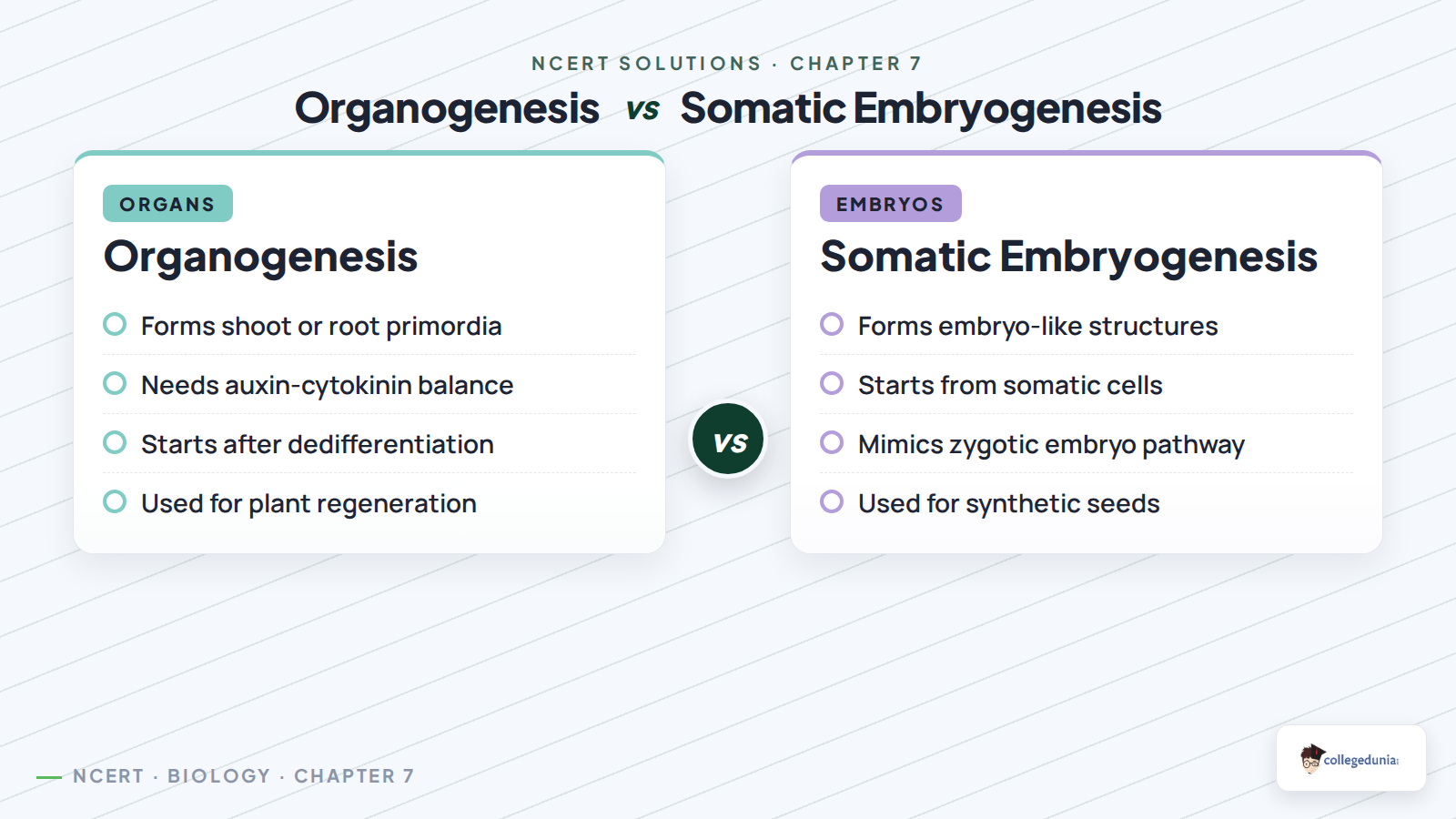
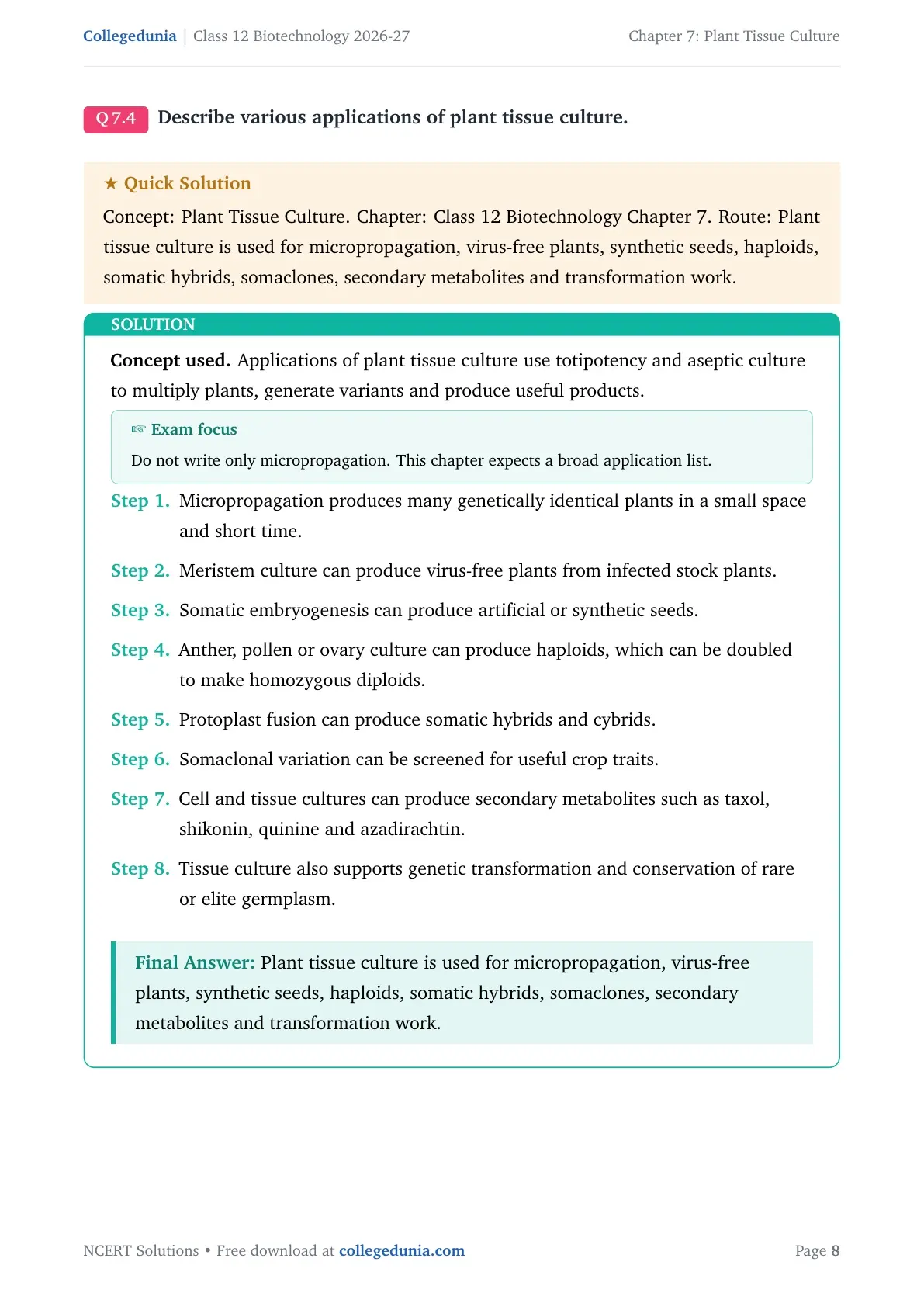
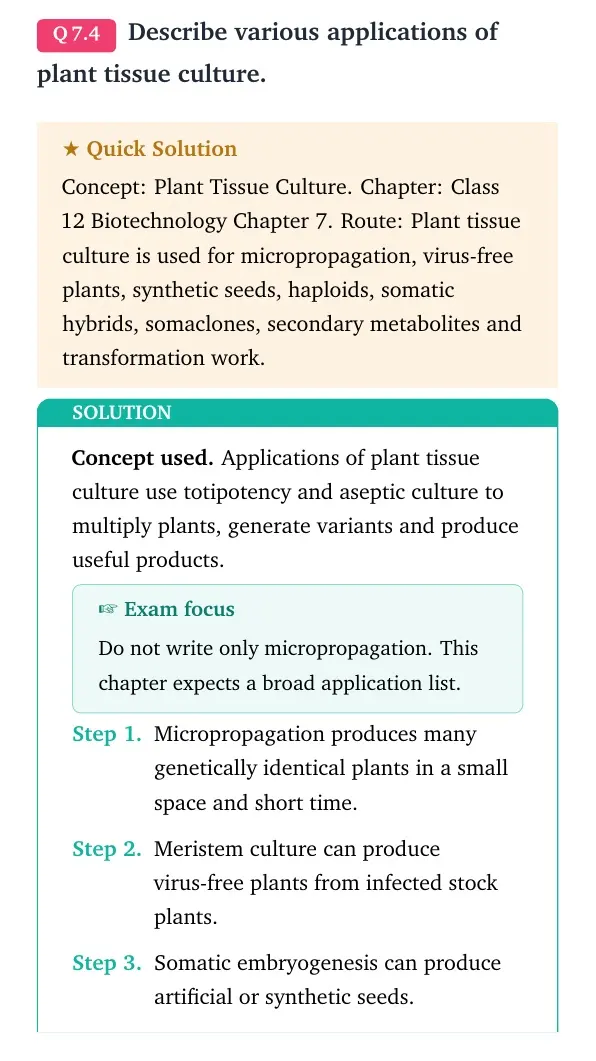
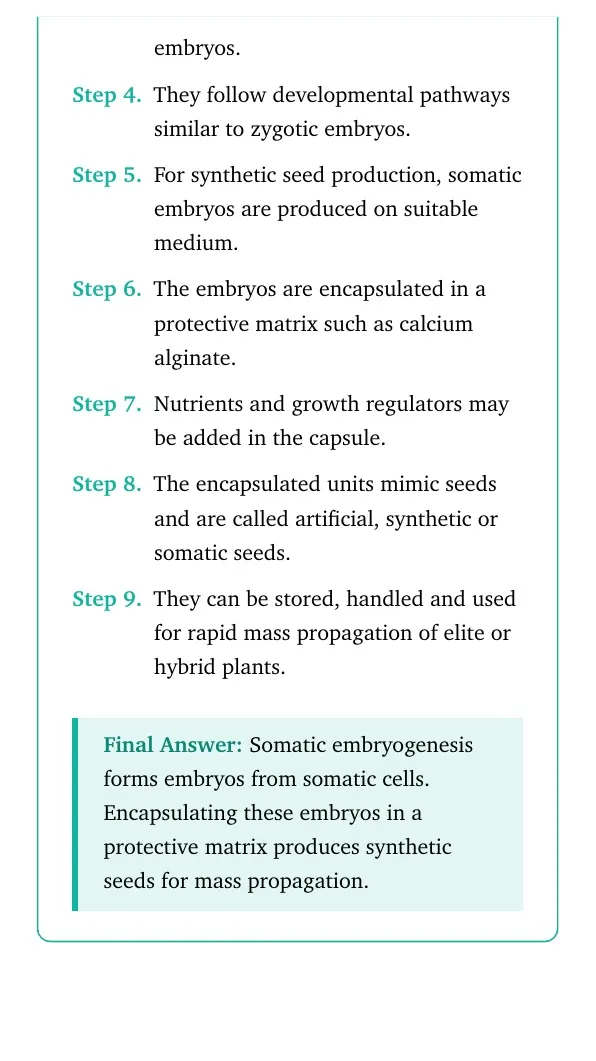
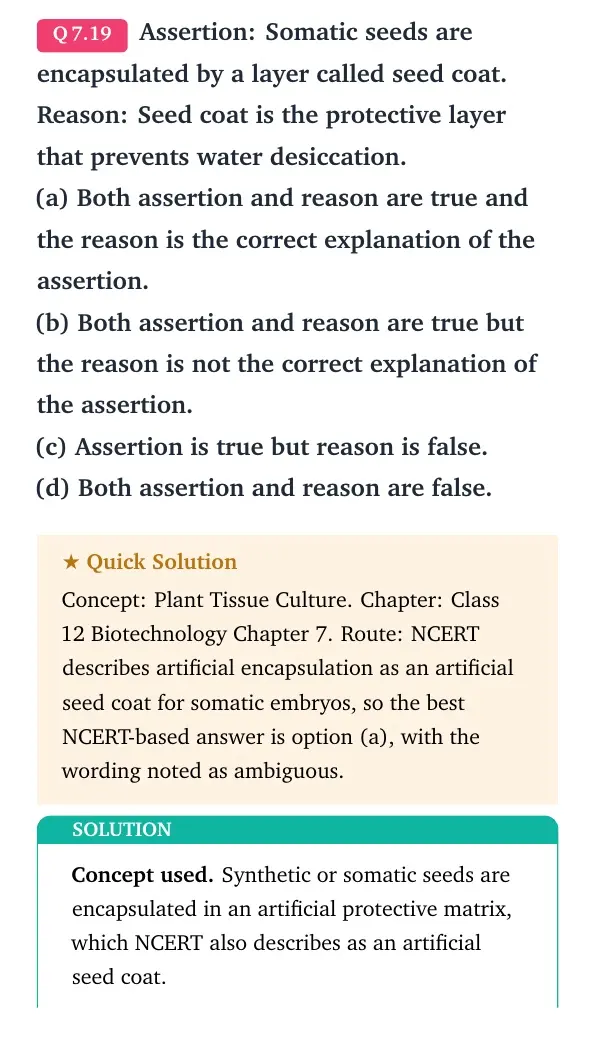
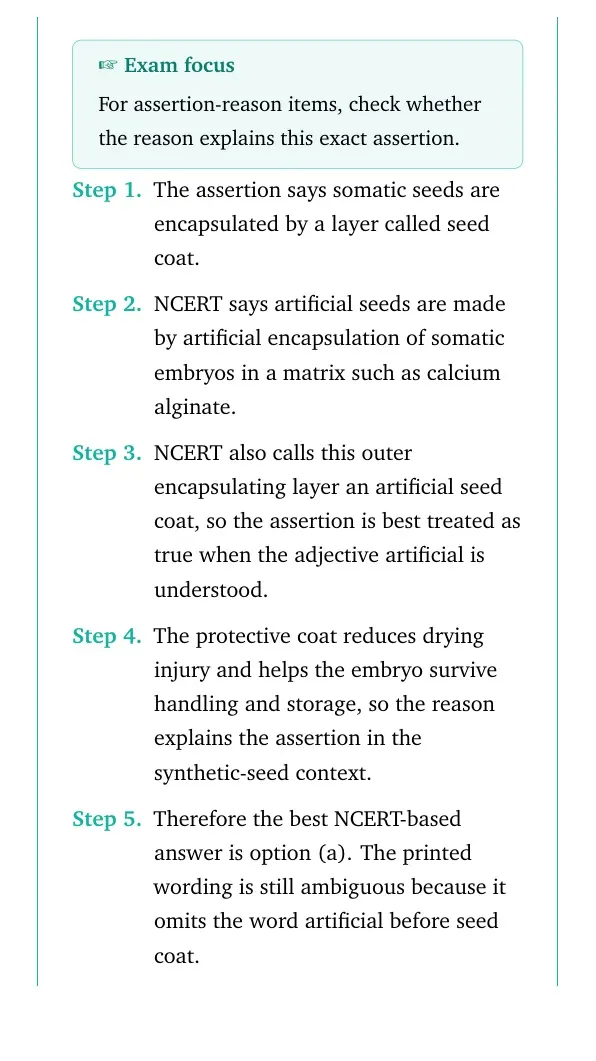
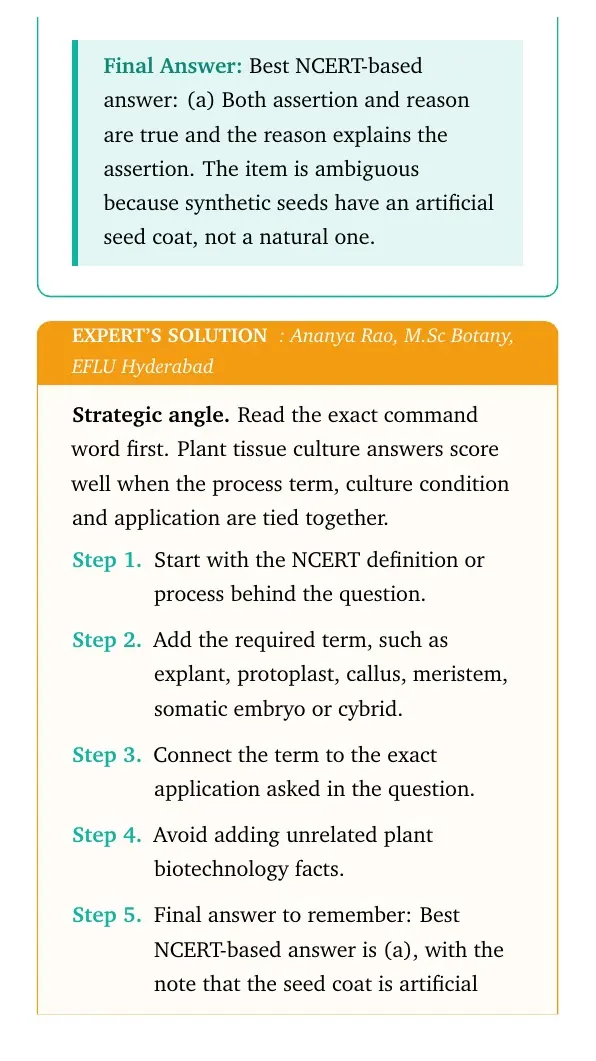
Organogenesis forms organs such as shoots and roots from cultured cells or tissues. Somatic embryogenesis forms embryo-like structures from somatic cells. These somatic embryos can be encapsulated to make synthetic seeds.
Plant Tissue Culture Video Revision
Source: Magnet Brains on YouTube
Check All Plant Tissue Culture Exercise Answers
The solved question cards below let students open the main solution and expert solution separately.
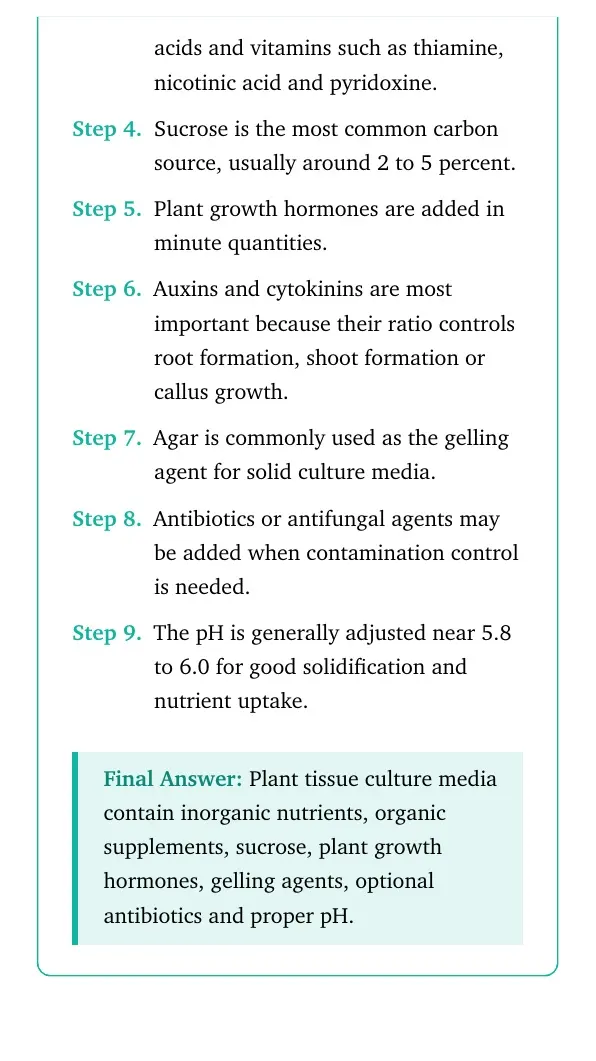
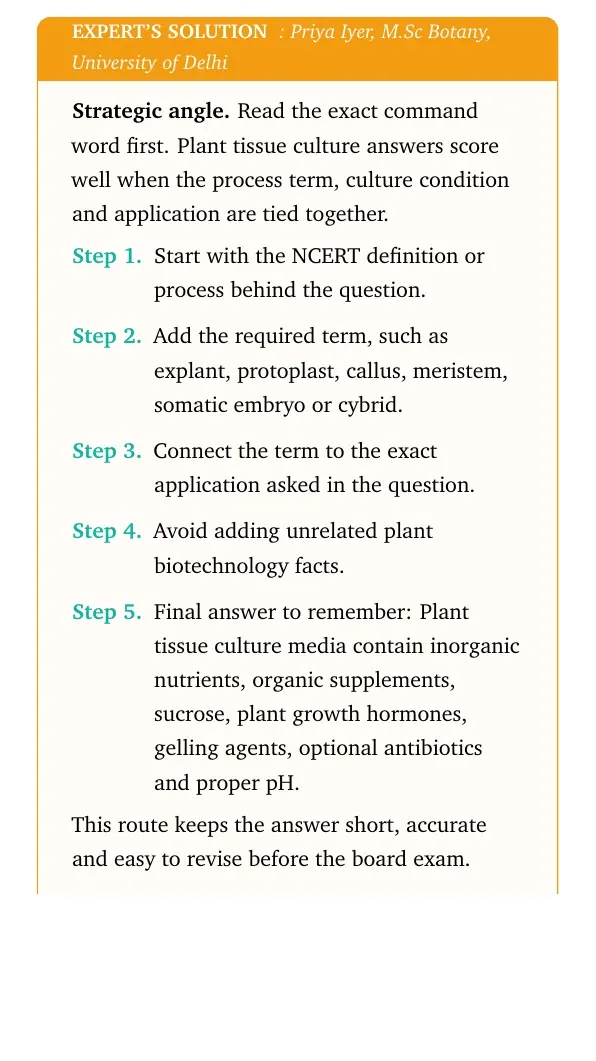
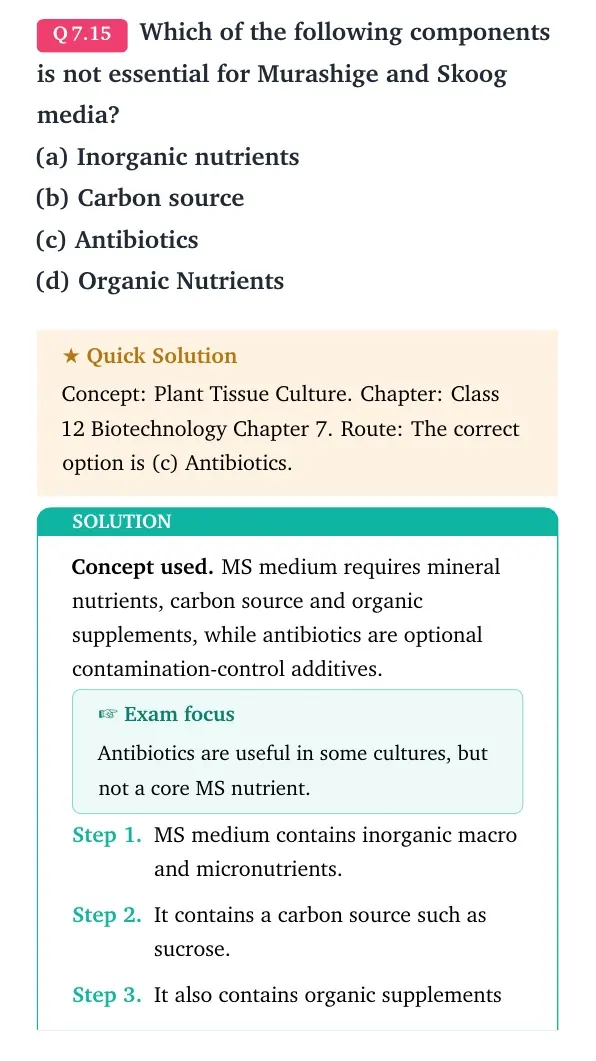
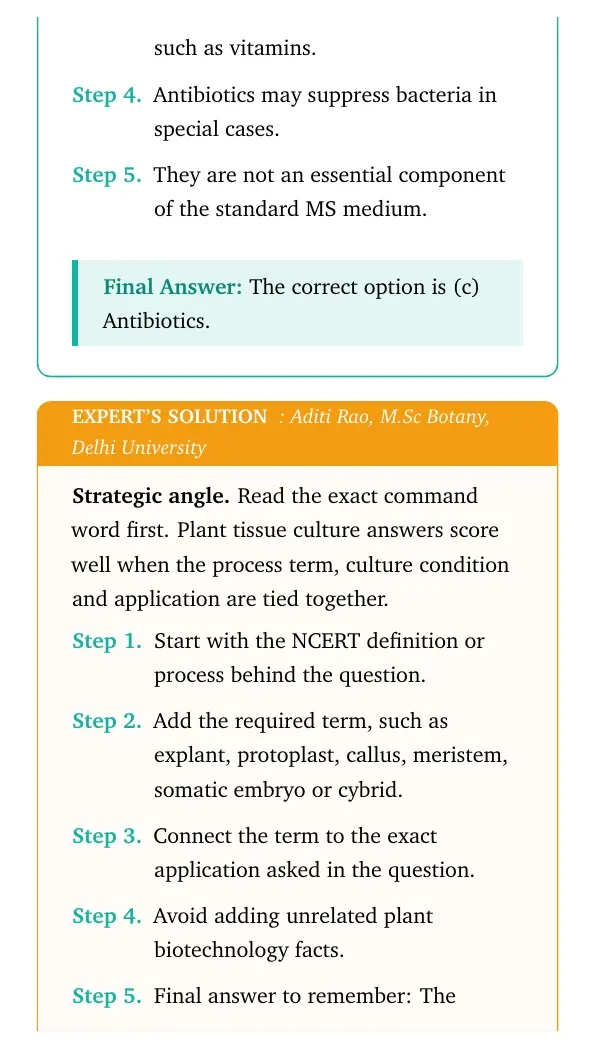
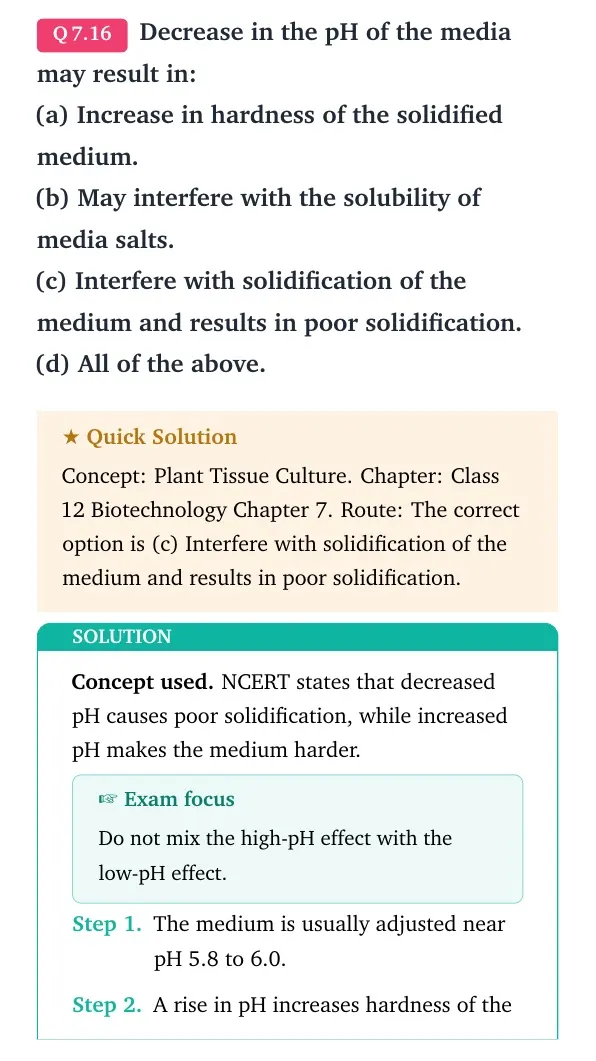
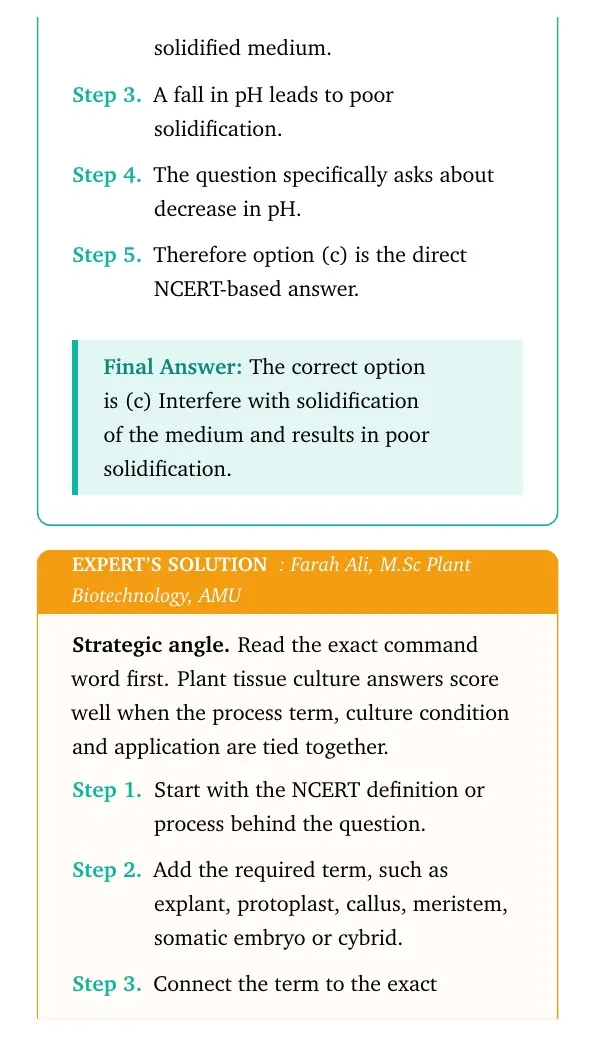
Practice mode: Open the question-wise Plant Tissue Culture solutions cards.
Related Class 12 Biotechnology Resources
| Resource | Use it for |
|---|---|
| Plant Tissue Culture NCERT Book PDF | Read the official chapter before solving. |
| Plant Tissue Culture Notes | Revise definitions, media and applications quickly. |
| Plant Tissue Culture Handwritten Notes | Use for one-shot exam recap. |
All Class 12 Biotechnology NCERT Solutions
| Chapter | NCERT Solutions |
|---|---|
| Chapter 3 Gene Cloning | Open Chapter 3 Solutions |
| Chapter 4 Applications of Recombinant DNA Technology | Open Chapter 4 Solutions |
| Chapter 6 Microbial Culture | Open Chapter 6 Solutions |
Plant Tissue Culture Biotechnology NCERT Solutions FAQs
Ques. What is covered in Class 12 Biotechnology Chapter 7 Plant Tissue Culture NCERT Solutions?
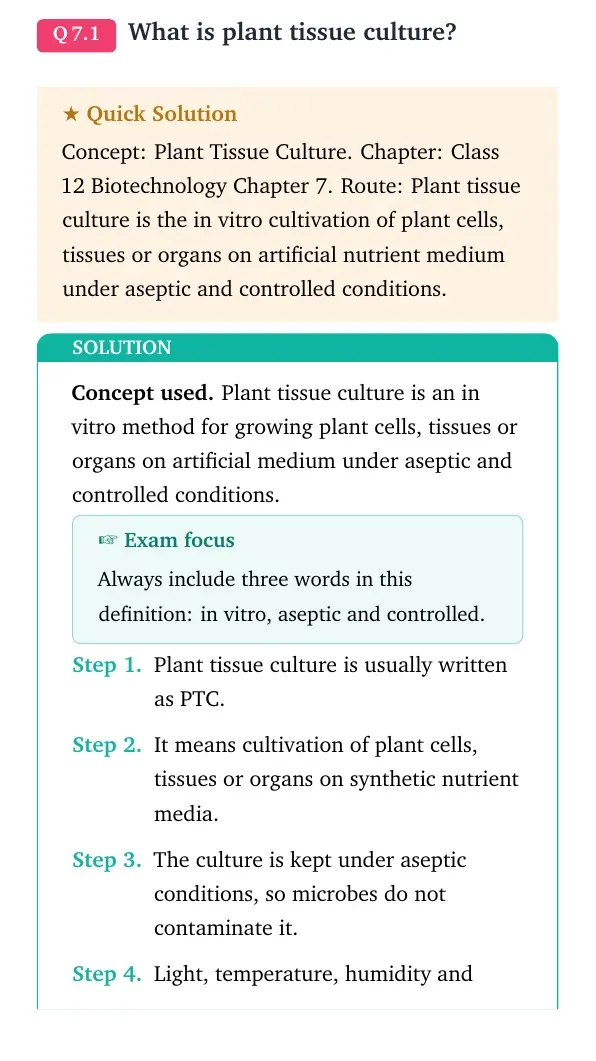
Ans. The solutions cover explants, nutrient media, tissue culture steps, somatic embryogenesis, synthetic seeds, somatic hybrids, somaclones and MCQs.
Ques. What is the principle behind plant tissue culture?
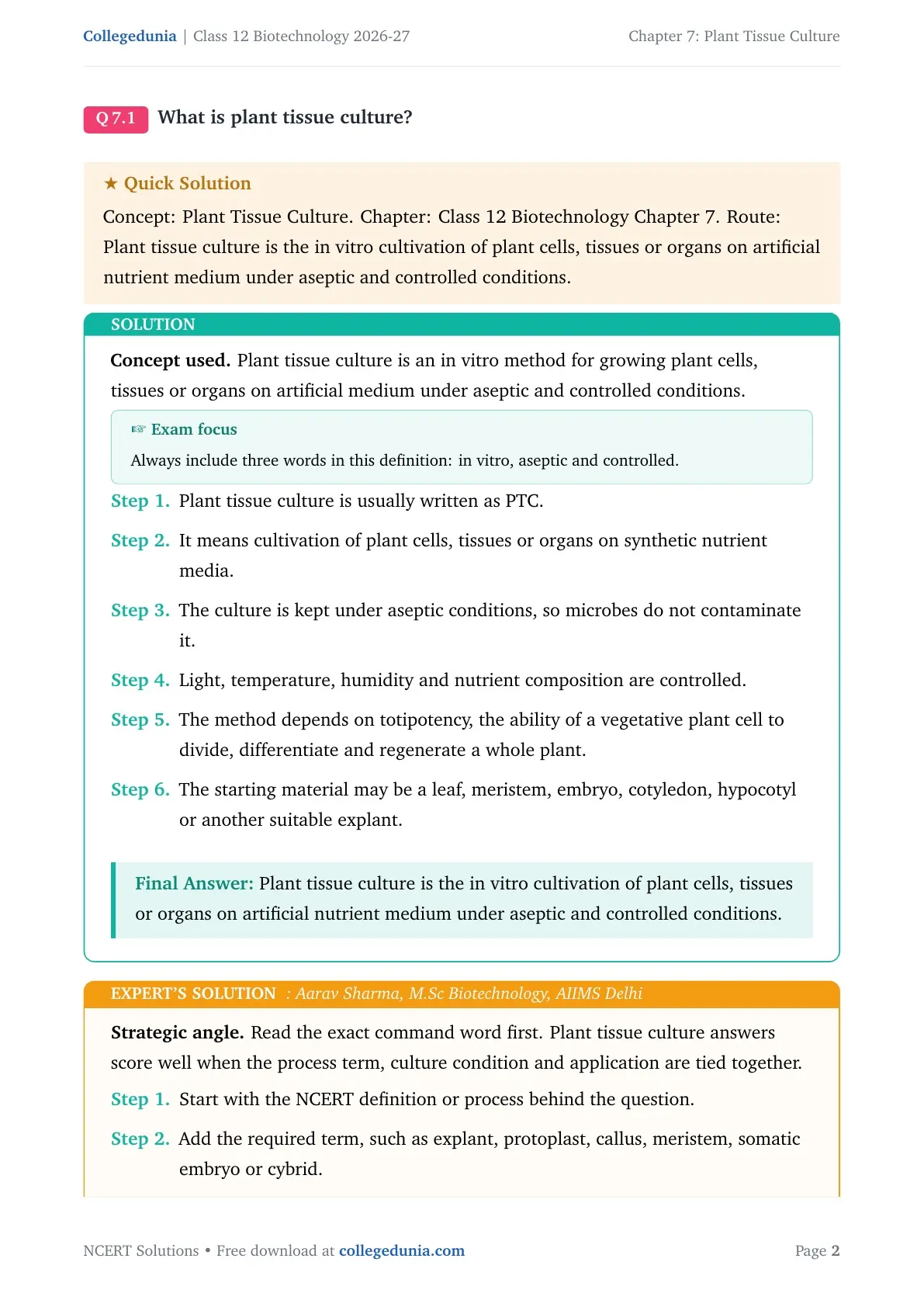
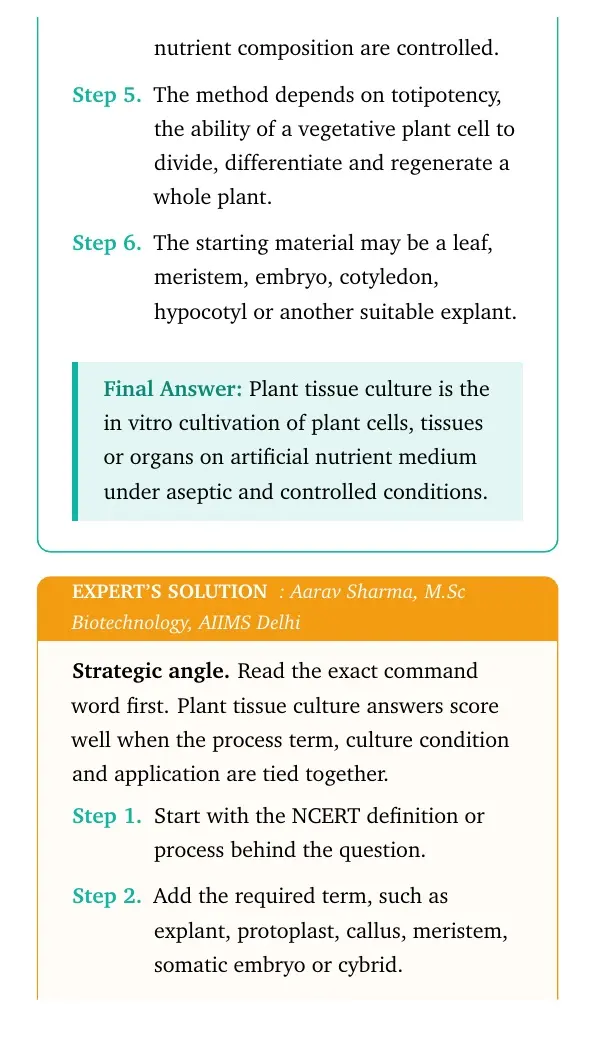
Ans. Plant tissue culture depends on totipotency, the ability of a vegetative plant cell to divide, differentiate and regenerate a whole plant.
Ques. Which explant is used to produce virus-free plants?
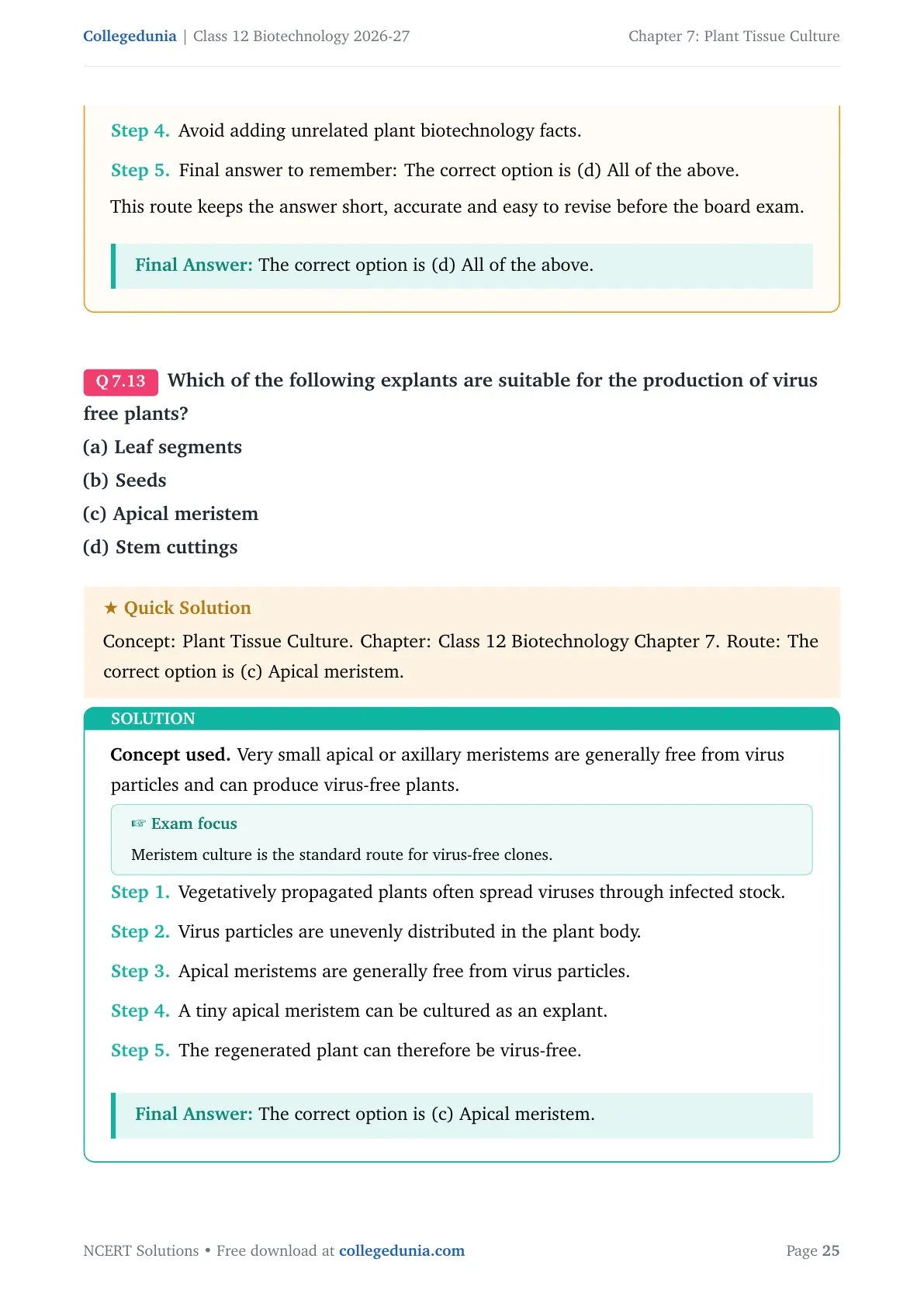
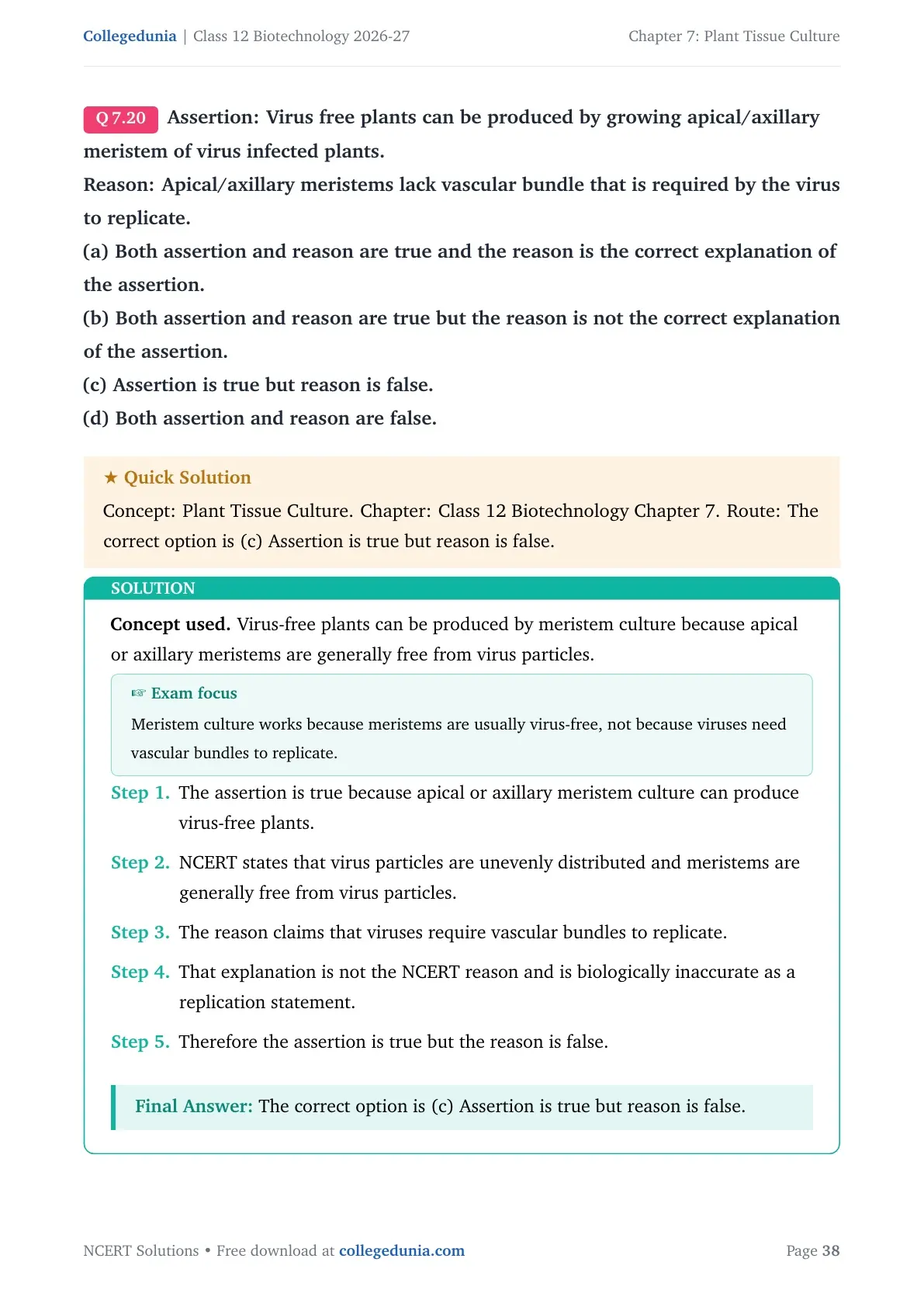
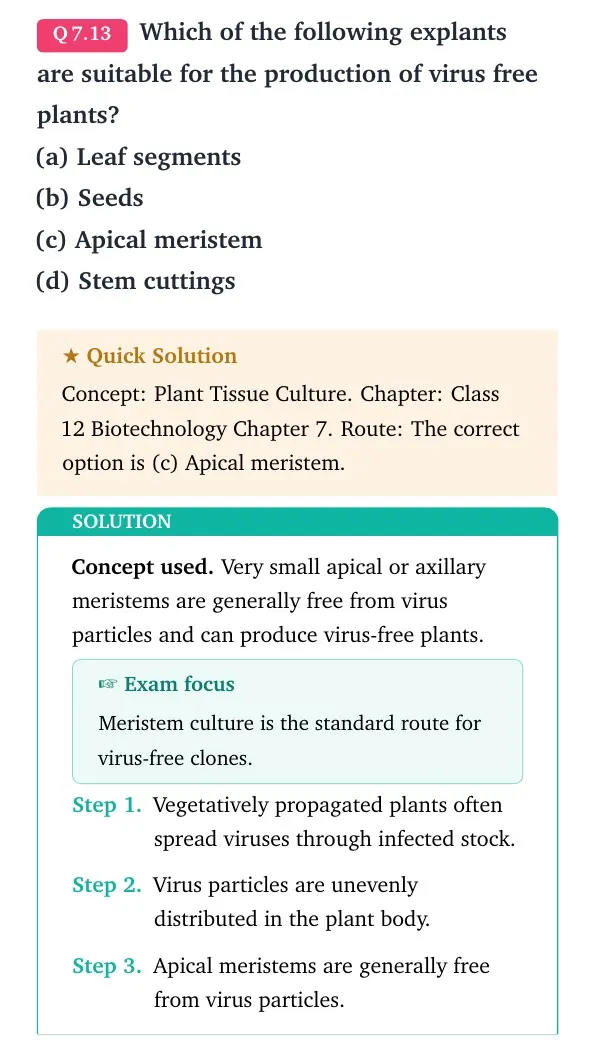
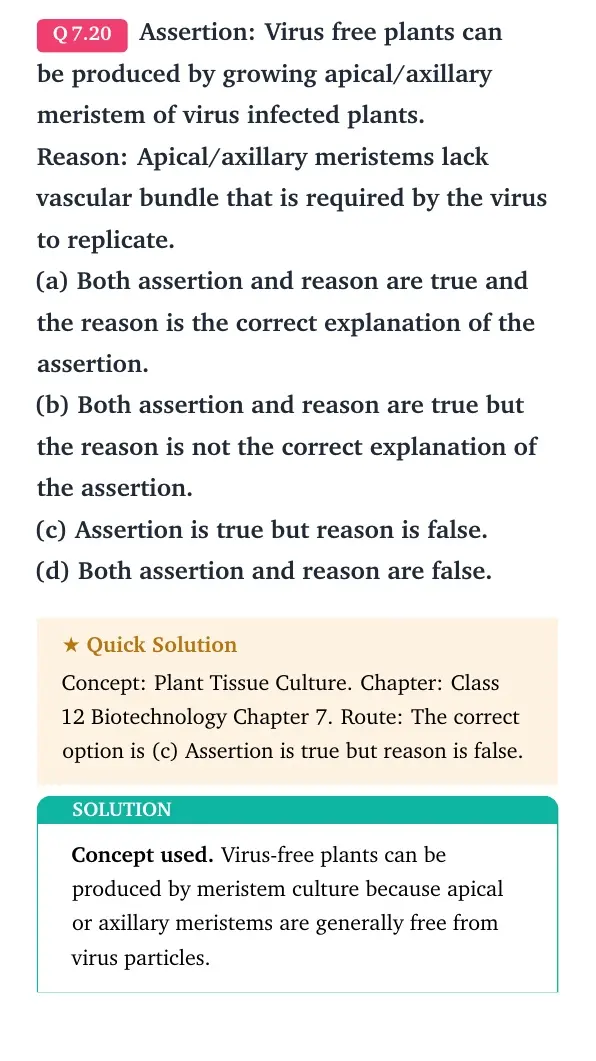
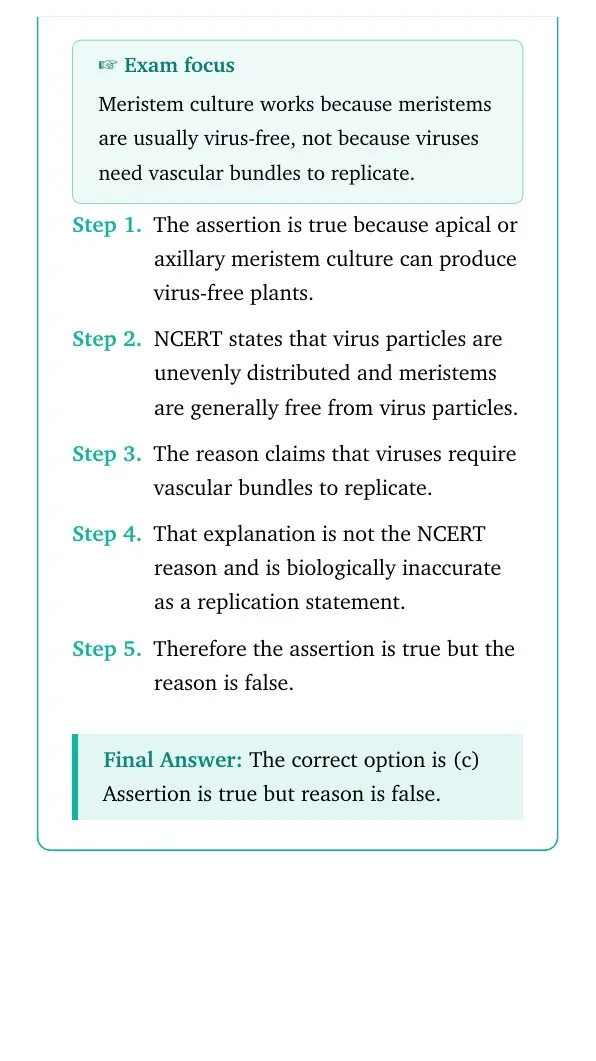
Ans. Apical or axillary meristem is used because these regions are generally free from virus particles in infected plants.
Ques. What are synthetic seeds?
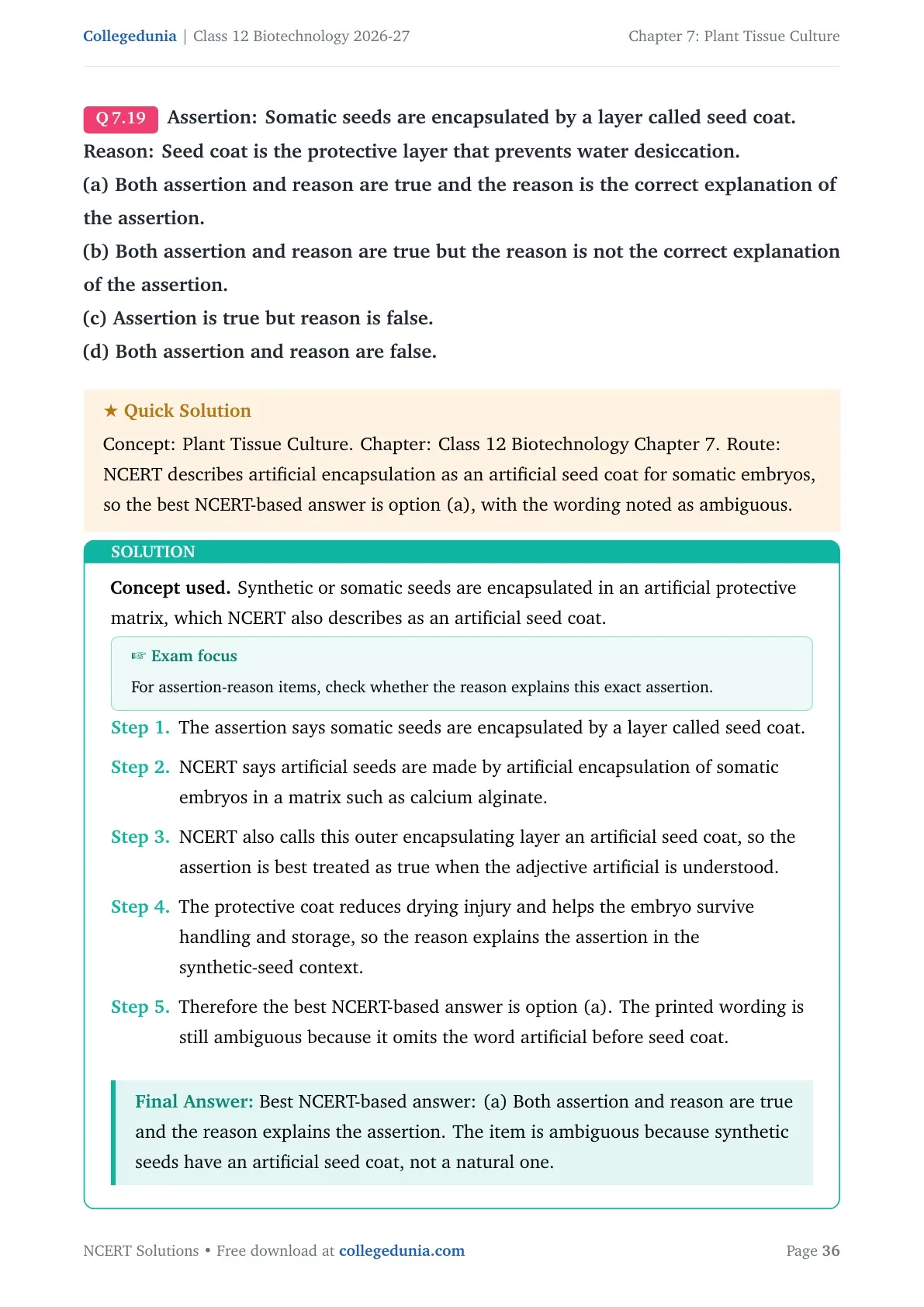
Ans. Synthetic seeds are somatic embryos encapsulated in an artificial protective matrix such as calcium alginate, often with nutrients and growth regulators.



Comments