




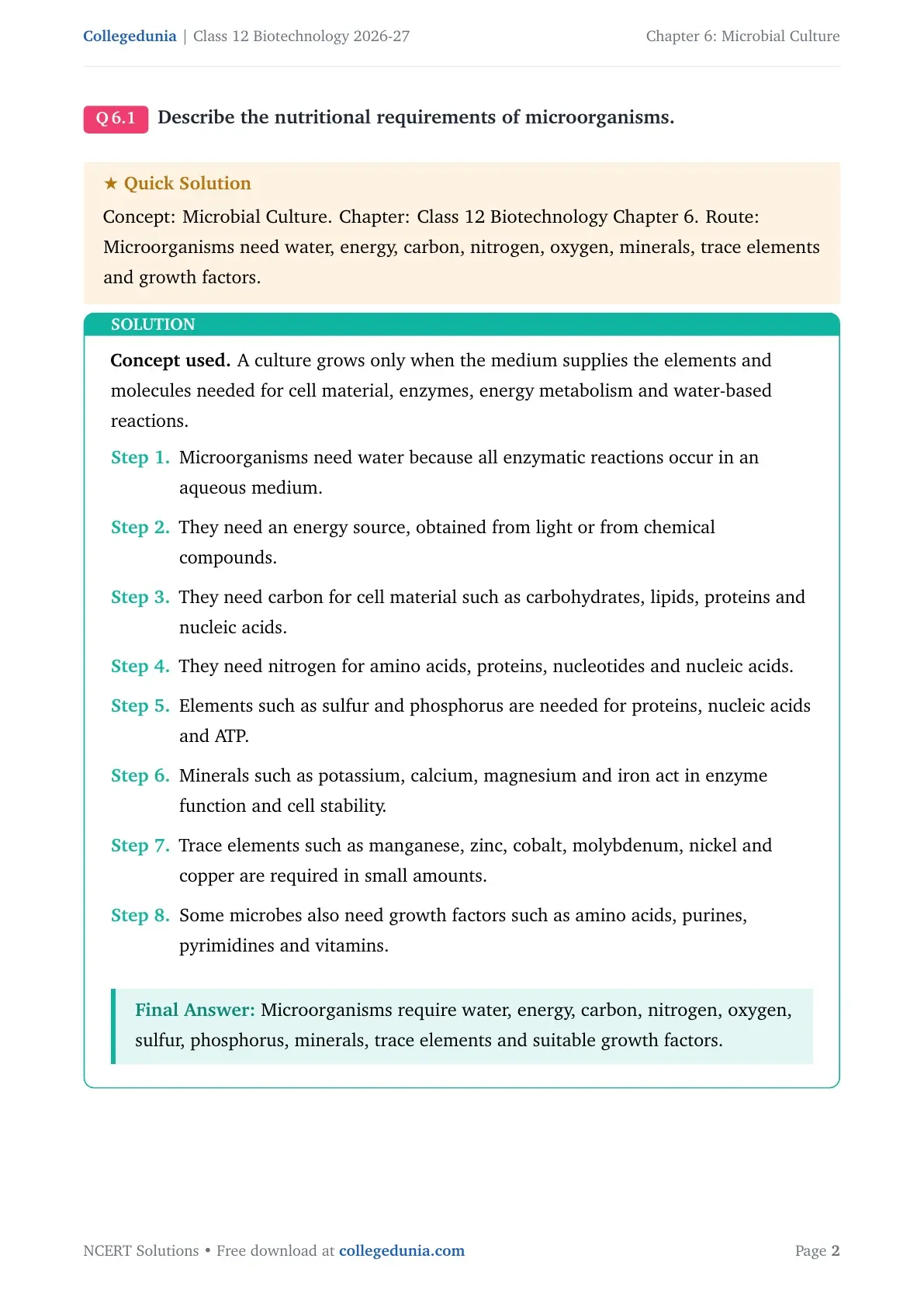
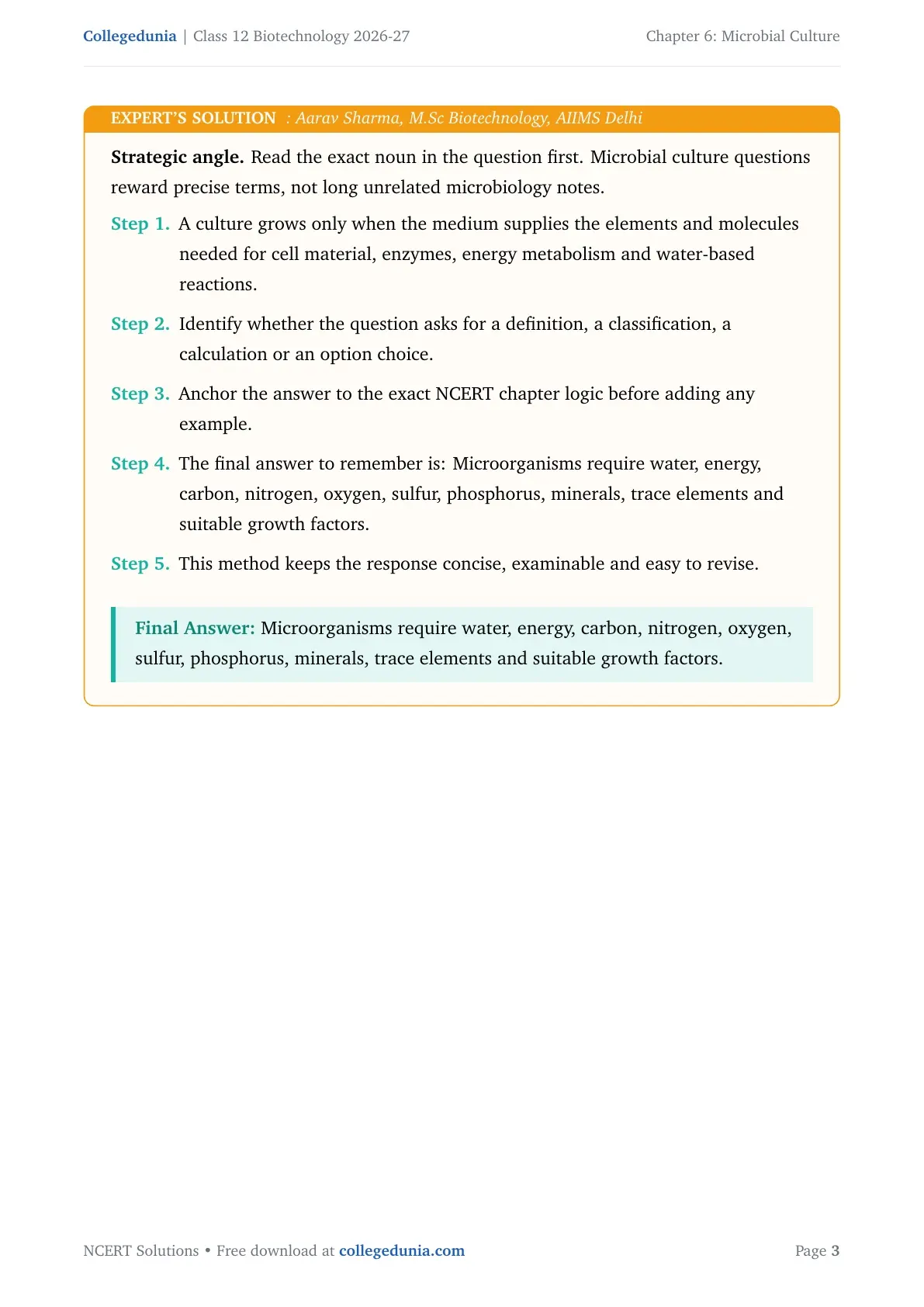
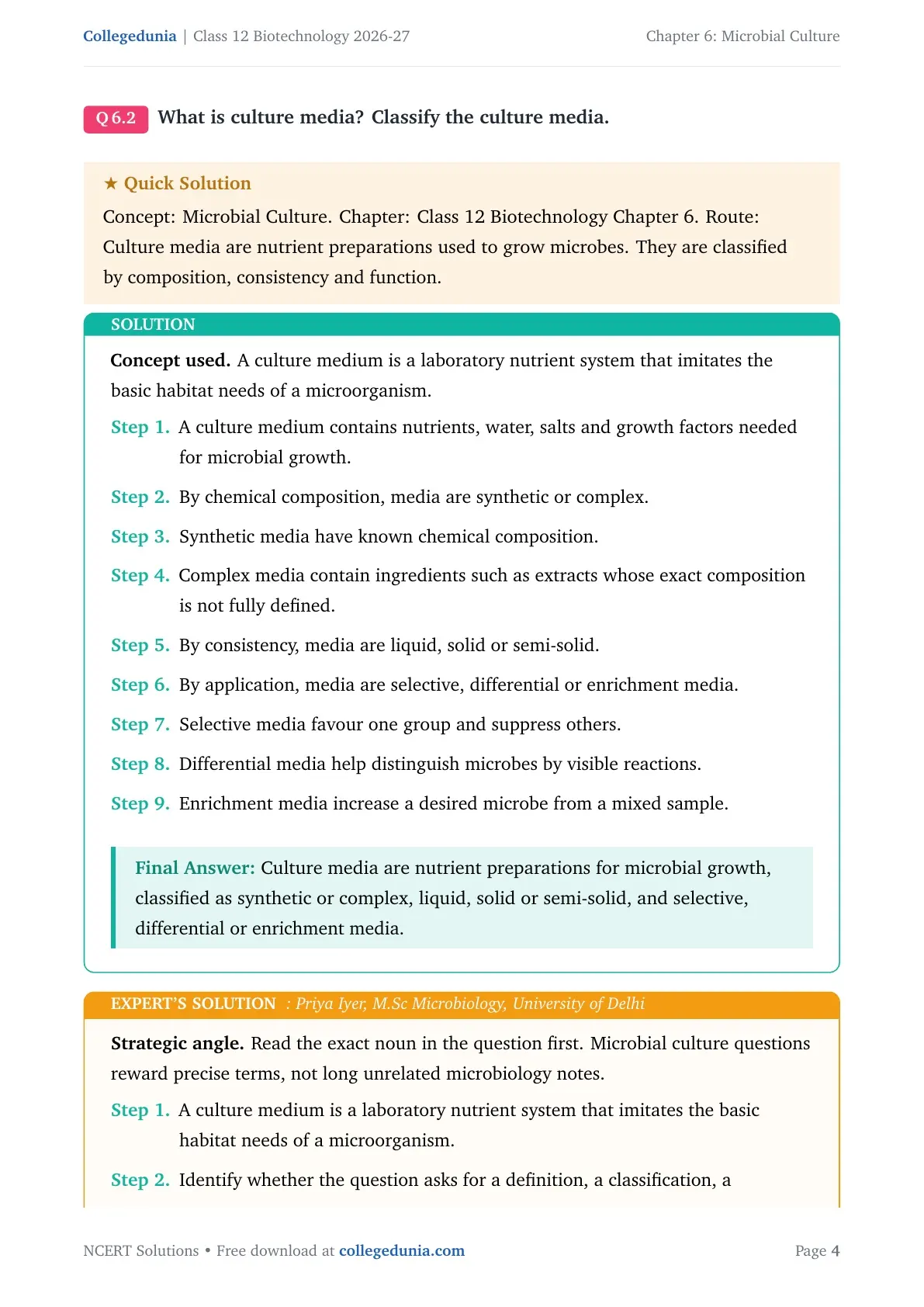
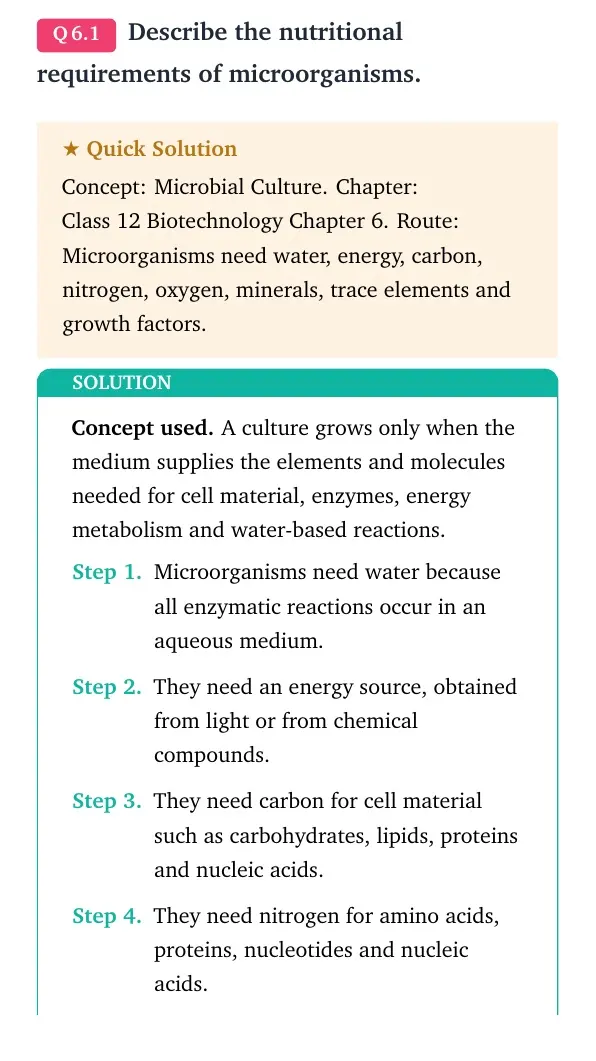
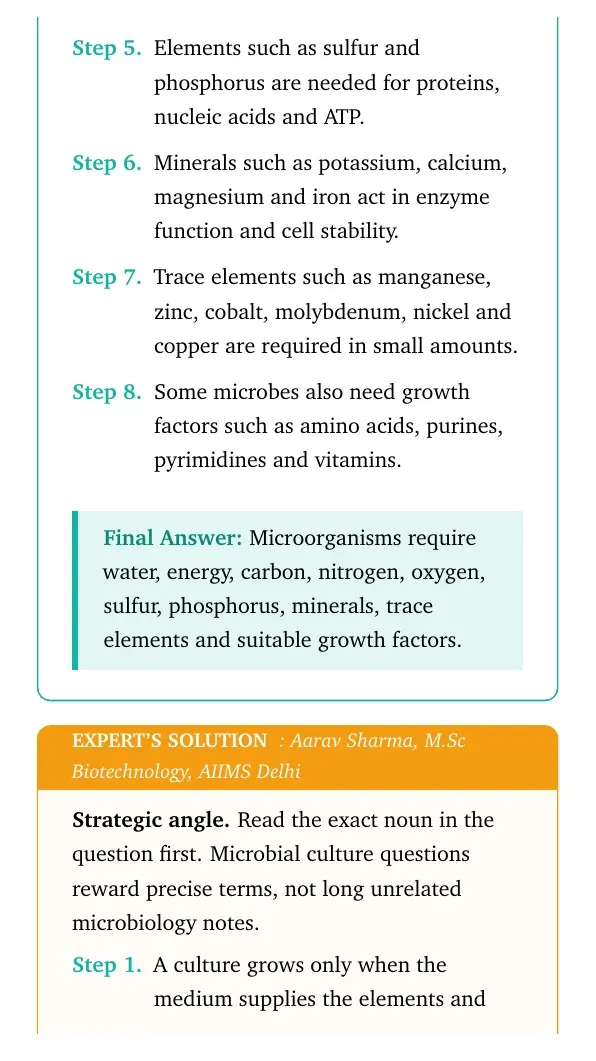
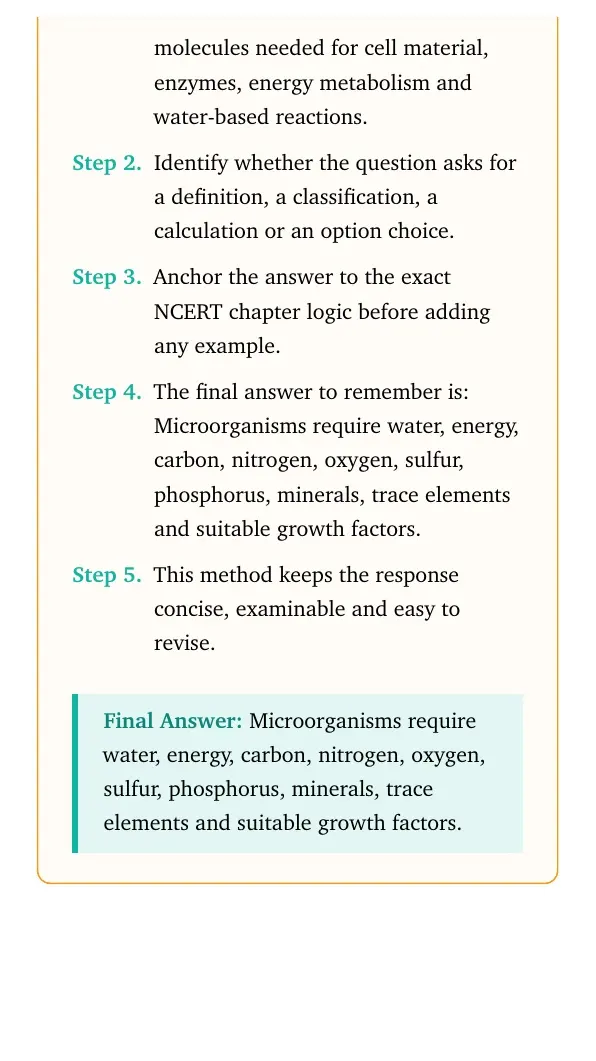
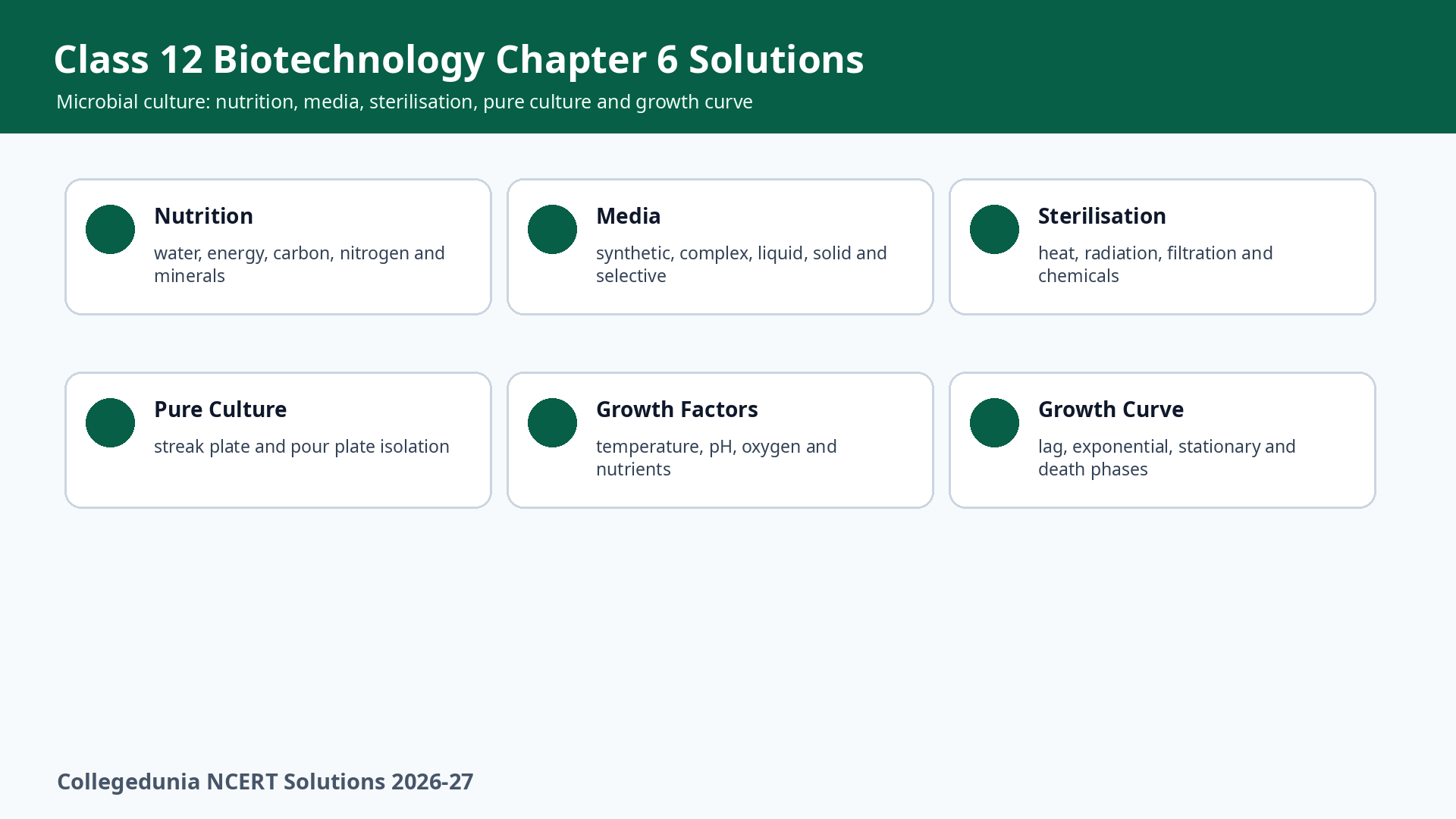
The NCERT Solutions for Class 12 Biotechnology Chapter 6 Microbial Culture cover all 15 exercise questions from the latest 2026-27 NCERT textbook. The answers explain nutritional requirements, culture media, sterilisation, pure culture methods, growth curve phases and growth-rate calculation in exam-ready language.
- Question count: 15 solved NCERT exercise questions with MCQ and assertion-reason checks.
- Best for: board revision, practical viva preparation and quick formula recall.
- PDF includes: stepwise solutions, expert explanations and boxed final answers.

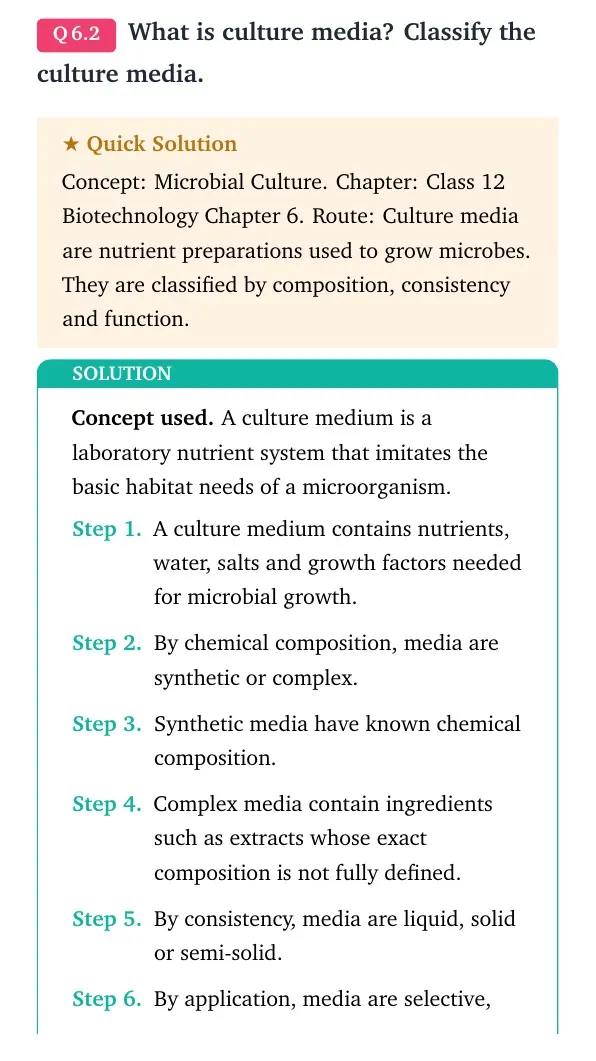
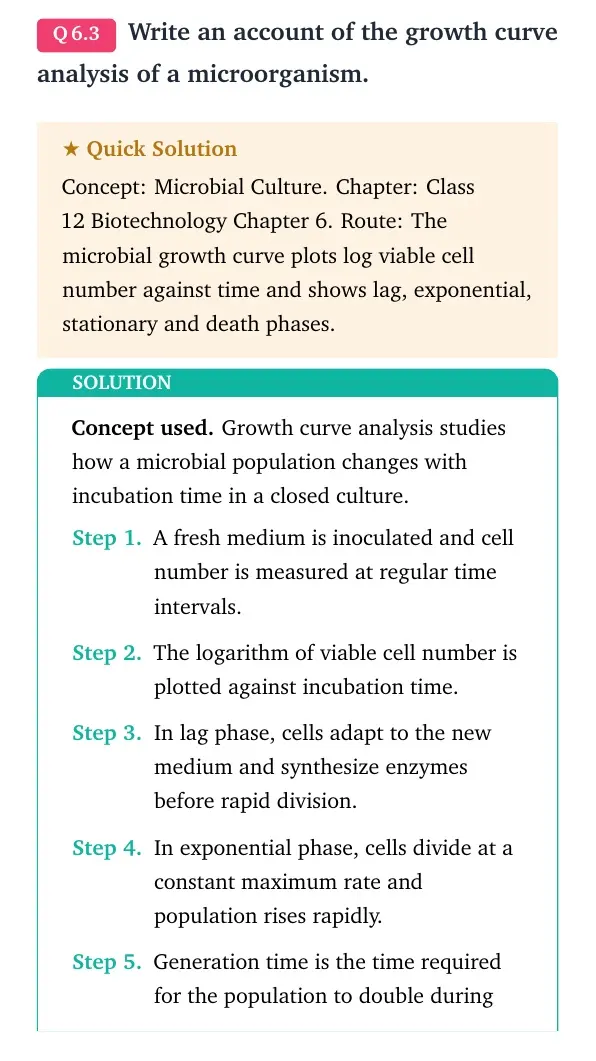
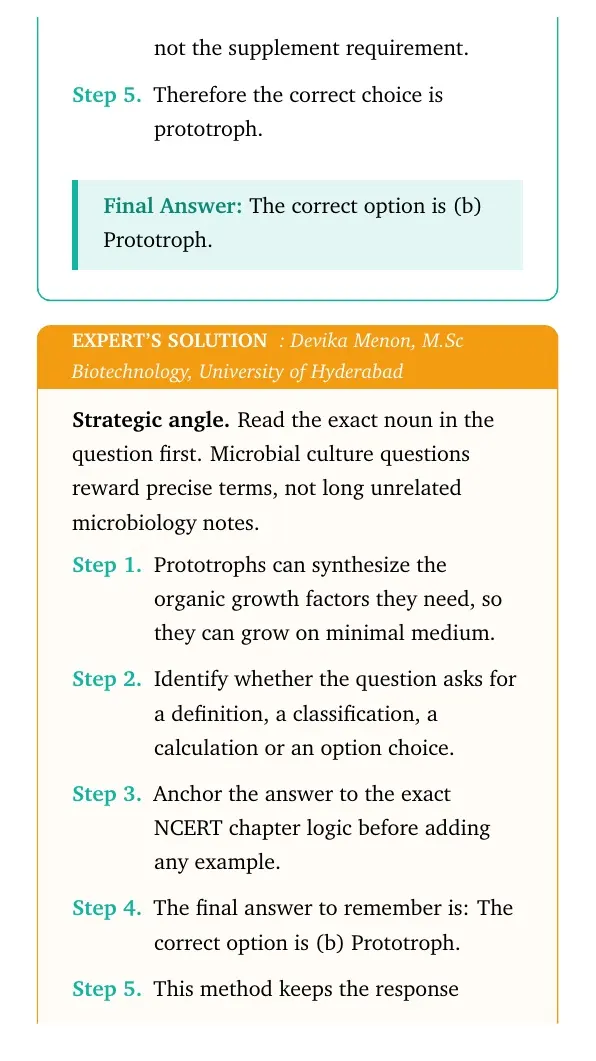
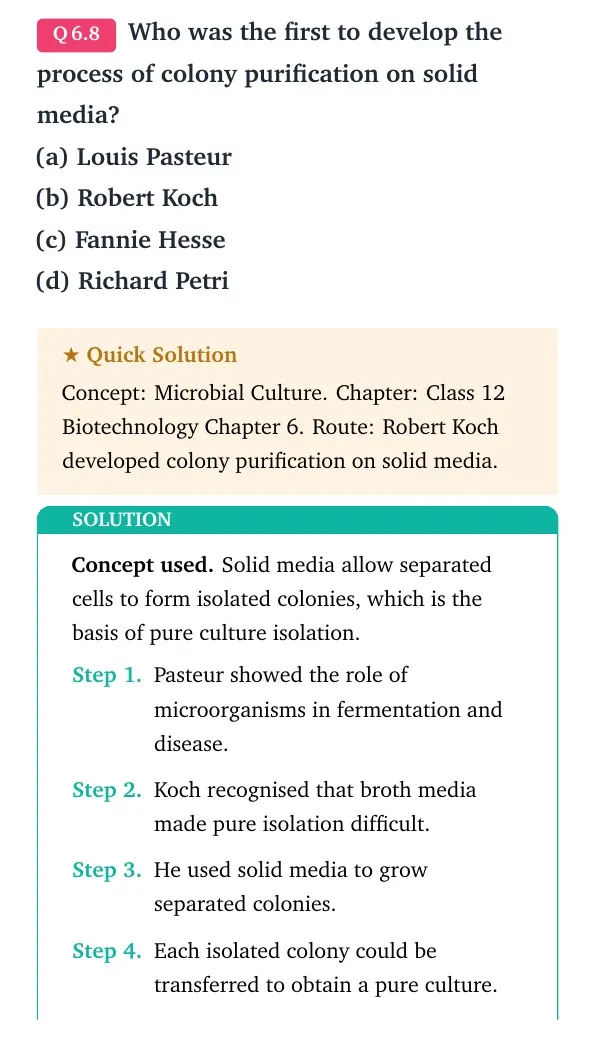
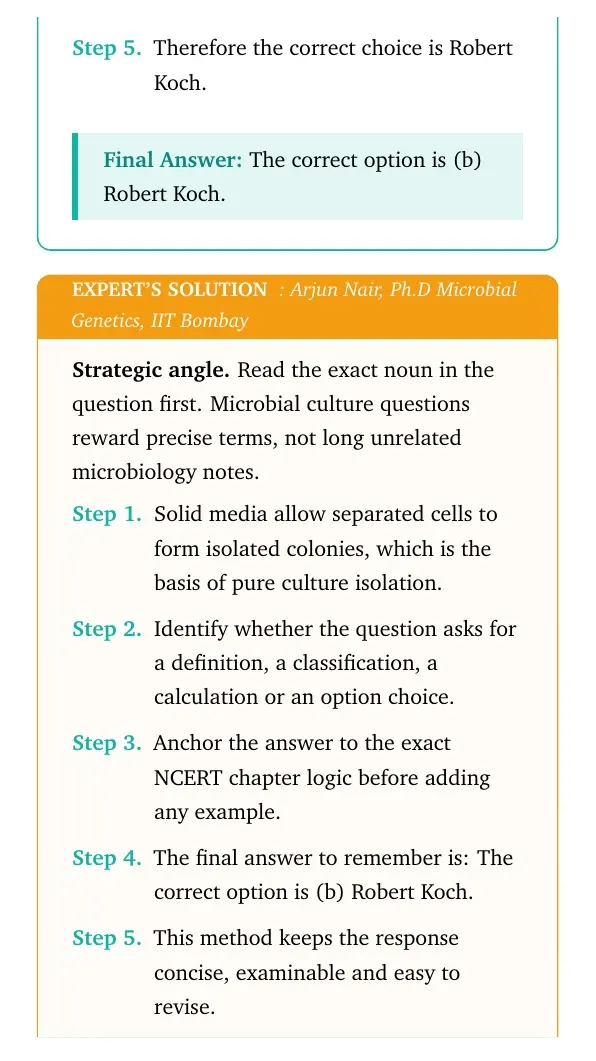

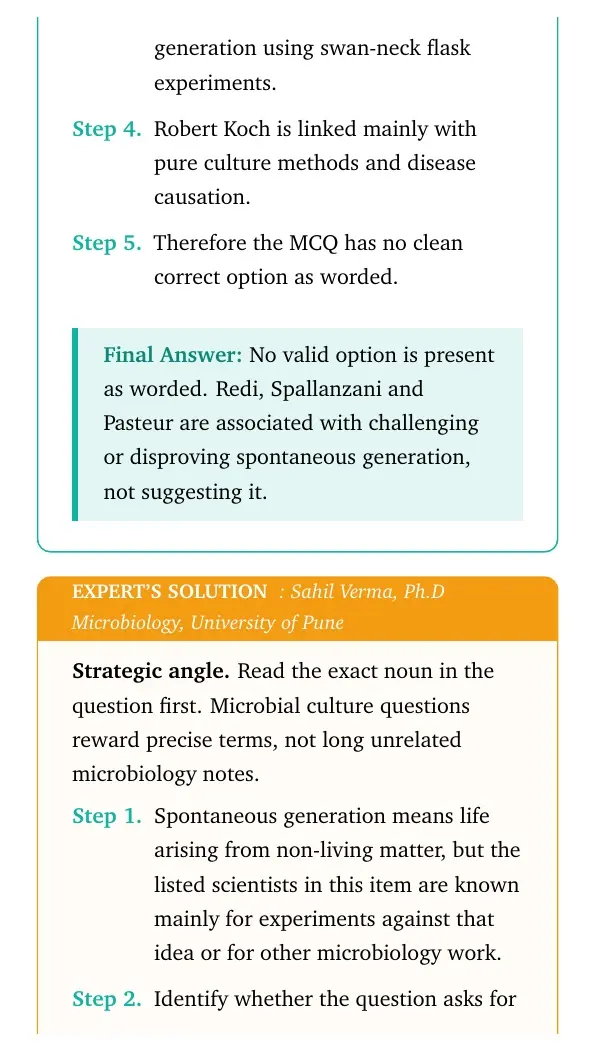
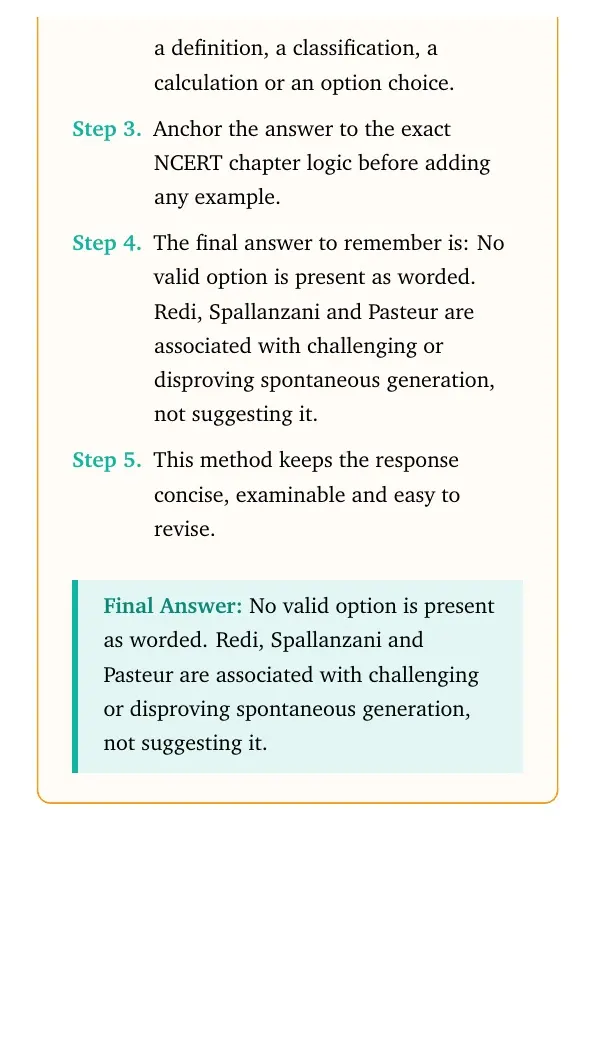
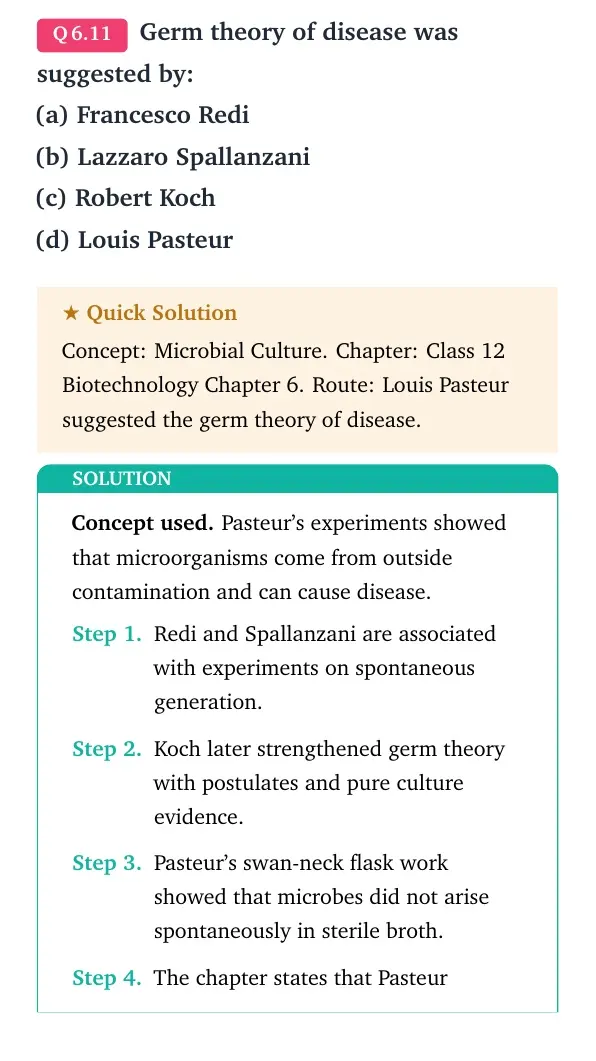
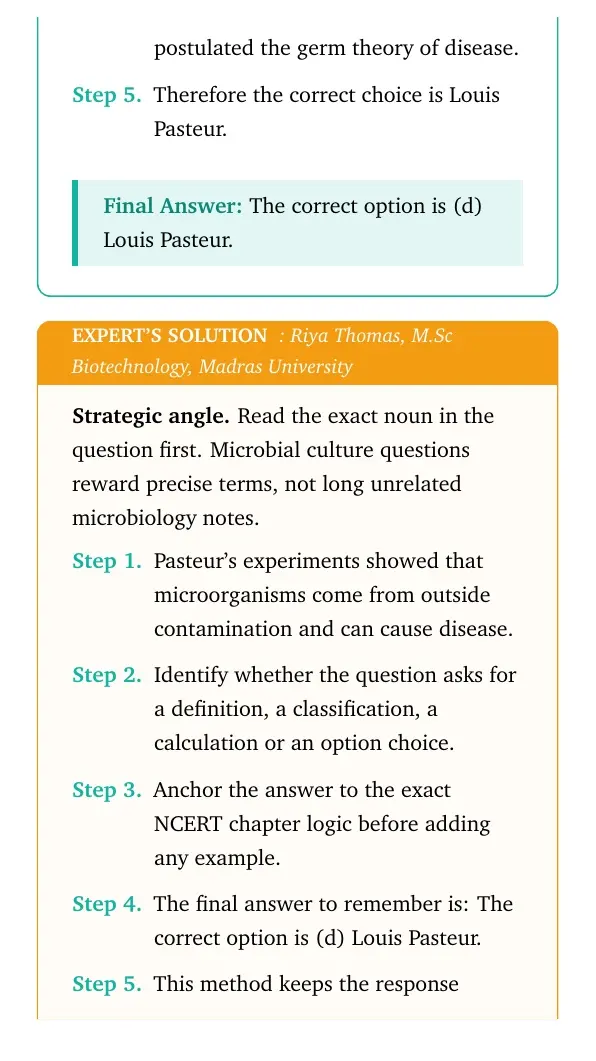
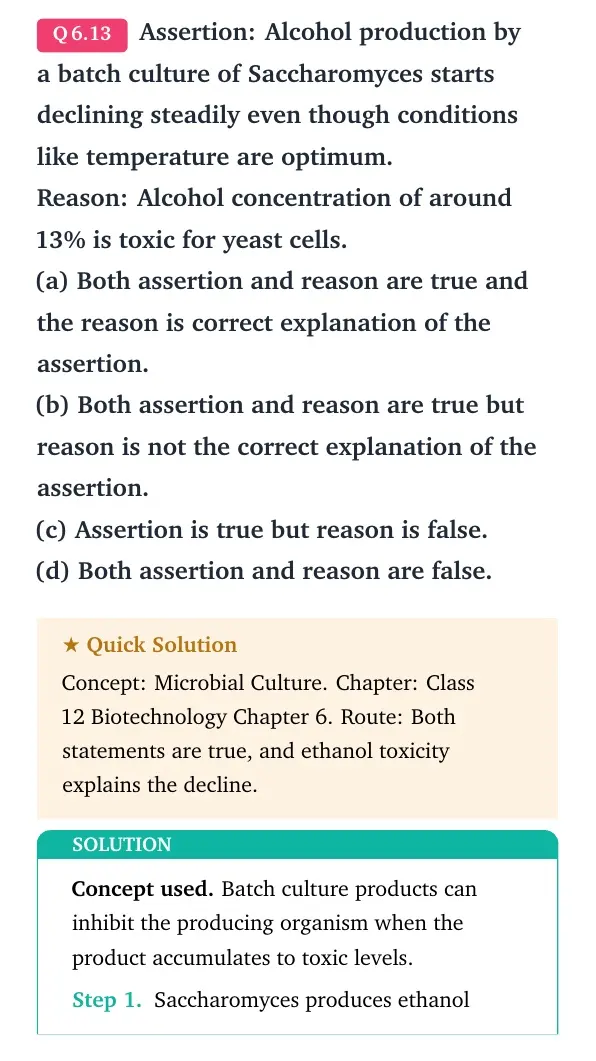
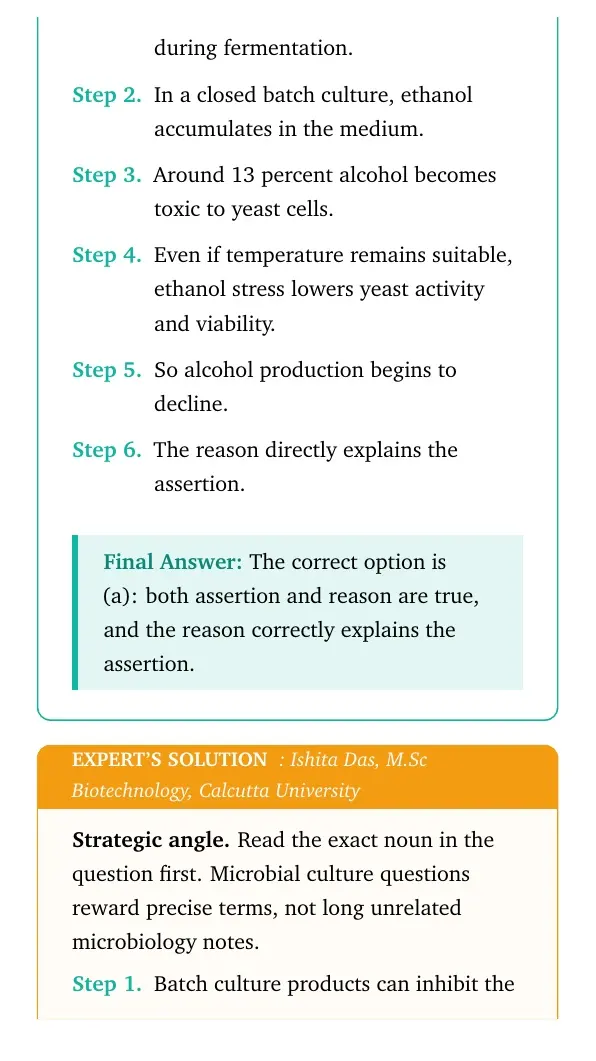
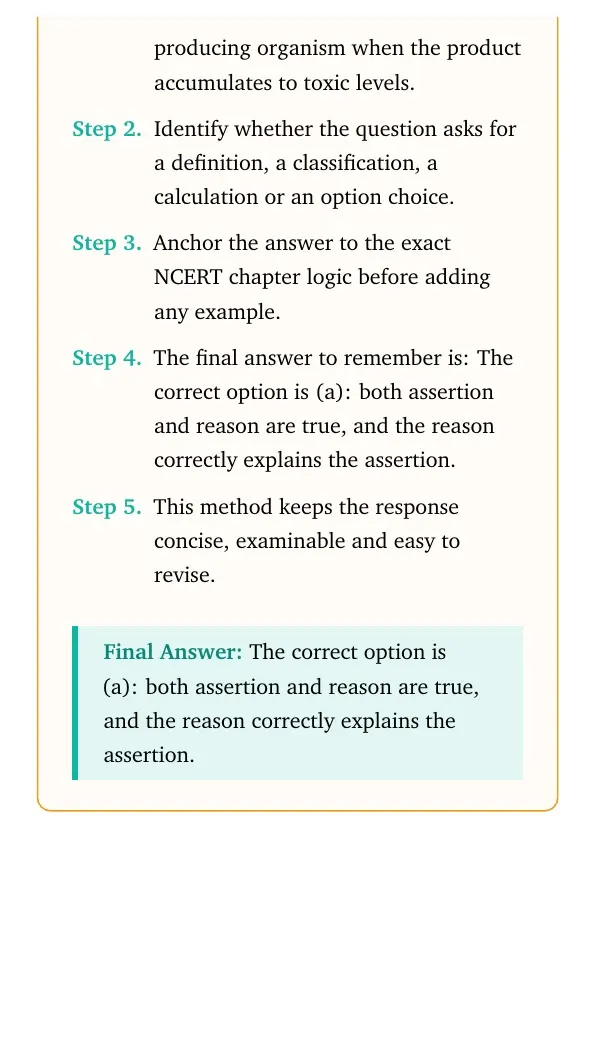
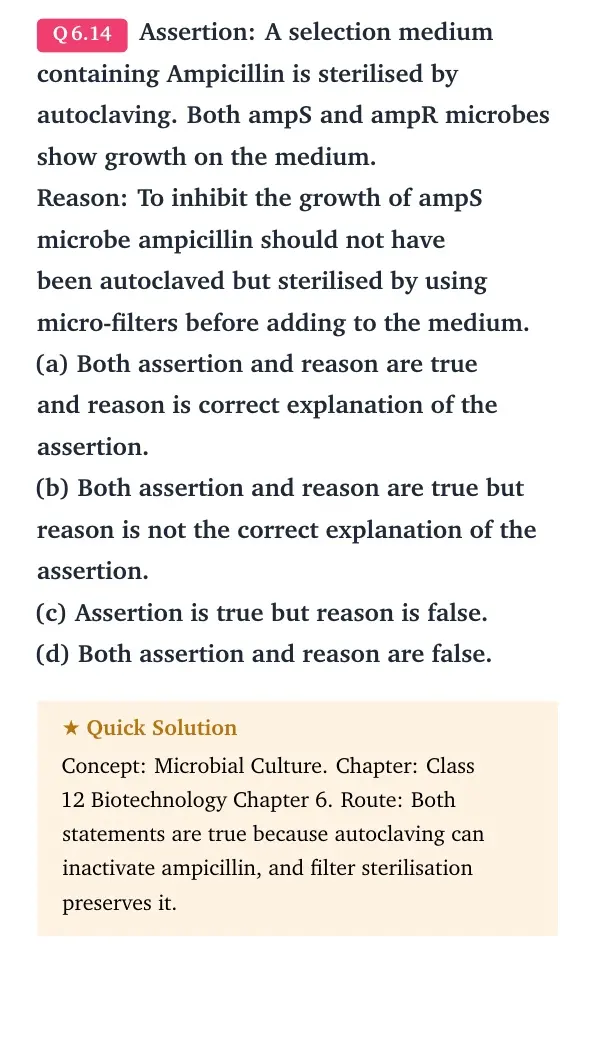
Student Feedback: Students usually find this chapter easier after separating it into three buckets: culture media, sterilisation methods and growth-curve calculation.
Class 12 Biotechnology Chapter 6 Microbial Culture Solutions PDF
Class 12 Biotechnology Chapter 6 Microbial Culture NCERT Solutions help students revise how microorganisms are grown, isolated and controlled in the laboratory. The chapter connects culture media, sterilisation, pure culture methods and microbial growth kinetics.
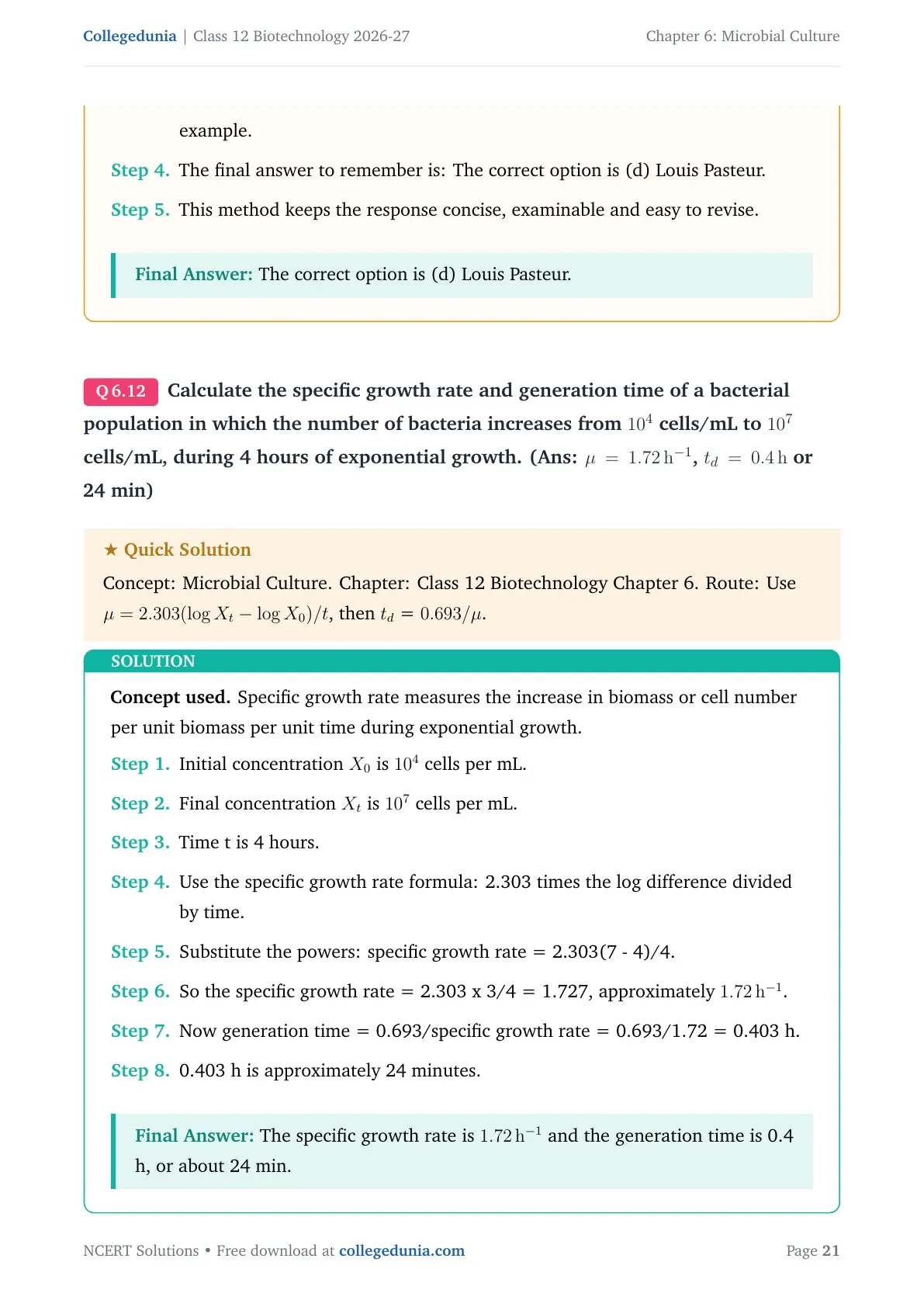
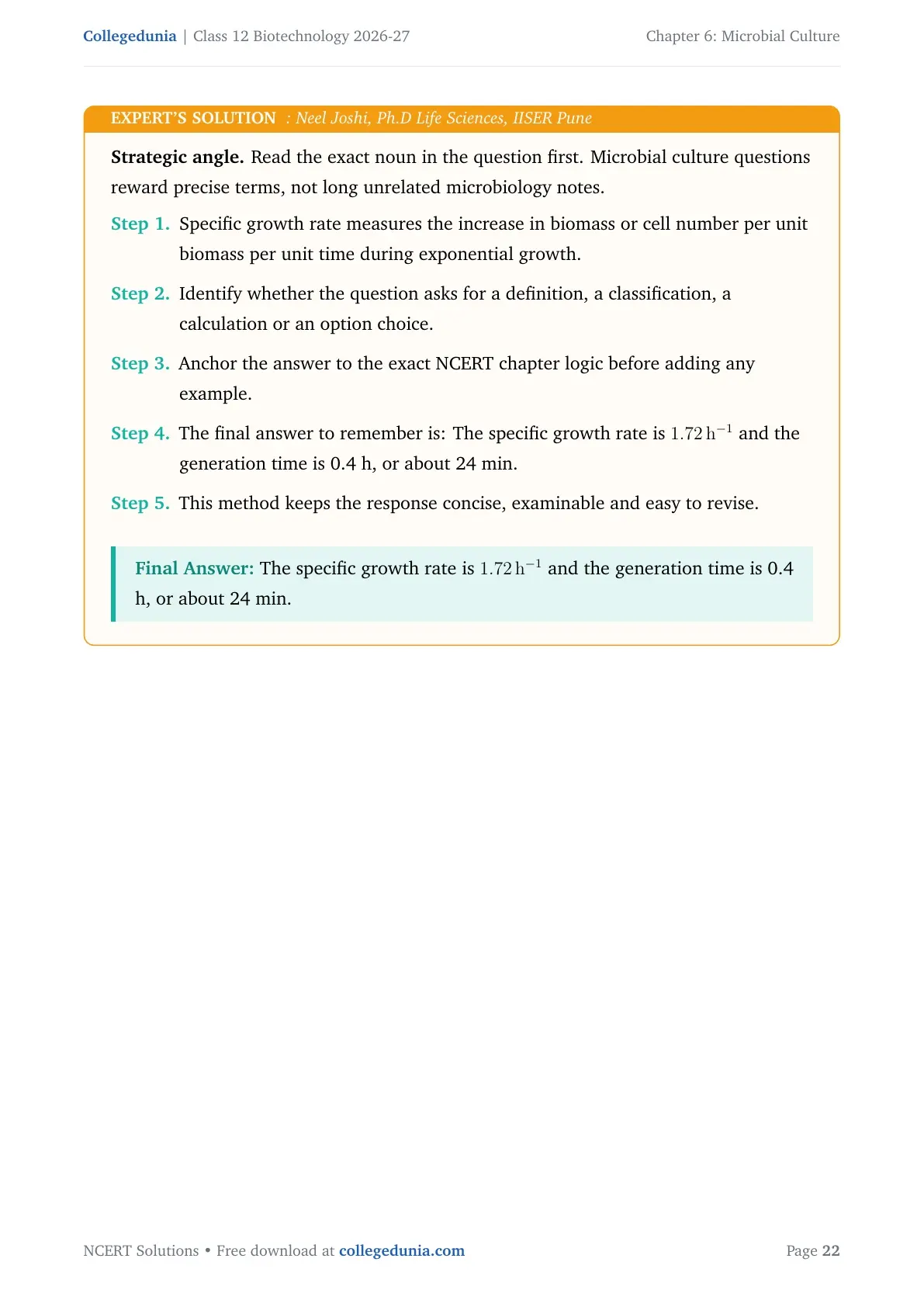
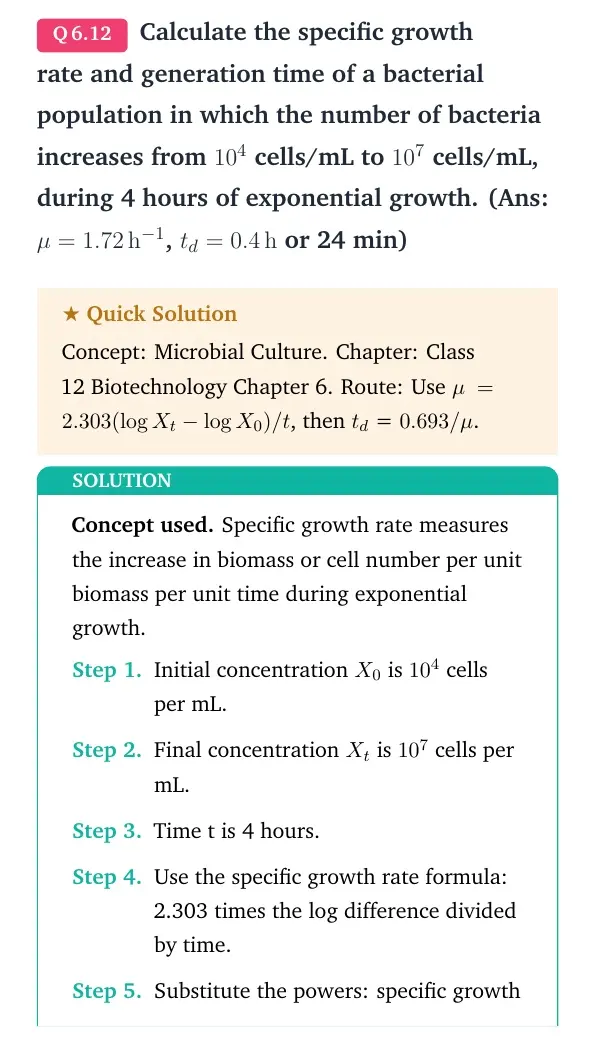
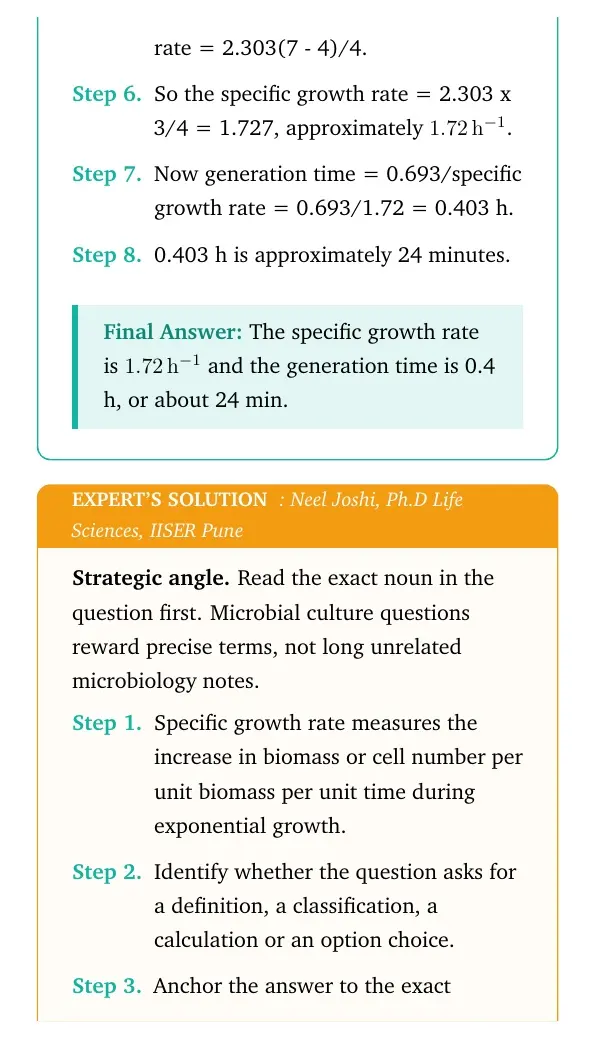
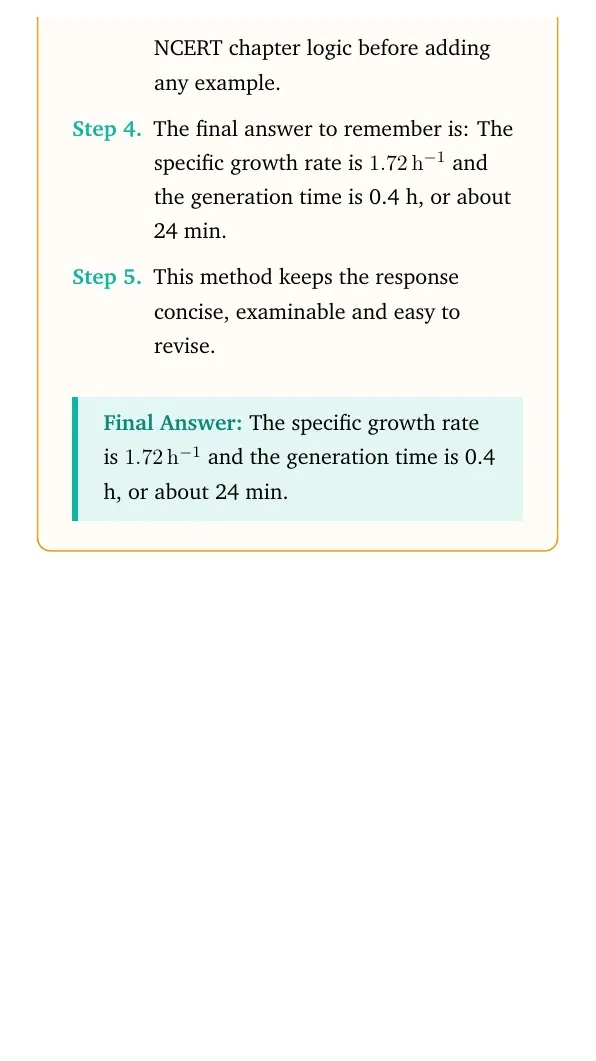
The calculation question is important: use specific growth rate first, then use generation time. The PDF solves it with each substitution shown clearly.
How to Use These Microbial Culture NCERT Solutions
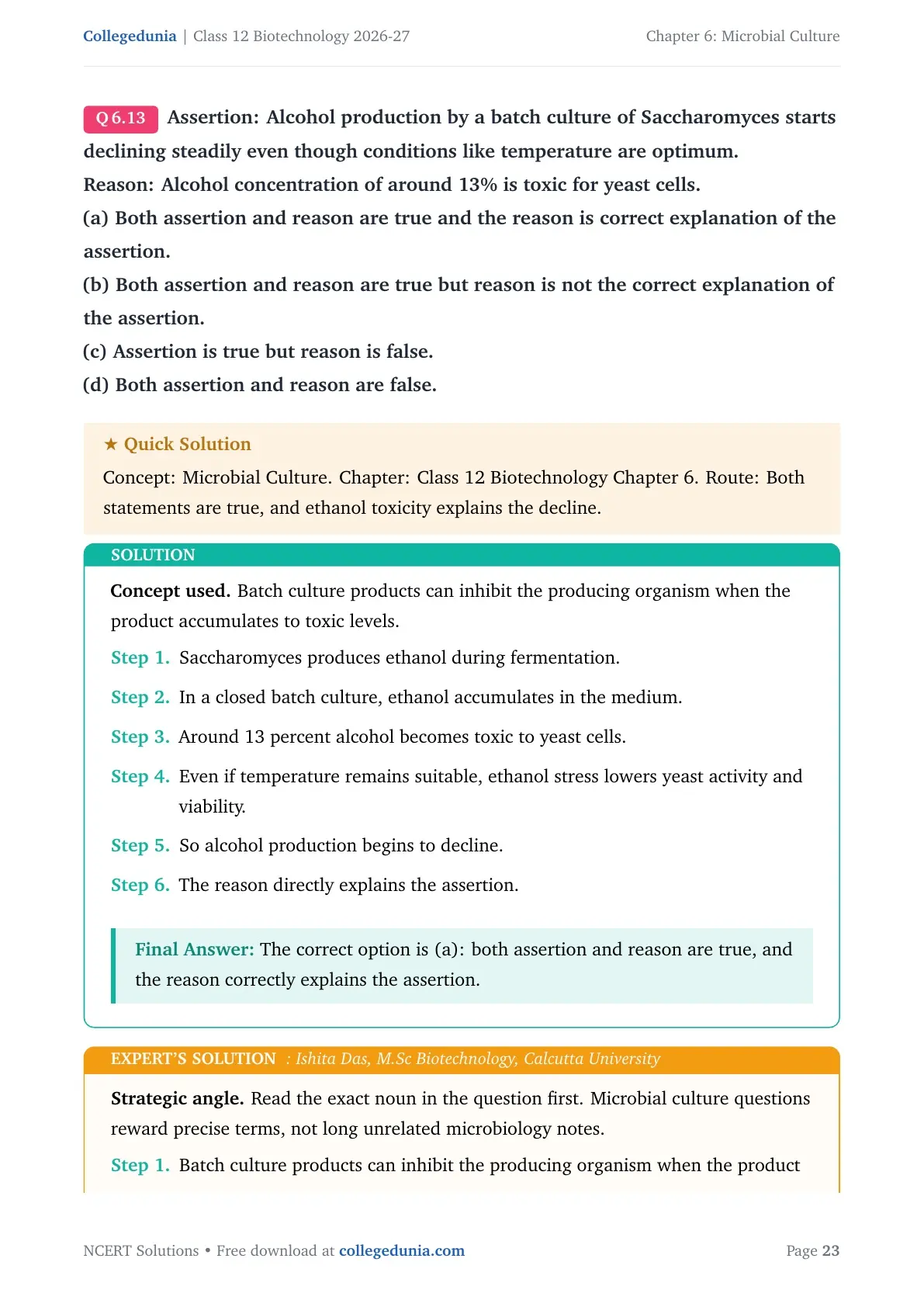
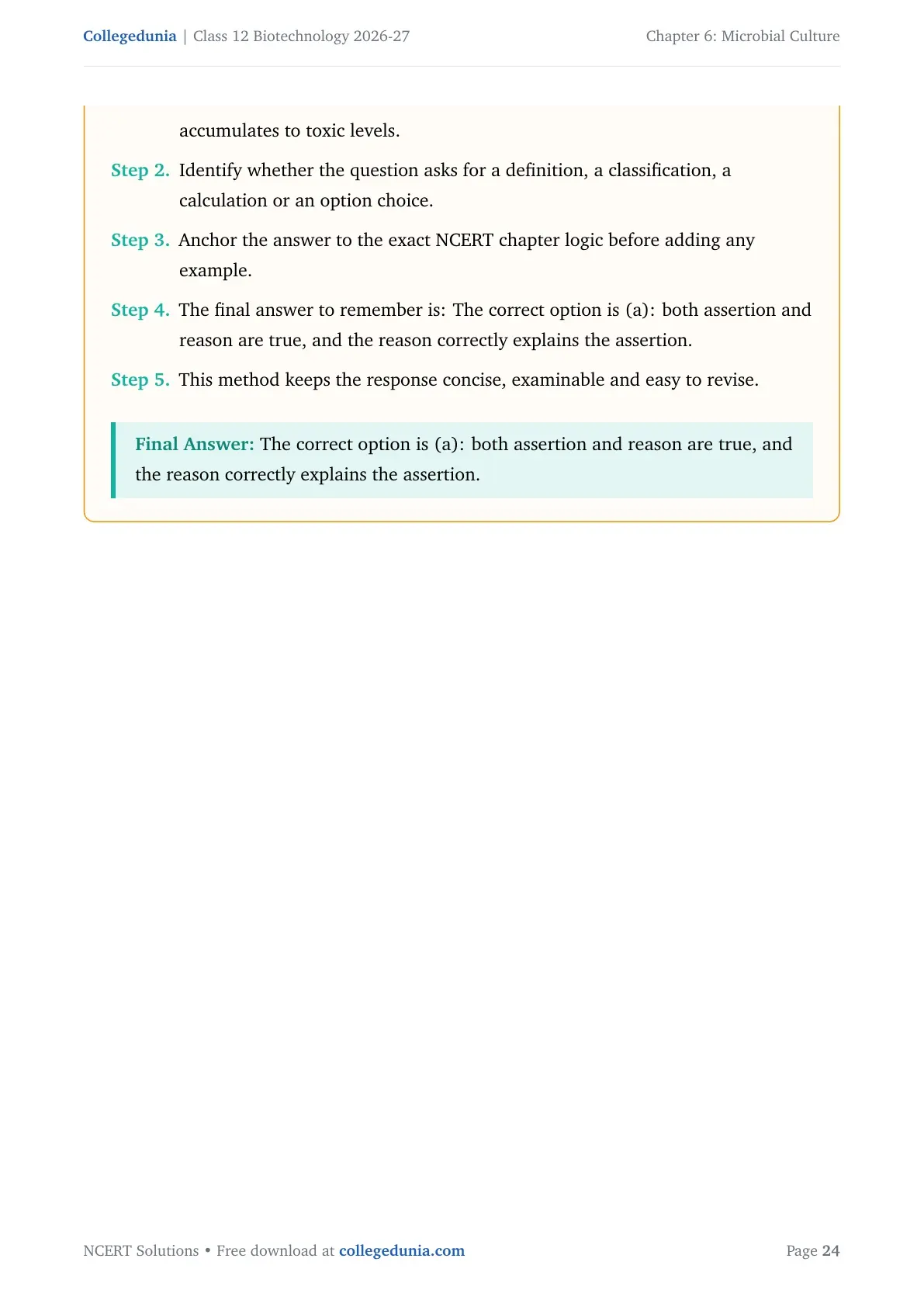
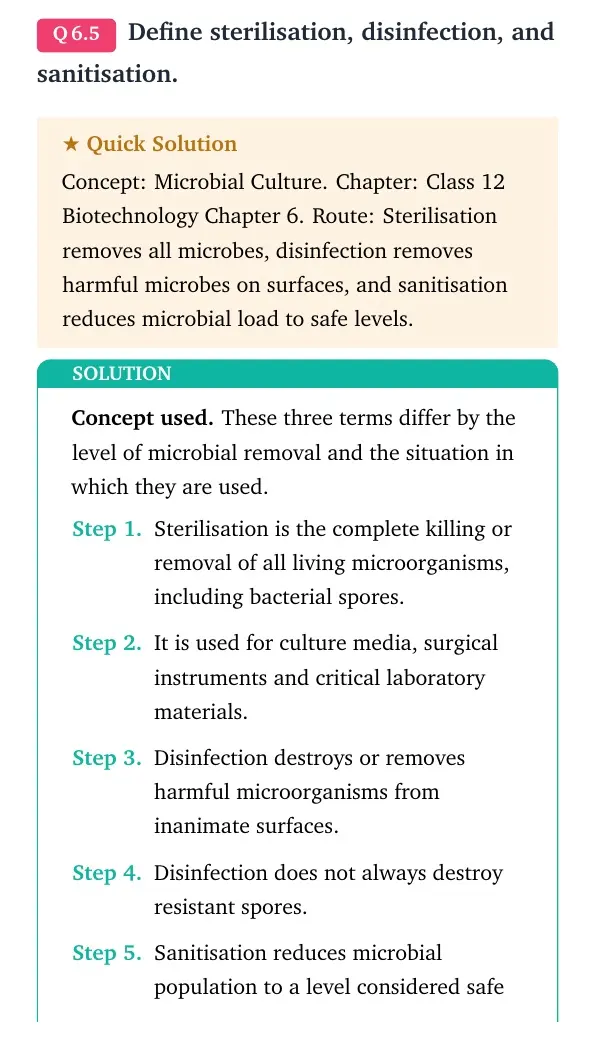
Read the definitions first because sterilisation, disinfection and sanitisation are easy to mix up. Then revise the classification of culture media and growth curve phases. Finish with the MCQs and assertion-reason items.
- Use the boxed answer for direct board-style recall.
- Use the expert answer when an MCQ needs the reason behind the option.
- Revise the growth-rate formula before solving Question 12.
Microbial Growth Curve Revision Map

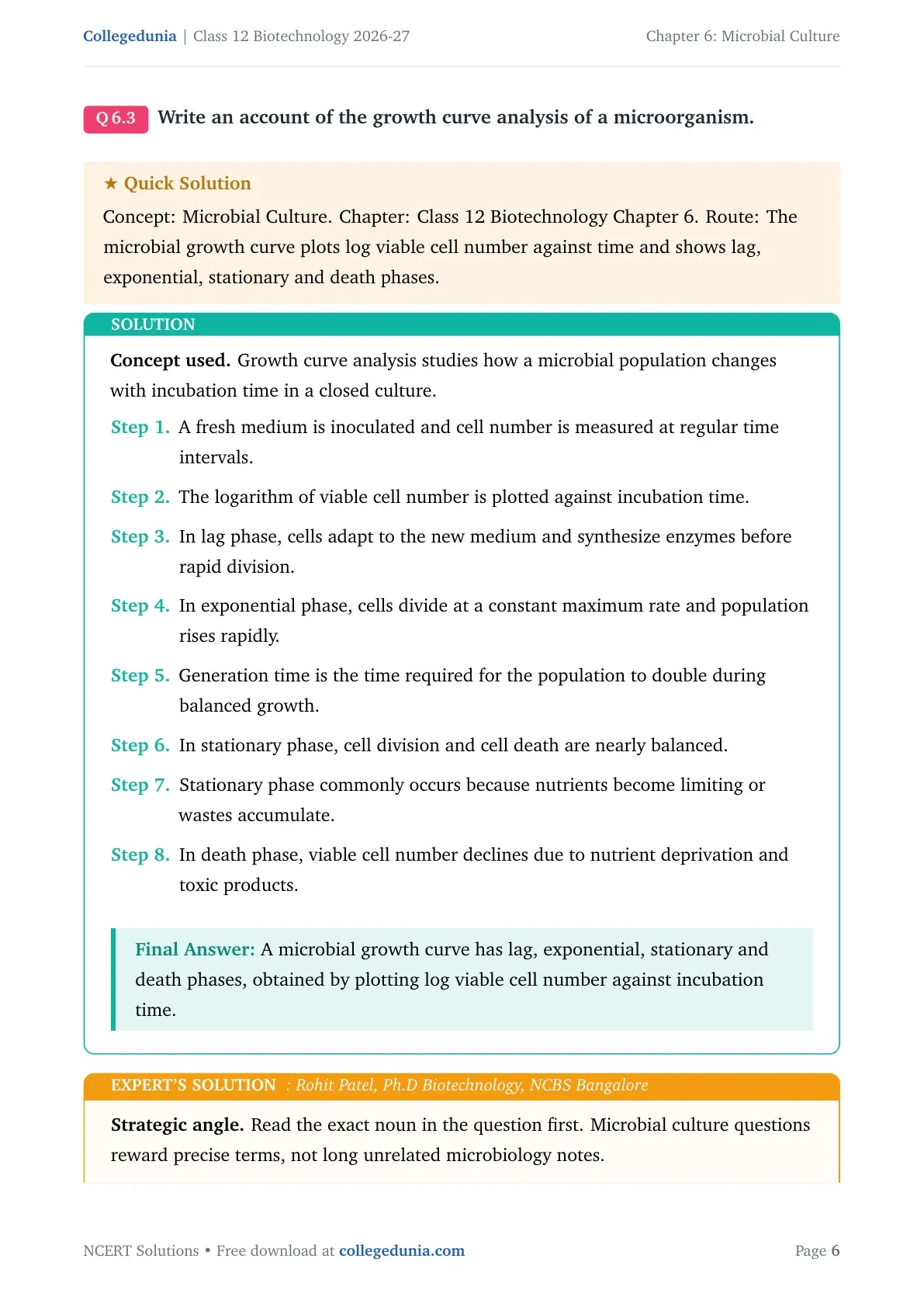
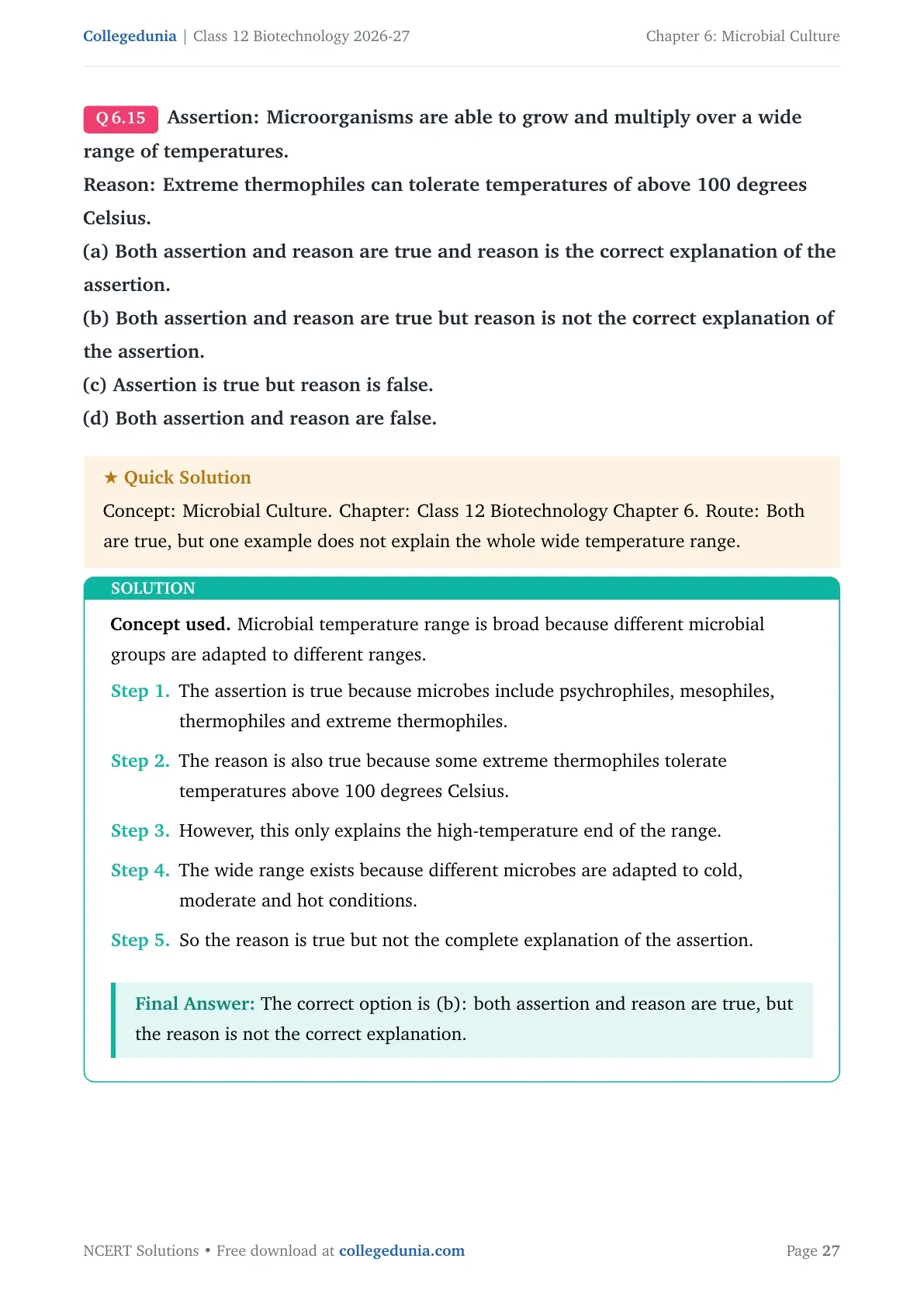
The growth curve is obtained by plotting log viable cell number against incubation time. It has four phases: lag, exponential, stationary and death. In exponential phase, balanced growth allows the calculation of specific growth rate and generation time.
| Phase | Main Feature | Exam Point |
|---|---|---|
| Lag | Cells adapt to fresh medium | No immediate population rise |
| Exponential | Cells divide at maximum rate | Use for growth-rate calculation |
| Stationary | Division balances death | Nutrients become limiting |
| Death | Viable cells decline | Wastes and starvation dominate |
Sterilisation Methods in Microbial Culture
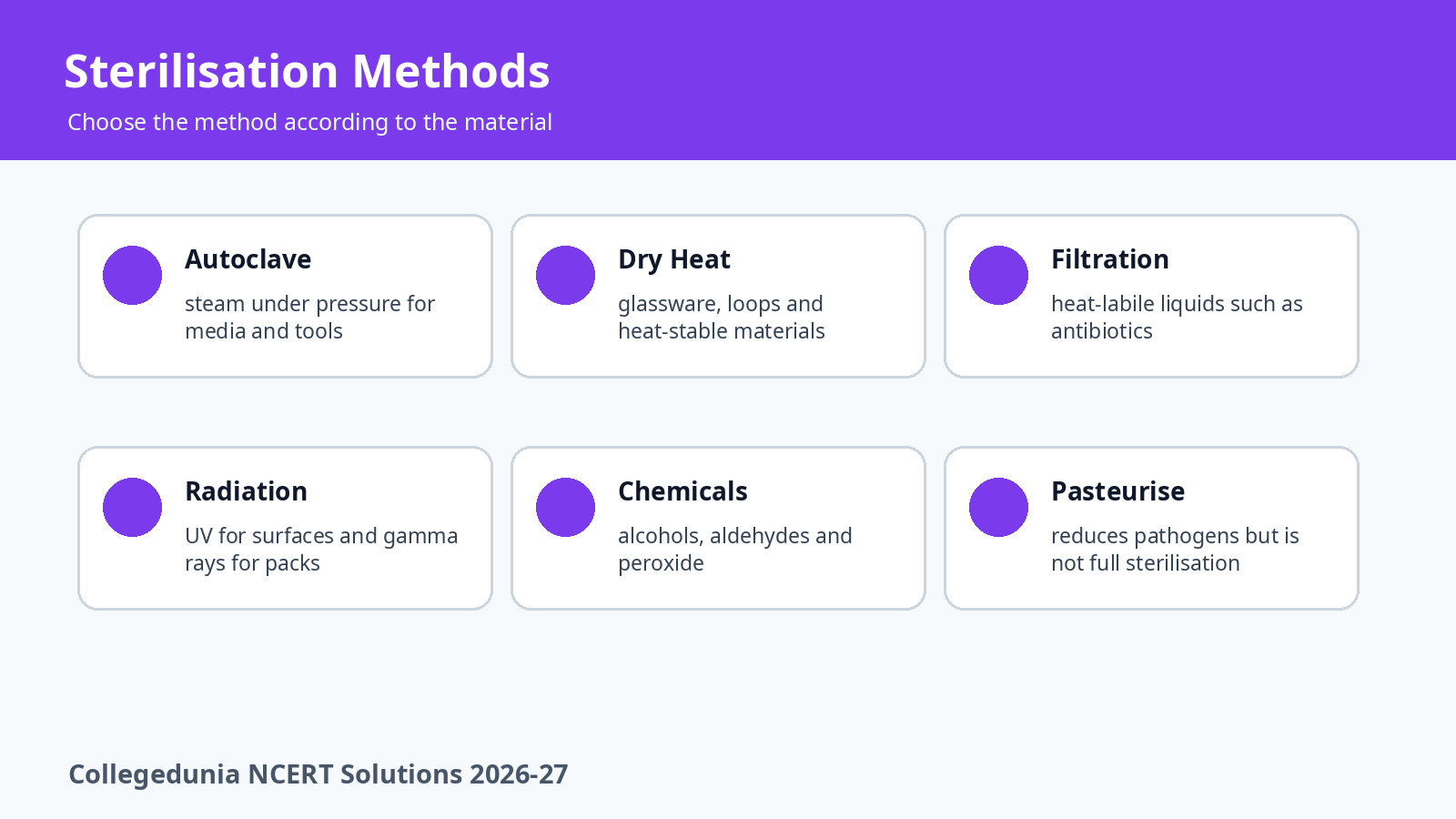
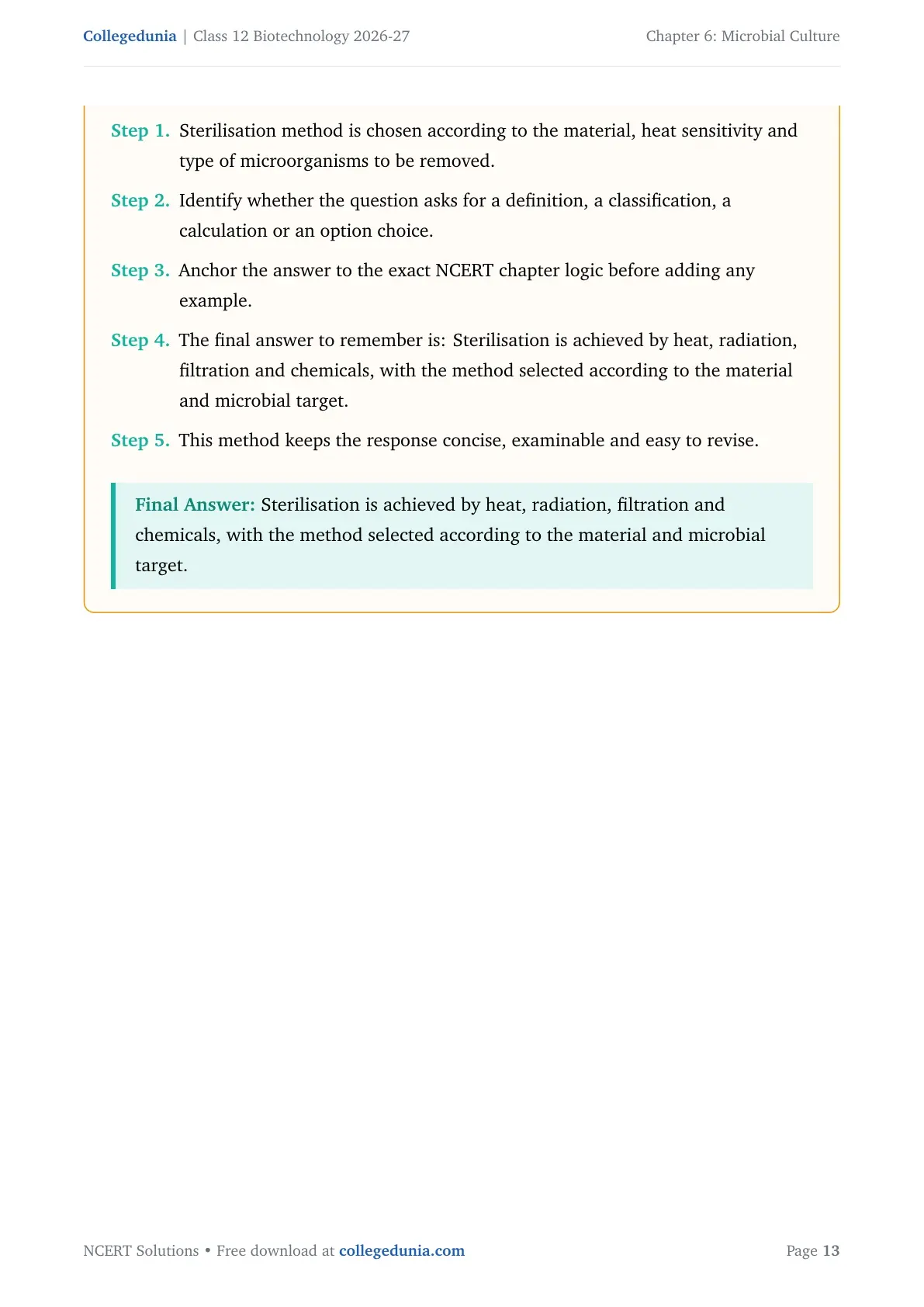
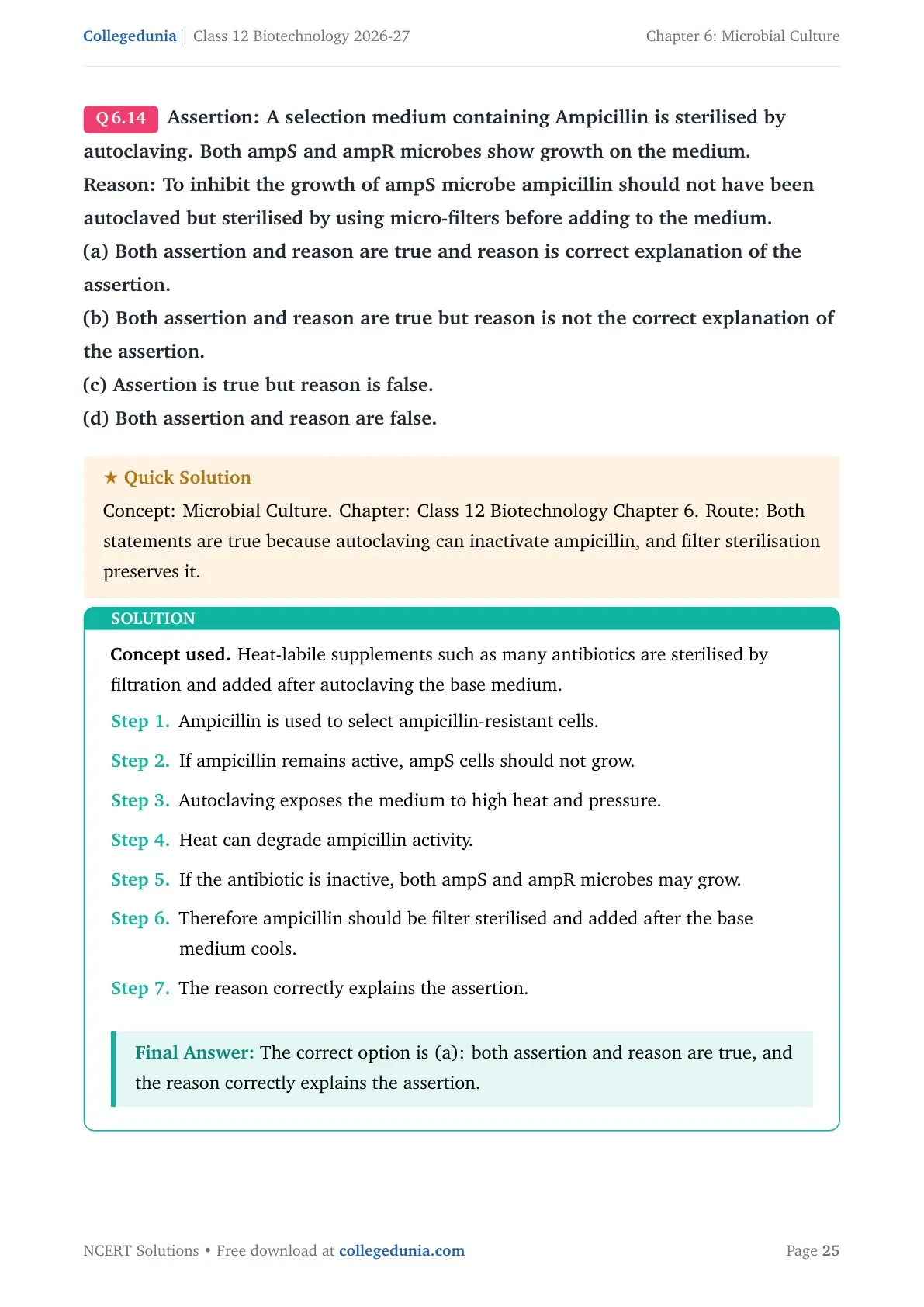
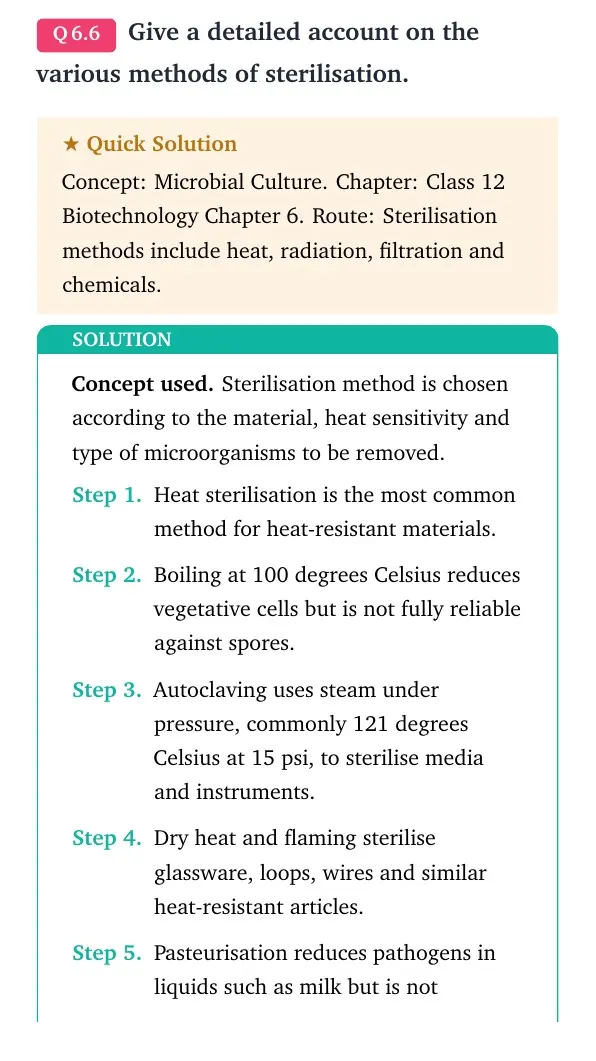
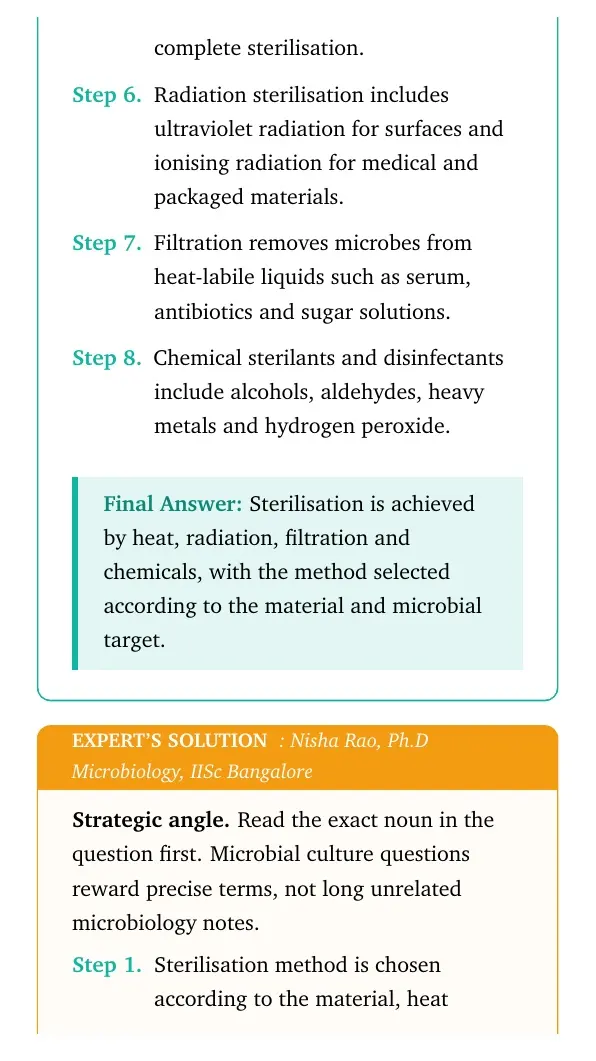
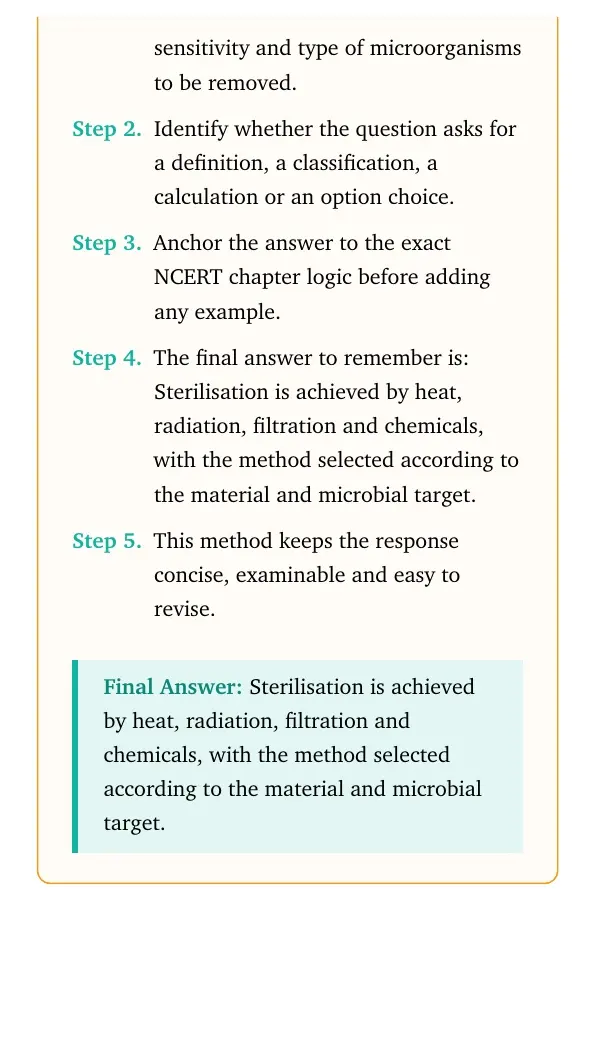
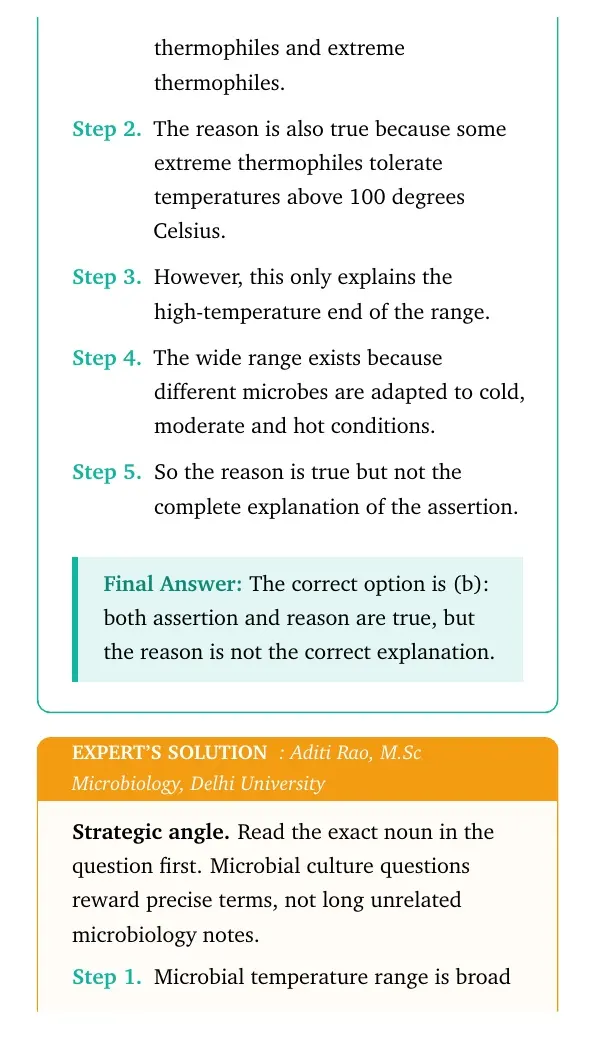
Sterilisation removes all living microorganisms, including spores. Heat is useful for stable materials, filtration is used for heat-sensitive liquids such as antibiotics, and radiation or chemicals are chosen when the material needs a different treatment route.
Microbial Culture Video Revision
Source: YouTube biology revision channel
Check All Microbial Culture Exercise Answers
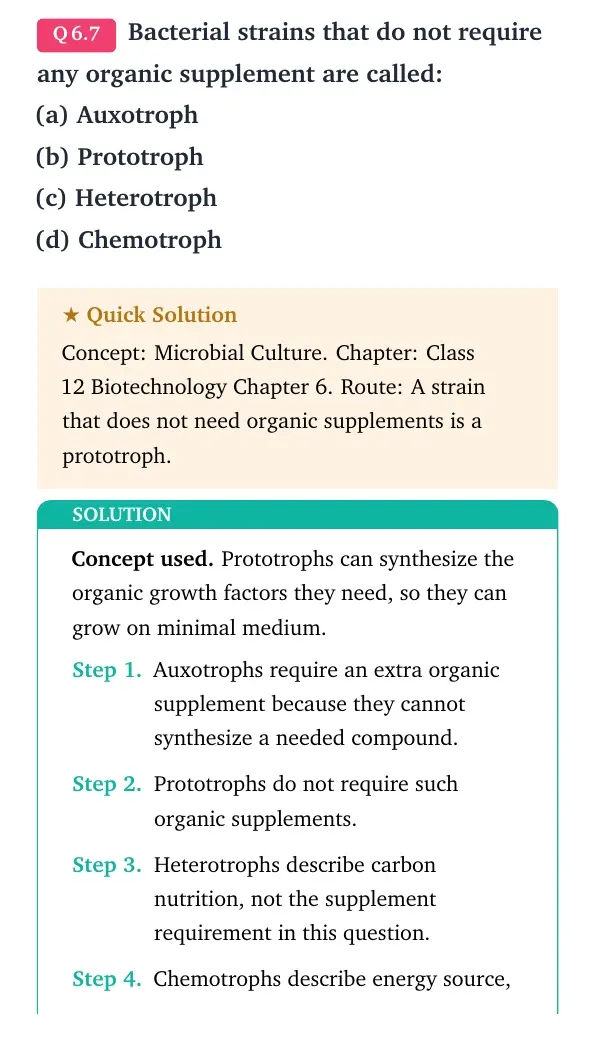
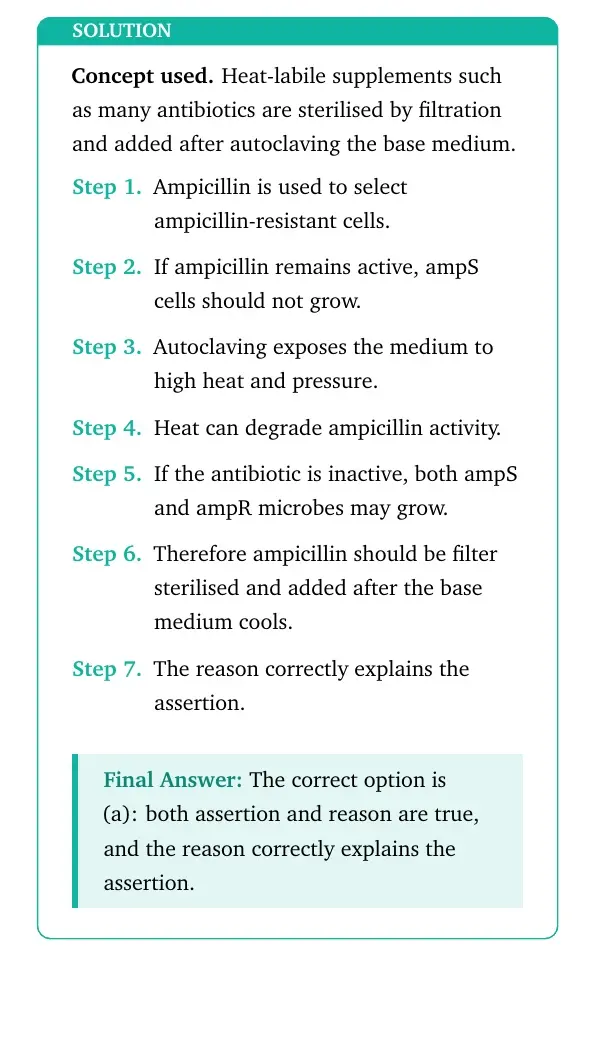
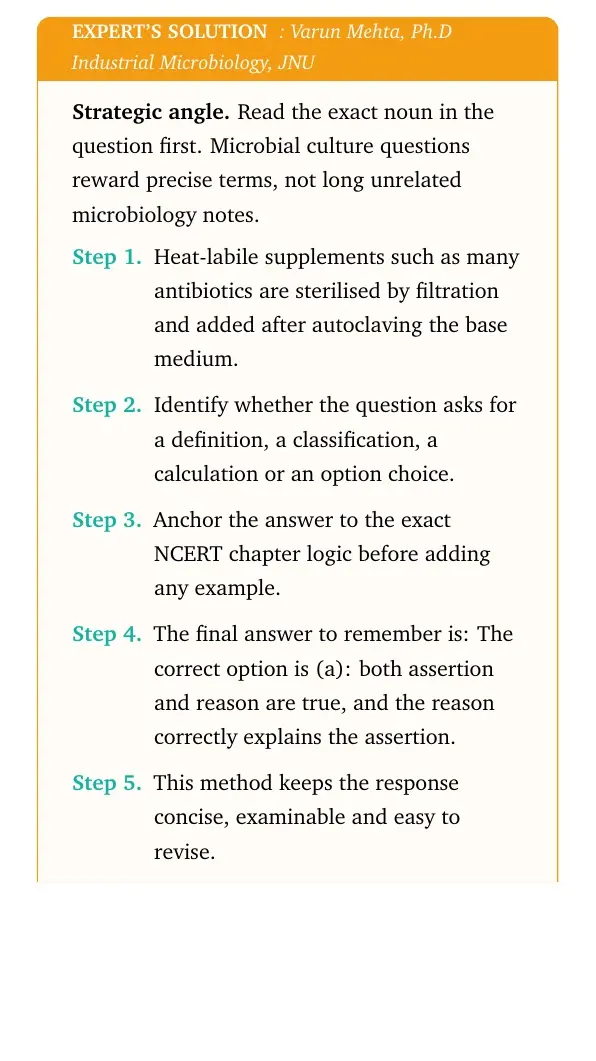
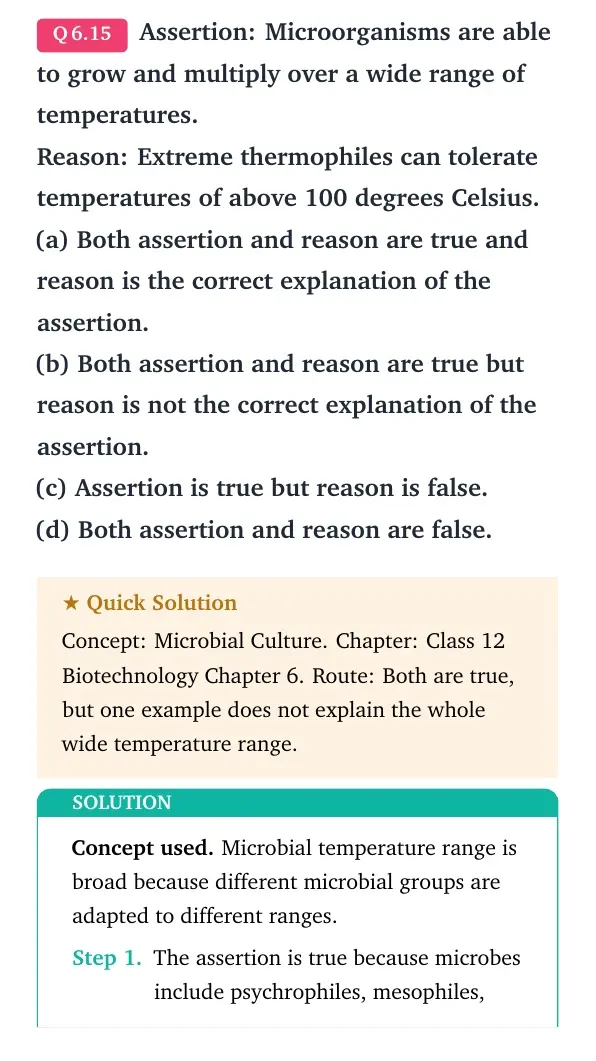
The solved question cards below let students open the main solution and expert solution separately.
Practice mode: Open the question-wise Microbial Culture solutions cards.
Related Class 12 Biotechnology Resources
| Resource | Use it for |
|---|---|
| Microbial Culture NCERT Book PDF | Read the official chapter before solving. |
| Microbial Culture Notes | Revise definitions and growth curve theory quickly. |
| Microbial Culture Handwritten Notes | Use for one-shot exam recap. |
All Class 12 Biotechnology NCERT Solutions
| Chapter | NCERT Solutions |
|---|---|
| Chapter 4 Applications of Recombinant DNA Technology | Open Chapter 4 Solutions |
| Chapter 5 Genome Technology and Engineering | Open Chapter 5 Solutions |
| Chapter 6 Microbial Culture | Open Chapter 6 Solutions |
Microbial Culture Biotechnology NCERT Solutions FAQs
Ques. What is covered in Class 12 Biotechnology Chapter 6 Microbial Culture NCERT Solutions?
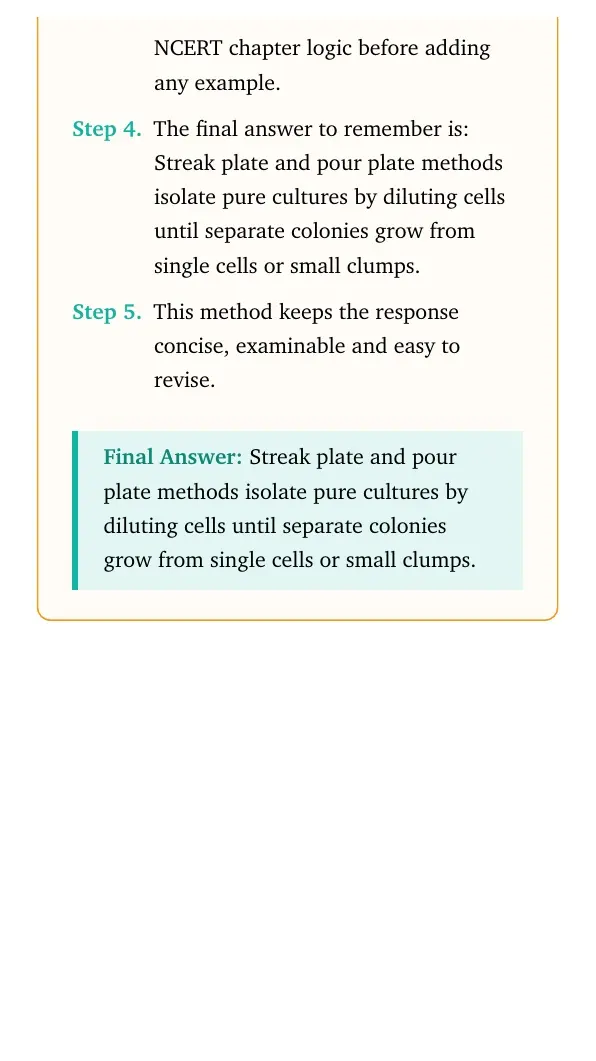
Ans. The solutions cover microbial nutrition, culture media, sterilisation, pure culture methods, growth factors, growth curve phases and specific growth rate calculation.
Ques. Which formula is used for specific growth rate?
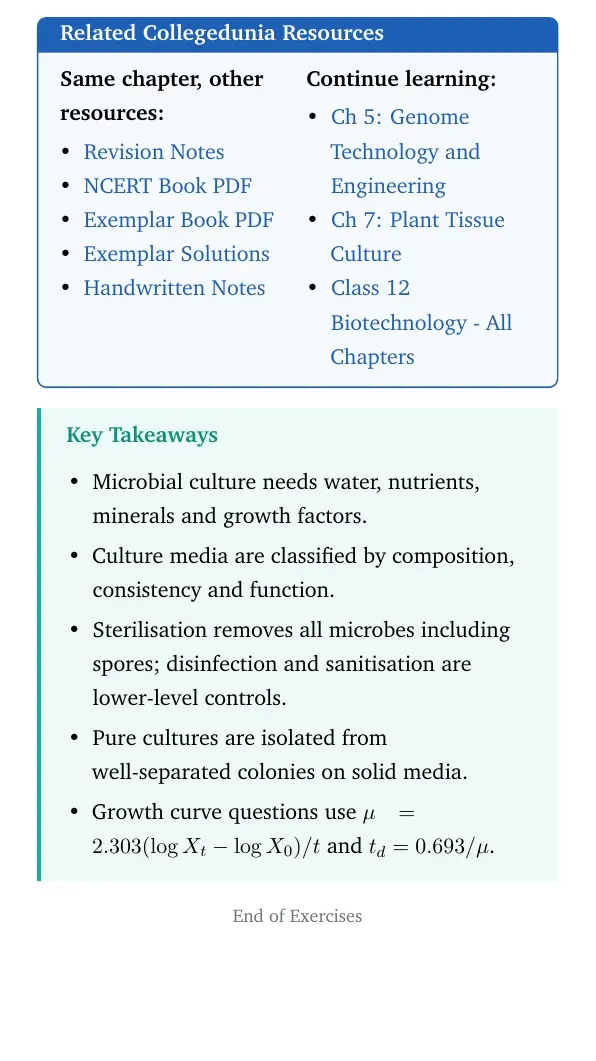
Ans. Use mu = 2.303(log Xt - log X0)/t during exponential growth. Then use t_d = 0.693/mu for generation time.
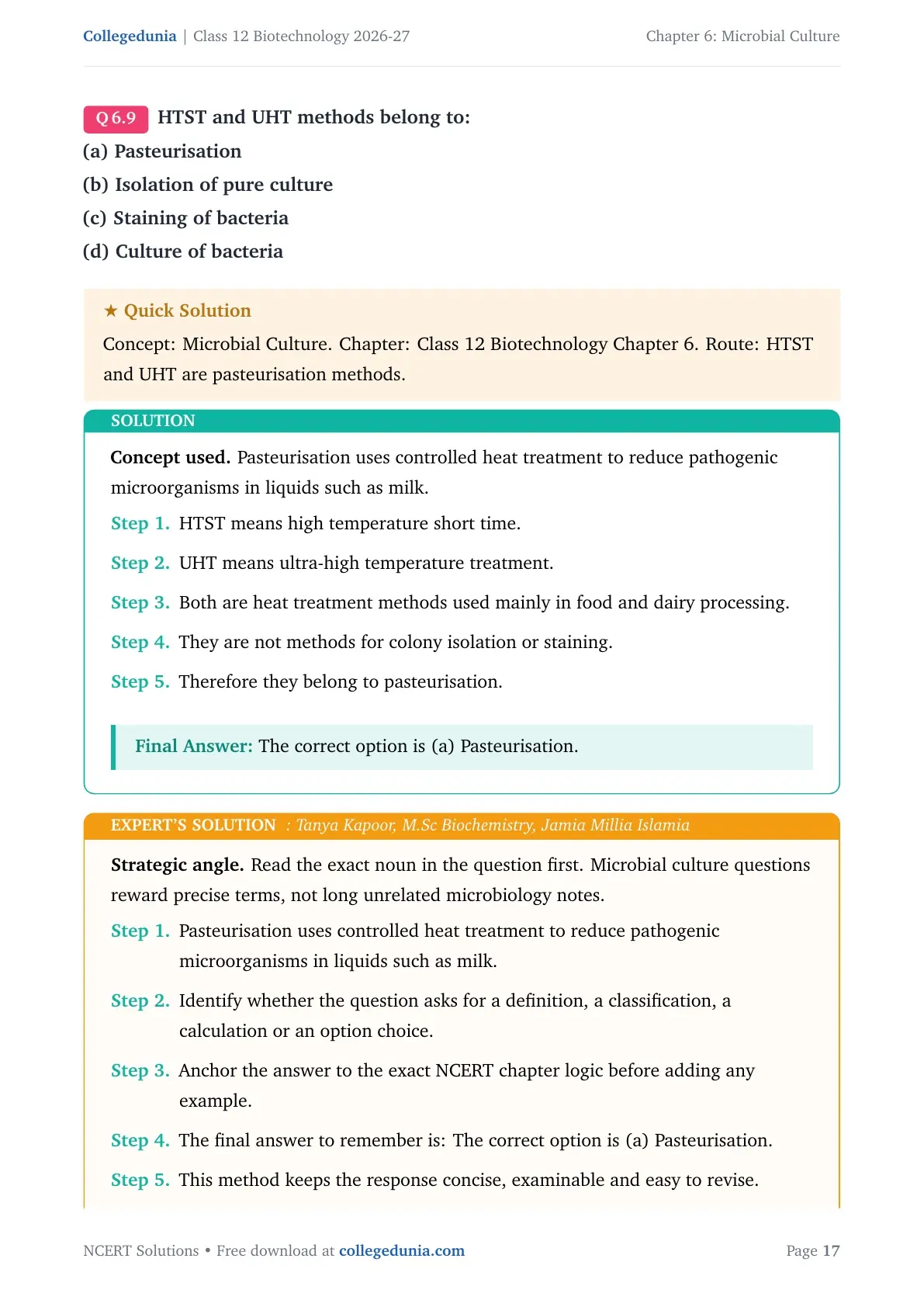
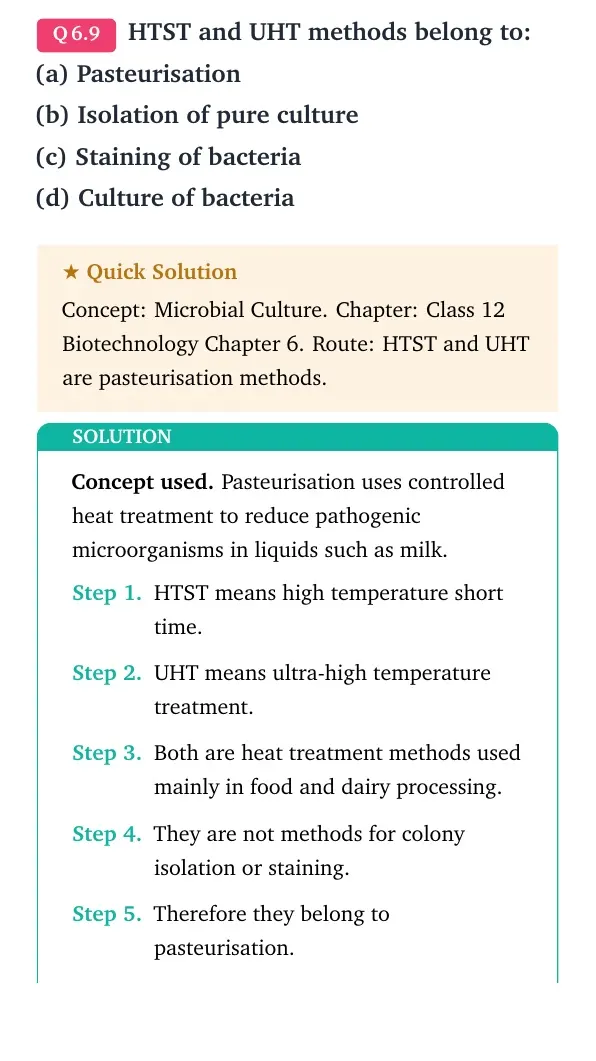
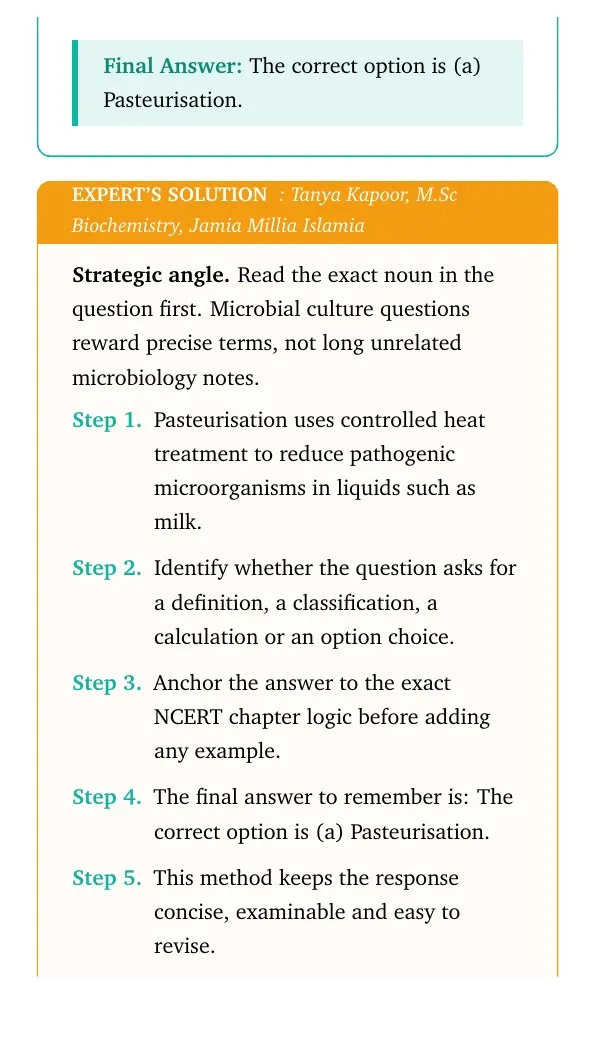
Ques. What are HTST and UHT methods?
Ans. HTST and UHT are pasteurisation methods used in food and dairy processing to reduce pathogenic microorganisms.
Ques. What is the difference between sterilisation and disinfection?
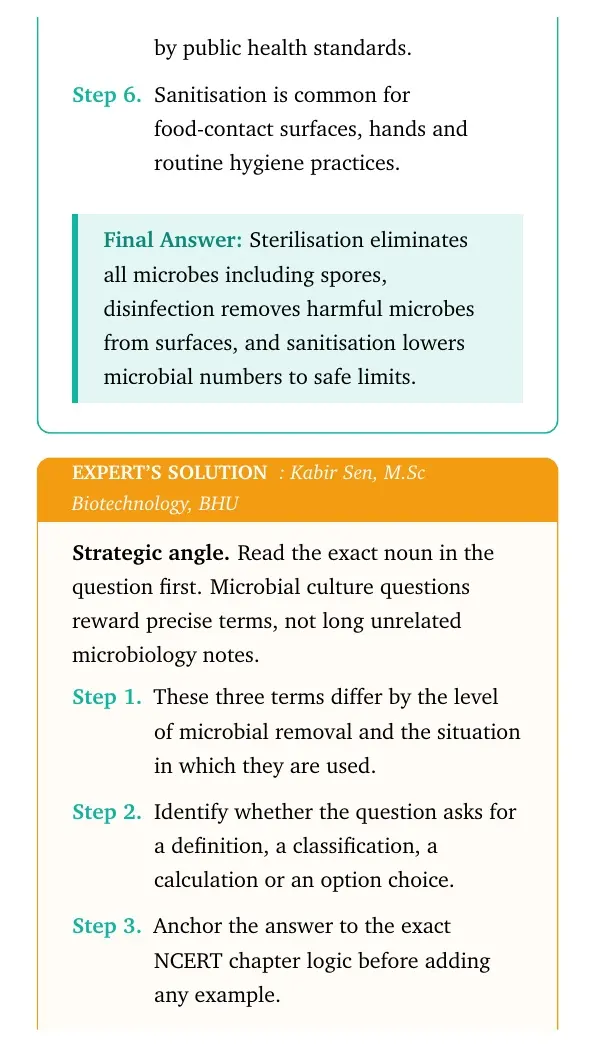
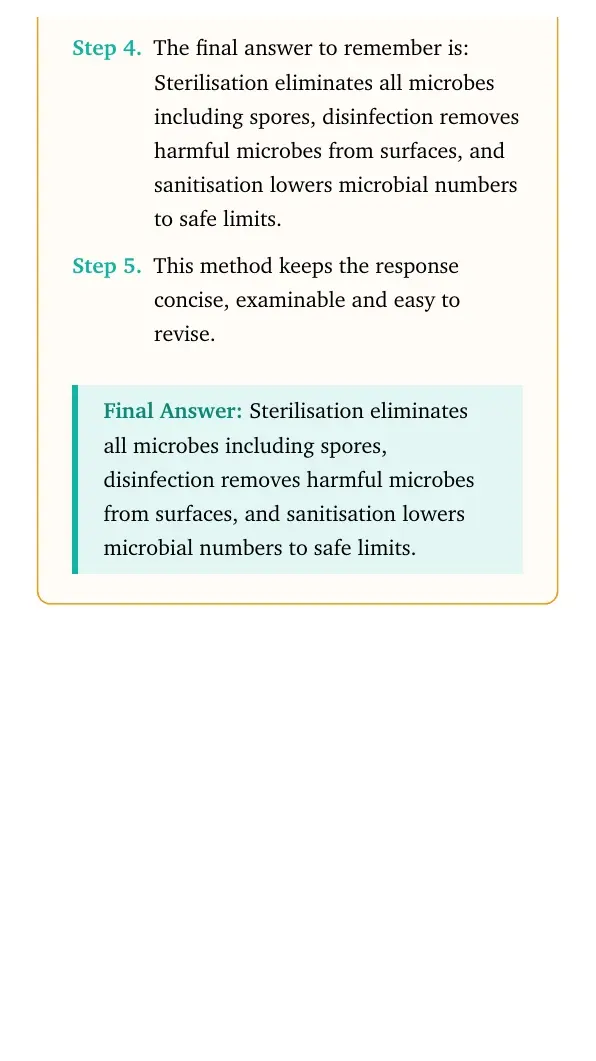
Ans. Sterilisation removes all microbes including spores, while disinfection removes harmful microbes but may not destroy every resistant spore.



Comments