




NCERT Solutions for Class 8 Science Chapter 6 Pressure Winds Storms and Cyclones help students solve all 13 exercise questions from the 2026-27 NCERT Curiosity textbook. The chapter explains pressure, liquid pressure, air pressure, winds, thunderstorms, lightning and cyclones through diagram-based and calculation-based questions.
- Best for homework: includes MCQs, True or False, numerical pressure questions and figure-based reasoning answers.
- Important for revision: covers pressure formula, sea breeze, lightning, cyclone formation and wind pressure.
- Free PDF: download the step-by-step solutions with source figures and expert explanations.
Chapter6Pressure,Winds,Storms,andCyclonesSolutions.pdf?page=1&dpi=150)
Chapter6Pressure,Winds,Storms,andCyclonesSolutions.pdf?page=2&dpi=150)
Chapter6Pressure,Winds,Storms,andCyclonesSolutions.pdf?page=3&dpi=150)
Chapter6Pressure,Winds,Storms,andCyclonesSolutions.pdf?page=4&dpi=150)
Chapter6Pressure,Winds,Storms,andCyclonesSolutions.pdf?page=5&dpi=150)
Chapter6Pressure,Winds,Storms,andCyclonesSolutions.pdf?page=6&dpi=150)
Chapter6Pressure,Winds,Storms,andCyclonesSolutions.pdf?page=7&dpi=150)
Chapter6Pressure,Winds,Storms,andCyclonesSolutions.pdf?page=8&dpi=150)
Chapter6Pressure,Winds,Storms,andCyclonesSolutions.pdf?page=9&dpi=150)
Chapter6Pressure,Winds,Storms,andCyclonesSolutions.pdf?page=10&dpi=150)
Chapter6Pressure,Winds,Storms,andCyclonesSolutions.pdf?page=11&dpi=150)
Chapter6Pressure,Winds,Storms,andCyclonesSolutions.pdf?page=12&dpi=150)
Chapter6Pressure,Winds,Storms,andCyclonesSolutions.pdf?page=13&dpi=150)
Chapter6Pressure,Winds,Storms,andCyclonesSolutions.pdf?page=14&dpi=150)
Chapter6Pressure,Winds,Storms,andCyclonesSolutions.pdf?page=15&dpi=150)
Chapter6Pressure,Winds,Storms,andCyclonesSolutions.pdf?page=16&dpi=150)
Chapter6Pressure,Winds,Storms,andCyclonesSolutions.pdf?page=17&dpi=150)
Chapter6Pressure,Winds,Storms,andCyclonesSolutions.pdf?page=18&dpi=150)
Chapter6Pressure,Winds,Storms,andCyclonesSolutions.pdf?page=19&dpi=150)
Chapter6Pressure,Winds,Storms,andCyclonesSolutions.pdf?page=20&dpi=150)
Chapter6Pressure,Winds,Storms,andCyclonesSolutions.pdf?page=21&dpi=150)
Chapter6Pressure,Winds,Storms,andCyclonesSolutions_flat_MobileCard.pdf?page=1&dpi=150)
Chapter6Pressure,Winds,Storms,andCyclonesSolutions_flat_MobileCard.pdf?page=2&dpi=150)
Chapter6Pressure,Winds,Storms,andCyclonesSolutions_flat_MobileCard.pdf?page=3&dpi=150)
Chapter6Pressure,Winds,Storms,andCyclonesSolutions_flat_MobileCard.pdf?page=4&dpi=150)
Chapter6Pressure,Winds,Storms,andCyclonesSolutions_flat_MobileCard.pdf?page=5&dpi=150)
Chapter6Pressure,Winds,Storms,andCyclonesSolutions_flat_MobileCard.pdf?page=6&dpi=150)
Chapter6Pressure,Winds,Storms,andCyclonesSolutions_flat_MobileCard.pdf?page=7&dpi=150)
Chapter6Pressure,Winds,Storms,andCyclonesSolutions_flat_MobileCard.pdf?page=8&dpi=150)
Chapter6Pressure,Winds,Storms,andCyclonesSolutions_flat_MobileCard.pdf?page=9&dpi=150)
Chapter6Pressure,Winds,Storms,andCyclonesSolutions_flat_MobileCard.pdf?page=10&dpi=150)
Chapter6Pressure,Winds,Storms,andCyclonesSolutions_flat_MobileCard.pdf?page=11&dpi=150)
Chapter6Pressure,Winds,Storms,andCyclonesSolutions_flat_MobileCard.pdf?page=12&dpi=150)
Chapter6Pressure,Winds,Storms,andCyclonesSolutions_flat_MobileCard.pdf?page=13&dpi=150)
Chapter6Pressure,Winds,Storms,andCyclonesSolutions_flat_MobileCard.pdf?page=14&dpi=150)
Chapter6Pressure,Winds,Storms,andCyclonesSolutions_flat_MobileCard.pdf?page=15&dpi=150)
Chapter6Pressure,Winds,Storms,andCyclonesSolutions_flat_MobileCard.pdf?page=16&dpi=150)
Chapter6Pressure,Winds,Storms,andCyclonesSolutions_flat_MobileCard.pdf?page=17&dpi=150)
Chapter6Pressure,Winds,Storms,andCyclonesSolutions_flat_MobileCard.pdf?page=18&dpi=150)
Chapter6Pressure,Winds,Storms,andCyclonesSolutions_flat_MobileCard.pdf?page=19&dpi=150)
Chapter6Pressure,Winds,Storms,andCyclonesSolutions_flat_MobileCard.pdf?page=20&dpi=150)
Chapter6Pressure,Winds,Storms,andCyclonesSolutions_flat_MobileCard.pdf?page=21&dpi=150)
Chapter6Pressure,Winds,Storms,andCyclonesSolutions_flat_MobileCard.pdf?page=22&dpi=150)
Chapter6Pressure,Winds,Storms,andCyclonesSolutions_flat_MobileCard.pdf?page=23&dpi=150)
Chapter6Pressure,Winds,Storms,andCyclonesSolutions_flat_MobileCard.pdf?page=24&dpi=150)
Chapter6Pressure,Winds,Storms,andCyclonesSolutions_flat_MobileCard.pdf?page=25&dpi=150)
Chapter6Pressure,Winds,Storms,andCyclonesSolutions_flat_MobileCard.pdf?page=26&dpi=150)
Chapter6Pressure,Winds,Storms,andCyclonesSolutions_flat_MobileCard.pdf?page=27&dpi=150)
Chapter6Pressure,Winds,Storms,andCyclonesSolutions_flat_MobileCard.pdf?page=28&dpi=150)
Chapter6Pressure,Winds,Storms,andCyclonesSolutions_flat_MobileCard.pdf?page=29&dpi=150)
Chapter6Pressure,Winds,Storms,andCyclonesSolutions_flat_MobileCard.pdf?page=30&dpi=150)
Chapter6Pressure,Winds,Storms,andCyclonesSolutions_flat_MobileCard.pdf?page=31&dpi=150)
Chapter6Pressure,Winds,Storms,andCyclonesSolutions_flat_MobileCard.pdf?page=32&dpi=150)
Chapter6Pressure,Winds,Storms,andCyclonesSolutions_flat_MobileCard.pdf?page=33&dpi=150)
Chapter6Pressure,Winds,Storms,andCyclonesSolutions_flat_MobileCard.pdf?page=34&dpi=150)
Chapter6Pressure,Winds,Storms,andCyclonesSolutions_flat_MobileCard.pdf?page=35&dpi=150)
Chapter6Pressure,Winds,Storms,andCyclonesSolutions_flat_MobileCard.pdf?page=36&dpi=150)
Student Feedback: In a Collegedunia poll of 12,650 Class 8 students, most students found Chapter 6 easier after separating it into pressure numericals, wind formation and cyclone safety.
NCERT Solutions Class 8 Science Chapter 6 Overview
The NCERT Solutions PDF explains every exercise answer in a student-friendly order. It starts with direct MCQ choices based on connected vessels, rubber suckers and water tanks, then moves to pressure calculations, lightning, sea breeze and cyclone formation. All 13 textbook questions are solved with a main answer and an expert explanation.
These Class 8 Science Chapter 6 solutions follow the official 2026-27 NCERT Curiosity textbook and keep source figures inside the PDF for better answer writing.
Pressure and Wind Formation Video Lesson
Source: Magnet Brains on YouTube
Pressure Formula in Class 8 Science Chapter 6
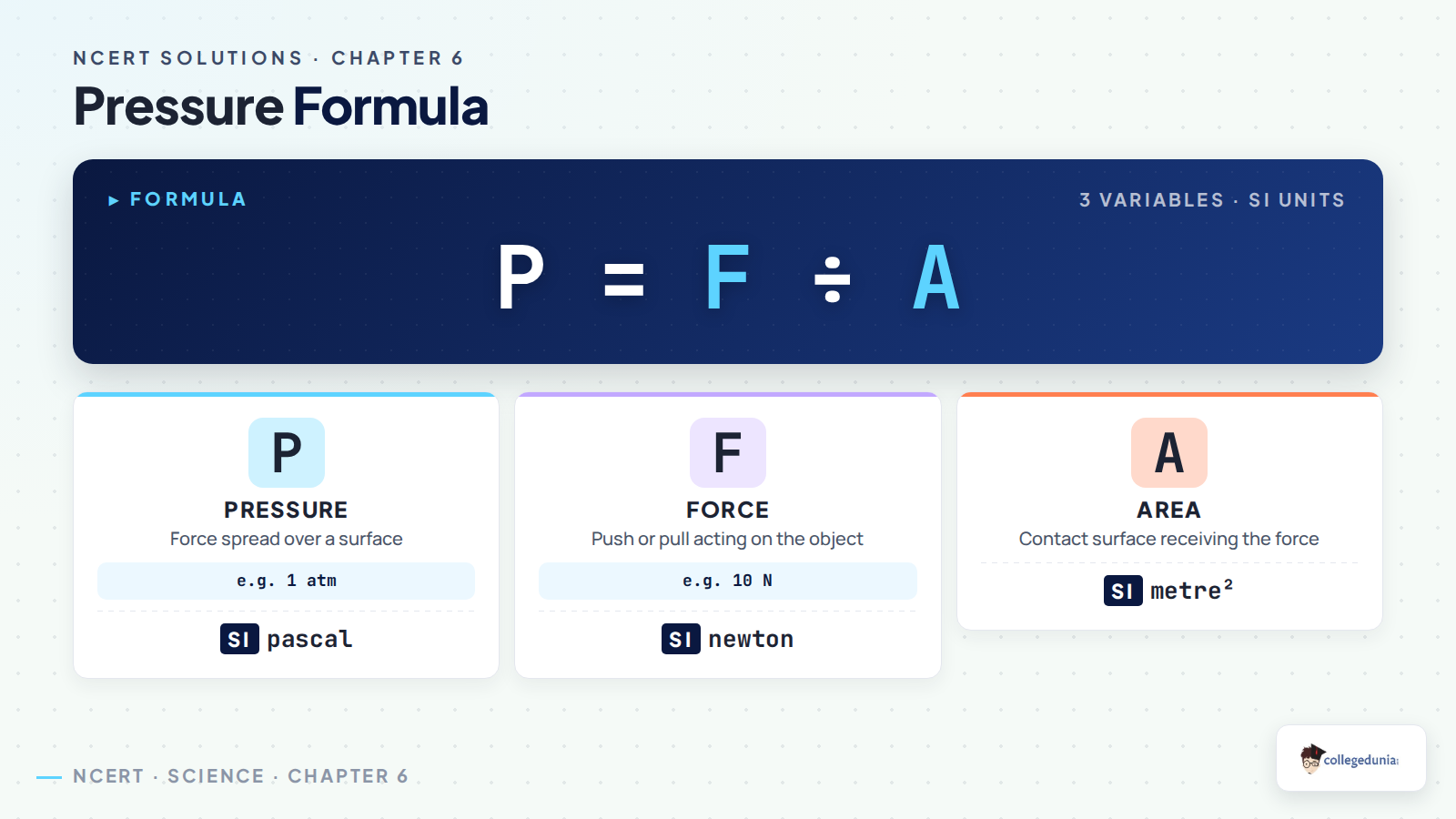
Pressure means force per unit area. The chapter uses this idea in the elephant question, the boat question and the boy-standing-on-sand question. A smaller contact area gives more pressure for the same force, so a sharp object cuts better and a person standing on sand sinks more.
How a Storm Becomes a Cyclone
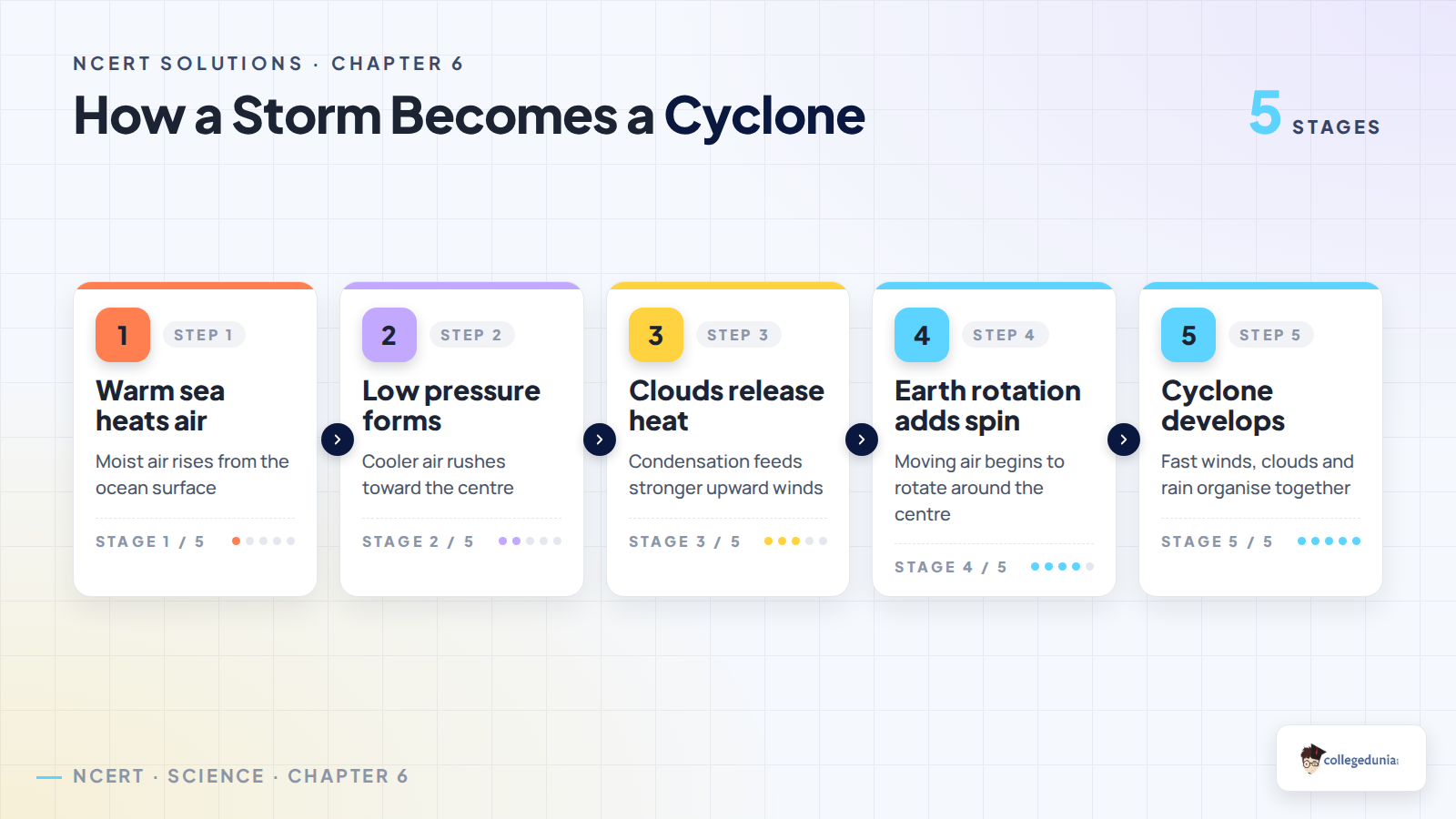
Warm ocean water heats the air above it. The warm moist air rises and creates a low-pressure region. Cooler air rushes in, water vapour condenses into clouds, and Earth's rotation makes the moving air spin. A cyclone is a rotating low-pressure storm system fed by warm sea water.
Class 8 Science Chapter 6 Exercise Answer Key
The exercise answer key starts with option (d) for connected vessels, option (c) for the rubber sucker question, option (a) for increasing tank height, and option (b) for equal pressure but larger force in vessel B. The detailed PDF explains each choice.
| Question type | Answer clue |
|---|---|
| Pressure numerical | Use P = F/A and keep area in square metre |
| Boat comparison | Boat B has more pressure by 100 Pa |
| Sea breeze figure | Side A is land, side B is sea |
| Banner holes | Holes let air pass and reduce wind pressure |
Practice NCERT Questions with Check Solution Tabs
Use the question-card page for quick practice. Each question has a Check Solution tab and an Expert Solution tab, so students can revise the answer without scrolling through the full PDF.
Chapter 6 Question Bank: Open all solved NCERT questions for Pressure Winds Storms and Cyclones
Related Resources for Class 8 Science Chapter 6
| Resource | Link |
|---|---|
| Revision Notes | Class 8 Science Chapter 6 Notes |
| NCERT Book PDF | Class 8 Science Chapter 6 NCERT Book PDF |
| Handwritten Notes | Class 8 Science Chapter 6 Handwritten Notes |
NCERT Solutions for Class 8 Science Curiosity All Chapters
| Chapter | Solutions |
|---|---|
| Chapter 4 | Electricity Magnetic and Heating Effects Solutions |
| Chapter 5 | Exploring Forces Solutions |
| Chapter 6 | Pressure Winds Storms and Cyclones Solutions |
| Chapter 7 | Particulate Nature of Matter Solutions |
| Chapter 8 | Nature of Matter Elements Compounds and Mixtures Solutions |
Student Doubts on Pressure Winds Storms and Cyclones
Pressure Winds Storms and Cyclones Class 8 NCERT Solutions FAQs
Ques. What is the main formula in Class 8 Science Chapter 6?
Ans. The main formula is pressure equals force divided by area. It is written as P = F/A and the SI unit is pascal.
Ques. Which boat experiences more pressure in the NCERT exercise?
Ans. Boat B experiences more pressure. Boat A has 500 Pa and Boat B has 600 Pa, so Boat B is higher by 100 Pa.
Ques. Why do both balloons in Fig. 6.24 bulge equally?
Ans. Both balloons are at the same depth in the bottle. Liquid pressure at the same depth is equal, so both balloons bulge equally.
Ques. Where can I download the Class 8 Science Chapter 6 NCERT Solutions PDF?
Ans. Students can download the free NCERT Solutions PDF from the PDF card at the top of this page.



Comments