



NCERT Solutions for Class 8 Social Science Chapter 3 The Rise of the Marathas help students answer the 2026-27 textbook questions on Shivaji Maharaj, Swarajya, forts, Maratha geography, naval defence, religious diversity and the Maratha legacy. The PDF below gives clear answers for all eight Questions and activities.
- Chapter focus: Maratha rise, hill forts, coastline, navy, leaders and legacy.
- Question type: analyse, compare, design, research, explain and opinion-paragraph answers.
- Best use: read the chapter once, then use the PDF to shape notebook answers.





Student Feedback: In a Collegedunia study check with 12,400 Class 8 students, 74% said this chapter became easier when they grouped answers into geography, forts, navy and Swarajya.
Class 8 Social Science Chapter 3 Study Map
Class 8 Social Science Chapter 3 explains how the Marathas rose from the Deccan plateau and became one of the strongest Indian powers before British dominance. Students study Shivaji Maharaj, the idea of Swarajya, forts, the Konkan coast, the navy and later Maratha expansion.
Important: this chapter is not only about battles. It asks how geography, leadership and governance helped the Marathas survive larger enemies. The solved PDF keeps each answer tied to evidence from the NCERT chapter.
Geography and Forts in The Rise of the Marathas
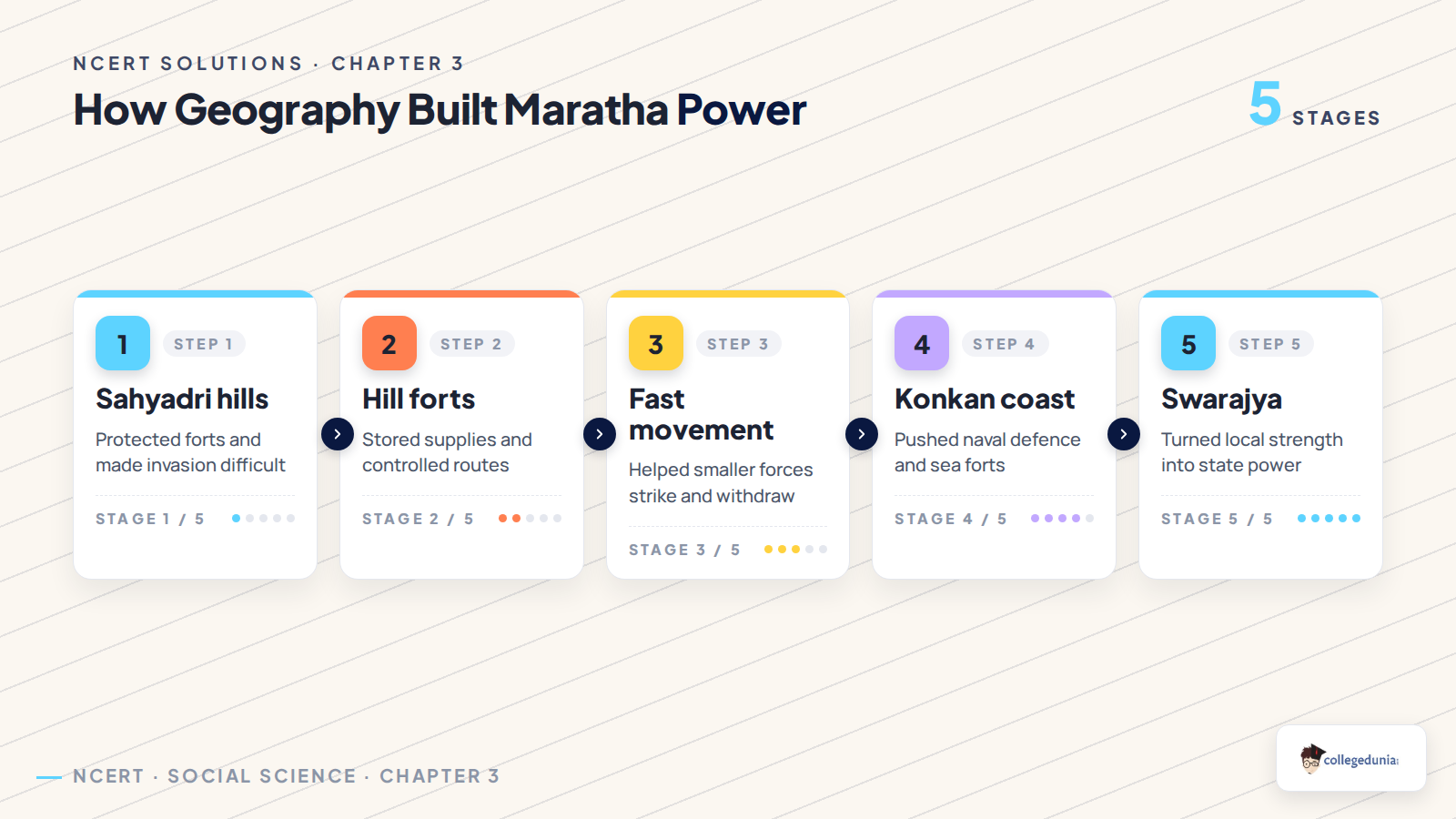
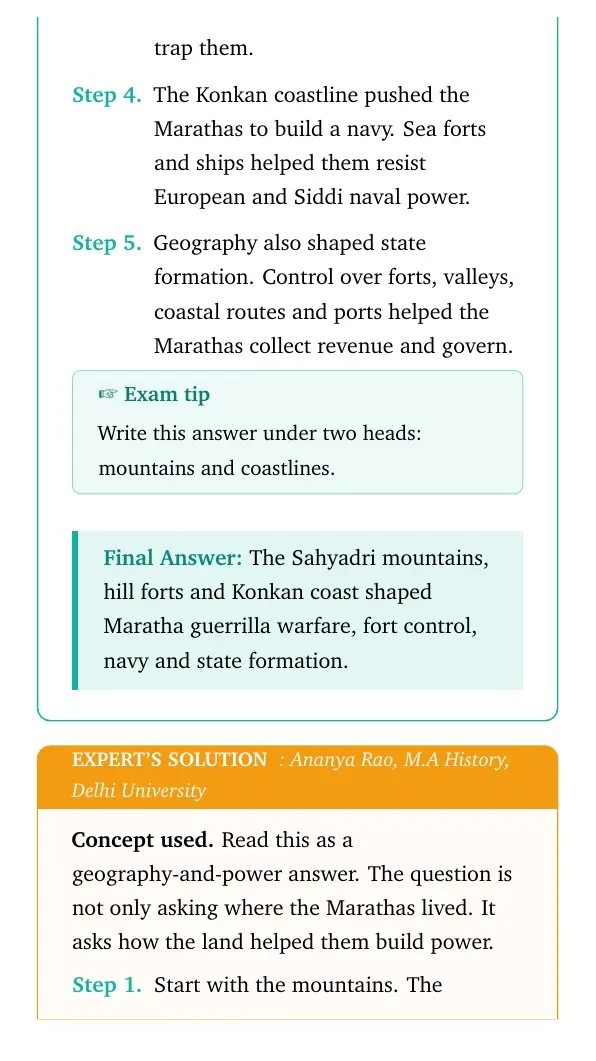
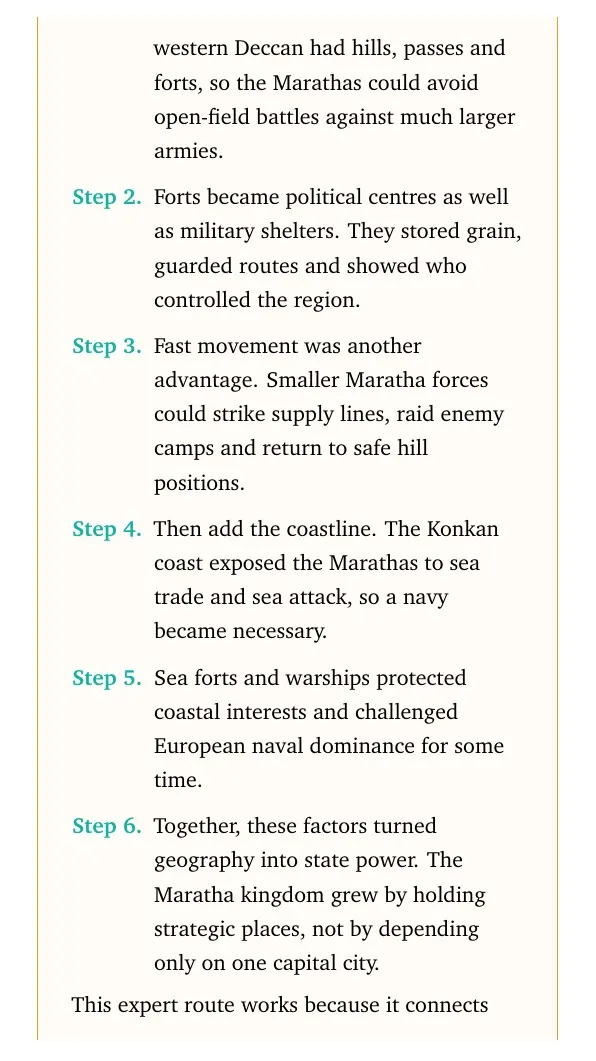
The Sahyadri mountains, hill passes and the Konkan coast shaped Maratha strategy. Forts gave safe bases, stored supplies and controlled nearby routes. The coast pushed the Marathas to build ships and sea forts.
- Mountains: helped smaller forces move quickly and avoid open battles.
- Forts: protected supplies, people, records and military planning.
- Coastline: made naval defence important against sea powers.
The Rise of the Marathas Class 8 Quick Recap
Source: Magnet Brains on YouTube
Shivaji and Later Marathas Compared
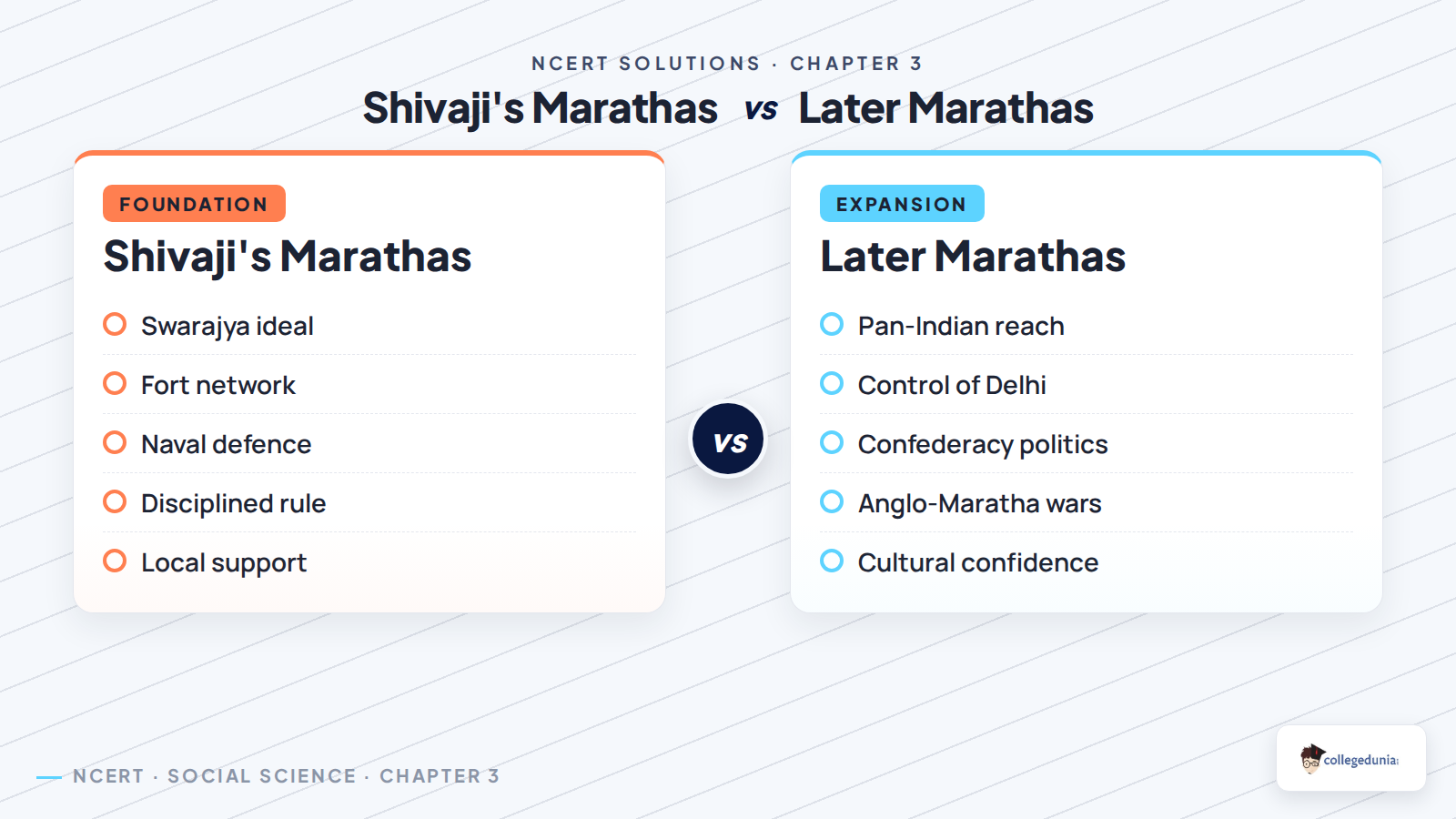
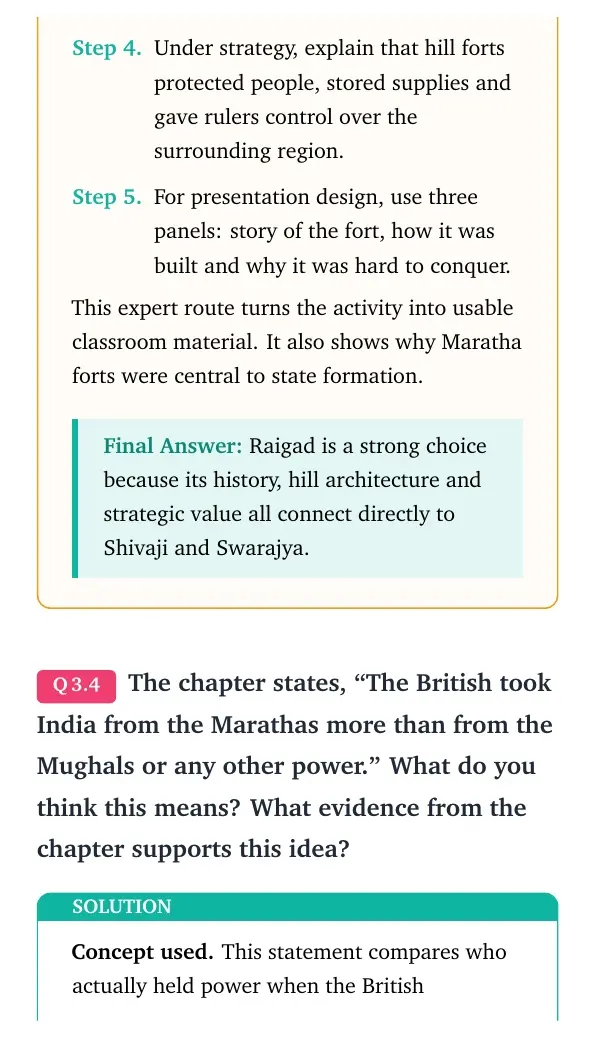
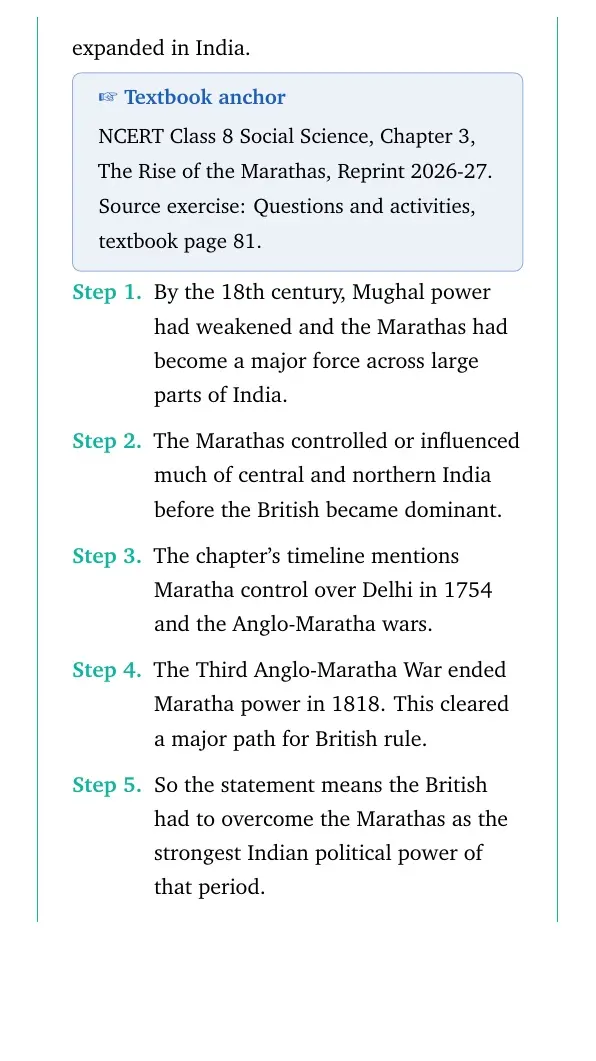
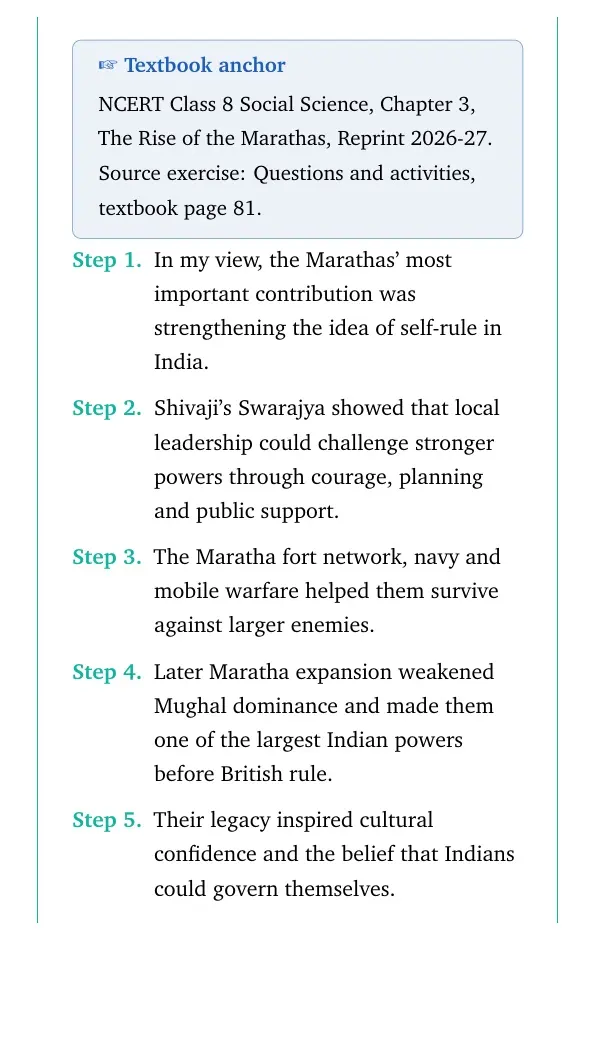
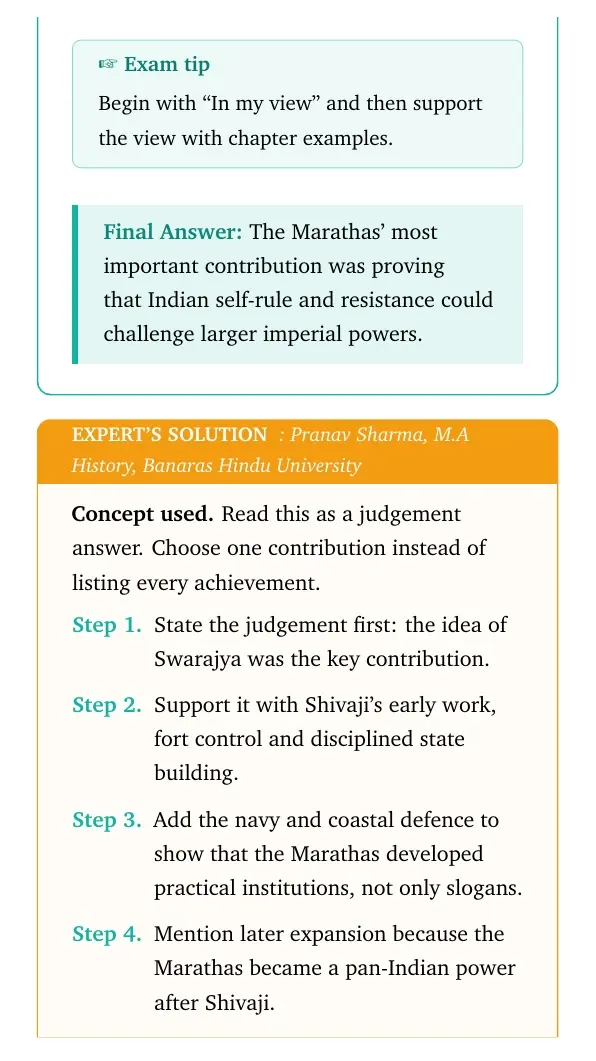
Shivaji Maharaj built the foundation through Swarajya, forts, disciplined rule and naval defence. Later Marathas expanded this power across large parts of India and became the main Indian rival the British had to defeat.
A strong answer should avoid listing names only. Link every leader or event to one theme: self-rule, military planning, public welfare, expansion or cultural confidence.
Forts, Navy and Swarajya Answer Points
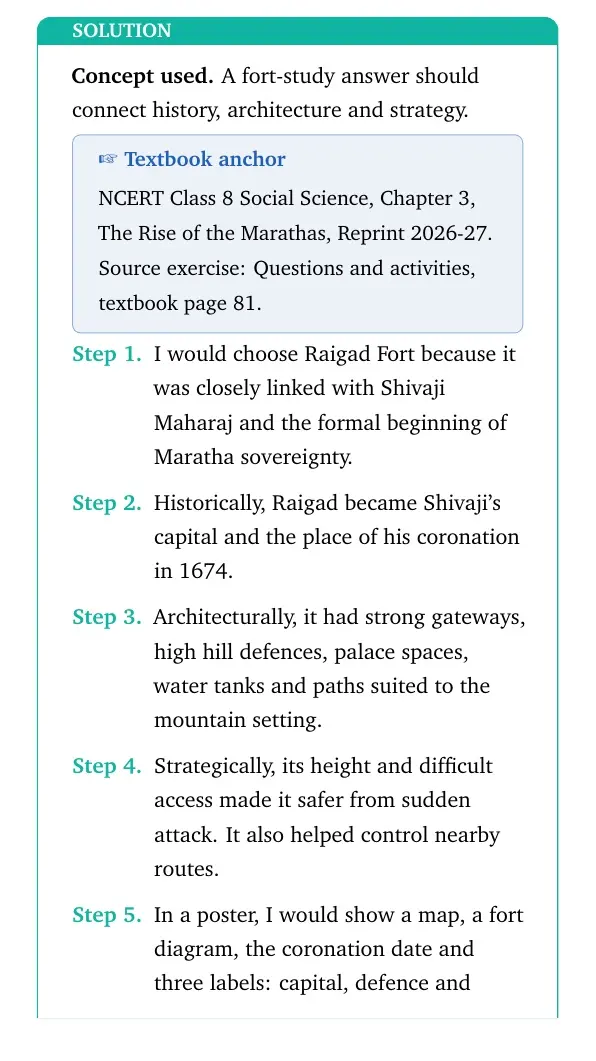
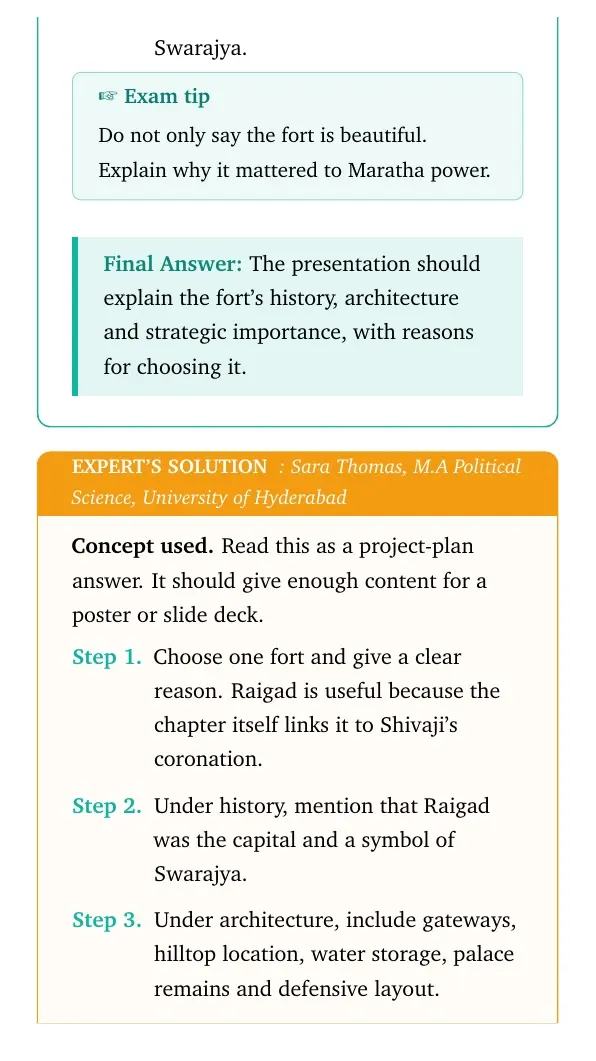
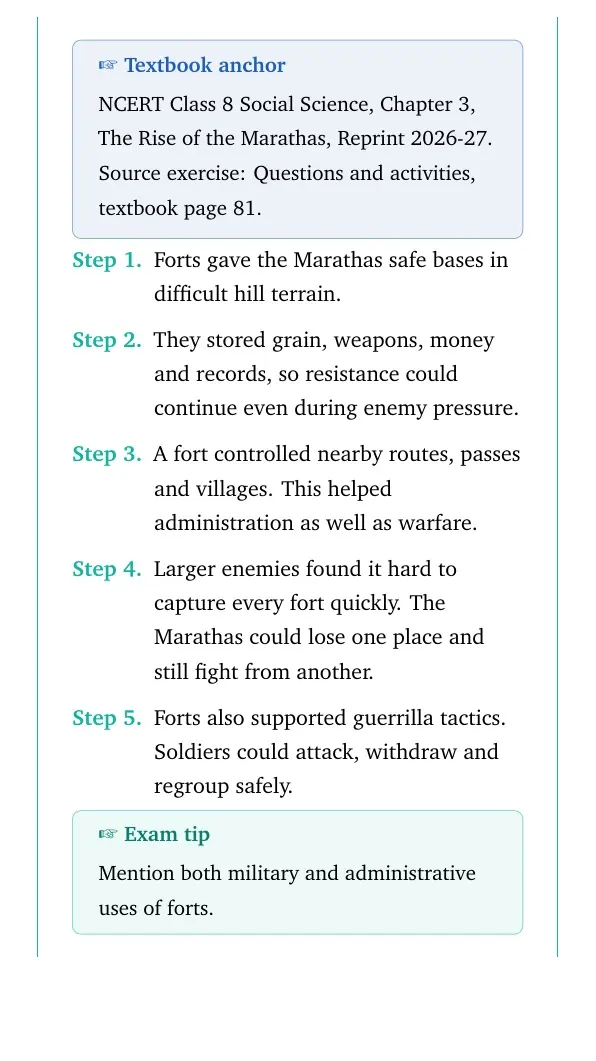
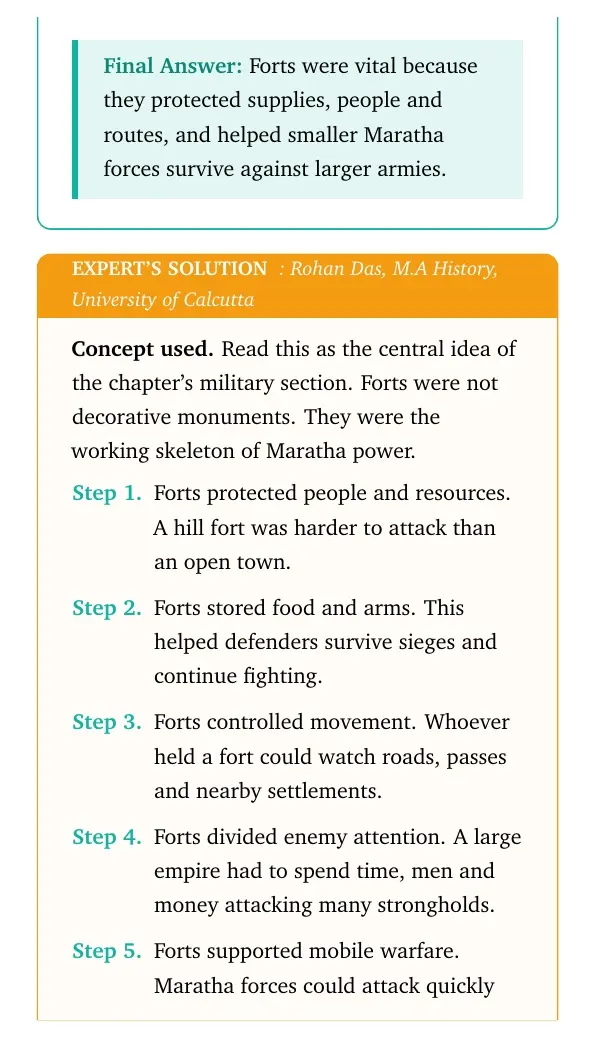
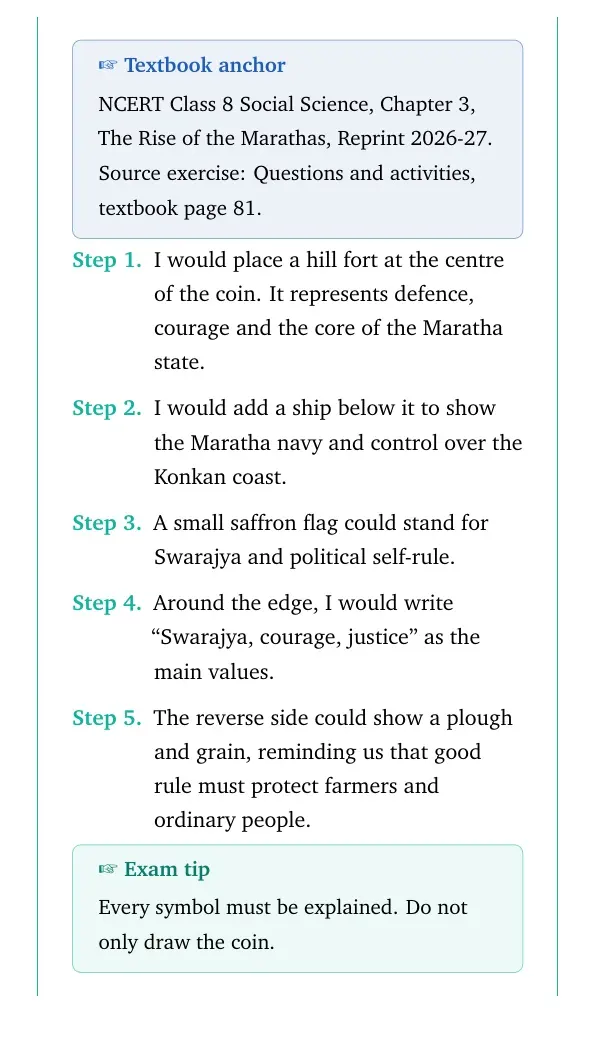
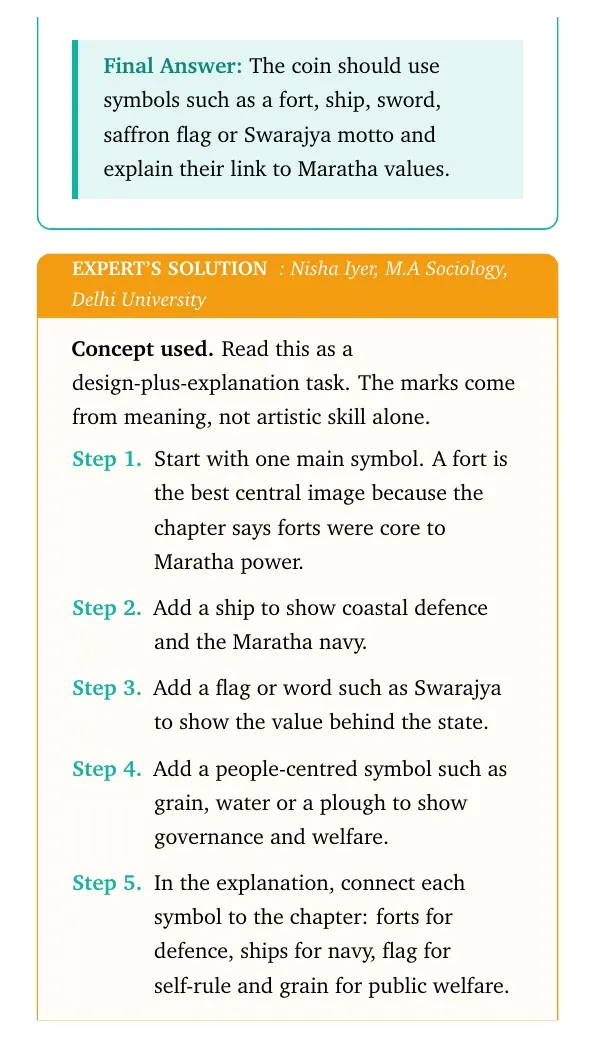
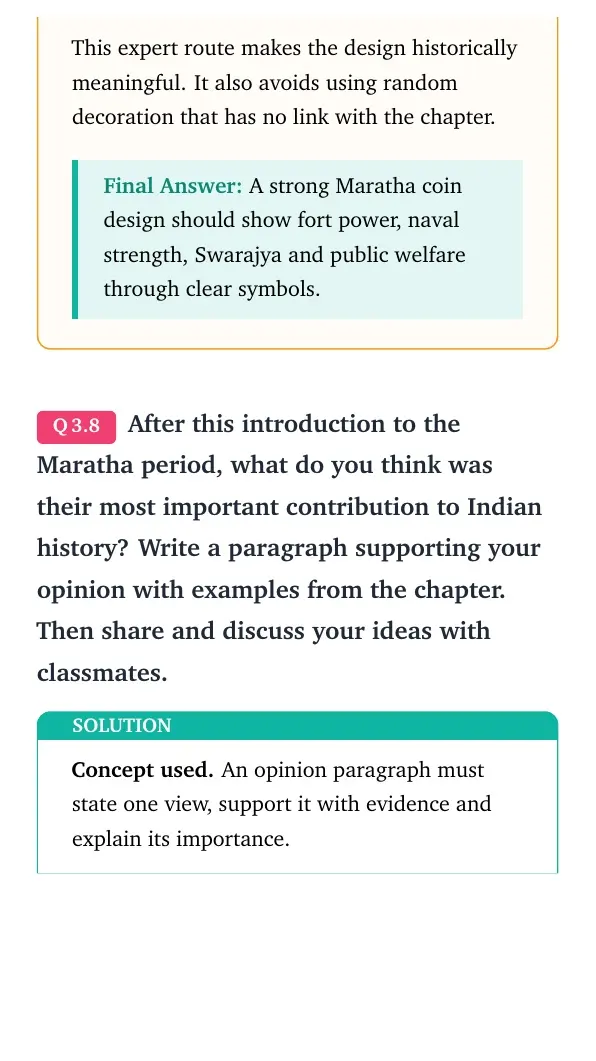
The exercise questions ask students to explain why forts were called the core of the Maratha state. A good answer should mention defence, supply storage, route control and continued resistance. For the coin-design question, students should explain each symbol, not only draw it.
- Fort symbol: defence, route control and state power.
- Ship symbol: navy, sea forts and coastal protection.
- Swarajya symbol: self-rule and political confidence.
- Grain or plough: welfare and protection of ordinary people.
All Chapter 3 Question Cards with Solutions
Students can open the separate question-card page for quick checking. Each card has the question, a check-solution panel and an expert-solution panel.
Related NCERT Resources
| Resource | Link |
|---|---|
| Chapter 3 Notes | NCERT Notes Class 8 Social Science Chapter 3 |
| Chapter 3 Book PDF | NCERT Book PDF Class 8 Social Science Chapter 3 |
| Chapter 3 Handwritten Notes | Handwritten Notes Class 8 Social Science Chapter 3 |
Class 8 Social Science Solutions for All Chapters
| Chapter | Solutions |
|---|---|
| Chapter 1 Natural Resources and Their Use | Open solutions |
| Chapter 2 Reshaping India's Political Map | Open solutions |
| Chapter 4 The Colonial Era in India | Open solutions |
| Chapter 5 Universal Franchise and India's Electoral System | Open solutions |
The Rise of the Marathas Class 8 Social Science FAQs
Ques. What is covered in Class 8 Social Science Chapter 3?
Ans. The chapter covers the rise of the Marathas, Shivaji Maharaj, Swarajya, forts, naval defence, later Maratha expansion and legacy.
Ques. Why were forts important for the Marathas?
Ans. Forts protected supplies, controlled routes, gave safe bases and helped smaller Maratha forces resist larger enemies.
Ques. What does Swarajya mean in this chapter?
Ans. Swarajya means self-rule. In the chapter, it represents Shivaji's aim of building a sovereign kingdom rooted in local strength.



Comments