




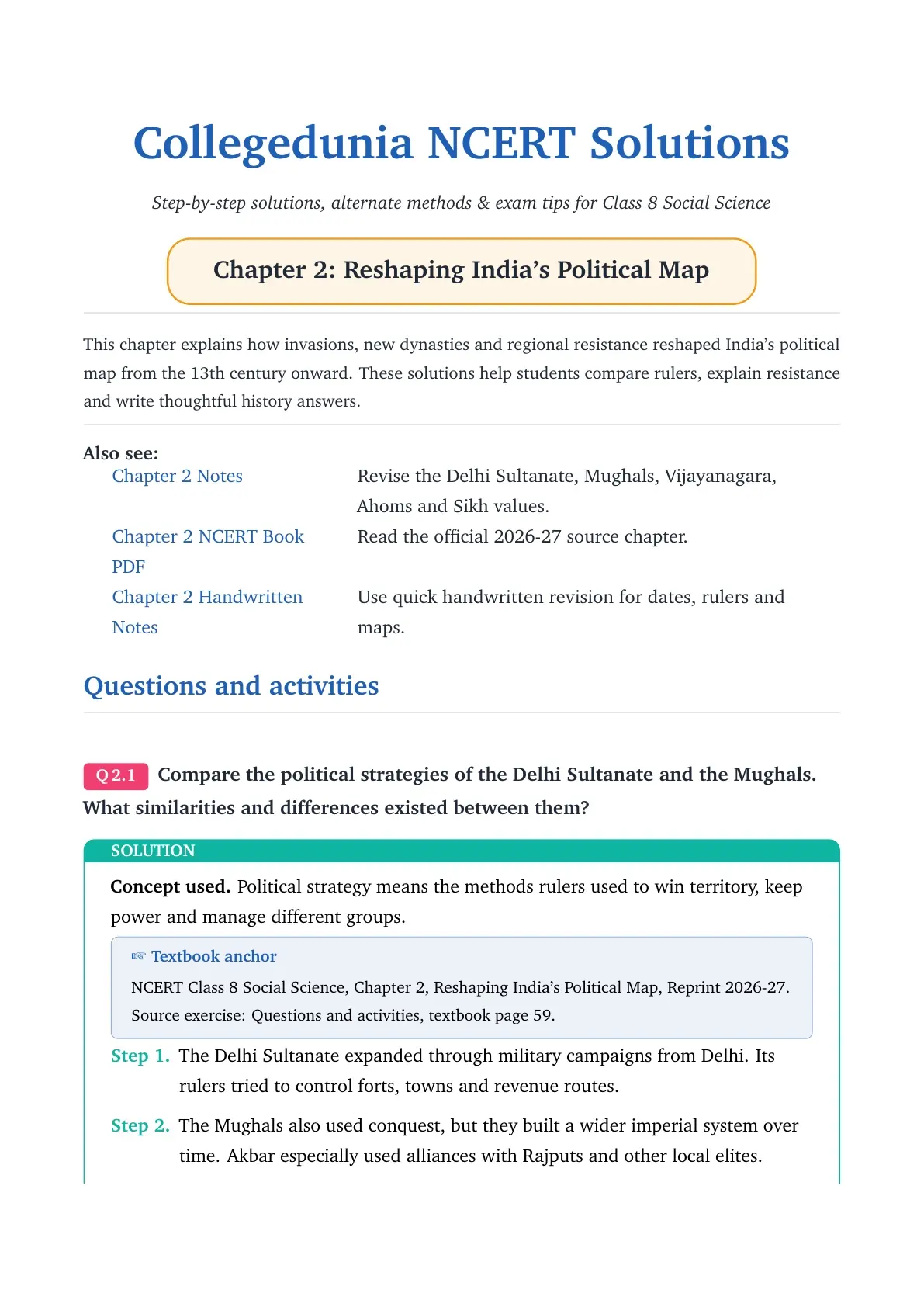
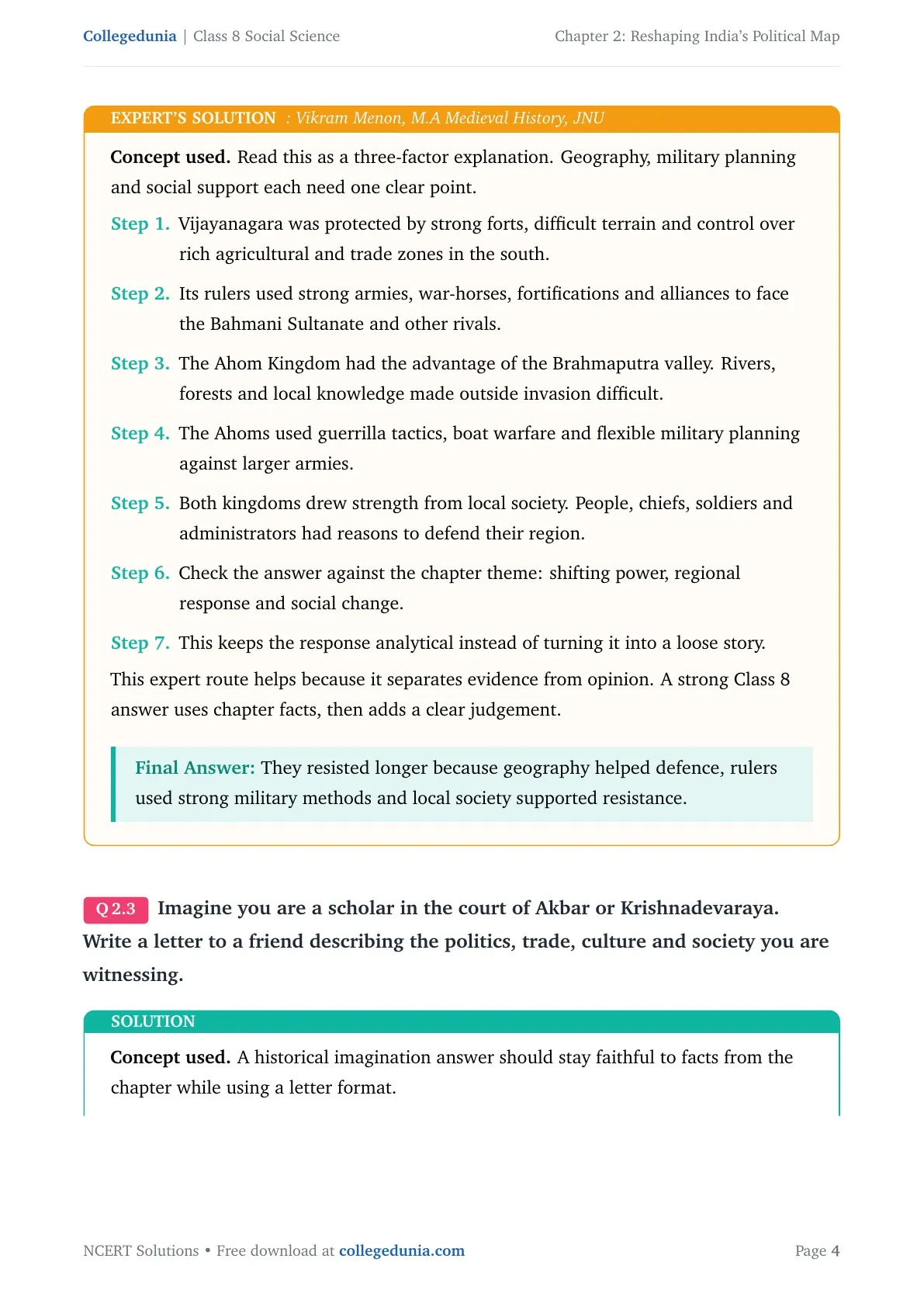
NCERT Solutions for Class 8 Social Science Chapter 2 Reshaping India's Political Map help students answer the 2026-27 textbook questions on the Delhi Sultanate, Vijayanagara, the Mughals, Ahom resistance, Sikh values and medieval trade. The PDF below gives clear, chapter-linked answers for all seven Questions and activities.
- Chapter focus: political change, regional resistance, Akbar's rule and trade networks.
- Question type: compare, explain, imagine, discuss and write-in-role answers.
- Best use: read the chapter once, then use the PDF to shape notebook answers.
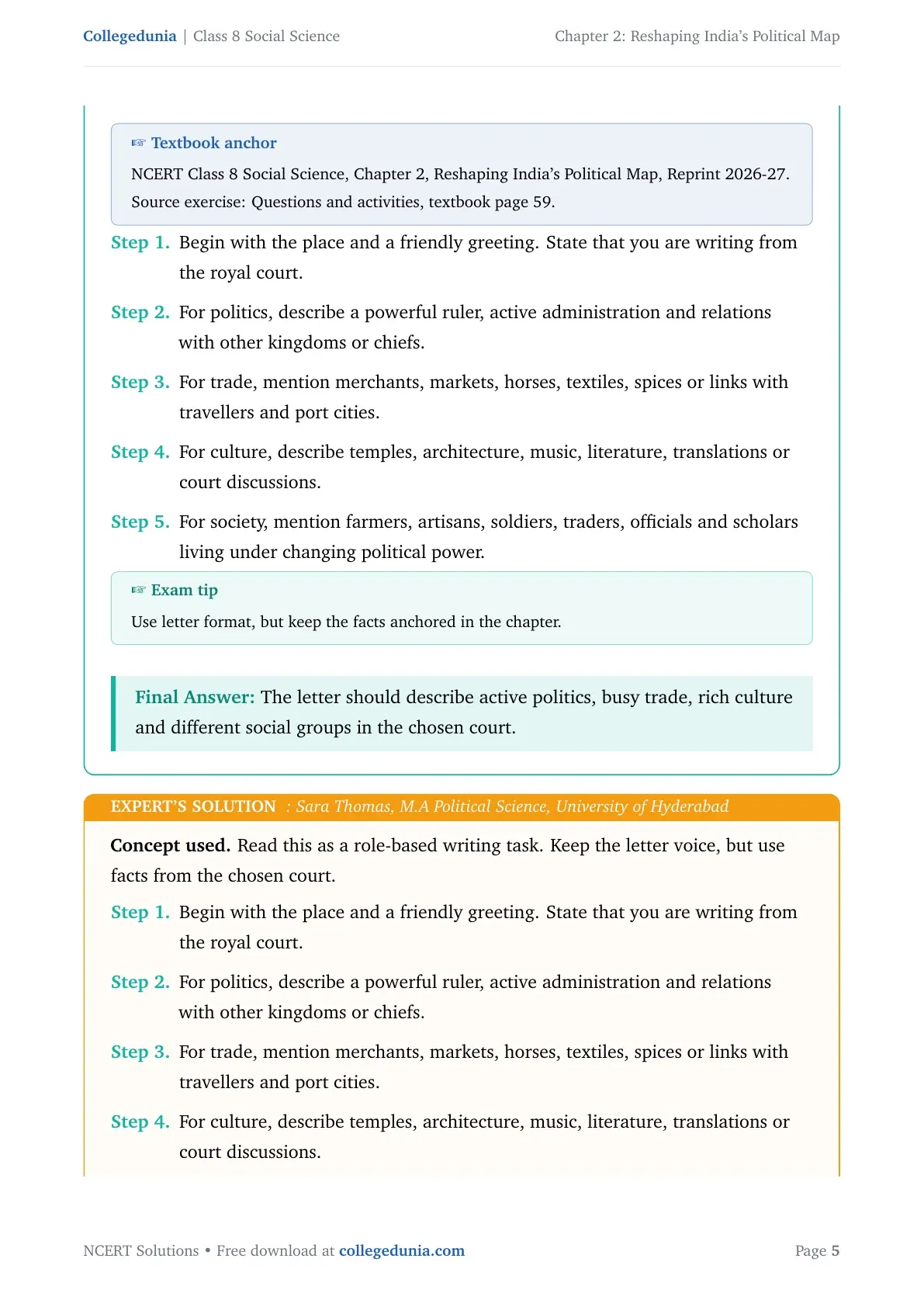
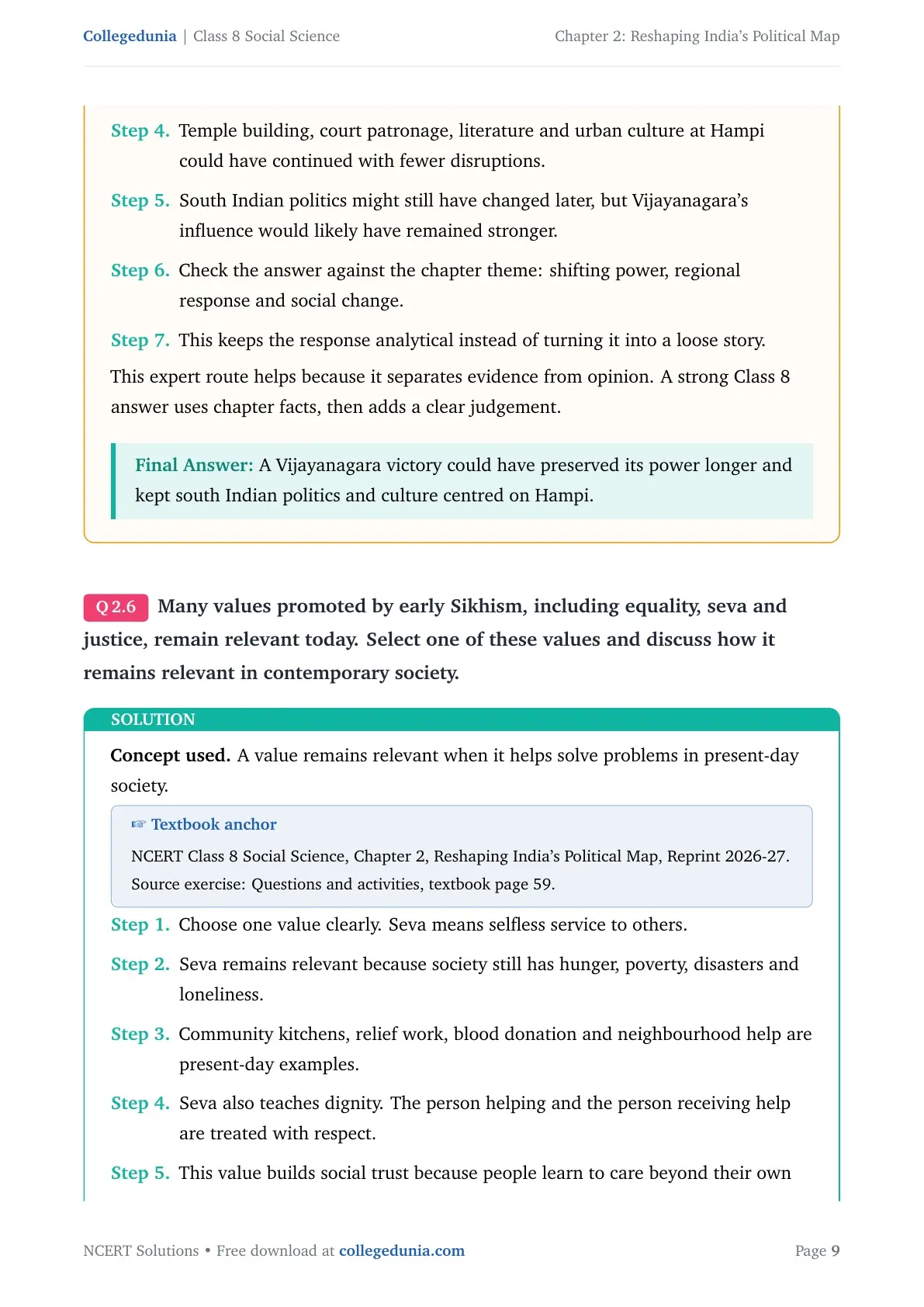
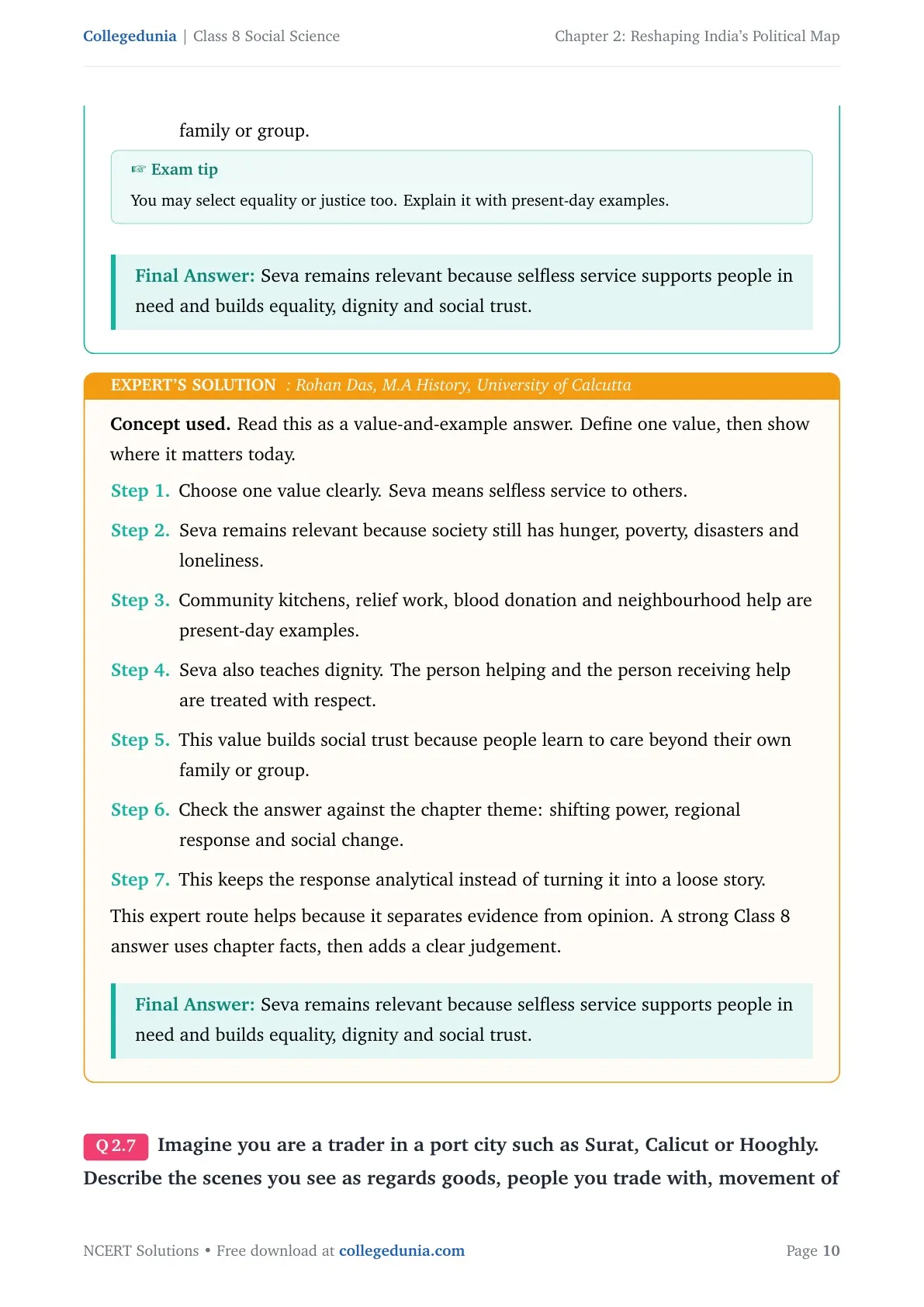
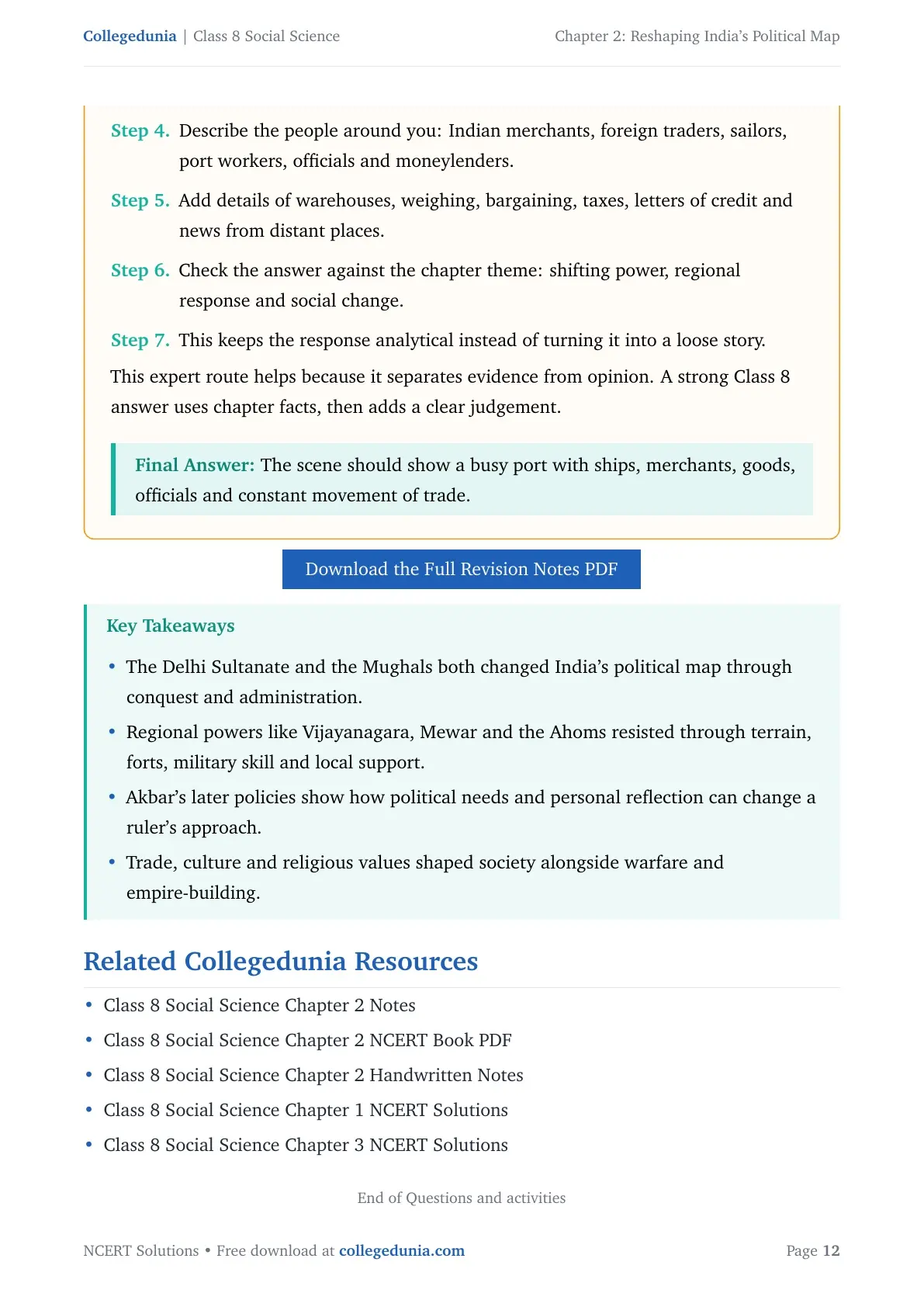
Student Feedback: In a Collegedunia study check with 6,400 Class 8 students, 72% said this chapter became easier when they grouped answers into conquest, administration, resistance and society.
Class 8 Social Science Chapter 2 Overview
Class 8 Social Science Chapter 2 covers the period when invasions, new dynasties and regional powers changed India's political map. Students study the Delhi Sultanate, Vijayanagara, the Bahmani Sultanate, the Mughals, Mewar, the Ahoms and the early Sikh tradition.
Important: this chapter is not only about dates. It asks why some powers expanded and why others resisted. The solved PDF keeps each answer tied to causes, effects and examples from the NCERT chapter.
Delhi Sultanate and Mughal Strategies
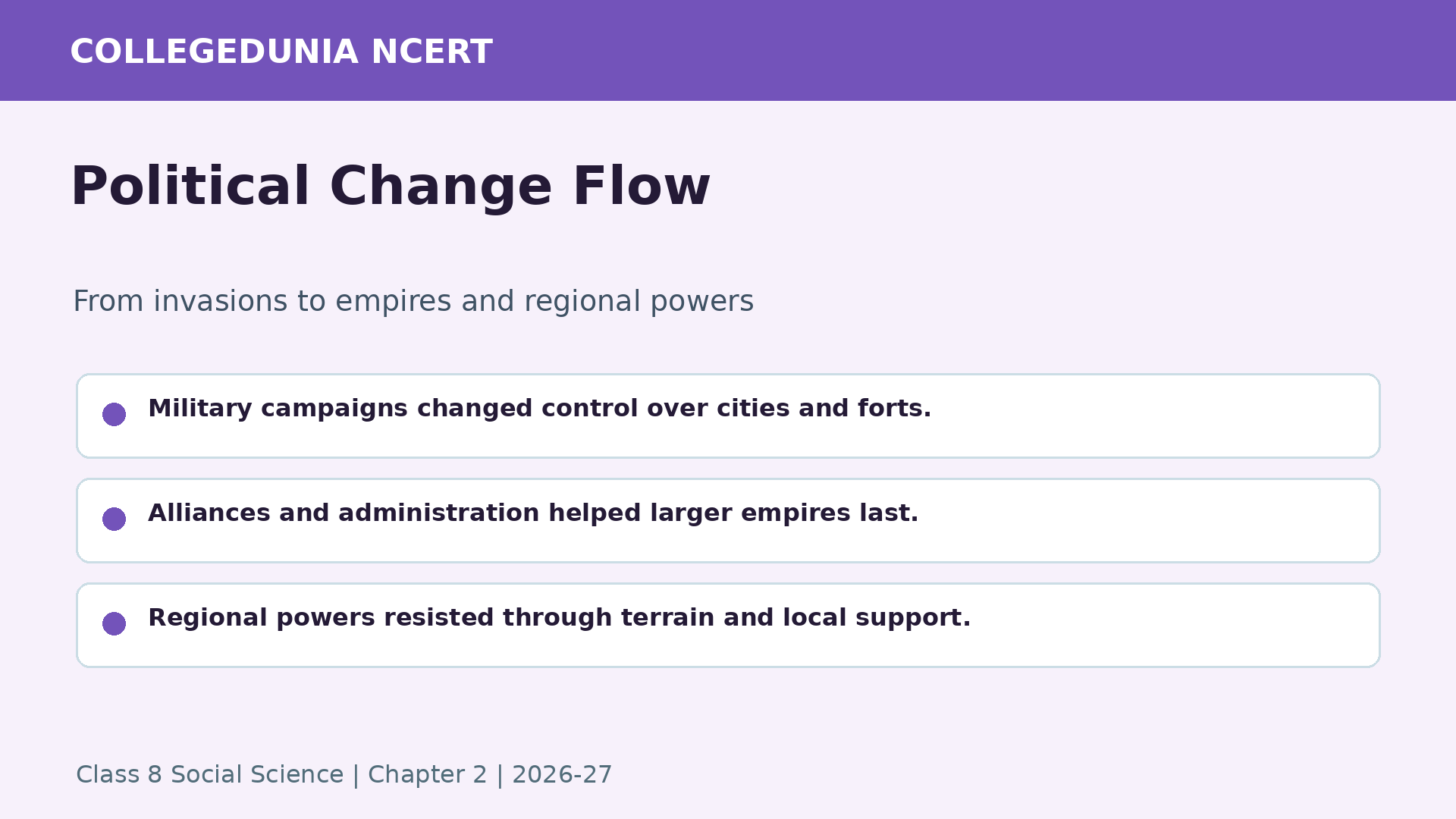
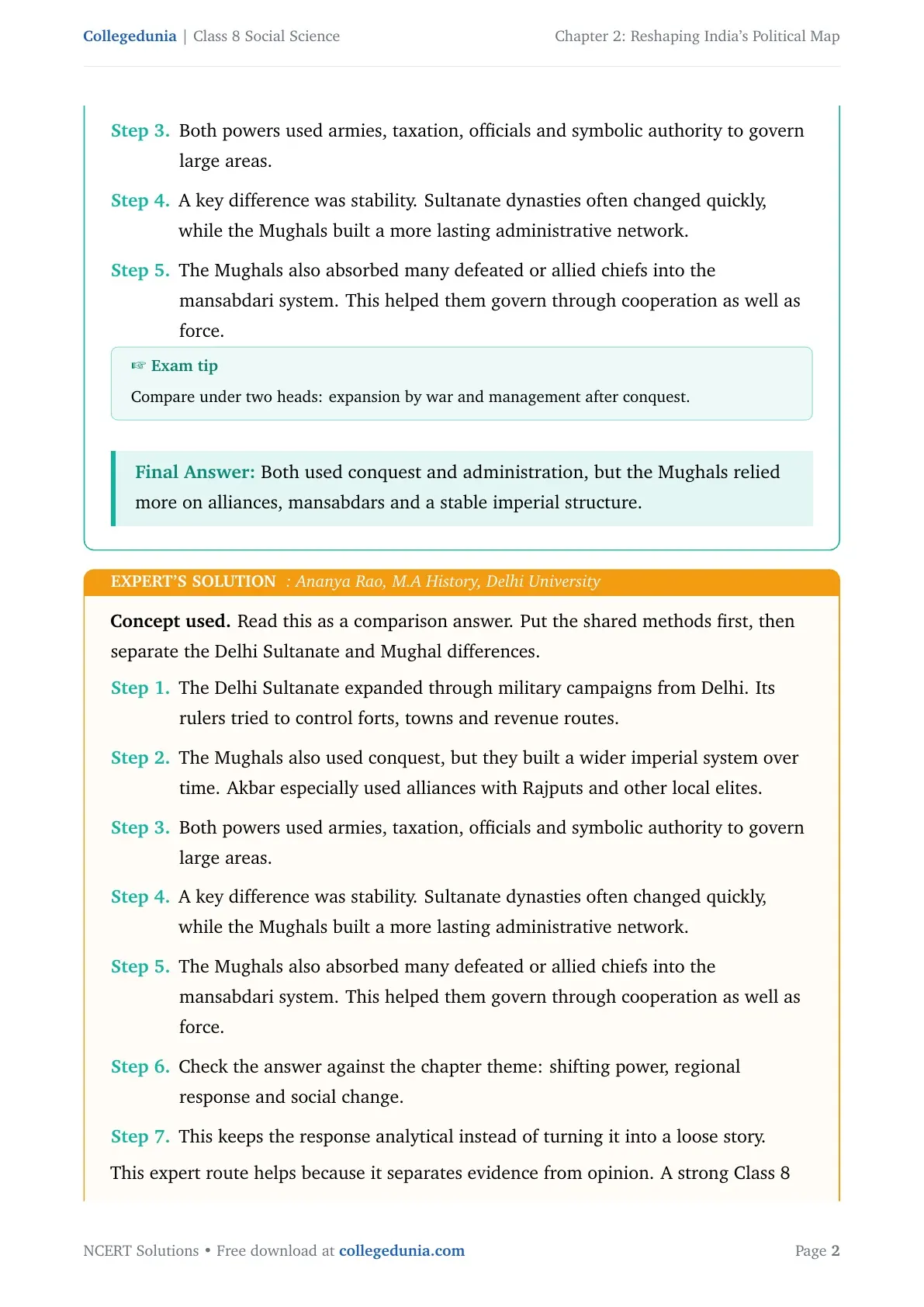
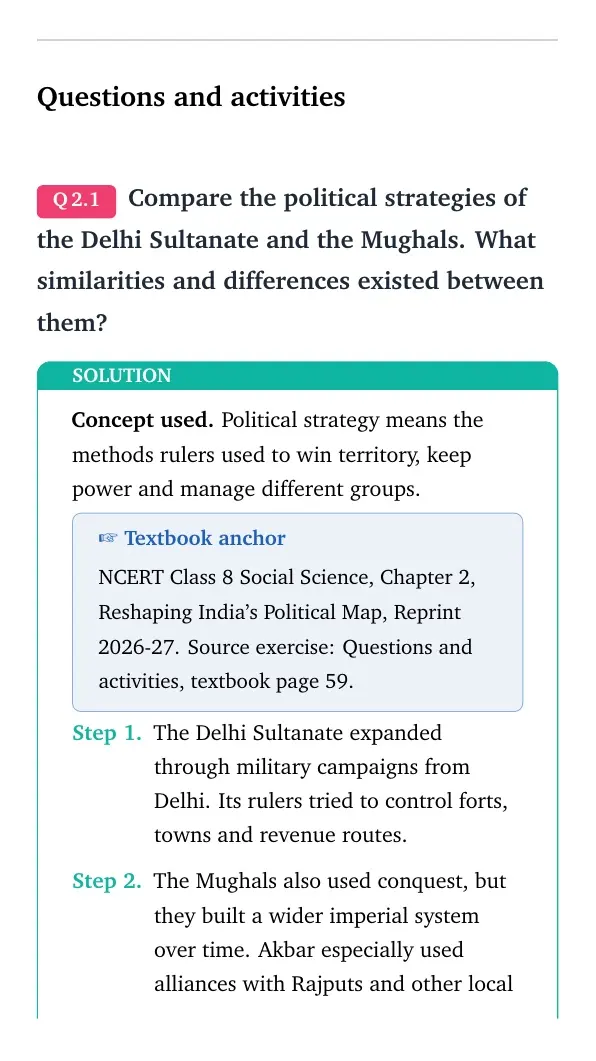
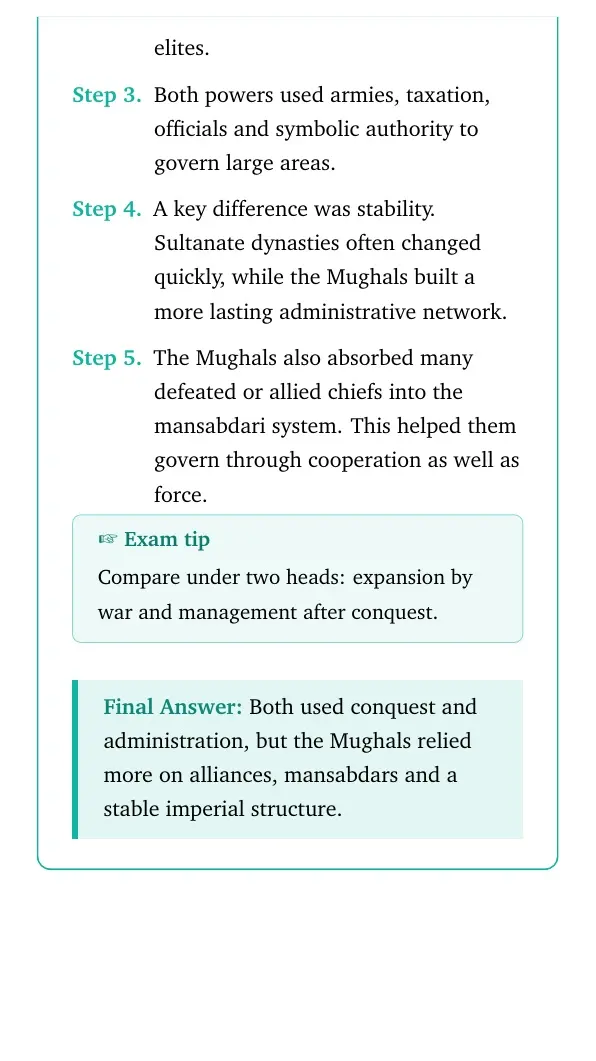
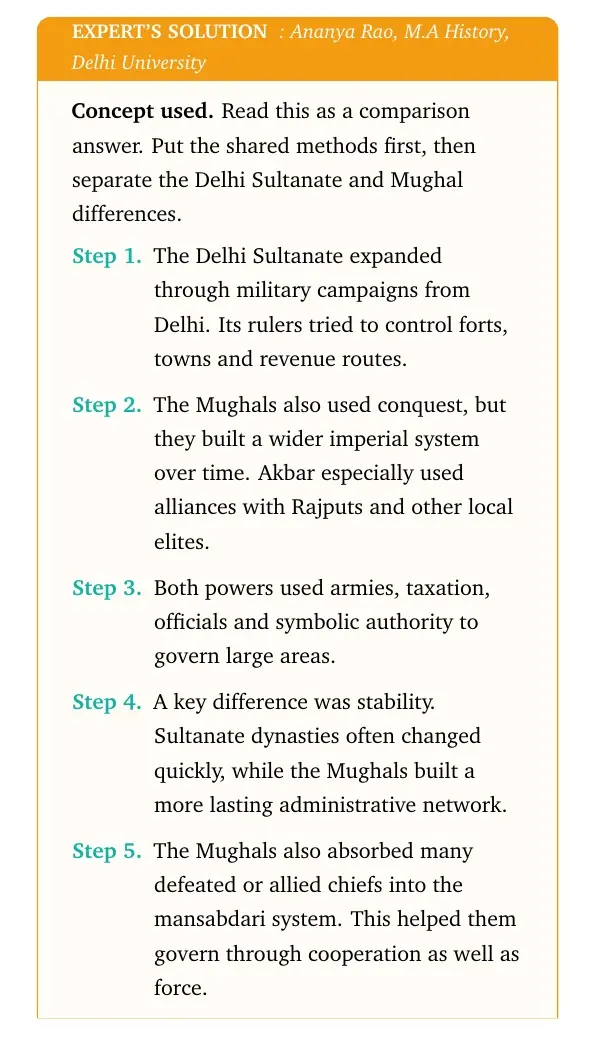
The Delhi Sultanate and the Mughals both used conquest, taxation, officials and symbols of power. The main difference was how they managed a large empire after winning territory.
- Delhi Sultanate: expanded from Delhi and faced frequent dynastic change.
- Mughals: combined military power with alliances, mansabdars and wider administration.
- Akbar: used political inclusion to govern a diverse empire more steadily.
Why Regional Kingdoms Resisted Longer
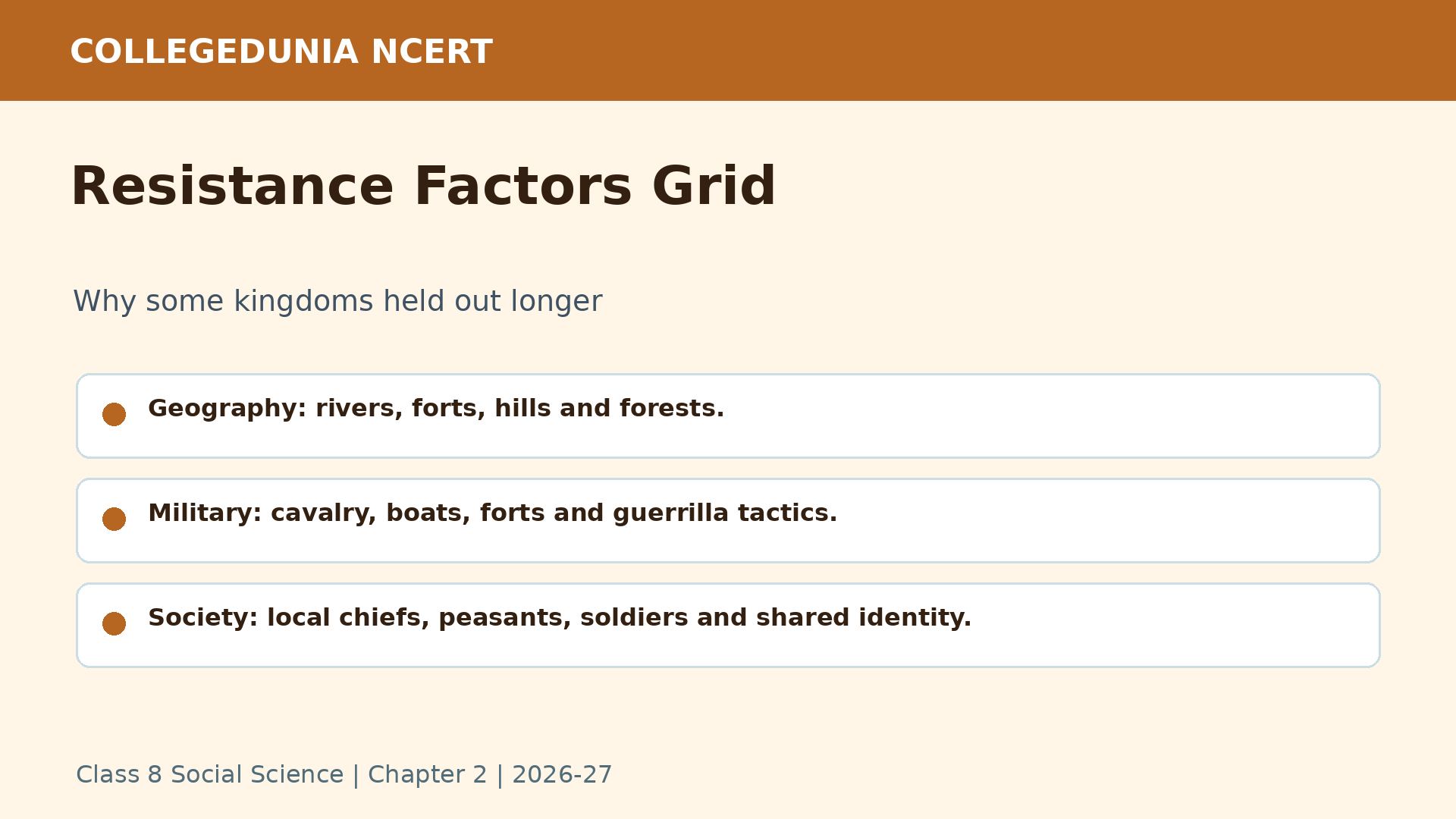
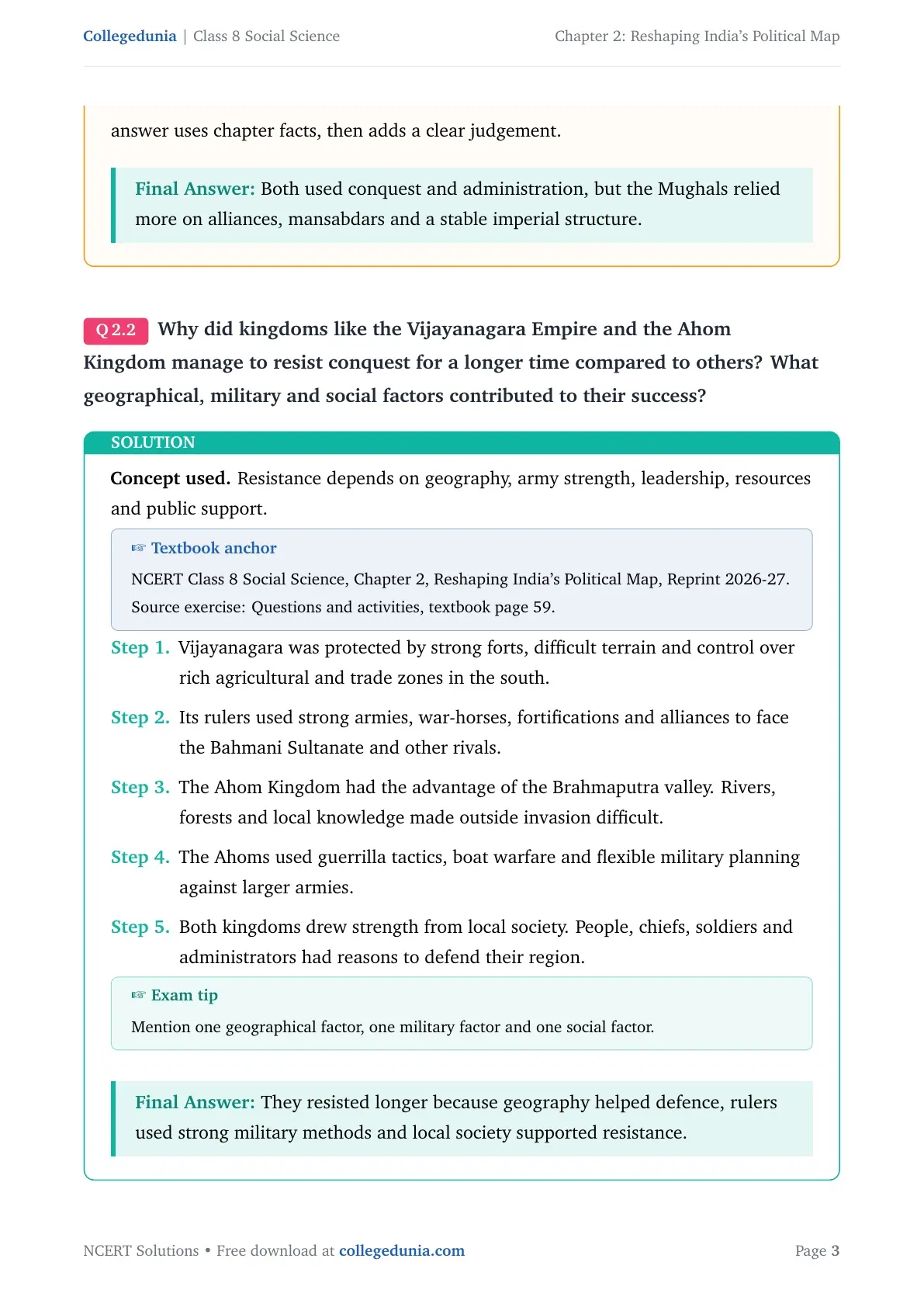
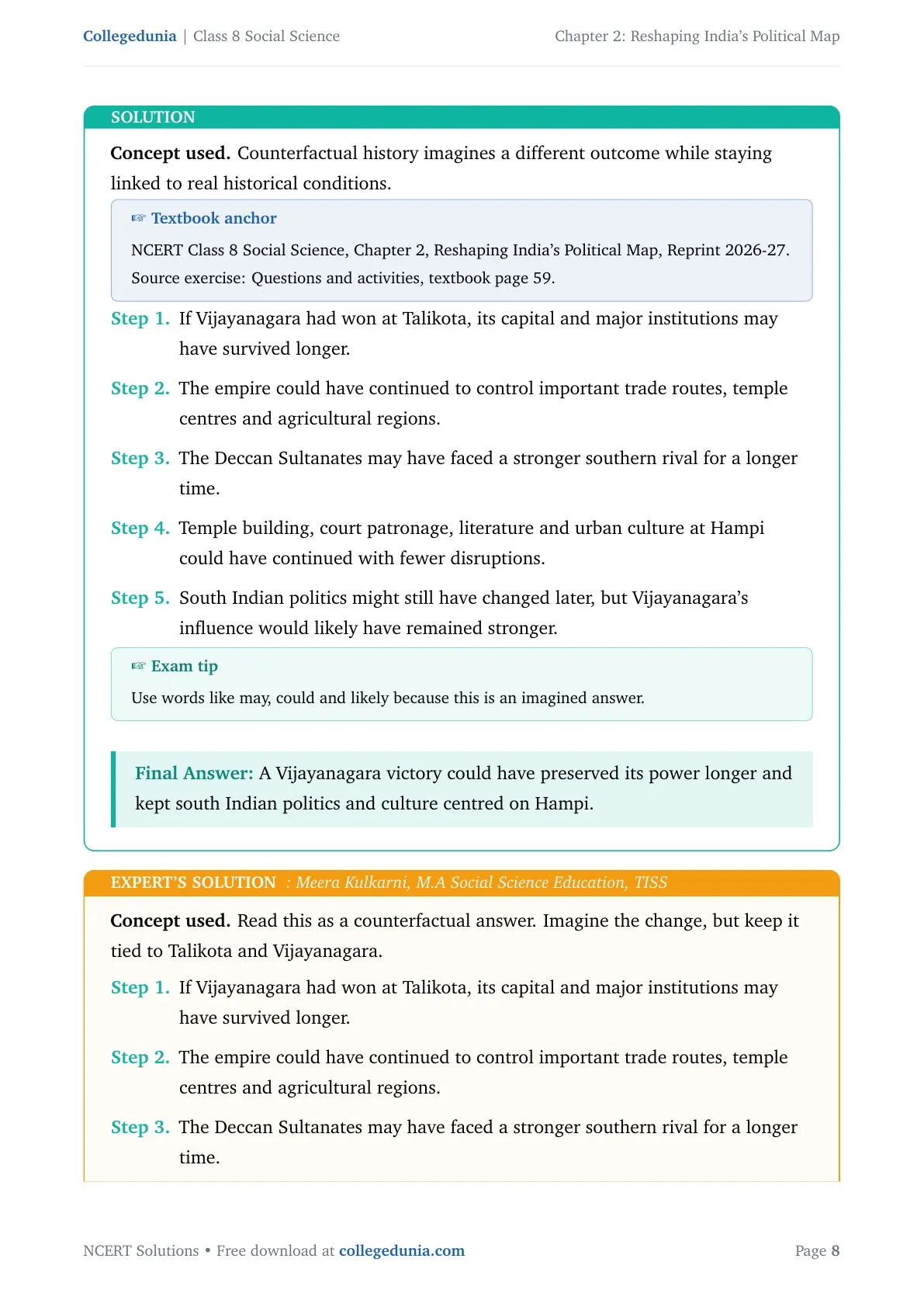
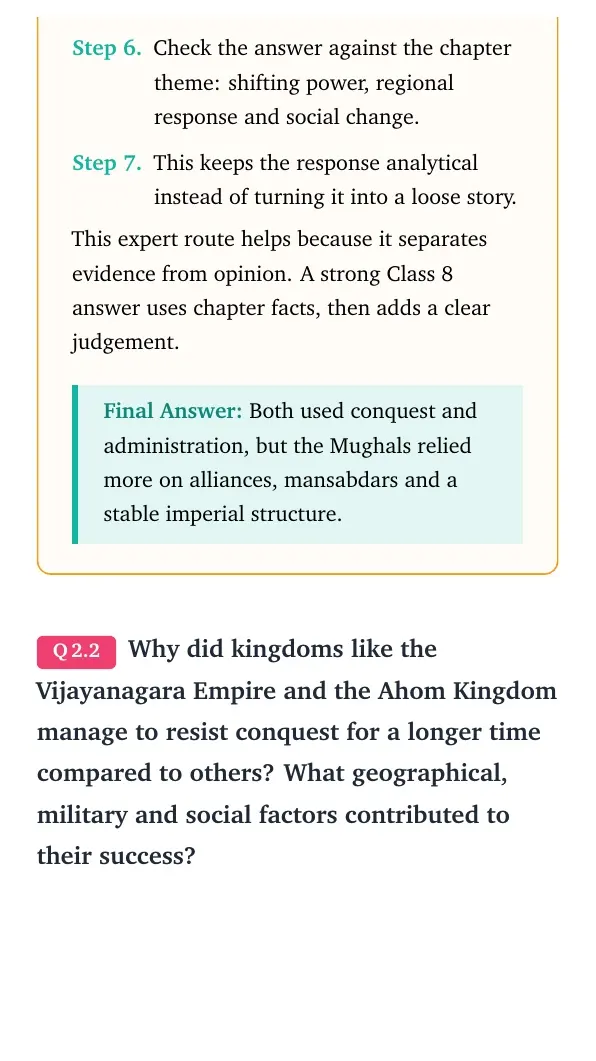
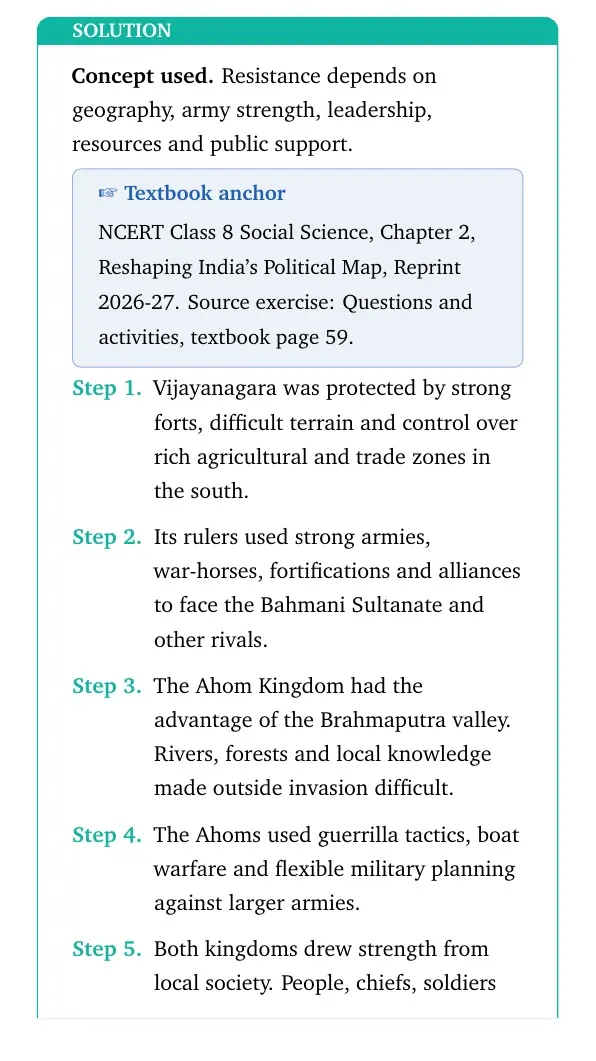
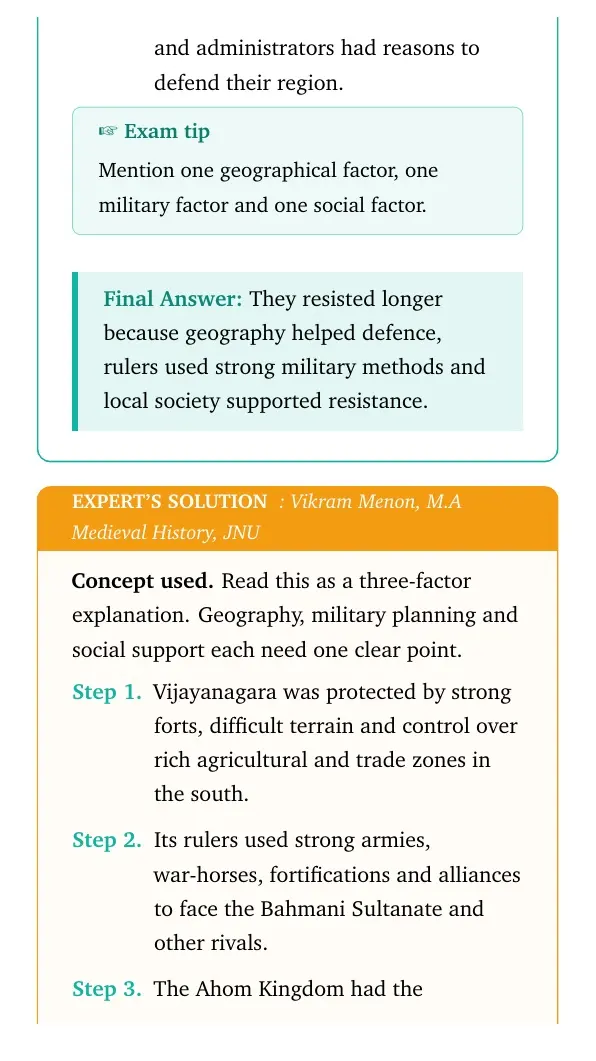
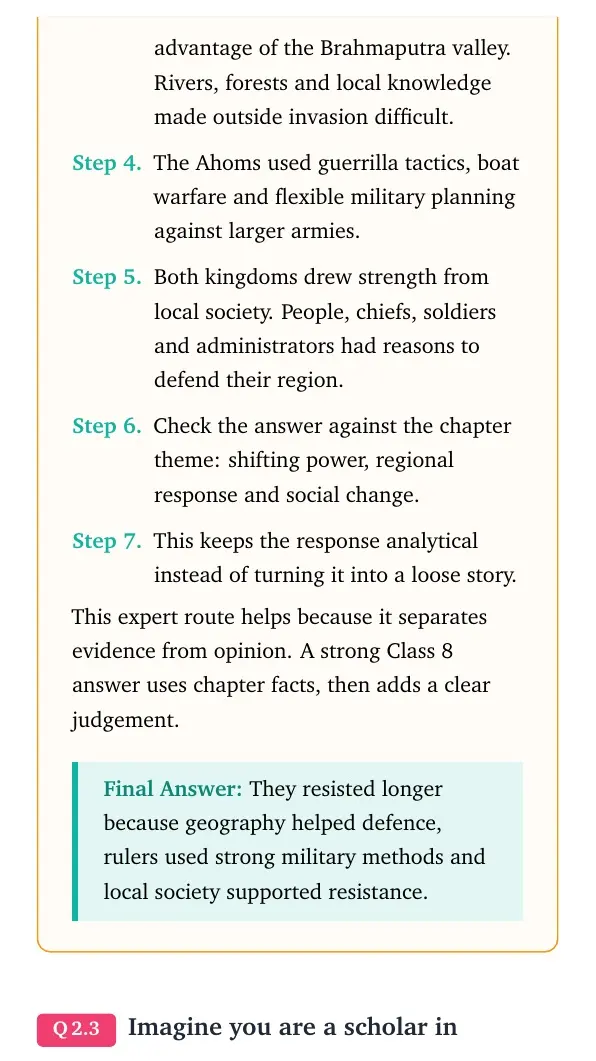
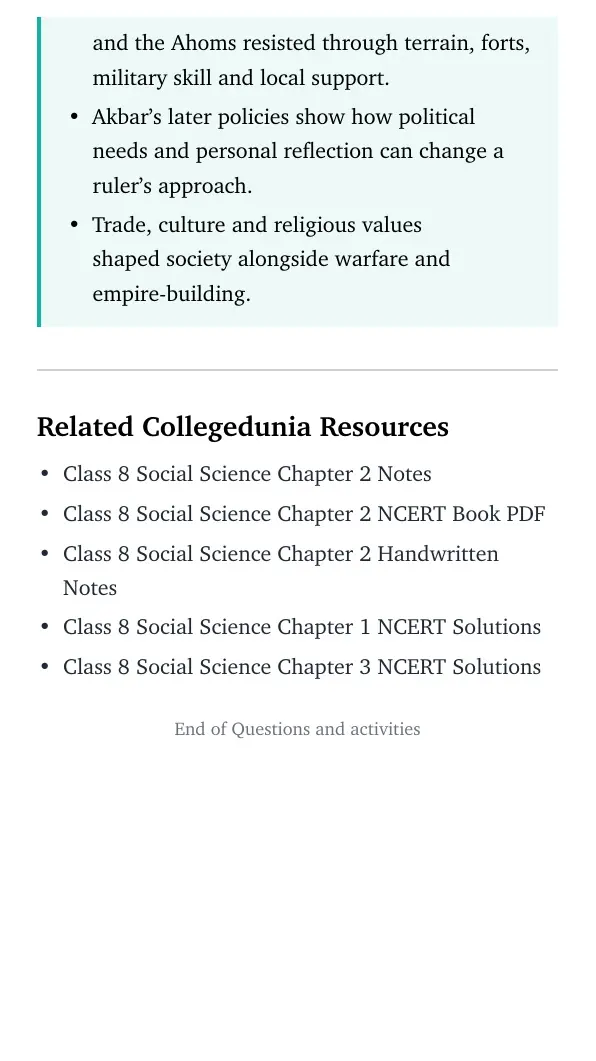
Regional powers such as Vijayanagara and the Ahoms did not resist by courage alone. They used geography, forts, river routes, local knowledge and community support.
A strong answer should name all three factors: geography, military planning and society. This prevents the answer from becoming a general praise paragraph.
Akbar, Trade and Sikh Values
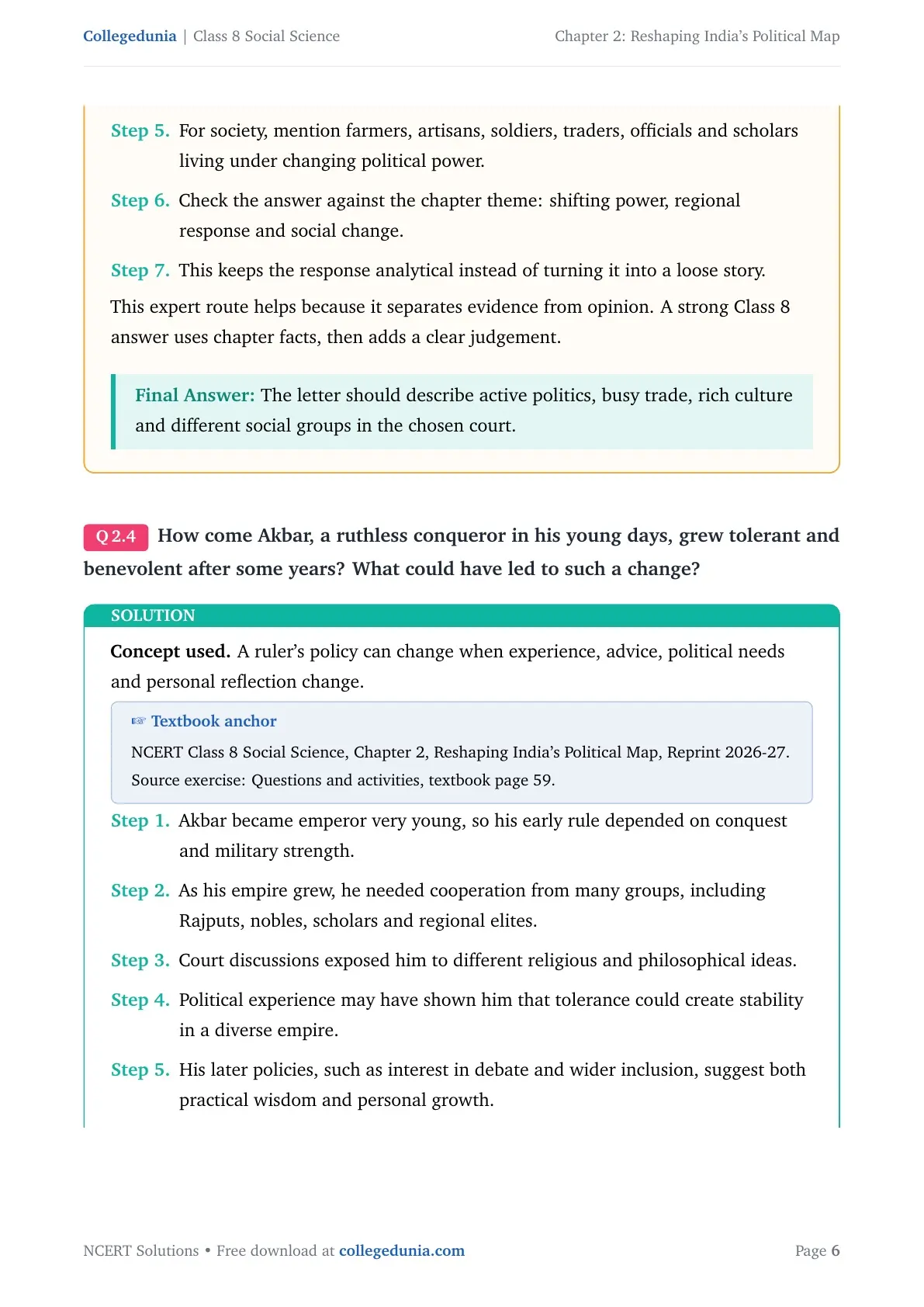
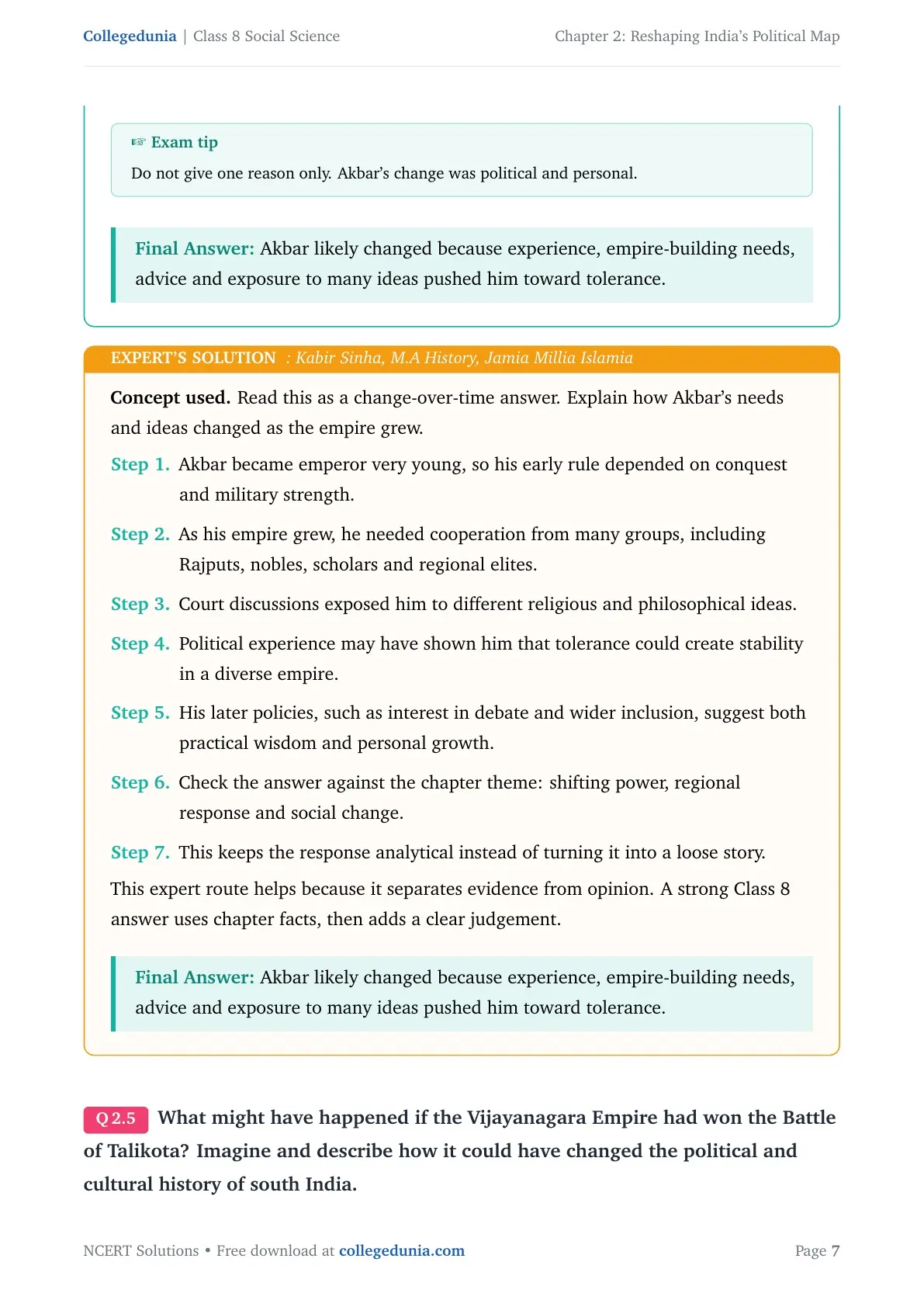
Akbar's story helps students see how a ruler's policies can change with experience. His later tolerance can be linked to political need, advice, court debates and the challenge of ruling a diverse empire.
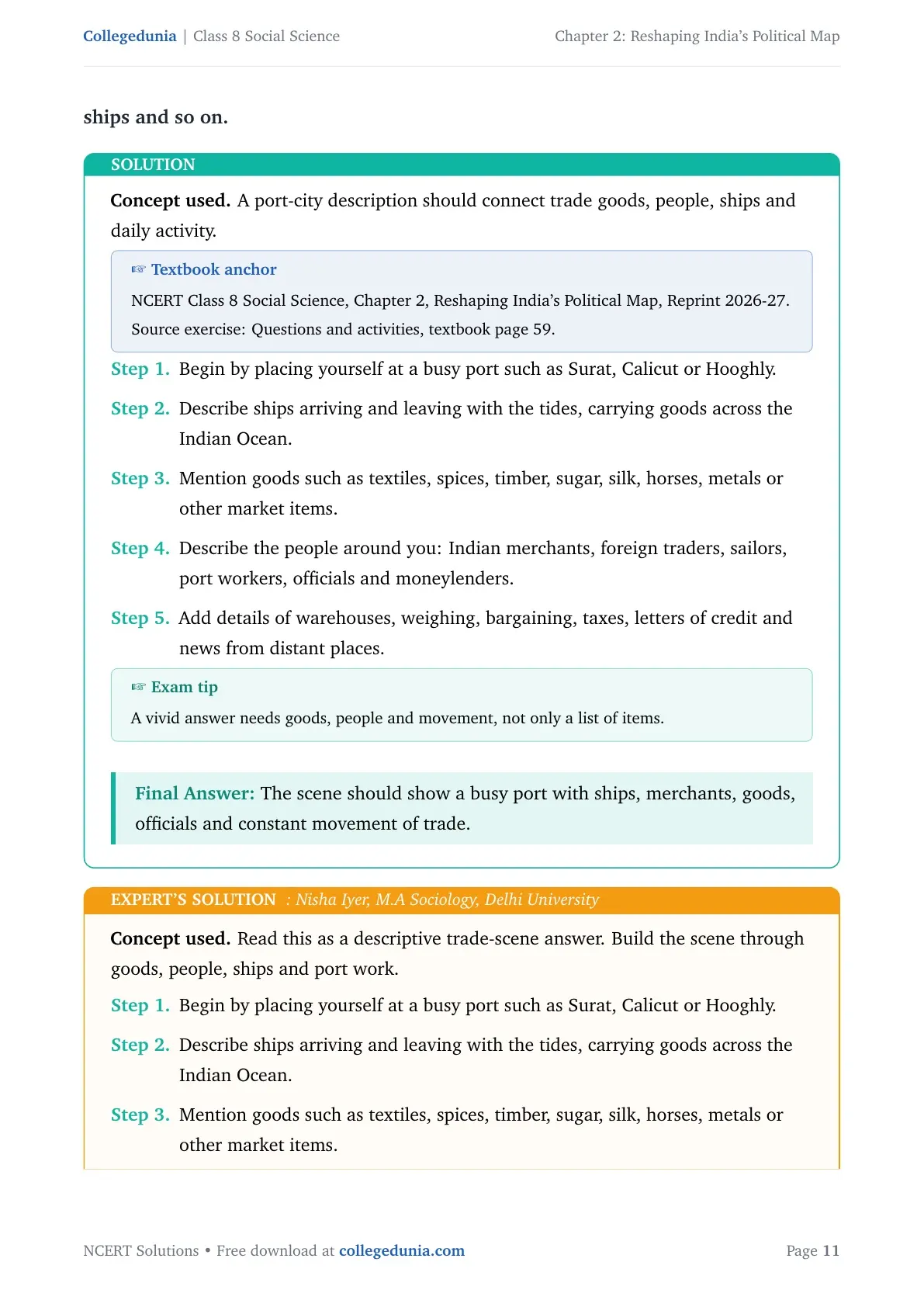
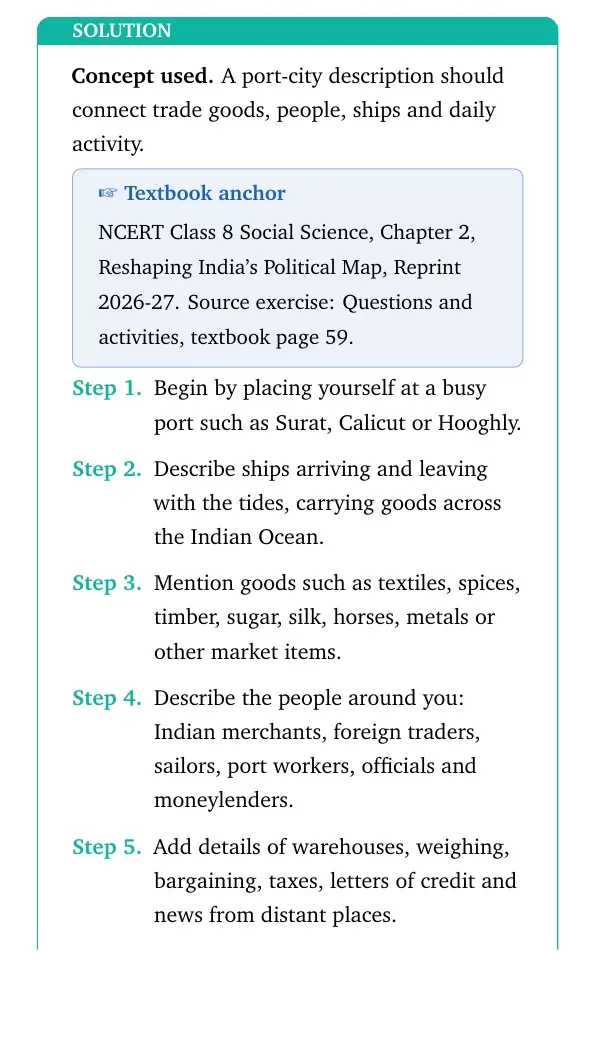
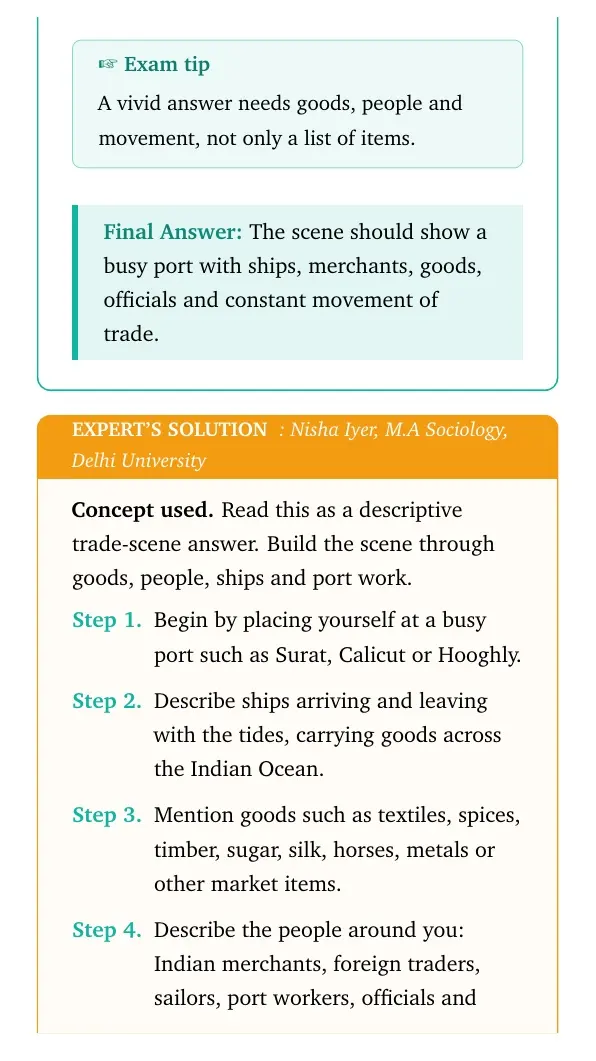
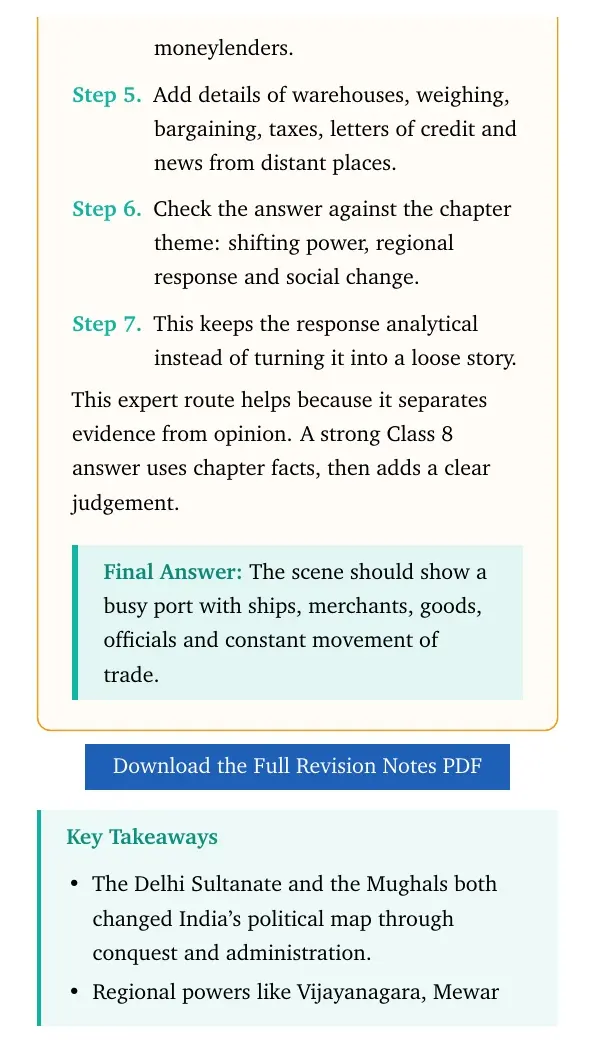
The chapter also asks students to imagine trade in port cities such as Surat, Calicut and Hooghly. A good answer names goods, ships, merchants, port workers, officials and money systems such as hundis.
Reshaping India's Political Map Video Explanation
Source: Online Learning on YouTube
All Chapter 2 Question Cards with Solutions
Students can open the separate question-card page for quick checking. Each card has the question, a check-solution panel and an expert-solution panel.
Related NCERT Resources
| Resource | Link |
|---|---|
| Chapter 2 Notes | NCERT Notes Class 8 Social Science Chapter 2 |
| Chapter 2 Book PDF | NCERT Book PDF Class 8 Social Science Chapter 2 |
| Chapter 2 Handwritten Notes | Handwritten Notes Class 8 Social Science Chapter 2 |
Class 8 Social Science Solutions for All Chapters
| Chapter | Solutions |
|---|---|
| Chapter 1 Natural Resources and Their Use | Open solutions |
| Chapter 3 The Rise of the Marathas | Open solutions |
| Chapter 4 The Colonial Era in India | Open solutions |
| Chapter 5 Universal Franchise and India's Electoral System | Open solutions |
Reshaping India's Political Map Class 8 Social Science FAQs
Ques. What is covered in Class 8 Social Science Chapter 2?
Ans. The chapter covers the Delhi Sultanate, Vijayanagara, Bahmani Sultanate, Mughals, regional resistance, Sikh values and medieval trade.
Ques. Why did Vijayanagara and the Ahoms resist conquest for longer?
Ans. They used helpful geography, strong military planning and local social support to resist larger powers.
Ques. What is the best way to answer Akbar's tolerance question?
Ans. Mention experience, political need, advice, court debates and the challenge of ruling a diverse empire.



Comments