




This page solves The World of Numbers Exercise 3.1 from the new Ganita Manjari book of the 2026-27 syllabus. The NCERT Solutions Class 9 Maths Chapter 3 The World of Numbers Exercise 3.1 work through integers, number patterns, prime numbers, and the closure property, each shown in short and clear steps.
- Questions solved: all 4 problems of Exercise 3.1, with full working.
- Main skills: spotting number patterns, testing prime numbers, and checking closure.
- Chapter link: it sets the number-system base used across the whole chapter.
These solutions are prepared by subject teachers, matched to the 2026-27 NCERT, and checked step by step so a Class 9 student can follow each line.
What Does Class 9 Maths Chapter 3 The World of Numbers Exercise 3.1 Cover?
Exercise 3.1 opens the chapter with counting and whole-number ideas. You meet integers through trade stories from Lothal, then study a number pattern on the Ishango bone. The set also asks about prime numbers and the closure property of natural numbers. Each question builds number sense before fractions and decimals appear later.
These questions may look like history stories, but each one trains a core skill. Finding how many blocks of bags fit is really division and factors. The Ishango pattern is about prime numbers. The closure question asks you to reason about a whole set of numbers at once. That mix of counting, patterns, and simple reasoning is exactly what the annual exam rewards in this part of the chapter, so slow, careful practice here pays off across the rest of the number-system work.
Video Walkthrough
Source: Vedantu CBSE 10th on YouTube
The World of Numbers Exercise 3.1 Question Breakdown
The four questions move from real trade problems to a short proof. Here is what each one asks.
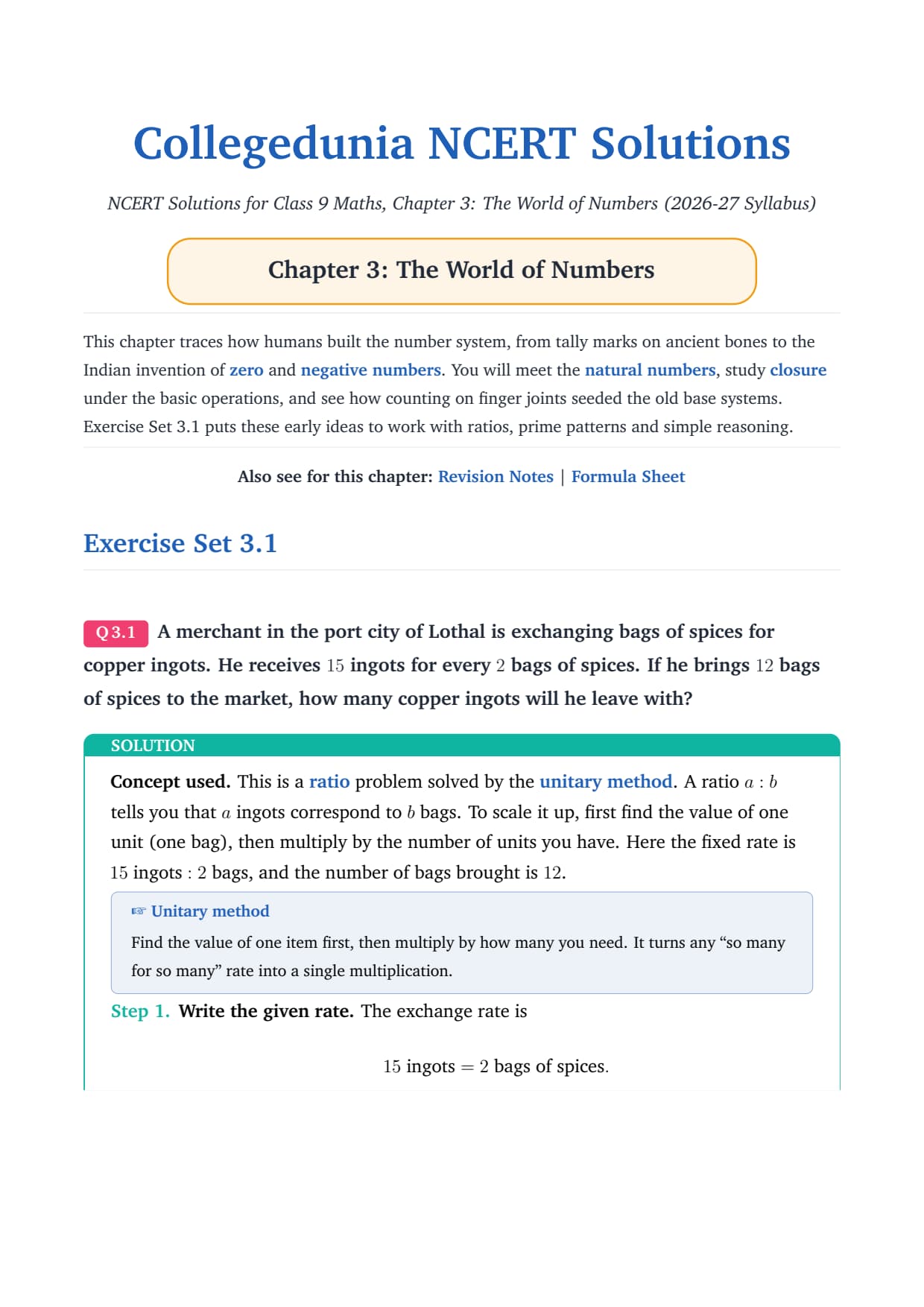
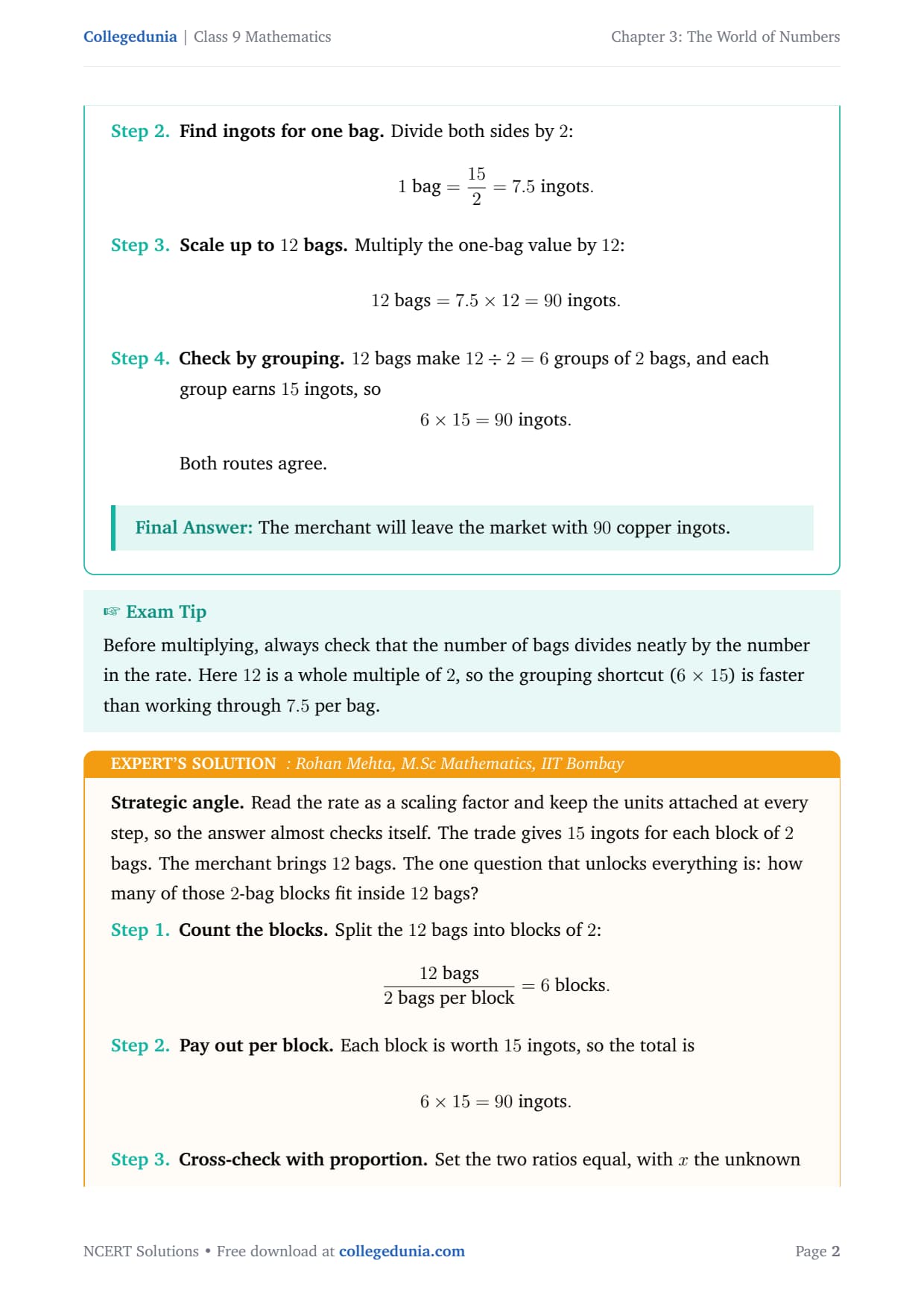
- Q1: A Lothal merchant swaps spice bags in fixed blocks, and you find how many blocks fit.
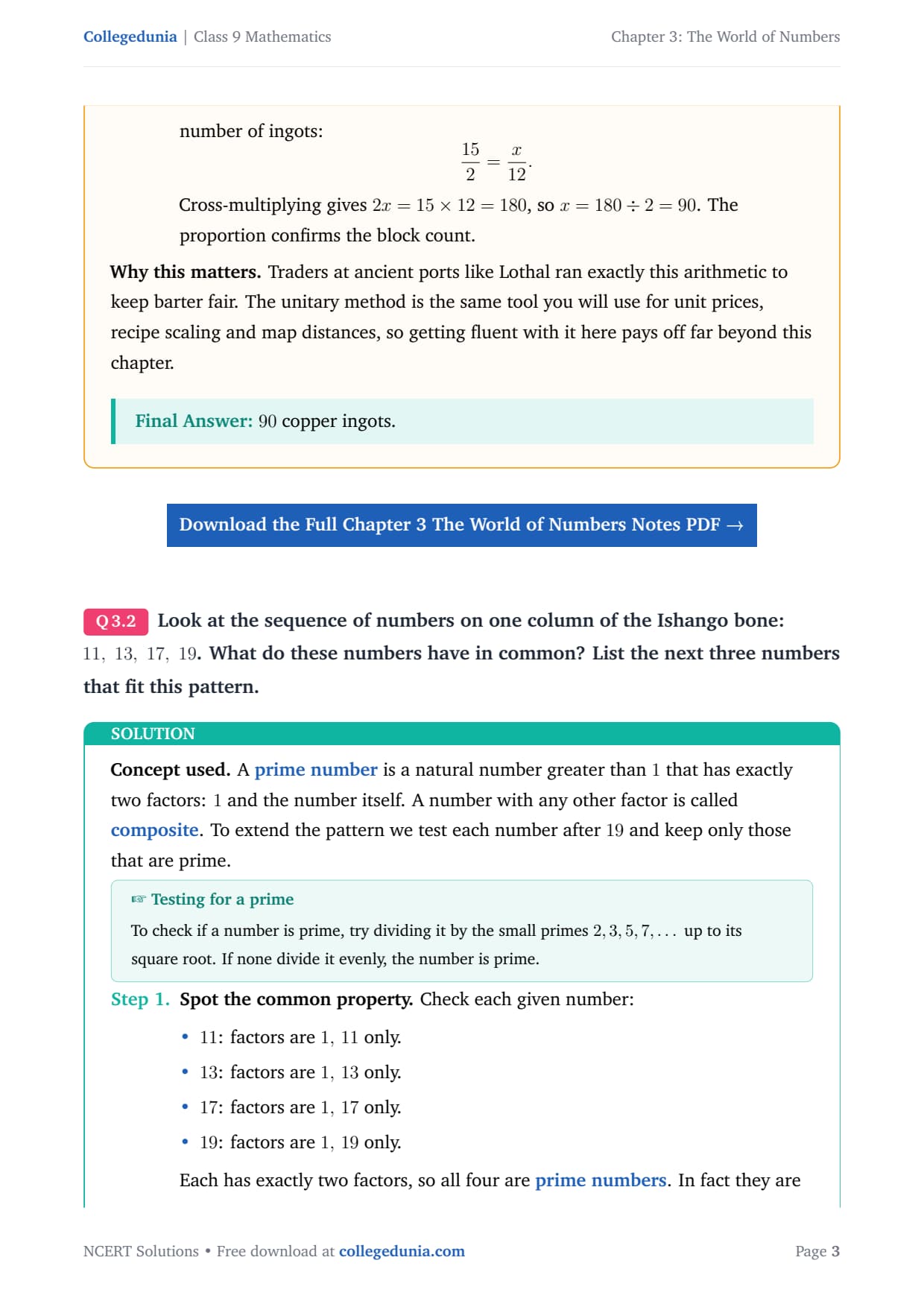
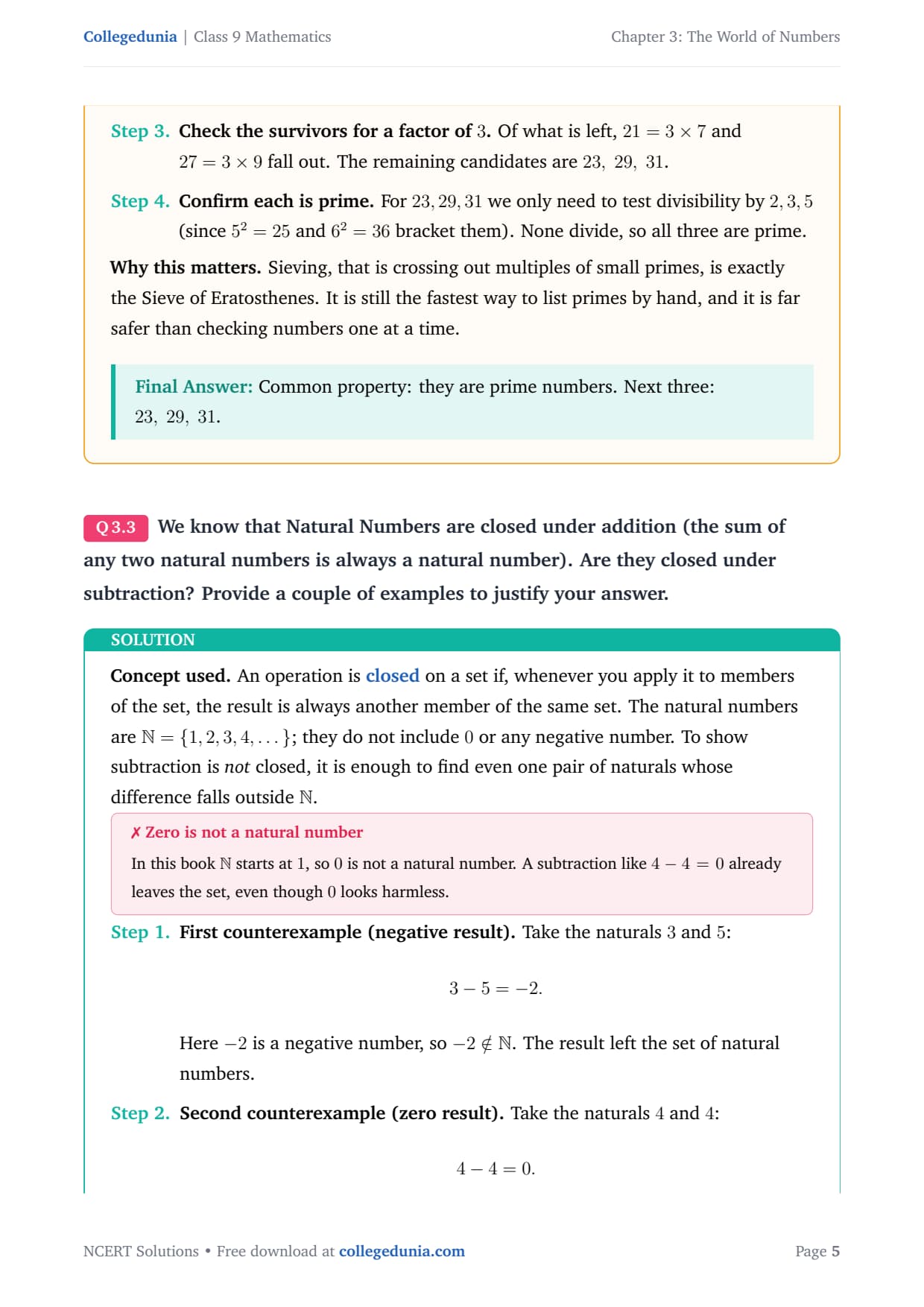
- Q2: The sequence 11, 13, 17, 19 is studied, and the next three primes are found.
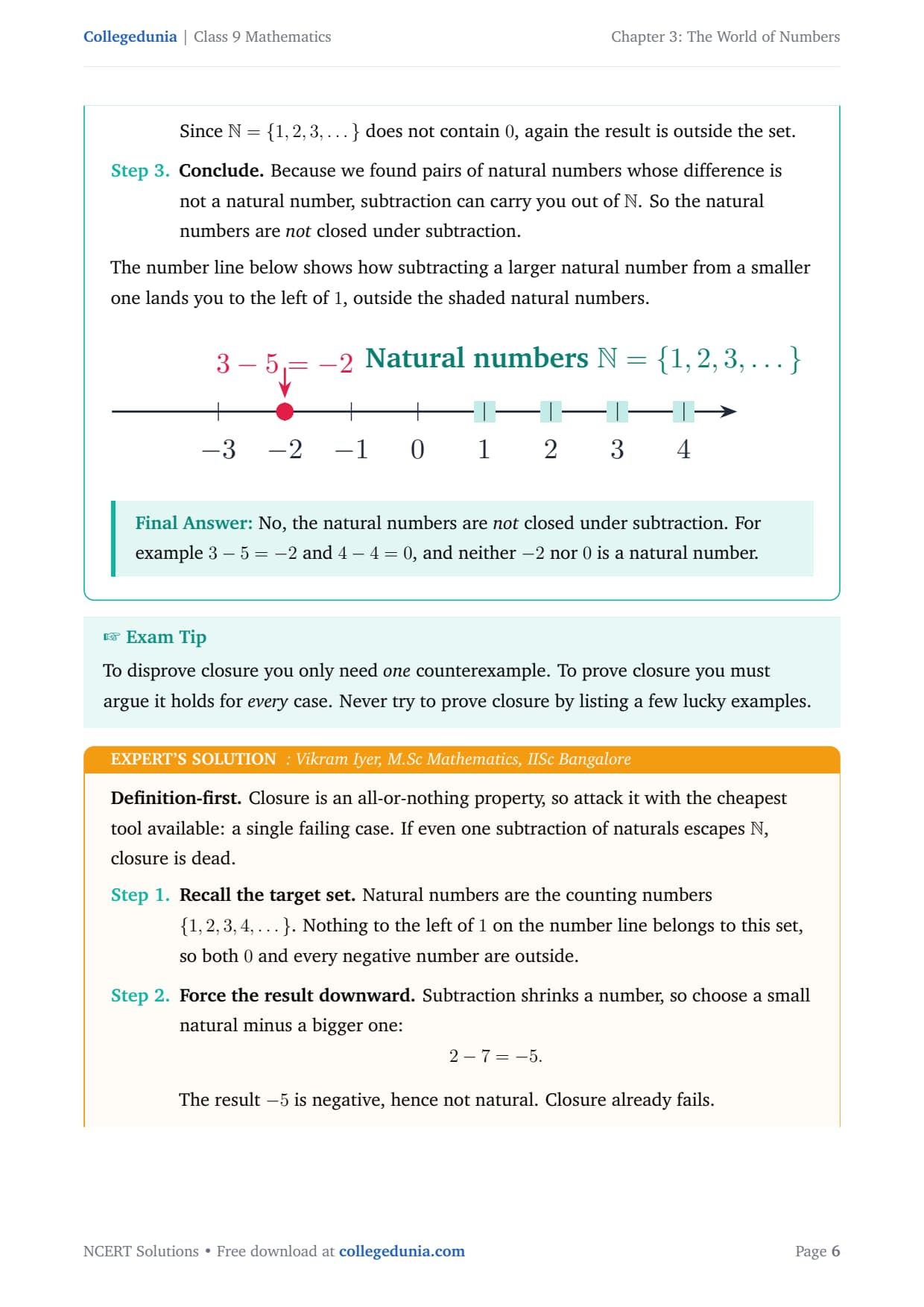
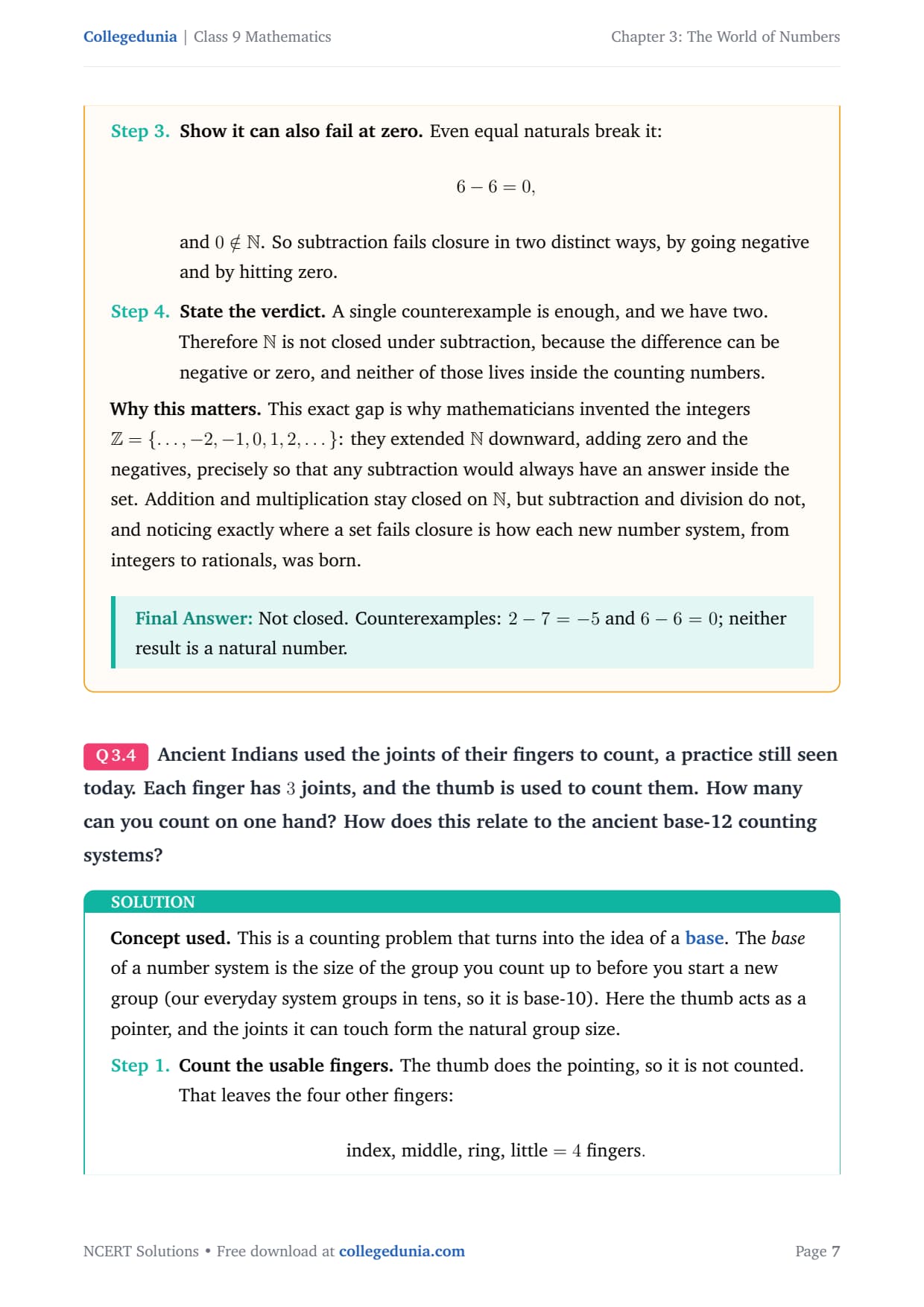
- Q3: You check whether natural numbers stay closed under addition.
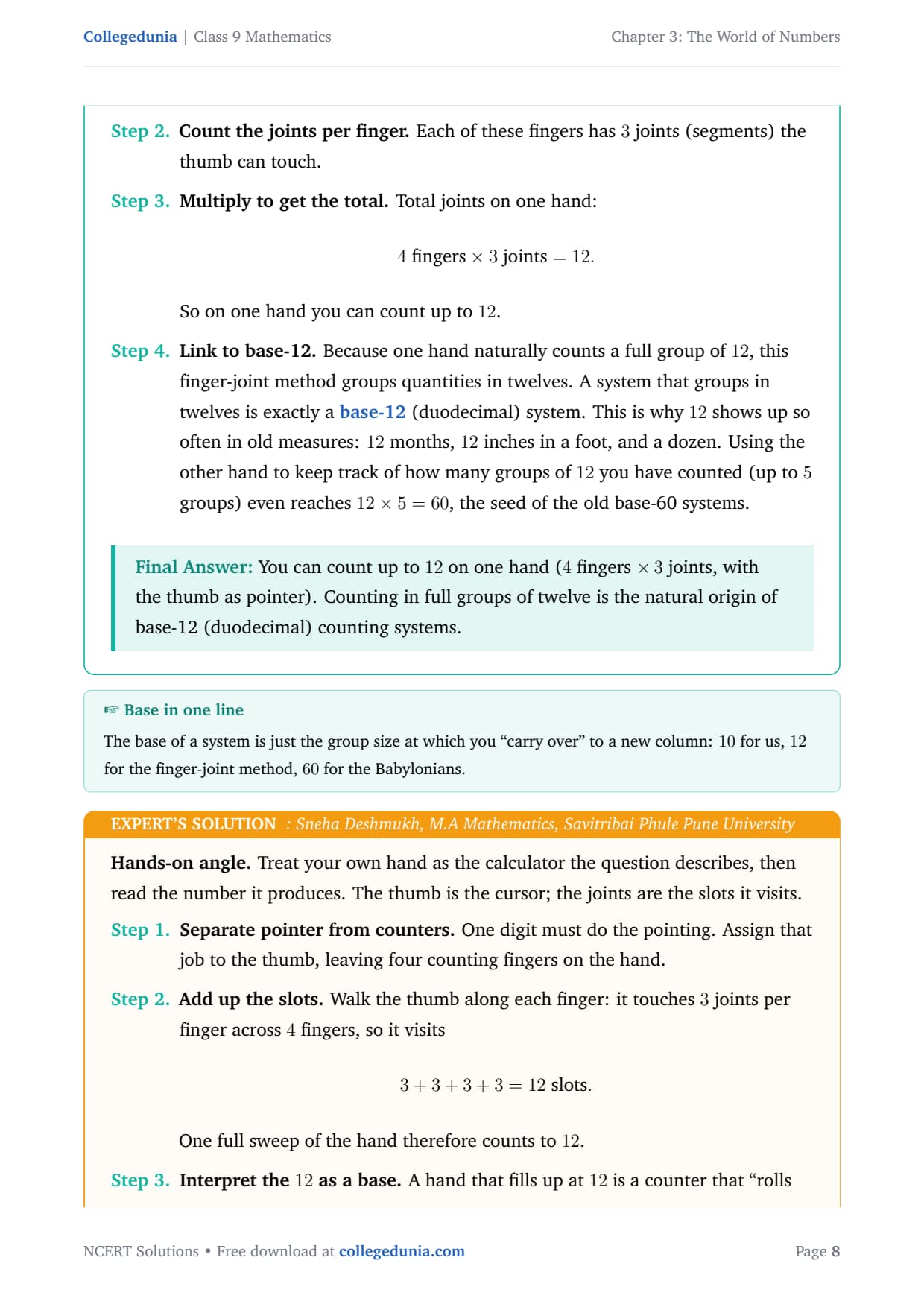
- Q4: An old finger-joint counting method is explored to read number systems.
Sample Solved Question from Exercise 3.1
Here is Question 2 of Exercise 3.1, solved step by step so you can see the method.
Question: The numbers 11, 13, 17, 19 lie in one column of the Ishango bone. What do they share, and what are the next three numbers in the pattern?
Step 1. Check the factors of each number. 11, 13, 17, and 19 each have only two factors, 1 and the number itself. So all four are prime numbers, in fact the primes between 10 and 20.
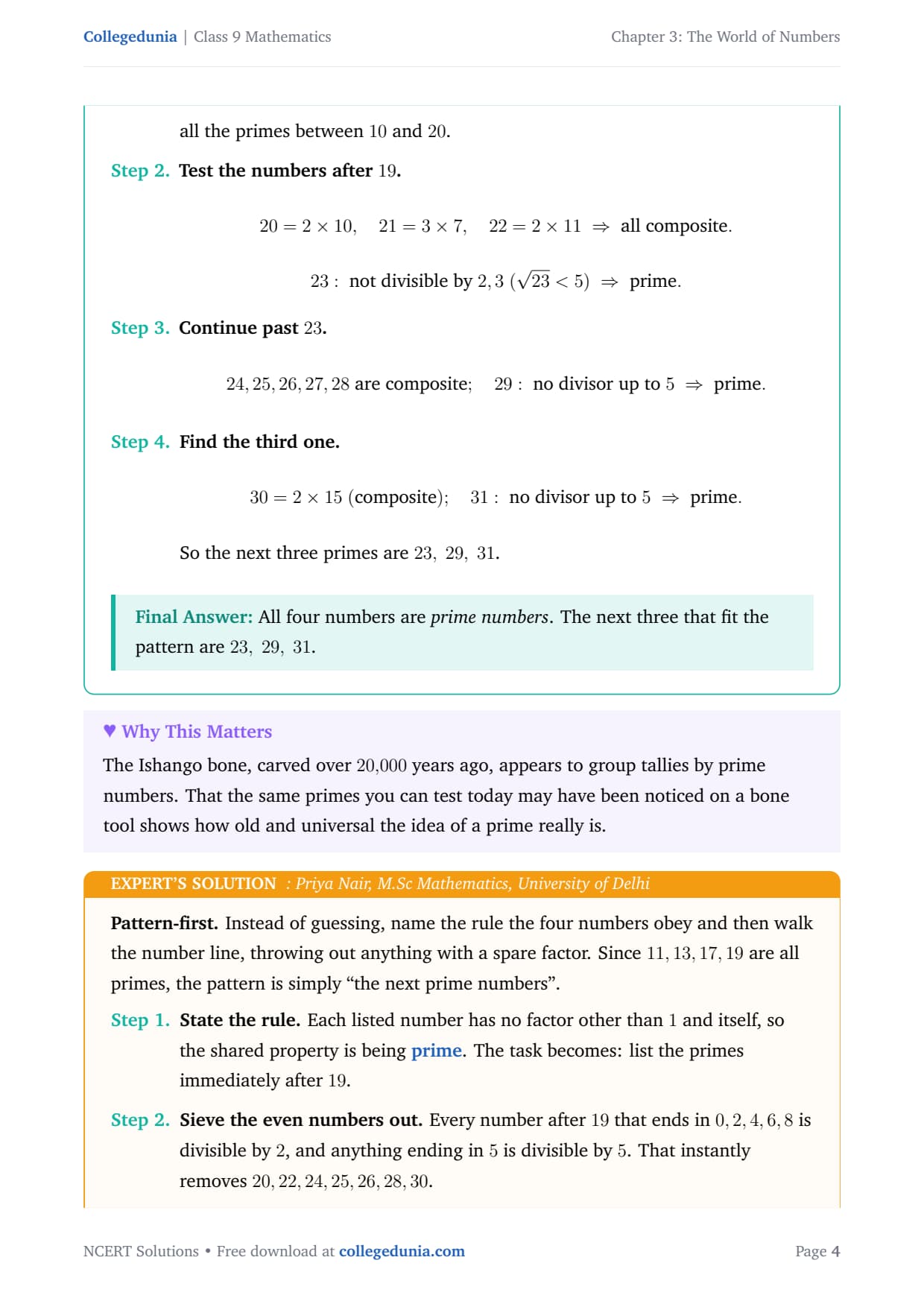
Step 2. Test the numbers just after 19. Here 20, 21, and 22 all have extra factors, so they are composite. But 23 has no factor up to √23, so it is prime.
Step 3. Keep going past 23. The numbers 24 to 28 are composite, while 29 is prime. After that 30 is composite and 31 is prime.
Final answer. All four given numbers are prime. The next three primes in the pattern are 23, 29, and 31.
How to Use These The World of Numbers Exercise 3.1 Solutions
Try each question on your own first, then open the Collegedunia solution to check your steps. This habit builds real number sense before the annual exam.
- Solve Q1 to Q4 yourself, then compare each factor and sign with the answer.
- Note the prime test and the closure idea, since both return later in the chapter.
- Download the free Collegedunia PDF to revise Exercise 3.1 offline.
More Class 9 Maths The World of Numbers Solutions
Use the table below to open the full chapter page or any other exercise of Class 9 Maths Chapter 3.
| Page | Link |
|---|---|
| Full Chapter Solutions | Full Chapter Solutions |
| Exercise 3.1 | Exercise 3.1 |
| Exercise 3.2 | Exercise 3.2 |
| Exercise 3.3 | Exercise 3.3 |
| Exercise 3.4 | Exercise 3.4 |
| Exercise 3.5 | Exercise 3.5 |
| End of Chapter | End of Chapter |
The World of Numbers Exercise 3.1 NCERT Solutions FAQs
Ques. How many questions are in Class 9 Maths Exercise 3.1?
Ans. Exercise 3.1 has four questions. Collegedunia solves all four with full working.
Ques. What topics does Exercise 3.1 cover?
Ans. It covers integers, number patterns, prime numbers, and the closure property of natural numbers.
Ques. Is Exercise 3.1 from the new Class 9 Maths book?
Ans. Yes. It is part of Chapter 3 of the new Ganita Manjari book for 2026-27. In the older book this topic came under Number Systems.
Ques. Do I need Exercise 3.1 for later work?
Ans. Yes. The number sense you build here is the base for the rest of the chapter and for Class 10 real numbers.



Comments