



Content Curator
Animal Tissue: Tissues are collections of similar cells that serve a certain purpose. Human tissues can be examined as an example of animal tissues.The human body is made up of cells, but organs are responsible for the functioning of the human body. These organs are made up of different tissues. In this article, let us learn about animal tissues, types of animal tissues, uses of animal tissues and some important questions.
What are Animal Tissues?
Animal tissues are a group of cells with similar structures and functions. These tissues are made up of cells with similar embryonic functions and carry out important processes like the formation of organs, their functionality, and other contents of the body.

Animal Tissue
Types of Animal Tissues
There are 4 main types of animal tissues:
- Epithelial Tissues
- Connective Tissues
- Muscle Tissues
- Nervous Tissues
Let's take a closer look at the functionality of each of the four animal tissues.
Epithelial Tissues
- Epithelial tissue is a thin layer of closely packed cells that cover many organs of our body.
- Skin is the essential tissue for protection of various organs.
- Our skin is made of epithelial tissue which protects our internal organs from harmful rays and pollutants.

Epithelial Tissue
These are again classified into two types:
- Mesothelial
- Endothelial
Mesothelial:
- Mesothelial covers all the outer lining of organs, outer lining of heart, abdominal cavity, and thoracic cavity along with lungs.
- This helps for movement of organs.
Endothelial:
- Endothelial comprises inner linings of the heart and blood cells that controls the contraction and relaxation and immune process.
Use of Epithelial Tissues
- Helps in secretion, absorption, excretion, filtration, sensory reception of the organs.
- It forms skin that prevents the damage of skin from dehydration, ultraviolet rays.
- As it forms the inner lining of organs various diffusion processes are controlled by this process.
Connective Tissues
- Connective tissues are the fibrous connective tissues between the bones and other organs.
- These are developed from the mesodermal cells of the embryo.
- The connective tissues are made up of cells, fibers, and intercellular matrixes.
- The matrix secreted is a collection of fibrous materials which support the organs of the body by providing extensions.
- Smooth connective tissues are distributed all over the body for supporting, transporting, and other purposes.
- Connective tissues are again classified as connective tissues, vascular tissues, and skeletal Tissues.

Connective Tissue
Uses of Connective Tissues:
- Ligaments are fibrous materials that connect and support bones.
- Tendons connect the bone with matrices.
- These protect and give structure to organs and tissues.
- It stores fat and helps in the movement of nutrients and other proteins between tissues.
Muscle Tissues
- Muscle tissues are very vital organs like the heart.
- These are developed from the mesoderm of the embryo.
- These tissues help in the movement of the body.
- Muscle Tissues are classified into three 3 types

- Skeletal muscle tissues
- Smooth muscle tissues
- Cardiac muscle tissues
Skeletal Muscle Tissues
Skeletal Muscle Tissues are made up of long fibrous materials which support the movement of the body:
Smooth Muscle Tissues
These are the inner lining of many organs such as the intestines, Blood vessels, and urinary bladder. These smooth muscles mainly help in the contraction and relaxation process.
Cardiac Muscle Tissues
Cardiac muscle tissues are the ones that form the heart present in the thoracic cavity.
Nervous Tissues
- Nerve tissues are a part of the nervous system of the body.
- These are responsible for receiving and transferring signals.
- It is developed from the ectoderm of the embryo.
- These tissues control many functions of the organs like the brain, spinal cord, and toe nerves.
Uses of Nervous tissues
- Coordinating and controlling the body's activities.
- Integration and communication between the organs.
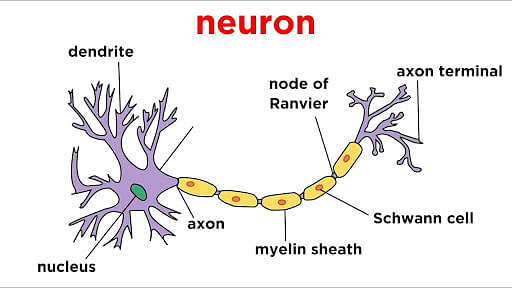
- It contains neurons that are responsible for generating impulses.
- It gives electrical and chemical signals to generate and receive signals.
Things to Remember on Animal Tissue
- Tissues are essential for the formation of organs.
- Tissues control the growth, repair, and functioning of organs.
- Animal Tissues are classified into four types: connective, muscle, nervous, and epithelial. Organs are made up of collections of tissues that are joined together in units to perform a common function.
- Animal tissues protect, secrete, and absorb and are separated from the other tissues below by a basal lamina.
- Movement in the Human body is only possible because of the tissues.
- Muscles are bounded together with the help of muscle tissues.
- Epithelial tissues cover most of the organs of our body and help in protection.
- The epithelial layer consists of cells that form a continuous sheet with one or more layers. There is only one layer in the simple epithelial.
- There is no free surface in connective tissue, and the cells are divided into loose and dense tissues. These are the substances that make up bones, cartilage, blood, and adipose tissue.
Important Questions Based on Animal Tissue
Ques: Explain secretions in animal tissues? (2 Marks)
Ans: Secretions in animal tissues are done by epithelial tissues. These are secreted by ducts from glandular epithelium. These secrete hormones into the blood vascular system. The secretion of sweat, mucus, and enzymes is controlled by these tissues.
Ques: List out all types of animal tissues? (3 Marks)
Ans:Type of Animal Tissues-
- Bone tissue
- Epithelial tissue
- Cartilage tissue
- Adipose tissue
- Nervous tissue
- Muscle tissue
- Connective tissue
Ques: What are connective tissues and explain these in the case of the ear? (3 Marks)
Ans: Connective tissues form connections from one organ to other organs in the body. Ligaments in our body help our bones to connect with each other. These are formed from a fibrous material.
In the case of our ears, the middle ear forms a connection between the skull and inner ear and there are small bones that are connected to provide support.
Ques: Explain some consequences if nervous tissue is not present in our body? (3 Marks)
Ans: If nervous tissue is not present then it will lead to these problems-
- Action and reaction won't take place in our body
- The body will be in a paralyzed state
- Inactive moments of the body are not filled
- Brain stroke occurs which will paralyze all parts of the body.
- Everything will be involuntary.
Ques: What are hard and soft tissues. Explain in detail with examples? (5 Marks)
Ans:
1) Soft tissues:
- These comprise the lining of organs mostly made of fibrous materials. These are responsible for the movement of food and nutrients all over the body and also carry out processes related to contractions.
Ex: Lining of organs, heart, ligaments between bones.
2) Hard Tissues:
- As the name itself states, these are hard and mainly comprises bones and teeths. These are steady organs that help in mechanical actions, shaping of the body.
Ex: Teeth and bones
Ques: List out the difference between plant and animal tissues? (5 Marks)
Ans:
| Plant tissue | Animal tissue |
|---|---|
| Contains cells wall | Absence of cell wall |
| Consists of dead cells | Consists of living cells |
| Plant are permanent and retain in one place | Animals move from one place to another |
| These tissues require less energy | These tissues require more energy |
| Tissues expand and grow continuously | Growth of tissues stops after a certain stage |
Ques: Explain the formation and uses of nervous tissue and detail the diseases related to it? (5 Marks)
Ans: Nervous tissue is responsible for the communication and integration in our body.
Formation of Nervous Tissues
Nervous tissue is formed from the ectoderm by following an inductive signal of the mesoderm. It is composed of neurons and glial cells.
Neurons are responsible for conducting nerve impulses. Neurons consist of dendrites which are essential for simulation, receiving and answering signals in the body.
Diseases:
- Alzheimer's (Memory loss), Parkinson's disease, epilepsy diseases affect the nervous system.
Previous Years’ Questions Based on Animal Tissues
Ques: What functions do Muscular and Nervous Tissue serve? (All India 2017, 1 Mark
Ans: Locomotion and movement are mediated by muscular tissues, whereas control and coordination are mediated by nervous tissue.
Ques: What is the name of the tissue that lines the inside of the intestine? (All India 2015, 1 Mark)
Ans: The tissue that lines the inside of the intestine is called Columnar epithelium.
Ques: What are the many cell connections that can be discovered in tissues? (All India 2018, 3 Marks)
Ans: Tissues have the following cell junctions:
- Tight Junctions: Adjacent epithelial cells' plasma membranes are held close together.
- Gap Junctions are a type of junction that allows chemicals to flow freely between neighbouring cells.
- Adherens Junctions assist in the connection of neighbouring cells.
Ques: What is connective tissue, and what does it do? (All India 2019, 3 Marks)
Ans: The connective tissues are a collection of tissues that are made up of an extracellular matrix. Connective tissues include blood, bones, tendons, fat, ligaments, and areolar tissues. Connective tissue is divided into three types:
- Fluid Connective Tissue is a type of connective tissue that is fluid in nature.
- Fibrous Connective Tissue is a type of fibrous connective tissue.
- Skeletal Connective Tissue is a type of connective tissue found in the skeleton.



Comments