



Content Curator
Bud is an embryonic or undeveloped shoot that is present at the stem or in a leaf in the axil. They originate from meristem tissue and can stay dormant for some time. In some plants, they turn into a shoot immediately. This depends on the type and the need of the plant. Buds can be classified on the basis of status, function, morphology, and location. Budding is an asexual mode of reproduction where bud appears on parent’s body and then detaches itself after reaching the required growth. It then develops into a new plant. This new plant is identical to the parent.
| Table of Content |
Key Terms: Bud, Shoot, Axil, Budding, Embryonic, Reproduction, Parent
Introduction to Bud
[Click Here for Sample Questions]
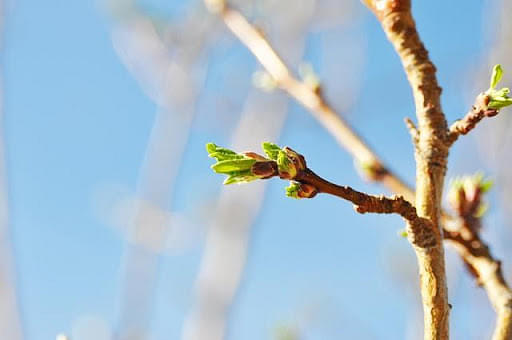
An embryonic or undeveloped shoot that is present at stem or in a leaf, in axil, is called a Bud. Buds grow from the meristem tissue. A bud may develop into a flower, shoot, or a stem. A bud, after its formation, may remain in a state of dormancy for some time or convert into a shoot immediately.
If the bud will convert into a flower or a shoot depends on the plant type and its need. Resting buds can grow into trees that are capable of preparing for winter by frosting.
Classification to Bud
[Click Here for Sample Questions]
Buds can be of various types. We can classify them based on:
- Status of the Bud
- Function of the Bud
- Morphology of the Bud
- Location of the Bud
Types to Bud
[Click Here for Sample Questions]
The various types of buds based on their classification are:
Status of Buds
- a) Pseudoterminal: Pseudoterminal takes over functioning of the terminal bud. It is a sort of axillary bud.
- b) Resting Bud: Resting buds grow towards the end of the growing season. They are in a state of dormancy till the beginning of next growing season.
- c) Accessory Bud: The buds other than the principal bud are called accessory buds.
Function of Buds
- a) Reproductive Bud: Reproductive Buds are buds that have embryonic flowers.
- b) Vegetative Bud: Vegetative Buds are buds with embryonics that have leaves.
- c) Mixed Bud: Buds with both embryonic flowers and embryonic leaves are called mixed buds.
Morphology of Buds
- a) Hairy Buds: Buds that have a layer of hair for protection are called hairy buds.
- b) Scaly Buds: Scaly buds are buds where the embryonic part is covered with scales for protection.
Location of Buds
- a) Axillary Bud: In a leaf, bud located in the axil is called axillary bud.
- b) Adventitious Bud: The buds that appear on other parts of the plant like roots or trunks are called Adventitious Buds.
- c) Terminal Buds: Buds that appear at the tip of stem are known as terminal buds.
Budding
[Click Here for Sample Questions]
Budding comes under asexual mode of reproduction. The bud appears on the parent plant and later separates itself to form a new organism. The bud develops on the parent’s body and then detaches after reaching a certain growth level.
The separation of parent and bud leaves behind scar tissues. The bud grows into a plant that is identical to the parent. This is because the mode of reproduction is asexual.
Budding is used by yeast and hydra for the process of reproduction. Cell division in hydra leads to growth and expansion of bud. These cells are regenerative. The bud detaches itself from parent hydra after the process of maturation is complete.
Also Read: Asexual Reproduction
Things to Remember [Click Here for Sample Questions]
- Bud refers to the embryonic or undeveloped shoot that is present at stem or in a leaf in axil. It remains attached to the plant in a state of dormancy for some time.
- Bud may develop into a stem, flower, or shoot, depending on the need and type of plant.
- Classification of buds can be done on the basis of status, function, morphology, and location.
- On the basis of status, bud can be Pseudoterminal, Accessory Bud, or Resting Bud. On the basis of function, it can be divided into Reproductive Bud, Vegetative Bud, and Mixed Bud.
- On the basis of morphology, it can be divided into hairy buds and scaly buds. On basis of location, buds can be Adventitious Bud, Axillary Bud and Terminal Buds.
- During budding, the bud develops on the parent’s body and then detaches after reaching a certain growth level.
Also Read: Sexual Reproduction in Flowering Plants
Sample Questions
Ques. What is seed germination? (2 Marks)
Ans. The fundamental process by which plants grow from seeds into plants is known as seed germination. The availability of oxygen, the supply of water, and temperature affect the process of seed germination. A seed needs proper oxygen, ideal temperature and enough water to germinate and start sprouting. This sprout then grows into a plant.
Ques. Write a note on budding in Hydra. (2 Marks)
Ans. Hydra is a small freshwater organization that reproduces through the process of budding. The continuous mitotic division of cells leads to development on small bus on the body of parent hydra. The parent supplies the bud with required nutrition and the bud grows. Mouth and tentacles are first organs to develop in a hydra bud. After reaching maturation, the bud detaches itself from parent hydra and starts growing independently.

Ques. Explain budding in Yeast. (2 Marks)
Ans. Yeast belongs to the fungus kingdom. Yeast reproduces using asexual reproduction. They are single celled organisms that reproduce through the process of budding. When there is a continuous supply of required nutrition, a bud appears on the body of the parent yeast. The parent yeast divides its nucleus which transfers itself to the bud. Bud then separates and develops into a new cell.

Also Read: Budding in Hydra and Yeast Cells
Ques. Write a note on the Root of the plant. (2 Marks)
Ans. The vascular parts of plants that are present underground are called roots. Roots absorb all the required minerals and nutrients from the soil and supply it to the plant. Roots that are above the ground are called aerial roots. There are two types of roots: Fibrous root system and Taproot system. Roots of a plant perform various functions such as storage, anchoring, reproduction, absorption, etc.
Ques. What are the modifications of Stem? (3 Marks)
Ans. There are three types of modification of stems. These are:
- Underground Stem Modifications: These modifications are underground. This consists of bulb, tuber, corm, and rhizome.
- Subaerial Stem Modifications: These modifications are partially underground and partially above ground. These consist of offsets, sucker, stolon, and runner.
- Aerial Stem Modifications: These include tendrils, bulbils, cladode, thorn, and phylloclade.
Ques. Write a note on classification of buds. (3 Marks)
Ans. Buds are classified on basis of
- Status of the Bud: On the basis of status, bud can be Pseudoterminal, Accessory Bud, or Resting Bud.
- Function of the Bud: On the basis of function, it can be divided into Reproductive Bud, Vegetative Bud, and Mixed Bud.
- Morphology of the Bud: Based on morphology, it can be divided into hairy buds and scaly buds.
- Location of the Bud: On basis of location, buds can be Adventitious Bud, Axillary Bud and Terminal Buds.
Ques. What are different parts of a Leaf? (3 Marks)
Ans. Leaf can be divided into three parts:
- a) Leaf Base: The area where leaf and stem attach is known as leaf base. It consists of two stipulations. In some plants, leaves are so wide that they cover the whole stem.
- b) Petiole: The stem and leaf blade are linked together by this thin and long structure called petiole.
- c) Leaf Blade: The surface of the leaves is called leaf blade. It includes veinlets and veins.
Ques. What are the functions of Whorls in Flowers? (3 Marks)
Ans. A flower consists of four whorls: corolla, calyx, carpels, and stamens.
- Corolla: Corolla consists of petals that act as protection for the reproductive parts. They also help in attracting pollinators.
- Calyx: In flowers, calyx is the outermost whorl. It includes mini leaves and sepals. In some flowers, fertilization leads to detachment of sepal.
- Stamens: Stamen is the male reproductive part. Only some stamens have fertile anthers.
- Carpels: Carpel is located at the centre. Carpel consists of the stigma, ovary, and style of the flower.
Also read:



Comments