



Content Curator
Denitrification is a vital and natural process that serves a variety of functions, including plant development and soil health. The reduction of soil nitrate to nitrogen-containing gases such as nitric oxide, nitrous oxide, and nitrogen gas occurs during denitrification, the final phase in the nitrogen cycle.
Nitrogen is essential for every life on the earth. Microbes, plants, and animals all utilise nitrogen as a chemical element to survive. It is recycled through a process known as the nitrogen cycle. There are several processes in this process, but denitrification is the most significant.
What is Denitrification?
Denitrification is the process of releasing nitrogen compounds into the environment by turning nitrate into gaseous nitrogen (N). Thiobacillus species such as Clostridium and Pseudomonas bacteria present in soil carry out denitrification in the absence of oxygen. The Gram-negative bacteria genus converts nitrate molecules found in soil and aquatic systems into nitrous oxide (N2O) and nitrogen gas, which are then discharged into the atmosphere.
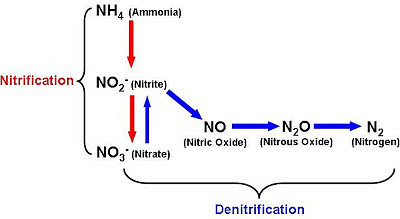
Because a wide variety of microorganisms are engaged in this process, it is also known as the microbial process. This biogeochemical process is one of the primary responses to variations in the concentration of oxygen (O2) in the environment. Denitrification is a universal phenomenon that happens naturally in severe quantities in regulated ecosystems - marine and freshwater habitats, tropical and temperate soils, wastewater treatment plants, aquifers, manure stockpiles, and so on.

Nitrate is lifted over by plant uptake and denitrified when soil conditions are favourable. Soil is compressed after excessive rainfall or irrigation, making it sensitive to denitrification. During the process, microbes use nitrate instead of oxygen to obtain energy, grow, and multiply. Along the way, they secrete various enzymes to break down the nitrate and various gaseous forms of Nitrogen in this stage, as well as a reductive pathway, before the nitrate is fully reduced to dinitrogen. Nitrous Oxide is a gaseous form of nitrogen.
This process is aided by bacteria, and a number of intermediate gaseous nitrogen oxide compounds are produced.
Denitrification: How, When and Where
How does Denitrification Take Place?
Denitrification is the final stage of the nitrogen cycle. It is a naturally occurring, microbially mediated process in which nitrate is used as an energy source for denitrifiers.
Soil bacteria convert plant-available soil nitrate into nitrogen (N) gases that are lost from the soil throughout this process. Denitrification generates various gases, including nitric oxide (NO), nitrous oxide (N2O), and dinitrogen (N2).

Where does Denitrification Take Place?
Denitrification is a microbiological process that releases the greenhouse gas nitrous oxide (N2O) and the tropospheric pollutant nitric oxide while extracting precious nitrogen from the soil (NO). Denitrification is a biological cycle that involves a cascade of different enzymes that convert nitrate to dinitrogen.
- Denitrification occurs naturally in both marine and terrestrial habitats.
- It also happens in anoxic habitats, which are places where there is a lack of readily or dissolved oxygen. In this case, nitrate (NO3) and nitrite (NO2) are used as terminal electron acceptors instead of oxygen, which is a more energetically favourable e- acceptor. Groundwater, wetlands, soils, oil reservoirs, and weakly aerated ocean corners and seafloor sediments can all be found in anoxic environments.
- Another location where it can occur is in oxic zones, such as intertidal zones, where tidal cycles cause changes in oxygen content in coastal sediments.
When does Denitrification Take Place?
Denitrification is more active in areas where the soil's water-filled pore space surpasses 60%. The end-product gas is determined by soil conditions as well as the microbial community. As the oxygen deficiency worsens, bacteria fulfil their jobs by converting more nitrate to dinitrogen (N2) gas. Denitrification results in a loss of vital nitrogen (N) for nutrient management purposes, however the impact on the atmosphere varies.
Denitrification: Causes
When the supply of oxygen (O2) in the soil is depleted, a variety of bacteria use oxygen instead of nitrate for respiration. Denitrification is most common in damp, moist, or flooded soil, where the supply of oxygen for respiration is decreased or limited. Some fungi can denitrify, but they are insignificant.
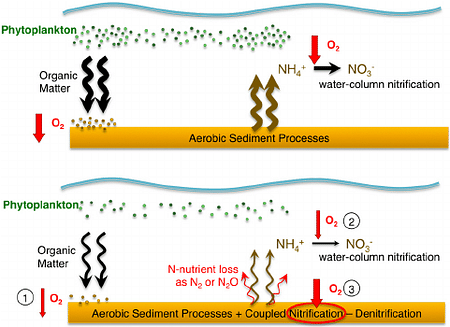
Denitrification: Influencing Factors
The following factors have an impact on the entire denitrification process:
The organic content of the soil is the most important component influencing the denitrification process. The bacteria's only source of nourishment is organic stuff found in the soil. As a result, soil bacteria require a source of readily available organic matter, which might come from plants, soil, or other sources.
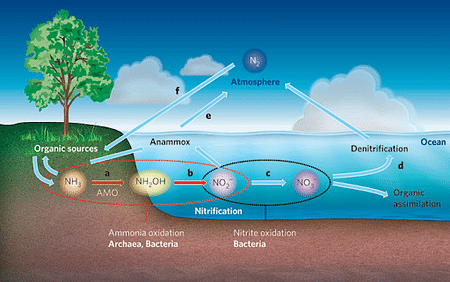
Other considerations include soil pH.
- Texture of the soil.
- Temperature.
- The amount of oxygen in the soil.
- The soil's moisture content.
- Nitrate concentration in the soil.
Things to Remember based on Denitrification
- Denitrification is a type of respiration in which facultative anaerobes reduce oxidised forms of nitrogen in response to electron source oxidation, such as organic matter oxidation.
- Nitrogen electron acceptors such as nitrate, nitrite, nitric oxide, and nitrous oxide all culminate in the formation of dinitrogen, completing the nitrogen cycle.
- Denitrifying microorganisms require relatively little oxygen (less than 10%) and organic carbon for energy.
- Denitrification is carried out by heterotrophic bacteria such as Paracoccus denitrificans and pseudomonas, as well as some autotrophic denitrifiers such as Thiobacillus denitrificans. Several kinds of bacteria engaged in denitrification complete the reduction of nitrate to dinitrogen, and the process involves more than one enzyme route.
Sample Questions based on Denitrification
Ques. What Is Denitrification and Why Is It Important? (4 marks)
Ans- Because the denitrification process may remove NO3, reducing its leaking into groundwater, it can be used to treat sewage/animal wastes with a high nitrogen content. However, denitrification can cause the release of N2O, an ozone-depleting chemical and a greenhouse gas, which can have a negative impact on global warming.
Second, denitrification is frequently utilised to remove nitrogen from sewage and municipal wastes. It is also used to avoid nitrate pollution of groundwater caused by excessive agricultural/residential fertiliser use. The technique is also employed in industrial wastewater treatment, and there are several types of denitrifying bioreactors available. Aerobic denitrification, on the other hand, eliminates the requirement for separate tanks and reduces sludge production.
Ques. What is Denitrification? (2 marks)
Ans- It is described as bacteria reducing nitrate or nitrite to electron transport phosphorylation, which results in gaseous Nitrogen in the form of dinitrogen (N2) or Nitrogen oxides. Chemical fertilisers, which are a source of ammonium in the atmosphere, are converted to nitrogen during the nitrogen cycle's denitrification phase. Denitrification can take place in both aerobic and anaerobic environments.
Ques. What Factors Influence the Denitrification Process? (2 marks)
Ans- The main component impacting the denitrification process is the organic content of the soil, which is the only source of nutrition for bacteria. Soil pH, temperature, texture, oxygen content in the soil, moisture content in the soil, and nitrate concentration in the soil are all factors that influence the process.
Ques. In the nitrogen cycle, microorganisms fix atmospheric nitrogen and convert it to ammonia. Ammonia is then transformed into various nitrogen compounds. It returns to the atmosphere at the end of the cycle through the process of ? (3 marks)
Ans- The nitrogen cycle, which comprises nitrogen fixation, ammonification, nitrification, and denitrification, is the recycling phase of nitrogen. Denitrification is the process of converting nitrates and nitrites back to nitrogen in the atmosphere. Anaerobic bacteria are responsible for this process. It returns to the atmosphere at the end of the cycle through the process of Denitrification.
Ques. Where Can You Find Denitrifying Bacteria? (2 marks)
Ans- It is found in about 50 genres and over 125 different species, and it is believed to account for 10% to 15% of the entire bacterial population in water, soil, and sediments. Pseudomonas, Alkaligenes, Ballicus, and other organisms are among those that denitrify.
Ques. Is Pseudomonas a Bacterial Denitrifier? (2 marks)
Ans- Yes, Pseudomonas stutzeri, a member of the genus Pseudomonas, is a denitrification bacteria that can be found in soil, freshwater, oceans, and mammals. It is an aerobic Gram-negative bacteria and a form of denitrifying bacterium, however it has recently been discovered to be extremely adaptable to anaerobic environments.
Ques. What Is the Purpose of Nitrogen in Plants and Animals? (1 mark)
Ans- Nitrogen, like oxygen, is required for the survival of plants and animals on Earth. Plants and animals use it to produce amino acids in proteins, which are the building blocks of life. Animals and plants can absorb oxygen directly from the air, but this is not feasible with nitrogen.



Comments