



Content Curator
Diabetes insipidus is a rare illness in which the fluid equilibrium of the human body is disturbed. A lot of urine is created by the body due to this disruption and the person will constantly feel thirsty no matter how much they drink water. Even the kidneys do not have control over the excretion of water.
Diabetes insipidus and diabetes mellitus are not similar. Diabetes mellitus or diabetes is a condition where blood sugar levels get excess and are classified as type 1 or 2. There is no known perfect cure for Diabetes insipidus. However, some treatments can quench your thirst, keep you hydrated and reduce your urination.
What is Diabetes Insipidus?
Diabetes Insipidus is caused by the compromised secretion of the pituitary hormone vasopressin. This causes the kidneys to pass abnormally large amounts of insipid urine (dilute and odorless). It is a rare disorder which causes extreme thirst and can lead to severe dehydration.

Diabetes Insipidus
Diabetes Insipidus: Types
There are usually four different types of Diabetes Insipidus, namely:
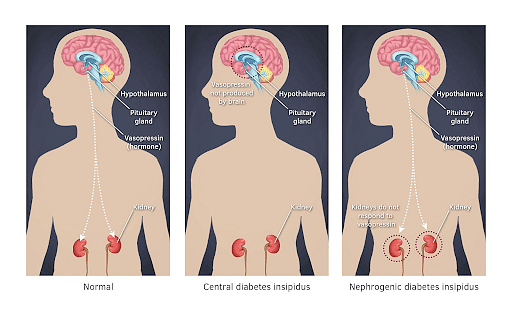
Nephrogenic Diabetes Insipidus: It is caused due to factors like high levels of calcium, kidney diseases, low potassium levels or urinary tract blockage in the body.
Central Diabetes Insipidus: This disease is caused by damage to the hypothalamus or pituitary gland.

Diabetes Insipidus: Types
Gestational Diabetes Insipidus: It is caused during pregnancy when the enzymes of the placenta destroy the mother’s ADH.
Dipsogenic Diabetes Insipidus: This is caused when the hypothalamus dysfunctions the thirst mechanism.
Diabetes Insipidus: Symptoms
There are some signs and symptoms of diabetes insipidus, which include:
- Extreme Thirst
- Production of heavy amounts of pale urine
- Frequently I need to wake up and urinate at night.
- The desire for cold drinks.
A serious patient can drink a lot of fluids and can produce around 19 litres of urine in just one day, compared to a healthy adult who typically urinates an average of only 1 to 2 litres a day.

Diabetes Insipidus: Symptoms
An infant or a child with diabetes insipidus can show the following symptoms:
- Bed Wetting
- Wet or Heavy diapers.
- Trouble with sleep
- Vomiting
- Fever
- Constipation
- Loss of Weight
- Delay In Growth
Causes of Diabetes Insipidus
Diabetes Insipidus occurs when the body fails to balance the level of the fluids in the body.
Kidneys have the duty of filtering the blood and removing the waste products from it. The filtered blood is returned to the body and the waste is filtered out with some fluid that in the end makes urine. The bladder stores the wastes as urine and finally it is excreted out from your body.

A hormone called antidiuretic hormone (ADH) is what helps the filtered fluids to return to the bloodstream. The hypothalamus produces the ADH and the pituitary gland (a small gland located in the brain’s base) stores it. The excess of urine is produced when there is a deficiency of ADH or its effect is blocked. Sometimes, one cannot find the obvious cause of diabetes insipidus. However, sometimes, it can be caused because of an autoimmune reaction targeted at the destruction of vasopressin.
Risk Factors Associated with Diabetes Insipidus
- Nephrogenic diabetes insipidus usually has a genetic cause that permanently causes the kidneys to lose the ability to concentrate urine.
- Usually, it’s the males who are affected by Nephrogenic diabetes insipidus, though the gene can be passed onto children by the female.
Complications Caused by Diabetes Insipidus
There are various complications caused by Diabetes Insipidus such as:
Dehydration
Dehydration can cause:
- Changes in skin elasticity
- Dry mouth
- Fatigue
- Thirst
Electrolyte Imbalance
An imbalance in the minerals in your blood can be caused such as that of potassium and sodium (electrolytes). Symptoms of an electrolyte imbalance are as follows:
- Nausea
- Weakness
- Vomiting
- Muscle cramps
- Loss of appetite
- Confusion
Diabetes Insipidus: Treatment
There are numerous possible treatments for Diabetes Insipidus:
- Injection, tablets or nasal spray can be used to control the Central Diabetes Insipidus by vasopressin.
- Nephrogenic type diabetes insipidus often occurs by medicine, so stopping the medicines might help restore the normal function of kidneys.
- Hereditary nephrogenic diabetes insipidus could be treated by drinking sufficient fluids to balance out for the released urine.
- Nephrogenic Diabetes Insipidus can be treated with anti-inflammatory medicines and diuretics (water pills).
Things to Remember
- Diabetes insipidus is one of the rare illnesses in which the fluid equilibrium of the human body is disturbed. A lot of urine is created by the body due to this disruption and the person will constantly feel thirsty no matter how much they drink water. Even the kidneys do not have control over the excretion of water.
- There are usually four different types of Diabetes Insipidus
- A hormone called antidiuretic hormone (ADH) is what helps the filtered fluids to return to the bloodstream. The hypothalamus produces the ADH and the pituitary gland (a small gland located in the brain’s base) stores it. The excess of urine is produced when there is a deficiency of ADH or its effect is blocked.
- Sometimes, one cannot find the obvious cause of diabetes insipidus. However,, it can be caused because of an autoimmune reaction targeted at the destruction of vasopressin.
- Nephrogenic diabetes insipidus usually has a genetic cause that permanently causes the kidneys to lose the ability to concentrate urine, though the disease gene can be passed onto children by the female.
Sample Questions
Ques: How do we discover diabetes insipidus? (5 marks)
Ans: Diabetes Insipidus happens from loss of ADH (vasopressin) launch from the pituitary gland or loss of the renal response to the equal hormone.
In absence of the hormone, the kidneys can not retain water and for this reason, the patient will urinate upto 20 pints of water.
Patients can make up for the loss of urine by increasing the pace of their water intake. This can limit the symptoms of Diabetes Insipidus. Patients who are not able to keep pace can experience hypernatremia (increased sodium in plasma) and this causes trouble of its own. Critical patients can lose consciousness, experience seizures and even fall into comas.
Classically patients will urinate more (polyuria), will drink masses of water attributable to it (polydipsia) and could be more thirsty.
The traditional method to diagnose Diabetes Insipidus and distinguish it from different degrees of polyuria and polydipsia is to get it checked professionally.
Ques: How does diabetes insipidus affect longevity? (3 marks)
Ans: Diabetes insipidus (DI) is a rare condition that affects the kidneys as they are not able to store water. DI and diabetes mellitus are not associated and someone can have DI without diabetes. DI is characterised by frequent urination or odourless and dilute urine and intense thirst.
The diagnosis of DI is good and the goal of the treatment is the reduction of urine output which is produced by the body. DI is normally treated by Hormone treatment - desmopressin (DDAVP), usually taken through injection, tablet or nasal spray. Treating the underlying motive alongside changes in food regimen and lifestyle also help within the remedy of Diabetes Insipidus.
Ques: Which hormone reasons diabetes insipidus? (4 marks)
Ans: DI (Diabetes Insipidus) results from a loss of, or negative reaction (by using the kidneys) to the hormone vasopressin (aka, ADH, or Antidiuretic Hormone). This hormone does not CAUSE DI - it is without a doubt the hormone involved in the manifestation of the disease.
Nephrogenic DI takes place when the kidneys fail to respond to vasopressin. This may be a result of a genetic mutation, continual kidney sickness, urinary tract blockage, sure medicinal drugs, low potassium, or high calcium tiers.
Dipsogenic DI takes place when there’s a defect inside the thirst mechanism - inside the hypothalamus. This results in immoderate consumption of fluids - which suppresses vasopressin and produces the ensuing necessity to urinate. The same things that can cause Central DI can cause Dipsogenic DI.
Gestational DI takes place (not distinctly)
Ques: How can I treat diabetes insipidus? (4 marks)
Ans: Treatment alternatives for the maximum common varieties of diabetes insipidus consist of
Central diabetes insipidus. If you've got slight diabetes insipidus, you could most effectively want to increase your water intake. If the circumstance is resulting from an abnormality inside the pituitary gland or hypothalamus (which includes a tumour), your doctor will first treat the abnormality. Typically, this shape is handled with a man-made hormone referred to as desmopressin (DDAVP, Minirin, others). This medication replaces the lacking antidiuretic hormone (ADH) and reduces urination.
One can take desmopressin as a nasal spray, as oral drugs or by injection. Most human beings nevertheless make some ADH, even though the amount can vary daily. So, the amount of desmopressin you want additionally may range. Taking greater desmopressin than you need can motivate water retention and potentially extreme low-sodium stages inside the blood. Other medicinal drugs may also be prescribed, which includes indomethacin (Indocin, Tivorbex) and chlorpropamide. These capsules could make ADH greater available in the frame.
Ques: Is diabetes insipidus a life threatening ailment? (3 marks)
Ans: It is a disease of salt and water metabolism that is associated with severe thirst and LOTS of urinating. It can be a short time fitness problem or an existing long condition. The body simply cannot alter the way it uses water. It is related to hormones and isn't related to your pancreas or insulin production. It may be handled with certain hormones or medicinal drugs, salt constrained diets and growing water consumption. Headaches and being very tired are common and so is electrolyte imbalances. This disorder within reason is rare.
Ques: Is diabetes insipidus associated with glucose metabolism? (2 marks)
Ans: The kidneys feature to adjust fluid manufacturing inside the frame and maintain it in balance. The waste contained within the bloodstream is discharged through fluids regulated utilizing the kidneys. This fluid waste is saved temporarily in the bladder as urine, before being excreted through urine. The frame can also rid itself of excess fluid through sweat, urine and faeces. The hormone antidiuretic hormone (ADH) enables the management of the fee at which fluids are launched.
Ques: What are the signs of diabetes insipidus? (3 marks)
Ans: Diabetes Insipidus leads to frequent urination, and that is the most commonplace and clean symptom. In extreme cases, urination can be more than 20 litres in line with the day.
A secondary symptom is increased thirst, as a result of passing a lot of water.
If this is not met, then dehydration can arise which can cause:
Cracked pores and skin, Fatigue, Confusion, Dizziness or even, Unconsciousness.
Children tormented by the situation might also end up irritable or listless, with fever and vomiting possible.
Ques: Is diabetes insipidus a continual condition? (4 marks)
Ans: Yes, diabetes insipidus is a persistent situation. This situation is because of issues that are associated with the antidiuretic hormone (ADH) or common urination.
There are simply 4 types of diabetes insipidus, such as:
- Important diabetes insipidus
- Nephrogenic diabetes insipidus
- Dipsogenic diabetes insipidus, and
- Gestational diabetes insipidus
This is a clinical disorder associated with water balance and people with this situation produce an excessive amount of urine which causes them to urinate often and feature excessive thirst which can cause dehydration



Comments