



Education Journalist | Study Abroad Lead
Gonads basically refer to the reproductive organs of males and females. It is a primary reproductive gland that is a part of the endocrine system. The male gonads i.e. testes produce the male sex hormones and the female gonads i.e. the ovary produce the female sex hormones. These organs are responsible for producing gametes in both males and females and they also produce sex hormones in individuals which are responsible for developing primary and secondary reproductive characteristics. In this article, we will discuss the male and female gonads, and their functions in detail.
| Table of Content |
What are Gonads?
Gonads are the reproductive glands in an organism that is responsible for producing sex cells and sex hormones in living beings. Gonads are present in both male and female bodies. Male gonads are referred to as the testicles or the testes which produce testosterone (male sex hormone). Similarly, the female gonads are called the ovaries that produce estrogen in a female body.
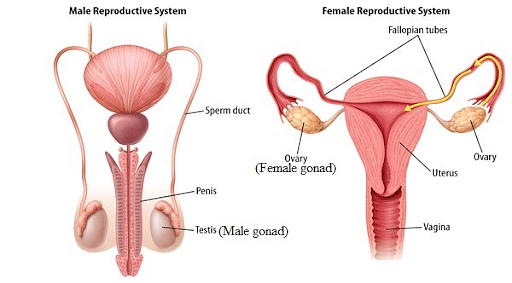
Gonads: Sex Hormones
The gonads or reproductive glands in males and females produce gametes (sex cells) and sex hormones. Both men and women produce different sex hormones and these hormones are responsible for reproductive development in individuals. The hormones that stimulate the glands for the production of sex hormones are referred to as gonadotropins. The pituitary gland is responsible for secreting gonadotropins called follicle-stimulating hormone (FSH) and luteinizing hormone (LH). The ovaries and testes are stimulated by the LH while the FSH is responsible for the production of sperms and maturation of the sac that contains ova, known as ovarian follicles.
Male Gonad Hormones
The male gonad hormones, also called androgen, are responsible for the development of the reproductive organs in the male body. They play a significant role in the maturation of the male reproductive system and in producing sex hormones. The different hormones produced by the male gonads are explained below:
- Testosterone: The testosterone hormone is produced by the testes. It is an essential hormone for the growth of muscle mass, bone density, hair, body hair, and penis. Besides, testosterone also brings behavioral changes, deepens the voice, and leads to changes in appearance.
- Androstenedione: It is an indication of testosterone and estrogen. Androstenedione maintains and regulates its production within the body of an individual.
- Inhibin: These are the hormones that prevent the release of a follicle-stimulating hormone (FSH). It also helps in the development and regulation of sperms.

Female Gonad Hormones
Like males, androgens are also present in females. The female body naturally produces a very little amount of androgen compared to that of a male's body. It is produced in the female gonad i.e., the ovaries, and is responsible for the stimulation of the pubic area in females. It also contributes to the development of hair growth in the underarms and reproduction. There are basically two types of female gonad hormones, estrogen, and progesterone.
- Estrogen: Estrogens are female sex hormones that are responsible for reproduction in the female body. It helps in the development and growth of the vagina, uterus, and the overall female reproductive system. Estrogens bring other physical changes as well such as a change in appearance, widening of the breasts and pelvis, and an increase in body hair growth.
- Progesterone: This hormone is responsible for preparing the uterus for conception. Progesterone regulates the uterus during the menstrual cycle. It also helps in the production of milk in the breasts during the period of pregnancy and stimulates other glands.
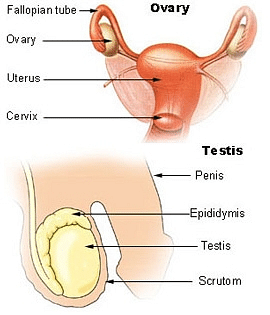
Functions of Gonads
The male and female gonads perform various functions throughout the body of an individual. The major functions of gonads are as follows:
- Gonads help in the maturation of the reproductive system in males and females.
- They produce sex hormones and gametes (sex cells) in individuals.
- It helps in the process of cell division.
- It also helps in the development of secondary sex characteristics in men and women.
Things to Remember
- The process through which male gamete is produced is known as spermatogenesis.
- The process of female gamete production is known as oogenesis.
- The male gonads i.e. testes produce the male sex hormones and the female gonads i.e. the ovary produce the female sex hormones.
- The overall functions of the male gonads are supported by interstitial cells, Sertoli cells, and blood vessels.
- The uterus, part of the female reproductive system, is build up of some of the strongest muscles in a human body.
- The reproductive cycle in a female body starts during puberty and ends at menopause.
- The male sperms mainly consist of 4 parts: the head, the neck, the middle piece, and the tail.
- Menopause occurs between the age of 45 - 50 in a female body.
Sample Questions
Ques. What are secondary sexual traits? 1 mark
Ans: Secondary sexual traits include activities like deepening of the voice, facial hair growth, hair growth in the underarms and pubic regions, etc.
Ques. What stimulates the Gonads to produce gametes? 1 mark
Ans: The Gonads are stimulated by hormones called gonadotropins that lead to the production of gametes and sex hormones.
Ques. What are sex hormones? 1 mark
Ans: Sex hormones are basically steroidal hormones that are responsible for the growth and development of sexual and secondary sexual activities.
Ques. Androgens are produced by what? 1 mark
Ans: Androgens in organisms are produced by testes and adrenals.
Ques. Which temporary endocrine gland is formed in the ovaries after the period of ovulation? 1 mark
Ans: After ovulation, the corpus luteum is the endocrine gland that is formed in the ovaries.
Ques. What do you mean by menstrual cycle? When does menopause occur? 2 marks
Ans: The period of ovulation and mensuration in females primates that takes place every month positively for pregnancy is called the menstrual cycle.
Menopause occurs between the age of 45 - 50 in a female body.
Ques. State the full form of FSH and why is it important? 2 marks
Ans: FSH stands for Follicle-stimulating hormone. It is an essential hormone for the growth and development of sex hormones in males and females.
Ques. What is the use of androstenedione? 2 marks
Ans: Androstenedione is a steroidal hormone that acts as a precursor for sex hormones. It has very few effects on your body, however; it is useful because of the ability to get converted into sex hormones (testosterone and estrogen).
Ques. State three functions of gonads. 3 marks
Ans. The functions of gonads are:
- Gonads help in the maturation of the reproductive system in males and females.
- They produce sex hormones.
- Gonads also produce gametes (sex cells) in individuals.



Comments