



Content Curator
Hormones are chemical messengers that are released directly into the bloodstream, where they are carried to organs and tissues throughout the body to perform their tasks. Hormones come in a variety of forms that affect various physiological functions and activities. Some of these functions are: development and growth, food metabolism, sexual function and reproductive growth and health, cognitive function and mood, body temperature and thirst, and so on.
Hormones
Hormones are released by the body's endocrine glands. The endocrine glands lack ducts due to which the hormones are released directly into the bloodstream rather than via ducts. Pituitary gland, Pineal gland, Thymus, Thyroid, Adrenal glands, Pancreas, Testes, and Ovaries are some of the primary endocrine glands that are present in our body.
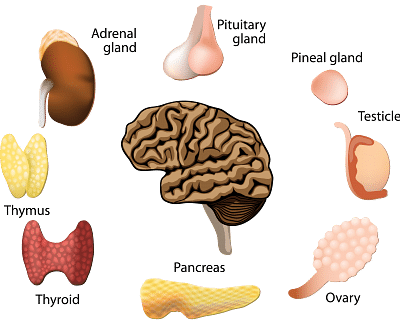
These organs release hormones in small quantities, and it only takes a very small quantity to cause substantial changes in the body. A very little excess of hormone production, as well as a slight deficit in a hormone, can result in serious illness conditions.
What are Functions of Hormones?
Hormones affect nearly every process in your body. They play wide variety of functions, some of them are given below:
- Growth and development
- Metabolism
- Fertility
- Sexual development
- Immune system activation or inhibition
- Emotions
- Sleep
- Blood pressure
- Mood fluctuations
- Food demands
- Communication between nearby cells and cells and tissues in other areas of the body.

Types of Hormones
Although the human body contains many distinct hormones, they may be classified into three types based on their chemical structure: lipid-derived, amino acid-derived, and peptide (peptide and protein) hormones.
Lipid Hormones-
The majority of lipid hormones are produced from cholesterol and hence are structurally comparable to it. The steroid hormones constitute the principal class of lipid hormones in humans.
These hormones are often ketones or alcohols. Their chemical names finish in "-ol" for alcohols and "-one" for ketones.
Estradiol, an oestrogen or female sex hormone, and testosterone, an androgen or male sex hormone, are two examples of steroid hormones. The female and male reproductive organs, respectively, release these two hormones.
Amino acid-derived Hormones-
The amino acid-derived hormones are tiny compounds produced from the amino acids tyrosine and tryptophan.
The chemical name of an amino acid-derived hormone will end in "-ine."
Hormones produced from amino acids include epinephrine and norepinephrine, which are secreted in the medulla of the adrenal glands, as well as thyroxine, which is produced by the thyroid gland.
Peptide Hormones-
Peptide hormones have the structure of a polypeptide chain (chain of amino acids). Peptide hormones are molecules with short polypeptide chains, such as antidiuretic hormone and oxytocin, which are generated in the brain and released into the bloodstream by the posterior pituitary gland.
This class also contains tiny proteins, such as pituitary growth hormones, and big glycoproteins, such as pituitary follicle-stimulating hormone.
Examples of Important Hormones
Now let us look more closely at five essential hormones and how they contribute to your overall health.
- Insulin
Insulin, a fat-storage hormone, is produced by your pancreas and controls numerous metabolic processes. This hormone allows your organs, liver, and fat to absorb glucose. Blood sugar builds and can lead to diabetes if your body does not produce enough insulin or does not use it properly.
- Melatonin
Melatonin is produced by the pineal gland in your brain and is important for your sleep/wake cycles and internal body clock. As the brightness of day fades into the darkness of night, your brain increases melatonin levels to prepare you for sleep.
- Estrogen
Estrogen, often known as the female sex hormone, is produced by a woman's ovaries. It is essential for the growth of breasts, pubic hair, and hip width. In addition to regulating a woman's menstrual cycle, oestrogen has a role in bone development, blood clotting, and the condition of her skin and nails.
- Testosterone
Testosterone is a sex hormone produced in both the male testicles and the female ovaries. It is most commonly connected with sex desire. It is also intimately associated with muscle and bone mass, as well as fat cell distribution.
- Cortisol
The stress hormone is cortisol. It is a natural warning system that lets you know when you're in danger. While high cortisol levels might be beneficial when you need to be alert to an impending danger, they can also cause anxiety, weight gain, headaches, heart issues, irritability, cognitive fog, and sleep disruptions.
Endocrine System and the Hormones Secreted
The endocrine system is a network of glands, which are organs. Endocrine Glands produce and secrete hormones that target certain organs in the body. Hormones are produced primarily by the following glands:

Pituitary Gland:
Pituitary gland oversees the other glands and produces the hormones that stimulate growth. The pituitary gland is known as the "master control gland" by some.
Pancreas:
The pancreas produces insulin, which aids in blood sugar regulation.
Thyroid Gland:
Thyroid gland produces hormones that aid in calorie burning and heart rate control.
Parathyroid Gland:
The parathyroid gland regulates the quantity of calcium in the body.
Adrenal Gland:
Adrenal glands produce hormones that regulate stress hormone (cortisol) and sexual desire.
Hypothalamus:
The hypothalamus is in charge of managing body temperature, appetite, and mood. It also regulates the release of hormones from other glands, as well as sleep, thirst, and sexual urge.
Pineal:
The pineal gland, also known as the thalamus, generates serotonin derivatives of melatonin, which influences sleep.
Testes:
In men, these organs generate the male sex hormone testosterone as well as sperm.
Ovaries:
Female ovaries release oestrogen, testosterone, and progesterone.
Hormonal Diseases: Causes & Types
The endocrine feedback system aids in the regulation of hormone levels in the circulation. If your body has too much or too little of a specific hormone, the feedback system alerts the appropriate gland or glands to address the issue.
A hormone imbalance can arise if this feedback system has difficulty maintaining the correct amount of hormones in the bloodstream or if your body does not effectively remove them out of the bloodstream. Increased or reduced endocrine hormone levels can be produced by:
- Disease caused by an issue with the endocrine feedback system
- Failure of one gland to induce the release of hormones from another gland (for example, a problem with the hypothalamus can disrupt hormone production in the pituitary gland)
- A hereditary condition, such as multiple endocrine neoplasia (MEN) or congenital hypothyroidism.
- Injury to an endocrine gland as a result of infection
- An endocrine tumour is a tumour of an endocrine gland.
Few types of hormonal diseases are listed below:
- Inadequate adrenal function:
- The adrenal gland produces insufficient amounts of the hormone cortisol and, in rare cases, aldosterone.
- Fatigue, stomach discomfort, dehydration, and skin changes are some of the symptoms.
- Adrenal insufficiency is a form of Addison's disease.
- Cushing's syndrome:
- An overactive pituitary gland is caused by the overproduction of a pituitary gland hormone.
- Cushing's syndrome, a related disease, can develop in persons who take large doses of corticosteroid medicines, particularly youngsters.
- Hypothyroidism:
- Thyroid hormone production is insufficient, resulting in tiredness, constipation, dry skin, and depression.
- In youngsters, an underactive gland can cause developmental delays.
- Some hypothyroidisms are present from birth.
Things to Remember Based on Hormones
- Hormones act as chemical messengers in the body.
- Hormones assist in the maintenance of homeostasis.
- Hormones are released into body fluids such as blood, where they are carried to target cells.
- When target cells express a specific receptor for a hormone, they respond to it.
- Hormones also influence cell death, the immune system, reproductive development, mood swings, and food desires.
- Pituitary gland, Pineal gland, Thymus, Thyroid, Adrenal glands, Pancreas, Testes, and Ovaries are some of the primary endocrine glands that release the hormones.
- In the adrenal gland, epinephrine and norepinephrine govern stress reactions, whereas thyroid hormones regulate metabolic rates.
- The parathyroid gland regulates the quantity of calcium in the body.
- The pineal gland, also known as the thalamus, generates serotonin derivatives of melatonin, which influences sleep.
- Testes produces the male sex hormone testosterone as well as sperm.
- Female ovaries release oestrogen, testosterone, and progesterone.
Important Questions Based on Hormones
Ques: What exactly are the love hormones? (1 Mark)
Ans: Since your body secretes oxytocin in reaction to many types of physical and emotional affection, it is frequently referred to as the "love hormone" or the "cuddle hormone."
Ques: What are the negative hormones? (1 Mark)
Ans: Cortisol and insulin, the "stress" and "blood sugar" hormones, respectively, are the first to become unbalanced. These are referred to as "alpha hormones" since they influence our thyroid, ovarian, and sleep hormones.
Ques: Which hormone is the most potent? (1 Mark)
Ans: DHEA is the most abundant circulating steroid in the human body. It has little biological impact on its own, but it becomes quite potent when transformed into hormones like testosterone and estradiol. The outer layer of the adrenal glands produces DHEA from cholesterol.
Ques: What foods cause you to produce happy hormones? (2 Marks)
Ans: Yogurt, legumes, eggs, low-fat meats, and almonds are just a few examples of foods related to dopamine release. Tryptophan-rich meals have been related to higher serotonin levels. Probiotic-rich foods, such as yoghurt, kimchi, and sauerkraut, can impact hormone release.
Ques: What is the purpose of hormone therapy? (2 Marks)
Ans: During or around menopause, hormone replacement therapy (HRT) can help to balance oestrogen and progesterone levels. A doctor may also prescribe supplemental sex hormones for a variety of other reasons. HRT, often known as menopausal hormone treatment, can help reduce sweating, hot flashes, and other menopausal symptoms.
Ques: Name the hormones that promote muscular growth? (2 Marks)
Ans: Anabolic-androgenic steroids (AAS) and other hormones such as growth hormone (GH) and insulin-like growth factor-1 (IGF-1) have been proven to enhance muscle mass in individuals suffering from muscular atrophy caused by a variety of illnesses.
Ques: How can you tell whether you require growth hormones? (2 Marks)
Ans: Slow height development after a child's third birthday is the most obvious symptom of GH insufficiency. A kid with GH insufficiency may also have a youthful appearance and a plump body structure. The treatment consists of daily injections of synthetic growth hormone.
Ques: When do growth hormones cease working? (2 Marks)
Ans: Growth hormone and IGF-1 levels peak after puberty and progressively drop after the age of 30, although the pituitary gland never completely stops producing hGH. Some researchers believe that low levels of hGH are not always a harmful thing.
Ques: Do hormones affect one's personality? (3 Marks)
Ans: People think, feel, behave, and love differently depending on whether they are influenced by dopamine, serotonin, testosterone, or oestrogen, according to anthropologist Dr Helen Fisher. You'll be drawn to persons whose personalities are mostly affected by a complimentary hormone.



Comments