



Content Curator
Recycling of waste is the process by which waste products are converted into useful materials or products through various processes. The process of recycling of wastes includes the reprocessing of organic matter but it does not include the energy recovery and the reprocessing into those substances which are to be used as either fuels or for the backfilling operations. In other words, recycling denotes a method by which there is collection and subsequent breakdown of the waste material in order to create something new out of it, that is, to reuse it. This process has more relevance in today’s time because of the increased effects of pollution and global warming.
| Table of Content |
Key Takeaways: Organic Waste, Hazardous Waste, Recyclable Waste, Pollution, Plastic Recycling, Paper Recycling.
What is Waste?
[Click Here for Sample Questions]
Unwanted or unusable forms of materials are referred to as waste. Thus, waste refers to any substance which is thrown out after its primary use or becomes defective, worthless or does not have any other use. Some of the examples of wastes are household trash, wastewater, hazardous waste, radioactive wastes and so on.
Types of Waste
The wastes are broadly divided into 5 types:
- Organic Waste: It includes refuse such as garden and food wastes as well as rotten poultry or meat items. The predominant source of this type of waste is the household. However, these wastes generally decompose over time and are converted into manure by the action of decomposers.
- Hazardous Waste: It includes corrosive, toxic, inflammable or volatile materials which can result in being a source of potential threat to the environment.
- Solid Waste: It includes any refuse, solid sludge or garbage which is found in either commercial or industrial settings or in household settings. The major categories of solid wastes are paper rubbish, plastic wastes, metal and tin waste and glass and ceramics.

Different types of wastes
- Liquid Waste: It includes waste wash water, grease, waste detergents, sludges etc which have been thrown away. As these liquid wastes contain chemicals, they can act as poison for the environment as well as can be hazardous. Liquid waste is also commonly referred to as wastewater.
- Recyclable Waste: It includes those items which are discarded such as furniture, single use metals, plastic wastes etc which can be reused again either in its original form or by changing it by the process of reprocessing.
Read Also:
Main Sources of Waste
[Click Here for Sample Questions]
The different sources of wastes can be easily identified by critically examining and recognizing the type of wastes which are being generated. The different sources of waste can be categorised as follows:
- Domestic Wastes: It comprises all the garbage and waste material which is discarded from the household.
- Industrial Wastes: It comprises all the solid, liquid and gaseous wastes being emitted by the processing and manufacturing industries such as cement plants, textile industries, food processing industries, chemical plants and petroleum industries.
- Chemical Wastes: It comprises wastes from the chemicals being used, such as cleaners etc.
- Agricultural Wastes: It comprises wastes from agricultural-based activities such as horticulture, market gardens, livestock breeding and so on. It includes used tires, excess milk, corn husks, expired medicines, empty pesticide containers etc.
- Medical or Clinical Wastes: It comprises wastes generated by the healthcare or medical industry such as laboratories, hospitals, clinics and so on. It includes items such as blood, body remains, material used for wound dressings, needles, syringes, surgical items and pharmaceuticals.

Classification of wastes by their origin
- Construction or Demolition Wastes: It comprises concrete debris, used wood, package boxes, building materials and other packaged boxes utilised in the construction of a building or roads or any other civil commodity. In addition to this, demolition of old buildings also result in generation of wastes.
- Mining Wastes: It comprises overburden material, harmful gases released as a result of blasting and waste which is left after the extraction of ore from the rock.
- Radioactive Wastes: It comprises the solid as well as the liquid wastes generated in the nuclear reactors, atomic explosions and on the mining of radioactive substances.
- Electronic Wastes: It comprises used or damaged DVD or music players, telephones, televisions etc. It also includes e-wastes and e-scraps.
Recycling of Waste Products
[Click Here for Sample Questions]
Recycling refers to the process of converting waste materials into a new material to make them reusable. The process of recycling aids in preventing the wastage of useful materials and also reduces the consumption of the new materials. The act of recycling extends an excellent help to the earth's environment as it reduces the overall energy usage, air pollution, water pollution as well as land pollution.
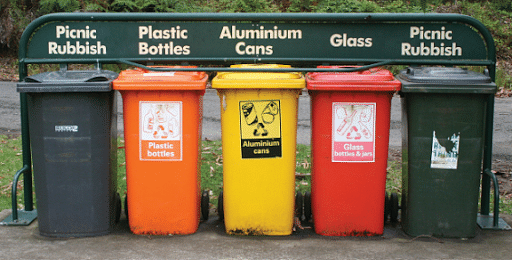
Separate bins allotted for segregation of solid wastes for recycling
Read Also:
What are Recyclable Items?
[Click Here for Sample Questions]
Recyclable items are those items or materials which can be easily recycled. Some of the important items in this category include paper, cardboard, plastic, glass, tires, batteries, textiles, metals and electronics. In addition to these, organic matter such as garden or food wastes can also be converted to compost or manure and used for horticulture processes. This can also be termed as recycling.

Some of the items which can be recycled.
What is Waste Plastic Recycling?
[Click Here for Sample Questions]
Plastic is one of the most commonly employed materials by humans. The ultimate goal of recycling of plastic is to reduce the immense plastic pollution especially created by single-use plastic items. These plastic items need to be recycled at a proper time, otherwise they get mixed with other materials or chemicals which increases the difficulties to recycle them and they ultimately become a major contributor to pollution. As plastics are non-biodegradable and are not decomposed by the action of microorganisms, they add an immense load to the pollution on earth, thus, it is necessary to recycle them.
The following are the steps for recycling of plastics:
Step 1: Collection of the plastic waste.
Step 2: Sort the collected plastics into different categories depending on their size, colour, use, thickness, properties of plastic and so on.
Step 3: Washing of the plastic wastes in order to remove the impurities such as dirt, labels and so on.

Recycling of plastic waste into plastic pellets
Step 4: Shredding and resizing of the waste into tiny pieces or fragments. This helps in identification of metals in the plastic items which can be sorted and recycled separately.
Step 5: Identification and separation of the plastics to assess the class and quality of the plastic.
Step 6: Compounding is the final step where the plastic fragments are sent to the manufacturers to create plastic pellets which can be used to create new plastic items.
Waste Paper Recycling
[Click Here for Sample Questions]
Recycling of waste paper is the reprocessing of the discarded or waste paper for reuse. Such waste papers are generally obtained from thrown out paper materials, paper mills etc. As paper is responsible for generating 50% of the solid waste in the landfills, it is important that they are properly recycled.
The following are the steps for recycling of paper:
Step 1: Collection of the paper waste from various sources such as offices, schools, homes, trash bins, paper stores, paper scrap yards and other commercial paper outlets. These collected papers are then graded for quality, measured and then sent to the paper recycling mill.
Step 2: Recycling of the paper waste occurs by sorting the collected paper in the recycling plant. This process helps in the proper identification of the paper which is to be recycled and which is to be discarded. The waste paper is generally differentiated according to their texture and the type of surface treatments given to it. After the process of sorting has been done, the paper goes for shredding and pulping where the paper is torn into smaller pieces and then mixed with chemicals to form a pulp.

Paper Recycling
Step 3: The pulp is further passed through a sequence of screens in order to eliminate any large remaining contaminants such as glue, plastic film or ink. The pulp subsequently is mixed with the new pulp to form slurry which is then solidified at the end of the process.
Step 4: Rolling of the recycled pulp in order to prepare paper.
Read Also: Difference Between Air Pollution and Water Pollution
Benefits of Recycling
[Click Here for Sample Questions]
- Helps in conservation of the natural resources of the earth.
- Aids in protection of the environment as well as reduces air, land, soil and water pollution.
- Recycling helps in conservation of energy.
- Recycling helps in procurement of products at a cheaper price and is energy efficient.
Things to Remember
- Wastes are those items or materials which are unwanted, damaged or are designed for single-use only.
- The major types of wastes are solid, liquid, organic, hazardous and recyclable wastes.
- The main sources of waste are industrial waste, chemical waste, domestic waste and agricultural waste.
- Benefits of recycling include reducing the amount of solid waste thrown in the landfills, conservation of natural resources and prevention of air, water and soil pollution.
Sample Questions
Ques 1. Look around your surroundings and collect different kinds of paper available. After collection, analyse the paper material and find out which of these can be recycled and which cannot be recycled. (2 marks)
Ans. The different pieces of paper collected include paper from notebooks, magazines, newspapers, envelopes and novels. Out of these, the paper products which have a coating of plastic and which are shiny in nature cannot be recycled.
Ques 2. Disposal of garbage in a locality is only the responsibility of the government. Discuss. (2 marks)
Ans. Government along with the municipal corporations as well as the citizens, all are responsible for helping in proper disposal of the garbage. A clean environment for the residents of the country helps in keeping everyone healthy and also helps in preventing the spread of diseases. Thus, everyone should throw their garbage in specially designated places such as the dustbins, so that the sanitation workers or the safai karamcharis can collect and dispose of the garbage easily.
Ques 3. What are the ways to reduce the issue of disposal of garbage? (3 marks)
Ans. The following are the three ways by which the problem of garbage disposal can be addressed:
- Recycle: The process where the discarded or unwanted items are repurposed or reprocessed in order to make them usable again is referred to as recycling. Items such as glass, paper, plastic and so on can be easily separated from the garbage and can be used to make new things rather than just dumping them in garbage bins.
- Reduce: The process of minimising the use or consumption of the items in day-to-day life or using just the bare minimum which is necessary to fulfil the needs of the individual rather than their greed.
- Reuse: It means to utilise the items again and again in different ways to exact maximum usage out of an item. Plastic or glass bottles of jam can be used to store items in the kitchen once the condiment is over.
Ques 4. Give two examples of waste materials which are recyclable. (2 marks)
Ans. The examples are as follows:
- Glass: The items made of glass can be easily recycled and can be repurposed for a long time as on reusing it does not lose its purity or quality.
- Aluminium: Items made from aluminium can be easily recycled but the process involves additional steps of re-melting of the metal and its re-casting.
Ques 5. What are the key benefits of recycling? (3 marks)
Ans. The main benefits of recycling include the following:
- Conservation of natural resources such as wood, fuel, water, minerals.
- Conservation of energy.
- Reduction in the amount of waste generated.
- Preventing overuse of the resources as well as helping in their preservation.
Ques 6. What are the benefits of recycling paper? (2 marks)
Ans. Paper and other paper-derived items such as cardboards are made from the bark of the trees. As a large number of trees are cut for generating paper, recycling of previously used cardboard or paper aids in protecting the habitat of the wildlife as well as protects against deforestation. As a result, flora and fauna of the region is maintained which can possibly lead to controlling global warming.
Ques 7. What is a landfill and what are its advantages? (2 marks)
Ans. Landfill is a big, low-lying area that is used for disposing of solid wastes. Items such as garbage, which forms part of solid wastes, can be dumped in a landfill. Dumping sites have an advantage over other methods of disposal of solid waste such as burning it down in incinerators, this is because burning releases numerous pollutants in the atmosphere, and thus can cause air pollution.
Ques 8. Describe an activity in which you can recycle paper at home. (3 marks)
Ans. For recycling of paper at home, old pieces of paper such as newspaper, notebook sheets etc. can be cut into smaller pieces. Then these pieces can be soaked in a bucket full of water for a day and then later stirred in order to make a thick paste. The paste can then be spread over a wire mesh fixed to a frame and a blotting sheet can be placed over the paste in order to soak the extra water. This results in forming a new sheet of paper.
The sheet can be removed from the mesh and be kept under the sun for drying. Post drying, the recycled paper made can be used.
Ques 9. What is waste and how is it produced? (2 marks)
Ans: Waste refers to any item or material that cannot be used in the form it was originally produced in. When any substance loses its value, it becomes waste and is thrown out.
Waste is generated on a daily basis at different locations such as at homes, schools, colleges, hospitals, industries and so on.
Ques 10. What can be done to minimise the overuse of plastics in day-to-day life? (3 marks)
Ans: The following are some of the steps which can be undertaken in order to minimise the overuse of plastic:
- Carrying your own cloth or jute bag while going shopping.
- Reusing old plastic bottles at home for storing water or other liquids.
- Growing plants in used plastic containers.
- Limiting the dependency on plastic and shifting to traditional metals such as steel, copper and brass.
- Avoiding single-use plastic items.
Read Also:



Comments