



Content Curator
A sparrow builds its nest in a tree, and this causes no harm to the tree. When a species benefits from other species without causing any harm, it's called Commensalism. Commensalism is one of the ways in which an organism interacts with its ecosystem. Let's understand more about Commensalism, its example, and its types.
| Table of Content |
Keyterms: Commensalism, Mutualism, Parasitism, Ecosystem, Food, Shelter, Transportation, Commensal, Inquilinism, Metabiosis, Phoresy, Microbiota
Read Also: Ecology & Environment
Commensalism
[Click Here for Sample Questions]
Commensalism is the interaction between two species in the ecosystem in which the commensal benefits from the host without negative impacts. The organism which receives the benefits like food, shelter or transportation is called the commensal. Commensals are generally unable to obtain food, shelter, transport, etc on their own. The commensals are smaller organisms than the host. The hosts do not change in order to suit the commensal’s needs, but the commensals on the other hand develop faculties and morphs to survive with their hosts.
Commensalism interaction in the ecosystem is a positive interaction between organisms, with commensals receiving benefits and the host unaffected.
Read more: Symbiosis
Types of Commensalism
[Click Here for Sample Questions]
Commensals rely on the hosts for different needs, based on the nature of these needs. Commensalism can be divided into four categories; Inquilinism, Metabiosis, Phoresy, and Microbiota
-
Inquilinism
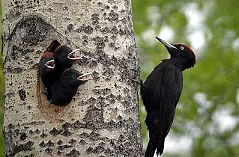
When commensals dwell on the host's body, using it as their habitat, it is called Inquilinism. Birds nesting on the tree trunks is an example of Inquilinism. Sometimes epiphytic plants growing on the trees are considered Inquilinism.
-
Metabiosis
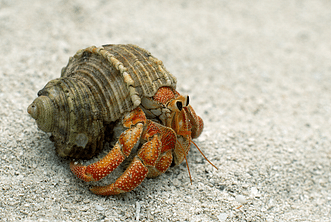
When the commensals depend solely on their hosts, for food, shelter, and transport, it is called Metabiosis. These commensals depend on the ability of the host to interact with the surrounding profitably alone. The most common example of Metabiosis is a hermit crab that lives on the shells of gastropods like snails.
-
Phoresy
In phoresy, one organism relies on its host for transportation. This can most commonly be seen in arthropods. For example; millipedes traveling on the birds and pseudoscorpions living on the mammals.

Phoresy
-
Microbiota
The commensals form colonies on the host's body, this is called Microbiota. They live together in groups. An example of Microbiota is bacterias on the skin of mammals. There is also evidences that the bacteria confer some protection on the host.

Microbiota
Read more: Mutualism
Examples of Commensalism
[Click Here for Sample Questions]
- Orchids growing on large tree trunks- Orchids grow on trunks and branches of other trees. They receive fluids from the tree trunk but do not provide any benefit to the host. Orchids depend on their host only for water. They don’t get nutrients from the tree as they can prepare their own food.
- Sharks and Remora Fish- Shark and Remora are classic examples of Commensalism. Remora attaches itself to the body of the shark and eats the leftovers of the shark's meals. They also use sharks’ bodies for transportation.
- Egrets and grazing Cattle- Egrets, a type of Heron, are found hovering over the grazing cattle. They feed the blood of cattle and are considered harmful for them as they can transmit several diseases.
- Burdock seeds on animals- Burdock seeds get attached to the animals and are transported to various places on their back. This helps them to spread in the land. Burdock seeds are very light that animals barely experience their presence.
- Maggots living on the dead and decaying bodies- Maggots are larvae of Diptera or two-winged flies. These larvae feed and dwell on the rotting flesh or tissues of Animals and Plants.
Also Read:
| Related Articles | ||
|---|---|---|
| Organisms & Populations | Population | Ecosystems |
Commensalism: Various Interactions in the Ecosystem
[Click Here for Sample Questions]
In an ecosystem, organisms interact with one another in numerous ways. They strive to get food, shelter, and partners to survive. For this purpose, they've evolved and developed various interactions with the organisms living in their surroundings. There are four interactive patterns, they are competition, predation, camouflage and symbiosis.
Competition
Limited food and water resources, territory and partner make the organisms rival with each other. This interaction is called Competition. Male antelopes fighting for partners is an example of competition.

Competition
Predation
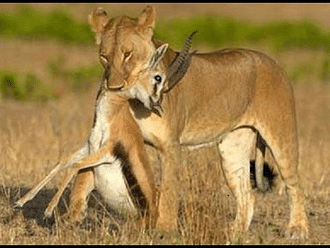
Predation is an interaction where one species depends on another species for food and survival. Predators are large animals that eat relatively smaller prey. The classic example of predation is lions preying on the deers.
Predation
Camouflage
When an organism conceals itself with its surroundings, it's called camouflage. This is a survival mechanism that helps the organism to escape from predators. Chameleons and stick insects camouflage with the surroundings.

Chameleon
Symbiosis
Symbiosis means to live together. When two species interact for a short or long time to derive benefits such as food, shelter and other survival needs, it's called Symbiosis. These interactions can be further classified into Mutualism, Commensalism, or Parasitism.
- Mutualism is the interaction between two species with mutual benefit.
- Commensalism is the interaction between two species with the commensal receiving benefits without harming the host.
- Parasitism is the interaction between two species where the parasite receives benefits by harming the host.
Read more: Predator Adaptations
Difference between Mutualism, Commensalism and Parasitism
[Click Here for Sample Questions]
| Mutualism | Commensalism | Parasitism |
|---|---|---|
| In Mutualism, two different species interact and take mutual benefits for a long or short period of time. | In Commensalism, two different species interact with out other and the commensal alone gets benefits without harming the host. | In Parasitism, two different species interact and the parasite receives benefits at the expense of the host. |
| Mutualism is a positive interaction. | Commensalism is a positive interaction. | Parasitism is a negative interaction. |
| In mutualism, both organisms need each other. | In commensalism, the commensal needs the host but the host doesn't need the commensal | In parasitism, the parasites need the host while the host doesn't need the parasites |
| Example- Gut bacteria in the guts of mammals. | Example- Orchids growing on trunks and branches of other trees. | Example- Cuscuta and letches. |
Things to Remember
- Commensalism is the interaction between two species in the ecosystem in which the commensal benefits from the host without harming the host.
- Commensals are organisms that take benefit from their hosts.
- Types of Commensalism are Inquilinism, Metabiosis, phoresy, Microbiota.
- The organism interacts in the ecosystem in the following ways: competition, predation, camouflage, and symbiosis.
- Commensals can not obtain food, shelter, transport, etc on their own.
Read more: Parasitism
Sample Questions
Ques.1: What is an interaction called when an orchid grows on a mango plant? (Delhi 2012, 1 Marks)
Ans: An orchid growing on the branch of a mango tree is an example of epiphyte. Epiphytes are plants that grow on other plants but do not derive nutrition from them. Hence, the relationship between a mango tree and an orchid is an example of commensalism.
Ques.2: Comment on the interaction between a clown fish living among the tentacles of a sea anemone. (Delhi 2010, 1 Mark)
Ans: The interaction between a clown fish living among the tentacles of sea anemone is an example of commensalism.
Ques.3: Name the type of interaction seen between whale and barnacles growing on its back. (Foreign 2009, 1 Mark)
Ans: The interaction observed between whale and barnacles growing on the back of whale is commensalism.
Ques.4: Differentiate between commensalism and mutualism by taking one example each from plants Only. (All India 2014, 2 Marks)
Ans: Commensalism is an interaction in which one species takes benefit from the other species and the other is neither benefited nor harmed. Example of such interaction is an orchid growing as an epiphyte on a mango tree, which remains unaffected by its growth.
Whereas mutualism is the type of interaction in which both the species involved in the interaction are benefited. Example of such interaction is lichen representing mutual association between algae and fungi, in which algae is protected by fungi. The fungi provides nutrients for synthesis of food to the algae, while algae provides food to fungi, as they are incapable of synthesising their own food.
Ques.5: Why do clown fish and sea anemone pair up? What is this relationship called ? (Delhi 2012; All India 2008, 2 Marks)
Ans: Clown fish form commensalism with the sea anemone. In this interaction, one species is benefitted and the other is neither harmed nor benefited. Sea anemone has stinging tentacles that protect clown fish from predators. The anemone does not take any benefit from the clown fish.
Ques.6: Egrets are often seen along with grazing cattle. What do you refer to this interaction? Give a reason for this association. (Delhi 2009, 2 Marks)
Ans: The egrets are seen having close association with grazing cattle and the egrets are benefited by it. Cattle while grazing stir up the bushes and insects are flushed out from the vegetation to be detected by the egrets. This interaction is called commensalism as cattles are neither benefited nor harmed.
Ques.7: Name the type of interaction seen in each of the following examples
(i)Ascaris worm living in the intestine of humans.
(ii)Wasp pollinating fig’s inflorescence.
(iii)Clown fish living among the tentacles of sea anemone.
(iv)Mycorrhizae living on the roots of higher plants.
(v)Orchids growing on a branch of a mango tree.
(vi)Disappearance of smaller barnacles when Balanus dominated the coast of Scotland. (Delhi 2011, 3 Marks)
Ans: (i) Parasitism
(ii) Mutualism
(iii) Commensalism
(iv) Mutualism
(v)Commensalism
(vi) Competition
Ques.8: Name and explain the bind of interaction in the following.
i) Algae and fungi in
ii) Head louse and humans
iii) Hermit crab and sea anemone. (All India 2011, 3 Marks)
Ans: i) Algae and fungi in lichens :- Lichens shows mutualism with fungus. It helps in absorption of nutrients and provides protection to Lichens. On the other hand algae or cyanobacterium prepares the food.
ii) Head louse and humans:- Head louse shows ectoparasites on humans in which head louse is getting nutrition from the human body. In this head head louse are benefited while human beings are harmed.
iii) Hermit crab and sea anemone:- Hermit crab and sea anemone shows commensalism as hermit crab is benefited because it gets protection from predators which stays away from stinging tentacles of the sea anemone.
For Latest Updates on Upcoming Board Exams, Click Here: https://t.me/class_10_12_board_updates
Check-Out:



Comments