



Content Writer | Updated On - Oct 25, 2026
The JEE Main 2027 registration process has started on 24th Oct. NTA has announced the dates for various stages of the examination process and has revised the JEE Main 2027 exam dates.
JEE Main 2027 registration has started on October 24, 2026. The National Testing Agency (NTA) has released the Session 1 application form on its official website, jeemain.nta.nic.in. Eligible candidates can submit their applications until November 22, 2026, at 11:50 PM. Candidates who miss the regular deadline can apply with a late fee until November 26, 2026.
As per NTA’s official exam calendar, the JEE Main 2027 Session 1 examination is scheduled for January 22, 23, 24, 28, 29 and 30, 2027, with January 31 reserved as a buffer date. In the previous admission cycle, JEE Main Session 1 registration began on October 31, 2025.
JEE Main Registration 2027 Highlights
- JEE Main 2027 Session 1 registration started on October 24, 2026. Candidates can submit the application form until November 22, 2026, at 11:50 PM.
- Candidates must complete three main steps: online registration, filling out the application form, and payment of the application fee.
- Applicants can select Paper 1 (BE/BTech), Paper 2A (BArch), or Paper 2B (BPlanning) according to their preferred course.
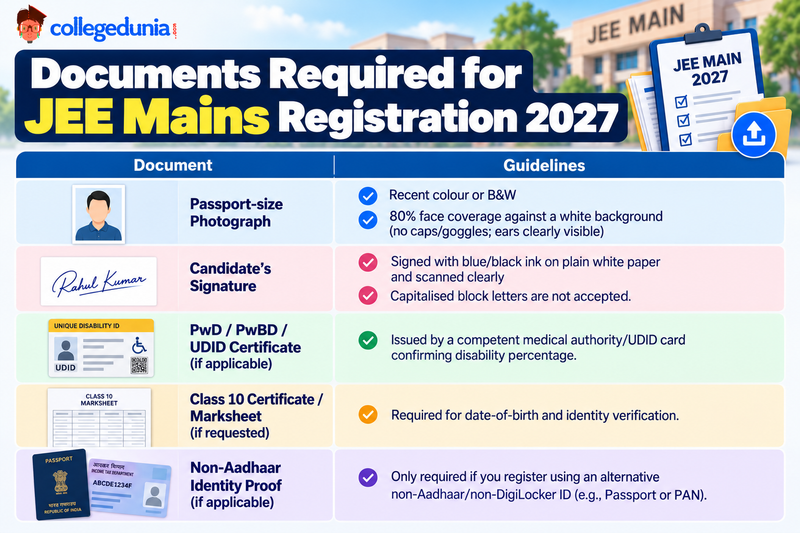
- Applicants should keep their photograph, signature, identity details, academic information, and applicable category certificates ready before starting registration.
- Candidates should carefully verify their name, date of birth, category, and other details before submitting the application form.
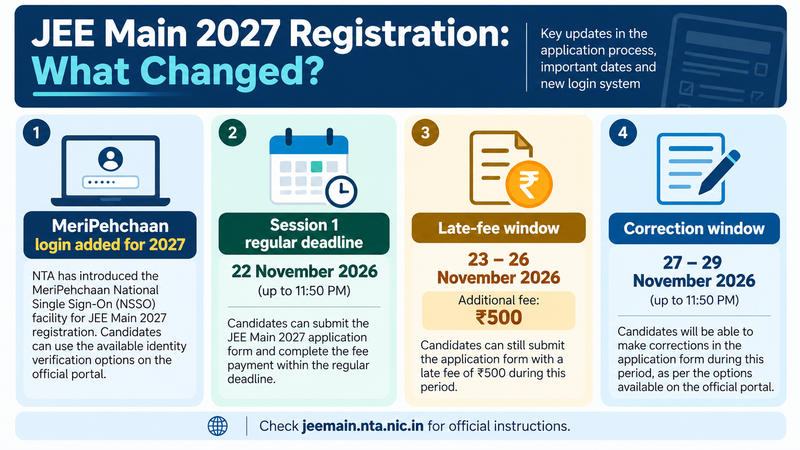
- Candidates who miss the regular deadline can submit their applications with a late fee of ₹500 from November 23 to November 26, 2026, as specified in the provided notification.
- The application correction window is scheduled for November 27–29, 2026. Any changes will be subject to NTA's correction guidelines.
- Candidates should submit only one application form per session and follow NTA's instructions to avoid rejection or other action due to duplicate applications.
Free PDFs to start your JEE Main 2027 Preparation

Related Links:
- JEE Main Registration 2027: How to Apply Online, Documents Required, Application Form Fees
- JEE Main 2027: Exam Date (Out), Registration, Eligibility, Syllabus, Previous Year Papers, Cutoff

When Does JEE Main 2027 Registration Open and What Is the Exam Schedule?
JEE Main 2027 Session 1 registration started on October 24, 2026, according to the registration notice provided. Candidates can submit the application form through the official website, jeemain.nta.nic.in, until November 22, 2026, at 11:50 PM. Applicants who miss the regular deadline can apply with a late fee of ₹500 from November 23 to November 26, 2026.
As per the NTA examination schedule, JEE Main 2027 Session 1 will be conducted on January 22, 23, 24, 28, 29 and 30, 2027, with January 31 reserved as a buffer date
Check: JEE Main 2027 Registration Fees: Category-Wise Charges, Payment Steps and Mistakes to Avoid
JEE Main Application Form 2027: How to Apply Online?
Once NTA activates the registration link, candidates should follow the instructions provided on the official portal.
- Visit jeemain.nta.nic.in.
- Open the JEE Main 2027 Session 1 application link.
- Complete the registration using the requested personal and contact details.
- Enter academic information, category details and examination preferences.
- Upload the required photograph, signature and supporting documents.
- Pay the application fee using an available payment method.
- Review the completed form and submit it.
- Download the confirmation page and save the application number.
Candidates should check all entries before submission. If a correction window is announced, they should follow NTA's instructions to determine which details can be edited.
Check: Documents Required for JEE Main 2027 Exam Centre: Complete Guide
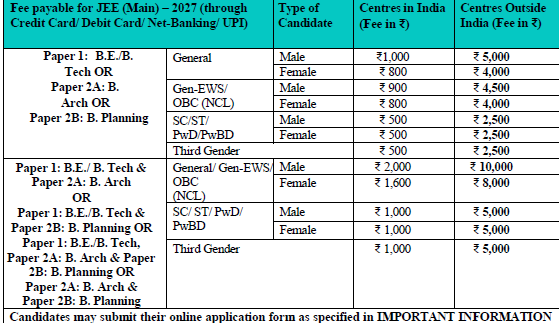
JEE Main 2027 Application Fees
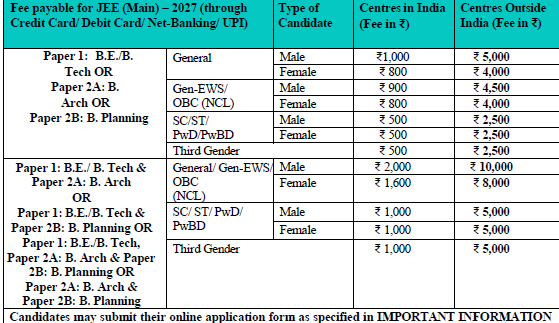
Check: JEE Main 2027: Notification Out in October, Exam Dates, Syllabus, and High-Weightage Chapters
JEE Main 2027 Aadhaar, Live Photograph and Category Certificate Rules
Candidates should check their identity details before starting the application process. Previous JEE Main instructions included Aadhaar-related verification and additional guidance for certain photograph mismatches. The exact process for JEE Main 2027 remains subject to NTA's updated instructions.
For more details, check: JEE Main 2027 Registration: Aadhaar Update, Live Photo and Category Certificate Rules
Candidates should distinguish between the age criteria for appearing in JEE Main and the rules governing the number of eligible examination years. The supplied update states that candidates can appear during three consecutive years, with two sessions conducted each year.
|
Eligibility detail |
Information in the supplied update |
|---|---|
|
Upper age limit |
No upper age limit stated |
|
Attempt window |
Three consecutive years |
|
Sessions per year |
January and April |
|
Maximum session appearances |
Up to six across three eligible years |
|
Class 12 passing year |
Used to determine the applicable attempt window |
Candidates must verify the final eligibility conditions against the JEE Main 2027 information bulletin before applying. The number of sessions available does not mean candidates can appear outside their eligible three-year window.
|
Document |
Format |
Reported file size |
|---|---|---|
|
Live photograph |
Captured during the application process |
As directed on the portal |
|
Scanned passport-size photograph |
JPG/JPEG |
10–200 KB |
|
Scanned signature |
JPG/JPEG |
10–100 KB |
|
Class 10 certificate or marksheet |
|
50–300 KB |
|
Disability/UDID certificate, if applicable |
|
50–300 KB |
|
Certificate for physical limitation to write, if applicable |
|
50–300 KB |
Candidates should ensure that all files are clear, legible and within the prescribed limits. The official application portal and information bulletin should be treated as the final authority if any specification differs.
|
Upcoming event |
Date |
|---|---|
|
Registration started |
October 24, 2026 |
|
Regular application deadline |
November 22, 2026 |
|
Late-fee registration |
November 23–26, 2026 |
|
Application correction window |
November 27–29, 2026 |
|
Examination city intimation |
December 30, 2026 |
|
Admit card release |
January 13, 2027 |
|
JEE Main Session 1 examination |
January 20, 21, 22, 23, 24 and 28, 2027 |
Candidates should check the official portal for any revised dates or additional instructions before making travel or examination-related arrangements.
NTA has announced a late-fee registration window for JEE Main 2027 Session 1. Candidates who miss the regular deadline can submit their applications from November 23 to 26, 2026, by paying an additional ₹500
|
Application period |
Deadline / dates |
Fee implication |
|---|---|---|
|
Regular registration |
Up to November 22, 2026, 11:50 PM |
Applicable regular examination fee |
|
Late registration |
November 23–26, 2026 |
Regular examination fee plus ₹500 late fee |
|
Correction window |
November 27–29, 2026 |
Corrections allowed only in fields specified by NTA |
|
Application step |
Action required |
|---|---|
|
Registration |
Open the JEE Main 2027 application link: jeemain.nta.nic.in |
|
Login |
Use the available registration or authentication facility |
|
Form filling |
Enter personal, academic and examination details |
|
Document upload |
Upload the prescribed photograph, signature and applicable certificates |
|
Fee payment |
Pay the applicable examination fee |
|
Final step |
Download the confirmation page |
Candidates searching for jeemain nta should use the official website rather than relying on third-party links to submit their application.
Official link: jeemain.nta.nic.in
Chapter-wise previous-year questions can help candidates measure preparation progress more precisely than simply counting completed chapters. Candidates should track question attempts, accuracy and time taken across Physics, Chemistry and Mathematics.
|
Performance metric |
How to calculate or track it |
|---|---|
|
Questions attempted |
Total questions solved in a practice session |
|
Correct answers |
Number of accurate responses |
|
Accuracy |
Correct answers ÷ attempted questions × 100 |
|
Average solving time |
Total practice time ÷ questions attempted |
|
Recurring mistakes |
Concepts or calculation errors repeated across tests |
|
Step |
What candidates need to check |
|---|---|
|
1. Complete the form |
Personal details, academic information and paper selection |
|
2. Verify documents |
Photograph, signature and applicable certificates |
|
3. Check the fee |
Category, selected paper and exam-centre location |
|
4. Make payment |
Use an available payment method |
|
5. Confirm submission |
Check payment status and download the confirmation page |
Important: A successful payment alone should not be treated as proof that every application step is complete. Candidates should ensure that the confirmation page is generated and save it for future reference.
|
Fee component |
2026 vs 2027 comparison |
|---|---|
|
Regular fee for most categories in India |
Largely unchanged |
|
Additional late fee in the 2027 schedule |
₹500 |
|
Regular fee deadline |
November 22, 2026, at 11:50 PM |
|
Late-fee application window |
November 23–26, 2026 |
The additional ₹500 is a late fee, not a general increase in the regular examination fee. Candidates applying during the late window should budget for the applicable examination fee plus the additional charge.
|
Event |
JEE Main 2026 Session 1 |
JEE Main 2027 Session 1 |
|---|---|---|
|
Registration start |
October 31, 2025 |
October 24, 2026 |
|
Regular application deadline |
November 27, 2025 |
November 22, 2026 |
|
Late-fee application window |
No separate window specified in the initial bulletin |
November 23–26, 2026 |
|
Application correction |
Schedule announced separately |
November 27–29, 2026 |
|
Examination |
January 21–30, 2026 |
January 20, 21, 22, 23, 24 and 28, 2027 |
Key difference: JEE Main 2027 has a separately announced late-fee application window, giving candidates another opportunity to apply after the regular deadline by paying an additional charge.
An analysis of JEE Main papers from 2024, 2025 and 2026 can help candidates identify recurring topics and plan revision.
|
Subject |
Chapters identified in the supplied analysis |
Recommended preparation approach |
|---|---|---|
|
Physics |
Optics, Properties of Solids and Liquids, Electrostatics |
Revise concepts, formulas and numerical applications |
|
Chemistry |
Coordination Compounds, Some Basic Principles of Organic Chemistry, Organic Compounds Containing Oxygen |
Practise reaction-based questions and conceptual applications |
|
Mathematics |
Coordinate Geometry, Integral Calculus, Limits, Continuity and Differentiability |
Solve timed, chapter-wise problems |
Candidates should compare question frequency across multiple shifts and record their accuracy for each chapter before deciding which topics need additional revision.
|
Registration feature |
JEE Main 2026 |
JEE Main 2027 |
|---|---|---|
|
MeriPehchaan login |
Not explicitly included in the 2026 bulletin |
Included in the registration process |
|
Identity verification |
Followed the methods specified in the 2026 application process |
Candidates can use the supported options displayed on the portal |
|
Live photograph |
Required |
Required |
|
Application form |
Online |
Online |
|
Final submission |
Fee payment and confirmation page |
Fee payment and confirmation page |
- Candidates applying for JEE Main 2027 Session 1 should check the identity verification and document-related options available on the official registration portal.
- The registration process includes completing personal and academic details, uploading the required documents, and paying the applicable application fee.
- Candidates should visit jeemain.nta.nic.in and follow the instructions displayed during registration to complete the application successfully.
- Applicants should verify all details before final submission and download the confirmation page after completing the process
JEE Main has three examination papers for candidates seeking admission to engineering, architecture and planning programmes. The paper selected during registration determines the examination components and marking structure.
|
Paper |
Course |
Previous-cycle pattern |
|---|---|---|
|
Paper 1 |
B.E./B.Tech |
75 questions, 300 marks |
|
Paper 2A |
B.Arch |
77 questions, 400 marks |
|
Paper 2B |
B.Planning |
100 questions, 400 marks |
- Paper 1: Physics, Chemistry and Mathematics.
- Paper 2A: Mathematics, Aptitude Test and Drawing Test.
- Paper 2B: Mathematics, Aptitude Test and Planning-based questions.
Note: These figures reflect the pattern stated in the supplied update. Candidates should verify the final JEE Main 2027 question count, marking scheme and examination mode against the official information bulletin.
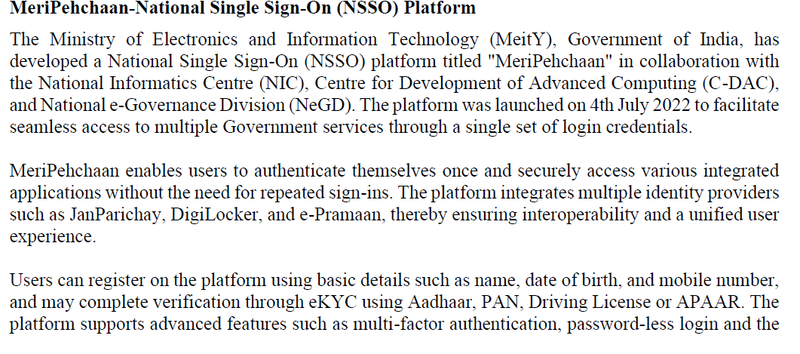
Key changes in JEE Main 2027 registration:
- MeriPehchaan login: Candidates can access the registration process through the government’s single sign-on platform.
- Digital identity verification: Applicants can complete identity authentication using an accepted verification method shown on the portal.
- Application form submission: After verification, candidates must fill in their academic and personal details, upload the required documents and pay the examination fee.
- Confirmation page: Candidates should download the confirmation page after successful submission and fee payment.

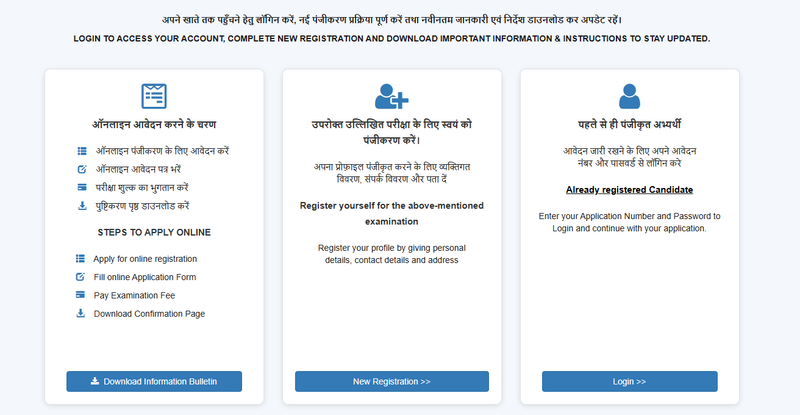
- NTA has activated the JEE Main 2027 registration Link.
- Candidates can now fill out the JEE Main 2027 application form. Click here to register.

Source: JEE Main 2027 Notice PDF
| Subject | Expected JEE Main 2027 Syllabus PDF |
|---|---|
| Physics | Download PDF |
| Chemistry | Download PDF |
| Mathematics | Download PDF |
The official JEE Main website, jeemain.nta.nic.in, has reportedly been updated today, October 24, 2026. Notifications from the previous examination cycle have reportedly been removed, but the JEE Main 2027 registration link has not yet been confirmed as active.

Candidates can prepare their records before the application link becomes active. The exact upload specifications and document requirements should be checked in the JEE Main 2027 information bulletin.
|
Document or detail |
Preparation action |
|---|---|
|
Class 10 certificate |
Verify name and date of birth |
|
Class 12 details |
Keep board, year and qualifying-examination information ready |
|
Aadhaar or other prescribed identification |
Check personal details for consistency |
|
Photograph |
Prepare according to the official upload specifications |
|
Signature |
Prepare a clear scanned copy |
|
Category certificate |
Keep applicable EWS, OBC-NCL, SC or ST documentation ready |
|
PwD/PwBD certificate |
Prepare if applicable |
|
Email and mobile number |
Ensure access to both throughout registration |
Candidates should not rely on previous-year file-size limits until the 2027 instructions are released.
Chapter-wise previous-year questions are useful for identifying preparation gaps. Instead of simply counting questions, candidates can maintain a performance tracker to decide which chapters require additional revision.
|
Subject |
Chapter-wise practice focus |
Performance metric |
|---|---|---|
|
Physics |
Mechanics, electricity, optics and modern physics |
Accuracy and time per question |
|
Chemistry |
Physical, Organic and Inorganic Chemistry |
Accuracy by chapter |
|
Mathematics |
Calculus, algebra, coordinate geometry and vectors |
Correct answers per timed set |
A chapter-wise tracker can use the following formula:

Candidates should prioritise chapters with low accuracy and repeated errors. Chapter importance should be evaluated using verified historical paper analysis and the applicable syllabus, not assumed from search trends alone.

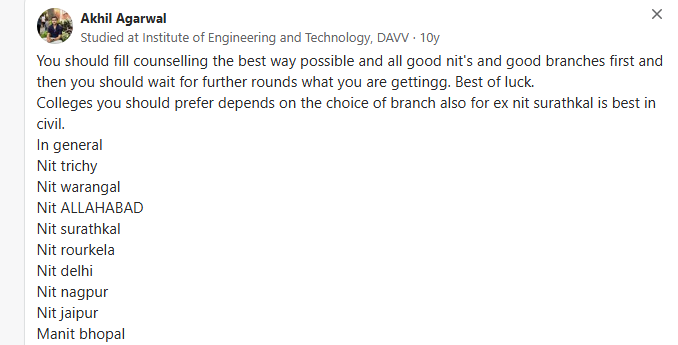
A rank of 15,000 in JEE Main is considered a very good and respectable rank, placing you roughly in the top 1% of the over 1.2 to 1.3 million candidates who appear for the exam (translating to roughly the 99 percentile).
Source: Quora
An IIIT seat at a JEE Main rank of 1 lakh may be possible in selected institutes, programmes or categories, but admission is not assured. Popular branches such as Computer Science and Engineering generally attract stronger competition.
|
Factor |
Admission impact |
|---|---|
|
Institute |
Cutoffs differ across IIITs |
|
Branch |
CSE and related specialisations may be more competitive |
|
Category |
Reservation rules affect applicable cutoffs |
|
Seat pool and quota |
Eligibility and seat allocation rules matter |
|
Counselling round |
Closing ranks can change between rounds |
|
NIT Name |
B.Tech Branch |
Closing Rank |
|---|---|---|
|
NIT Mizoram |
Civil Engineering |
6,78,406 |
|
NIT Sikkim |
Electrical and Electronics Engineering (EEE) |
6,39,272 |
|
NIT Agartala |
Production Engineering |
3,26,262 |
|
NIT Agartala |
Biotechnology and Biochemical Engineering |
2,87,950 |
|
NIT Meghalaya |
Civil Engineering |
2,57,202 |
|
NIT Puducherry |
Civil Engineering |
2,25,349 |
|
NIT Arunachal Pradesh |
Civil Engineering |
1,82,340 |
Yes, admission to an NIT may be possible at a JEE Main rank of 75,000, depending on the candidate's category, home-state quota, preferred branch and counselling round. However, admission to a specific NIT or branch cannot be guaranteed from rank alone.
NITs to Check at a JEE Main Rank of 75,000
|
NIT |
Branches to investigate |
Admission considerations |
|---|---|---|
|
NIT Agartala |
Civil, Mechanical and other core branches |
Check home-state and other-state cutoffs separately |
|
NIT Srinagar |
Civil, Mechanical and allied branches |
Compare the relevant seat pool and category |
|
NIT Mizoram |
Civil, Electrical and Mechanical |
Review branch-wise closing ranks |
|
NIT Nagaland |
Core engineering branches |
Verify the available programme and cutoff |
|
NIT Meghalaya |
Civil, Mechanical and other branches |
Check category and quota-specific data |
|
NIT Sikkim |
Civil, Mechanical and Electrical |
Compare the latest available counselling data |
|
NIT Arunachal Pradesh |
Core engineering branches |
Check programme-specific eligibility and closing ranks |
Yes, it is possible to qualify for JEE Advanced in three months, but the outcome depends on your current preparation level, syllabus coverage and mock-test performance. Qualifying for JEE Advanced does not guarantee an IIT seat.
A focused 90-day preparation plan can be divided into three phases:
|
Preparation phase |
Duration |
Main target |
|---|---|---|
|
Syllabus revision and concept building |
Days 1–30 |
Cover important concepts and weak chapters |
|
Chapter-wise PYQs and timed practice |
Days 31–60 |
Improve accuracy and question selection |
|
Full-length mocks and final revision |
Days 61–90 |
Analyse mistakes and improve time management |
A JEE Main rank of 70,000 can provide admission opportunities in some NITs, IIITs and other engineering colleges, depending on the candidate's category, home-state quota, preferred branch and counselling round.
|
Factor |
How it affects admission |
|---|---|
|
General category |
Highly competitive branches at top NITs may be difficult |
|
Reserved category |
Some additional options may be available |
|
Home-state quota |
Can improve opportunities at the candidate's home-state NIT |
|
Branch preference |
Less competitive branches may have more options |
|
Other engineering colleges |
State colleges and private institutions may offer alternatives |
As of October 23, 2026, JEE Main 2027 Session 1 registration has not been officially confirmed as open. Recent reports expect NTA to begin registrations in late October 2026, but candidates must wait for the official announcement.
|
Registration detail |
Latest status |
|---|---|
|
Registration start date |
Awaited officially |
|
Expected opening |
Late October 2026 |
|
Application deadline |
Awaited |
|
Session 1 exam dates |
January 22–24 and January 28–30, 2027 |
- Candidates preparing for JEE Main 2027 can use previous-year questions (PYQs) chapter-wise to identify recurring question types, assess topic-wise accuracy and prioritise revision.
- The examination includes Physics, Chemistry and Mathematics in Paper 1.
|
Subject |
How to use chapter-wise PYQs |
|---|---|
|
Physics |
Practise numerical problems and formula-based applications by chapter |
|
Chemistry |
Separate Physical, Organic and Inorganic Chemistry questions |
|
Mathematics |
Track accuracy across algebra, calculus, coordinate geometry and other syllabus units |
|
All three subjects |
Record attempted questions, correct answers and time taken |
Check JEE Mains PYQs chapter wise
The official JEE Main portal is where JEE Main 2027 registration link, information bulletin and examination notices will be made available. Candidates should verify that they are viewing the official NTA website before entering personal details or paying the application fee.
|
Website section |
What candidates should check |
|---|---|
|
Latest news / public notices |
New registration announcements |
|
Candidate activity |
Availability of the application link |
|
Information bulletin |
Eligibility, fee and document instructions |
|
Application portal |
Registration, form submission and payment |
|
NTA website |
Additional official examination notices |
JEE Main, previously known as the All India Engineering Entrance Examination (AIEEE) [अखिल भारतीय इंजीनियरिंग प्रवेश परीक्षा ], is a national-level entrance examination for undergraduate engineering admissions.
The JEE Main 2027 Session 1 exam is scheduled for January 22–24 and January 28–30, 2027.
- Exam: Joint Entrance Examination (JEE) Main 2027
- Registration status: Opening date awaited
- Application portal: jeemain.nta.nic.in
- Admission routes: B.E./B.Tech, B.Arch and B.Planning, depending on the paper and institutional eligibility criteria.
Candidates should check NTA's official notification for the confirmed registration deadline, application fee and eligibility rule
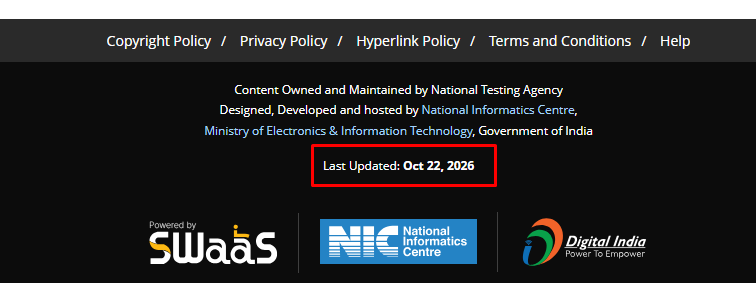
The official JEE Main website, jeemain.nta.nic.in, was updated on October 22, 2026. But the latest notices listed on the portal relate to the JEE Main 2026 examination cycle, and a registration link for JEE Main 2027 has not been confirmed in the available official update.



Comments