

Hubstaff vs Time Doctor: Which Employee Monitoring Tool Is Better in 2026?

Introduction
As remote work, hybrid teams, and globally distributed workforces continue to grow in 2026, businesses are increasingly relying on employee monitoring and workforce management software to maintain productivity, accountability, and operational efficiency. Organizations of all sizes-from startups and agencies to enterprise corporations—need accurate visibility into how employees spend their time, manage projects, and contribute to company goals.
Among the leading workforce management platforms available today, Hubstaff and Time Doctor consistently rank as two of the most popular solutions. Both tools provide time tracking, productivity monitoring, reporting, workforce analytics, and remote team management features. However, despite sharing many similarities, they differ significantly in their approach, feature set, user experience, integrations, pricing, and overall value.
For managers evaluating employee monitoring software in 2026, choosing between Hubstaff and Time Doctor can be challenging. Each platform offers unique strengths that appeal to different business needs.
This comprehensive comparison examines every major aspect of Hubstaff and Time Doctor, helping employers determine which solution best fits their workforce management strategy.
Understanding Employee Monitoring Software
Before comparing Hubstaff and Time Doctor, it's important to understand why employee monitoring software has become essential for modern organizations.
Businesses use workforce monitoring tools to:
- Track working hours
- Improve productivity
- Manage remote teams
- Analyze employee performance
- Optimize project management
- Simplify payroll processing
- Improve accountability
- Monitor project costs
In remote and hybrid environments, managers often lack direct visibility into daily operations. Workforce management software helps bridge that gap by providing actionable data and insights.
Overview of Hubstaff
Hubstaff is a workforce management platform that combines time tracking, productivity monitoring, project management, workforce analytics, scheduling, payroll integrations, and reporting.
Founded in 2012, Hubstaff has become one of the most recognized names in workforce management software.
Key focus areas include:
- Time tracking
- Workforce analytics
- Employee productivity
- Project profitability
- Team scheduling
- Remote workforce management
Hubstaff serves:
- Agencies
- Software companies
- Consultants
- Marketing teams
- Construction businesses
- Healthcare organizations
- Customer support teams
Overview of Time Doctor
Time Doctor is another leading employee monitoring and productivity management platform.
Founded in 2012, Time Doctor focuses heavily on:
- Employee monitoring
- Productivity tracking
- Workforce analytics
- Attendance management
- Behavioral insights
Time Doctor is often favored by organizations seeking deeper employee monitoring capabilities.
The platform is widely used by:
- BPO companies
- Call centers
- Remote teams
- Outsourcing providers
- Virtual assistant agencies
Hubstaff vs Time Doctor: Core Philosophy
One of the biggest differences between the two platforms is their overall philosophy.
Hubstaff's Approach
Hubstaff focuses on:
- Workforce management
- Productivity optimization
- Team transparency
- Operational efficiency
Its monitoring features are designed to support performance improvement rather than strict surveillance.
The platform emphasizes balance between visibility and employee trust.
Time Doctor's Approach
Time Doctor focuses more heavily on:
- Employee activity monitoring
- Workforce oversight
- Productivity enforcement
- Behavioral tracking
Organizations seeking detailed monitoring often prefer Time Doctor because of its extensive observation capabilities.
User Interface Comparison
Hubstaff
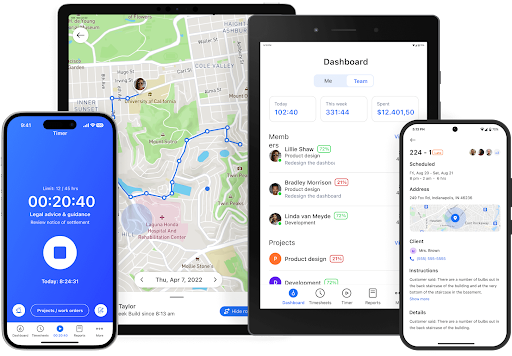
Hubstaff offers a modern and intuitive interface.
Advantages include:
- Clean dashboard
- Easy navigation
- Mobile-friendly design
- Simplified reporting
- Quick onboarding
Most users can begin using Hubstaff with minimal training.
Time Doctor
Time Doctor’s interface is functional but more data-heavy.
Advantages include:
- Detailed productivity metrics
- Comprehensive monitoring reports
- Strong administrative controls
However, some users find the interface less intuitive compared to Hubstaff.
Winner: User Experience
Hubstaff wins for ease of use and overall user experience.
Organizations prioritizing simplicity typically prefer Hubstaff.
Time Tracking Features
Accurate time tracking remains one of the most important workforce management requirements.
Hubstaff Time Tracking
Hubstaff offers:
- One-click timers
- Automatic tracking
- Mobile tracking
- GPS tracking
- Manual timesheets
- Idle detection
Employees can track time across projects and tasks easily.
Managers gain real-time visibility into work activity.
Time Doctor Time Tracking
Time Doctor provides:
- Manual tracking
- Automatic tracking
- Time reports
- Attendance tracking
- Idle-time detection
Tracking functionality is reliable and detailed.
Winner: Time Tracking
Both platforms perform exceptionally well.
Result: Tie
Employee Monitoring Capabilities
Monitoring features often influence purchasing decisions.
Hubstaff Monitoring
Hubstaff includes:
- Activity levels
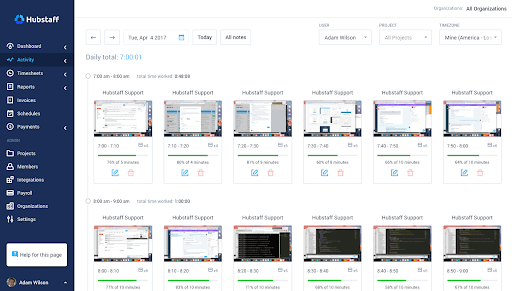
- Optional screenshots
- App tracking
- URL tracking
- GPS monitoring
- Productivity reports
The platform offers monitoring while maintaining employee privacy options.
Time Doctor Monitoring
Time Doctor provides:
- Screenshot monitoring
- Website tracking
- Application tracking
- Activity monitoring
- Inactivity detection
- Distraction alerts
Its monitoring capabilities are generally more extensive.
Winner: Monitoring Features
Time Doctor wins
Organizations seeking maximum oversight often prefer Time Doctor.
Screenshot Functionality
Screenshots are a key feature in employee monitoring software.
Hubstaff
Hubstaff offers:
- Random screenshots
- Blurred screenshots
- Custom screenshot settings
Employees and managers maintain flexibility.
Time Doctor
Time Doctor provides:
- Automated screenshots
- Frequent capture options
- Detailed visual monitoring
Monitoring is generally more aggressive.
Winner: Screenshot Monitoring
Time Doctor wins
Productivity Measurement
Understanding productivity trends is crucial for workforce optimization.
Hubstaff
Hubstaff measures:
- Activity rates
- Time allocation
- Project contributions
- Productivity trends
Reports are highly visual and easy to understand.
Time Doctor
Time Doctor tracks:
- Active versus inactive time
- Productive websites
- Unproductive websites
- Focus levels
The platform offers deeper behavioral insights.
Winner: Productivity Analysis
Time Doctor wins slightly
Workforce Analytics
Analytics have become increasingly important in 2026.
Hubstaff Analytics
Hubstaff provides:
- Workforce reports
- Project profitability
- Labor cost analysis
- Team utilization reports
Its analytics support strategic decision-making.
Time Doctor Analytics
Time Doctor focuses more on:
- Employee behavior
- Productivity scoring
- Activity patterns
While useful, analytics are more employee-centric.
Winner: Workforce Analytics
Hubstaff wins
Its analytics provide broader business insights.
Project Management Features
Hubstaff
Hubstaff includes:
- Task tracking
- Project budgets
- Workload visibility
- Resource allocation
These features help manage project performance.
Time Doctor
Time Doctor offers basic project tracking but focuses primarily on monitoring.
Project management capabilities are less extensive.
Winner: Project Management
Hubstaff wins comfortably
Payroll and Invoicing
Hubstaff
Hubstaff offers:
- Payroll automation
- Contractor payments
- Invoice generation
- Budget tracking
Payroll workflows are streamlined.
Time Doctor
Time Doctor supports payroll integrations but lacks some of Hubstaff's automation capabilities.
Winner: Payroll Features
Hubstaff wins
GPS Tracking
GPS functionality is valuable for field teams.
Hubstaff
Hubstaff offers:
- GPS location tracking
- Route monitoring
- Mobile workforce management
Useful for:
- Construction companies
- Delivery services
- Field technicians
Time Doctor
Time Doctor focuses primarily on desk-based employees.
GPS functionality is limited.
Winner: GPS Tracking
Hubstaff wins easily
Mobile Applications
Hubstaff Mobile App
Features include:
- GPS tracking
- Time tracking
- Scheduling
- Reporting
The mobile experience is robust.
Time Doctor Mobile App
Provides:
- Time tracking
- Productivity monitoring
- Reporting
Functional but less feature-rich.
Winner: Mobile Experience
Hubstaff wins.
Integrations
Modern businesses rely heavily on software ecosystems.
Hubstaff Integrations
Hubstaff integrates with:
- Trello
- Asana
- Jira
- ClickUp
- GitHub
- QuickBooks
- PayPal
- Slack
And dozens more.
Time Doctor Integrations
Time Doctor supports:
- Asana
- Trello
- Jira
- Slack
- Zapier
The integration library is solid but slightly smaller.
Winner: Integrations
Hubstaff wins
Employee Privacy
Privacy concerns continue growing in 2026.
Hubstaff
Hubstaff provides:
- Optional monitoring
- Flexible screenshot settings
- Transparency-focused controls
Organizations can customize monitoring levels.
Time Doctor
Time Doctor emphasizes comprehensive monitoring.
Some employees may perceive the platform as more intrusive.
Winner: Employee Privacy
Hubstaff wins
Ease of Implementation
Hubstaff
Implementation is typically:
- Fast
- Simple
- User-friendly
Many teams become operational within a day.
Time Doctor
Implementation is straightforward but may require more configuration.
Winner: Implementation
Hubstaff wins
Customer Support
Hubstaff
Support channels include:
- Live chat
- Knowledge base
- Email support
- Documentation
Response times are generally strong.
Time Doctor
Time Doctor also offers:
- Email support
- Help center
- Live chat
Support quality is comparable.
Winner: Customer Support
Tie
Reporting Capabilities
Hubstaff Reports
Includes:
- Payroll reports
- Budget reports
- Time reports
- Productivity reports
- Project profitability reports
Highly valuable for management teams.
Time Doctor Reports
Includes:
- Productivity reports
- Attendance reports
- Website reports
- Activity reports
Strong reporting but narrower business focus.
Winner: Reporting
Hubstaff wins.
Best for Remote Teams
Remote-first organizations often prioritize visibility without creating employee distrust.
Hubstaff
Offers:
- Balanced monitoring
- Workforce management
- Employee autonomy
Excellent for remote cultures.
Time Doctor
Provides:
- Strong oversight
- Detailed monitoring
Better suited for highly controlled environments.
Winner: Remote Teams
Hubstaff wins
Best for Outsourcing Companies
Outsourcing providers often require extensive monitoring.
Examples include:
- Virtual assistant agencies
- BPOs
- Customer service providers
Winner
Time Doctor wins
Its monitoring capabilities align closely with outsourcing requirements.
Best for Agencies
Marketing agencies, design firms, and consulting companies often prioritize project management.
Winner
Hubstaff wins
Project budgeting and profitability tracking are major advantages.
Best for Startups
Startups often seek affordability and ease of use.
Winner
Hubstaff wins
Its broader feature set reduces the need for additional tools.
Best for Enterprise Organizations
Large enterprises often require:
- Detailed reporting
- Workforce analytics
- Compliance controls
Winner
Hubstaff wins narrowly
Its broader workforce management ecosystem provides stronger enterprise value.
Pricing Comparison in 2026
Pricing structures may change over time, but generally:
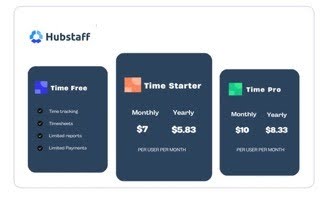
Hubstaff
Offers:
- Affordable entry plans
- Flexible scaling
- Strong value per feature
Time Doctor
Pricing is competitive but often becomes more expensive as monitoring requirements increase.
Winner: Pricing Value
Hubstaff wins
Pros and Cons
Hubstaff Pros
- User-friendly interface
- Strong project management
- Excellent workforce analytics
- GPS tracking
- Payroll automation
- Extensive integrations
- Better employee privacy balance
Hubstaff Cons
- Monitoring features are less aggressive
- Some advanced reporting requires higher plans
Time Doctor Pros
- Deep monitoring capabilities
- Detailed productivity tracking
- Strong screenshot monitoring
- Excellent for outsourcing teams
Time Doctor Cons
- Can feel intrusive
- Less project-focused
- Fewer workforce management tools
Which Tool Is Better for Different Use Cases?
Choose Hubstaff If You Need:
- Project management
- Workforce analytics
- Payroll automation
- GPS tracking
- Employee-friendly monitoring
- Agency management
- Hybrid workforce support
Choose Time Doctor If You Need:
- Detailed employee monitoring
- Behavioral productivity analysis
- Strict workforce oversight
- BPO management
- Outsourcing workforce tracking
Future Trends in Employee Monitoring
By 2026 and beyond, workforce management software is evolving toward:
- AI-powered analytics
- Predictive workforce planning
- Personalized productivity insights
- Employee wellbeing metrics
- Hybrid work optimization
Both Hubstaff and Time Doctor are investing in innovation, but Hubstaff's broader workforce management vision positions it well for future workplace trends.
Final Verdict: Hubstaff vs Time Doctor in 2026
Both Hubstaff and Time Doctor are excellent workforce management platforms, but they serve slightly different audiences.
If your primary goal is deep employee monitoring and oversight, Time Doctor remains one of the strongest options available.
However, if you want a platform that combines time tracking, workforce analytics, project management, payroll automation, productivity monitoring, employee support, and business intelligence, Hubstaff offers greater overall value.
Overall Winner: Hubstaff
Hubstaff provides a more balanced approach to workforce management, making it the better choice for most modern organizations in 2026. Its combination of usability, analytics, project management features, integrations, payroll functionality, and employee-friendly monitoring creates a comprehensive platform capable of supporting remote, hybrid, and distributed teams at scale.
While Time Doctor excels in monitoring depth, Hubstaff delivers a more complete workforce management solution-making it the stronger long-term investment for businesses looking to grow, optimize operations, and support employee success in the future of work.



.png)

.png)
SUBSCRIBE TO OUR NEWS LETTER


