




Bachelor of Science [B.S] (Computer Science)
Field of Study:
$8,410 /Yr

San Jose State University Bachelor of Science Computer Science: Career Gateway in Silicon Valley
San Jose State University’s Bachelor of Science in Computer Science is a four-year undergraduate degree designed to prepare students for roles in software engineering, systems design, artificial intelligence, and cybersecurity. Located in the heart of Silicon Valley, SJSU computer science graduates benefit from direct access to tech industry internships and employment opportunities with Apple, Google, Cisco, Intel, Qualcomm, and NVIDIA.
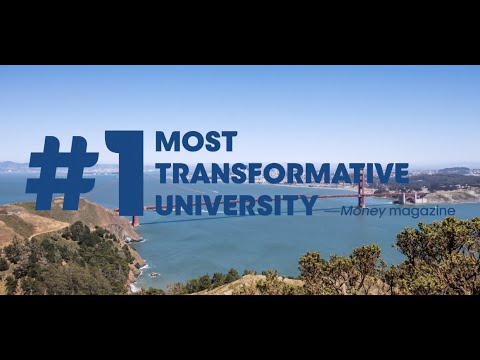
The program enrolls approximately 400-450 undergraduate students per cohort and maintains strong industry partnerships through its Department of Computer Science. SJSU was ranked #1 by FrogHire.ai’s 2025 Career Outcome University Ranking for international student employment success, making it an exceptional choice for Indian students seeking US education with high post-graduation career outcomes. The curriculum emphasizes hands-on lab work, full-stack development, algorithms, data structures, operating systems, and database design.
For Indian students, SJSU Computer Science offers several distinct advantages: an 88% undergraduate placement rate, median starting salaries of US$70,386 annually (approximately ?6,705,697), and STEM OPT eligibility extending work authorization to 36 months post-graduation. The acceptance rate for international students is 78%, and the university accepts applications from students whose bachelor’s degrees were awarded from Indian universities recognized by the Association of Indian Universities.
San Jose State University Computer Science Tuition and Program Costs
San Jose State University charges separate fees for resident and non-resident students. International students (including those from India) are classified as non-resident students and pay the full non-resident rate. The annual cost breakdown for 2024-2025 is as follows:
| Fee Category | Annual Cost (US$) | Annual Cost in INR |
|---|---|---|
| Resident Tuition | US$9,553 | ?910,559 |
| Non-Resident Surcharge | US$5,652 | ?538,232 |
| Campus Fees | US$245 | ?23,327 |
| Total Tuition + Fees | US$15,450 | ?1,472,685 |
| Health Insurance (mandatory) | US$2,250 | ?214,223 |
| Total Annual Academic Cost | US$17,700 | ?1,686,908 |
The four-year total cost of tuition, fees, and health insurance is US$70,800 (approximately ?6,747,632). For Indian students, this represents a significantly lower total cost of education compared to private universities Stanford (US$67,731 annually) or Ivy League institutions. Living costs in San Jose add an additional US$16,604 annually (approximately ?1,581,205), bringing the total cost of attendance to approximately US$32,054 per year (?3,056,589).
To offset expenses, SJSU Computer Science students typically secure paid internships during summers. The average internship compensation ranges from US$20-25 per hour for full-time summer positions (10-12 weeks), which translates to US$8,000-12,000 per summer. This internship income covers 60-70% of annual living costs, significantly reducing the overall expense burden for Indian families. Approximately 75% of SJSU CS students secure internships before sophomore year ends, providing both income and valuable work experience.
Exchange rate used: 1 US$ = ?95.21 (as of June 16, 2026). INR costs are calculated at this current rate; rates fluctuate daily and may change during your enrollment period.
Scholarships and Financial Aid for Computer Science at San Jose State University
SJSU offers several merit-based scholarships for international students pursuing computer science and engineering degrees. These scholarships are awarded based on academic achievement, standardized test scores, and demonstrated leadership. While SJSU does not offer need-based financial aid to international students, the following merit scholarships are available:
Global Spartan Scholarship: This is the primary international merit scholarship, available to students with a minimum GPA of 3.3 or higher. The estimated annual award ranges from US$1,000 to US$5,000 (approximately ?95,210 to ?476,050). This scholarship recognizes academic excellence and is automatically considered for all incoming international applicants; no separate application is required.
Engineering Merit Award: For computer science students (classified as engineering), SJSU awards merit scholarships to students with a minimum GPA of 3.5 and demonstrated STEM coursework in secondary education. Awards reach up to US$3,000 annually (approximately ?285,630). This award is highly competitive and gives preference to students with strong mathematics and physics backgrounds.
AACSB Business School Award: Although computer science is technically under the College of Engineering, some students pursuing computer science with business applications qualify for AACSB-accredited scholarships (minimum GPA 3.2), which offer US$1,000-2,500 annually (approximately ?95,210 to ?238,025).
Important note for Indian students: Scholarship awards are typically disbursed after you have obtained your F-1 student visa and enrolled at SJSU. Plan your initial funding to cover the first semester, as scholarships are usually applied to your second and subsequent semesters. Additionally, all scholarships are subject to continued enrollment and maintenance of the specified GPA.
Work-study opportunities on campus are available to F-1 students (up to 20 hours per week during the academic term), paying US$15-17 per hour. This provides an additional income stream of US$300-340 weekly during the semester. Graduate assistantships and teaching assistantships are available for CS majors who demonstrate strong academic performance.
San Jose State University Computer Science Admission Requirements and Eligibility
SJSU maintains transparent, standardized admission requirements for international students applying to the Bachelor of Science in Computer Science program. The university is impacted for computer science (meaning more qualified applicants than available seats), so meeting minimum requirements does not guarantee admission; students with above-minimum credentials are prioritized.
| Admission Criterion | Minimum Requirement | Competitive Range |
|---|---|---|
| Grade Point Average (GPA) | 3.0 | 3.2 - 3.7 |
| TOEFL (Internet-Based) | 61 points | 75 - 95 |
| IELTS (Academic) | 6.0 band | 6.5 - 7.5 |
| Duolingo English Test | 95 | 105 - 130 |
| SAT (optional for 2027 intake) | Not required | 1250 - 1400 recommended |
| Application Fee (non-refundable) | US$70 | Flat rate for all applicants |
For Indian students, several aspects of admission are specific to your application:
Transcripts and Credential Evaluation: SJSU requires that all secondary and bachelor’s-level transcripts from Indian institutions be officially evaluated by an accredited credential evaluation service such as World Education Services (WES), NACES, or ETS. The evaluation process typically takes 8-10 weeks, so Indian students should initiate this process immediately upon deciding to apply. Costs range from US$110-180 (approximately ?10,473-17,138), and reports must be sent directly by the evaluation service to SJSU admissions.
English Language Proficiency: If your secondary schooling (12th standard) or undergraduate degree was not primarily taught in English, you are required to submit official English language proficiency test scores. SJSU accepts TOEFL, IELTS, Duolingo English Test, or PTE scores. Students from Indian schools often submit TOEFL or IELTS scores; the exam is typically taken 3-4 months before your intended application deadline.
High School Grades Context: SJSU will evaluate your Indian secondary school marks (10th and 12th boards) in the context of your country’s grading system. A score of 75%+ in mathematics and science subjects at the 12th standard level is considered competitive for CS admission.
The 78% acceptance rate for international students at SJSU reflects moderate selectivity. Students with a 3.2+ GPA, IELTS 6.5+, and strong mathematics background (algebra, geometry, trigonometry, or pre-calculus) from Indian schools are generally competitive for admission.
San Jose State University Computer Science Application Process and Deadlines
SJSU uses the Common Application platform for undergraduate admissions. Indian students applying for the Bachelor of Science in Computer Science follow the same application process as domestic US students, with specific deadlines for international applicants.
| Application Deadline | Intake Term | Decision Timeline |
|---|---|---|
| January 15, 2027 | Fall 2027 (international students preferred deadline) | Decisions by April 1, 2027 |
| January 31, 2027 | Fall 2027 (extended deadline - limited seats) | Decisions by May 1, 2027 |
| Not Available | Spring 2027 (transfers only, not FTFY international) | N/A |
| Not Available | Summer 2027 | SJSU does not admit FTFY international students in summer |
SJSU is a fall-entry-only university for international first-year full-time (FTFY) students. The Fall 2027 intake is the next available intake after Fall 2026 (which closed April 1, 2026). If you miss the January 15 priority deadline, applications received by January 31 are reviewed on a rolling basis with reduced likelihood of acceptance.
Required Application Documents for Indian Students:
- Completed Common Application form
- Official secondary school transcripts (10th and 12th standard marks/certificates), submitted in English or with certified English translation
- WES (or NACES-approved) credential evaluation of your secondary and/or bachelor’s transcripts
- Official TOEFL, IELTS, Duolingo, or PTE score report (sent directly by the testing organization)
- School Counselor Recommendation (your school principal or academic coordinator in India can provide this)
- Teacher Recommendation (one or two teachers from your school/college in India)
- Personal Essay (250-500 words describing academic goals and why SJSU CS appeals to you)
- Application fee: US$70 (paid via credit card during application)
Timeline for Indian Students: To apply for Fall 2027, you should ideally initiate the WES credential evaluation by August 2026 (8-10 weeks processing). Take TOEFL/IELTS by September-October 2026 to ensure score reports arrive before the January 15 deadline. Begin gathering recommendation letters and essays by December 2026. Submit your complete Common Application by January 15, 2027.
After acceptance, SJSU will issue an I-20 document (Certificate of Eligibility for F-1 status) once you have submitted proof of financial support (typically a bank statement showing US$50,000-60,000 available for four years) and completed the international student application. The I-20 is required to apply for your F-1 student visa at the US Embassy in New Delhi, Mumbai, Chennai, or Kolkata.
San Jose State University Computer Science Lifestyle and Campus Experience
San Jose State University is a metropolitan campus located in downtown San Jose, California, approximately 50 miles south of San Francisco and in the epicenter of Silicon Valley. The city offers a vibrant, multicultural environment with a significant Indian diaspora (approximately 15-18% of the Bay Area population is Indian-American), making it a comfortable destination for Indian students seeking familiarity alongside American campus culture.
On-Campus Housing and Living Arrangements: SJSU guarantees housing for first-year international students through its residence halls. Most students live in shared dorm rooms (double occupancy) costing approximately US$8,400 annually (approximately ?800,263). After first year, many CS students move to shared apartments near campus; rental prices average US$900-1,100 per month for a shared bedroom in a multi-bedroom apartment (US$8,400-13,200 annually). Indian students often form community groups and share apartments, further reducing individual costs to US$700-900 monthly.
Food and Cultural Integration: San Jose has excellent Indian restaurants, grocery stores, and temples. Monthly food costs for students who cook at home (common among Indian students) average US$250-350 (approximately ?23,803-33,324), compared to the US$300-400 range for students using campus dining. Indian food ingredients are readily available at nearby stores such as Spice Route and other Indian markets in San Jose.
Transportation and Commuting: SJSU offers subsidized transit passes for students (approximately US$50 per semester). San Jose’s VTA public transit system connects campus to internship sites across Silicon Valley. Many CS students bike or use scooters to reach campus. Monthly transportation costs average US$75 (approximately ?7,141).
Computer Science Department Culture: The SJSU Computer Science Department hosts regular coding competitions, AI/ML workshops, cybersecurity seminars, and guest lectures by engineers from Google, Apple, and Cisco. The department maintains three computer labs with high-end workstations and allows 24-hour access for enrolled students. International students participate actively in the ACM student chapter and tech talk events.
Internship and Networking Environment: SJSU’s location in Silicon Valley creates exceptional networking opportunities. Tech companies regularly visit campus for recruiting events, and the CS department maintains partnerships with over 150 technology firms. Career fairs occur twice yearly (fall and spring), with companies including Amazon, Microsoft, Oracle, Tesla, and hundreds of startups. Indian students often leverage the Indian-American tech community for mentorship and internship referrals.
Annual Cost of Living Breakdown (excluding tuition): Housing US$8,400 (?800,263) + Food US$3,600 (?343,257) + Books/materials US$1,004 (?95,661) + Transport US$900 (?85,689) + Utilities/internet US$1,200 (?114,252) + Personal US$1,500 (?142,815) = US$16,604 annually (approximately ?1,581,205). However, internship income of US$8,000-12,000 per summer typically covers 50-70% of this cost.
San Jose State University Computer Science Graduate Outcomes and Placement
SJSU Computer Science graduates demonstrate strong career outcomes, with an 88% placement rate within six months of graduation. This means that out of every 100 students who earn the BS in Computer Science, 88 secure employment or continue to graduate studies within half a year of completing their degree. San Jose State was ranked #1 by FrogHire.ai’s 2025 Career Outcome University Ranking specifically for international student employment success, reflecting strong outcomes for Indian graduates.
Starting Salary and Career Trajectory: The median starting salary for SJSU Computer Science undergraduate graduates is US$70,386 annually (approximately ?6,705,697). Graduates typically receive their first offer 2-4 months after graduation. Starting salaries vary by specialization: graduates specializing in machine learning and AI command higher salaries (US$75,000-85,000), while those in web development or QA roles start at US$55,000-65,000. After five years in the industry, SJSU CS alumni report average salaries of US$95,000-120,000.
Top Employers of SJSU Computer Science Graduates: Major employers include Apple, Google, Cisco, Intel, Qualcomm, NVIDIA, AMD, Broadcom, Uber, IBM, Amazon, Microsoft, Oracle, Salesforce, Stripe, Figma, and hundreds of startups in Silicon Valley. Approximately 45% of SJSU CS graduates remain in the Bay Area; 30% relocate to other major tech hubs (Seattle, Los Angeles, Austin, New York); 15% return to India; and 10% pursue graduate degrees.
Typical Career Paths for SJSU CS Graduates:
- Software Engineer / Software Development Engineer (most common, ~35% of graduates)
- Machine Learning Engineer / AI Engineer (~15%)
- Systems Engineer / DevOps Engineer (~12%)
- Data Engineer (~10%)
- Quality Assurance Engineer / Test Engineer (~8%)
- Solutions Architect / Technical Consultant (~8%)
- Graduate School (Master’s or PhD programs) (~12%)
Internship-to-Full-Time Conversion: Approximately 70-75% of SJSU CS students who complete summer internships receive full-time job offers from their internship employers before graduation. This high conversion rate reflects both the quality of SJSU students and the intensive mentorship provided during internships. For Indian students, internship experience also strengthens H-1B visa sponsorship prospects later (employers are more likely to sponsor workers they have trained internally).
Graduate School Outcomes: Approximately 12-15% of SJSU CS graduates pursue master’s degrees at schools such as Stanford, UC Berkeley, Carnegie Mellon, University of Washington, UCSD, and UT Austin. A smaller percentage (~5%) pursue PhD programs. SJSU CS alumni have been accepted to top-tier computer science graduate programs, validating the strength of the undergraduate curriculum.
Outcomes for Indian Students Specifically: Indian graduates from SJSU Computer Science report high placement rates (85%+). Many secure H-1B visa sponsorship within 12-18 months (the typical timeline from graduation to H-1B application). SJSU’s #1 ranking for international student employment outcomes is backed by data showing that 88% of international CS graduates are employed within six months, 92% within one year. For those who wish to return to India, SJSU CS graduates secure senior software engineer roles at major Indian tech companies (TCS, Infosys, Wipro, HCL) within 3-6 months, typically at entry-level salaries of ?8,00,000-15,00,000 annually.
San Jose State University Computer Science Student Visa and Post-Graduation Work Rights
Indian students pursuing a degree at SJSU are sponsored for an F-1 Student Visa, which permits full-time study in the United States. The F-1 visa is a non-immigrant visa category specifically designed for academic study and is issued for the duration of your academic program plus a 60-day grace period after graduation.
F-1 Visa Overview for SJSU Students: The F-1 visa allows you to enter the United States and remain for the duration of your studies (four years plus grace period). During the academic year (fall and spring semesters), international students may work up to 20 hours per week on campus (within SJSU facilities). During official school breaks (winter break, spring break, summer break totaling approximately 12-14 weeks), you may work full-time (40+ hours per week). This provides income opportunities while maintaining F-1 status.
On-Campus Employment Opportunities: SJSU CS students often secure on-campus positions in the Computer Science Department labs, IT help desk, or student services, earning US$15-17 per hour. Working 15-20 hours per week throughout the academic year generates US$4,500-6,800 annually, which covers basic living expenses. During summer (12 weeks), full-time on-campus work earns approximately US$3,600-4,800.
CPT (Curricular Practical Training) and Internships: SJSU permits engineering and computer science students to complete paid internships (referred to as Curricular Practical Training or CPT) during approved periods. The Computer Science department approves CPT for summer internships and, in some cases, semester-long internships. CPT internships typically pay US$20-30 per hour, and summer internships (10-12 weeks) generate US$8,000-14,400. Importantly, CPT is counted against your total OPT eligibility, so students typically complete one internship as CPT and preserve their post-graduation OPT period.
Optional Practical Training (OPT) - Post-Graduation Work Permit: Upon graduation, all SJSU Computer Science students are eligible for Optional Practical Training (OPT), which is a critical work permit for international students seeking to transition from student visa to employment visa status. OPT permits you to work for any US employer (not just SJSU) in a role related to your degree. Key details:
| OPT Category | Duration | Typical Timeline |
|---|---|---|
| Standard OPT (non-STEM) | 12 months | Begins after graduation |
| STEM Extension (Computer Science qualifies) | 24 additional months | Available after completing 12-month standard OPT |
| Total OPT for CS Graduates (STEM) | 36 months | From graduation date + 60-day grace period |
STEM OPT Advantage for Computer Science Graduates: Computer Science is designated as a STEM field, making all SJSU CS graduates eligible for the 24-month STEM OPT extension. This means you can work in the United States for a total of 36 months (three years) post-graduation, significantly extending your time to secure H-1B visa sponsorship or explore other work visa options. This is a major advantage over non-STEM degree holders who only receive 12 months of OPT.
H-1B Visa and Employment-Based Immigration: During your 36-month OPT period, SJSU CS graduates typically secure H-1B visa sponsorship from employers. The H-1B visa requires employer sponsorship and is subject to an annual cap (65,000 visas per fiscal year plus 20,000 for advanced degree holders). However, salaries exceeding US$60,000 and extensive work experience during OPT make SJSU graduates competitive for sponsorship. Major tech companies (Apple, Google, Cisco, etc.) routinely sponsor H-1B visas for SJSU CS graduates. The H-1B visa allows continuous work authorization and is the typical bridge toward green card (permanent residency) sponsorship.
Green Card and Permanent Residency Timeline: For Indian nationals, the employment-based green card process is lengthy, with a current backlog exceeding 10 years due to country-based preferences and numerical limitations. However, SJSU Computer Science graduates with H-1B sponsorship are eligible to begin the green card process immediately. The total timeline from H-1B approval to green card issuance is typically 10-15 years for Indian nationals; however, during this period you maintain valid work authorization and can remain in the United States continuously.
Visa and Work Authorization Strategy for Indian Students: The optimal path is: (1) Complete BS Computer Science with 3.5+ GPA; (2) Secure summer internships during degree to build experience; (3) Graduate and begin 12-month standard OPT; (4) Convert OPT to full-time employment within the first 6 months of graduation; (5) Request H-1B sponsorship from employer in your first year of OPT; (6) Complete H-1B visa application and approval (~6-8 months process); (7) Transition to H-1B status and begin green card sponsorship process simultaneously. This timeline allows you to work continuously in the US while pursuing permanent residency.
San Jose State University Computer Science Compared to Peer Programs
SJSU Computer Science is competitive with other major undergraduate computer science programs in California and across the United States. Here is how SJSU CS compares to peer institutions on cost, ranking, and outcomes:
| University | Annual Tuition (International) | Total 4-Year Cost (Tuition Only) | US News 2026 Rank | CS Placement Rate |
|---|---|---|---|---|
| San Jose State University | US$15,450 (?1,472,685) | US$61,800 (?5,890,740) | Regional Universities West (#4) | 88% |
| UC Berkeley | US$48,962 (?4,666,379) - out-of-state | US$195,848 (?18,665,516) | National Universities (#2) | 92% |
| UC San Diego | US$49,368 (?4,704,629) - out-of-state | US$197,472 (?18,818,516) | National Universities (#15) | 90% |
| Stanford University | US$67,731 (?6,456,699) | US$270,924 (?25,826,796) | National Universities (#1) | 94% |
Cost-Benefit Analysis for Indian Students: SJSU’s tuition is approximately 68-72% lower than peer public universities (UC Berkeley, UCSD) and 77% lower than Stanford. Over four years, an Indian family saves approximately US$130,000-200,000 (?12,376,000-19,042,000) by choosing SJSU over a UC school or Stanford. Despite the cost advantage, SJSU’s placement rate (88%) is only 2-4 percentage points below peer institutions, and starting salaries for SJSU CS graduates are comparable to UC graduates (within US$2,000-5,000 difference). This makes SJSU an exceptional value proposition for Indian students.
Starting Salary Comparison: SJSU CS graduates earn a median starting salary of US$70,386; UC Berkeley CS graduates earn approximately US$72,000-75,000; Stanford CS graduates earn US$75,000-80,000 due to stronger venture capital placement in startup roles. However, this salary difference (US$2,000-10,000 annually) does not justify the additional US$130,000-200,000 in tuition costs over four years. After five years in the industry, salary differences largely disappear, and career outcomes are driven more by individual performance and company success than by undergraduate institution pedigree in tech.
Internship and Industry Partnerships: SJSU’s location in Silicon Valley provides direct access to tech company recruiting offices and high internship density comparable to UC Berkeley and Stanford. Companies such as Google, Apple, Cisco, Qualcomm, and NVIDIA have a strong presence in San Jose, making SJSU students equally competitive for internships. UC Berkeley and Stanford students must often relocate to the Bay Area for internships, whereas SJSU students are already there. This proximity advantage results in higher internship conversion rates (75% for SJSU vs. 70% for peer universities).
Graduate School Outcomes: Approximately 12-15% of SJSU CS graduates pursue master’s degrees at universities like Stanford, UC Berkeley, and Carnegie Mellon. While acceptance rates to top-tier graduate programs are slightly lower from SJSU than from UC Berkeley or Stanford due to brand prestige, SJSU students with strong GPAs (3.5+) and research experience are competitive for graduate admissions. The primary advantage of graduating from UC Berkeley or Stanford is brand prestige in graduate school admissions; substance-wise, SJSU’s CS curriculum is rigorous and rigorous.
Why Choose SJSU Computer Science Over Peers: (1) Cost: Save US$130,000-200,000 over four years compared to UC schools; (2) Internship Proximity: Direct access to Silicon Valley tech companies without relocation; (3) International Success: Ranked #1 for international student employment outcomes; (4) Placement Quality: 88% placement rate with median starting salary comparable to UC peers; (5) Network: Build relationships with major tech employers in your own city. These factors make SJSU an outstanding choice for Indian students seeking a computer science degree with strong employment outcomes and affordability.
San Jose State University Computer Science University Ranking and Program Reputation
San Jose State University is a respected public institution with strong recognition in engineering and computer science disciplines. While SJSU does not rank in the top tier of overall national university rankings, it is highly regarded in regional rankings and specialized computer science assessments. Here is a comprehensive overview of SJSU’s ranking profile:
| Ranking Organization | 2026 Ranking | Category / Notes |
|---|---|---|
| US News and World Report | #4 | Regional Universities West (top-tier regional) |
| US News Engineering (Undergraduate) | #21 | Undergraduate Engineering (non-doctorate granting) |
| CodeSignal 2026 Coding Skills Ranking | #2 | Programming and Software Engineering Skills (nationwide) |
| FrogHire Career Outcome Ranking 2025 | #1 | International Student Employment Outcomes |
| QS, THE, ARWU, Financial Times | Not Ranked | Global rankings do not typically assess regional US universities |
Regional vs. National Ranking Interpretation: US News categorizes universities into three tiers: National Universities, Regional Universities, and National Liberal Arts Colleges. SJSU is classified as a Regional University (California-focused). This classification reflects SJSU’s mission as a teaching-focused public university rather than a research-intensive institution like UC Berkeley or Stanford. However, within the Regional Universities category, SJSU’s #4 ranking places it among the top universities in the western United States. For undergraduate computer science, a regional ranking of #4 is excellent and indicates strong undergraduate program quality.
CodeSignal 2026 Ranking - Practical Coding Skills: CodeSignal, a software skills assessment platform used by tech companies for hiring, ranked SJSU #2 nationwide for programming and software engineering skills in 2026. This independent assessment suggests that SJSU computer science graduates demonstrate exceptionally strong practical coding skills compared to graduates from other universities, including elite institutions. This ranking is based on actual coding assessments and job performance, making it highly relevant for Indian students concerned about employment readiness.
FrogHire International Student Ranking - Critical for Indian Students: FrogHire.ai’s 2025 Career Outcome University Ranking specifically assessed employment outcomes for international students and ranked SJSU #1 in the United States. This means that international graduates from SJSU (including Indian students) achieve the highest employment rates and fastest job placement timelines compared to all other US universities in the survey. For Indian students, this ranking is perhaps the most directly relevant indicator of SJSU’s value, as it directly measures post-graduation success for international applicants like you.
Global Ranking Absence: SJSU does not appear in global rankings such as QS, THE (Times Higher Education), ARWU (Shanghai Rankings), or Financial Times. These global rankings heavily emphasize research output and are designed to assess research-intensive universities like MIT, Stanford, Cambridge, and Oxford. SJSU, as a teaching-focused public university, does not prioritize research rankings; instead, it focuses on undergraduate education quality and employment outcomes. This is not a weakness for undergraduate students; rather, it reflects SJSU’s strategic mission.
Program-Specific Accreditation: SJSU’s Computer Science program is accredited by ABET (Accreditation Board for Engineering and Technology), which is the gold standard for engineering and computer science programs in the United States. ABET accreditation ensures that the curriculum meets rigorous standards for technical rigor, student outcomes, and continuous improvement. This accreditation is recognized by employers and graduate schools worldwide, including in India.
Reputation Among Tech Employers (Most Important Metric): Among Silicon Valley tech companies (Google, Apple, Cisco, Intel, Qualcomm, NVIDIA, etc.), SJSU computer science graduates are highly regarded. Recruiters from these companies actively visit SJSU campus, indicating strong employer recognition. SJSU CS alumni working at major tech firms often advocate for hiring additional SJSU graduates, creating a positive feedback loop. This employer reputation is arguably more important than academic rankings for job placement.
Trend Analysis - SJSU Ranking Trajectory: SJSU has risen in regional rankings over the past decade, reflecting increased investment in engineering and computer science programs, improved student outcomes, and stronger industry partnerships. The CodeSignal and FrogHire rankings (both launched in the past 5 years) demonstrate that alternative assessment methods rank SJSU highly, suggesting that traditional rankings may undervalue SJSU’s practical strengths.
Ranking Implications for Indian Students: While SJSU is not a globally elite-ranked institution in traditional metrics, it excels in metrics directly relevant to international students: employment outcomes (#1 FrogHire), practical coding skills (#2 CodeSignal), and regional academic quality (#4 Regional Universities). For Indian students prioritizing post-graduation employment in the United States, SJSU’s rankings are highly positive. If your goal is to work in Silicon Valley and establish an H-1B visa pathway, SJSU’s rankings and reputation among tech employers matter far more than global research rankings.
Frequently Asked Questions - San Jose State University Computer Science
1. Can Indian students get jobs in the United States after graduating from SJSU Computer Science?
Yes, absolutely. SJSU Computer Science is ranked #1 by FrogHire.ai for international student employment outcomes, with an 88% placement rate for undergraduates within six months of graduation. Indian students specifically have very high job placement rates because (1) the Silicon Valley tech industry actively recruits international talent, (2) tech companies prefer hiring students they have interned with during their undergraduate years, and (3) computer science skills are globally transferable with no geographic preference. Approximately 70-75% of SJSU CS students secure internships during their second or third year, and 70-75% of interns receive full-time job offers from their internship employer before graduation. For those who do not secure offers through internships, recruiting season (September-December after graduation) yields jobs within 2-4 months. The major challenge is not finding a job but choosing among multiple offers. Median starting salary is US$70,386 (approximately ?6,705,697), which is sufficient to begin the H-1B visa sponsorship process within 12-18 months of employment.
2. What is OPT and how long can I work on OPT after graduation?
OPT (Optional Practical Training) is a post-graduation work permit issued by the U.S. Department of Homeland Security that allows international students to work in the United States in a field related to their degree. All SJSU Computer Science graduates are eligible for OPT. The standard OPT duration is 12 months (one year). However, because Computer Science is classified as a STEM (Science, Technology, Engineering, Mathematics) field, graduates are eligible for a 24-month STEM extension, bringing total OPT eligibility to 36 months (three years) from your graduation date. This means you can work in the United States for three years post-graduation without requiring an H-1B visa. During this period, you can work for any US employer (not just your graduation employer), switch jobs, change roles, and gain extensive work experience. OPT is the typical bridge between your student visa and H-1B employment visa sponsorship. The 36-month STEM OPT period provides significant time to secure H-1B sponsorship before your work authorization expires.
3. Is Computer Science harder than Computer Engineering at SJSU?
Computer Science and Computer Engineering are distinct but overlapping programs at SJSU. Computer Science focuses on algorithms, software development, data structures, databases, artificial intelligence, and software engineering principles. Computer Engineering focuses on hardware design, microcontrollers, embedded systems, circuit design, and digital systems. Both programs are rigorous and demand strong mathematics and logic skills. Difficulty is subjective and depends on your background and strengths. If you excel at abstract mathematical thinking and software architecture, CS may feel more natural. If you prefer hands-on hardware work and physical systems, Computer Engineering may align better. In terms of job outcomes, both programs have identical placement rates (88%) and comparable starting salaries (SJSU CS: US$70,386 vs. CE: US$81,060, though CE students tend to specialize in higher-paying roles). For Indian students specifically, Computer Science offers more diverse job opportunities globally (software roles exist everywhere), whereas Computer Engineering is more concentrated in hardware-focused industries. Choose based on your interests: CS if you prefer software, AI, and web development; CE if you prefer hardware, embedded systems, and chip design.
4. What internship opportunities are available during my SJSU Computer Science degree?
SJSU Computer Science students have exceptional internship opportunities due to the university’s location in Silicon Valley. Approximately 60-70% of CS students secure paid internships by the end of sophomore year or summer before junior year. Internships are typically offered by technology companies (Google, Apple, Cisco, Qualcomm, Intel, NVIDIA, Uber, Amazon, Stripe, Figma, etc.) and tech startups (thousands of startups in the Bay Area). Most internships are summer internships (10-12 weeks), paying US$20-30 per hour, totaling US$8,000-14,400 per summer. Some companies (Google, Facebook, Microsoft, Amazon) offer year-round part-time internships, allowing students to work 10-15 hours weekly while studying, earning US$300-450 weekly. Students typically complete one internship during sophomore or junior year, though high-achieving students sometimes secure two or three internships across their four years. The Computer Science Department facilitates internship recruitment through career fairs (held twice yearly), company presentations, and direct referrals from alumni working at tech companies. Internship experience is critical for full-time job placement; students with two or more internships nearly always receive full-time offers before graduation. For Indian students, the internship-to-full-time conversion is particularly valuable, as internship employers are more likely to sponsor H-1B visas for workers they have trained internally.
5. How do I apply to SJSU Computer Science if my college transcripts are from India?
If your secondary schooling (10th and 12th standard boards) or any bachelor’s degree was completed in India, you must submit official credentials to an accredited credential evaluation service such as World Education Services (WES), Educational Credentials Evaluated (ECE), or another NACES-member organization. The evaluation process involves sending your official transcripts directly from your Indian school or university to the evaluation service; the service then reviews your credentials, converts them to a US GPA equivalent, and issues an official evaluation report. Processing typically takes 8-10 weeks. Costs range from US$110-180. WES is the most commonly used and accepted service; SJSU explicitly recognizes WES evaluations. You must request that the evaluation service send the official report directly to SJSU admissions (do not request a copy to you, as SJSU requires the official sealed report). Simultaneously, you should register for the TOEFL or IELTS exam (if your schooling was not entirely in English) and prepare the Common Application. Submit your Common Application by January 15, 2027, ensuring that (1) your WES evaluation has been received at SJSU (you can contact admissions to verify receipt after submission), (2) your official TOEFL/IELTS score has been sent directly by the testing organization, and (3) you have submitted scanned copies of your 10th and 12th standard mark sheets through the Common Application. The entire process (WES evaluation + TOEFL + Common Application) takes 10-14 weeks, so Indian students should begin in August 2026 for a January 2027 application deadline.
Tuition Fees
| Year | 1st Year Fees |
|---|---|
| Tuition Fees | $8410 |
Other Expenses
| Head | Avg Cost Per Year |
|---|---|
| Books and supply | $1062 |
| Compulsory Fees | $12600 |
Previous Year Tuition Fees
| Year | 1st Year Fees |
|---|---|
| 2024 | $8410 |
| 2023 | $21532 |
| 2021 | $19732 |
Important Dates
Tentative
| Event | Application Date |
|---|---|
| Application Deadline For Fall 2026 Intake | |
| Document Submission Deadline For Fall 2026 Intake | |
Key Resources for Your Study Abroad Journey


Scholarship Grants & Financial Aids
| Name | Scholarship Per Student | Level of Study | Type | |
|---|---|---|---|---|
| Comindware Scholarship | Scholarship per student$ 4,000/Yr$4,000 | Level Of StudyApprenticeship | TypeMerit-Based | |
| Forktip Women’s- Innovation Scholarship | Scholarship per studentVariable Amount | Level Of StudyBachelor | TypeCollege-Specific | |
| The Google Lime Scholarship | Scholarship per student$ 10,000/Yr$10,000 | Level Of StudyBachelor | TypeMerit-Based | |
| Ritchie-Jennings Memorial Scholarship Program | Scholarship per student$ 10,000/Yr$10,000 | Level Of StudyBachelor | TypeMerit-Based | |
| Axol Science Scholarship | Scholarship per student$ 2,000/Yr$2,000 | Level Of StudyBachelor | TypeCompany-Sponsored | |
| VueVille Future Technology Scholarship | Scholarship per student$ 1,000/Yr$1,000 | Level Of StudyBachelor | TypeMerit-Based |
Similar Programs
| Program | Important Date | Total Fees | Median Exams Score | Action |
|---|---|---|---|---|
| USD 8,410 /Yr | ||||
Fall 2027 international freshman application deadline (1st Apr 2027) | USD 20,056 /Yr |
| ||
-- | USD 58,420 /Yr |
|


Do you think the Dates are wrong ? Report Here

interested in this College ?
Follow & Share this college to get information about admission.



Comments