




CUET PG Reasoning Arrangements and Statements Handwritten Notes, free to download as a 20-page PDF. The topic is worth about 6 to 10 marks and takes roughly one day to learn, so treat it as a single focused sitting.
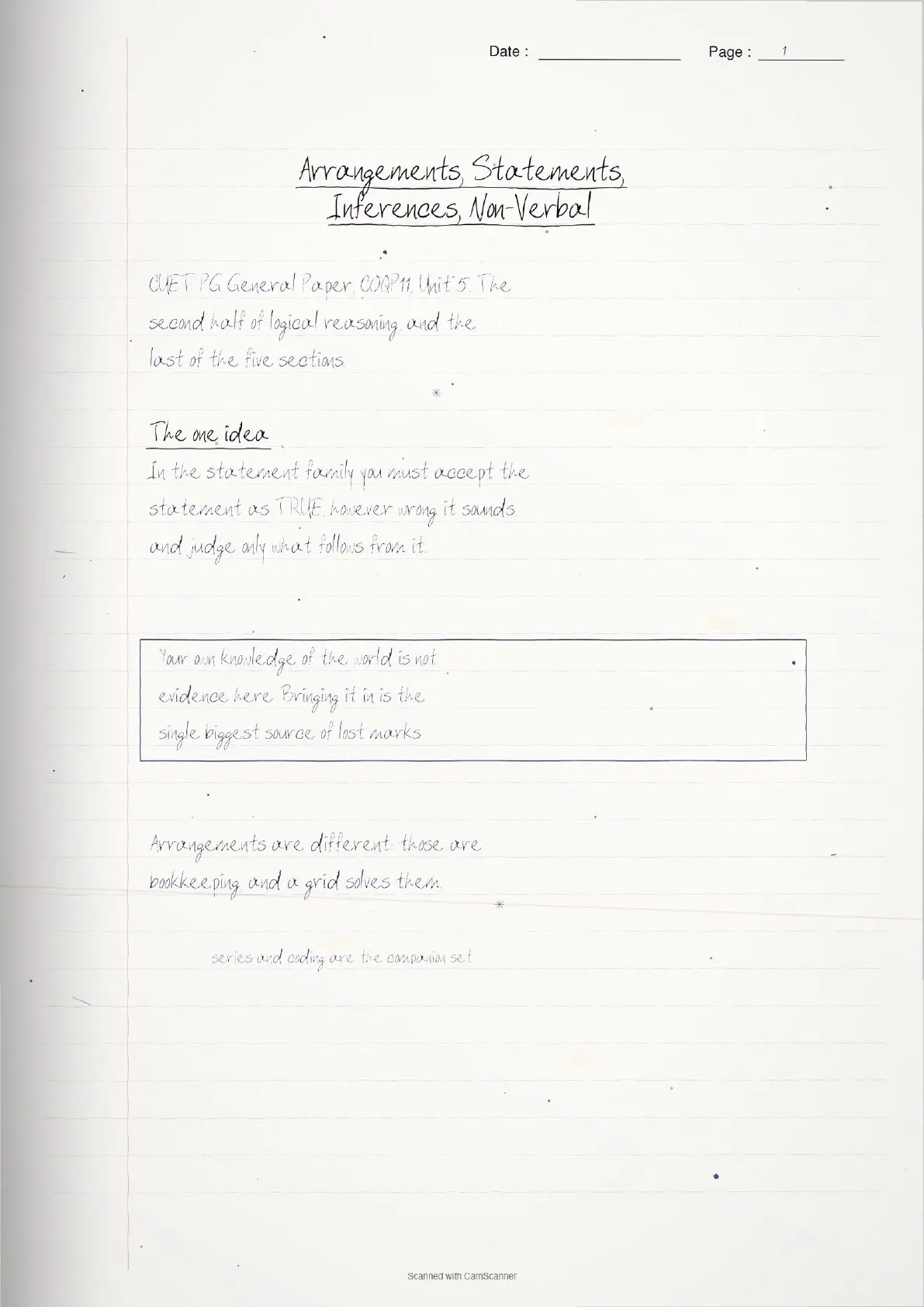
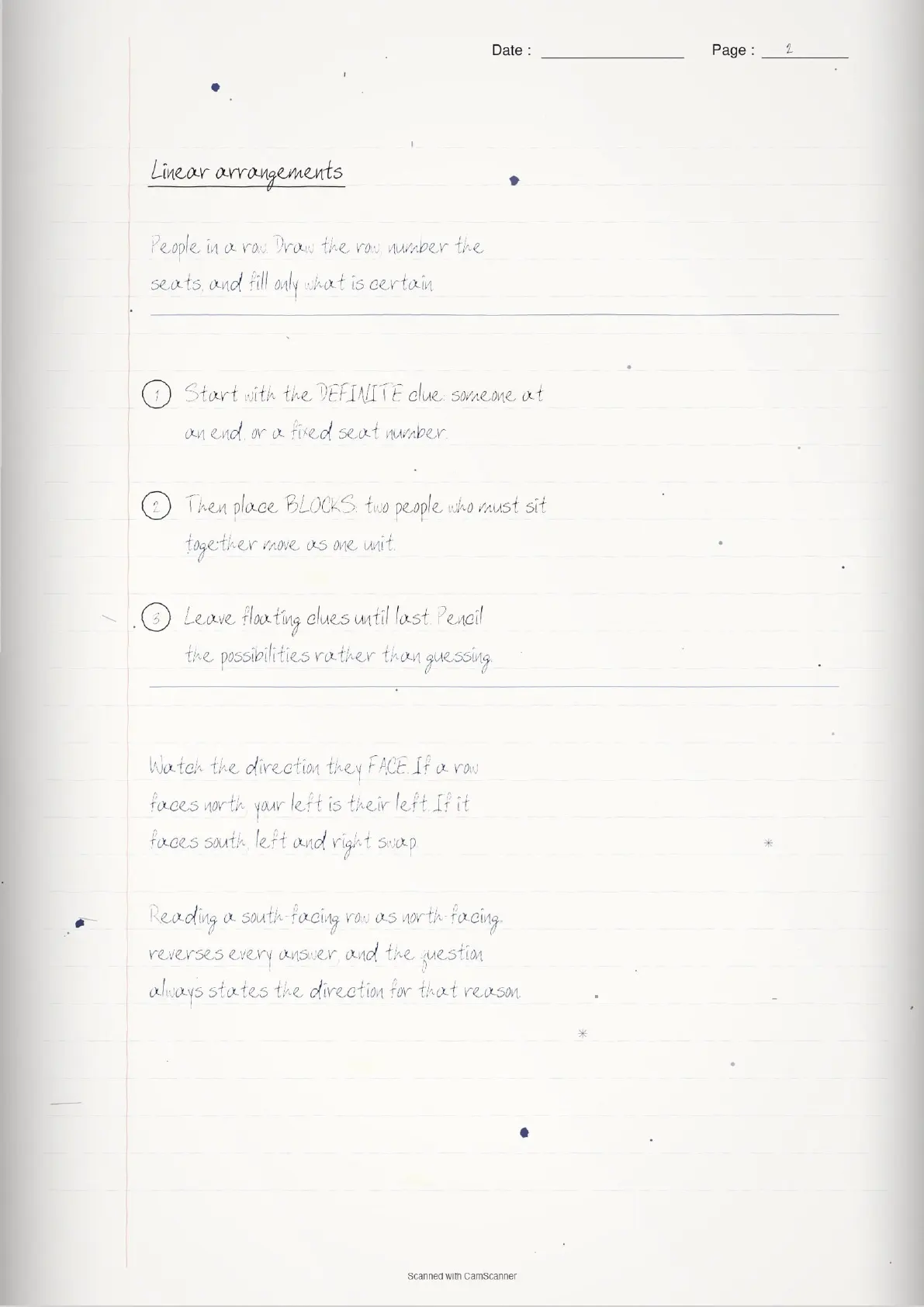
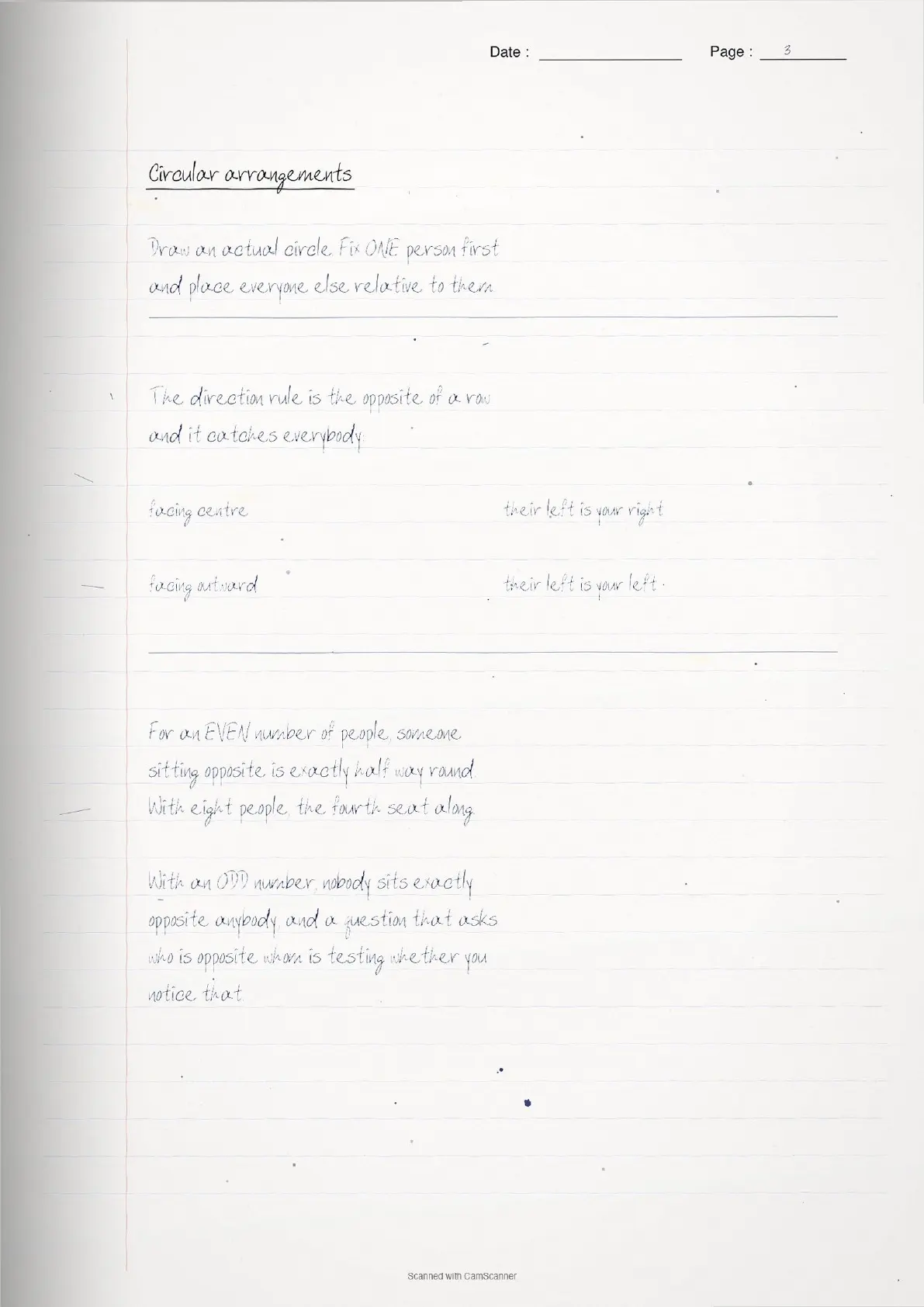
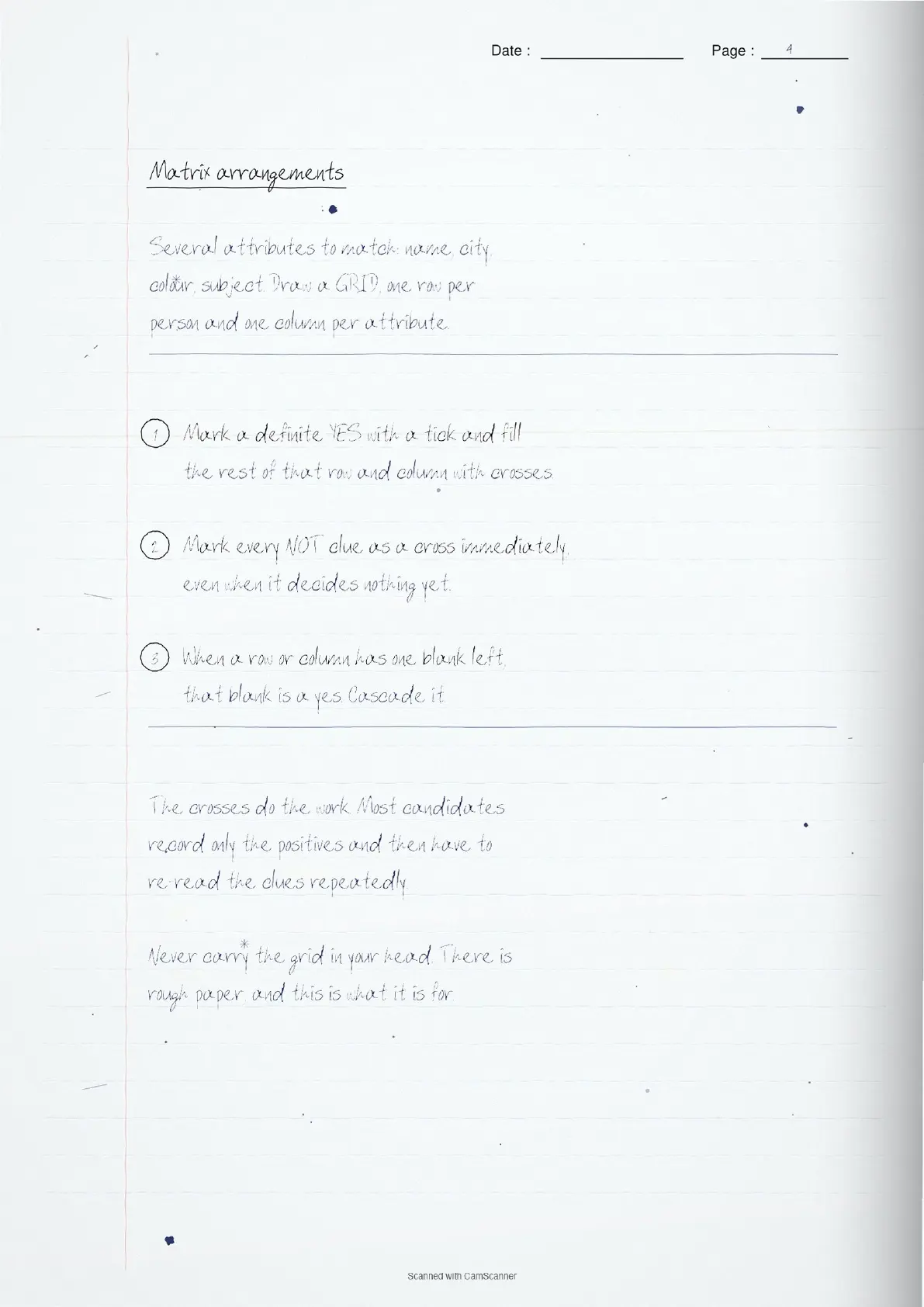
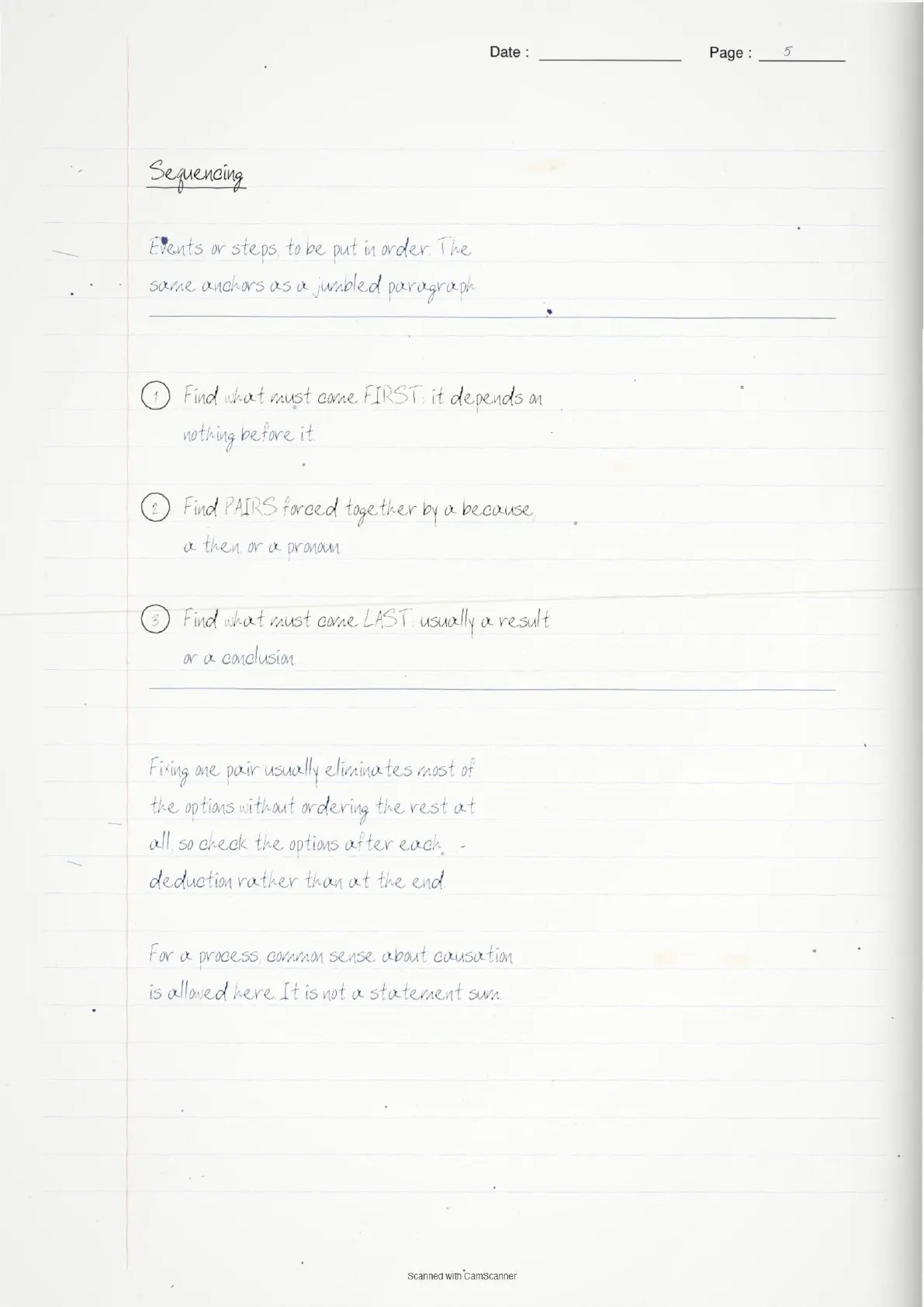
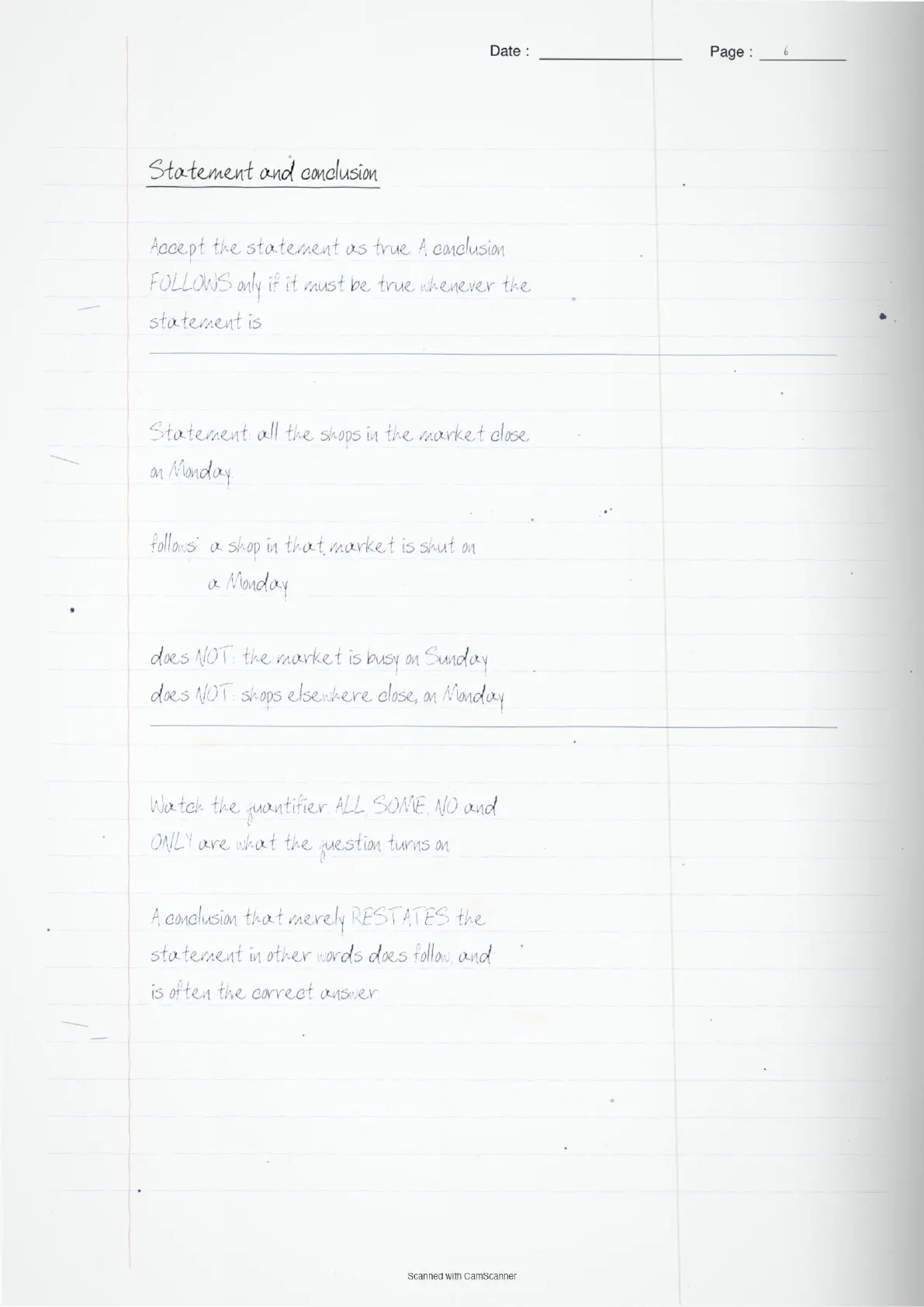
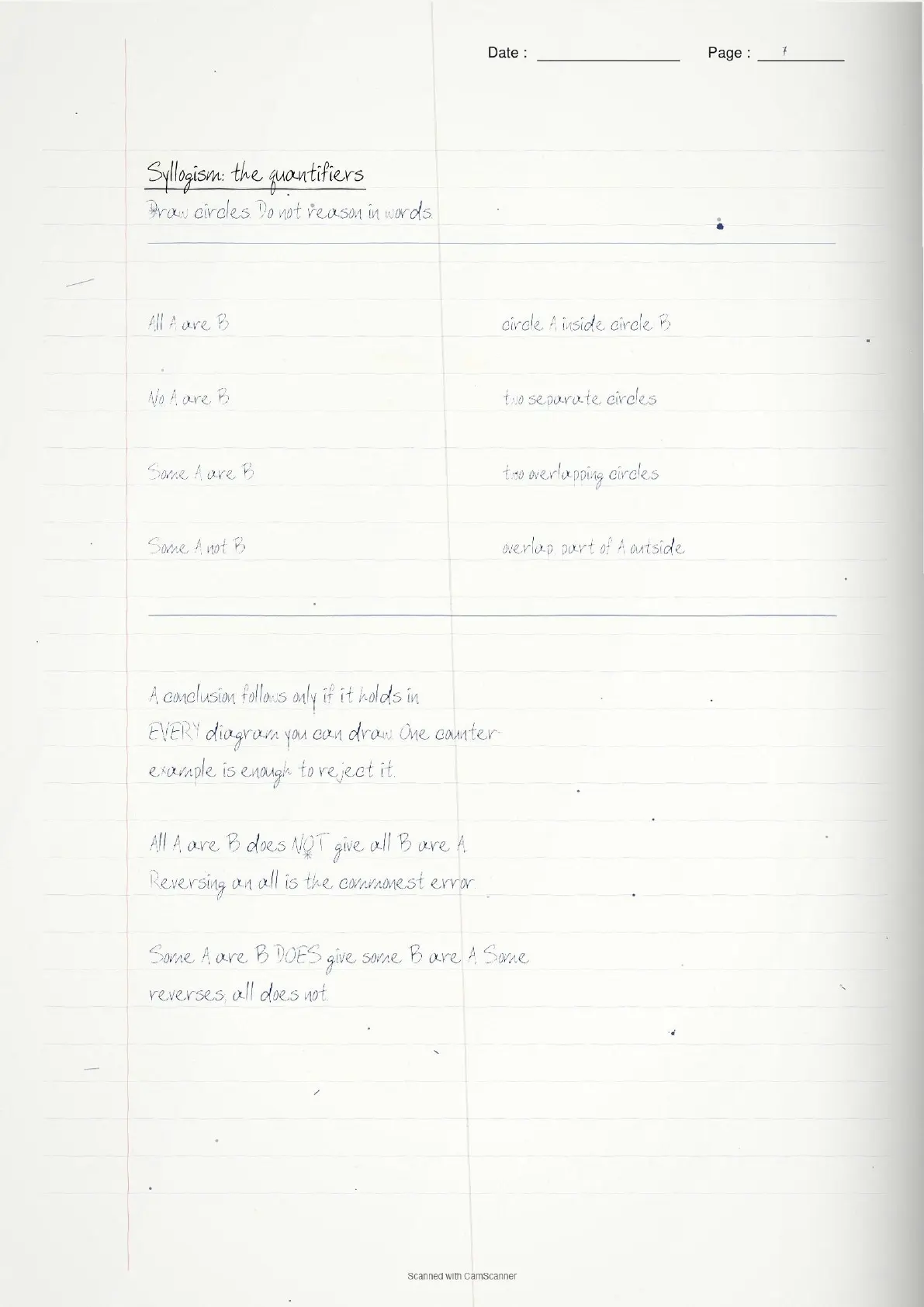
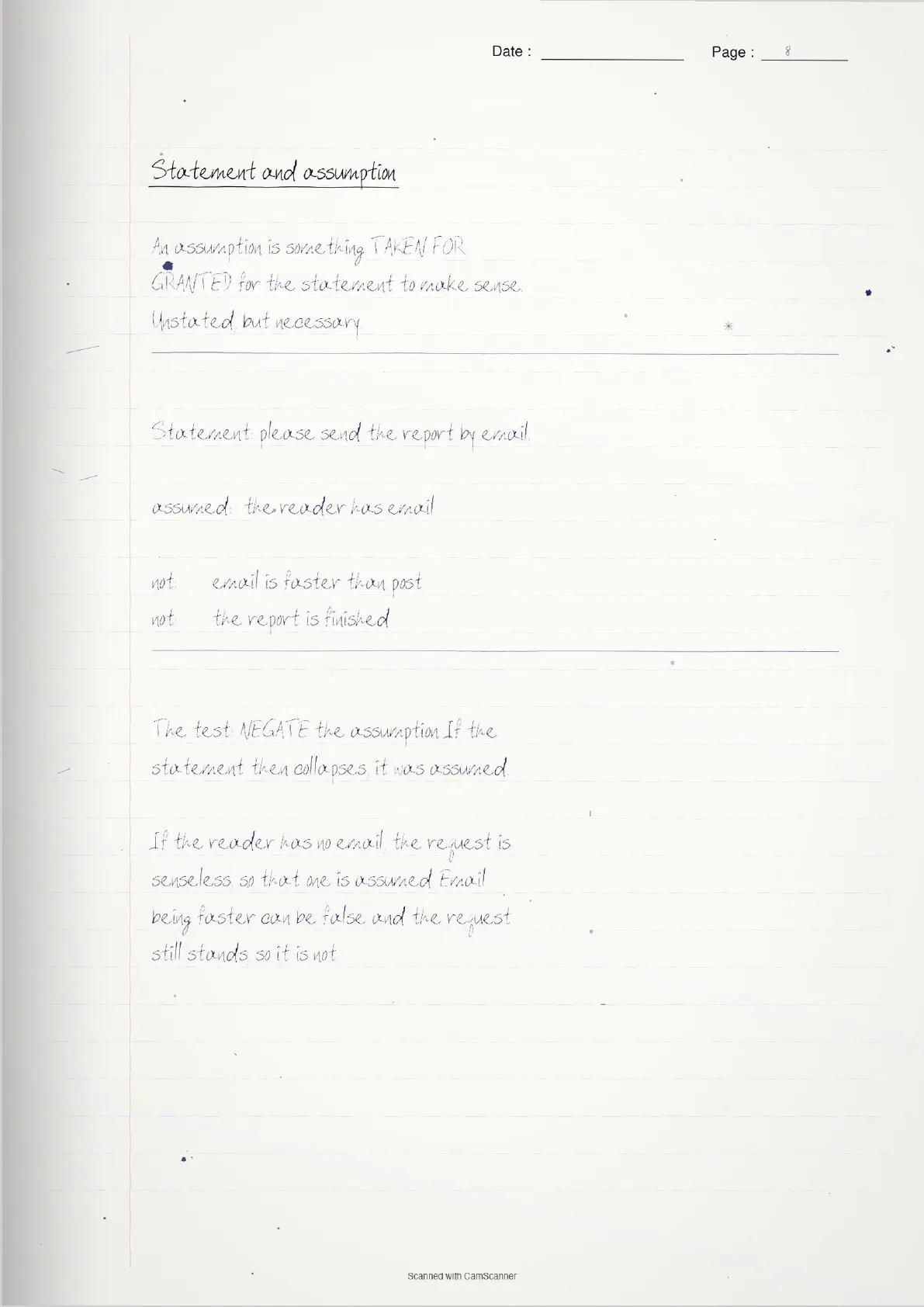
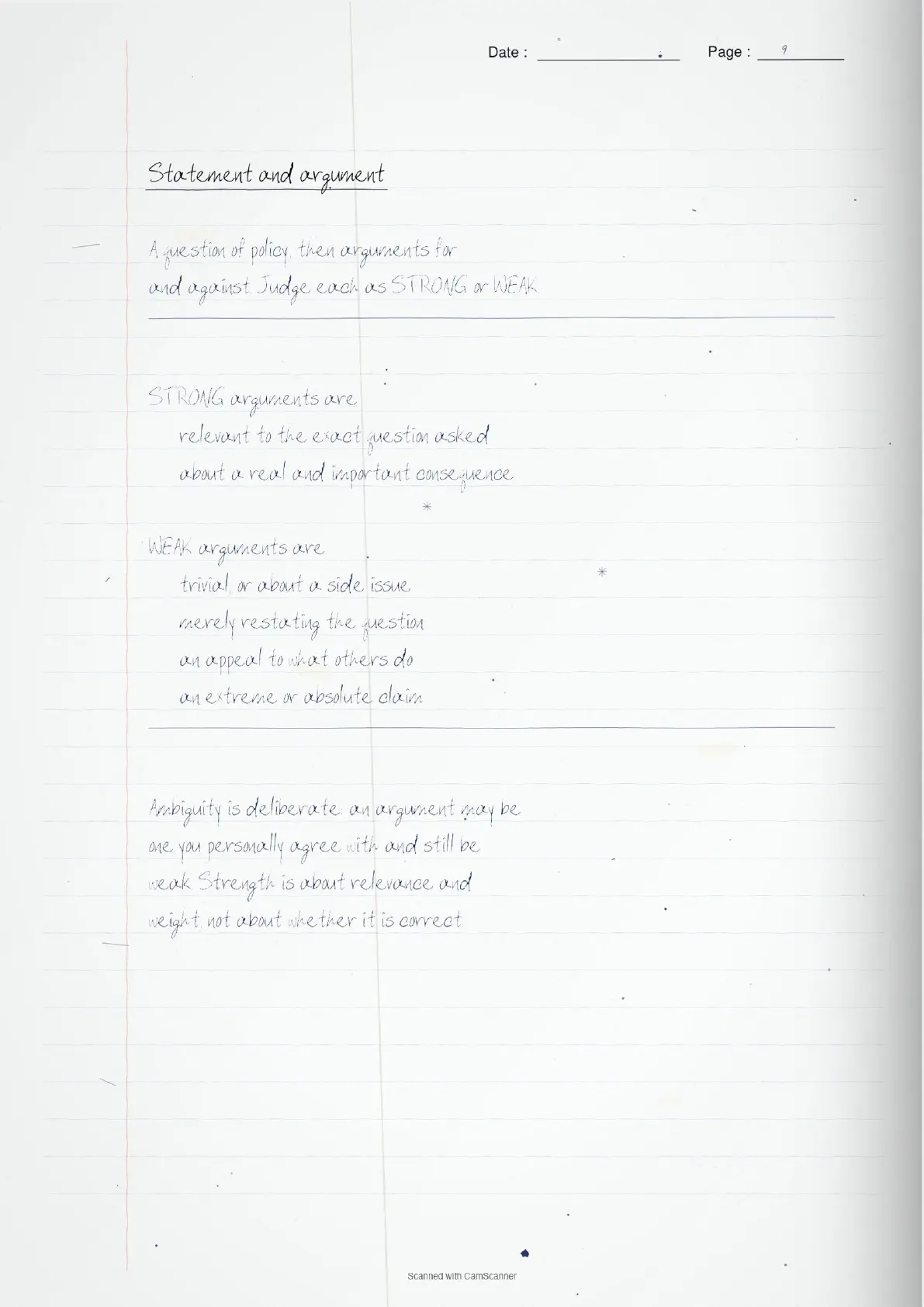
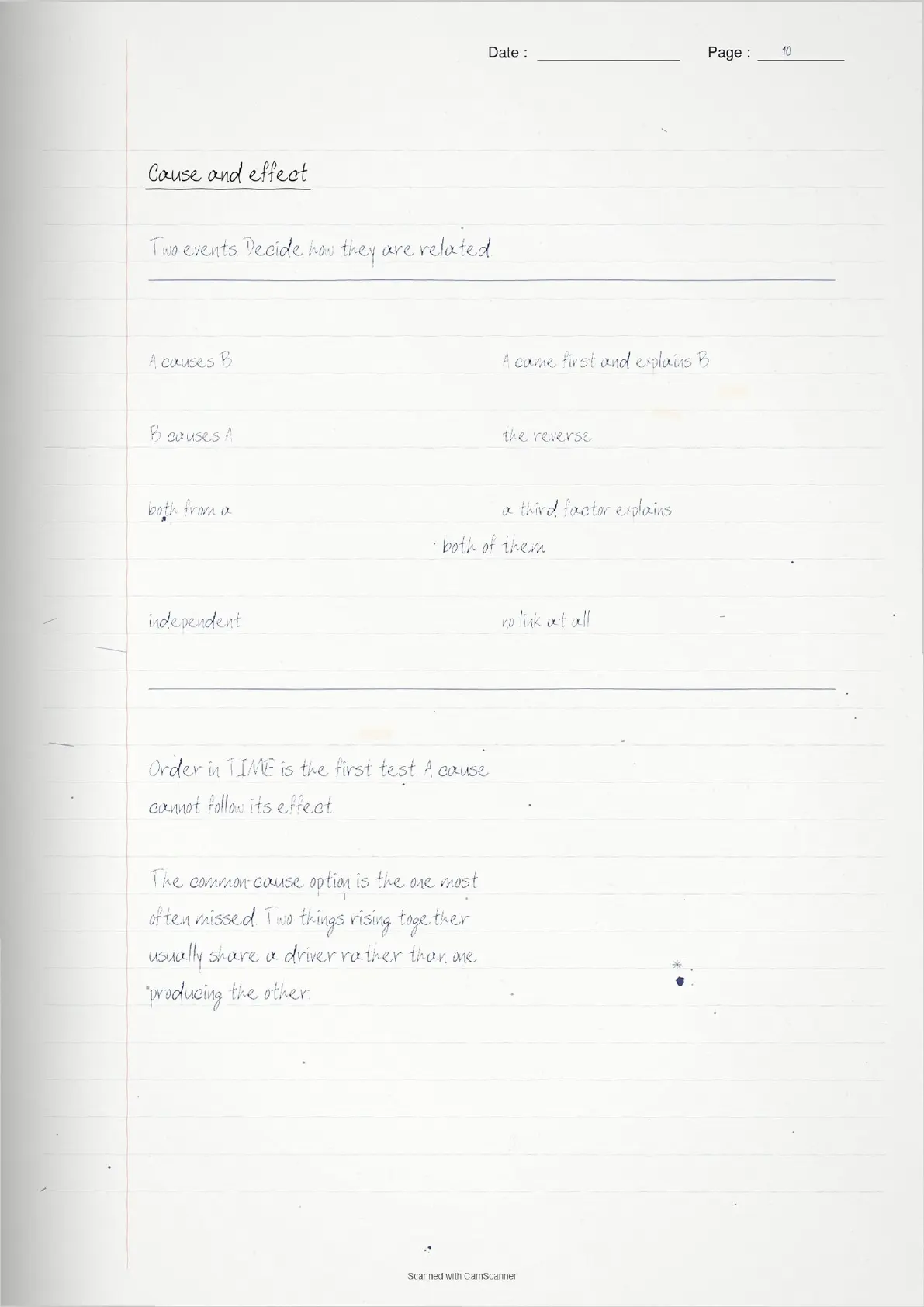
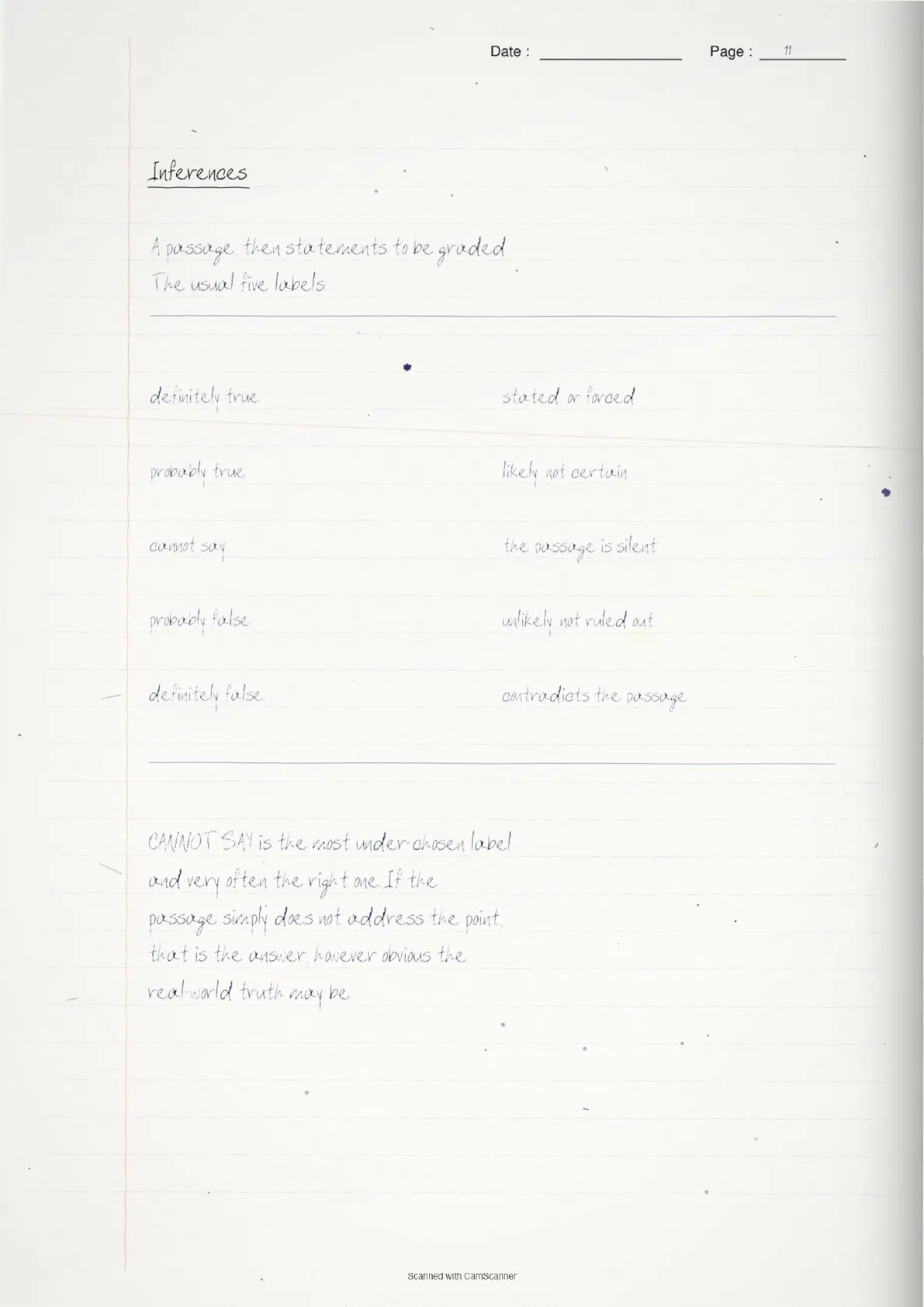
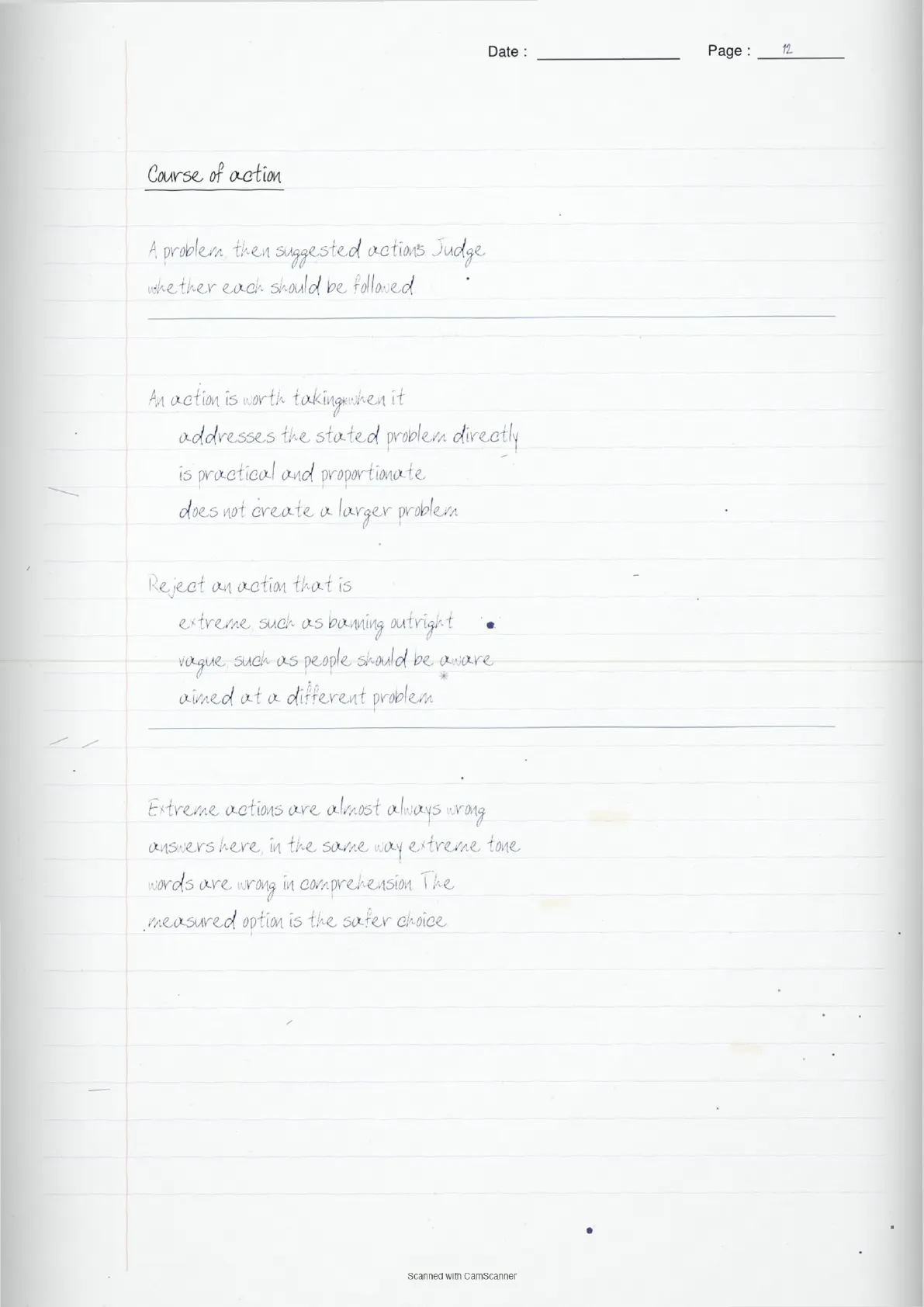
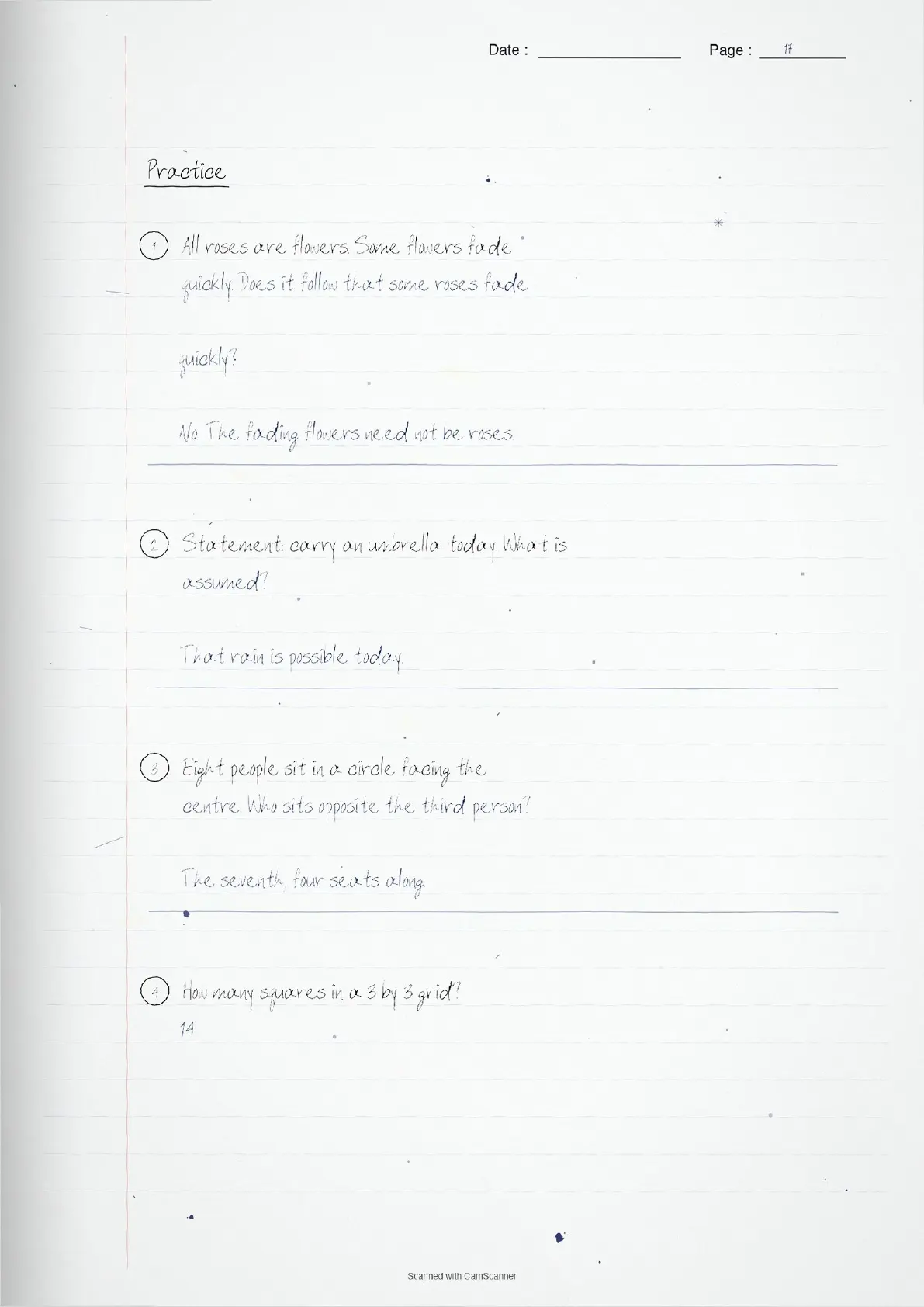
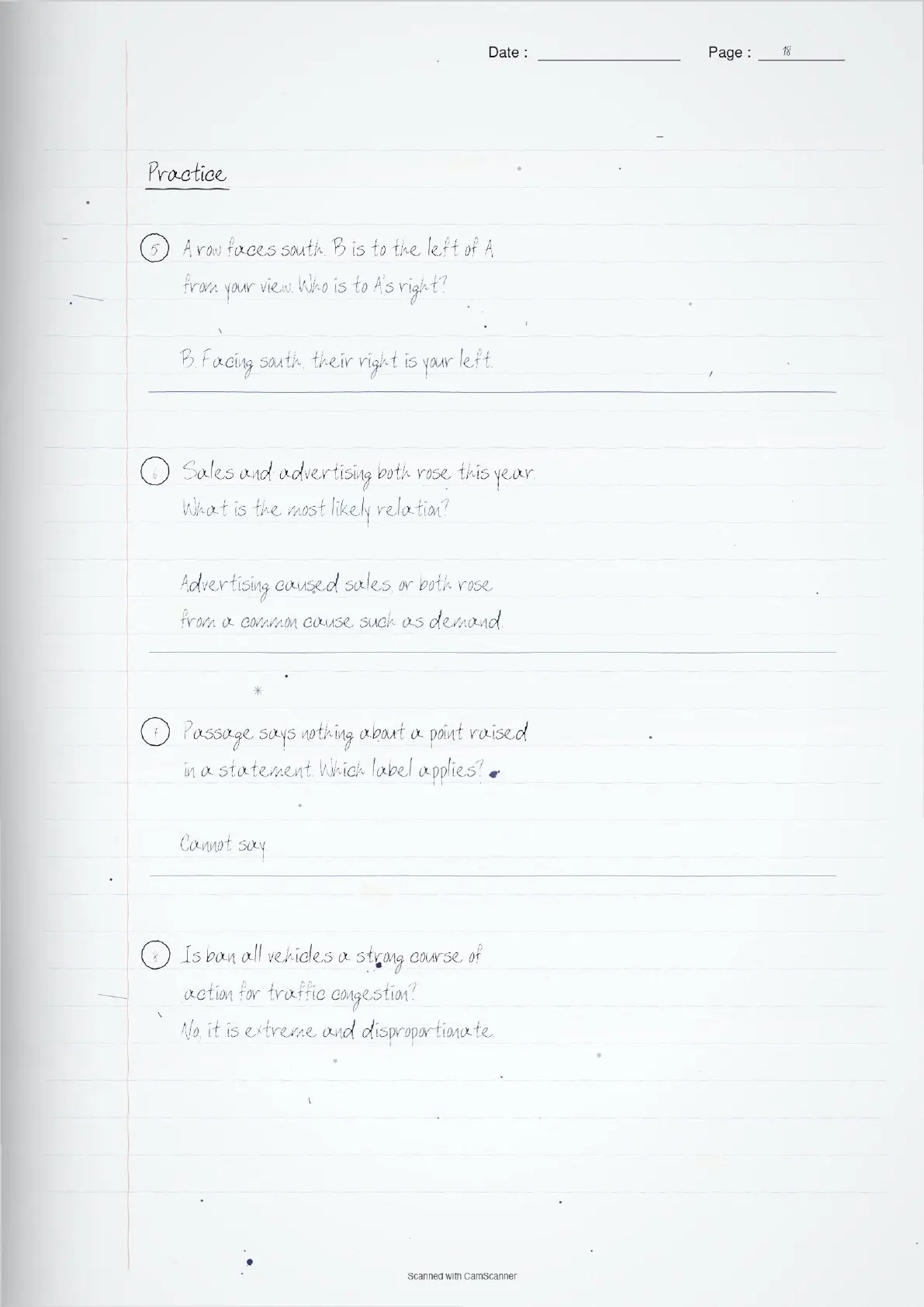
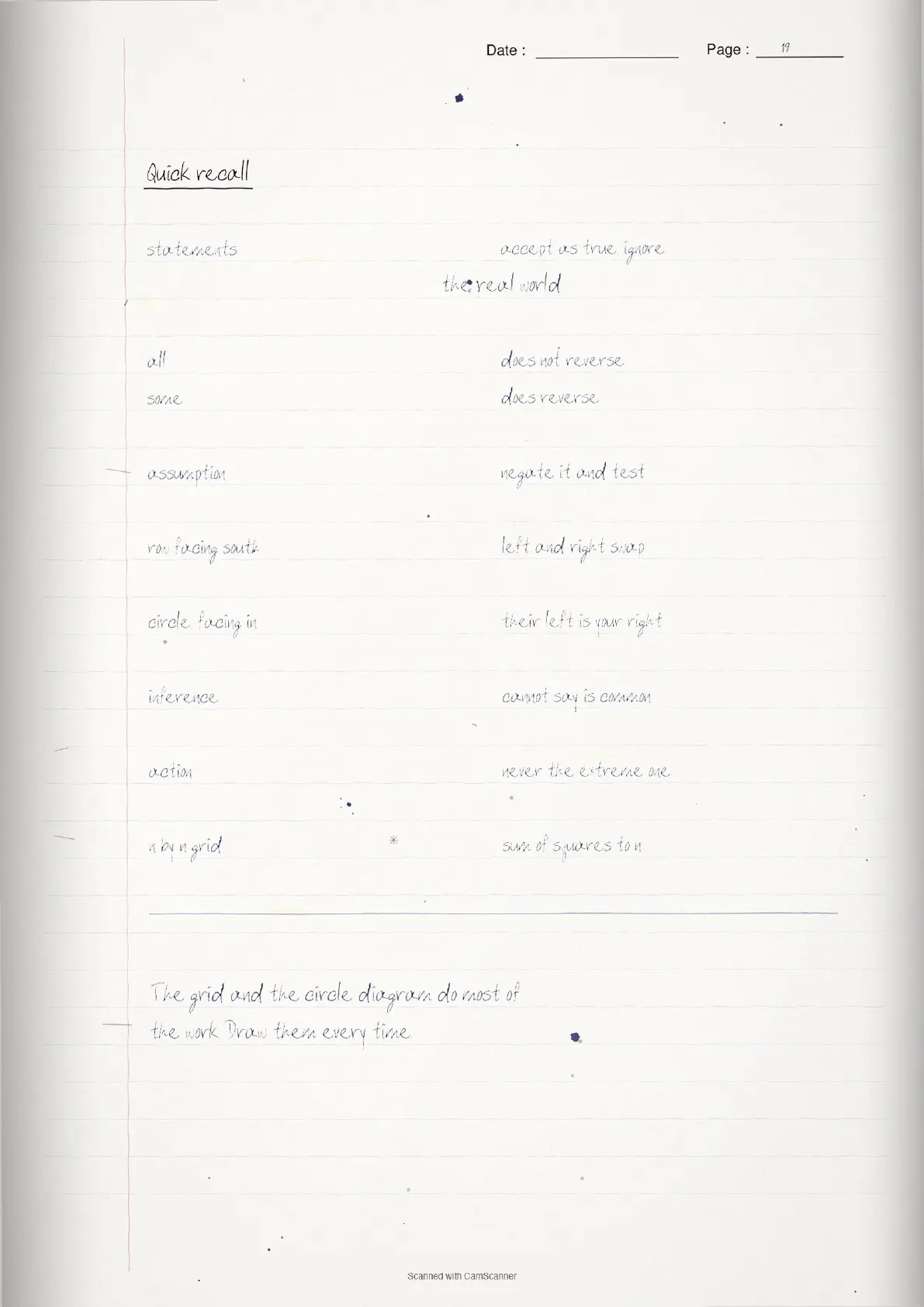
The notes are scans of a real notebook: short lines, boxed rules, and a margin note wherever something is easy to get wrong.
CUET PG General Paper Structure
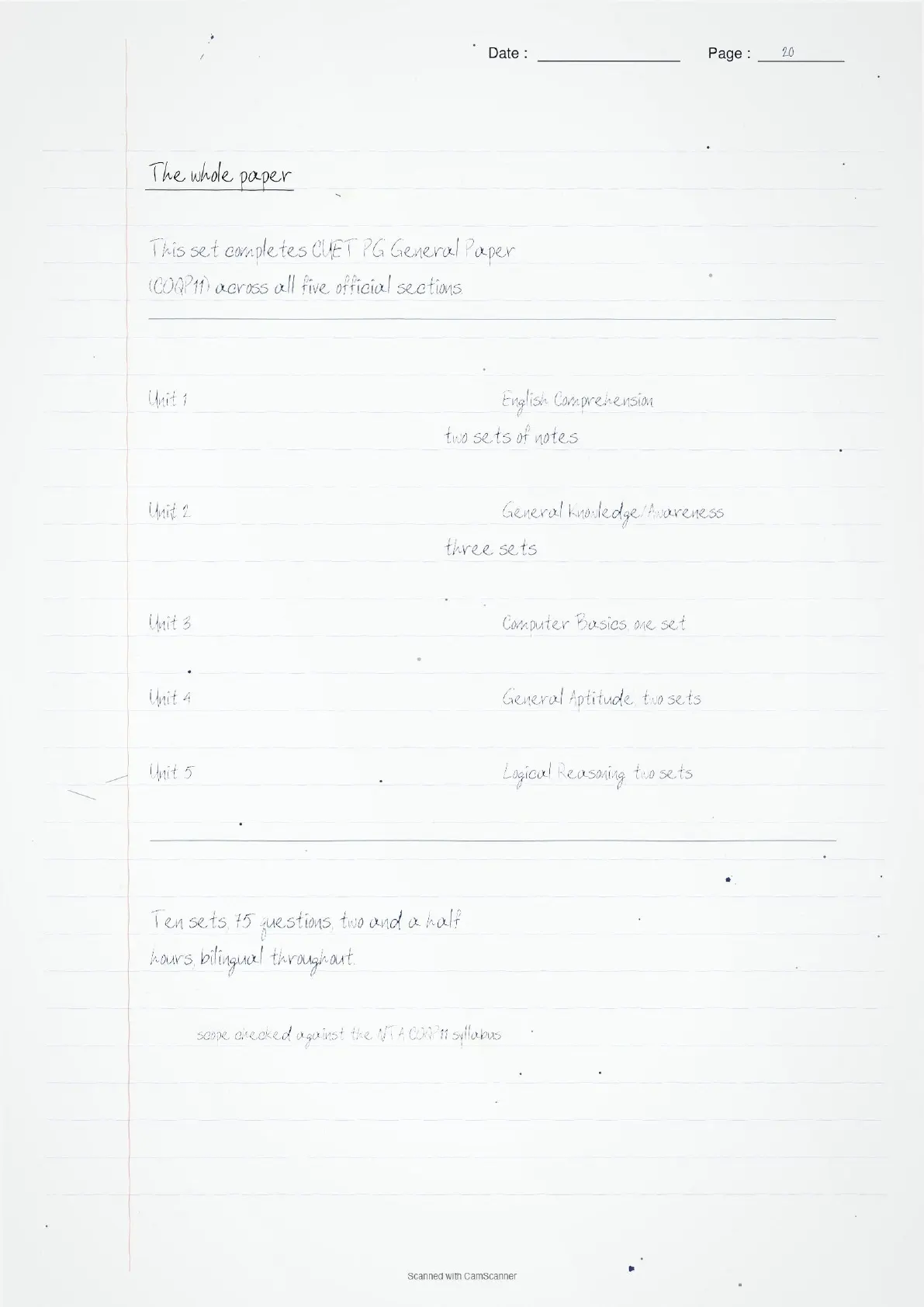
COQP11 carries 75 bilingual questions across five official sections. This set takes the second half of Unit 5 and completes the General Paper across all five.
| Unit | Official section |
|---|---|
| 1 | English Comprehension |
| 2 | General Knowledge/Awareness |
| 3 | Computer Basics |
| 4 | General Aptitude & Logical Reasoning |
| 5 | Logical Reasoning |
What the Notes Cover
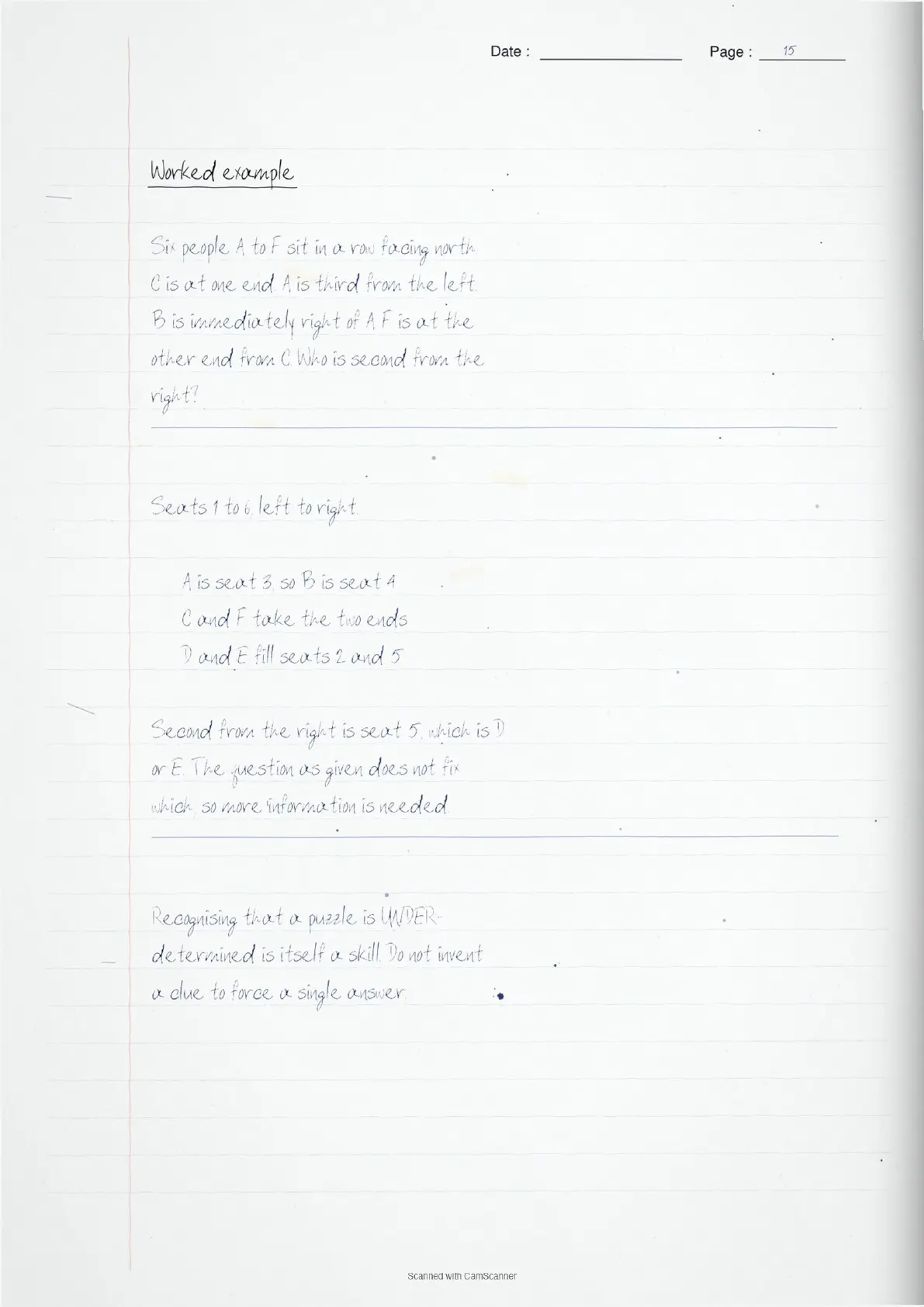
- Linear arrangements, and why the direction a row faces changes every answer
- Circular arrangements, where facing the centre reverses left and right
- Matrix arrangements, solved with a grid and its crosses
- Sequencing, anchored on what must come first and what must come last
- Statement and conclusion, and syllogism drawn as circles
- Statement and assumption, tested by negating the assumption
- Statement and argument, strong against weak
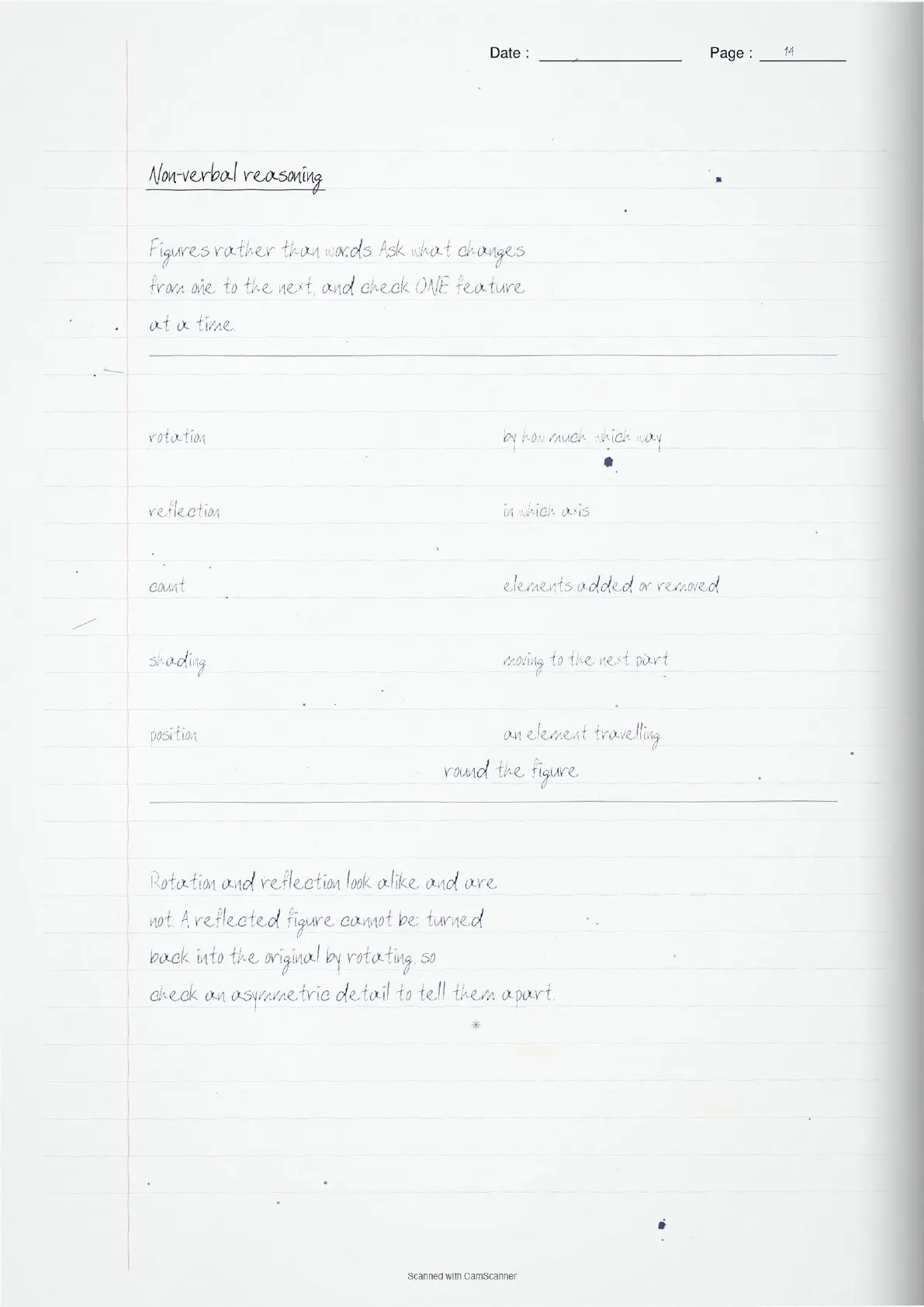
- Cause and effect, inferences, courses of action, analytical and non-verbal reasoning
How to Approach the Section
In the statement family you must accept the statement as true, however wrong it sounds, and judge only what follows from it. Bringing your own knowledge of the world in is the single biggest source of lost marks here.
Arrangements are different. Those are bookkeeping, and a grid solves them: mark every not-clue as a cross immediately, even when it decides nothing yet, and let the crosses cascade.
For syllogism, draw circles rather than reasoning in words. A conclusion follows only if it holds in every diagram you can draw, and one counter-example is enough to reject it.
Common Mistakes
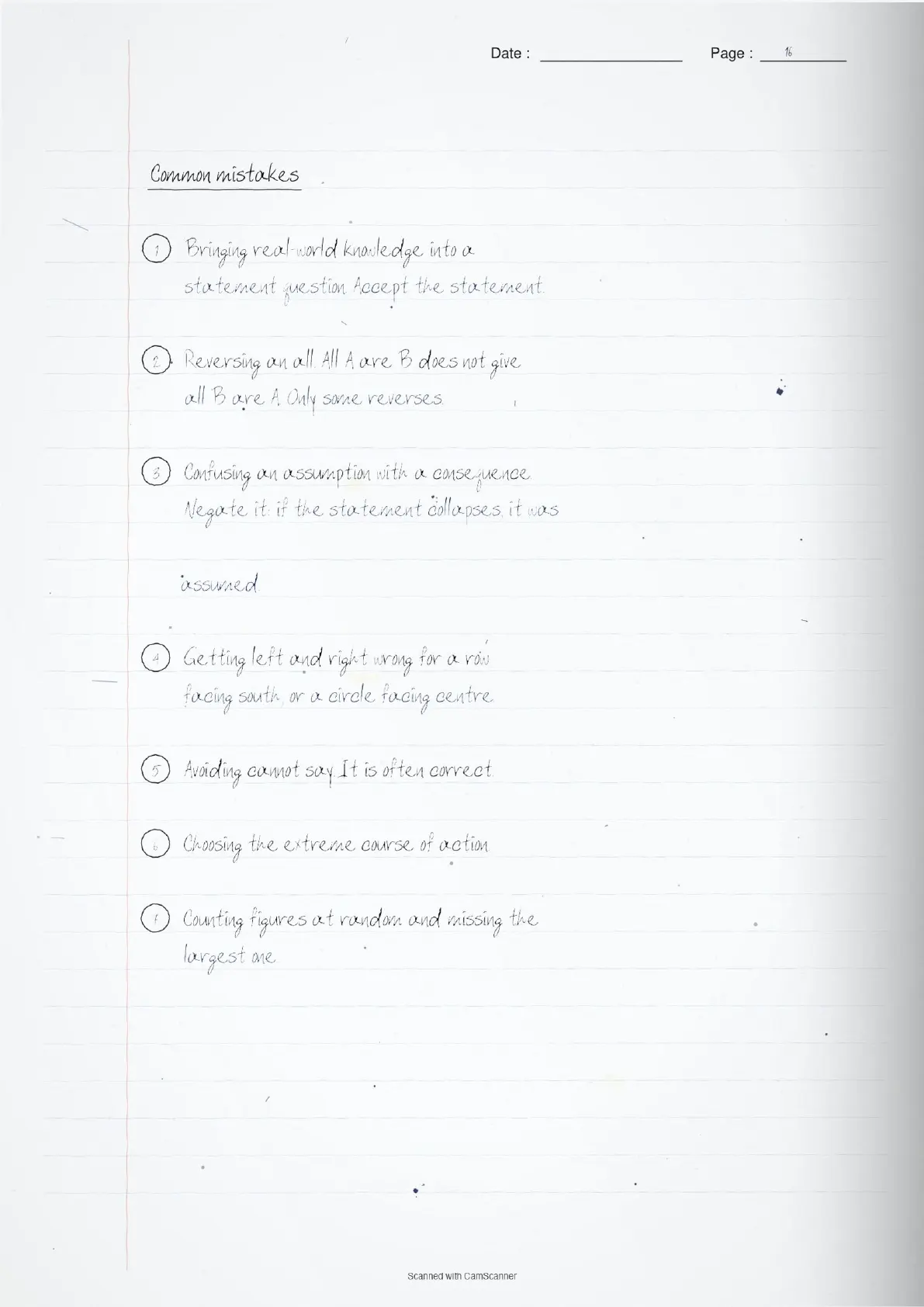
- Bringing real-world knowledge into a statement question
- Reversing an all. All A are B does not give all B are A, though some does reverse
- Confusing an assumption with a consequence. Negate it and see if the statement collapses
- Getting left and right wrong for a row facing south, or a circle facing the centre
- Avoiding cannot say, which is under-chosen and often correct
- Choosing the extreme course of action
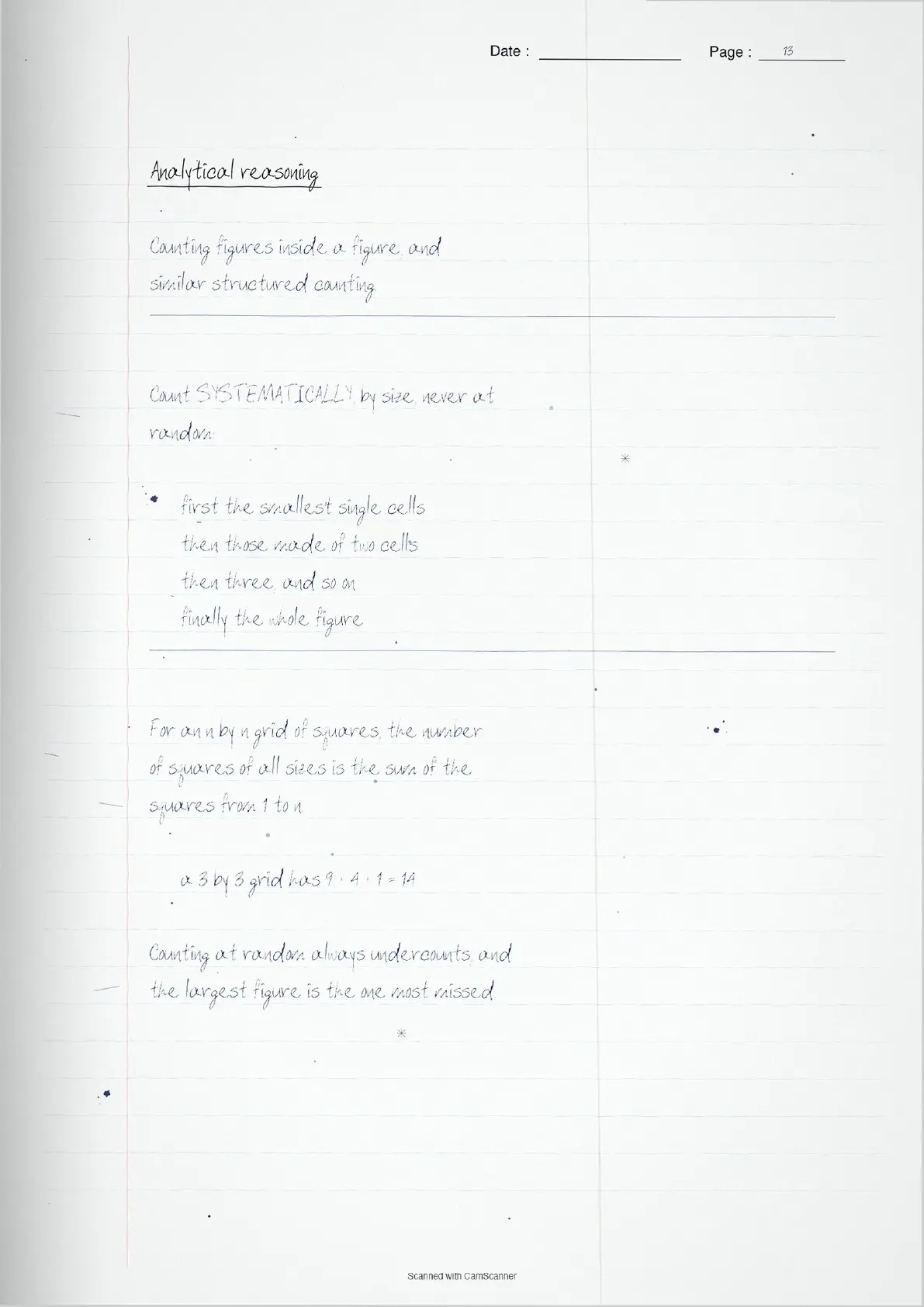
- Counting figures at random and missing the largest one
Video Revision
Source: CUET PG Wallah
How to Use These Notes
Page 7 is the syllogism page and page 8 the negation test for assumptions. Those two methods between them cover most of the statement family.
Page 15 works a puzzle that turns out to be under-determined, which is worth doing because recognising that is itself a skill and the temptation is to invent a clue.
The companion set covers series, coding, analogy, blood relations and direction.
CUET PG Reasoning Arrangements and Statements Notes FAQs
Ques. How should I approach statement and conclusion questions?
Ans. Accept the statement as true even if it contradicts what you know, then ask whether the conclusion must be true whenever the statement is. Your own knowledge of the world is not evidence in these.
Ques. Does all A are B mean all B are A?
Ans. No. All does not reverse, and assuming it does is the commonest syllogism error. Some does reverse: if some A are B, then some B are A.
Ques. How do I test an assumption?
Ans. Negate it. If the statement then stops making sense, the assumption was necessary and the answer is yes. If the statement survives, it was not assumed.
Ques. When is cannot say the right answer?
Ans. Whenever the passage simply does not address the point, however obvious the real-world truth may be. It is the most under-chosen label in inference questions and very often correct.
Ques. Can the notes be downloaded free?
Ans. Yes. All 20 pages can be read on this page and downloaded at no cost.



Comments