




CUET PG History and Polity Handwritten Notes, free to download as a 20-page PDF. The topic is worth about 6 to 10 marks and takes roughly one day to learn, so treat it as a single focused sitting.
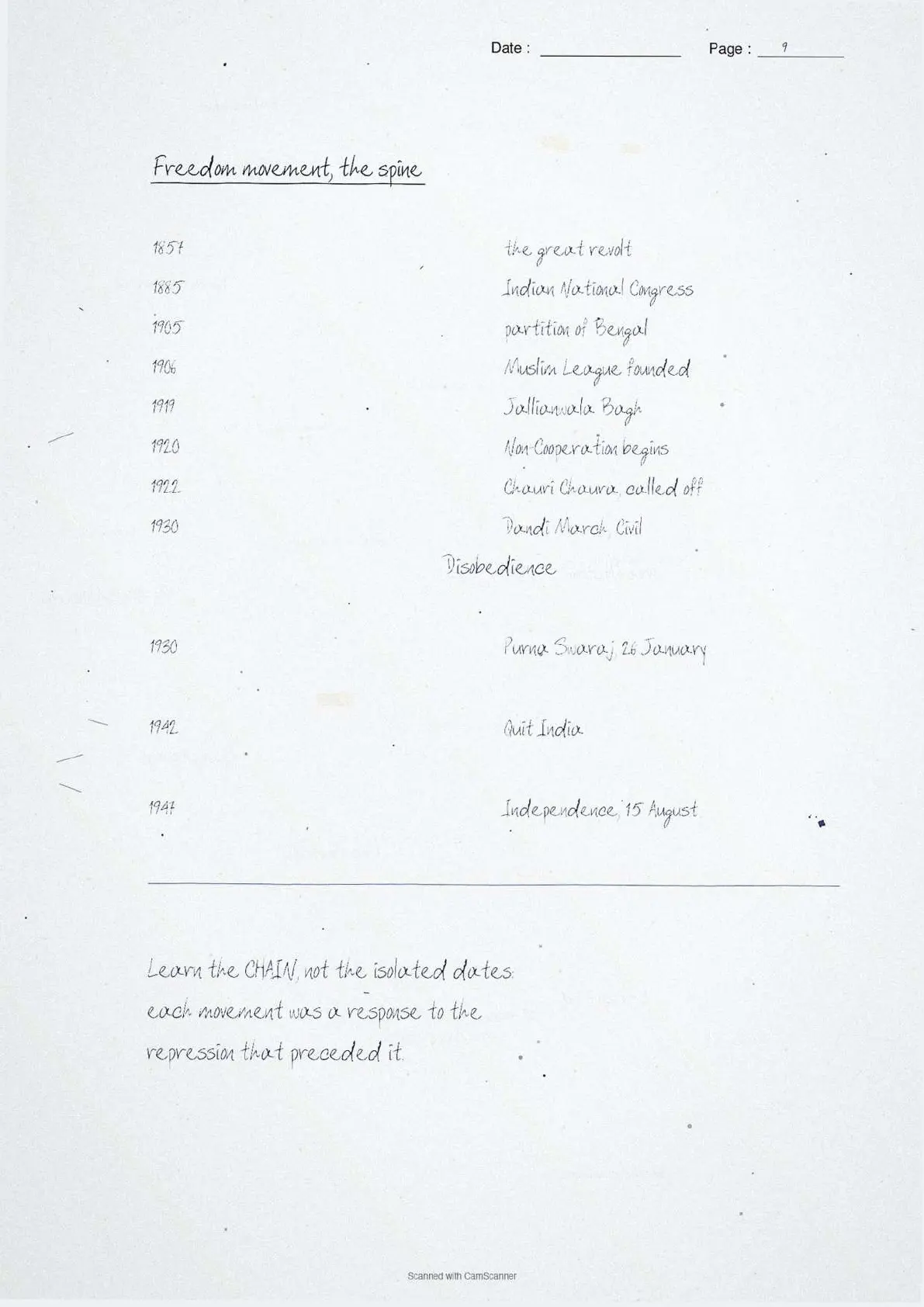
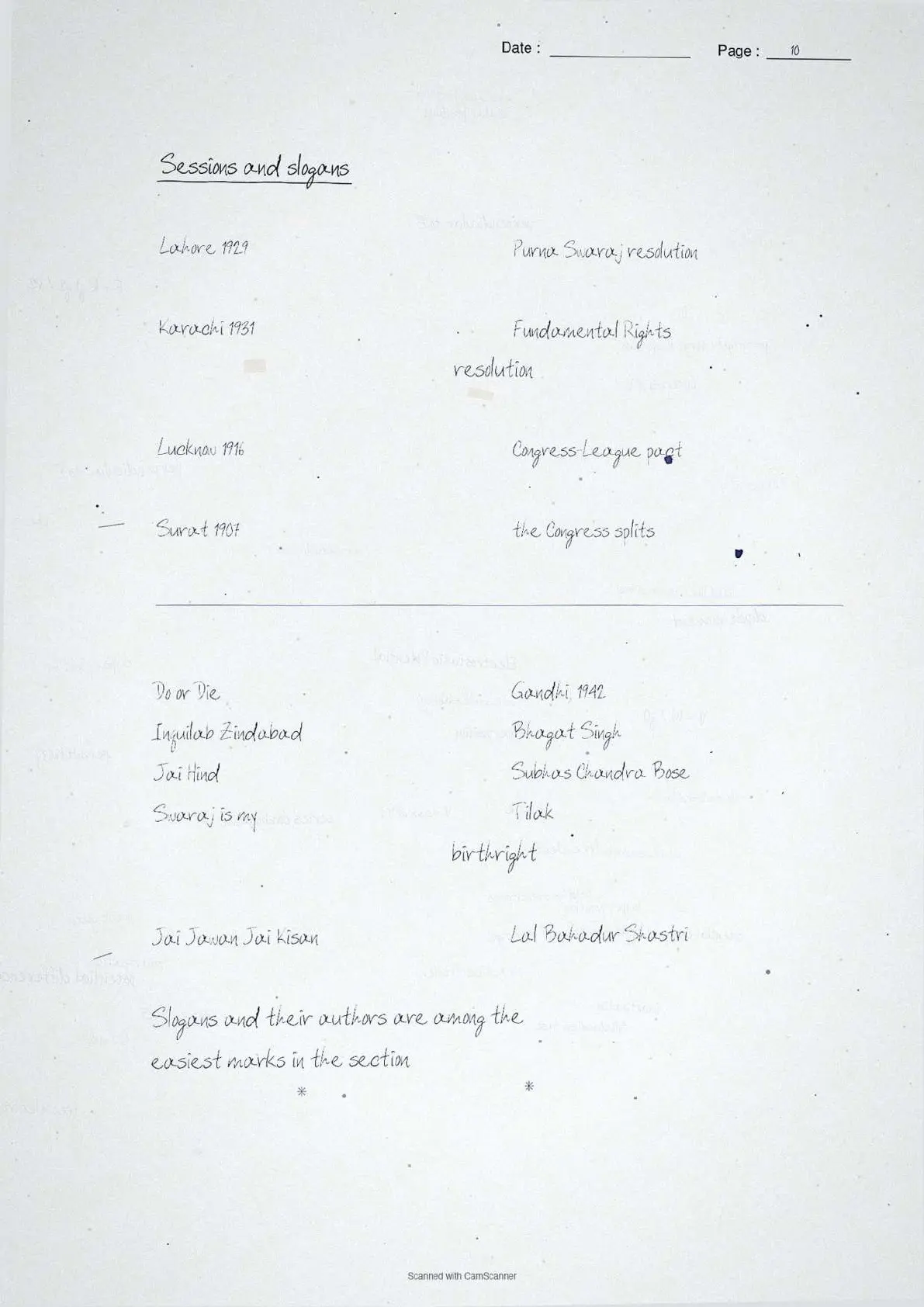
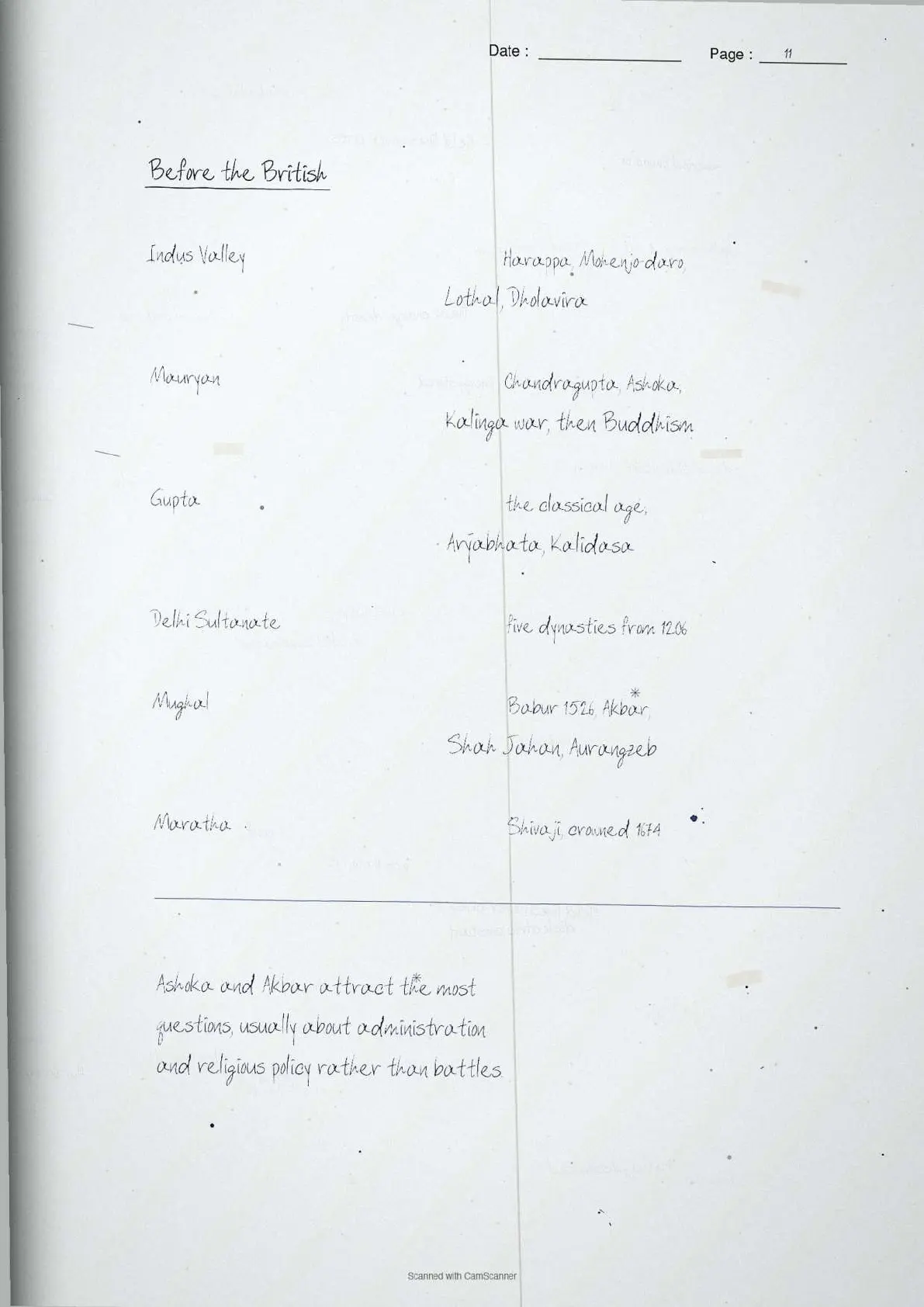
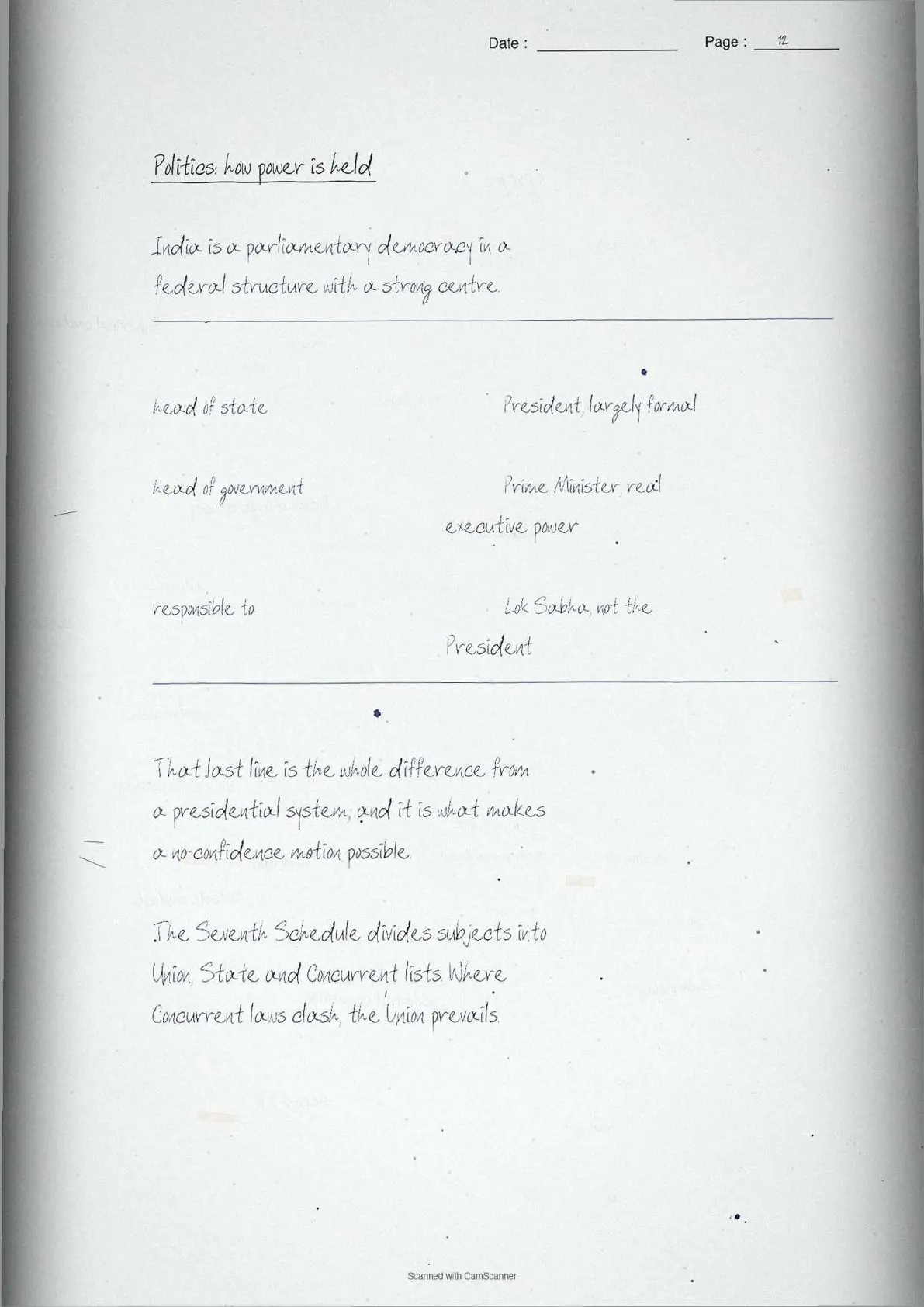
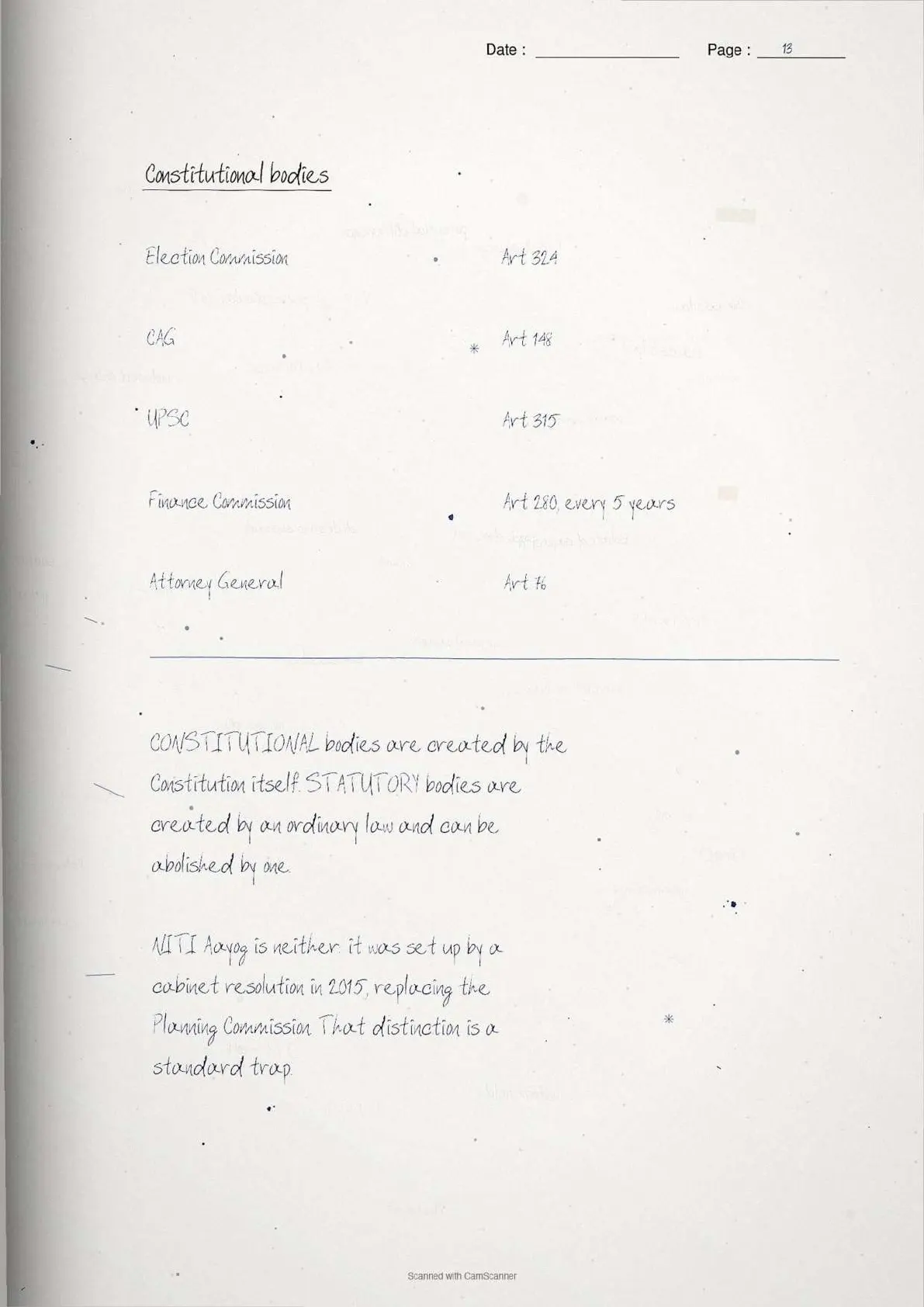
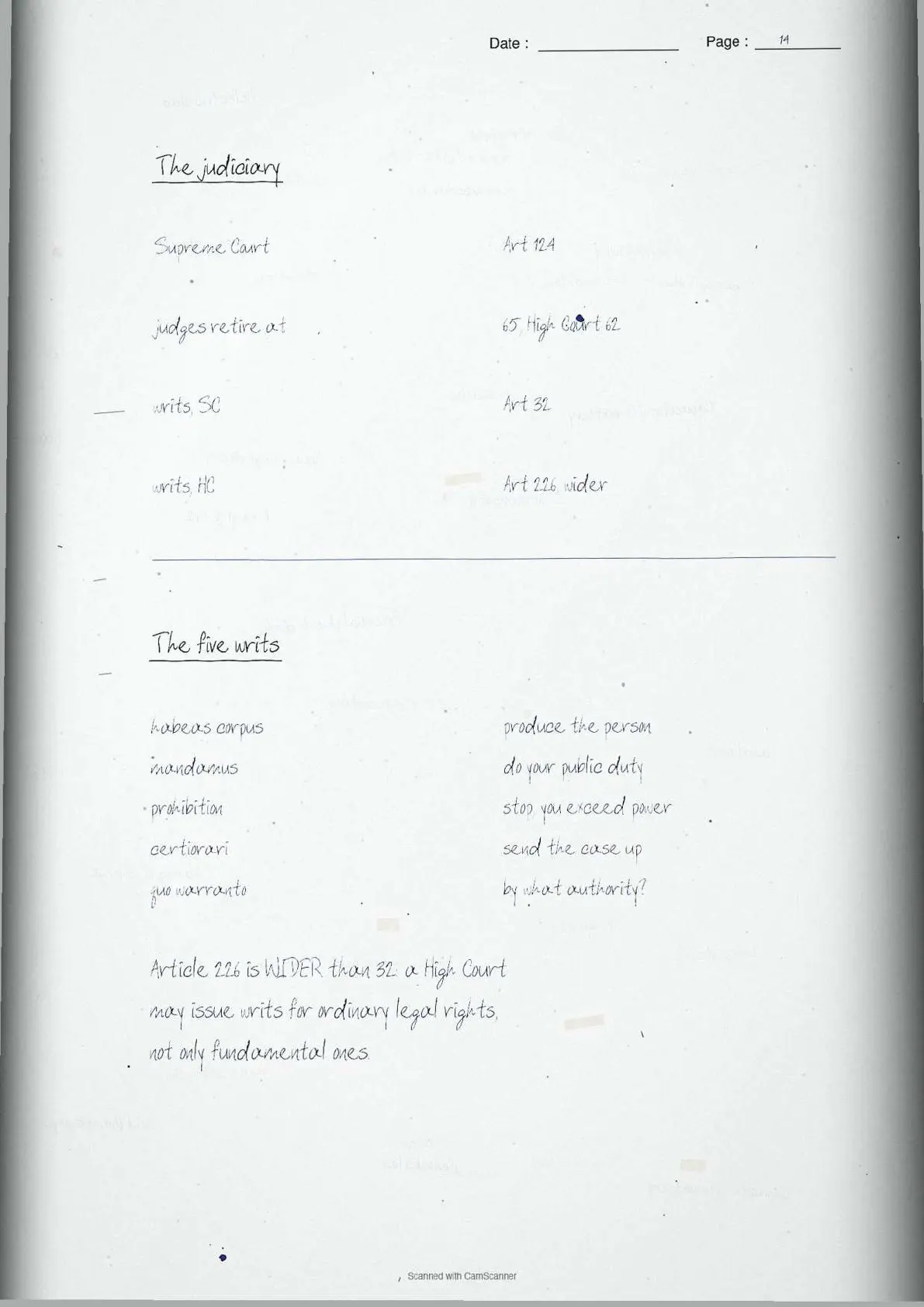
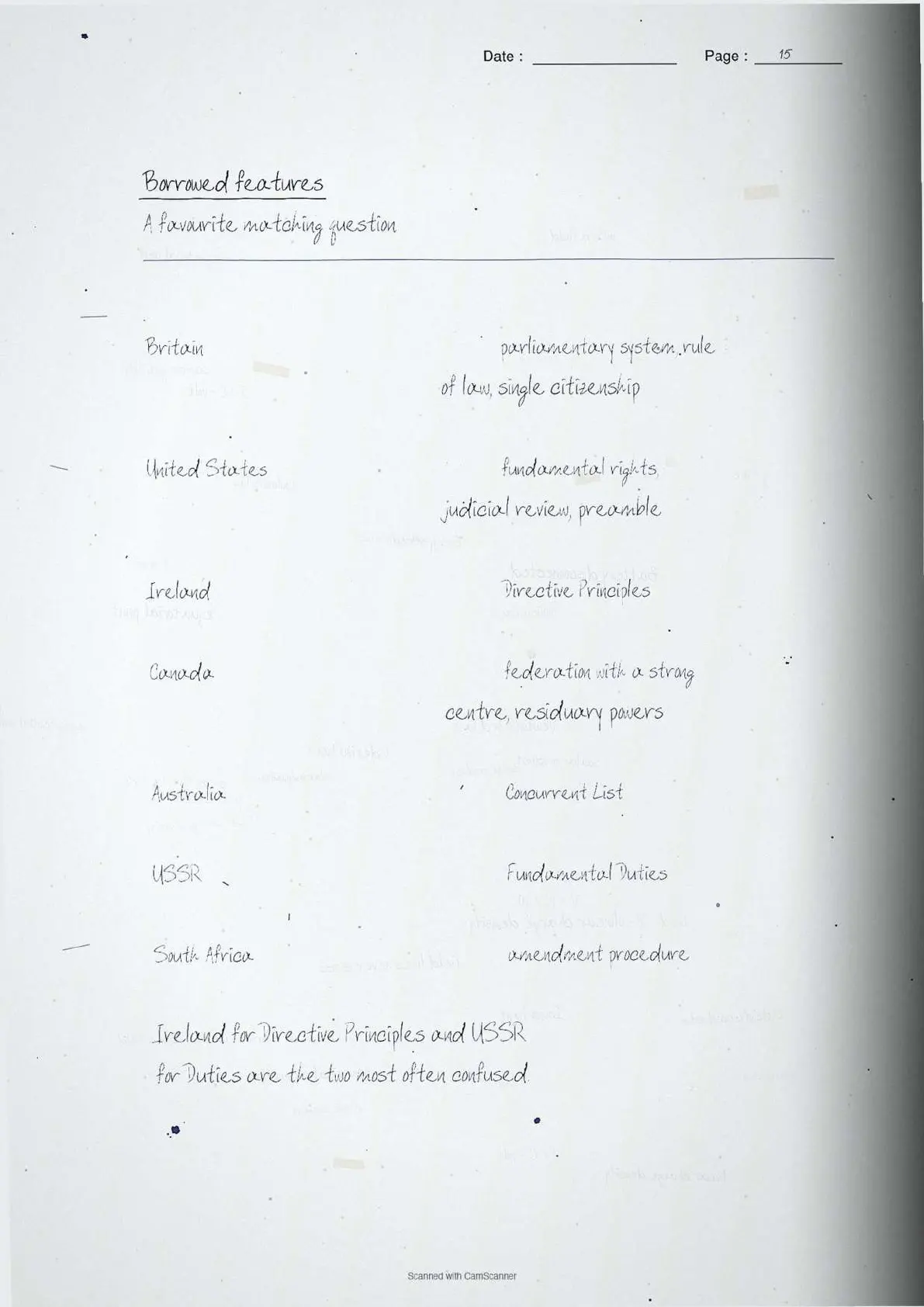
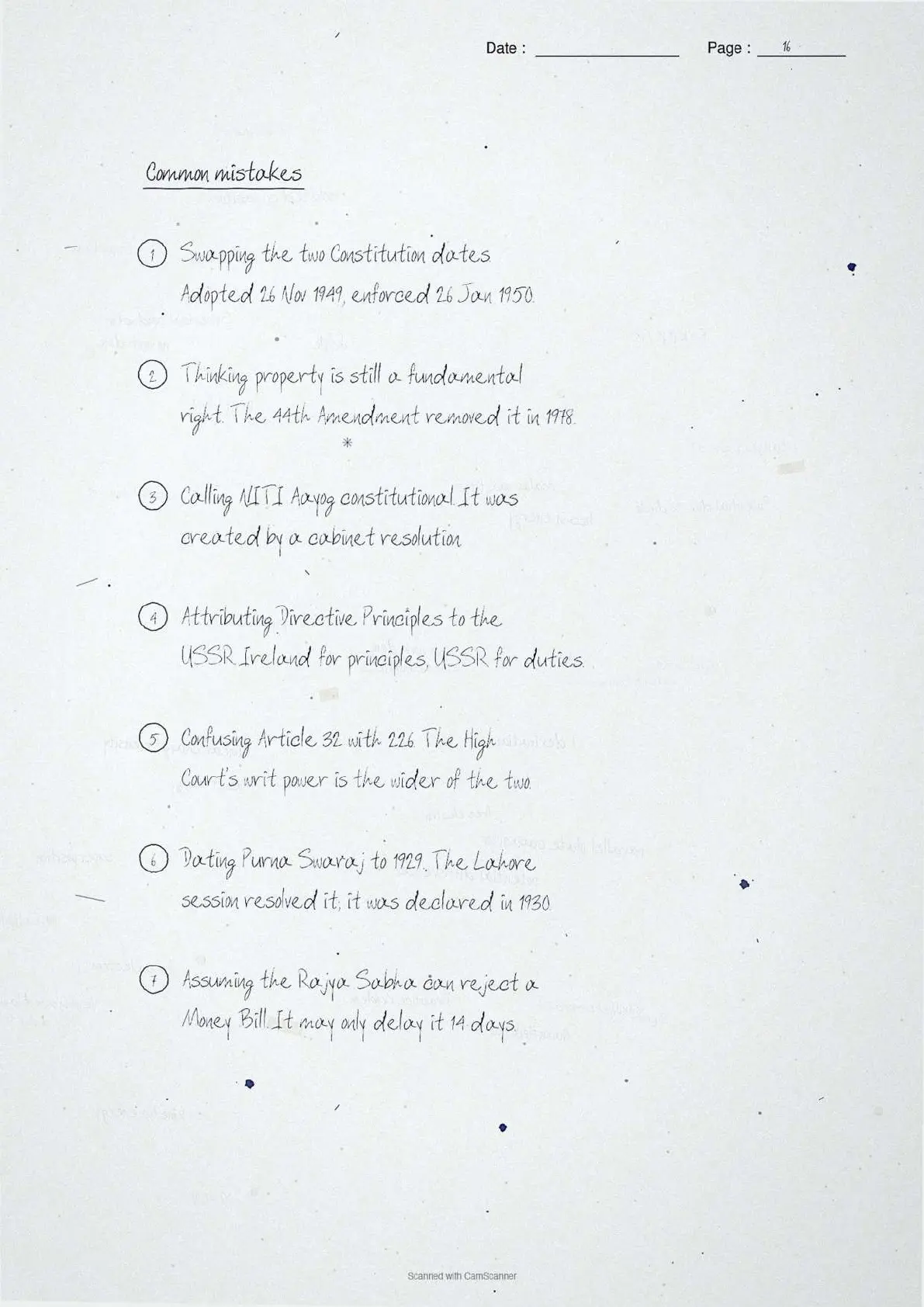
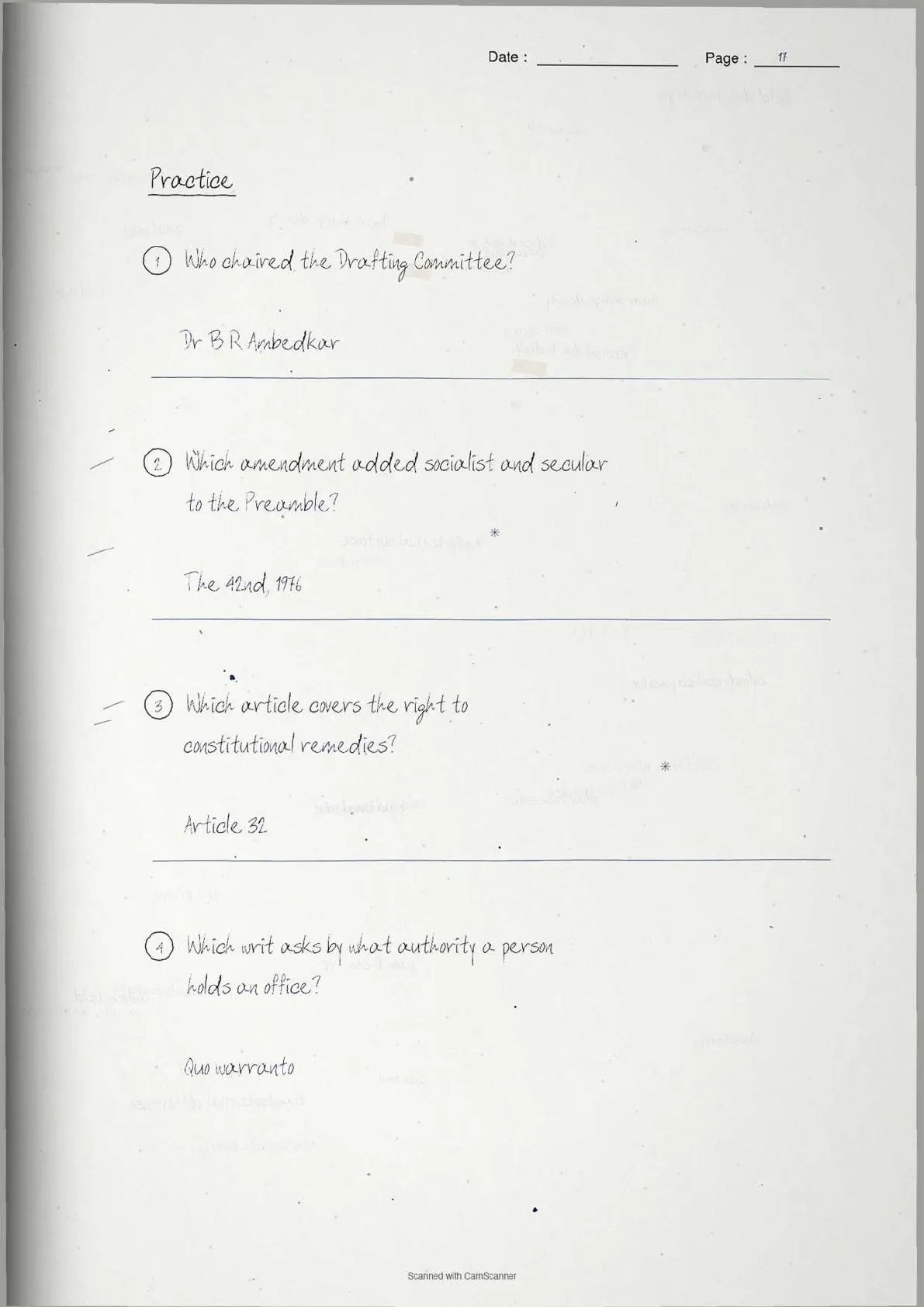
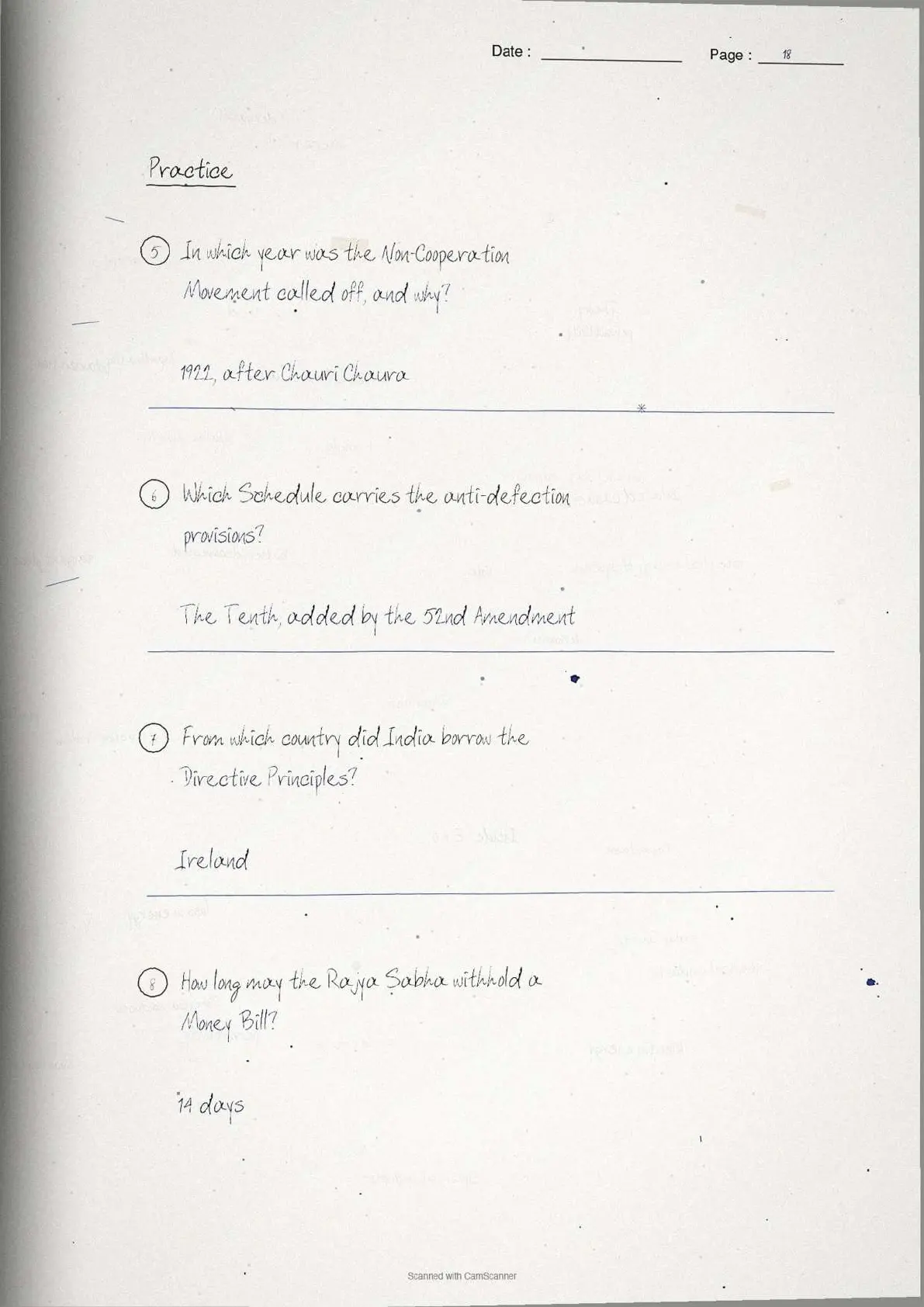
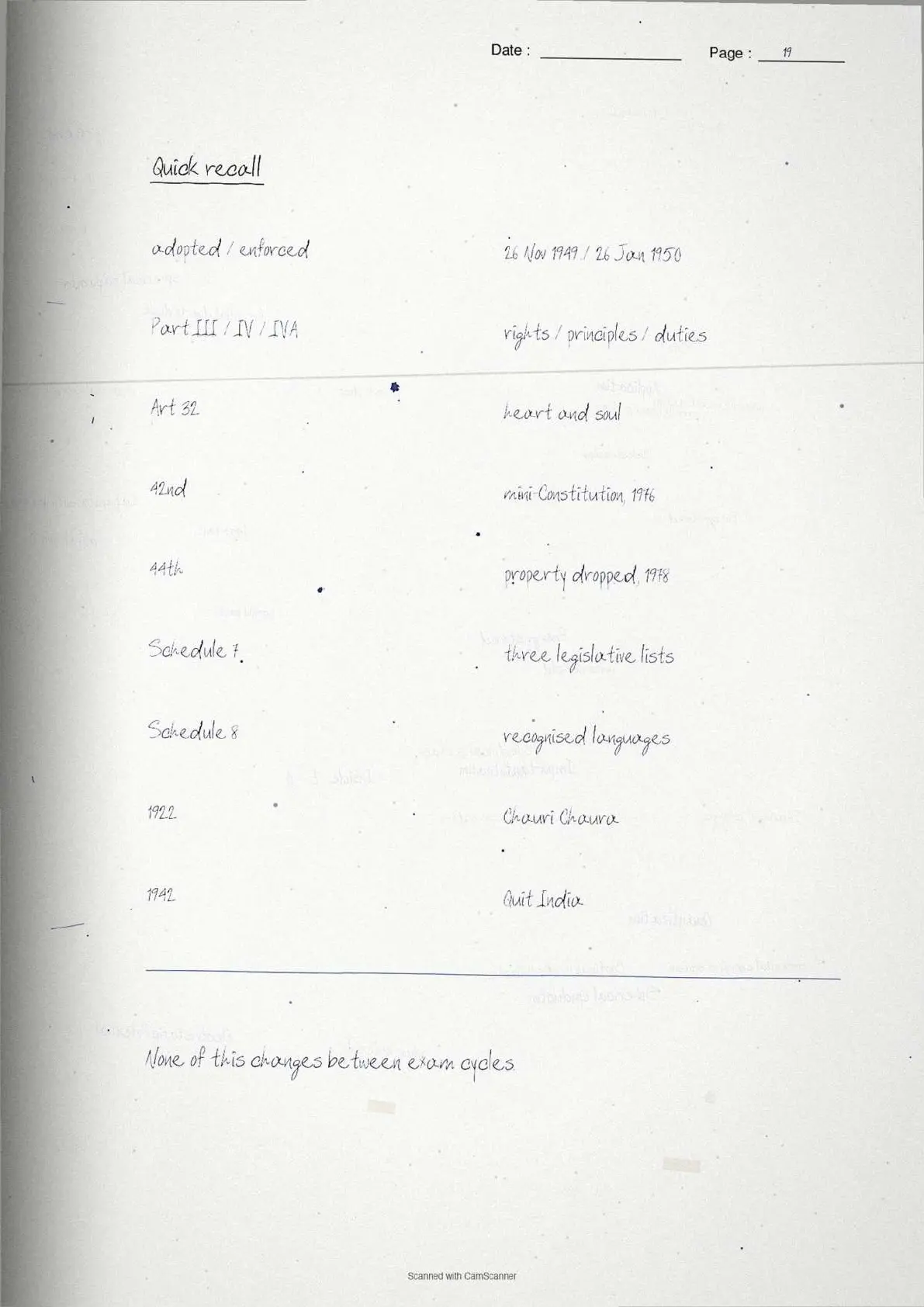
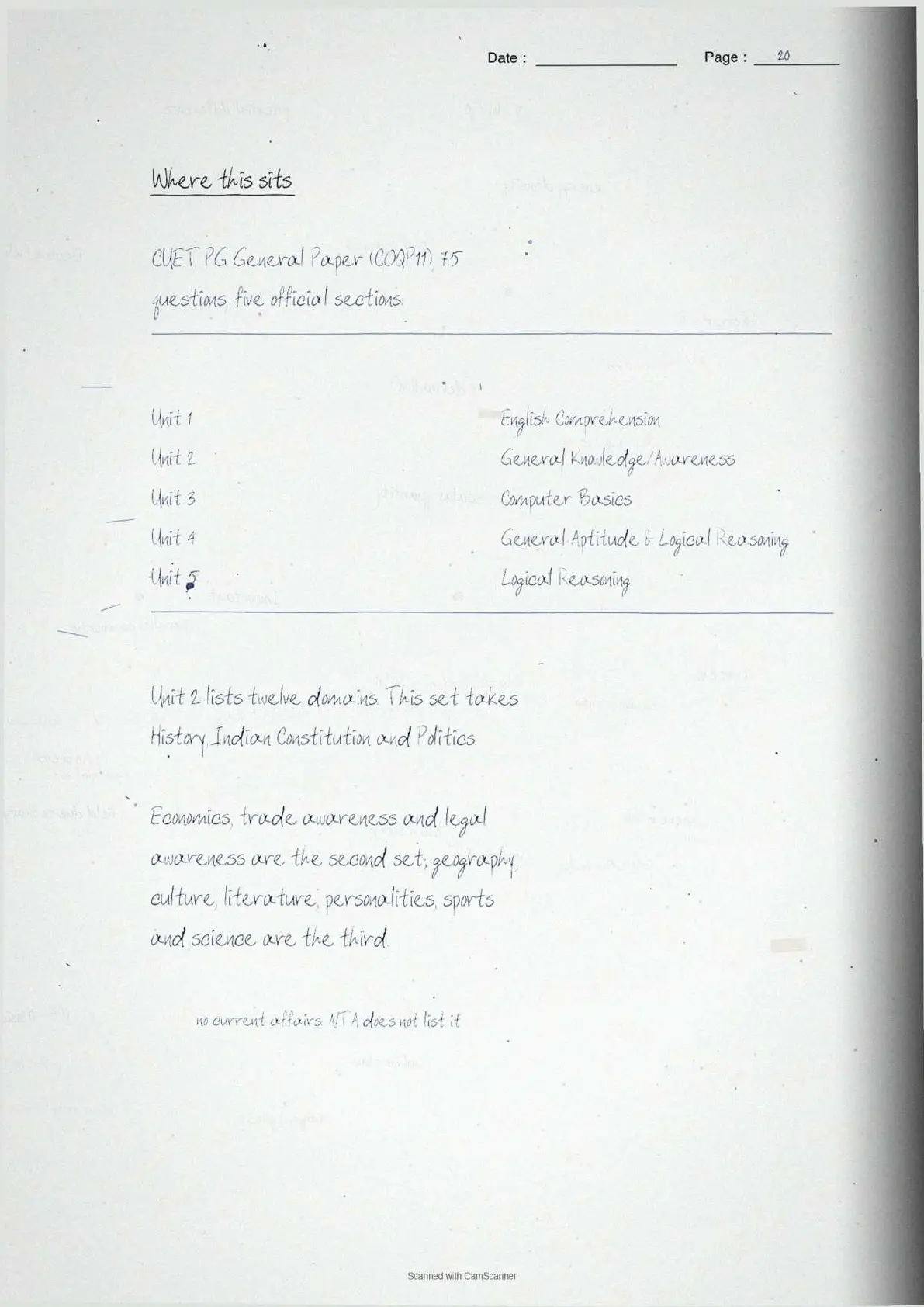
The notes are scans of a real notebook: short lines, boxed rules, and a margin note wherever something is easy to get wrong.
CUET PG General Paper Structure
COQP11 carries 75 bilingual questions across five official sections. General Knowledge and Awareness is the second, and NTA lists twelve domains inside it.
| Unit | Official section |
|---|---|
| 1 | English Comprehension |
| 2 | General Knowledge/Awareness |
| 3 | Computer Basics |
| 4 | General Aptitude & Logical Reasoning |
| 5 | Logical Reasoning |
These notes take three of those domains: history, the Indian Constitution and politics.
What the Notes Cover
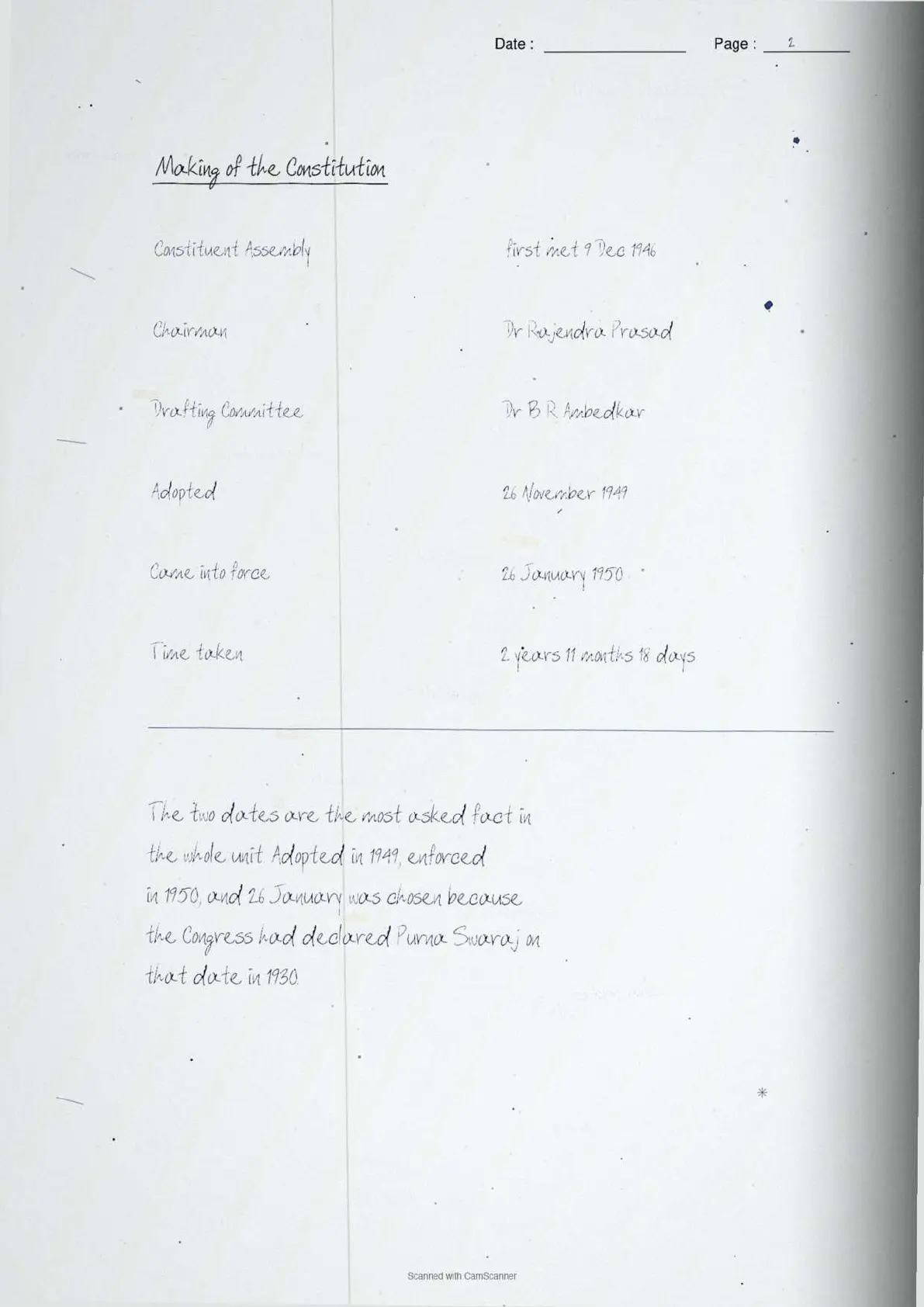
- Making of the Constitution, and the two dates that get asked most
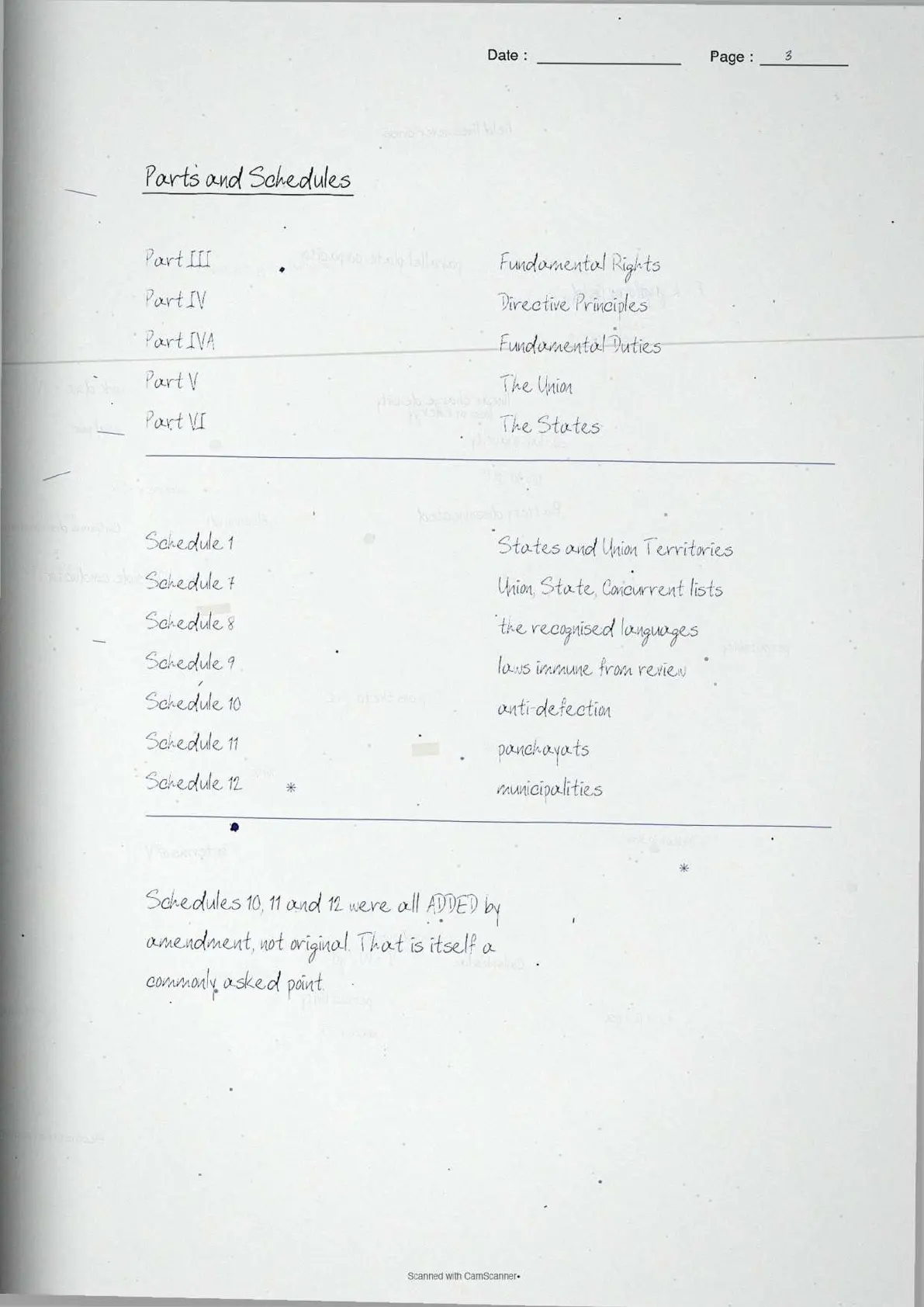
- Parts and Schedules, including the three added by amendment
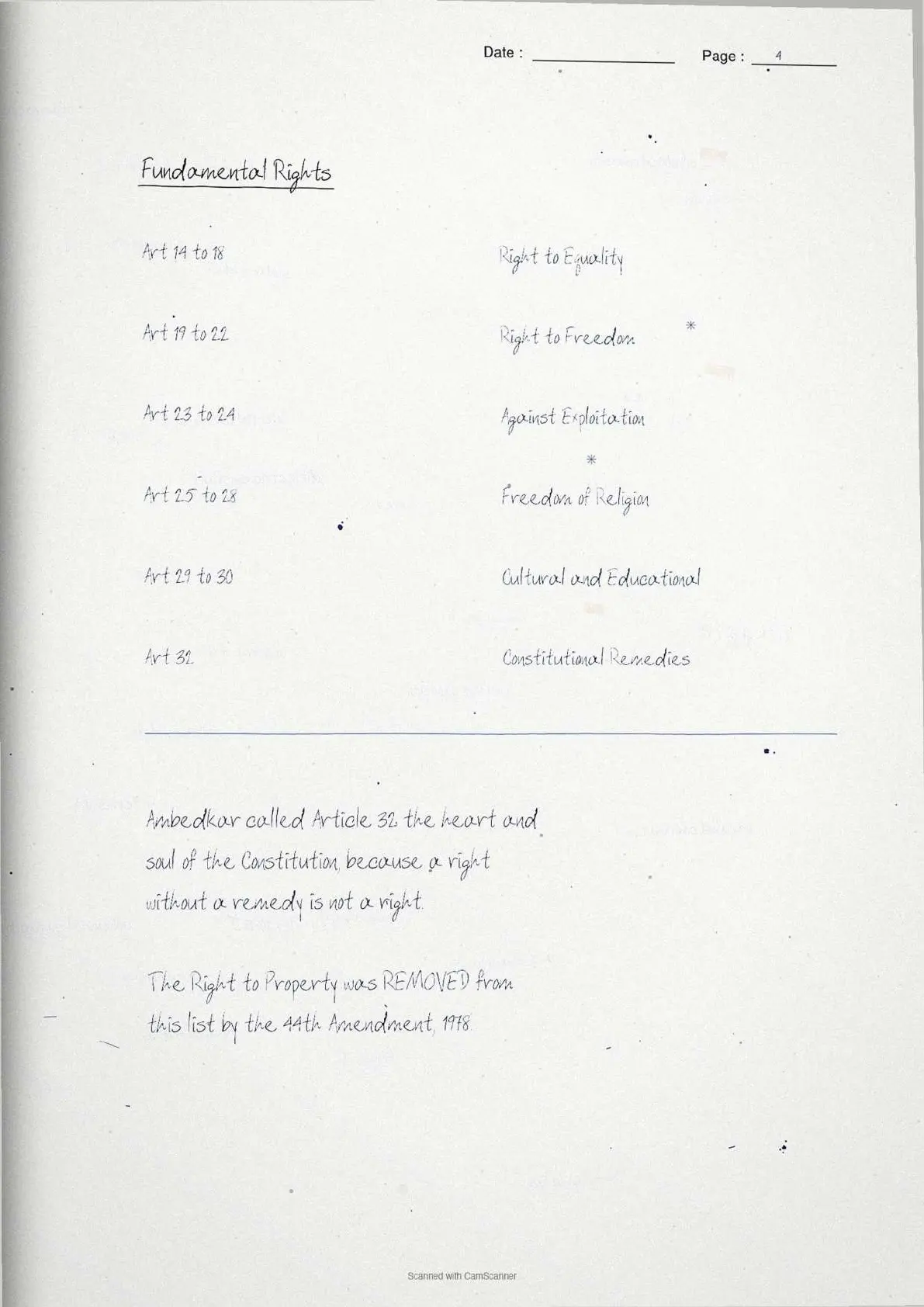
- Fundamental Rights by article, and the right that was removed in 1978
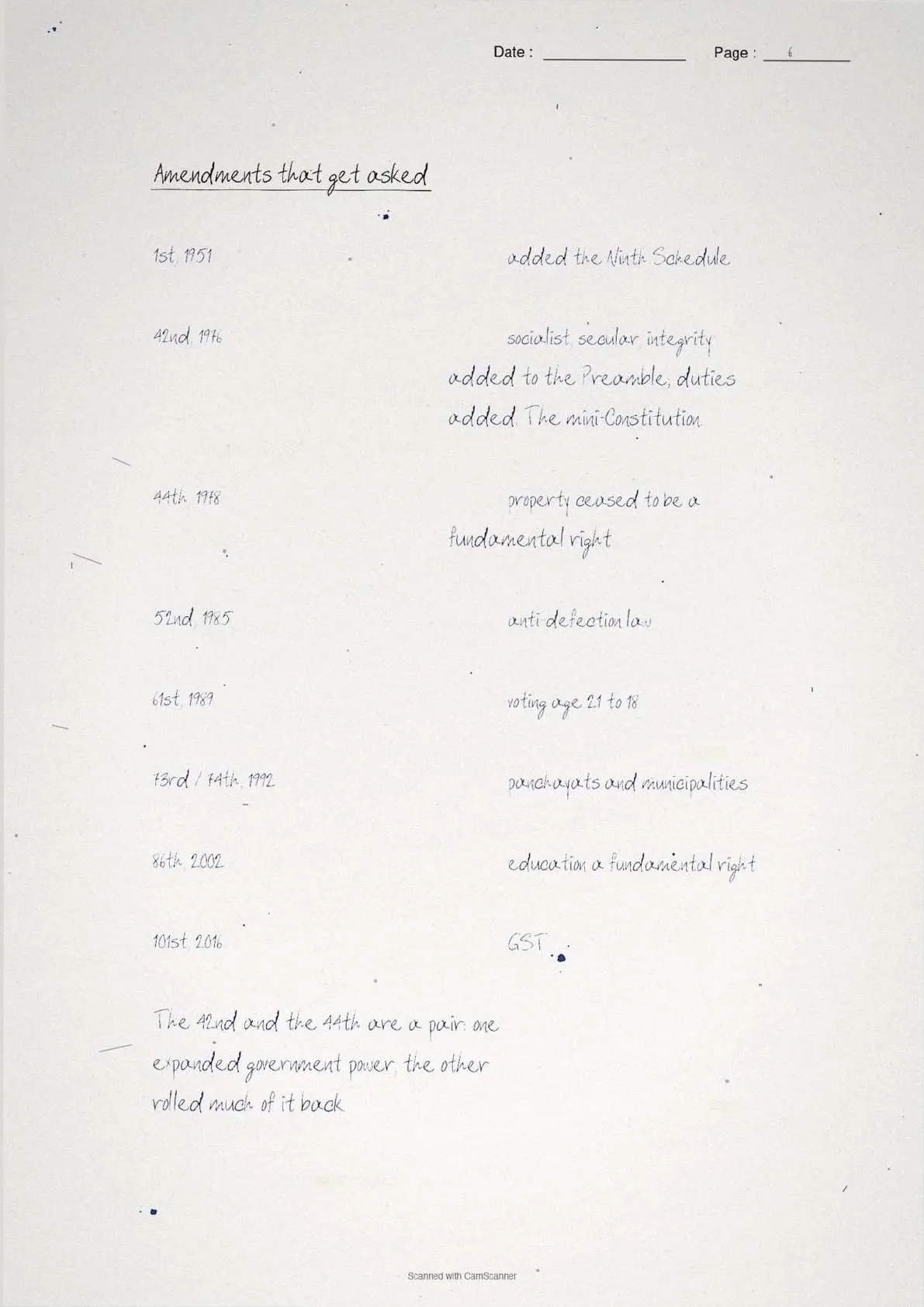
- The amendments that recur: the 42nd, 44th, 52nd, 73rd, 74th and 101st
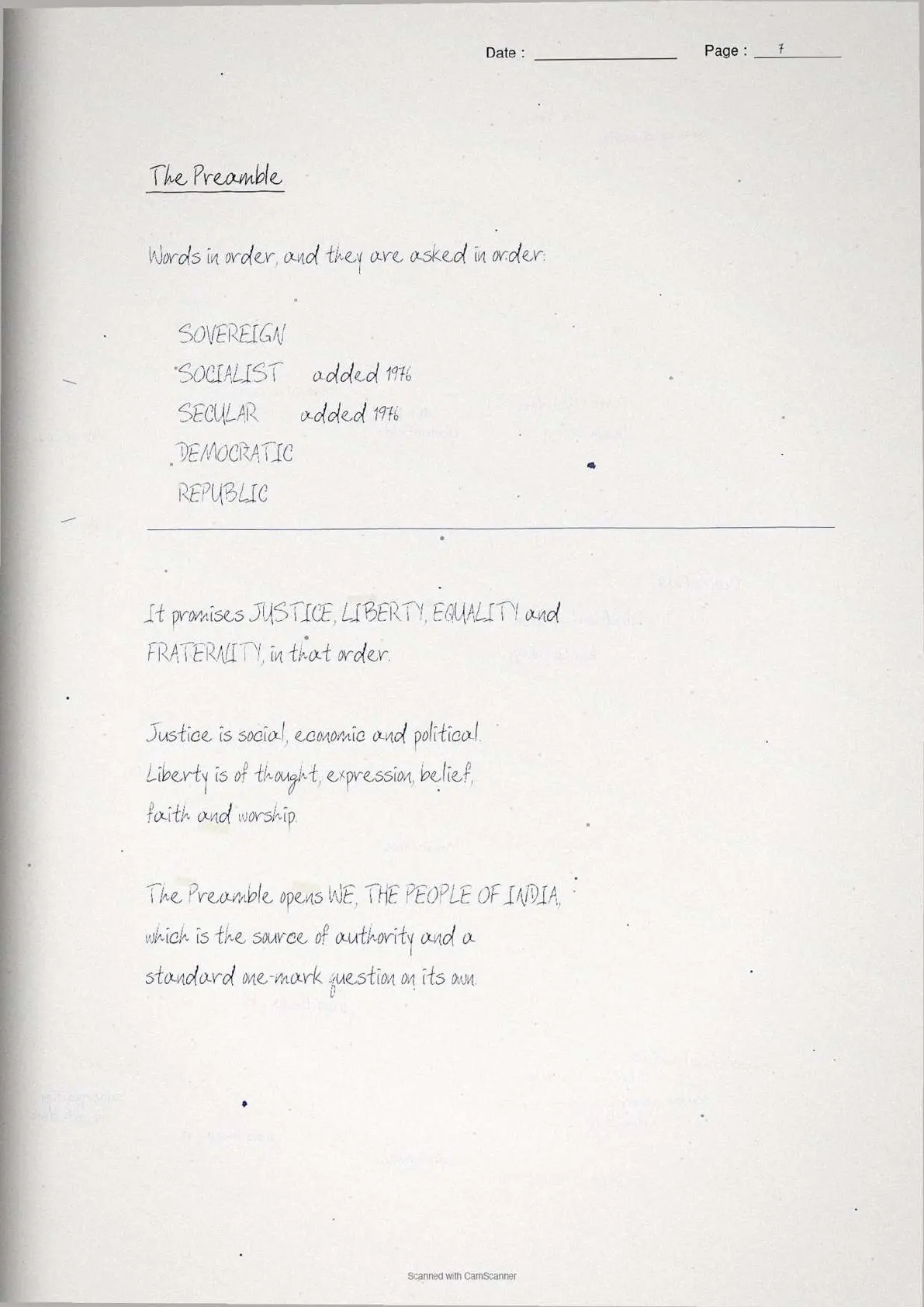
- The Preamble, word by word and in order
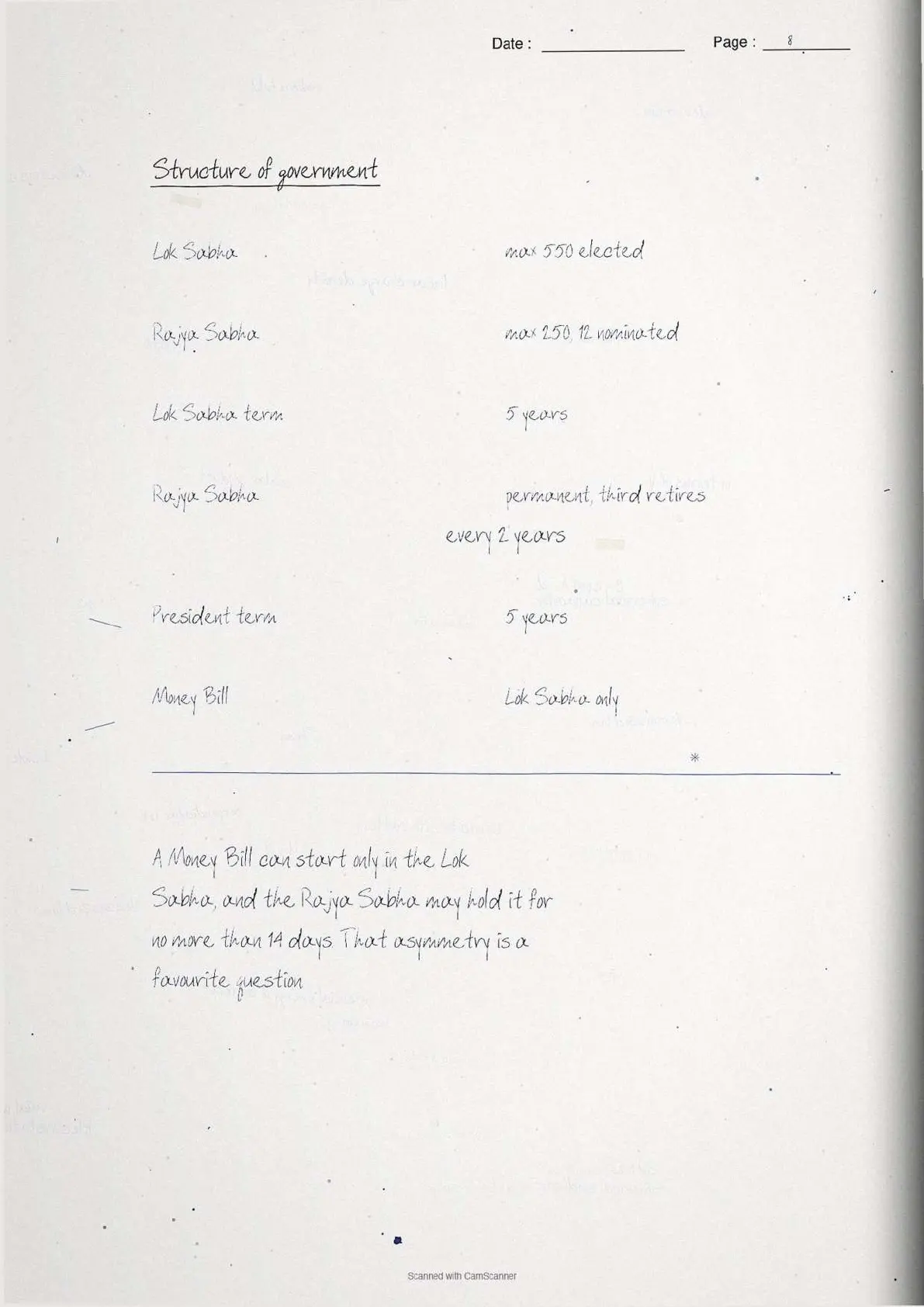
- Parliament, the Money Bill asymmetry, and constitutional bodies
- The freedom movement as a chain, with sessions and slogans
- The five writs, and why Article 226 is wider than Article 32
How to Approach the Section
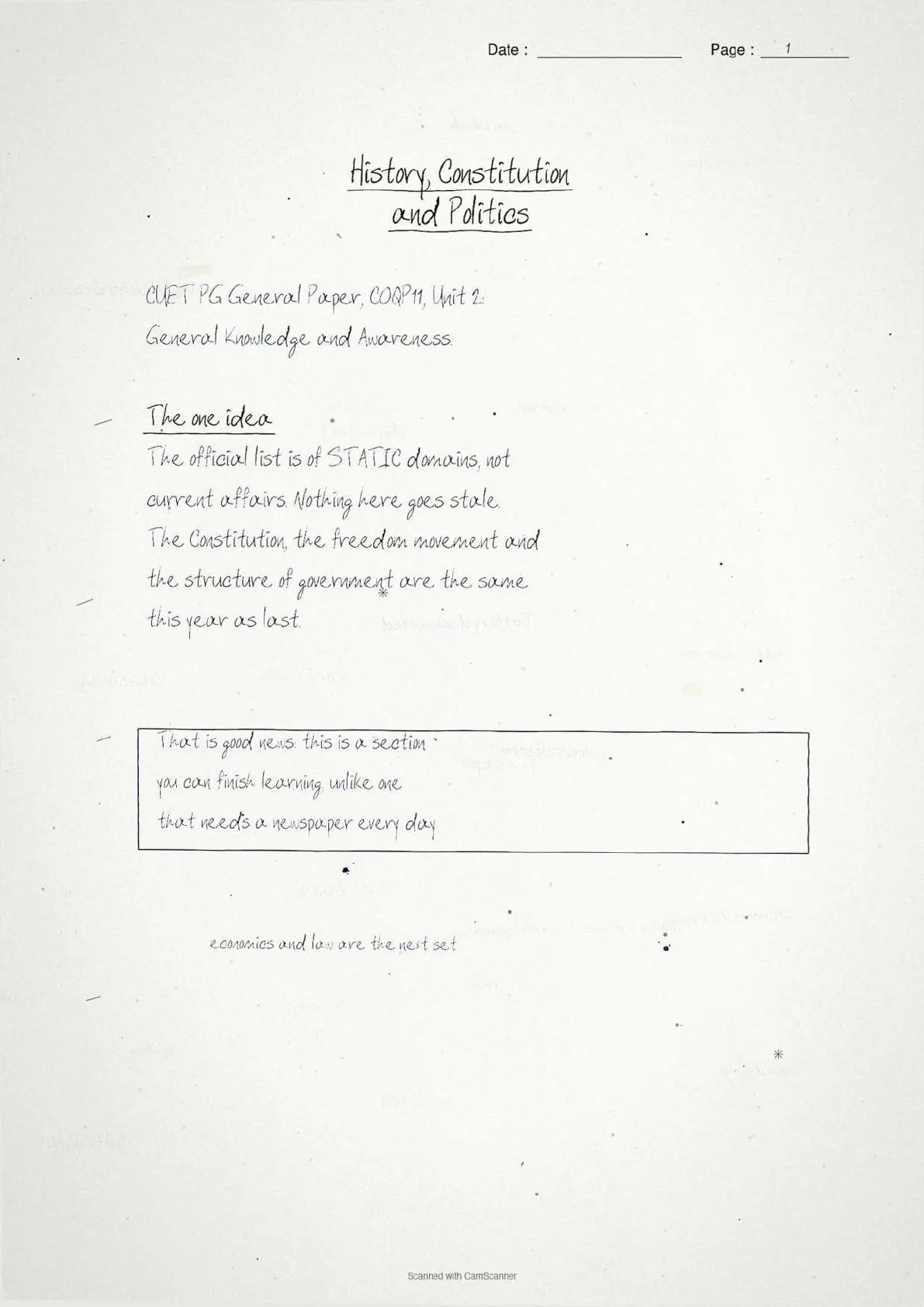
The official list is of static domains. Current affairs appears nowhere in COQP11, so nothing in this topic goes stale and the section can actually be finished, unlike one that needs a newspaper every day.
For history, learn the chain rather than isolated dates. Each movement was a response to the repression before it, and once the sequence makes sense the dates stop needing separate memorising.
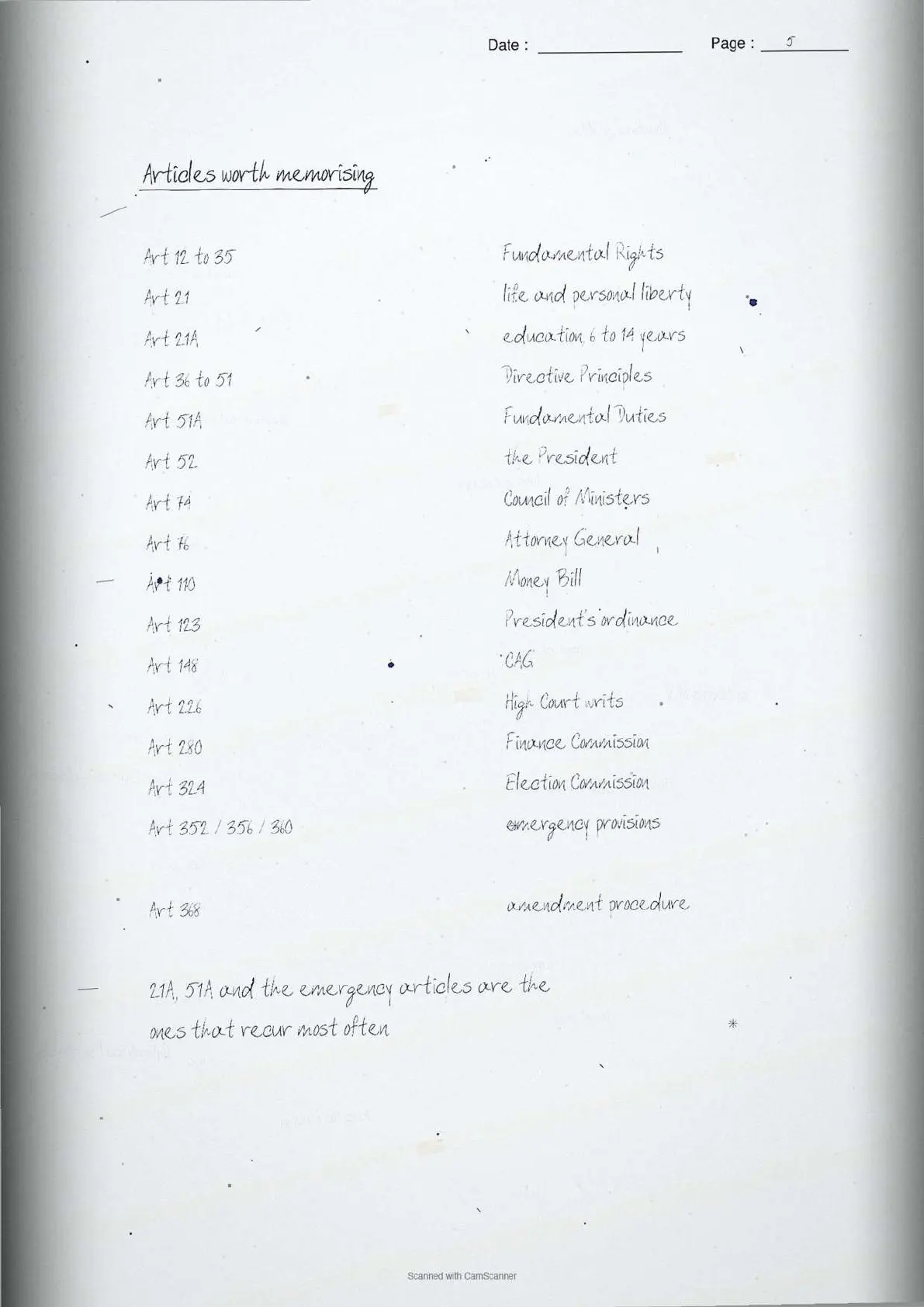
For the Constitution, article numbers matter more than article text. Most questions ask which article covers what, and a dozen of them account for the large majority.
Common Mistakes
- Swapping the two Constitution dates. Adopted 26 November 1949, enforced 26 January 1950
- Thinking property is still a fundamental right. The 44th Amendment removed it
- Calling NITI Aayog a constitutional body. It came from a cabinet resolution in 2015
- Attributing the Directive Principles to the USSR. Ireland for principles, USSR for duties
- Confusing Article 32 with 226. The High Court's writ power is the wider one
- Assuming the Rajya Sabha can reject a Money Bill. It may only delay it 14 days
Video Revision
Source: CUET PG Wallah
How to Use These Notes
Page 5 lists the articles worth memorising and page 6 the amendments that recur. Those two pages carry most of the marks available in the polity half.
Page 15 is the borrowed-features table, which is a favourite matching question and is answered entirely from one page.
The economics and legal half of Unit 2 is in a separate set, and geography, culture and science in a third.
CUET PG History and Polity Notes FAQs
Ques. What does the CUET PG general knowledge section include?
Ans. NTA lists twelve domains: literature, history, the Indian Constitution, personalities, sports, the national and international economy, economics, science, politics, legal awareness, trade awareness, geography and culture.
Ques. Does CUET PG ask current affairs?
Ans. Not in the official COQP11 syllabus. The listed domains are all static, which is why these notes cover the Constitution, the freedom movement and the structure of government rather than recent news.
Ques. Which constitutional articles are asked most?
Ans. Article 32 on constitutional remedies, Article 21 on life and liberty, Article 21A on education, and the emergency provisions in 352, 356 and 360. Around a dozen articles account for most questions.
Ques. Which amendments should I know?
Ans. The 42nd of 1976, which added socialist and secular to the Preamble, and the 44th of 1978, which removed property from the fundamental rights. They work as a pair, one expanding state power and the other rolling it back.
Ques. Can the notes be downloaded free?
Ans. Yes. All 20 pages can be read on this page and downloaded at no cost.



Comments