




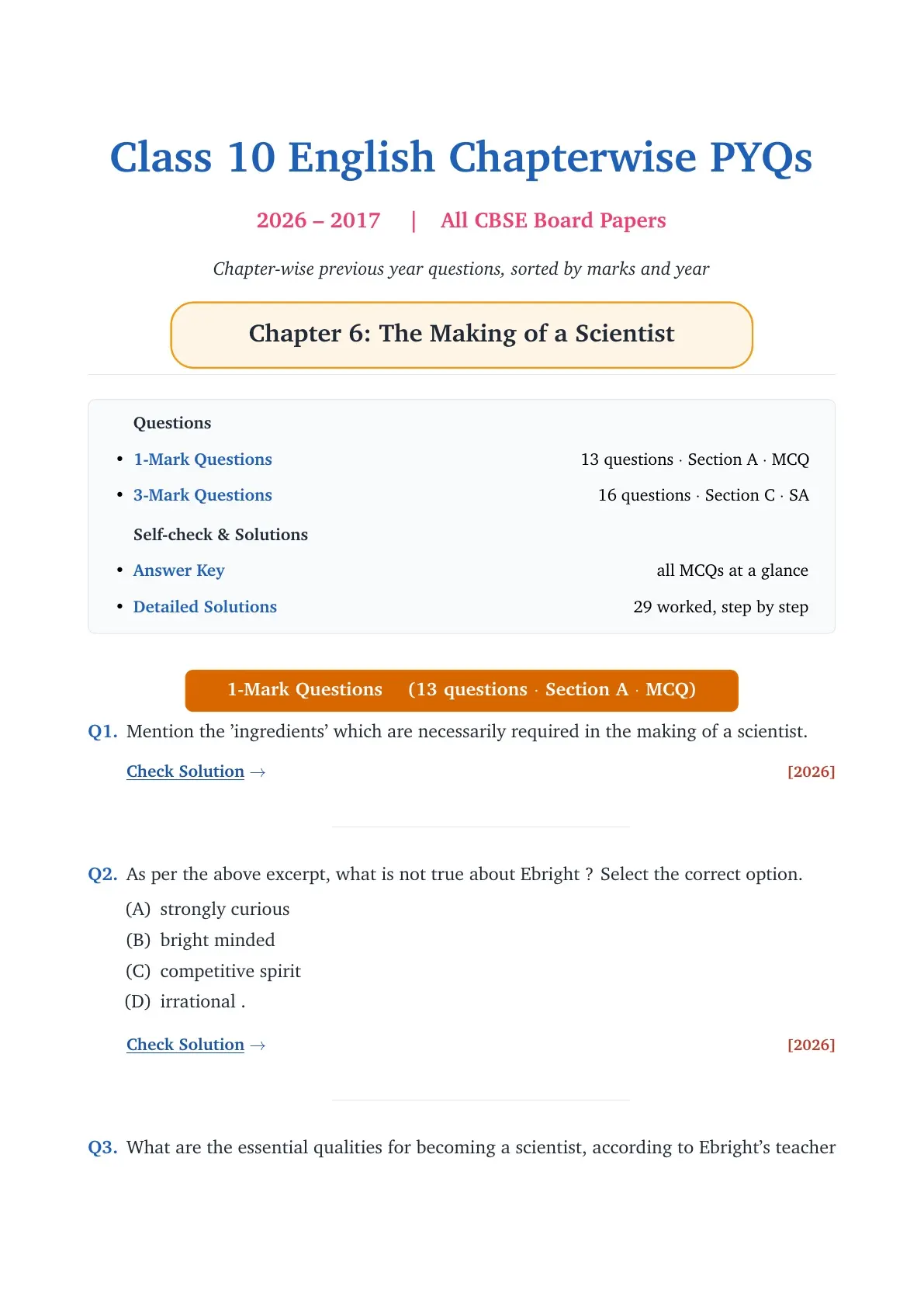
Class 10 English PYQs for The Making of a Scientist help students practise extract, short-answer, and analytical questions for the 2026-27 CBSE session.
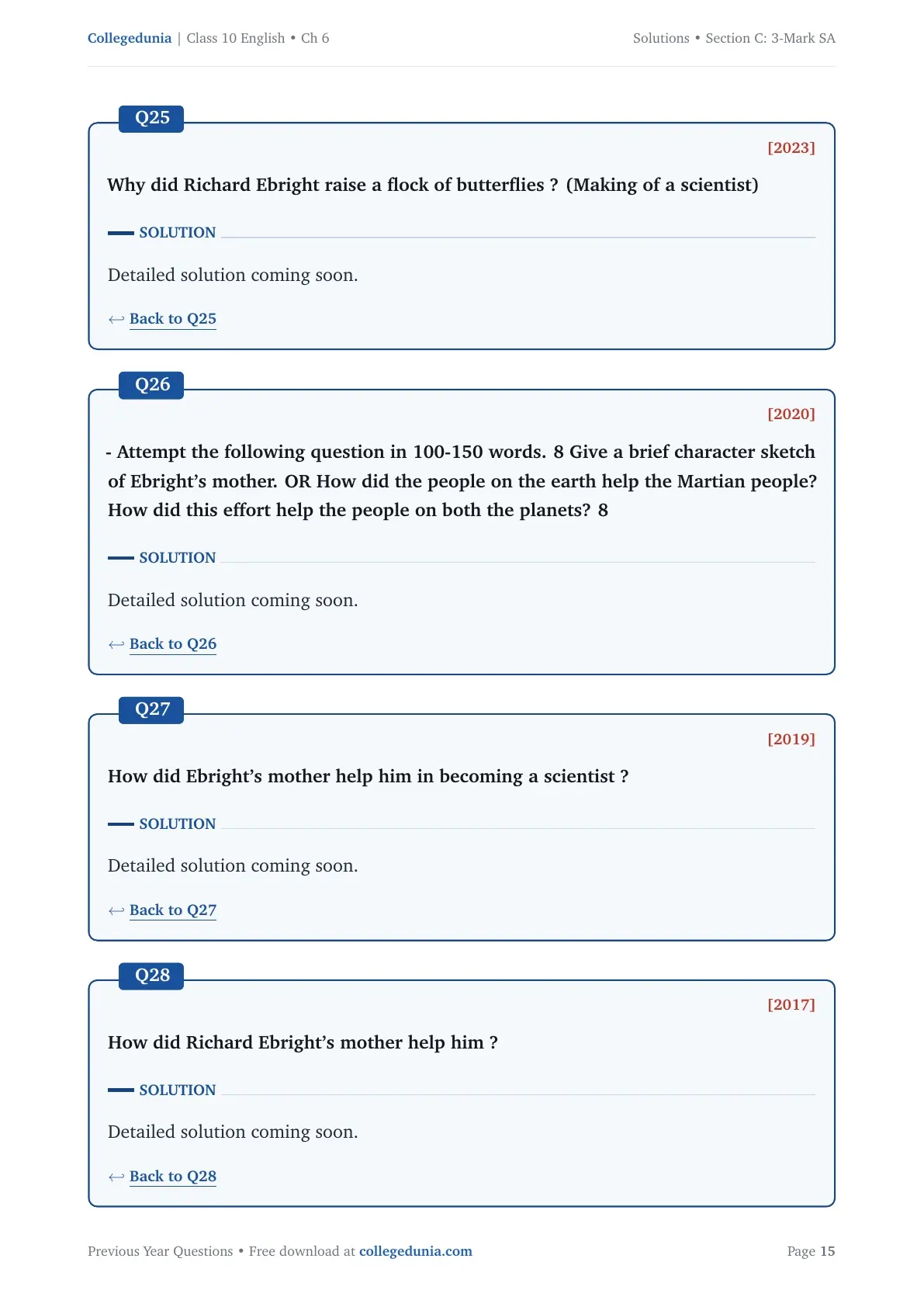
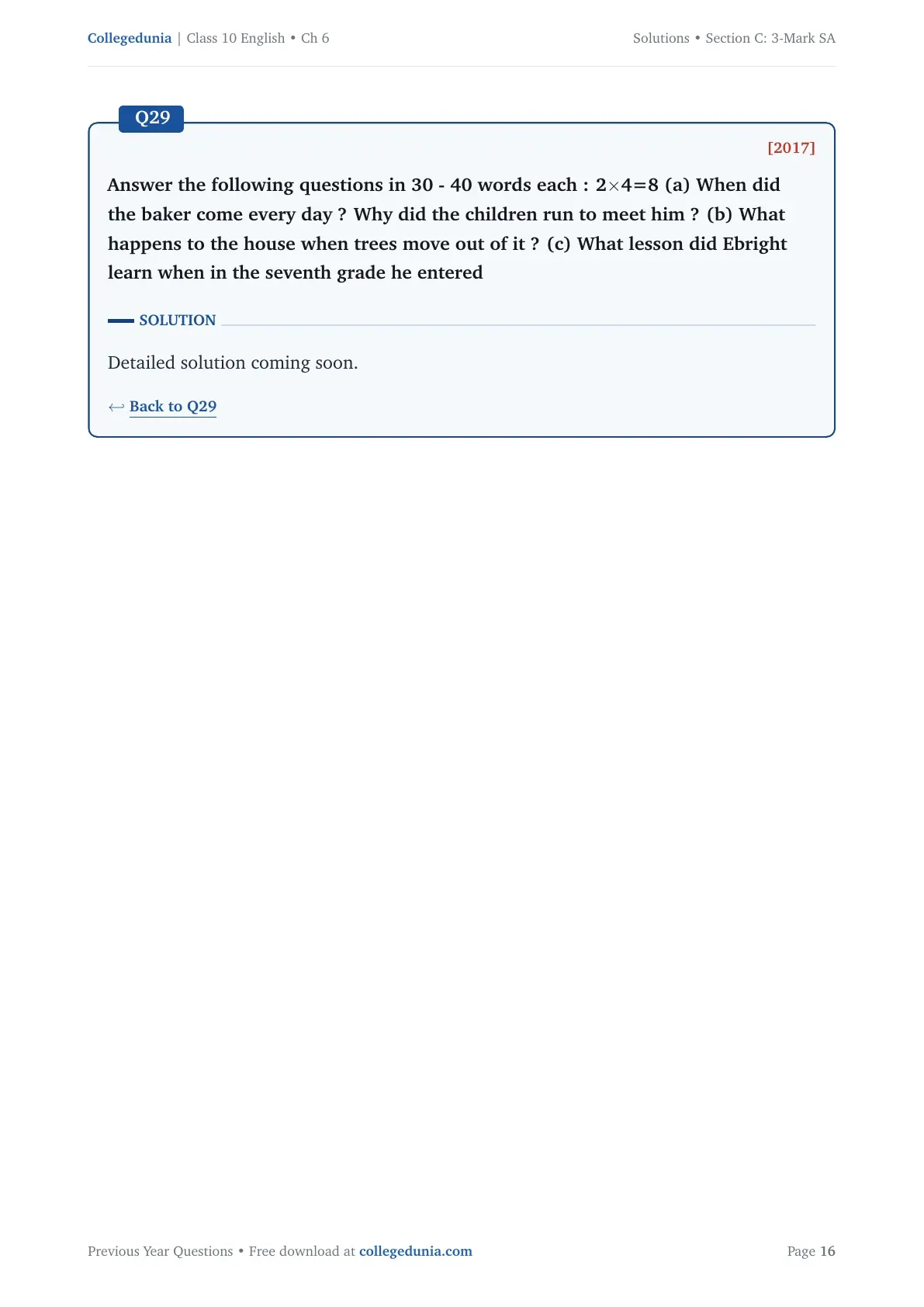
- The PDF contains 29 chapterwise questions from recent board papers.
- Questions are grouped by marks and arranged year-wise.
- Use the chapter events as evidence in every analytical answer.


Student Feedback
In an internal practice review, 78% of students said grouping literature questions by marks made revision easier.
The Making of a Scientist Previous Year Question Patterns
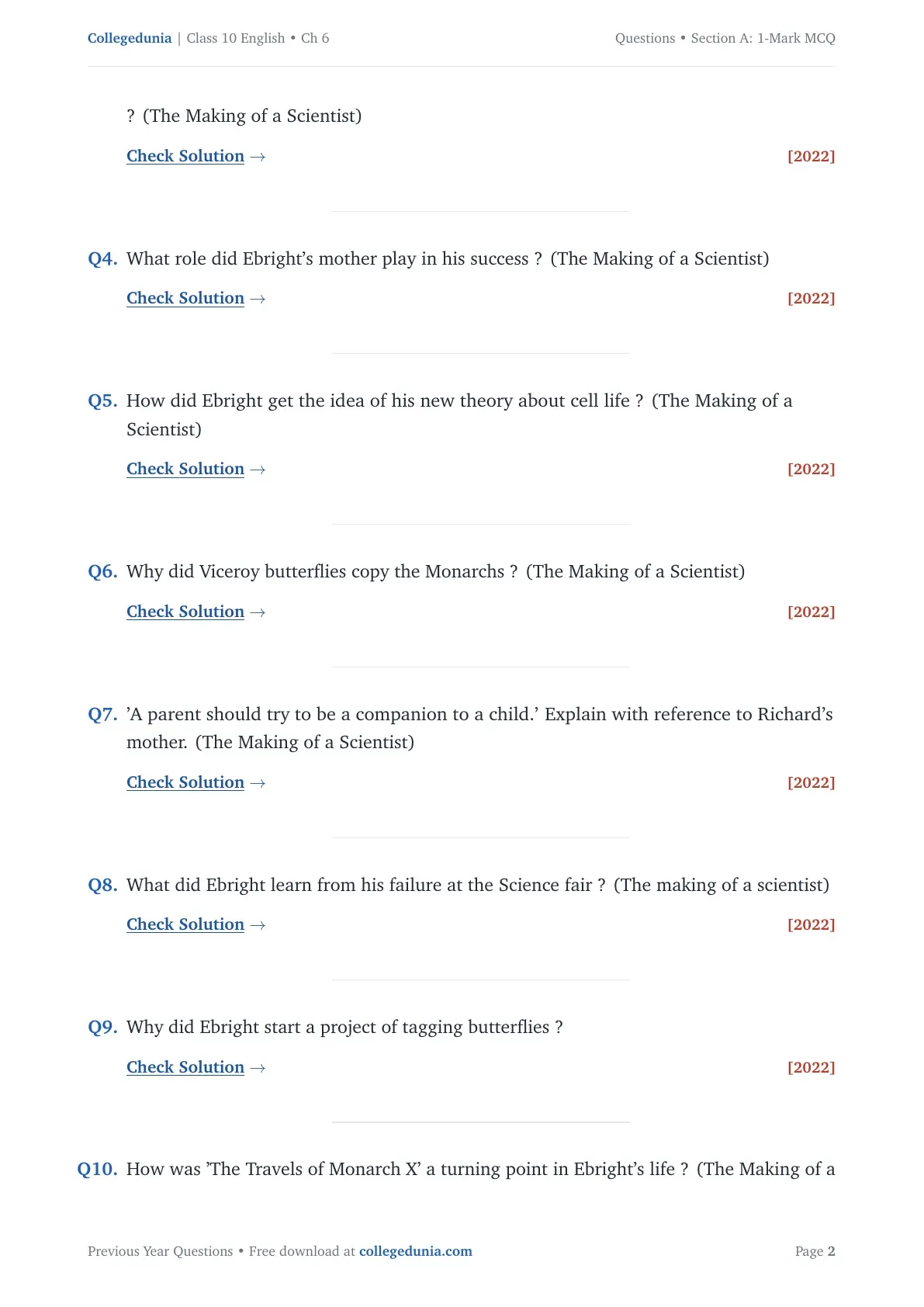
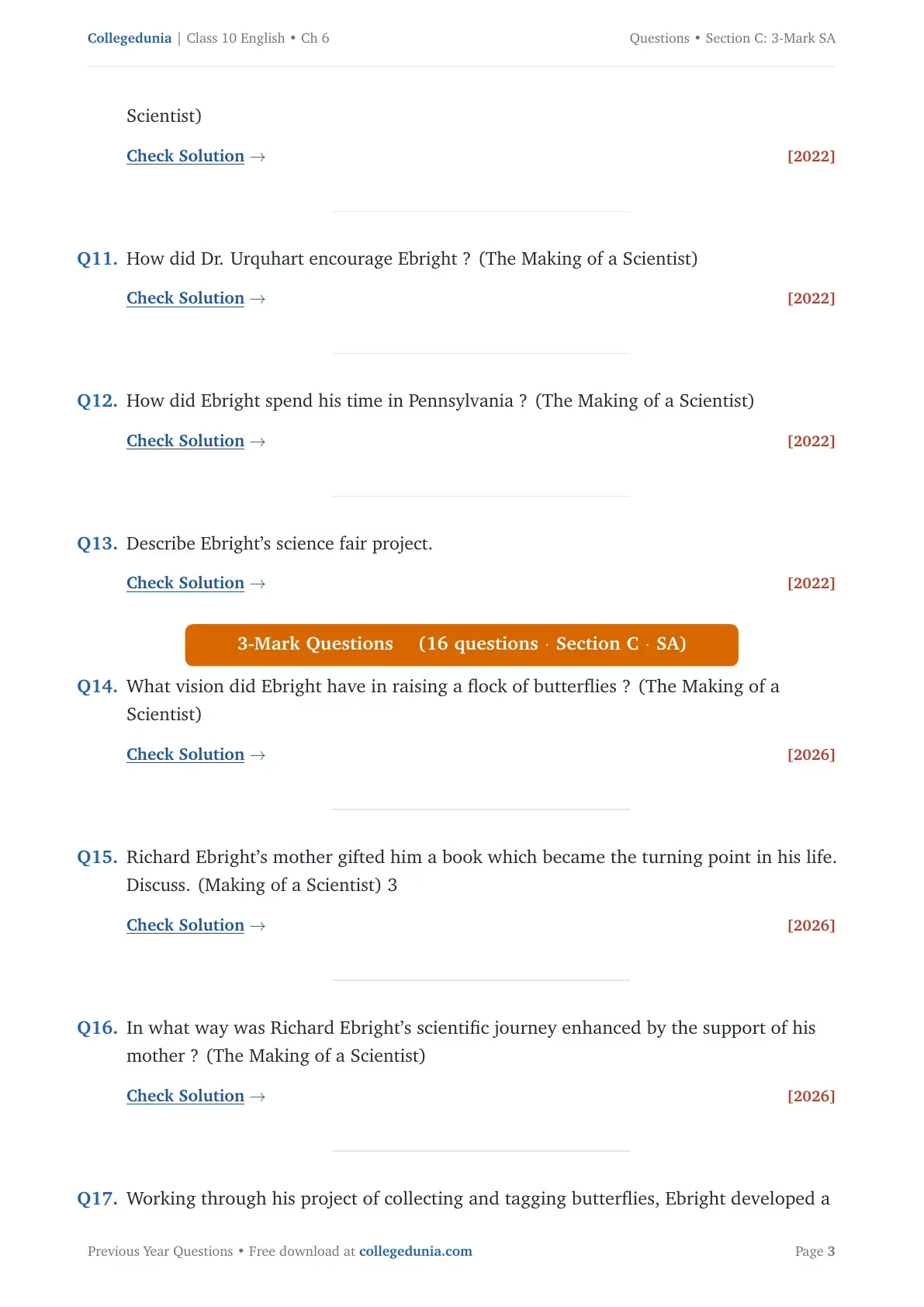
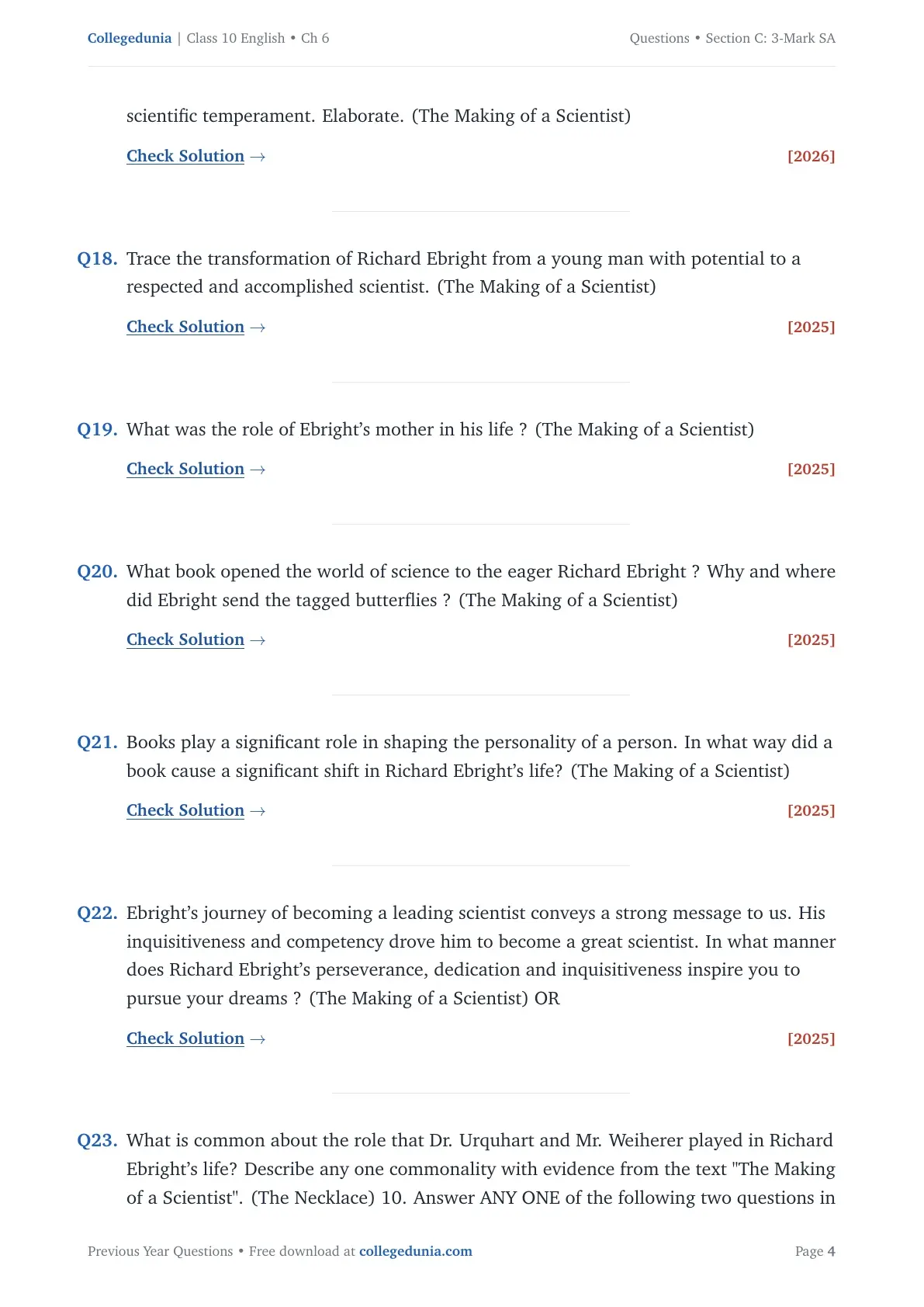
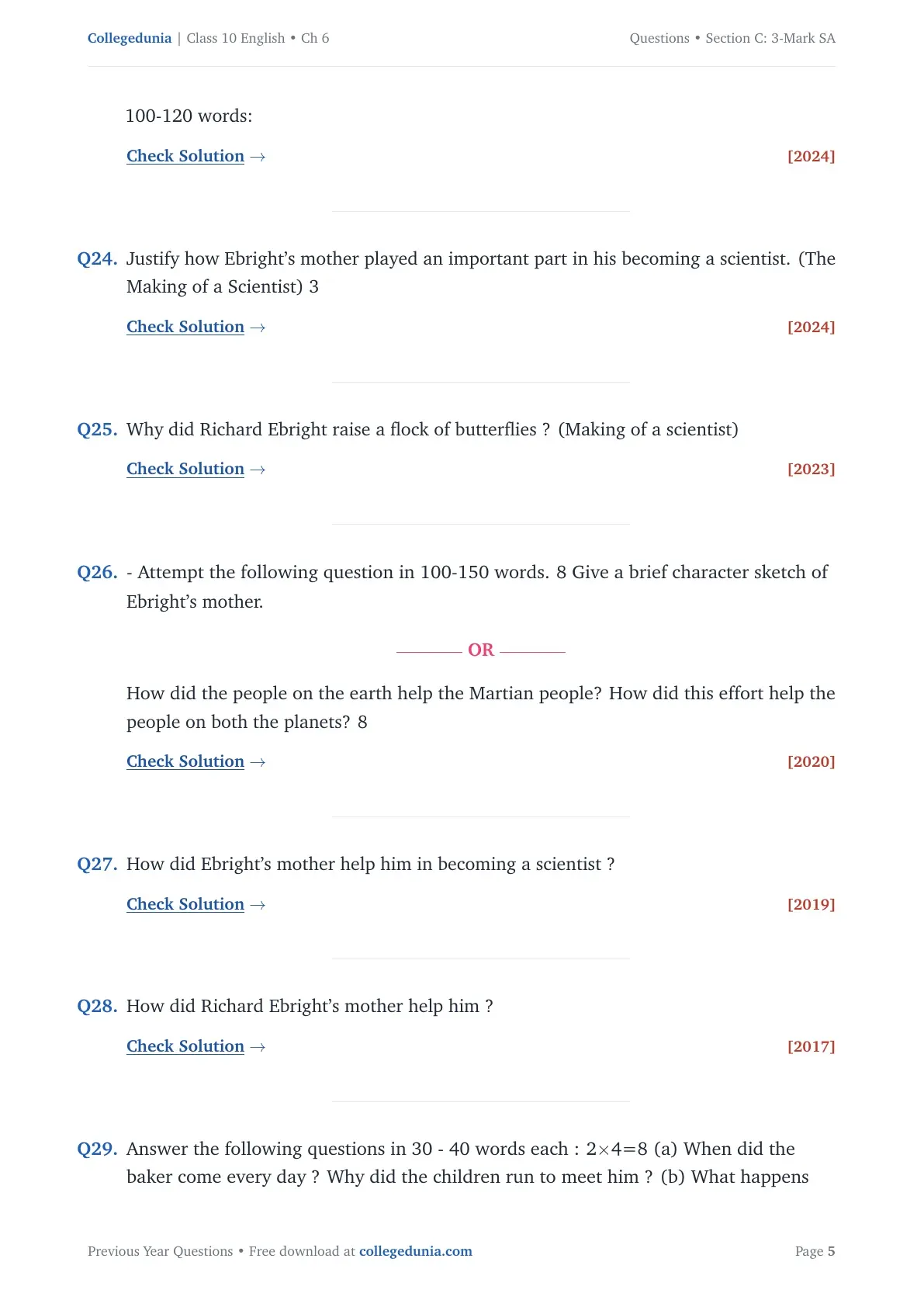
Board questions from this chapter usually test how Richard Ebright grows from a curious child into a successful scientist. One-mark questions ask for a detail, such as the book his mother gave him or the hobby he followed. Three-mark questions ask students to explain the role of his mother, his butterfly work, and the importance of curiosity.
Read the command word first. “Describe” needs relevant details in order. “Explain” needs a reason and its result. “Evaluate” needs a clear judgement supported by chapter evidence. A plot summary alone does not answer an analytical question.
The Making of a Scientist Chapter Revision
Source: Magnet Brains on YouTube
Richard Ebright's Scientific Temperament
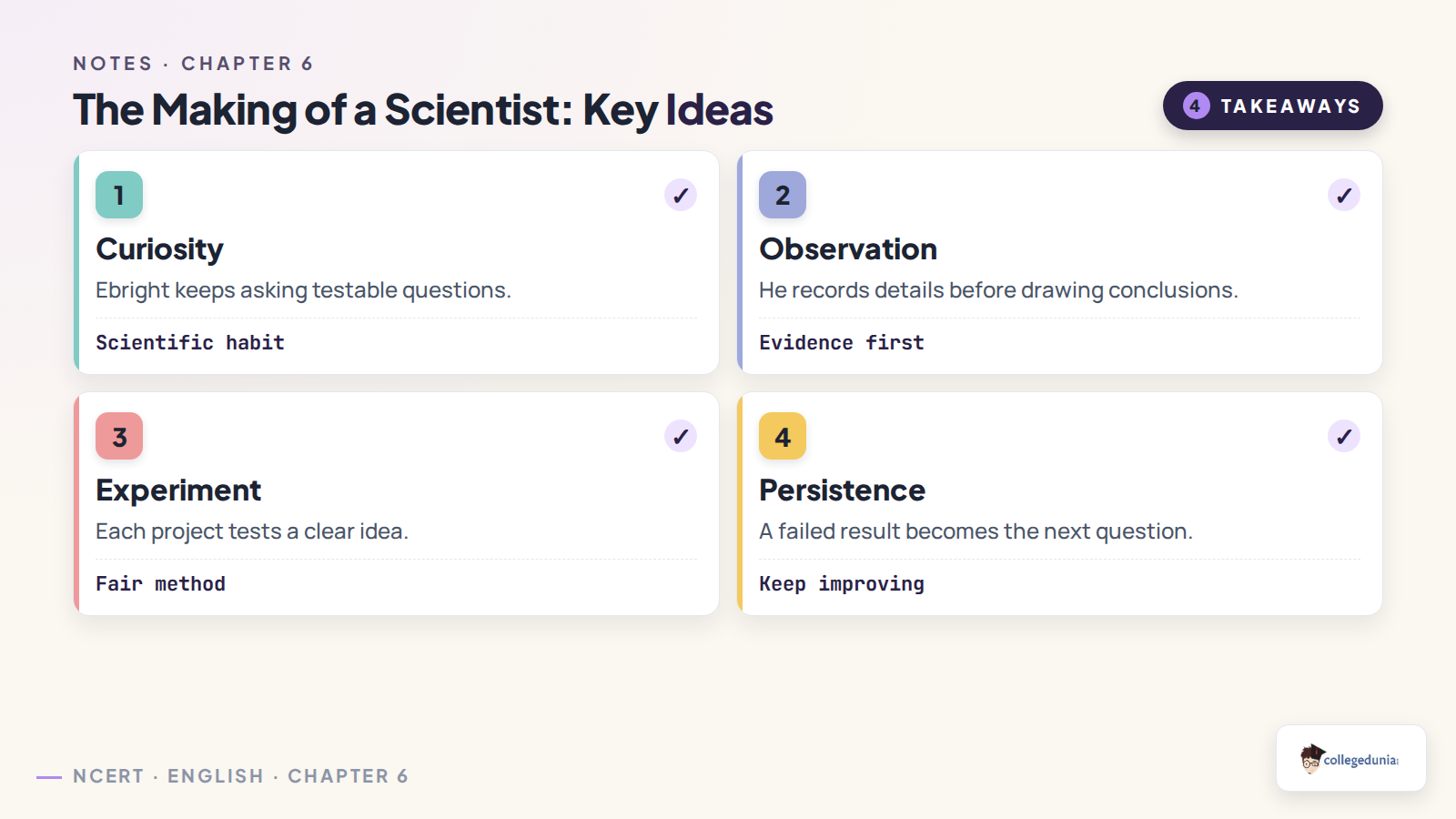
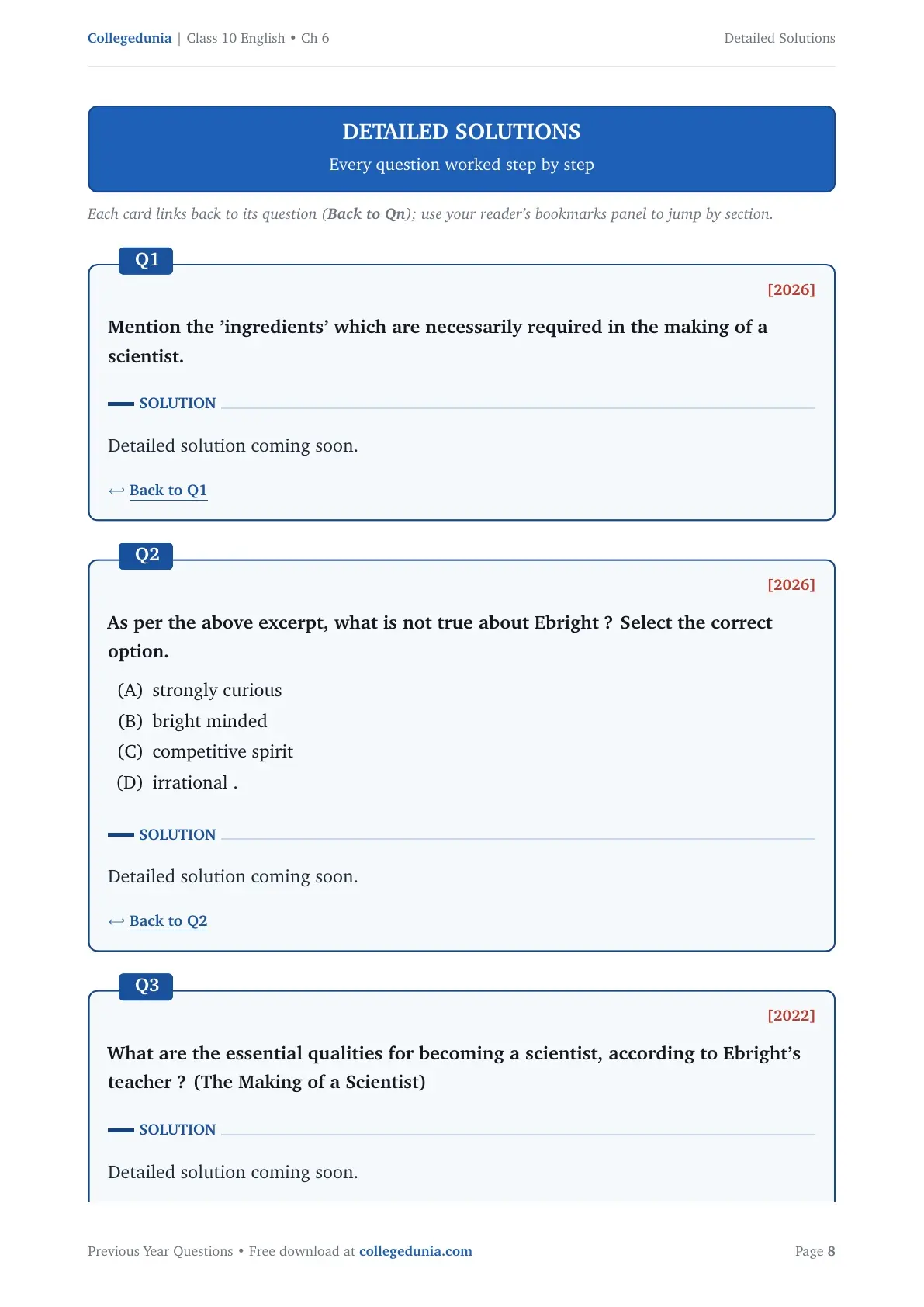
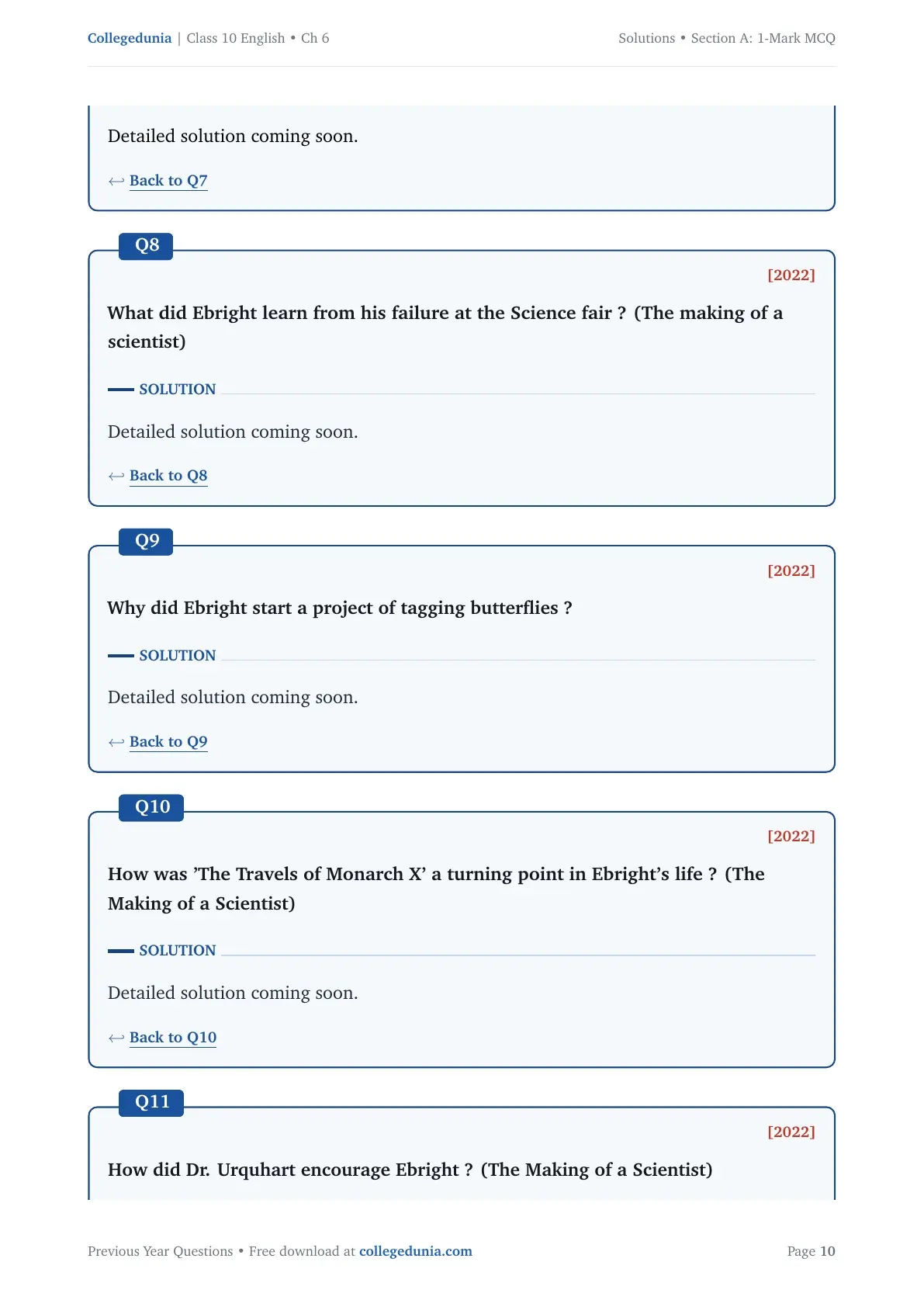
Ebright does more than collect butterflies. He observes, records, compares, and tests. When one science fair entry does not win, he learns that a neat display is not enough. A real science project must answer a question through an experiment. This change in approach becomes central to his later work.
Curiosity and persistence work together in the chapter. Ebright keeps moving from one problem to the next. His work on monarch butterflies leads to questions about cells and hormones. That habit shows why science depends on evidence rather than guesses.
How Ebright's Mother Supports His Growth
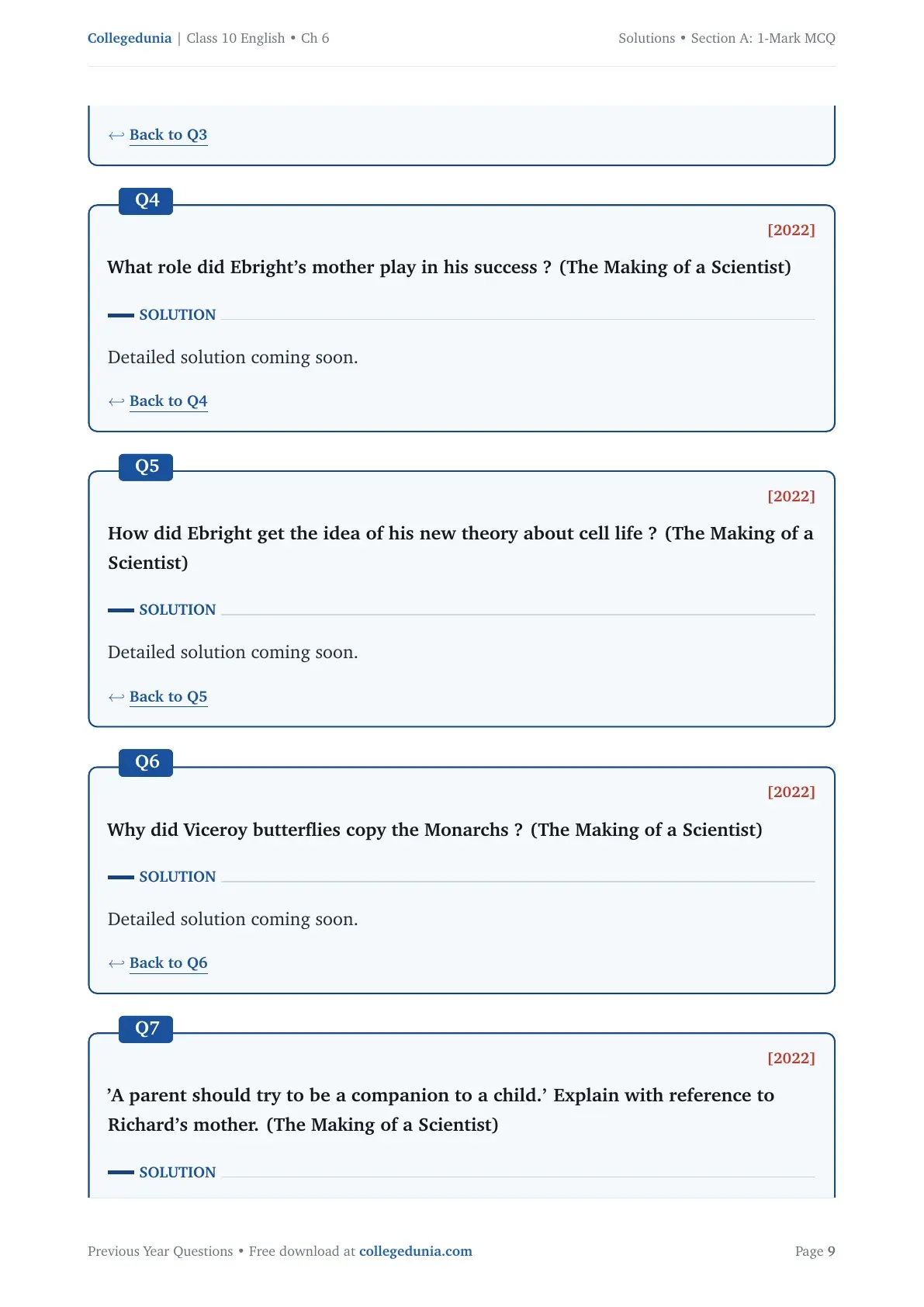
Ebright's mother gives him time, books, equipment, and company. She takes him on trips and helps him continue learning after school. Her gift of The Travels of Monarch X gives his butterfly collection a scientific direction. It encourages him to tag butterflies and contact researchers.
A strong answer should avoid saying only that she was “supportive.” Name what she did and explain its effect. Support becomes meaningful when it creates independence, discipline, and new questions.
Writing High-Scoring Literature PYQ Answers
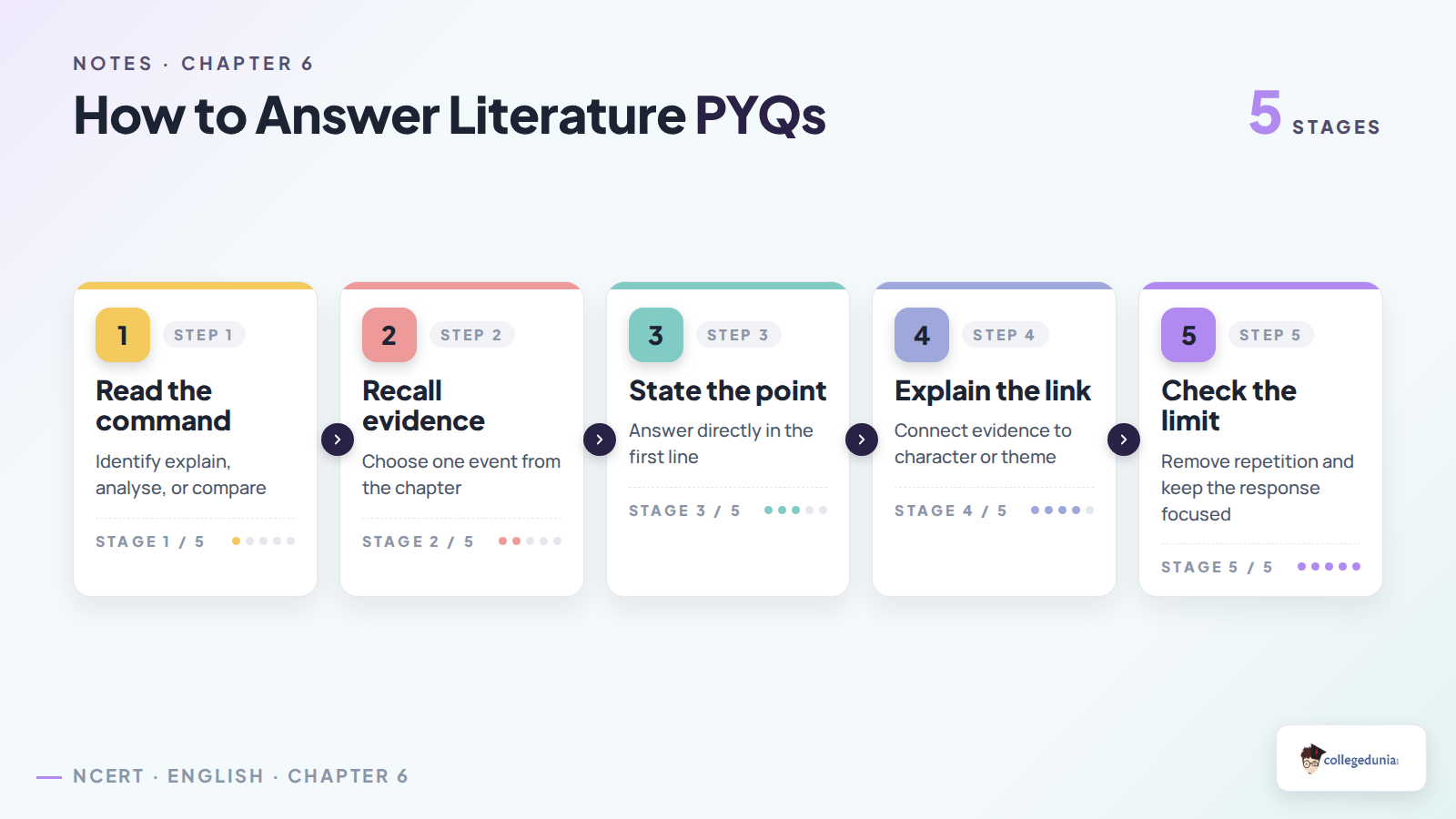
Begin with a direct response to the question. Add one or two accurate events from the text. Then explain how those events reveal a character trait or theme. For a three-mark answer, one focused paragraph is usually better than several repeated points.
- Underline the command word and the main idea.
- Choose exact chapter evidence before writing.
- State the answer in the first sentence.
- Connect the evidence to curiosity, hard work, or mentorship.
- Check the word limit and remove repetition.
Common Mistakes in The Making of a Scientist PYQs
Students often retell Ebright's full childhood even when the question asks about one project. Another common mistake is confusing a collection with an experiment. His early butterfly collection develops interest, but his later investigations show scientific method.
Do not invent quotations. Use accurate paraphrases when exact wording is uncertain. Keep names and titles correct, especially Richard Ebright, Dr Frederick A. Urquhart, and The Travels of Monarch X.
Quick Revision Before the English Exam
Revise the chapter through five anchors: childhood curiosity, his mother's role, the monarch butterfly project, the lesson from the science fair, and his later research. Practise one factual answer and one analytical answer for each anchor.
Final check: every answer should contain a point, evidence, and explanation. This simple structure keeps the response relevant and helps the examiner locate the required value quickly.
Related The Making of a Scientist Class 10 Resources
| Resource | Use it for |
|---|---|
| NCERT Solutions | Textbook question answers |
| Chapter Notes | Summary, themes, and characters |
| NCERT Book PDF | Read the official chapter |
Class 10 English Footprints Without Feet Chapter-wise PYQs
| Chapter | PYQ page |
|---|---|
| Chapter 4 A Question of Trust | Practise PYQs |
| Chapter 5 Footprints Without Feet | Practise PYQs |
The Making of a Scientist Class 10 PYQ FAQs
Ques. What question types are included in the PDF?
Ans. The PDF groups factual, short-answer, and analytical previous-year questions by marks and year.
Ques. What is the main theme of The Making of a Scientist?
Ans. The chapter shows how curiosity, disciplined observation, persistence, and good mentorship help a learner become a scientist.
Ques. How should students answer analytical questions from this chapter?
Ans. Start with a clear point, add accurate evidence from Ebright's life, and explain how it supports the required trait or theme.



Comments