




Class 10 Science Chapter 3, Metals and Non-metals, has one of the busiest previous year question banks in the board exam. This free PDF has 237 questions worth 581 marks across 58 pages, pulled from real CBSE board papers set between 2005 and 2026. It is built for students who want to practise from what has actually been asked, not from guesswork.
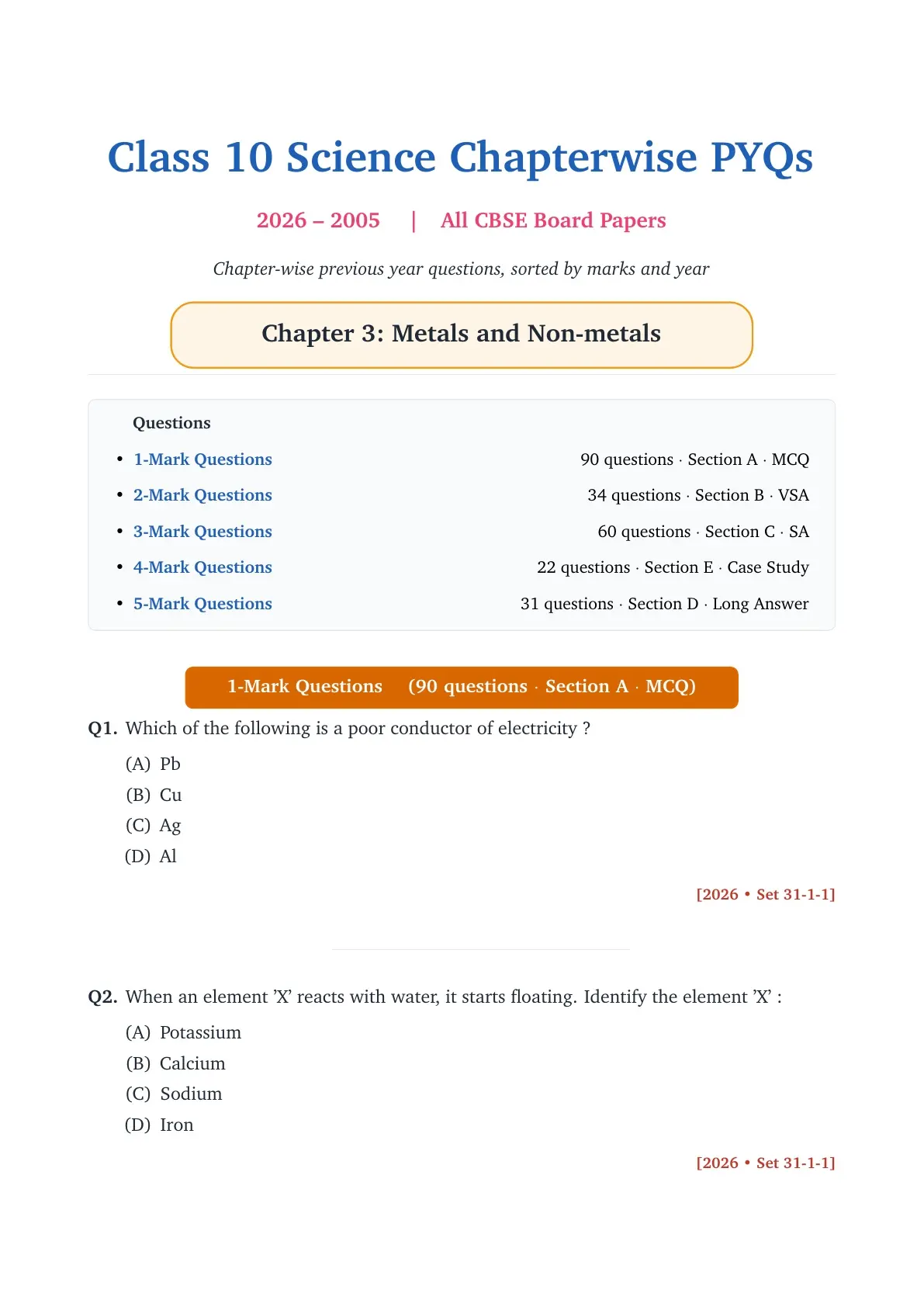
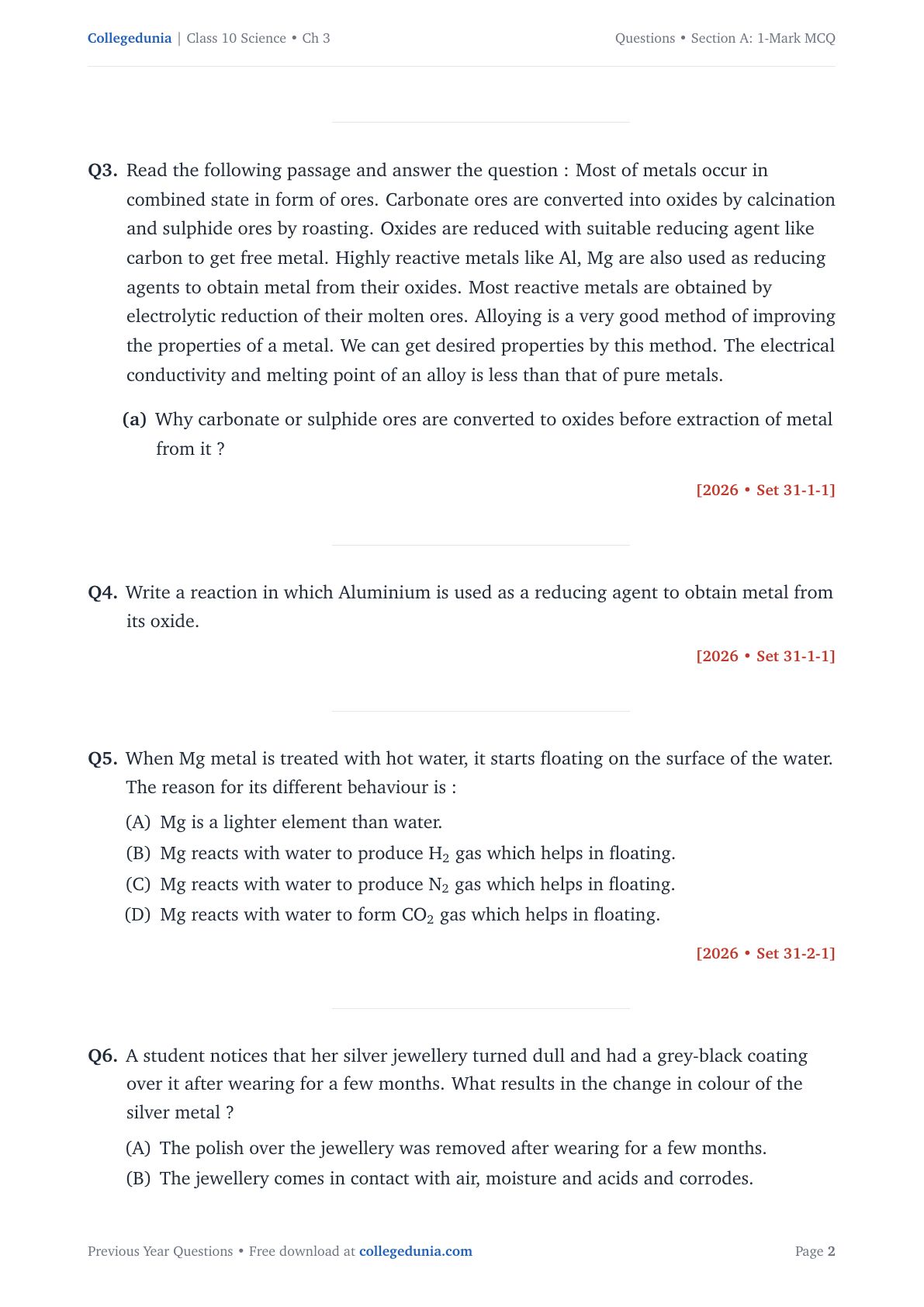
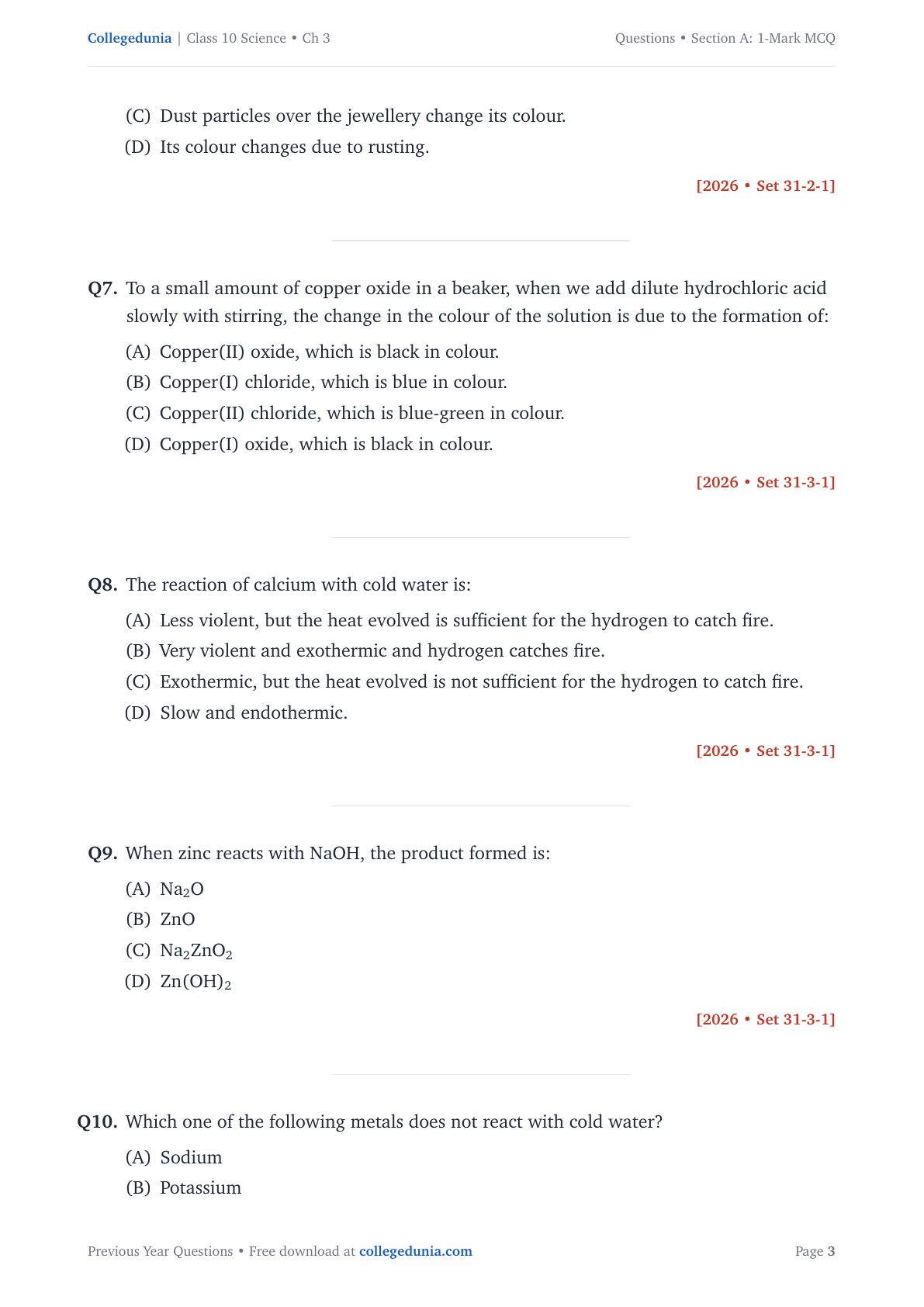
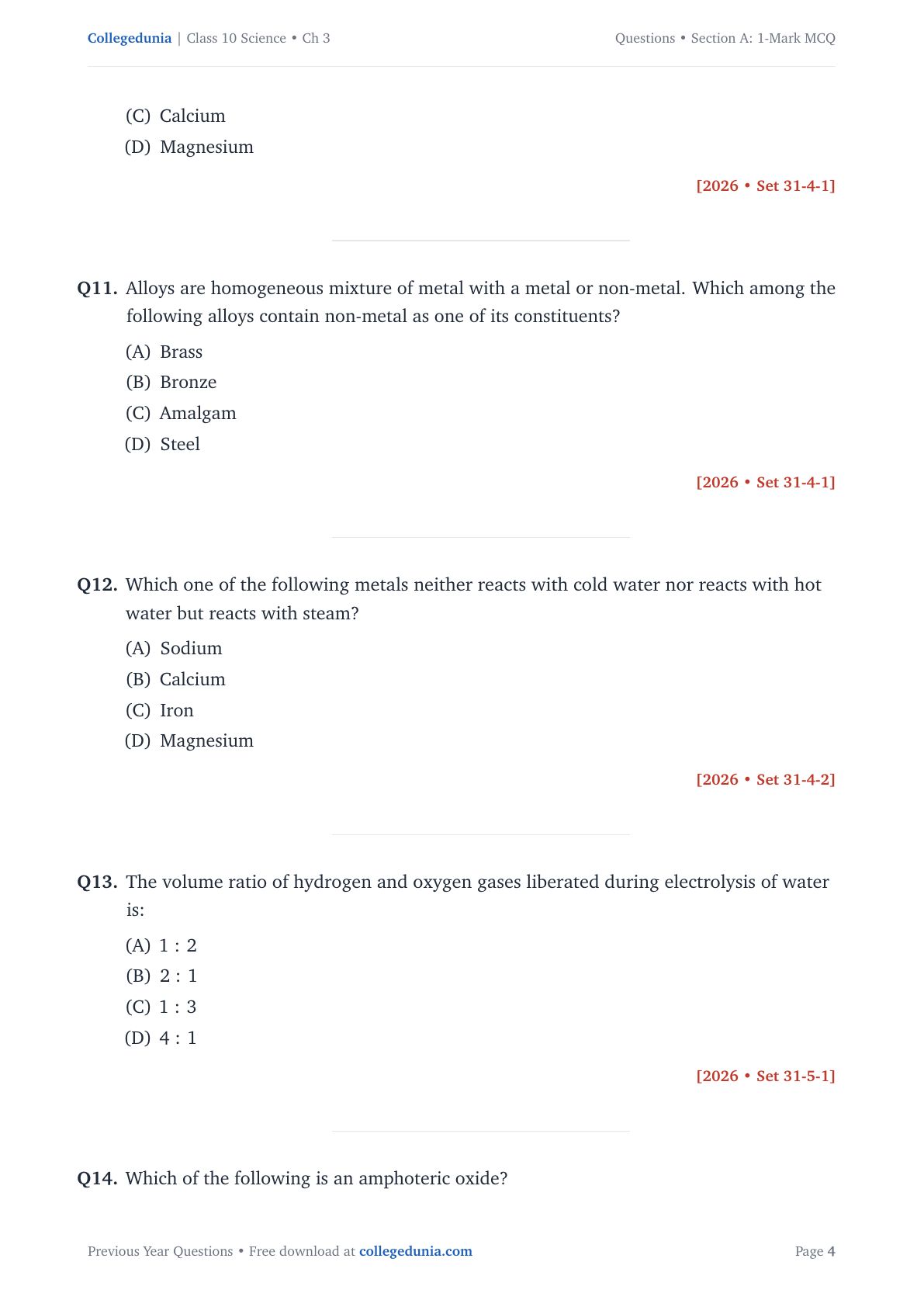
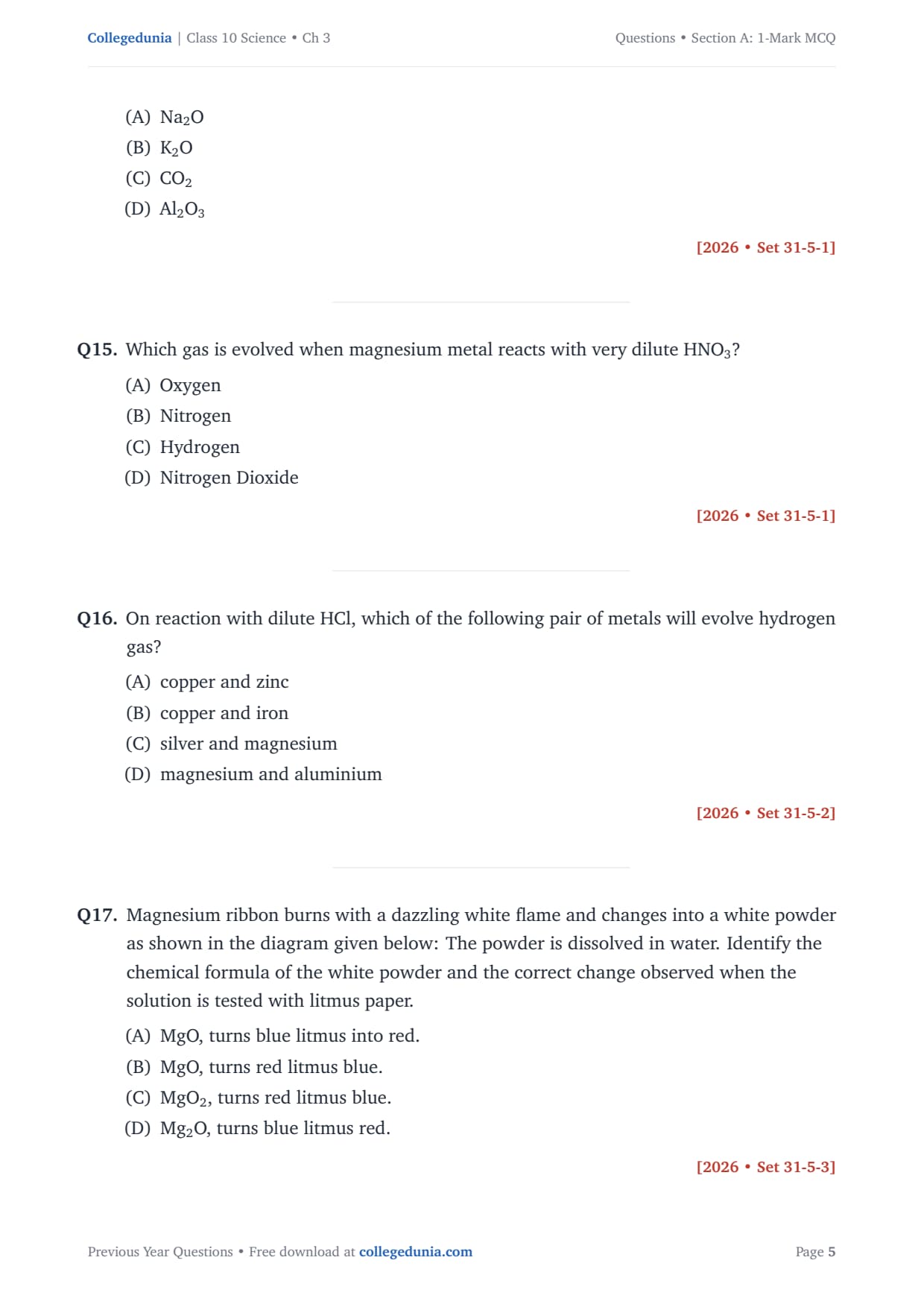
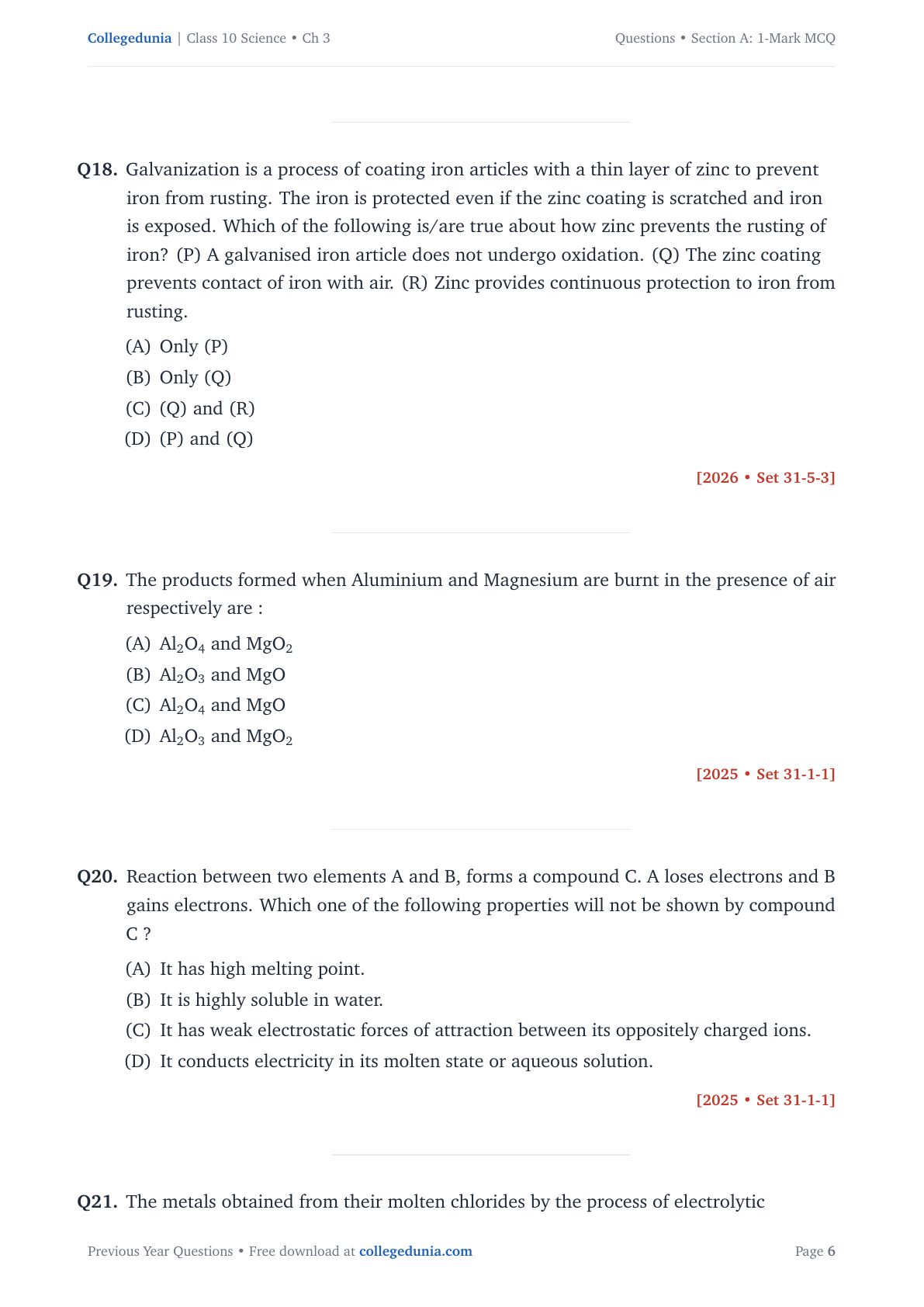
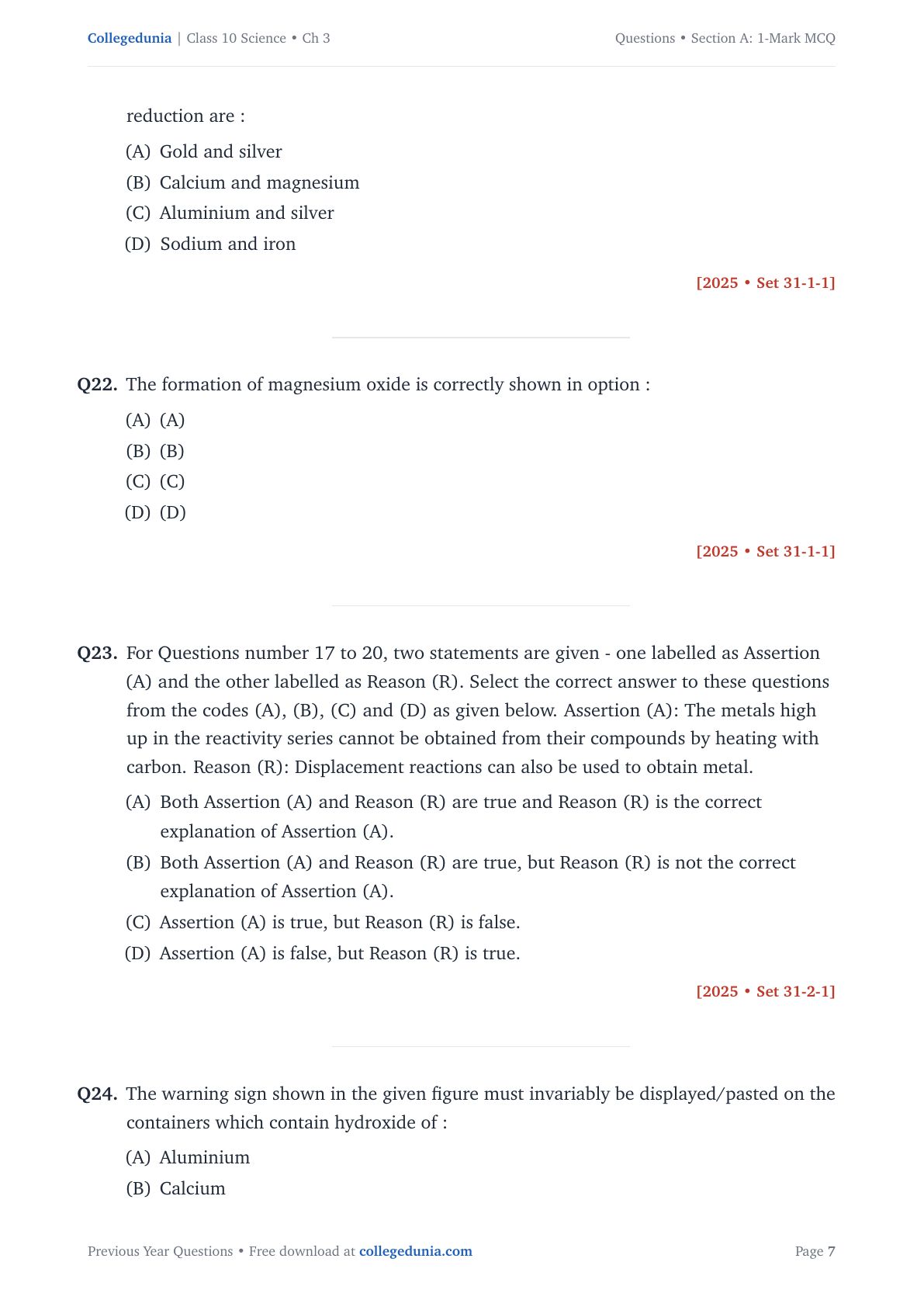
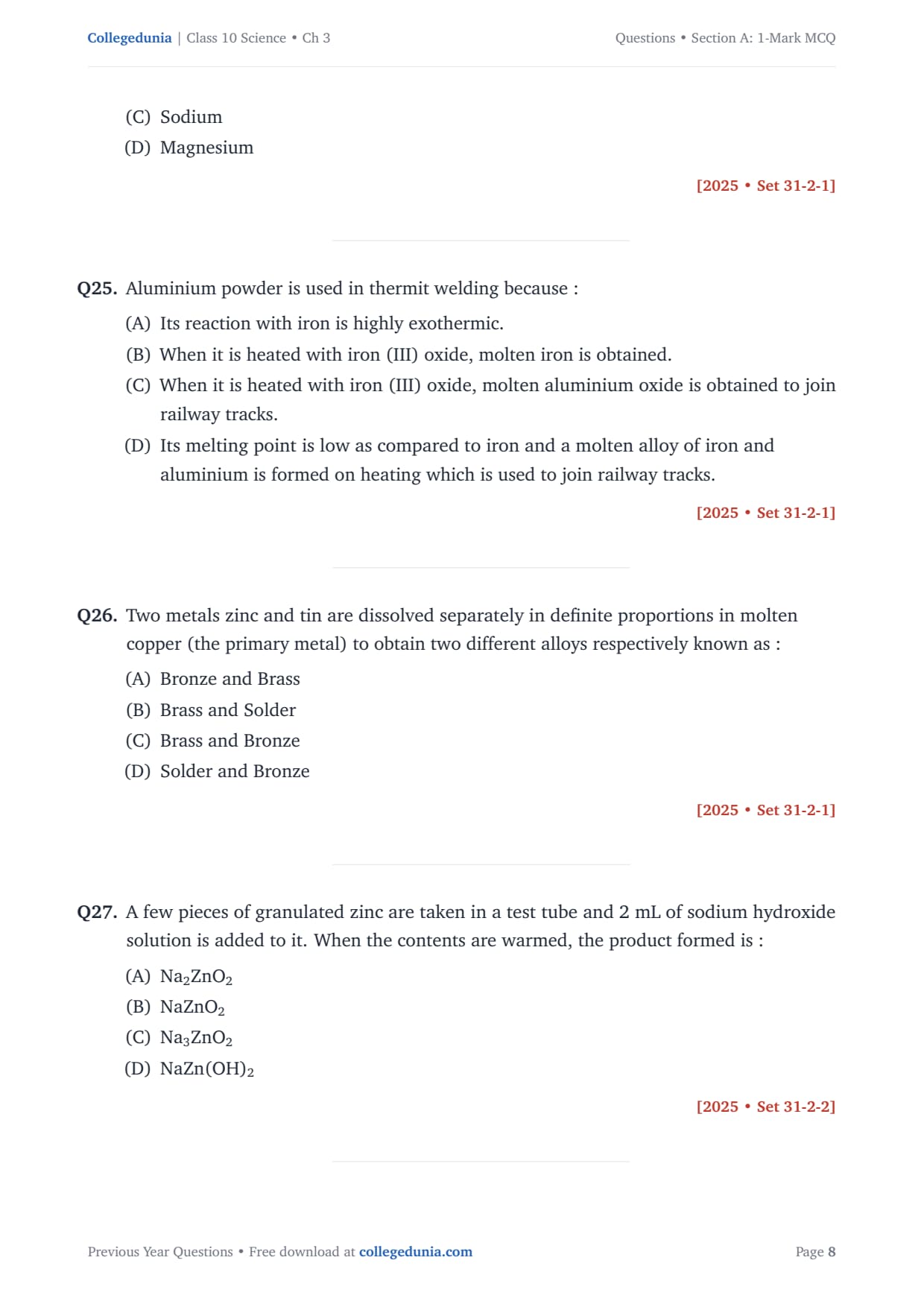
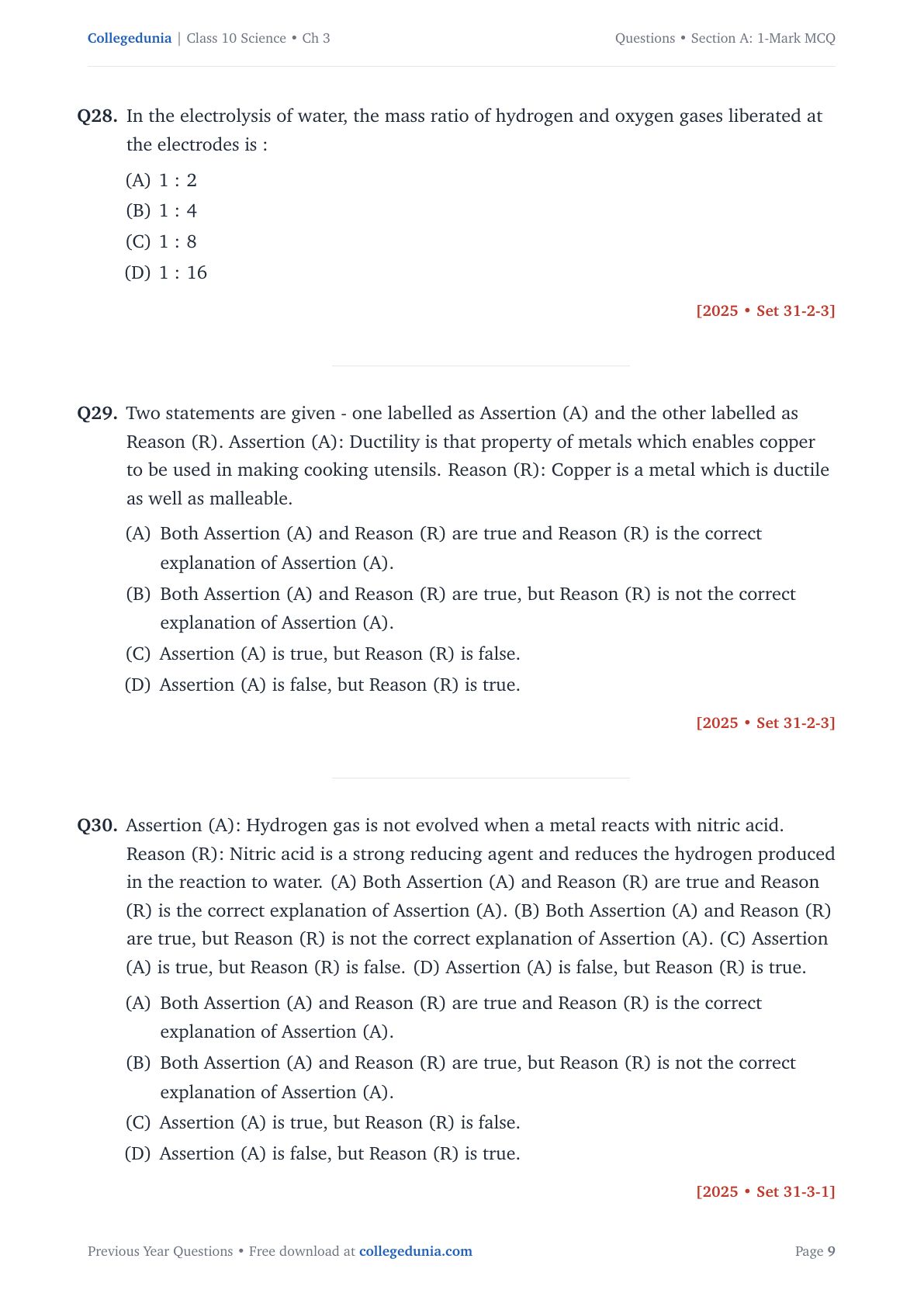
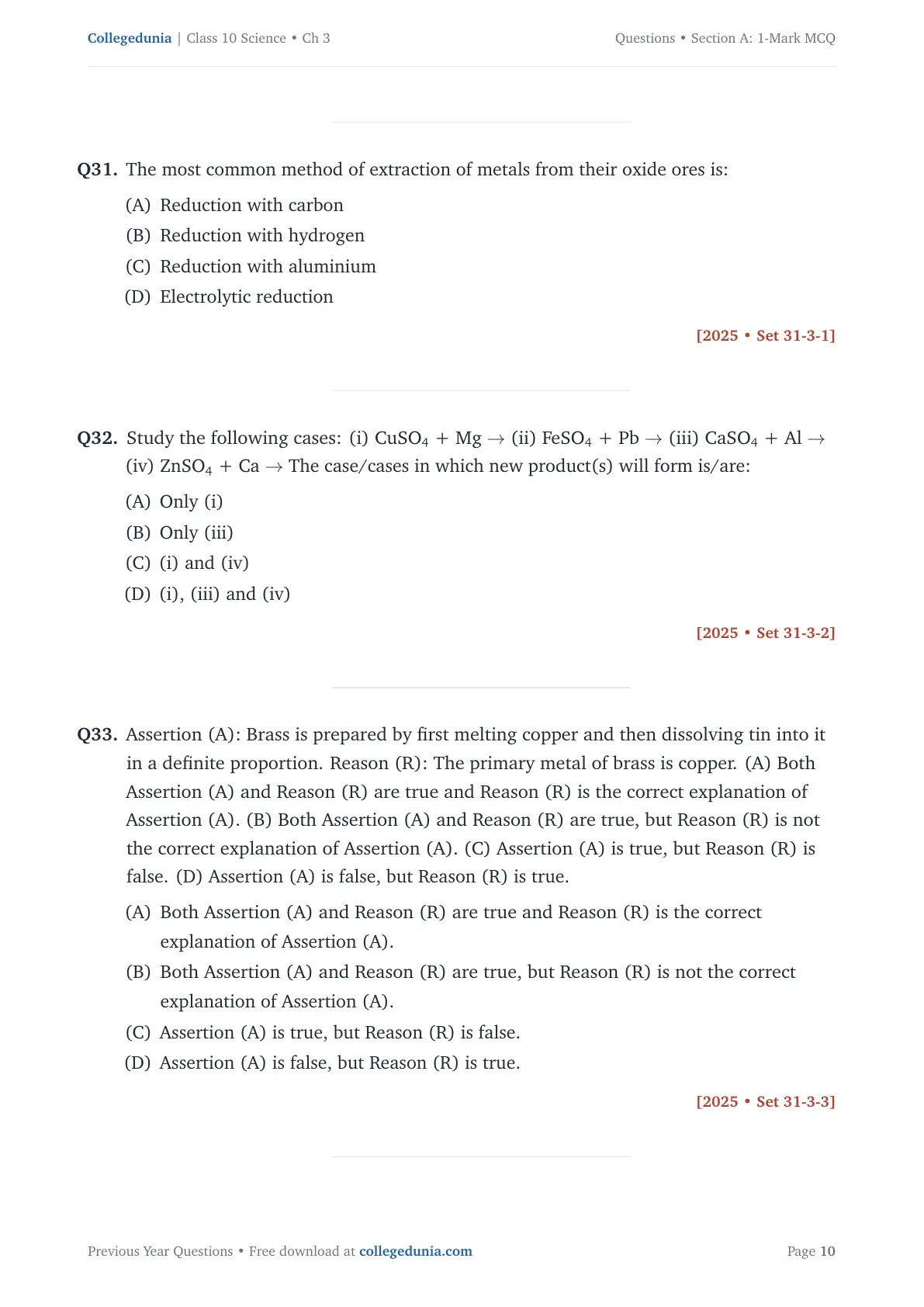
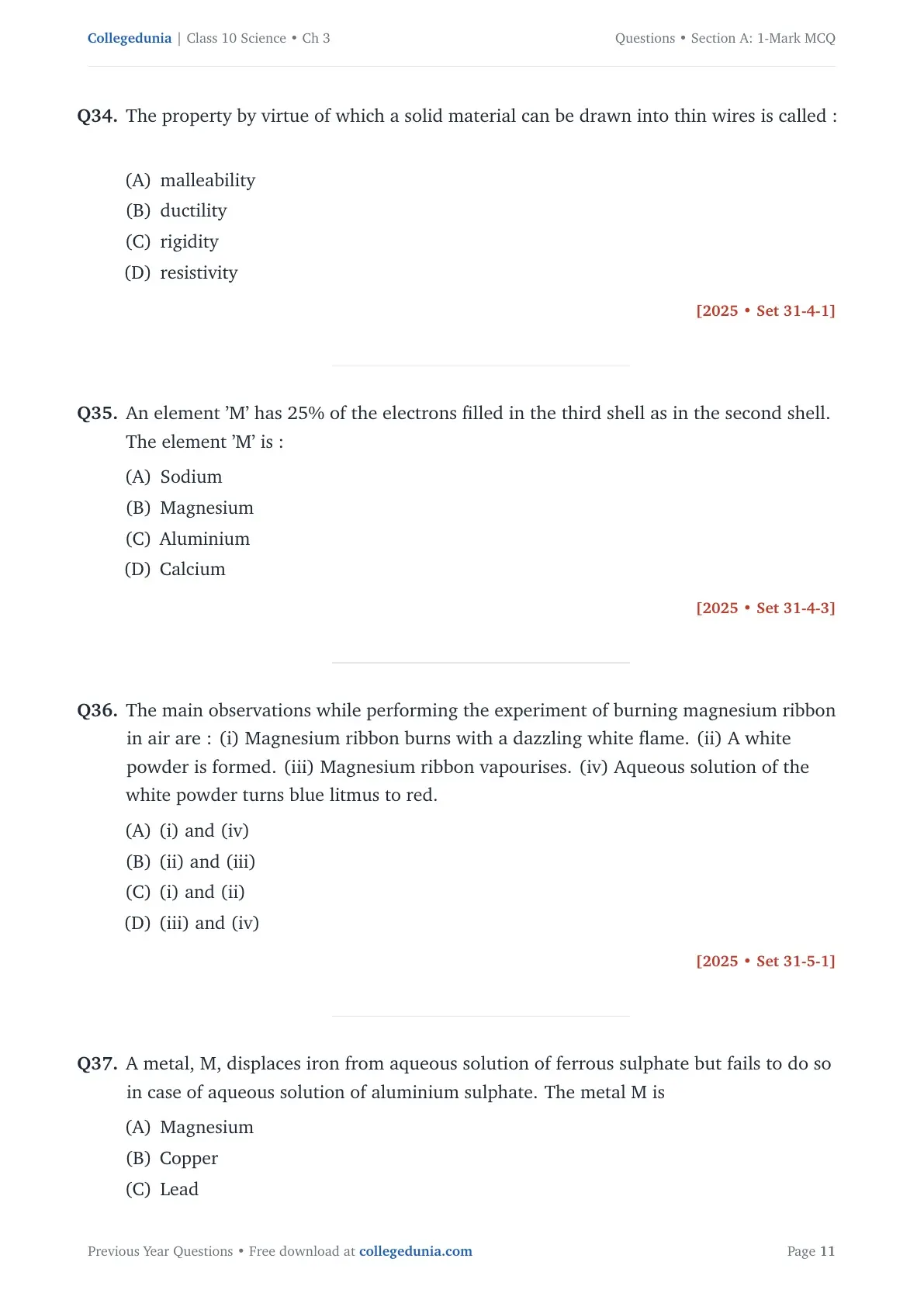
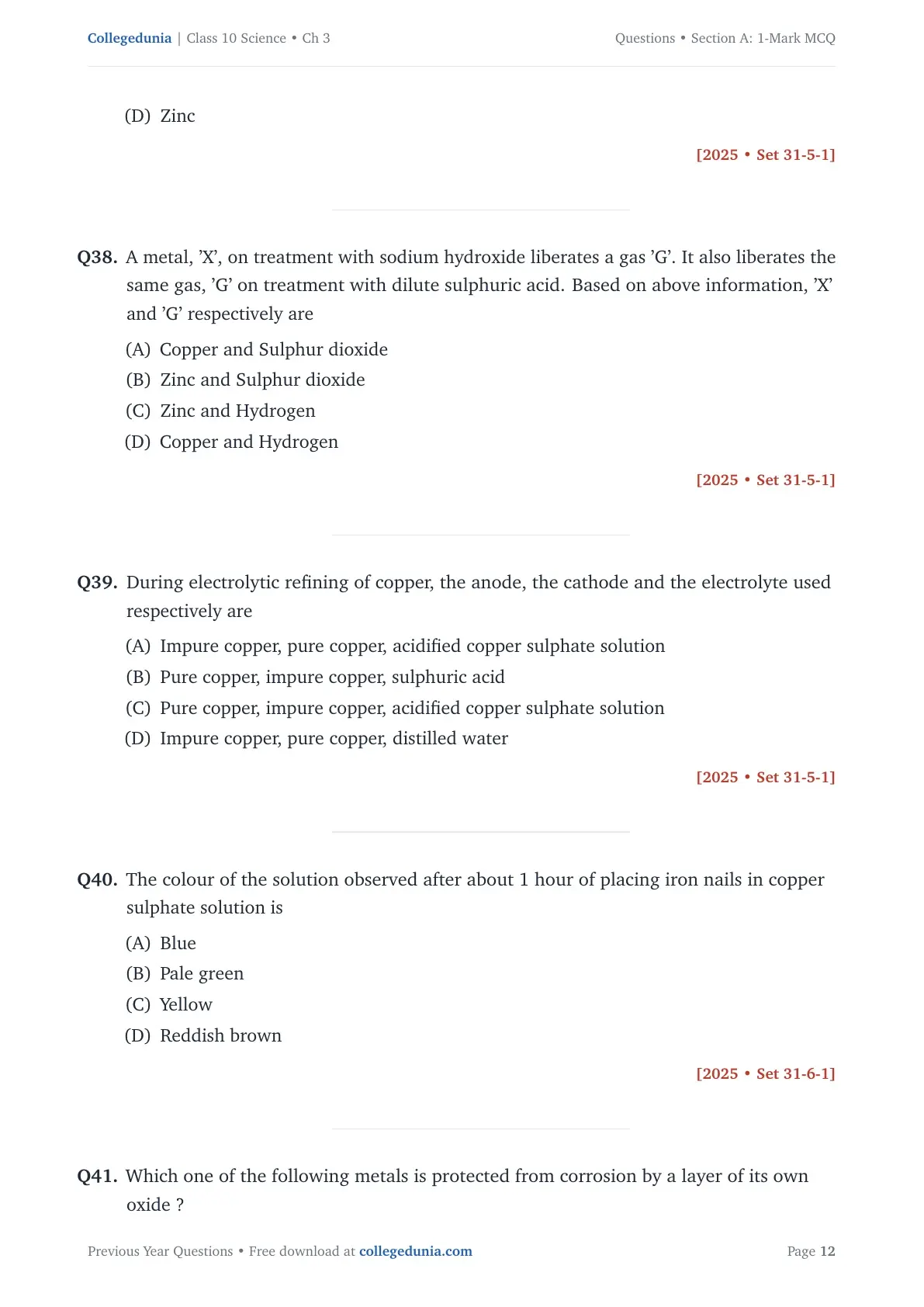
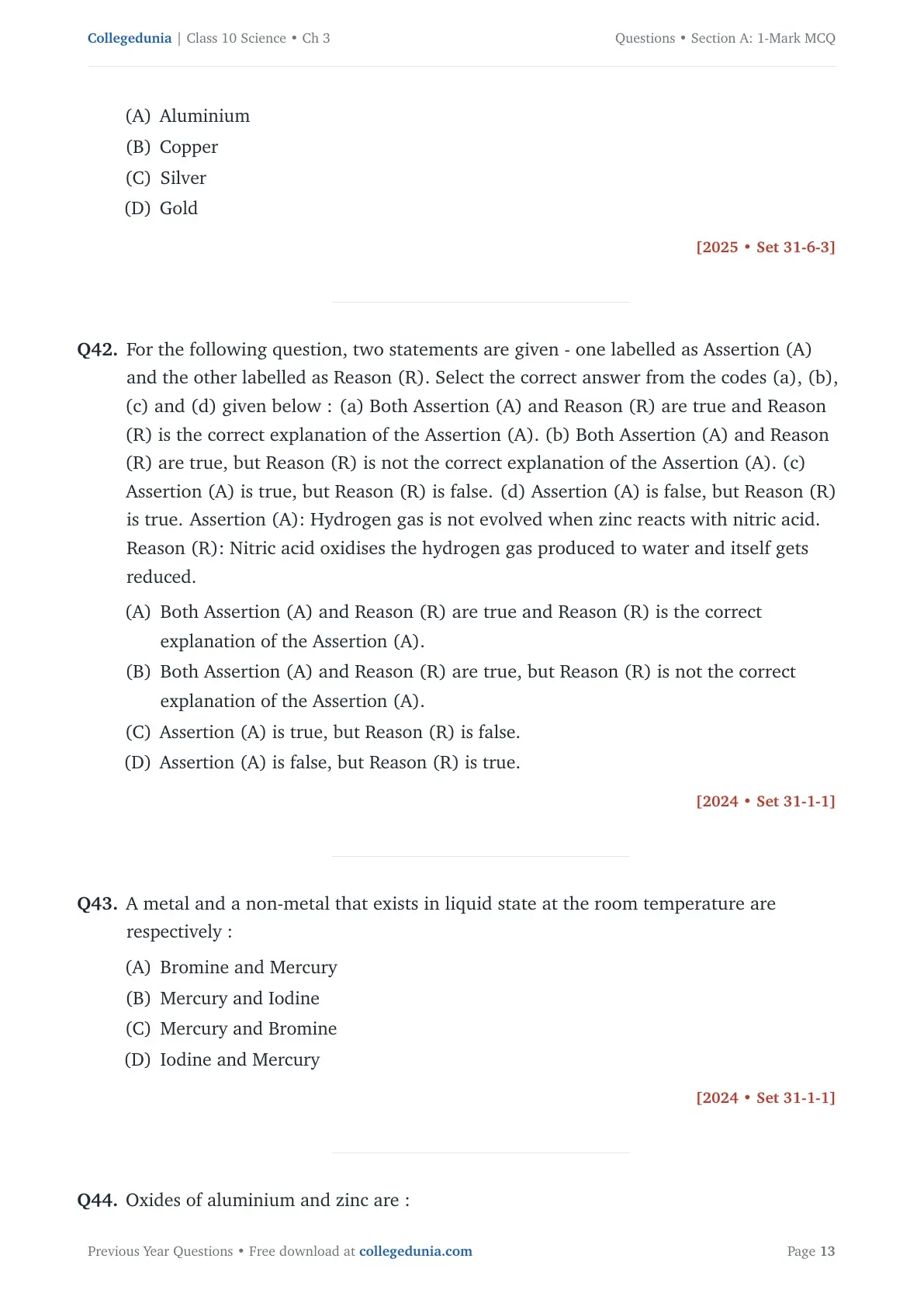
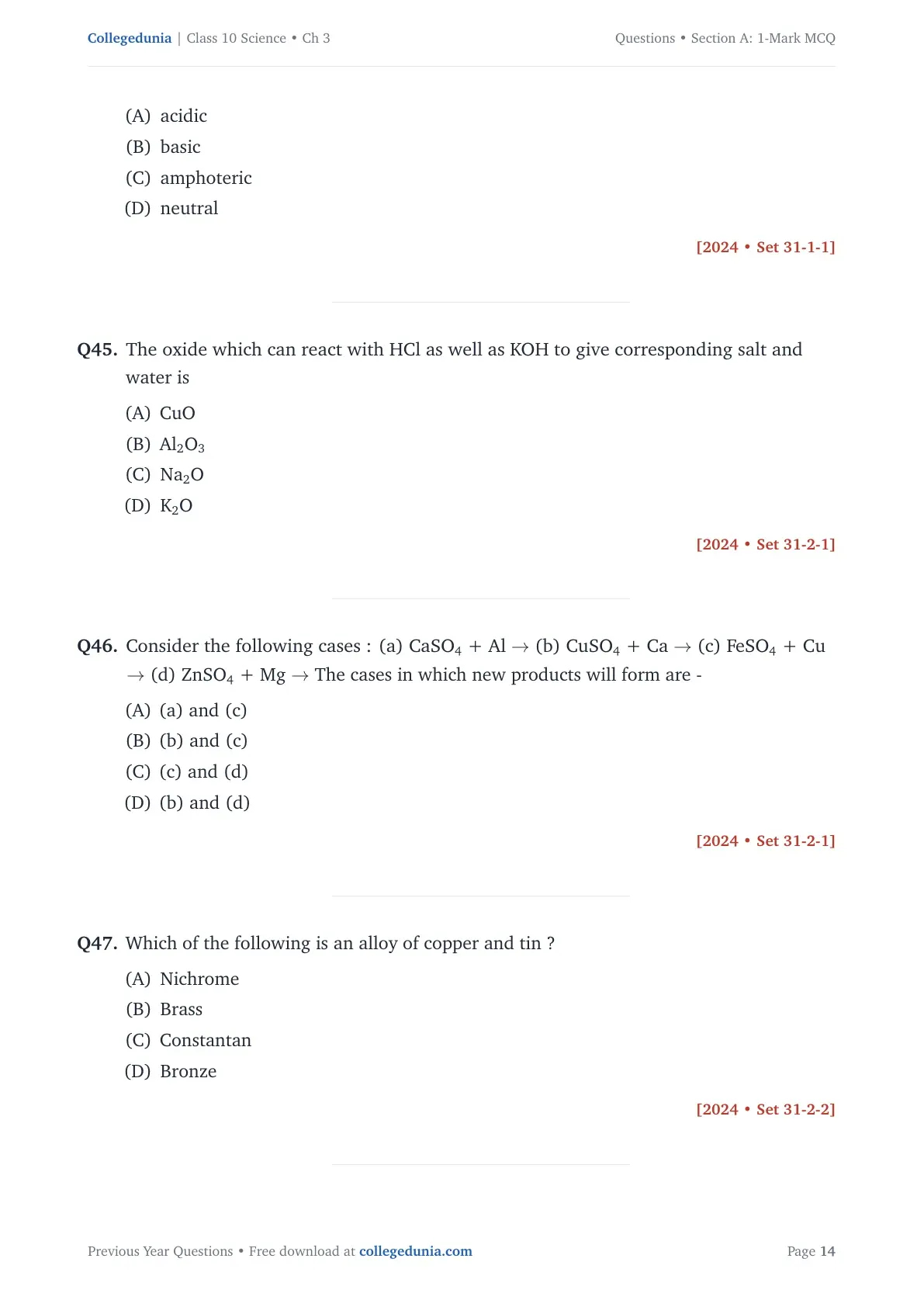
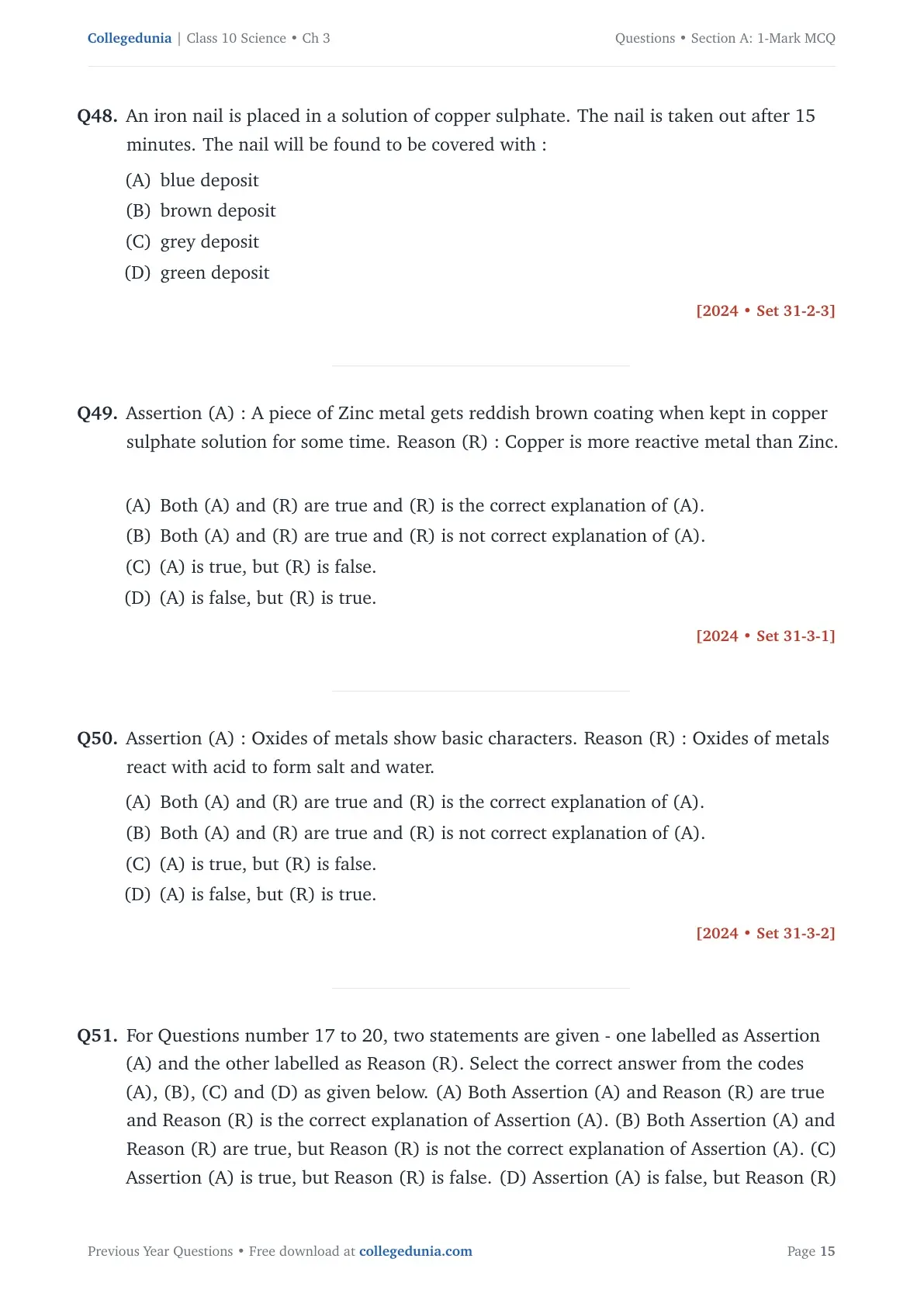
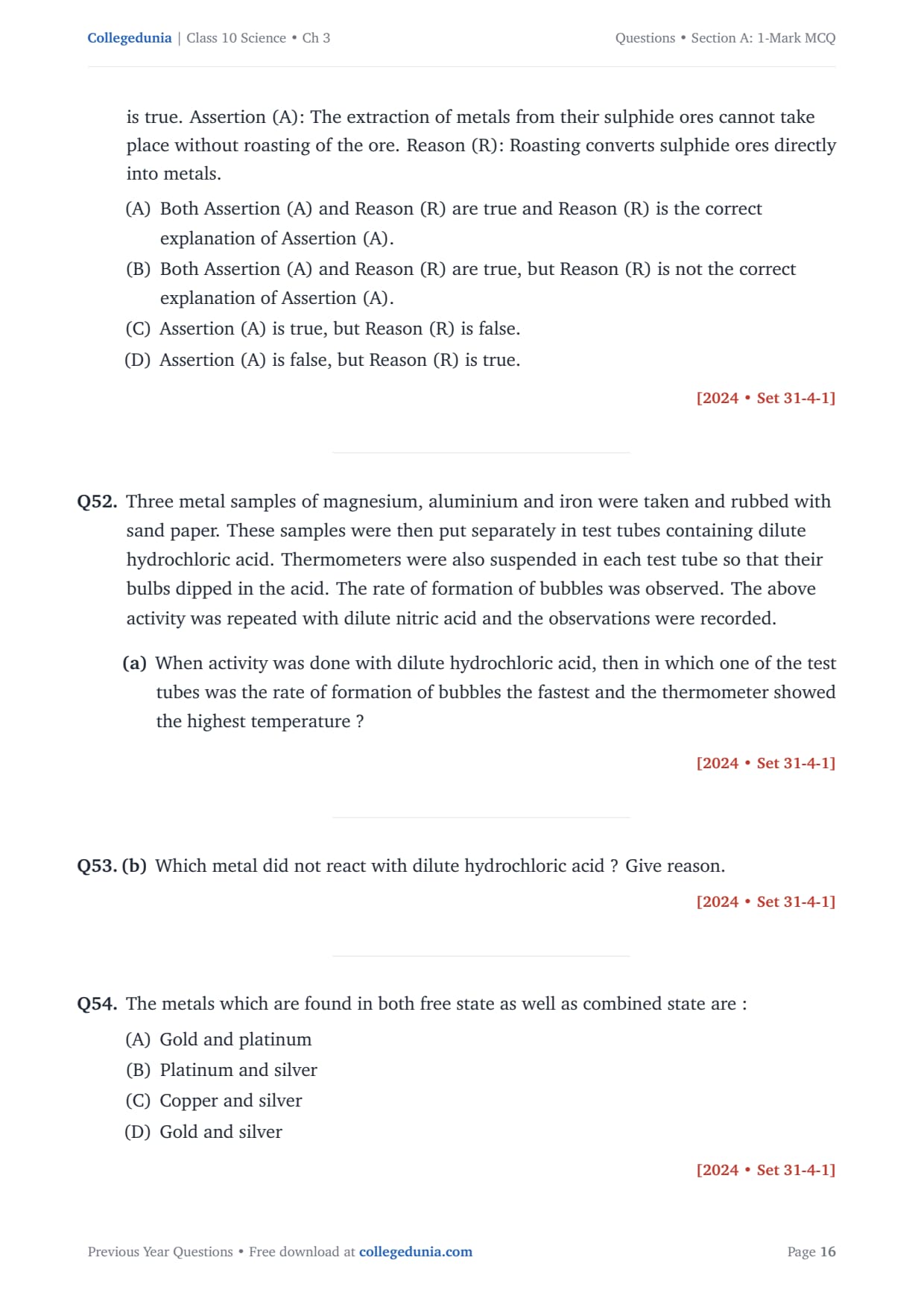
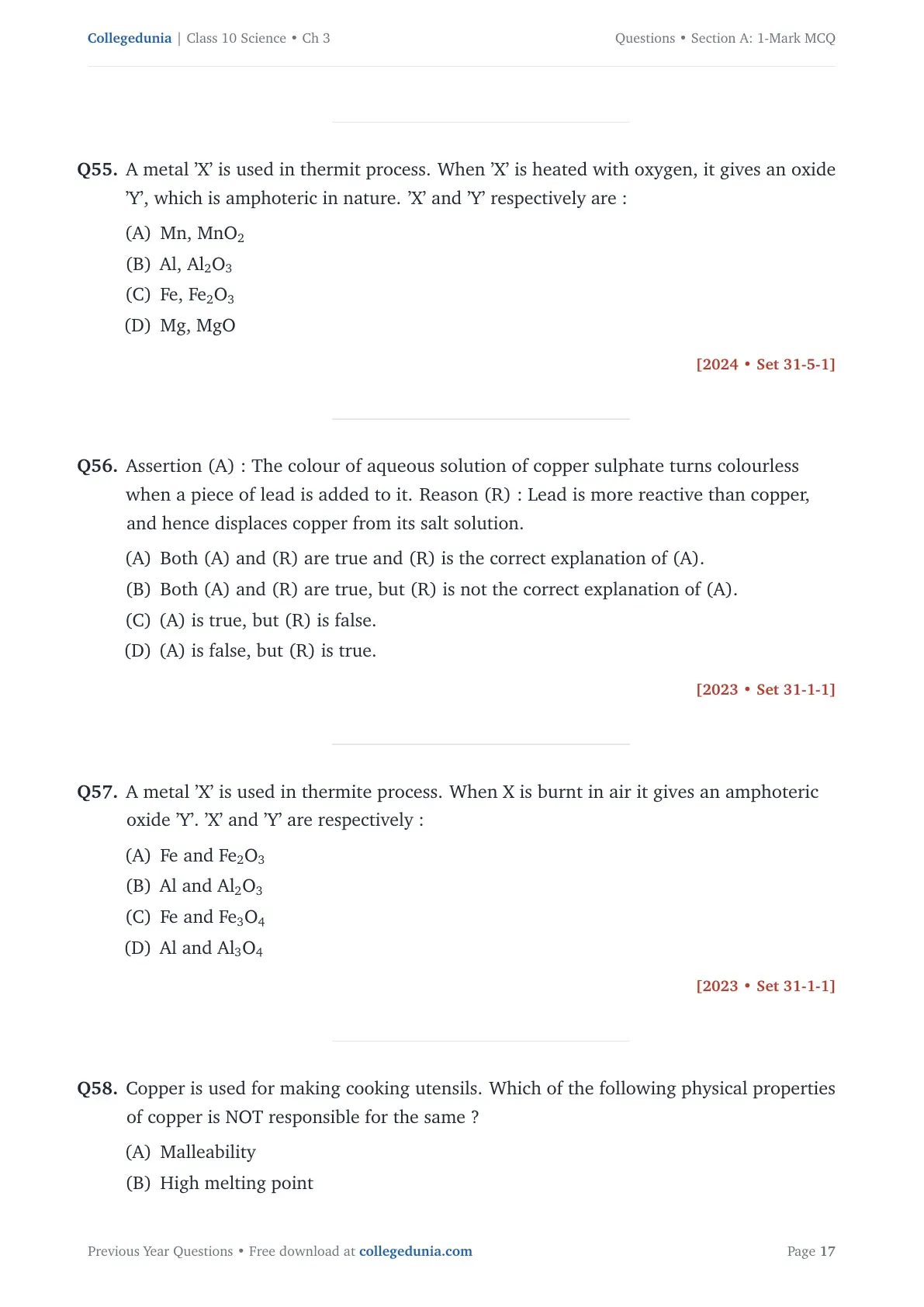
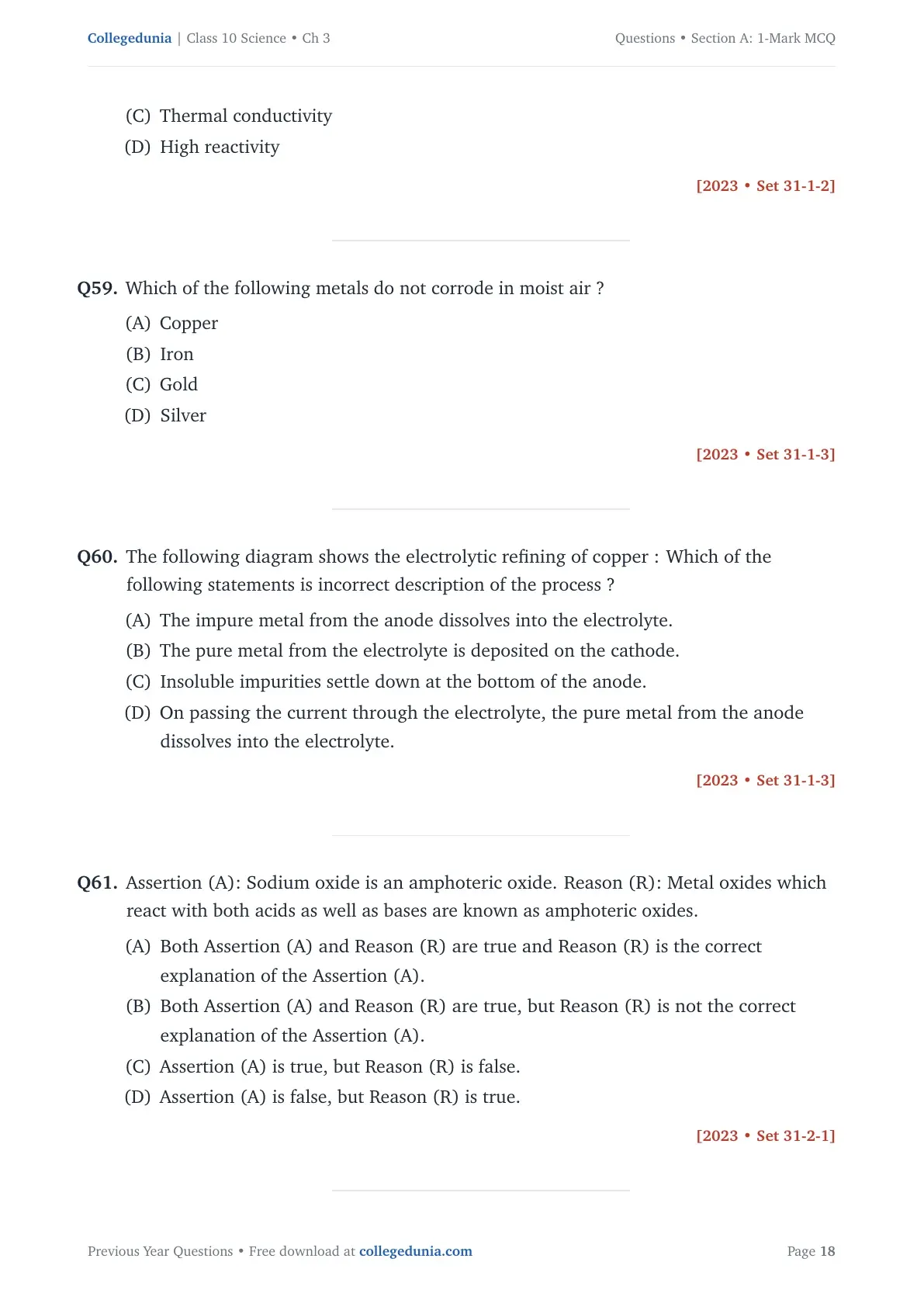
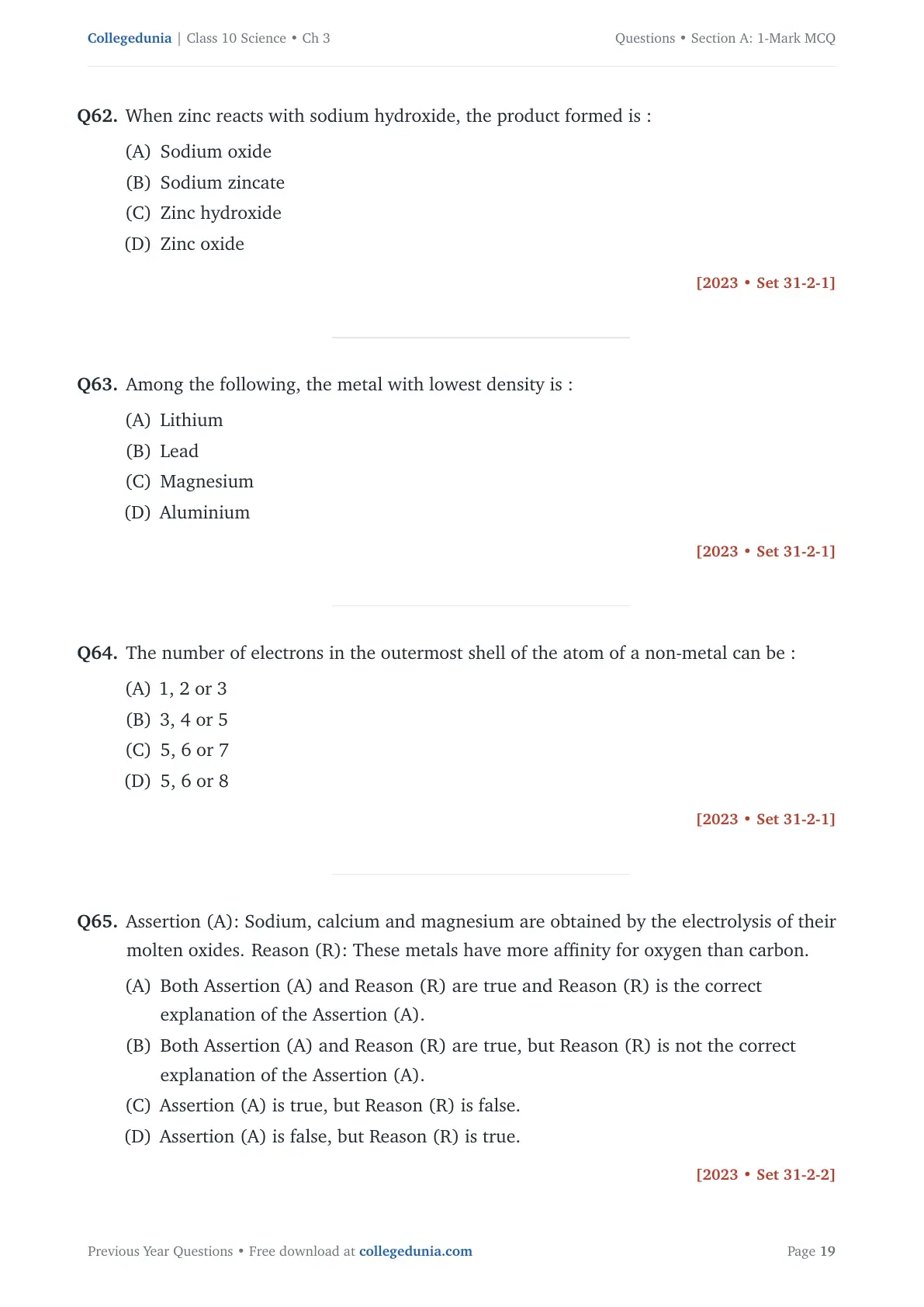
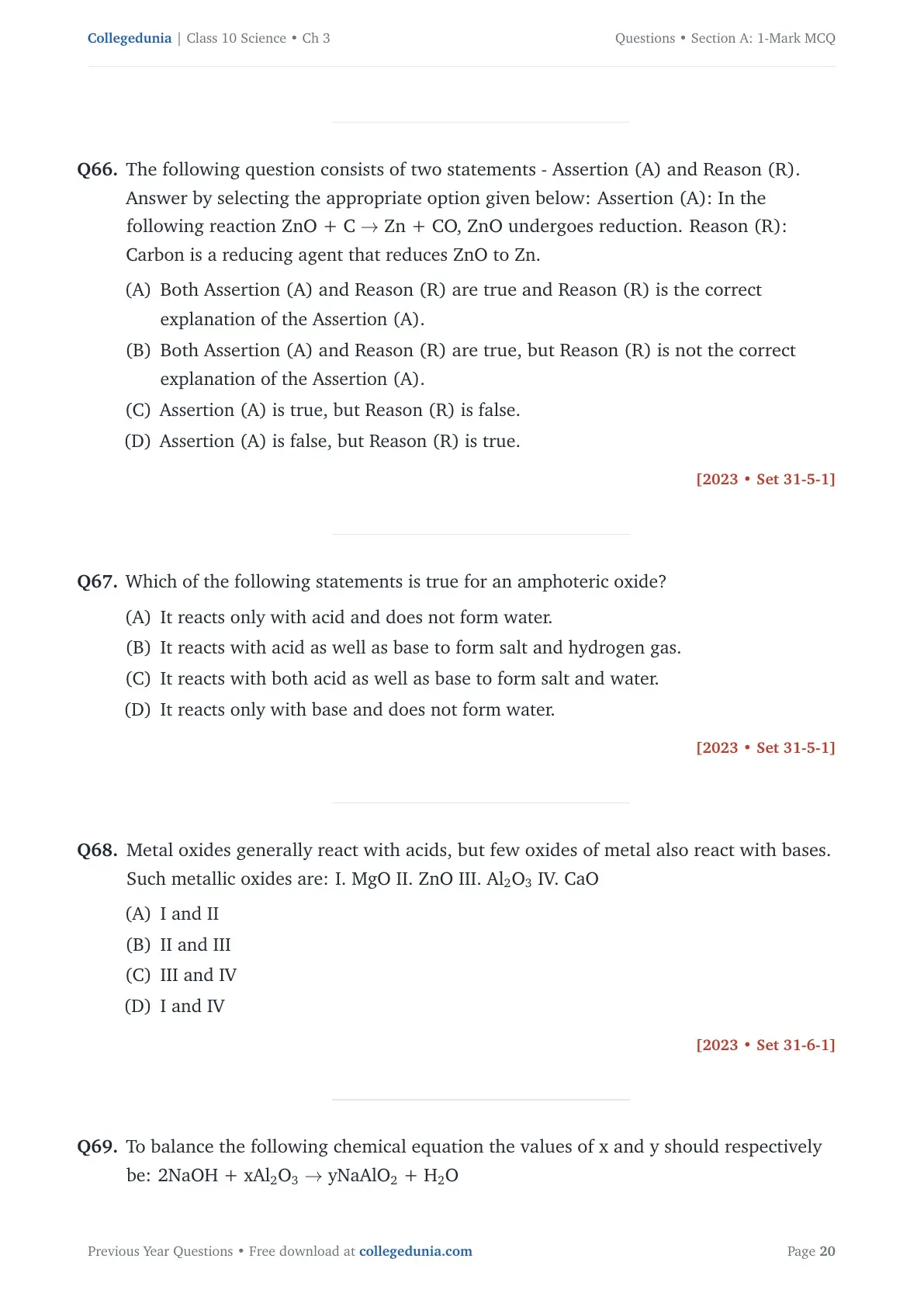
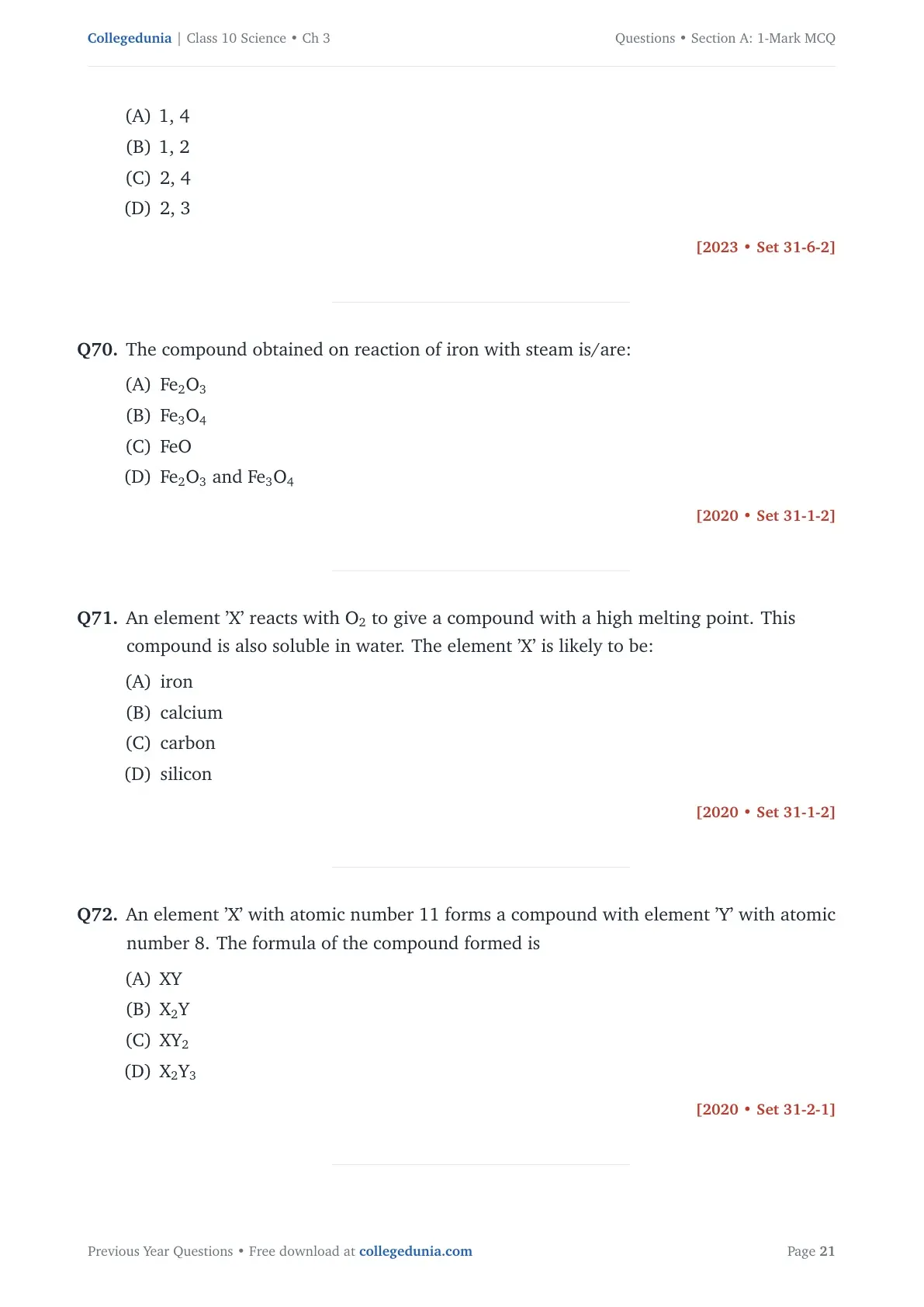
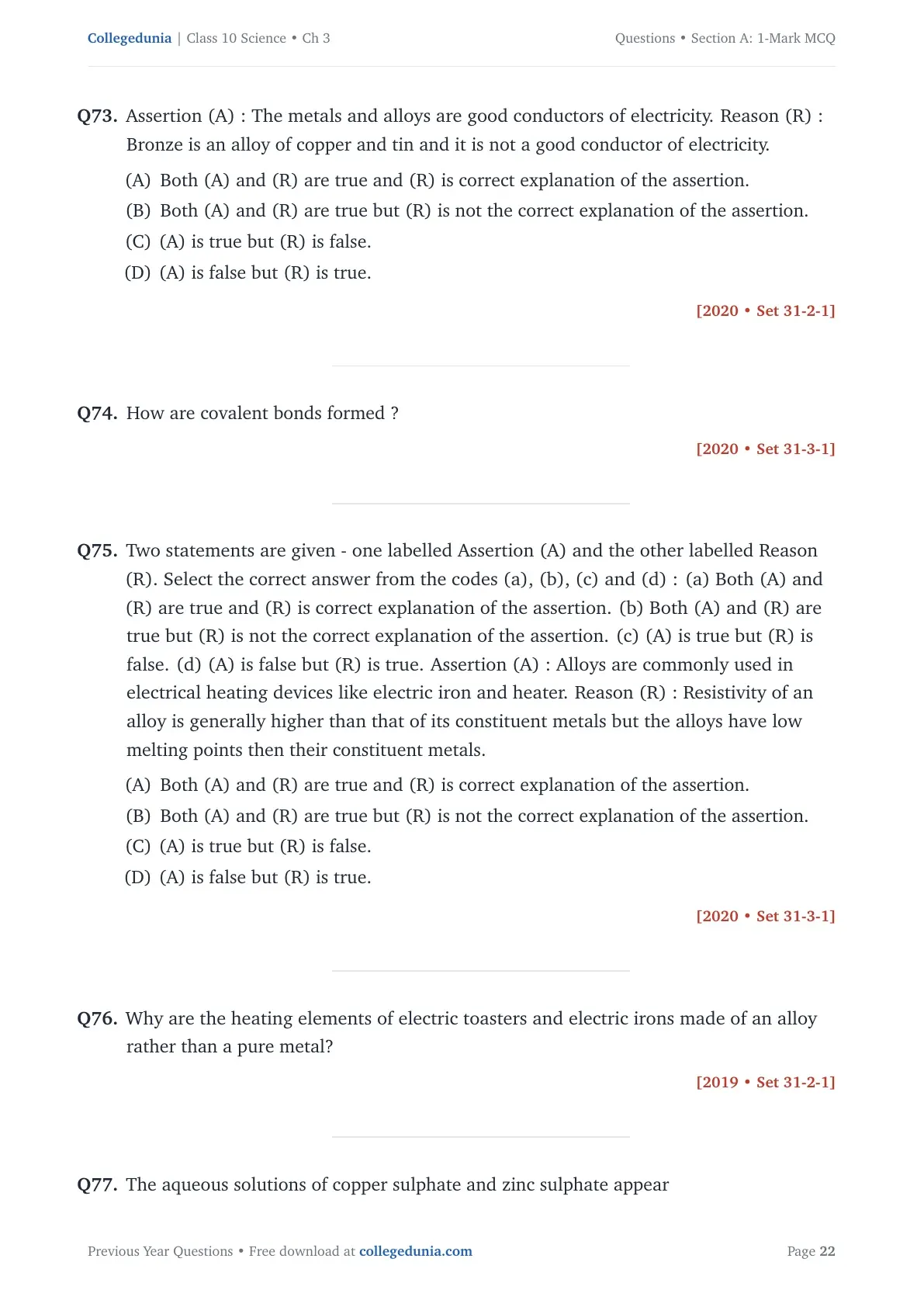
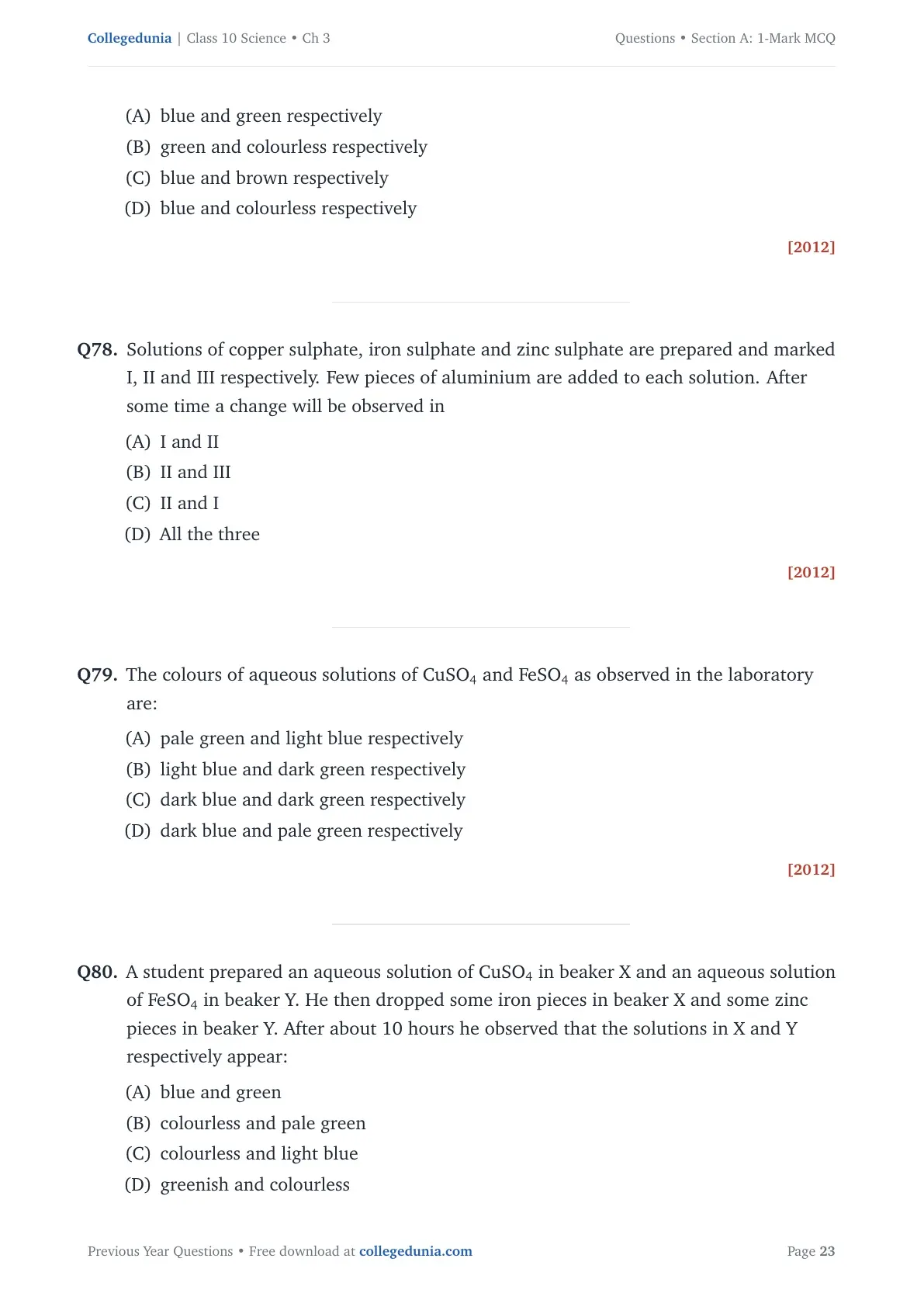
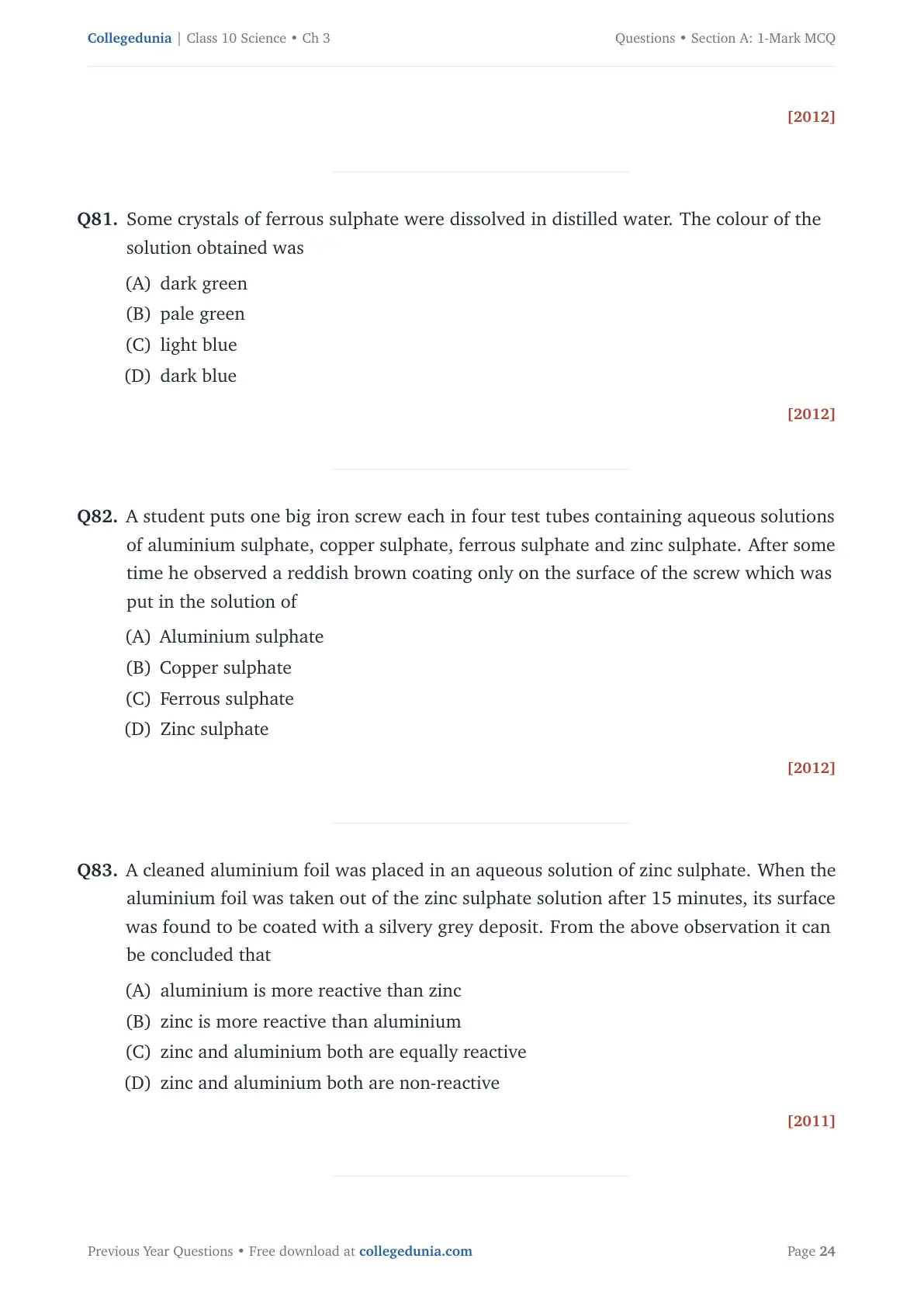
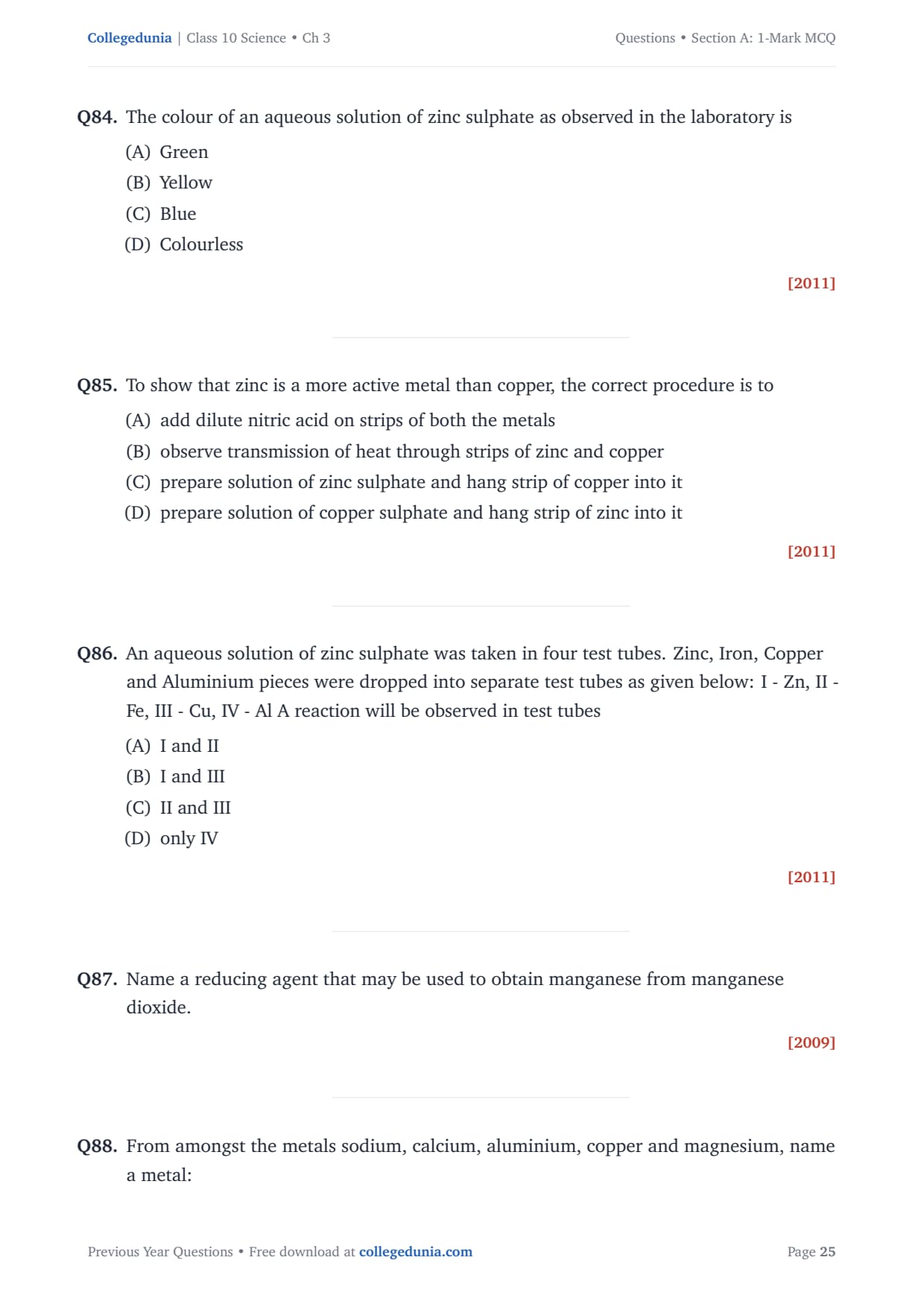
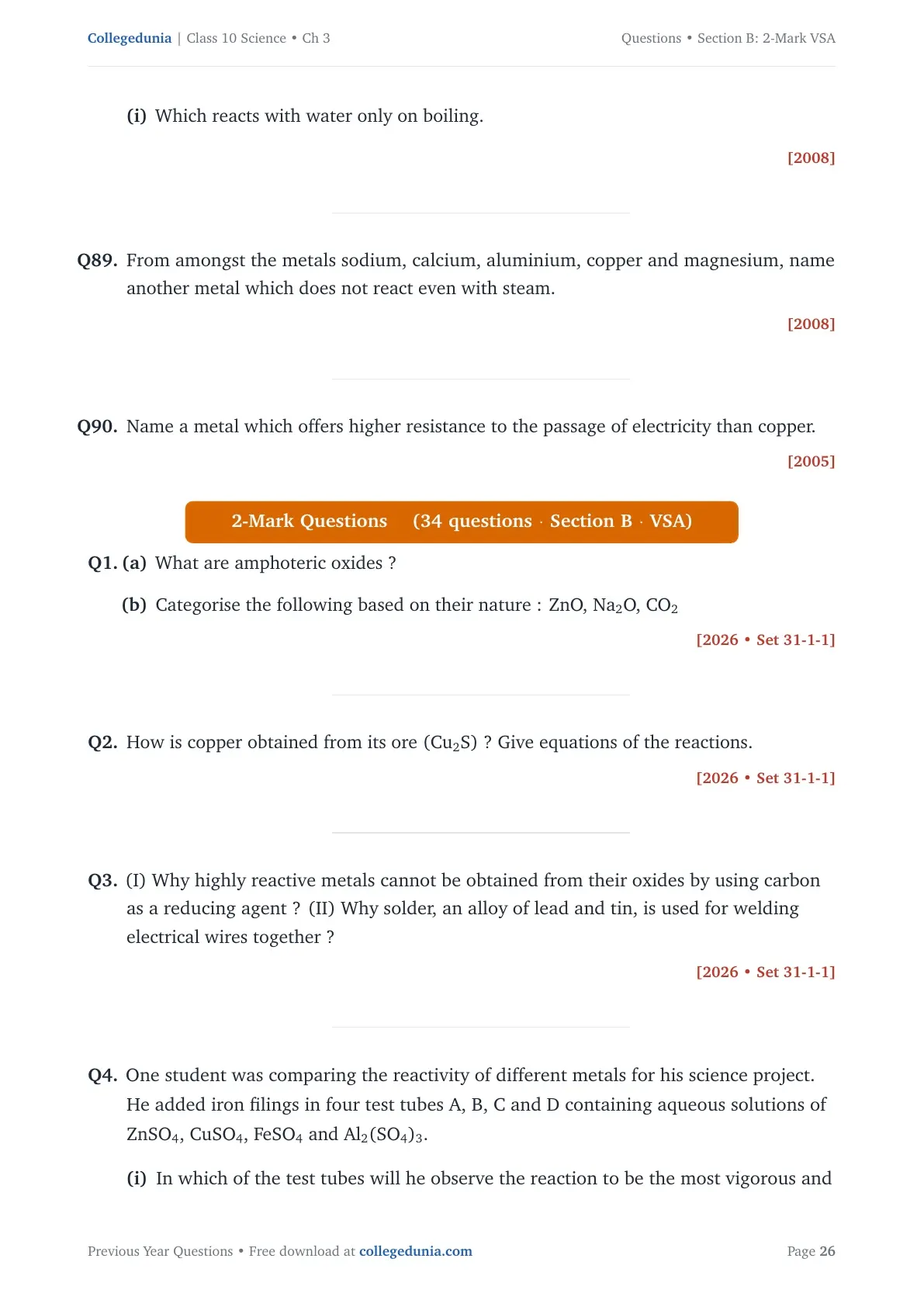
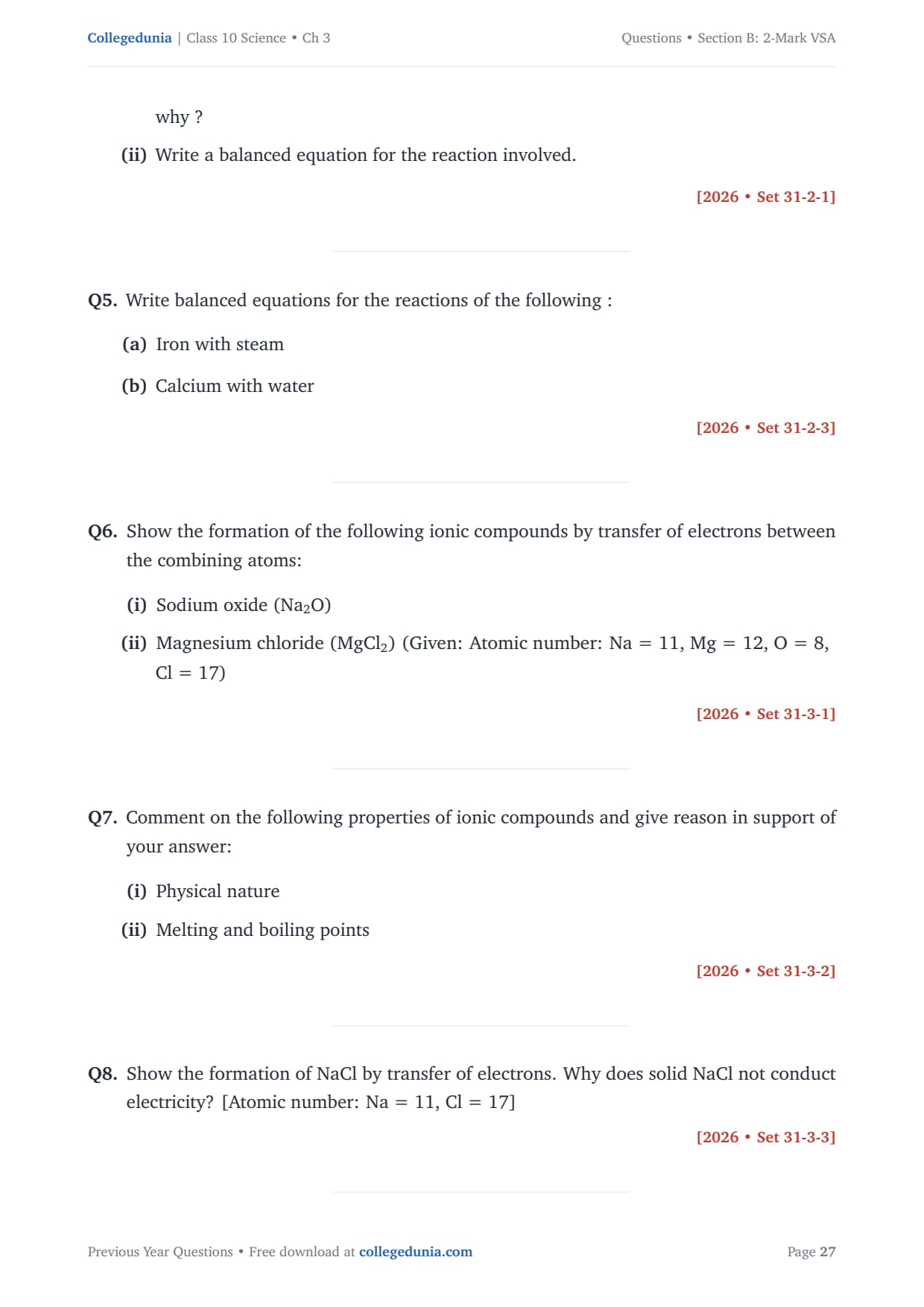
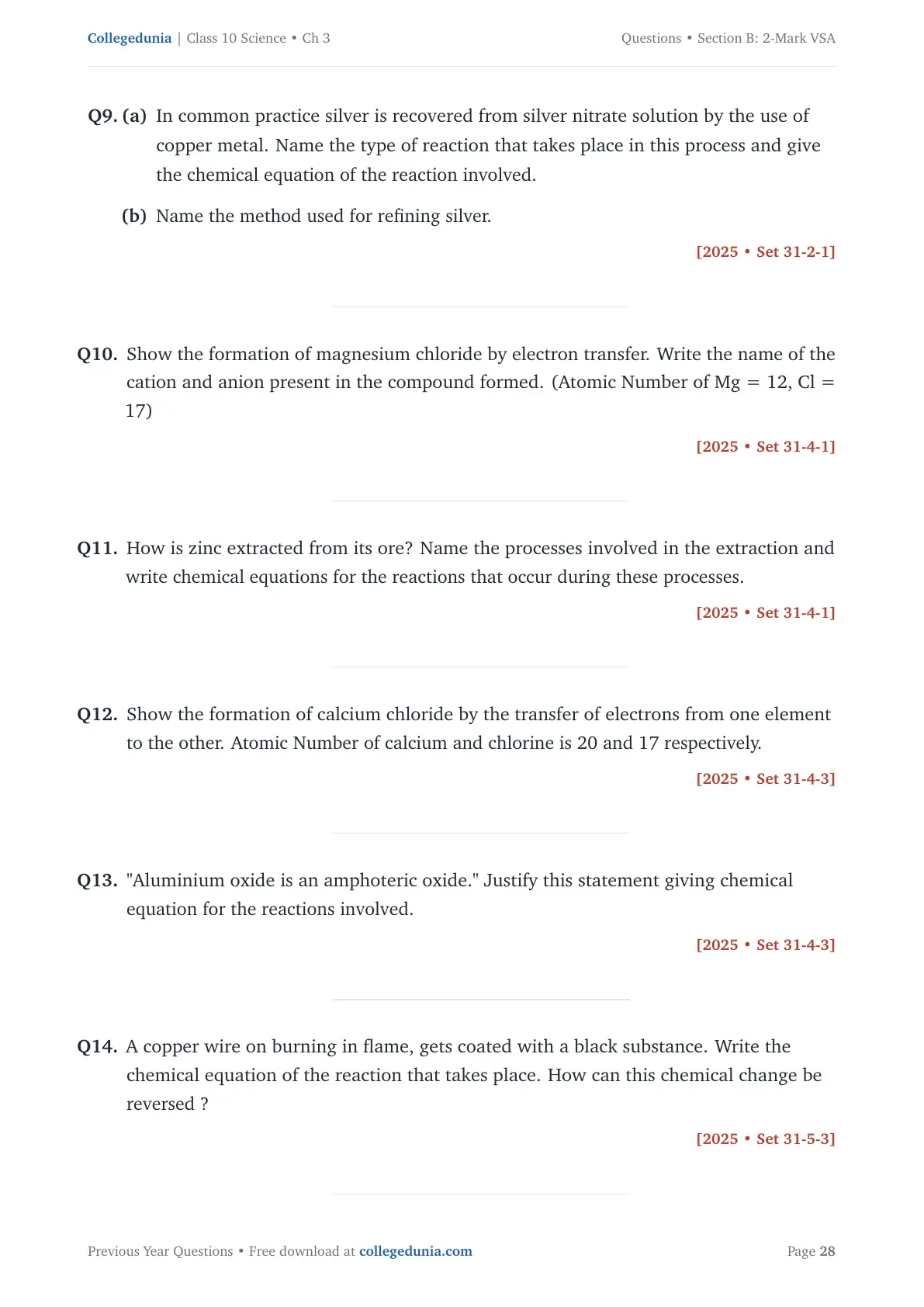
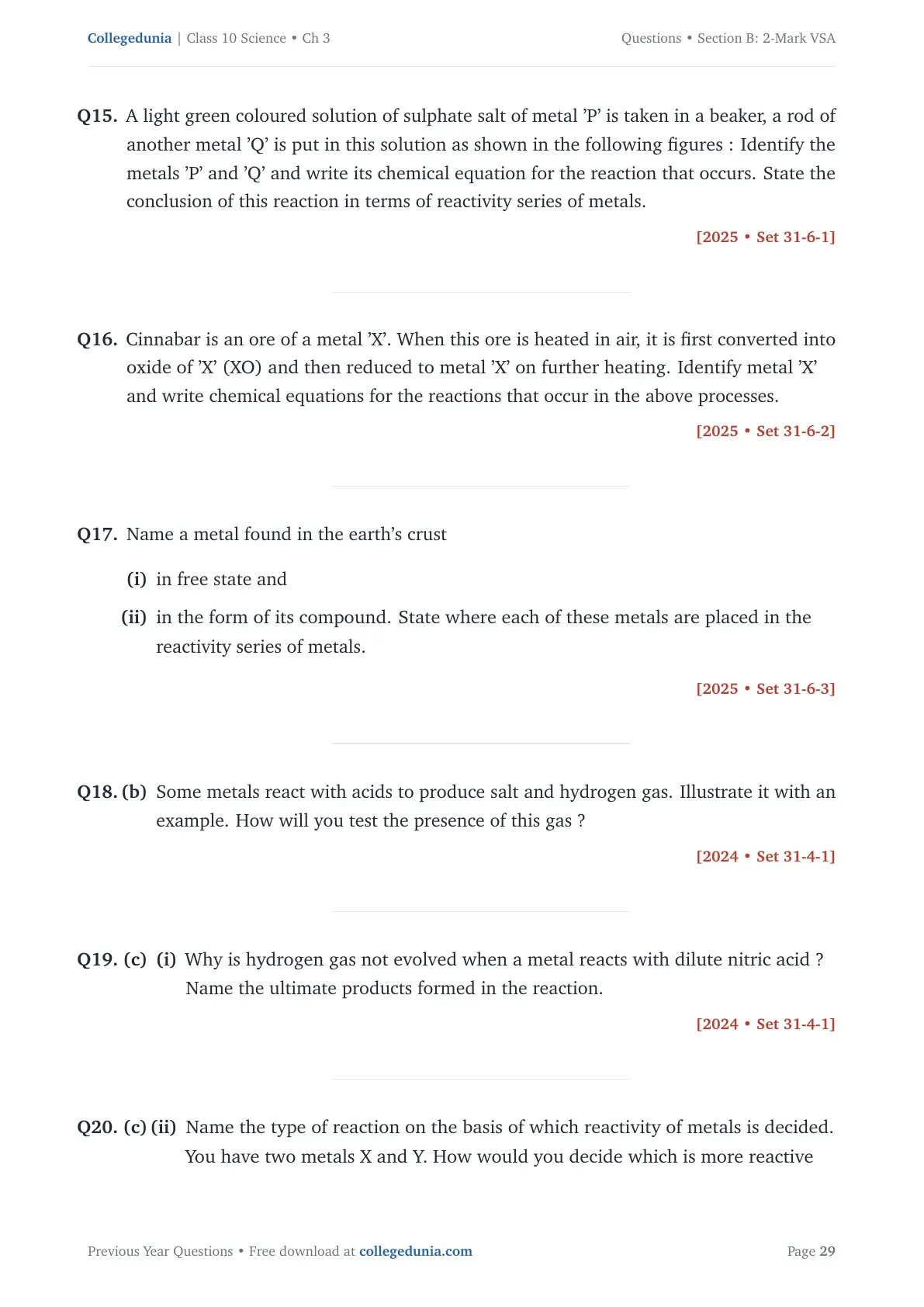
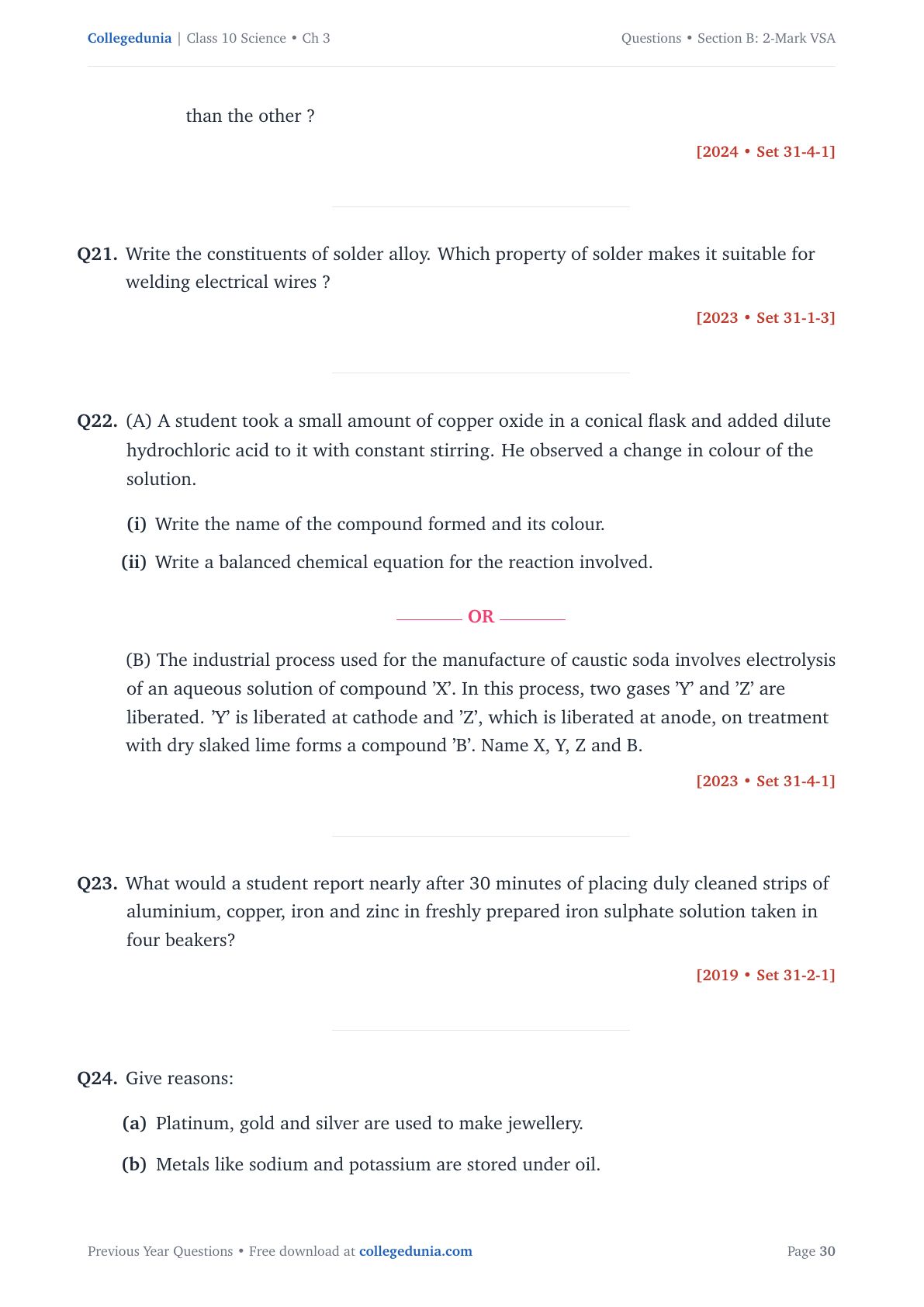
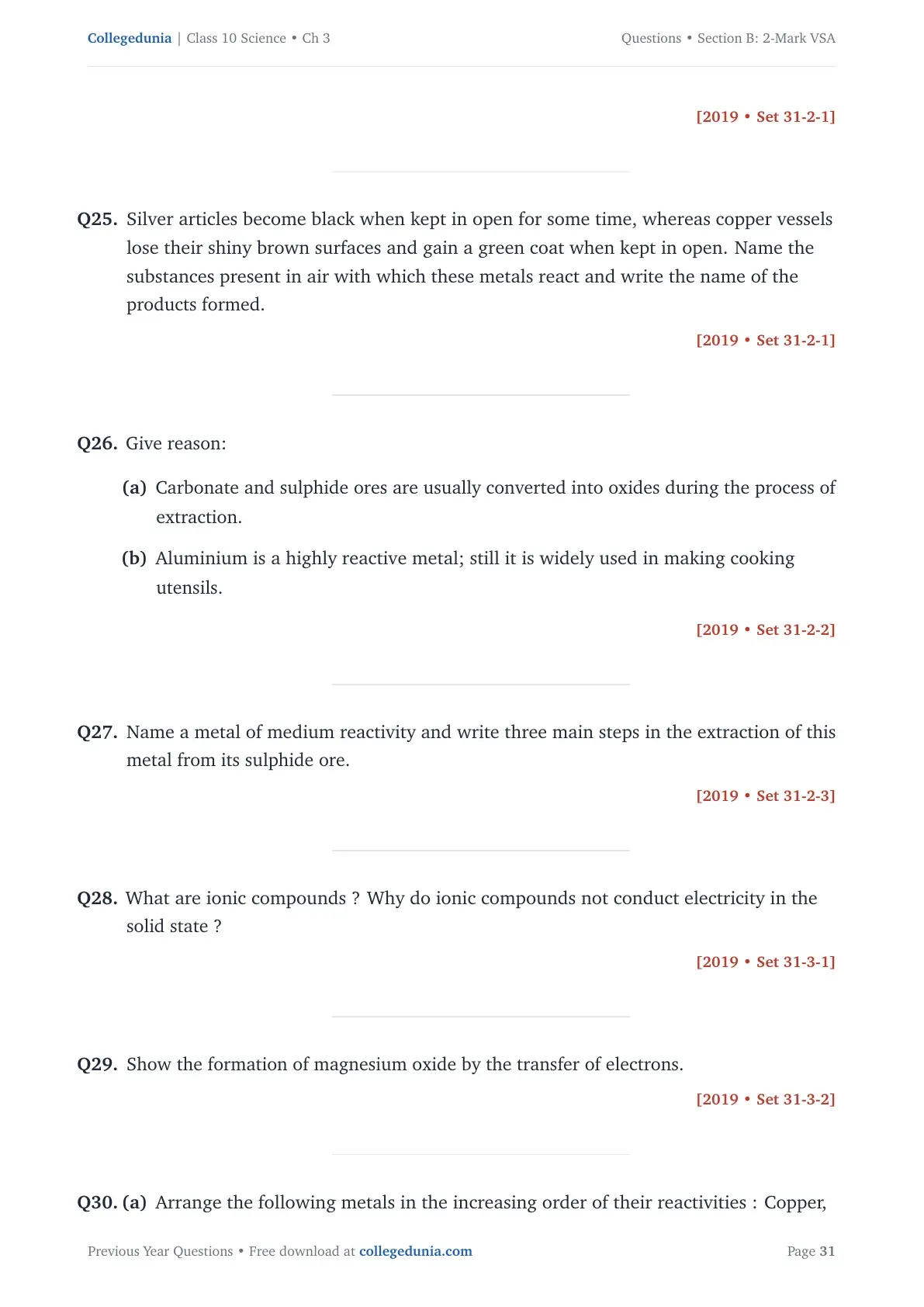
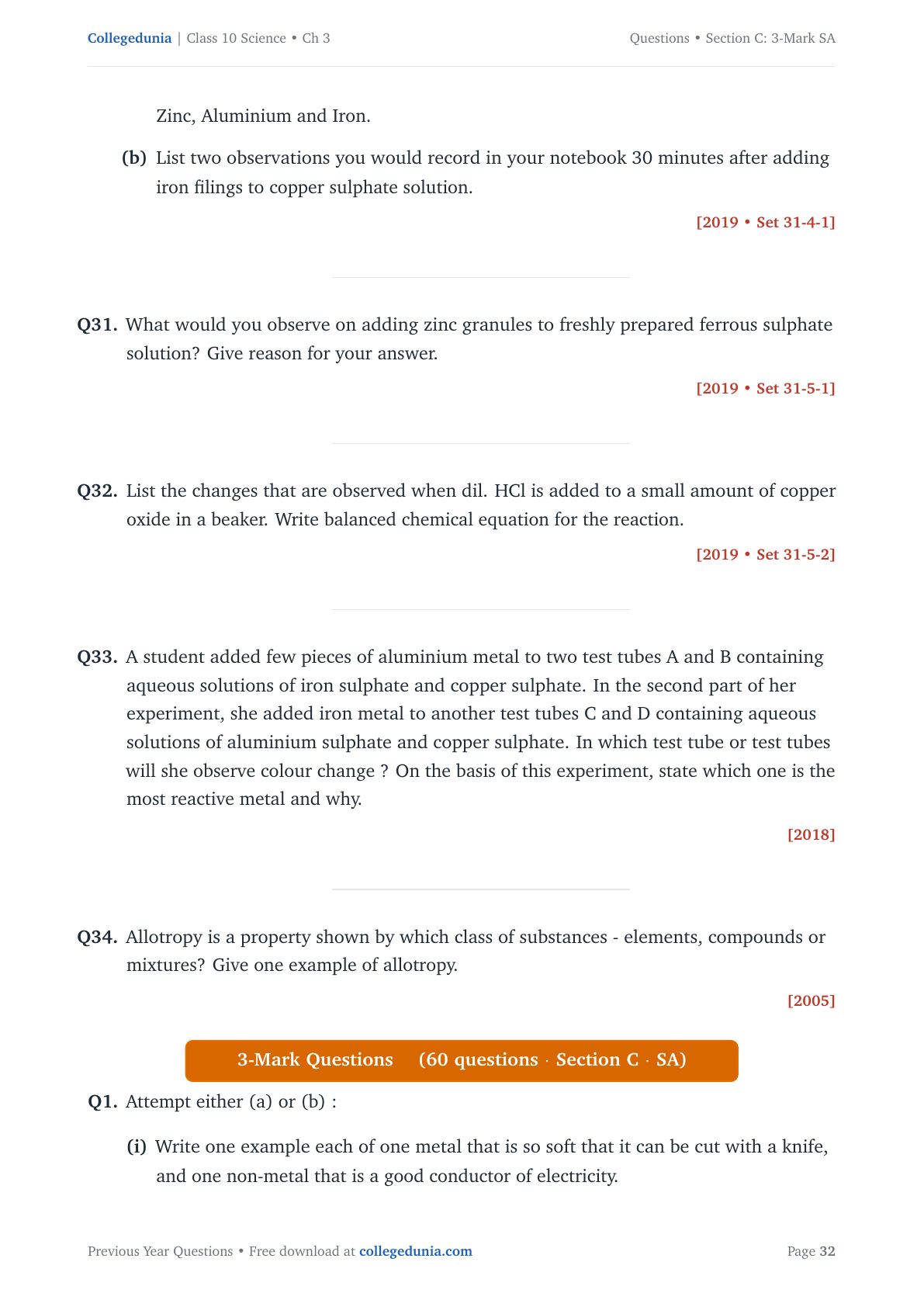
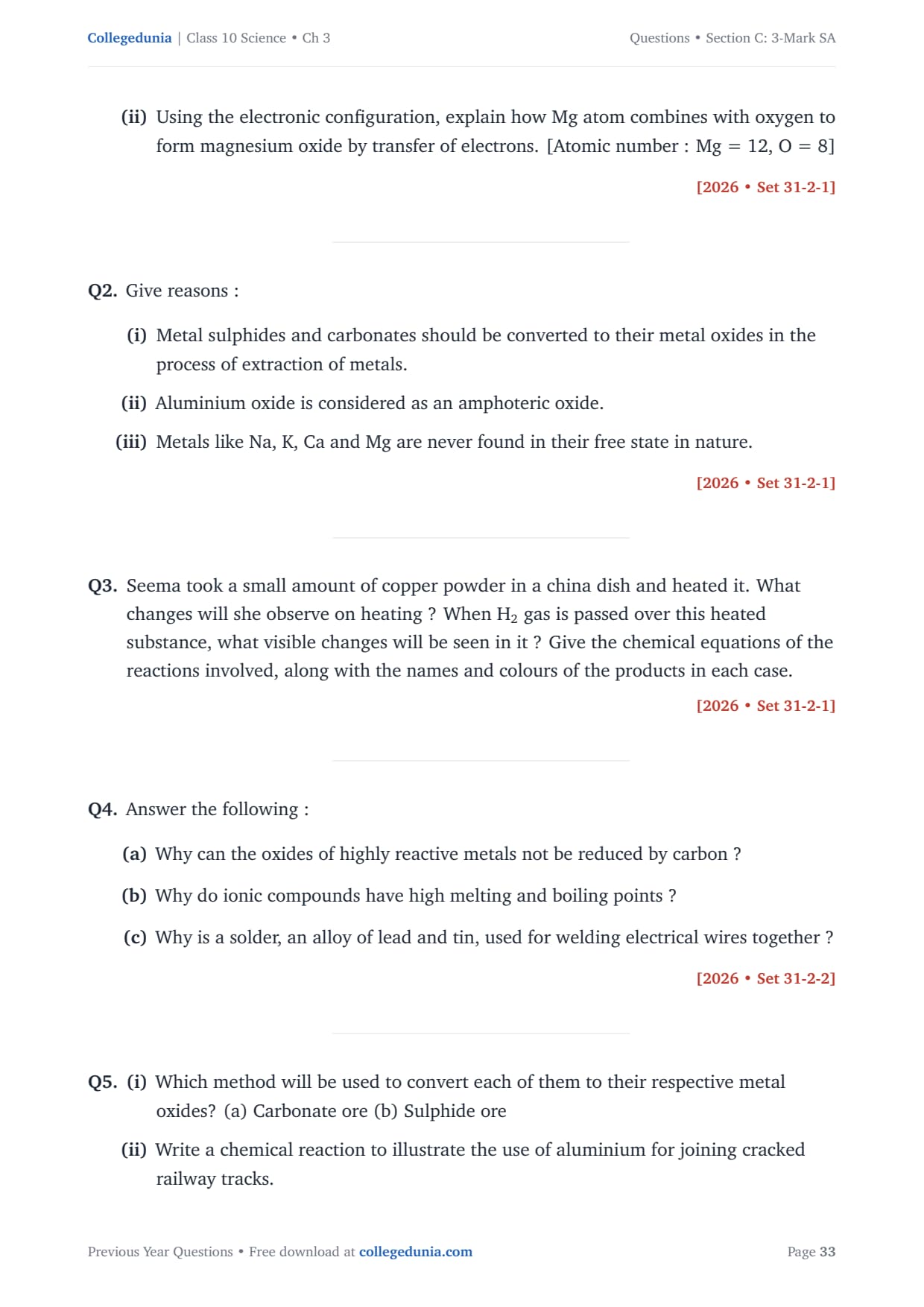
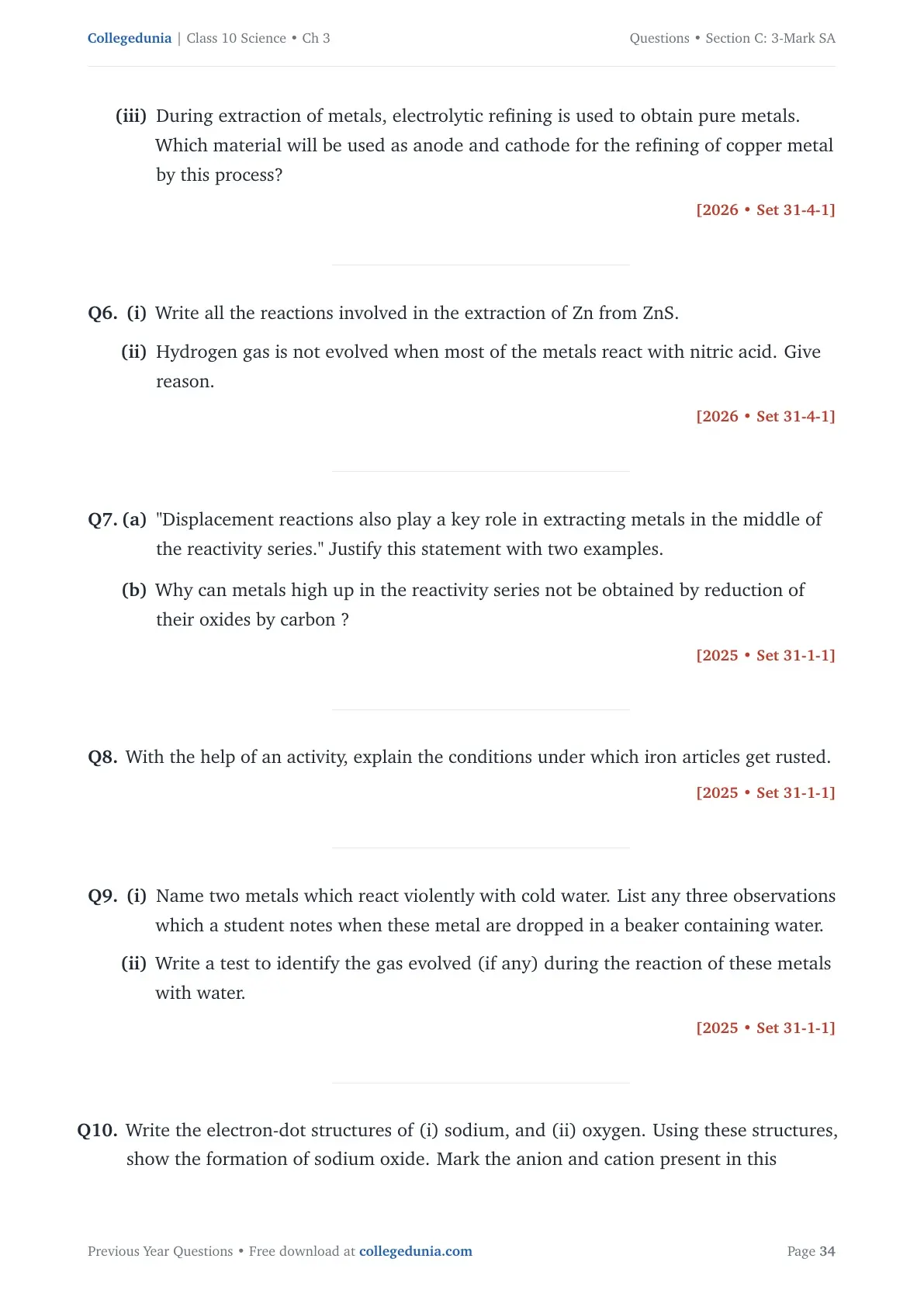
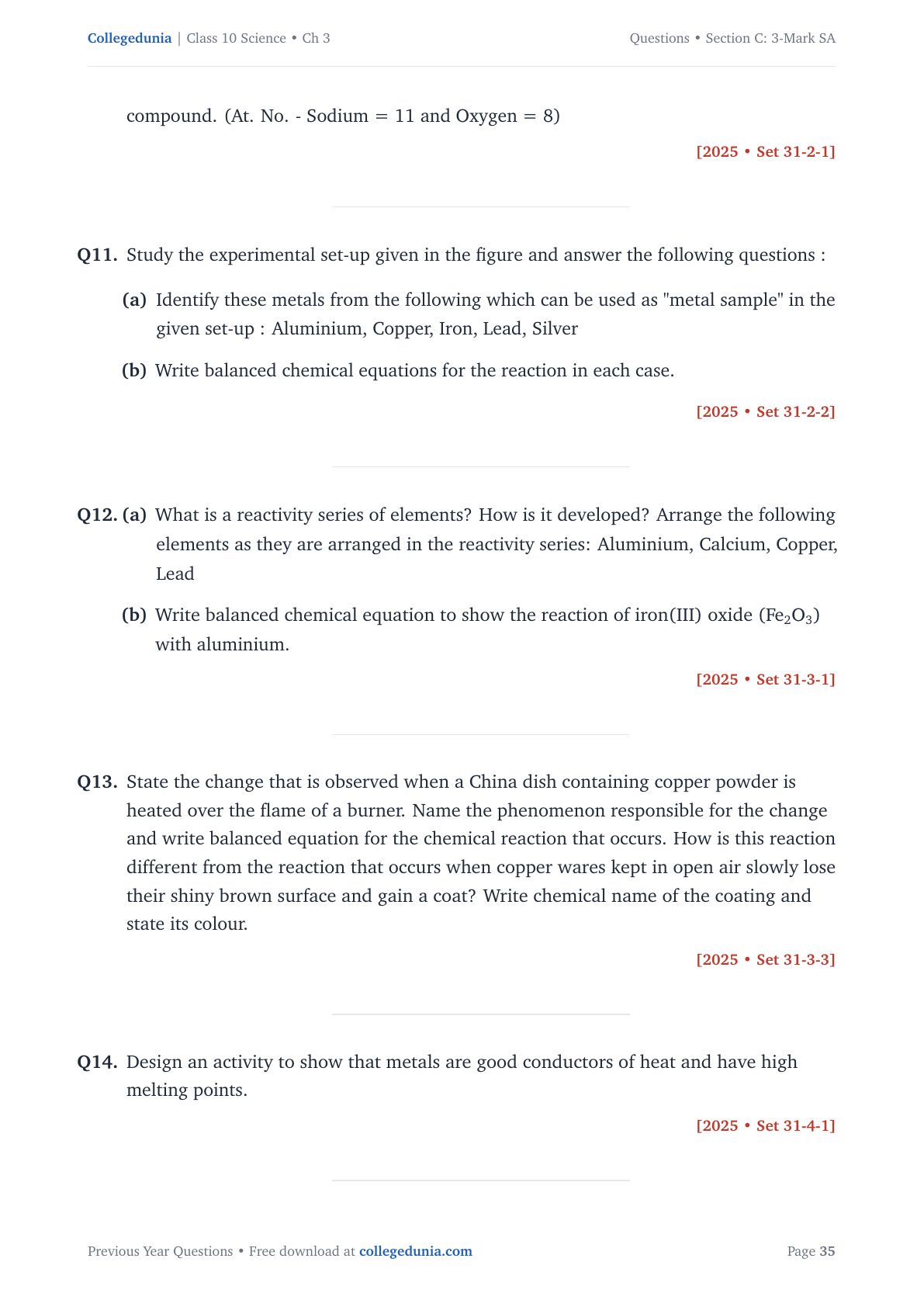
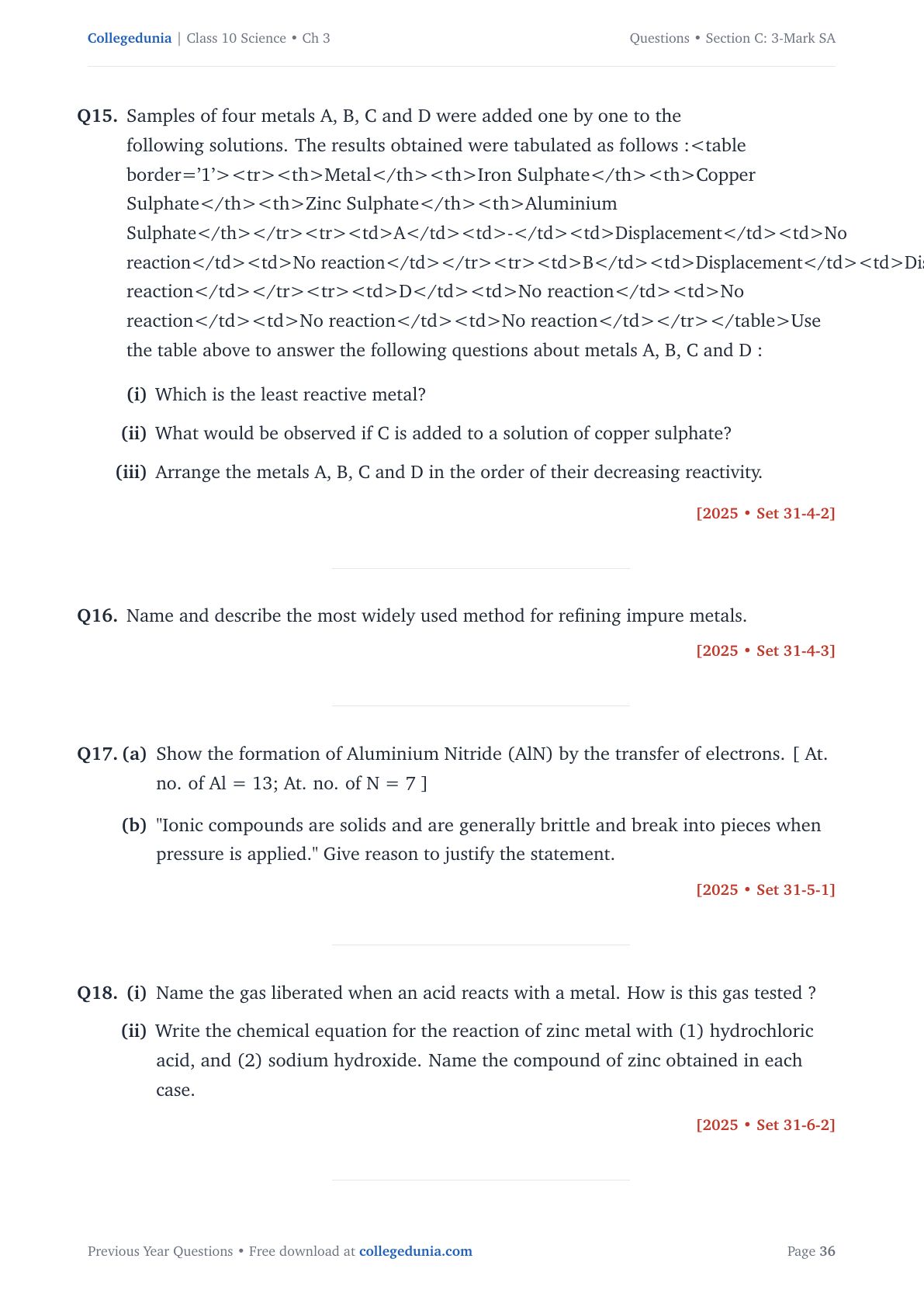
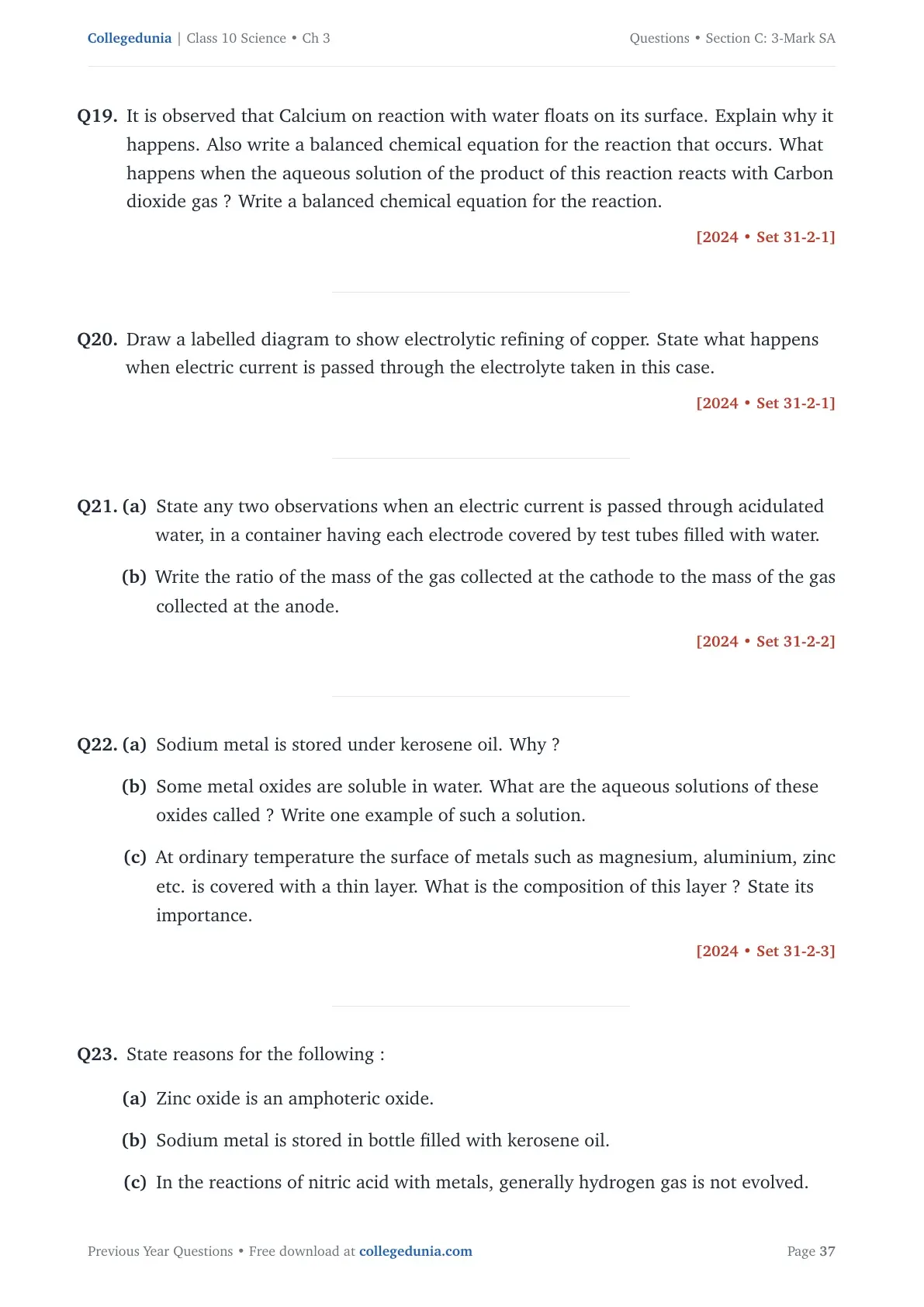
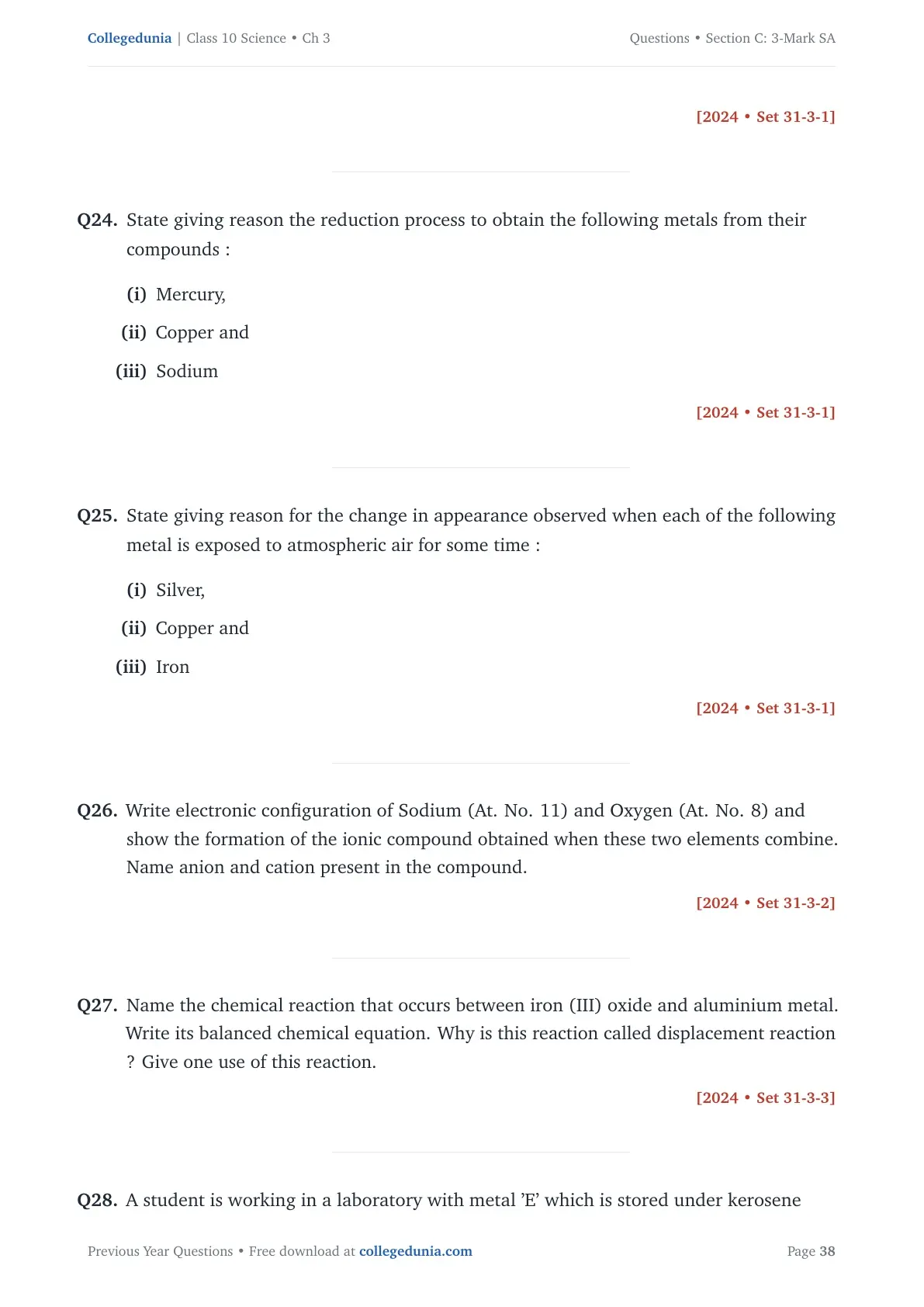
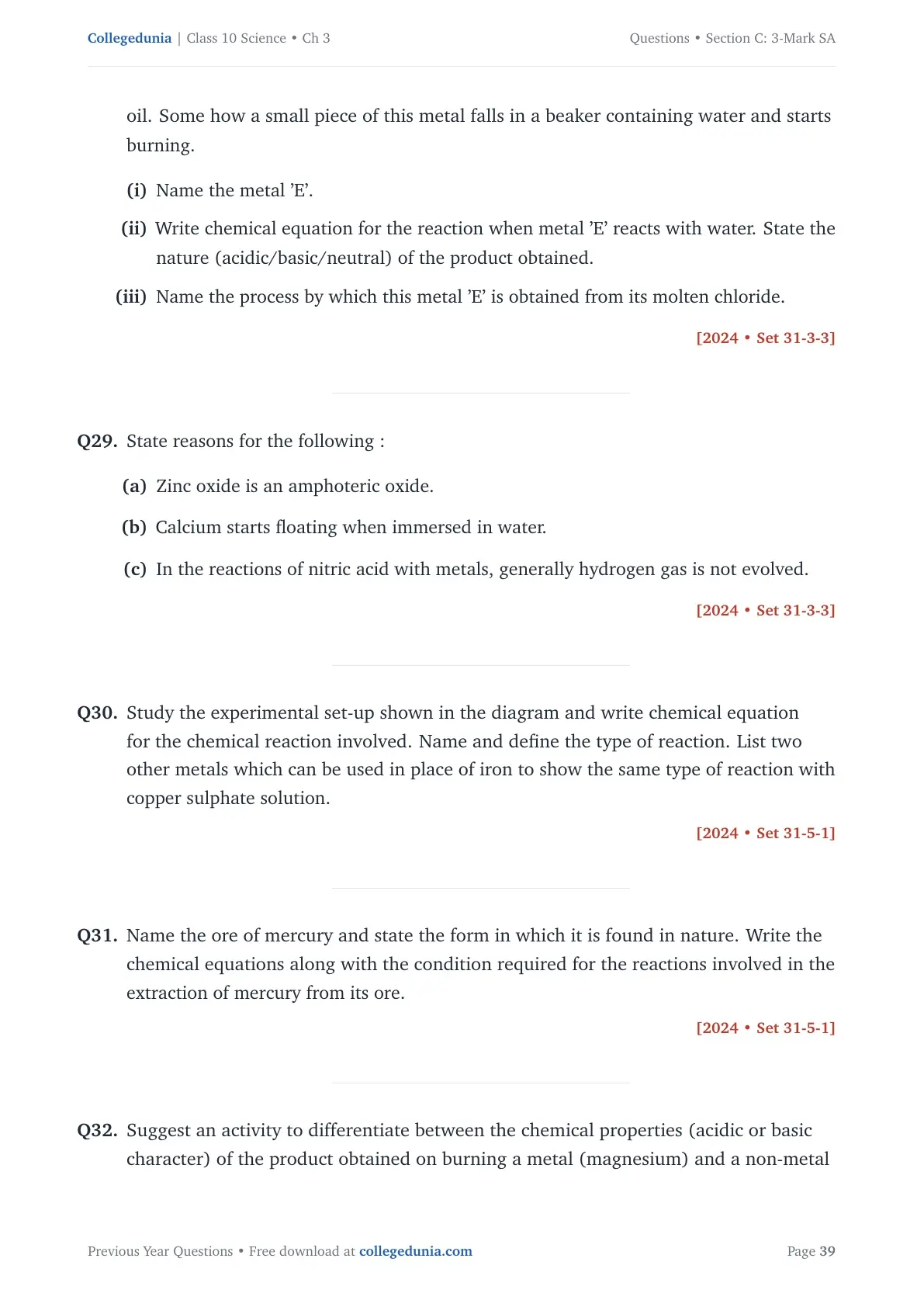
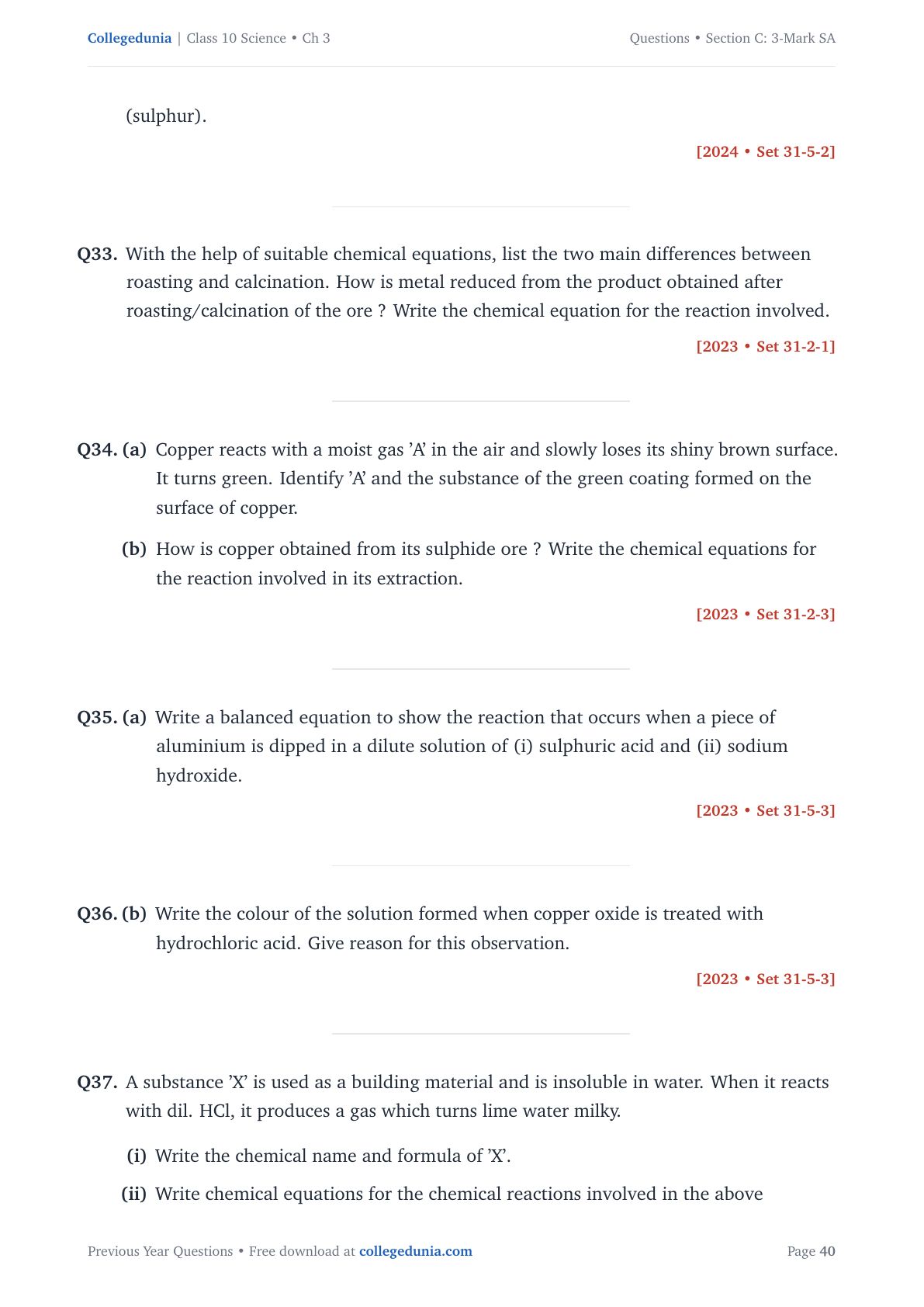
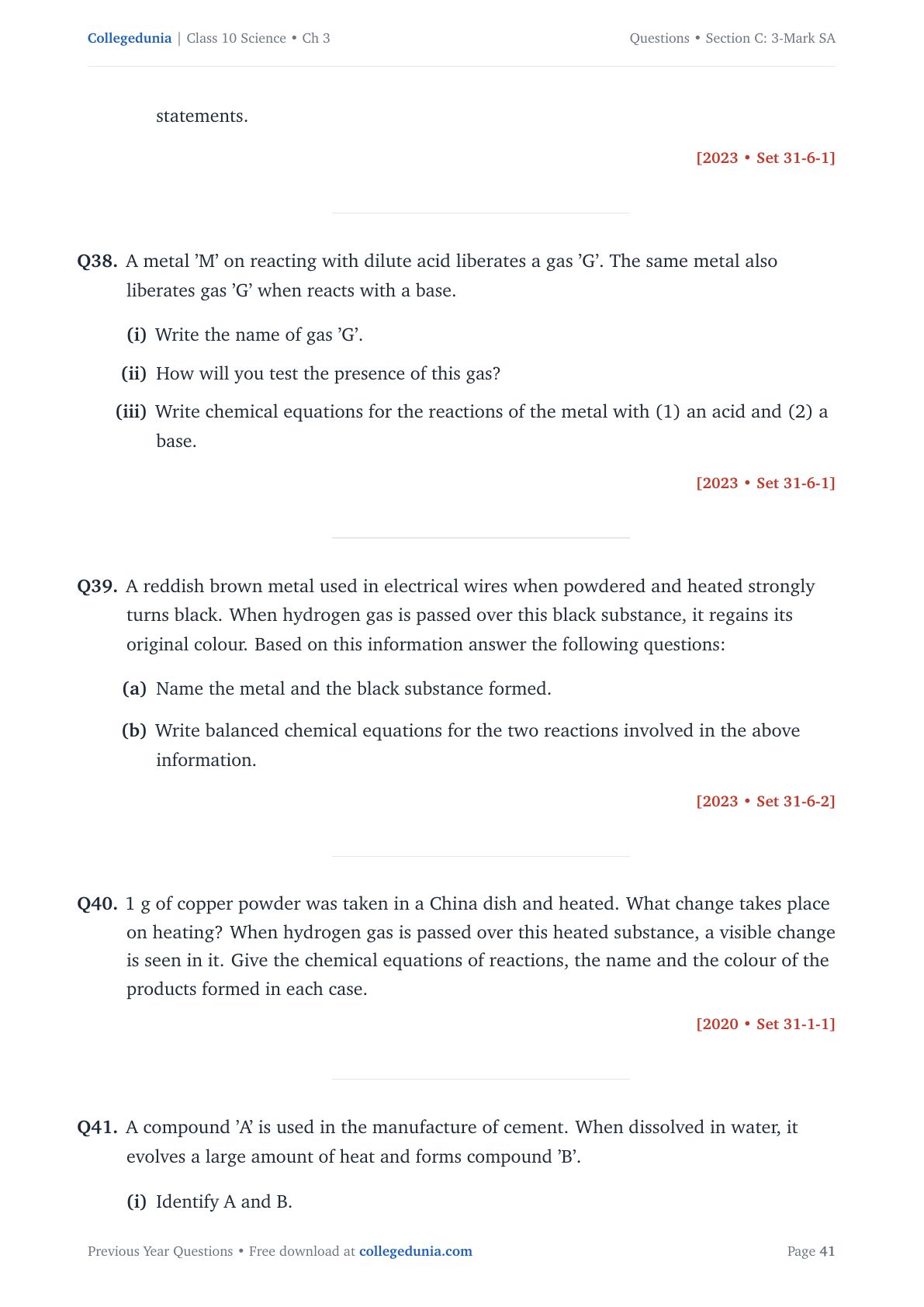
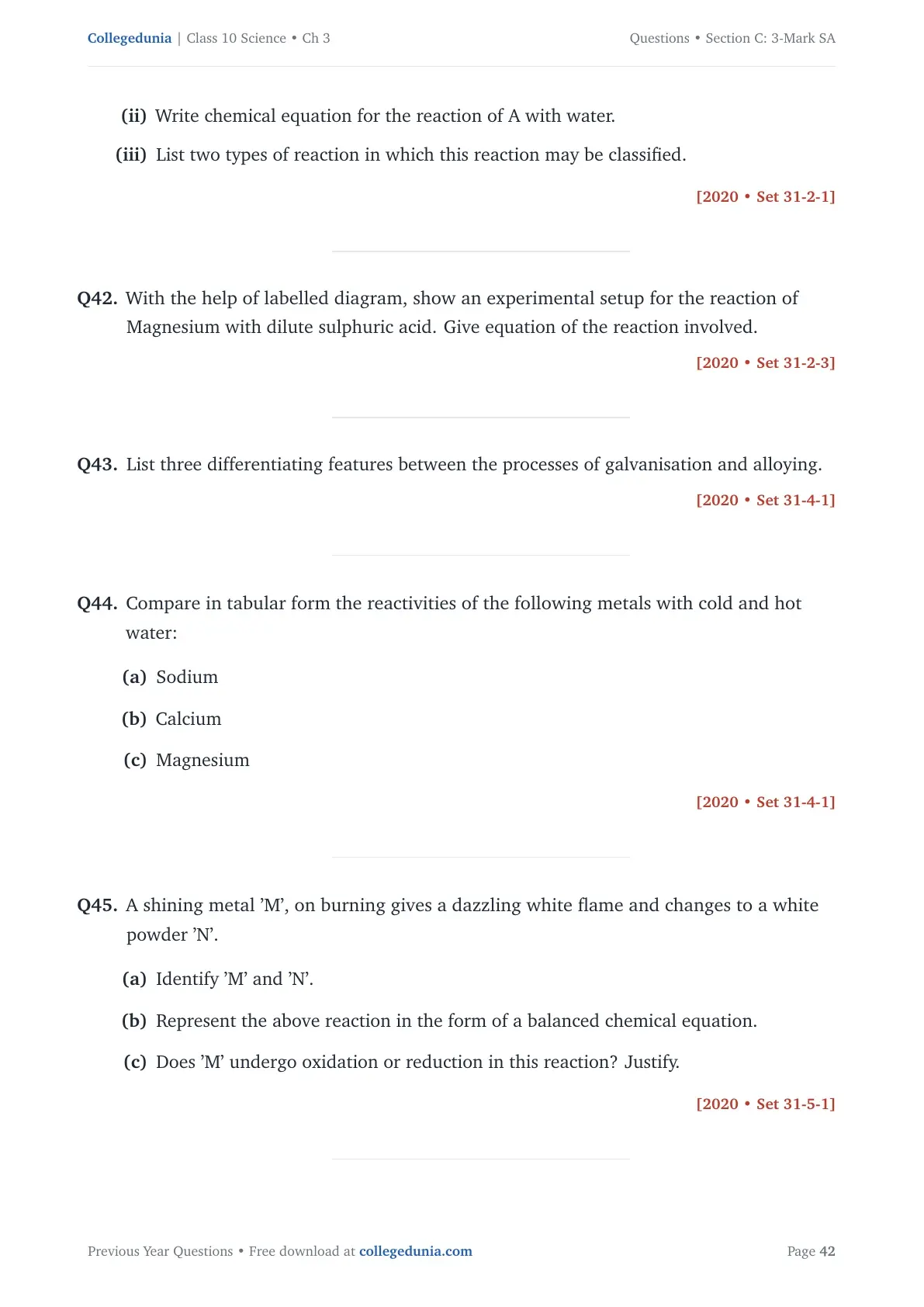
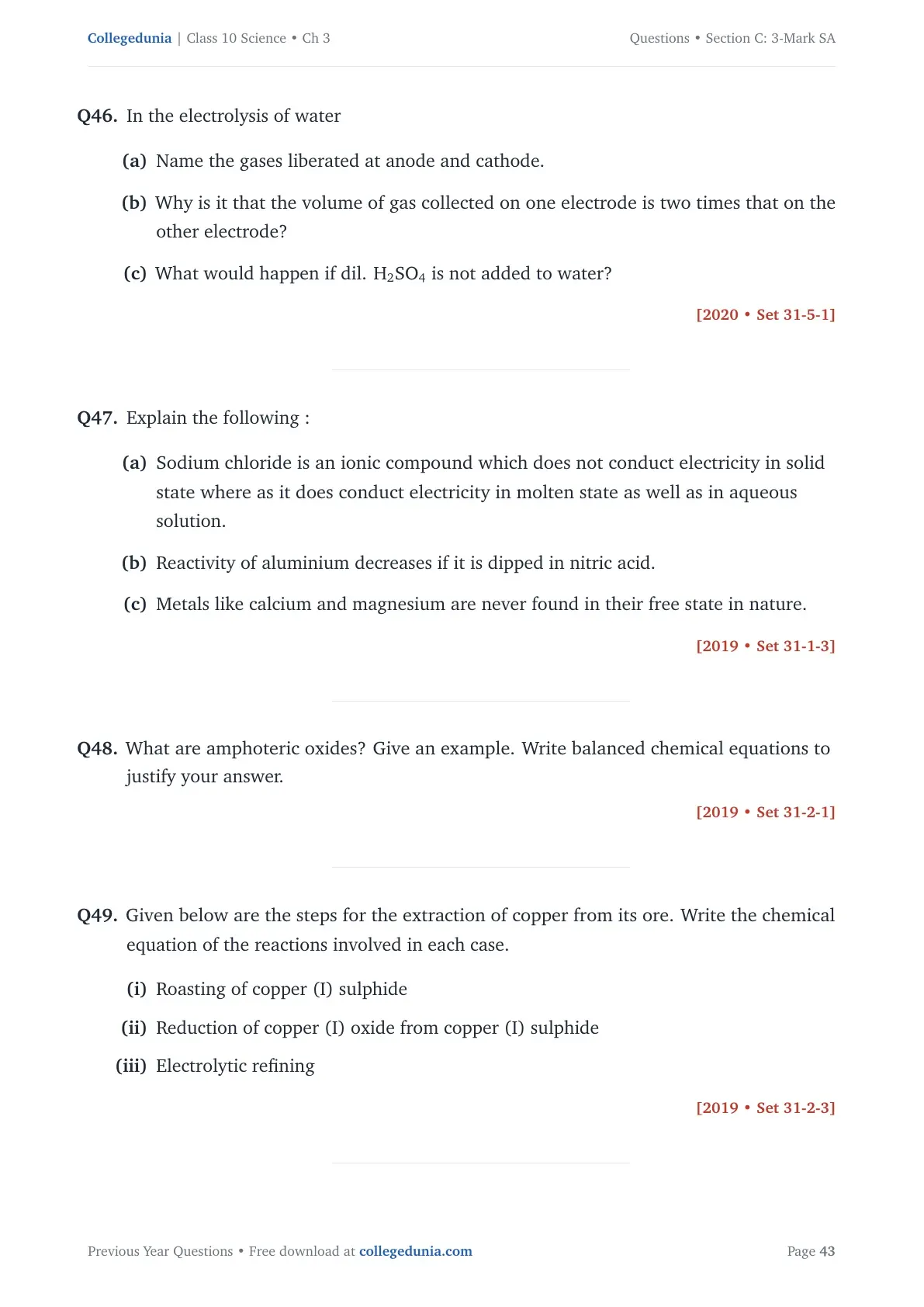
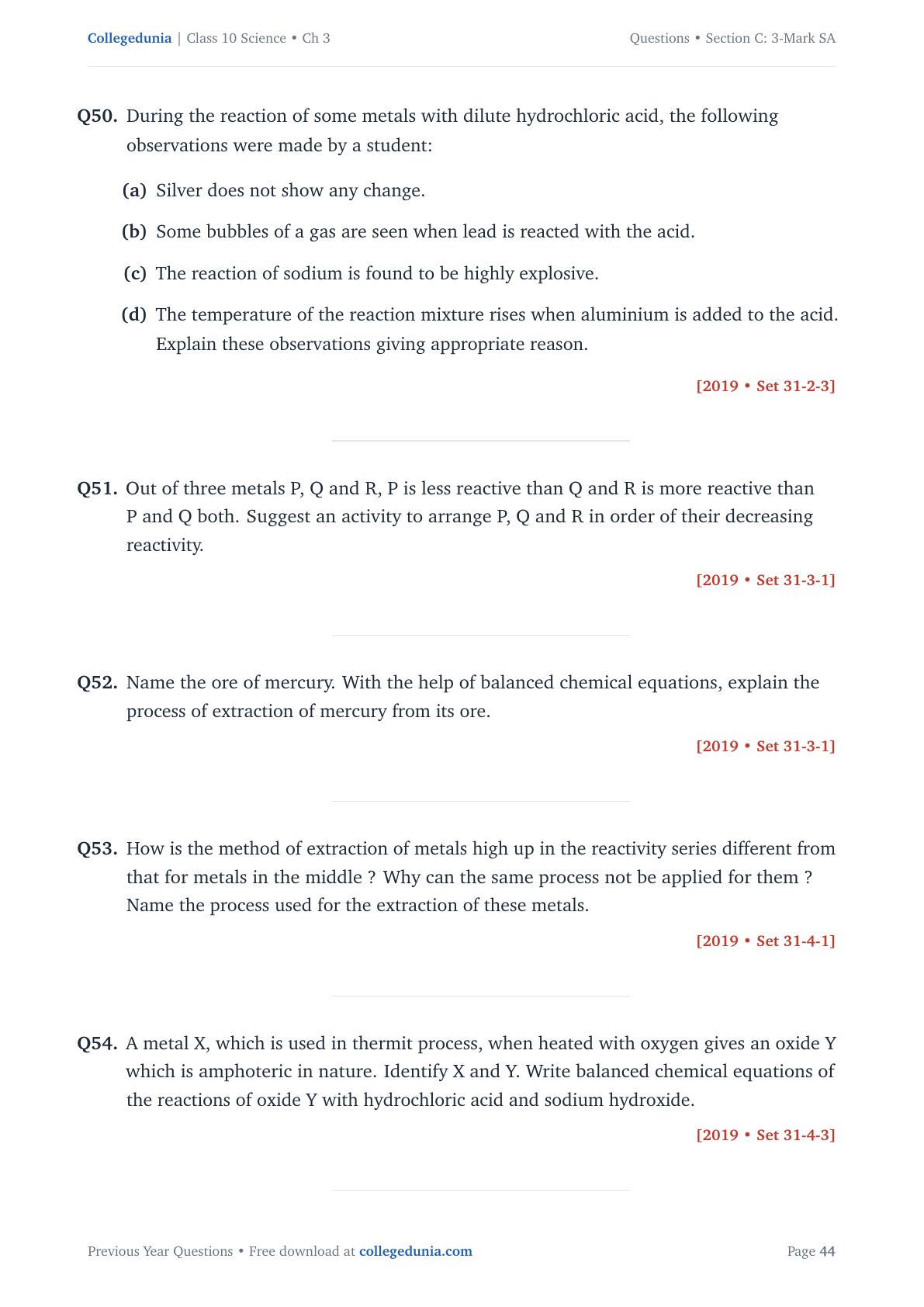
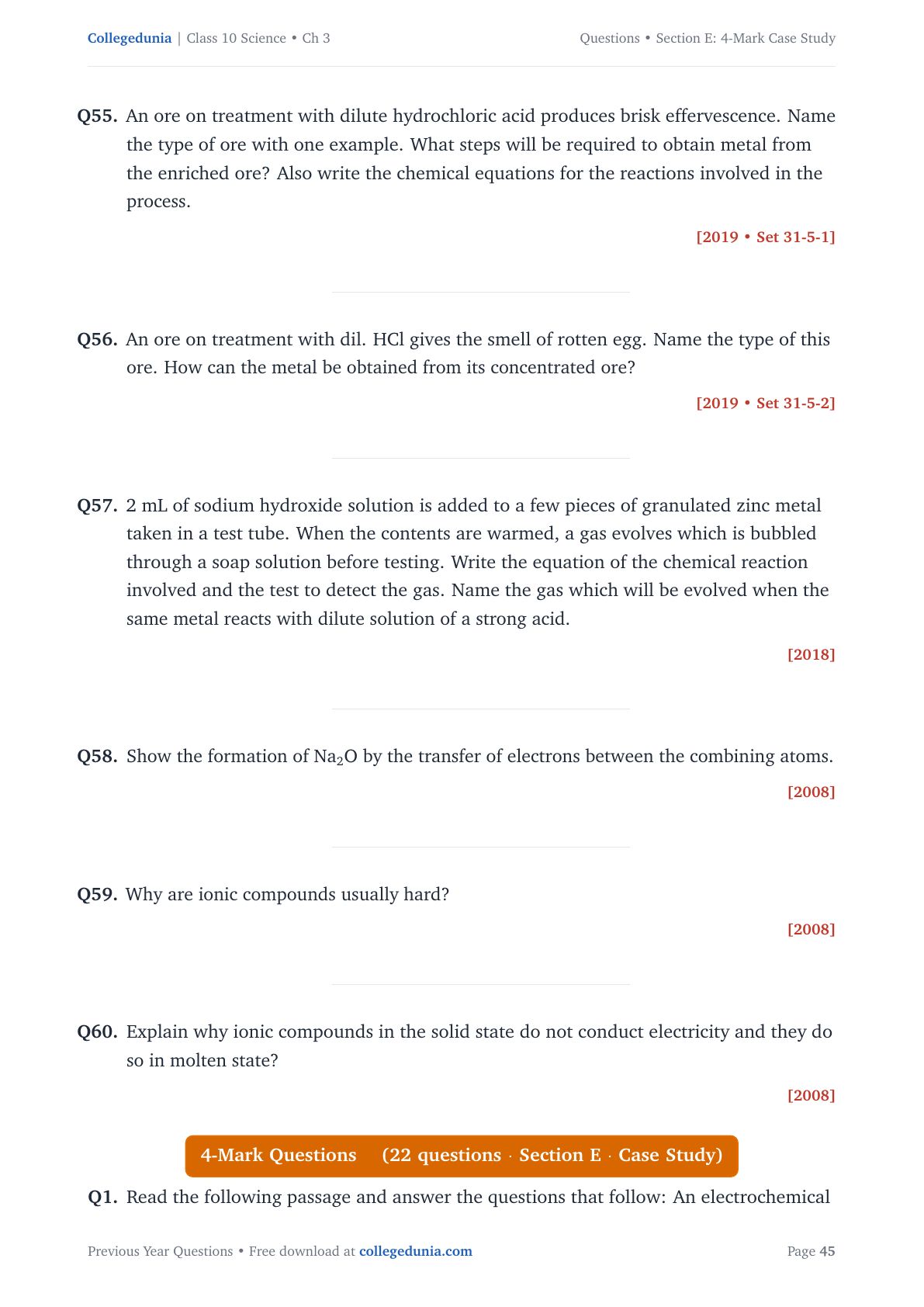
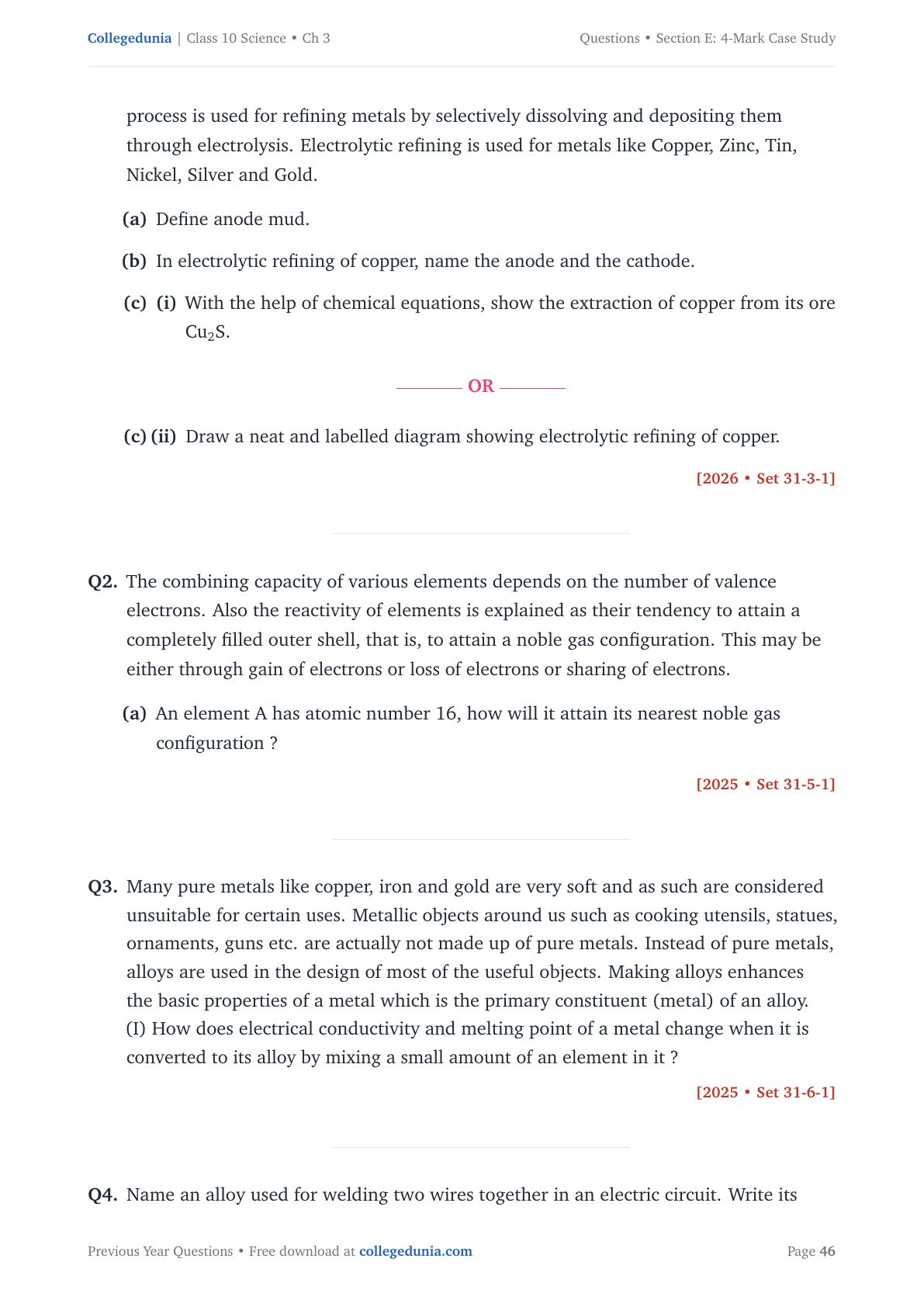
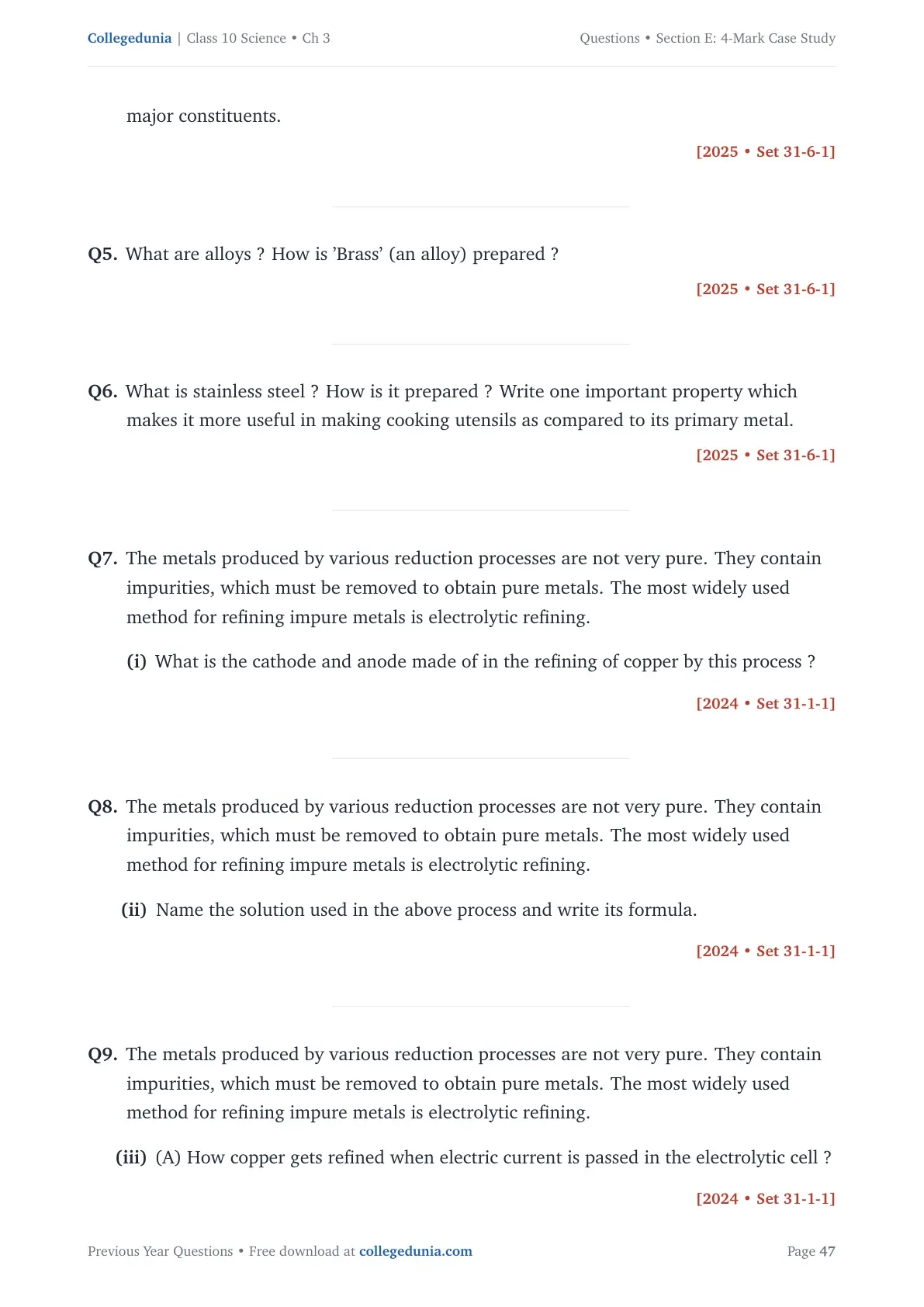
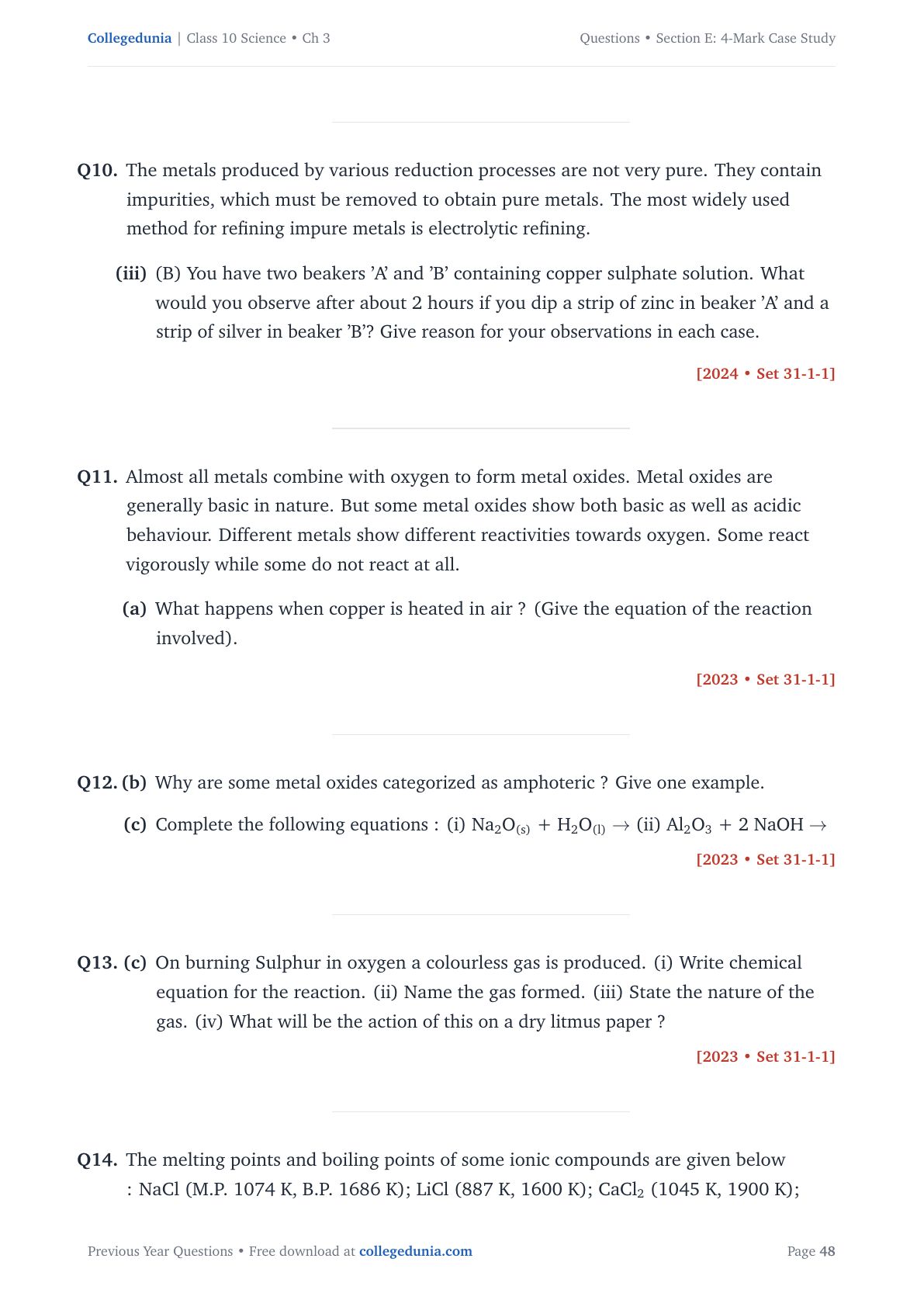
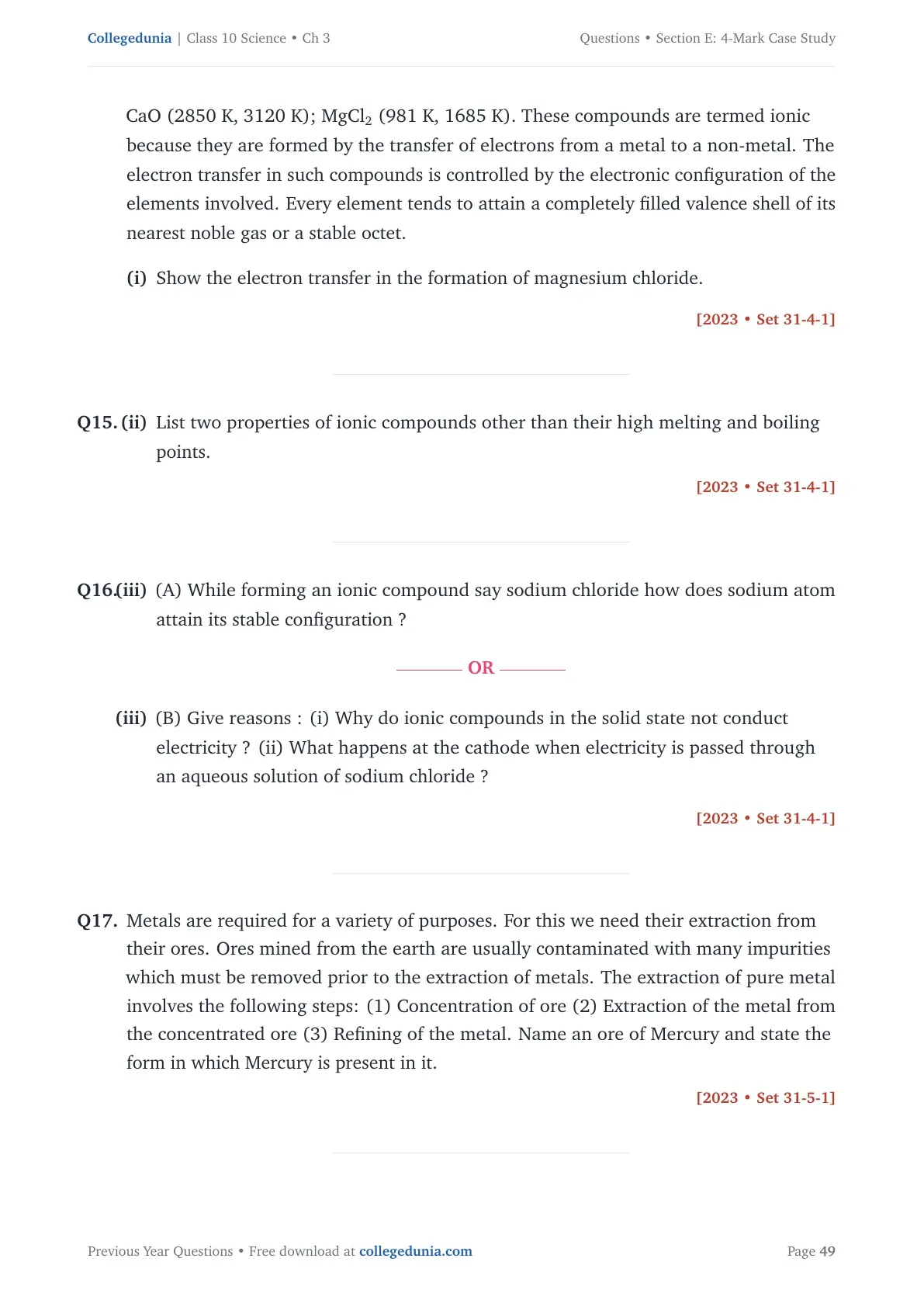
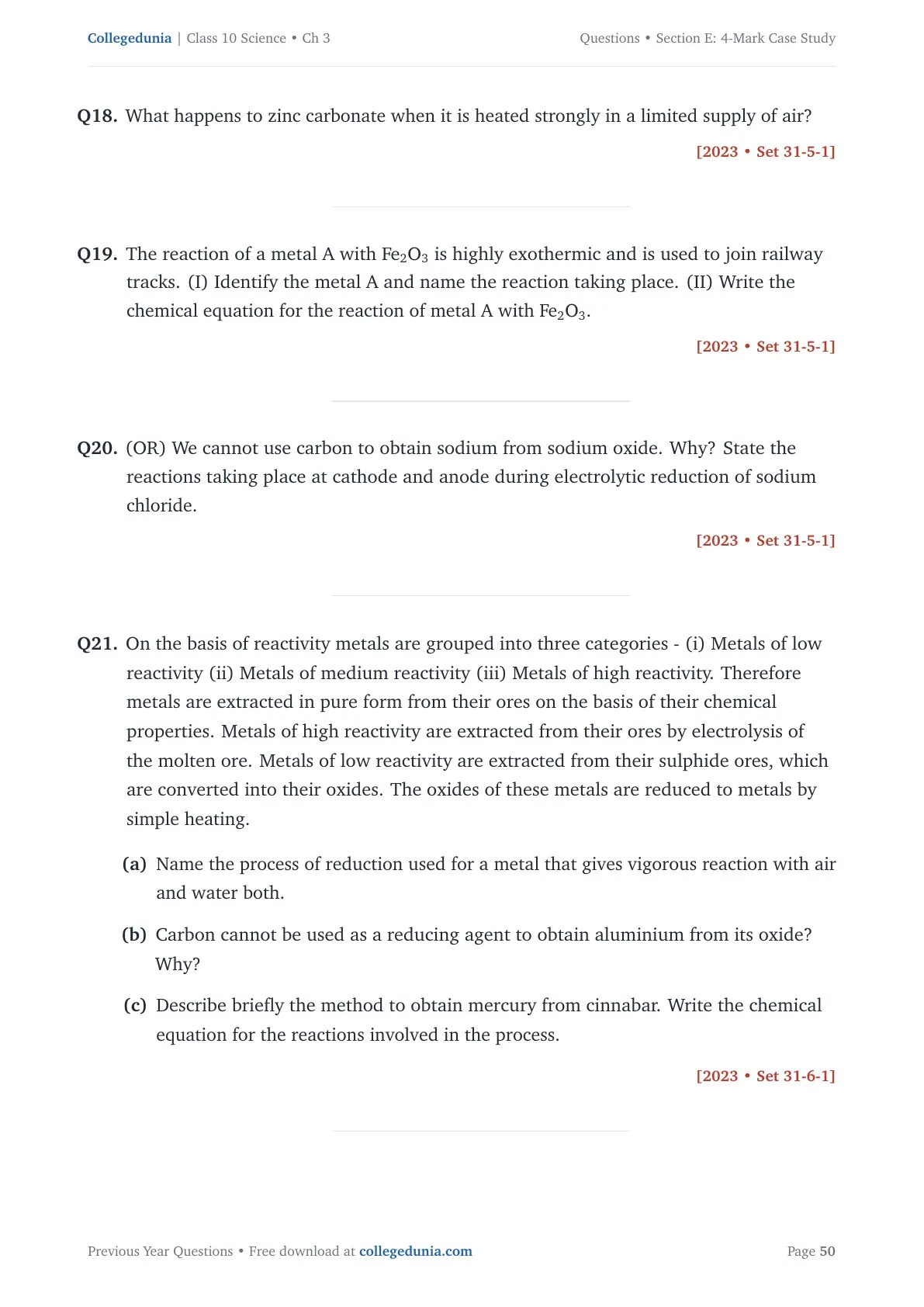
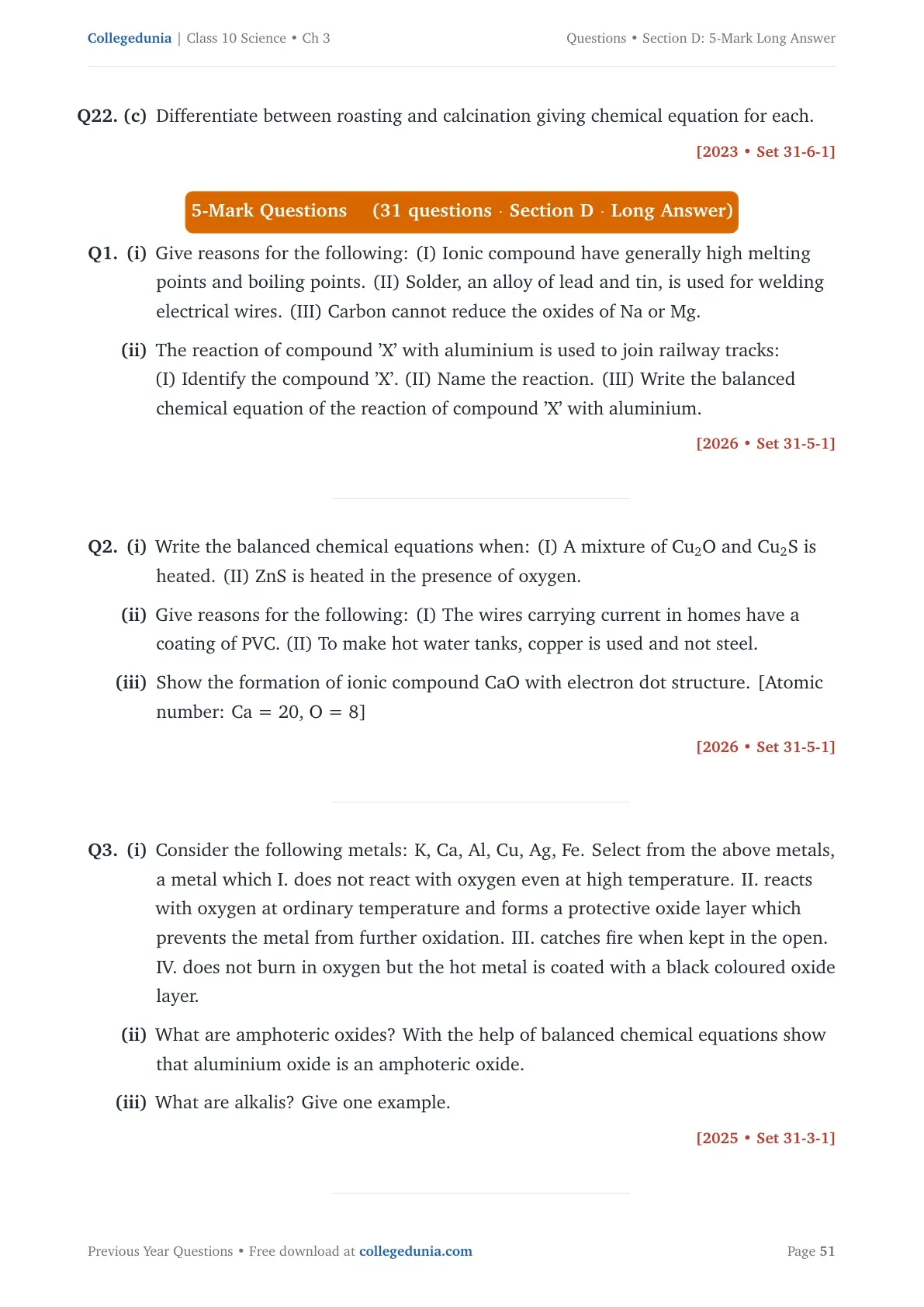
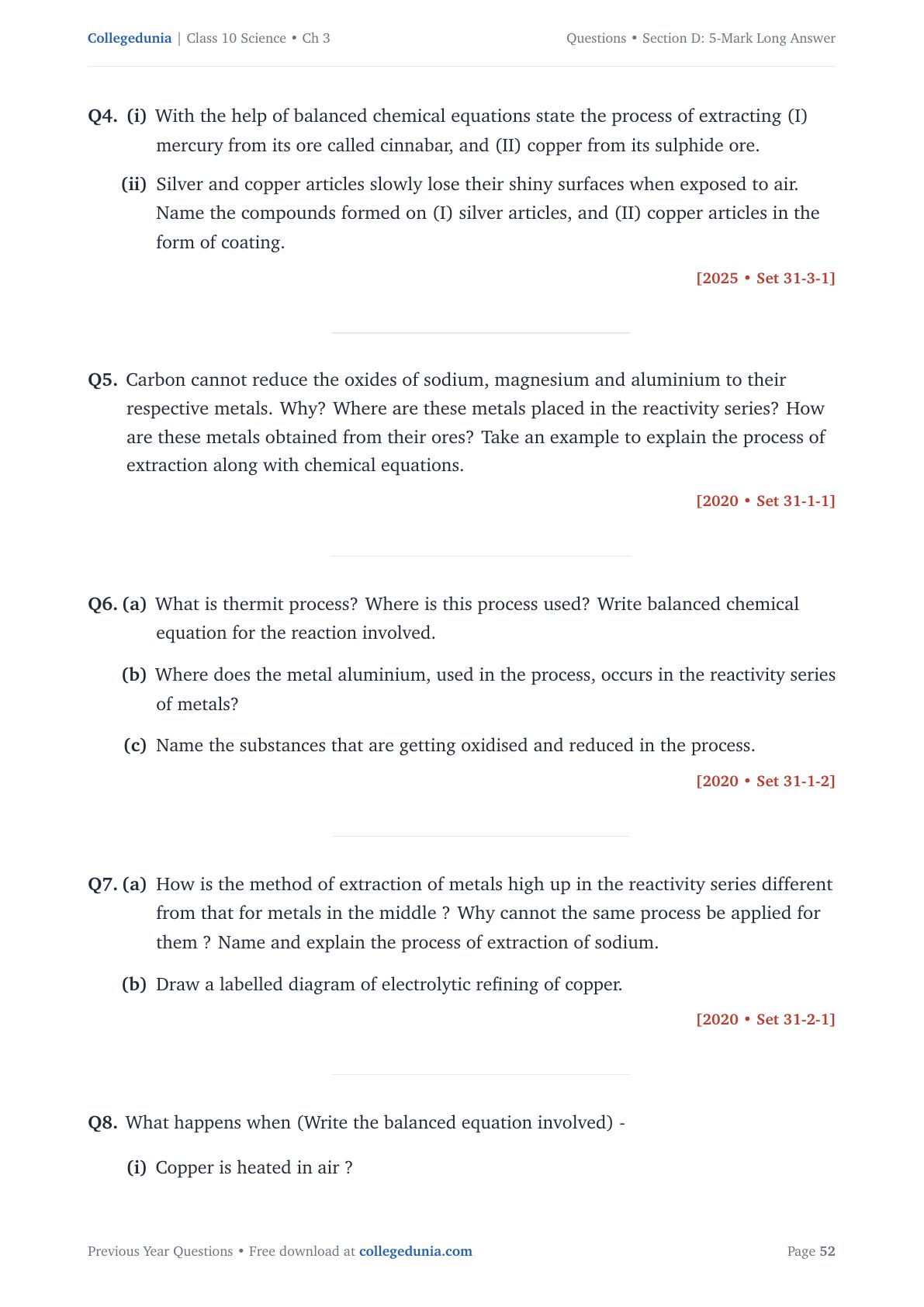
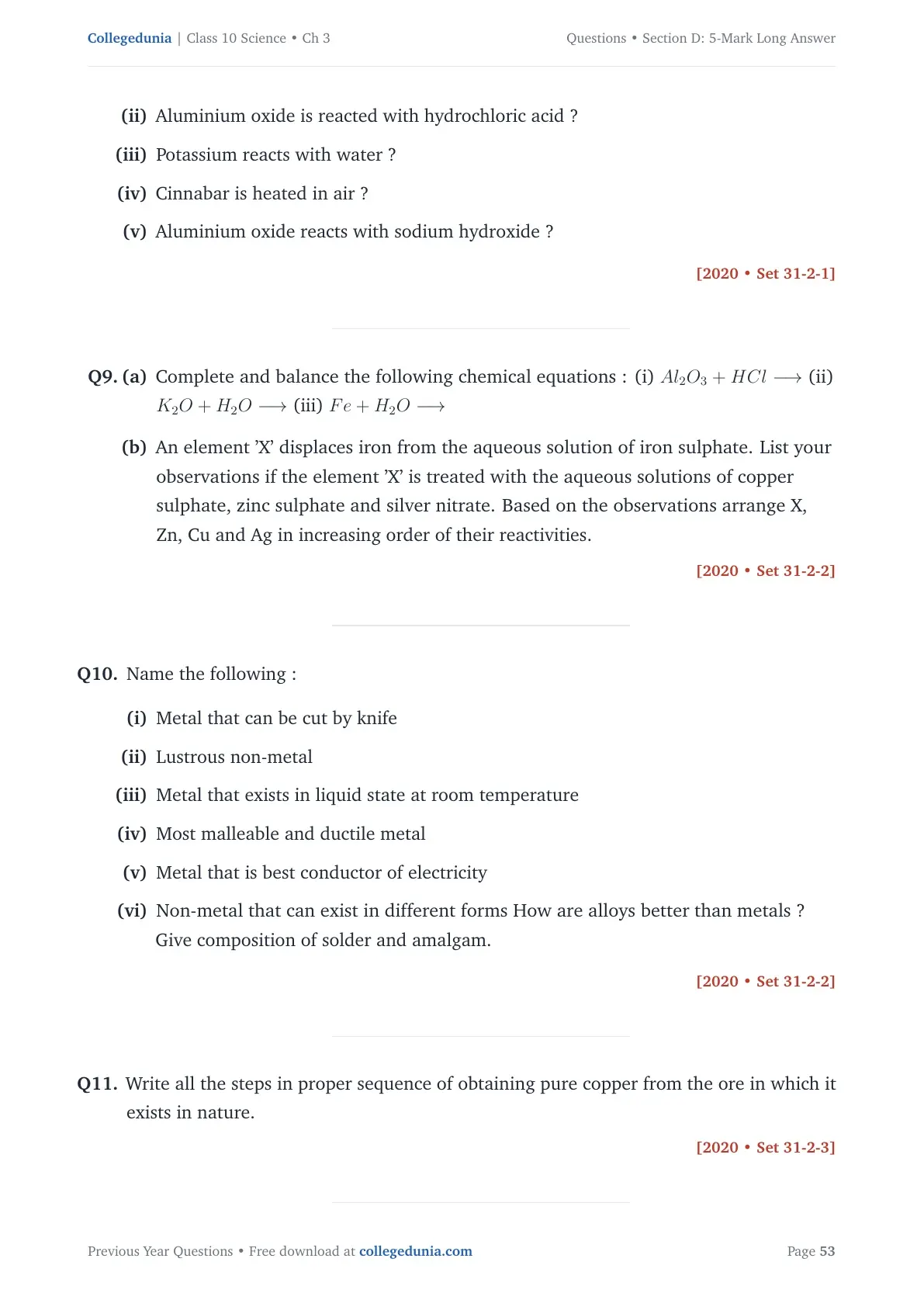
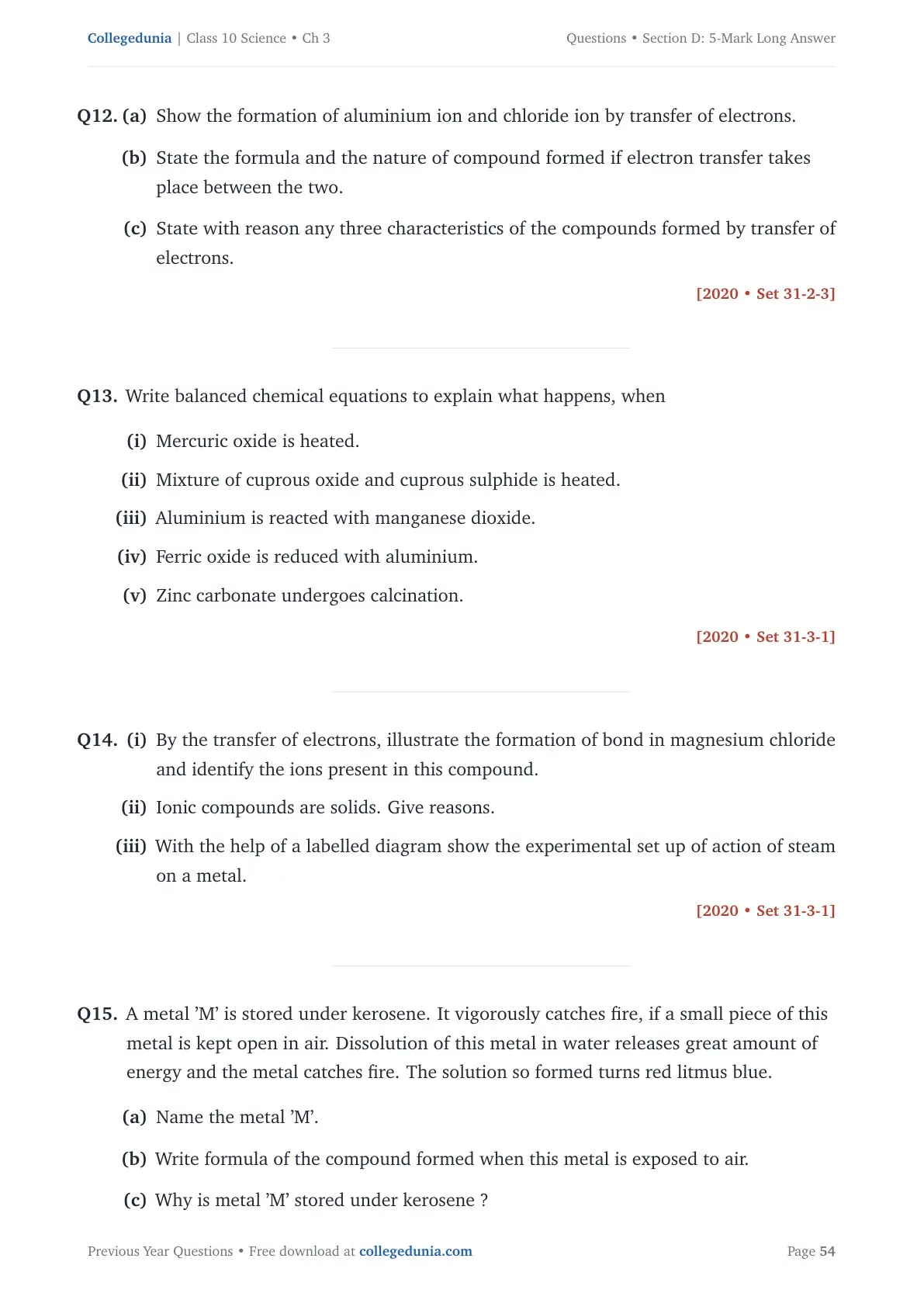
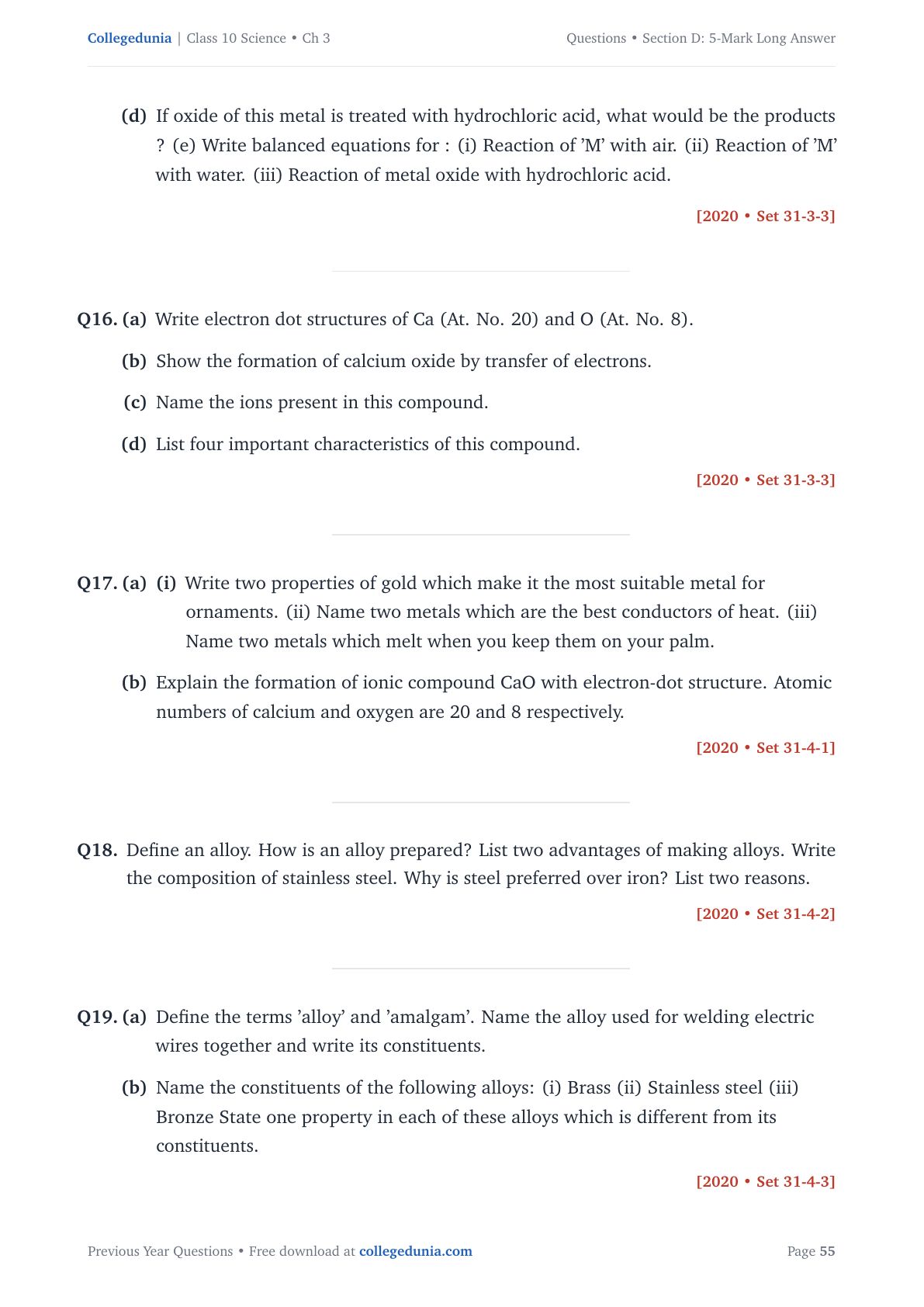
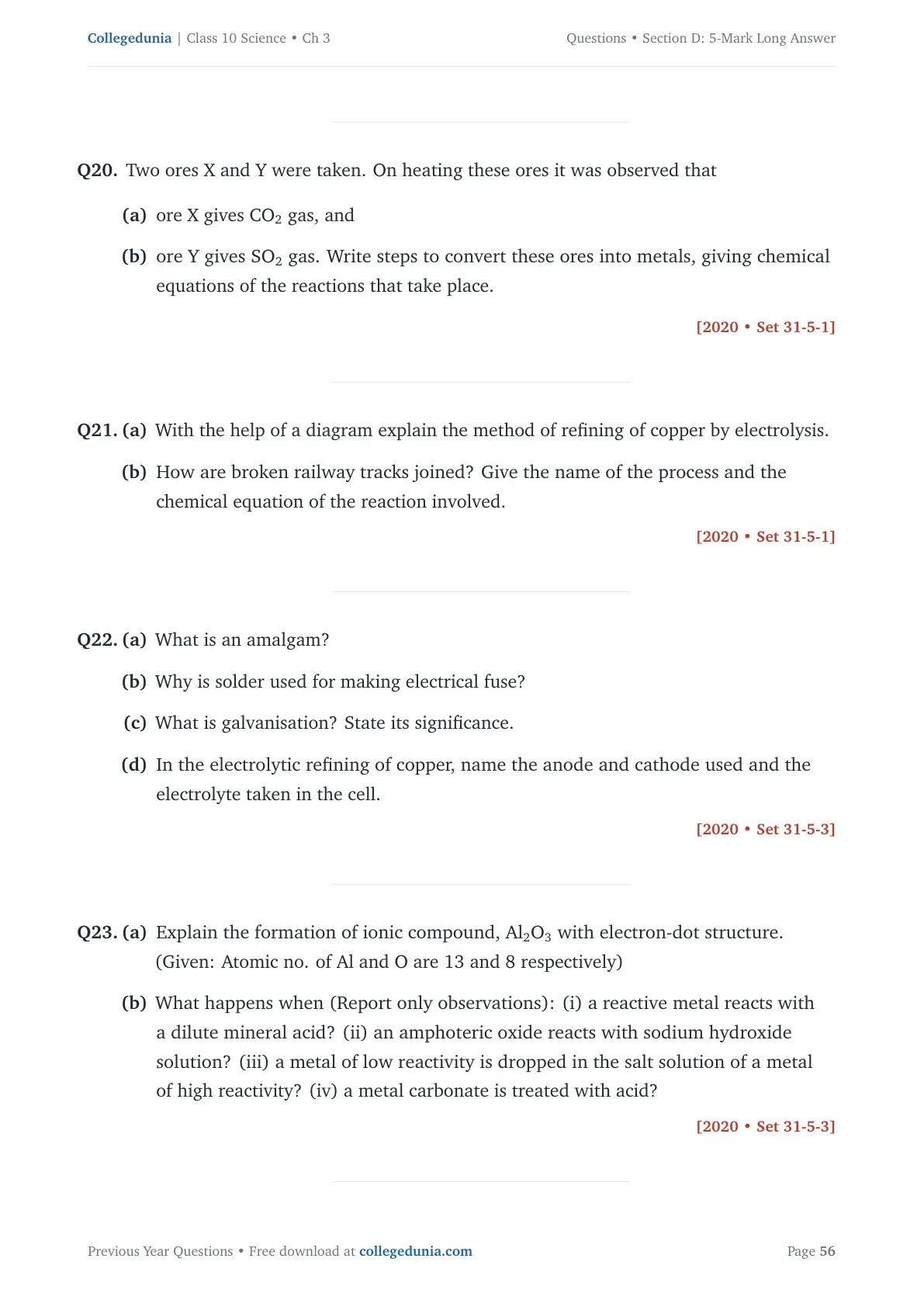
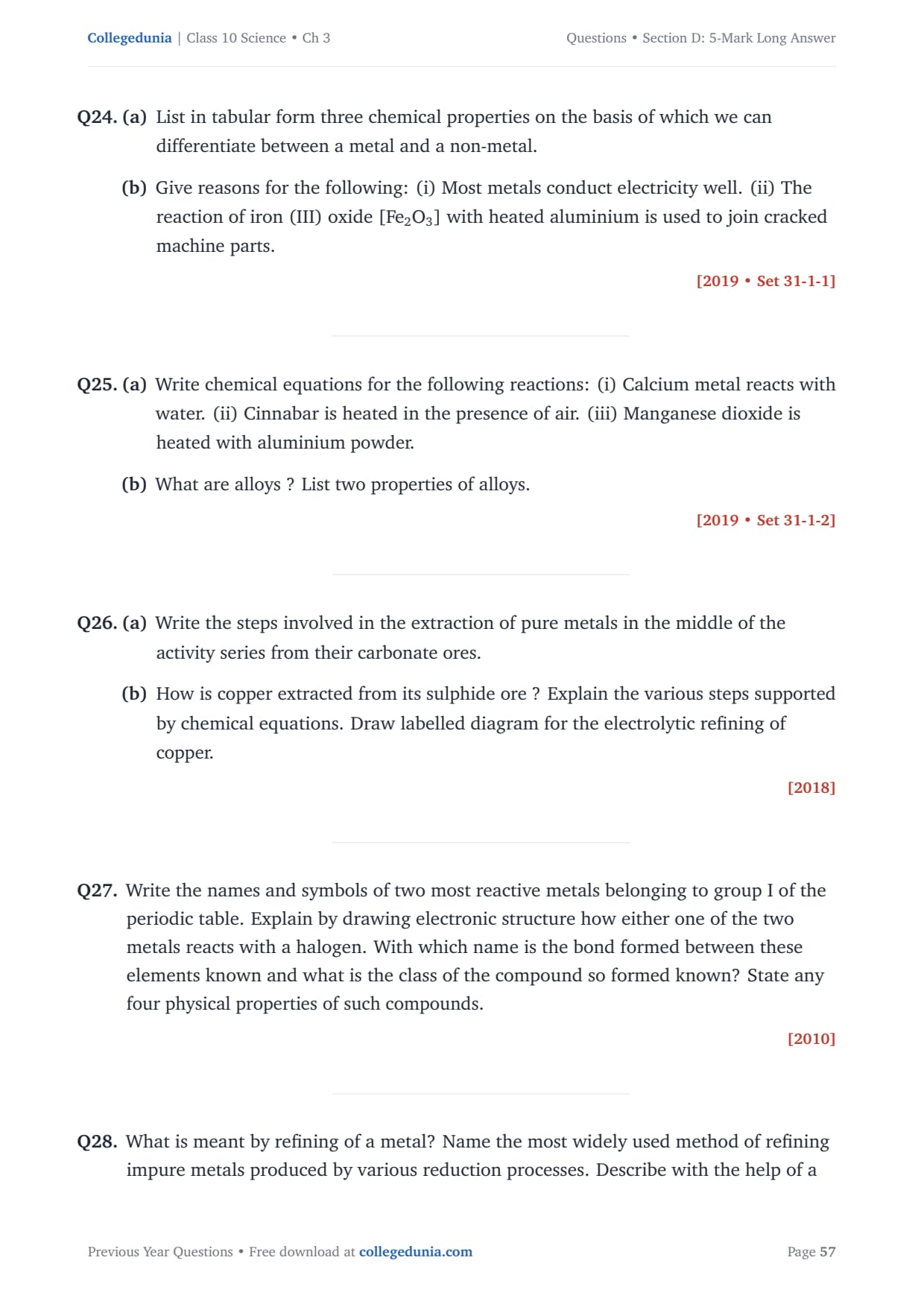
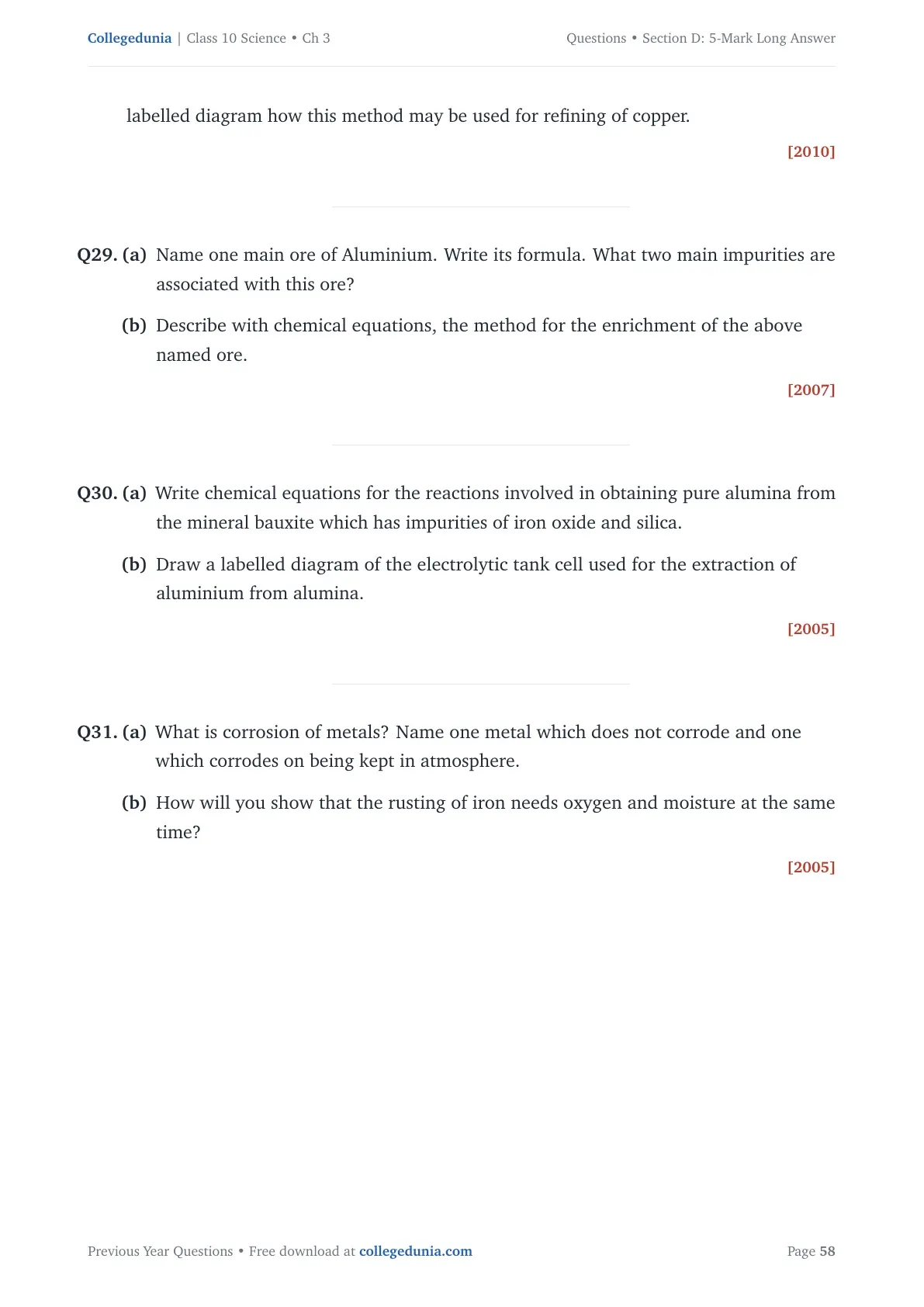
- 237 questions and 581 marks, sorted by year and by the mark value CBSE gave them, spanning 21 different set codes from 2005 to 2026.
- Every question is tagged with its year and set code, for example 2026, Set 31-1-1, so you know exactly where it came from.
- Questions only, with no answers, no marking scheme and no solutions inside this PDF.
Every question in this PDF is copied word for word from an official CBSE Class 10 Science board paper and has been checked against the NCERT Science textbook for accuracy.
What the PDF contains
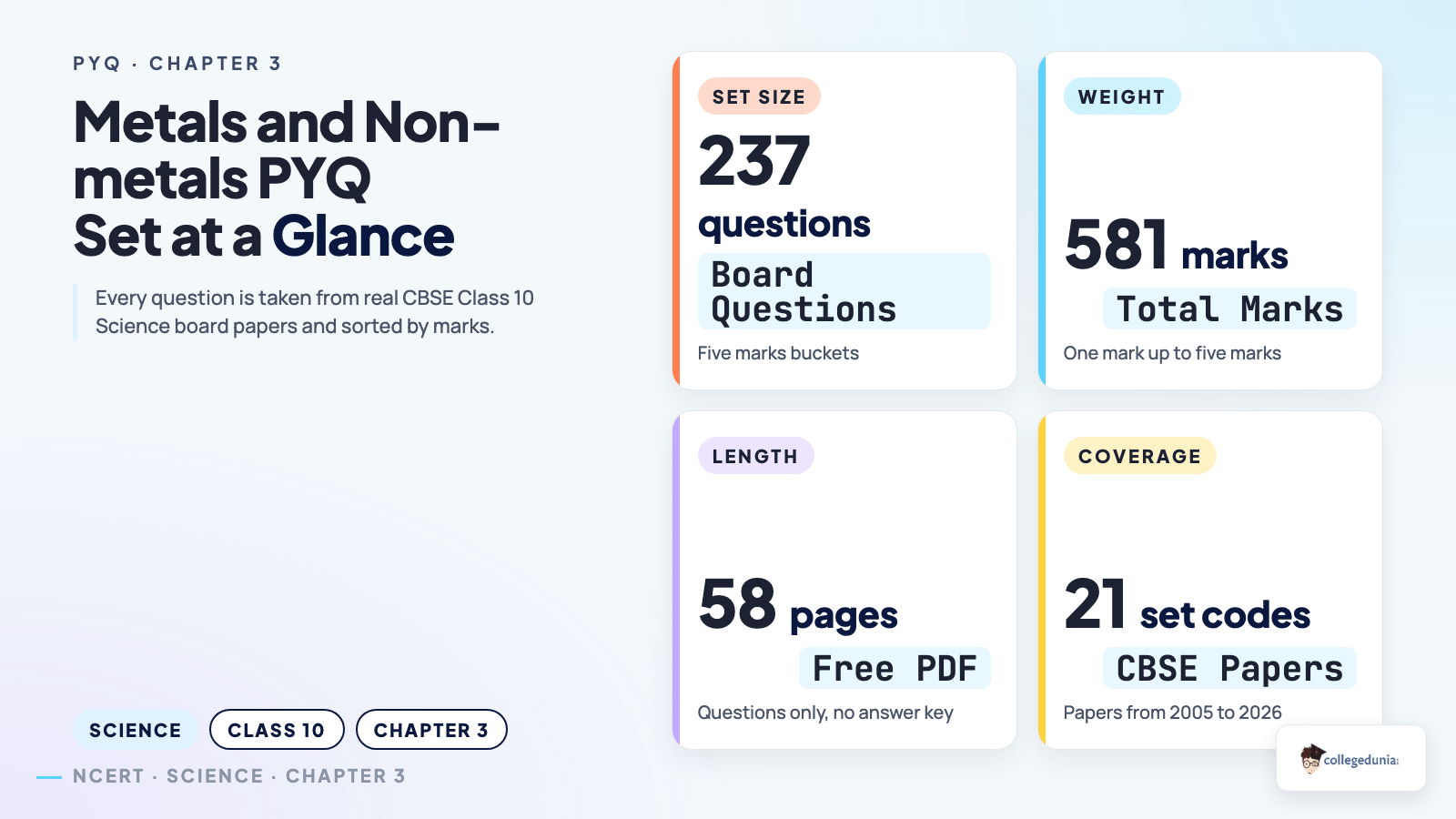
This PDF collects 237 questions on Metals and Non-metals from CBSE board papers dated 2005 to 2026, drawn from 21 different set codes. Each question is printed exactly as it appeared in the original paper, with its year and set code written alongside it. There is no answer key attached anywhere in the file. The idea is simple: you get the raw question bank, and you solve it the way you would on exam day, then check your working against your textbook or your teacher.
At 581 total marks across 58 pages, this is enough material to build a full revision cycle around, whether you are doing a first pass through the chapter or a final round of practice before the board exam.
Marks-wise split
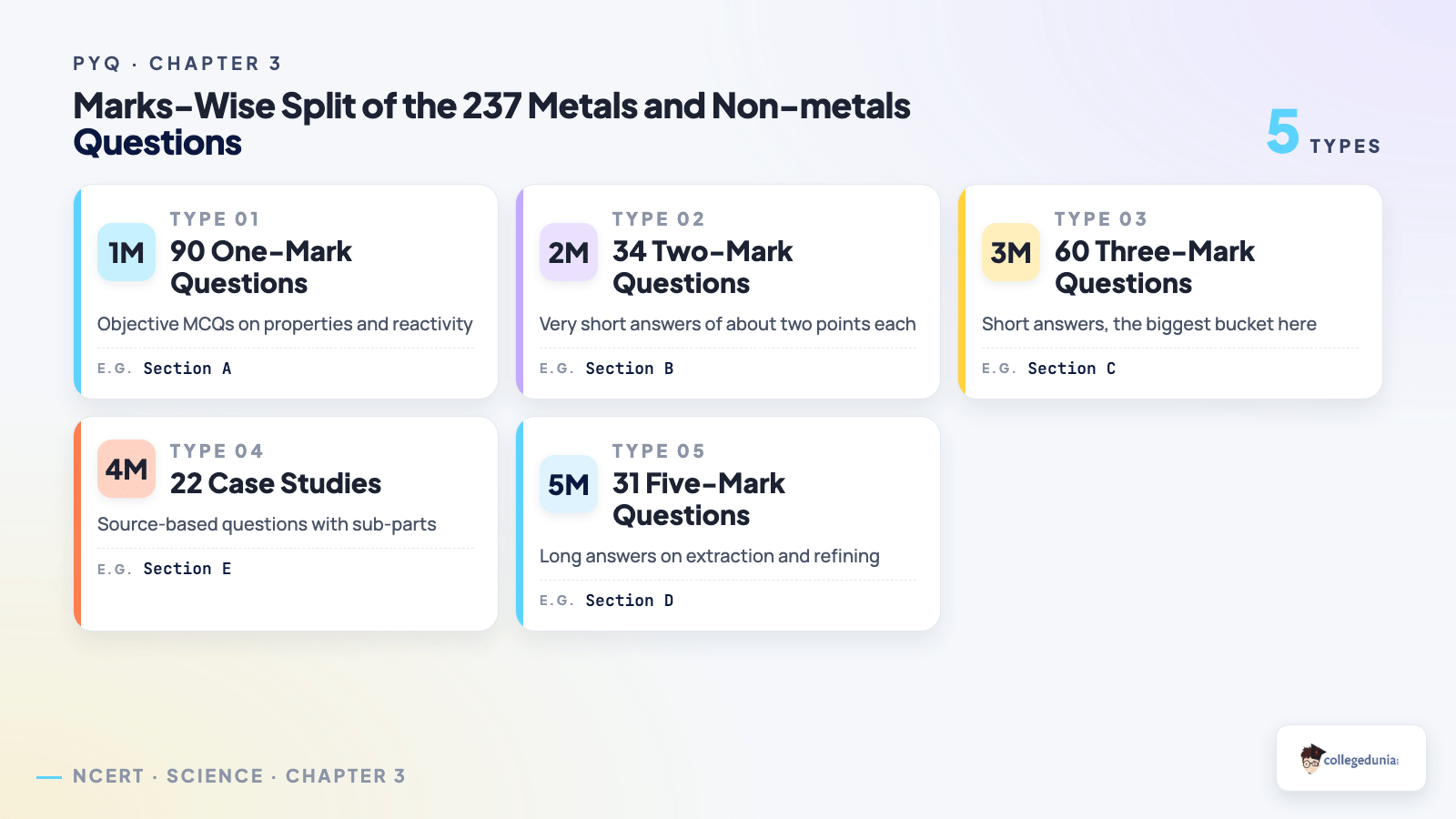
CBSE tests this chapter across all five question types, and the split below shows how much weight each type carries in this PDF.
| Marks | Questions | Section | Question type |
|---|---|---|---|
| 1 mark | 90 | Section A | MCQ |
| 2 marks | 34 | Section B | Very Short Answer |
| 3 marks | 60 | Section C | Short Answer |
| 4 marks | 22 | Section E | Source-based Case Study |
| 5 marks | 31 | Section D | Long Answer |
| Total | 237 | All sections | 581 marks |
Which topics the papers keep asking about
Looking across 21 years of set codes, a handful of topics come back again and again in this chapter. Board papers lean on the physical properties of metals and non-metals, chemical properties and reactions, and the reactivity series, which shows up in almost every year's paper in some form. Questions on ionic compounds, occurrence of metals in ores, and the pair of extraction methods, roasting and calcination, are also frequent.
Beyond that, expect regular questions on extraction and reduction of metals, refining of metals, corrosion, and galvanisation and alloys. These ten topics between them account for the bulk of the 237 questions in this set.
Why this chapter carries a heavy 5-mark and case-study load
Metals and Non-metals sits on top of a long chain of reasoning, from why a metal reacts the way it does, to how that reactivity decides its extraction method, to what happens to it once it is in use and starts corroding. That chain is exactly what long answer and case study questions are built to test.
This PDF has 31 five-mark questions and 22 four-mark case study questions, together worth over half the total marks in the set. CBSE uses these to check whether a student can connect the reactivity series to extraction, refining and corrosion in one answer, rather than recalling isolated facts. If you are short on time, these two buckets are where your revision should go first.
How to attempt reactivity-series and metal-extraction questions
- Start by writing out the reactivity series from memory, top to bottom, before you read the question. This anchors every answer that follows.
- Identify where the metal in the question sits on that series. Its position decides the extraction method, not the other way round.
- For metals low in the series, mention that they occur free or need simple heating. For metals in the middle, mention reduction with carbon. For the most reactive metals, mention electrolytic reduction.
- If the question is about an ore that is a carbonate or sulphide, explain roasting or calcination as the step that happens before reduction, and say which one applies and why.
- When asked about refining, name the specific method, usually electrolytic refining, and state what forms at the anode and cathode.
- Close with the practical angle if the question asks for it, such as why the metal corrodes or how alloying changes its properties.
Common mistakes students make in this chapter
Students often mix up roasting and calcination, using the terms for the wrong type of ore. Another frequent slip is writing the reactivity series in the wrong order under exam pressure, which then breaks every answer that depends on it. Many also confuse corrosion with the process of galvanisation itself, describing zinc coating as a form of rusting rather than a way to prevent it. In case study questions, students sometimes answer from general knowledge instead of reading the passage carefully, which costs marks even when the science is correct.
Student Feedback
In a poll run among students who downloaded this PDF, 81 percent said the year and set code tags helped them spot which questions repeat most often. 74 percent said they used the marks-wise split to plan how much time to give each section, and 68 percent said the 5-mark and case study questions were the hardest part of this chapter to revise.
Source: Collegedunia student poll, Class 10 Science PYQ users.
How this PYQ set pairs with the other Chapter 3 resources
This PDF works best alongside the other Chapter 3 resources on Collegedunia. Use the solutions and notes to build your understanding first, then come back to this question bank to test yourself against real board paper questions.
| Resource | Link |
|---|---|
| NCERT Solutions, Chapter 3 | Metals and Non-metals Solutions |
| NCERT Notes, Chapter 3 | Metals and Non-metals Notes |
| Handwritten Notes, Chapter 3 | Metals and Non-metals Handwritten Notes |
| NCERT Book PDF, Chapter 3 | Metals and Non-metals Book PDF |
All Class 10 Science chapterwise PYQ PDFs
This chapter is one part of a wider set of chapterwise PYQ PDFs for Class 10 Science. The other chapters are being prepared and will be linked here once ready.
| Chapter | Status |
|---|---|
| Chapter 1 Chemical Reactions and Equations | Chemical Reactions and Equations Class 10 Science PYQ |
| Chapter 2 Acids, Bases and Salts | Acids, Bases and Salts Class 10 Science PYQ |
| Chapter 3 Metals and Non-metals | This page |
| Chapter 4 Carbon and its Compounds | Carbon and its Compounds Class 10 Science PYQ |
Frequently Asked Questions
Ques. How many questions are in this Class 10 Science Metals and Non-metals PYQ PDF?
Ans. The PDF has 237 questions worth 581 marks, spread across 58 pages and taken from CBSE board papers dated 2005 to 2026.
Ques. Does this PDF include answers or a marking scheme?
Ans. No. This PDF is questions only. It does not include an answer key, model answers or a marking scheme.
Ques. Which years are these questions taken from?
Ans. The questions span CBSE board papers from 2005 to 2026, covering 21 different set codes.
Ques. How is the marks-wise split organised in this PDF?
Ans. There are 90 one-mark MCQs, 34 two-mark very short answer questions, 60 three-mark short answer questions, 22 four-mark source-based case study questions, and 31 five-mark long answer questions.
Ques. Are these real CBSE board exam questions?
Ans. Yes. Every question is copied from an official CBSE Class 10 Science board paper and checked against the NCERT Science textbook.
Ques. Which topics should I focus on while using this PYQ set?
Ans. Focus on the reactivity series, chemical and physical properties, extraction and reduction of metals, roasting and calcination, refining, corrosion, and galvanisation and alloys, since these are the most frequently tested areas.
Ques. Why does this chapter have so many 5-mark and case study questions?
Ans. The chapter links reactivity, extraction, refining and corrosion in one continuous chain of reasoning, which is exactly what long answer and case study questions are designed to test. This set has 31 five-mark and 22 four-mark questions for that reason.
Ques. Is this PDF free to download?
Ans. Yes, this chapterwise PYQ PDF is free to download.



Comments