



This is a free PYQ PDF for CBSE Class 10 Science Chapter 4, Carbon and its Compounds. It has 272 questions worth 770 marks, spread across 66 pages, all pulled from real CBSE board papers set between 2005 and 2026. Every question carries its original year and set code beside it, so you always know exactly which board paper it came from.
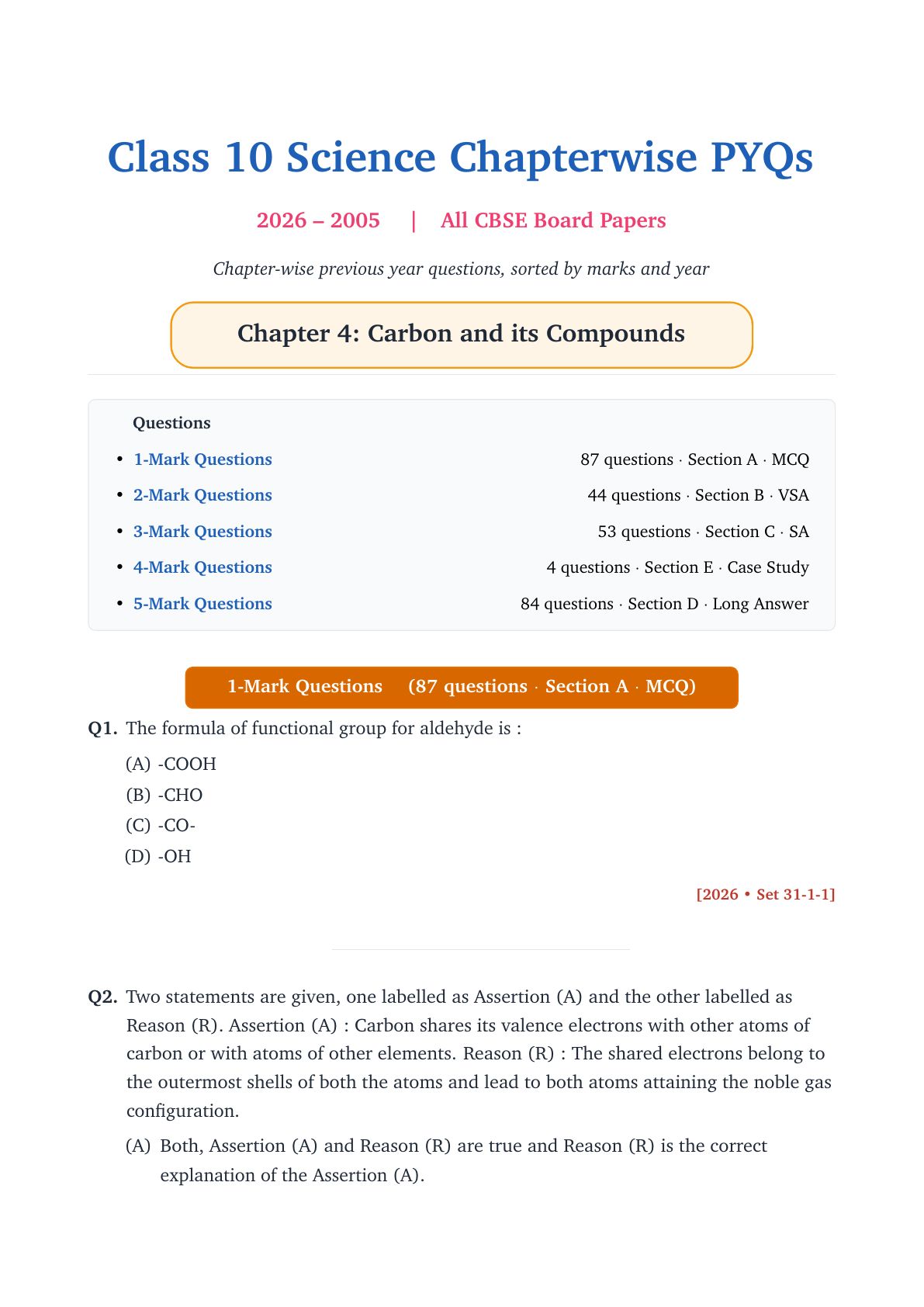
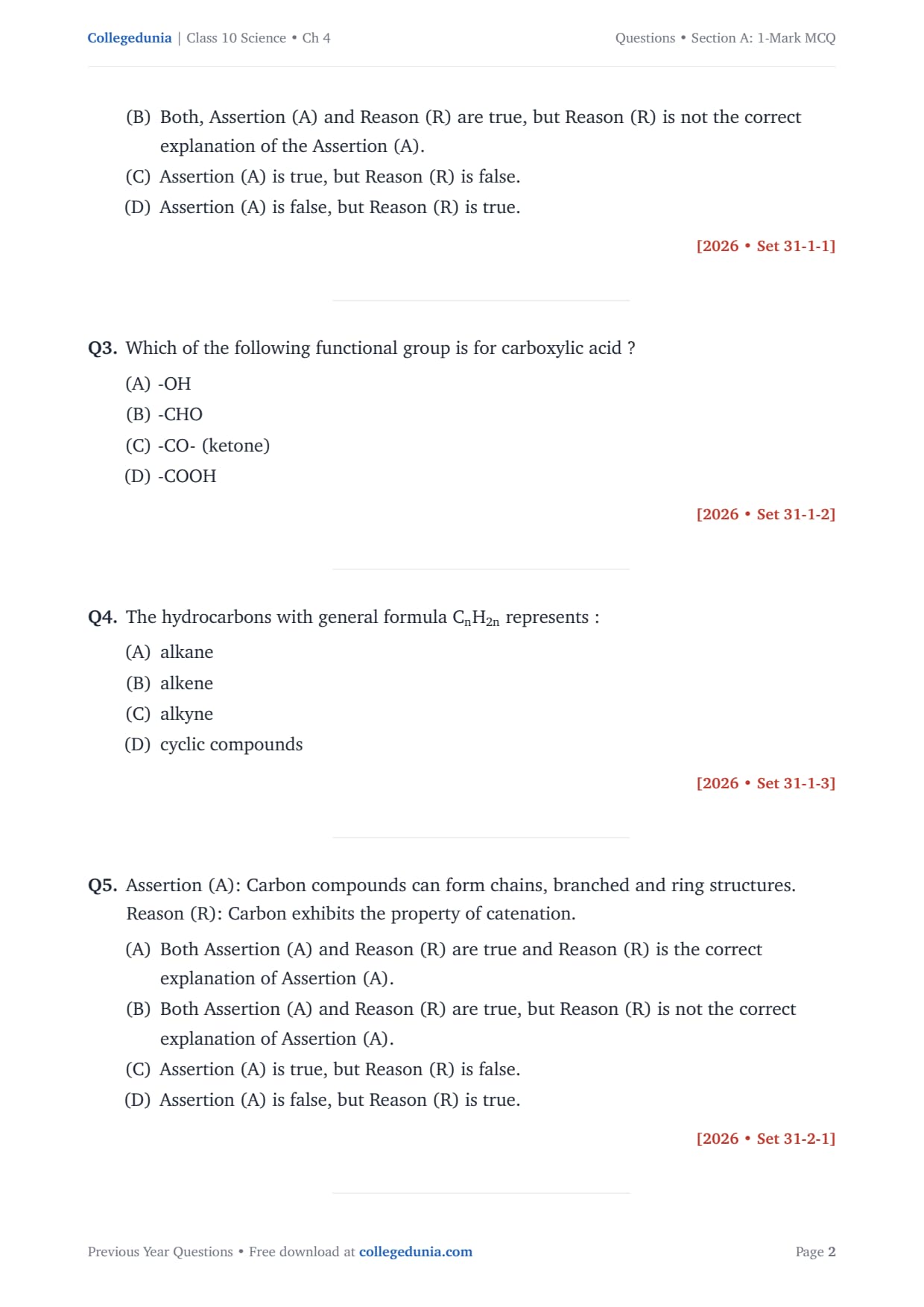
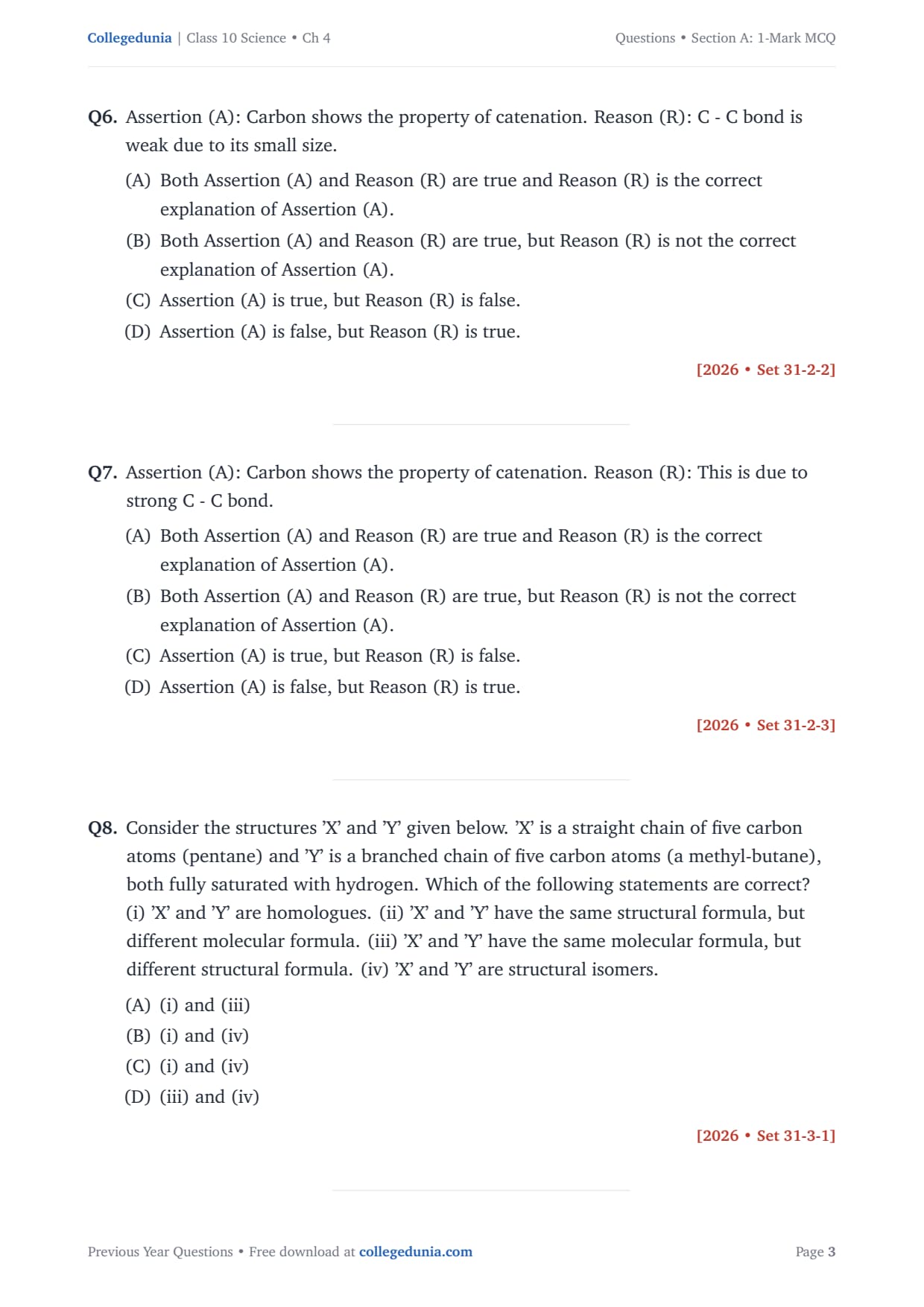
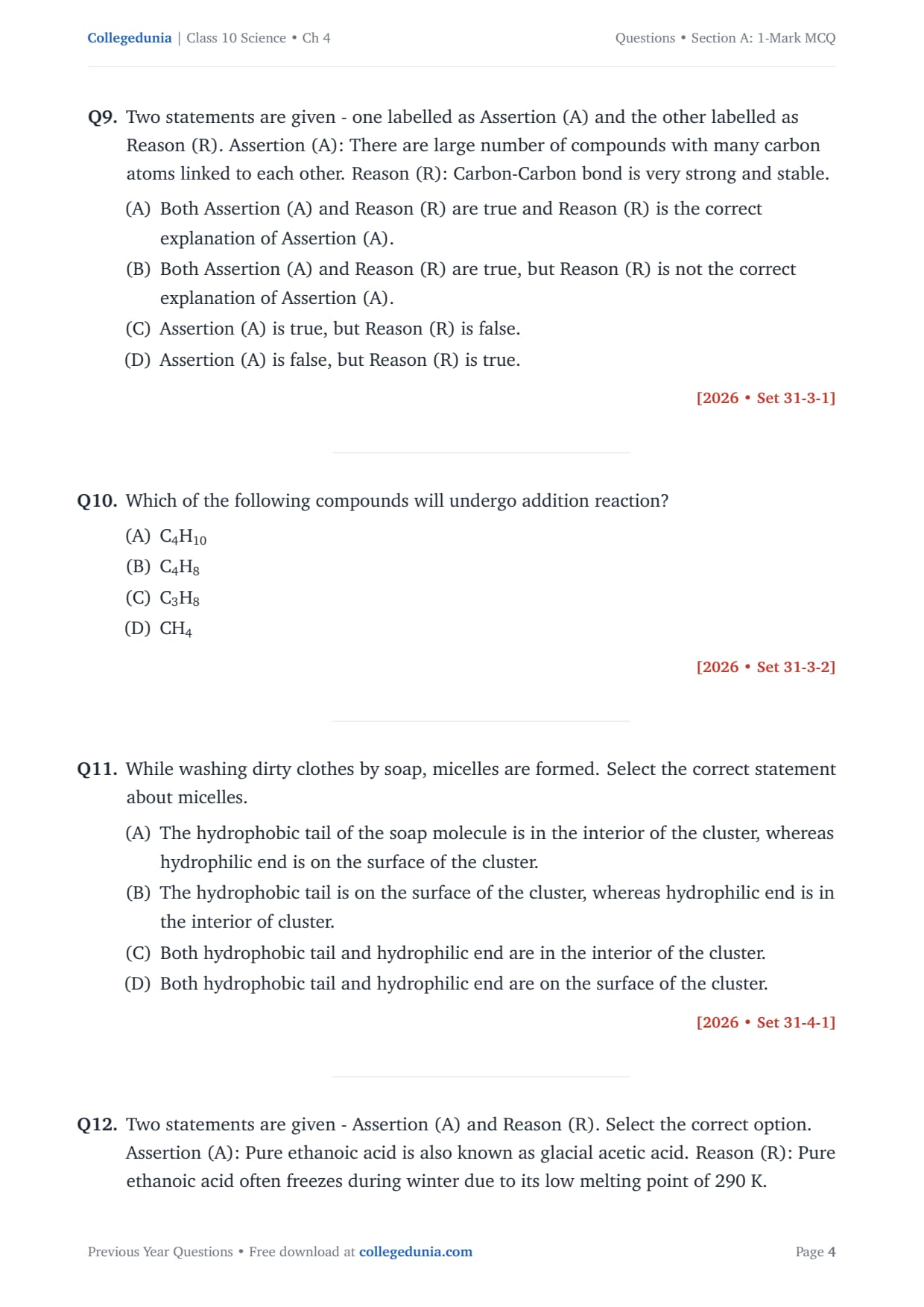
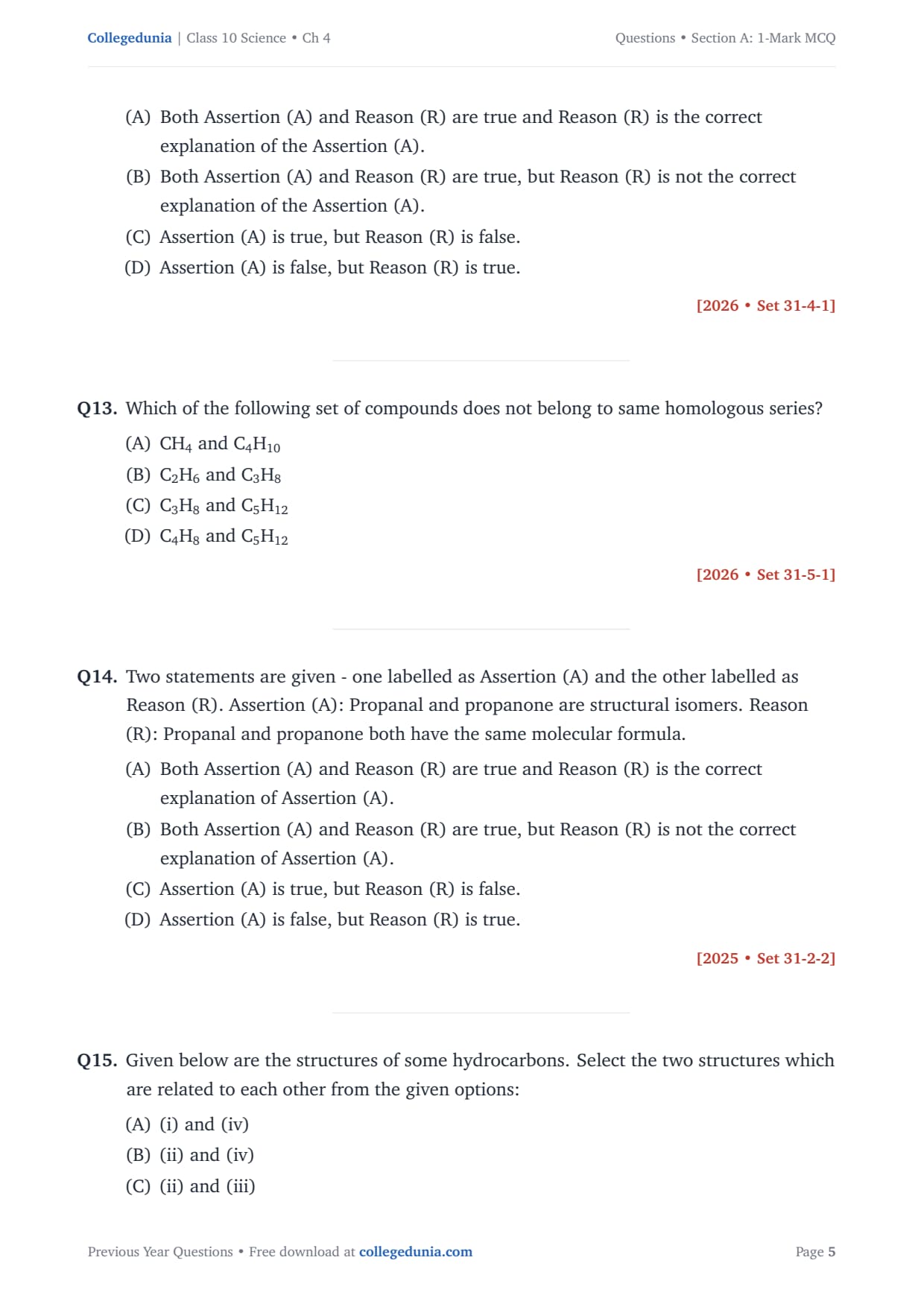
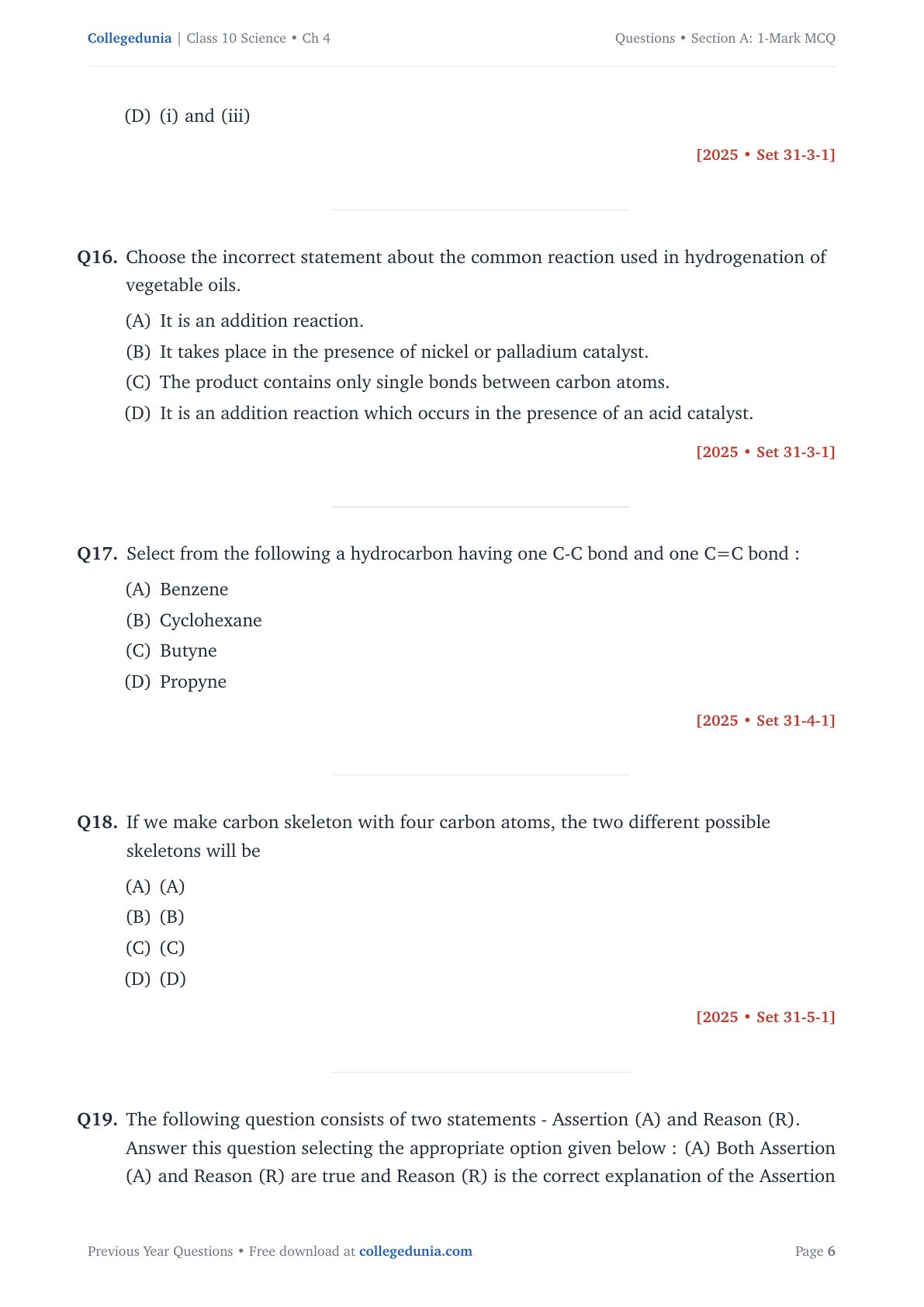
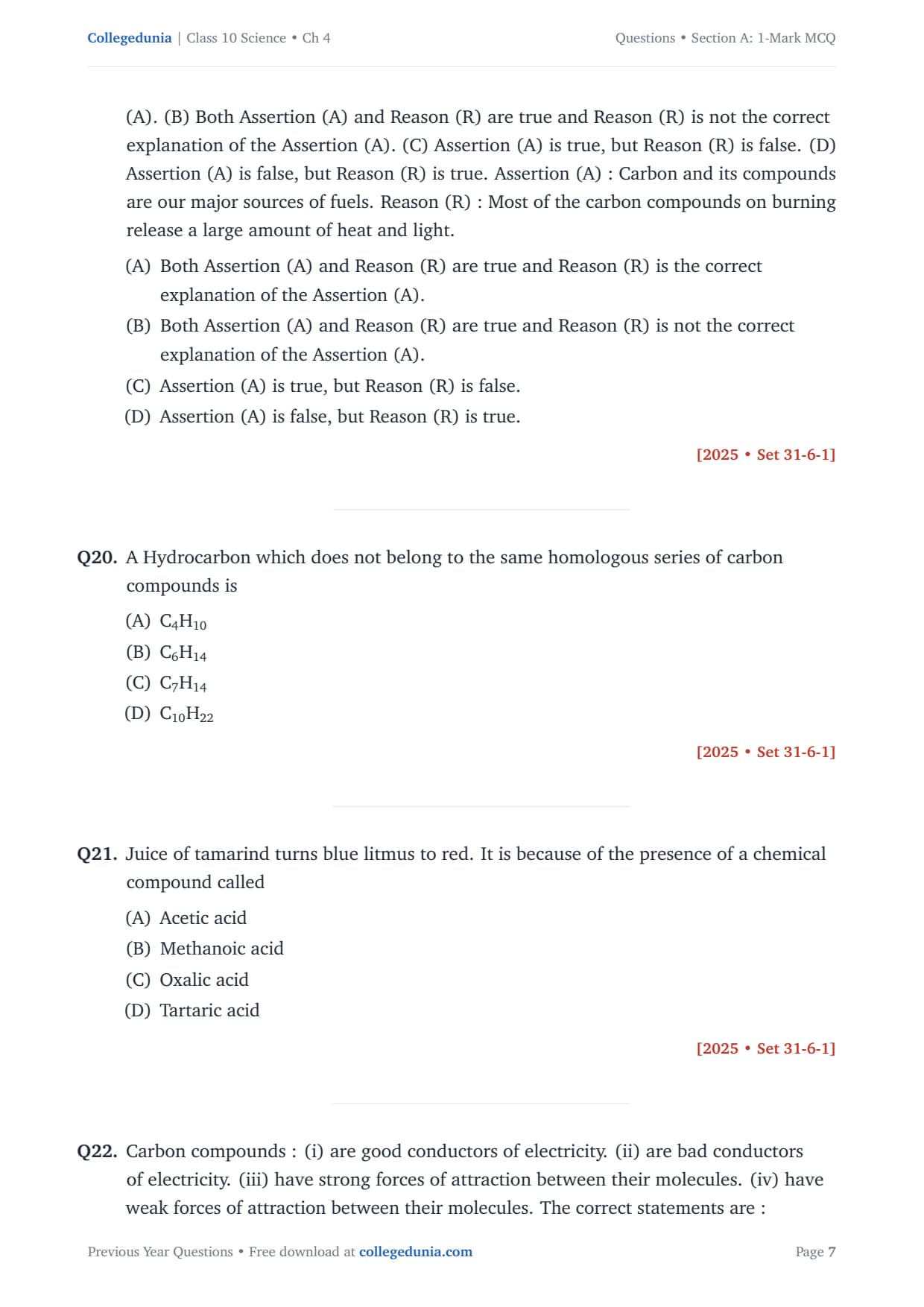
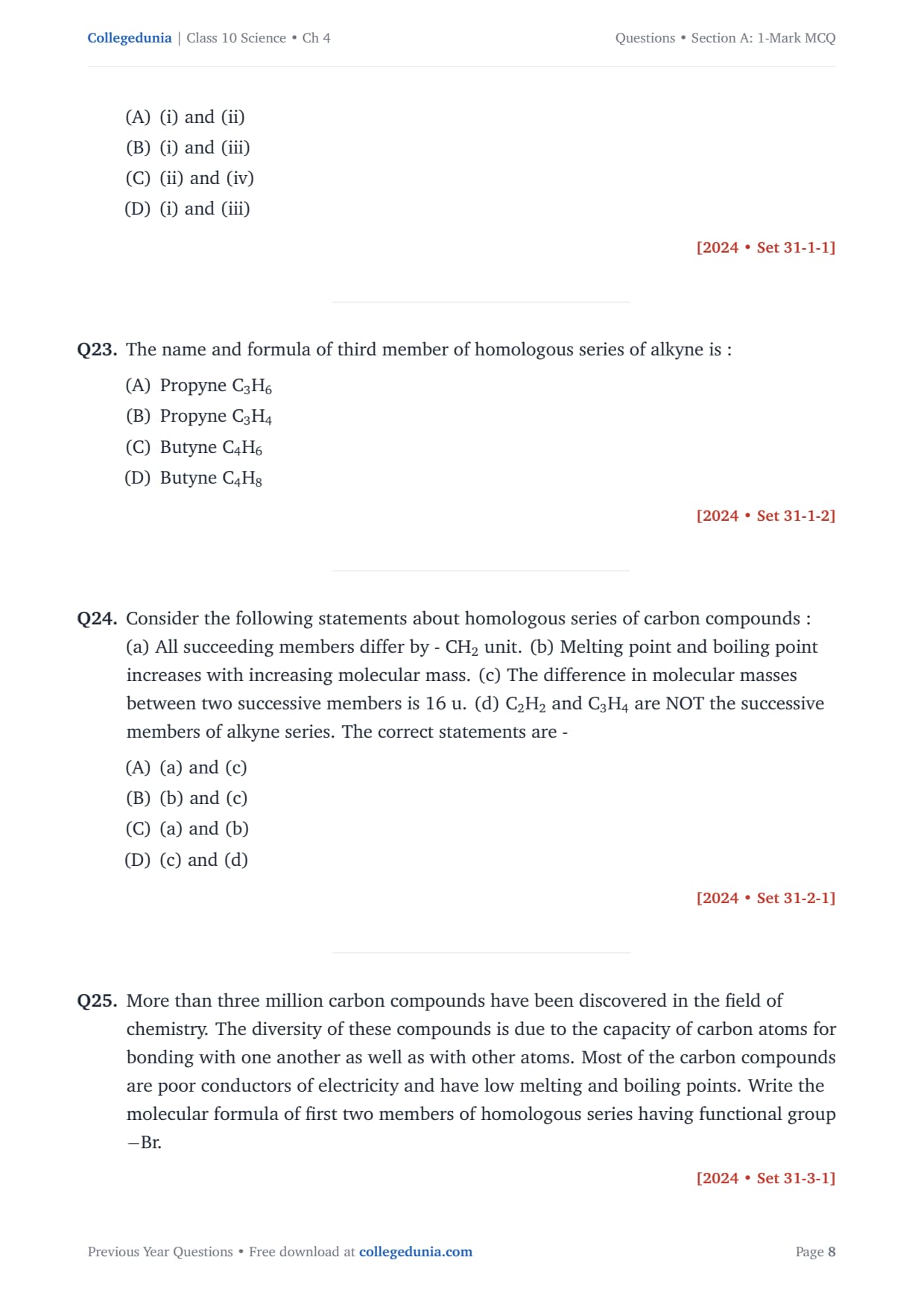
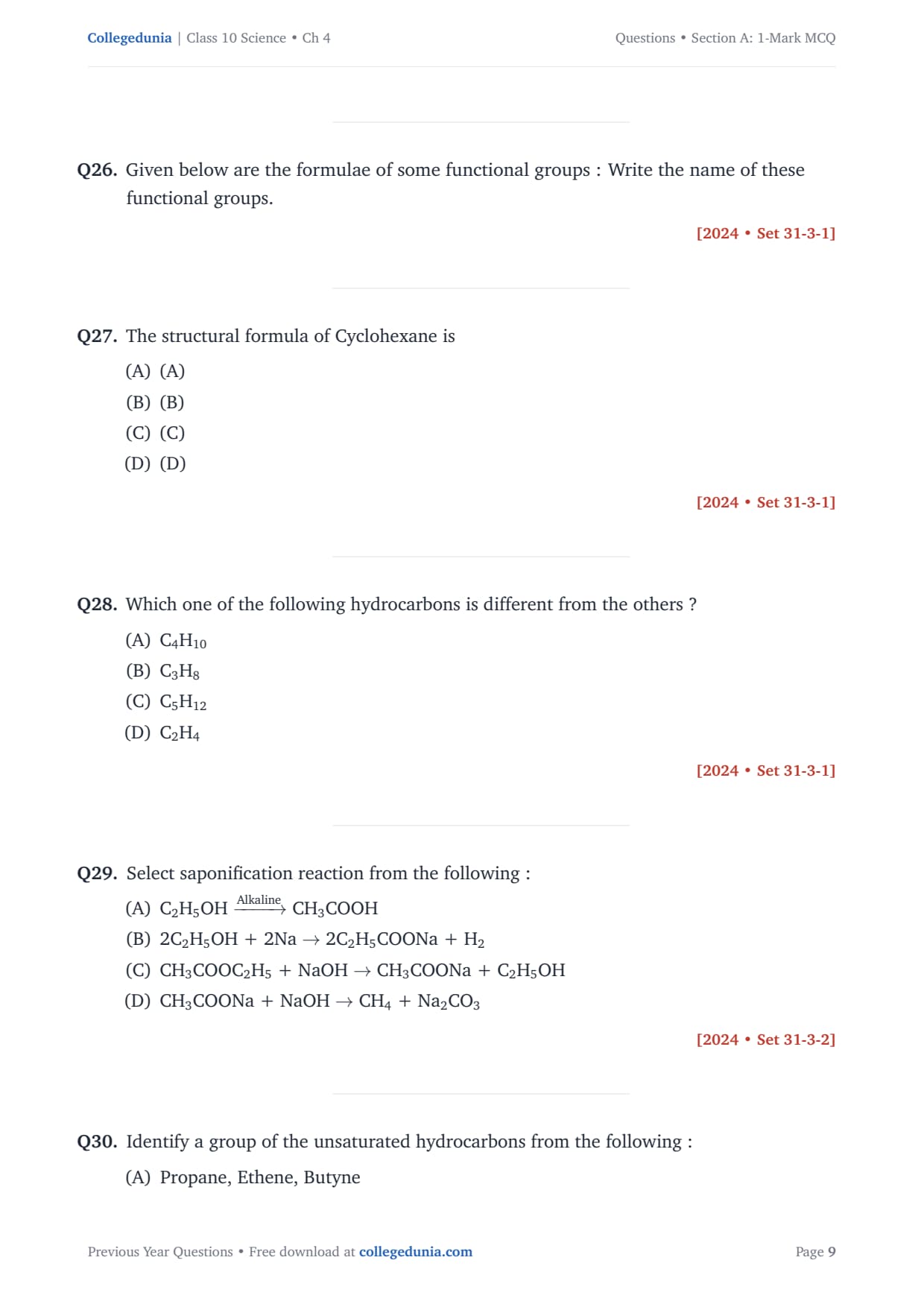
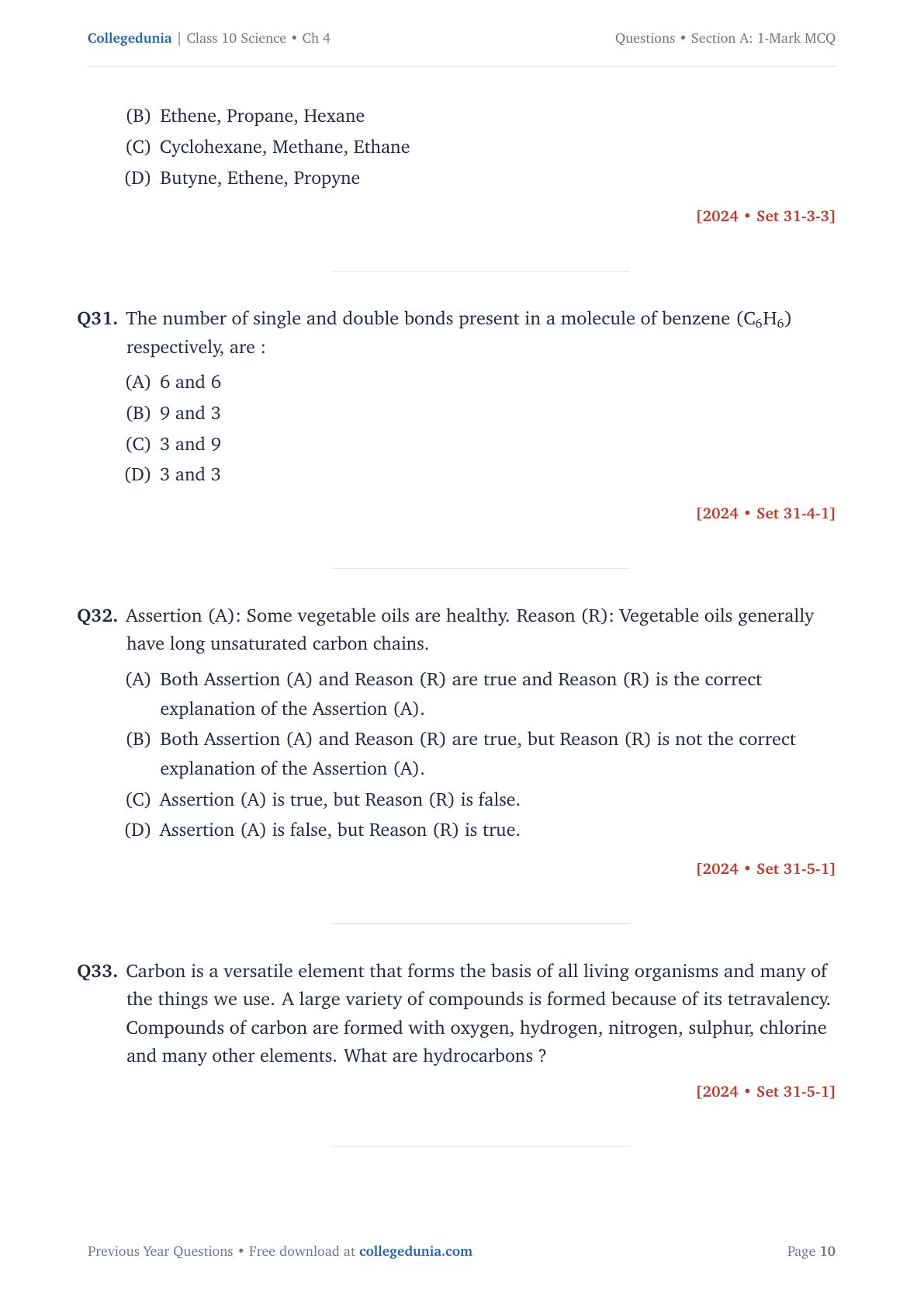
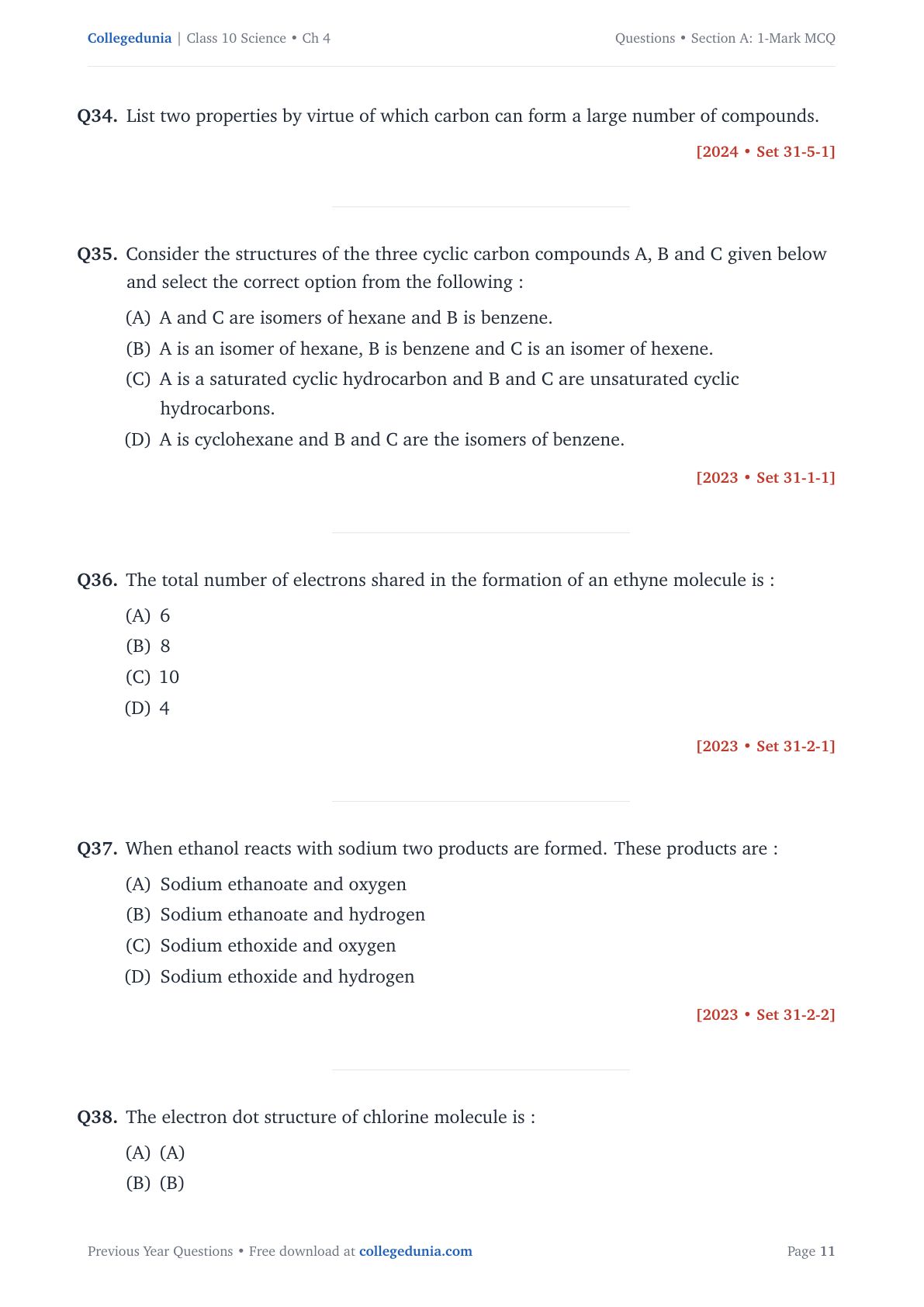
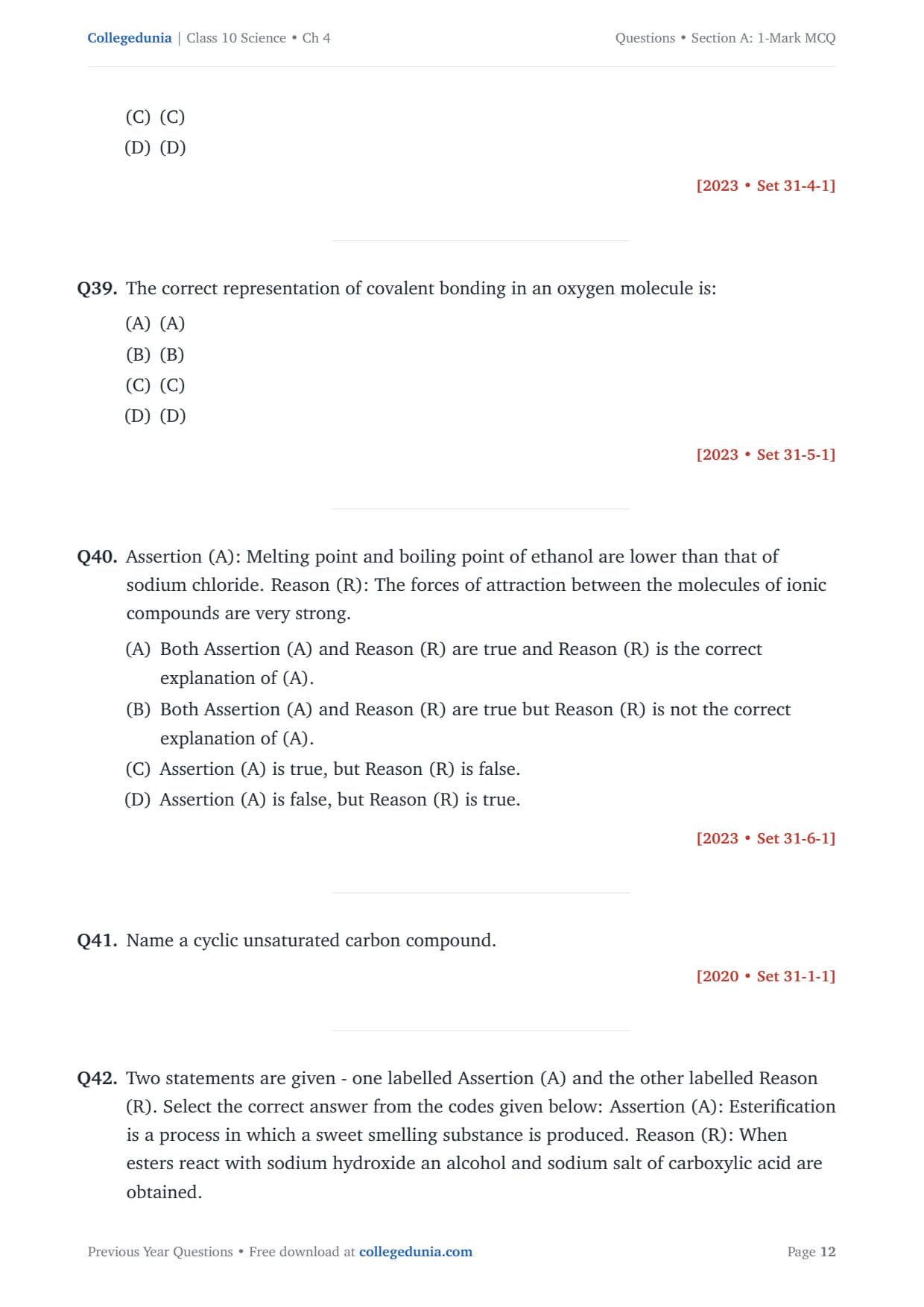
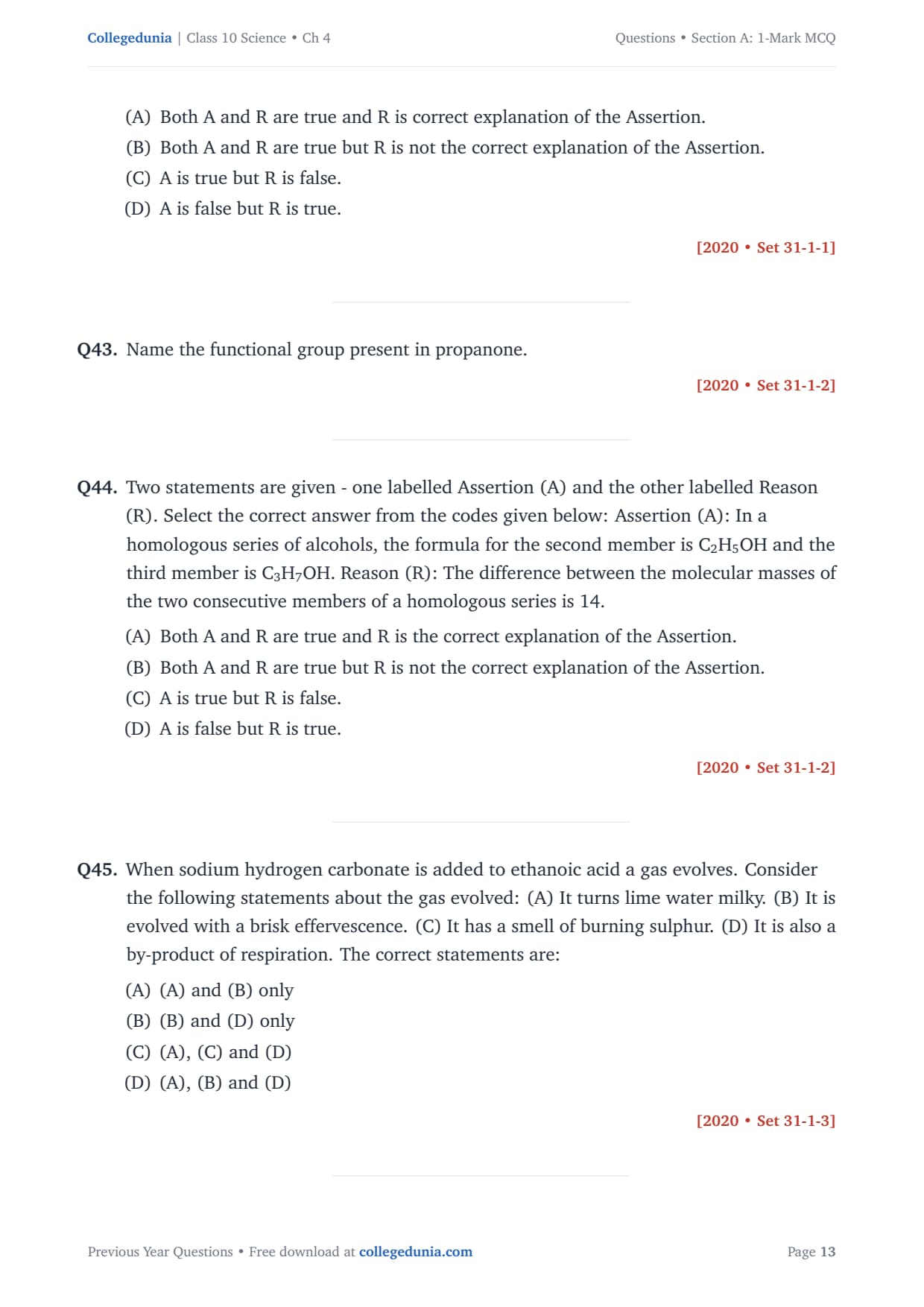
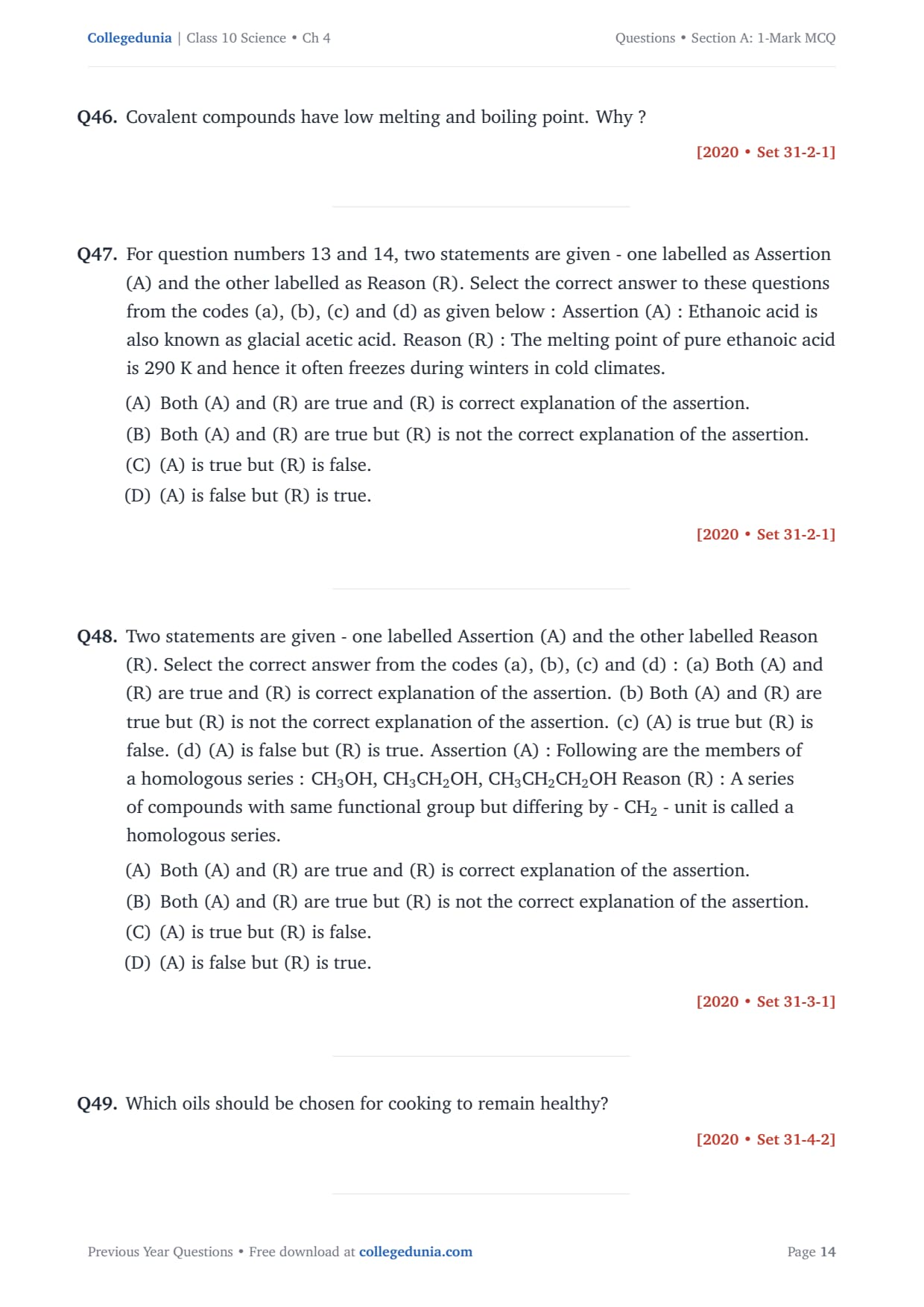
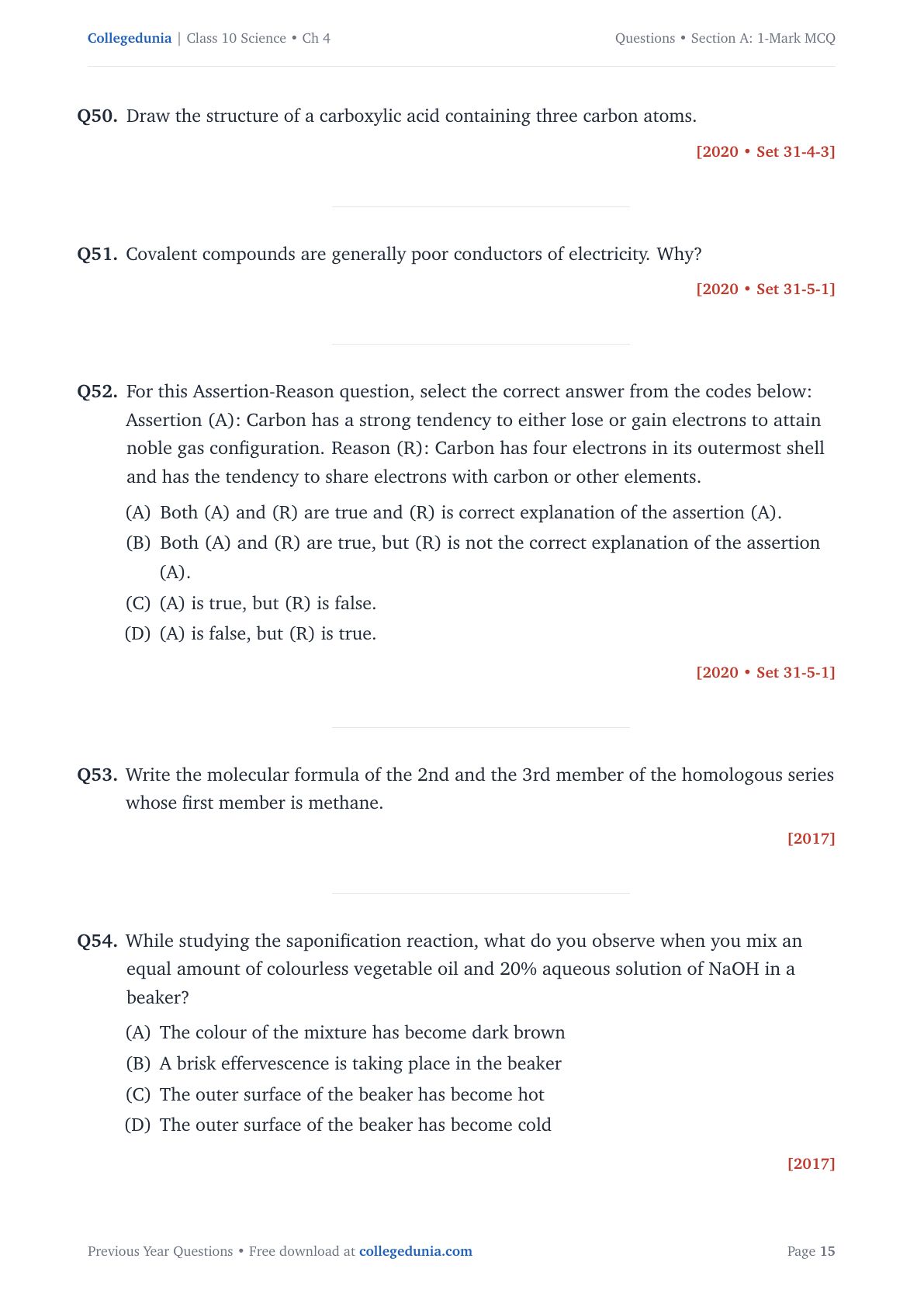
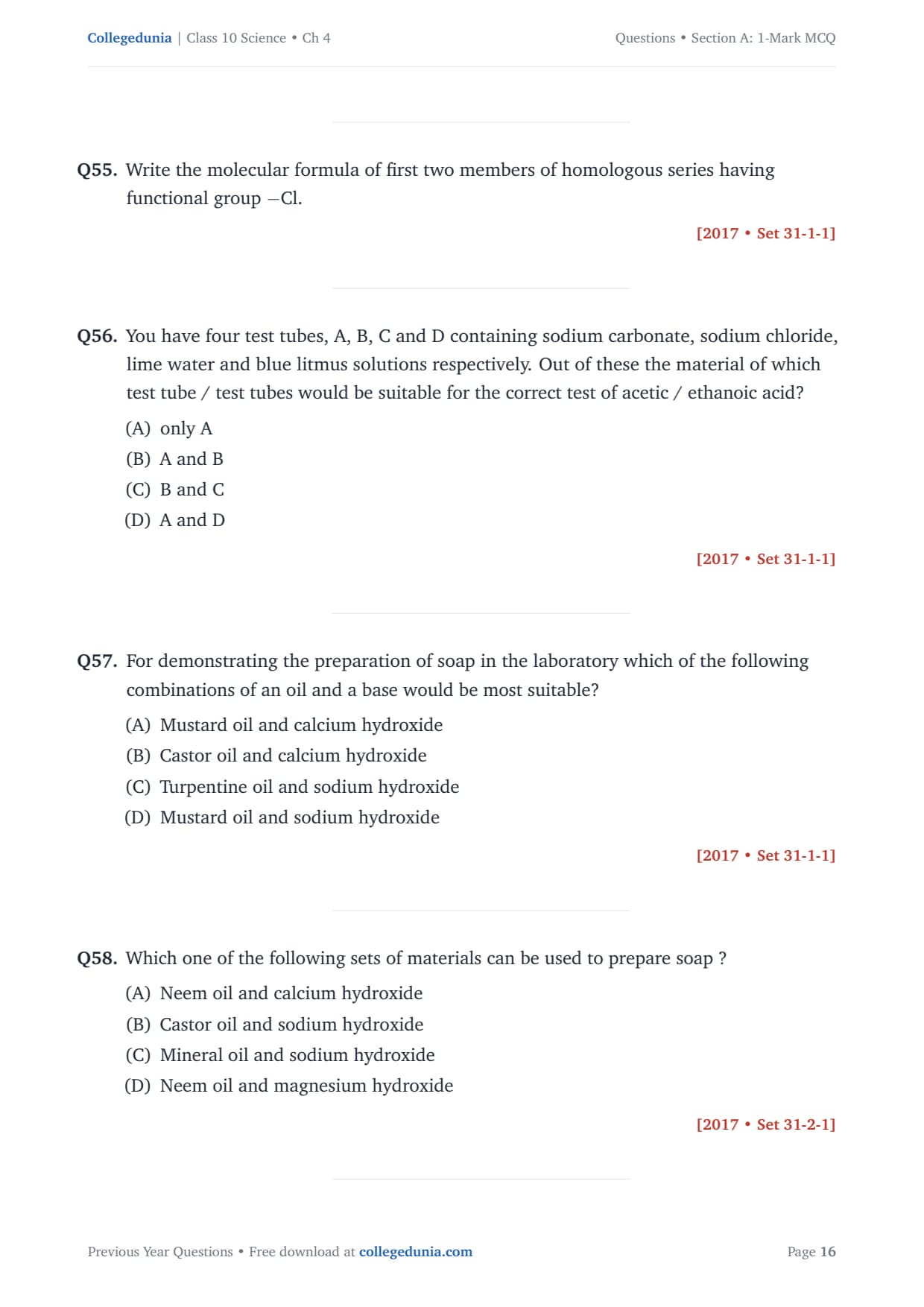
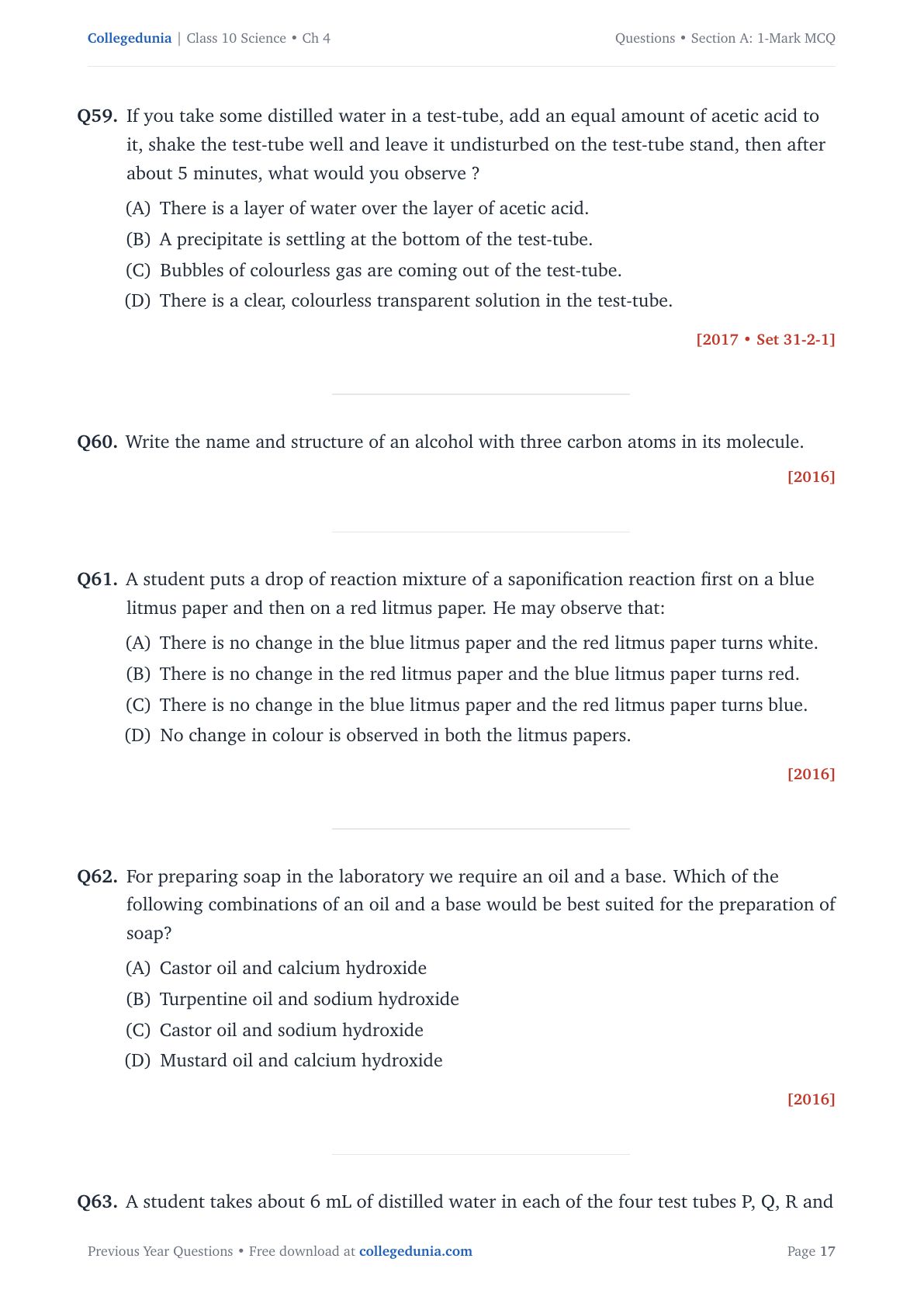
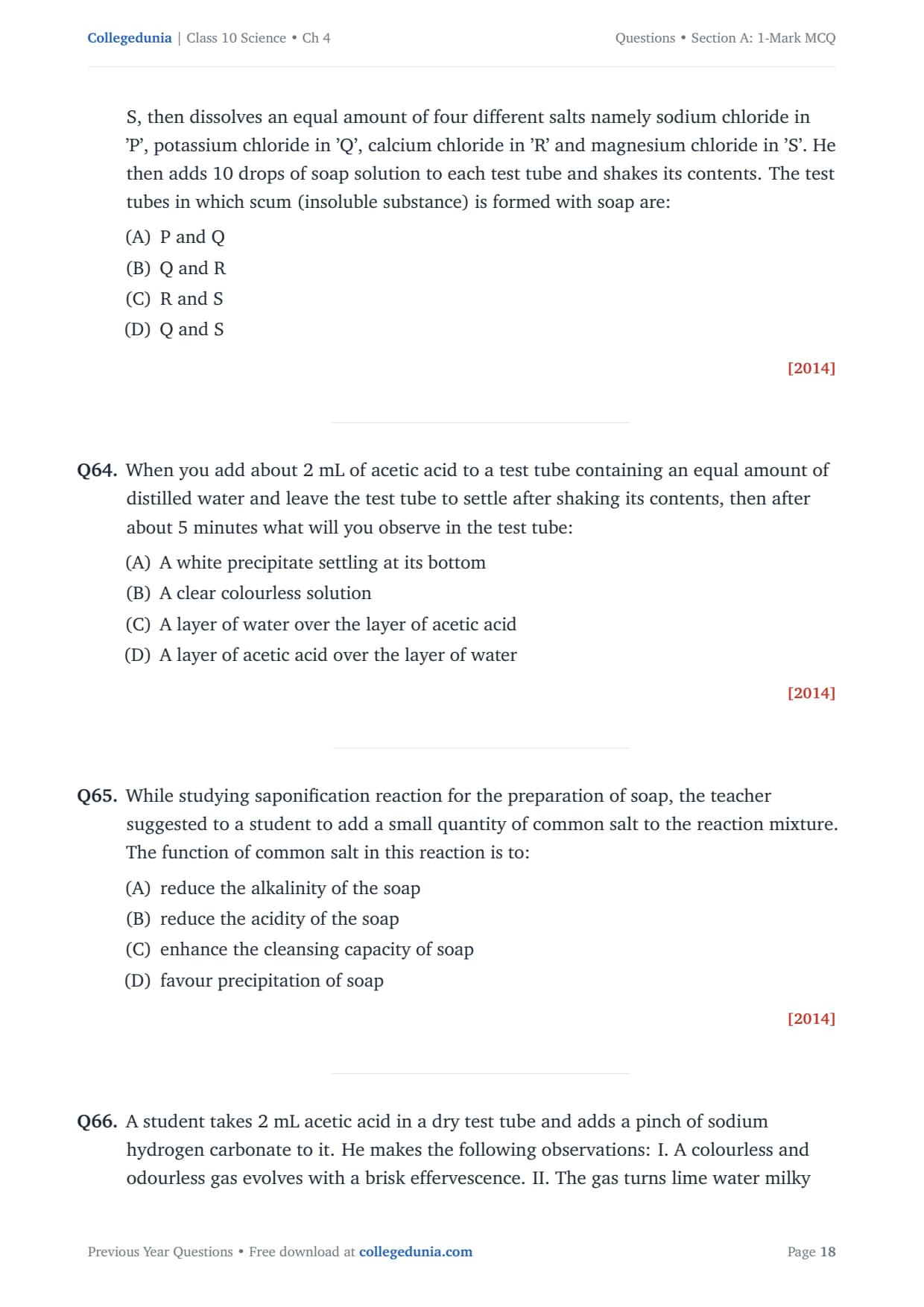
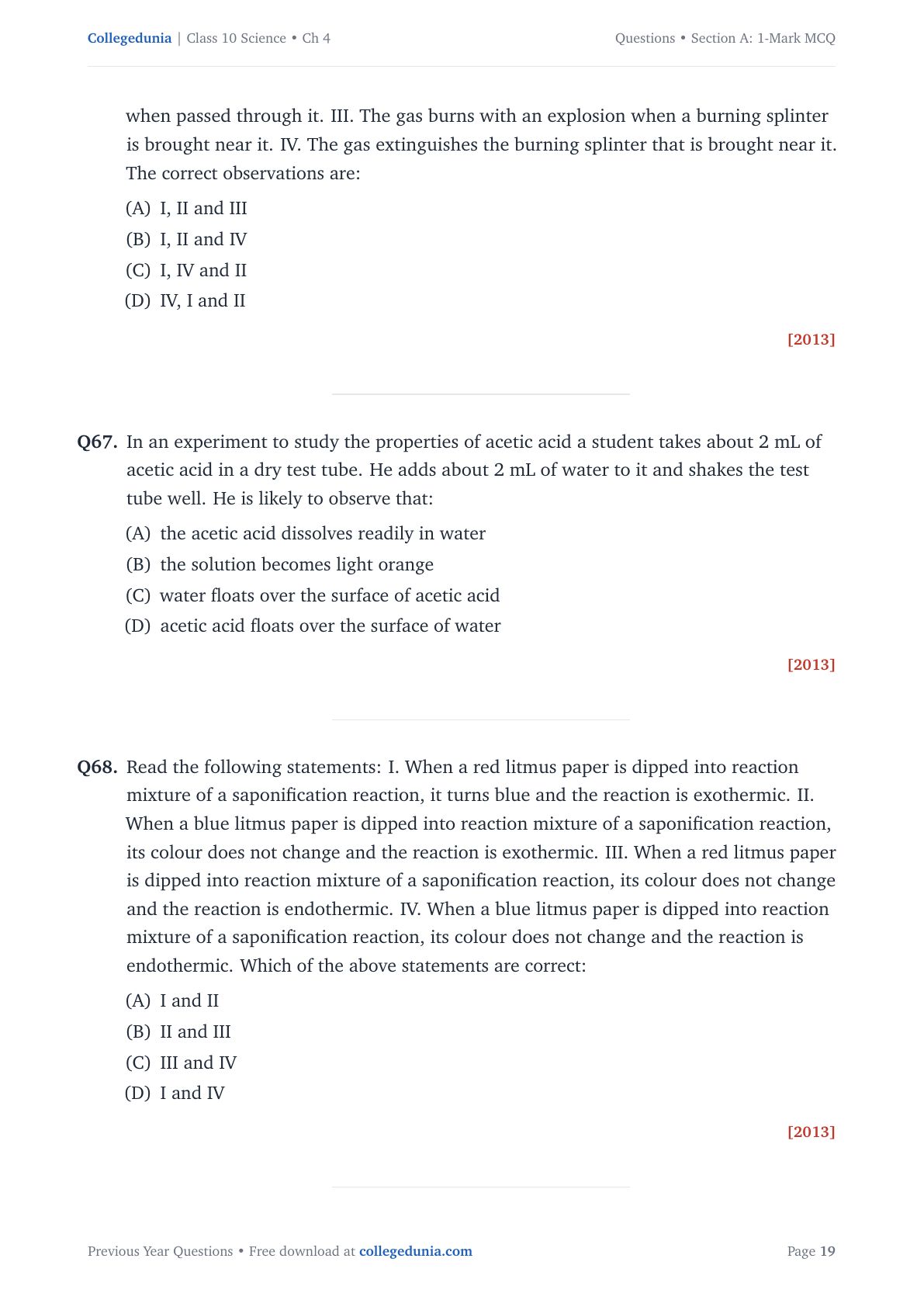
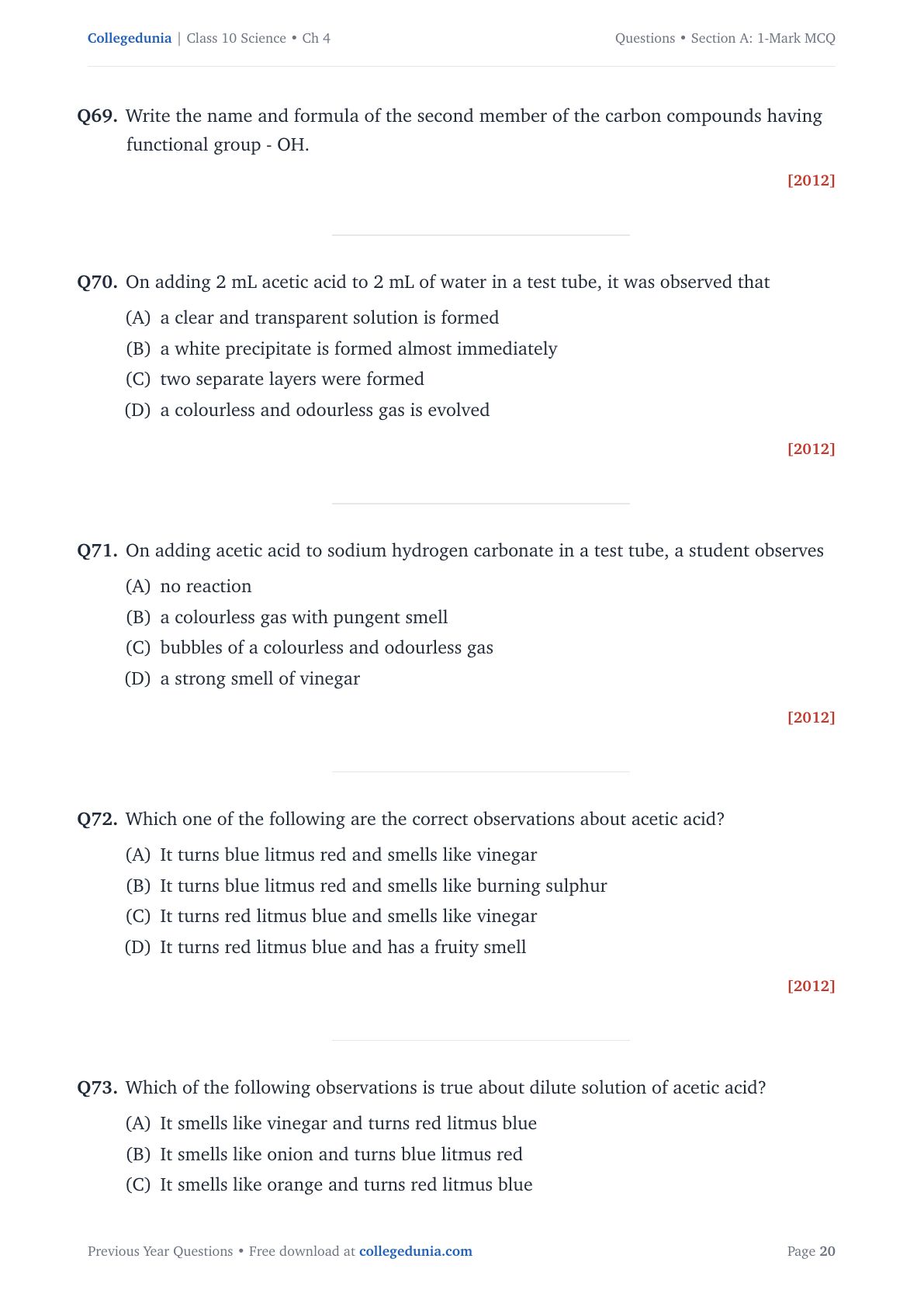
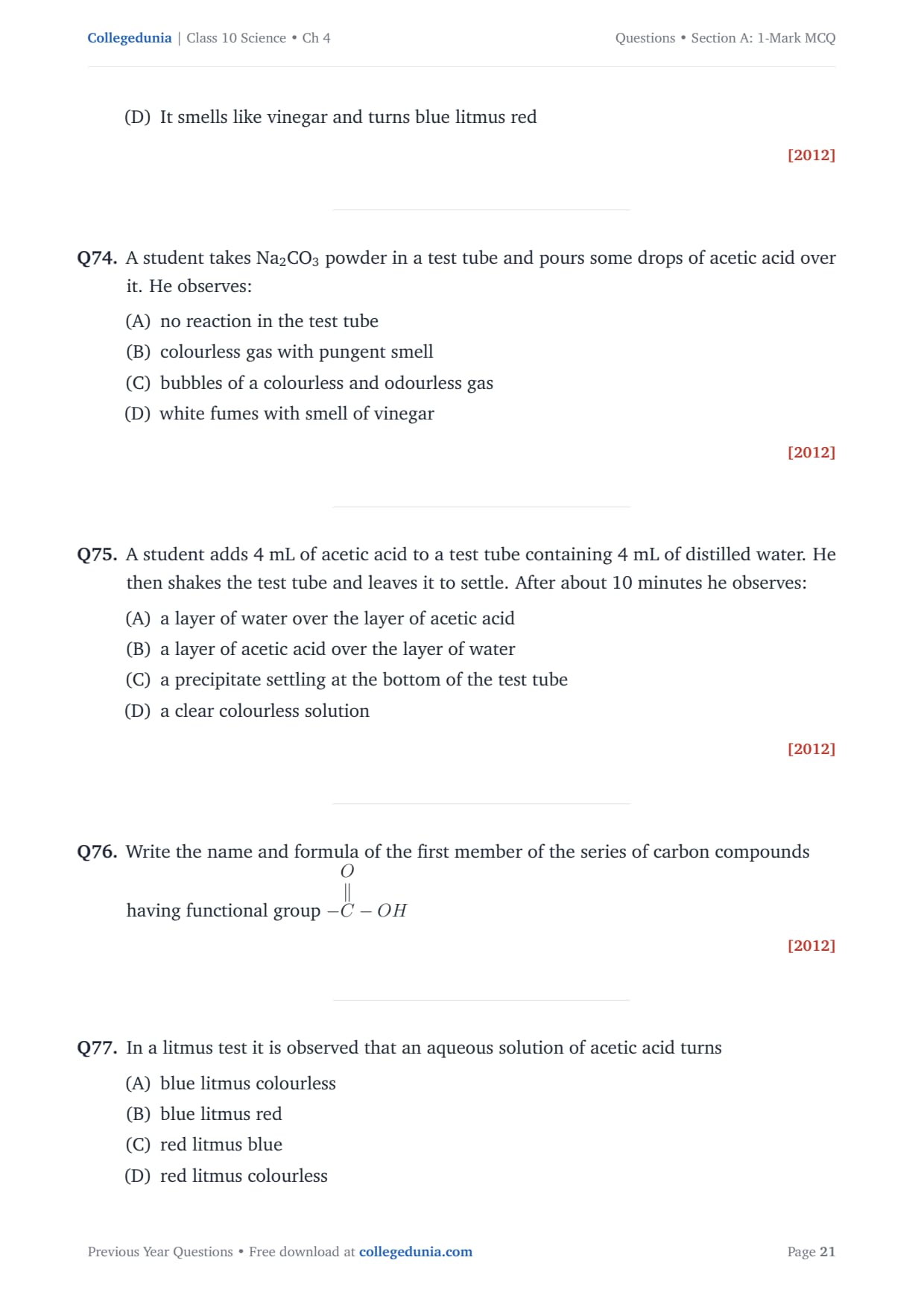
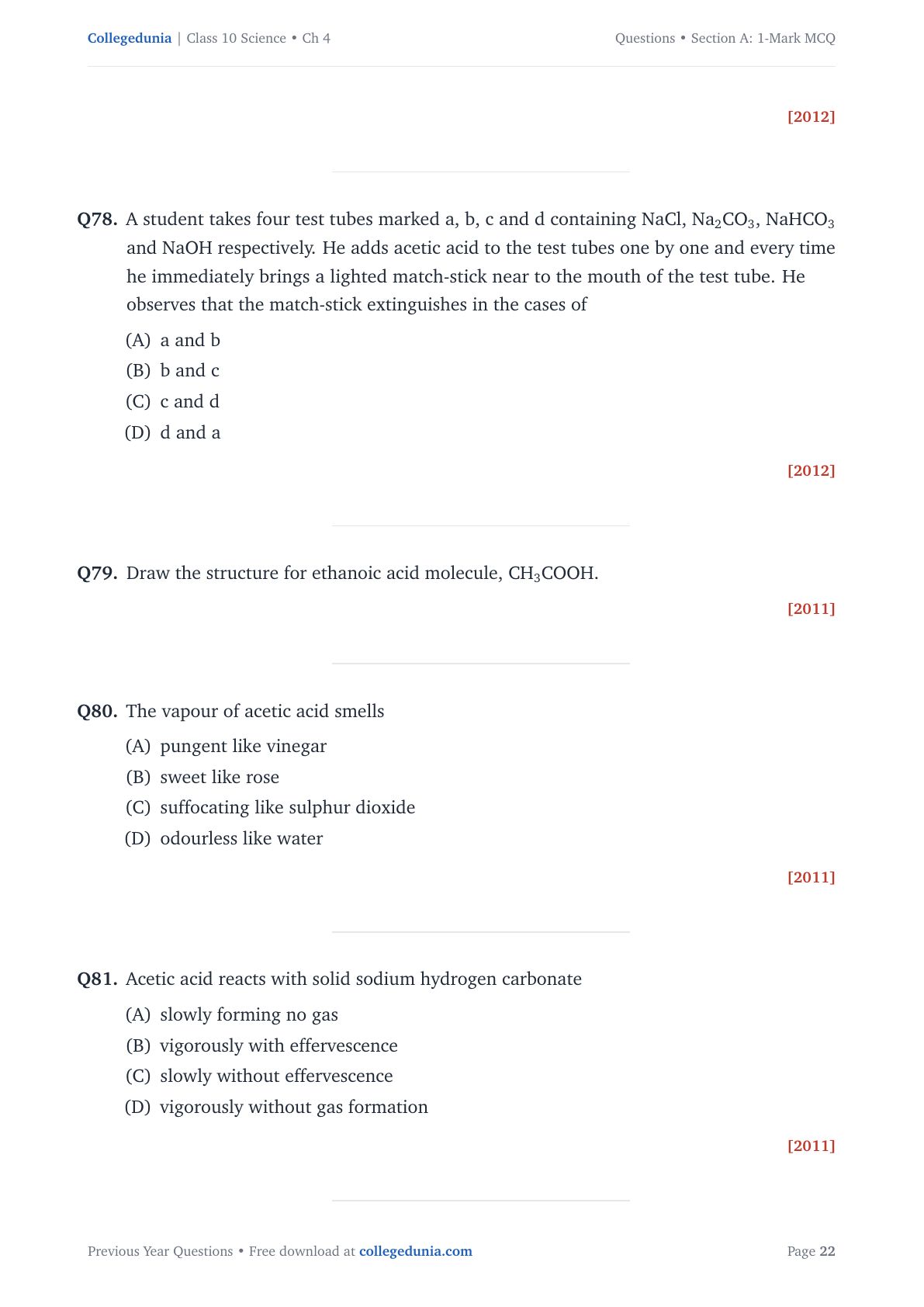
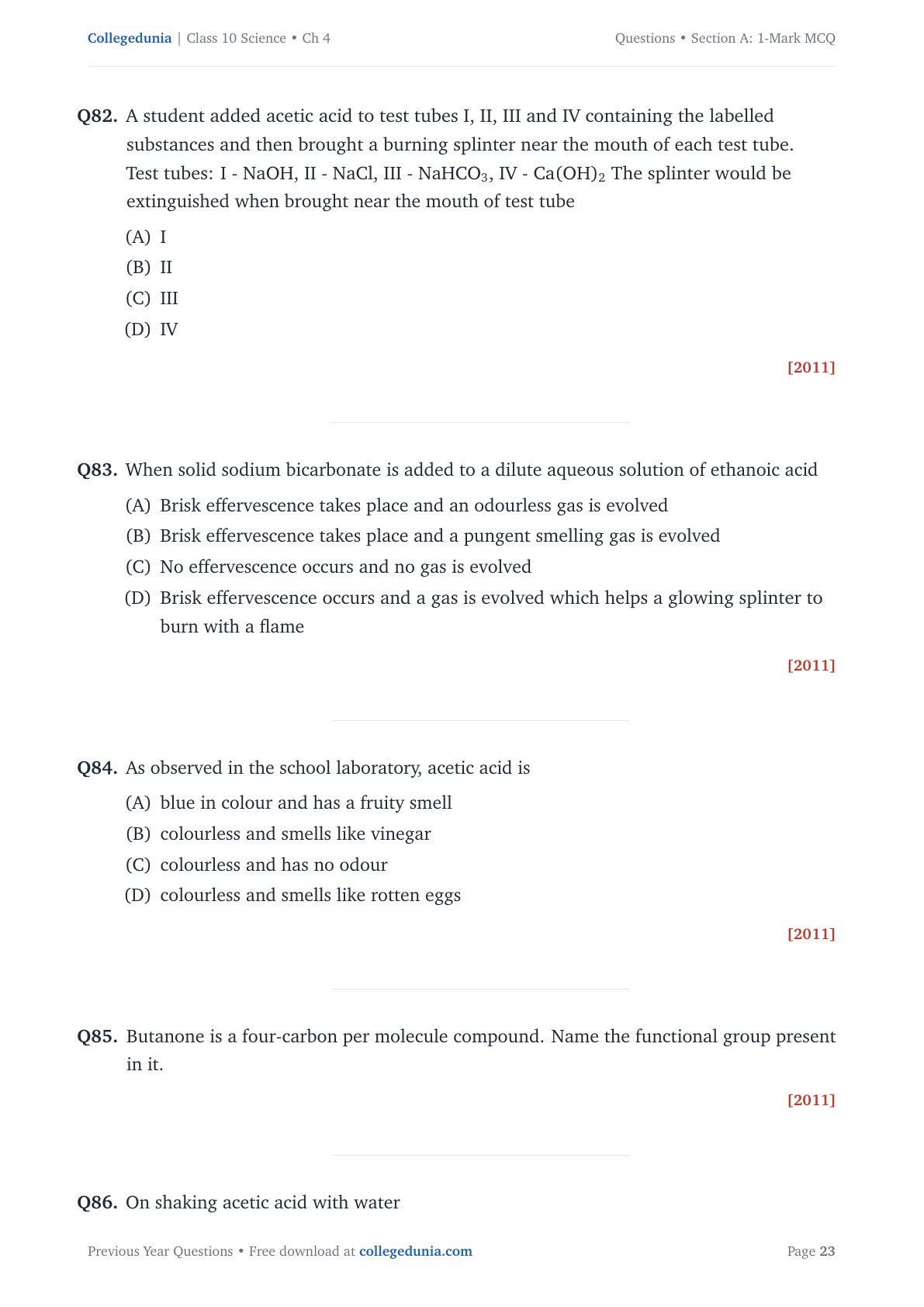
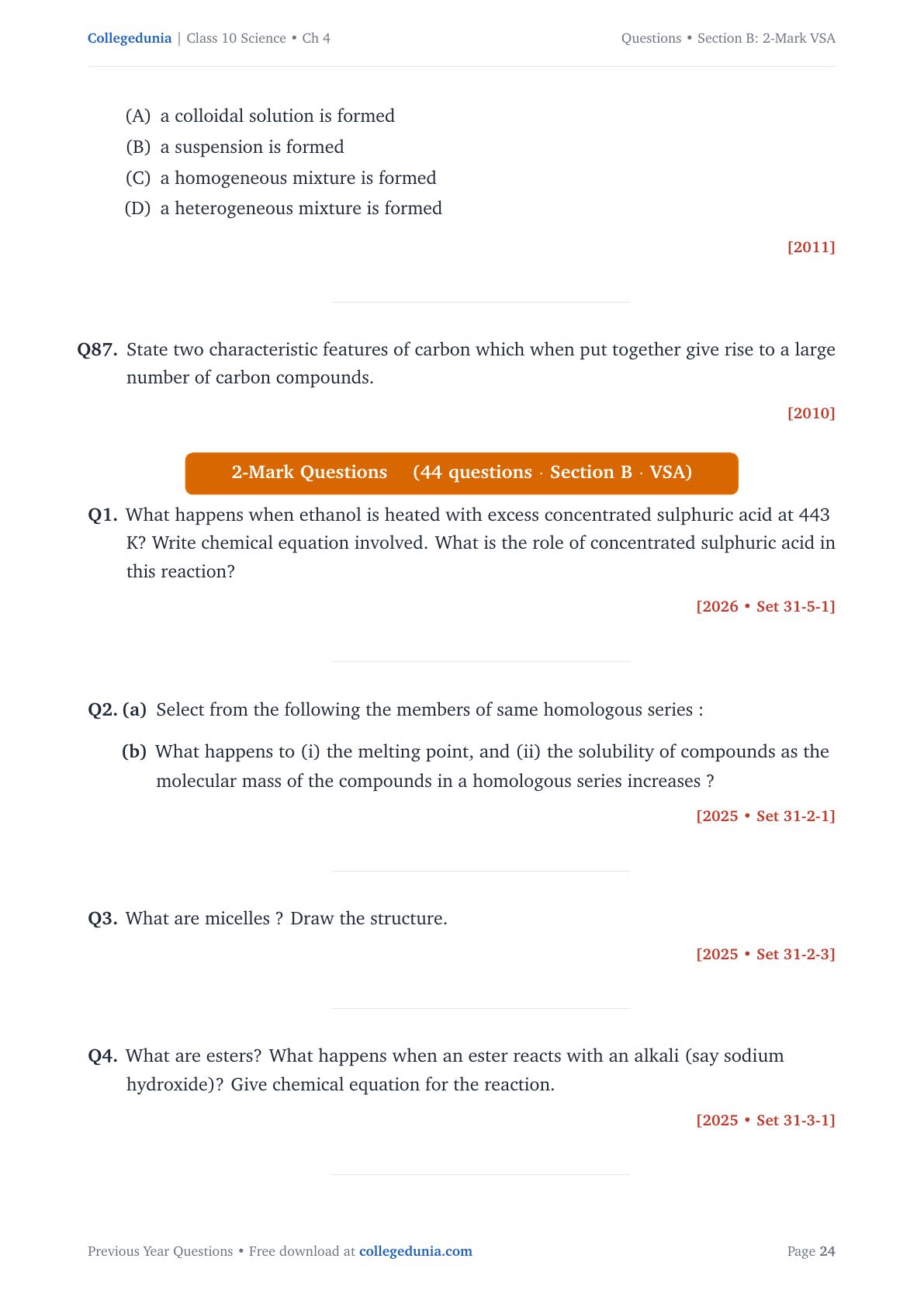
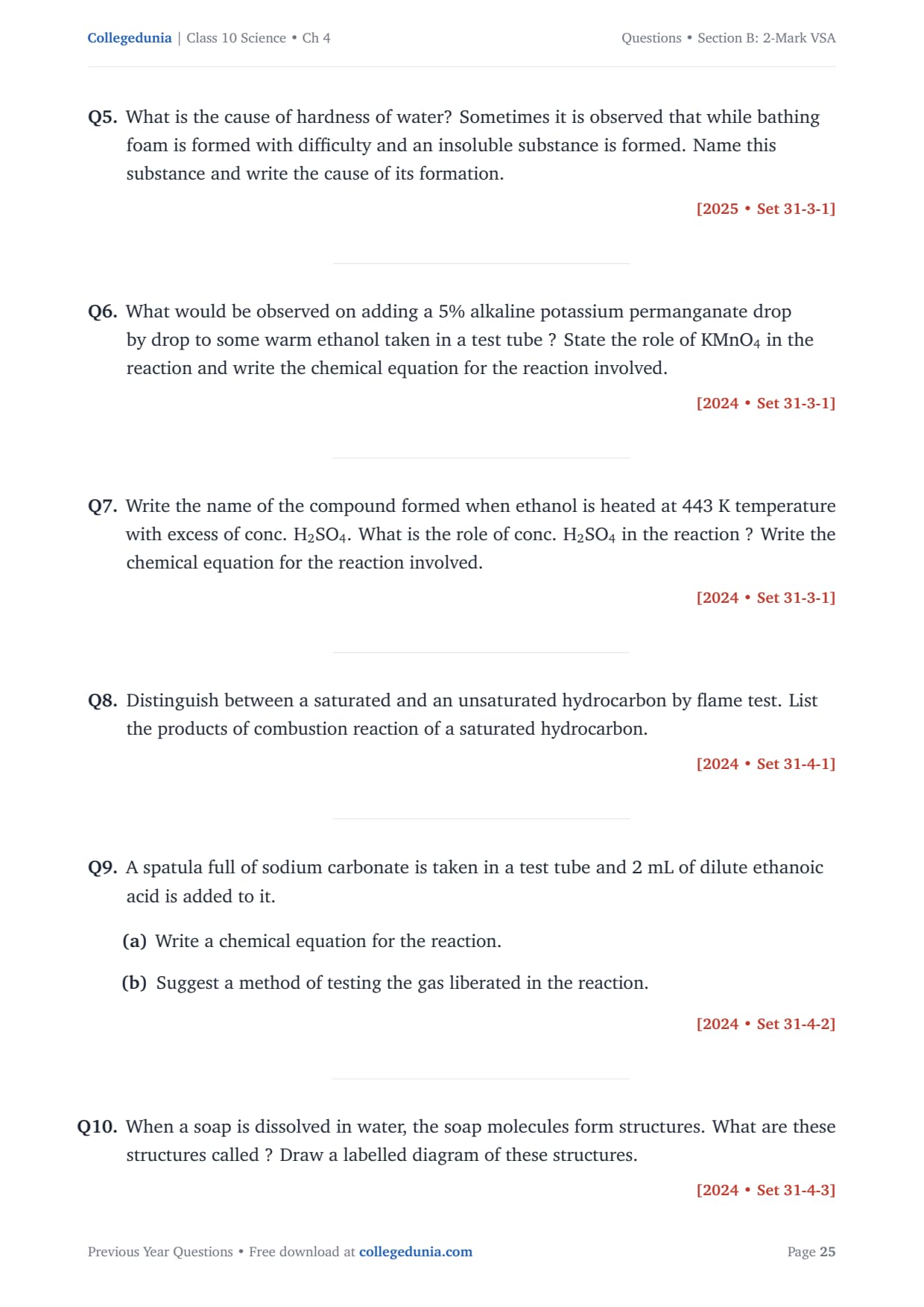
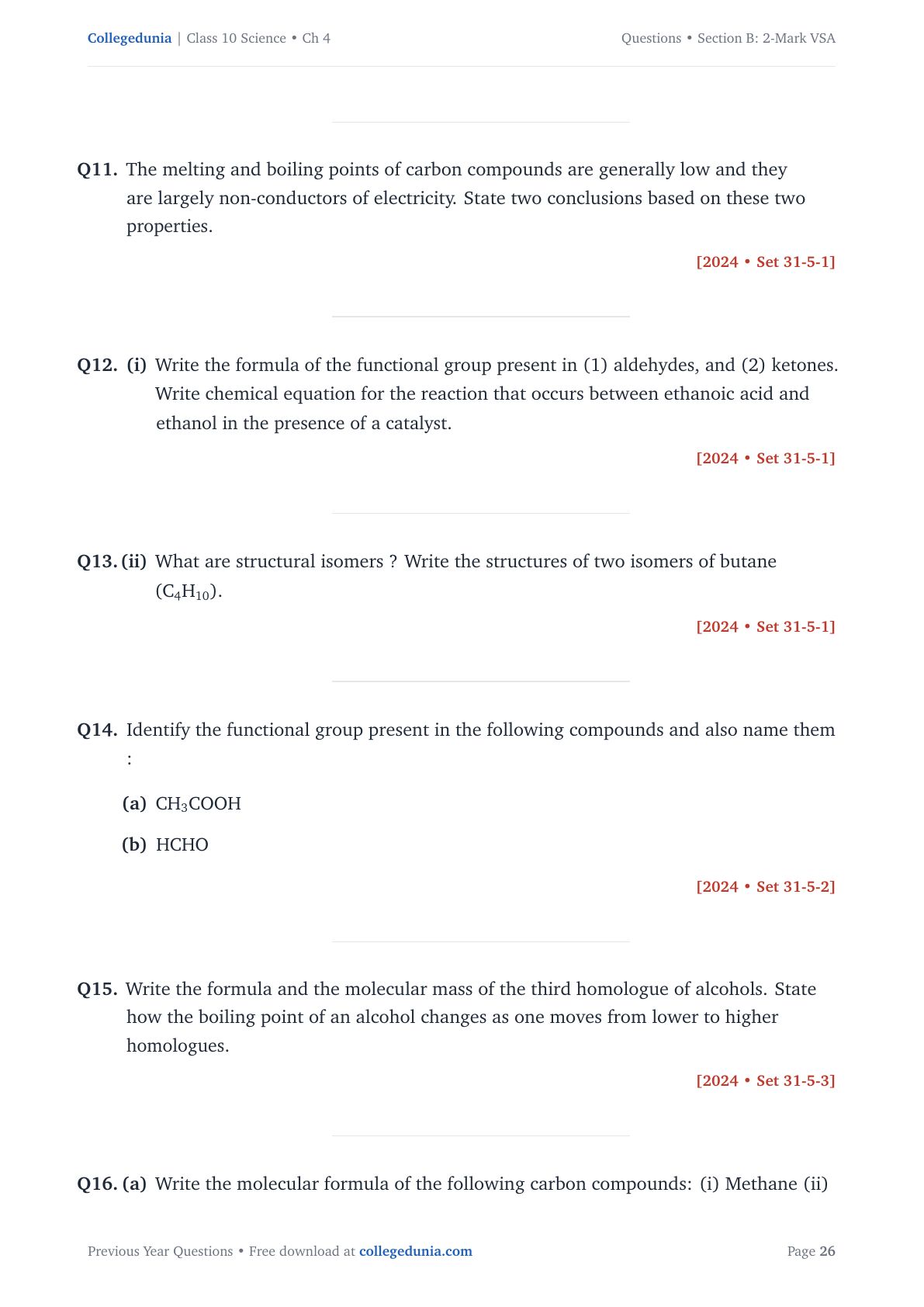
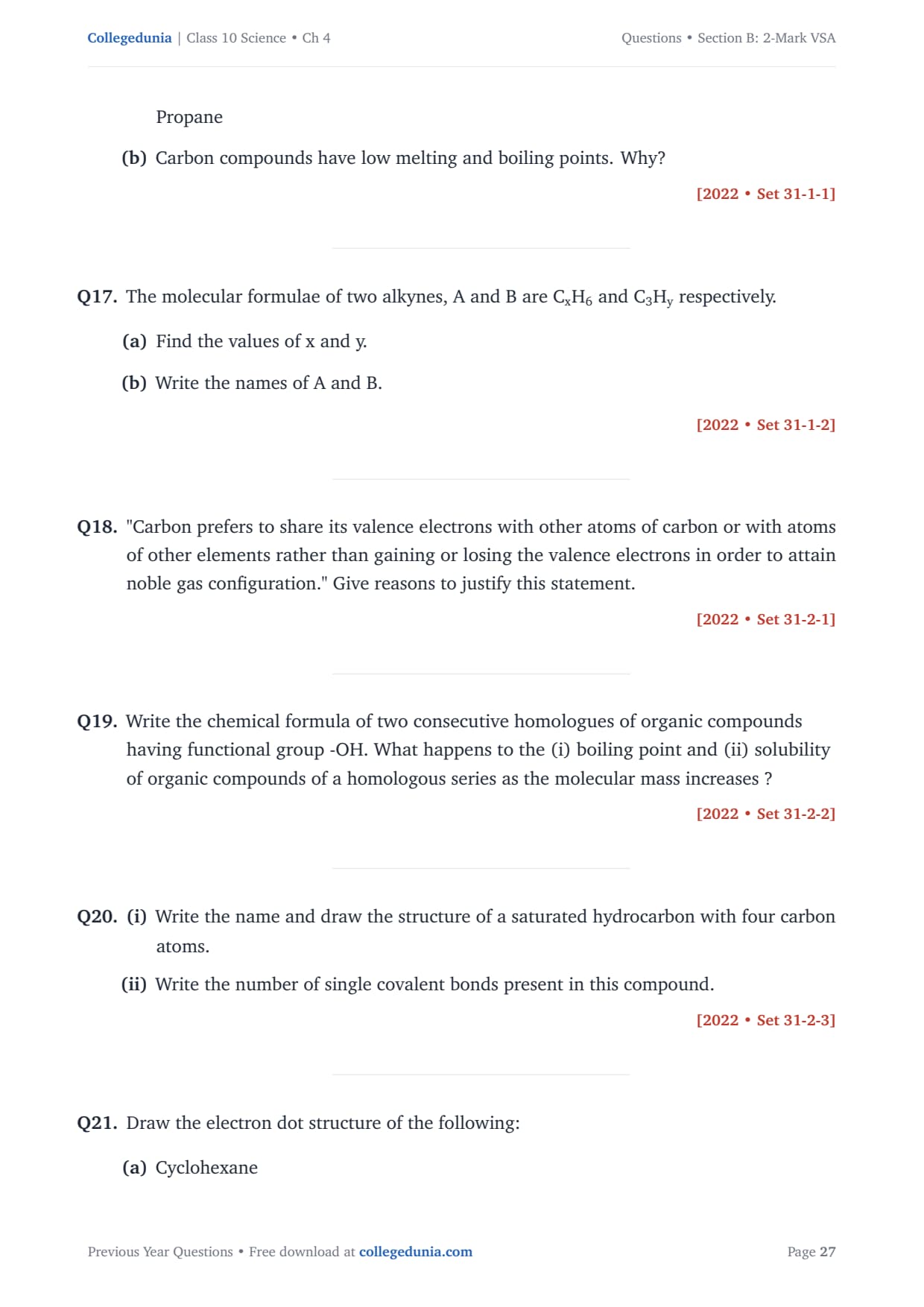
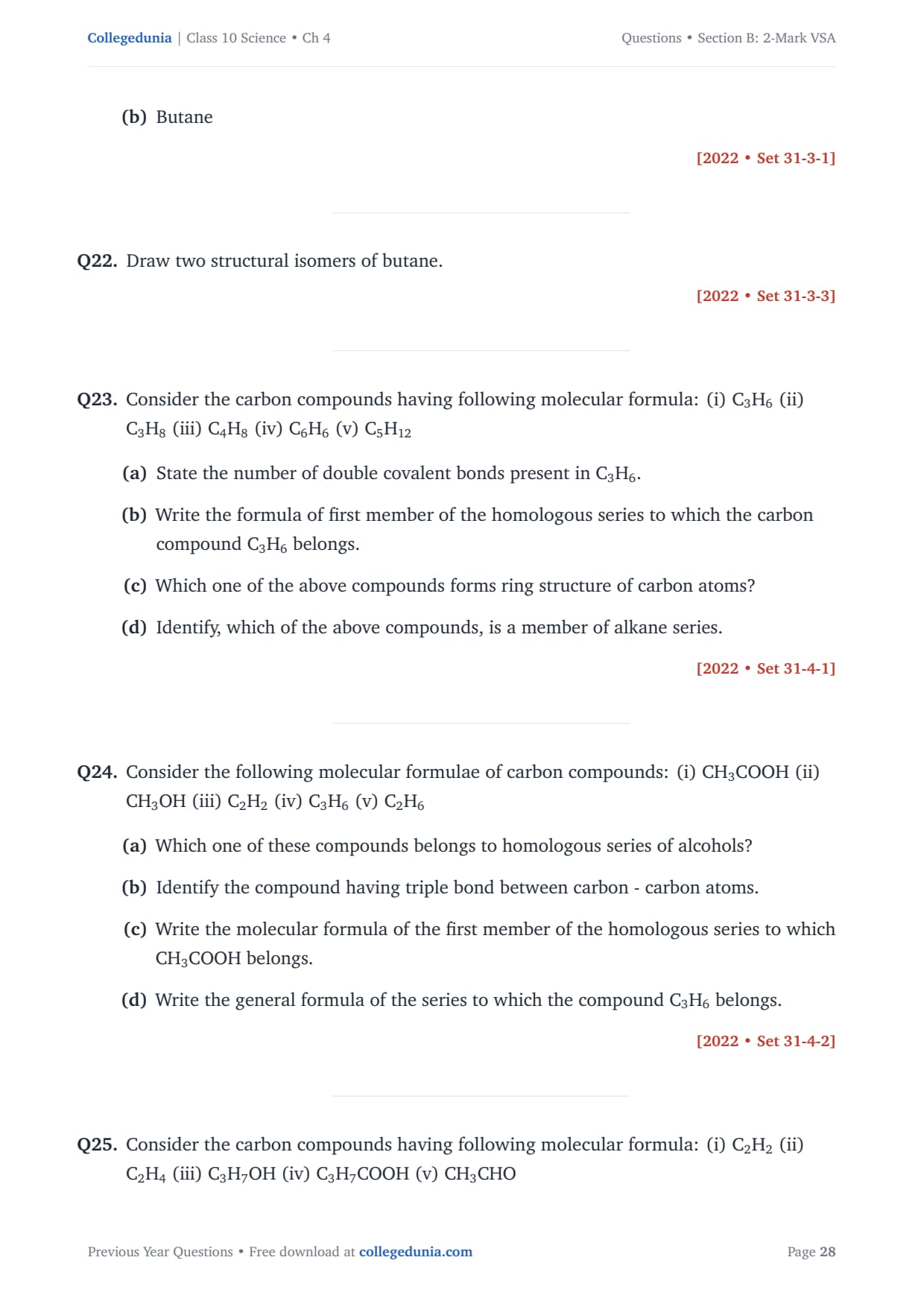
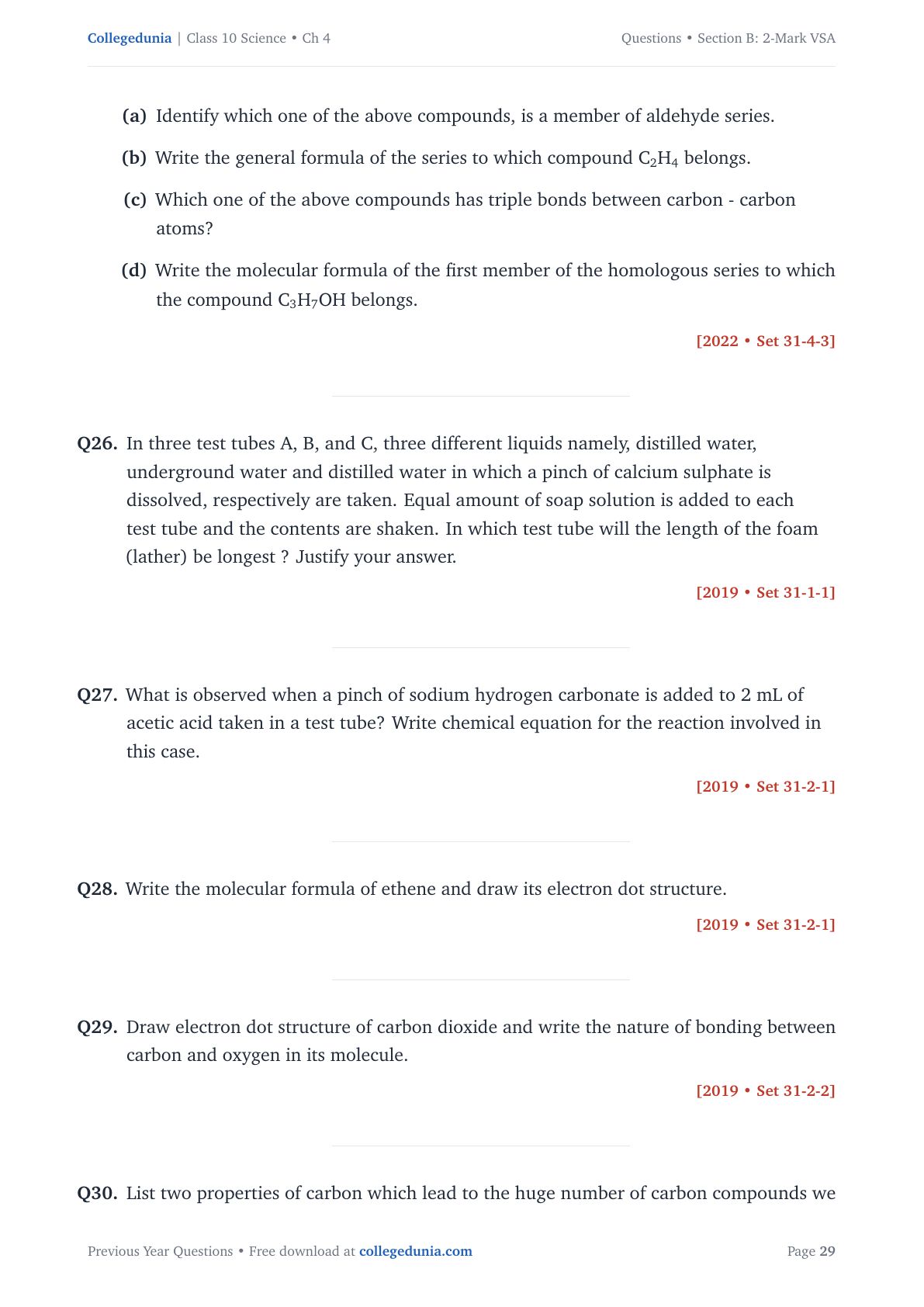
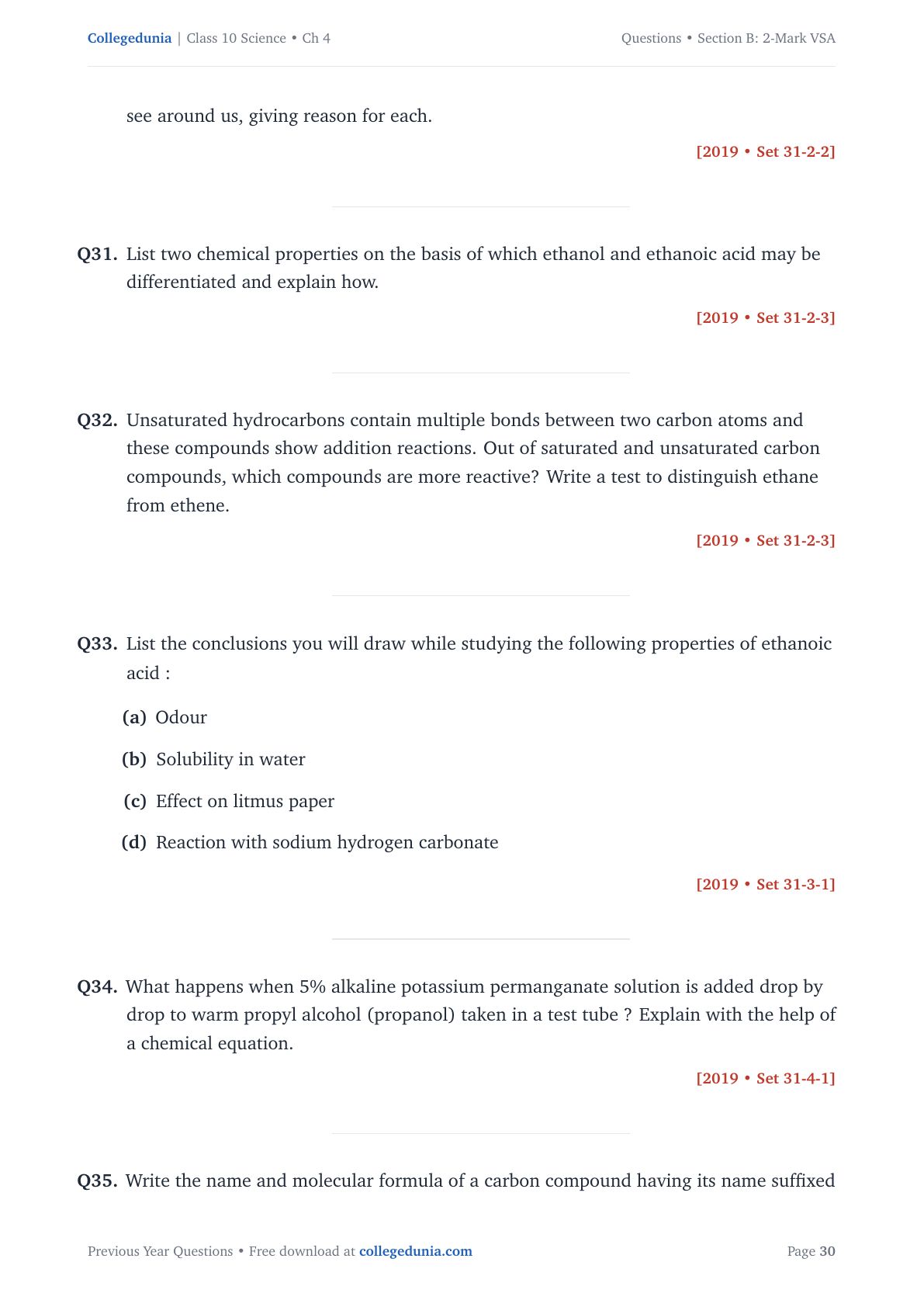
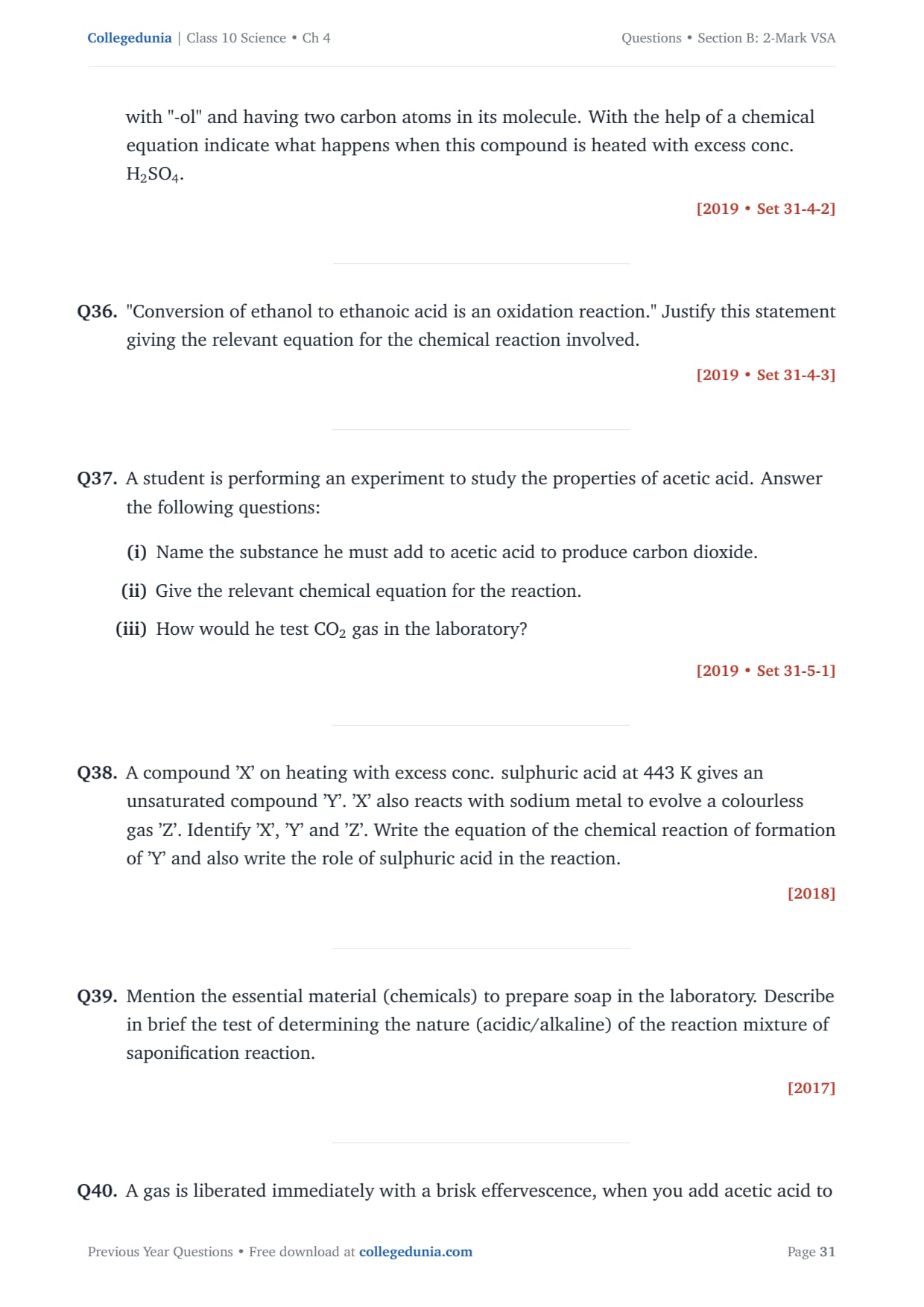
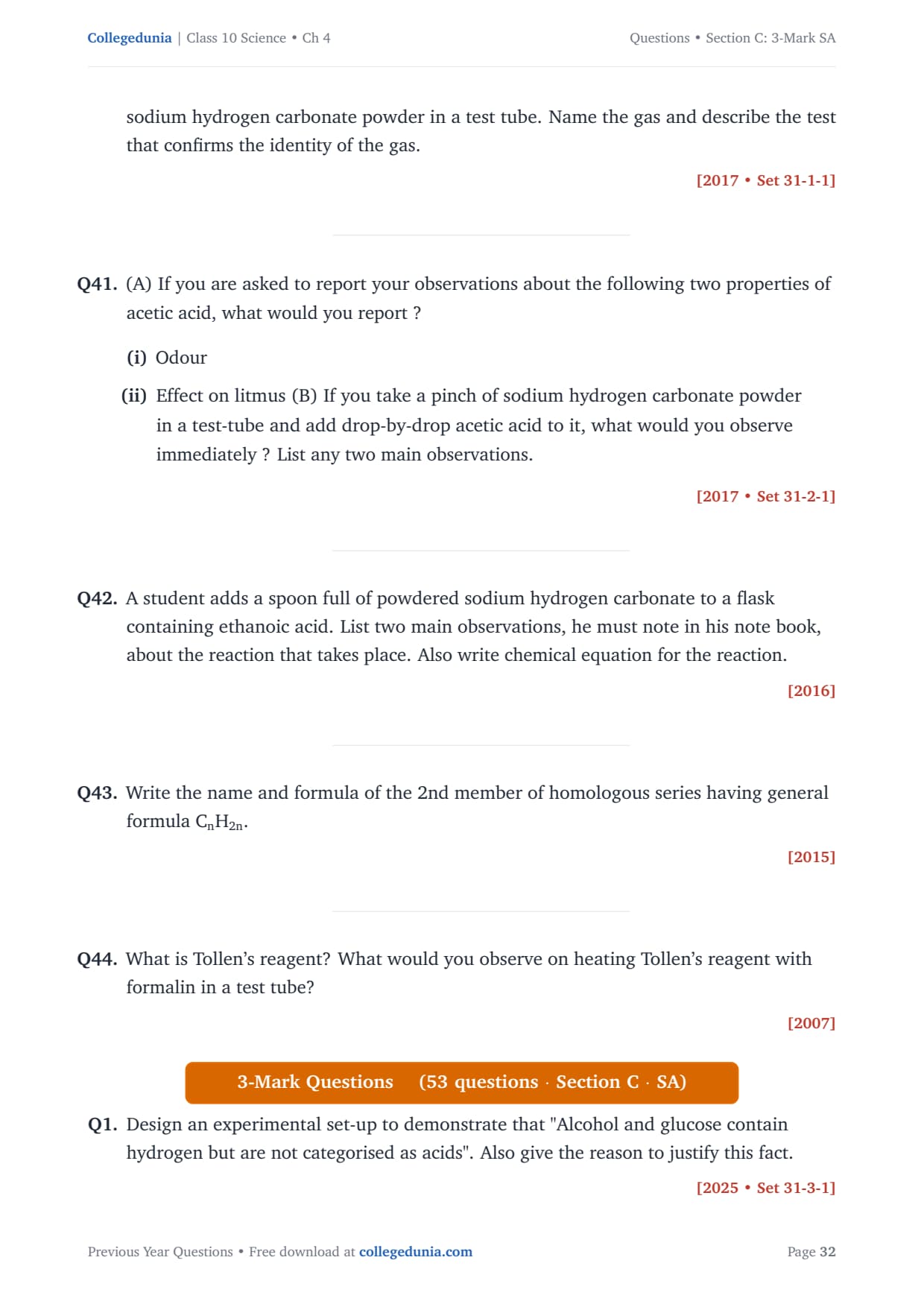
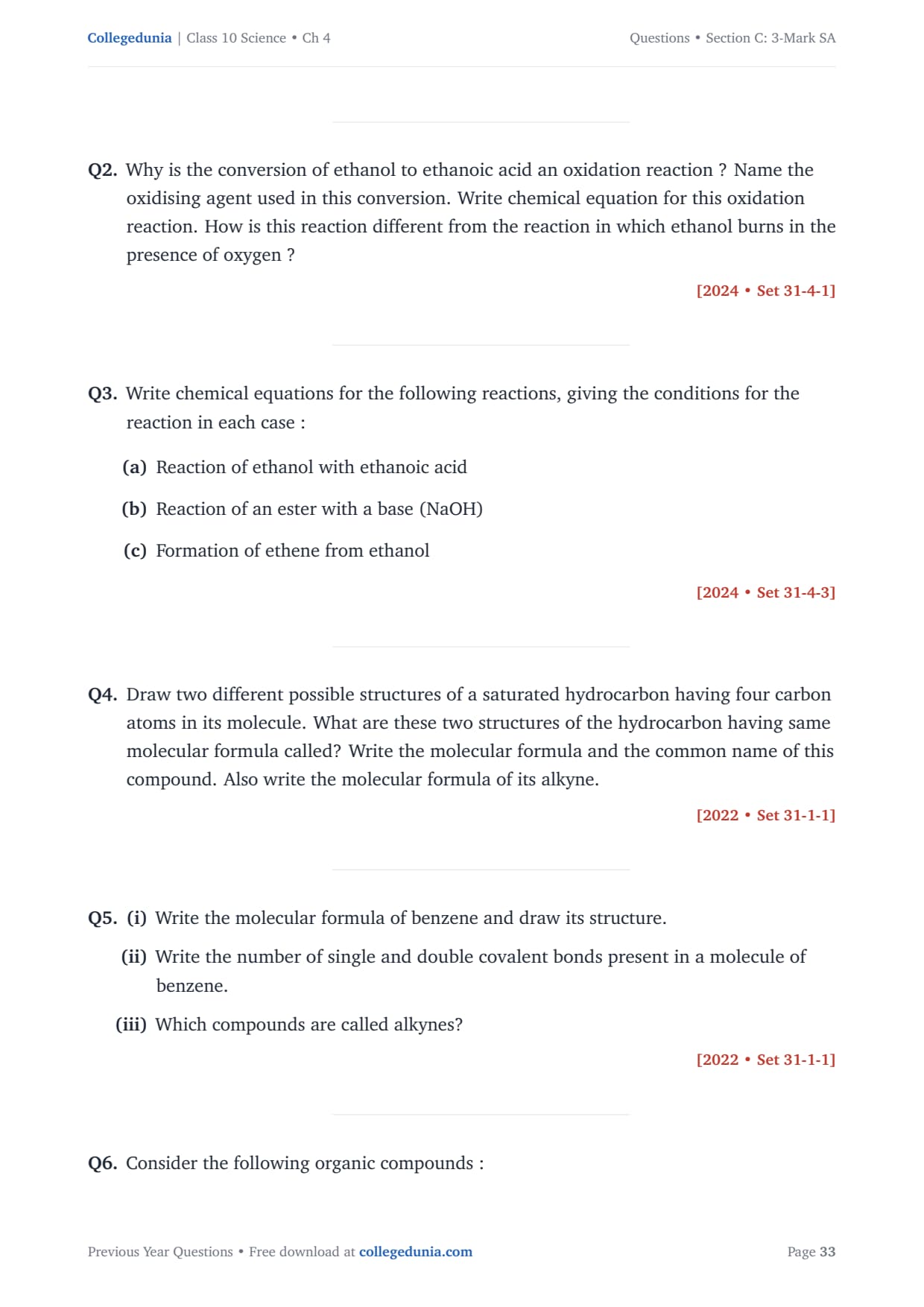
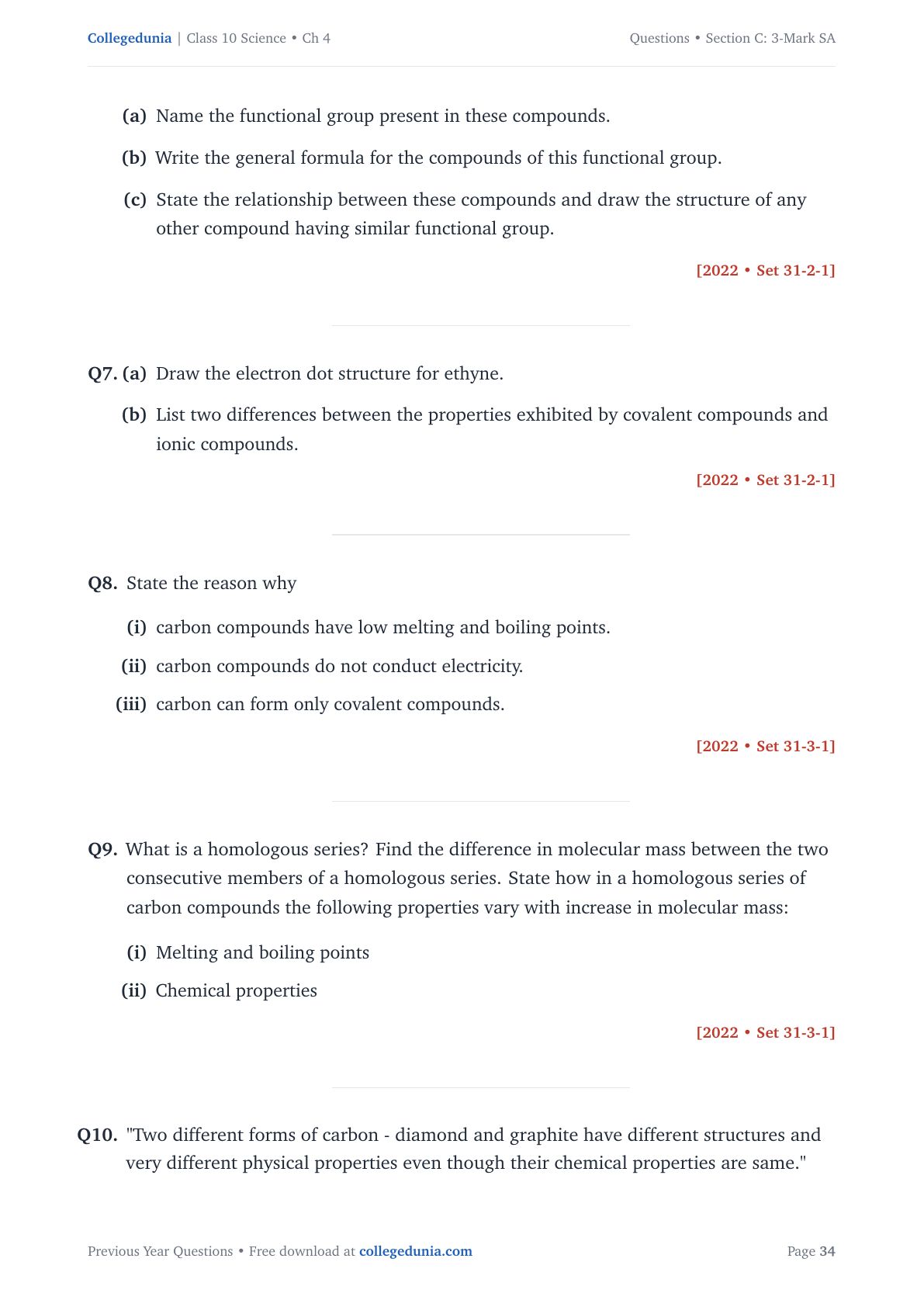
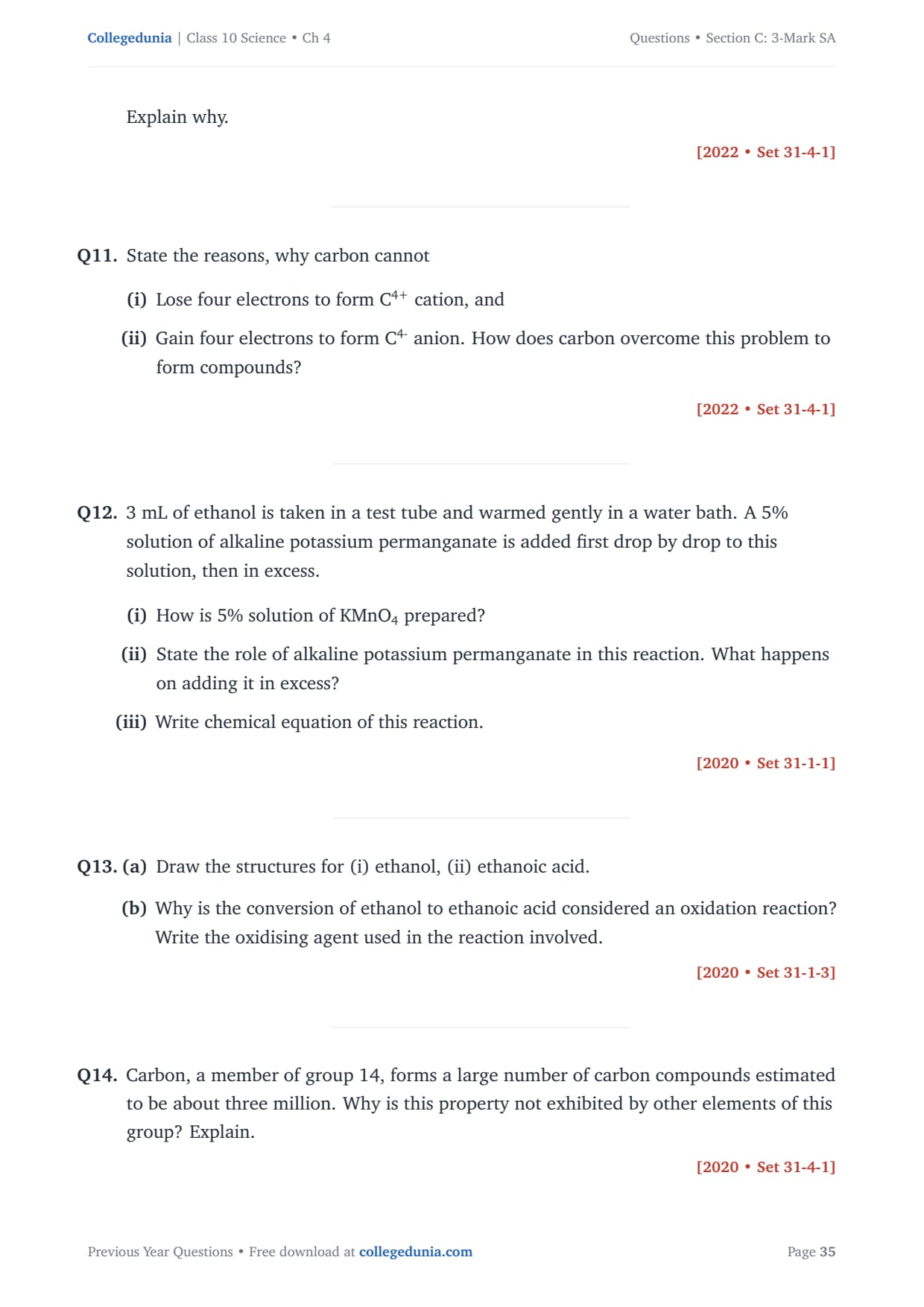
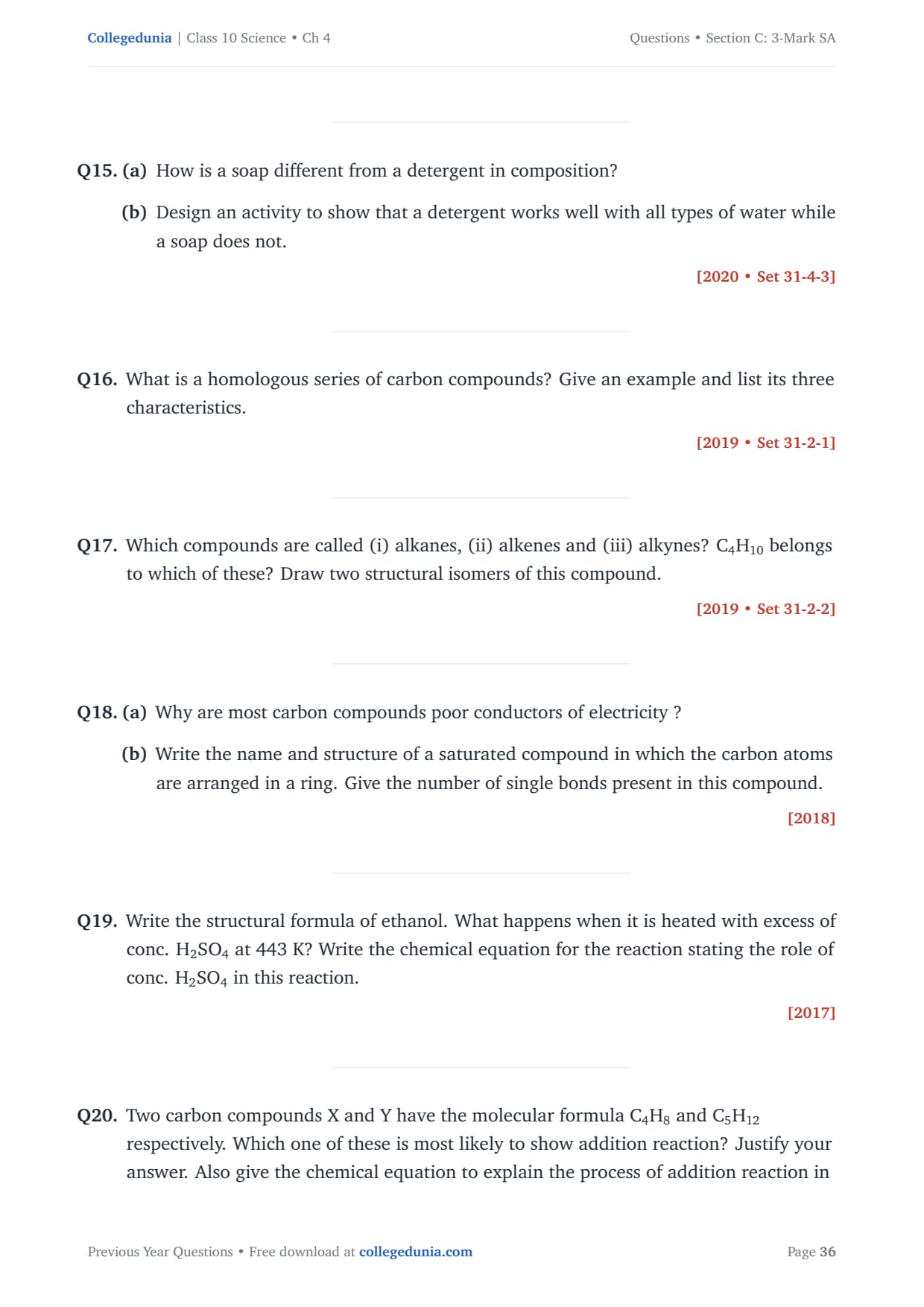
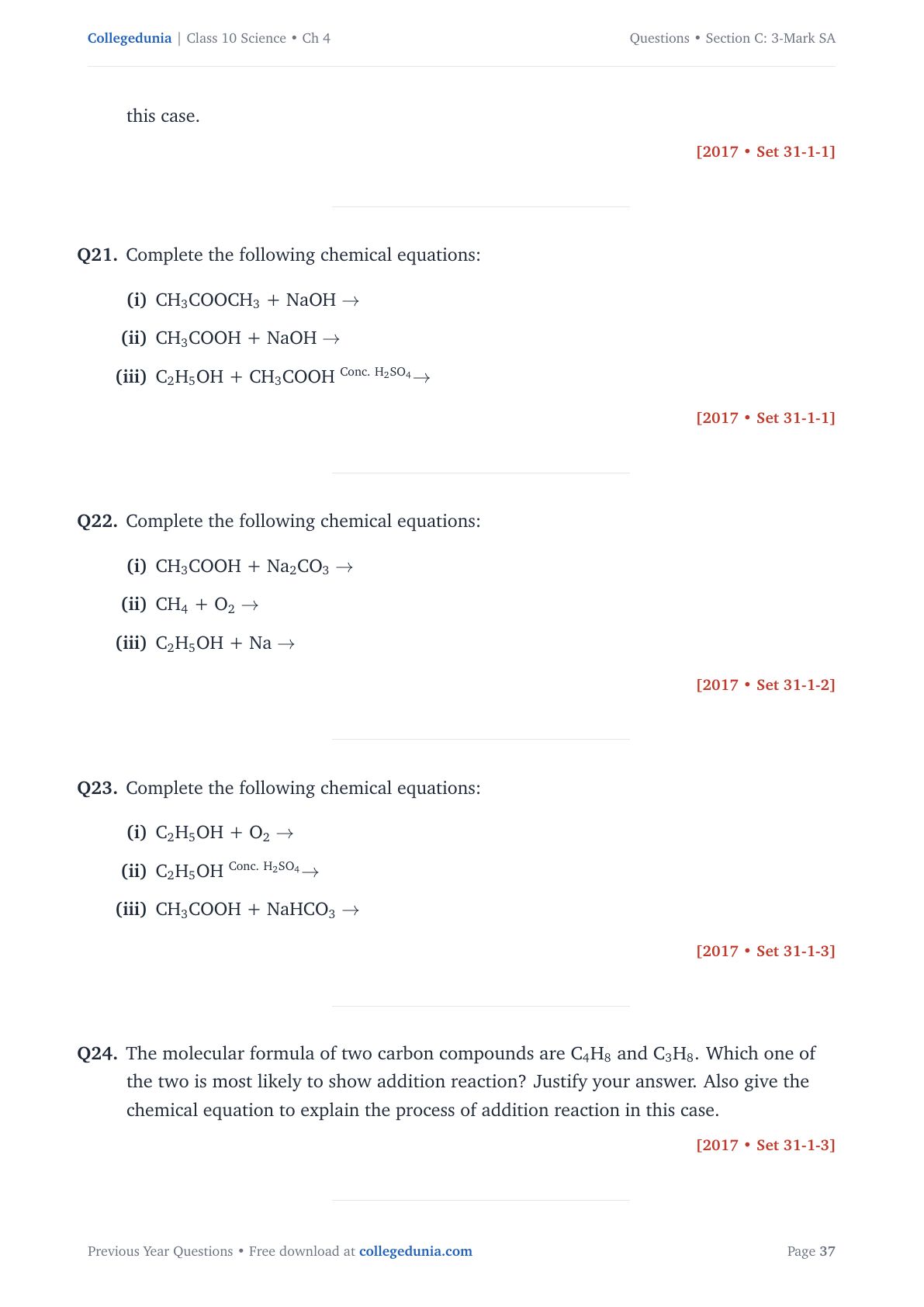
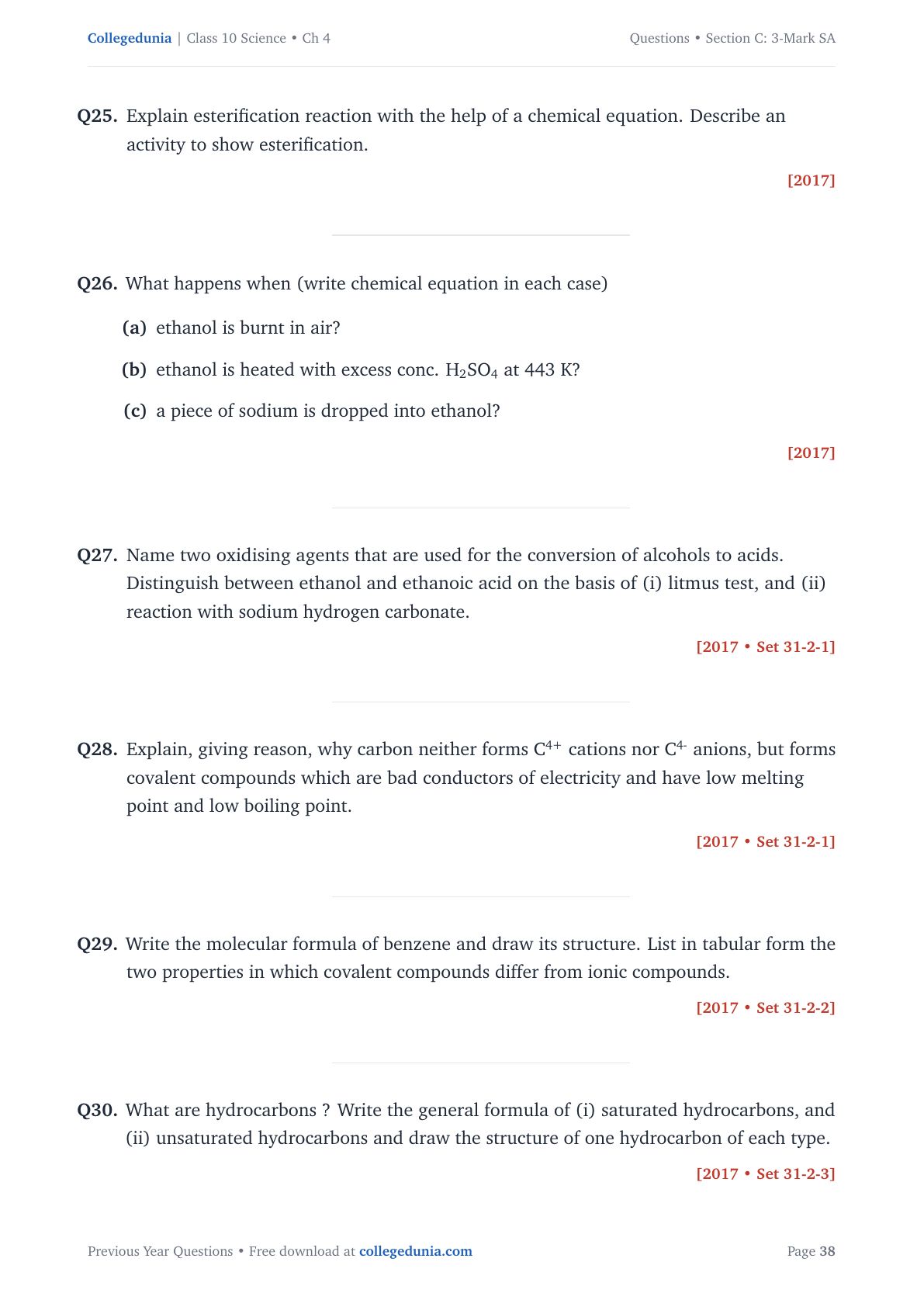
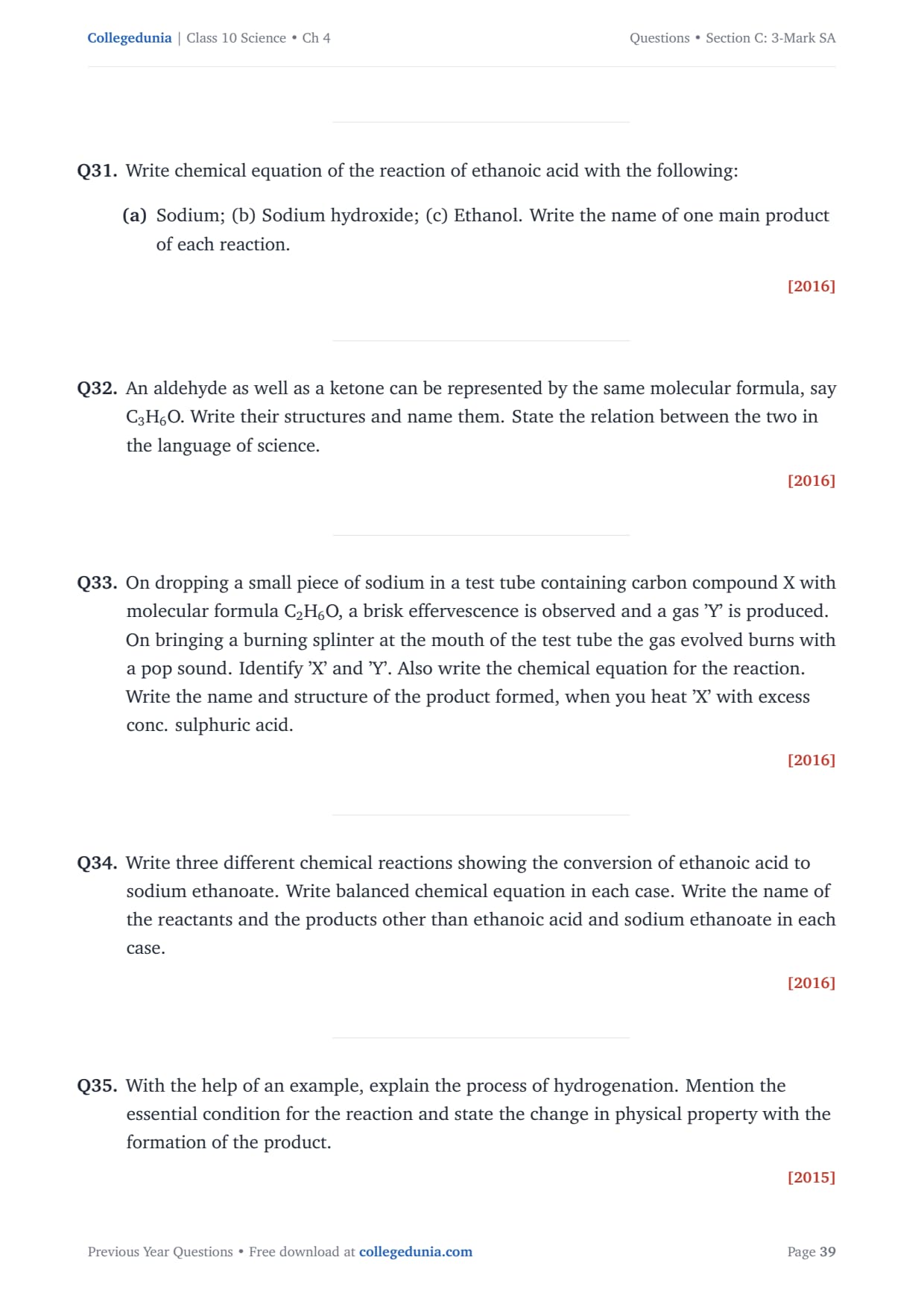
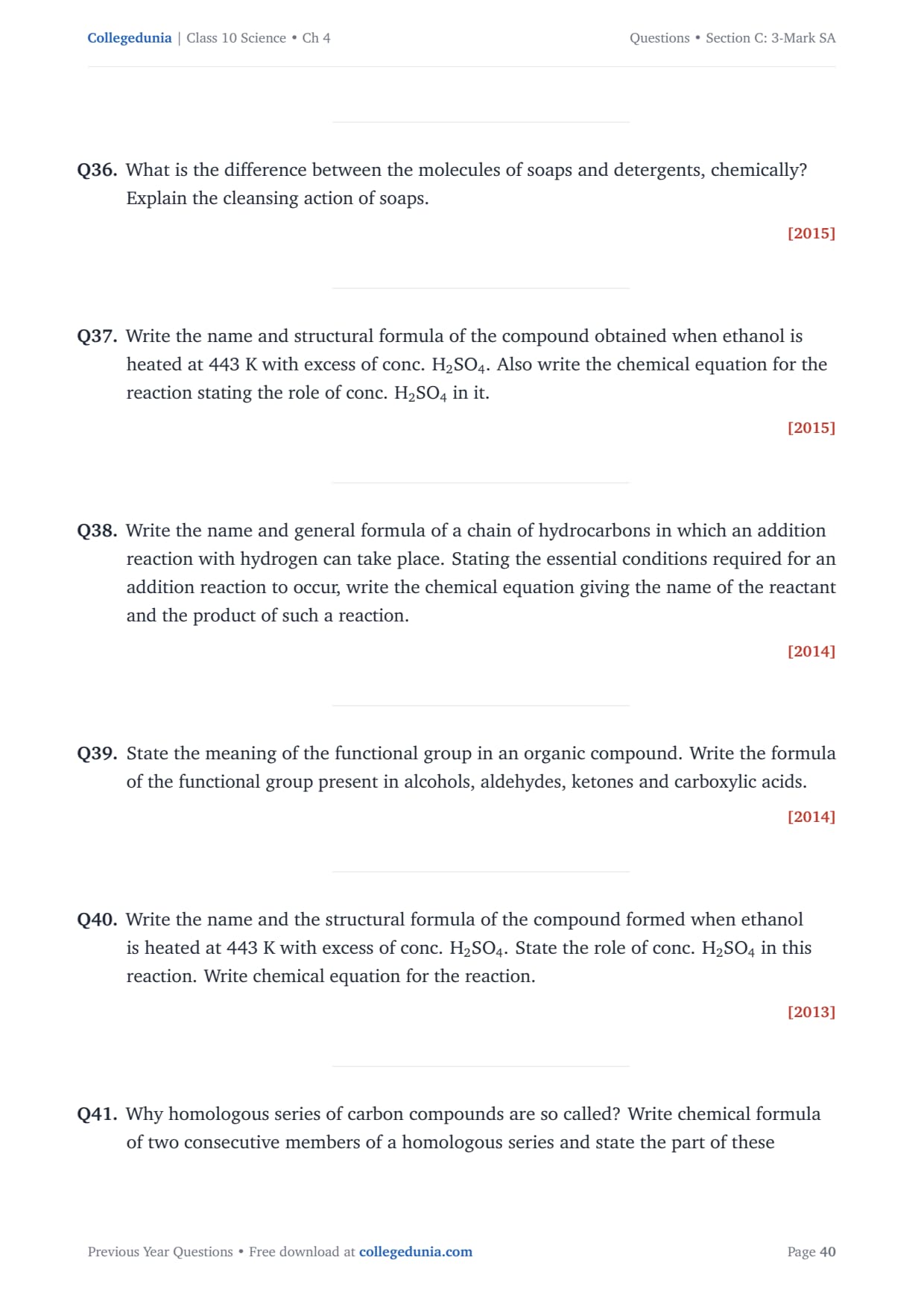
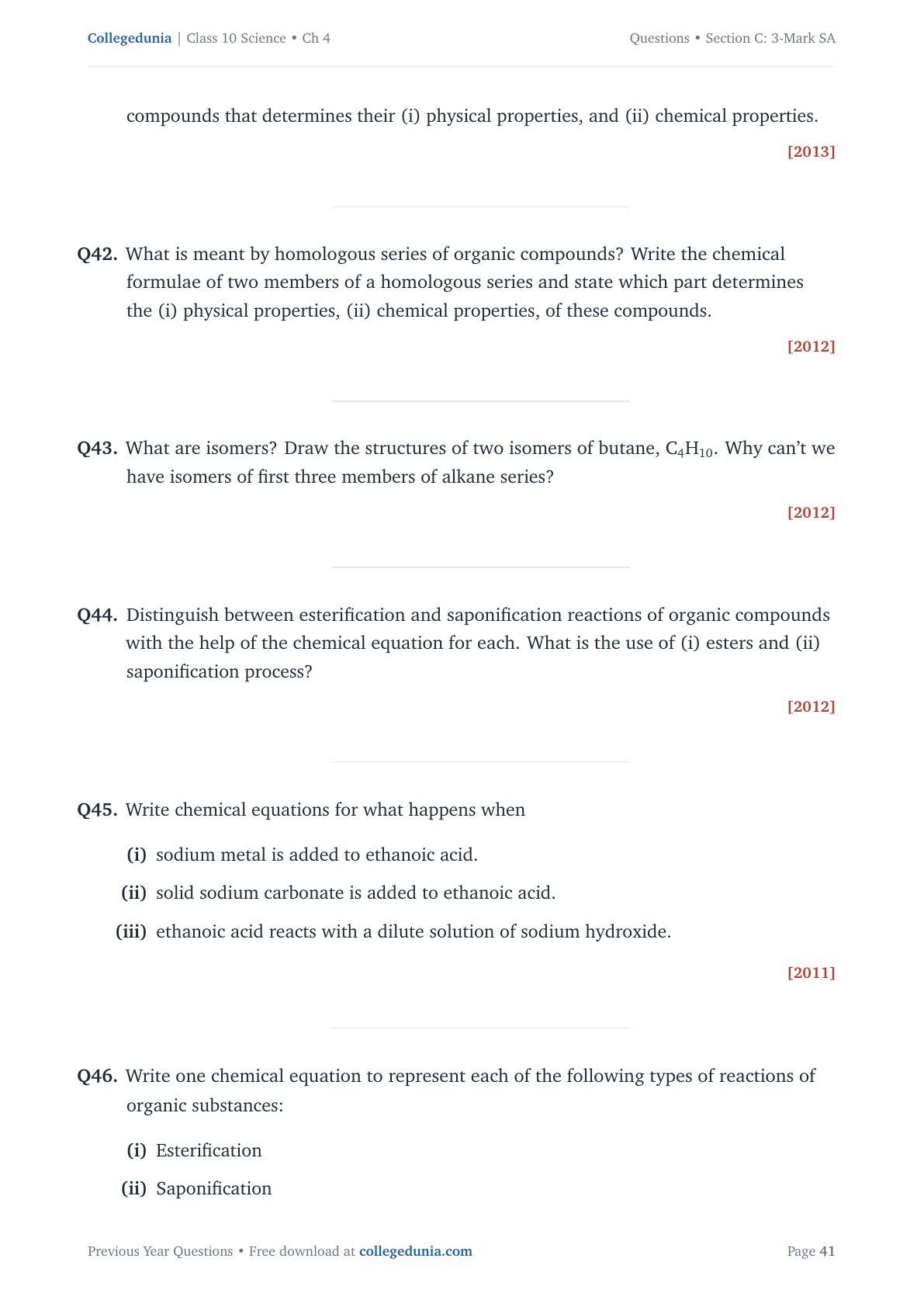
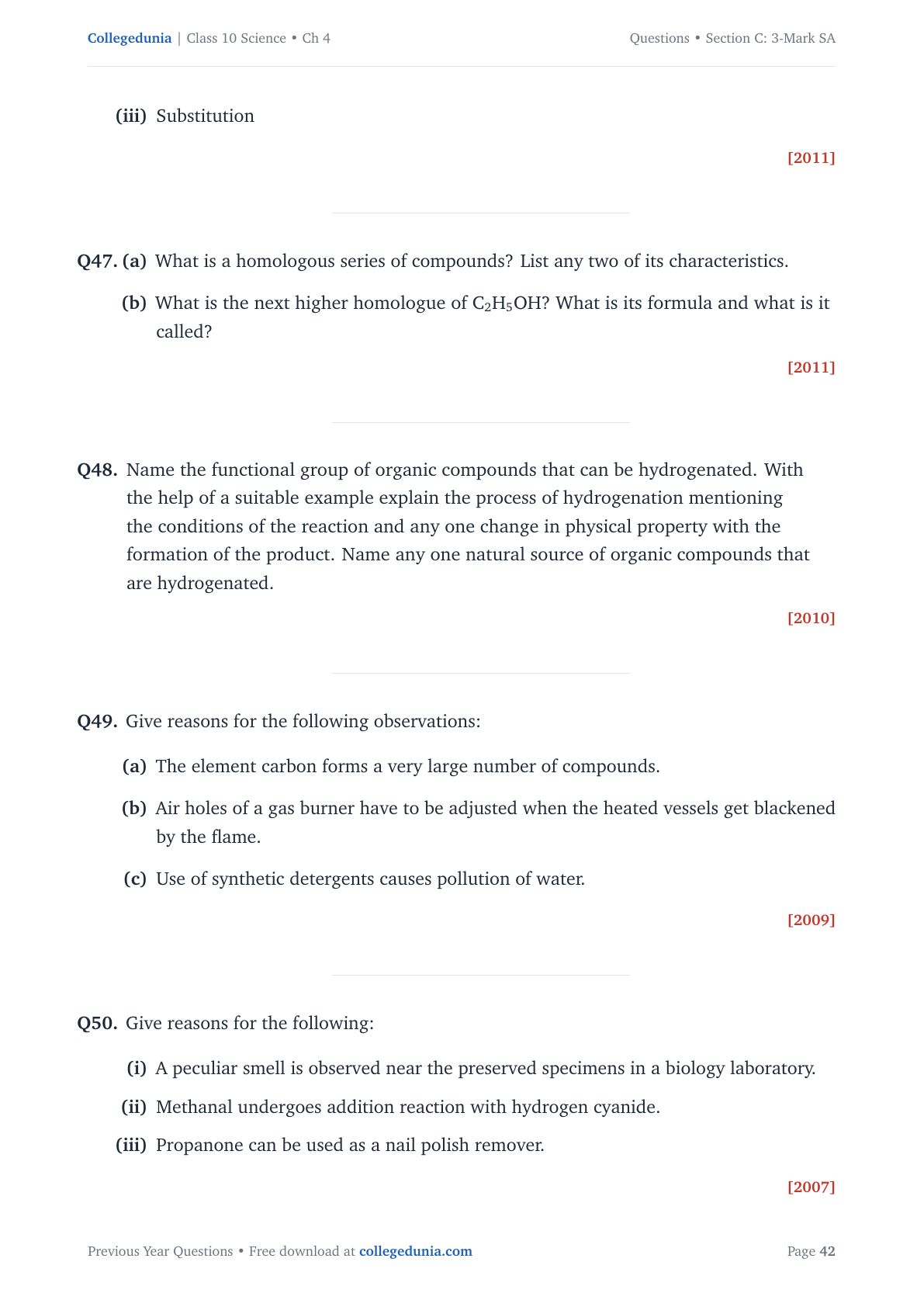
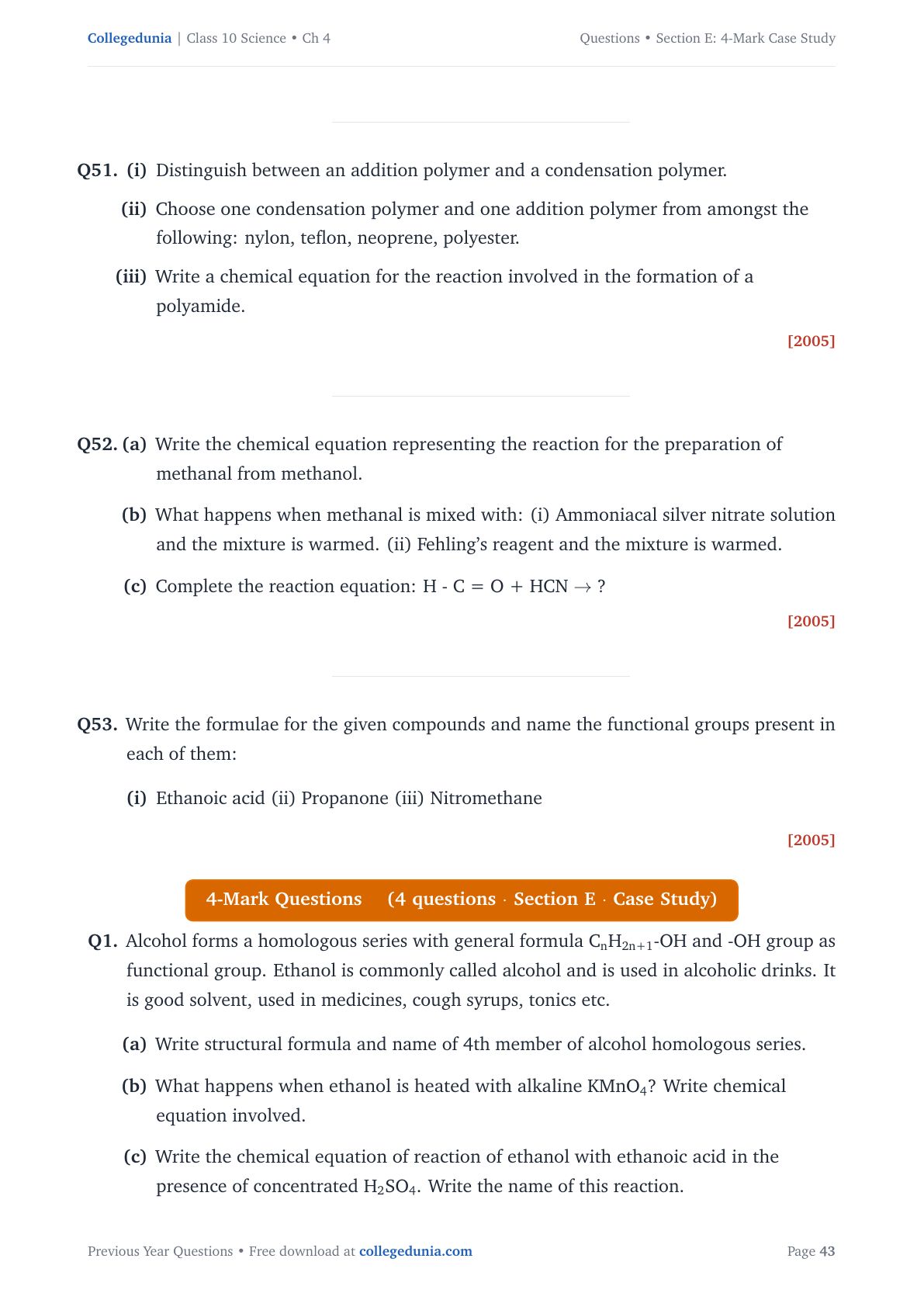
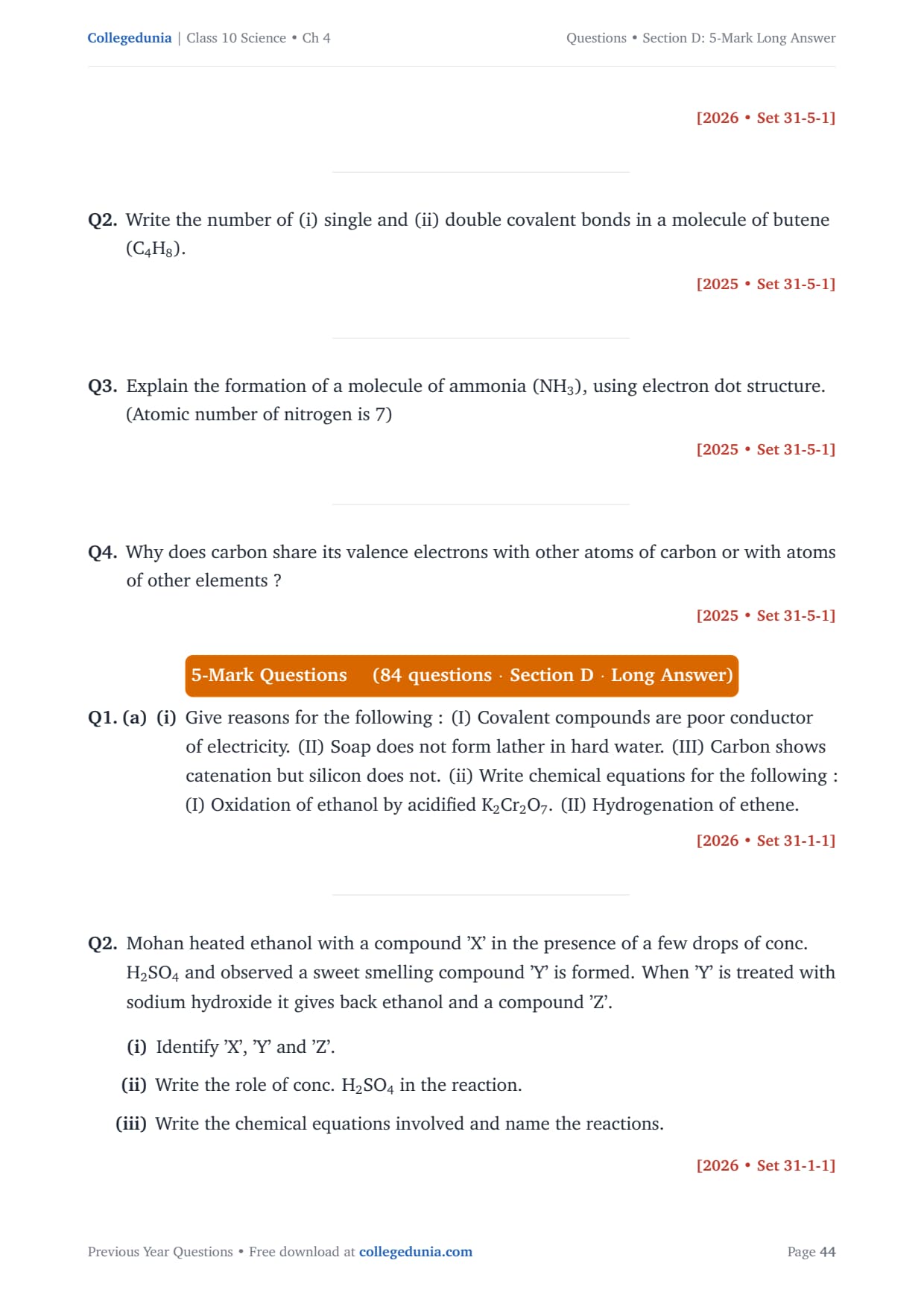
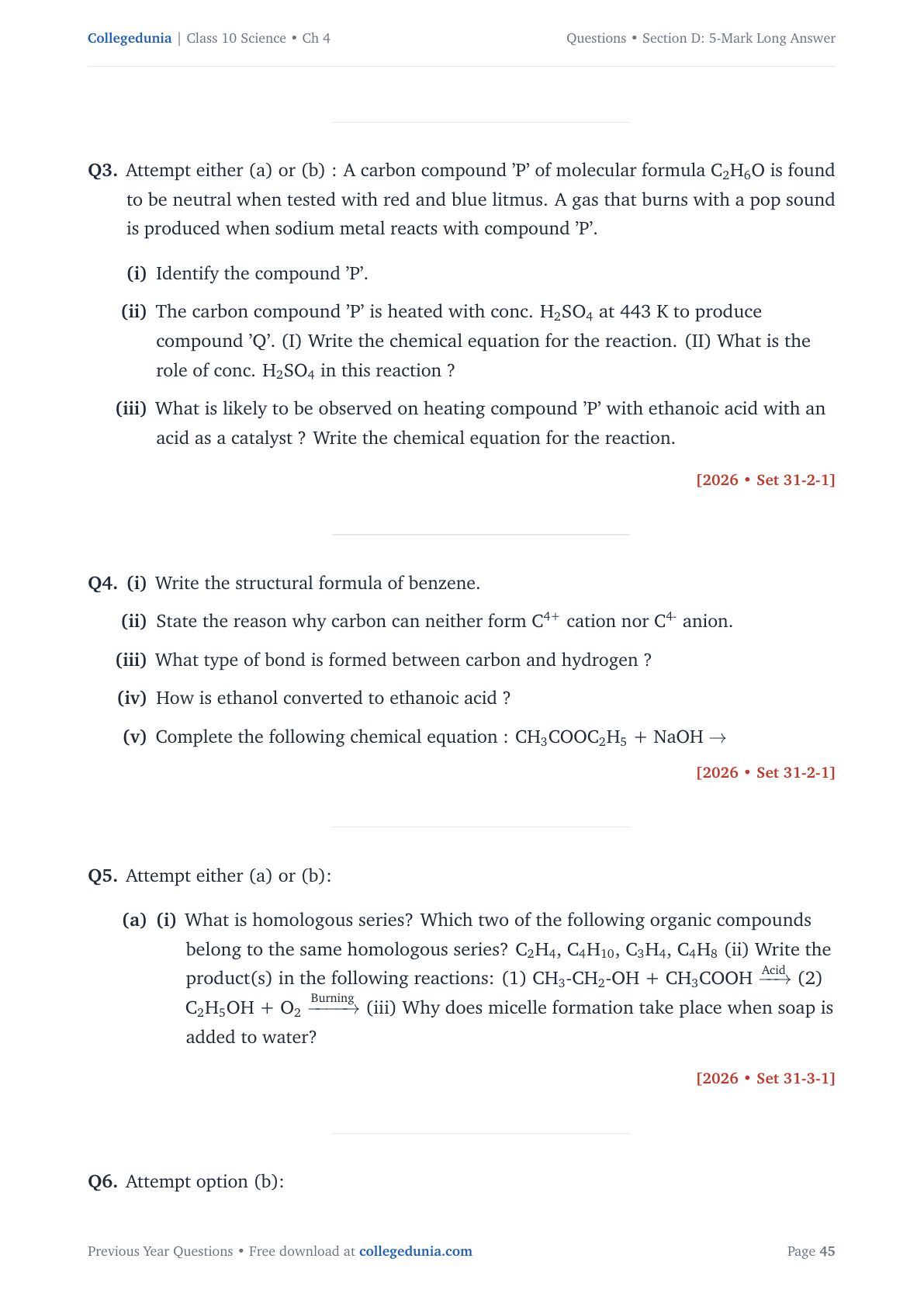
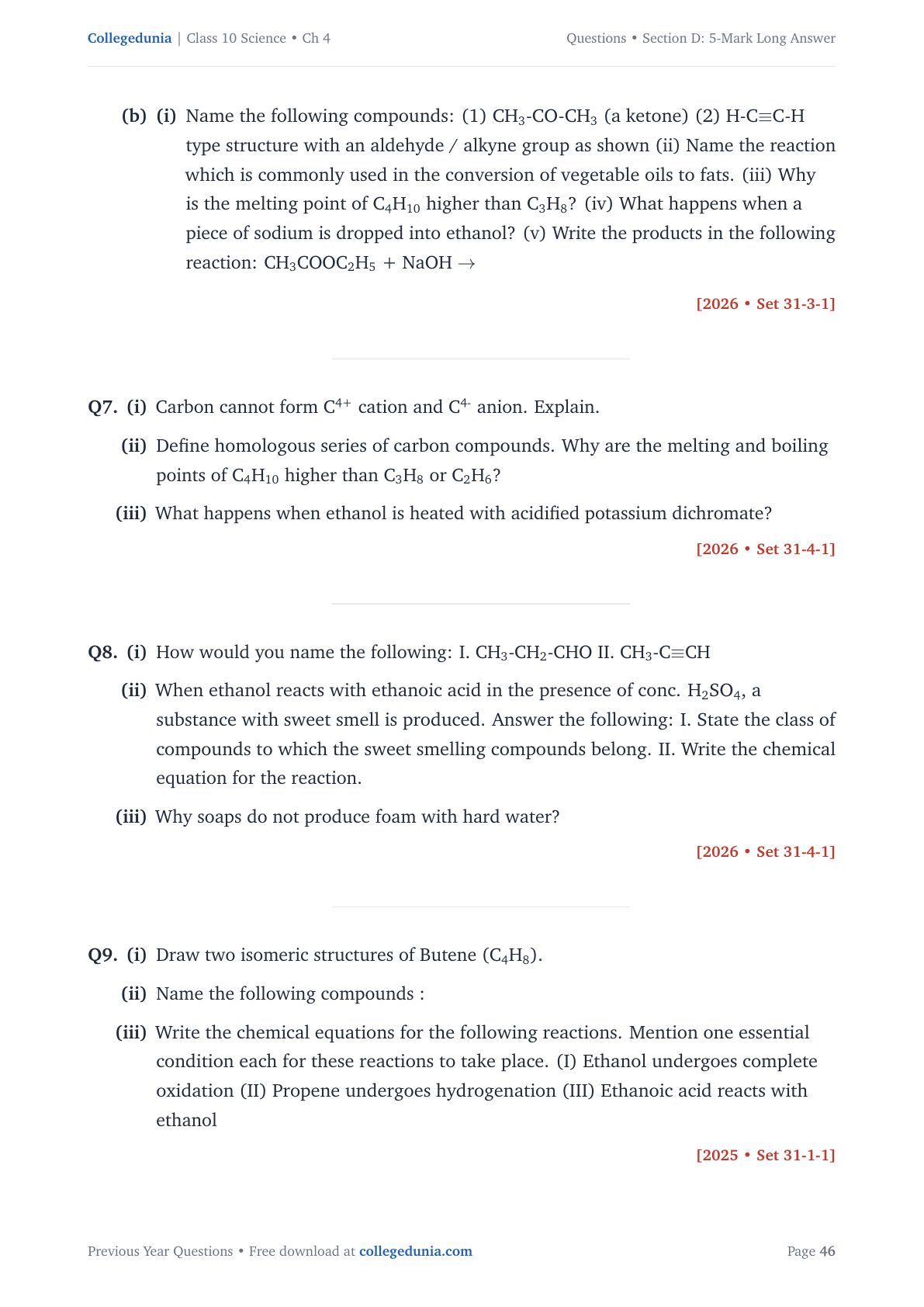
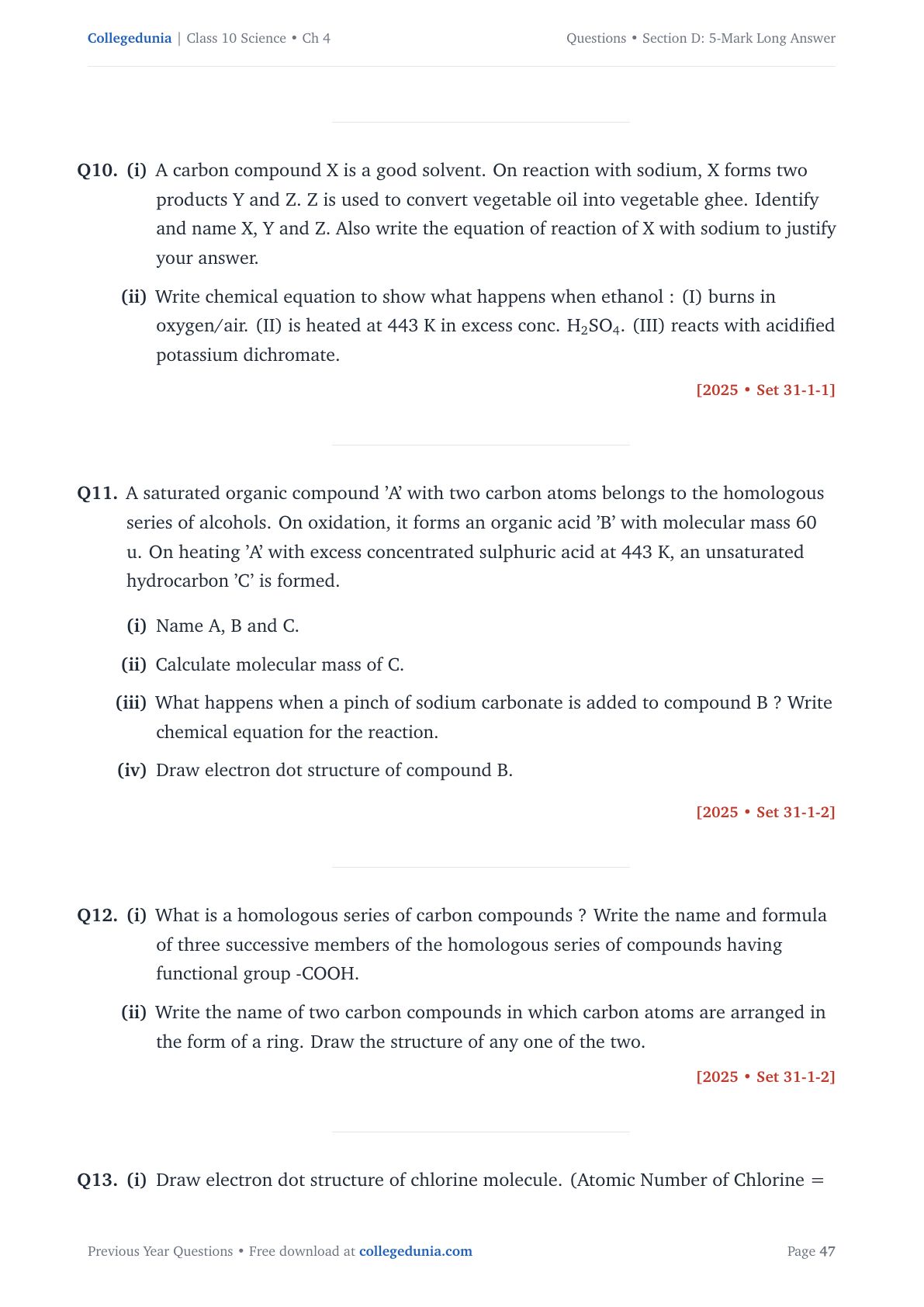
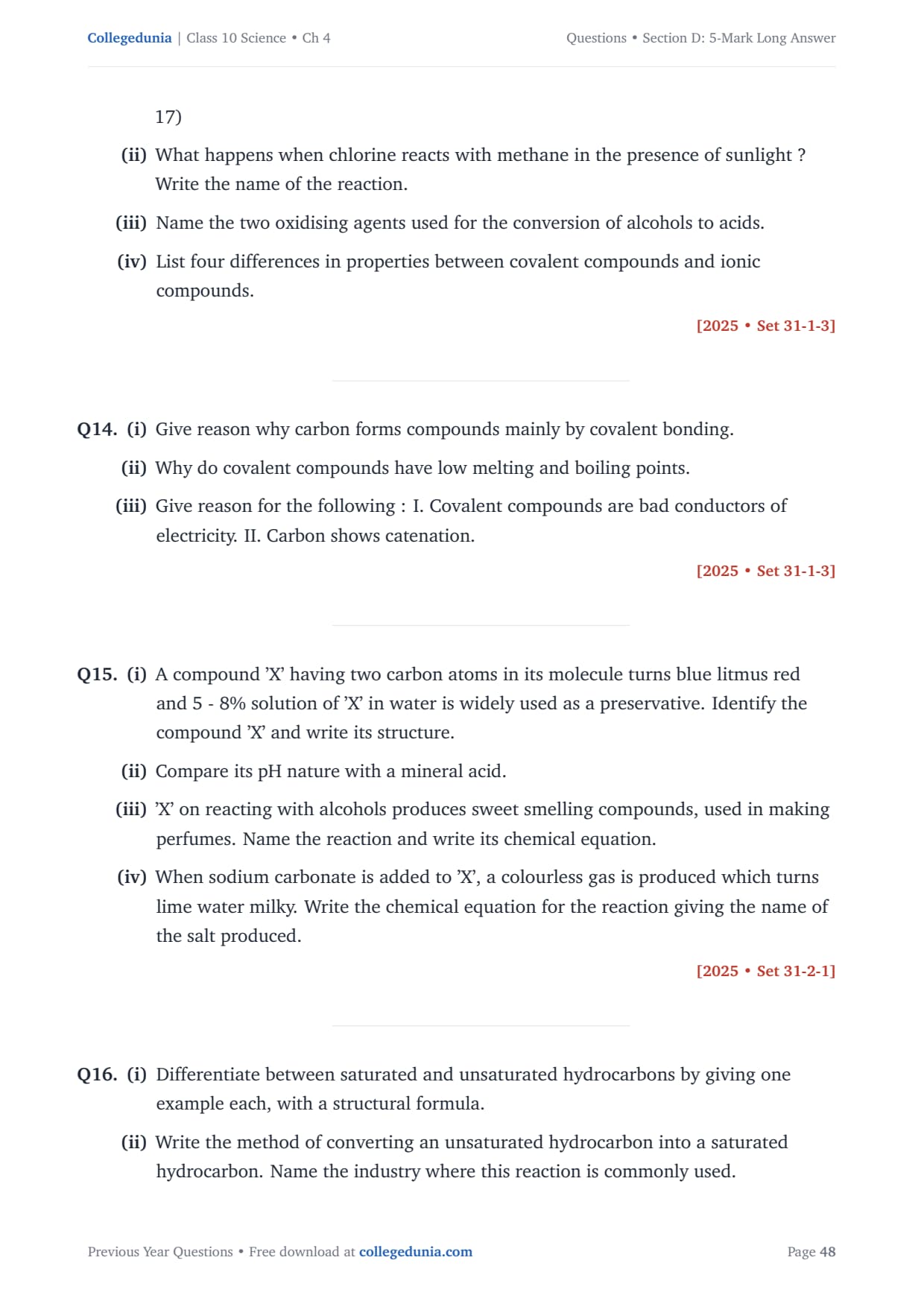
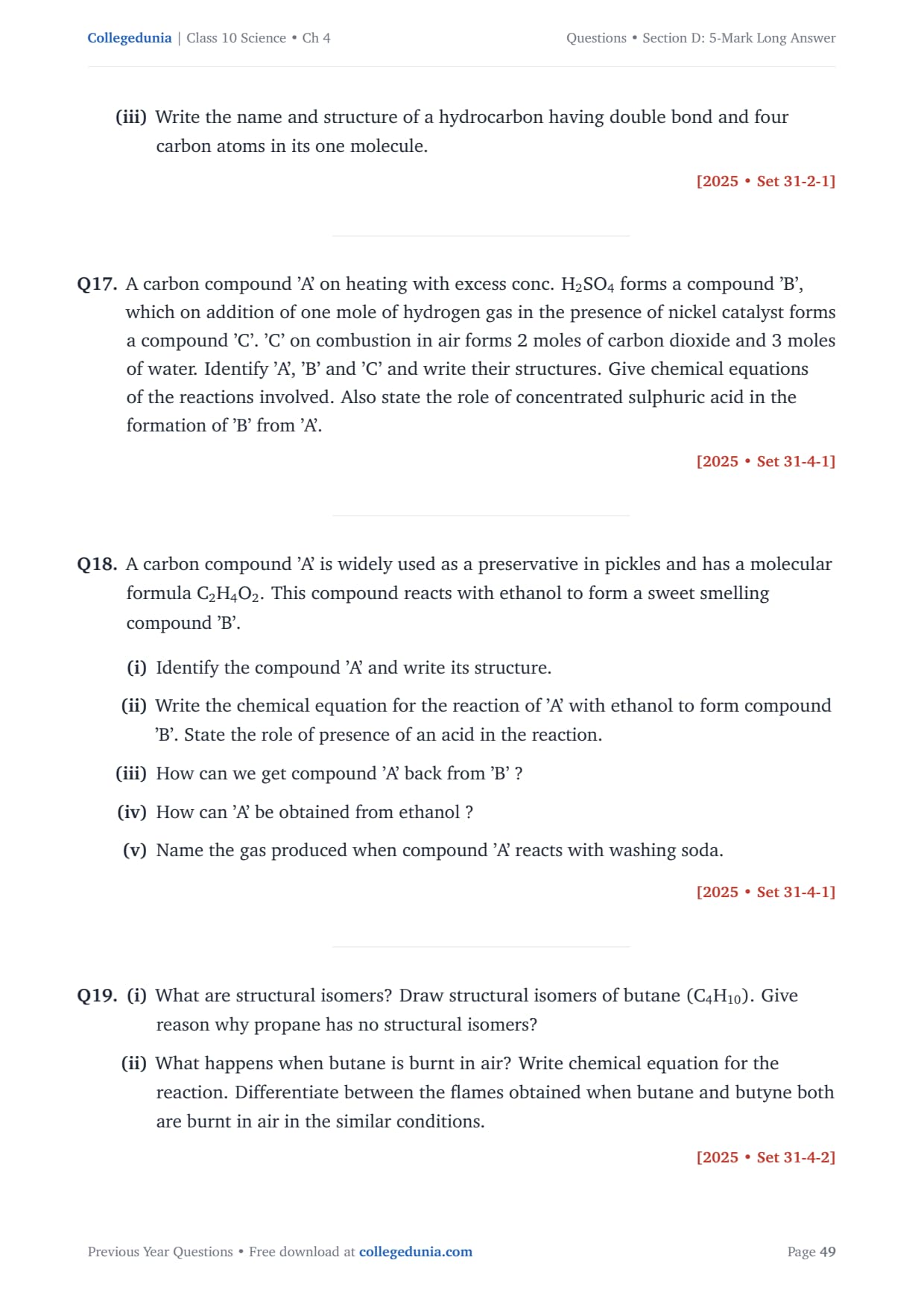
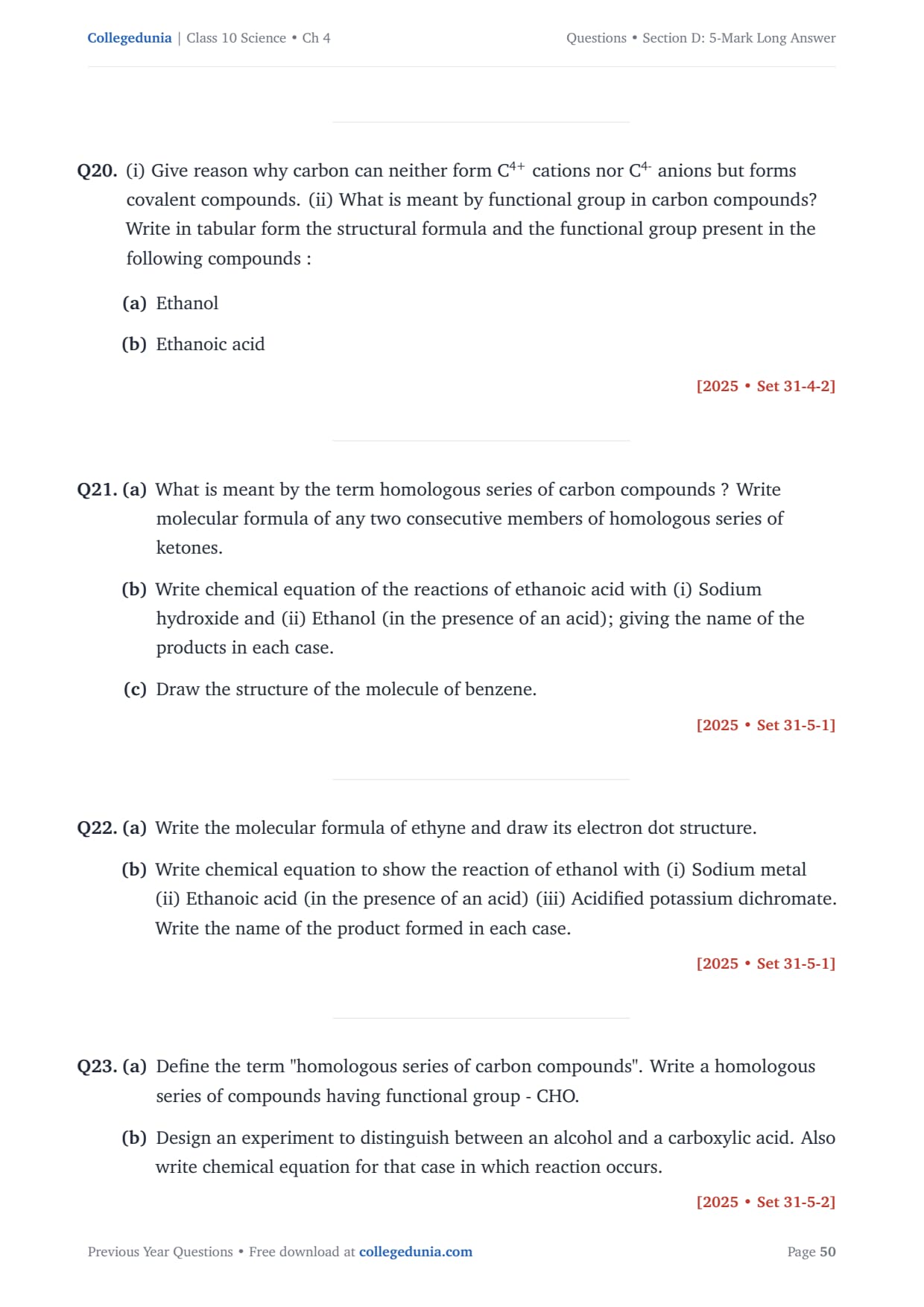
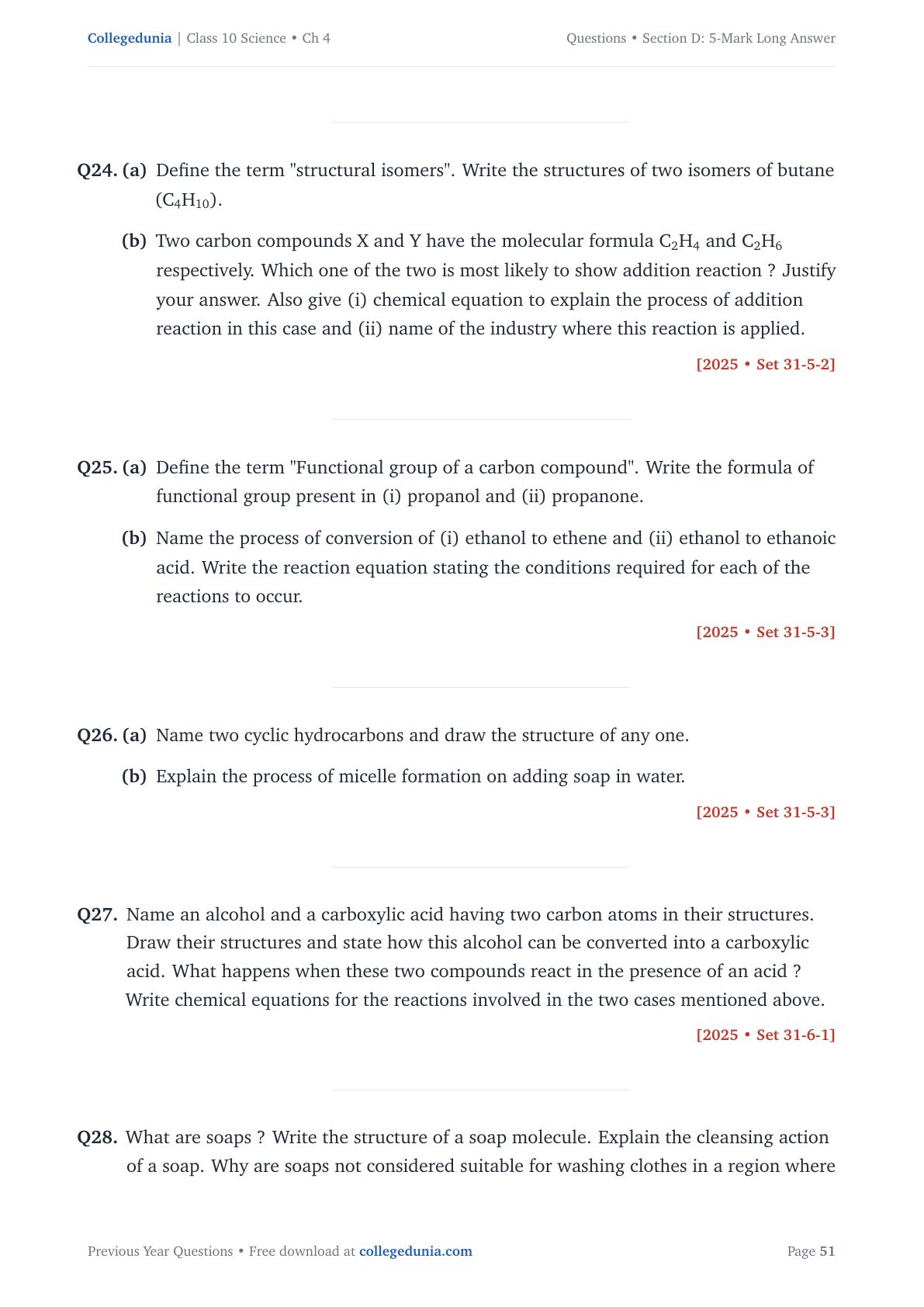
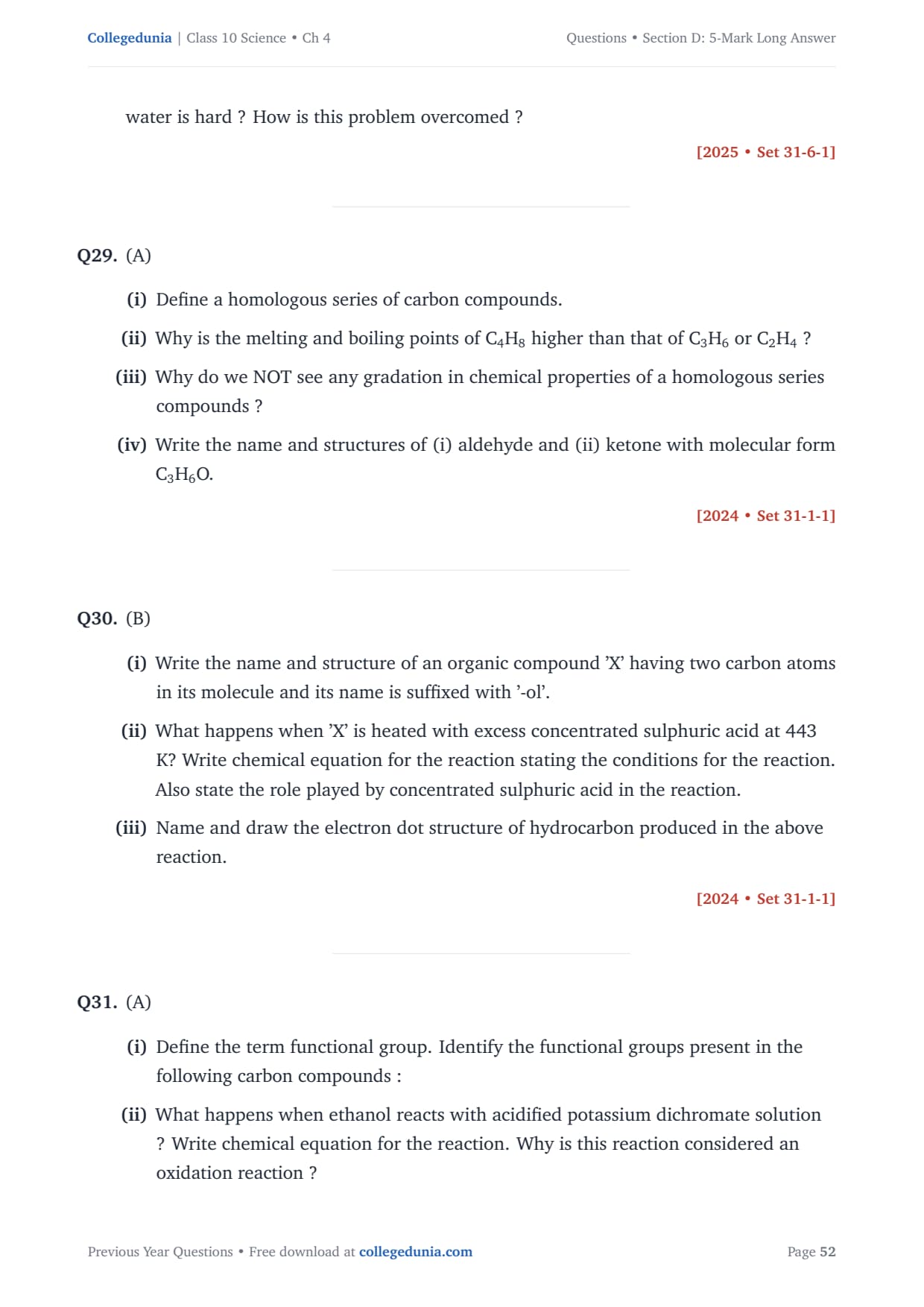
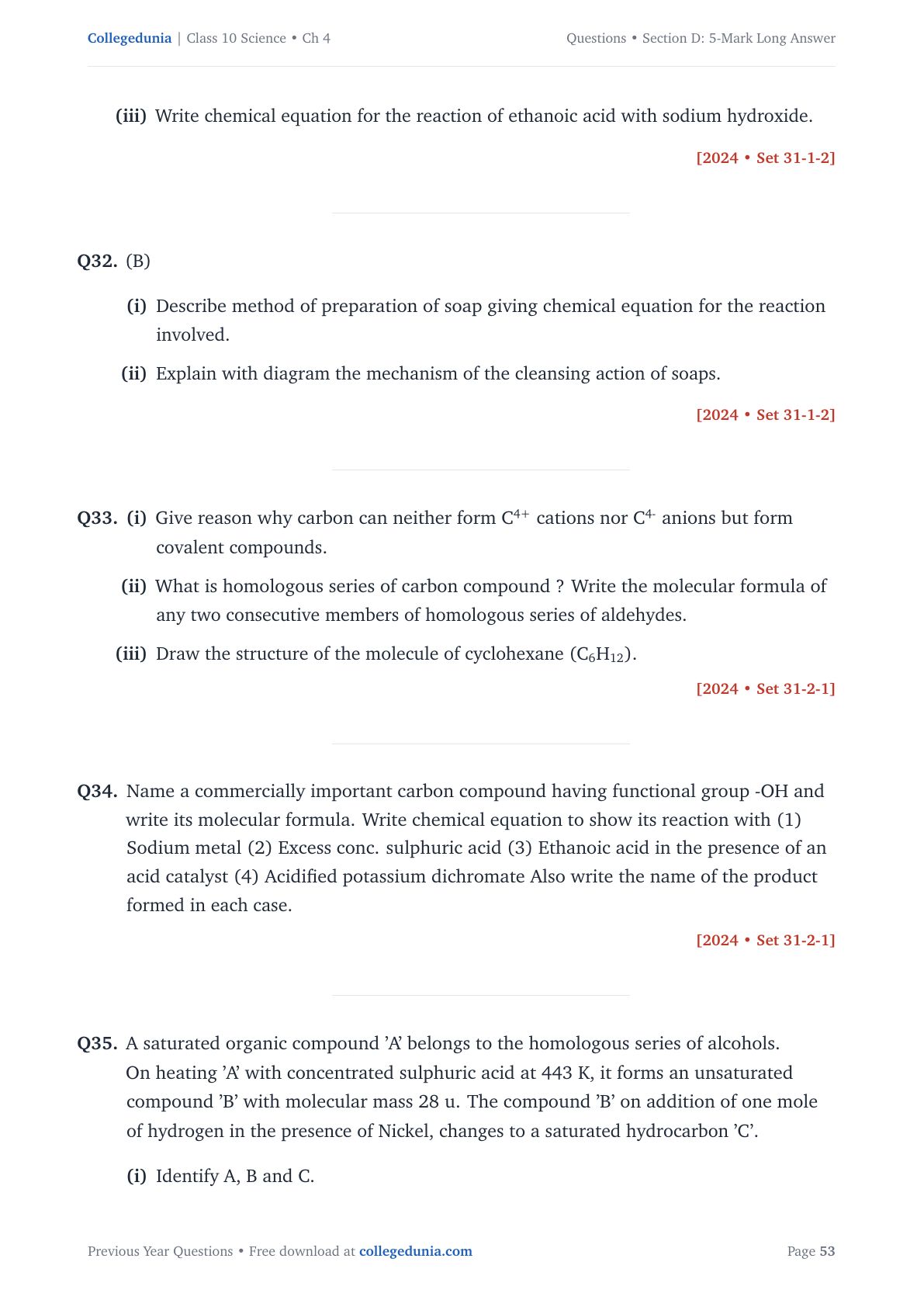
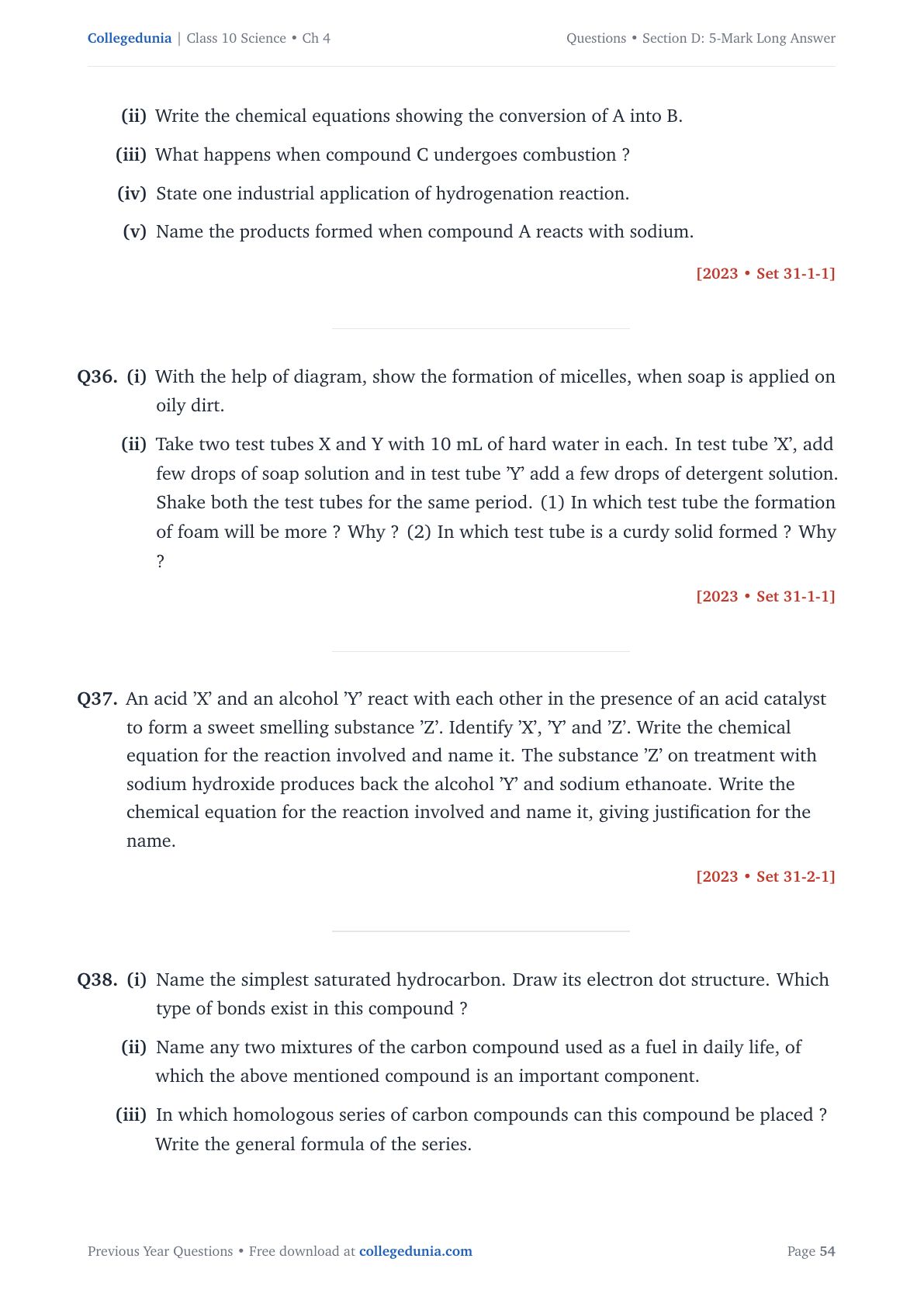
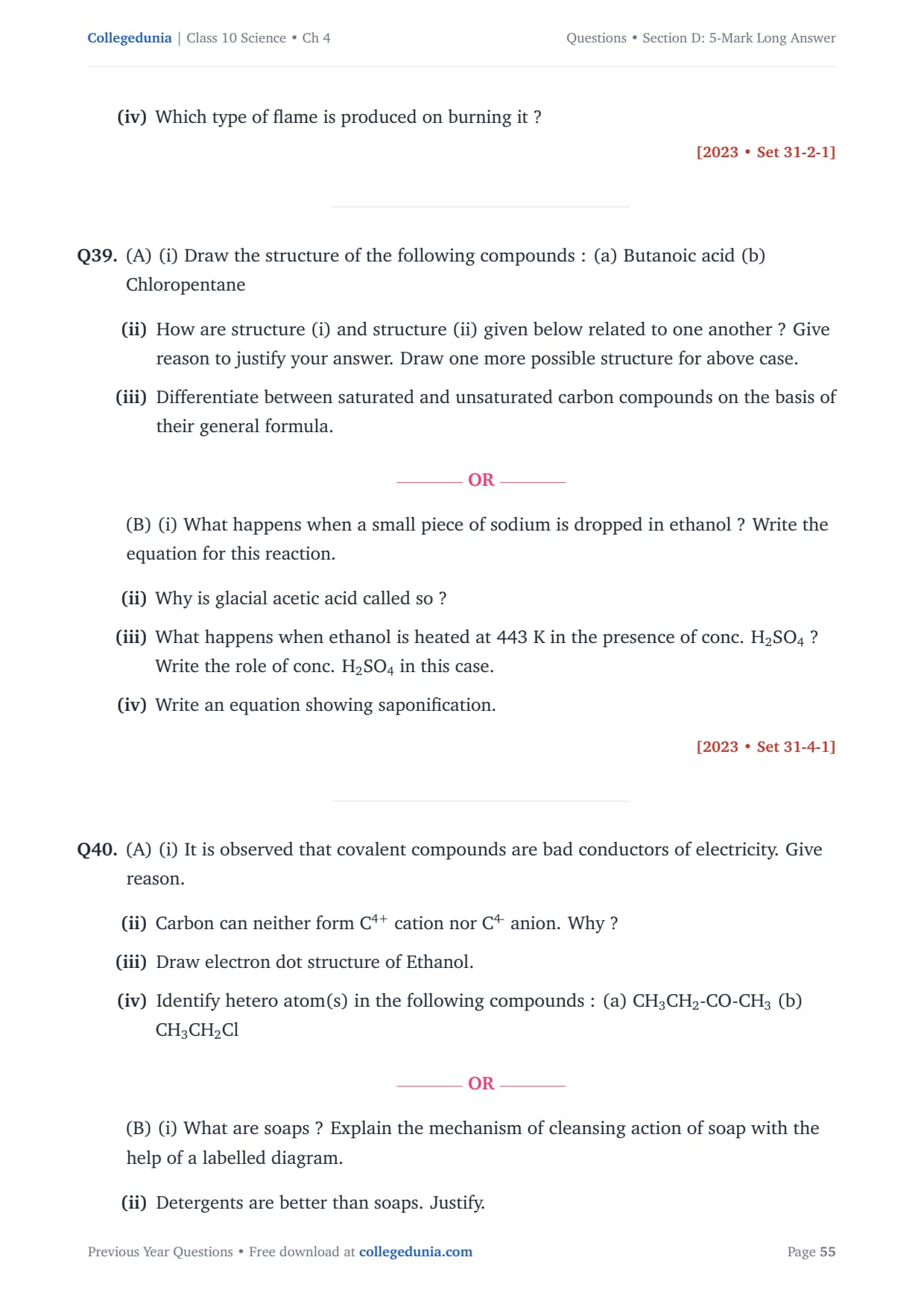
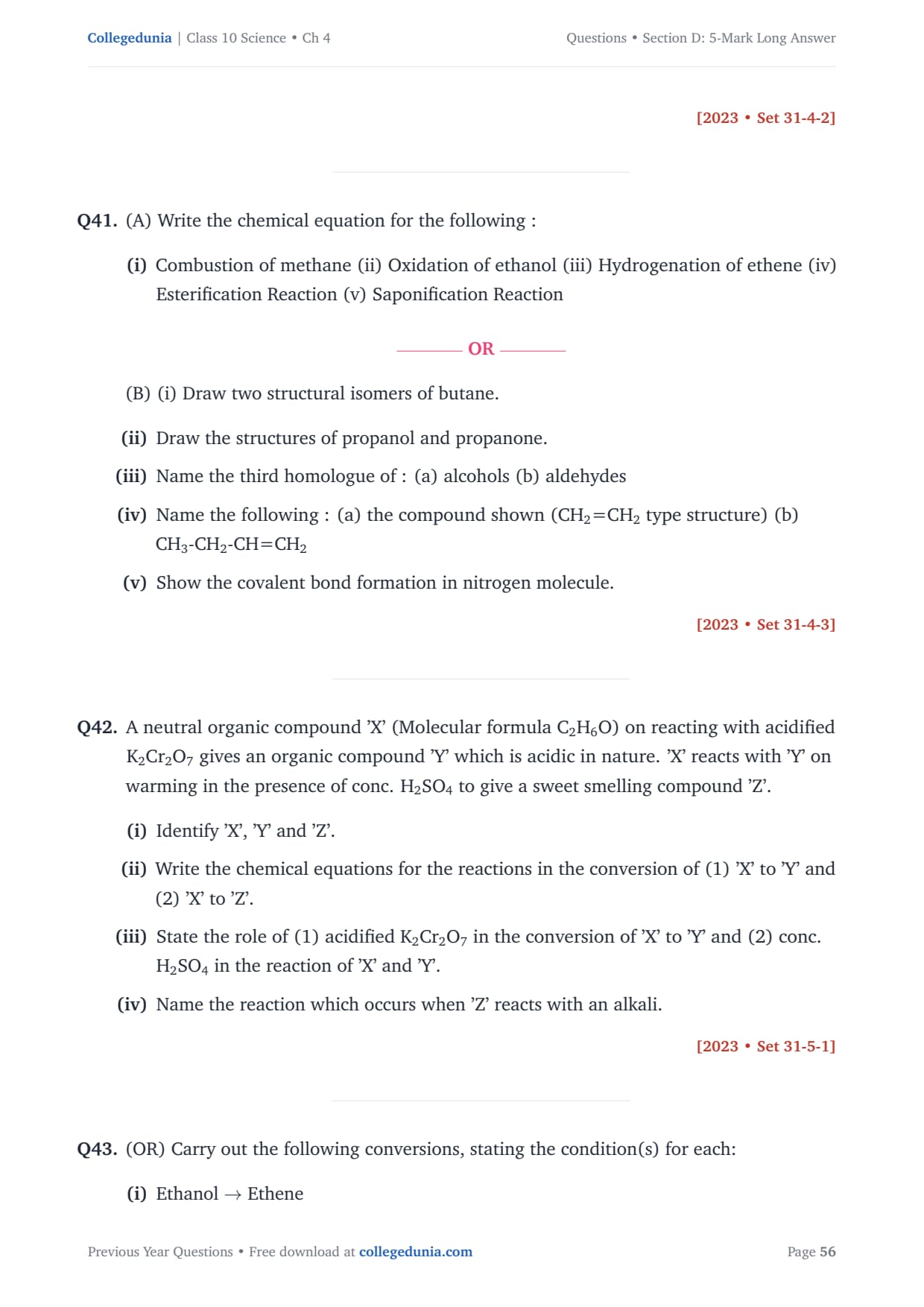
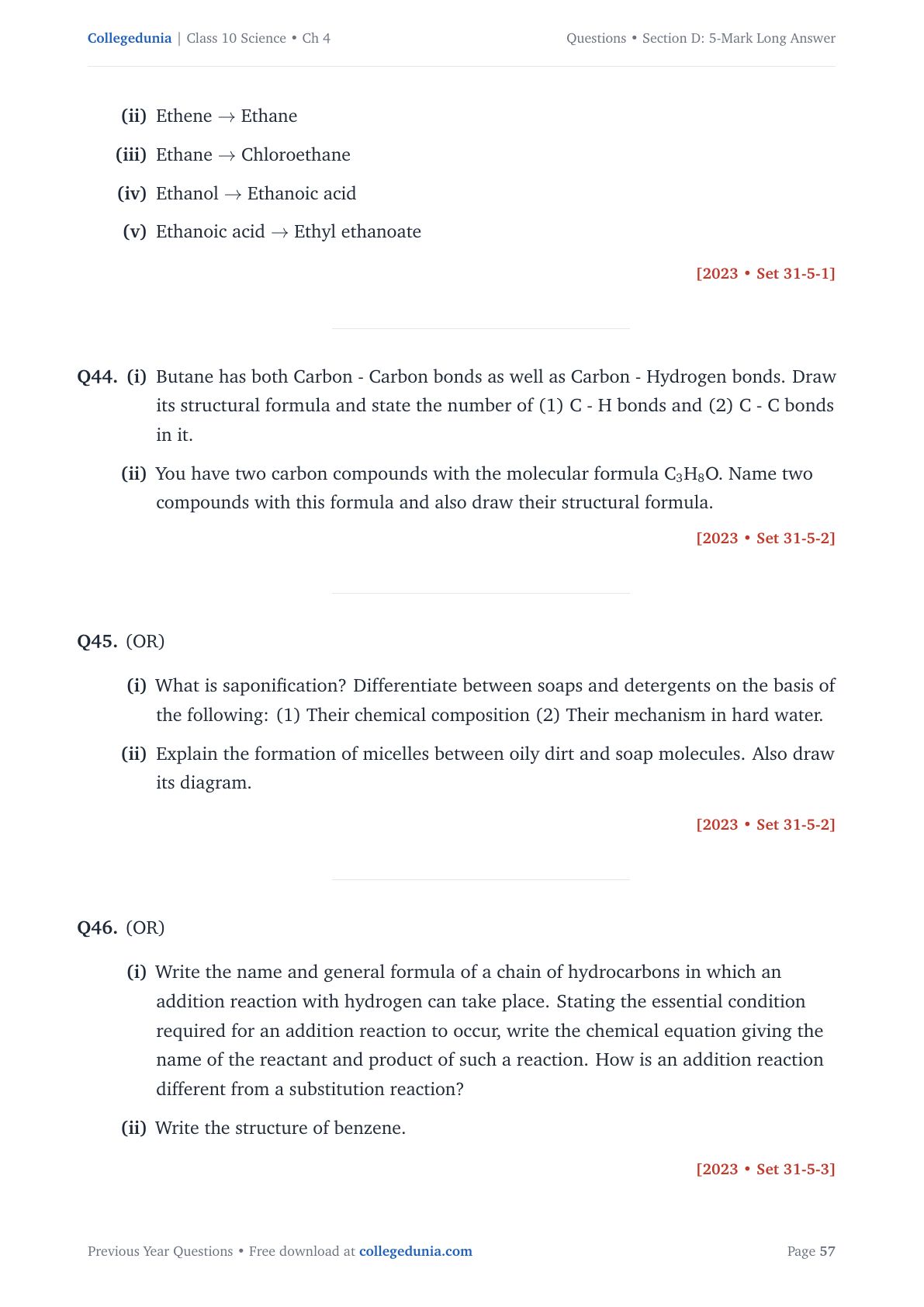
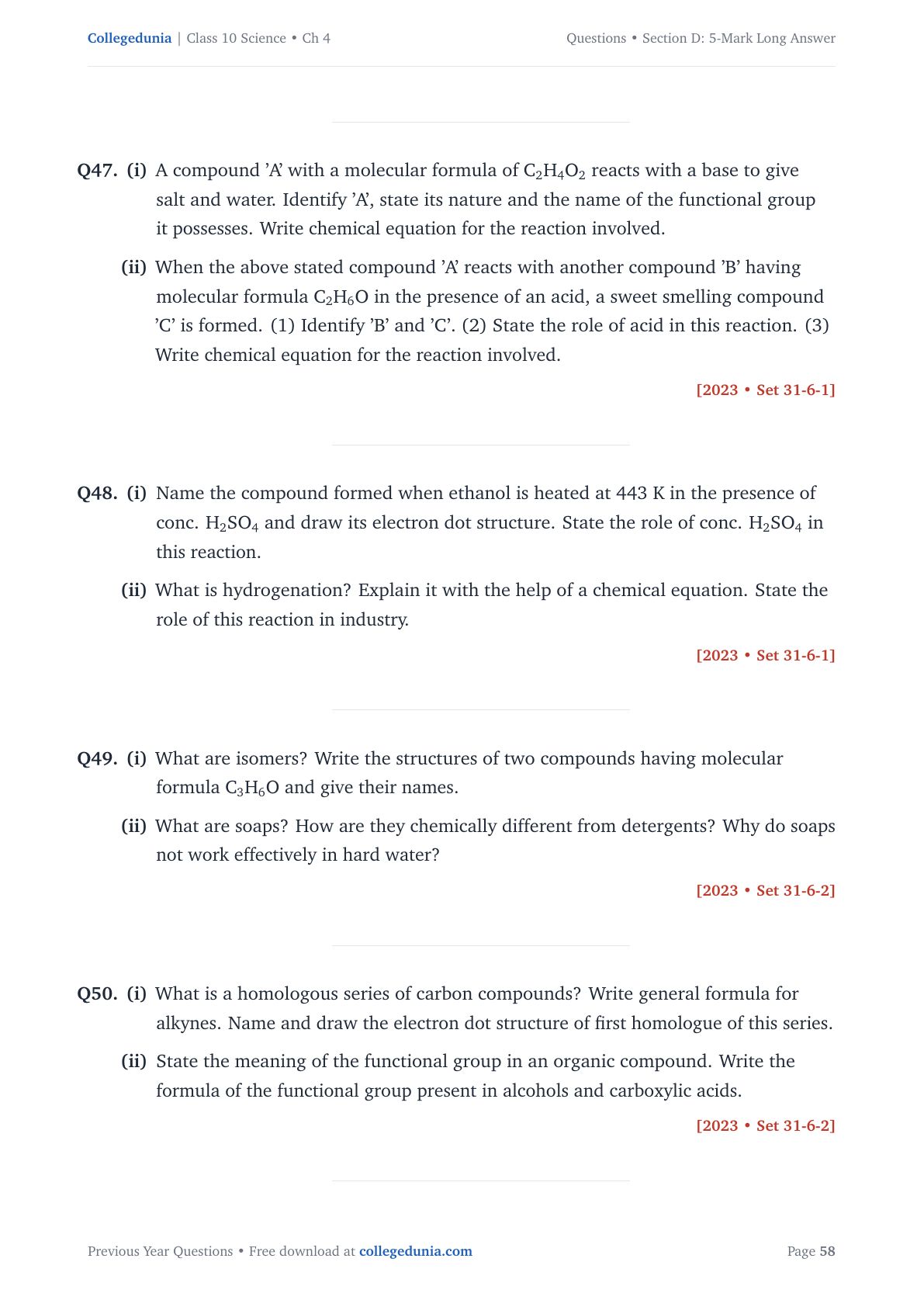
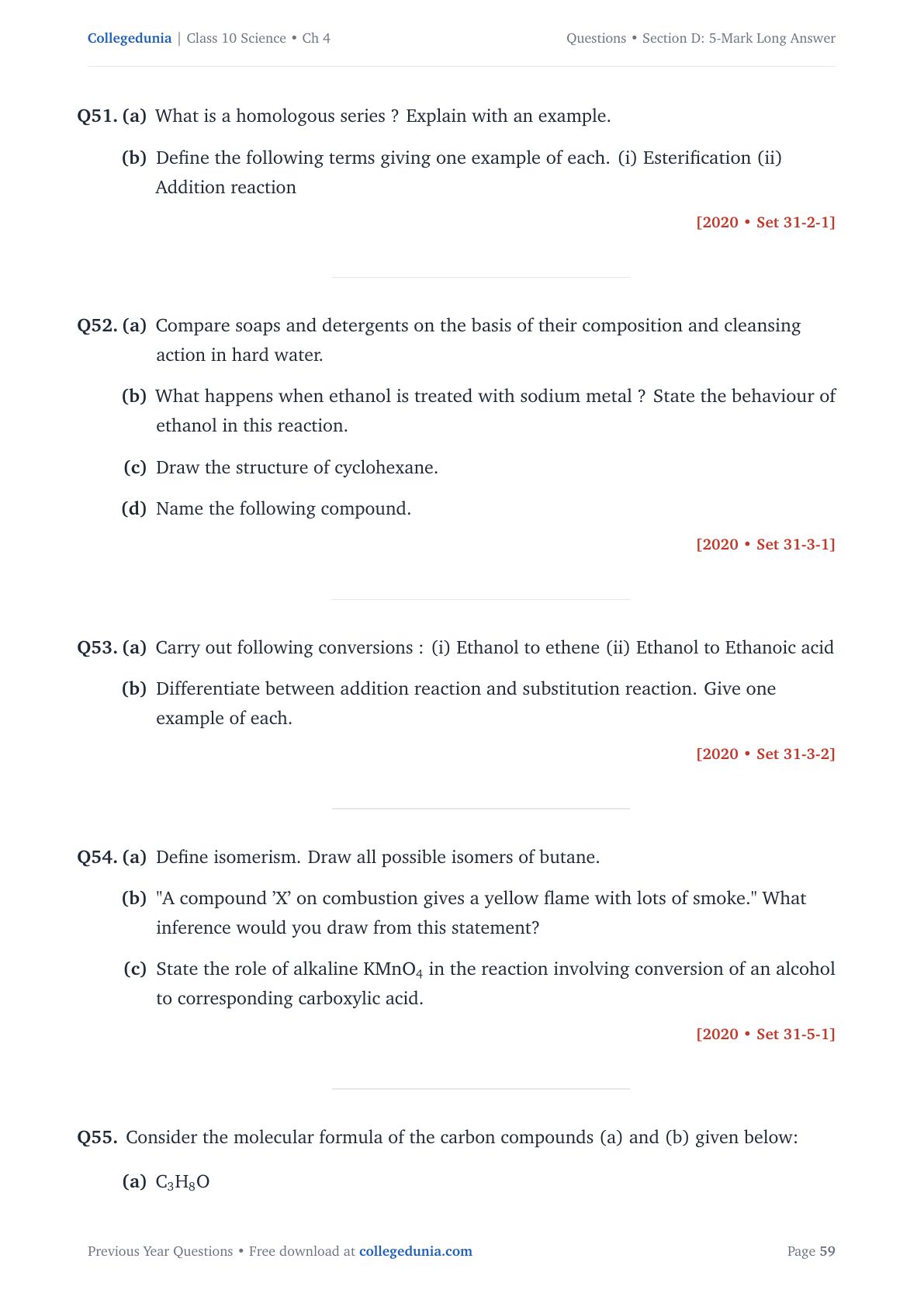
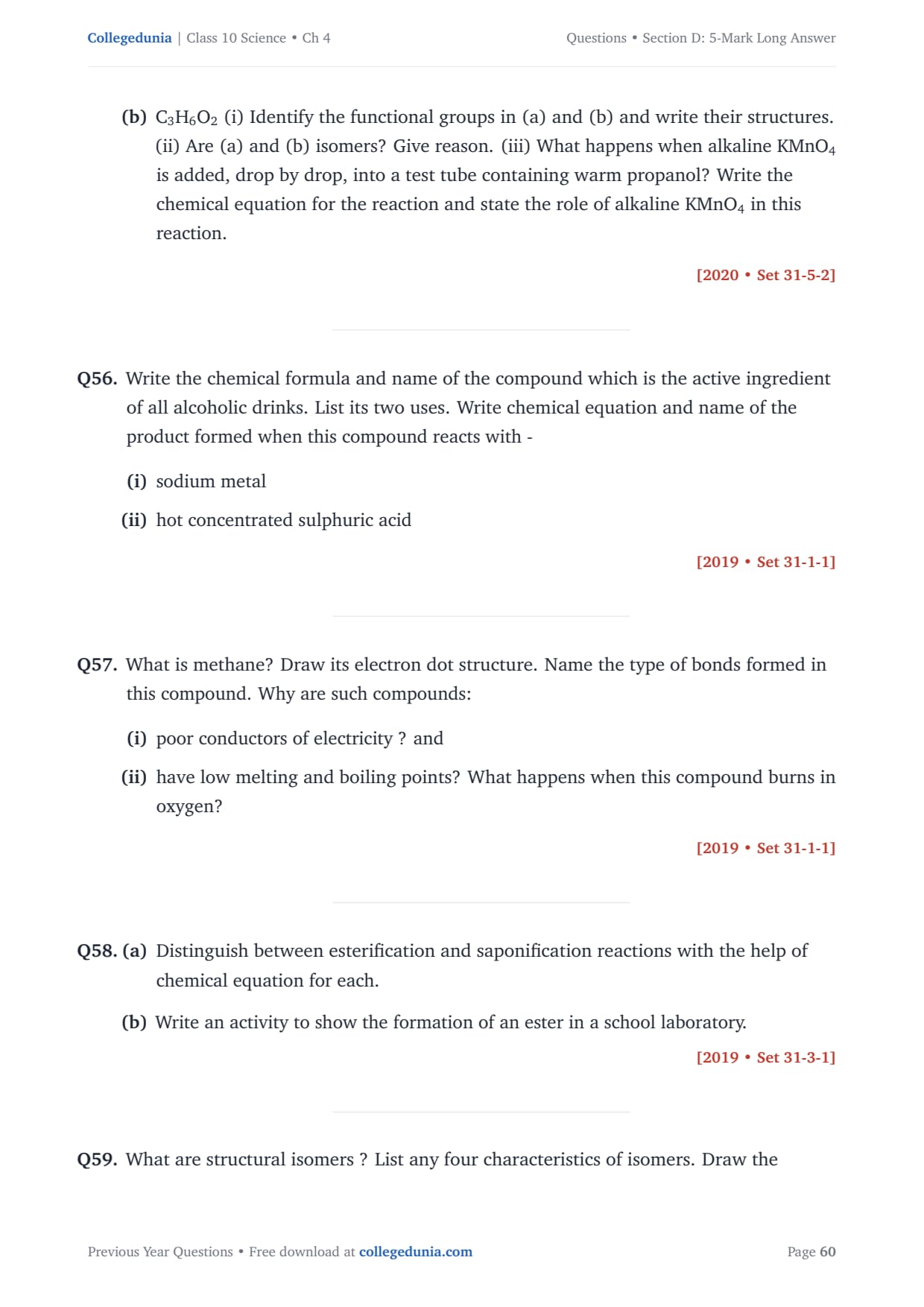
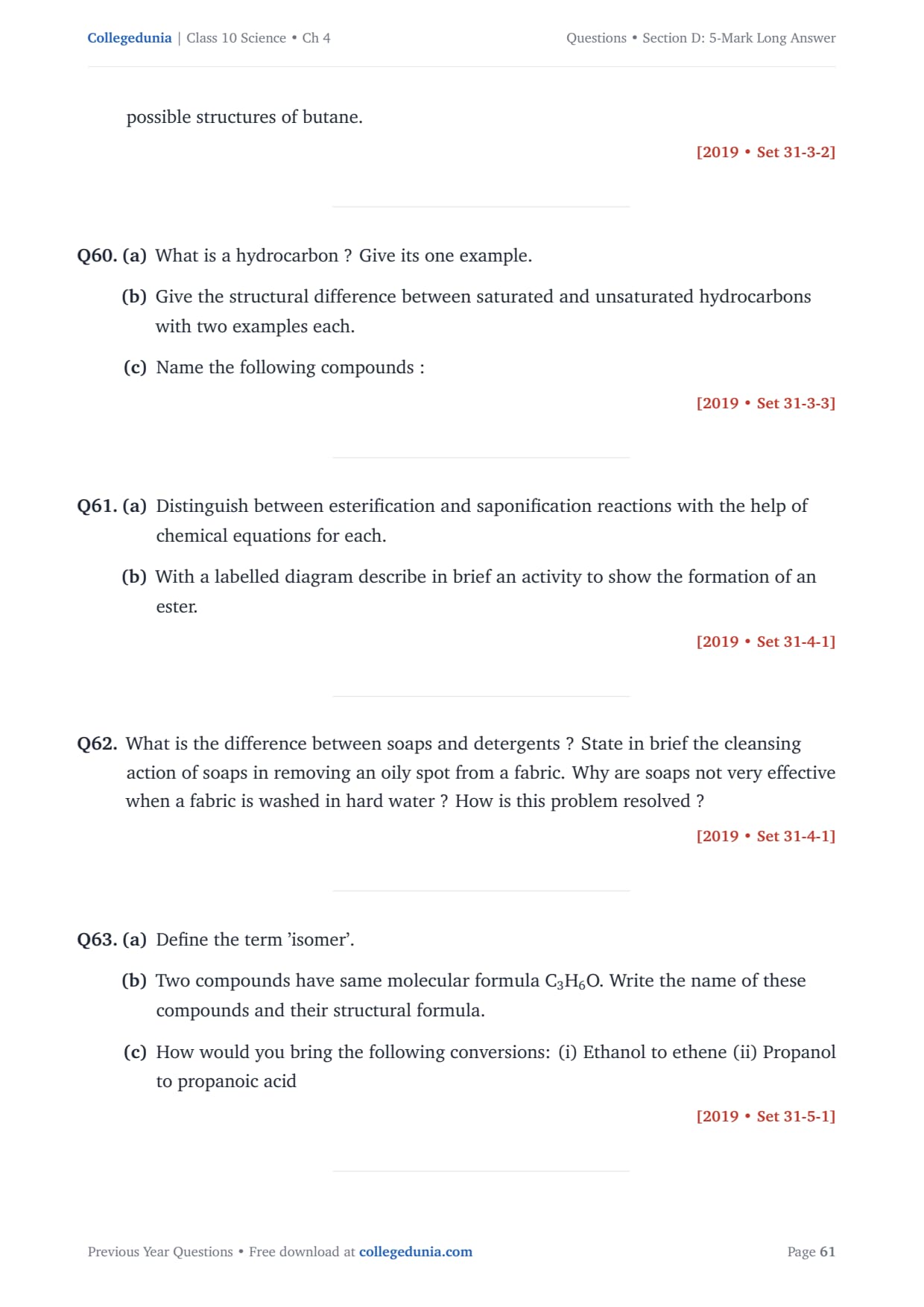
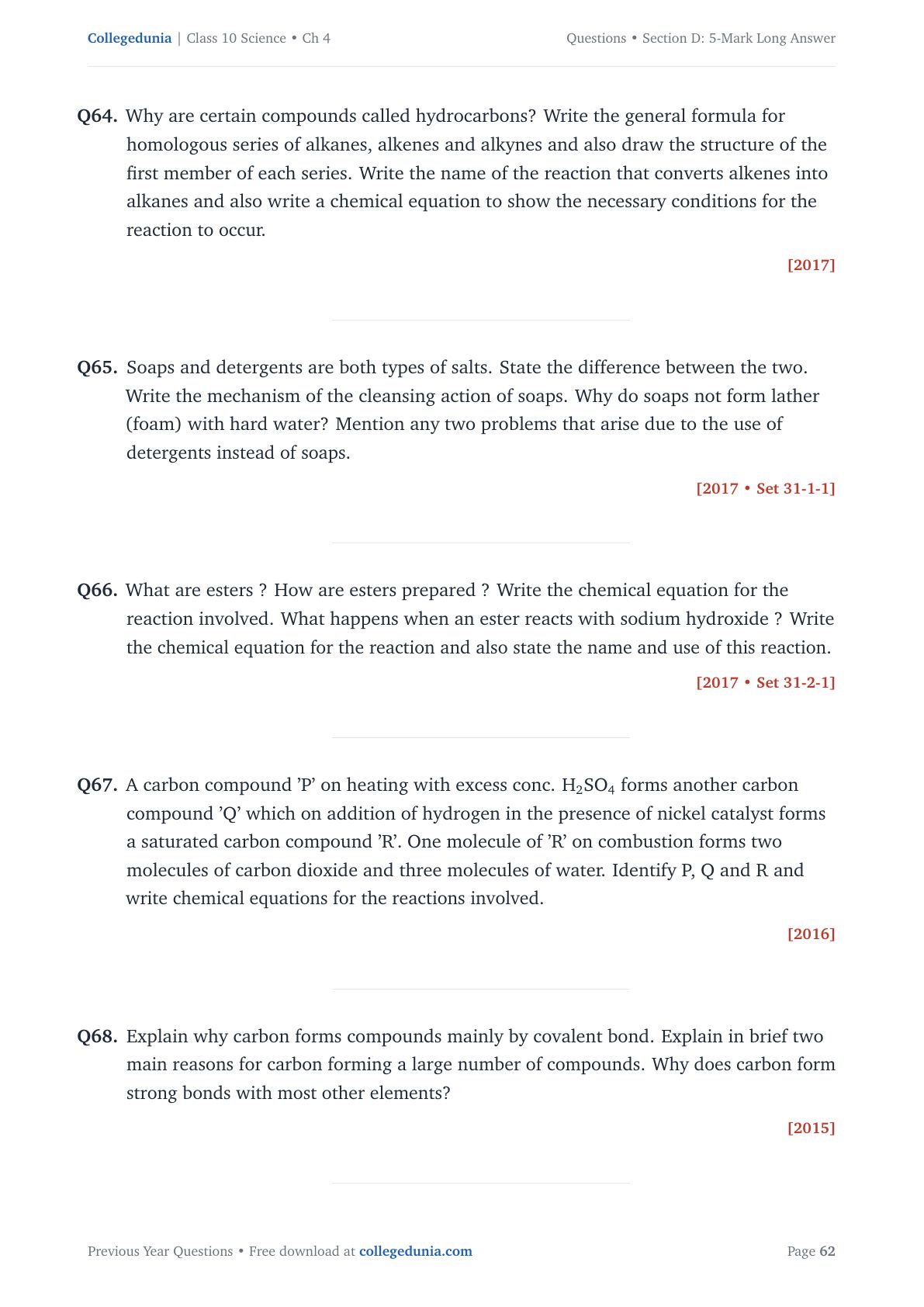
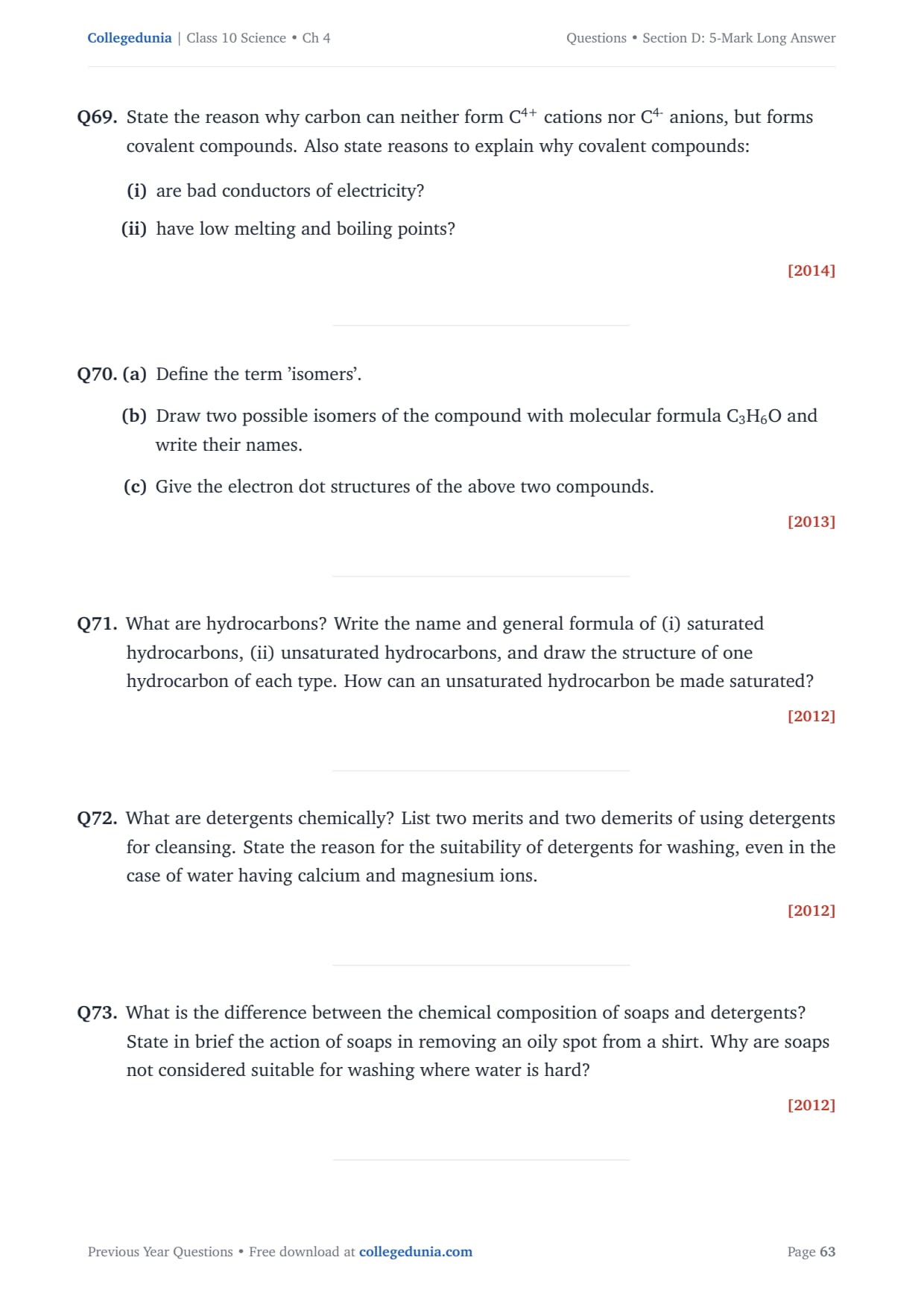
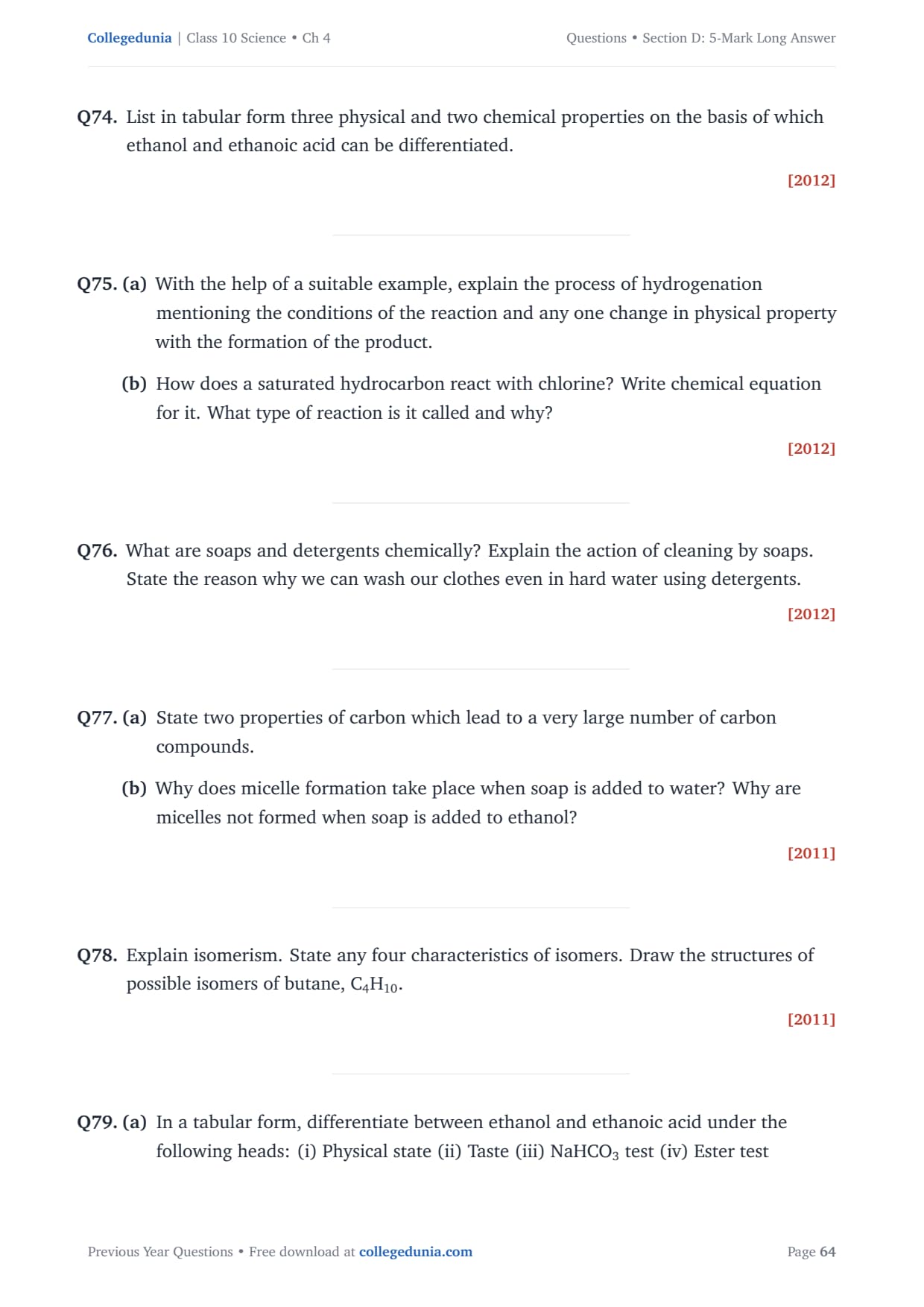
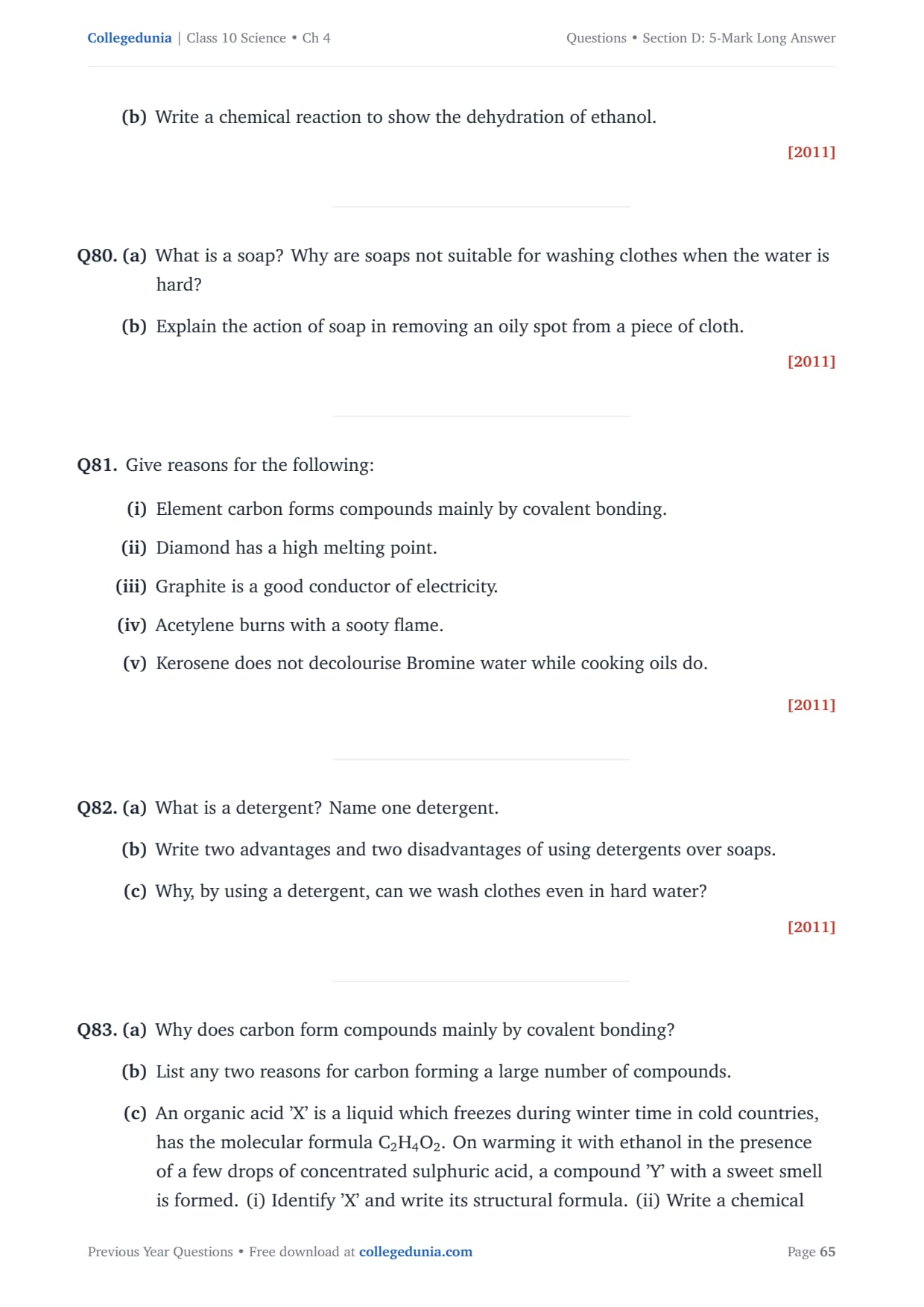
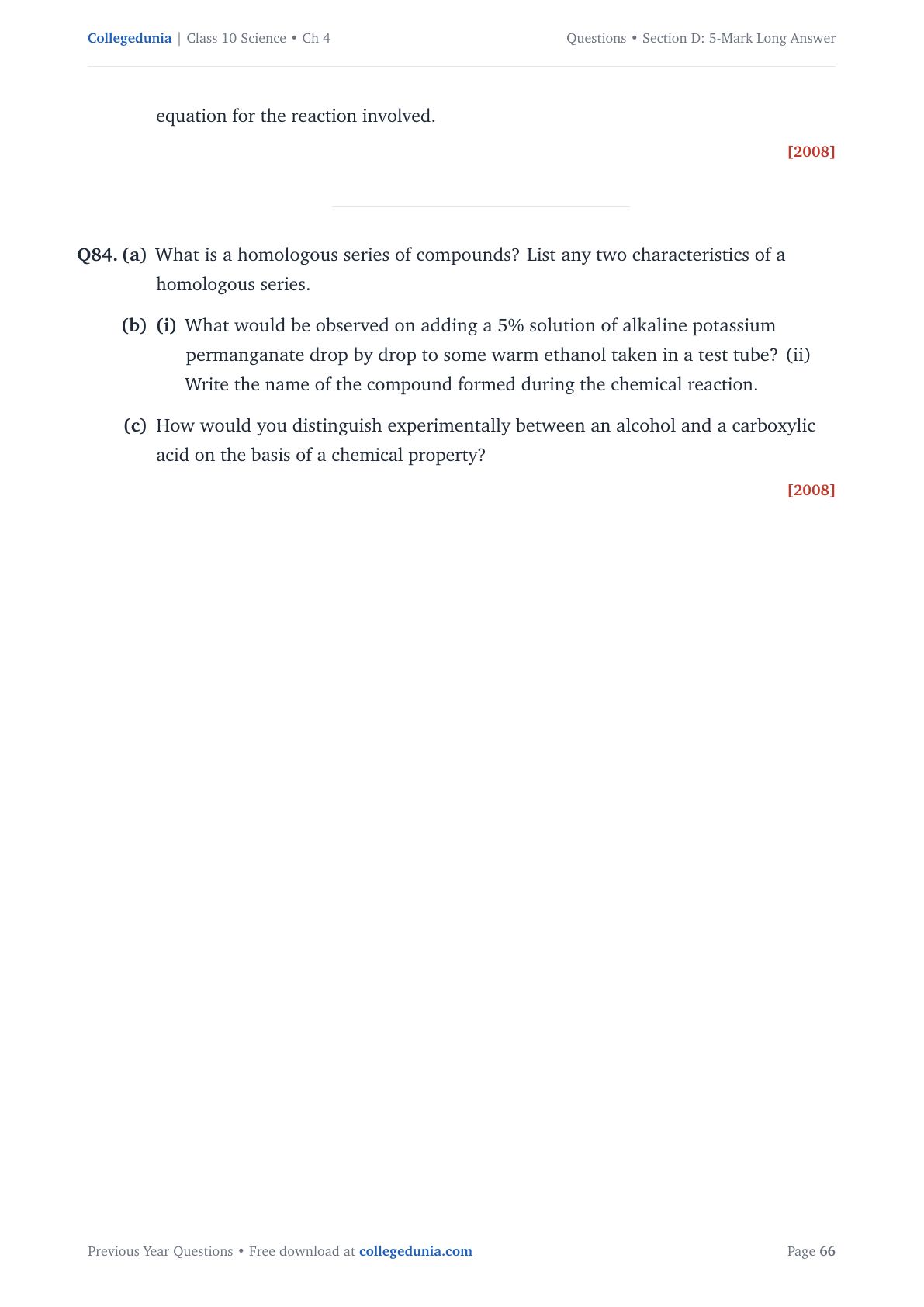
- 272 board questions across five mark categories, from 1-mark MCQs to 5-mark long answers.
- Drawn from 20 different CBSE set codes issued between 2005 and 2026.
- Questions only, no answers and no marking scheme, so you can use it purely for practice.
Every question in this PDF is copied exactly from an official CBSE board paper and checked against the NCERT Science textbook.
|
Table of Contents |
What the PDF Contains
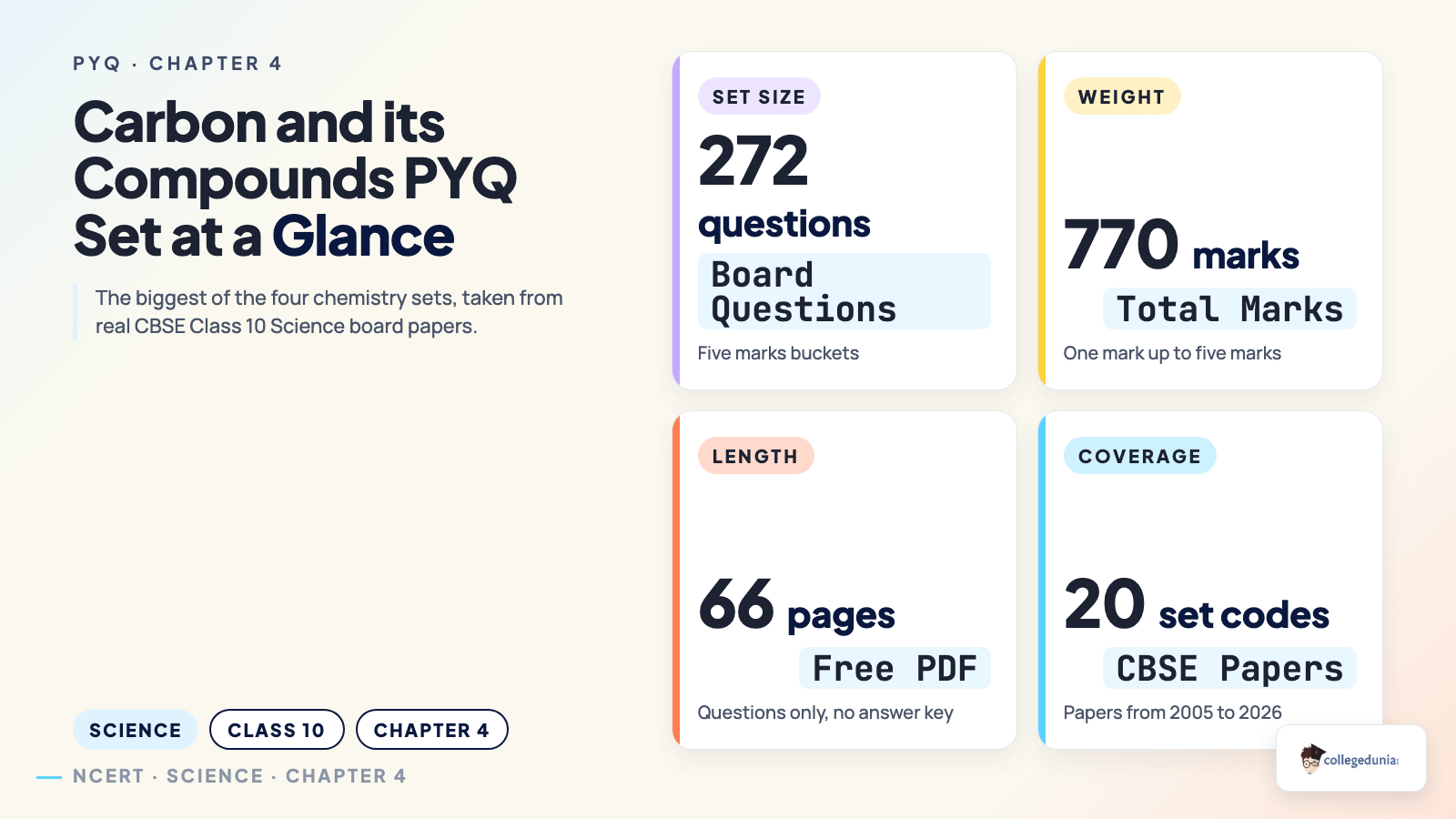
This PDF collects every board question CBSE has ever asked from Carbon and its Compounds, one question at a time, in the order they appeared in actual papers. Each question is tagged with its year and set code right next to it, for example 2026, Set 31-1-1, so you can see the exam pattern at a glance. There are 272 questions in total, worth 770 marks, running across 66 pages. Nothing in this file is invented or paraphrased, and there is no answer key attached to it.
Marks-wise Split
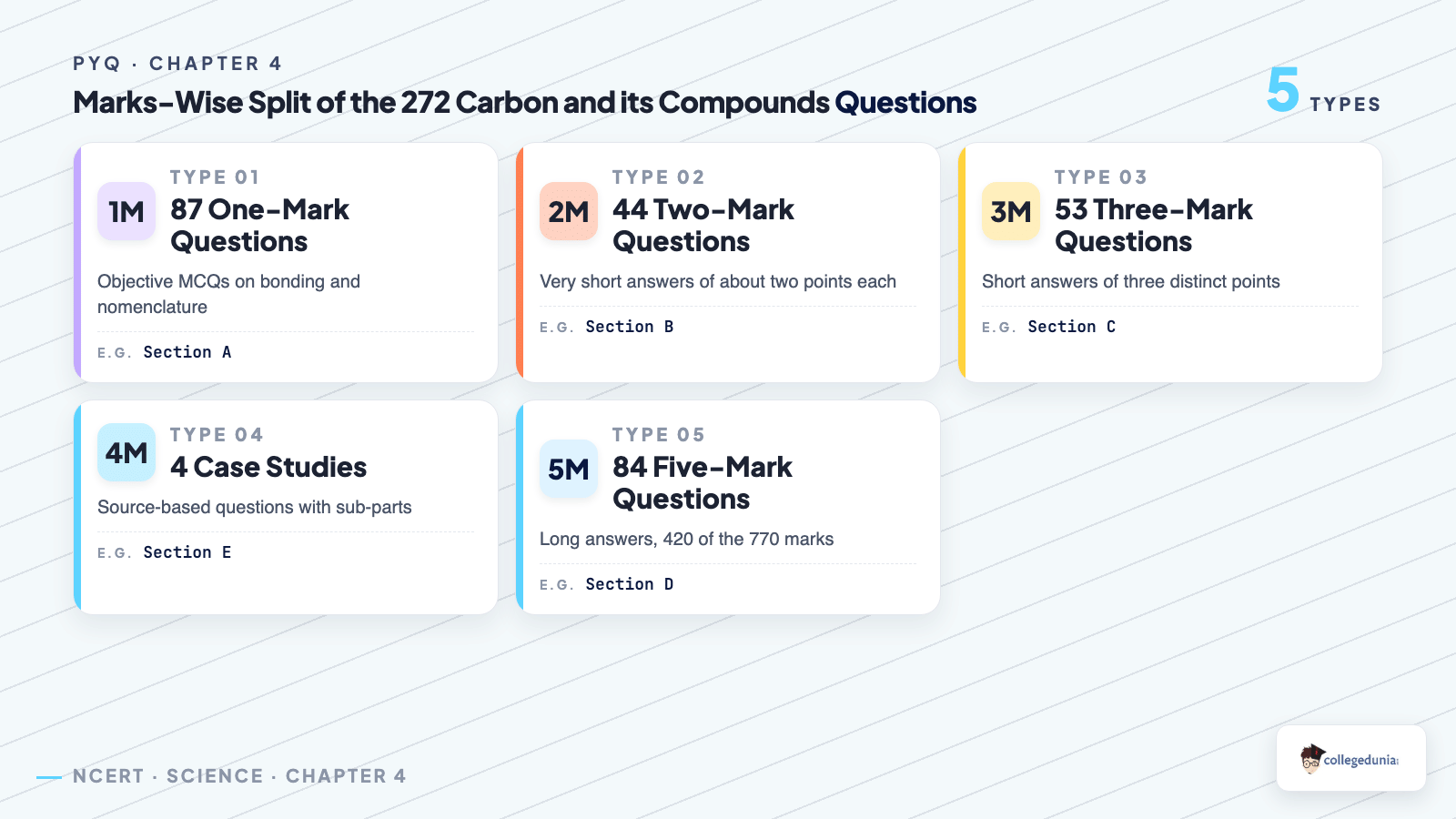
The chapter's questions fall into five mark buckets. Here is how they break down by section, question type and total marks.
| Marks | Section | Question Type | Questions | Total Marks |
|---|---|---|---|---|
| 1 mark | Section A | MCQ | 87 | 87 |
| 2 marks | Section B | Very Short Answer | 44 | 88 |
| 3 marks | Section C | Short Answer | 53 | 159 |
| 4 marks | Section E | Source-based Case Study | 4 | 16 |
| 5 marks | Section D | Long Answer | 84 | 420 |
| Total | 272 | 770 |
Why the 5-mark Bucket Dominates This Chapter
Carbon and its Compounds is the biggest PYQ set among the four chemistry chapters, and the reason is the 5-mark bucket. It alone holds 84 long answer questions, worth 420 of the chapter's 770 marks, which is more than half the paper's weight in one bucket. These are the questions that ask you to combine two or three concepts together, such as writing structural formulas alongside explaining a chemical property, or connecting soaps and micelle formation in one answer. Practising this bucket specifically pays off more than any other section in this chapter.
Which Topics the Papers Keep Asking About
Across 20 years of set codes, the questions in this PDF keep returning to the same core ideas. The recurring topics are:
- Covalent bonding
- Catenation and tetravalency
- Saturated and unsaturated hydrocarbons
- Structural isomerism
- Homologous series
- IUPAC nomenclature
- Combustion and oxidation
- Addition and substitution reactions
- Ethanol and ethanoic acid
- Soaps and detergents
- Micelles
How to Attempt IUPAC Naming and Structural Isomer Questions
These two question types show up in almost every paper in this set. Use this order of steps when you attempt them.
- Count the carbon atoms in the longest continuous chain first, before naming anything.
- Identify whether the compound has a double bond, a triple bond, or only single bonds, since this decides the ane, ene or yne ending.
- Locate any functional group, such as an alcohol or acid group, and give it priority over the plain hydrocarbon chain.
- Number the chain so the functional group or the multiple bond gets the lowest possible locant.
- For isomer questions, redraw the same molecular formula with the chain arranged differently, or with the functional group moved to a different carbon.
- Check your final answer against the number of hydrogen atoms the formula requires, since a wrong hydrogen count usually means a wrong structure.
Common Mistakes Students Make in This Chapter
Students lose marks in this chapter for reasons that repeat year after year.
- Confusing catenation with tetravalency, when the two describe different properties of carbon.
- Drawing an isomer that changes the molecular formula instead of just rearranging atoms.
- Mixing up addition reactions of unsaturated hydrocarbons with substitution reactions of saturated ones.
- Writing ethanoic acid's properties from memory without checking the actual reaction conditions given in the question.
- Skipping the diagram of micelle formation in soap questions, which usually costs part marks even when the text answer is correct.
Student Feedback
We asked students who downloaded this PDF how it helped their board preparation for Carbon and its Compounds.
- 81 percent said seeing the year and set code next to each question helped them judge how often a topic repeats.
- 74 percent said the 5-mark section was the part they practised the most from this set.
- 4.5 out of 5 average rating from students who used this PDF for revision.
Based on an internal Collegedunia student feedback poll collected from users of this PDF.
How This PYQ Set Pairs With the Other Chapter 4 Resources
This PYQ PDF works best alongside the other Chapter 4 material on Collegedunia. Use the table below to move between them.
| Resource | Link |
|---|---|
| NCERT Solutions | Chapter 4 Solutions |
| NCERT Notes | Chapter 4 Notes |
| Handwritten Notes | Chapter 4 Handwritten Notes |
| NCERT Book PDF | Chapter 4 Book PDF |
All Class 10 Science Chapterwise PYQ PDFs
Carbon and its Compounds is one of four chemistry chapters in the Class 10 Science PYQ set. Here is where the other three stand.
| Chapter | PYQ PDF |
|---|---|
| Chapter 1 | Chemical Reactions and Equations Class 10 Science PYQ |
| Chapter 2 | Acids, Bases and Salts Class 10 Science PYQ |
| Chapter 3 | Metals and Non-metals Class 10 Science PYQ |
| Chapter 4 | Carbon and its Compounds This page |
Frequently Asked Questions
FAQs on Class 10 Science Chapter 4 Carbon and its Compounds PYQ PDF
Ques. How many questions are in this Carbon and its Compounds PYQ PDF?
Ans. There are 272 questions in total, worth 770 marks, spread across 66 pages.
Ques. Does this PDF include answers?
Ans. No. This PDF has questions only, with no answer key and no marking scheme.
Ques. Which years of board papers are covered?
Ans. The questions span CBSE board papers from 2005 to 2026, across 20 different set codes.
Ques. Which mark category has the most questions?
Ans. The 1-mark MCQ section has the most questions at 87, but the 5-mark long answer section carries the most marks at 420.
Ques. Why does the 5-mark section matter so much in this chapter?
Ans. It has 84 questions worth 420 marks, more than half the chapter's total marks, making it the highest-scoring section to practise.
Ques. Are these real CBSE board questions?
Ans. Yes. Every question is copied from an actual CBSE Class 10 Science board paper and checked against the NCERT Science textbook.
Ques. Is this PDF free to download?
Ans. Yes, the PDF is free to download.
Ques. What topics should I focus on while using this PDF?
Ans. Focus on covalent bonding, catenation, homologous series, IUPAC nomenclature, structural isomerism, and the reactions of ethanol and ethanoic acid, since these repeat most often across the papers.



Comments