



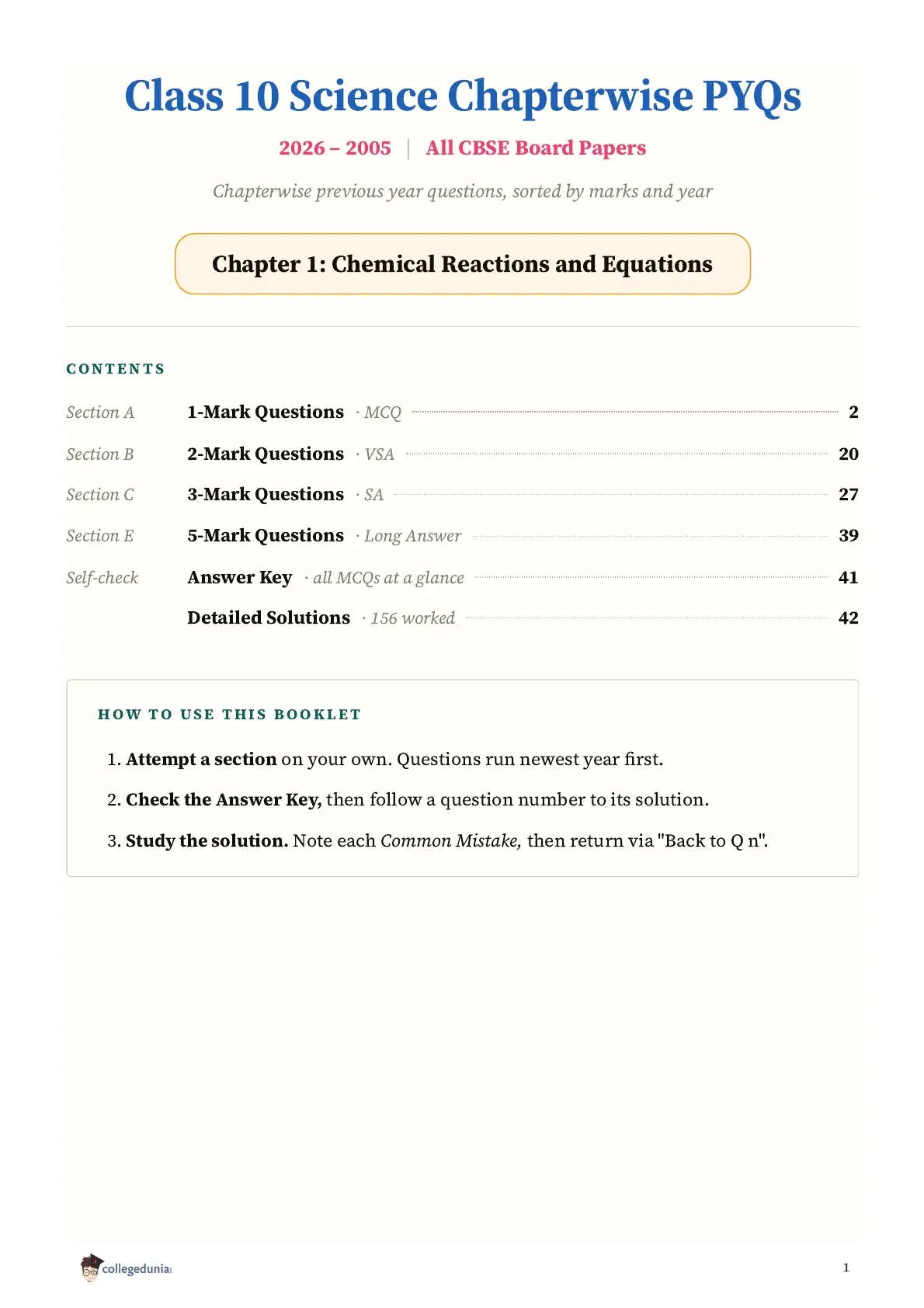
Class 10 Science Chemical Reactions and Equations PYQ, free to download as a 129-page PDF with 156 solved board questions from the 2005 to 2026 papers. Chemical Reactions and Equations is Chapter 1 of the NCERT Class 10 Science book and opens the CBSE unit Chemical Substances, which carries 25 of the 80 theory marks.
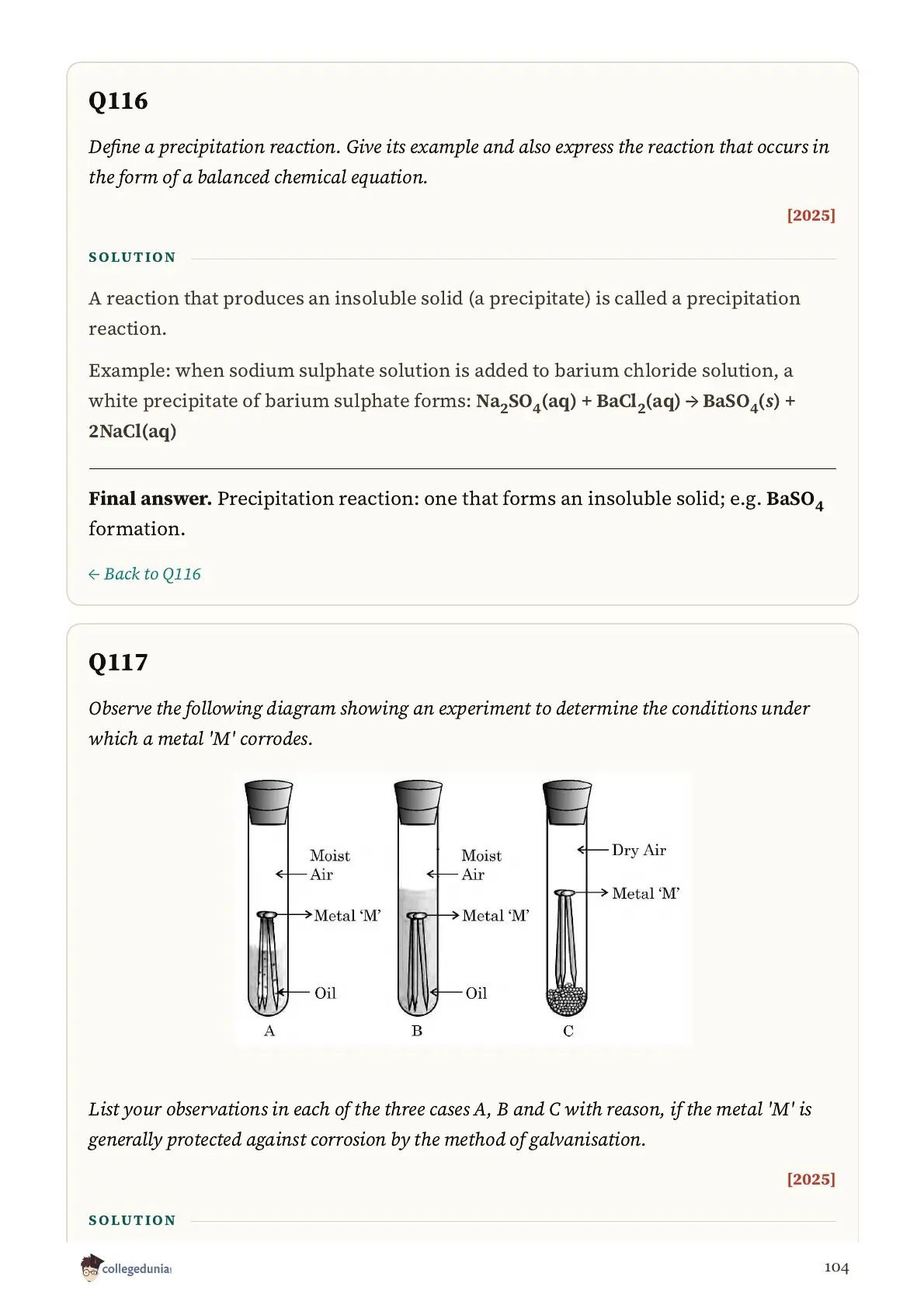
The questions keep returning to balanced chemical equations (54 questions), the type of a reaction (26), heating of lead nitrate (27) or ferrous sulphate (18), the decomposition of silver chloride or bromide (21), exothermic and endothermic reactions (19), redox and oxidising or reducing agents (17) and displacement reactions (15). 4 of the questions carry their original experiment diagram.
On this page you get:
- 156 questions with a worked solution each: 54 MCQs and assertion-reason items, 95 short answers and 7 long answers
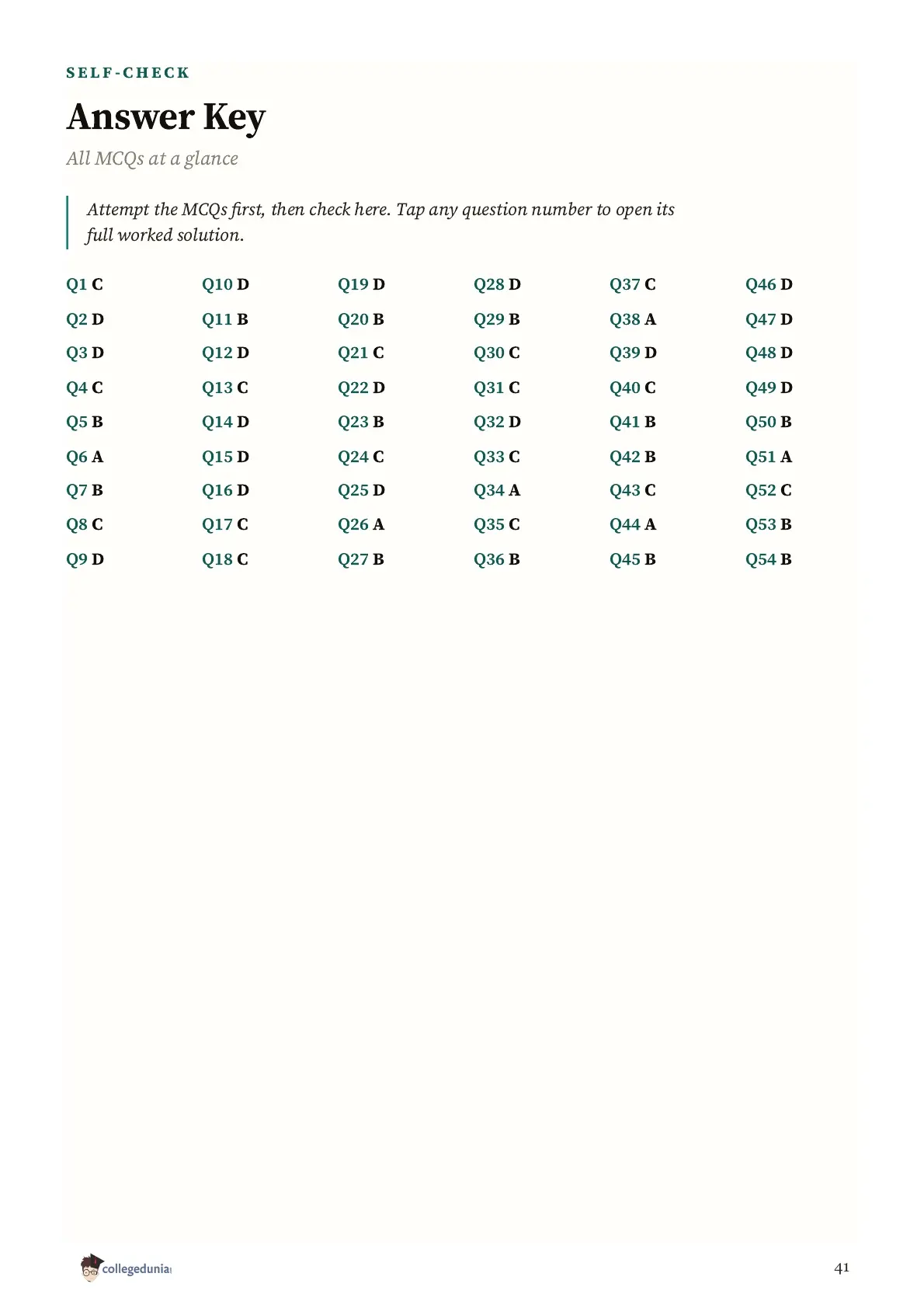
- An Answer Key that lists all 54 MCQs at a glance
- Question counts by topic, so you know whether to start with balancing, types of reactions or redox
- A marks-wise table of questions (1, 2, 3 and 5 mark)
- The common mistakes students make, such as changing a subscript instead of a coefficient while balancing, and a short FAQ
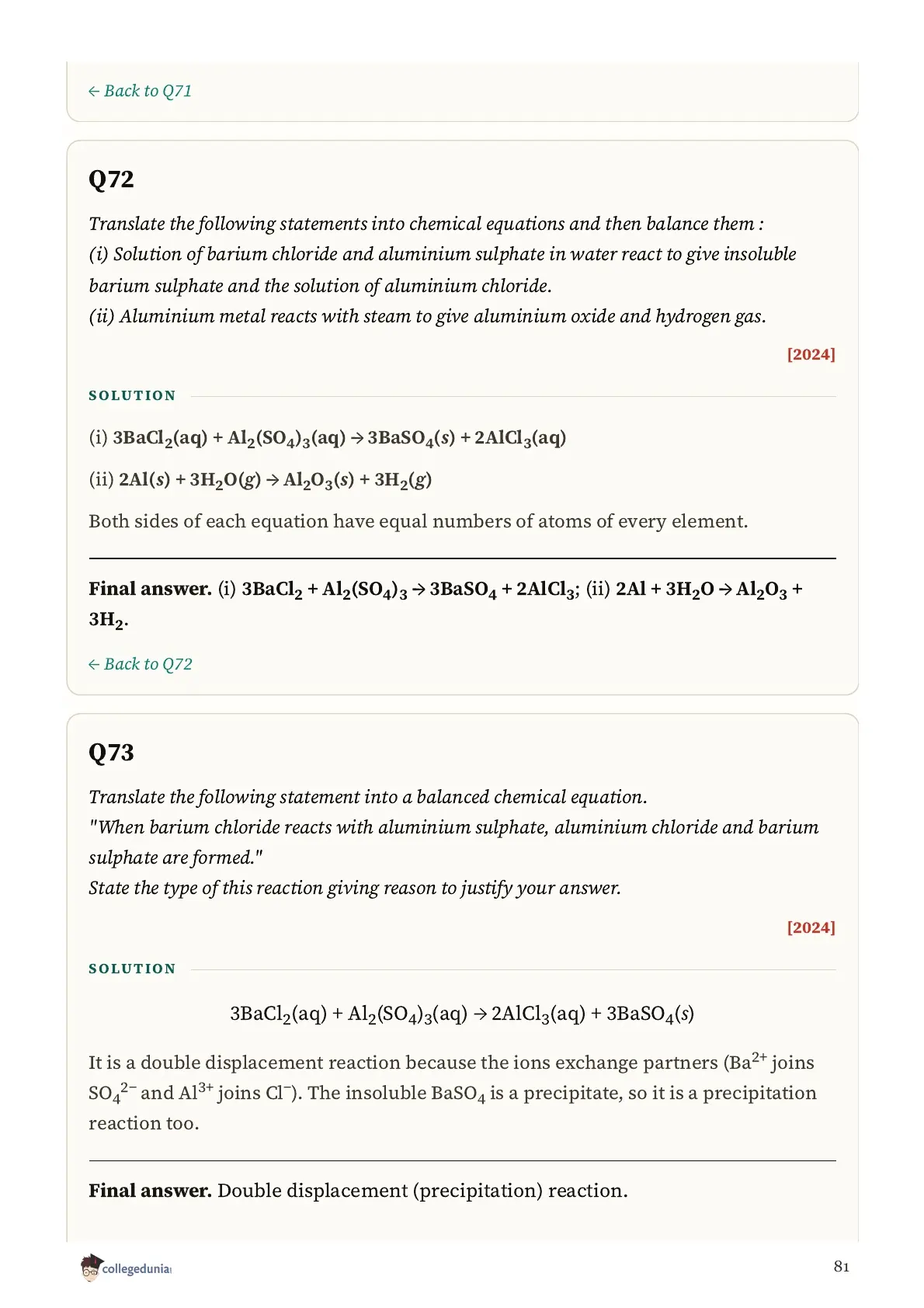
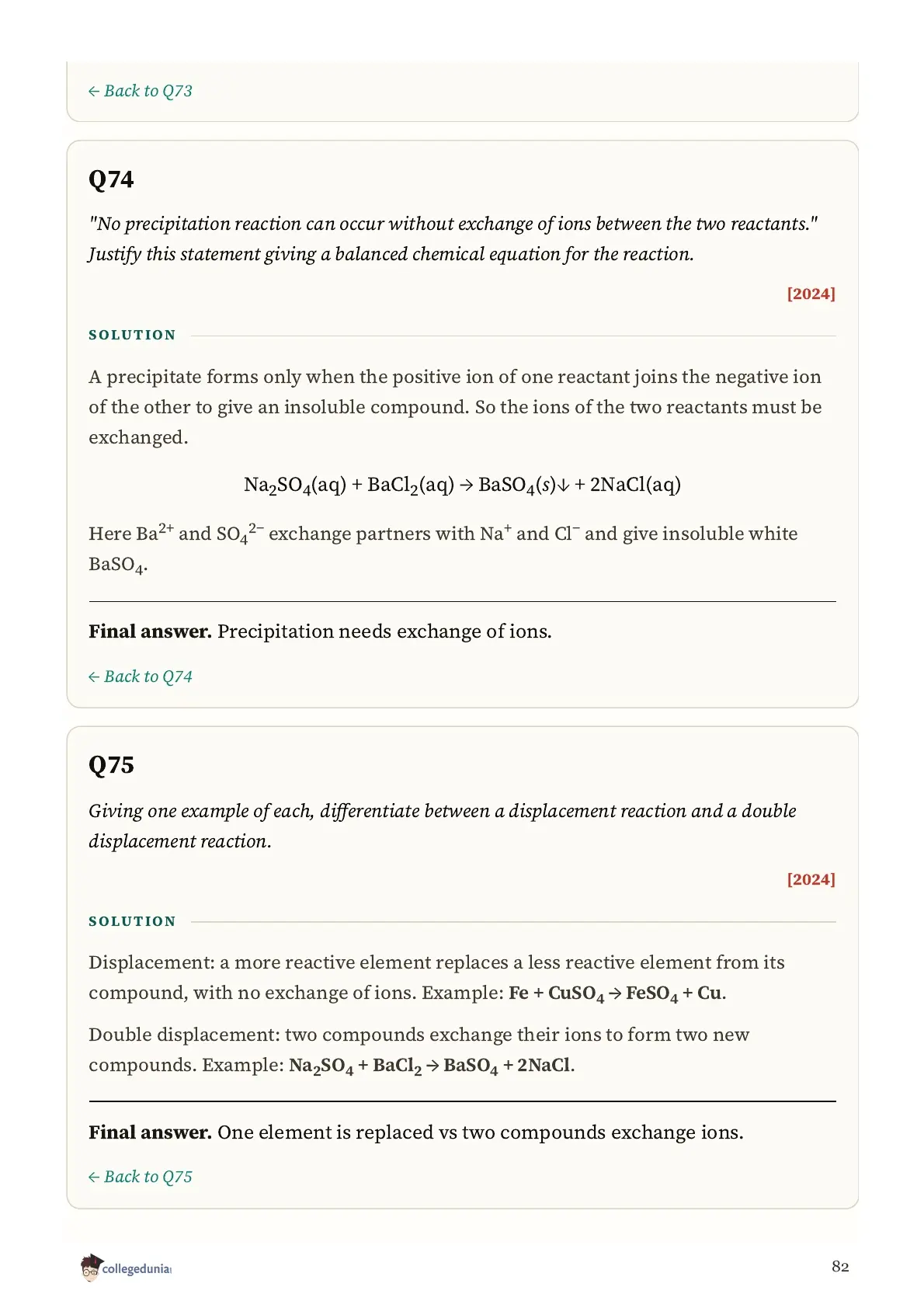
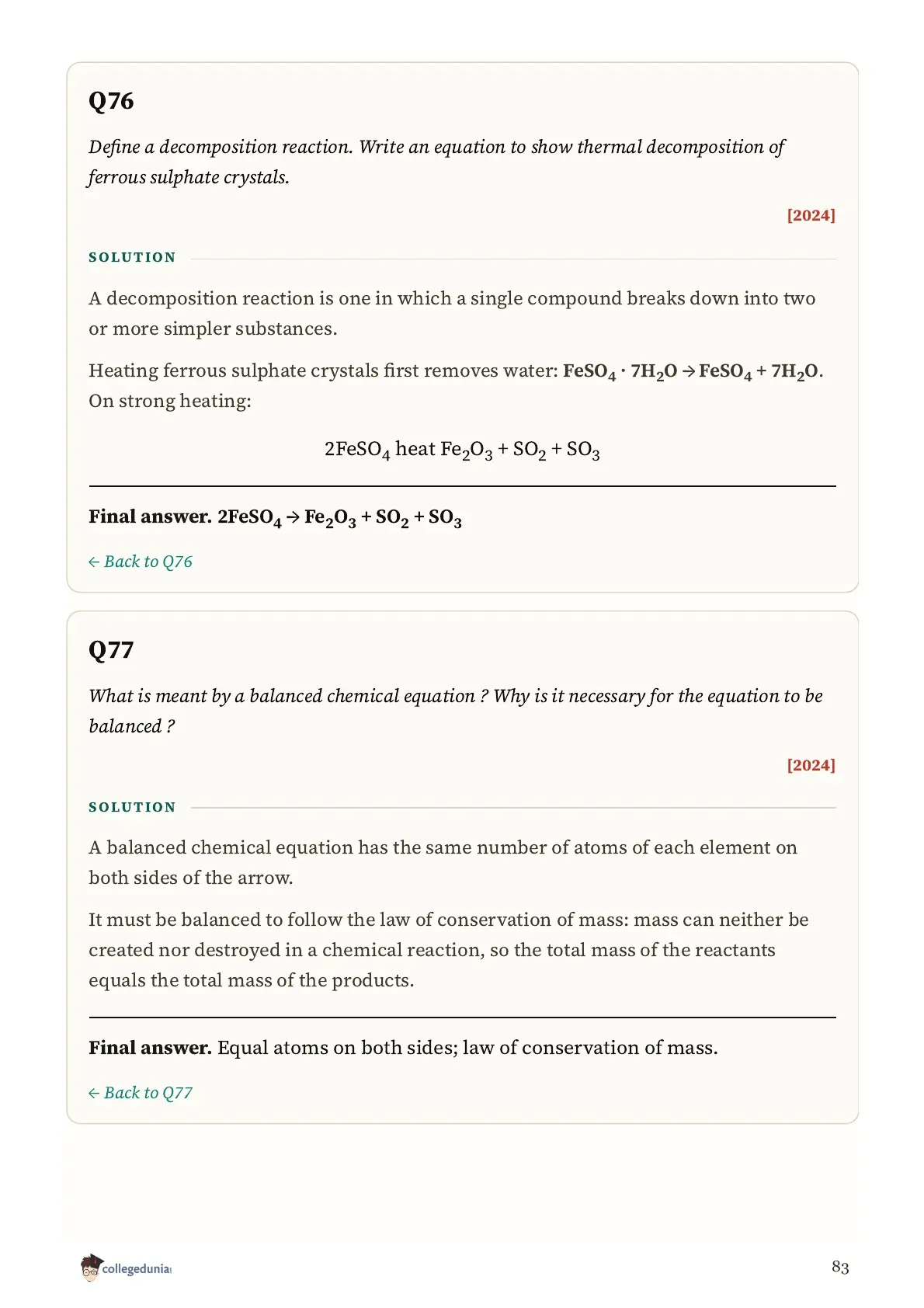
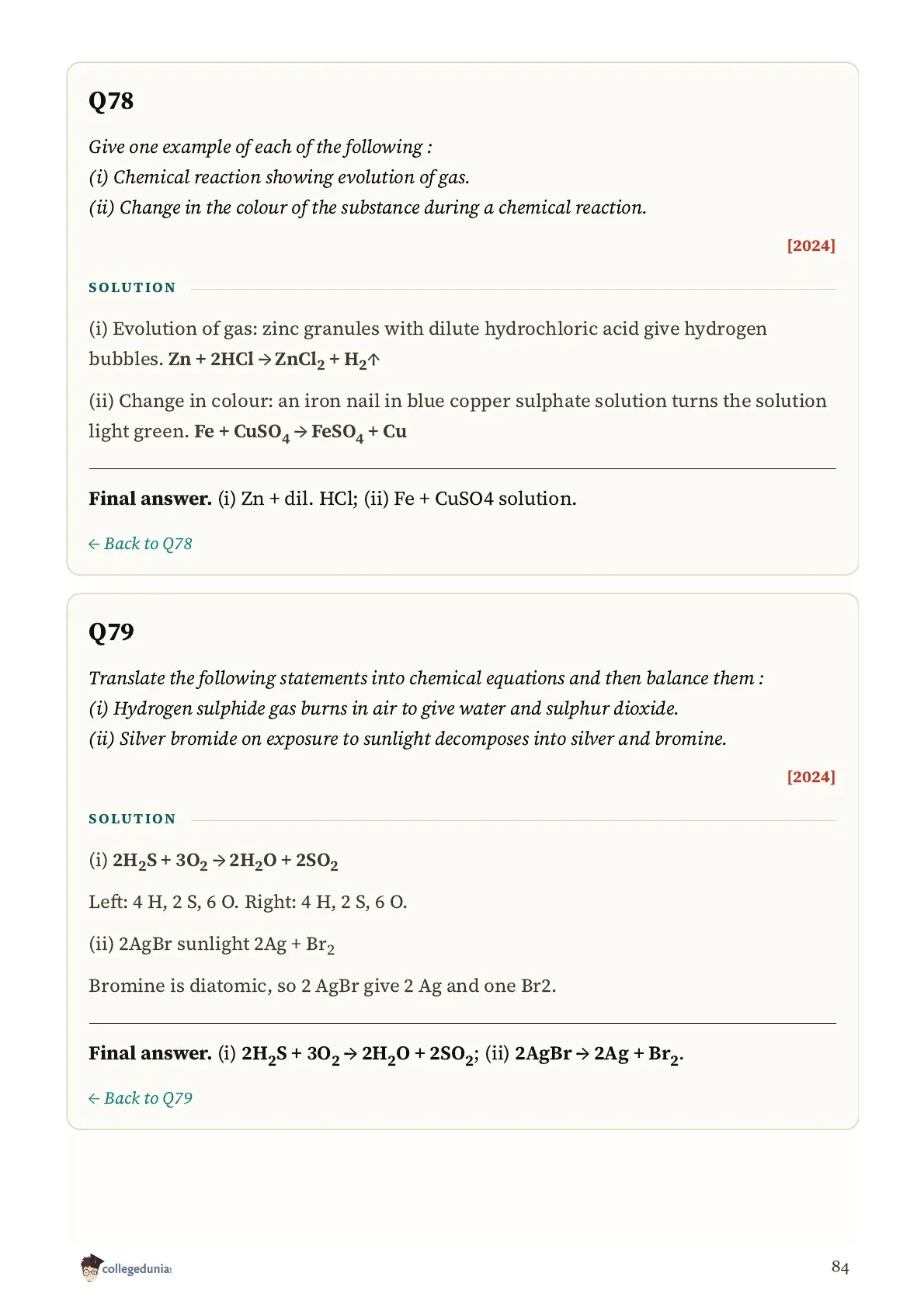
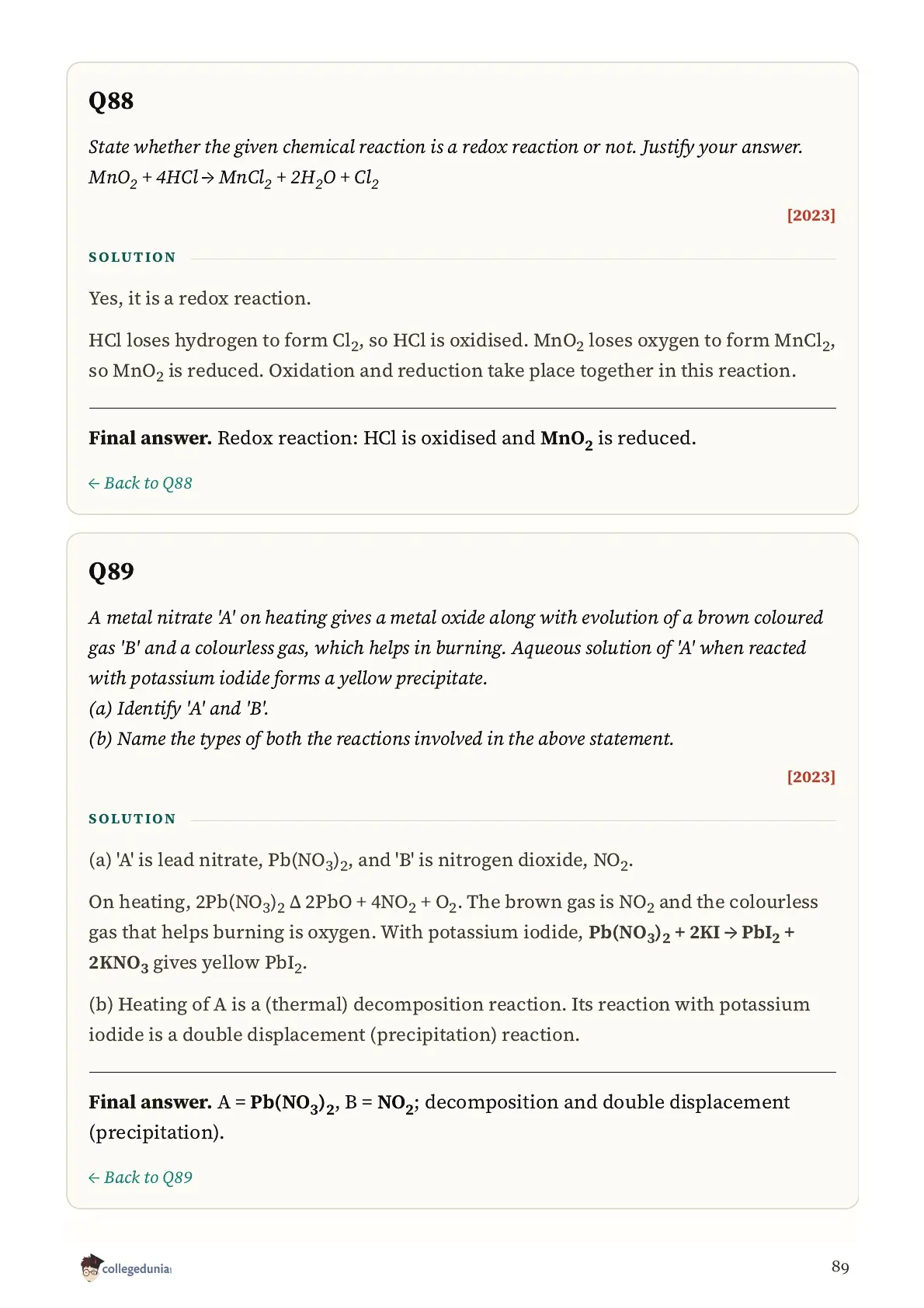
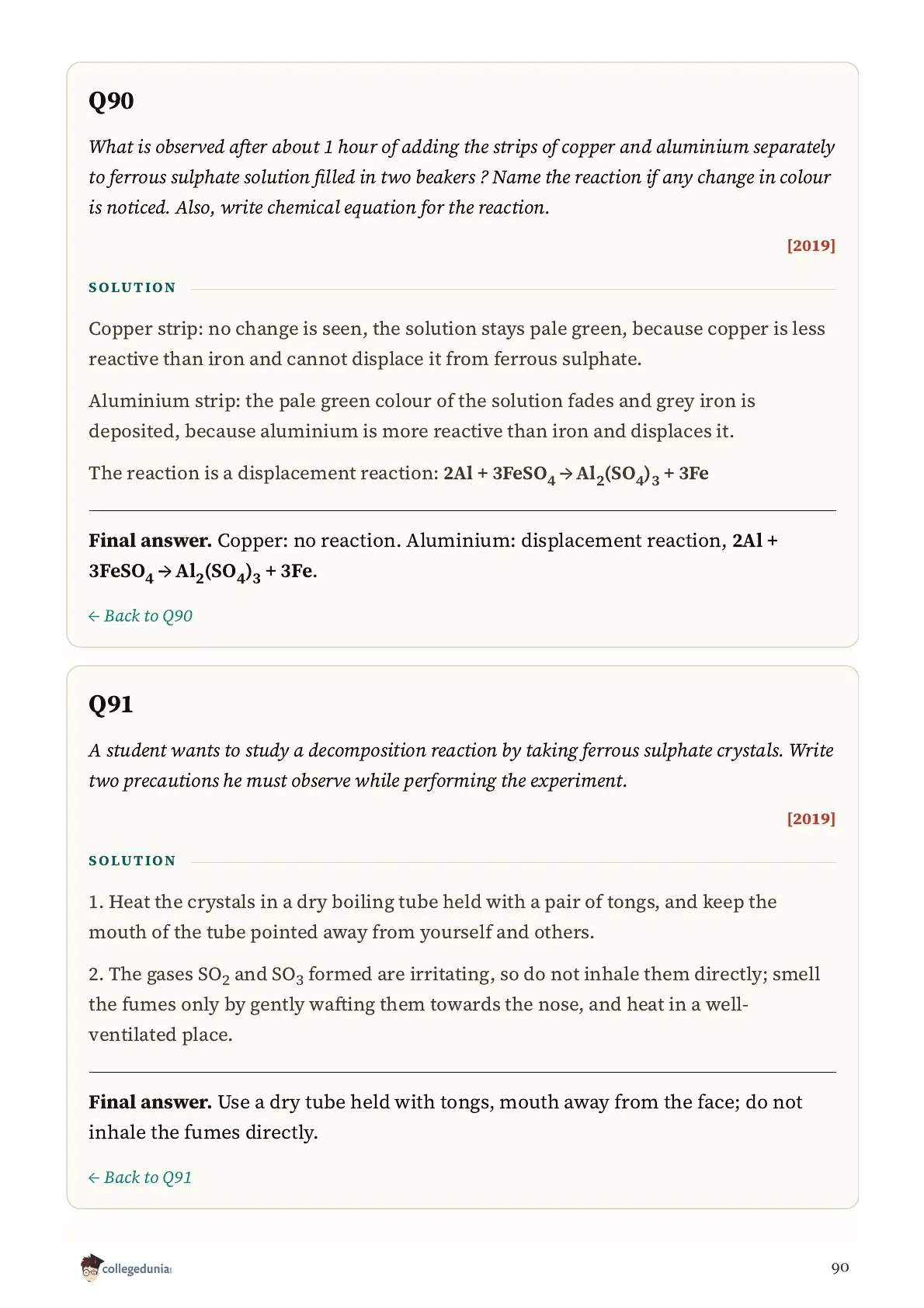
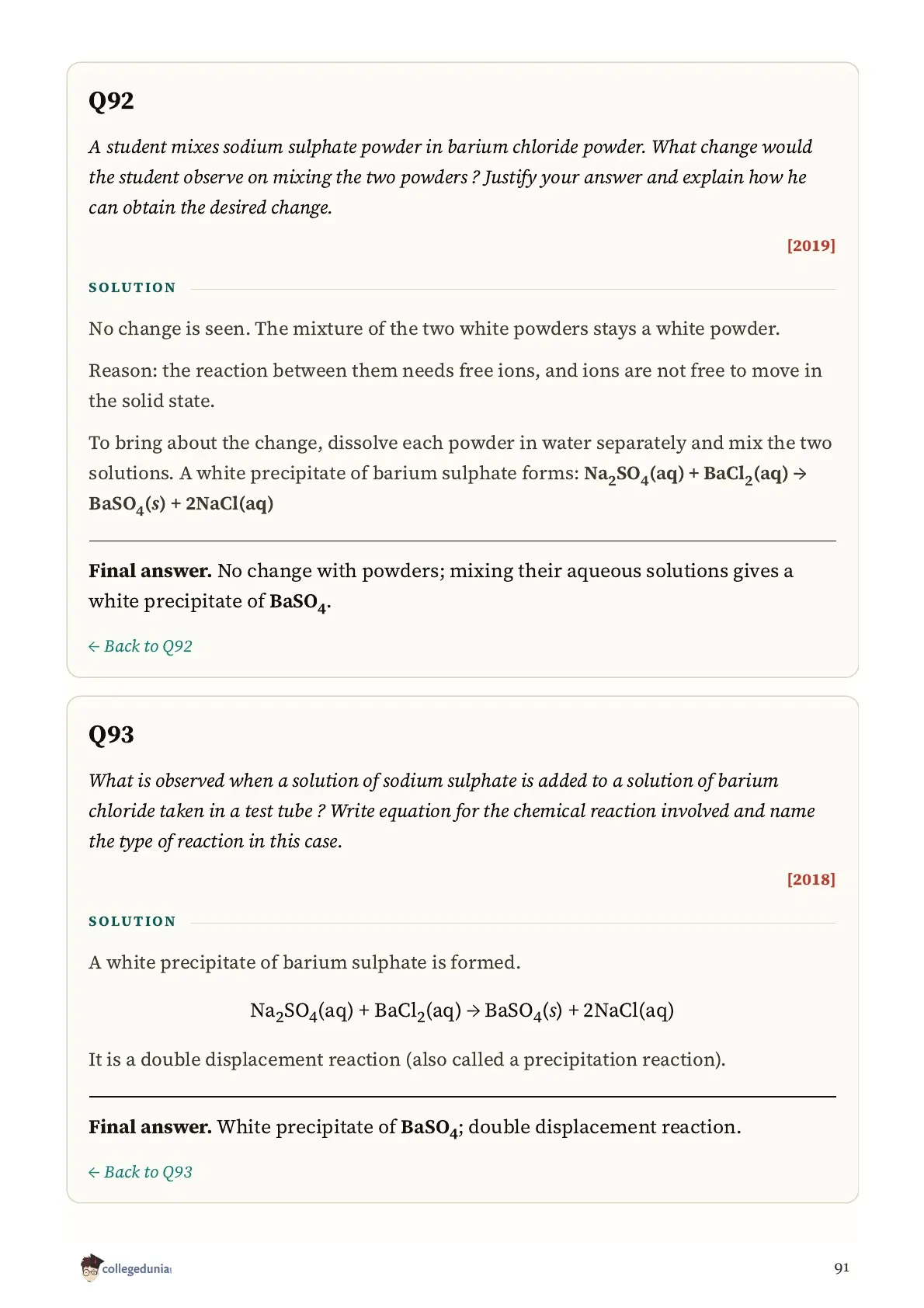
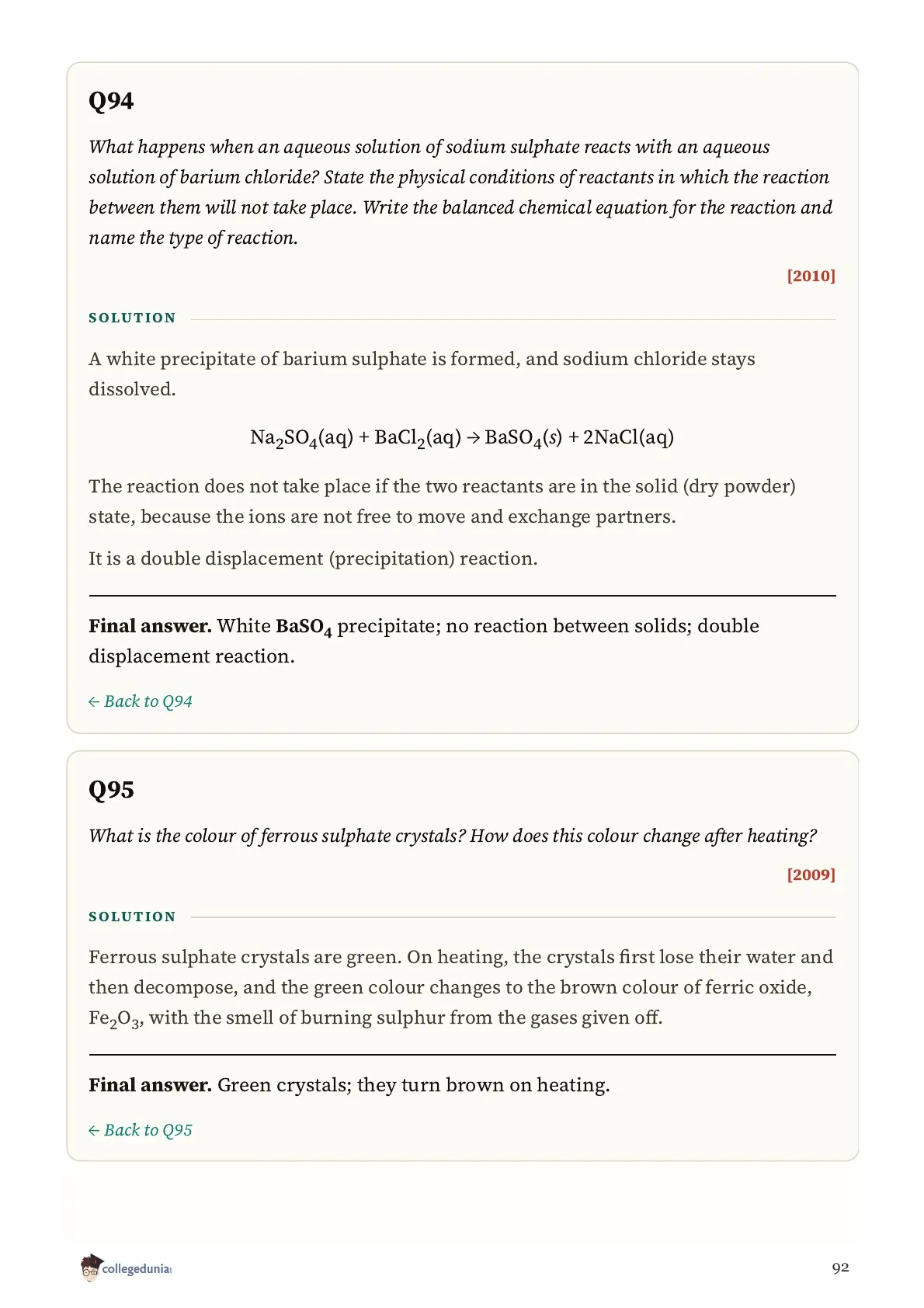
Chemical Reactions and Equations Weightage in the Class 10 Science Paper
CBSE does not print a mark figure for Chemical Reactions and Equations alone. In the Class 10 Science (086) syllabus, Unit I, Chemical Substances, carries 25 of the 80 theory marks and holds four chapters: this one, Acids, Bases and Salts, Metals and Non-metals, and Carbon and its Compounds. The 25 is a unit-level figure as reported by prep sites for the 2025-26 and 2026-27 syllabus and is unofficial here, so check the current syllabus on cbseacademic.nic.in. In this set the 3-mark short answer is the commonest question after the 1-mark MCQ, and only 7 questions are 5-mark long answers.
The table shows how many questions the set holds at each mark value.
| Marks per Question | Questions in the Set |
|---|---|
| 1 mark | 59 |
| 2 marks | 39 |
| 3 marks | 51 |
| 5 marks | 7 |
Chemical Reactions and Equations Questions by Topic
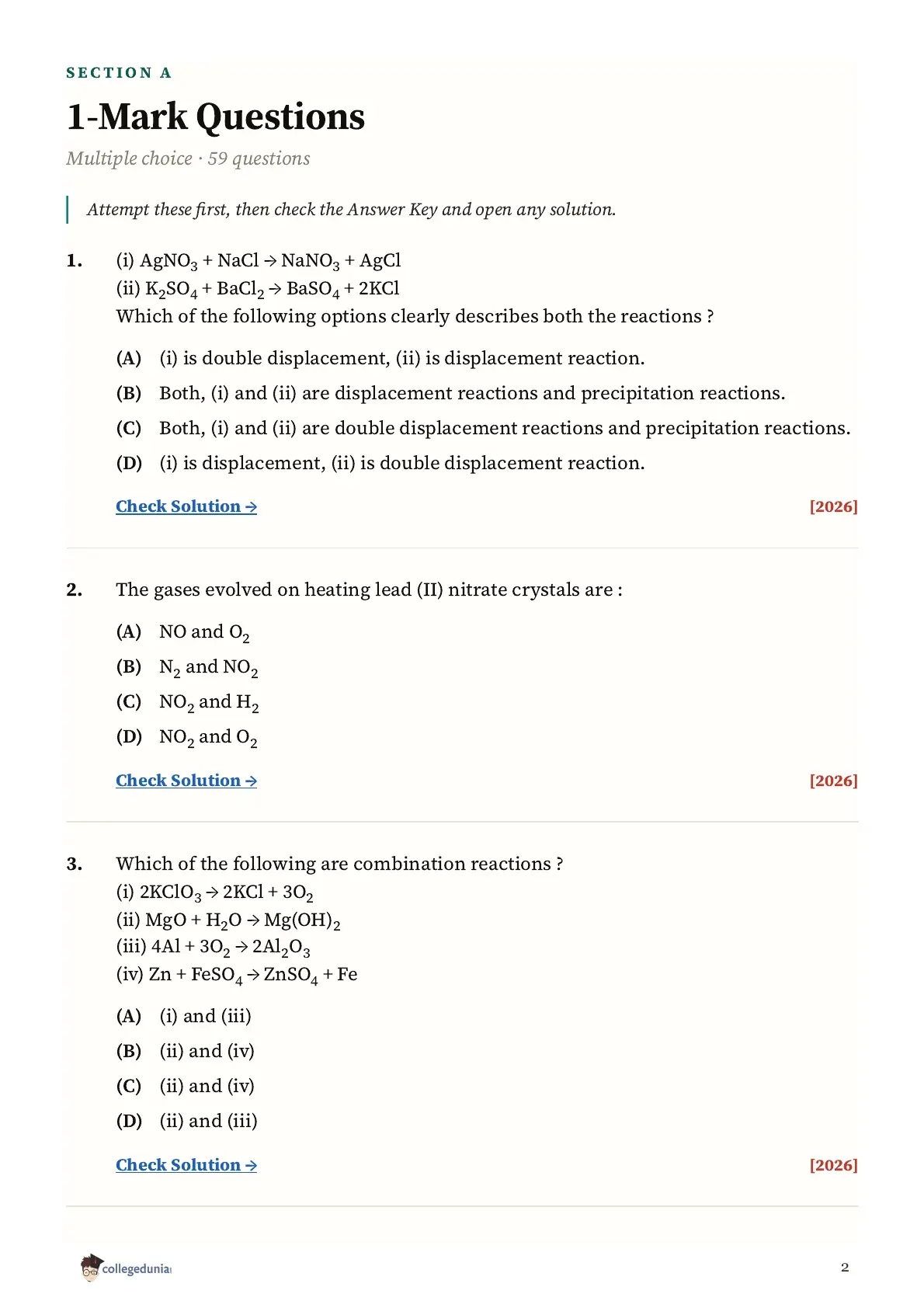
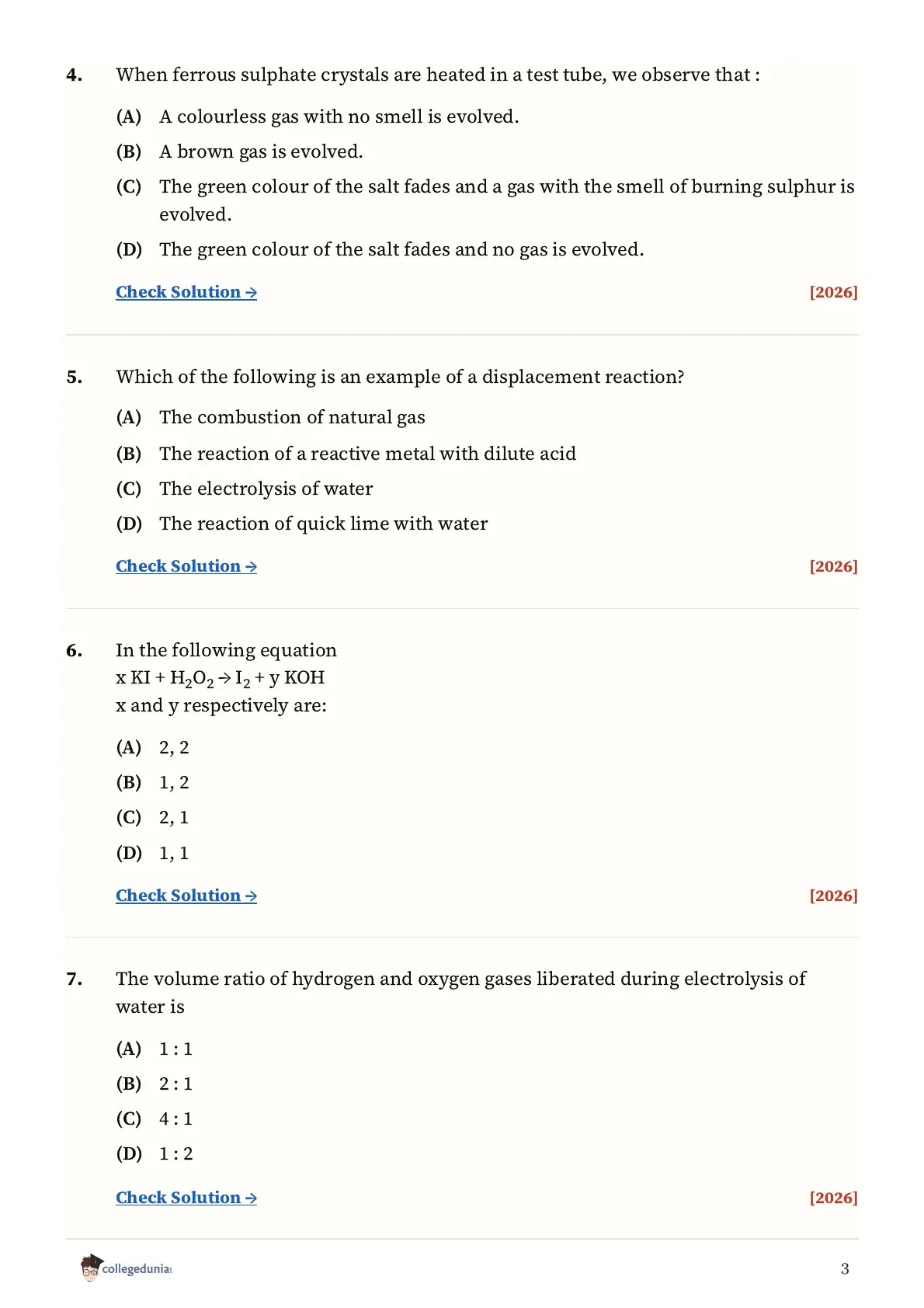
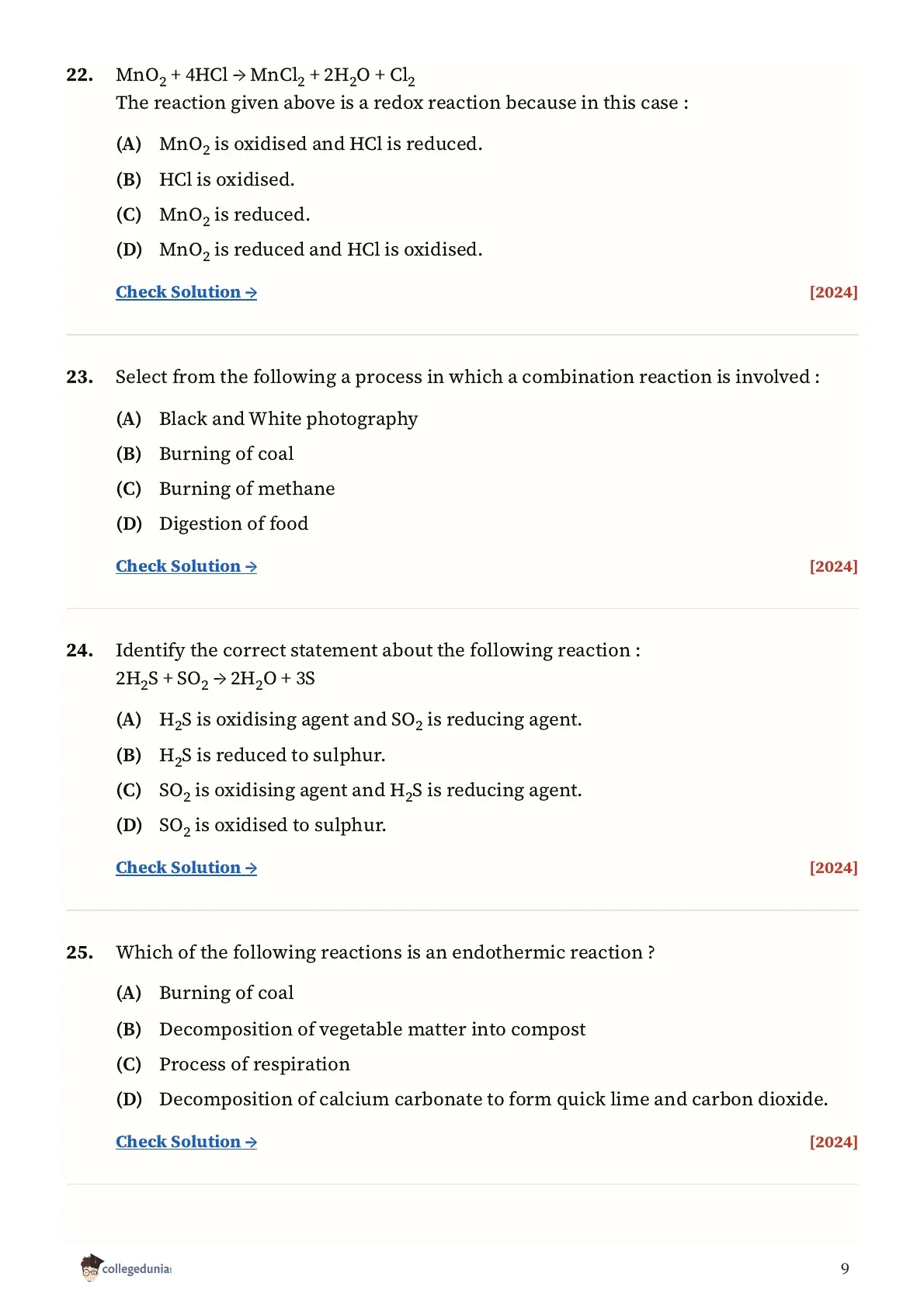
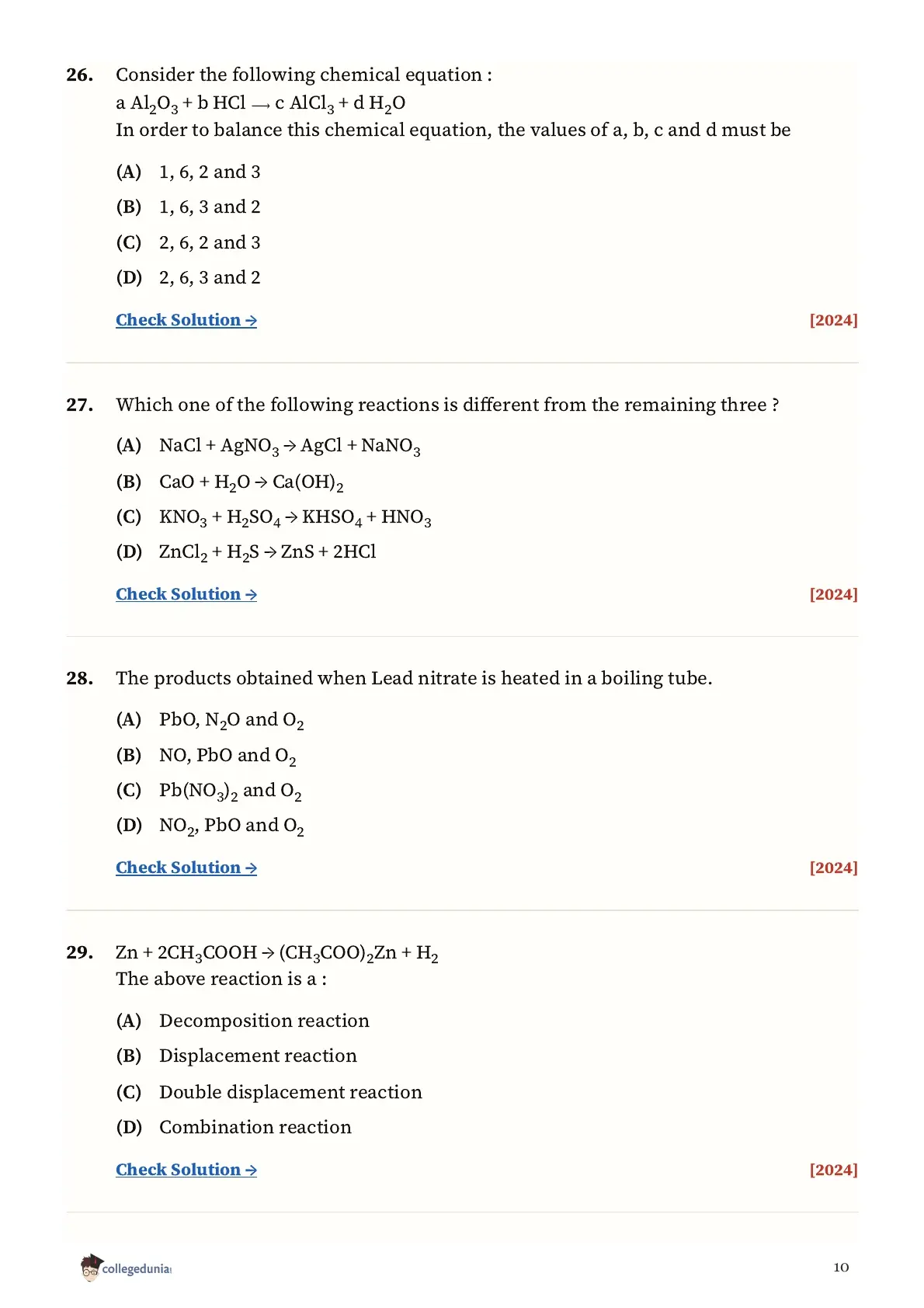
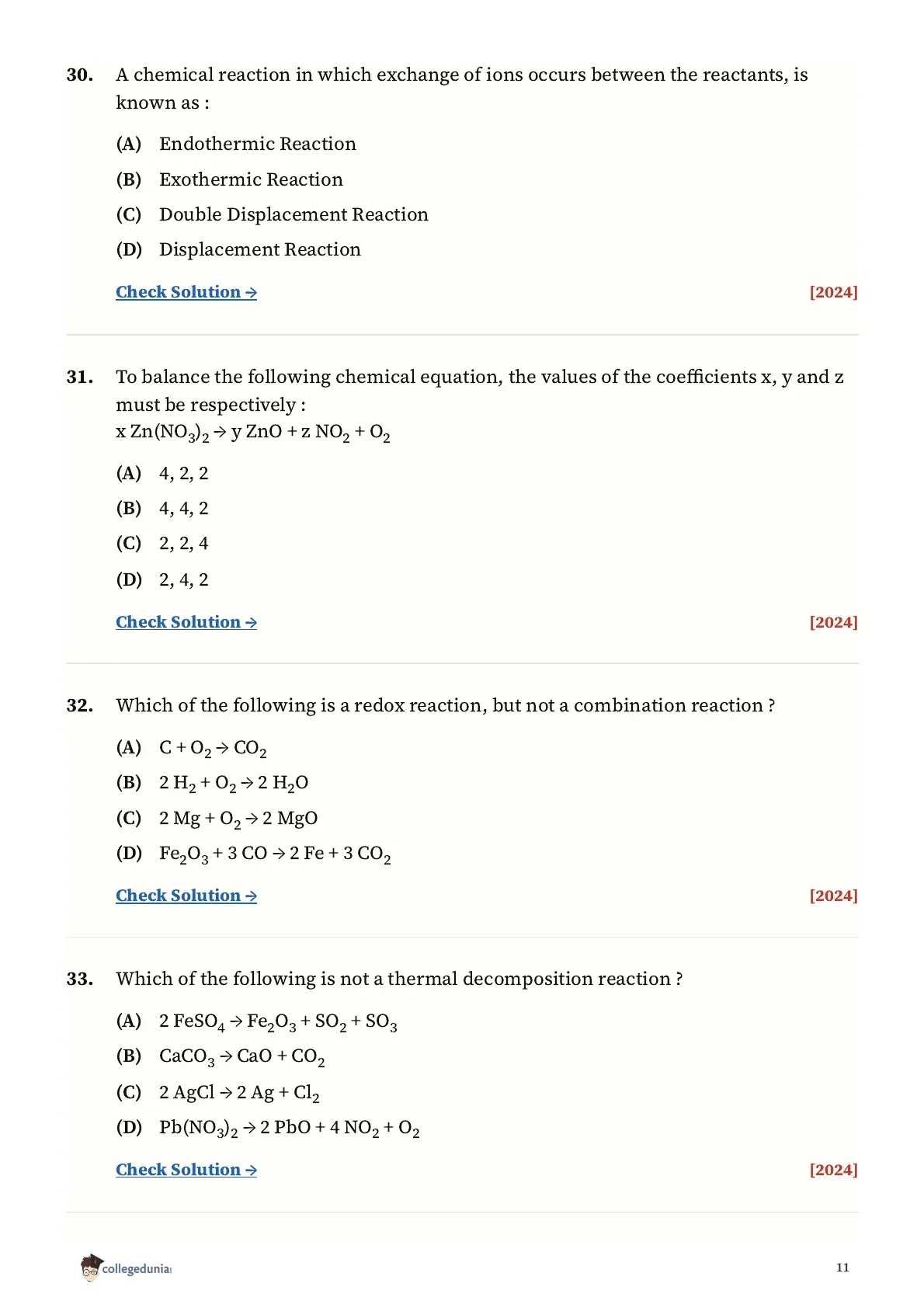
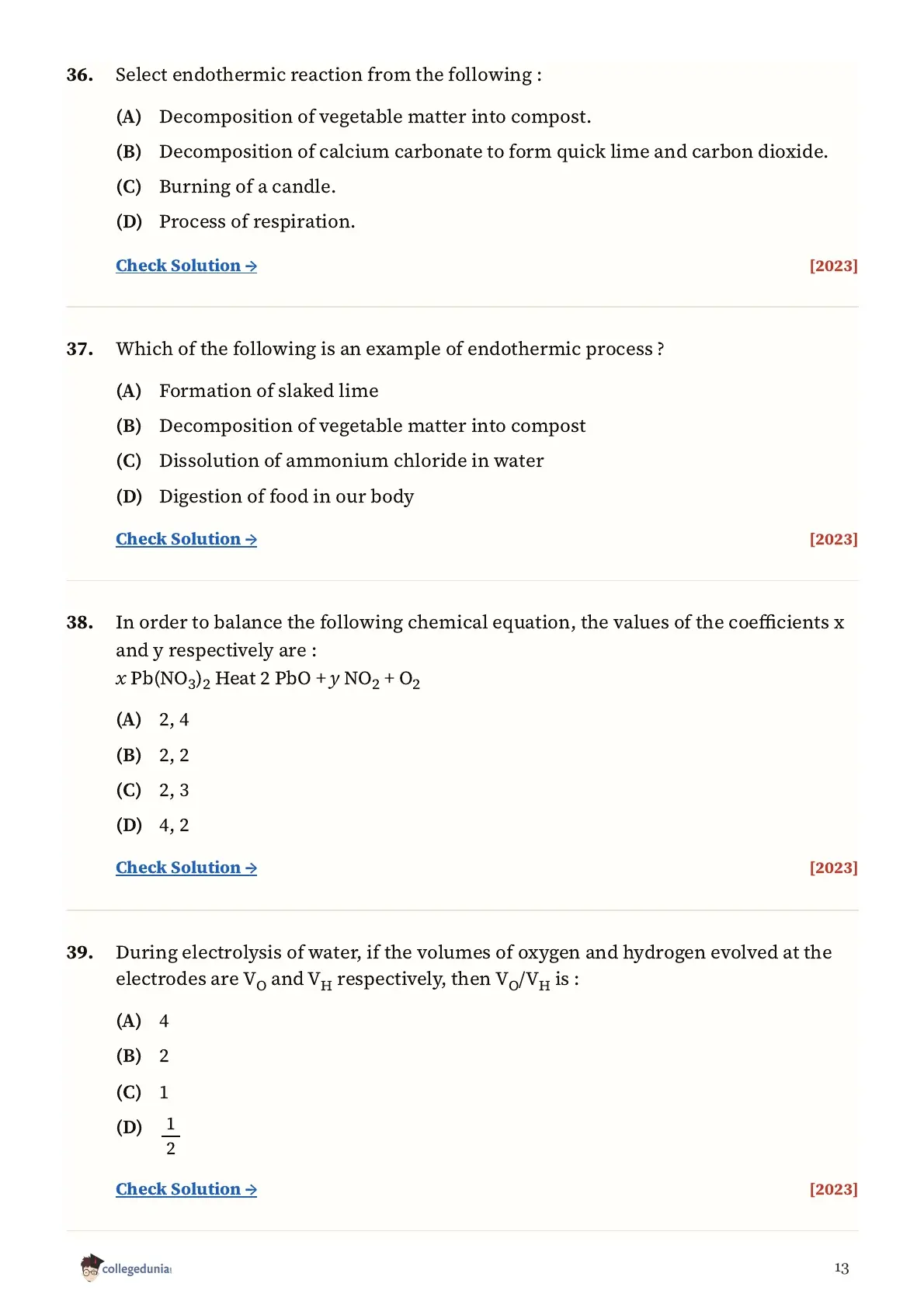
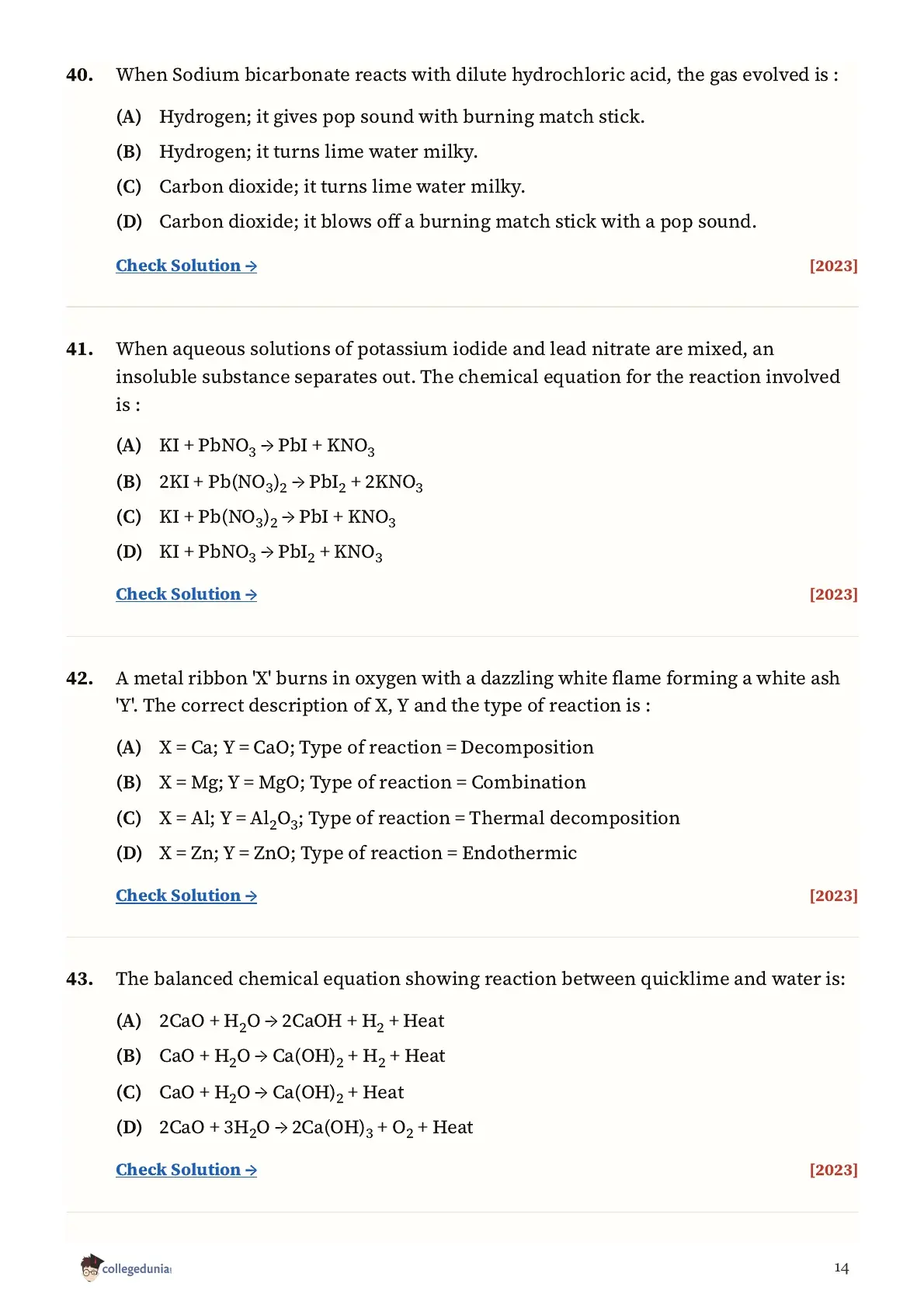
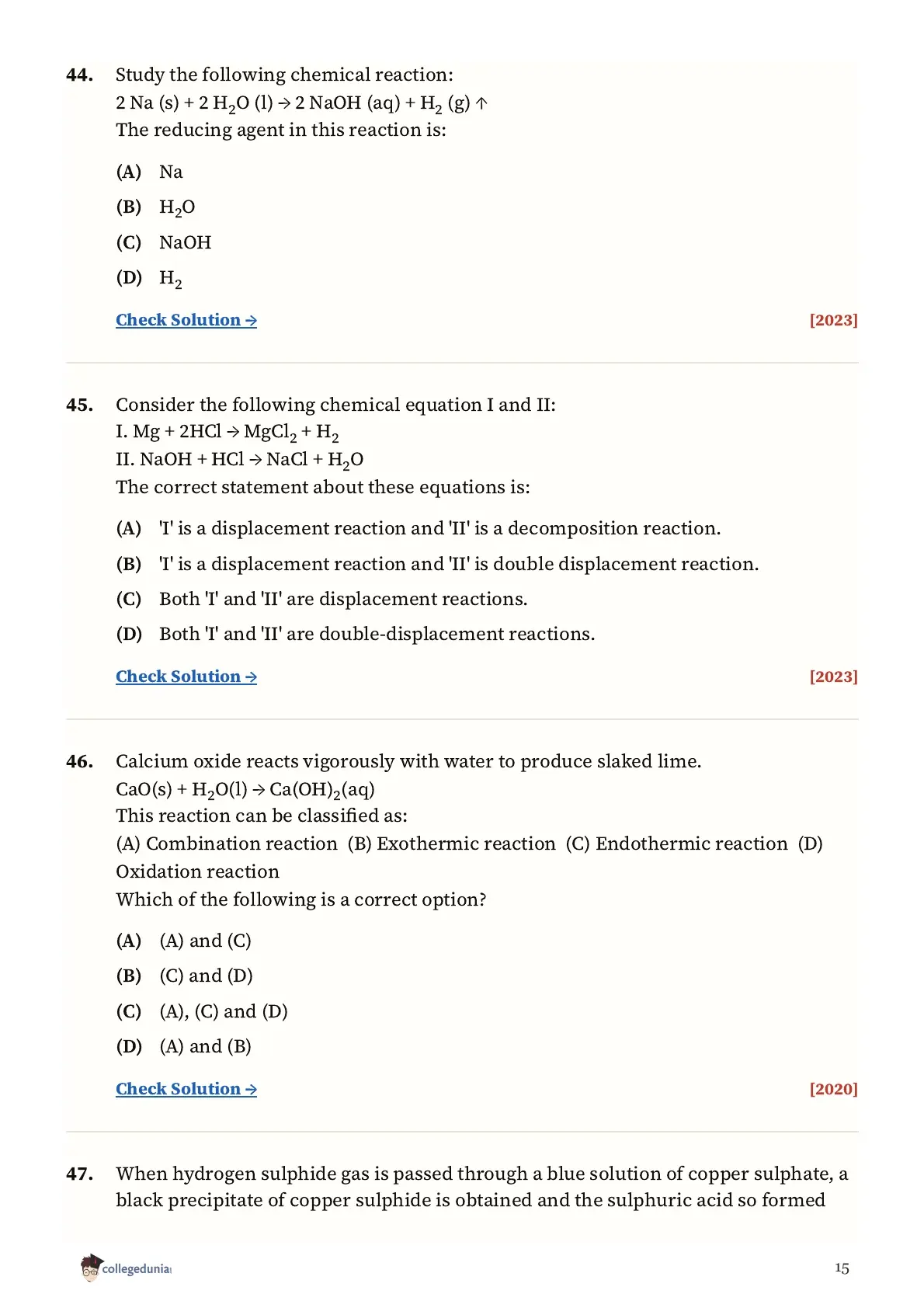
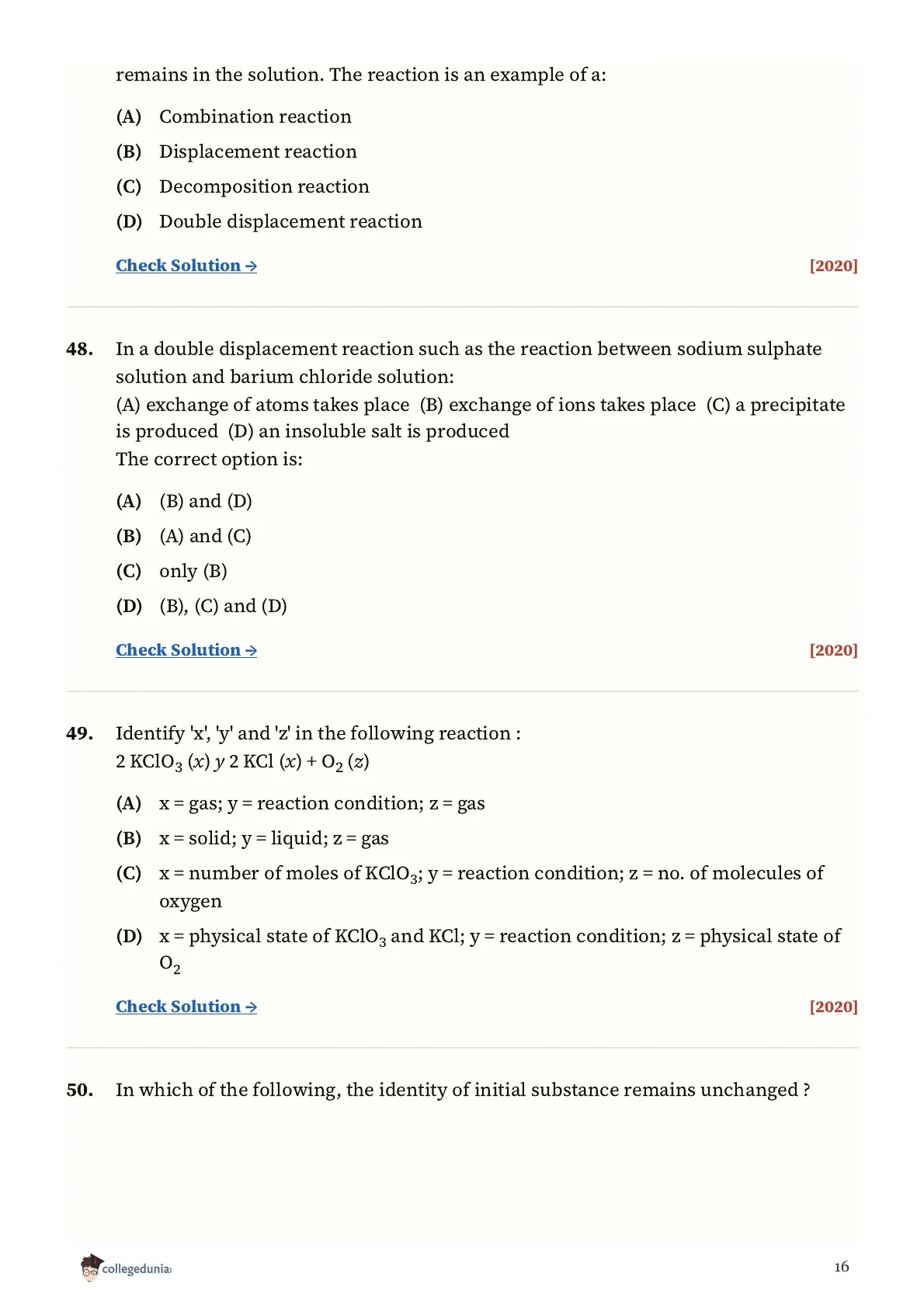
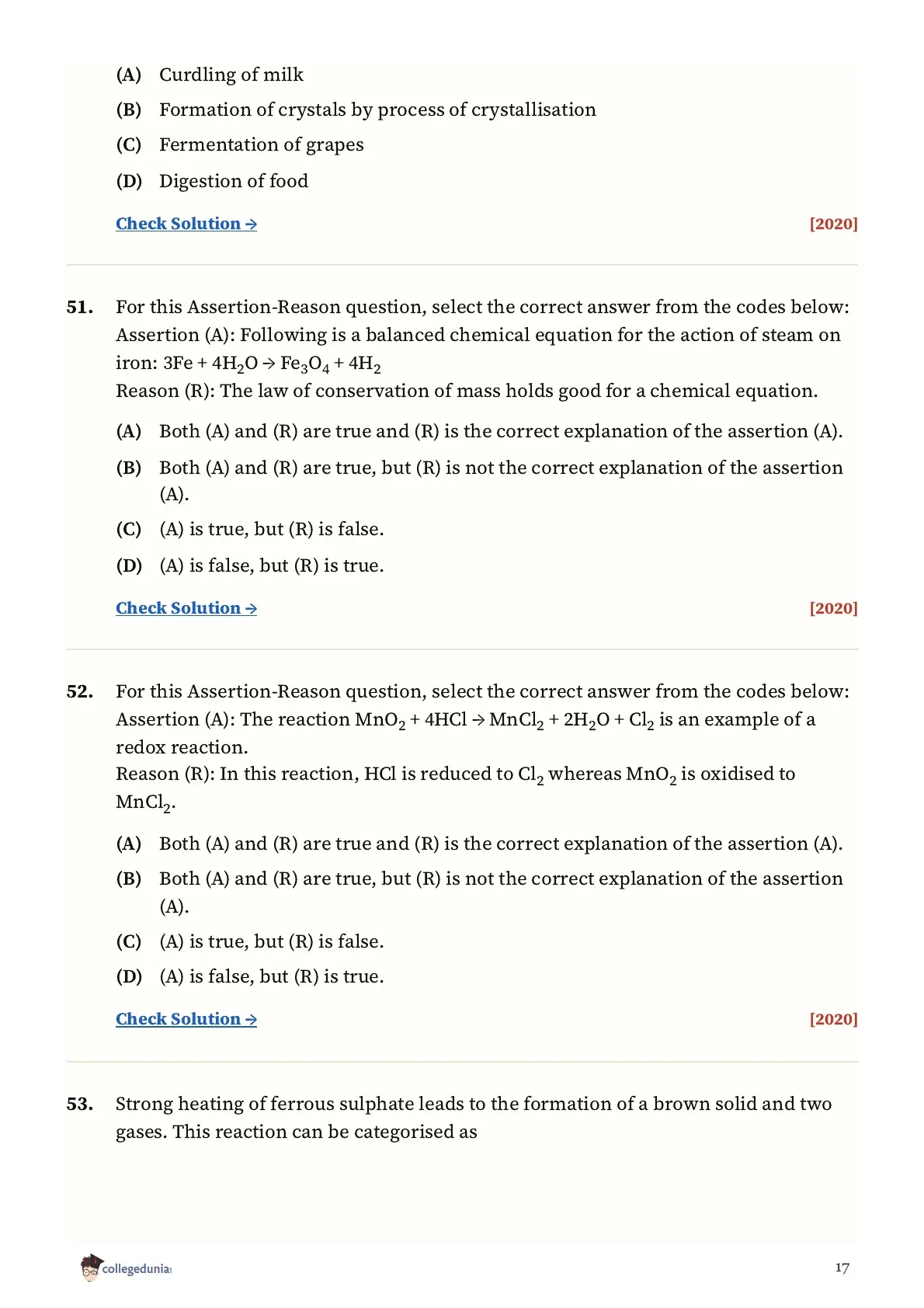
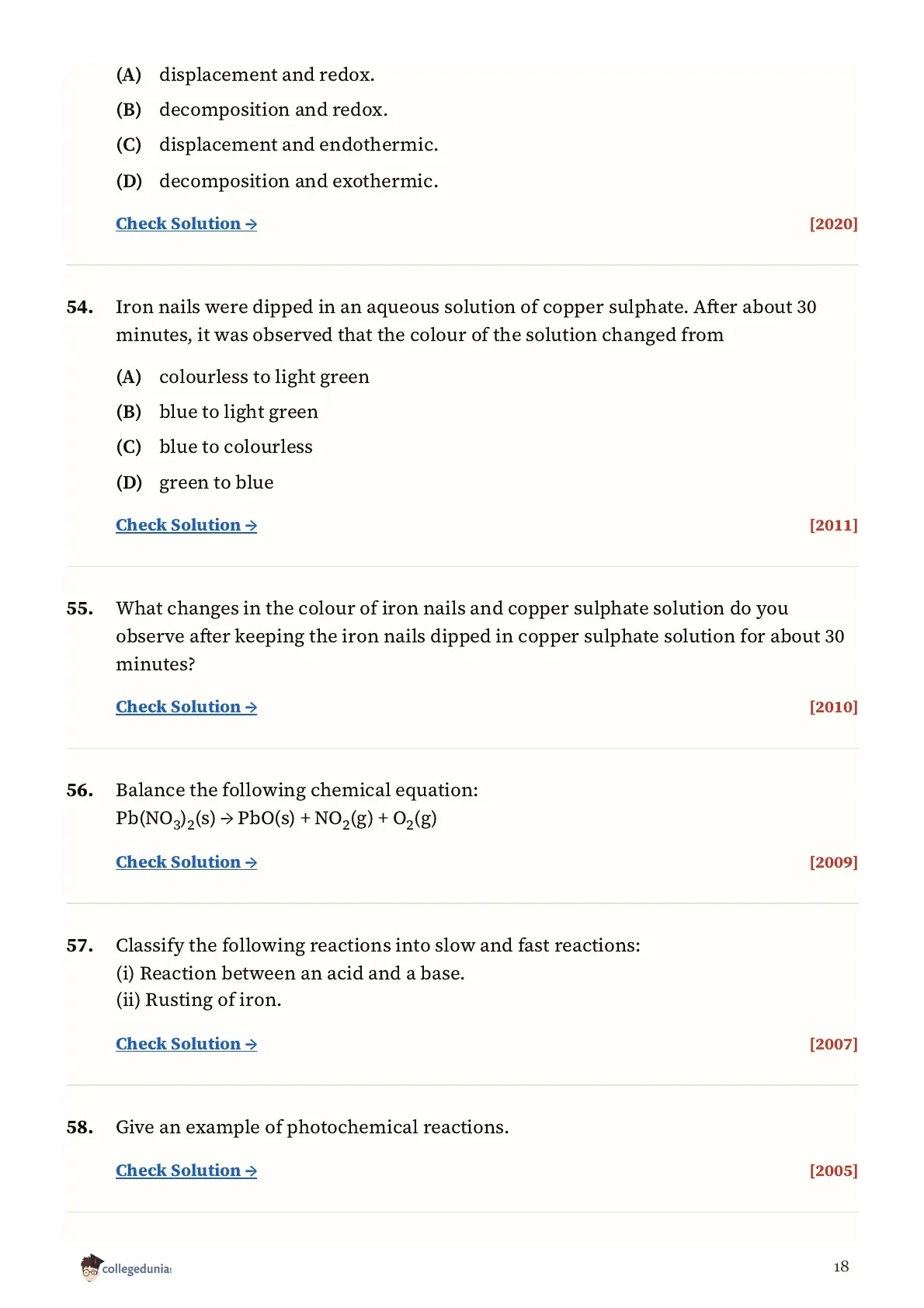
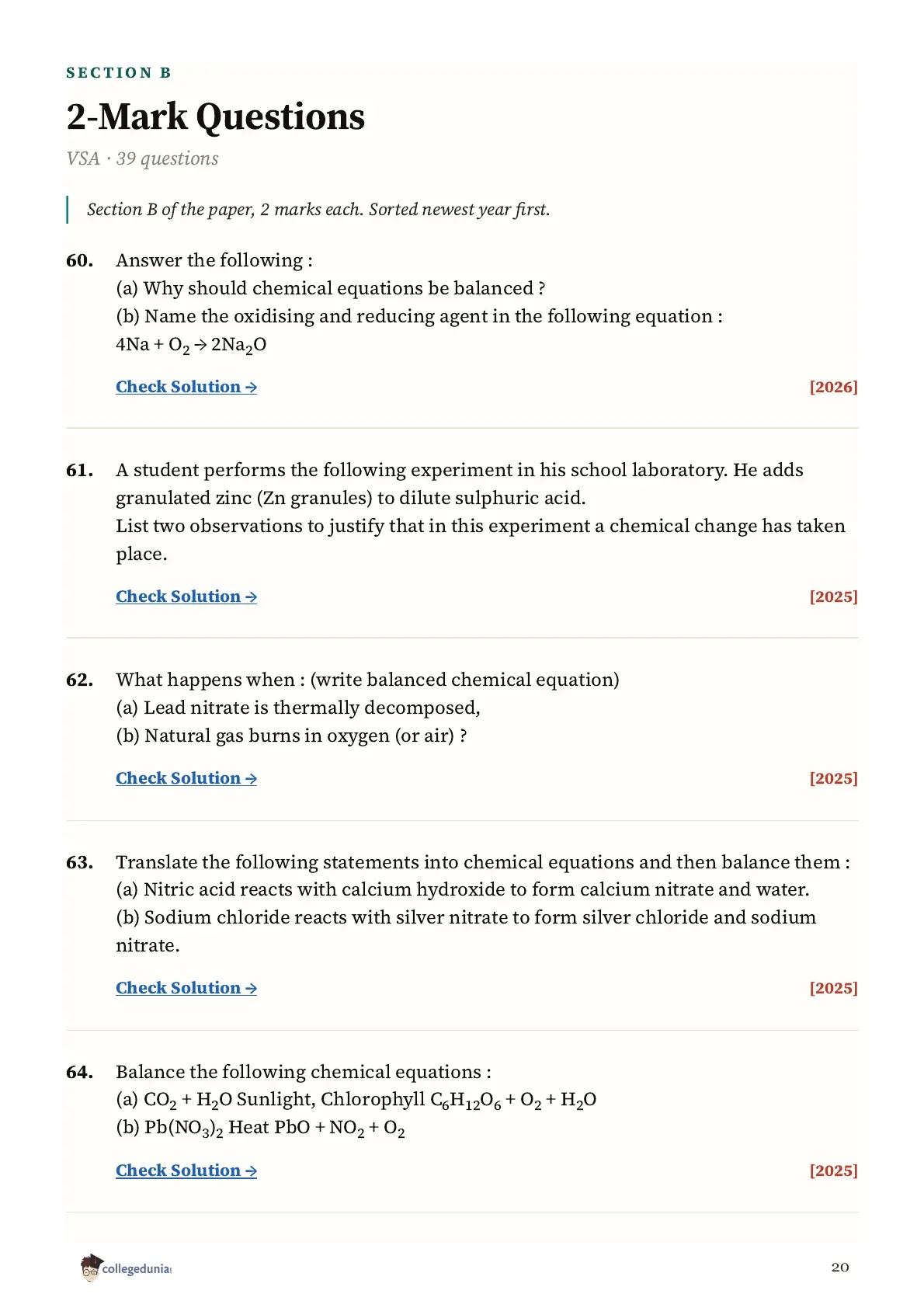
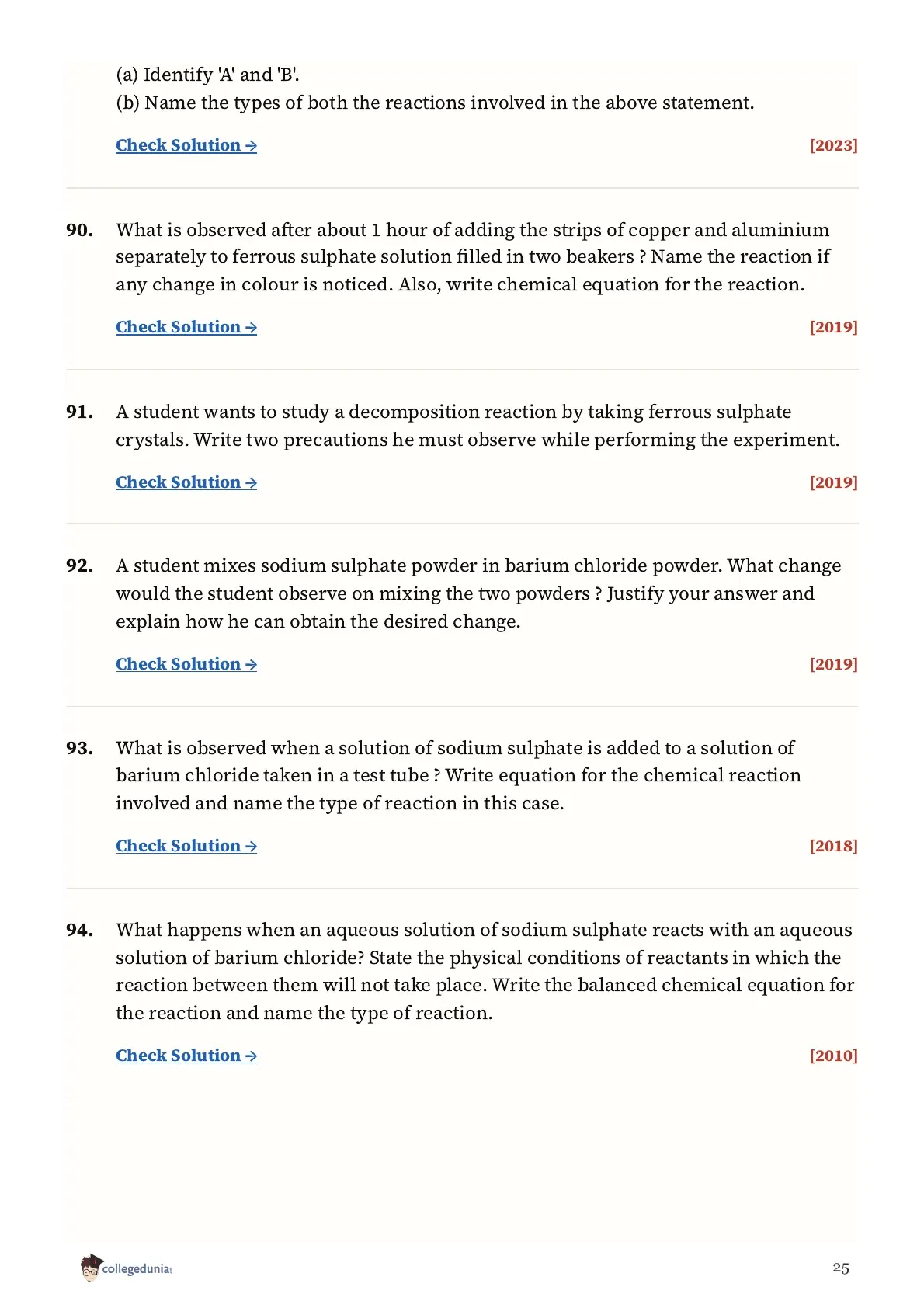
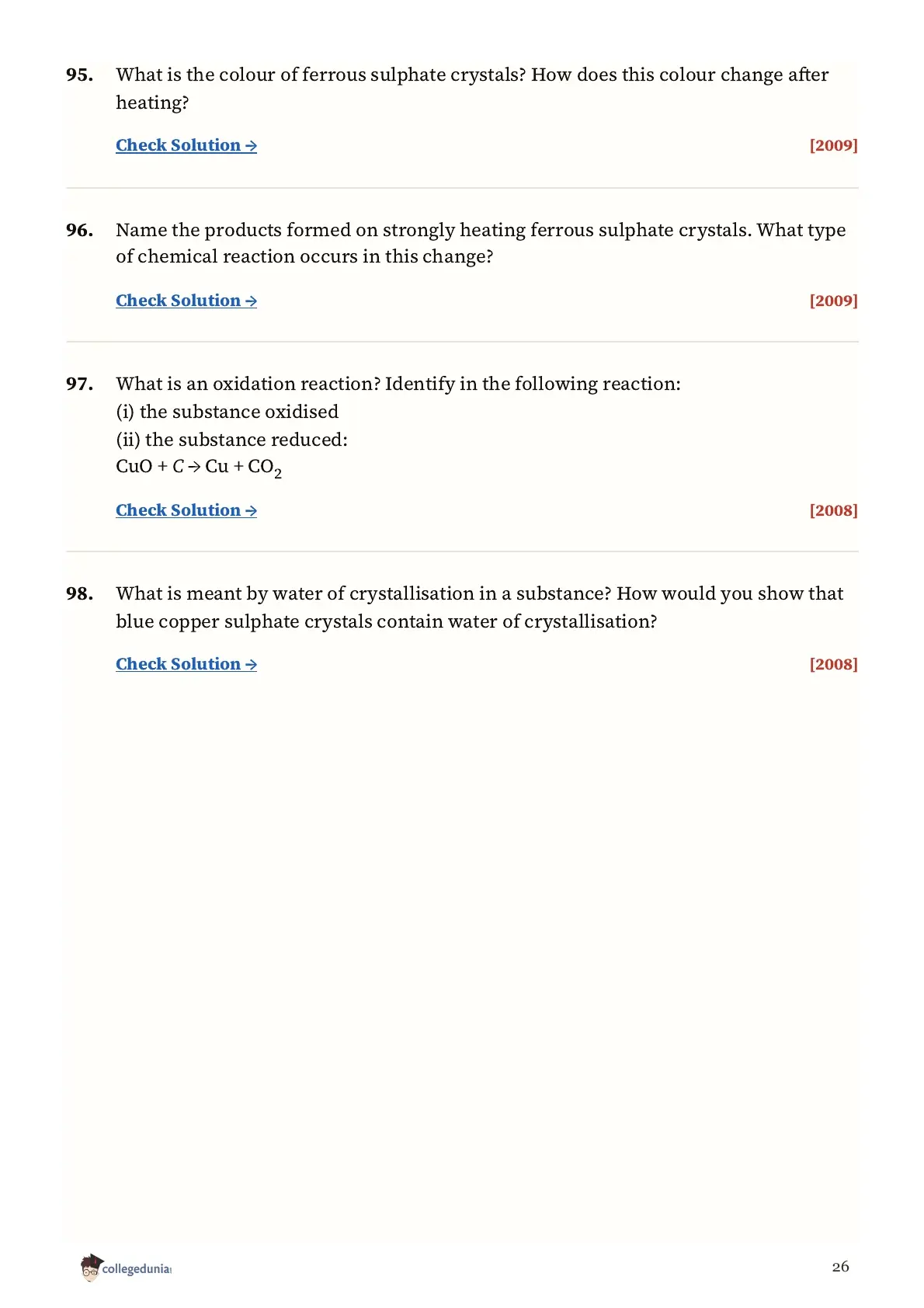
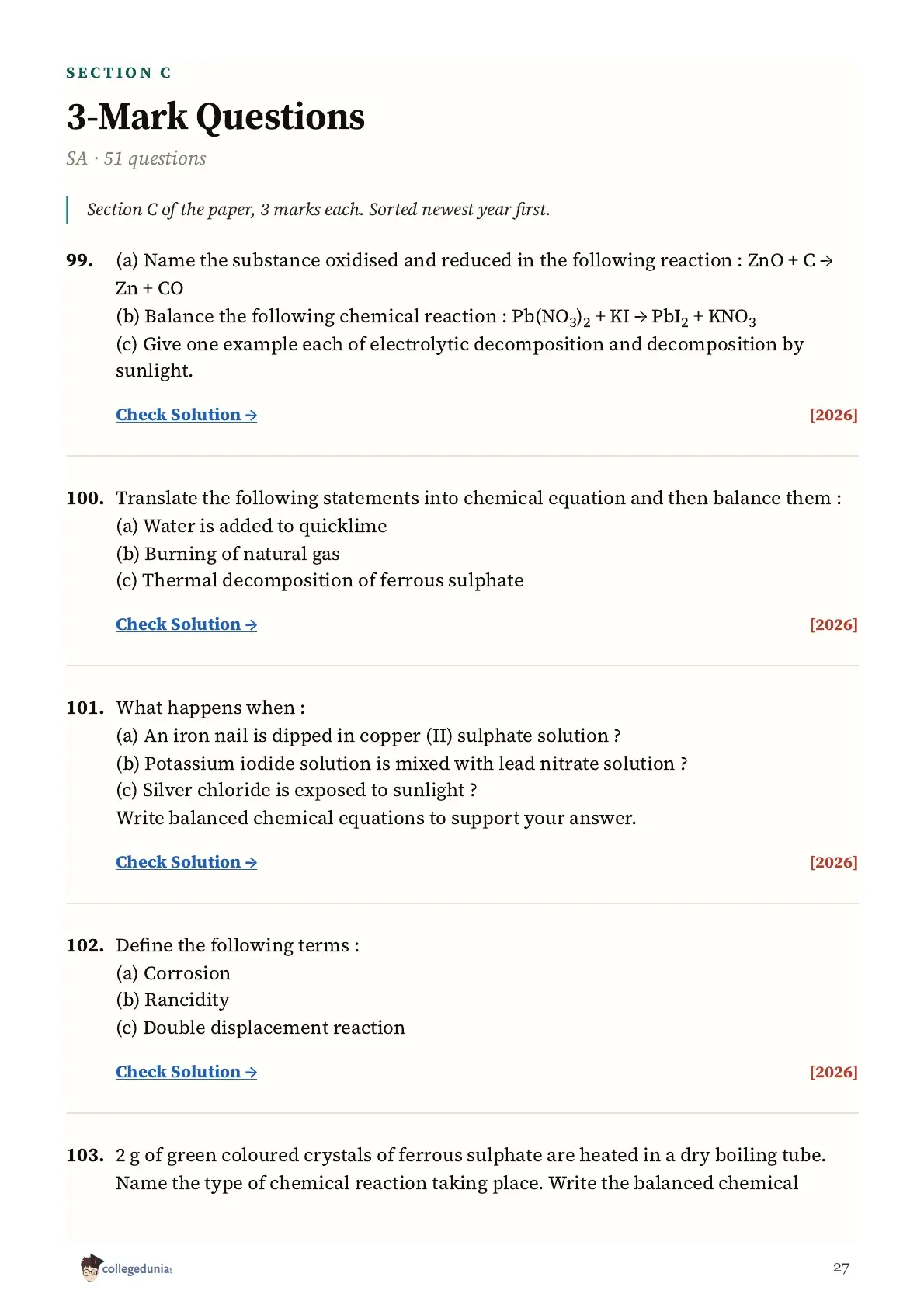
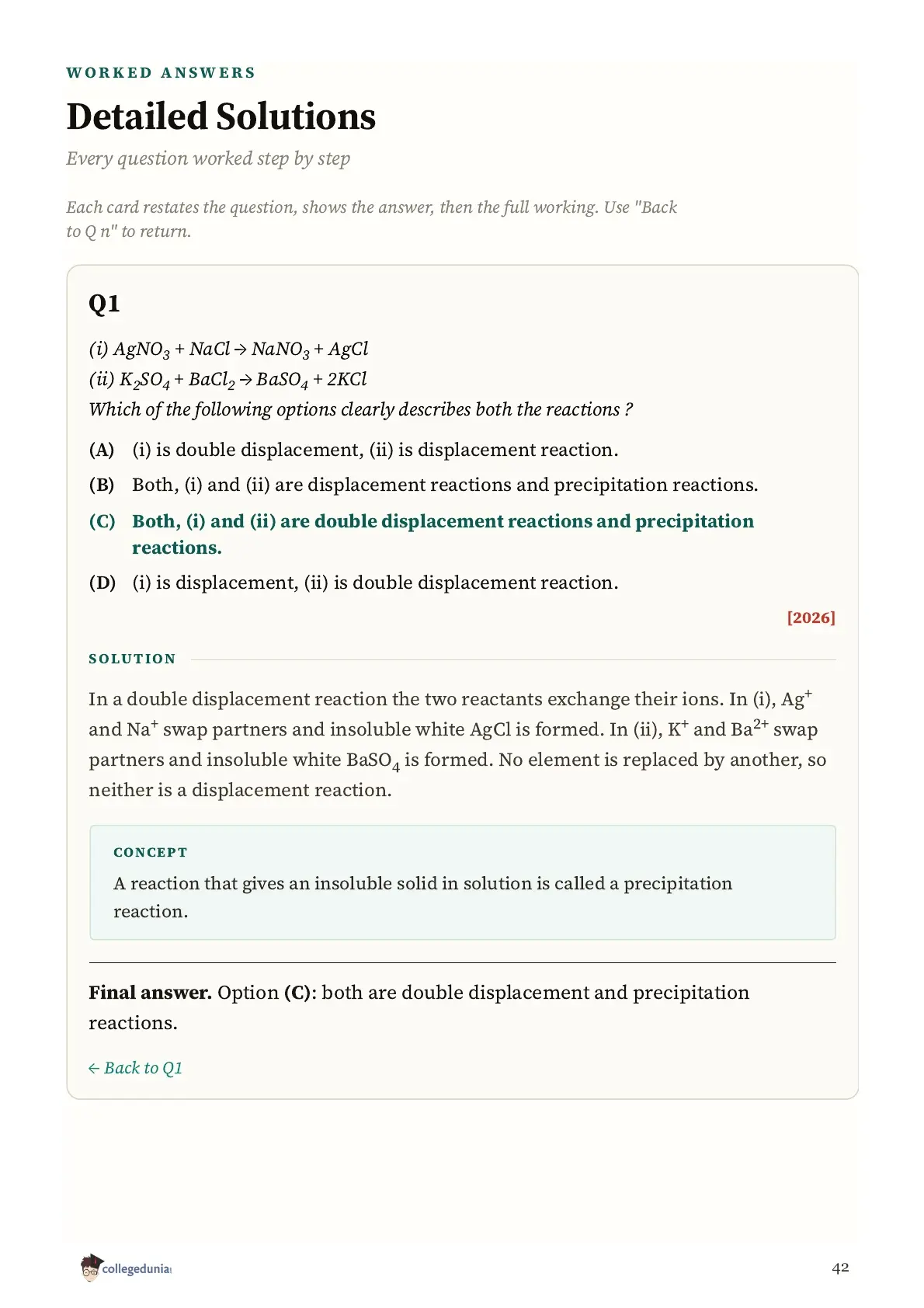
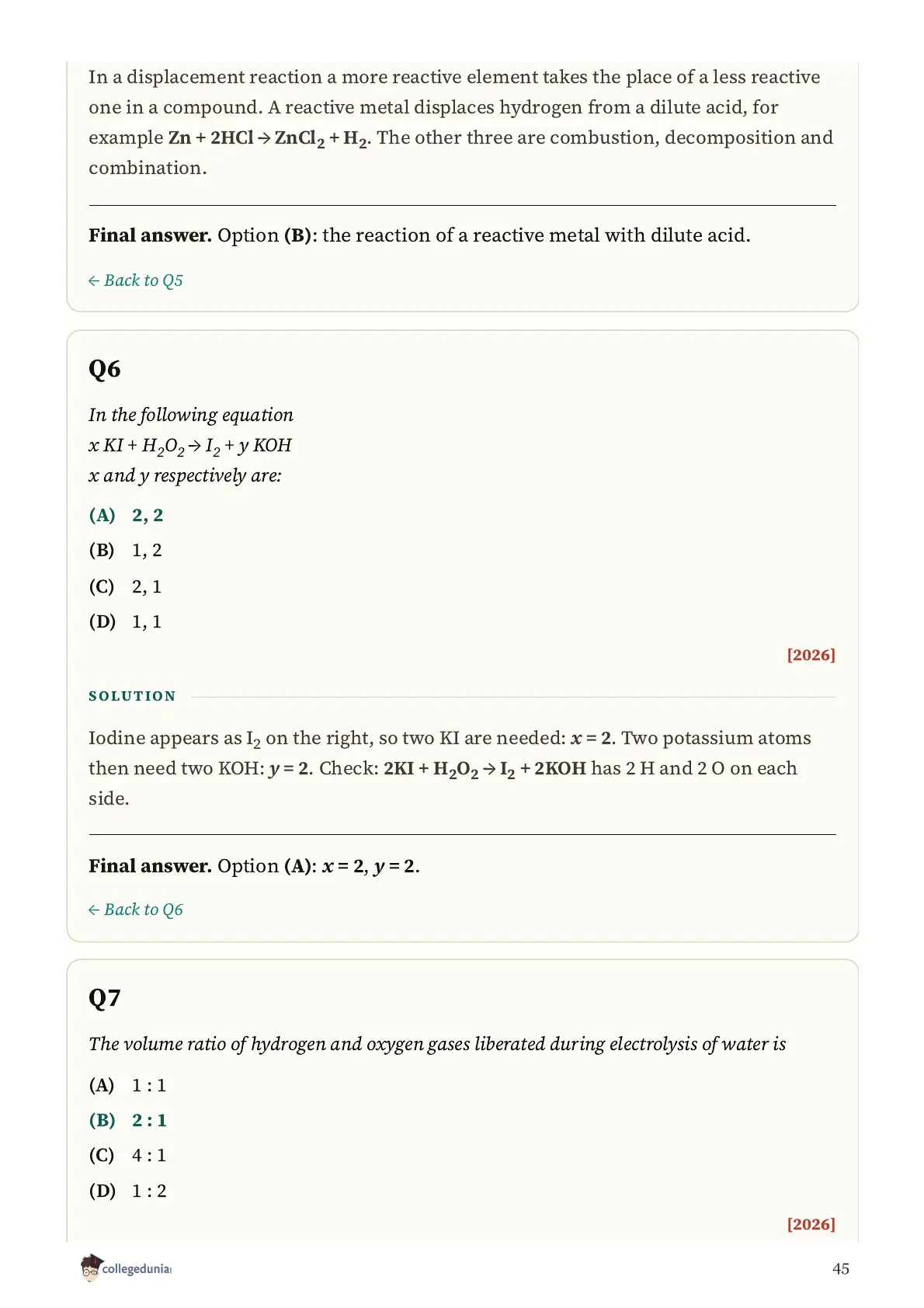
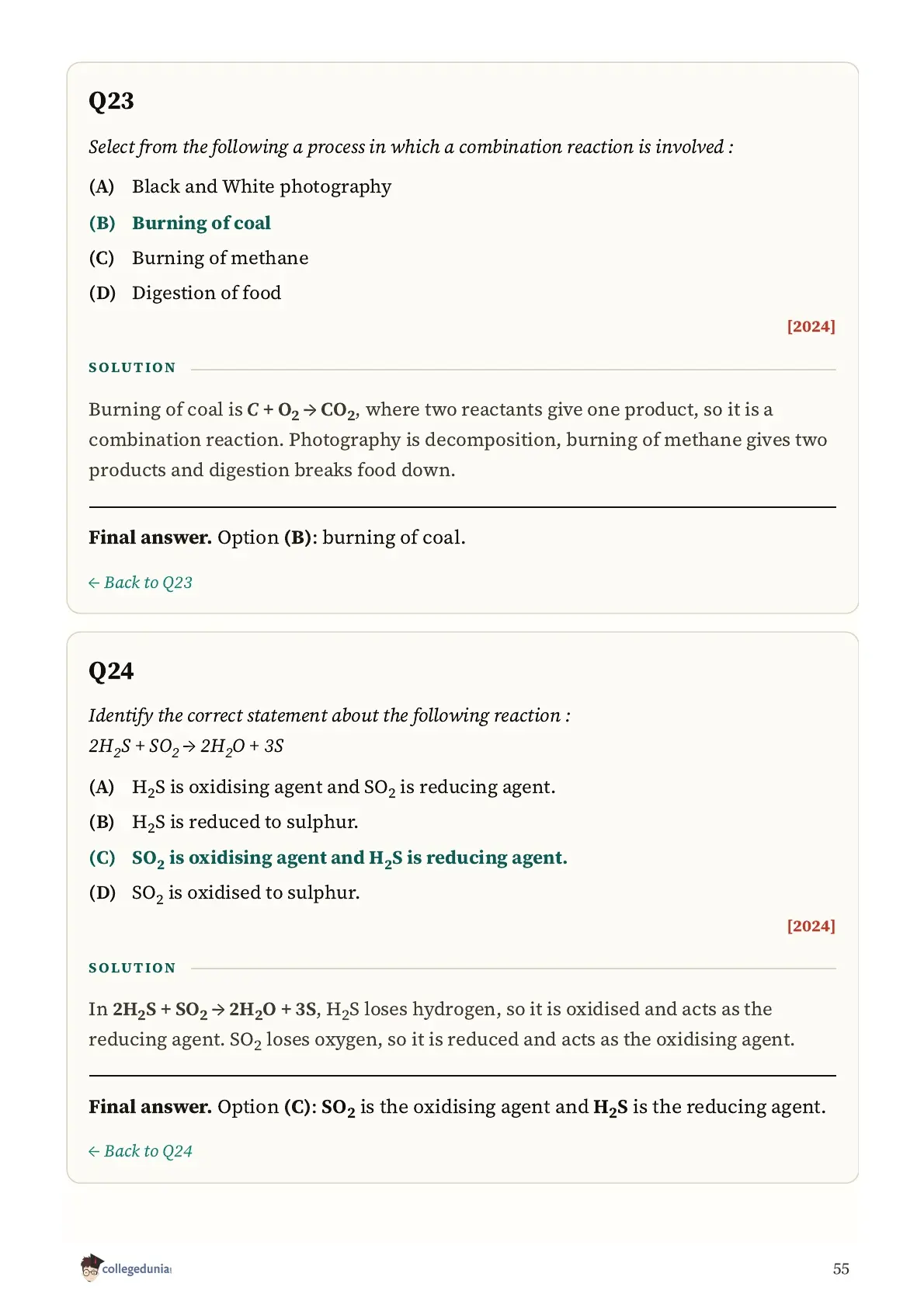
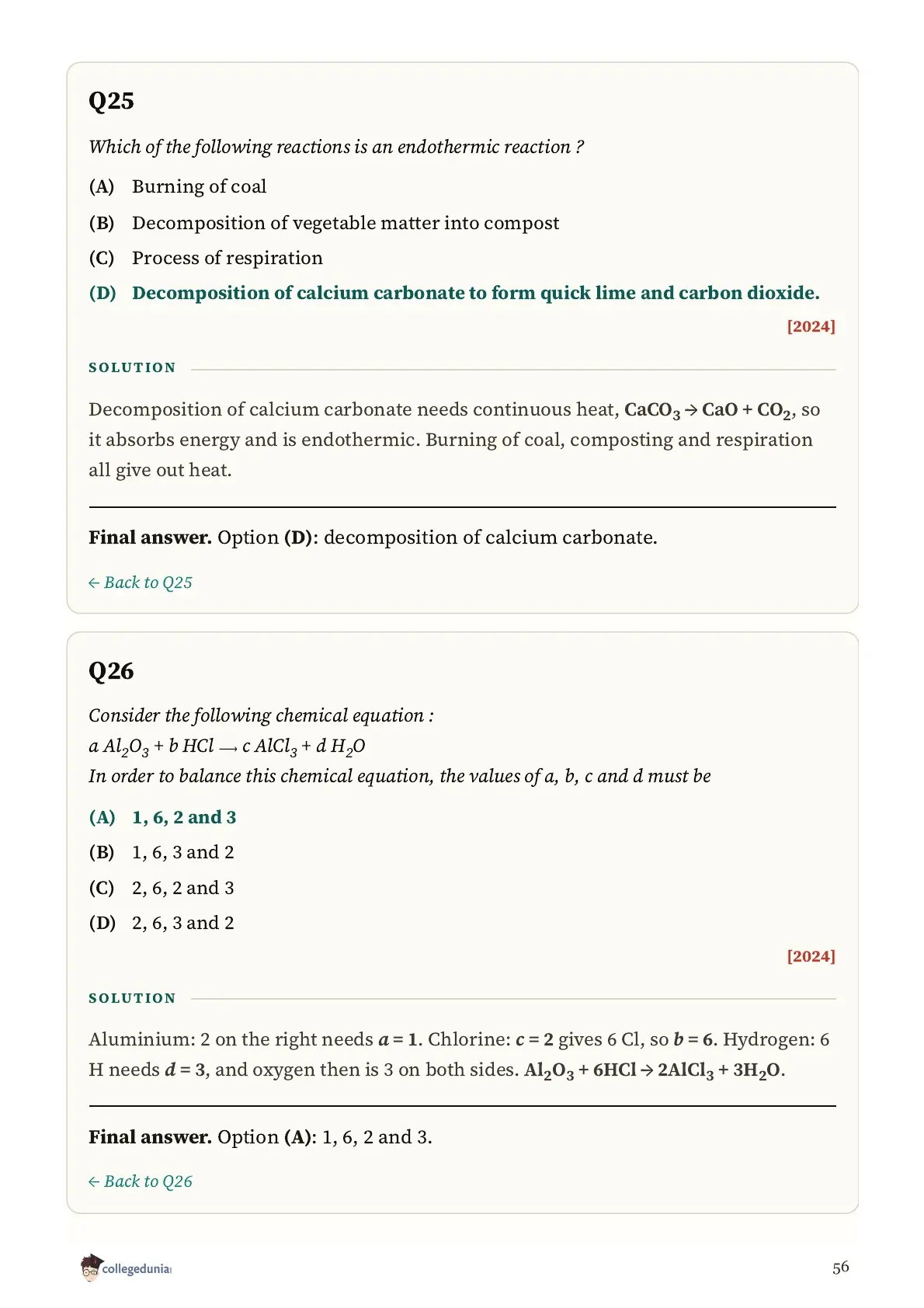
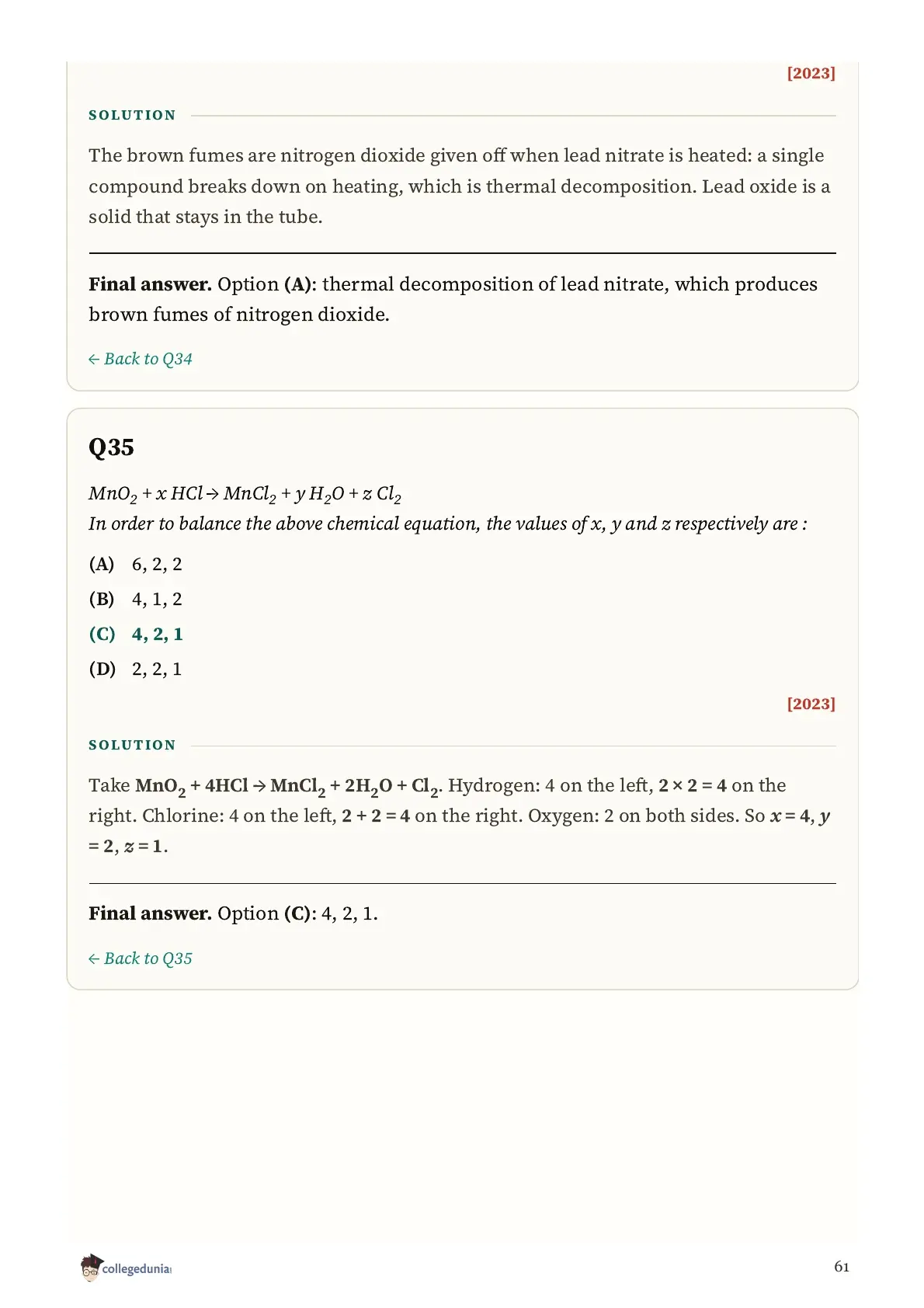
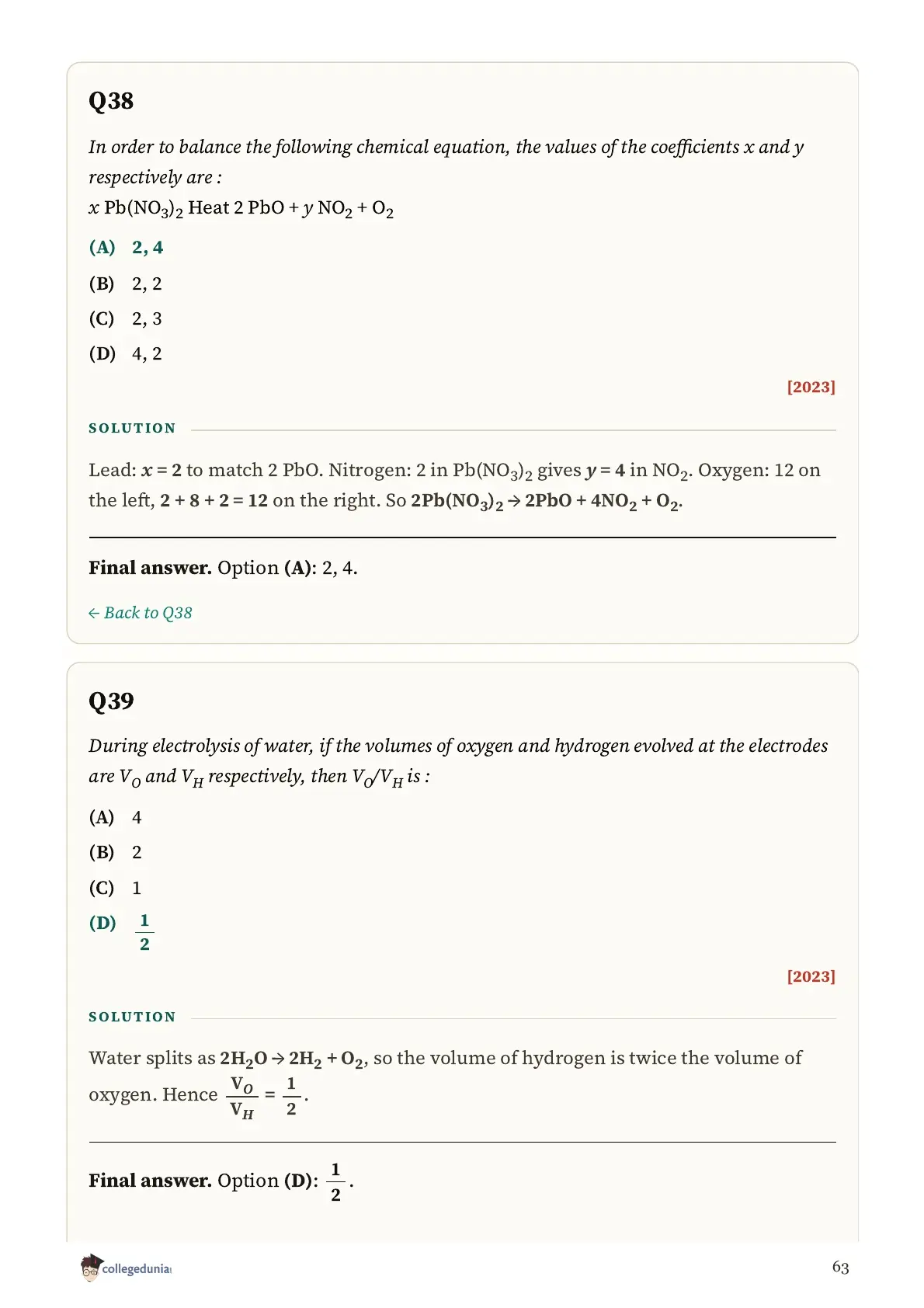
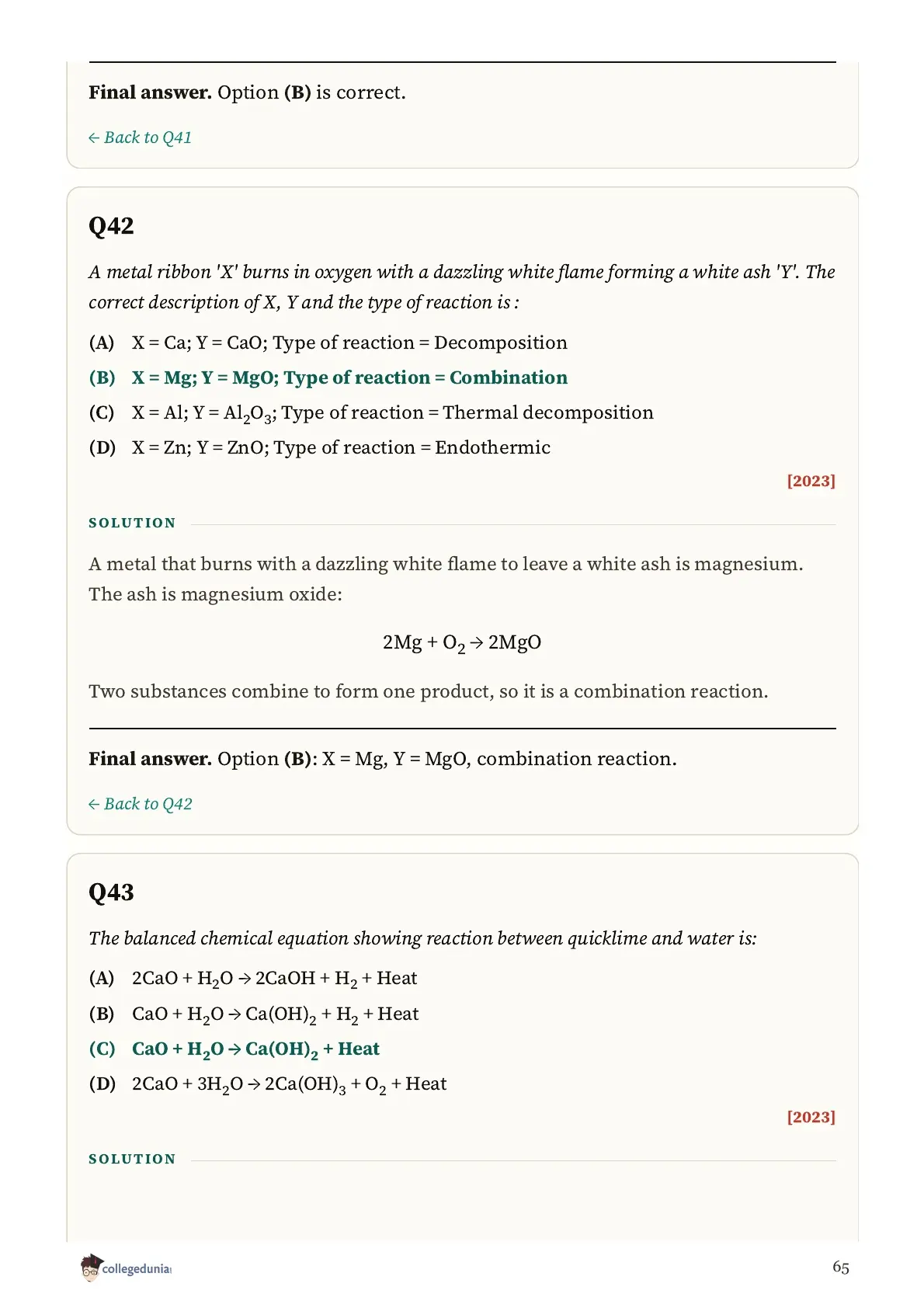
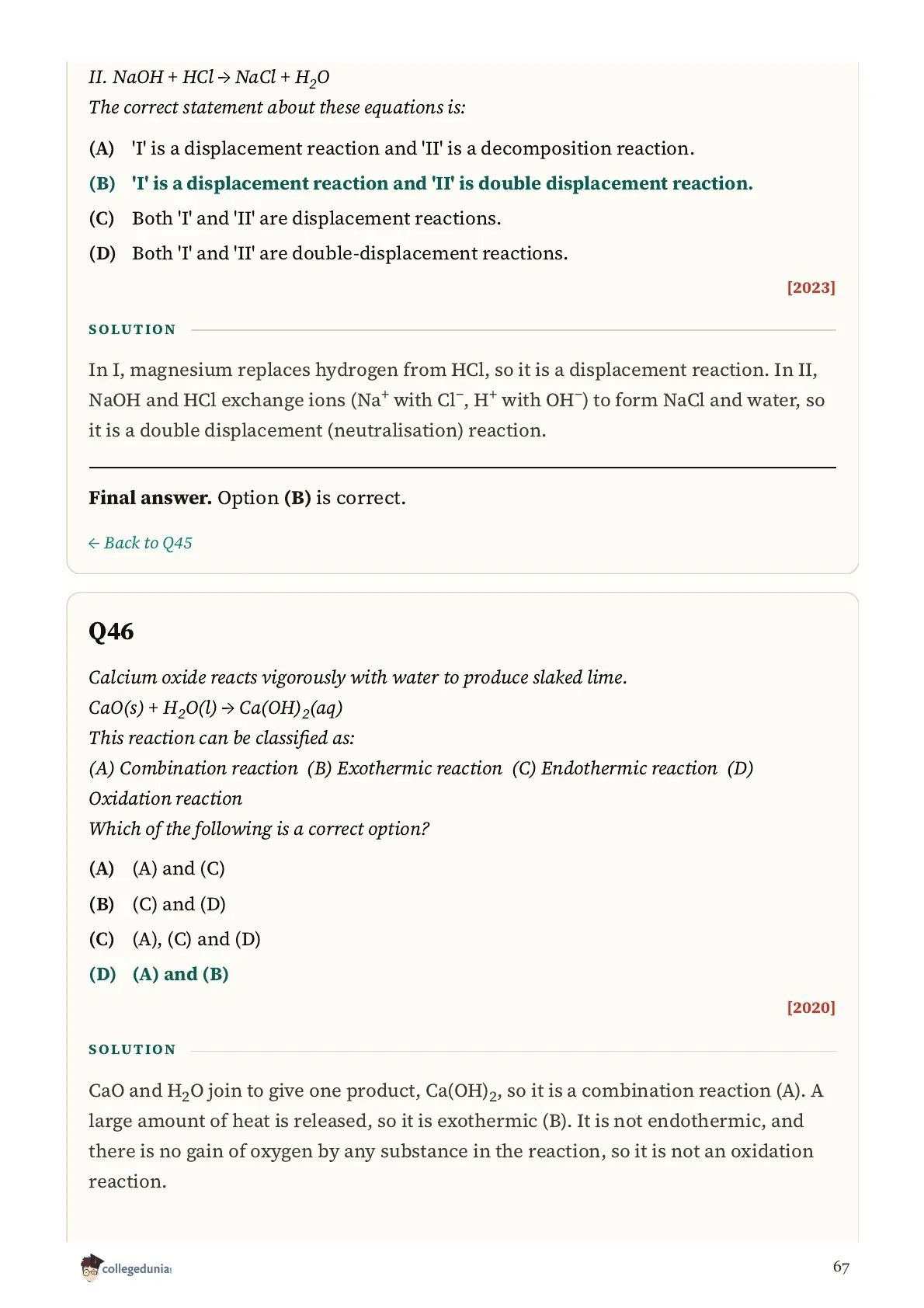
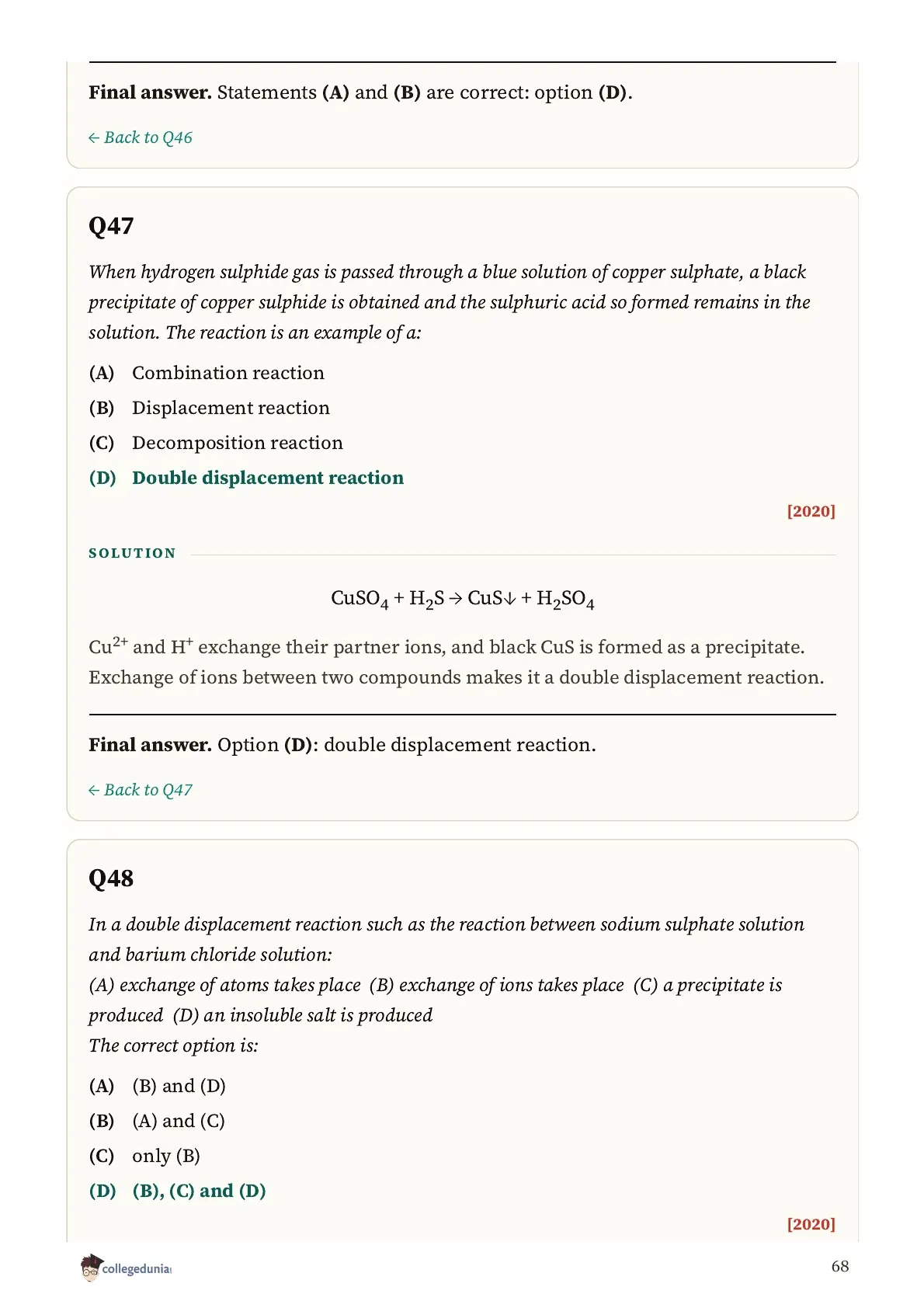
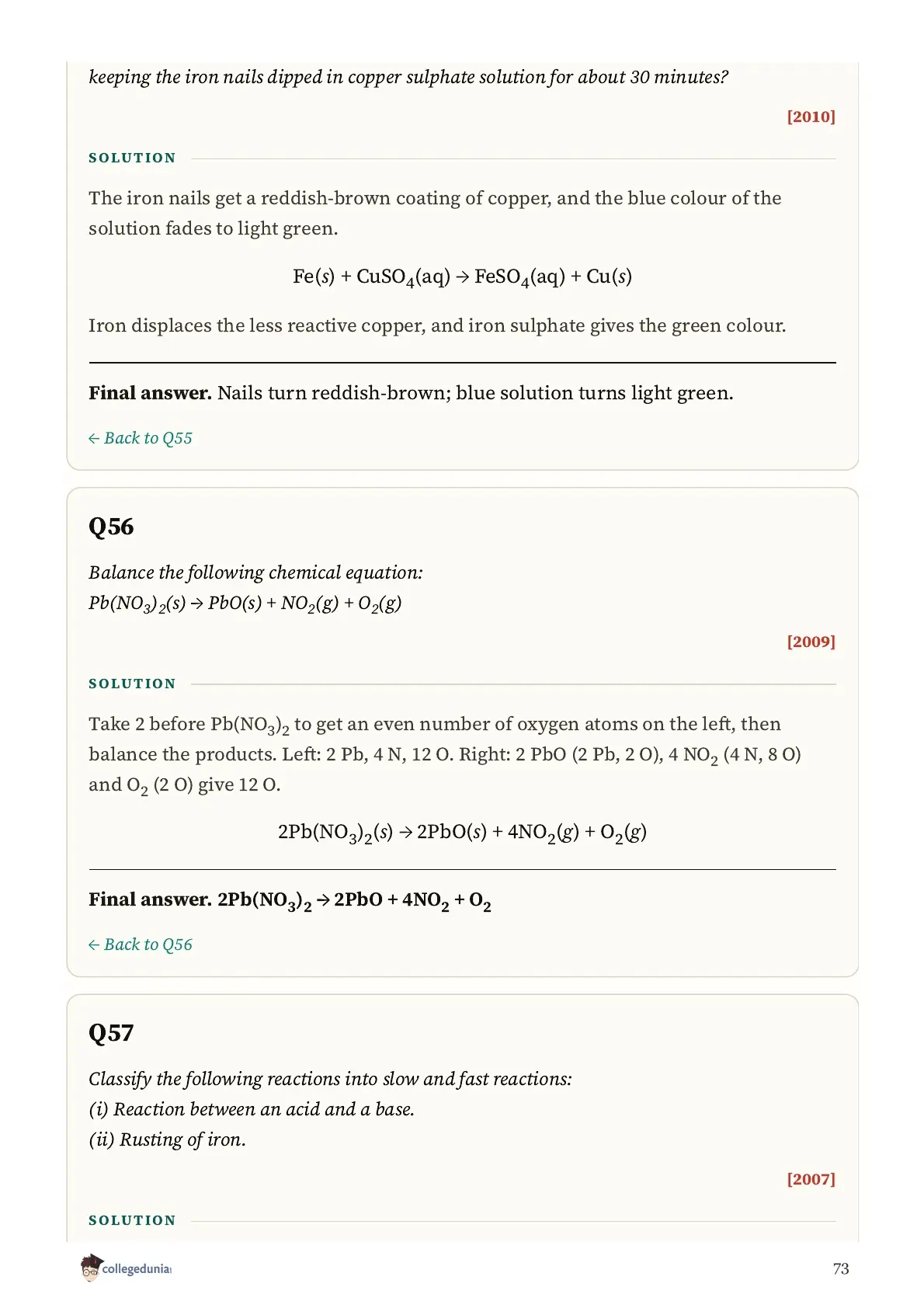
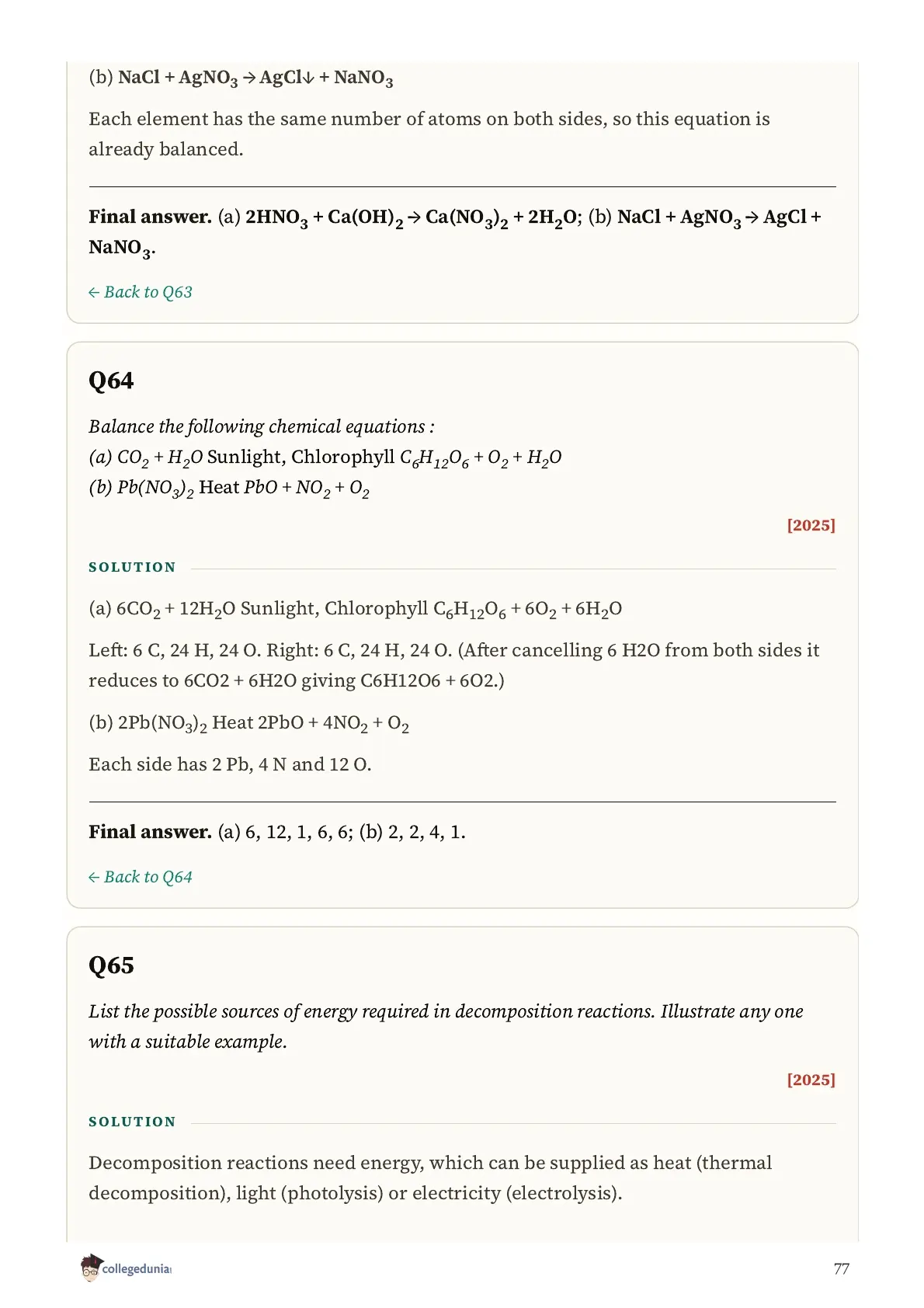
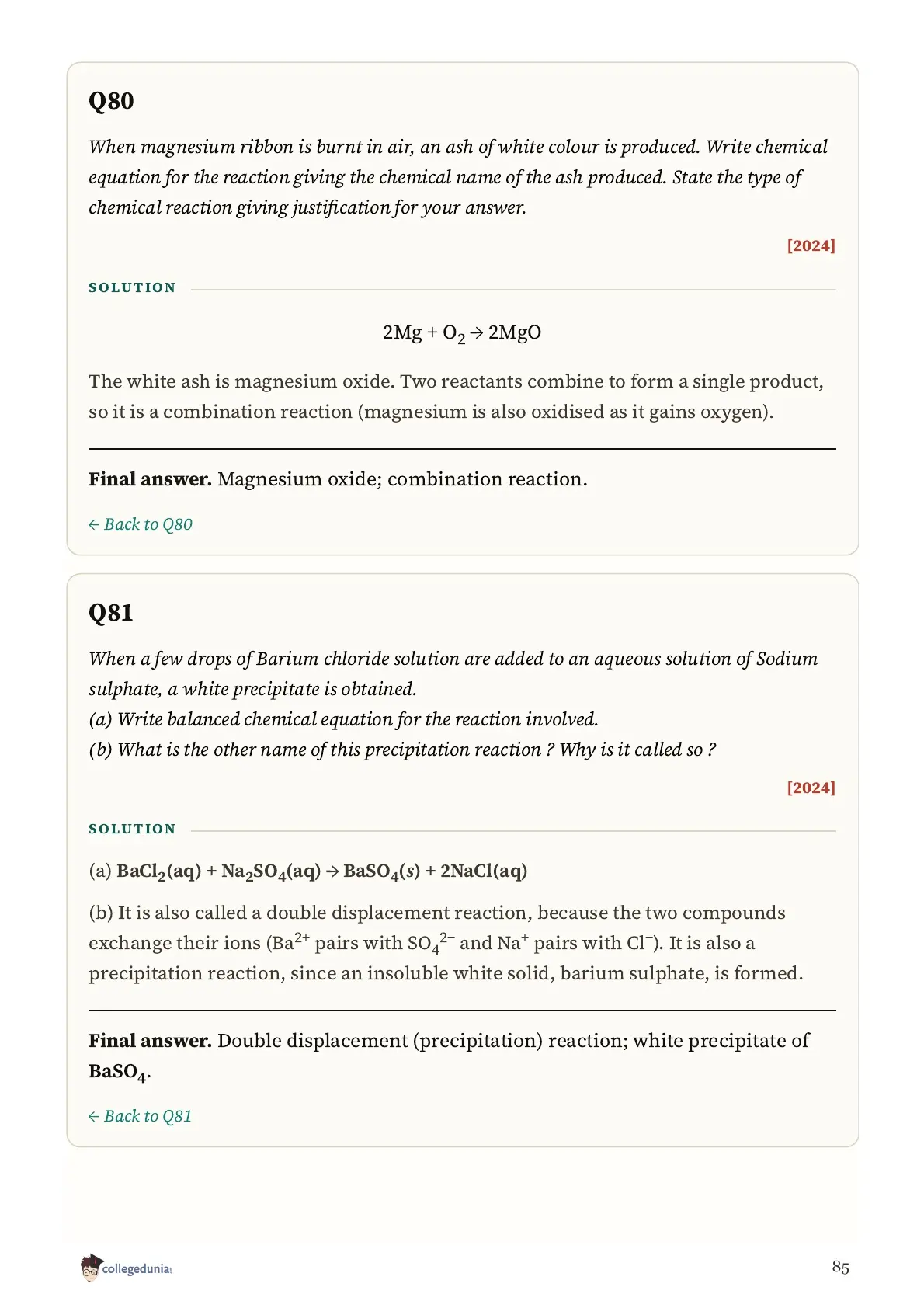
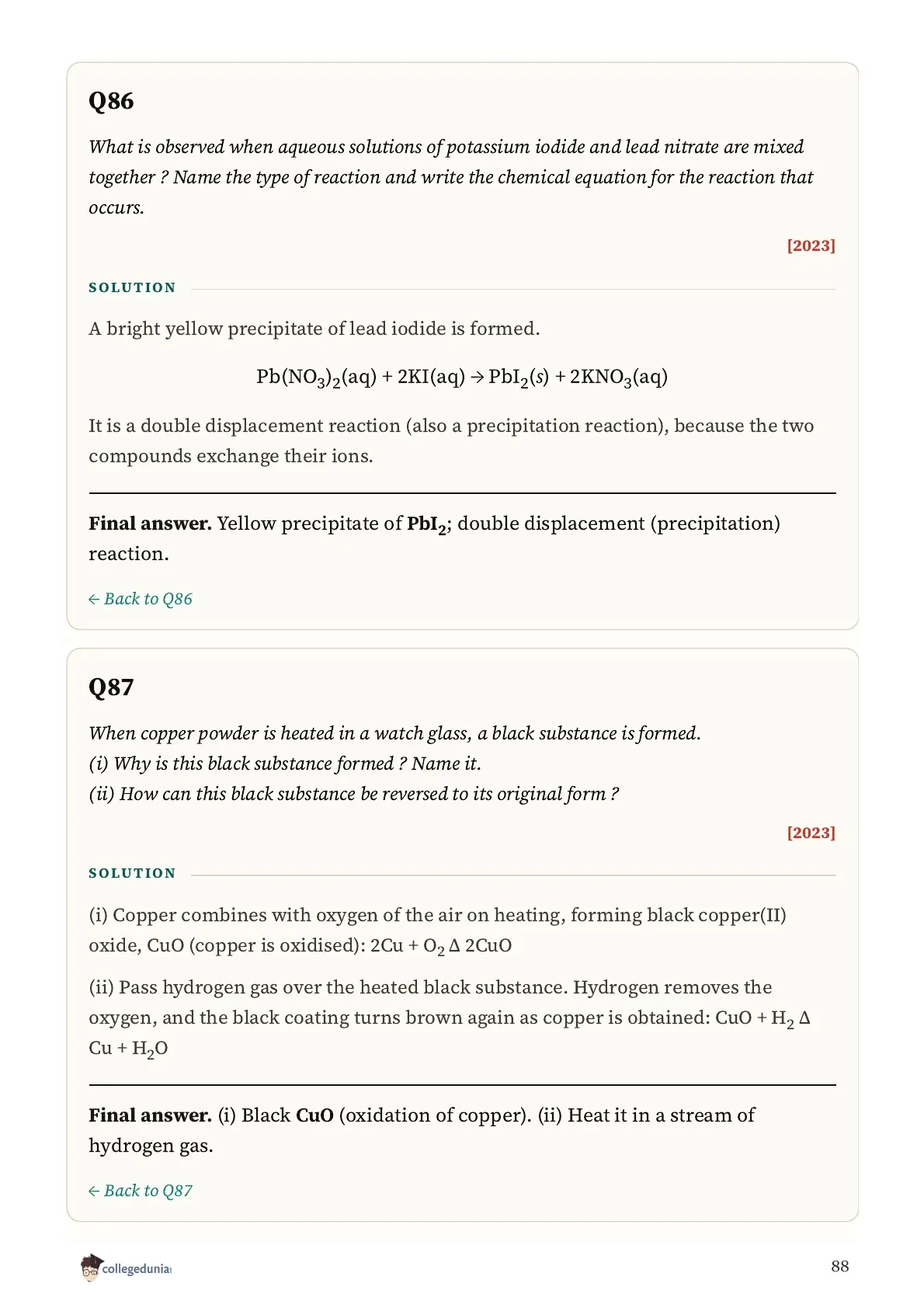
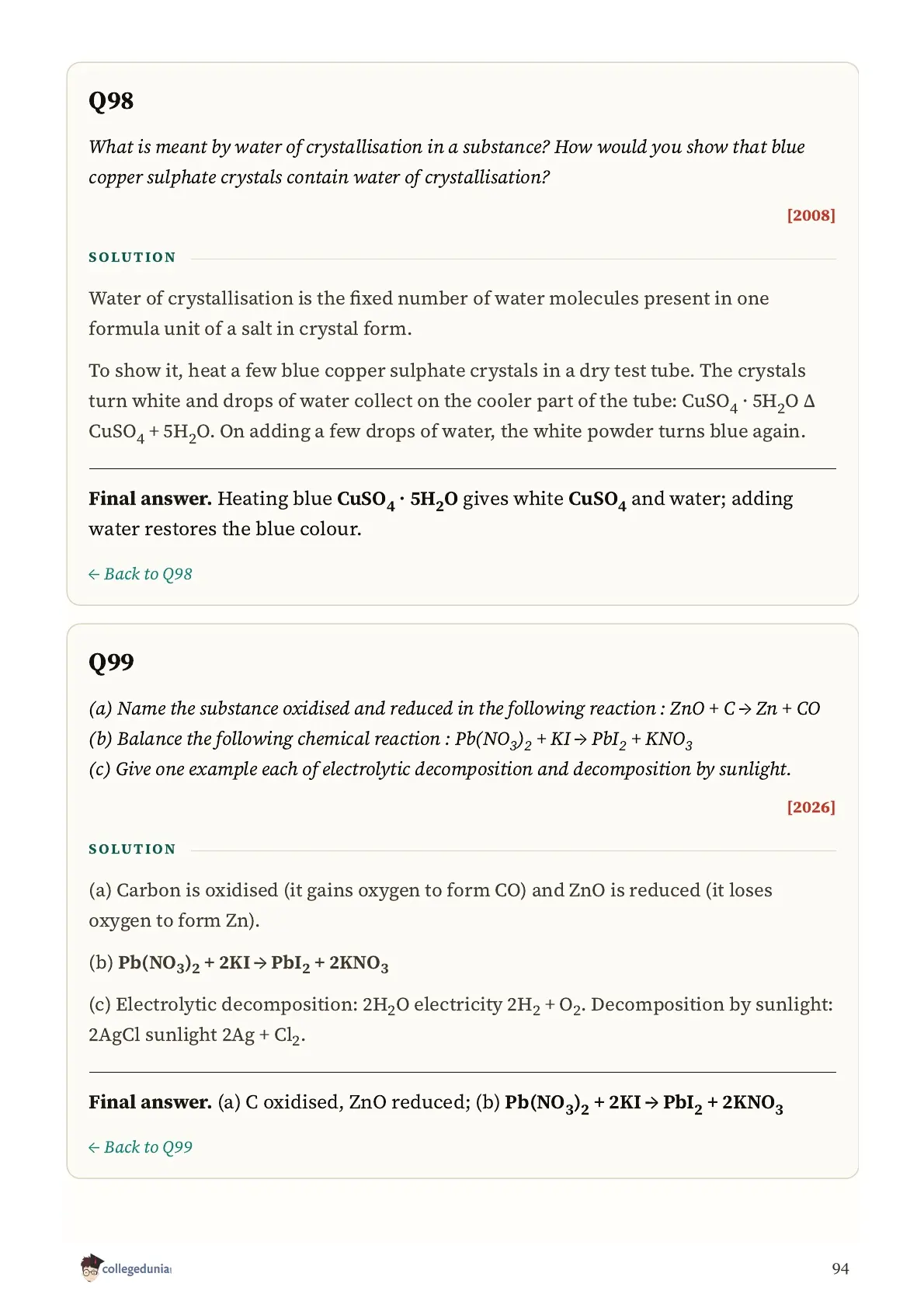
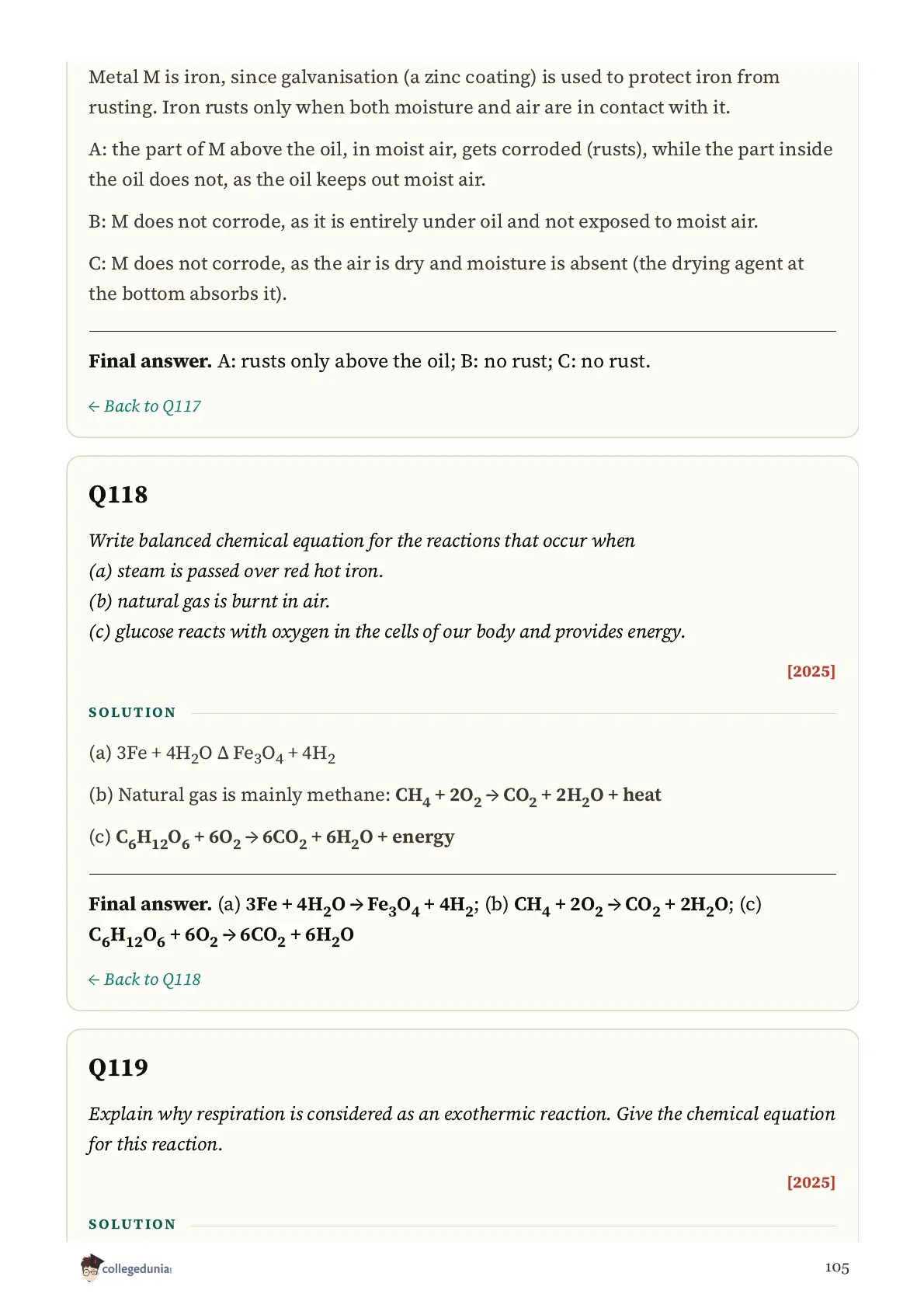
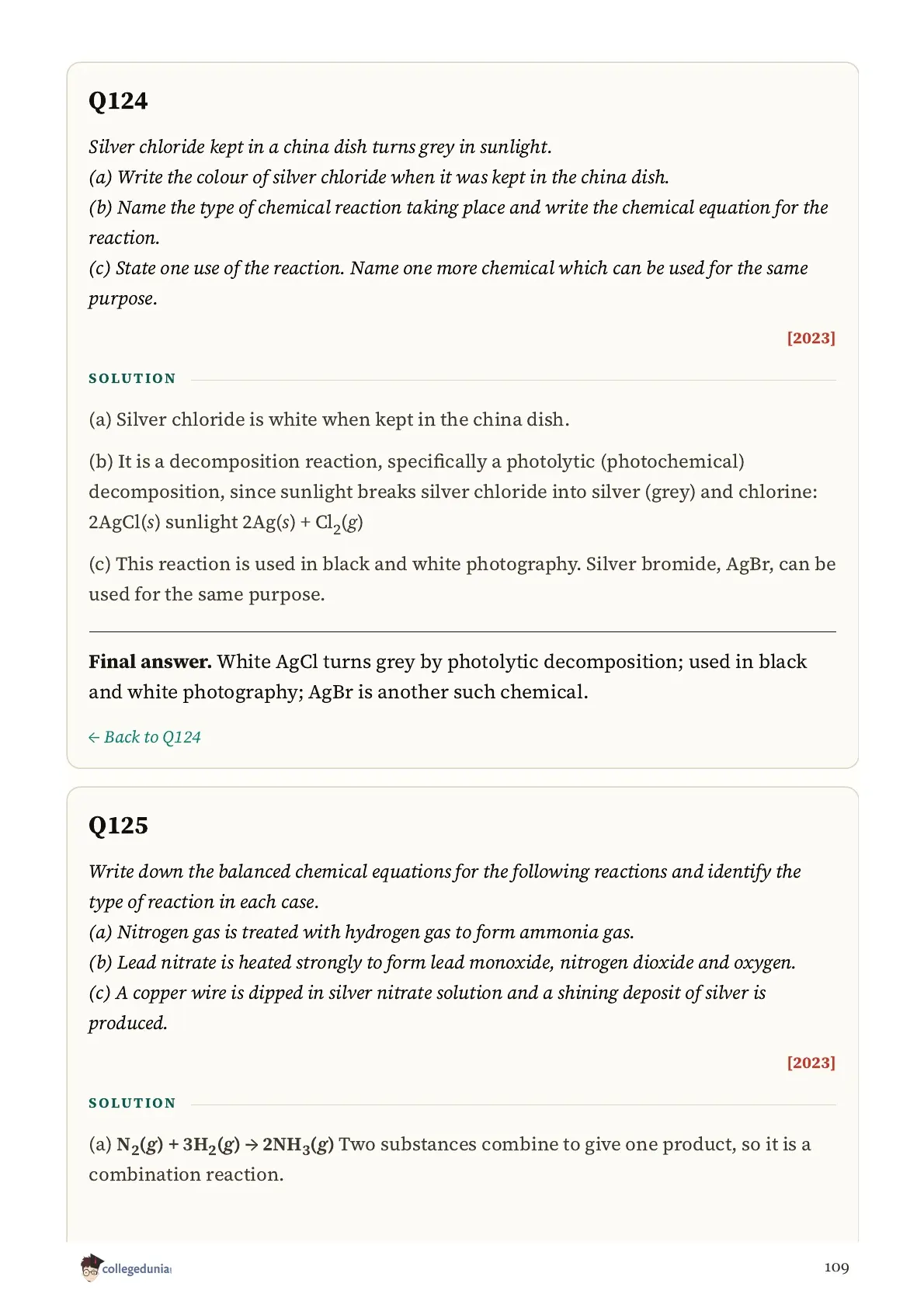
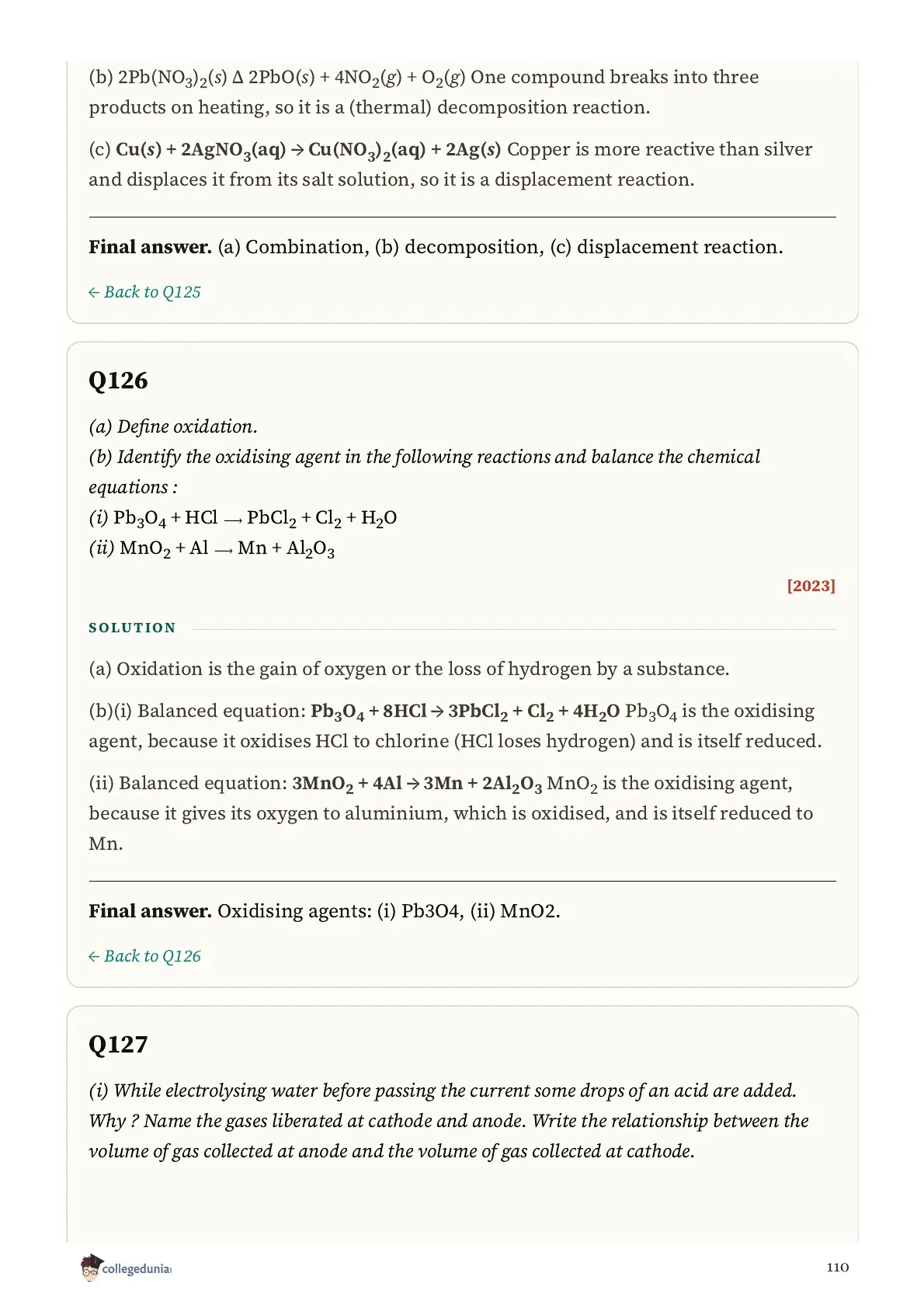
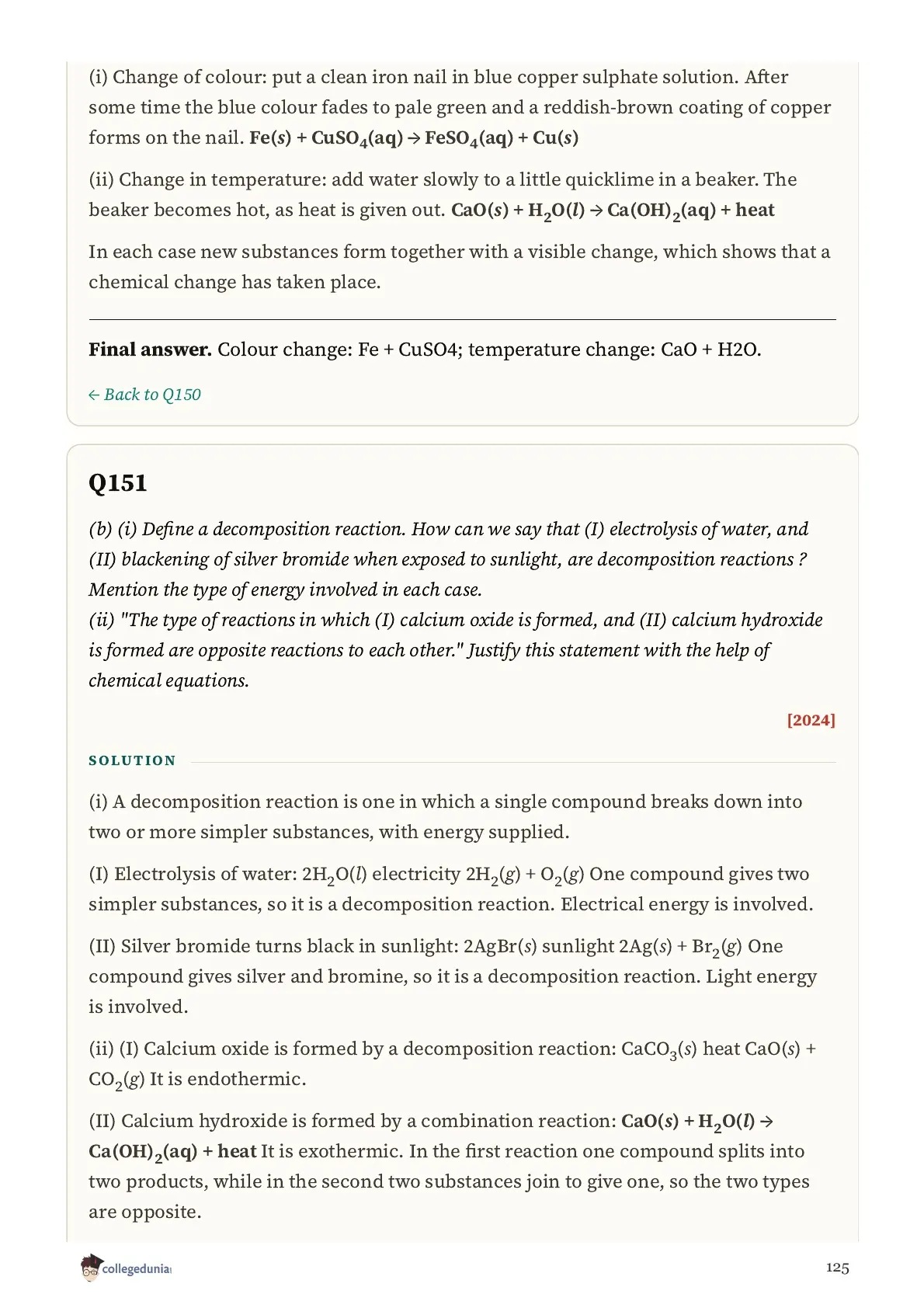
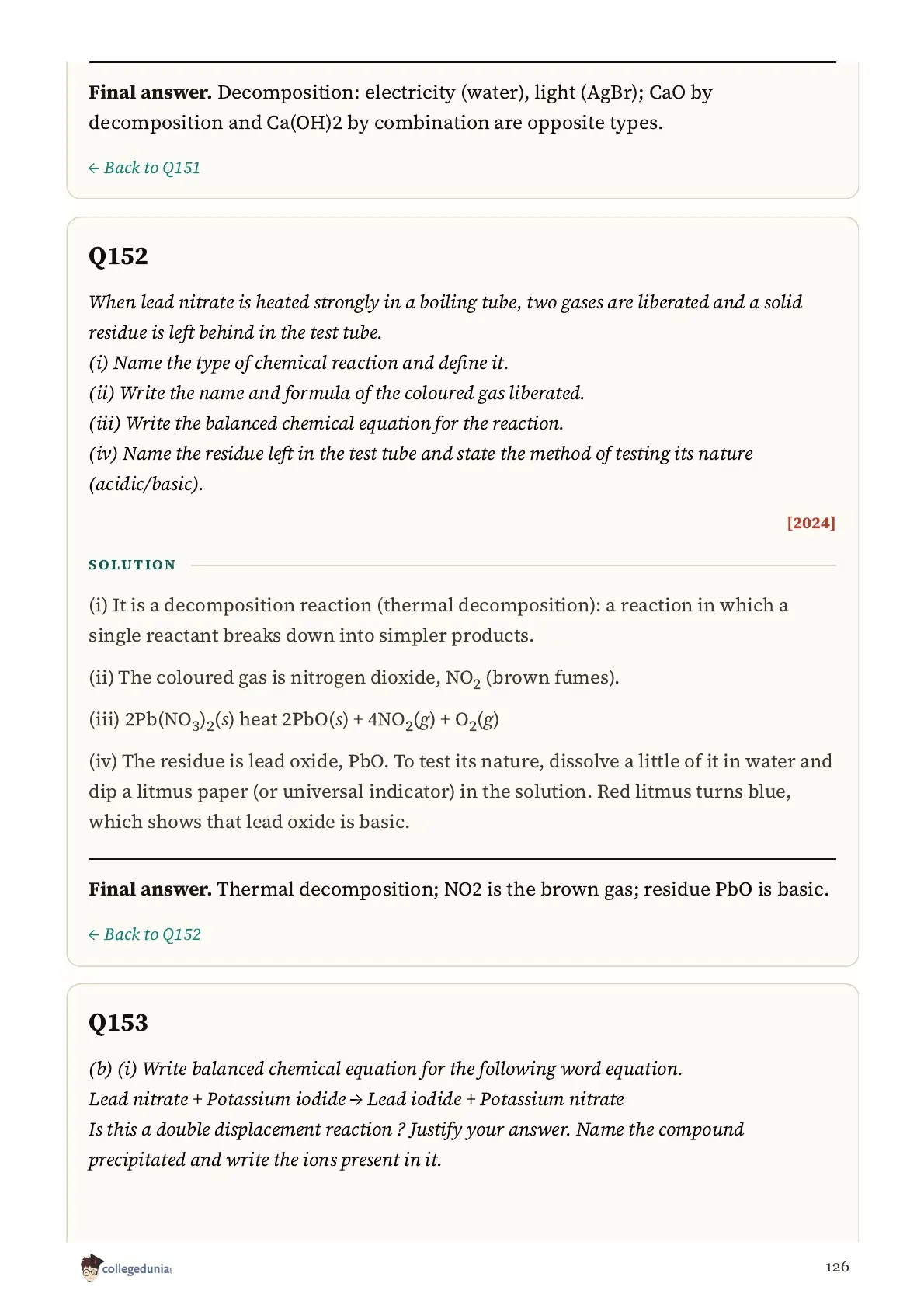
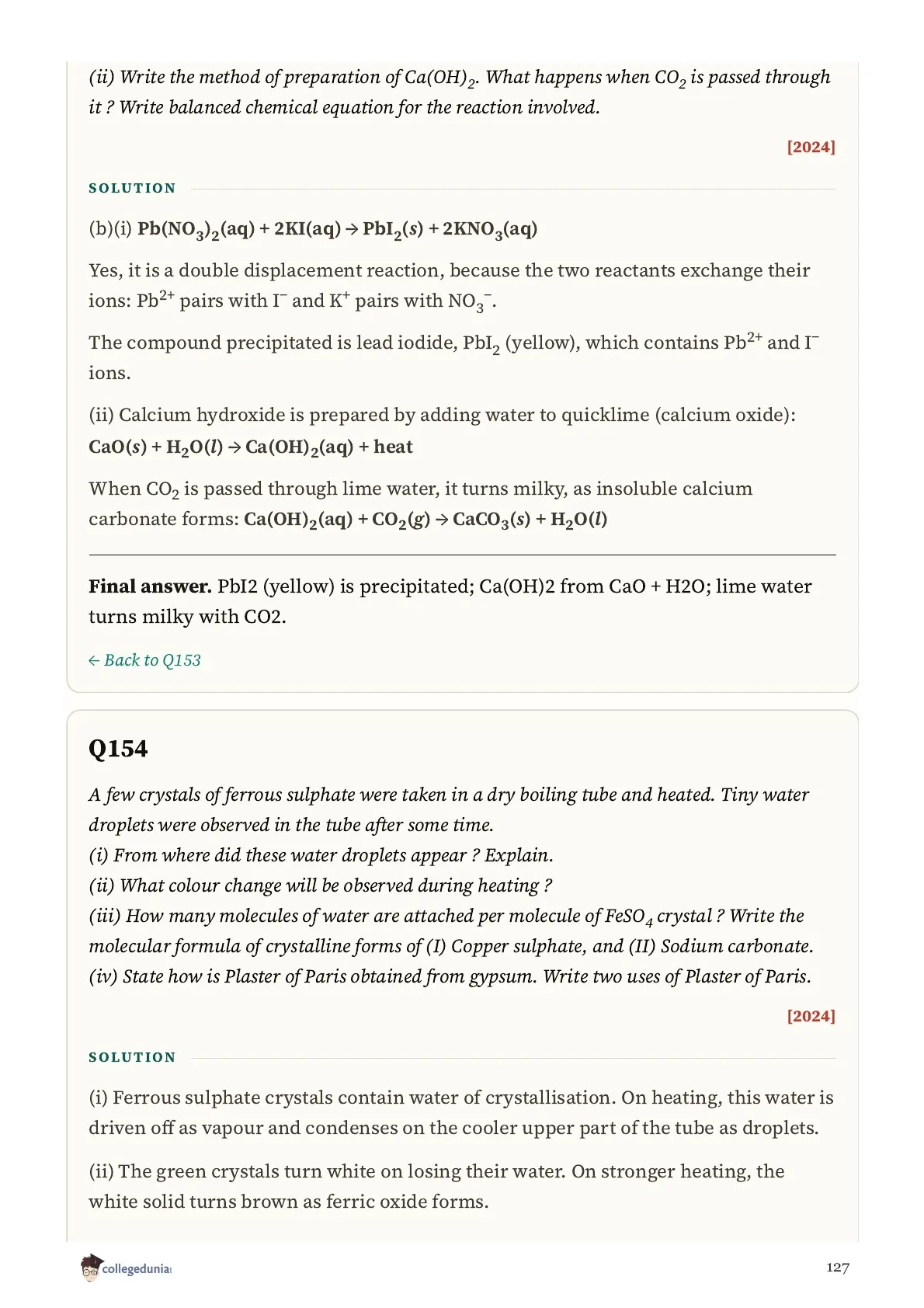
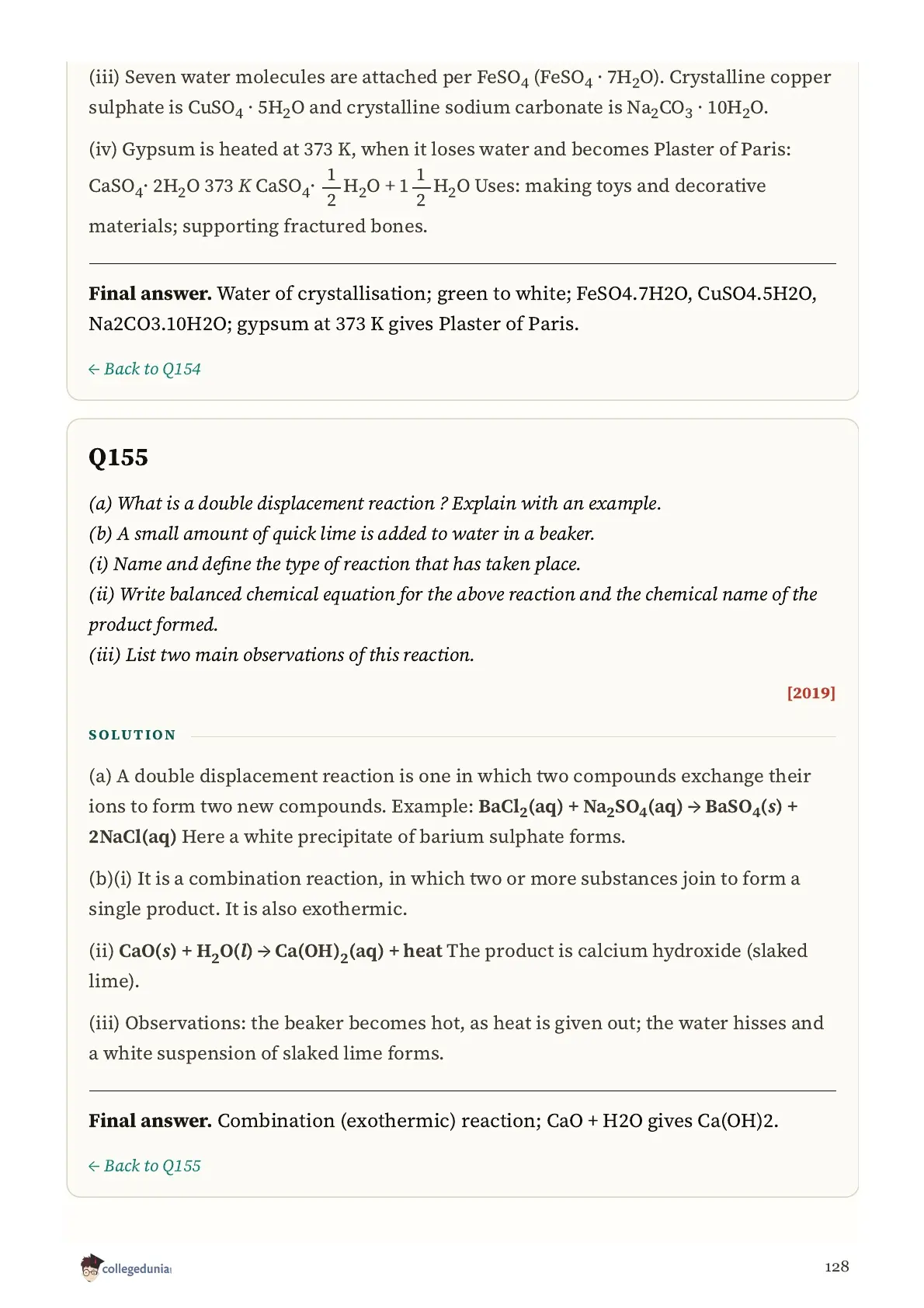
Balancing is the base of the chapter. 54 questions mention balancing and 50 ask for a balanced chemical equation, for example the 2026 question on x KI + H2O2 giving I2 + y KOH, or the 2009 question asking you to balance Pb(NO3)2 giving PbO, NO2 and O2. 3 questions also ask for the physical state of each reactant and product. 26 questions ask you to name or classify the type of reaction, and 15 involve displacement, 12 of them double displacement, such as the 2026 MCQ on AgNO3 + NaCl and K2SO4 + BaCl2.
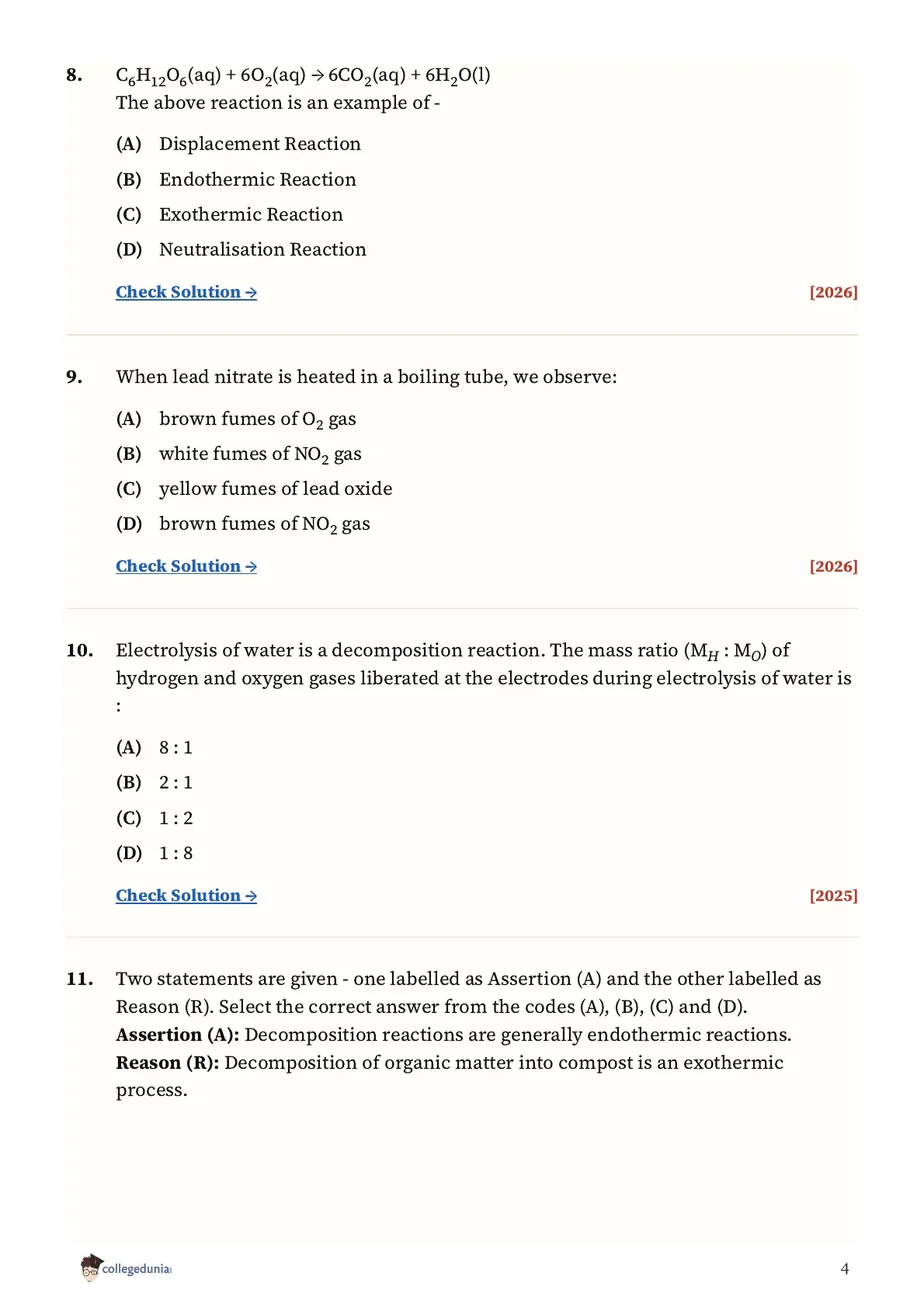
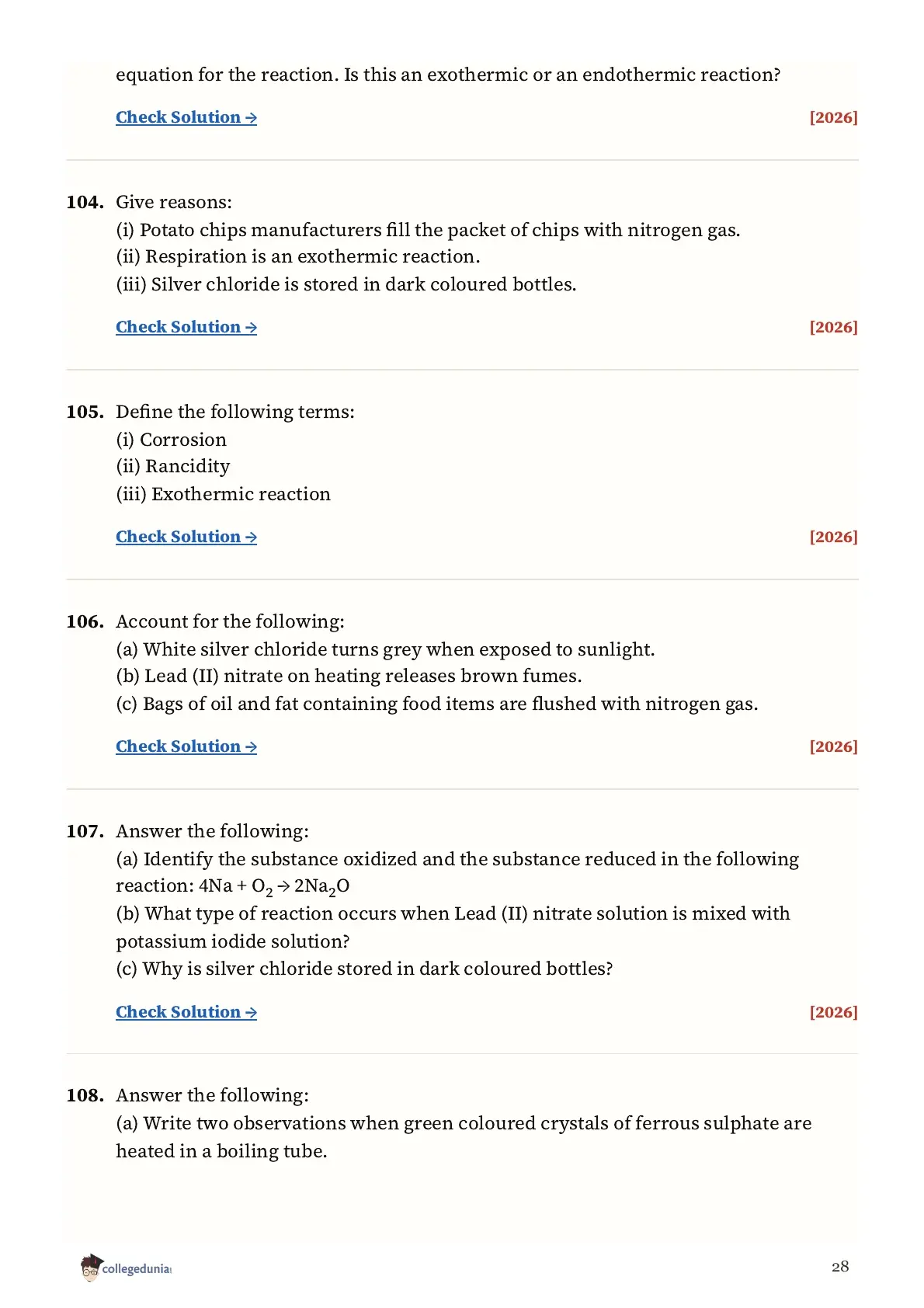
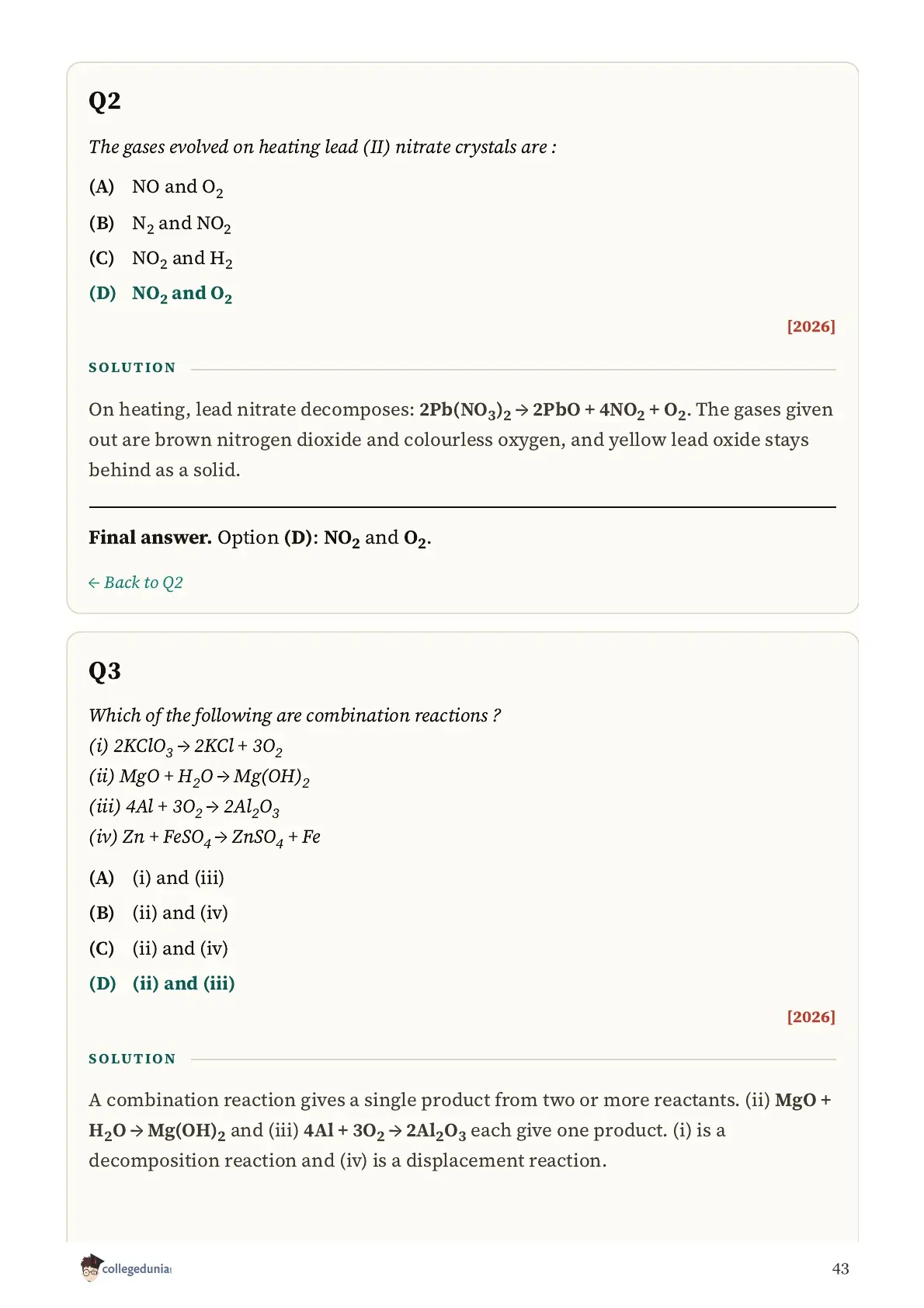
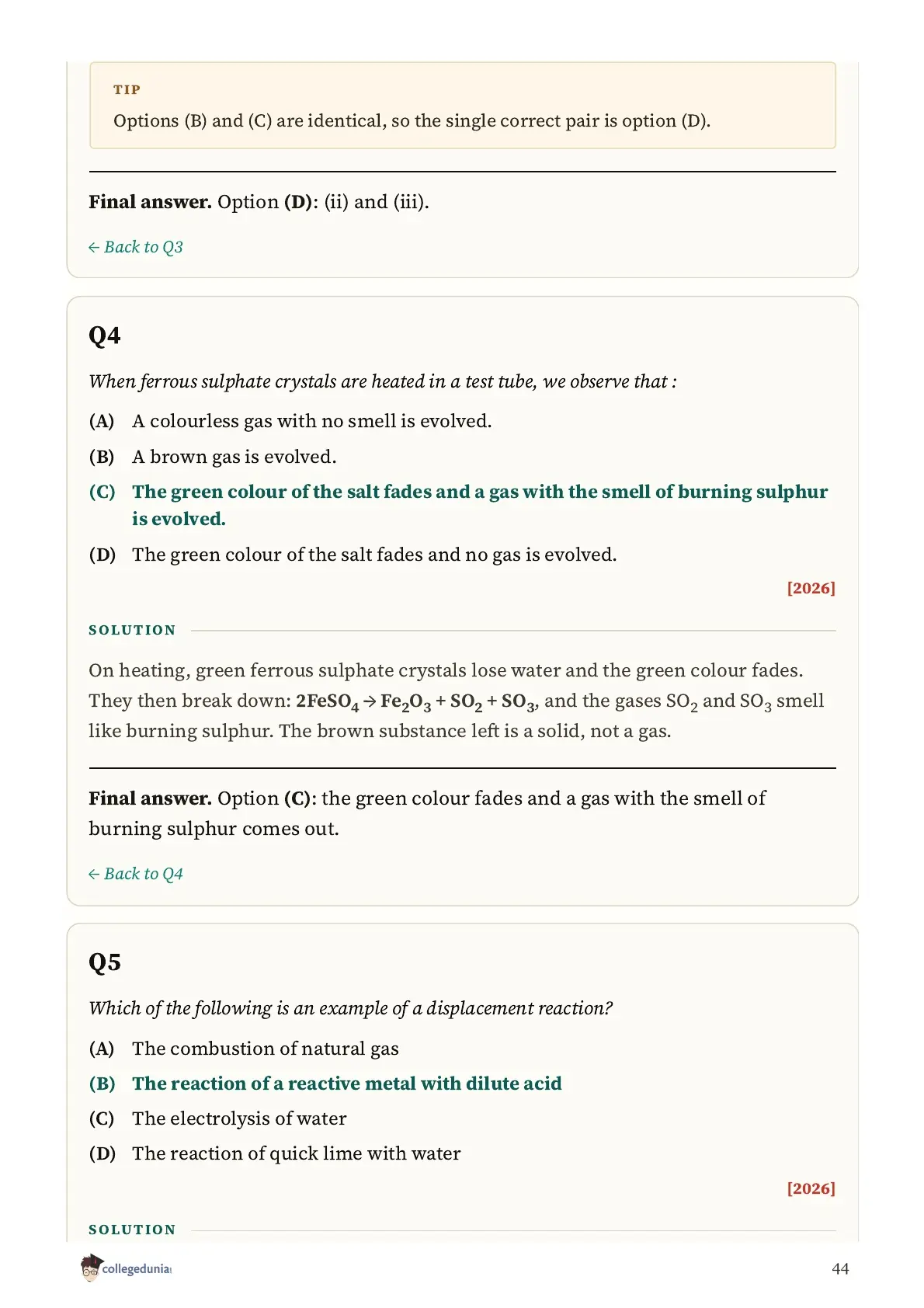
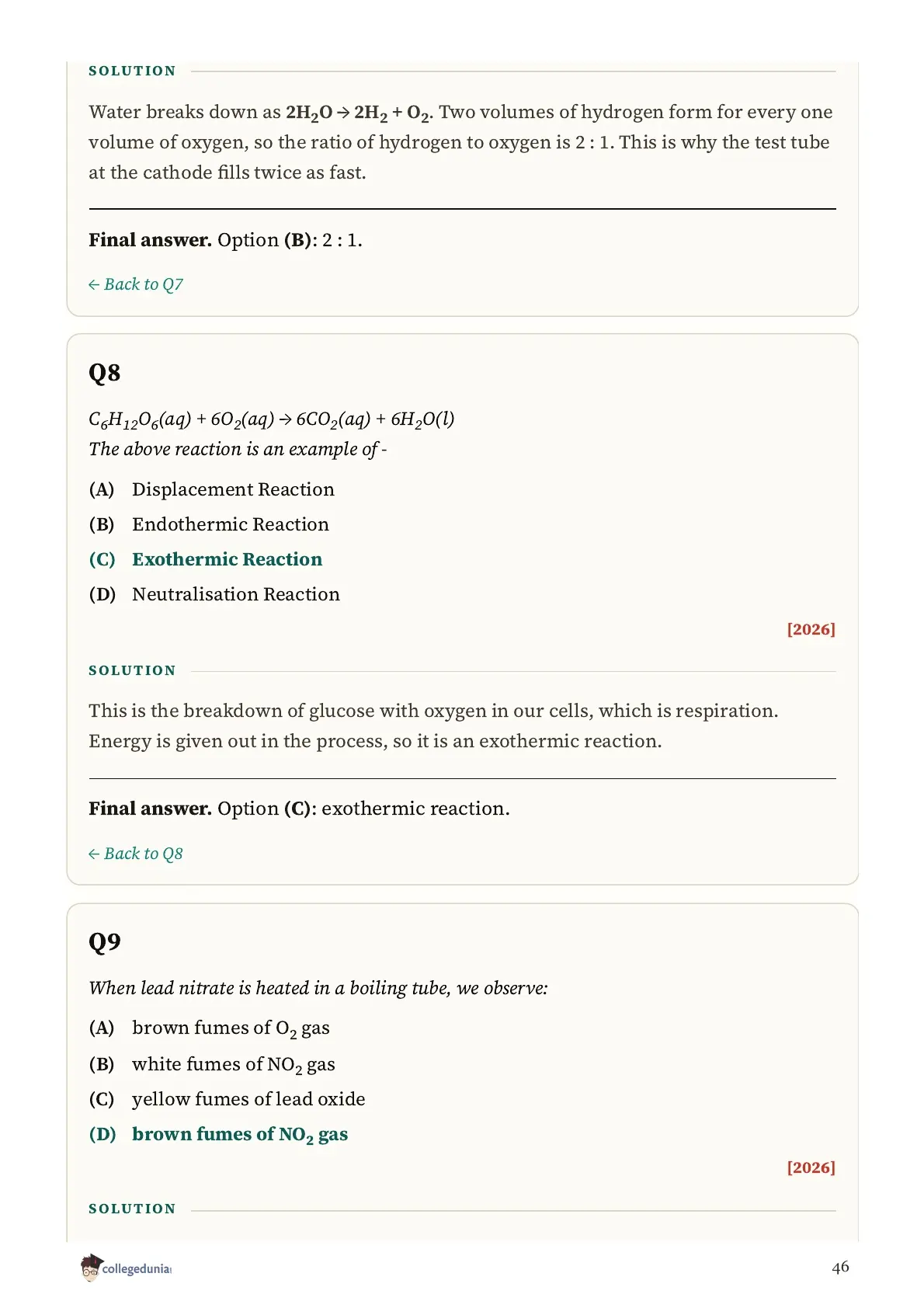
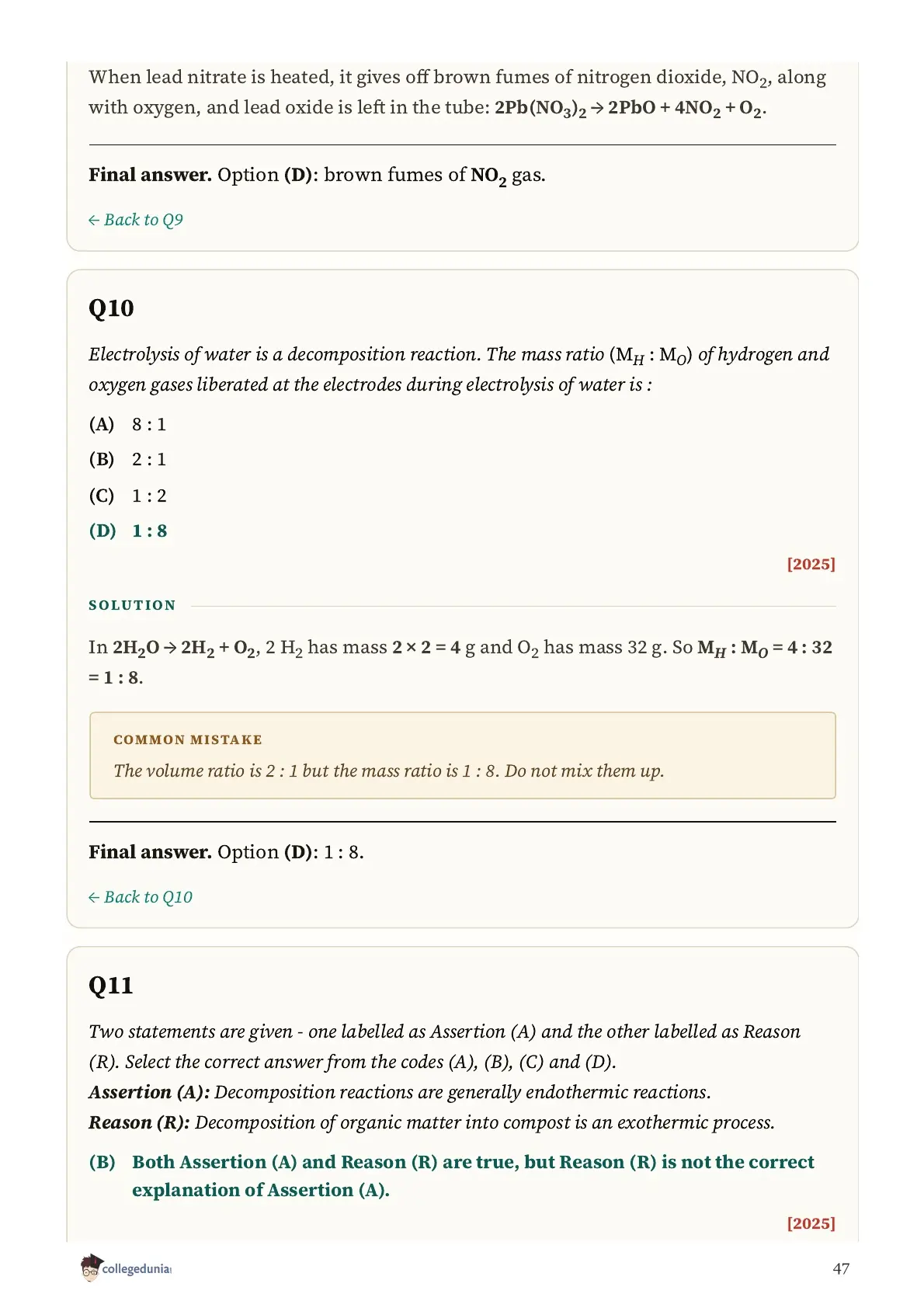
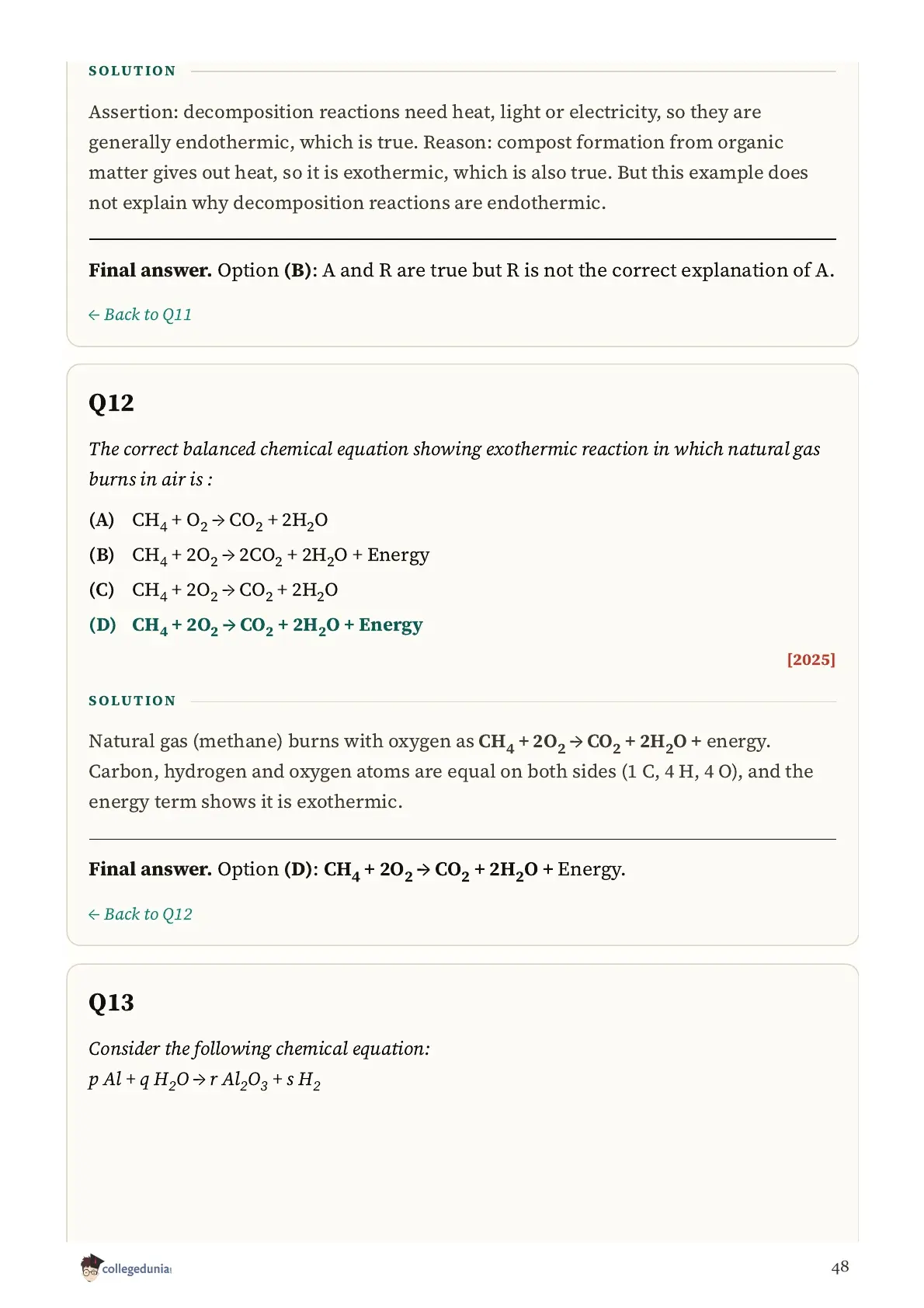
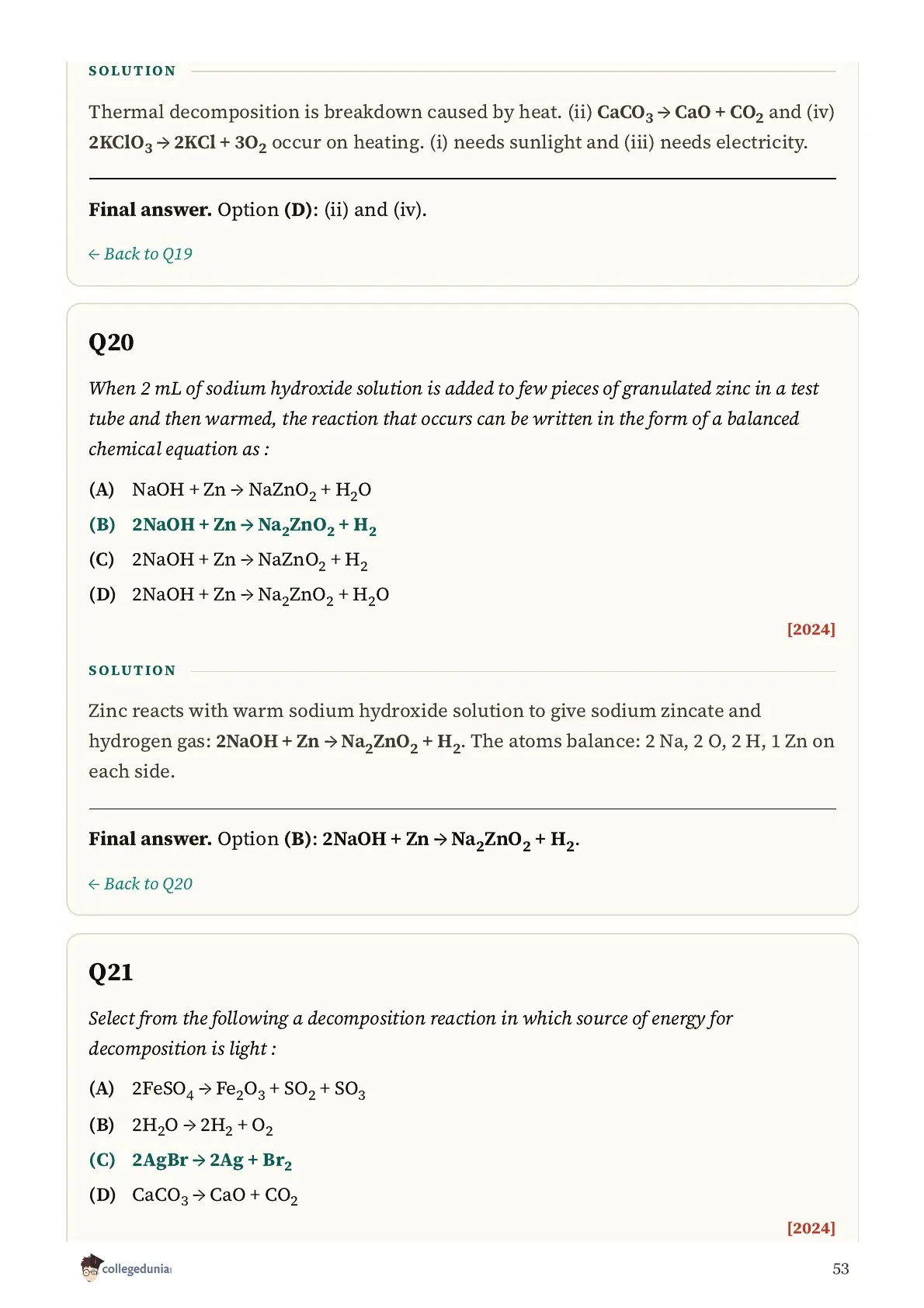
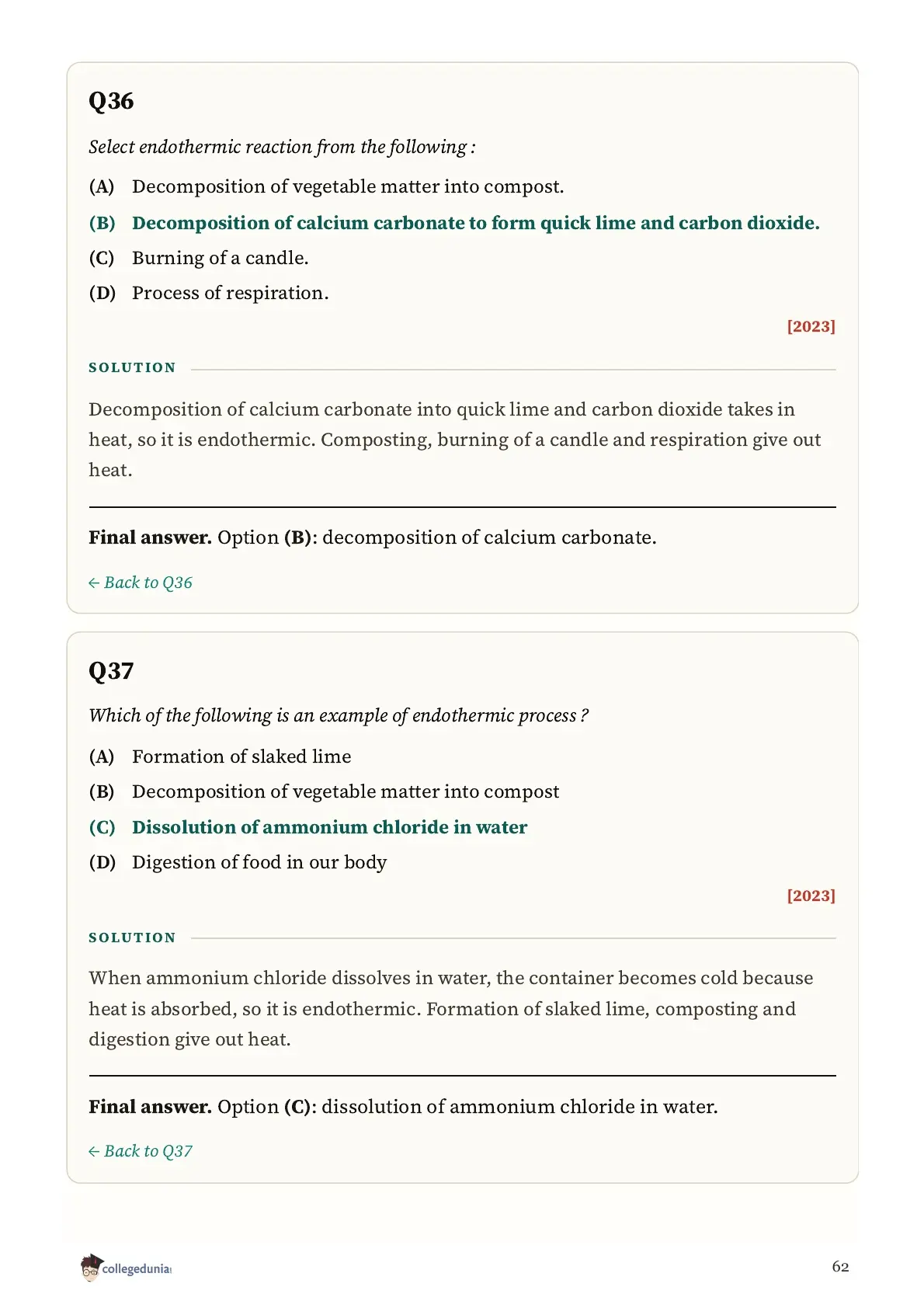
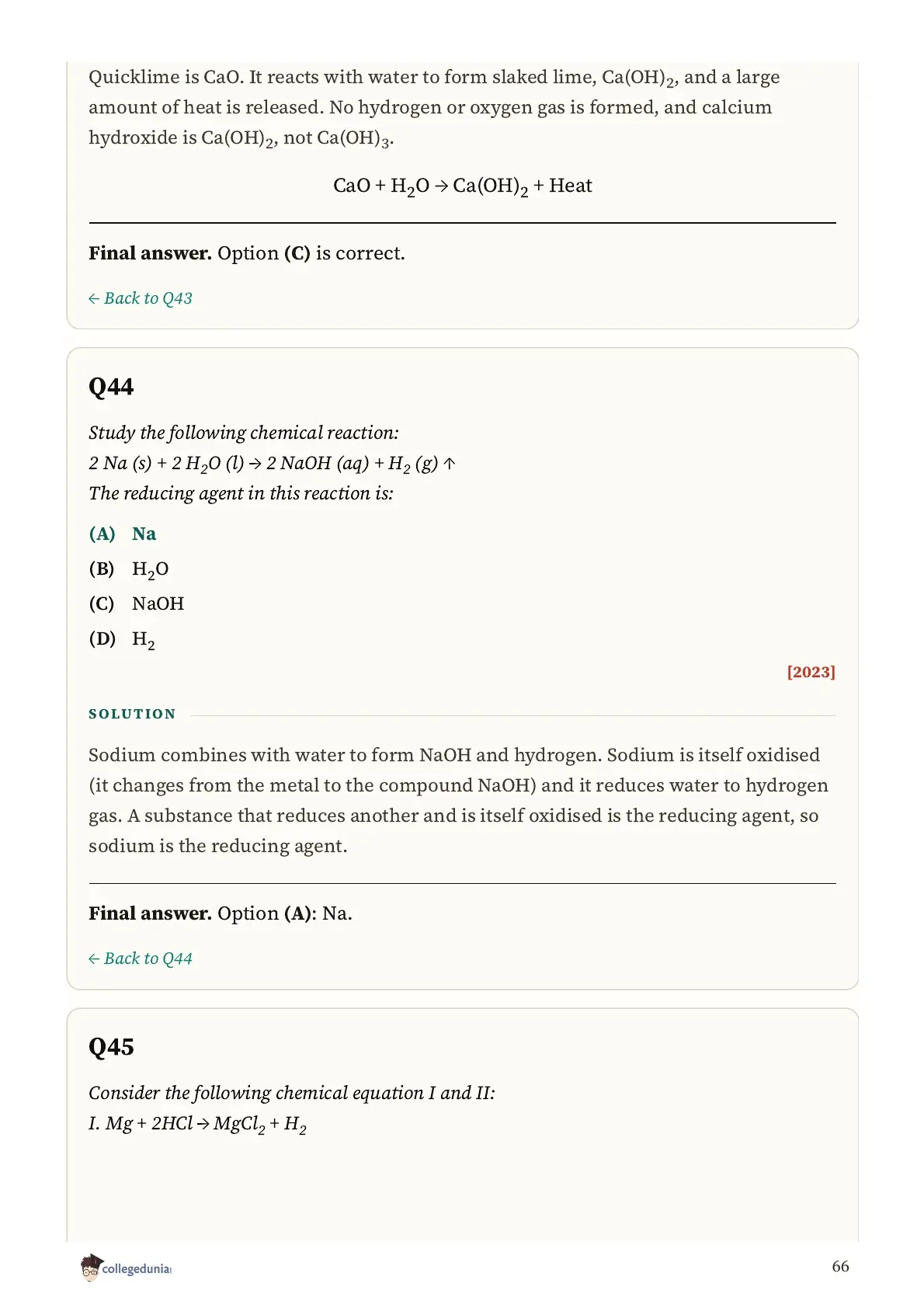
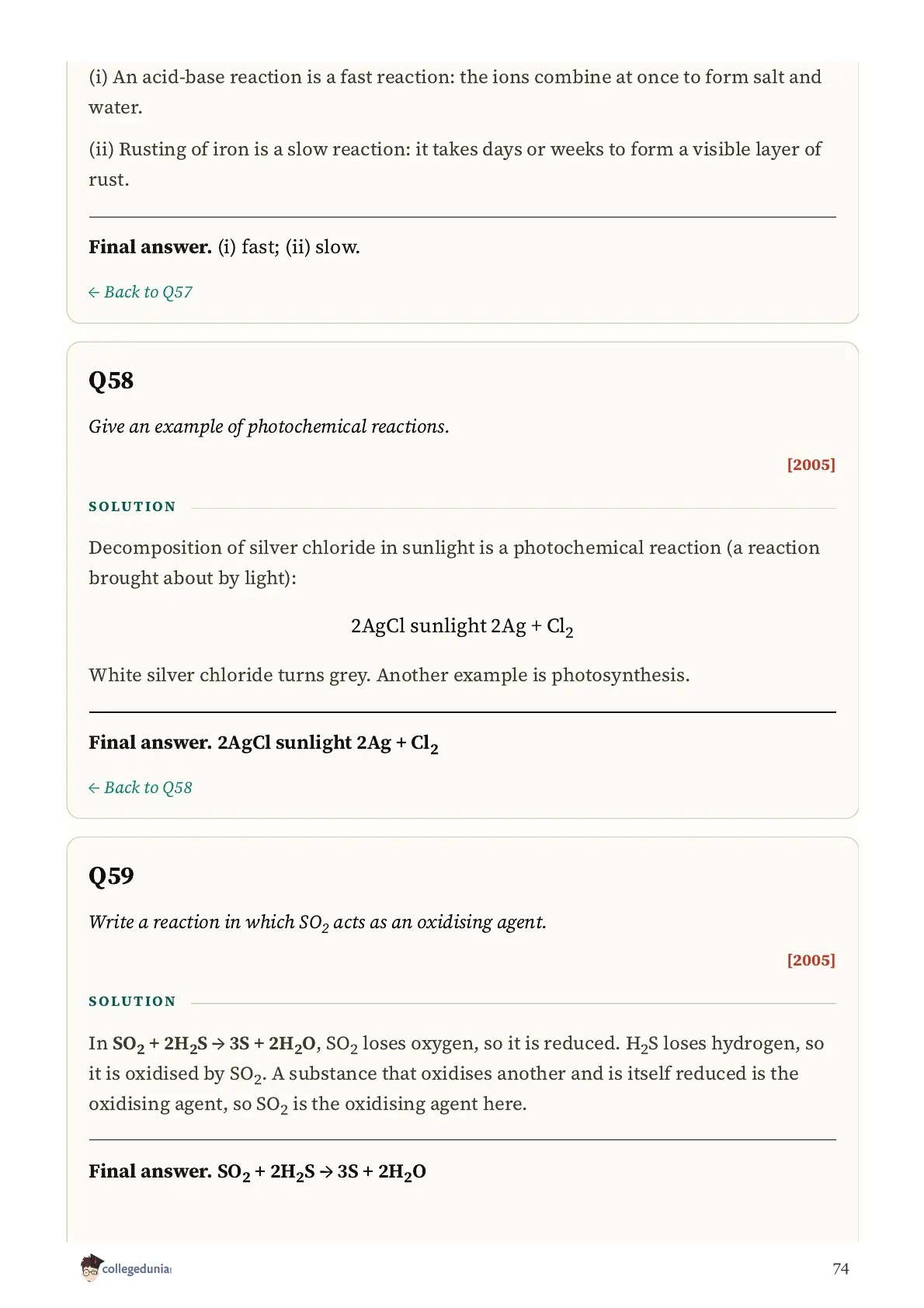
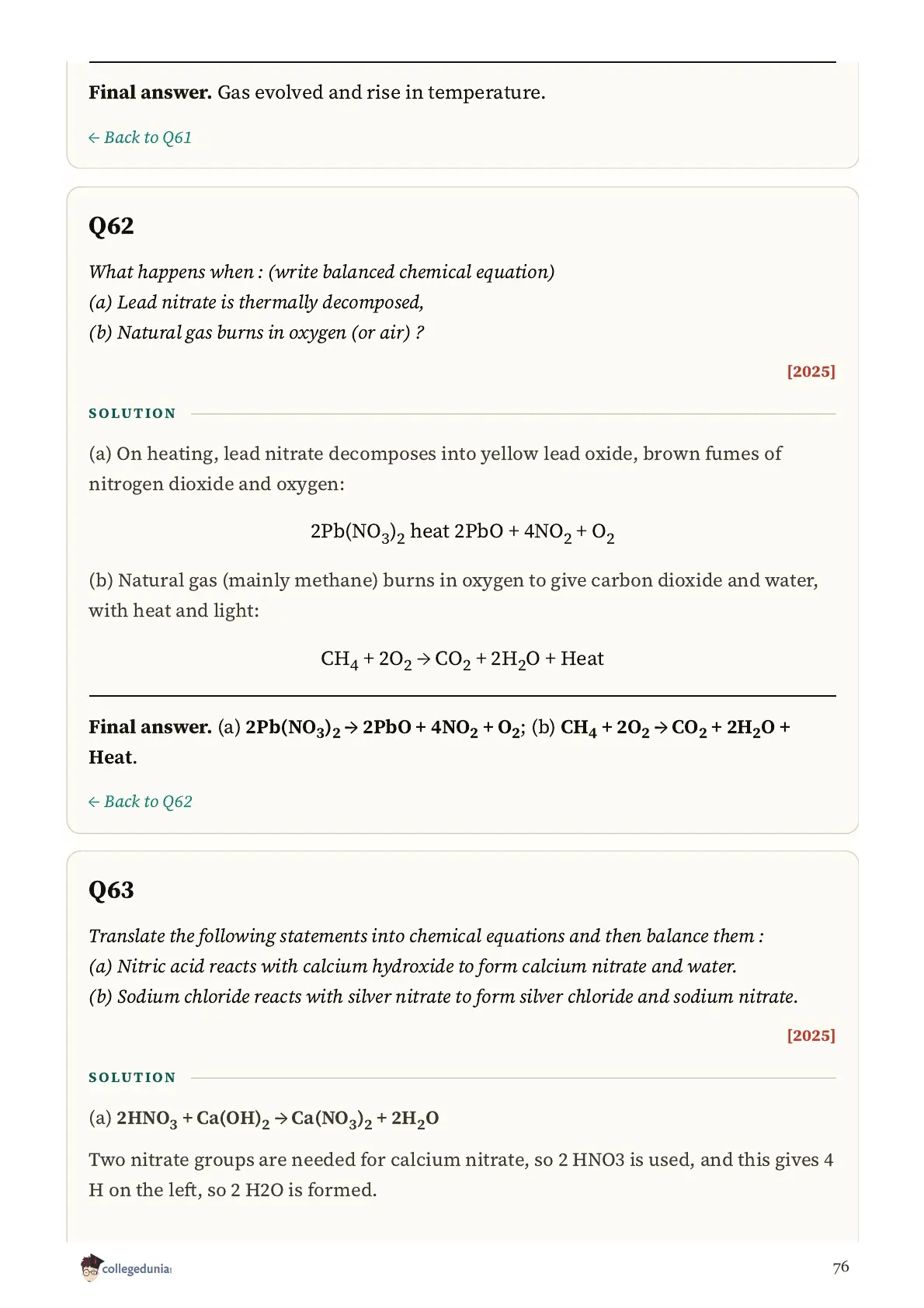
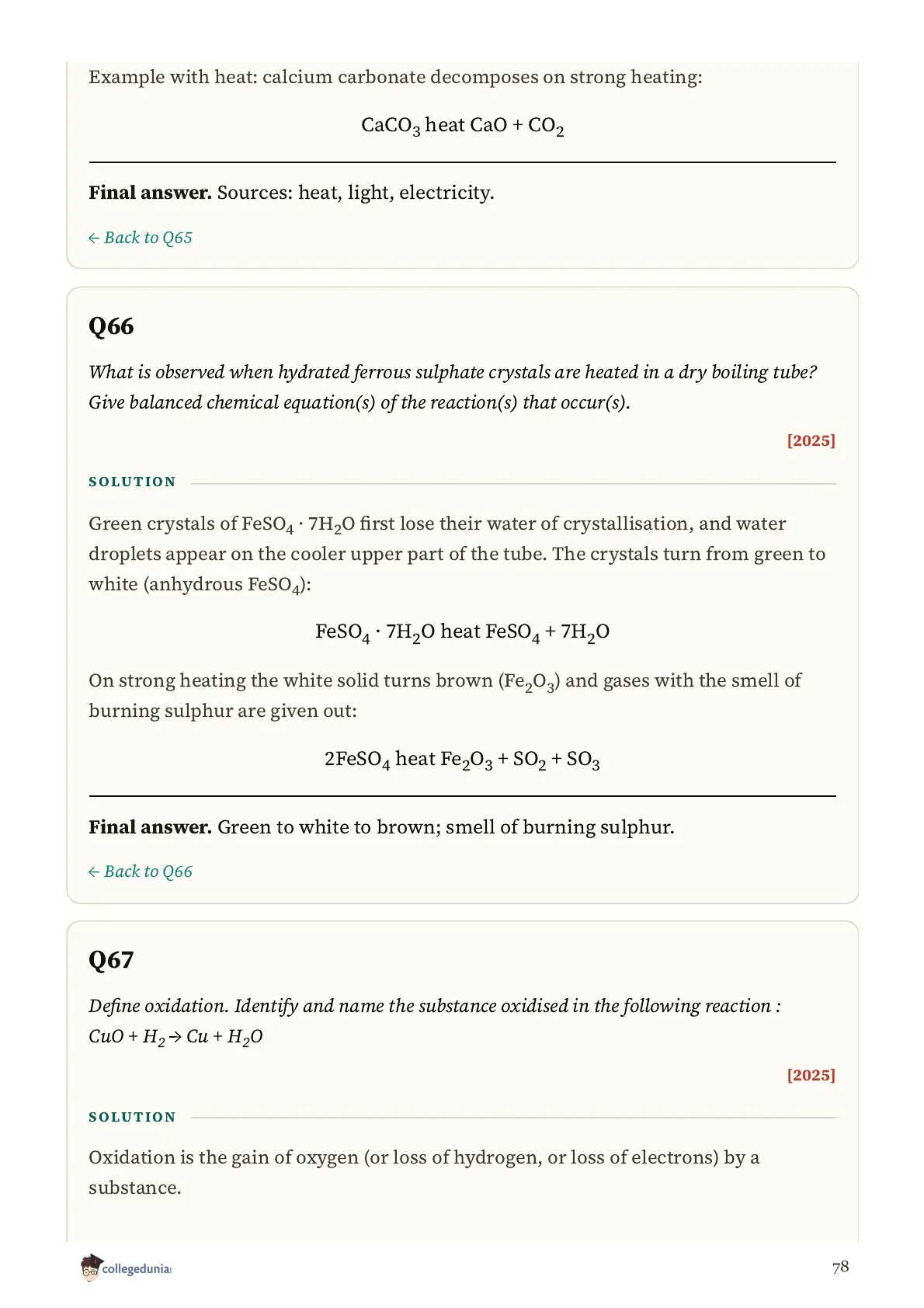
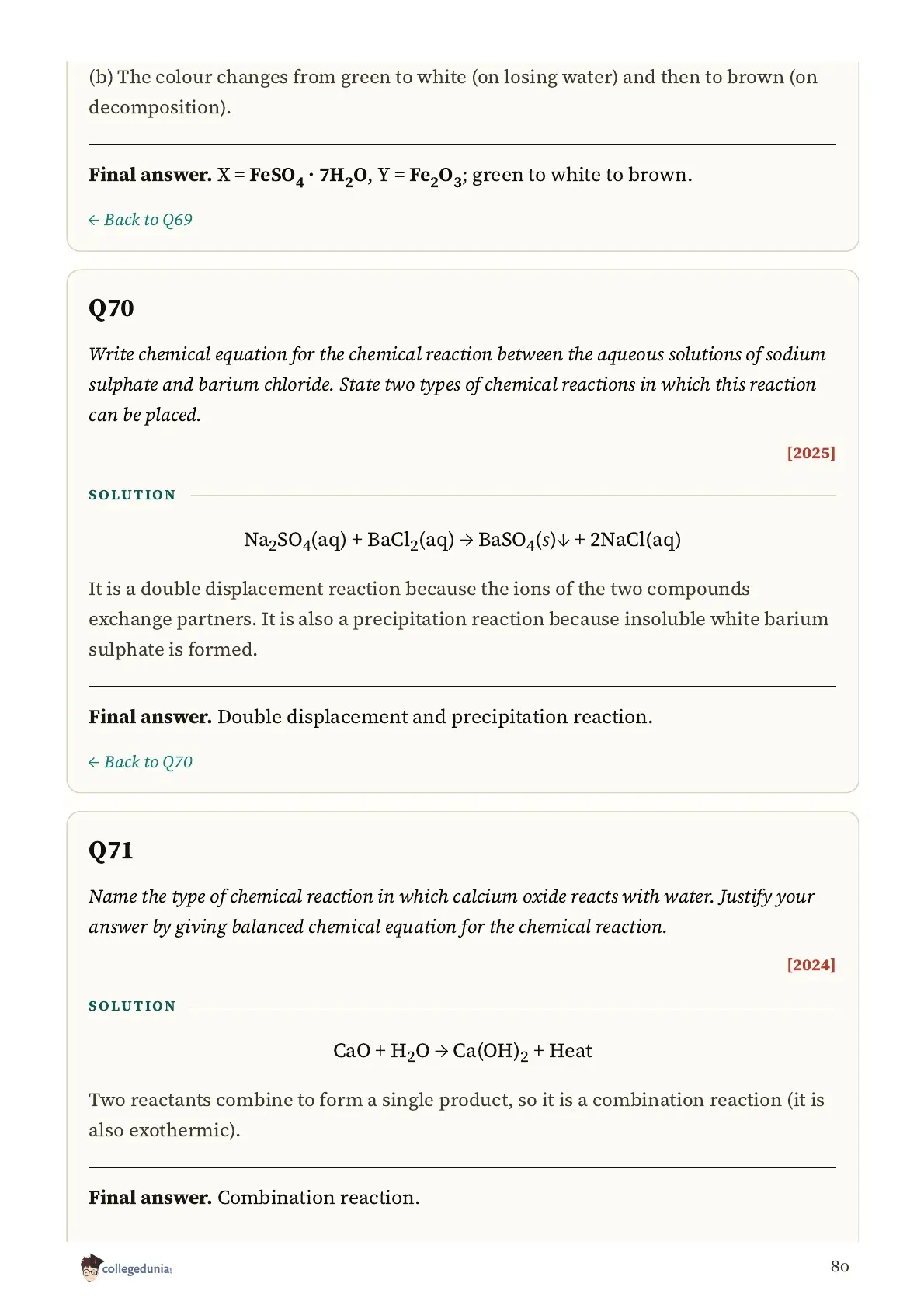
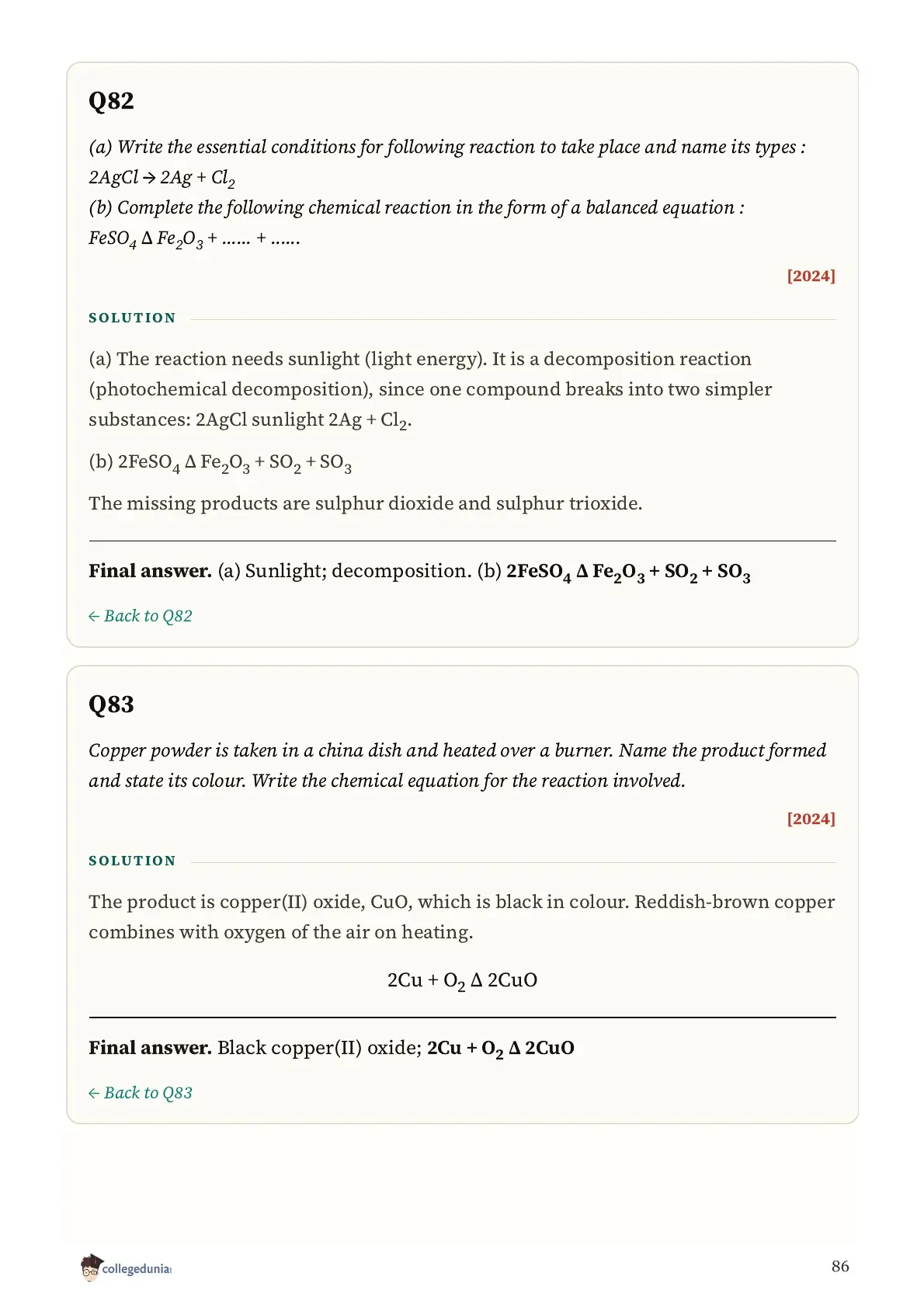
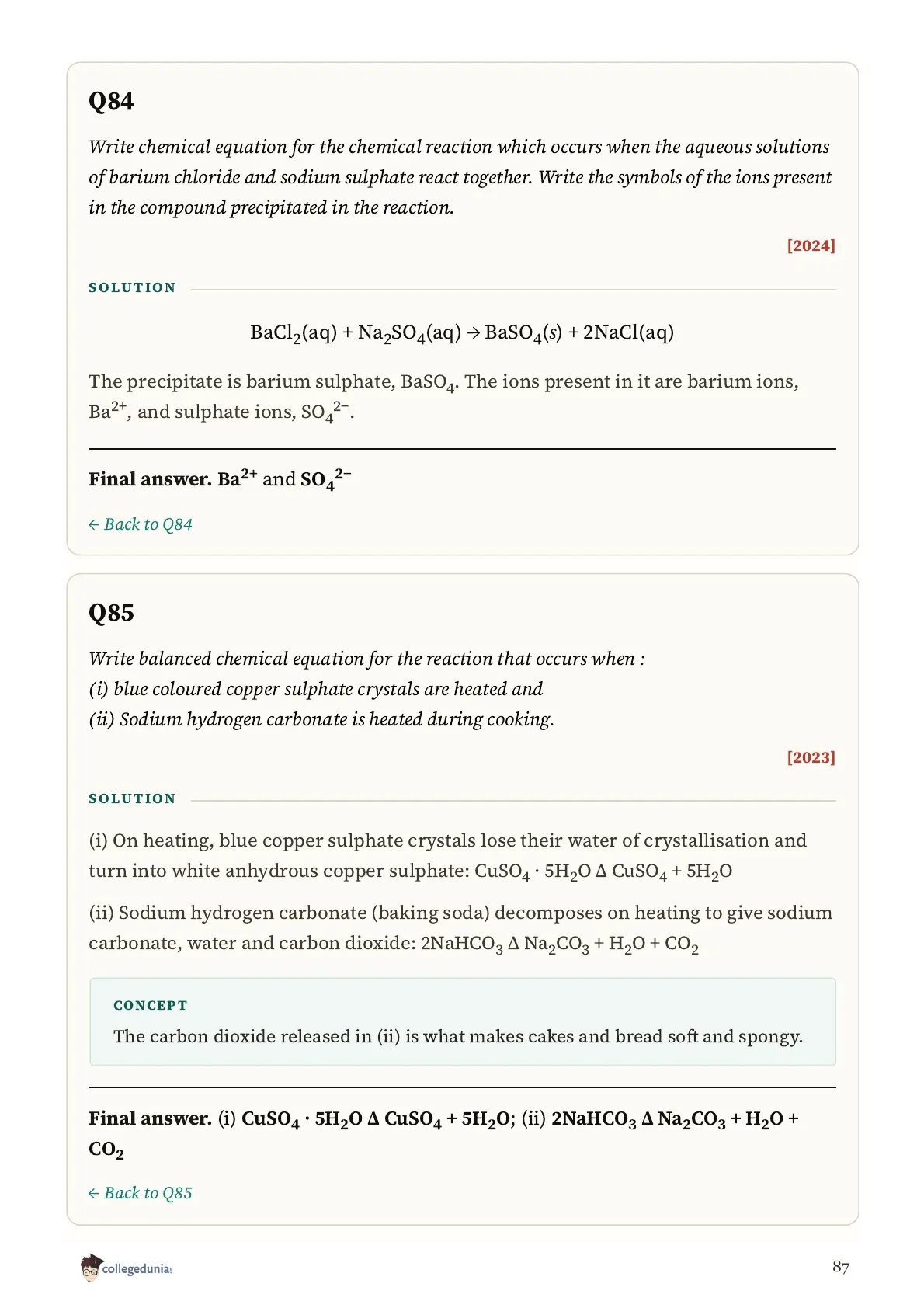
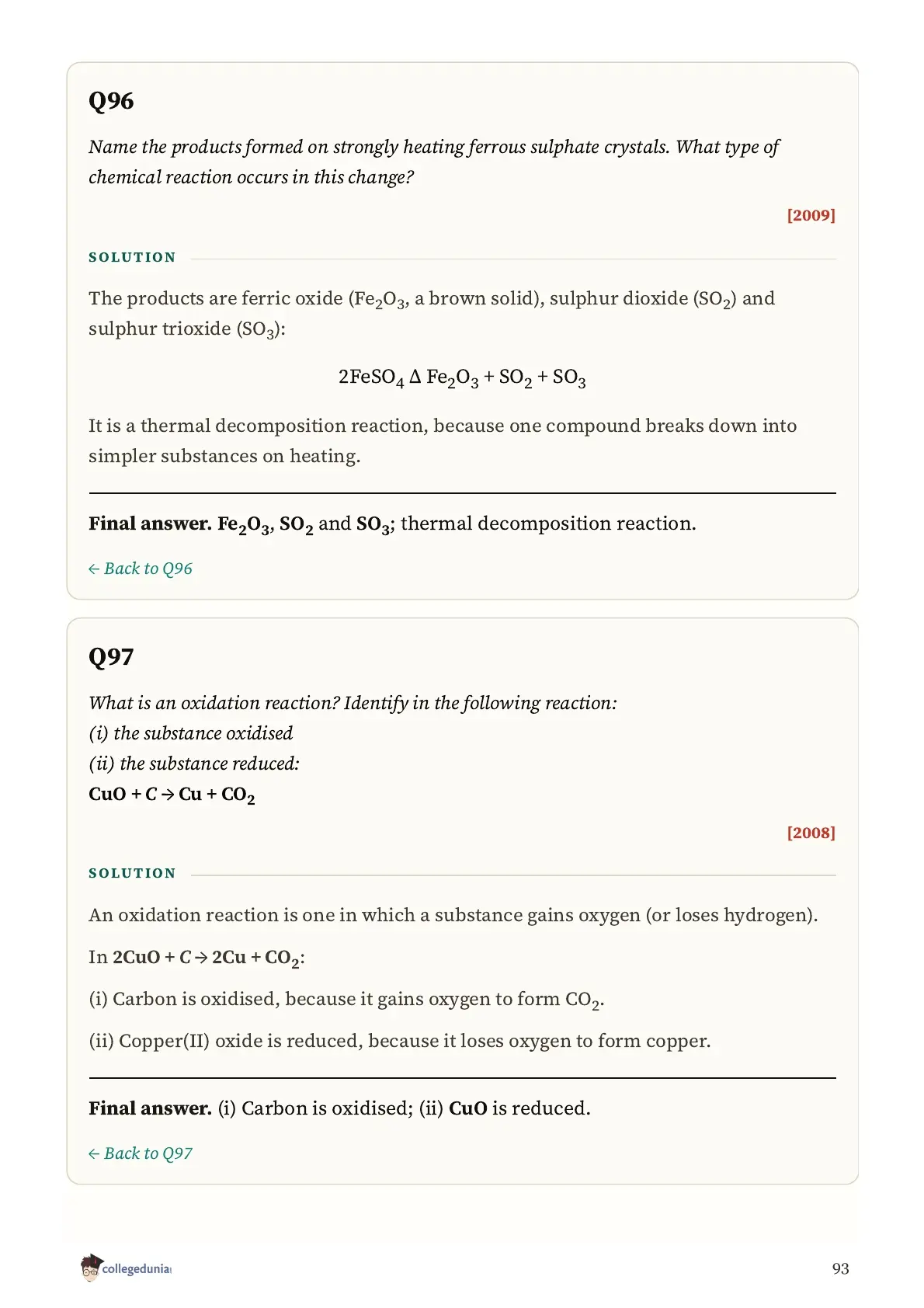
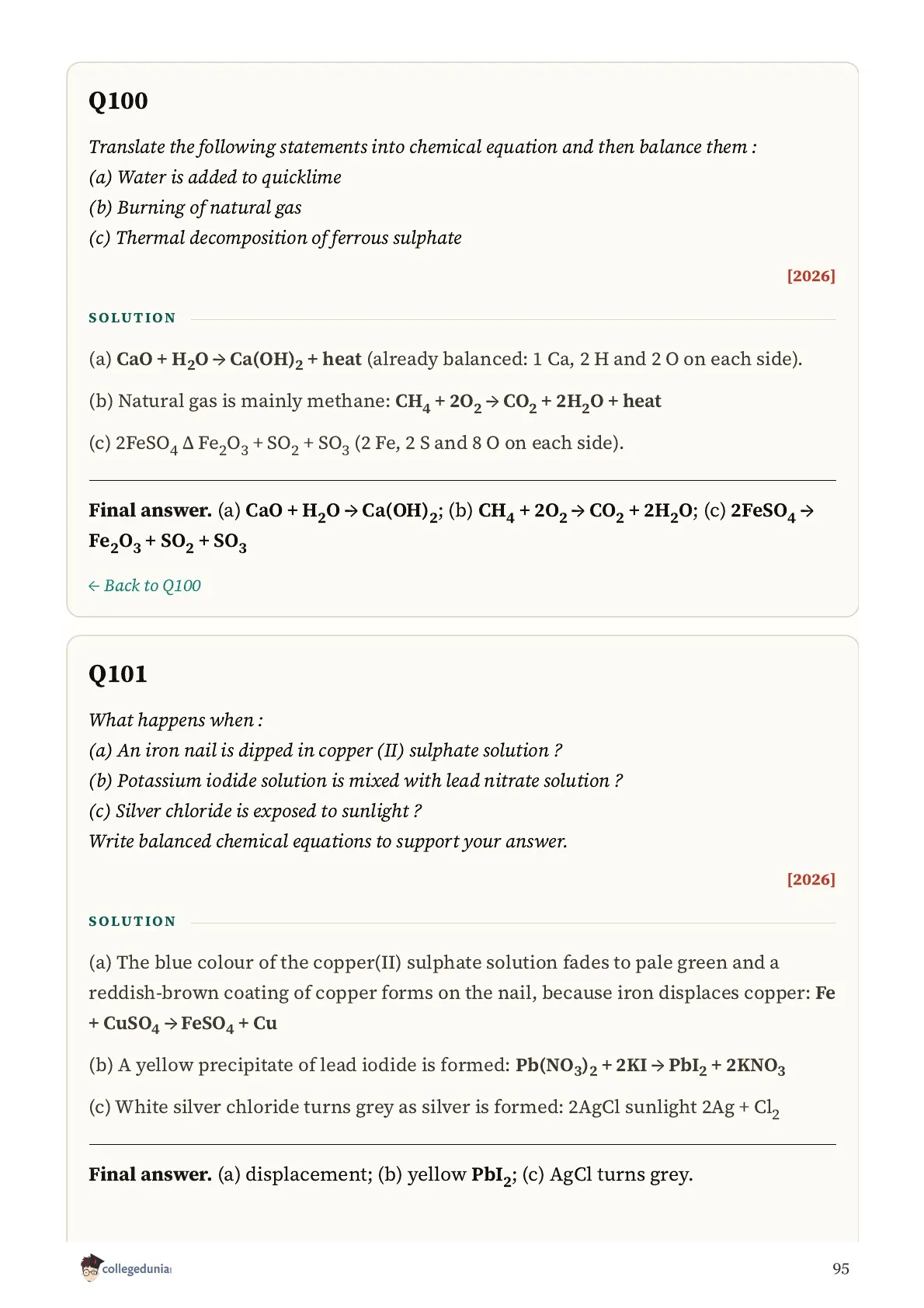
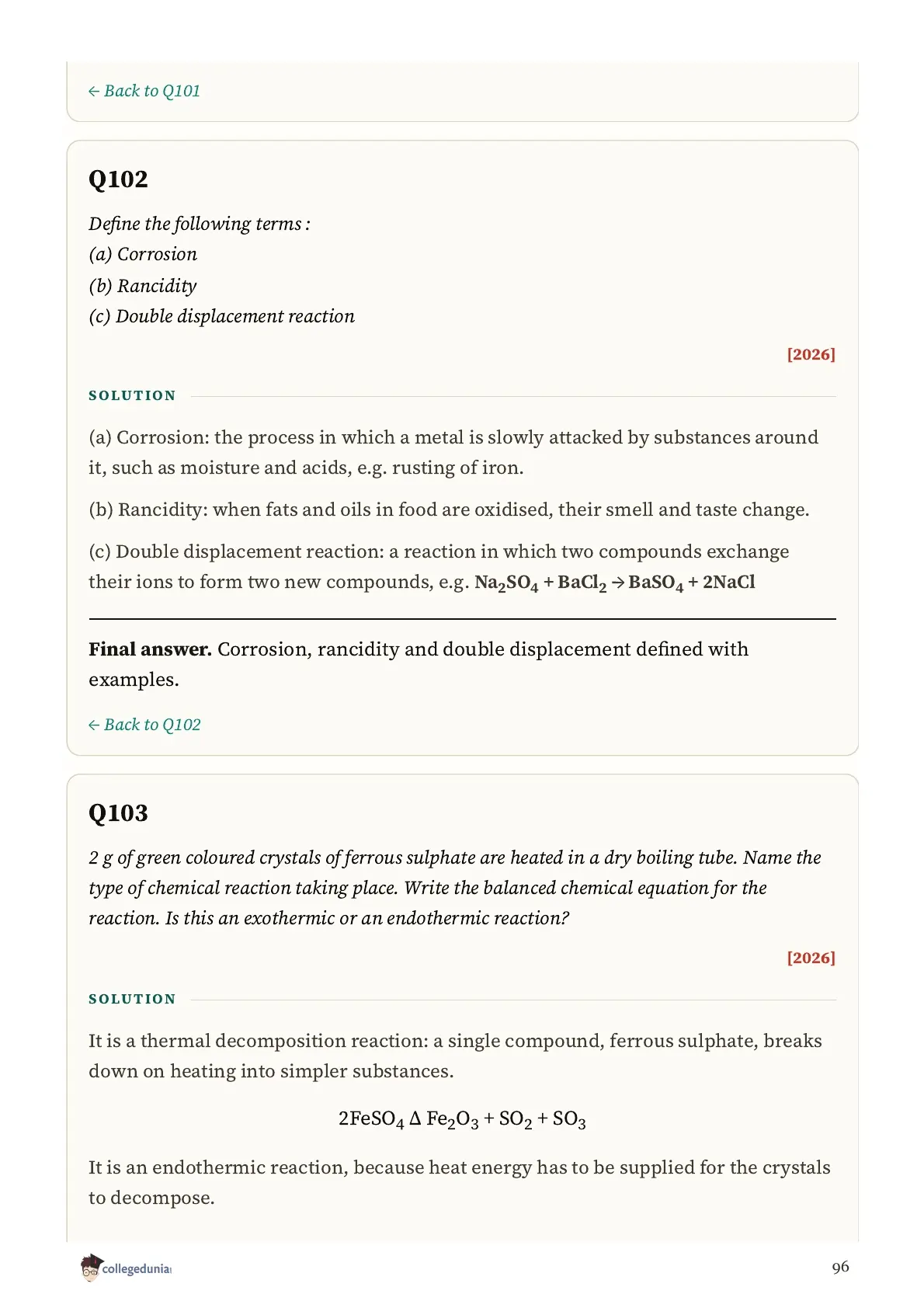
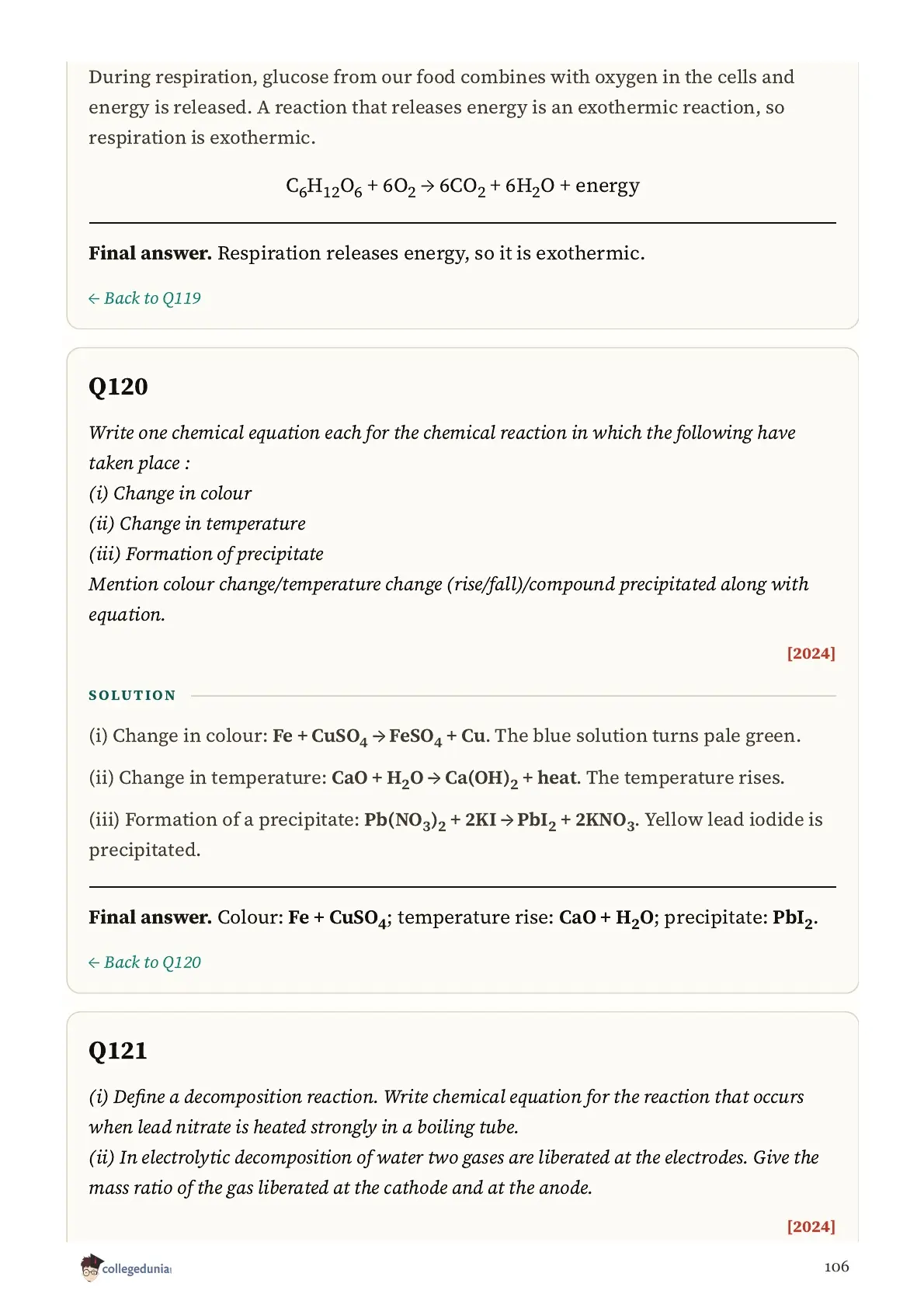
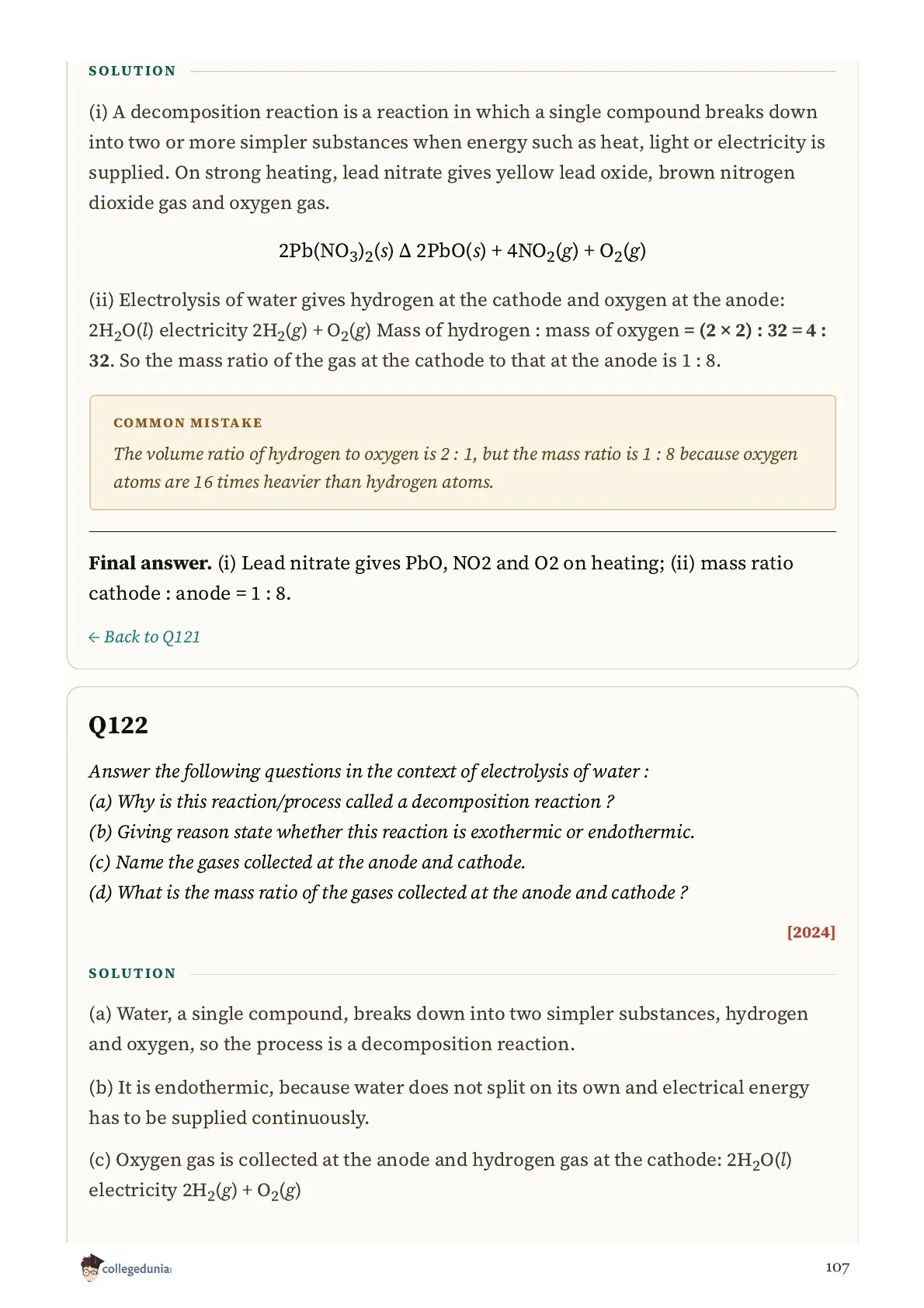
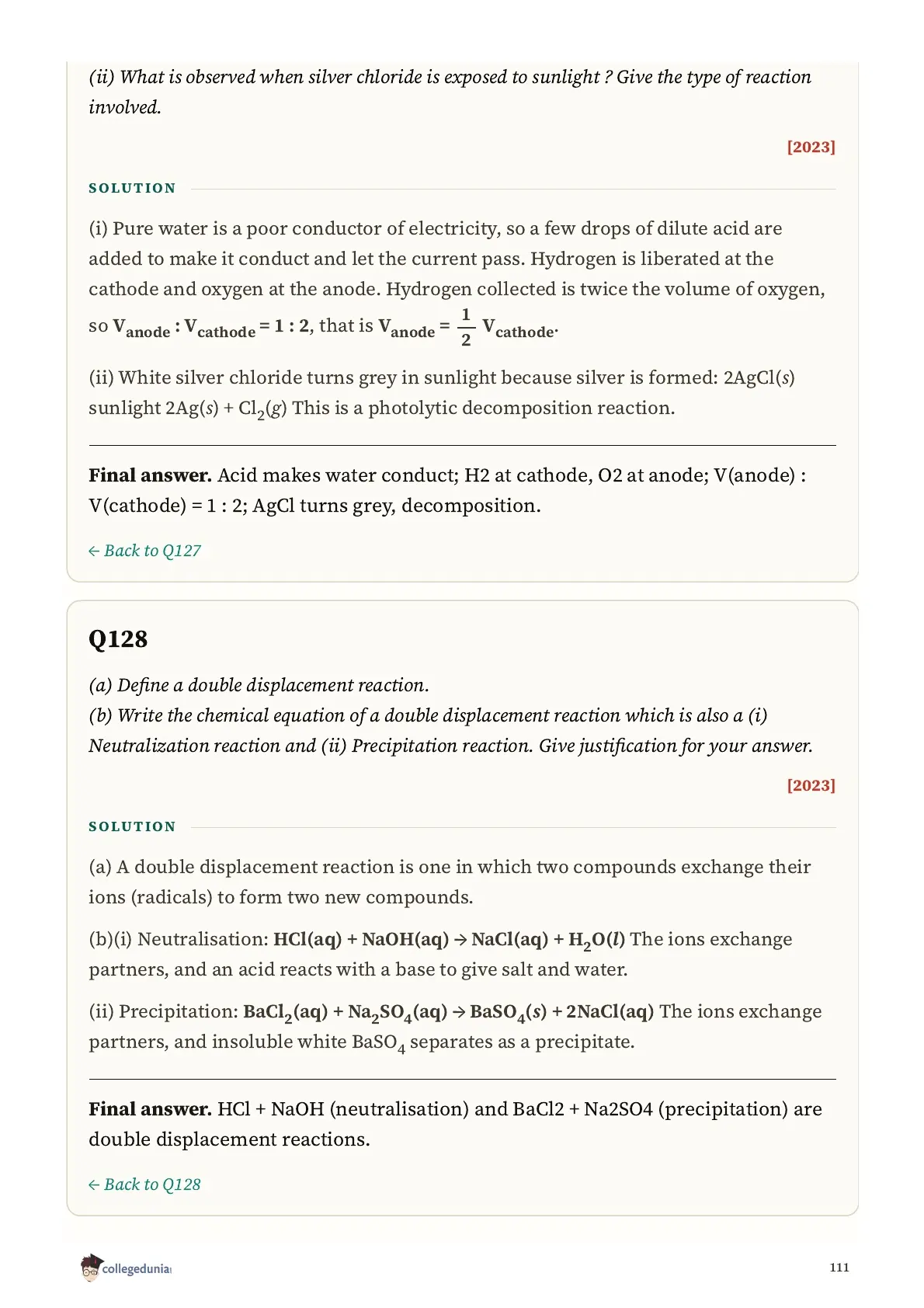
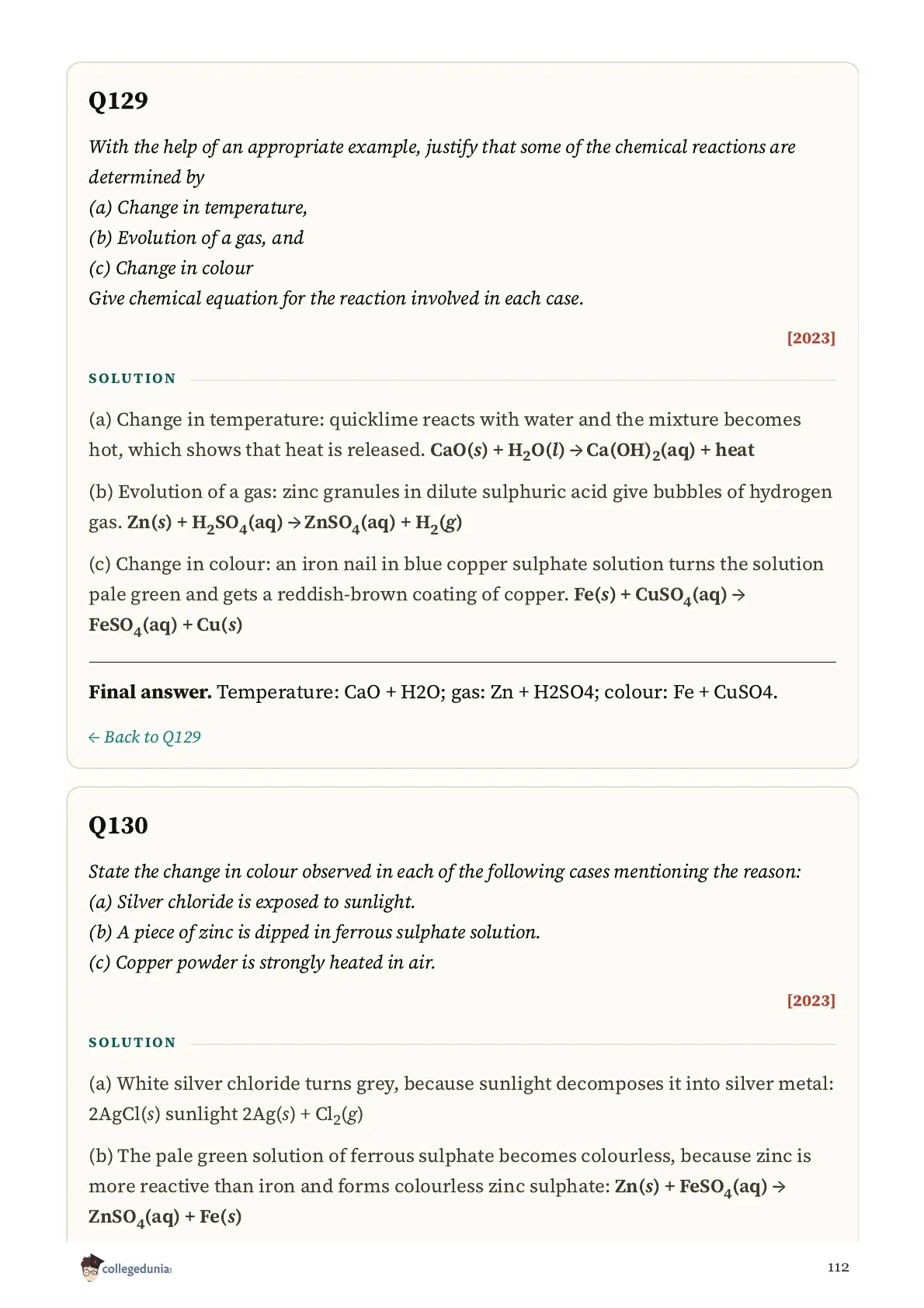
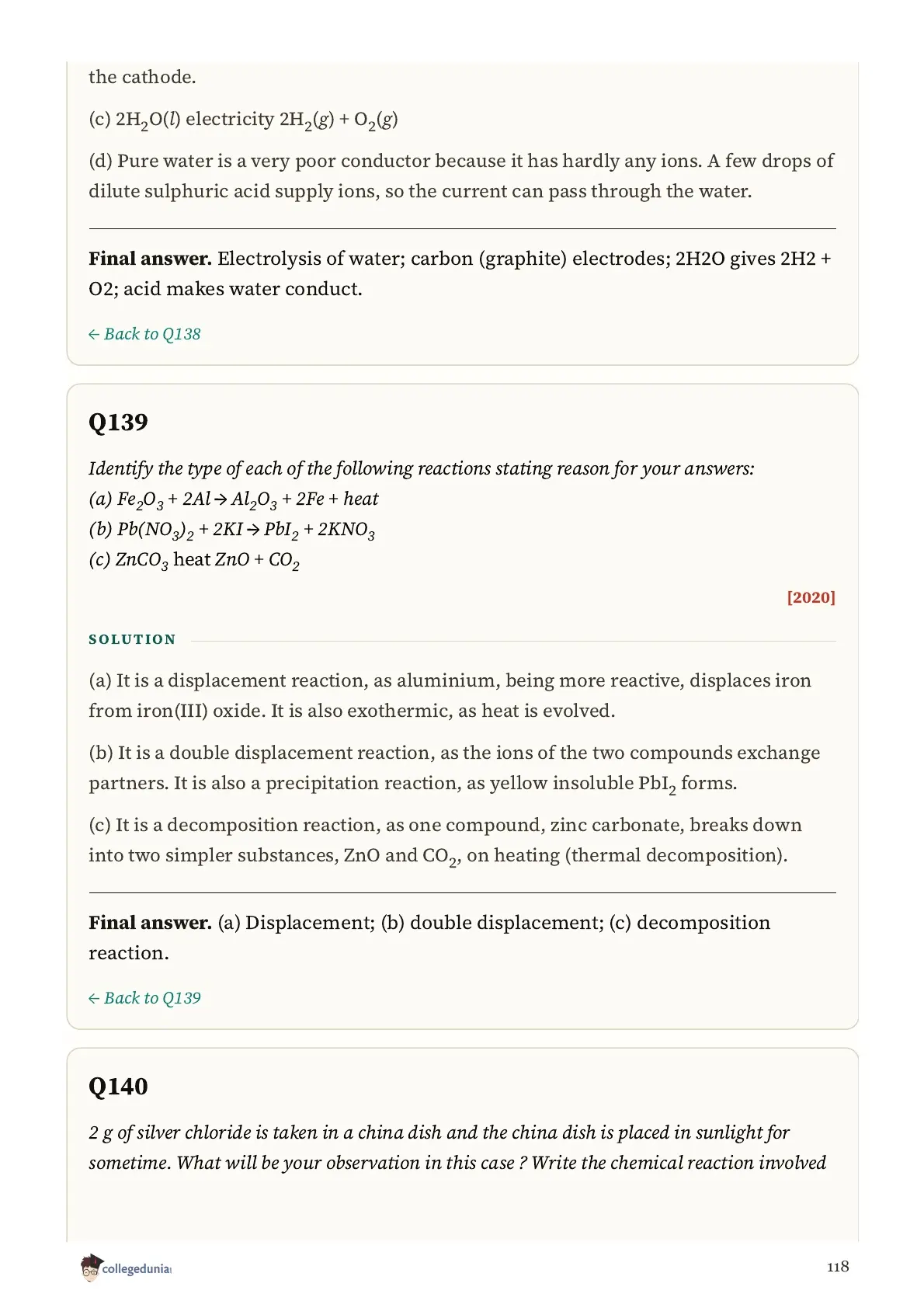
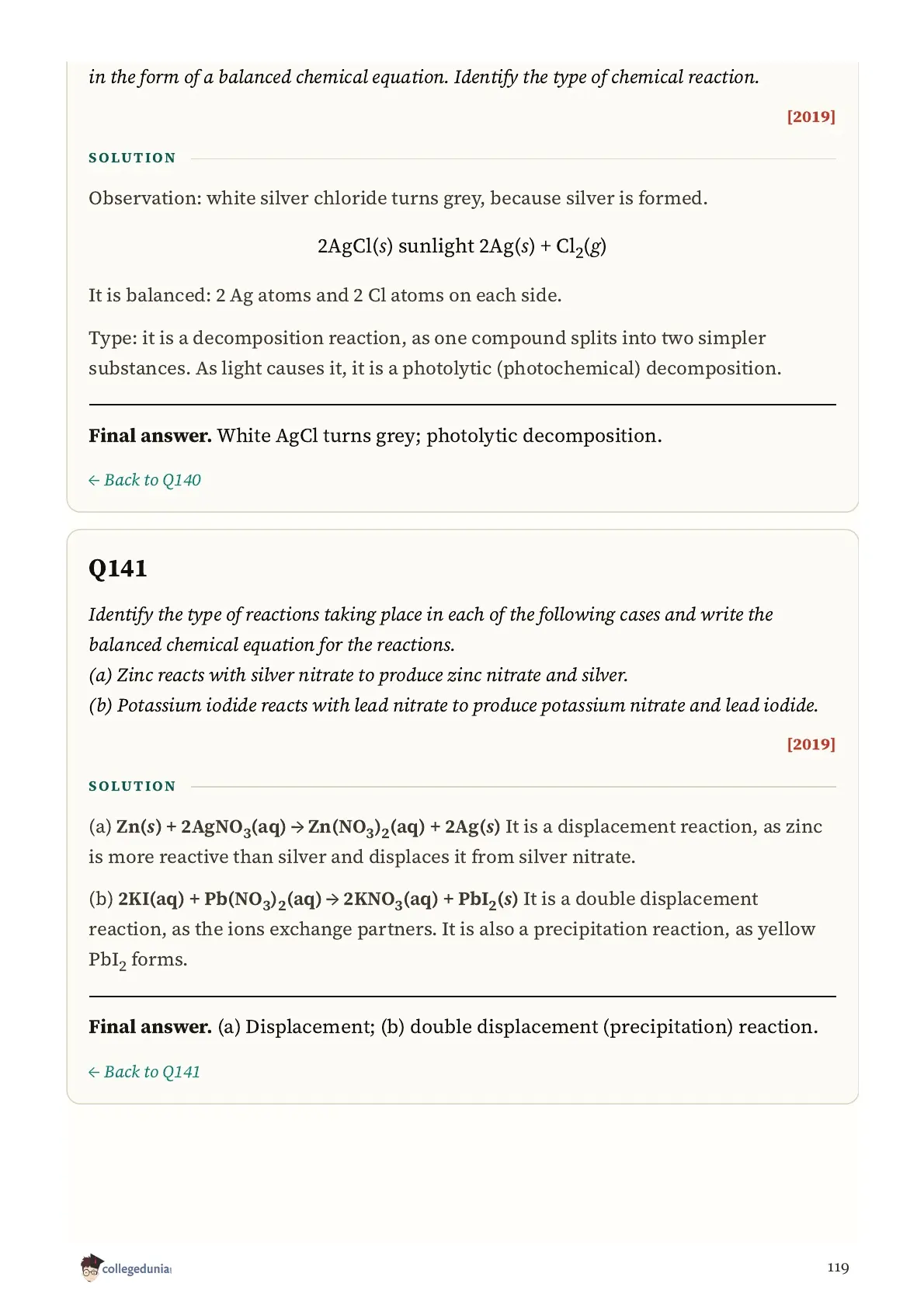
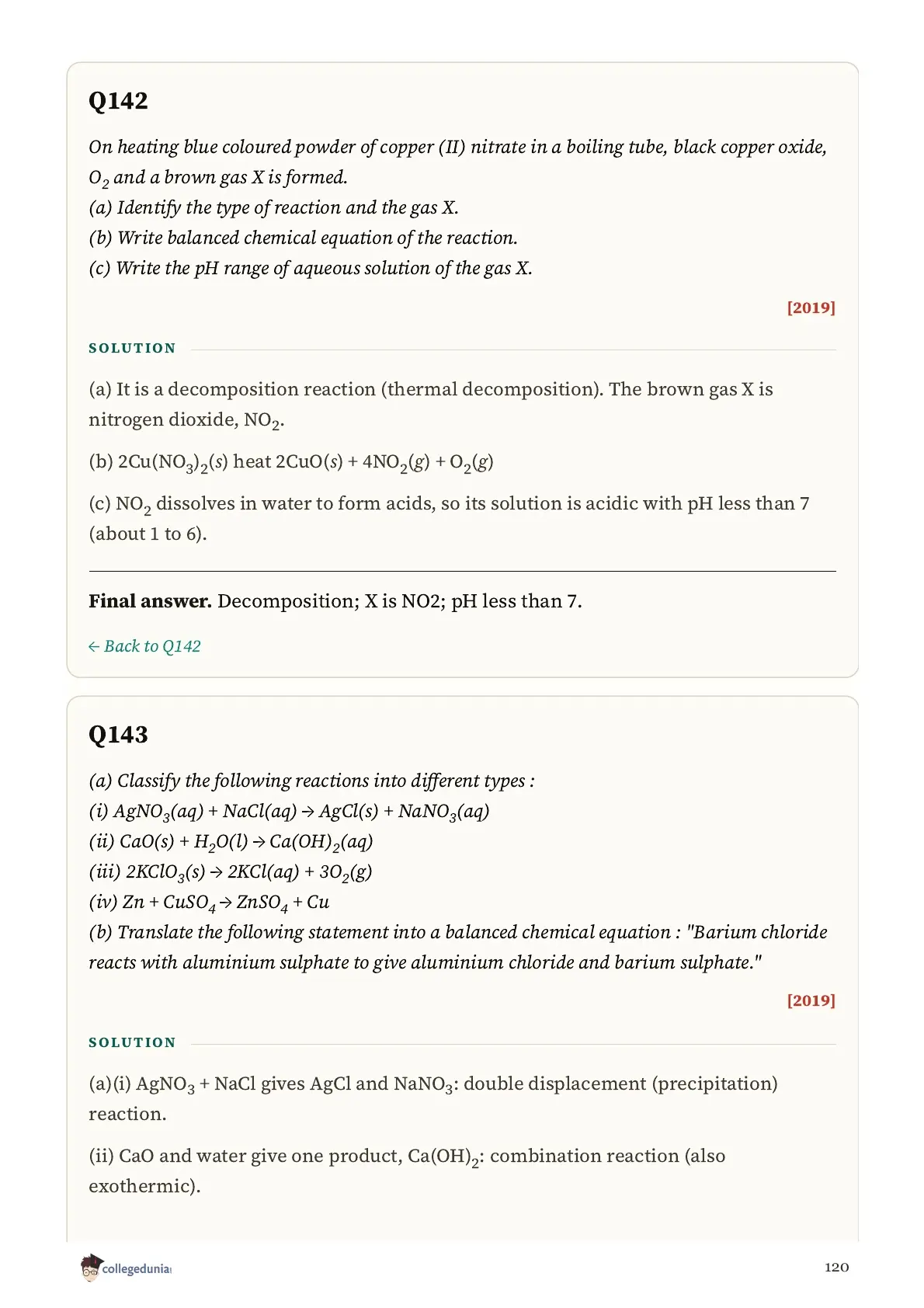
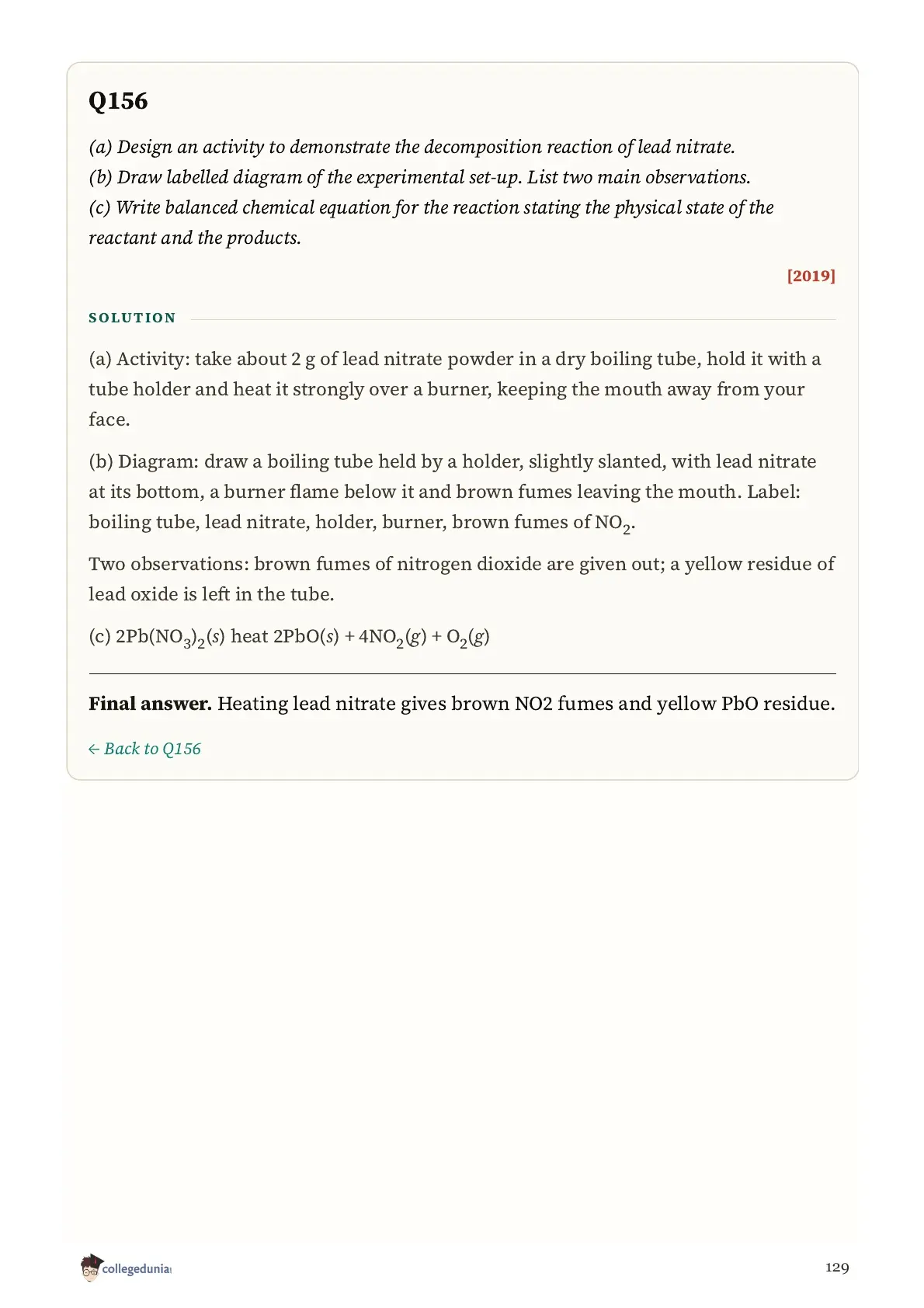
Decomposition accounts for 29 questions, and the same few reactions repeat. Lead nitrate is in 27 questions and ferrous sulphate in 18, both usually with the brown fumes of nitrogen dioxide. Silver chloride or bromide turning grey in sunlight appears in 21, and the electrolysis of water in 8. 14 questions involve a precipitate and 19 involve exothermic or endothermic reactions, often through calcium oxide reacting with water, which is in 10.
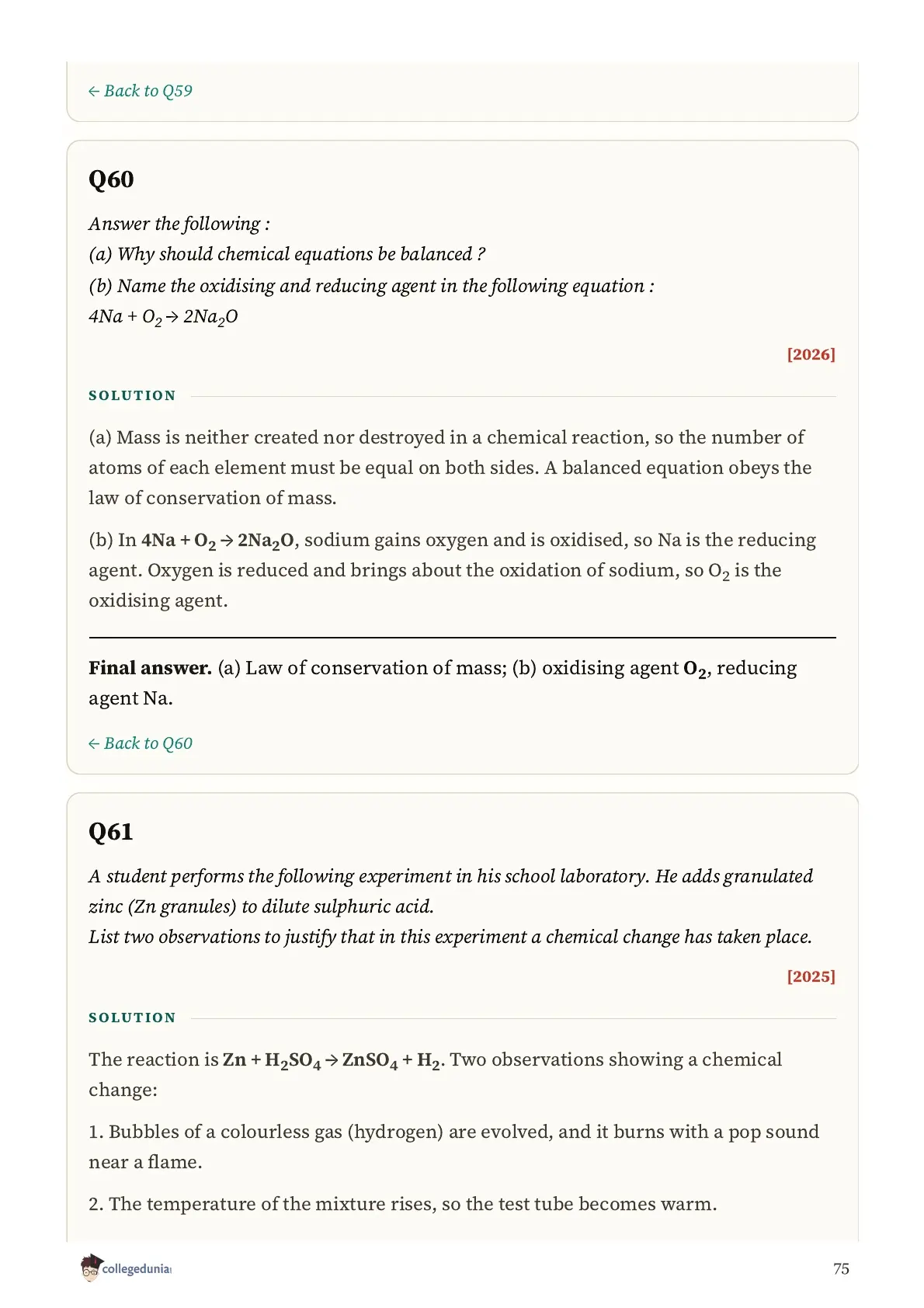
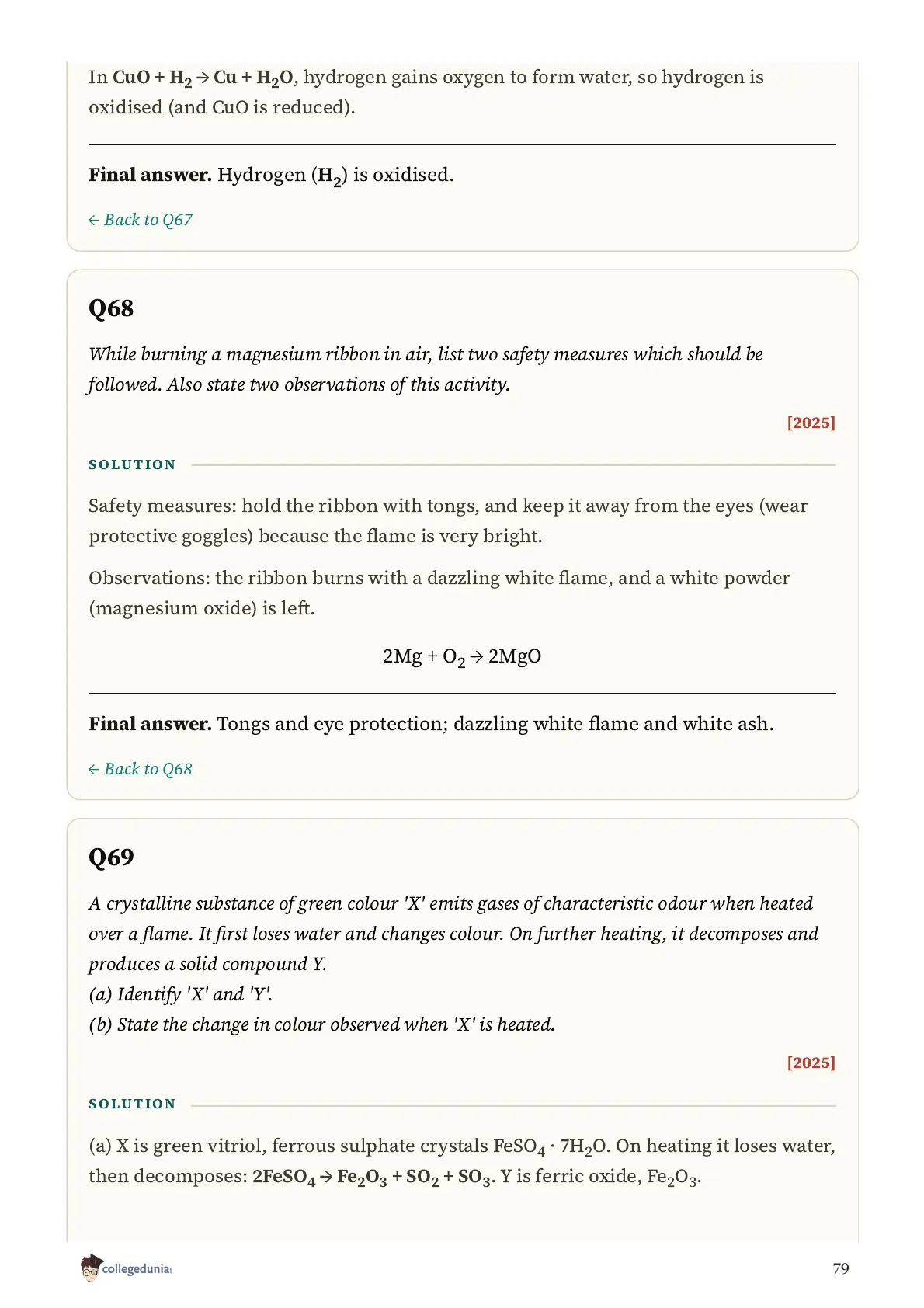
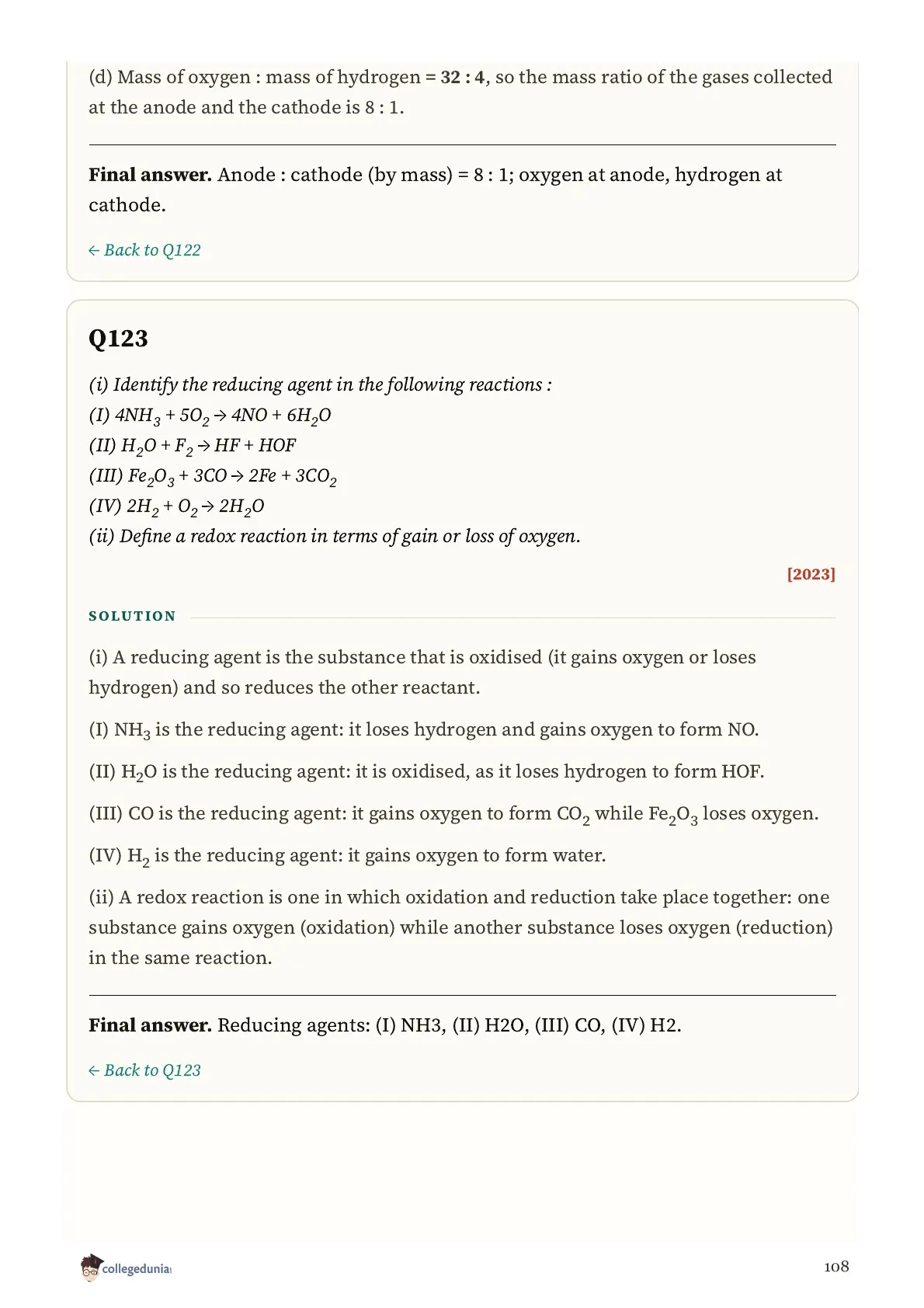
Redox is smaller but steady: 17 questions on oxidation and reduction, 6 asking for the oxidising or reducing agent, as in the 2026 question on 4Na + O2 giving 2Na2O. Corrosion is in 6 questions and rancidity in 2, both usually inside a "define the following terms" item. 50 questions ask what you observe or what happens, and 4 MCQs are assertion-reason items.
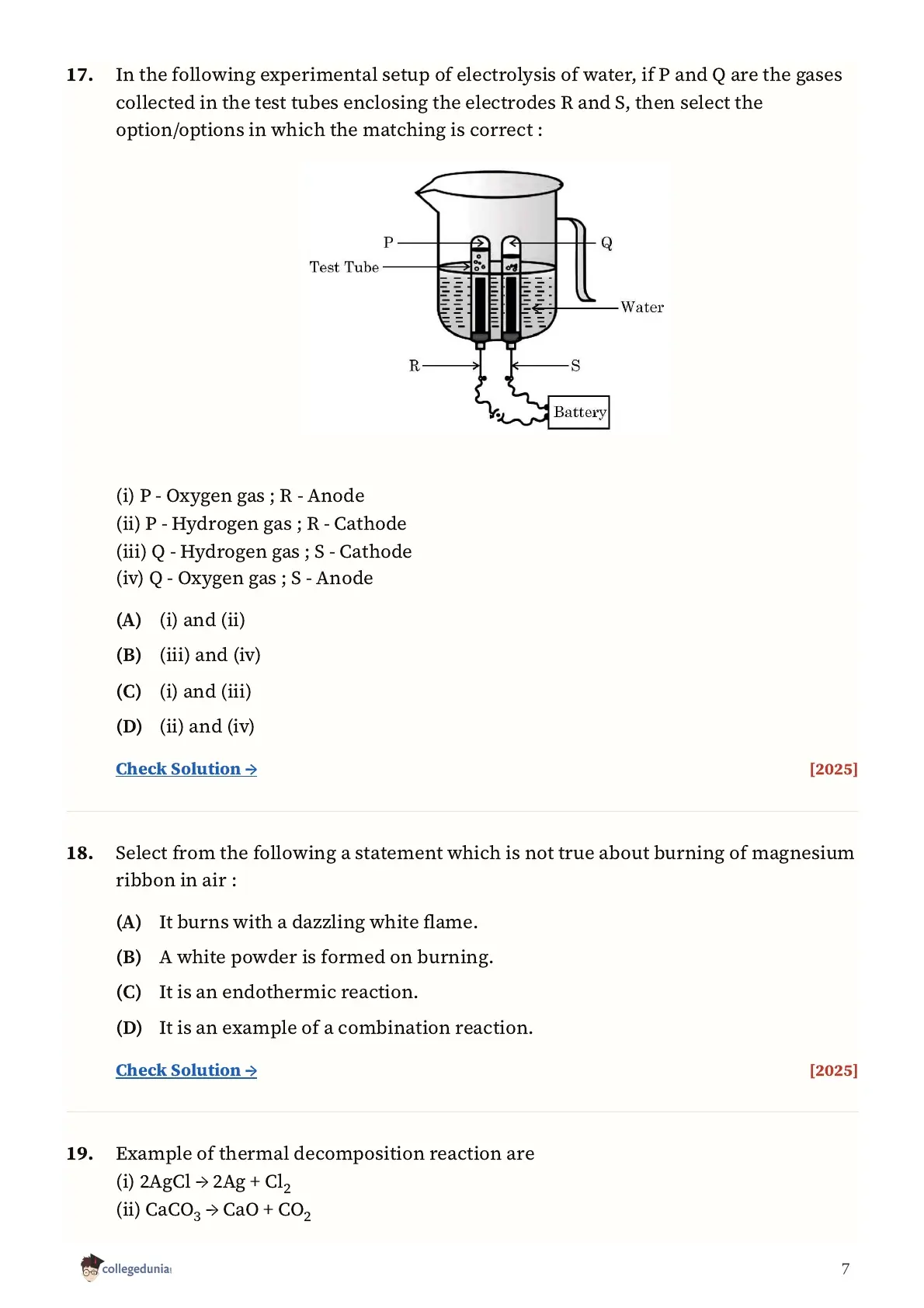
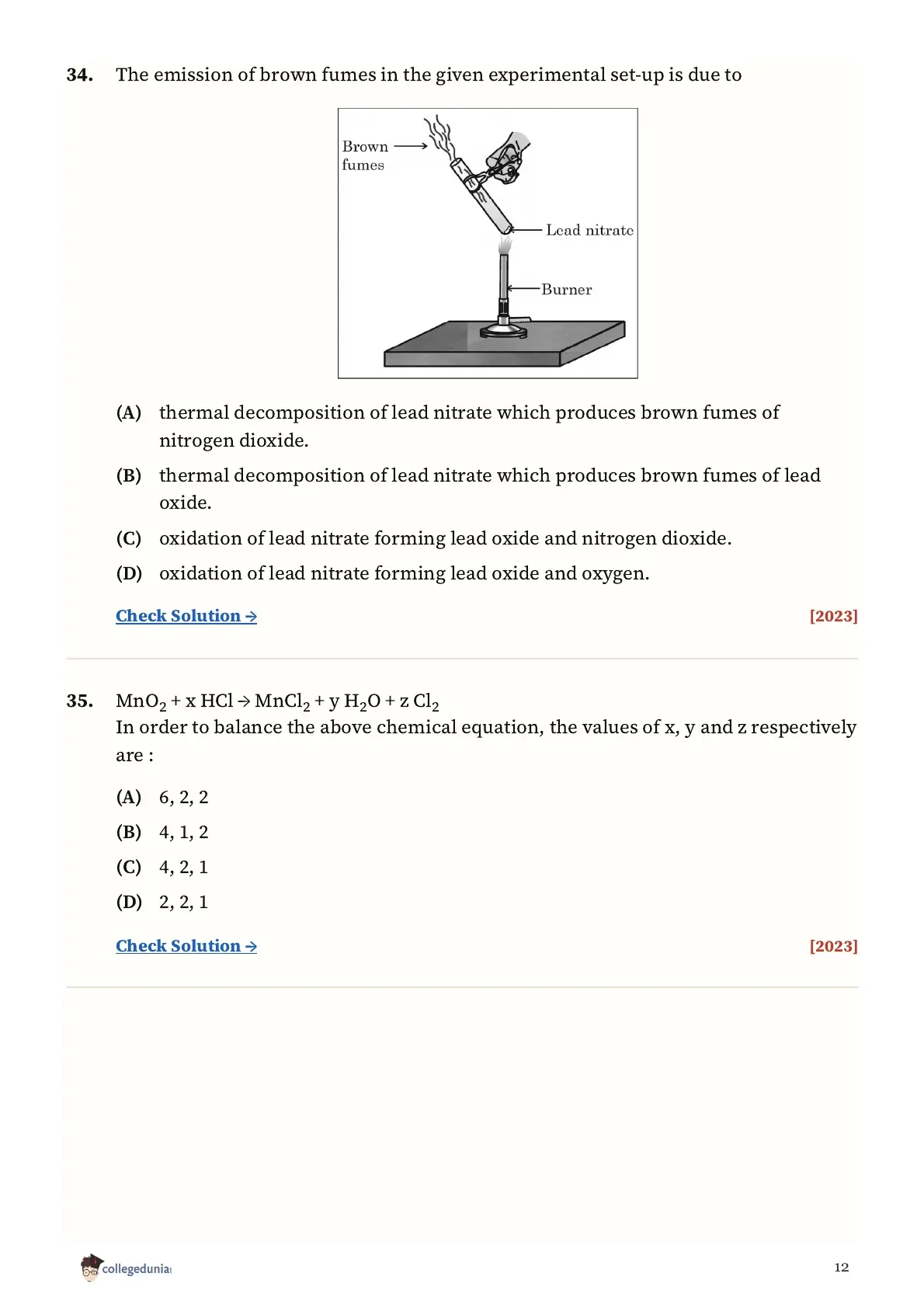
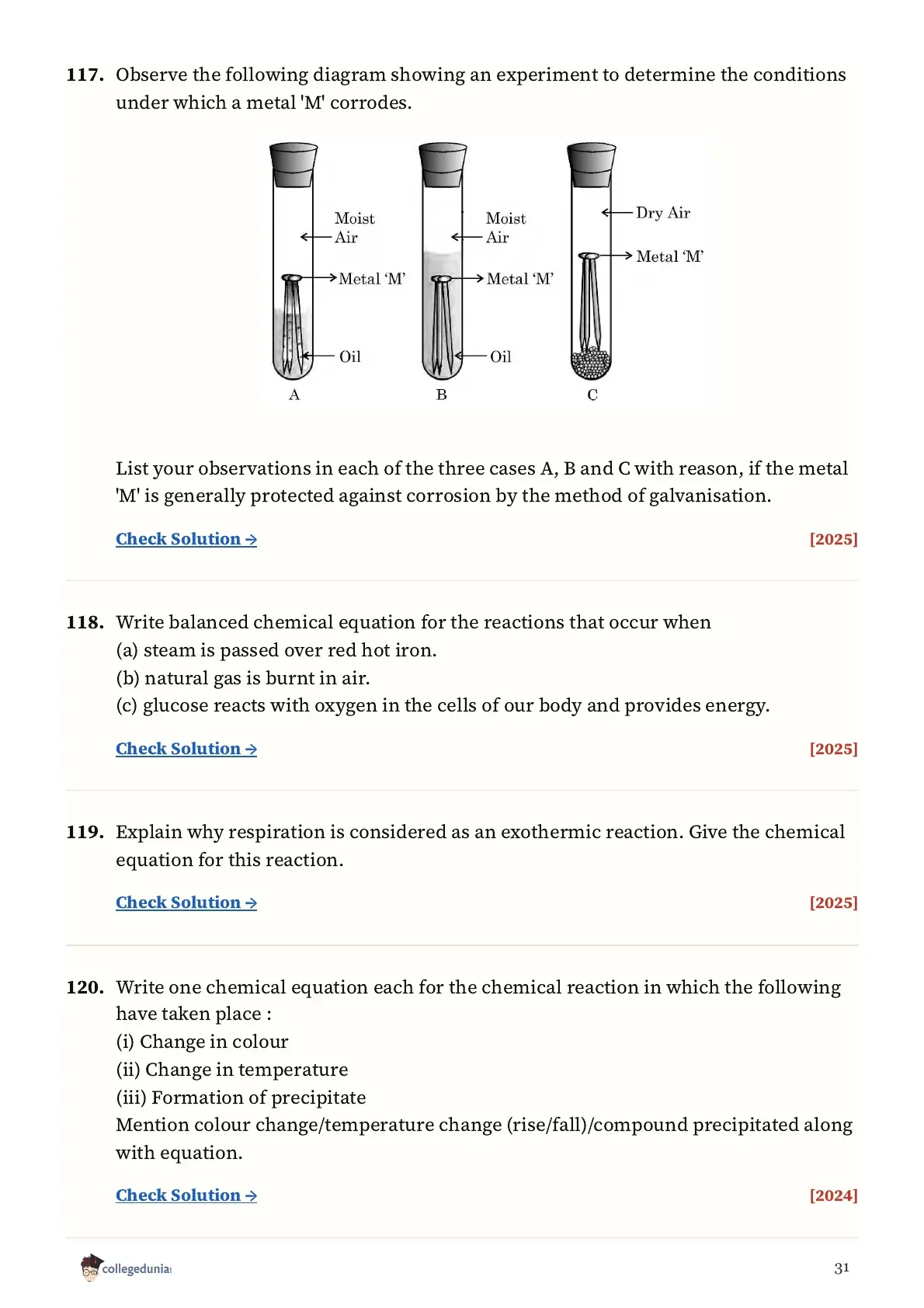
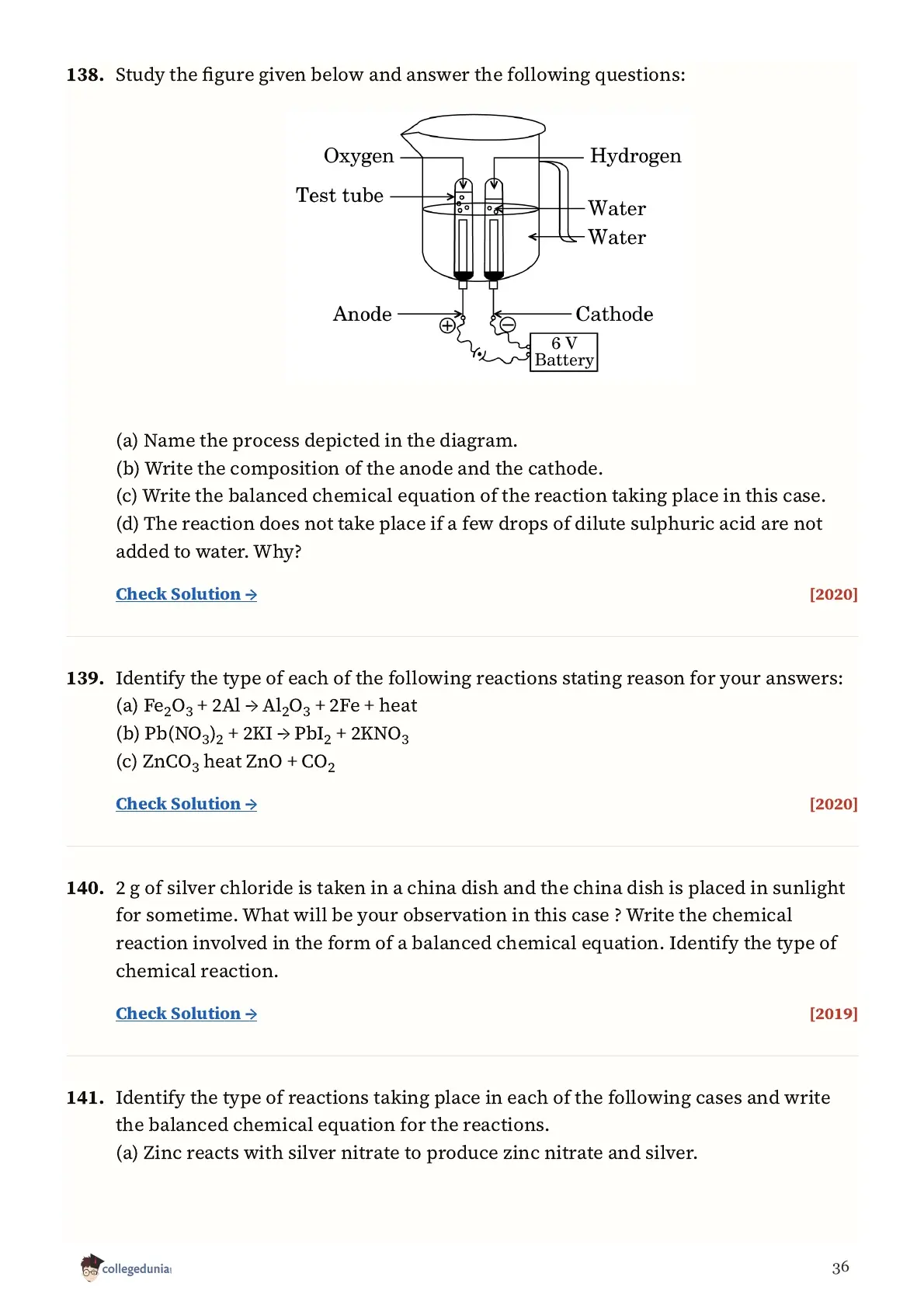
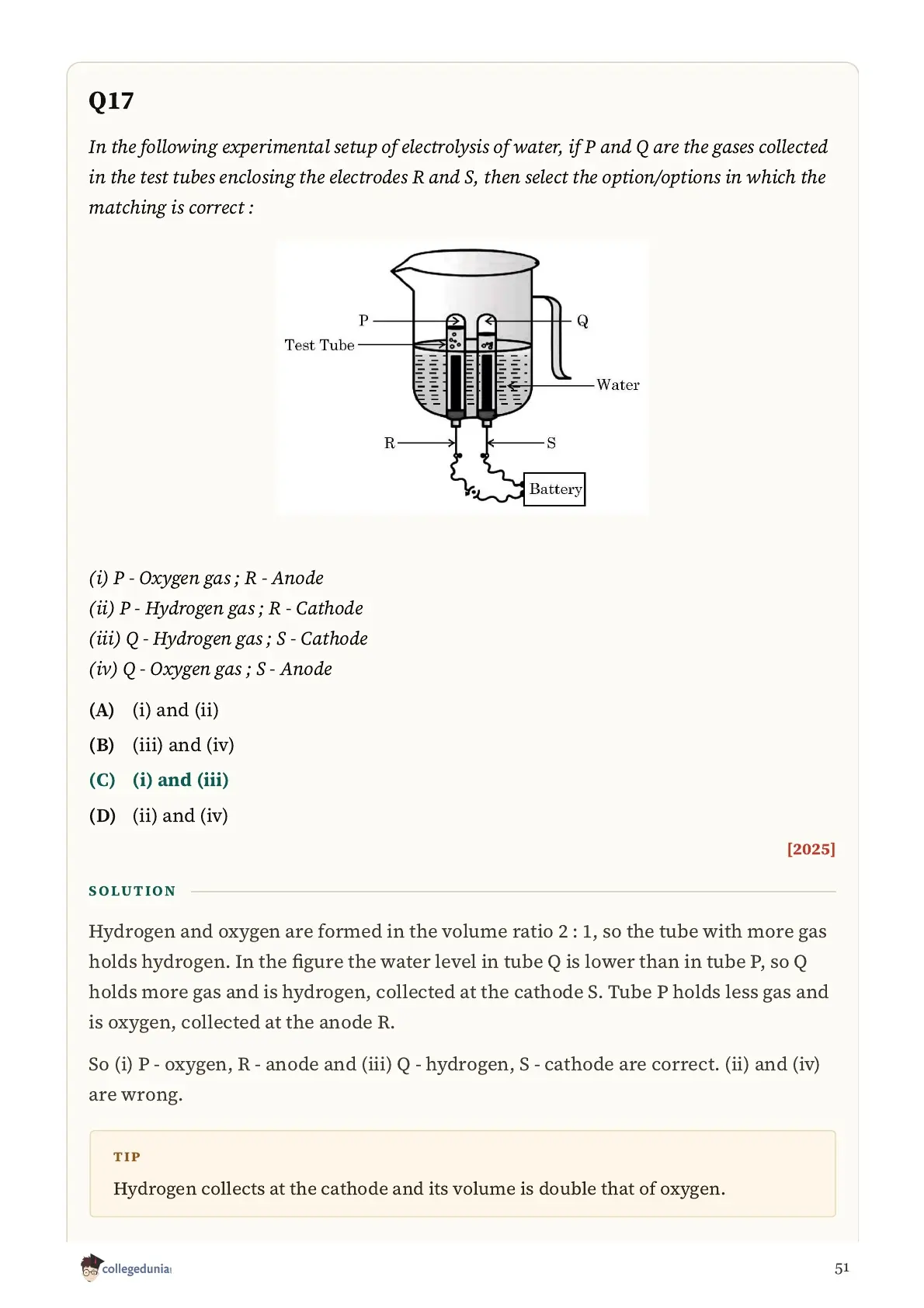
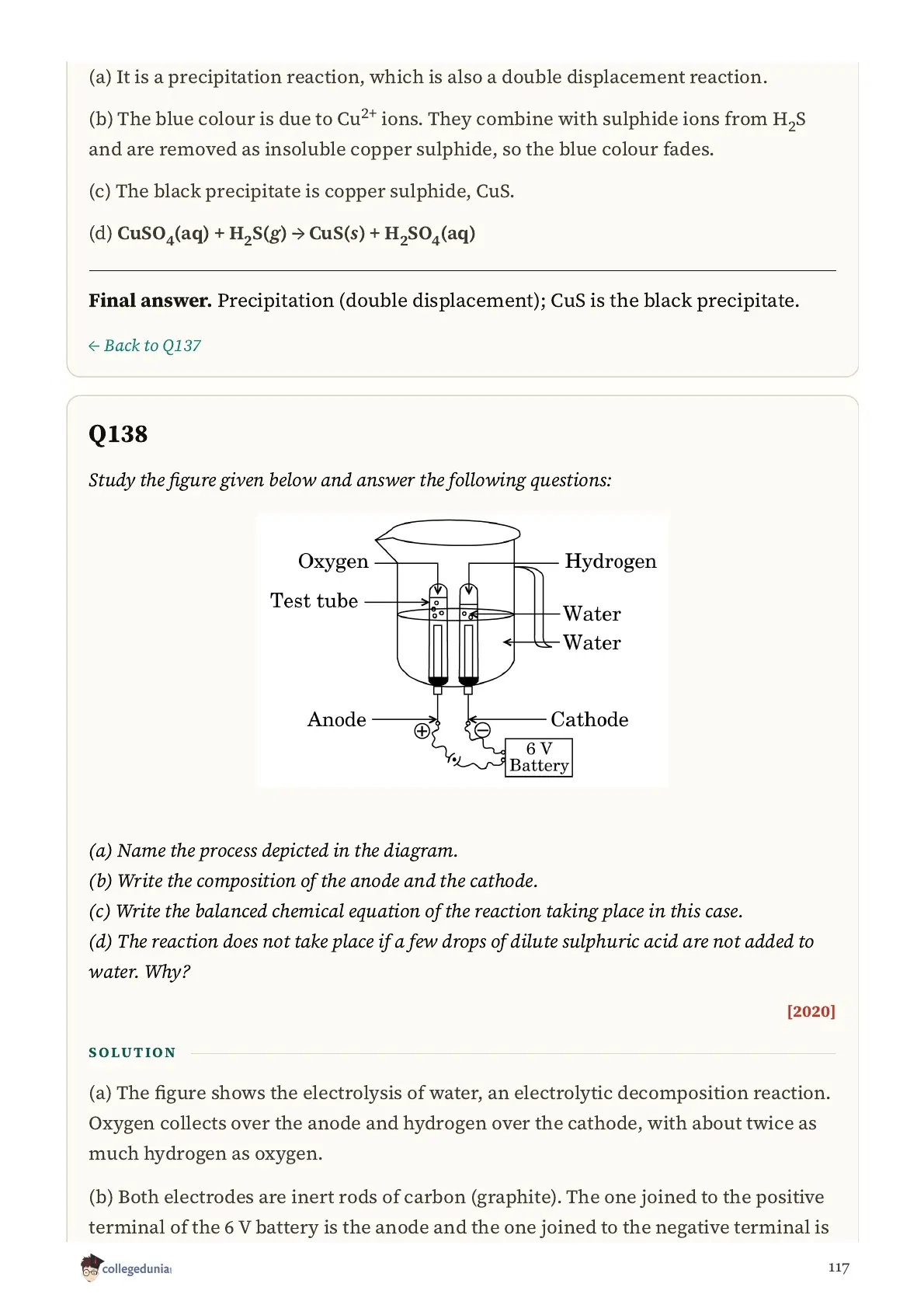
4 of the 156 questions, 2 of them MCQs, are printed with the experiment diagram from the original board paper, such as the electrolysis set-up of 2025 and the lead nitrate set-up of 2023, so you can read a diagram as well as write an equation.
Counts come from keyword matches over the question text, so a question that names two things is counted under both.
Source: Exphub 9th &10th
How to Approach the Set
Start with the 54 MCQs and assertion-reason items, which test balancing coefficients, the type of reaction and the product of a reaction. Move to the 39 two-mark questions, which usually ask for one equation and its type, then the 51 three-mark questions, which stack three or four equations in one item. Keep the 7 five-mark questions for last, since they ask you to design an activity, draw the set-up and explain the observations. Write every equation with state symbols until balancing is automatic. The 2026, 2025, 2024 and 2023 papers hold 112 of the 156 questions, so practise them closely.
Common Mistakes in Chemical Reactions and Equations Questions
- Balancing by changing a subscript, such as writing H2O2 for H2O. Only coefficients may change.
- Reading the brown fumes from heated lead nitrate as oxidation. The 2023 MCQ offers both options, and the correct reading is thermal decomposition giving nitrogen dioxide.
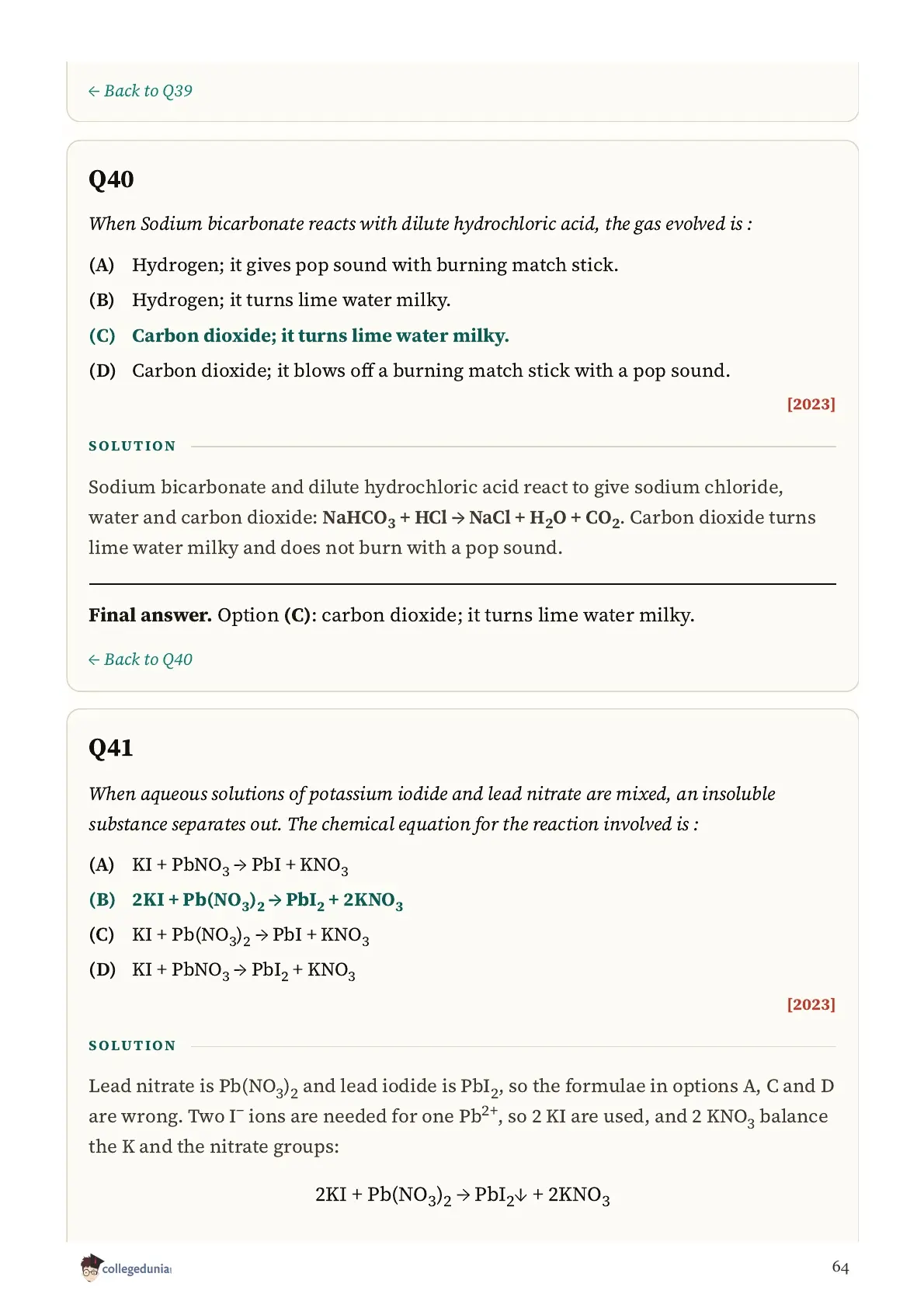
- Calling AgNO3 + NaCl a displacement reaction. In the 2026 question both reactions are double displacement with a precipitate.
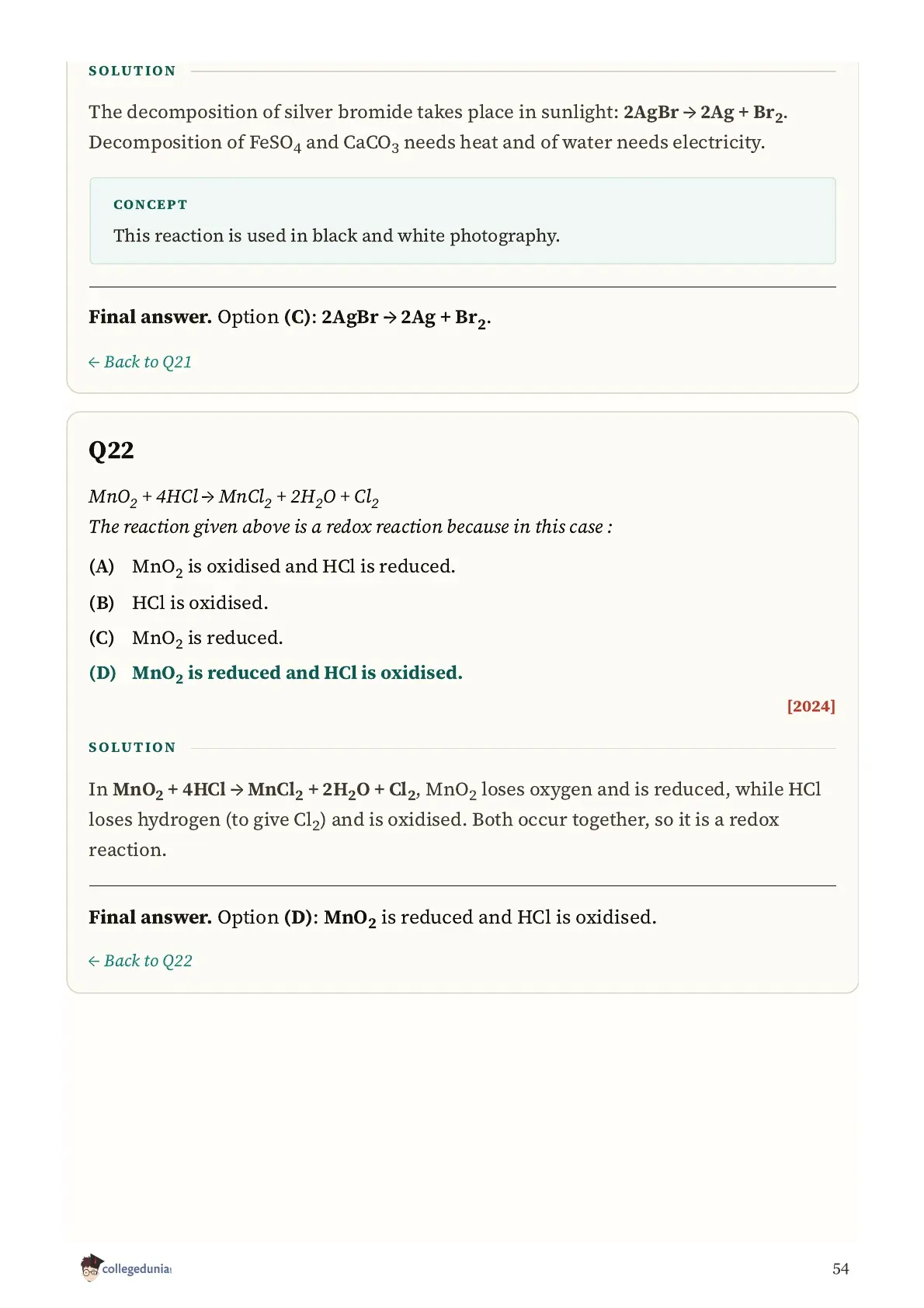
- Naming the substance that is oxidised as the oxidising agent. In 4Na + O2 giving 2Na2O, sodium is oxidised and acts as the reducing agent.
- Mixing up the gas at each electrode in the electrolysis of water. Hydrogen collects at the cathode and oxygen at the anode, and hydrogen is twice the volume.
- Giving heat as the energy source for the decomposition of silver bromide. The 2024 MCQ asks for the one driven by light.
Using the Answer Key and Solutions
The PDF is 129 pages and free to download. Each section is sorted newest year first, the Answer Key lists the 54 MCQs at a glance, and each question links to its worked solution and back. Attempt an equation yourself first, check the key, then read the solution. The solutions are written by Collegedunia's Science experts and are not official CBSE marking schemes.
Class 10 Science PYQs by Chapter
| Unit | PYQ Page |
|---|---|
| Chemical Substances | Chemical Reactions and Equations Class 10 Science PYQ |
| Chemical Substances | Acids, Bases and Salts Class 10 Science PYQ |
| Chemical Substances | Metals and Non-metals Class 10 Science PYQ |
| Chemical Substances | Carbon and its Compounds Class 10 Science PYQ |
| World of Living | Life Processes Class 10 Science PYQ |
| World of Living | Control and Coordination Class 10 Science PYQ |
| World of Living | How do Organisms Reproduce? Class 10 Science PYQ |
| World of Living | Heredity Class 10 Science PYQ |
| Natural Phenomena | Light - Reflection and Refraction Class 10 Science PYQ |
| Natural Phenomena | The Human Eye and the Colourful World Class 10 Science PYQ |
| Effects of Current | Electricity Class 10 Science PYQ |
| Effects of Current | Magnetic Effects of Electric Current Class 10 Science PYQ |
| Natural Resources | Our Environment Class 10 Science PYQ |
Chemical Reactions and Equations Class 10 Science PYQ FAQs
Ques. How many questions are in the Chemical Reactions and Equations Class 10 Science PYQ PDF?
Ans. The PDF has 156 questions from the 2005 to 2026 board papers: 59 at 1 mark, 39 at 2 marks, 51 at 3 marks and 7 long answers at 5 marks.
Ques. Does this PYQ PDF include solutions, or only the questions?
Ans. All 156 questions have a worked solution in the PDF. The 54 MCQs and assertion-reason items are also listed in the Answer Key before the solutions.
Ques. Are the solutions official?
Ans. No. The solutions are written by Collegedunia's Science experts and checked against the NCERT chapter and, for the 2022 to 2026 papers, against CBSE's published marking schemes; older answers are checked against the NCERT text. They are not an official CBSE marking scheme, so the board's wording may differ.
Ques. How many marks does Chemical Reactions and Equations carry in the Class 10 Science paper?
Ans. CBSE publishes marks per unit, not per chapter. This chapter belongs to Unit I, Chemical Substances, which prep sites report at 25 of the 80 theory marks in the 2025-26 and 2026-27 syllabus. That figure is unofficial, so check cbseacademic.nic.in for the current syllabus.
Ques. What kind of questions are asked from Chemical Reactions and Equations?
Ans. Equation-based questions lead: 54 of the 156 mention balancing and 50 ask for a balanced chemical equation. Others ask for the type of a reaction, what you observe, redox agents, and the decomposition of lead nitrate, ferrous sulphate and silver salts.
Ques. Which years does the set cover?
Ans. The questions come from 13 board years between 2005 and 2026. 2024 has the most questions (36), followed by 2025 (28) and 2023 (25).



Comments