



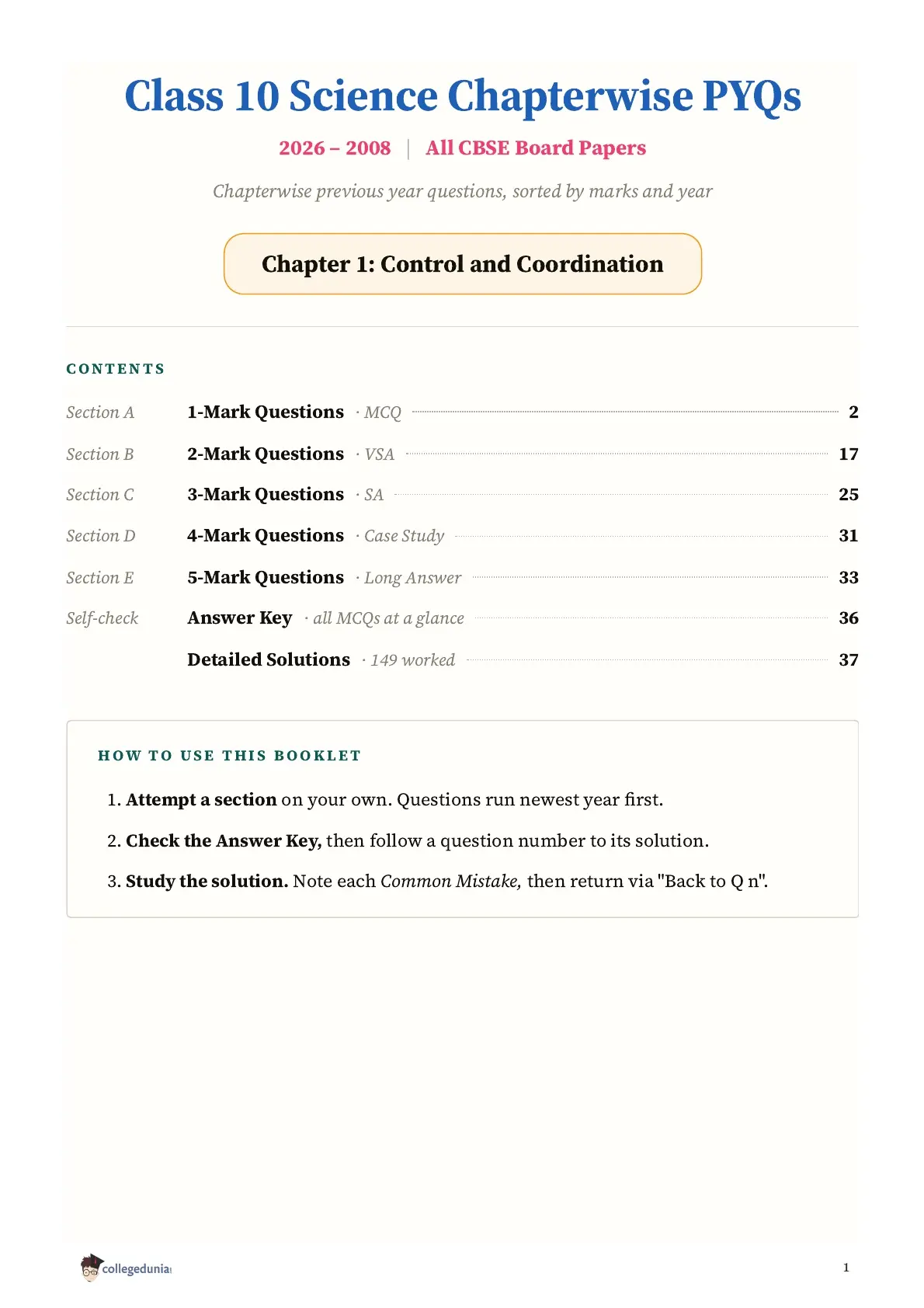
Class 10 Science Control and Coordination PYQ, free to download as a 115-page PDF with 149 solved board questions from the 2008 to 2026 papers. Control and Coordination is Chapter 6 of the NCERT Class 10 Science book and sits in the CBSE unit World of Living, which carries 25 of the 80 theory marks together with Life Processes, How do Organisms Reproduce? and Heredity.
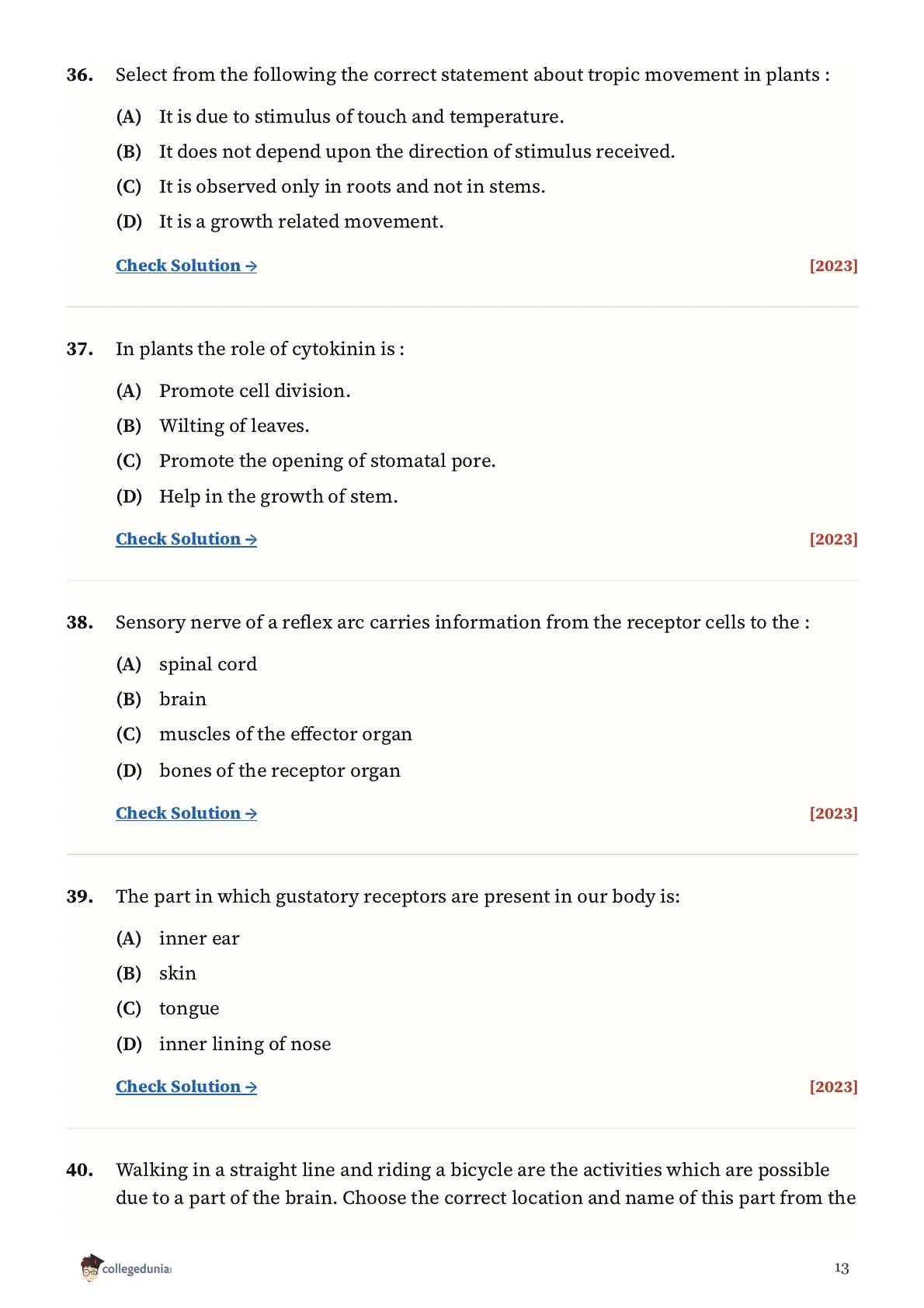
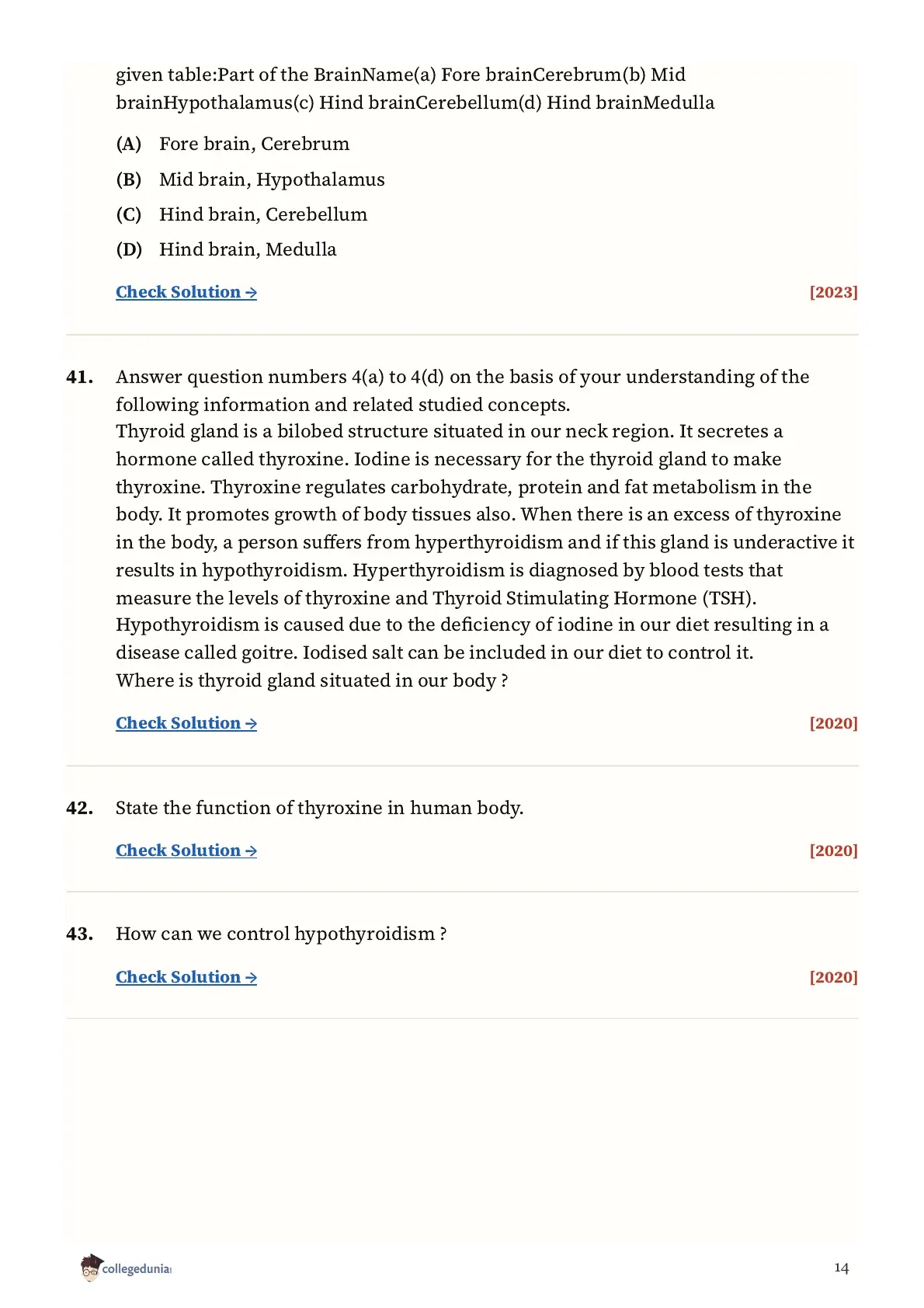
The questions keep returning to hormones and the glands that secrete them (54 questions), parts of the brain (43), tropic and other plant movements (27), the thyroid and iodine (21), plant hormones such as auxin and cytokinin (21), neurons, synapses and nerve impulses (19), and the difference between two terms (17). 9 of the questions carry their original diagram.
On this page you get:
- 149 questions with a worked solution each: 35 MCQs and assertion-reason items, 96 short answers and 18 long answers or case studies
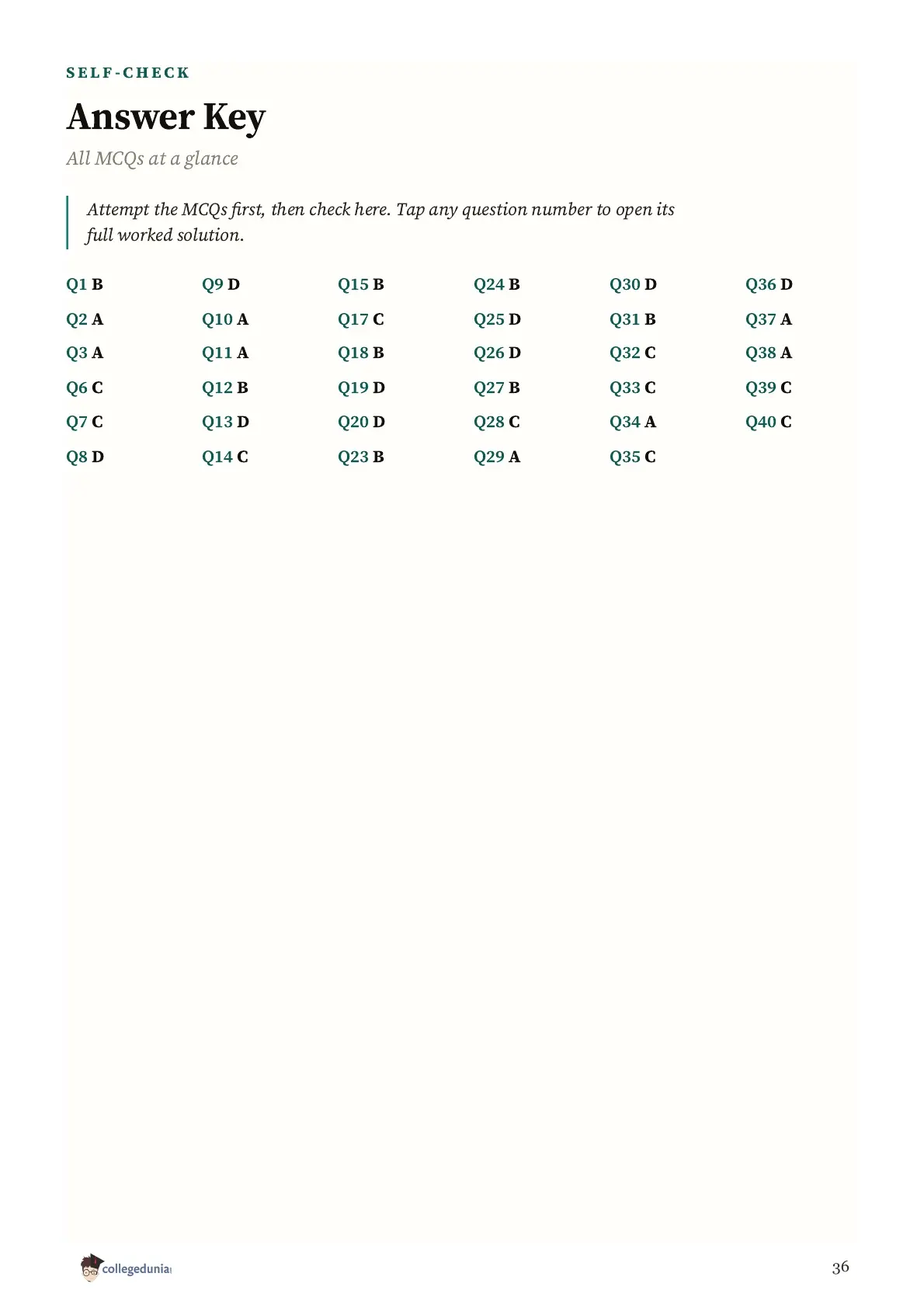
- An Answer Key that lists all 35 MCQs at a glance
- Question counts by topic, so you know whether to start with the brain, hormones or plant movements
- A marks-wise table of questions (1, 2, 3, 4 and 5 mark)
- The common mistakes students make, such as naming the pancreas for the hormone released in a scary situation, and a short FAQ
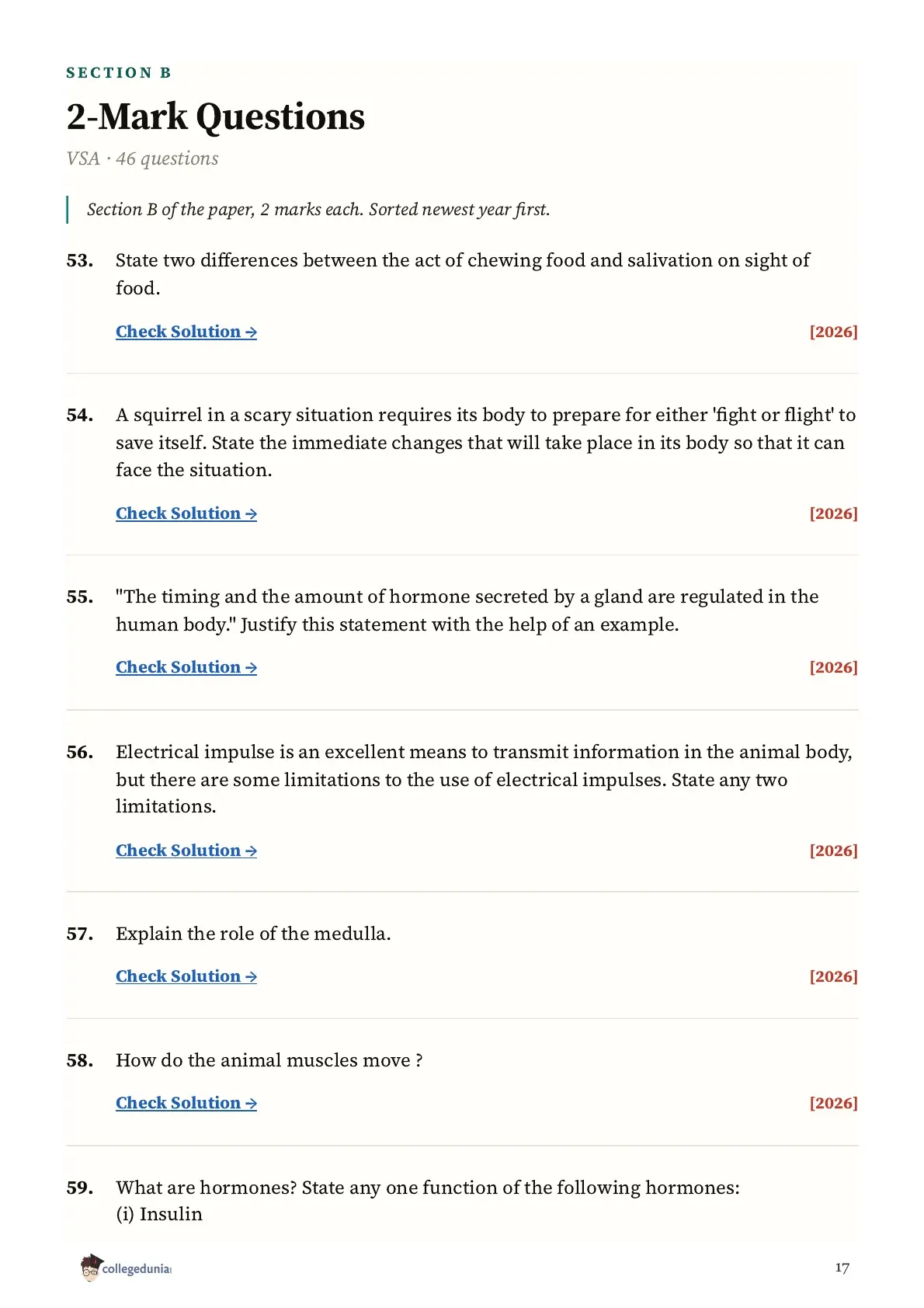
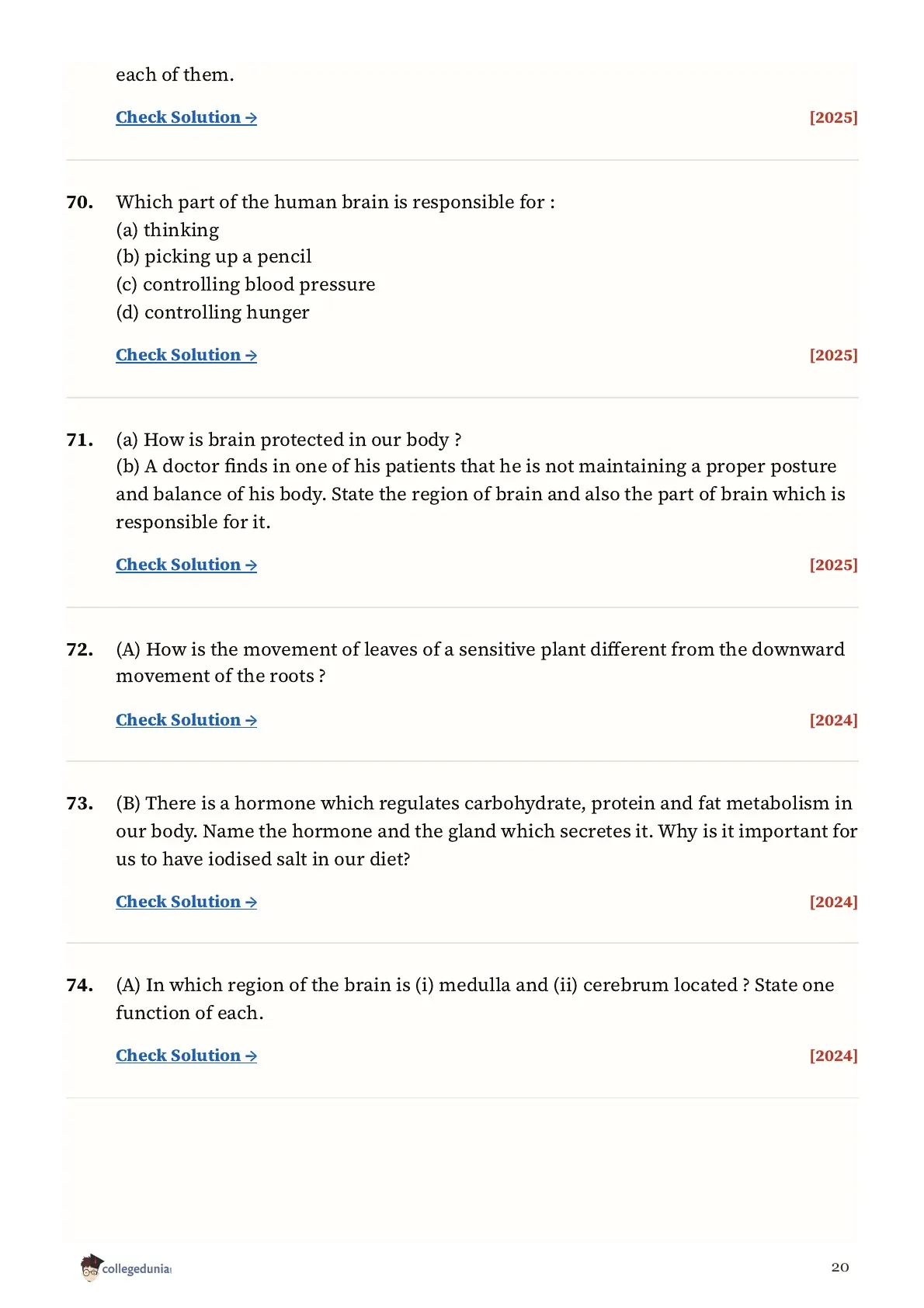

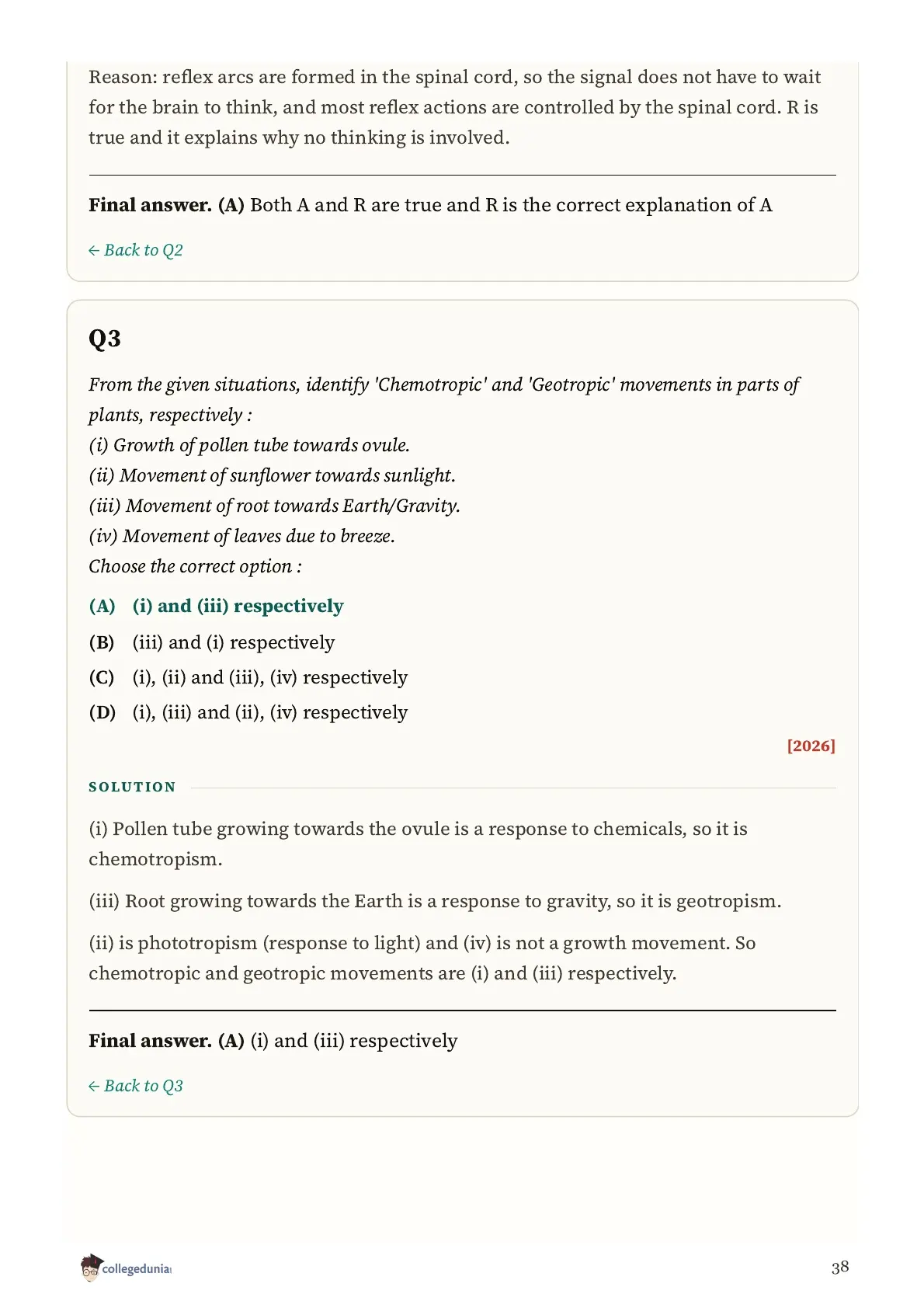
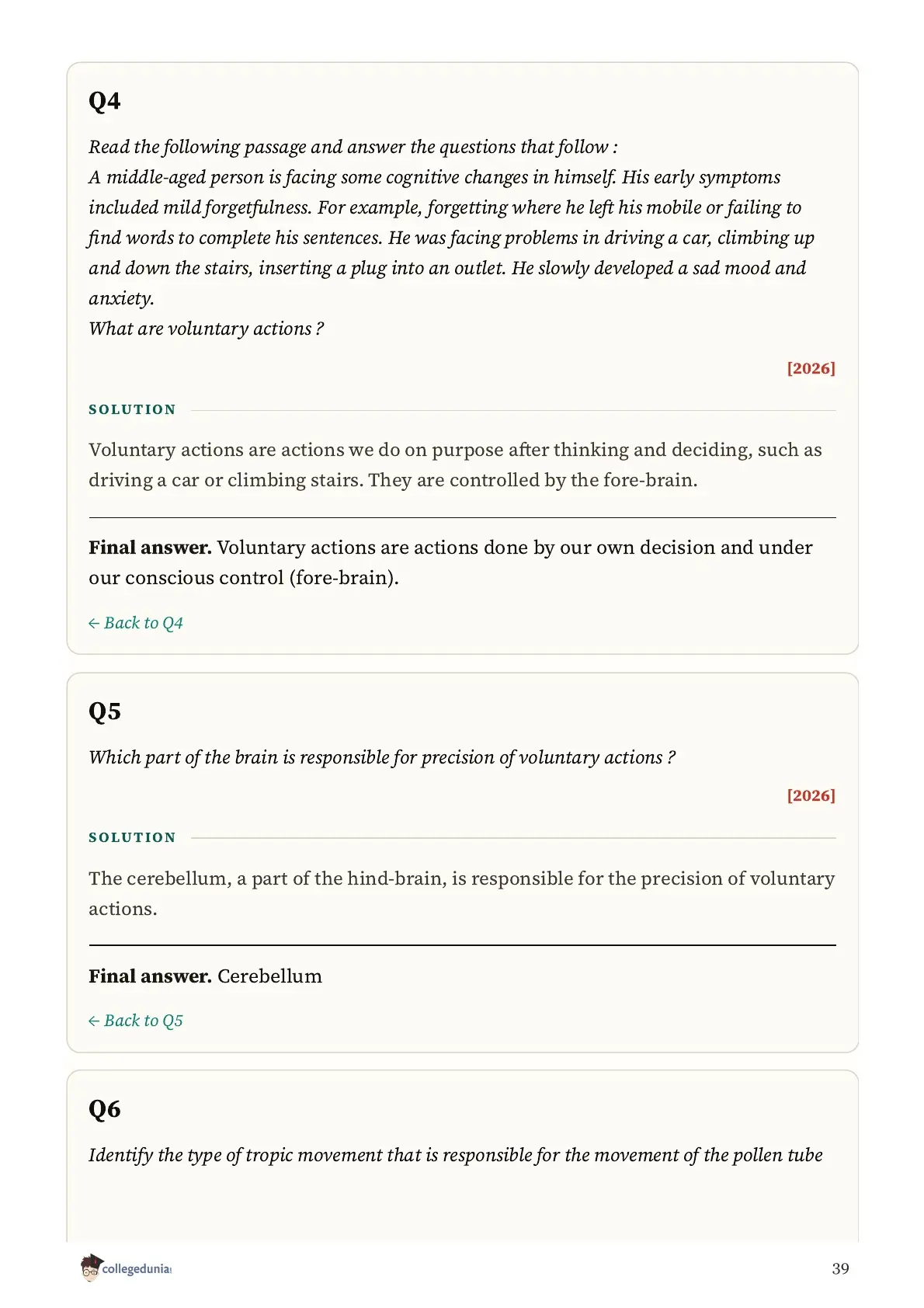
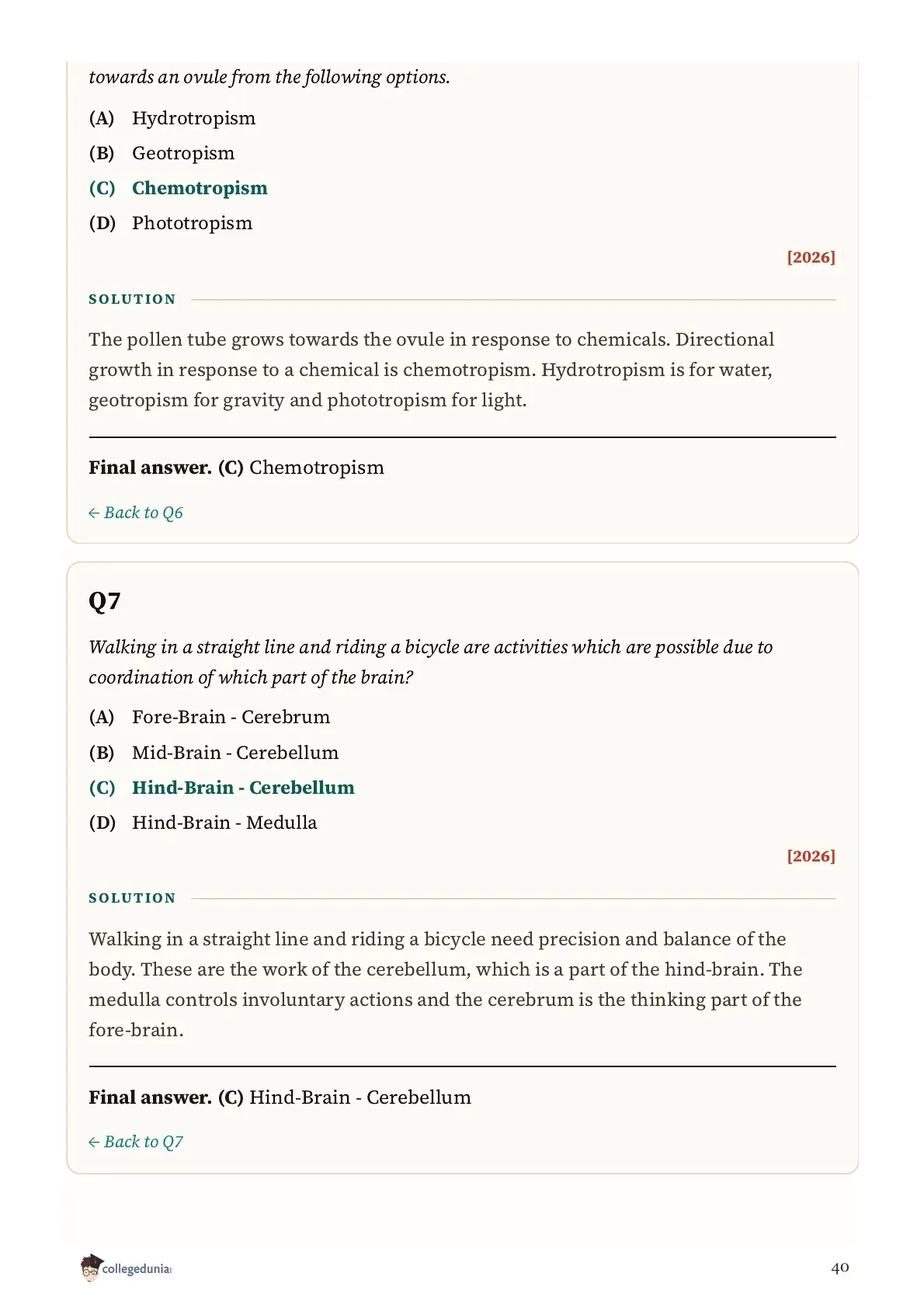
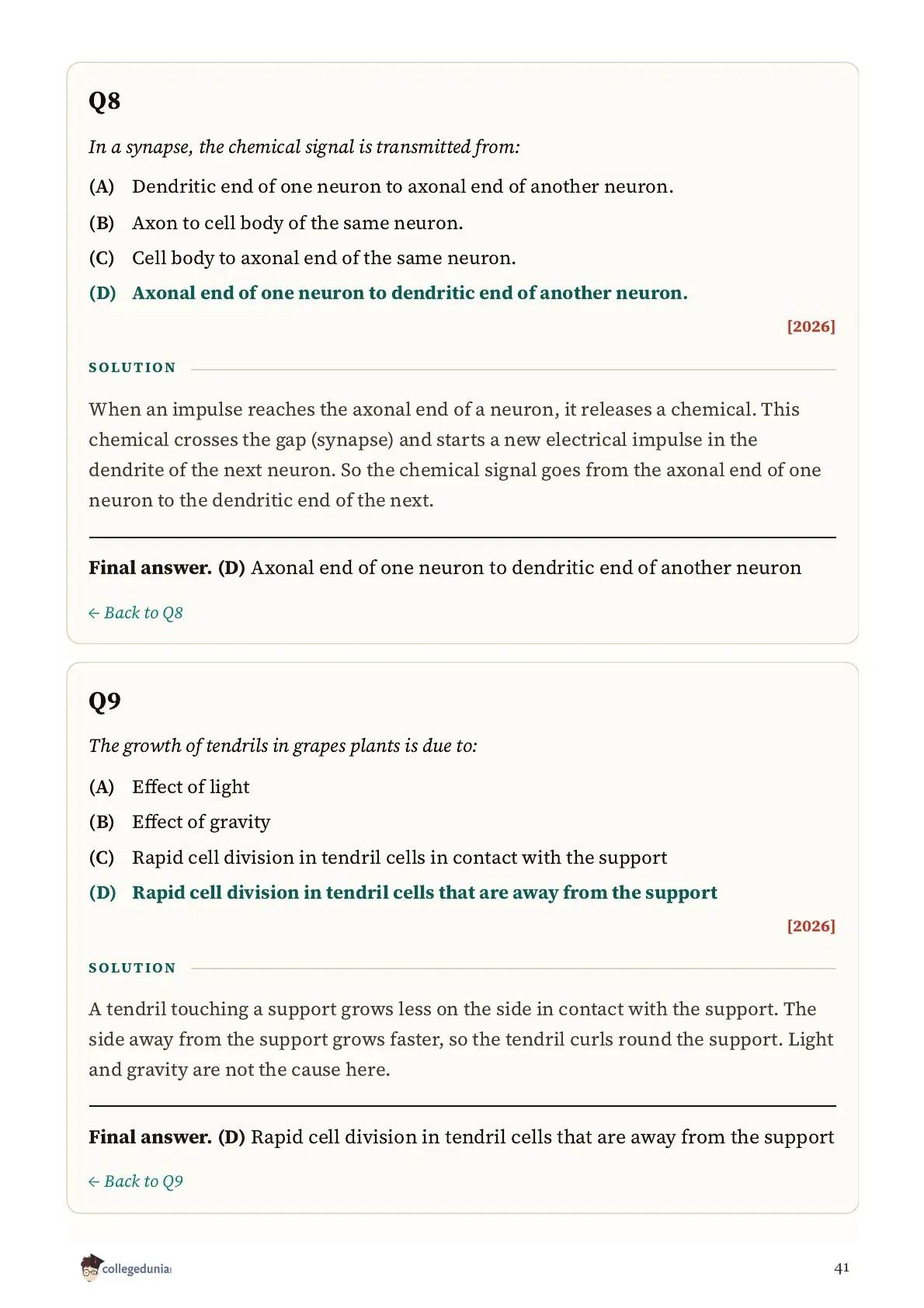
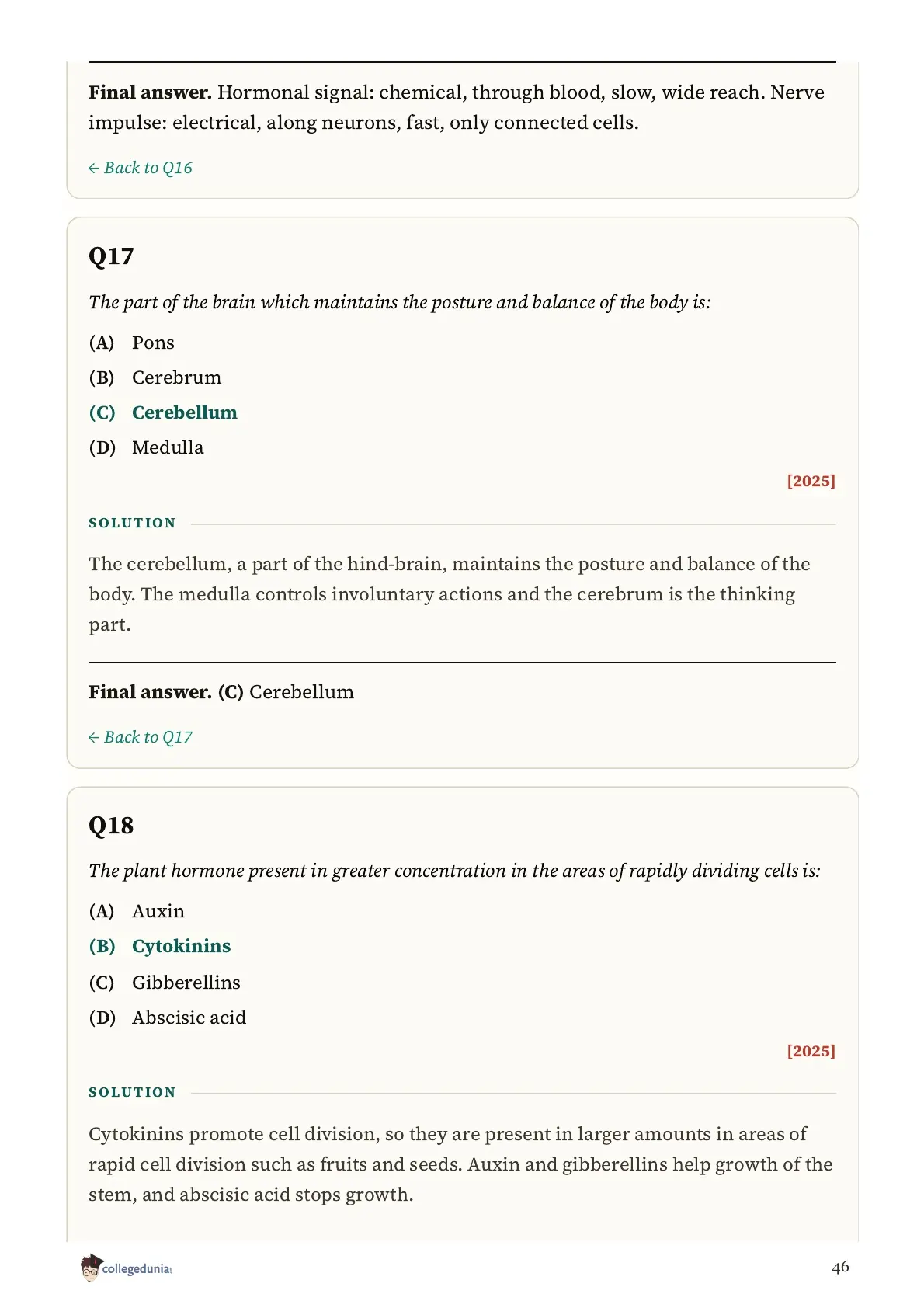
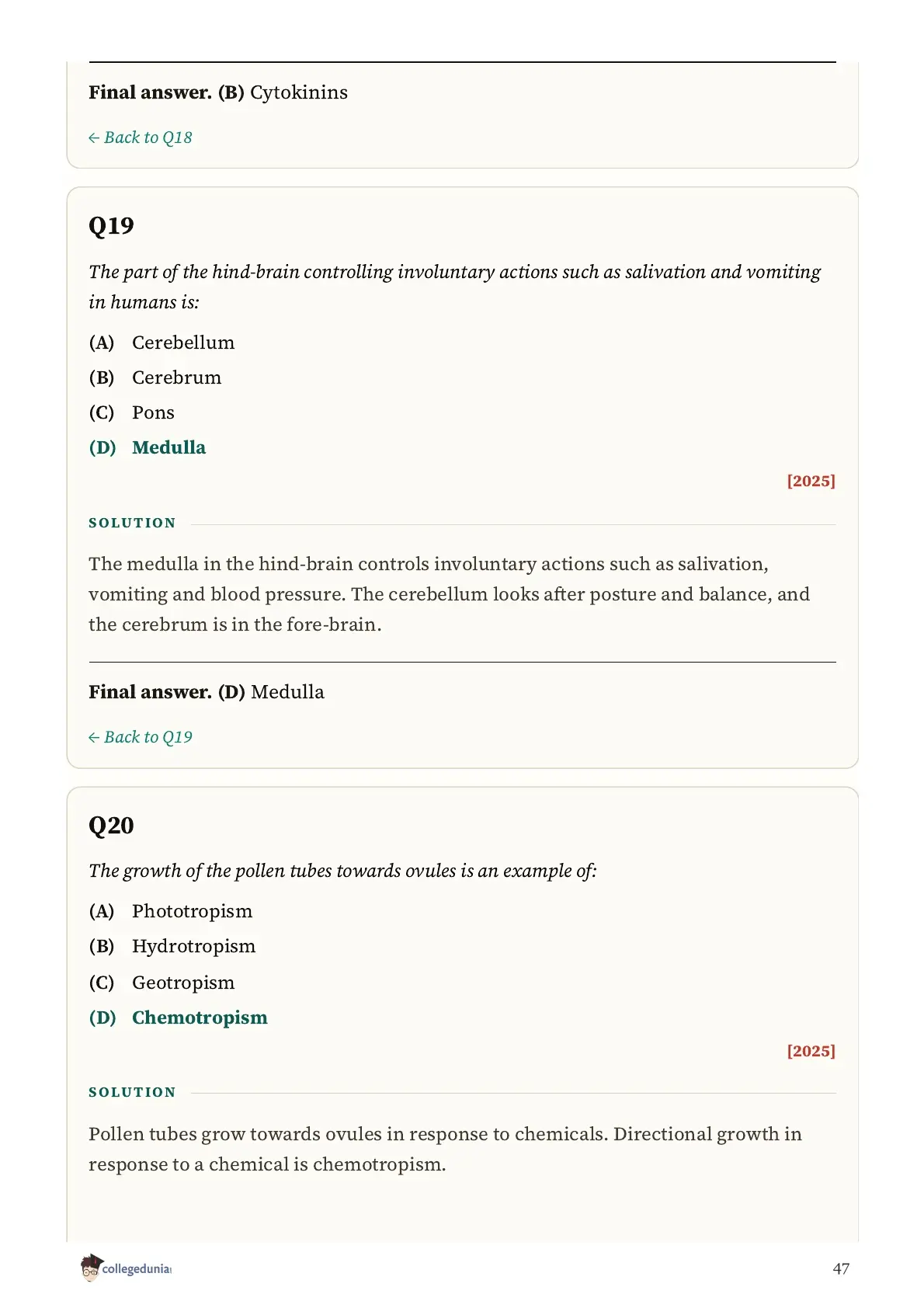
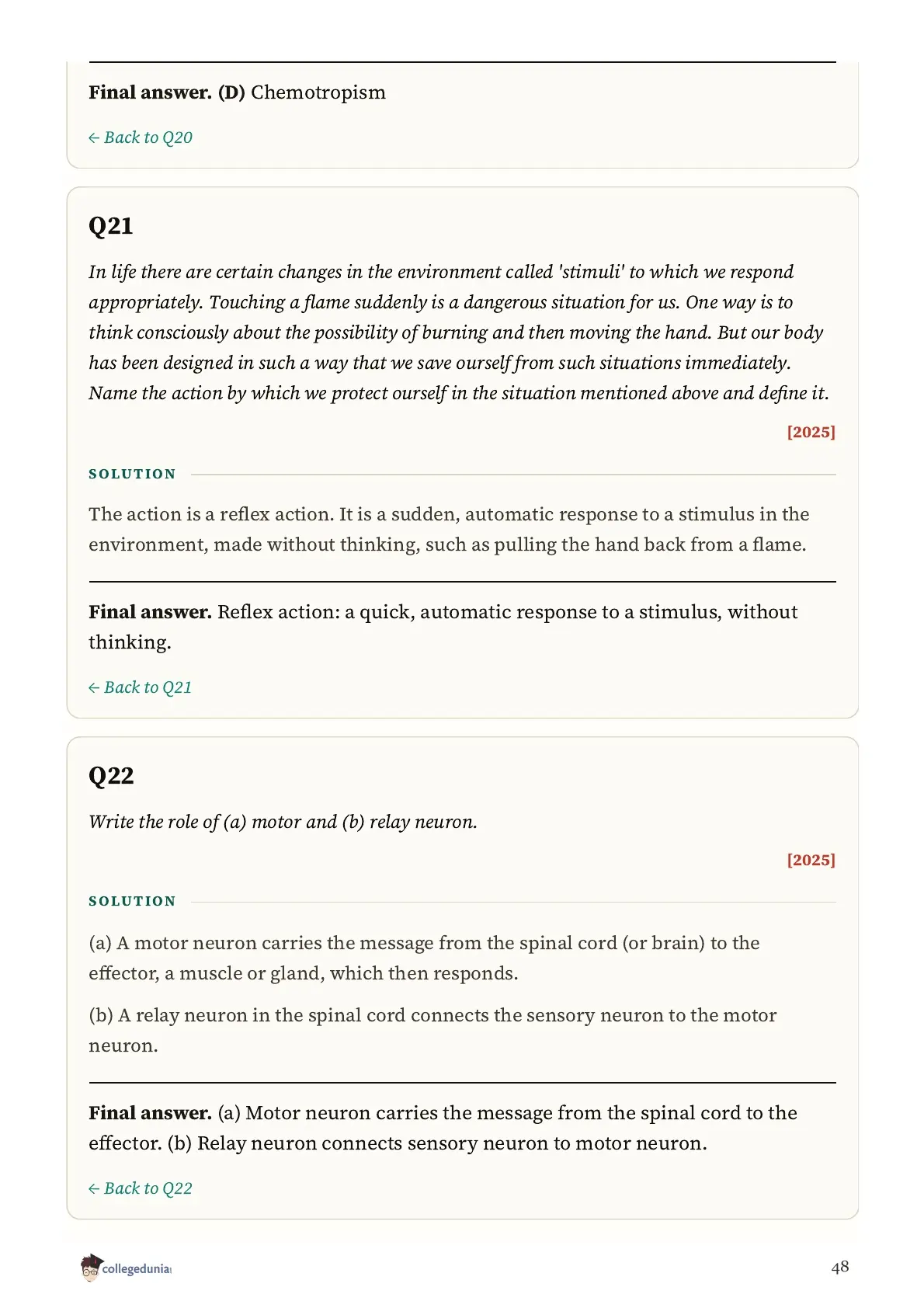
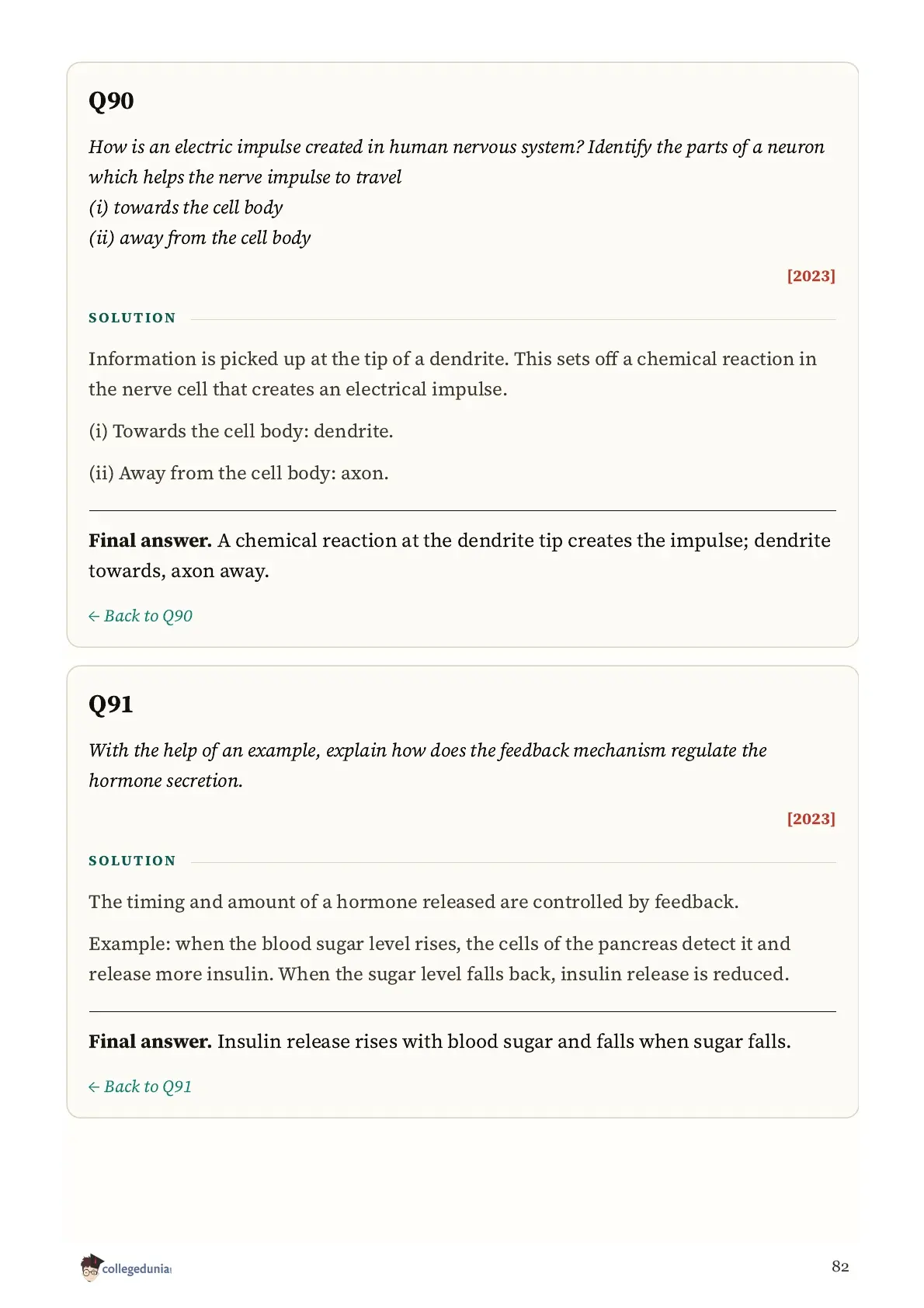
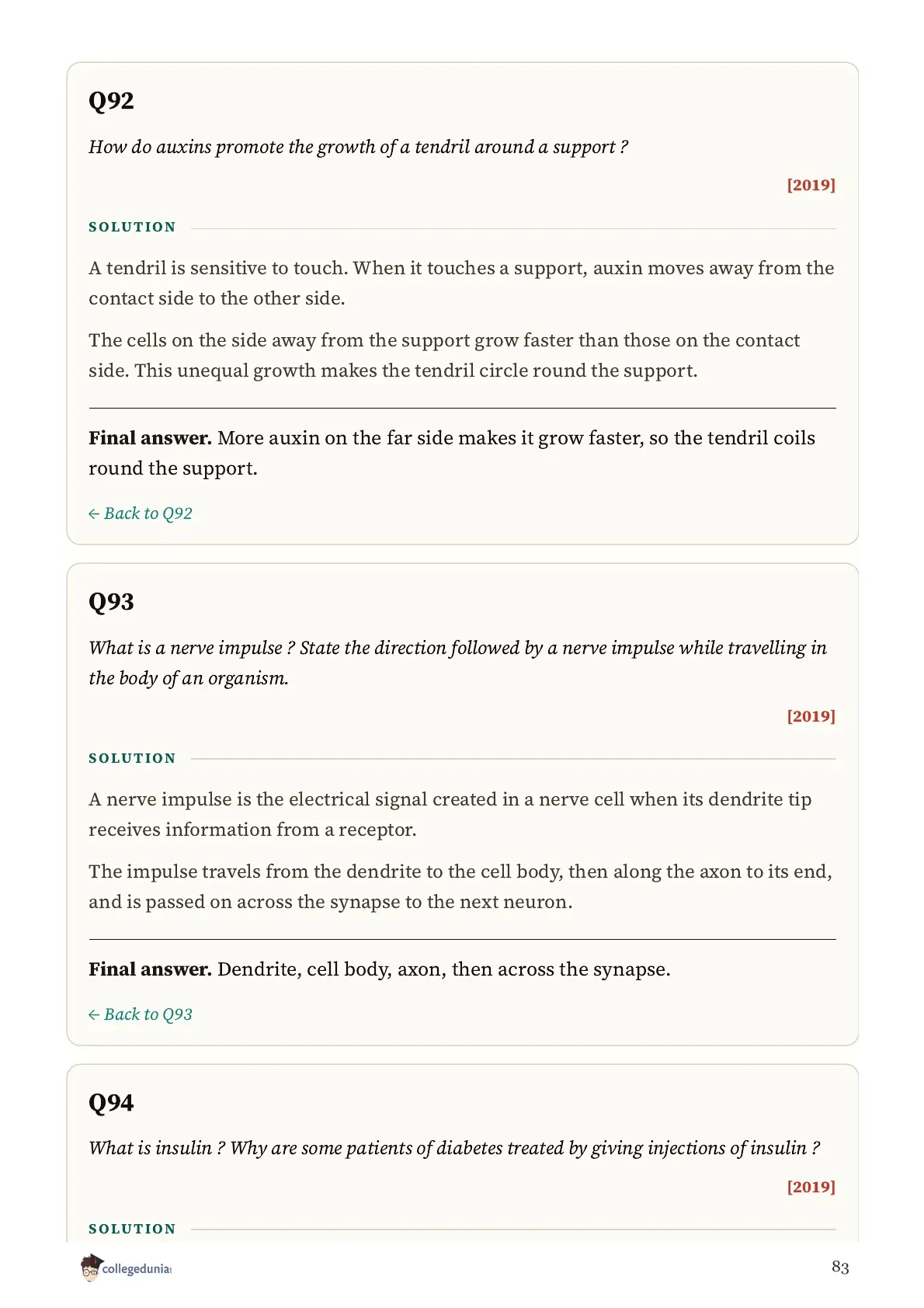
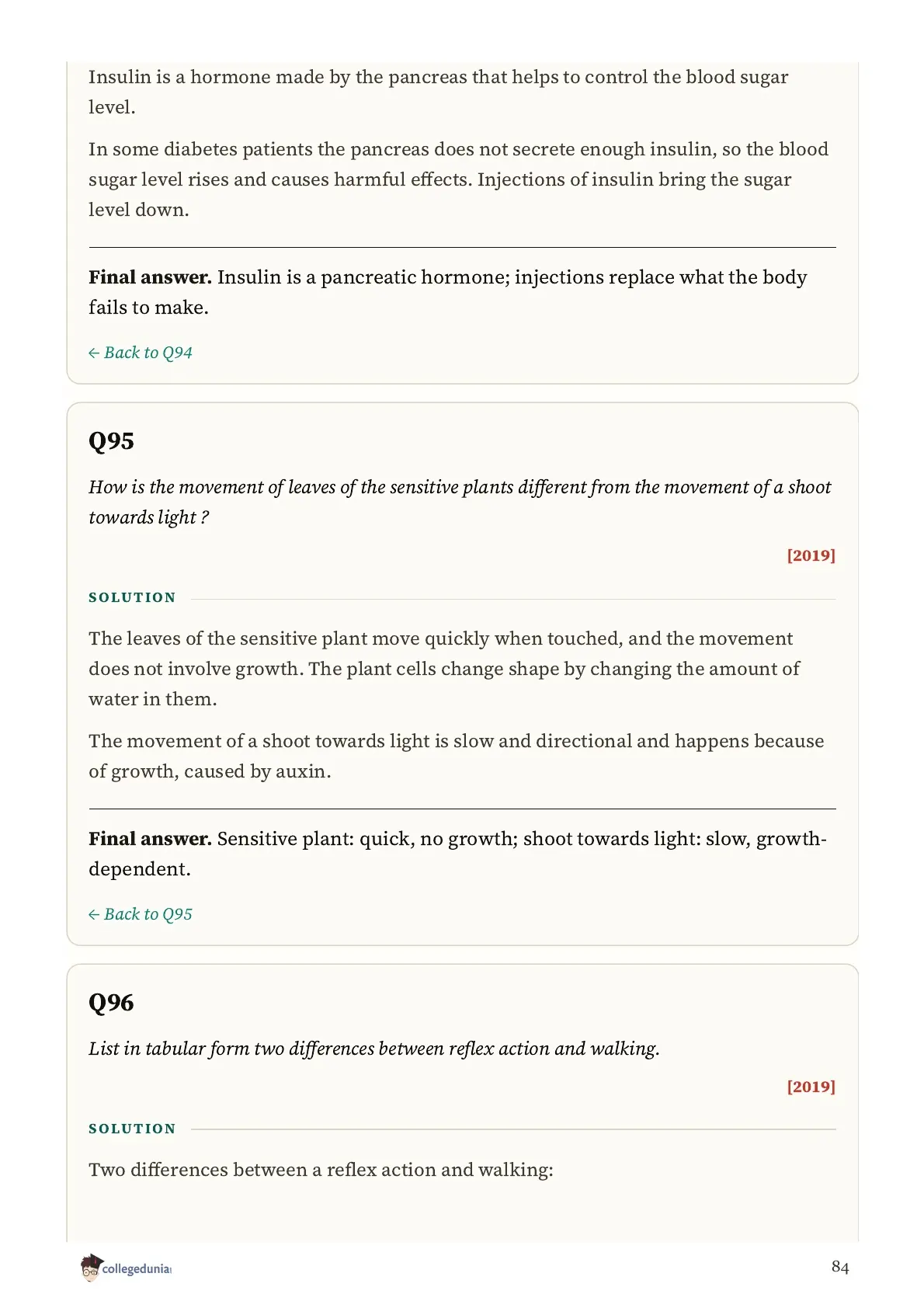
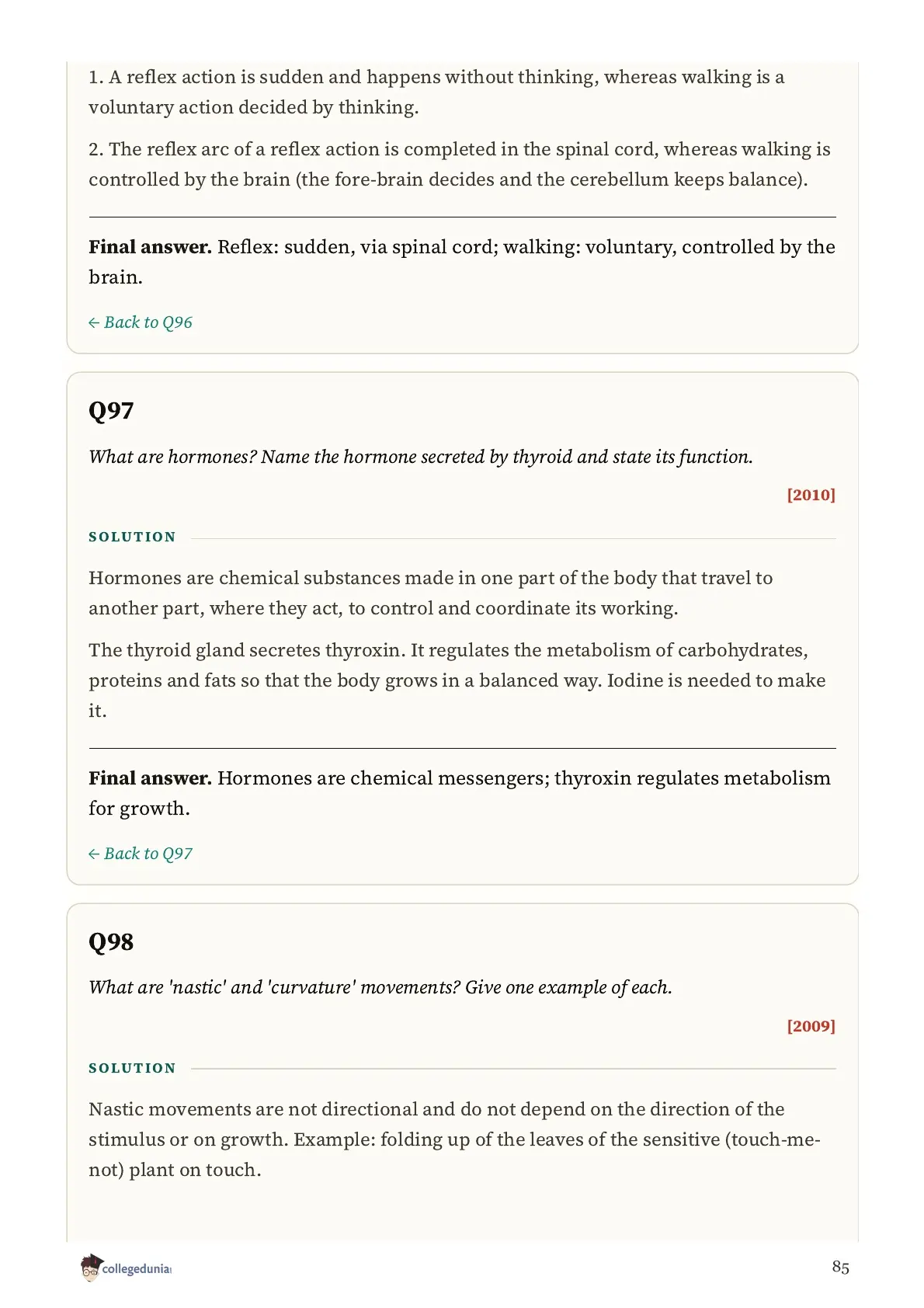
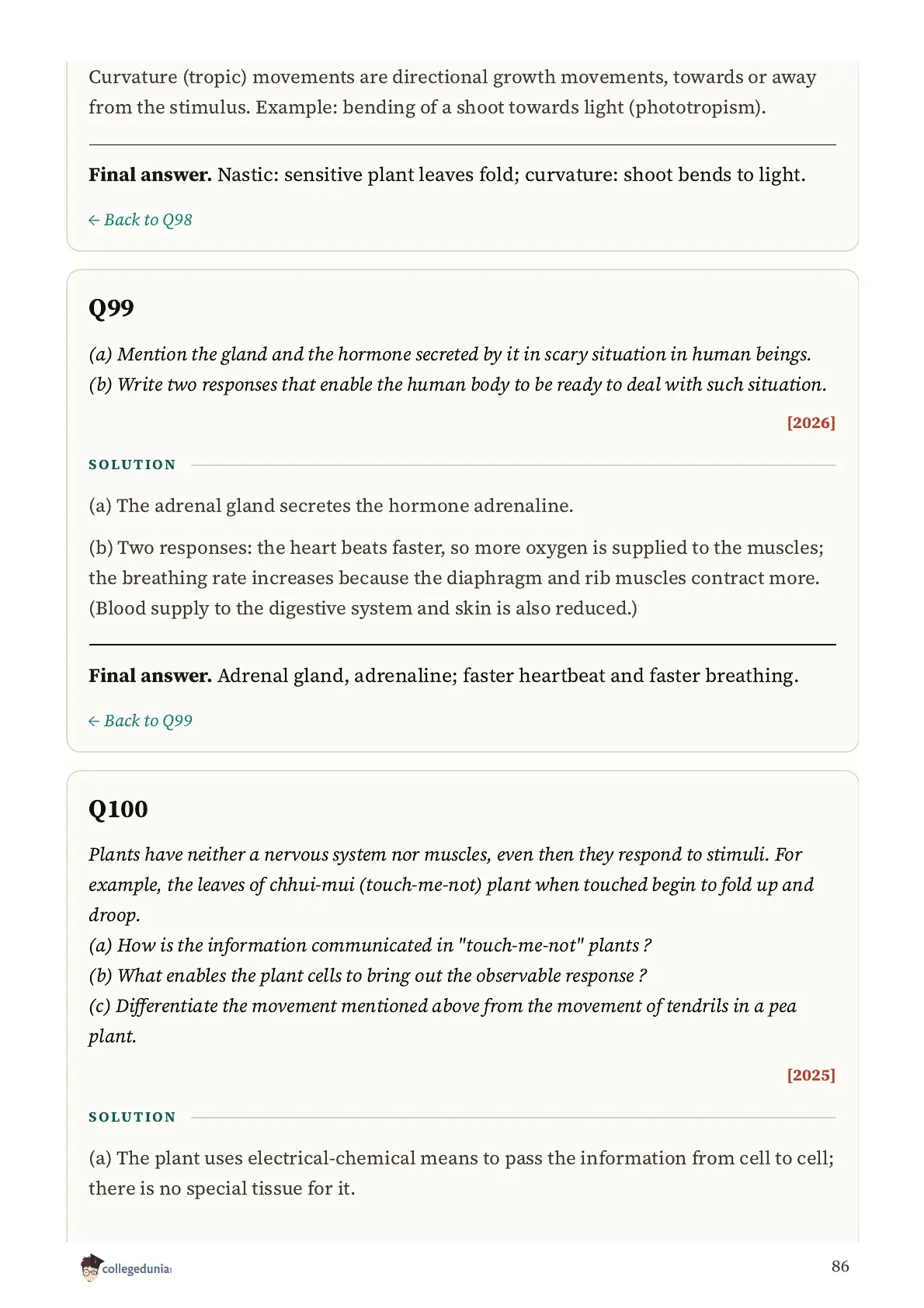
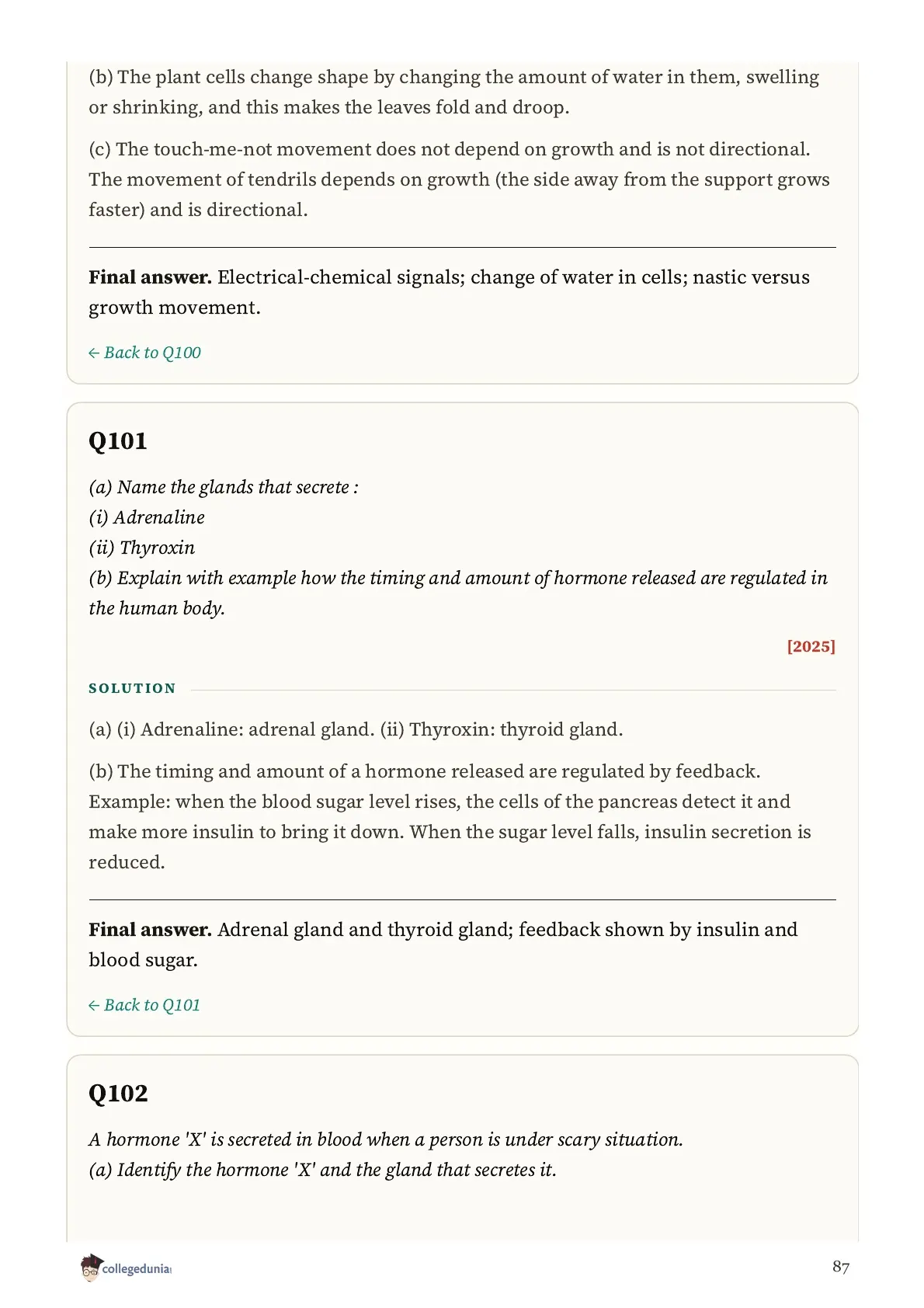
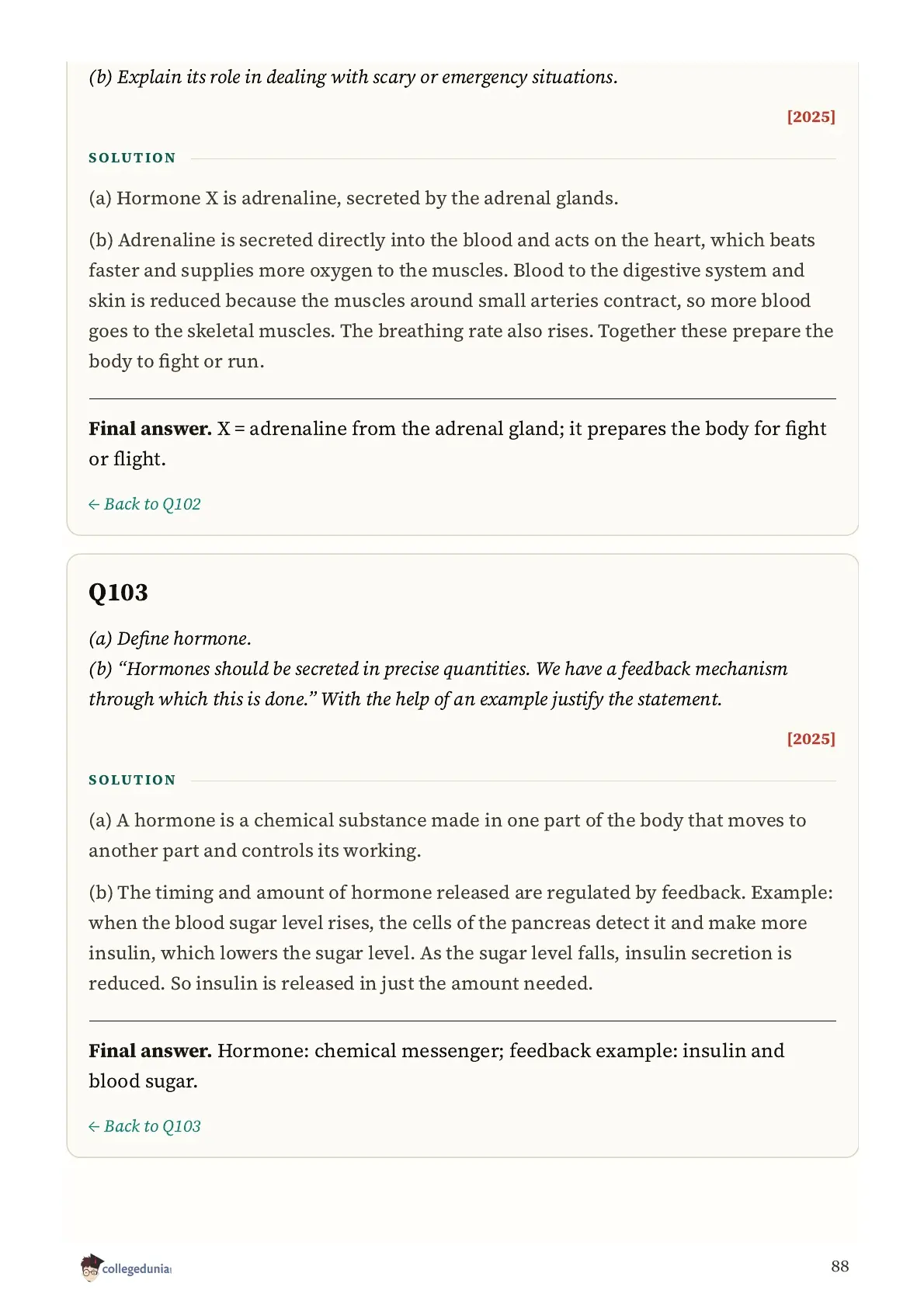
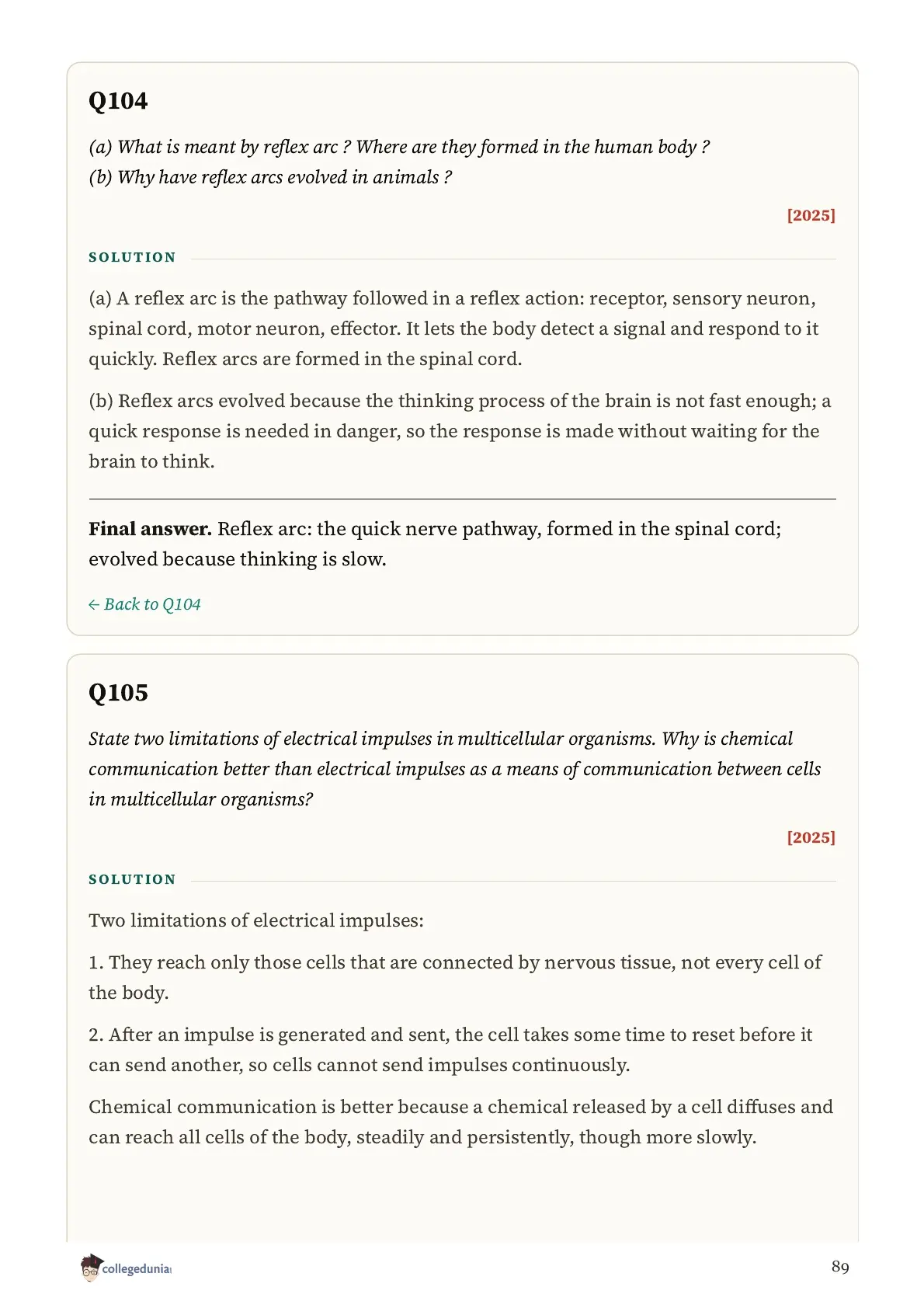
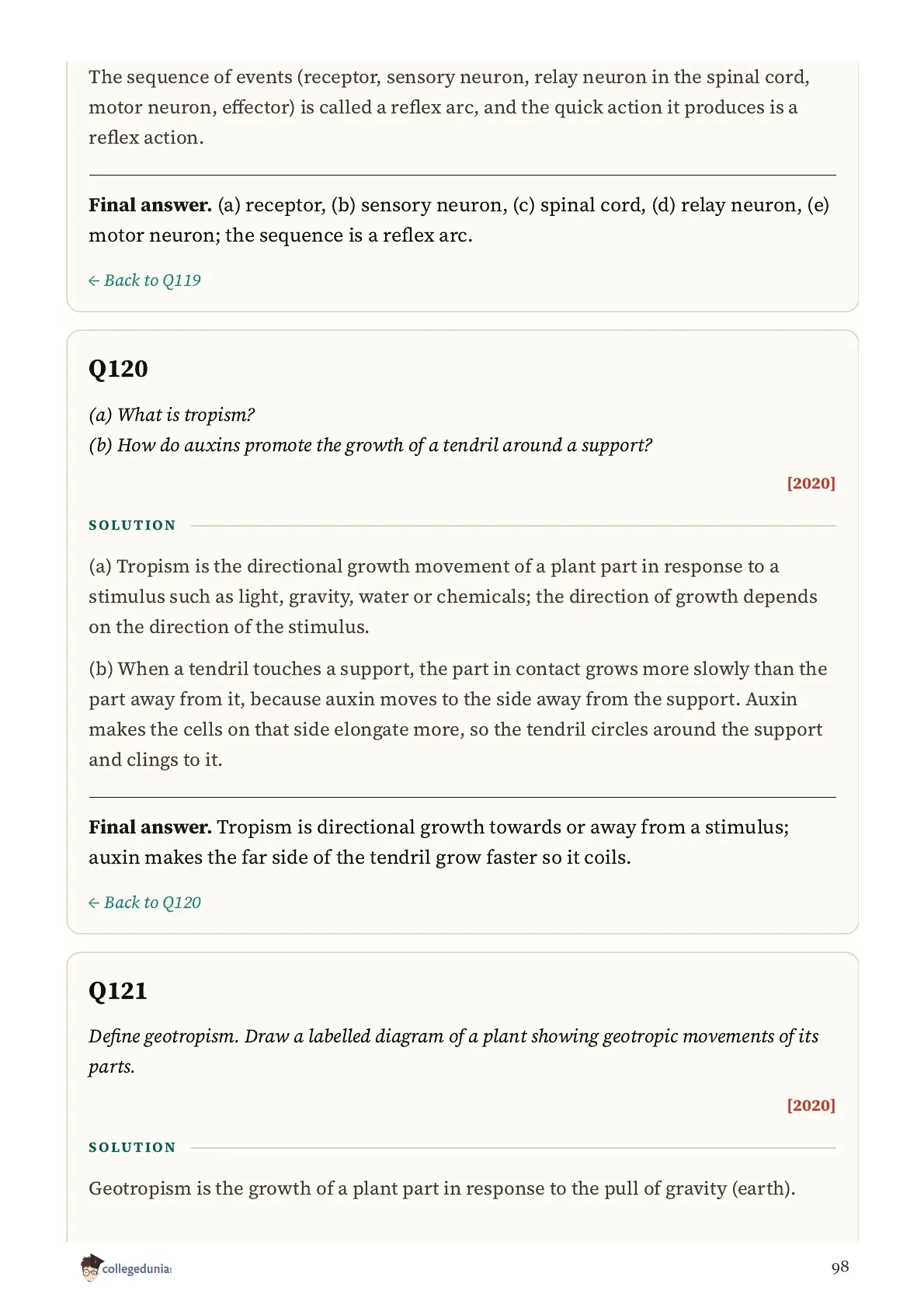
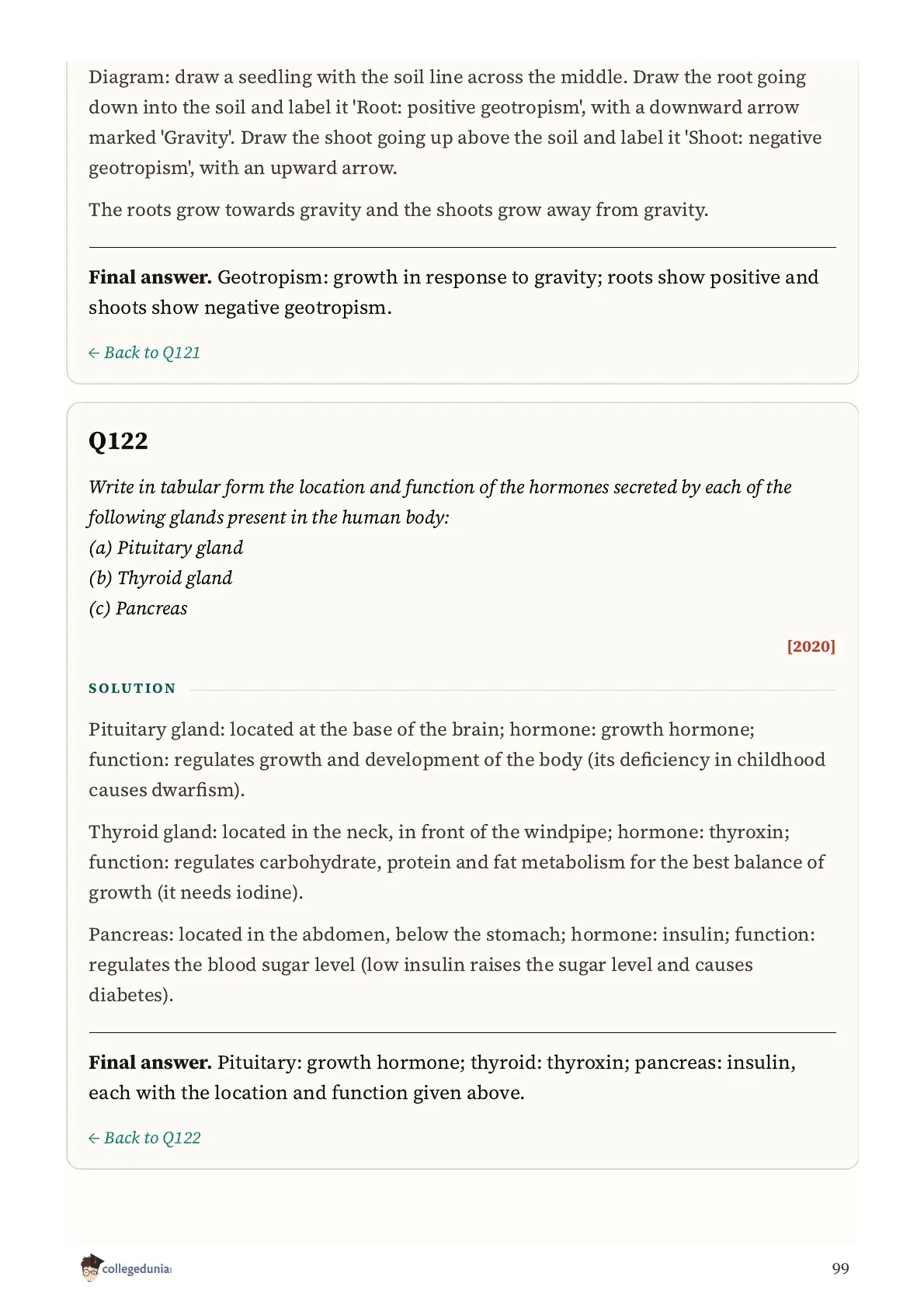
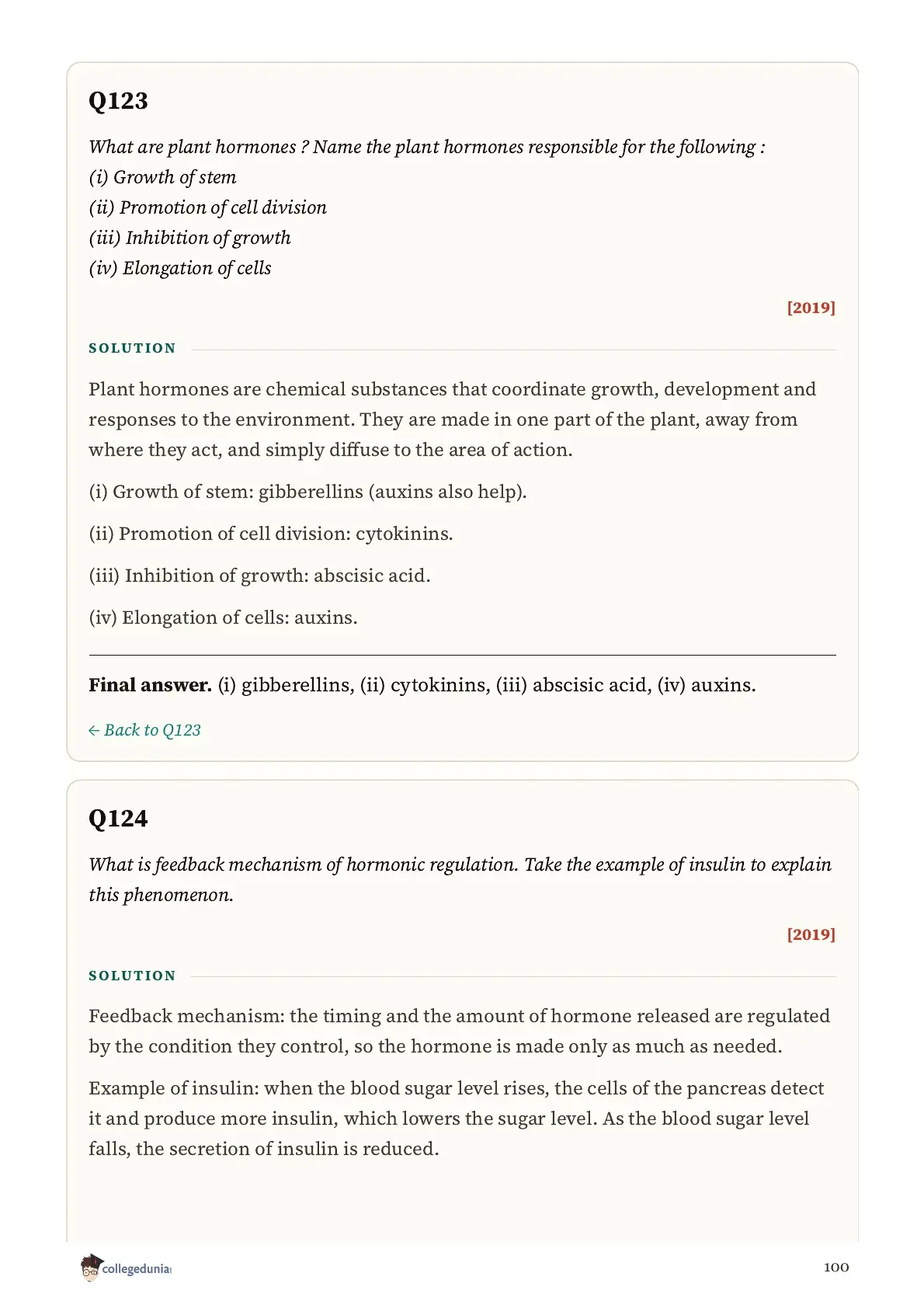
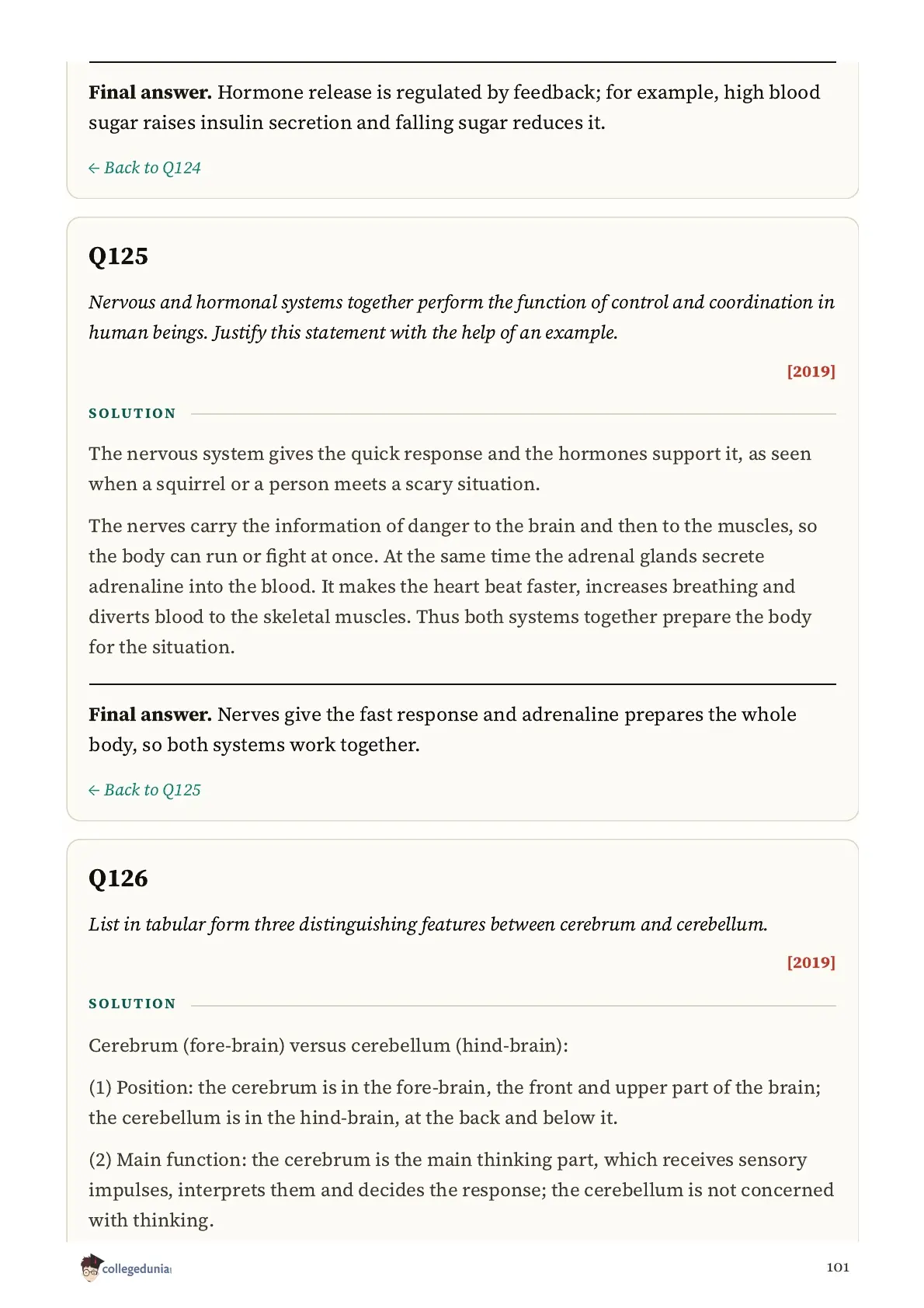
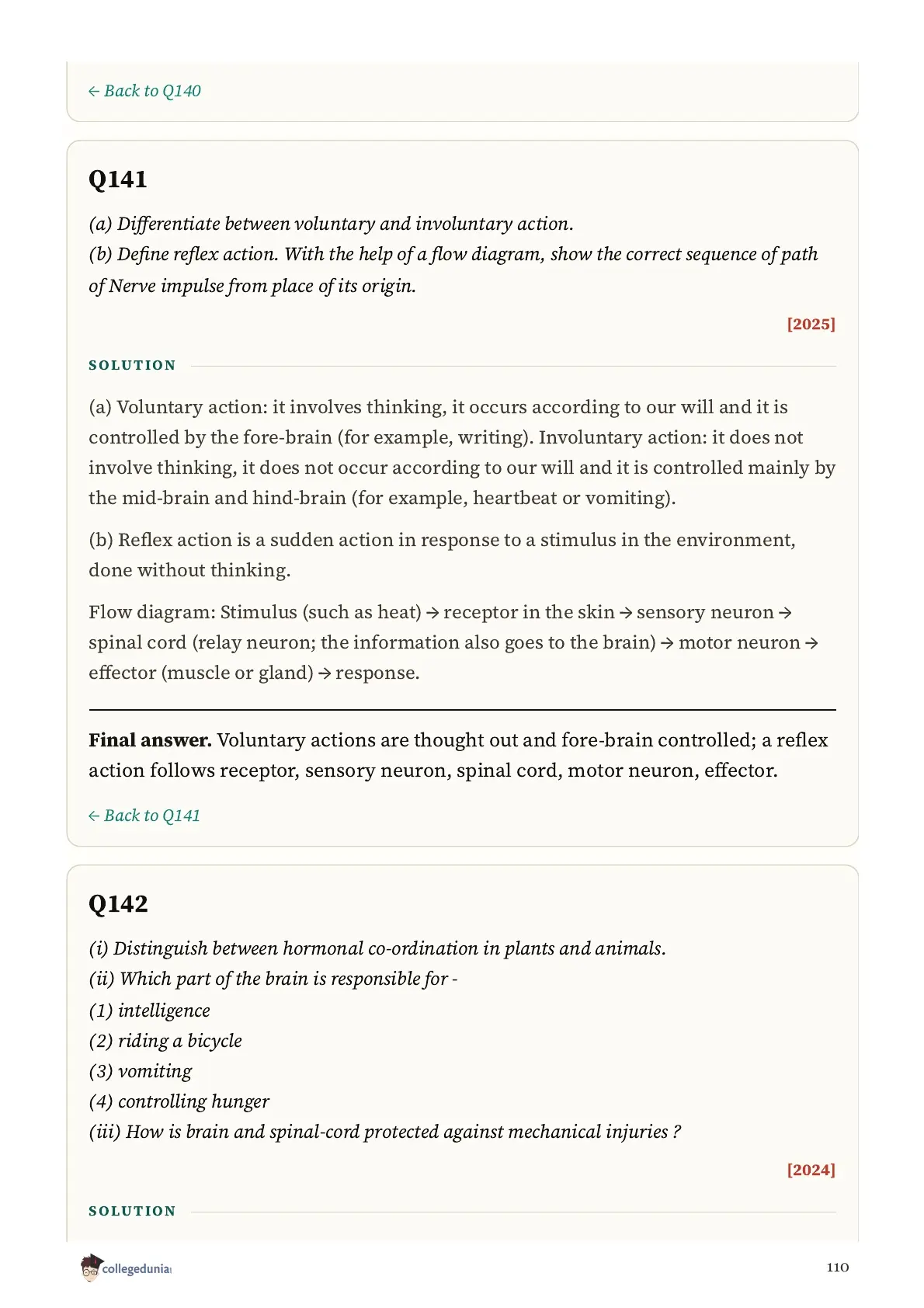
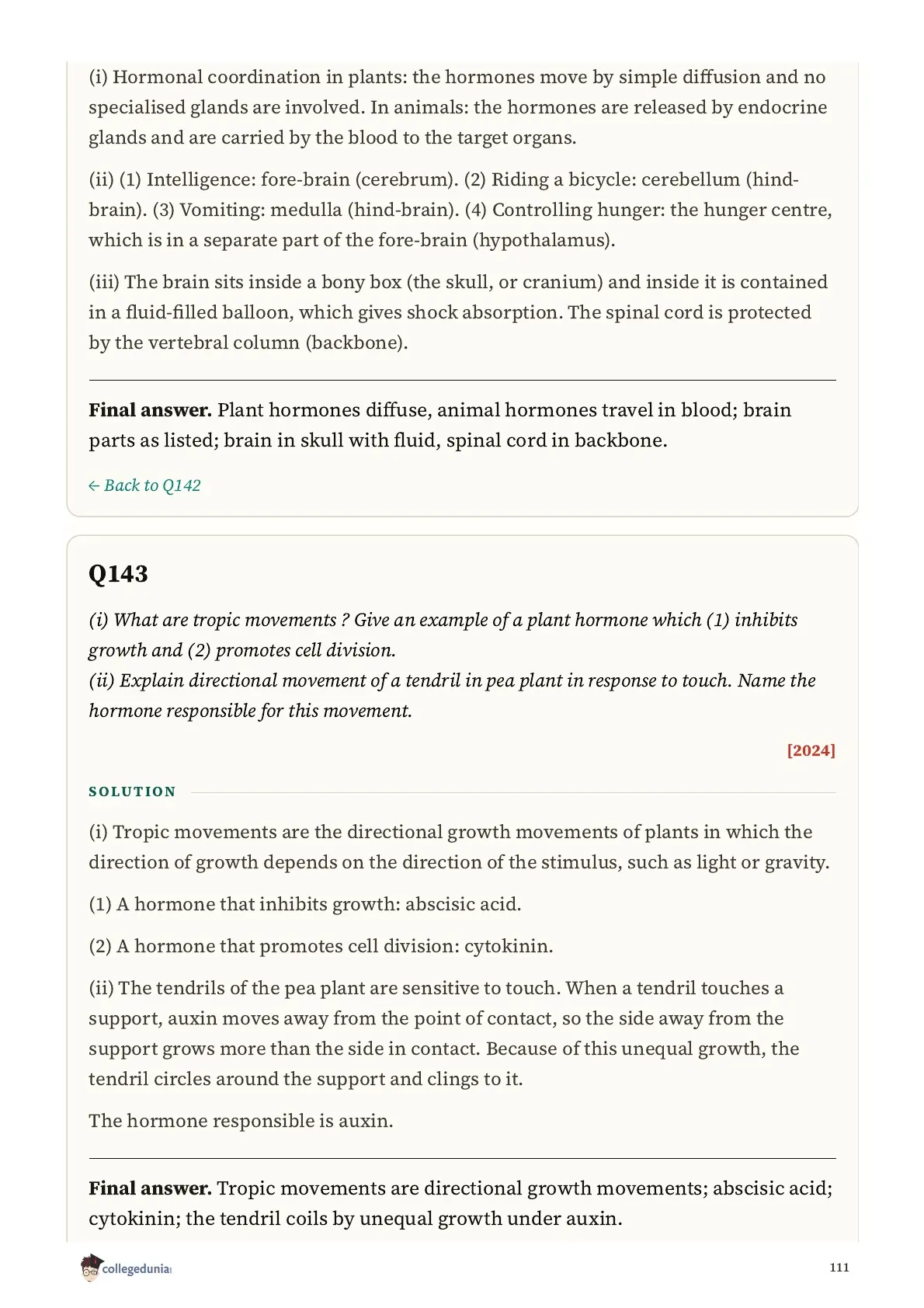
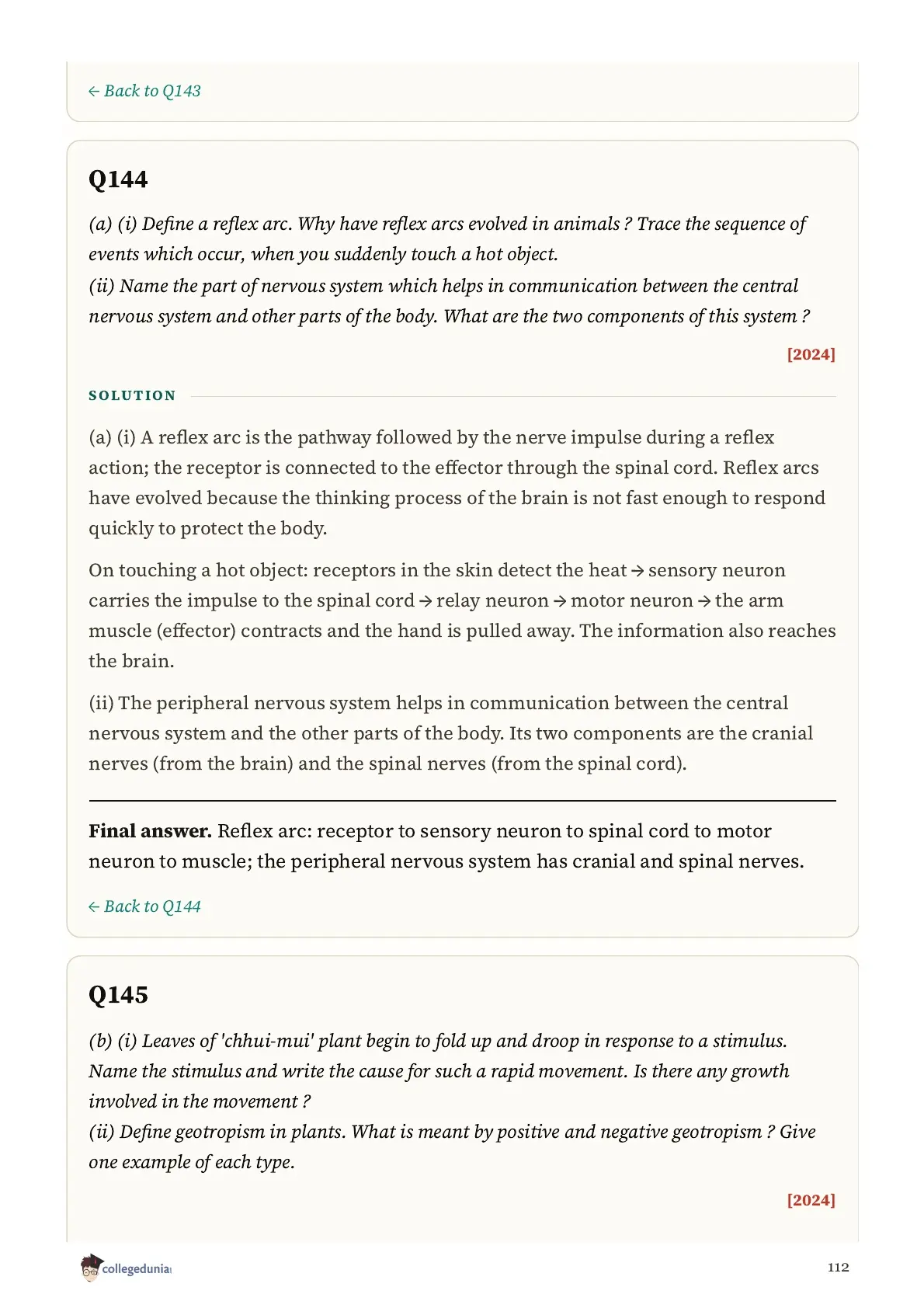
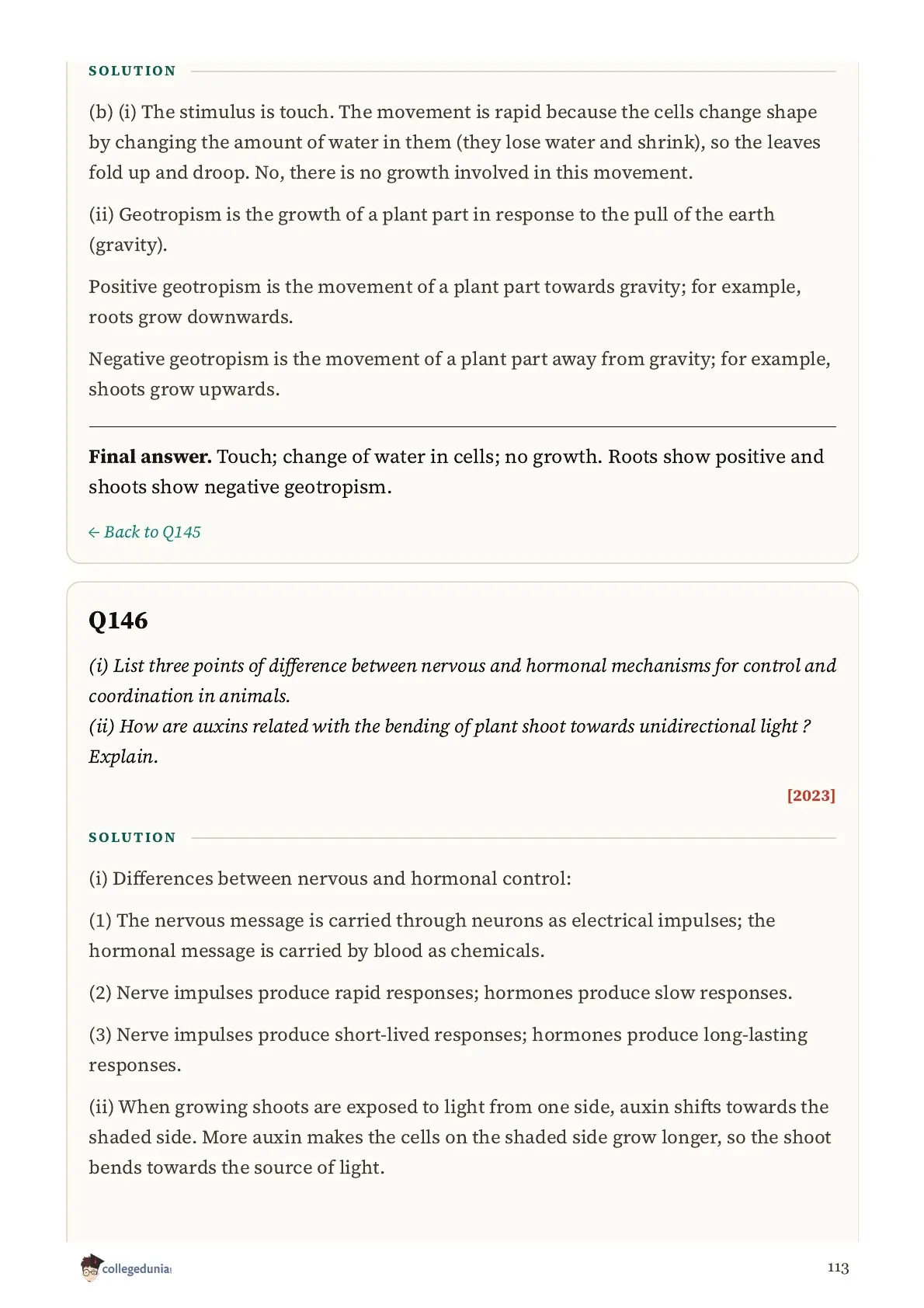
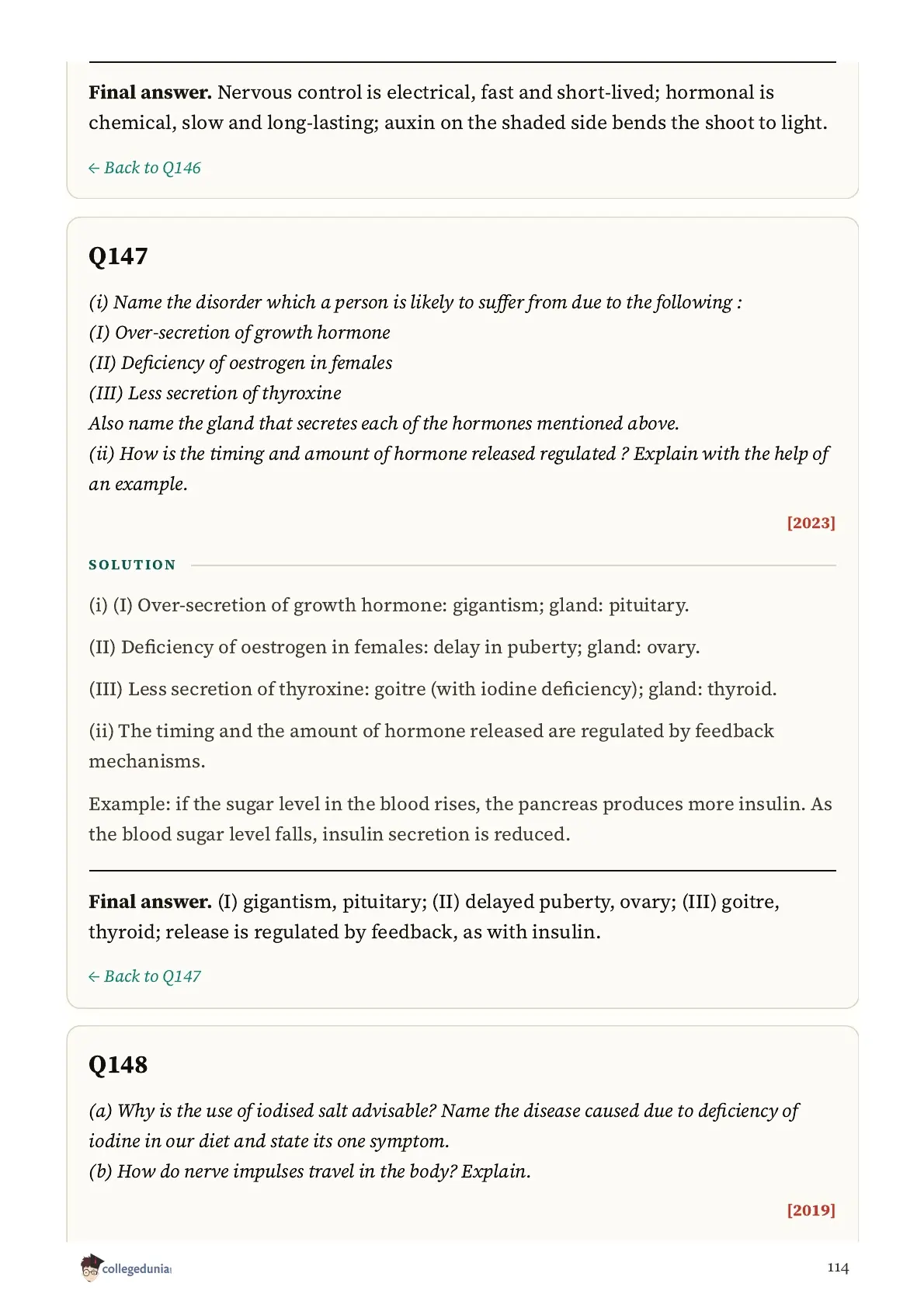
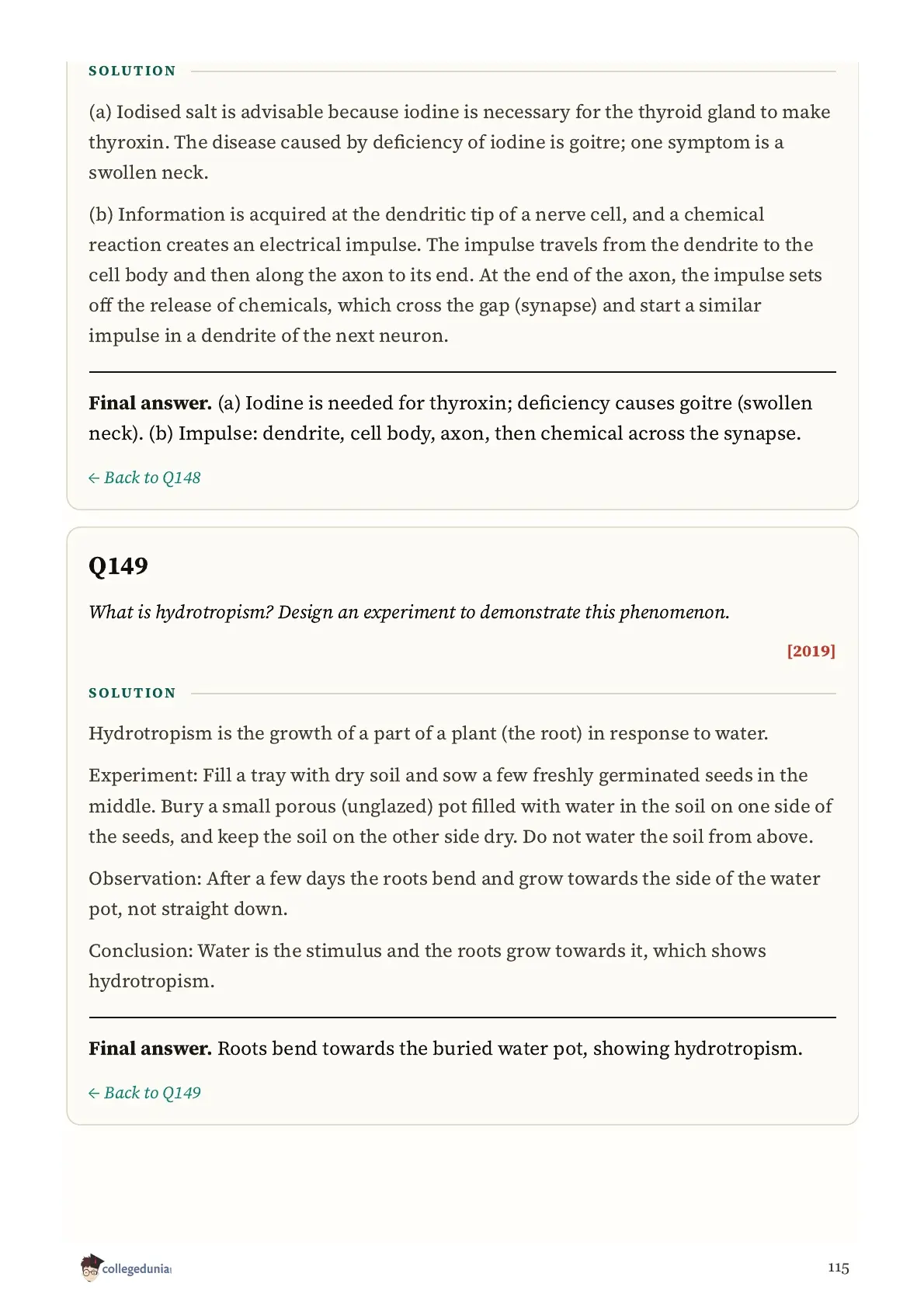
Control and Coordination Weightage in the Class 10 Science Paper
CBSE does not print a mark figure for Control and Coordination alone. In the Class 10 Science (086) syllabus, the unit World of Living is reported as carrying 25 of the 80 theory marks across four chapters, Life Processes, Control and Coordination, How do Organisms Reproduce? and Heredity. That 25 is a unit-level figure taken from prep sites and is unofficial, so check the current syllabus on cbseacademic.nic.in. In this set the 1-mark question is the commonest form, followed by the 2-mark short answer and the 3-mark question.
The table shows how many questions the set holds at each mark value. Of the 52 one-mark questions, 35 are MCQs or assertion-reason items and 17 are very short answers, many of them parts of a thyroid case study.
| Marks per Question | Questions in the Set |
|---|---|
| 1 mark | 52 |
| 2 marks | 46 |
| 3 marks | 33 |
| 4 marks | 8 |
| 5 marks | 10 |
Control and Coordination Questions by Topic
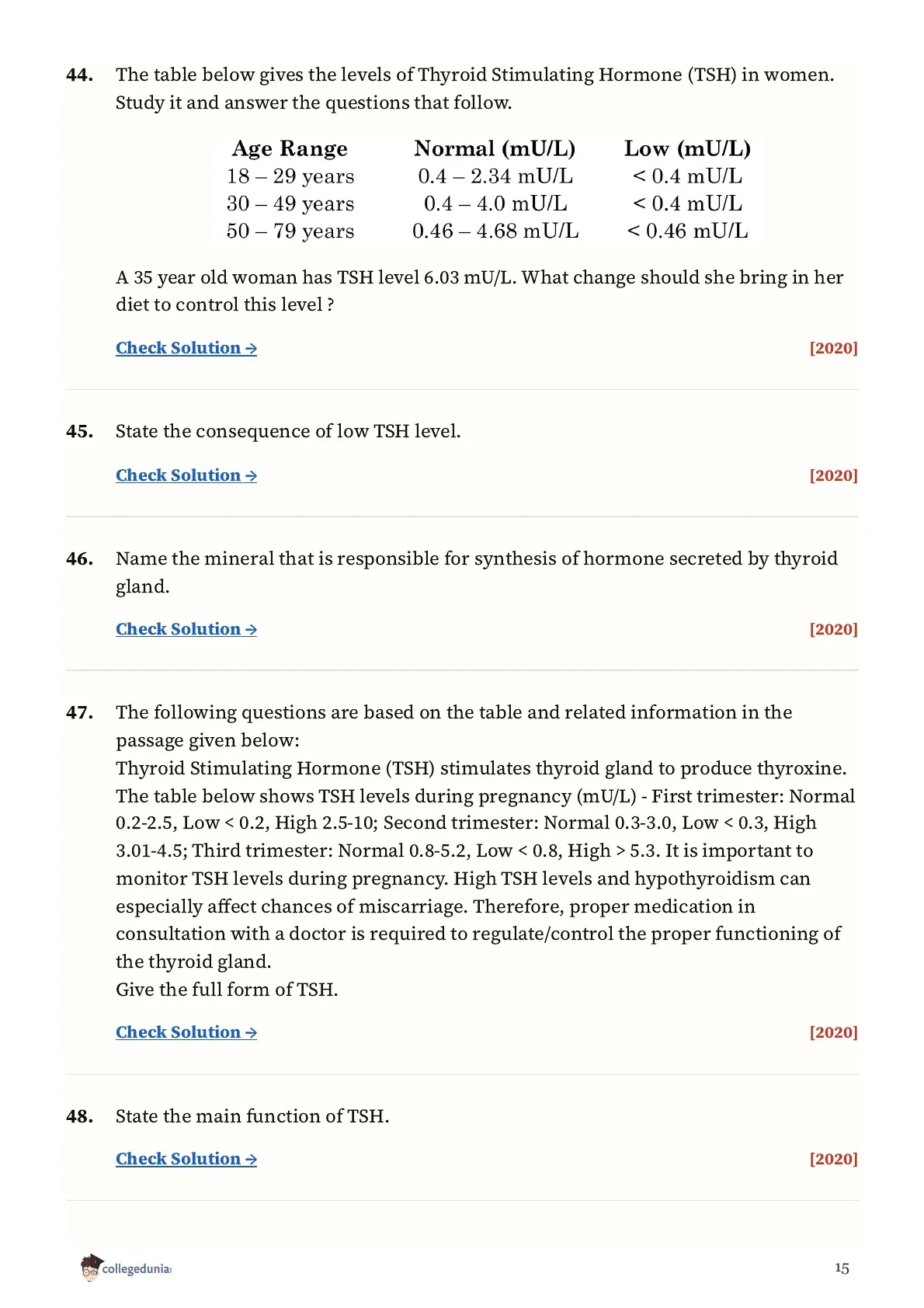
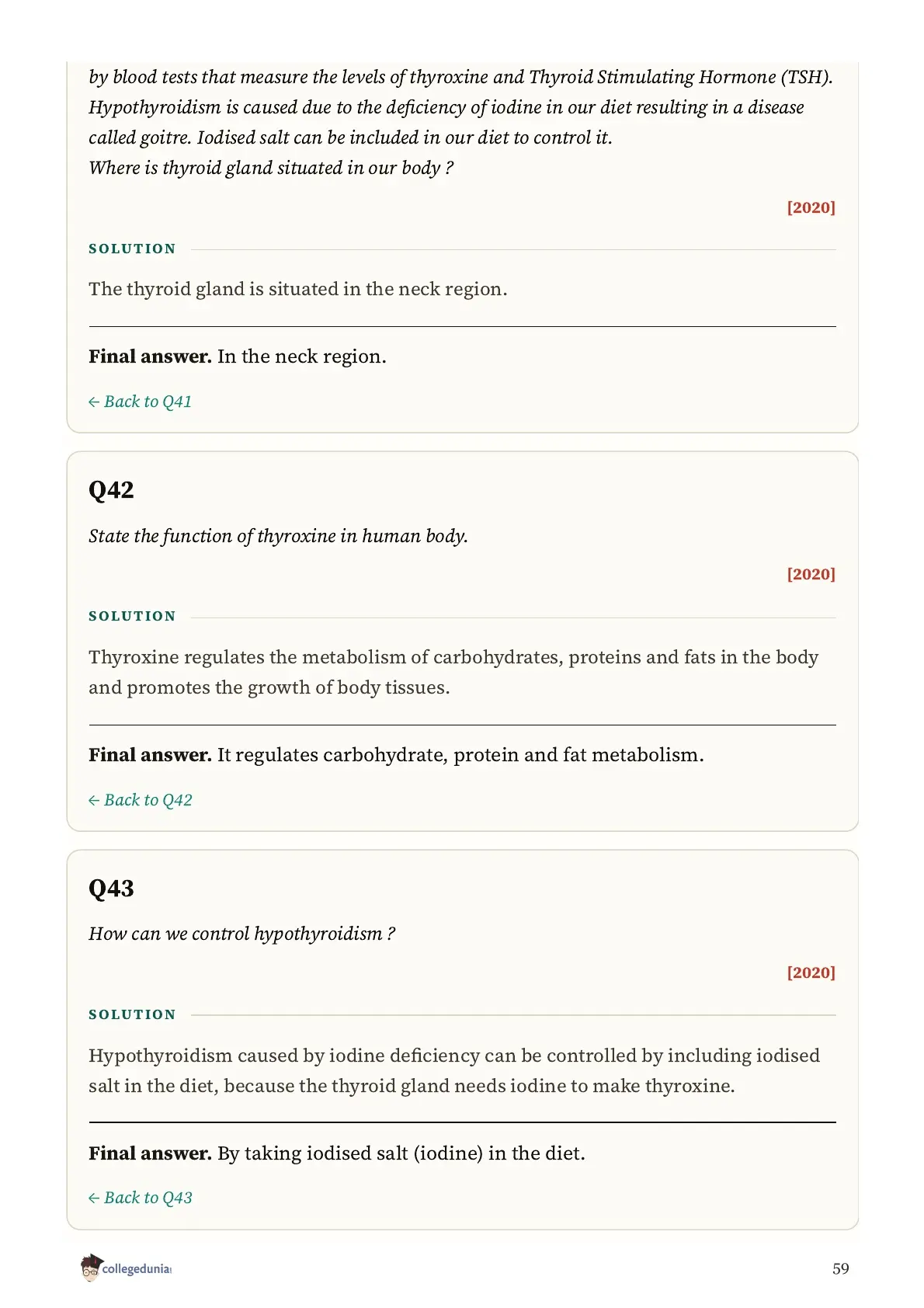
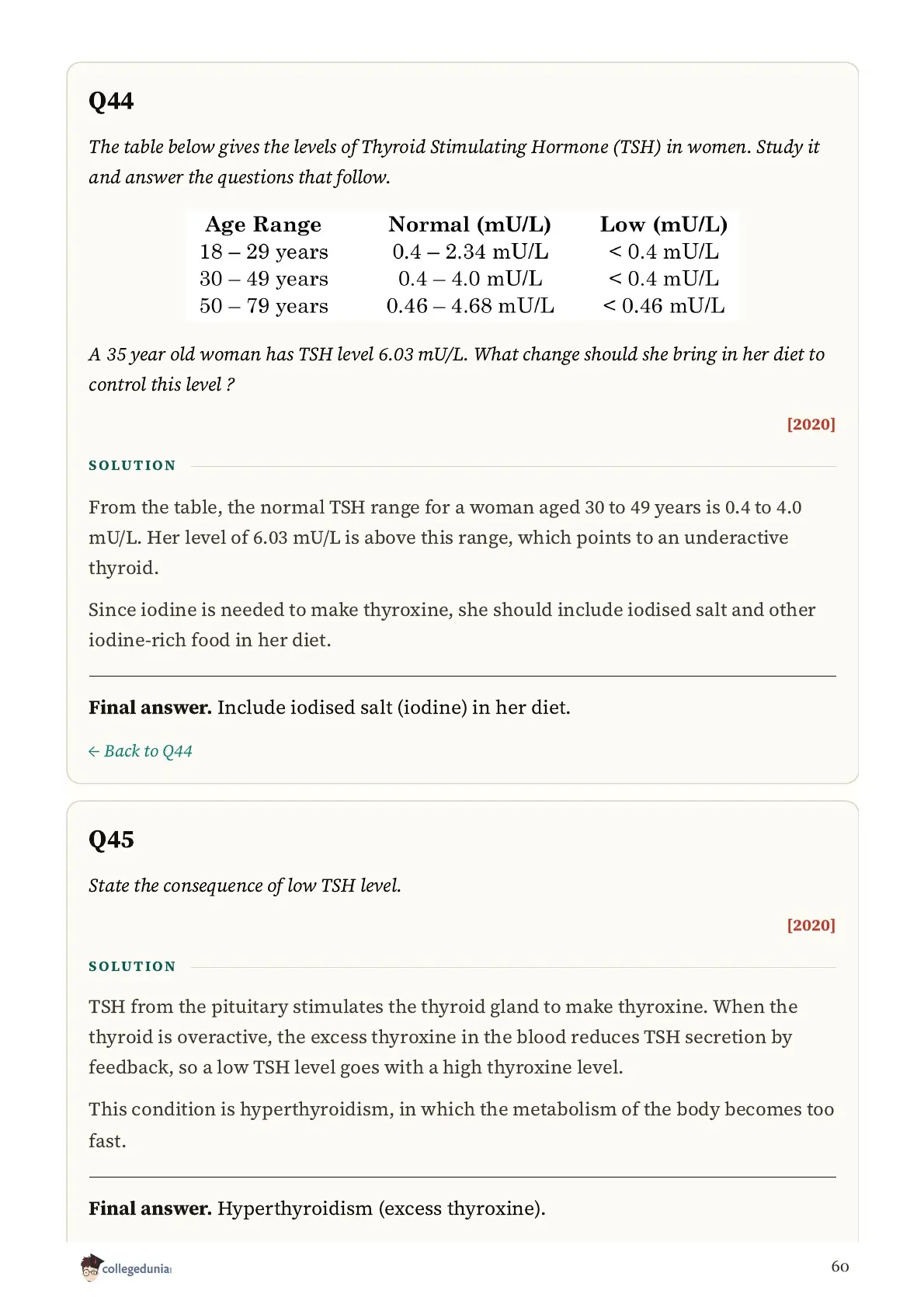
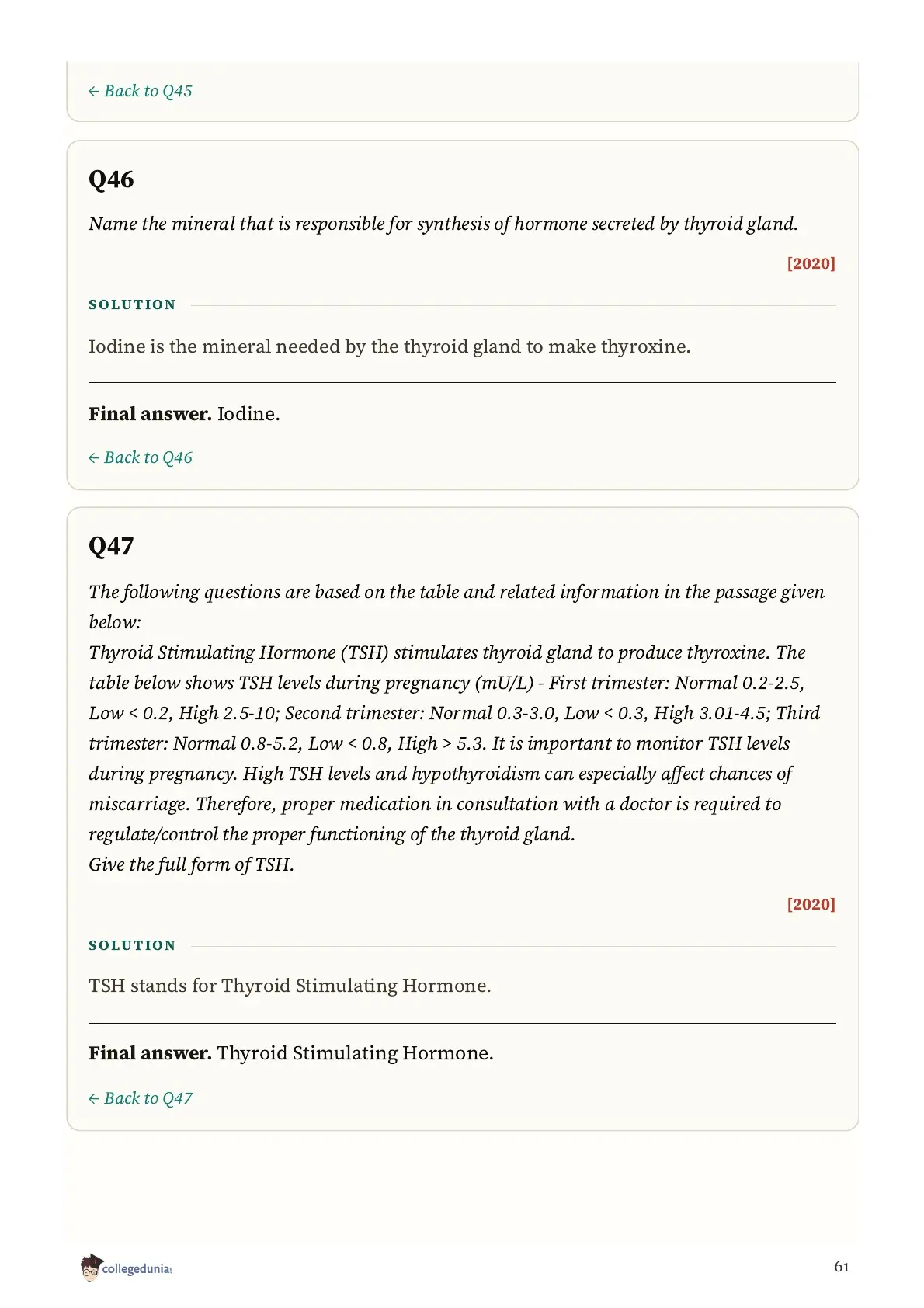
The chapter has three strands, the nervous system, plant movements and hormones, and the set splits across all three. Hormones lead: 54 of the 149 questions mention a hormone or one of its glands, and 18 name a gland directly. 11 questions are about the hormone released in a scary or fight-or-flight situation, such as the squirrel question (2020, 2026) and the adrenaline questions that ask for two bodily responses. 21 questions involve the thyroid or iodine, including a 2020 case study on TSH levels in pregnant women, and 10 involve the pancreas and insulin. Feedback regulation appears in 3 questions, usually through the example of insulin and blood sugar.
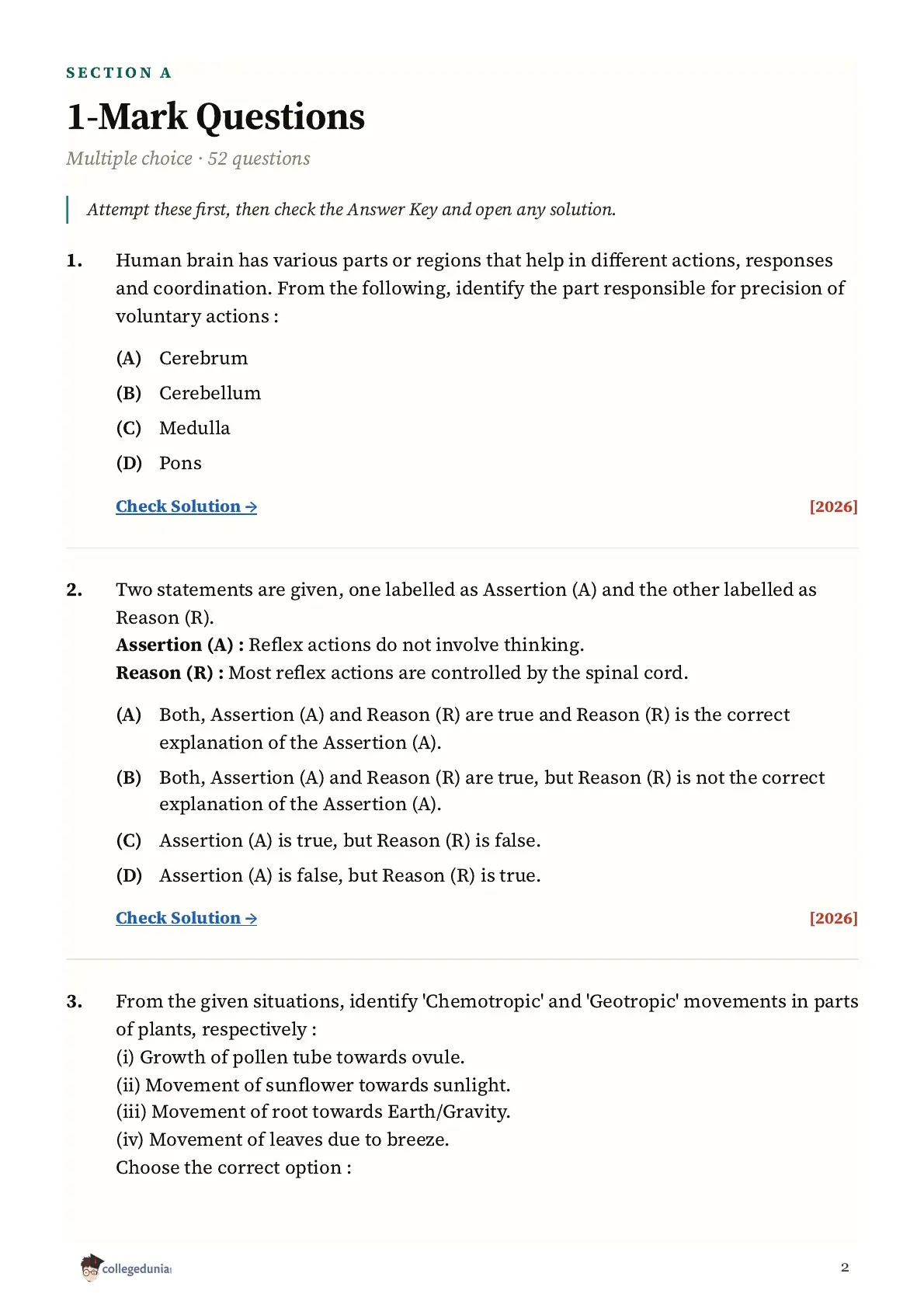
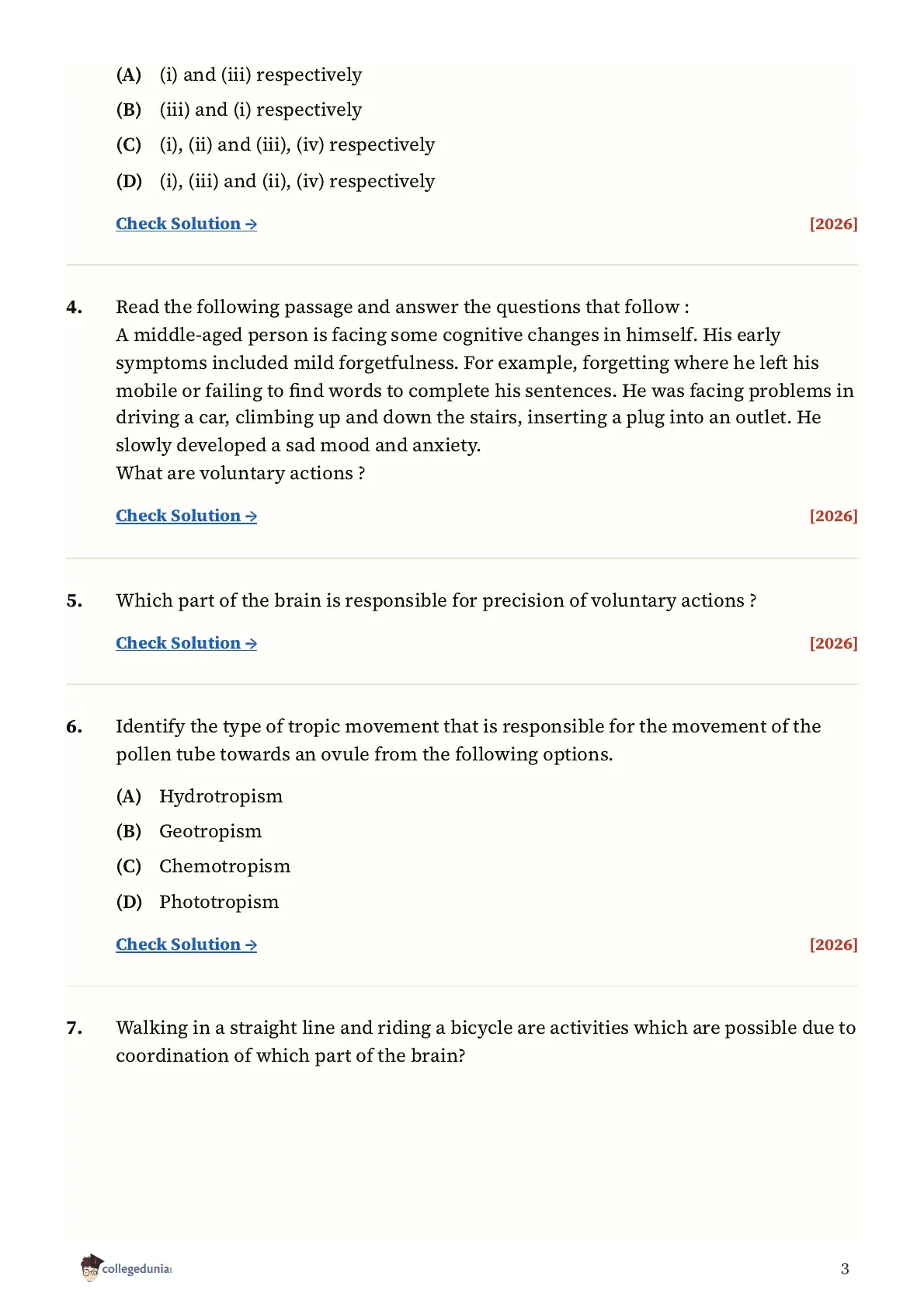
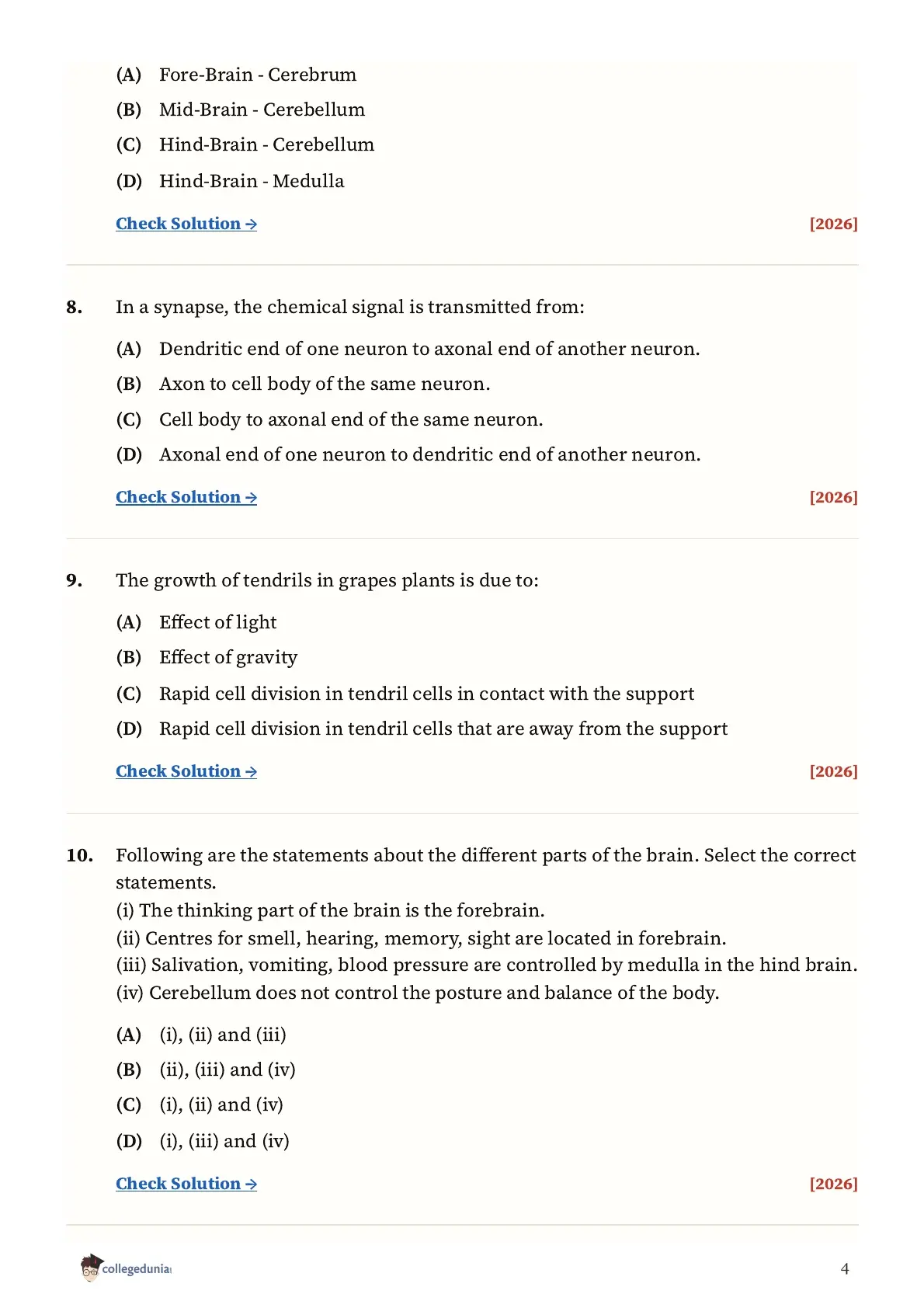
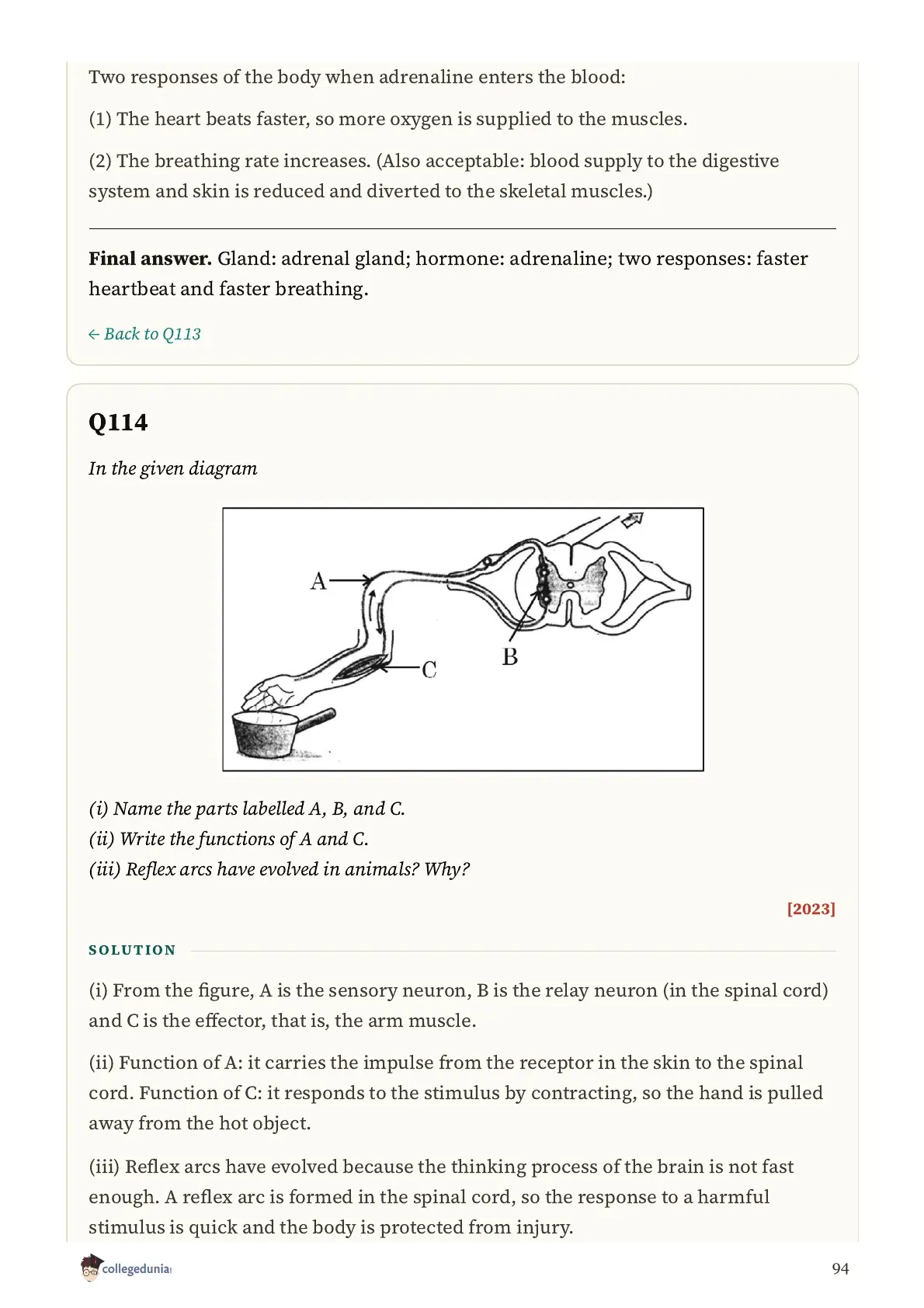
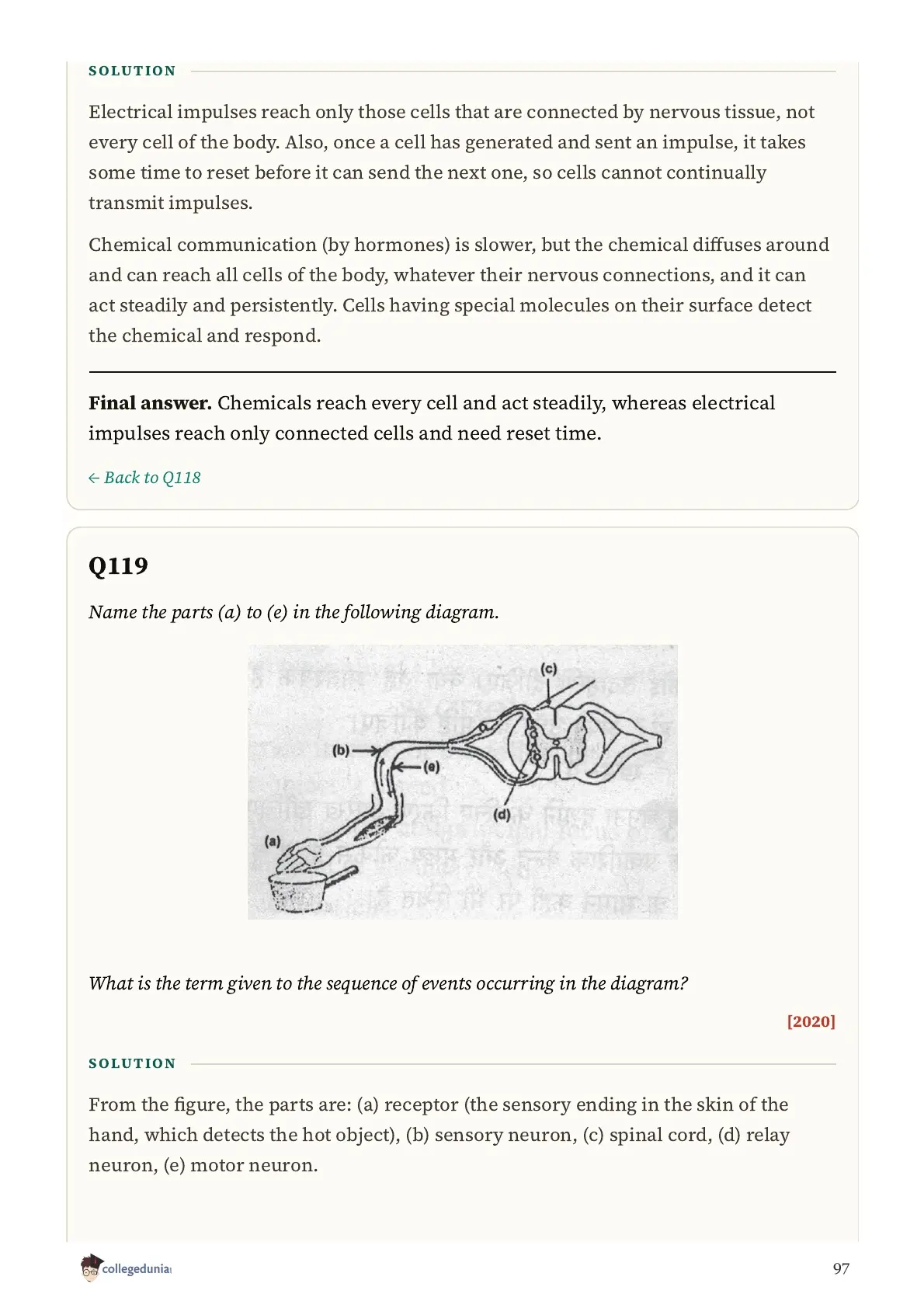
The nervous system comes next. 43 questions name the brain or one of its parts, with the medulla in 9 and the cerebellum in 8. 19 ask about neurons, synapses or nerve impulses, 8 about reflex action and 4 about the reflex arc. Typical cases are the part of the brain that controls precision of voluntary actions (2026), the path of a reflex such as sneezing or touching a hot object, and two limitations of electrical impulses (2024, 2025, 2026).
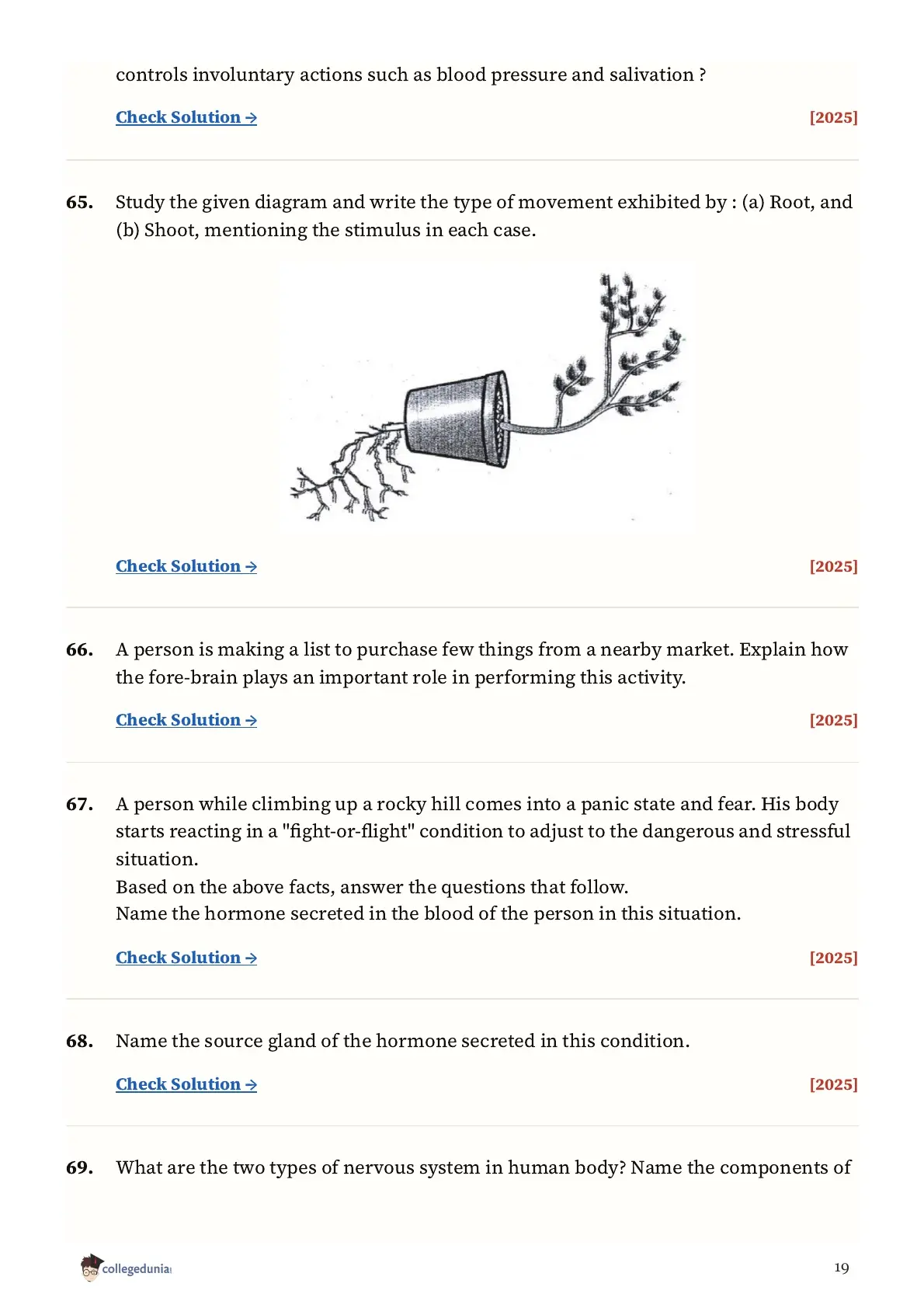
Plant movement is the third block, with 27 questions on tropisms, the sensitive plant, tendrils and nastic movement. Phototropism and geotropism appear in 10 questions each, hydrotropism and chemotropism in 9, the sensitive plant in 9 and tendrils in 7. Among plant hormones, auxin appears in 11 questions and cytokinin or cell division in 12. 17 questions ask you to differentiate between two things, for example the movement of the sensitive plant and the bending of a shoot towards light.
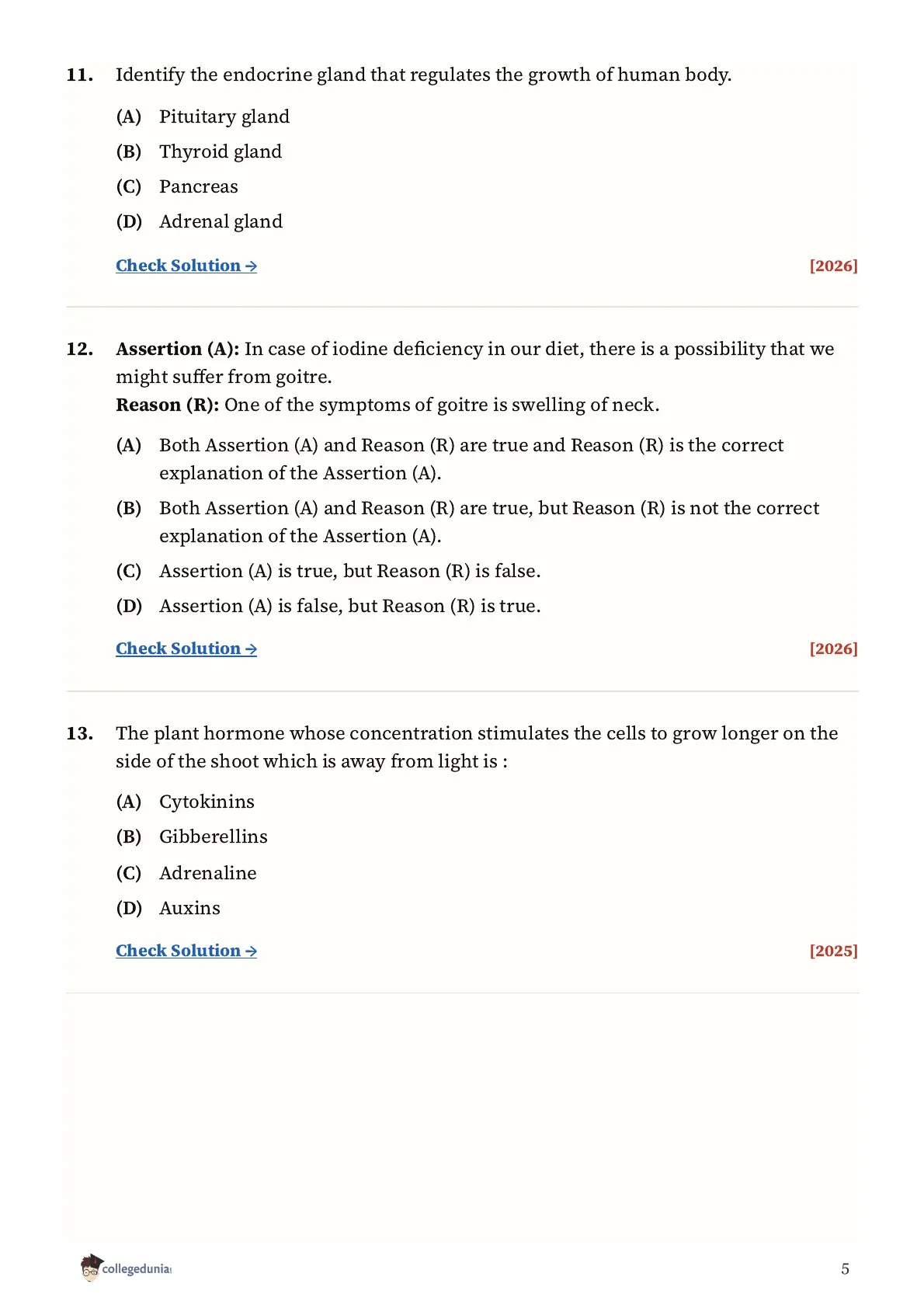
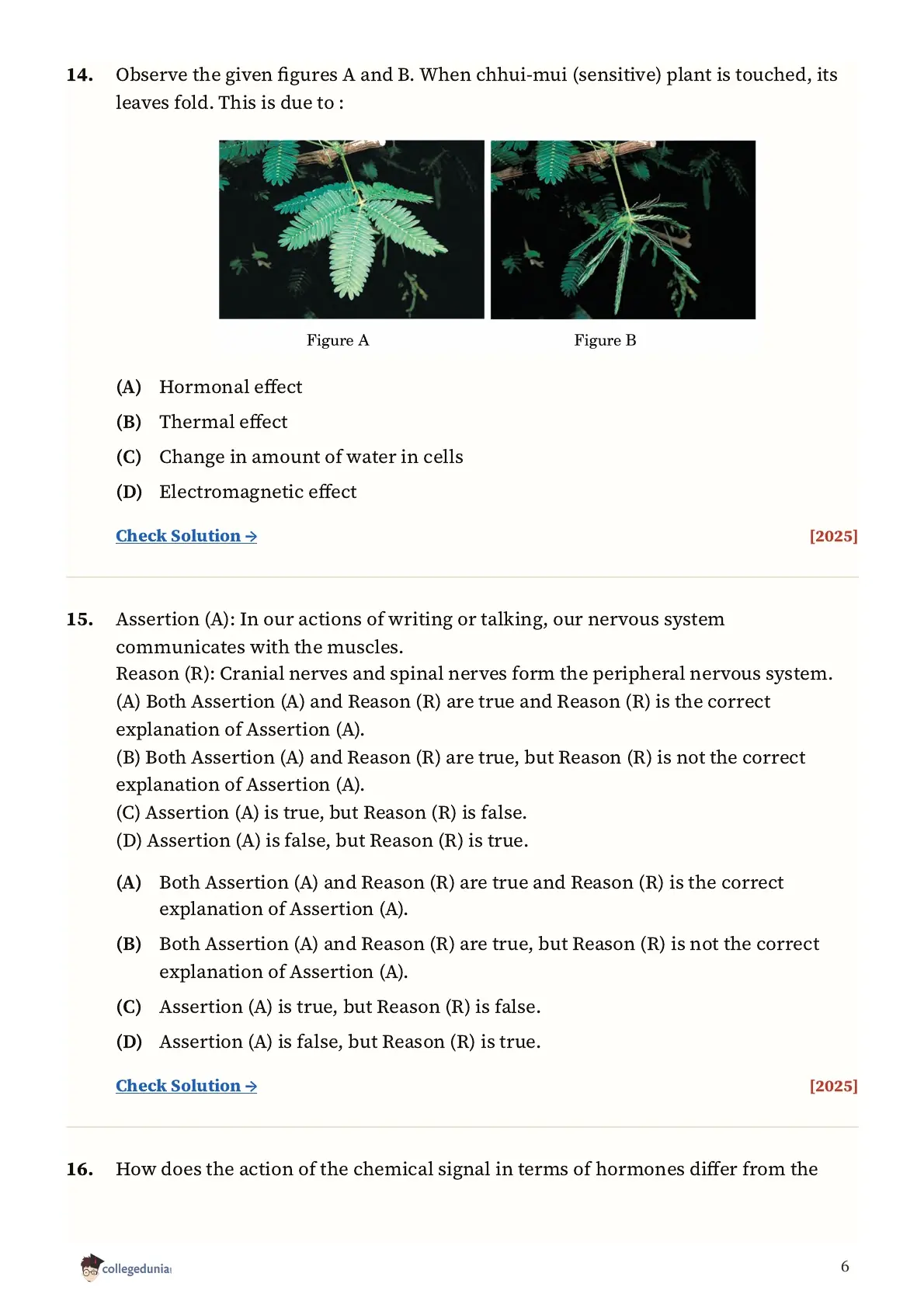
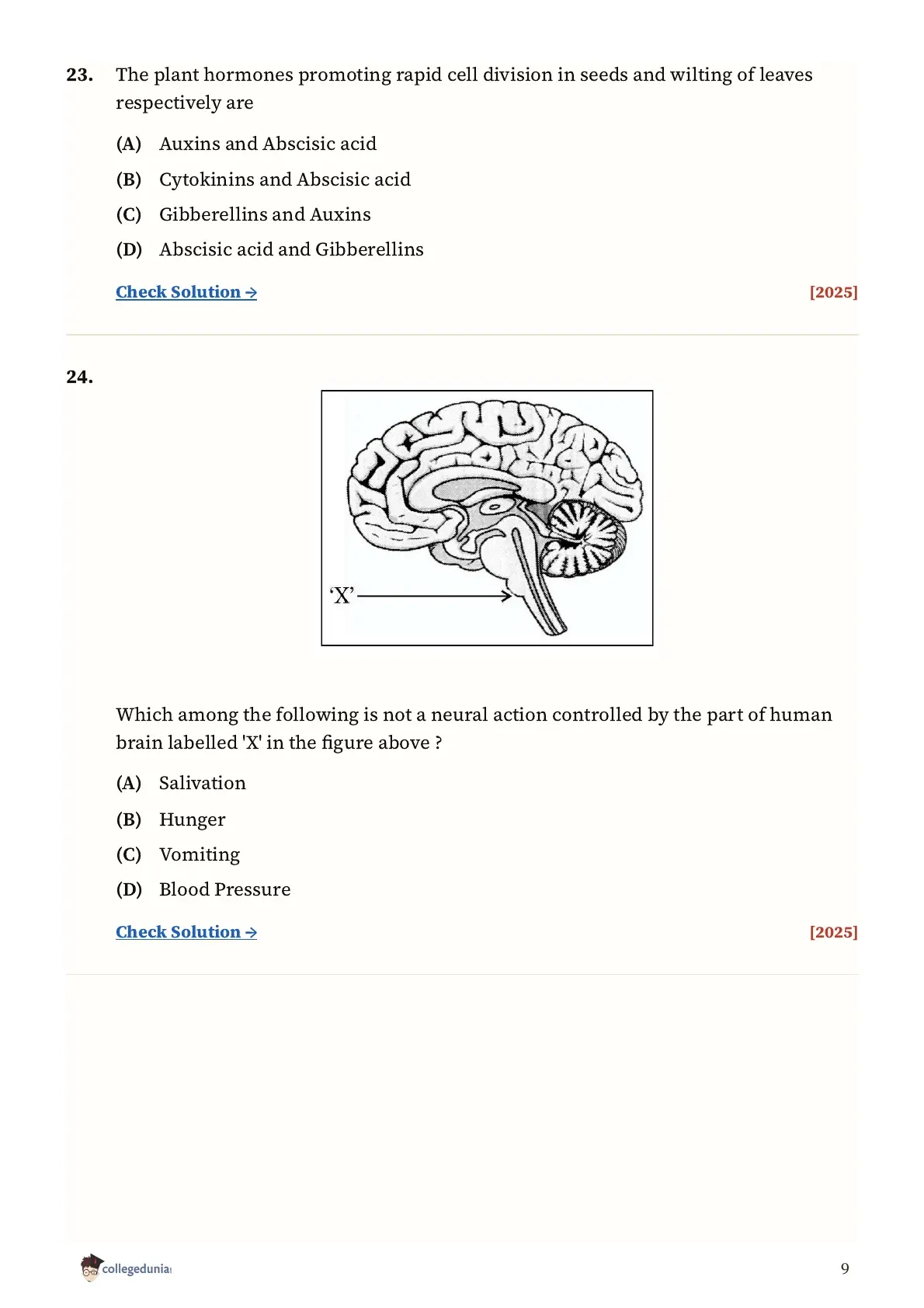
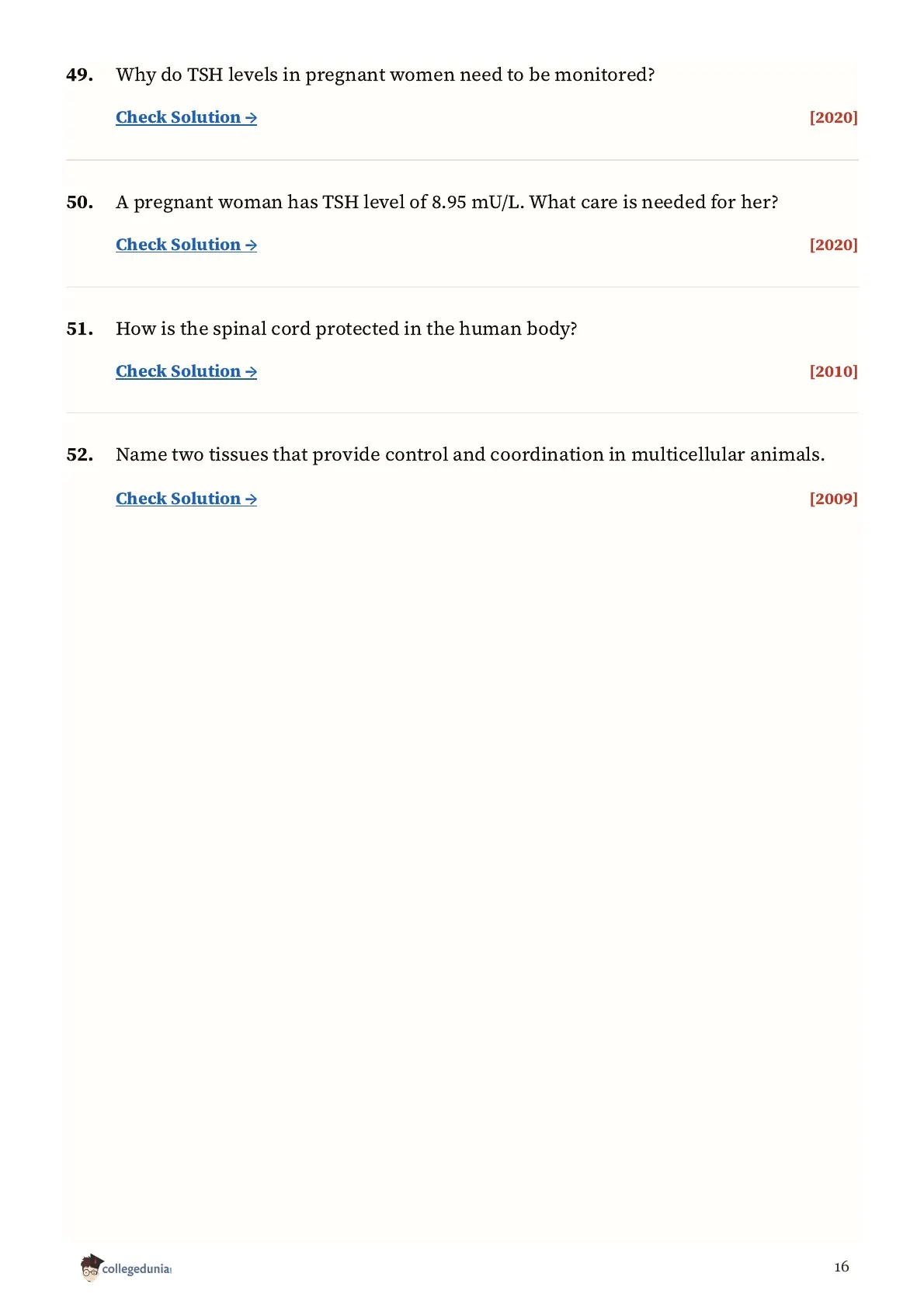
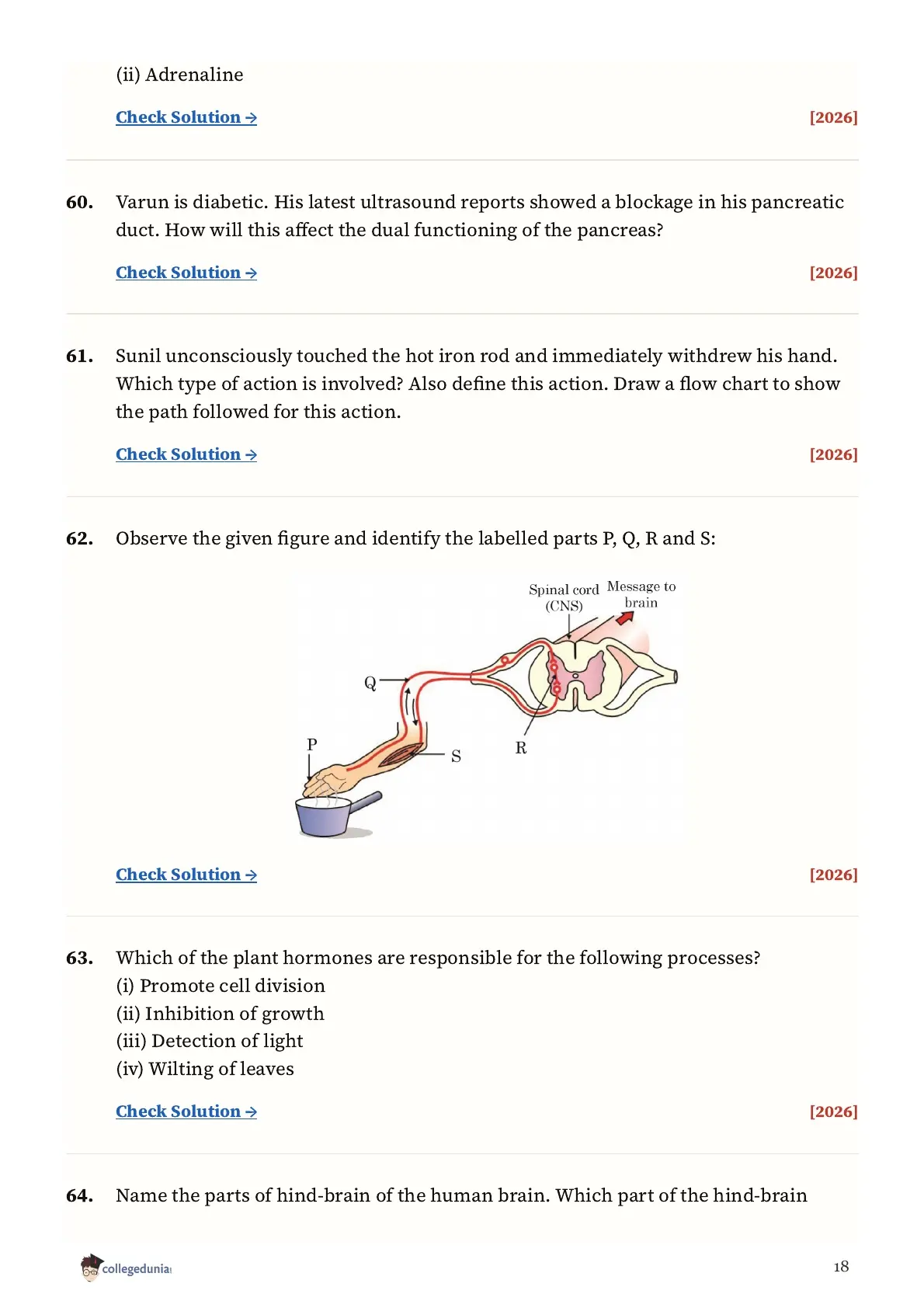
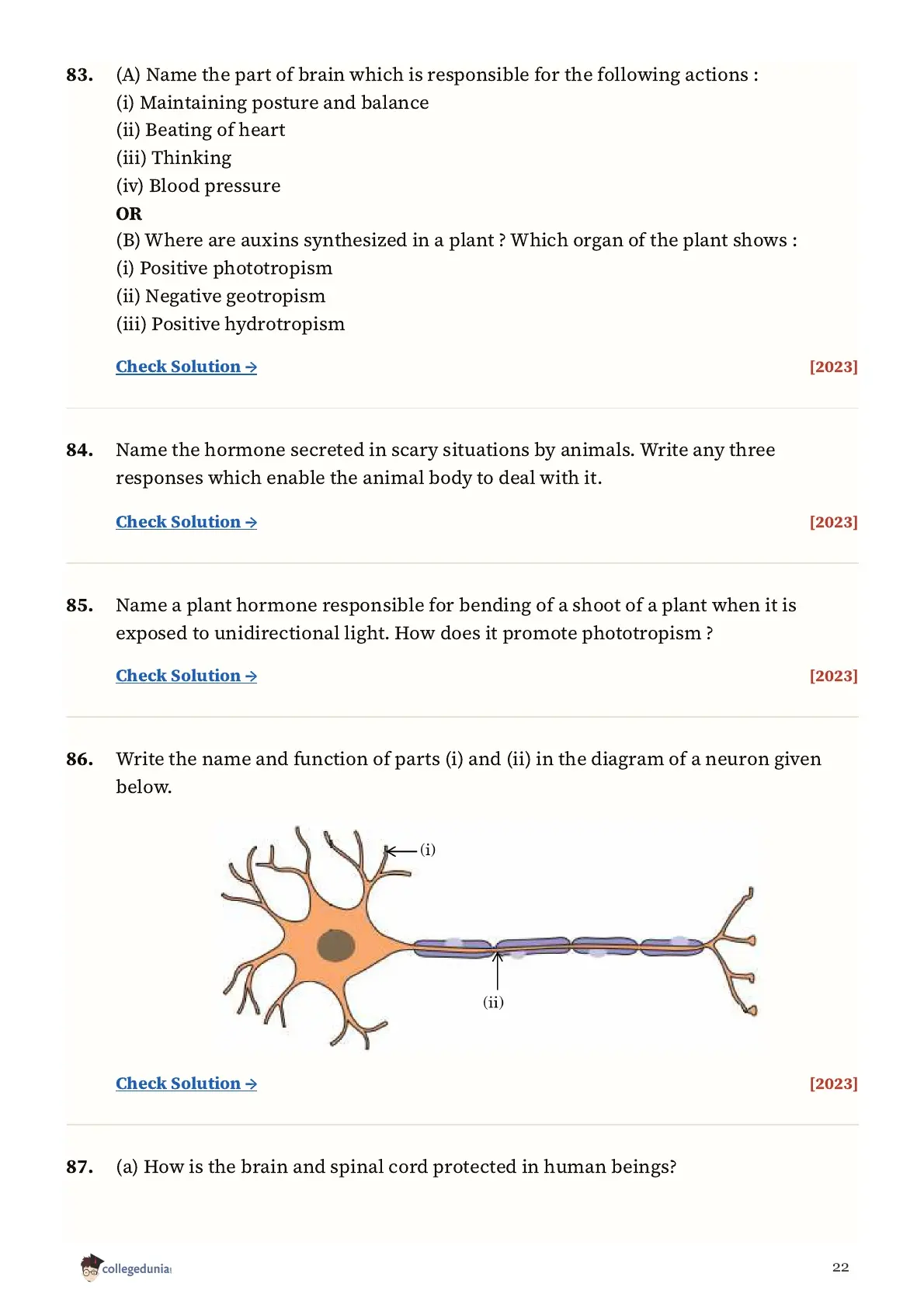
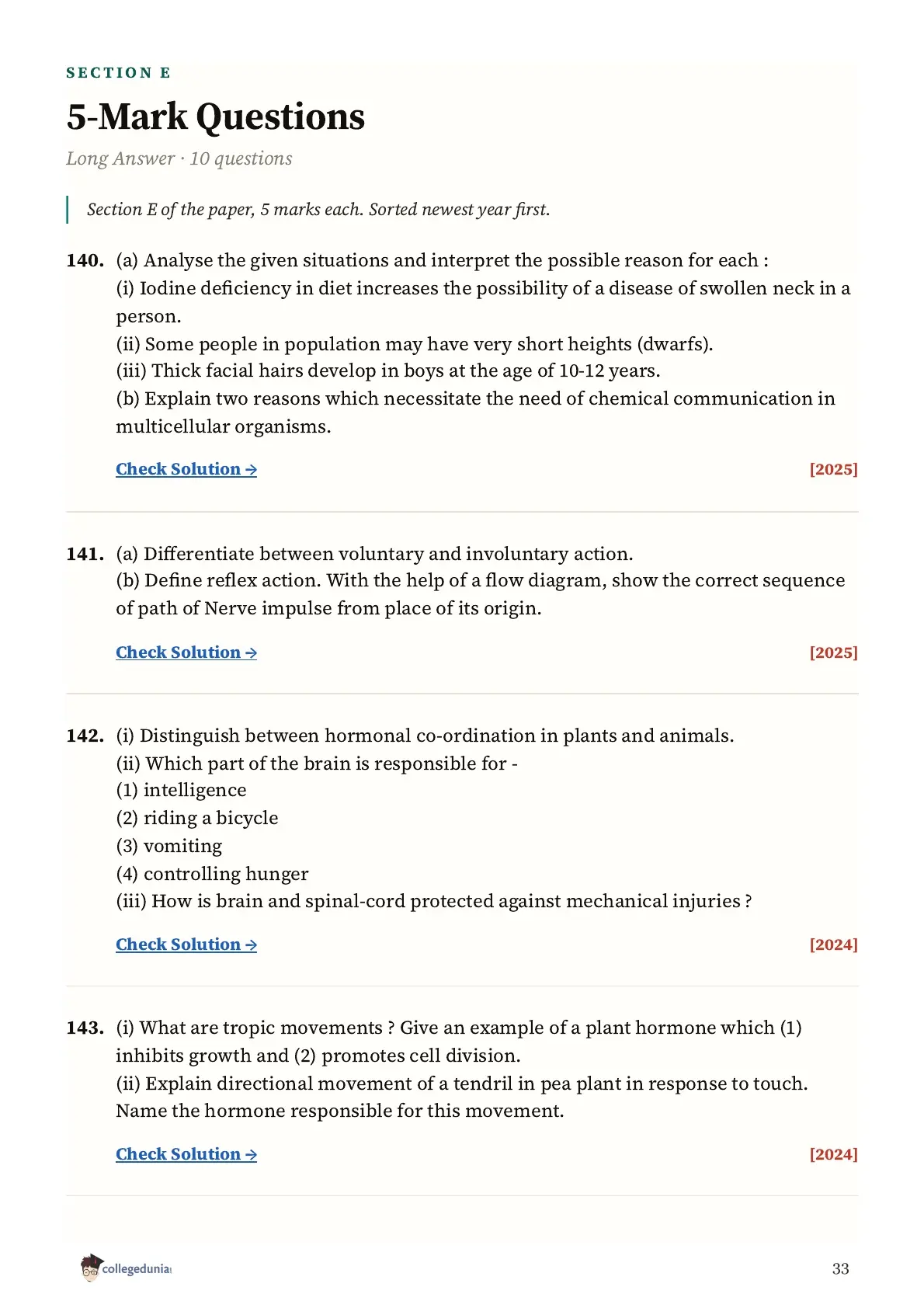
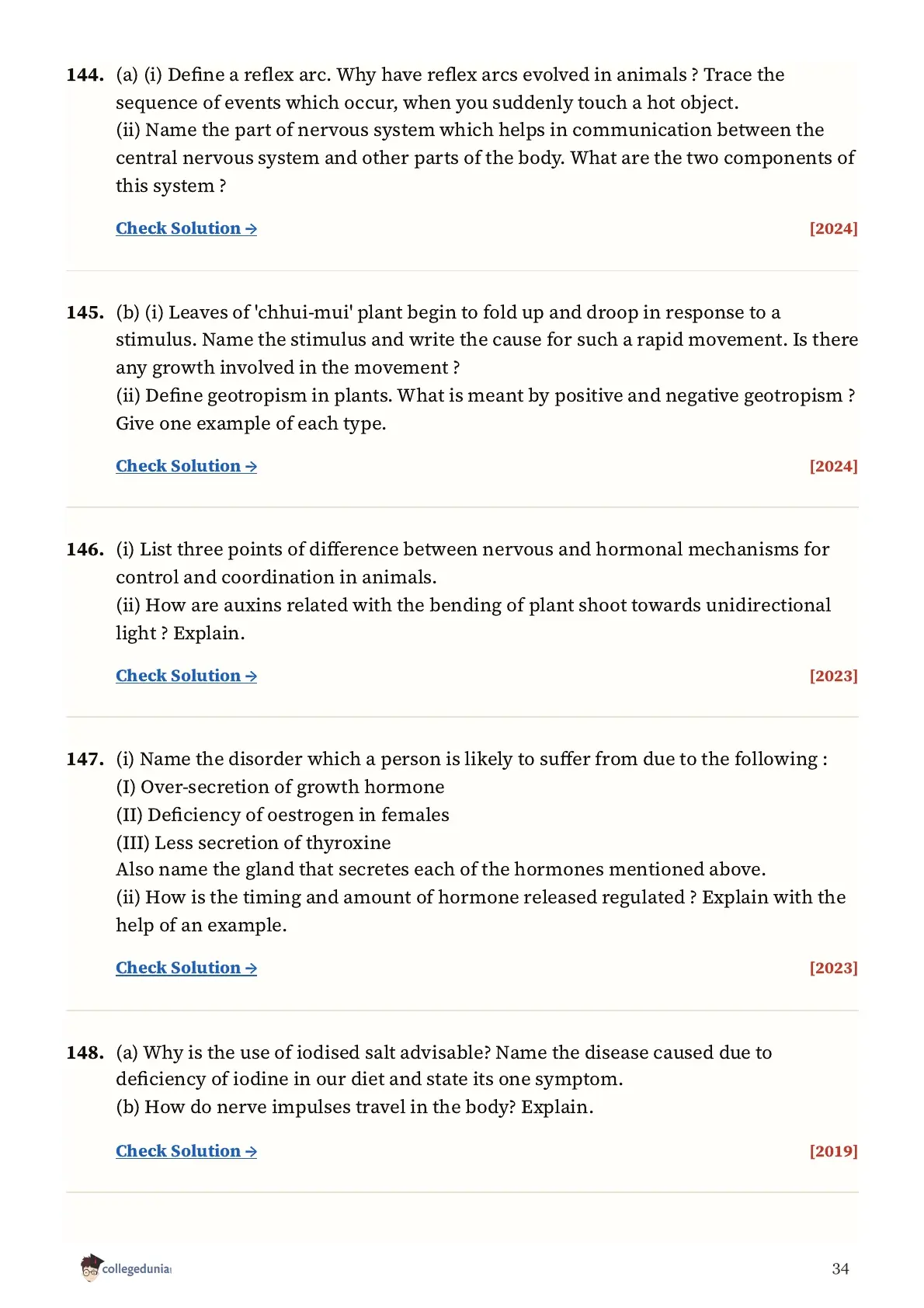
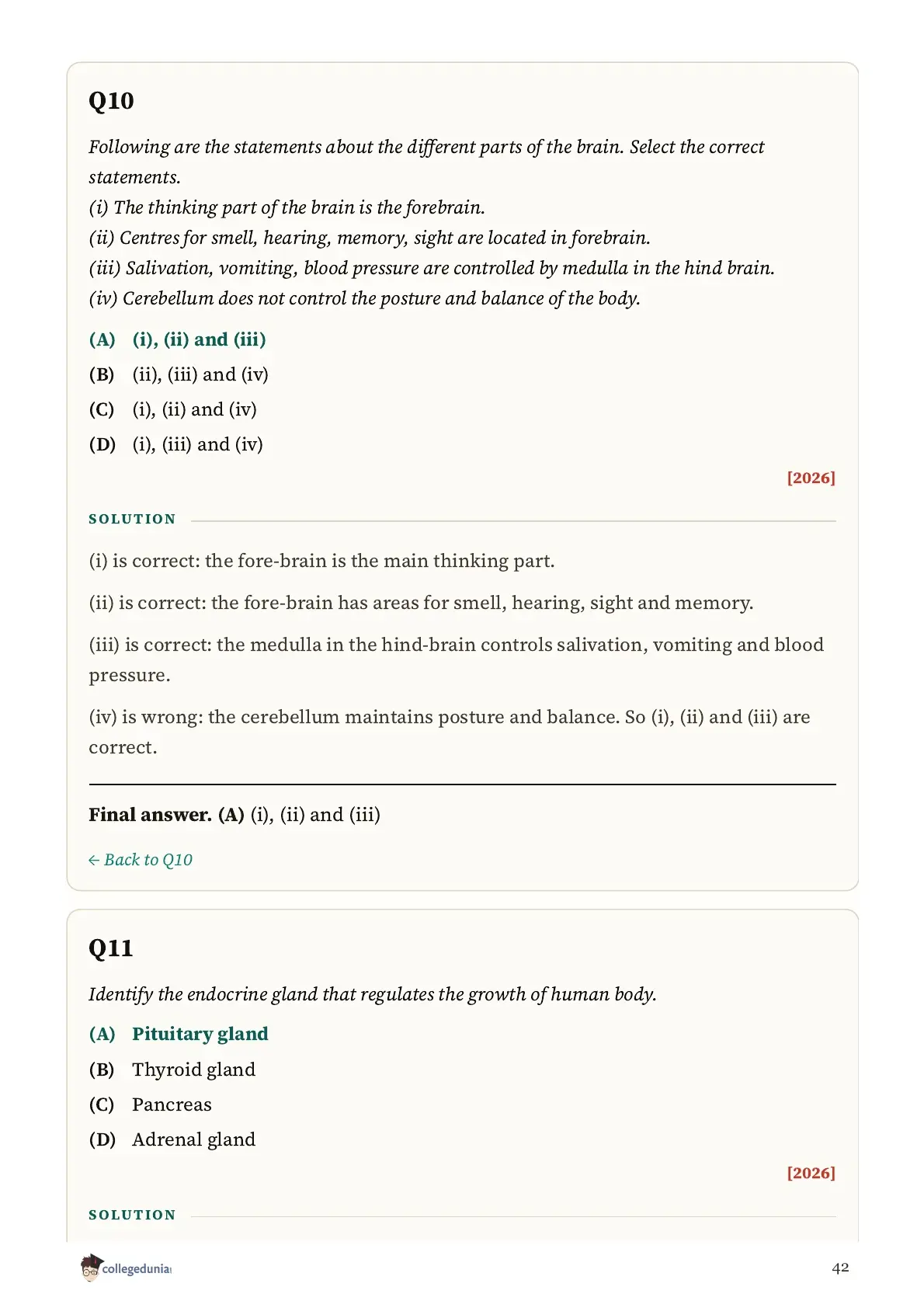
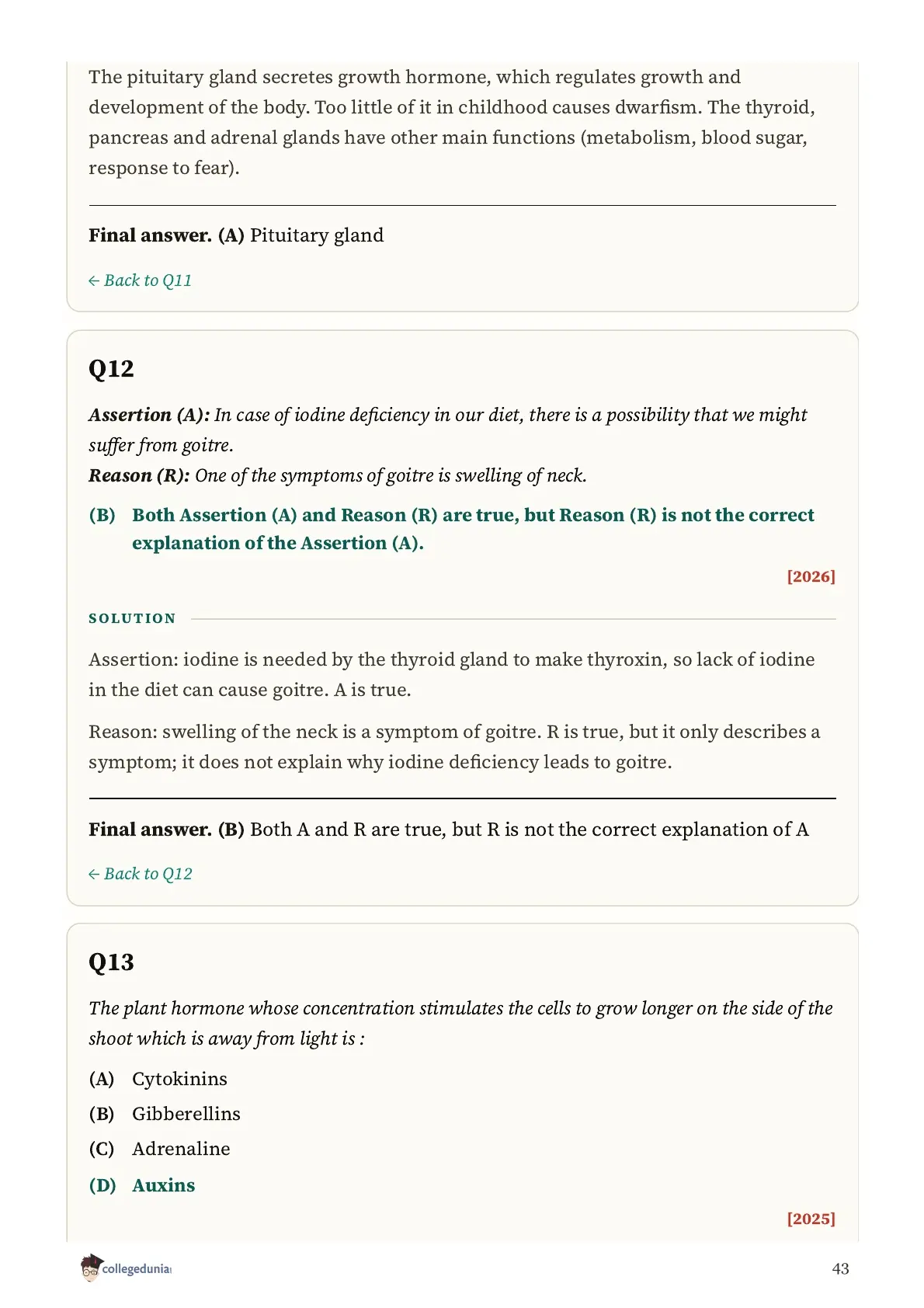
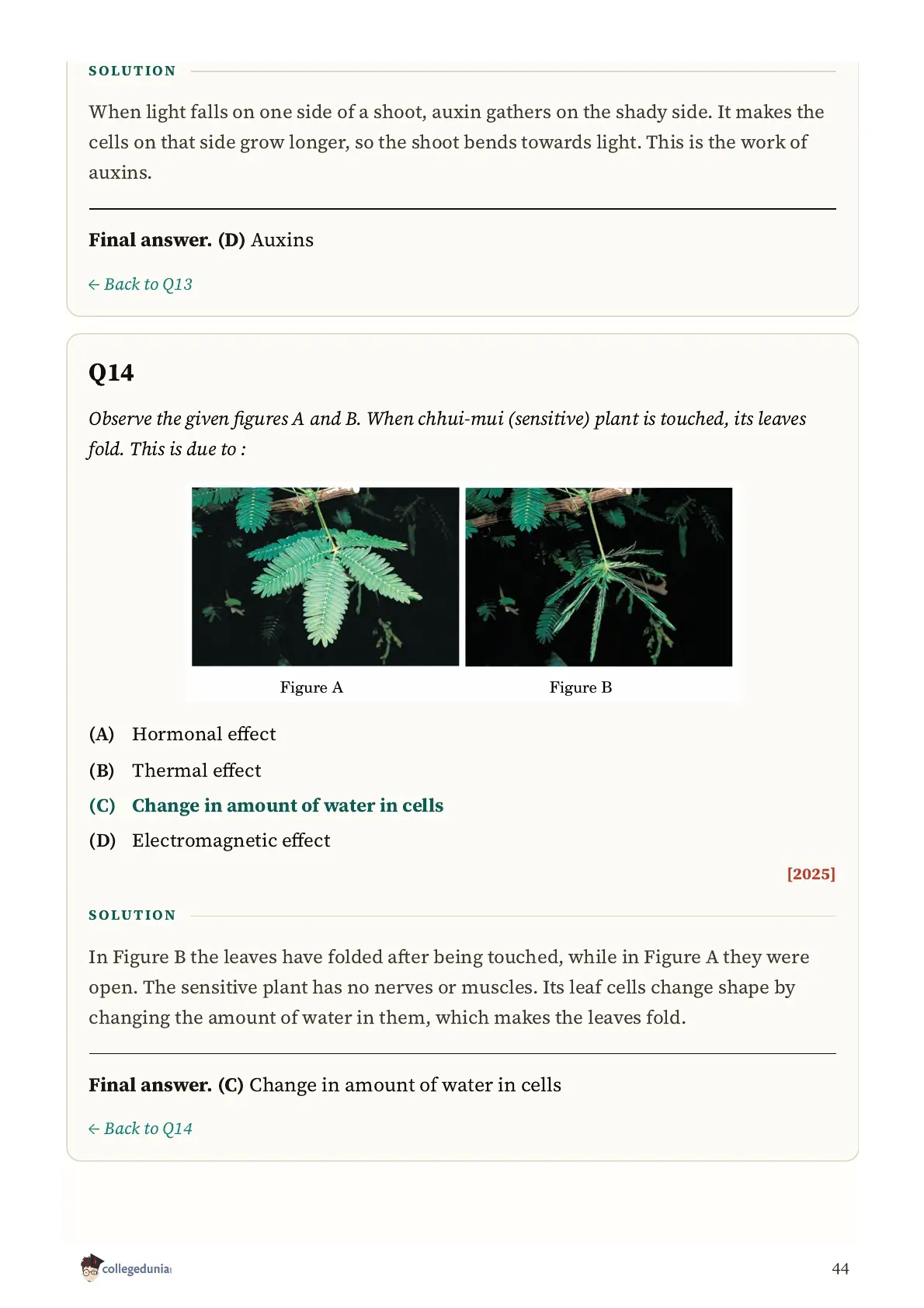
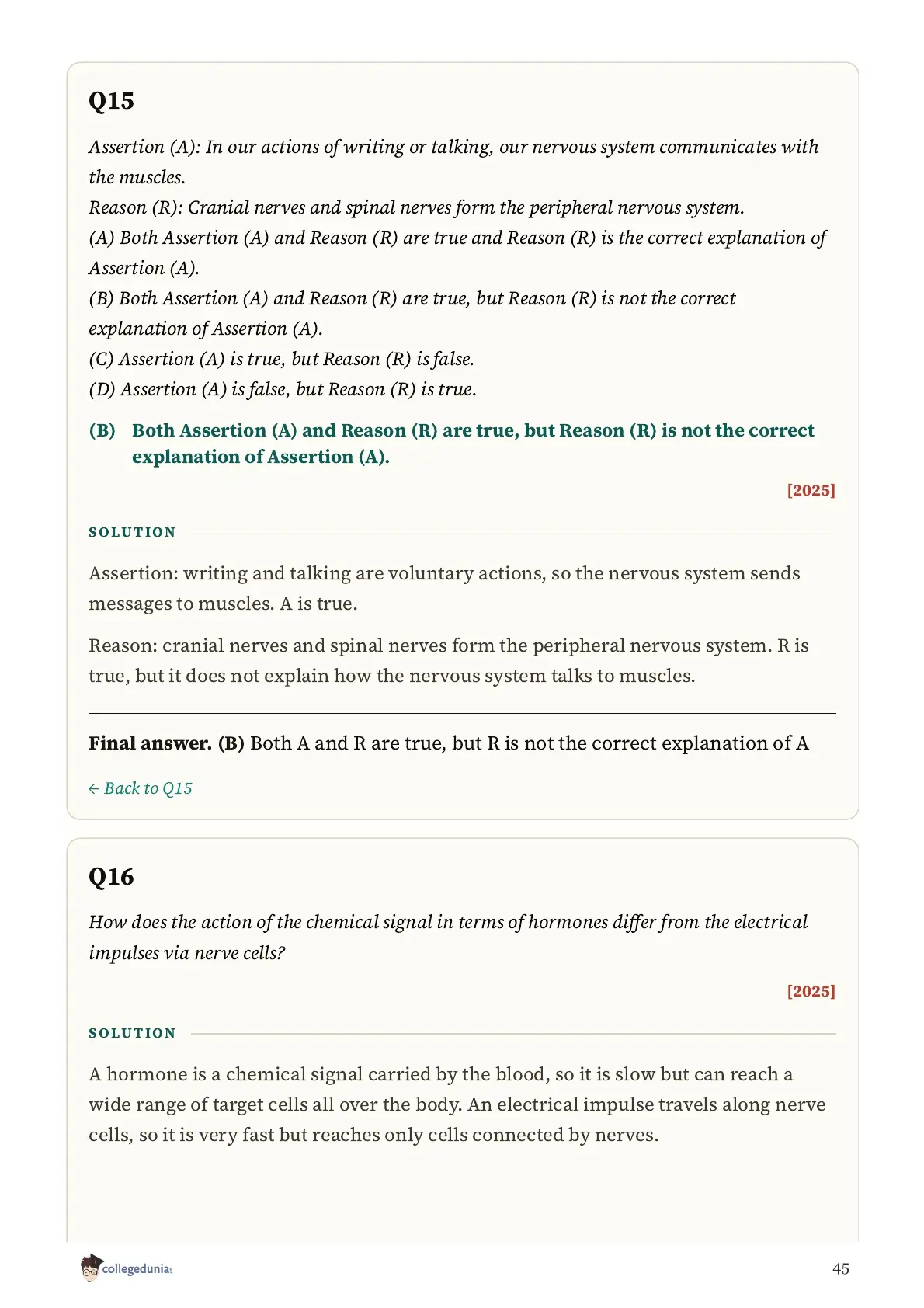
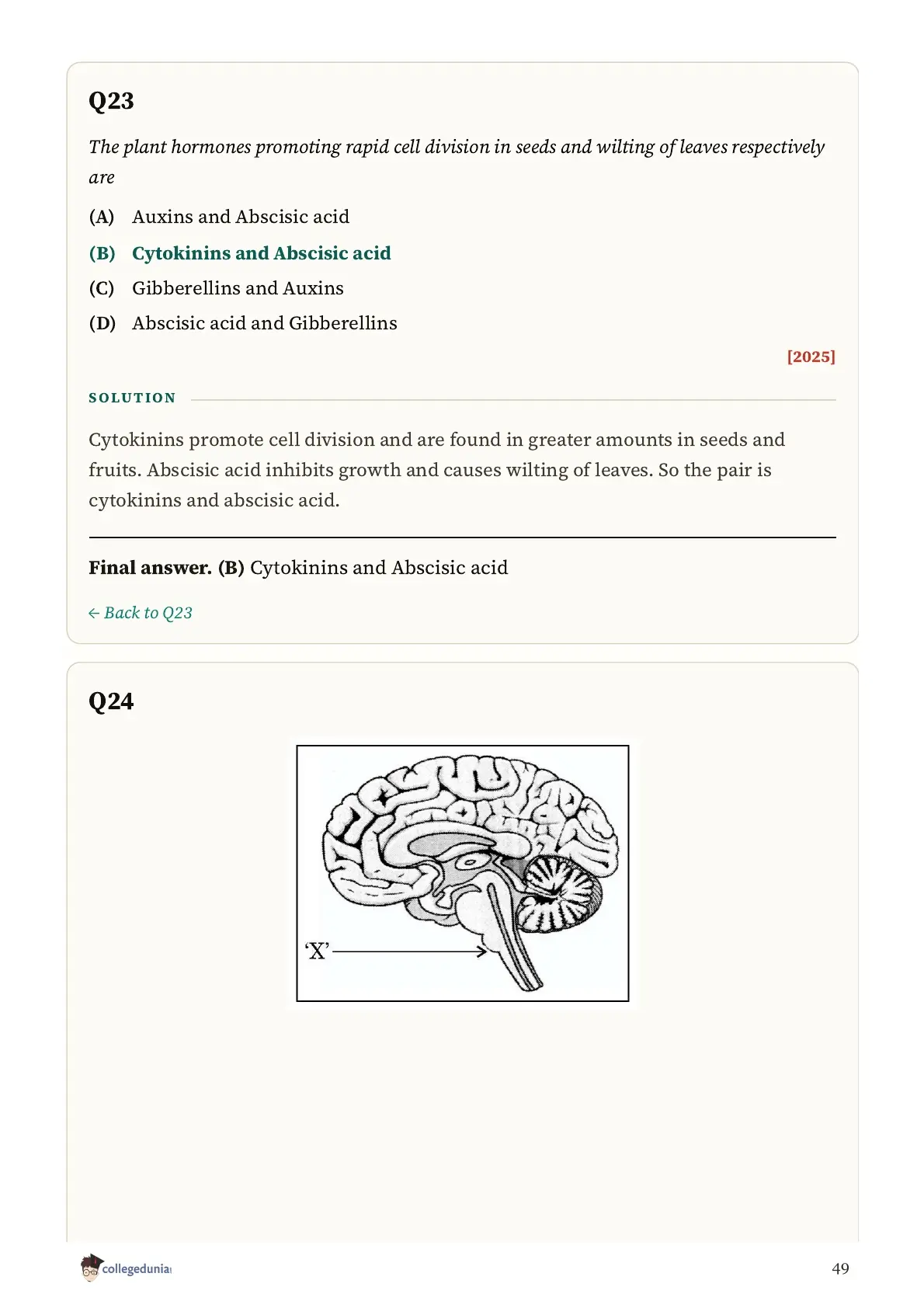
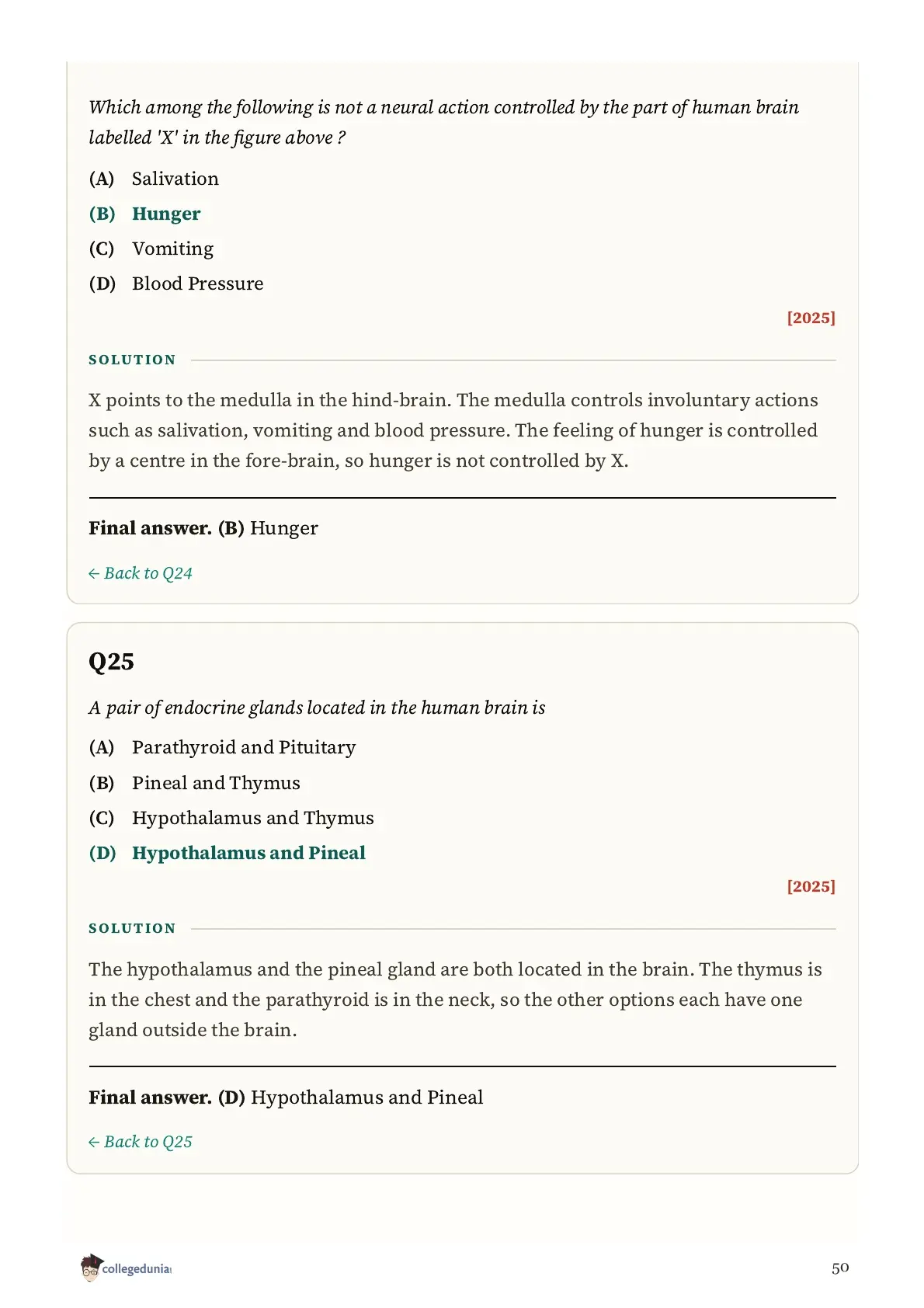
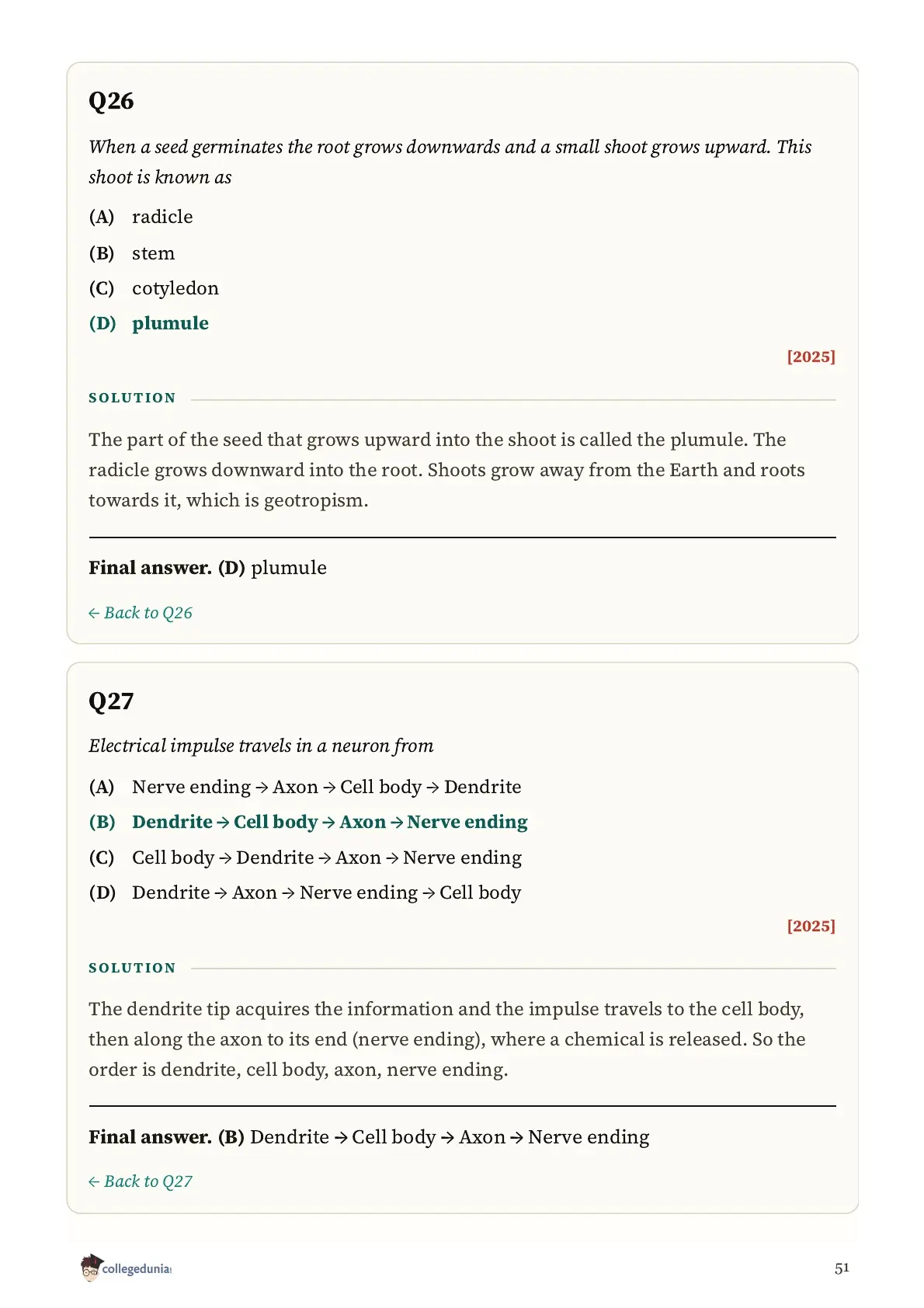
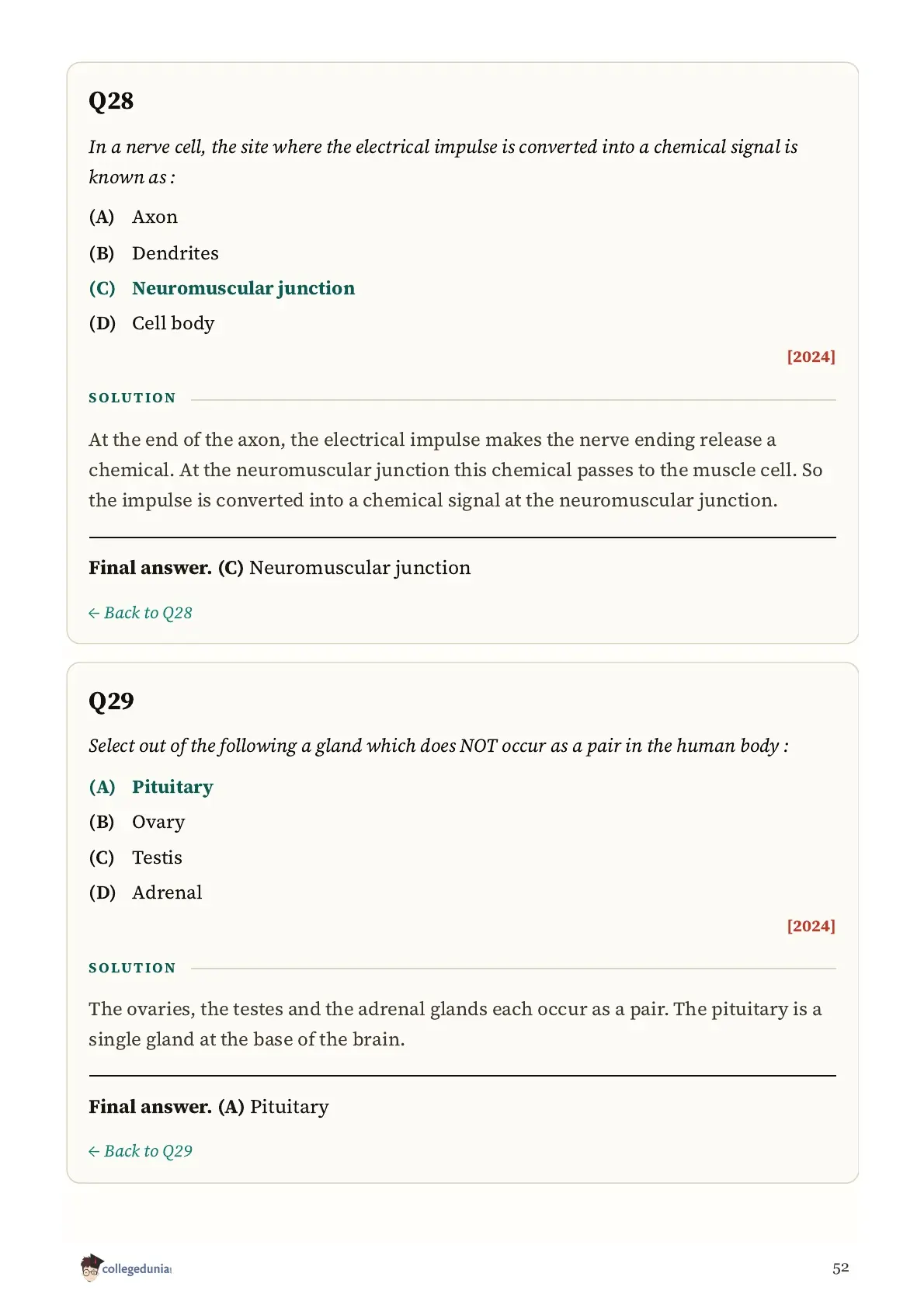
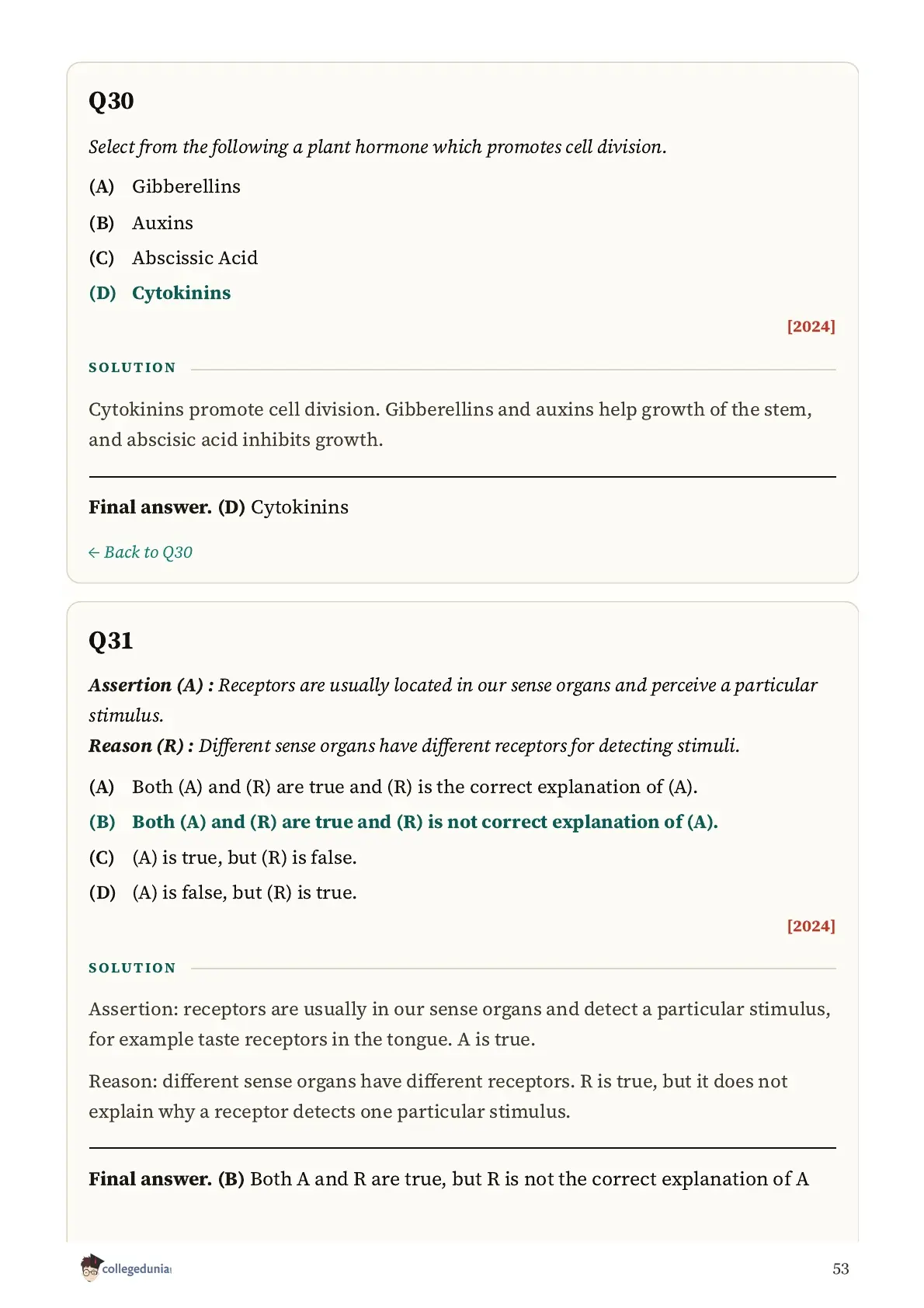
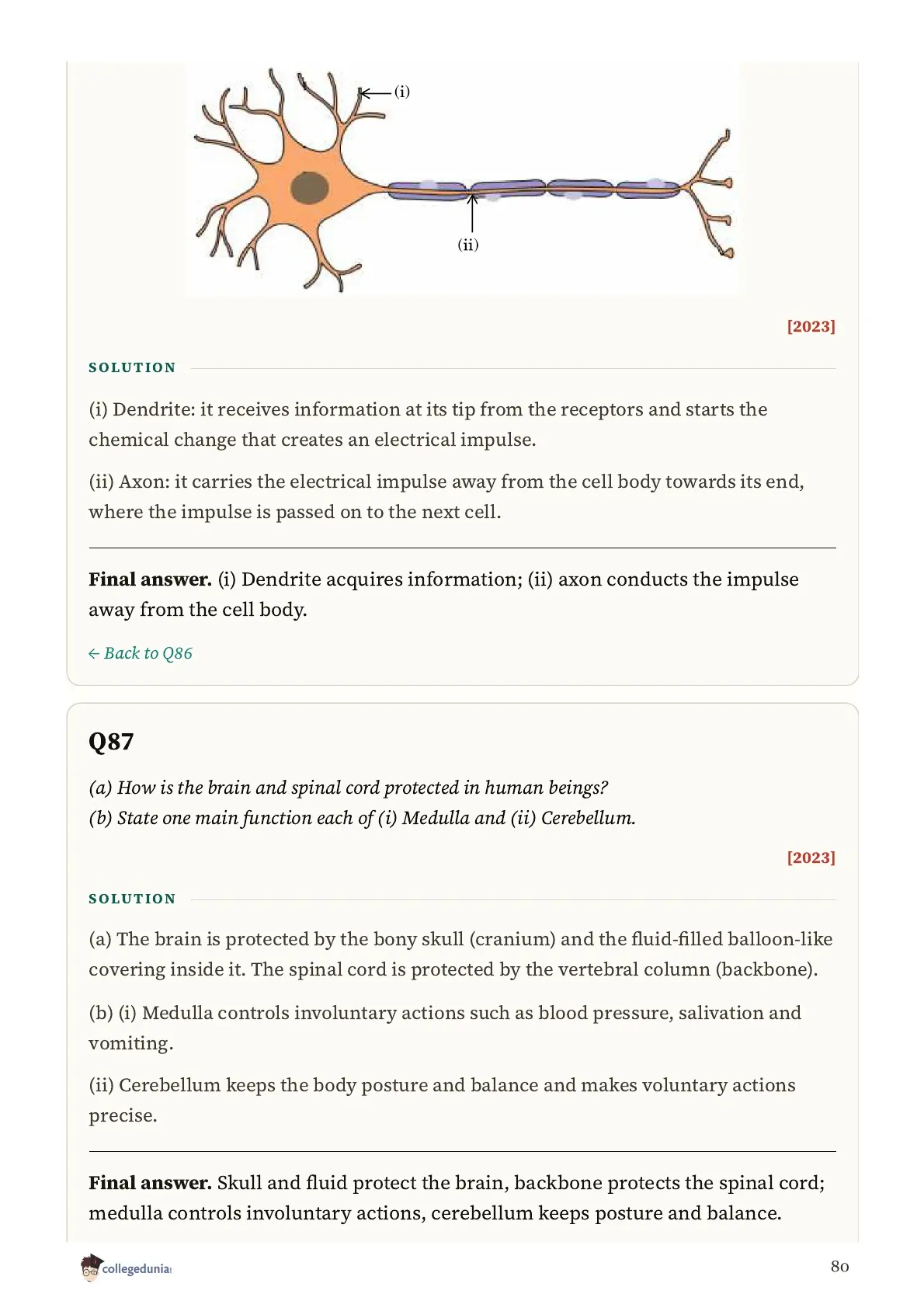
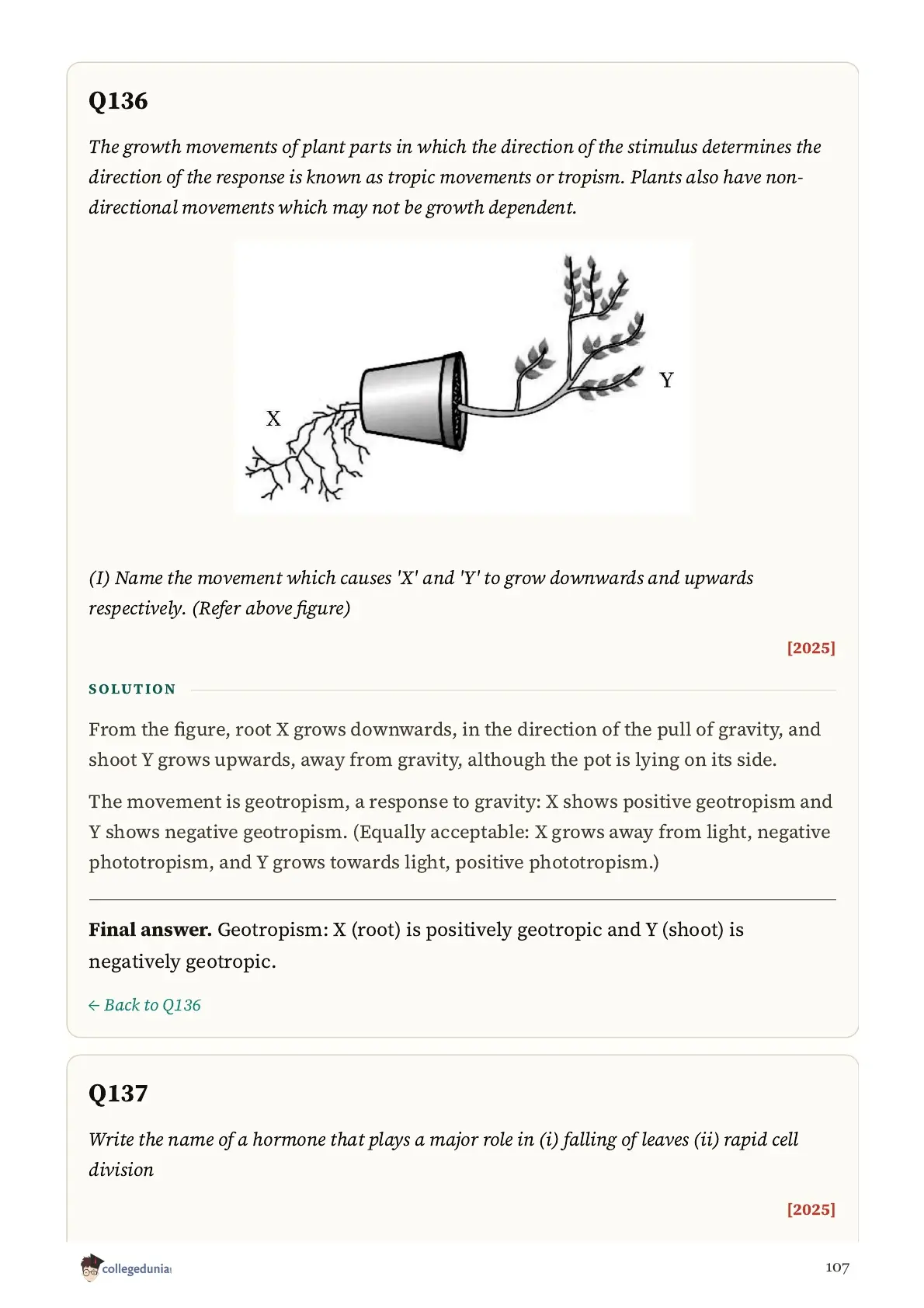
9 of the 149 questions are printed with the original figure, such as the labelled neuron, the reflex arc and the chhui-mui plant, spread across the 1-mark to 4-mark sections. The 5-mark questions are mostly written answers: a distinction between nervous and hormonal coordination, a reflex arc with a flow diagram, or the experiment that demonstrates hydrotropism (2019).
Counts come from keyword matches over the question text, so a question that names two things is counted under both.
Source: Dream To Rank - 10th
How to Approach the Set
Start with the 35 MCQs and assertion-reason items, then the 1-mark and 2-mark short answers, which need a name, a location or a one-line function. Next take the 33 three-mark questions and the 8 case-based items. Keep the 10 five-mark questions for last, since they ask for a full flow diagram, a comparison or an experiment. Learn the reflex path (receptor, sensory neuron, relay neuron in the spinal cord, motor neuron, effector) and a table of each gland with its hormone and function until you can write both from memory. Practise the 2026 and 2025 papers closely, as they hold 63 of the 149 questions.
Common Mistakes in Control and Coordination Questions
- Naming insulin or thyroxine for the hormone released in a scary situation. The answer is adrenaline, from the adrenal glands.
- Writing that auxin makes a shoot bend towards light because the cells on the lit side grow longer. It is the shaded side that grows longer.
- Calling the movement of the chhui-mui plant a growth movement. It is a nastic response caused by a change in water in the cells, with no growth involved.
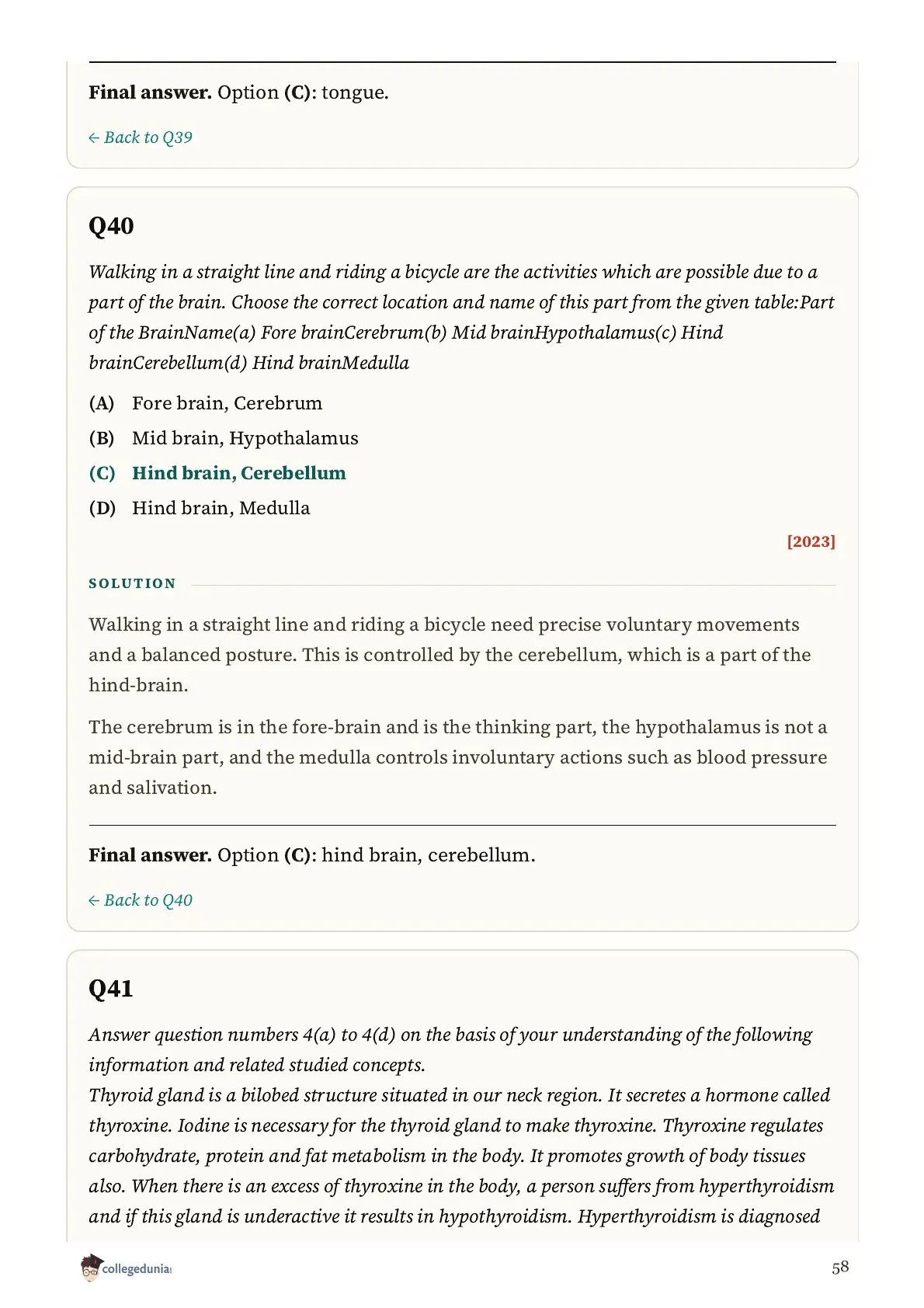
- Placing blood pressure and salivation under the cerebellum. Those are controlled by the medulla in the hind-brain, while the cerebellum looks after posture and balance.
- Drawing the reflex arc with the signal passing through the brain. In a reflex such as touching a hot object the pathway runs through the spinal cord.
- Saying that iodine deficiency causes diabetes. Lack of iodine stops the thyroid from making thyroxine and leads to goitre.
Using the Answer Key and Solutions
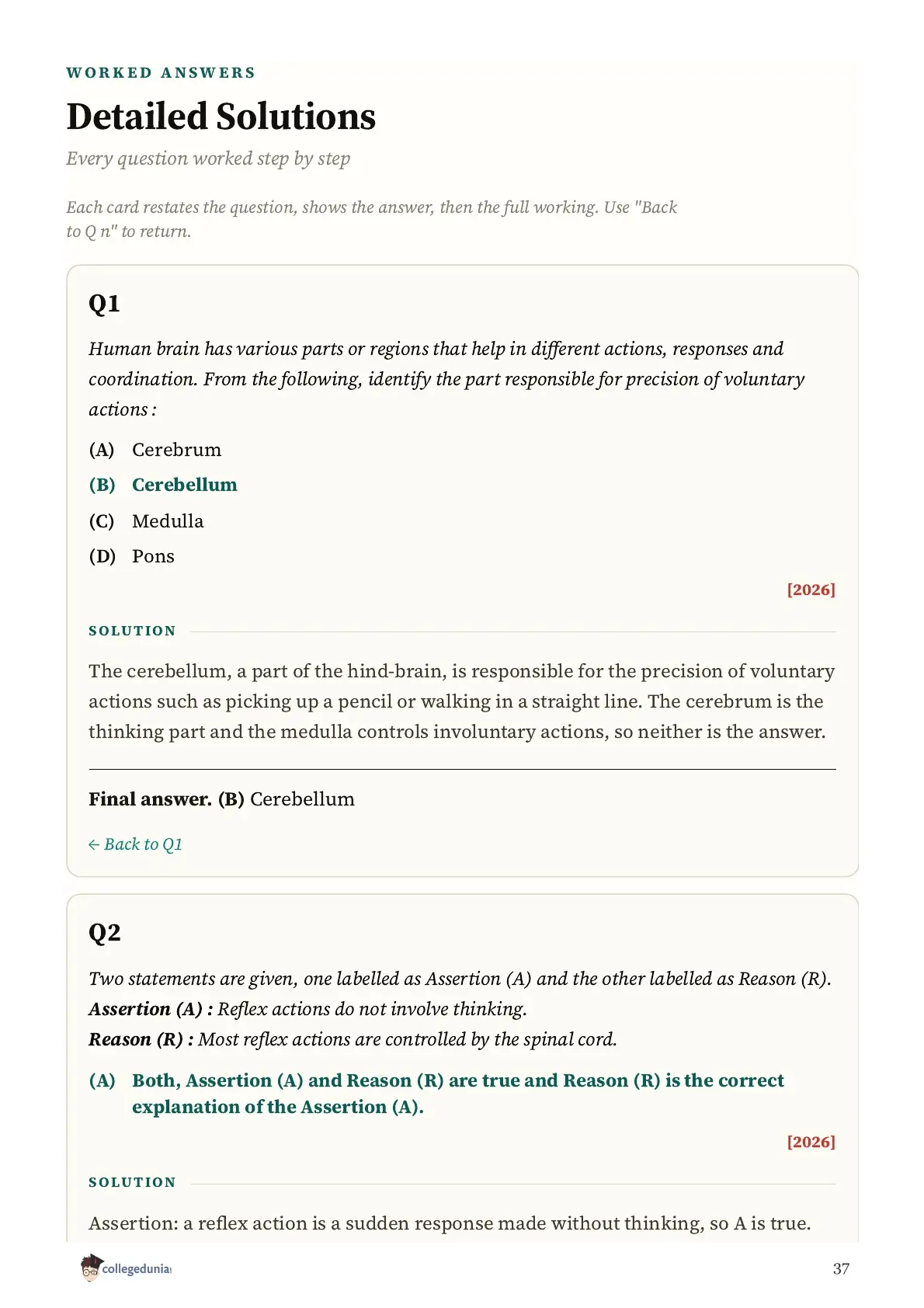
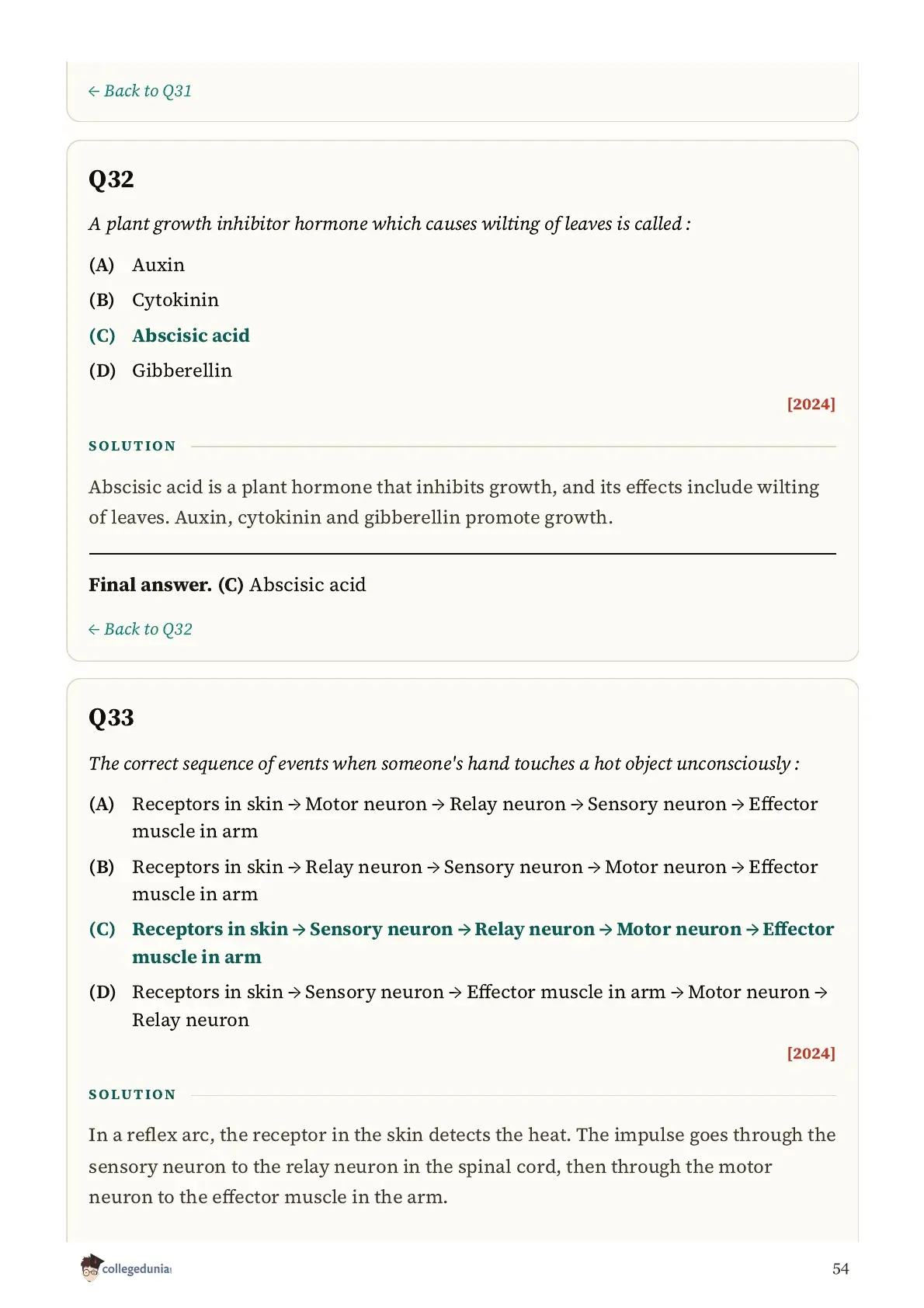
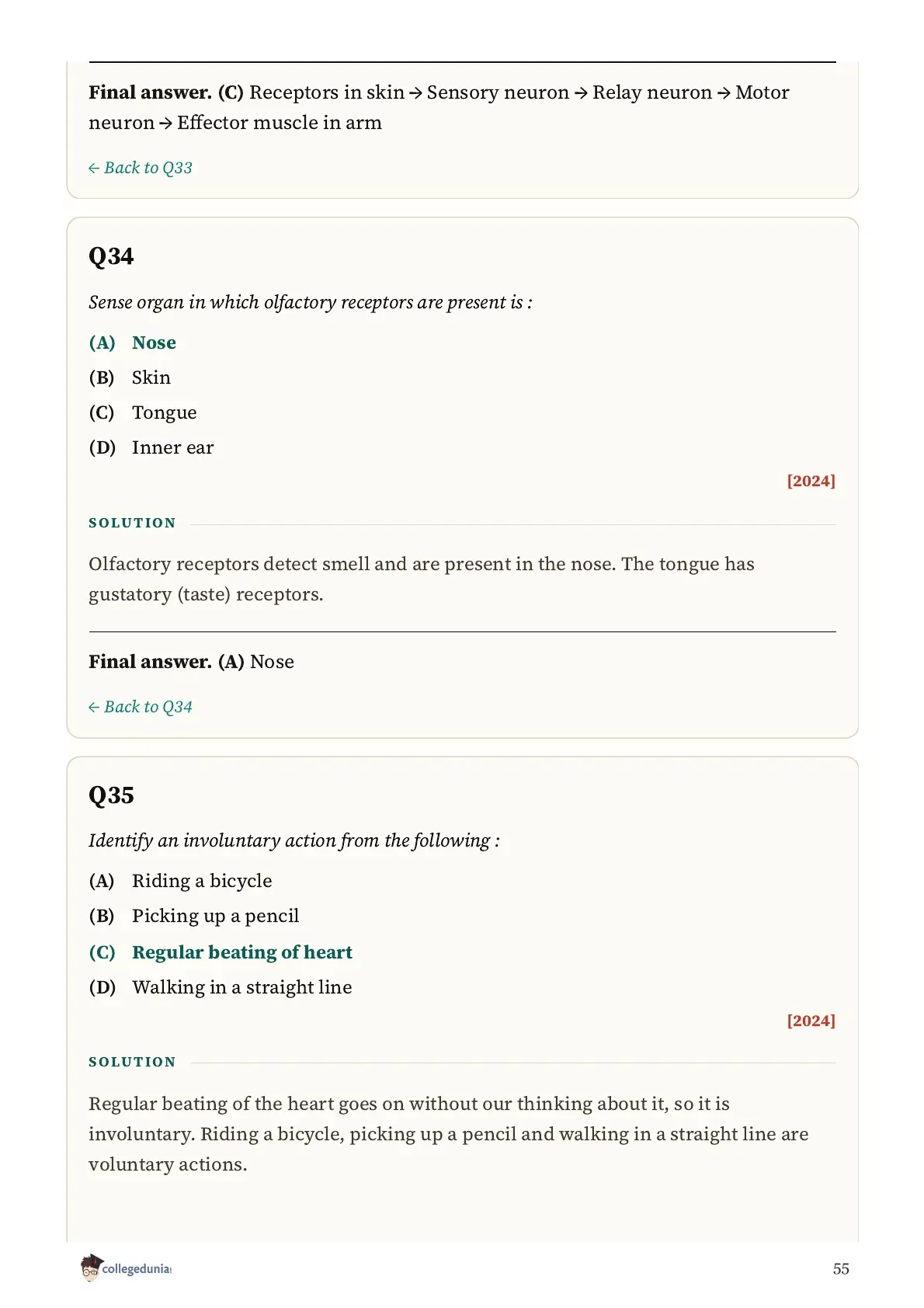
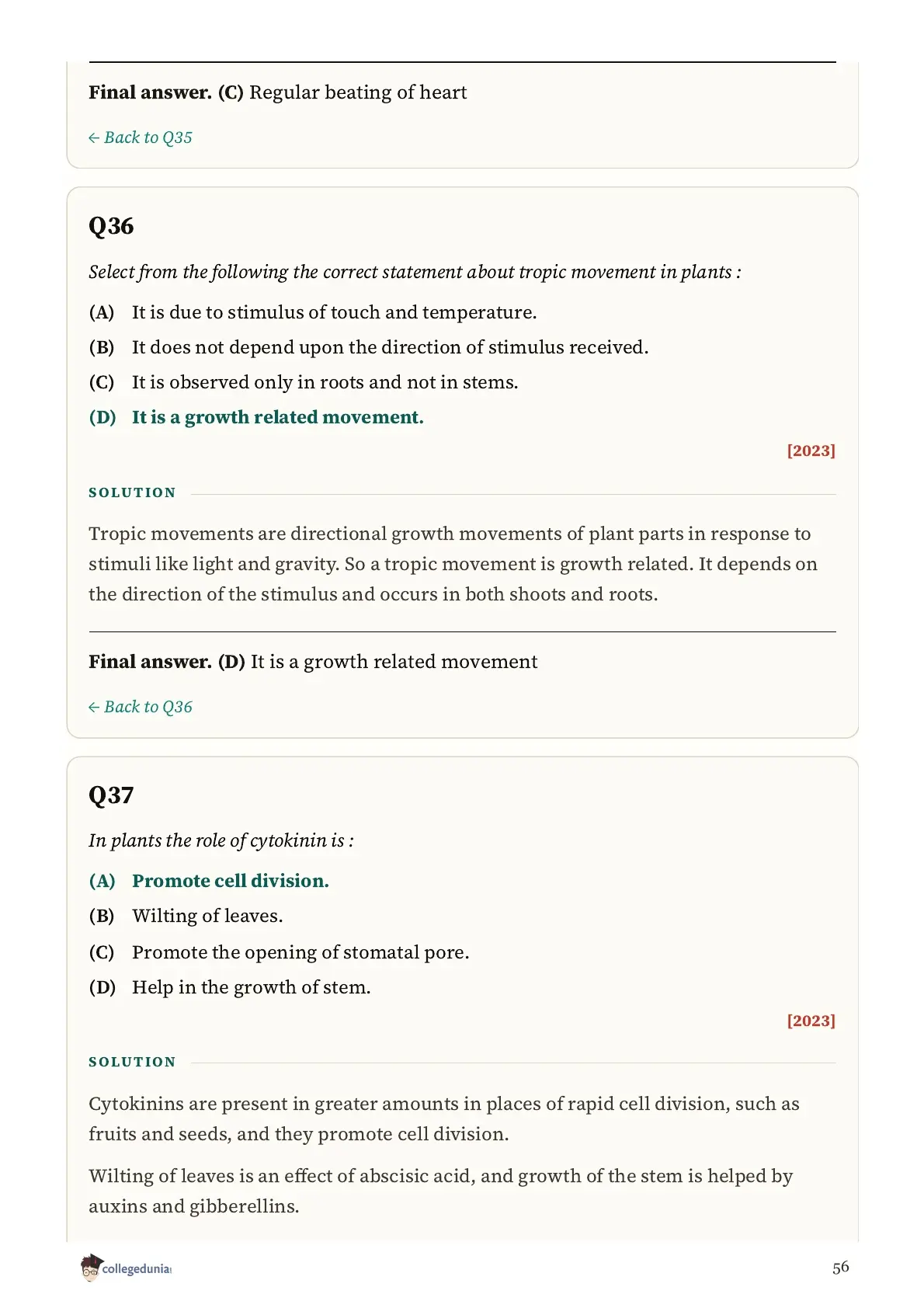
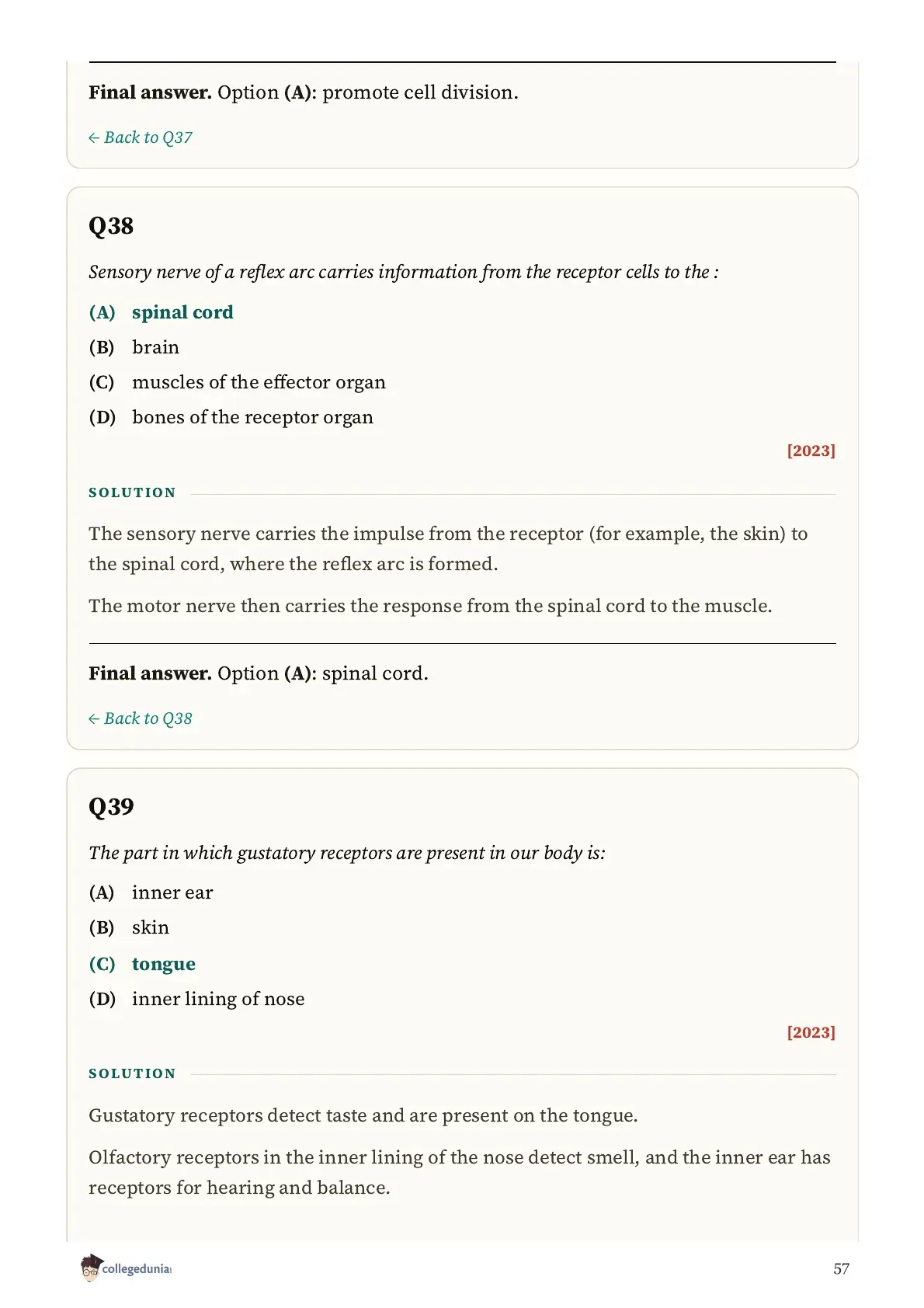
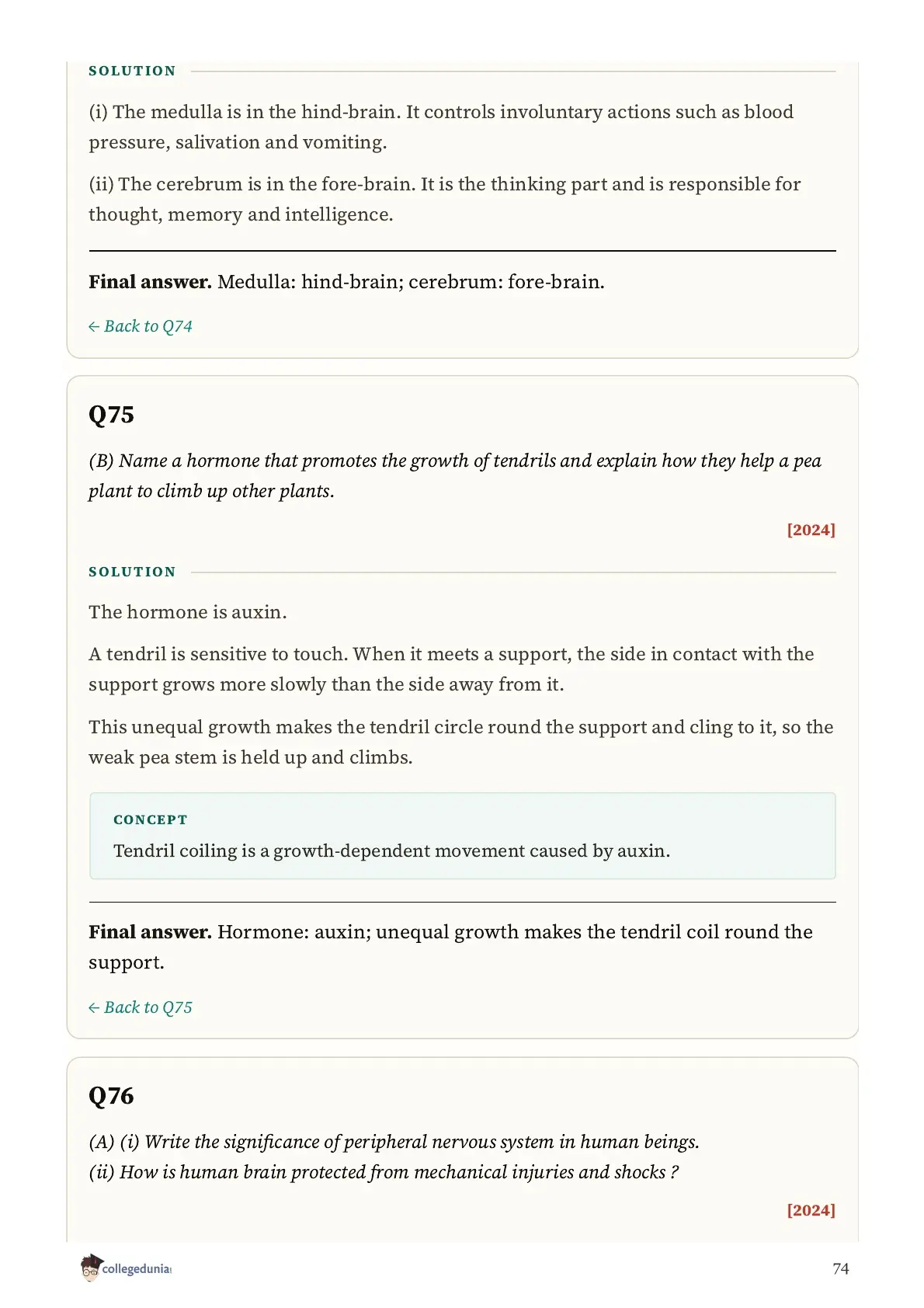
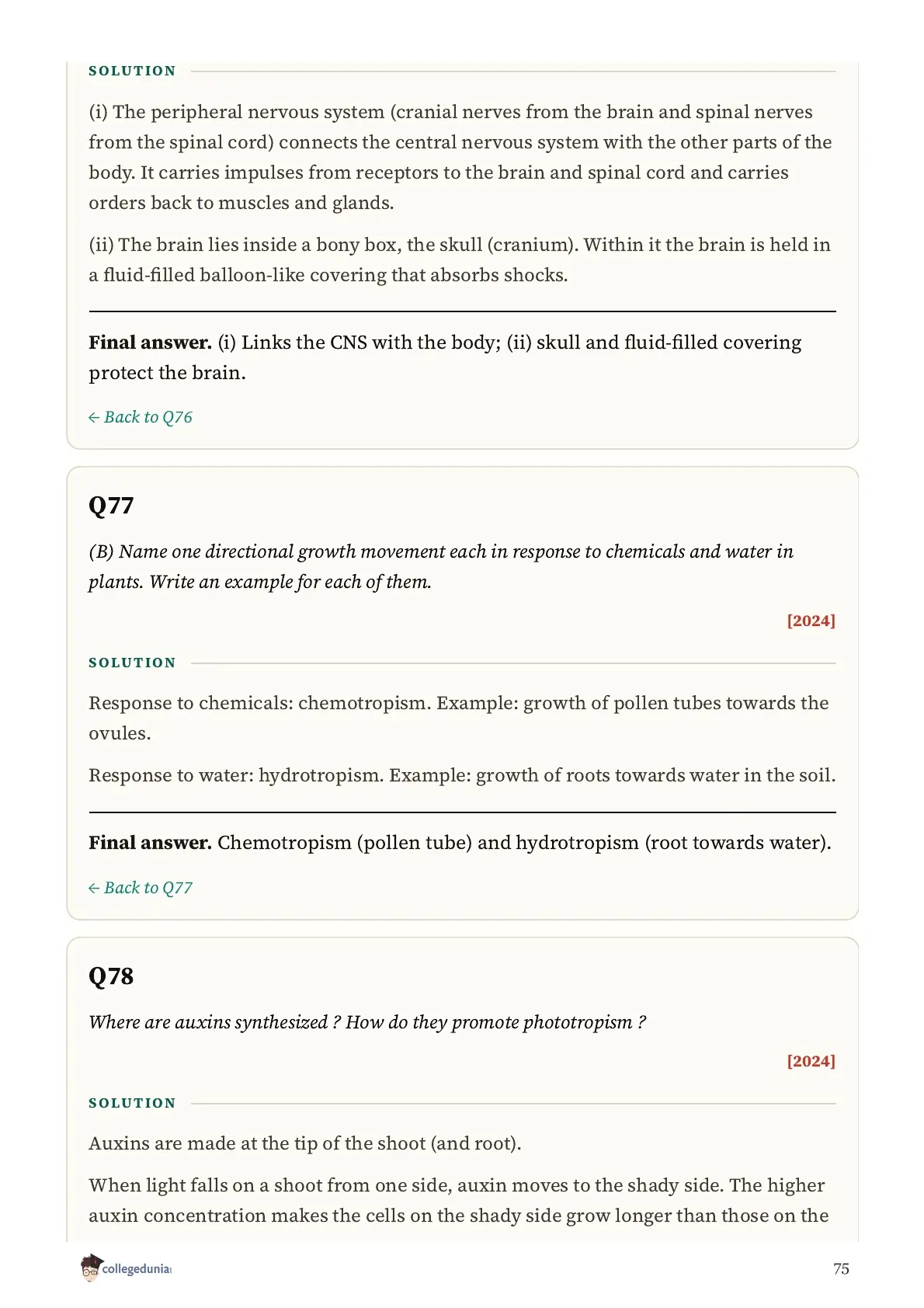
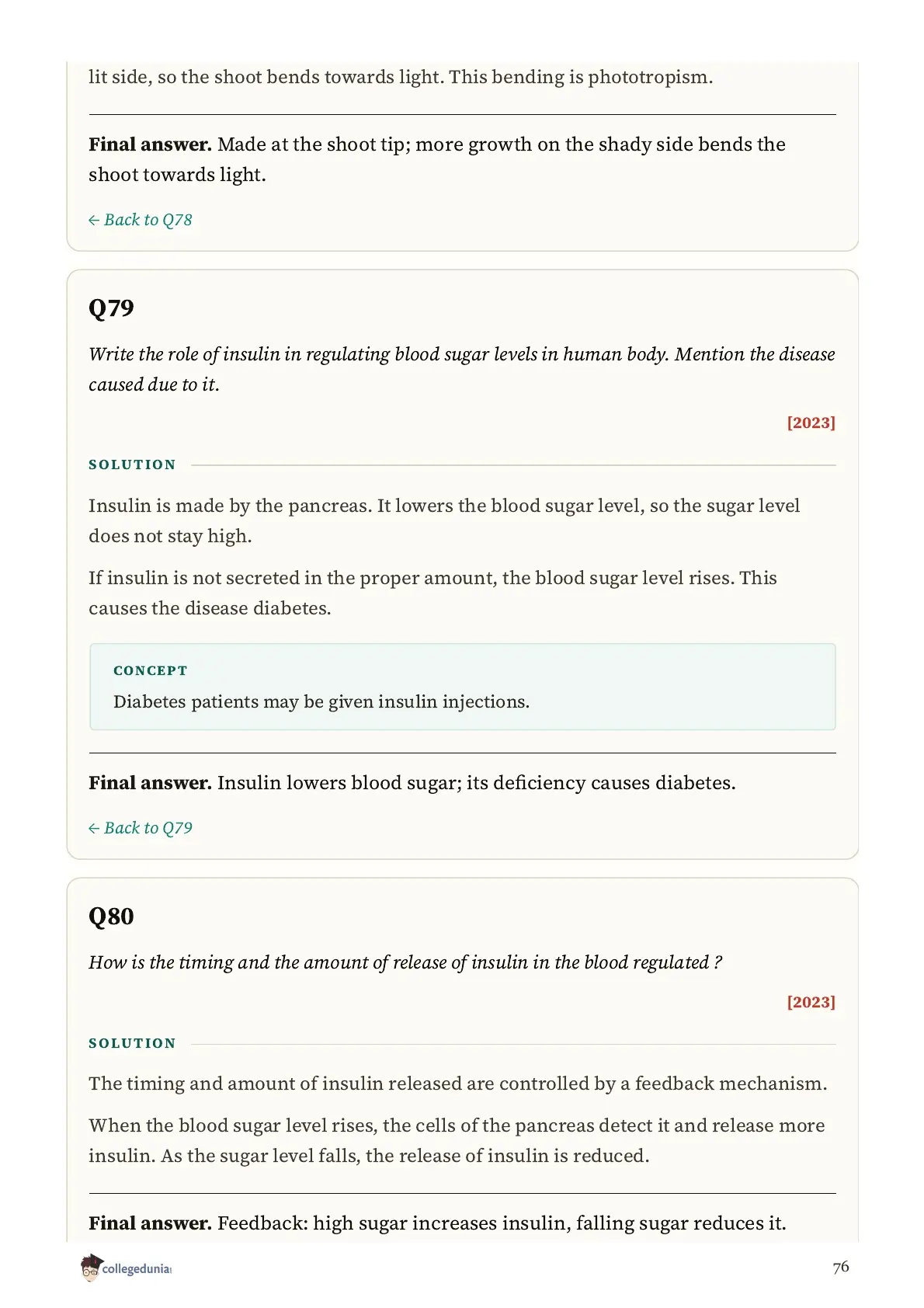
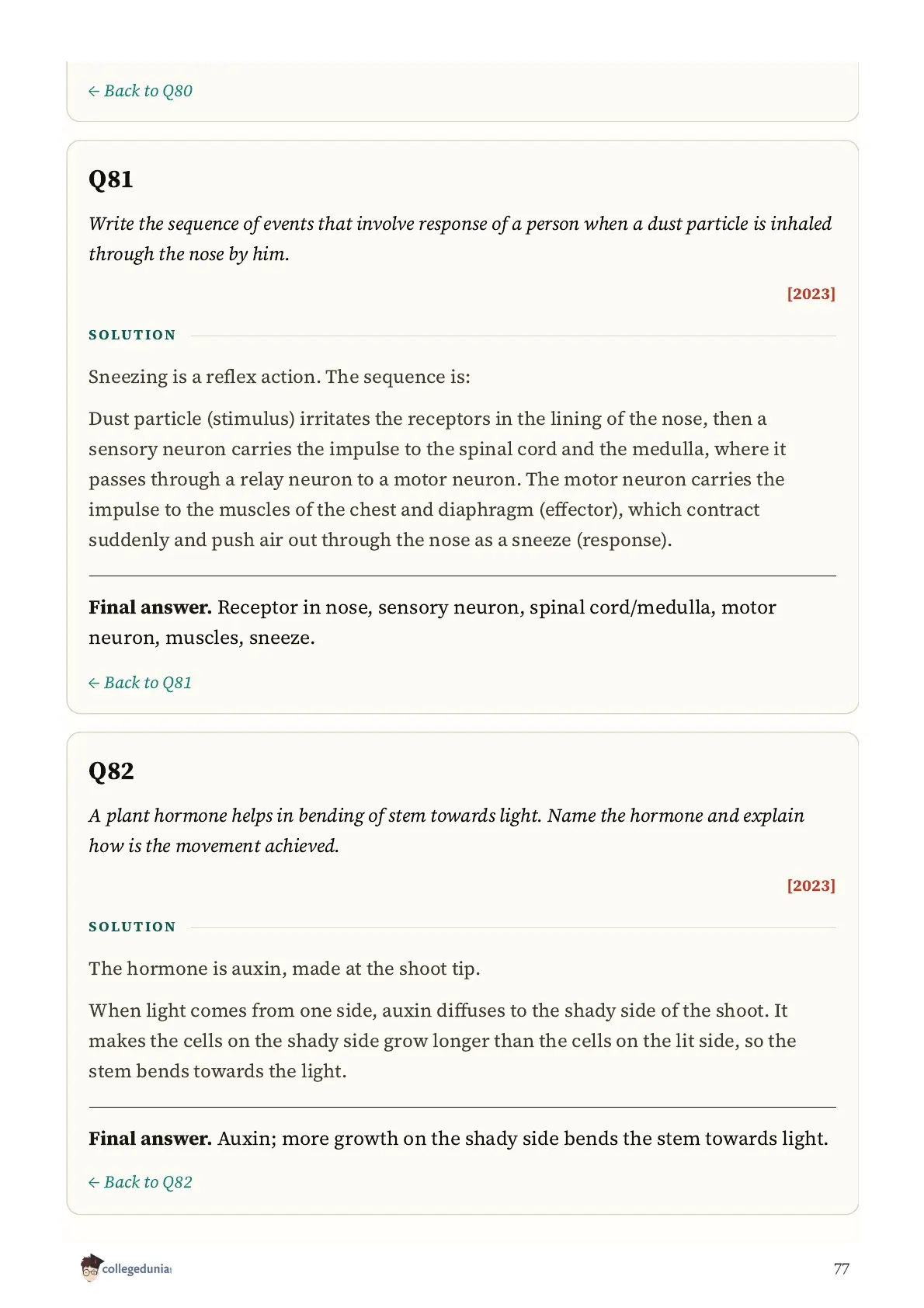
The PDF is 115 pages and free to download. Each section is sorted newest year first, the Answer Key lists the 35 MCQs at a glance, and each question links to its worked solution and back. Attempt a question yourself first, check the key, then read the solution. The solutions are written by Collegedunia's Science experts and are not official CBSE marking schemes.
Class 10 Science PYQs by Chapter
| Unit | PYQ Page |
|---|---|
| Chemical Substances | Chemical Reactions and Equations Class 10 Science PYQ |
| Chemical Substances | Acids, Bases and Salts Class 10 Science PYQ |
| Chemical Substances | Metals and Non-metals Class 10 Science PYQ |
| Chemical Substances | Carbon and its Compounds Class 10 Science PYQ |
| World of Living | Life Processes Class 10 Science PYQ |
| World of Living | Control and Coordination Class 10 Science PYQ |
| World of Living | How do Organisms Reproduce? Class 10 Science PYQ |
| World of Living | Heredity Class 10 Science PYQ |
| Natural Phenomena | Light - Reflection and Refraction Class 10 Science PYQ |
| Natural Phenomena | The Human Eye and the Colourful World Class 10 Science PYQ |
| Effects of Current | Electricity Class 10 Science PYQ |
| Effects of Current | Magnetic Effects of Electric Current Class 10 Science PYQ |
| Natural Resources | Our Environment Class 10 Science PYQ |
Control and Coordination Class 10 Science PYQ FAQs
Ques. How many questions are in the Control and Coordination Class 10 Science PYQ PDF?
Ans. The PDF has 149 questions from the 2008 to 2026 board papers: 52 at 1 mark, 46 at 2 marks, 33 at 3 marks, 8 case-based items at 4 marks and 10 long answers at 5 marks.
Ques. Does this PYQ PDF include solutions, or only the questions?
Ans. All 149 questions have a worked solution in the PDF. The 35 MCQs and assertion-reason items are also listed in the Answer Key before the solutions.
Ques. Are the solutions official?
Ans. No. They are written by Collegedunia's Science experts and checked against the NCERT chapter and, for the 2022 to 2026 papers, against CBSE's published marking schemes. Older answers are checked against the NCERT text. They are not an official CBSE marking scheme, so the board's wording of an answer may differ.
Ques. How many marks does Control and Coordination carry in the Class 10 Science paper?
Ans. CBSE publishes marks per unit, not per chapter. Control and Coordination belongs to the unit World of Living, which prep sites report as 25 of the 80 theory marks. That figure is unofficial, so check the current syllabus on cbseacademic.nic.in.
Ques. What kind of questions are asked from Control and Coordination?
Ans. Most are written explanations: 96 of the 149 are short answers. They cover the path of a reflex action, the functions of the brain parts, the role of hormones such as insulin, adrenaline and thyroxine, and the tropic movements of plants. 35 are MCQs and assertion-reason items.
Ques. Which years does the set cover?
Ans. The questions come from 10 board years between 2008 and 2026, not every year in that range. 2025 has the most questions (35), followed by 2026 (28) and 2023 (26).



Comments