



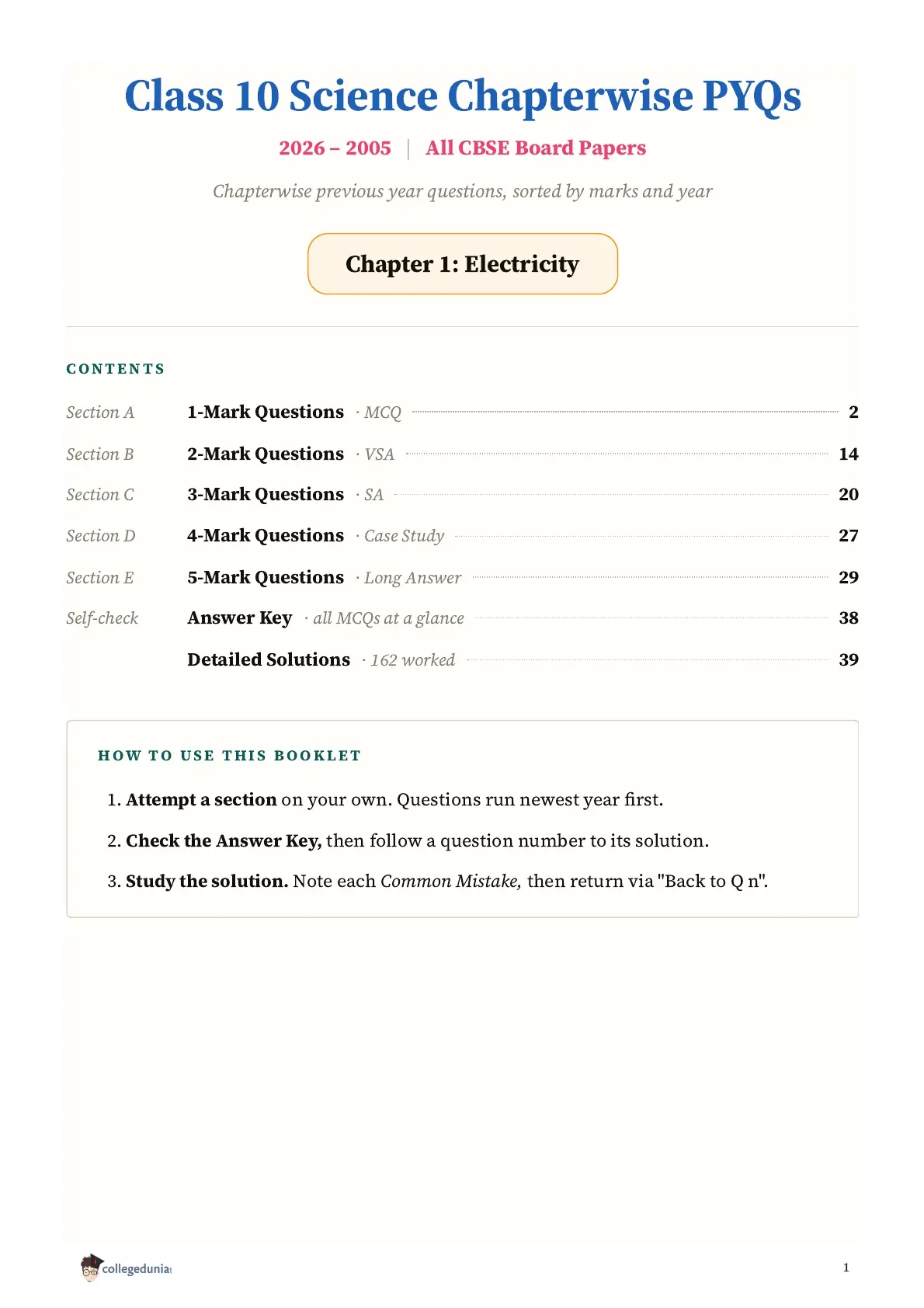
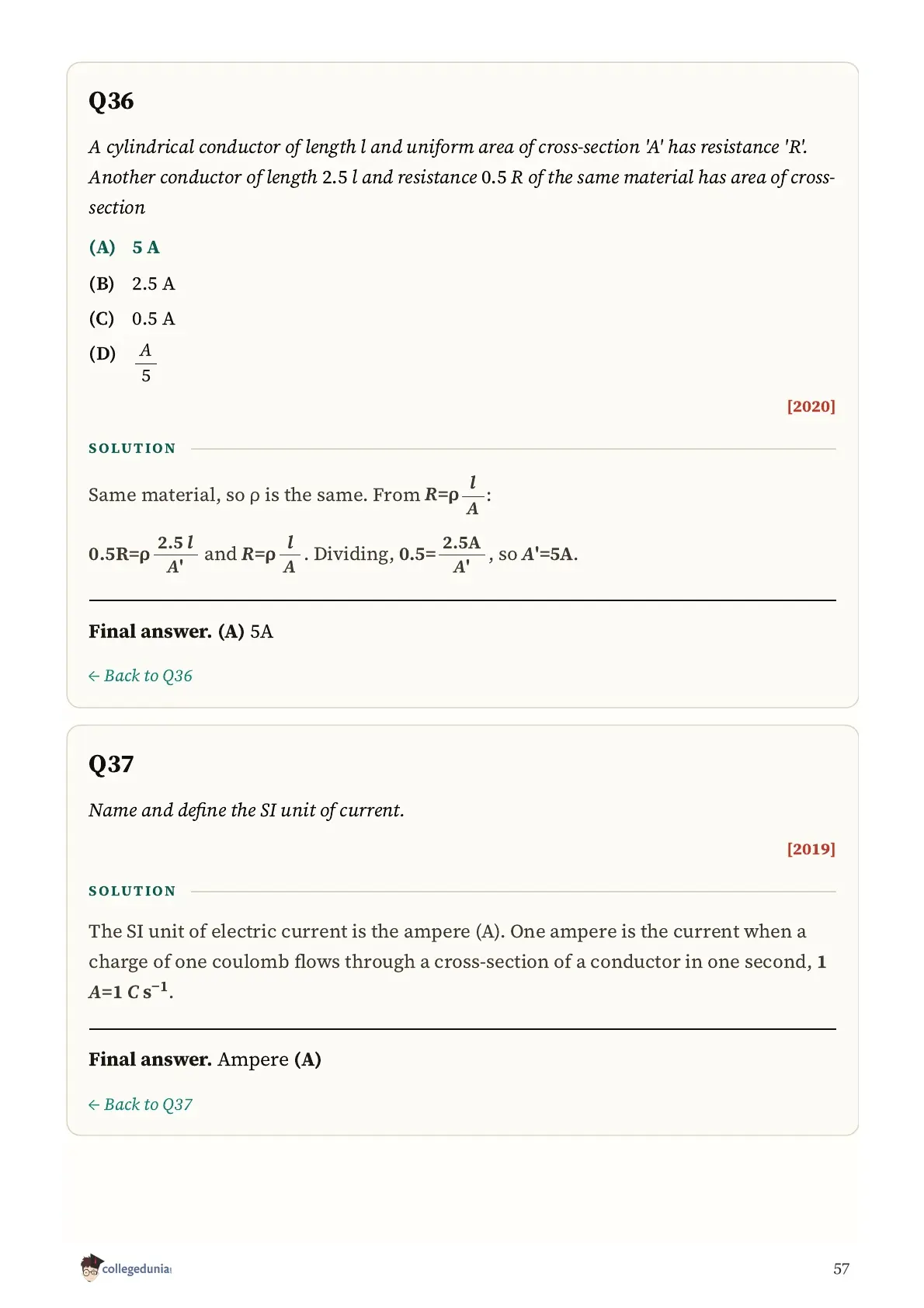
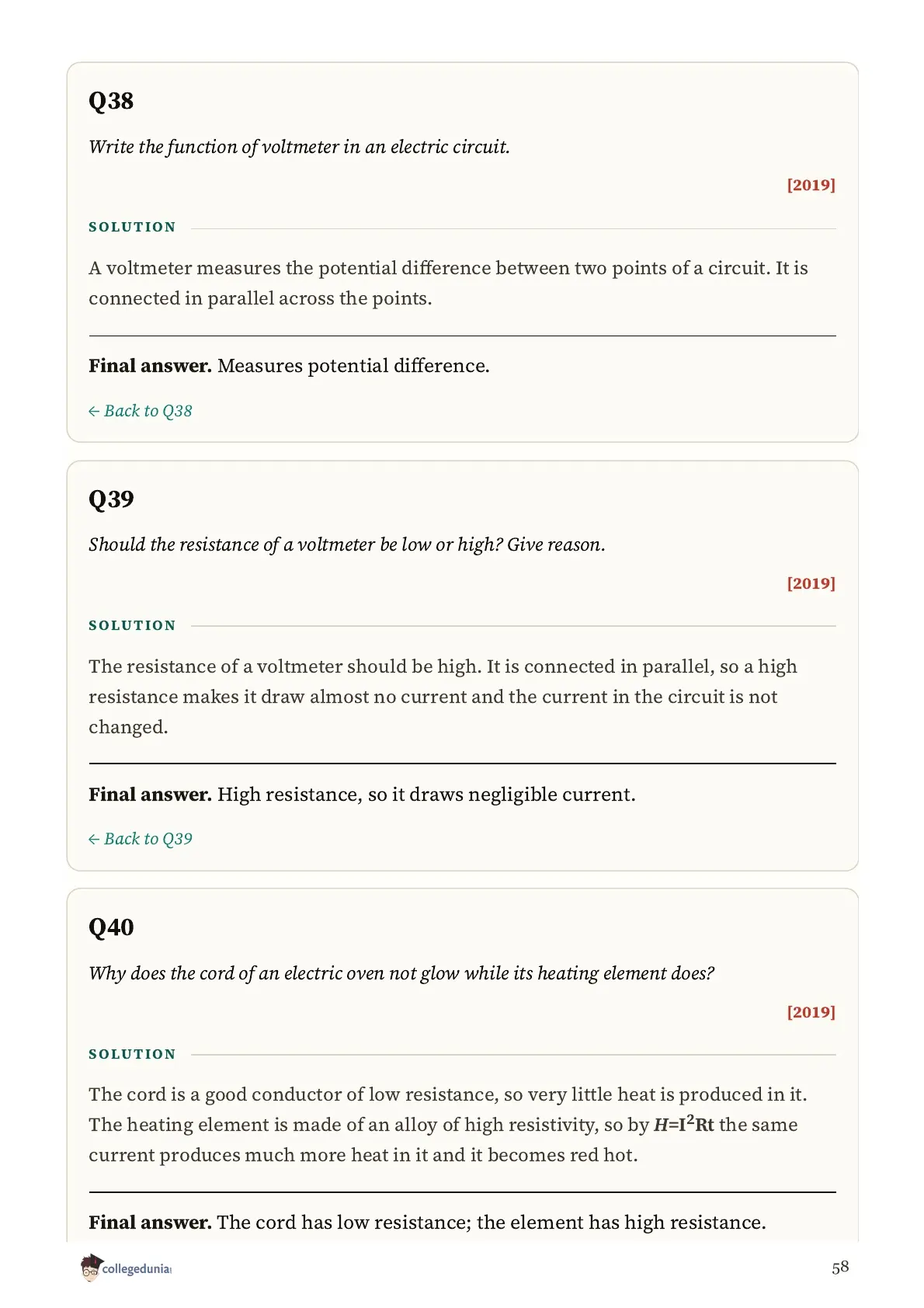
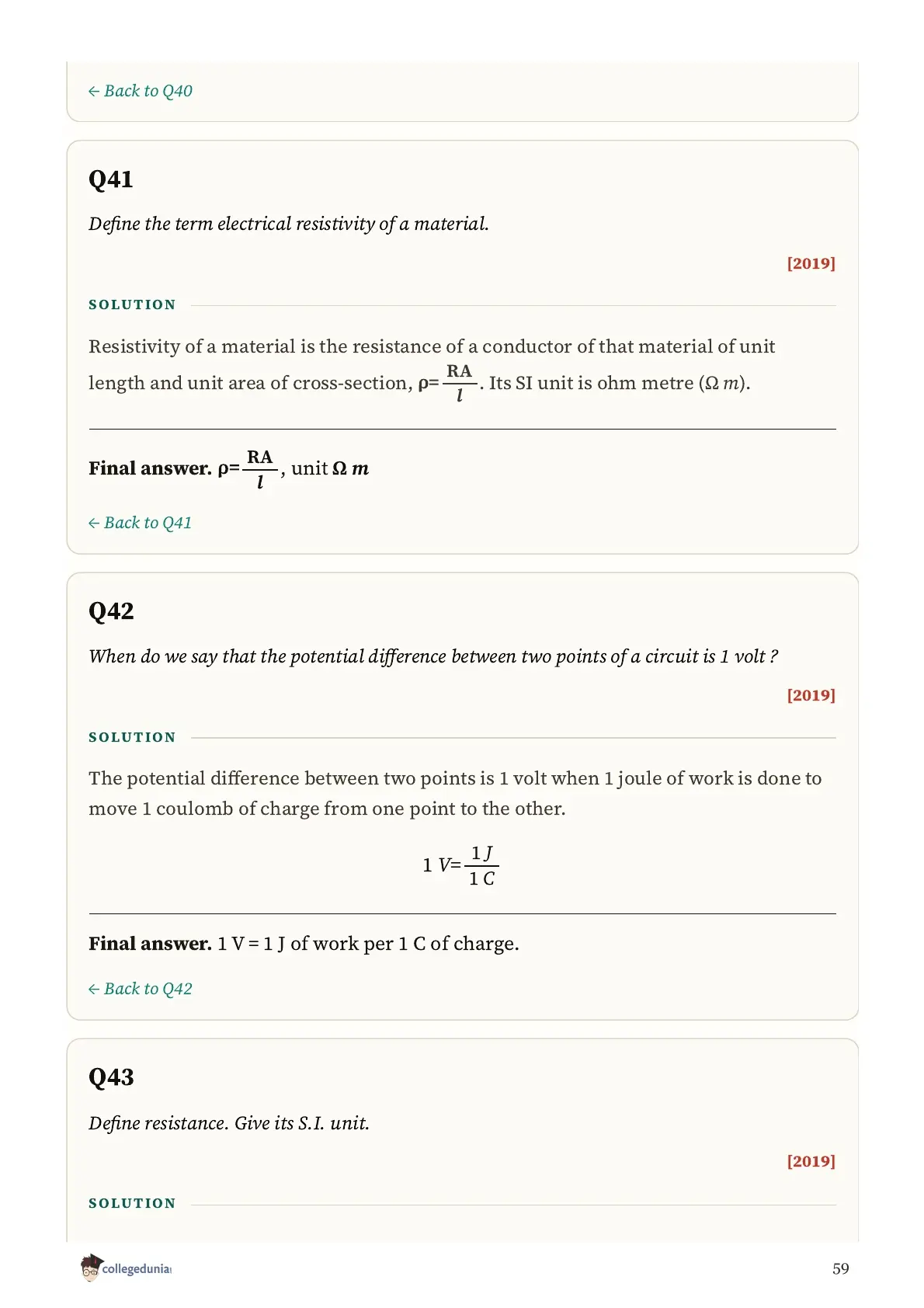
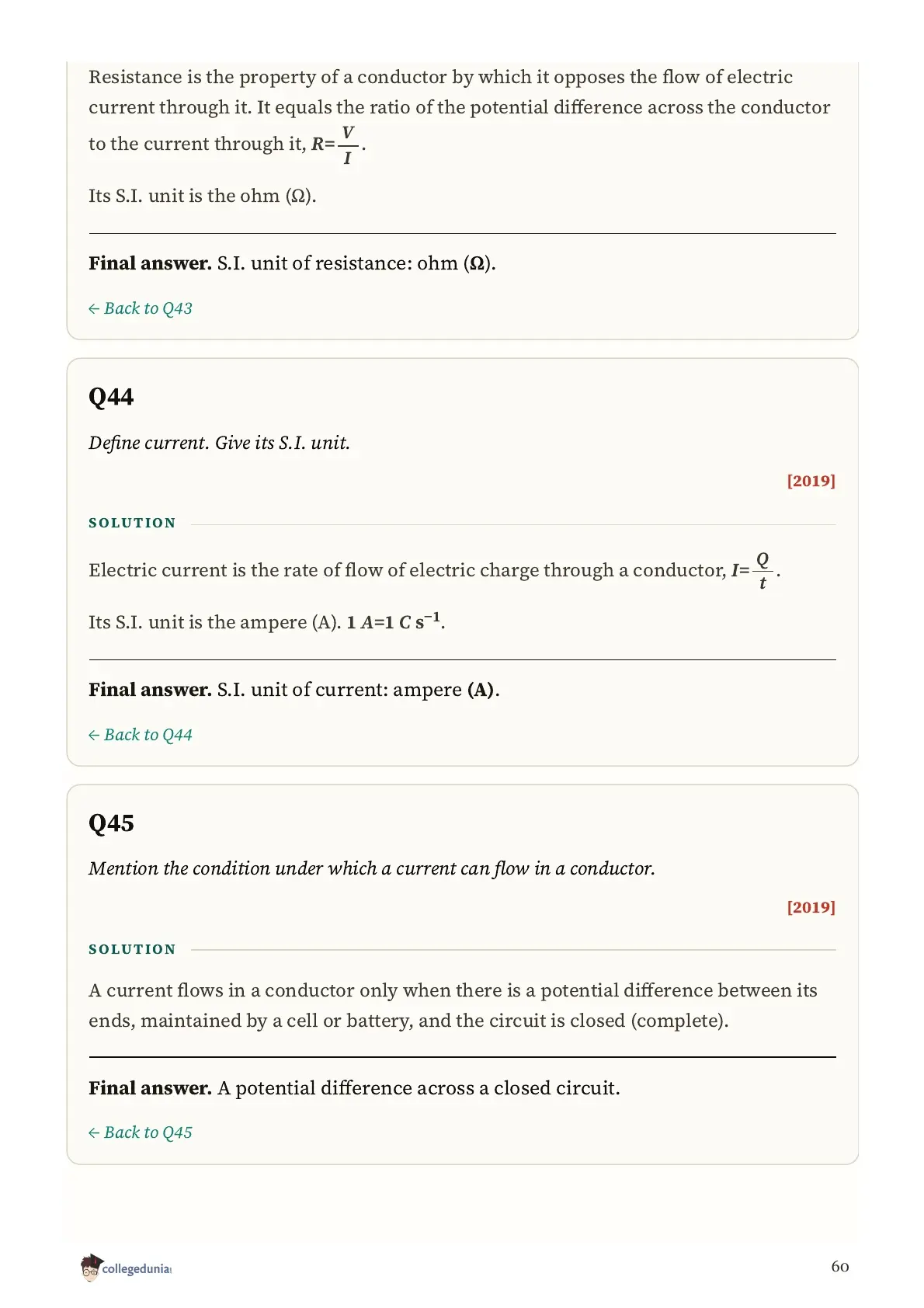
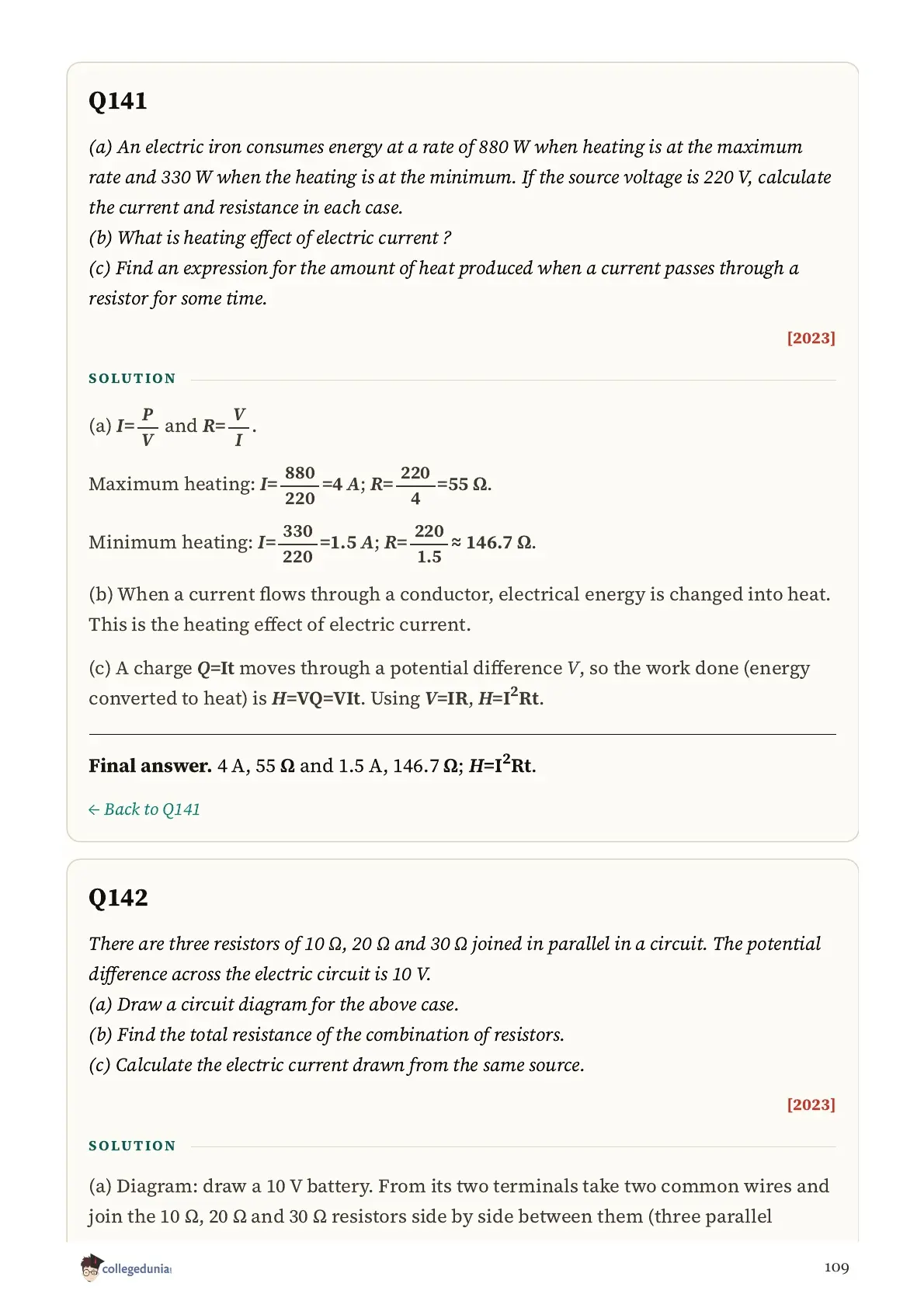
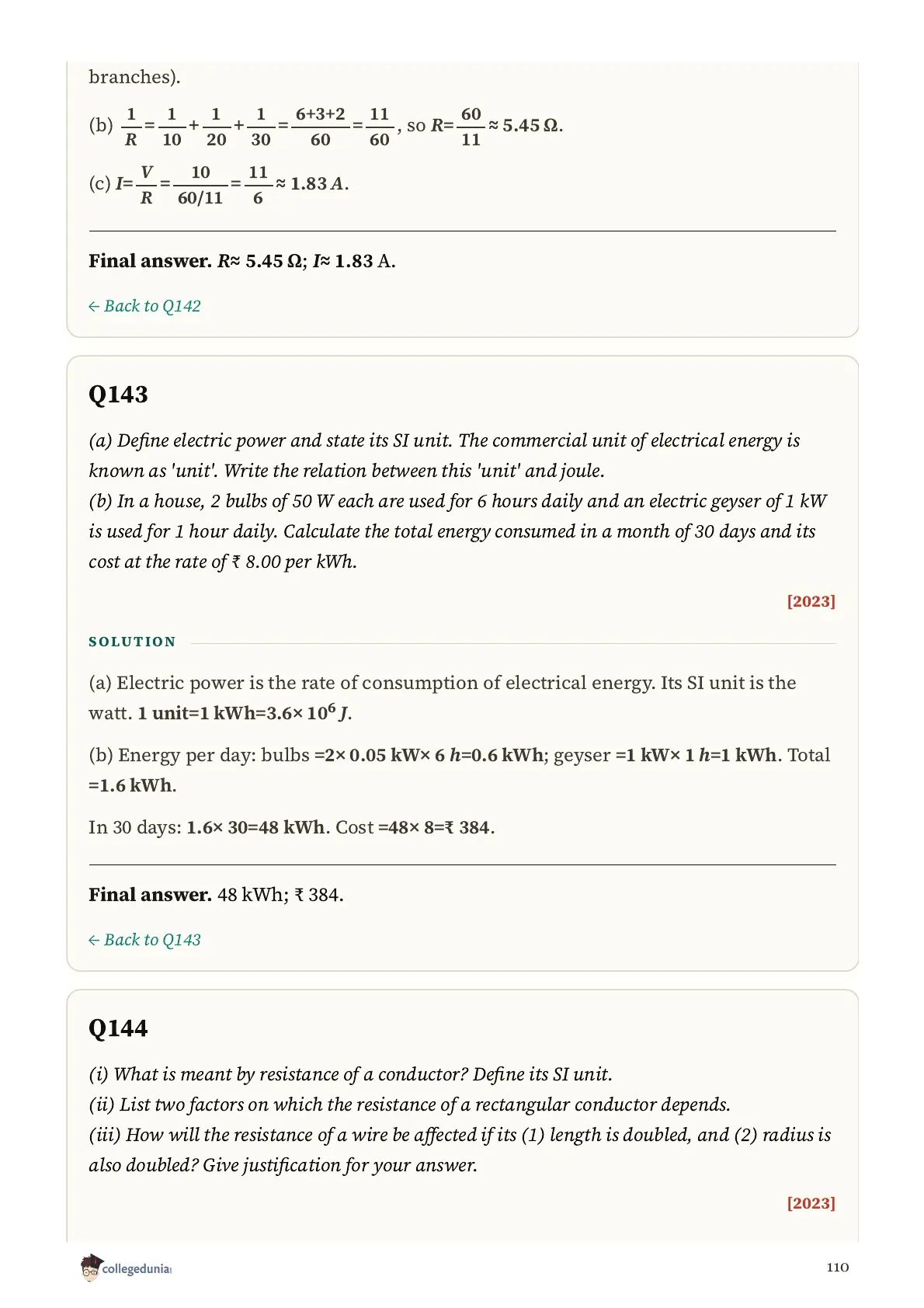
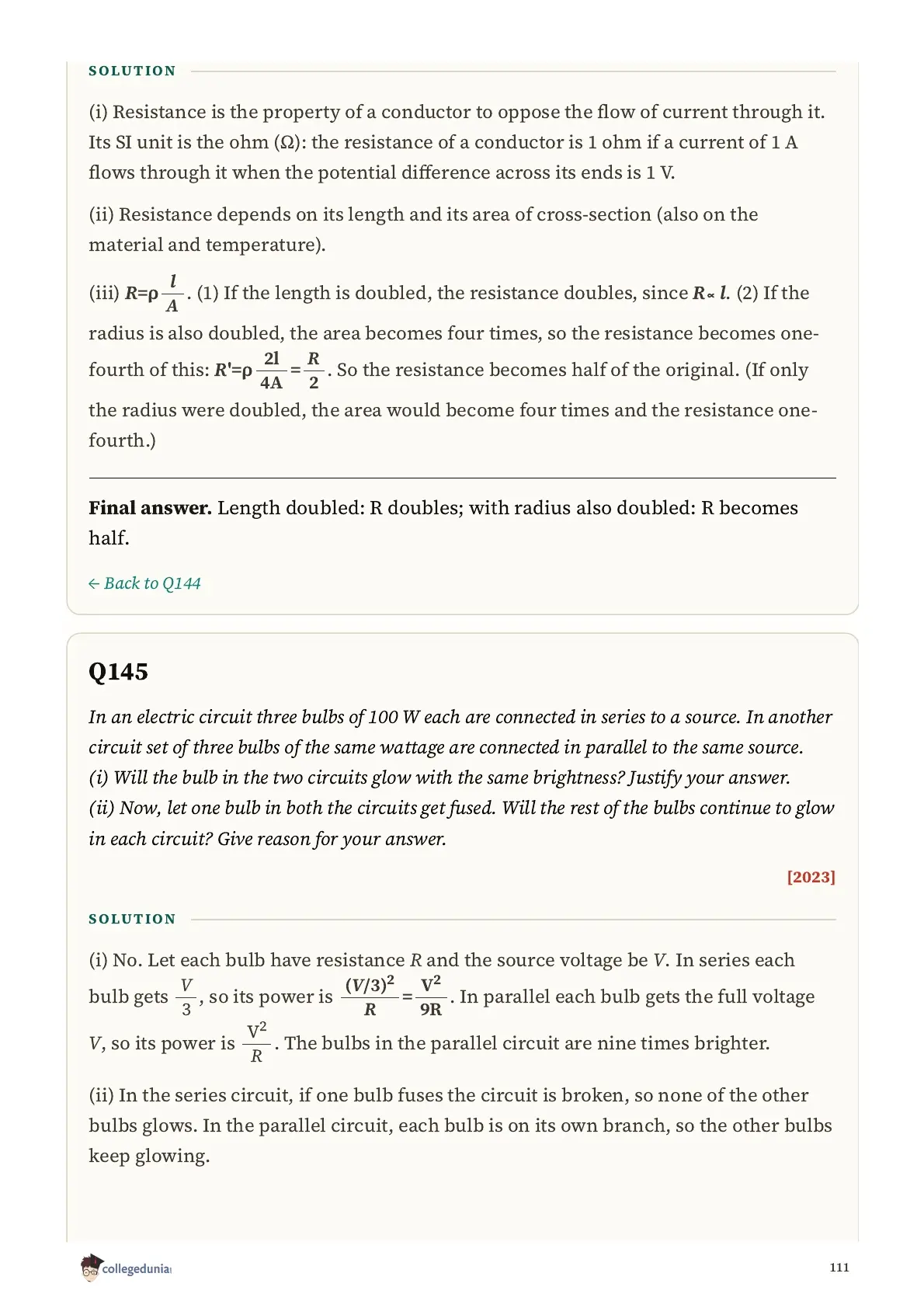
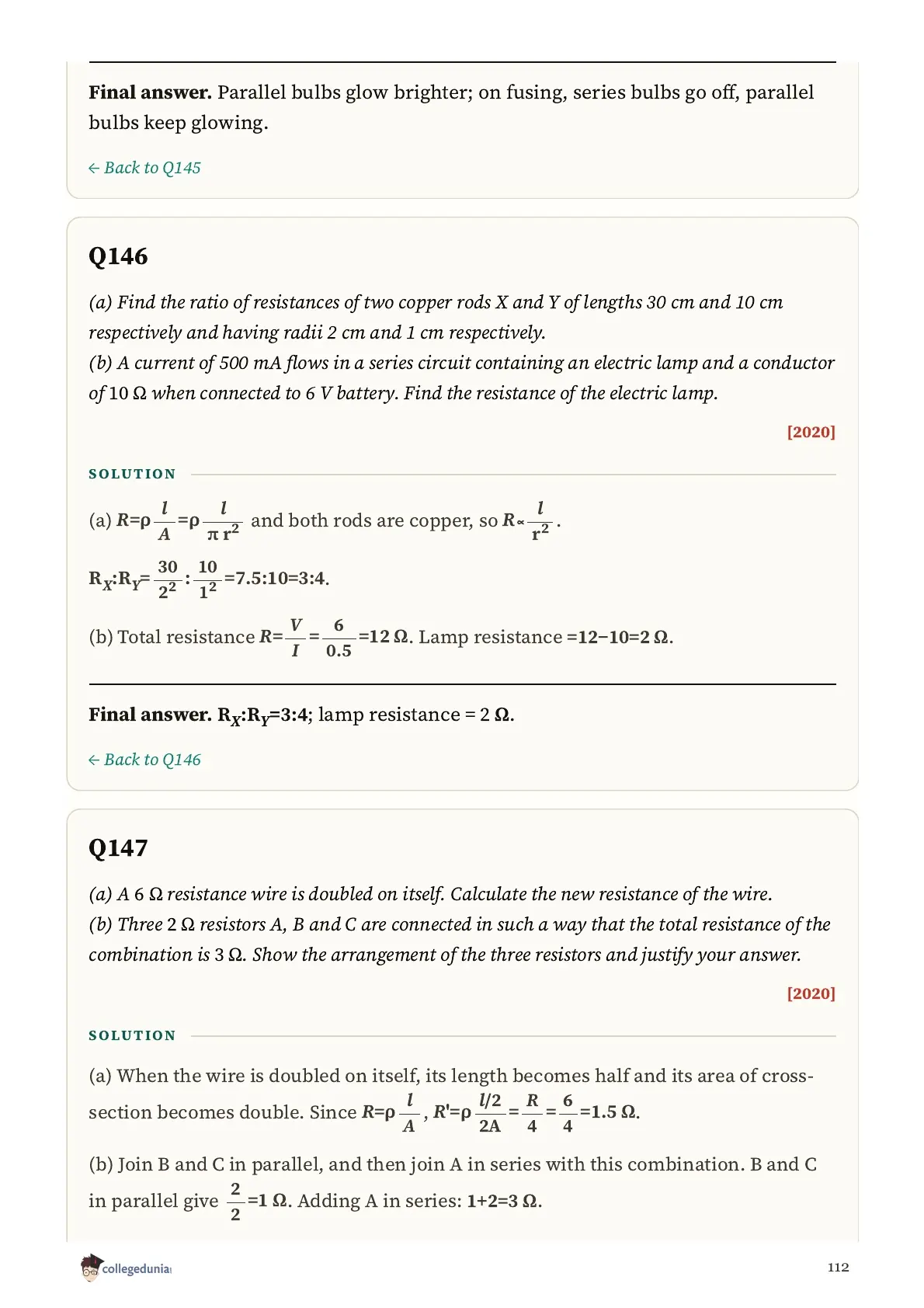
Class 10 Science Electricity PYQ, free to download as a 121-page PDF with 162 solved board questions from the 2005 to 2026 papers. Electricity is Chapter 11 of the NCERT Class 10 Science book and, with Magnetic Effects of Electric Current, forms the unit Effects of Current, which carries 13 of the 80 theory marks.
The questions keep returning to resistance and resistors (107 questions), numericals asking you to calculate a value (65), potential difference (45), the heating effect of current (41), resistivity and wire dimensions (32), bulbs and lamps (30), electric power (26), parallel combinations (25) and series combinations (23).
On this page you get:
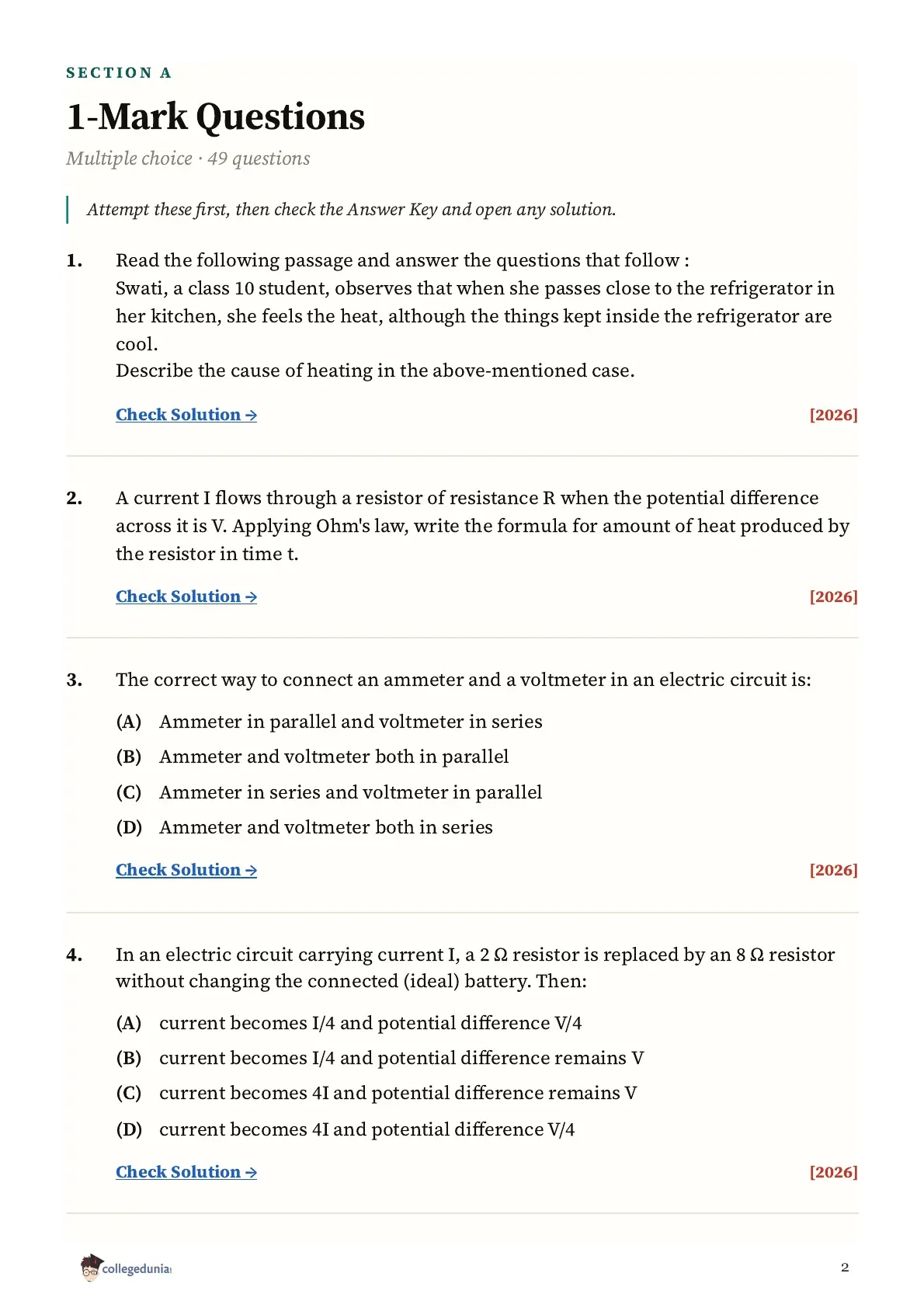
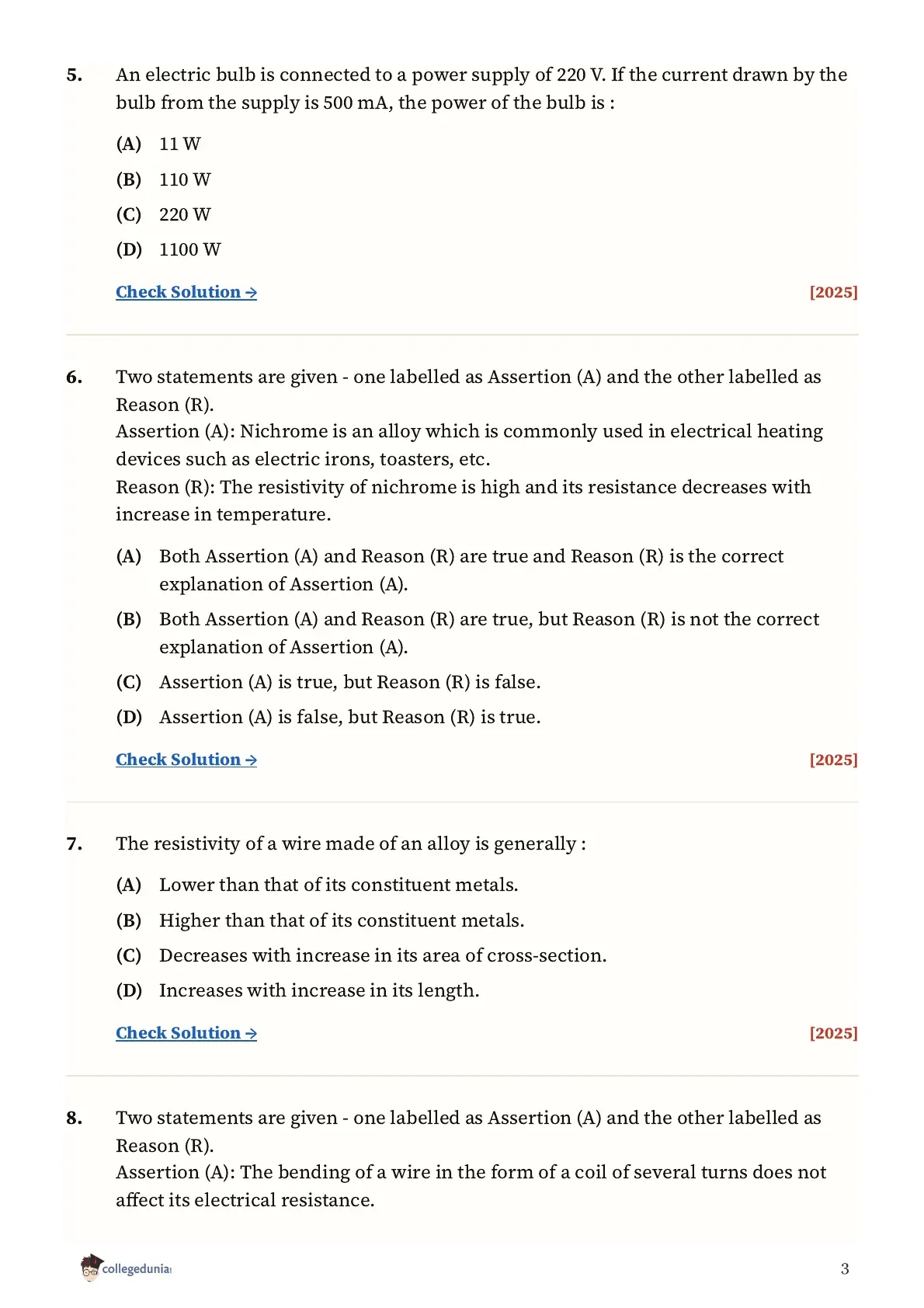
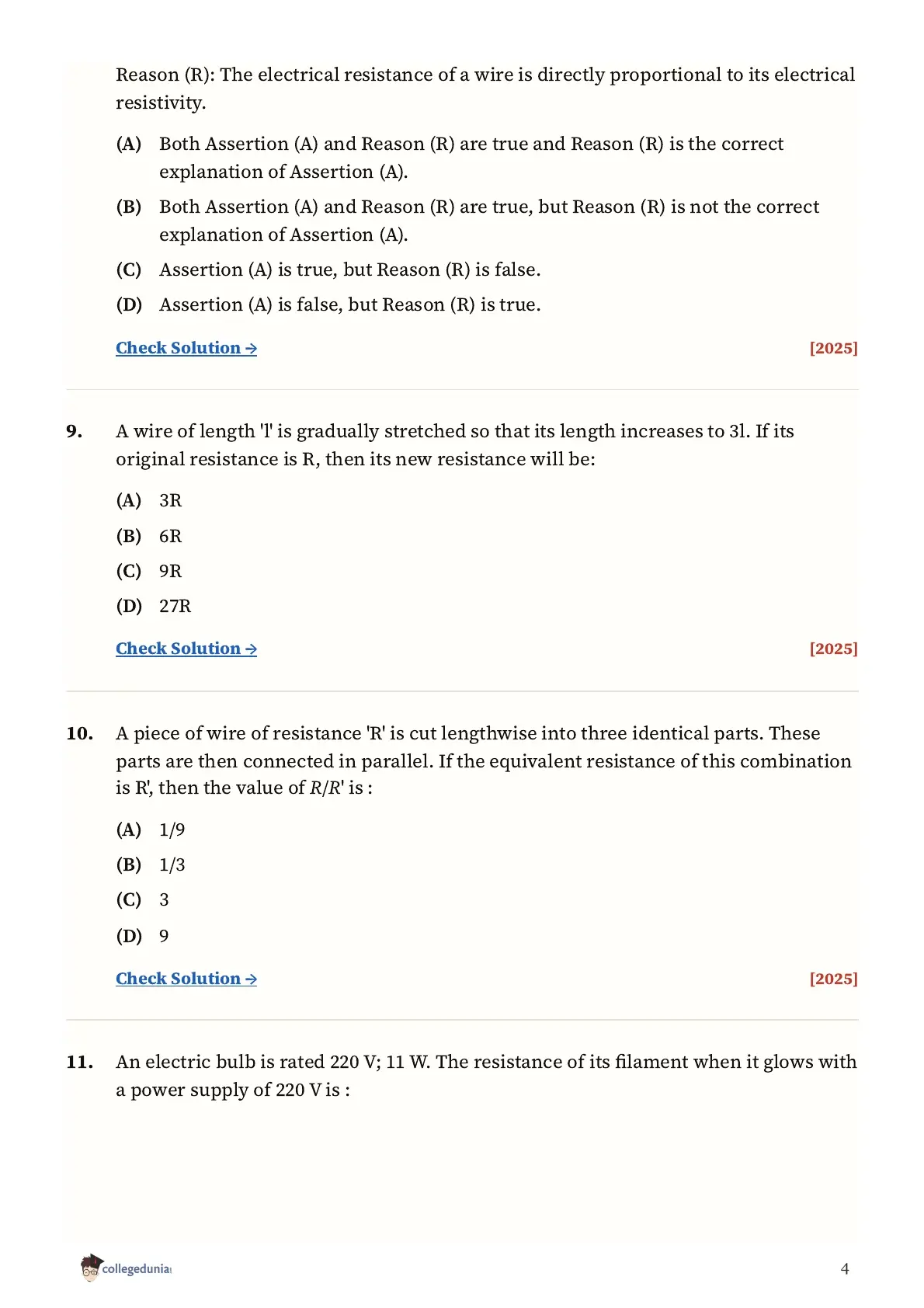
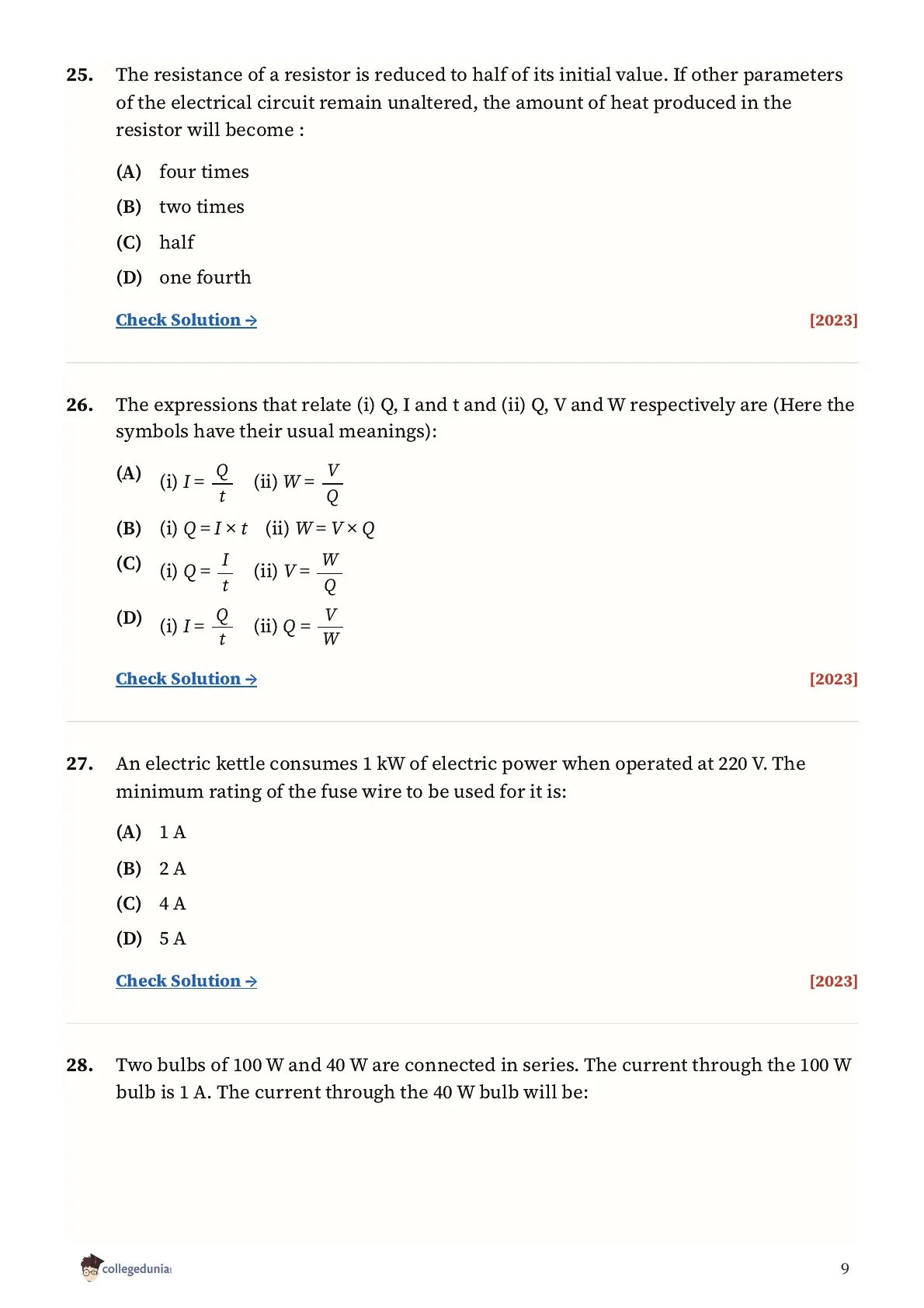
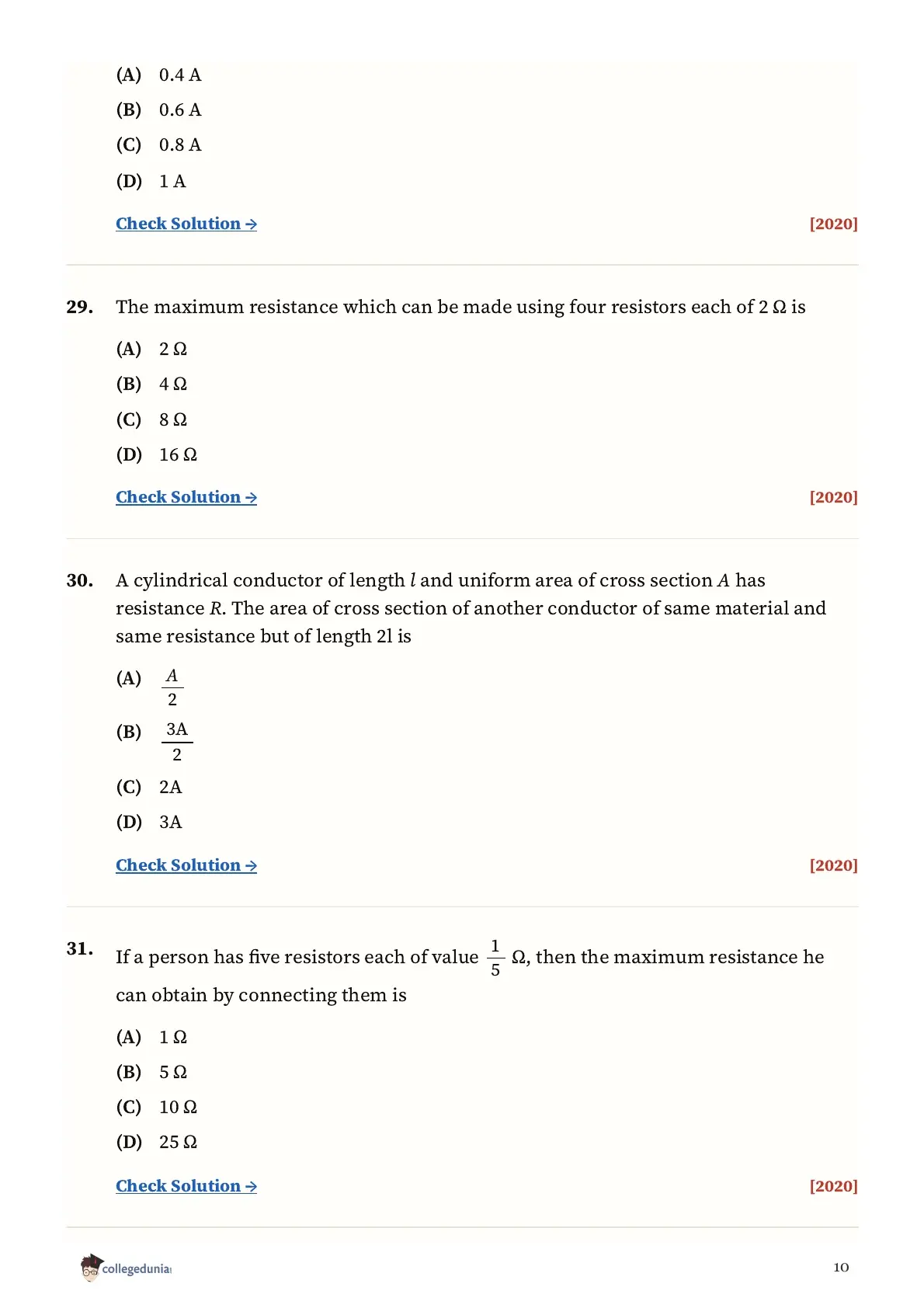
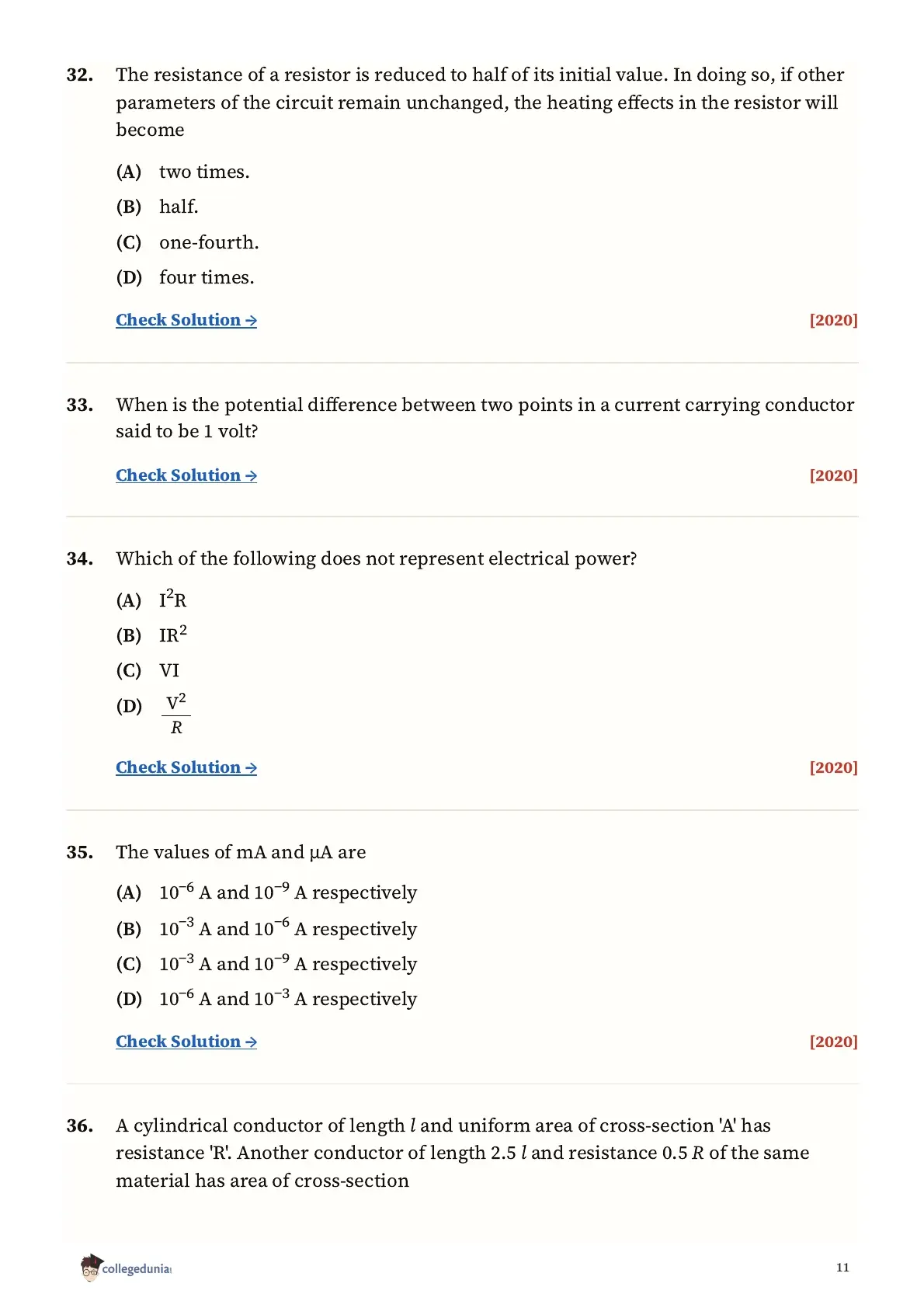
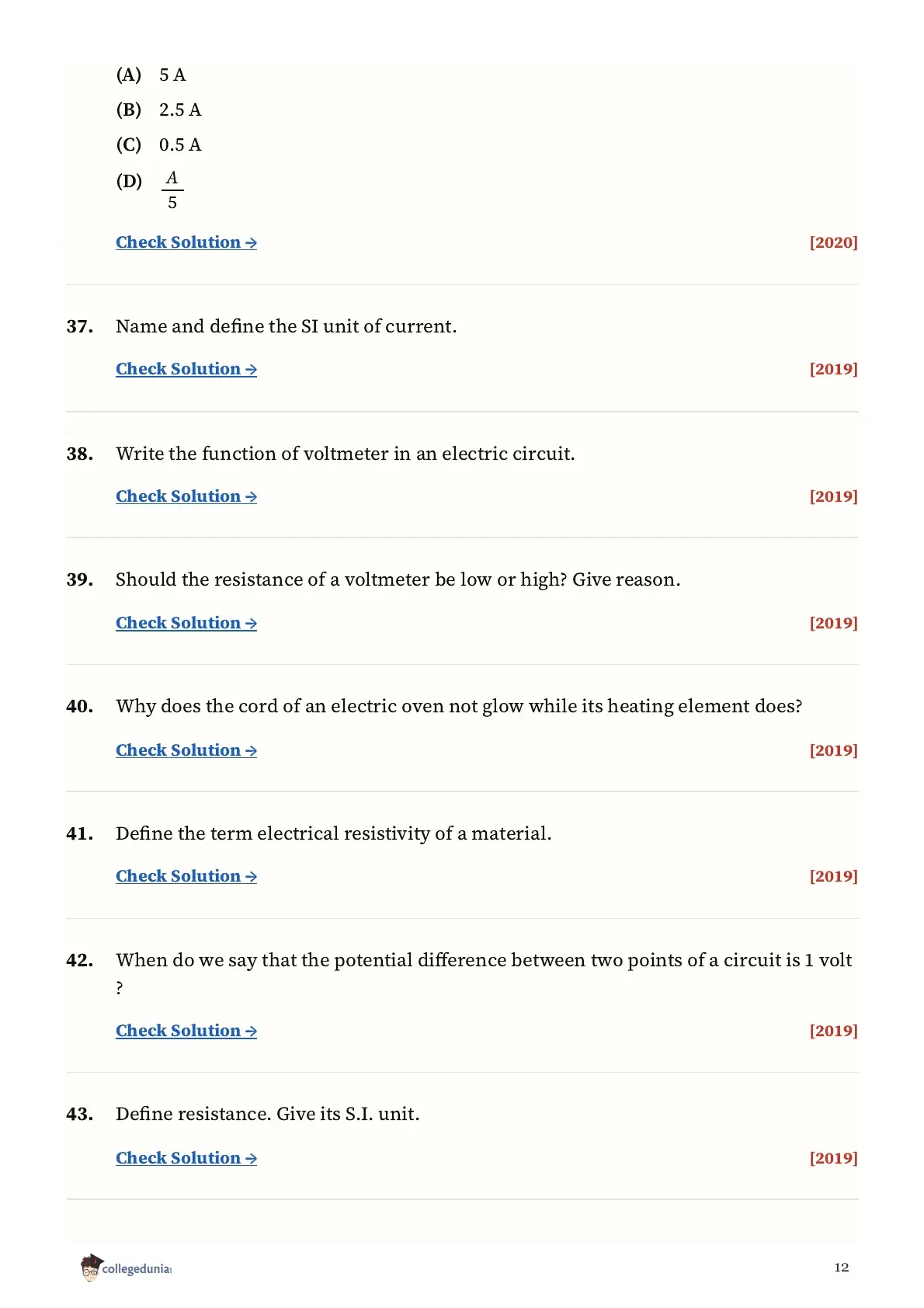
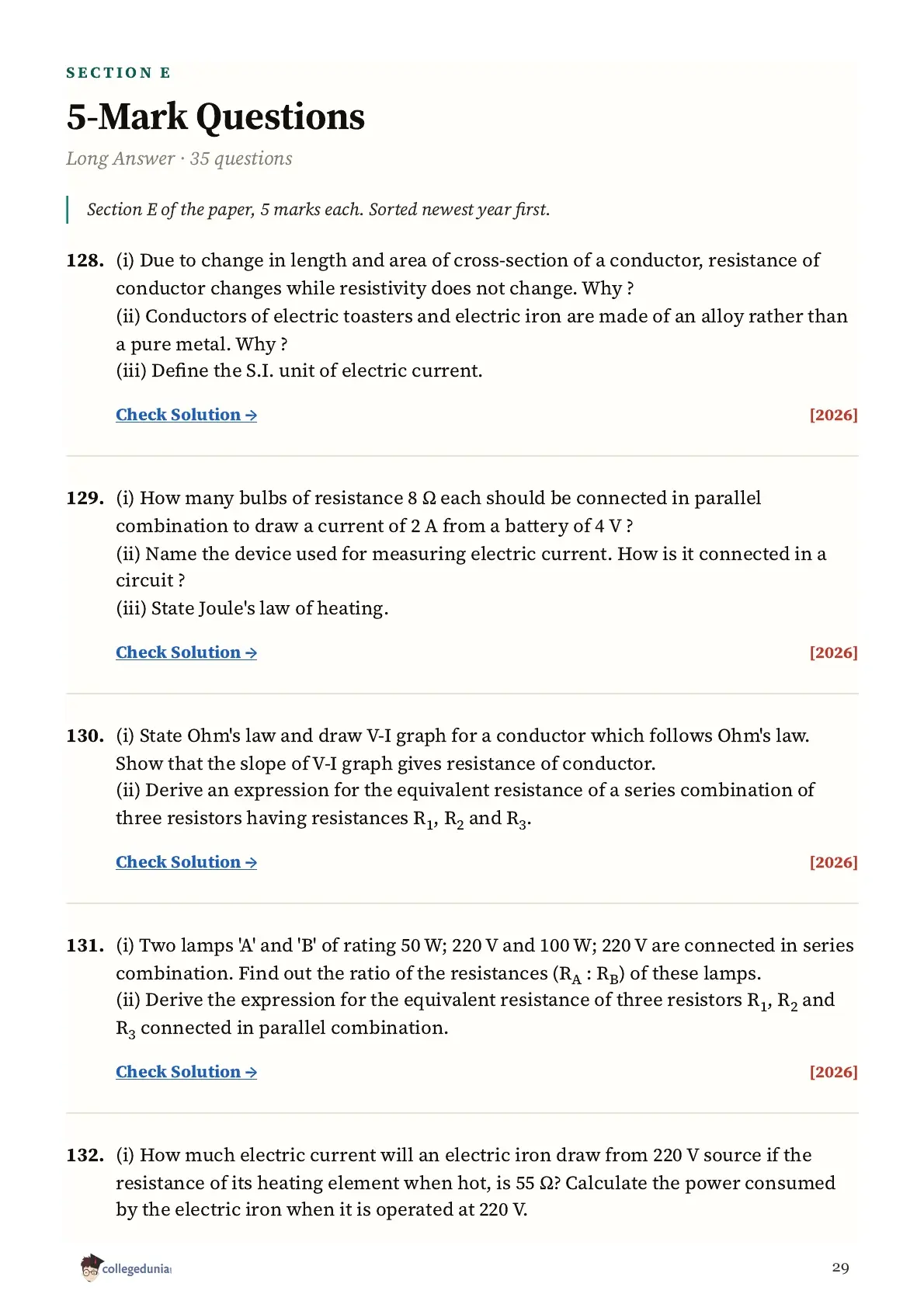
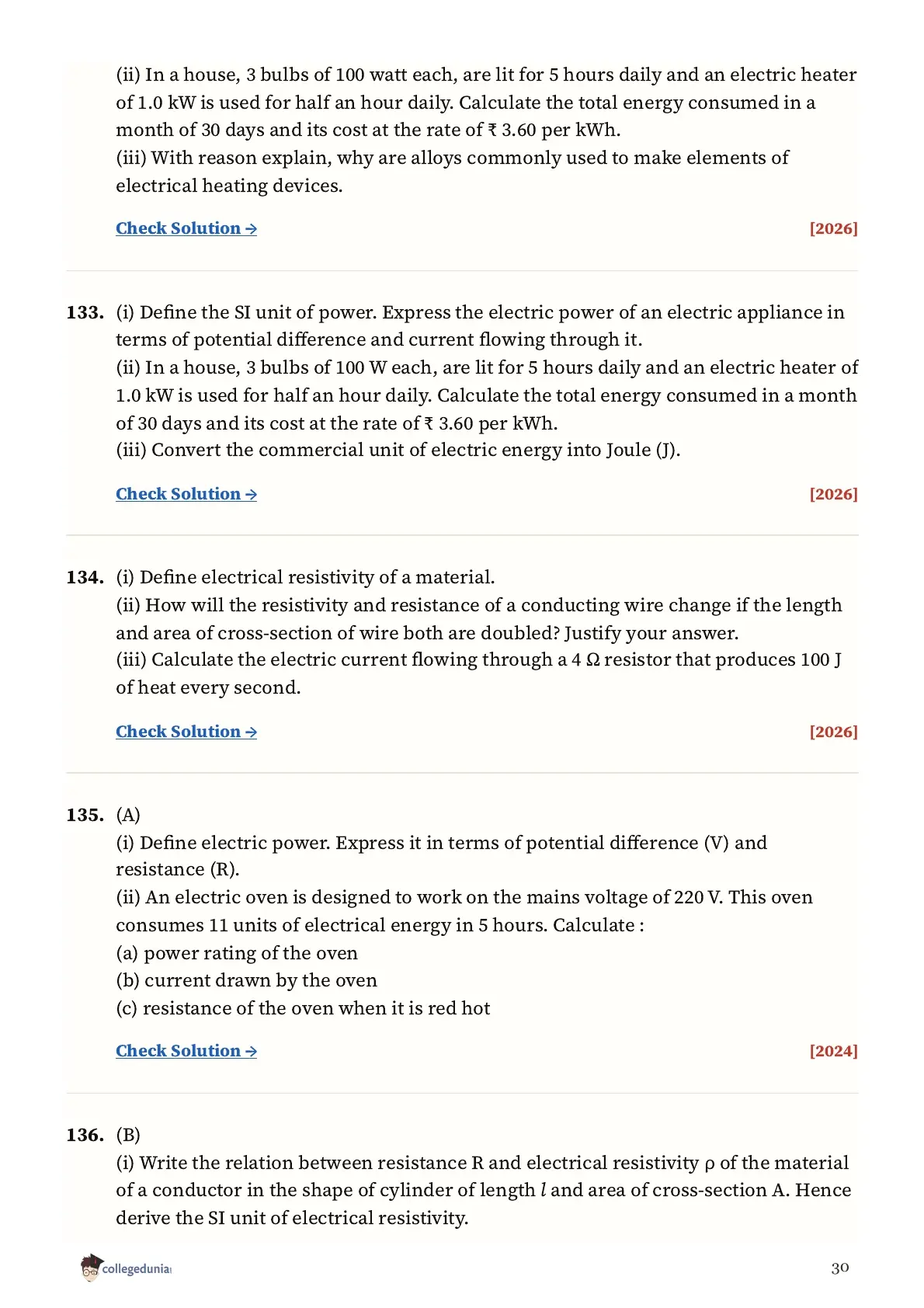
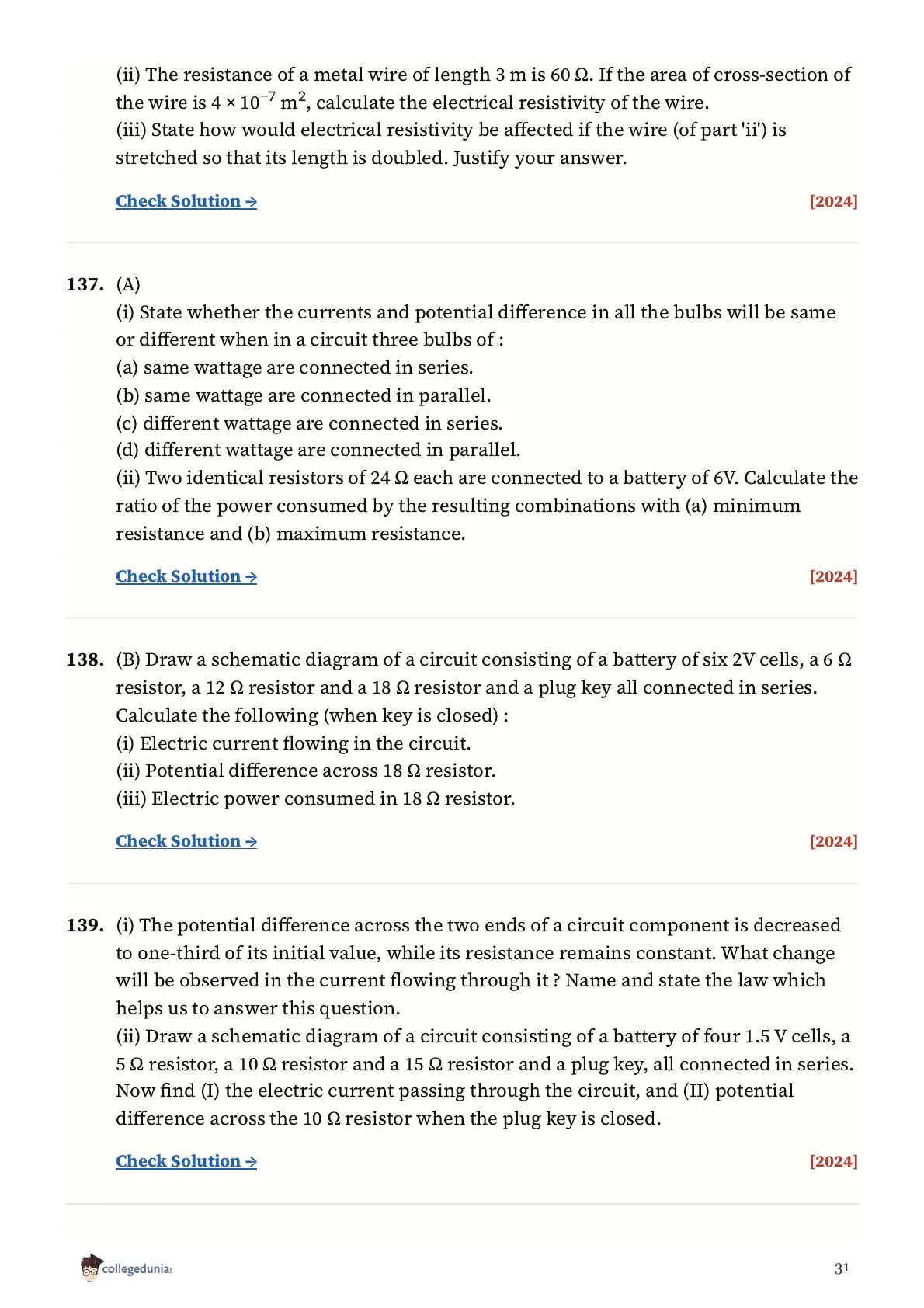
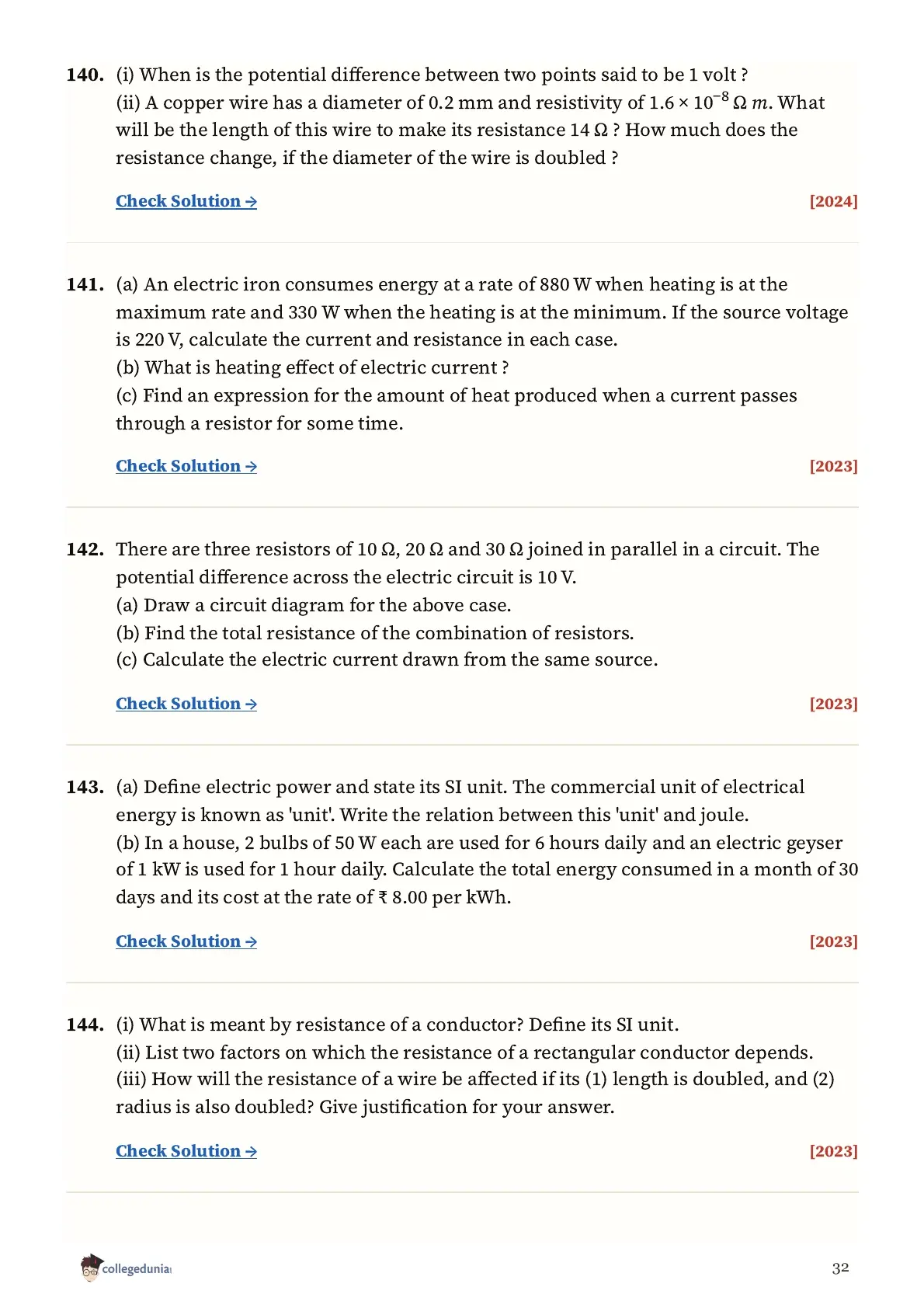
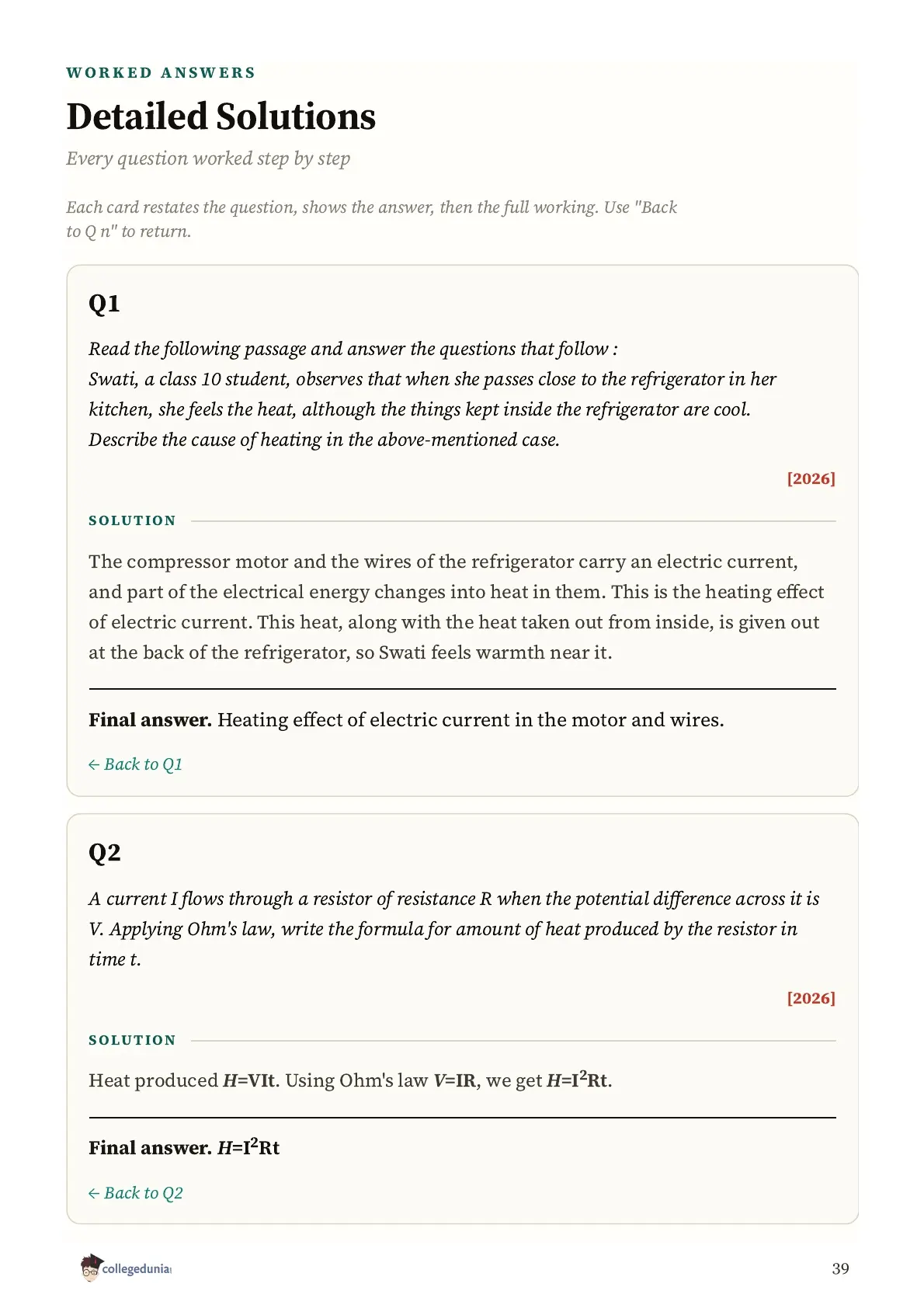
- 162 questions with a worked solution each: 33 MCQs and assertion-reason items, 89 short answers, 5 case-based items and 35 long answers
- An Answer Key that lists all 33 MCQs at a glance
- Question counts by topic, so you know whether to start with Ohm's law, series and parallel circuits or heating and power
- A marks-wise table of questions (1, 2, 3, 4 and 5 mark)
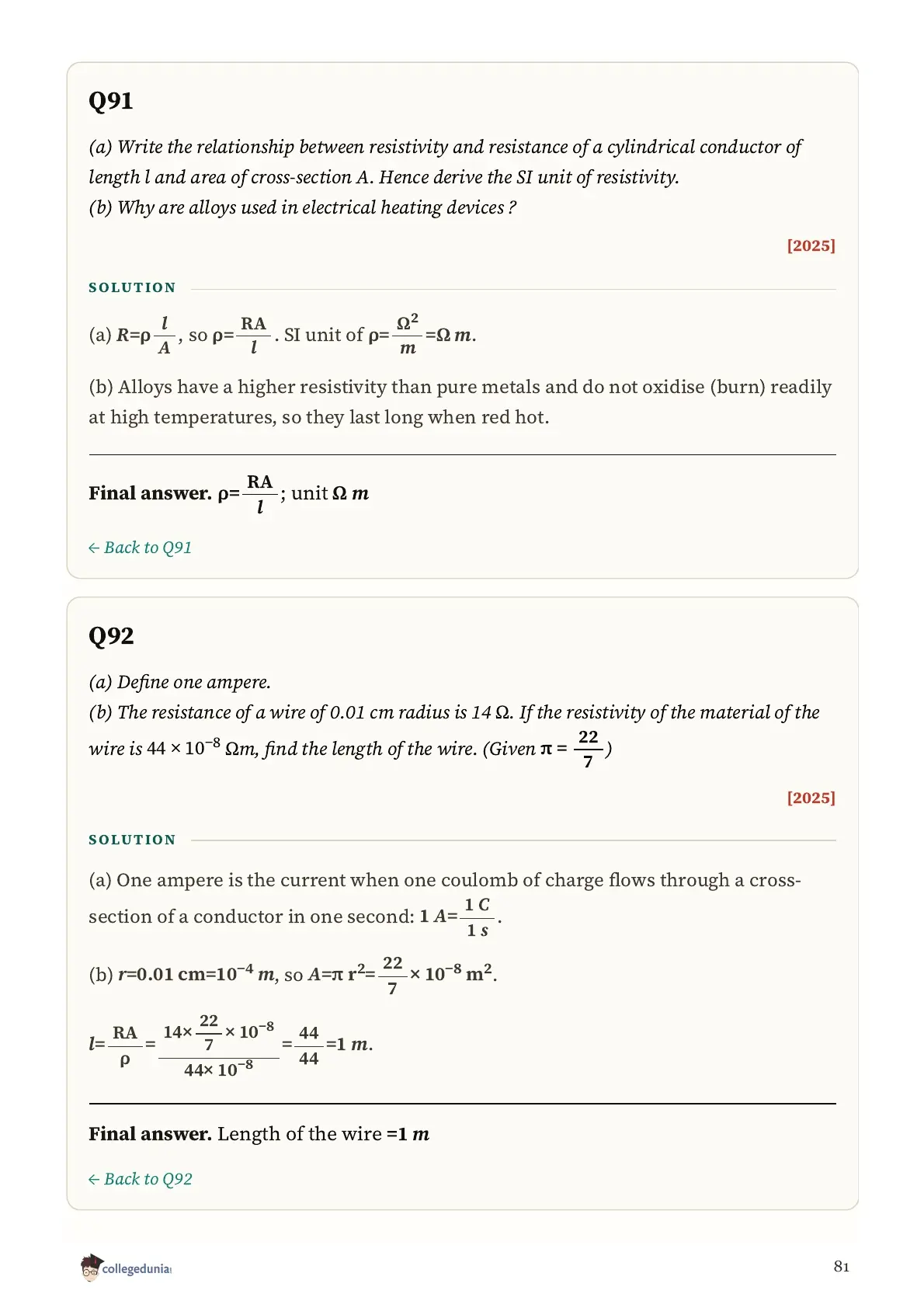
- The common mistakes students make, such as using a radius of 0.01 cm without converting it to metres, and a short FAQ
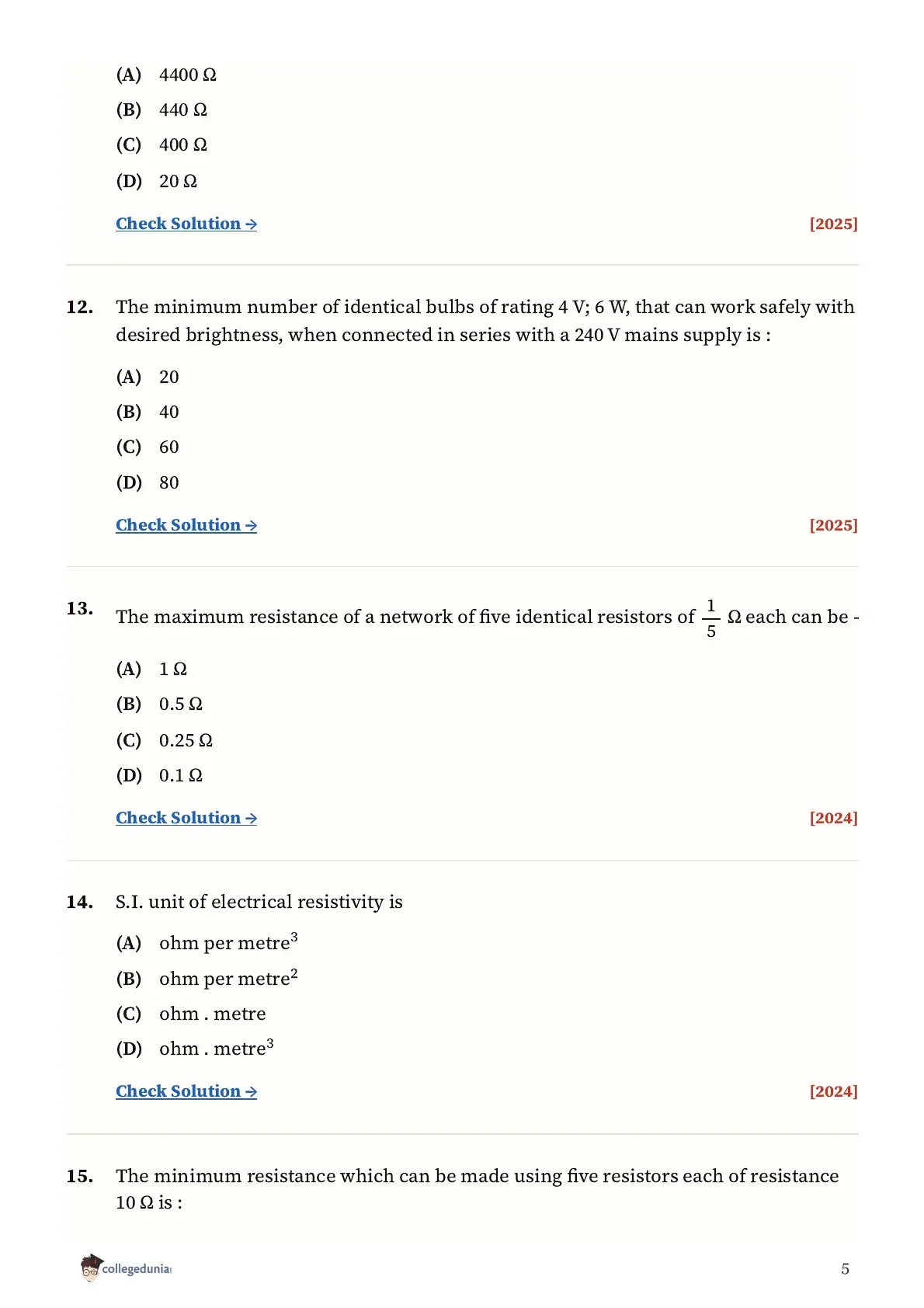
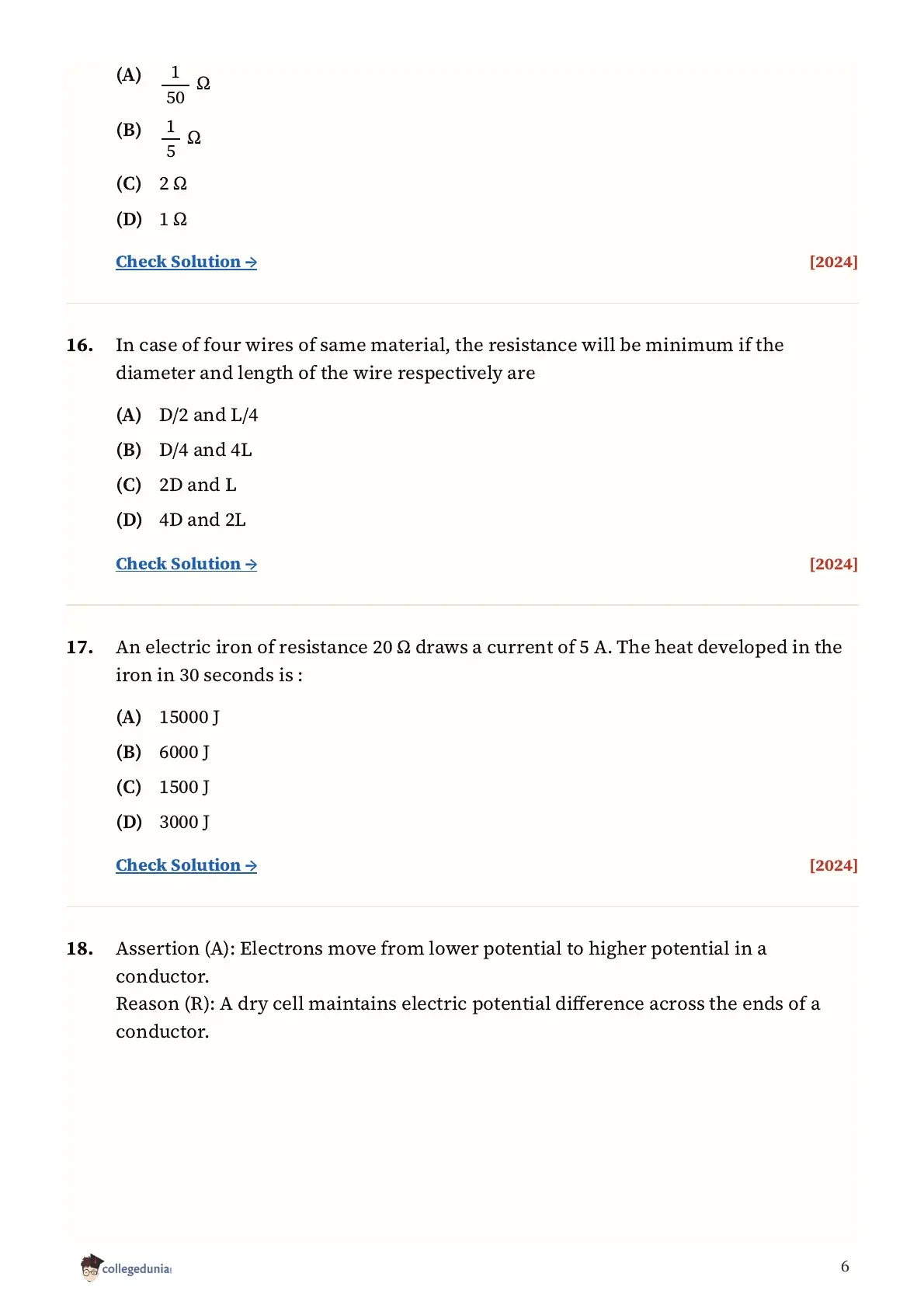
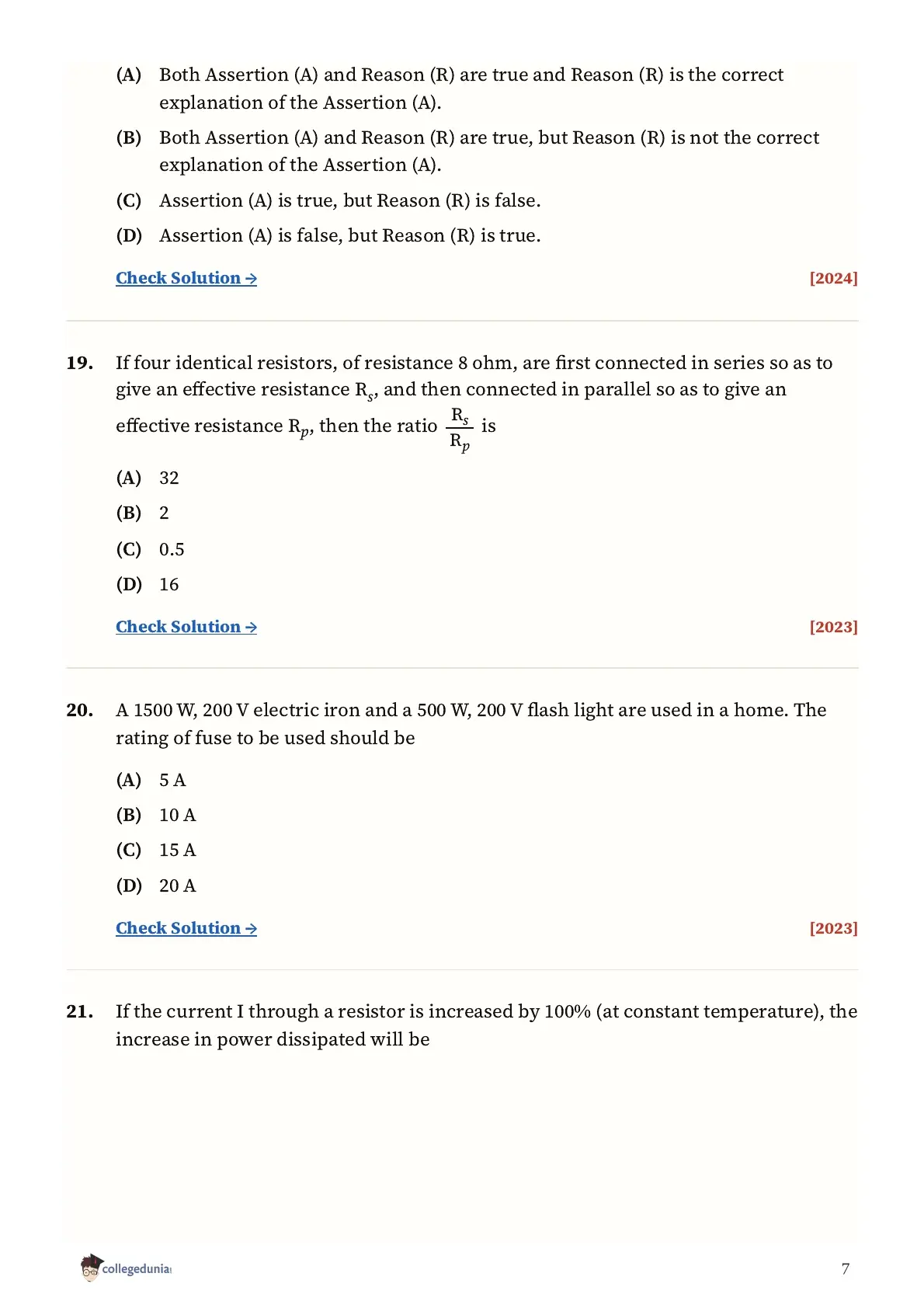
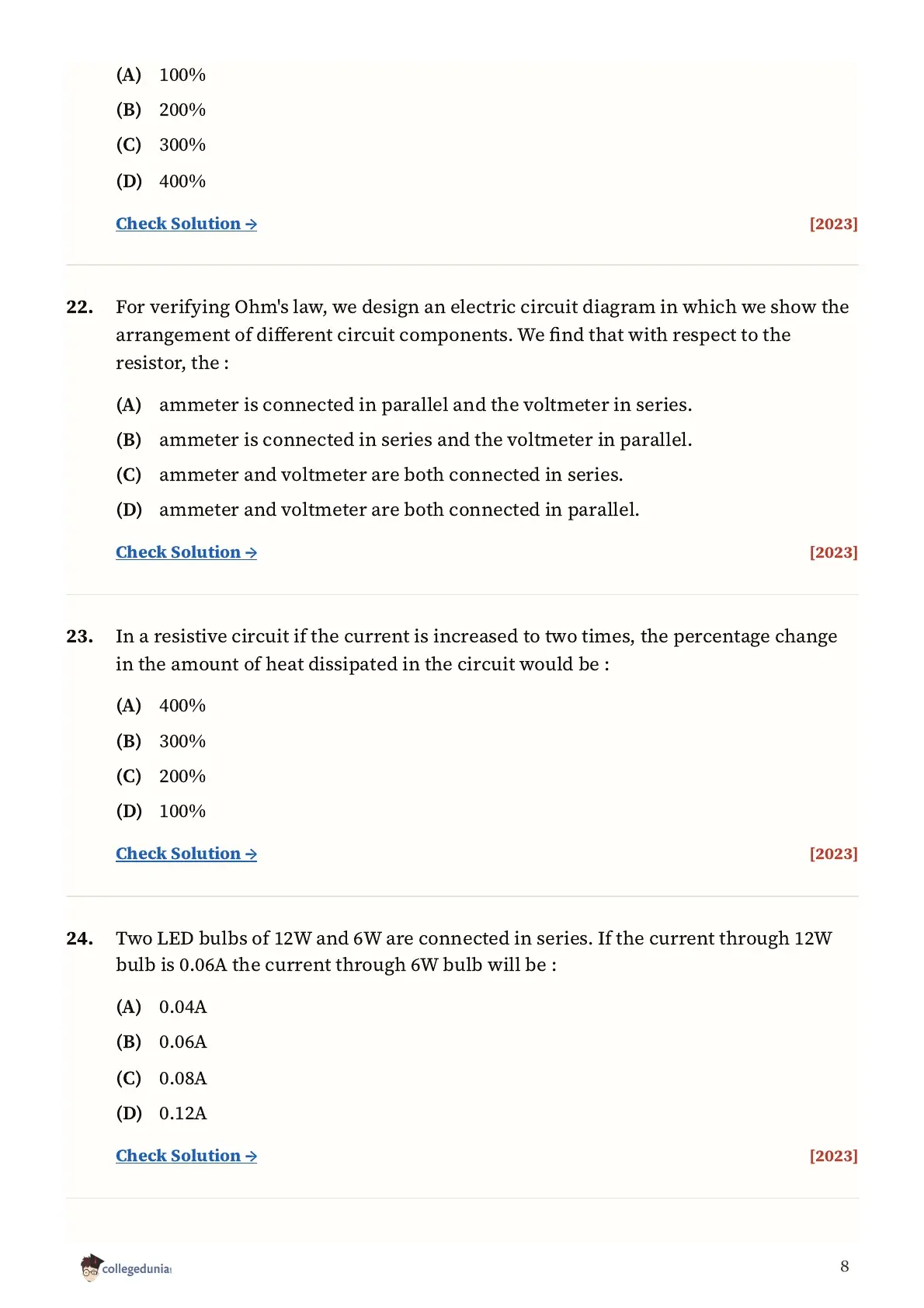
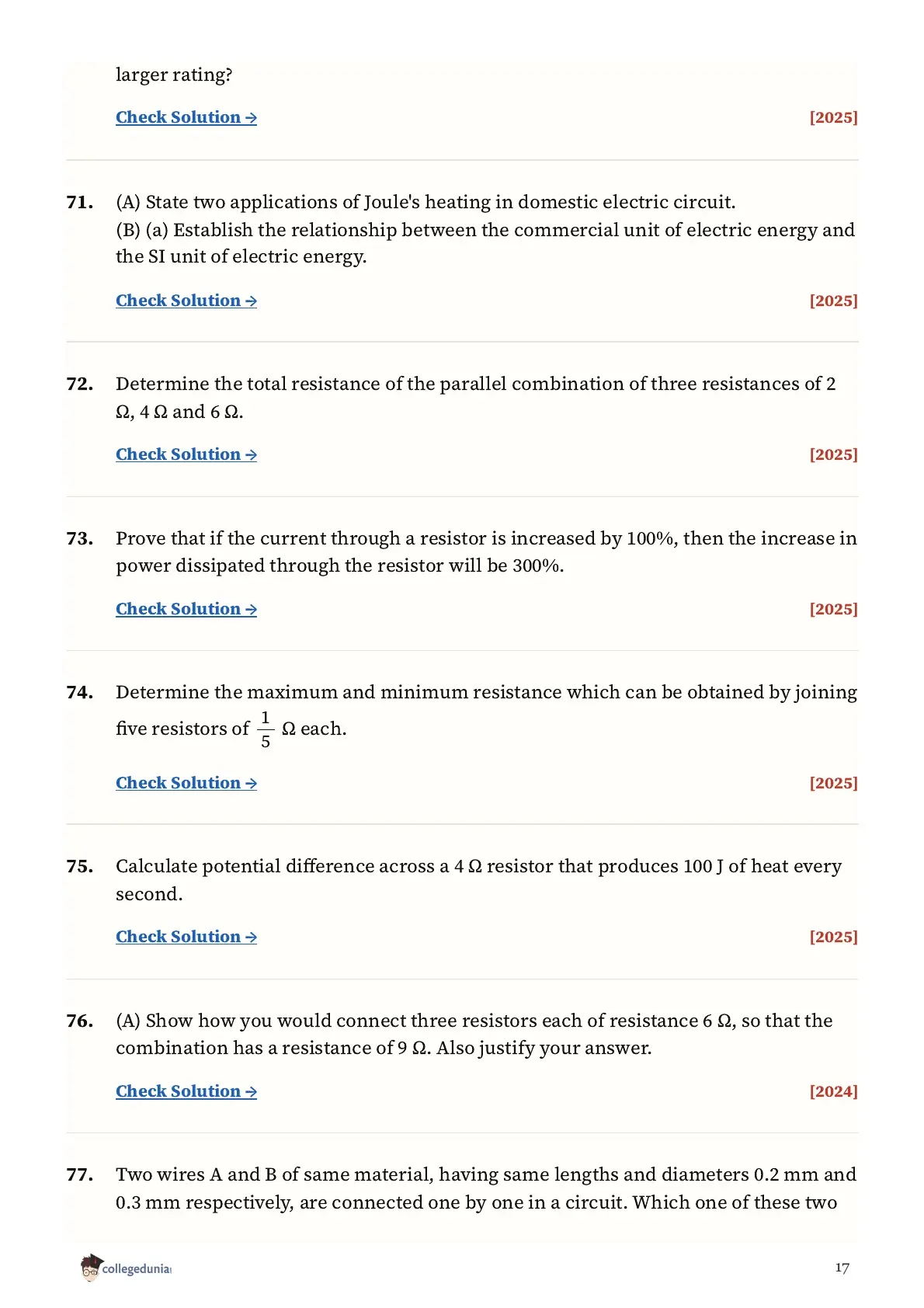
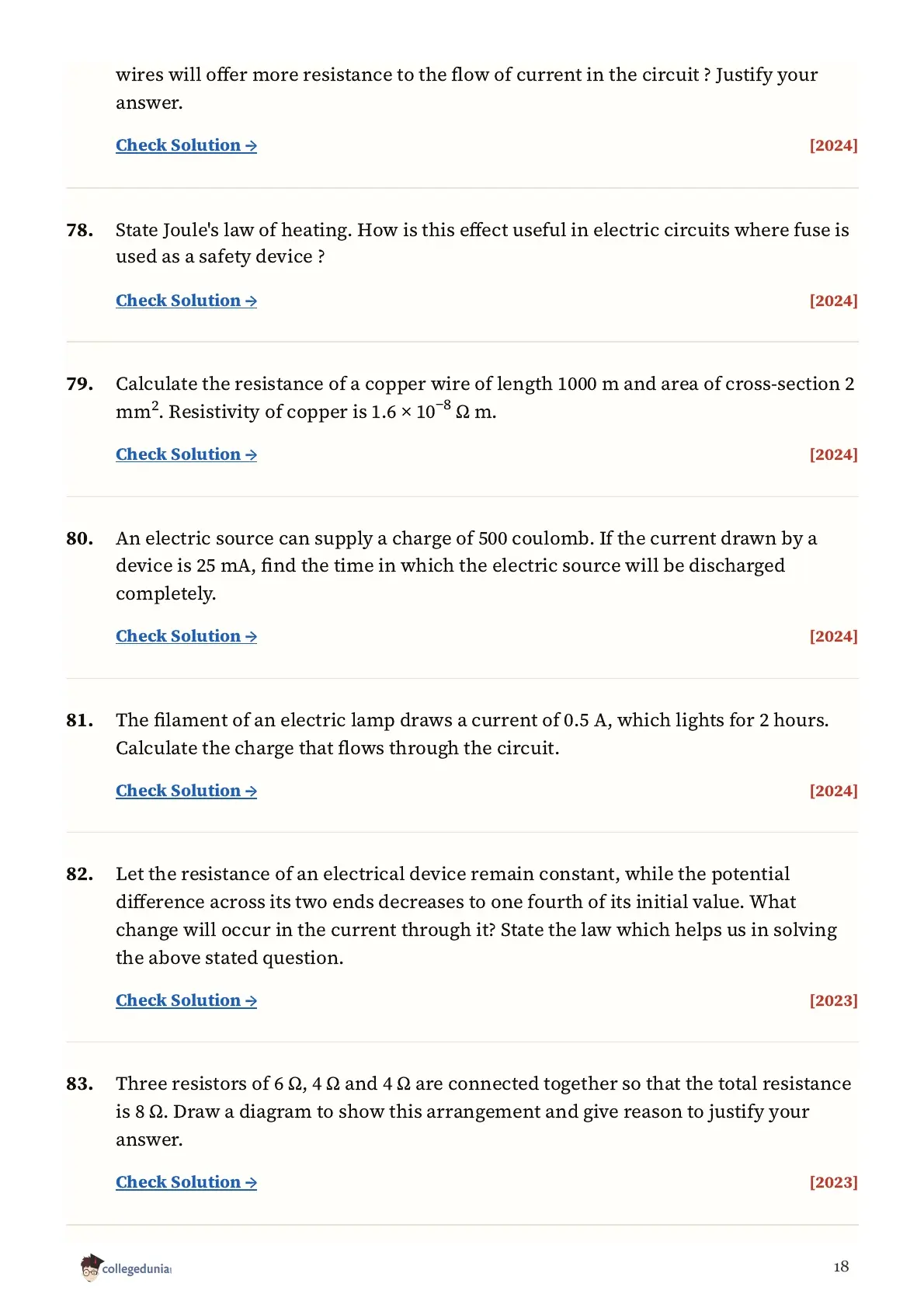
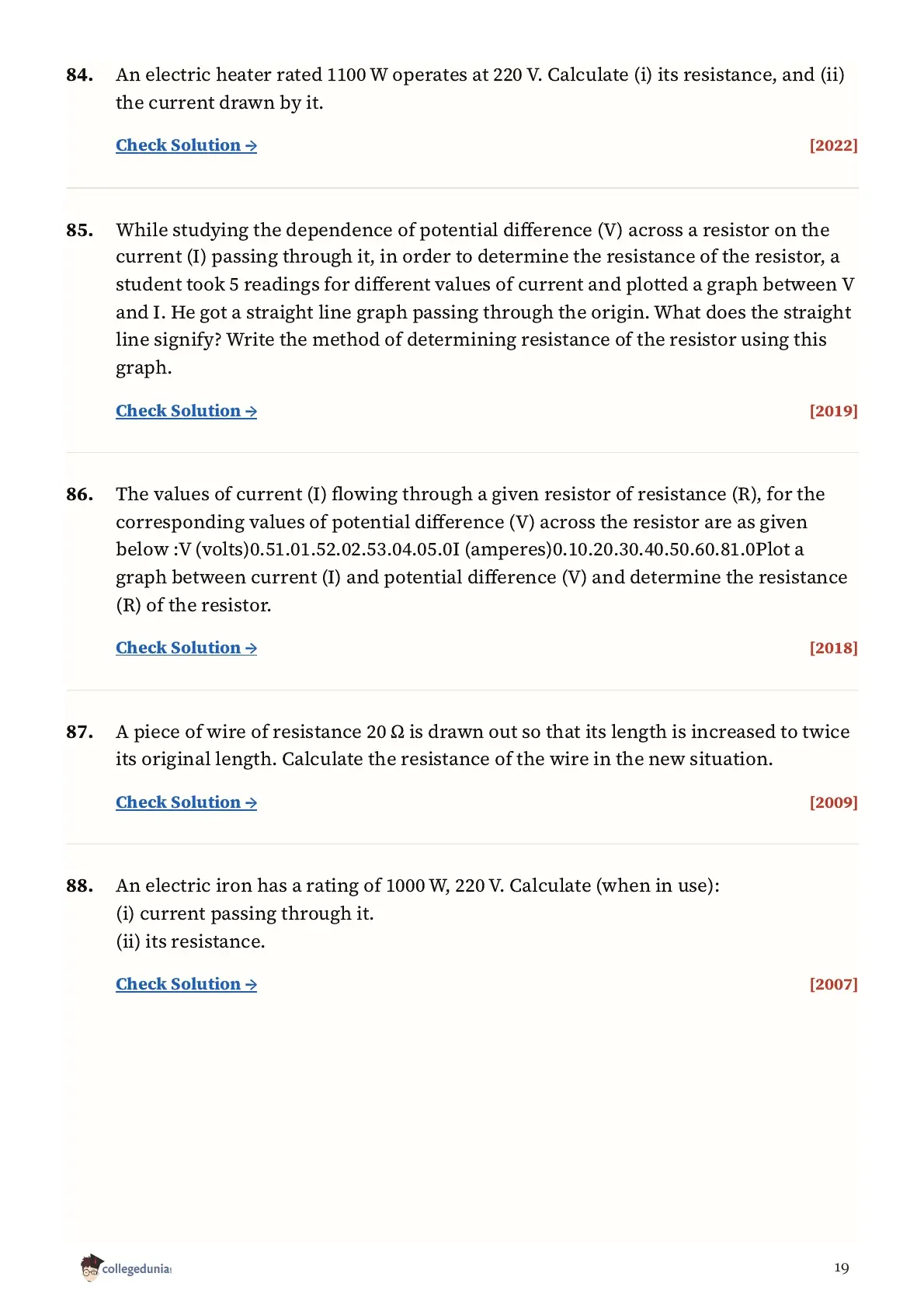
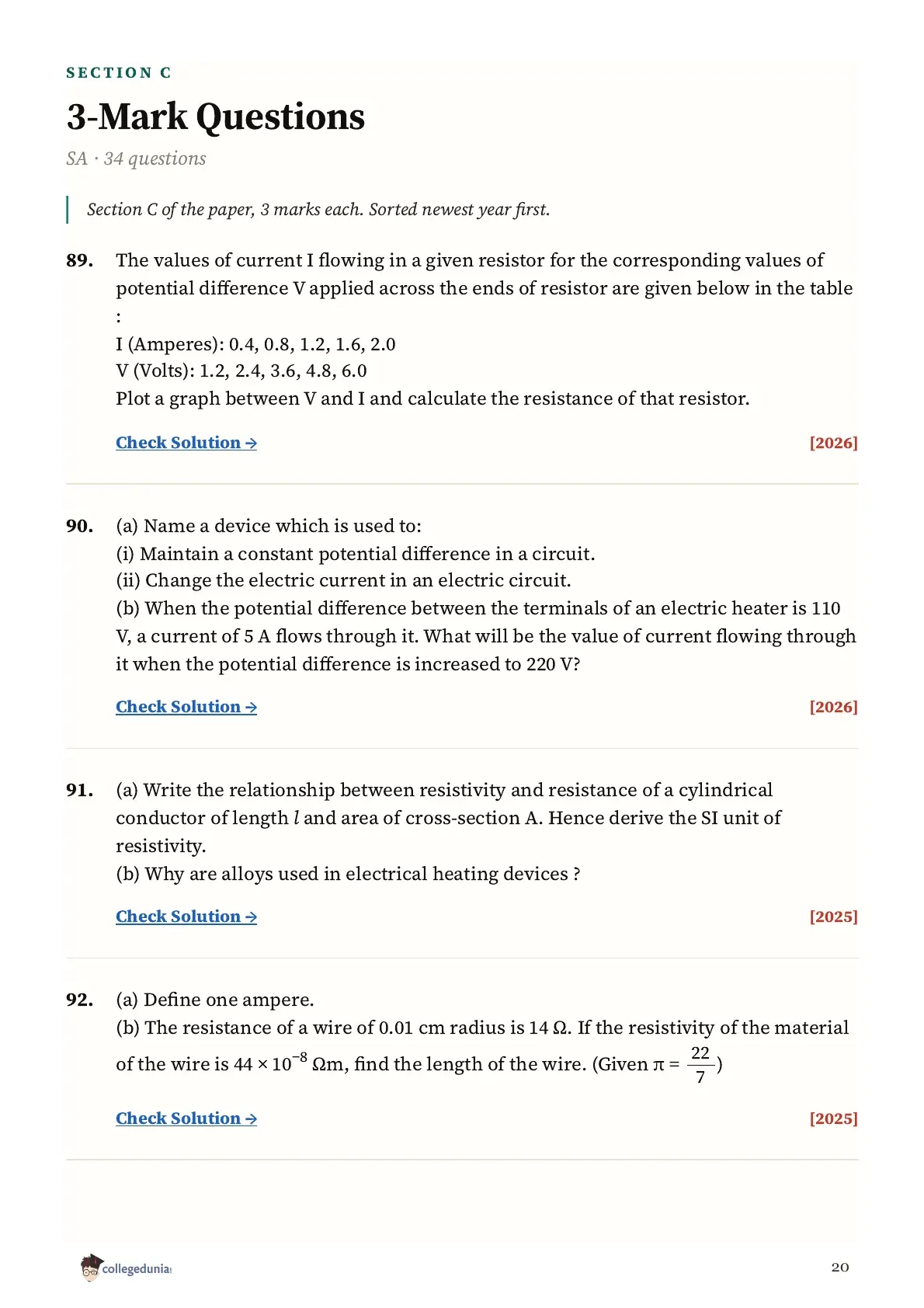
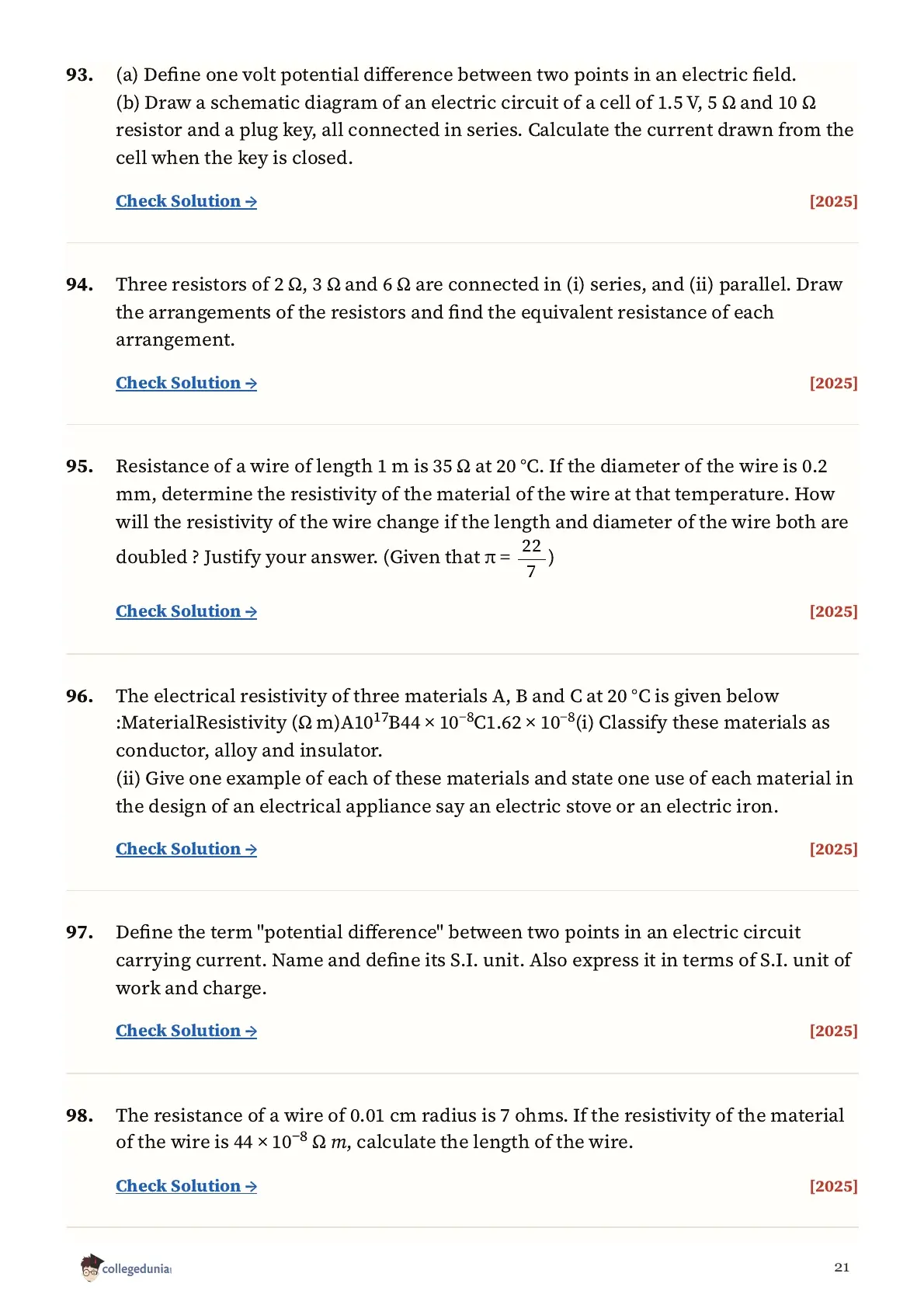
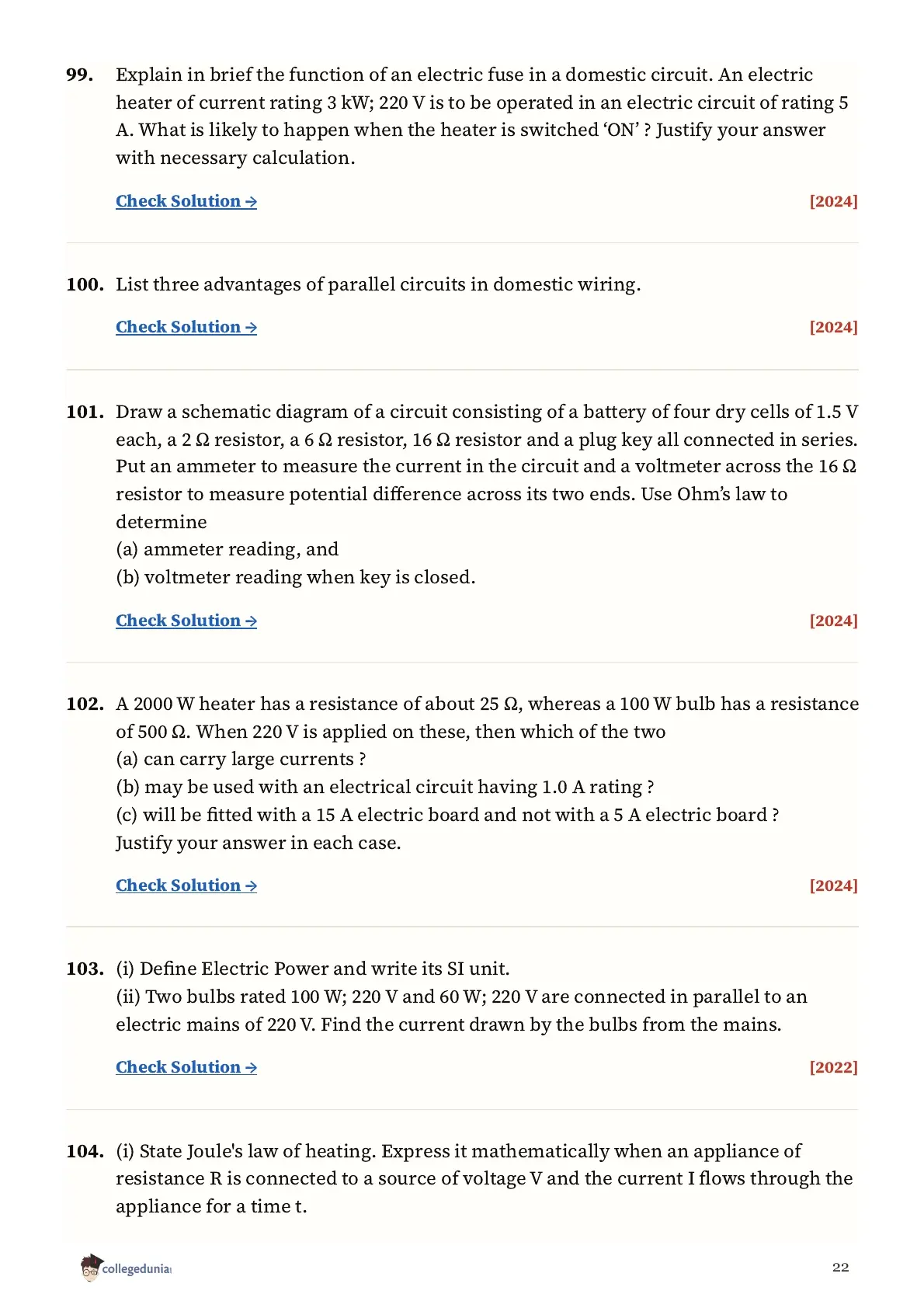
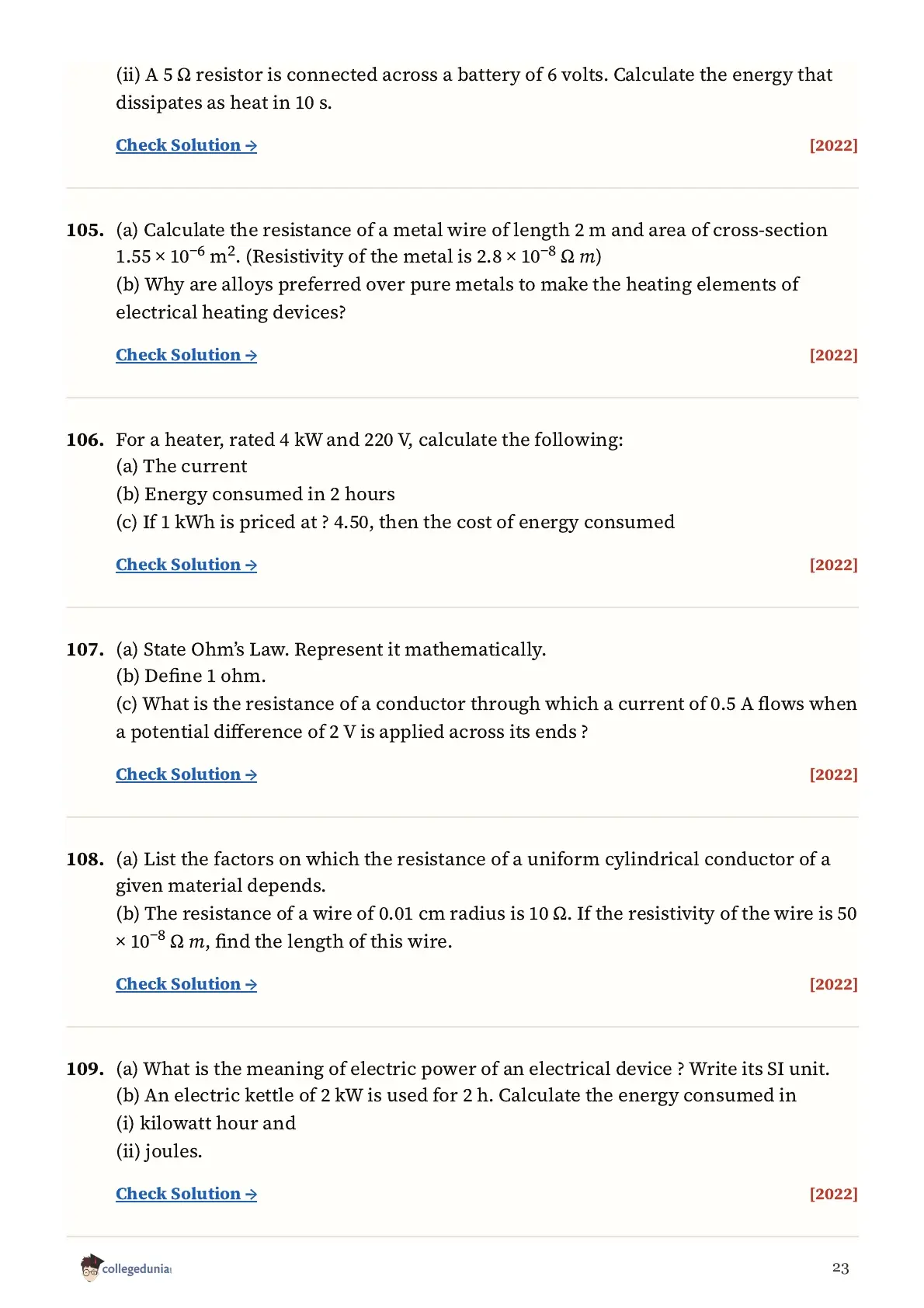
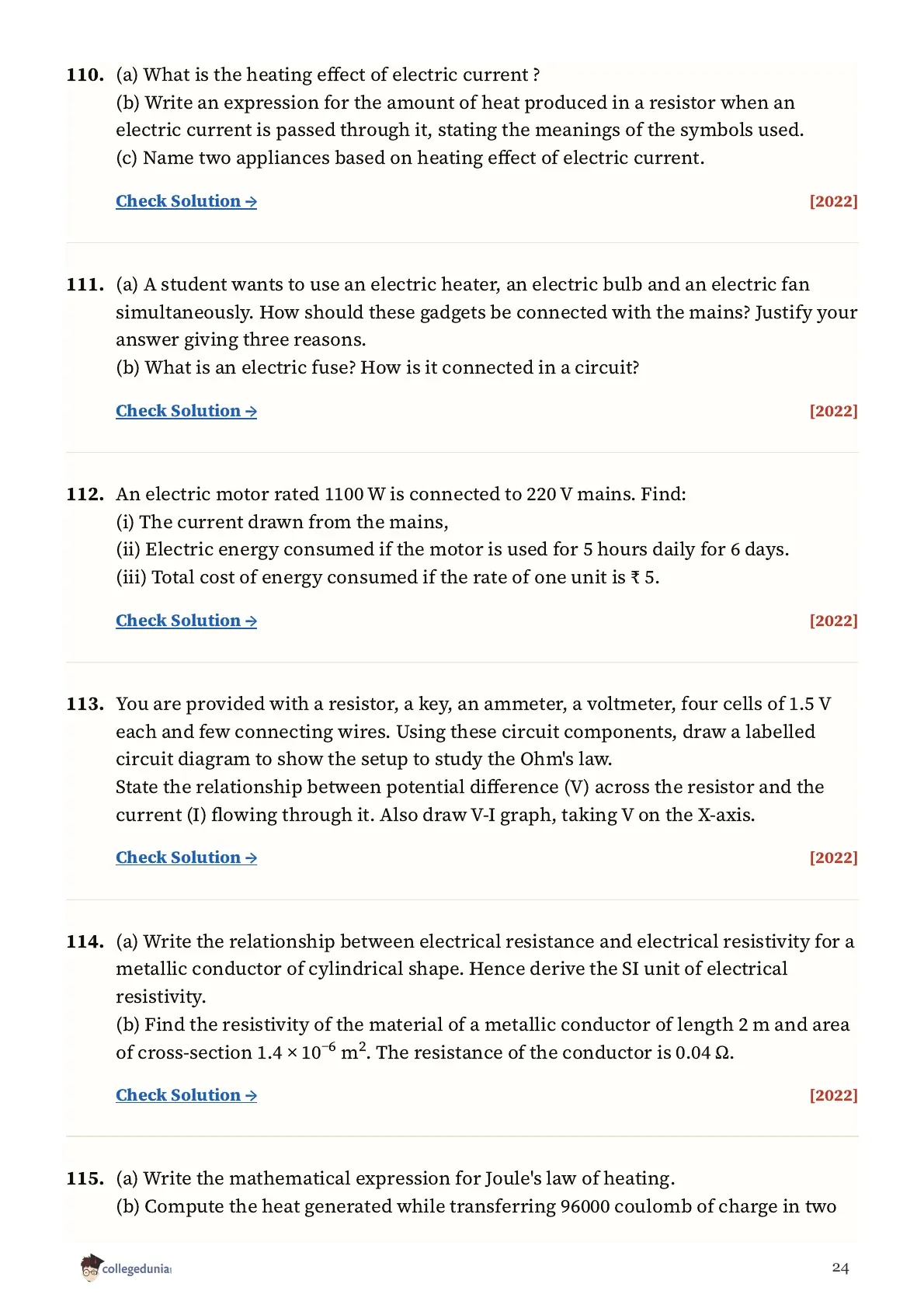
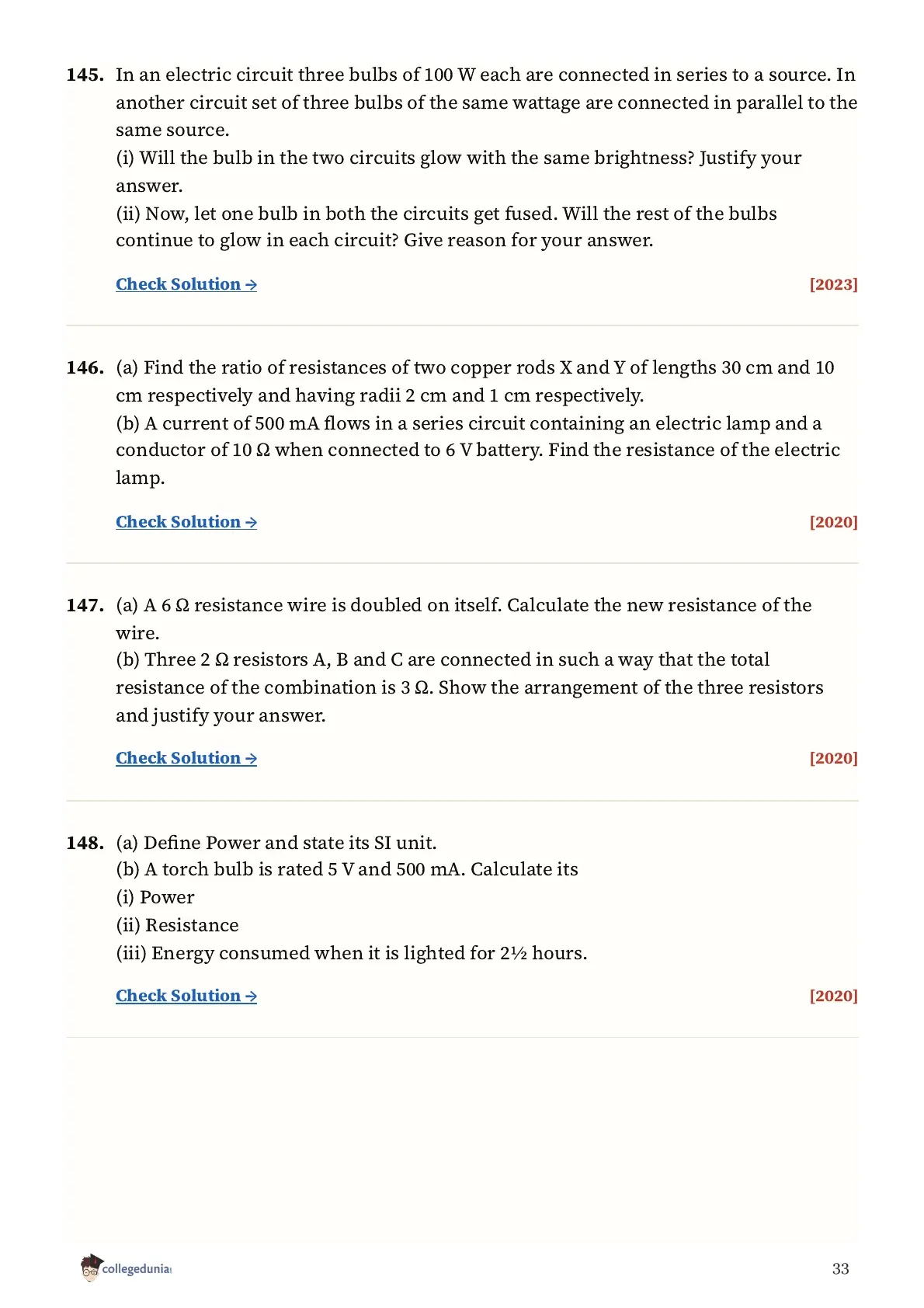
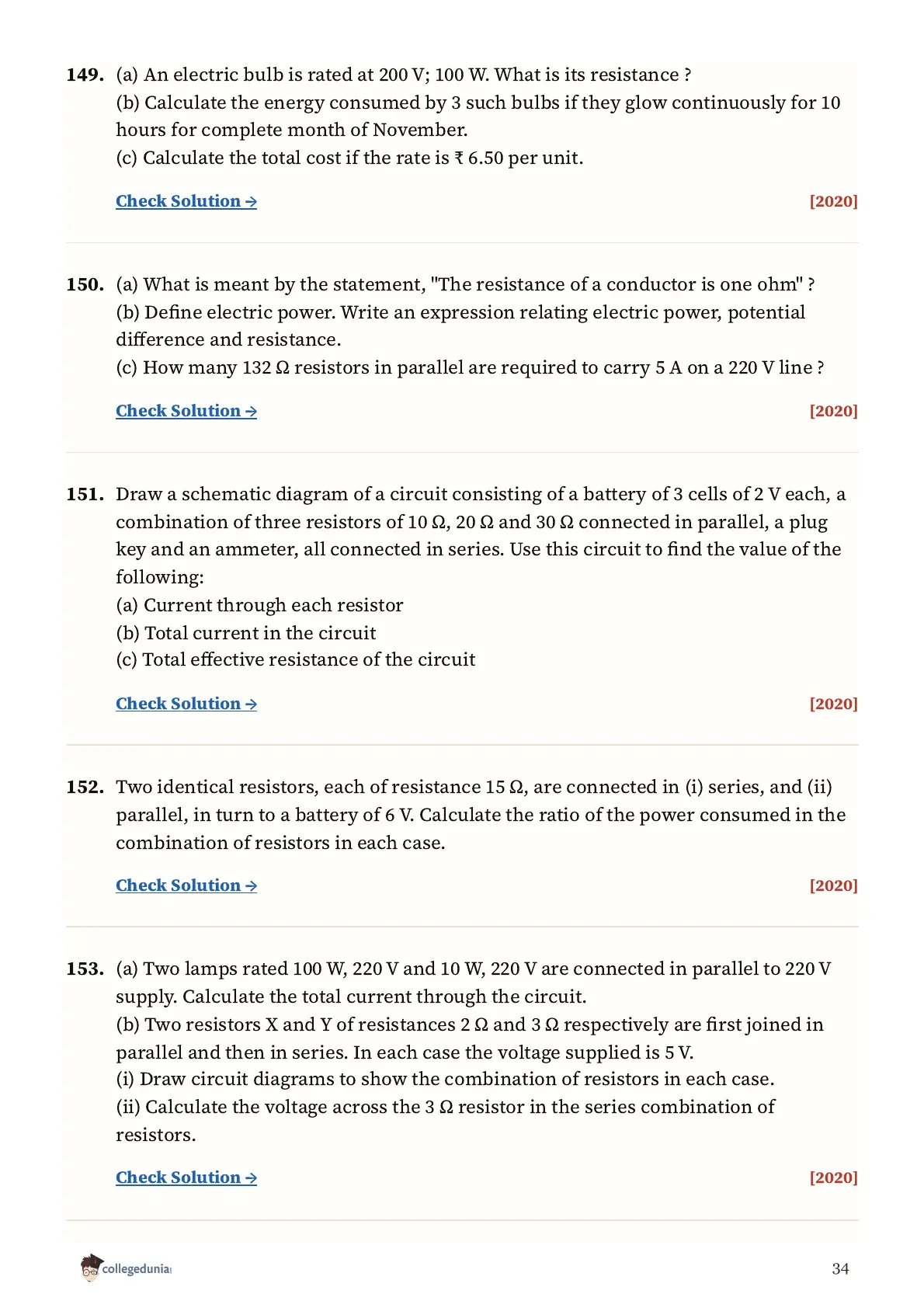
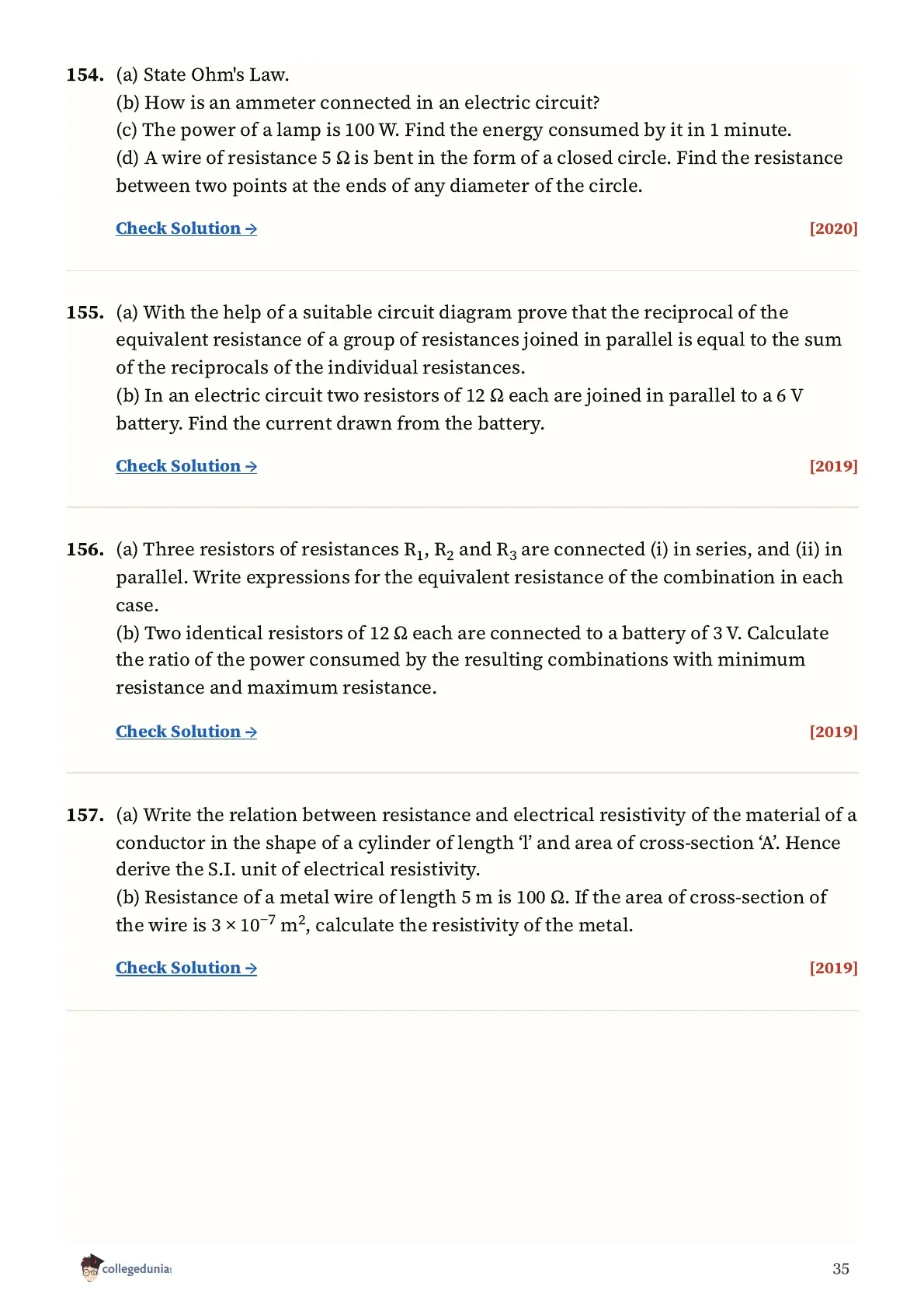
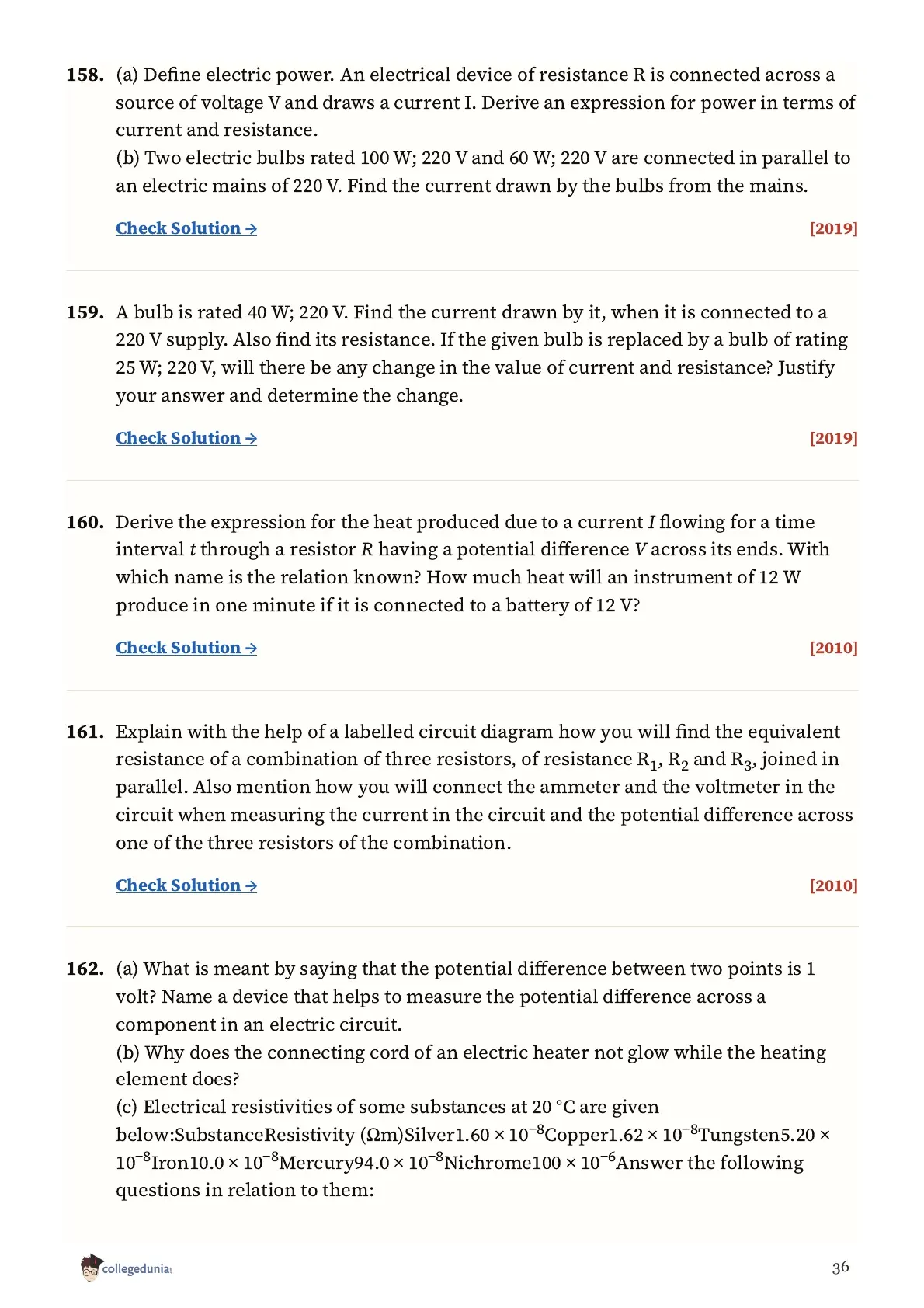
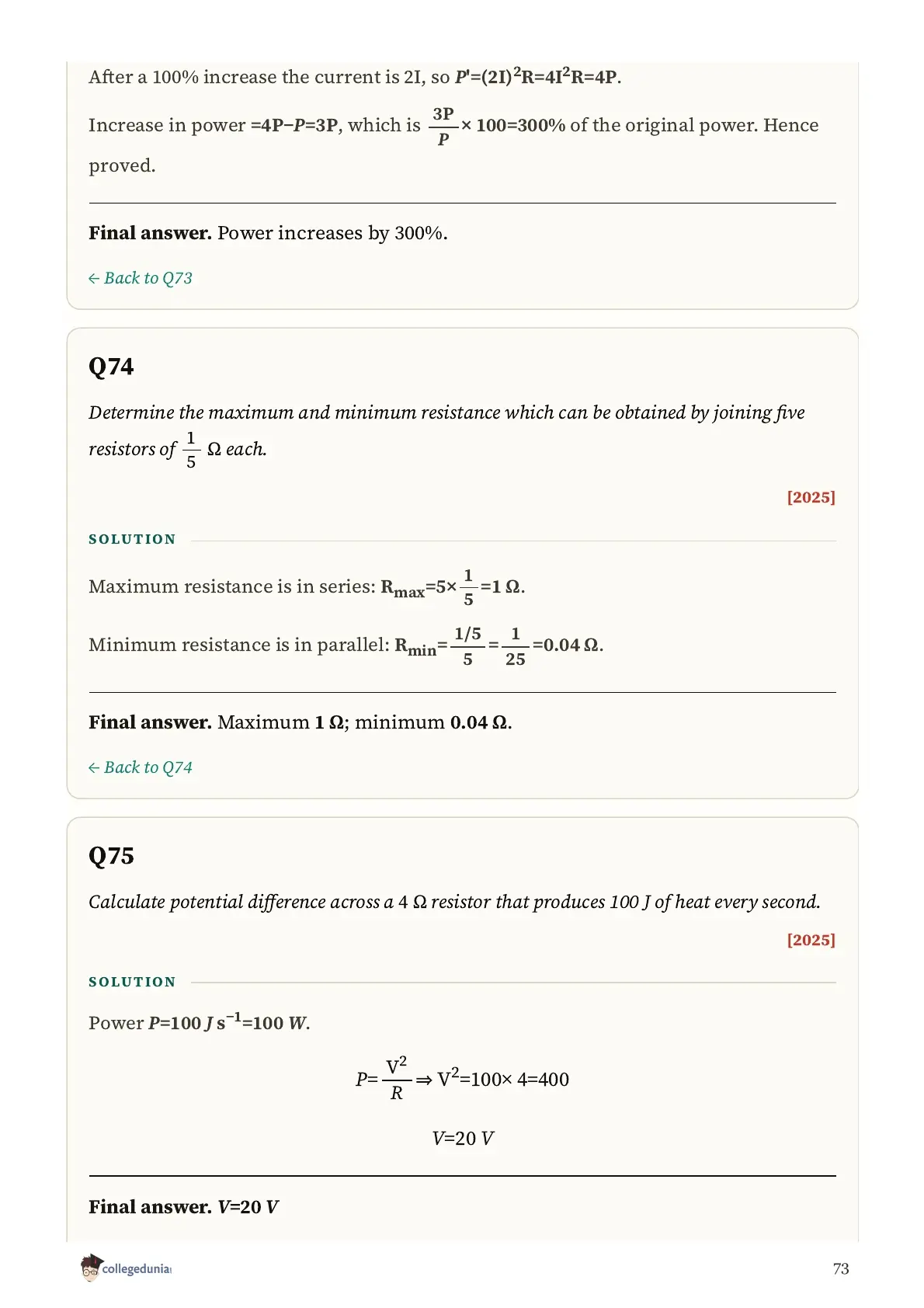
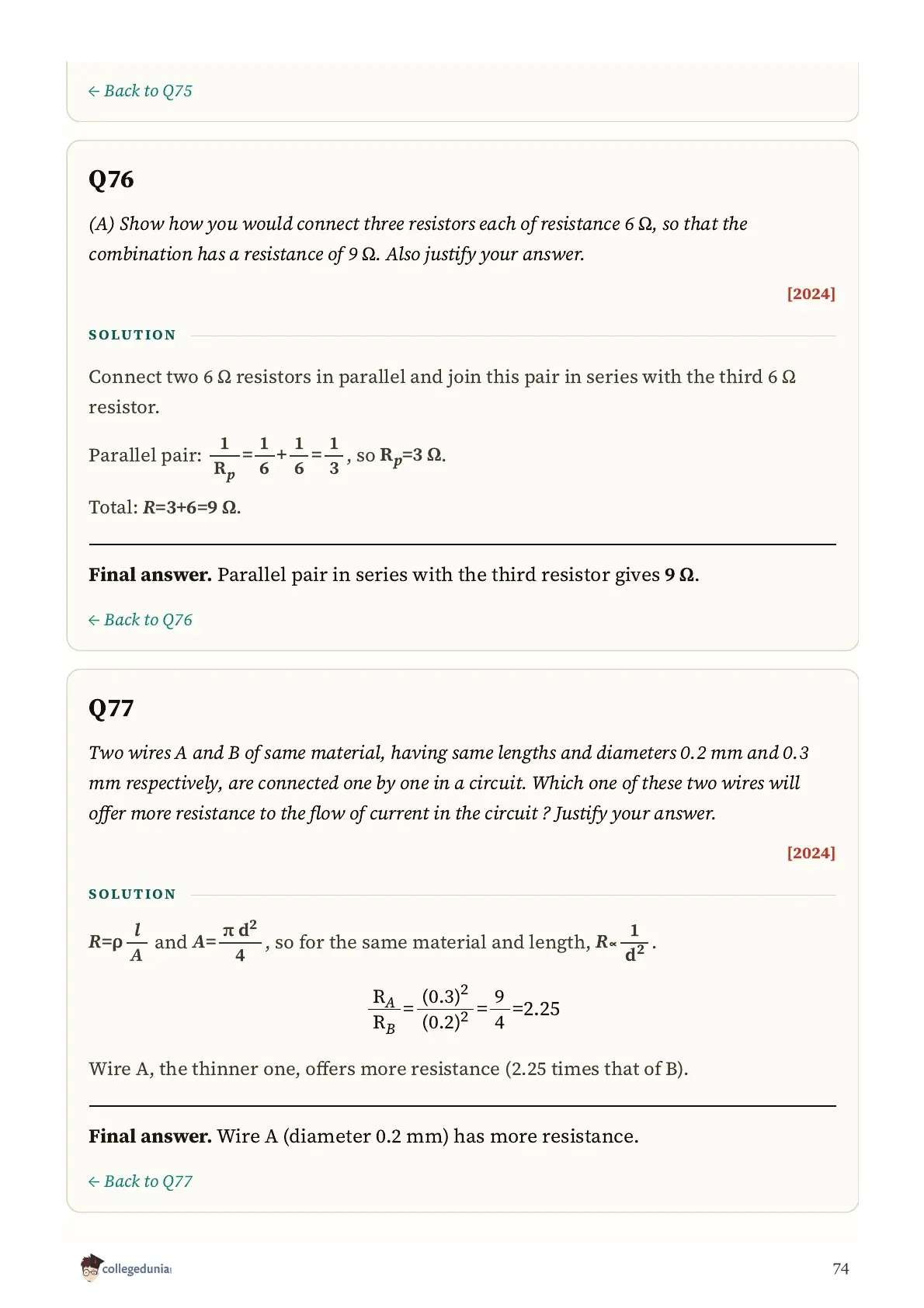
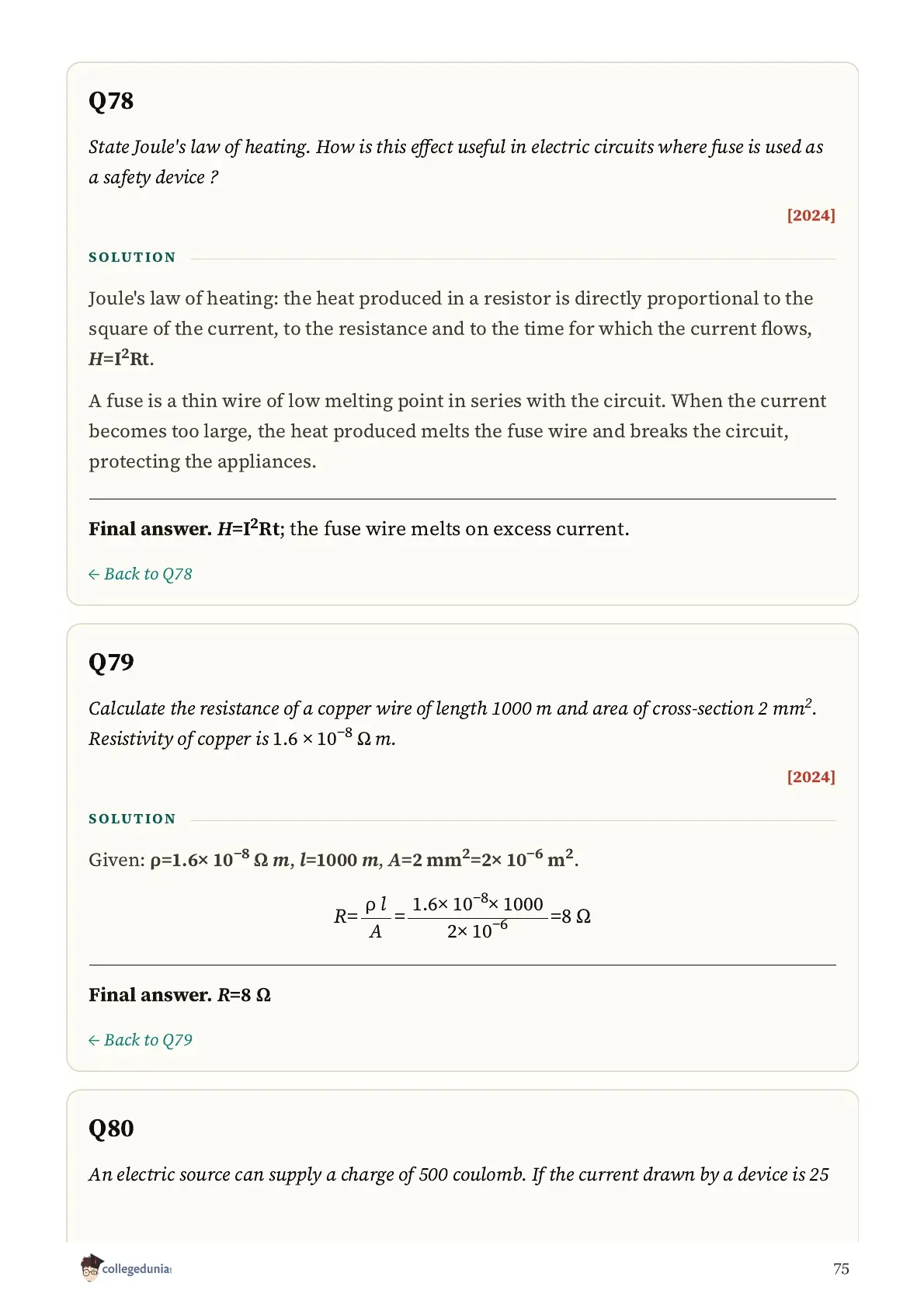
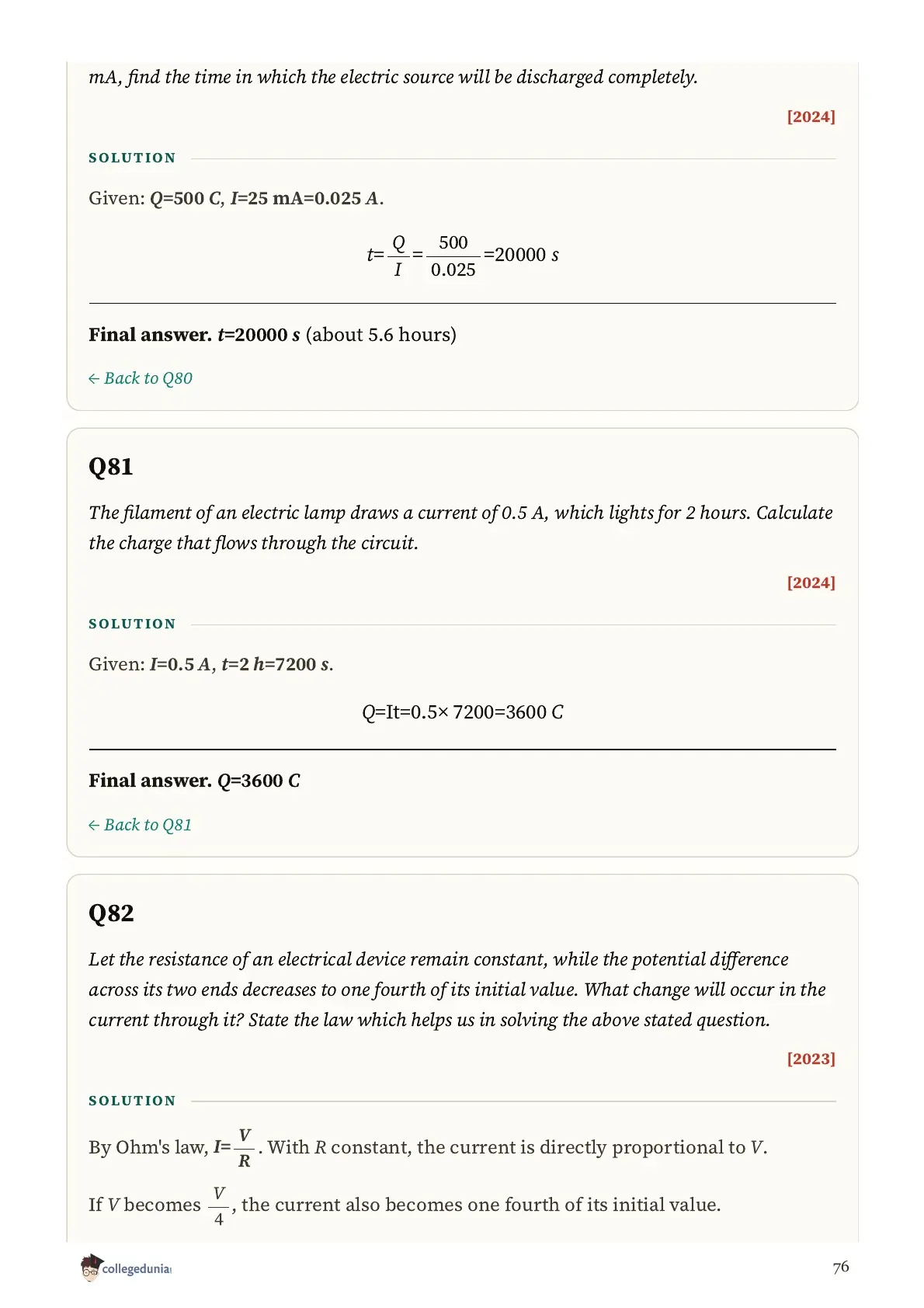
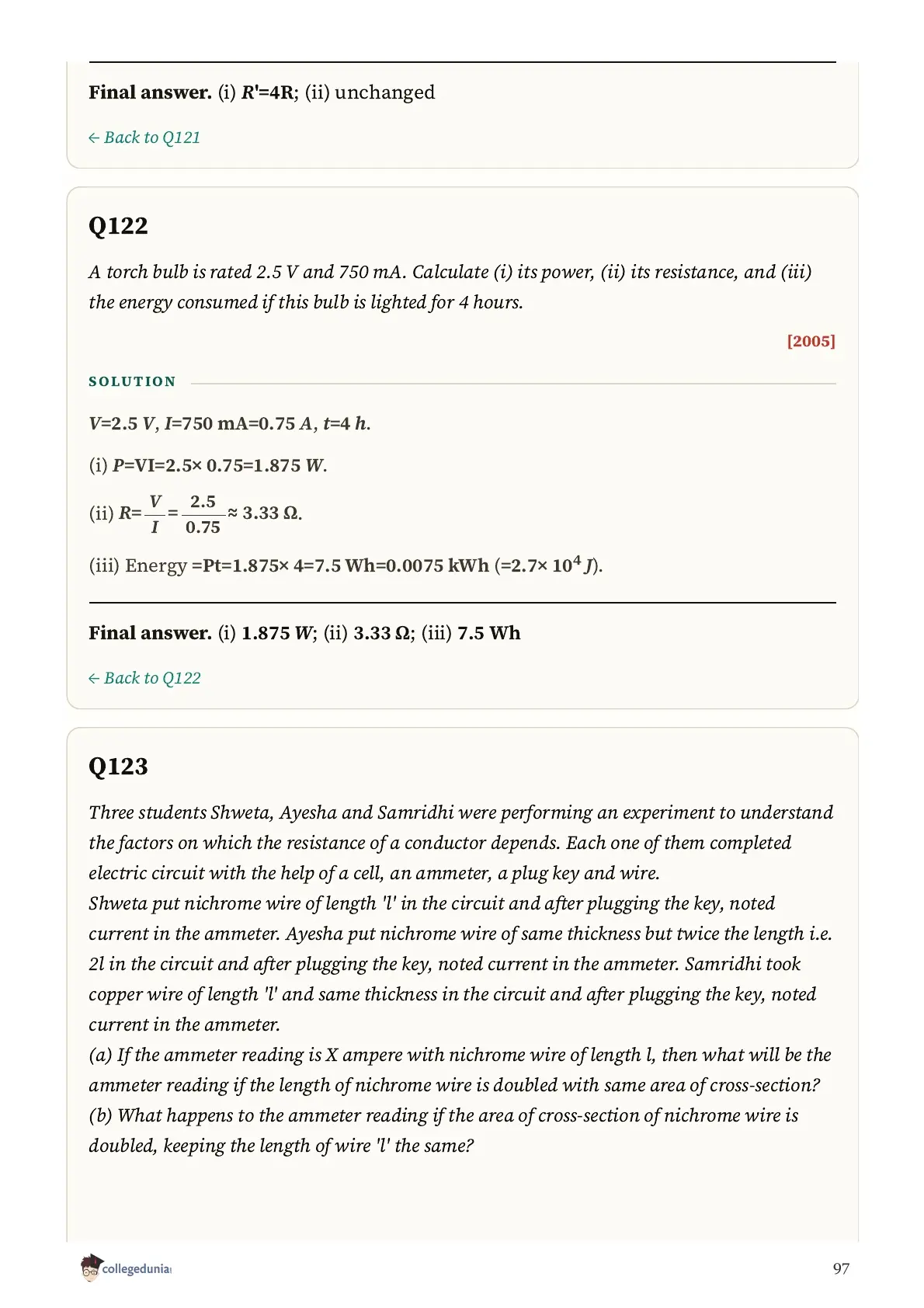
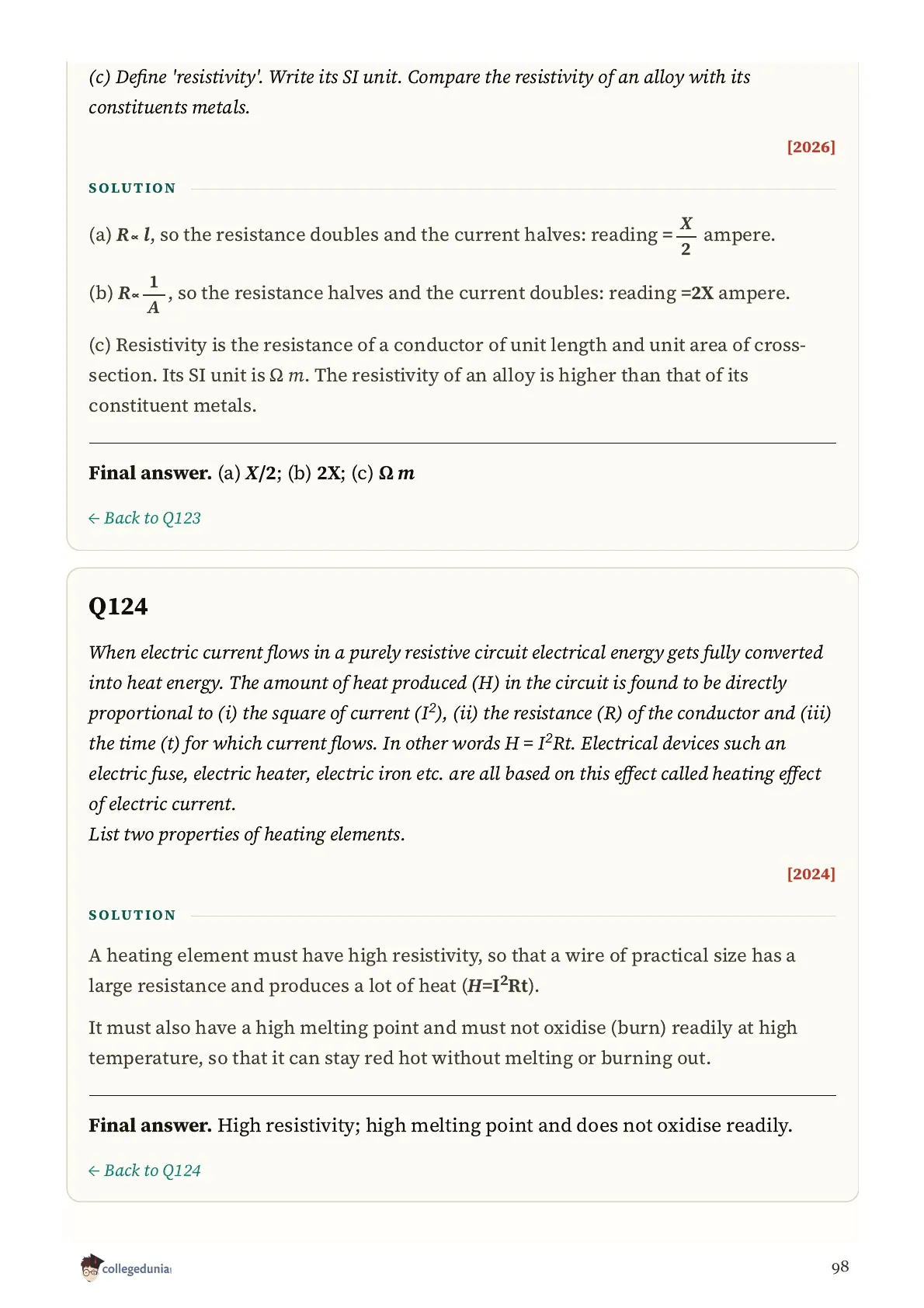
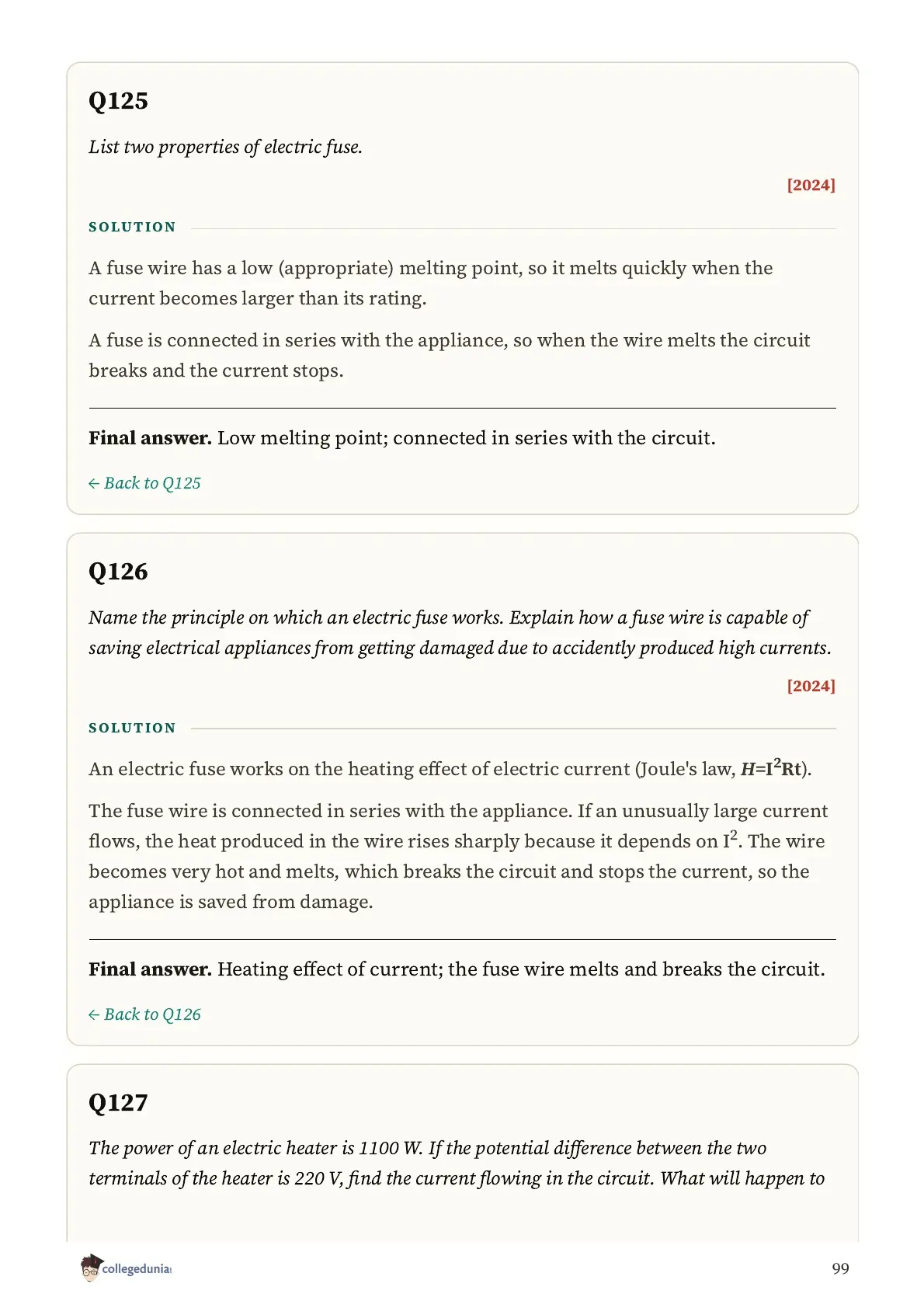
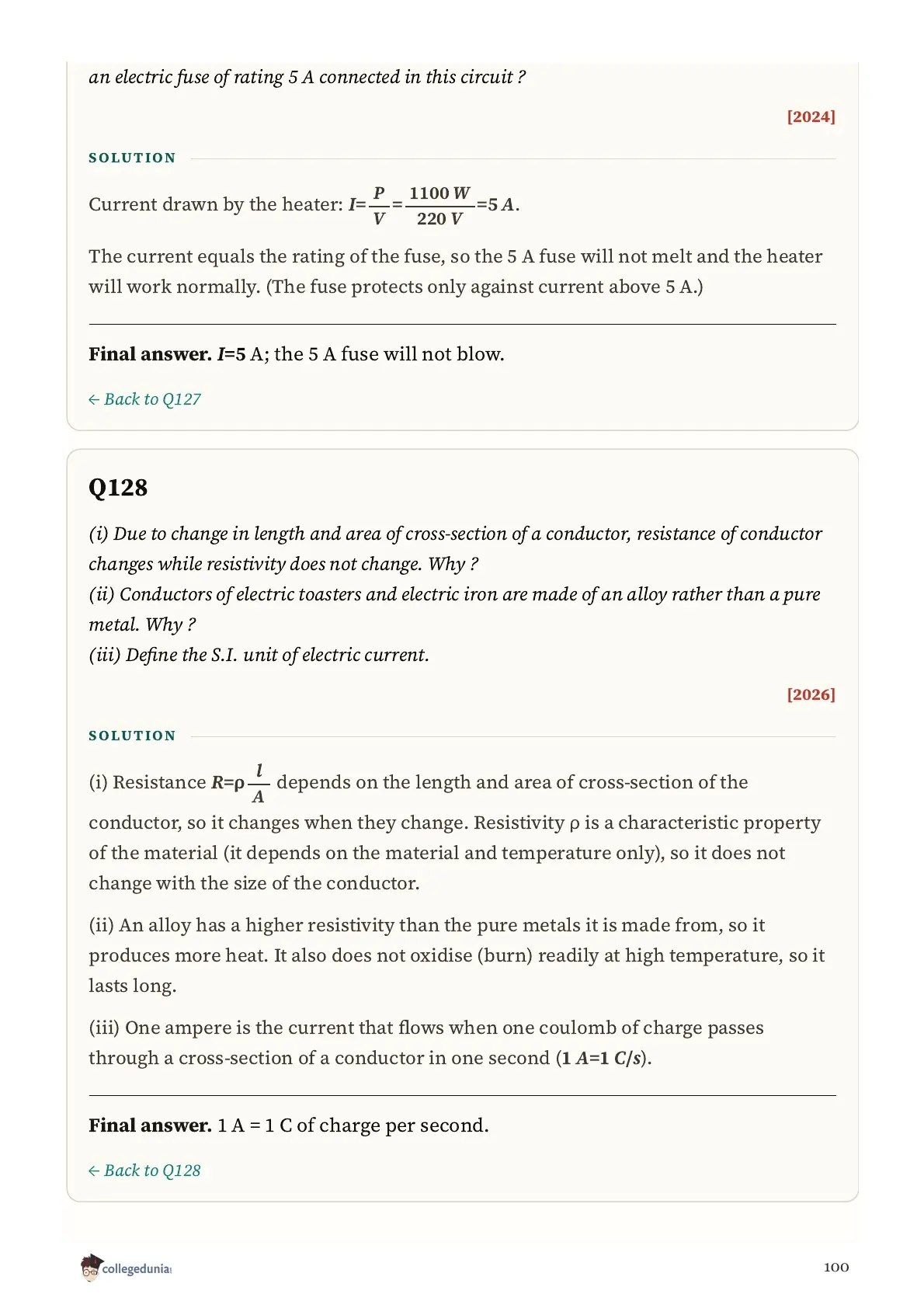
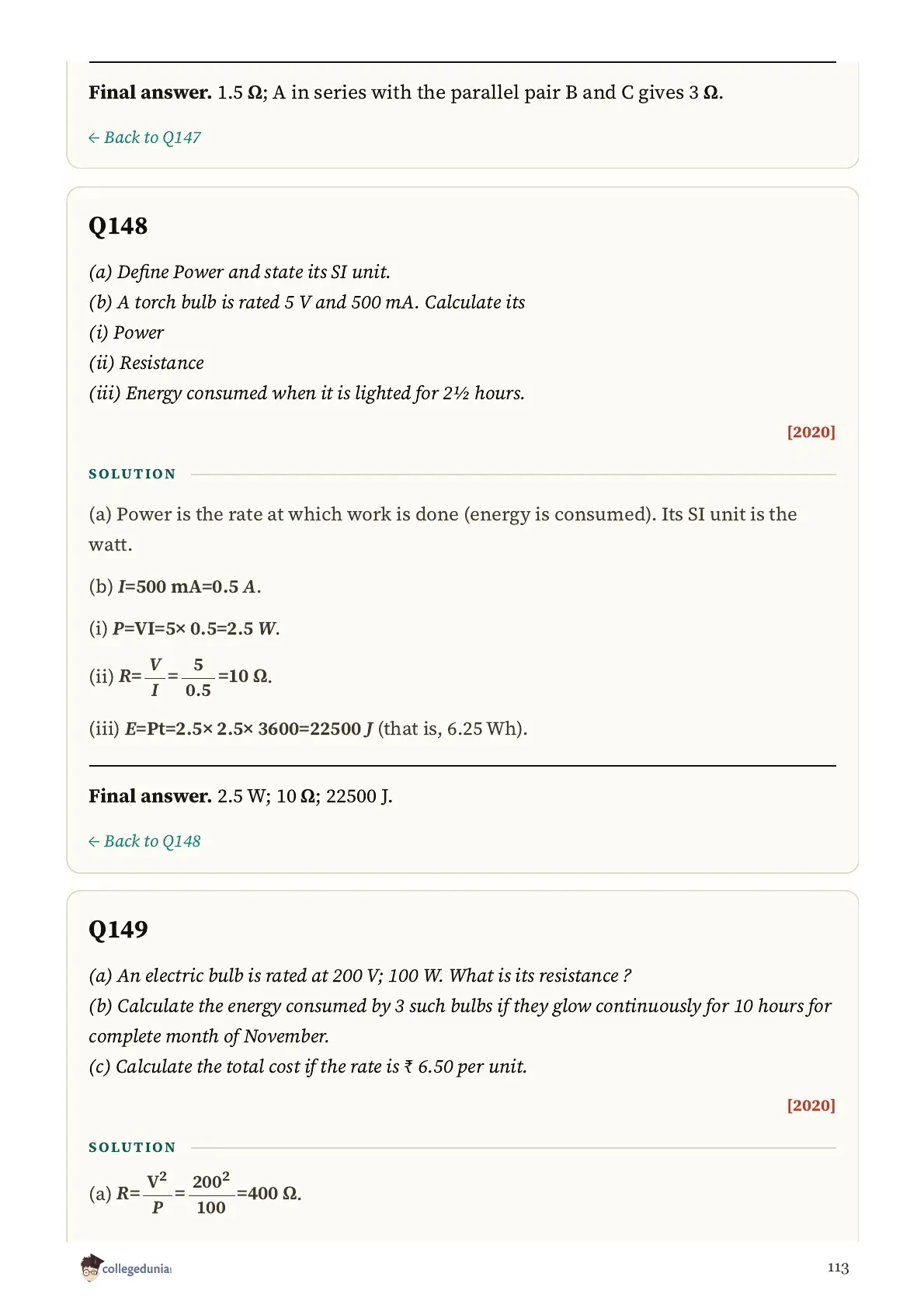
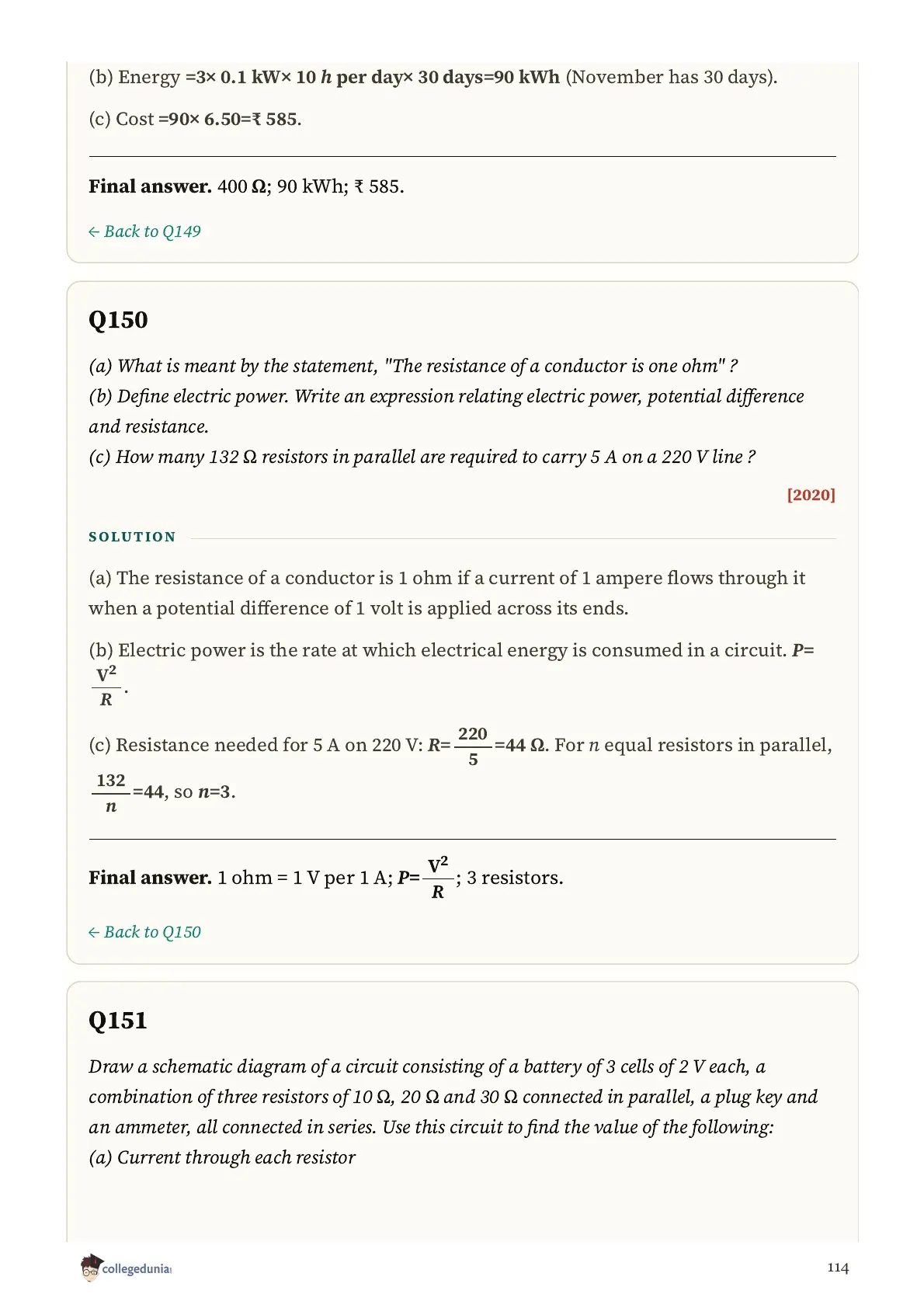
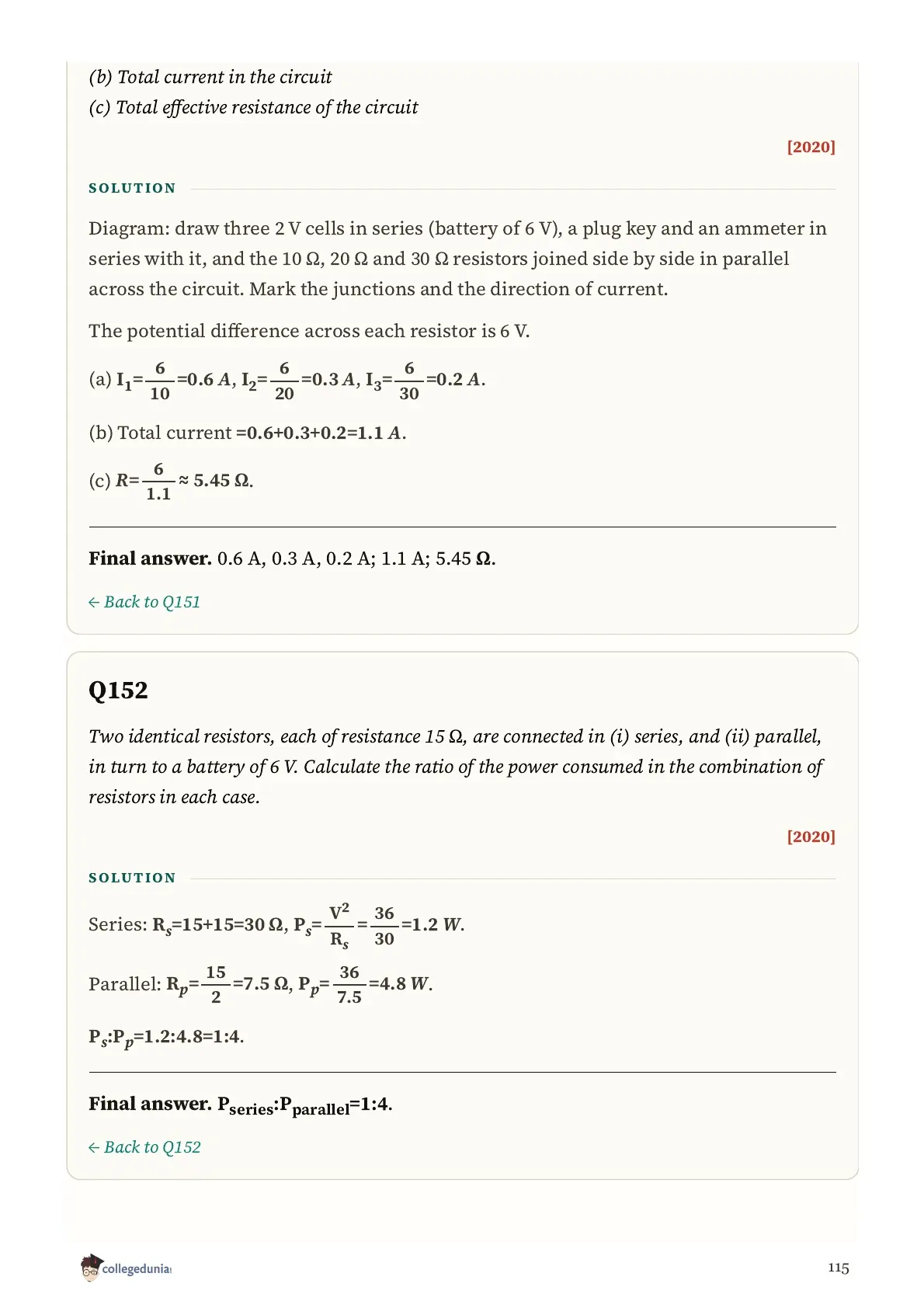
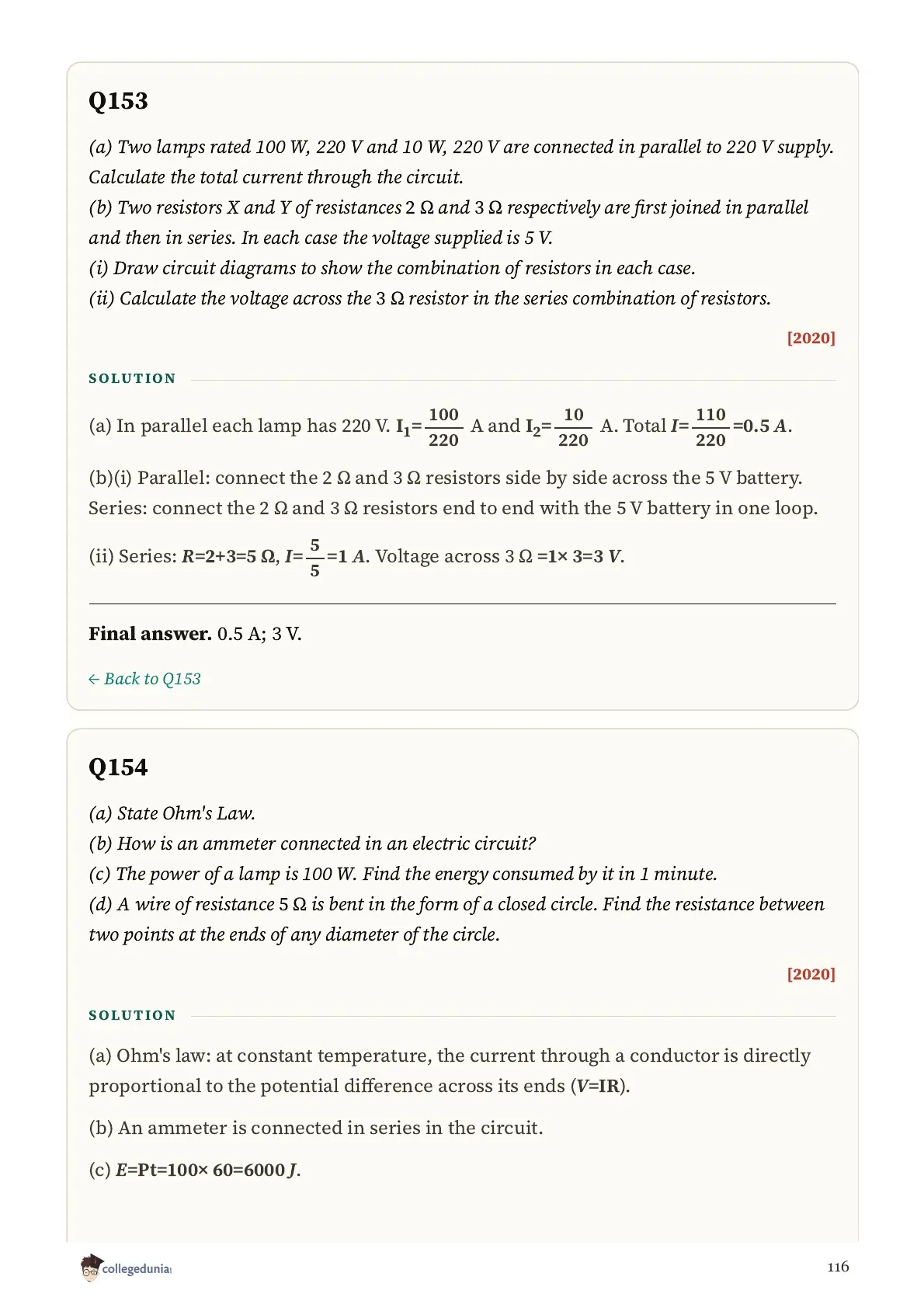
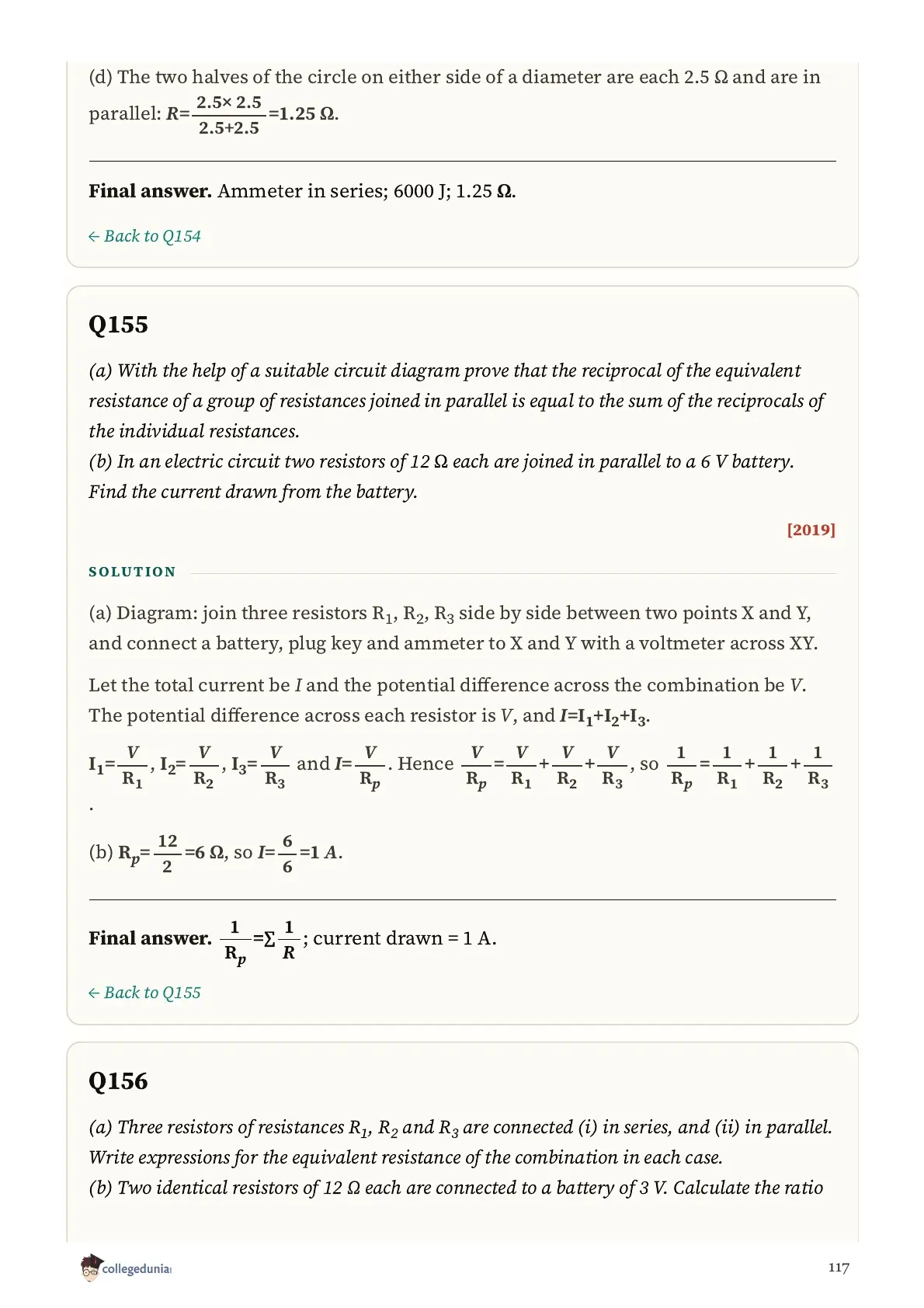
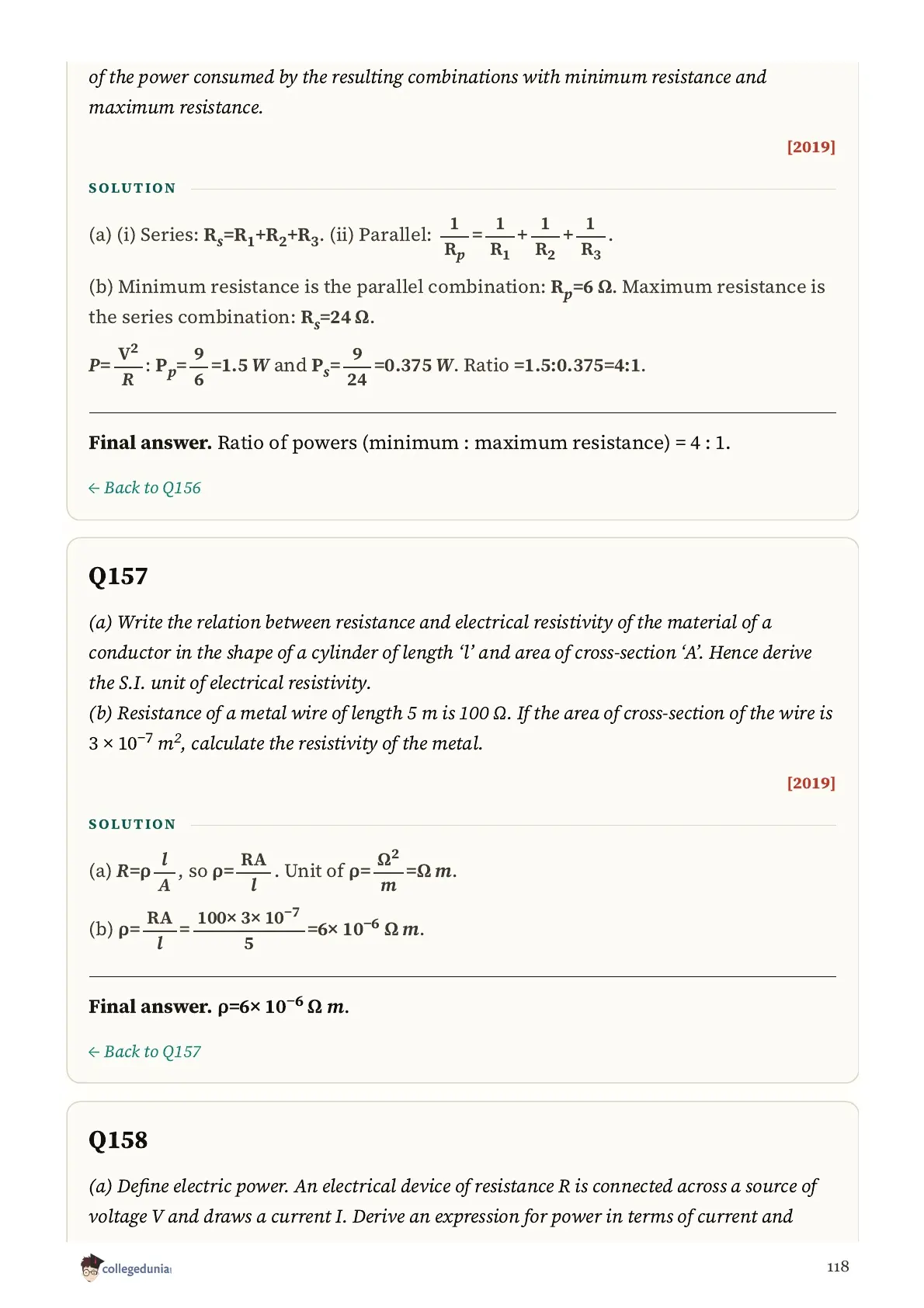
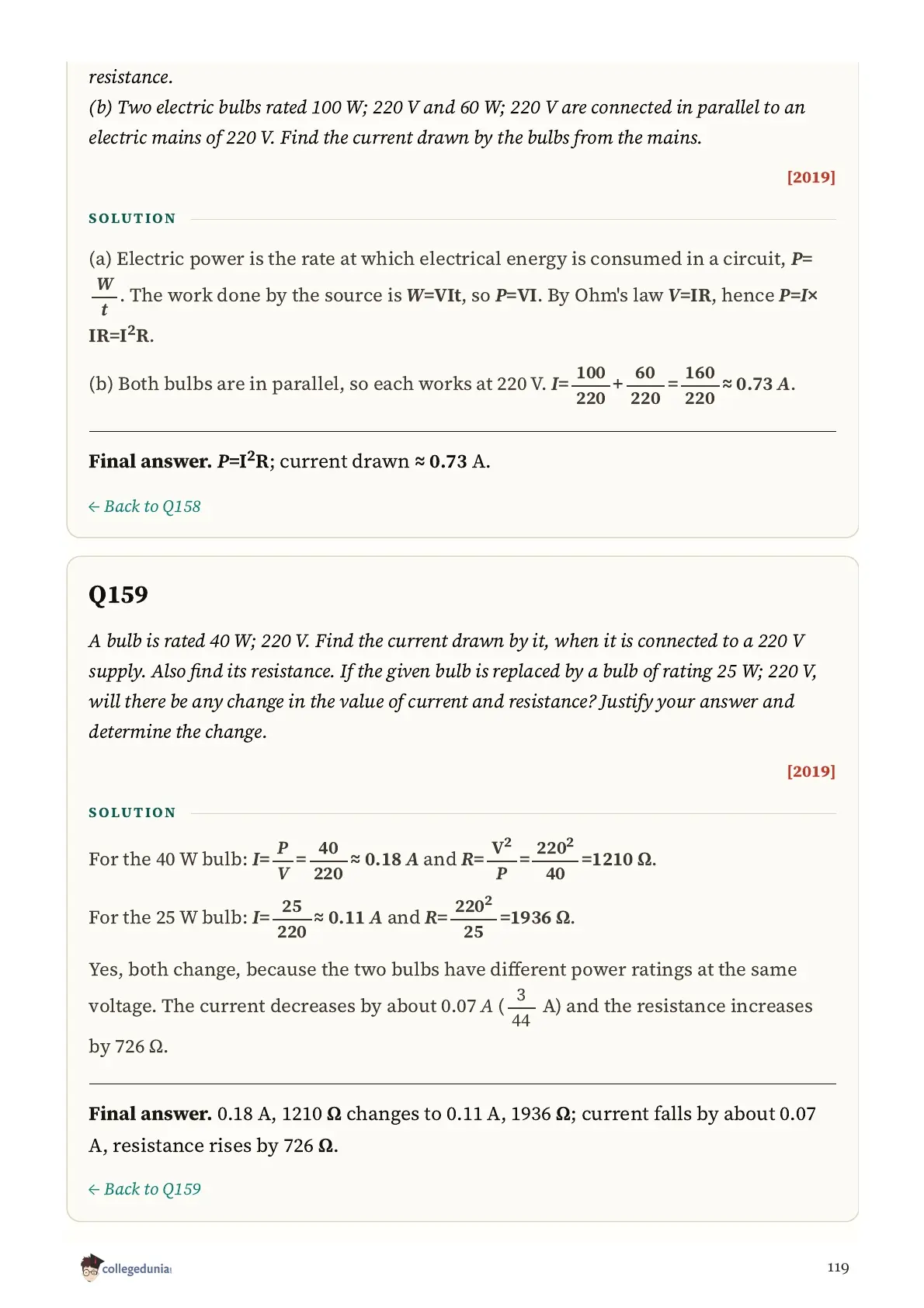
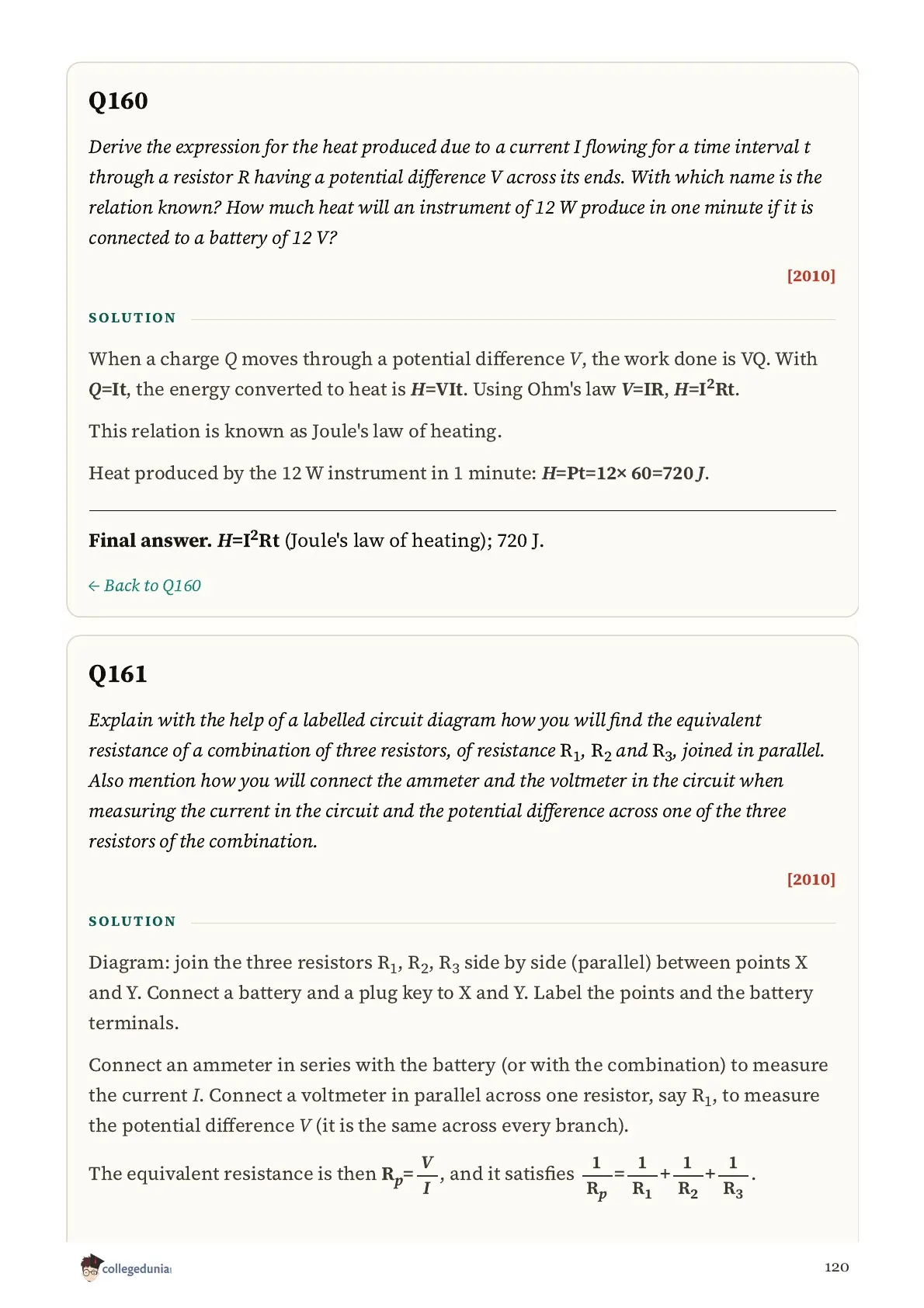
Electricity Weightage in the Class 10 Science Paper
CBSE does not print a mark figure for Electricity alone. In the Class 10 Science (086) syllabus, Unit IV, Effects of Current, carries 13 of the 80 theory marks and holds two chapters, Electricity and Magnetic Effects of Electric Current. The 13 is a unit-level figure from the 2025-26 and 2026-27 curriculum documents, so check the current syllabus on cbseacademic.nic.in. In this set the 1-mark question and the 5-mark long answer are the commonest forms.
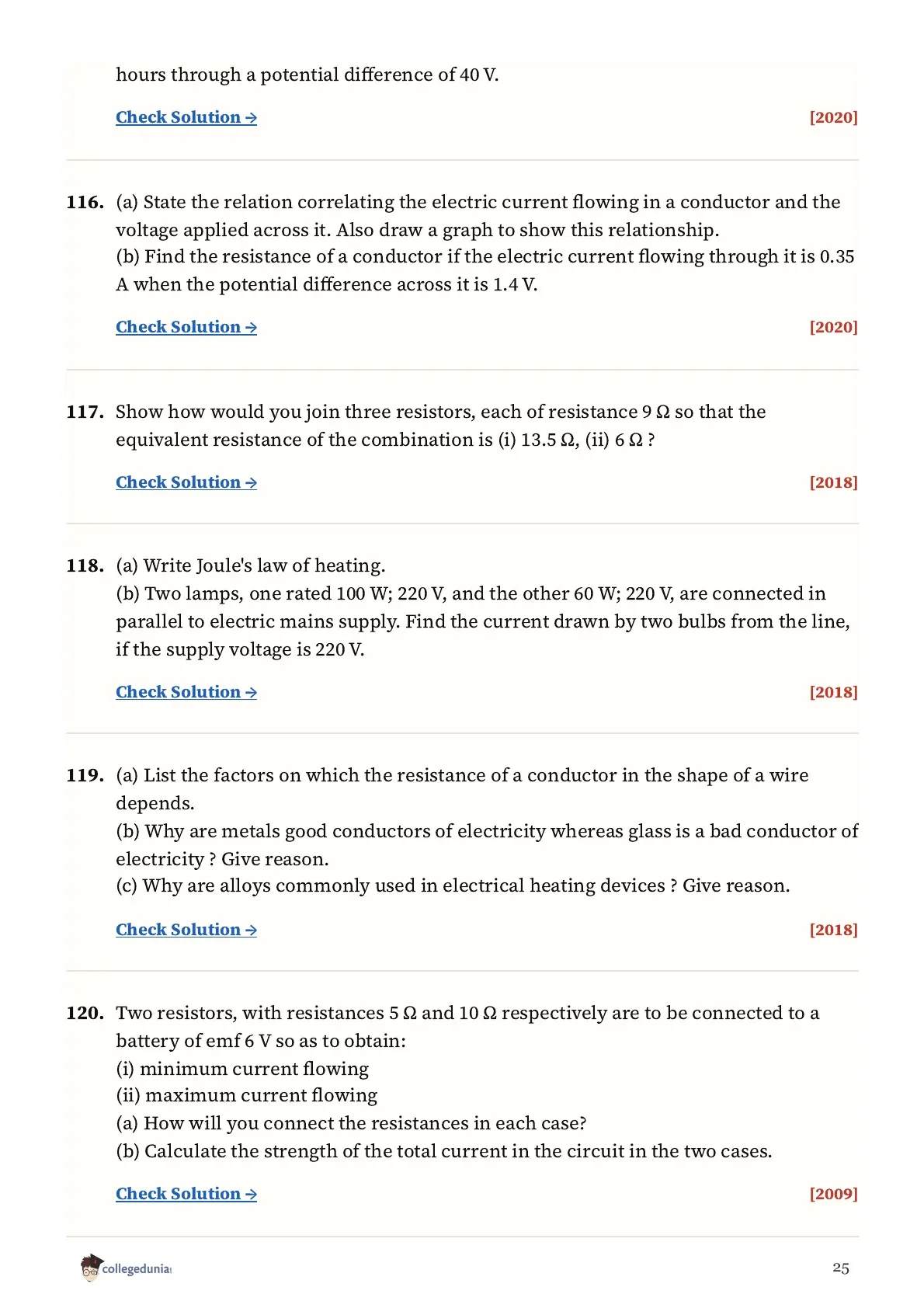
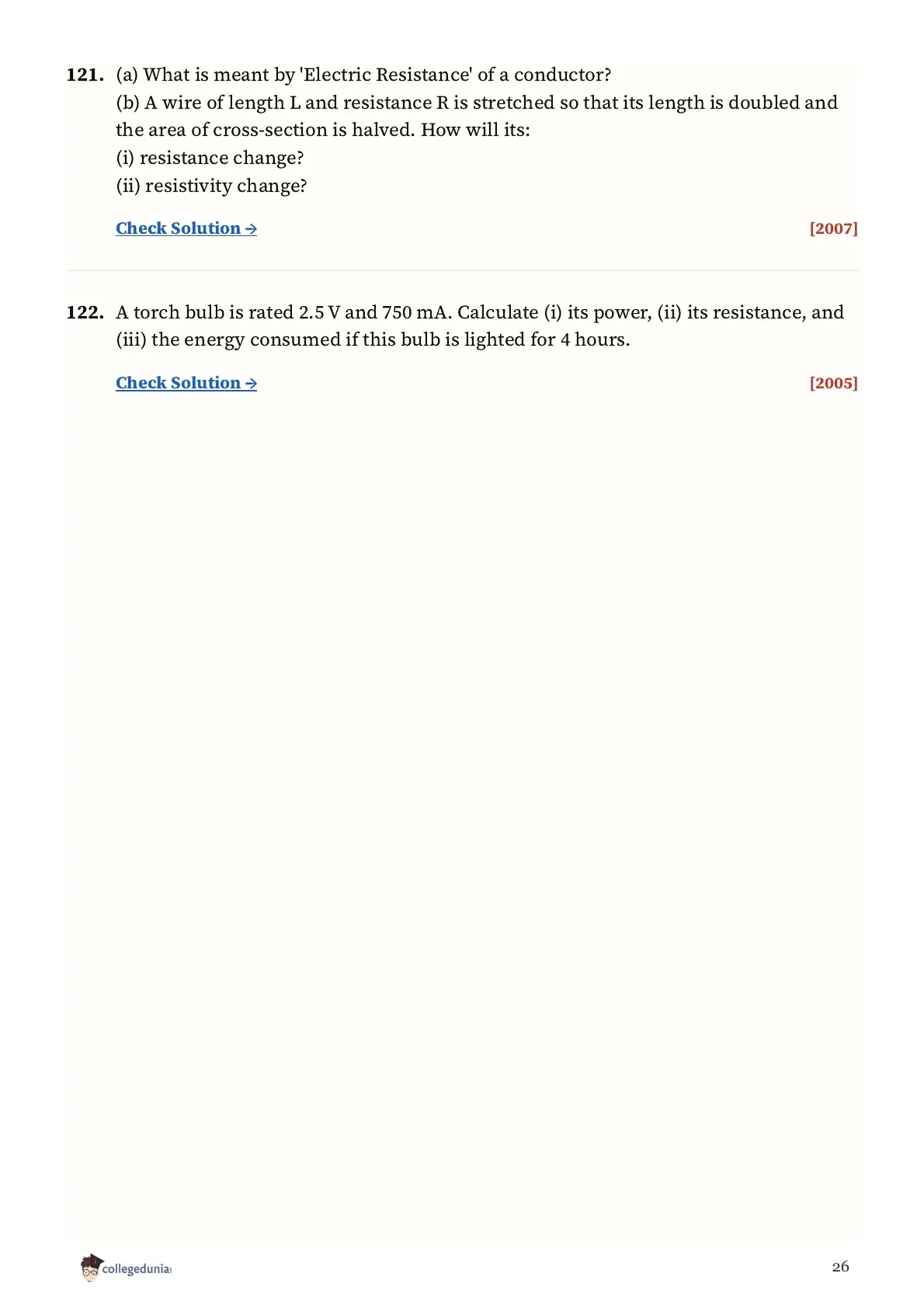
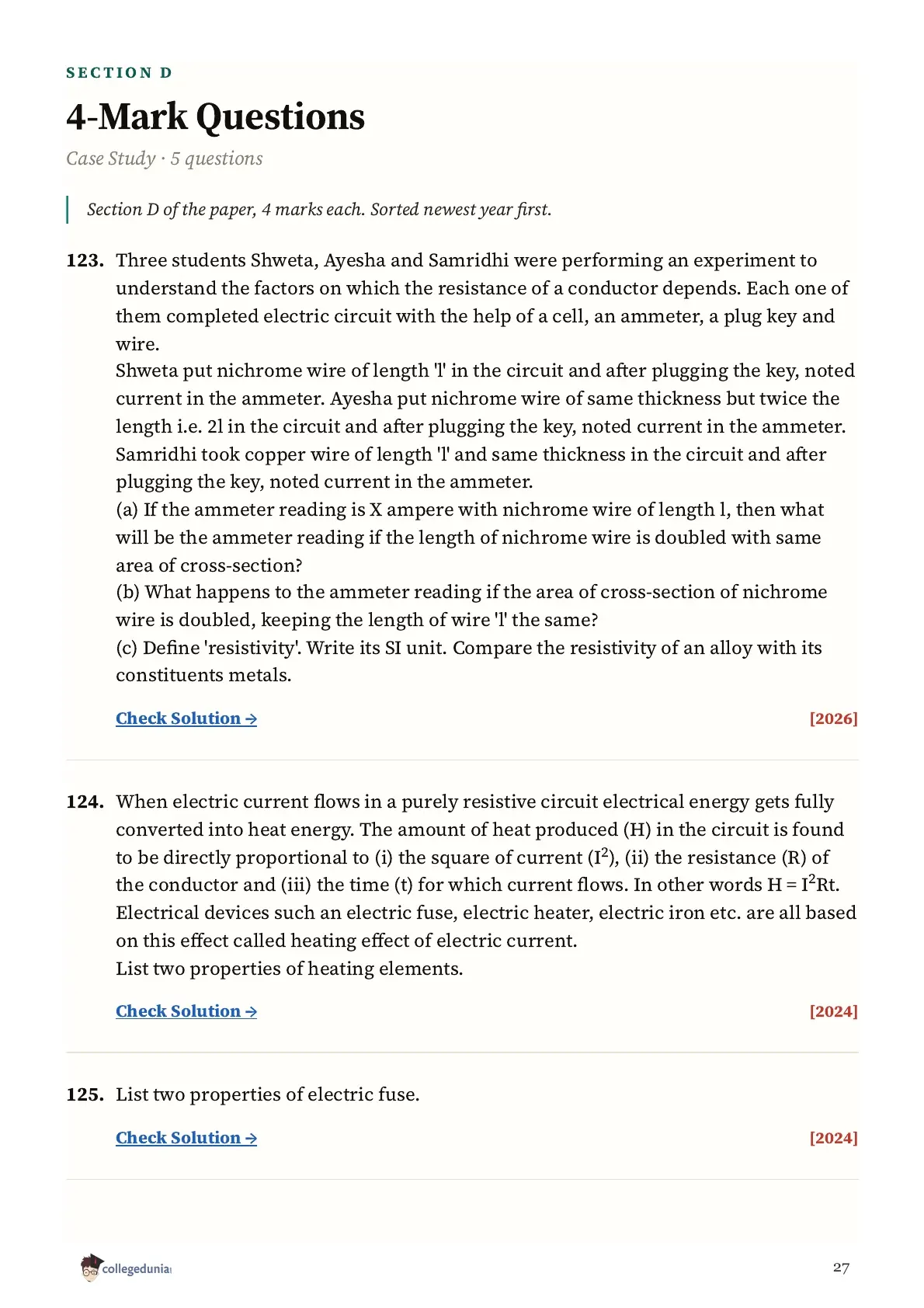
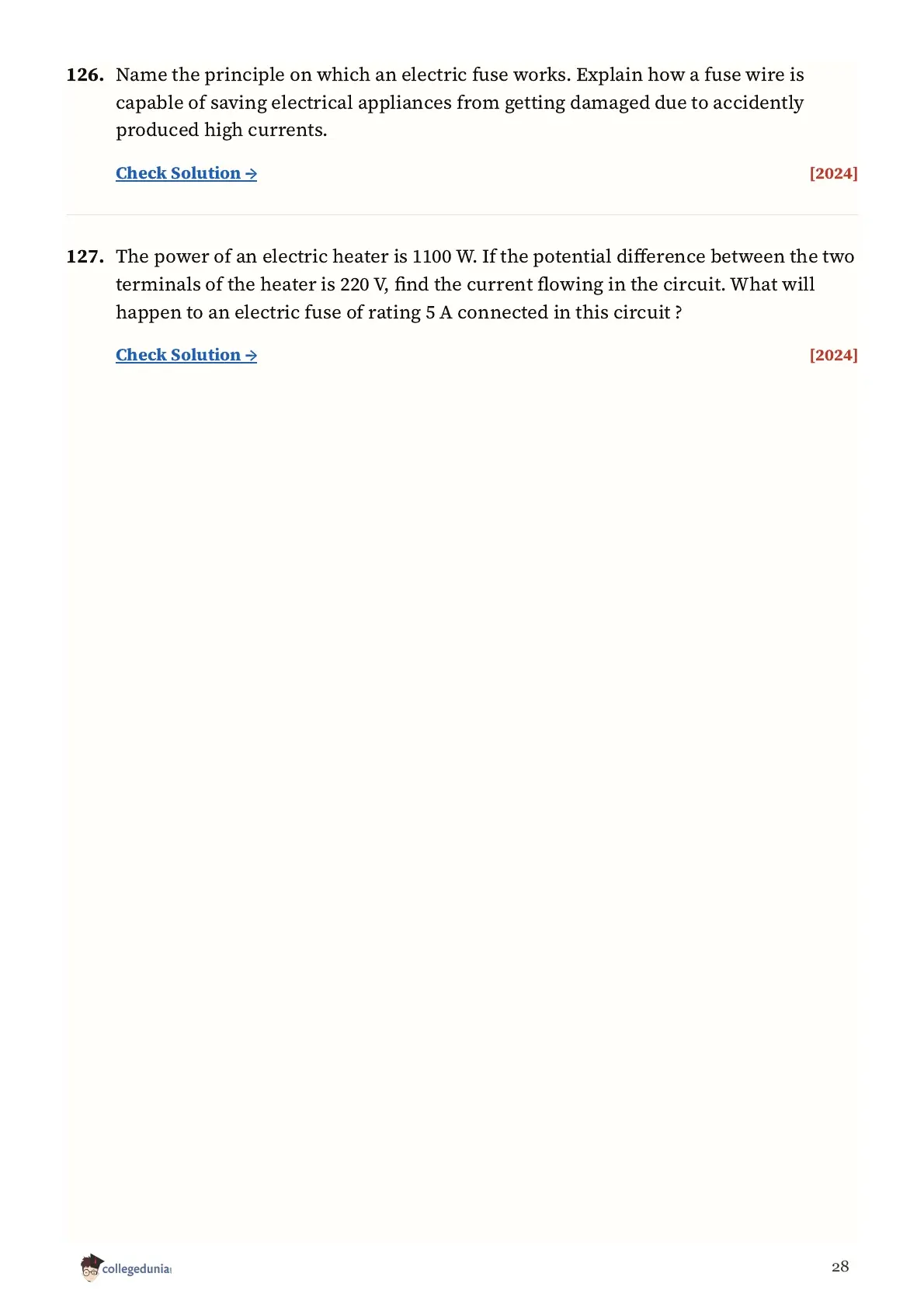
The table shows how many questions the set holds at each mark value.
| Marks per Question | Questions in the Set |
|---|---|
| 1 mark | 49 |
| 2 marks | 39 |
| 3 marks | 34 |
| 4 marks | 5 |
| 5 marks | 35 |
Electricity Questions by Topic
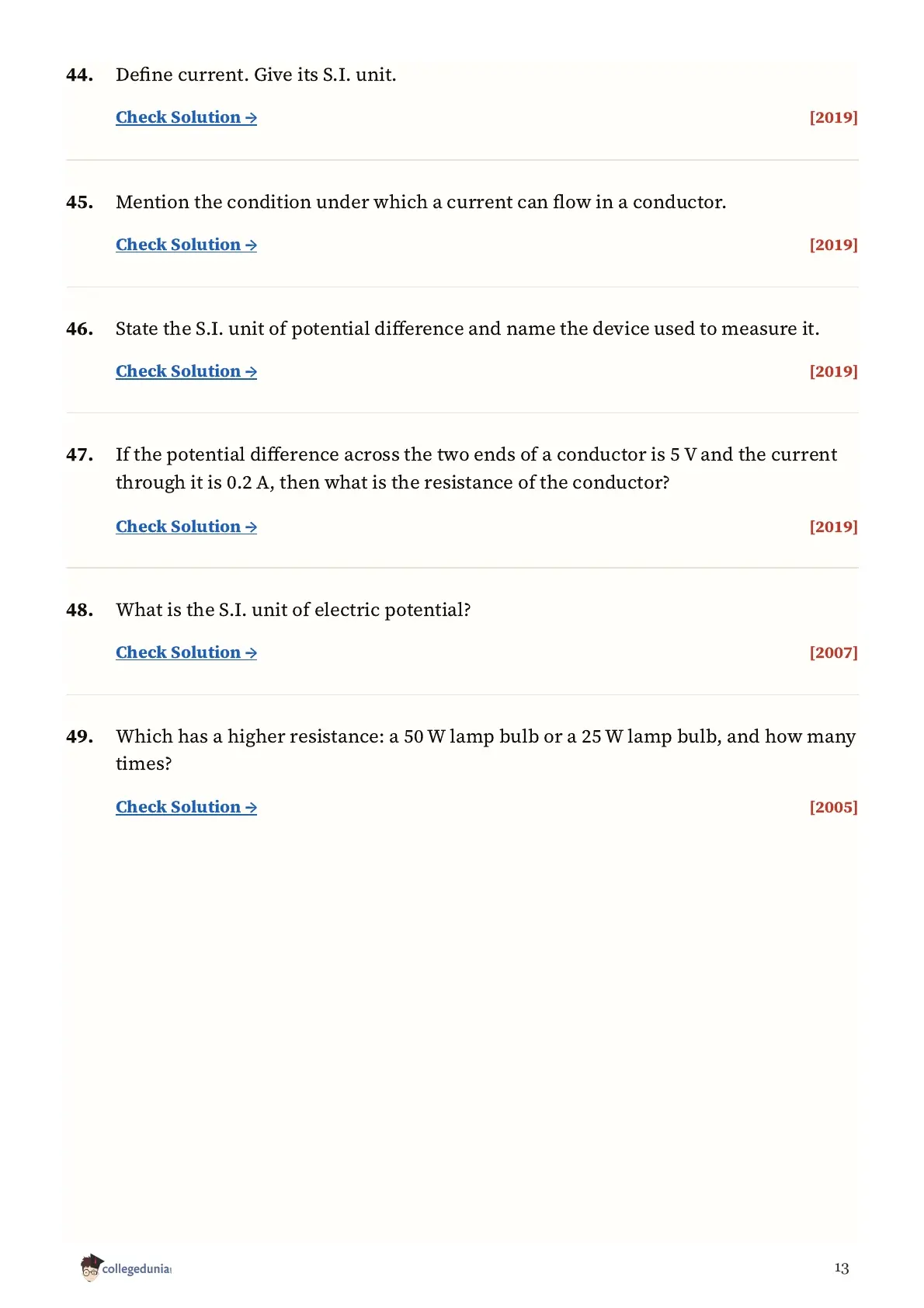
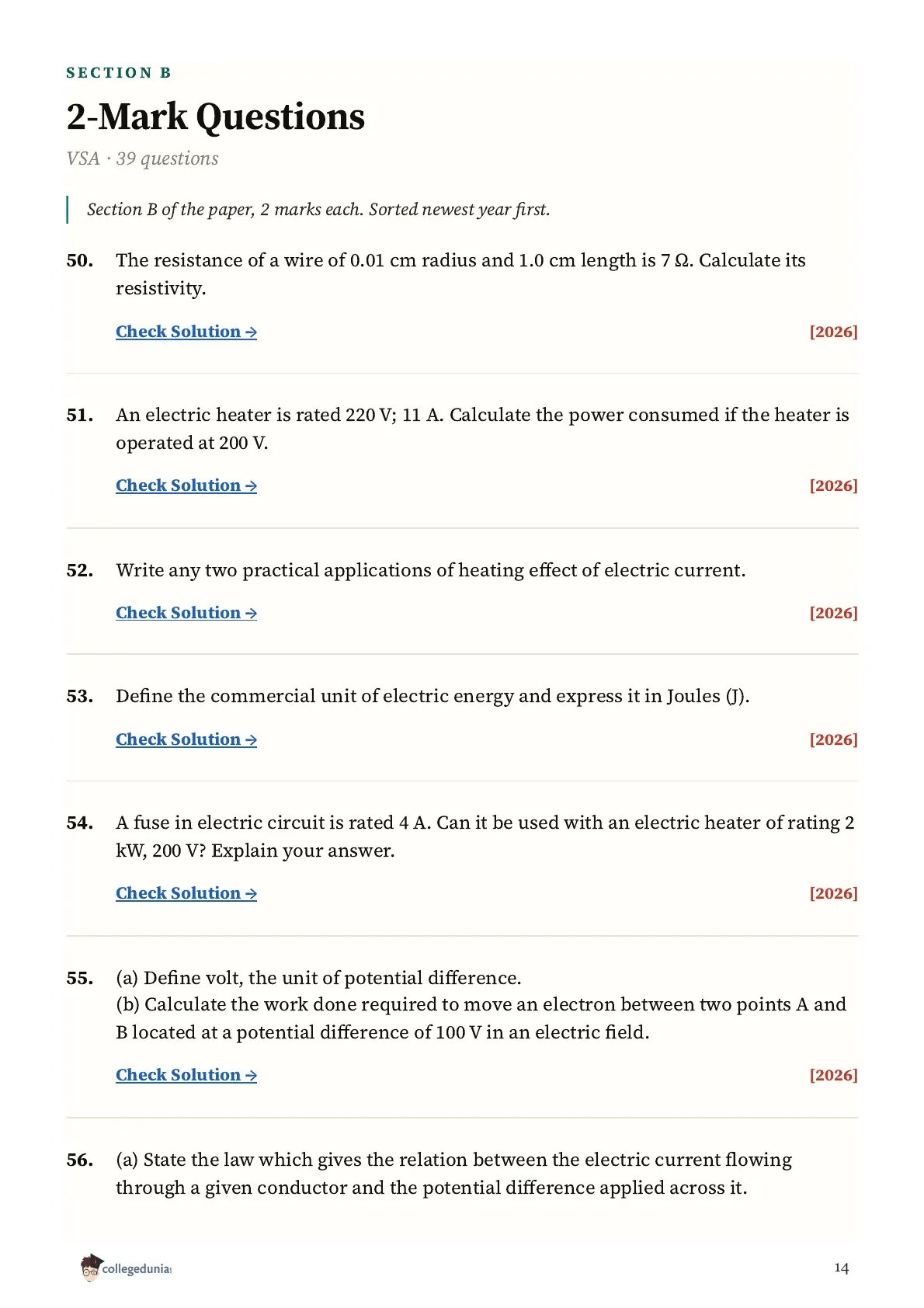
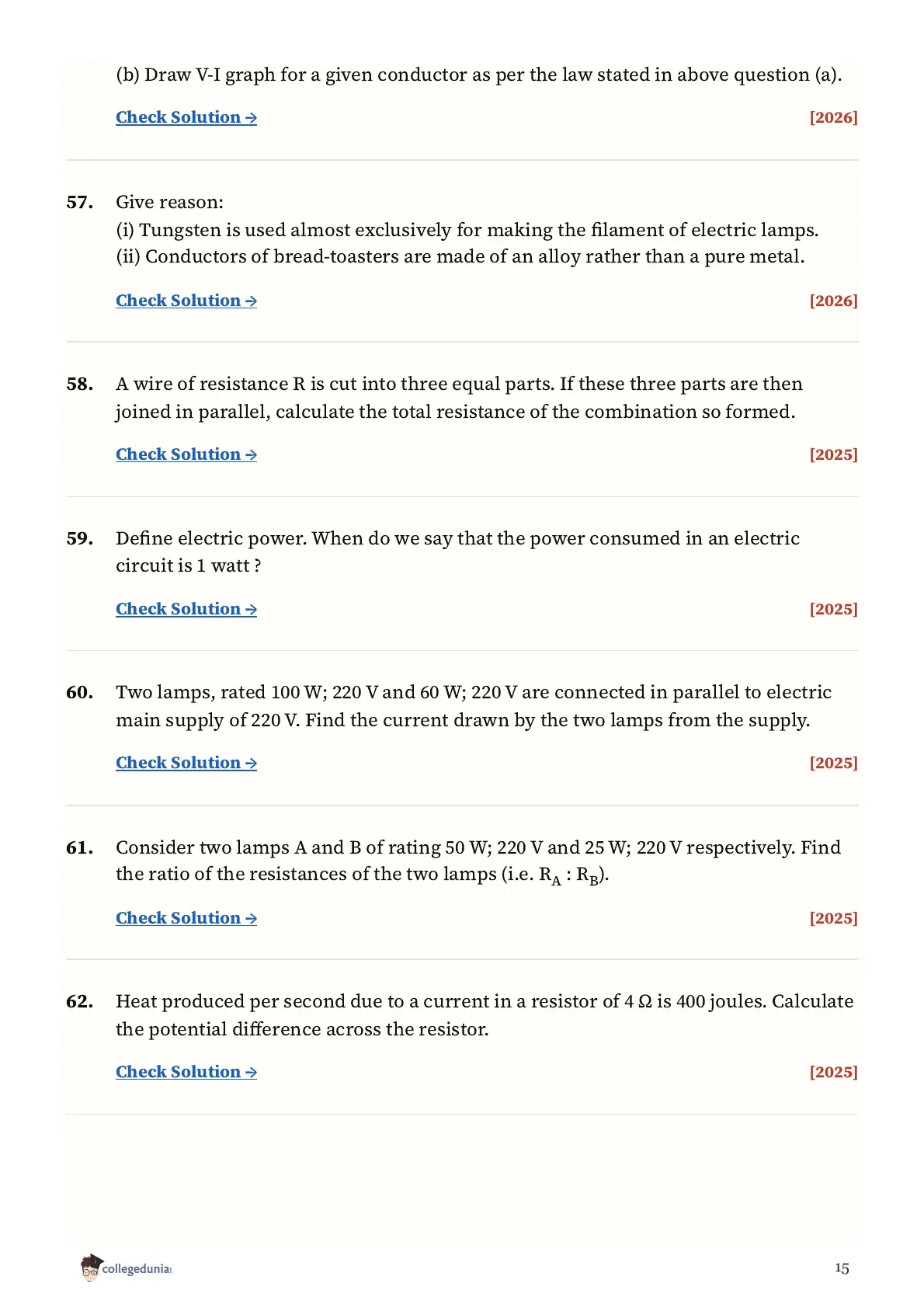
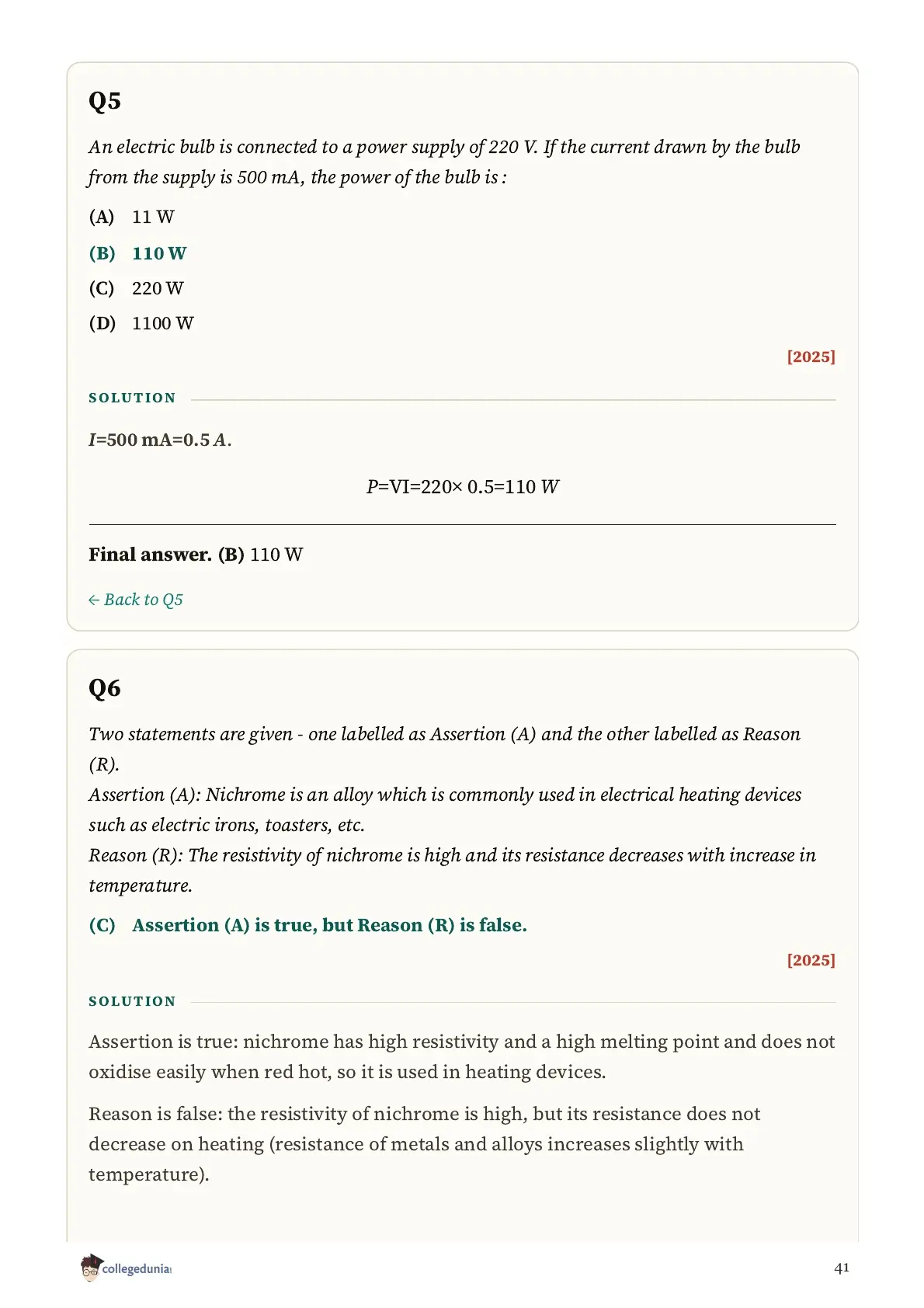
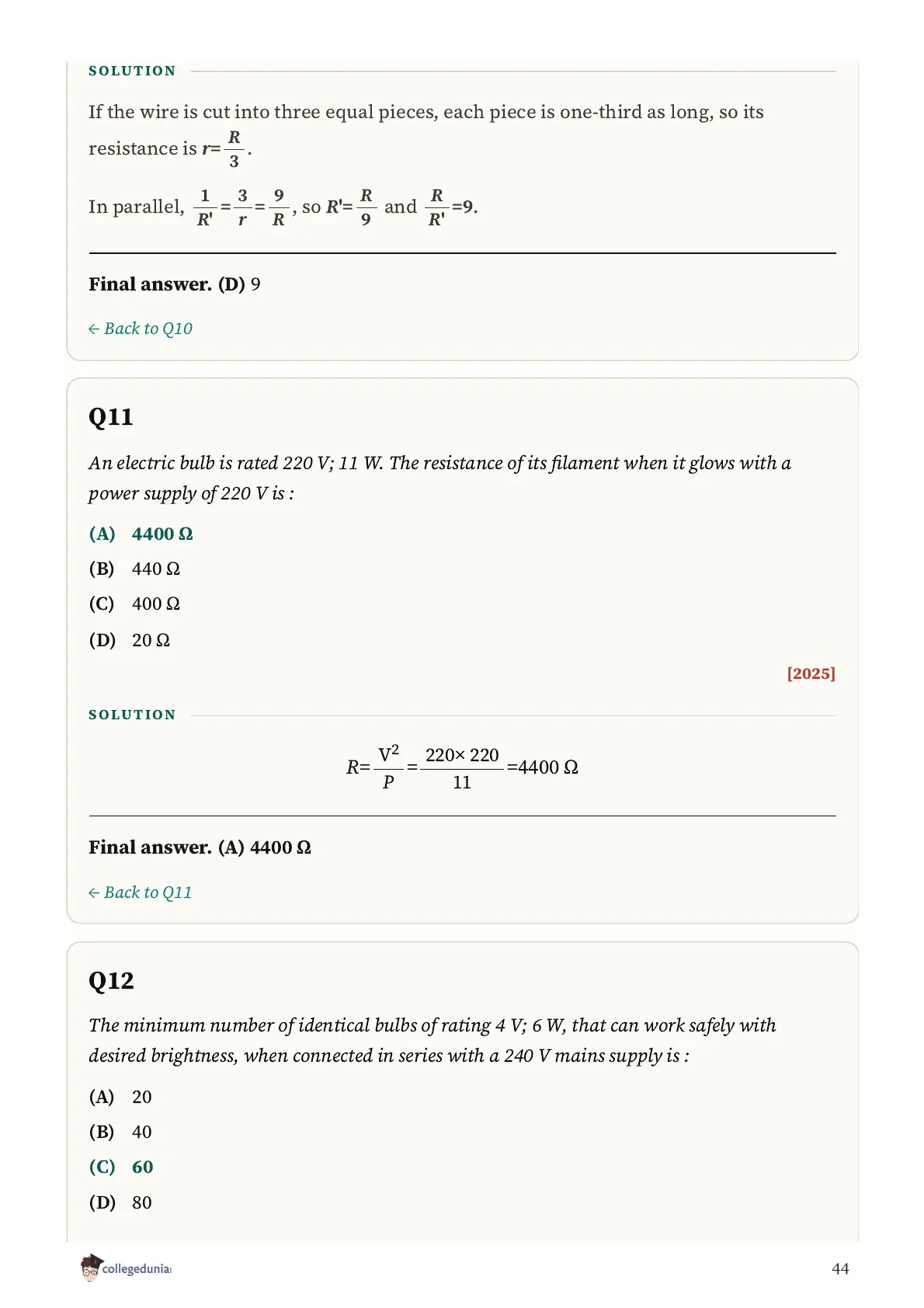
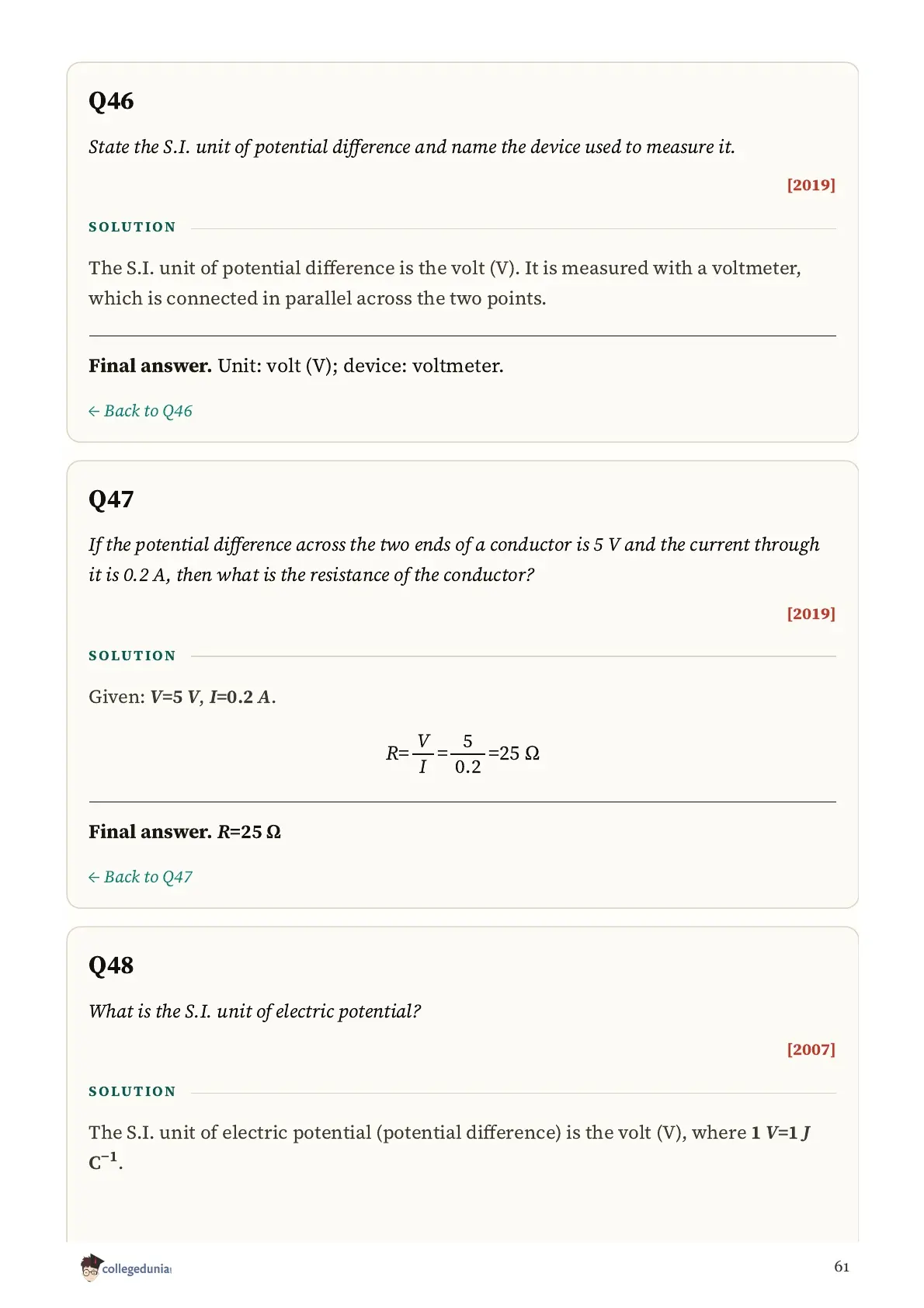
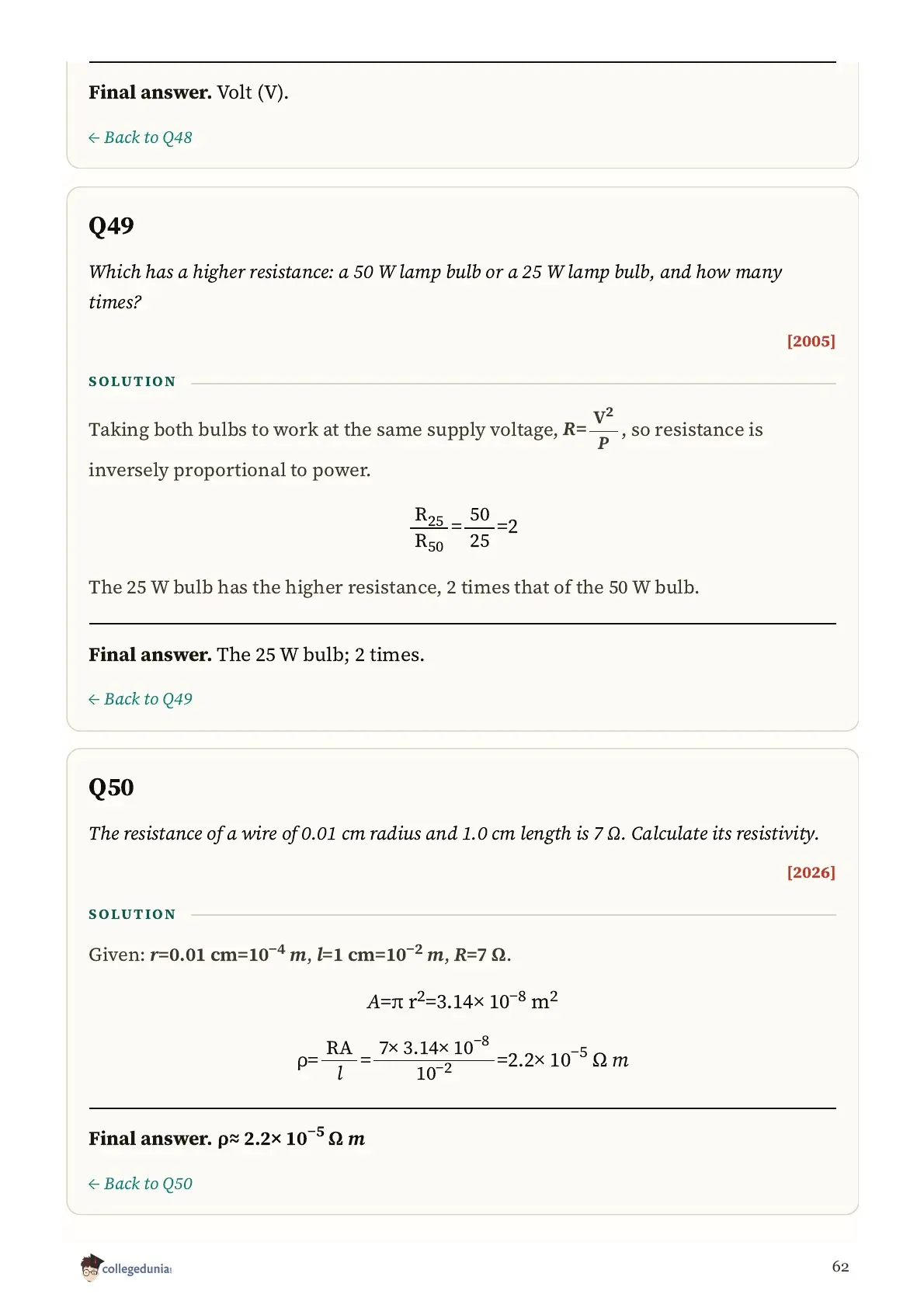
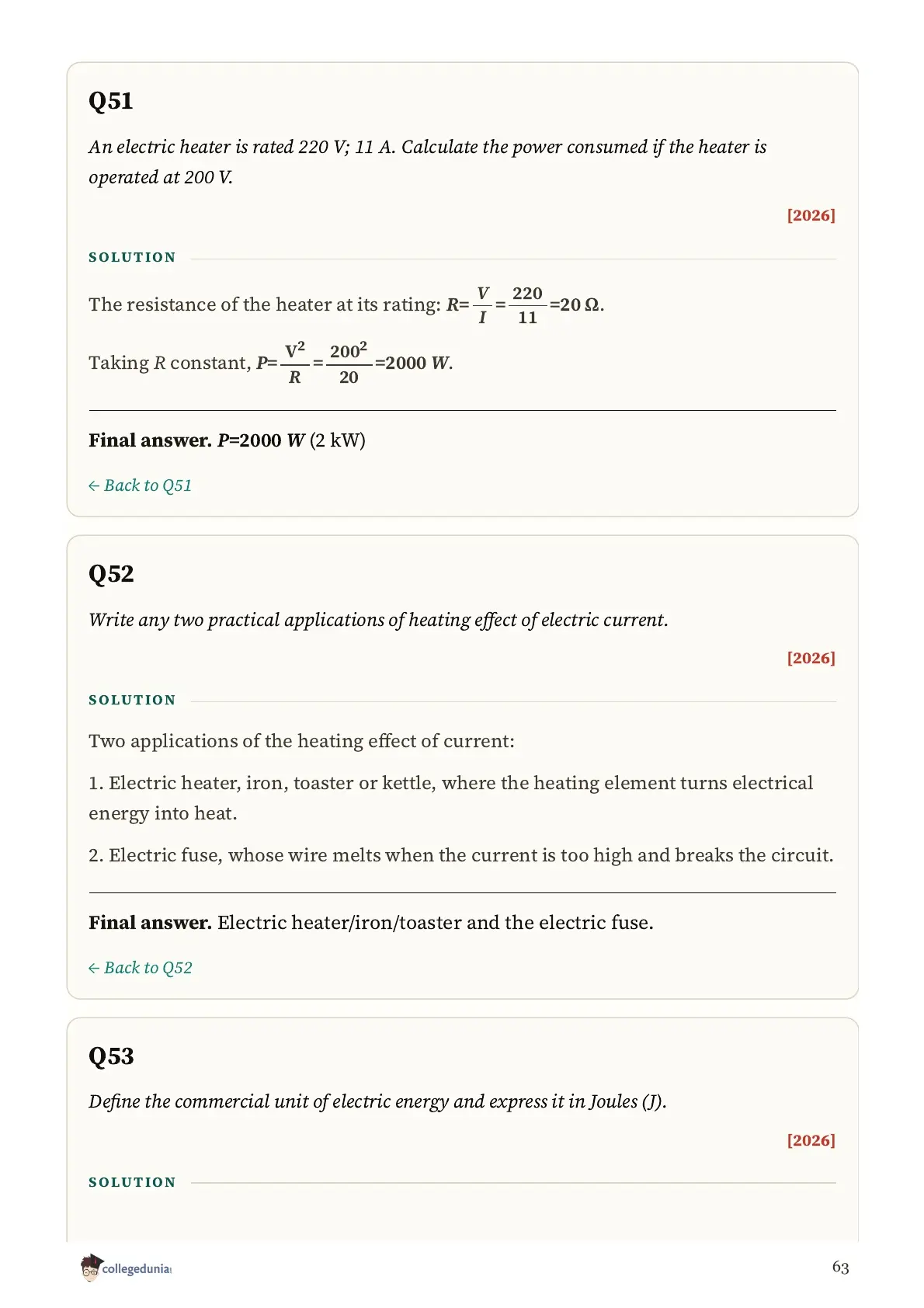
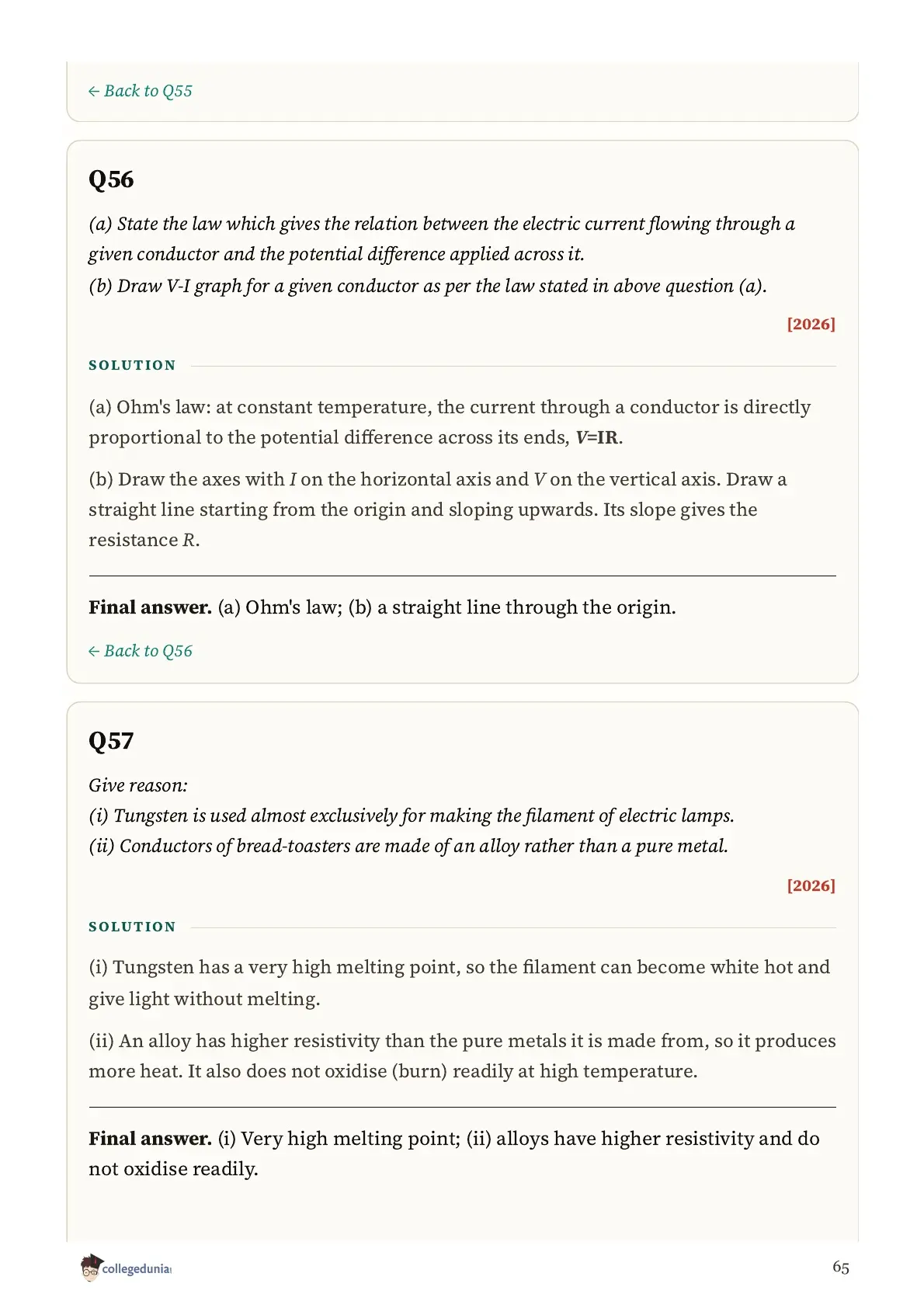
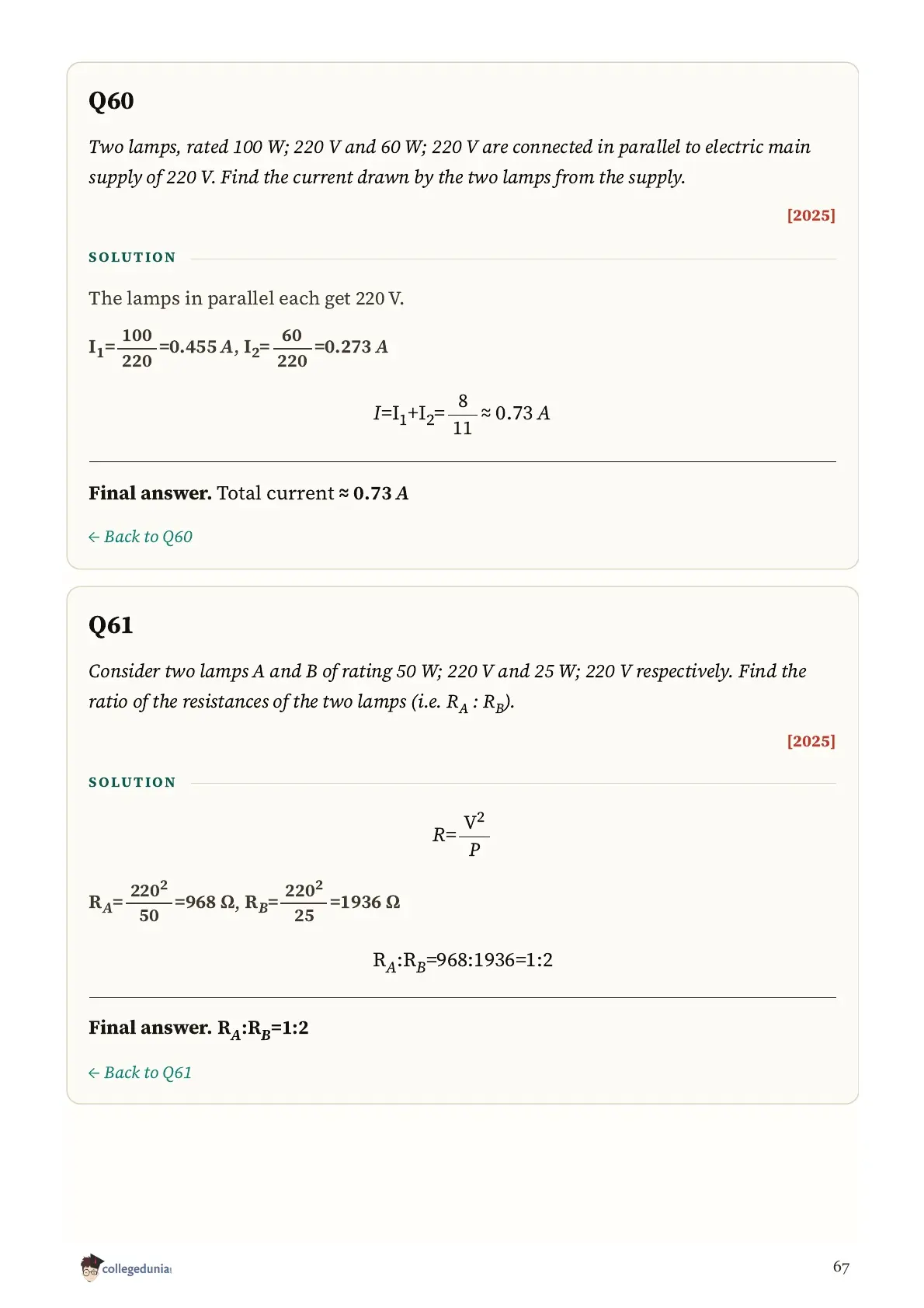
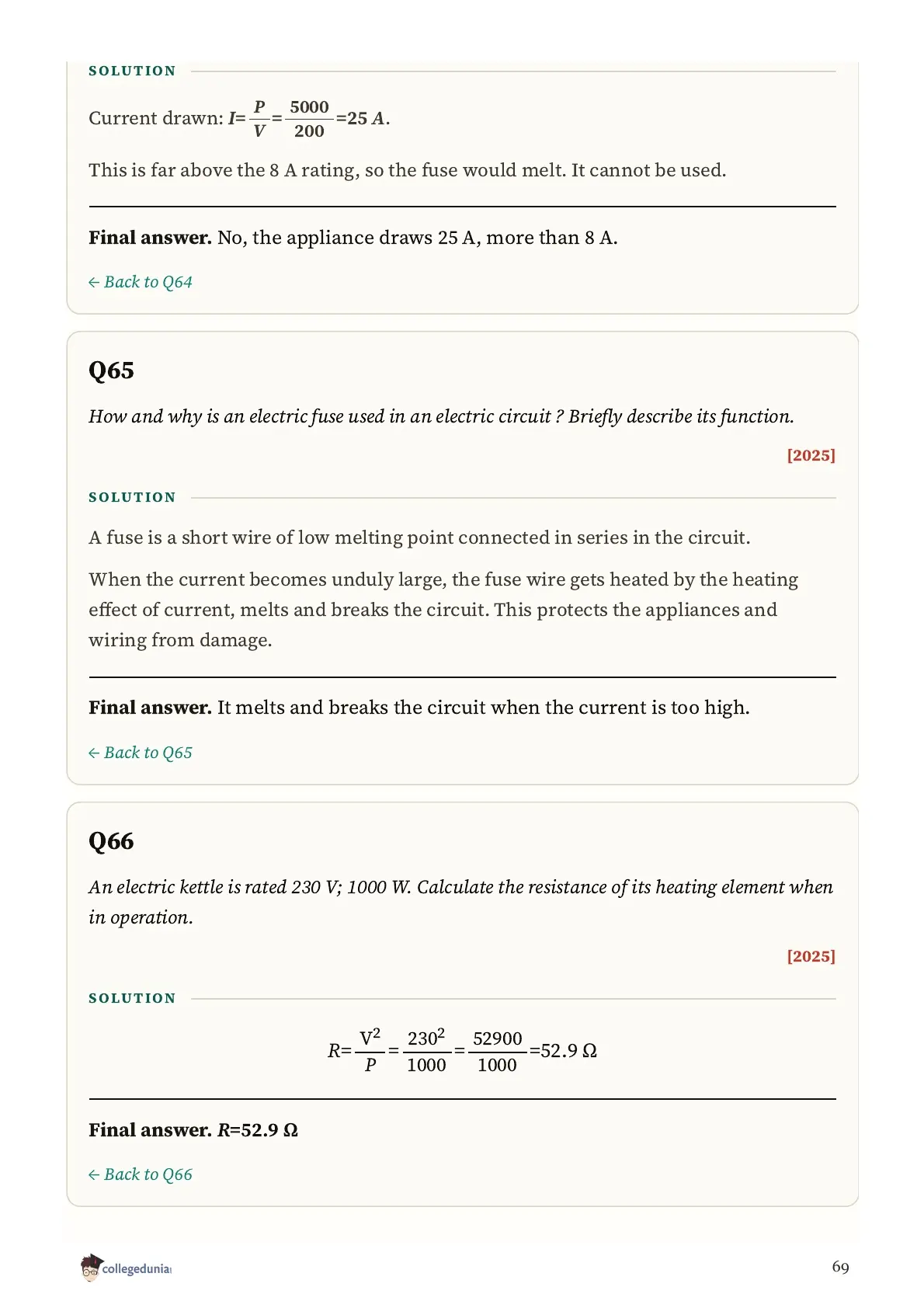
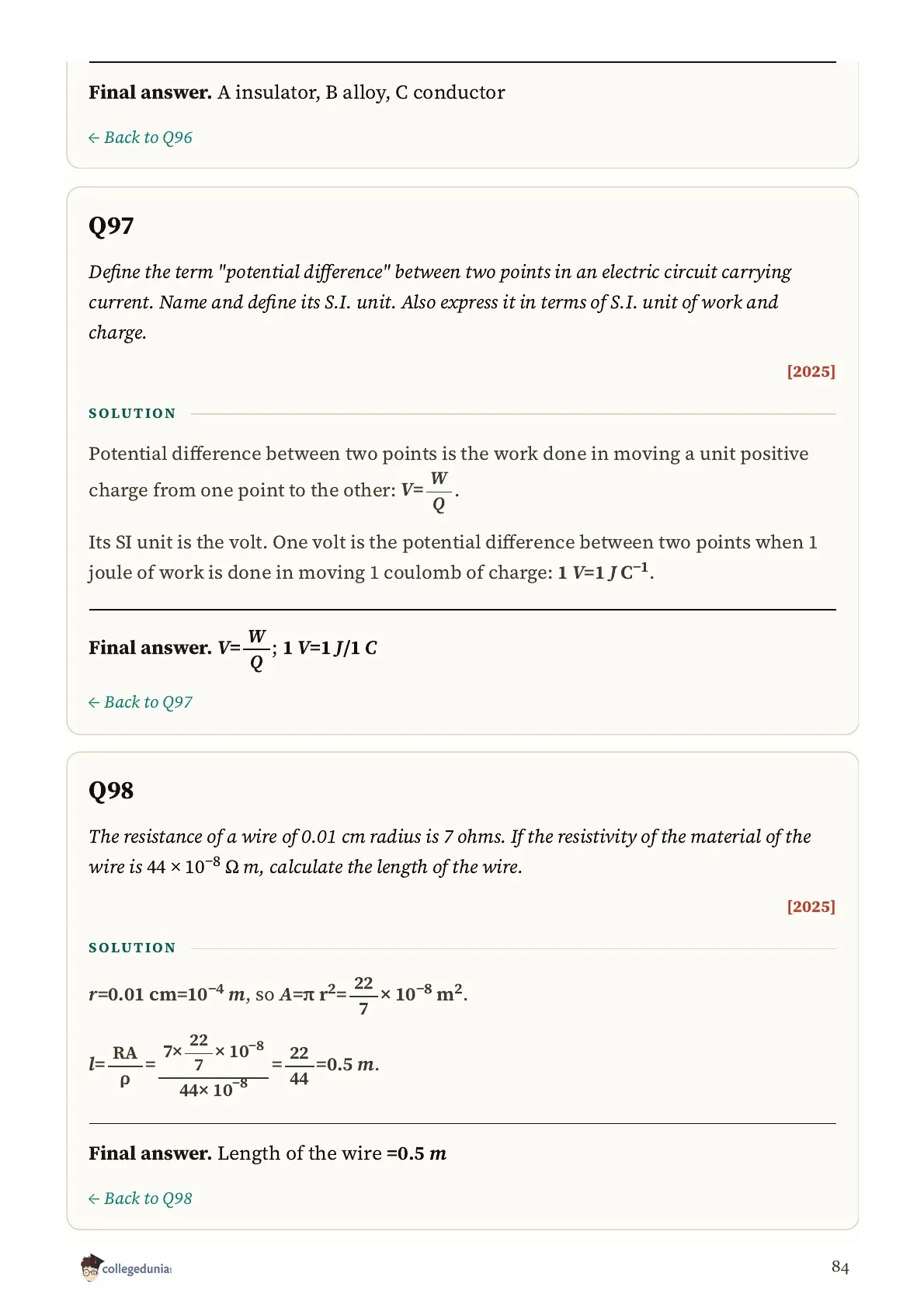
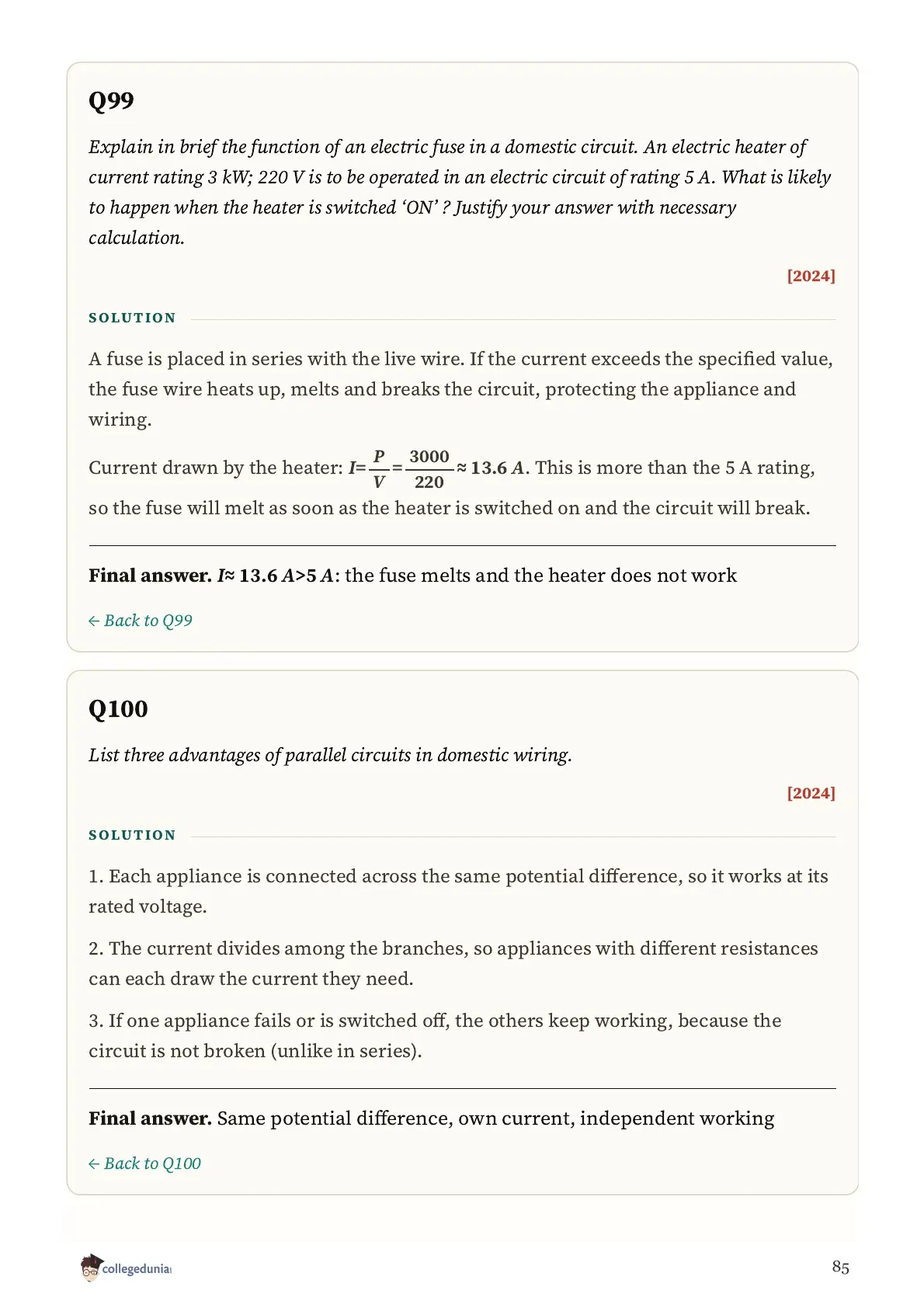
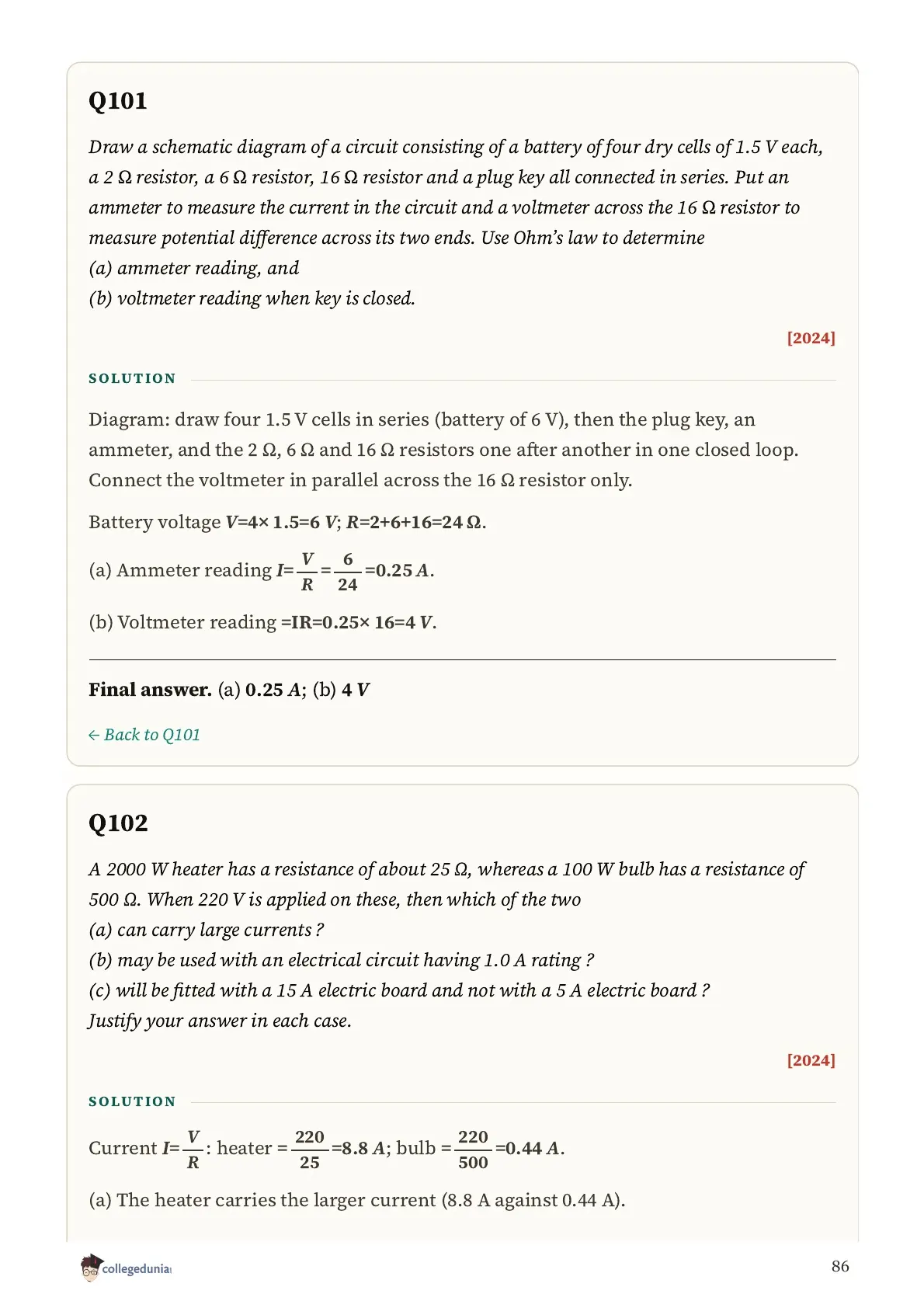
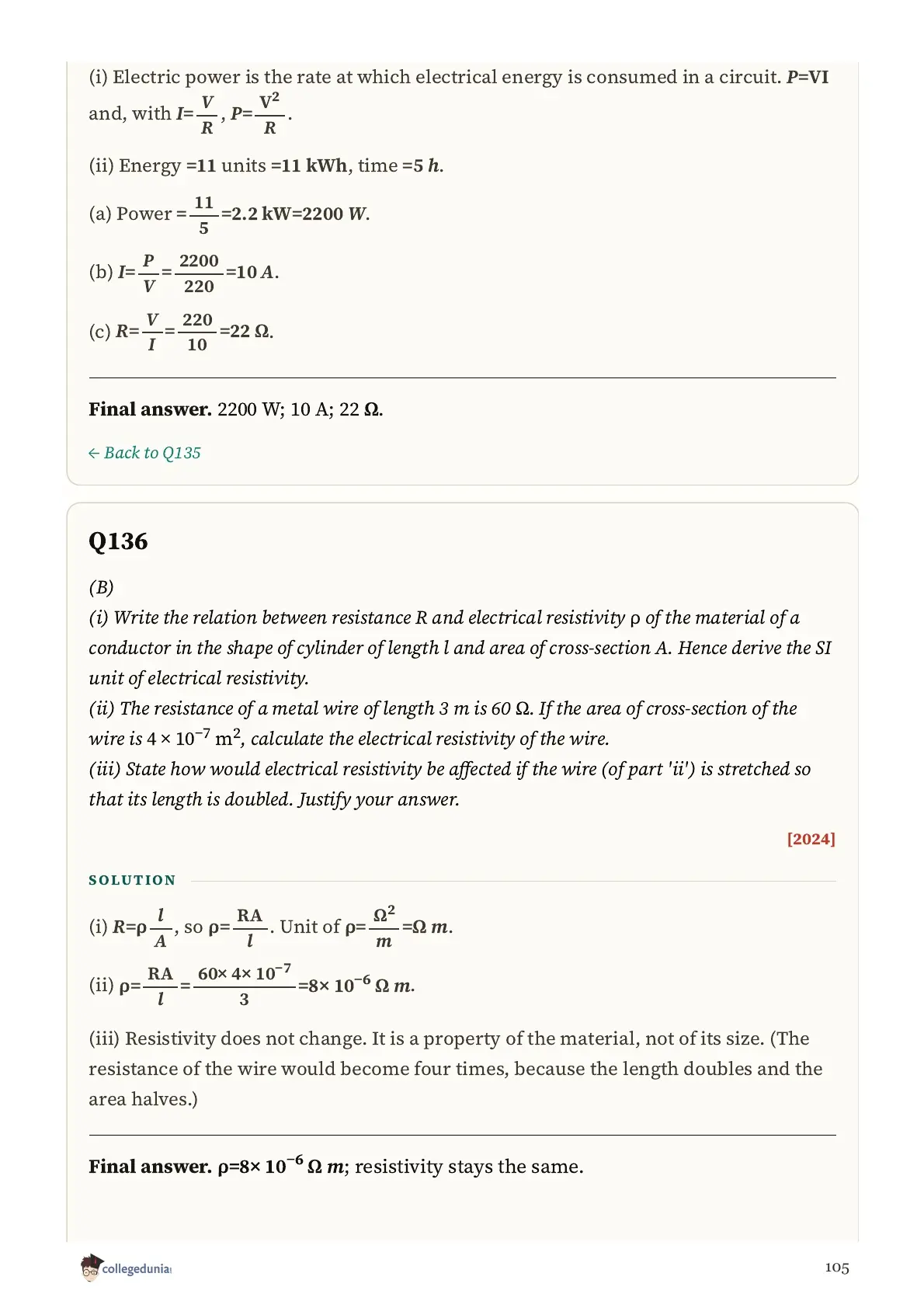
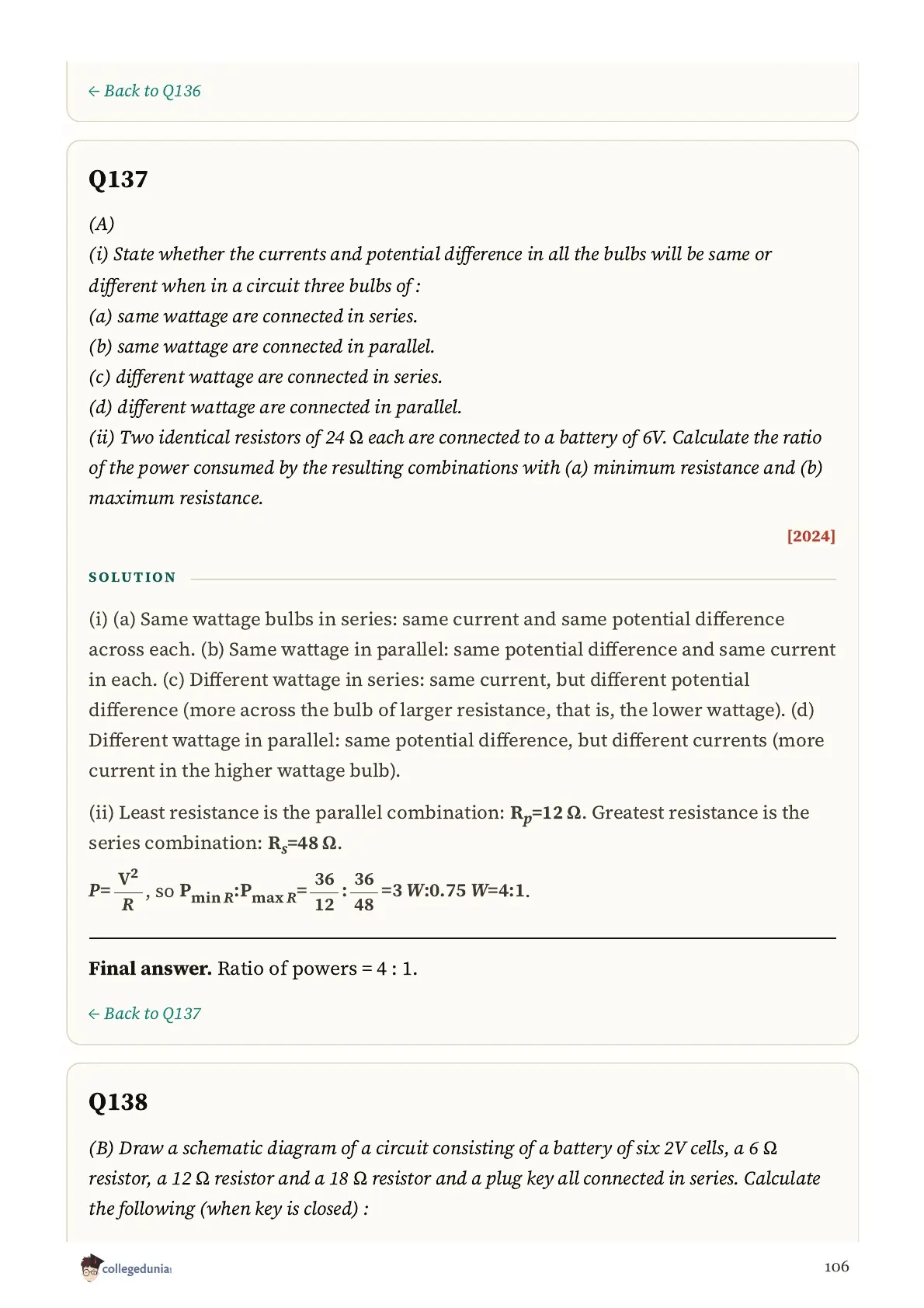
Most questions give you a circuit, a wire or an appliance and ask for a number. 65 of the 162 ask you to calculate or find something, and 42 quote a rating such as 220 V or 100 W. Typical cases are a wire of 0.01 cm radius whose resistance is 7 ohm and whose resistivity you must find (2026), a heater rated 220 V, 11 A run at 200 V (2026), and lamps of 50 W and 100 W joined in series (2026).
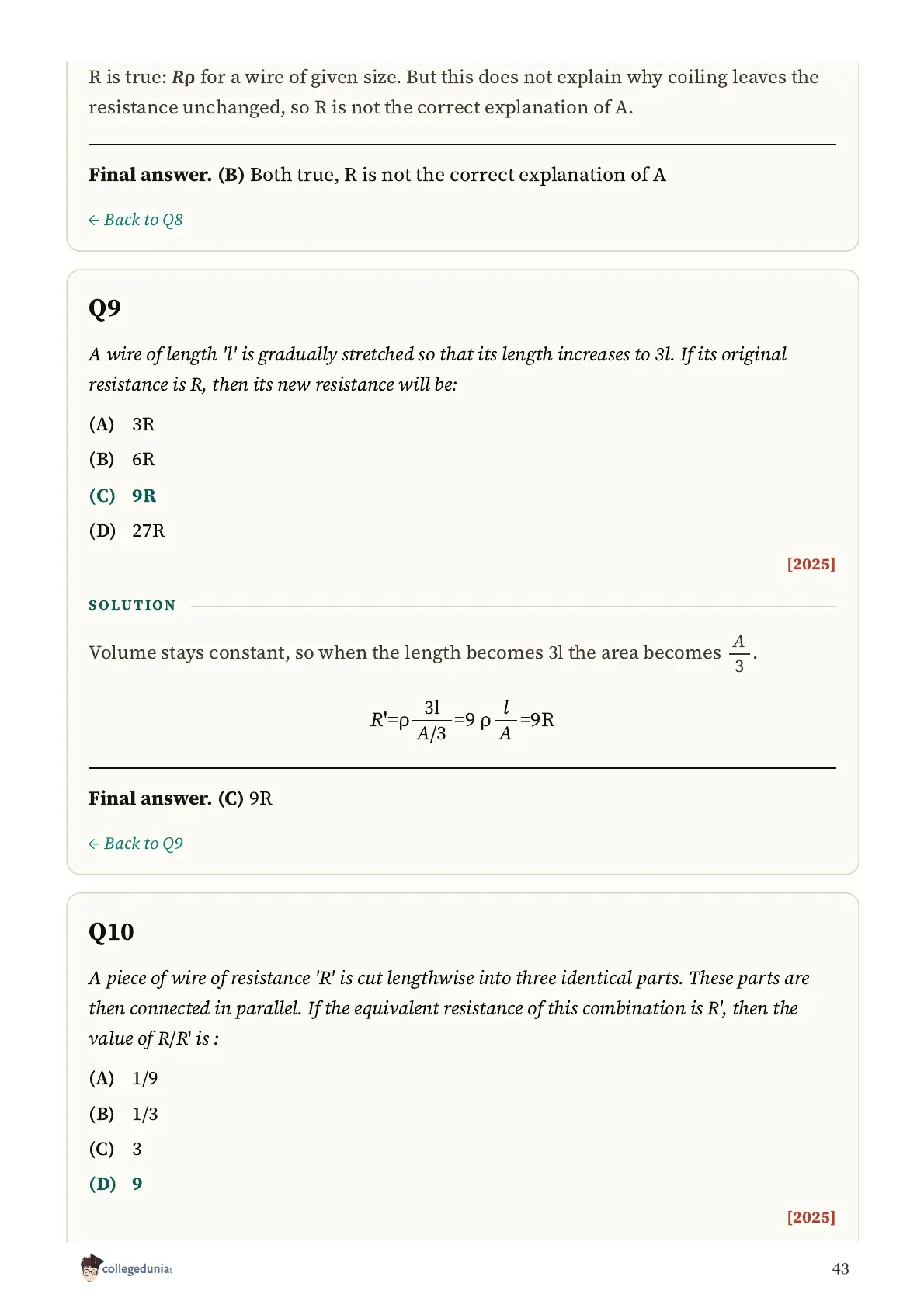
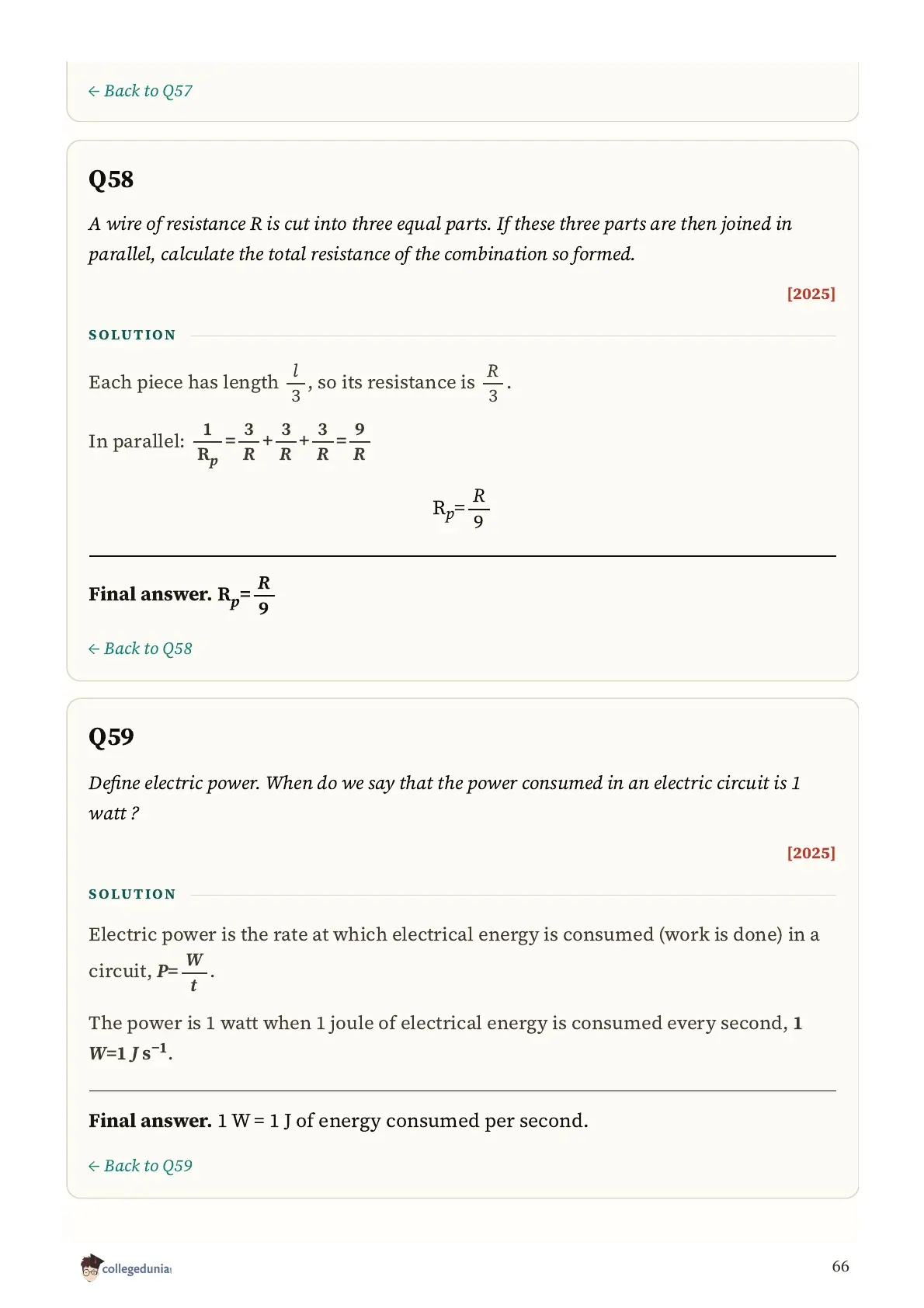
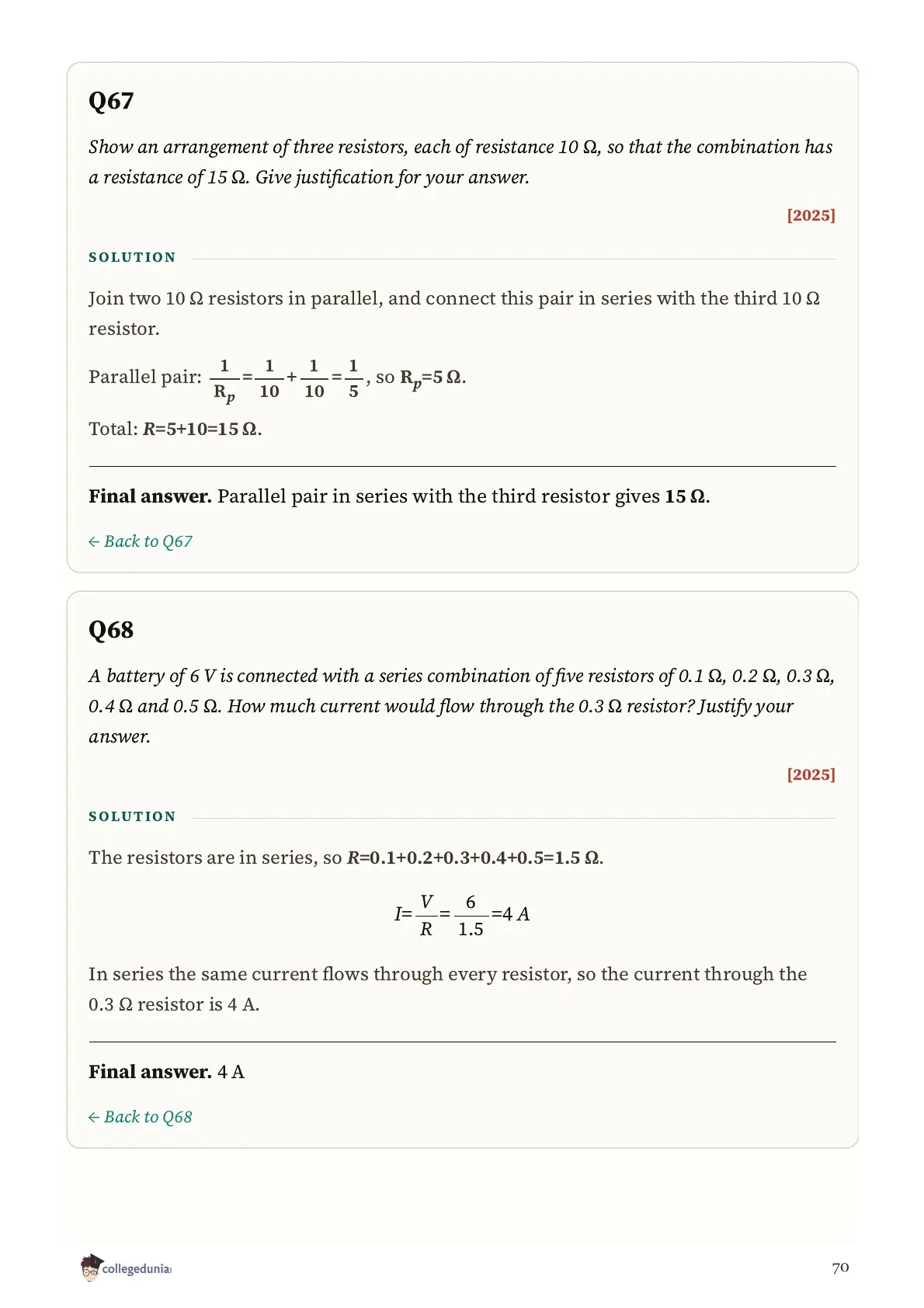
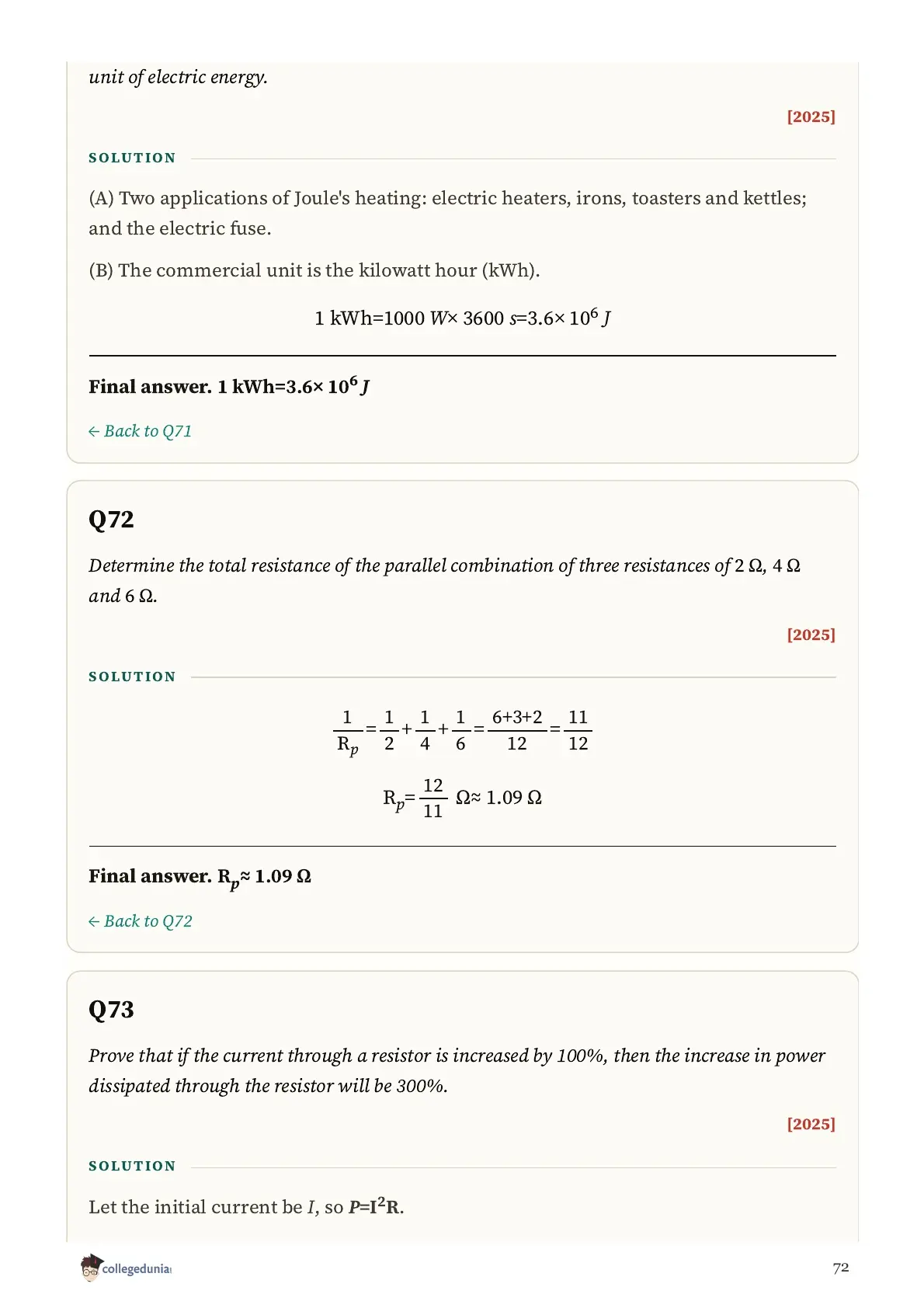
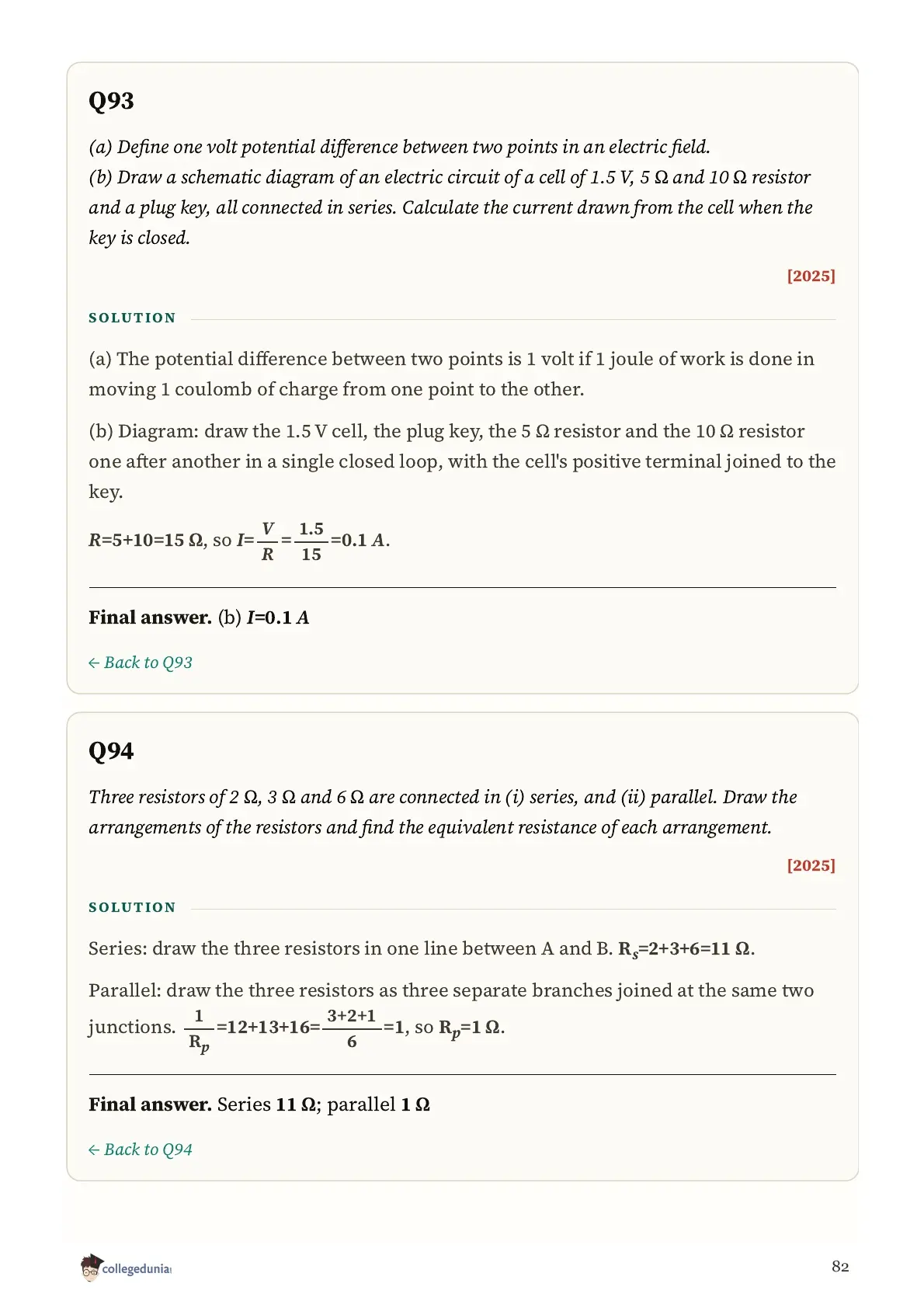
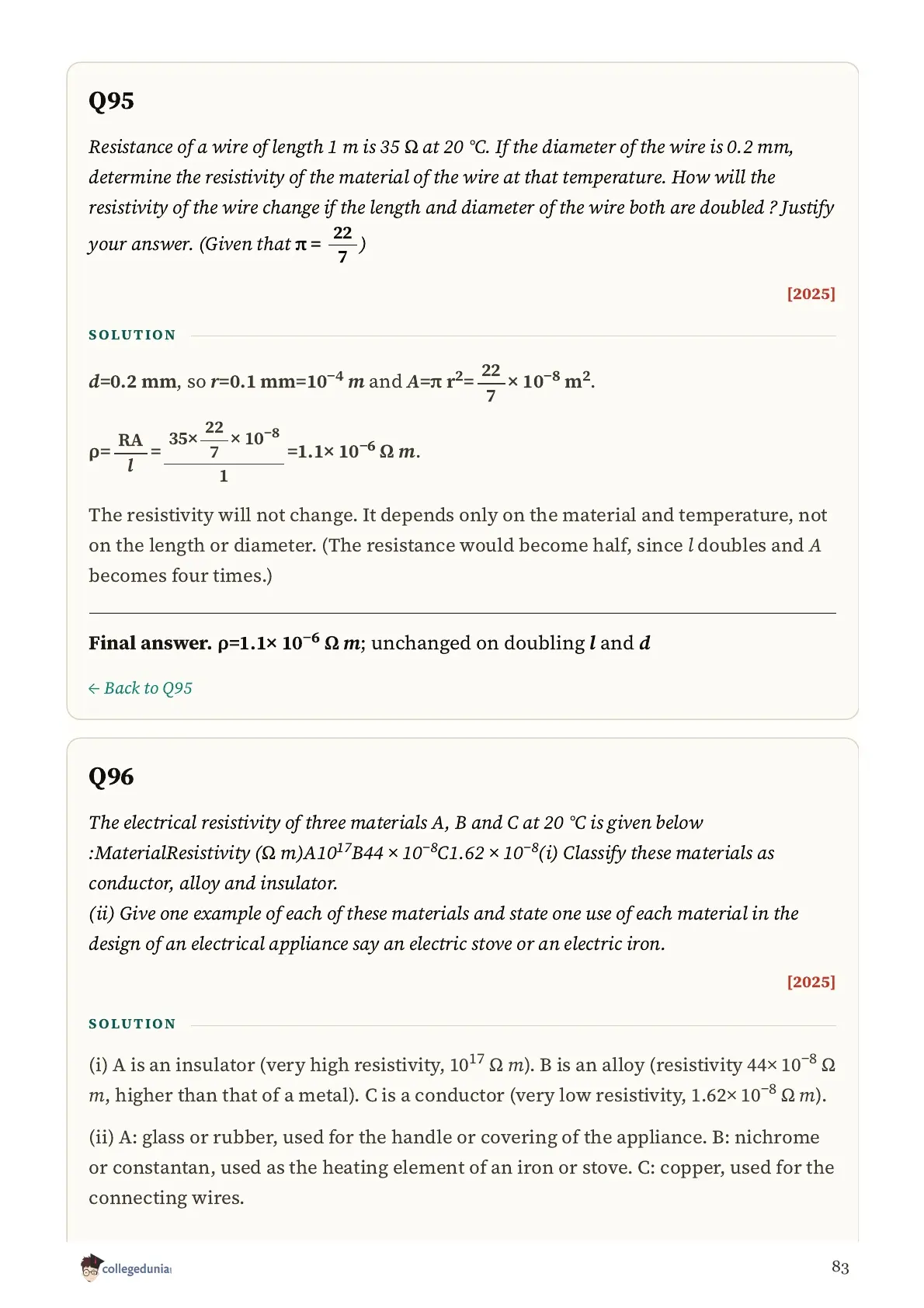
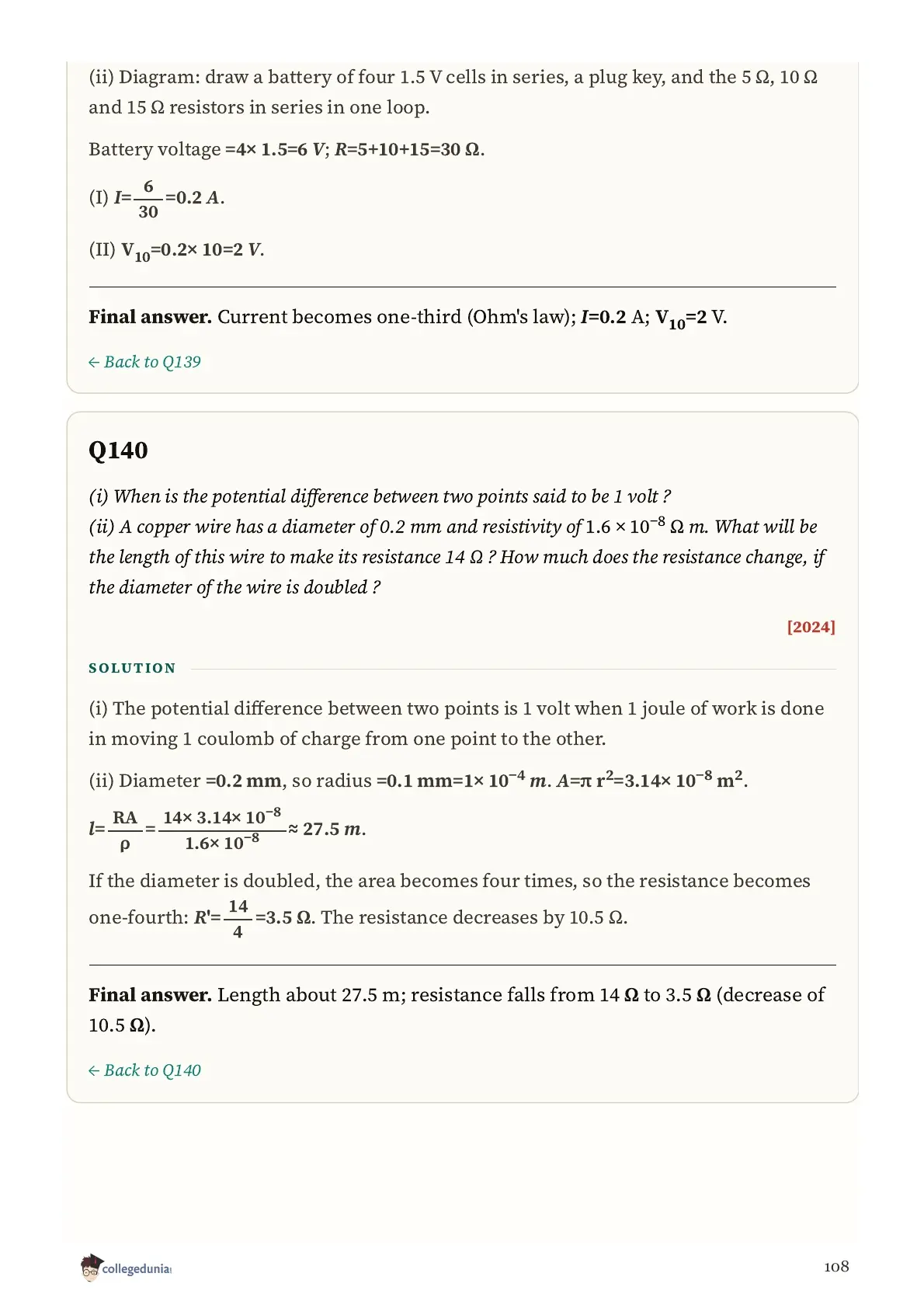
Resistance and resistivity are the base of the set. 107 questions mention resistance, 32 involve resistivity or the length and area of a wire, and 26 change a wire by stretching, cutting or doubling it. Series and parallel circuits appear in 23 and 25 questions, and 11 ask for an equivalent resistance. The 5-mark questions often pair a derivation of series or parallel resistance with a numerical.
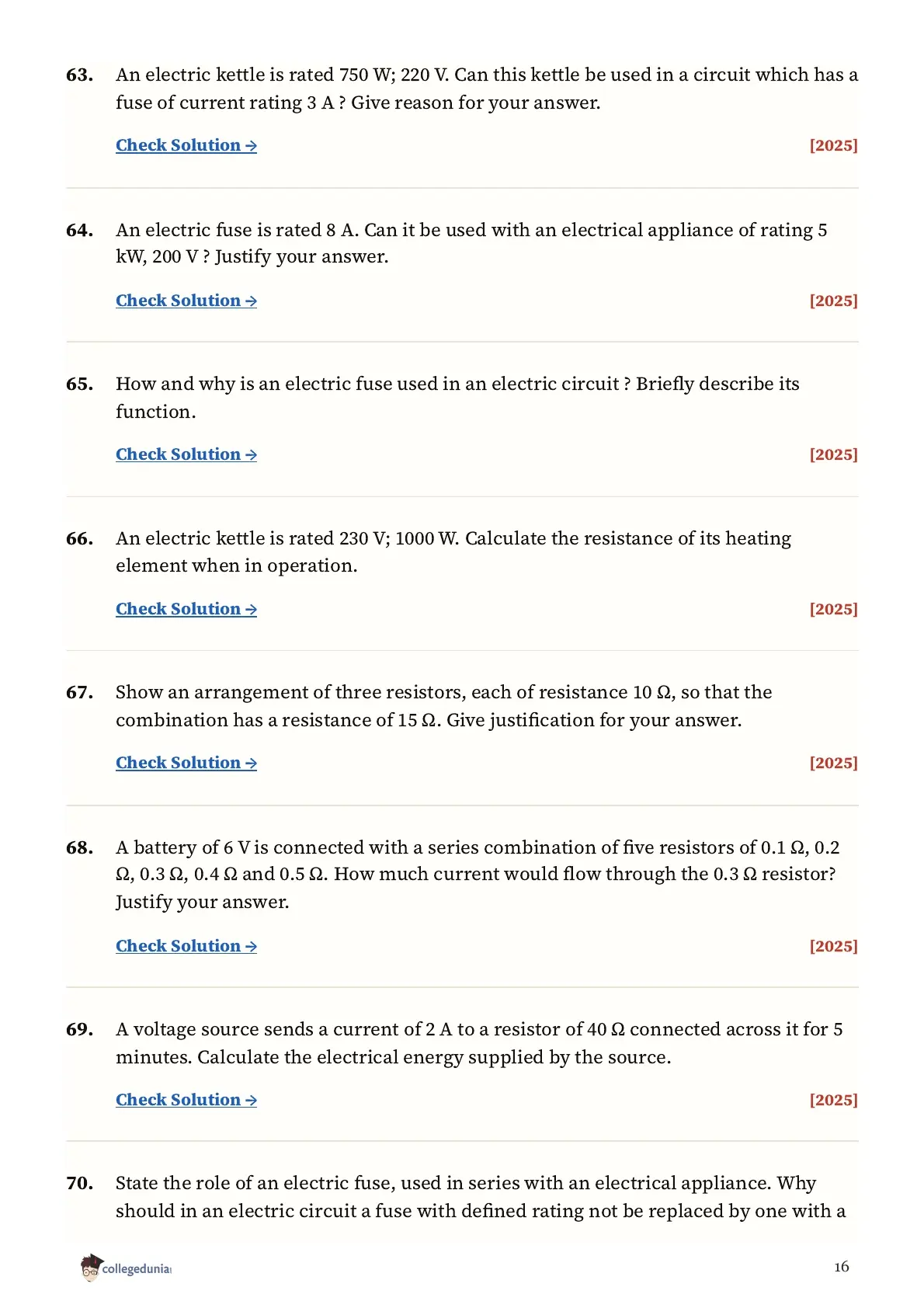
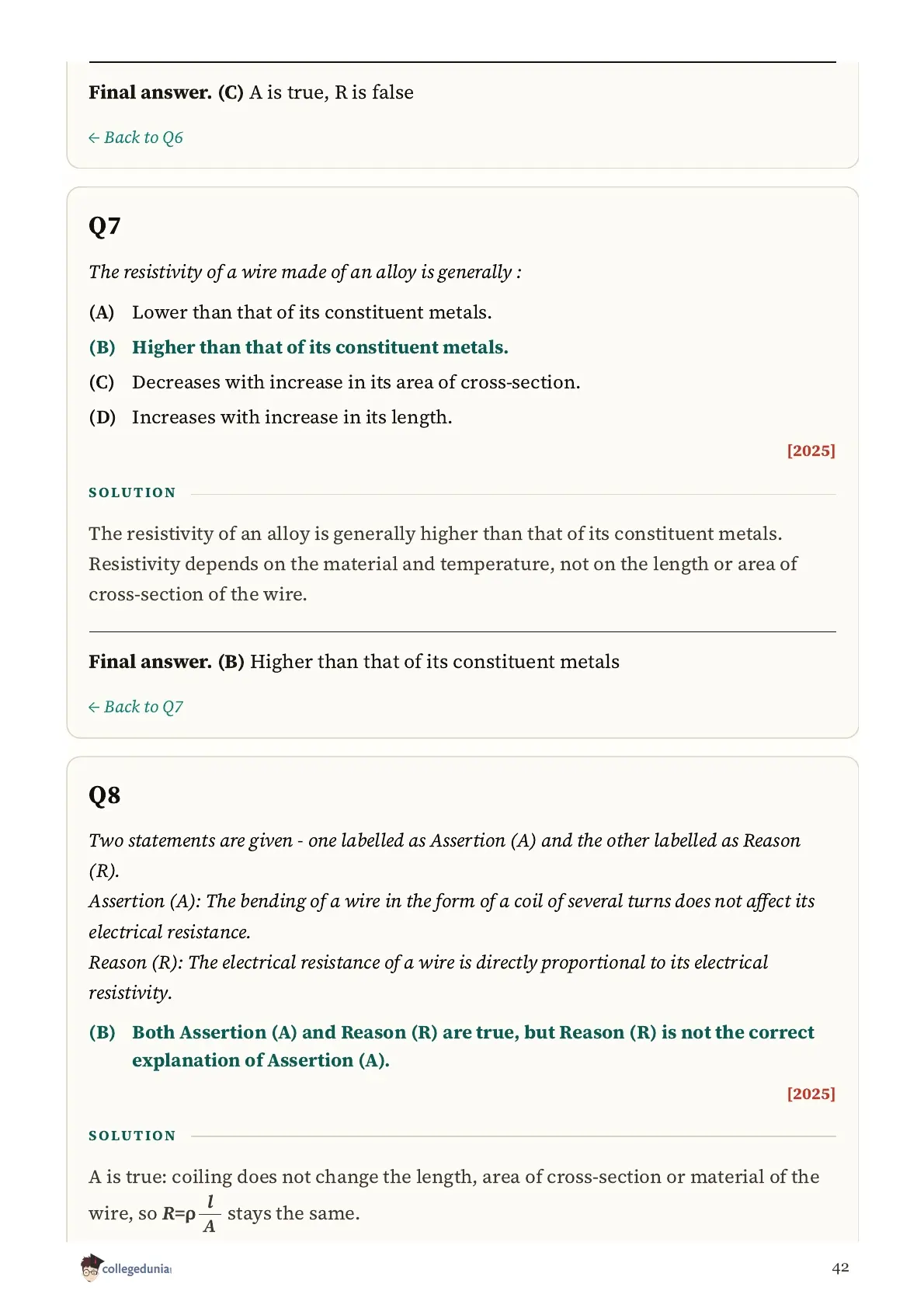
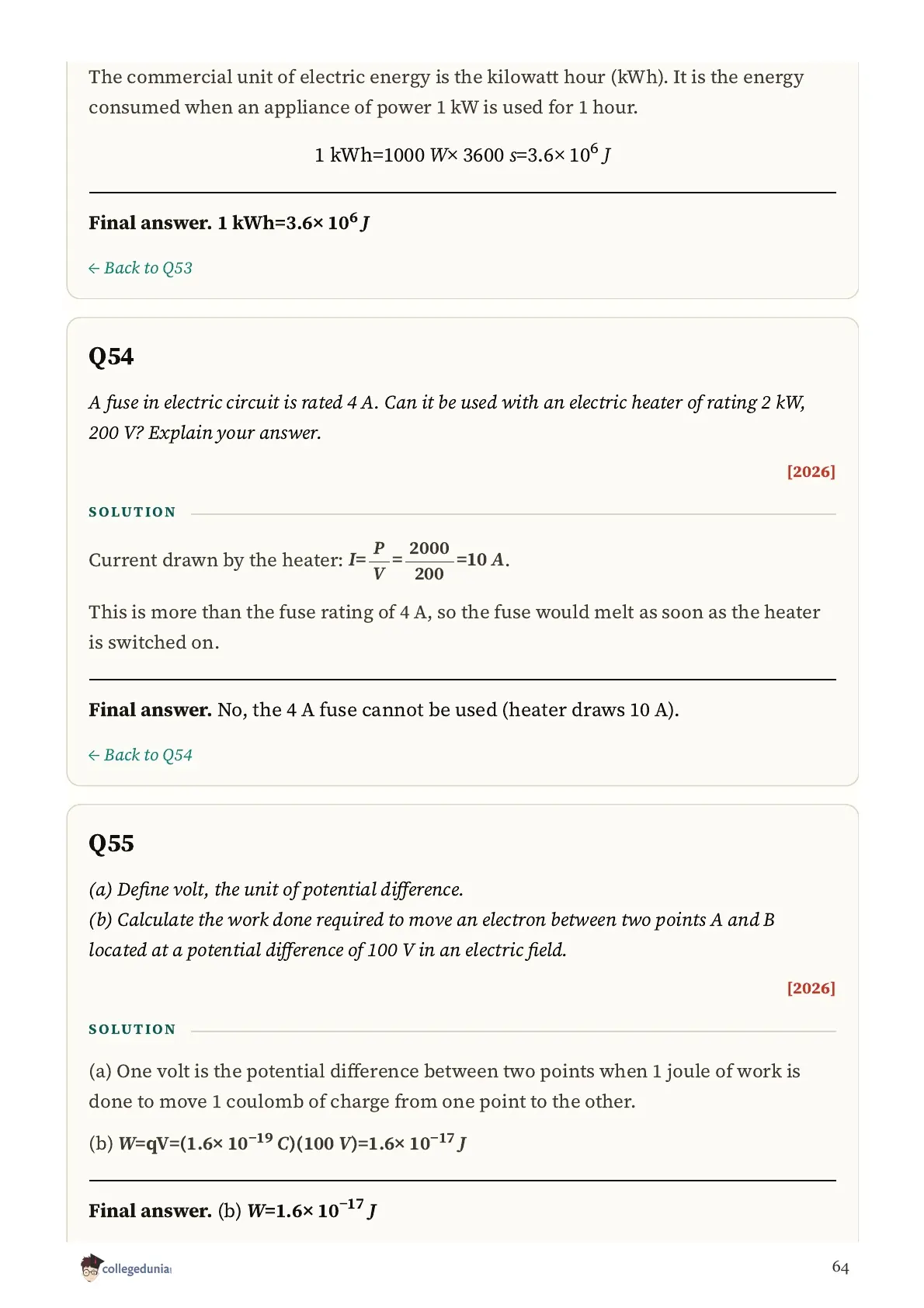
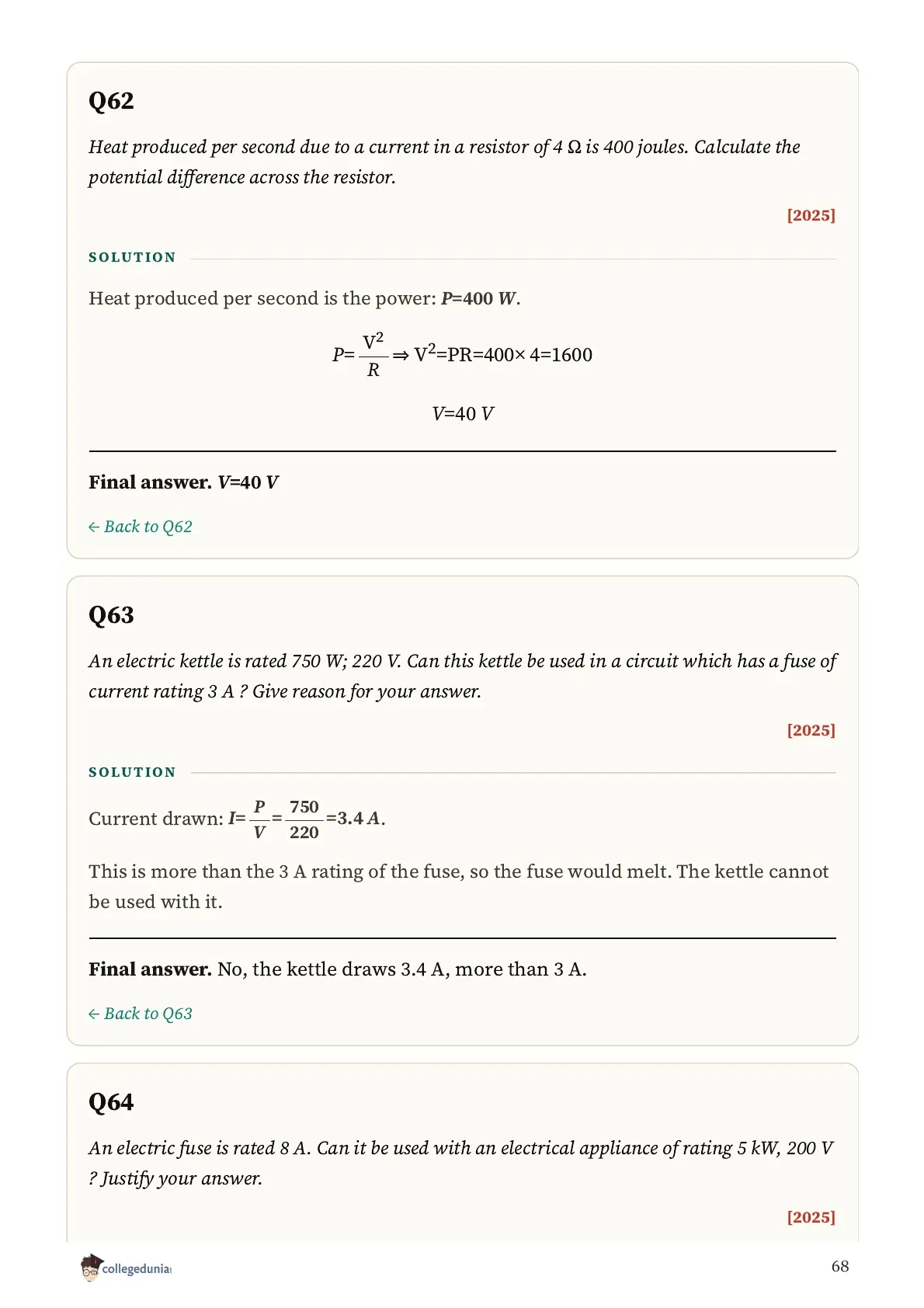
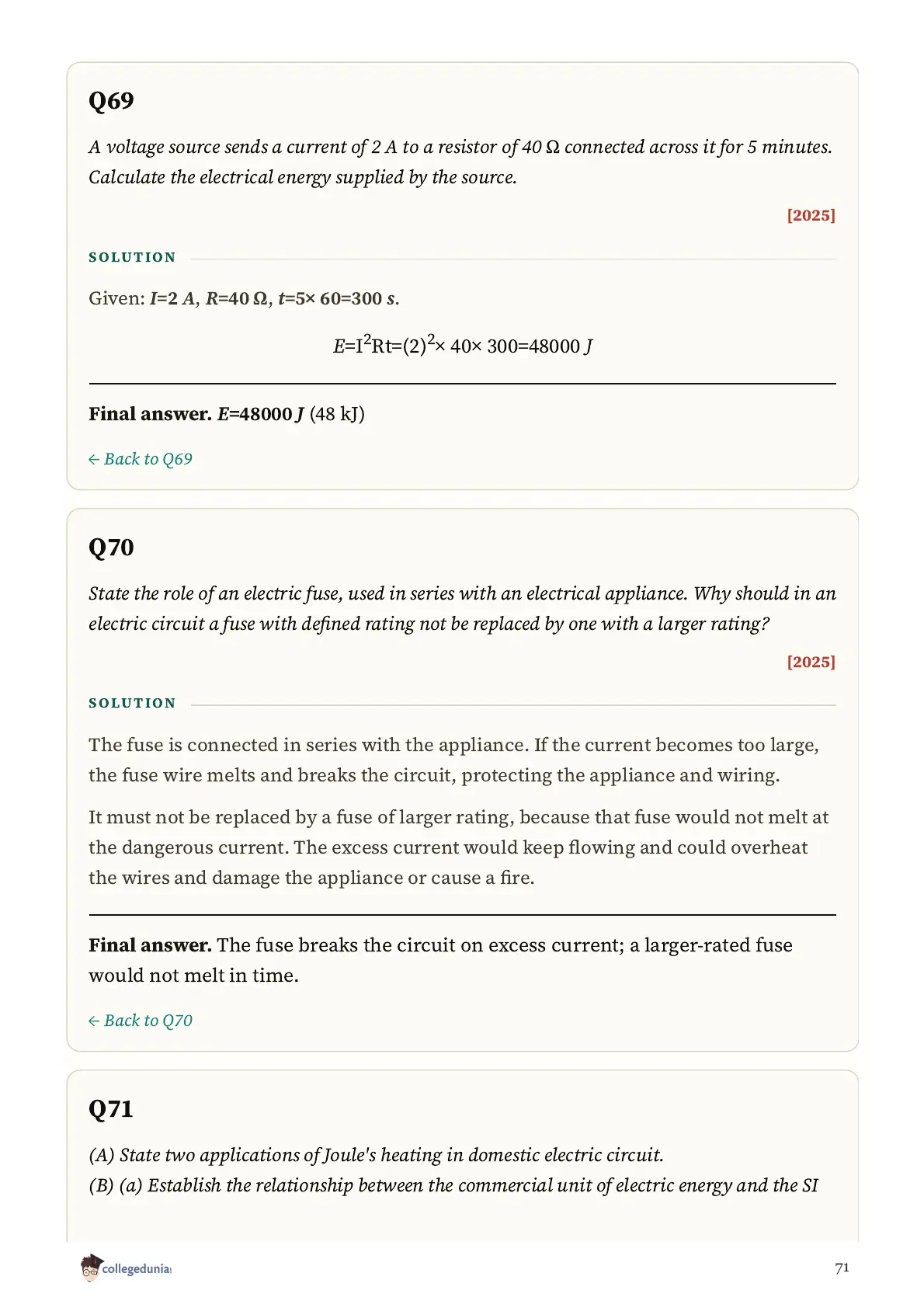
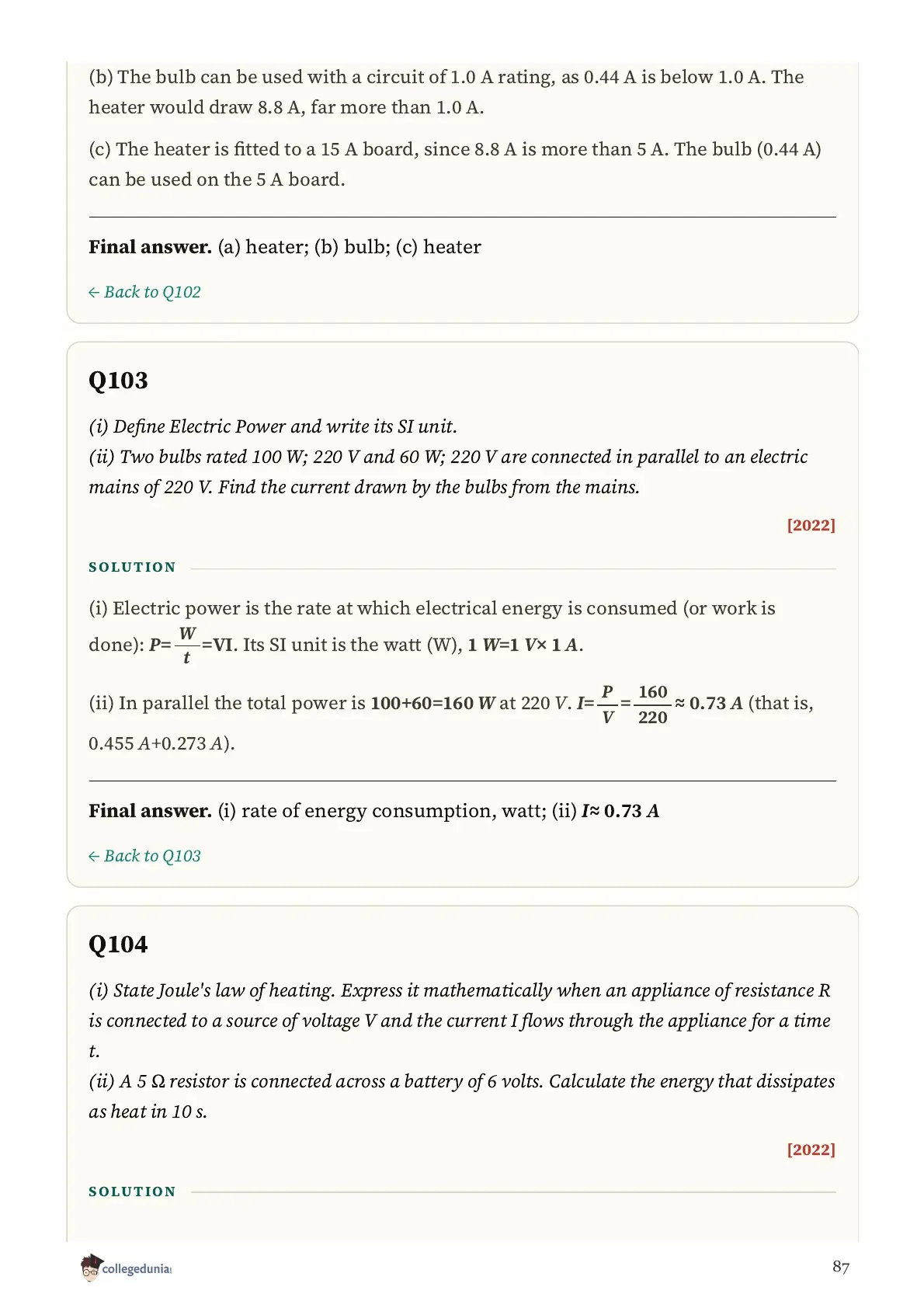
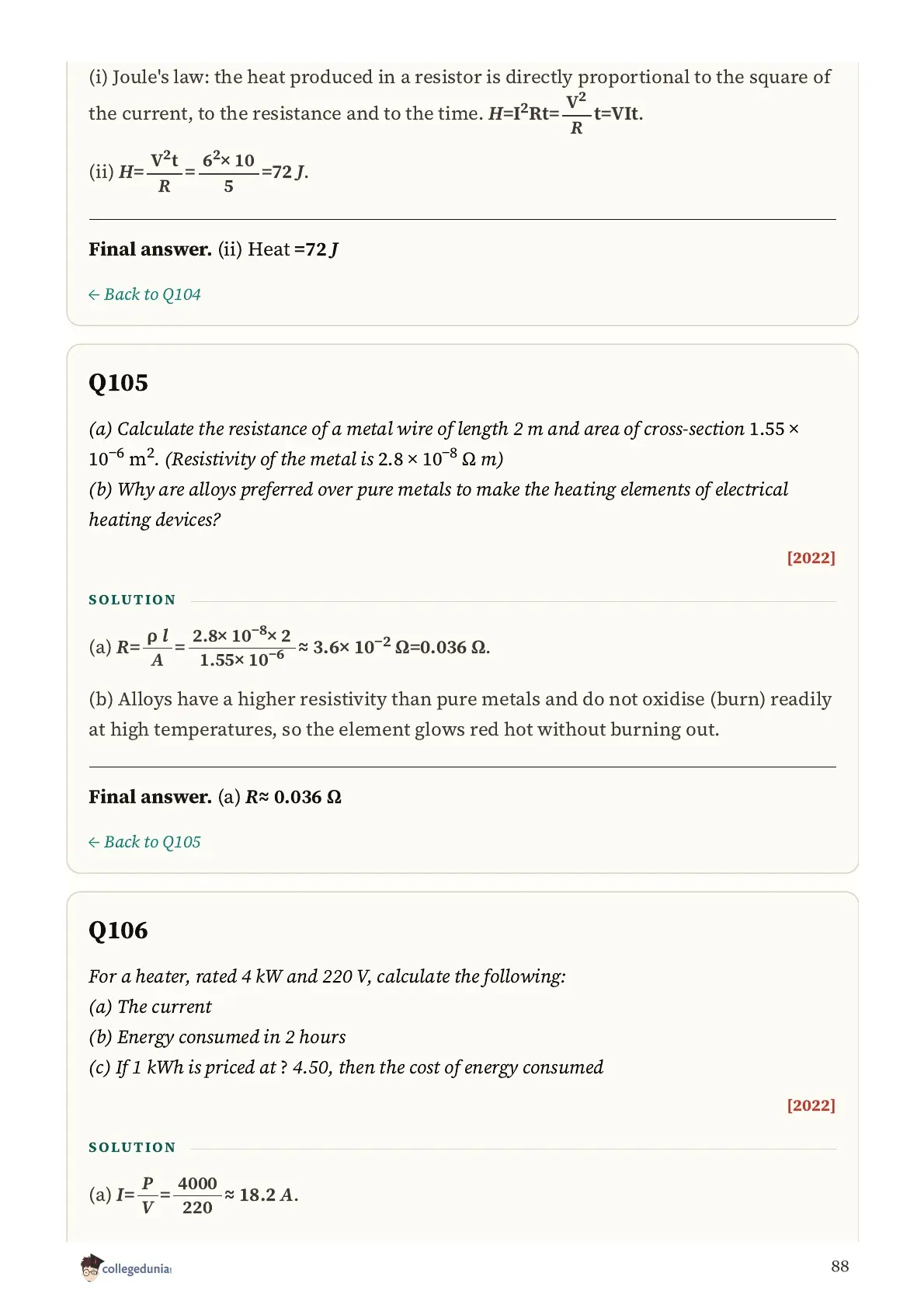
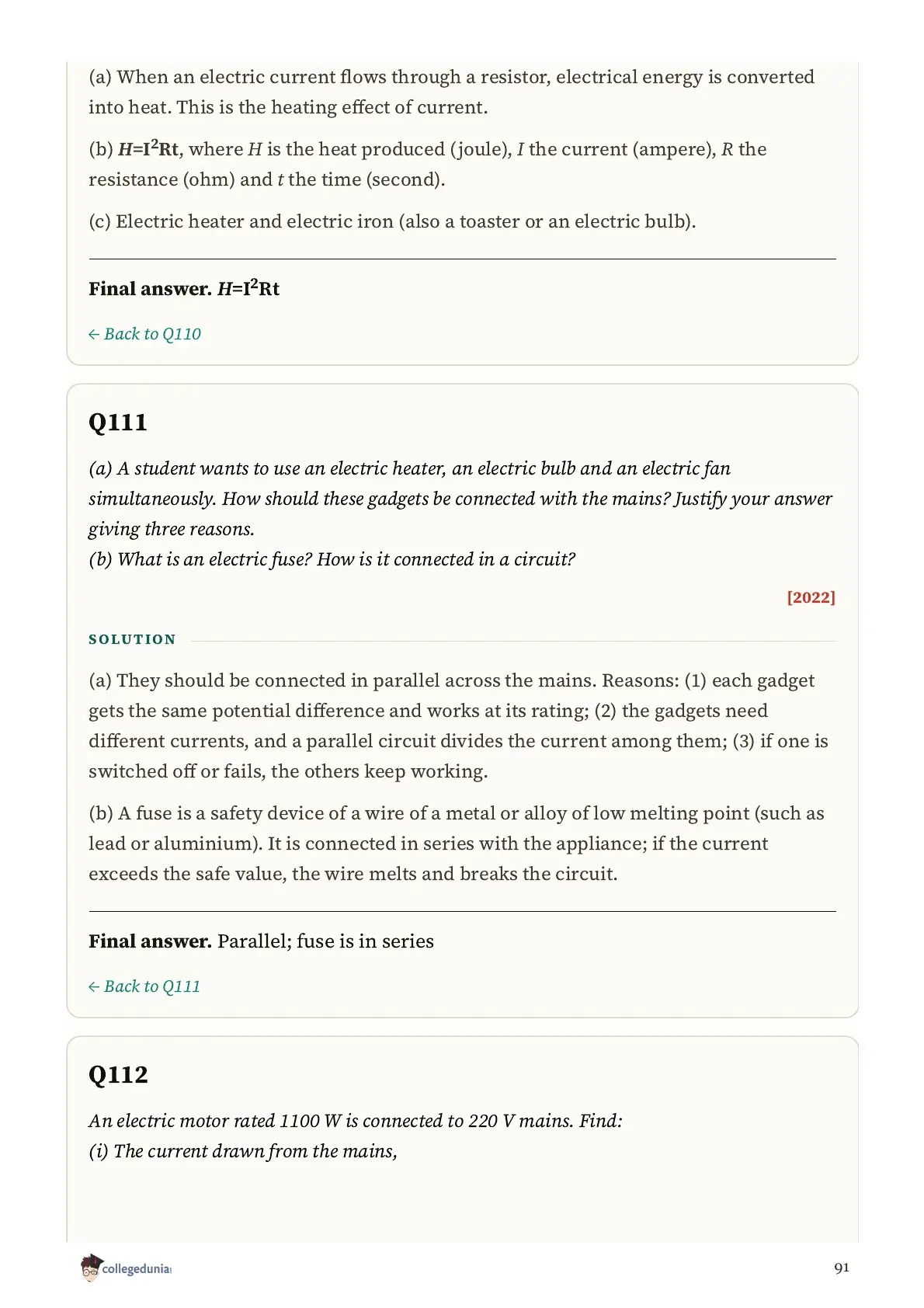
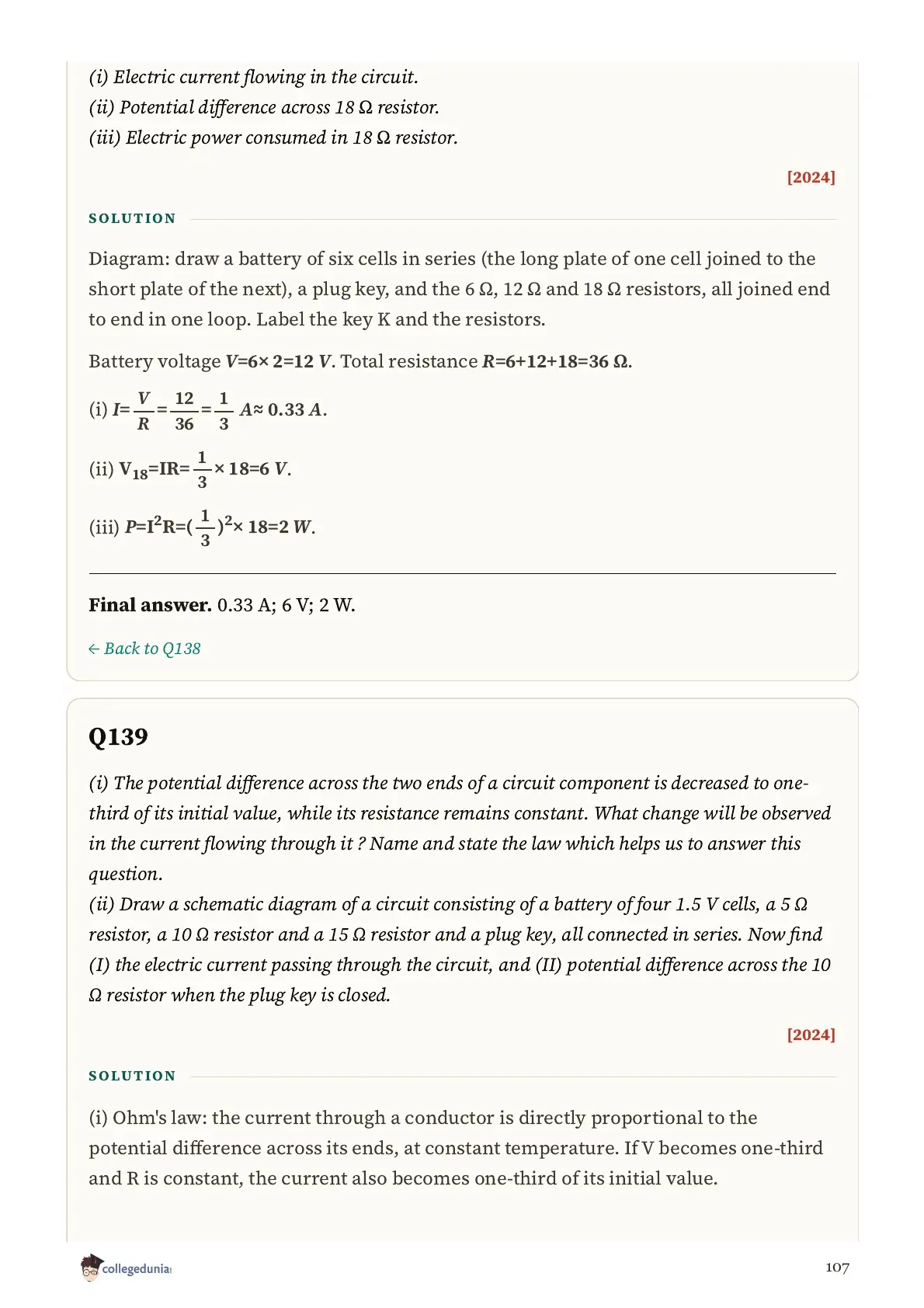
Heating and power make up the next block: 41 questions on heating, 26 on electric power, 16 on fuses and 21 on heaters, irons or toasters. 6 questions use the kilowatt hour, usually with the conversion 1 kWh = 3.6 x 10^6 J. Ammeters and voltmeters appear in 11, V-I graphs in 8, circuit diagrams in 12, and 3 MCQs are assertion-reason items, for instance on nichrome in heating devices and on coiling a wire.
Counts come from keyword matches over the question text, so a question that names two things is counted under both.
Source: prodigy classes
How to Approach the Set
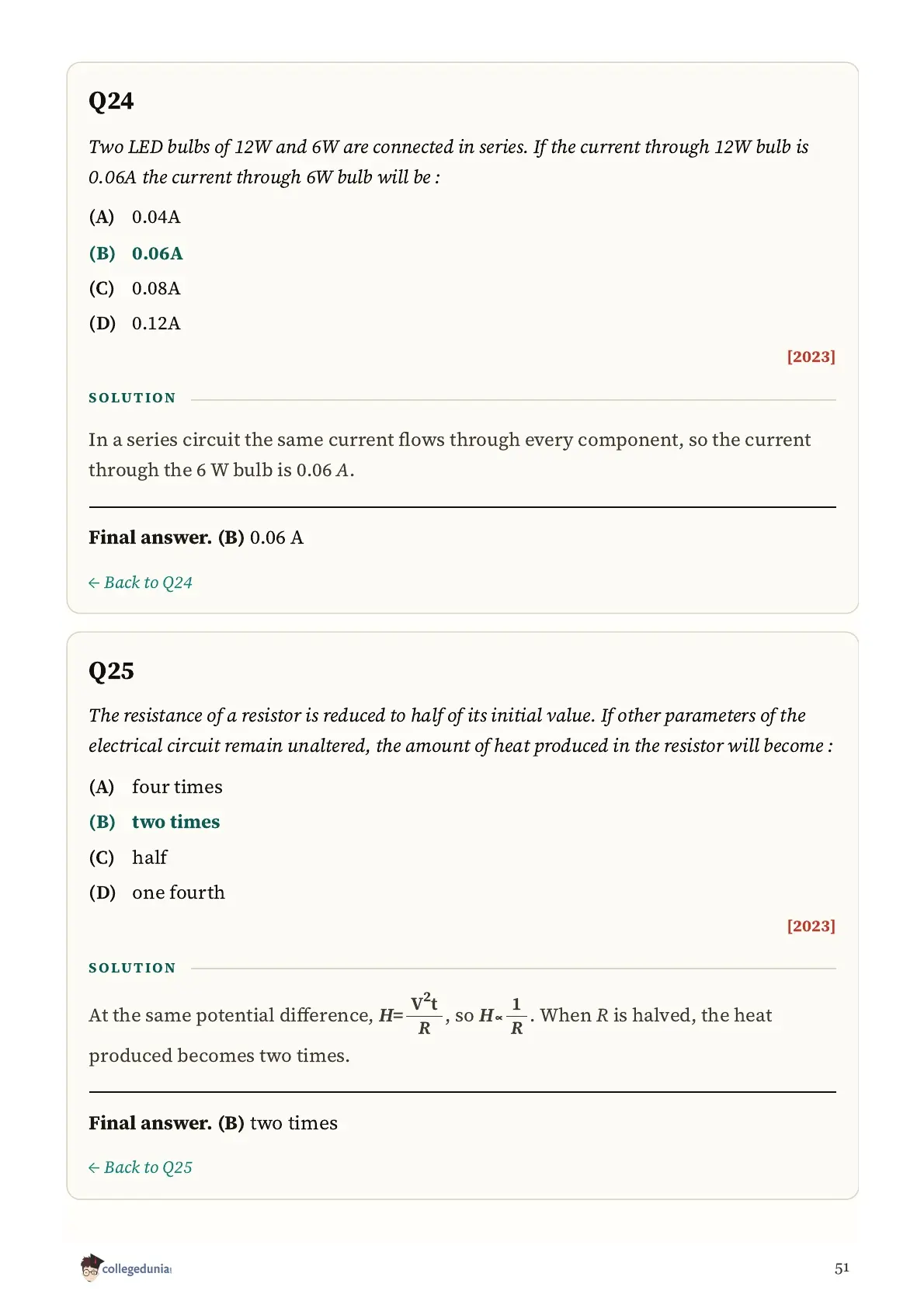
Start with the 33 MCQs and assertion-reason items, then the 1-mark and 2-mark short answers, which need a definition or a single formula. Next take the 34 three-mark questions and the 5 case-based items. Keep the 35 five-mark questions for last, since many combine a derivation with a calculation. Learn the three formulas V = IR, R = rho l / A and P = VI, and the two heat forms H = I^2 R t and H = V^2 t / R, until you can pick the right one from the data given. Practise the 2026 and 2025 papers closely, as they hold 56 of the 162 questions.
Common Mistakes in Electricity Questions
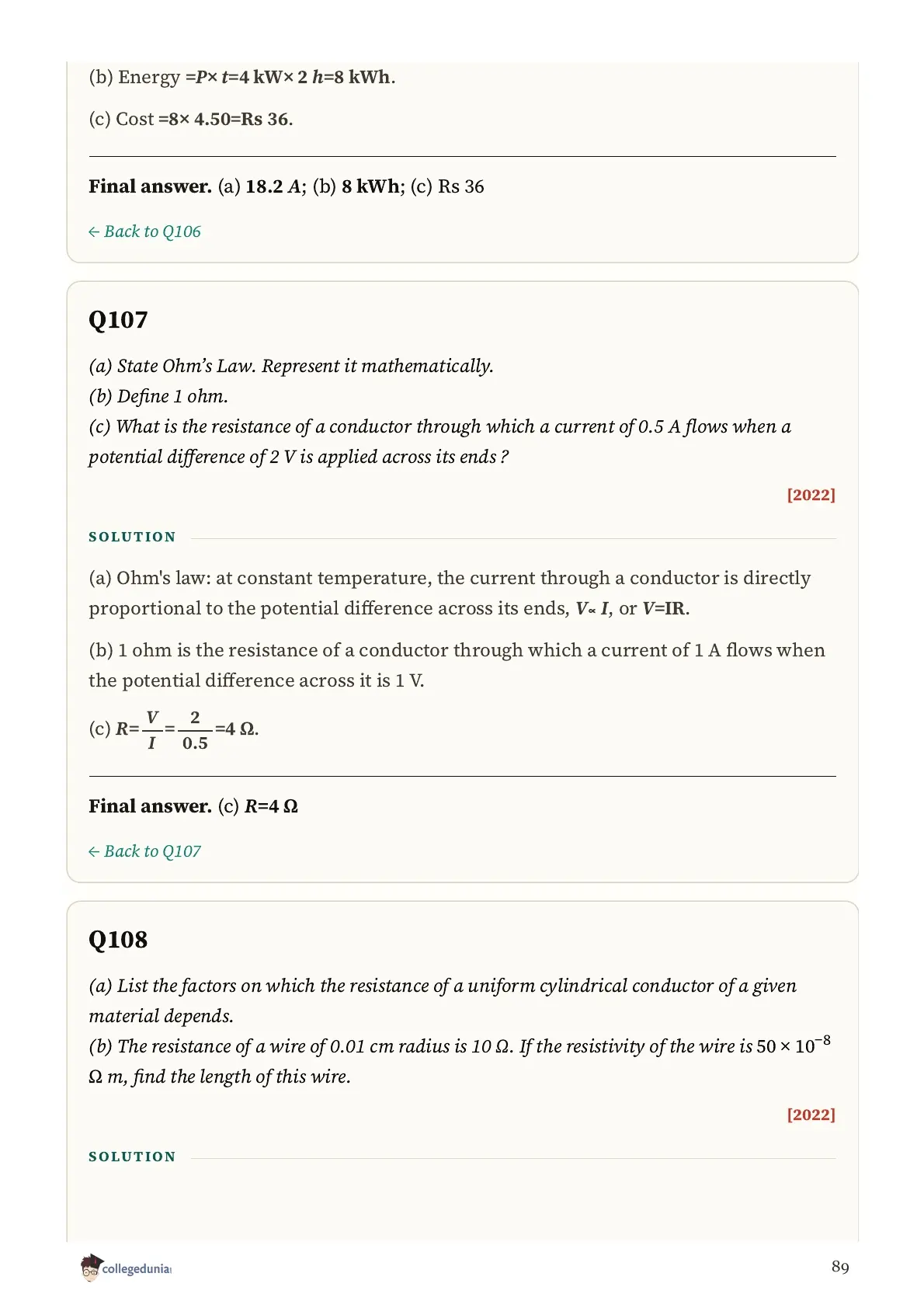
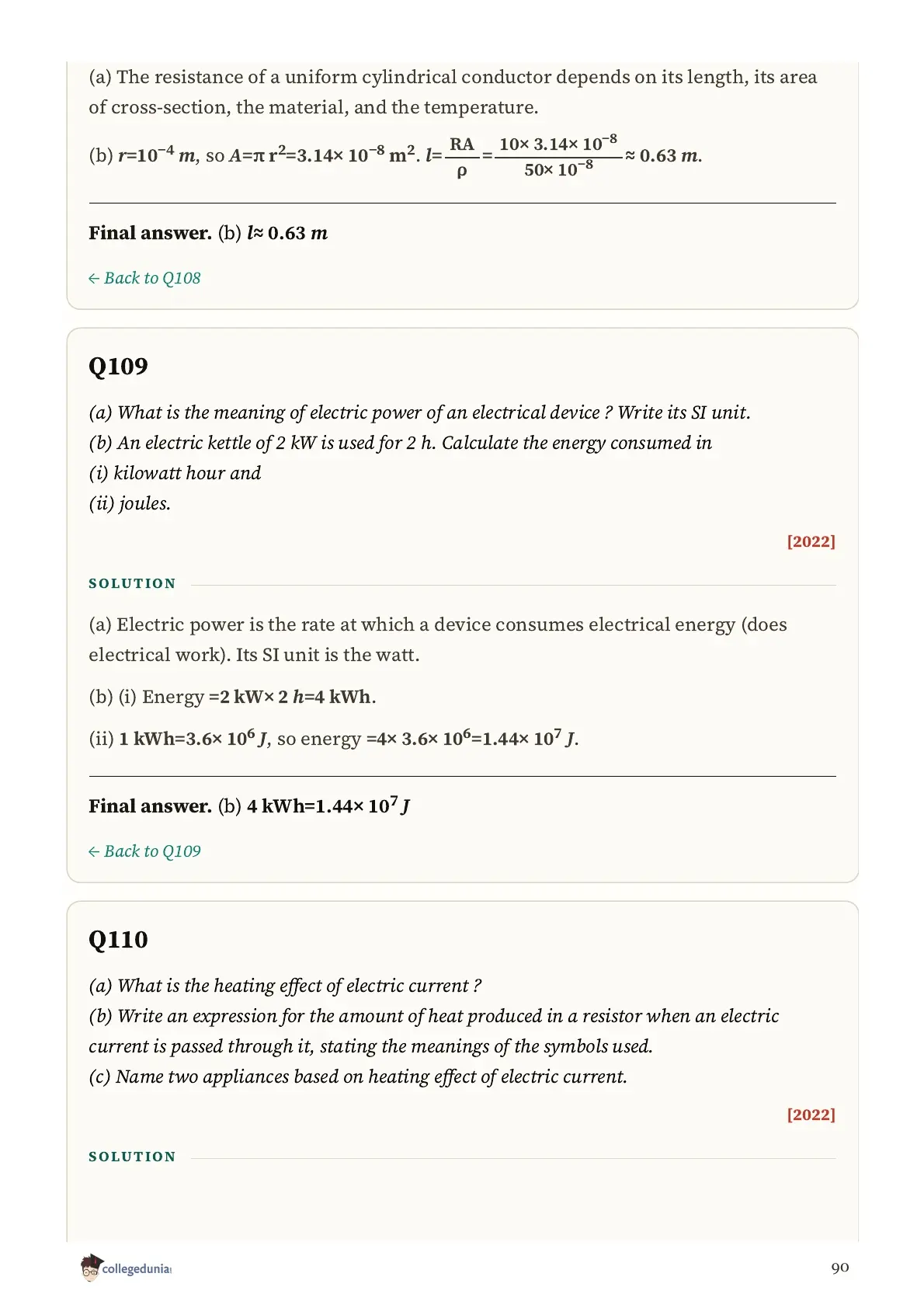
- Putting a radius of 0.01 cm straight into R = rho l / A. Convert it to 10^-4 m first, or the resistivity is out by a factor of 10^4.
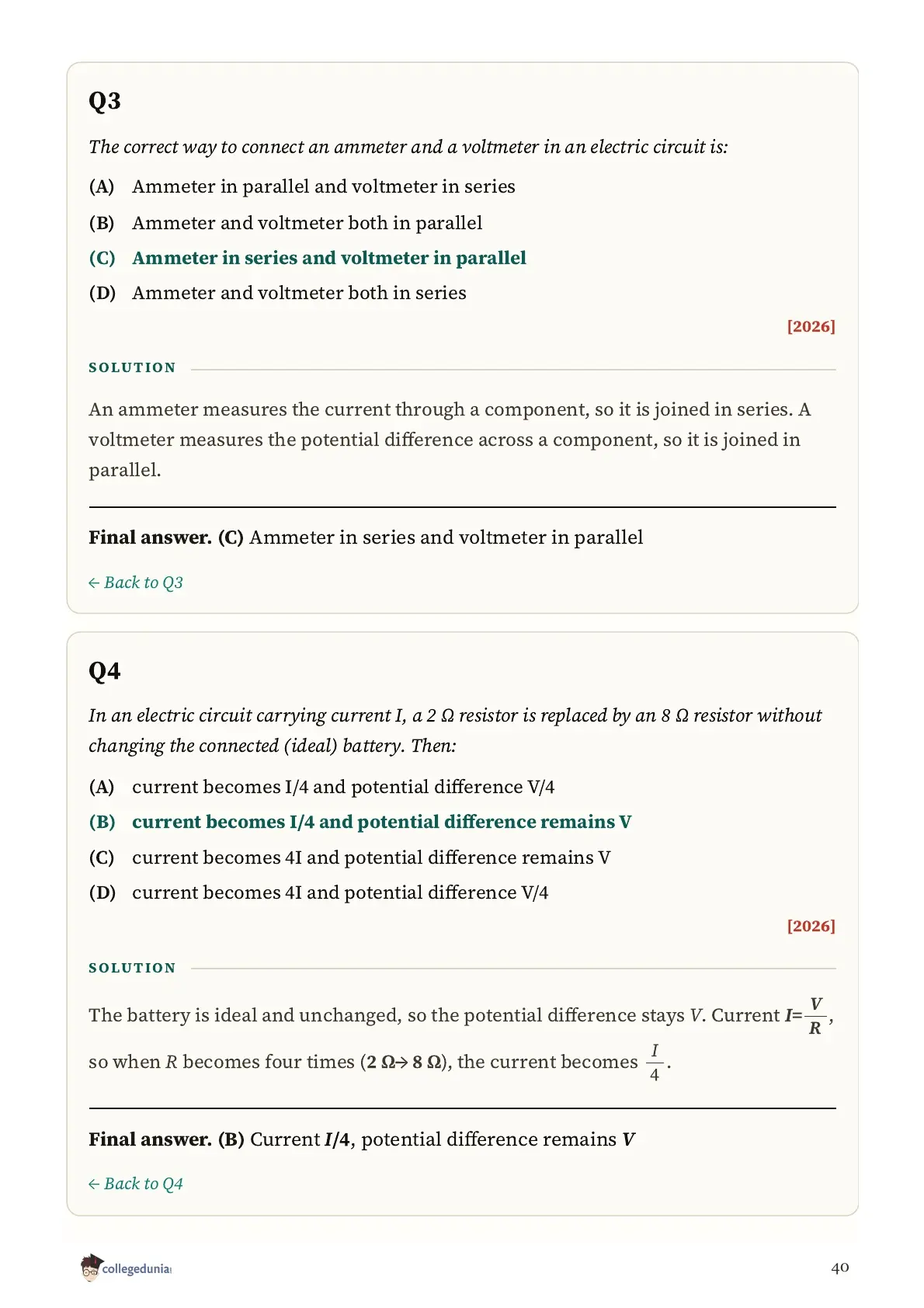
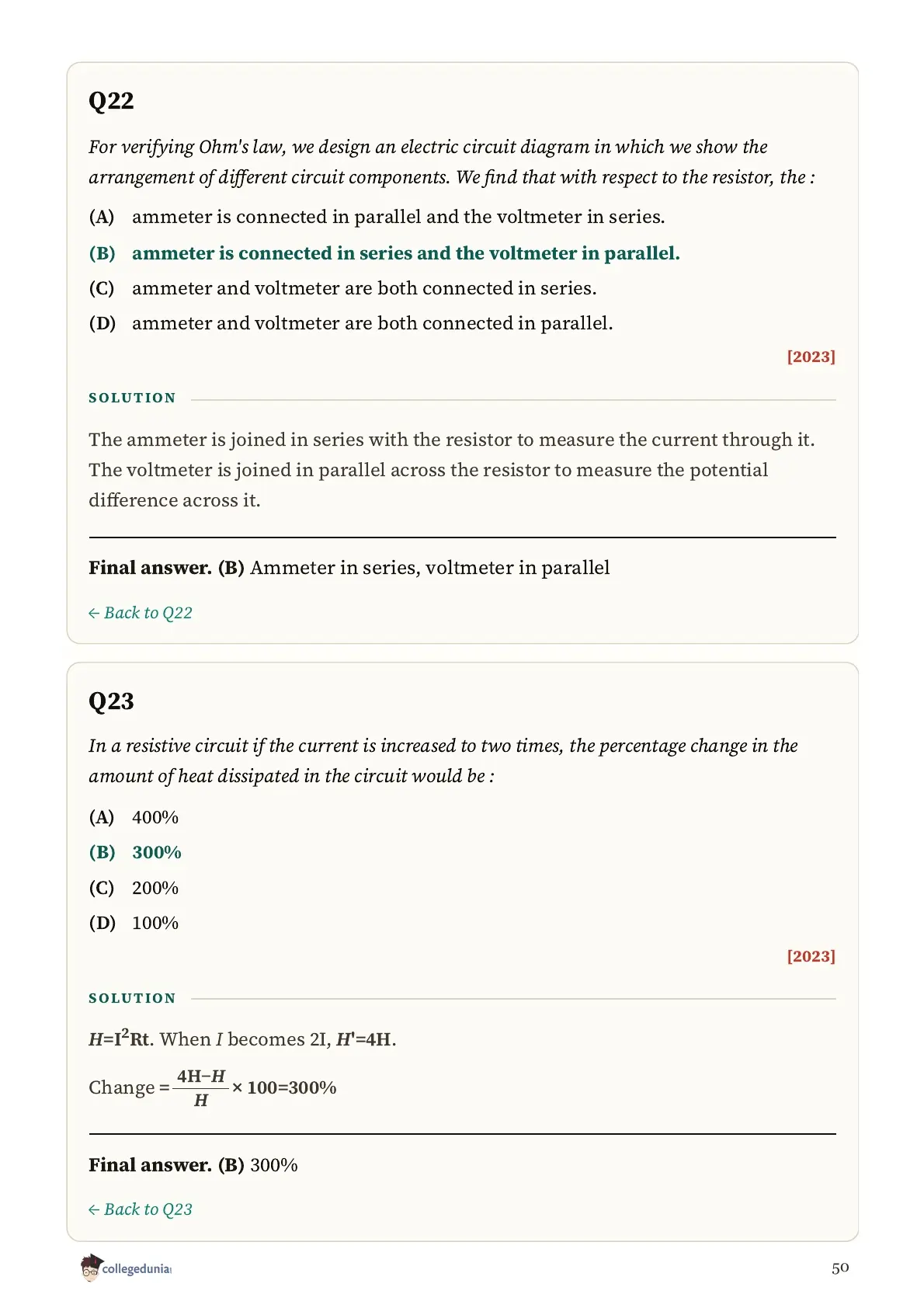
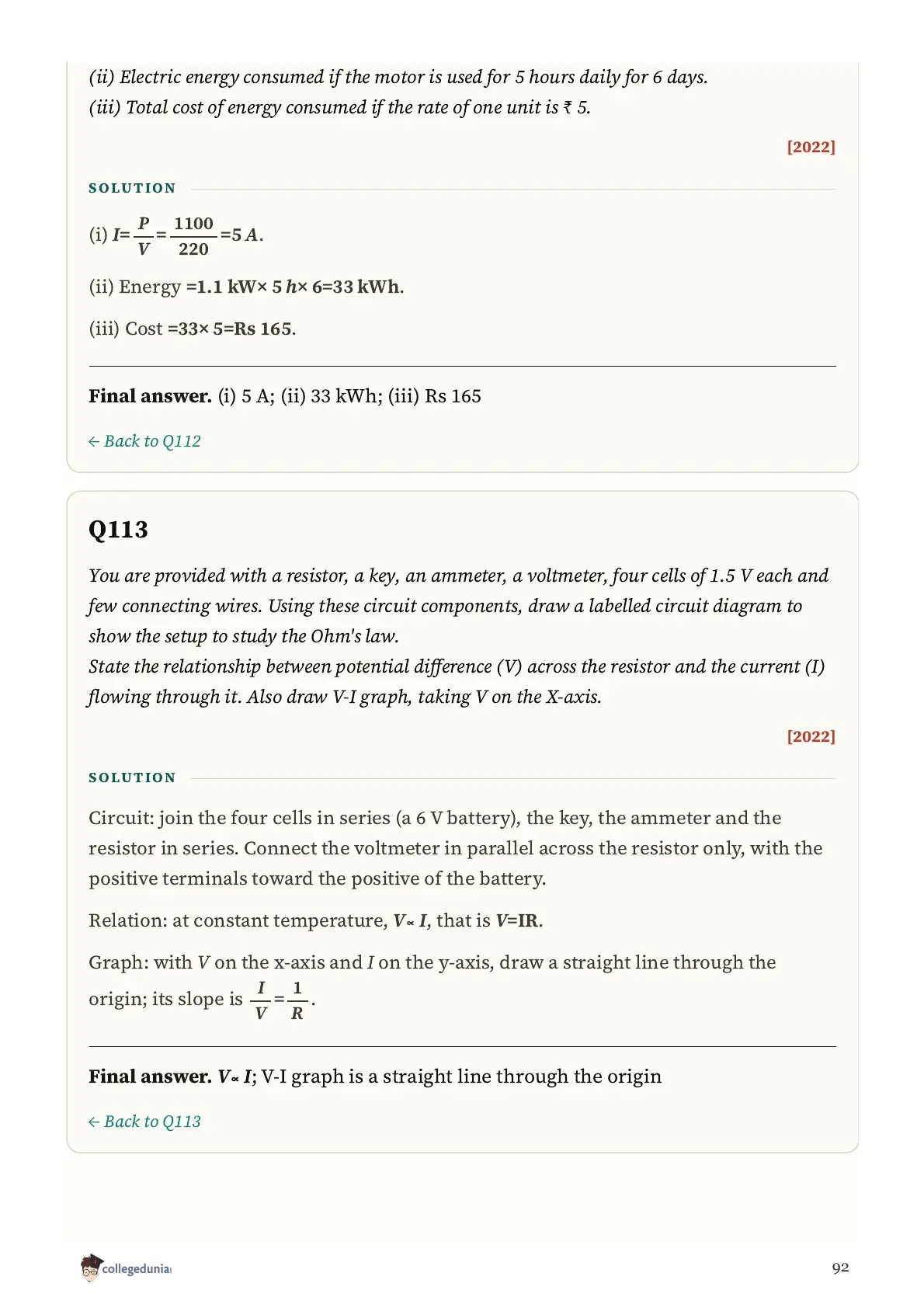
- Joining the ammeter in parallel and the voltmeter in series. The ammeter goes in series, the voltmeter across the component.
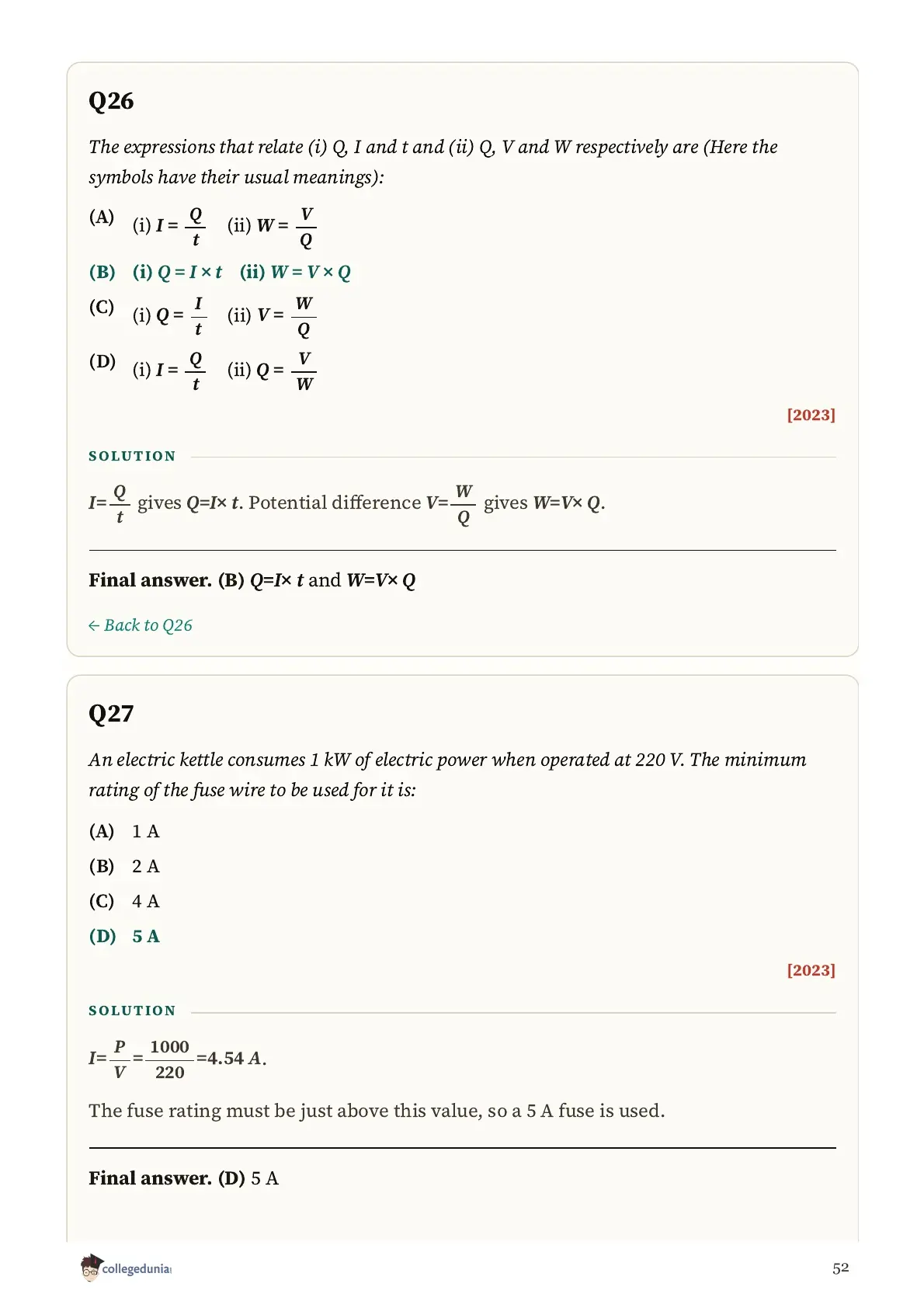
- Using 220 V in P = V^2/R when the heater is run at 200 V. Find R from the rating, keep it fixed, then use 200 V. The answer is 2000 W, not 2200 W.
- Calling the Reason true in the nichrome assertion-reason question. Nichrome has high resistivity, but its resistance does not fall as it heats.
- Thinking that coiling a wire changes its resistance. Length, area and material stay the same, so it does not.
- Leaving the answer in kWh when joules are asked. 1 kWh is 3.6 x 10^6 J, so 4 kWh is 1.44 x 10^7 J.
Using the Answer Key and Solutions
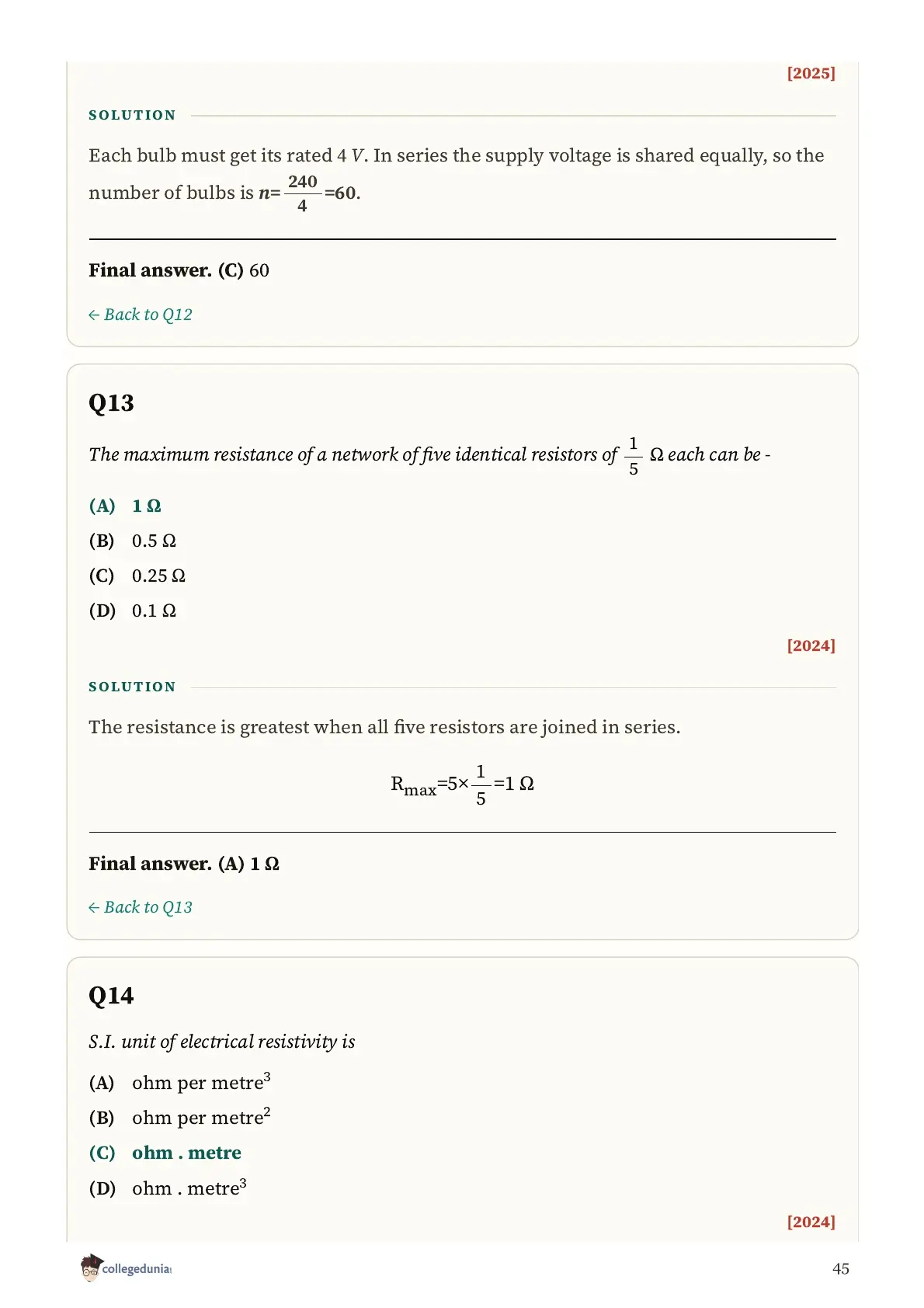
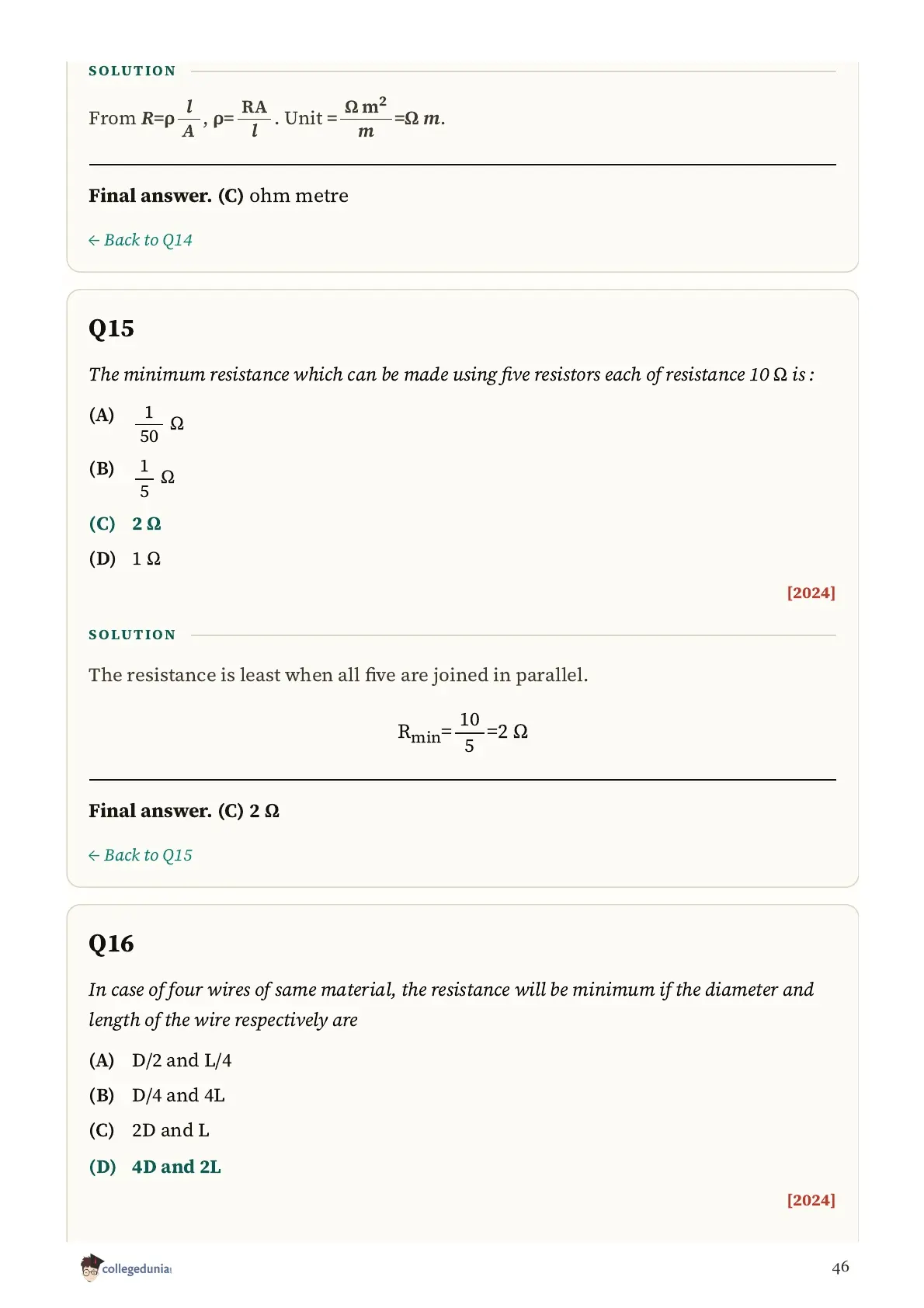
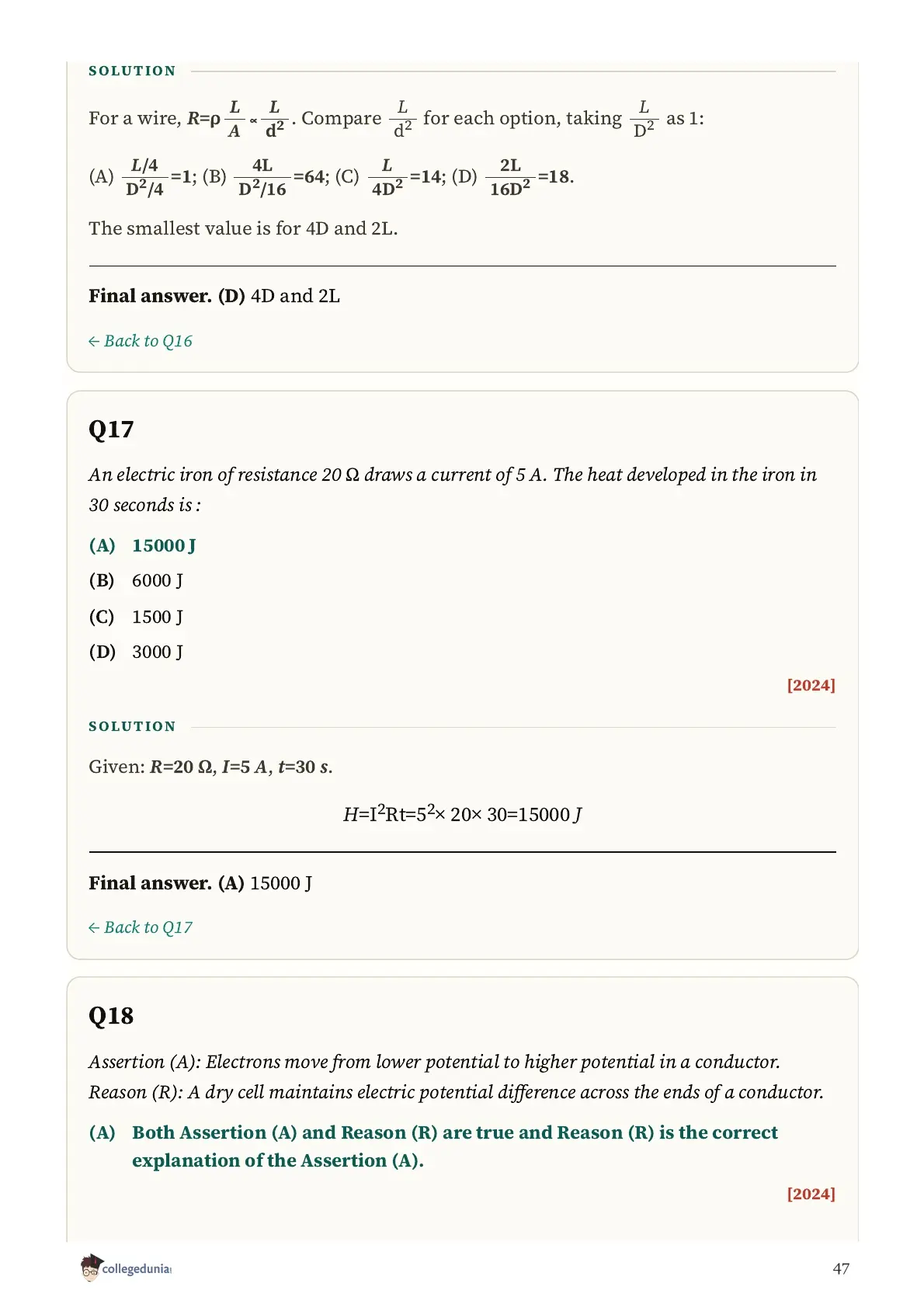
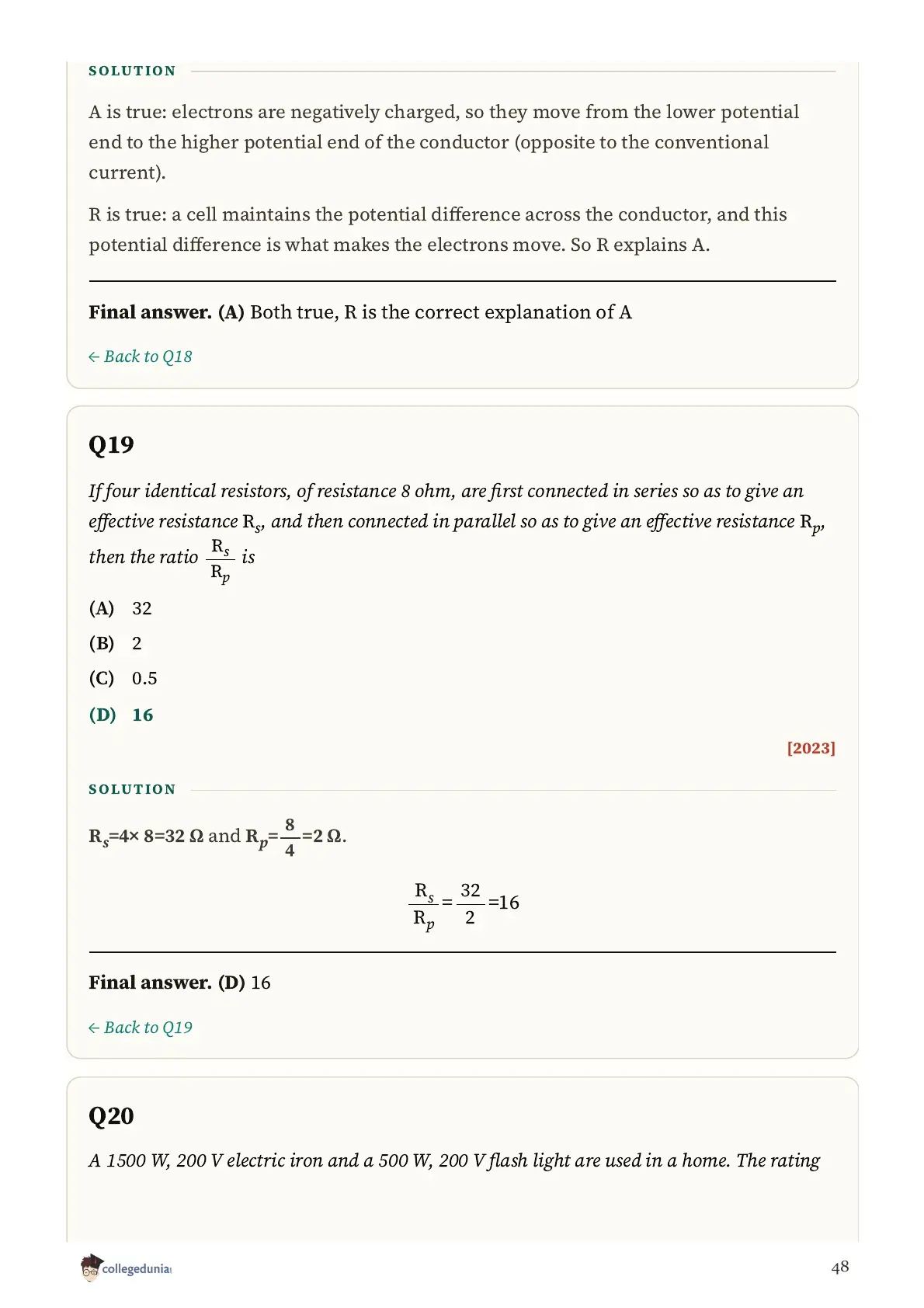
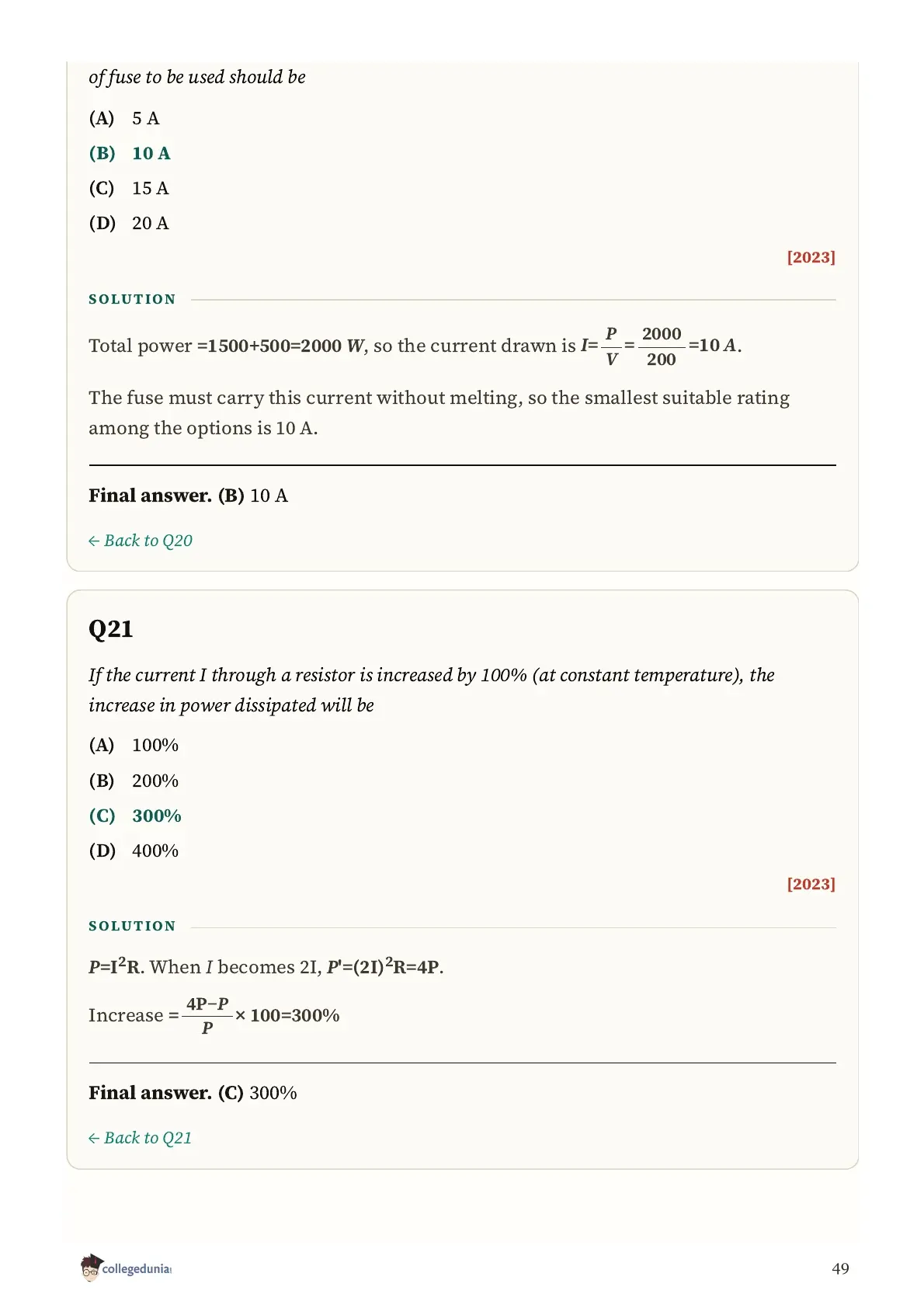
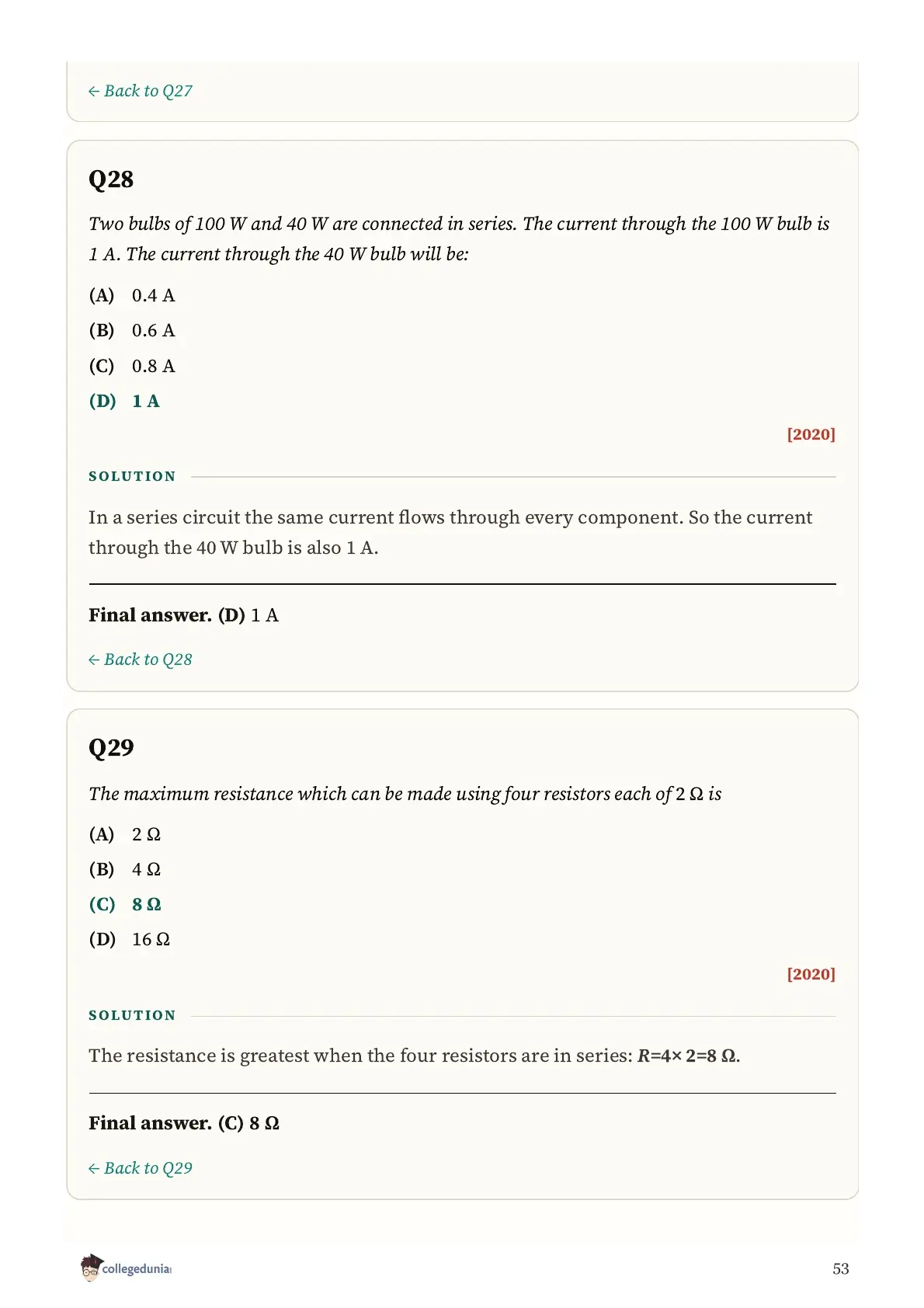
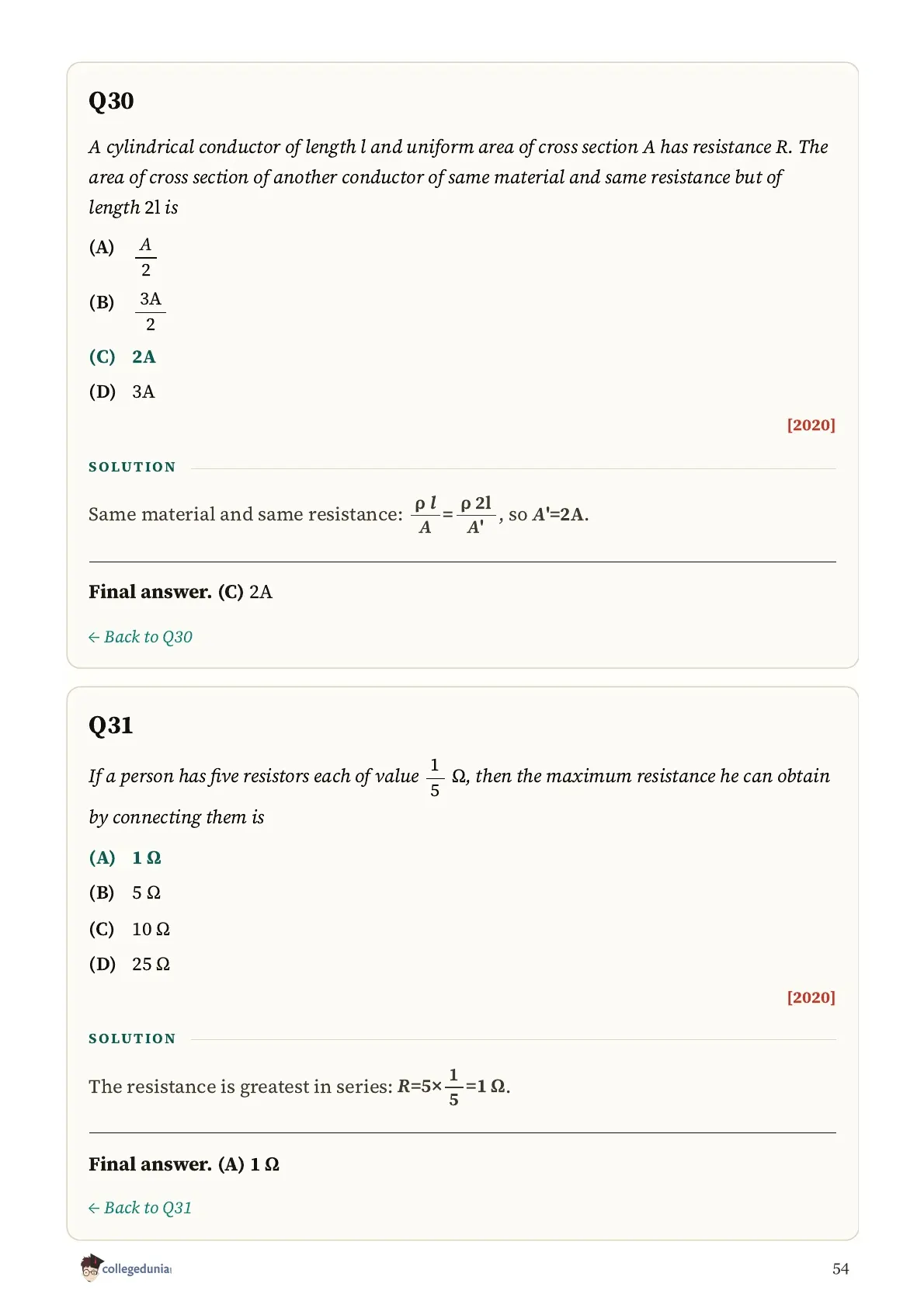
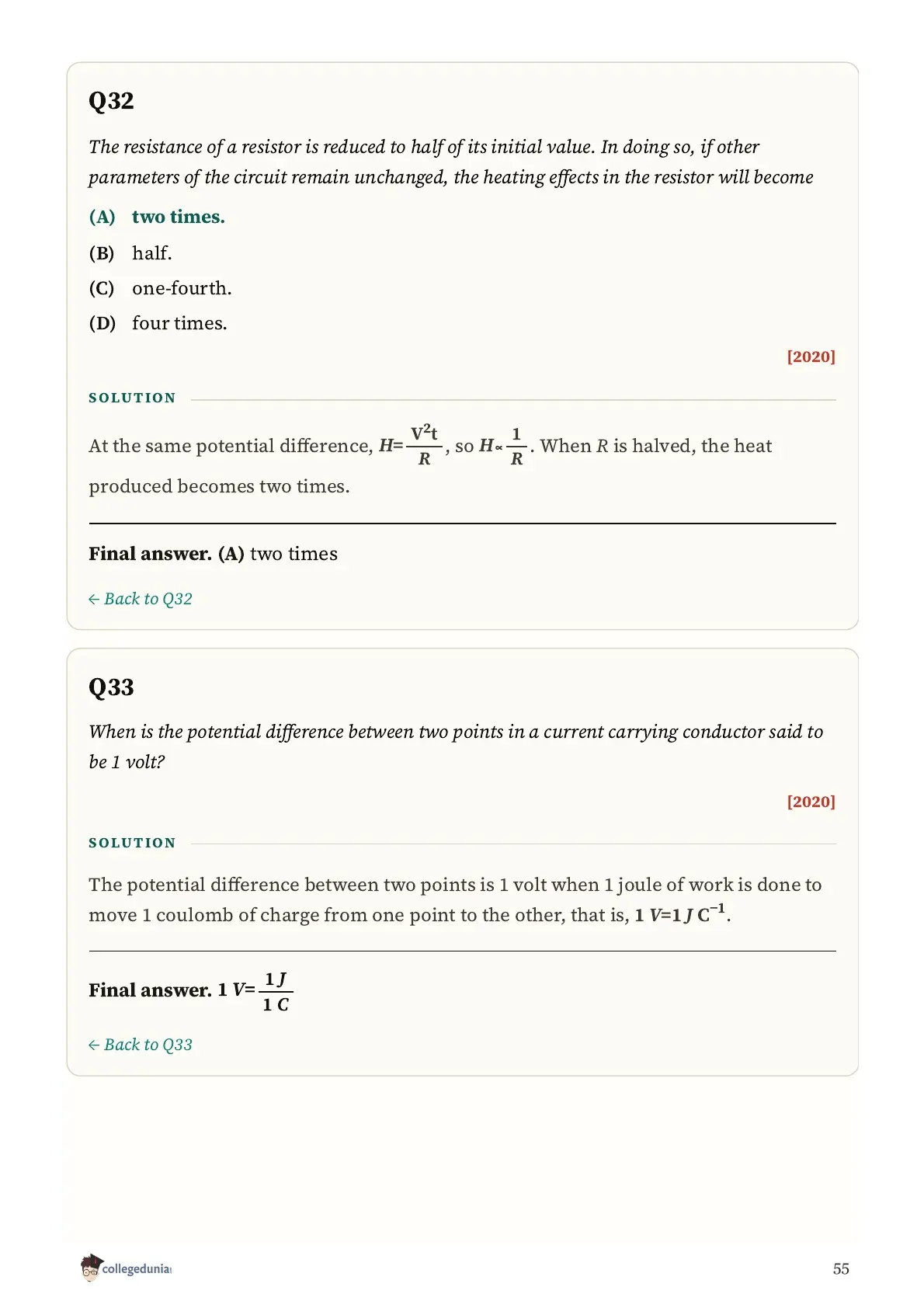
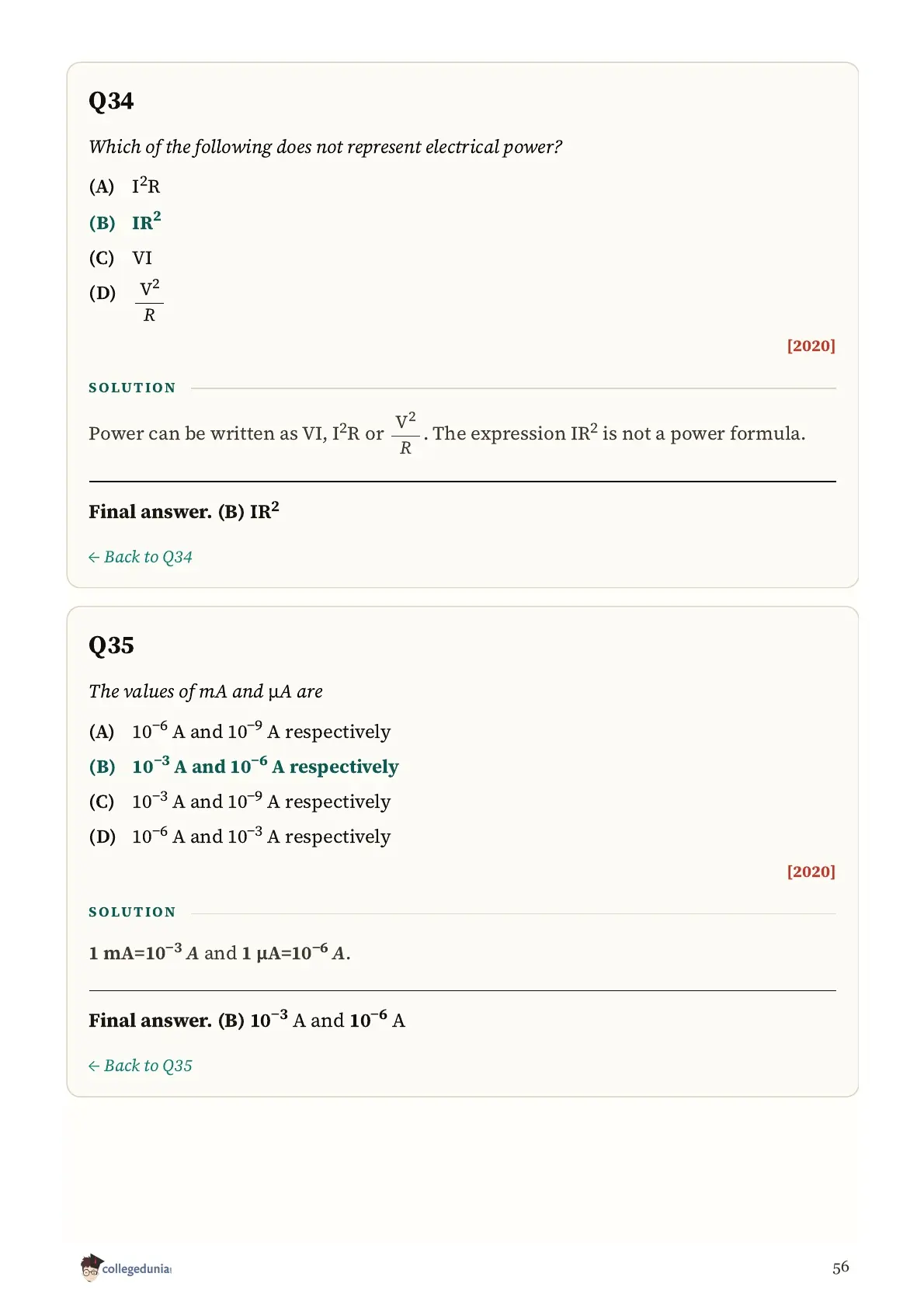
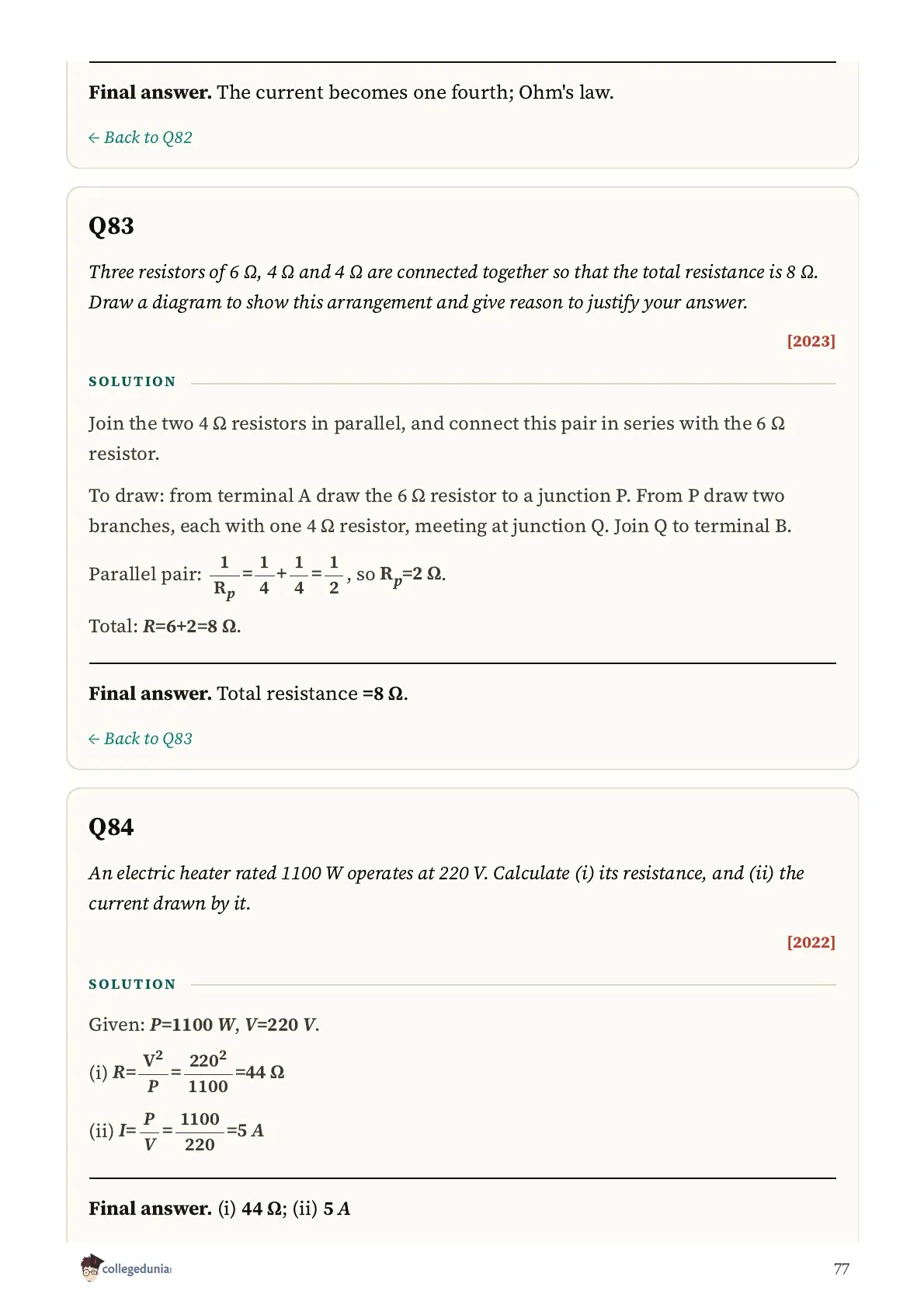
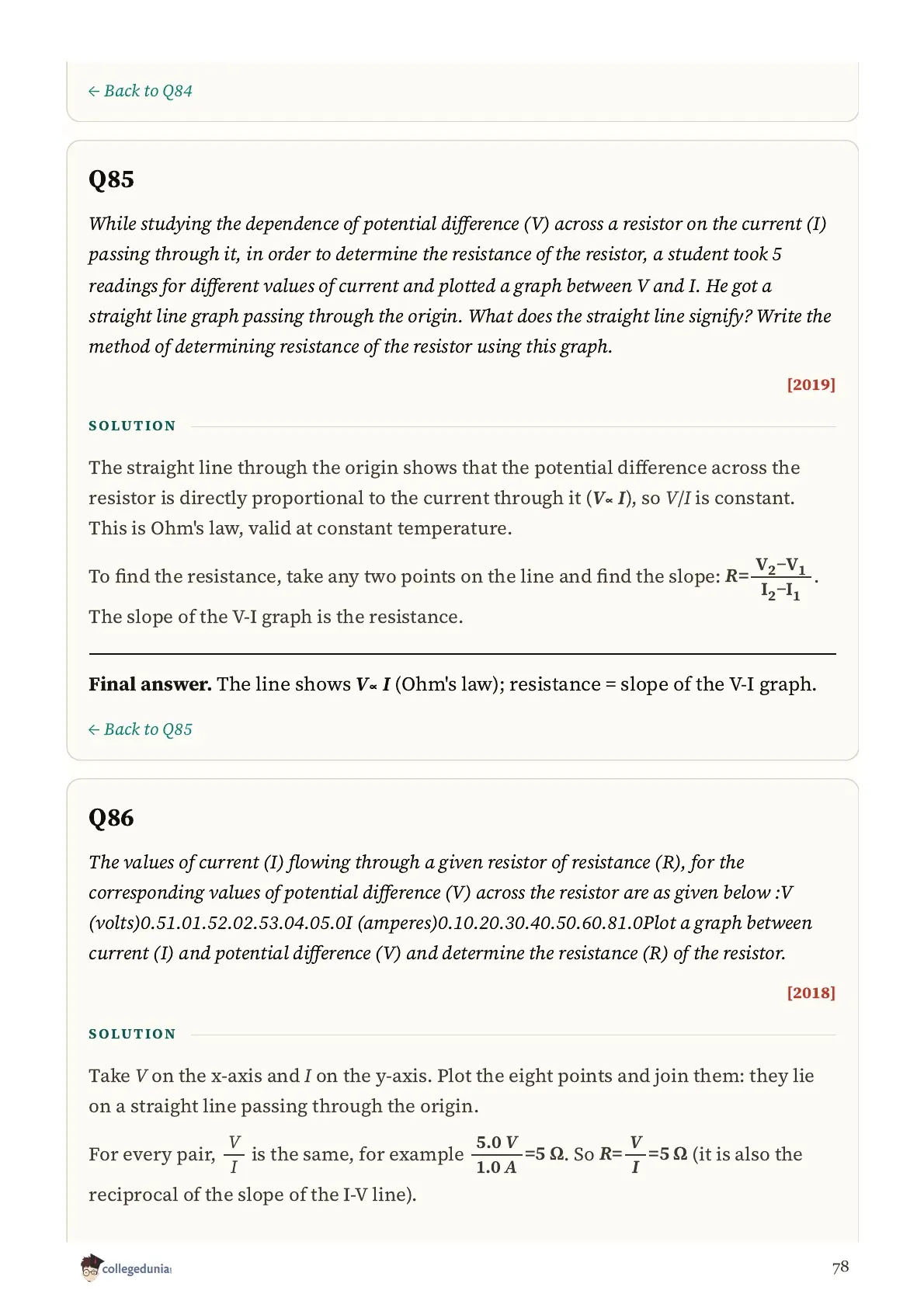
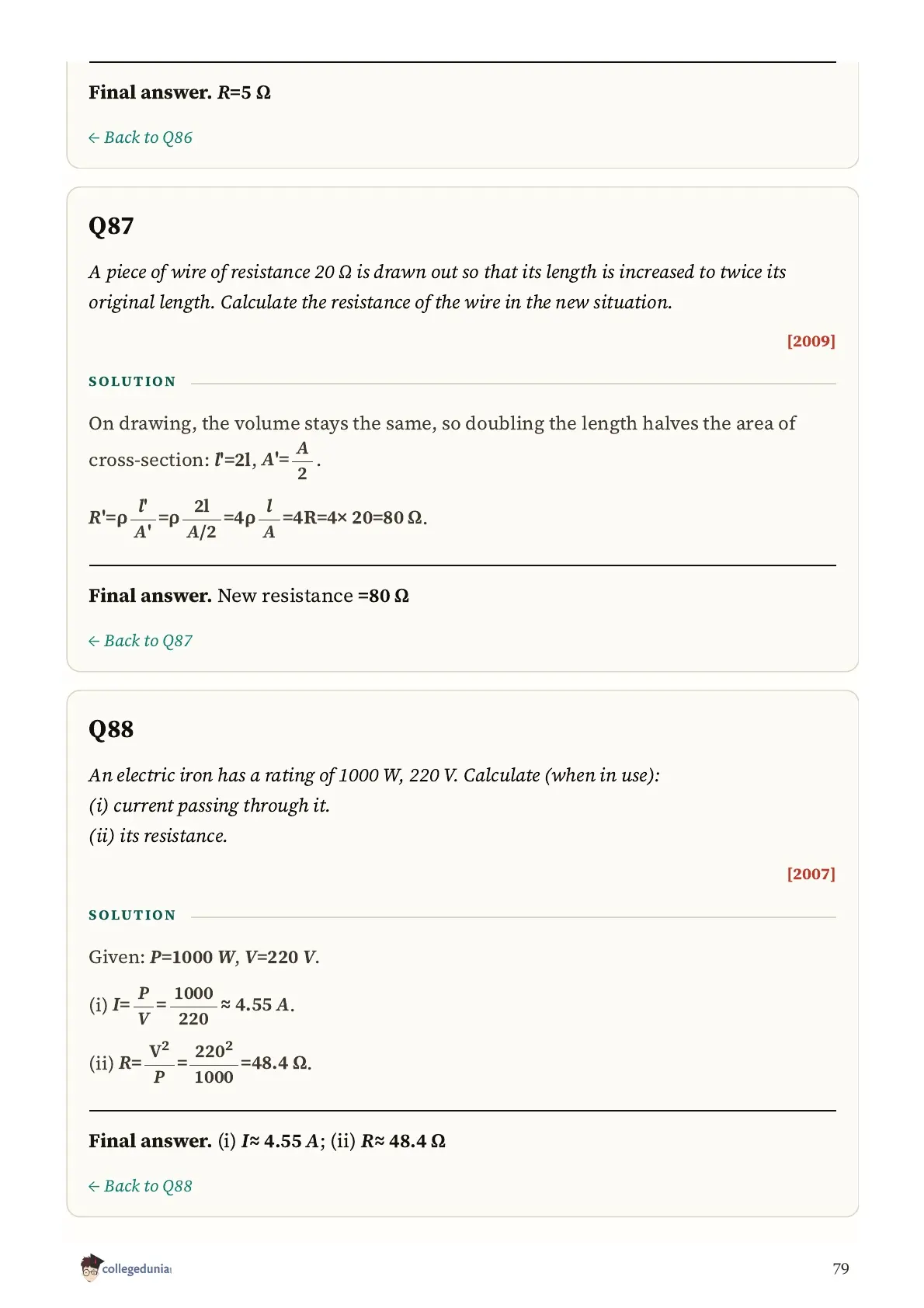
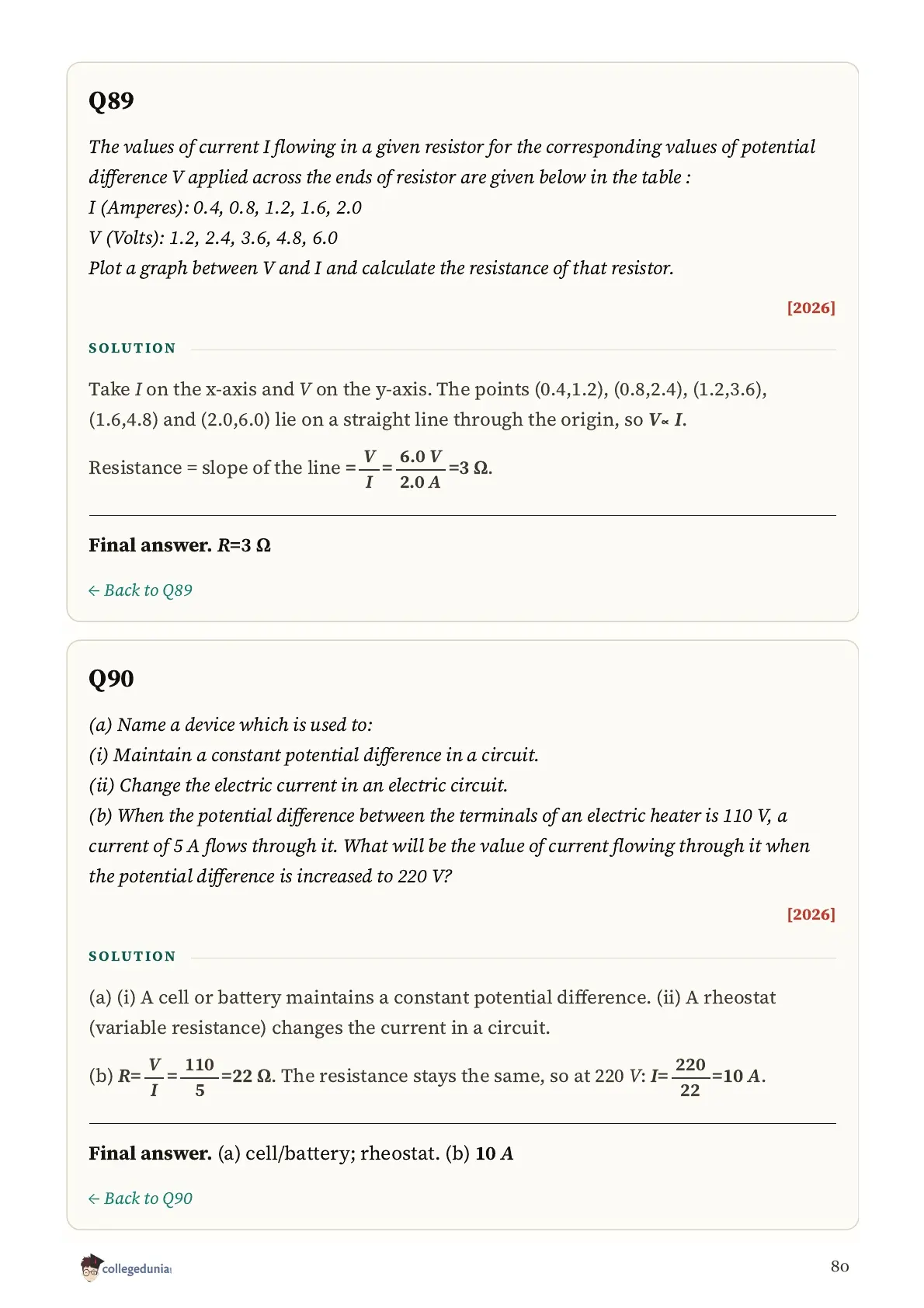
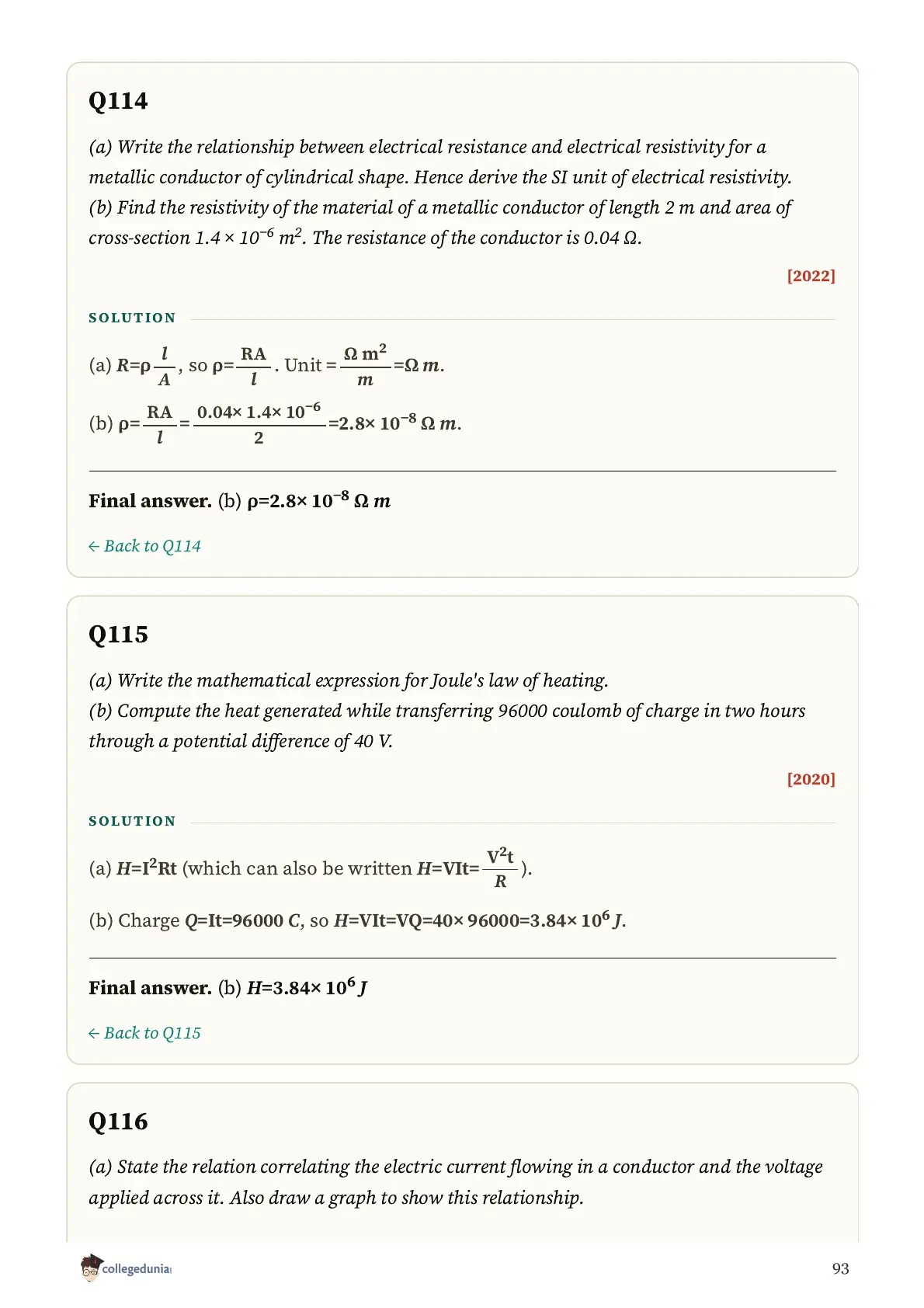
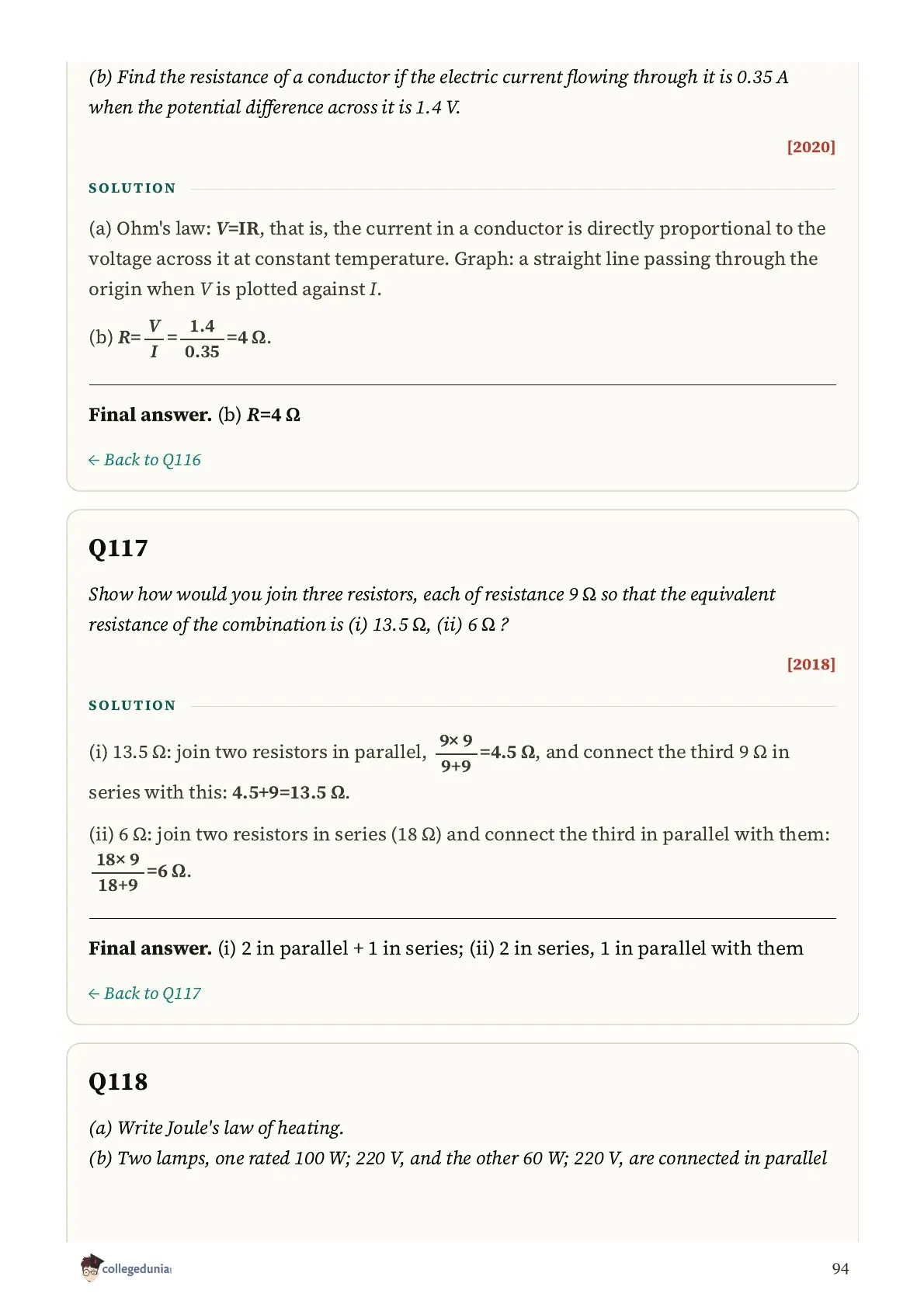
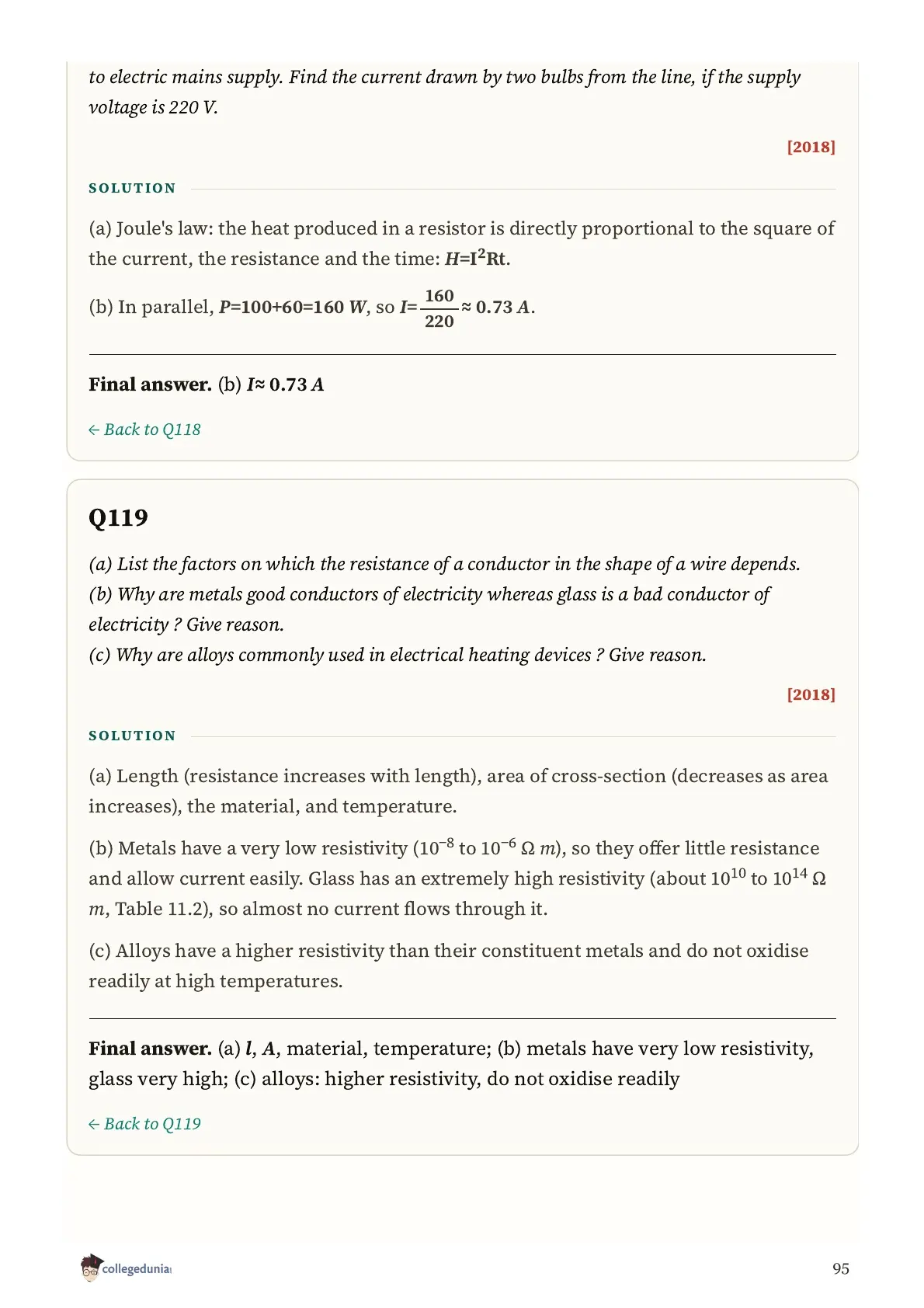
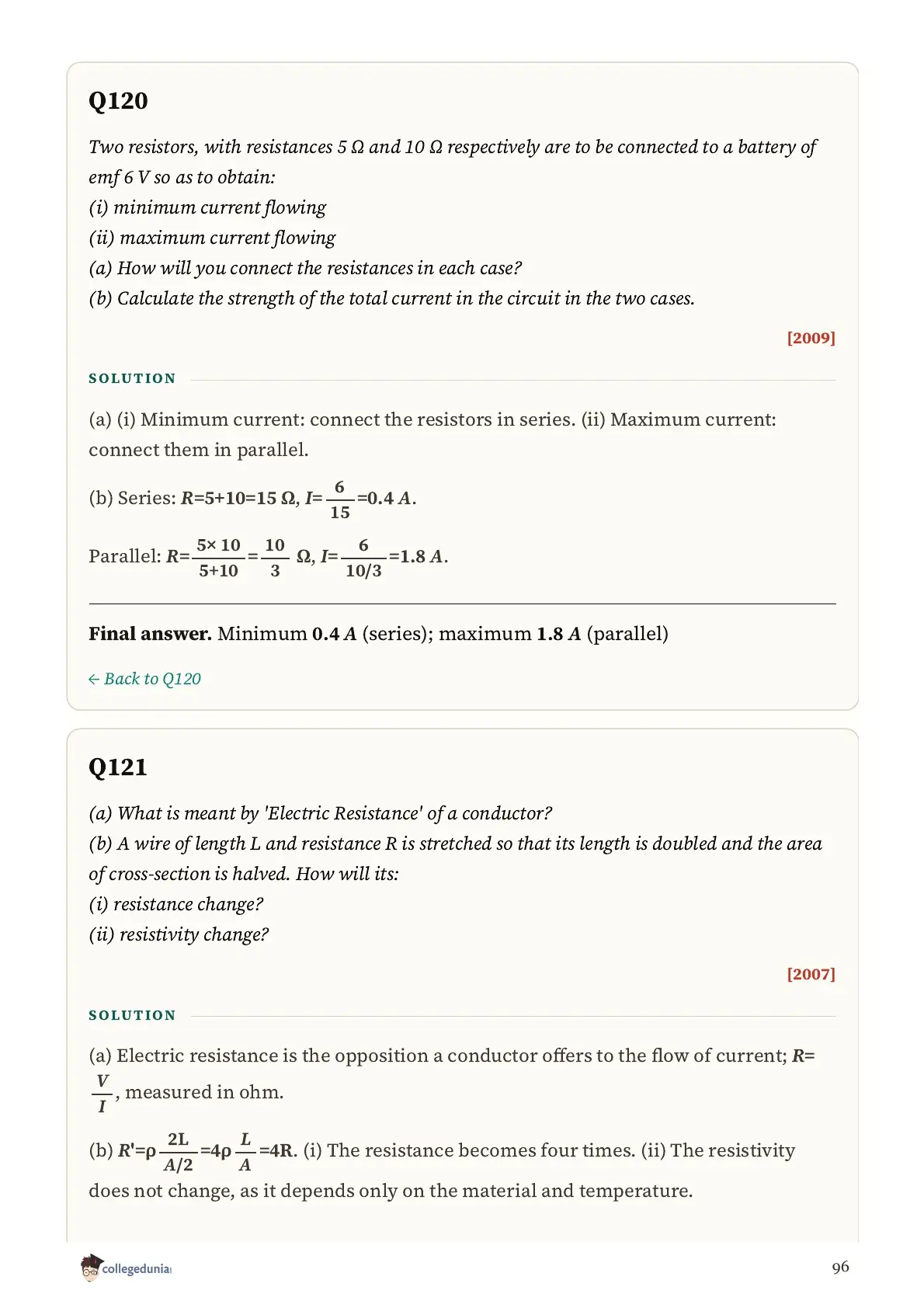
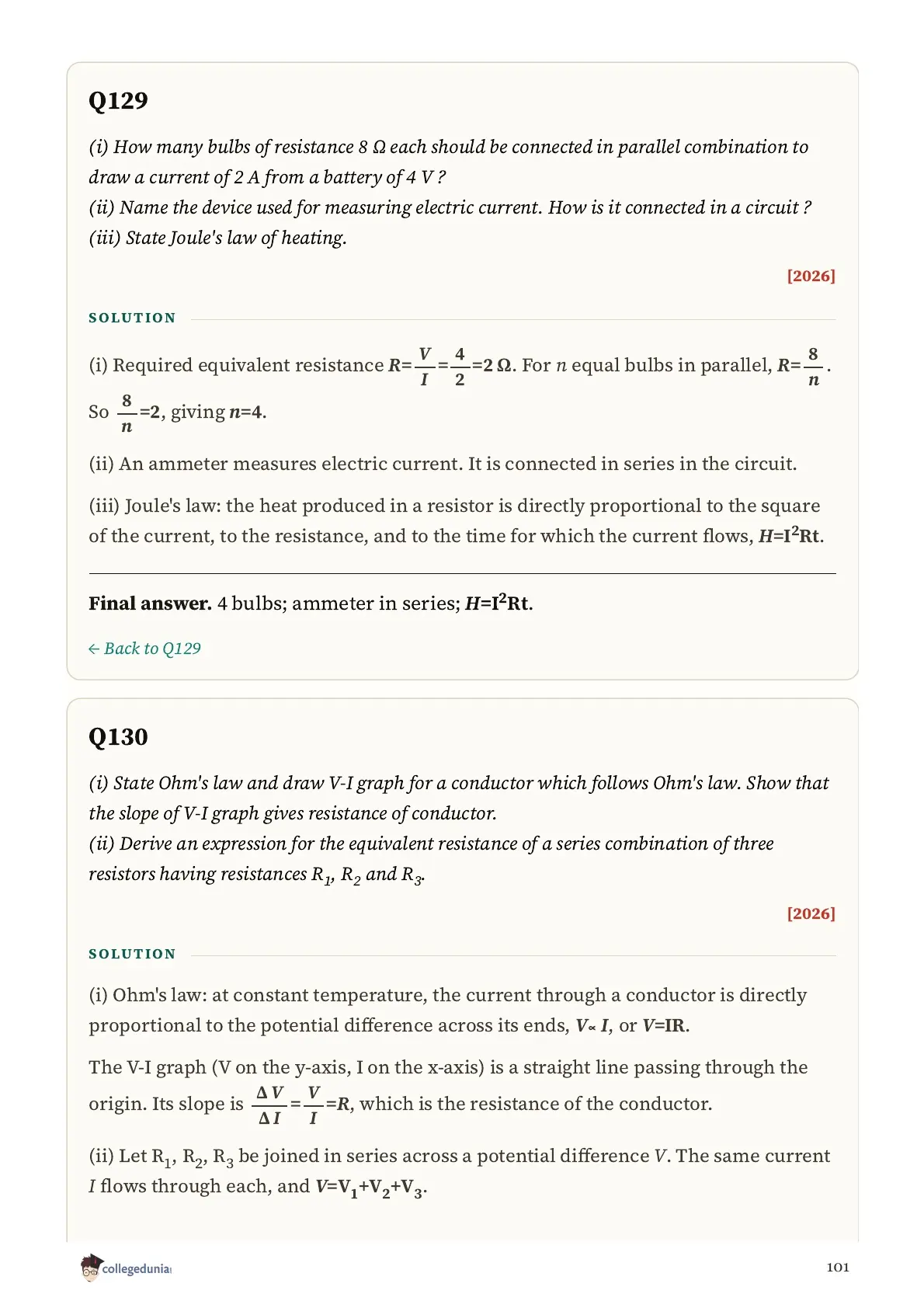
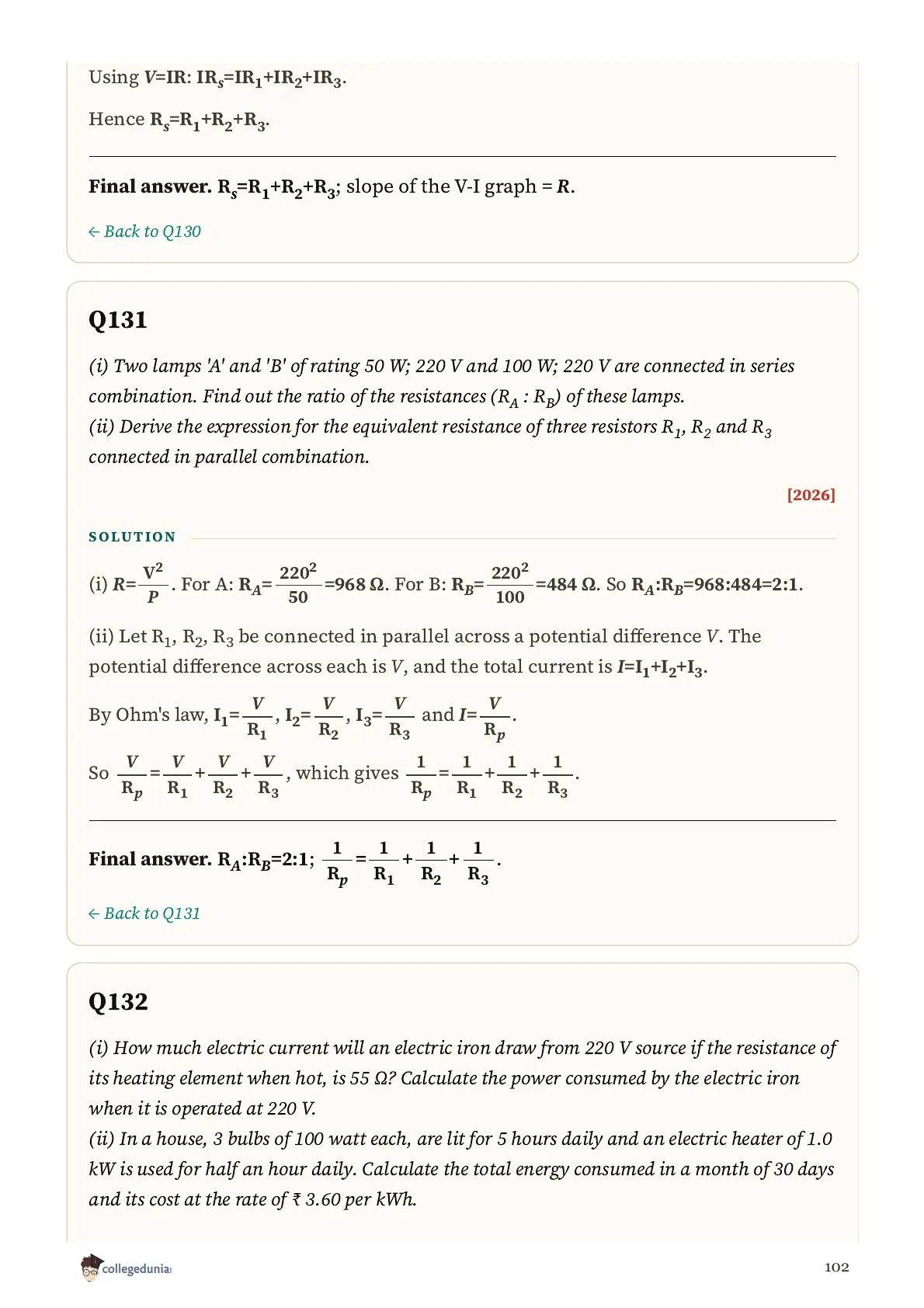
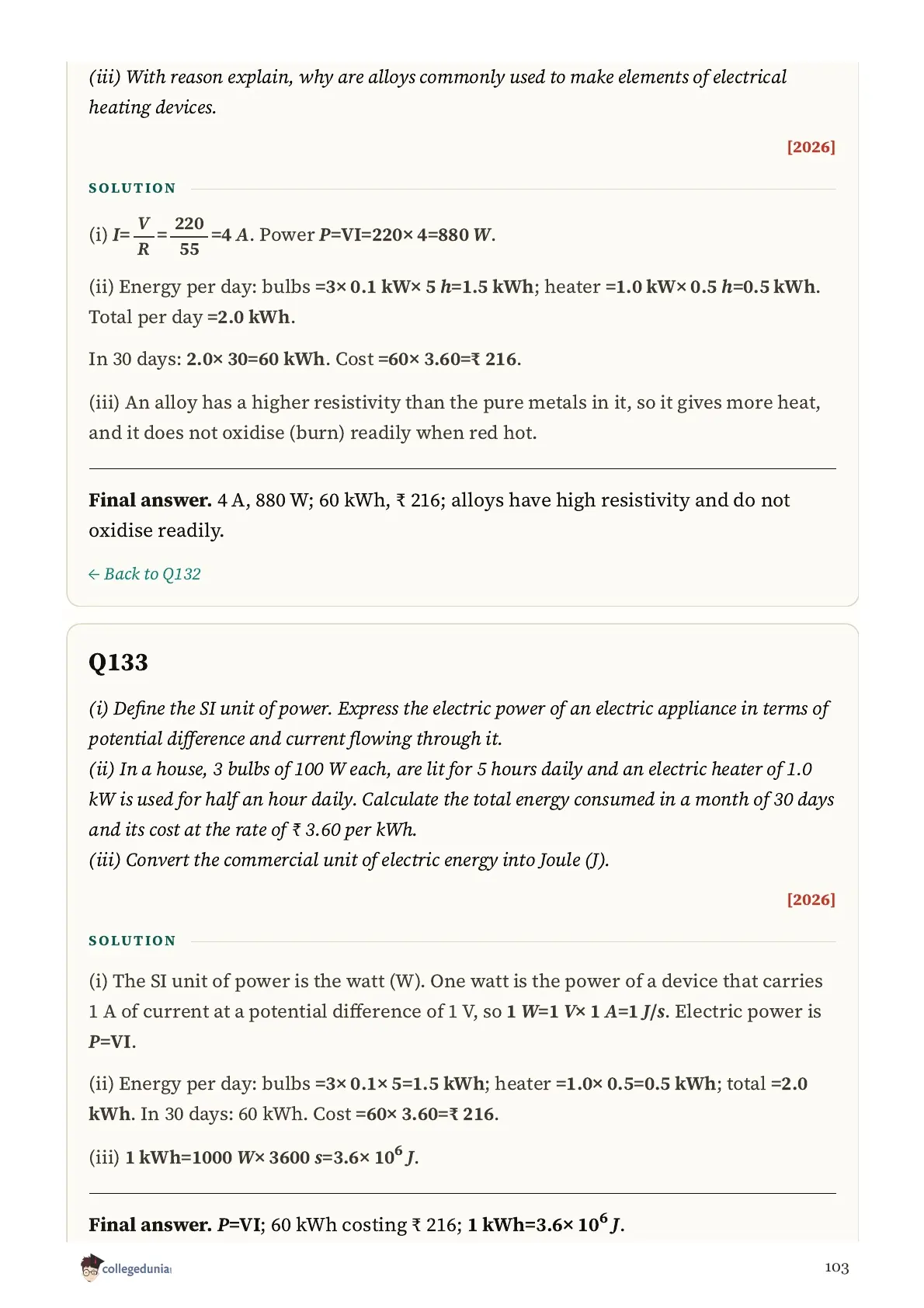
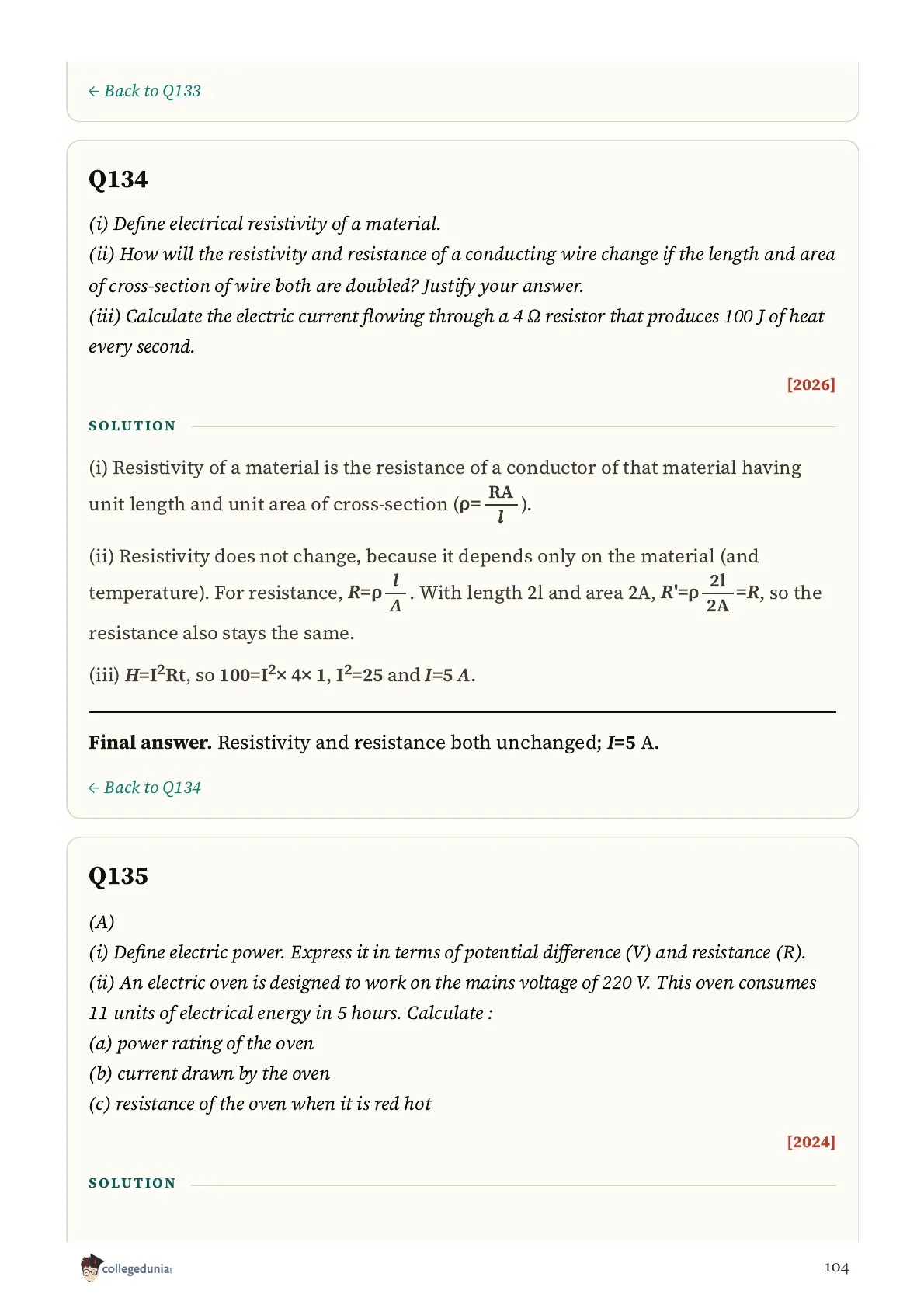
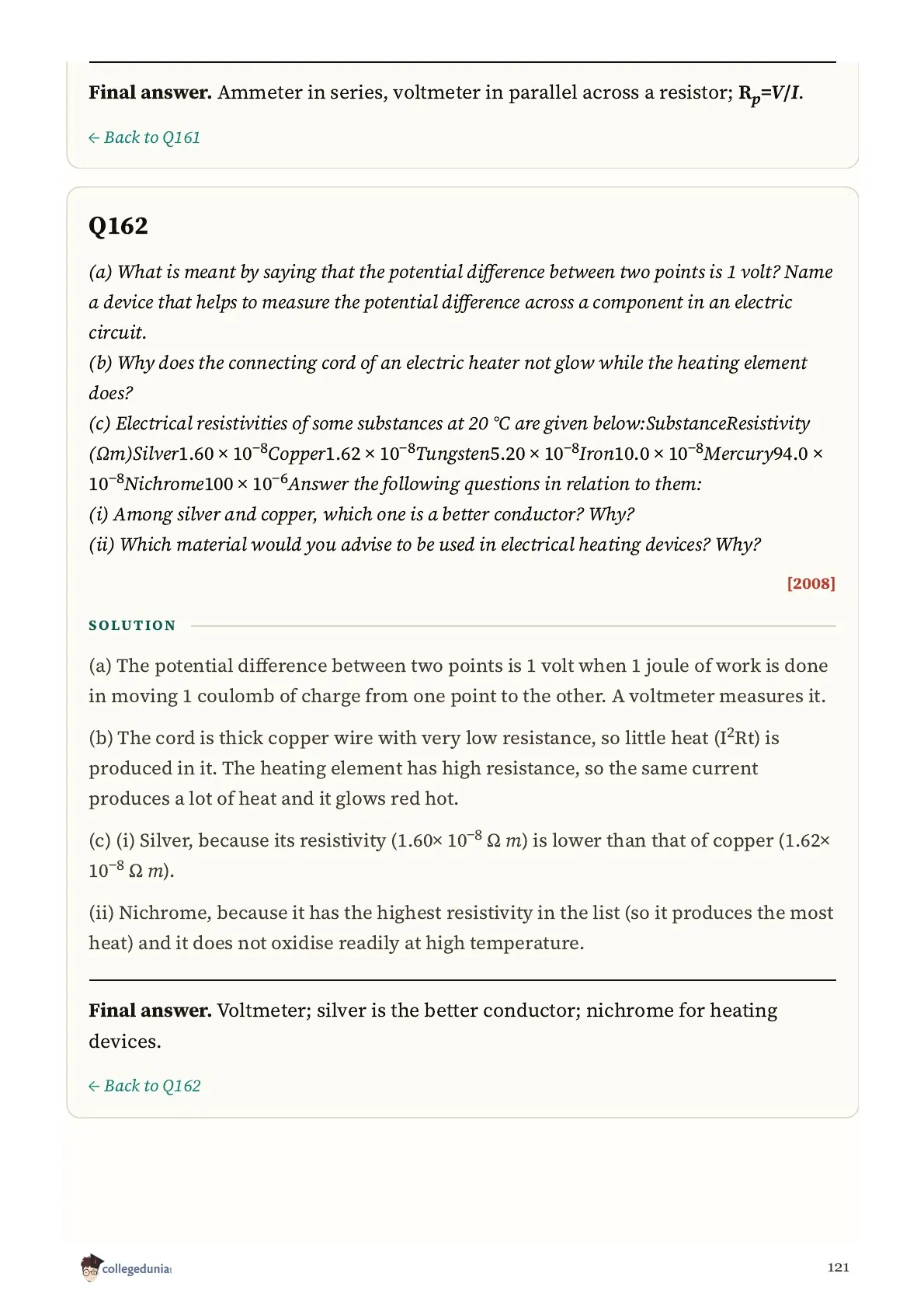
The PDF is 121 pages and free to download. Each section is sorted newest year first, the Answer Key lists the 33 MCQs at a glance, and each question links to its worked solution and back. Attempt a numerical yourself first, check the key, then read the solution. The solutions are written by Collegedunia's Science experts and are not official CBSE marking schemes.
Class 10 Science PYQs by Chapter
| Unit | PYQ Page |
|---|---|
| Chemical Substances | Chemical Reactions and Equations Class 10 Science PYQ |
| Chemical Substances | Acids, Bases and Salts Class 10 Science PYQ |
| Chemical Substances | Metals and Non-metals Class 10 Science PYQ |
| Chemical Substances | Carbon and its Compounds Class 10 Science PYQ |
| World of Living | Life Processes Class 10 Science PYQ |
| World of Living | Control and Coordination Class 10 Science PYQ |
| World of Living | How do Organisms Reproduce? Class 10 Science PYQ |
| World of Living | Heredity Class 10 Science PYQ |
| Natural Phenomena | Light - Reflection and Refraction Class 10 Science PYQ |
| Natural Phenomena | The Human Eye and the Colourful World Class 10 Science PYQ |
| Effects of Current | Electricity Class 10 Science PYQ |
| Effects of Current | Magnetic Effects of Electric Current Class 10 Science PYQ |
| Natural Resources | Our Environment Class 10 Science PYQ |
Electricity Class 10 Science PYQ FAQs
Ques. How many questions are in the Electricity Class 10 Science PYQ PDF?
Ans. The PDF has 162 questions from the 2005 to 2026 board papers: 49 at 1 mark, 39 at 2 marks, 34 at 3 marks, 5 case-based items at 4 marks and 35 long answers at 5 marks.
Ques. Does this PYQ PDF include solutions, or only the questions?
Ans. All 162 questions have a worked solution in the PDF. The 33 MCQs and assertion-reason items are also listed in the Answer Key before the solutions.
Ques. Are the solutions official?
Ans. No. They are written by Collegedunia's Science experts, checked against the NCERT chapter and re-worked for every numerical. They are not an official CBSE marking scheme, so the board's wording of an answer may differ.
Ques. How many marks does Electricity carry in the Class 10 Science paper?
Ans. CBSE publishes marks per unit, not per chapter. Electricity and Magnetic Effects of Electric Current together form Unit IV, Effects of Current, which carries 13 of the 80 theory marks in the 2025-26 and 2026-27 syllabus. Check cbseacademic.nic.in for the current syllabus.
Ques. What kind of questions are asked from Electricity?
Ans. Numericals form the largest group: about 65 of the 162 questions ask you to calculate or find a value. Others ask for definitions, derivations of series and parallel resistance, V-I graphs, circuit diagrams and the heating effect of current.
Ques. Which years does the set cover?
Ans. The questions come from 13 board years between 2005 and 2026. 2025 has the most questions (34), followed by 2024 (26) and 2026 (22).



Comments