



Class 10 Science Heredity PYQ, free to download as a 111-page PDF with 137 solved board questions from the 2008 to 2026 papers. Heredity is Chapter 8 of the NCERT Class 10 Science book and sits in the unit World of Living, which carries 25 of the 80 theory marks together with Life Processes, Control and Coordination and How do Organisms Reproduce?
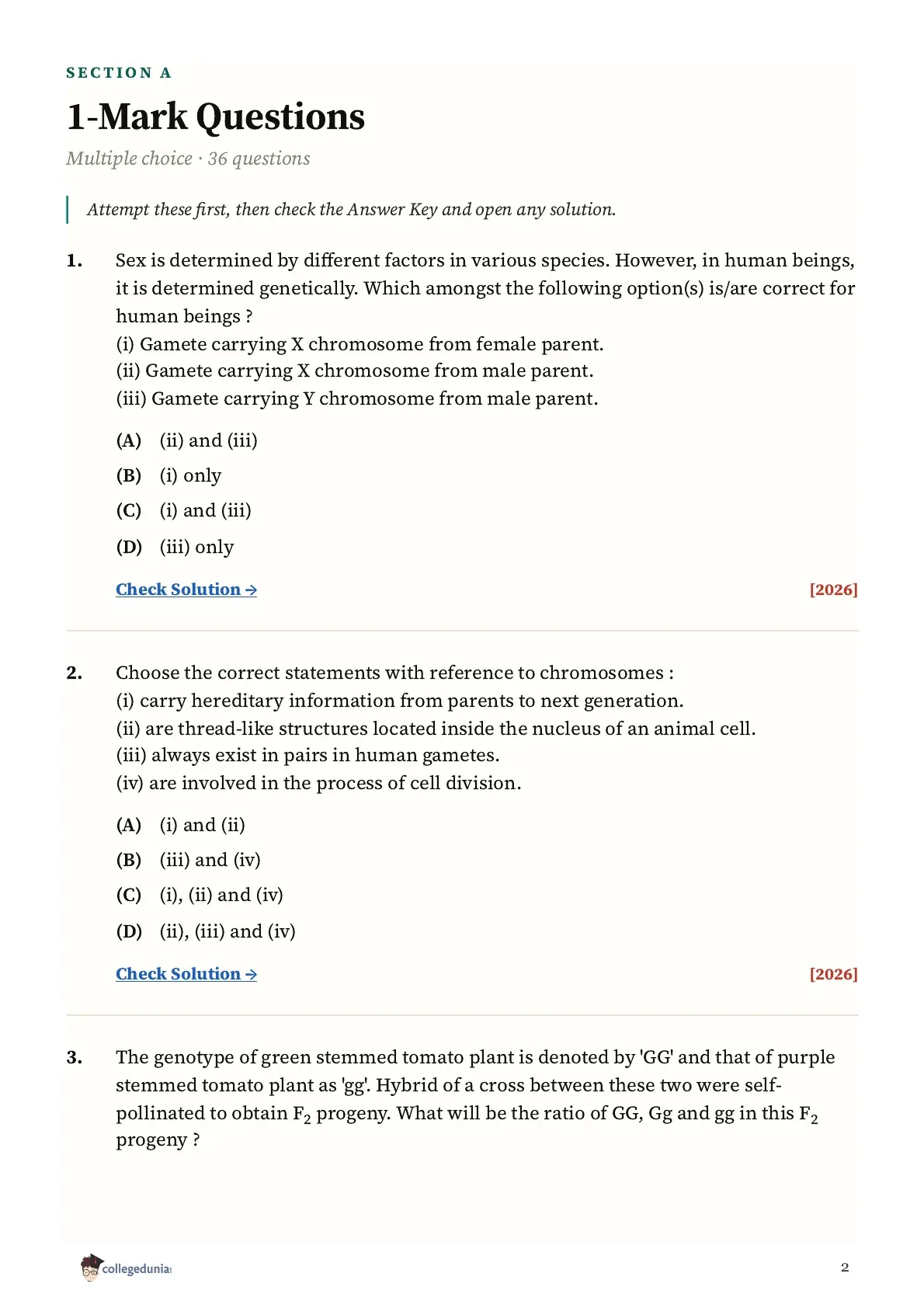
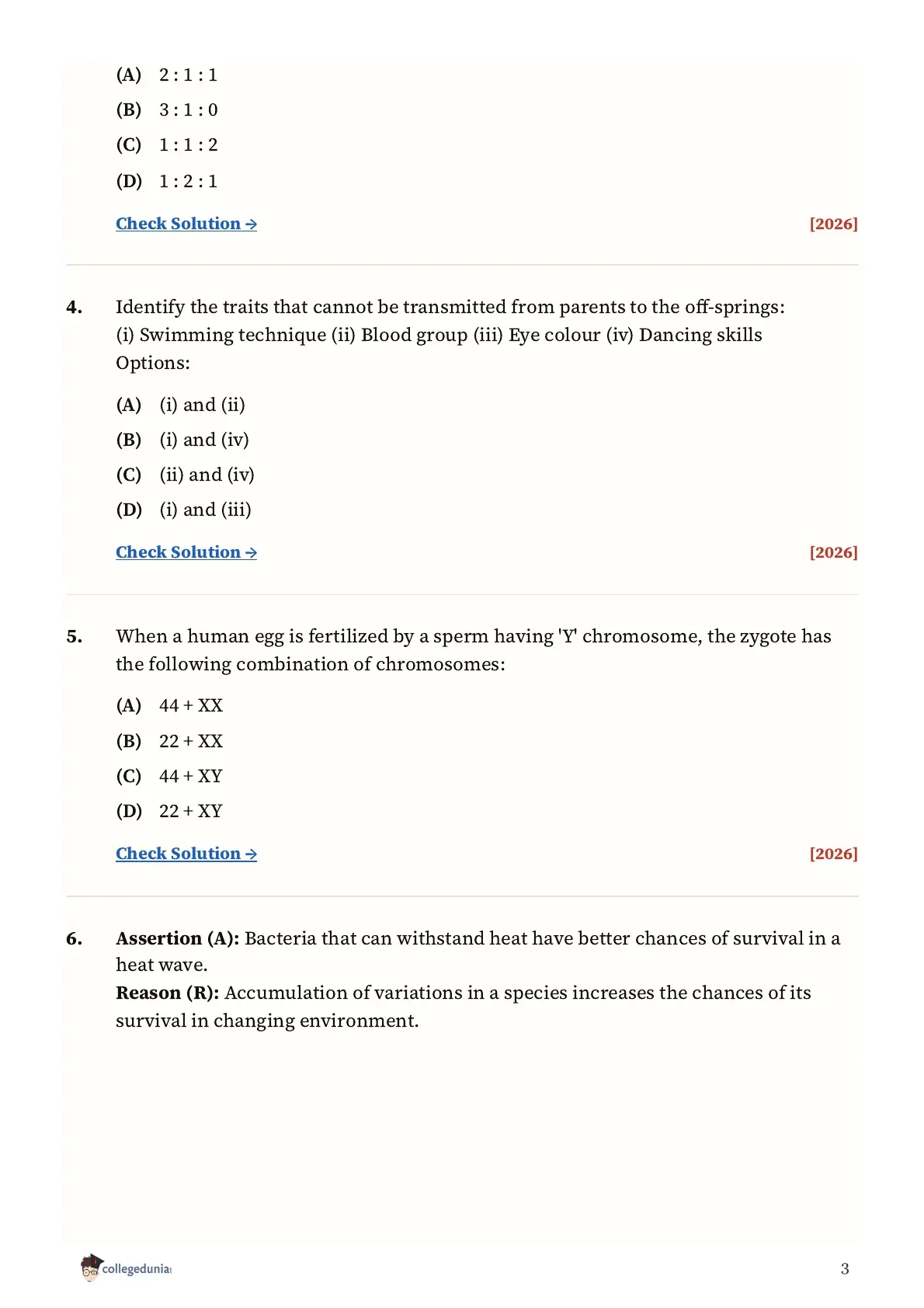
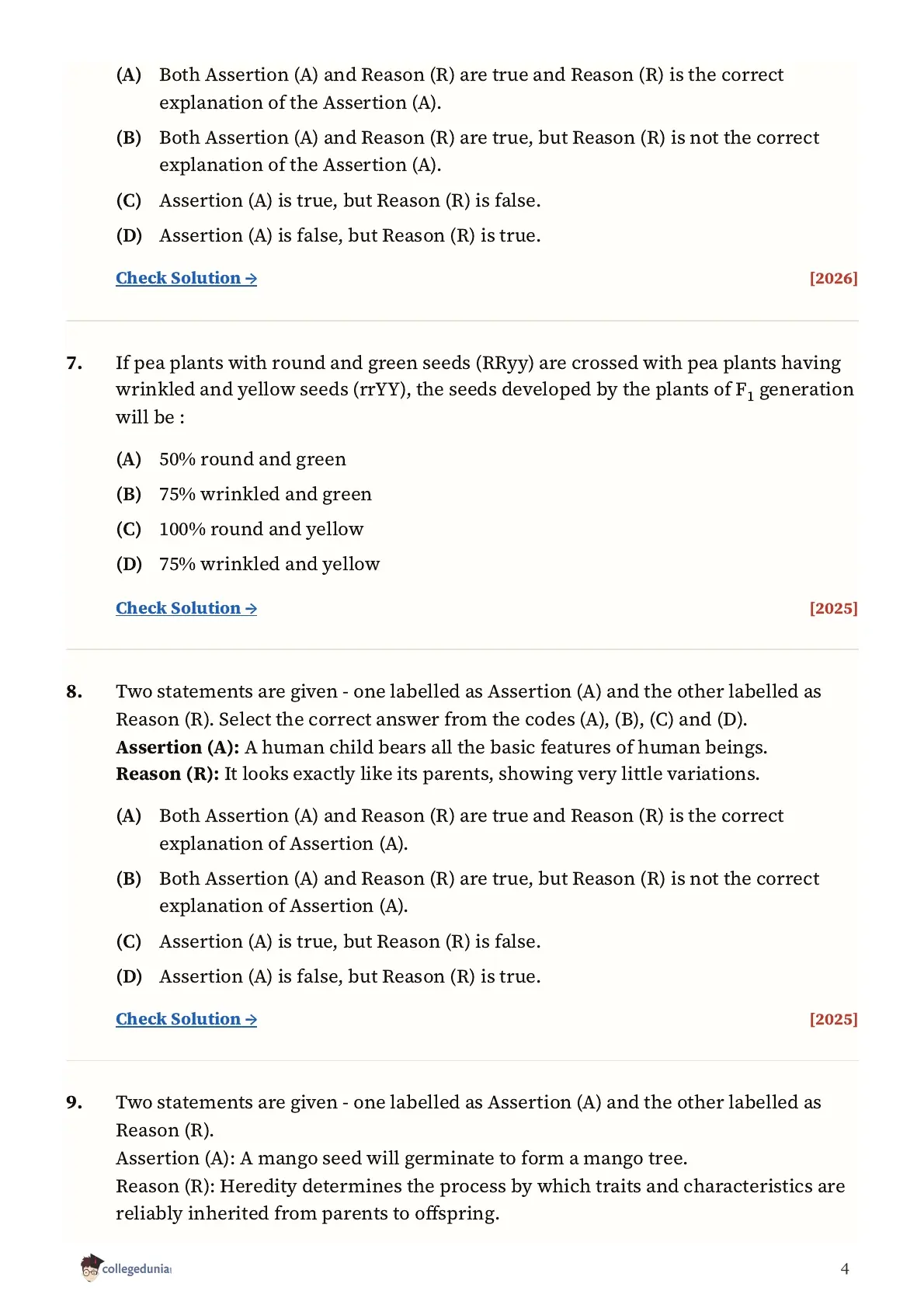
The questions keep returning to F1 and F2 crosses (51 questions), Mendel's pea-plant experiments (47), sex determination (42), chromosomes (29), tall and dwarf plants (25) and dominant and recessive traits (16). 105 of the 137 questions come from the 2022 to 2026 papers, so the set mirrors the current paper pattern closely.
On this page you get:
- 137 questions with a worked solution each: 32 MCQs and assertion-reason items, 75 short answers and 30 long answers or case studies
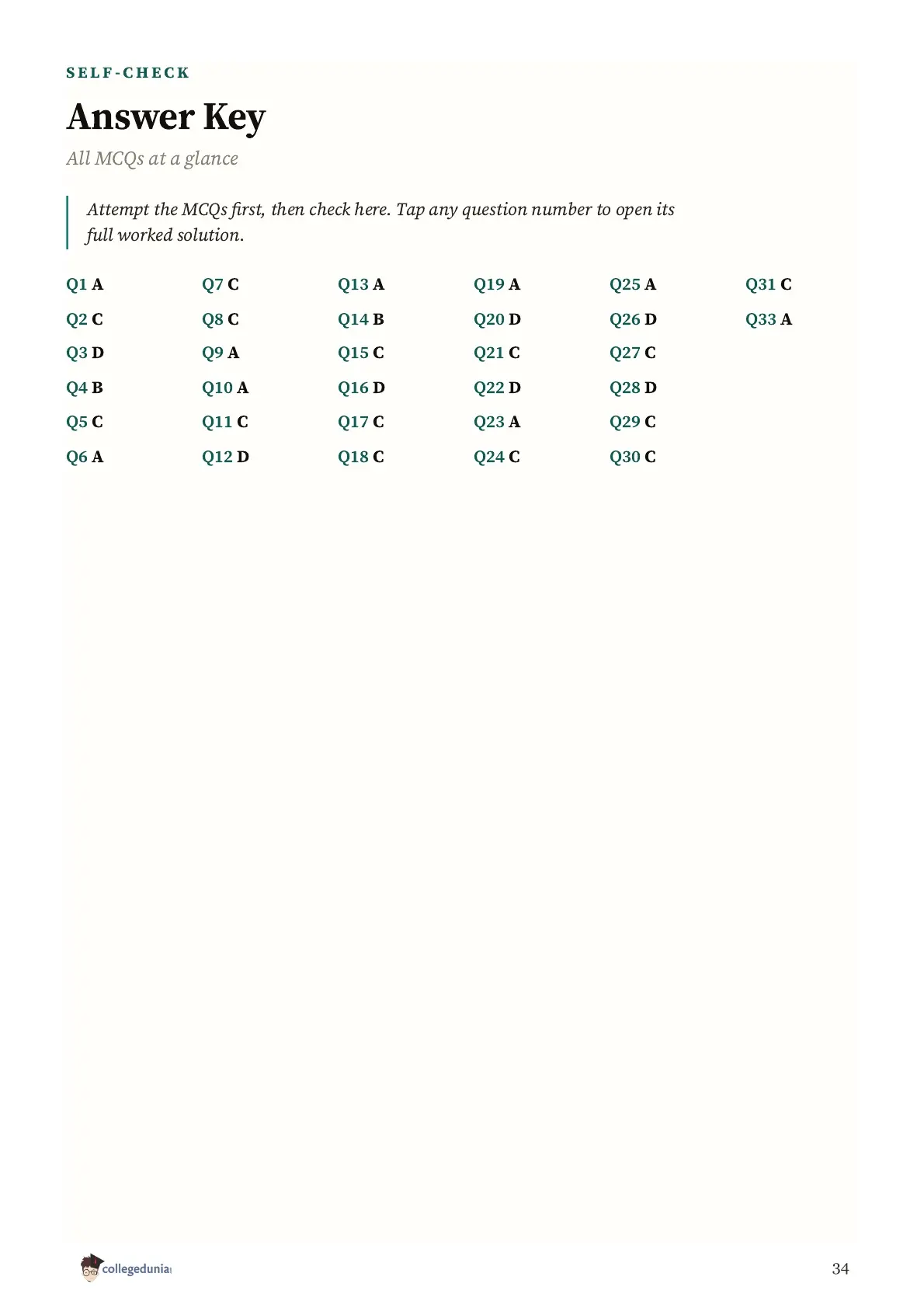
- An Answer Key that lists all 32 MCQs at a glance
- Question counts by topic, so you know whether to start with Mendel's crosses, sex determination or chromosomes
- A marks-wise table of questions (1, 2, 3, 4 and 5 mark)
- The common mistakes students make, such as reading a 1 : 2 : 1 genotype ratio as 3 : 1, and a short FAQ
Heredity Weightage in the Class 10 Science Paper
CBSE does not print a mark figure for Heredity alone. In the Class 10 Science (086) syllabus, the unit World of Living carries 25 of the 80 theory marks and holds four chapters: Life Processes, Control and Coordination, How do Organisms Reproduce? and Heredity. The 25 is a unit-level figure reported by prep sites and is unofficial here, so check the current syllabus on cbseacademic.nic.in. In this set the 3-mark short answer is the commonest form, followed by the 1-mark question and the 4-mark case-based item.
The table shows how many questions the set holds at each mark value.
| Marks per Question | Questions in the Set |
|---|---|
| 1 mark | 36 |
| 2 marks | 24 |
| 3 marks | 47 |
| 4 marks | 26 |
| 5 marks | 4 |
Heredity Questions by Topic
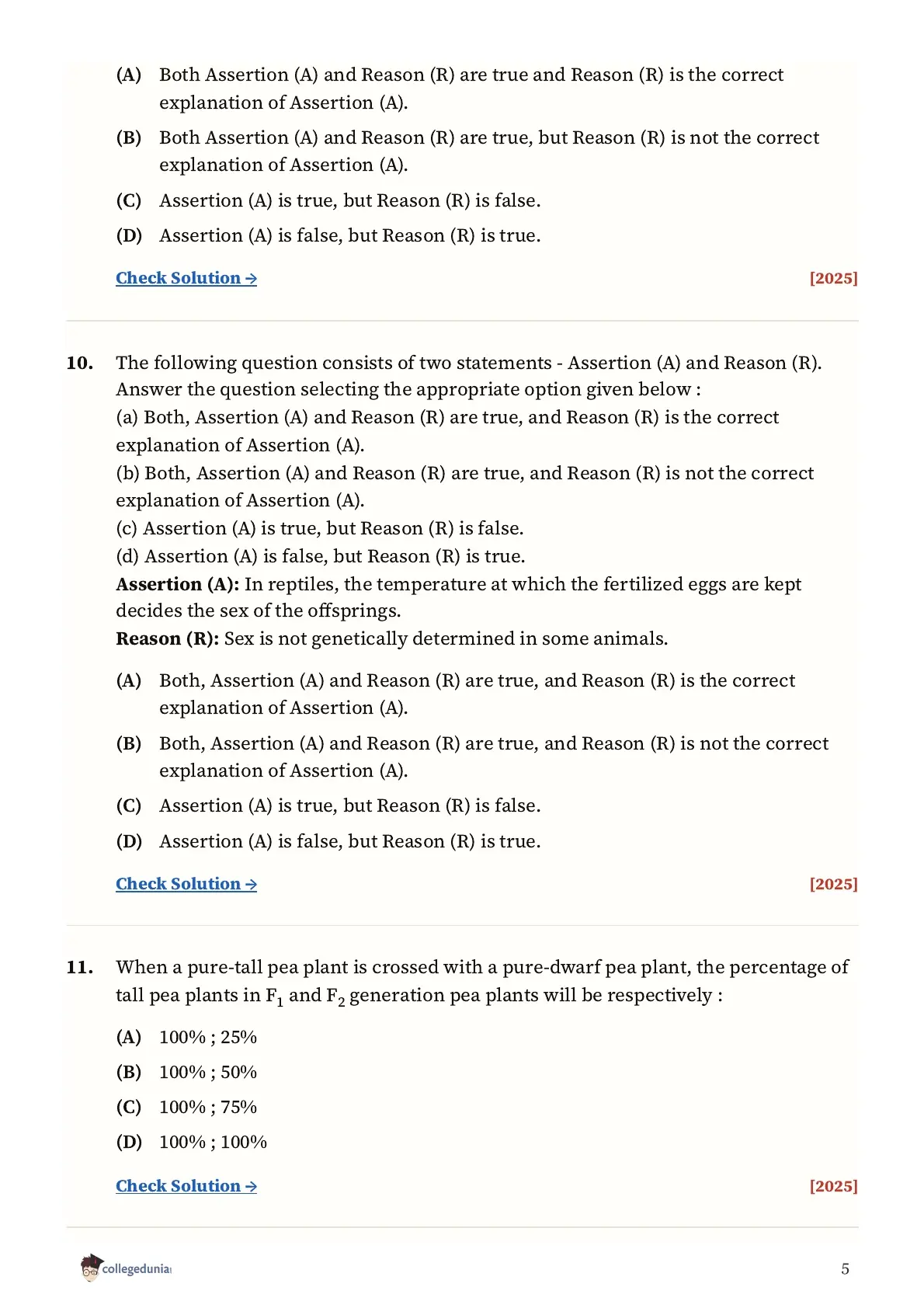
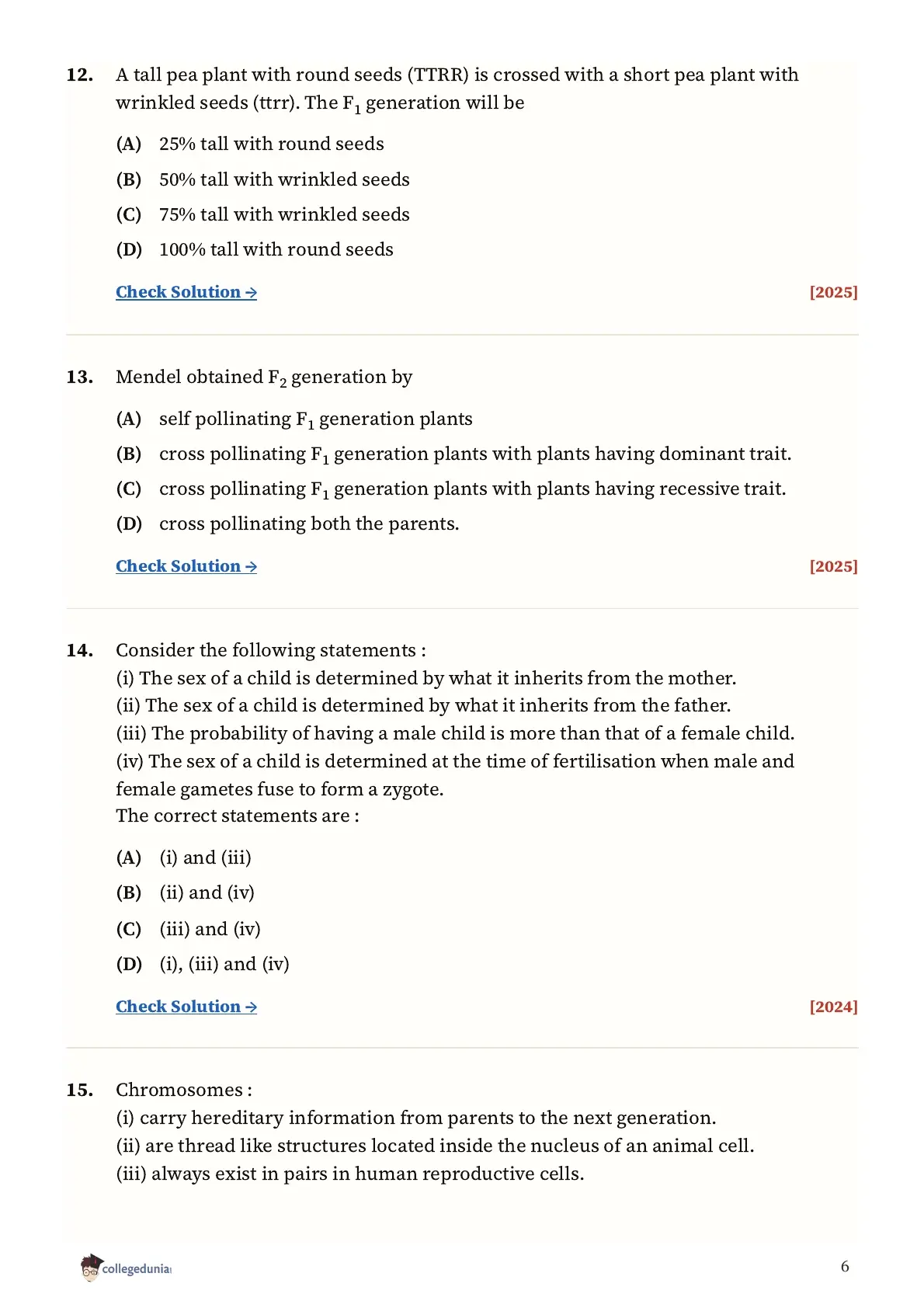
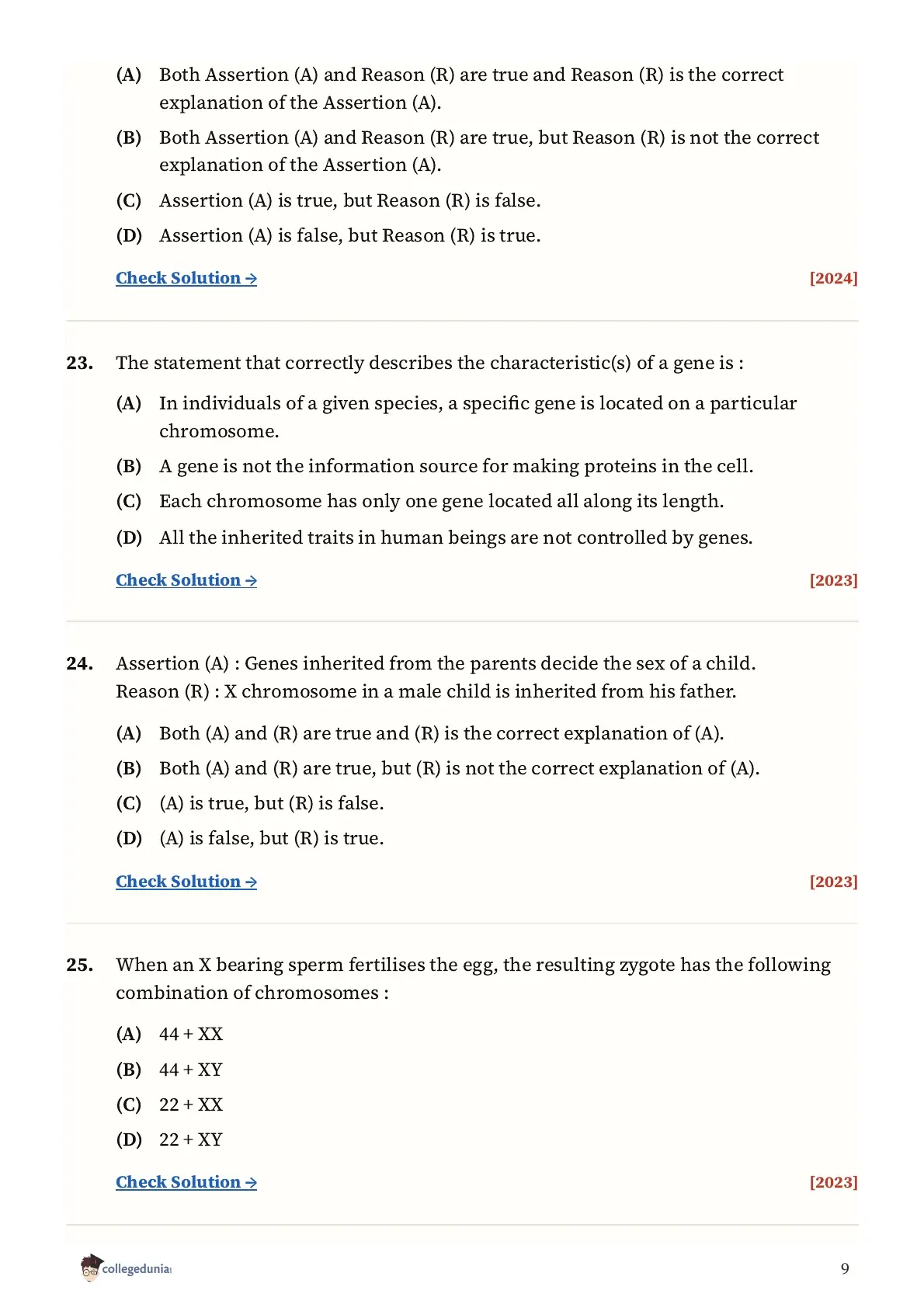
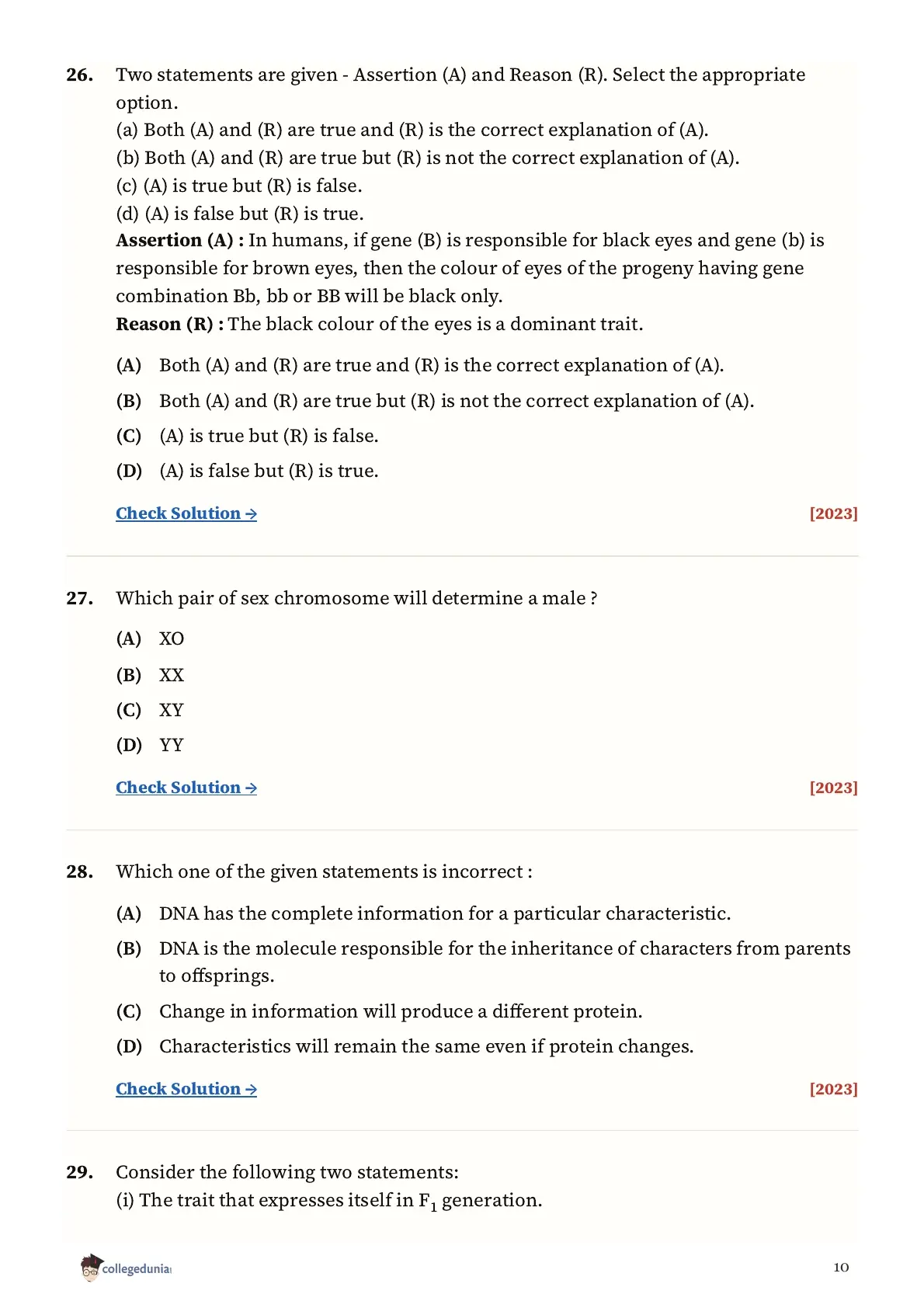
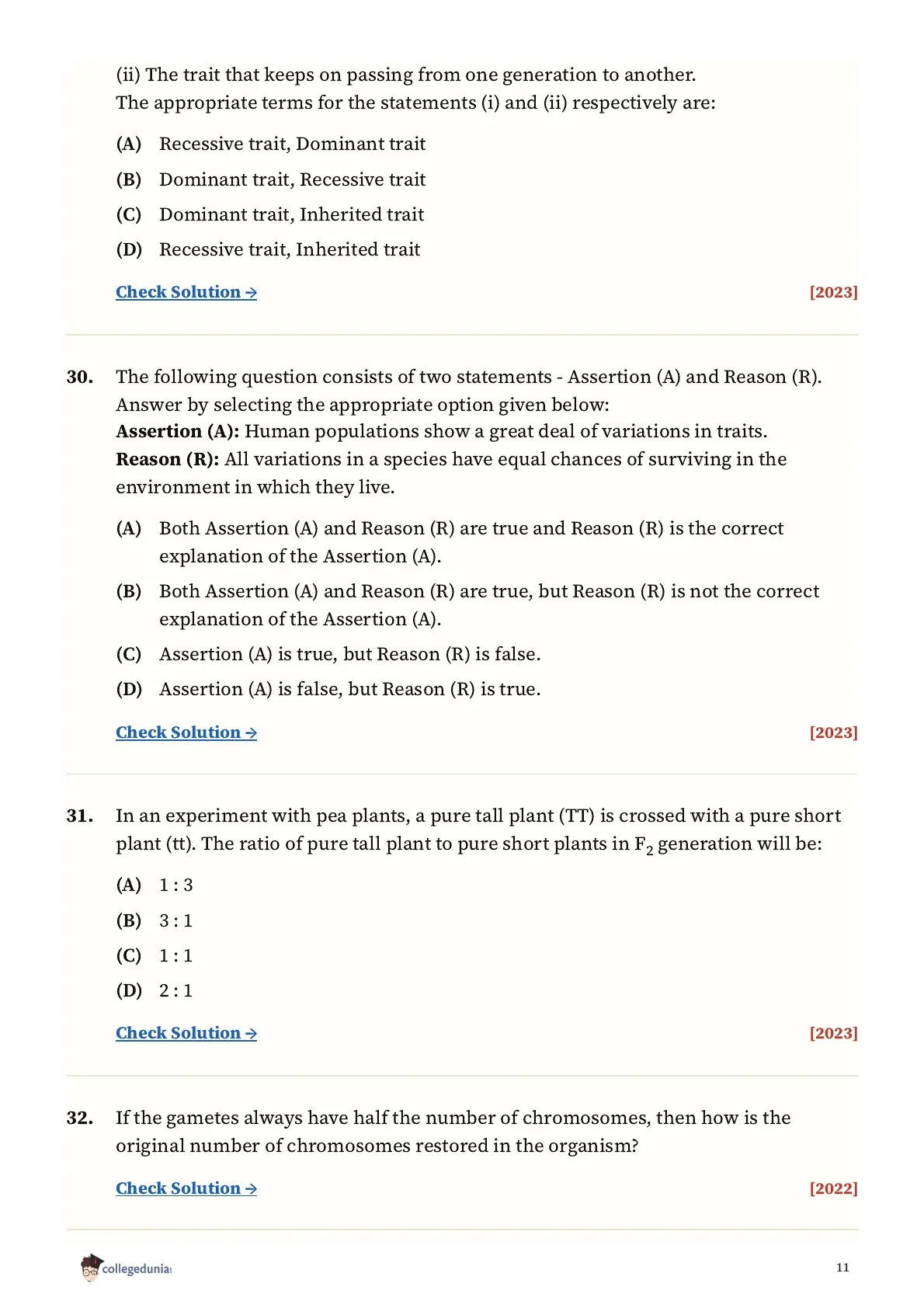
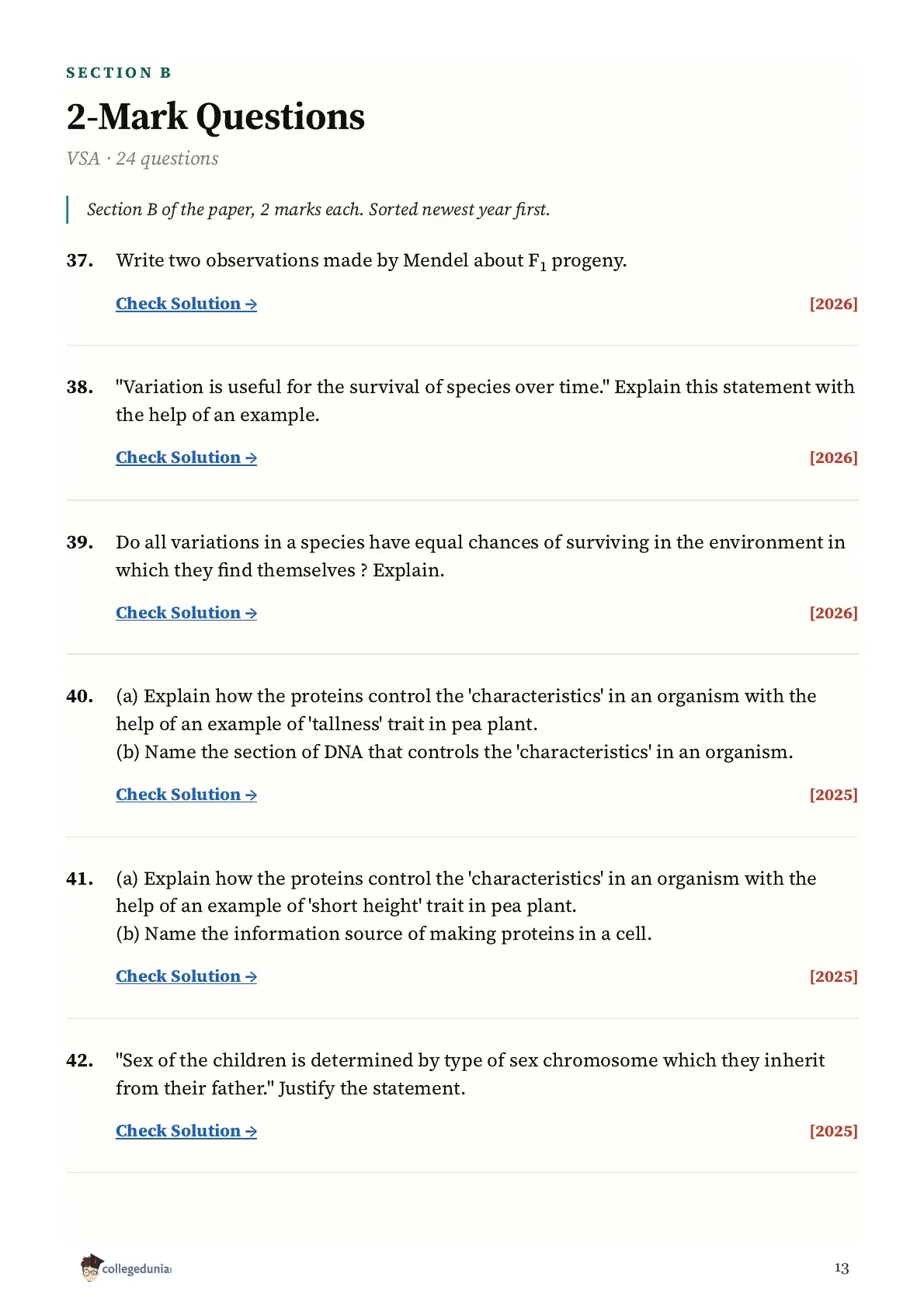
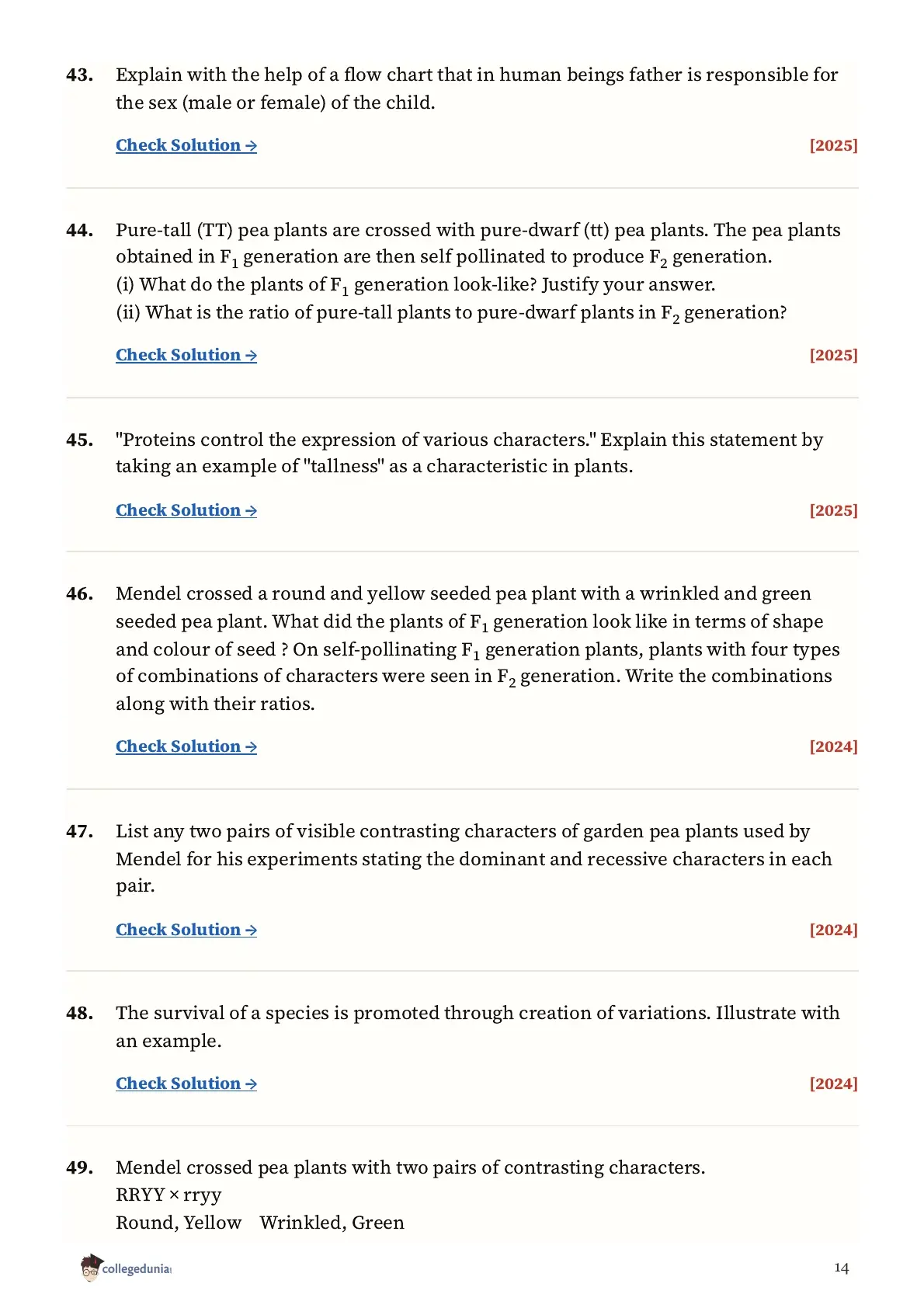
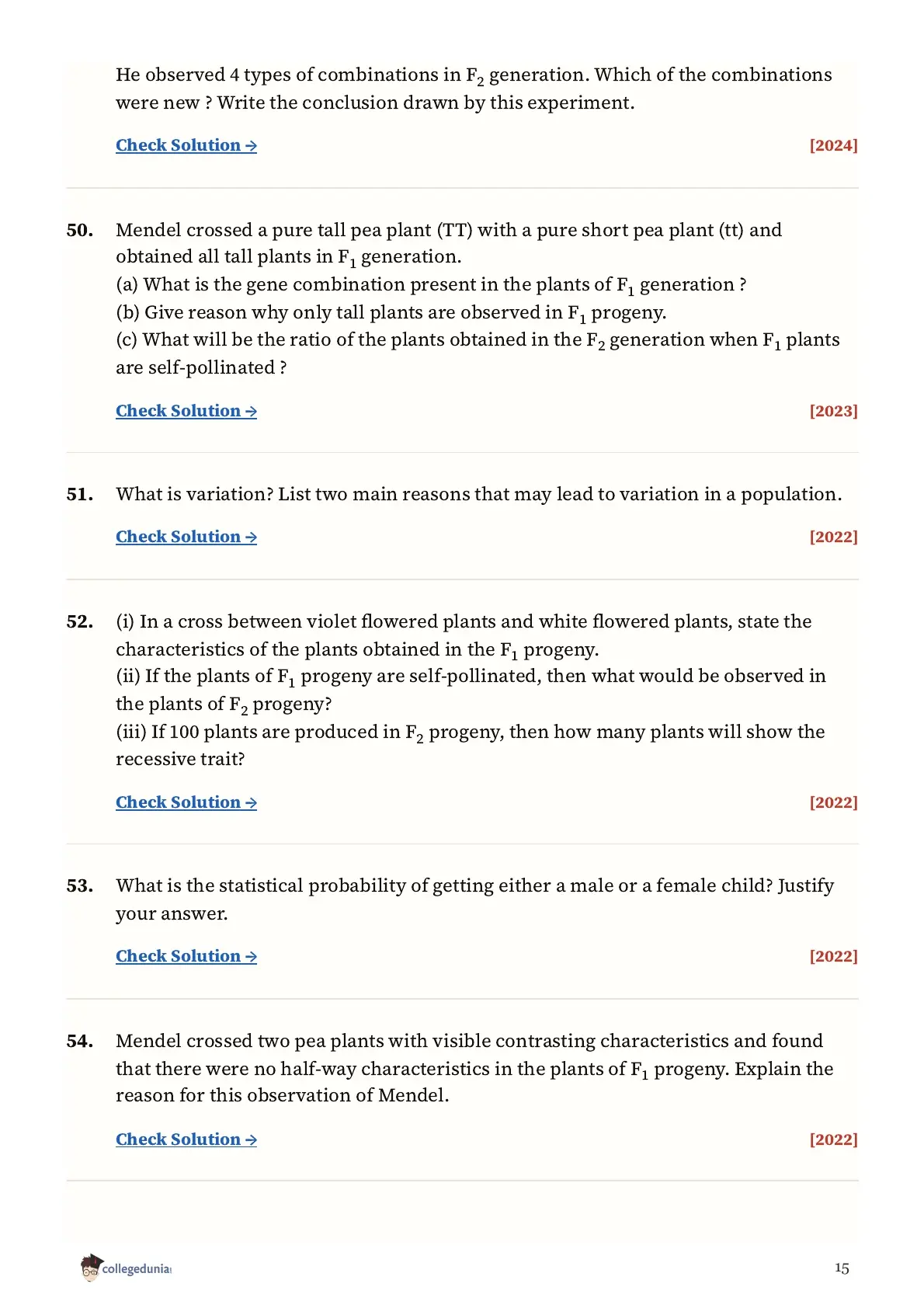
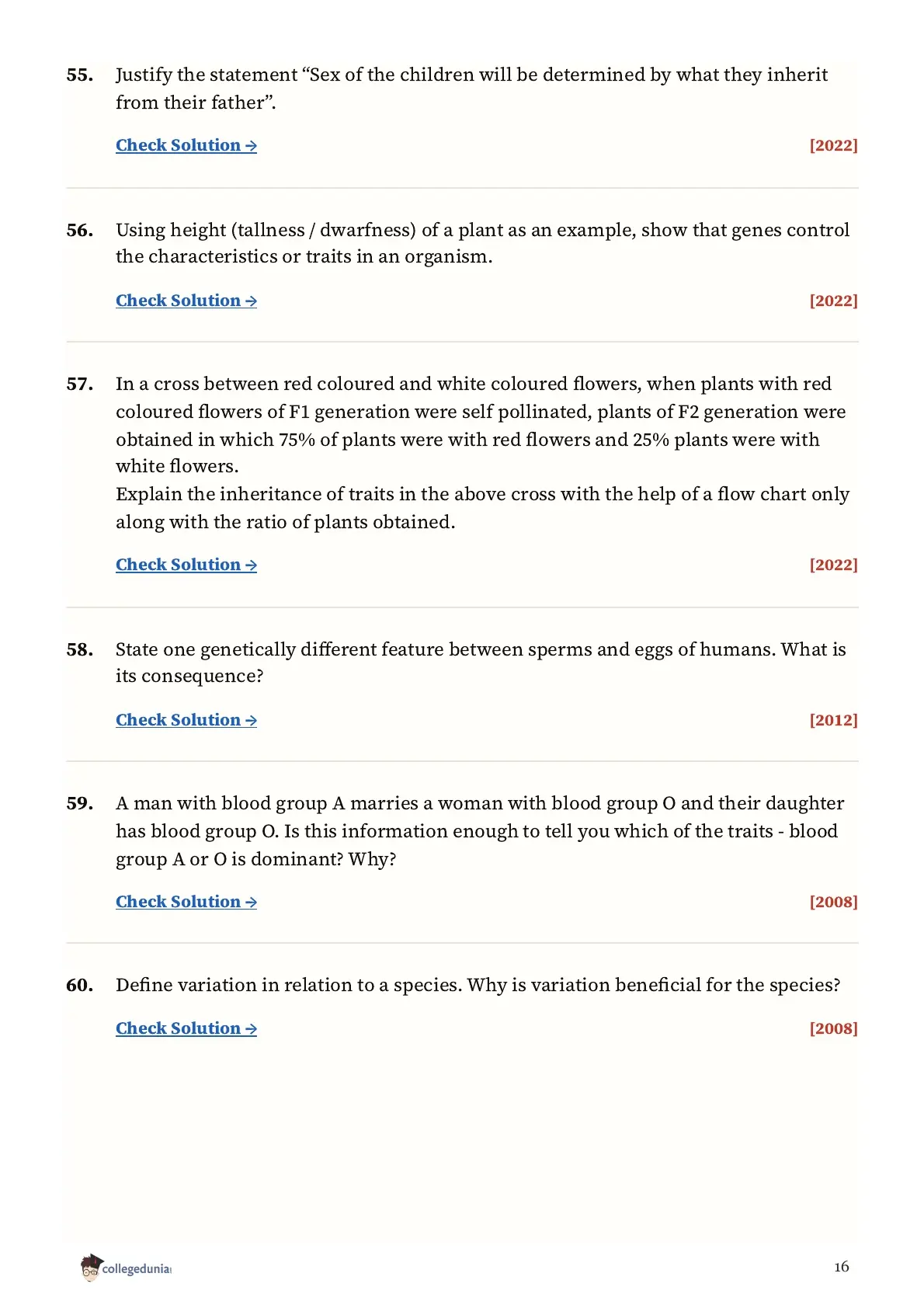
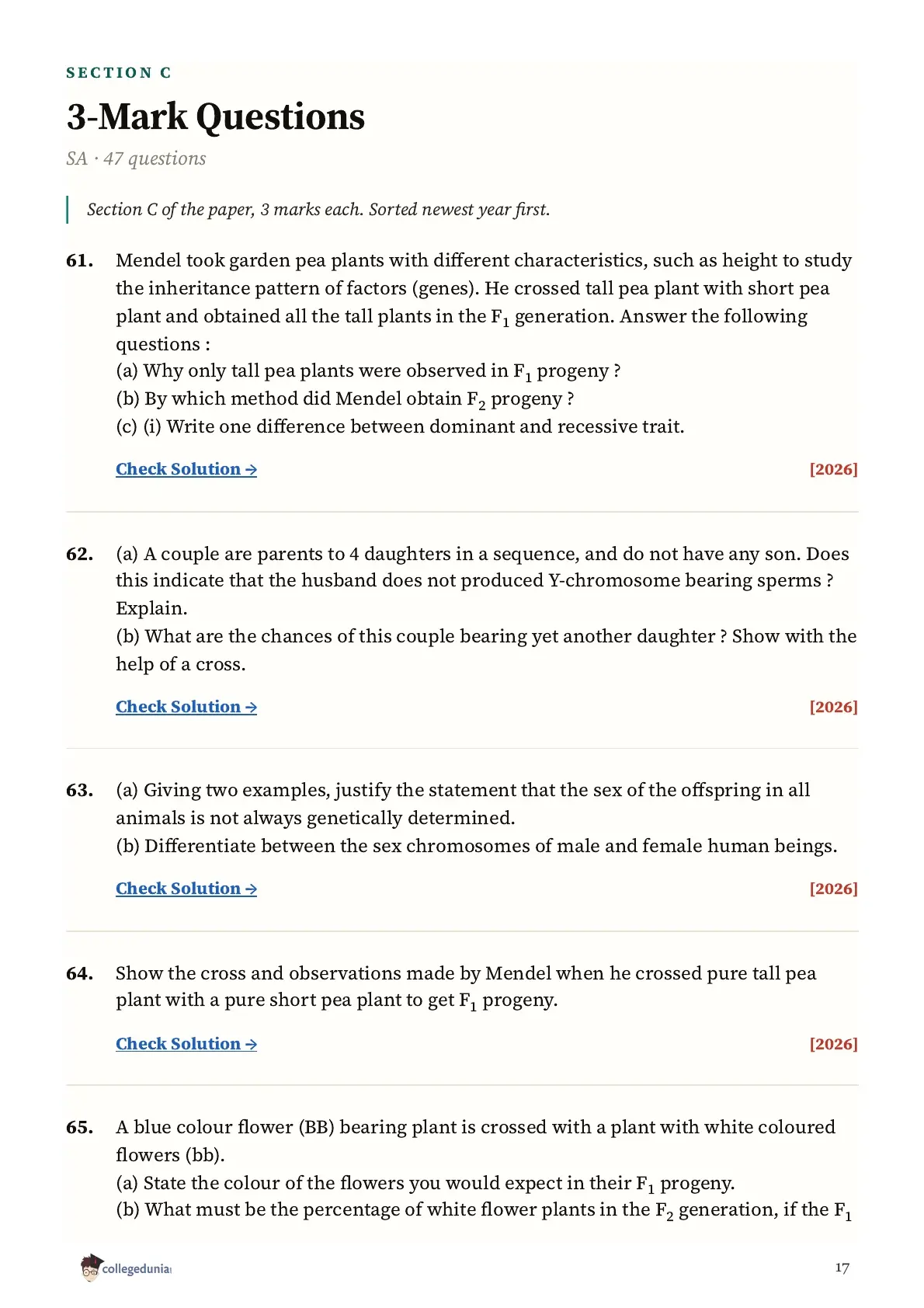
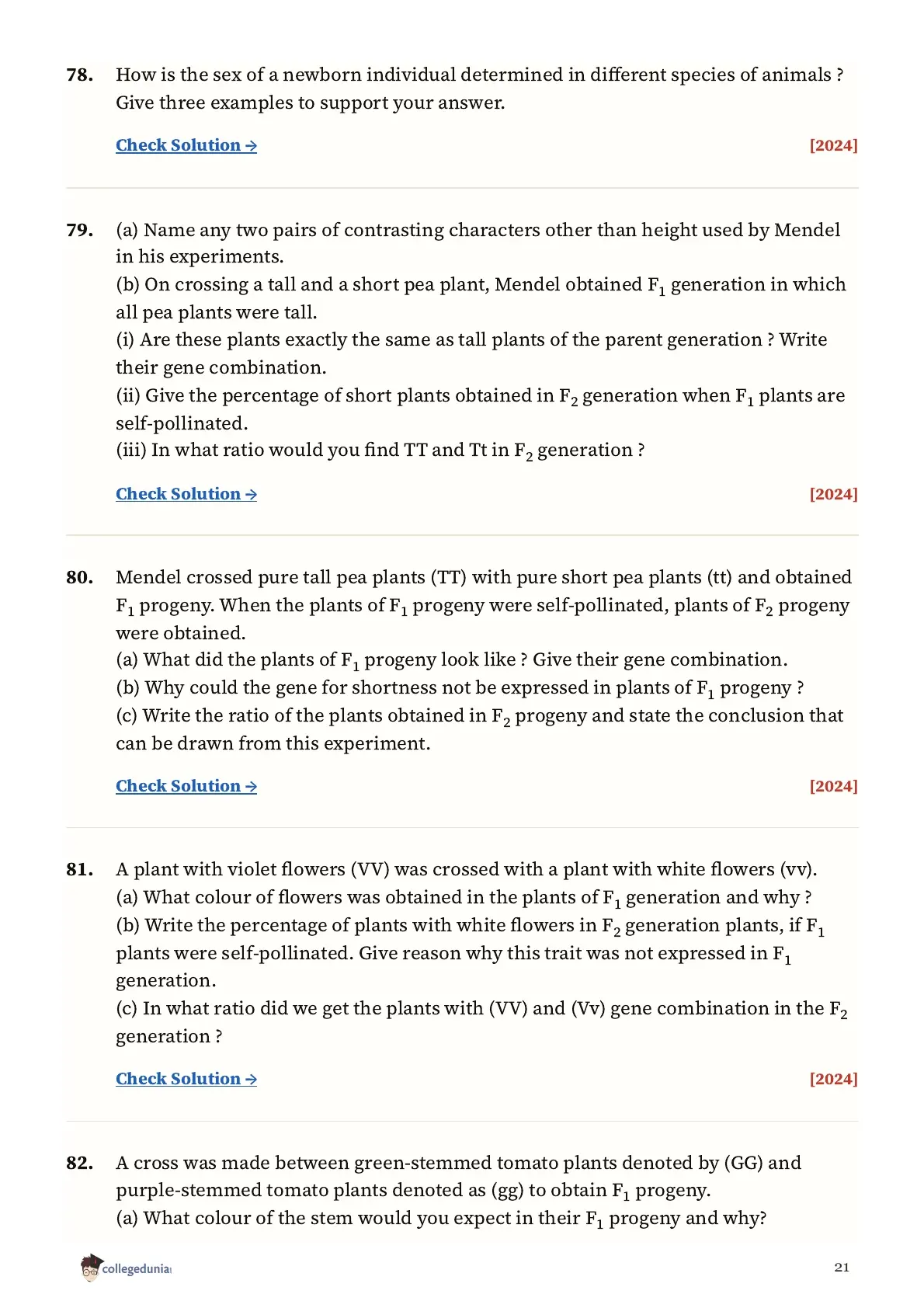
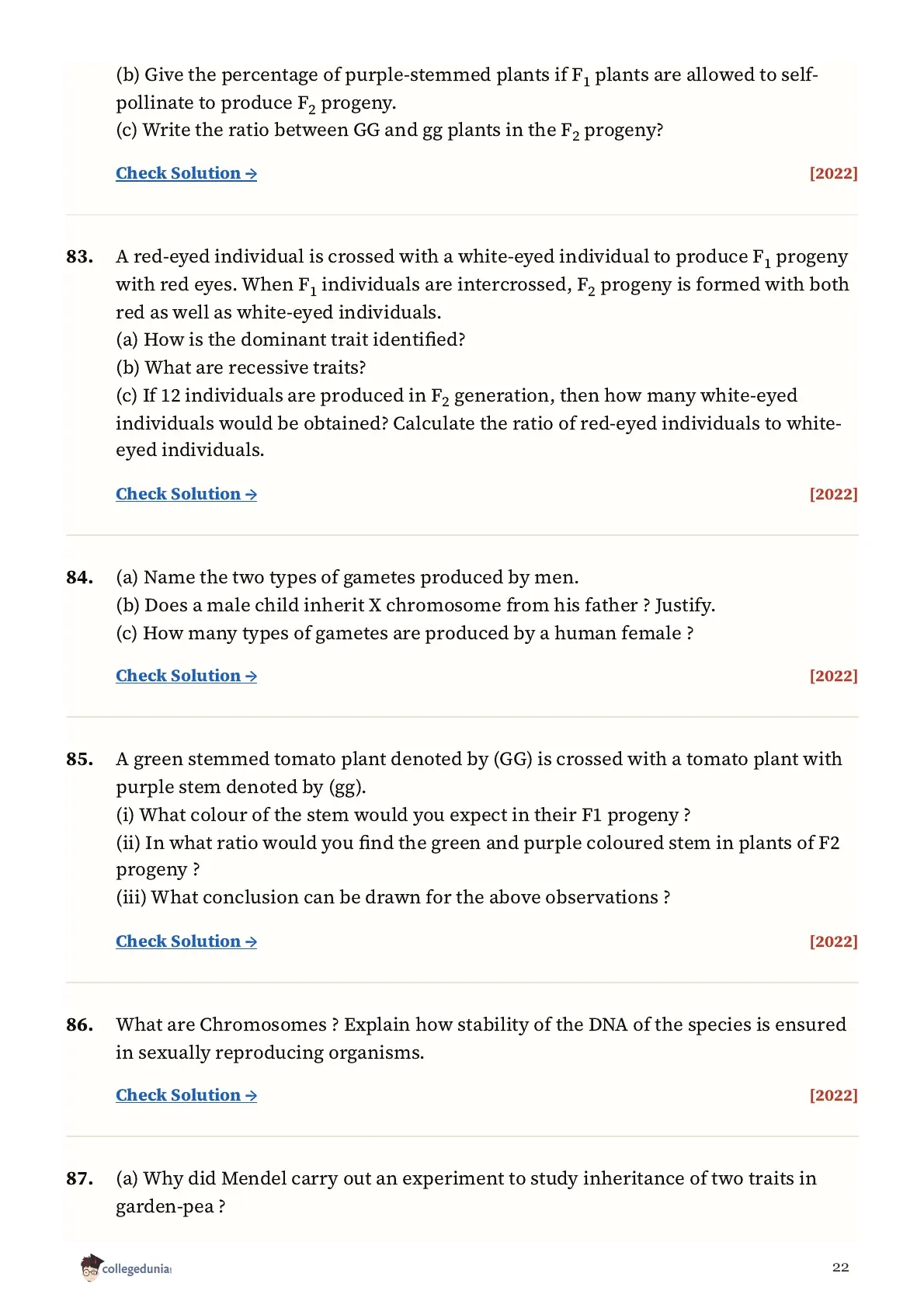
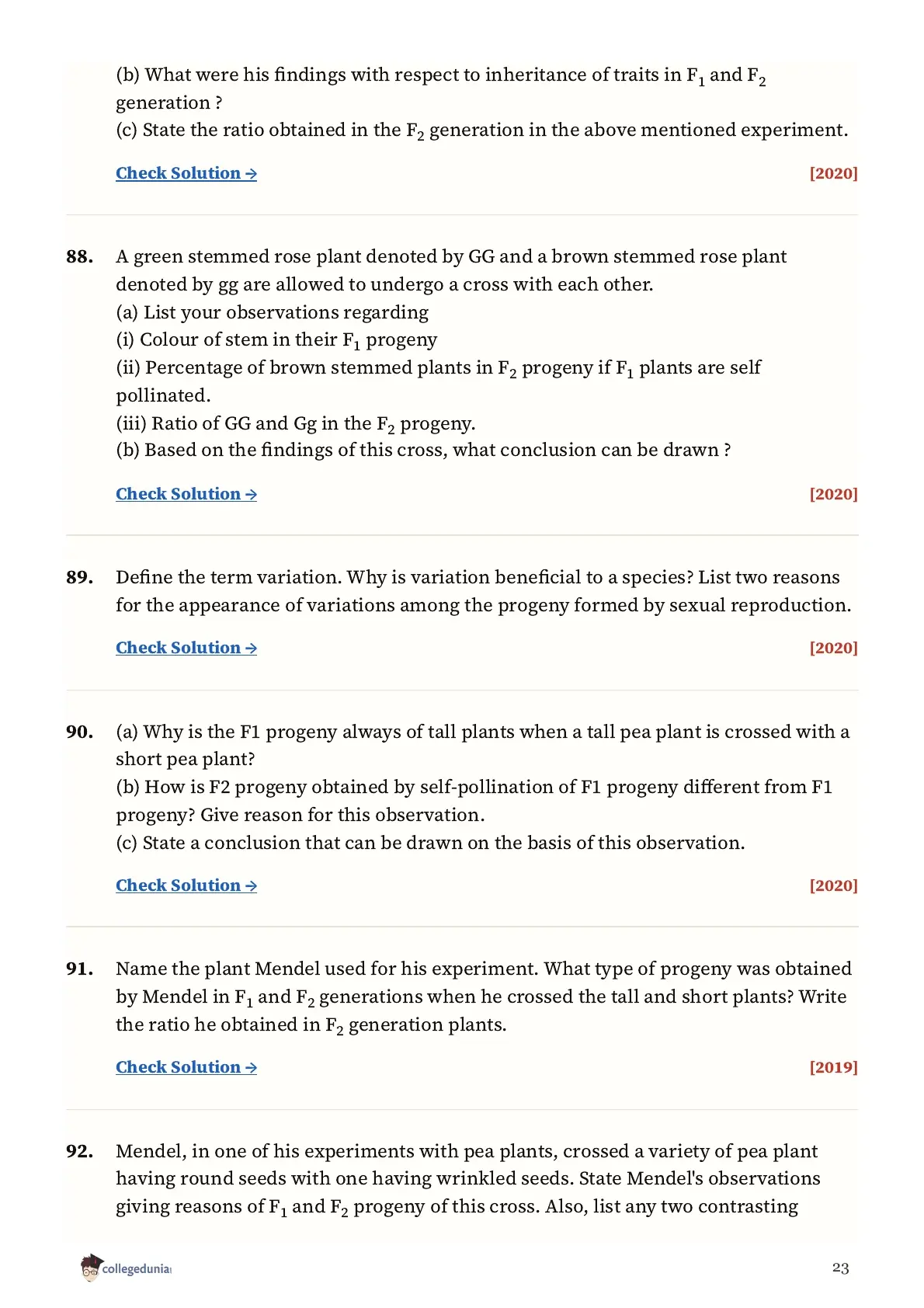
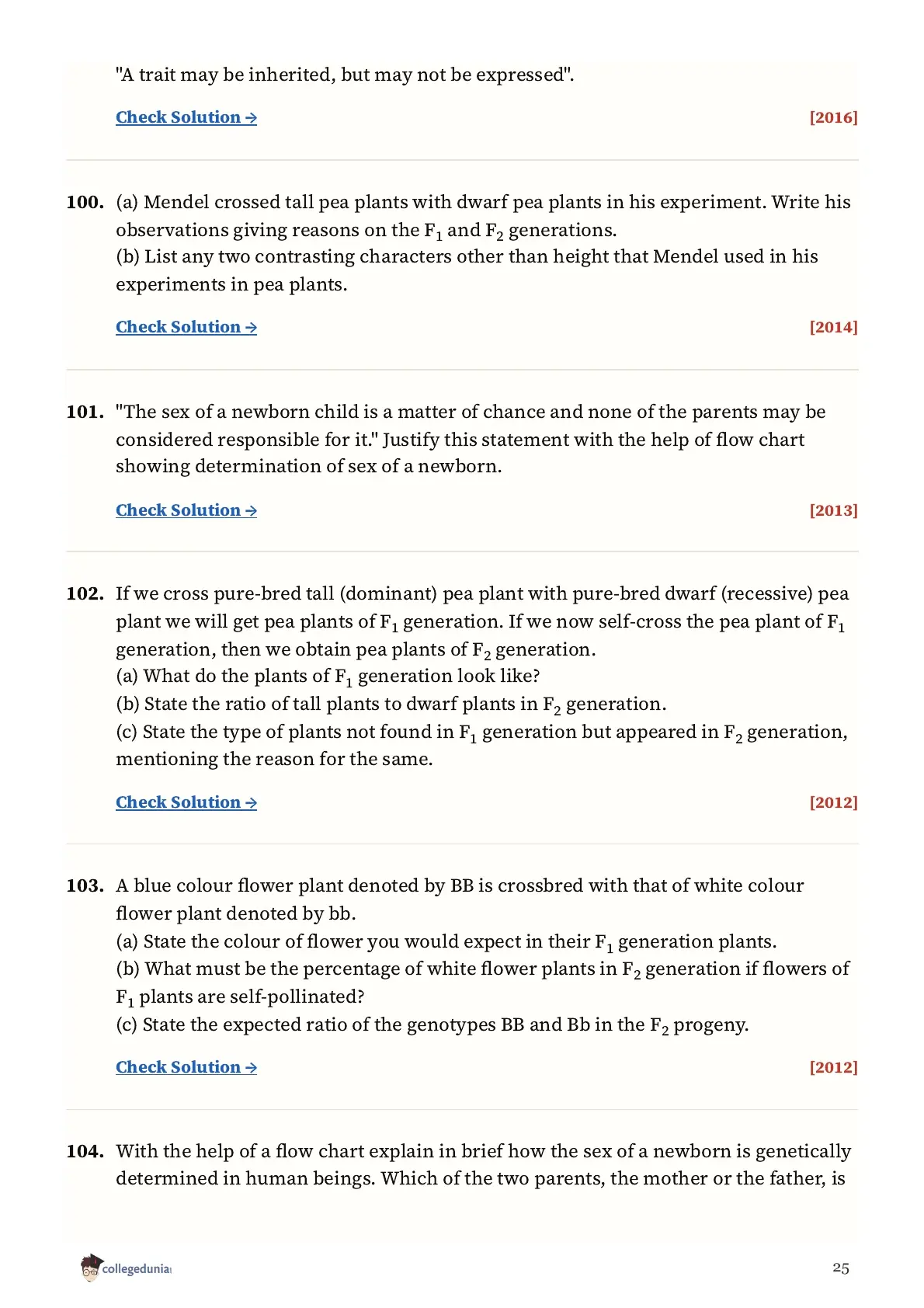
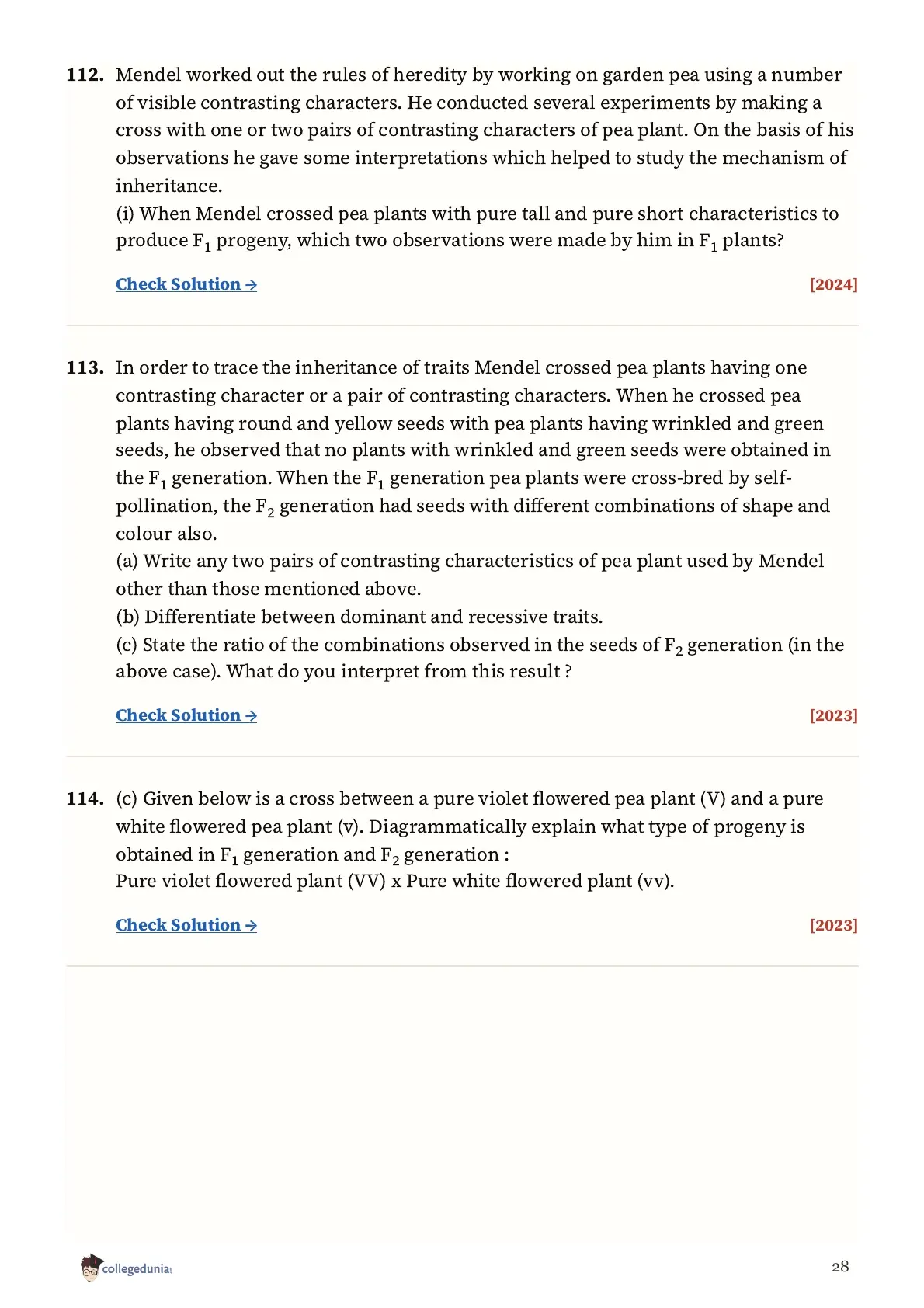
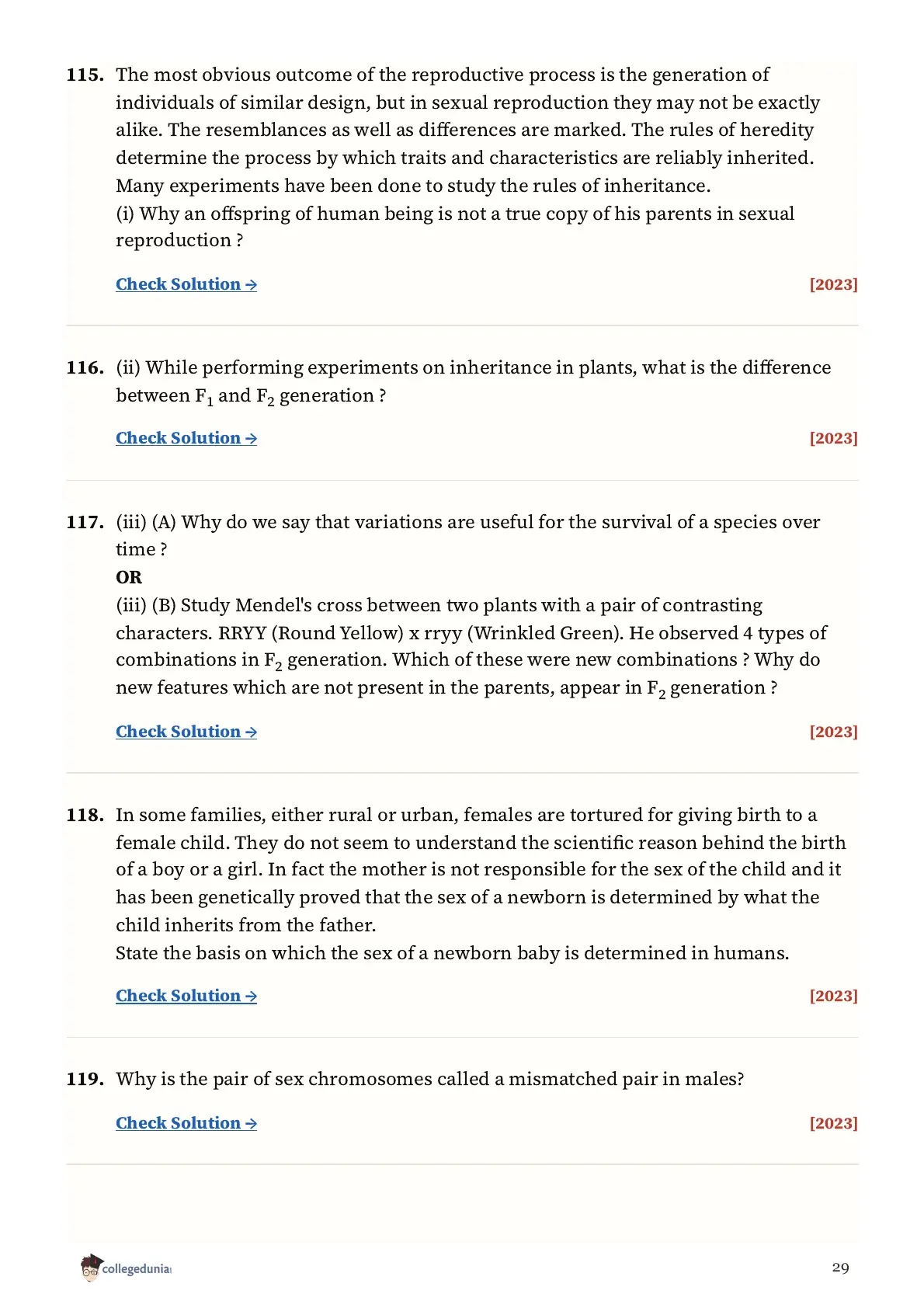
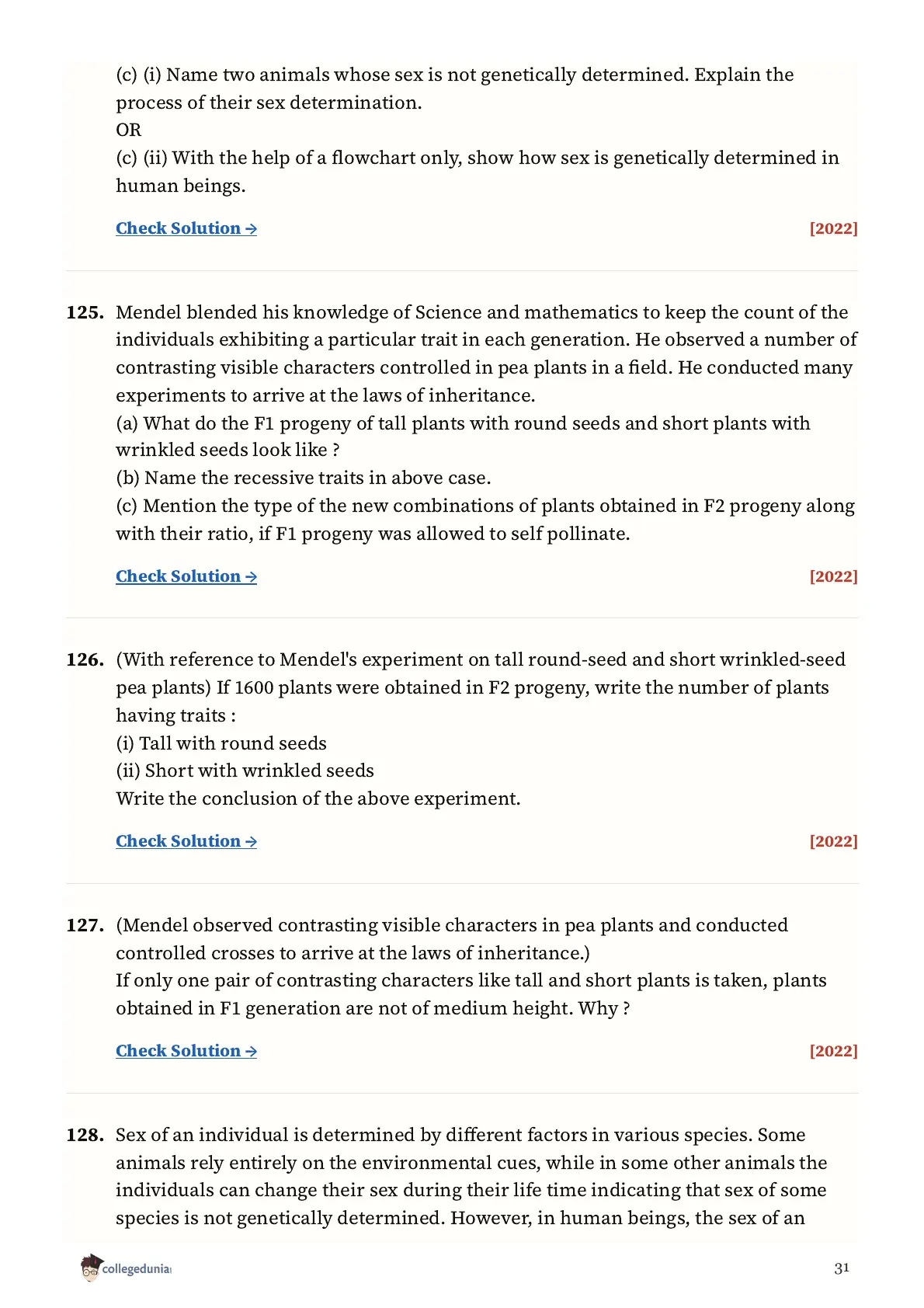
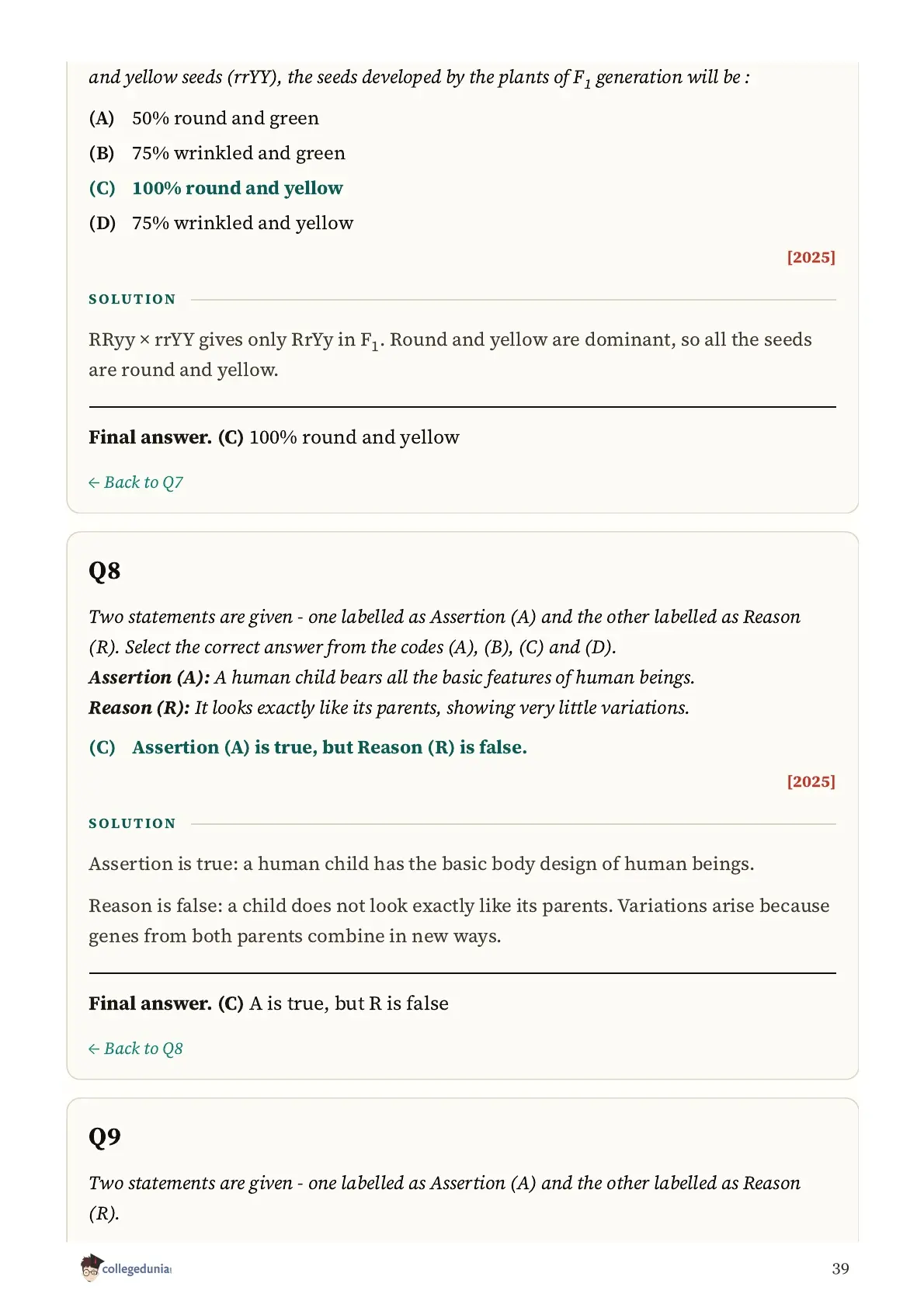
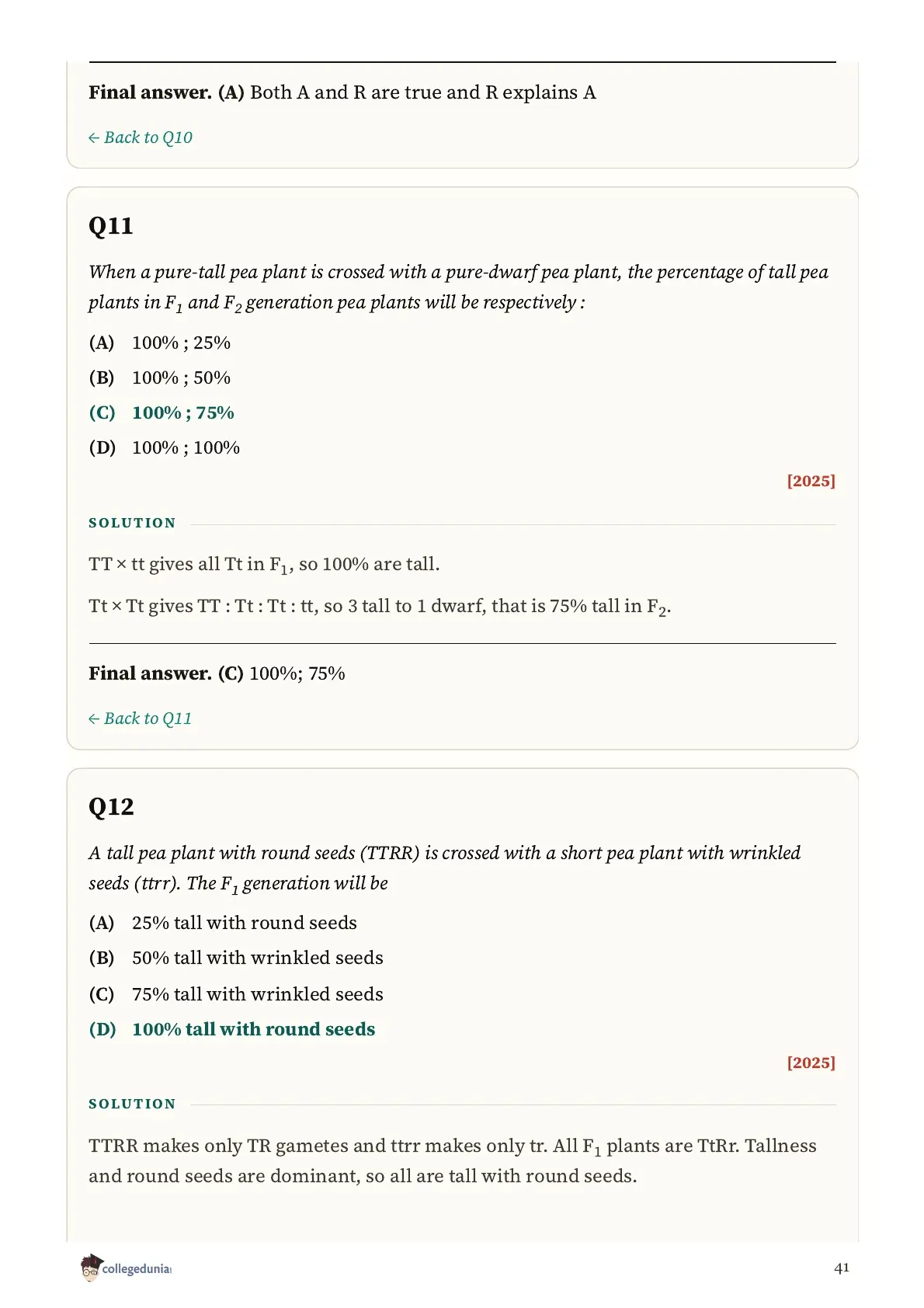
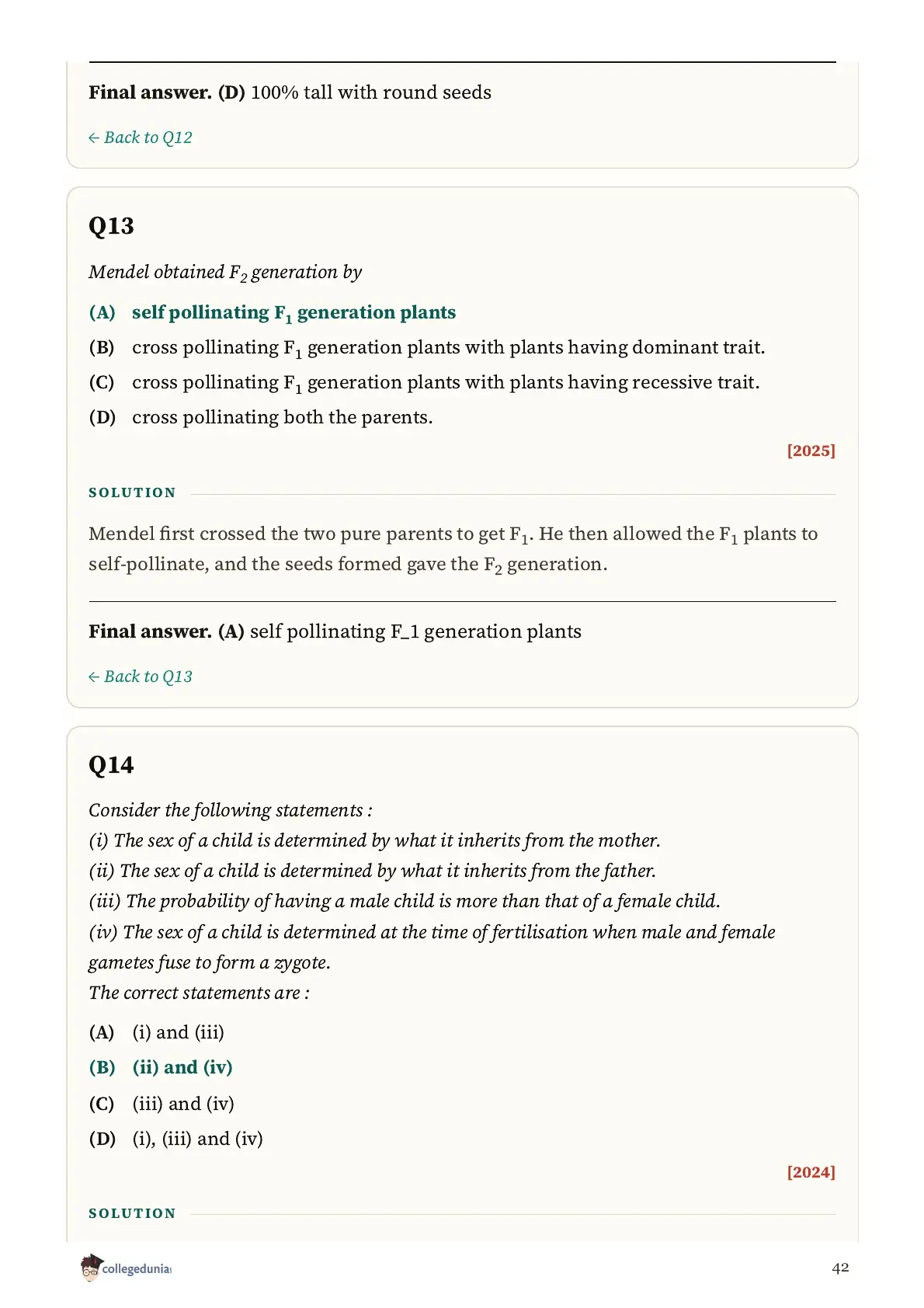
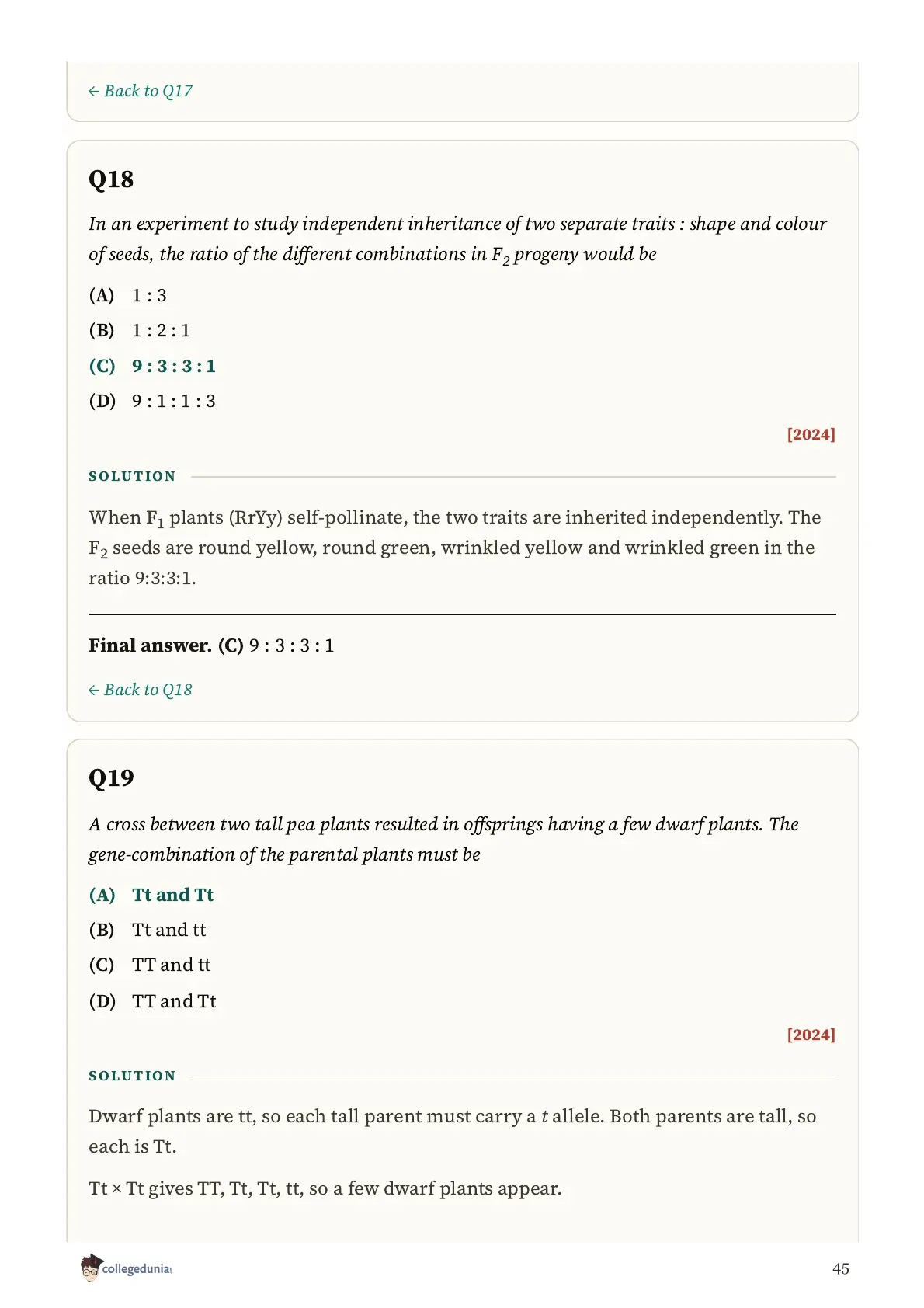
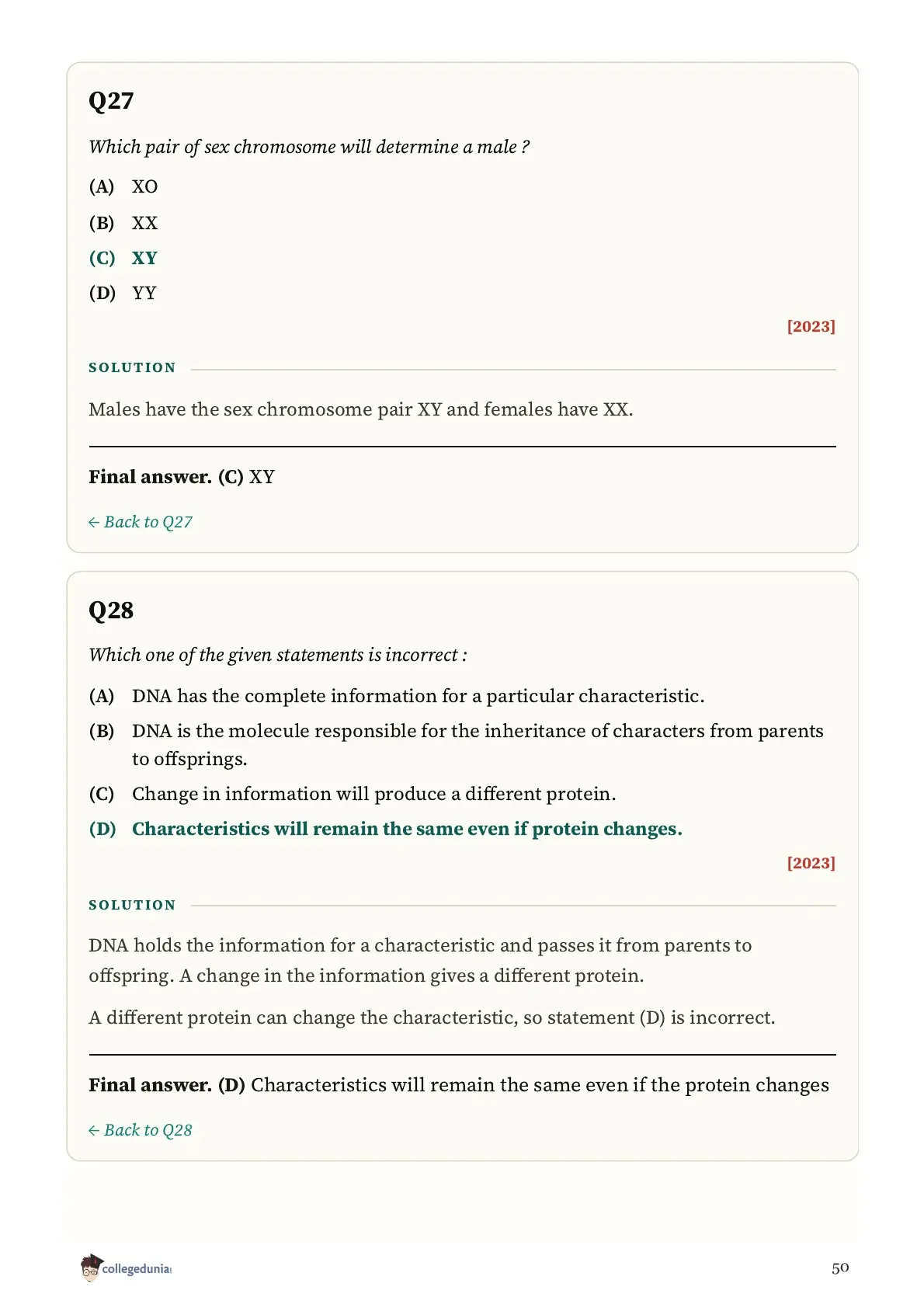
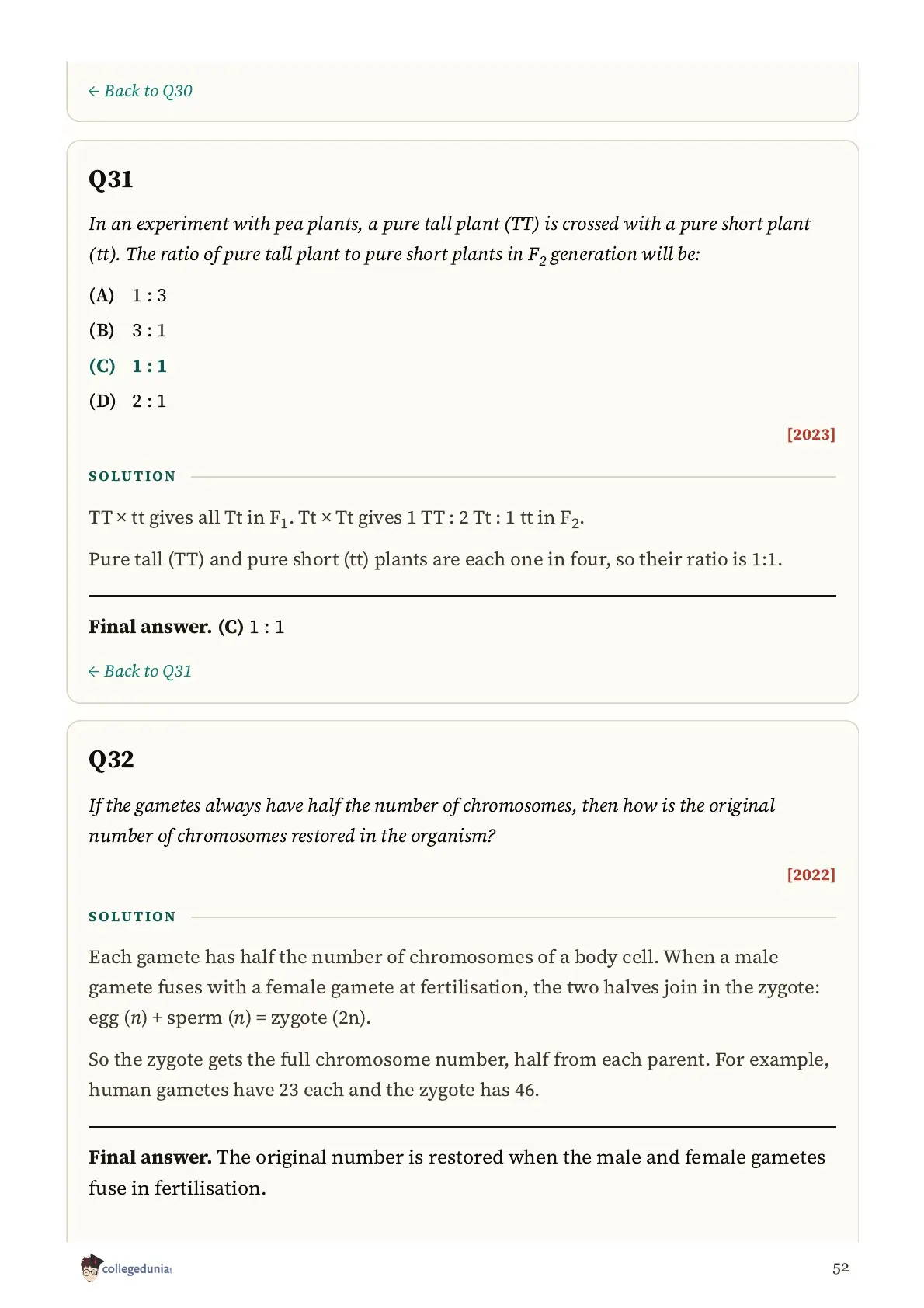
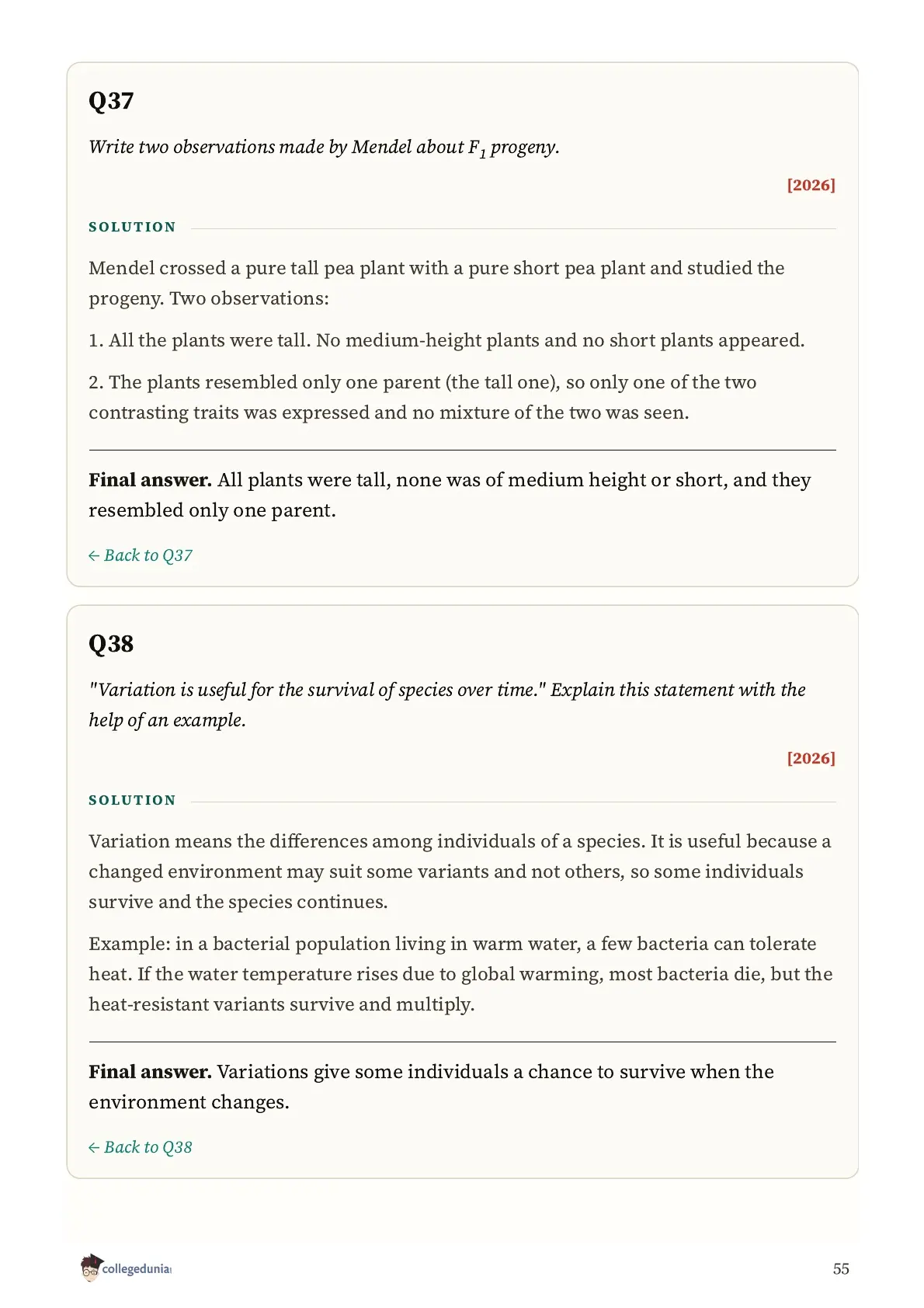
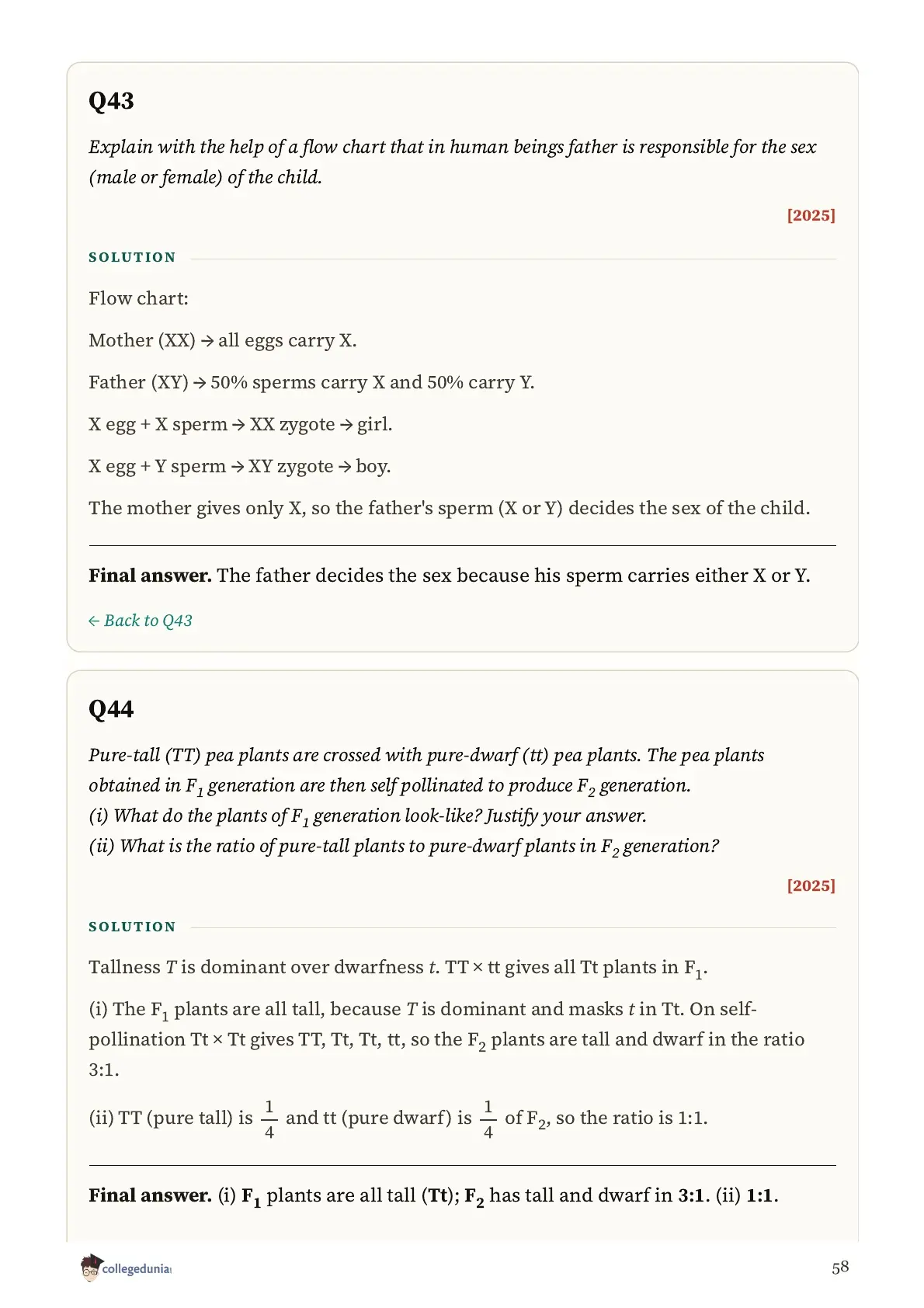
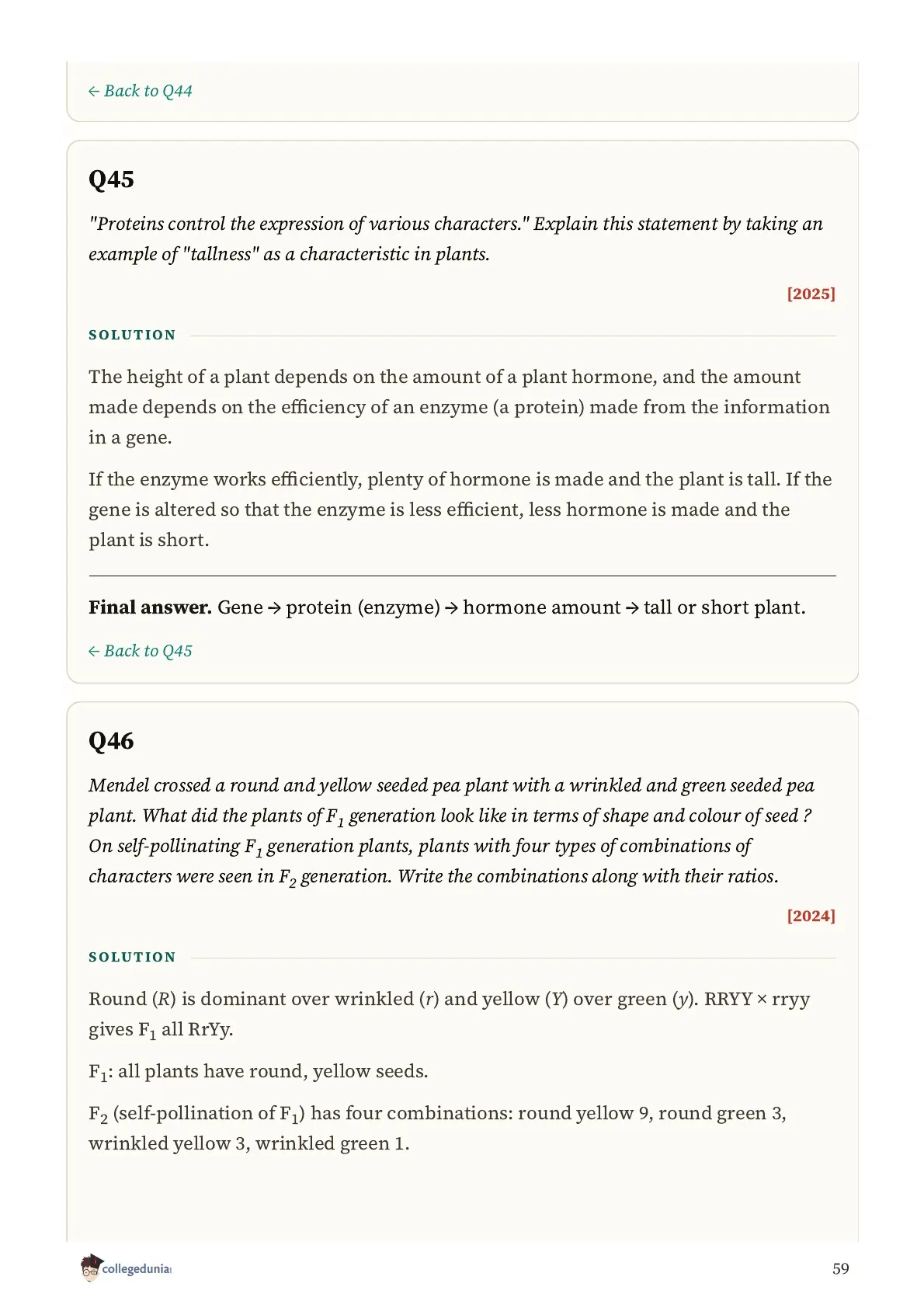
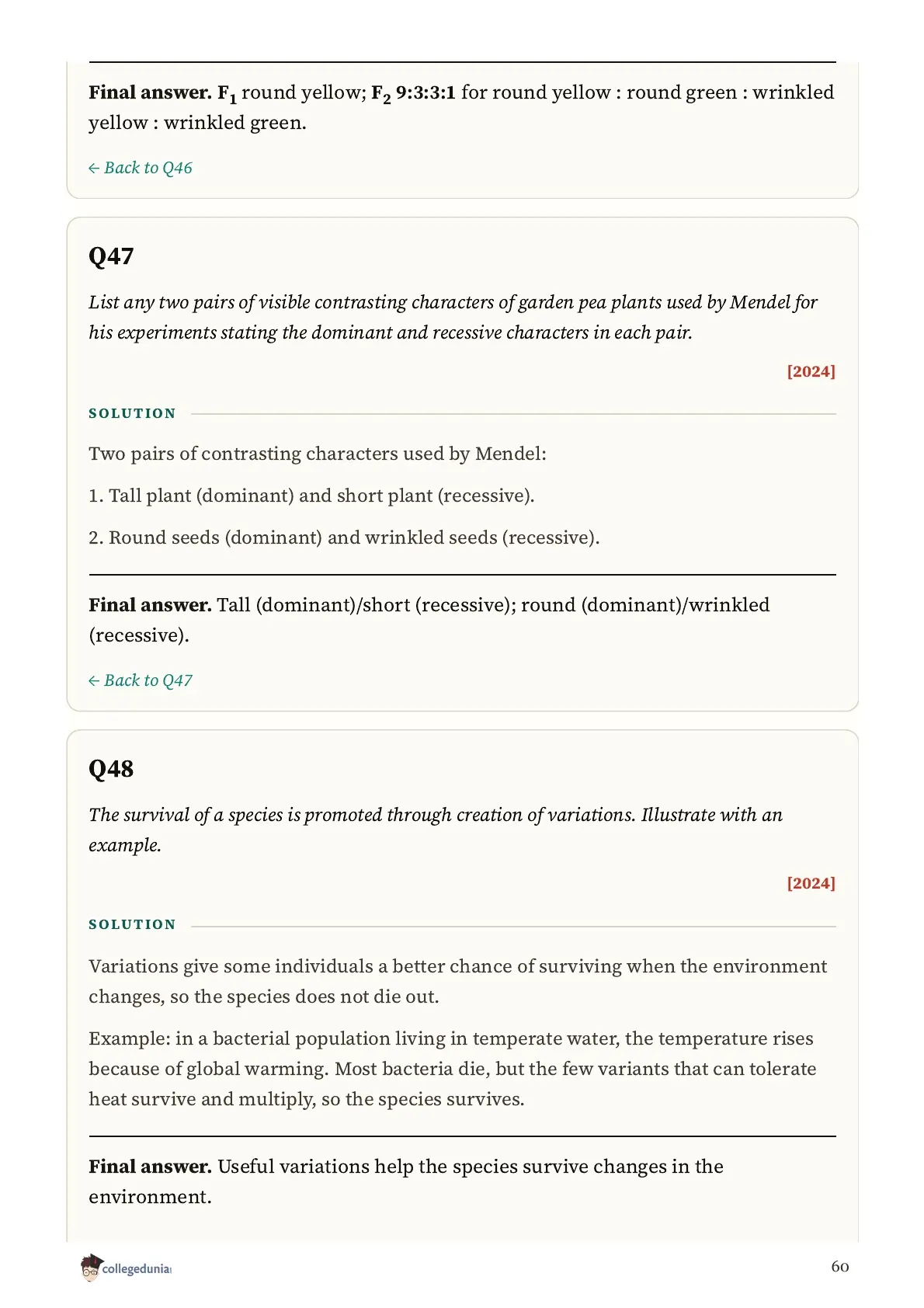
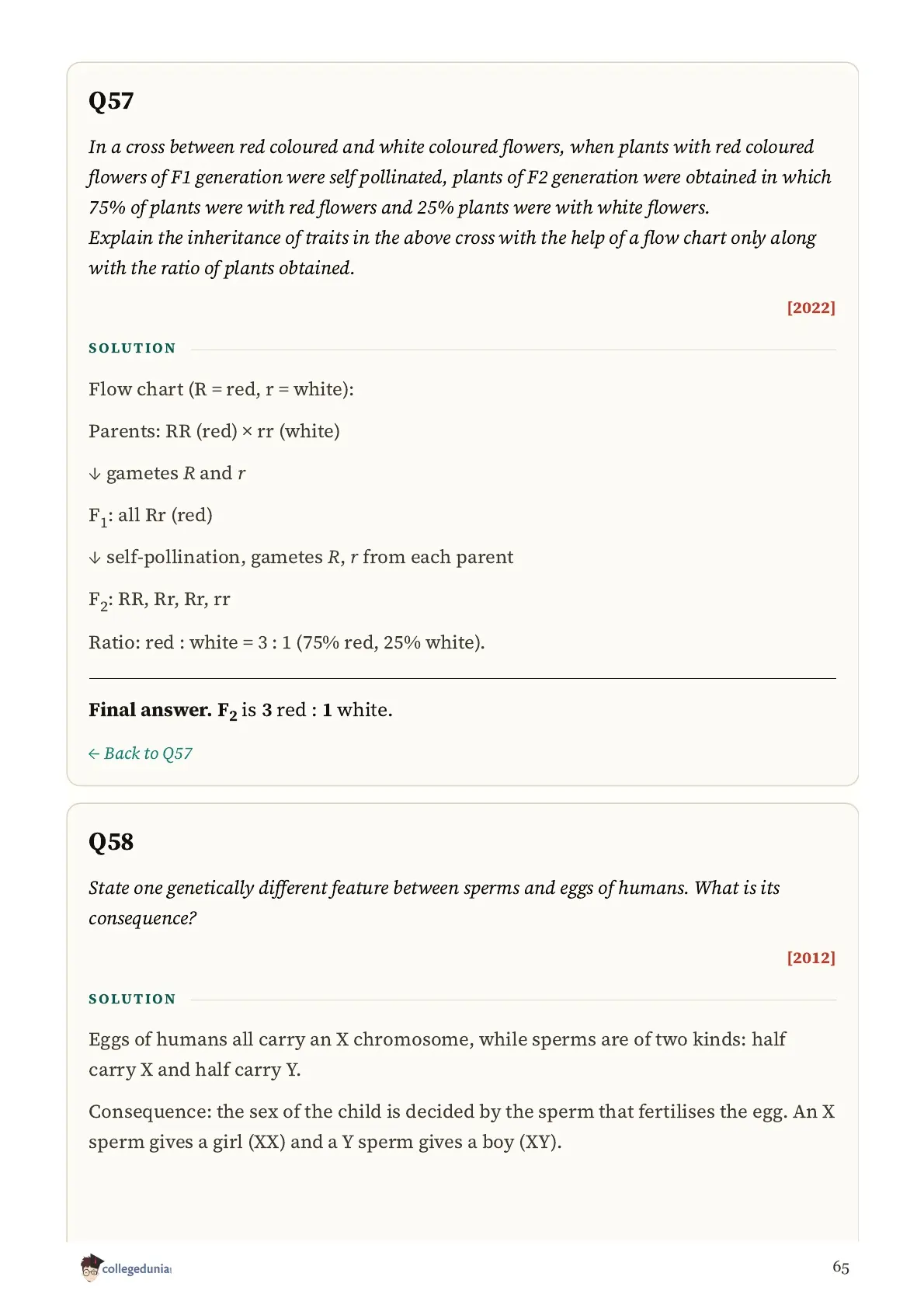
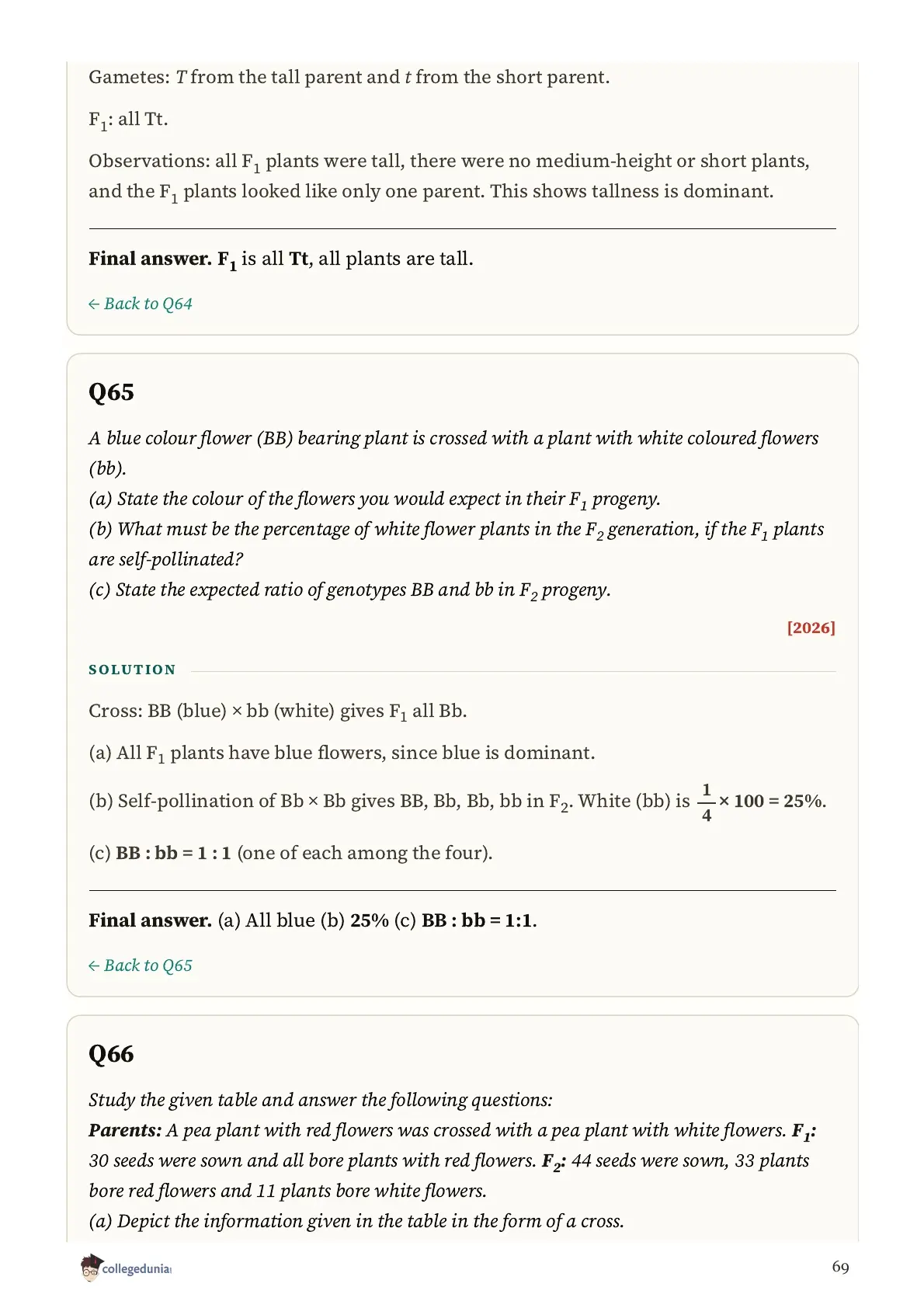
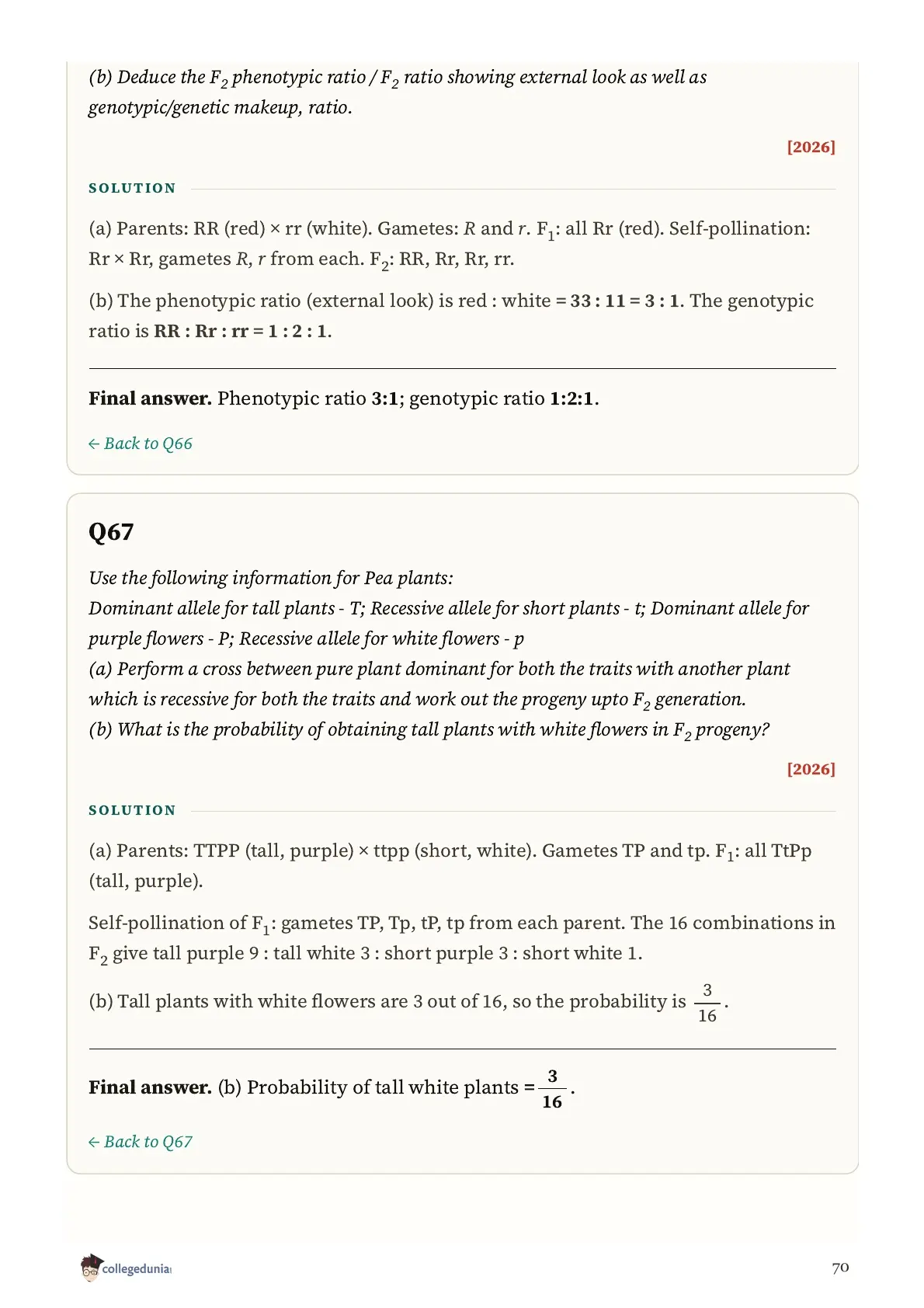
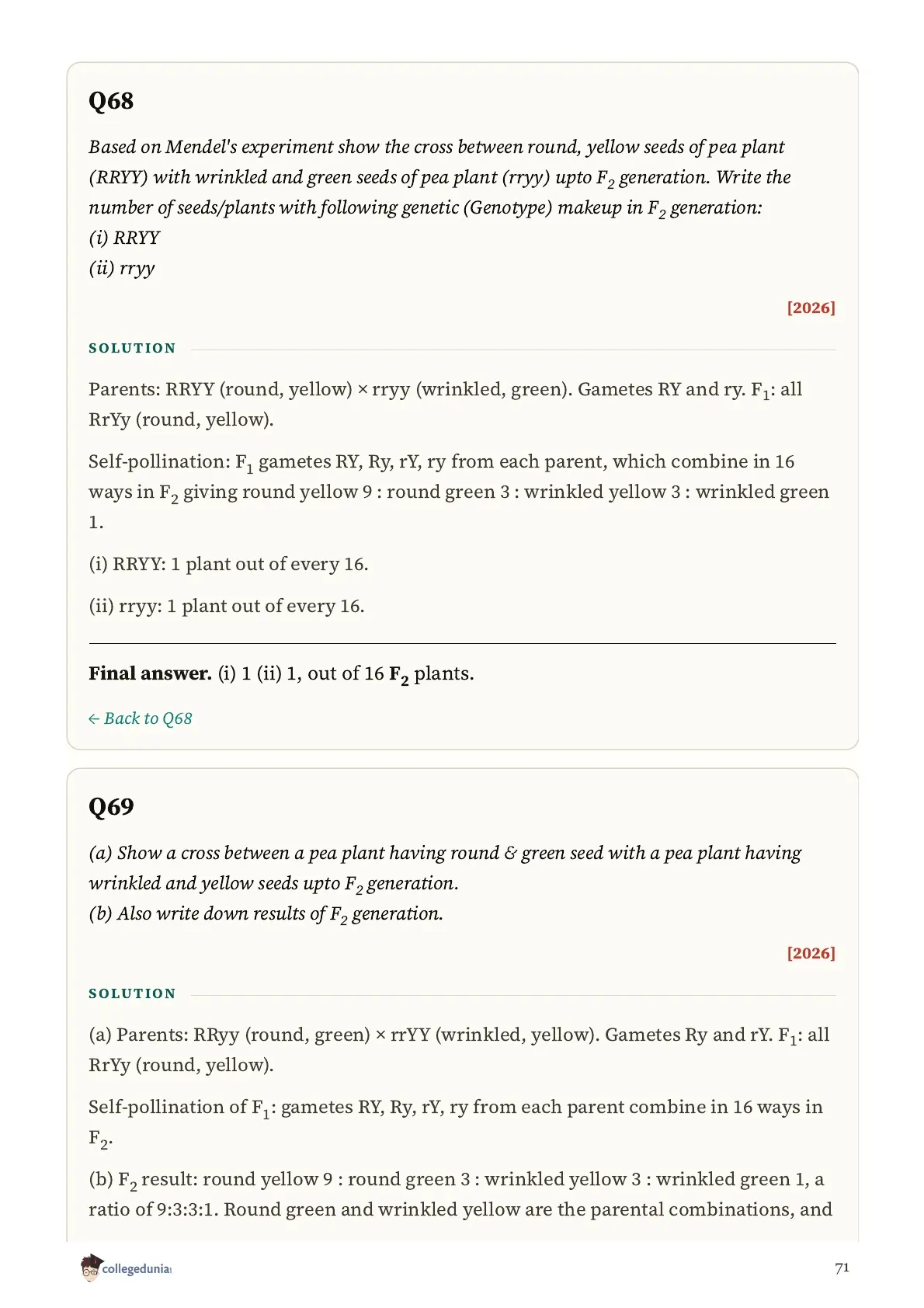
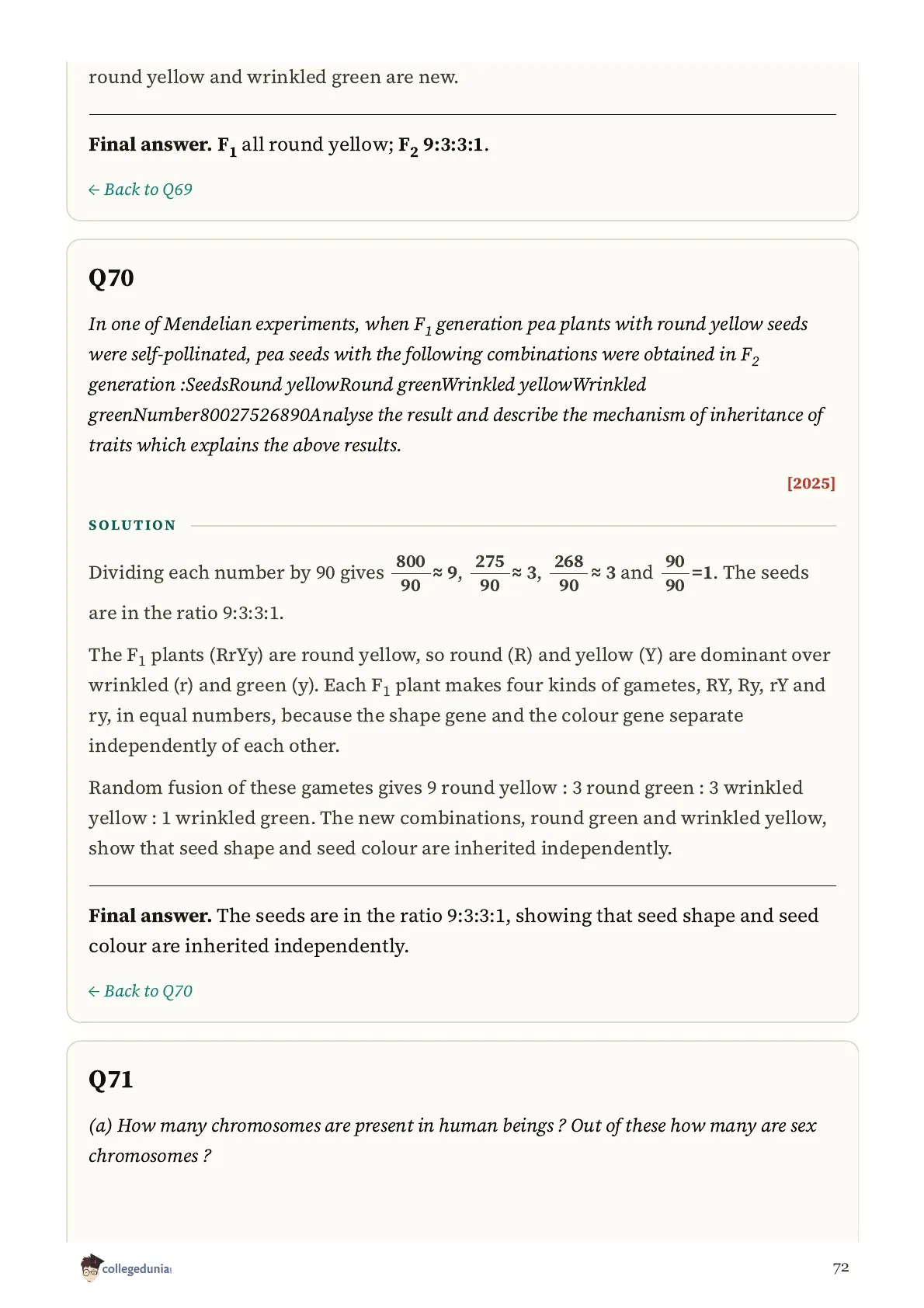
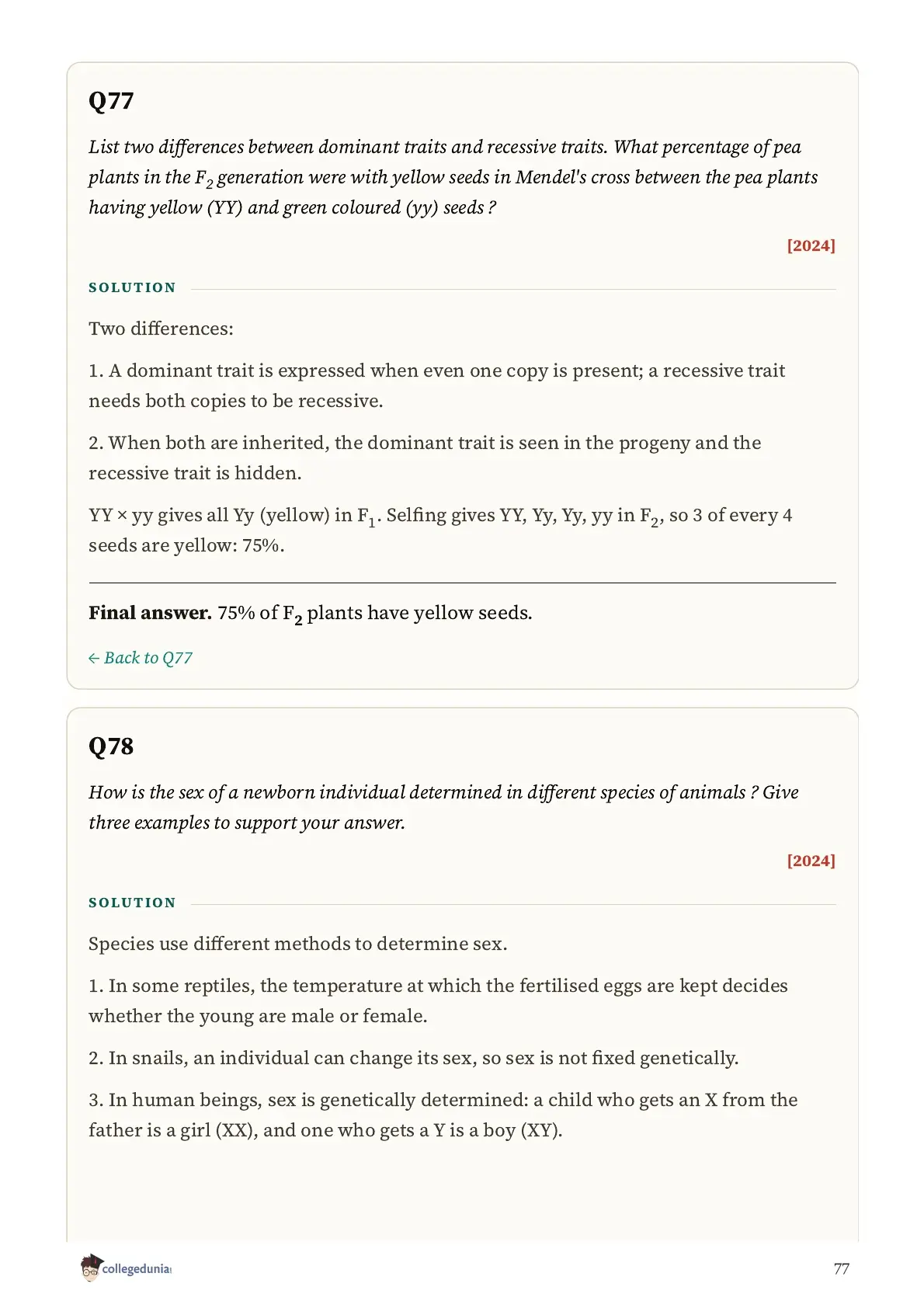
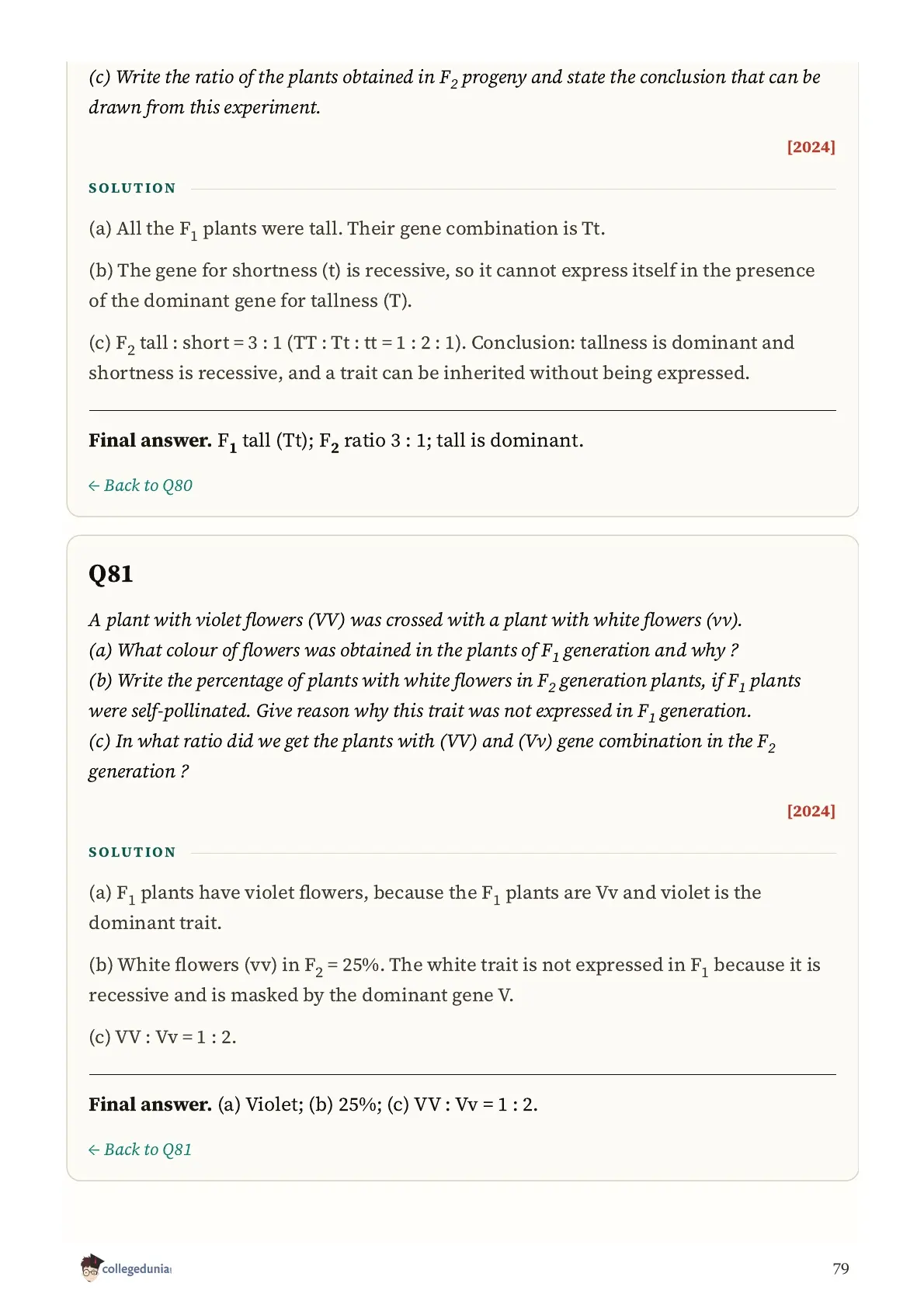
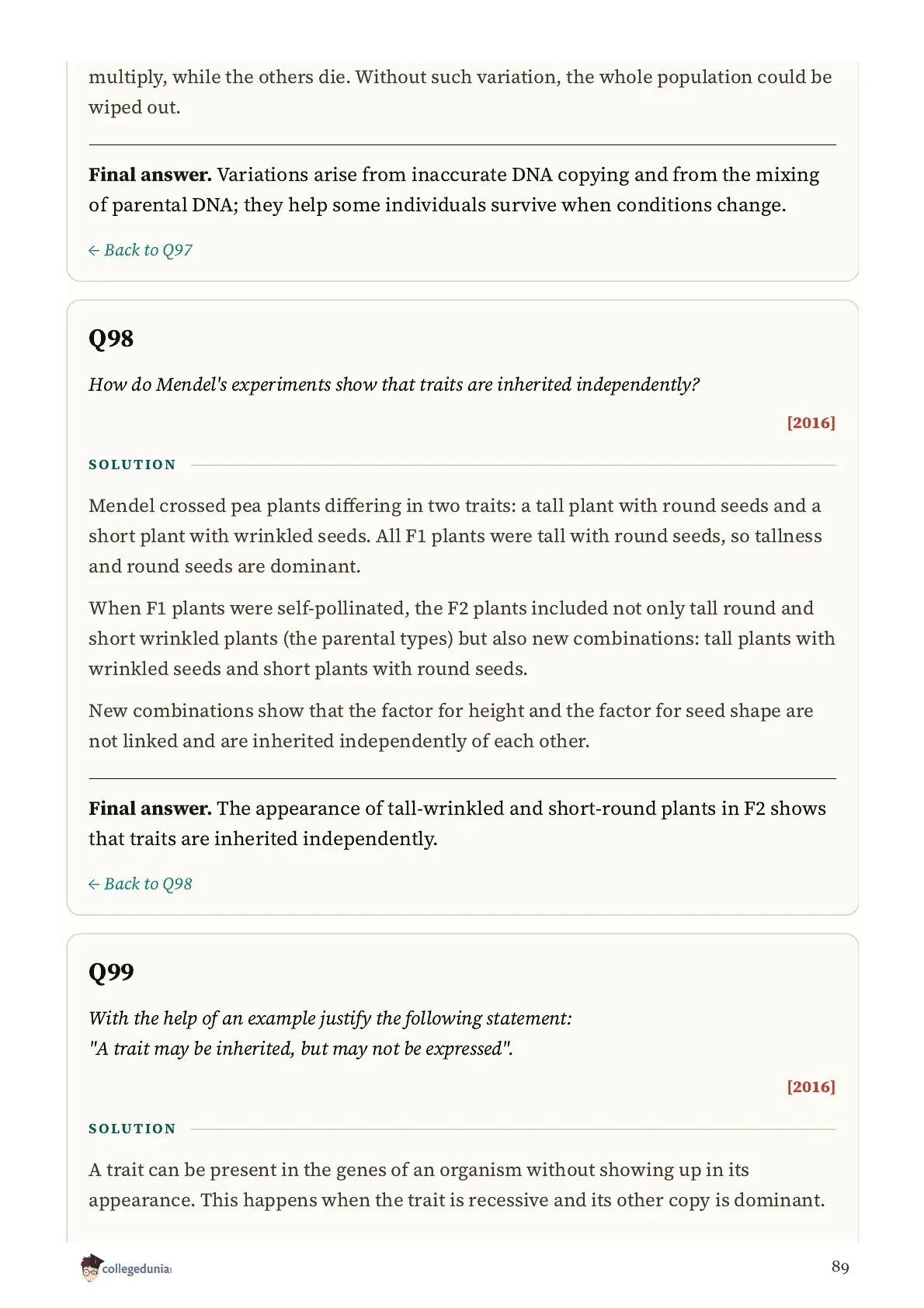
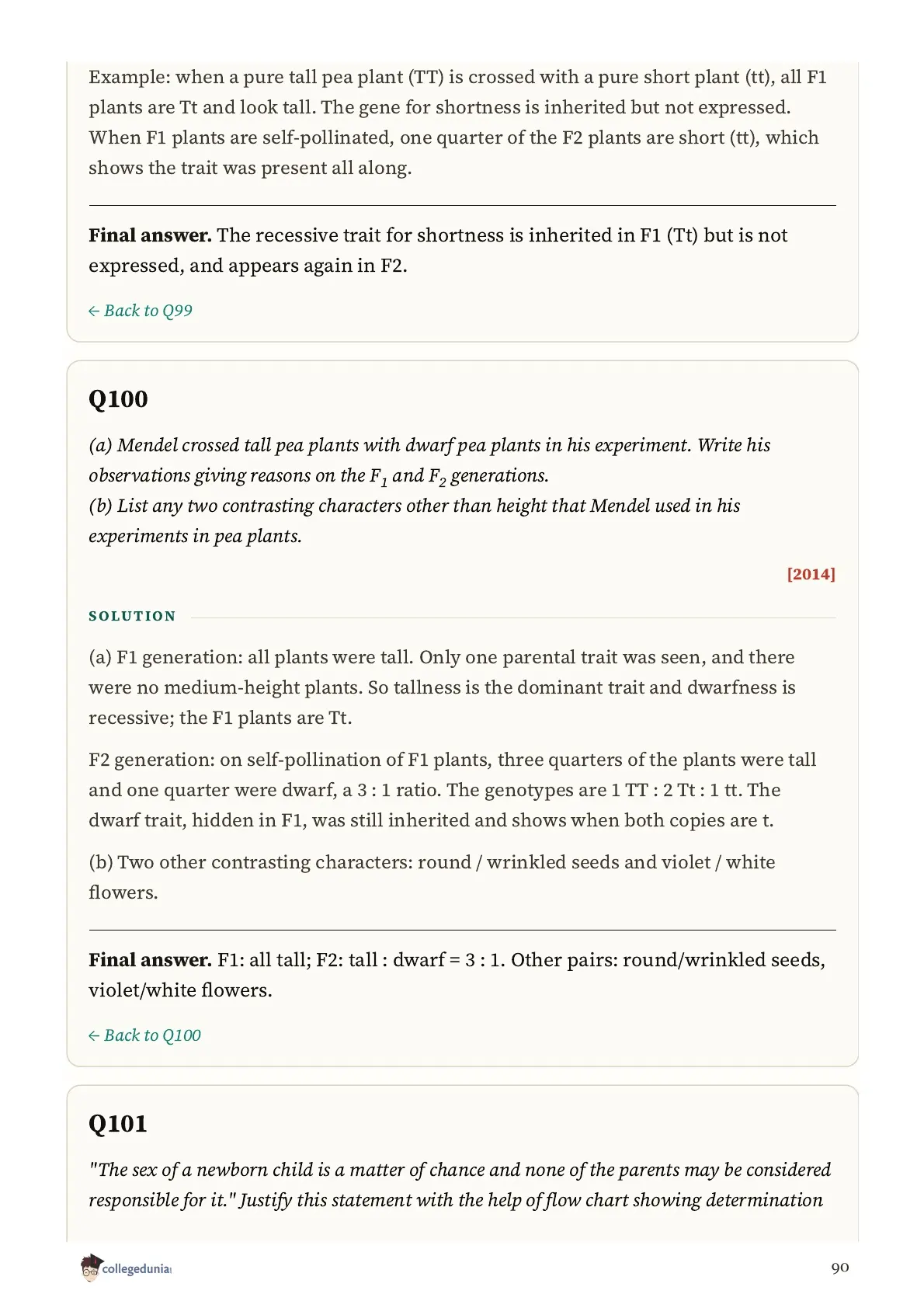
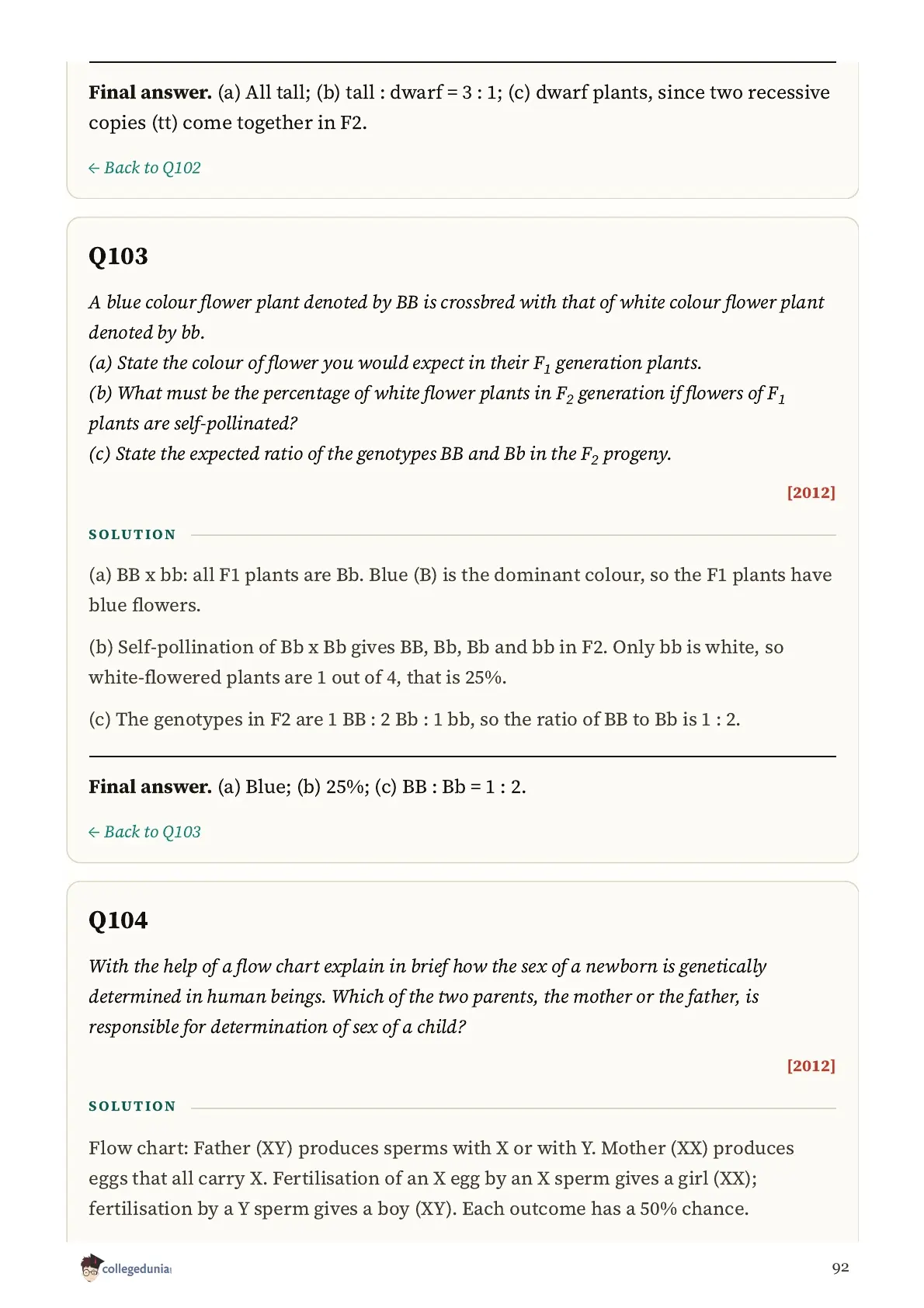
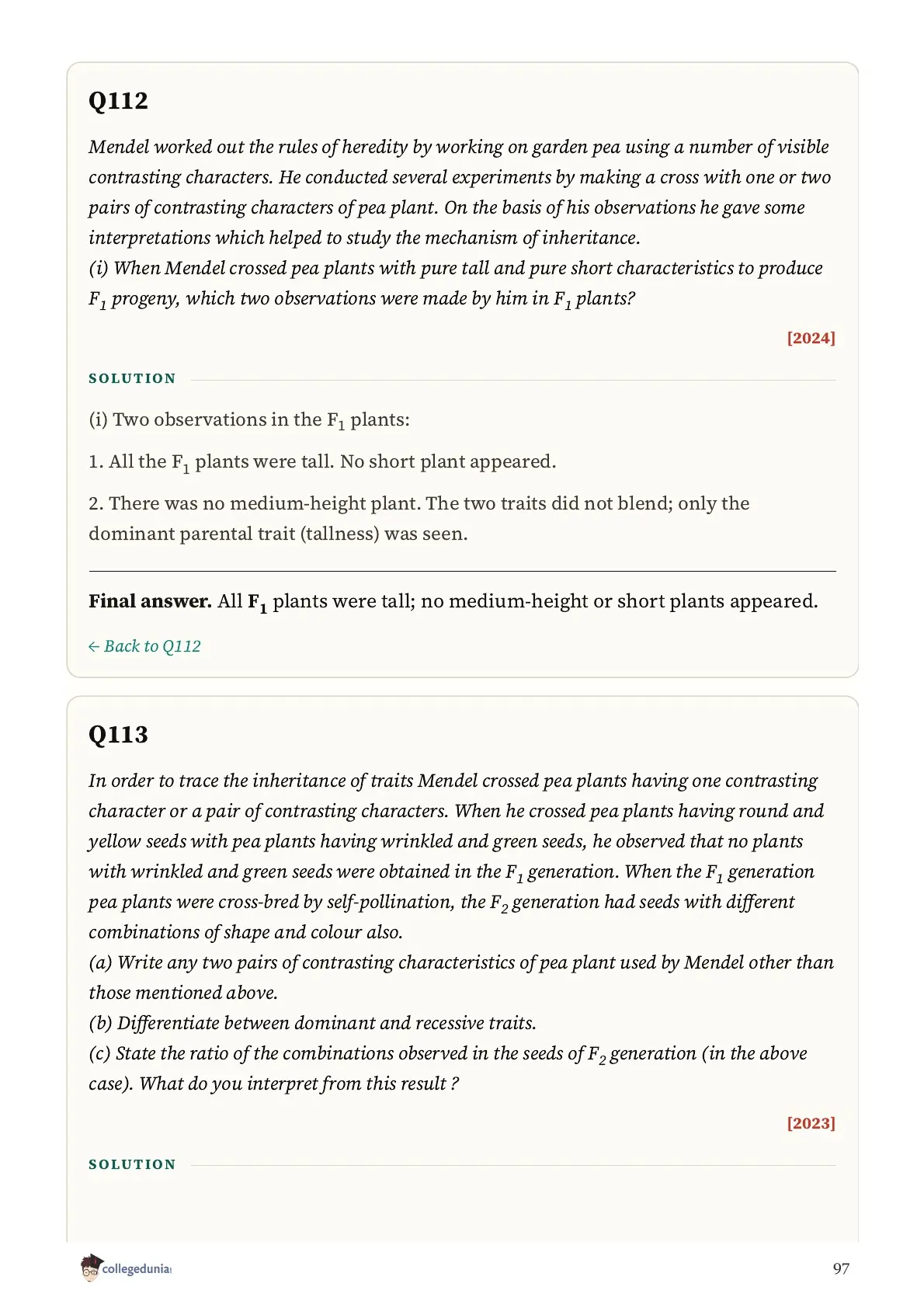
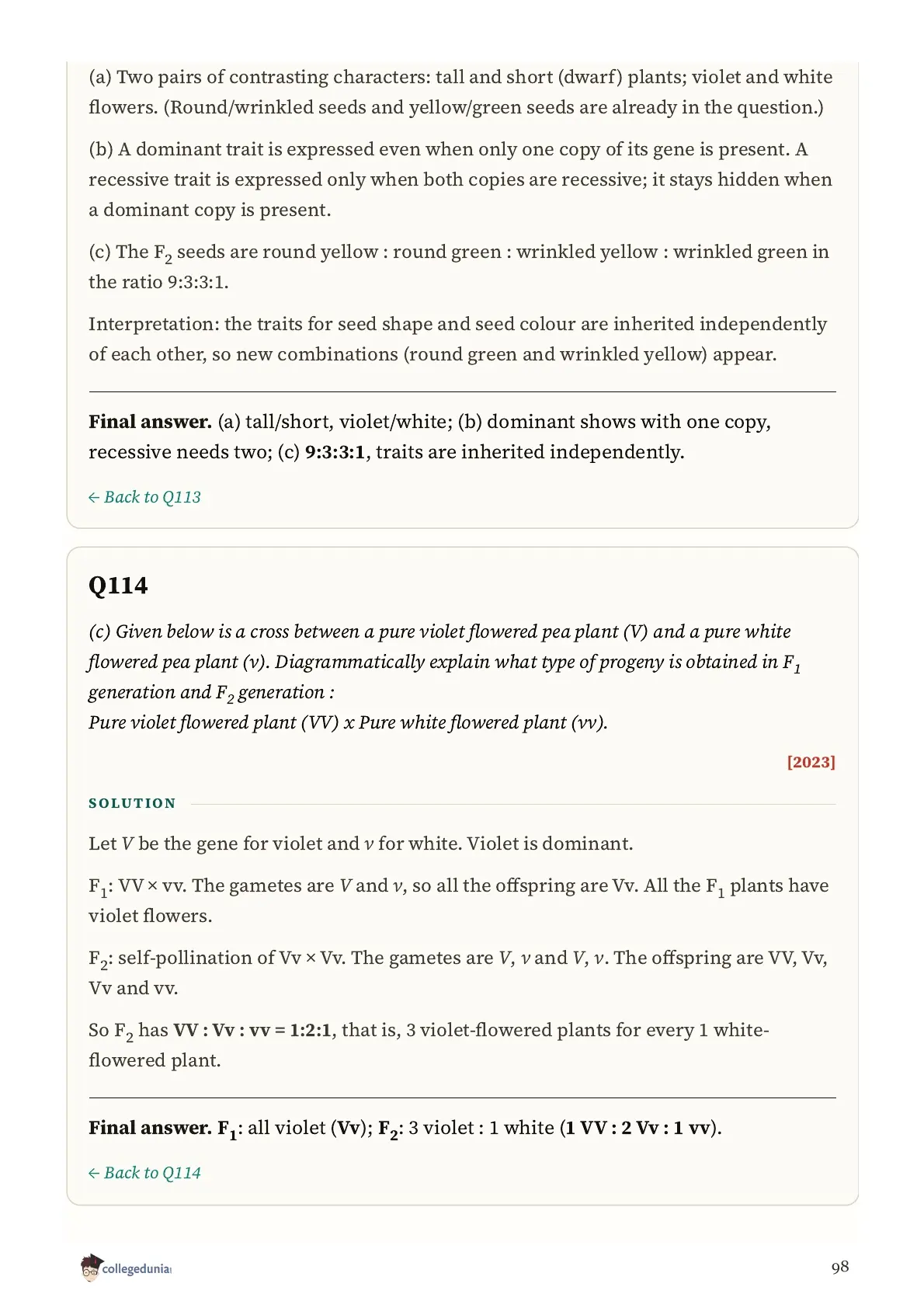
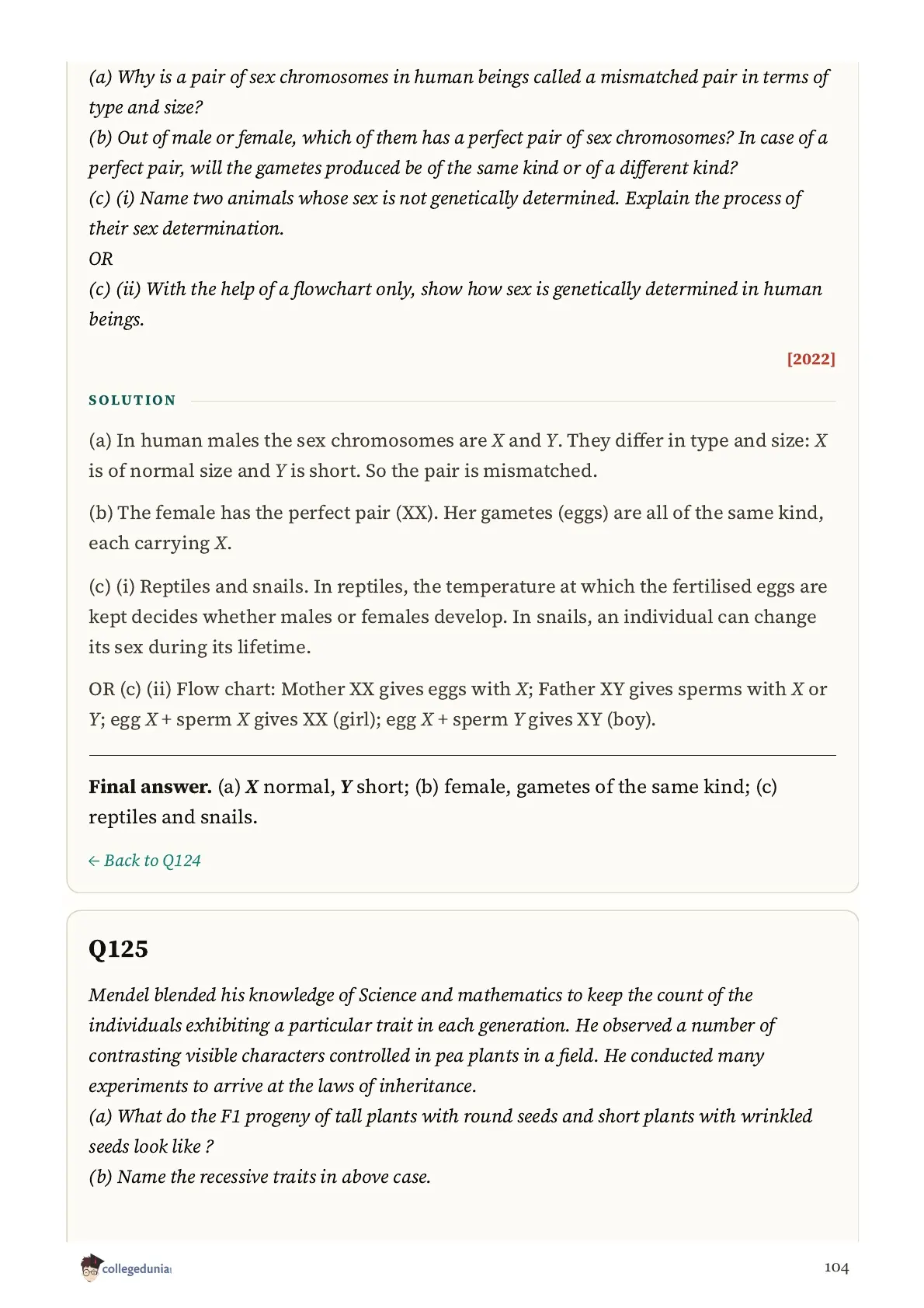
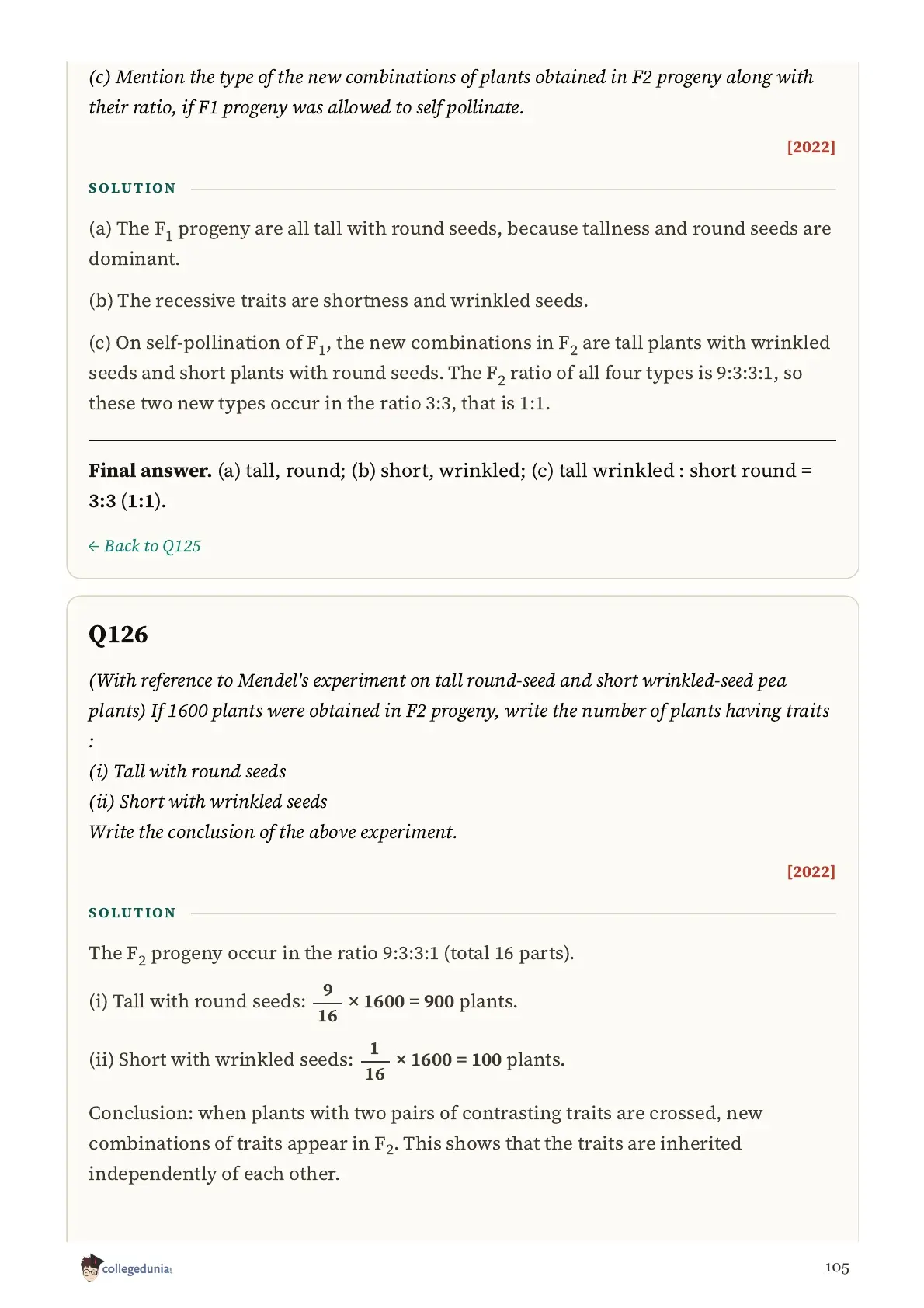
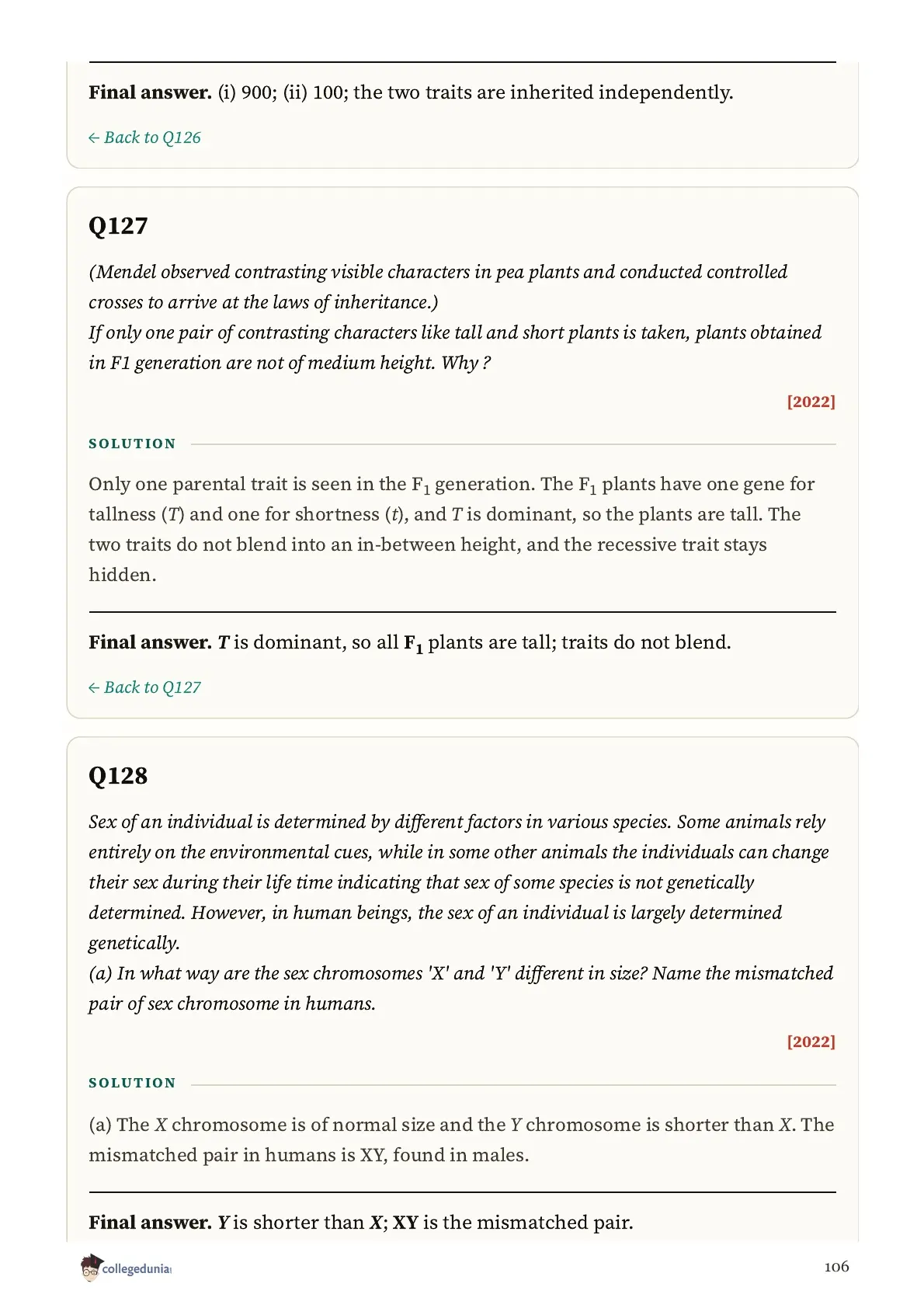
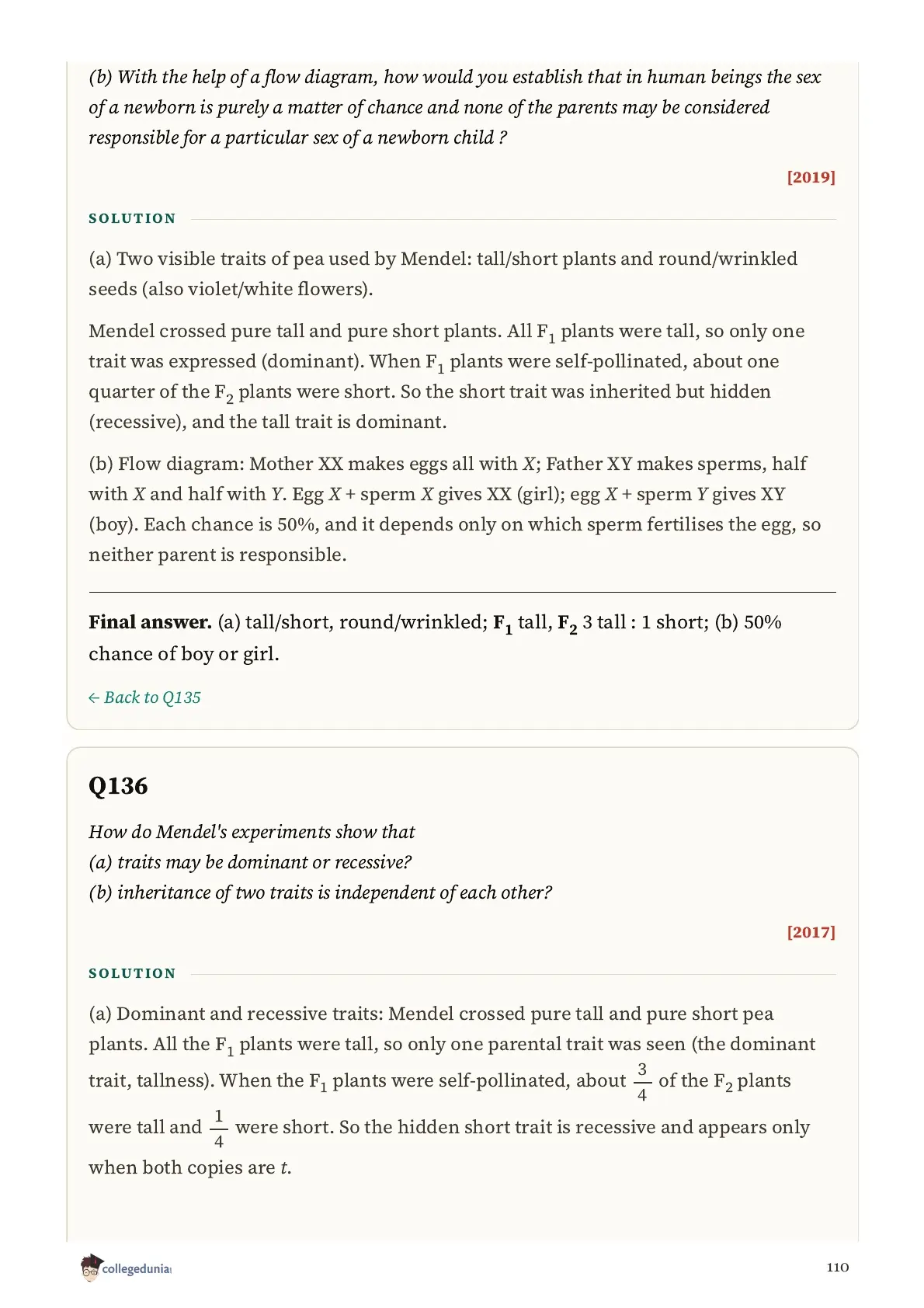
Most of the set is built on Mendel's pea plants. 47 questions name Mendel or the pea plant, and 51 ask about the F1 or F2 generation. A tall plant crossed with a short one is the commonest setting (25 questions), then round and wrinkled or yellow and green seeds (13). 48 questions involve a ratio or a percentage, such as the 1600 plants of a round-seed, tall-plant F2 cross, where 900 are tall with round seeds (2022).
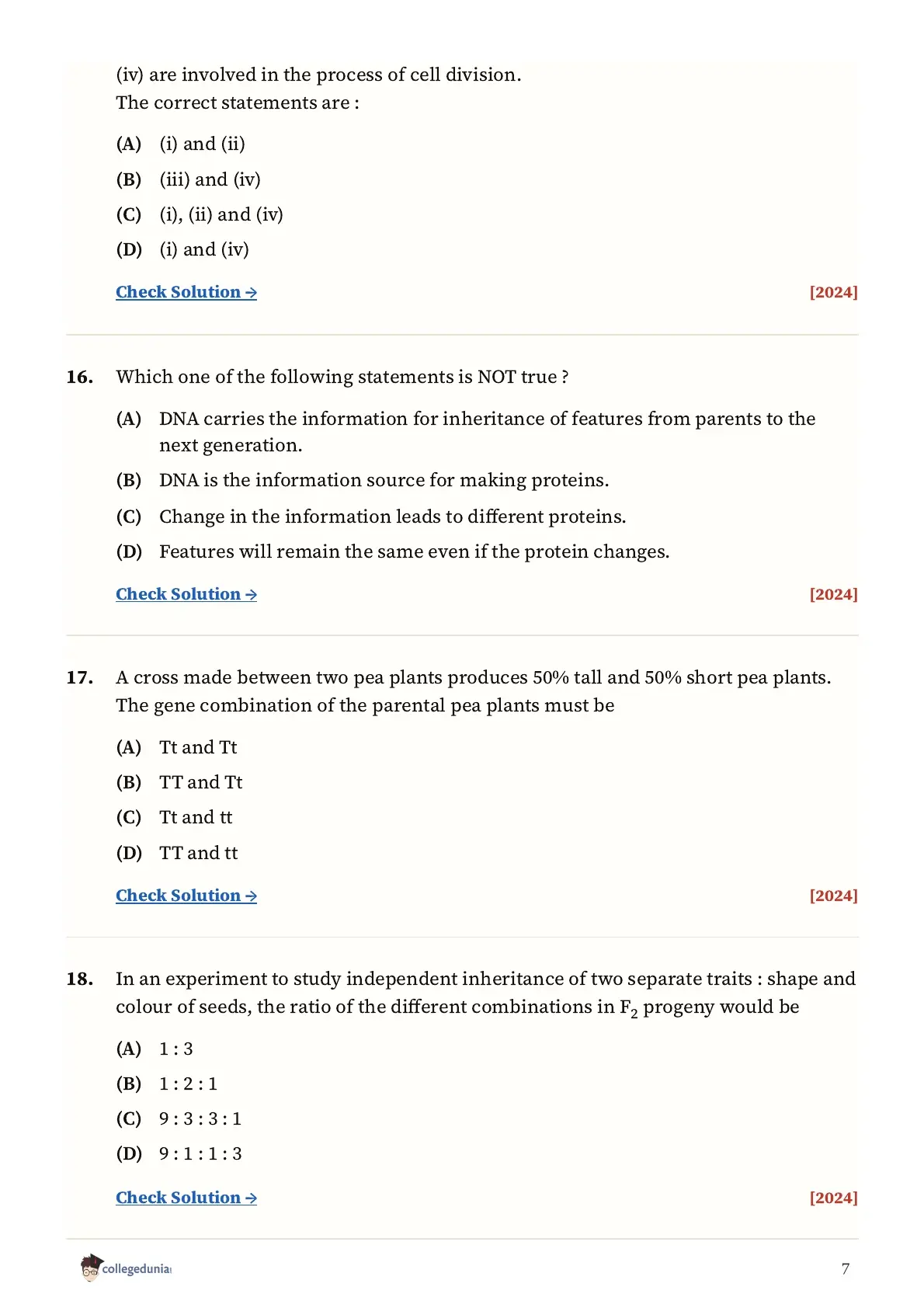
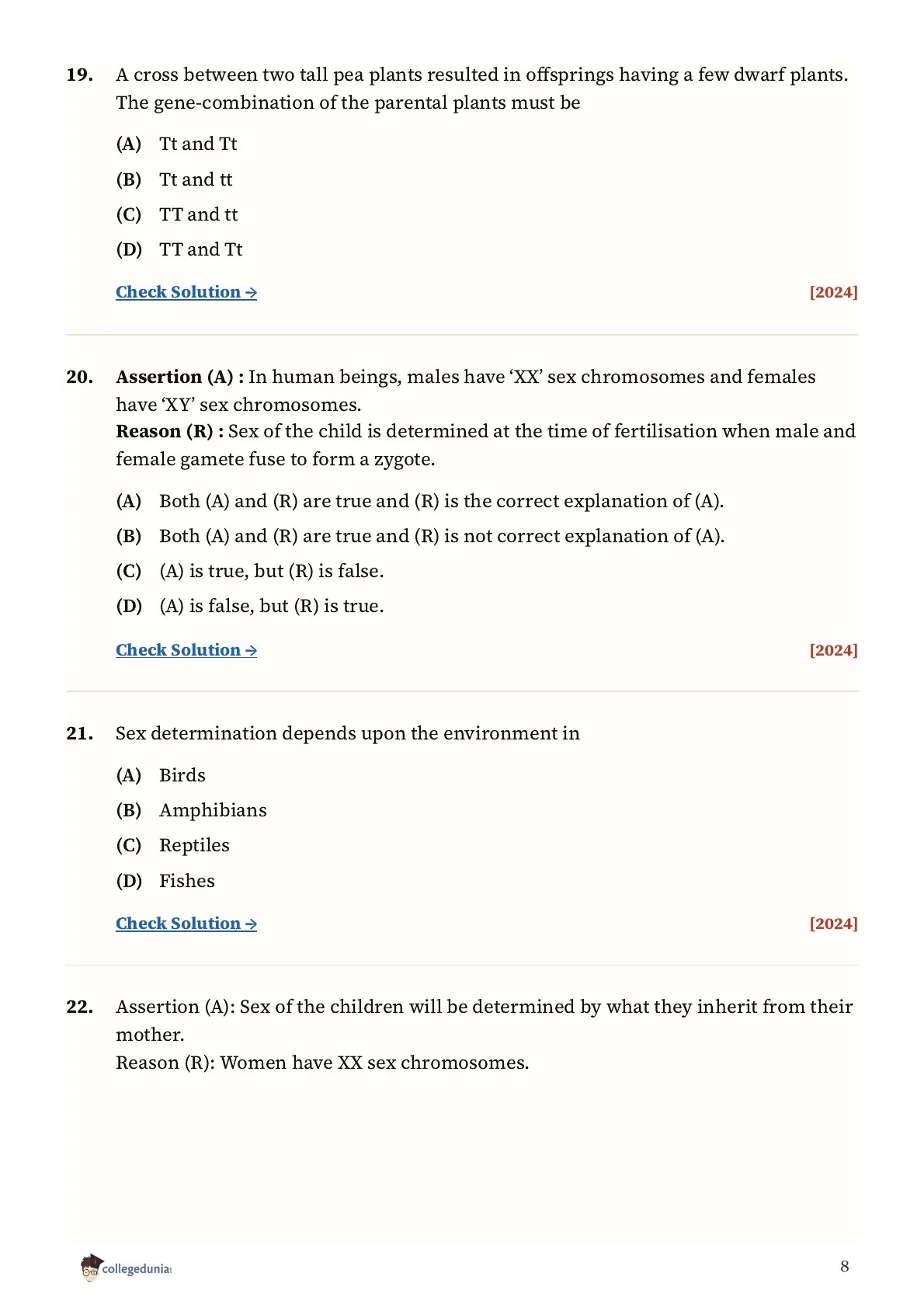
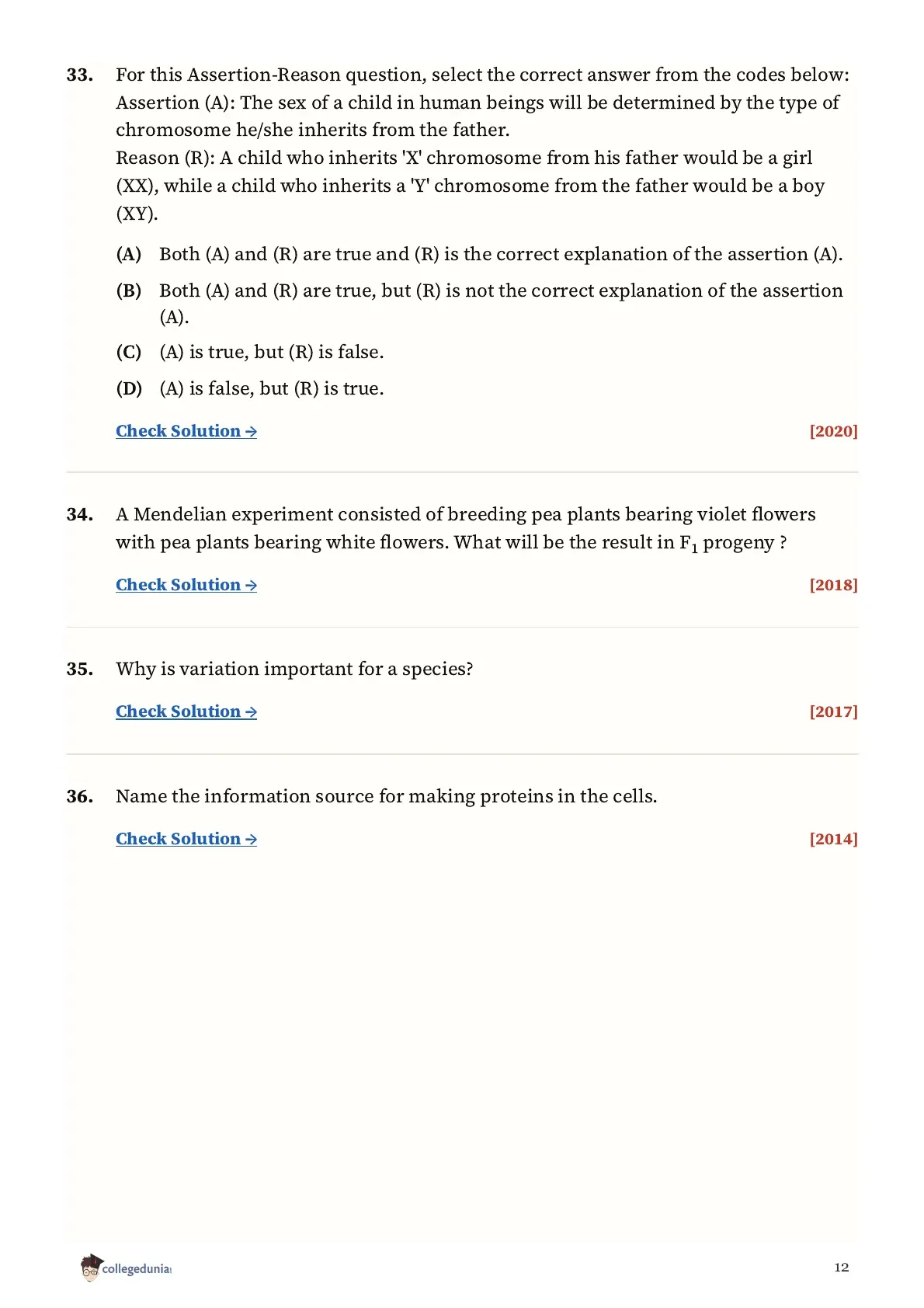
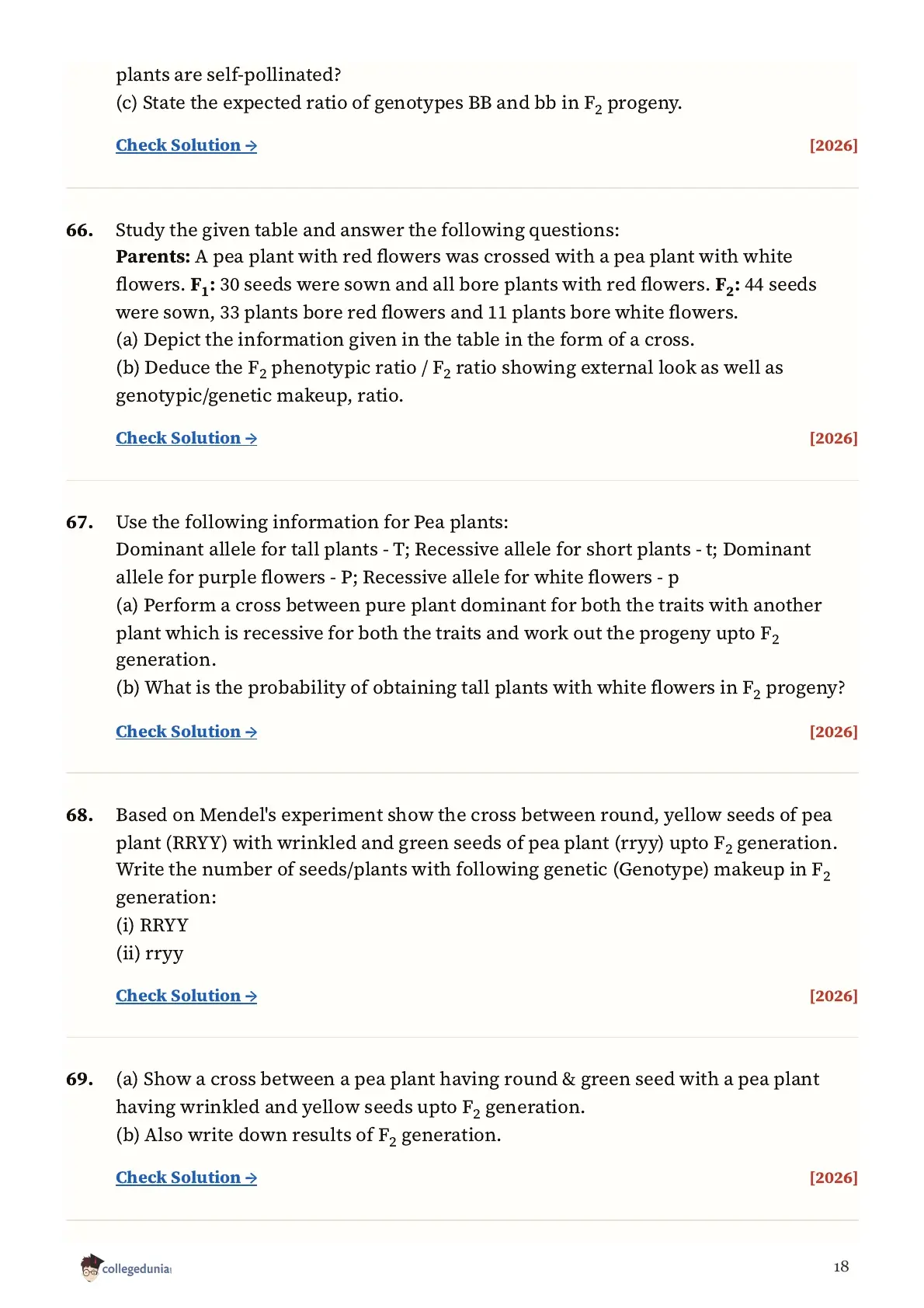
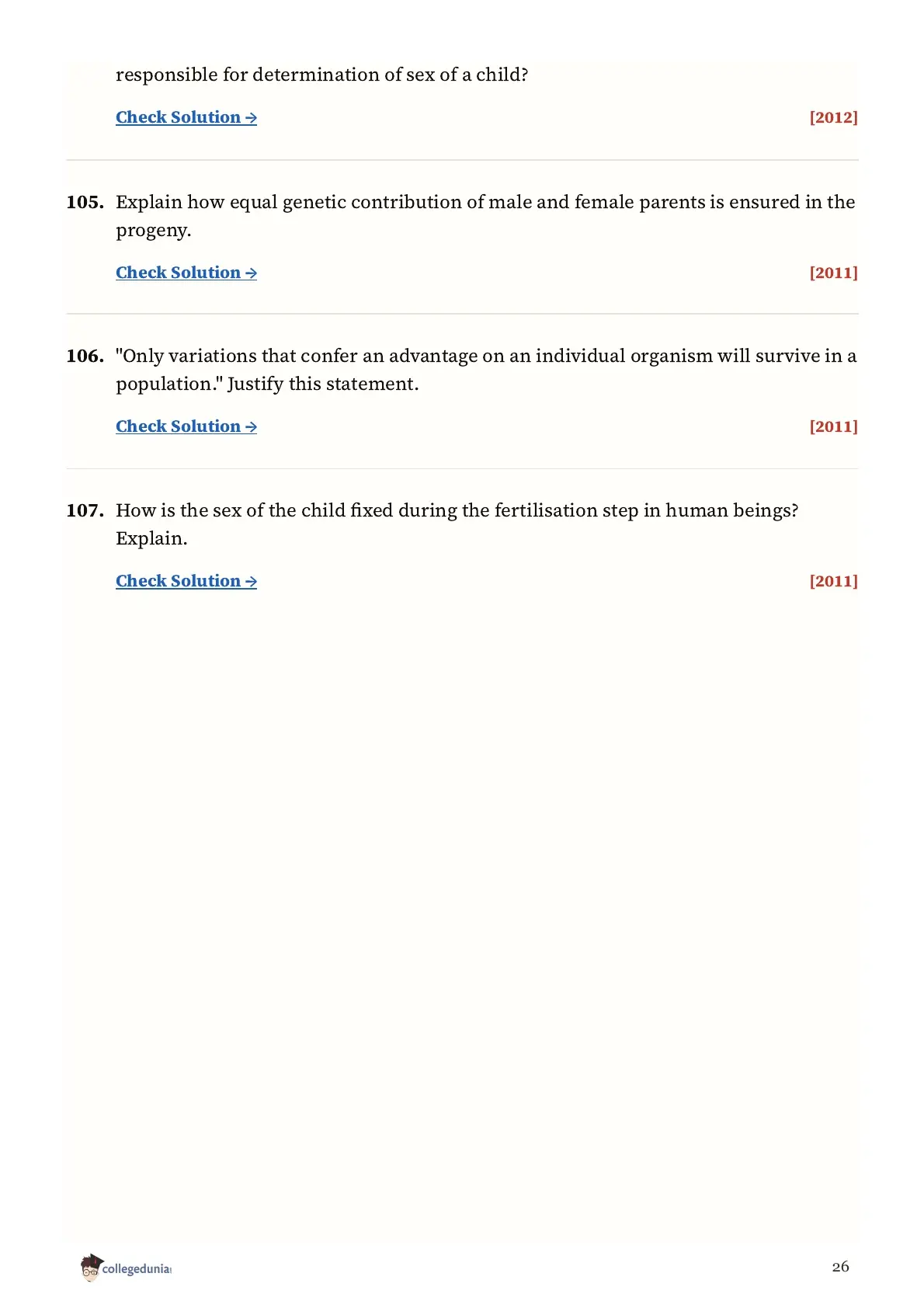
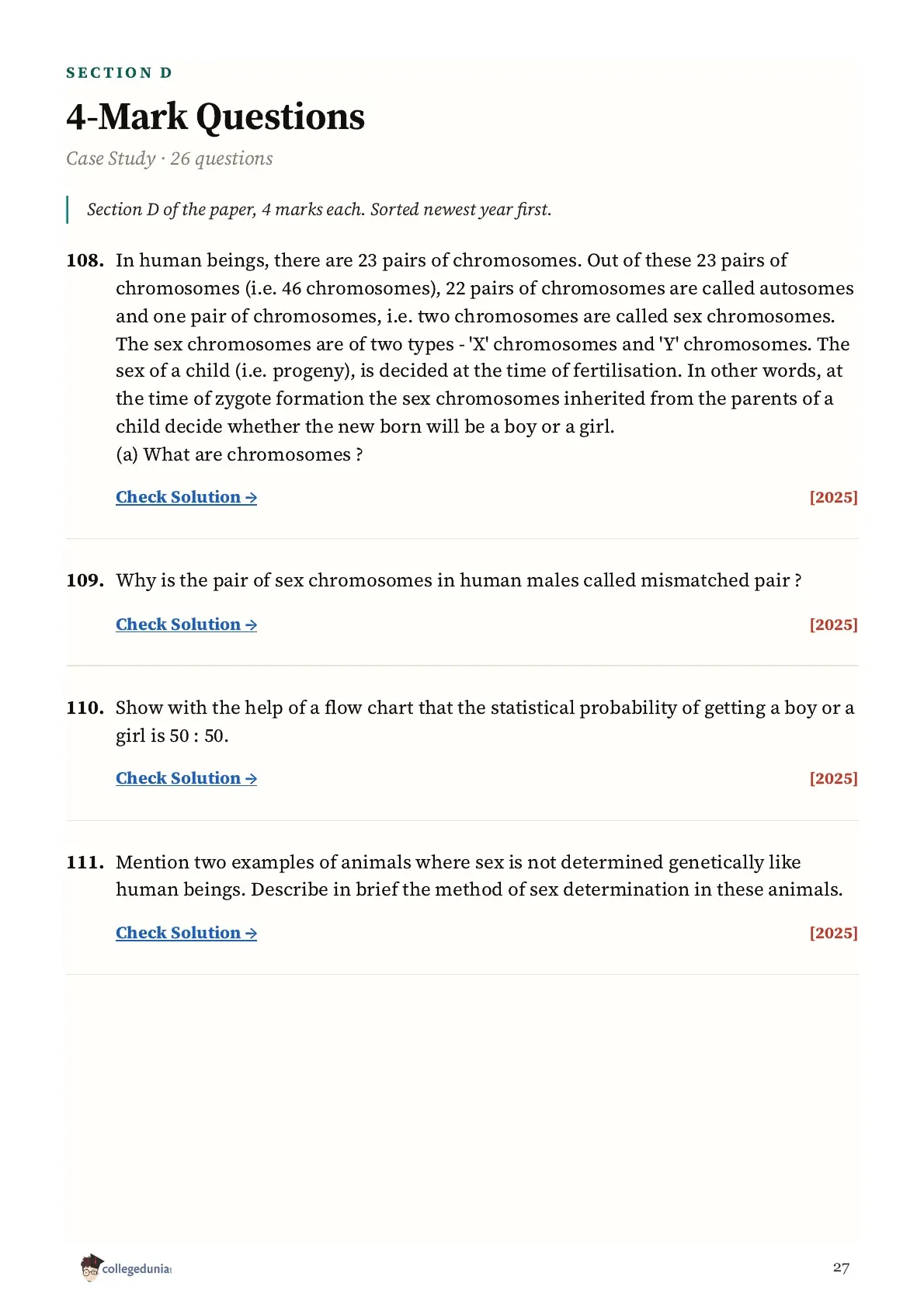
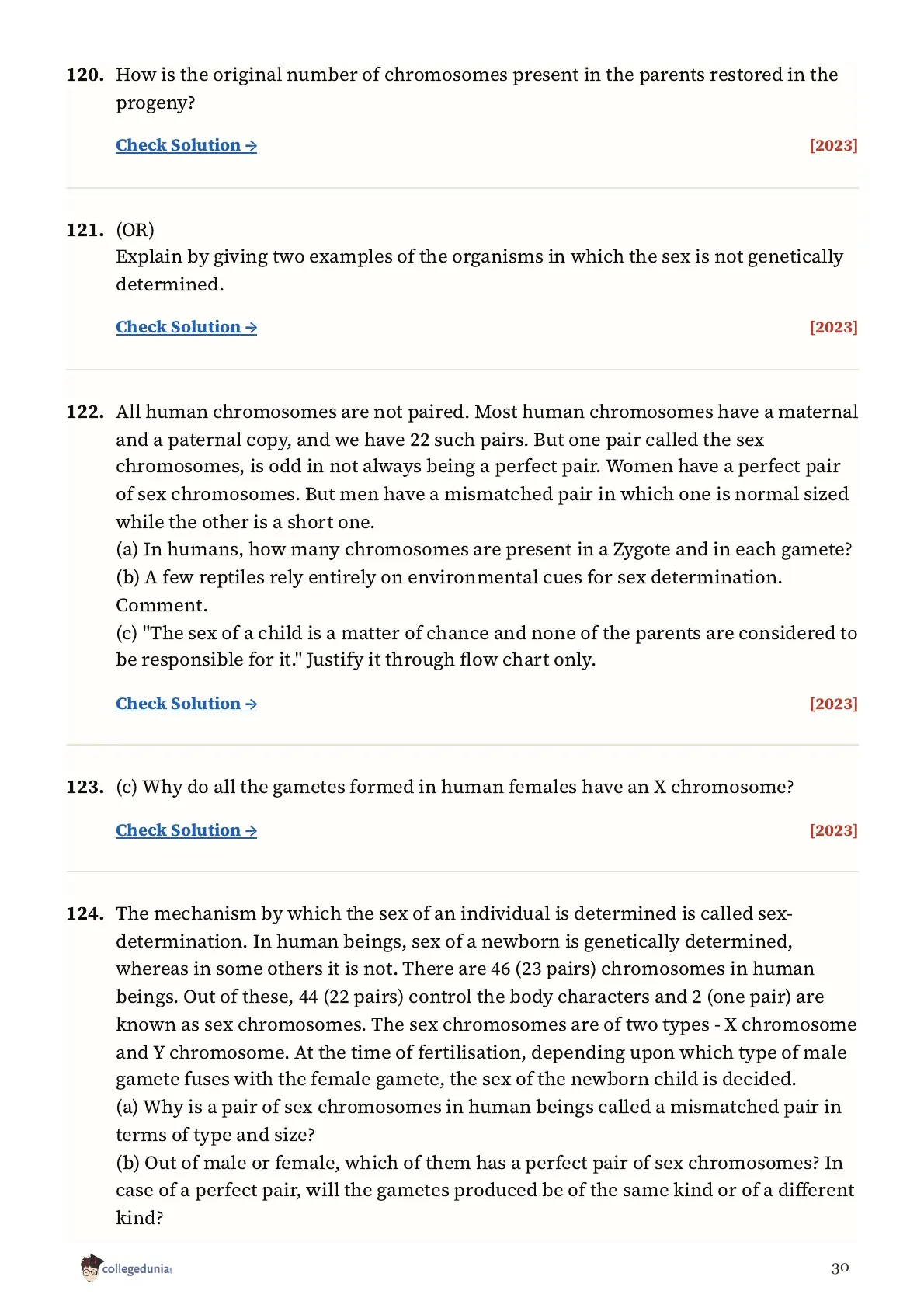
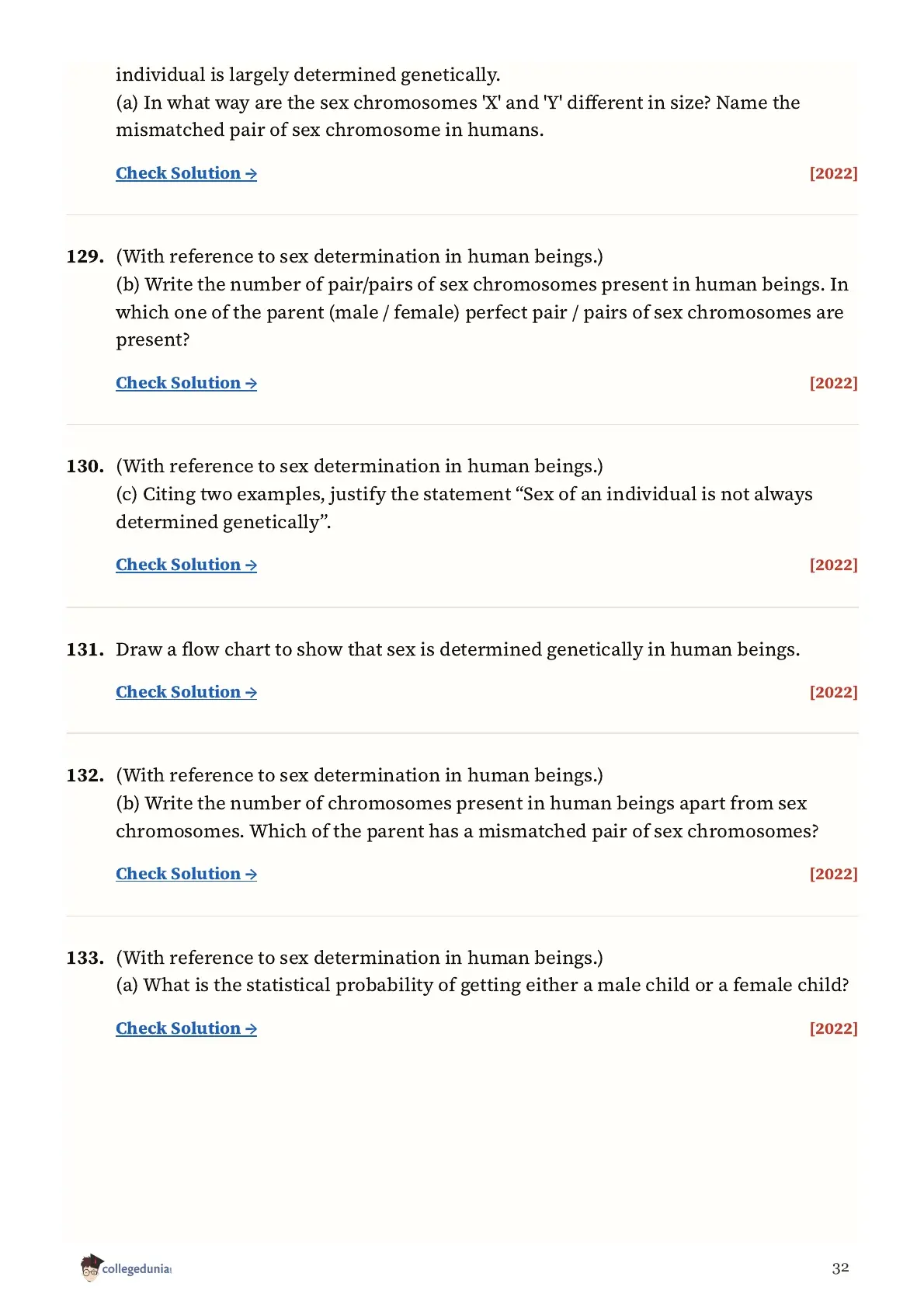
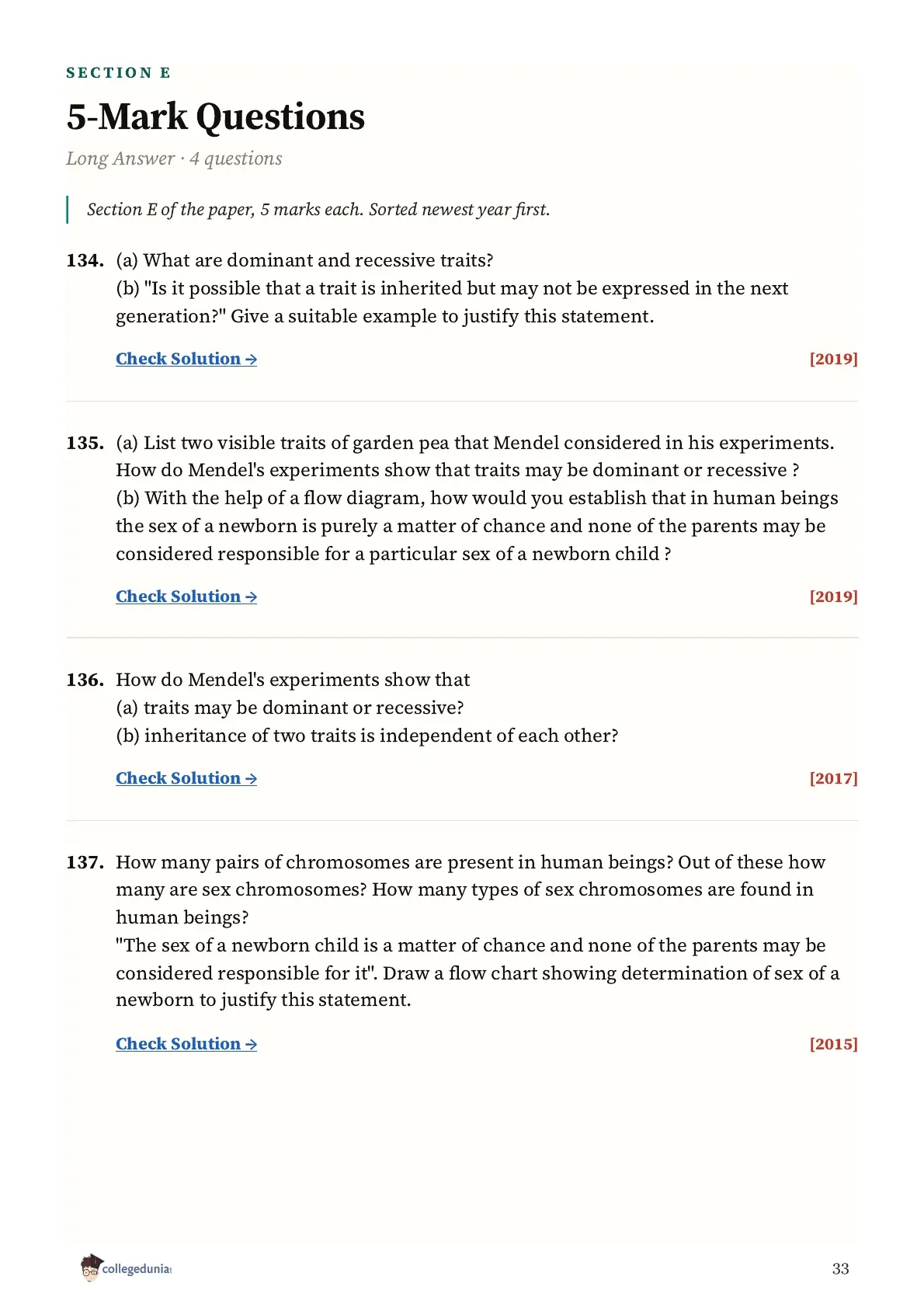
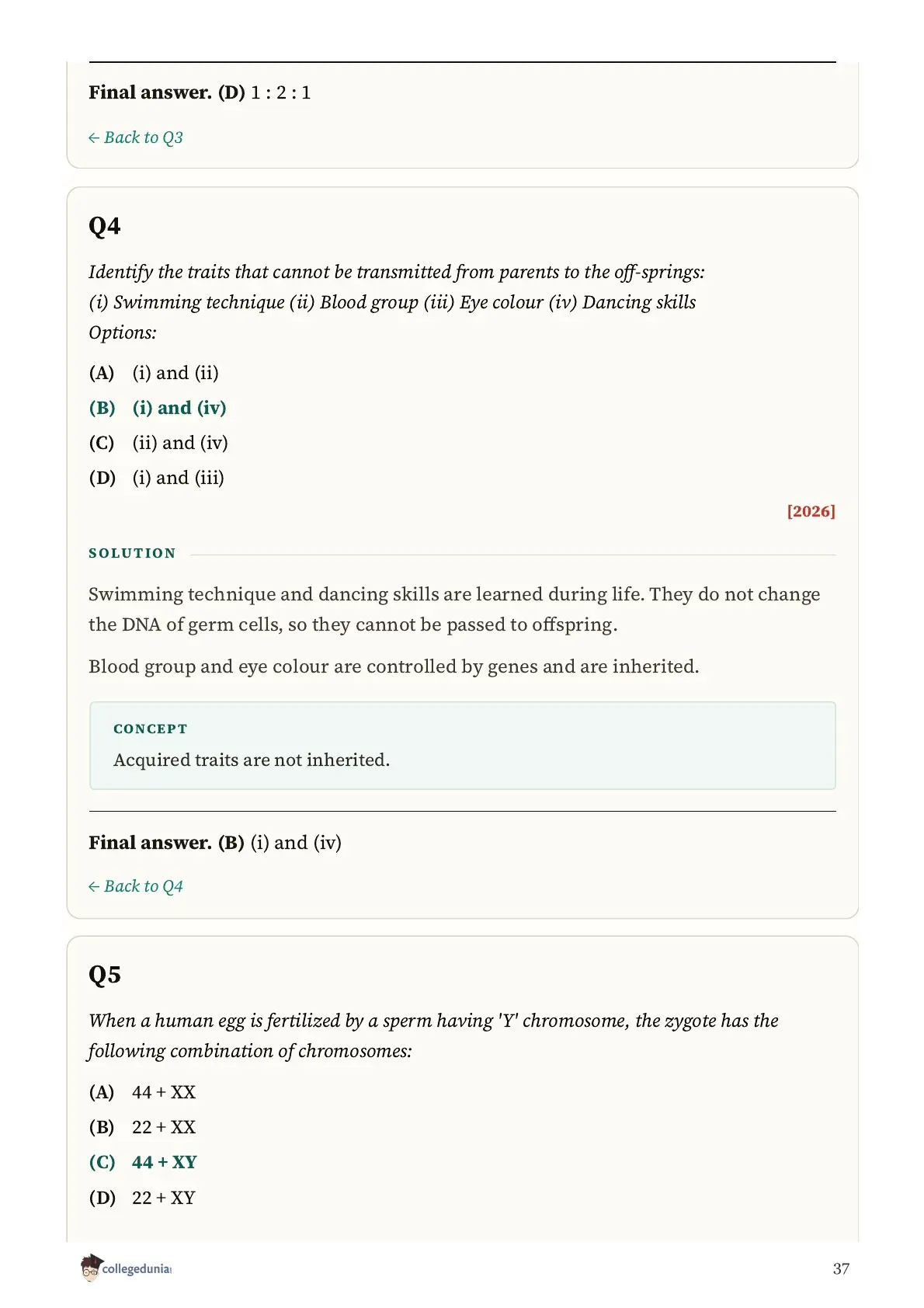
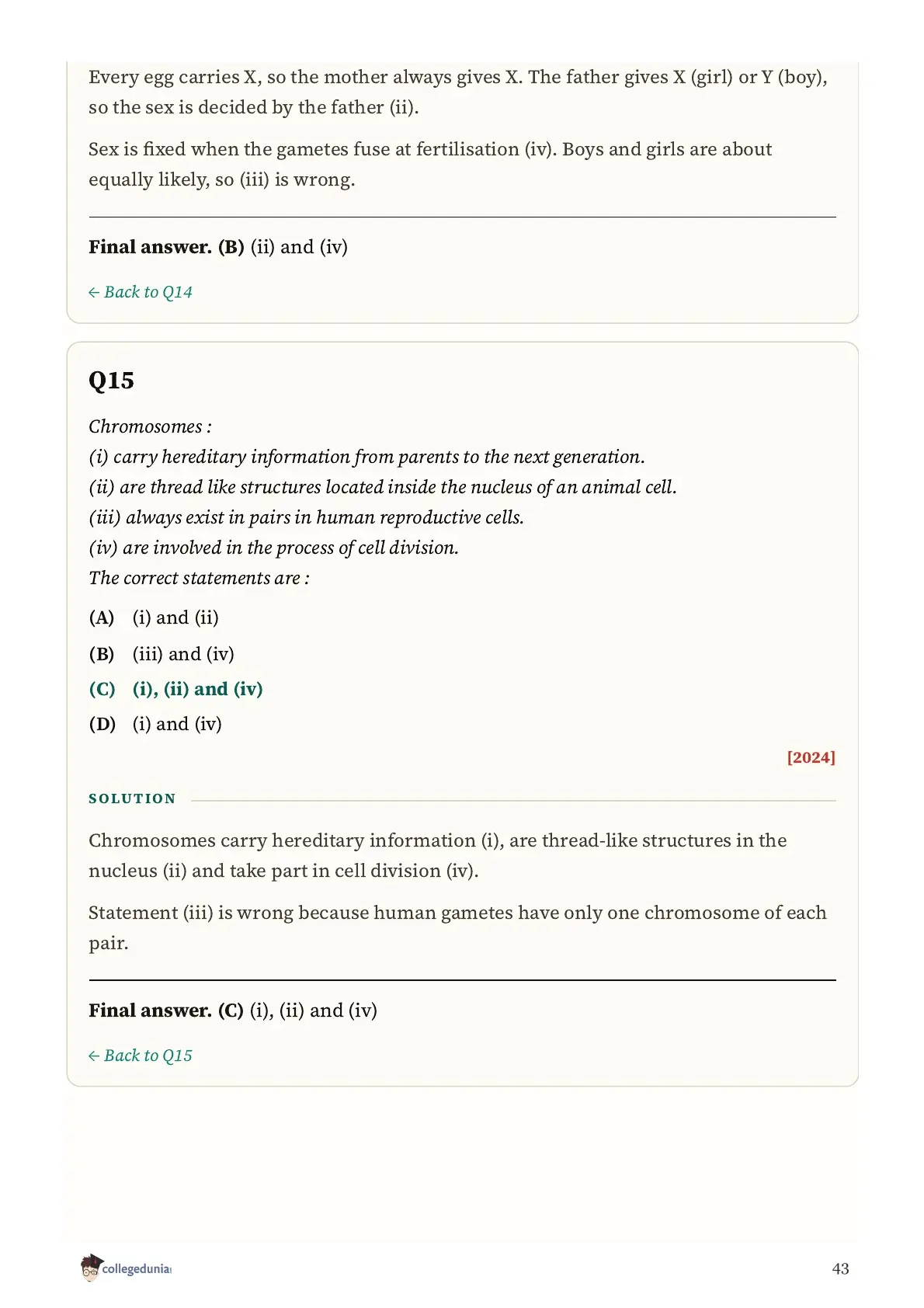
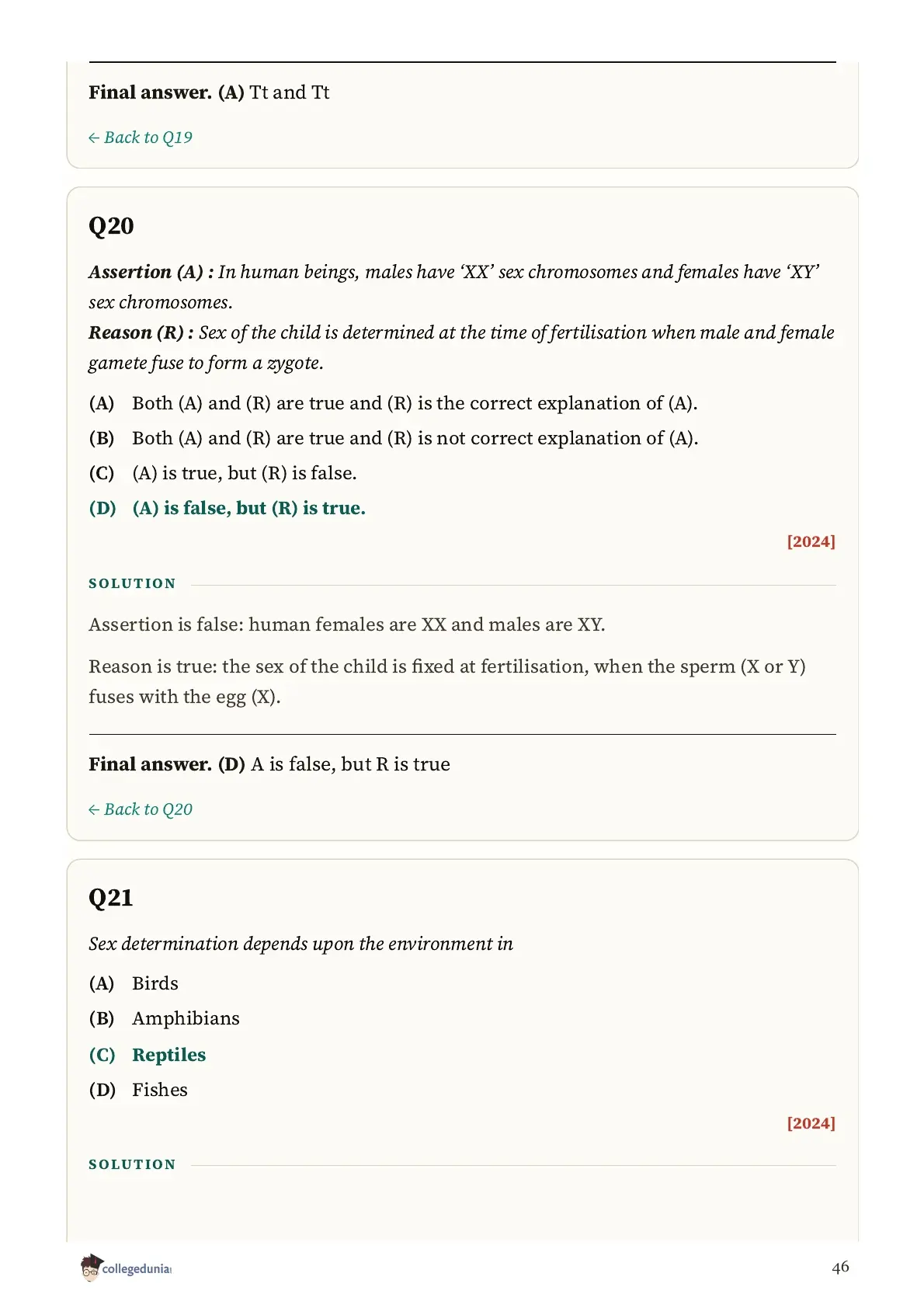
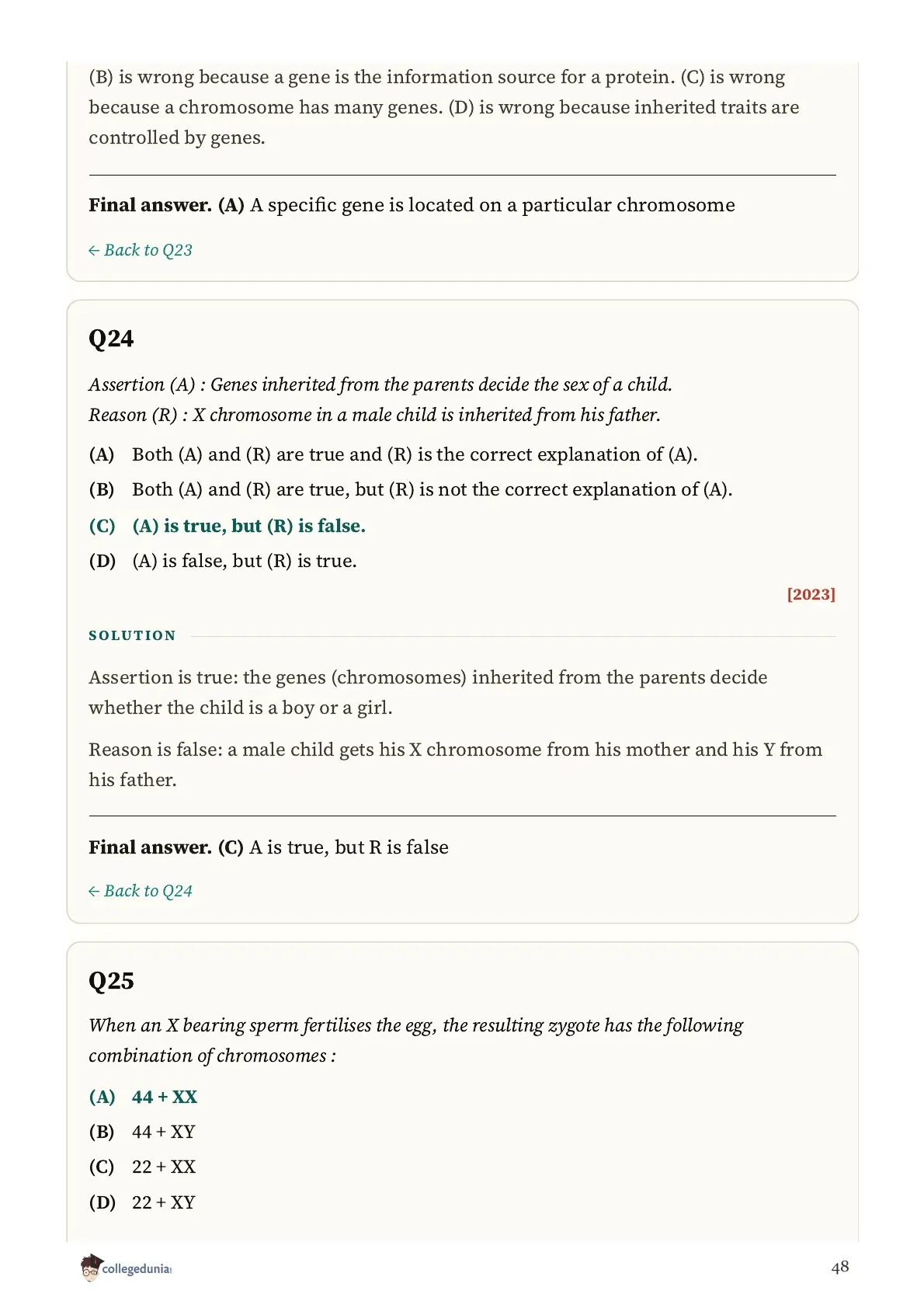
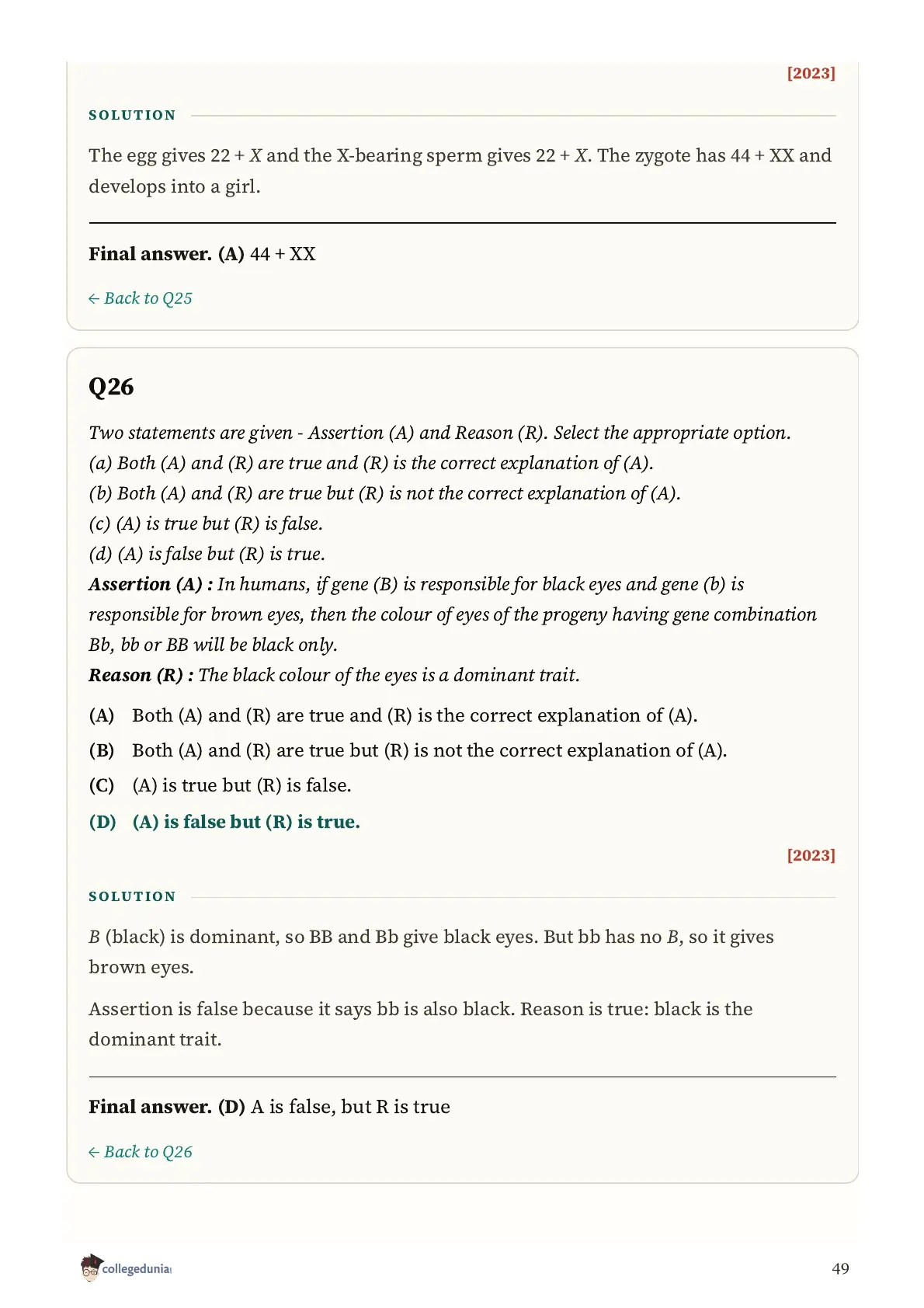
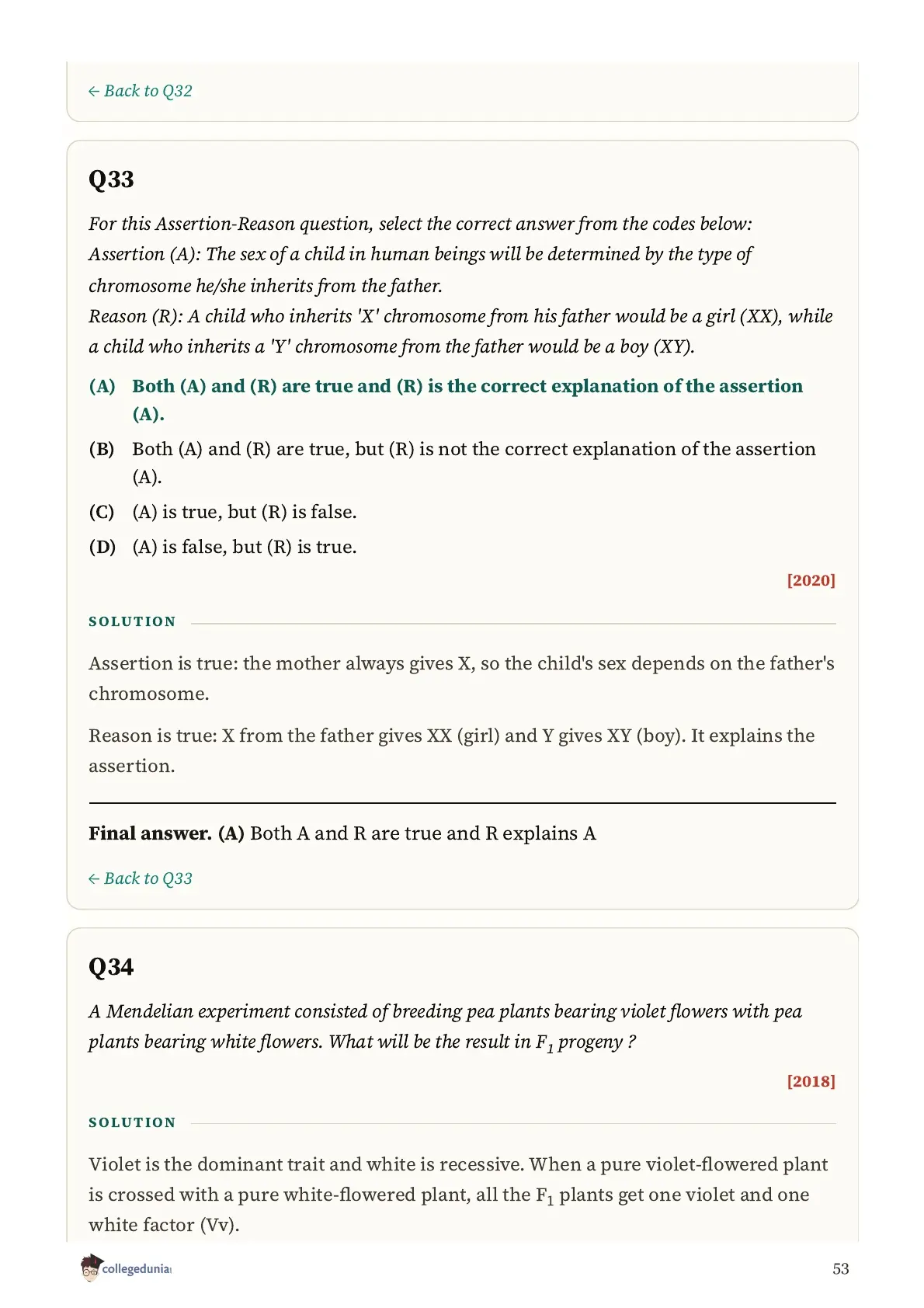
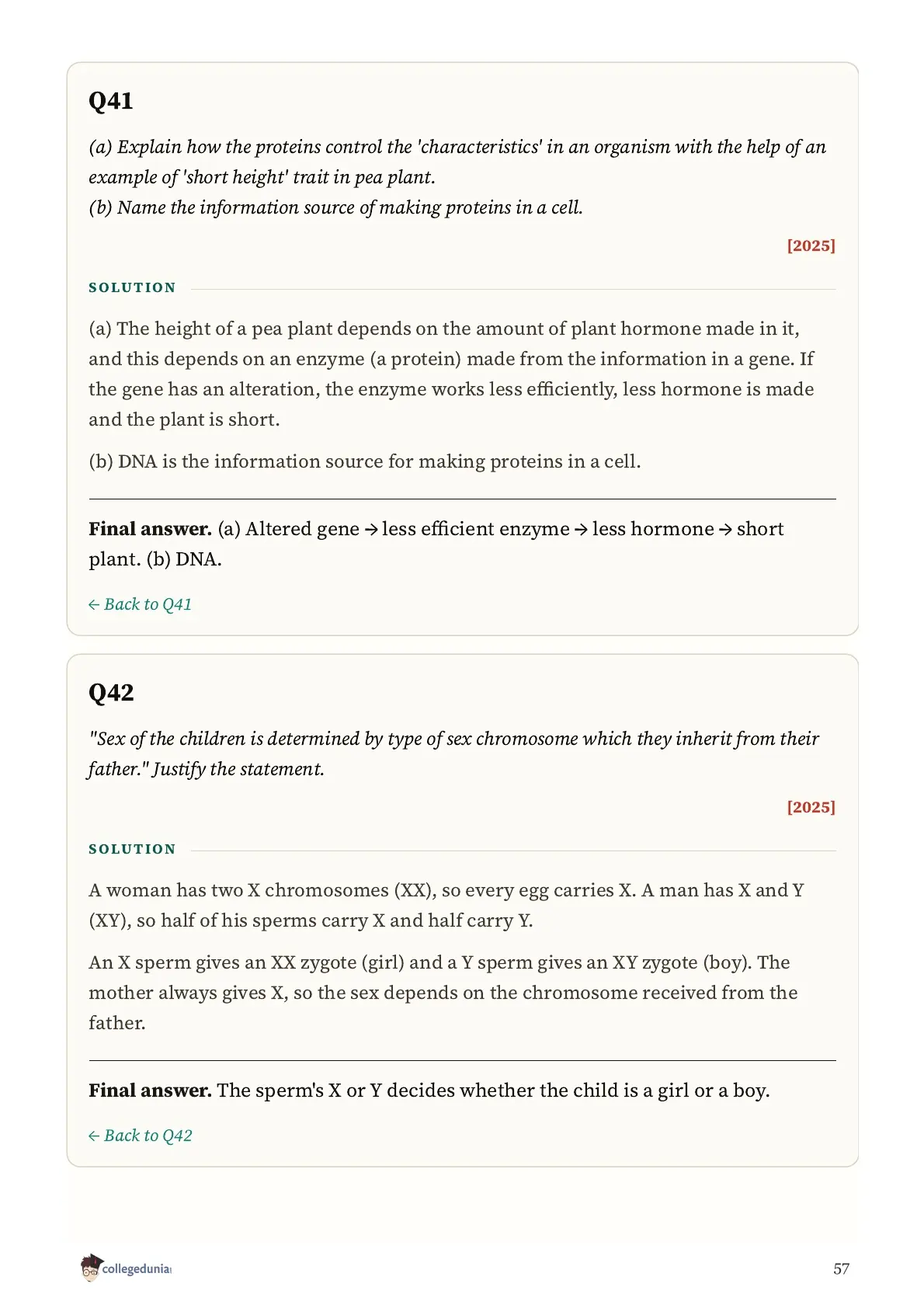
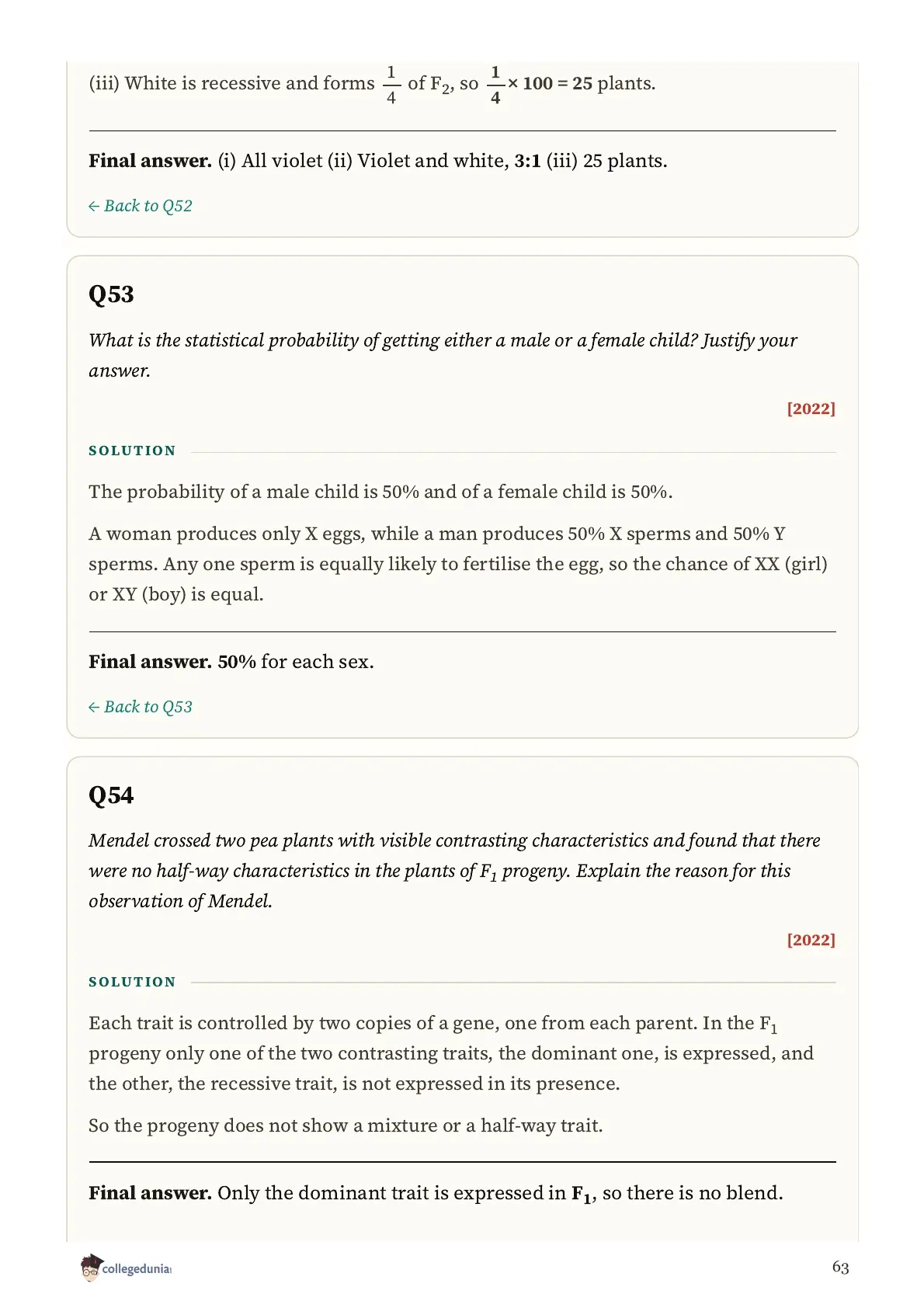
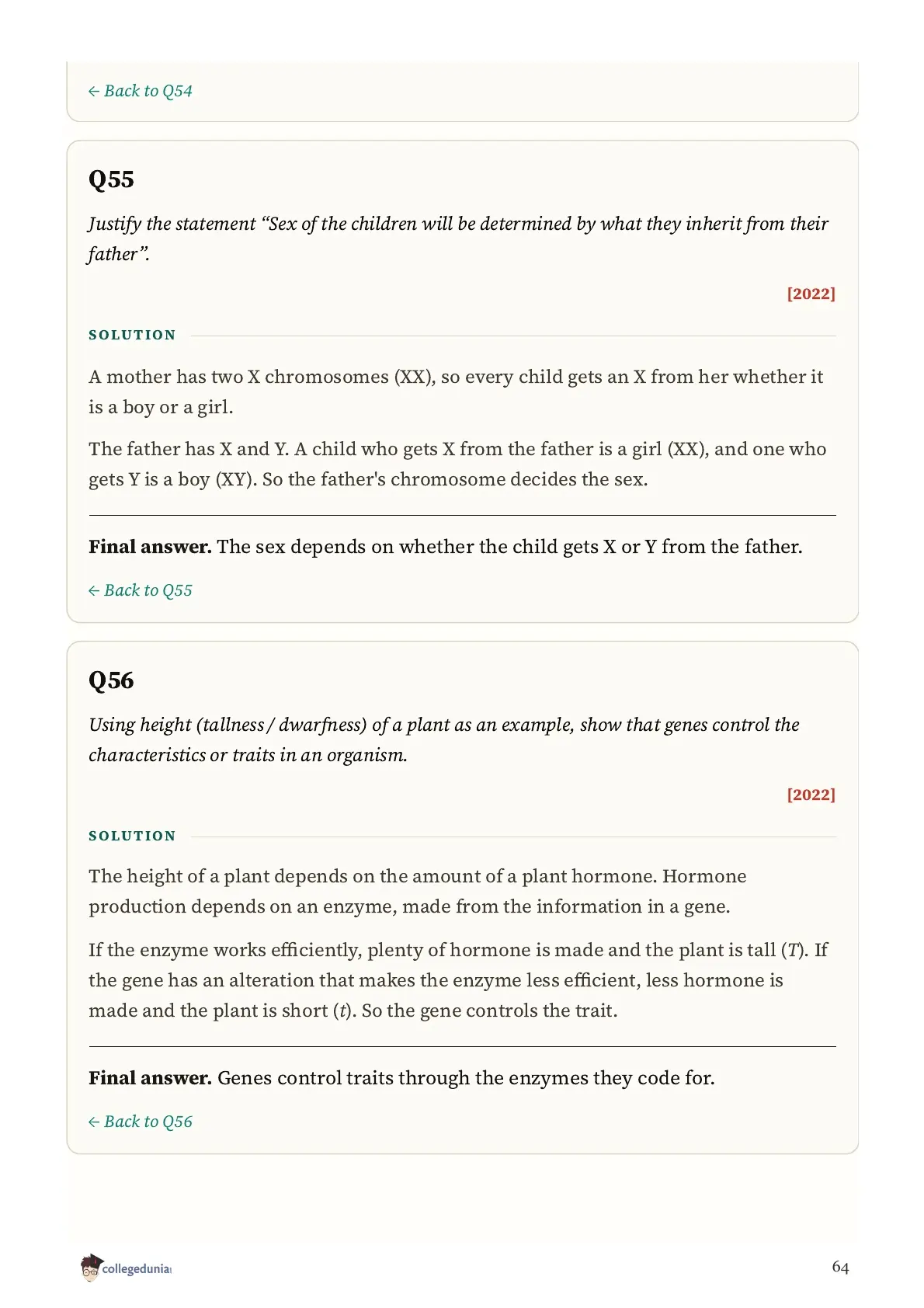
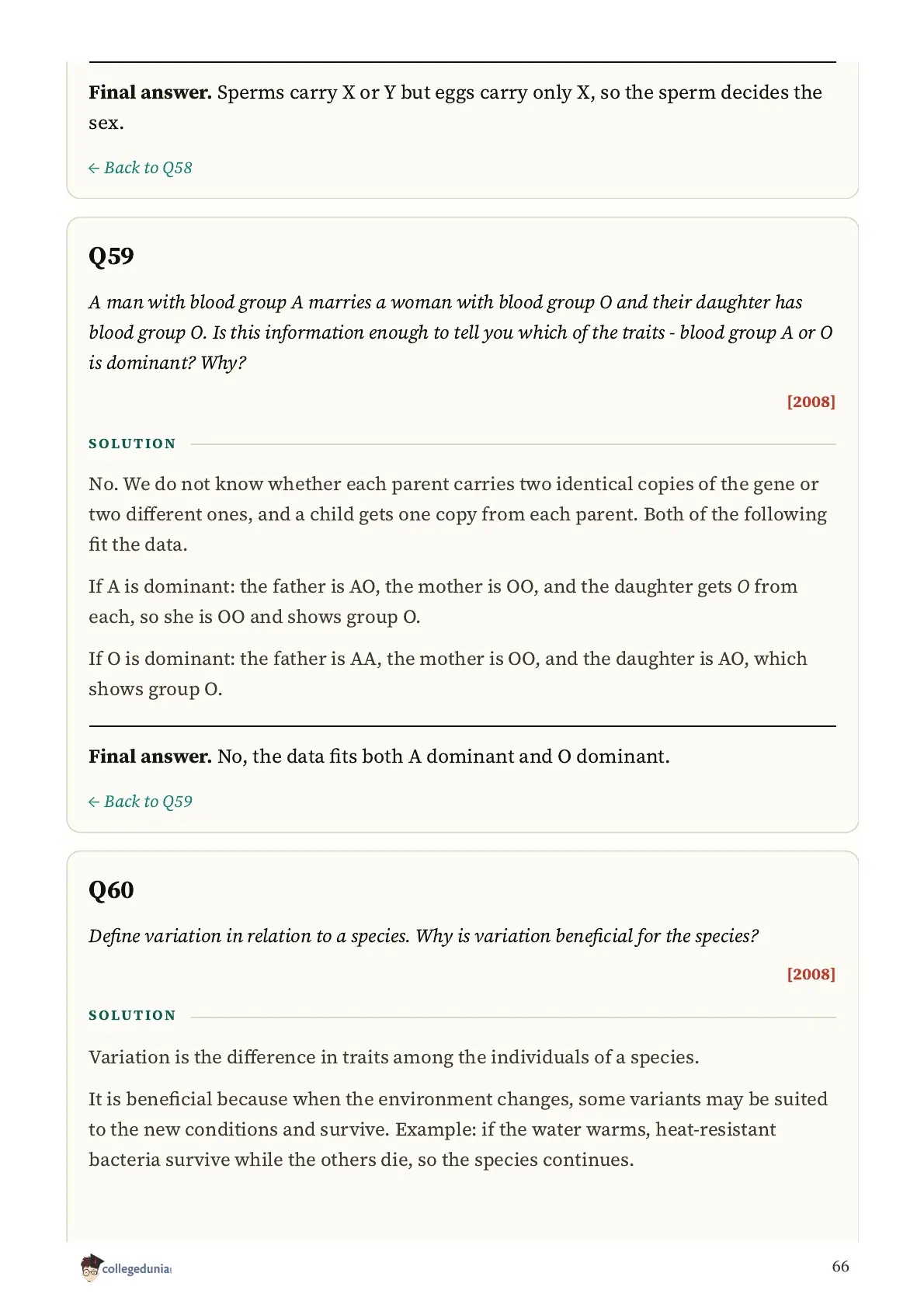
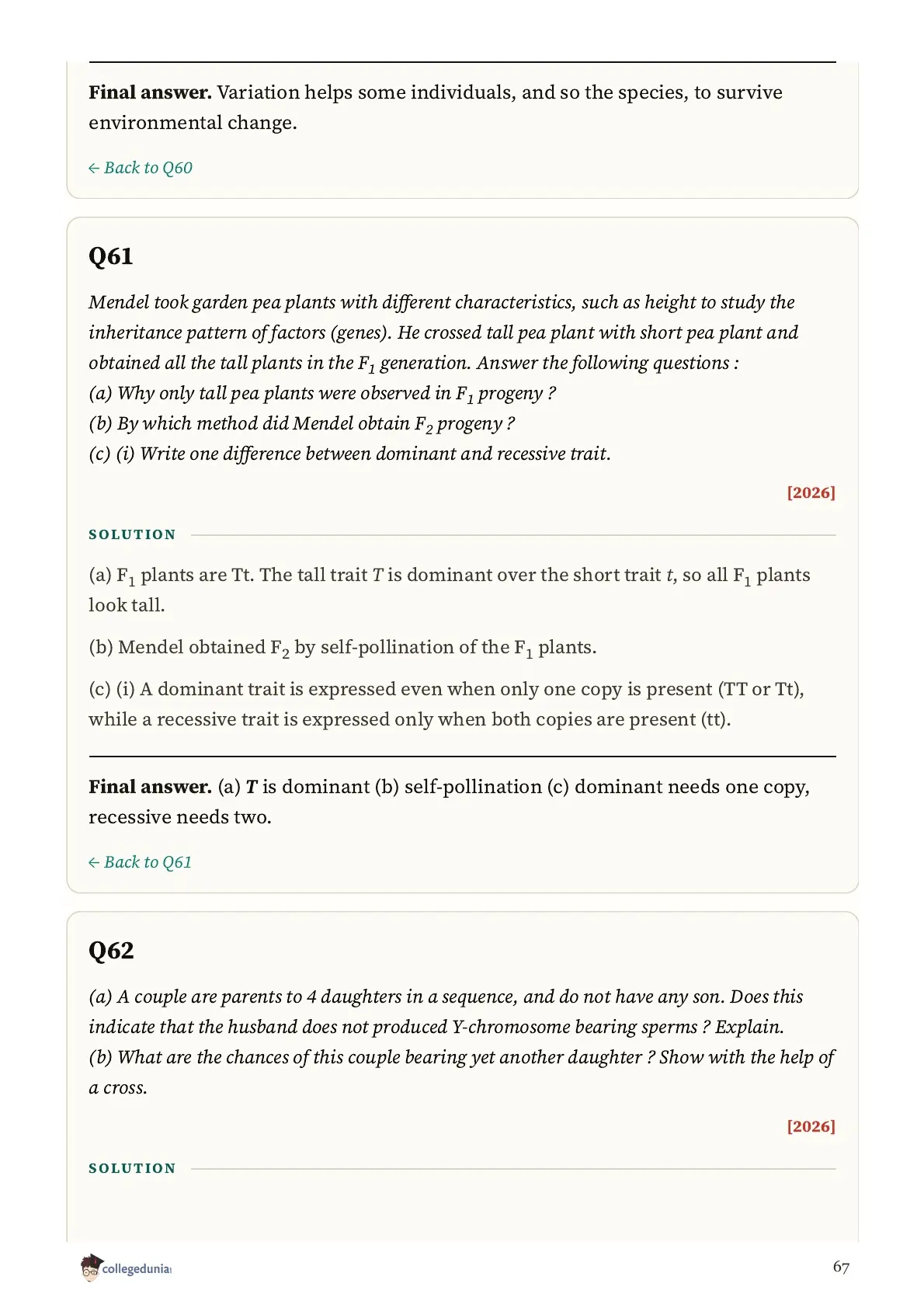
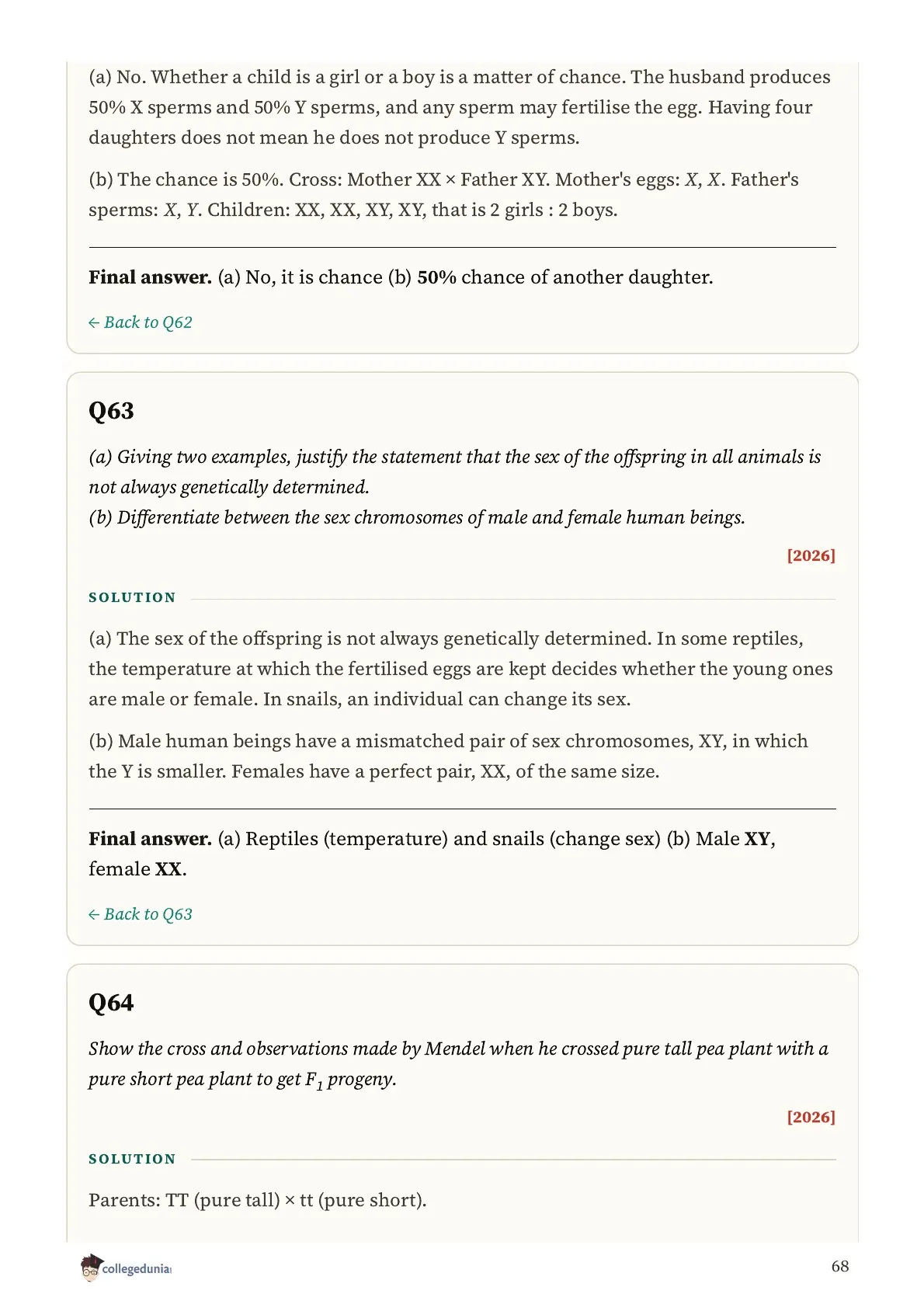
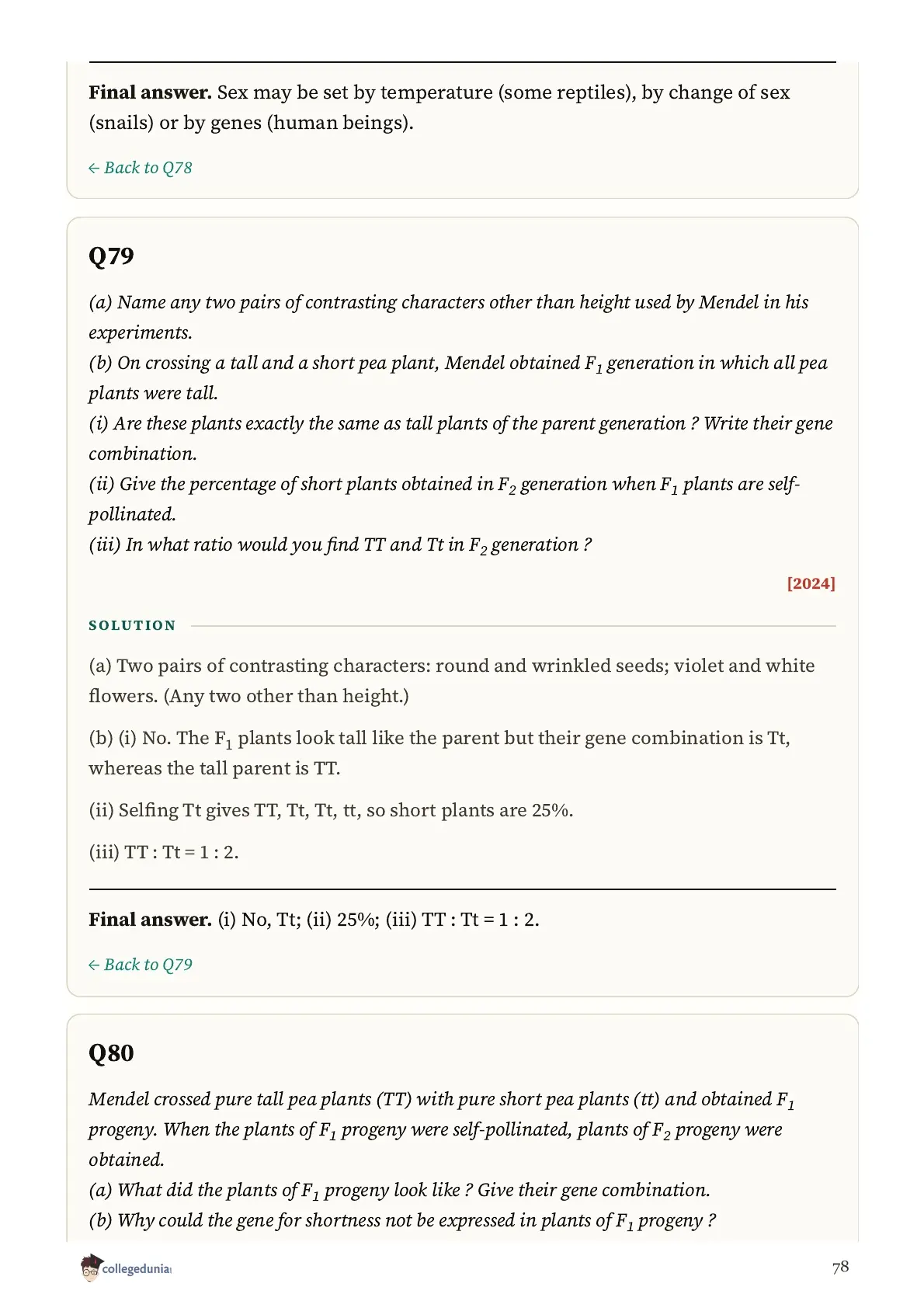
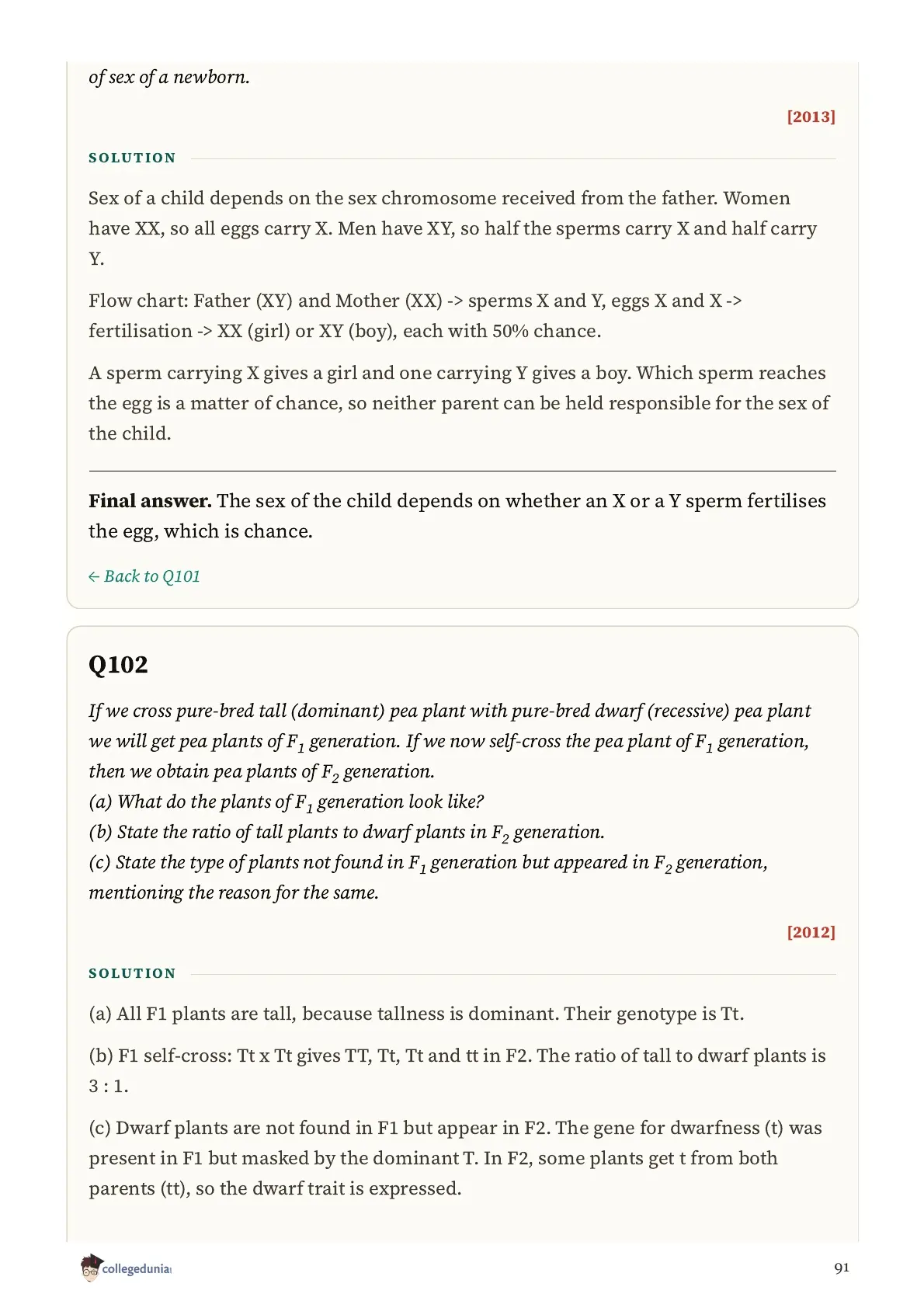
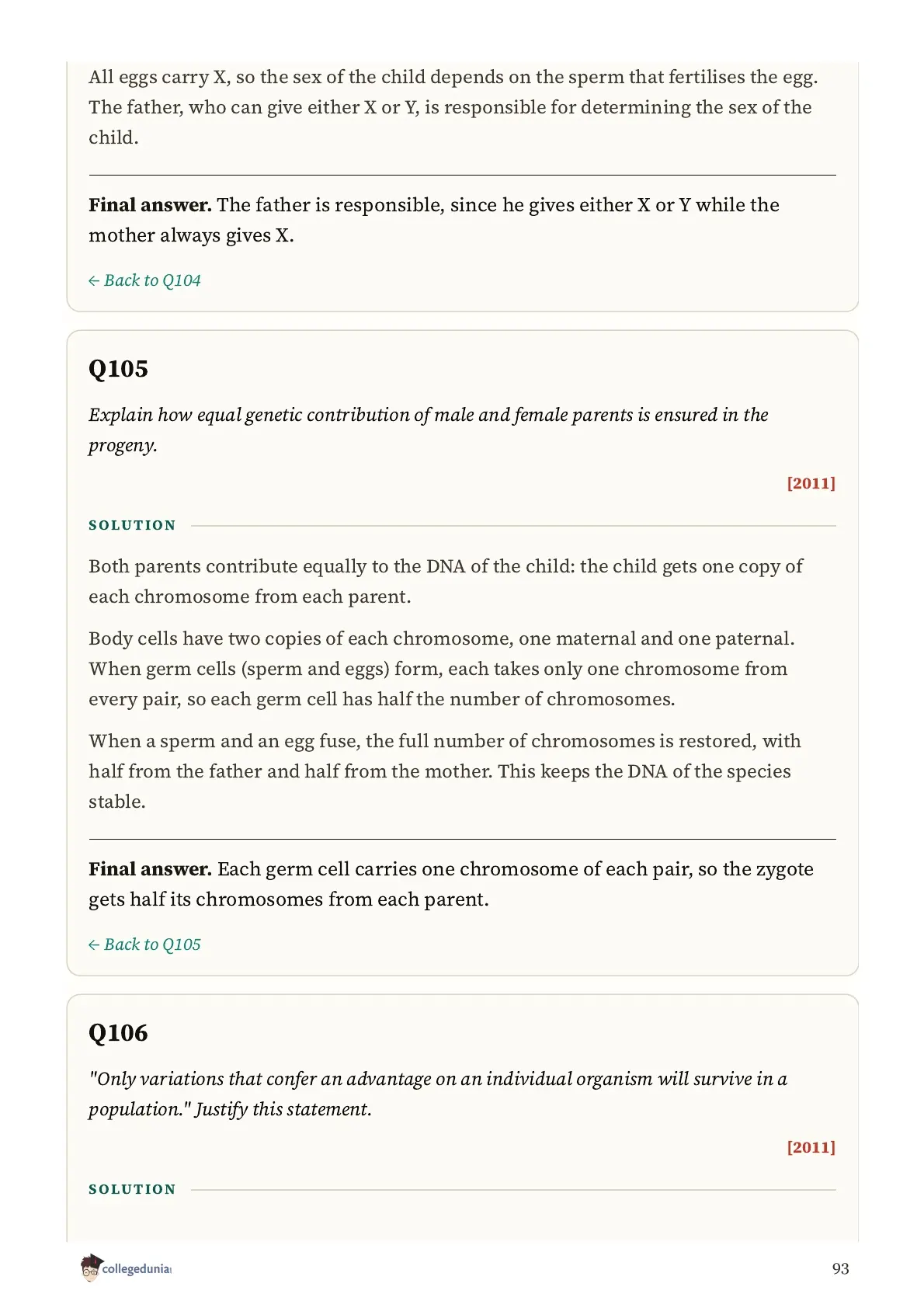
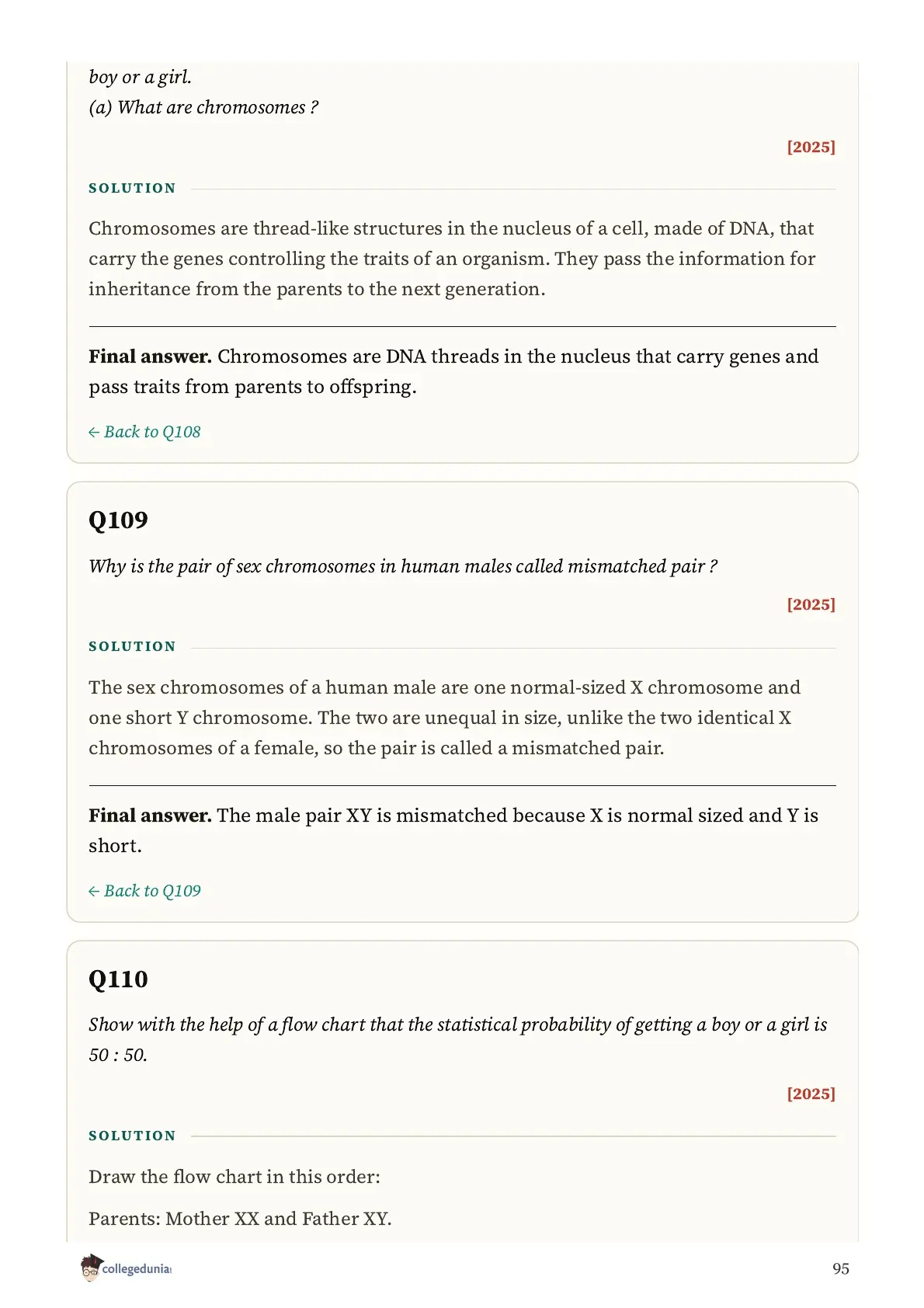
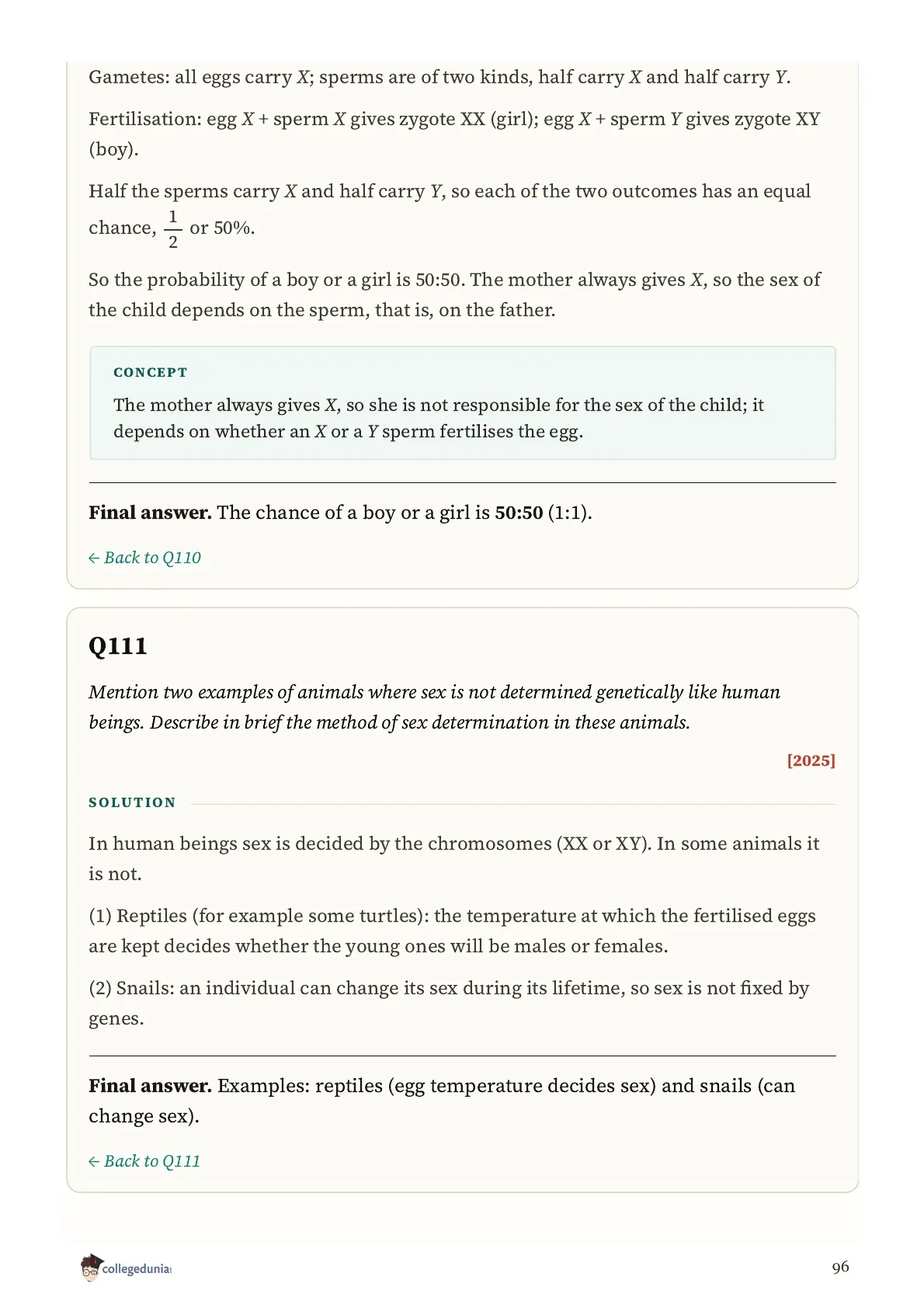
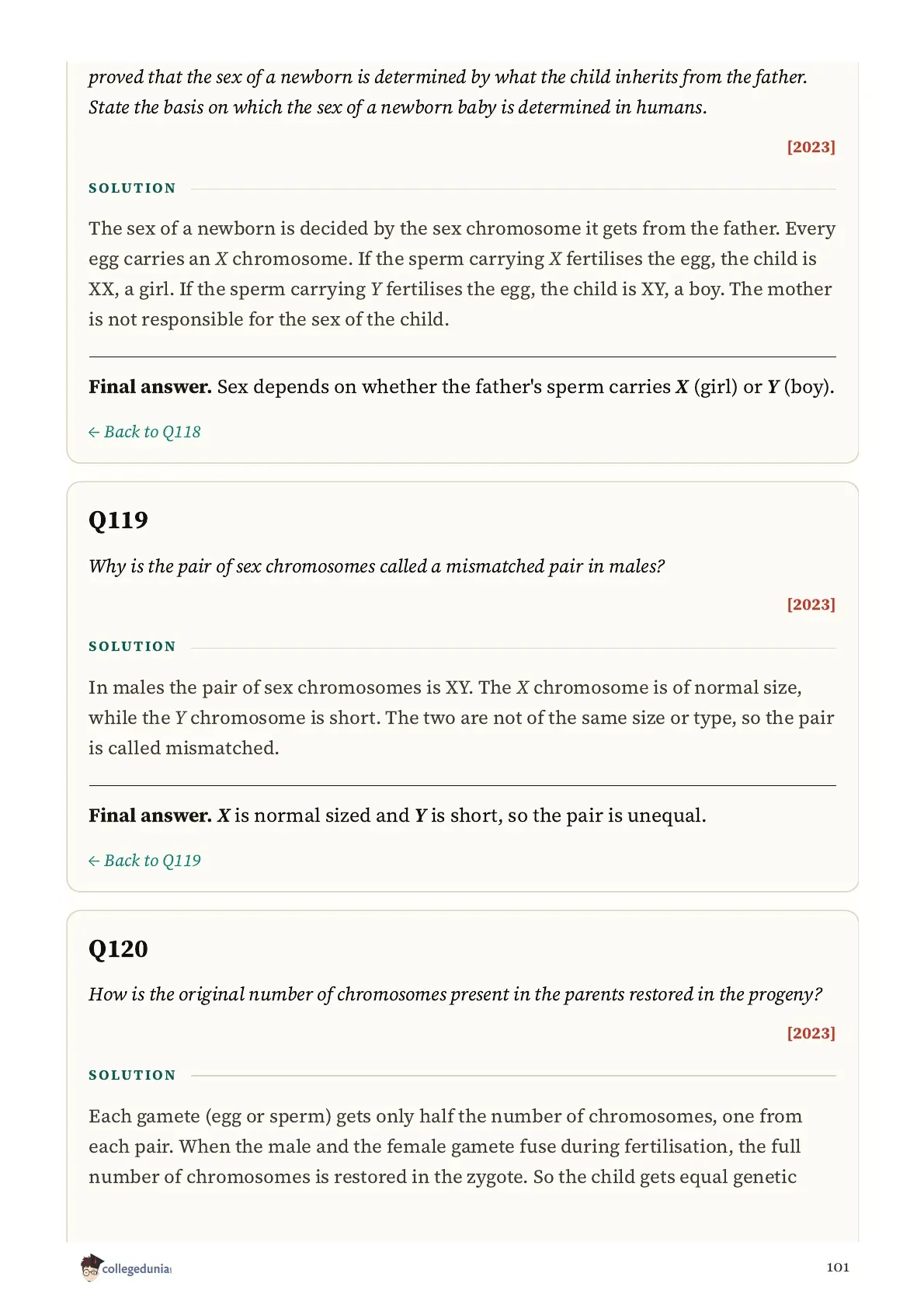
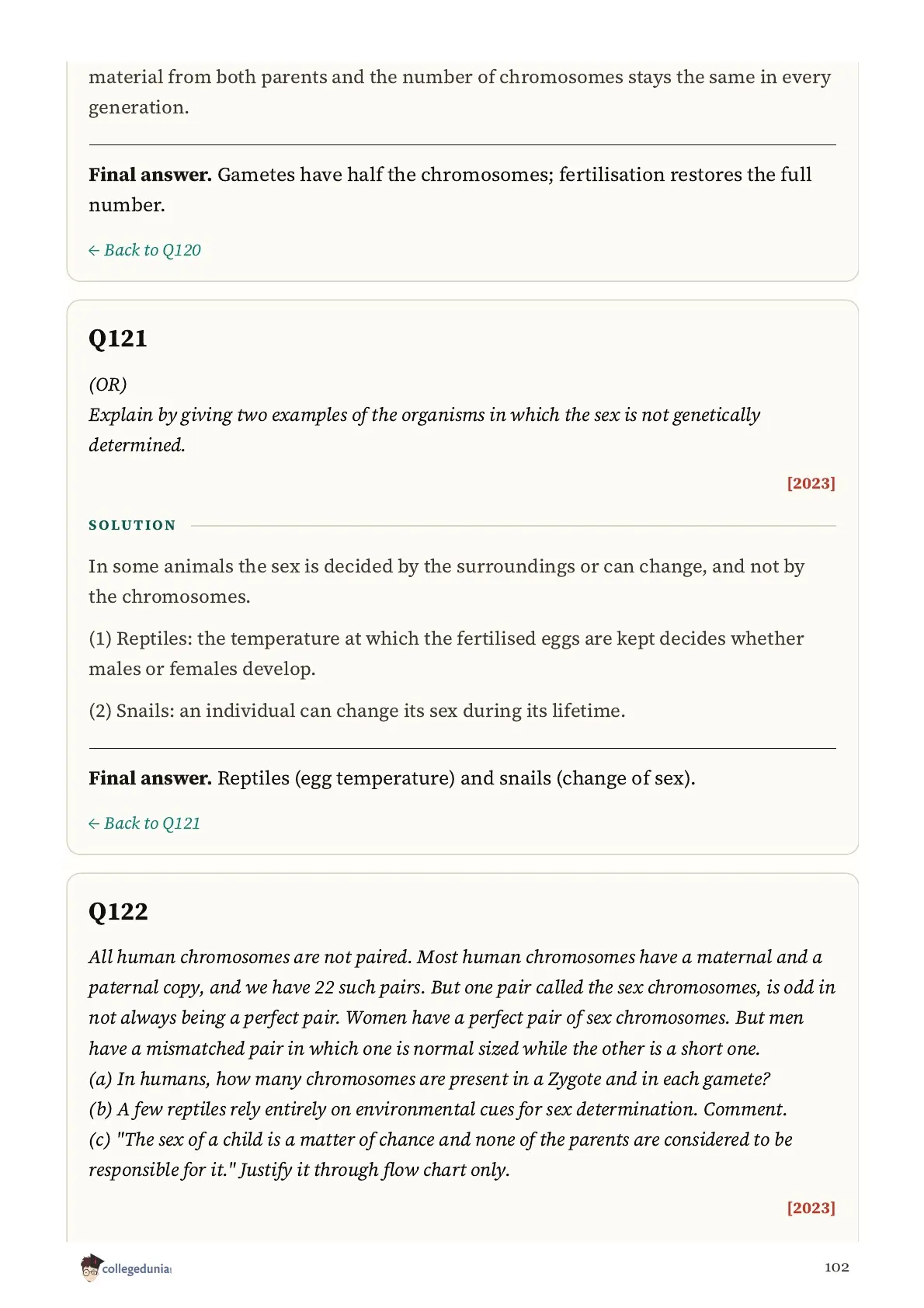
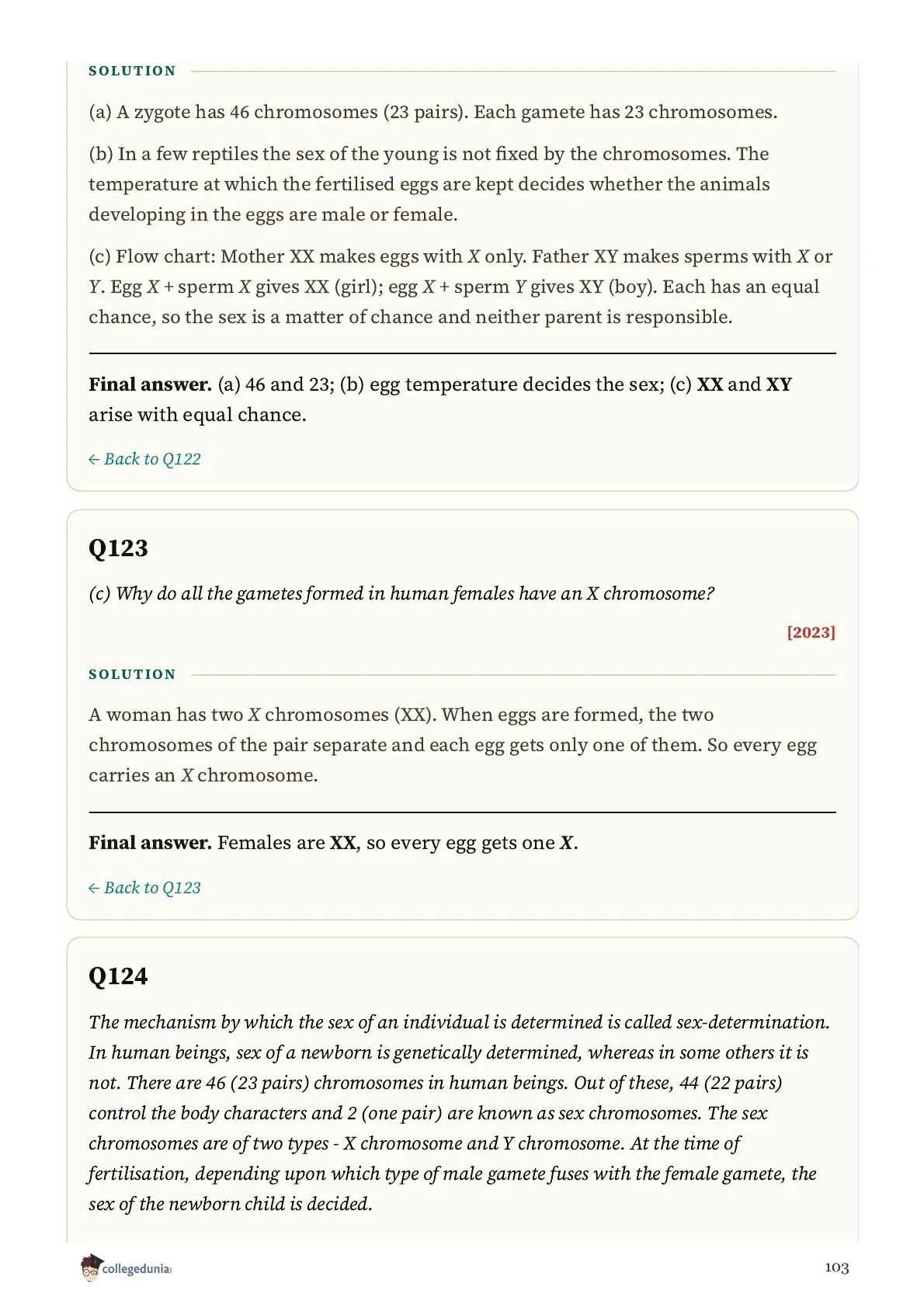
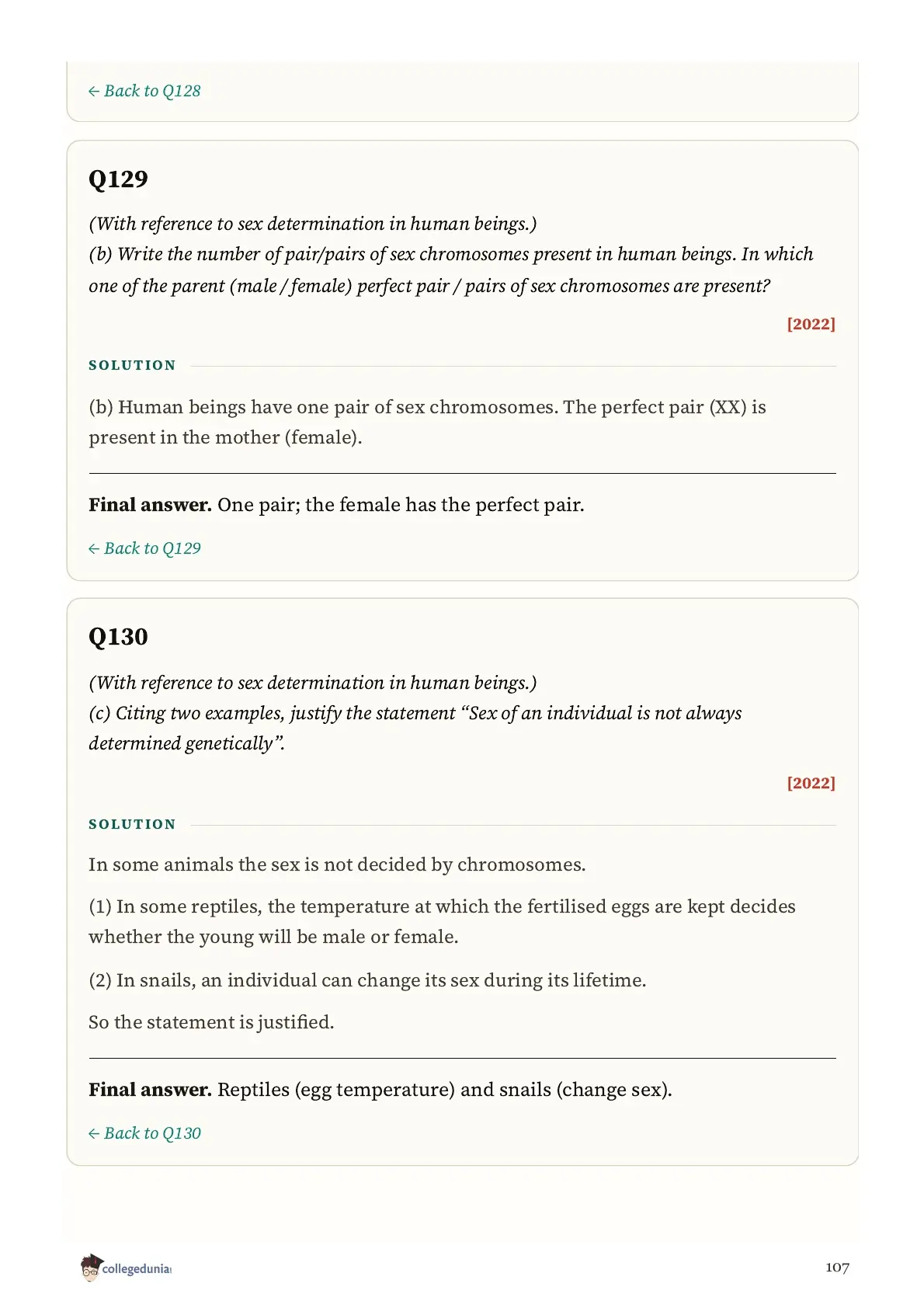
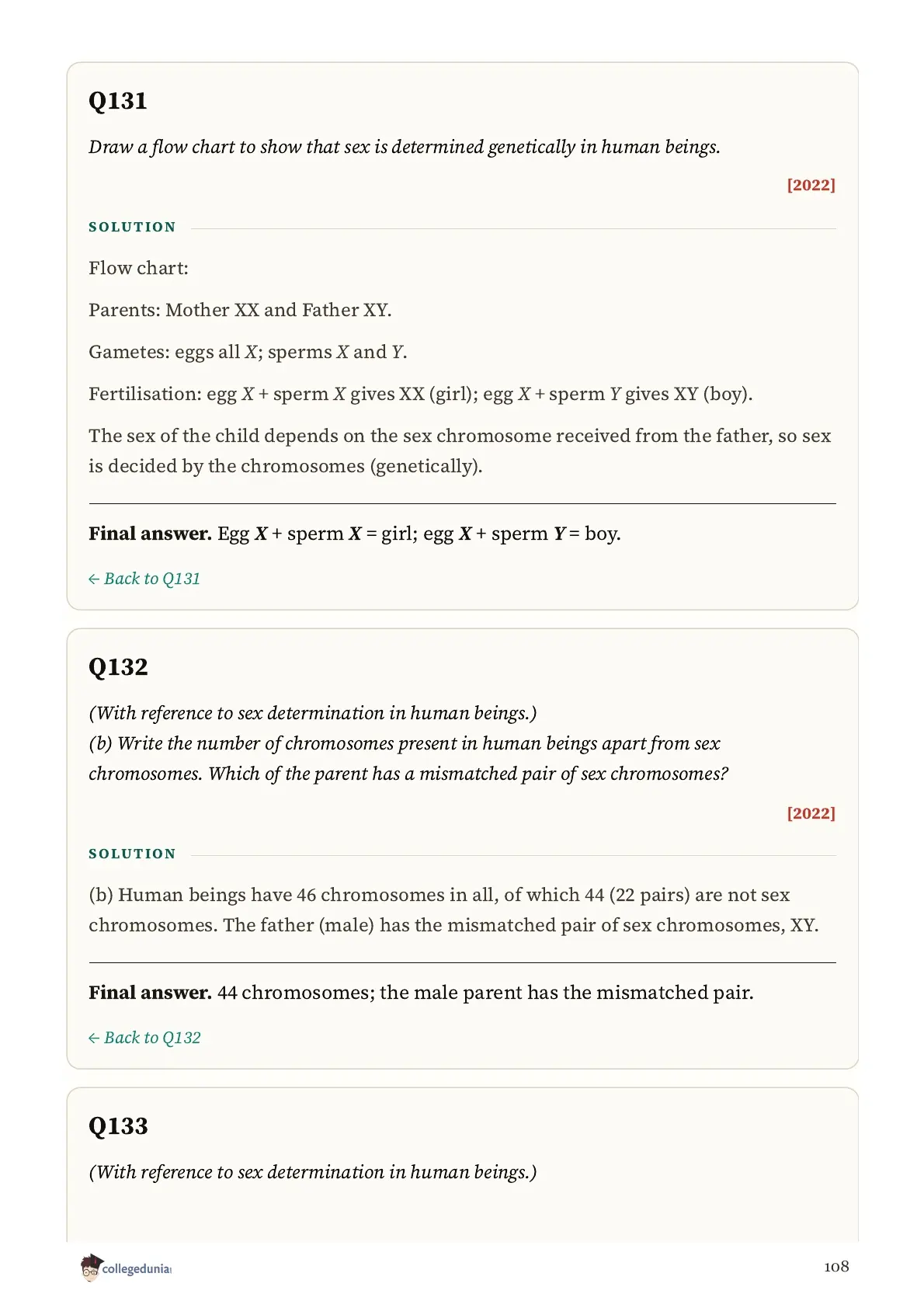
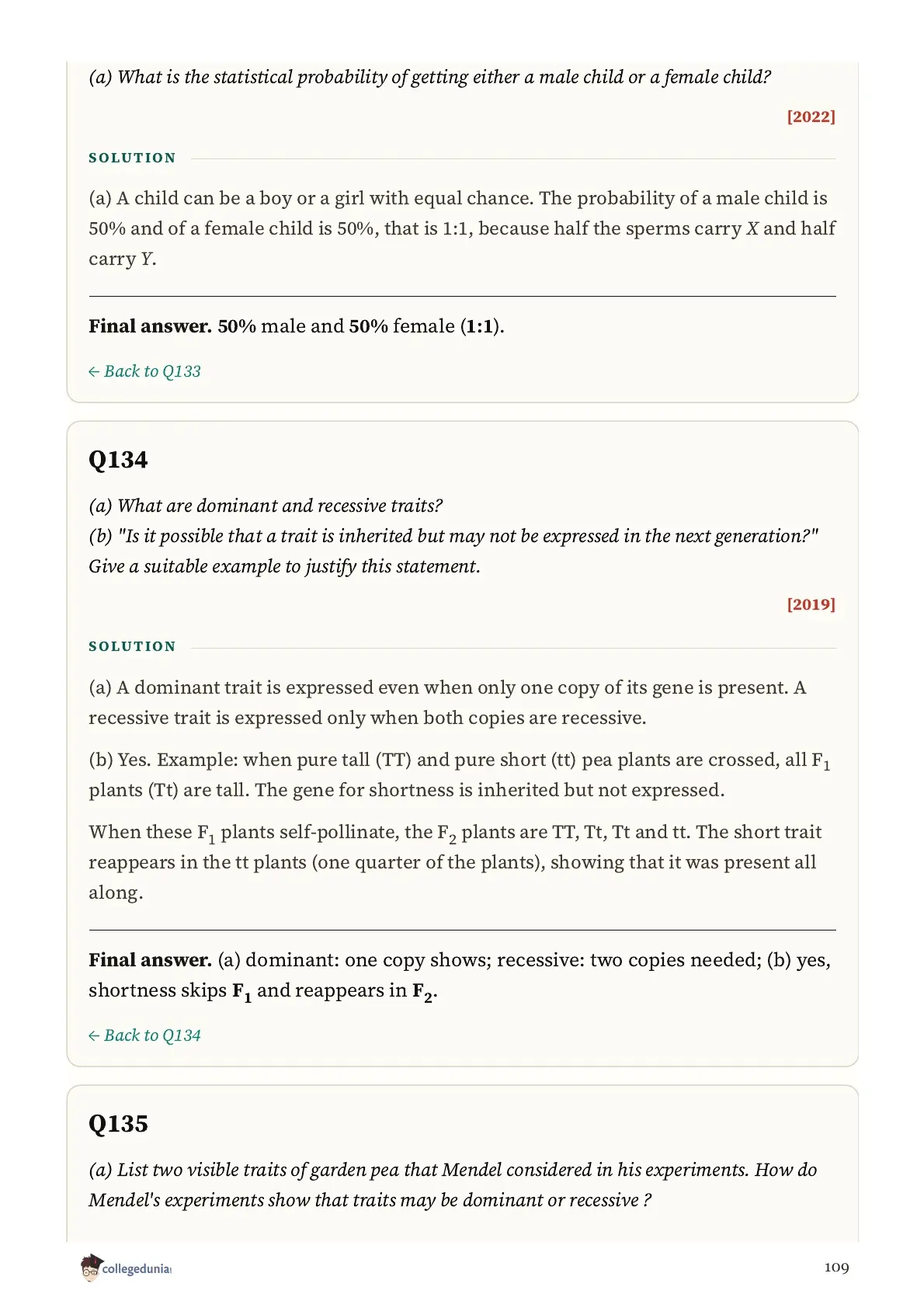
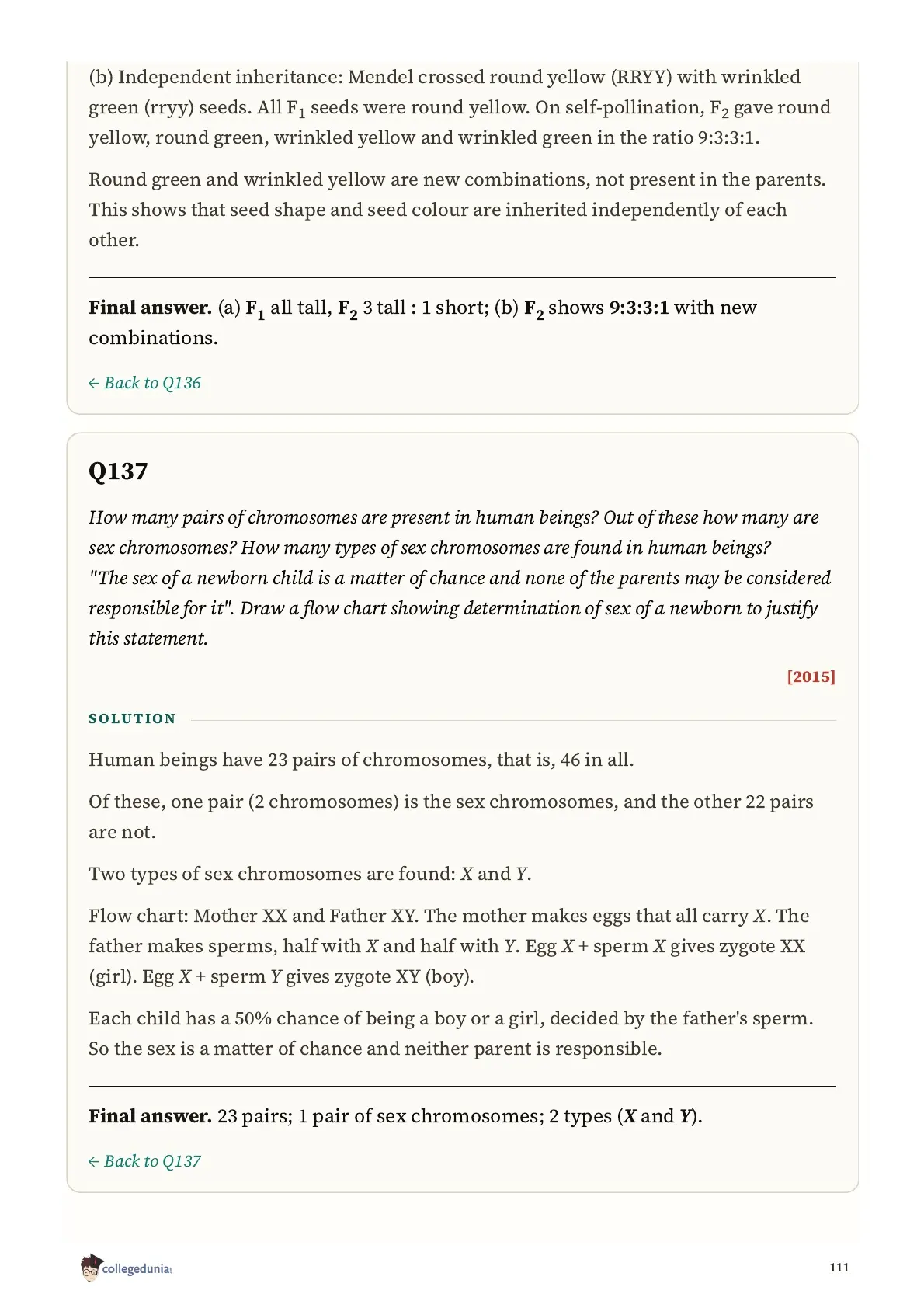
Sex determination is the second large block, with 42 questions. 21 of them refer to X and Y chromosomes or the mismatched pair in males. 11 ask for a flow chart that shows the father decides the sex of the child, and 9 ask for animals in which sex is not fixed genetically, for example by temperature or by a change of sex during life. A 2026 question asks whether a couple with four daughters and no son means the husband makes no Y-bearing sperm.
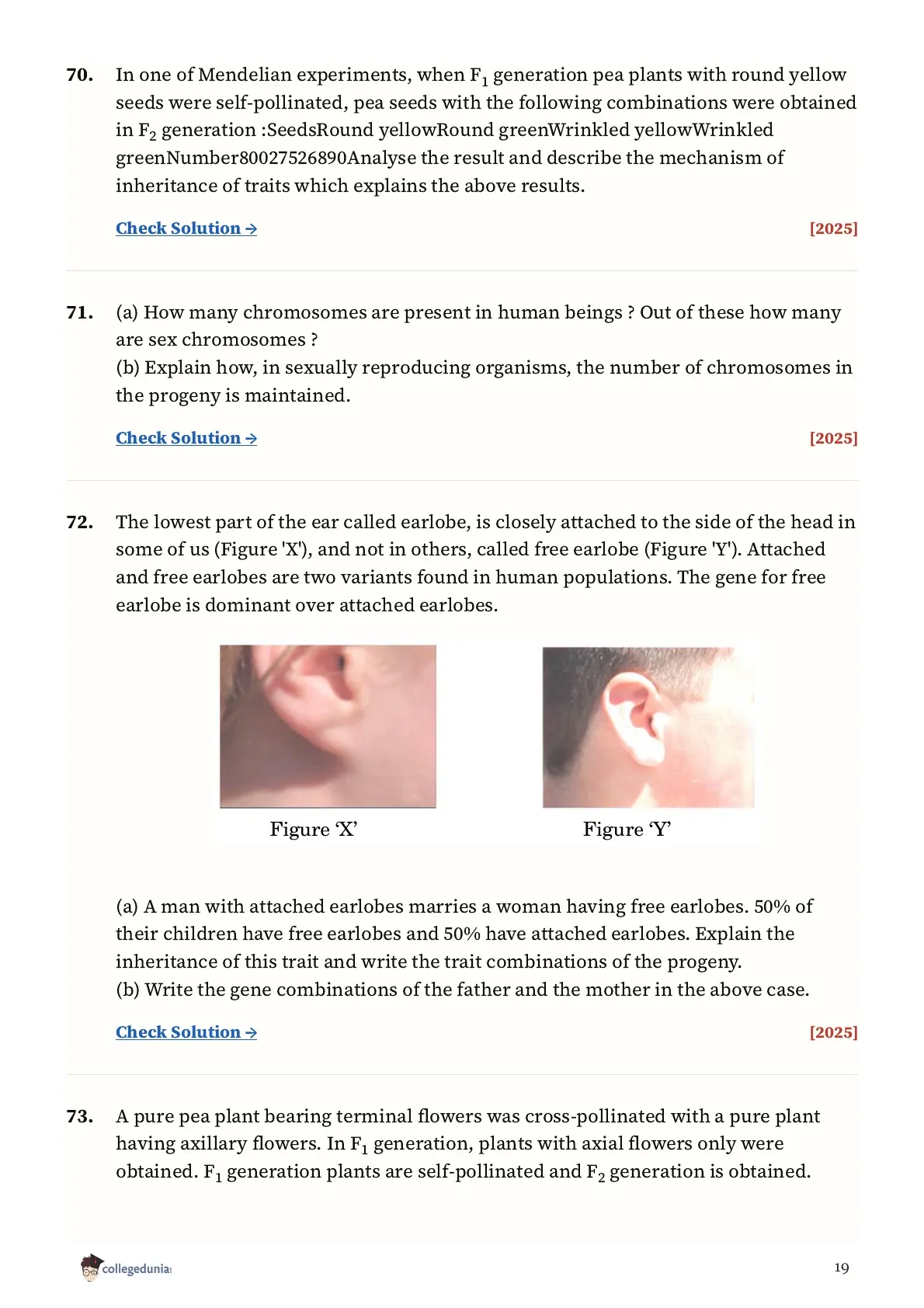
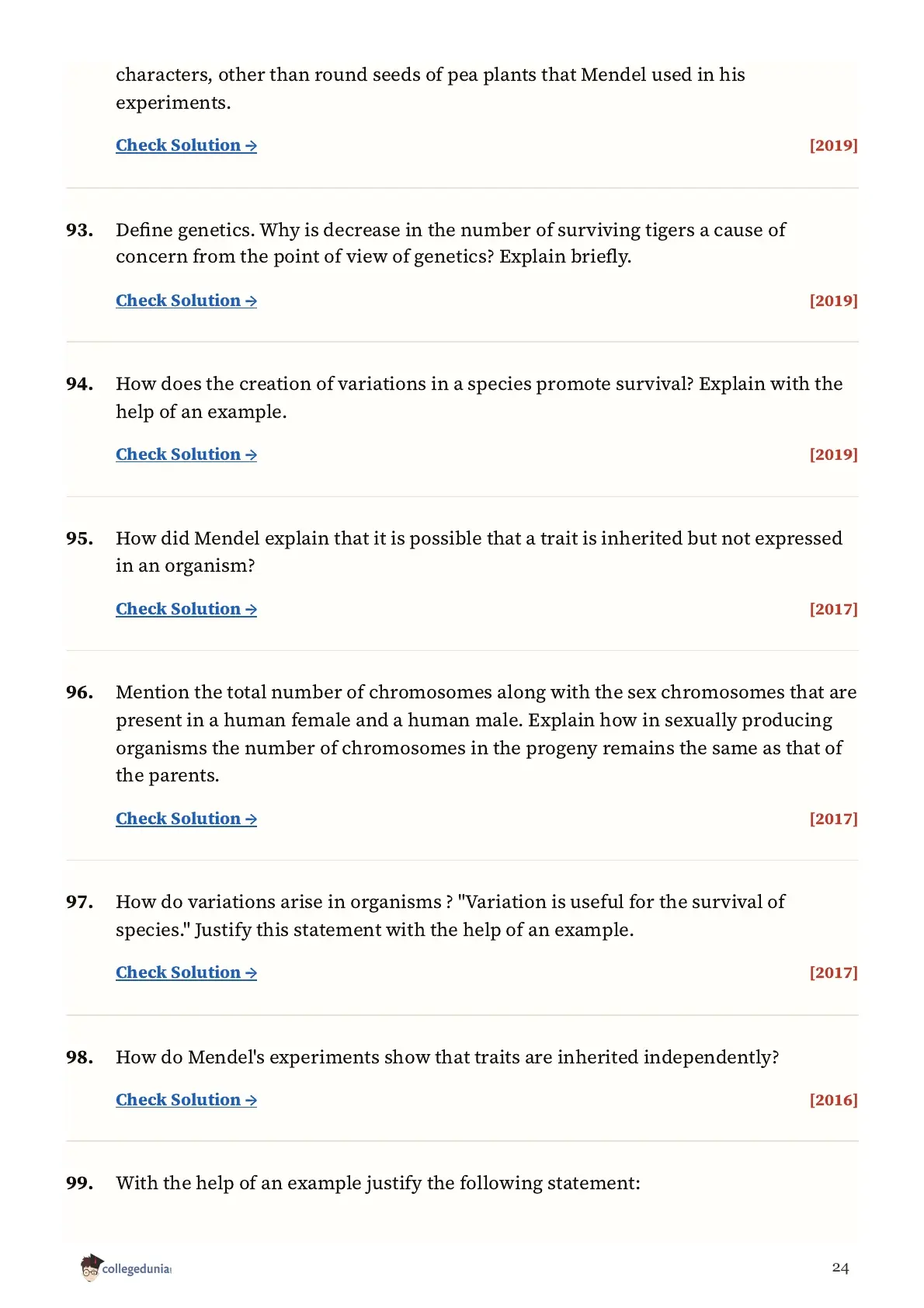
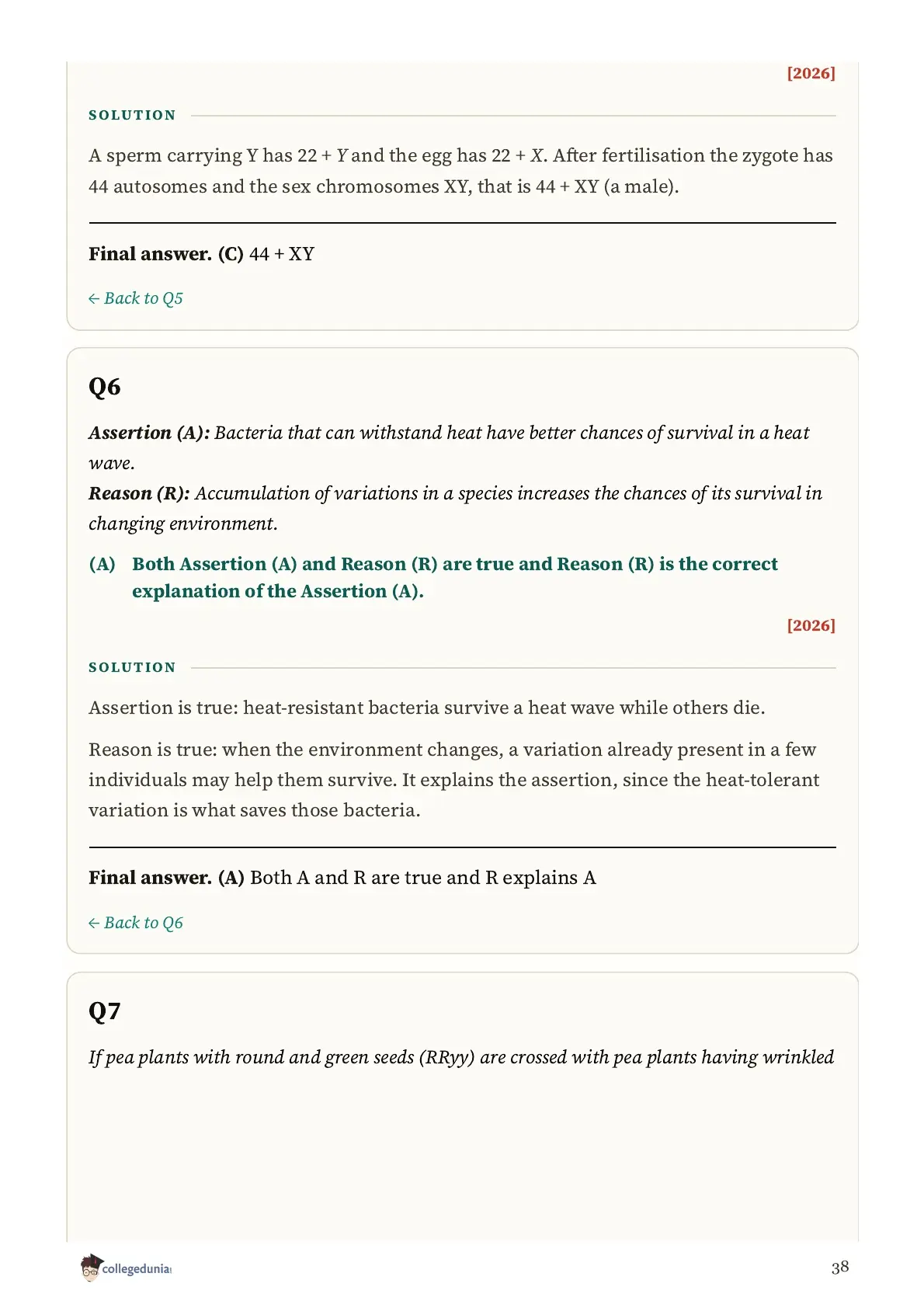
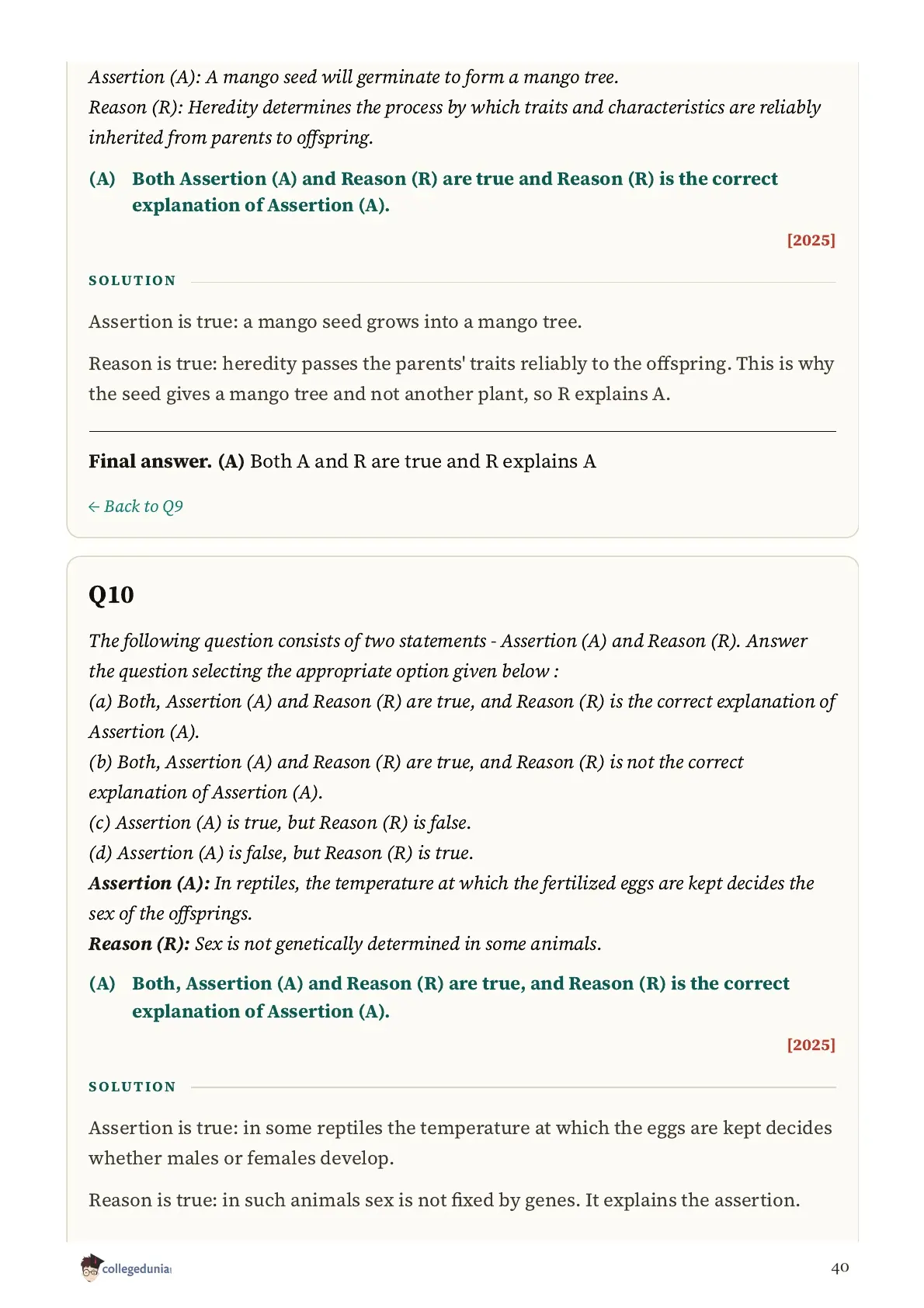
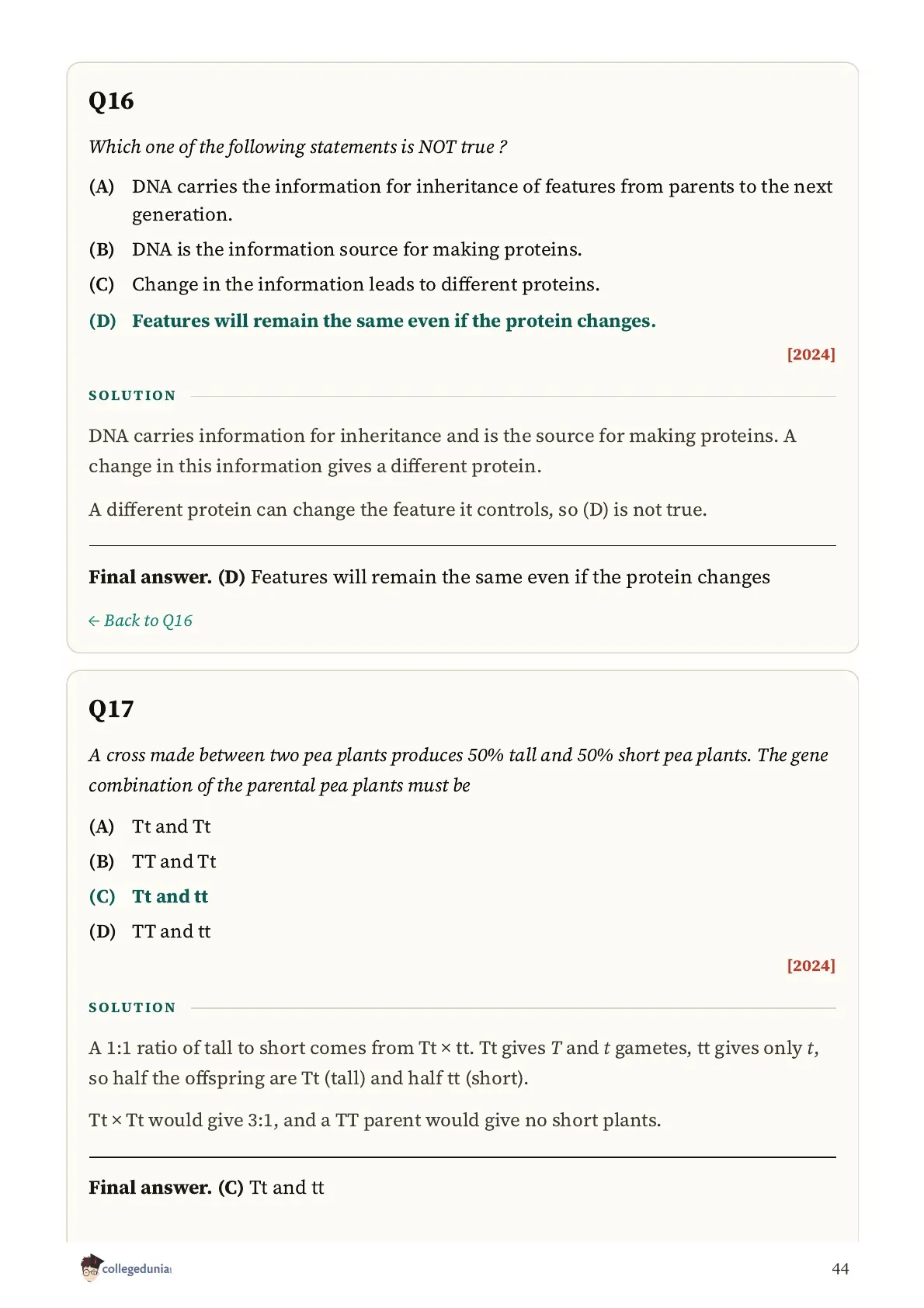
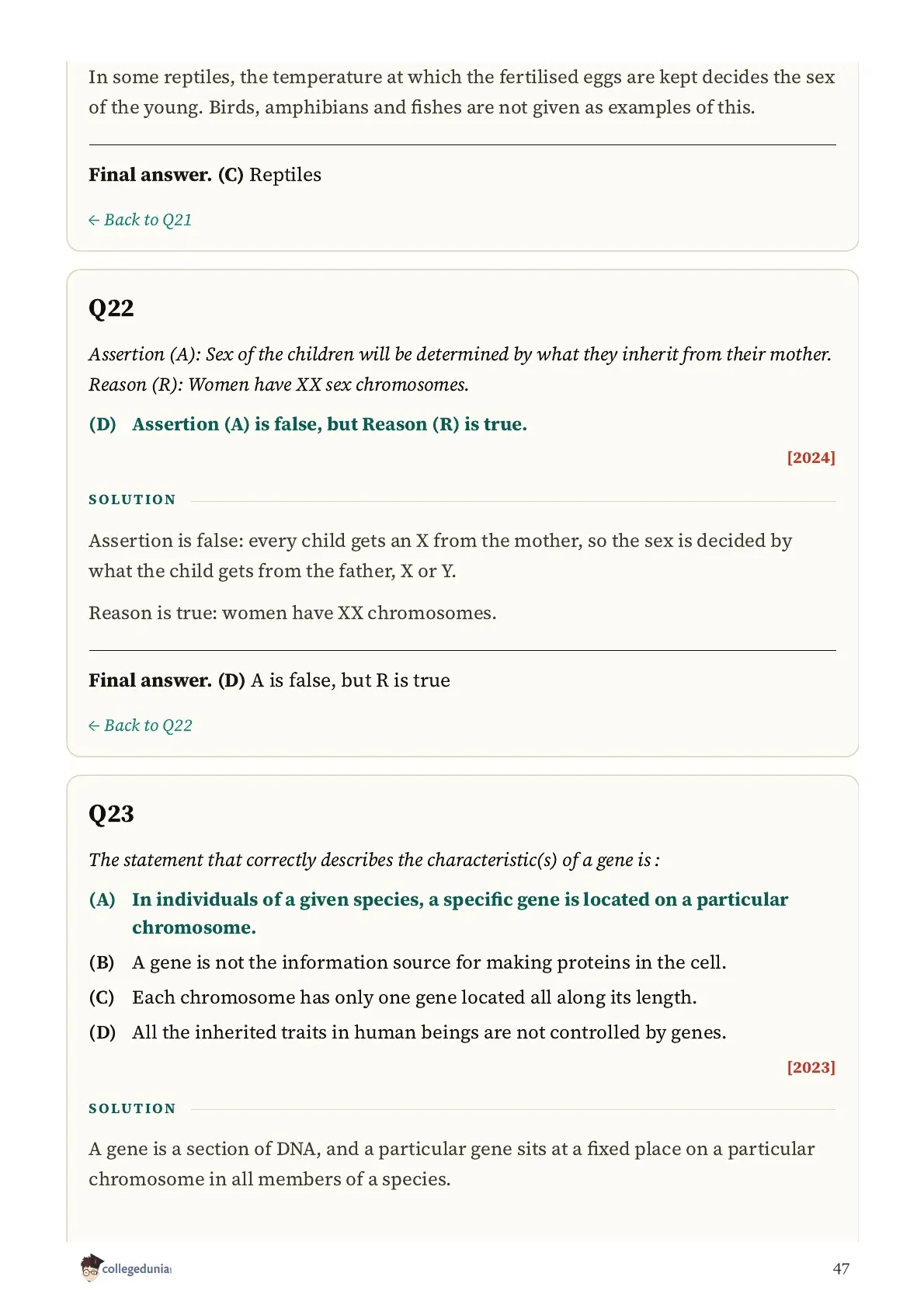
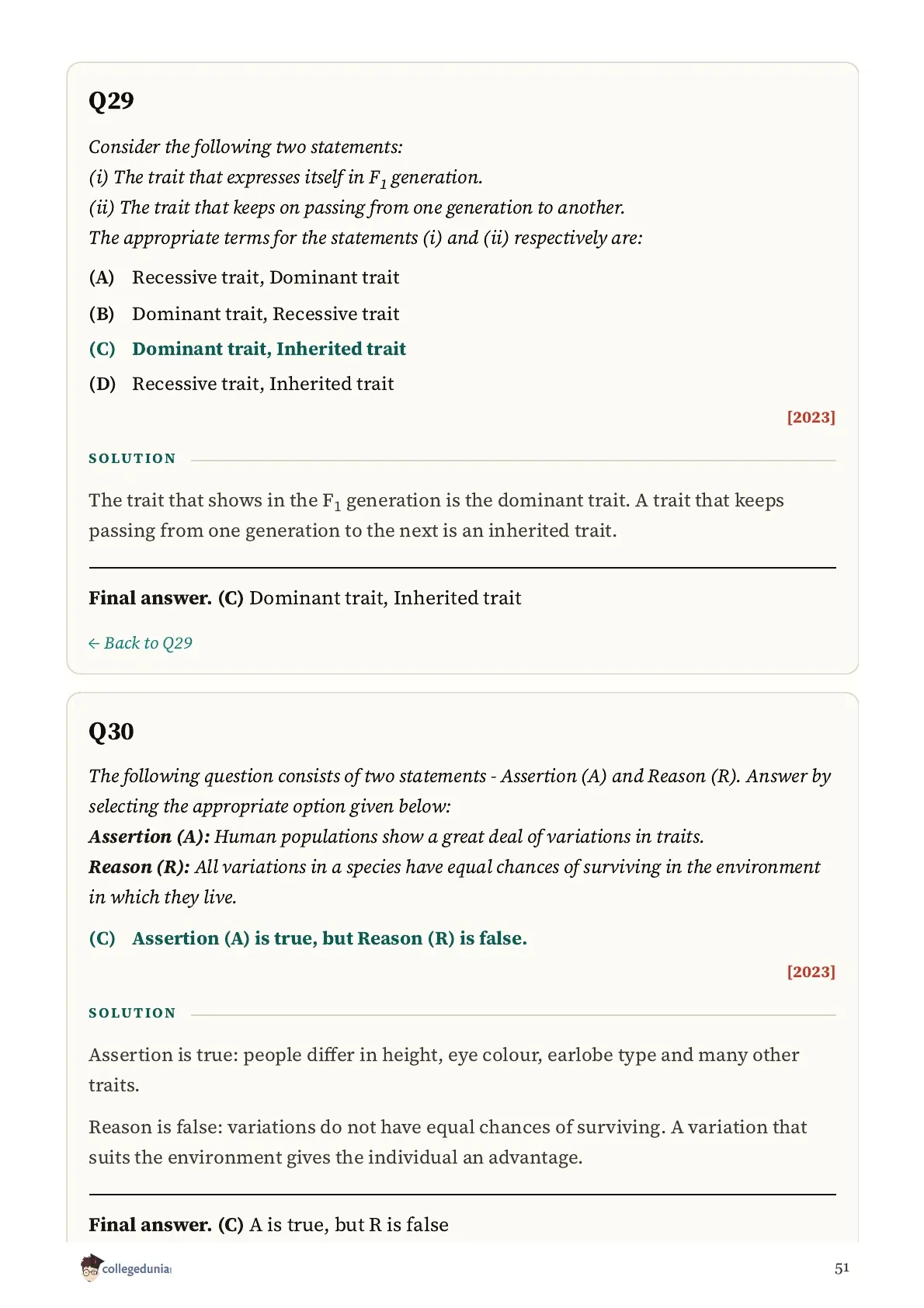
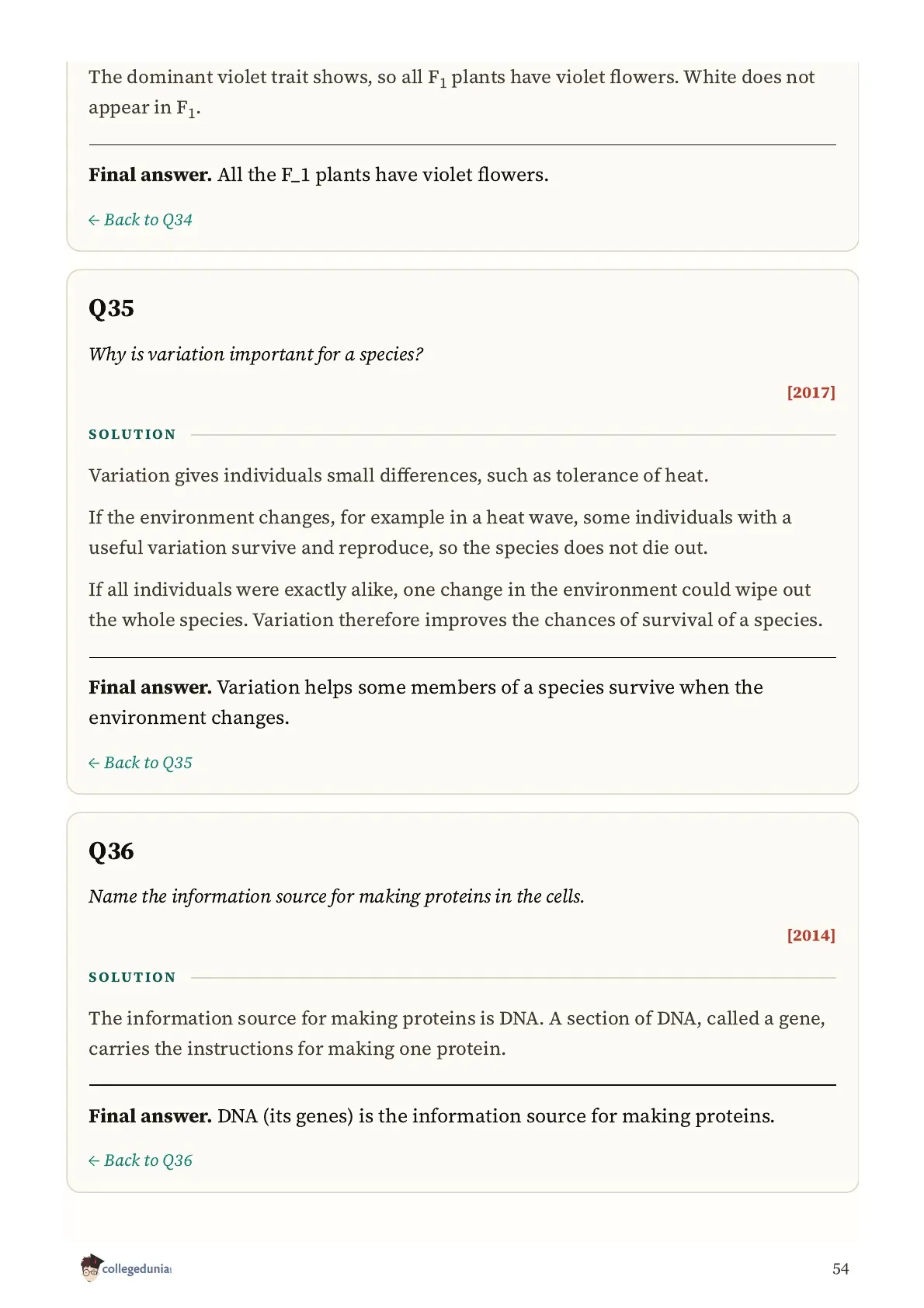
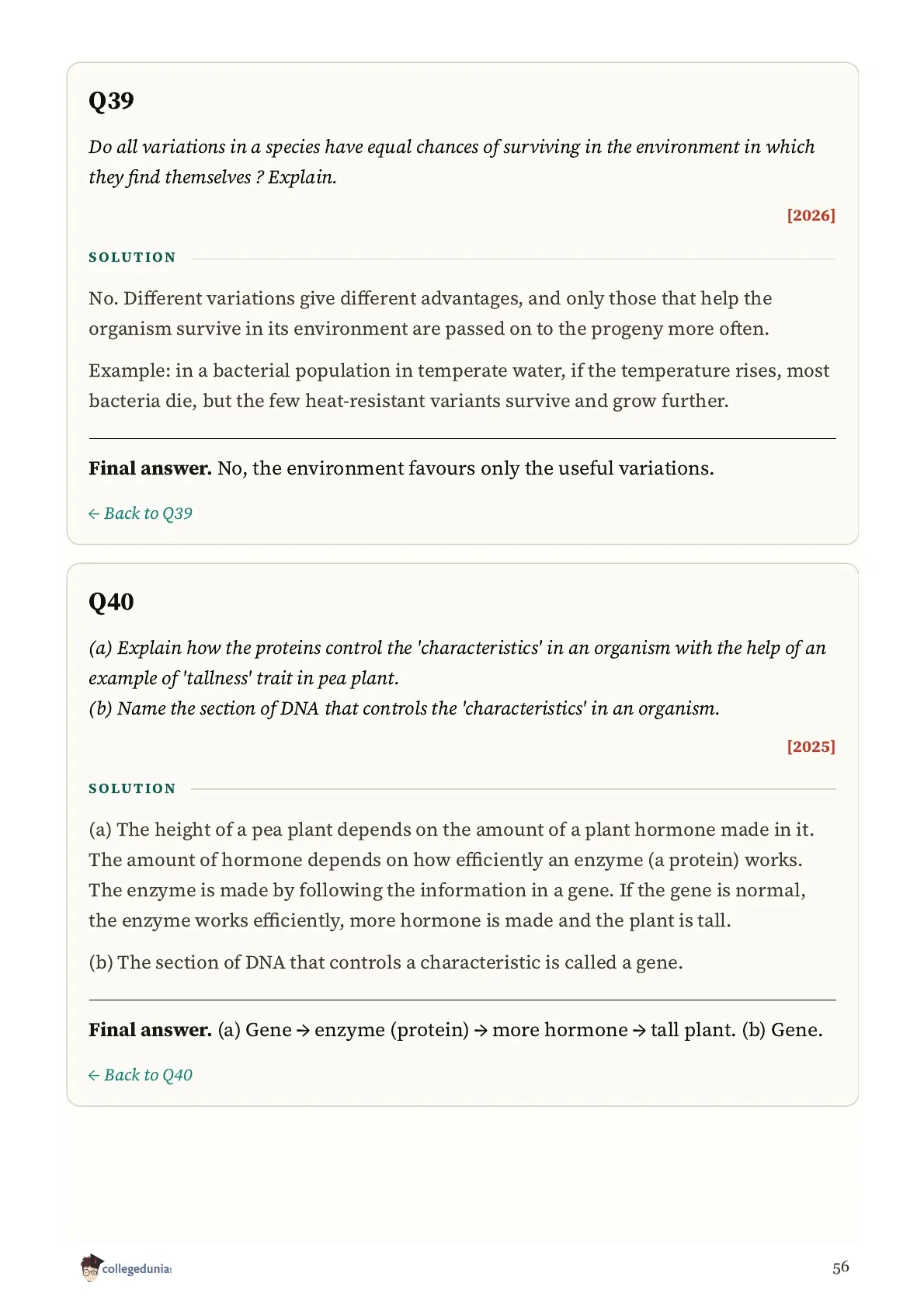
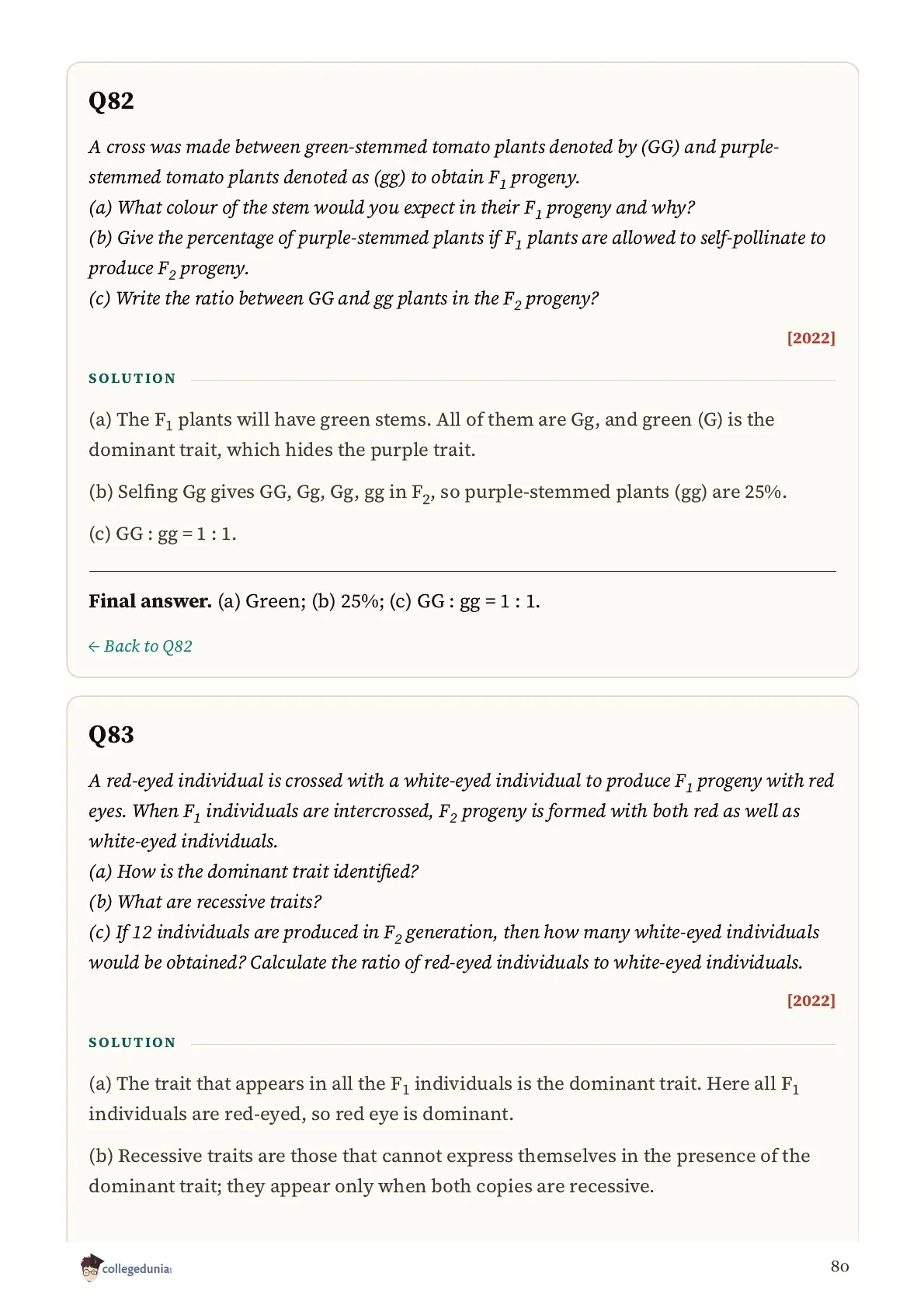
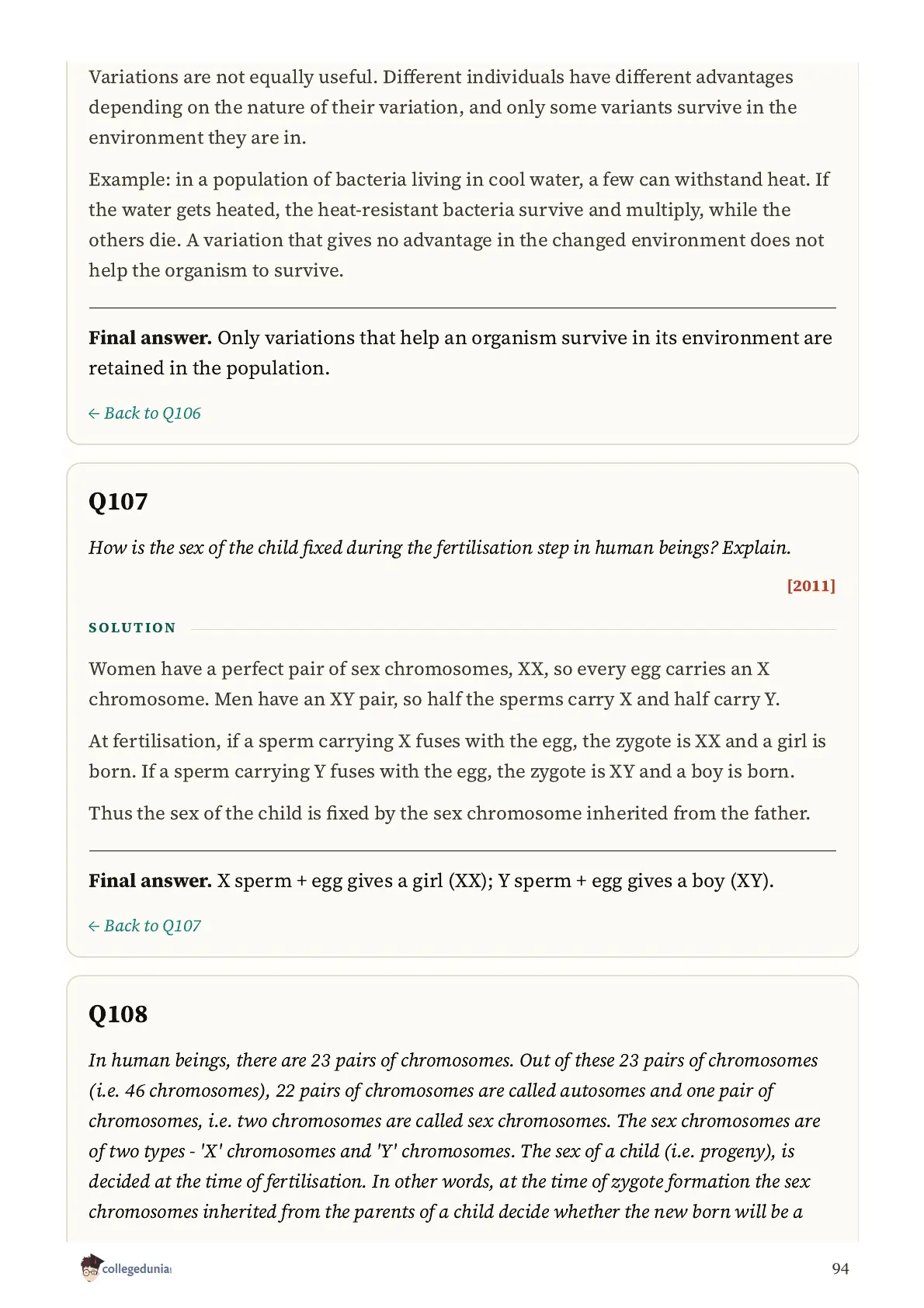
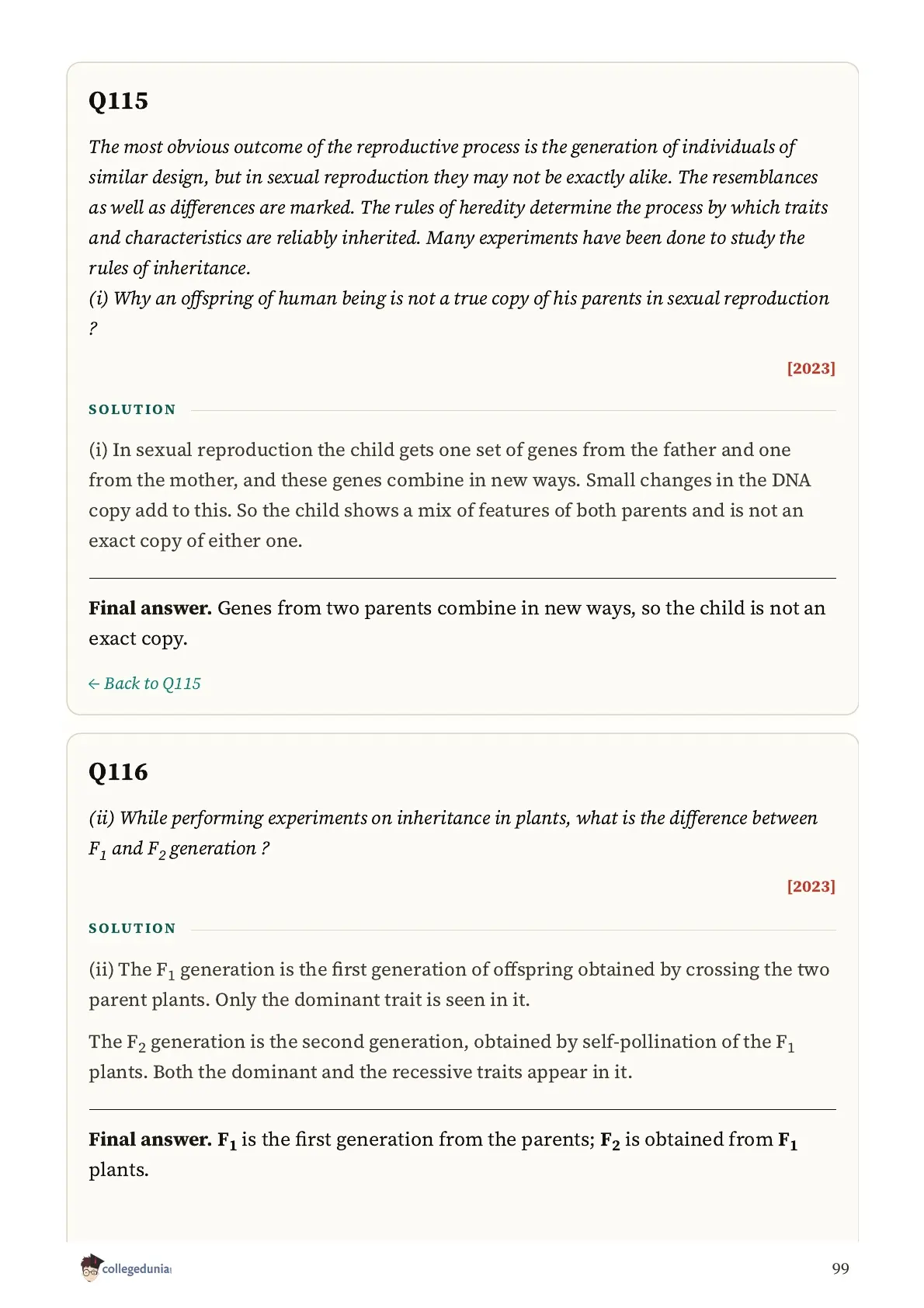
Chromosomes appear in 29 questions, including how the number is restored after fertilisation (2022, 2023). Variation and its use for survival come up in 14, dominant and recessive traits in 16, and proteins or DNA as the source of a trait in 5. 10 questions are assertion-reason items, for instance on a mango seed growing into a mango tree and on XX and XY chromosomes in males and females.
Counts come from keyword matches over the question text, so a question that names two things is counted under both.
Source: Vedantu- CBSE Topper
How to Approach the Set
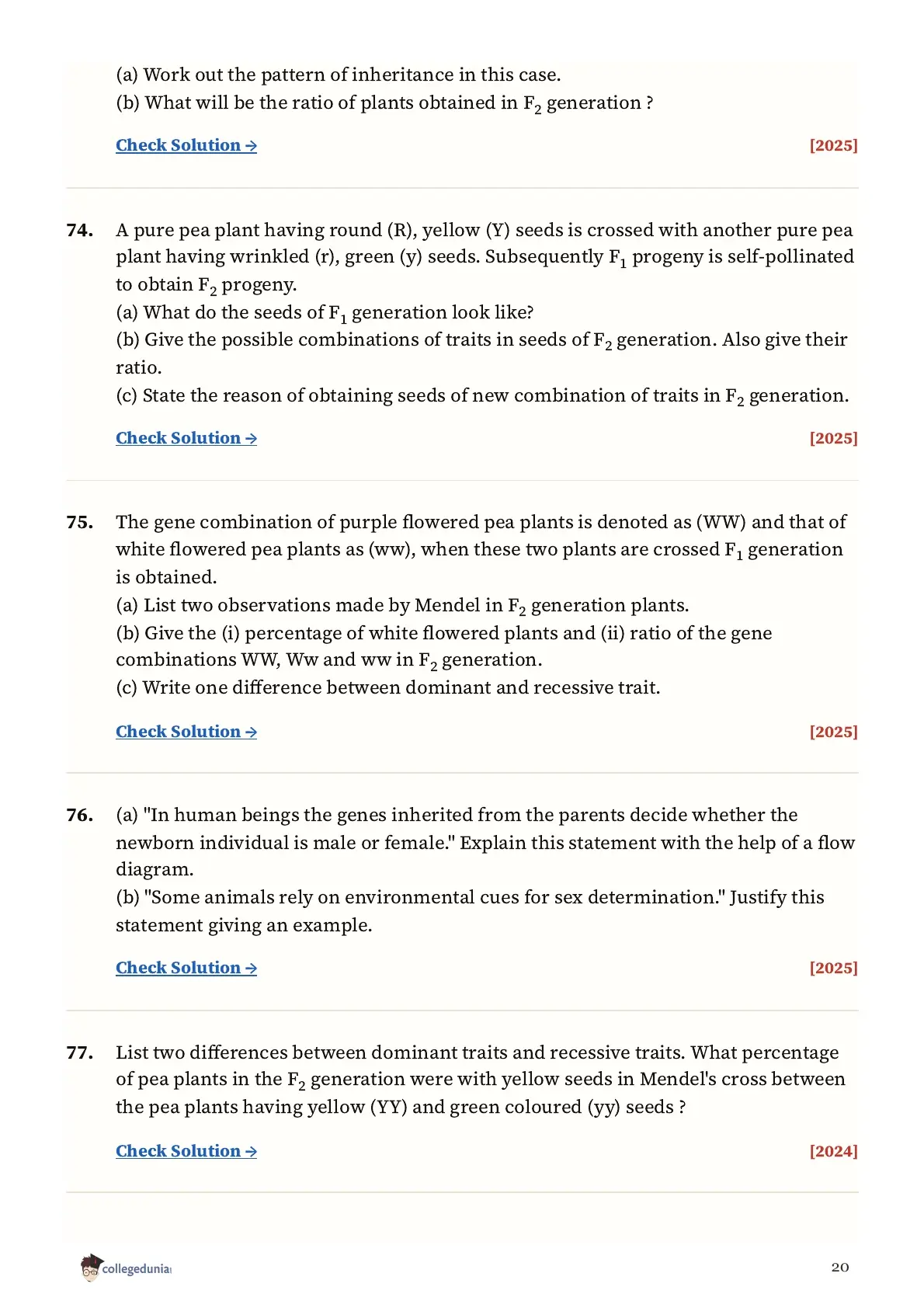
Start with the 32 MCQs and assertion-reason items, then the 1-mark and 2-mark short answers, which need a definition or one observation of Mendel. Next take the 47 three-mark questions, where most ask you to explain an F1 or F2 result with a cross. Keep the 26 case-based items and the 4 five-mark questions for last, since they join several ideas such as a dihybrid cross and a count of plants. Learn the monohybrid ratio (3 : 1 phenotype, 1 : 2 : 1 genotype) and the dihybrid ratio 9 : 3 : 3 : 1, and practise drawing the sex-determination flow chart from memory. The 2022 to 2025 papers hold 87 of the 137 questions, so work through them closely.
Common Mistakes in Heredity Questions
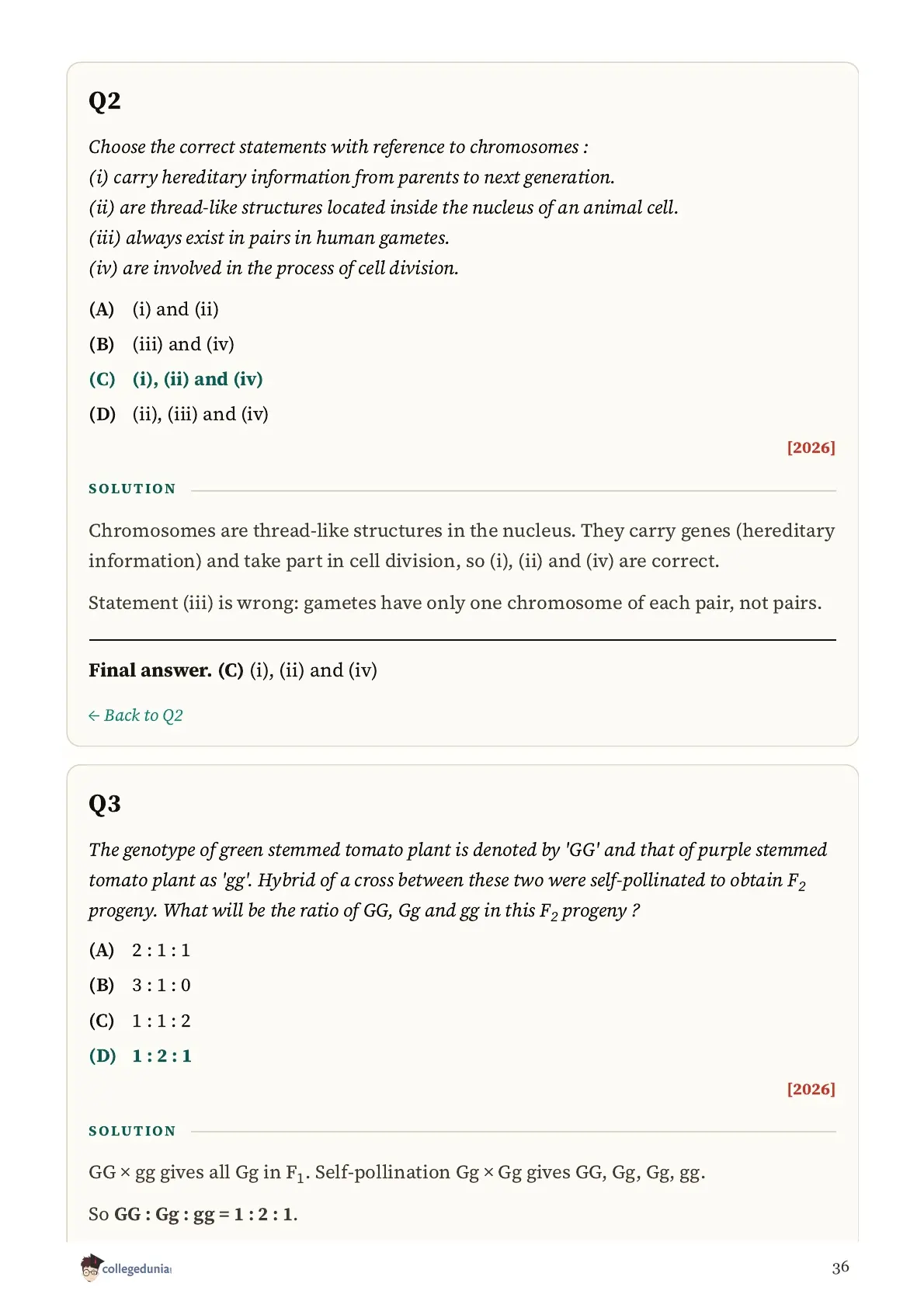
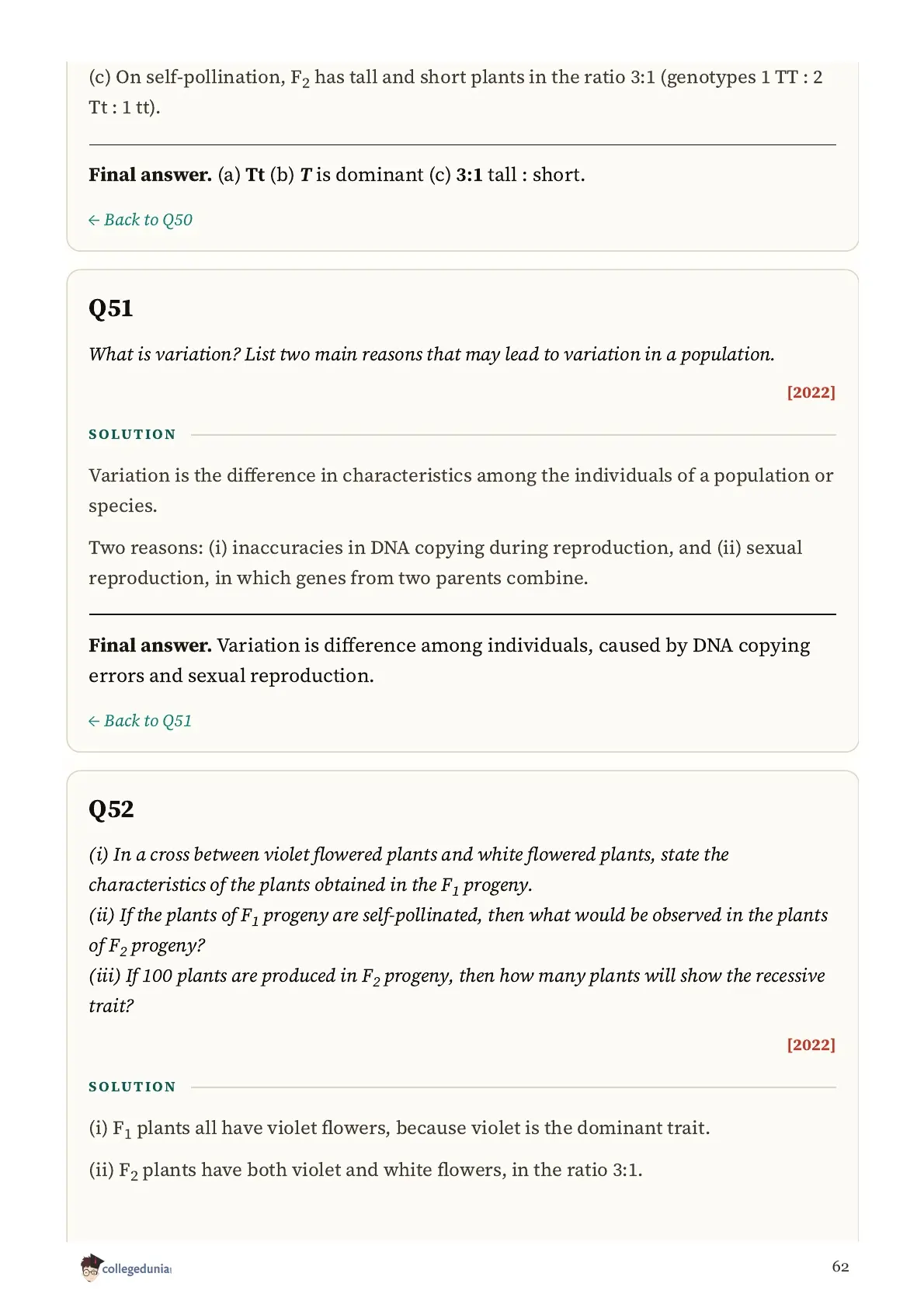
- Giving 3 : 1 for the GG, Gg and gg ratio in the F2 of a green and purple stemmed tomato cross. The genotype ratio is 1 : 2 : 1.
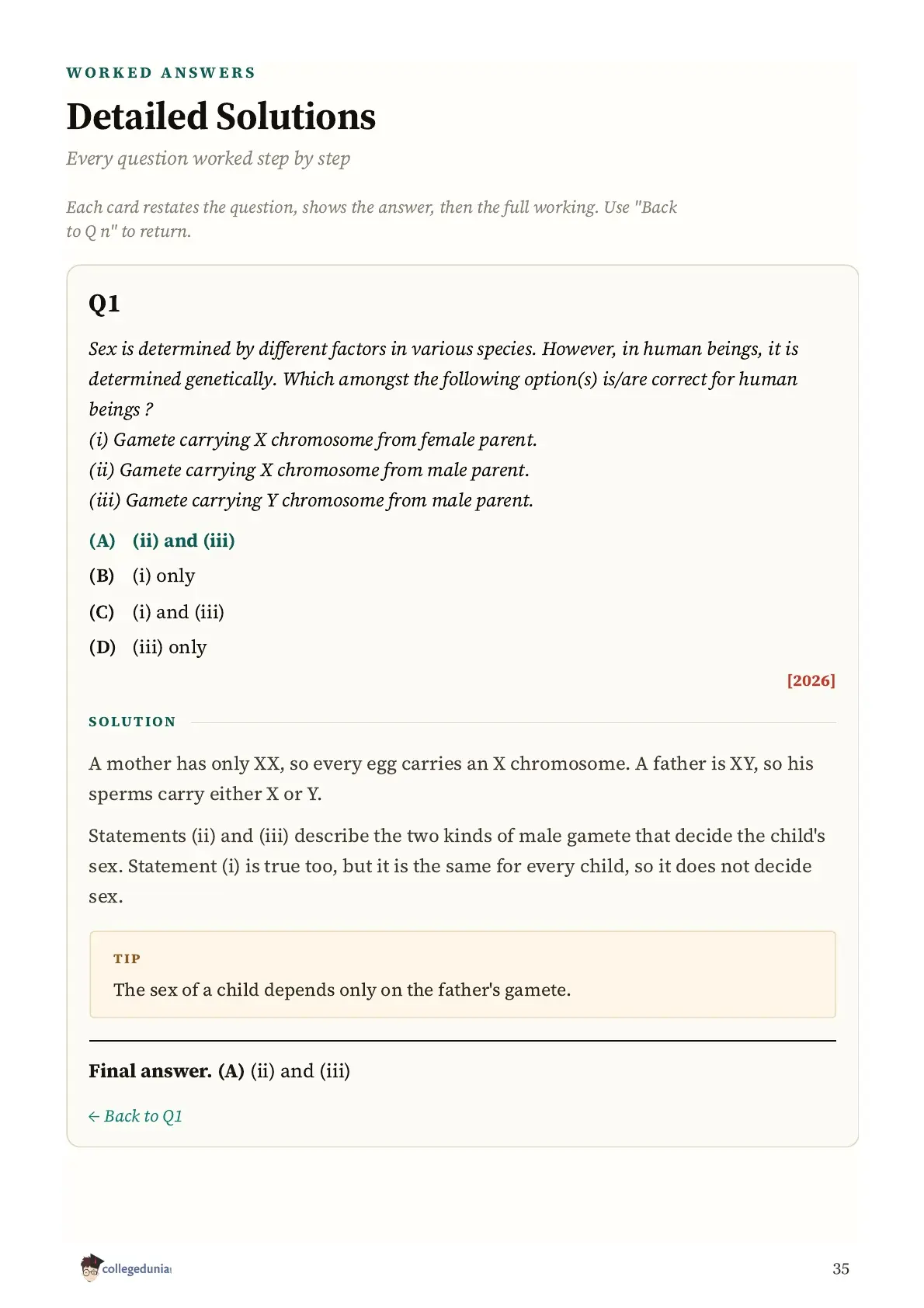
- Writing that the mother decides the sex of the child. Every egg carries an X chromosome, so the sperm from the father, X or Y, decides it.
- Saying four daughters in a row means the father cannot make Y-bearing sperm. Each child has an equal chance of being a boy or a girl, so another daughter is 50 percent likely.
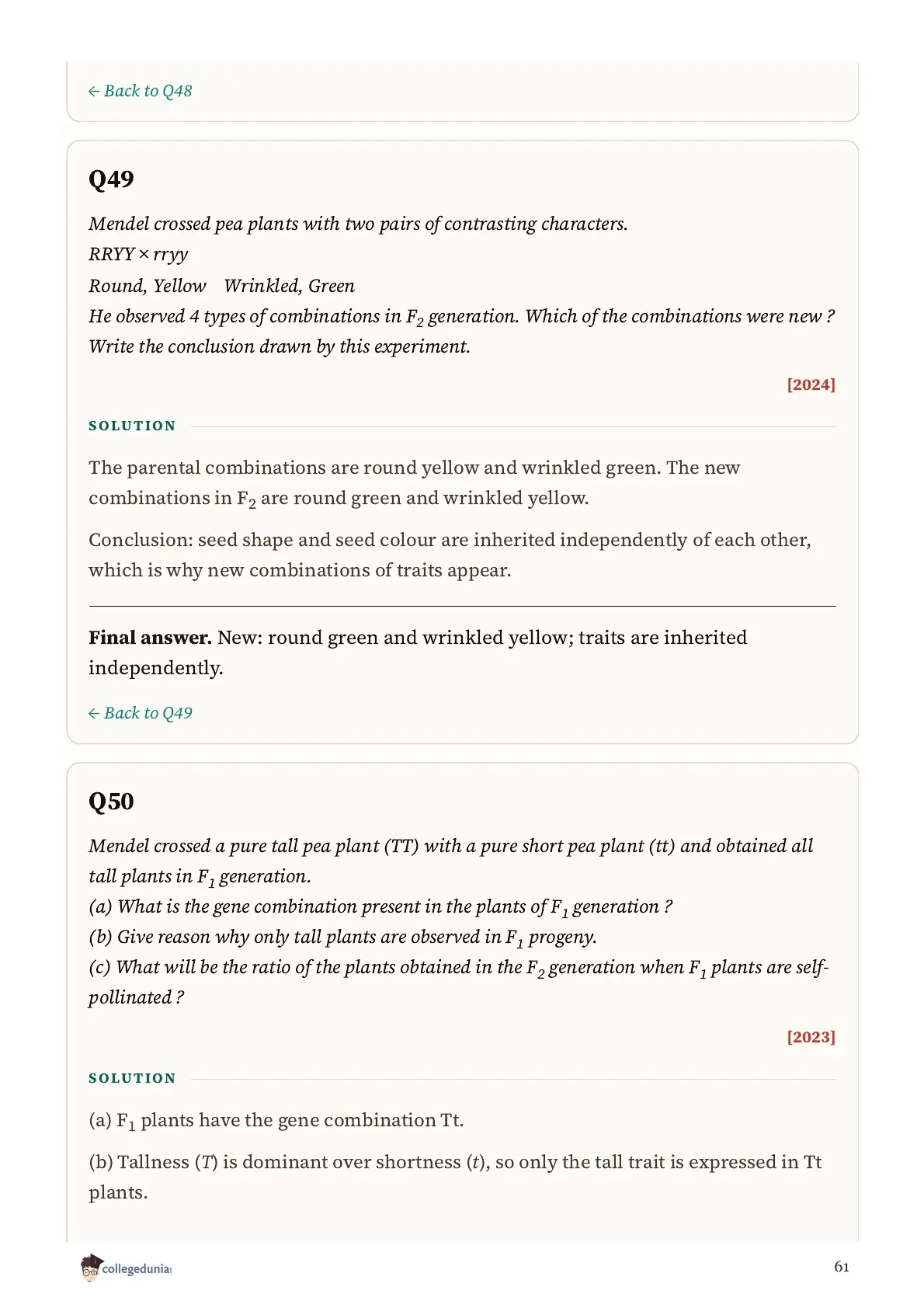
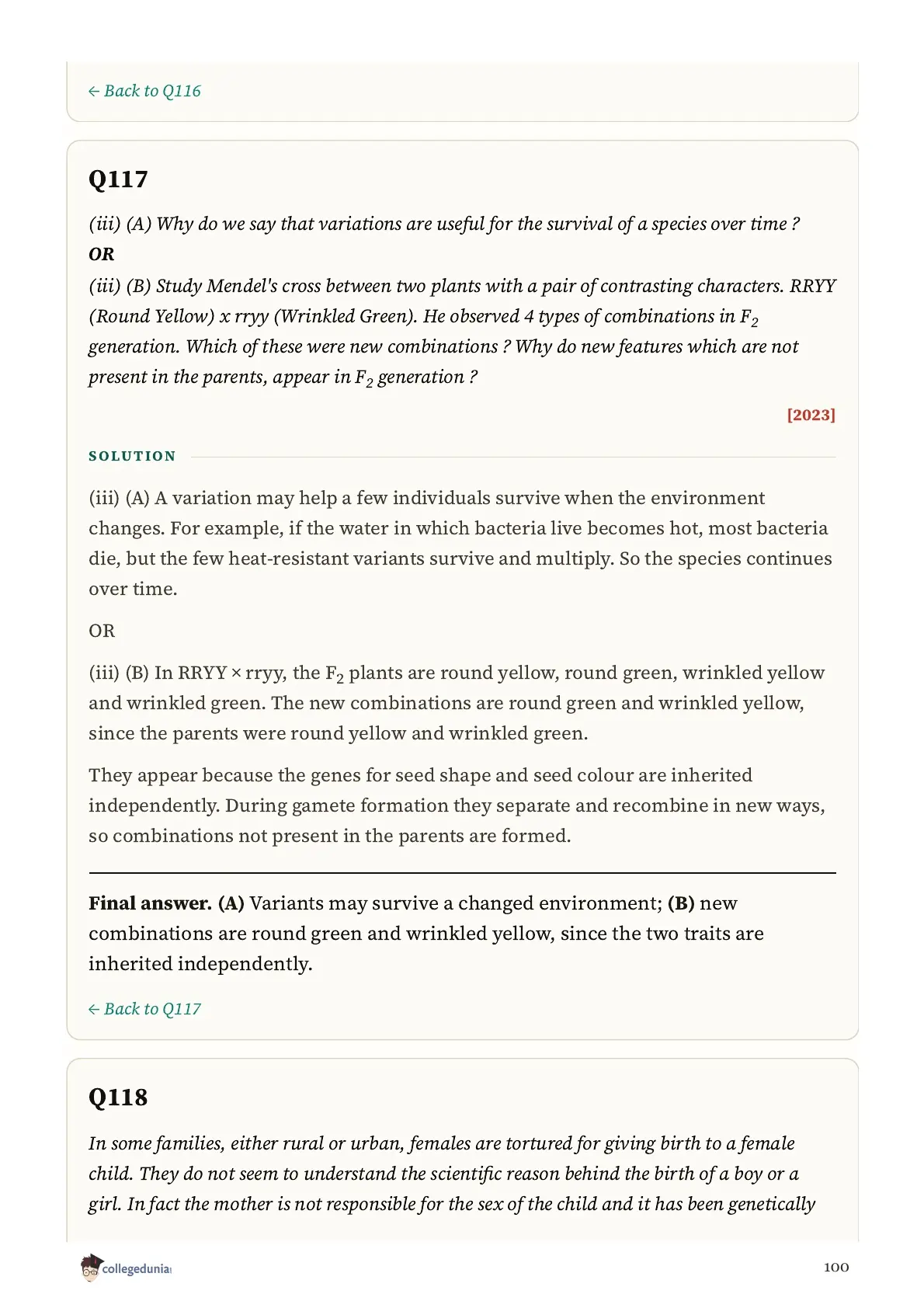
- Naming new combinations in an RRYY and rryy cross as round yellow and wrinkled green. Those are the parental types; the new ones are round green and wrinkled yellow.
- Concluding from one family that blood group A is dominant over O. A single daughter of blood group O does not settle which trait is dominant (2008).
- Giving Tt and Tt as the parents when 50 percent of the offspring are tall and 50 percent short. That cross gives 3 : 1, so the parents are Tt and tt.
Using the Answer Key and Solutions
The PDF is 111 pages and free to download. Each section is sorted newest year first, the Answer Key lists the 32 MCQs at a glance, and each question links to its worked solution and back. Attempt a cross yourself first, check the key, then read the solution. The solutions are written by Collegedunia's Science experts and are not official CBSE marking schemes.
Class 10 Science PYQs by Chapter
| Unit | PYQ Page |
|---|---|
| Chemical Substances | Chemical Reactions and Equations Class 10 Science PYQ |
| Chemical Substances | Acids, Bases and Salts Class 10 Science PYQ |
| Chemical Substances | Metals and Non-metals Class 10 Science PYQ |
| Chemical Substances | Carbon and its Compounds Class 10 Science PYQ |
| World of Living | Life Processes Class 10 Science PYQ |
| World of Living | Control and Coordination Class 10 Science PYQ |
| World of Living | How do Organisms Reproduce? Class 10 Science PYQ |
| World of Living | Heredity Class 10 Science PYQ |
| Natural Phenomena | Light - Reflection and Refraction Class 10 Science PYQ |
| Natural Phenomena | The Human Eye and the Colourful World Class 10 Science PYQ |
| Effects of Current | Electricity Class 10 Science PYQ |
| Effects of Current | Magnetic Effects of Electric Current Class 10 Science PYQ |
| Natural Resources | Our Environment Class 10 Science PYQ |
Heredity Class 10 Science PYQ FAQs
Ques. How many questions are in the Heredity Class 10 Science PYQ PDF?
Ans. The PDF has 137 questions from the 2008 to 2026 board papers: 36 at 1 mark, 24 at 2 marks, 47 at 3 marks, 26 at 4 marks and 4 long answers at 5 marks.
Ques. Does this PYQ PDF include solutions, or only the questions?
Ans. All 137 questions have a worked solution in the PDF. The 32 MCQs and assertion-reason items are also listed in the Answer Key before the solutions.
Ques. Are the solutions official?
Ans. No. They are written by Collegedunia's Science experts and checked against the NCERT chapter and, for the 2022 to 2026 papers, against CBSE's published marking schemes; older answers are checked against the NCERT text. They are not an official CBSE marking scheme, so the board's wording may differ.
Ques. How many marks does Heredity carry in the Class 10 Science paper?
Ans. CBSE publishes marks per unit, not per chapter. Heredity belongs to the unit World of Living, which prep sites report at 25 of the 80 theory marks for 2025-26 and 2026-27. That figure is unofficial, so check cbseacademic.nic.in for the current syllabus.
Ques. What kind of questions are asked from Heredity?
Ans. Cross-based questions form the largest group: 51 of the 137 refer to the F1 or F2 generation. Others ask for sex determination with a flow chart, the role of chromosomes, dominant and recessive traits and the use of variation to a species.
Ques. Which years does the set cover?
Ans. The questions come from 16 board years between 2008 and 2026. 2025 has the most questions (24), followed by 2022 (23) and 2023 (21).



Comments