



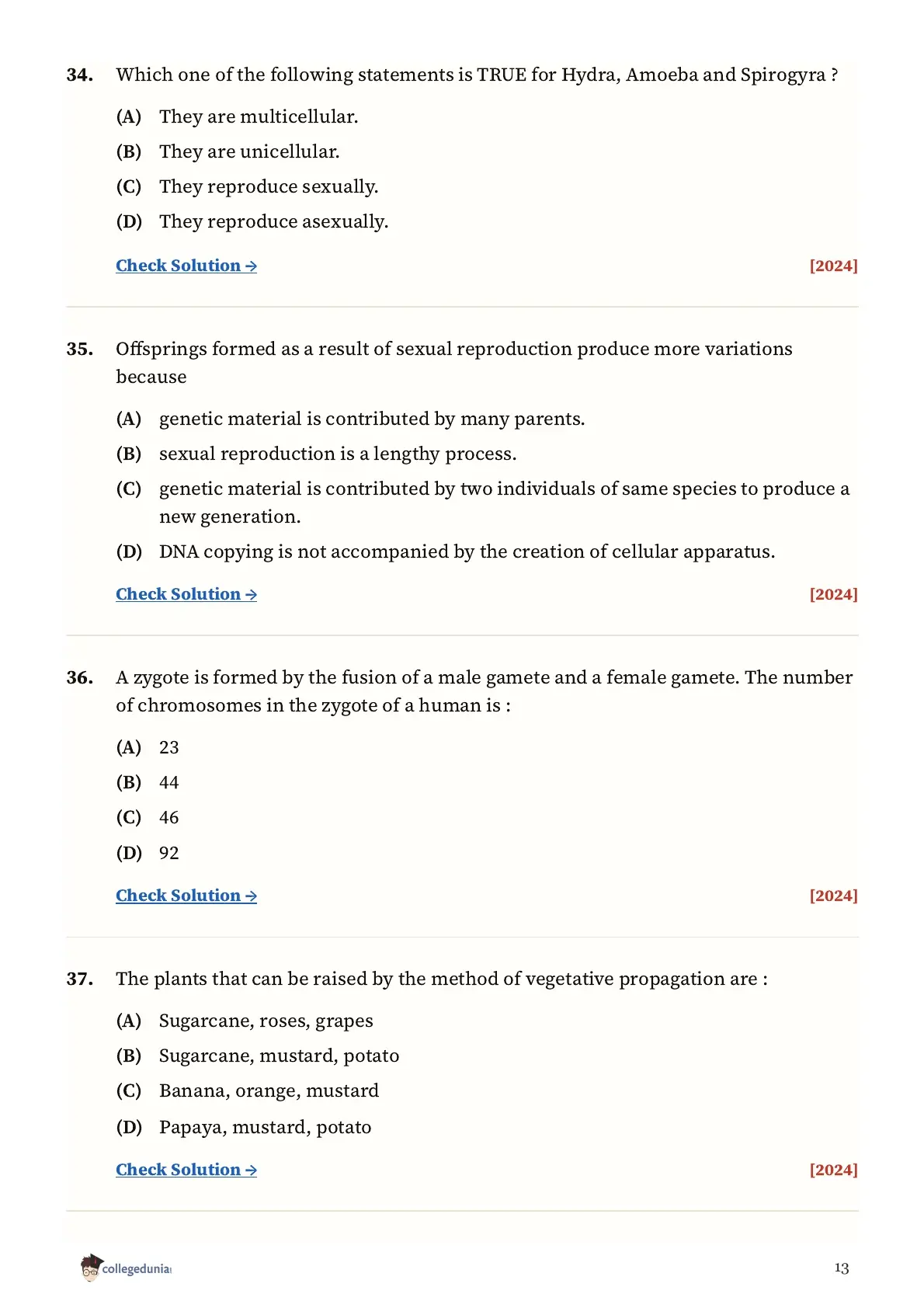
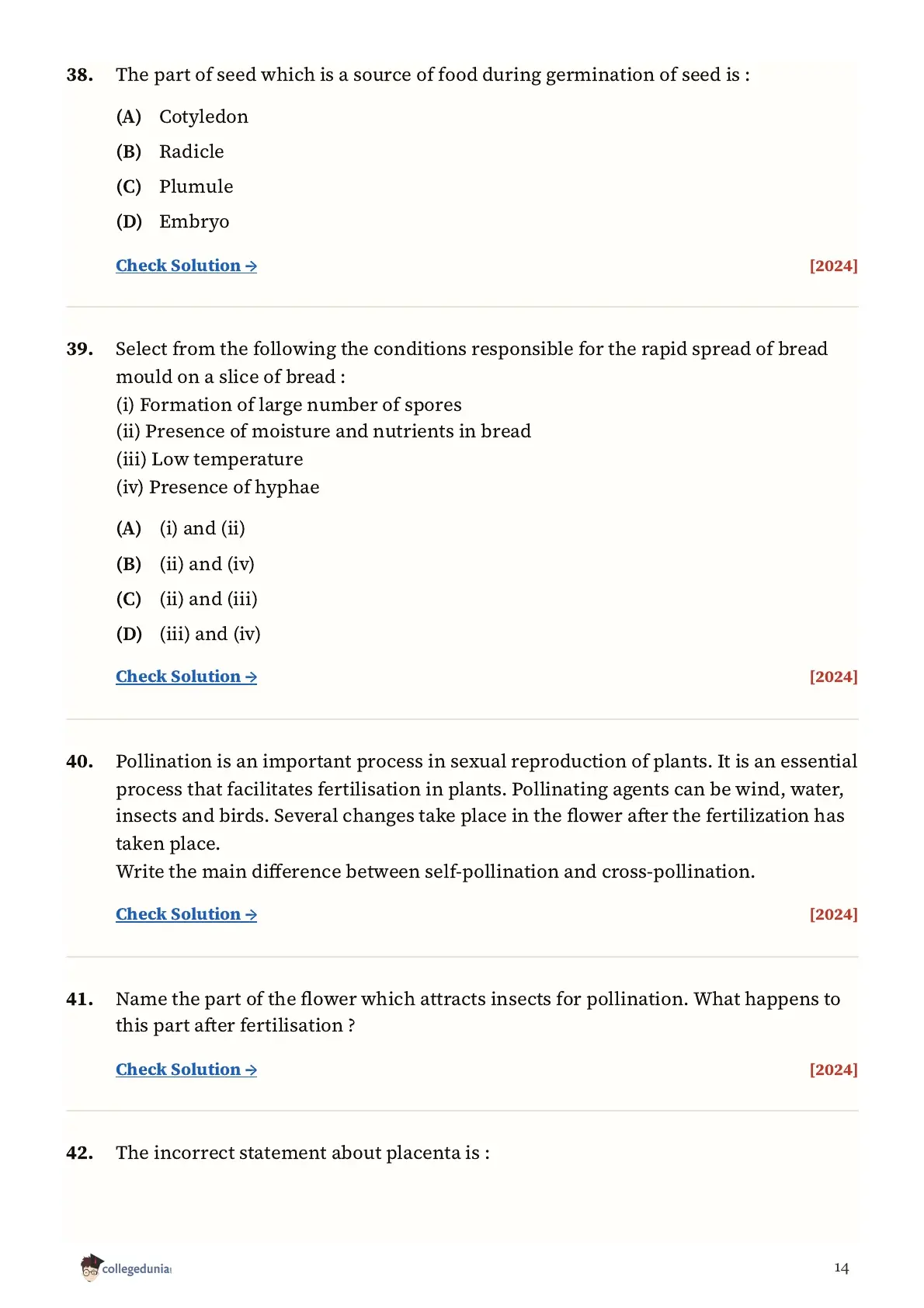
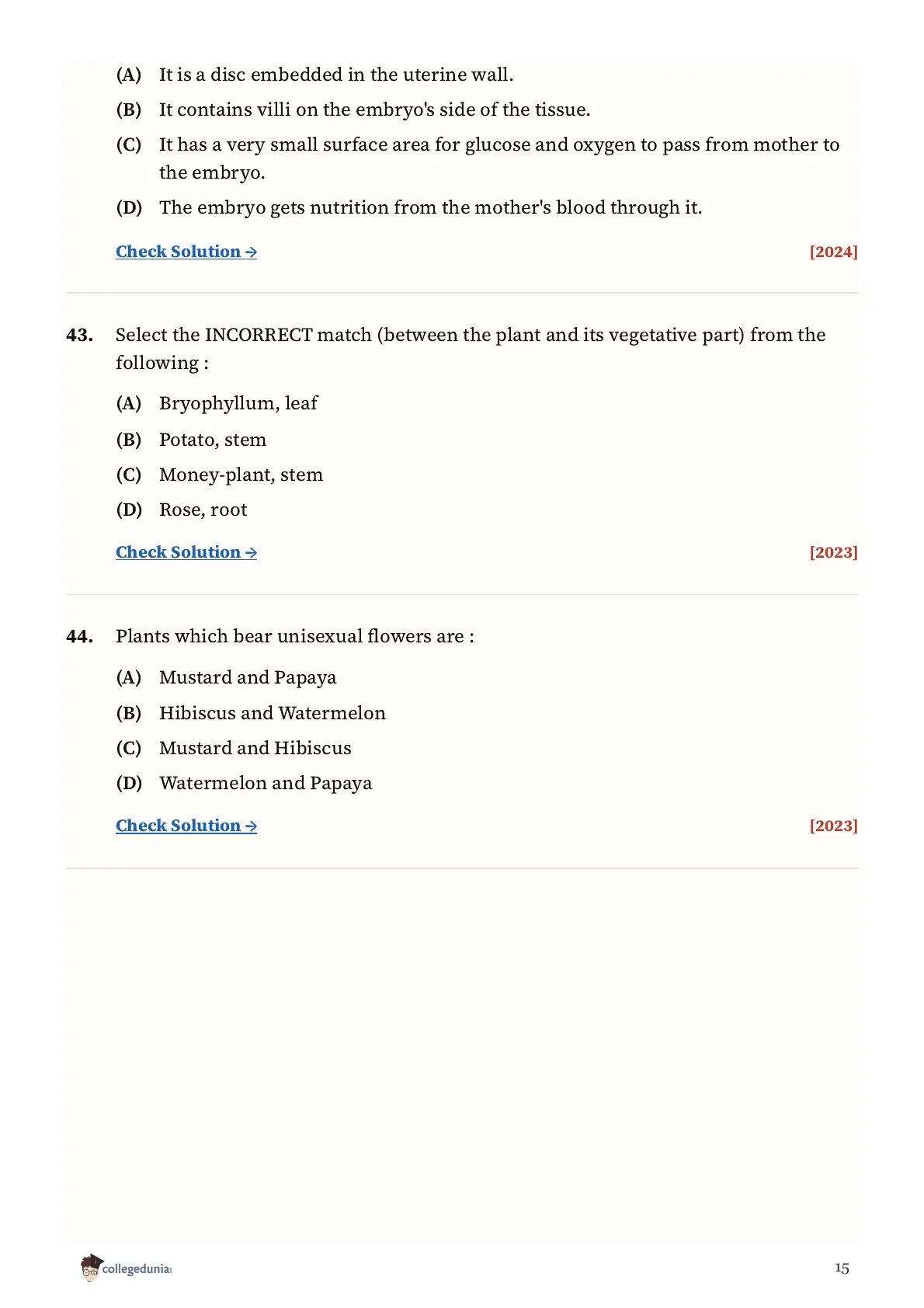
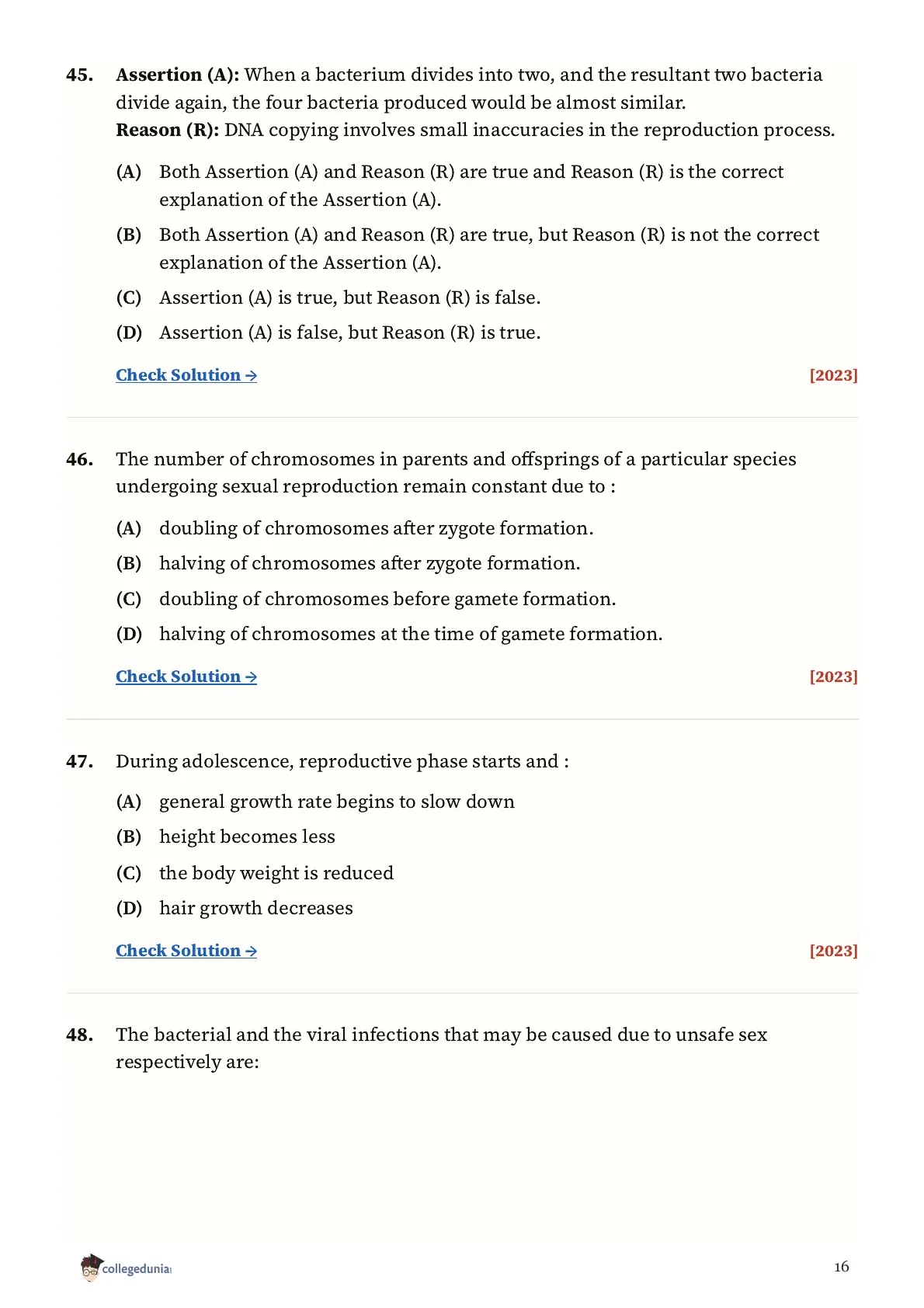
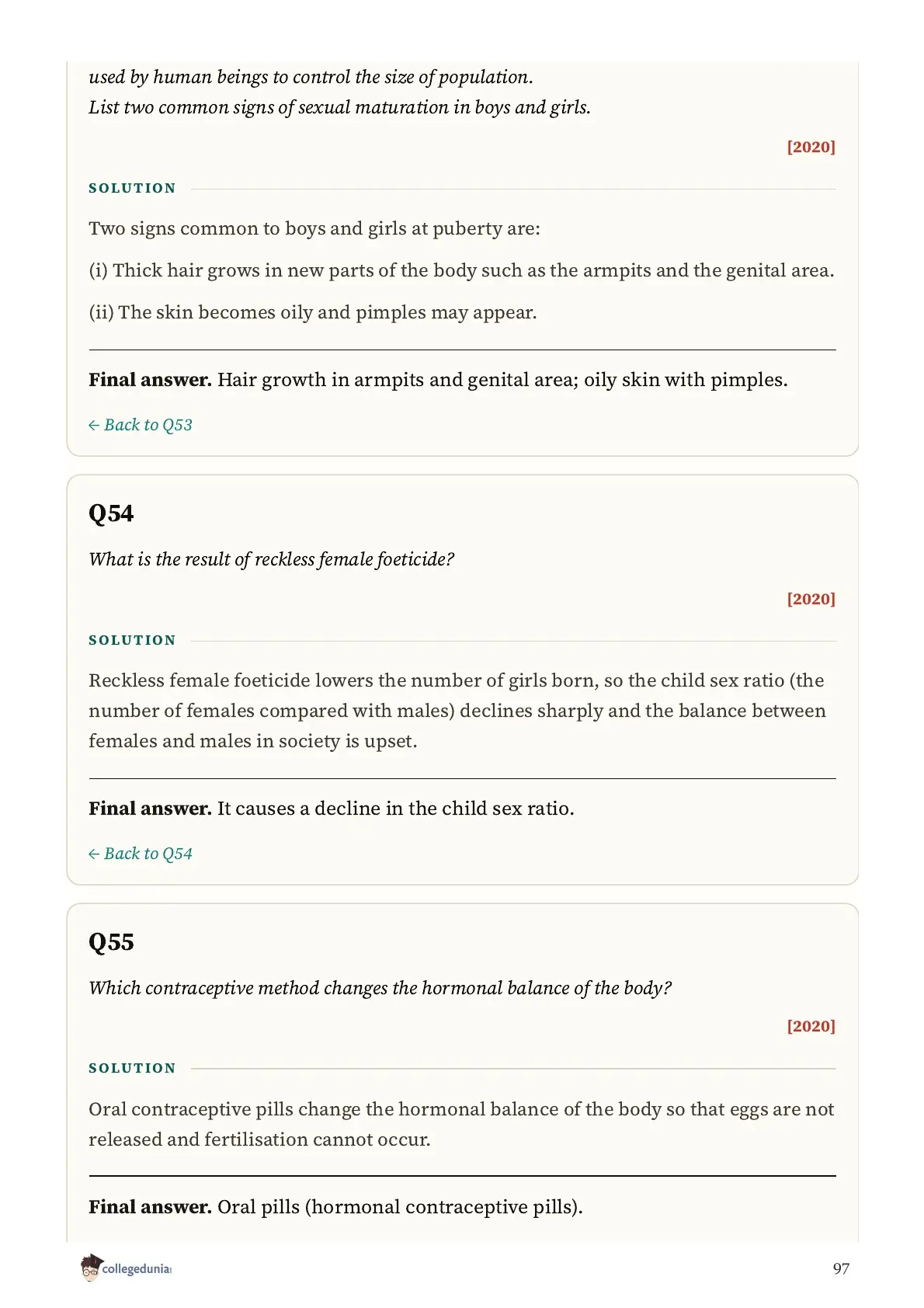
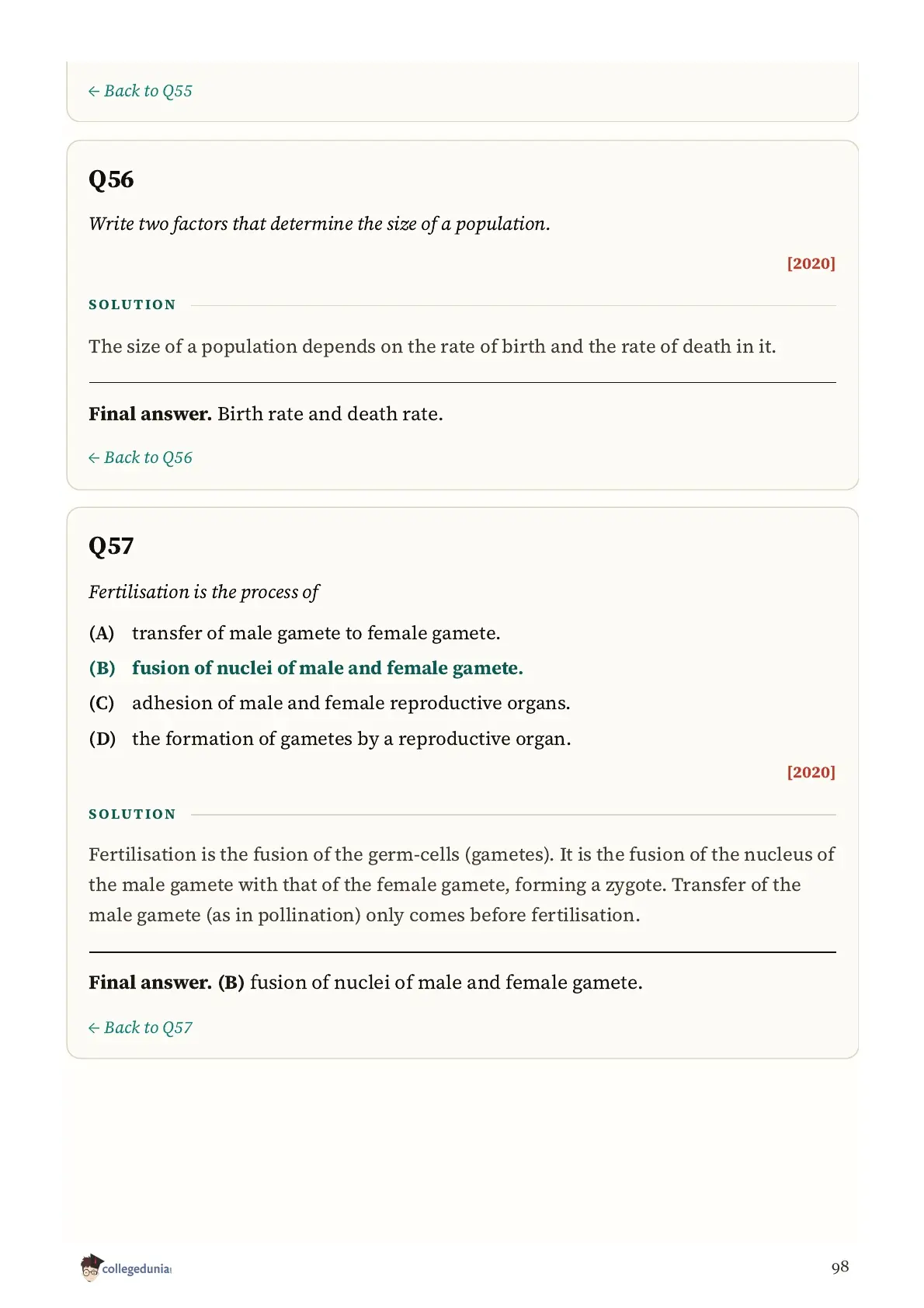
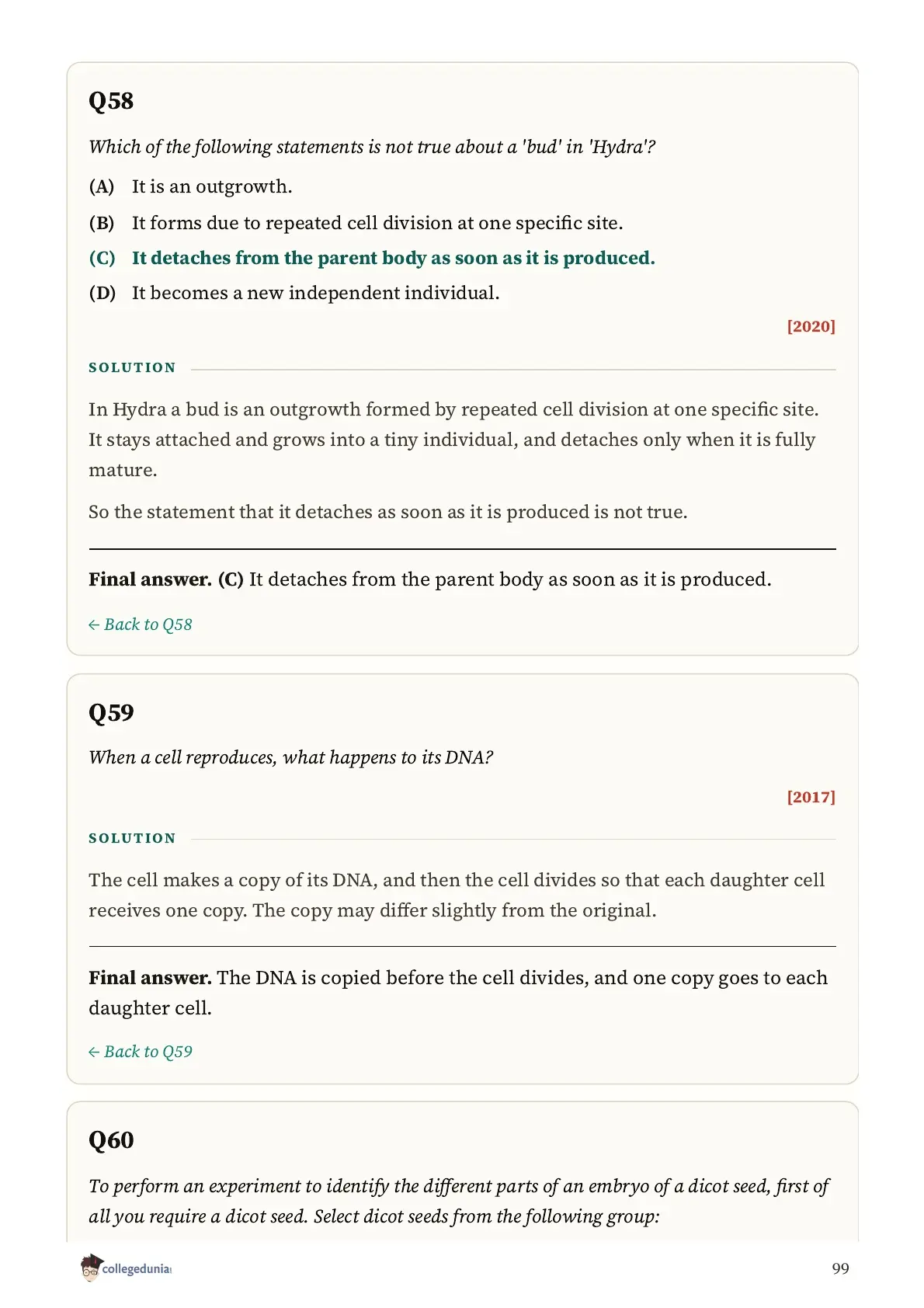
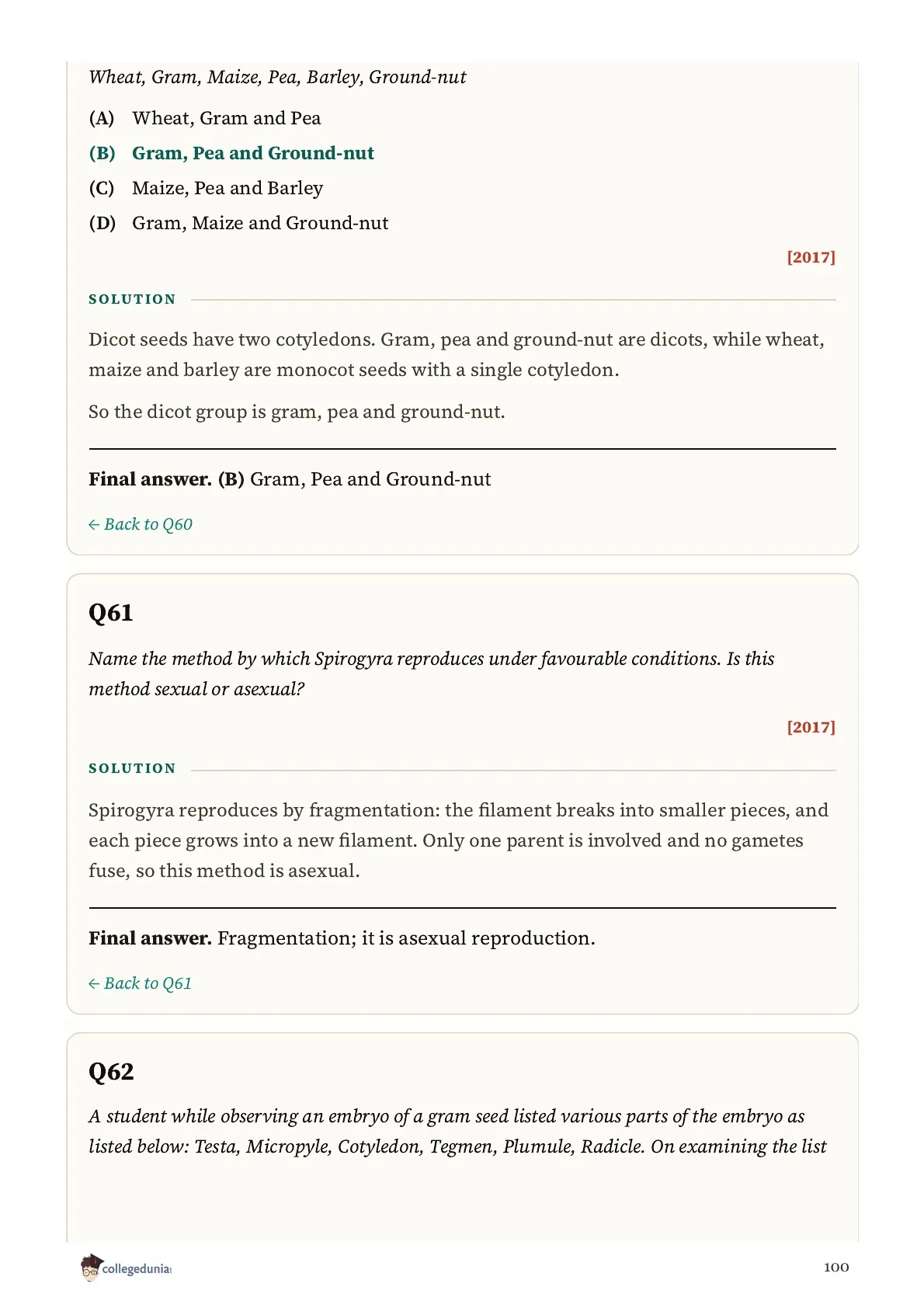
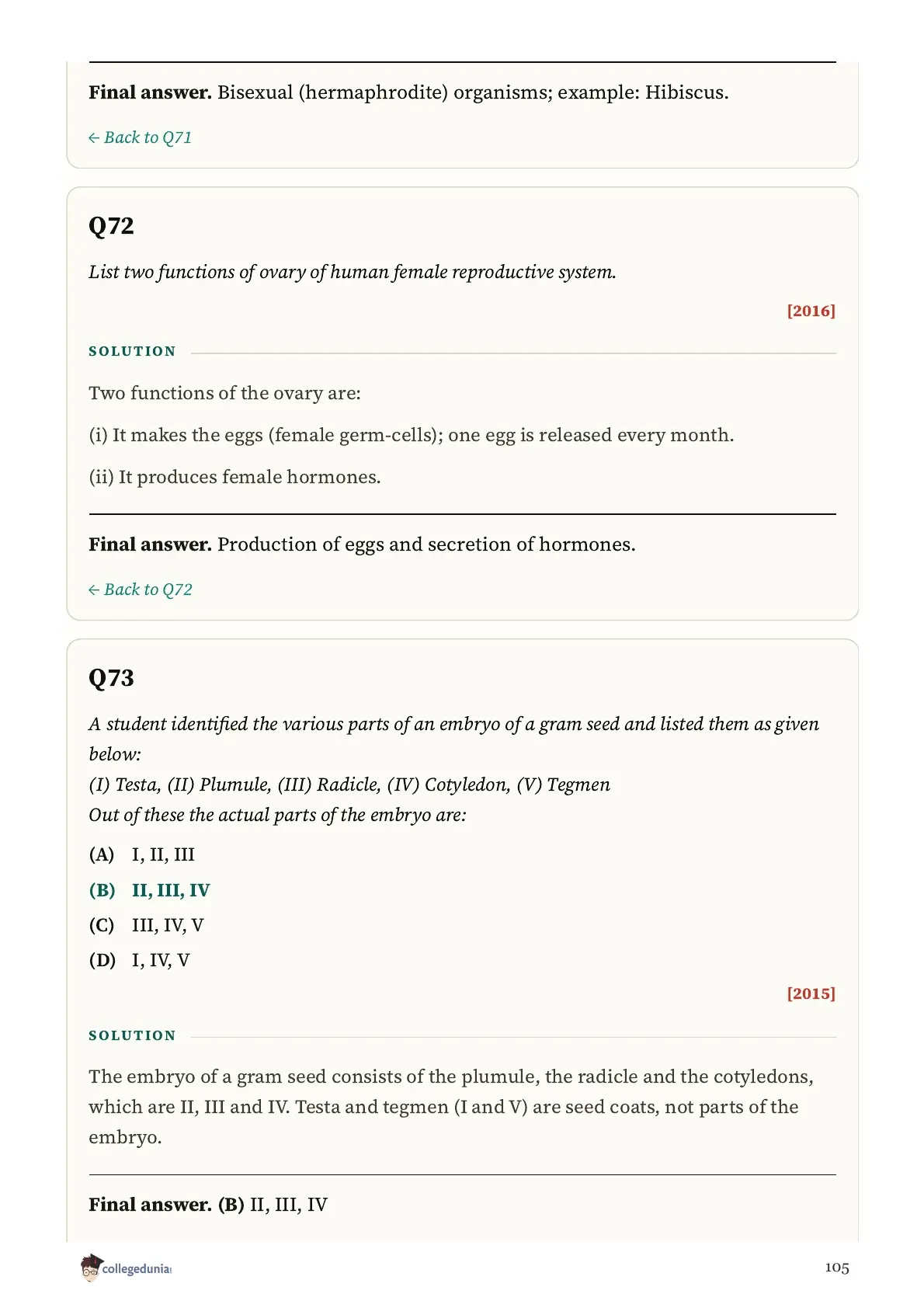
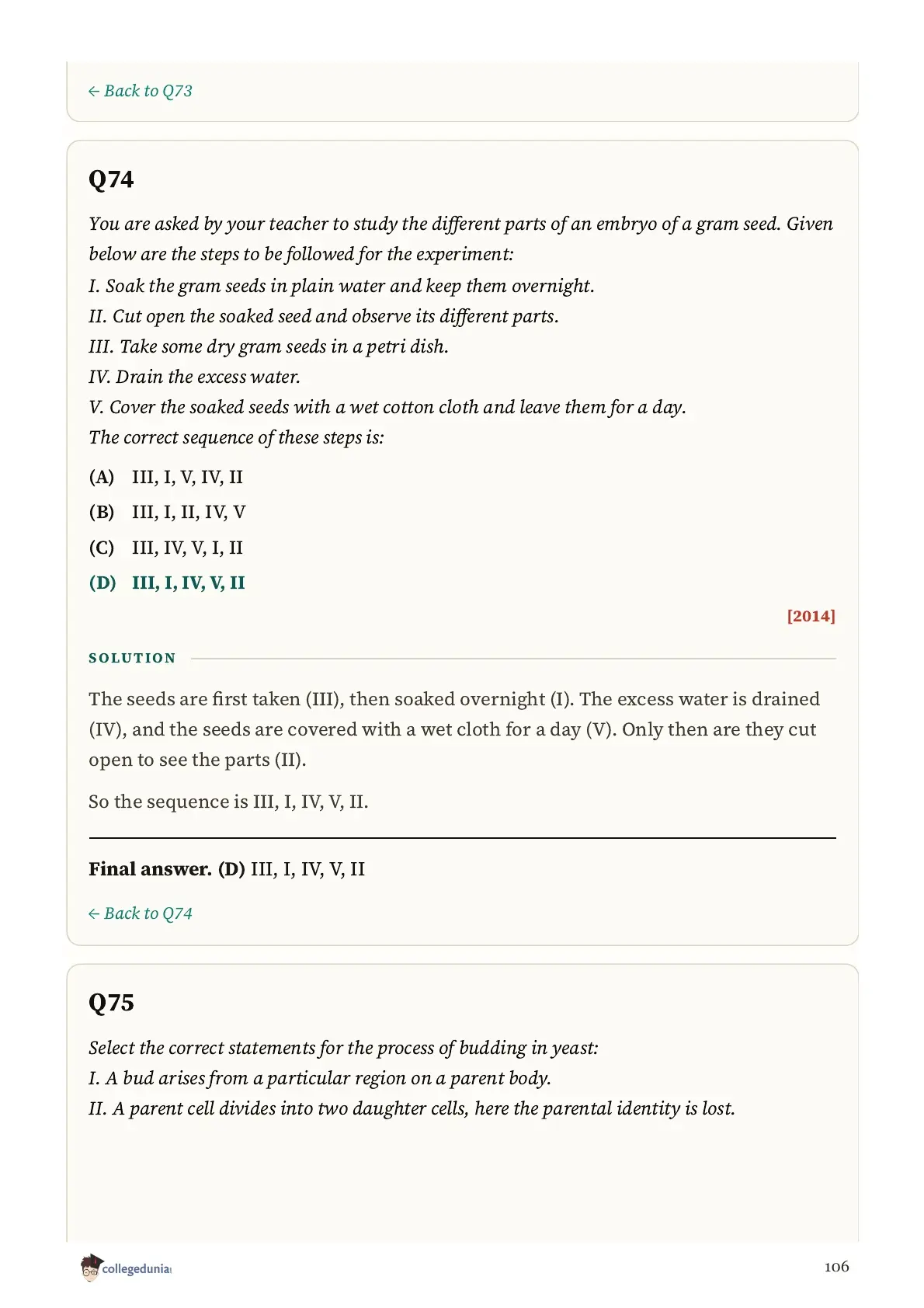
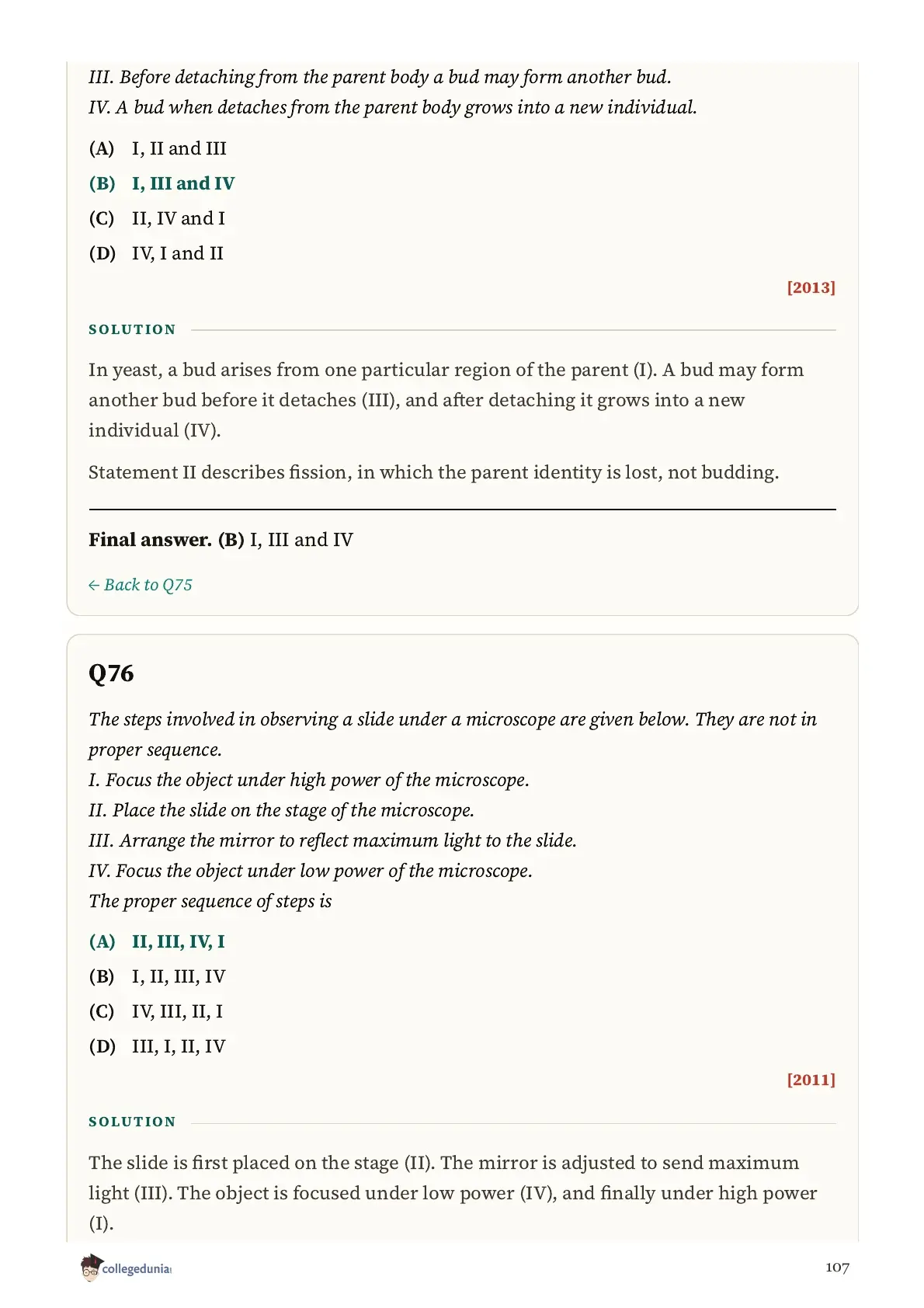
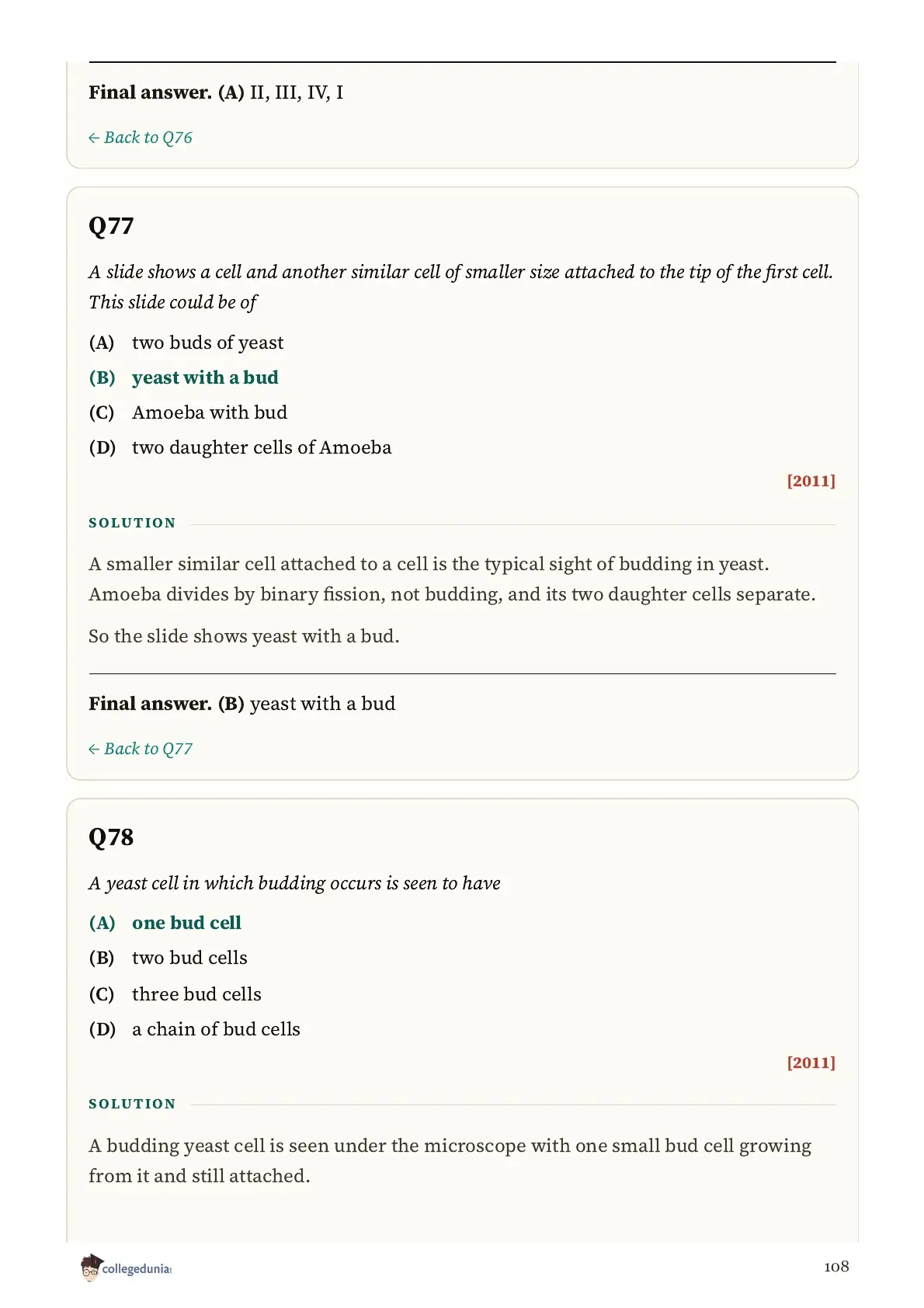
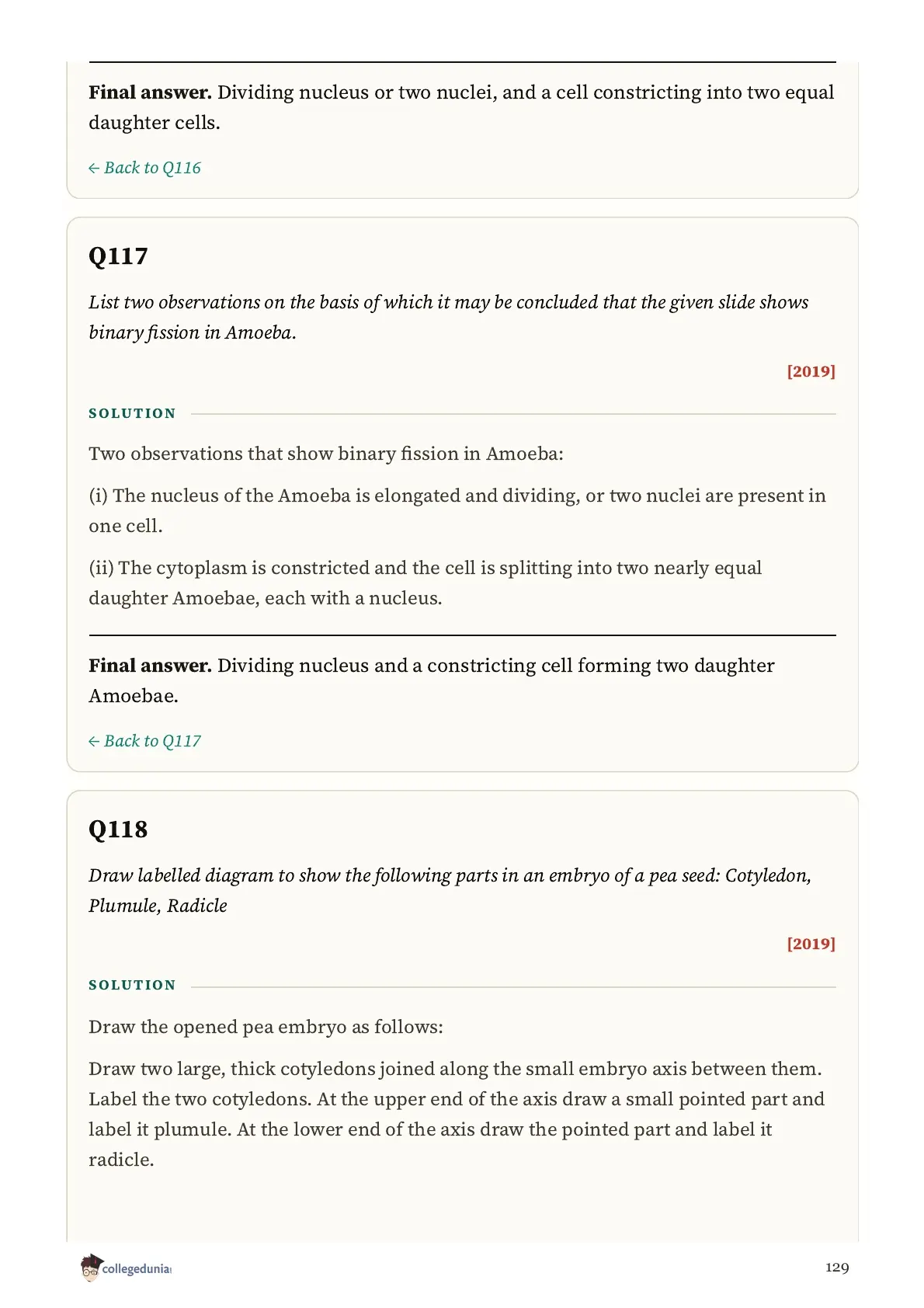
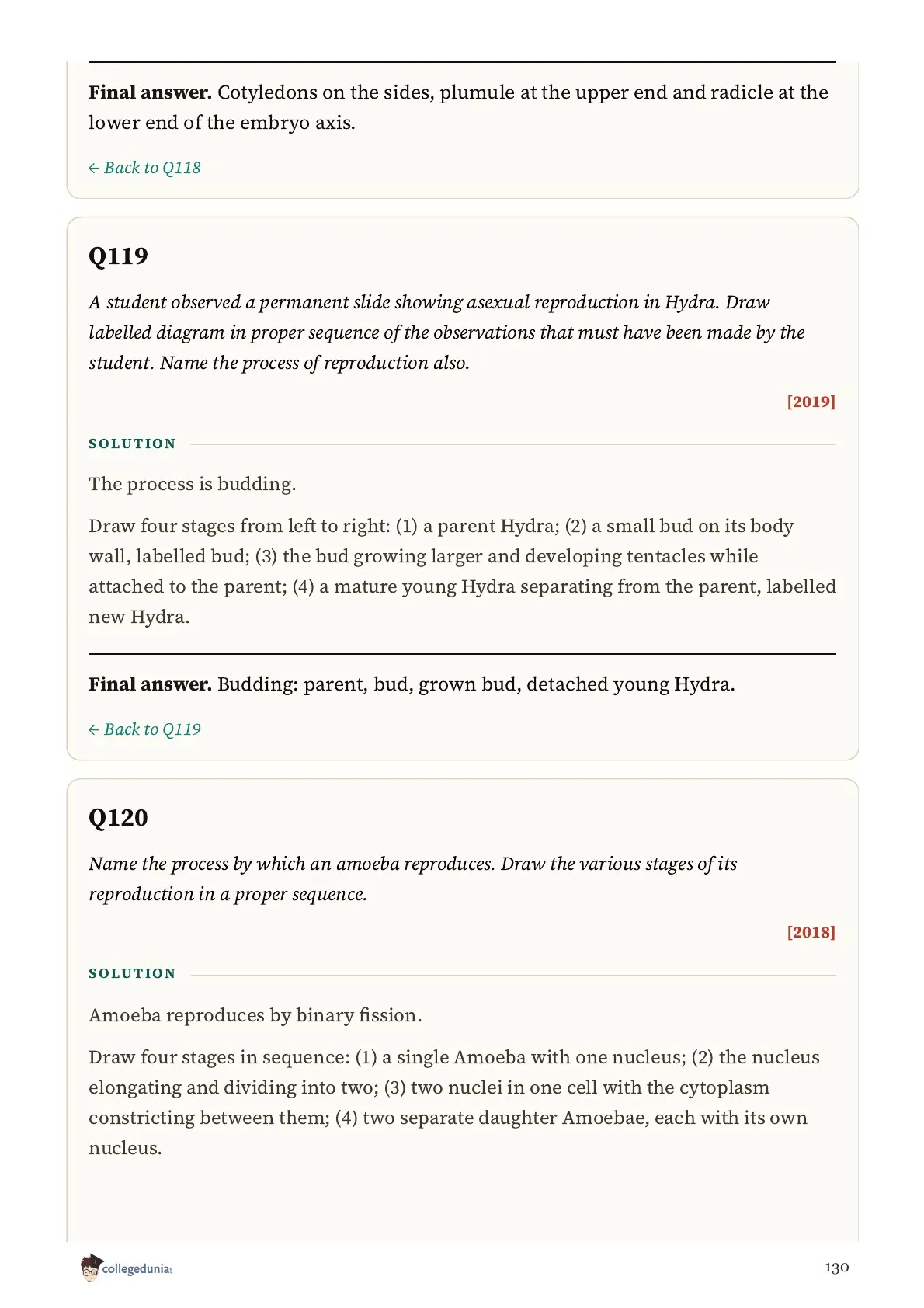
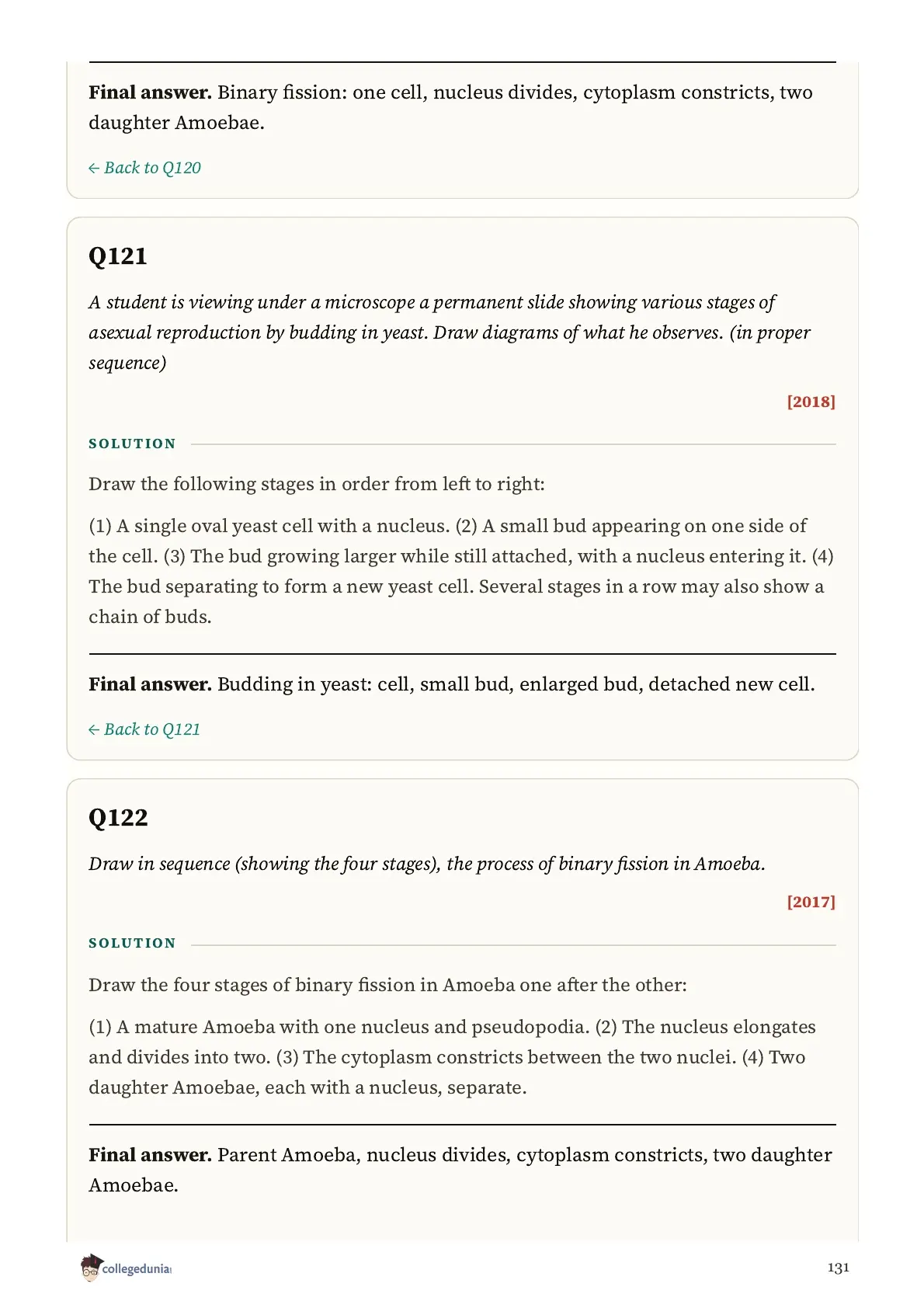
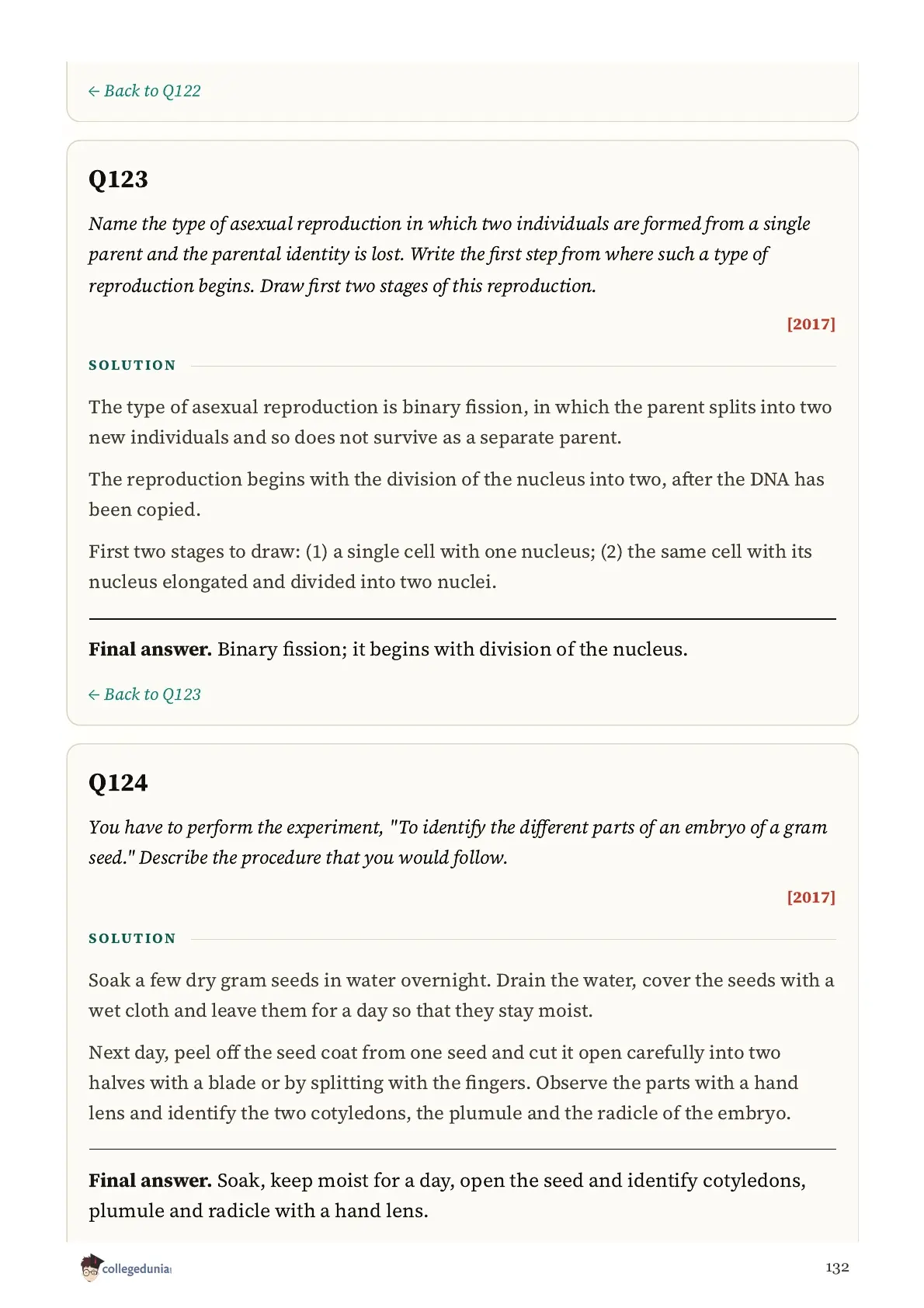
Class 10 Science How do Organisms Reproduce PYQ, free to download as a 233-page PDF with 282 solved board questions from the 2007 to 2026 papers. How do Organisms Reproduce? is Chapter 7 of the NCERT Class 10 Science book and sits in the CBSE unit World of Living, which carries 25 of the 80 theory marks together with Life Processes, Control and Coordination and Heredity.
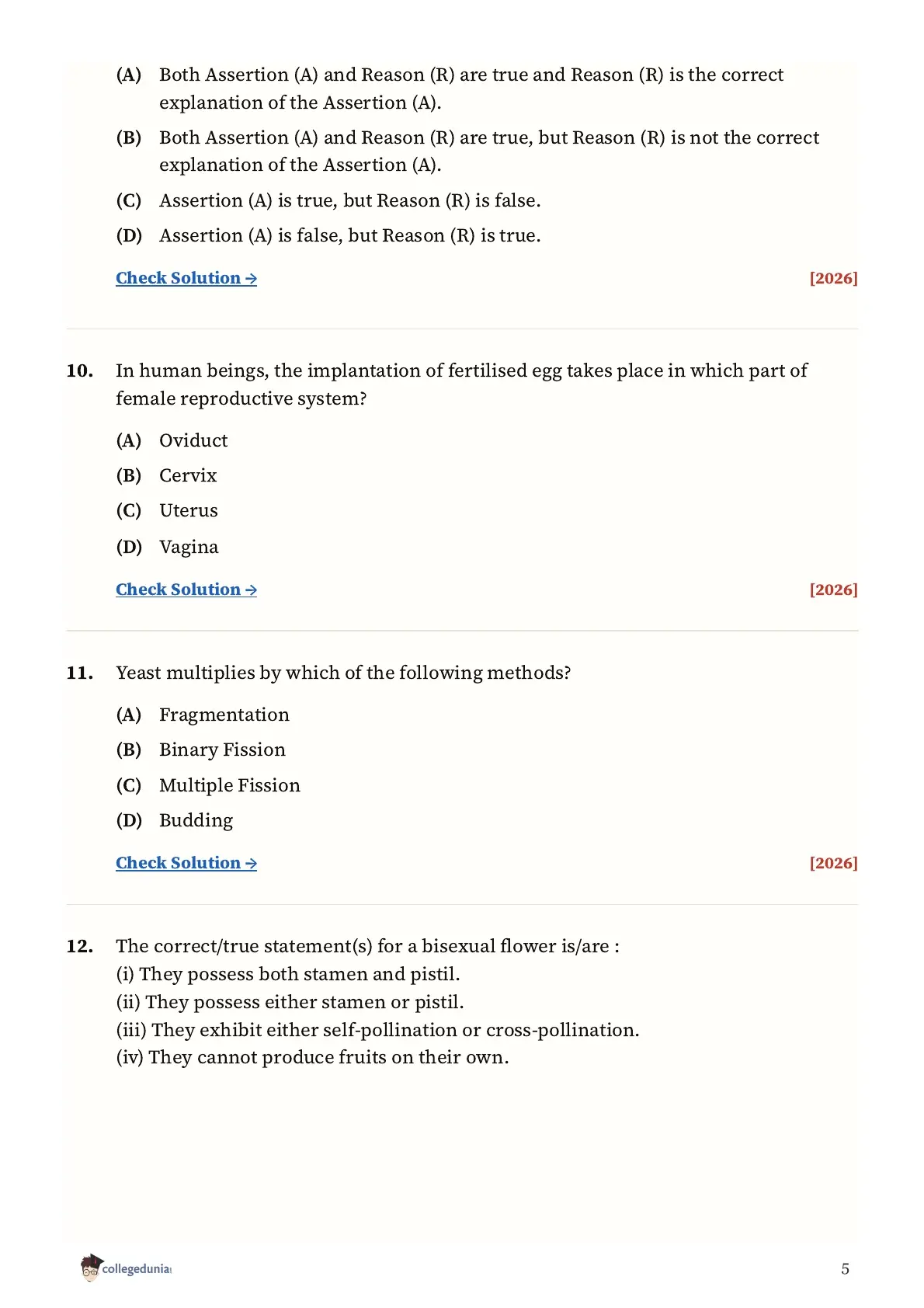
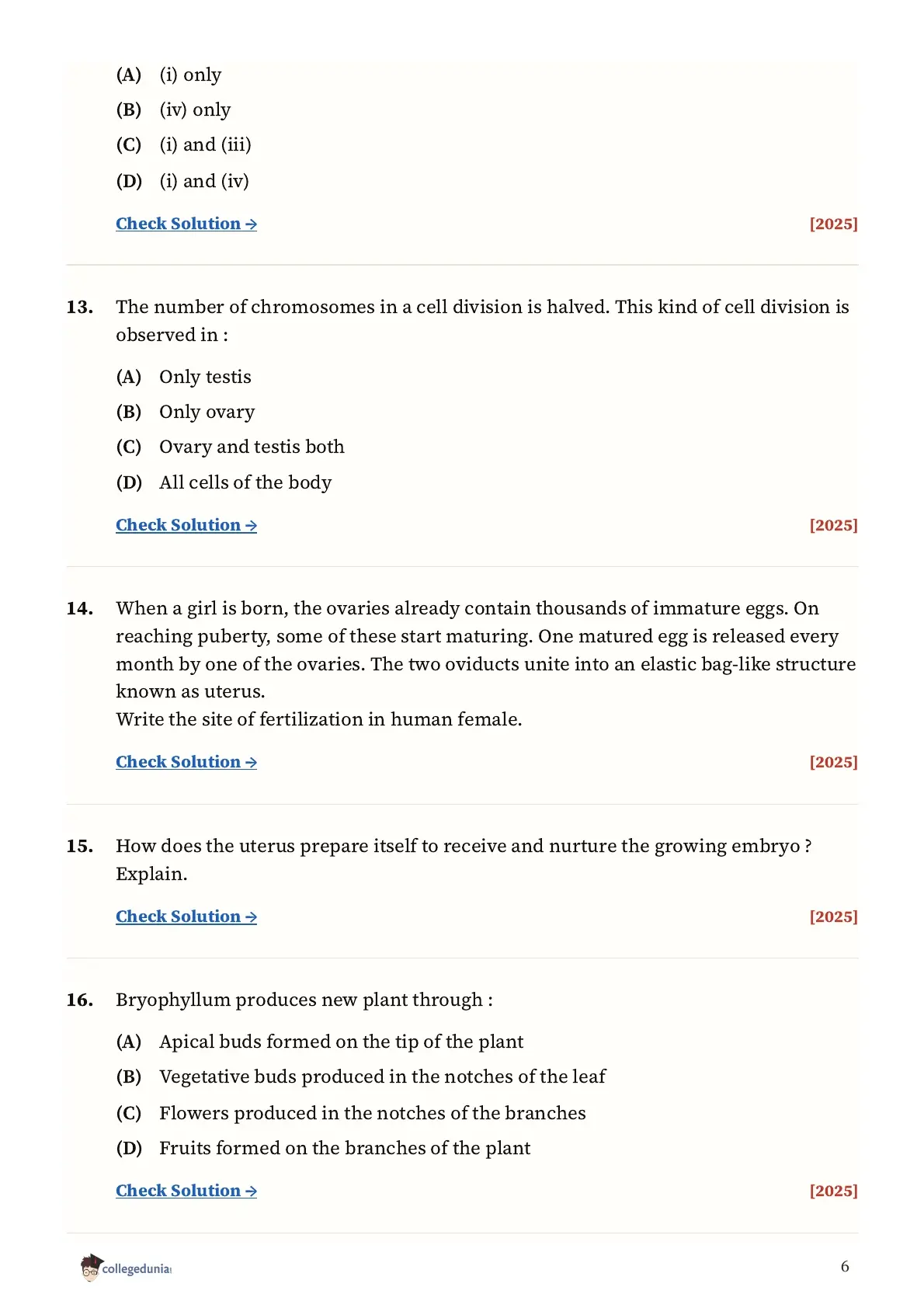
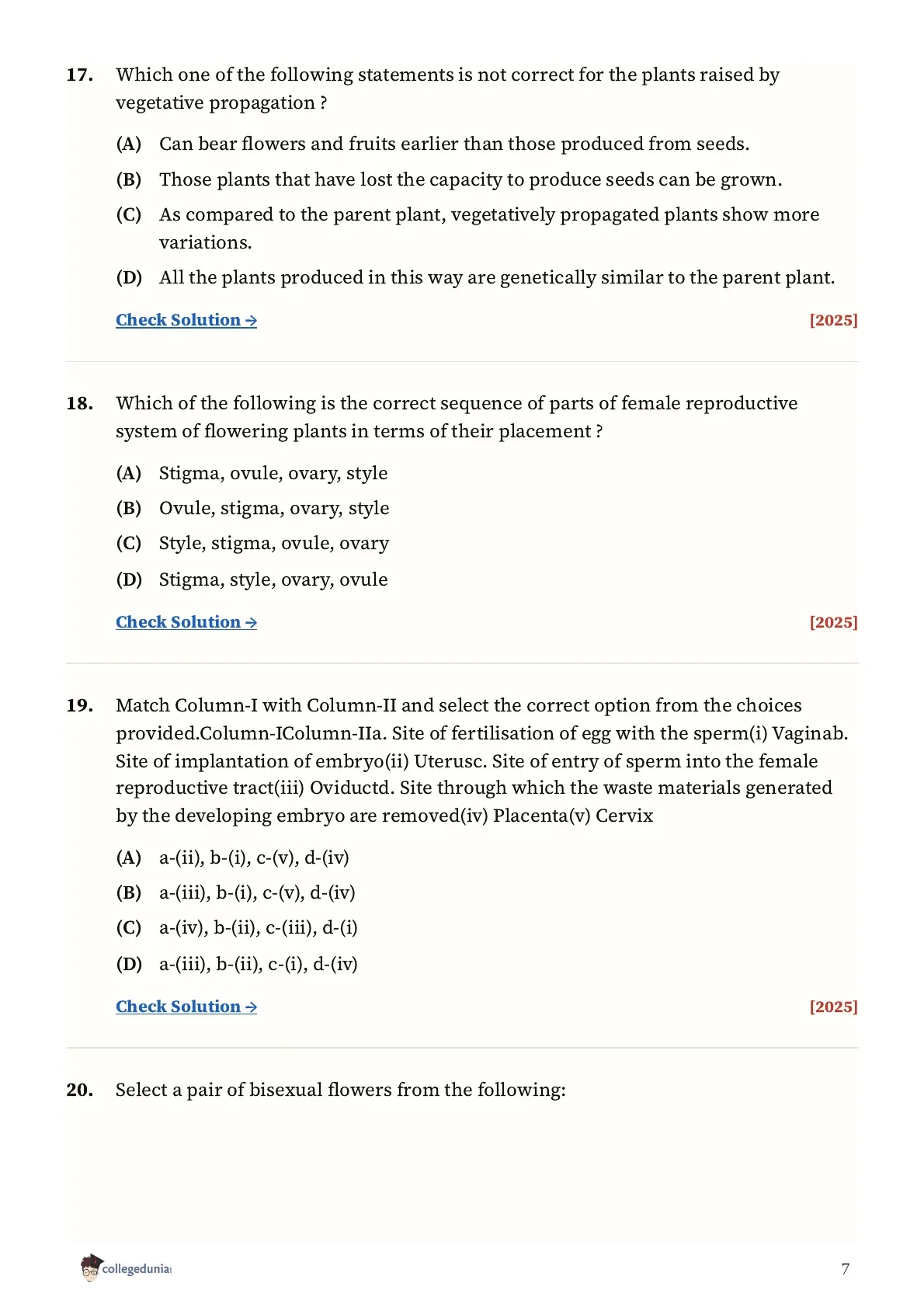
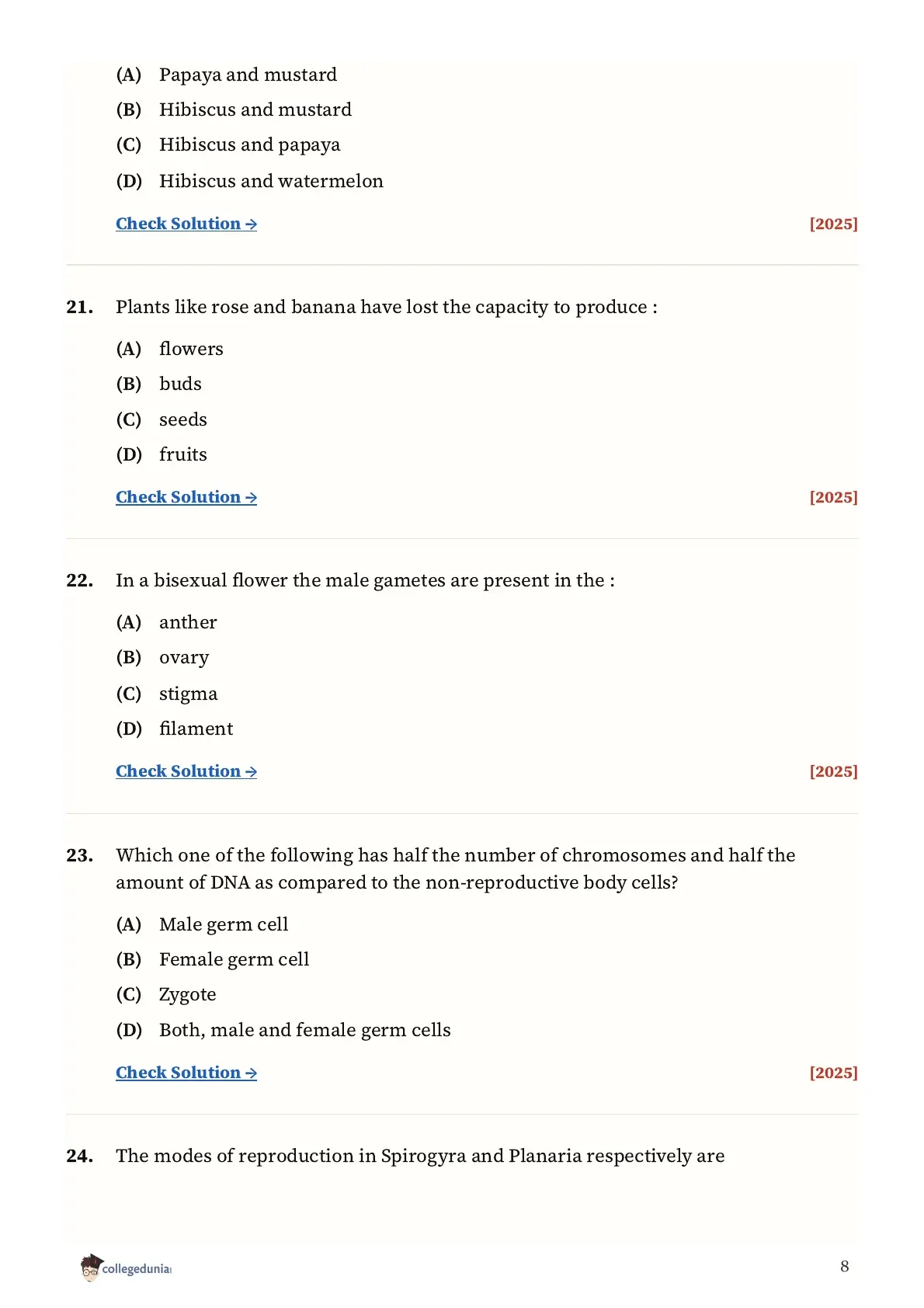
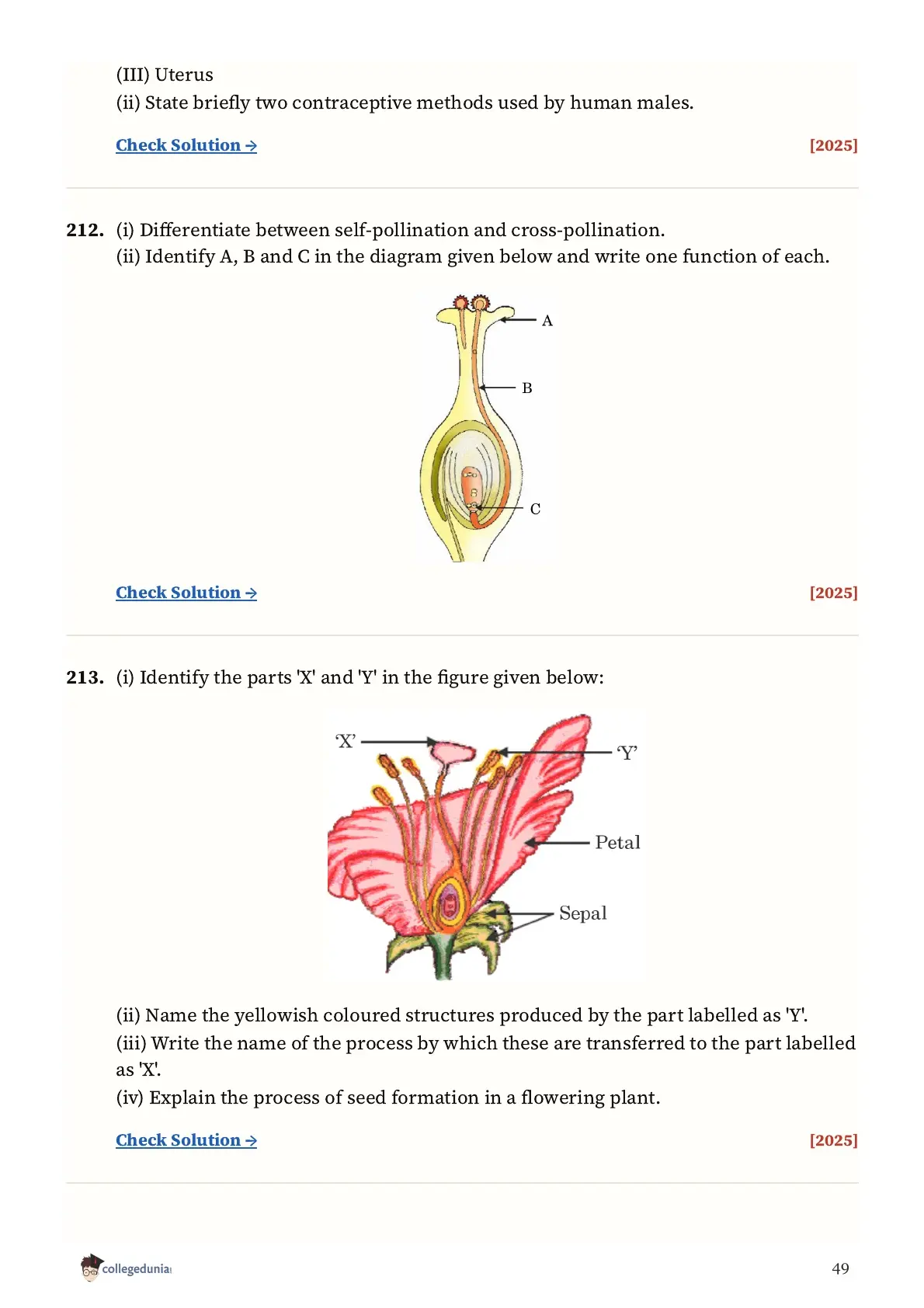
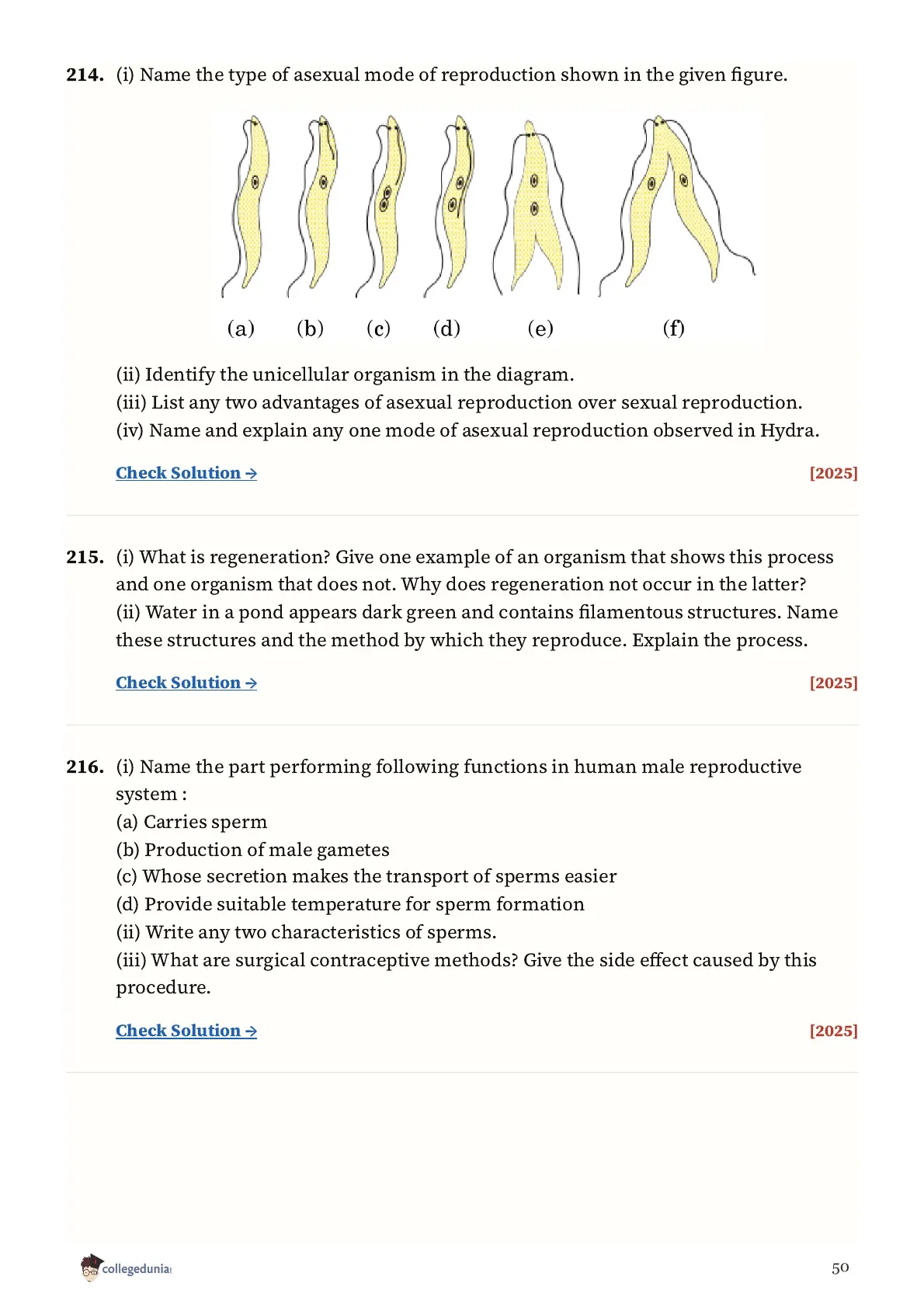
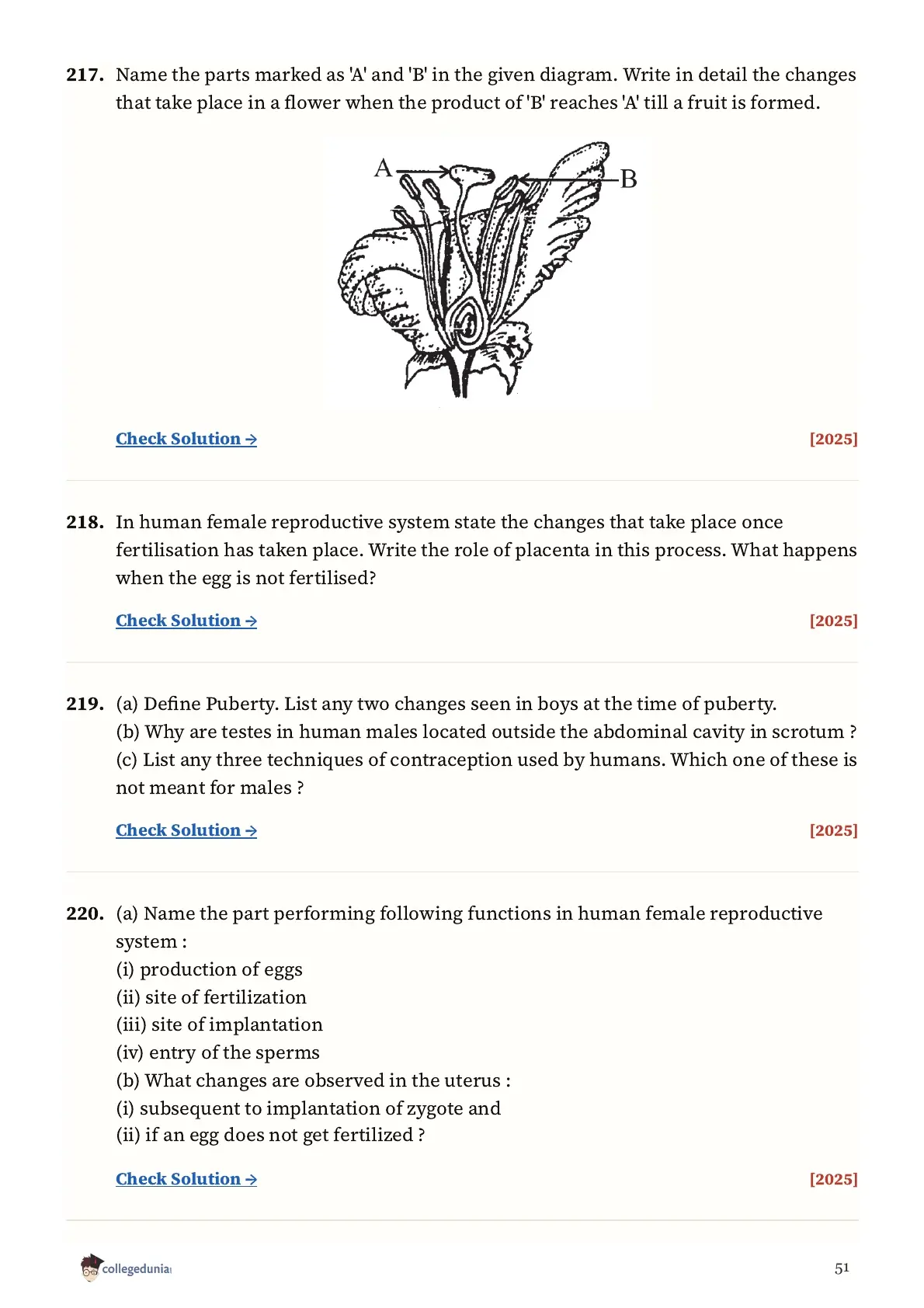
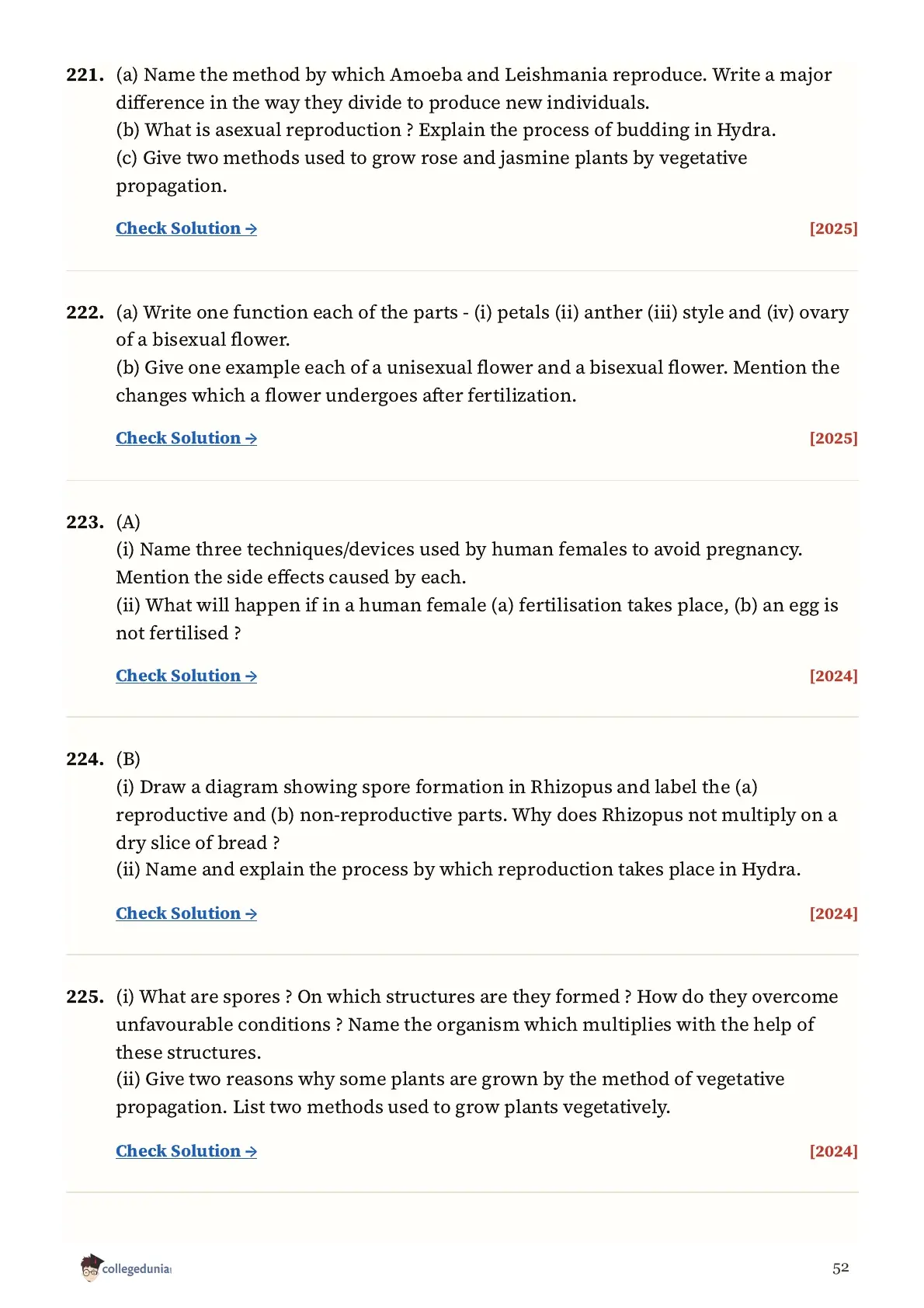
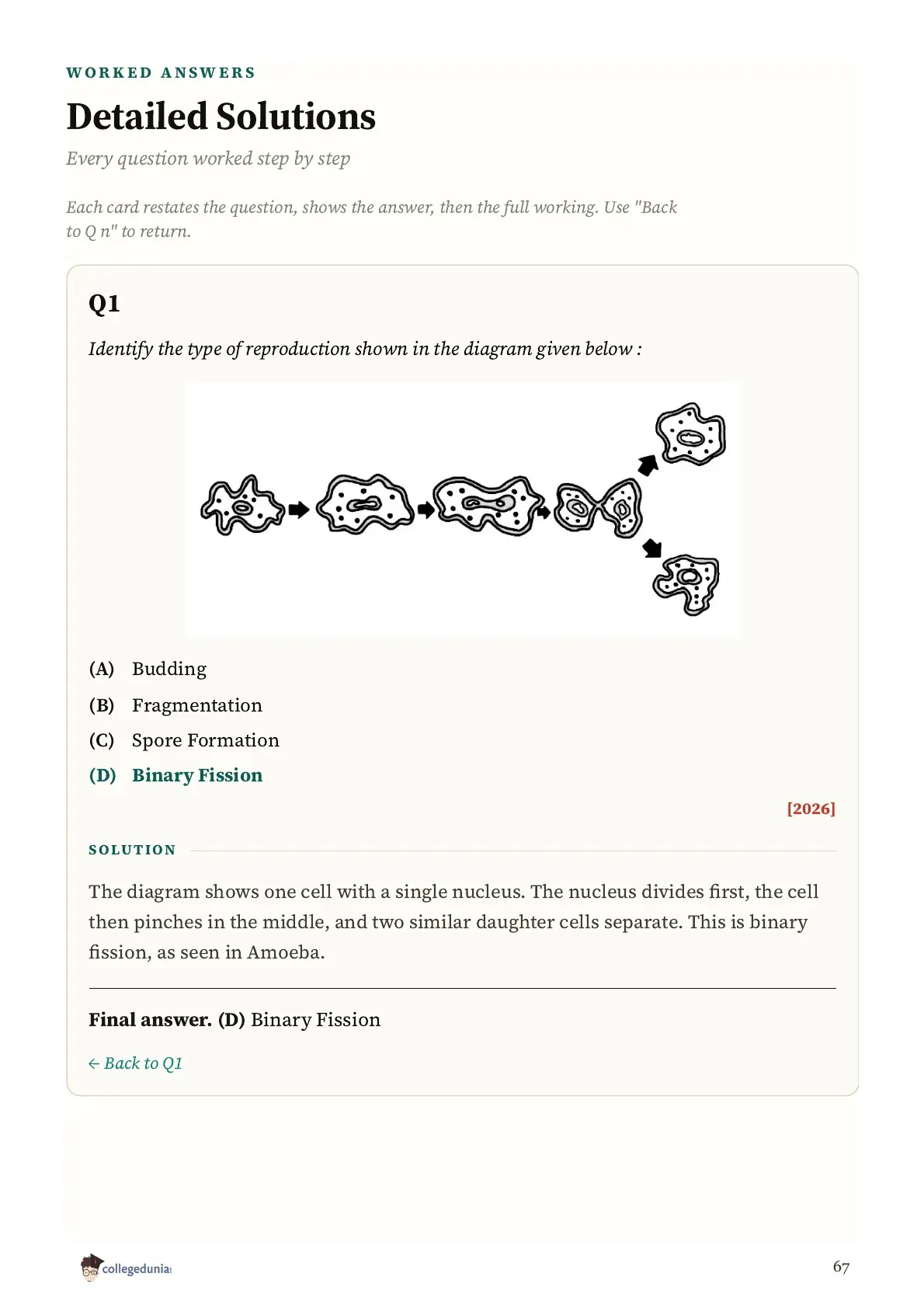
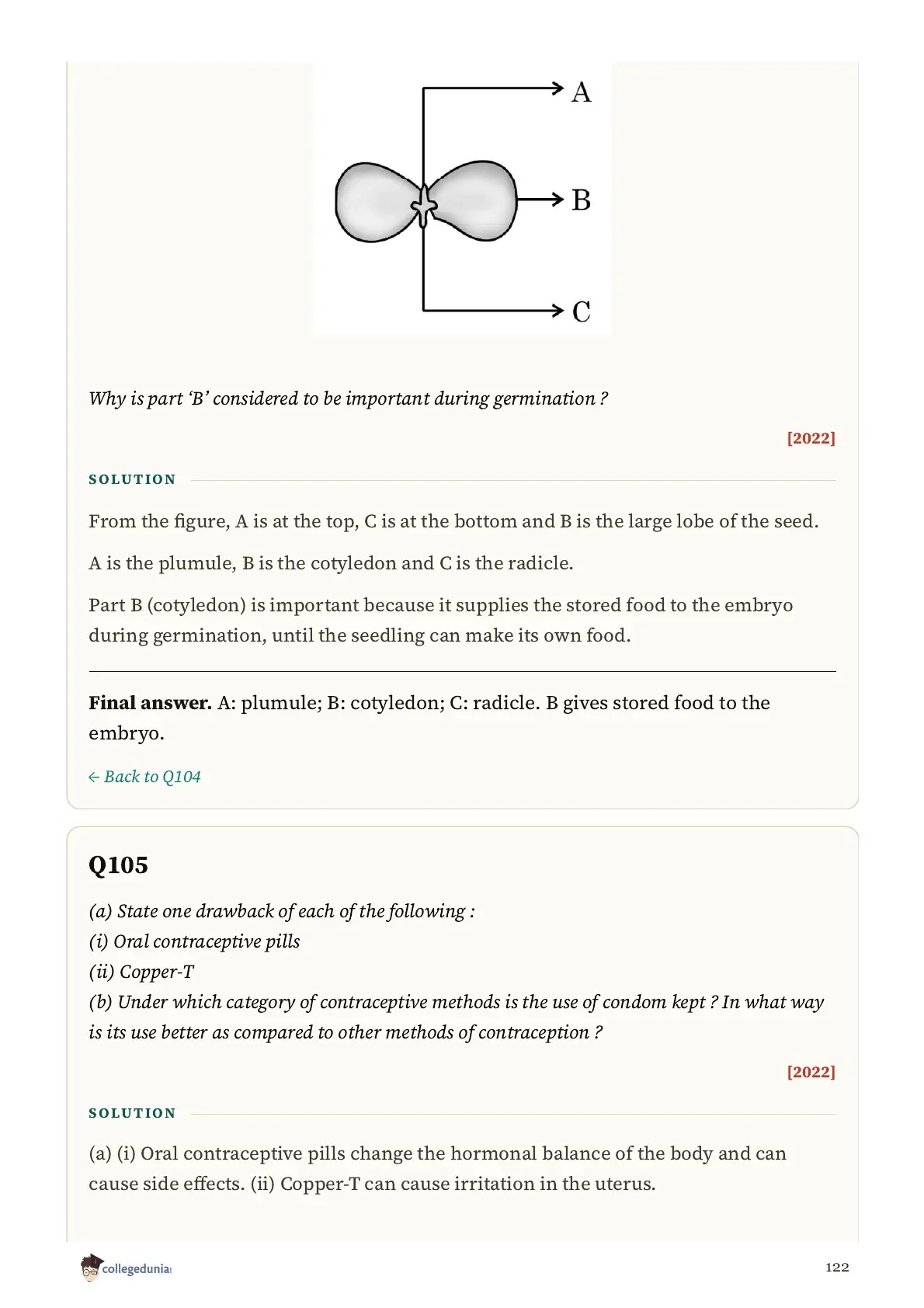
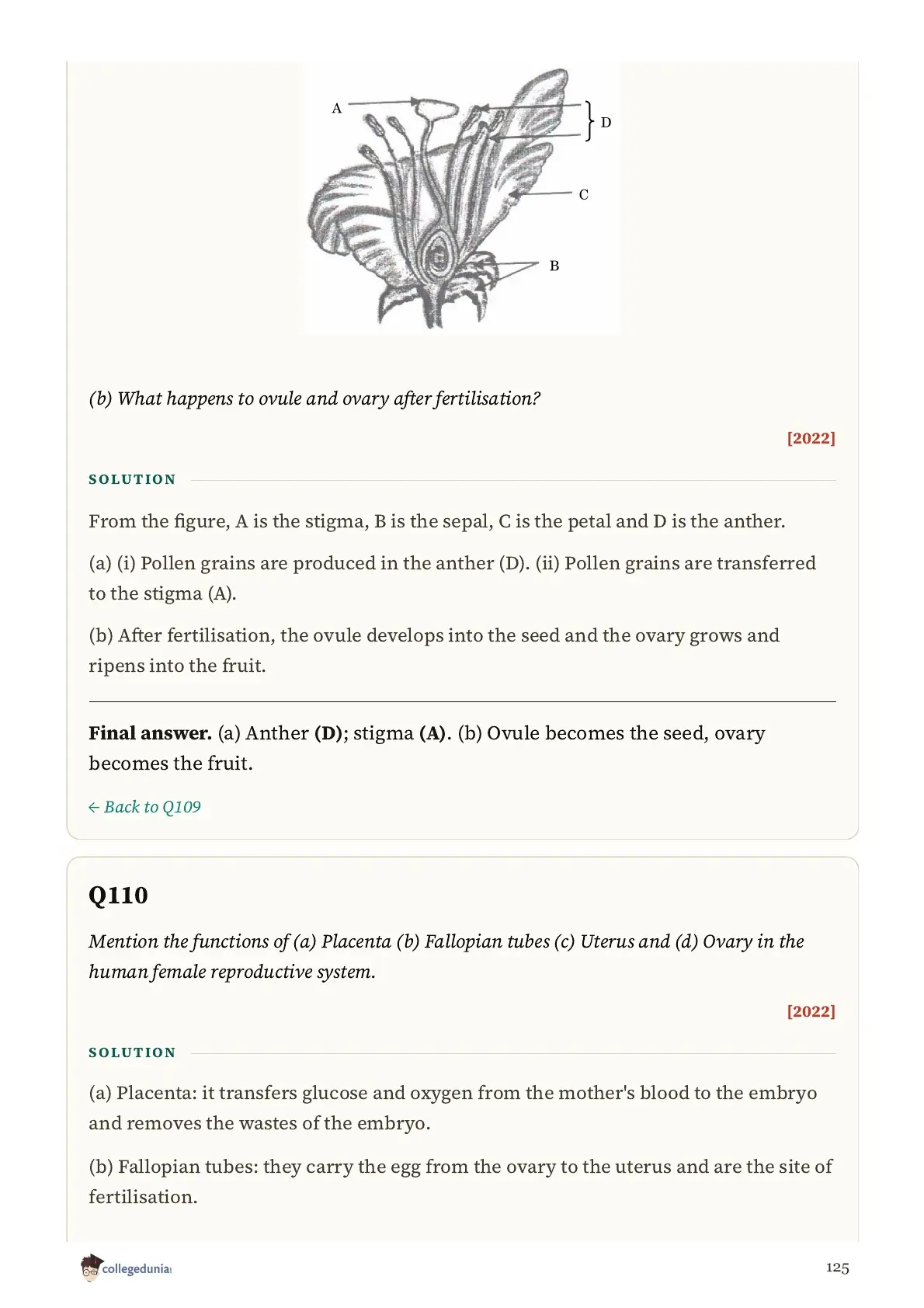
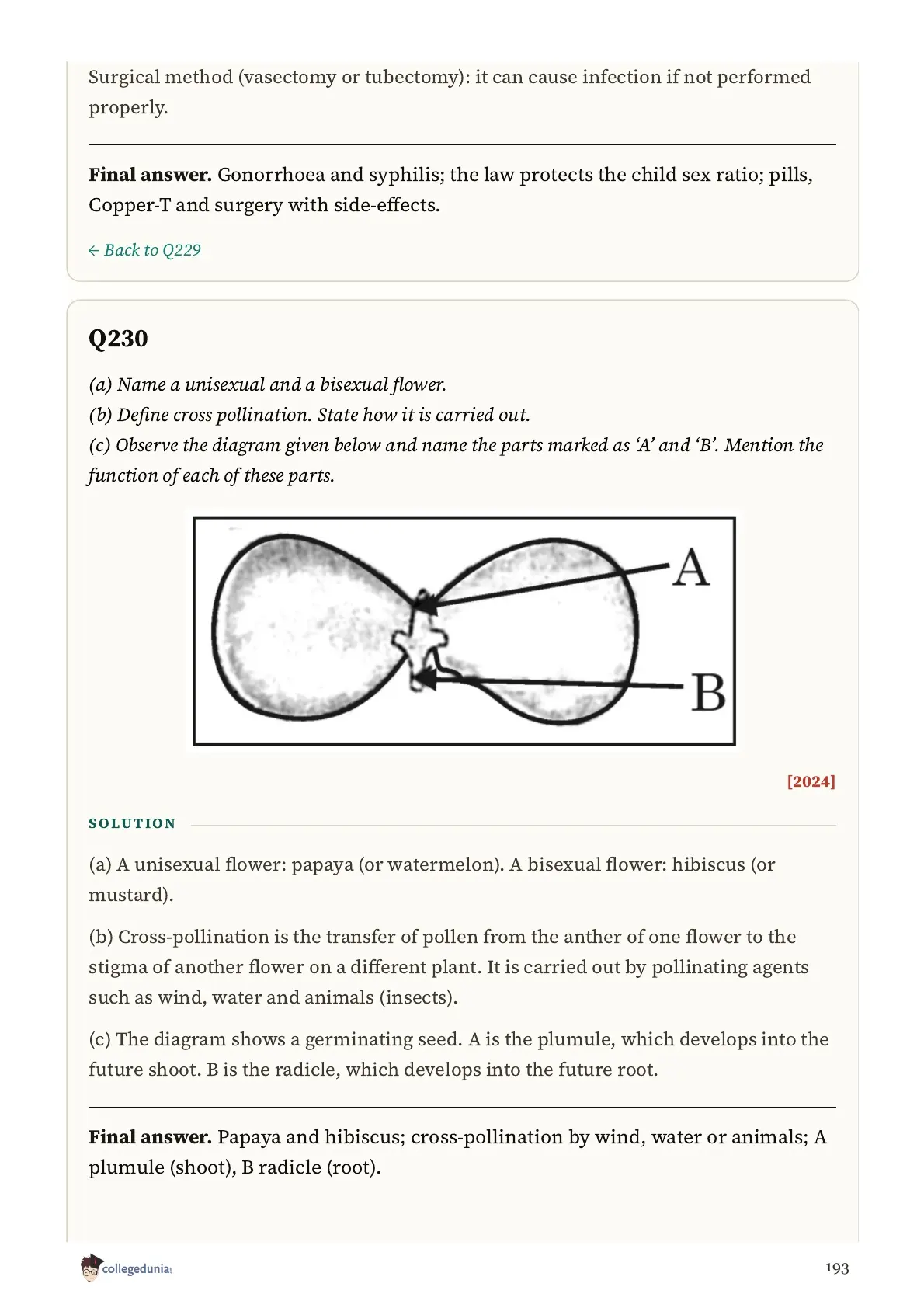
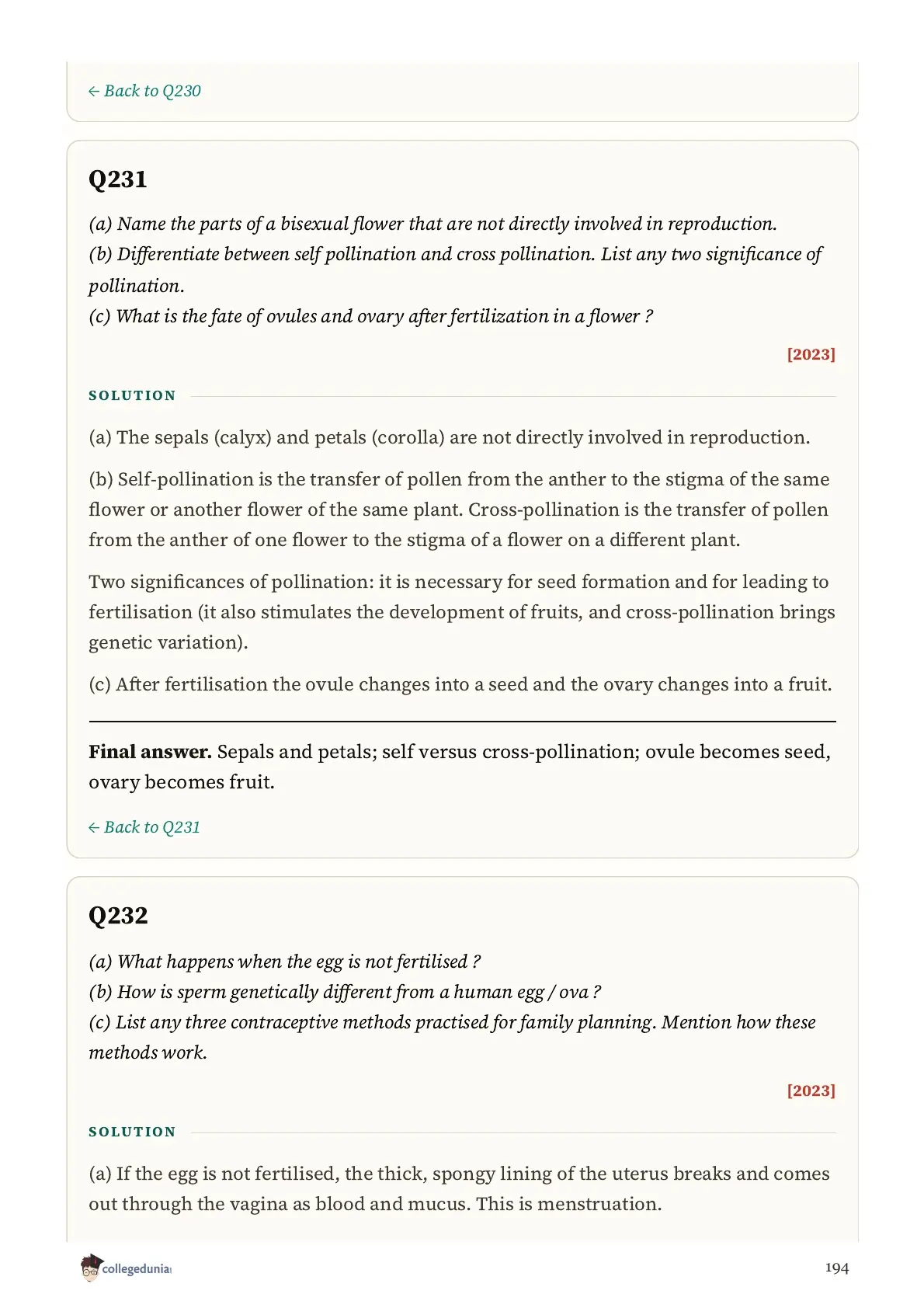
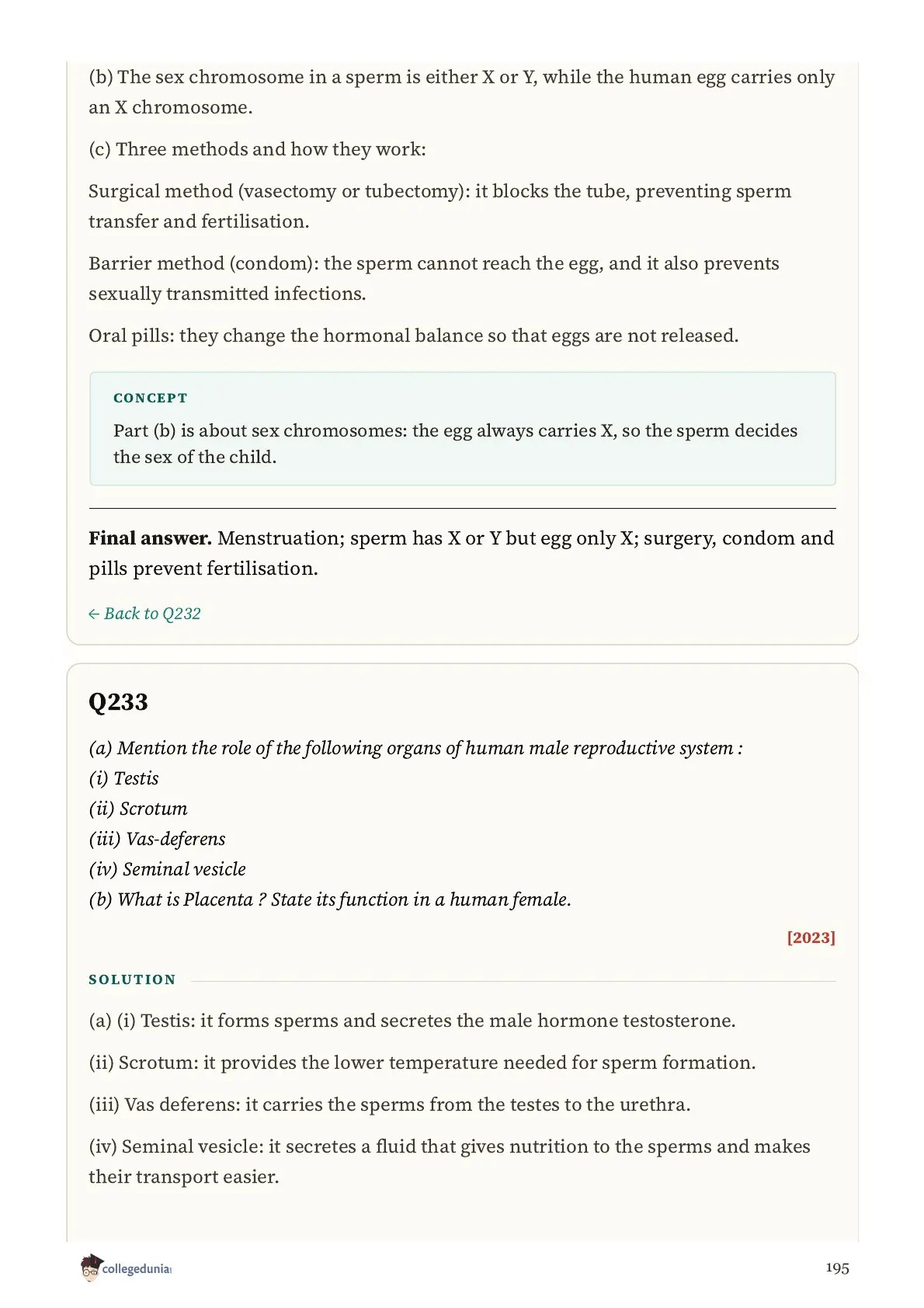
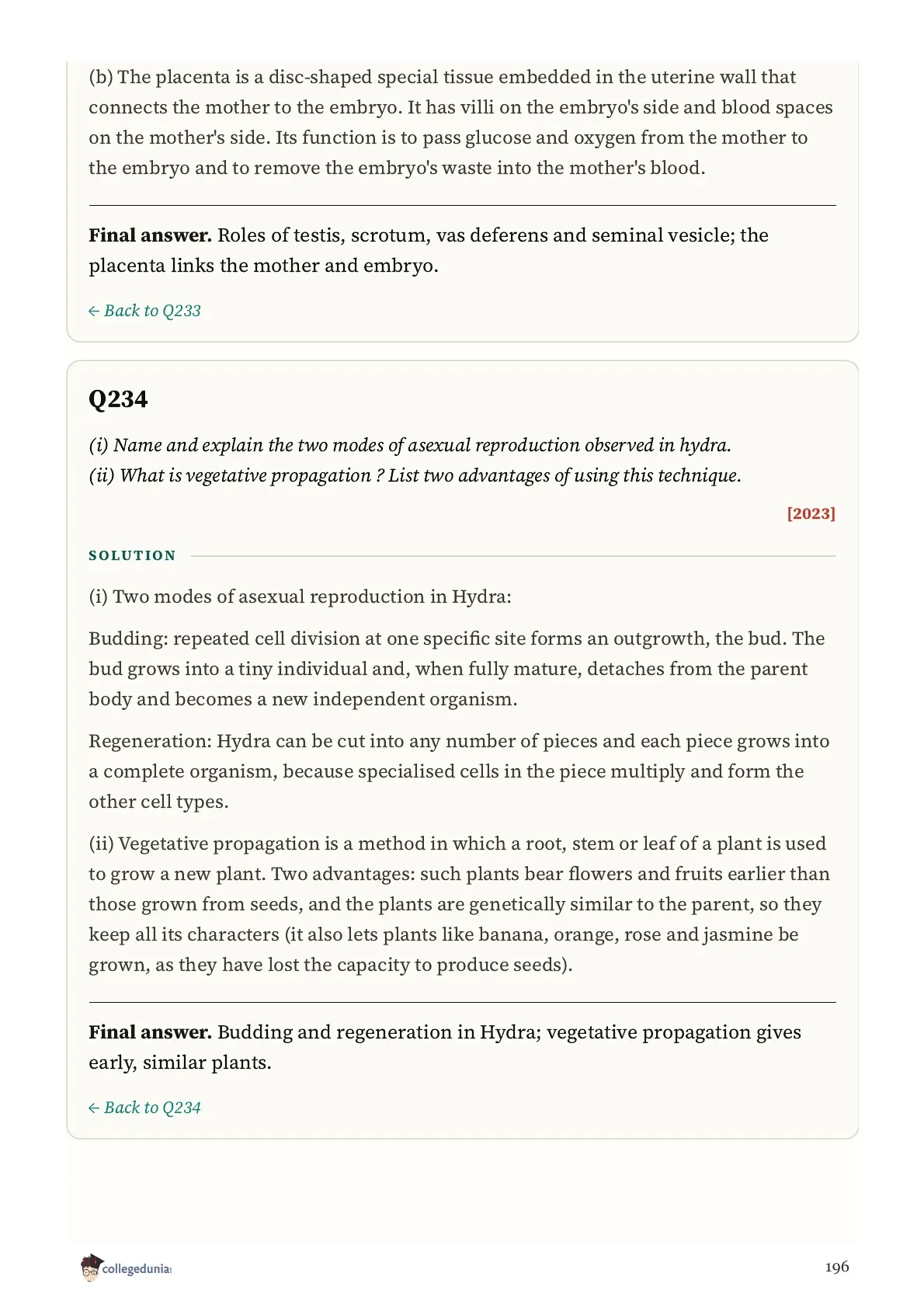
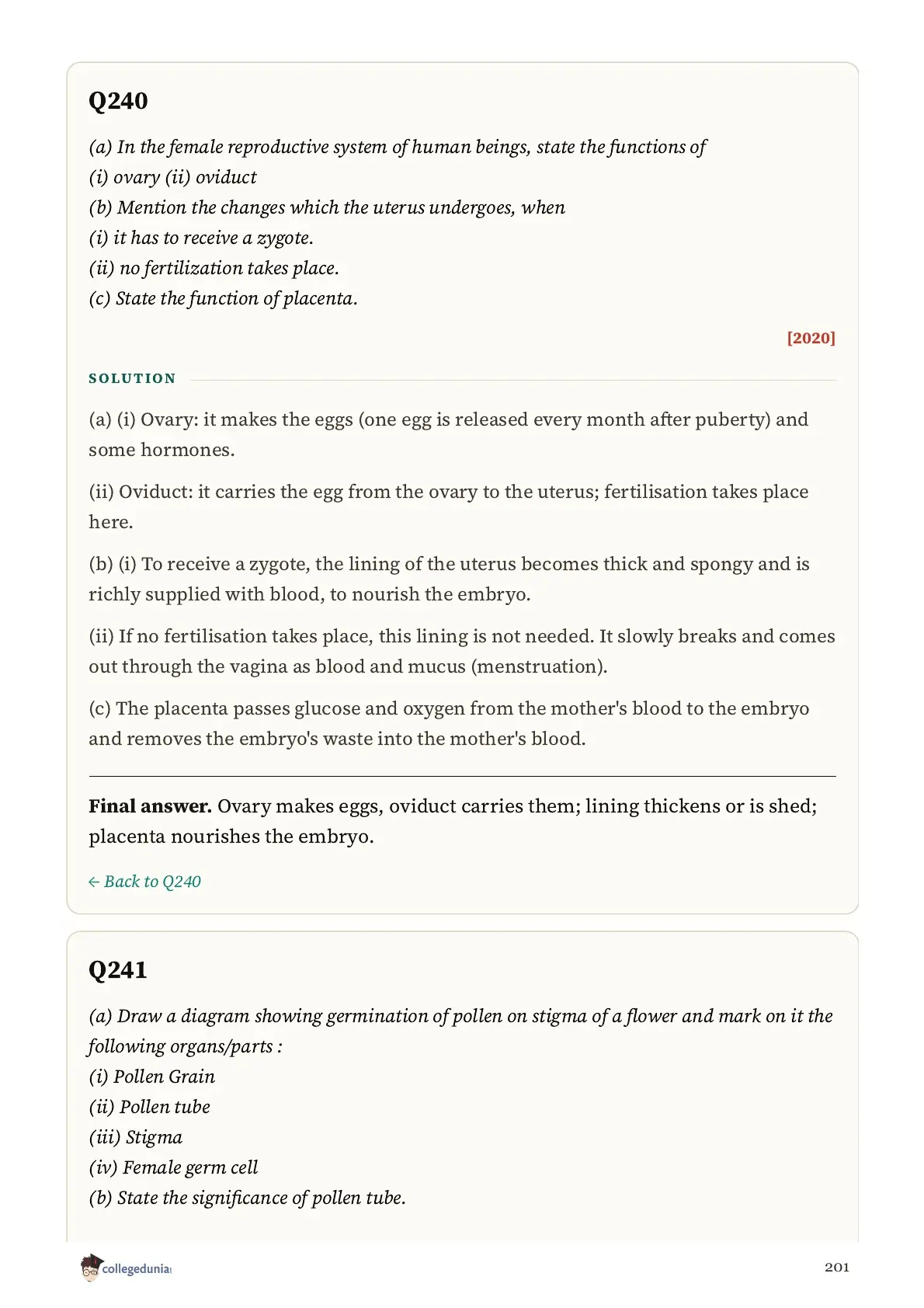
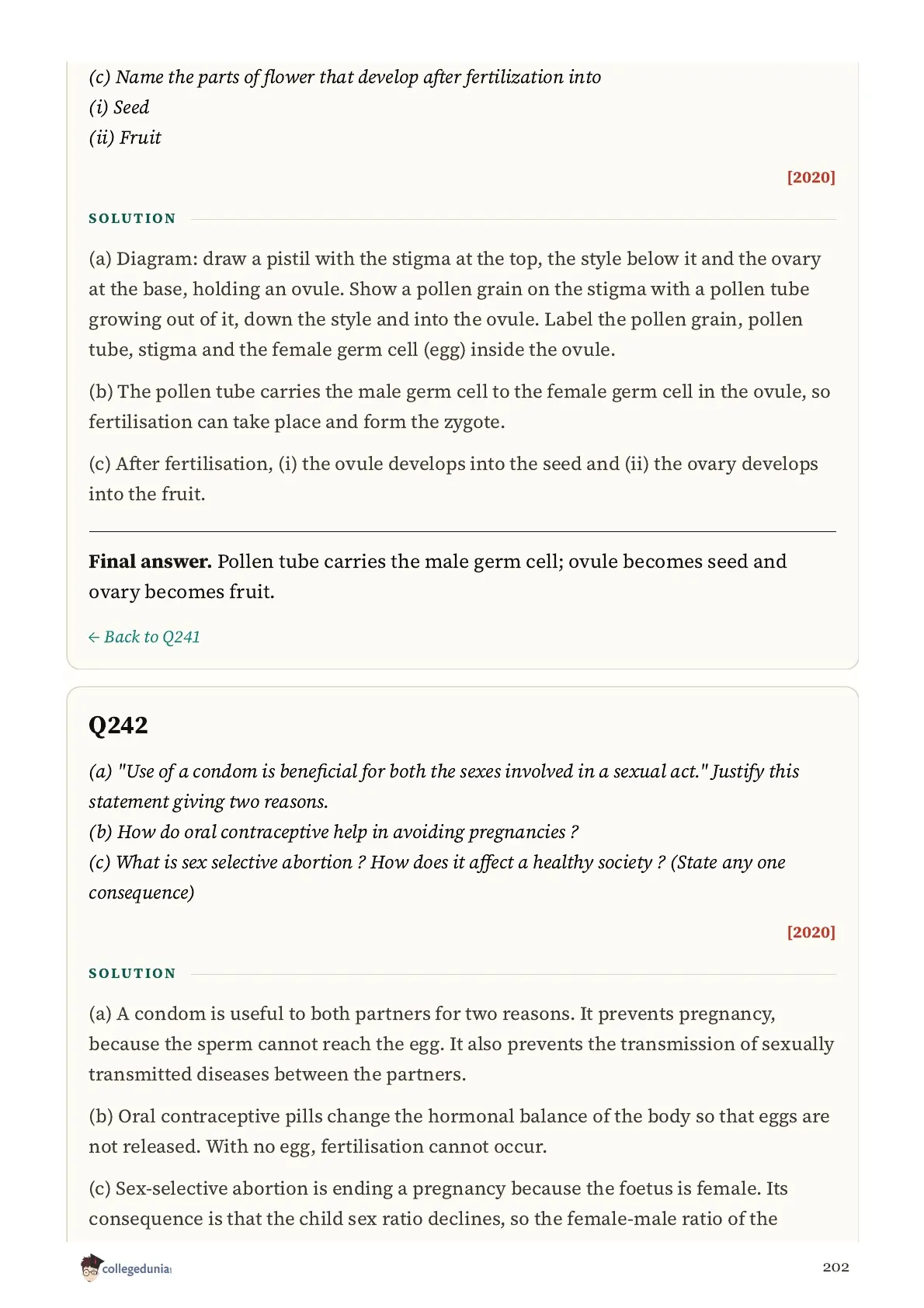
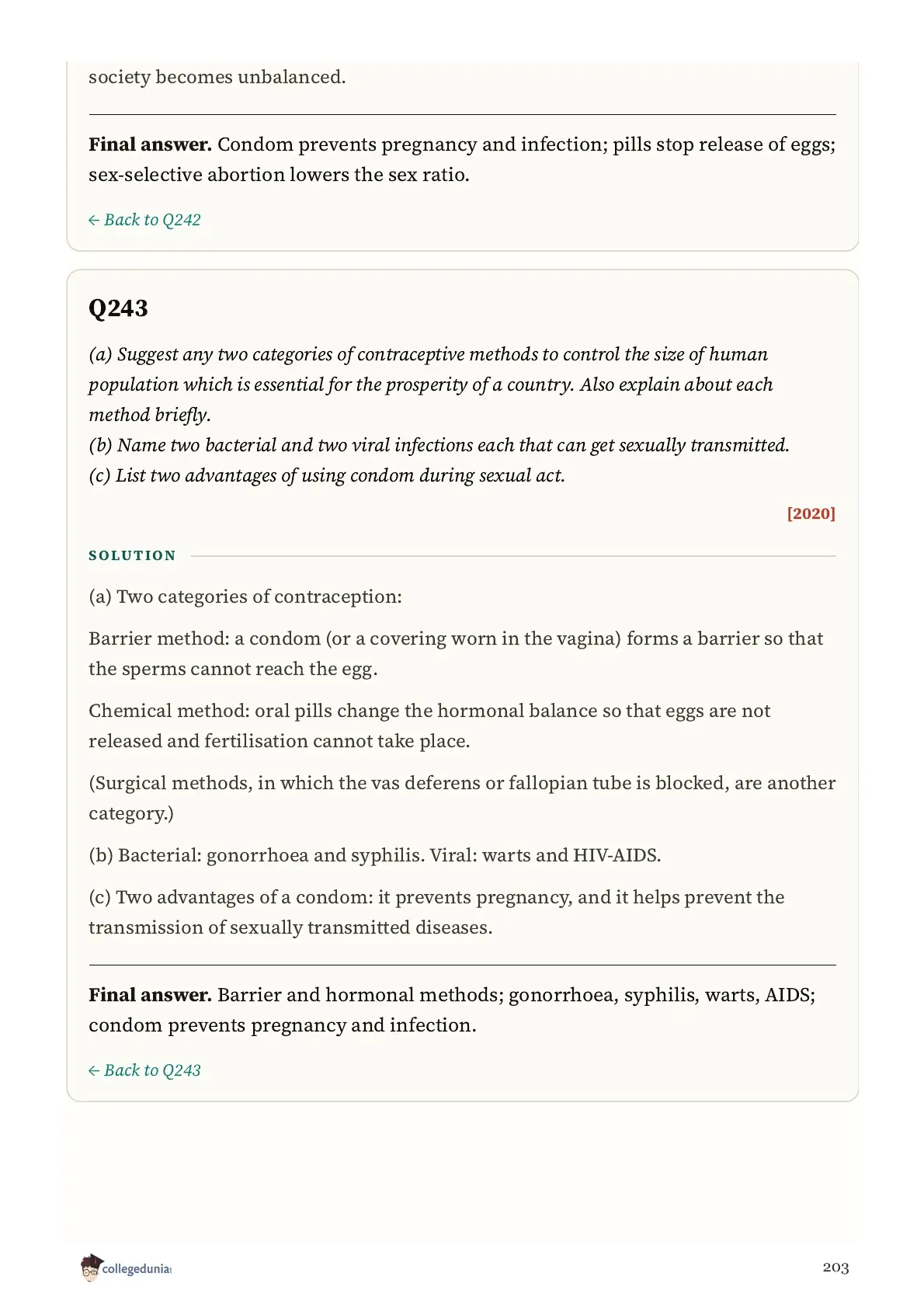
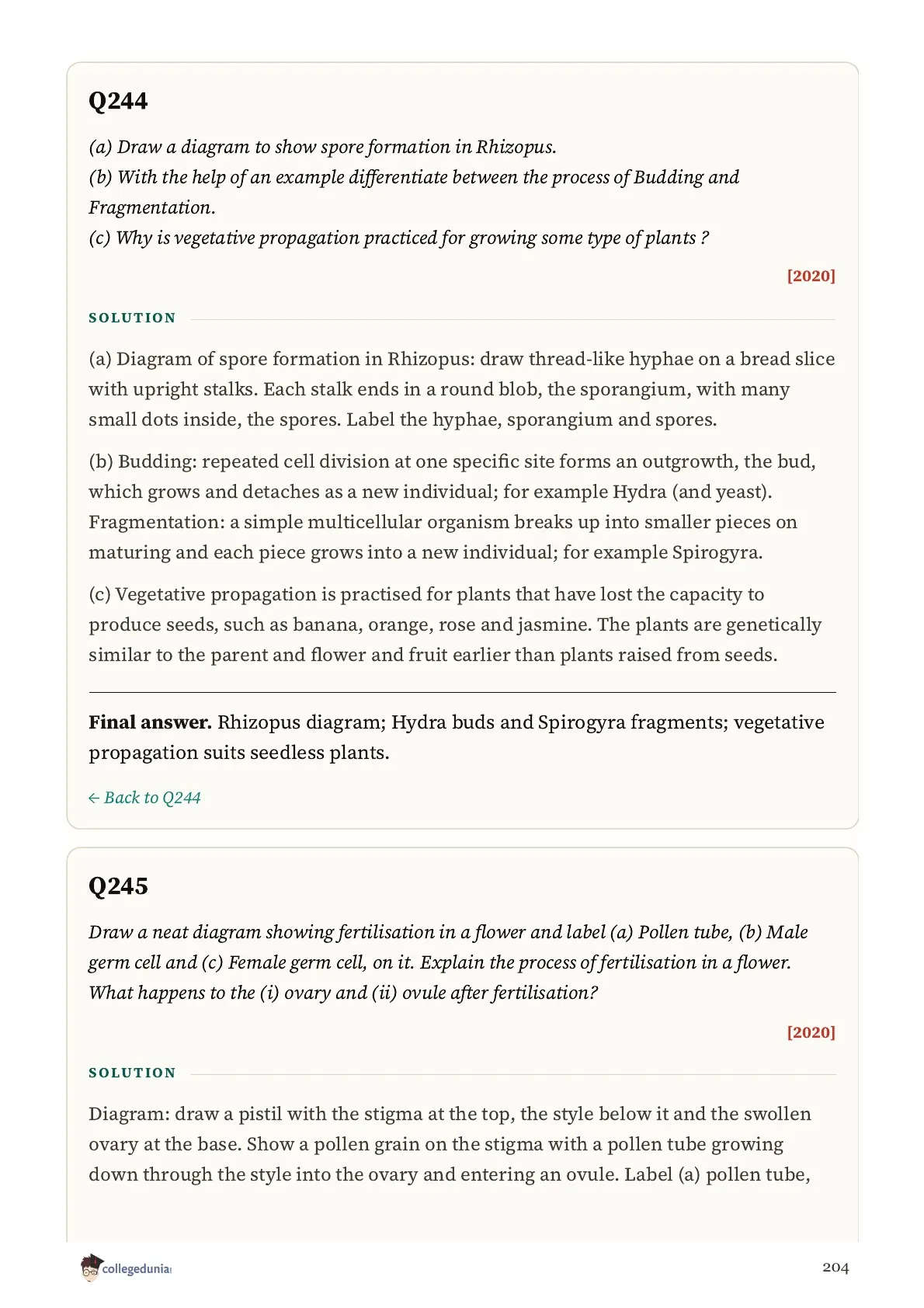
The questions keep returning to fertilisation (39 questions), the ovary and the female reproductive system (31), pollination (25), seeds and germination (23), contraception (23), budding (22) and spore formation in Rhizopus (20). 22 of the questions carry their original diagram, so you work from the same figure the board printed.
On this page you get:
- 282 questions with a worked solution each: 61 MCQs and assertion-reason items, 128 short answers, 13 case-based items and 80 long answers
- An Answer Key that lists all 61 MCQs at a glance
- Question counts by topic, so you know whether to start with asexual modes, flowering plants or the human reproductive system
- A marks-wise table of questions (1, 2, 3, 4 and 5 mark)
- The common mistakes students make, such as saying fertilisation happens in the uterus, and a short FAQ
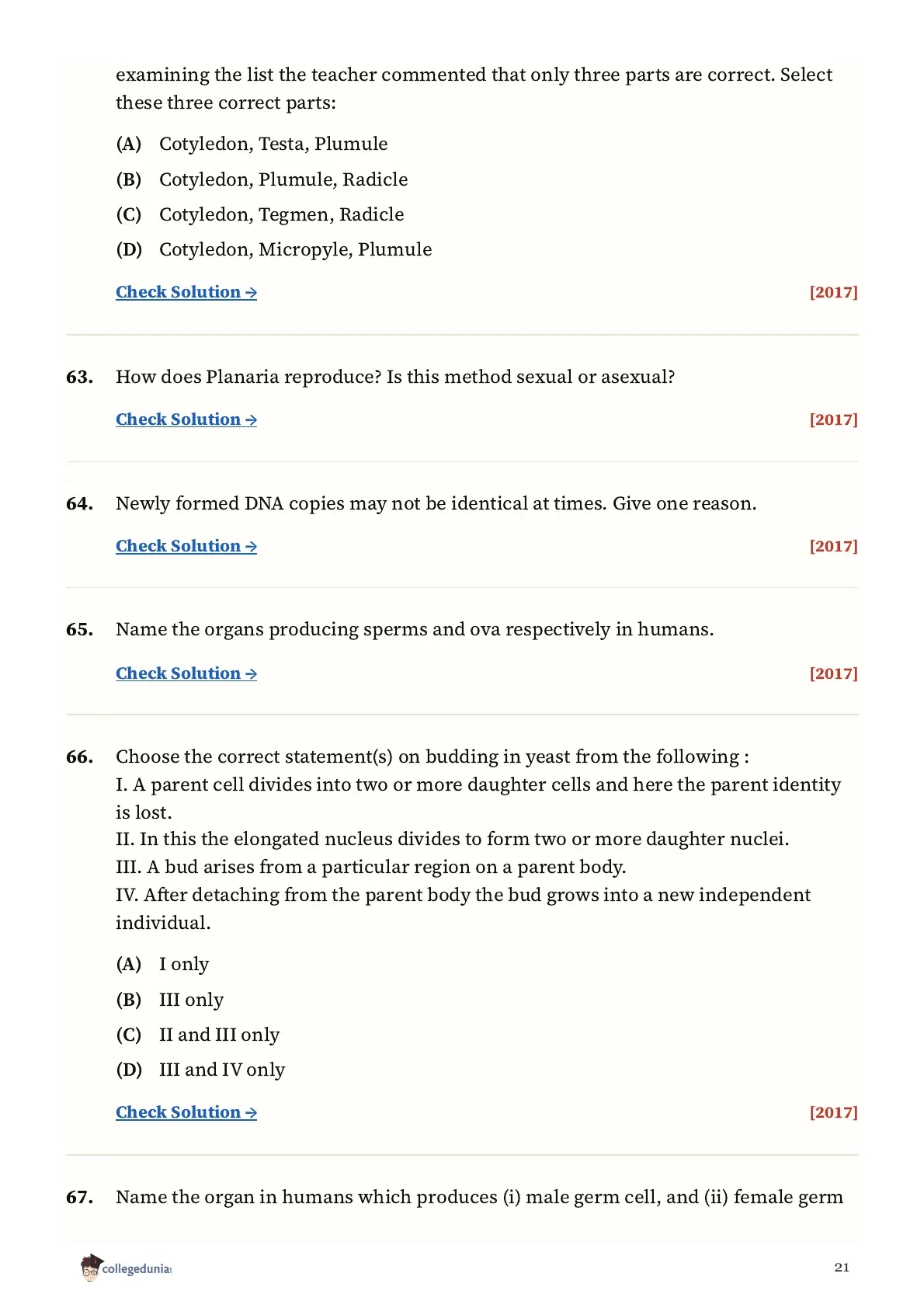
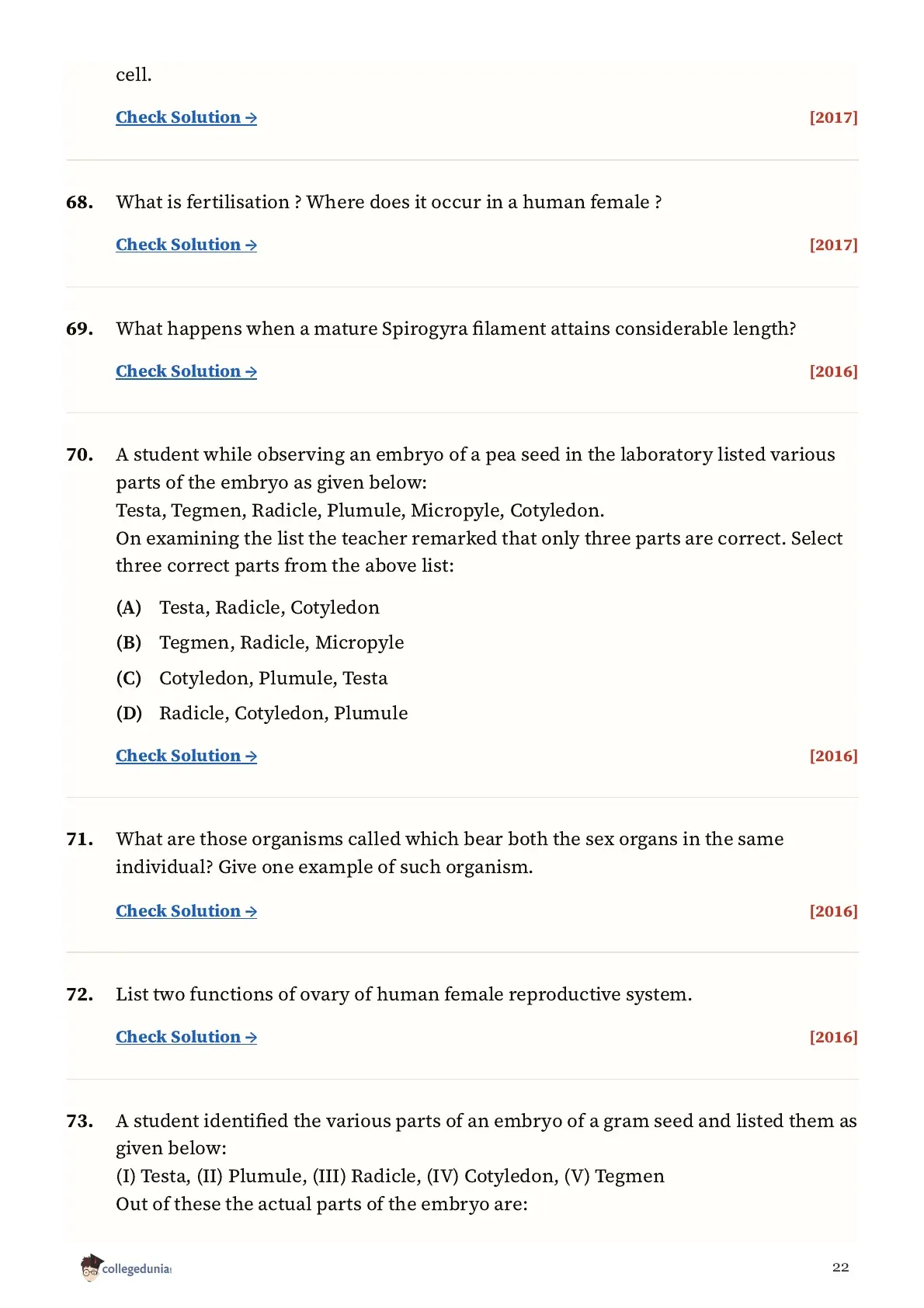
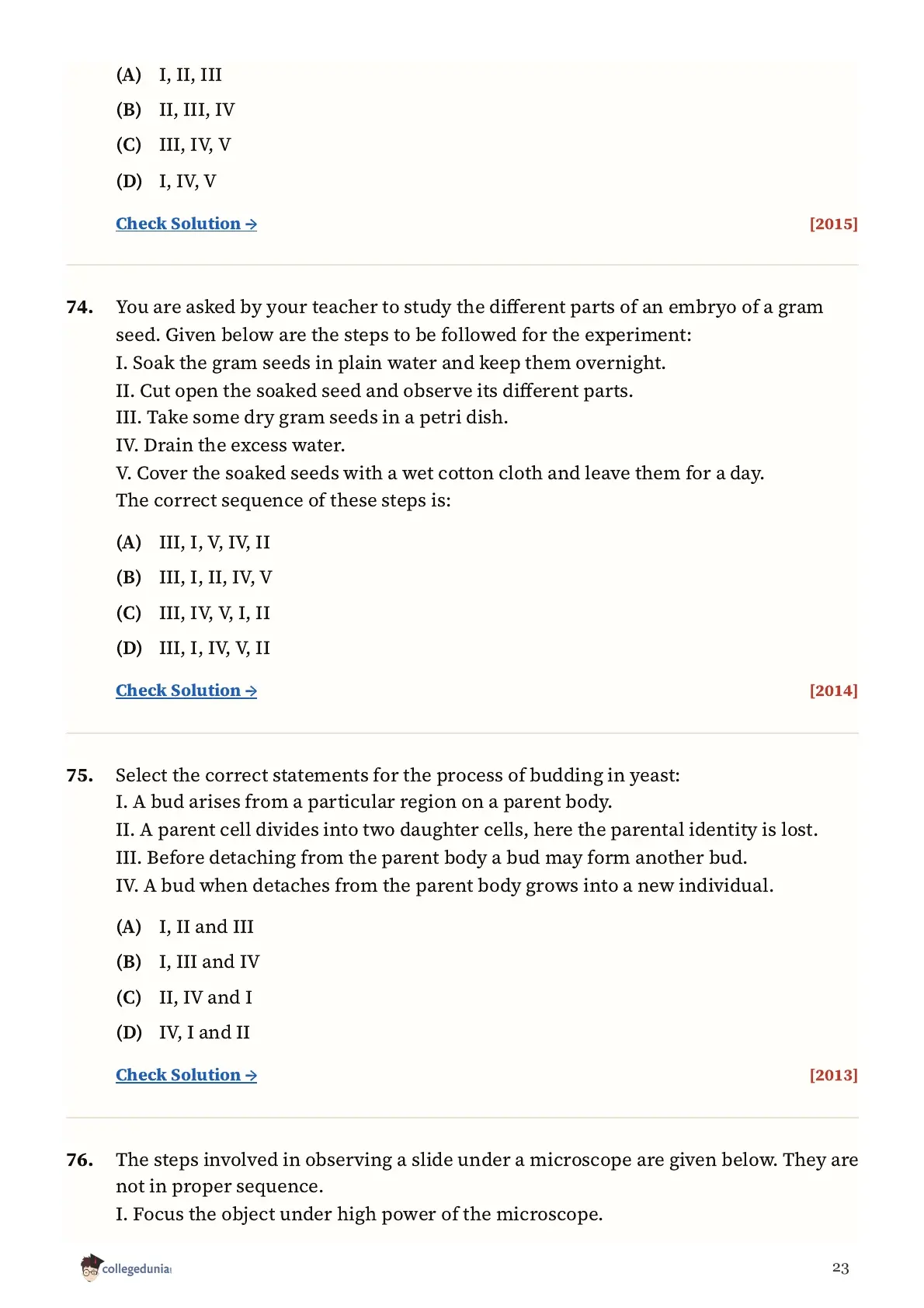
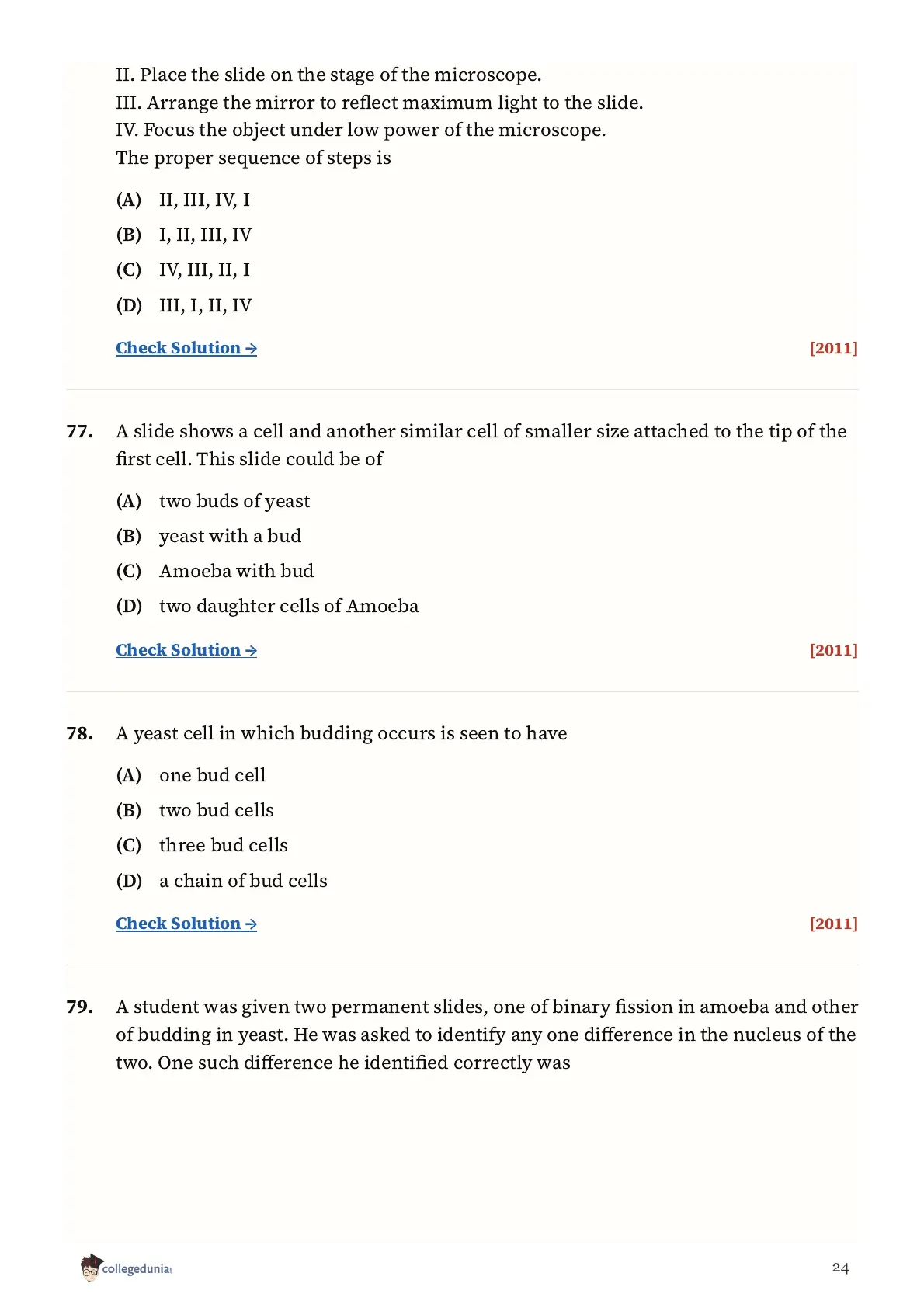
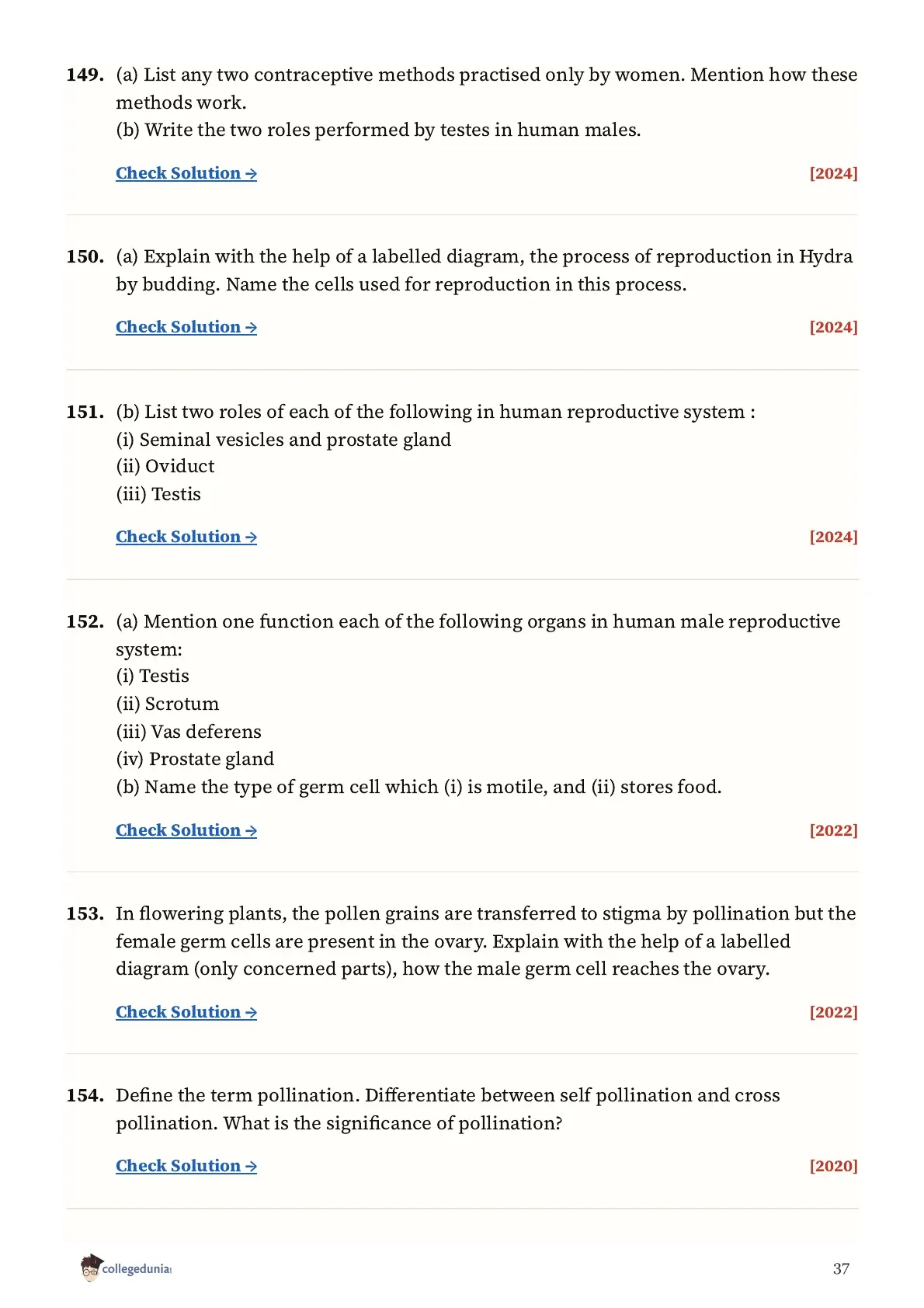
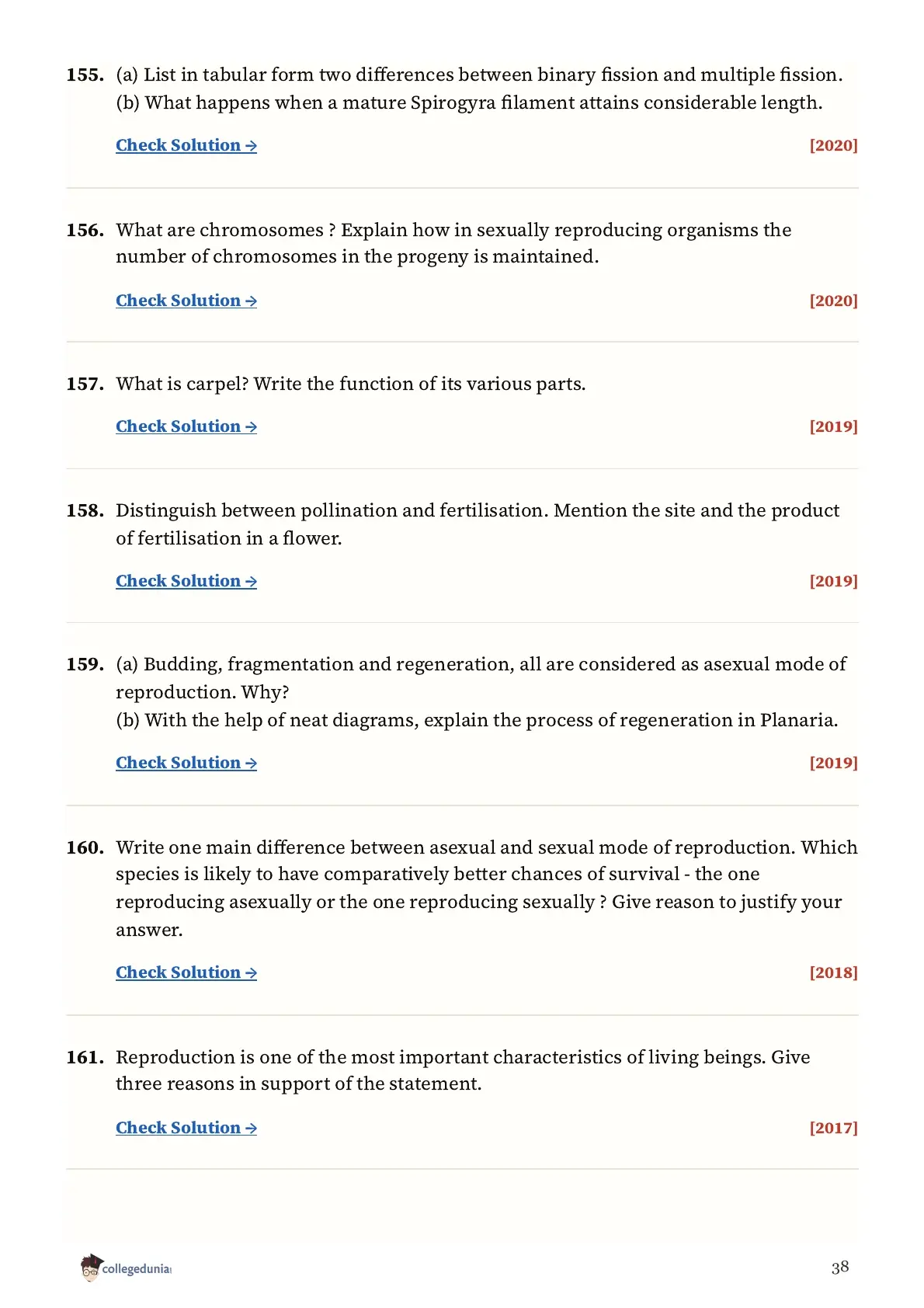
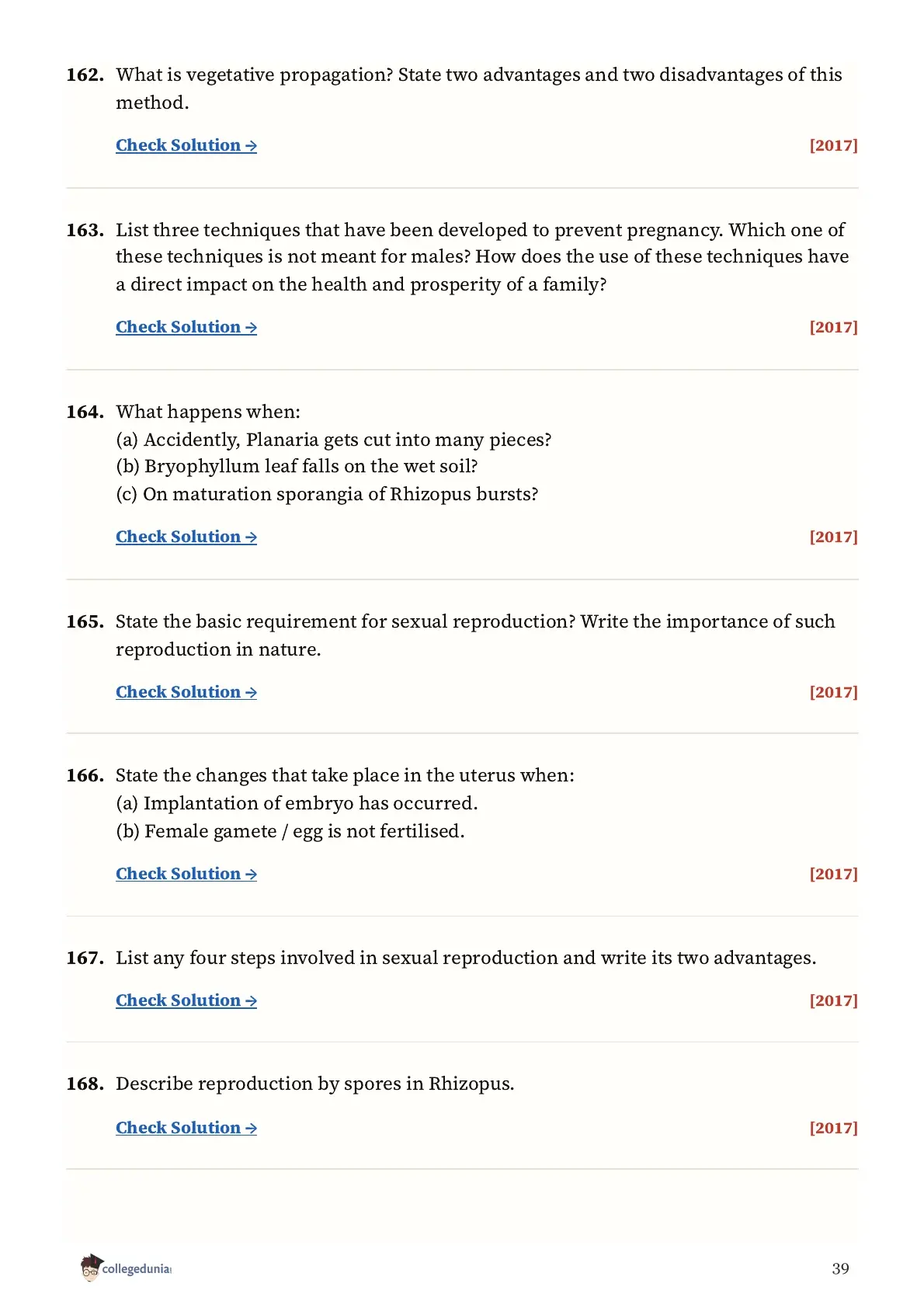
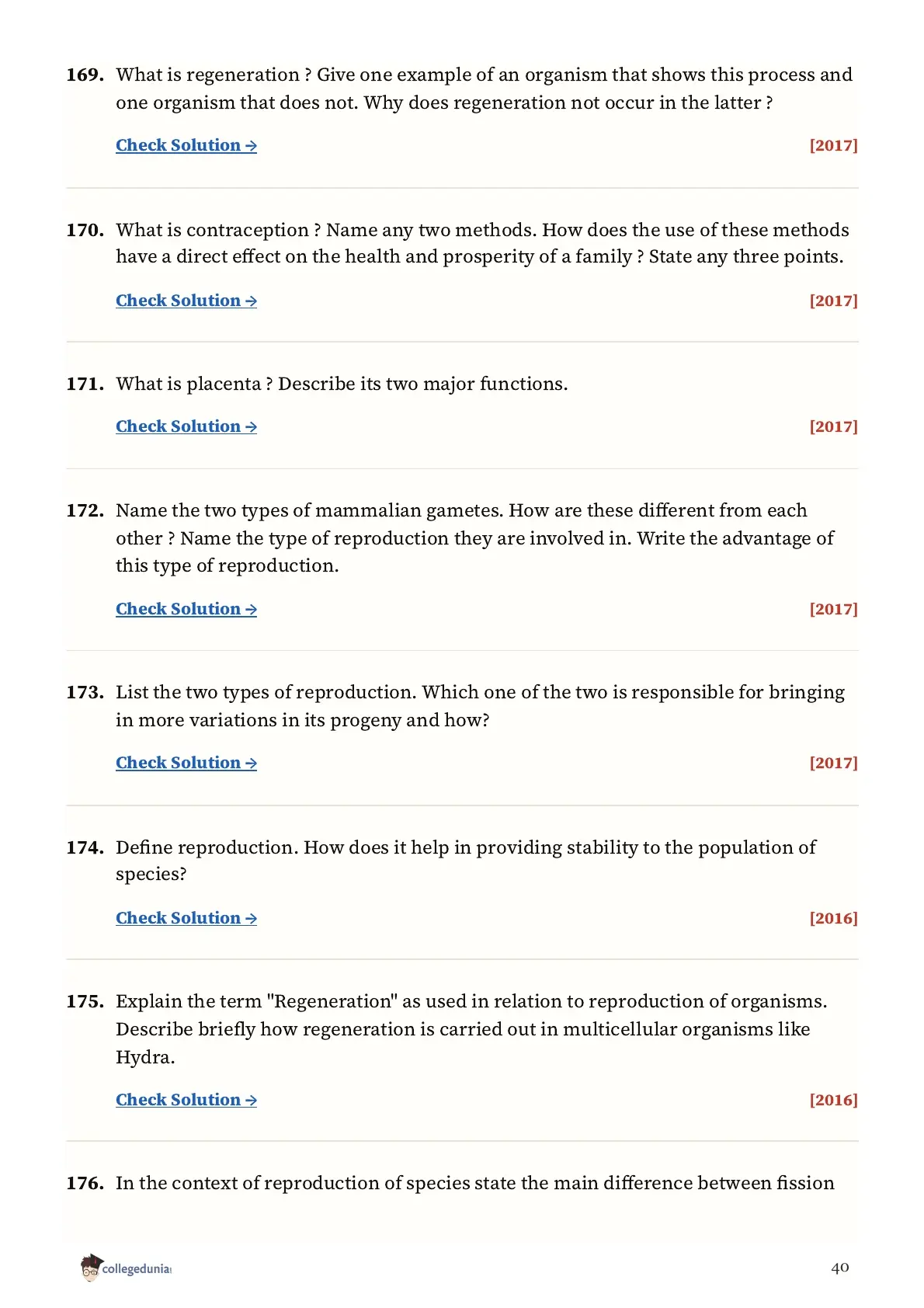
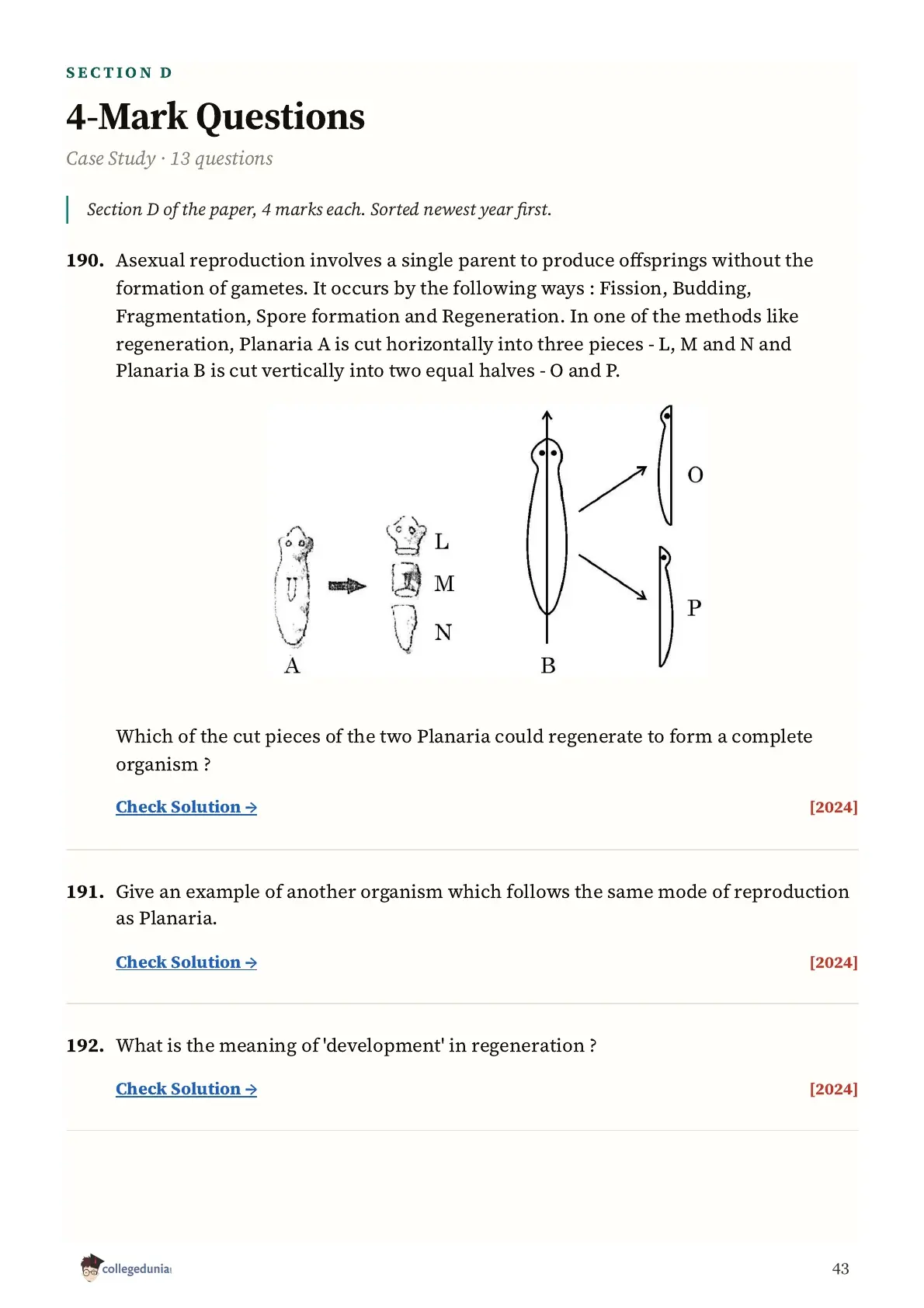
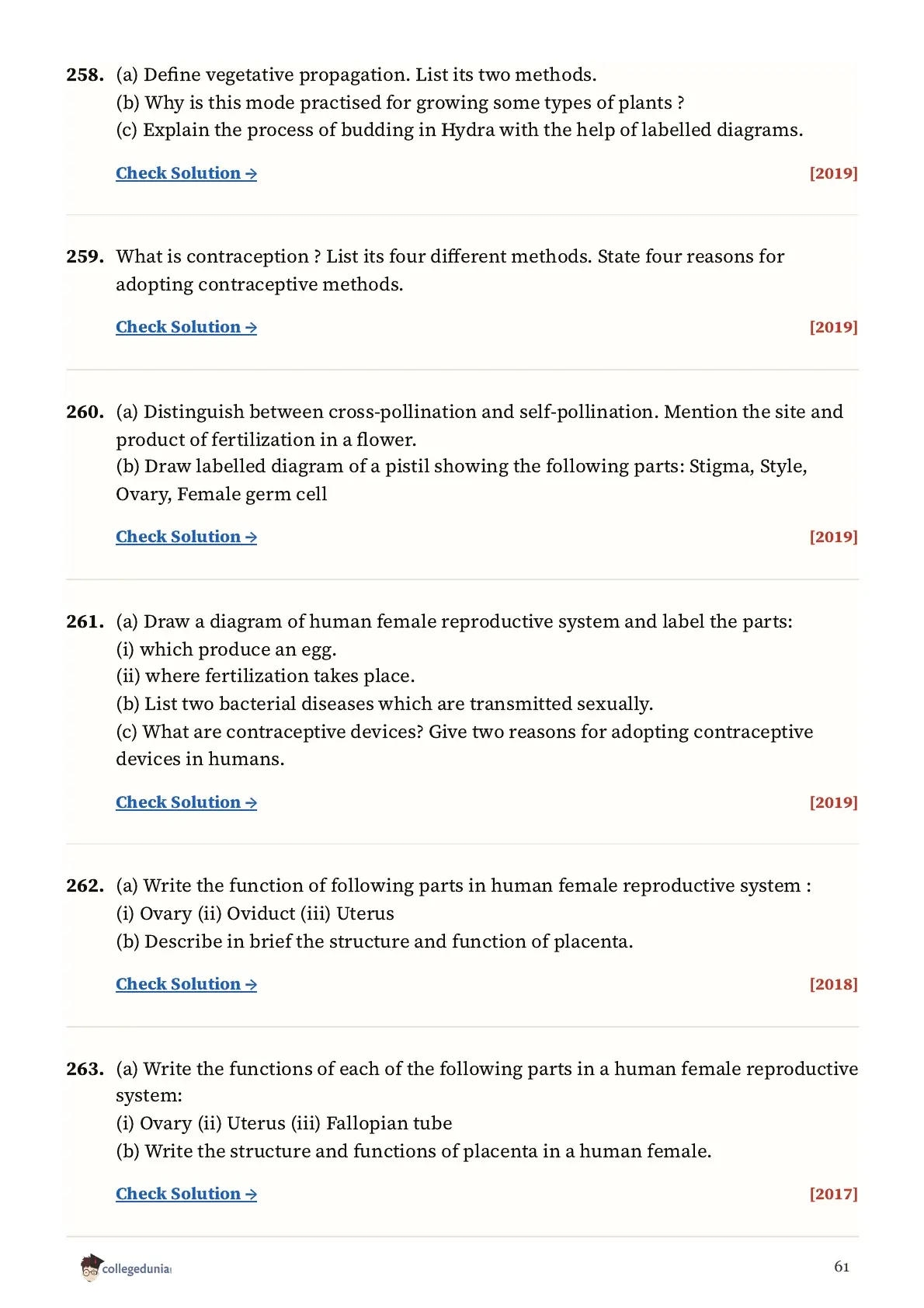
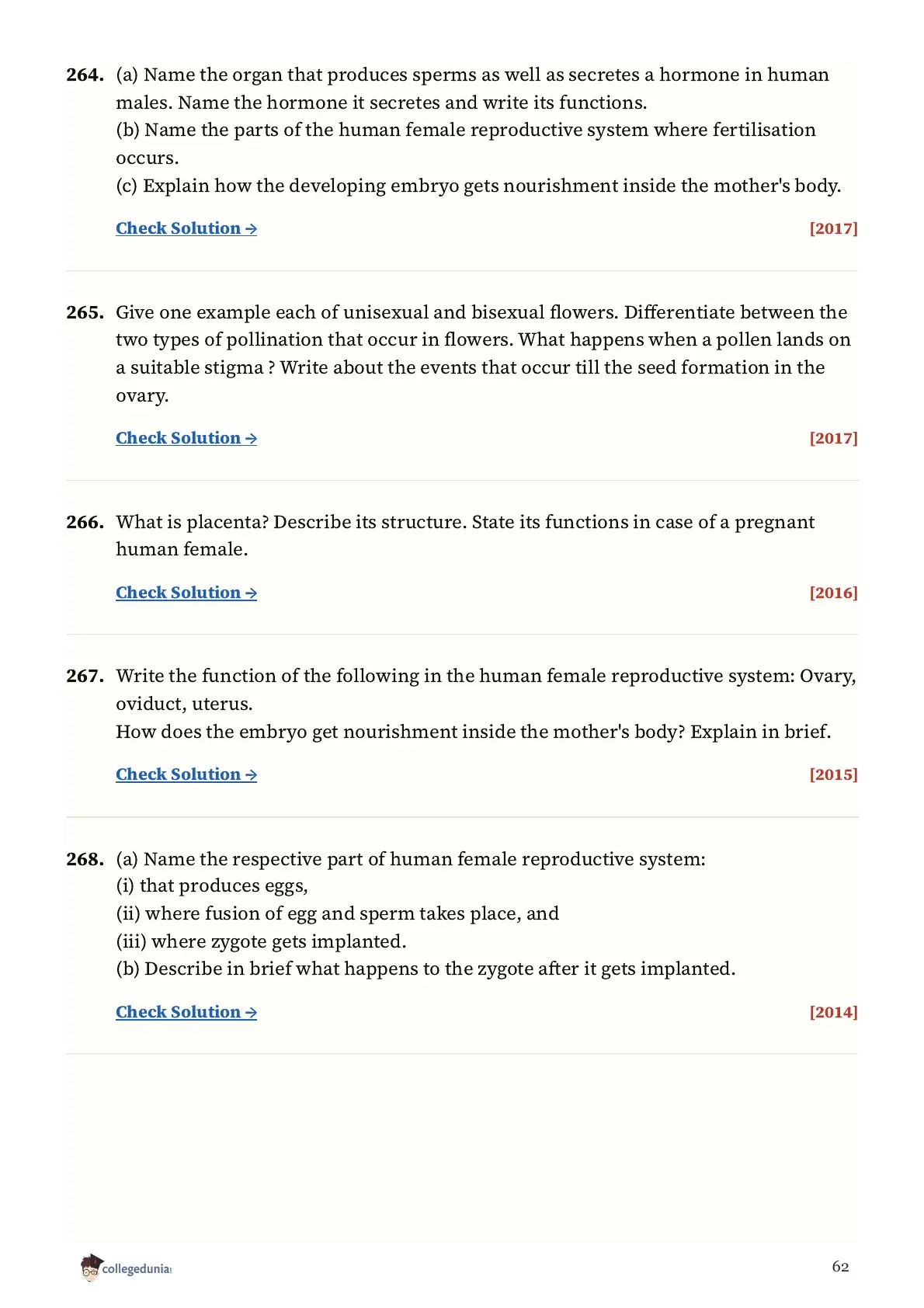
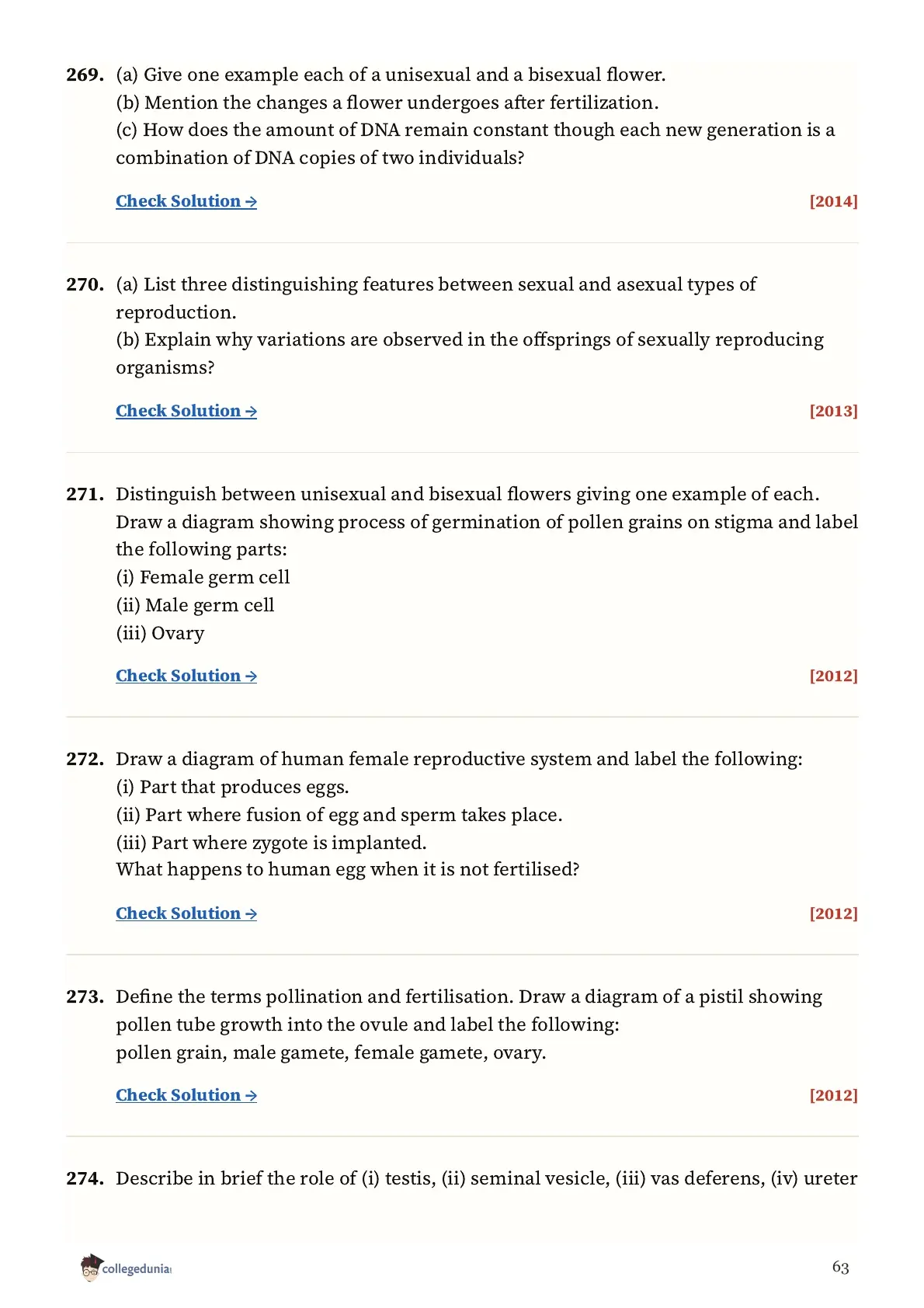
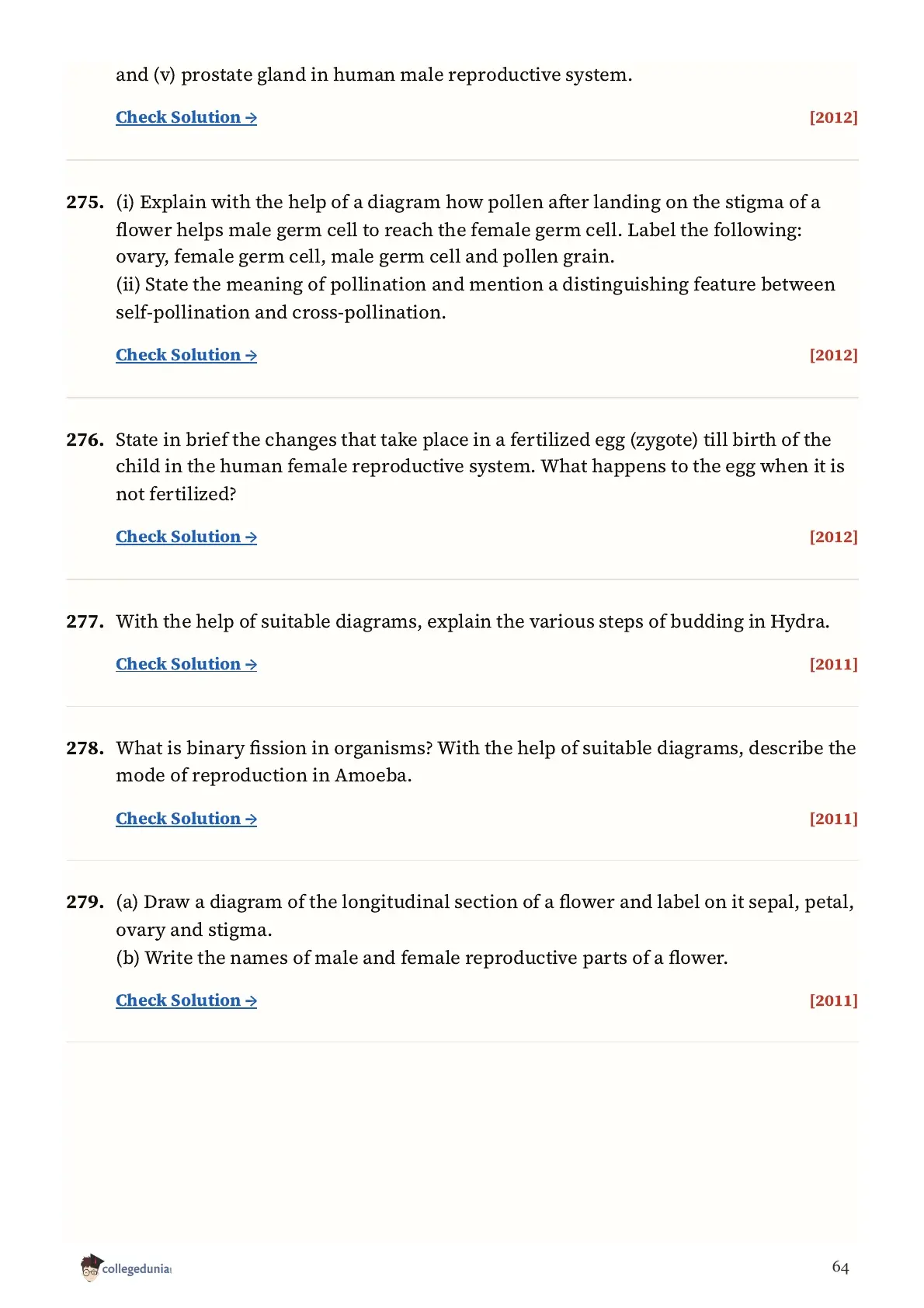
How do Organisms Reproduce Weightage in the Class 10 Science Paper
CBSE does not print a mark figure for How do Organisms Reproduce? alone. In the Class 10 Science (086) syllabus, Unit II, World of Living, carries 25 of the 80 theory marks and holds four chapters: Life Processes, Control and Coordination, How do Organisms Reproduce? and Heredity. The 25 is a unit-level figure as reported by prep sites for the 2025-26 and 2026-27 syllabus; it is unofficial here, so check the current curriculum on cbseacademic.nic.in. In this set the 1-mark question and the 5-mark long answer are equally common, at 80 questions each.
The table shows how many questions the set holds at each mark value.
| Marks per Question | Questions in the Set |
|---|---|
| 1 mark | 80 |
| 2 marks | 62 |
| 3 marks | 47 |
| 4 marks | 13 |
| 5 marks | 80 |
How do Organisms Reproduce Questions by Topic
The chapter splits into three blocks: how single organisms and plants reproduce without gametes, how flowering plants reproduce sexually, and the human reproductive system with its health side. The board asks about all three, and the 5-mark answers often reach across two blocks in one question.
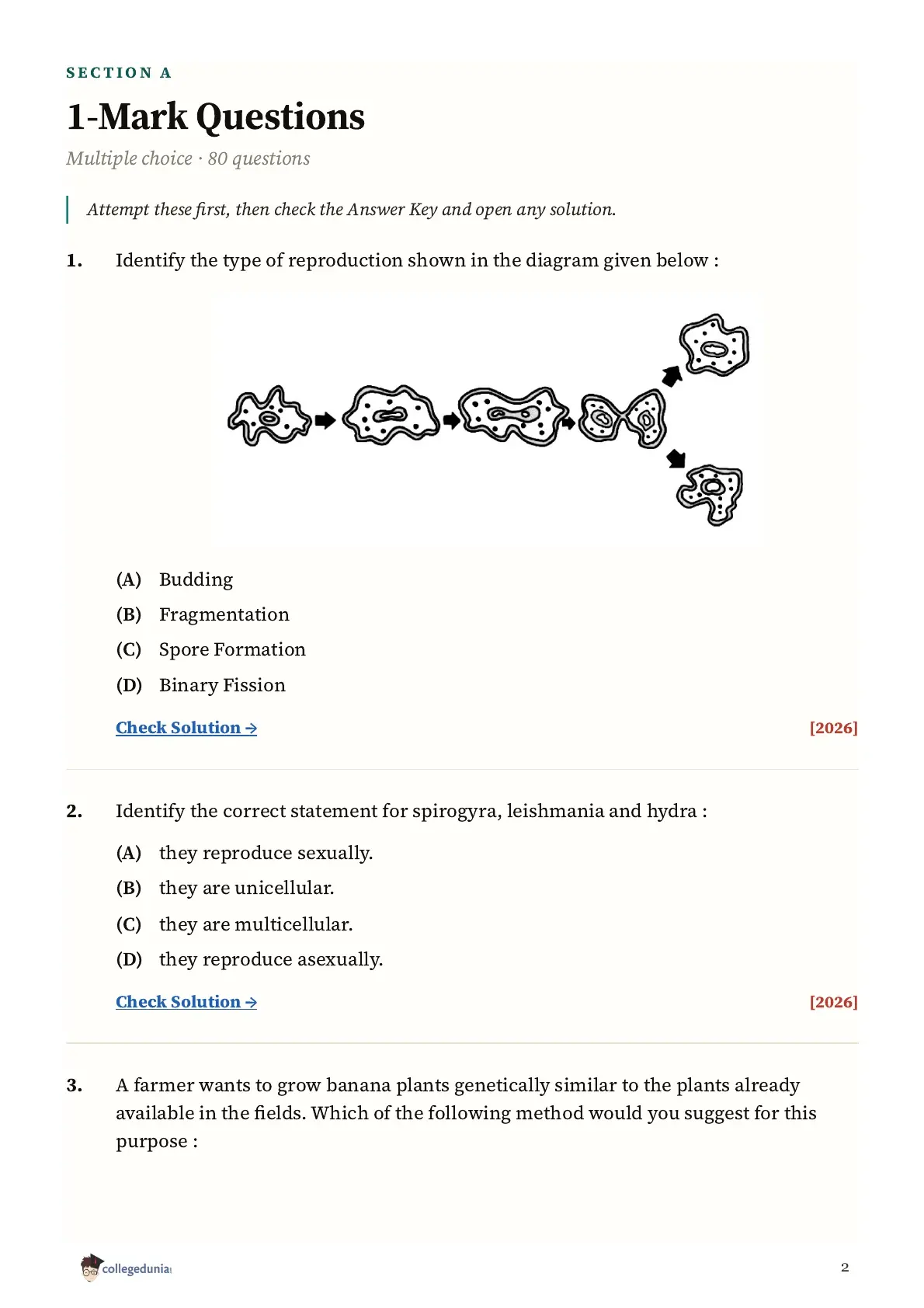
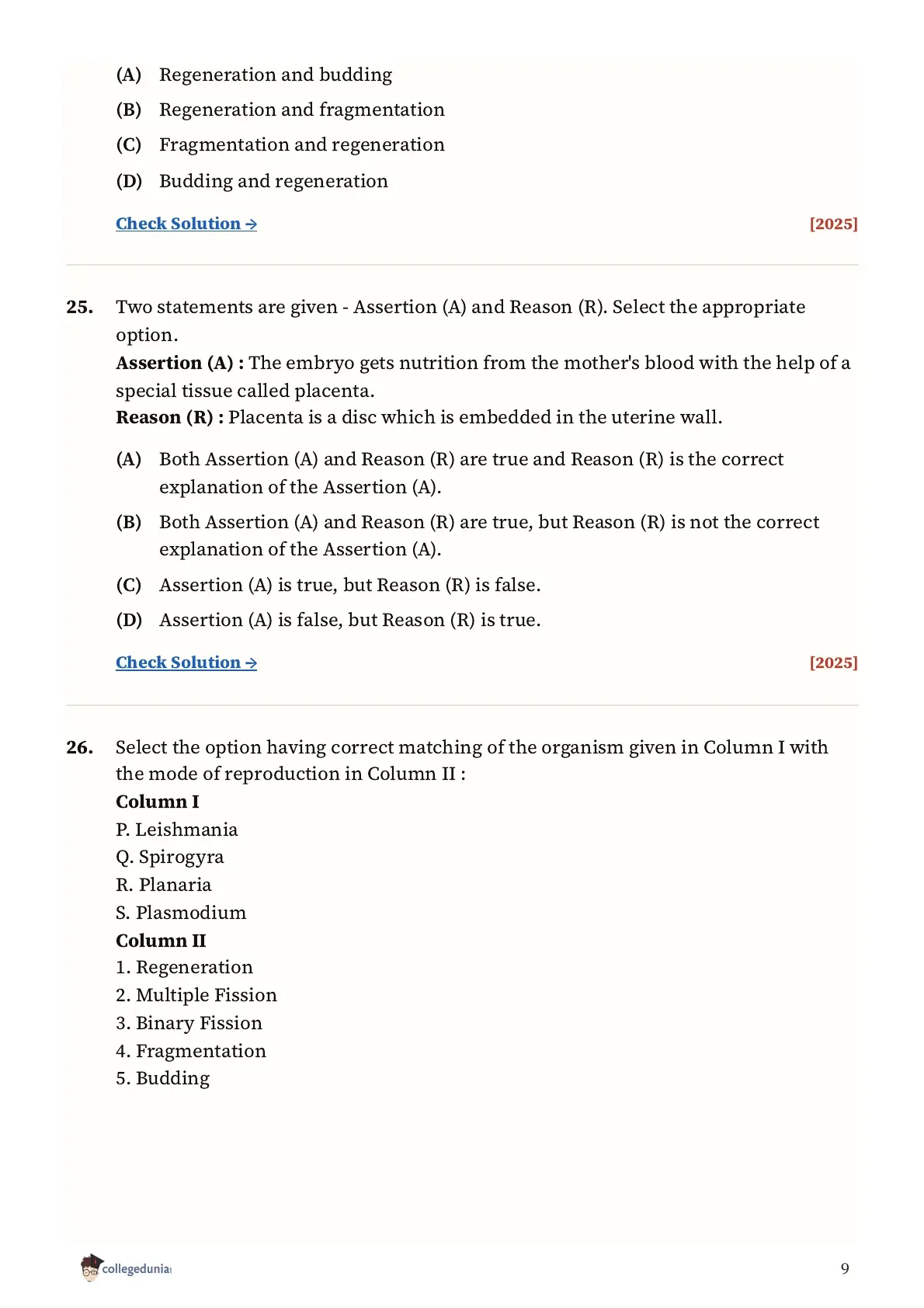
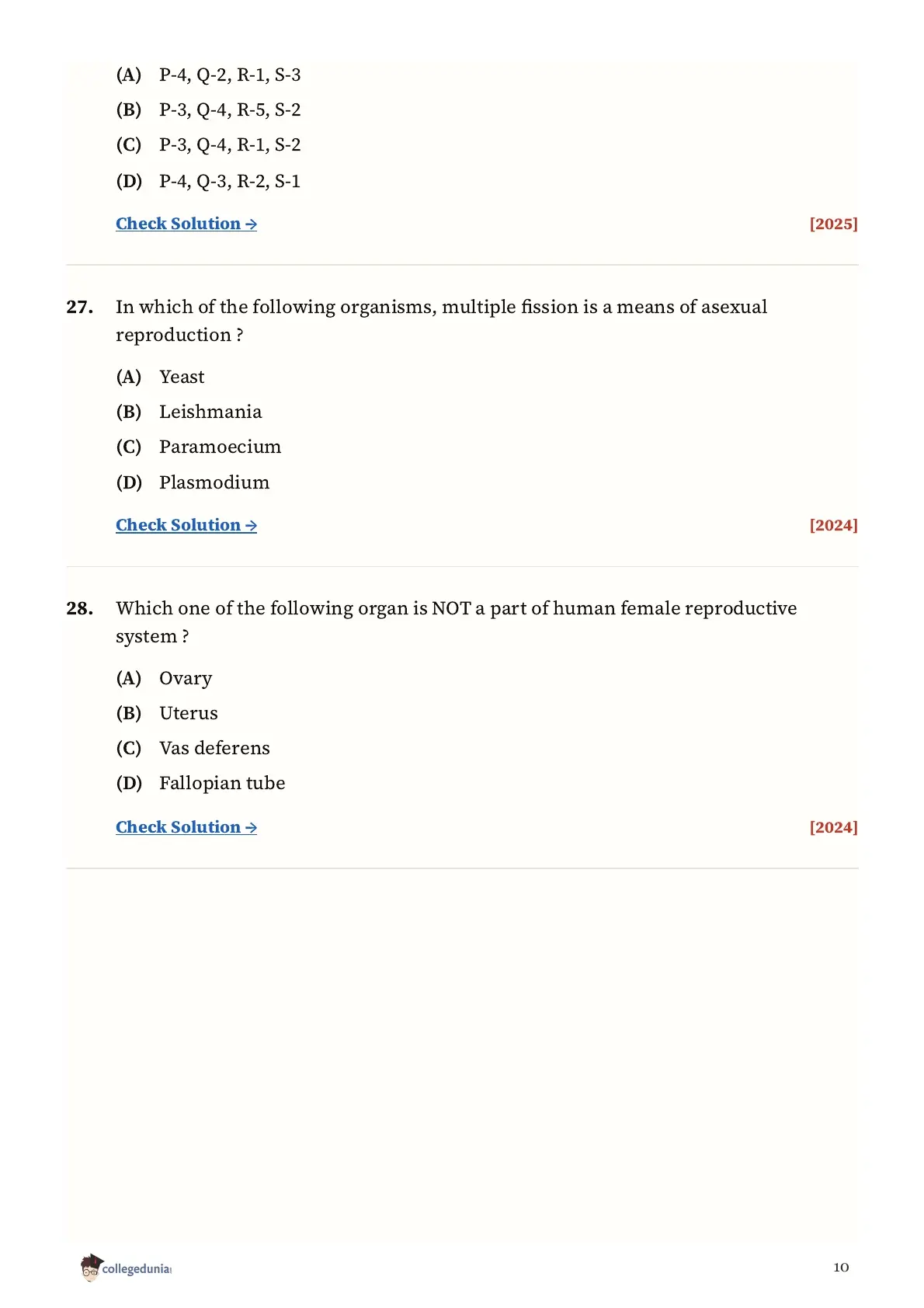
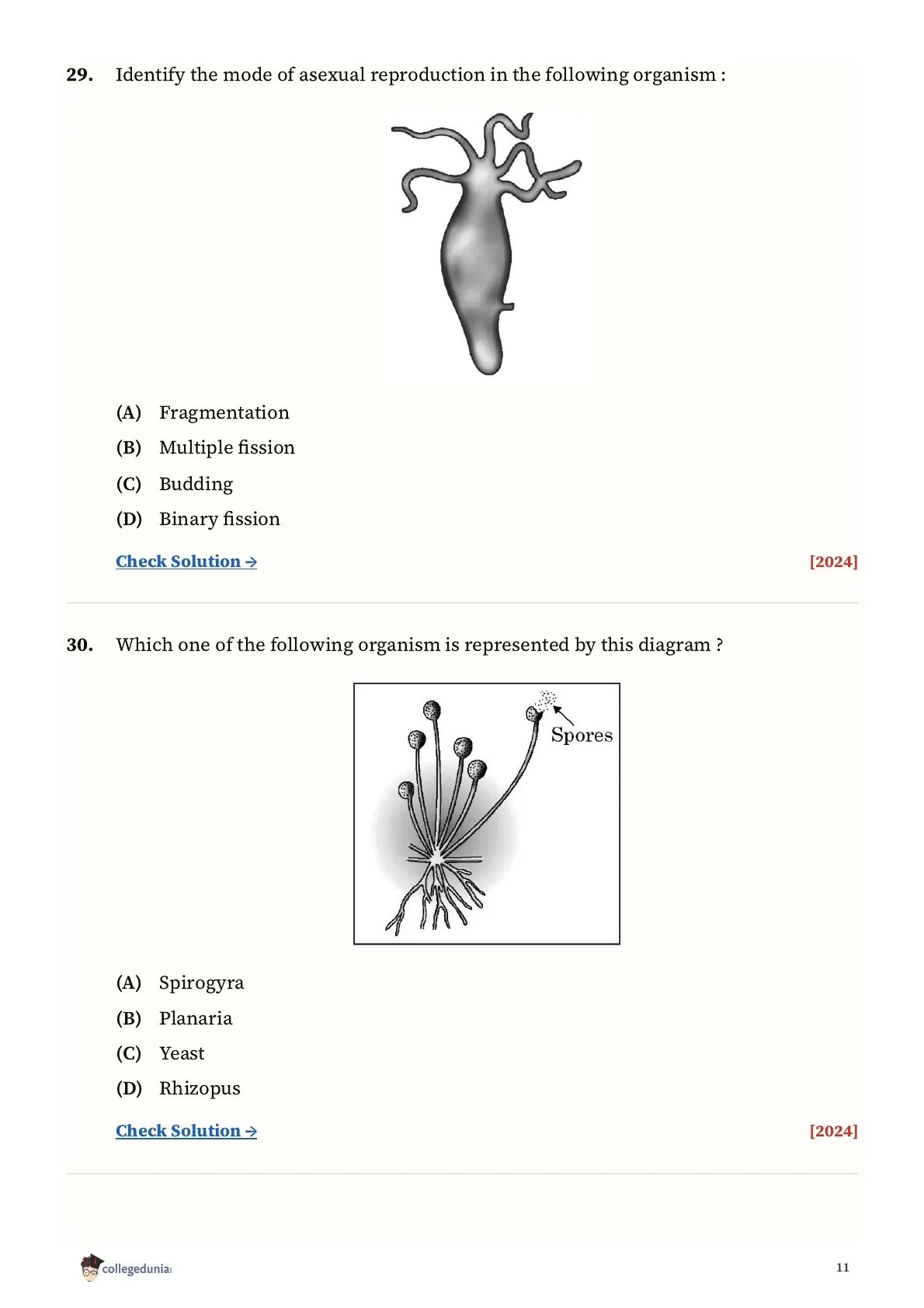
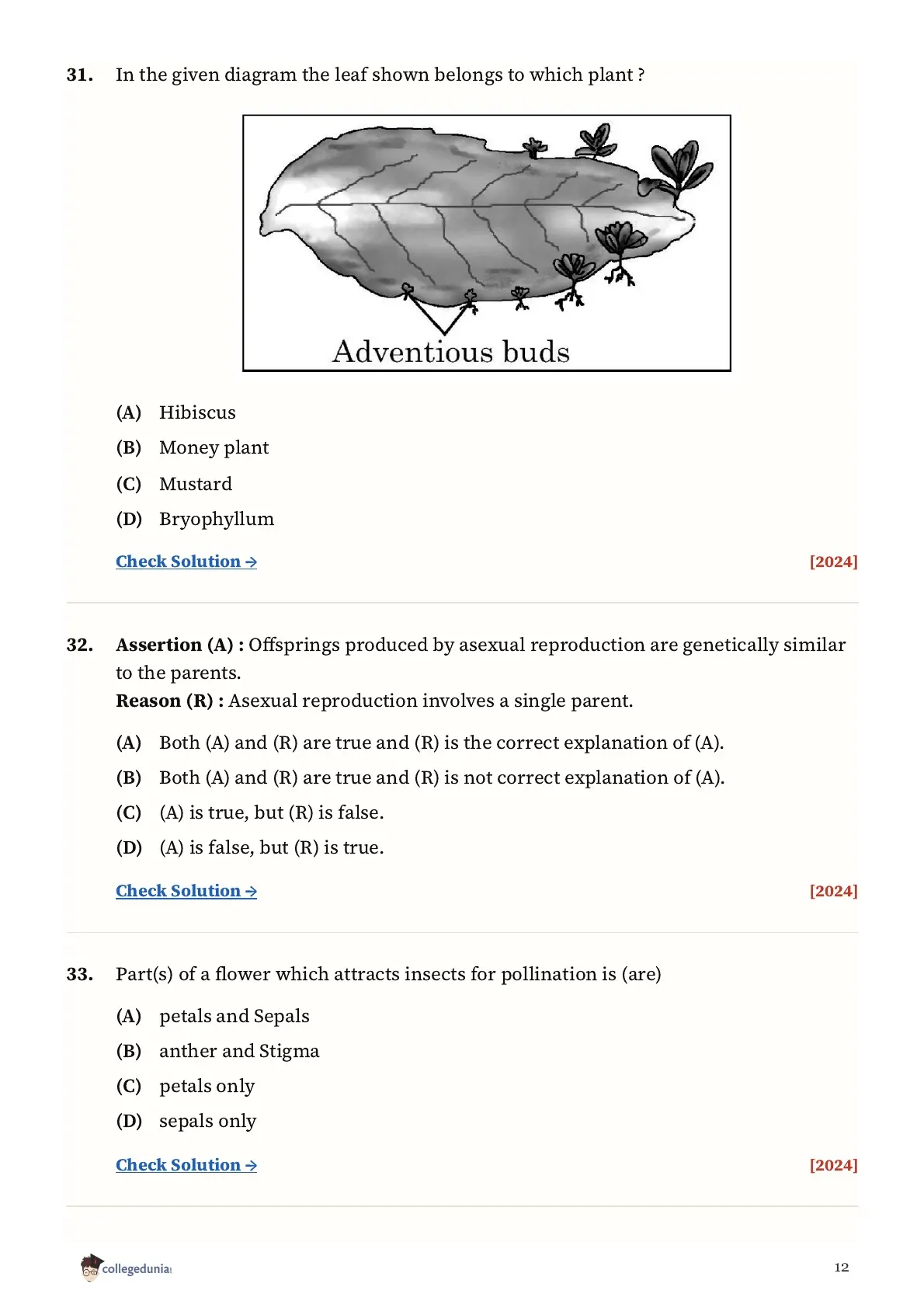
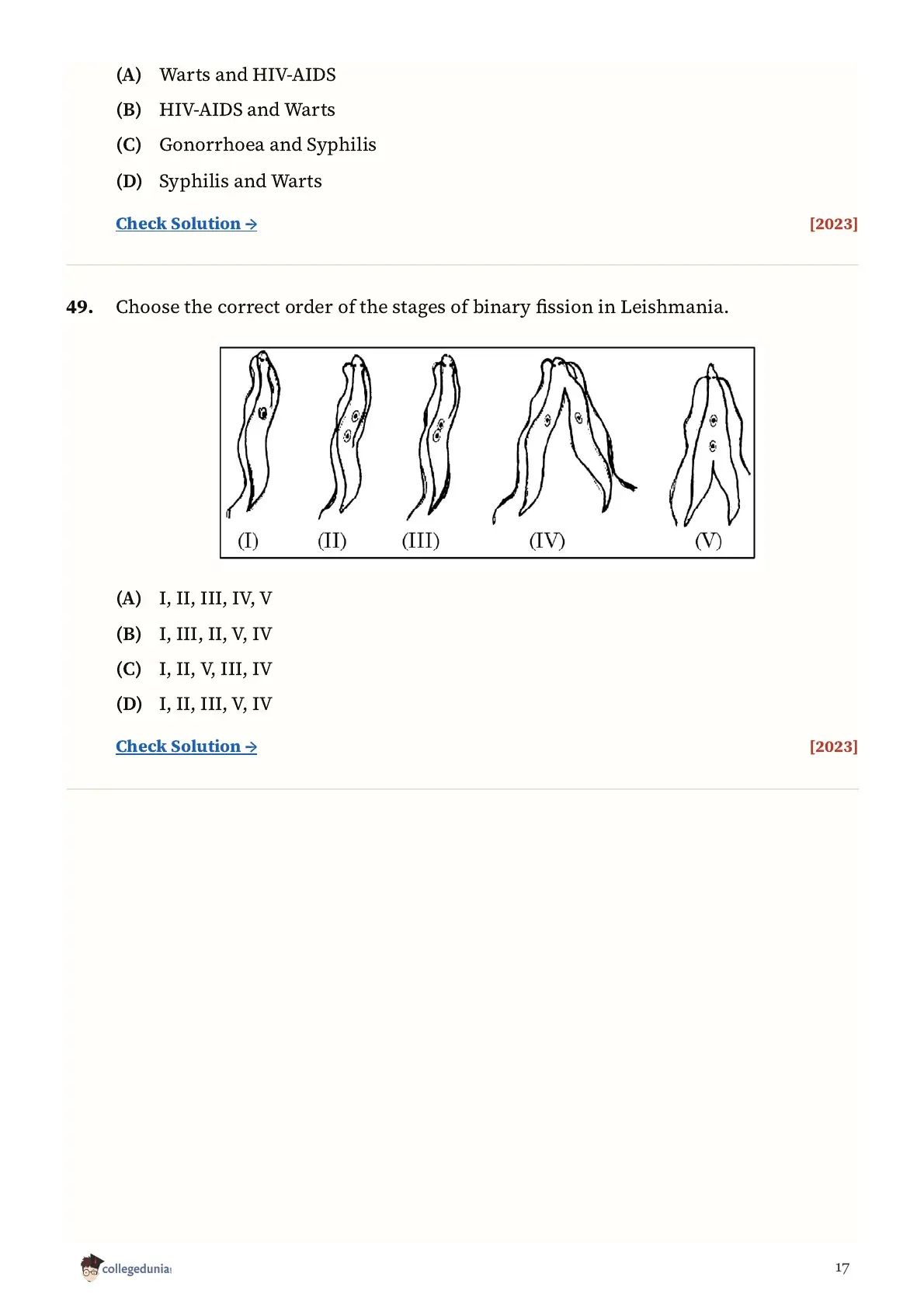
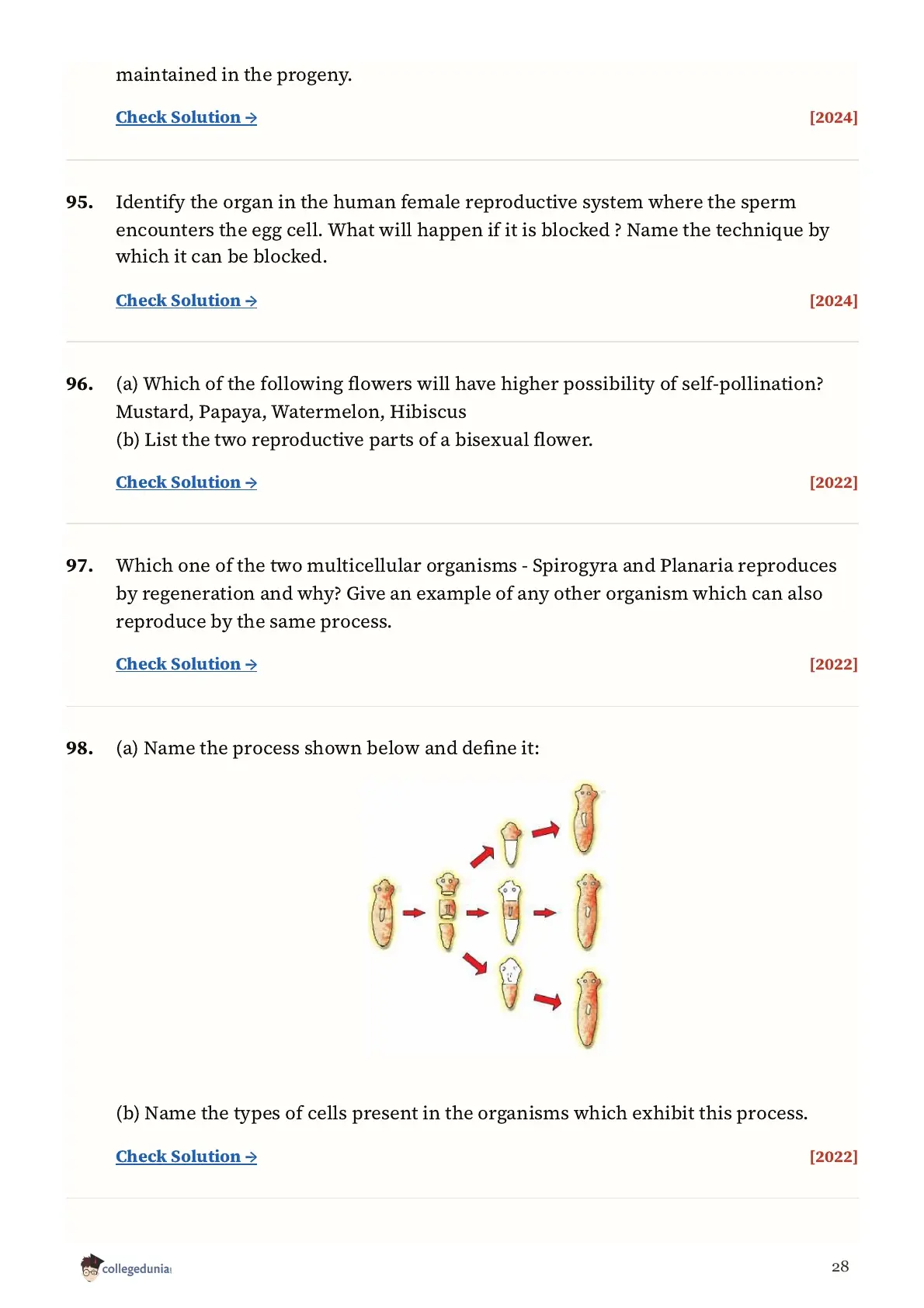
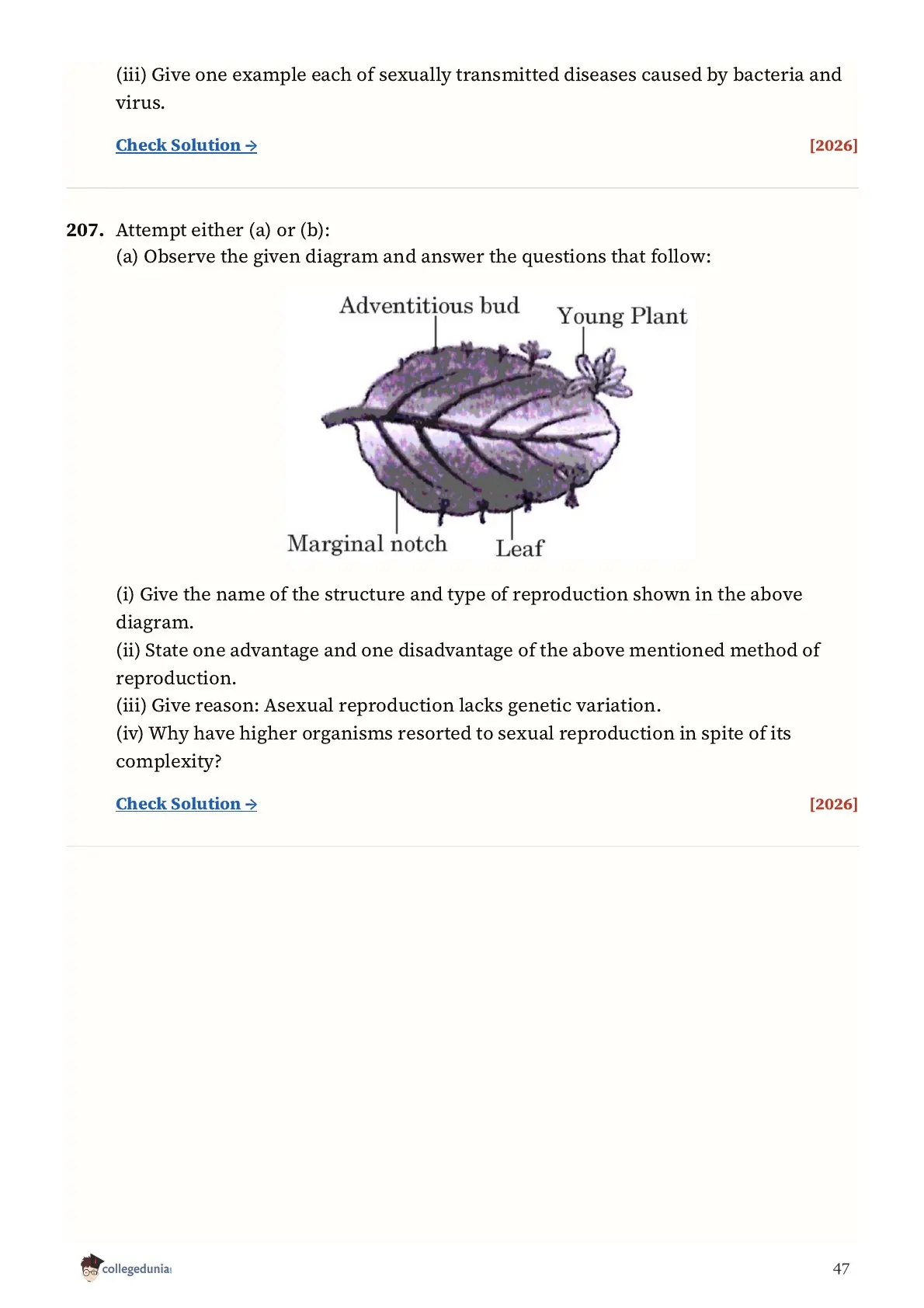
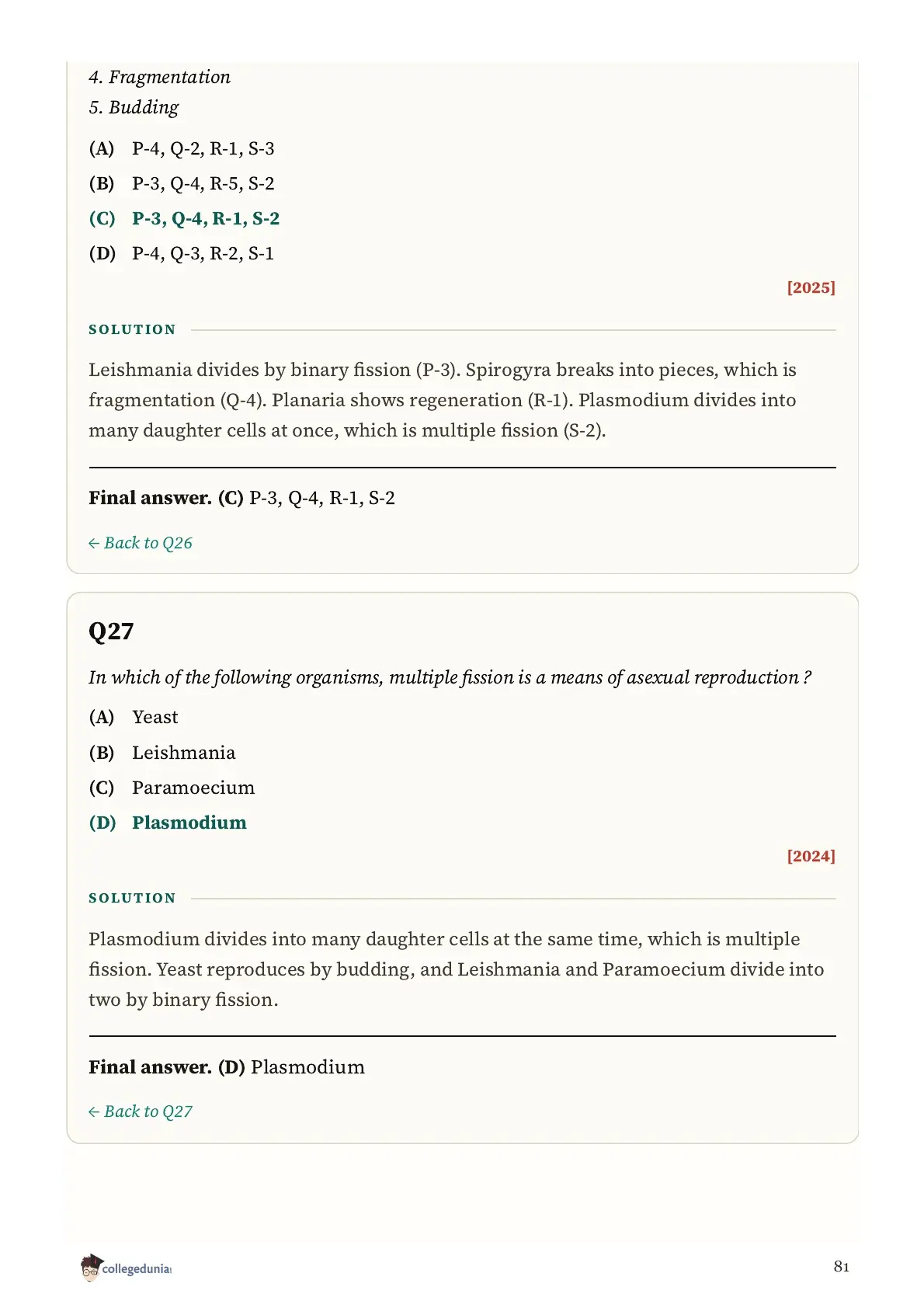
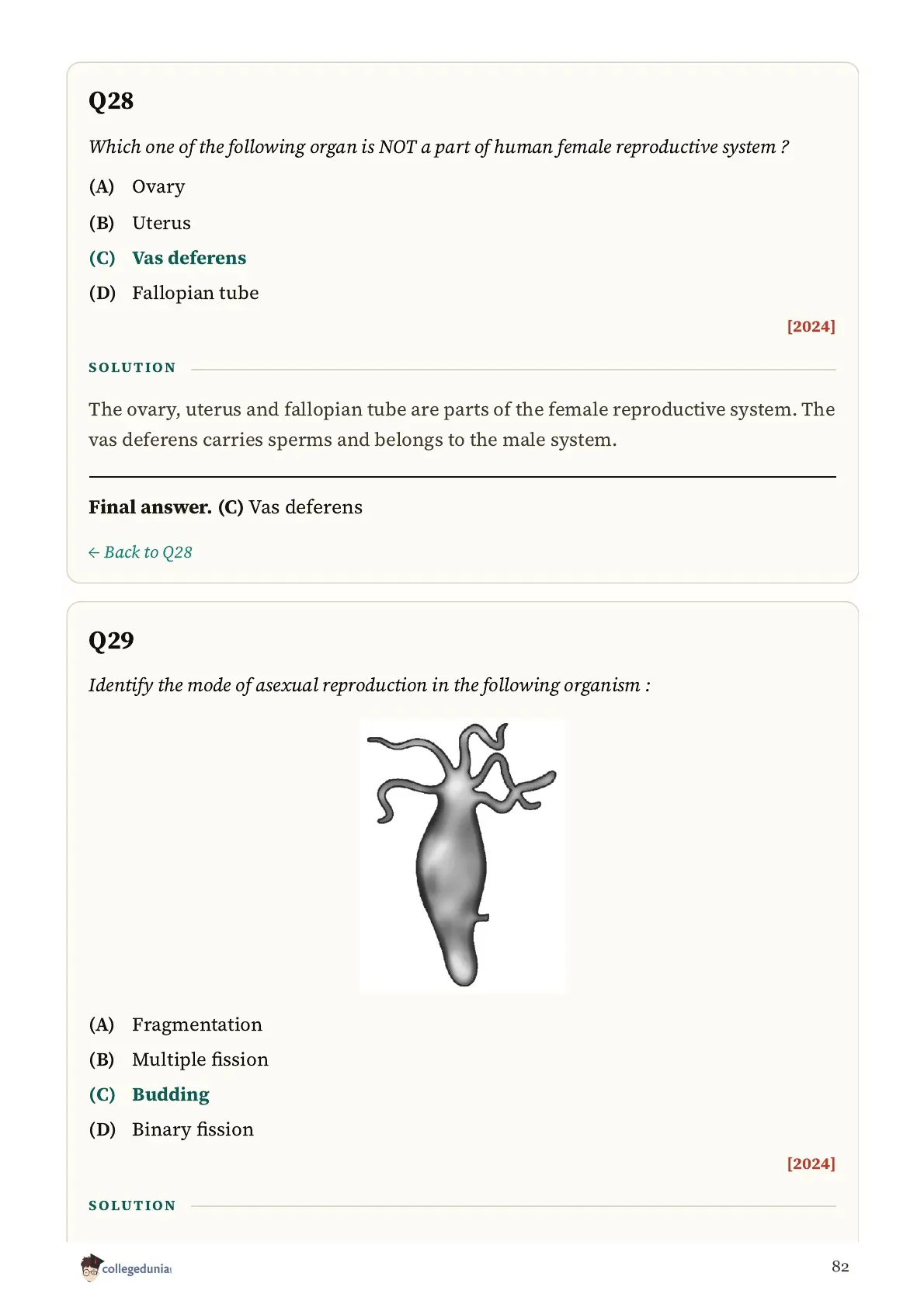
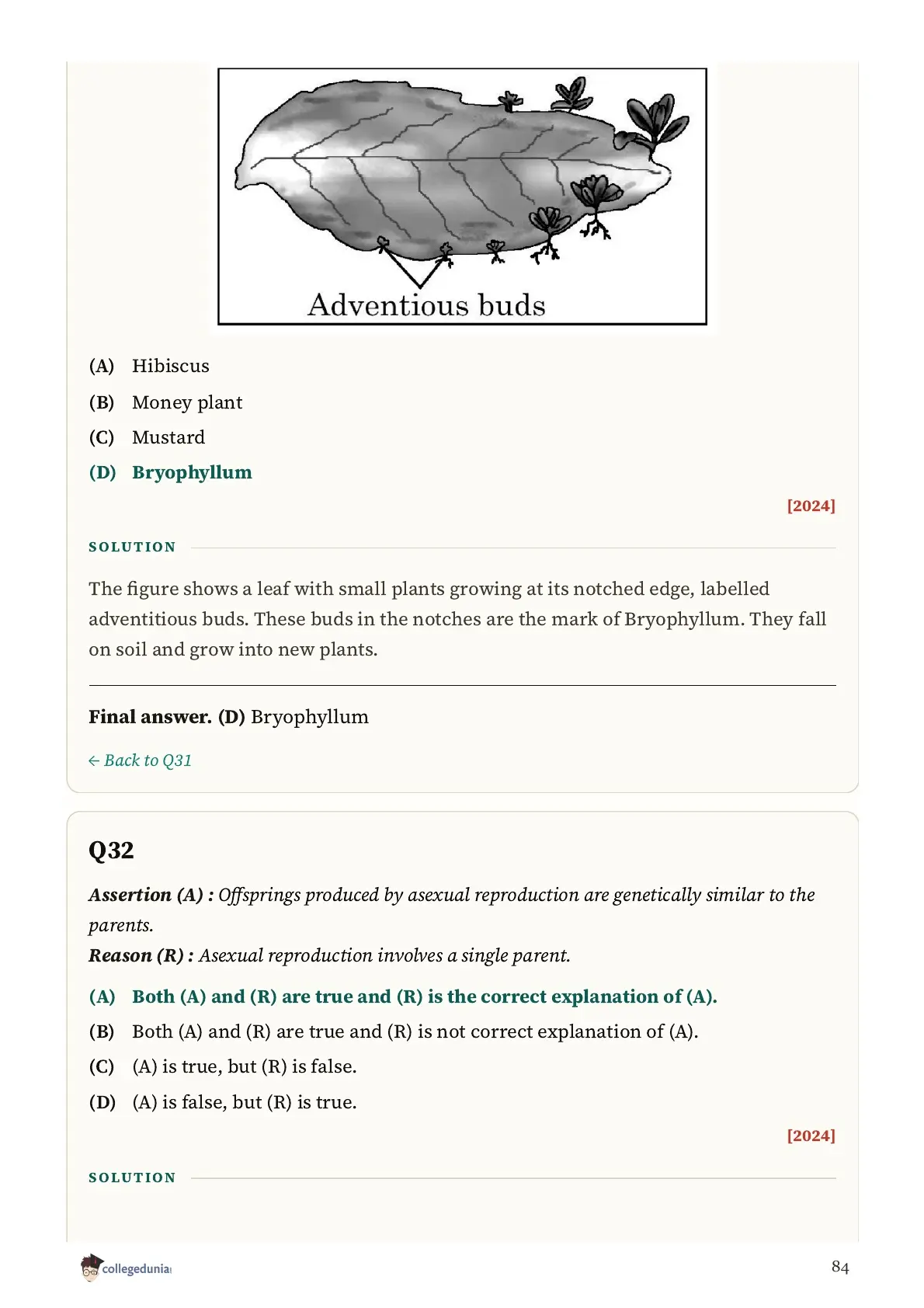
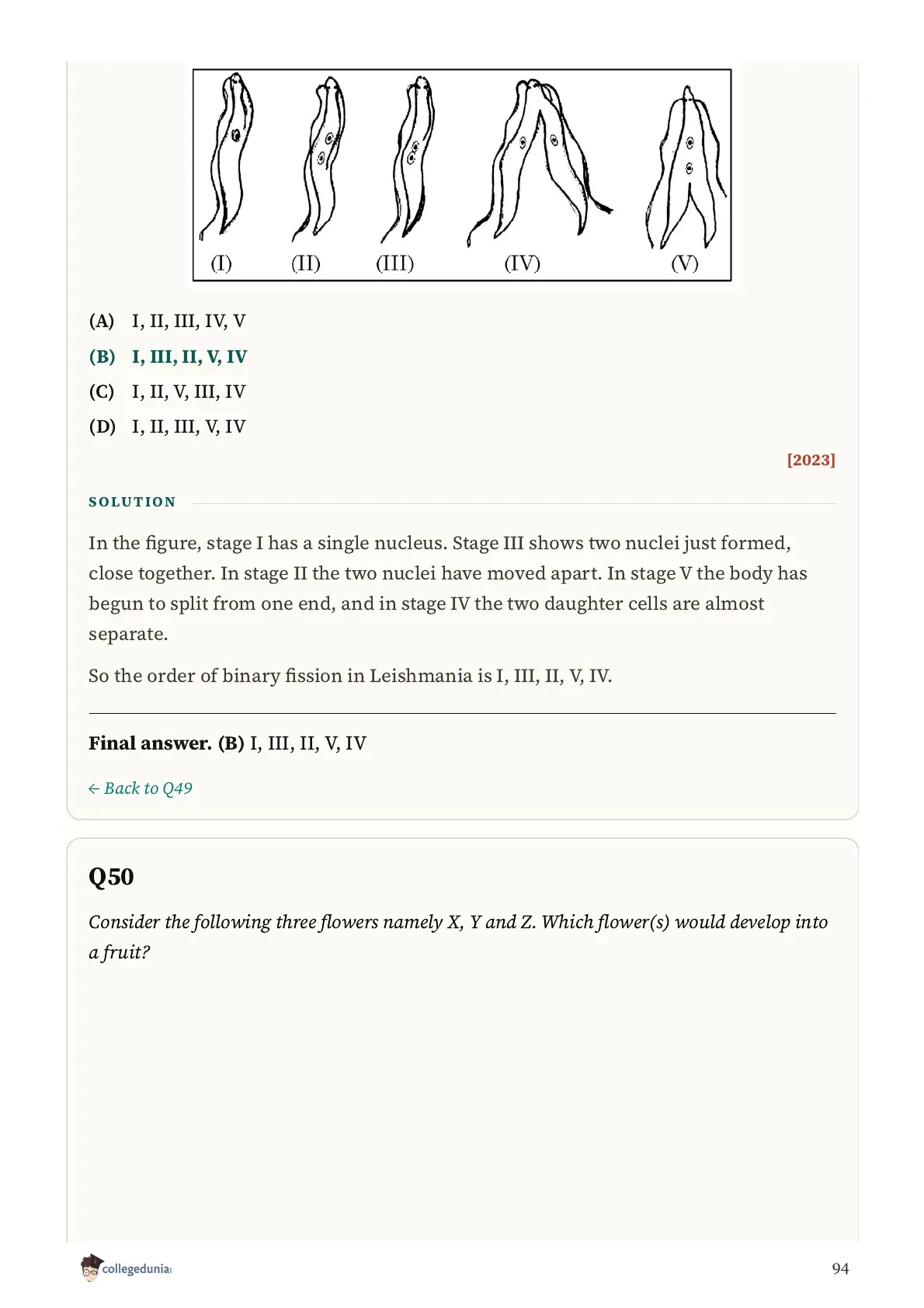
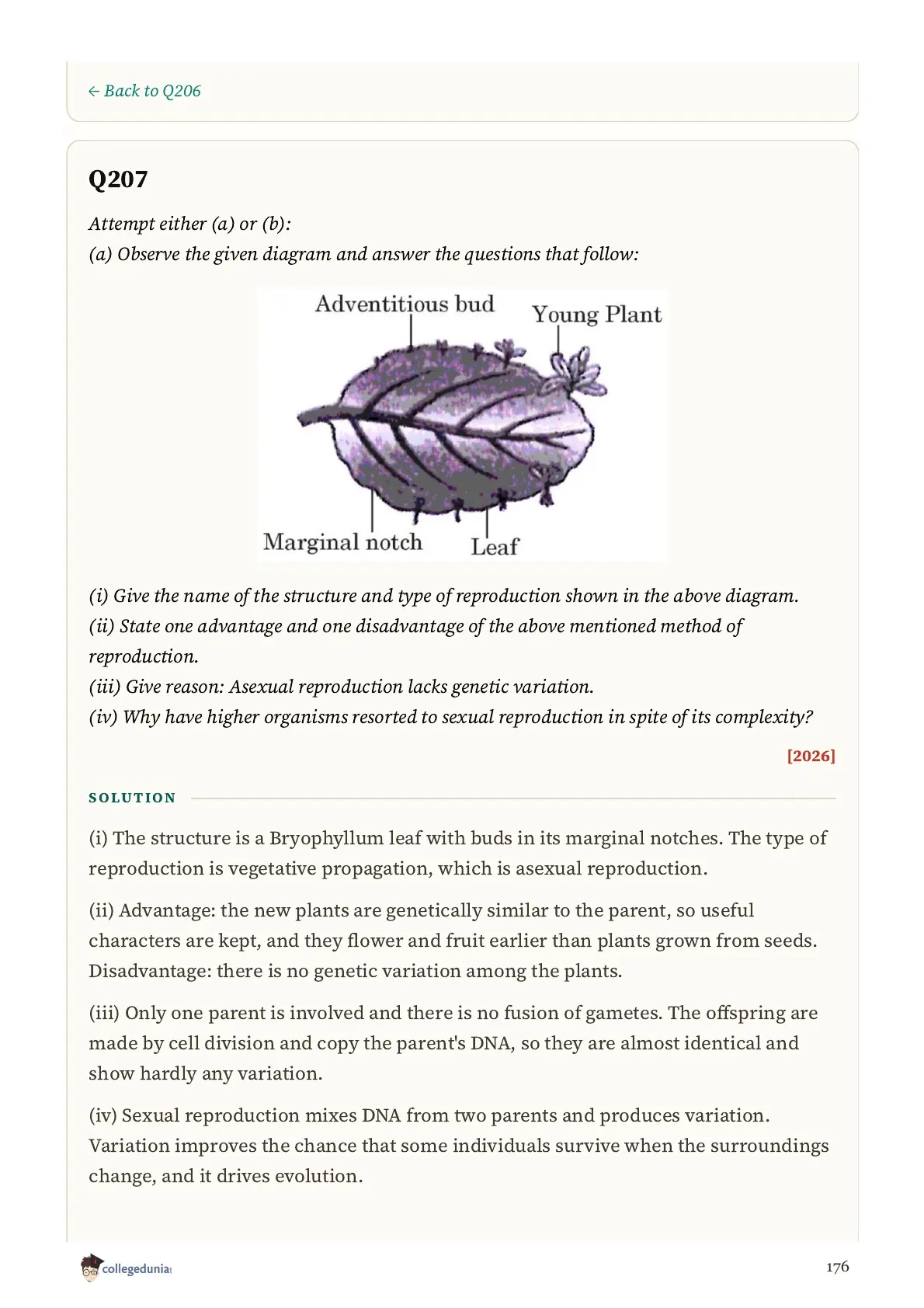
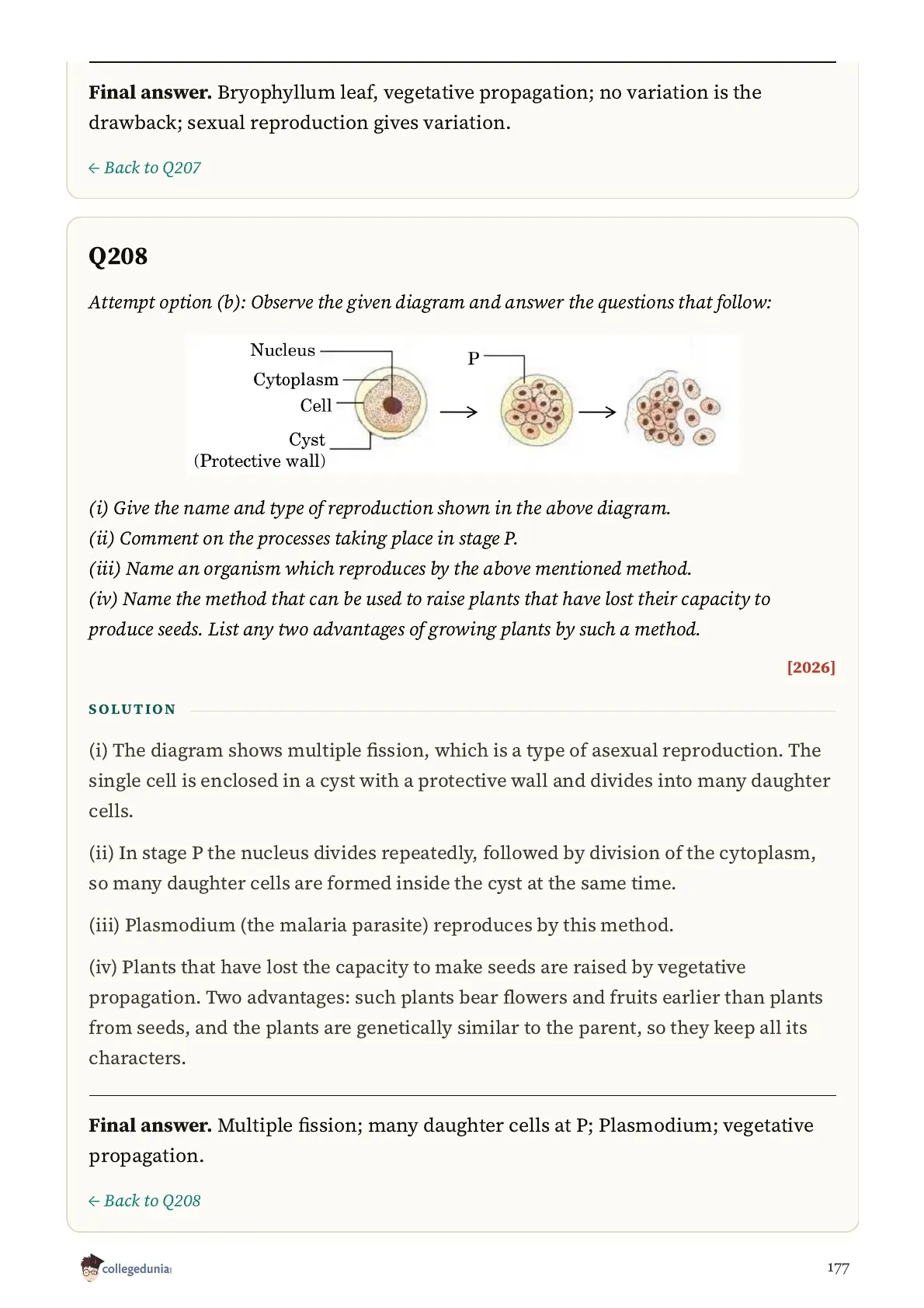
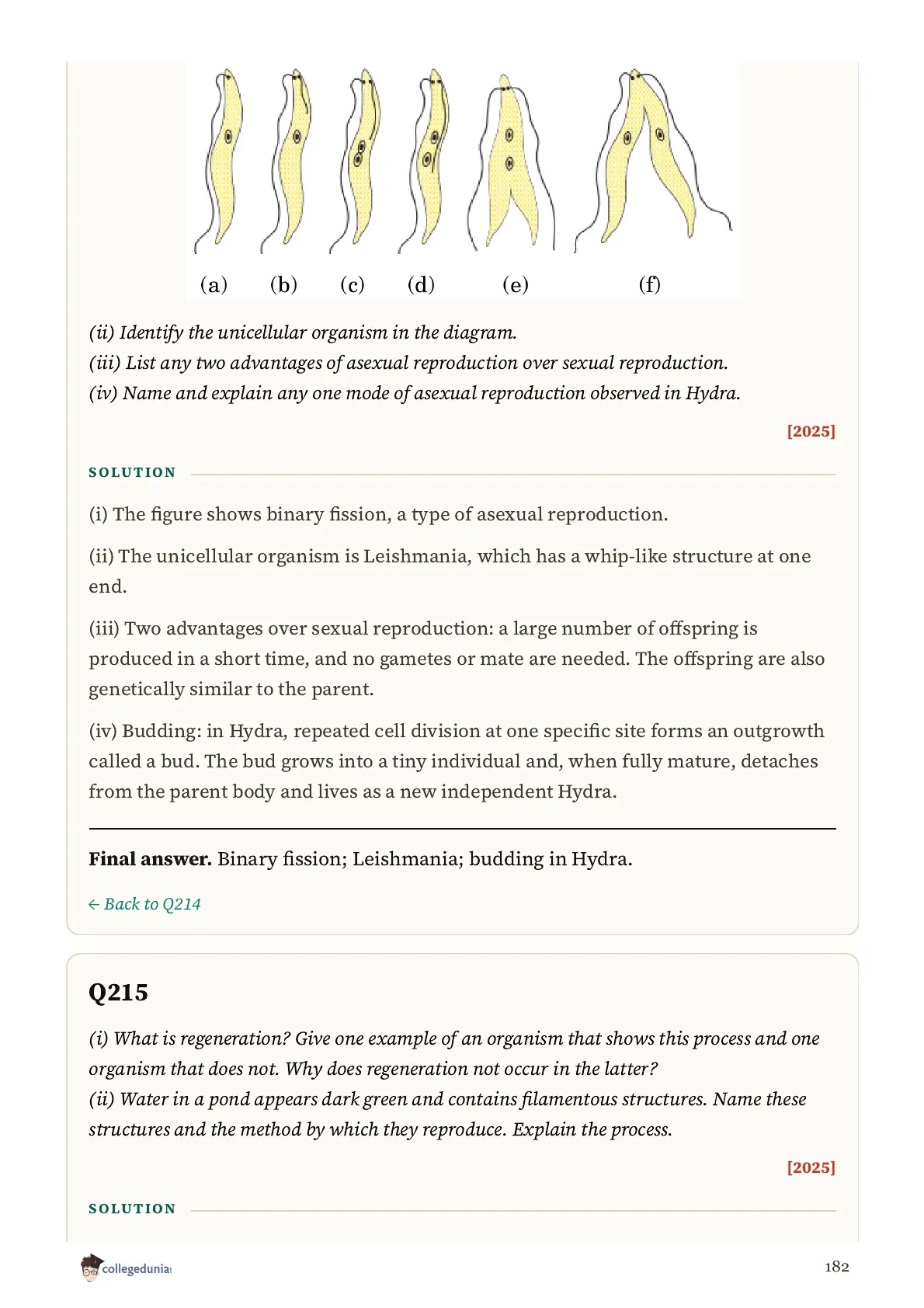
In the first block, 22 questions mention budding, 17 binary fission, 17 regeneration, 20 spore formation or Rhizopus, and 18 vegetative propagation. Hydra comes up in 18 questions and Planaria in 15. Typical asks are to differentiate binary fission from multiple fission (2022), to list two advantages of vegetative reproduction in an orange plant (2012), to draw the stages of budding in yeast from a permanent slide (2018, 2016), and to explain why Bryophyllum leaves grow into new plants on soil while a banana leaf cannot (2022).
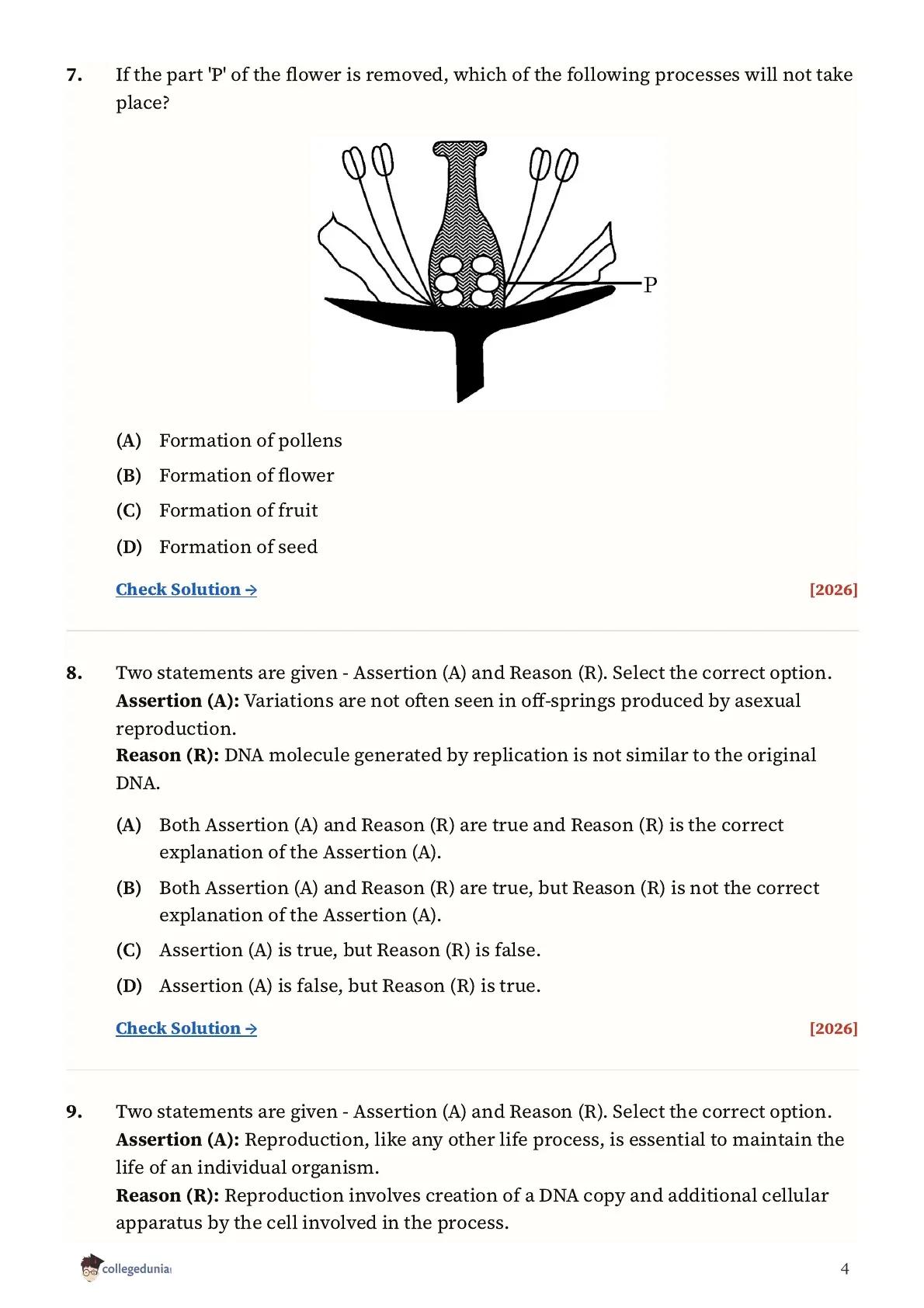
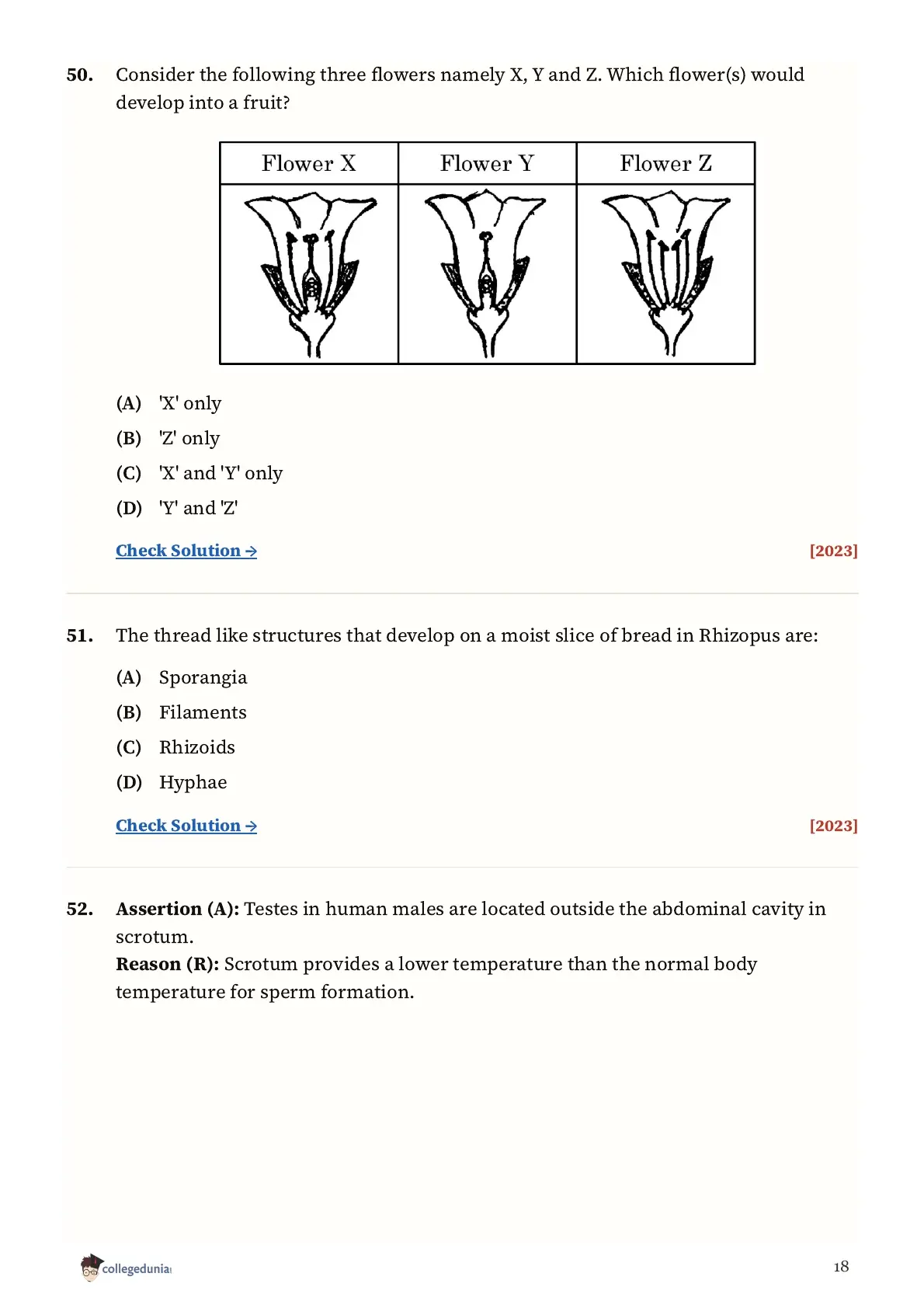
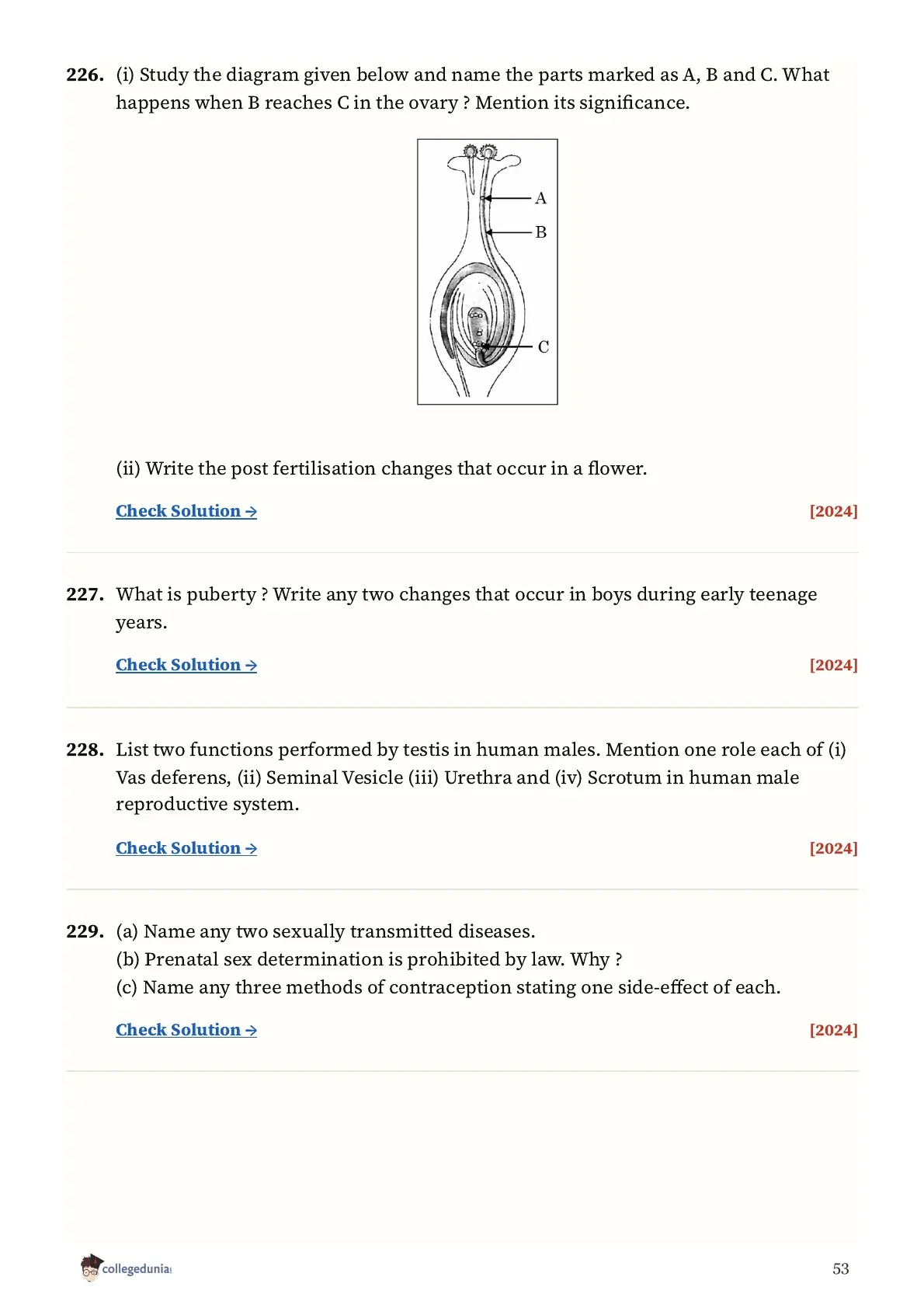
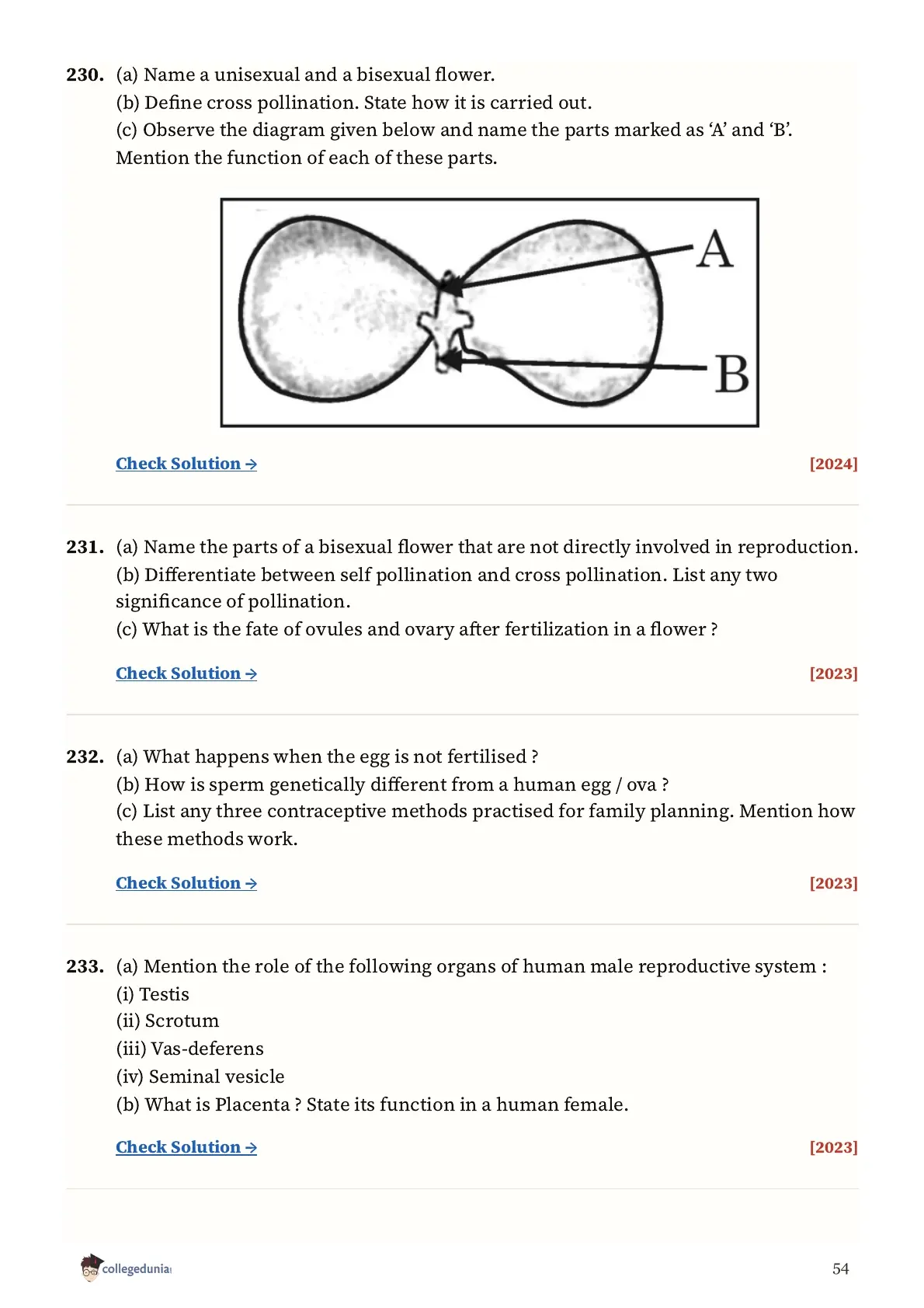
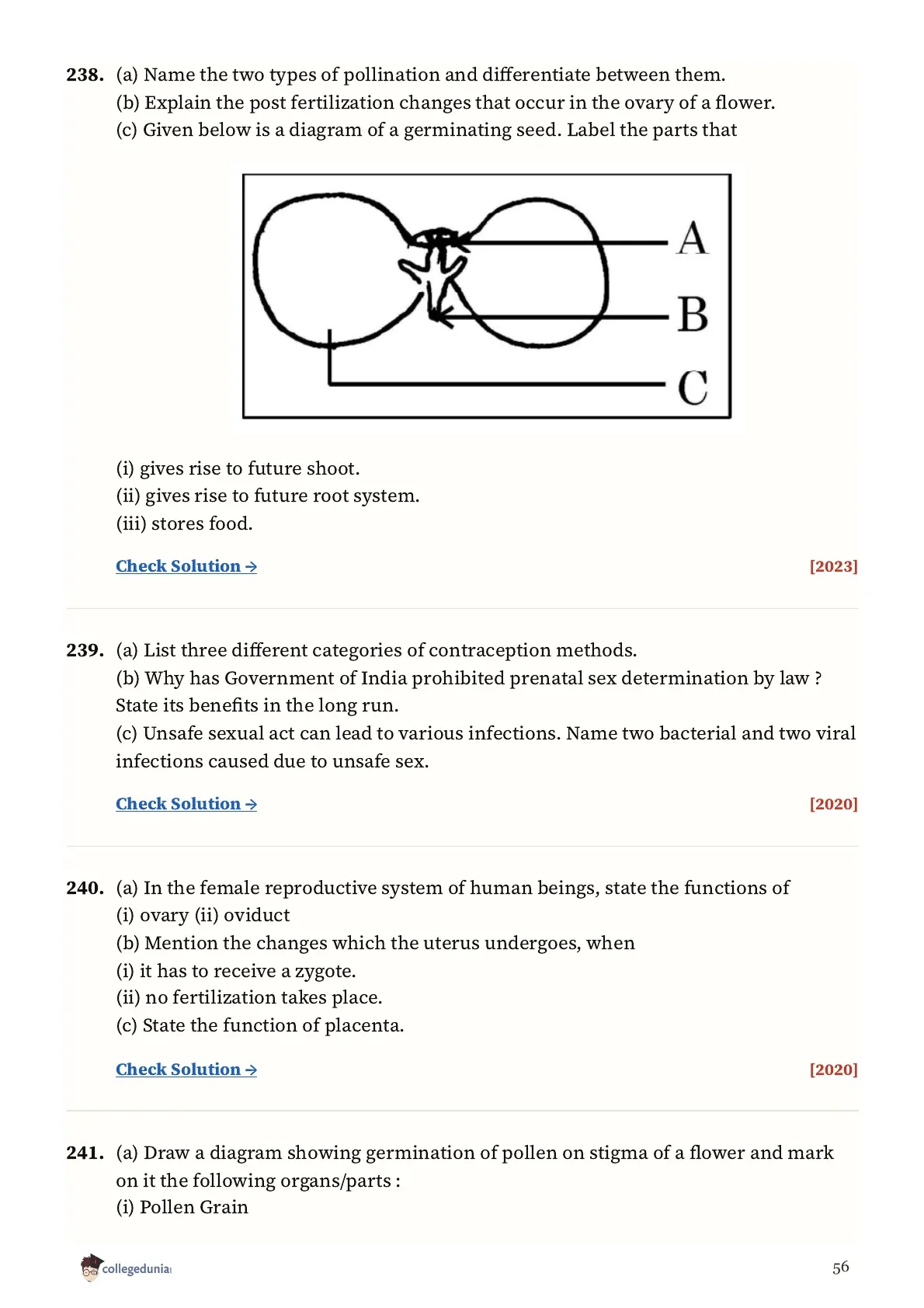
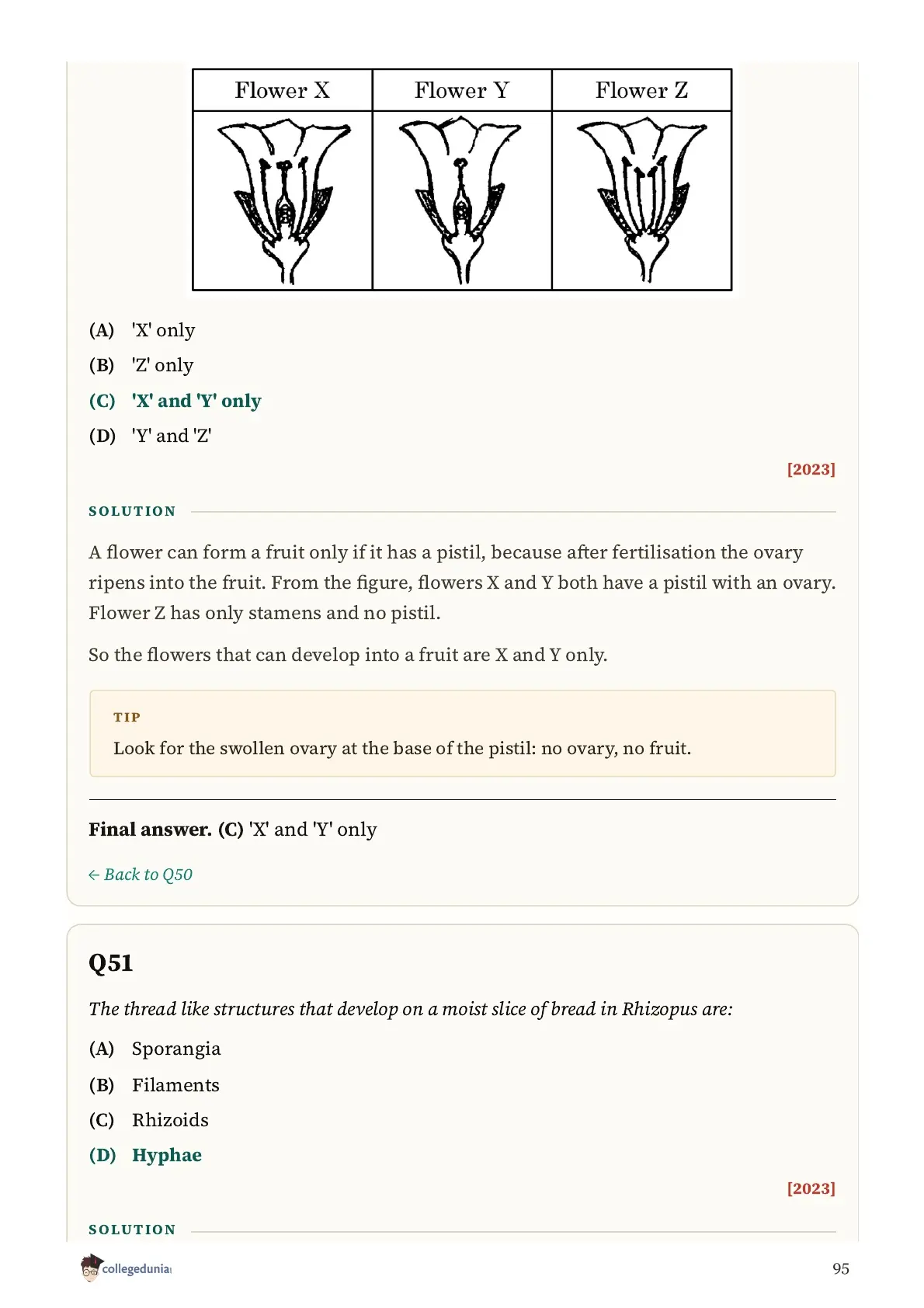
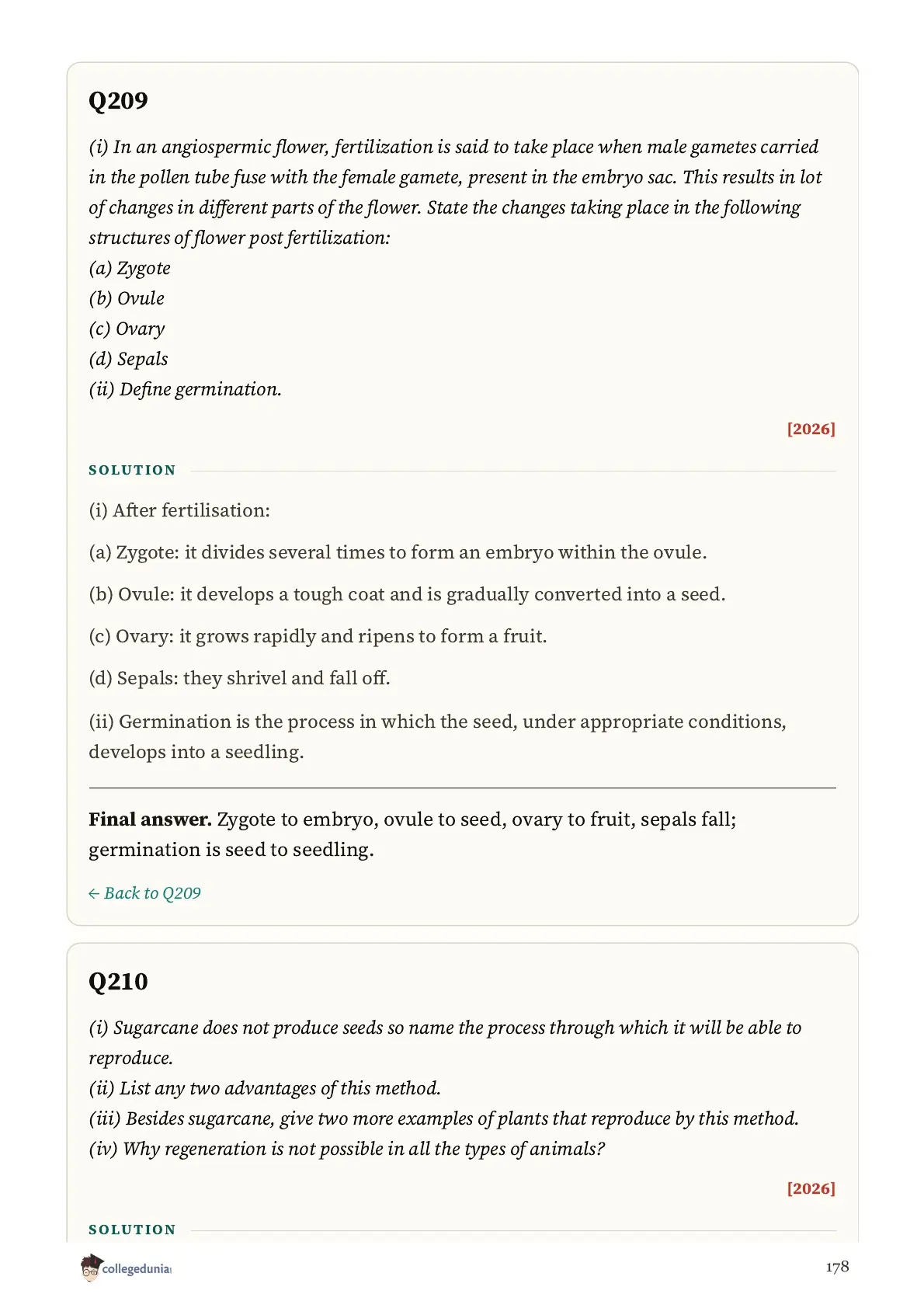
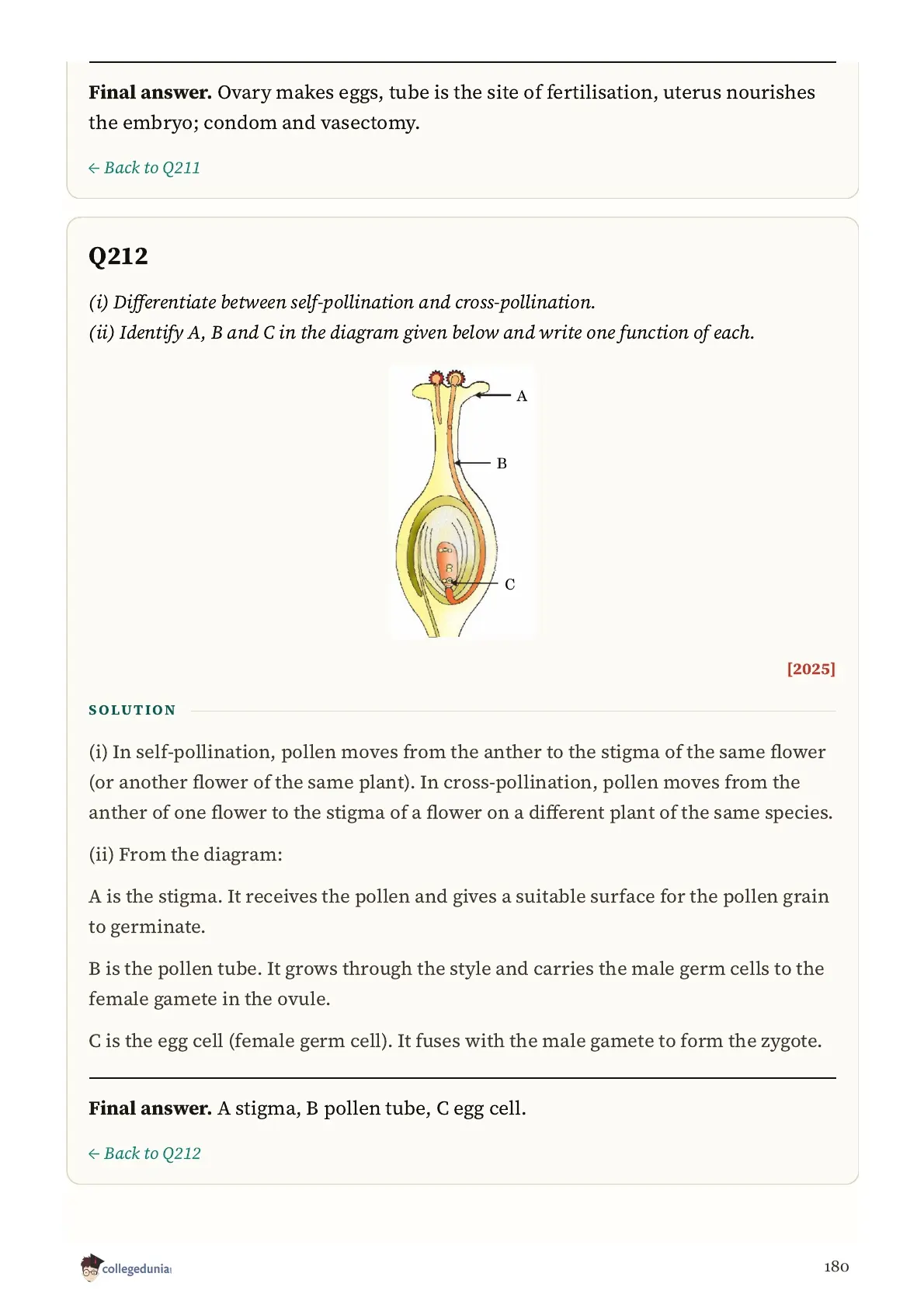
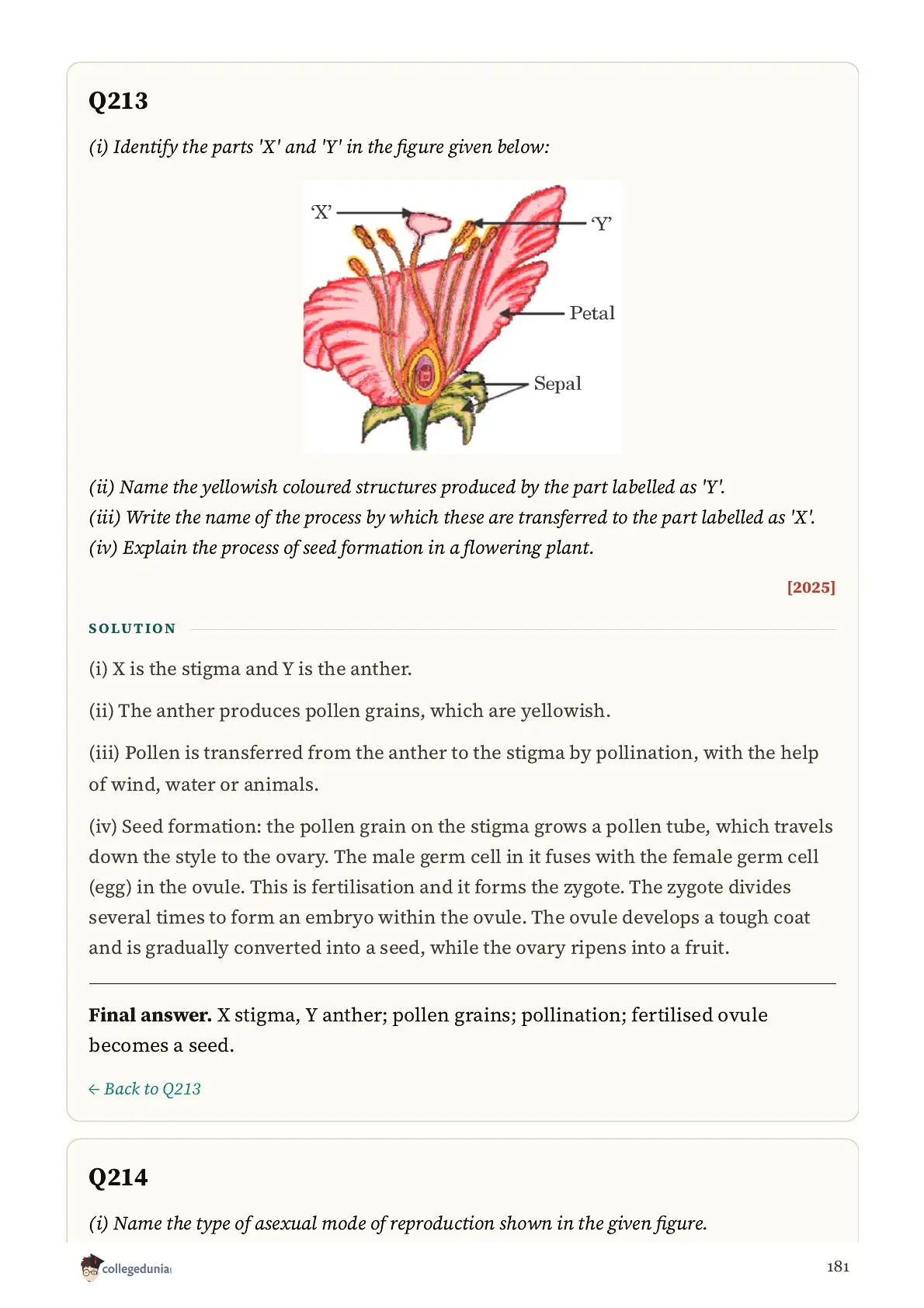
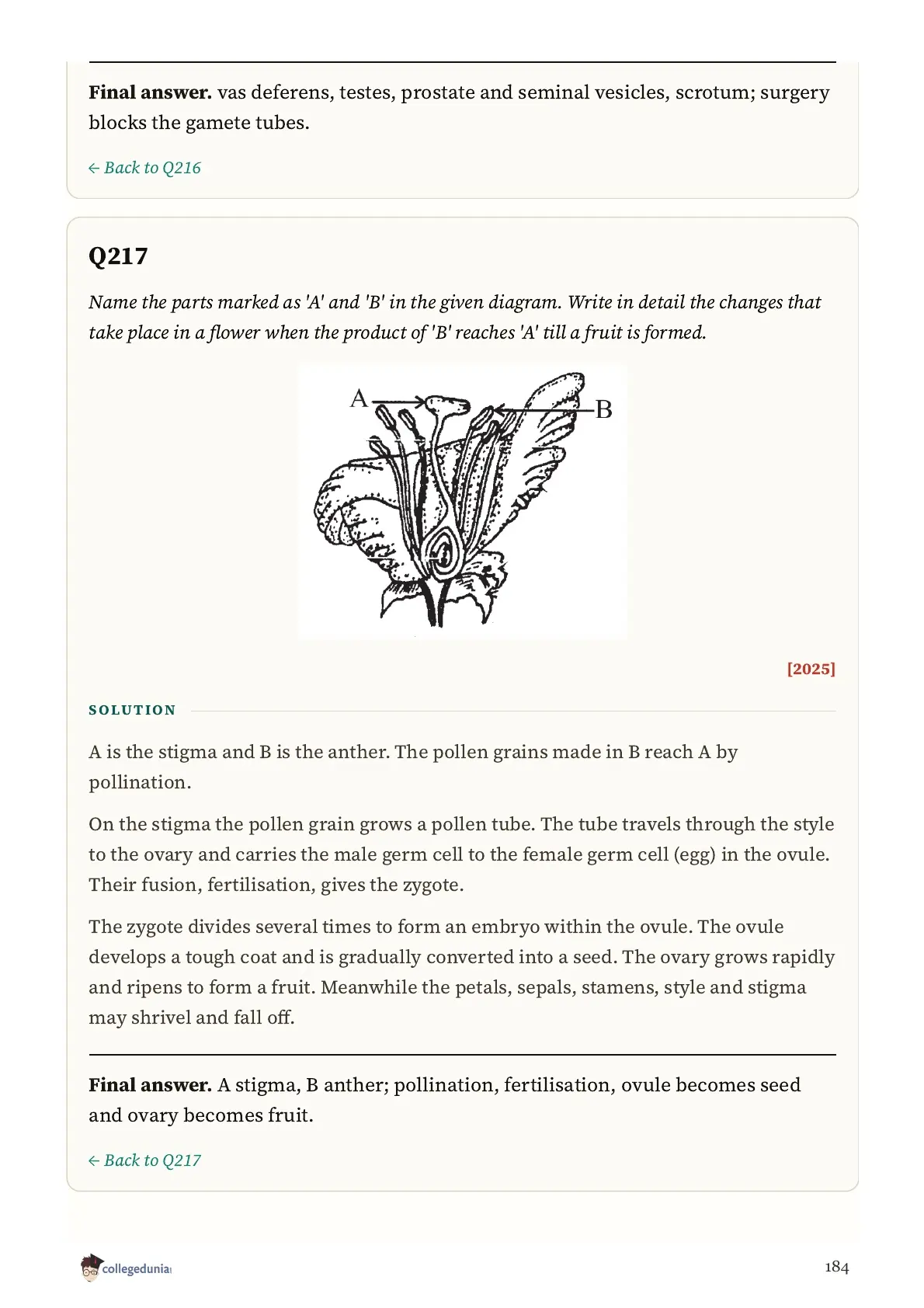
In the flowering plant block, 25 questions are on pollination, 39 on fertilisation and 23 on seeds or germination. The usual forms are the changes in the zygote, ovule and ovary after fertilisation (2025), why fertilisation cannot occur without pollination (2024), and a labelled diagram of pollen germinating on the stigma (2026).
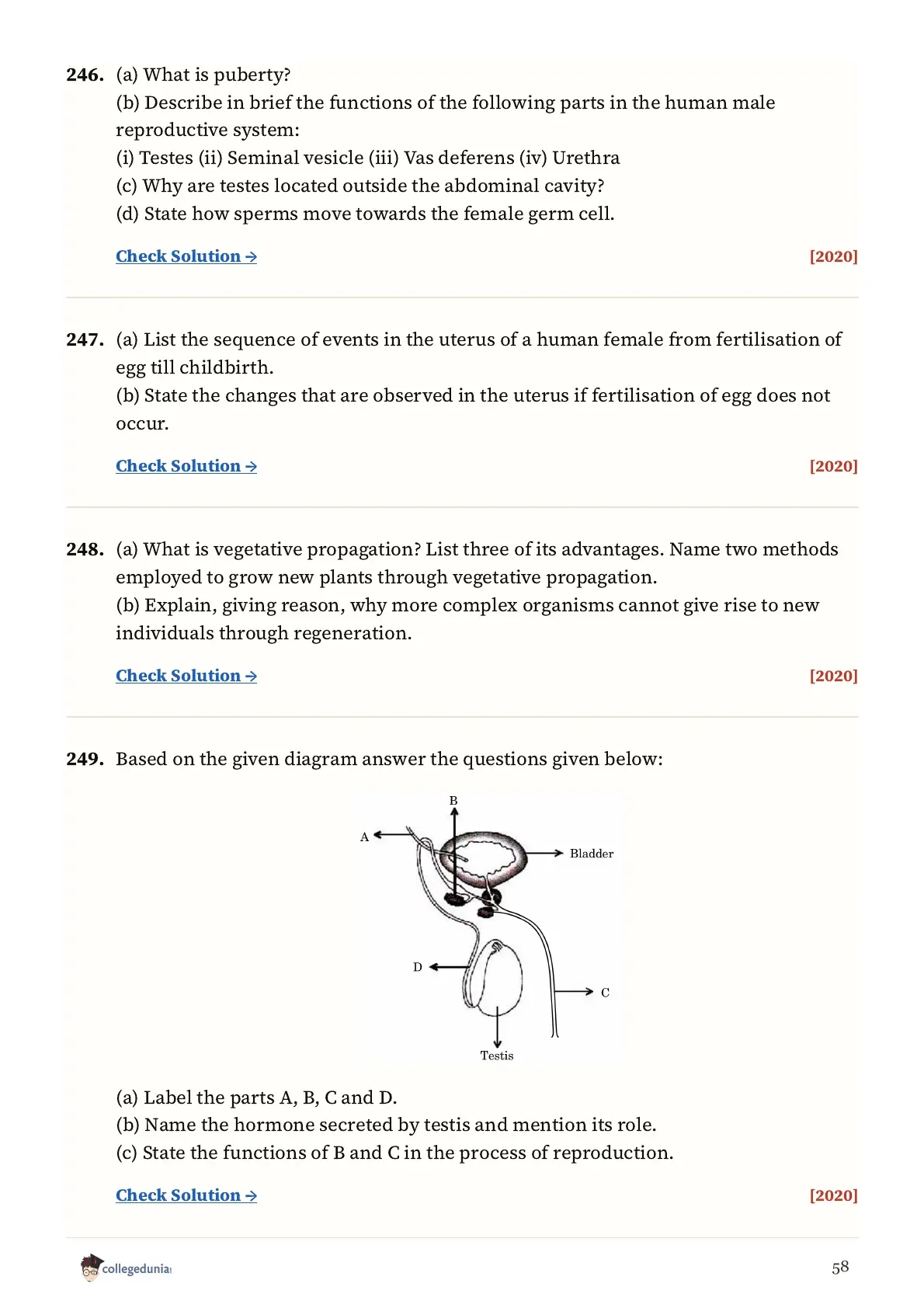
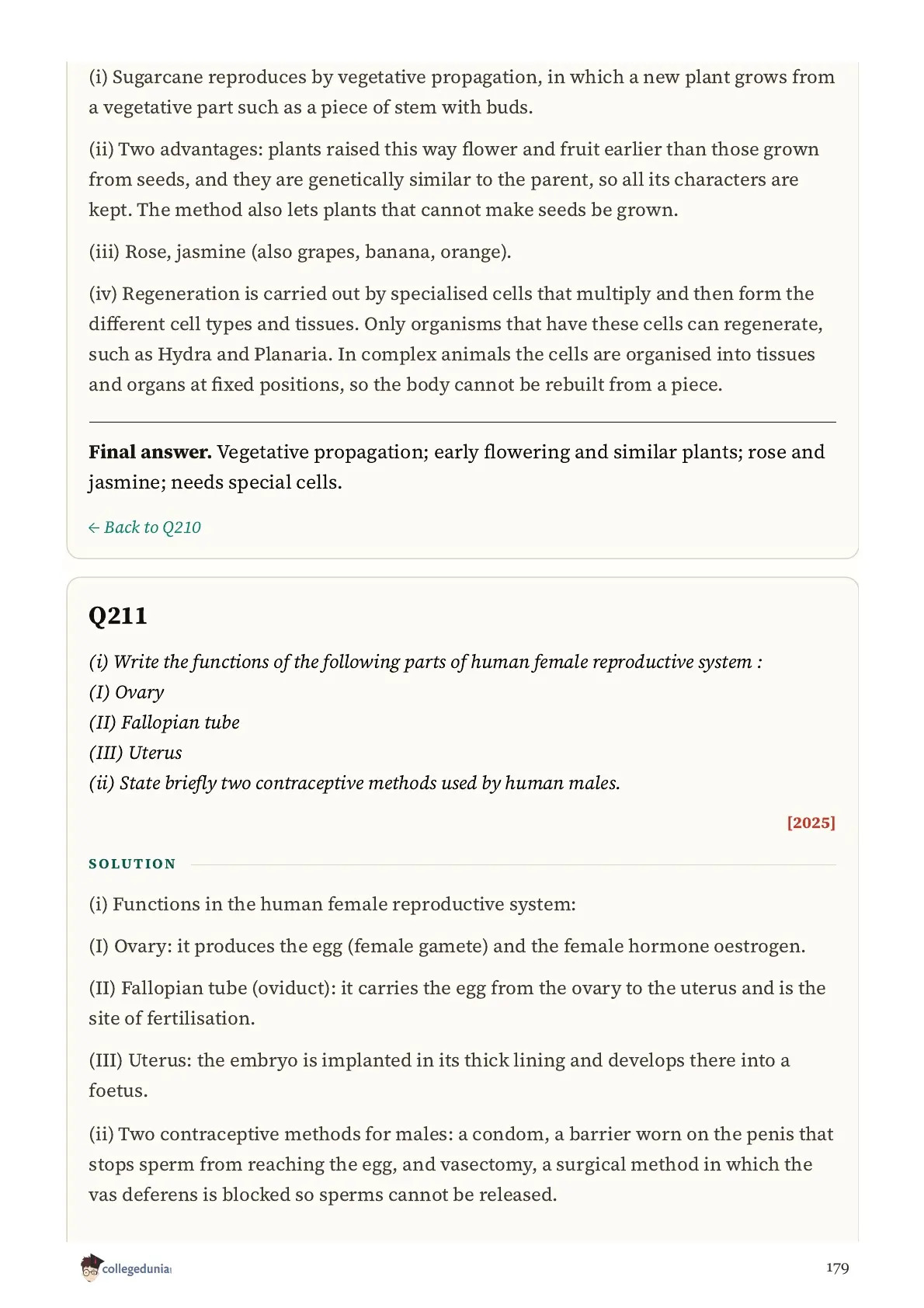
The human block is the largest. 31 questions involve the ovary, 19 the sperm or testis, 15 the placenta and 12 the zygote. 23 are on contraception and 10 on sexually transmitted infections, for example the drawbacks of oral pills and Copper-T (2022) and two bacterial and two viral infections (2020). 10 questions ask about DNA copying and 7 about variation, such as why stability of DNA is kept during sexual reproduction (2024).
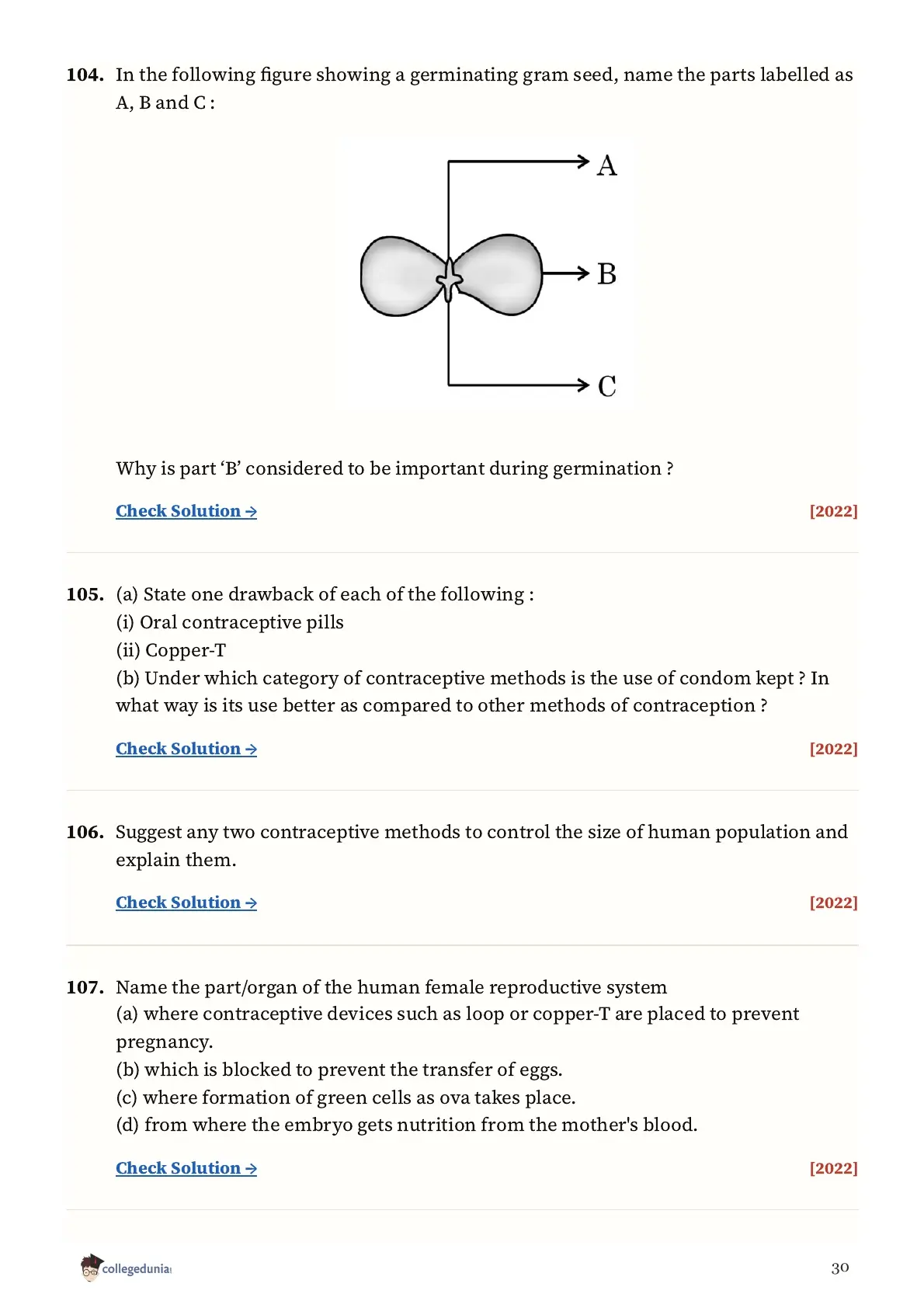
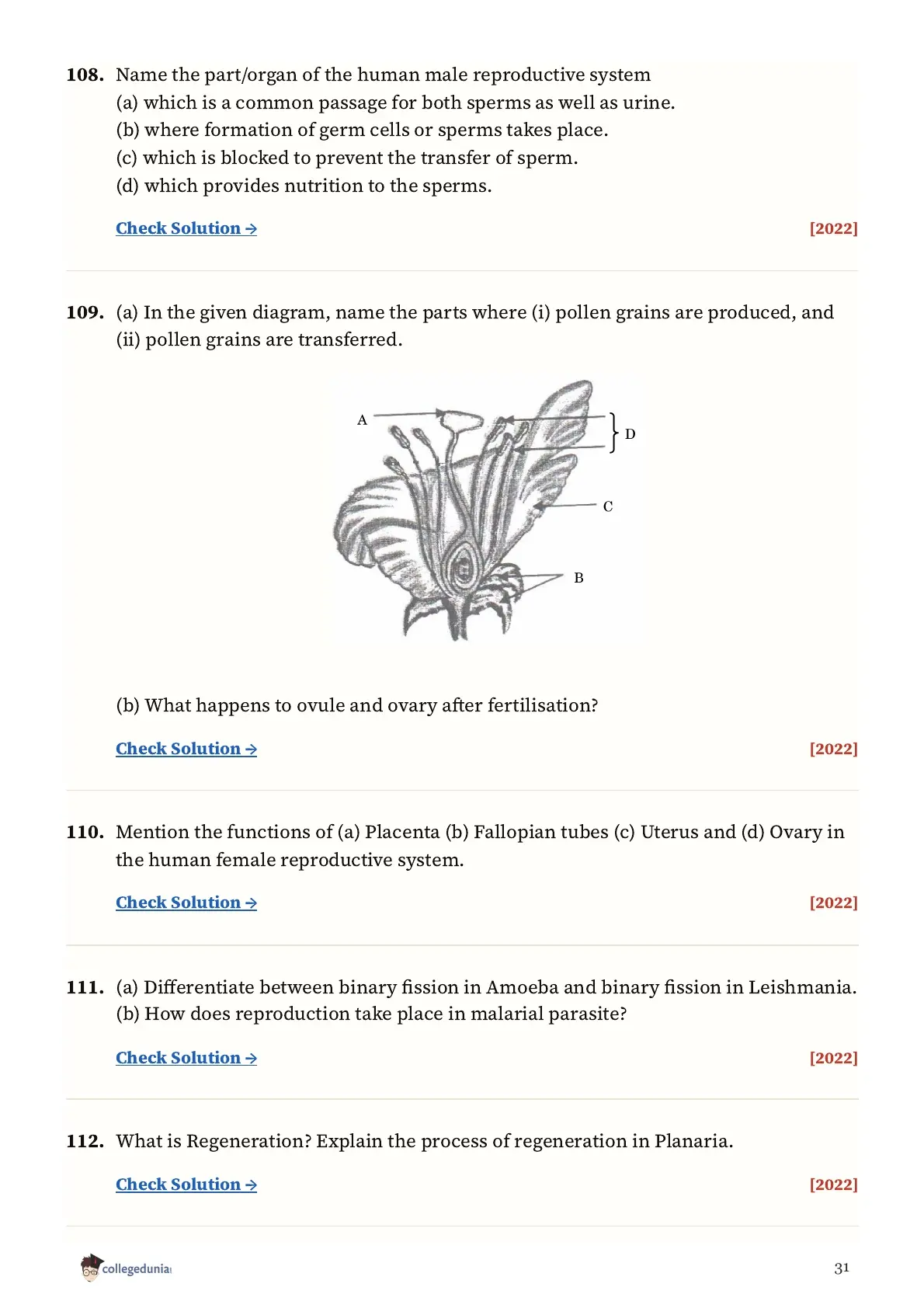
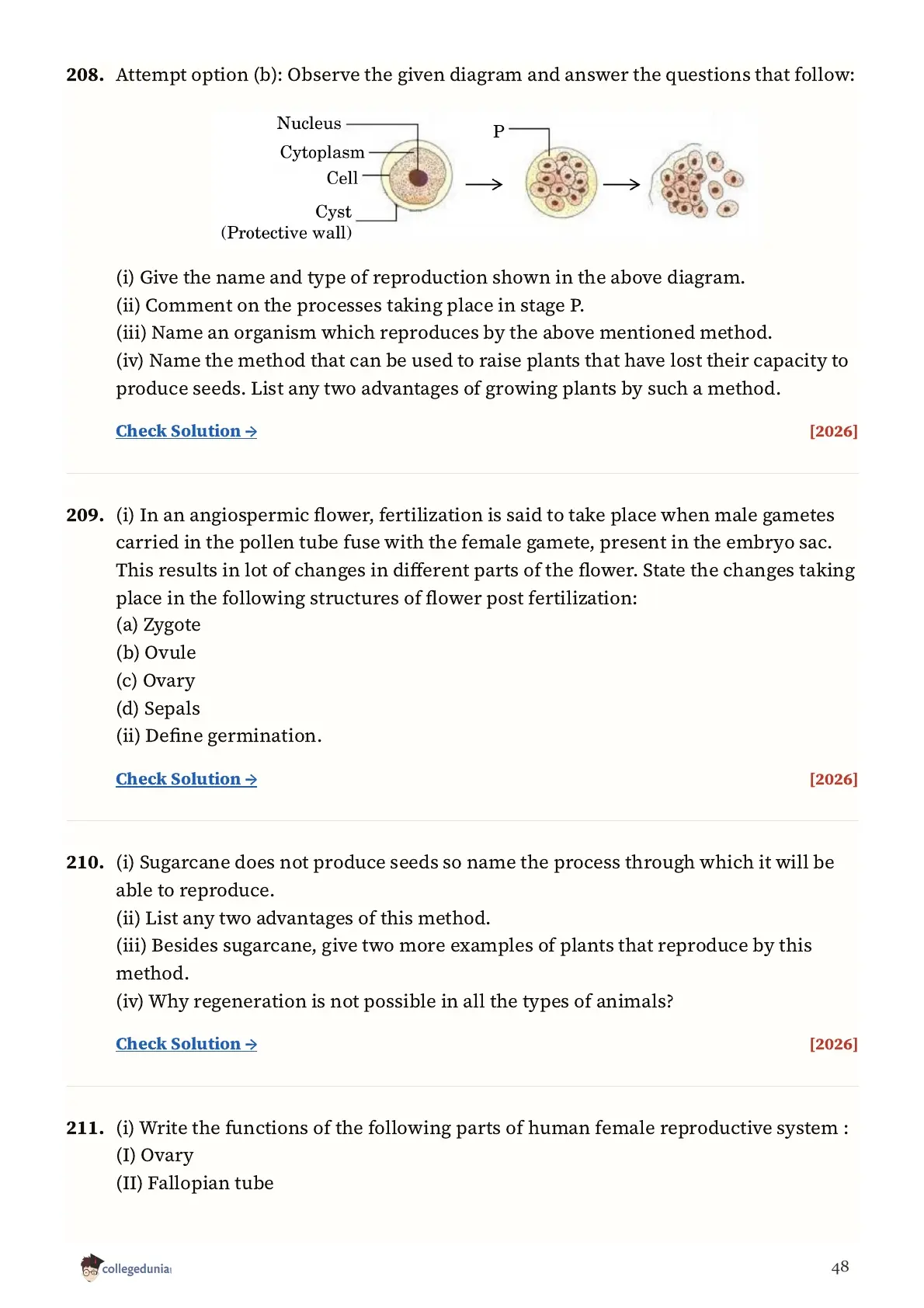
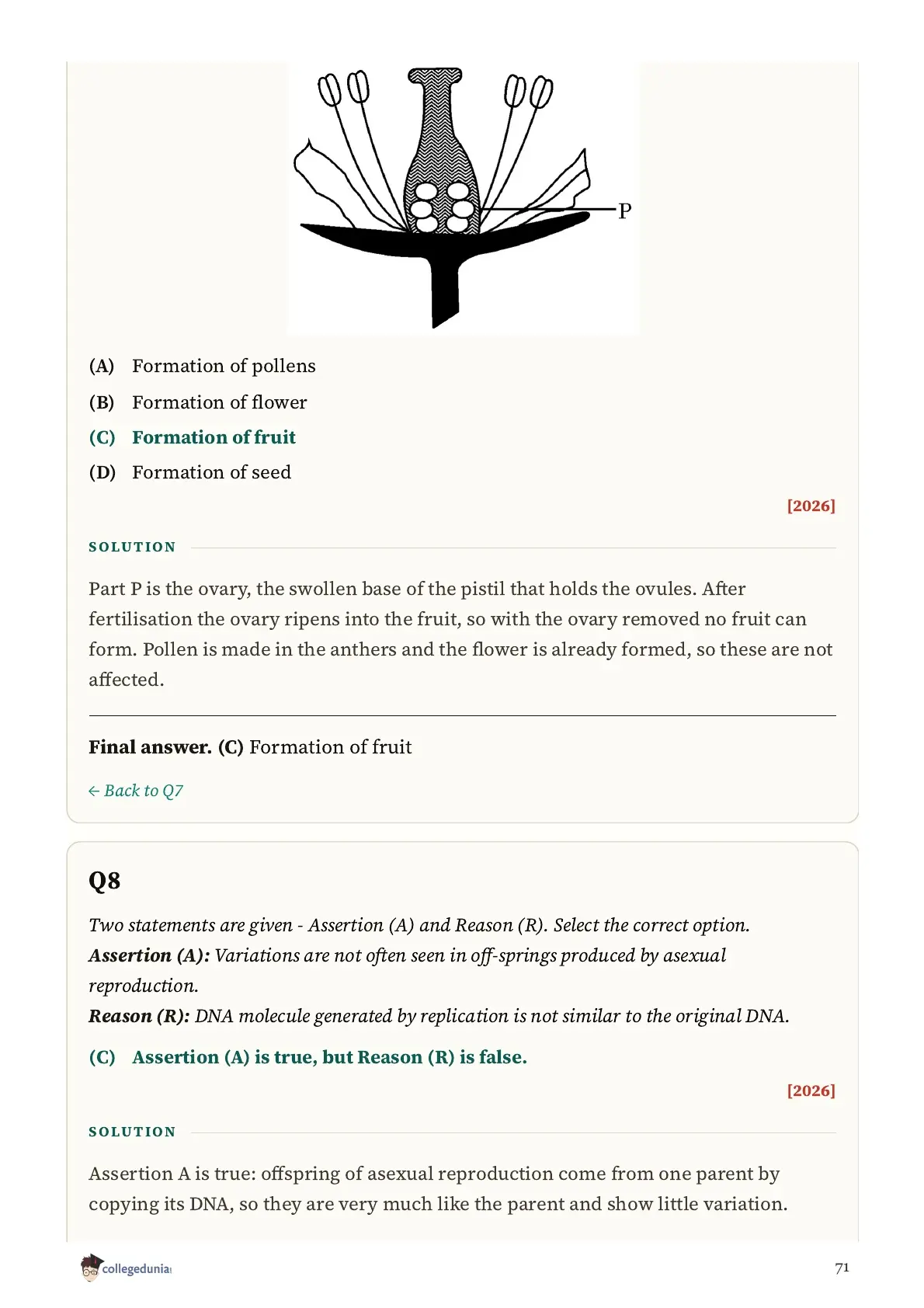
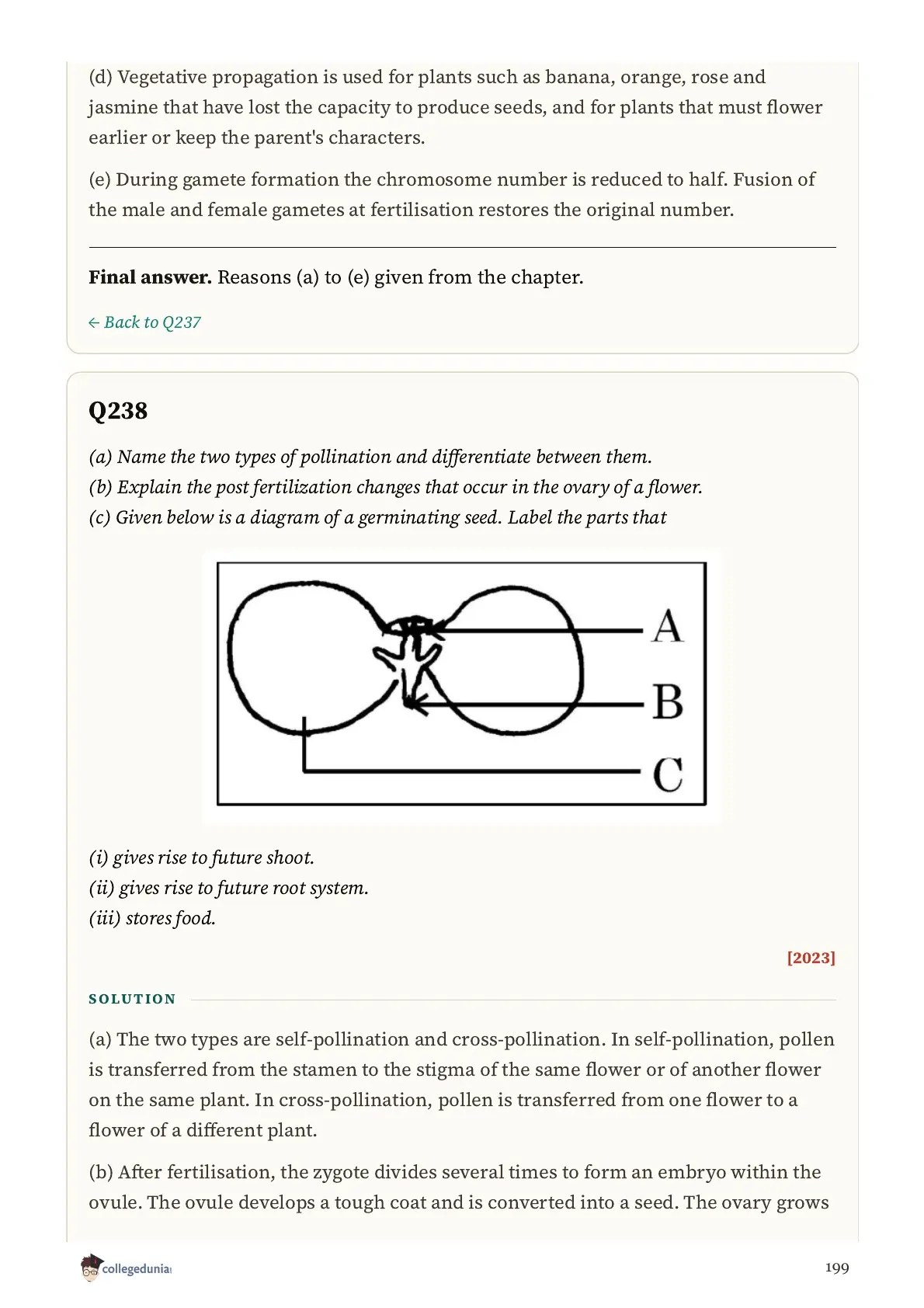
The 13 case-based items come from the 2022 to 2024 papers and all deal with asexual reproduction, and 22 questions across all mark values carry the diagram printed in the original paper. Of the 61 MCQs and assertion-reason items, 7 have a figure in the stem. Counts come from keyword matches over the question text, so a question that names two things is counted under both.
Source: ALLEN 9th & 10th
How to Approach the Set
Start with the 61 MCQs and assertion-reason items, then the 19 one-mark short answers and the 62 two-mark questions, which usually need a definition, a name or a labelled diagram. Next take the 47 three-mark questions and the 13 case-based items. Keep the 80 five-mark questions for last, since many ask for a diagram plus a comparison, for example self and cross pollination, or the events in the uterus after fertilisation. Draw the human male and female reproductive systems, a flower in section and the stages of binary fission, budding and regeneration until you can label each part without a prompt. Practise the 2024, 2025 and 2026 papers closely, as they hold 98 of the 282 questions.
Common Mistakes in How do Organisms Reproduce Questions
- Saying that fertilisation occurs in the uterus. It occurs in the oviduct, and the zygote is then implanted in the uterus.
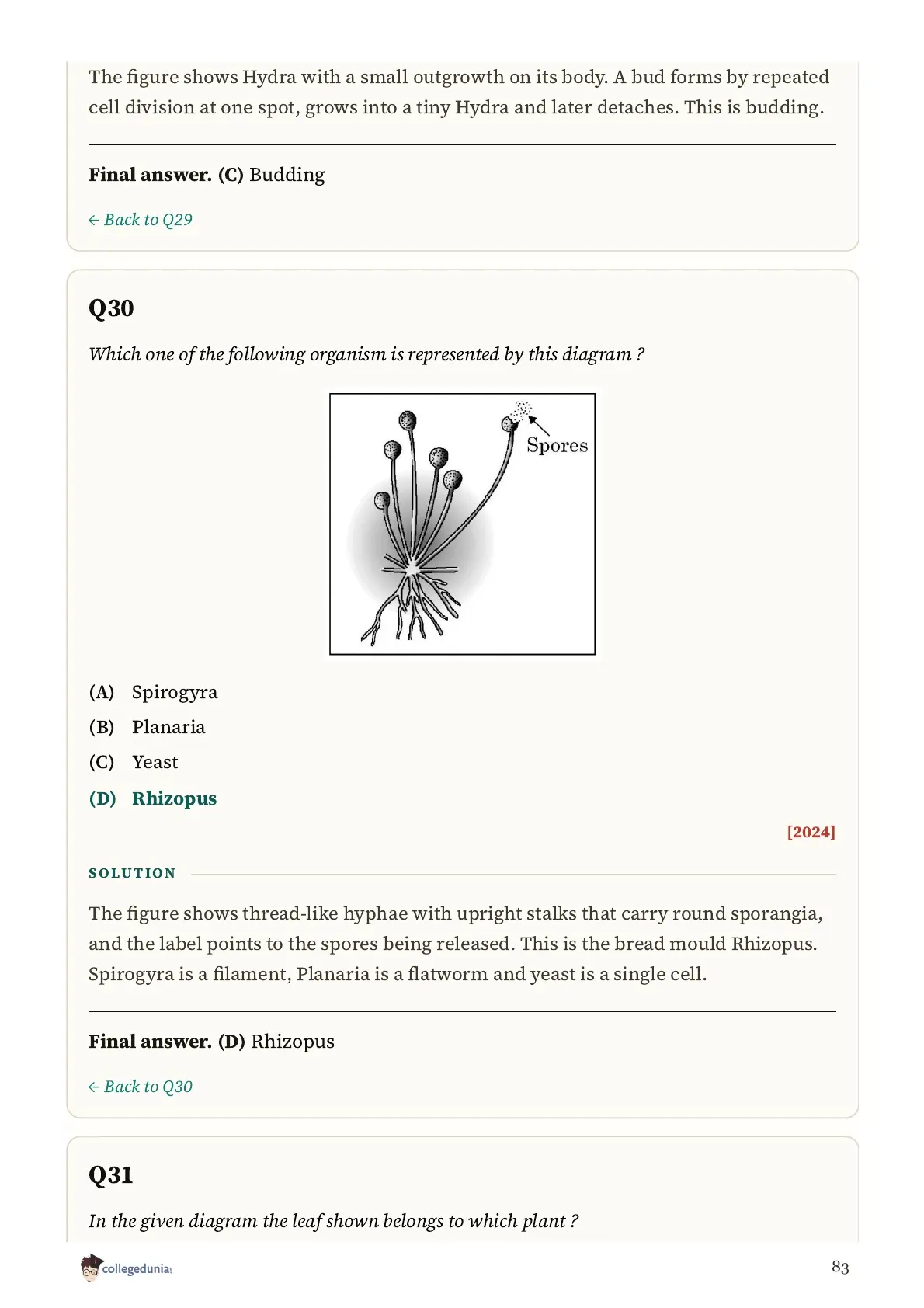
- Calling the hyphae of Rhizopus reproductive. The hyphae are not; the sporangia that hold the spores are.
- Believing that Copper-T protects against infections. Only a condom helps to some extent against sexually transmitted infections.
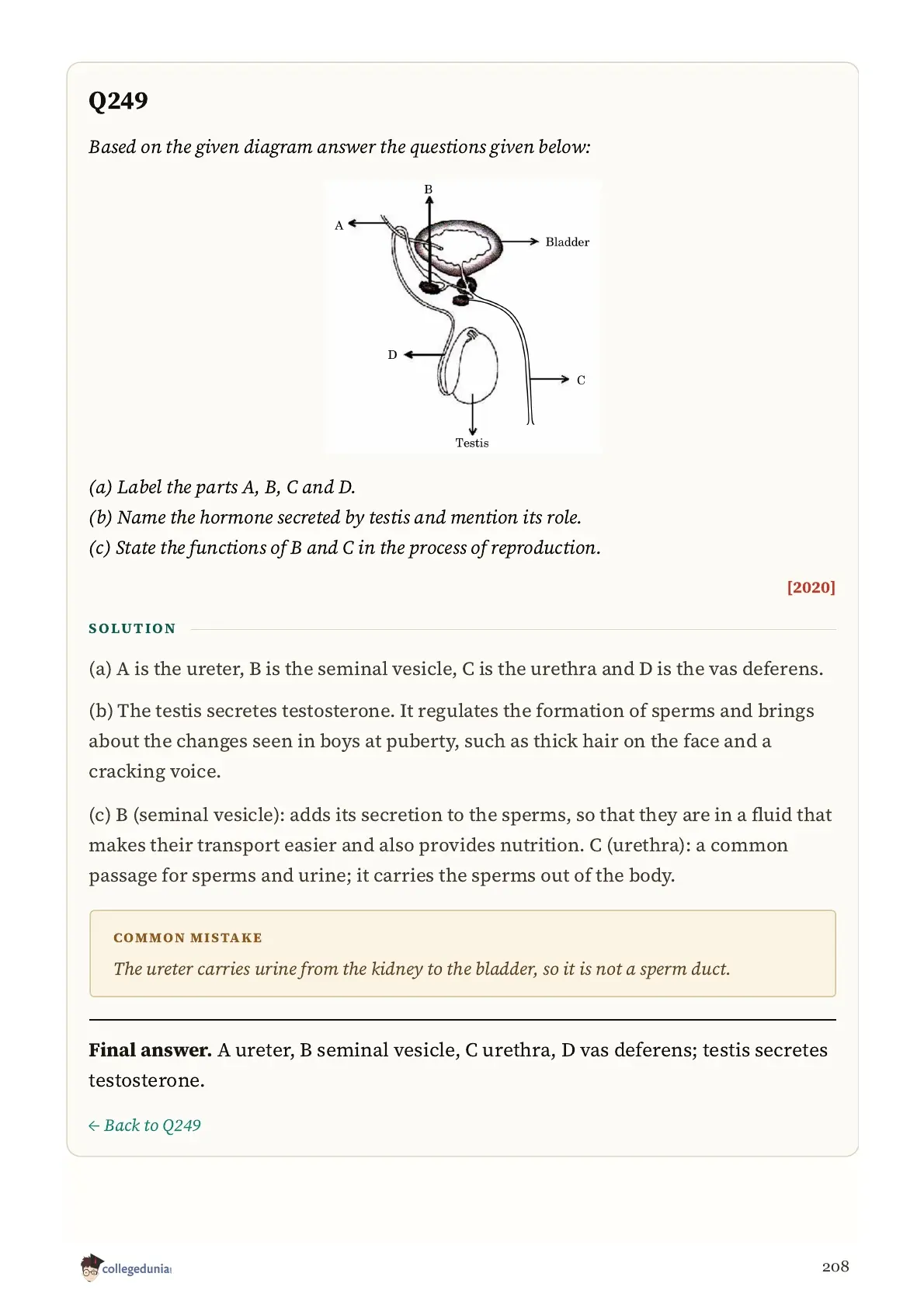
- Confusing the ureter with the sperm duct. The ureter carries urine from the kidney to the bladder.
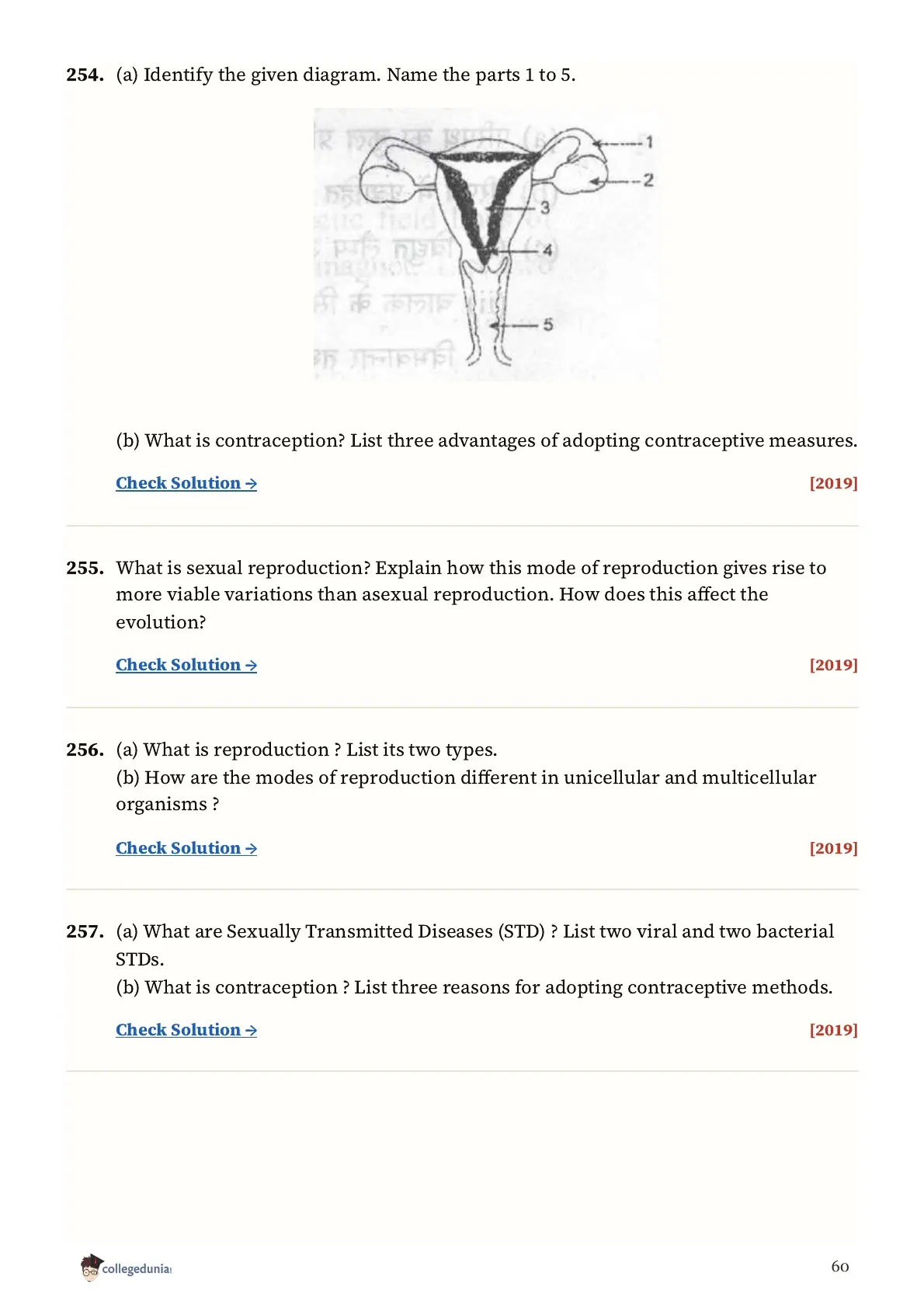
- Reading the funnel near the ovary as the uterus. In the figure questions it is the oviduct, so read the labels on the printed diagram itself.
- Giving Spirogyra and Planaria the same method. Spirogyra breaks into filaments by fragmentation, while Planaria regenerates from its cut pieces.
Using the Answer Key and Solutions
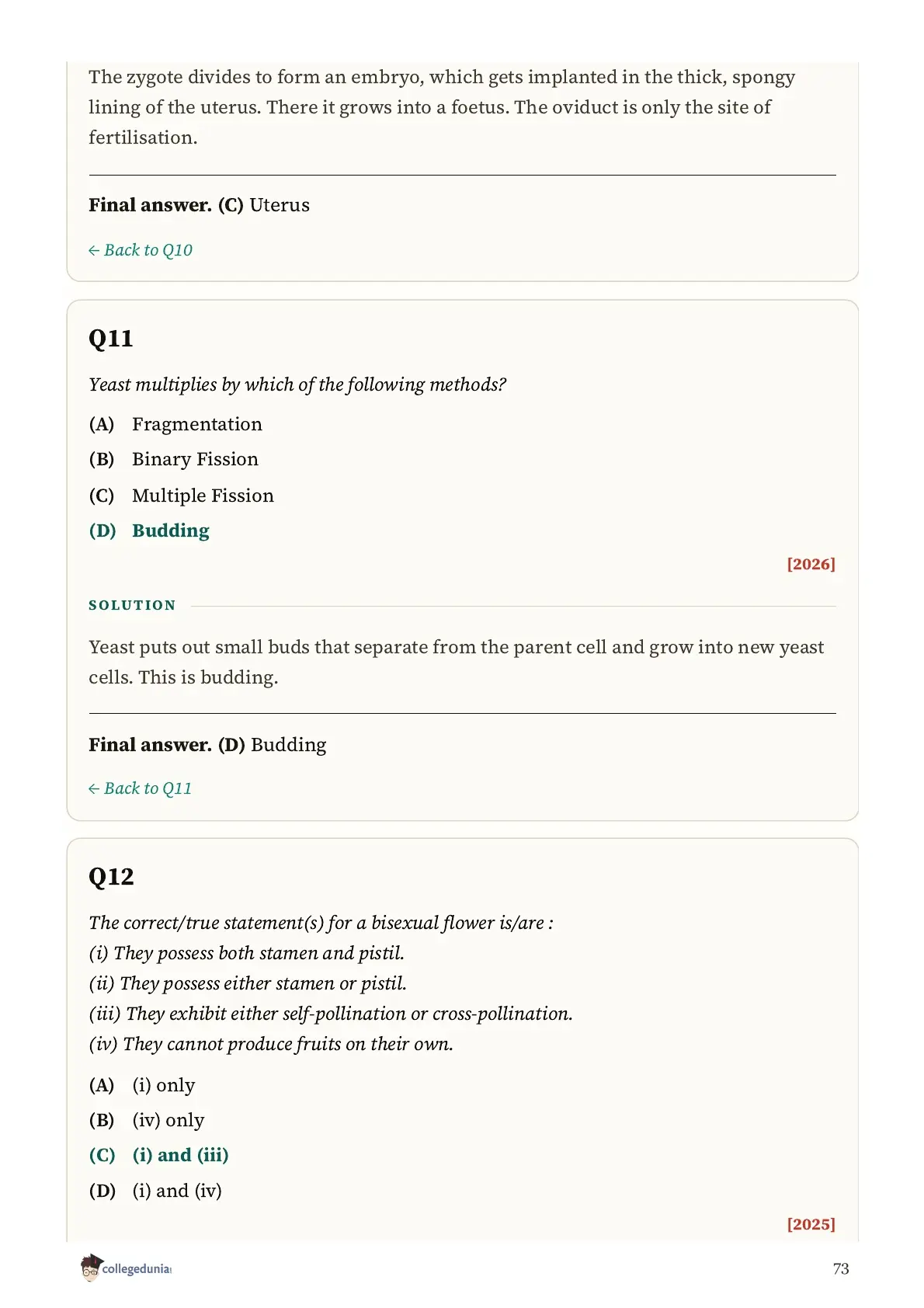
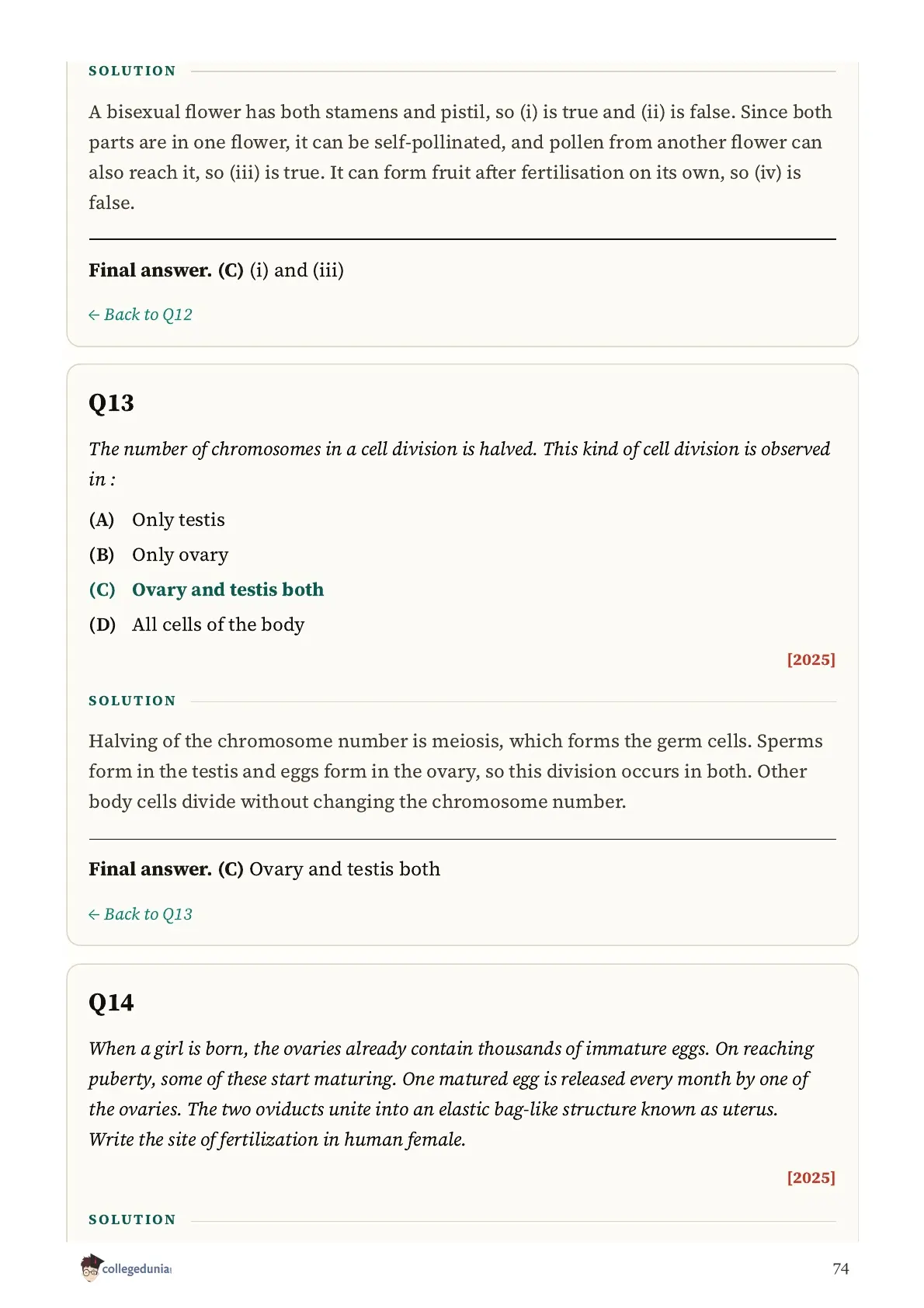
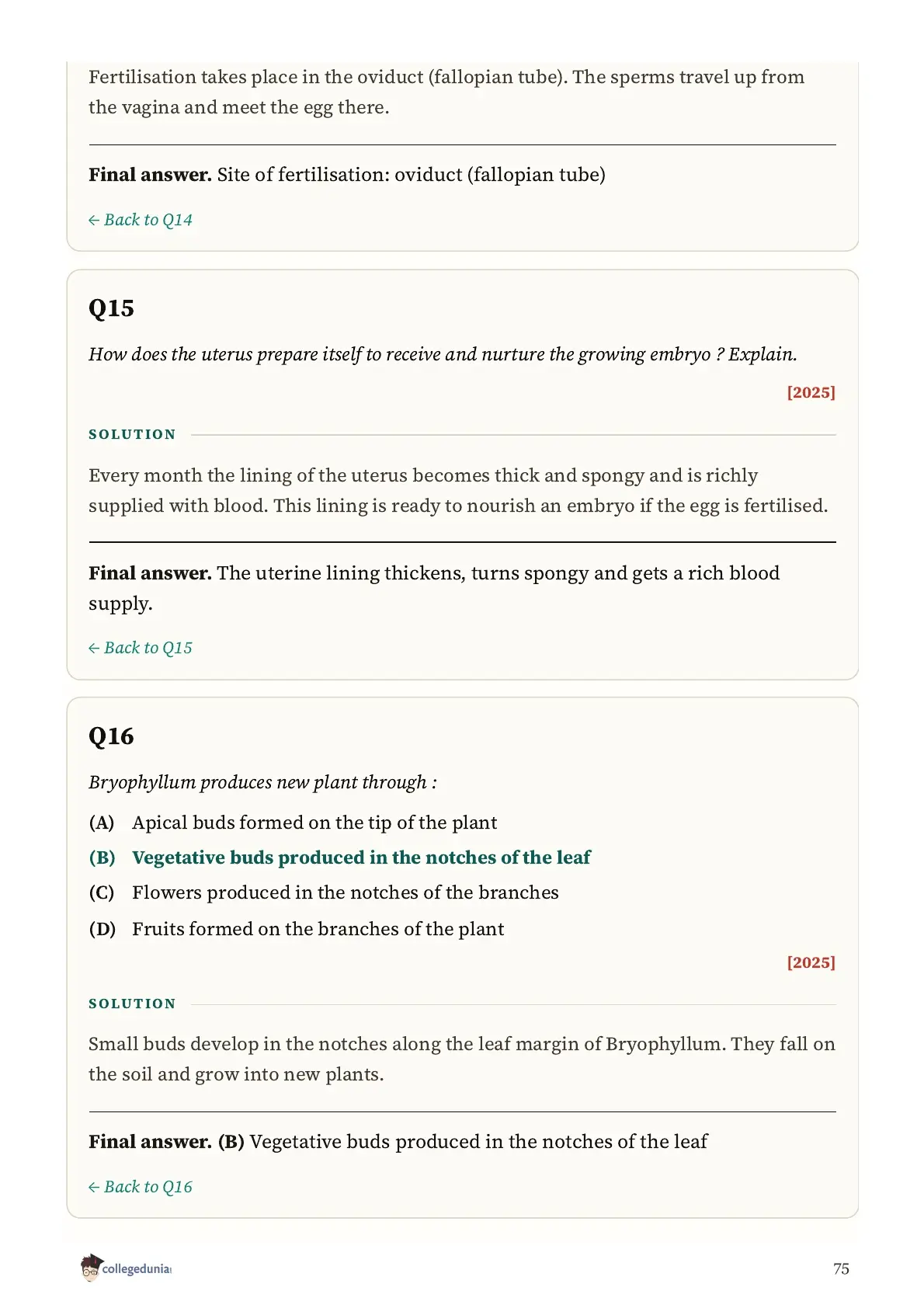
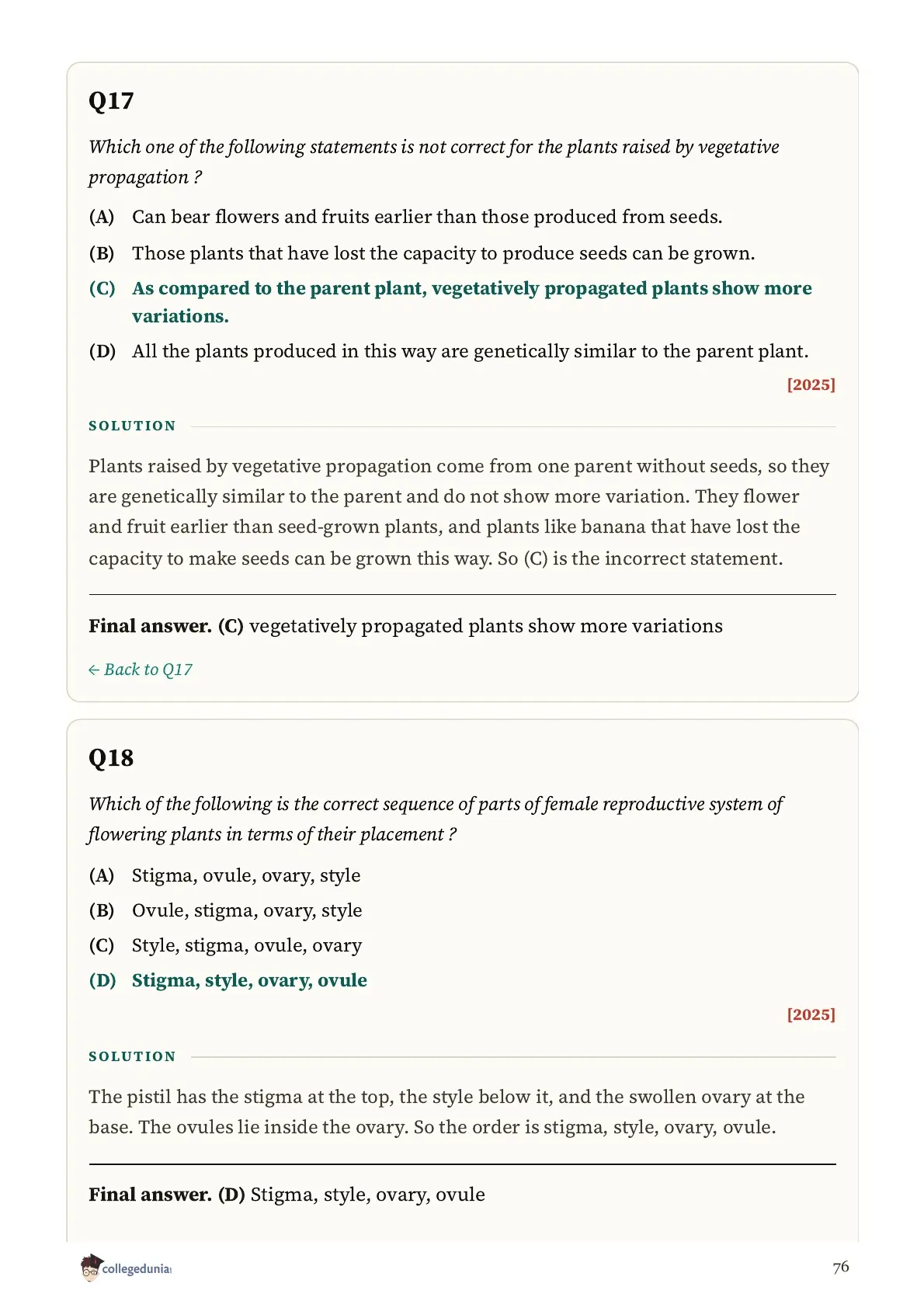
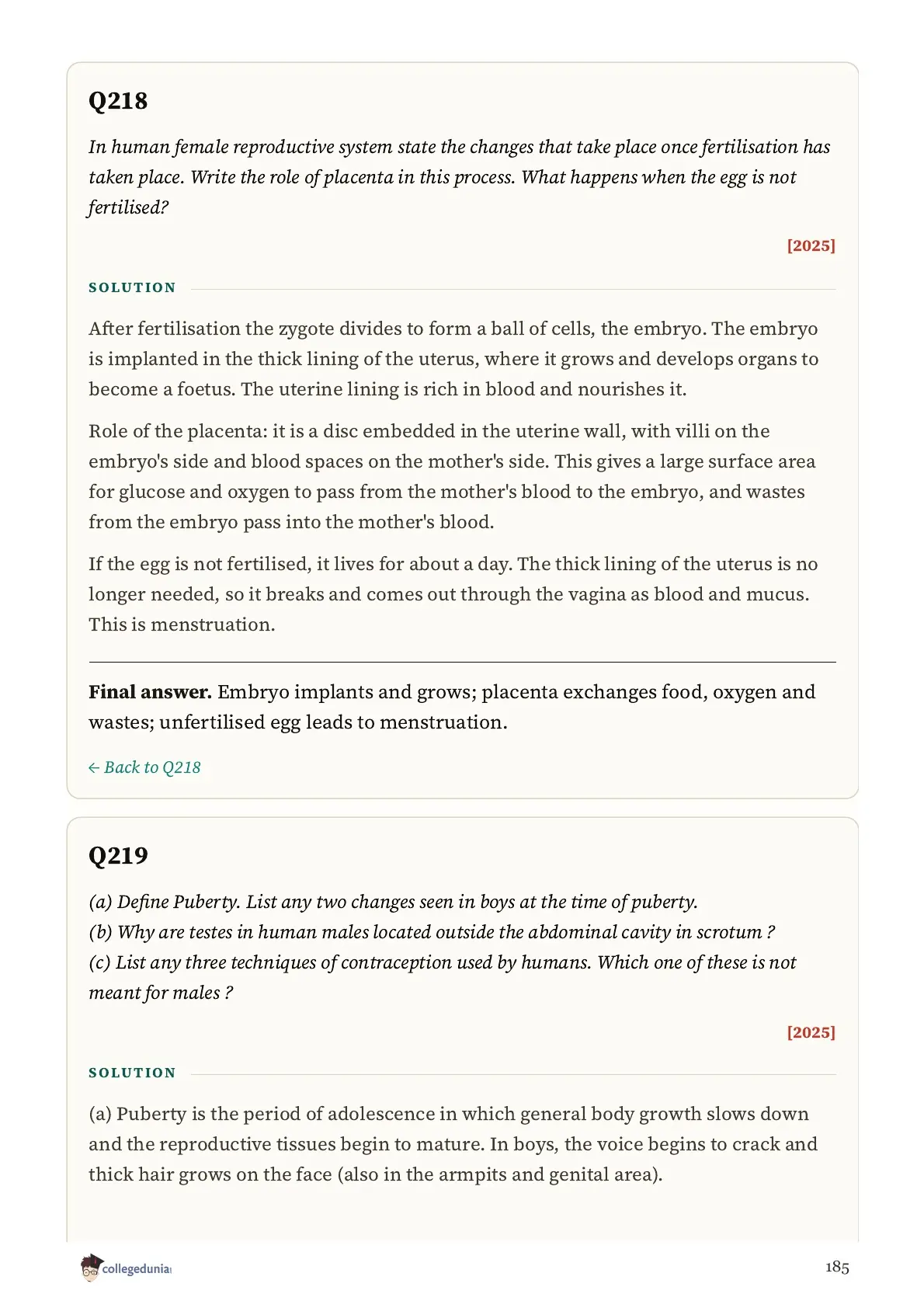
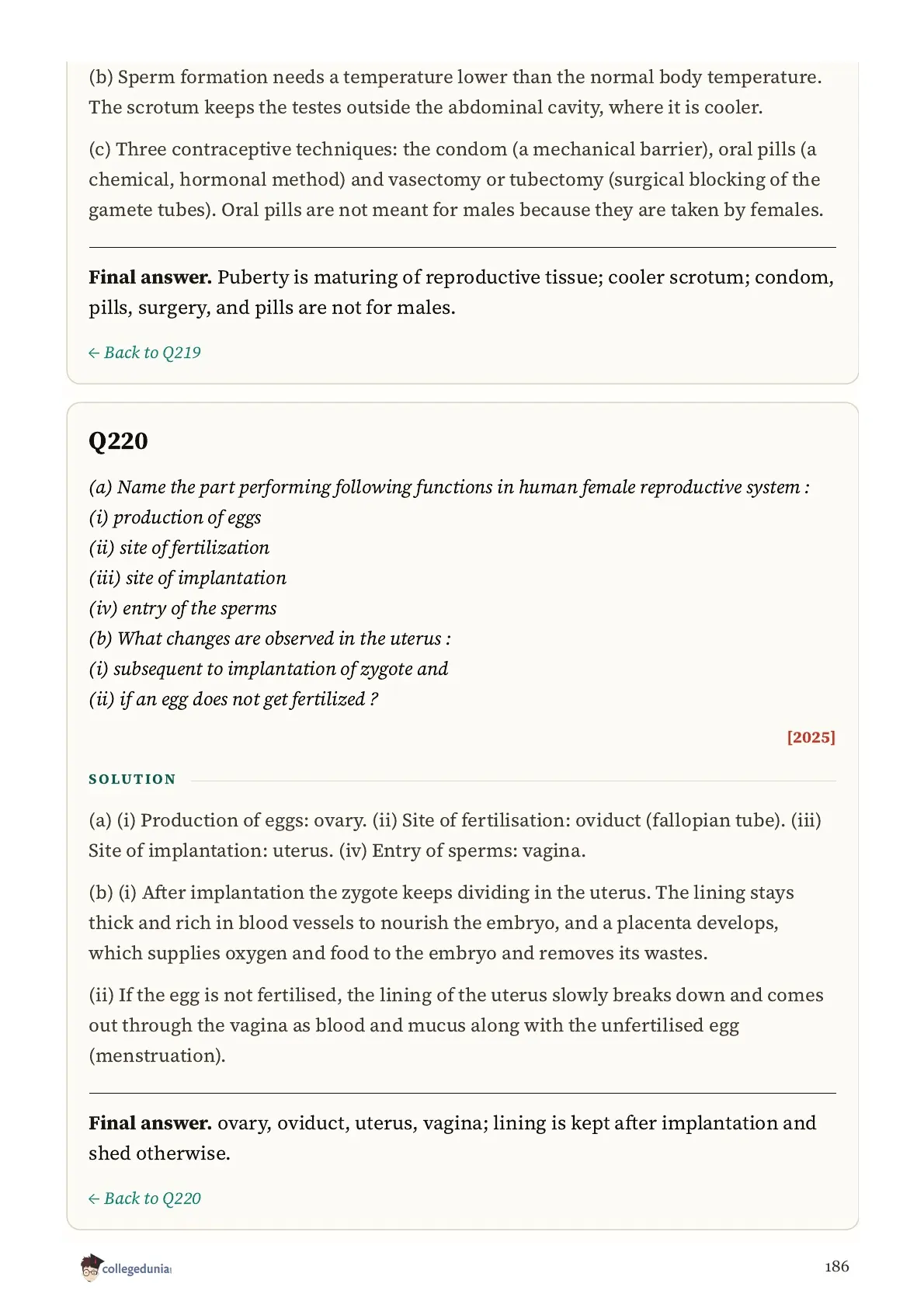
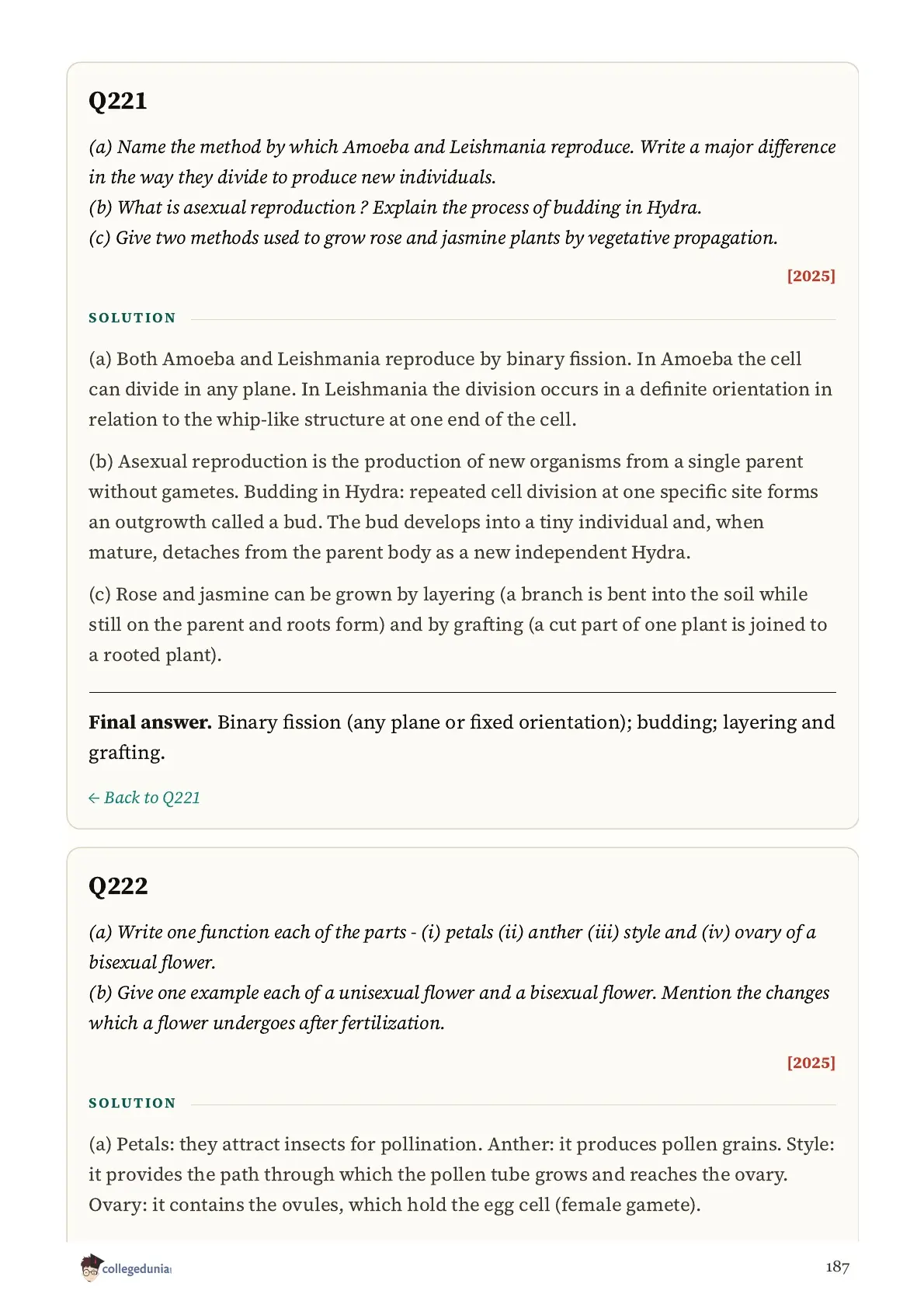
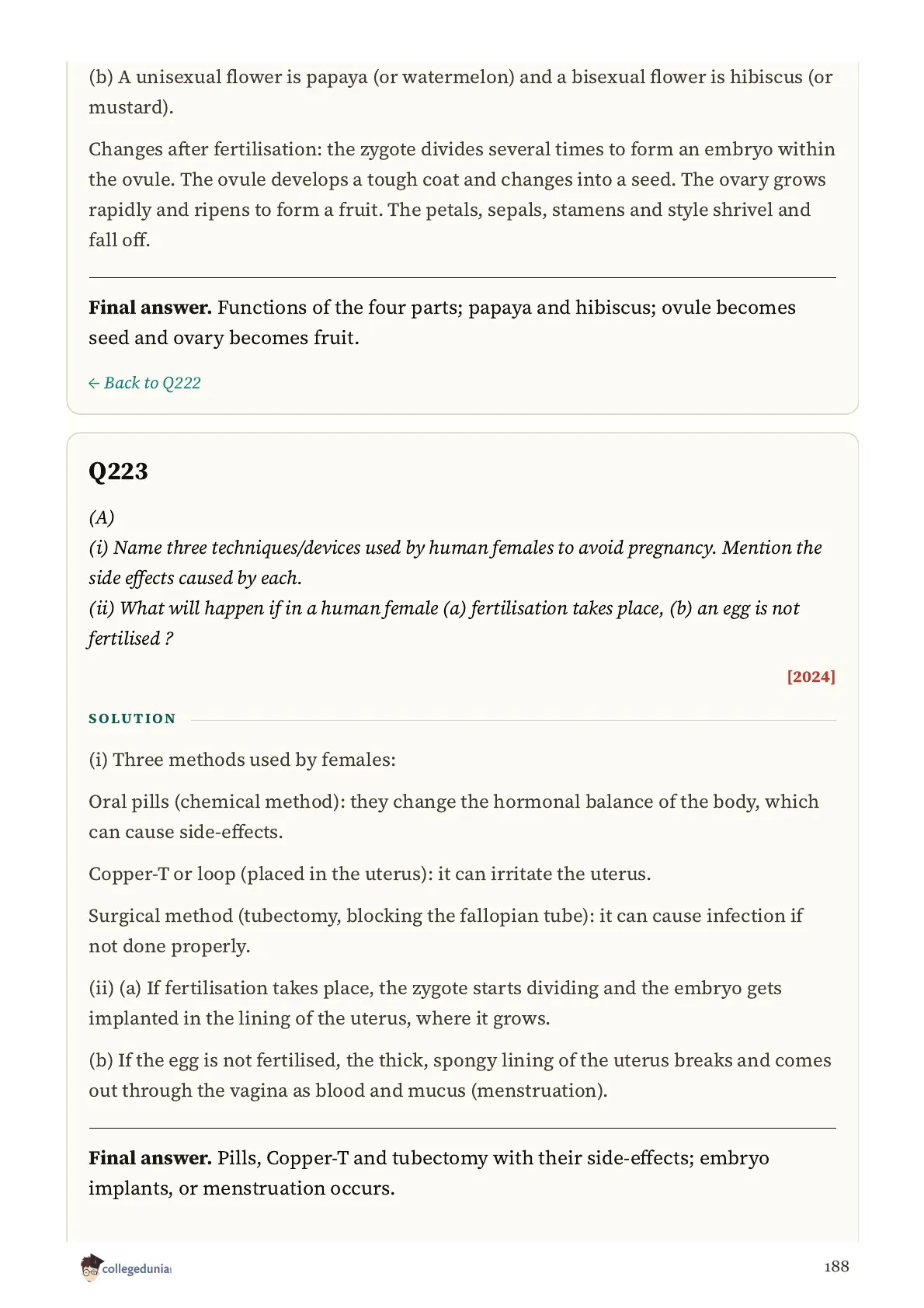
The PDF is 233 pages and free to download. Each section is sorted newest year first, the Answer Key lists the 61 MCQs at a glance, and each question links to its worked solution and back. Attempt a diagram question yourself first, check the key, then read the solution. The solutions are written by Collegedunia's Science experts and are not official CBSE marking schemes.
Class 10 Science PYQs by Chapter
| Unit | PYQ Page |
|---|---|
| Chemical Substances | Chemical Reactions and Equations Class 10 Science PYQ |
| Chemical Substances | Acids, Bases and Salts Class 10 Science PYQ |
| Chemical Substances | Metals and Non-metals Class 10 Science PYQ |
| Chemical Substances | Carbon and its Compounds Class 10 Science PYQ |
| World of Living | Life Processes Class 10 Science PYQ |
| World of Living | Control and Coordination Class 10 Science PYQ |
| World of Living | How do Organisms Reproduce Class 10 Science PYQ |
| World of Living | Heredity Class 10 Science PYQ |
| Natural Phenomena | Light - Reflection and Refraction Class 10 Science PYQ |
| Natural Phenomena | The Human Eye and the Colourful World Class 10 Science PYQ |
| Effects of Current | Electricity Class 10 Science PYQ |
| Effects of Current | Magnetic Effects of Electric Current Class 10 Science PYQ |
| Natural Resources | Our Environment Class 10 Science PYQ |
How do Organisms Reproduce Class 10 Science PYQ FAQs
Ques. How many questions are in the How do Organisms Reproduce Class 10 Science PYQ PDF?
Ans. The PDF has 282 questions from the 2007 to 2026 board papers: 80 at 1 mark, 62 at 2 marks, 47 at 3 marks, 13 case-based items at 4 marks and 80 long answers at 5 marks.
Ques. Does this PYQ PDF include solutions, or only the questions?
Ans. All 282 questions have a worked solution in the PDF. The 61 MCQs and assertion-reason items are also listed in the Answer Key before the solutions.
Ques. Are the solutions official?
Ans. No. The solutions are written by Collegedunia's Science experts and checked against the NCERT chapter and, for the 2022 to 2026 papers, against CBSE's published marking schemes; older answers are checked against the NCERT text. They are not an official CBSE marking scheme, so the board's wording may differ.
Ques. How many marks does How do Organisms Reproduce? carry in the Class 10 Science paper?
Ans. CBSE publishes marks per unit, not per chapter. The chapter belongs to Unit II, World of Living, which carries 25 of the 80 theory marks together with Life Processes, Control and Coordination and Heredity. That figure is as reported by prep sites and is unofficial, so check cbseacademic.nic.in for the current syllabus.
Ques. What kind of questions are asked from this chapter?
Ans. Diagram and explanation questions dominate. The board asks for modes of asexual reproduction, labelled diagrams of the flower and the human reproductive system, pollination and fertilisation, and contraception and reproductive health. 22 of the 282 questions carry a printed figure.
Ques. Which years does the set cover?
Ans. The questions come from 19 board years between 2007 and 2026. 2024 has the most questions (41), followed by 2025 (37) and 2017 (29).



Comments