



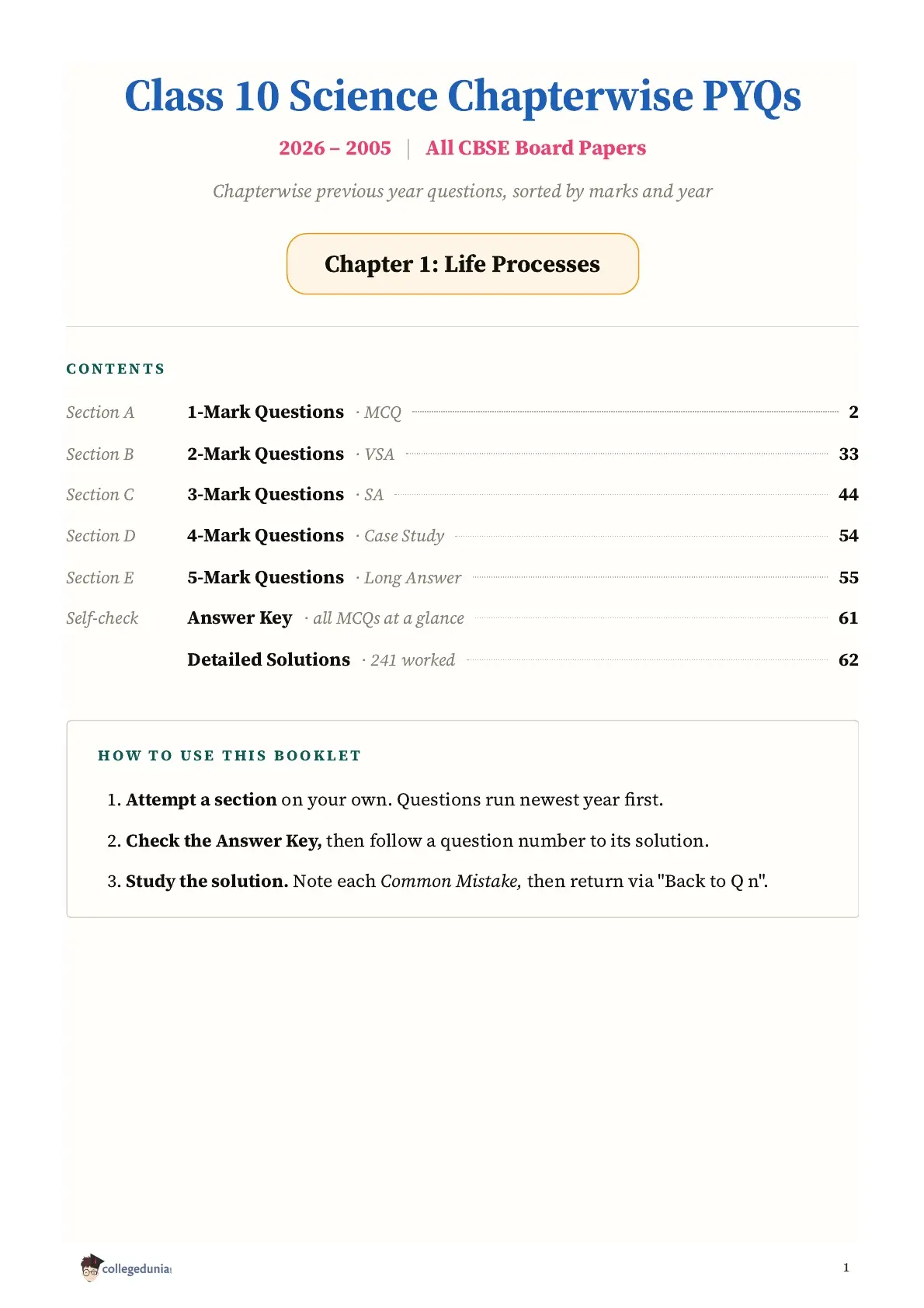
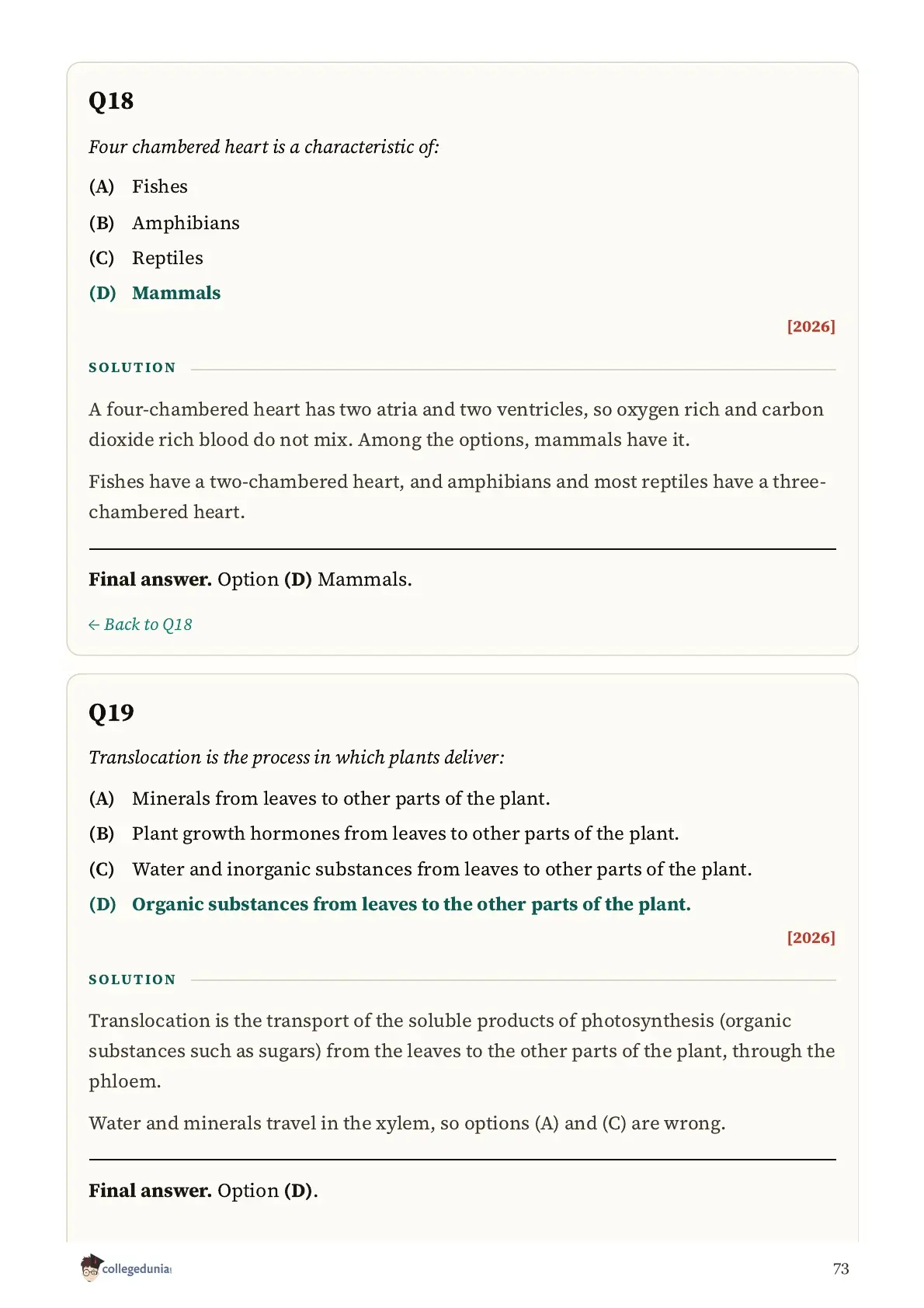
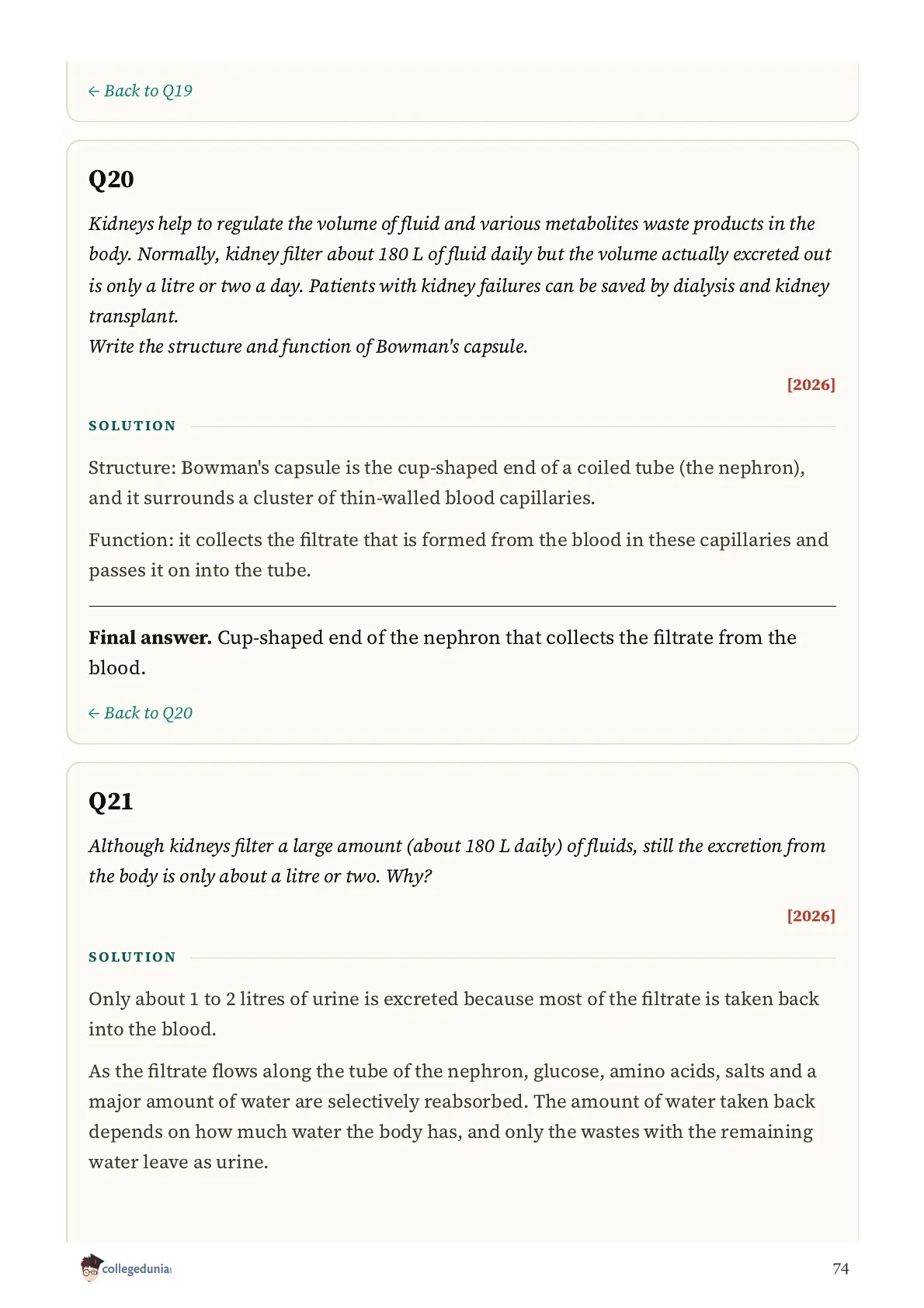
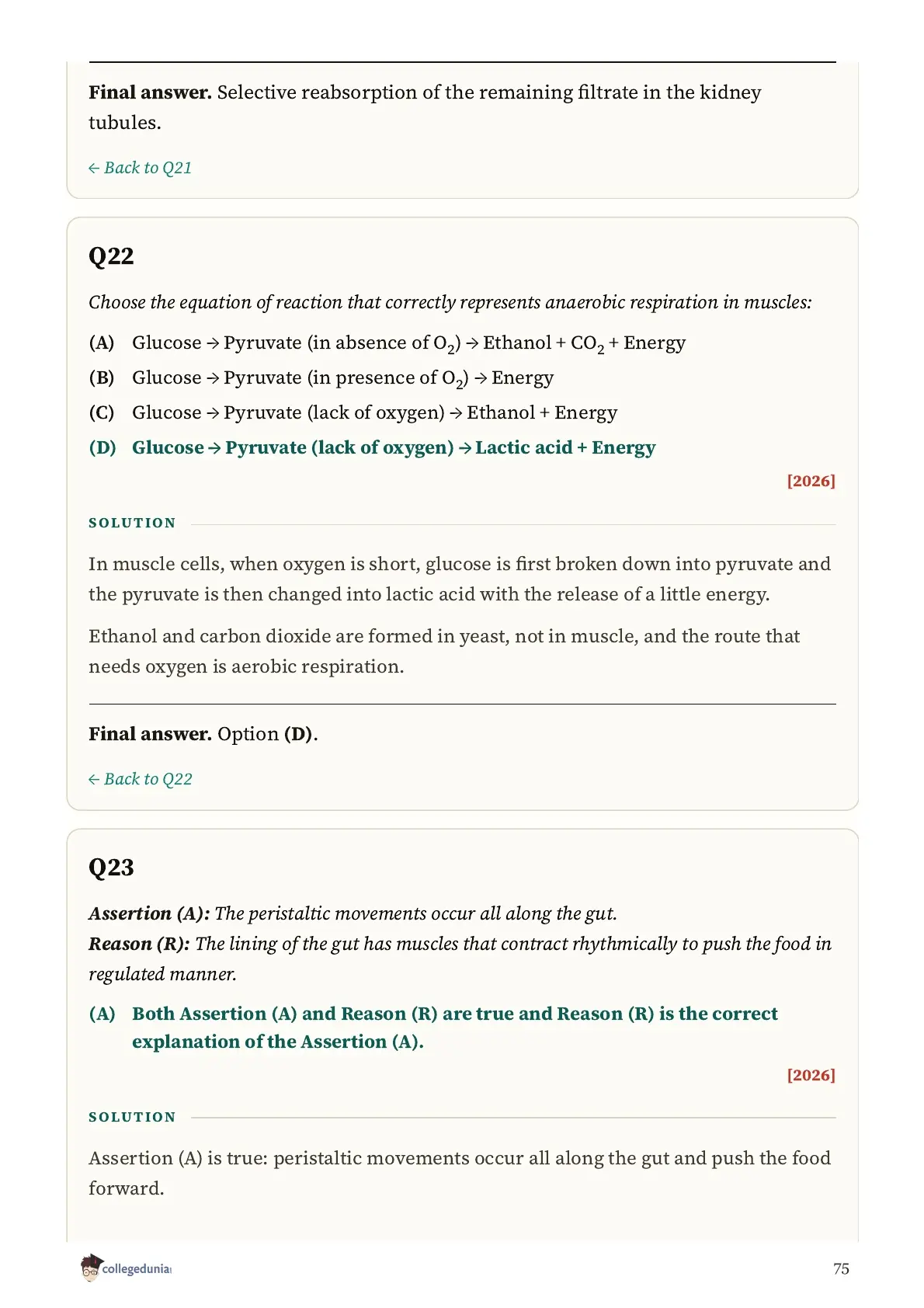
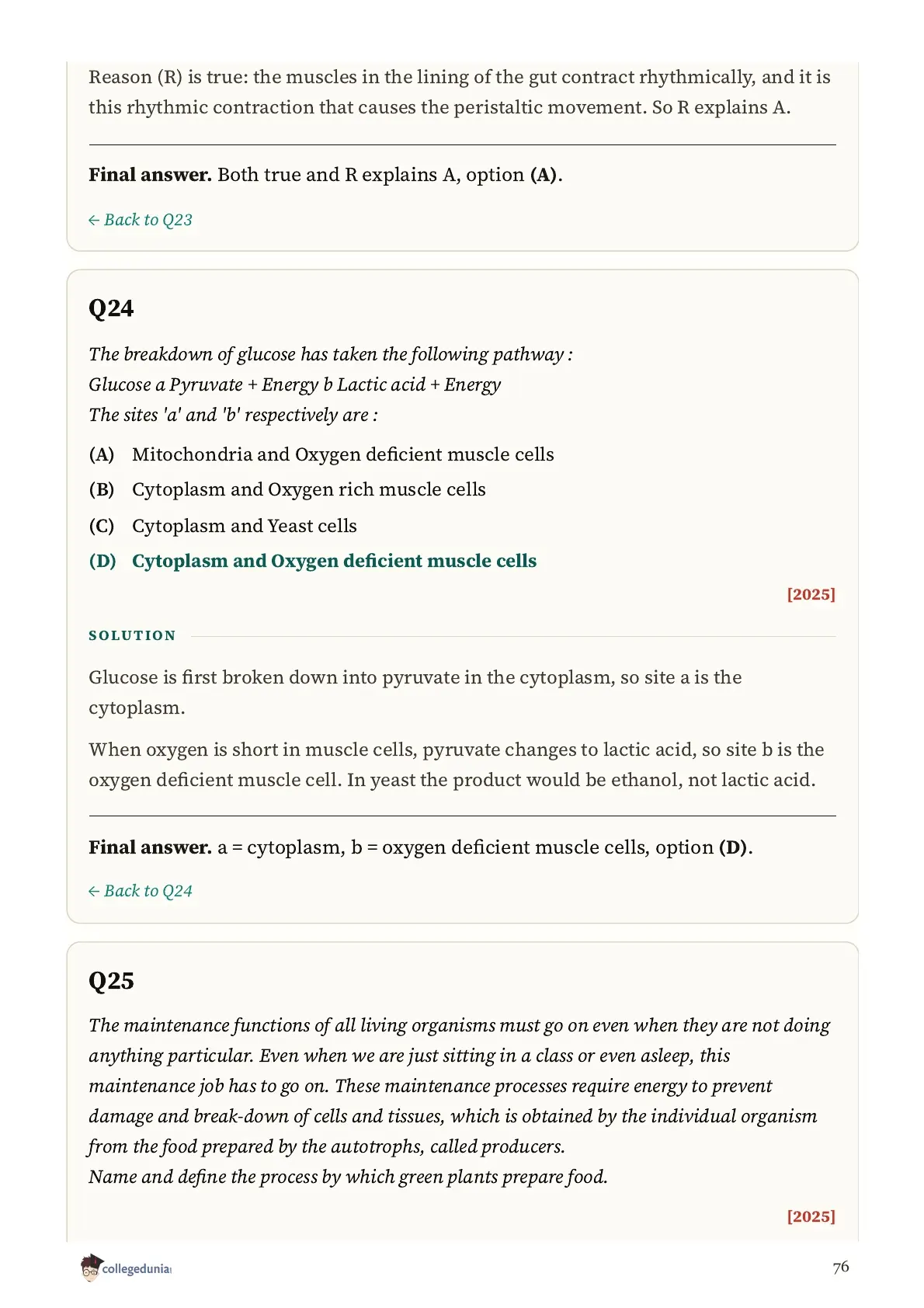
Class 10 Science Life Processes PYQ, free to download as a 198-page PDF with 241 solved board questions from the 2005 to 2026 papers. Life Processes is Chapter 5 of the NCERT Class 10 Science book and sits in the CBSE unit World of Living, which carries 25 of the 80 theory marks together with Control and Coordination, How do Organisms Reproduce? and Heredity.
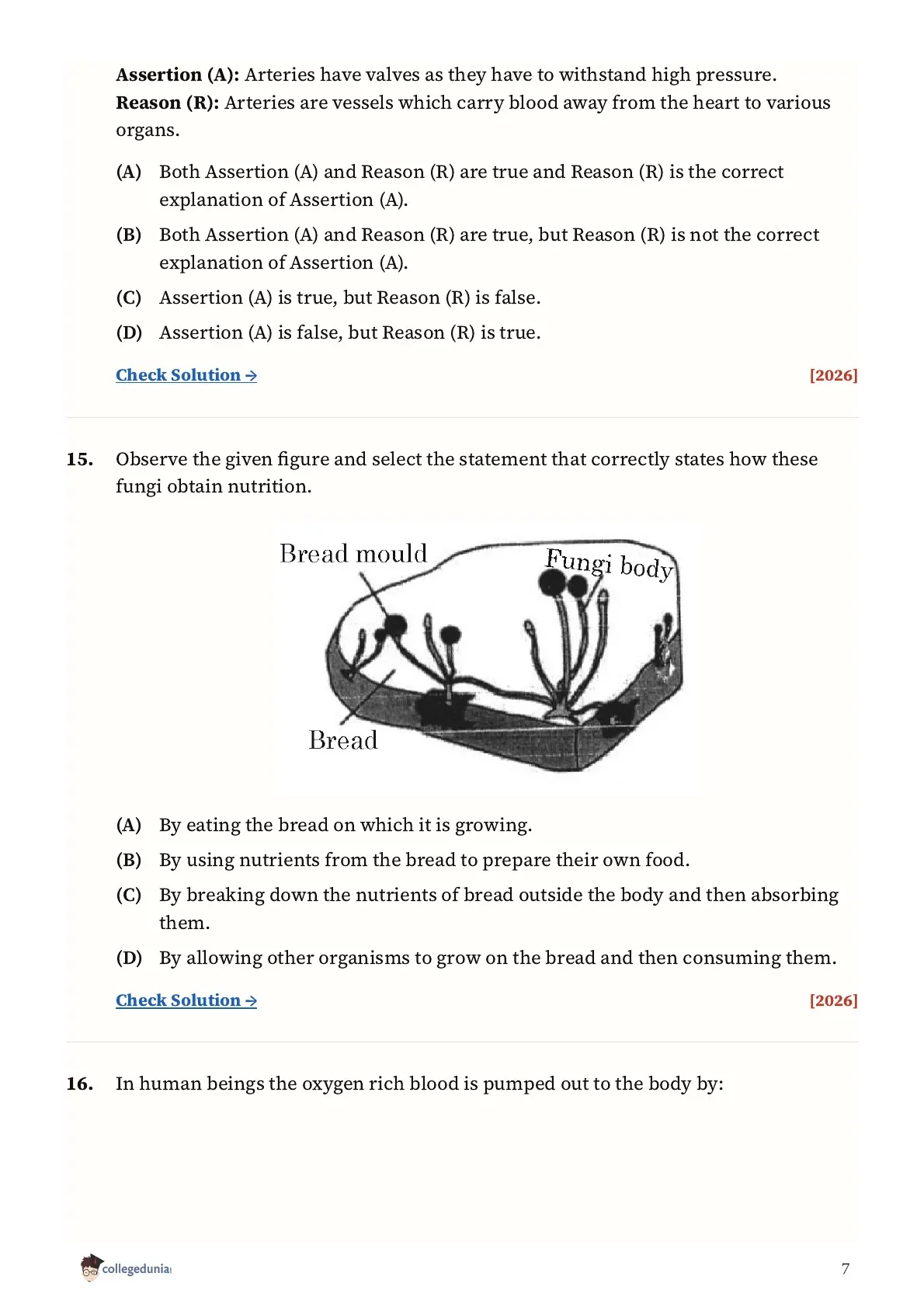
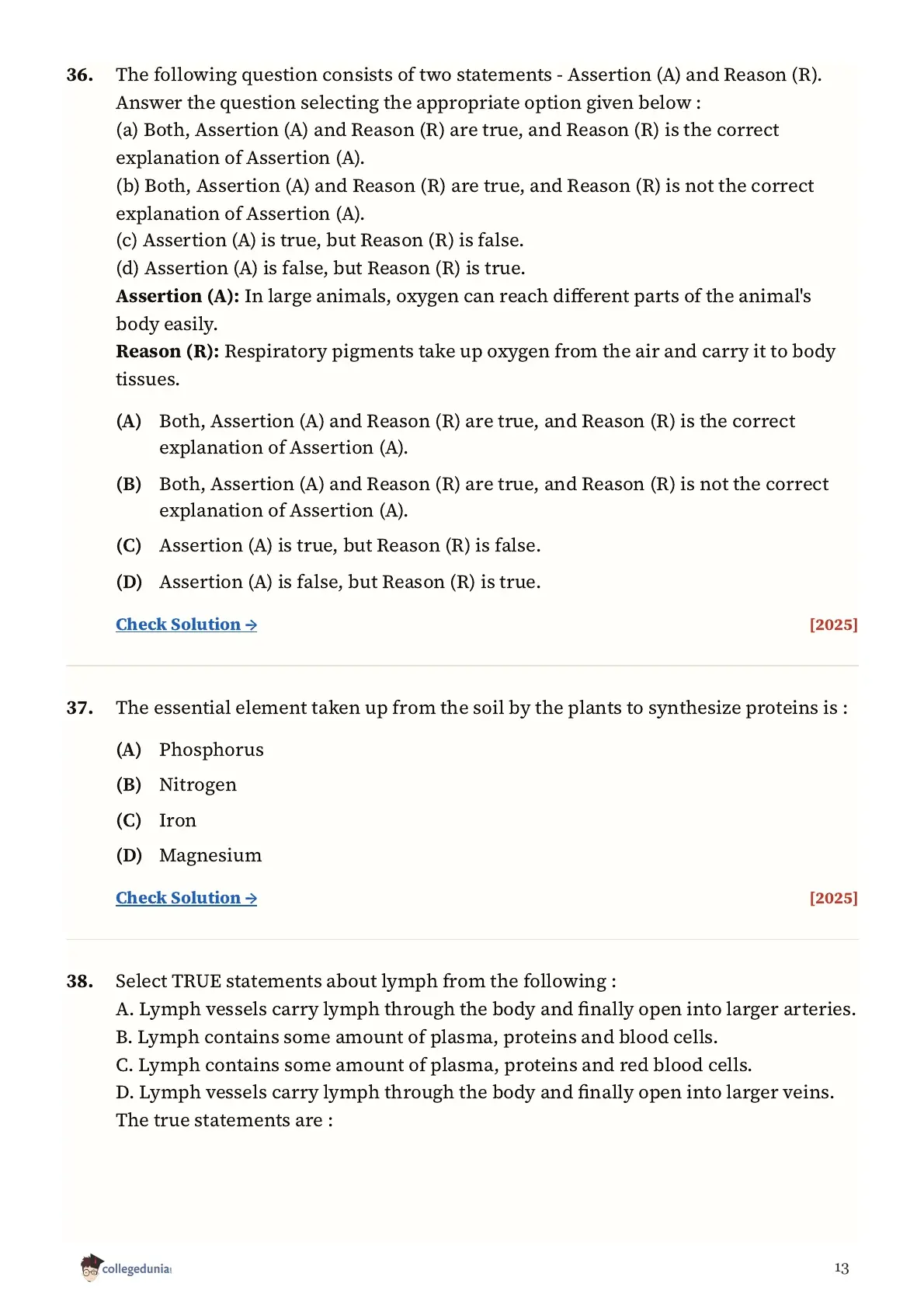
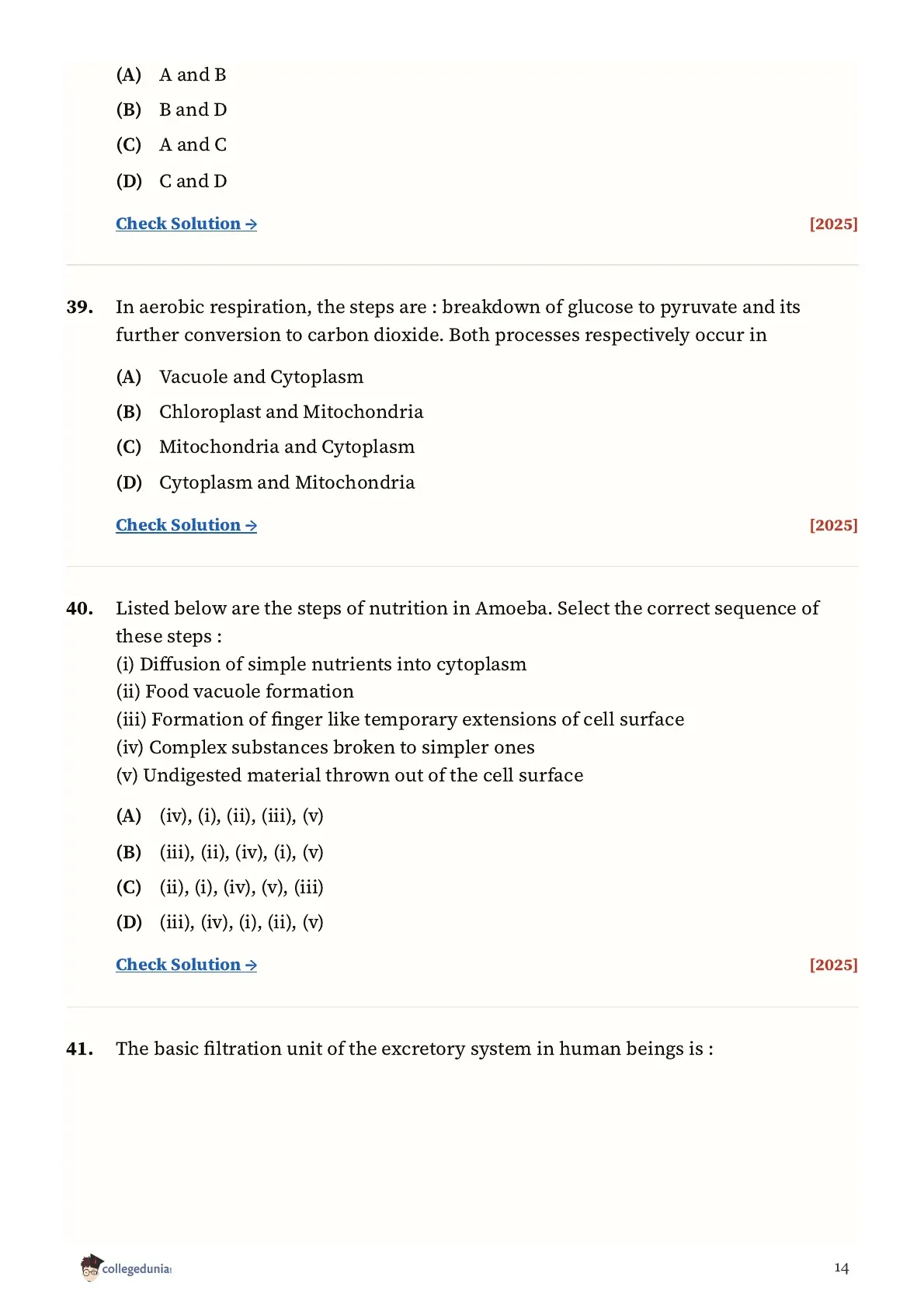
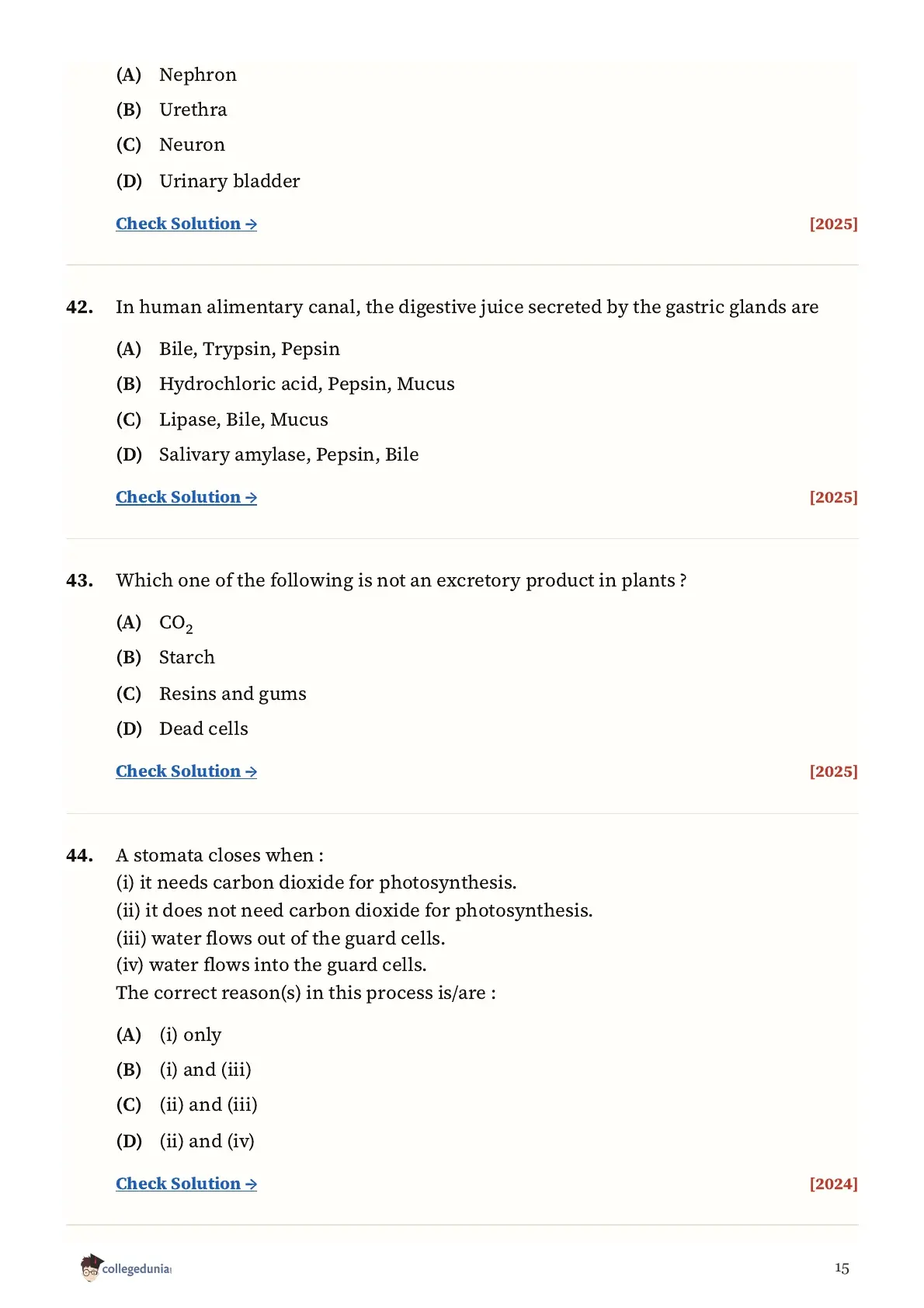
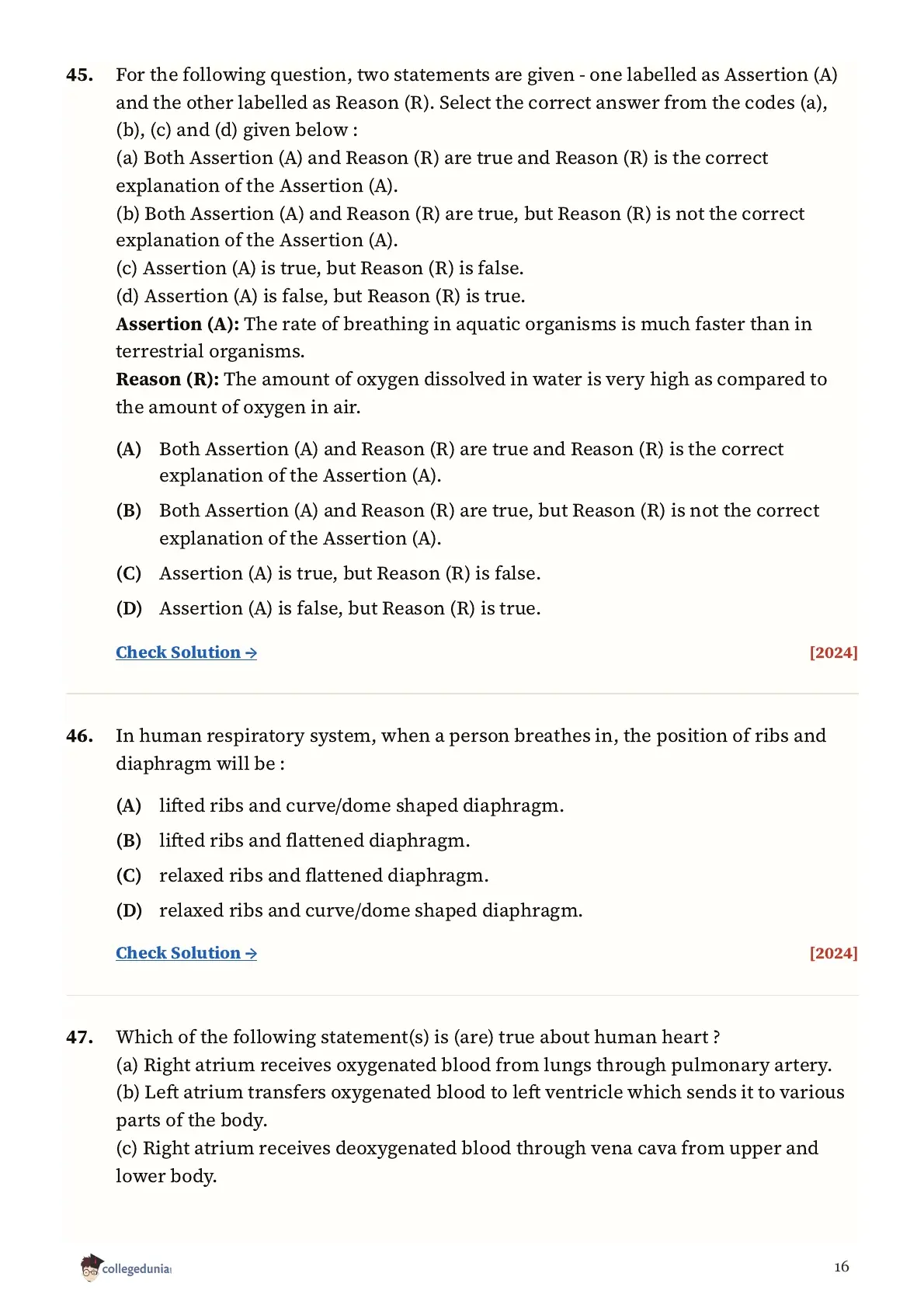
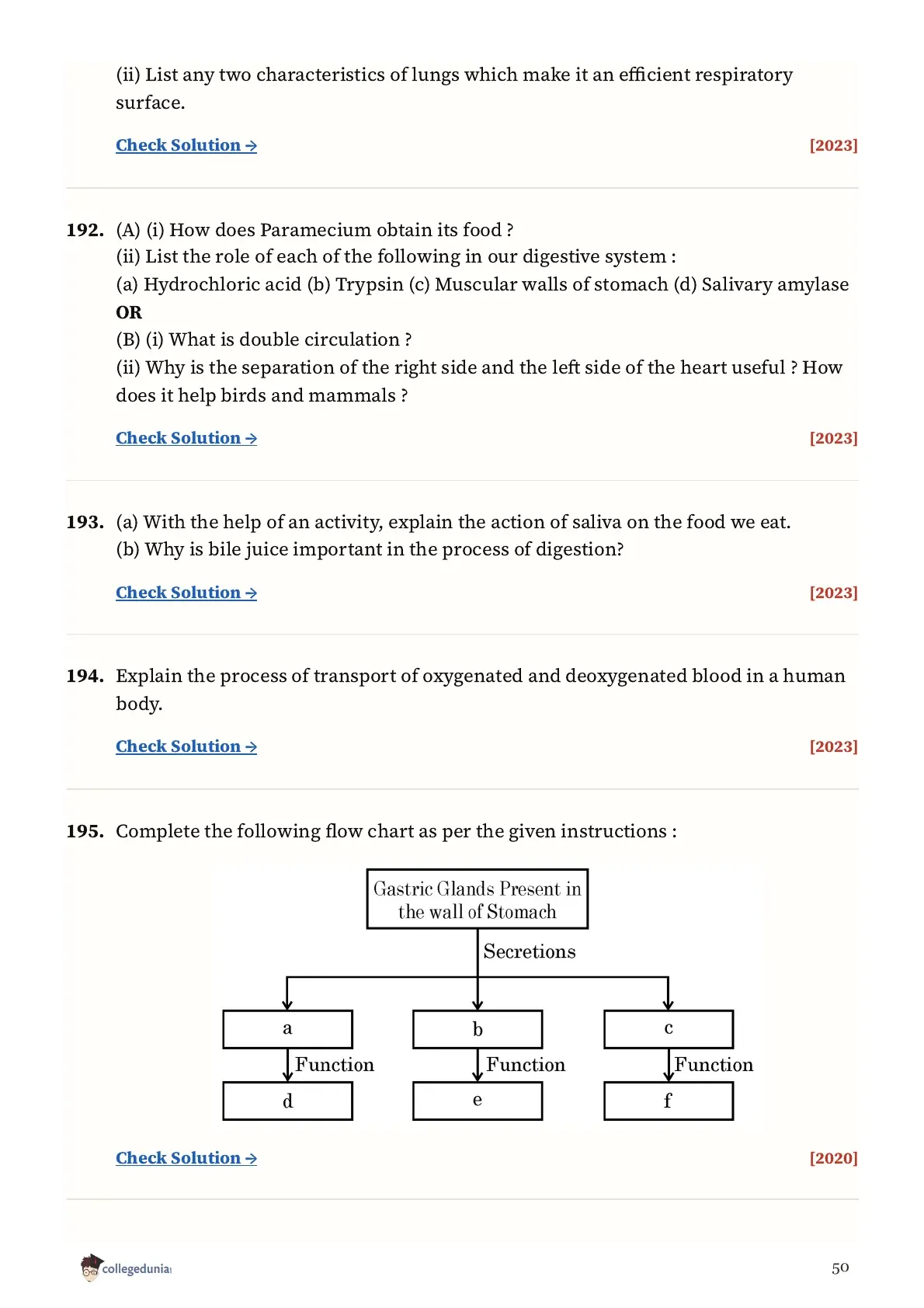
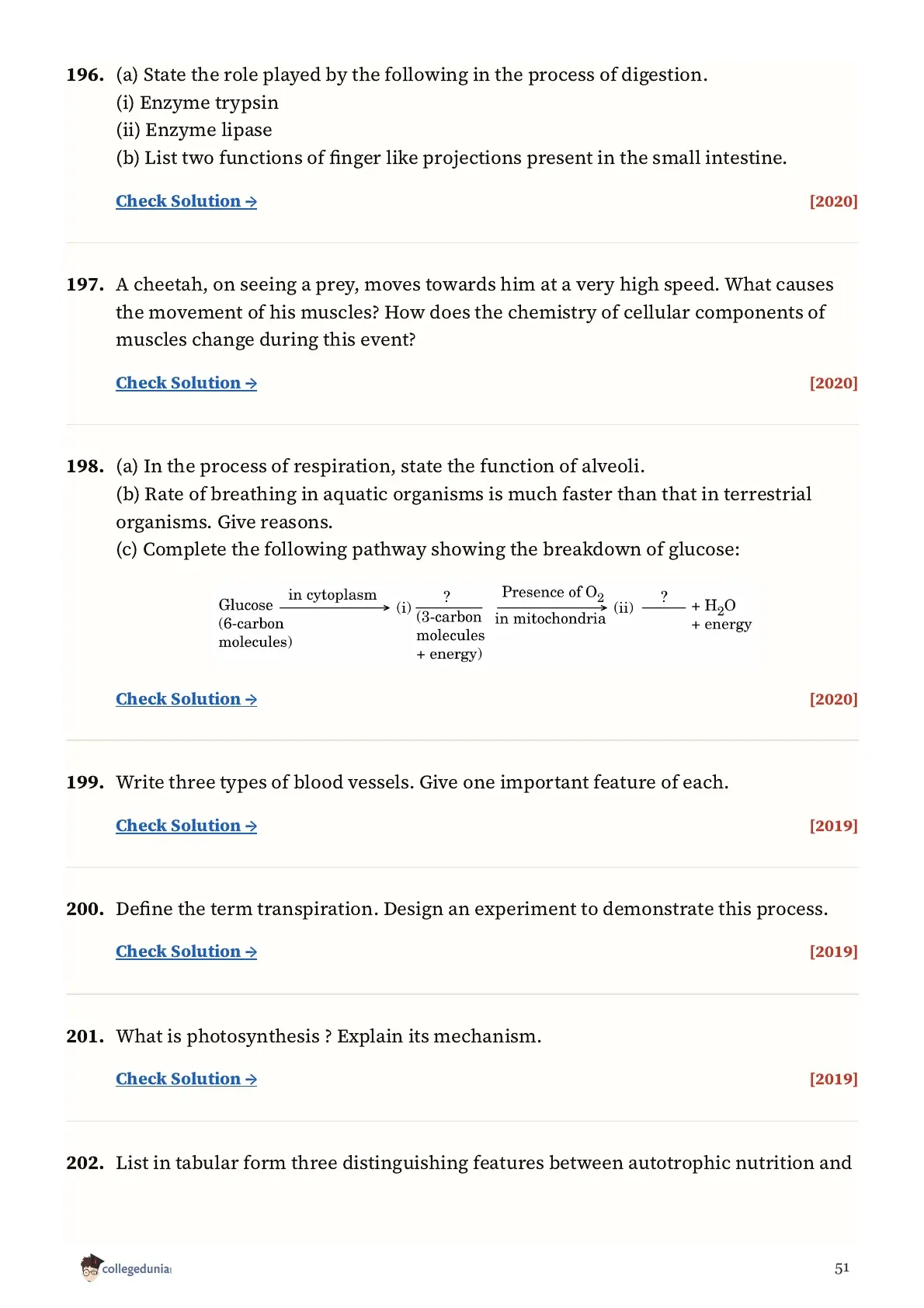
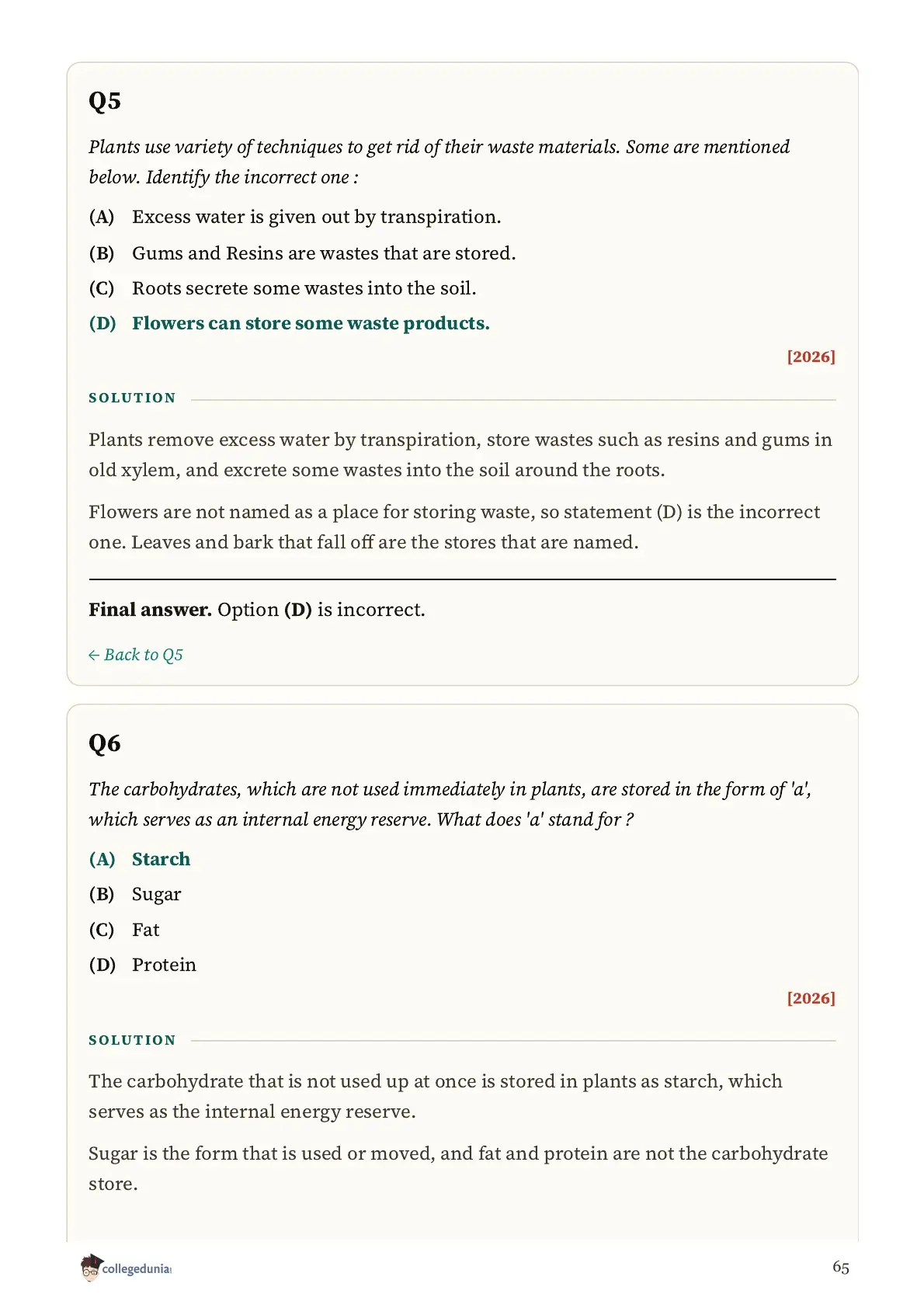
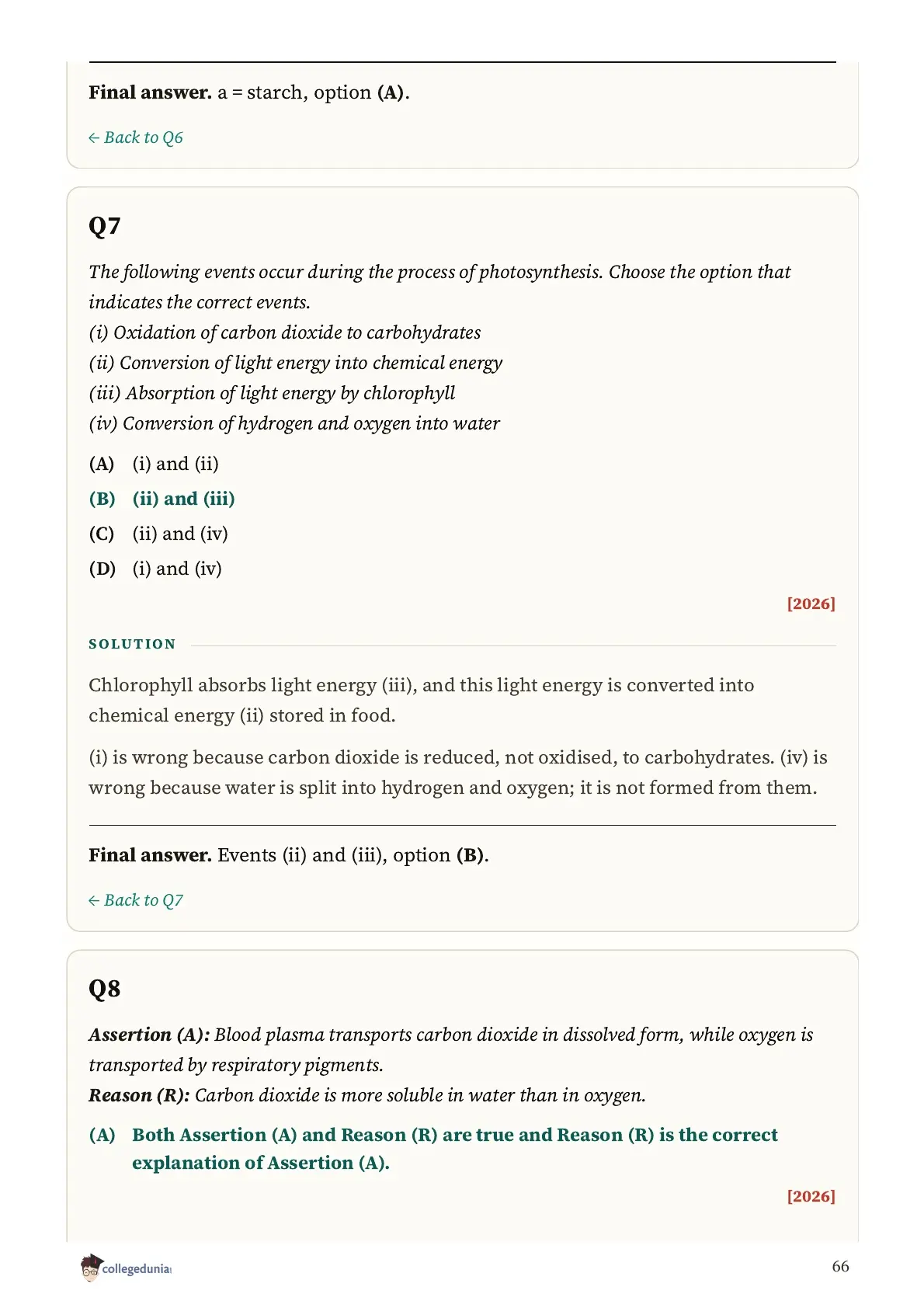
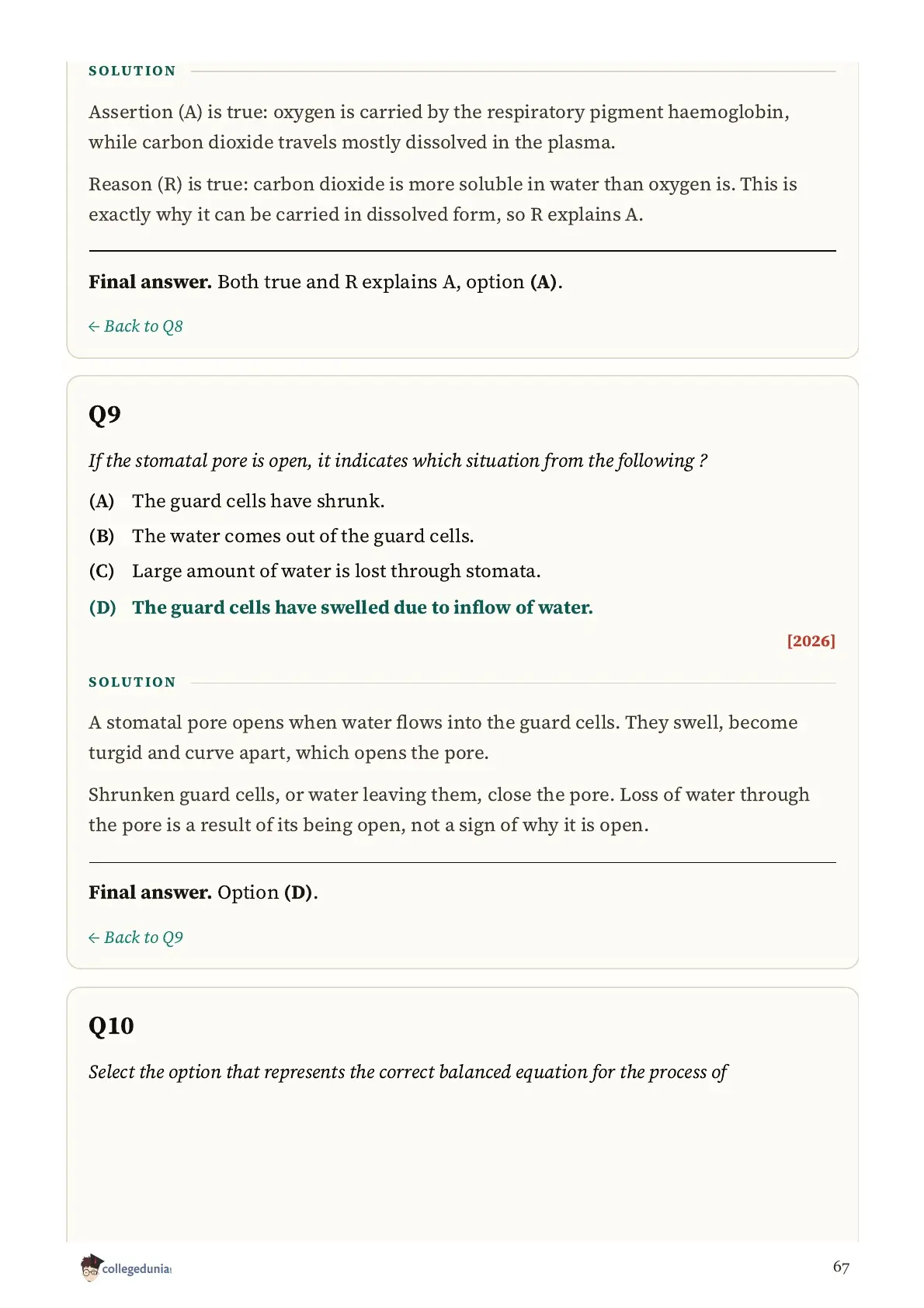
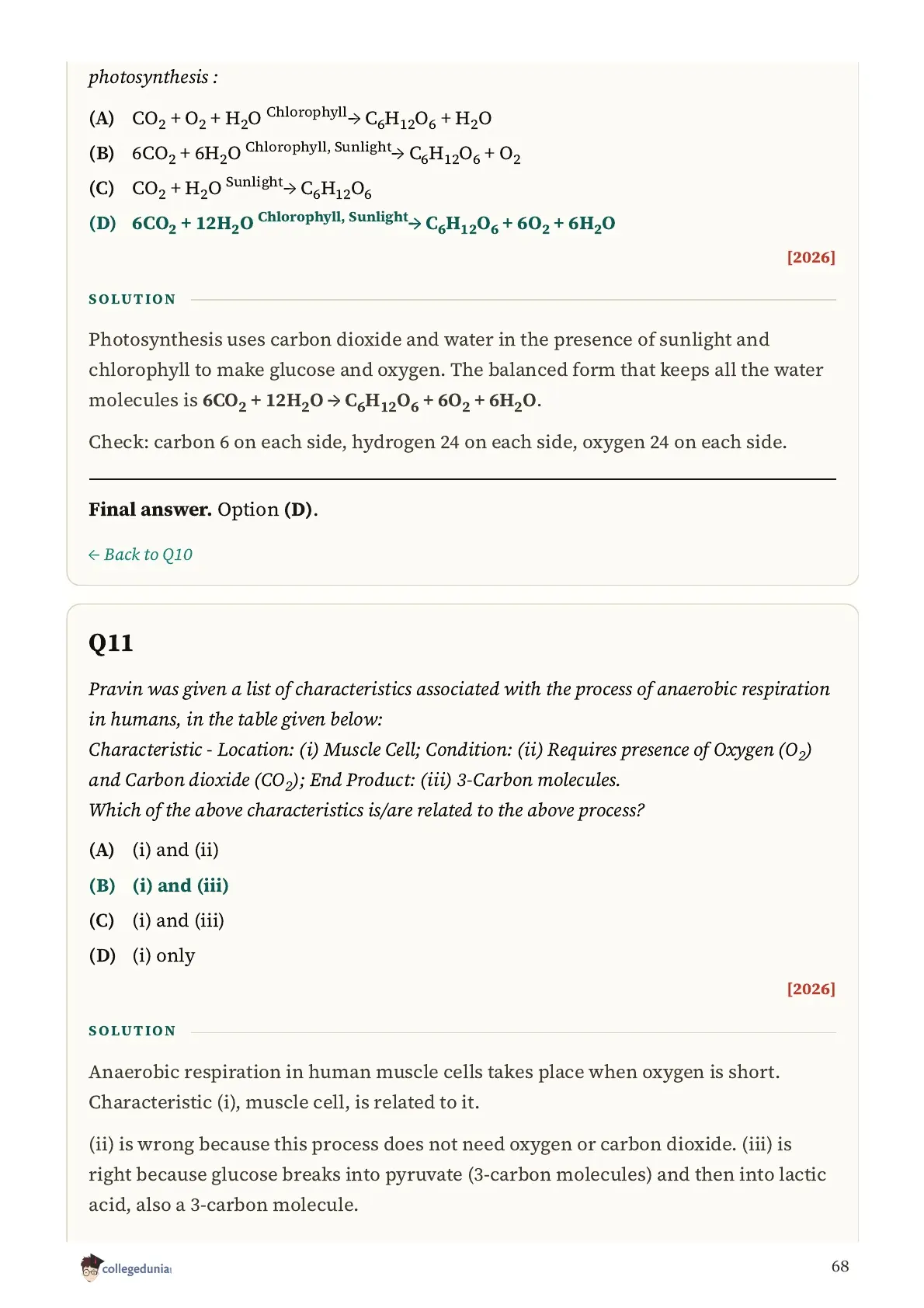
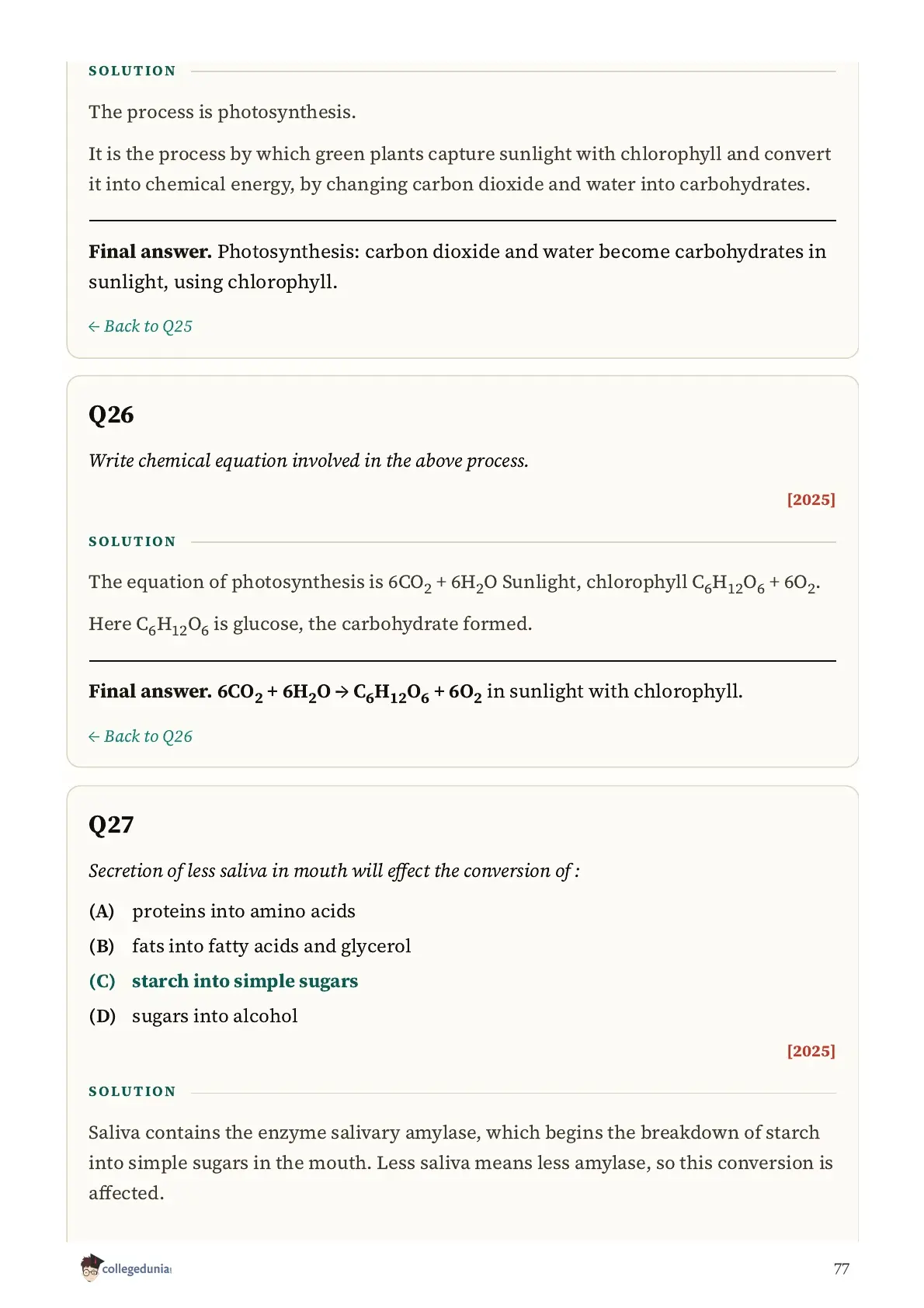
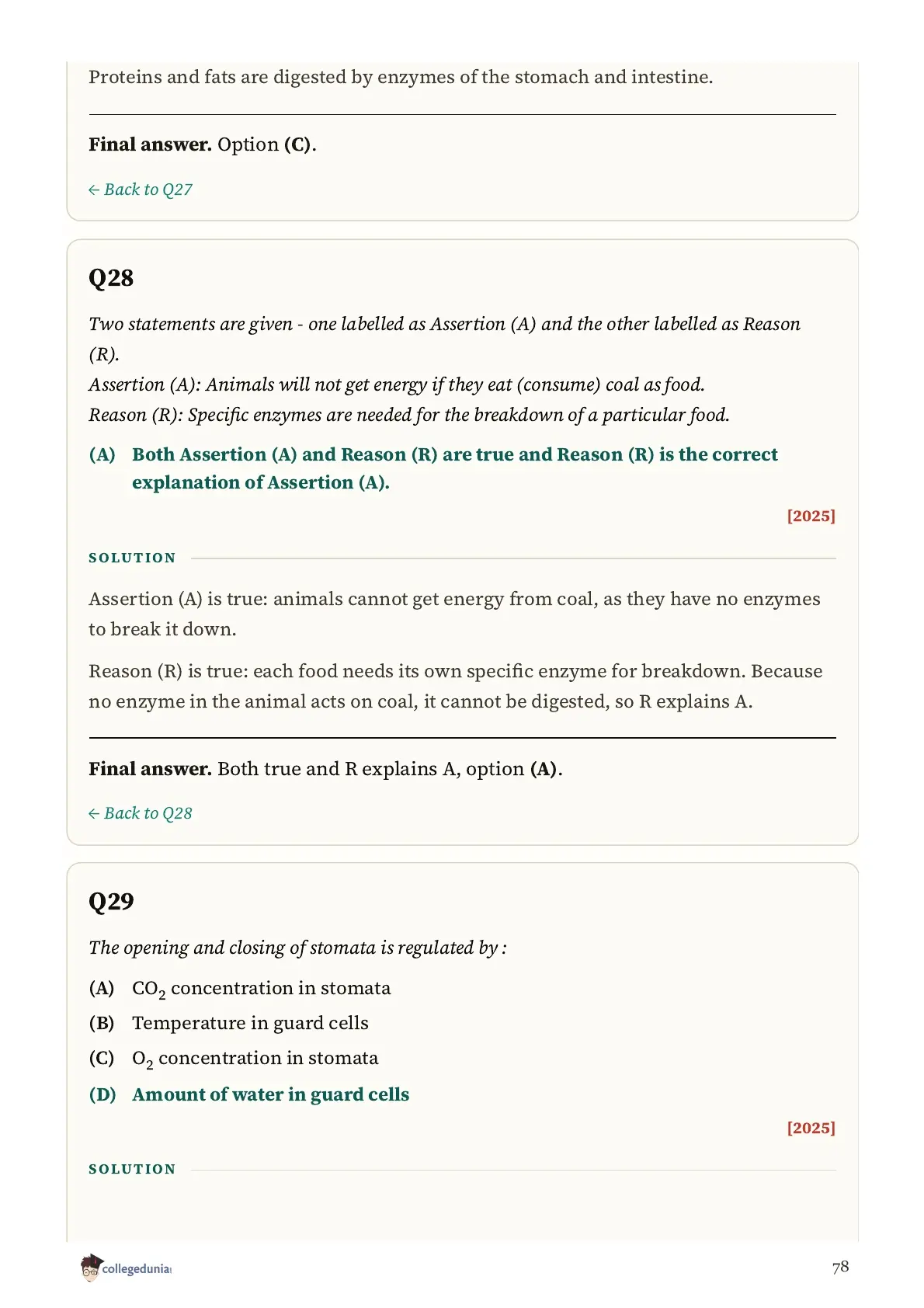
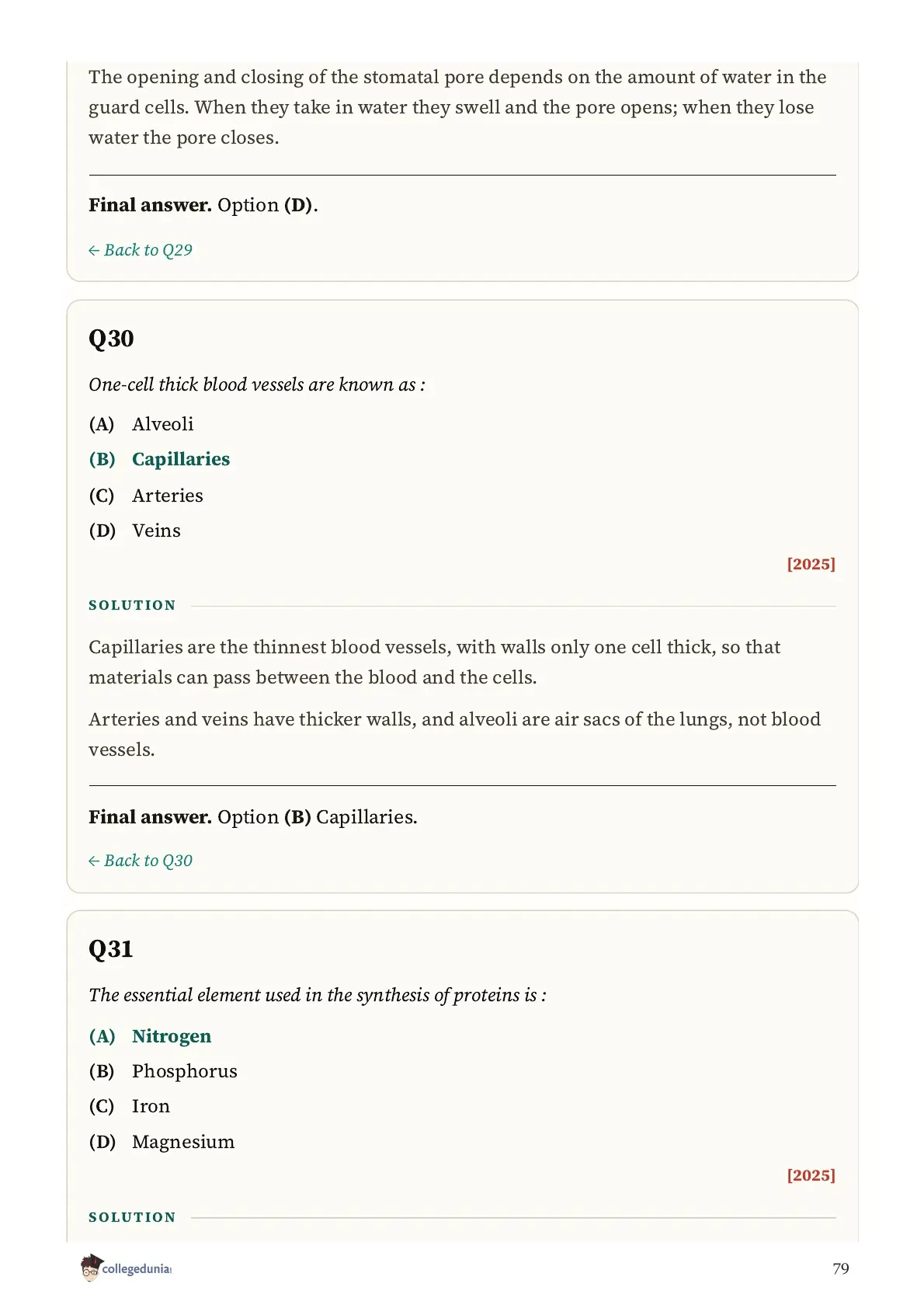
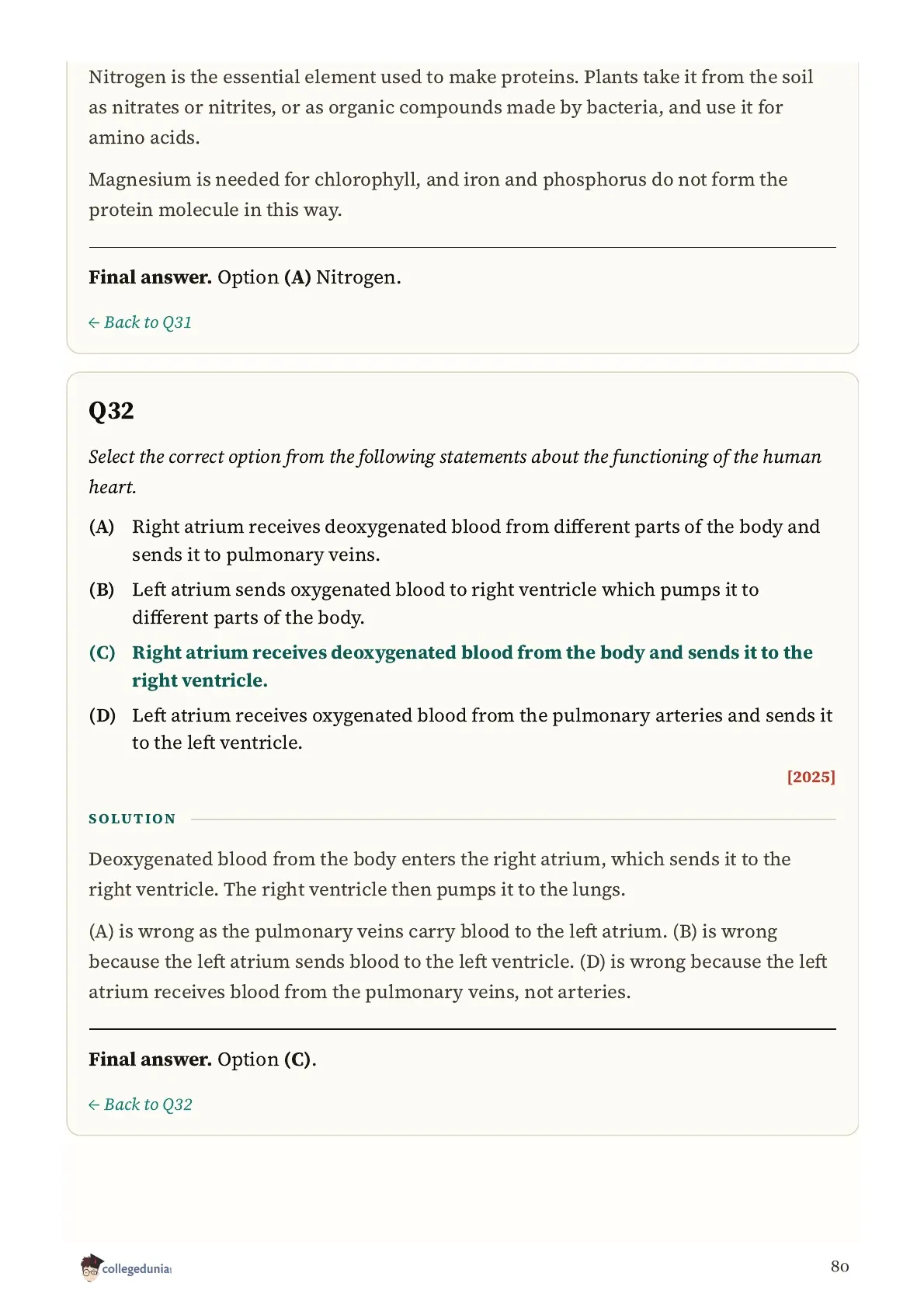
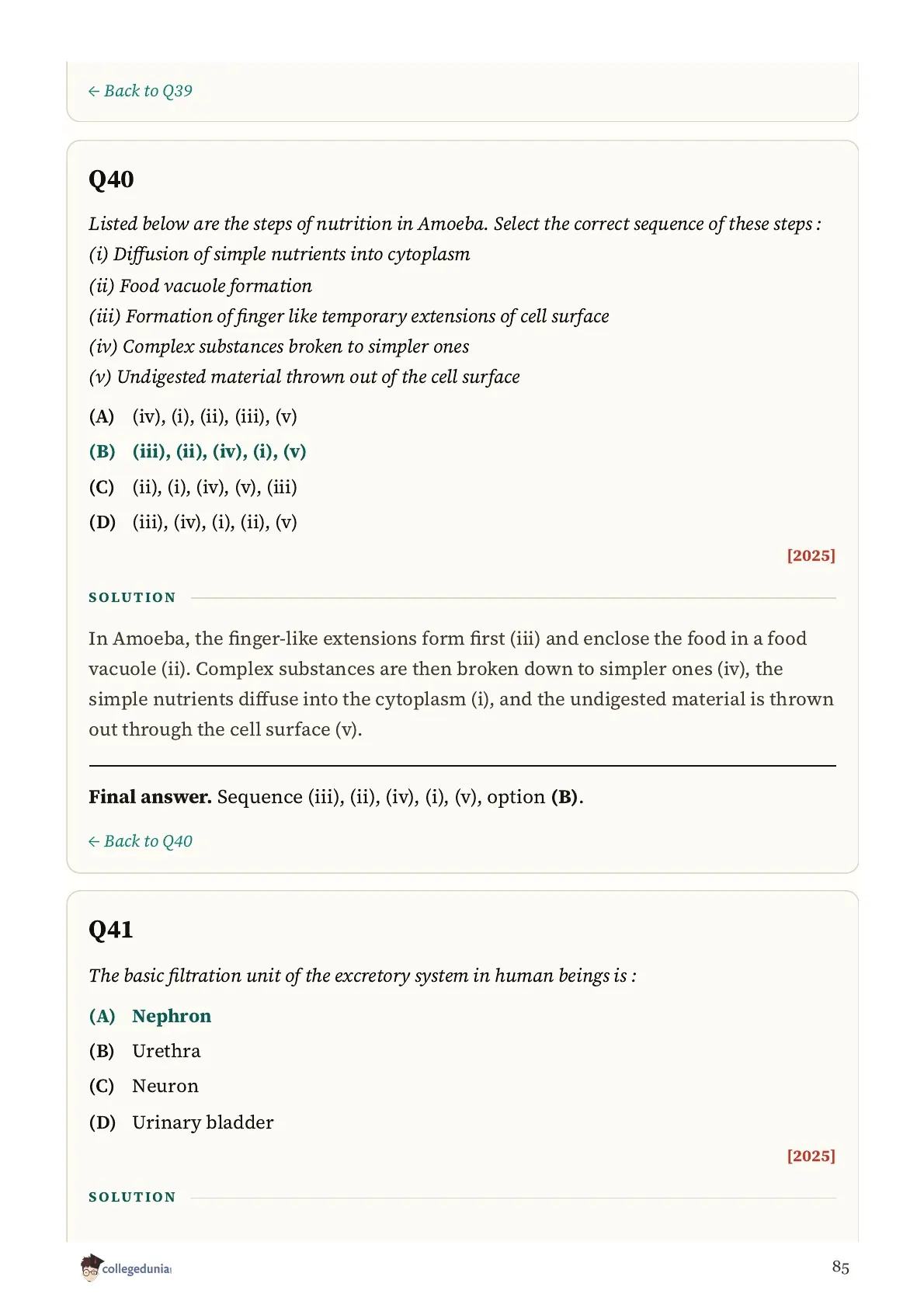
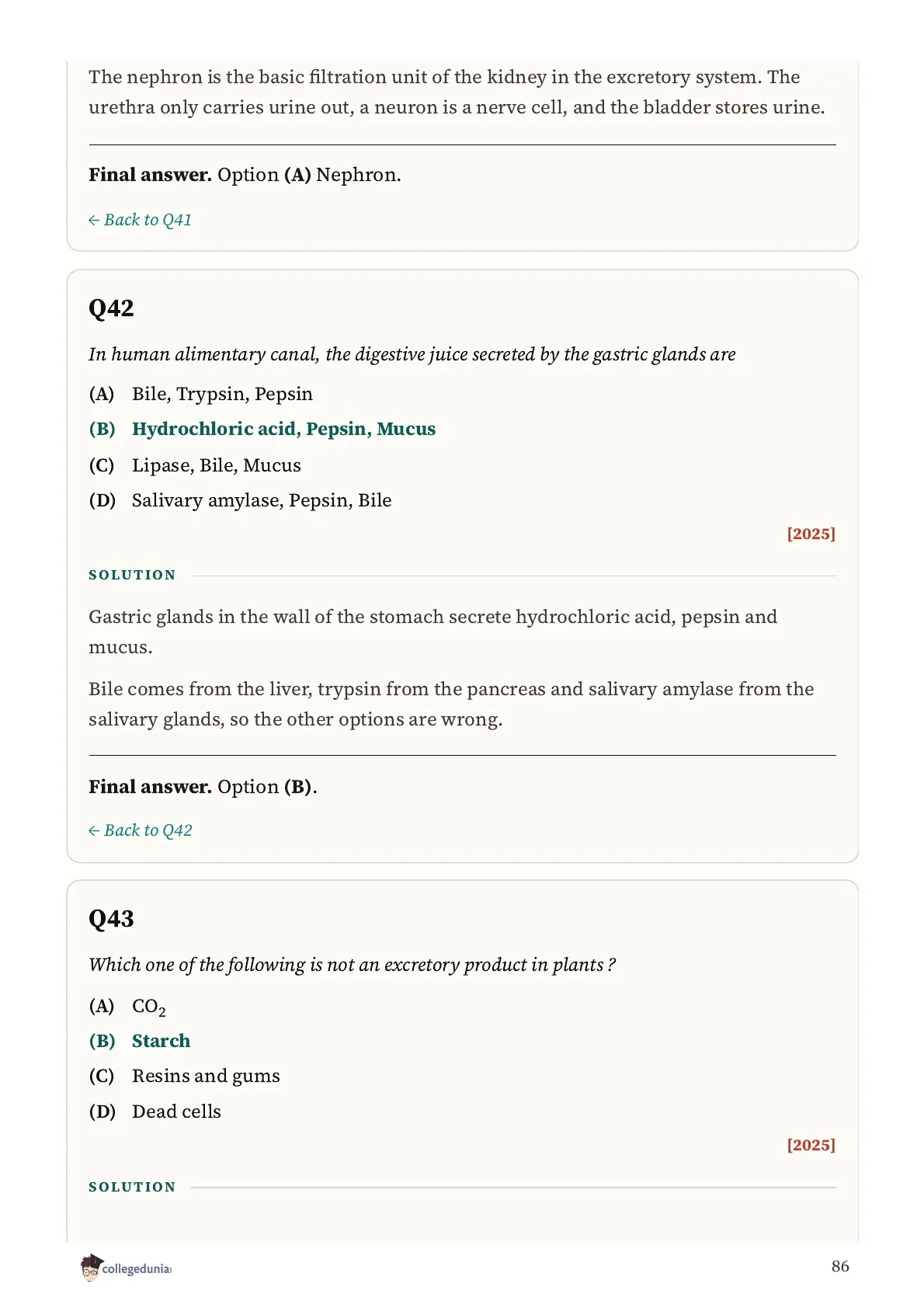
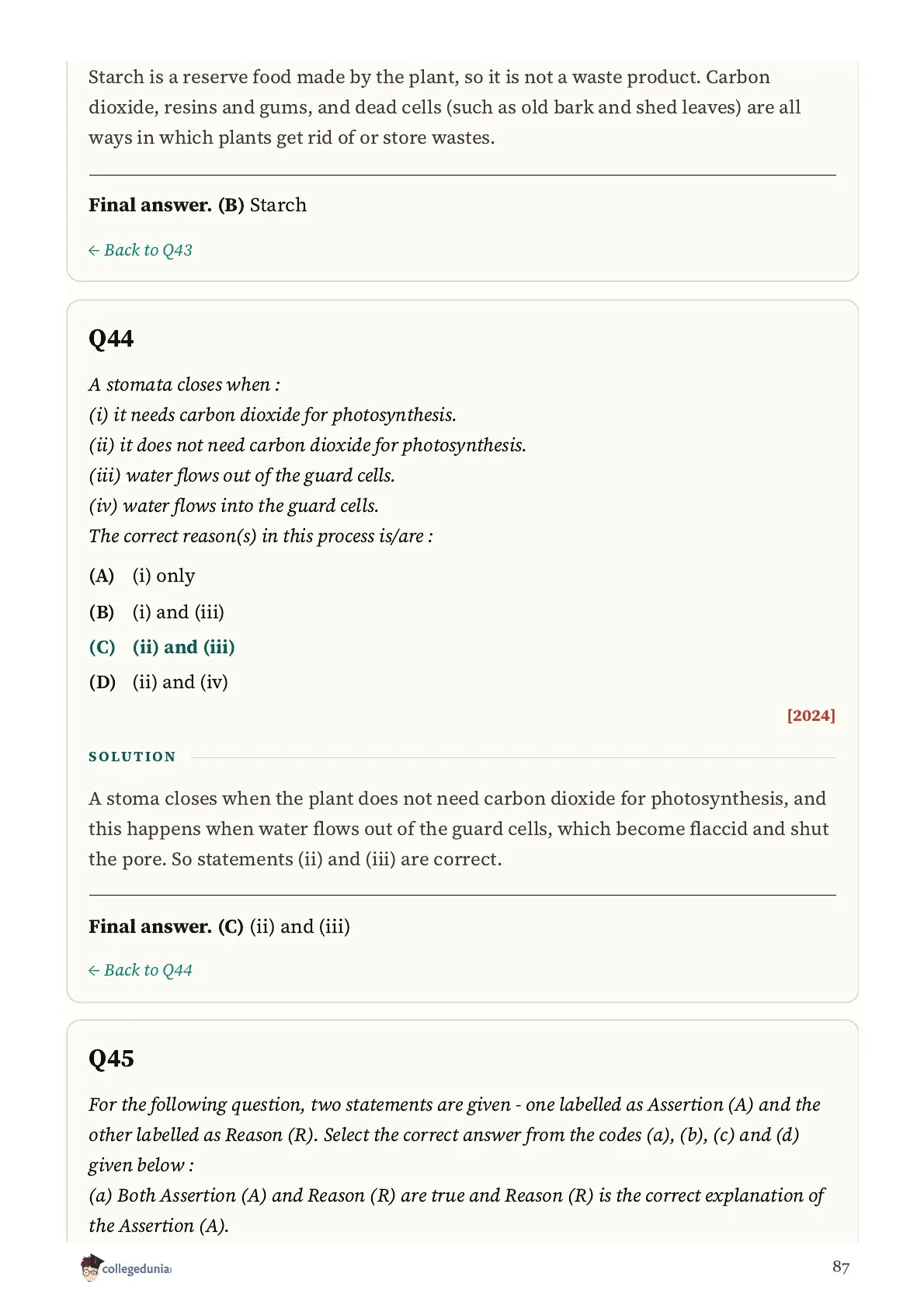
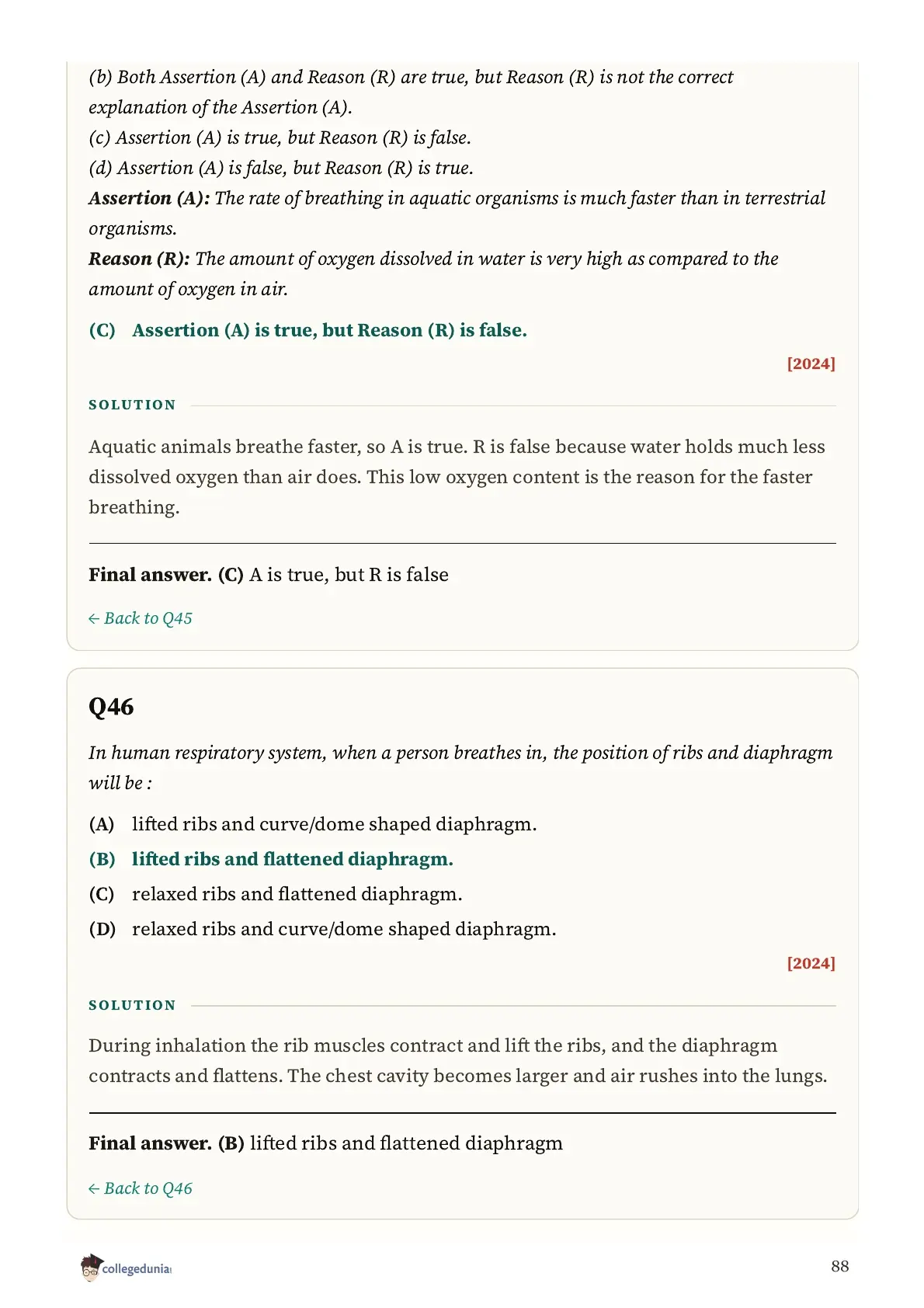
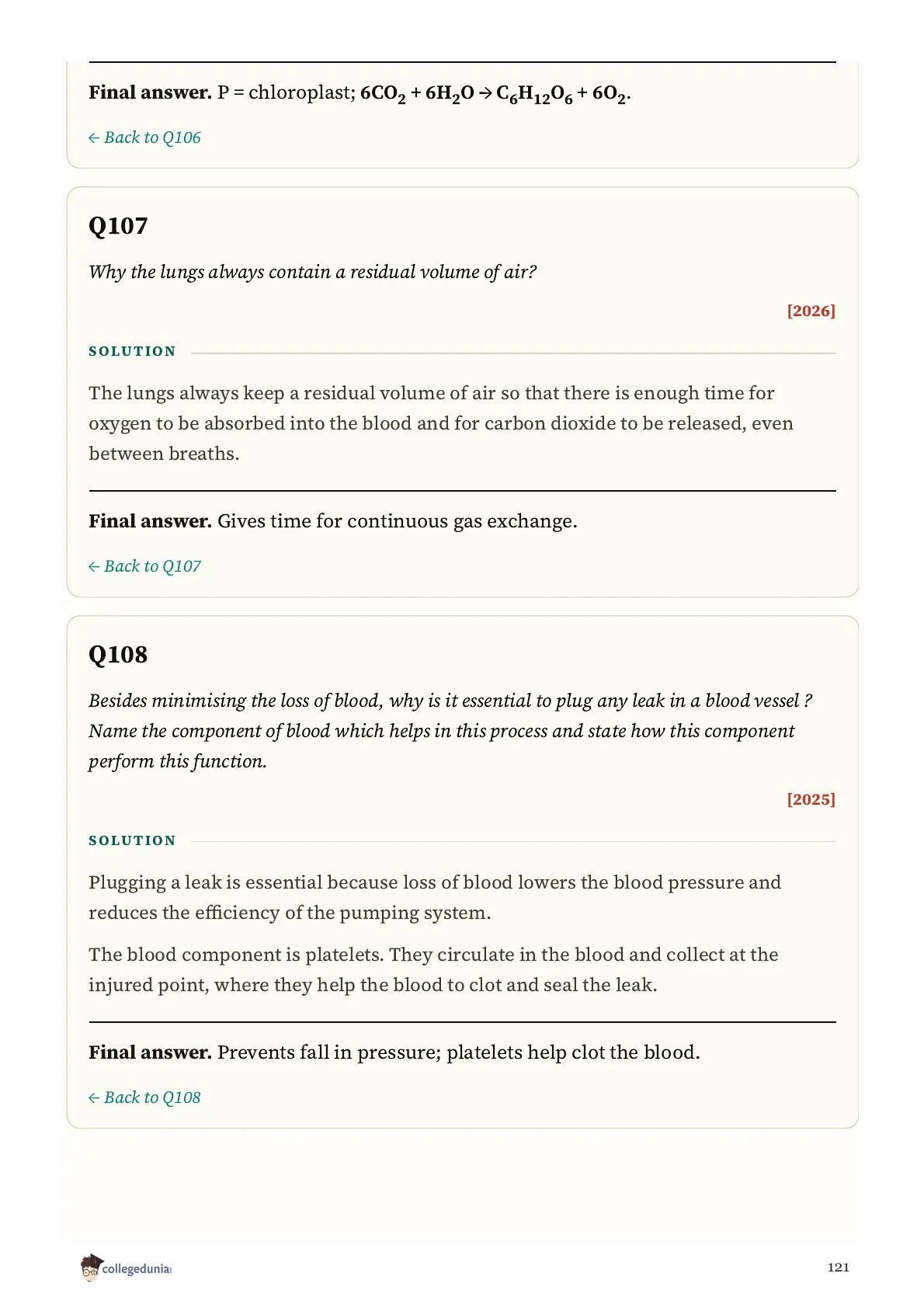
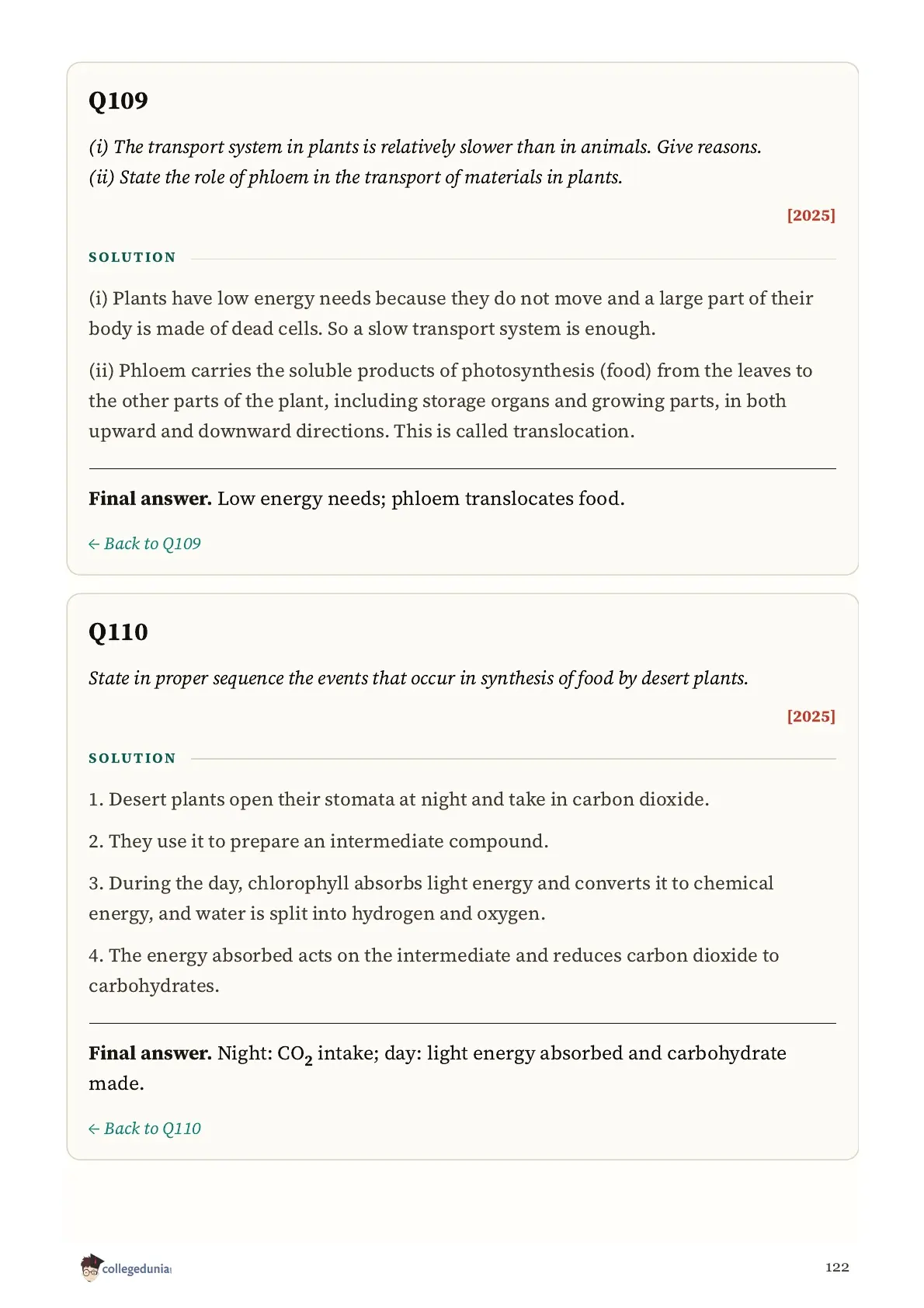
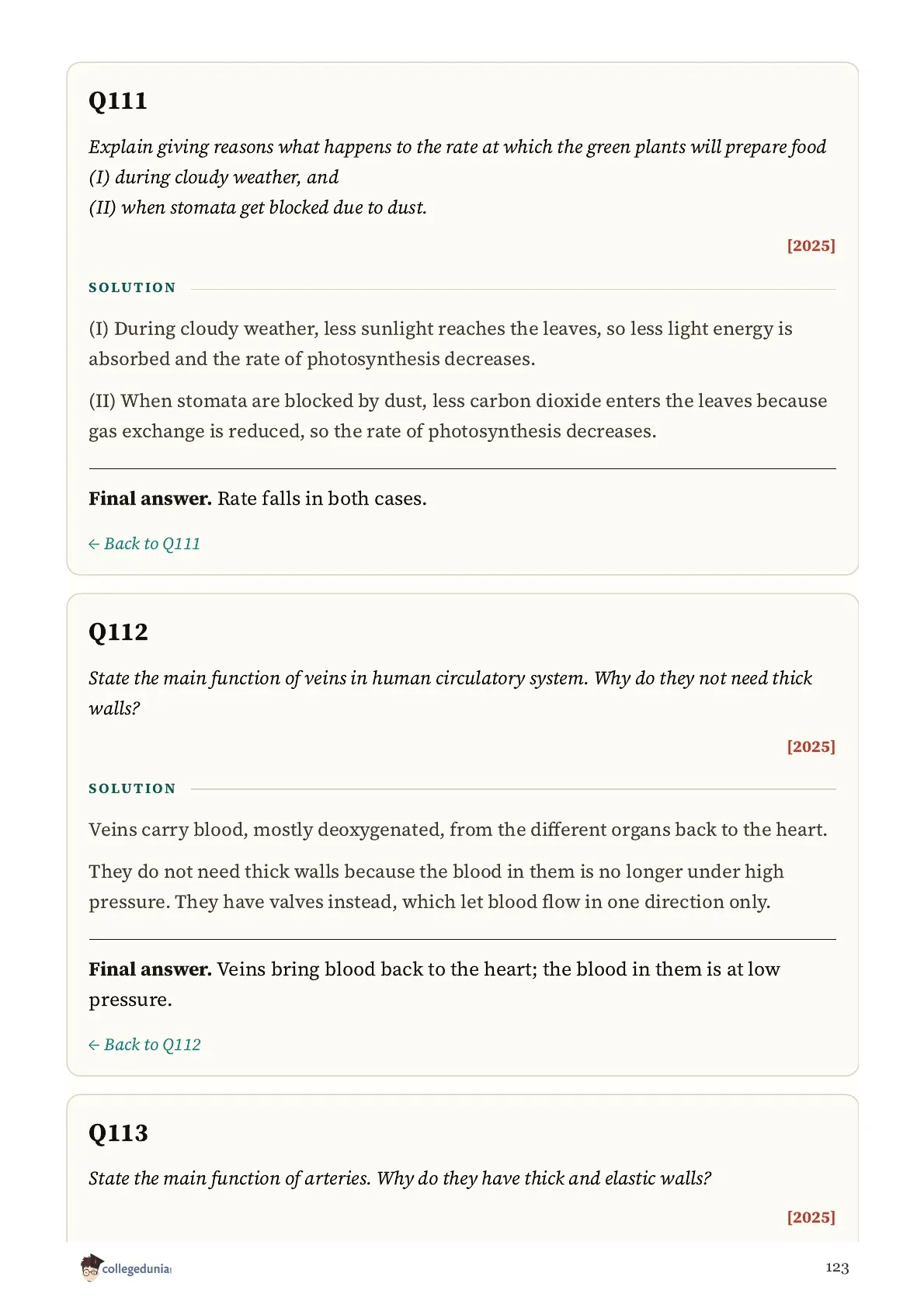
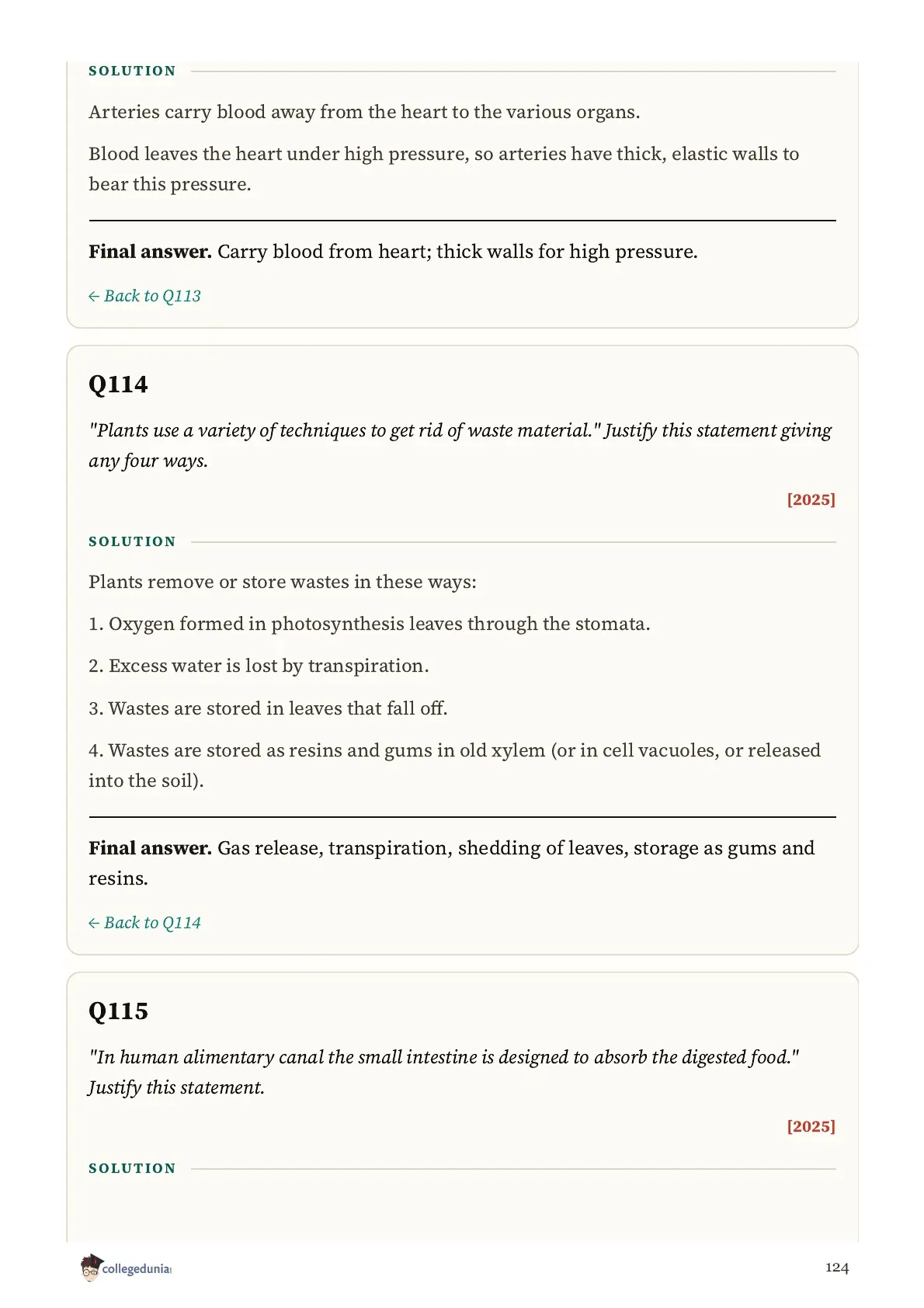
The questions keep returning to the heart, blood and circulation (47 questions), nutrition and photosynthesis (44), breathing and gas exchange (43), digestion (38), excretion (34) and stomata (20). 13 of the questions carry their original printed figure, so you work from the diagram the board used.
On this page you get:
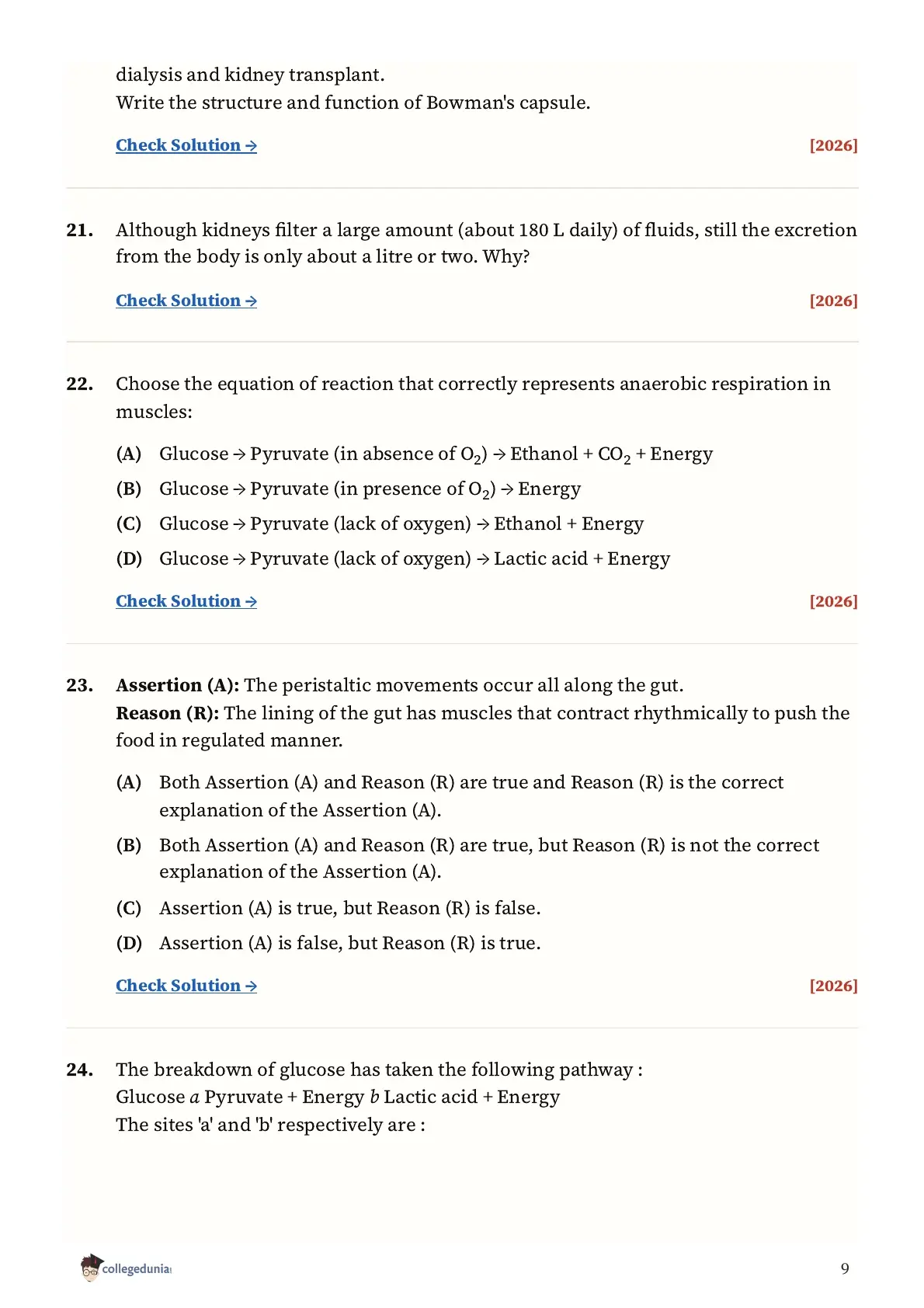
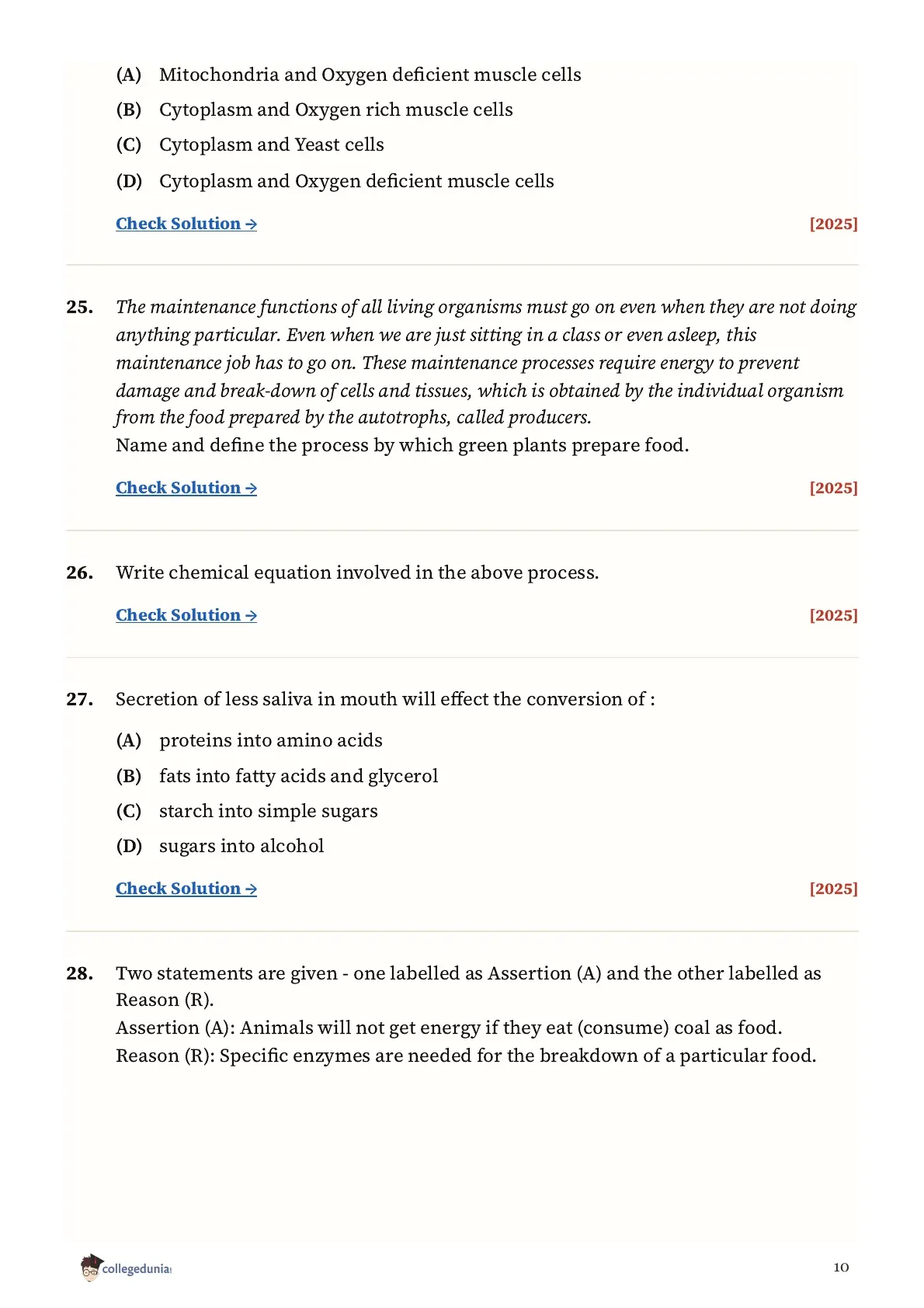
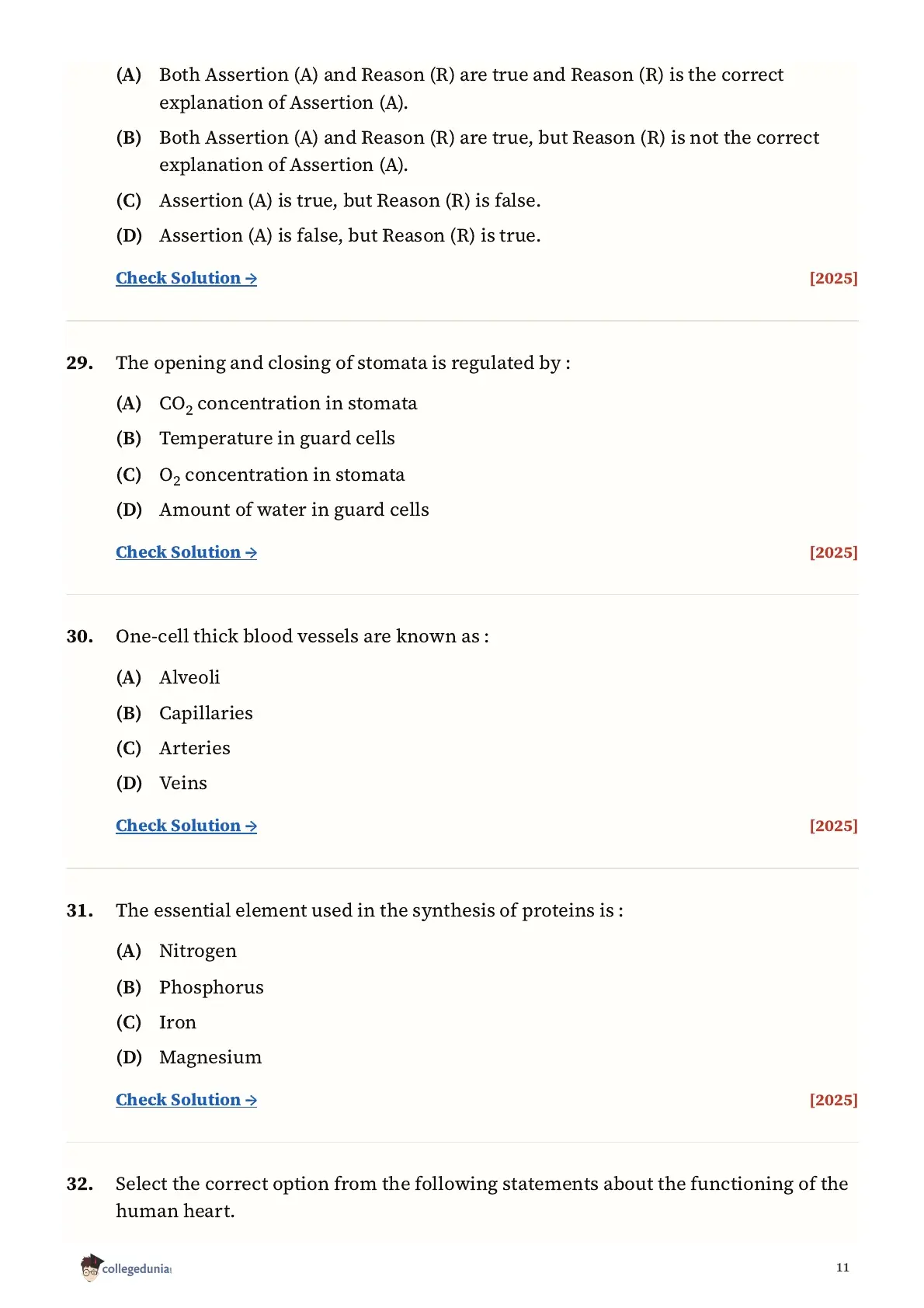
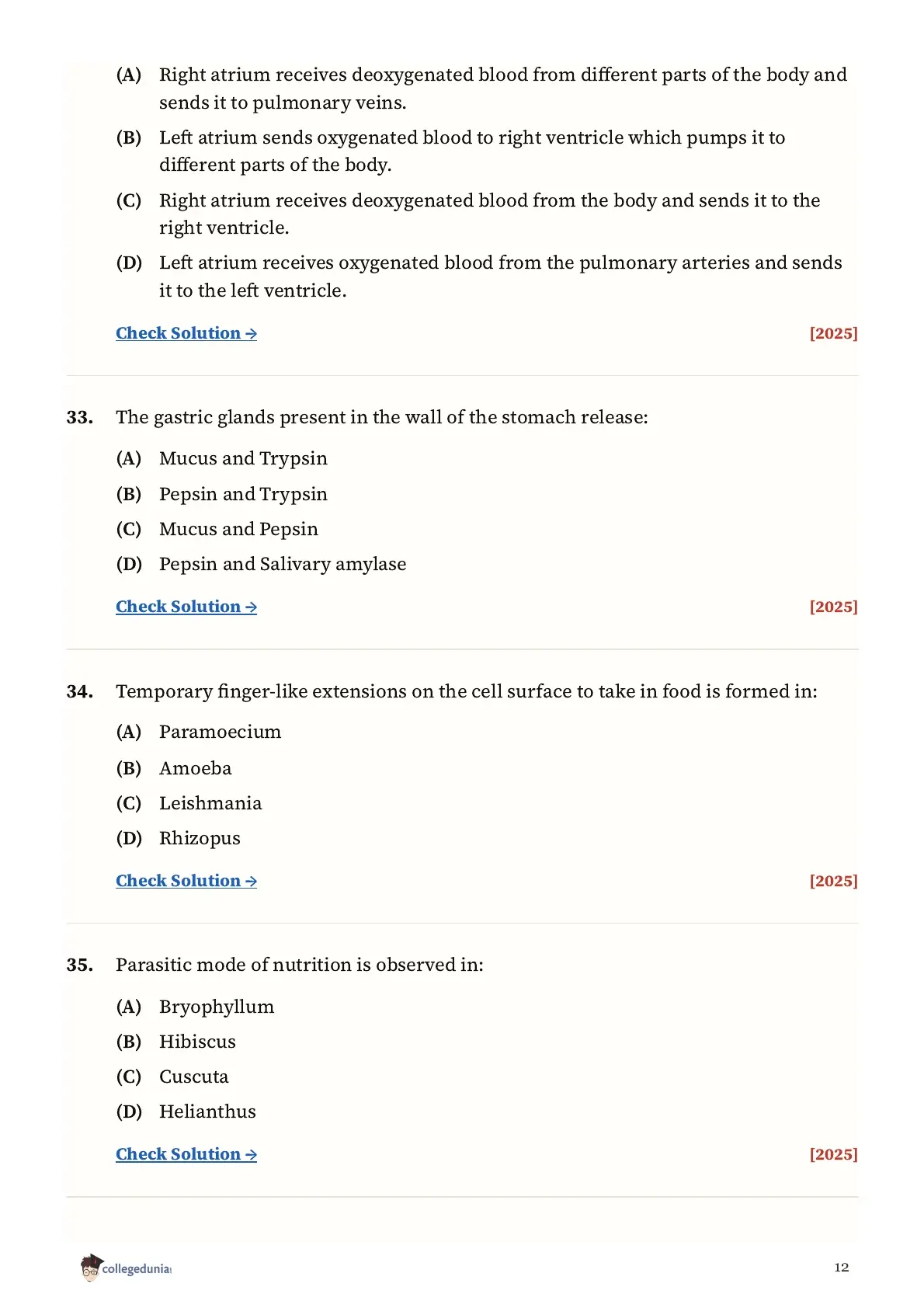
- 241 questions with a worked solution each: 84 MCQs and assertion-reason items, 129 short answers, 2 case studies and 26 long answers
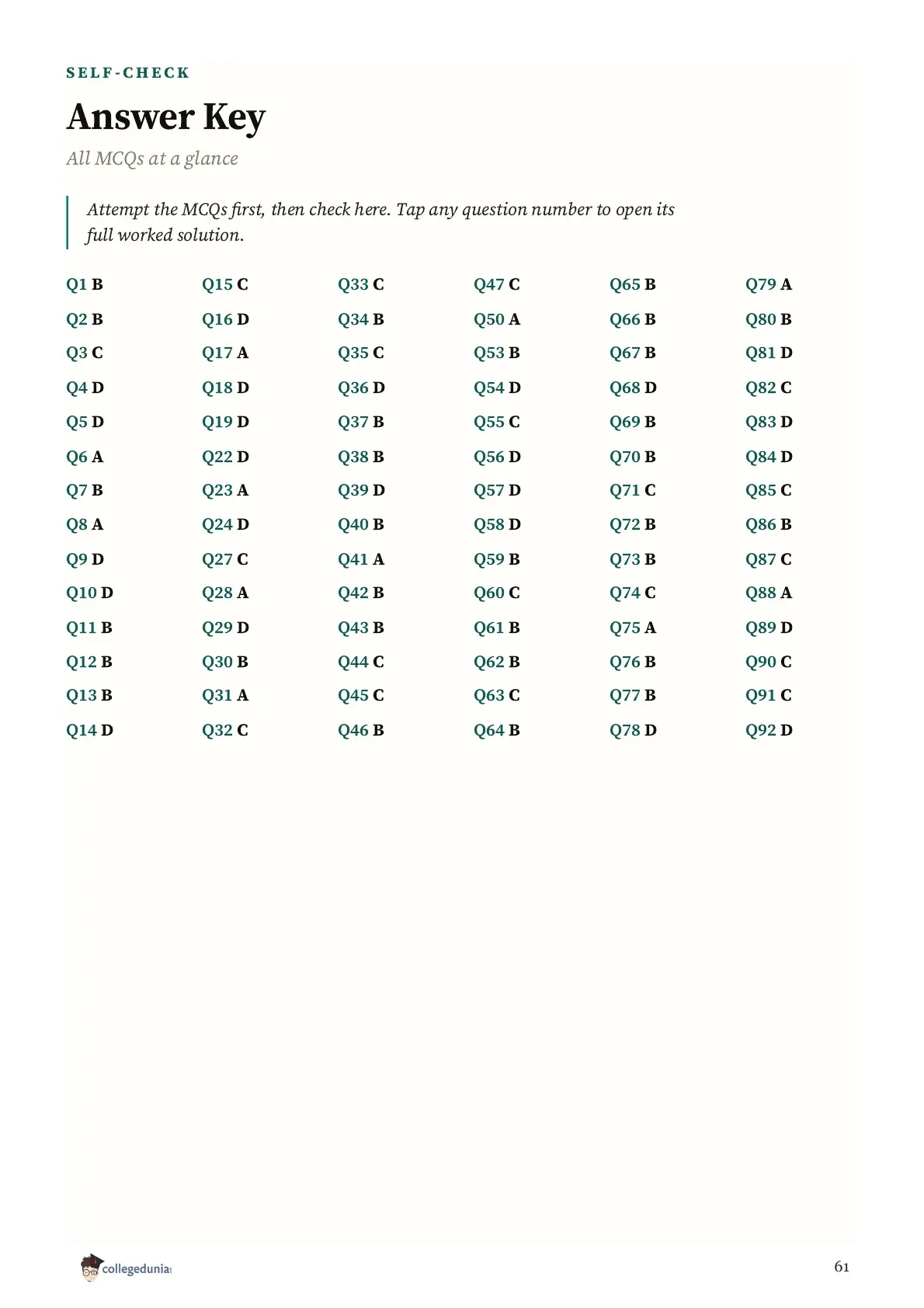
- An Answer Key that lists all 84 MCQs at a glance
- Question counts by topic, so you know whether to start with nutrition, transport or excretion
- A marks-wise table of questions (1, 2, 3, 4 and 5 mark)
- The common mistakes students make, such as picking trypsin for fats and lipase for proteins, and a short FAQ
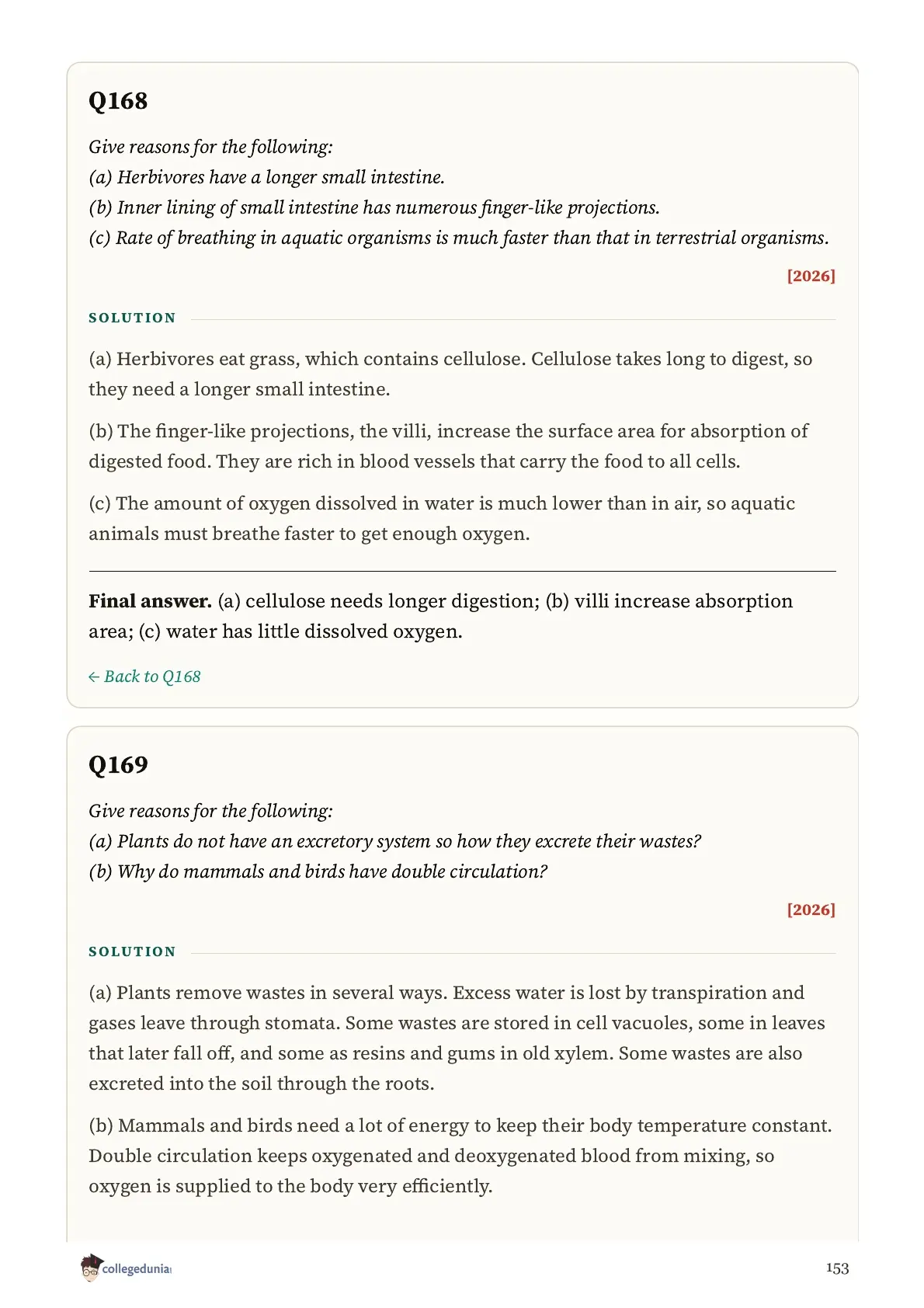
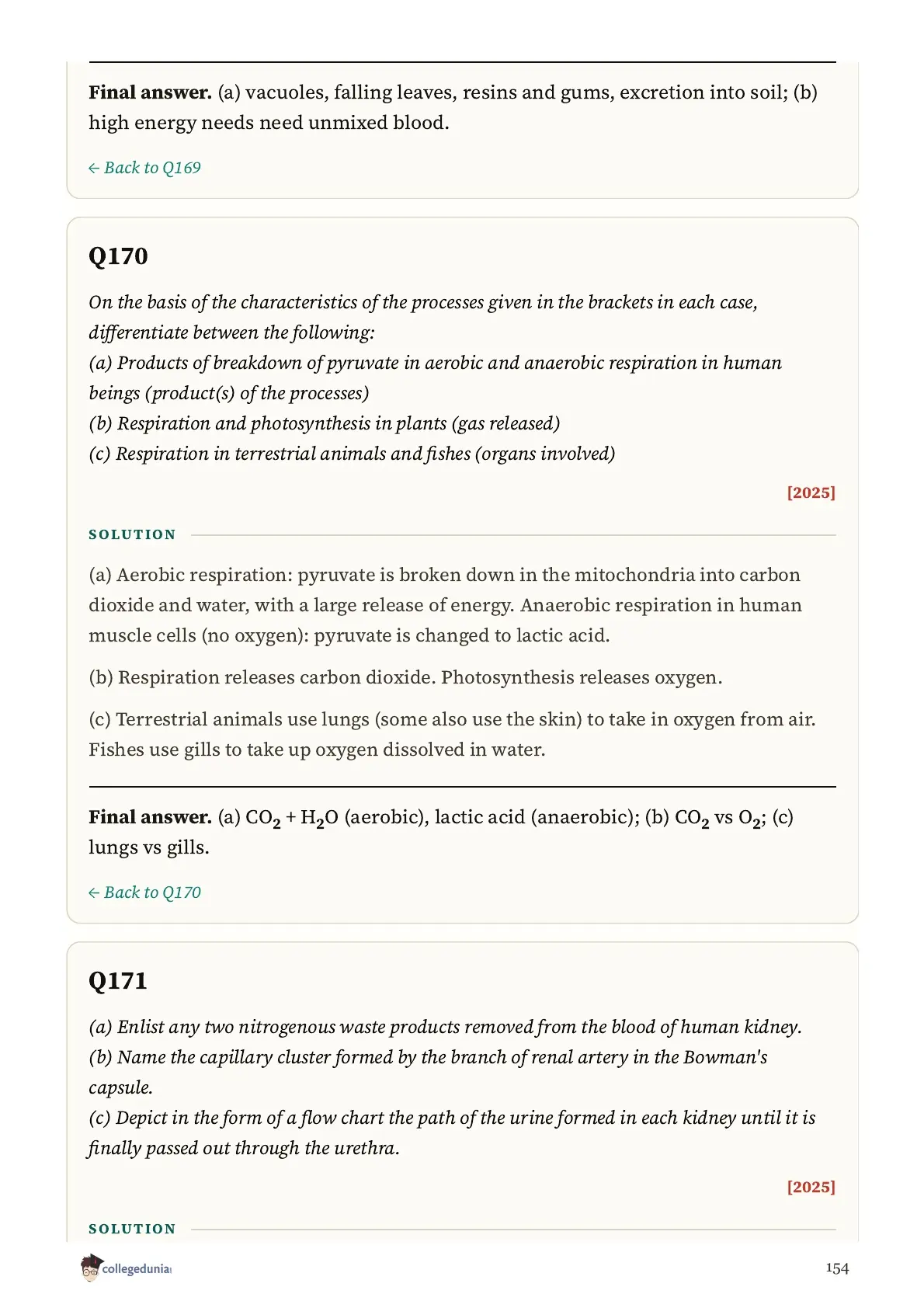
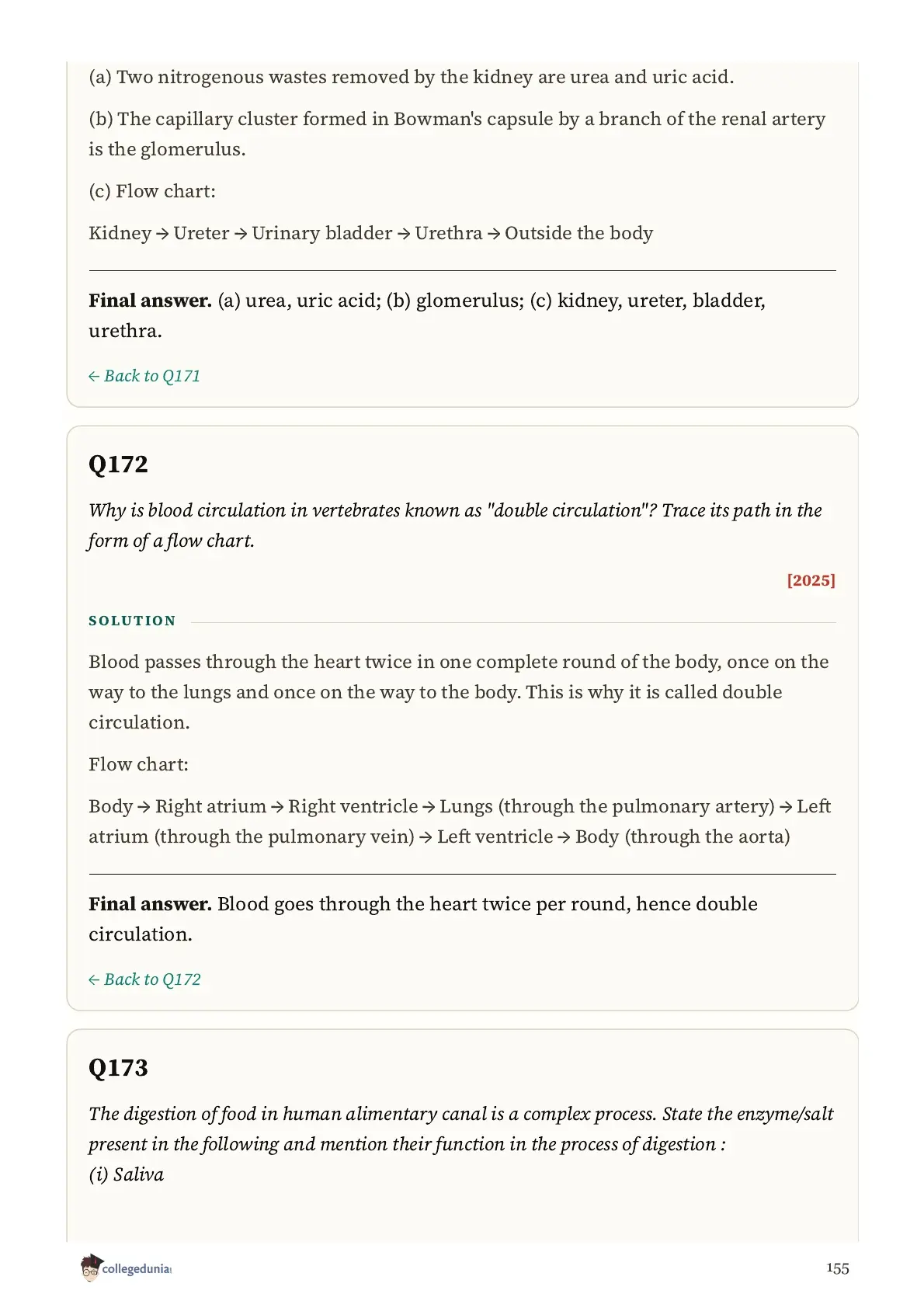
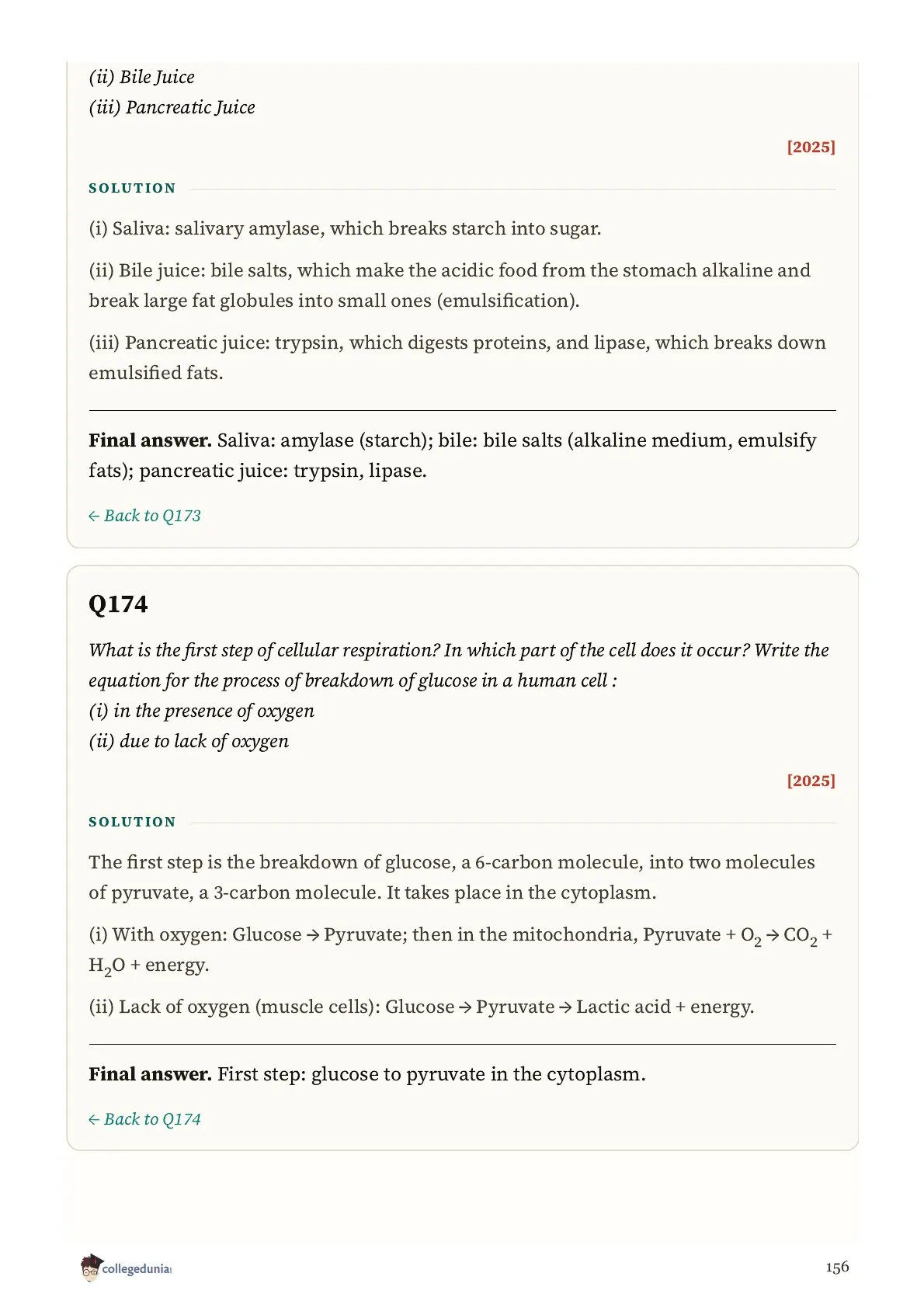
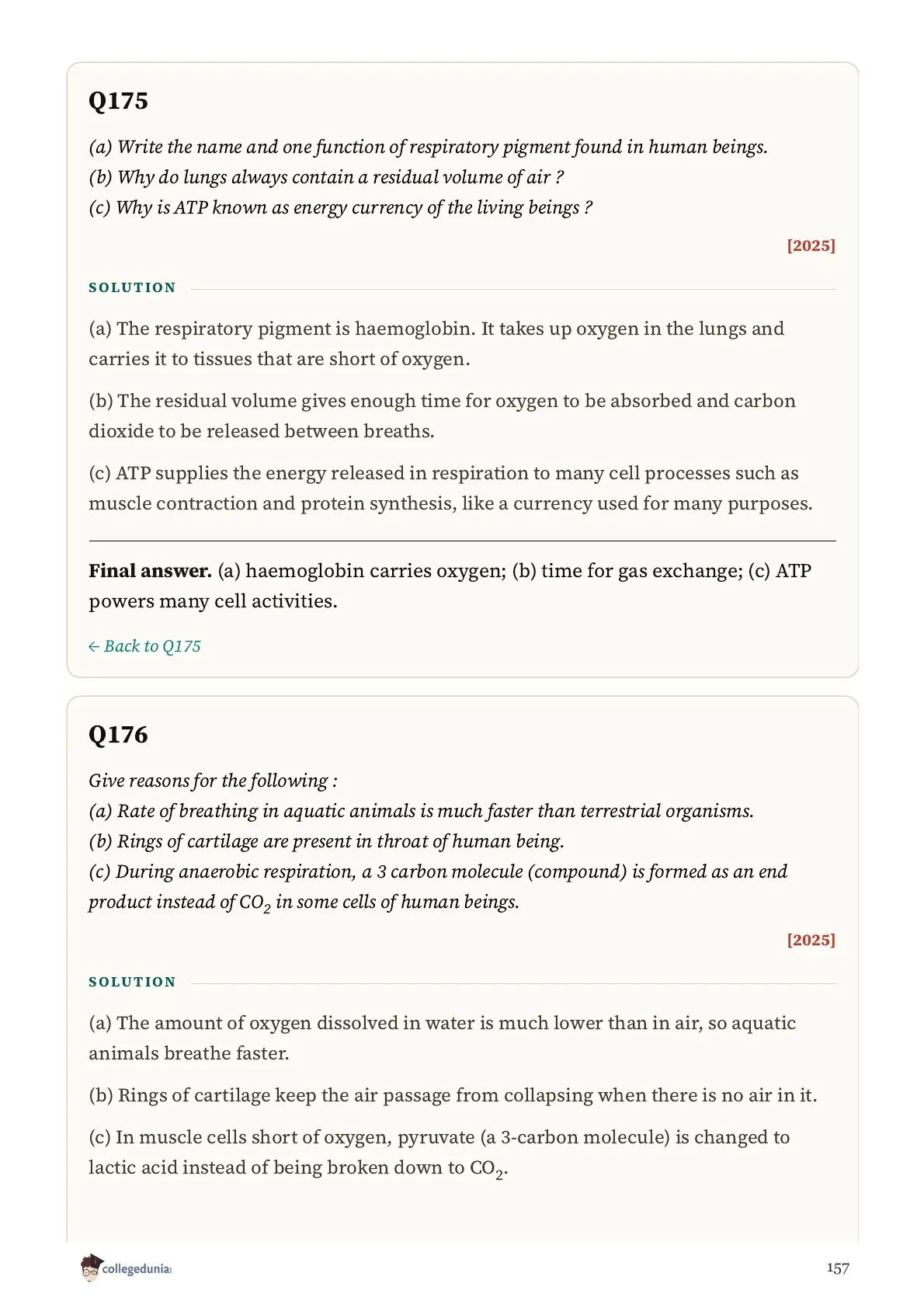
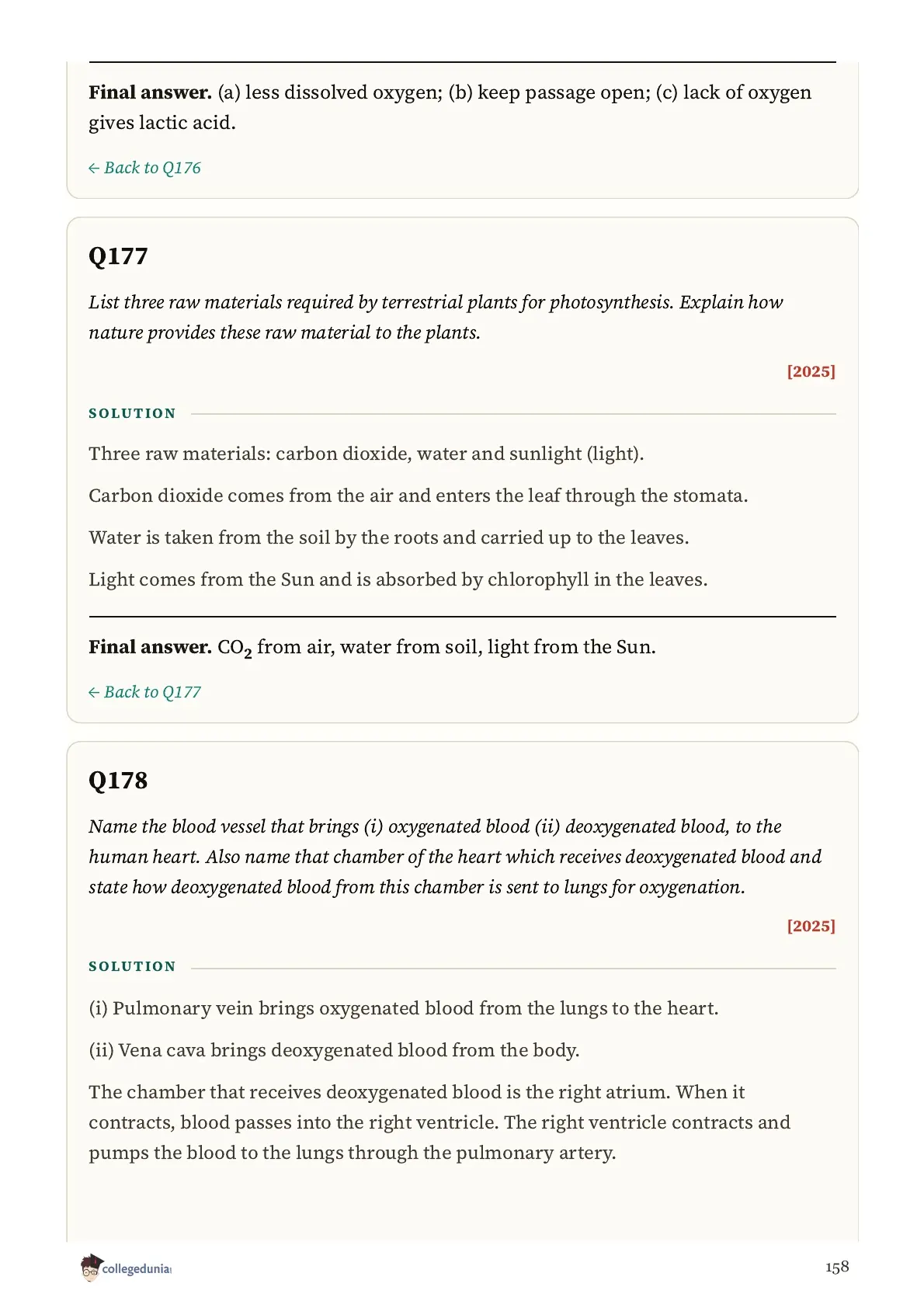
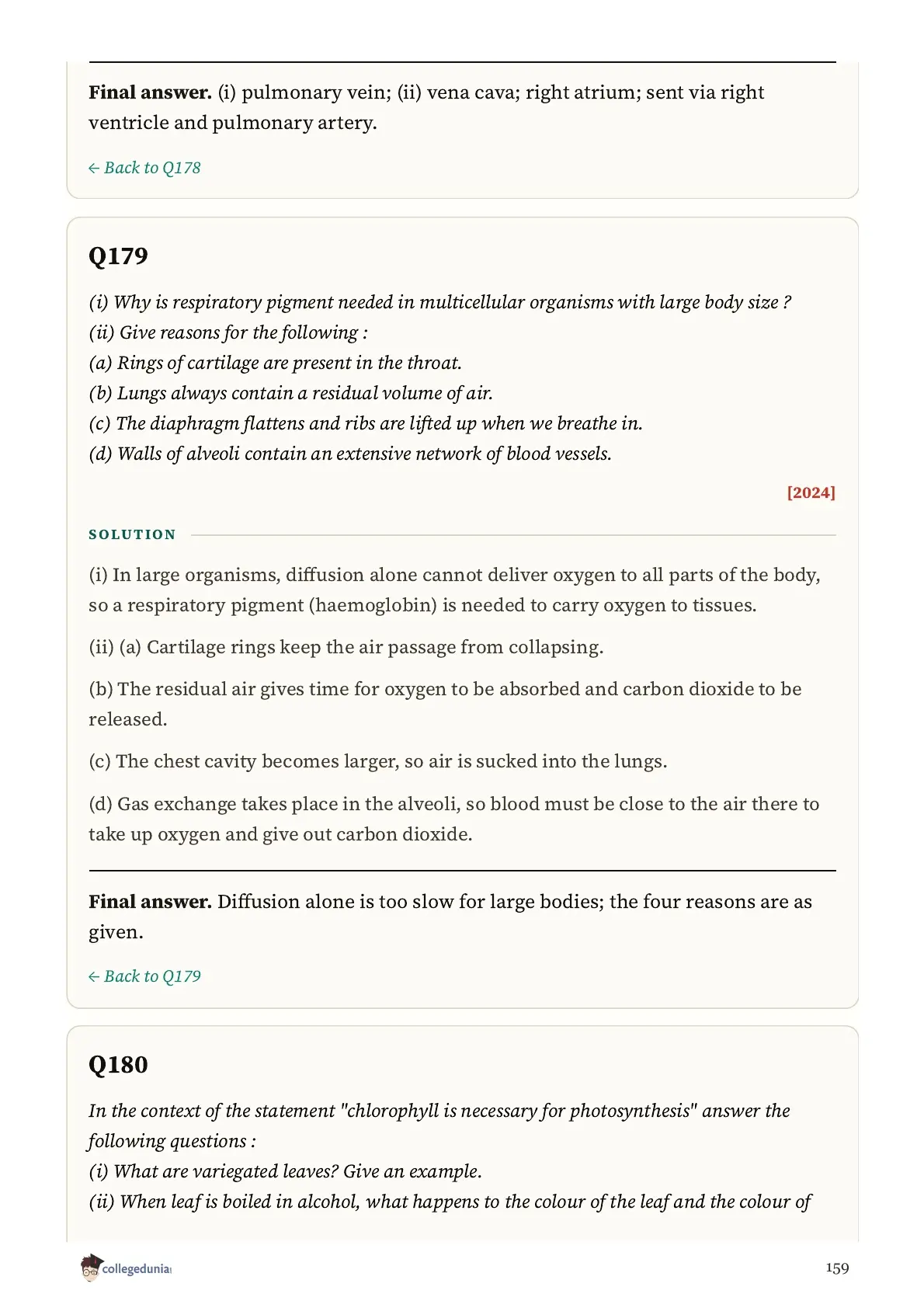
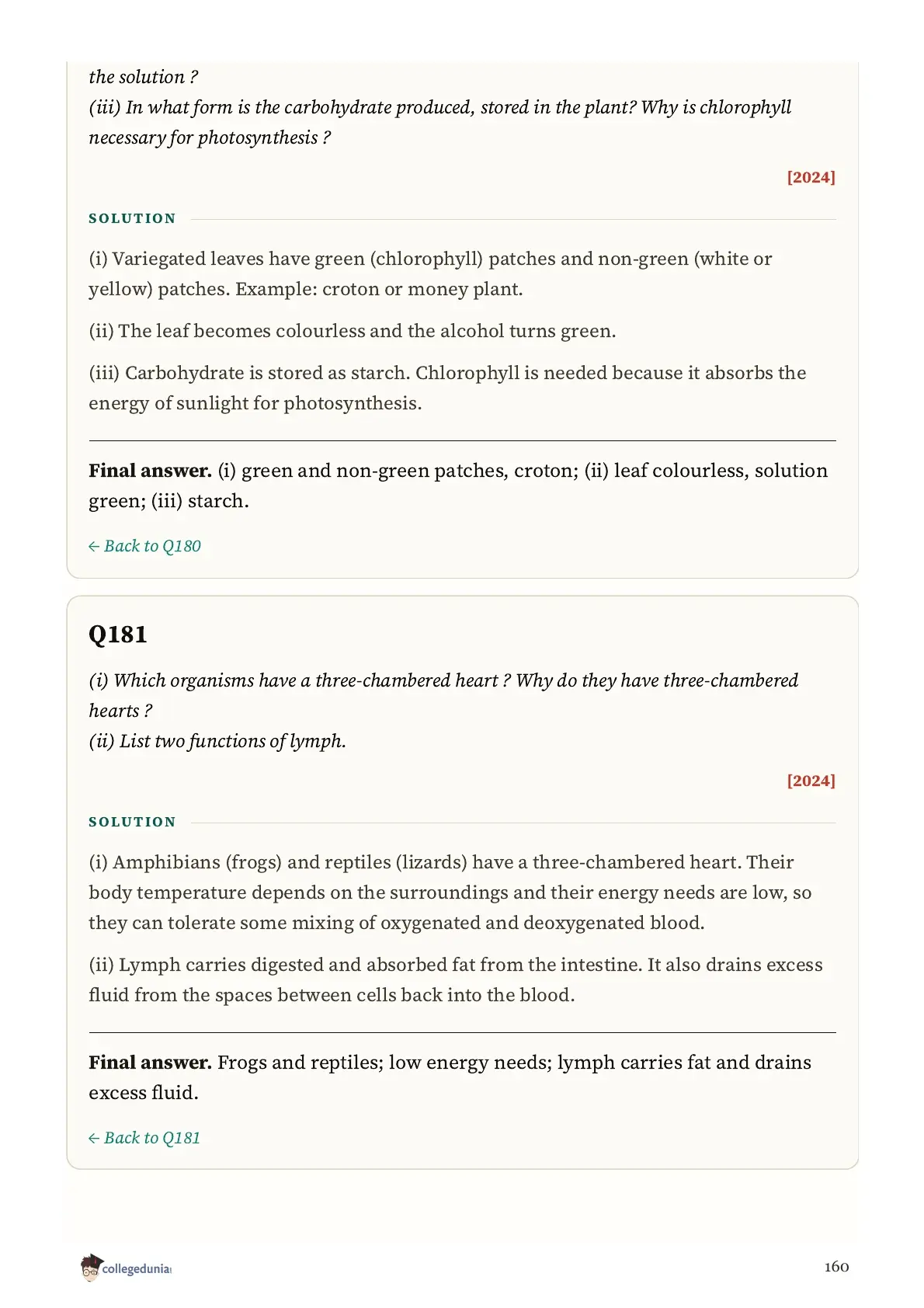
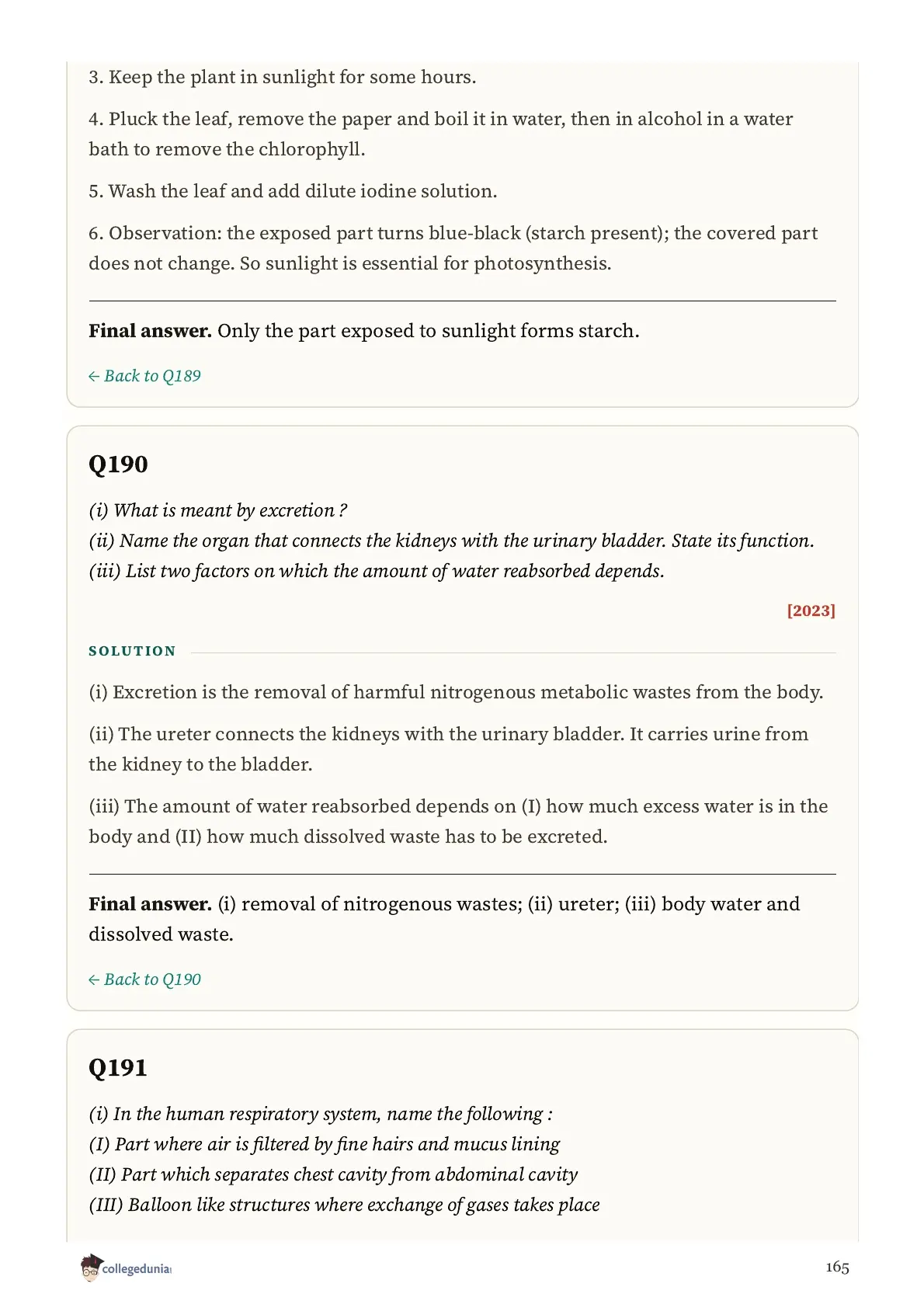
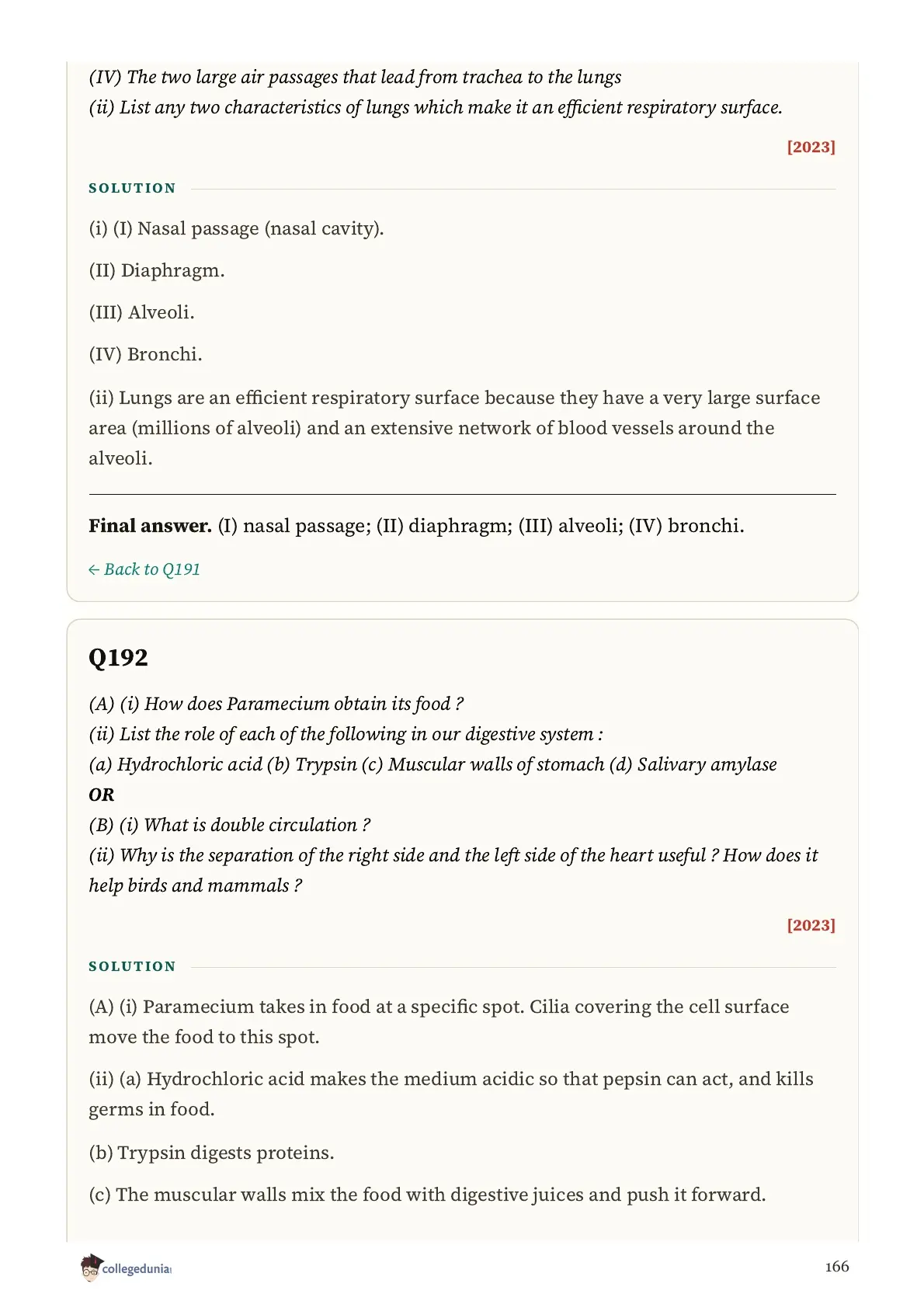
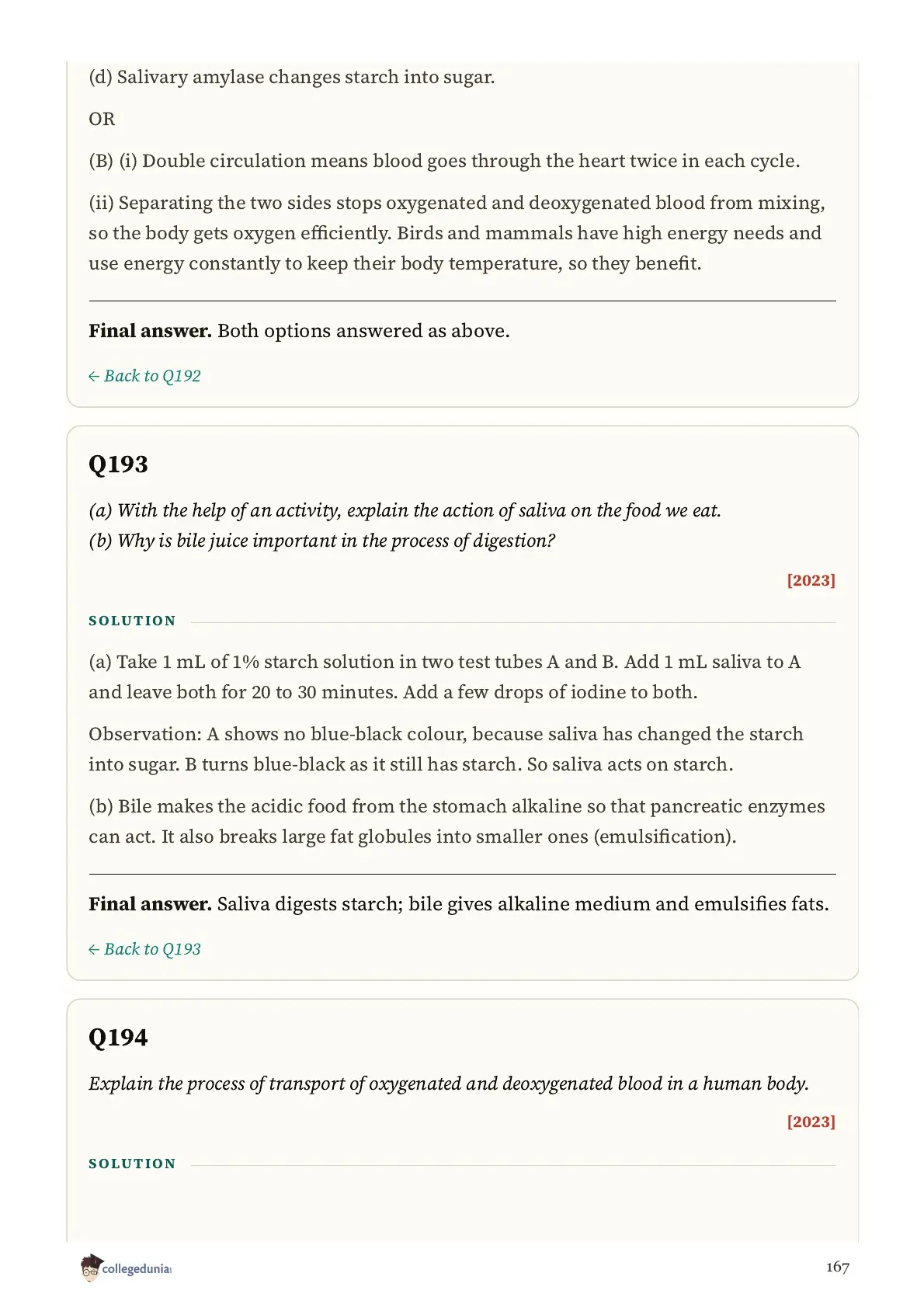
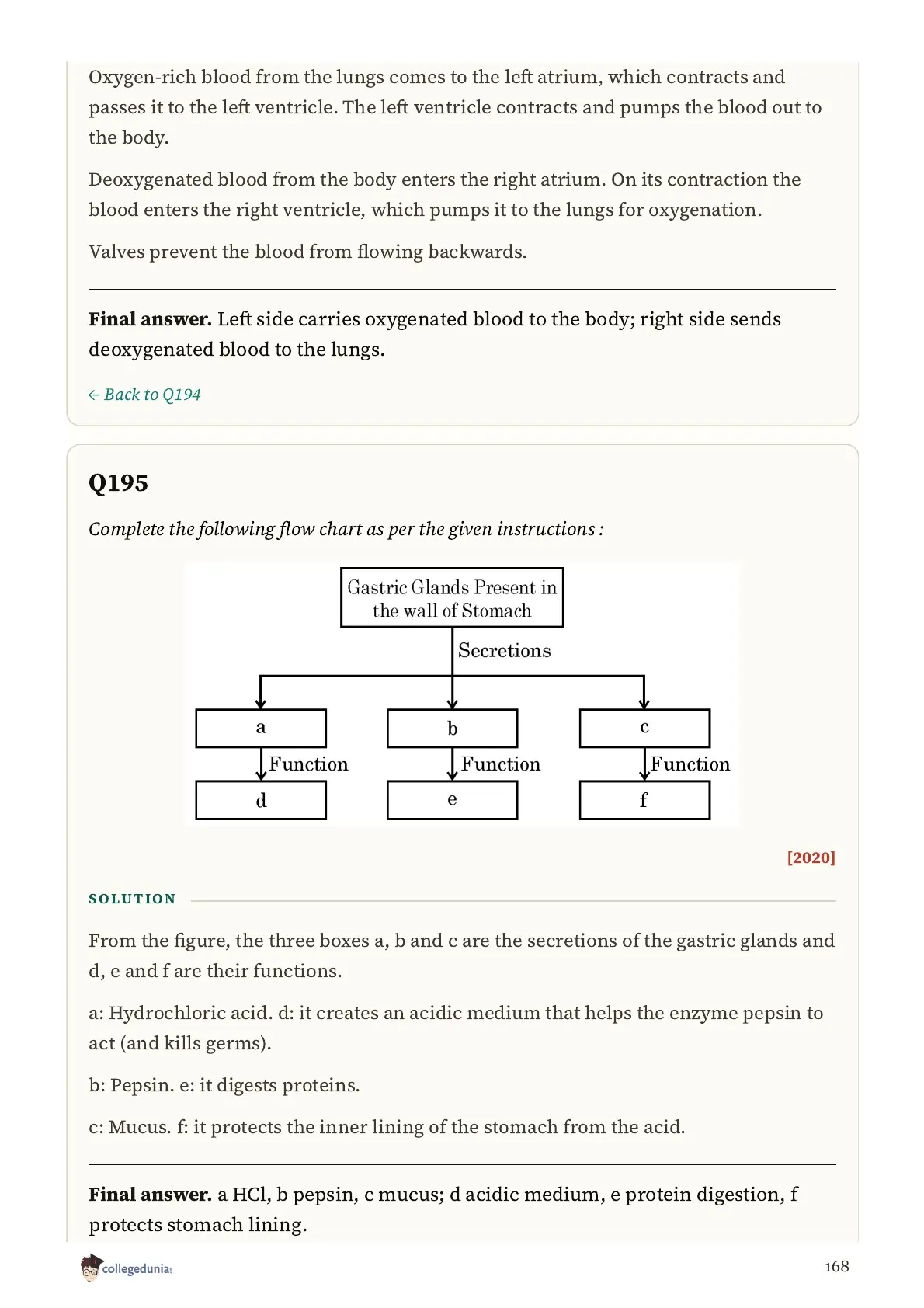
Life Processes Weightage in the Class 10 Science Paper
CBSE does not print a mark figure for Life Processes alone. In the Class 10 Science (086) syllabus the unit World of Living carries 25 of the 80 theory marks and holds four chapters. The 25 is a unit-level figure reported by prep sites and is unofficial here, so check the current syllabus on cbseacademic.nic.in. In this set the 1-mark question is the commonest form, followed by the 2-mark and 3-mark short answers, and the 5-mark long answer is the next largest group after them.
The table shows how many questions the set holds at each mark value.
| Marks per Question | Questions in the Set |
|---|---|
| 1 mark | 96 |
| 2 marks | 66 |
| 3 marks | 51 |
| 4 marks | 2 |
| 5 marks | 26 |
Life Processes Questions by Topic
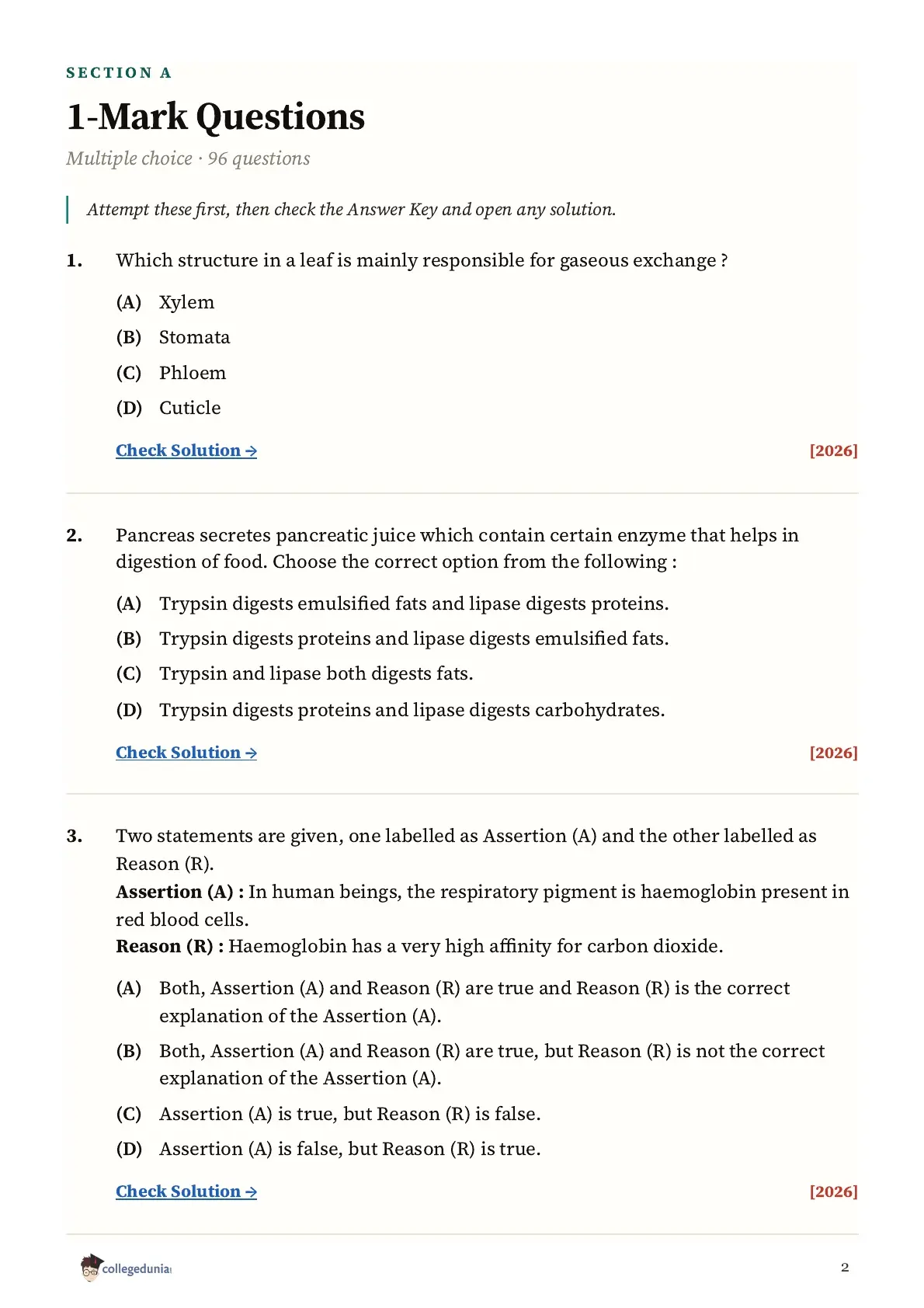
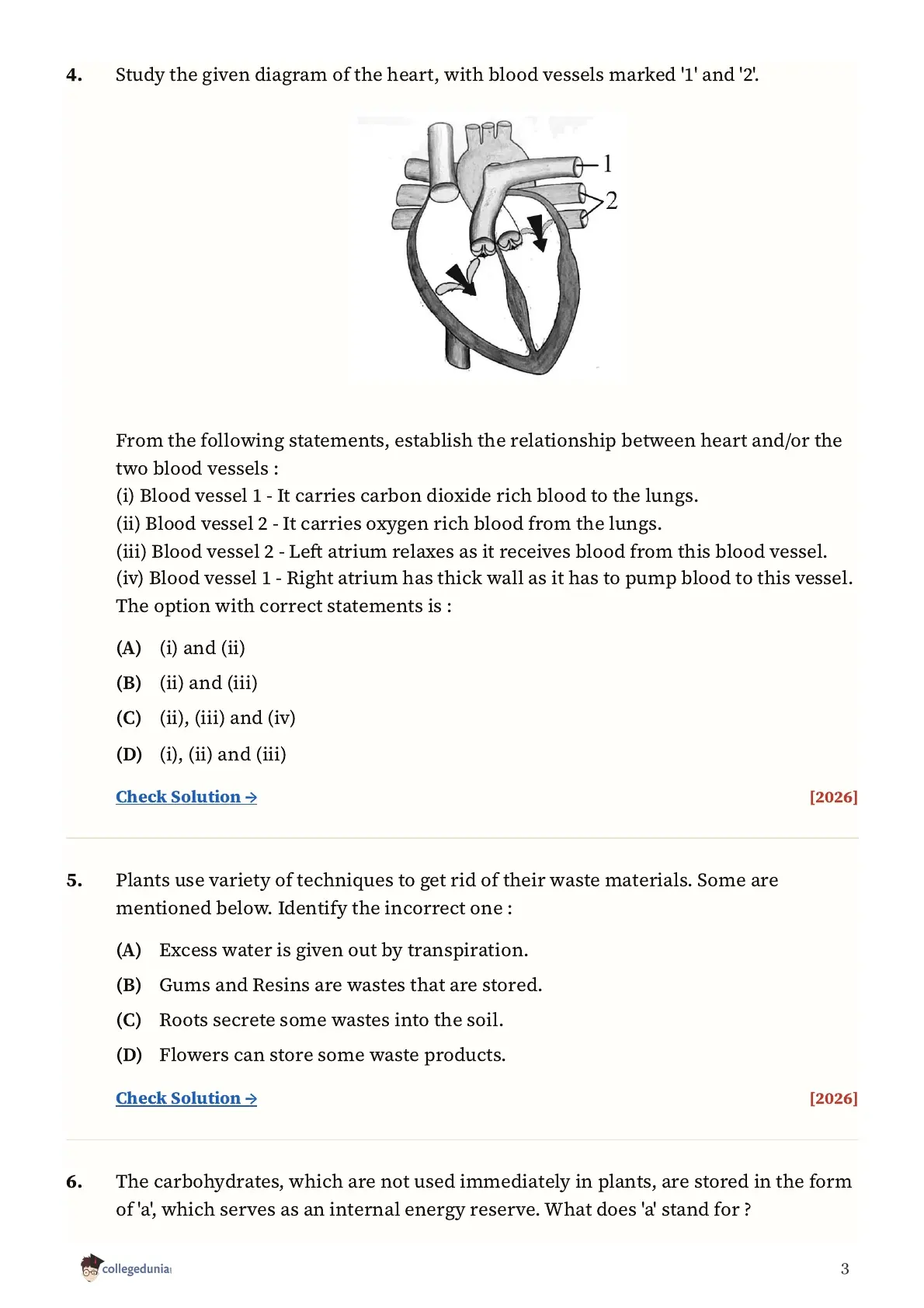
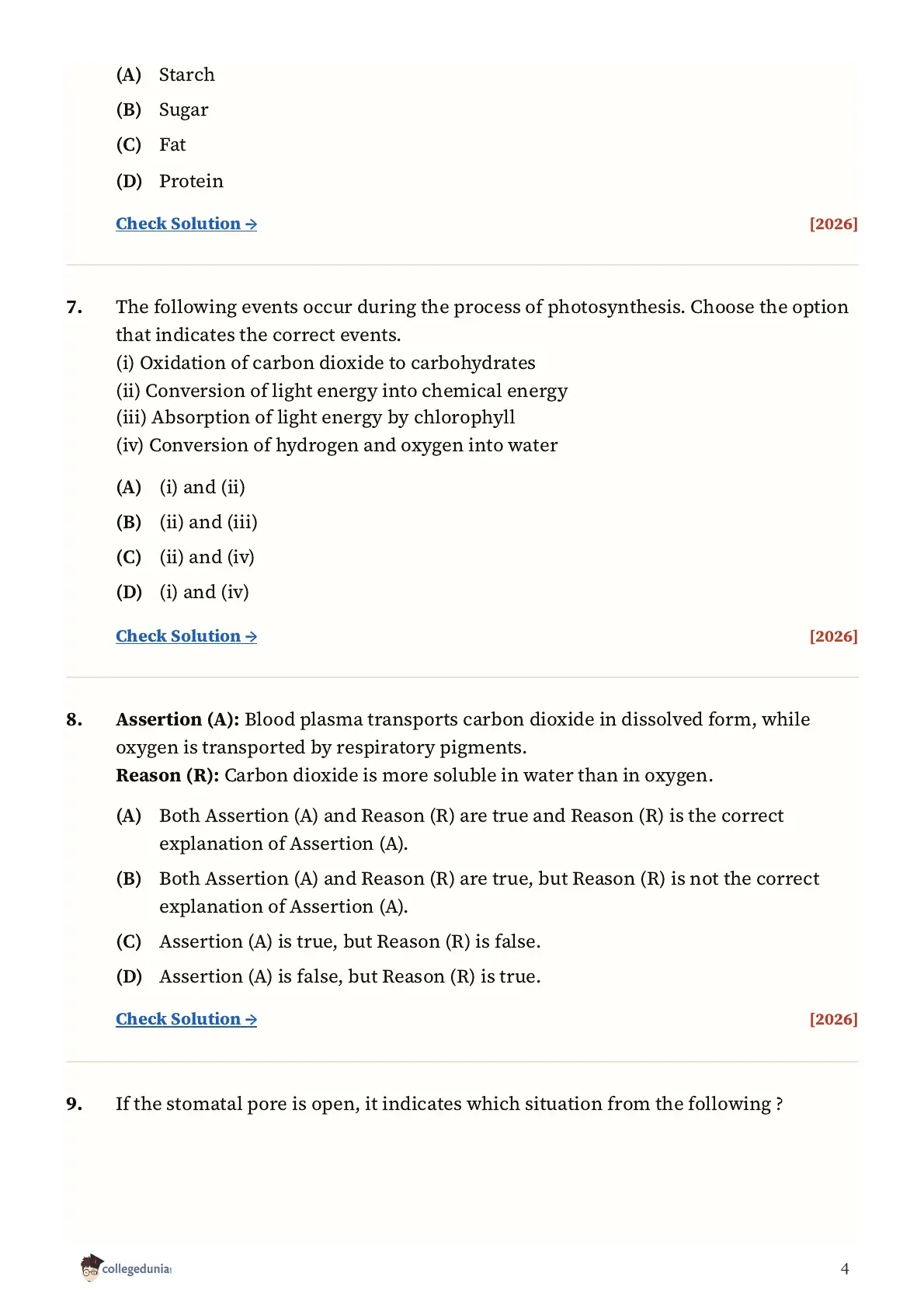
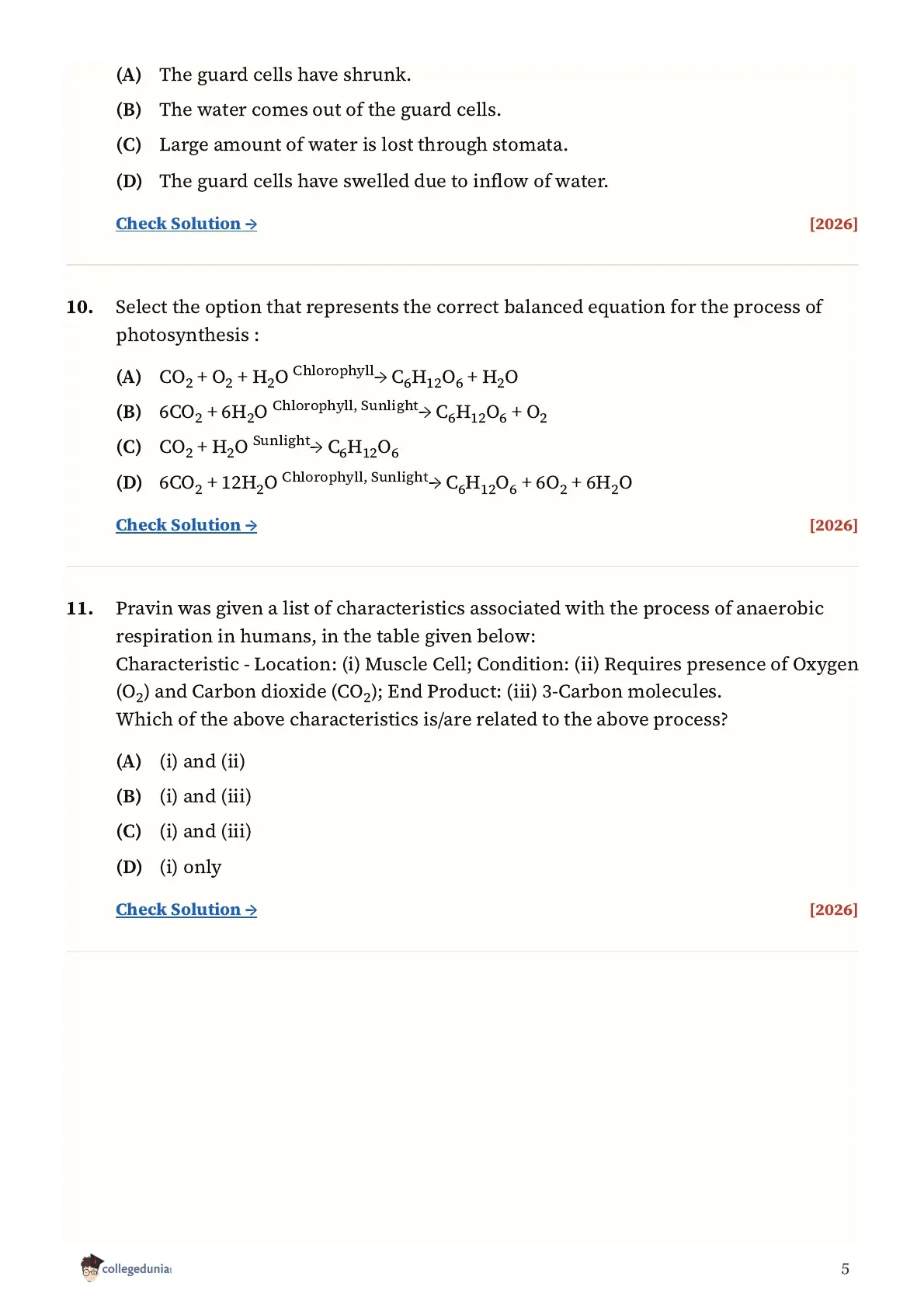
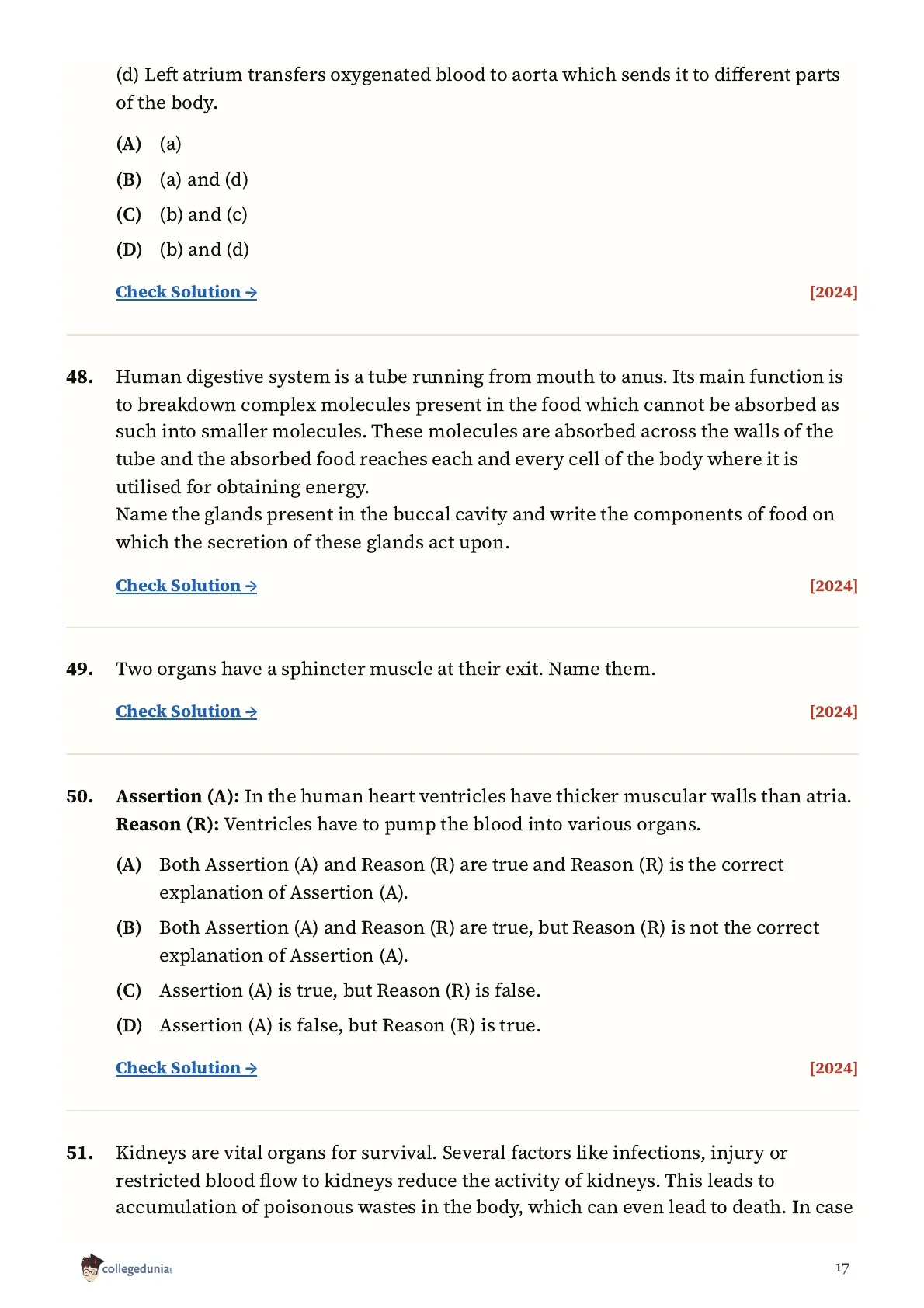
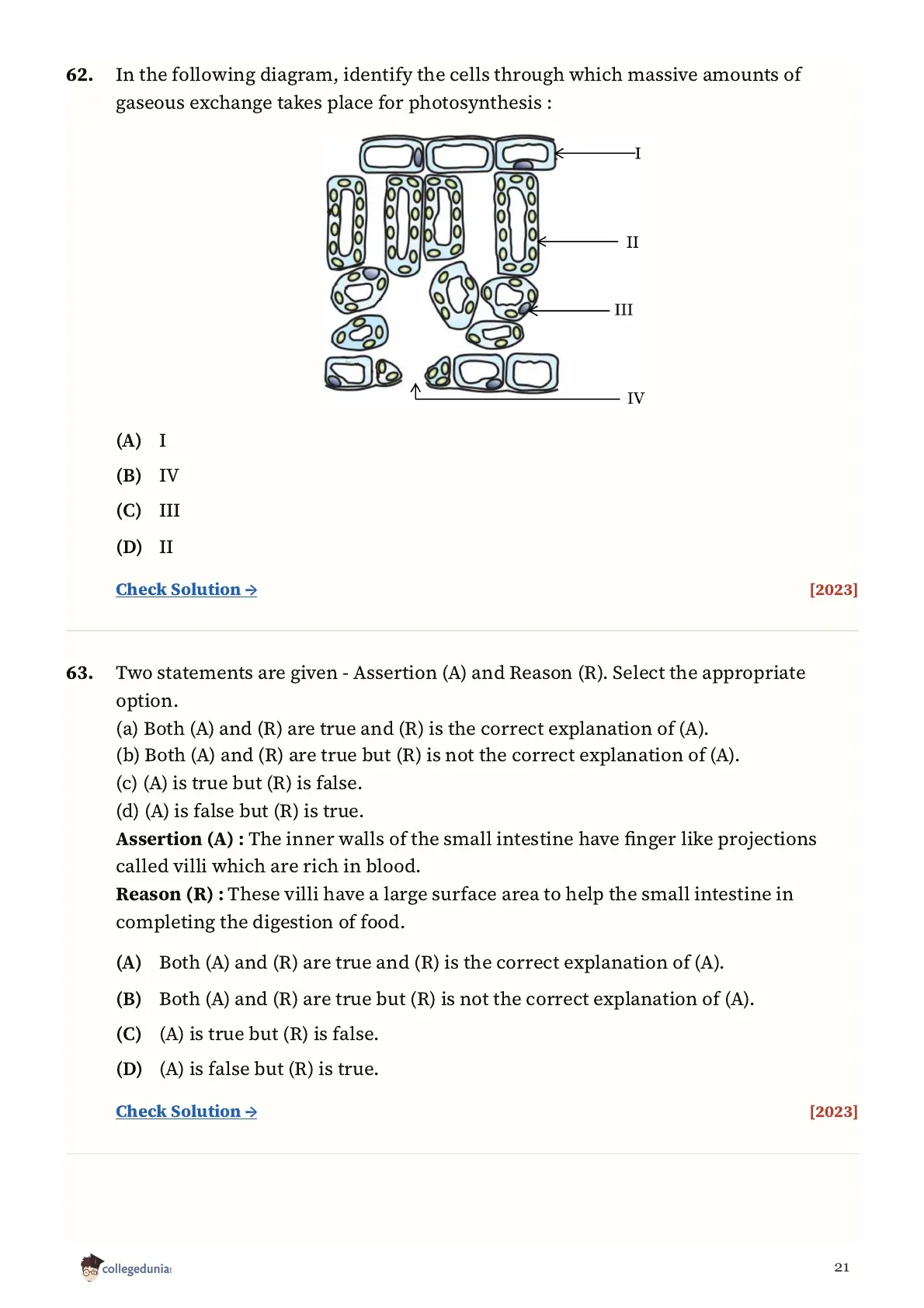
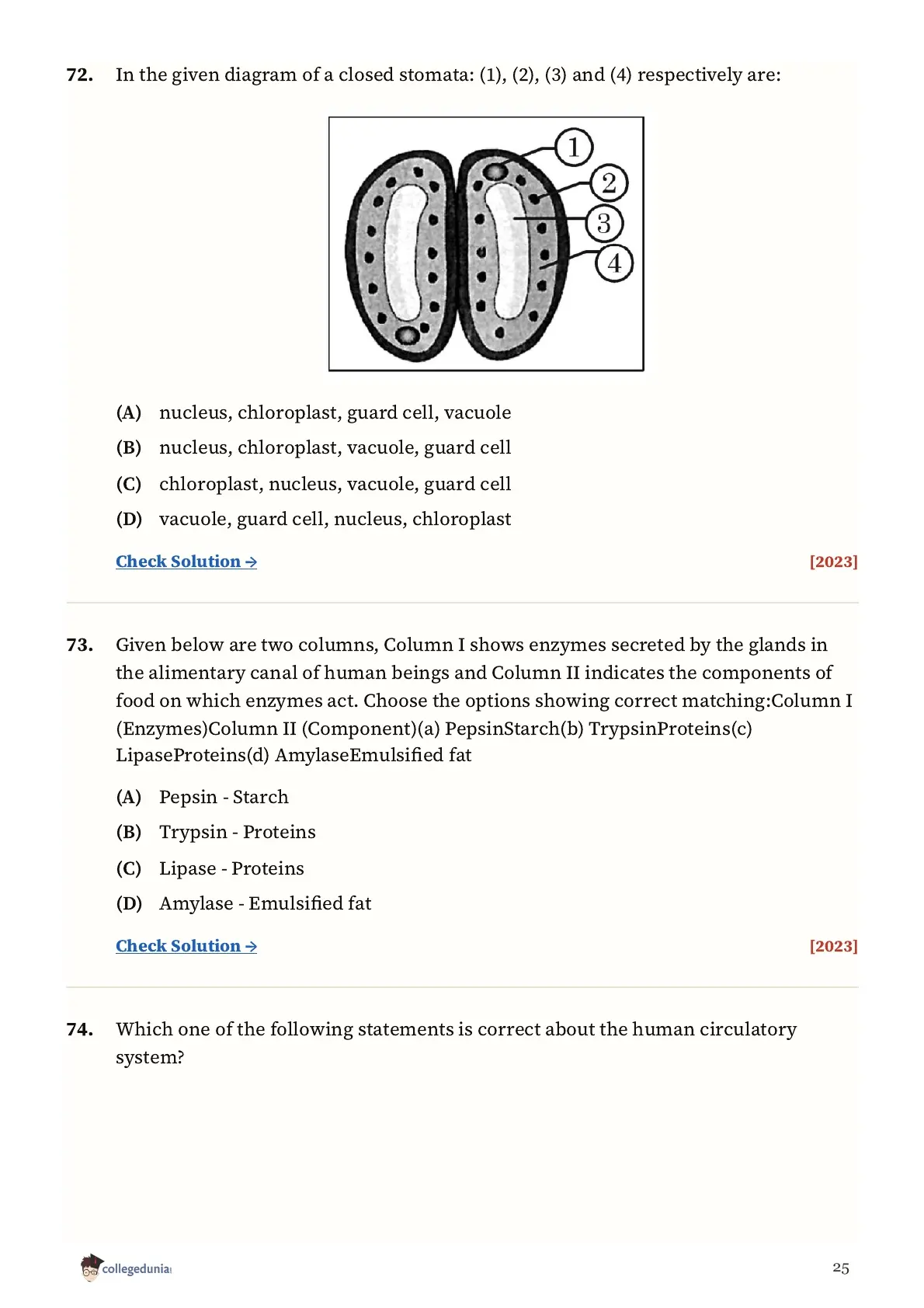
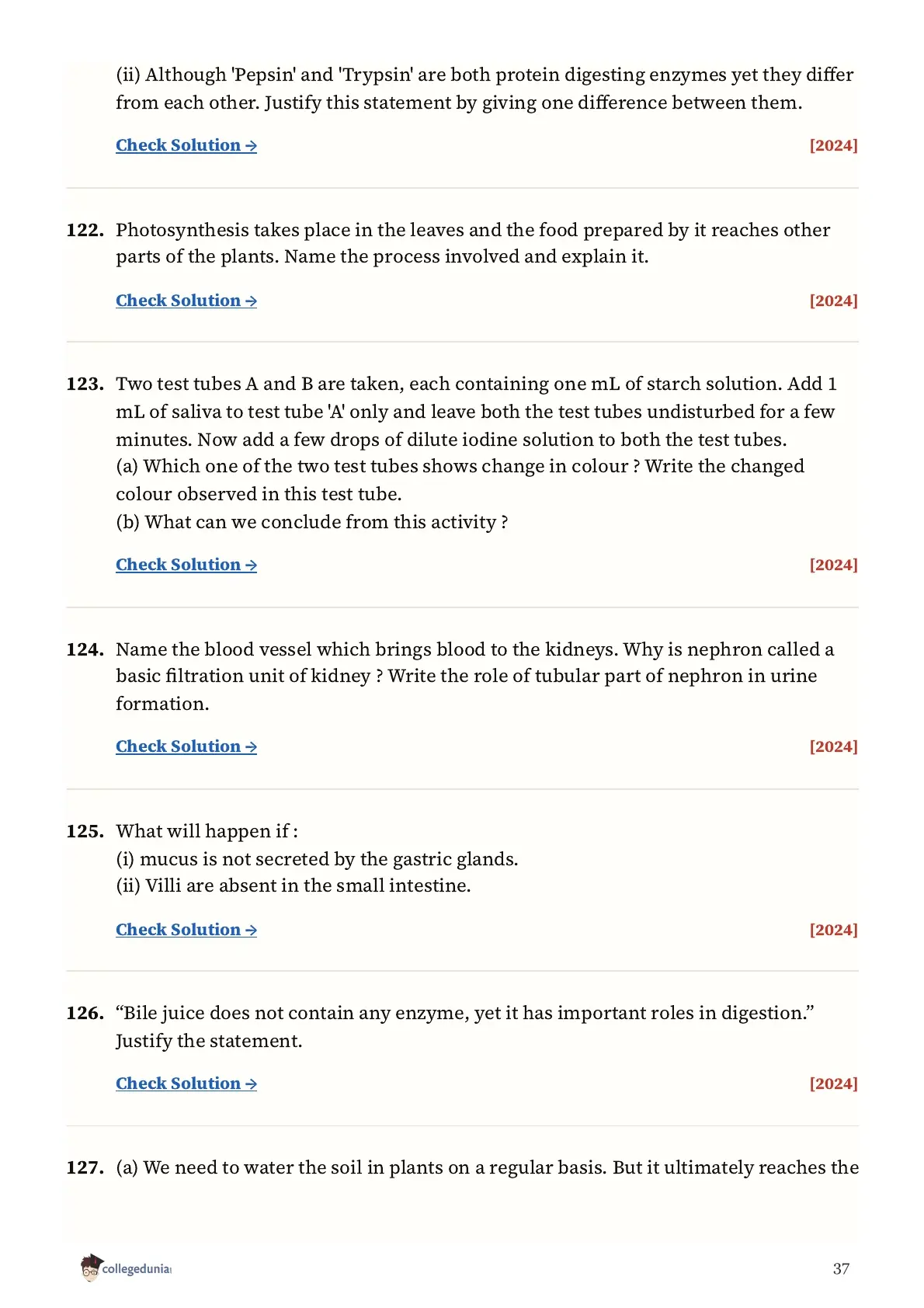
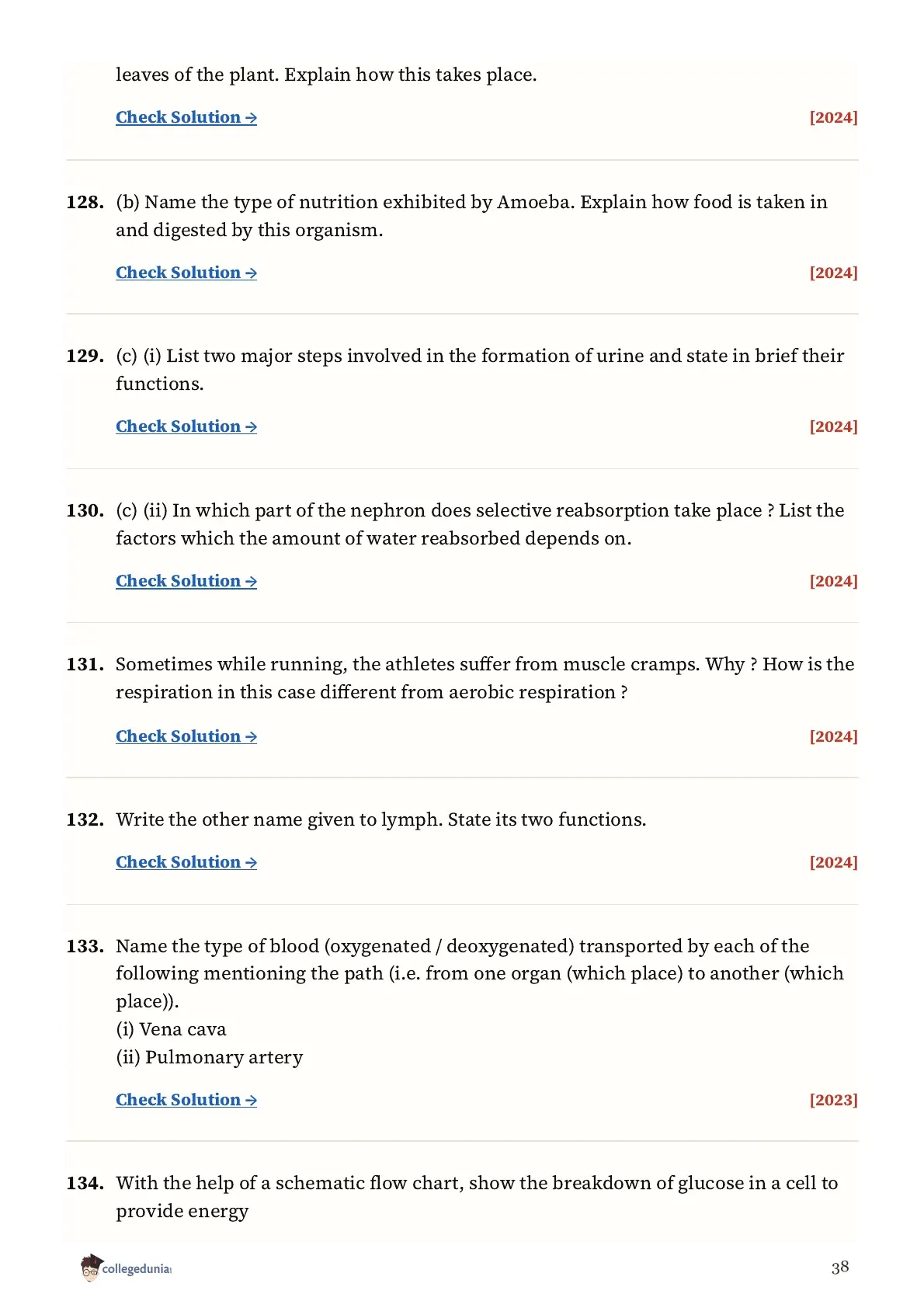
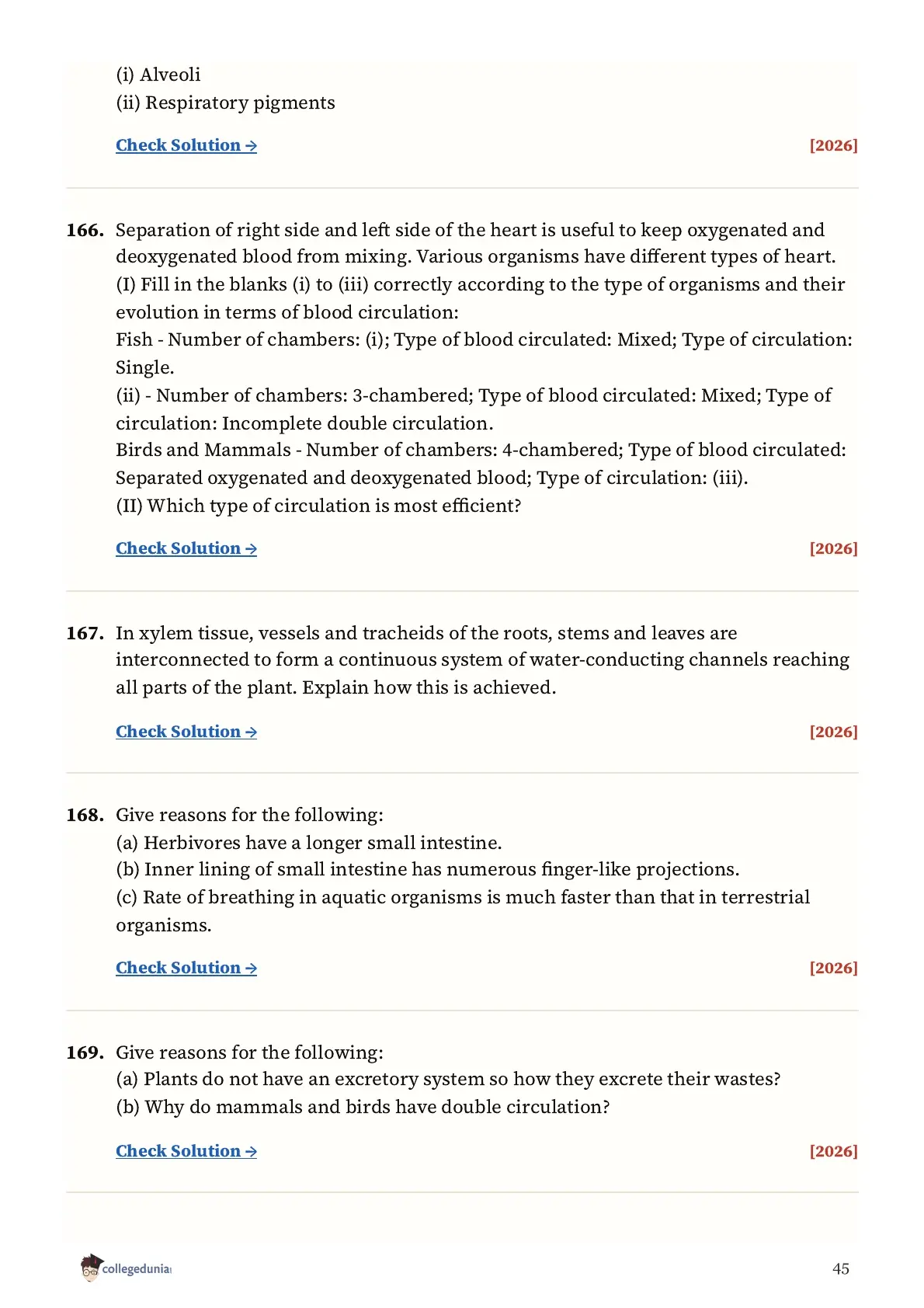
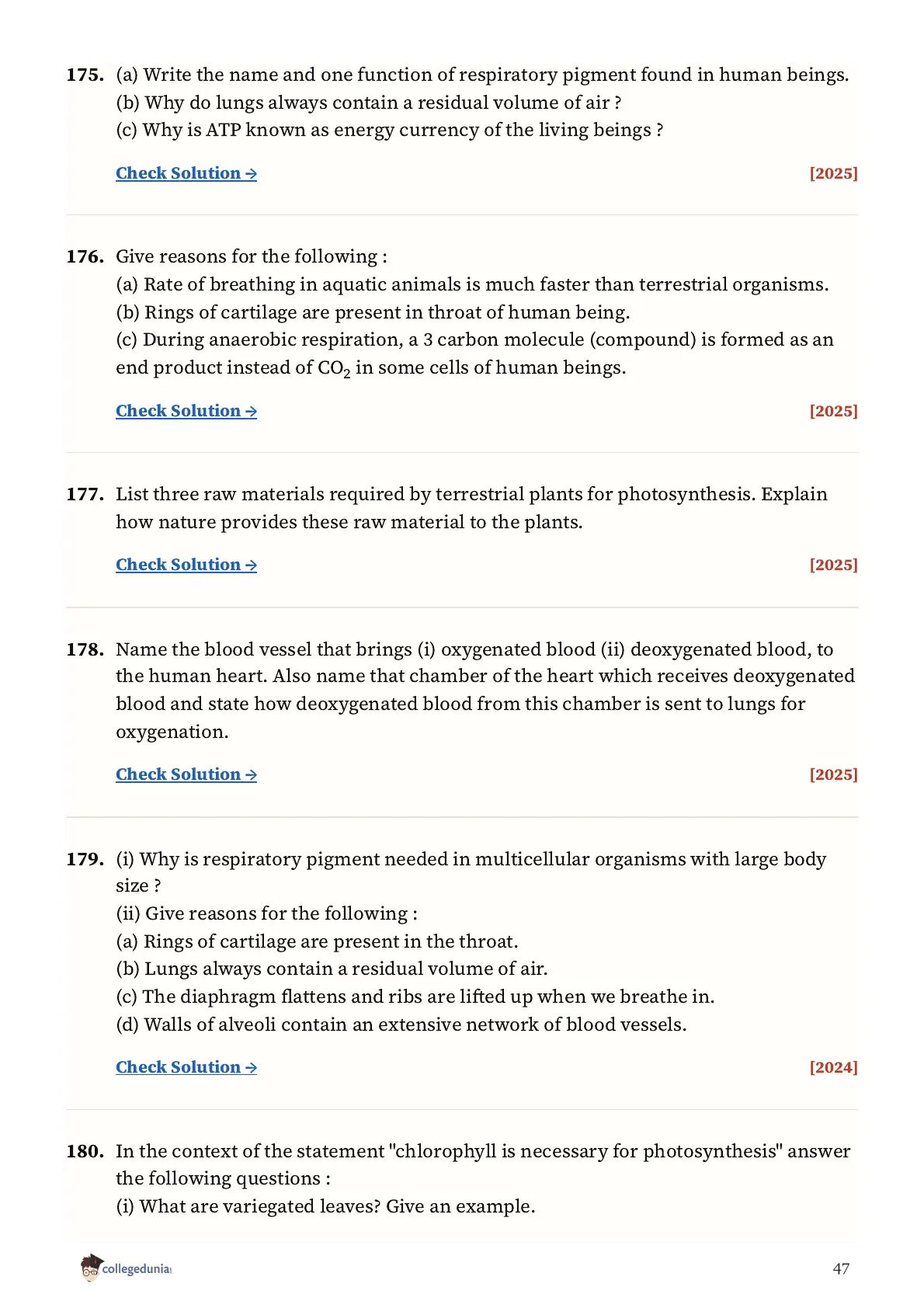
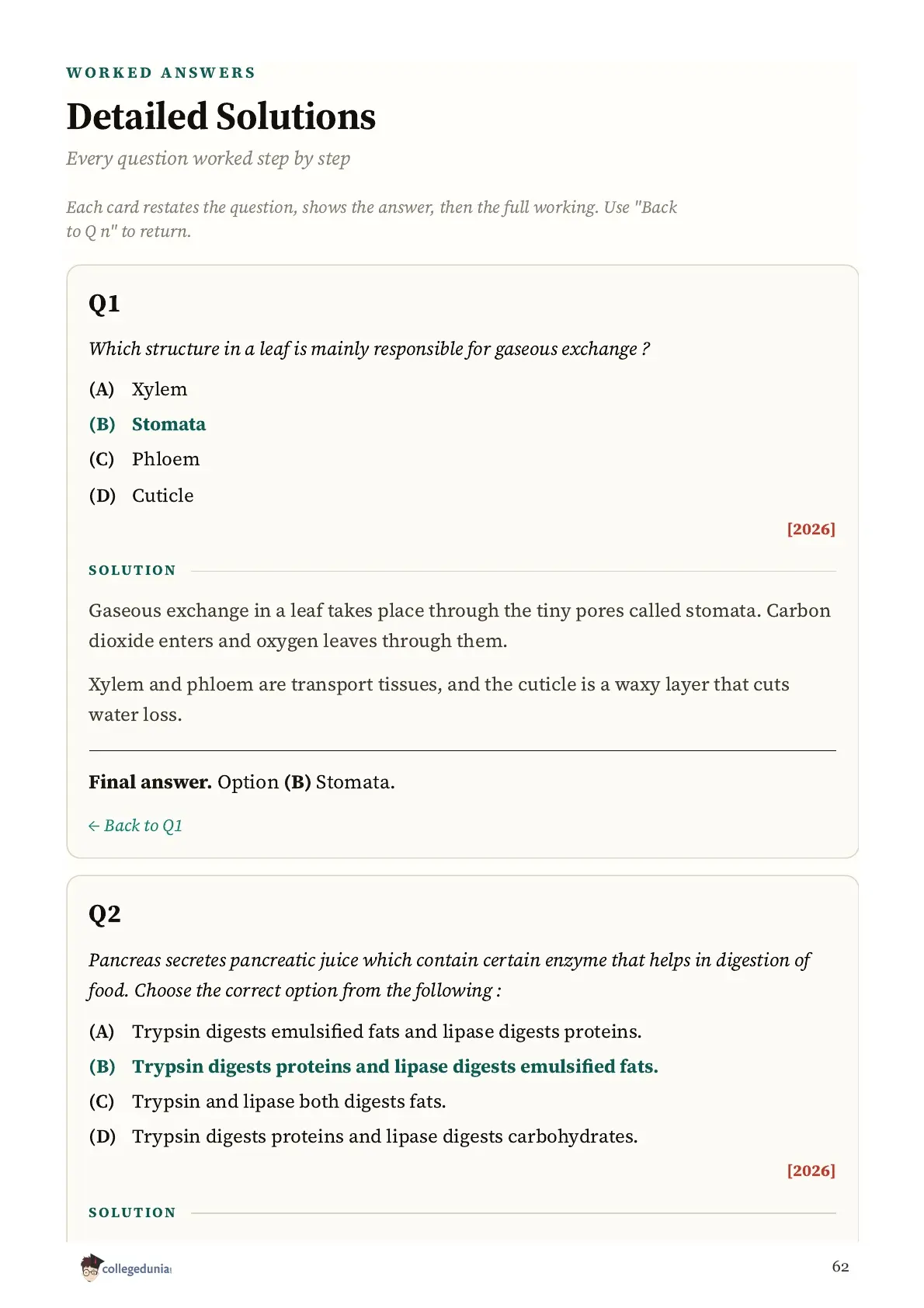
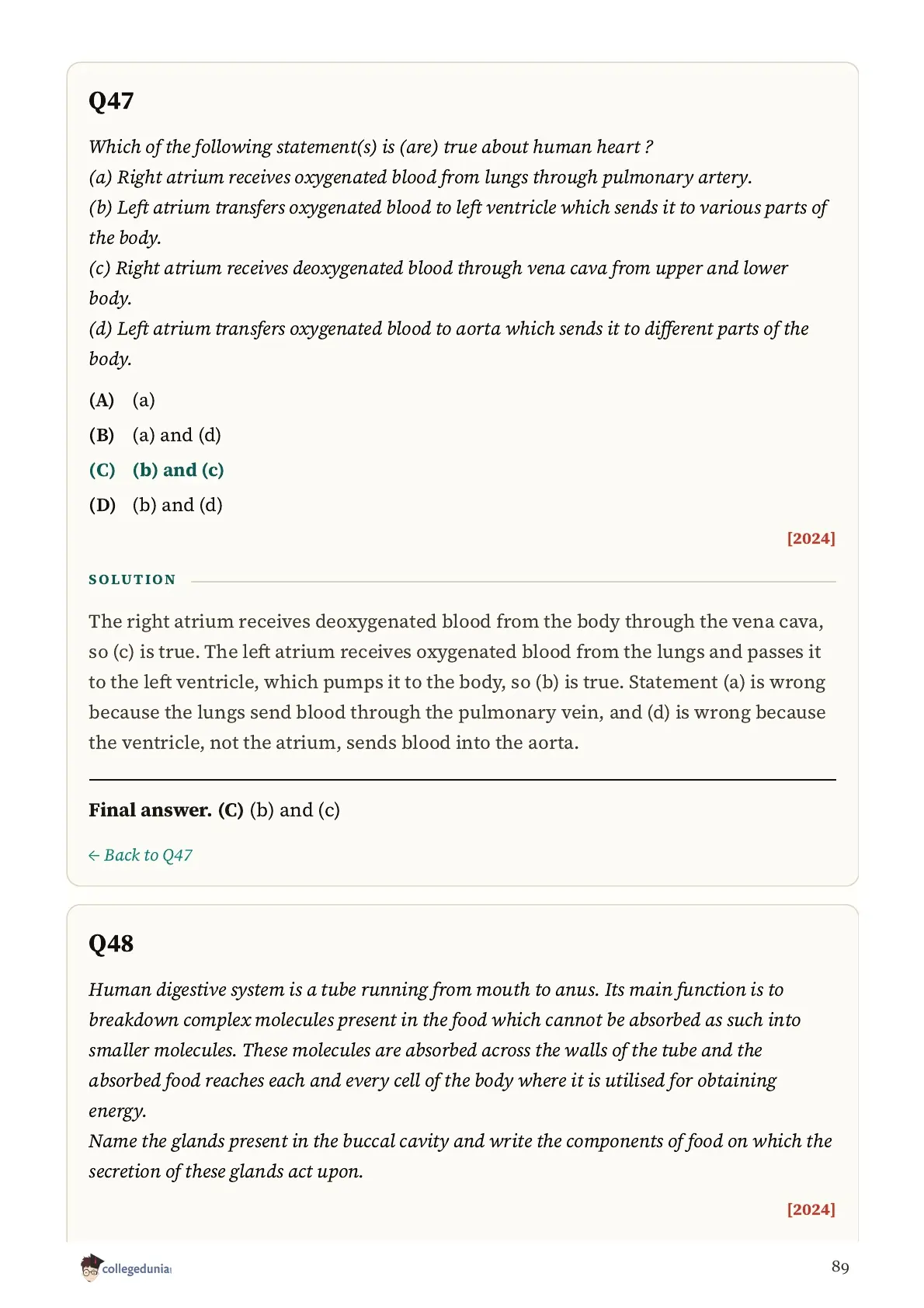
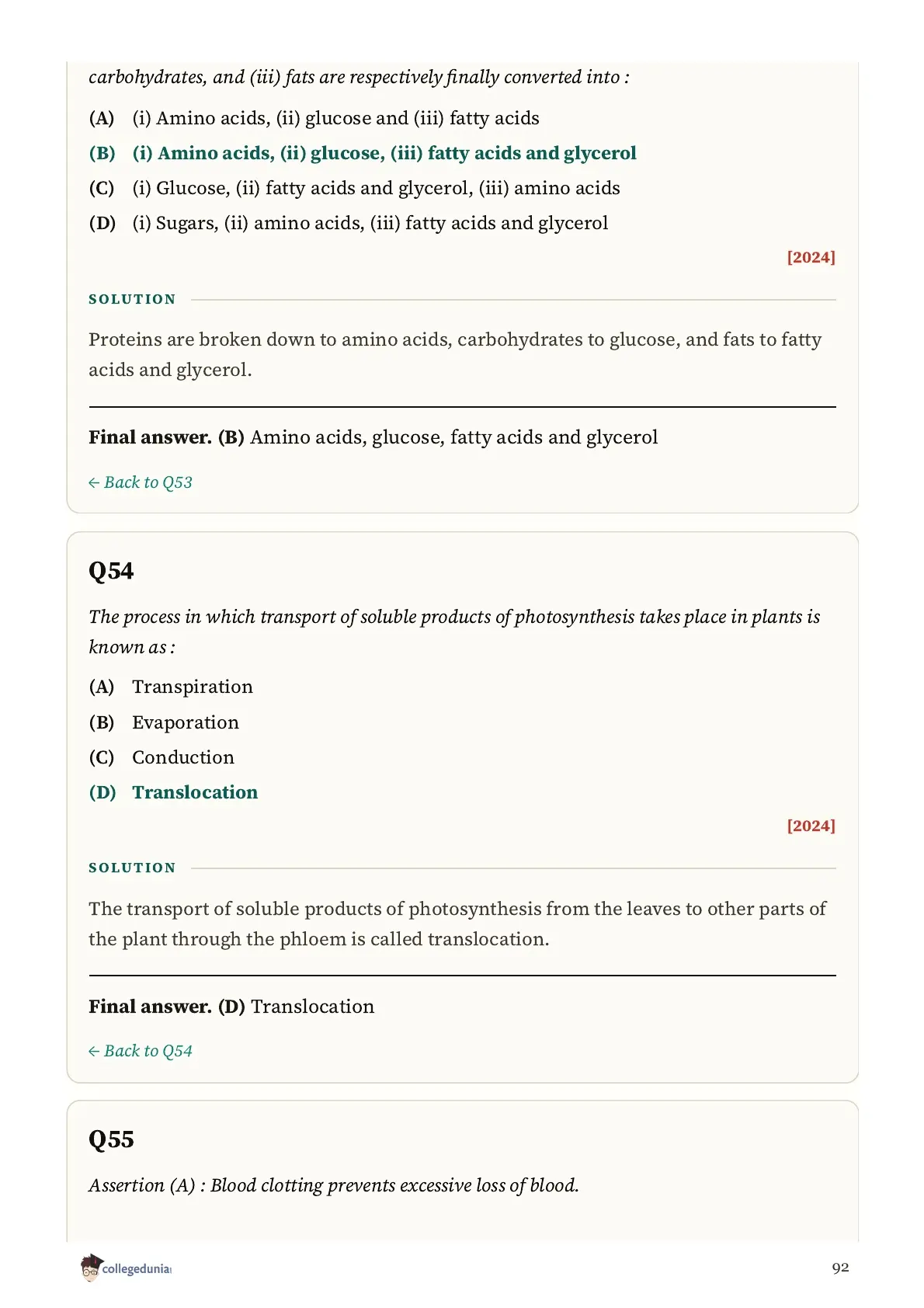
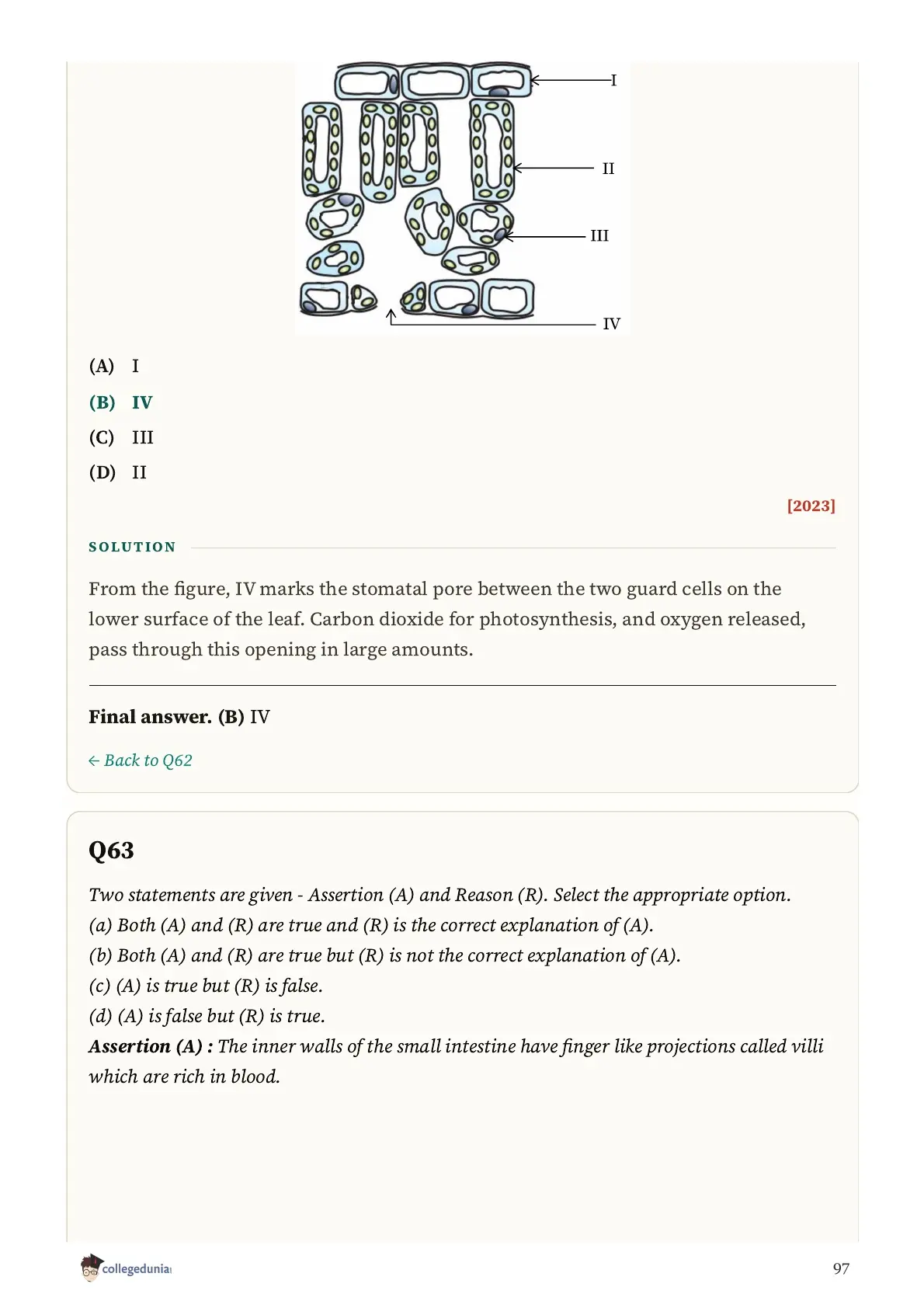
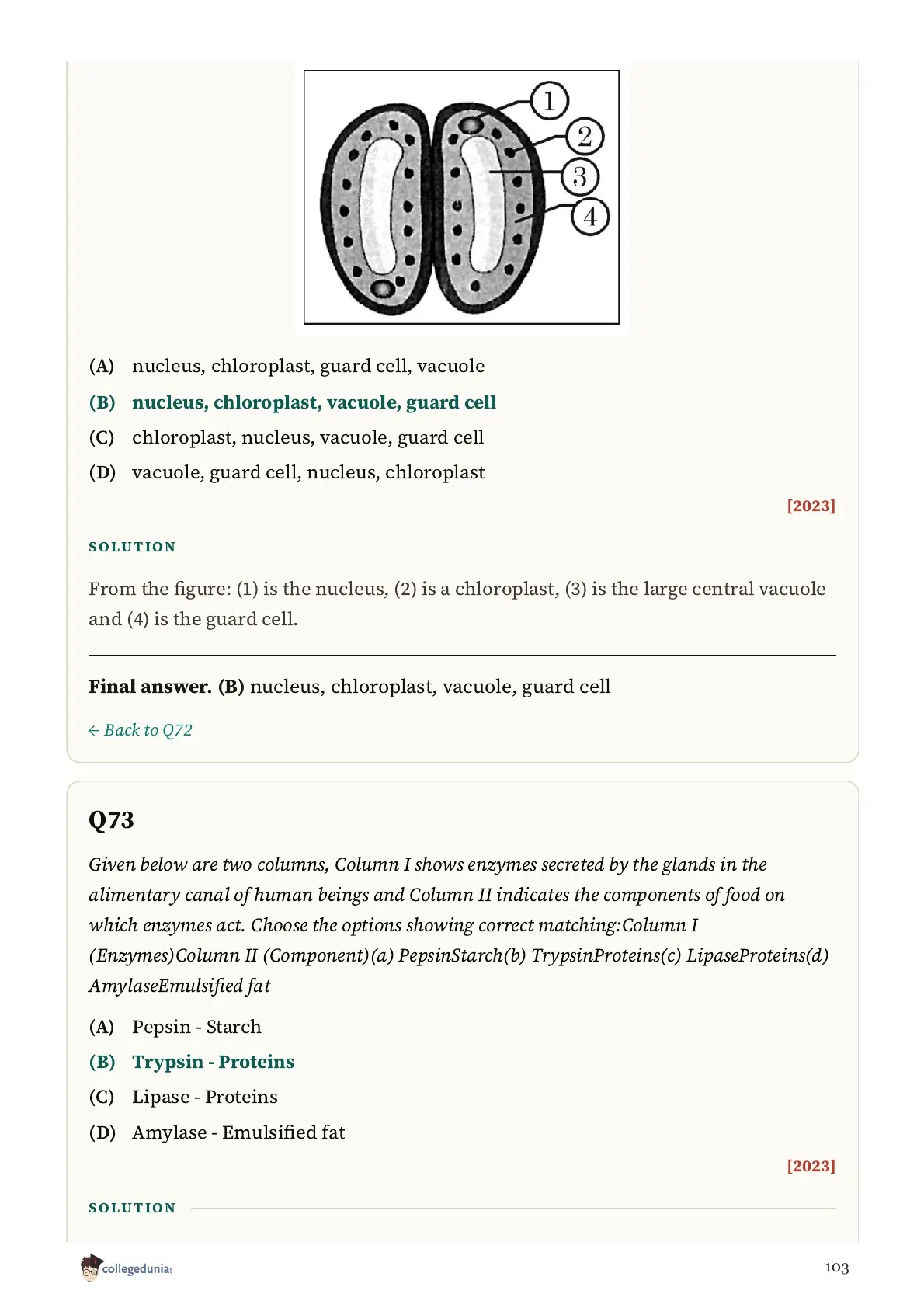
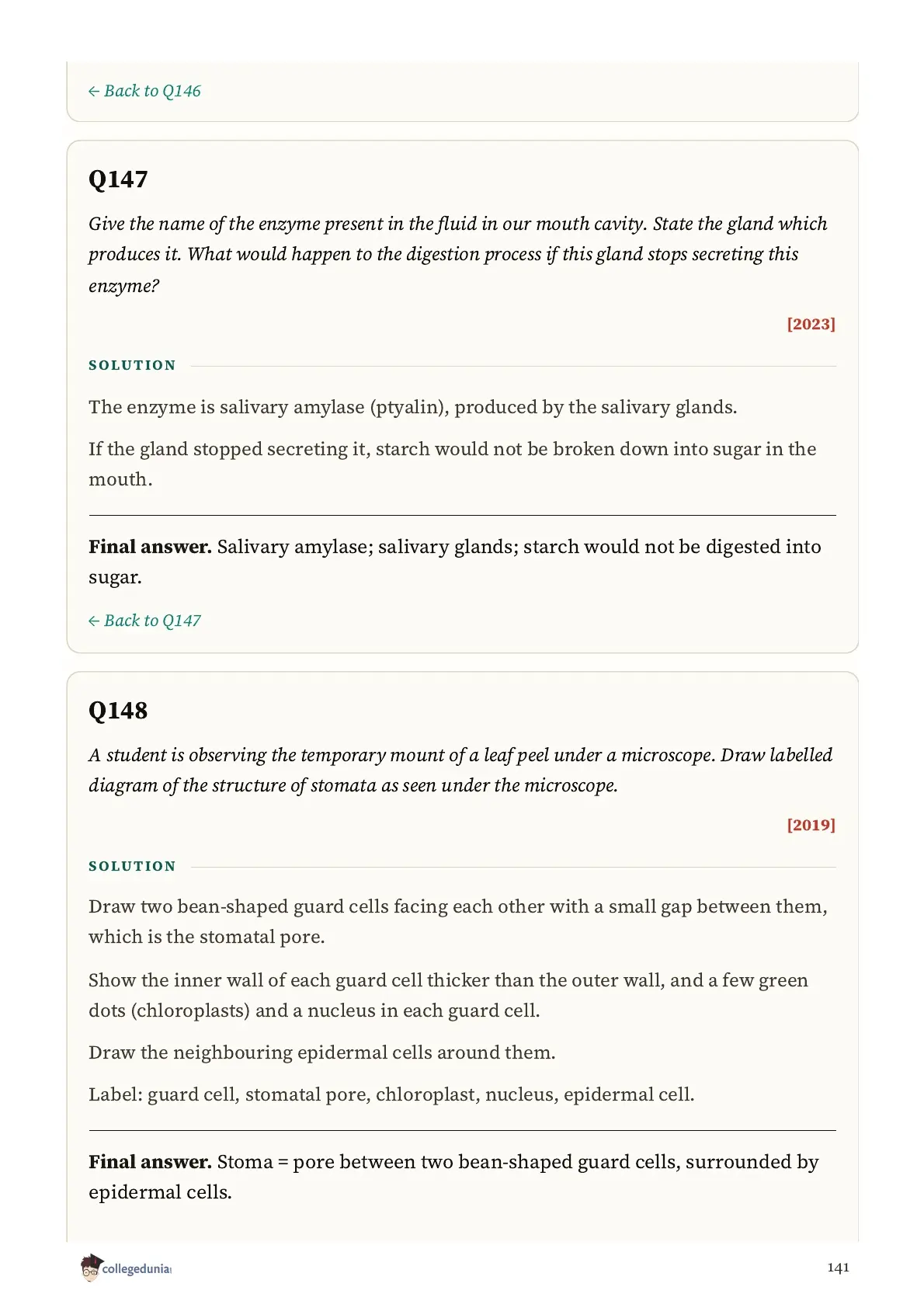
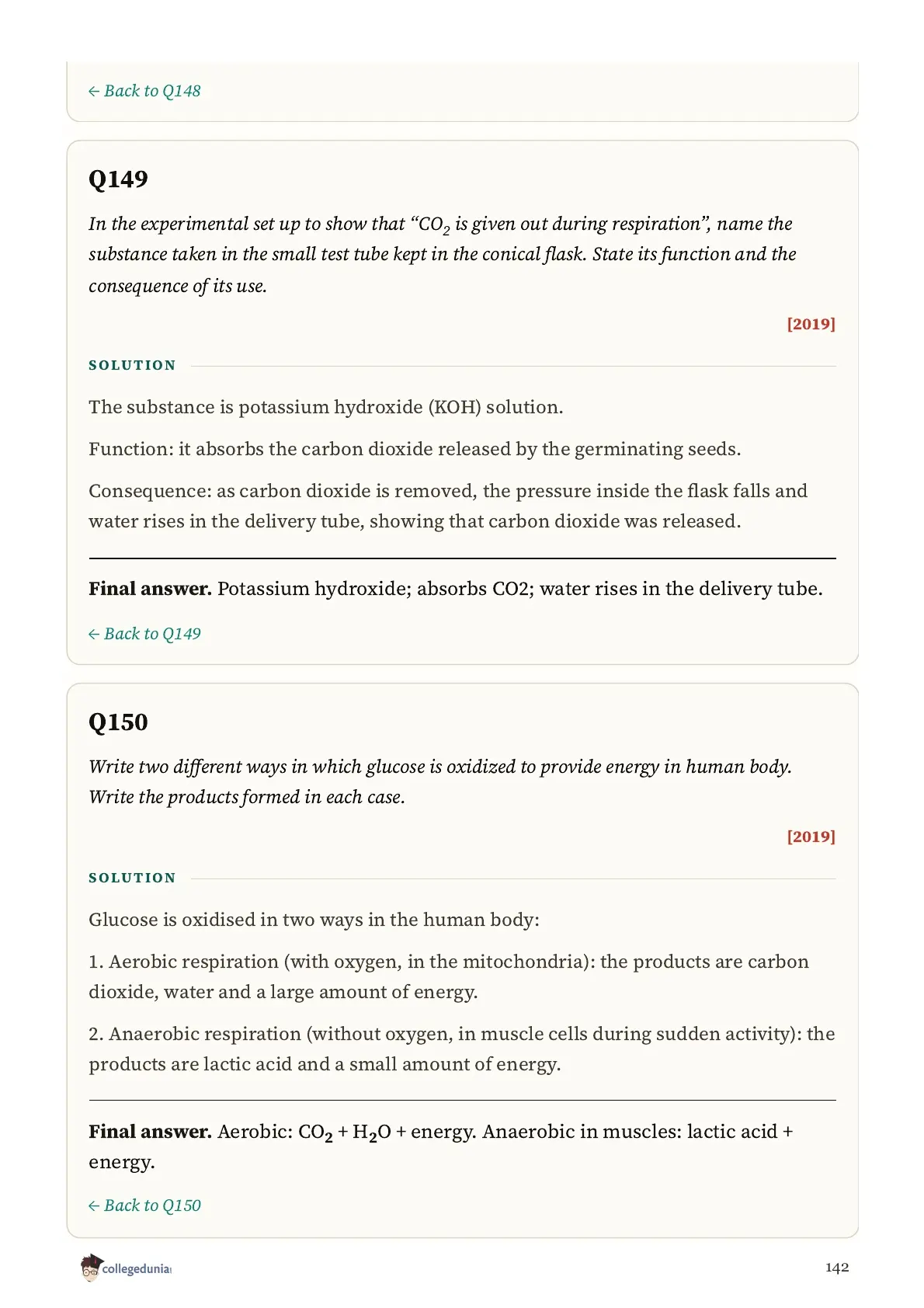
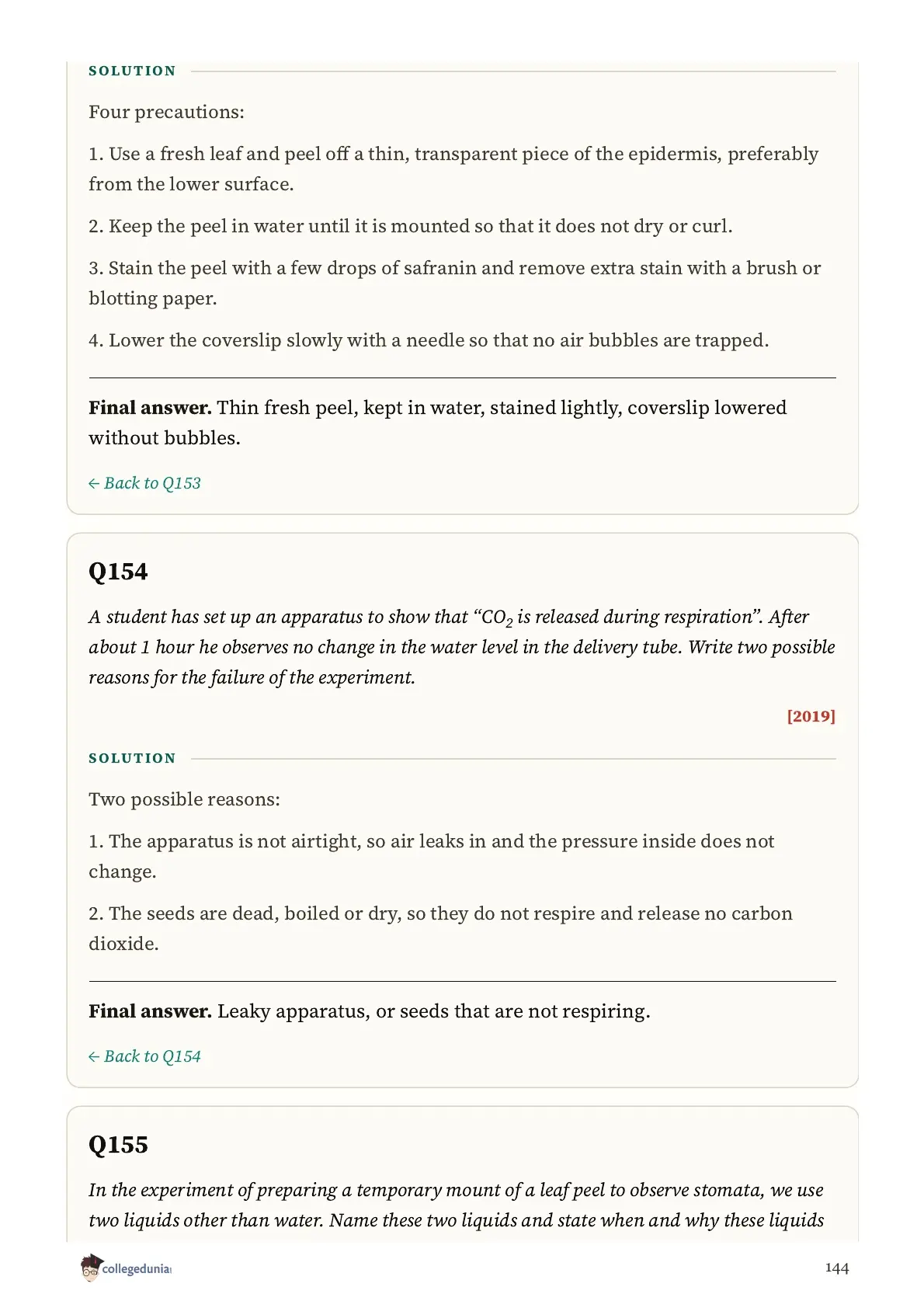
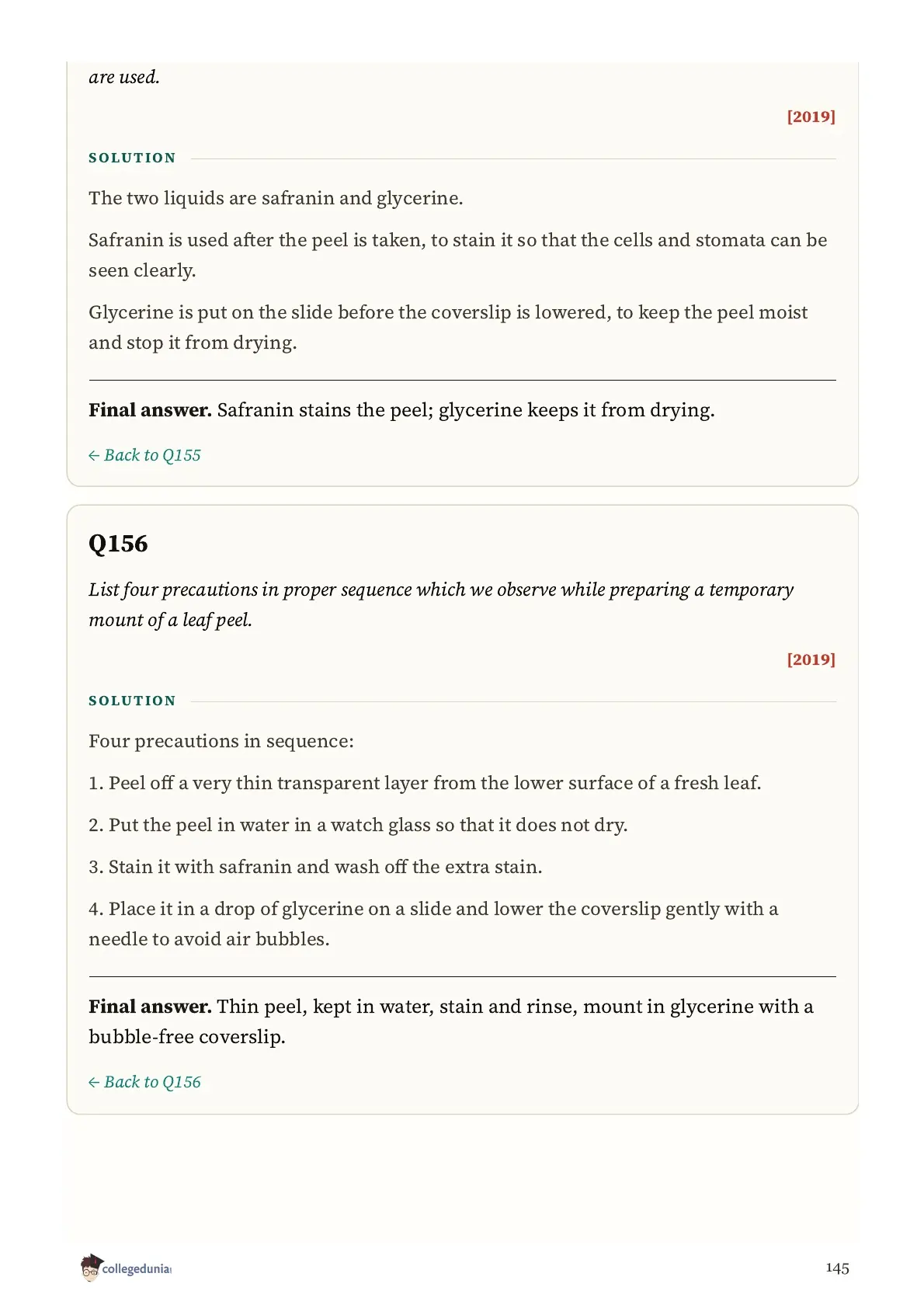
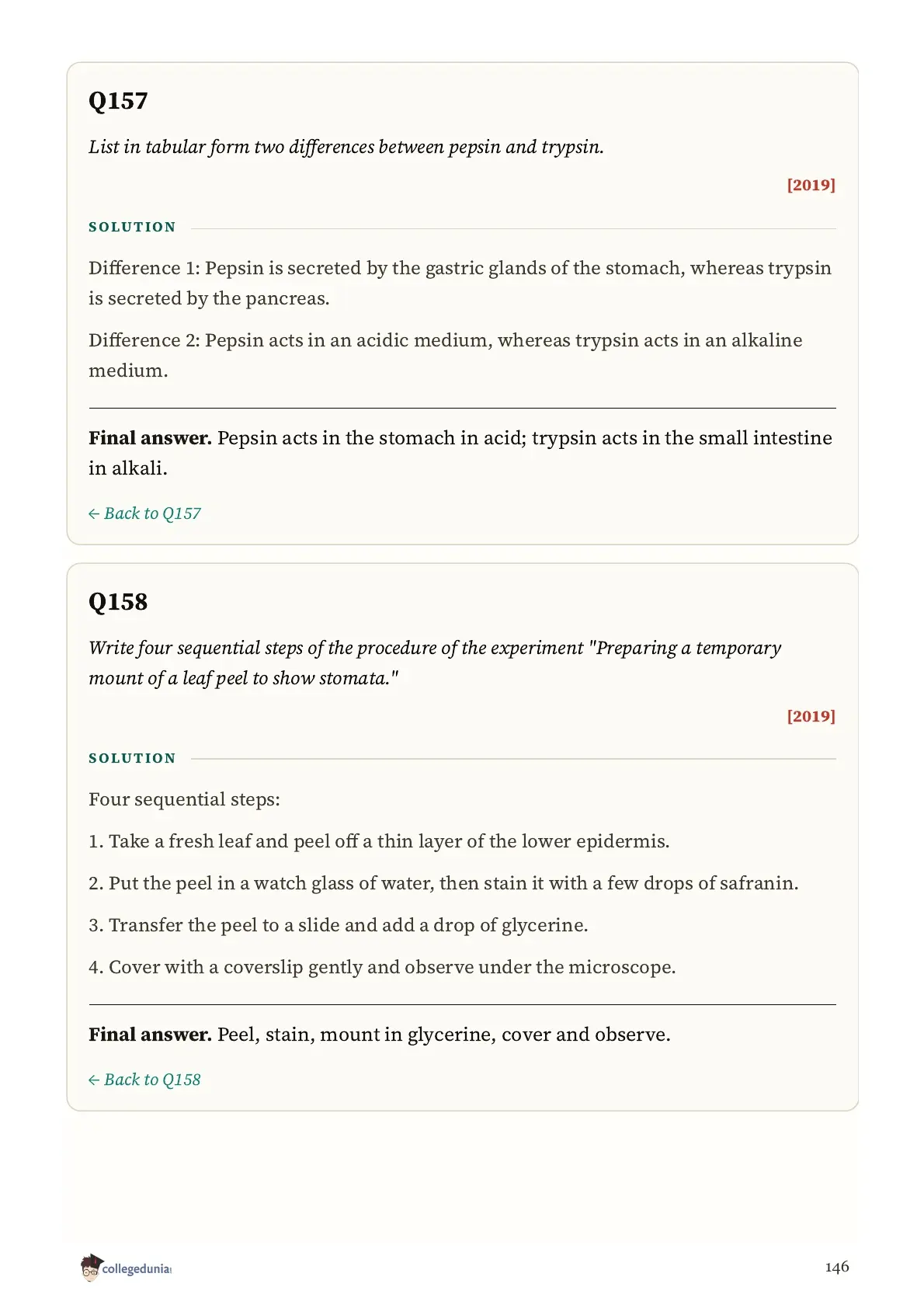
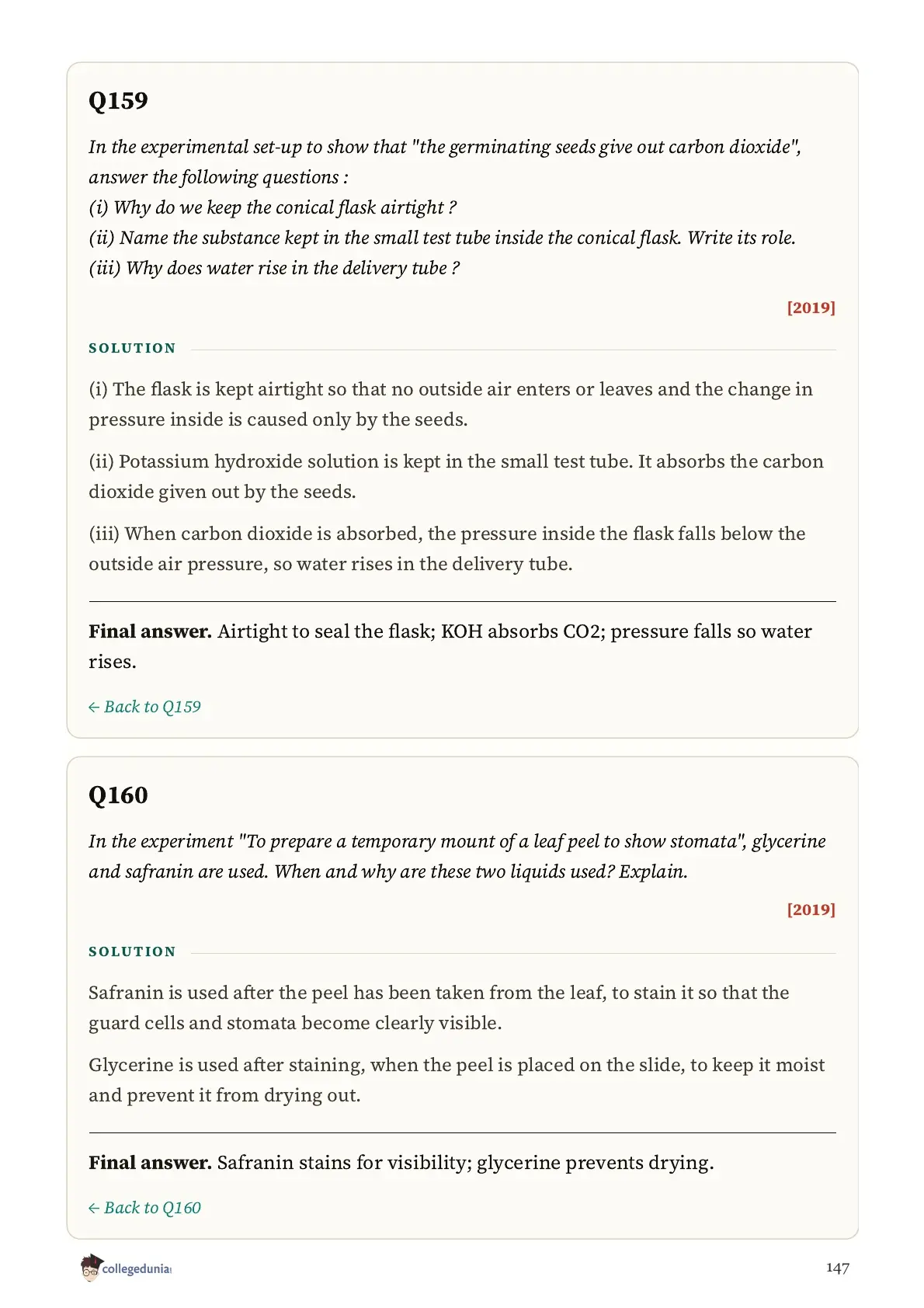
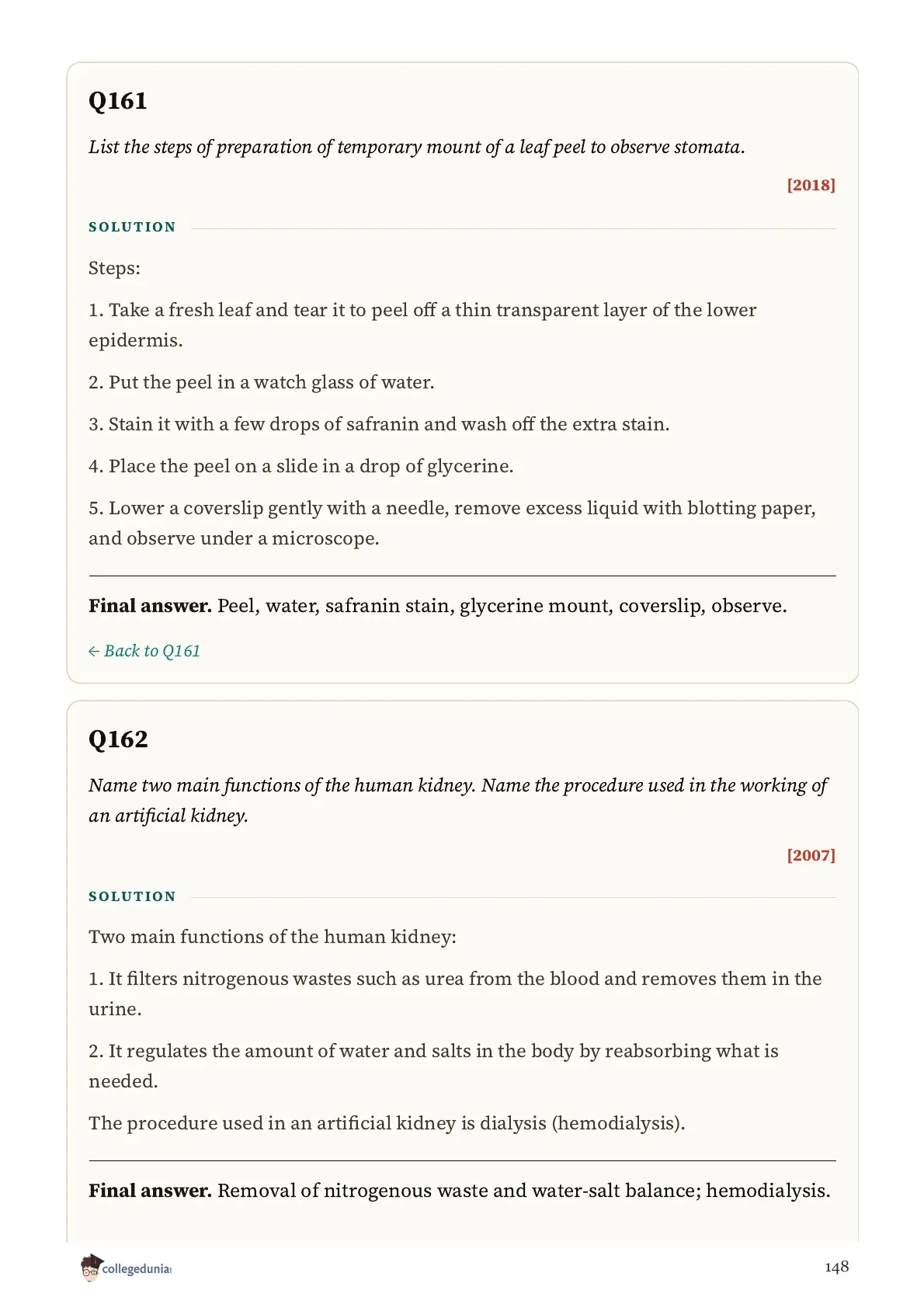
The chapter is a tour of the human body and the leaf, and the questions follow it. Transport leads: 47 questions touch the heart, blood vessels, lymph or double circulation, from the 2024 question on which organisms have a three-chambered heart to the 2008 five-marker asking you to draw a sectional view of the human heart and label the aorta, right ventricle and pulmonary artery. Nutrition and photosynthesis come to 44, and 20 of them involve stomata, for example the 2026 MCQ on which leaf structure handles gaseous exchange.
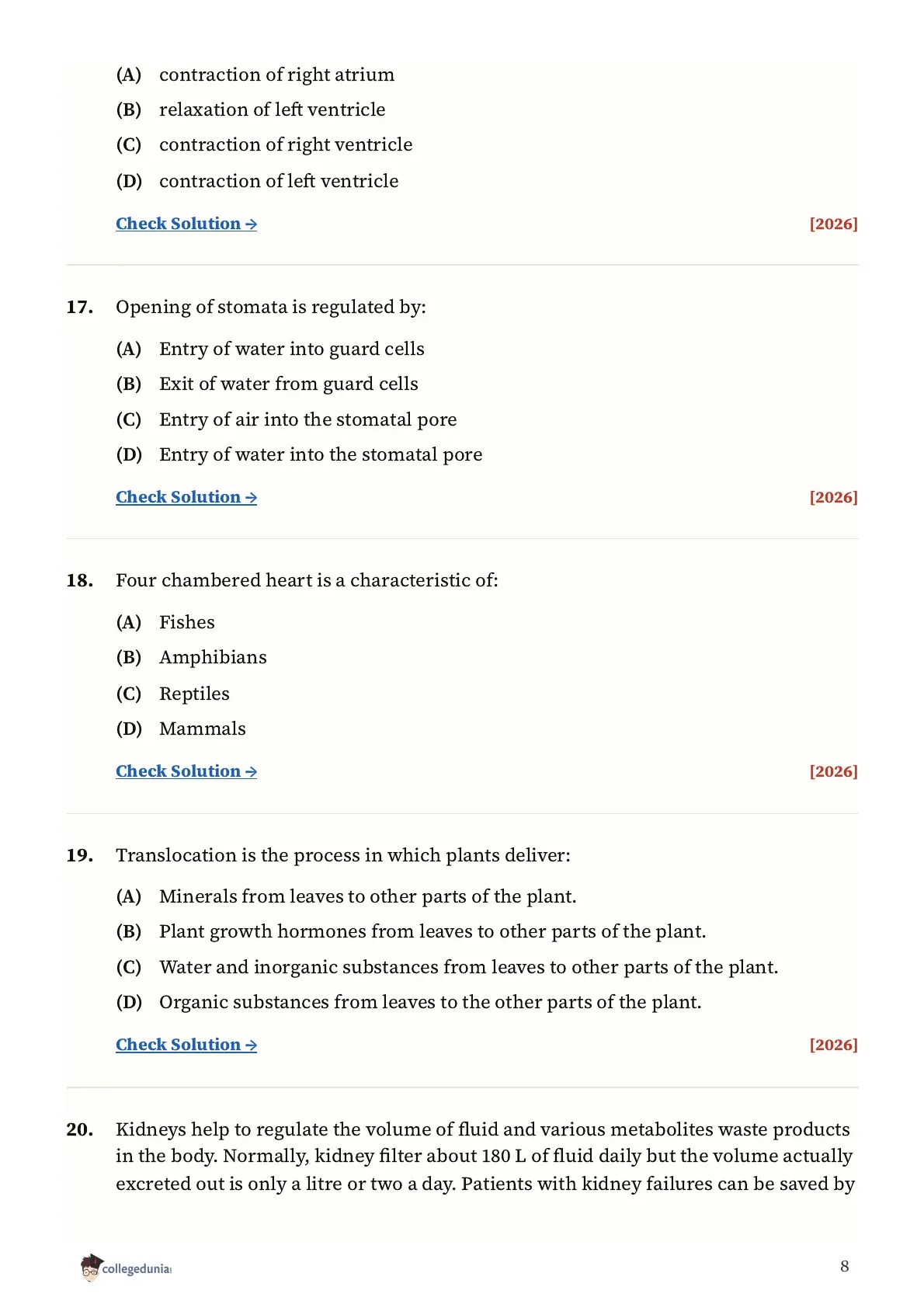
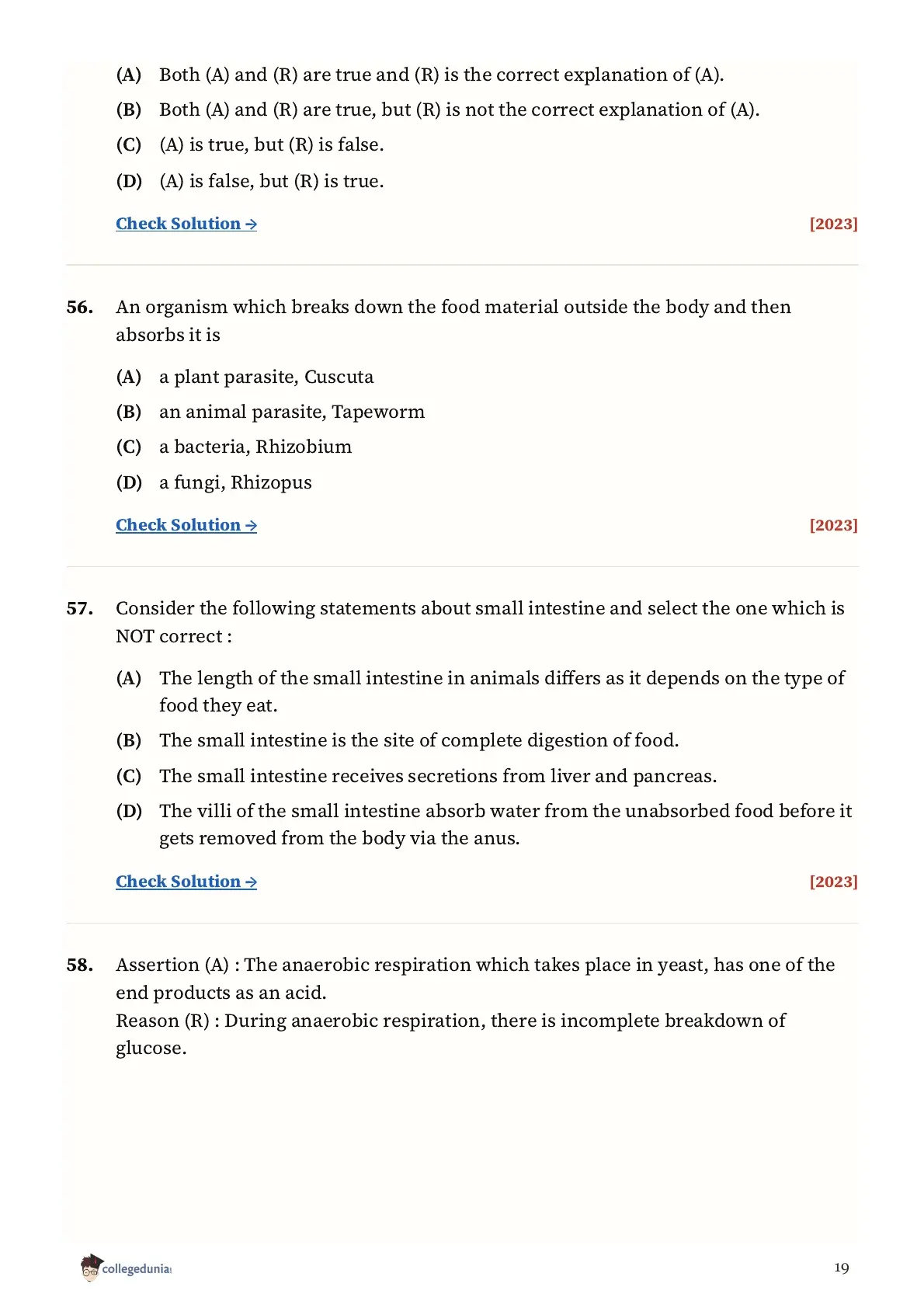
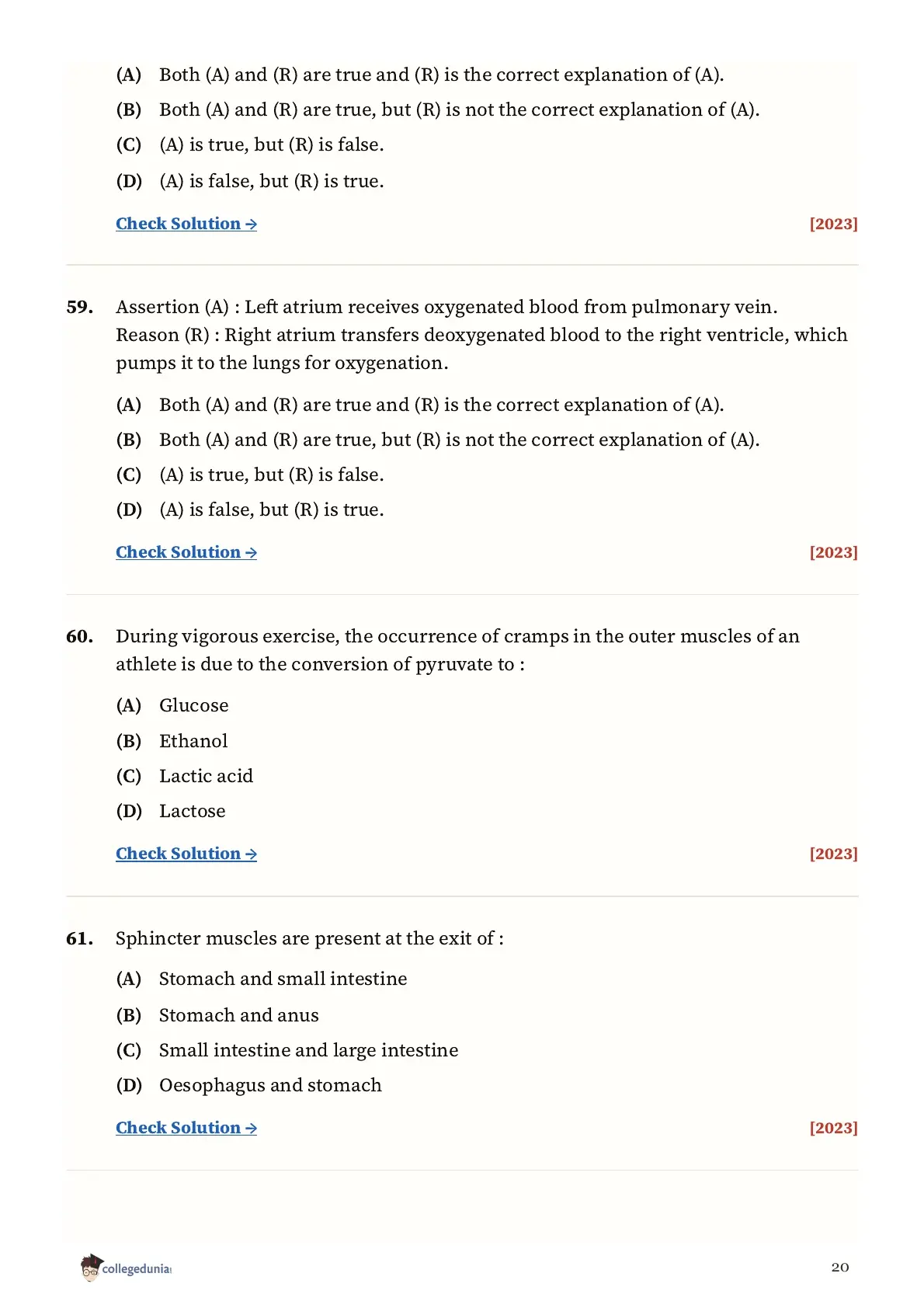
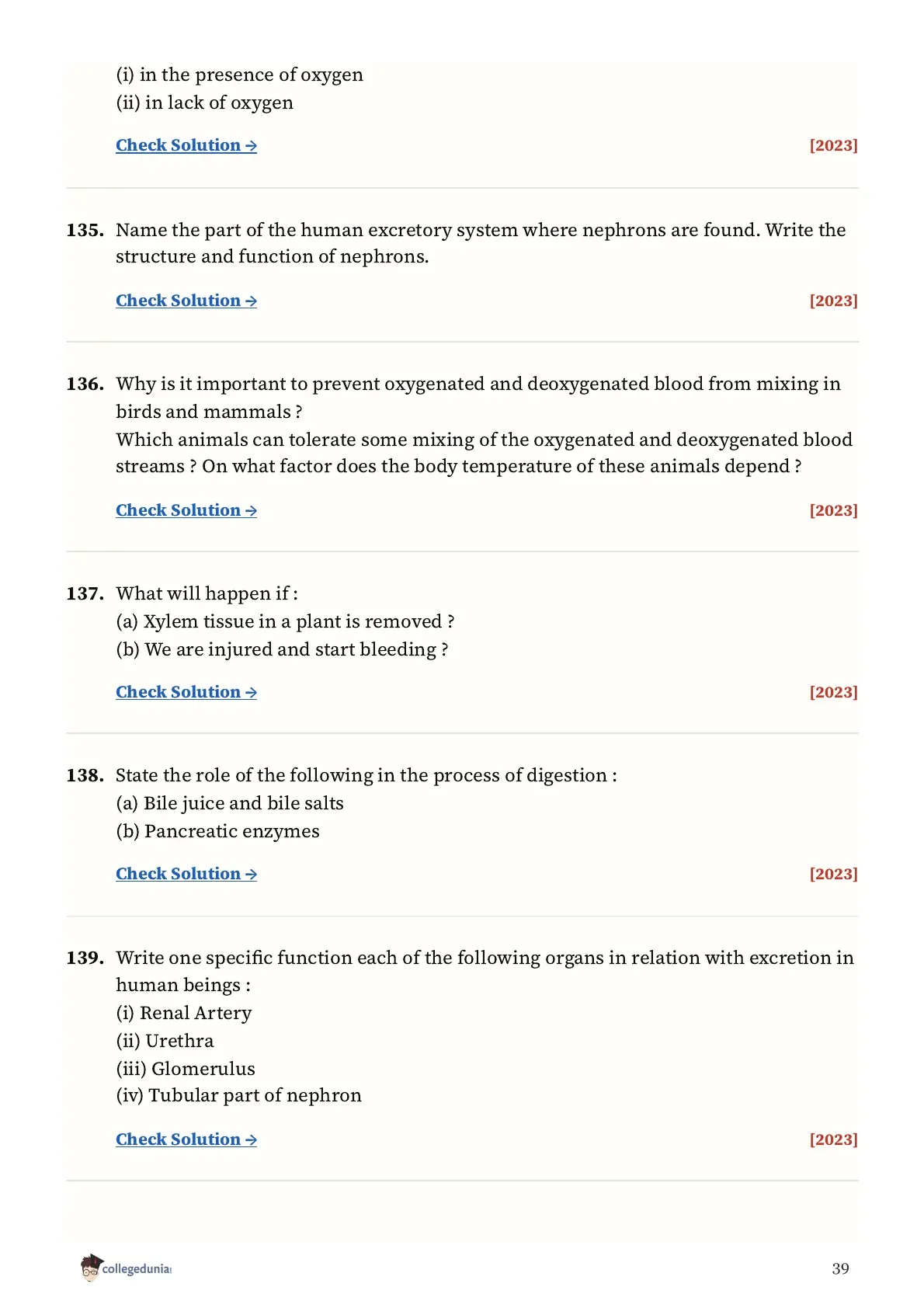
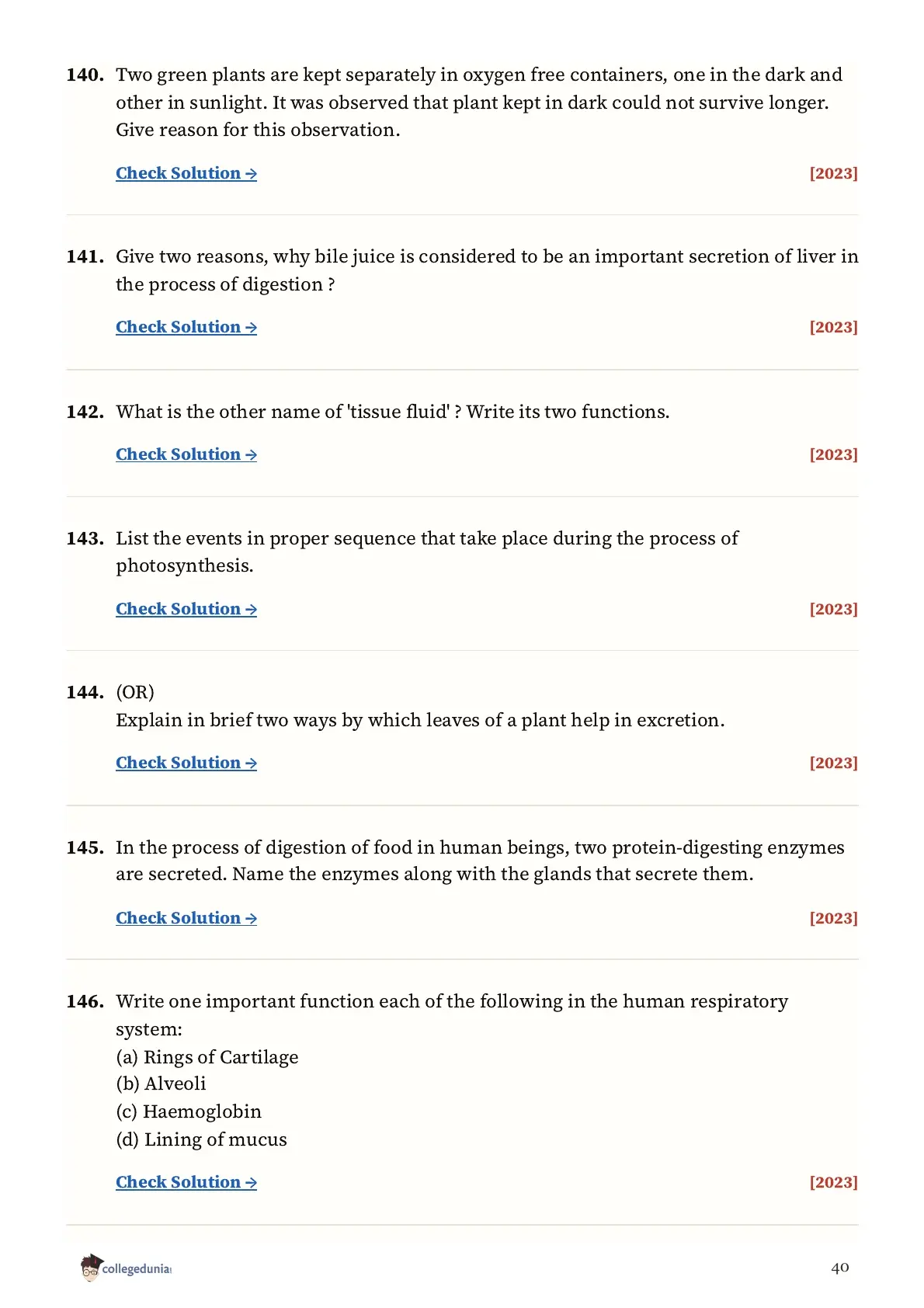
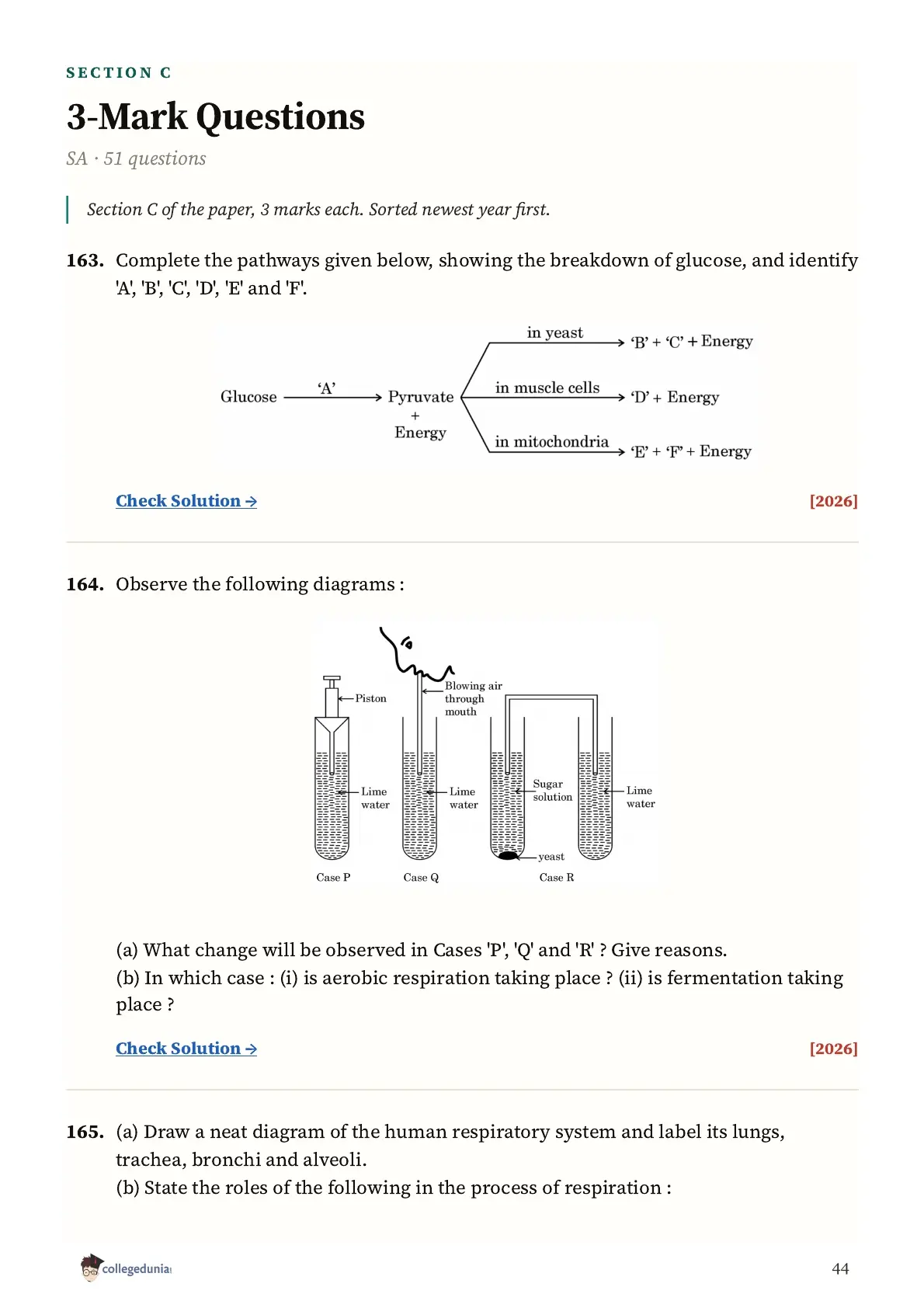
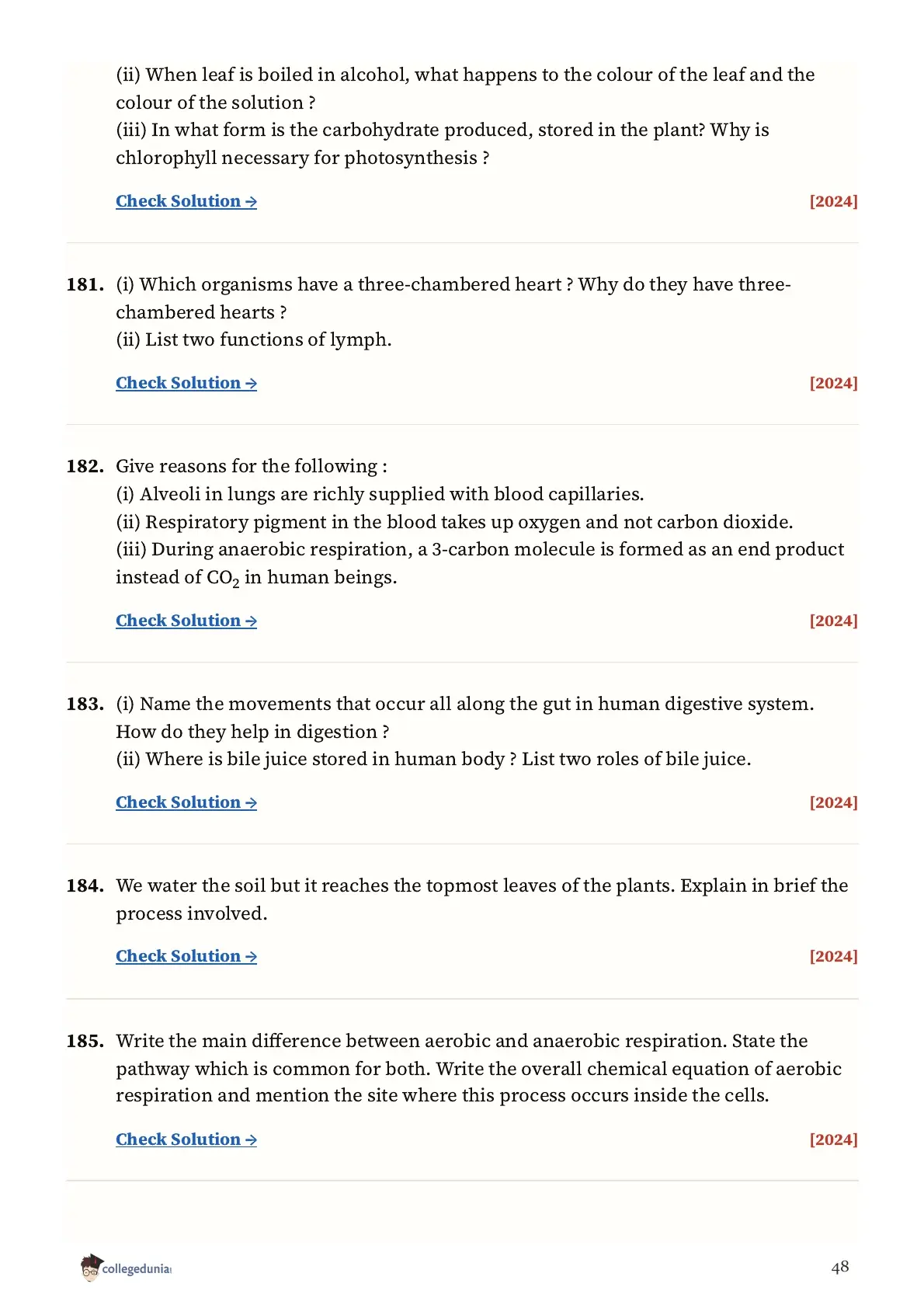
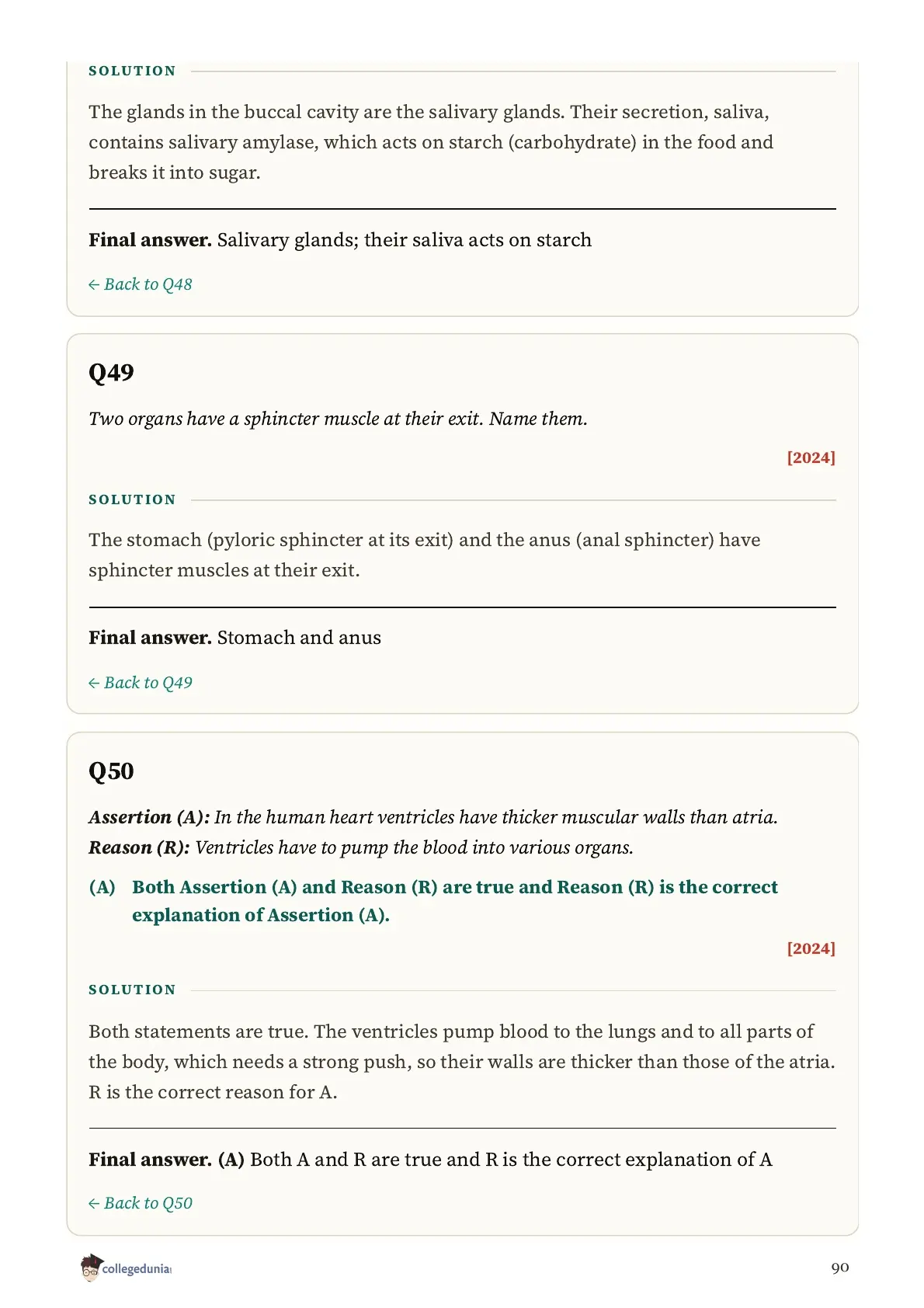
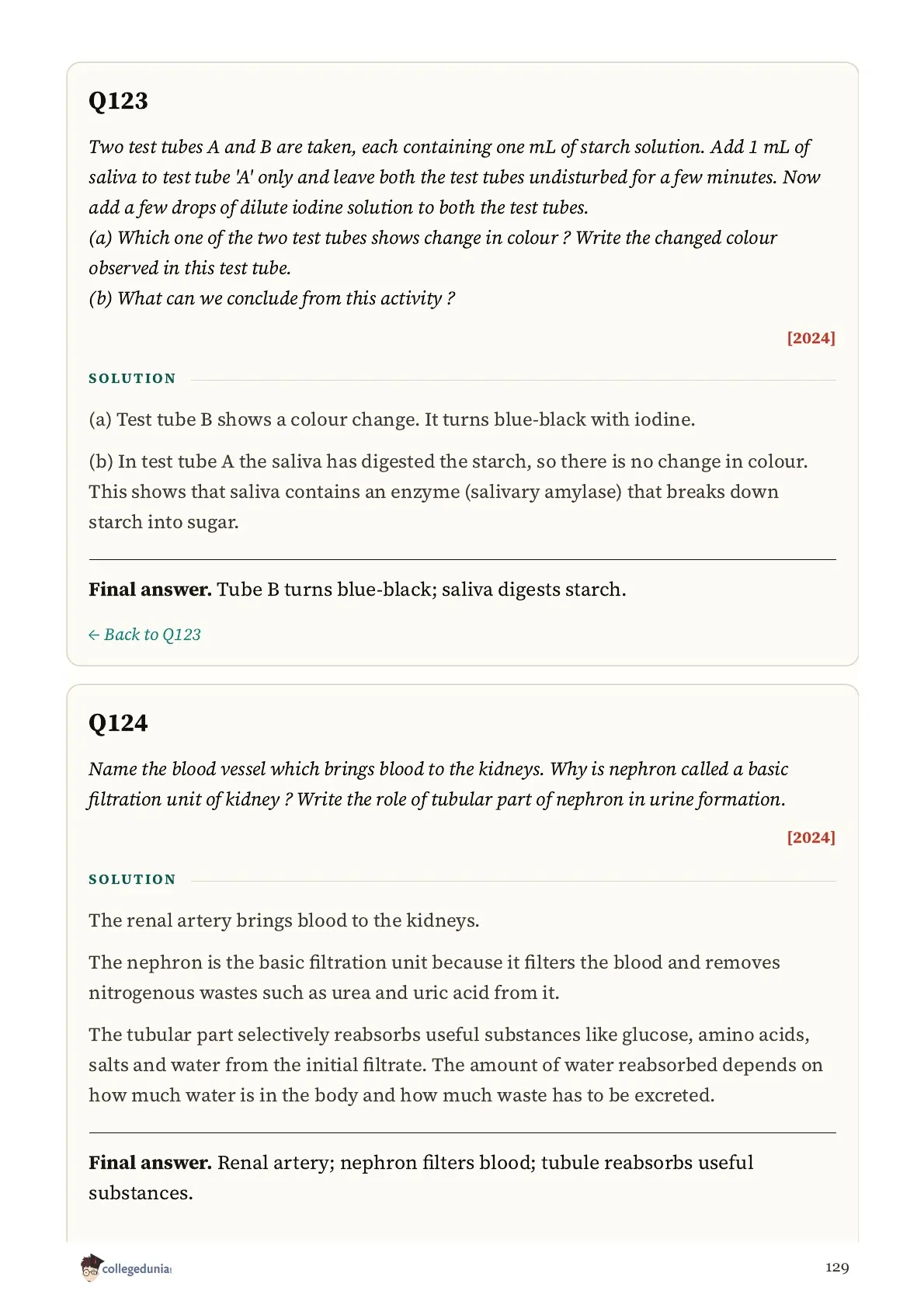
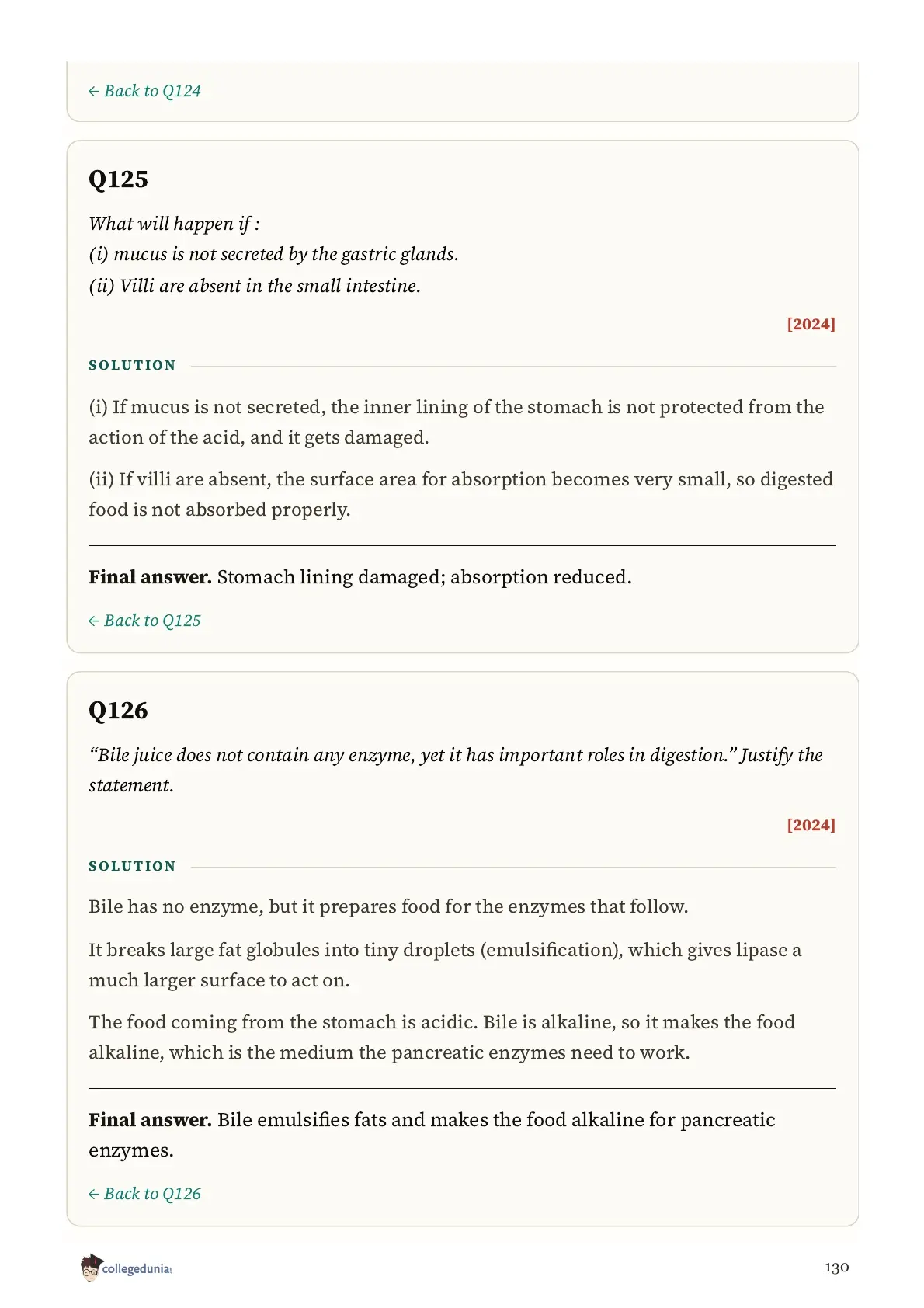
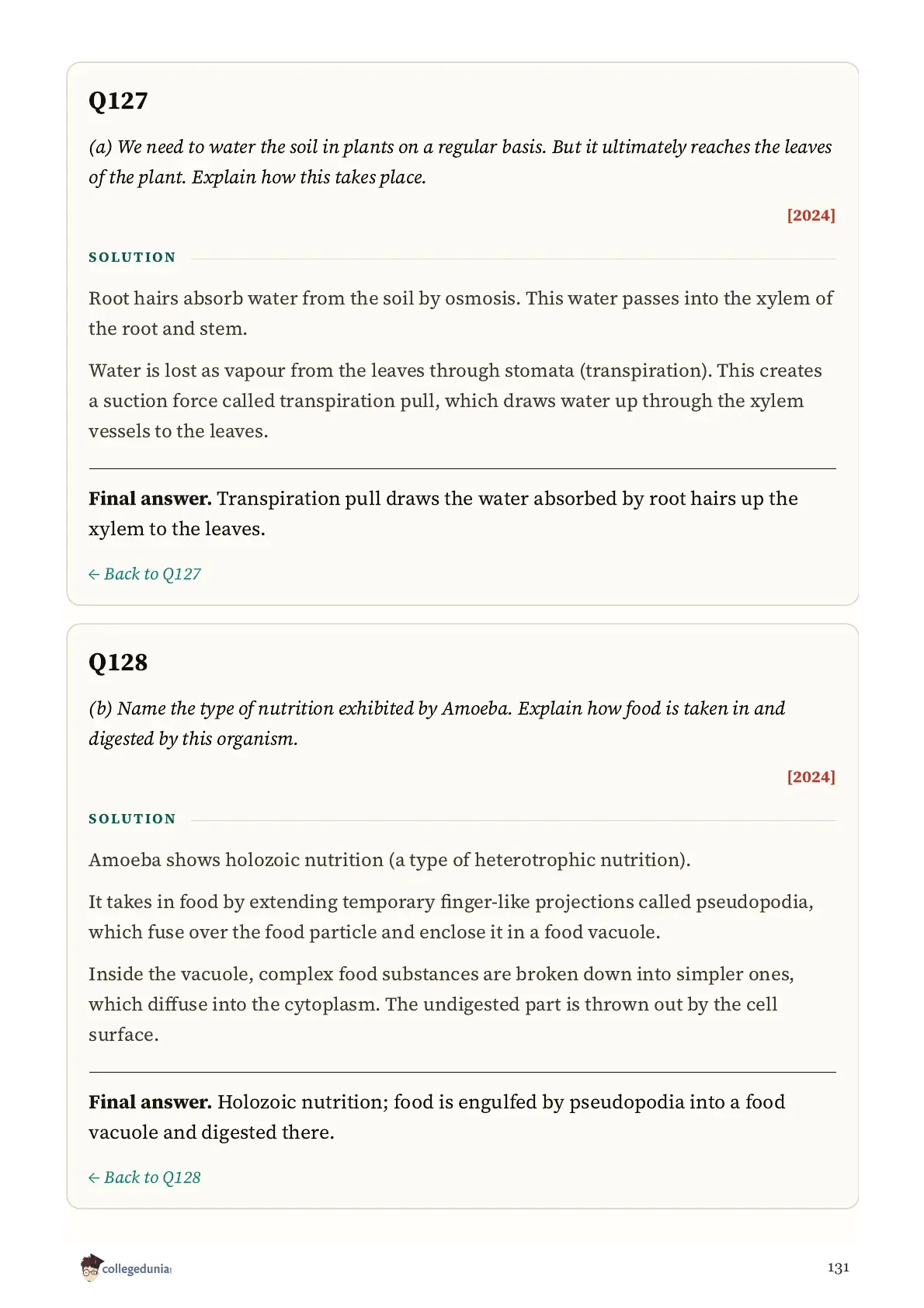
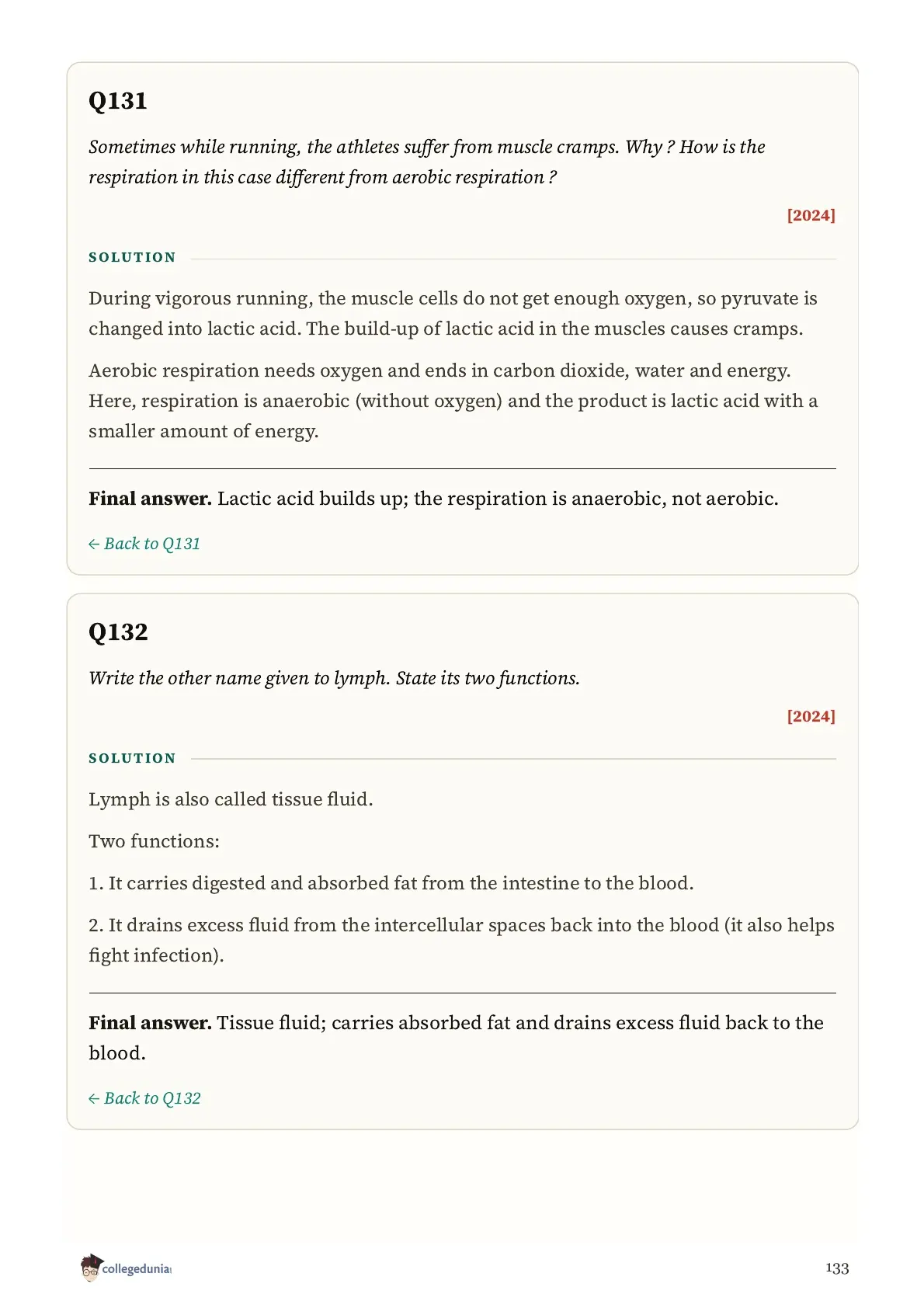
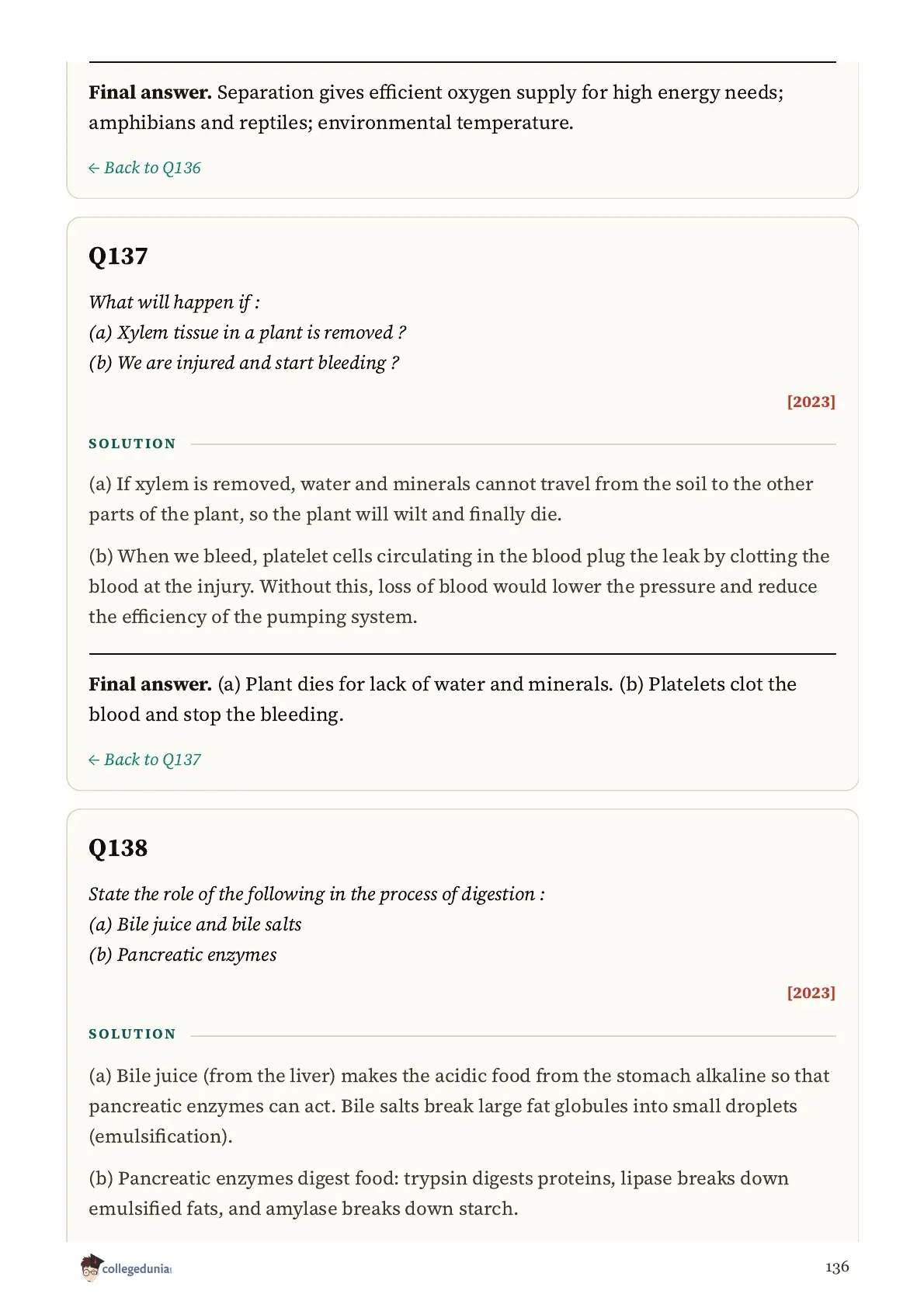
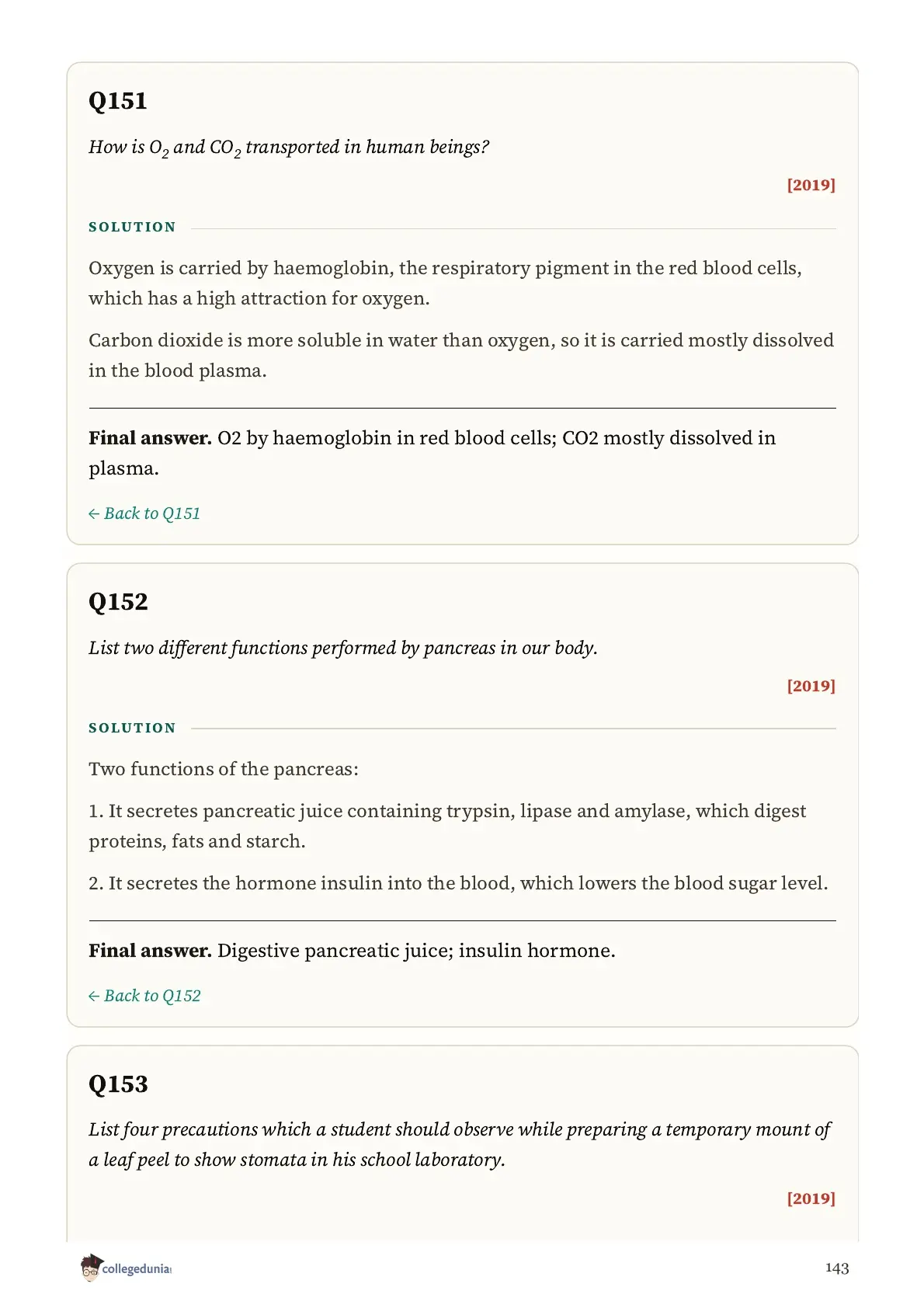
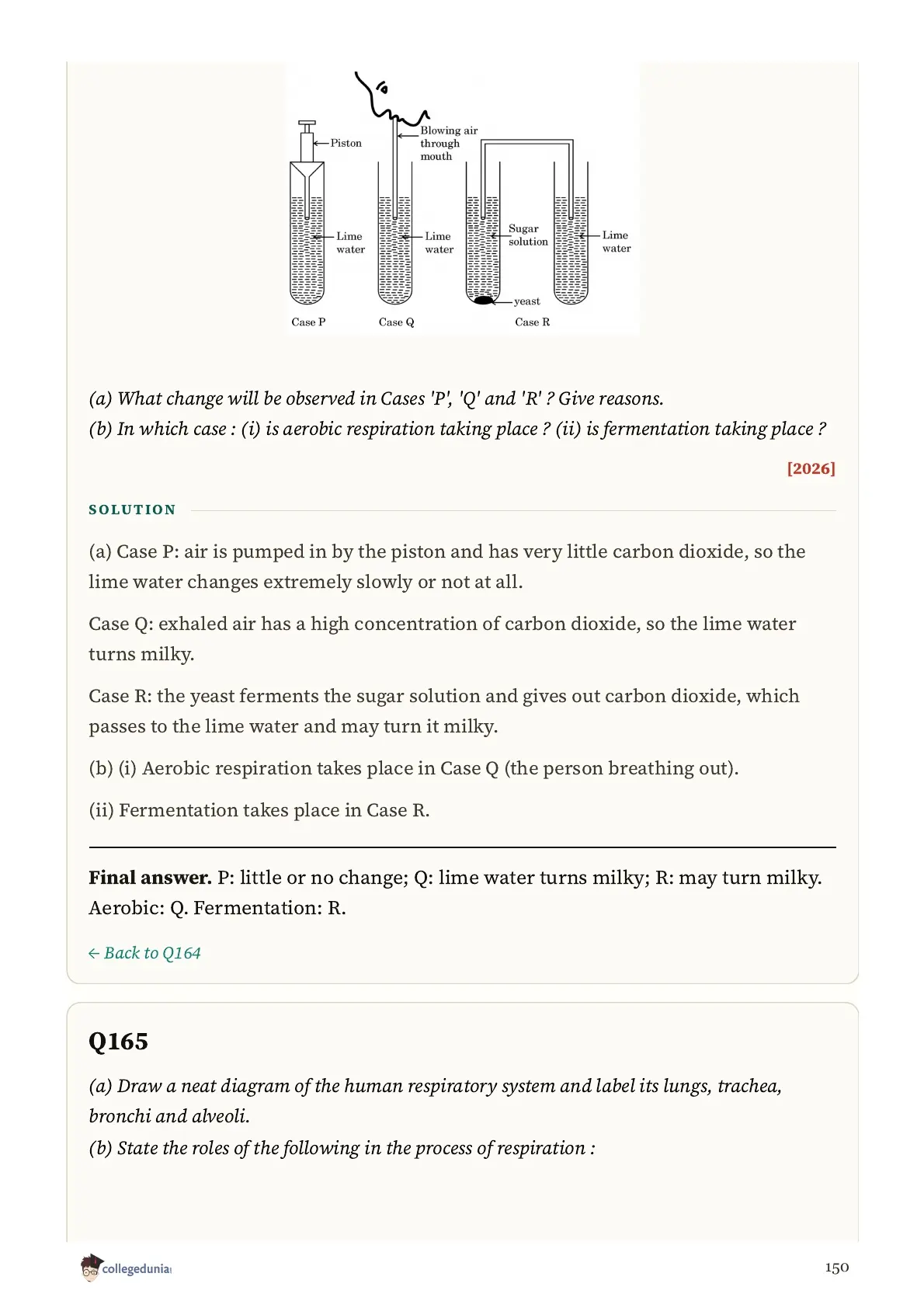
Breathing and gas exchange account for 43 questions, with 6 on alveoli and 15 on aerobic and anaerobic respiration, ATP or fermentation. The 2024 question on why athletes get muscle cramps while running, and how that respiration differs from the aerobic kind, is typical. Digestion has 38 questions (10 on bile, 4 on villi), led by enzyme questions such as the 2026 MCQ on pancreatic juice.
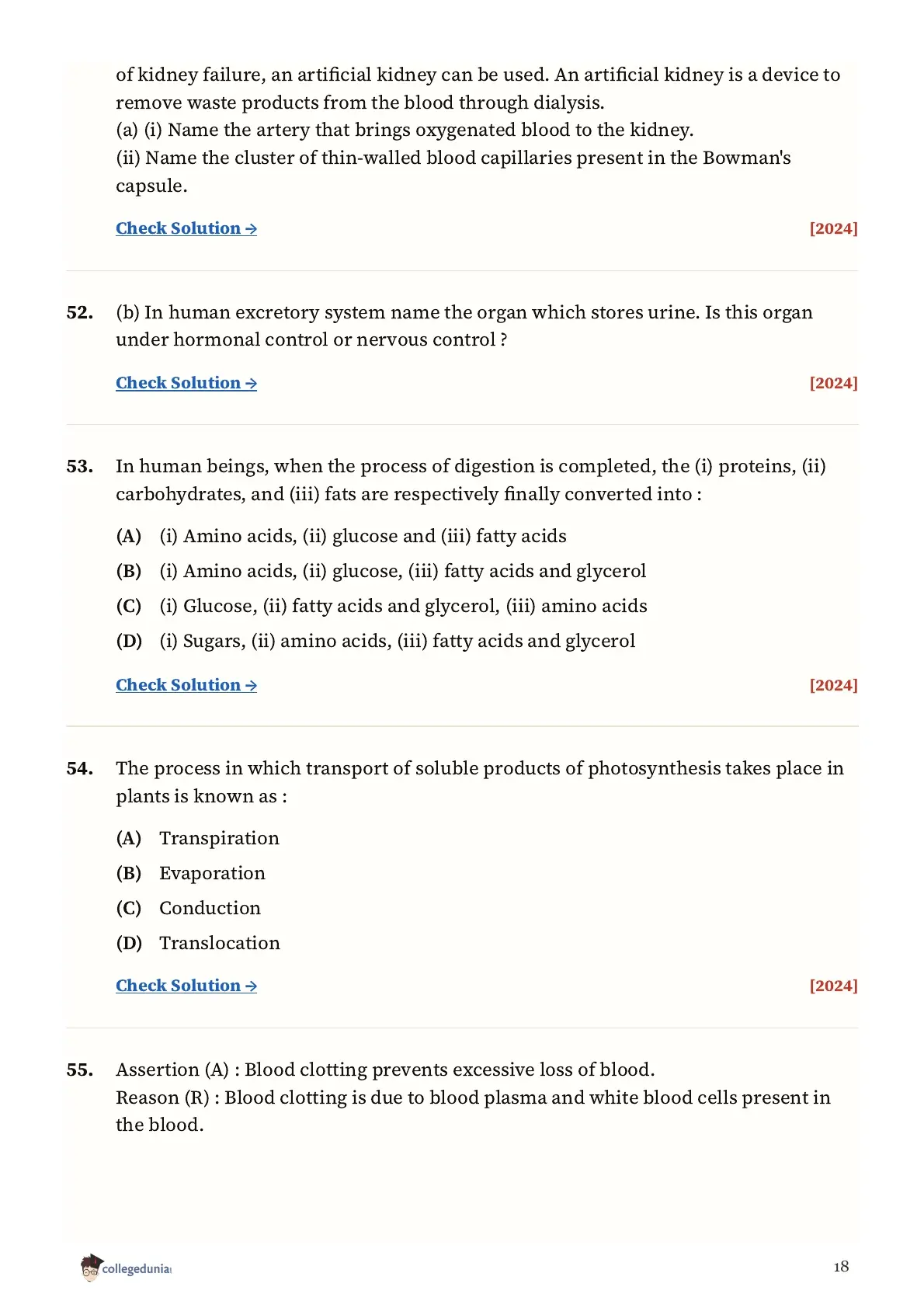
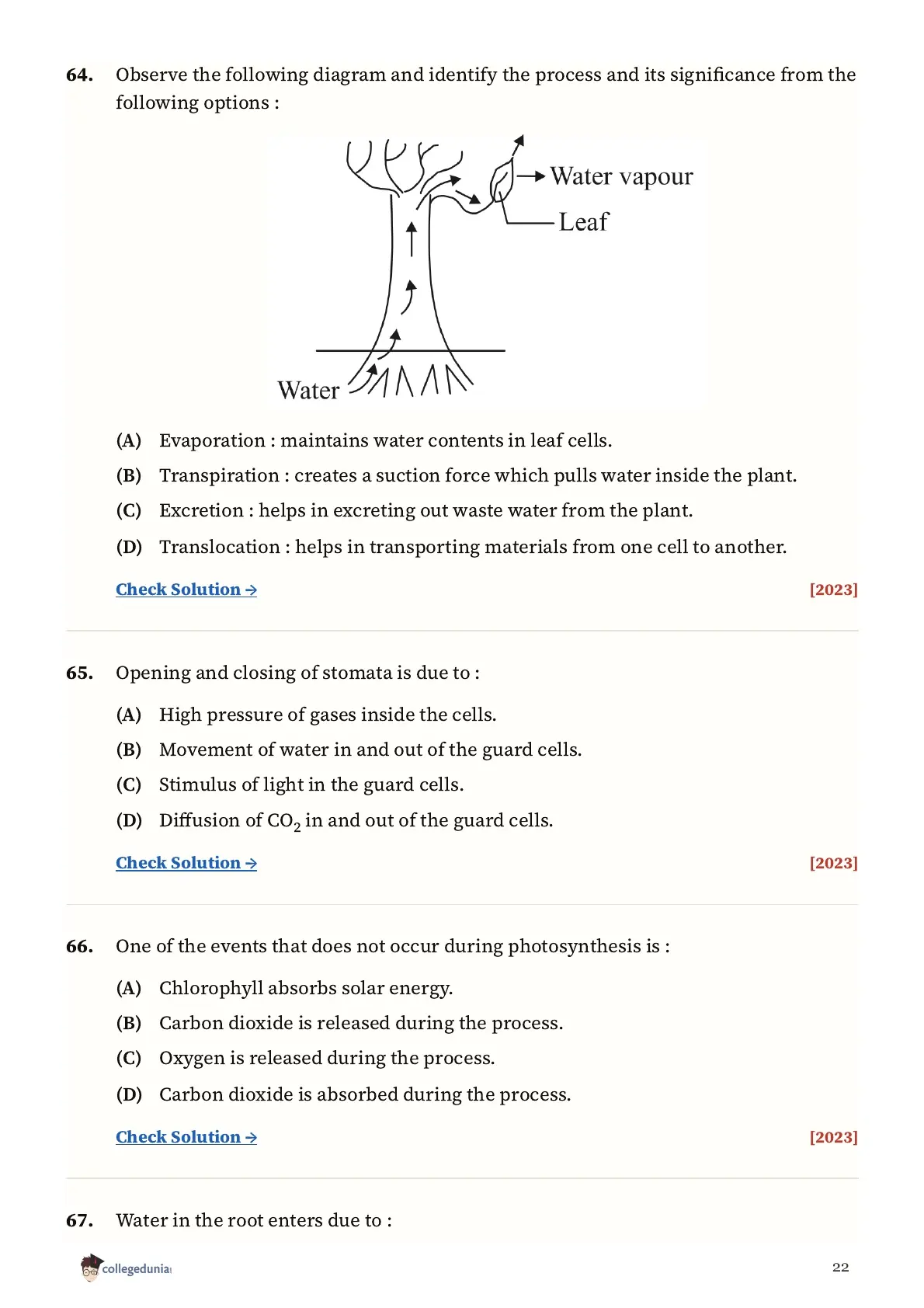
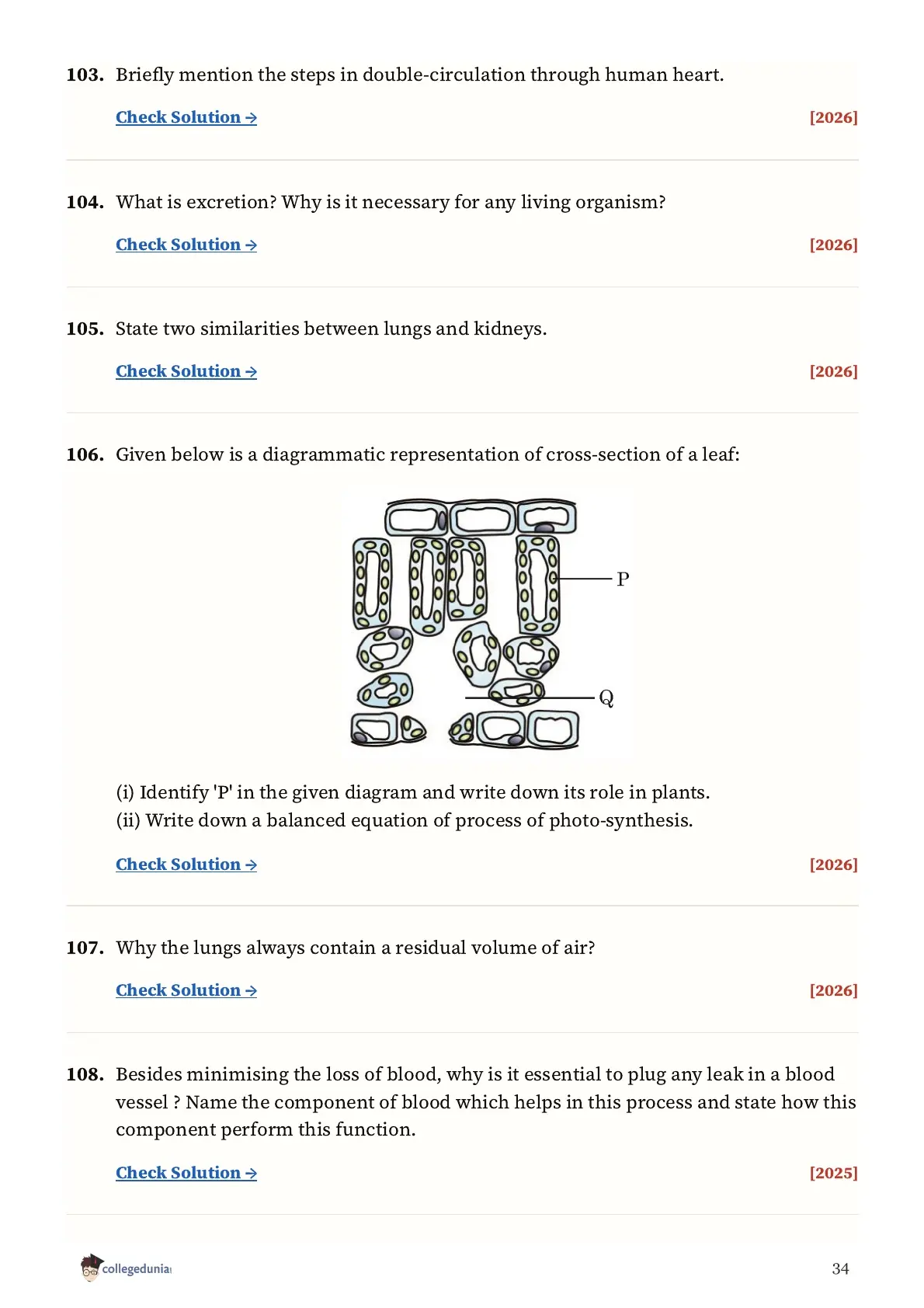
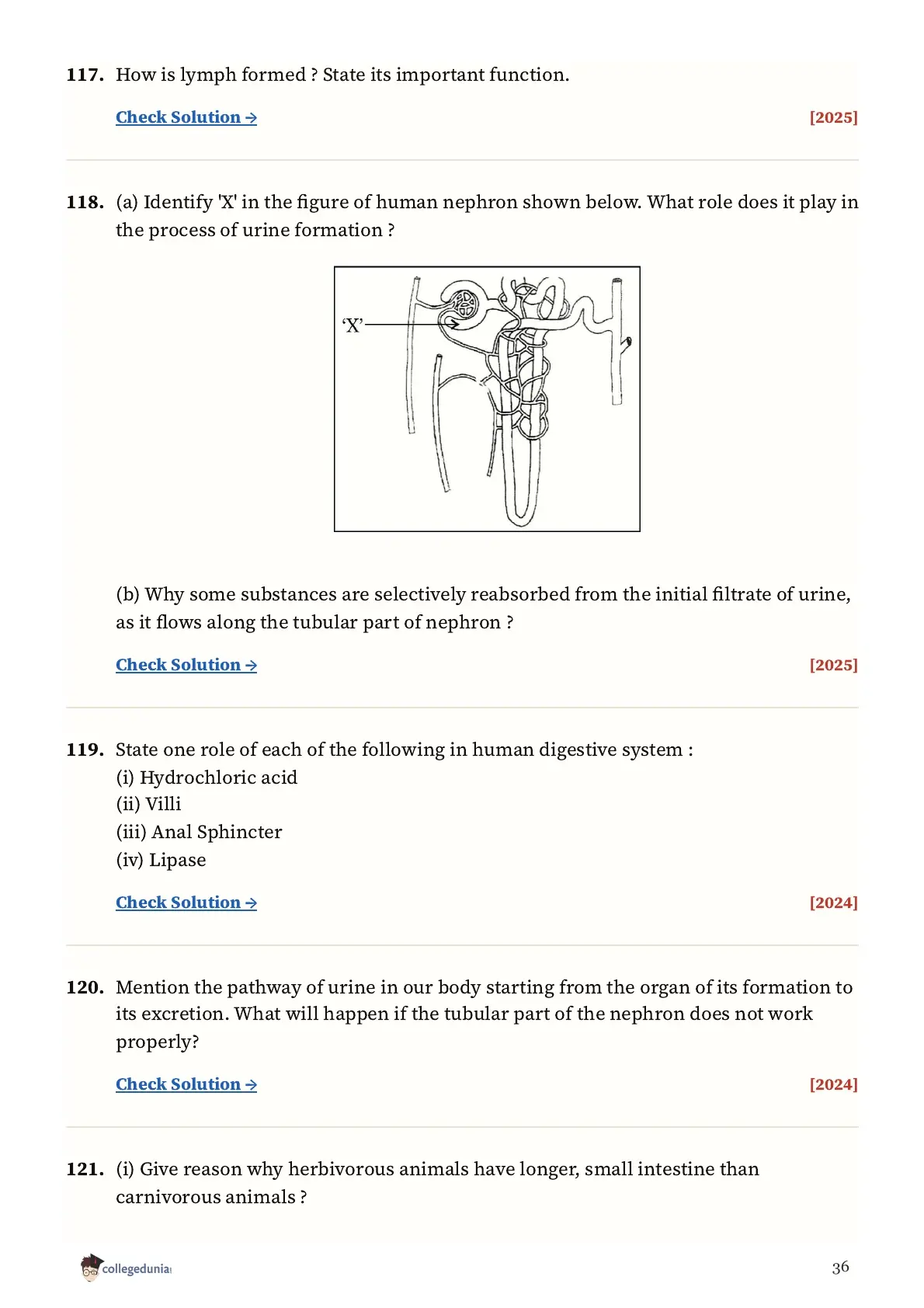
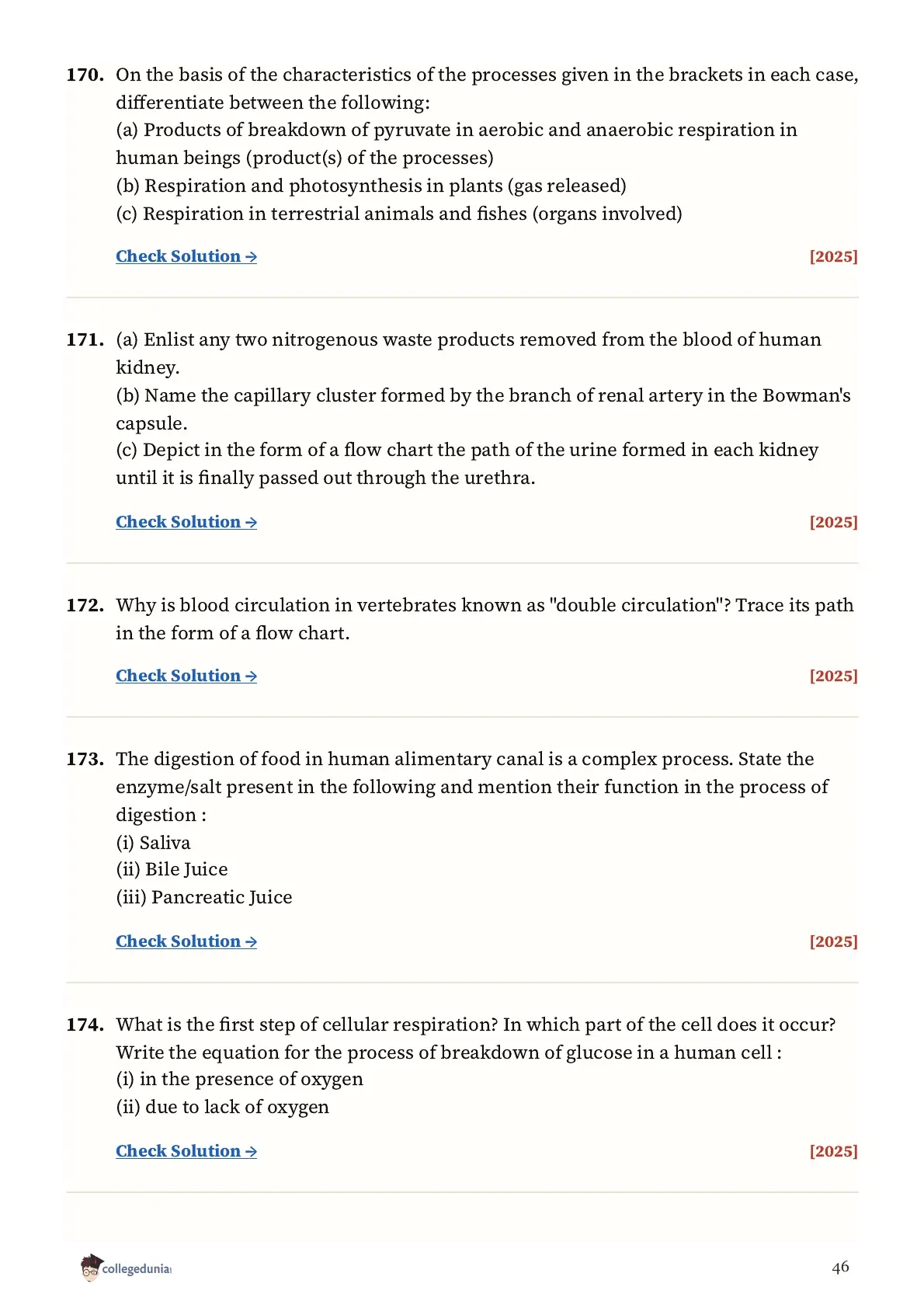
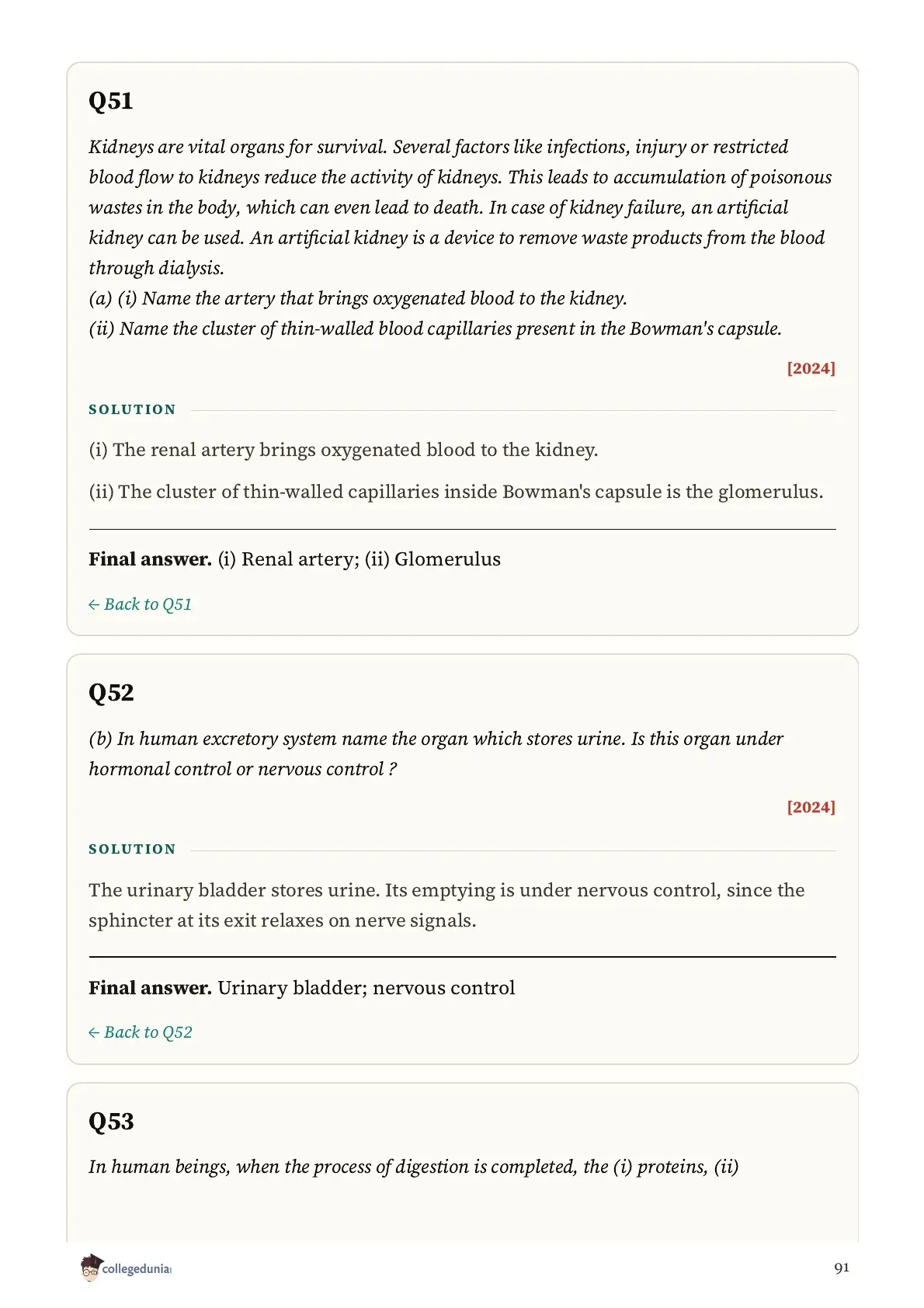
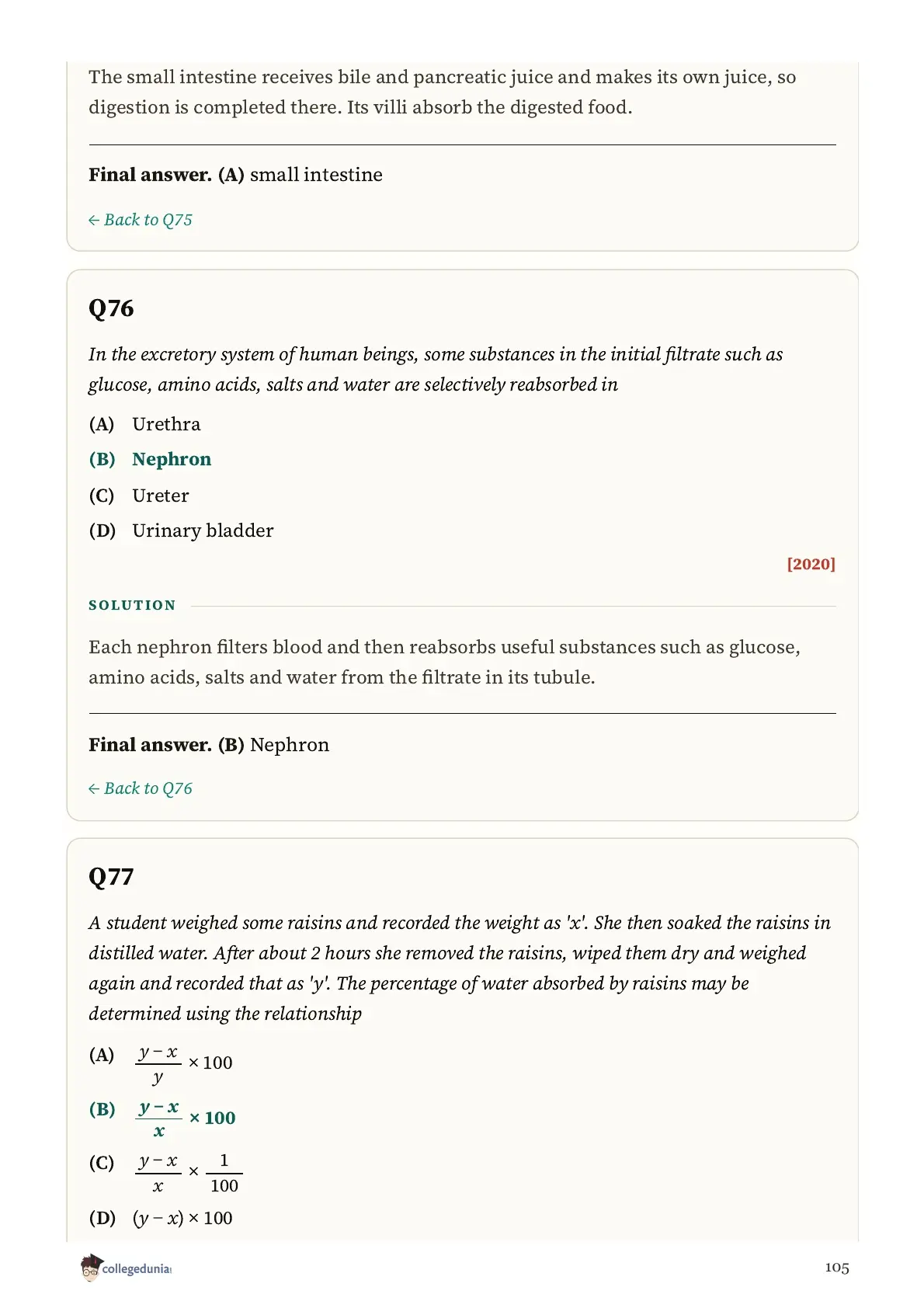
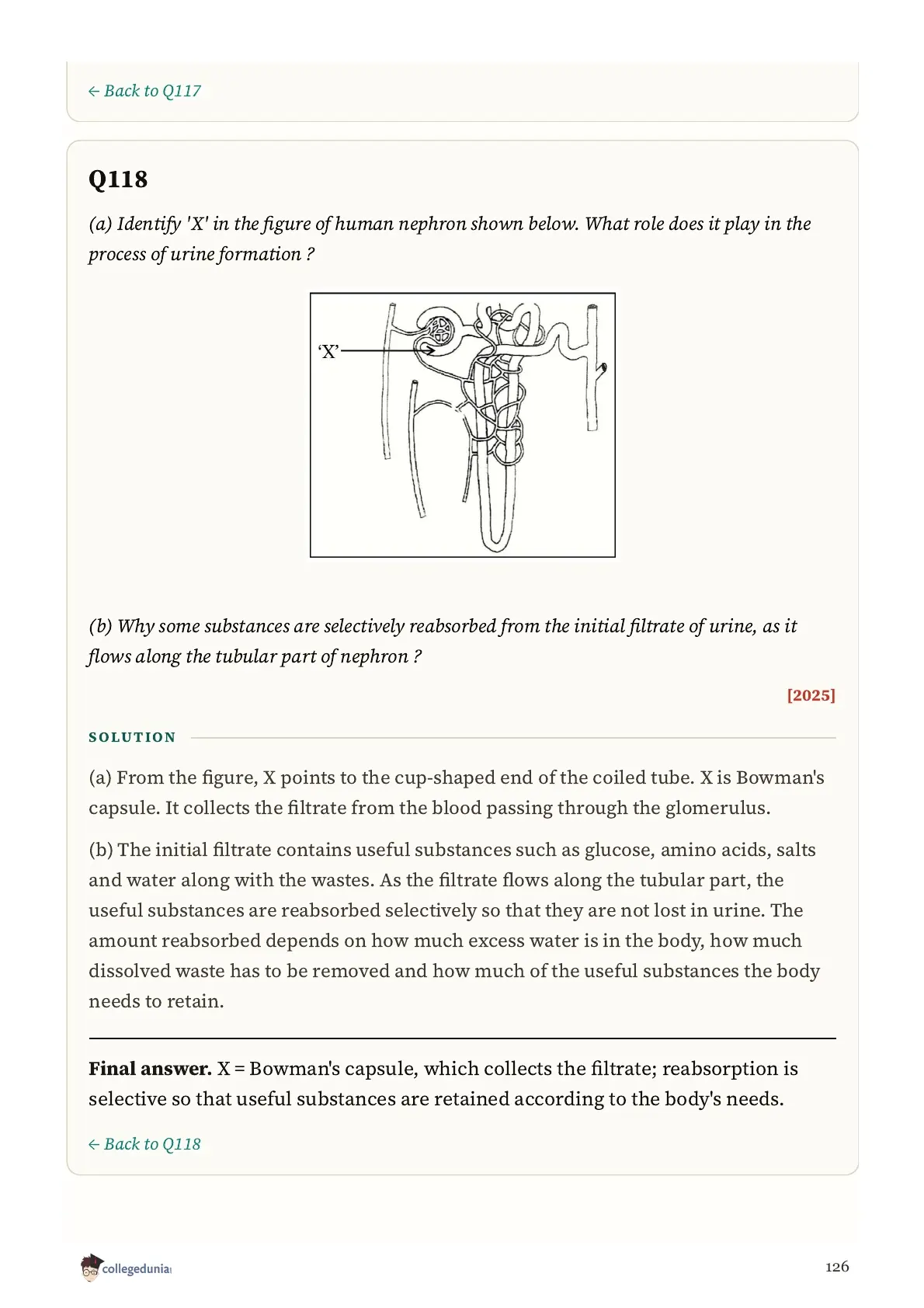
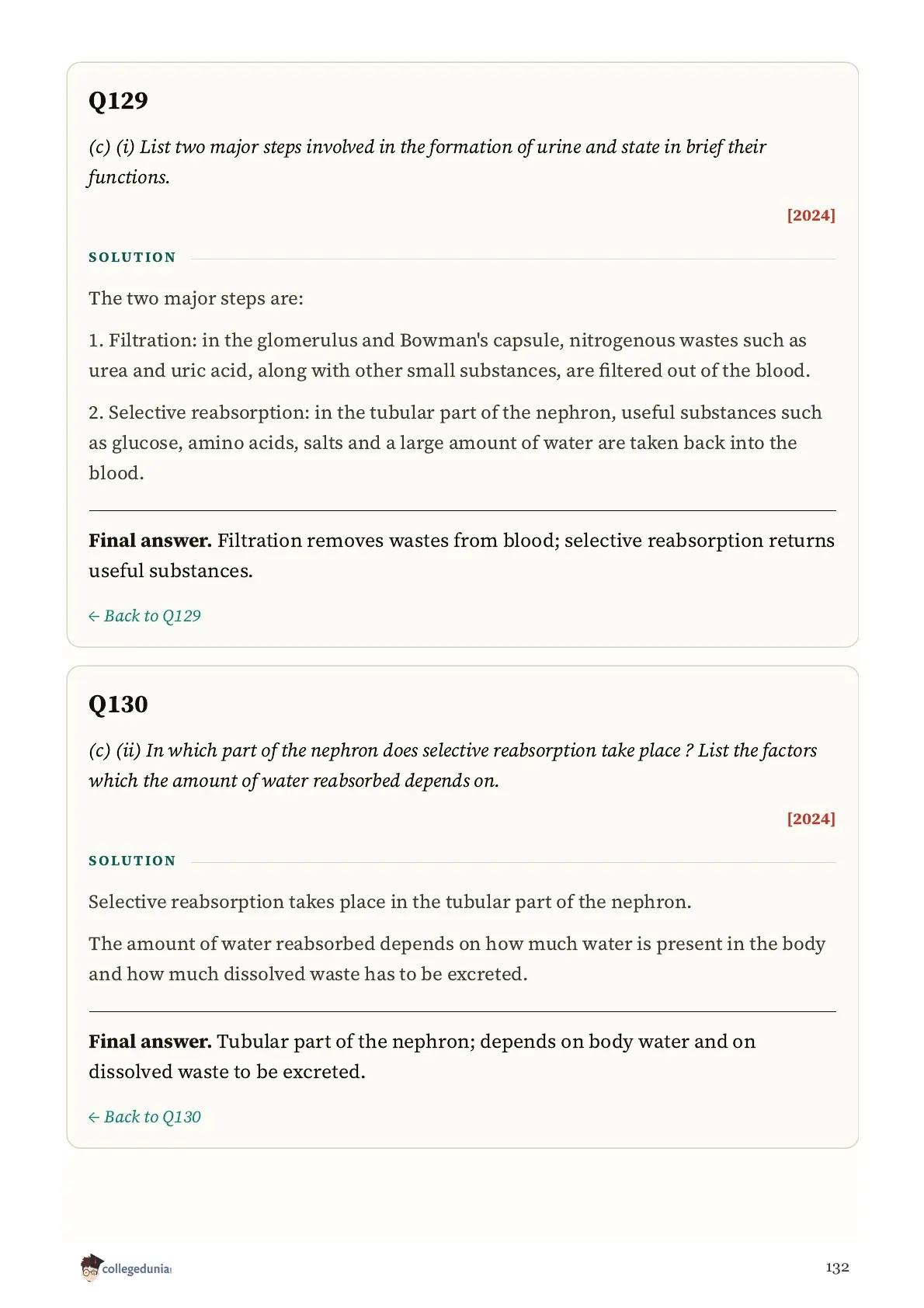
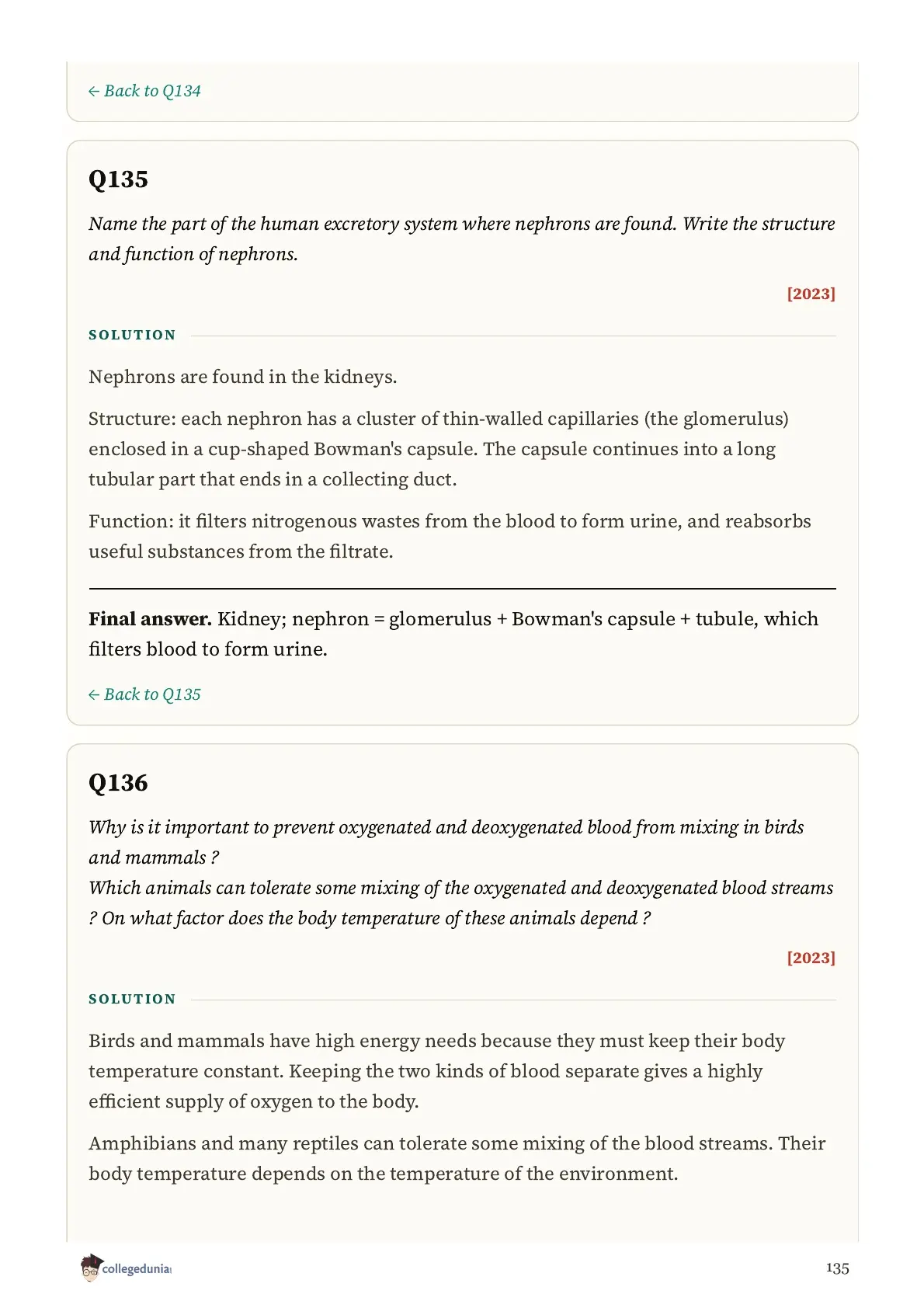
Excretion adds 34 questions, 9 of them on the nephron. Ten of the 26 five-mark answers belong to it, as in the 2020 question asking for the structure and function of the basic filtering unit of the kidney, and the 2025 question on nitrogenous wastes, the capillary cluster in Bowman's capsule and a flow chart of urine formation. Transport in plants is the smallest block with 12 questions on xylem, phloem, translocation or transpiration.
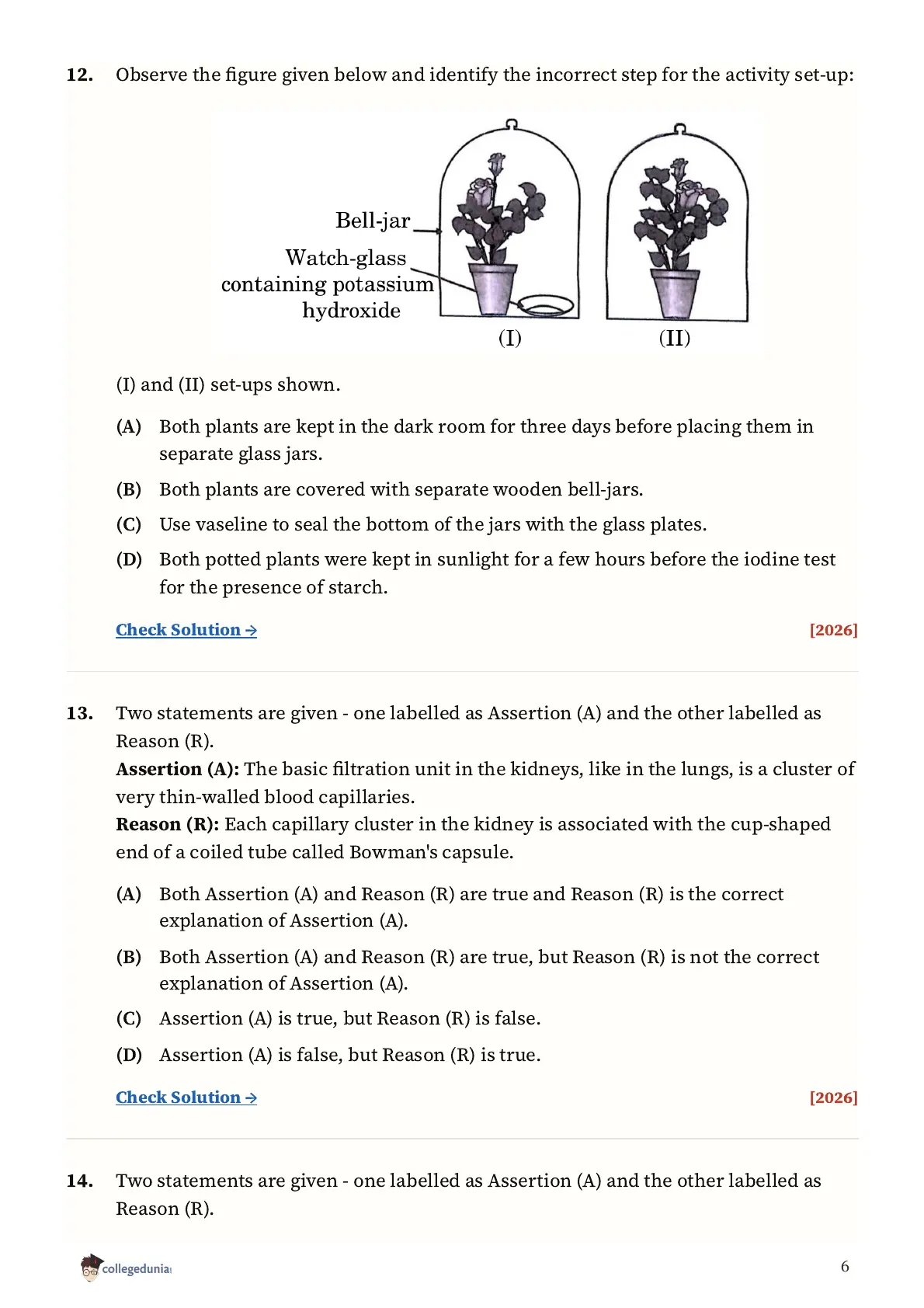
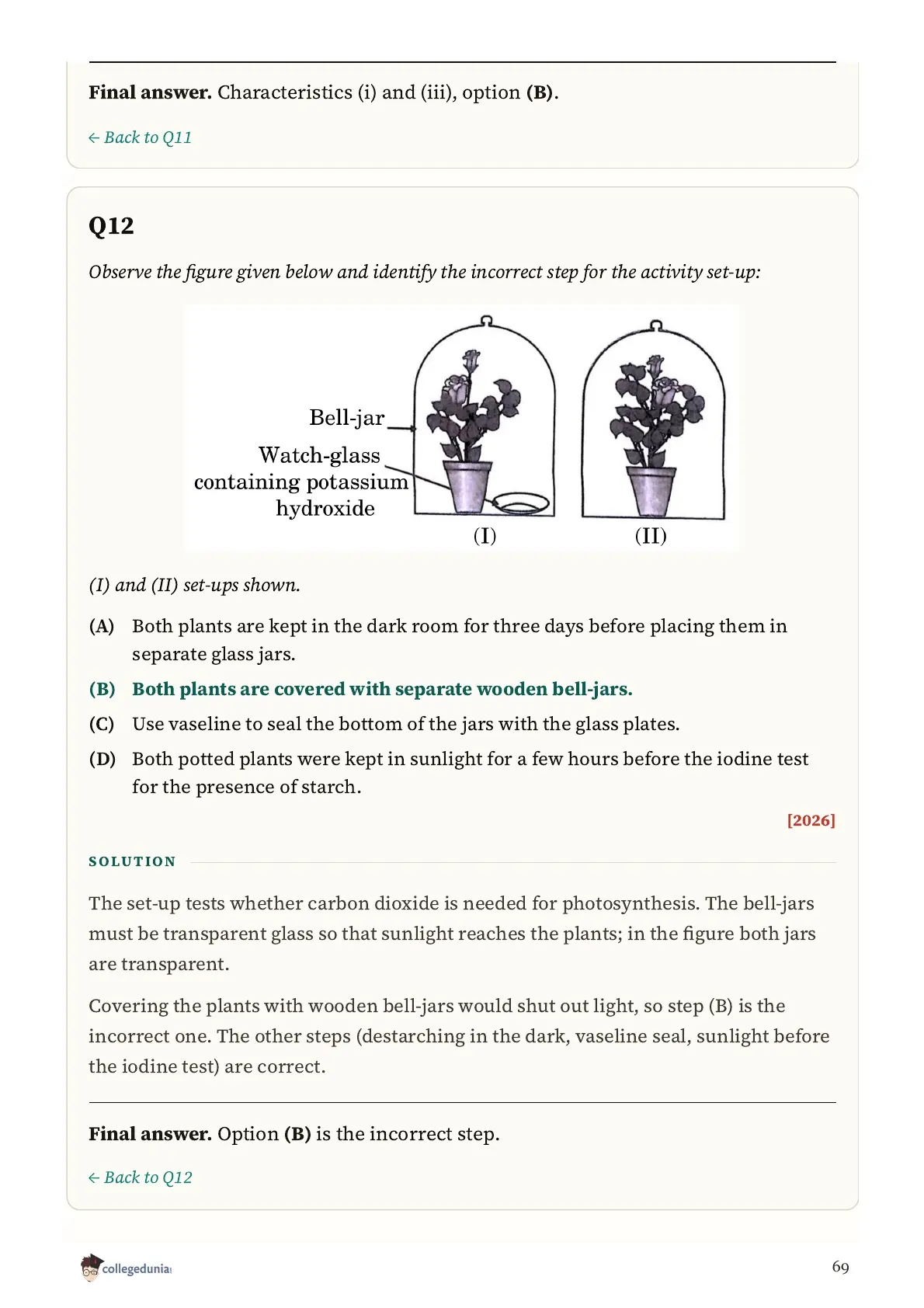
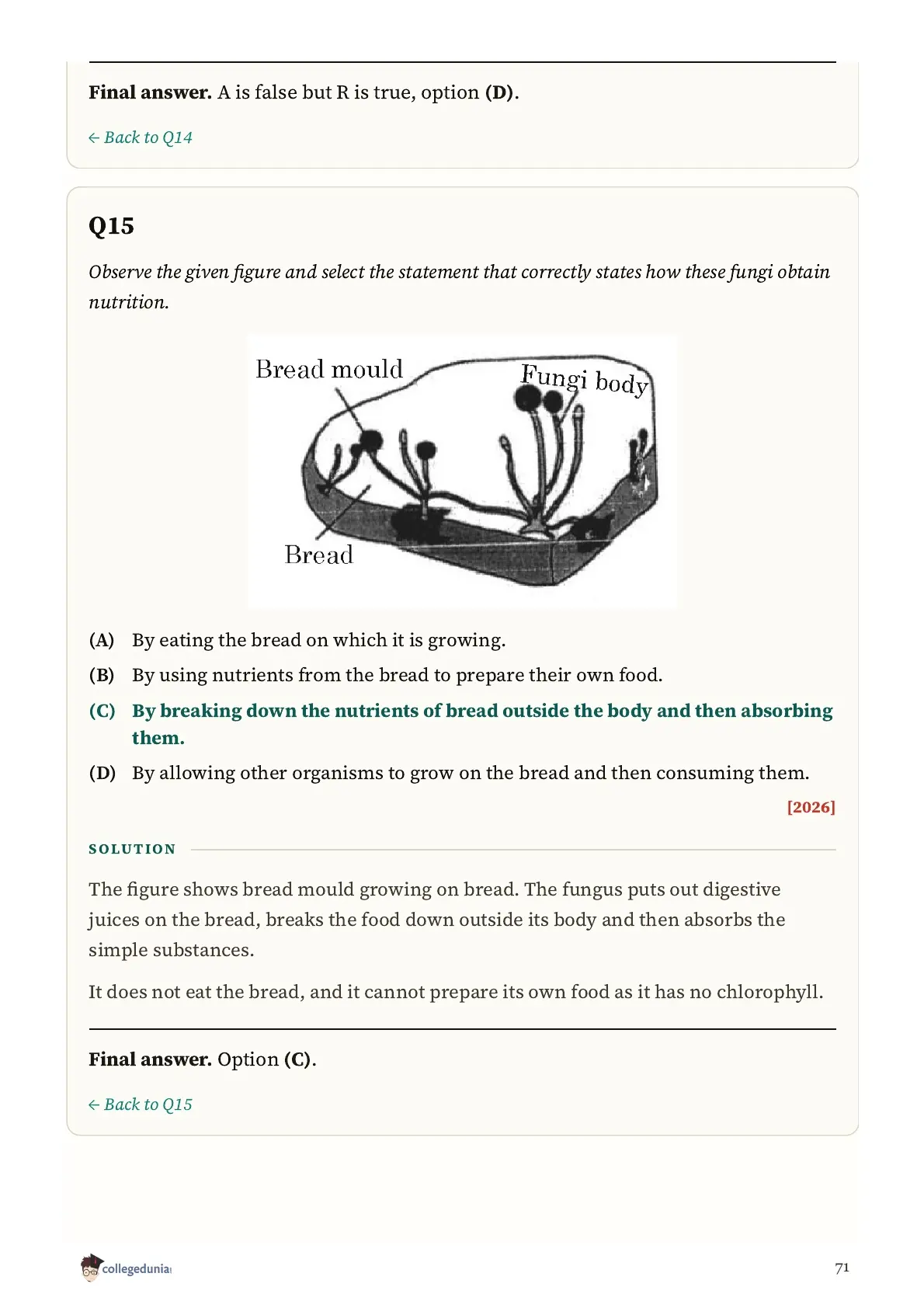
By type, 15 are assertion-reason items, 54 ask you to explain or justify, 20 ask for a drawing or labelling and 25 refer to an activity or experiment. Counts come from keyword matches over the question text, so a question that names two things is counted under both.
Source: Sunlike study Science
How to Approach the Set
Start with the 84 MCQs and assertion-reason items and the 12 one-line 1-mark answers, then the 66 two-mark questions, which usually need one definition or one reason. Move to the 51 three-mark questions and the 2 case studies. Keep the 26 five-mark answers for last, because many ask for a labelled diagram of the alimentary canal, heart or nephron along with the functions. Draw each of those three diagrams from memory until the labels come without looking. The 2023 to 2026 papers hold 164 of the 241 questions, so practise those closely before the older ones.
Common Mistakes in Life Processes Questions
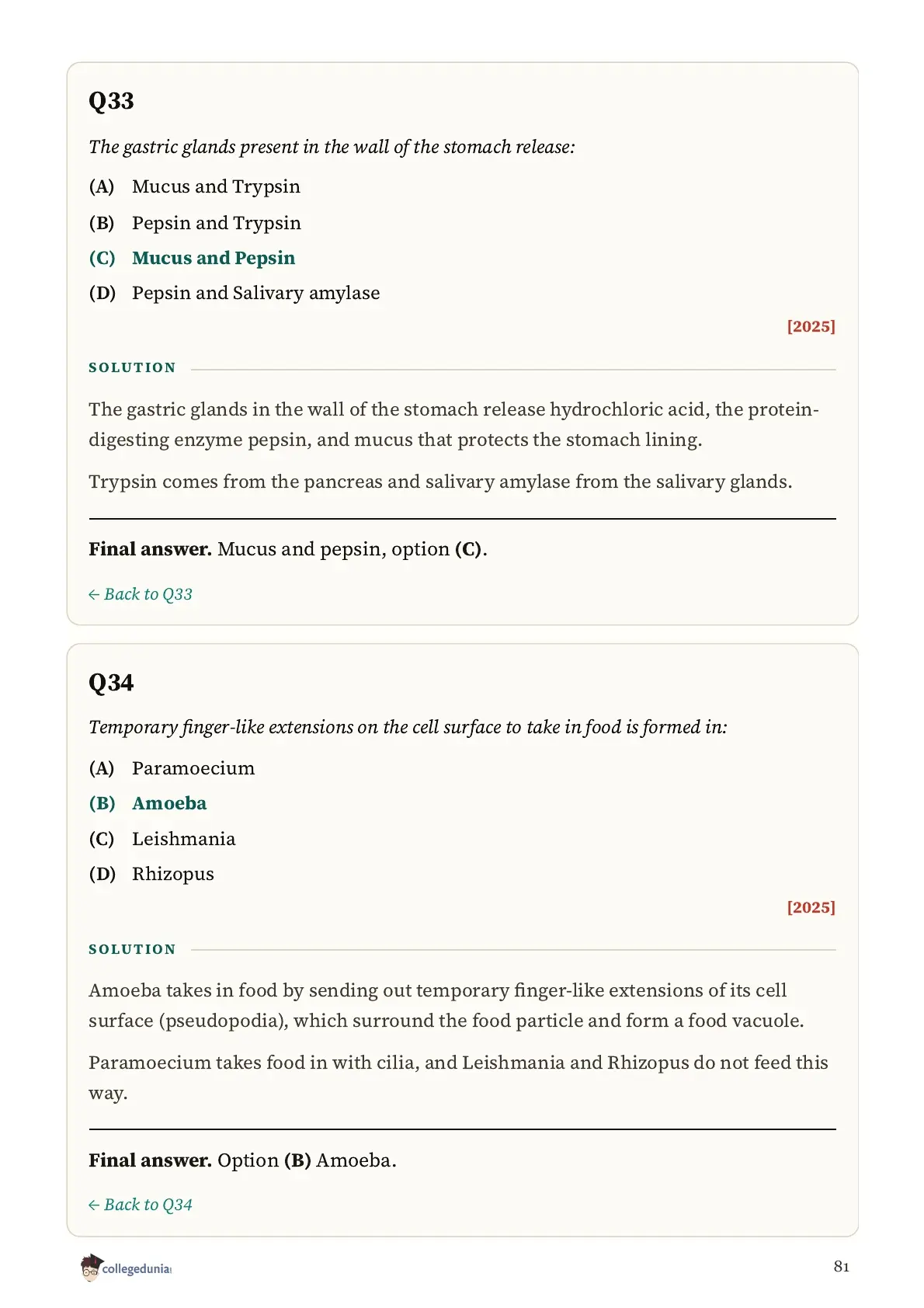
- Swapping the enzymes in the pancreatic juice question. Trypsin digests proteins and lipase digests emulsified fats.
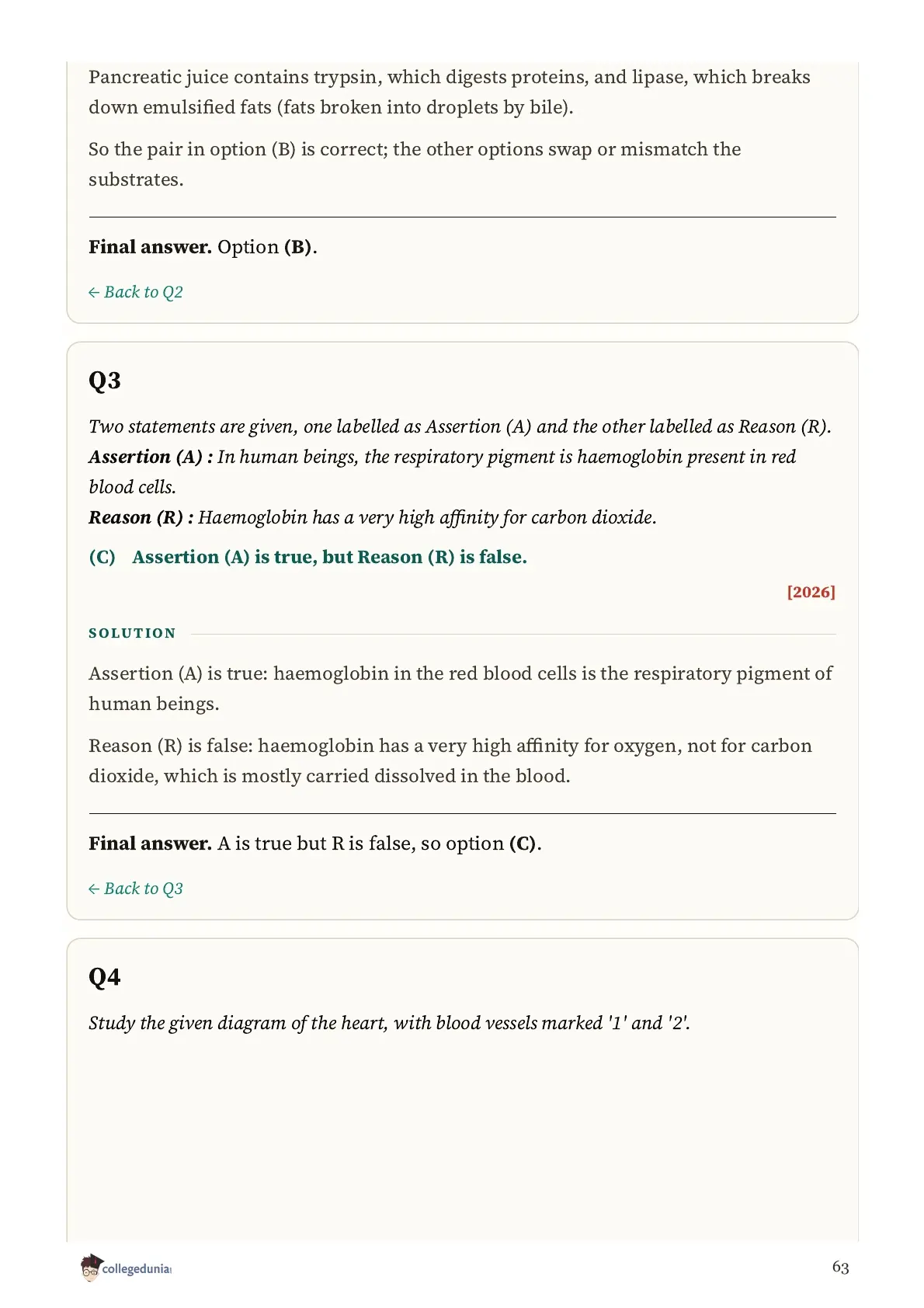
- Saying haemoglobin has a high affinity for carbon dioxide. Its pigment role is to carry oxygen, so in the 2026 assertion-reason item the Assertion is true and the Reason is false.
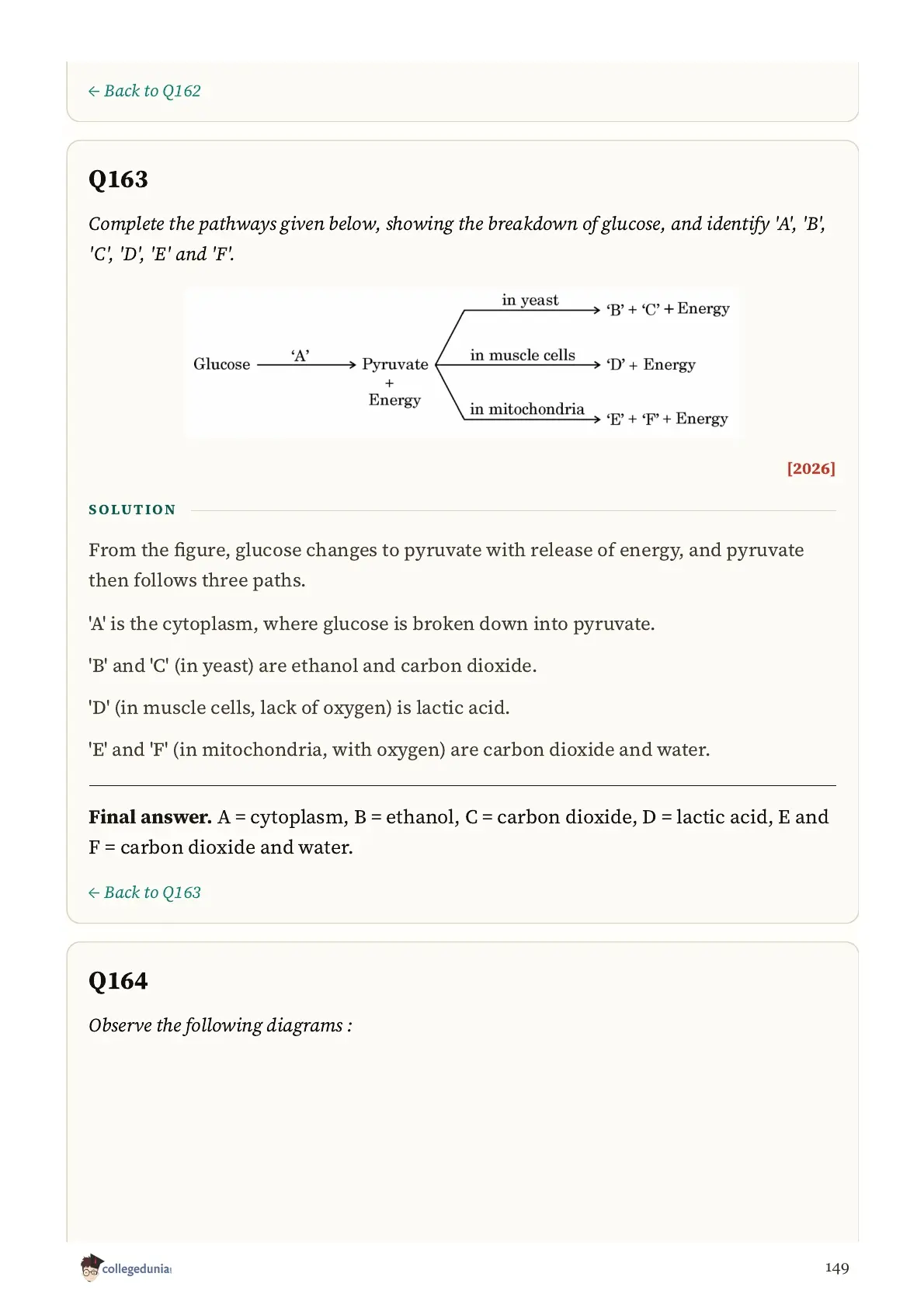
- Writing that muscle cramps come from lack of glucose. They come from lactic acid built up when pyruvate is broken down without oxygen.
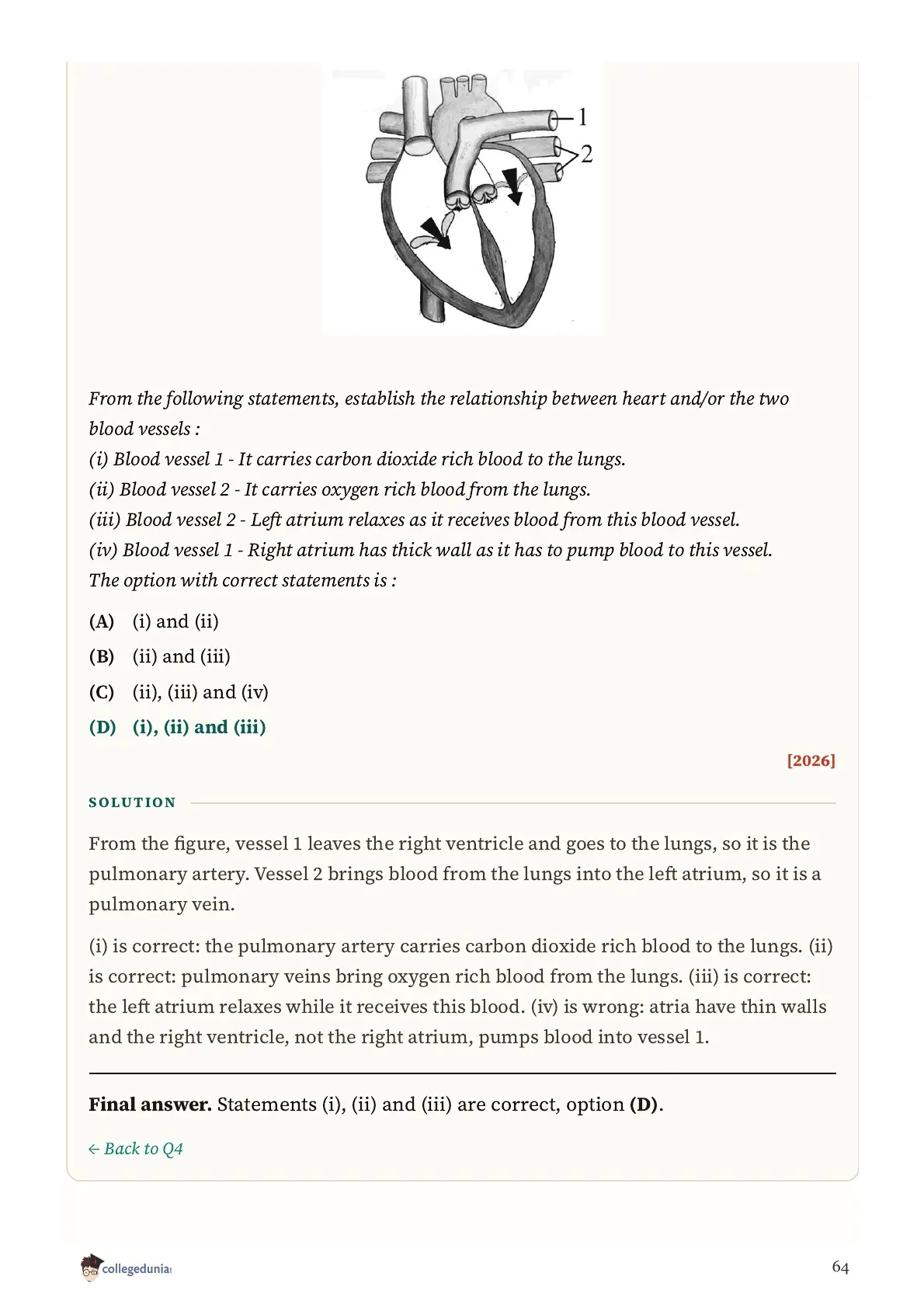
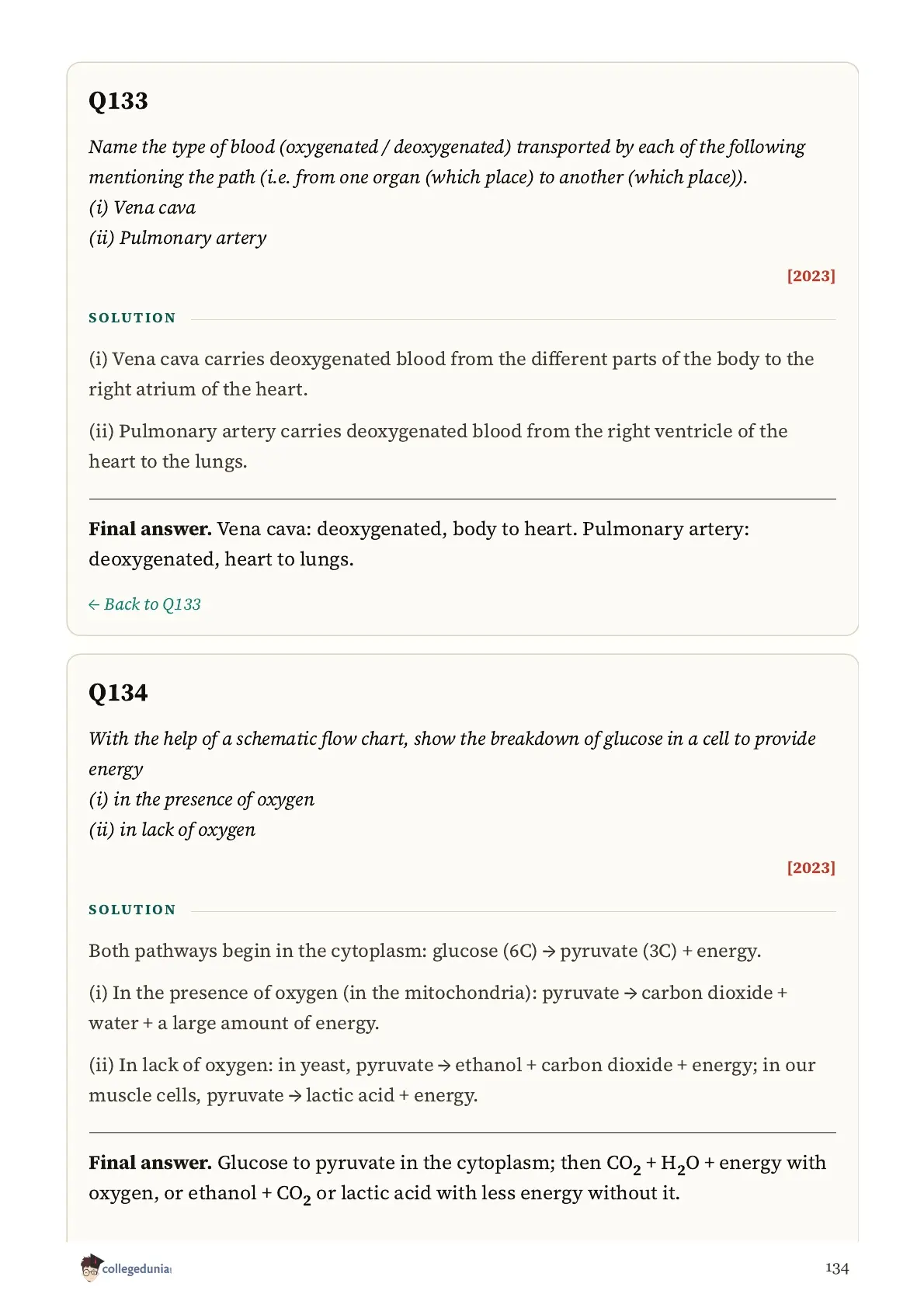
- Calling the pulmonary artery oxygen-rich because it is an artery. It carries deoxygenated blood to the lungs.
- Naming the Bowman's capsule cluster as a nephron part without saying glomerulus.
- Drawing the heart with the labels on the wrong side. Left and right are from the person's point of view, not yours.
Using the Answer Key and Solutions
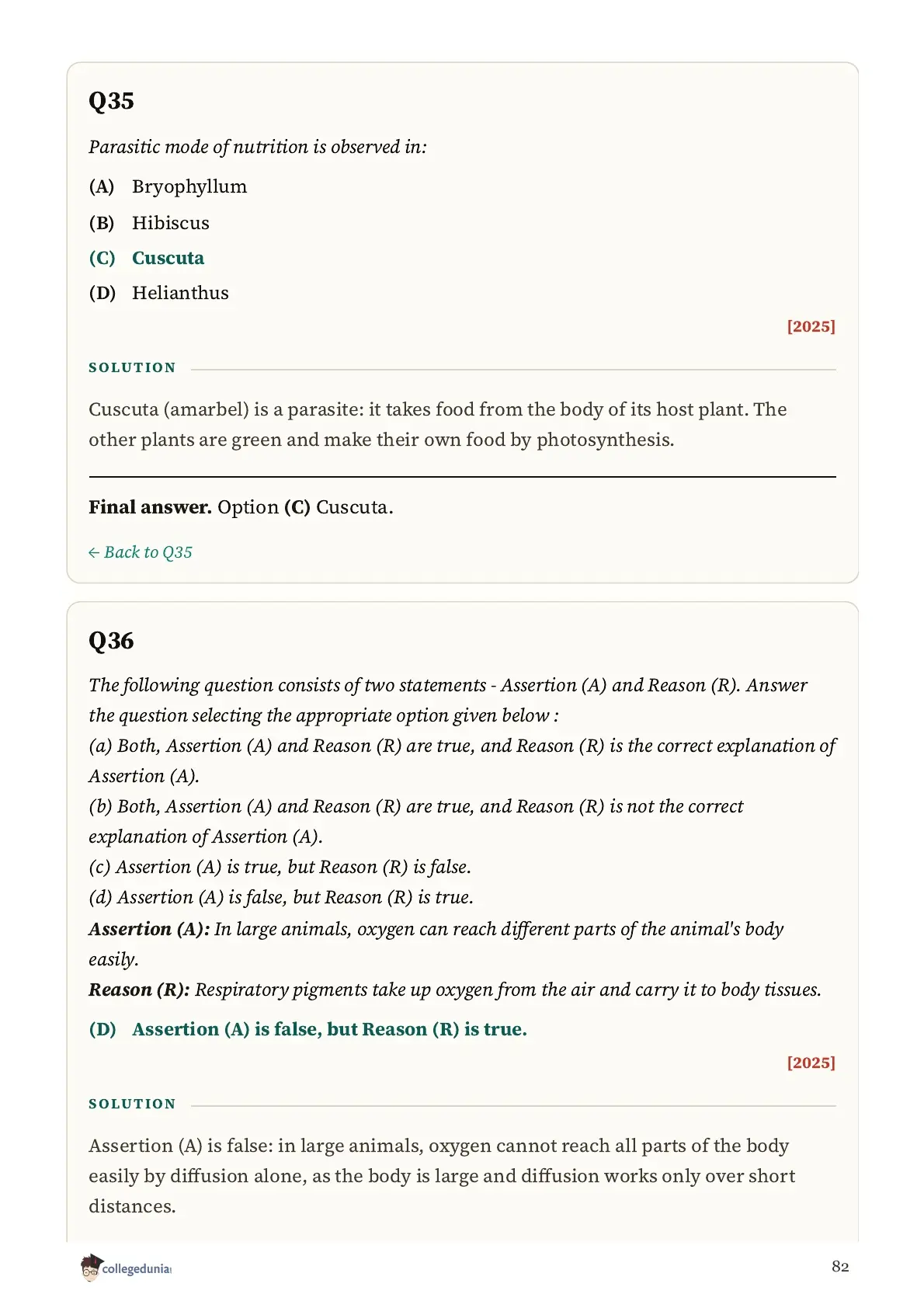
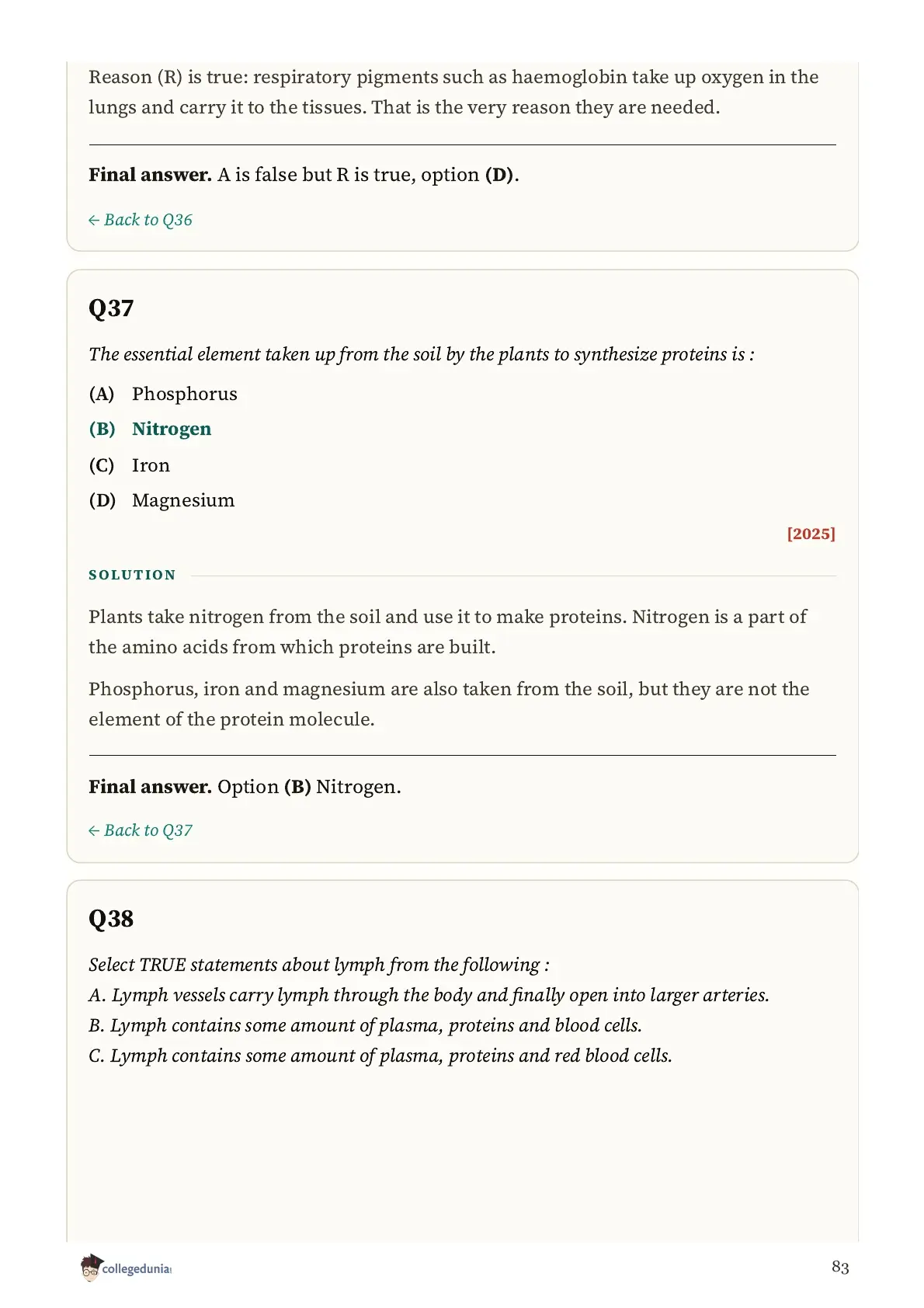
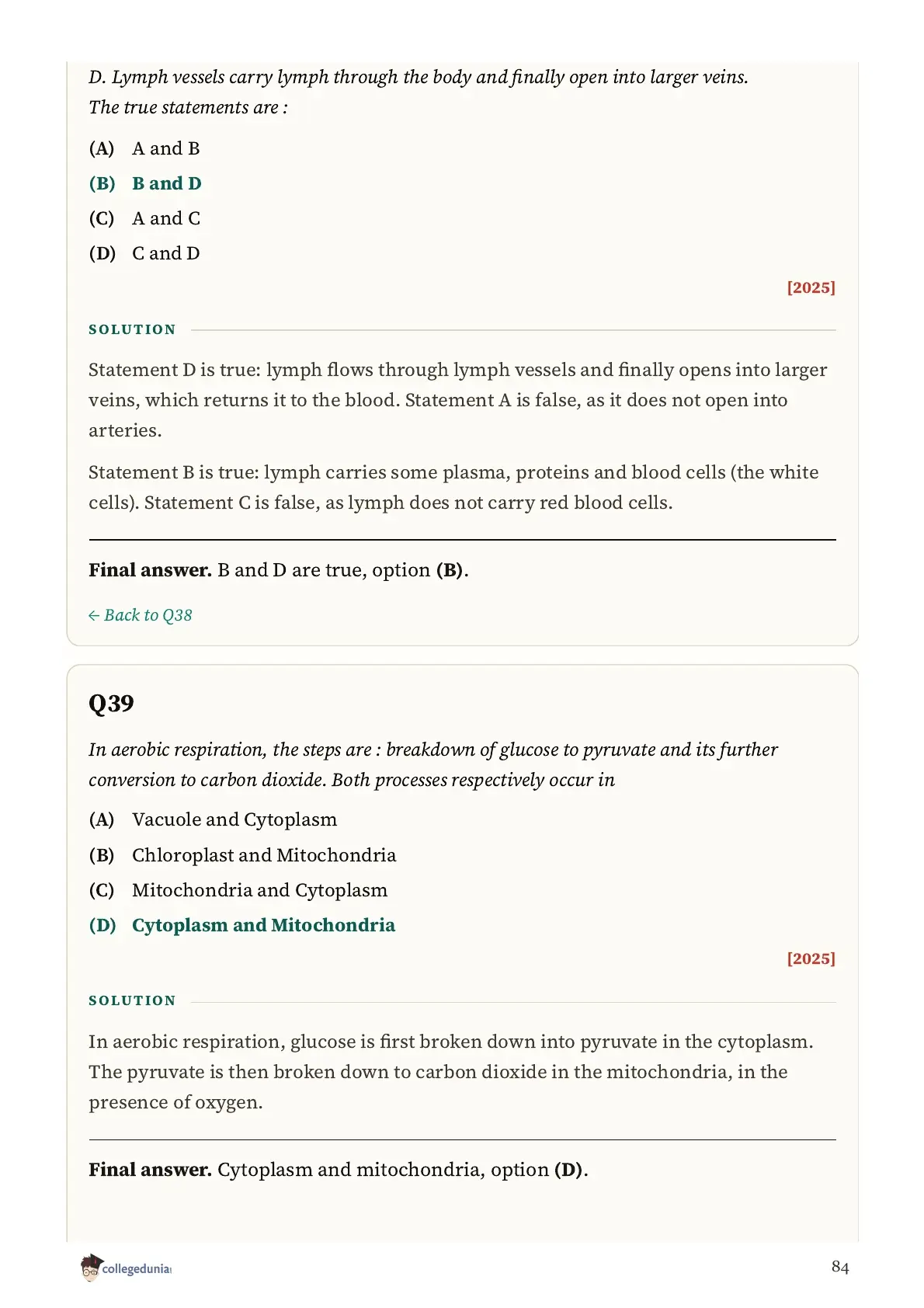
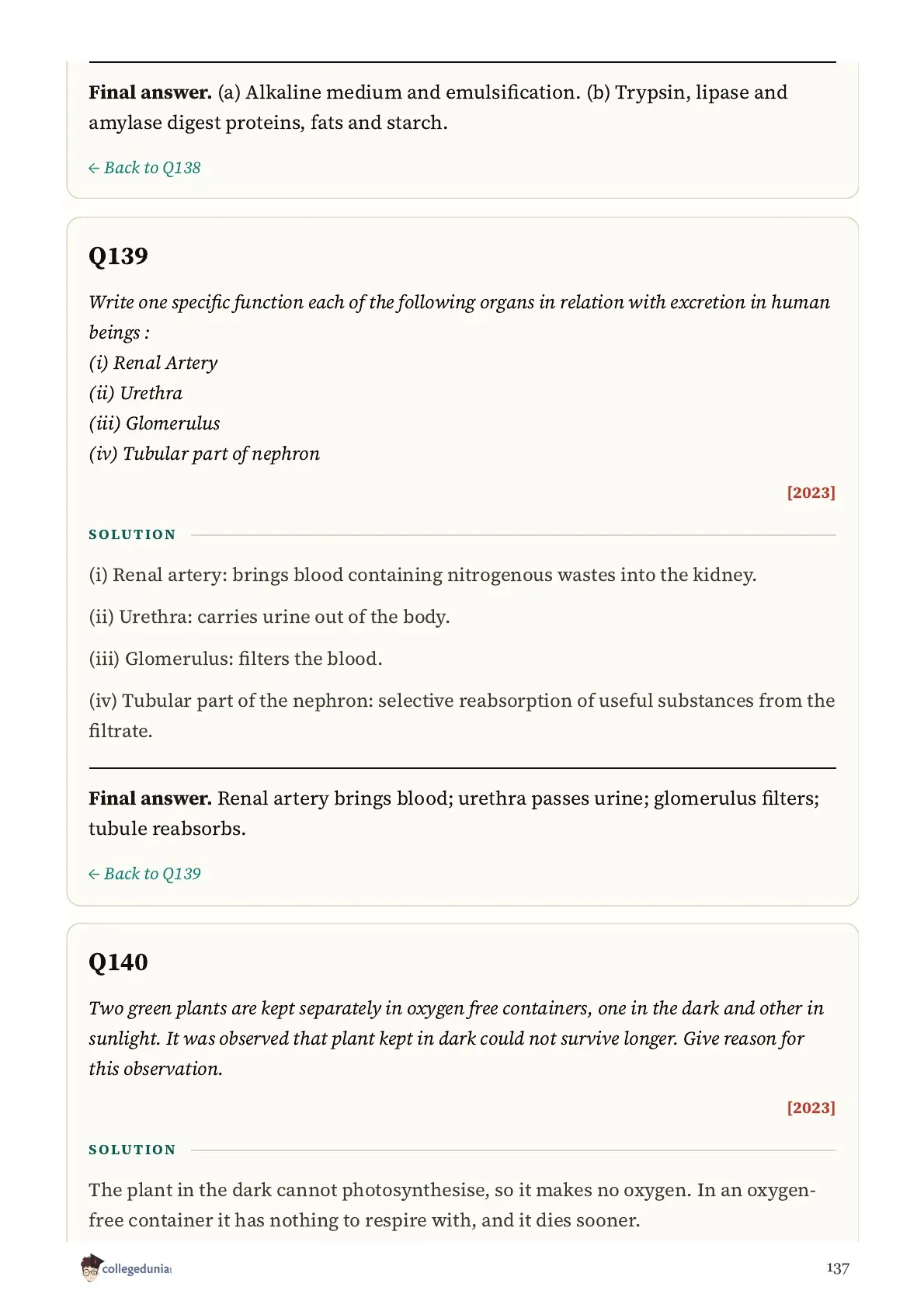
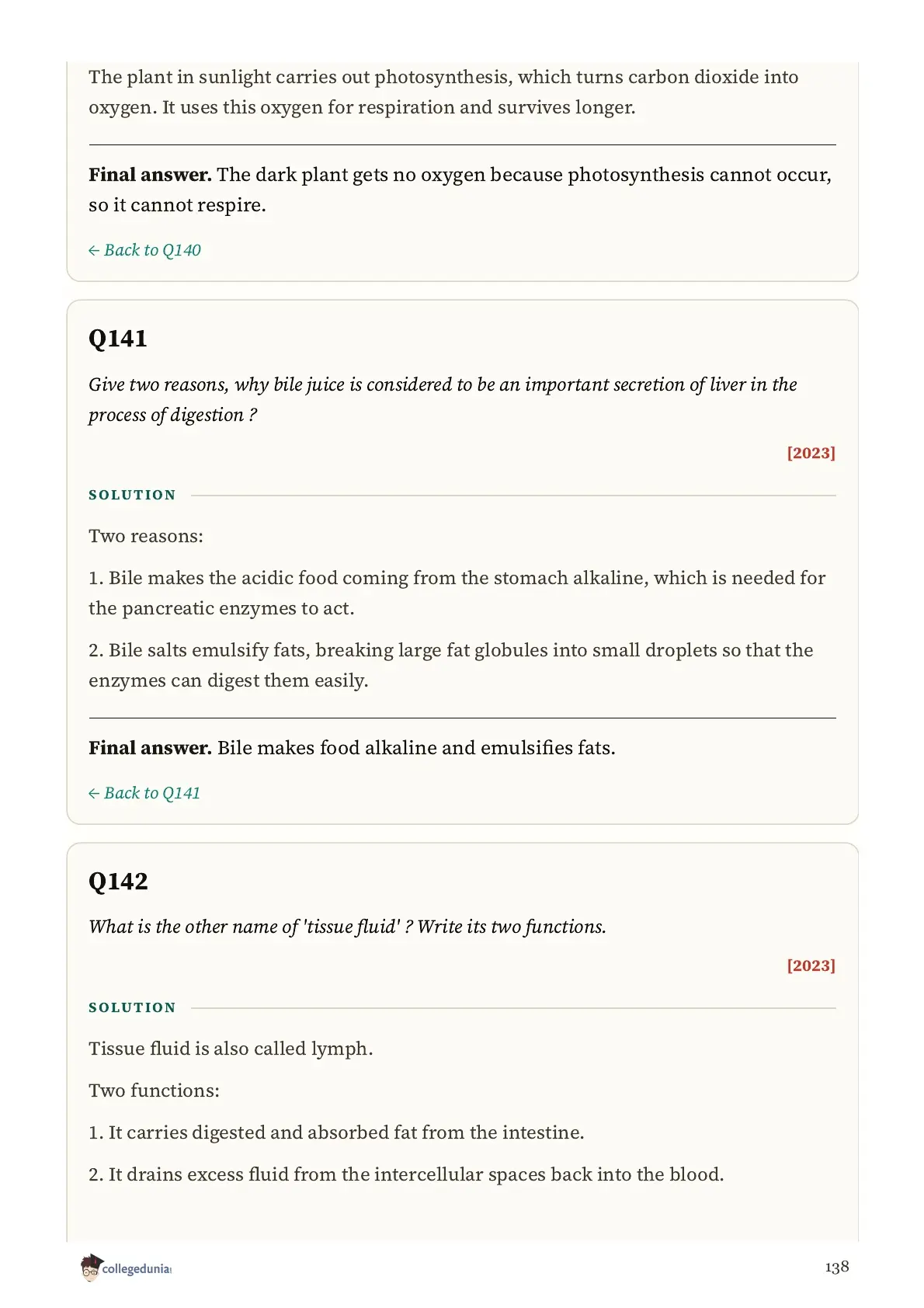
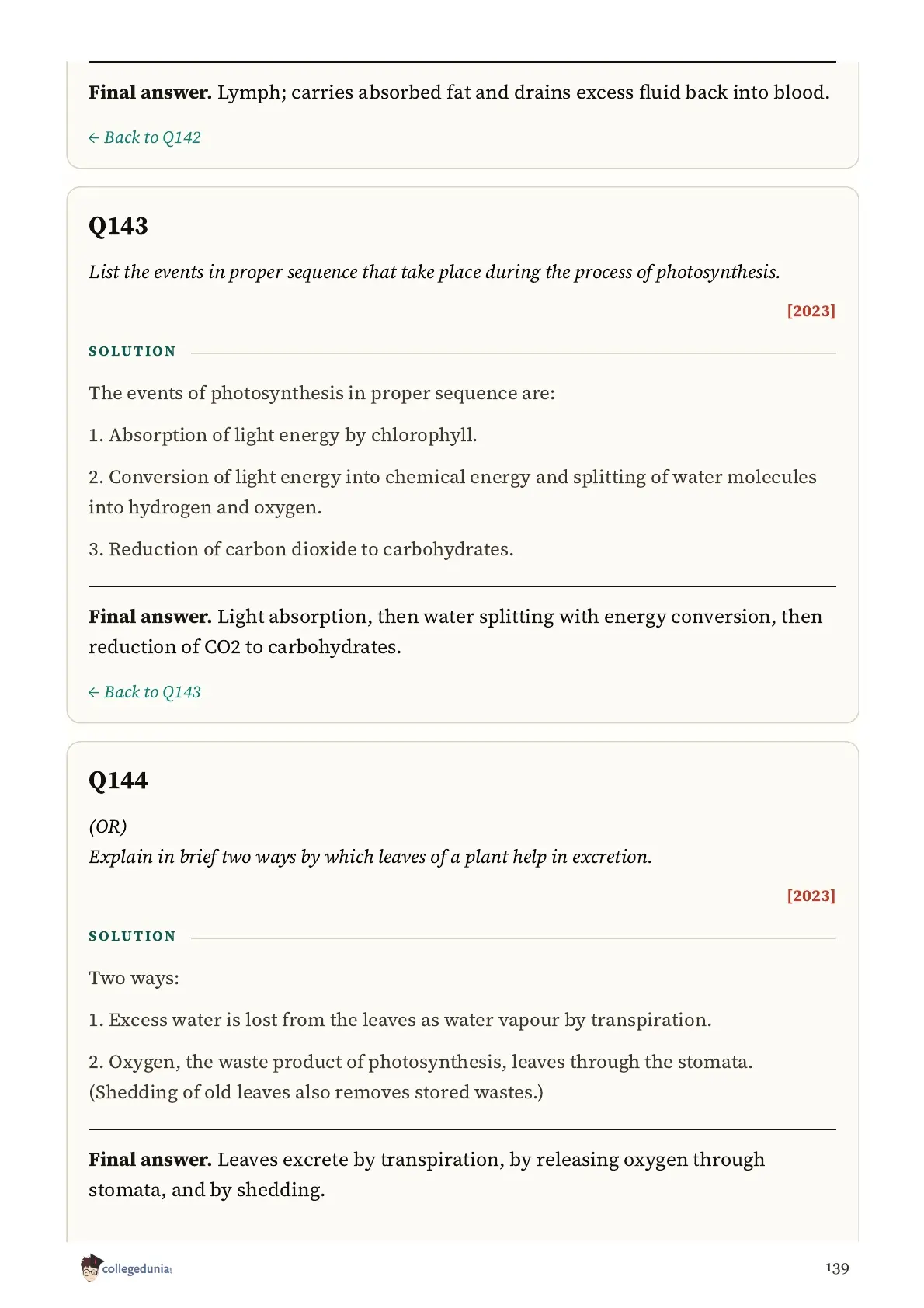
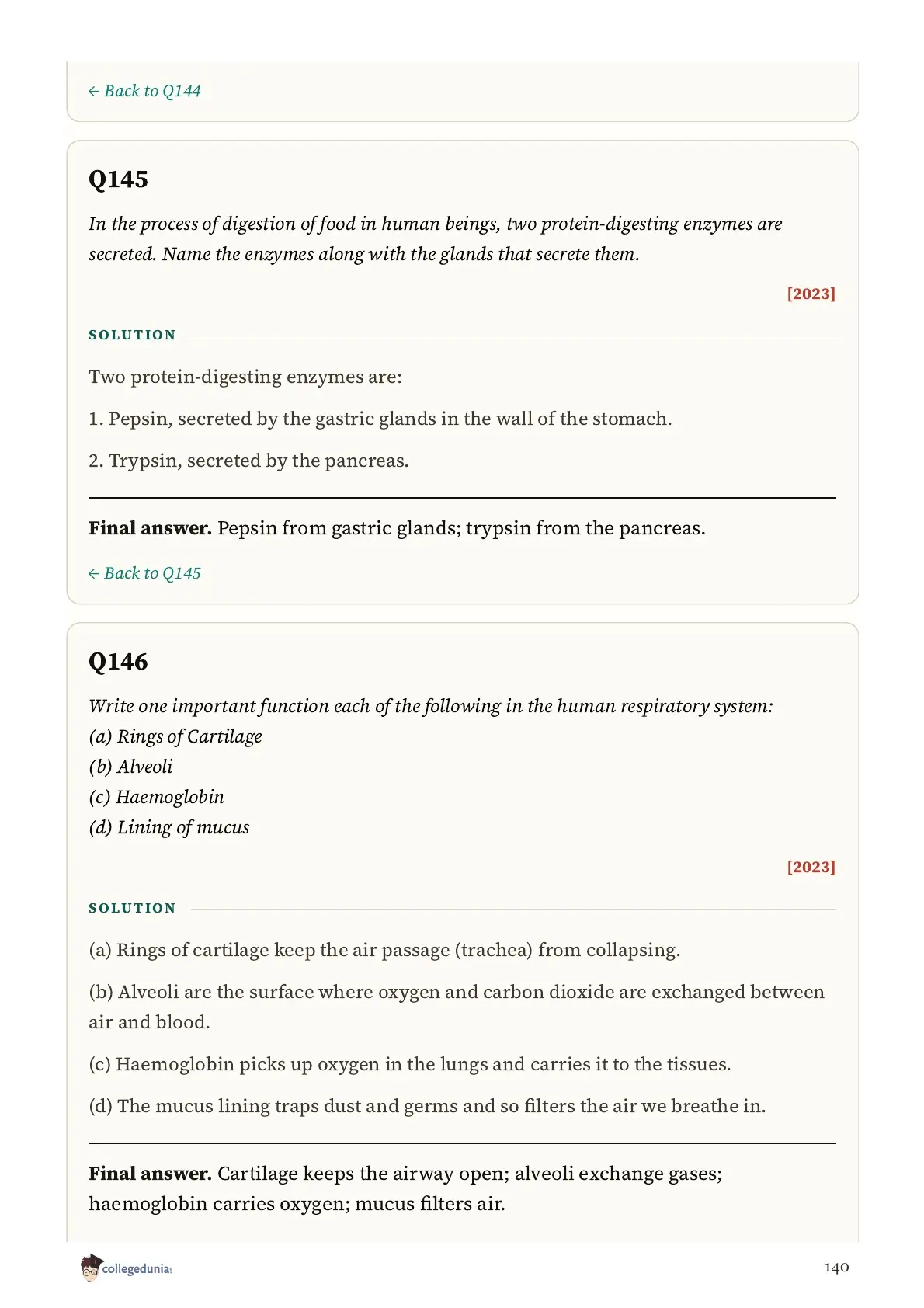
The PDF is 198 pages and free to download. Each section is sorted newest year first, the Answer Key lists the 84 MCQs at a glance, and each question links to its worked solution and back. Attempt a diagram or flow-chart question yourself first, check the key, then read the solution. The solutions are written by Collegedunia's Science experts and are not official CBSE marking schemes.
Class 10 Science PYQs by Chapter
| Unit | PYQ Page |
|---|---|
| Chemical Substances | Chemical Reactions and Equations Class 10 Science PYQ |
| Chemical Substances | Acids, Bases and Salts Class 10 Science PYQ |
| Chemical Substances | Metals and Non-metals Class 10 Science PYQ |
| Chemical Substances | Carbon and its Compounds Class 10 Science PYQ |
| World of Living | Life Processes Class 10 Science PYQ |
| World of Living | Control and Coordination Class 10 Science PYQ |
| World of Living | How do Organisms Reproduce? Class 10 Science PYQ |
| World of Living | Heredity Class 10 Science PYQ |
| Natural Phenomena | Light - Reflection and Refraction Class 10 Science PYQ |
| Natural Phenomena | The Human Eye and the Colourful World Class 10 Science PYQ |
| Effects of Current | Electricity Class 10 Science PYQ |
| Effects of Current | Magnetic Effects of Electric Current Class 10 Science PYQ |
| Natural Resources | Our Environment Class 10 Science PYQ |
Life Processes Class 10 Science PYQ FAQs
Ques. How many questions are in the Life Processes Class 10 Science PYQ PDF?
Ans. The PDF has 241 questions from the 2005 to 2026 board papers: 96 at 1 mark, 66 at 2 marks, 51 at 3 marks, 2 case studies at 4 marks and 26 long answers at 5 marks.
Ques. Does this PYQ PDF include solutions, or only the questions?
Ans. All 241 questions have a worked solution in the PDF. The 84 MCQs and assertion-reason items are also listed in the Answer Key before the solutions.
Ques. Are the solutions official?
Ans. No. They are written by Collegedunia's Science experts and checked against the NCERT chapter and, for the 2022 to 2026 papers, against CBSE's published marking schemes. Older answers are checked against the NCERT text. They are not an official CBSE marking scheme, so the board's wording of an answer may differ.
Ques. How many marks does Life Processes carry in the Class 10 Science paper?
Ans. CBSE publishes marks per unit, not per chapter. Life Processes belongs to the unit World of Living, which prep sites report as 25 of the 80 theory marks. That figure is unofficial, so check cbseacademic.nic.in for the current syllabus.
Ques. Which topics are asked most from Life Processes?
Ans. Heart, blood and circulation lead with 47 questions, followed by nutrition and photosynthesis (44), breathing and gas exchange (43), digestion (38) and excretion (34).
Ques. Which years does the set cover?
Ans. The questions come from 14 board years between 2005 and 2026. 2026 has the most questions (45), followed by 2023 (43), 2025 (42) and 2024 (34).



Comments