



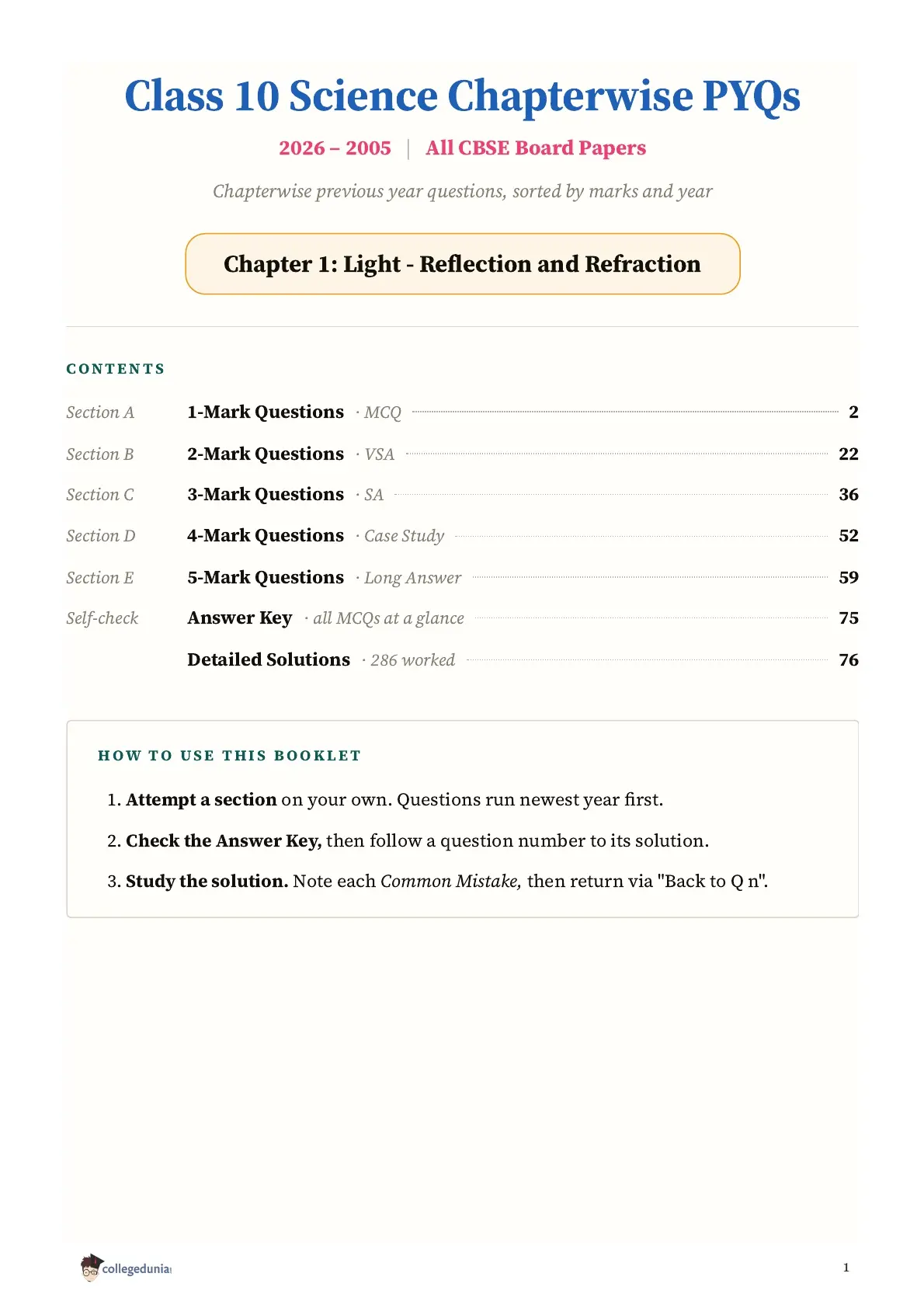
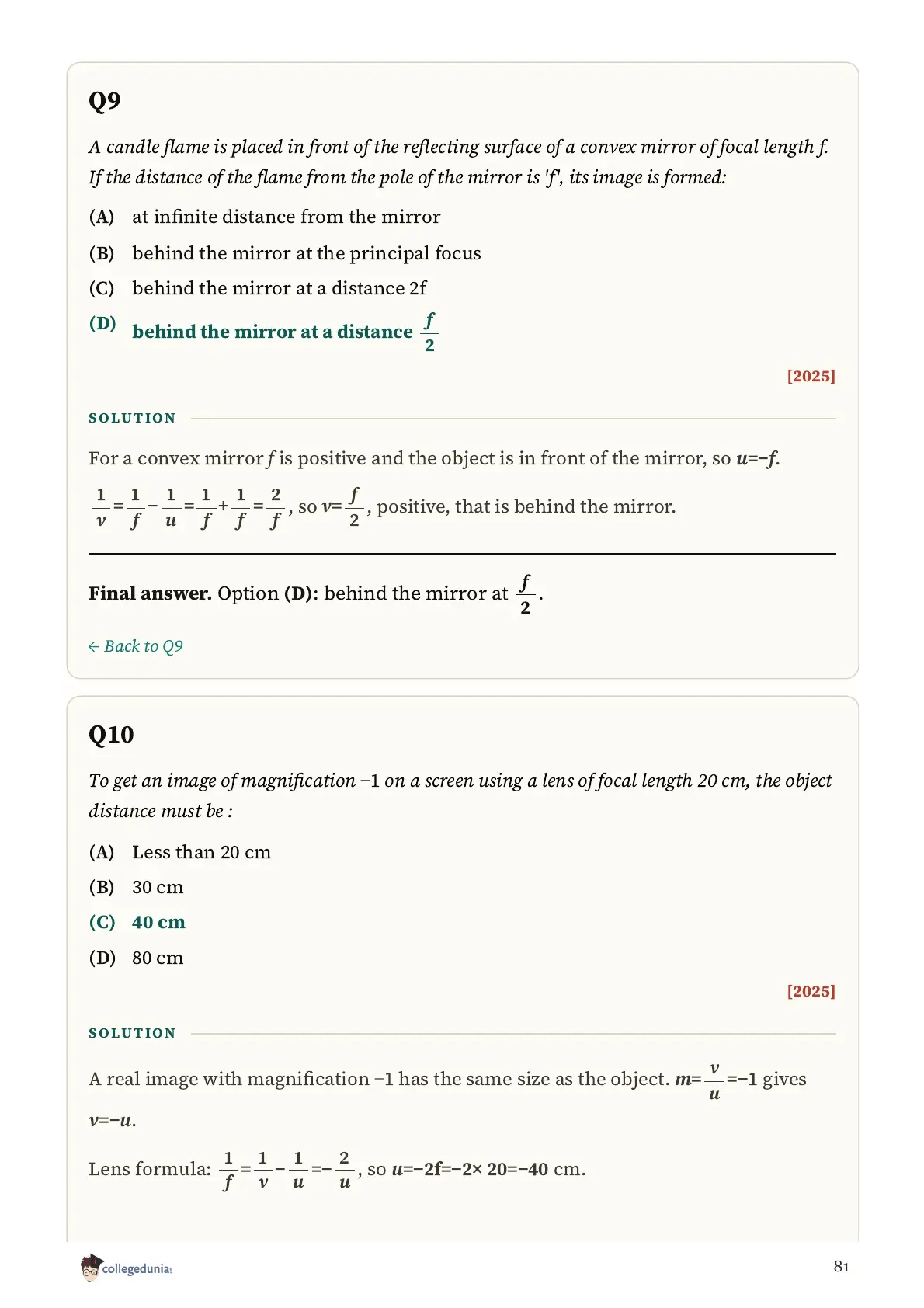
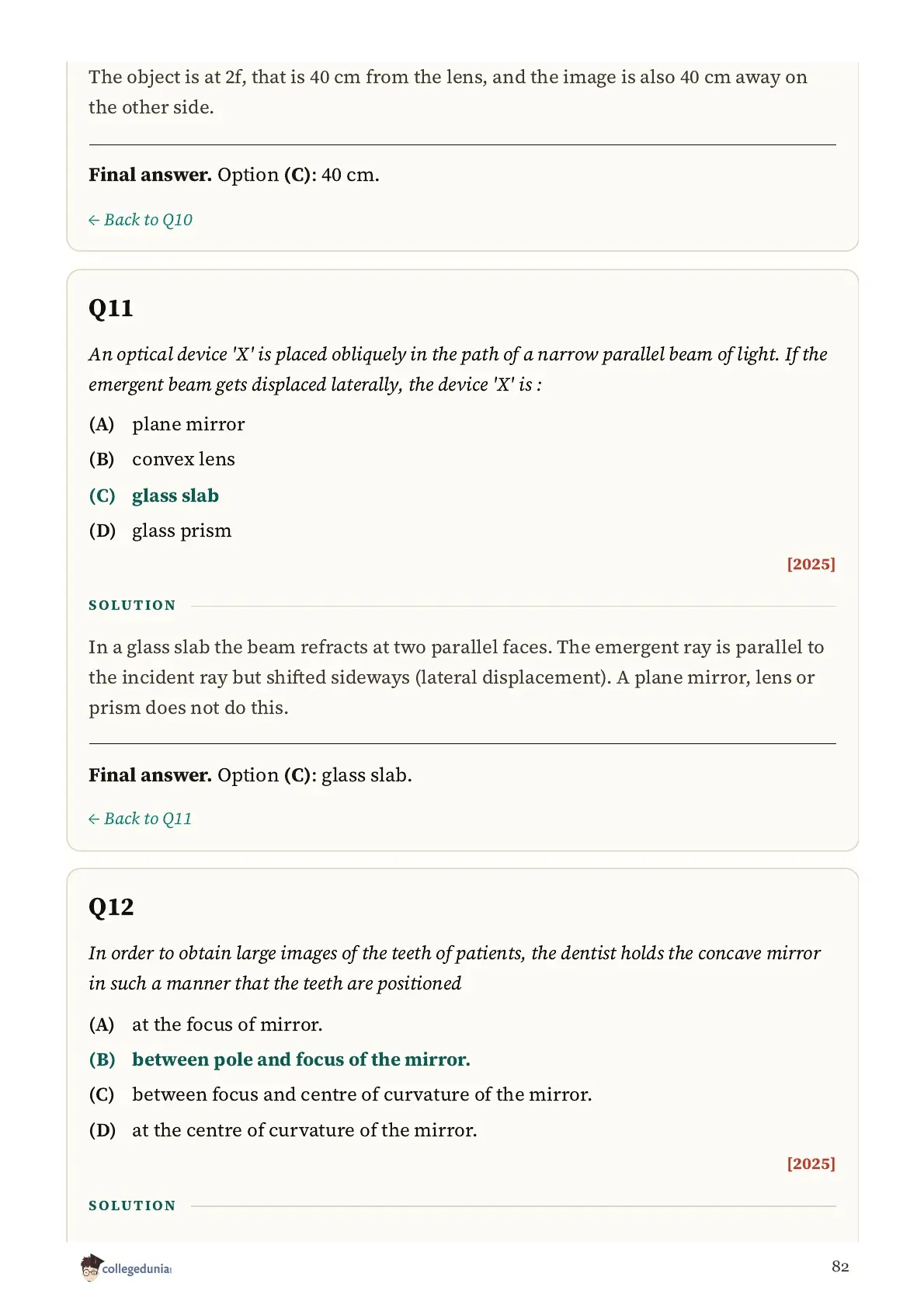
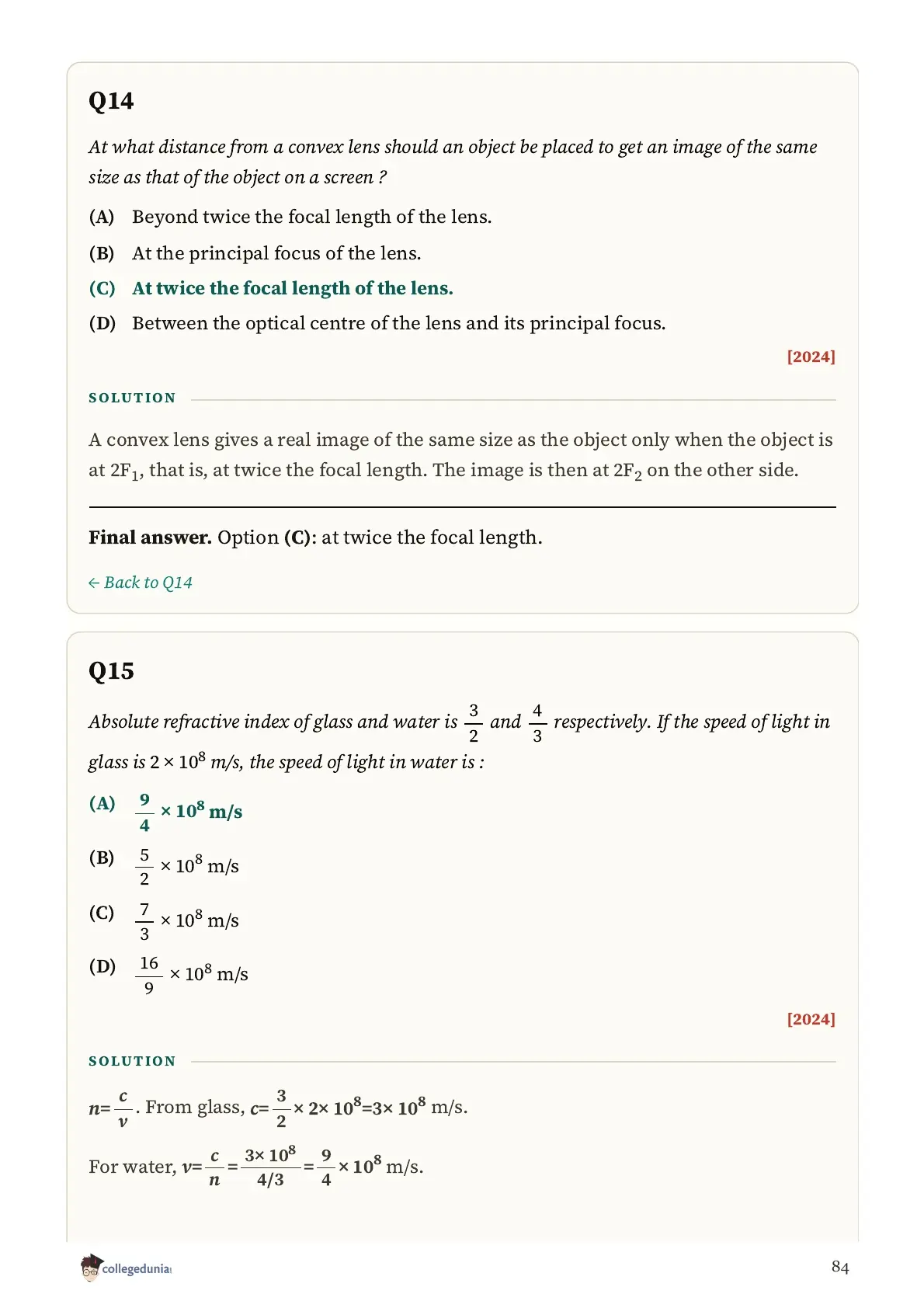
Class 10 Science Light - Reflection and Refraction PYQ, free to download as a 256-page PDF with 286 solved board questions from the 2005 to 2026 papers. Light - Reflection and Refraction is Chapter 9 of the NCERT Class 10 Science book and, with The Human Eye and the Colourful World, forms the unit Natural Phenomena, which is reported to carry 12 of the 80 theory marks.
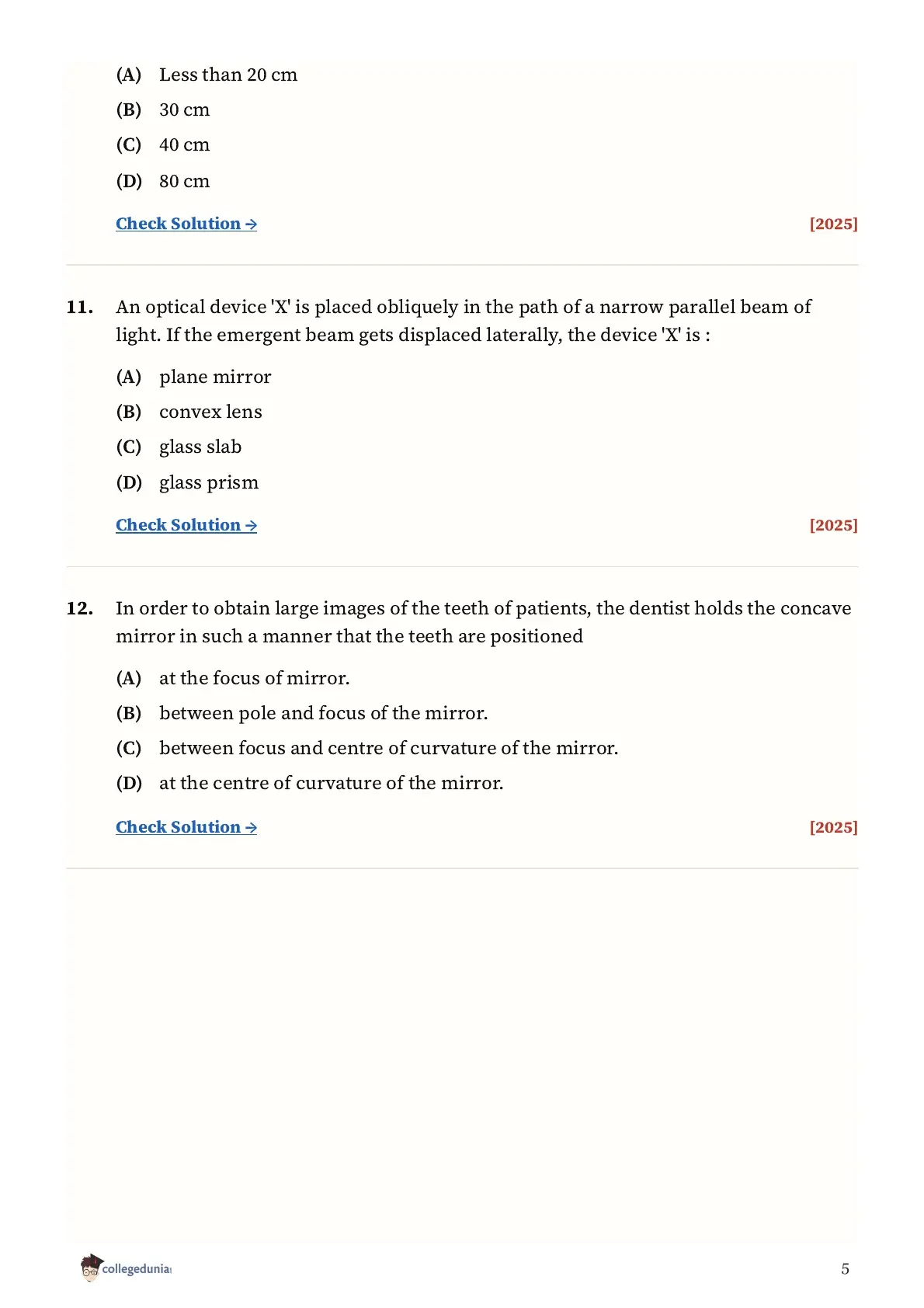
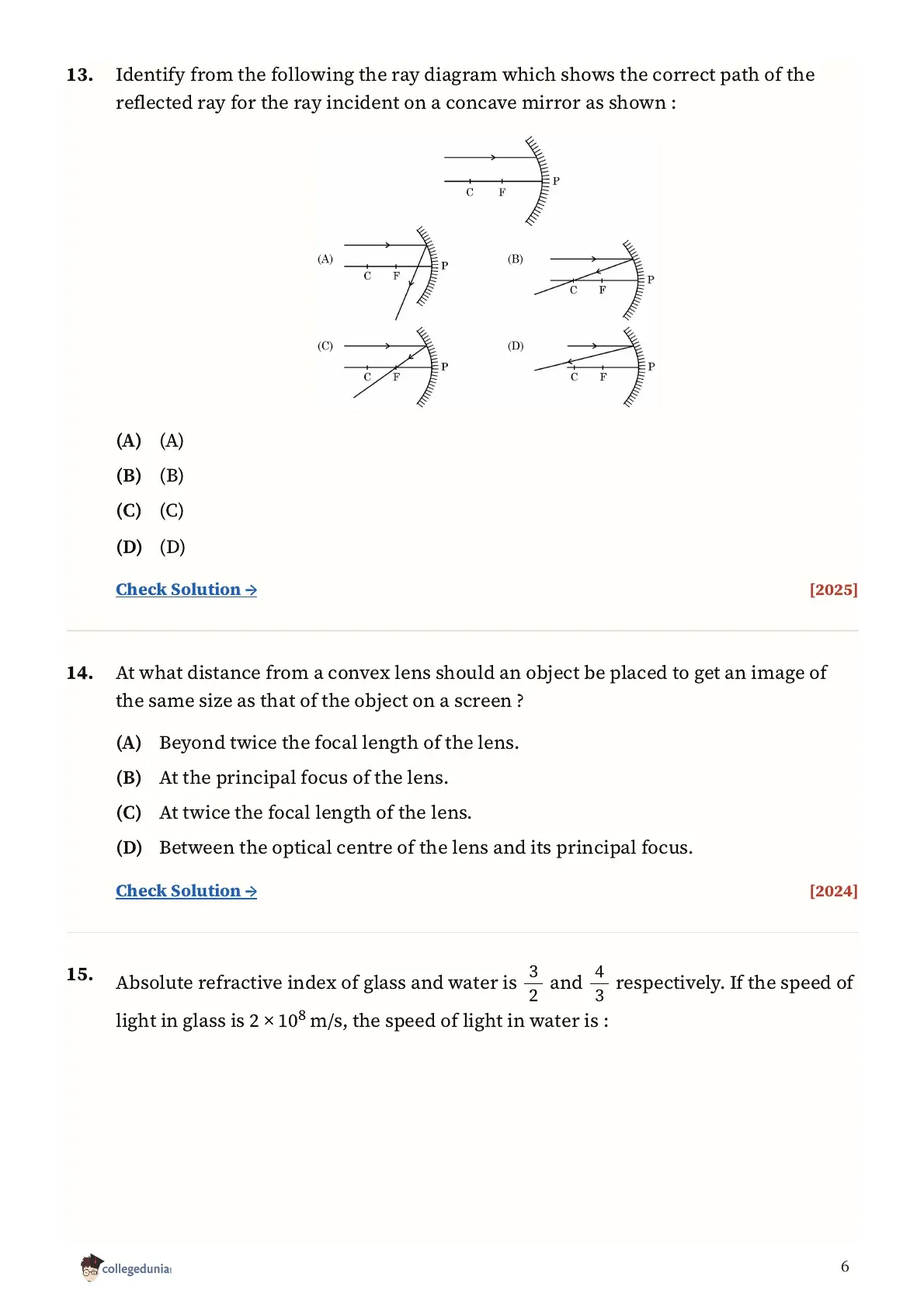
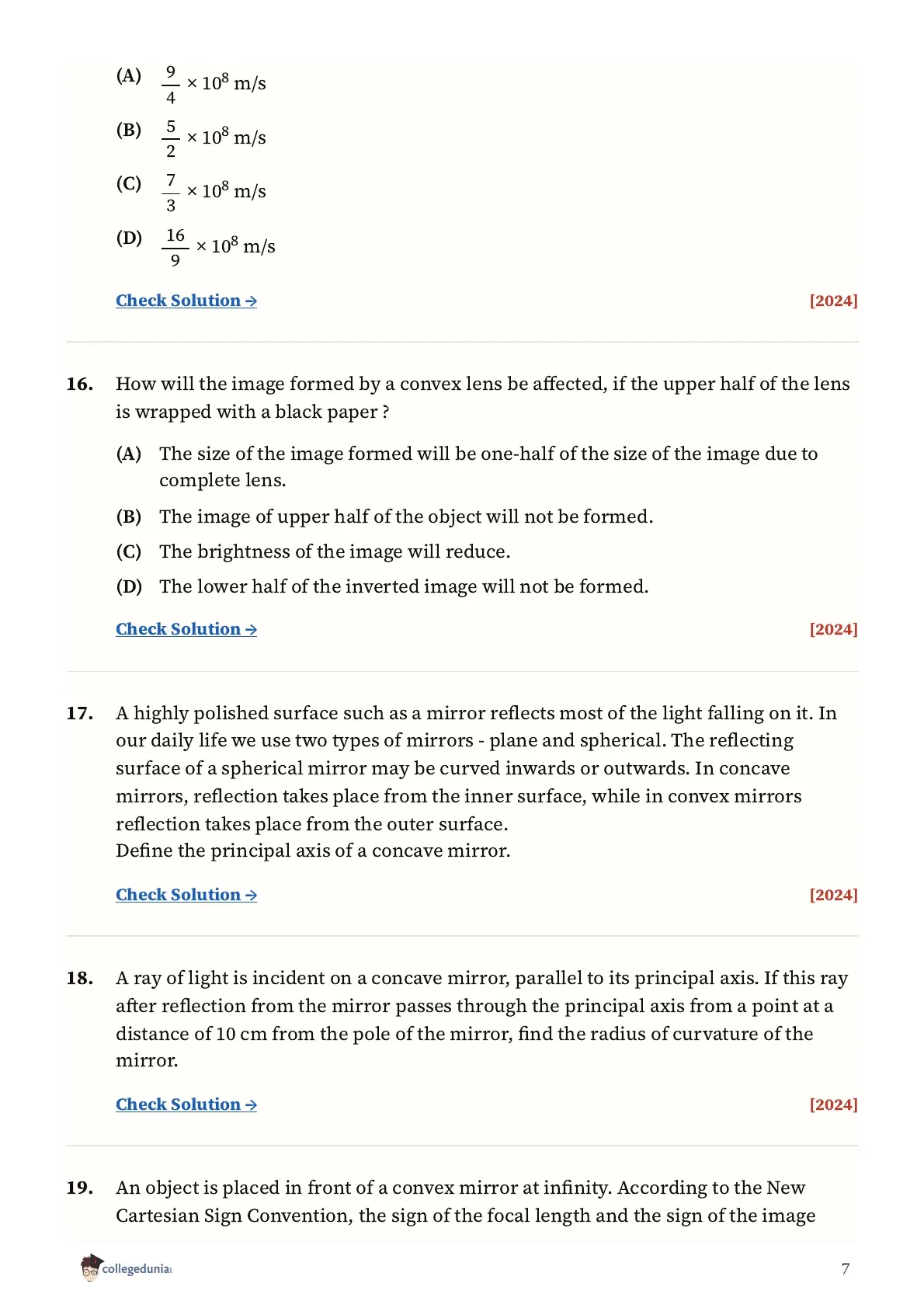
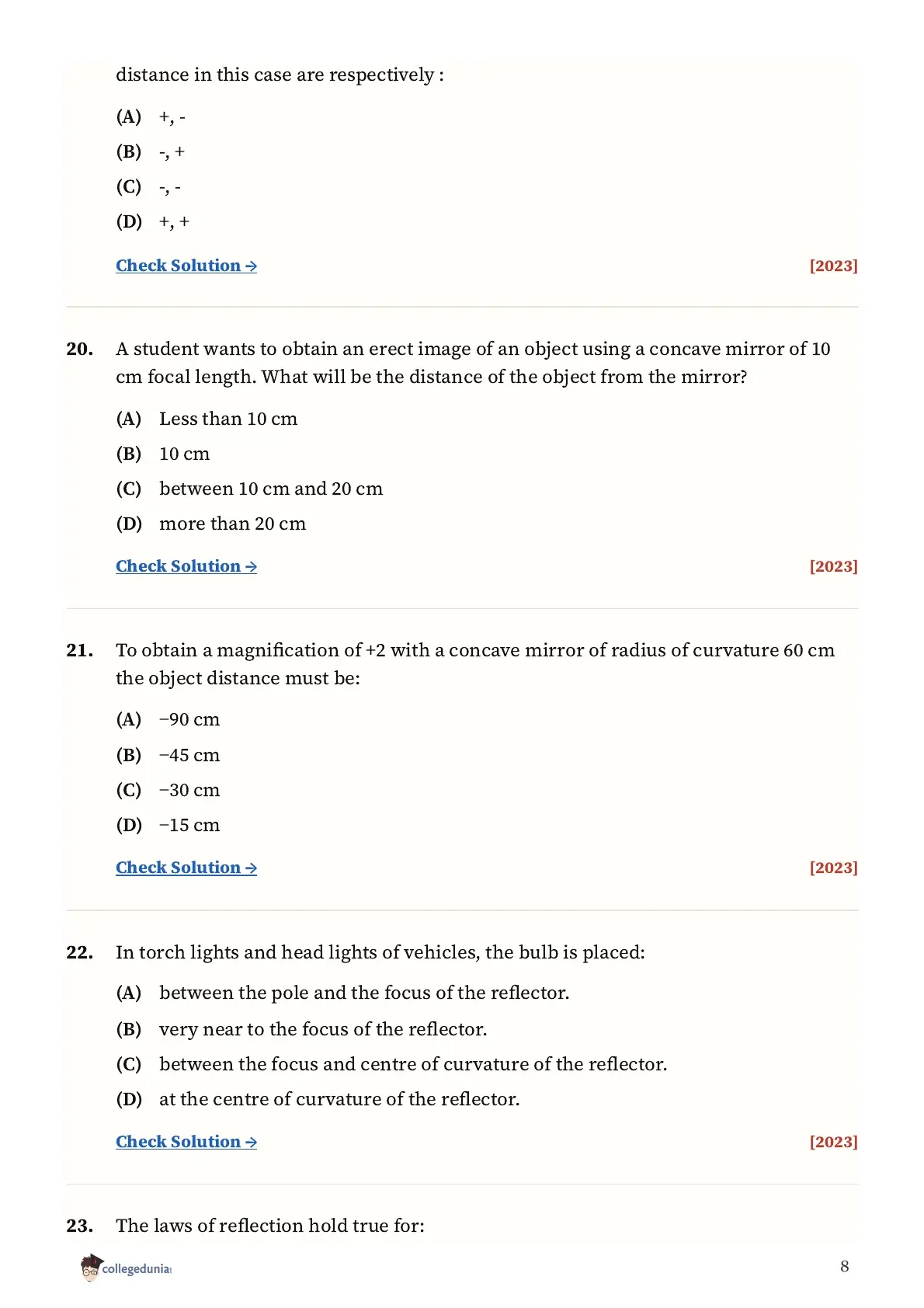
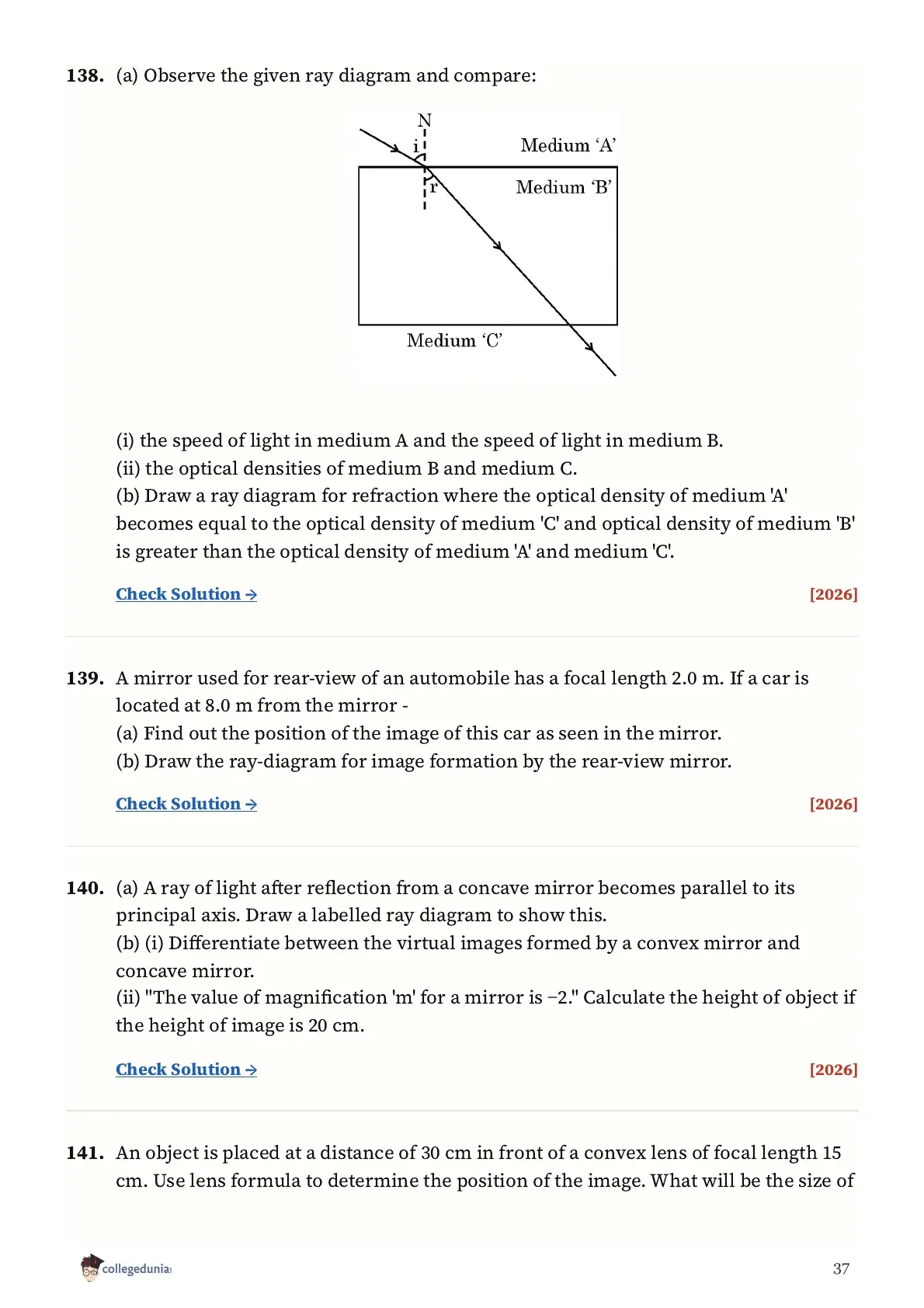
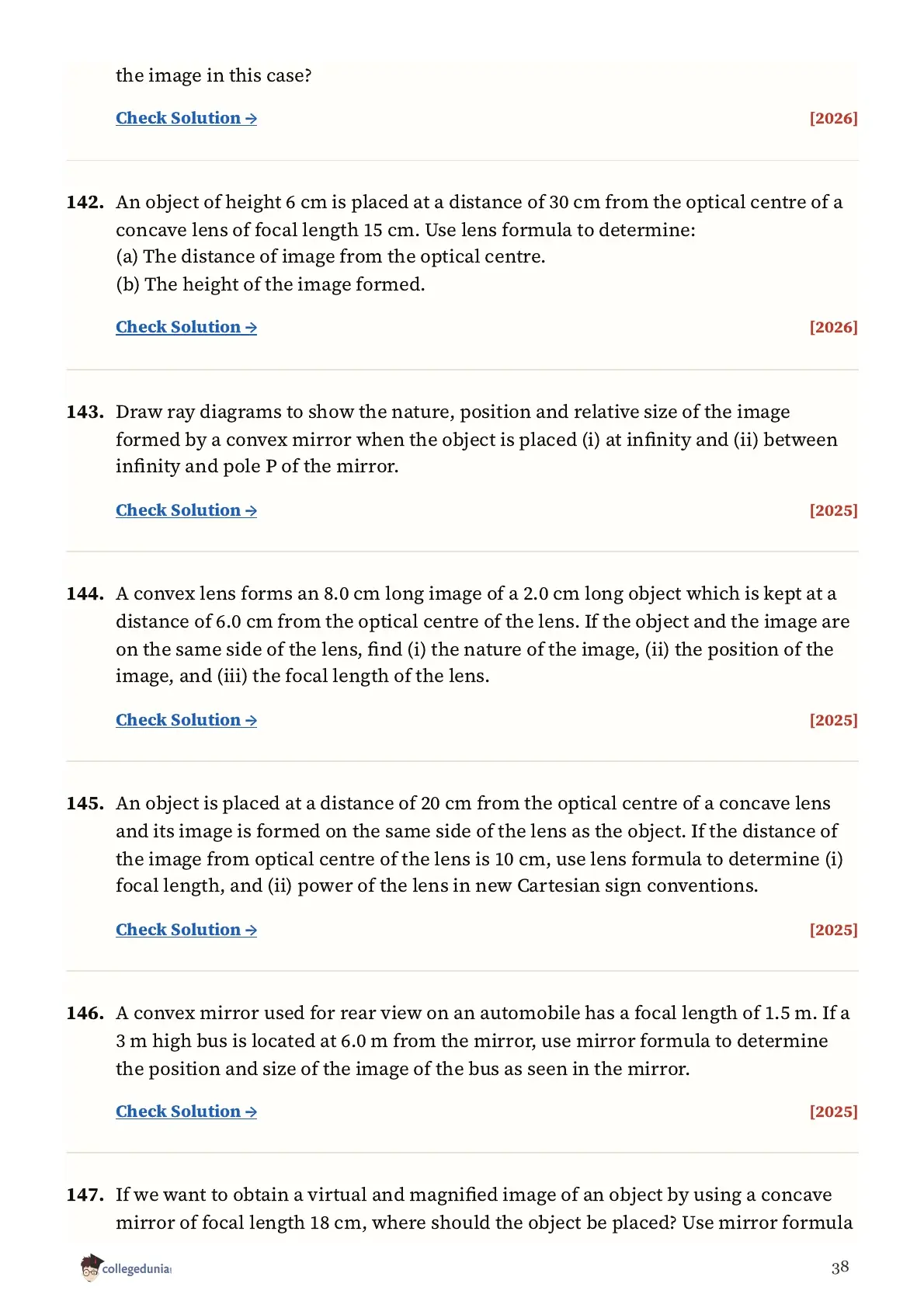
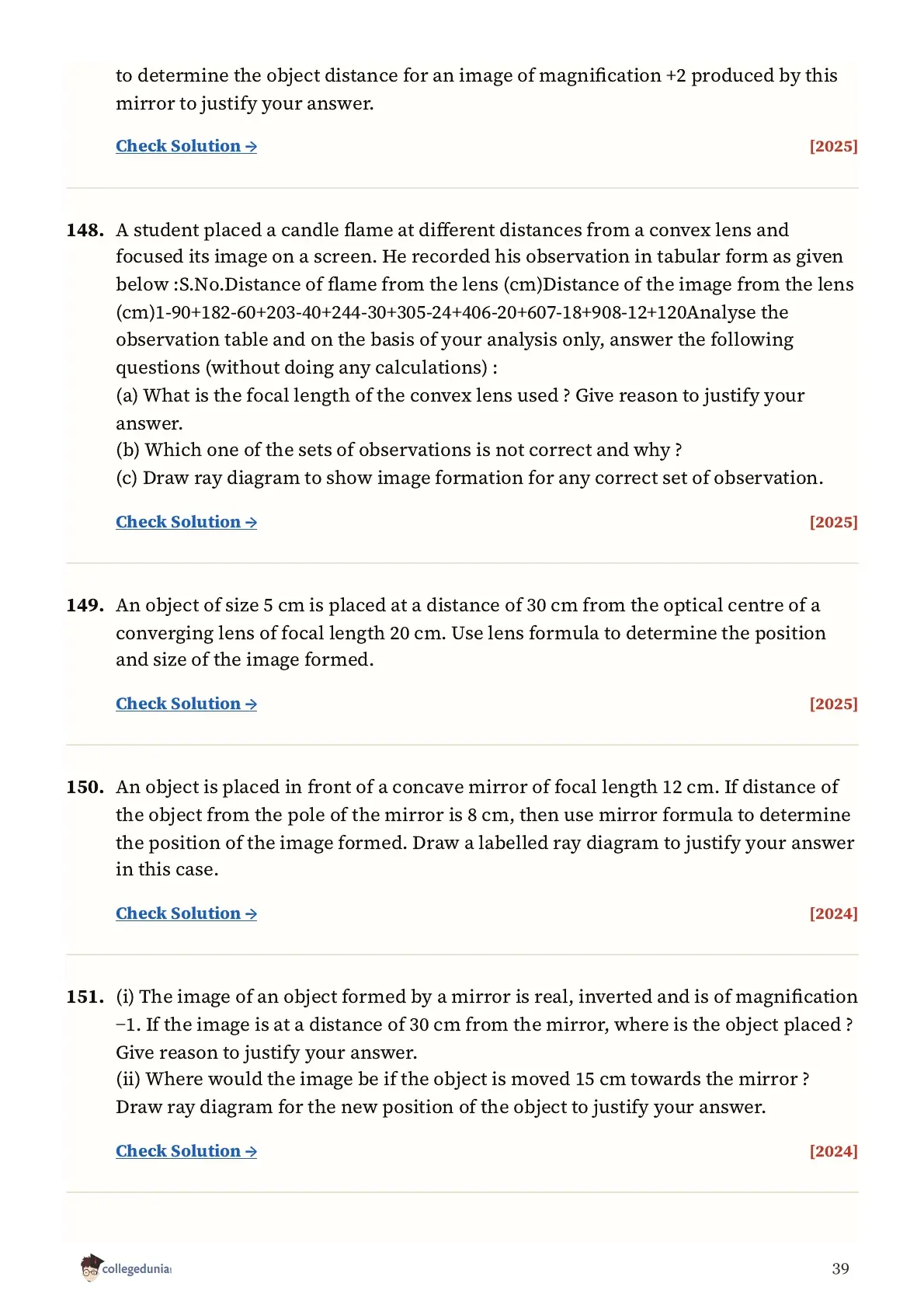
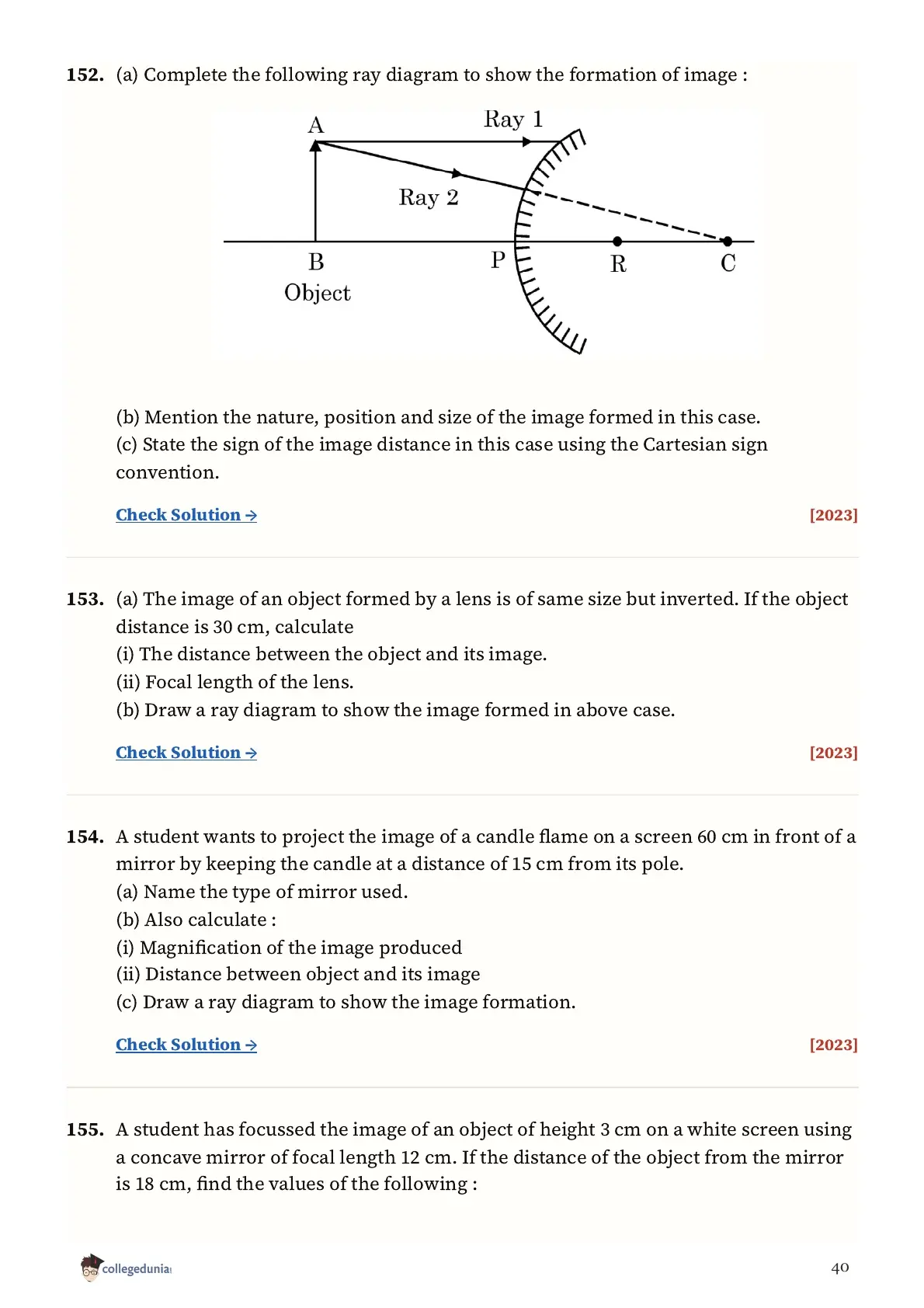
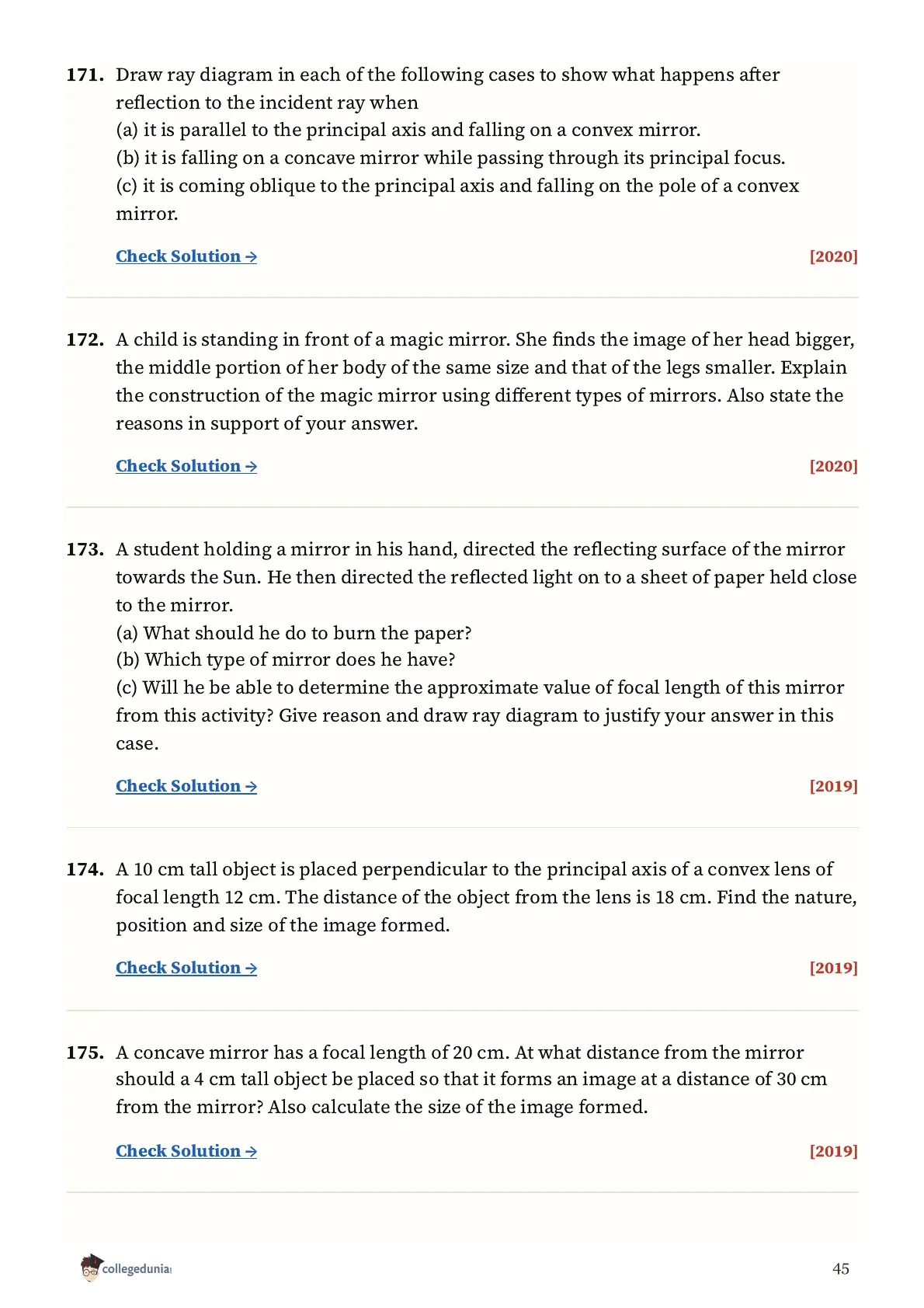
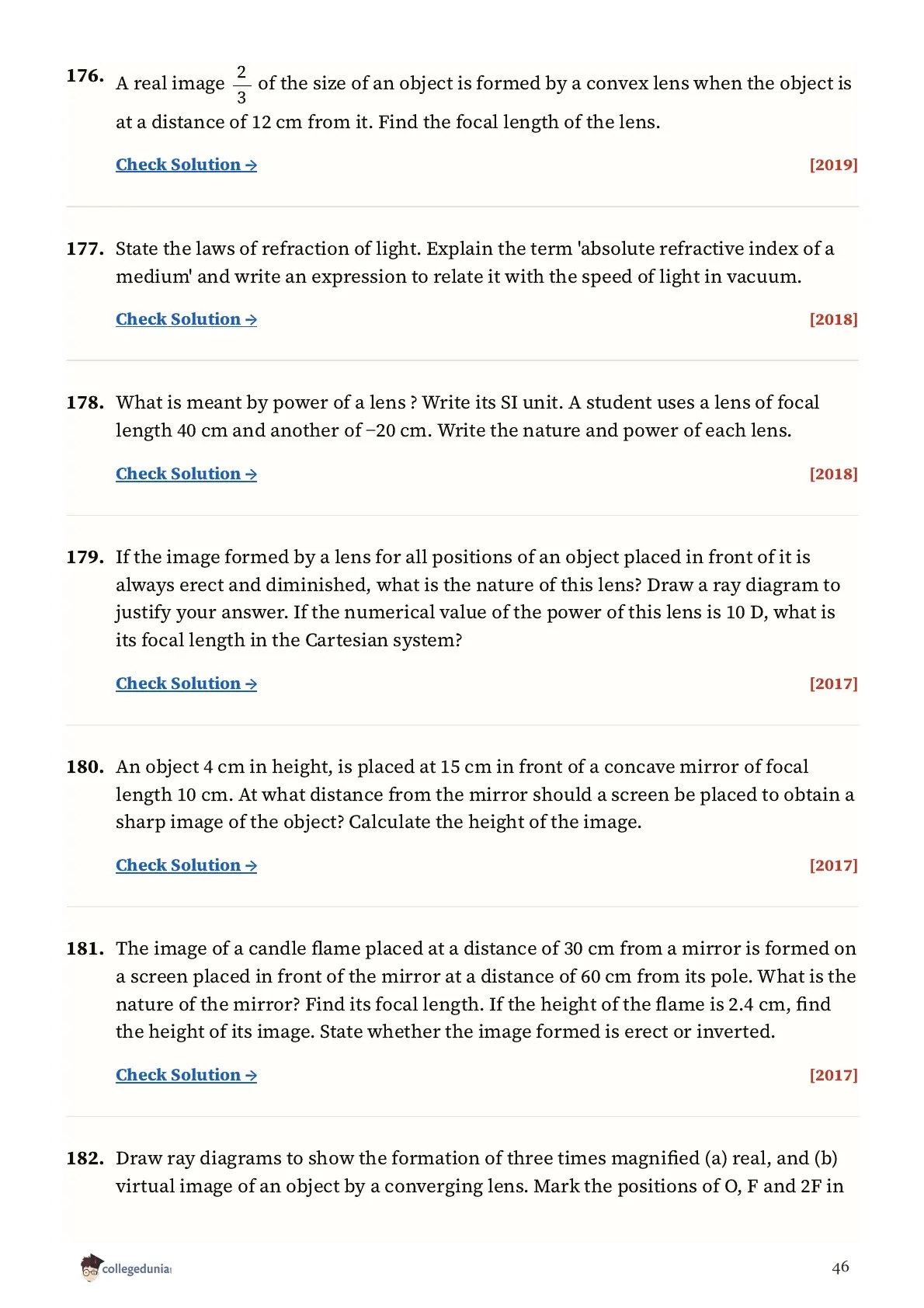
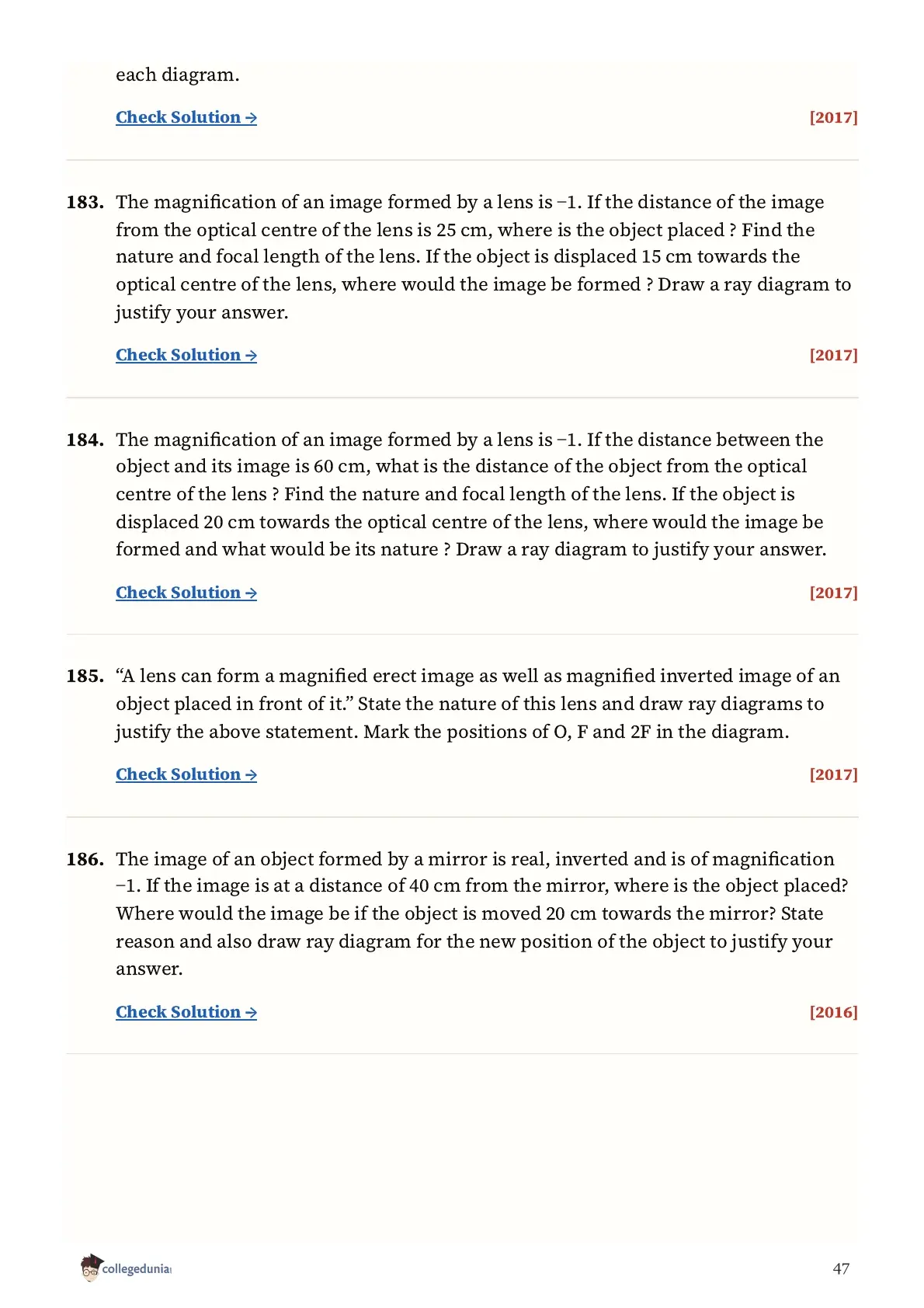
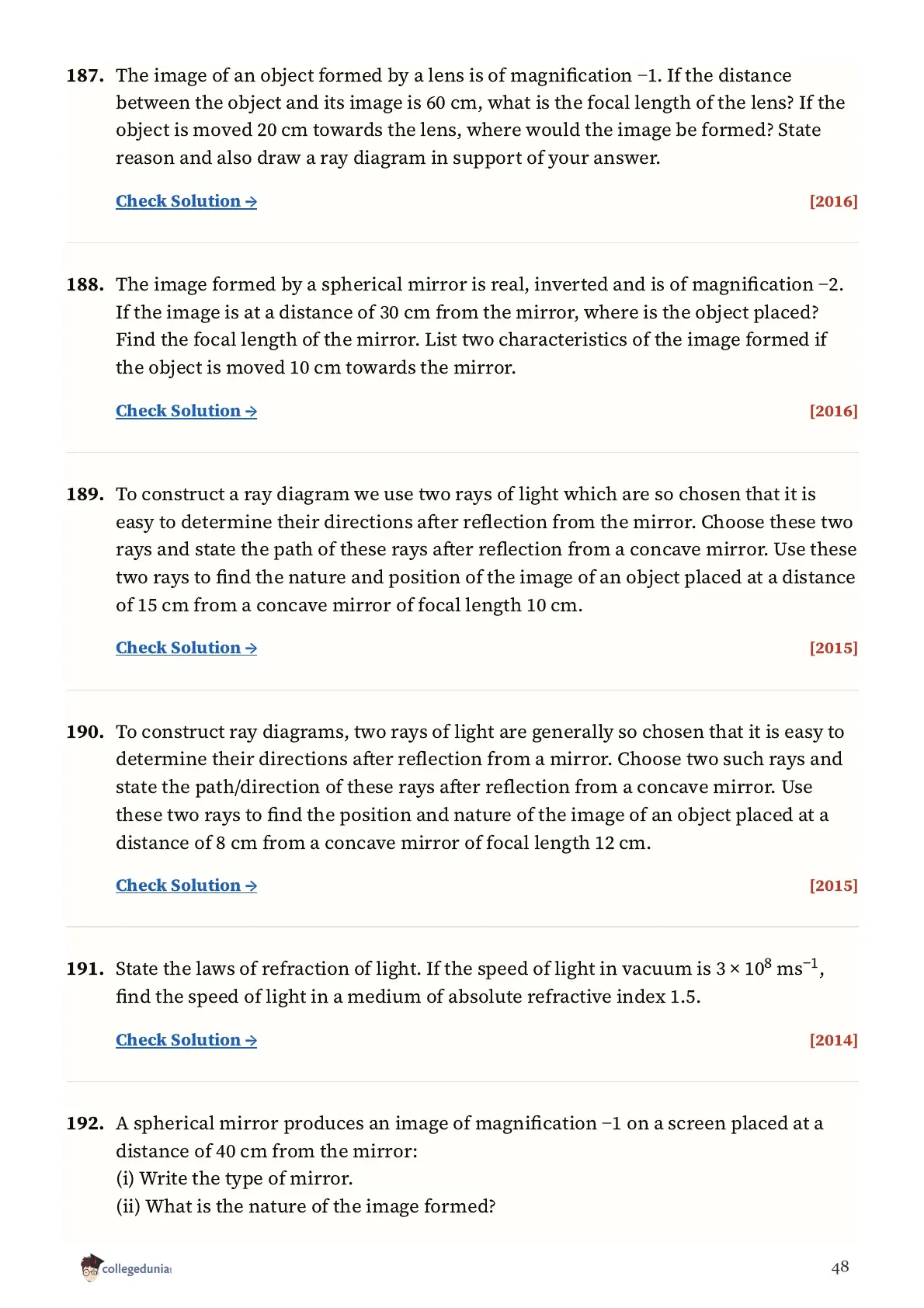
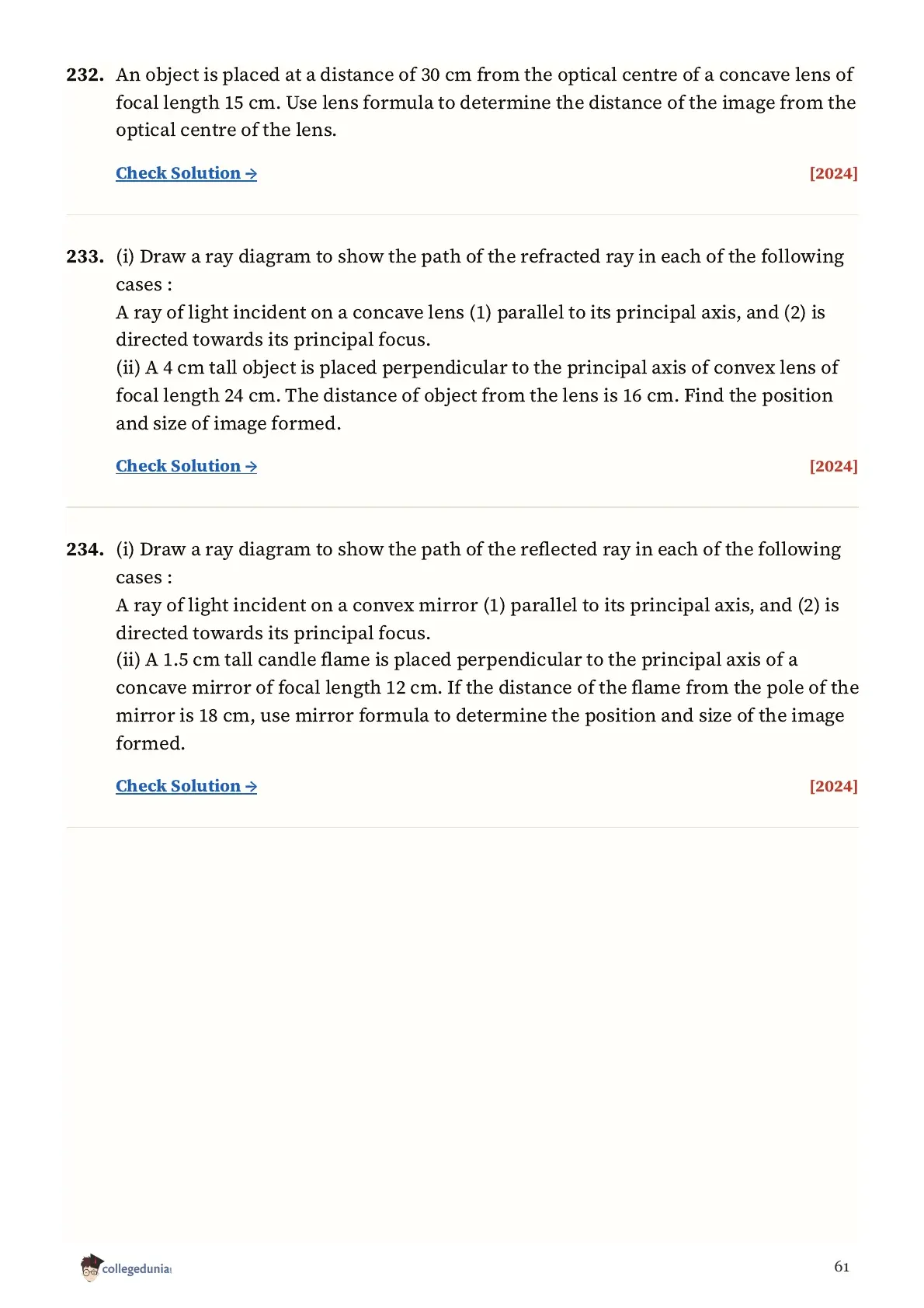
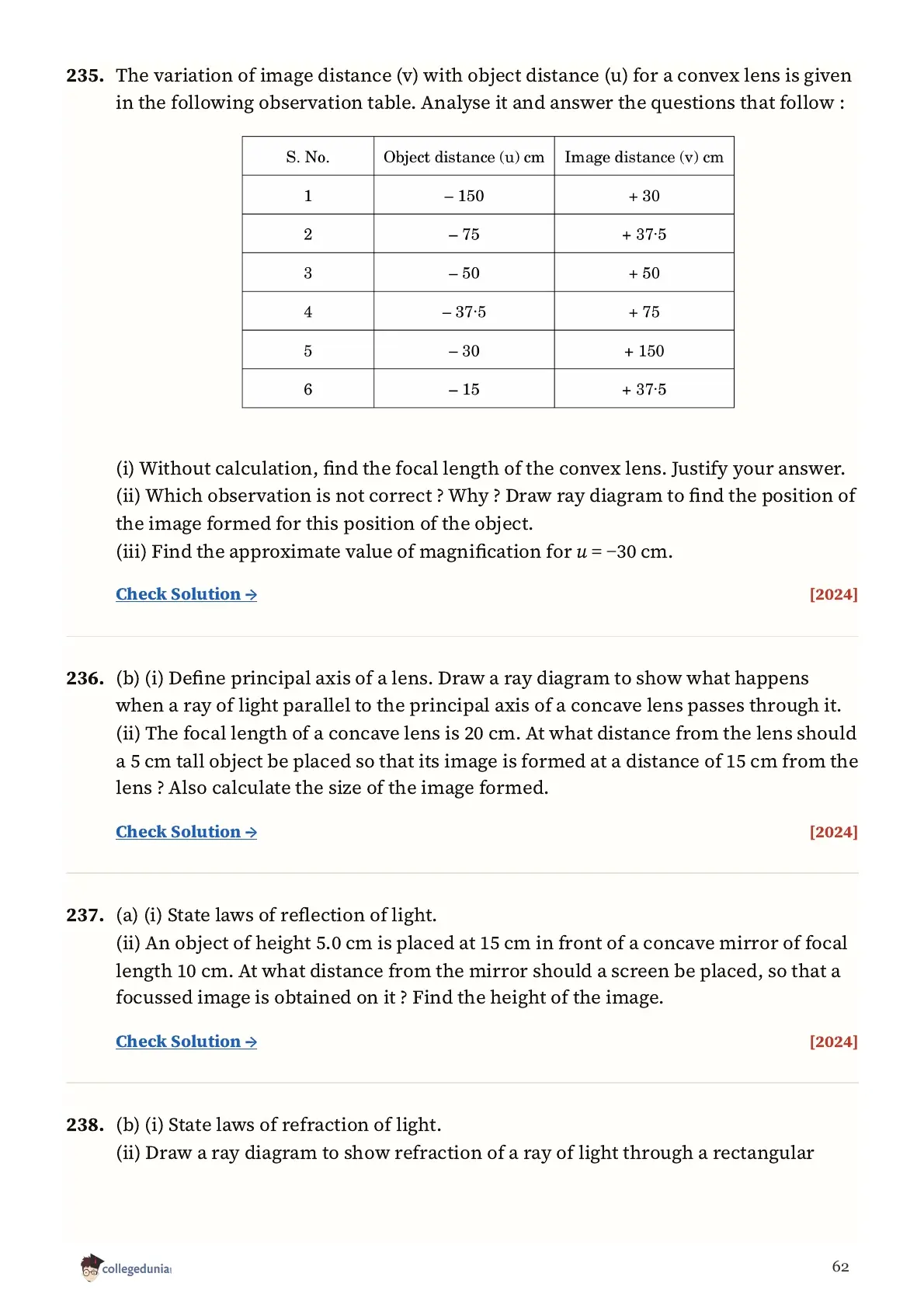
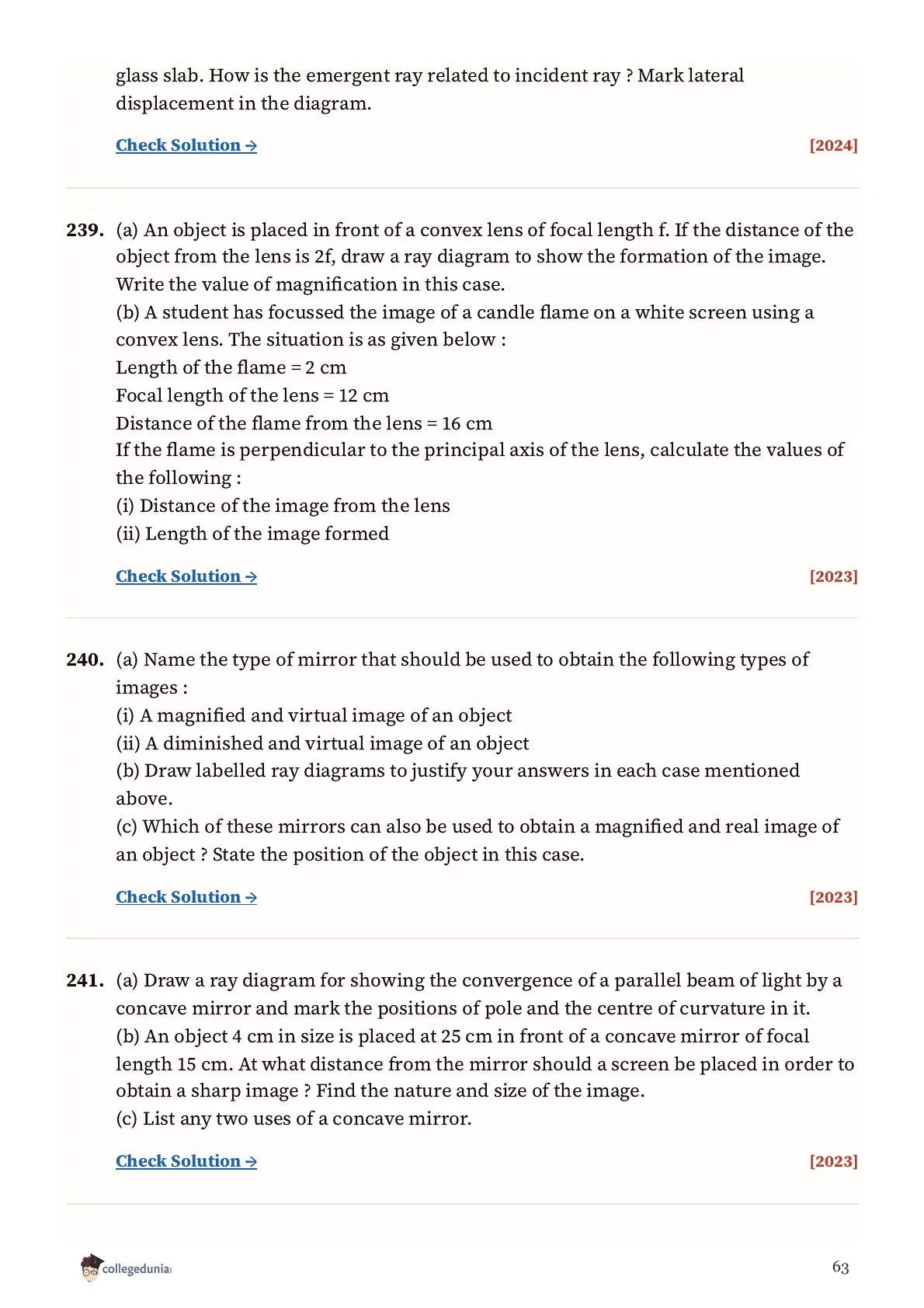
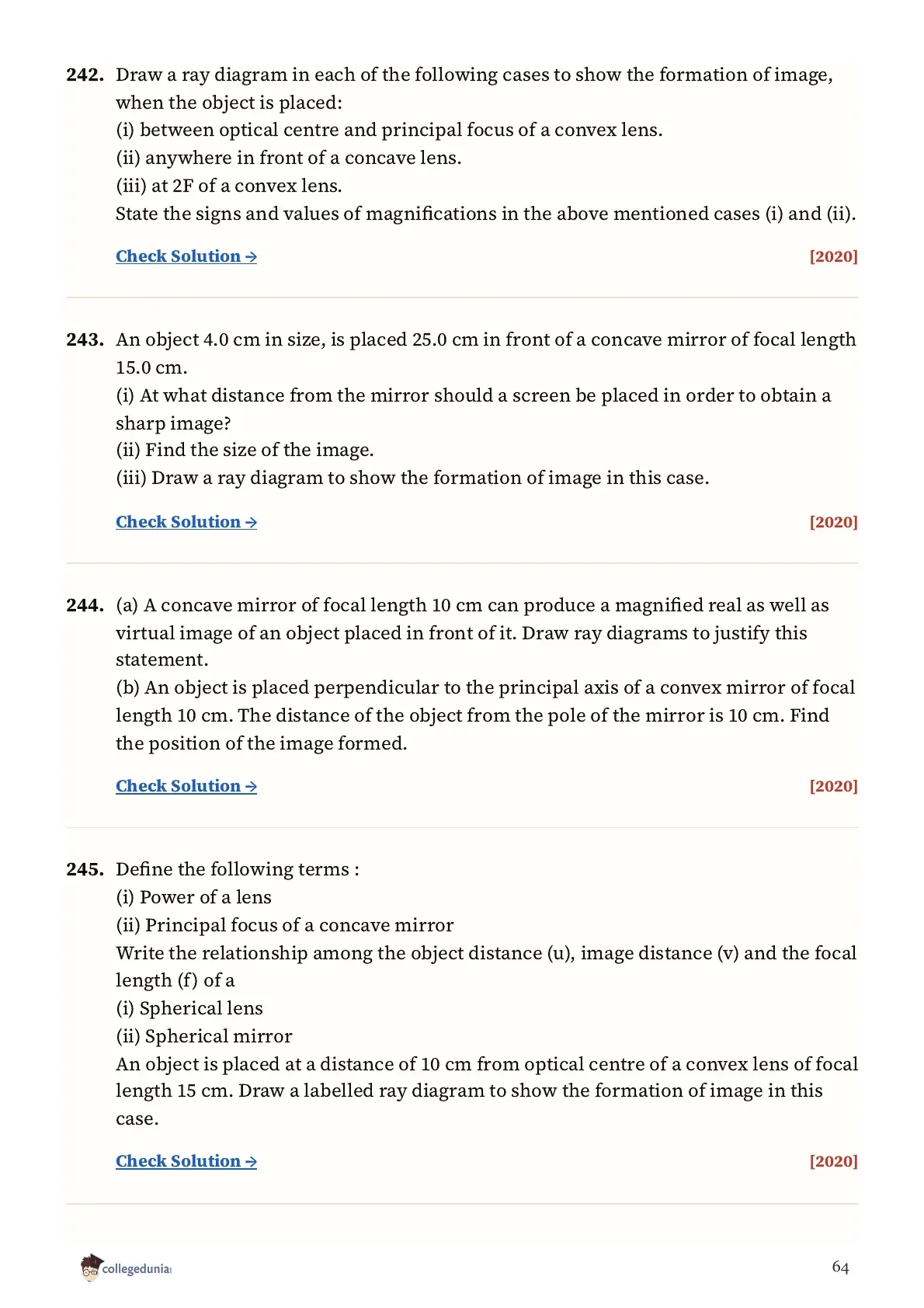
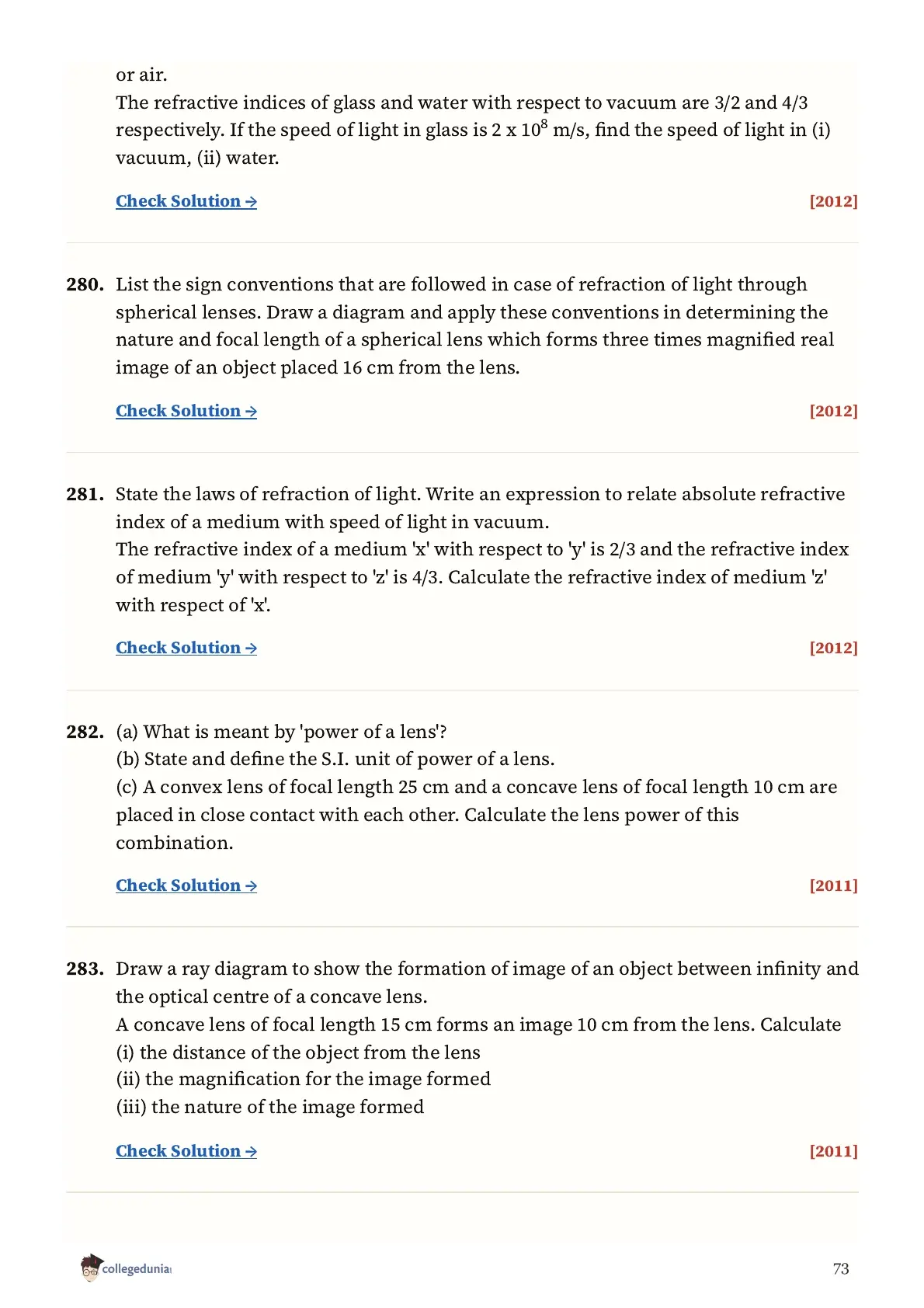
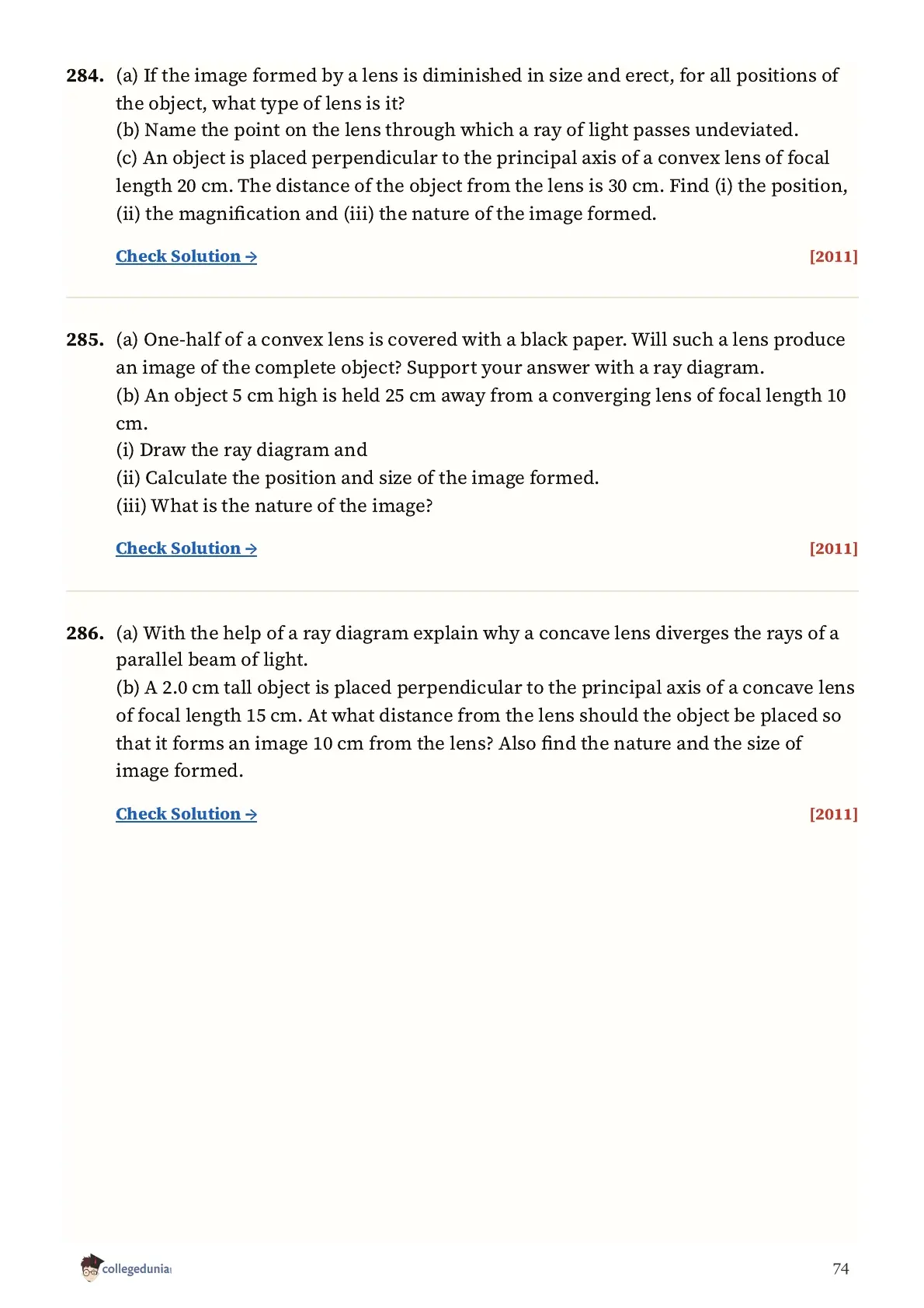
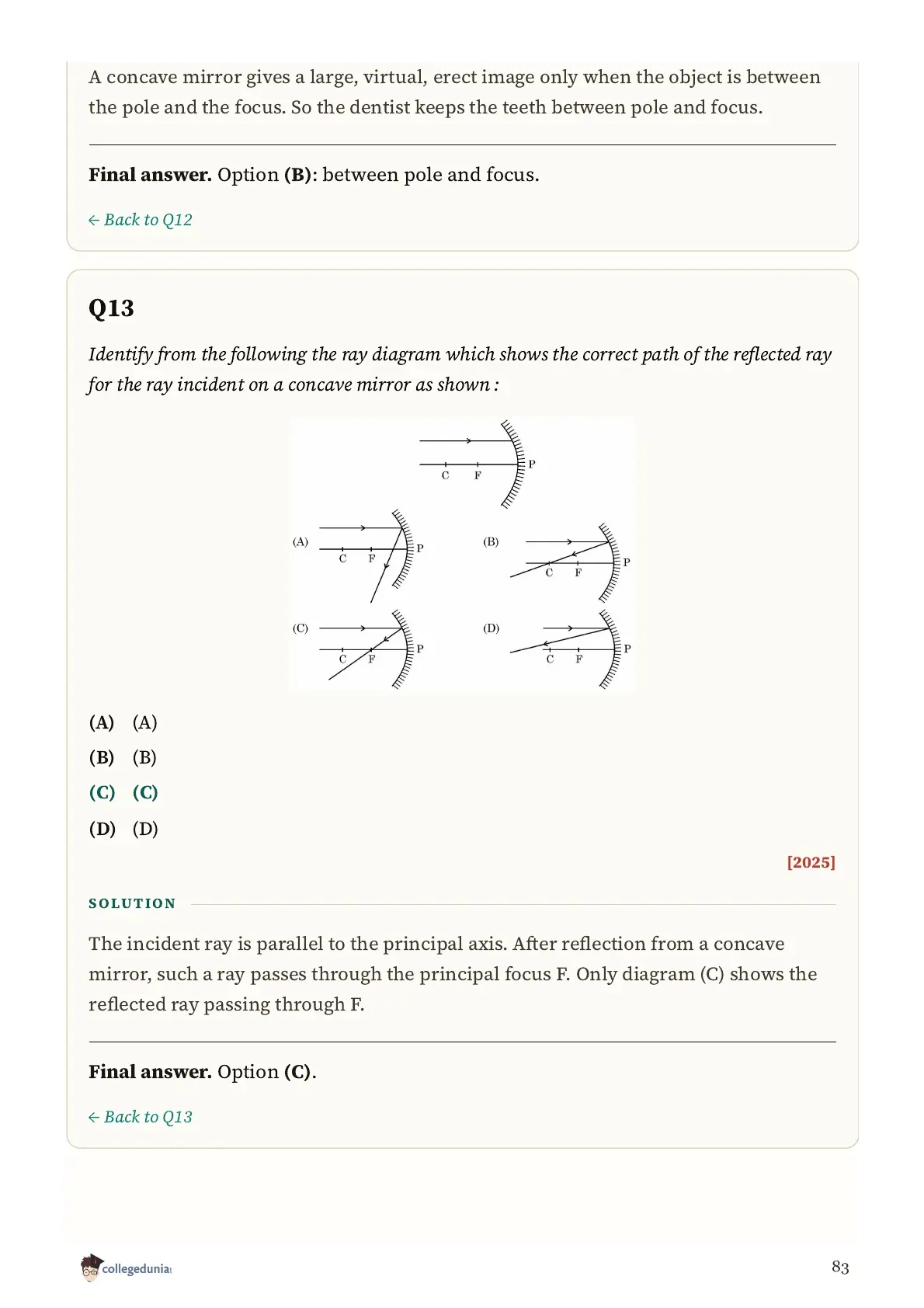
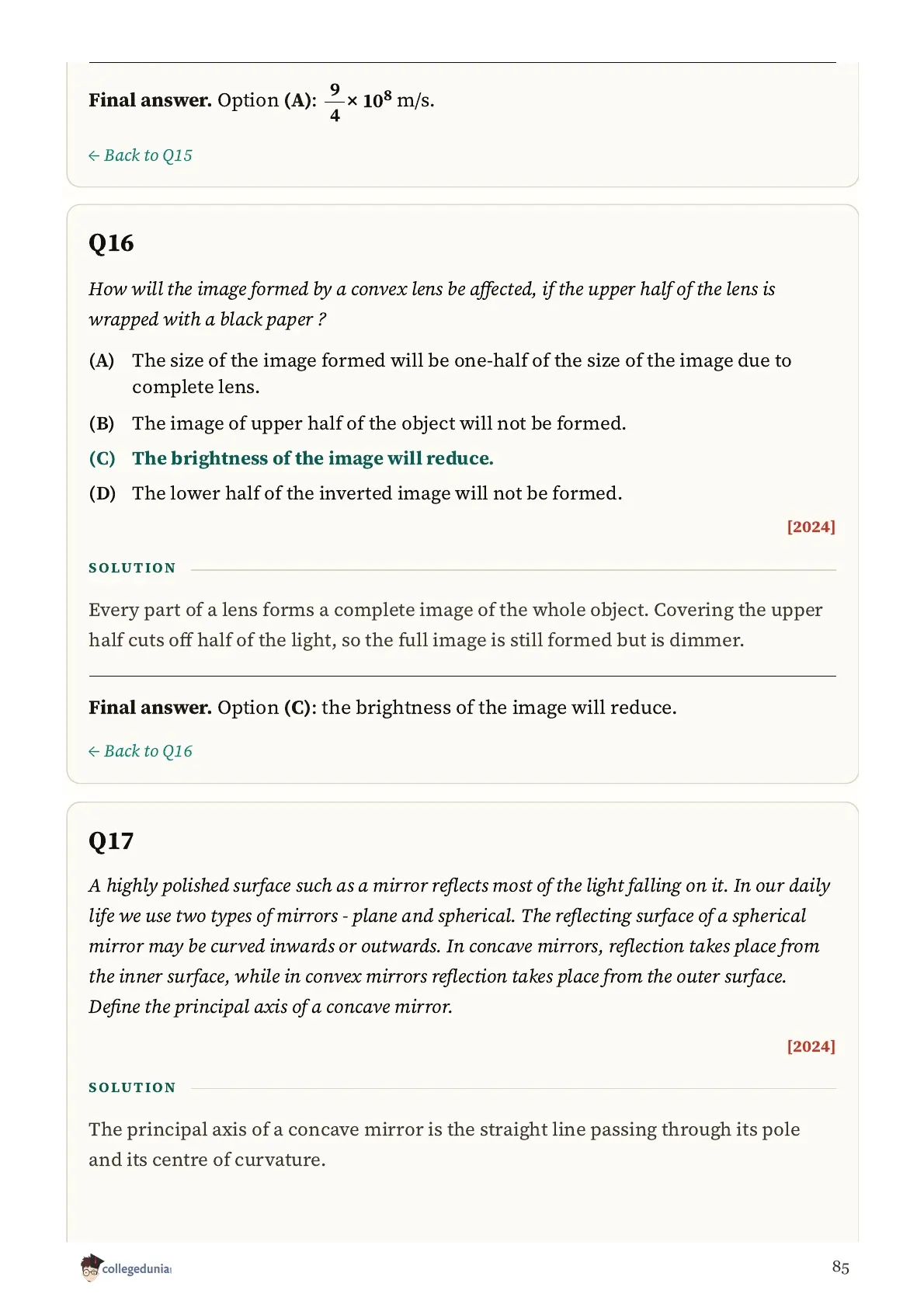
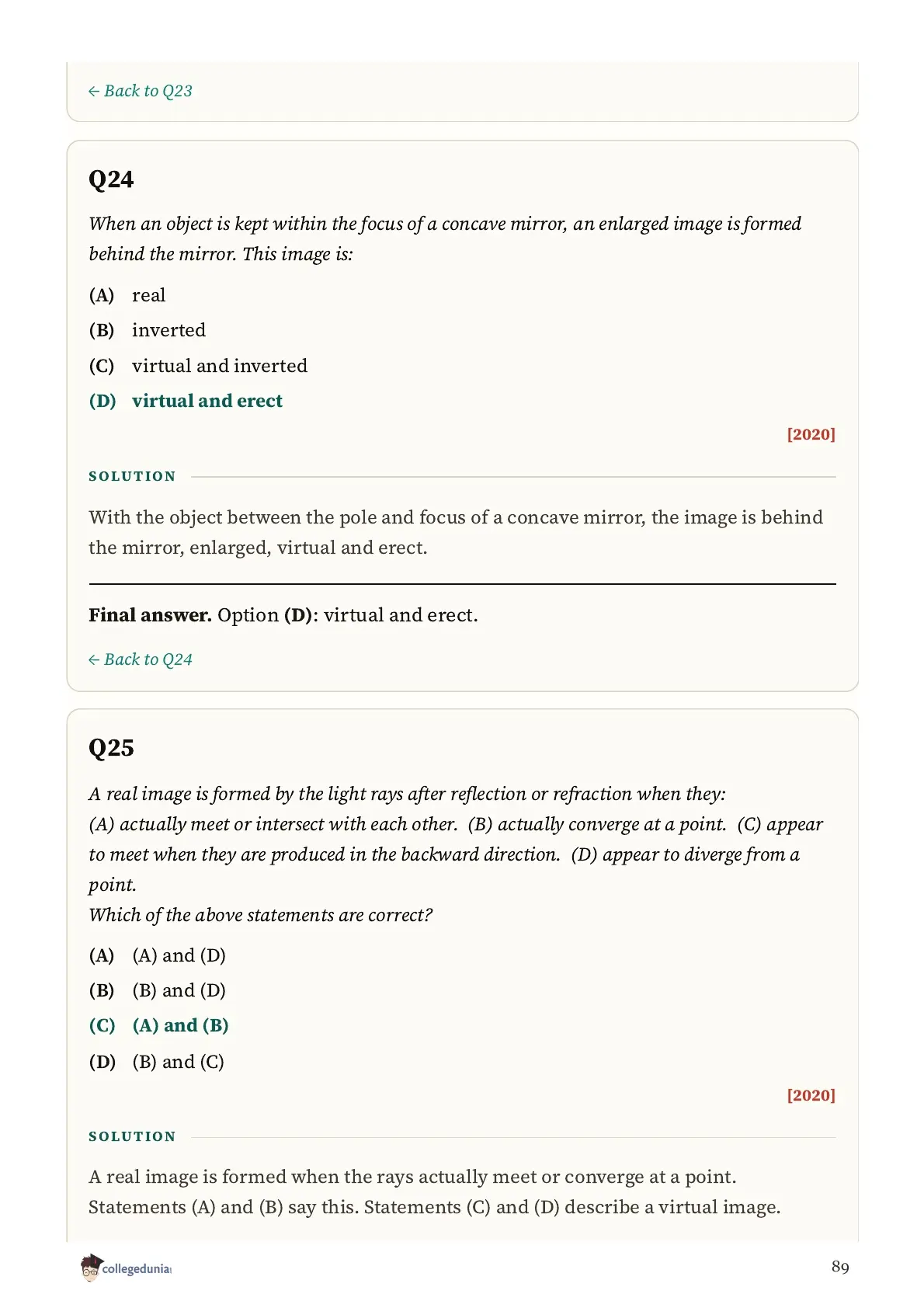
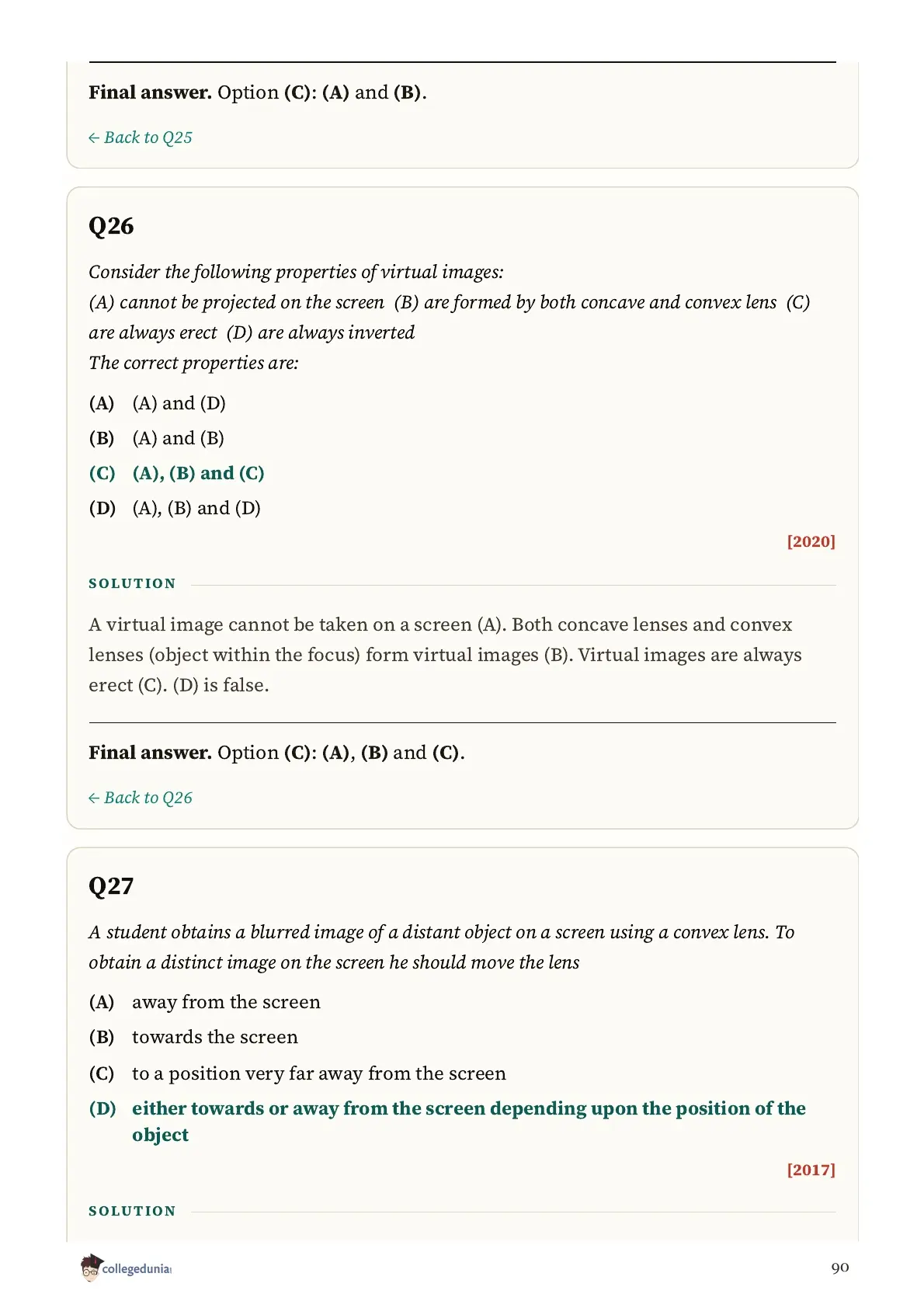
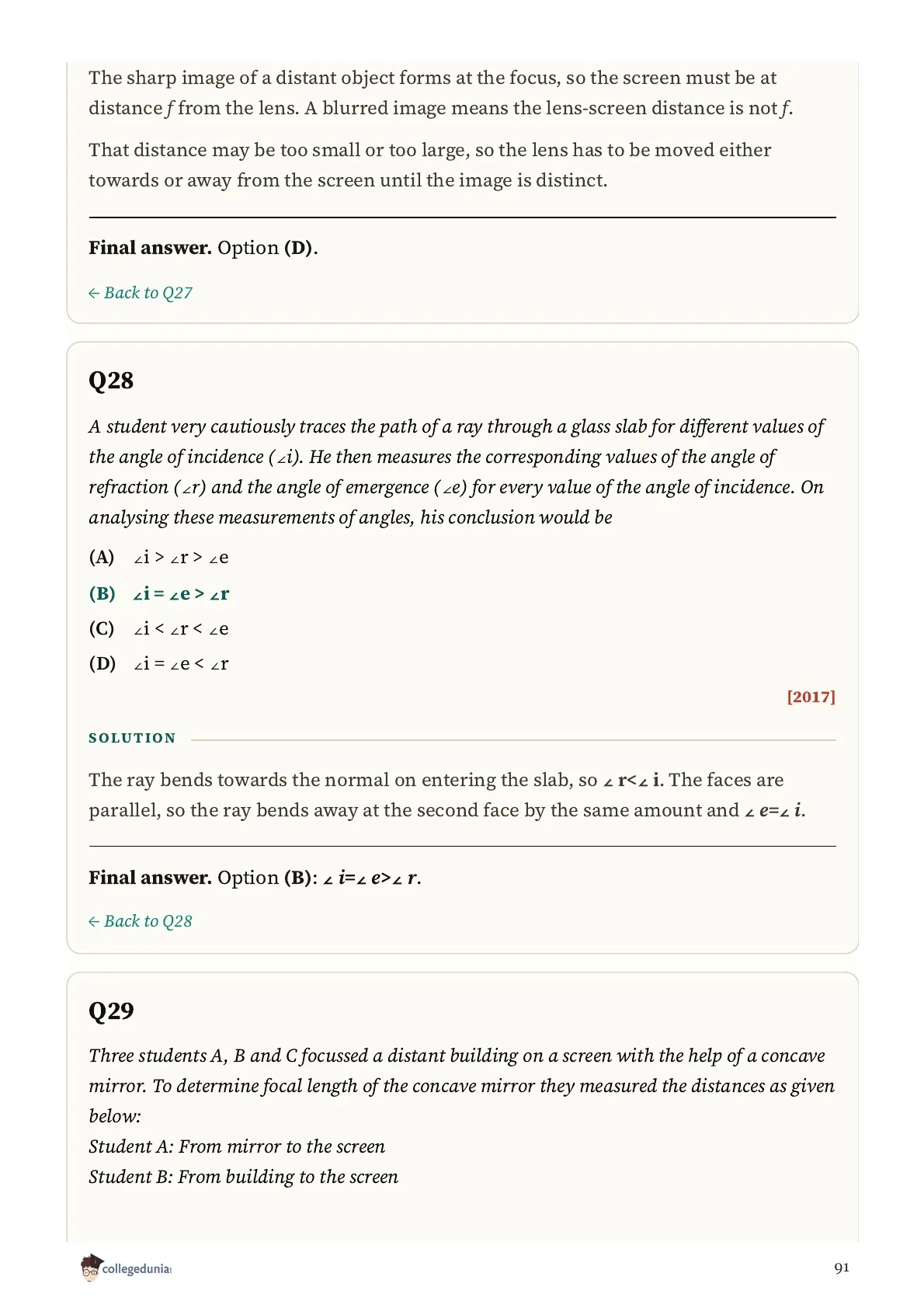
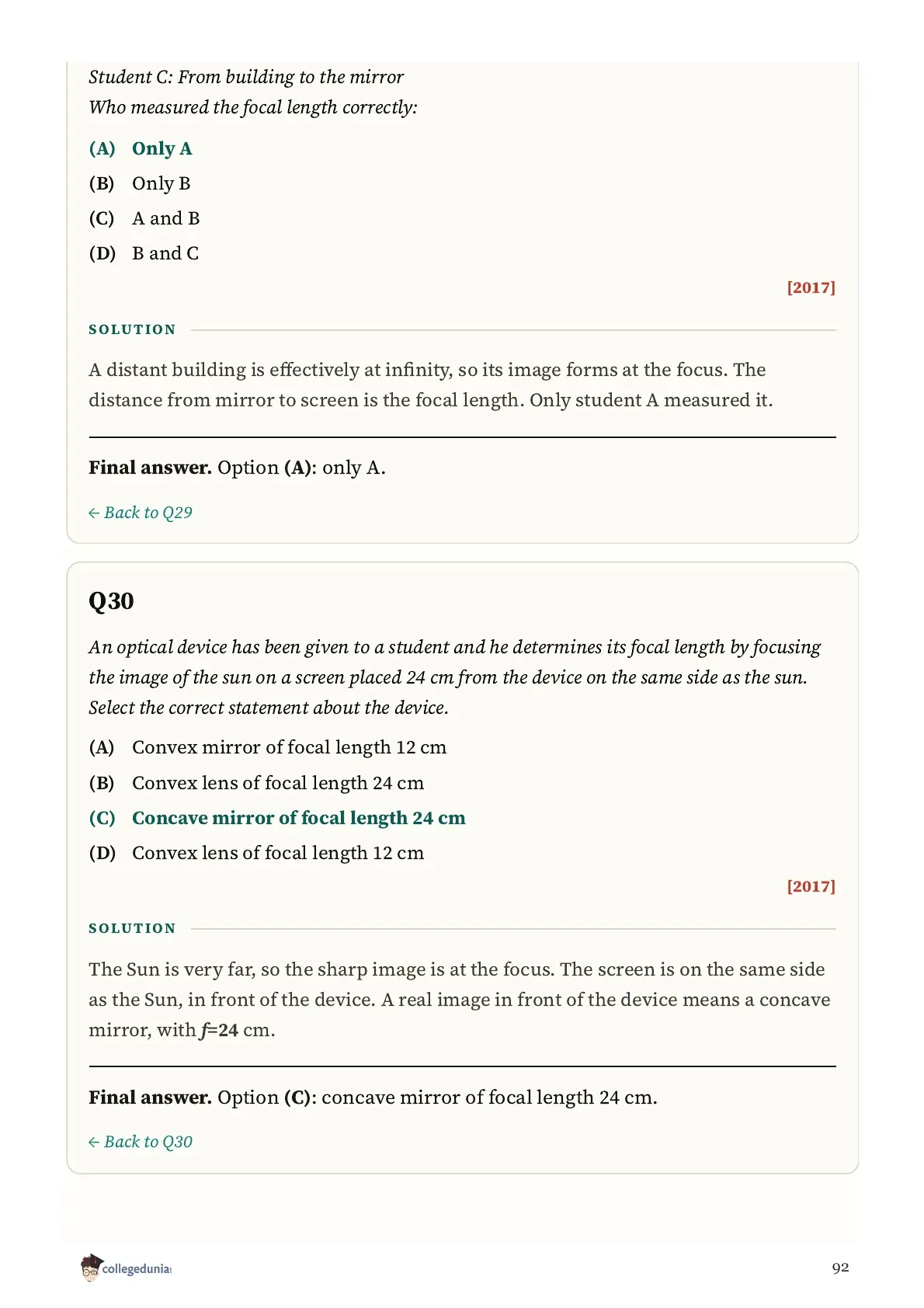
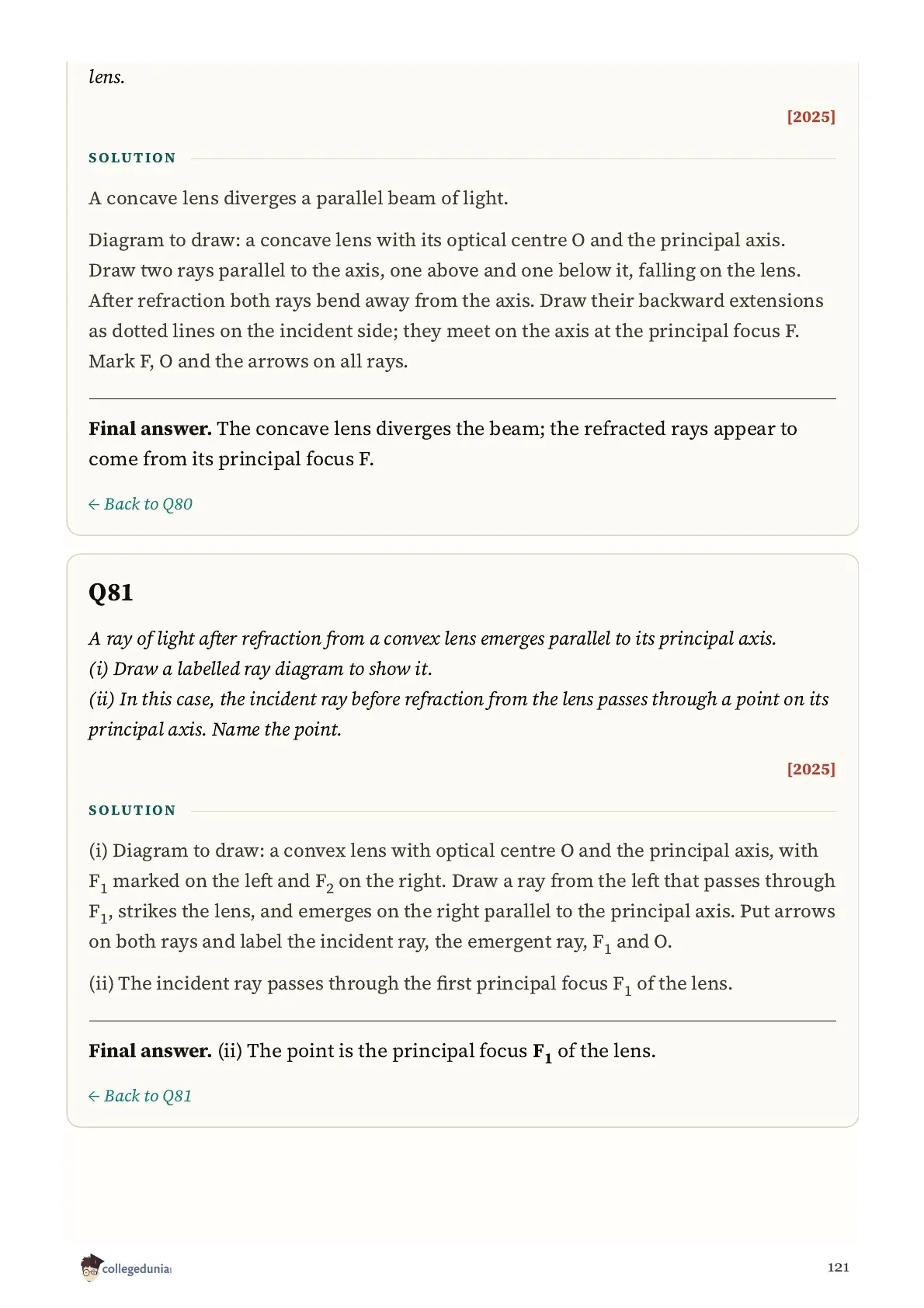
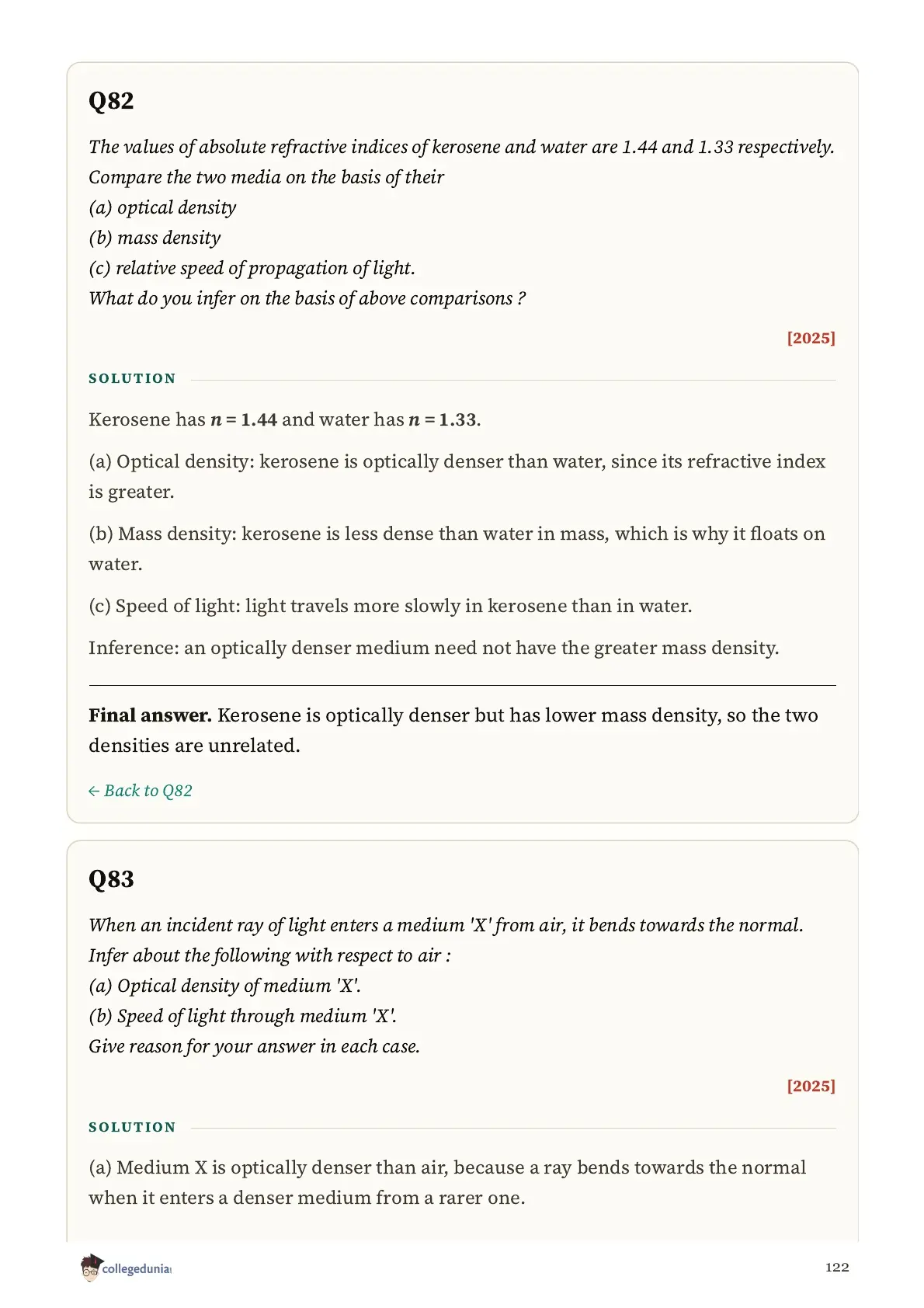
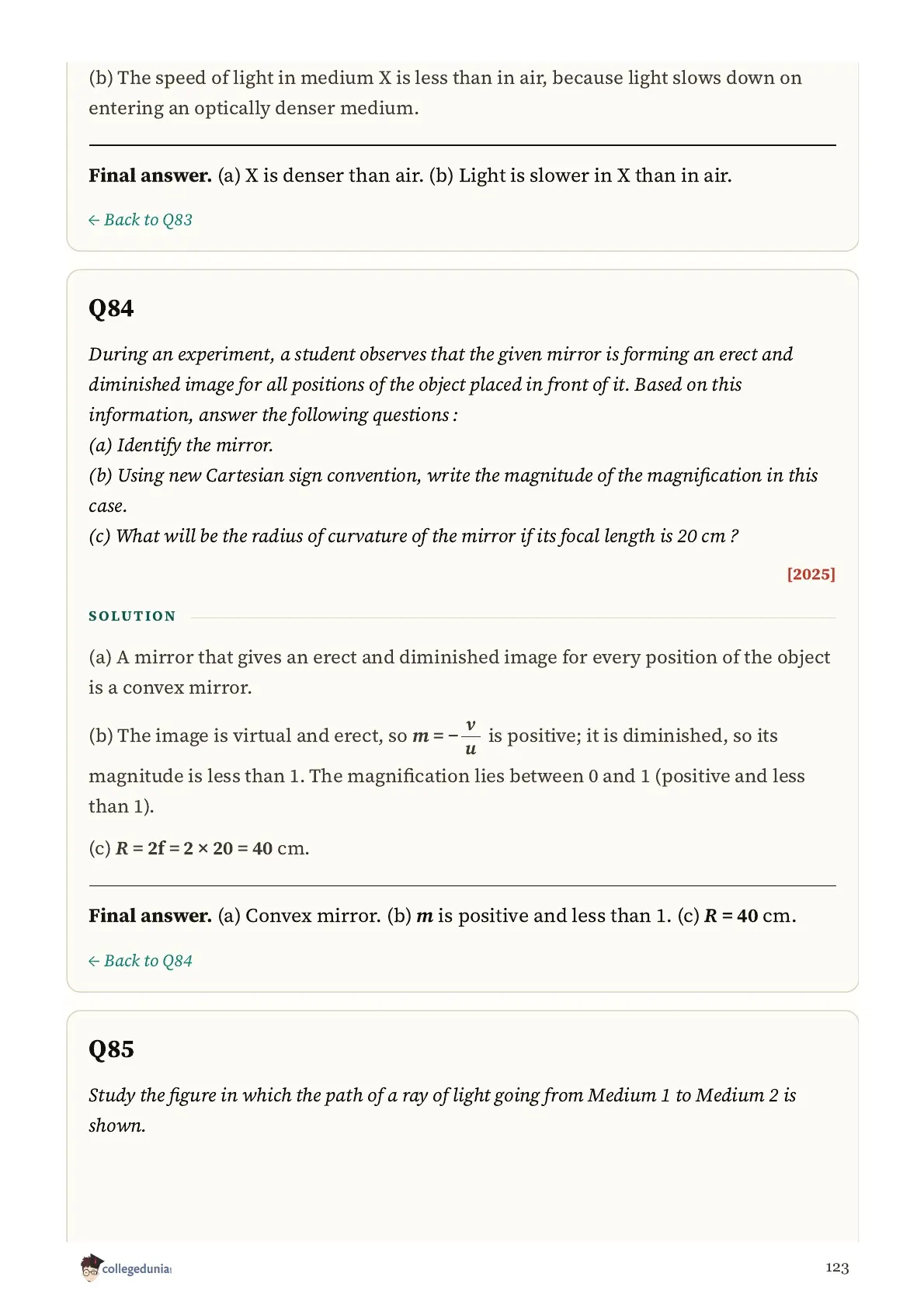
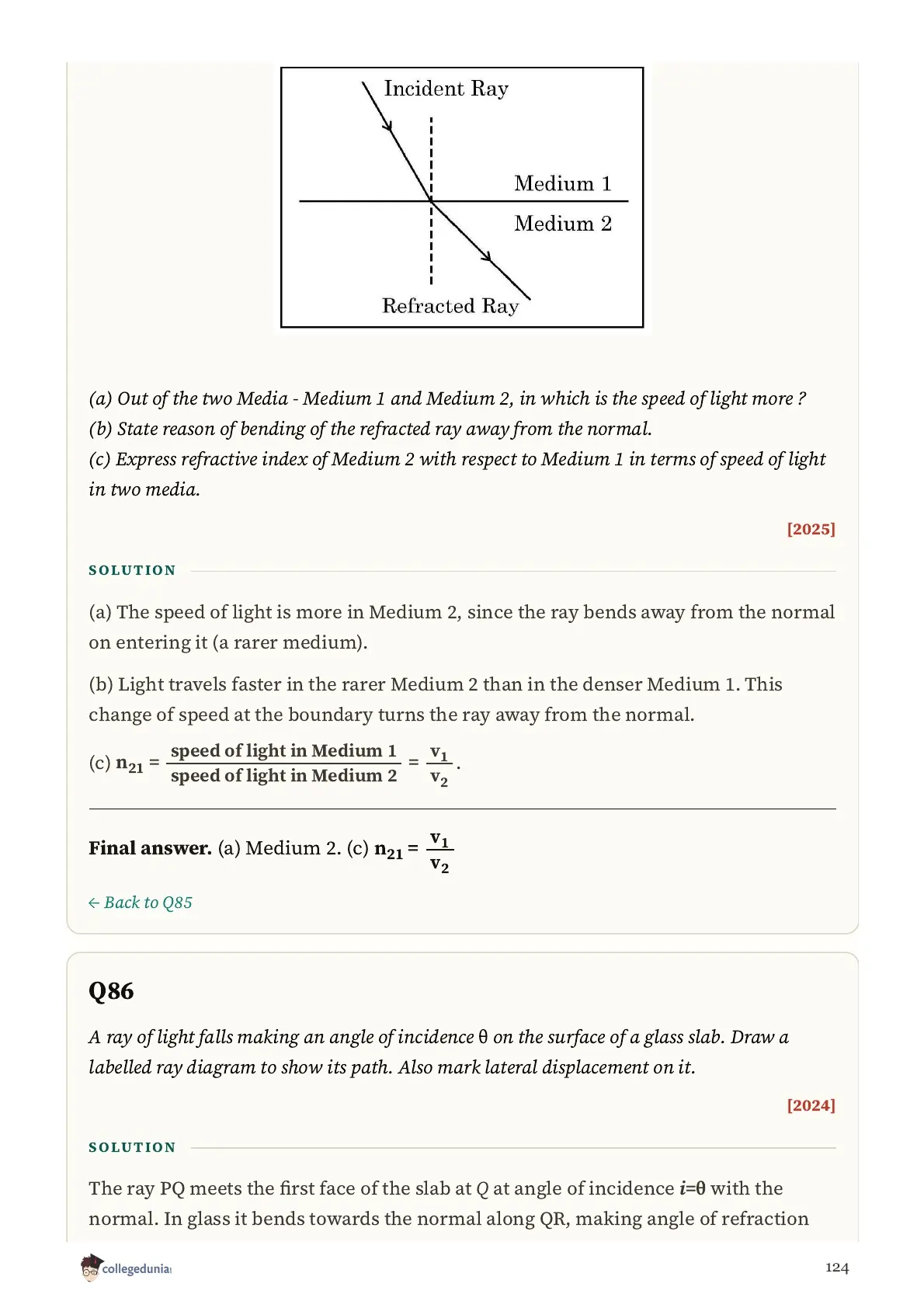
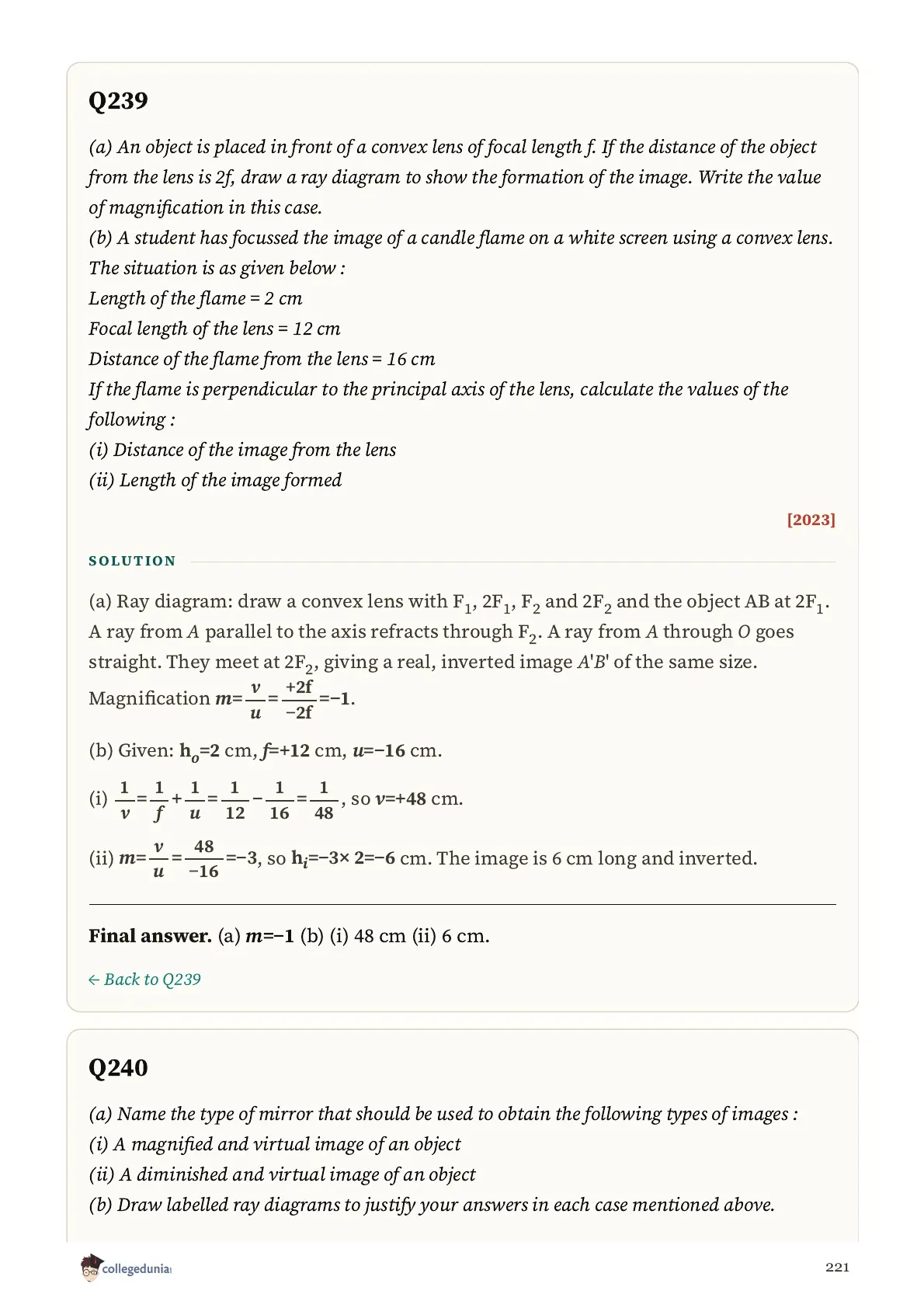
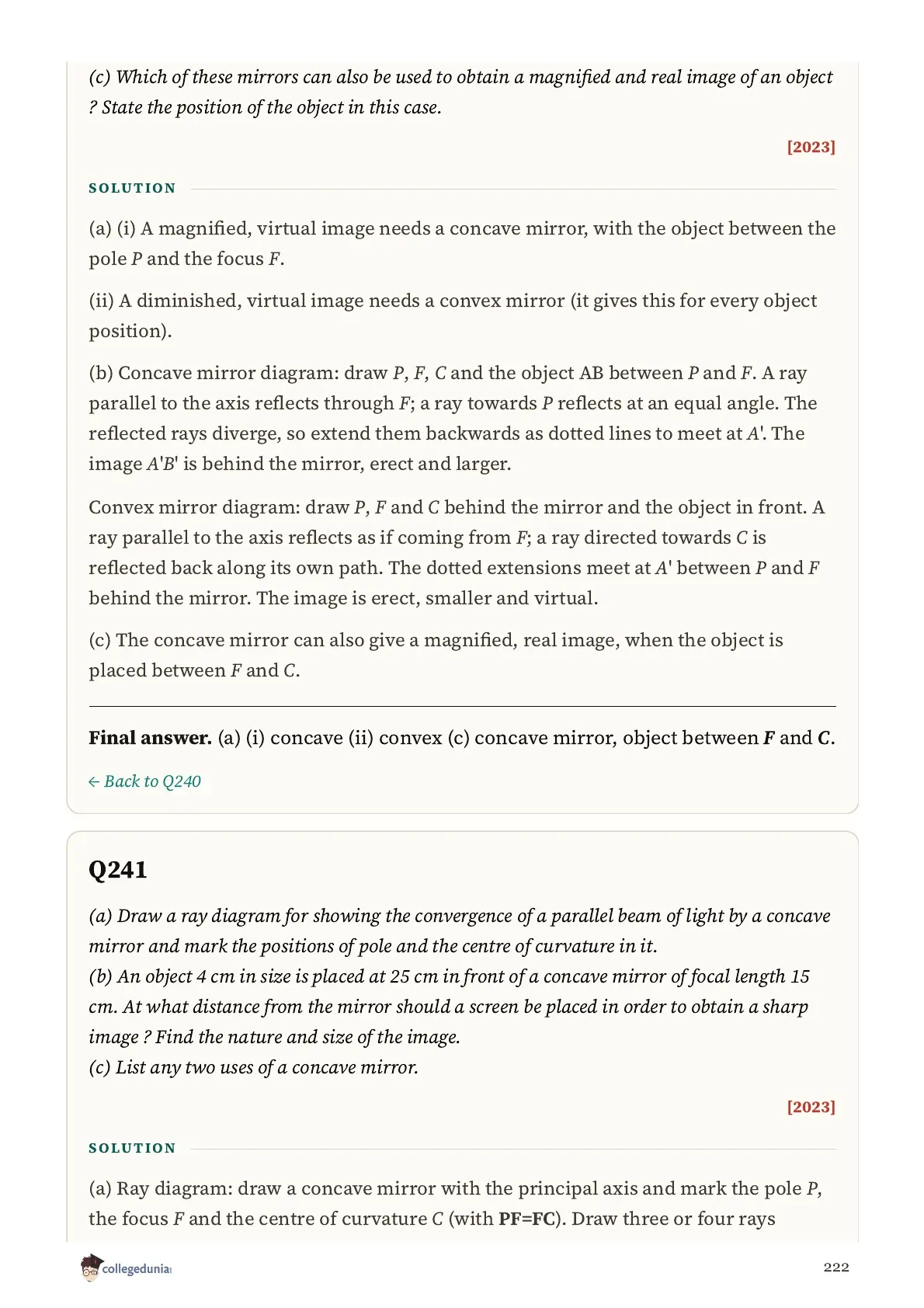
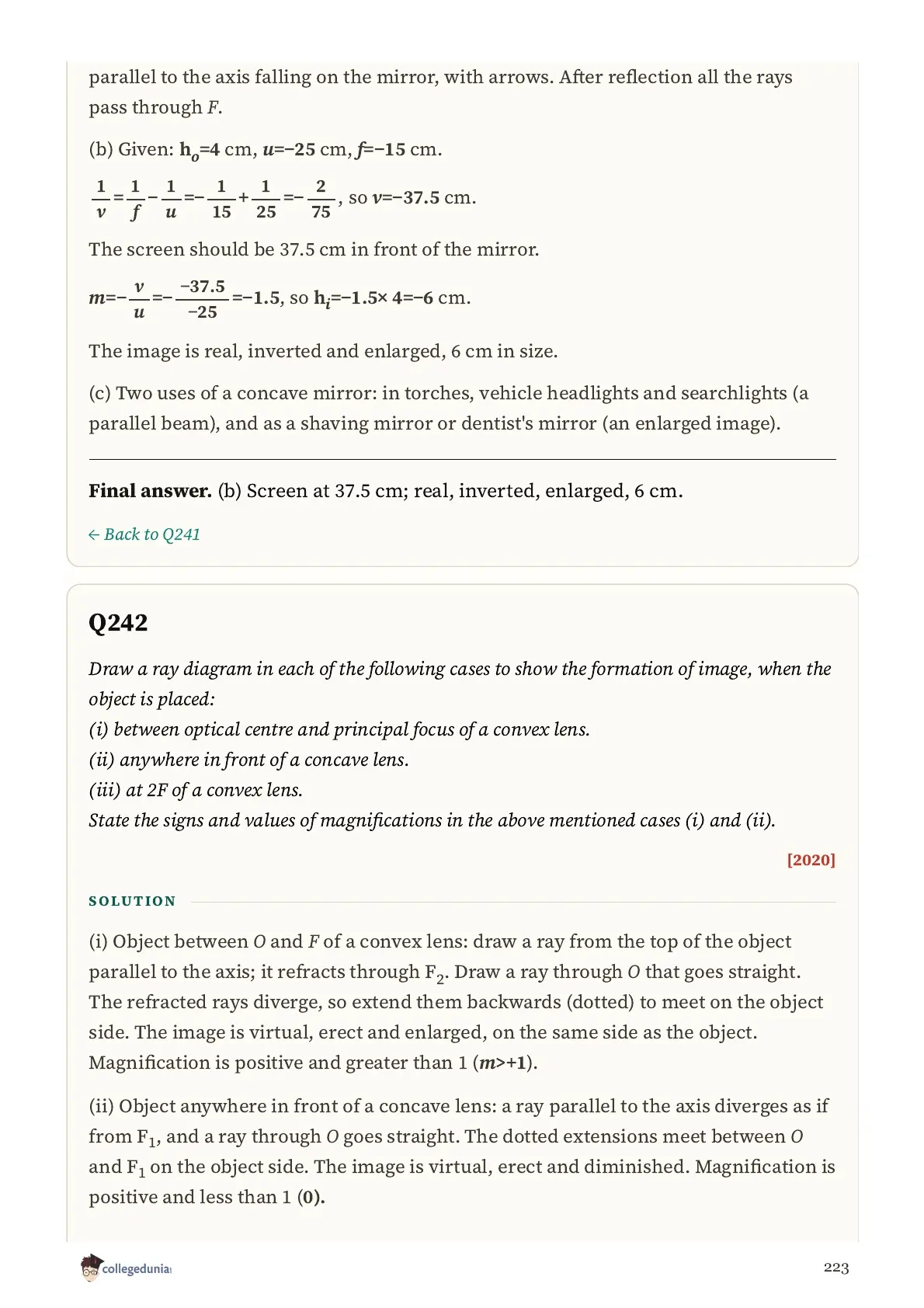
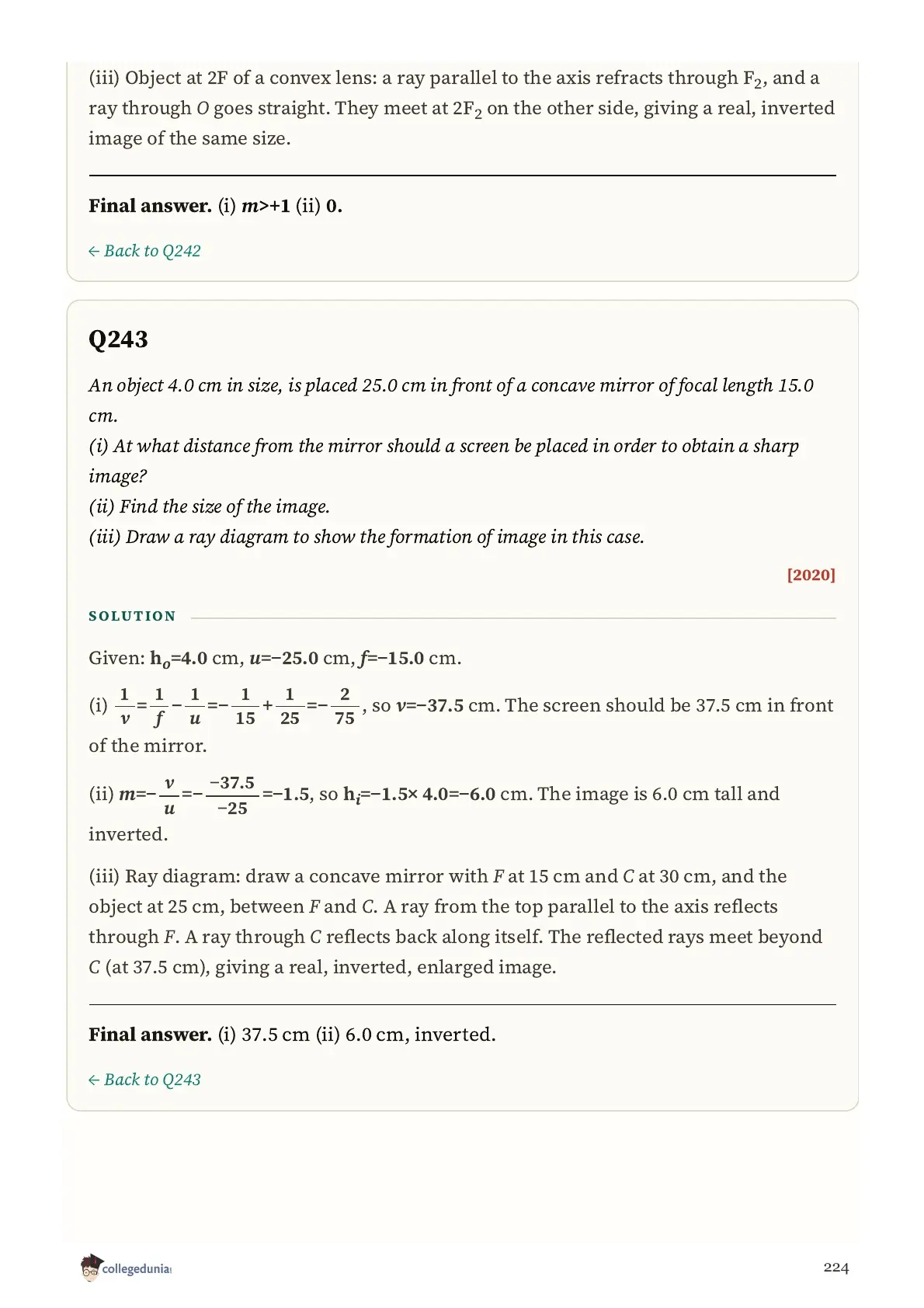
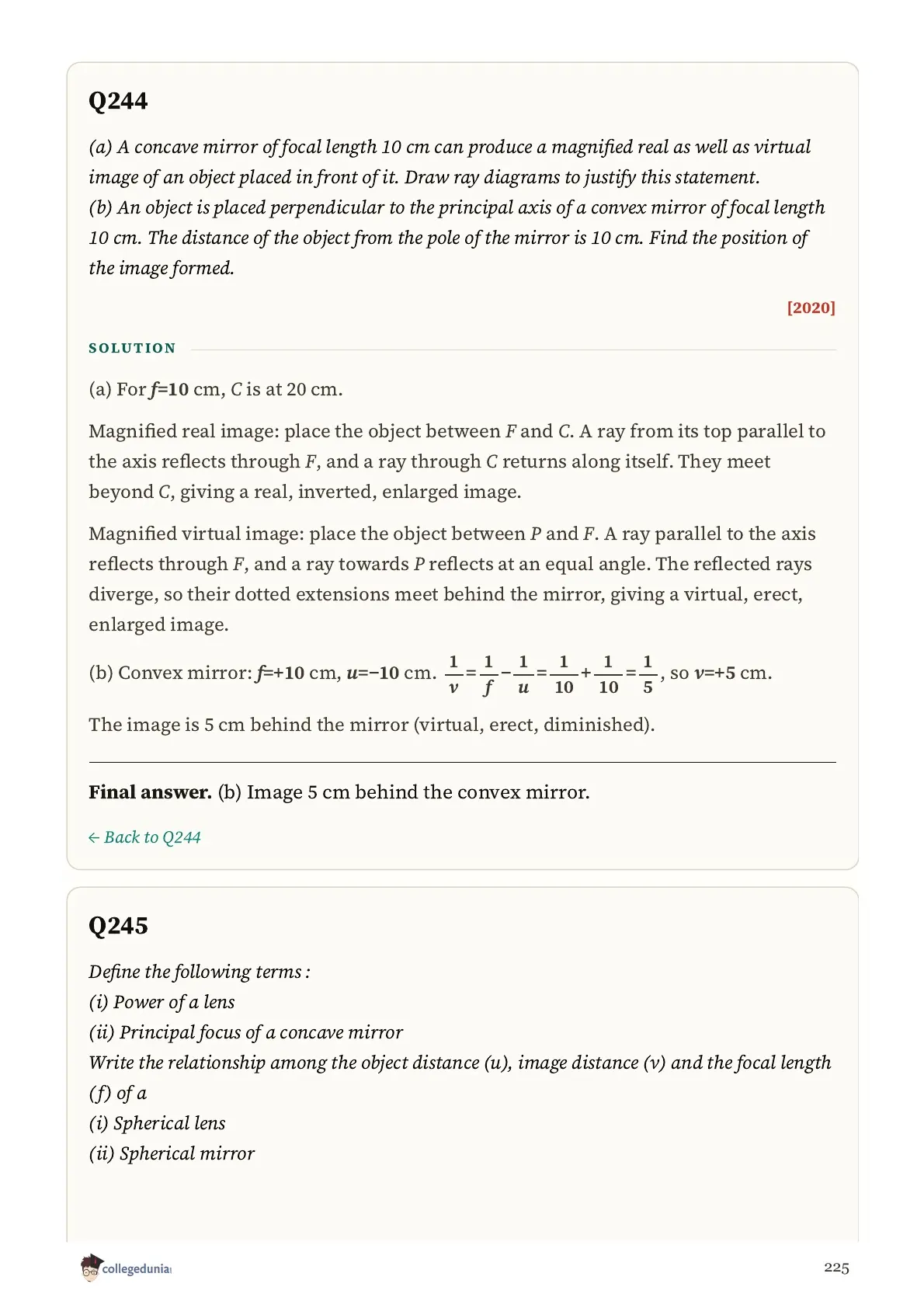
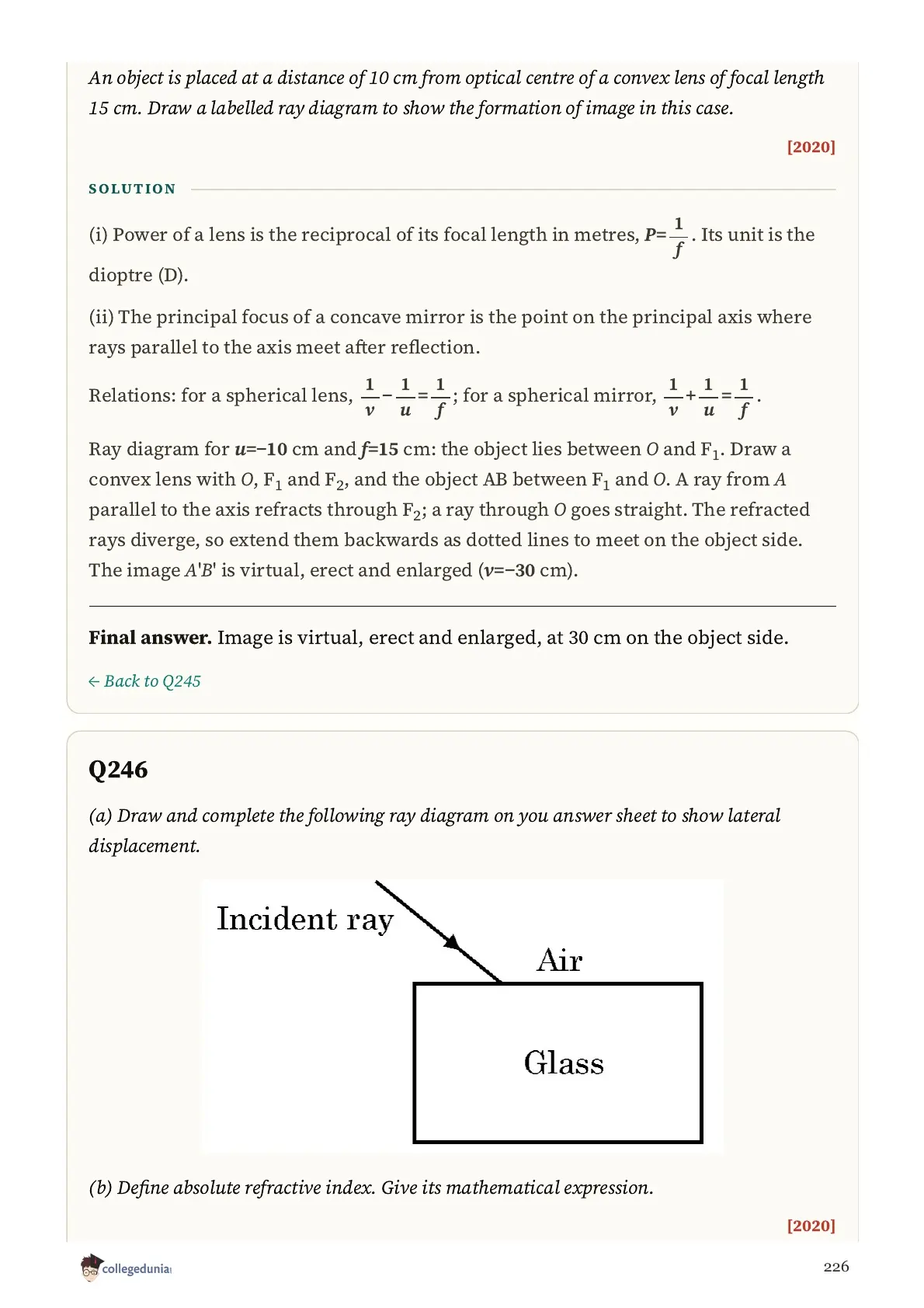
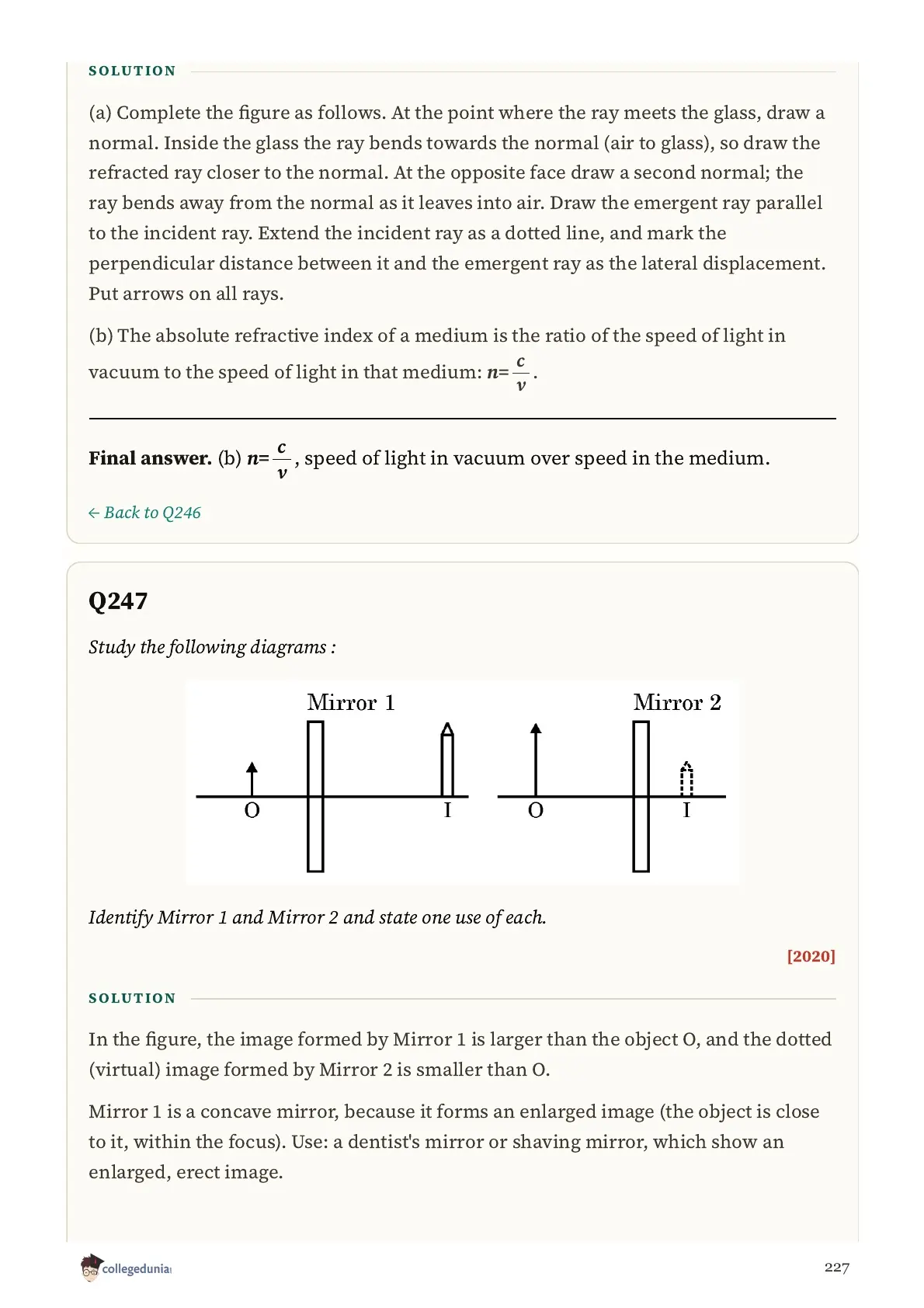
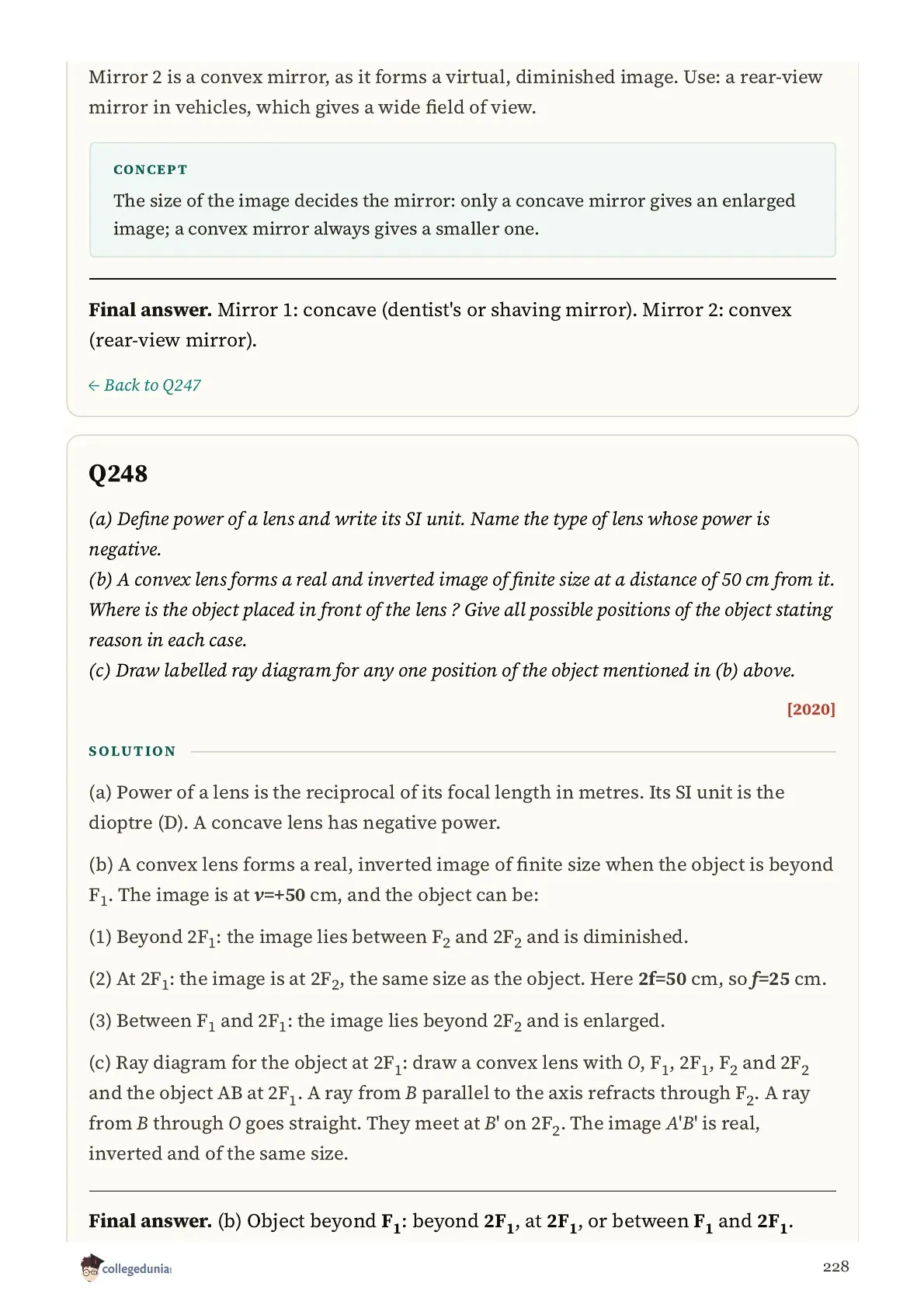
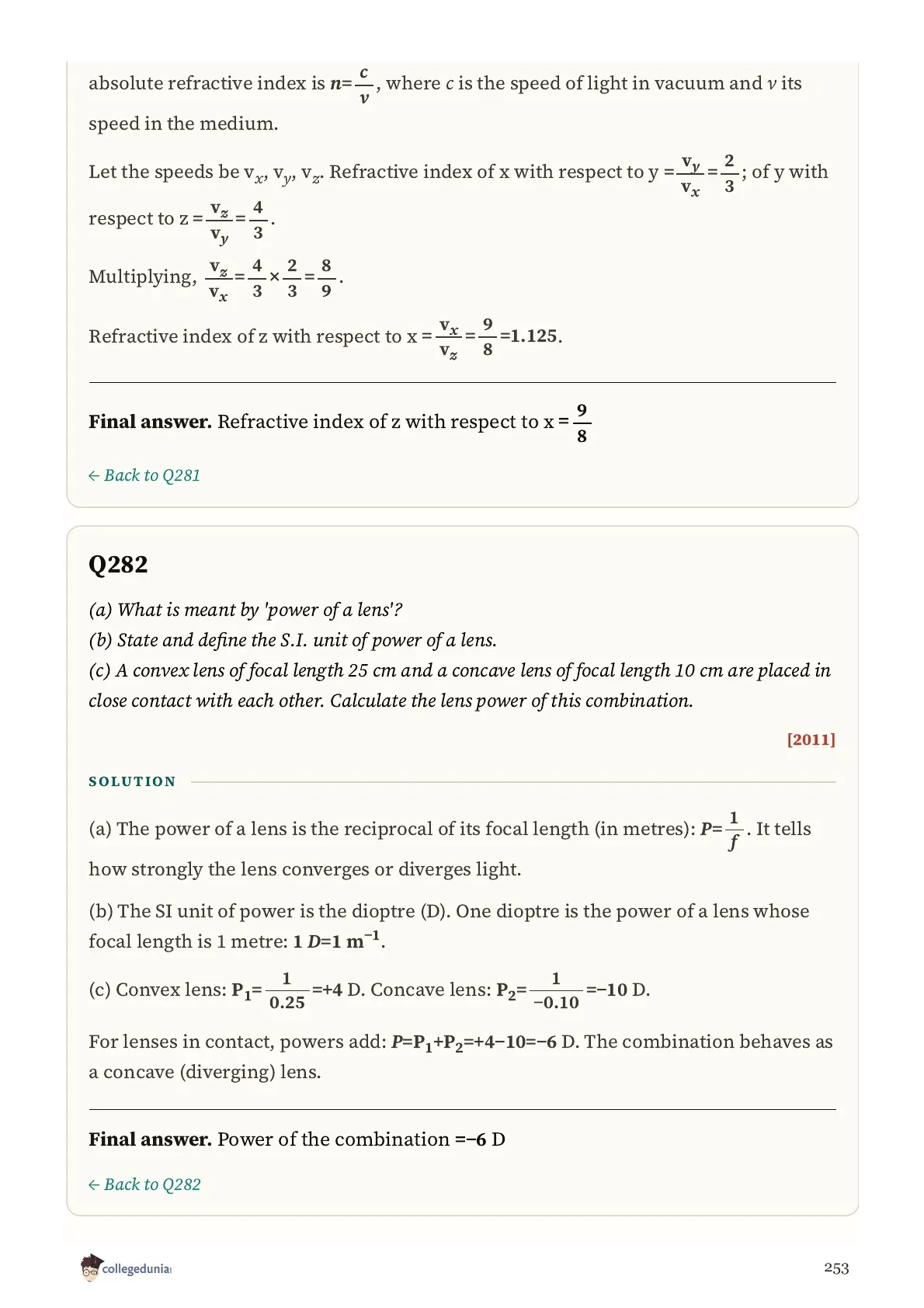
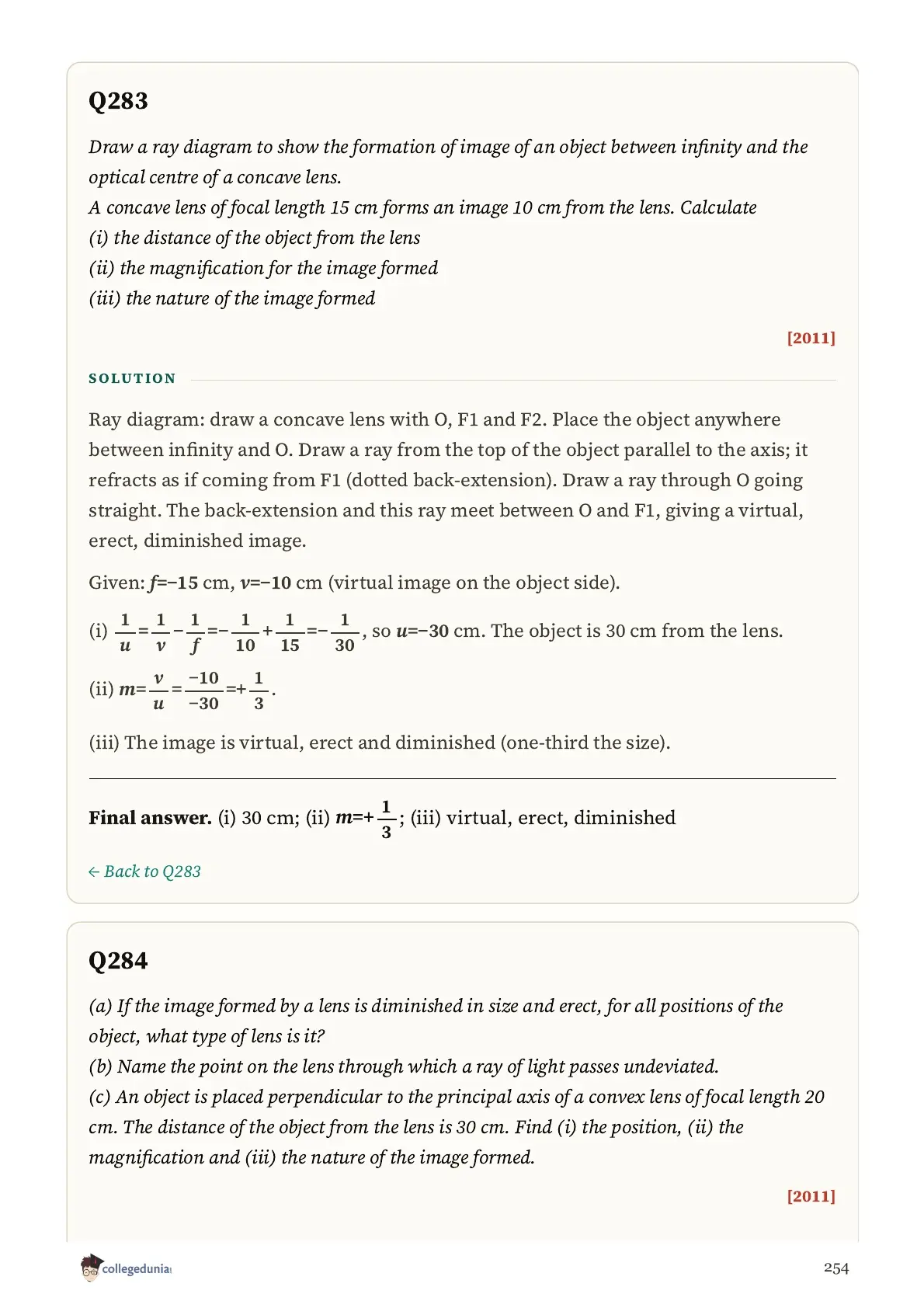
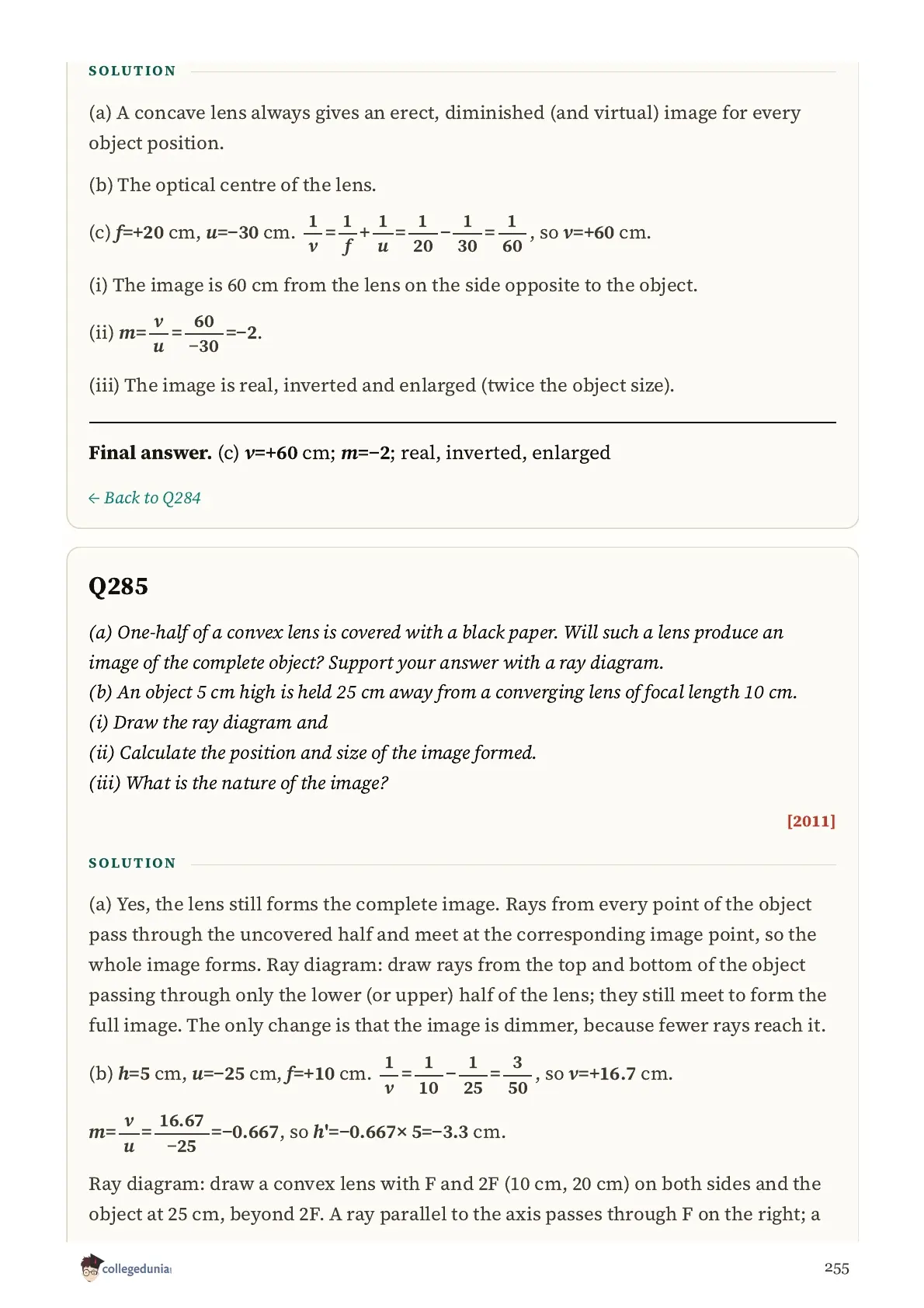
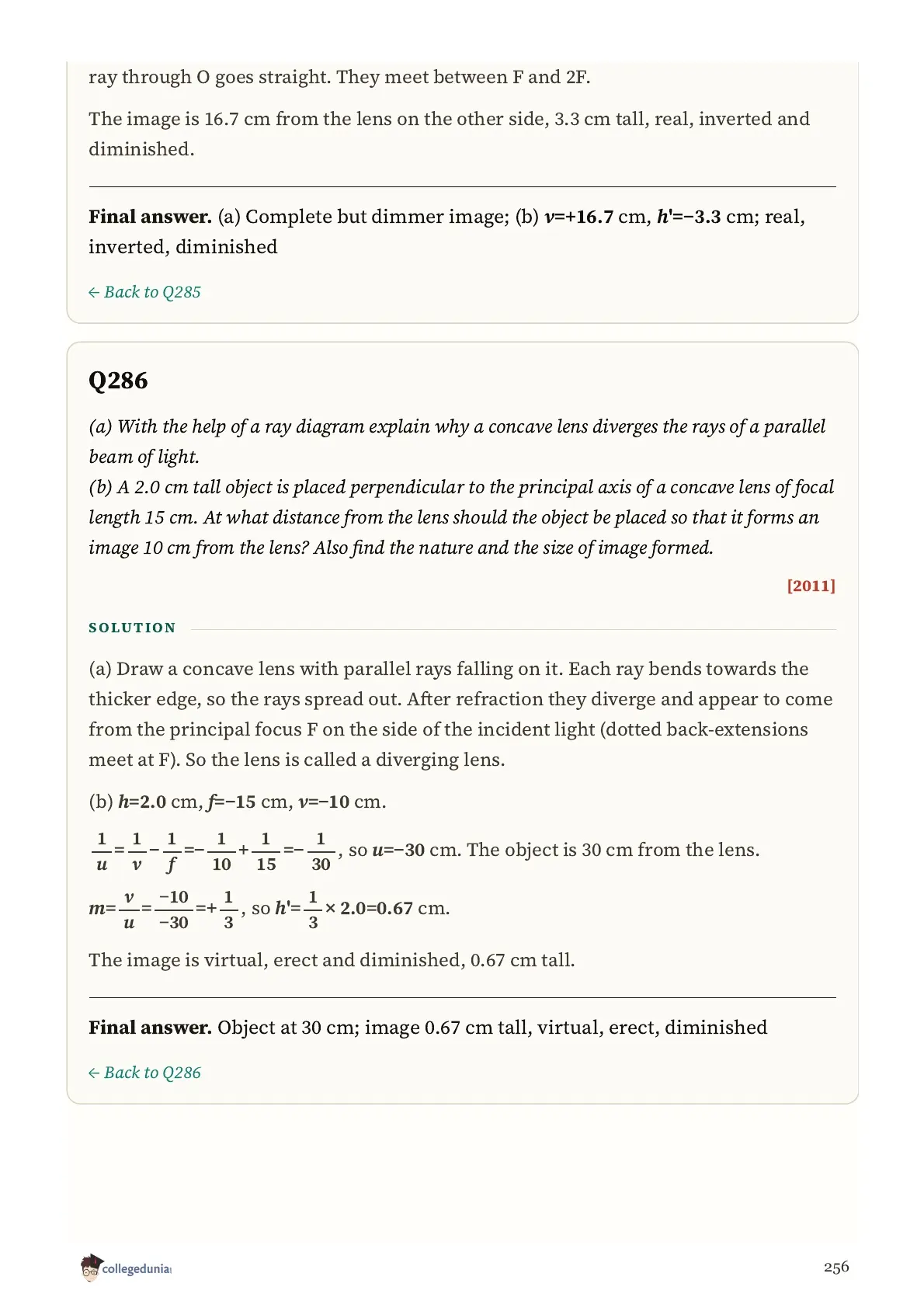
The questions keep returning to image formation (187 questions), focal length (141), numericals asking you to calculate or find a value (125), ray diagrams you must draw or complete (120), convex lenses (70), concave mirrors (67) and magnification (54). 24 of the questions carry their original ray diagram or figure, so you work from the same drawing the board printed.
On this page you get:
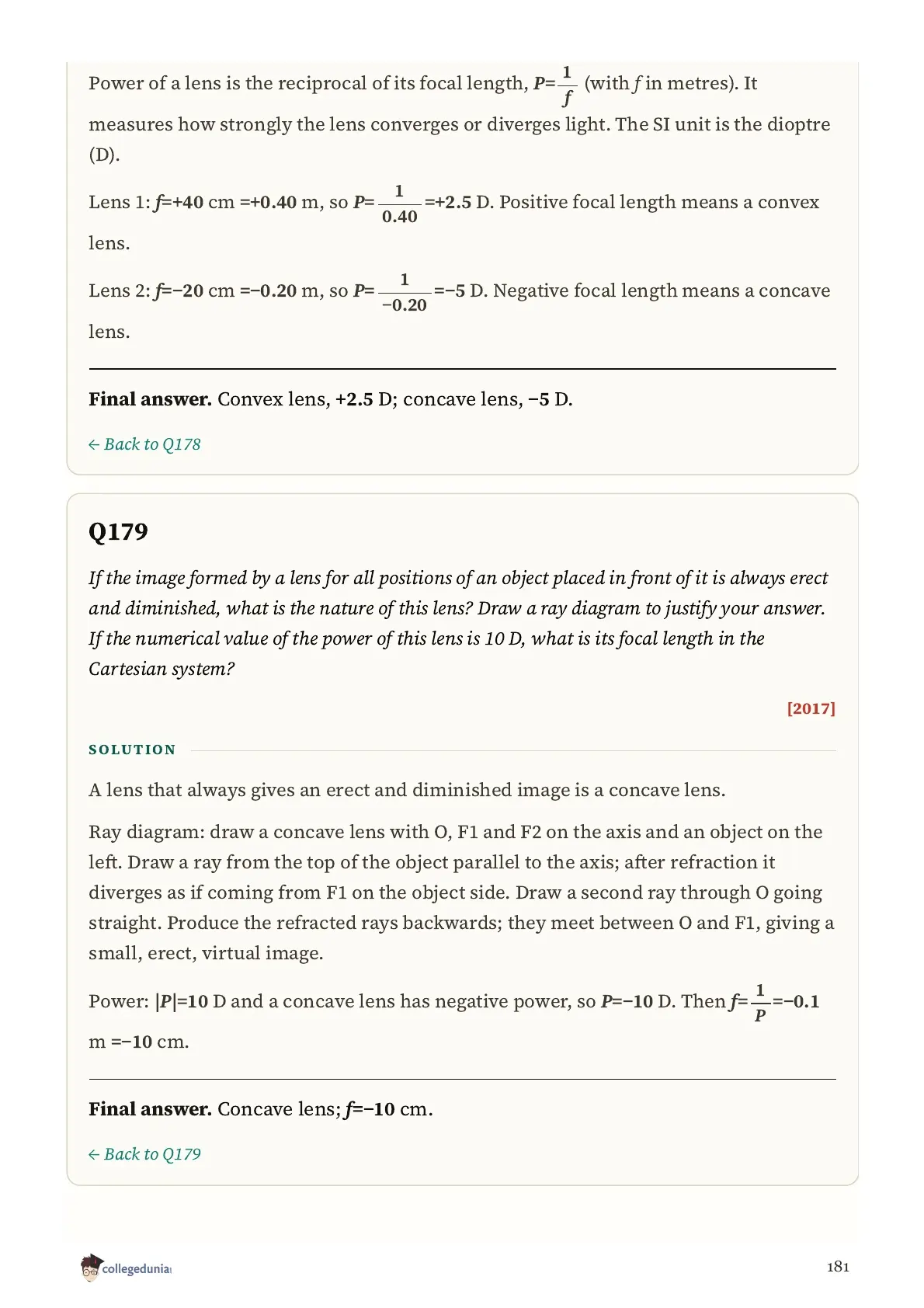
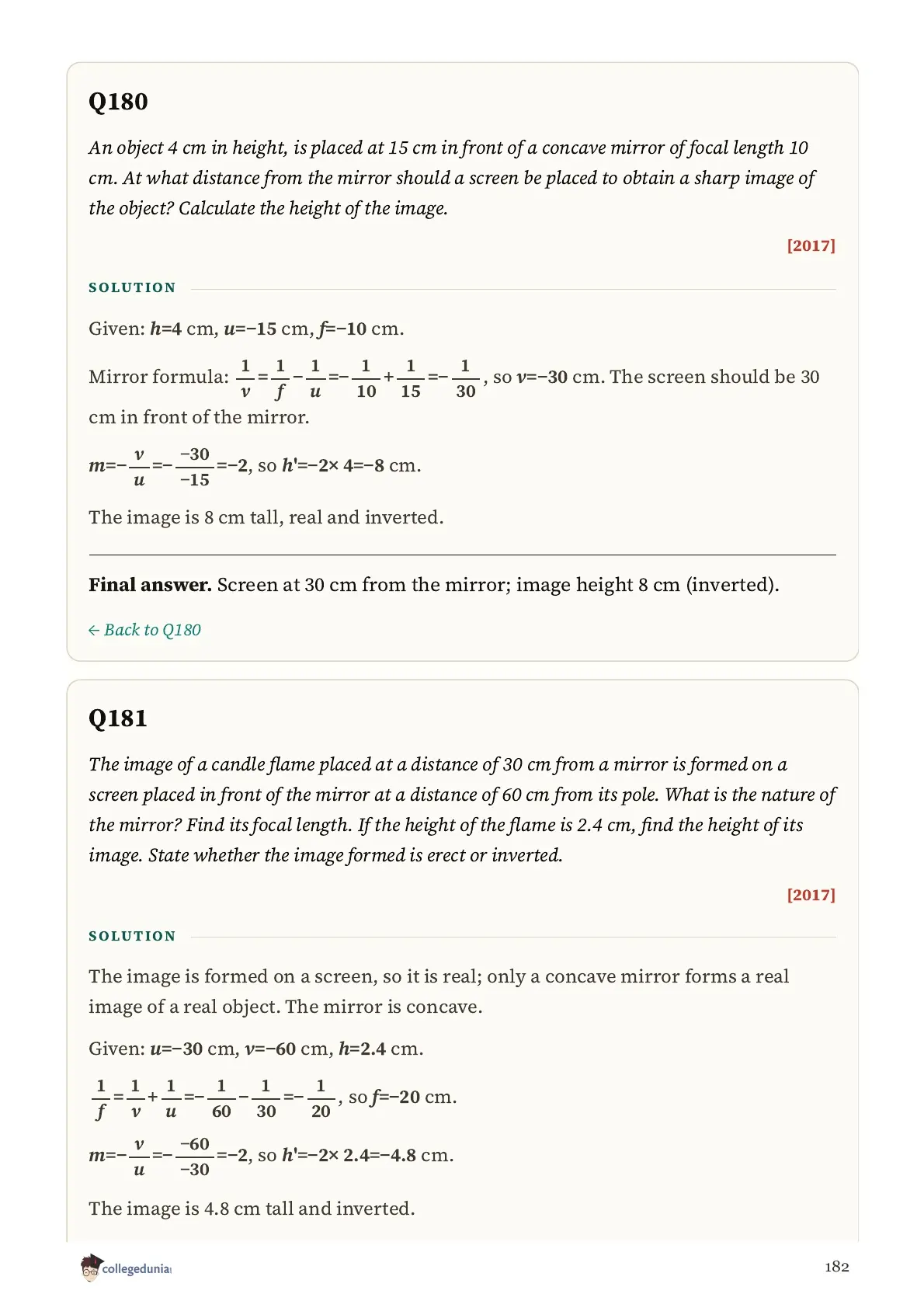
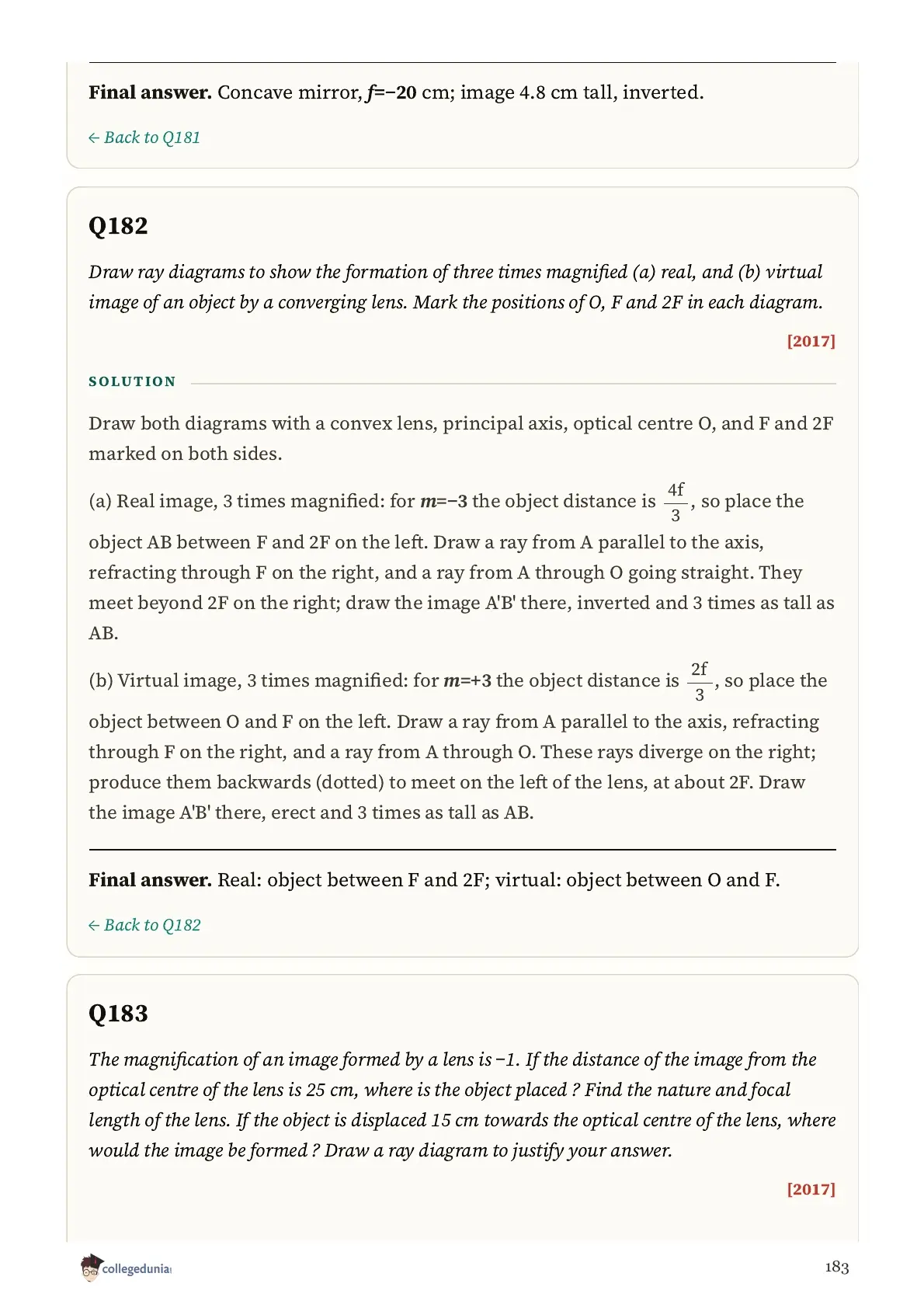
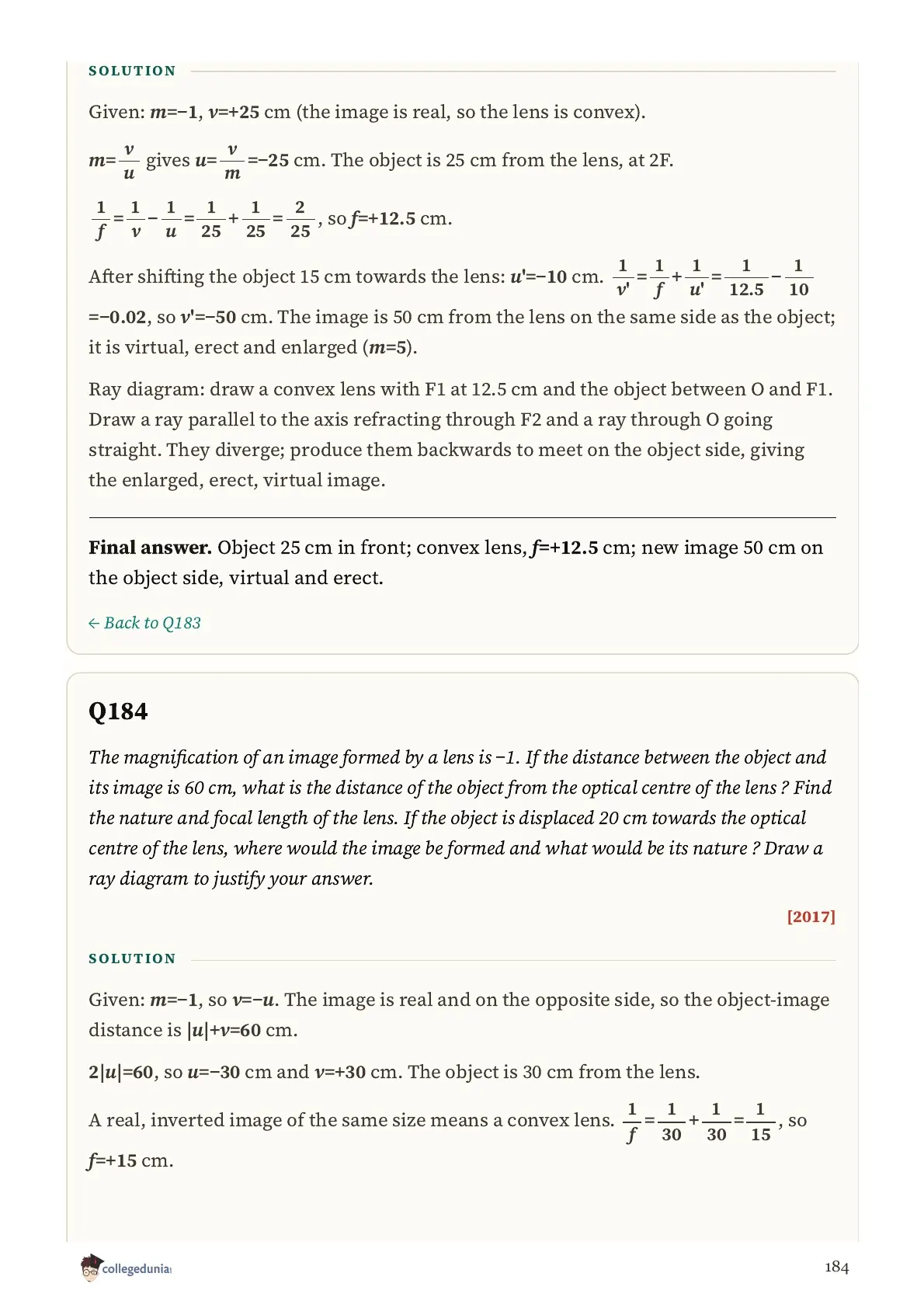
- 286 questions with a worked solution each: 56 MCQs, 149 short answers, 20 case-based items and 61 long answers
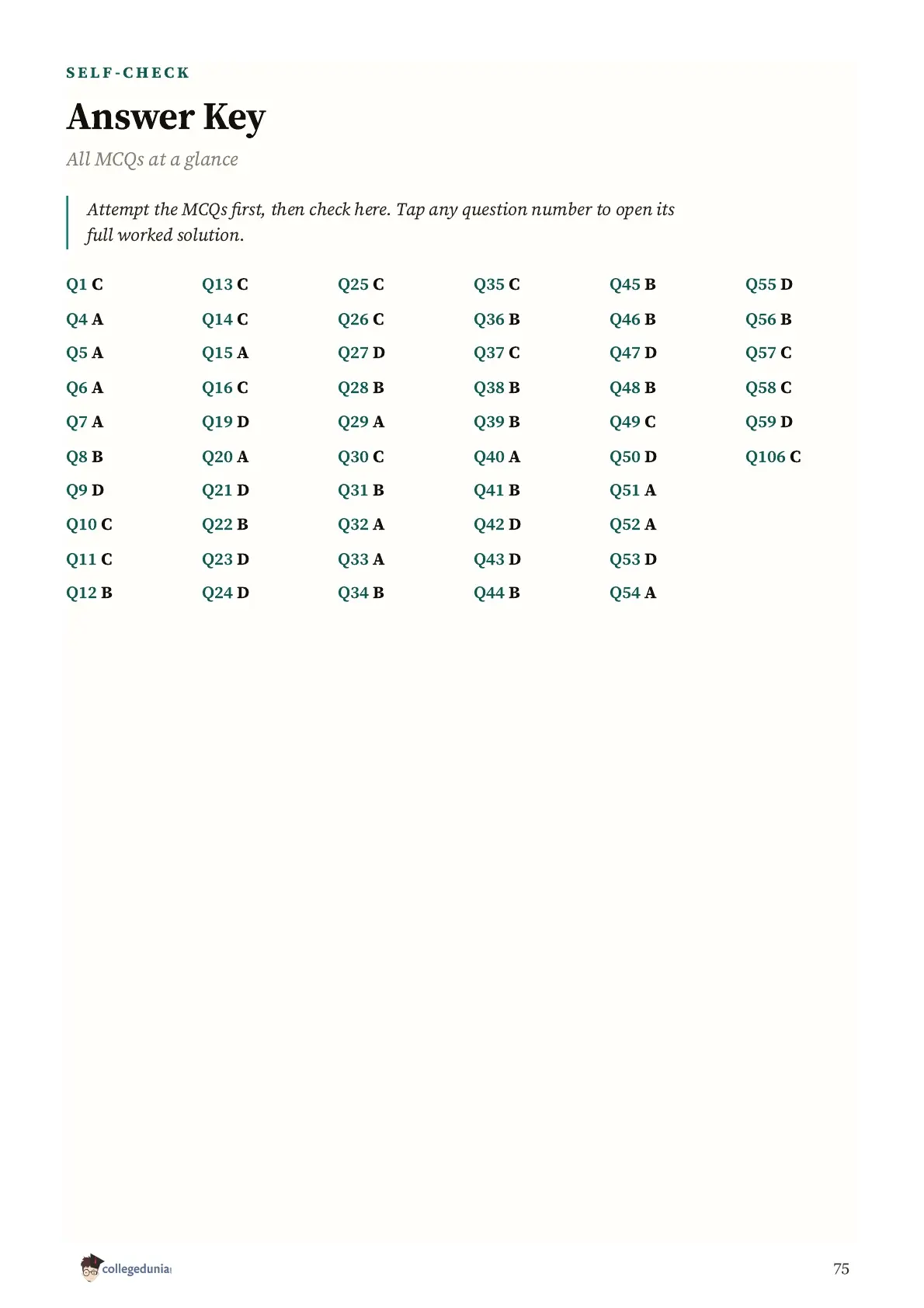
- An Answer Key that lists all 56 MCQs at a glance
- Question counts by topic, so you know whether to start with mirrors, lenses or refraction through a slab
- A marks-wise table of questions (1, 2, 3, 4 and 5 mark)
- The common mistakes students make, such as treating the +3 magnification of a concave mirror as a real image, and a short FAQ
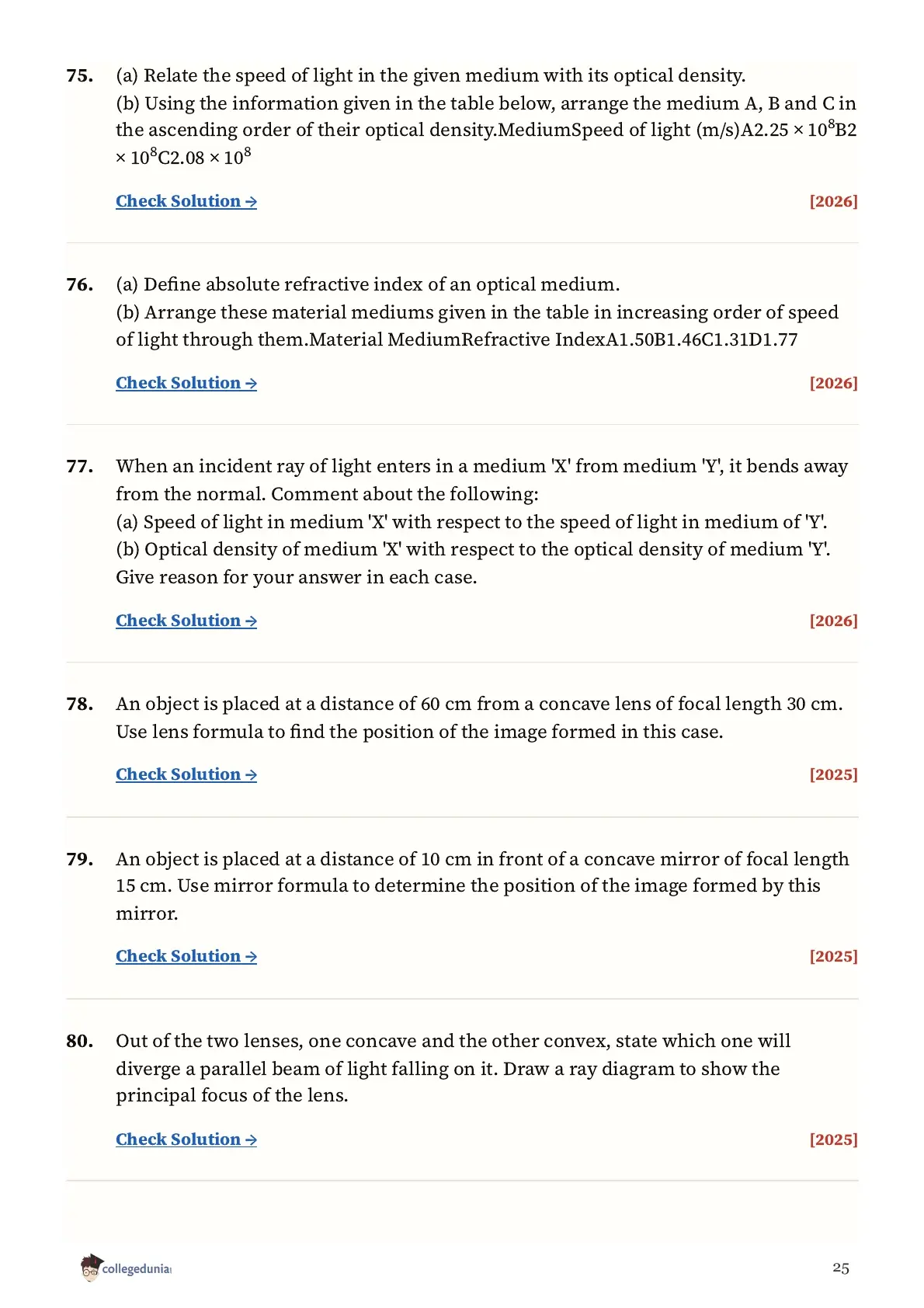
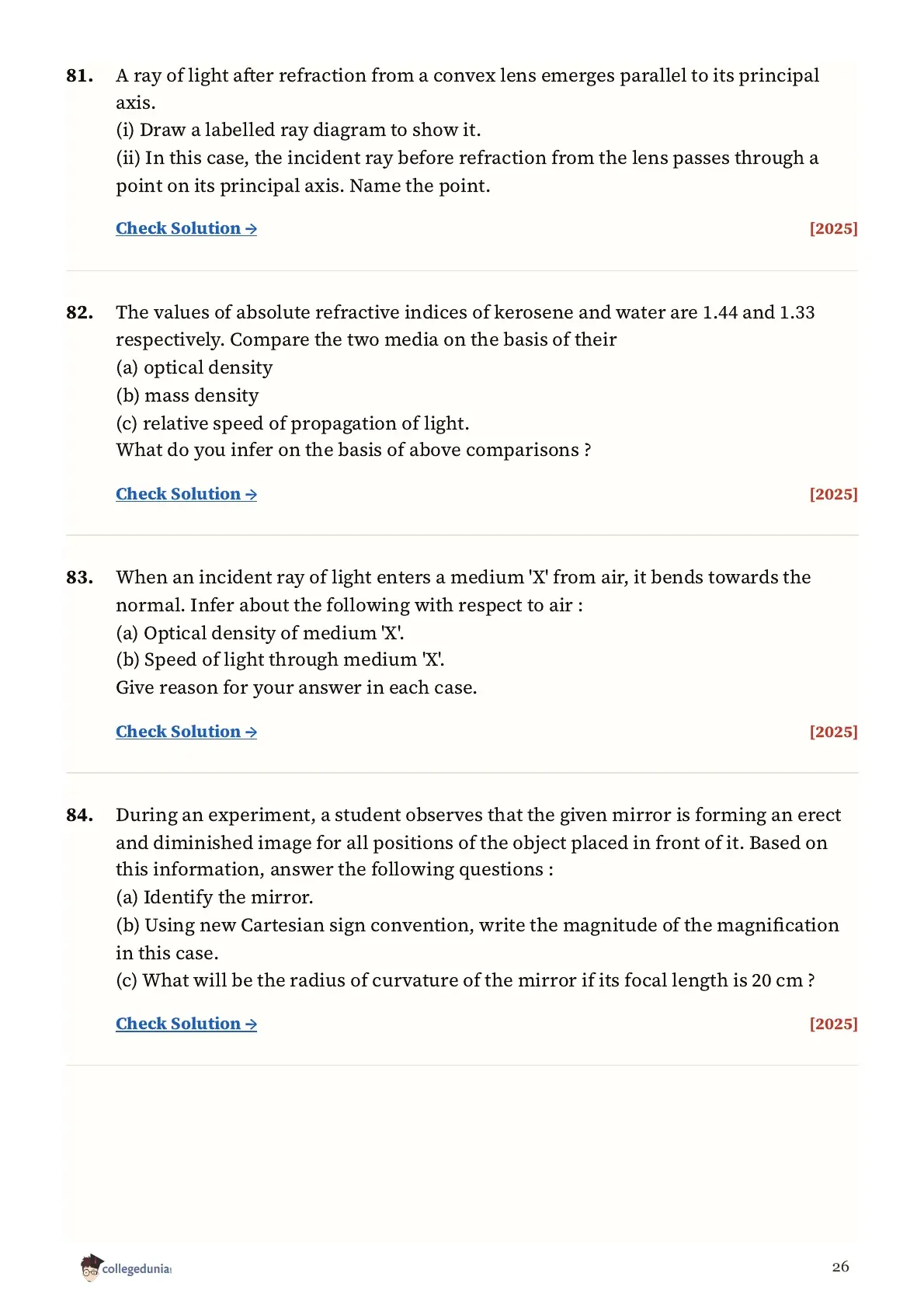
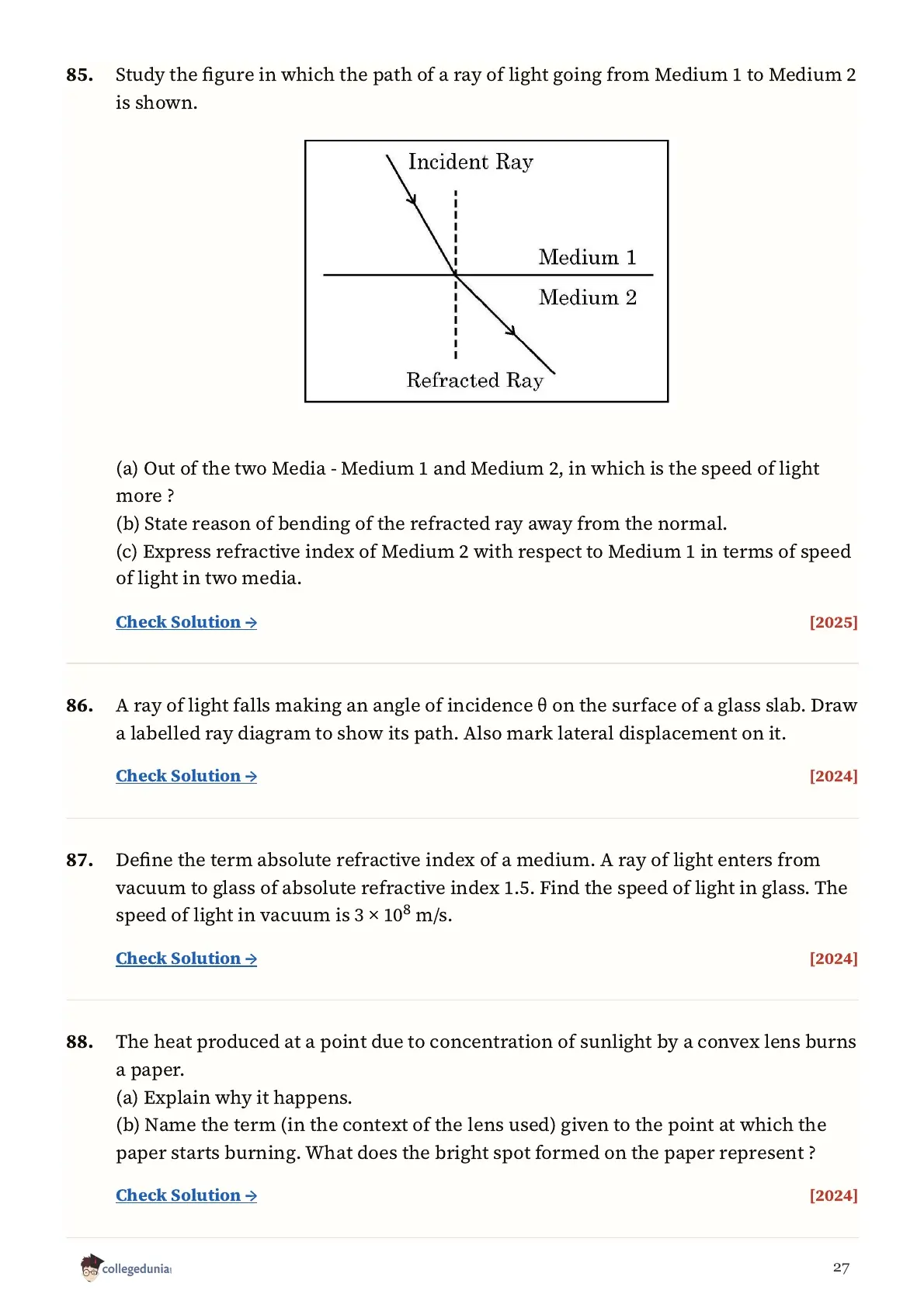
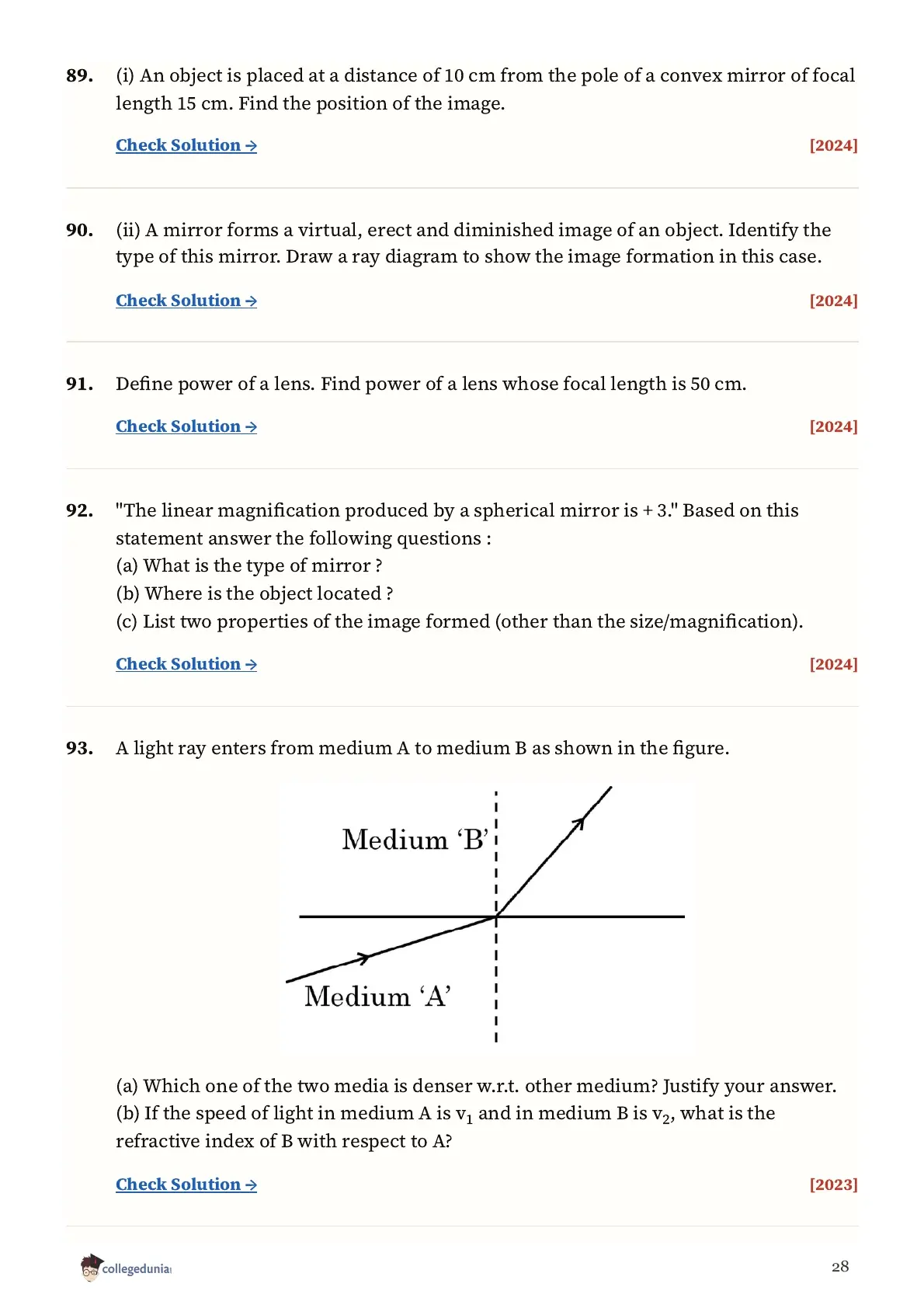
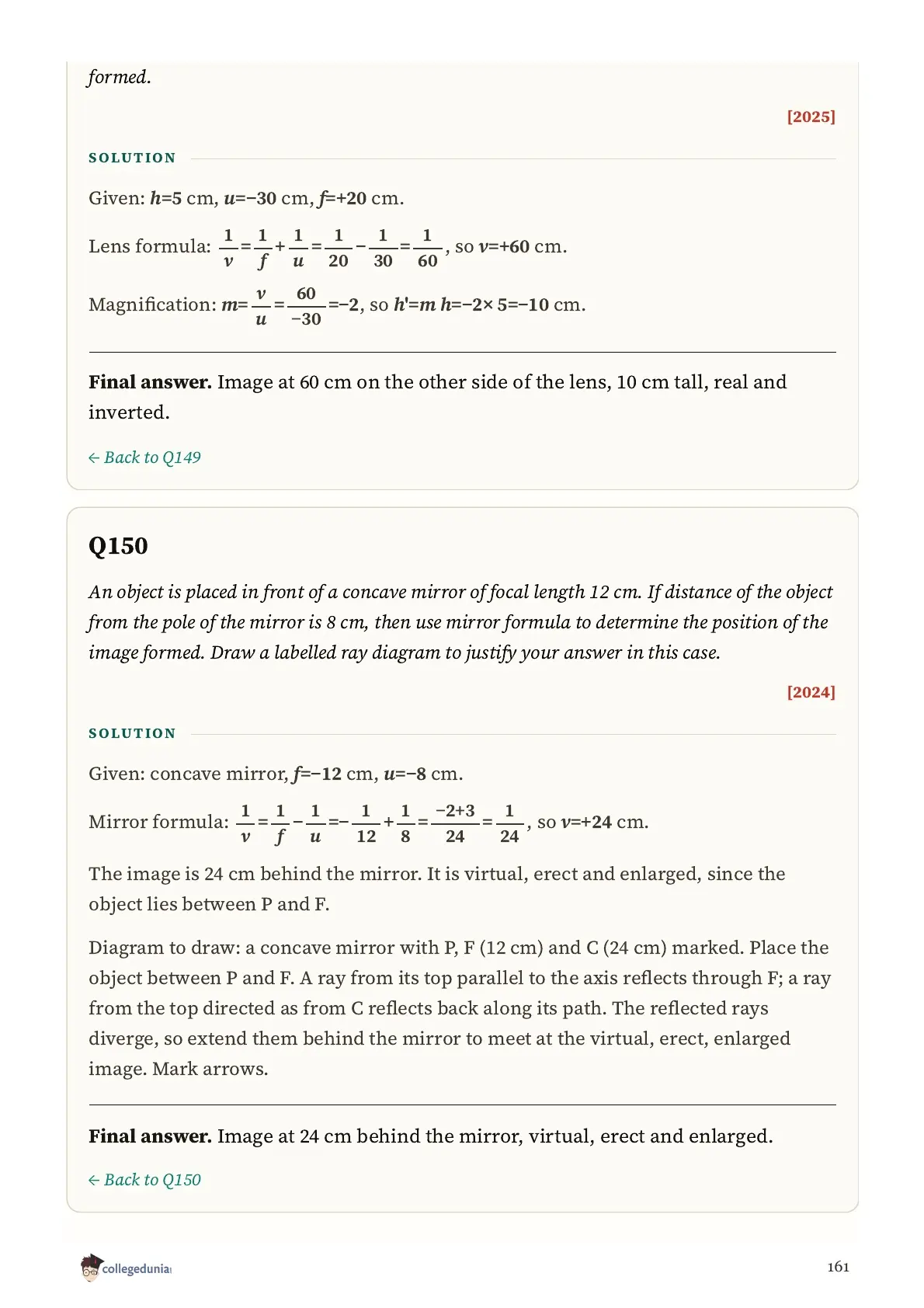
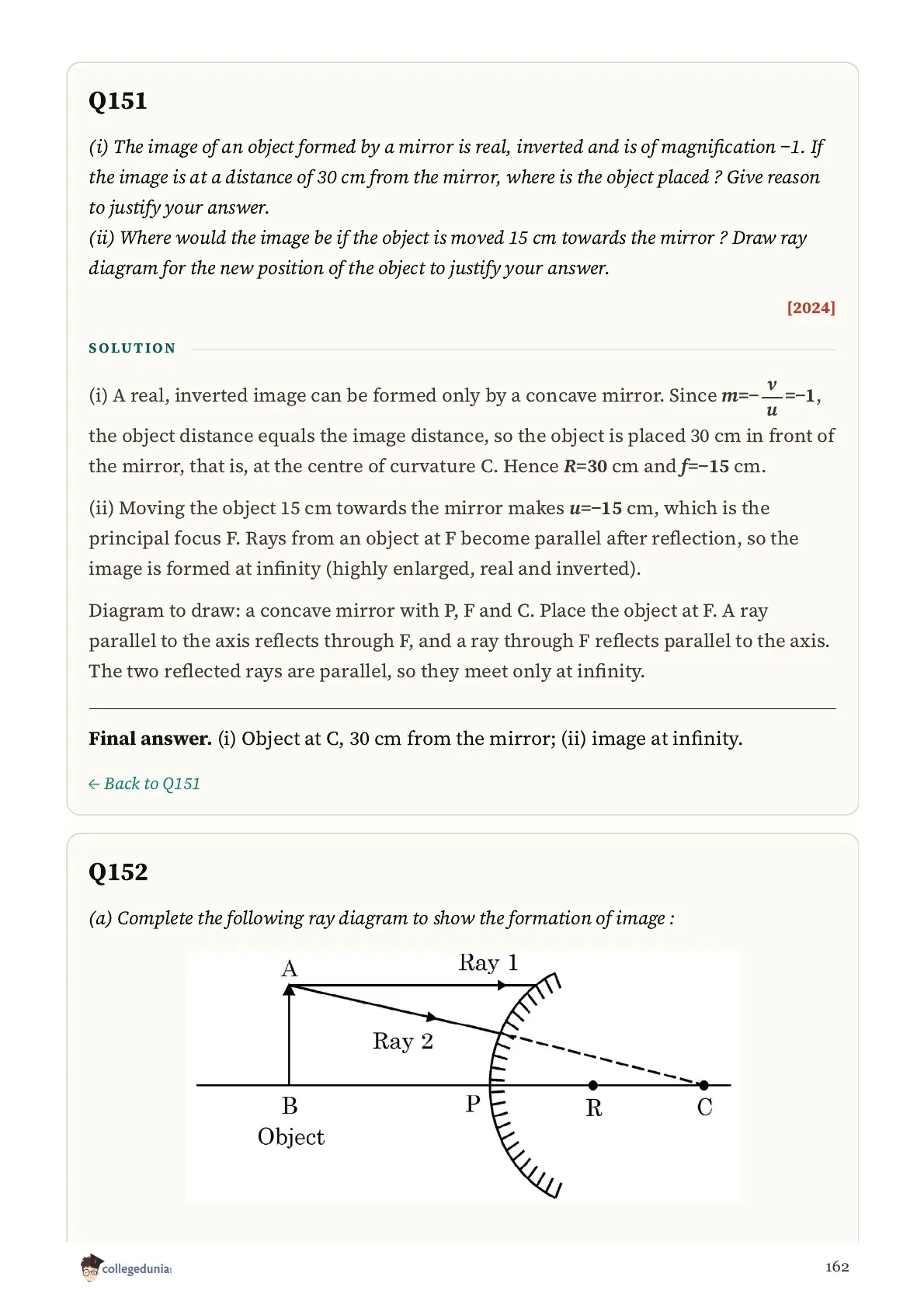
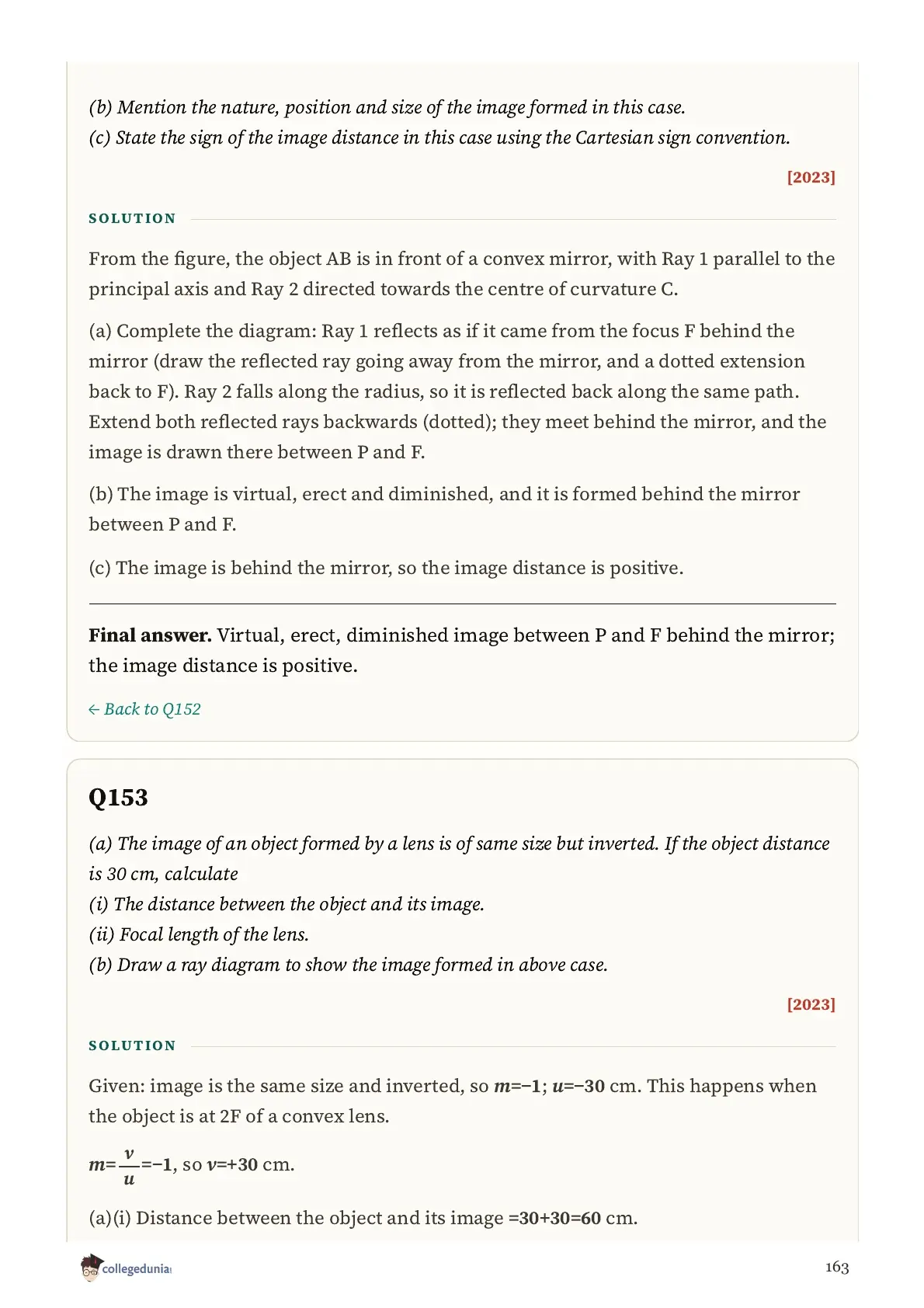
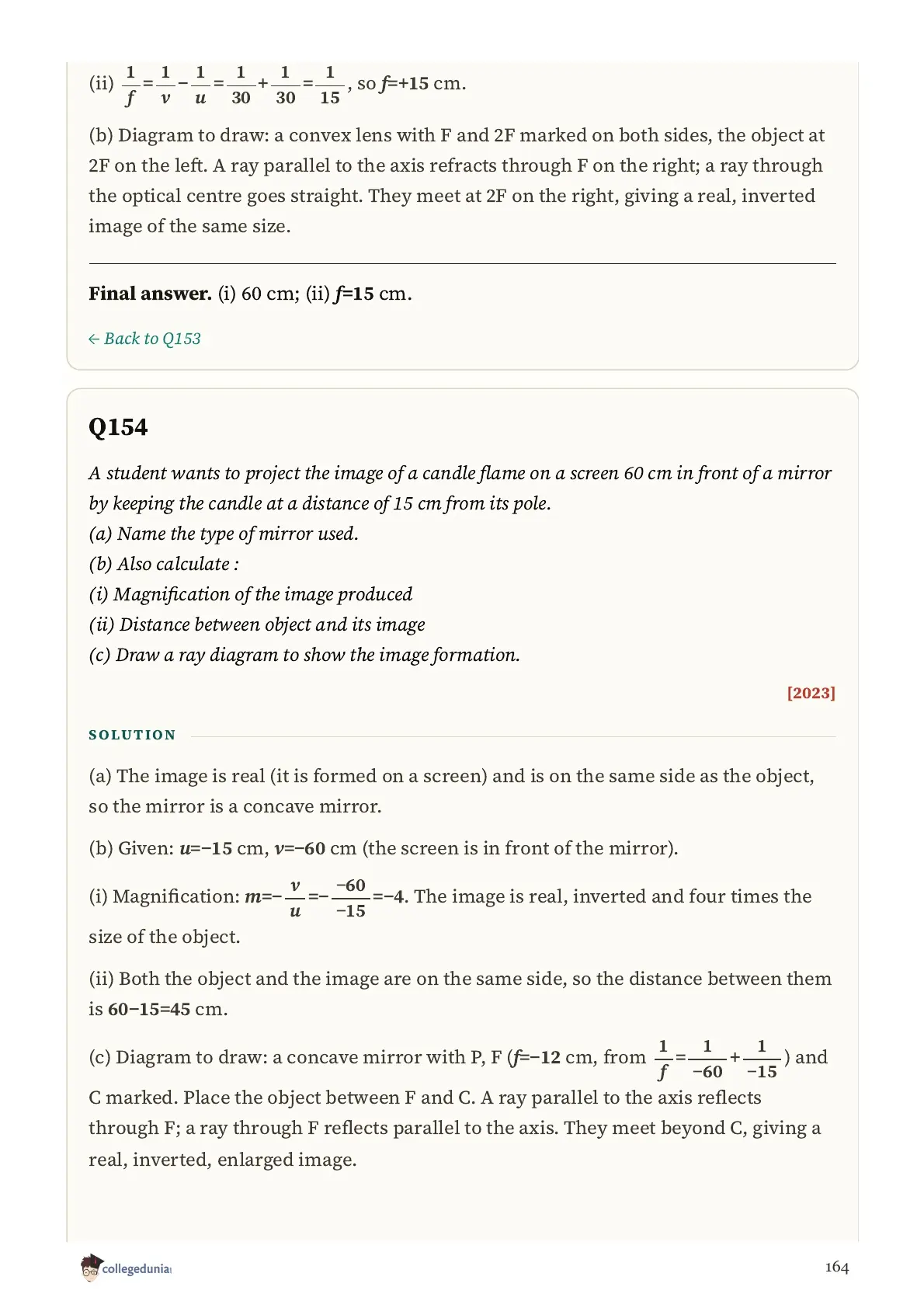
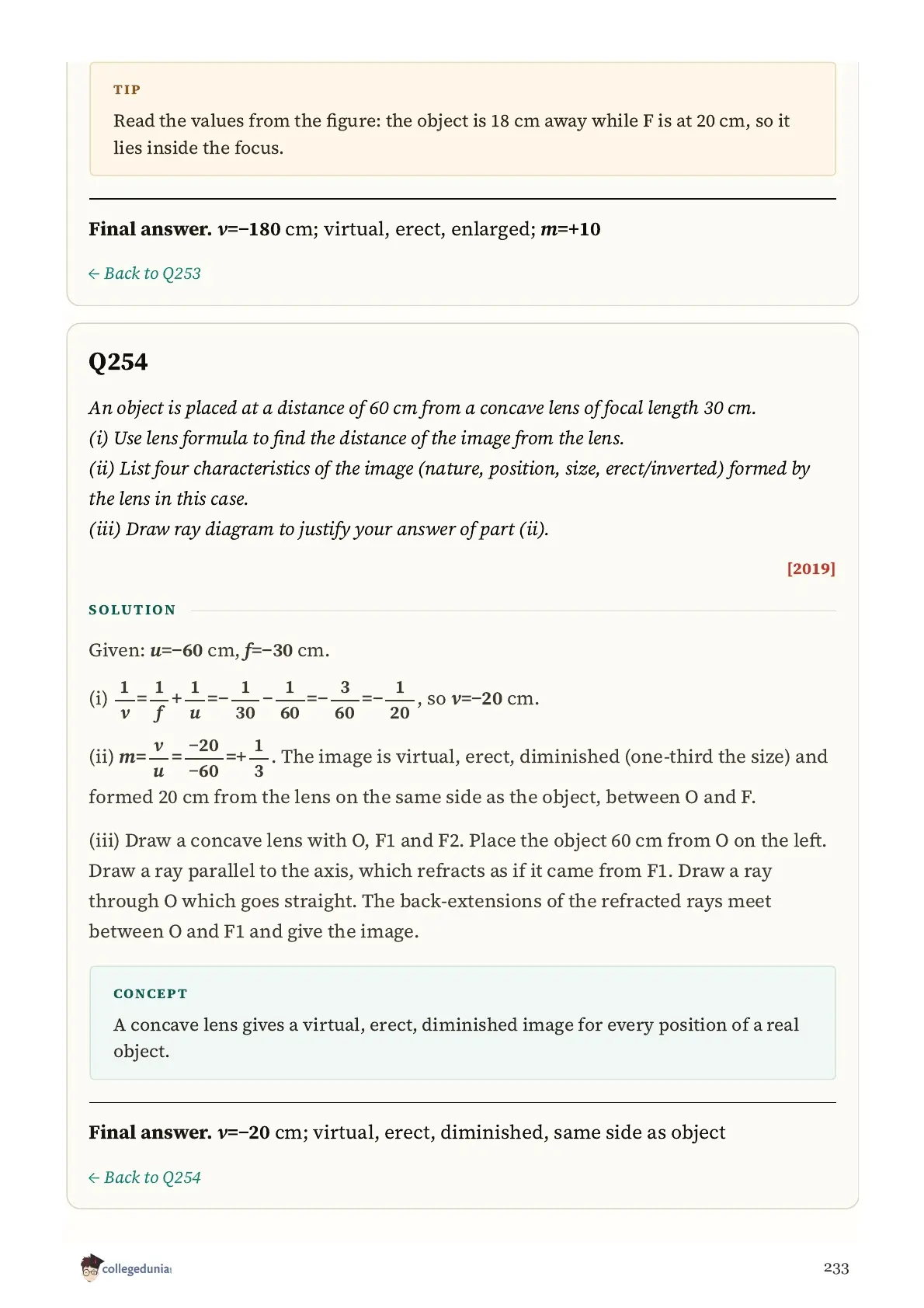
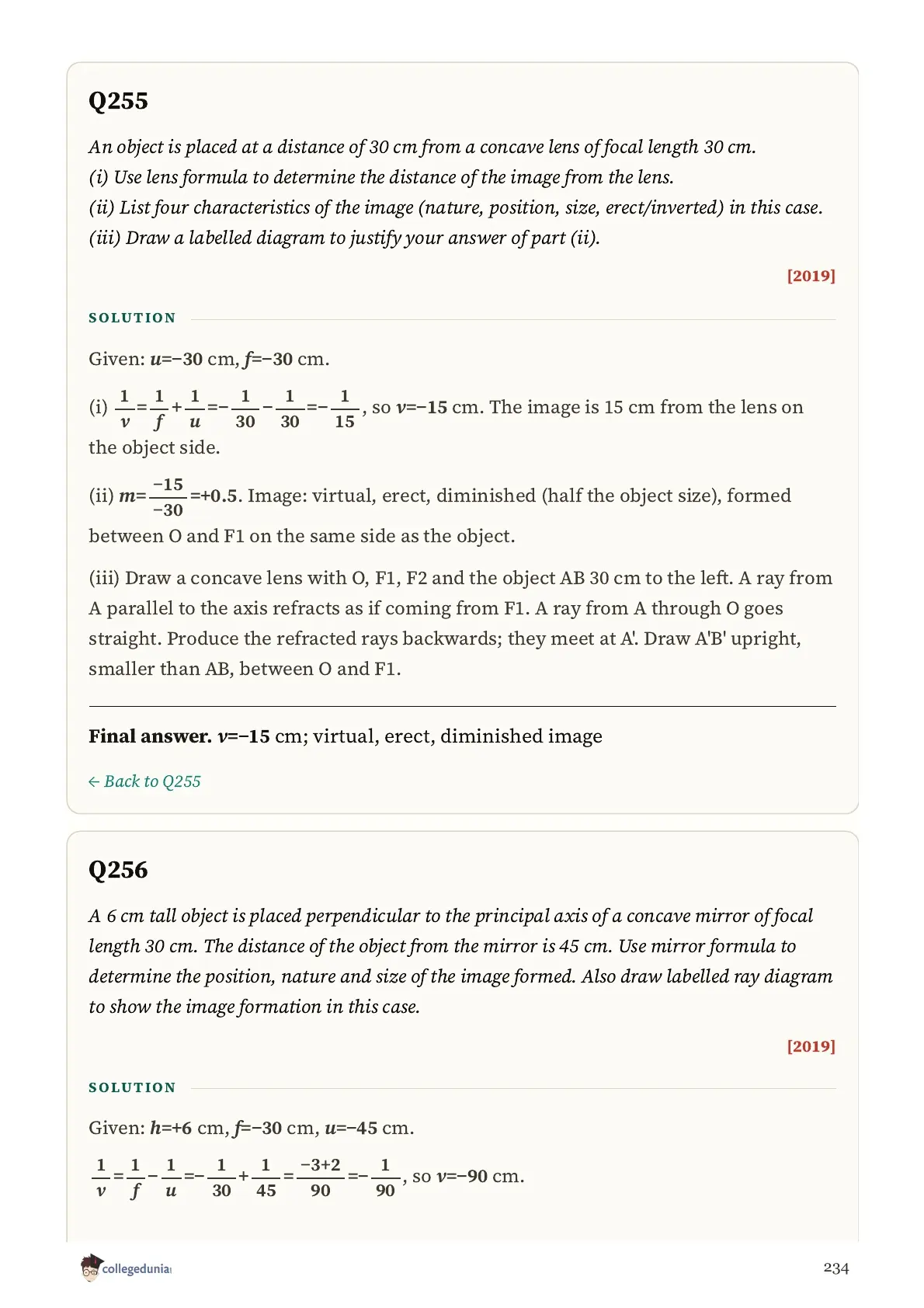
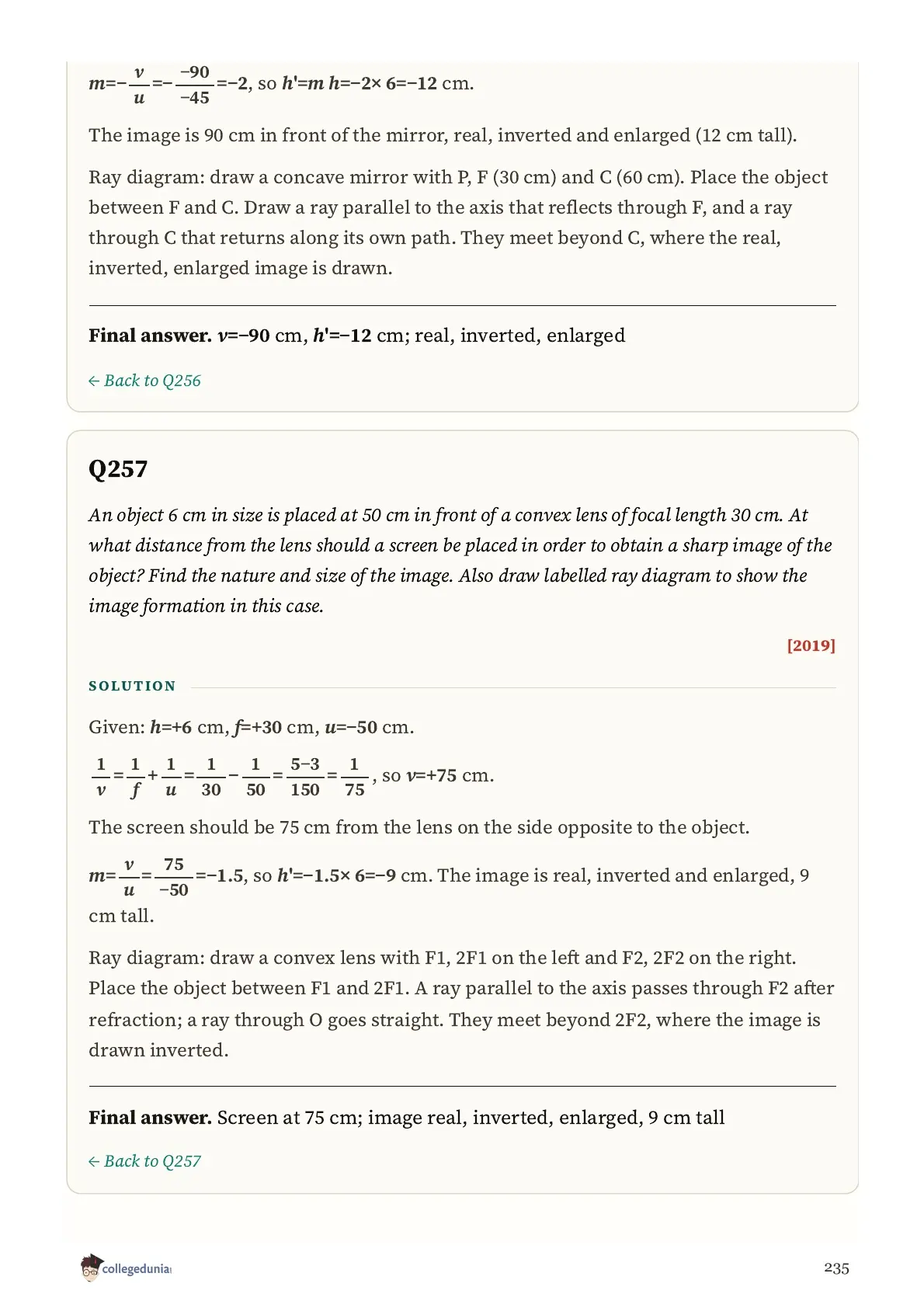
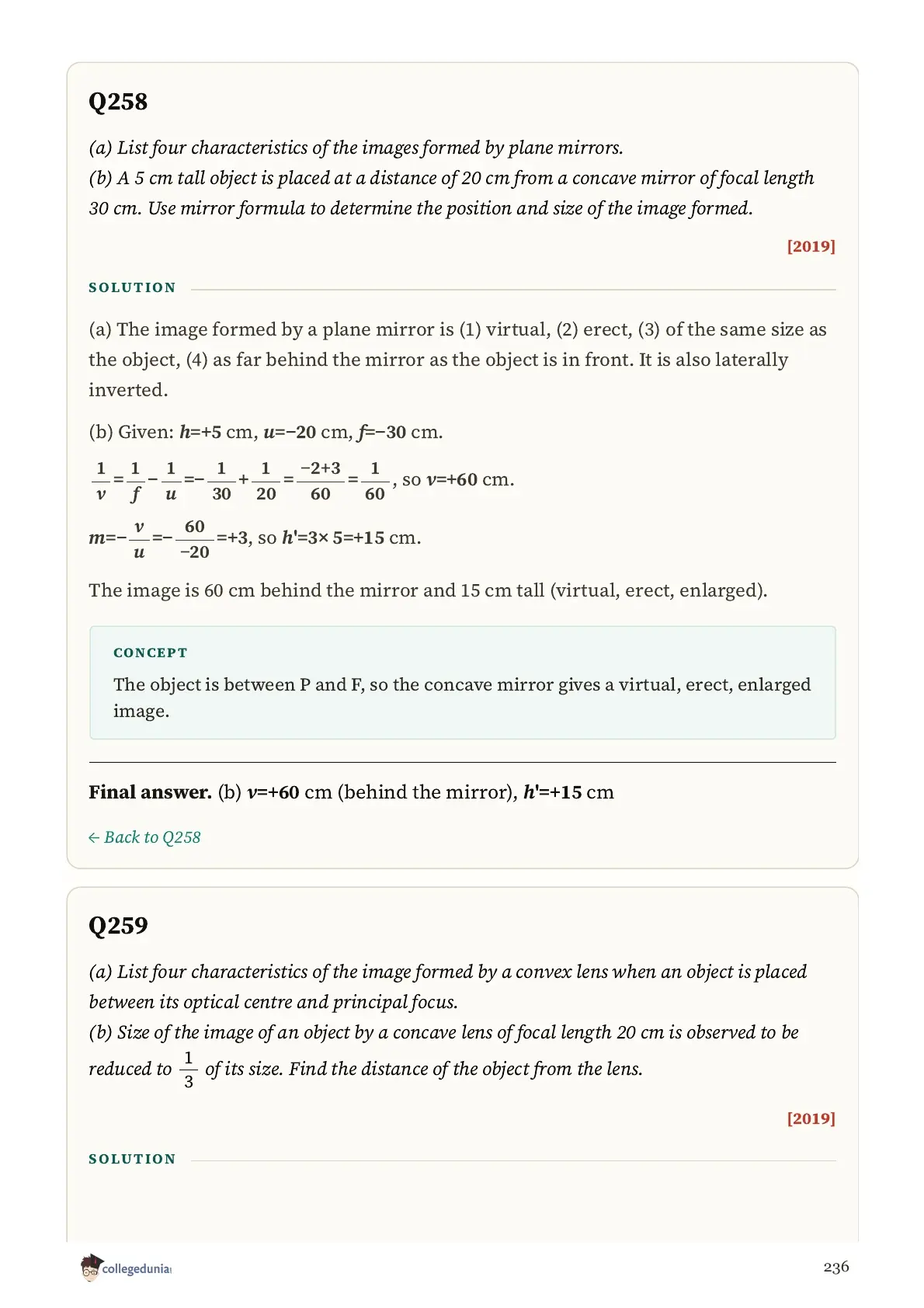
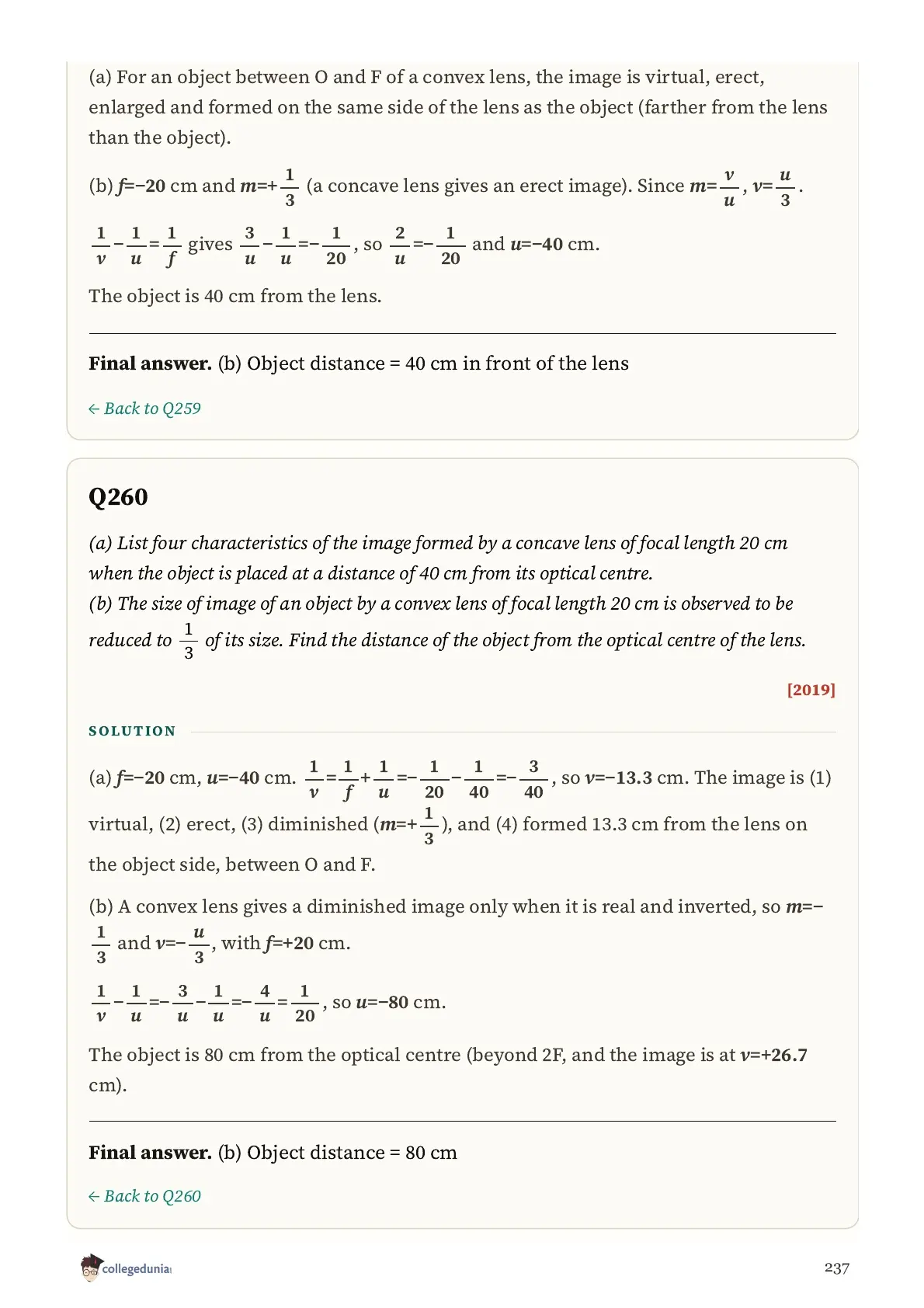
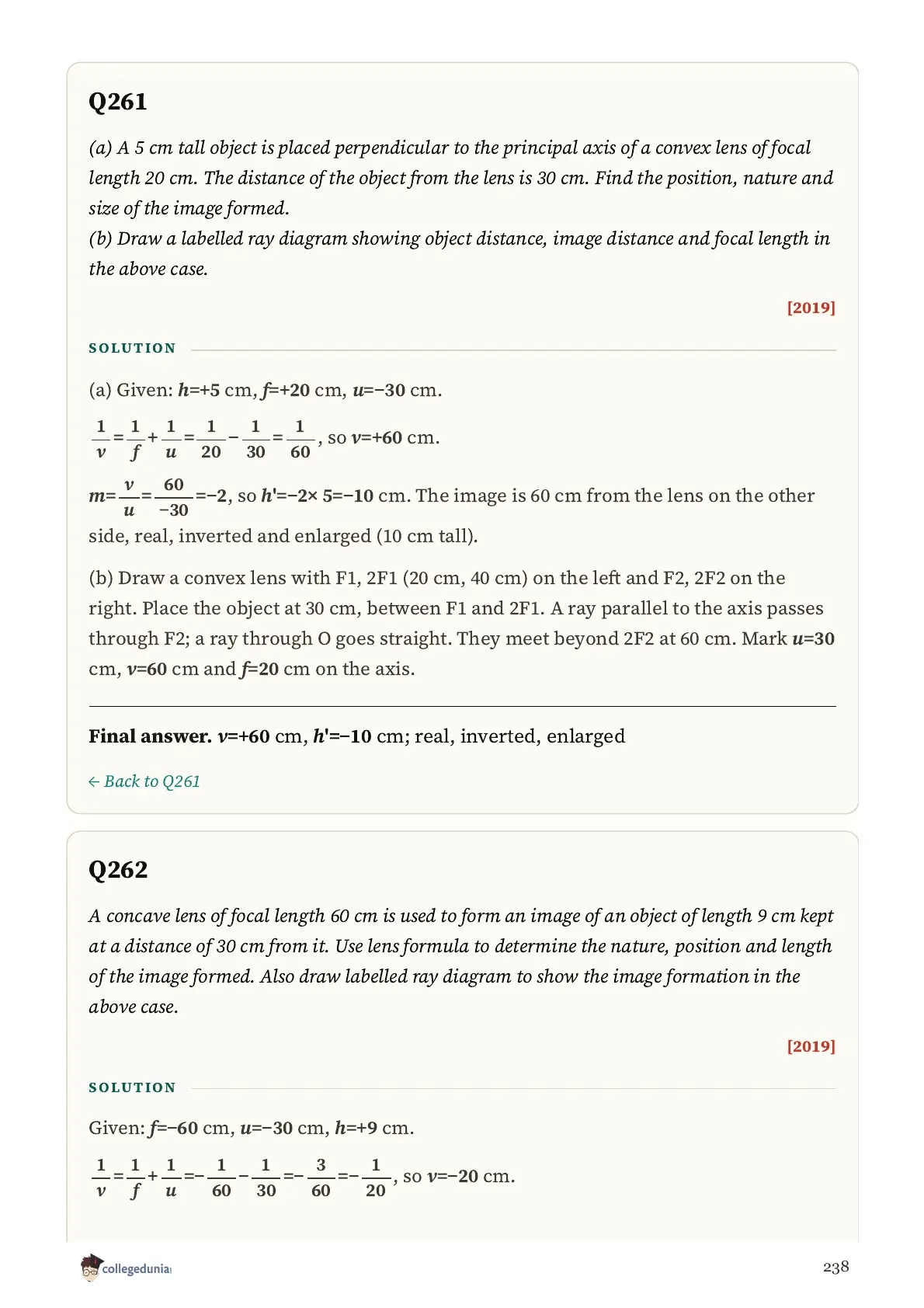
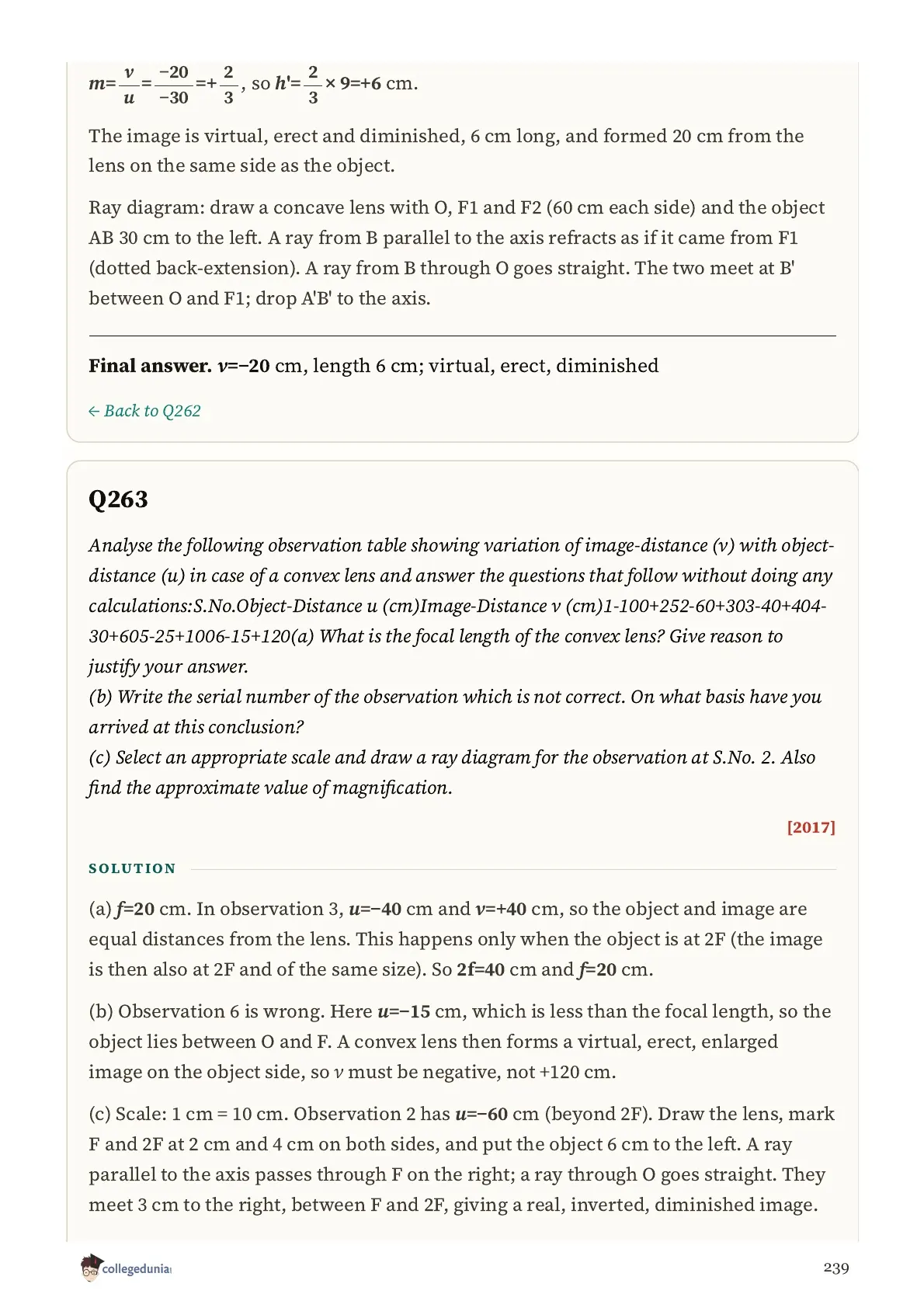
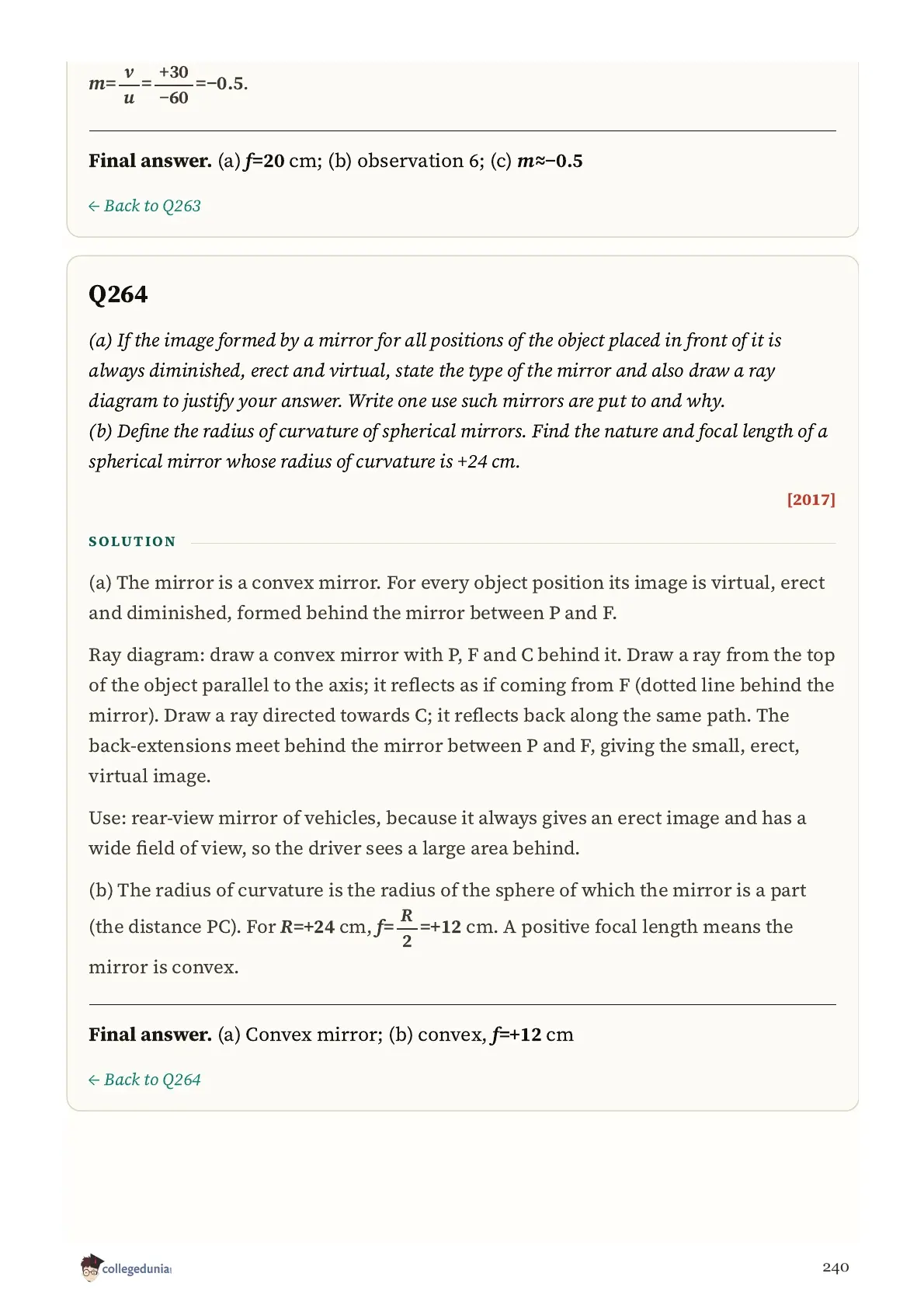
Light - Reflection and Refraction Weightage in the Class 10 Science Paper
CBSE does not print a mark figure for Light - Reflection and Refraction alone. In the Class 10 Science (086) syllabus, the unit Natural Phenomena holds this chapter and The Human Eye and the Colourful World, and prep sites report it at 12 of the 80 theory marks. We could not open the CBSE curriculum document to confirm that figure, so treat it as unofficial and check the current syllabus on cbseacademic.nic.in. In this set the 3-mark short answer is the commonest form, closely followed by the 2-mark and 1-mark questions, and 61 questions are 5-mark long answers.
The table shows how many questions the set holds at each mark value.
| Marks per Question | Questions in the Set |
|---|---|
| 1 mark | 64 |
| 2 marks | 70 |
| 3 marks | 71 |
| 4 marks | 20 |
| 5 marks | 61 |
Light - Reflection and Refraction Questions by Topic
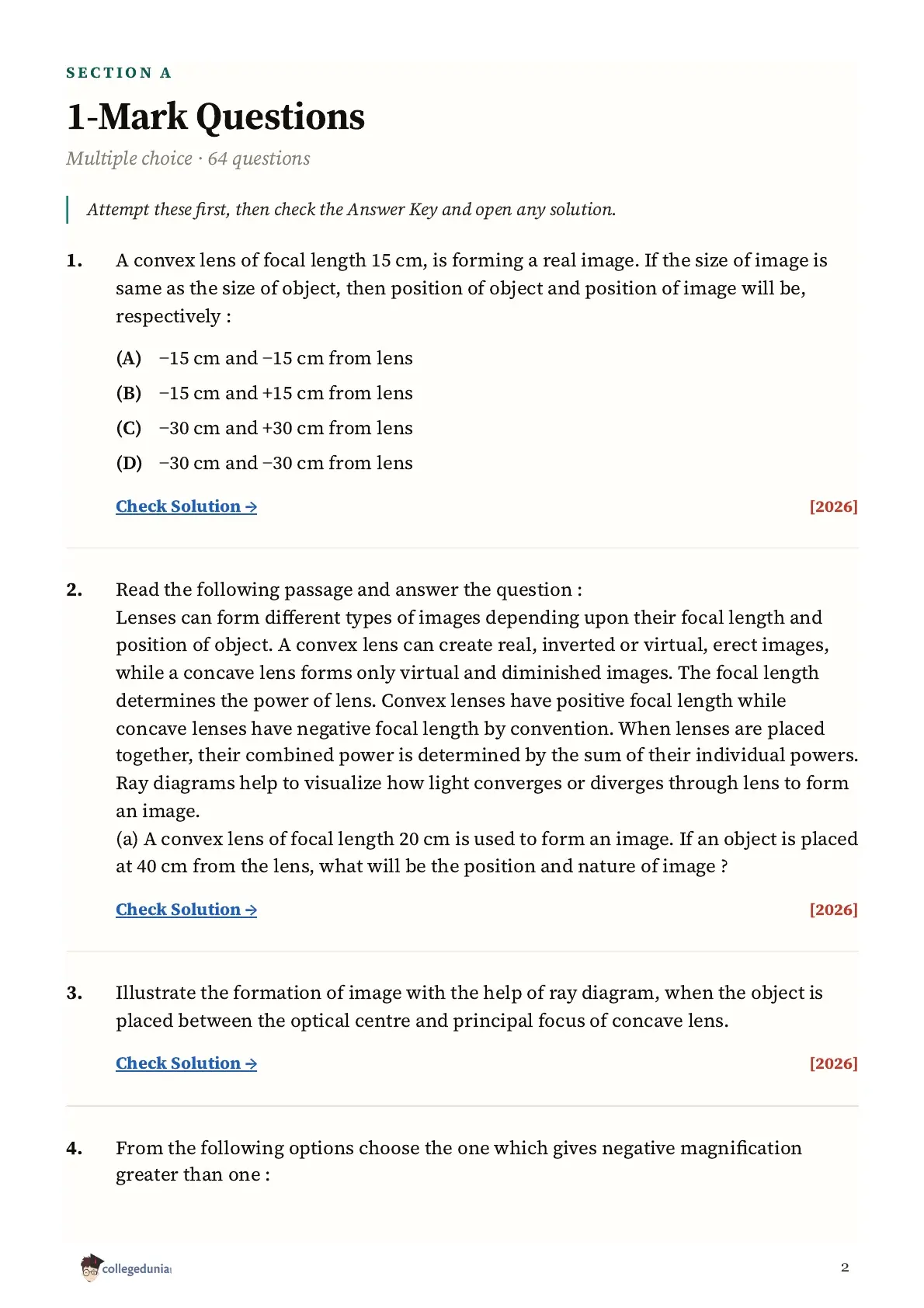
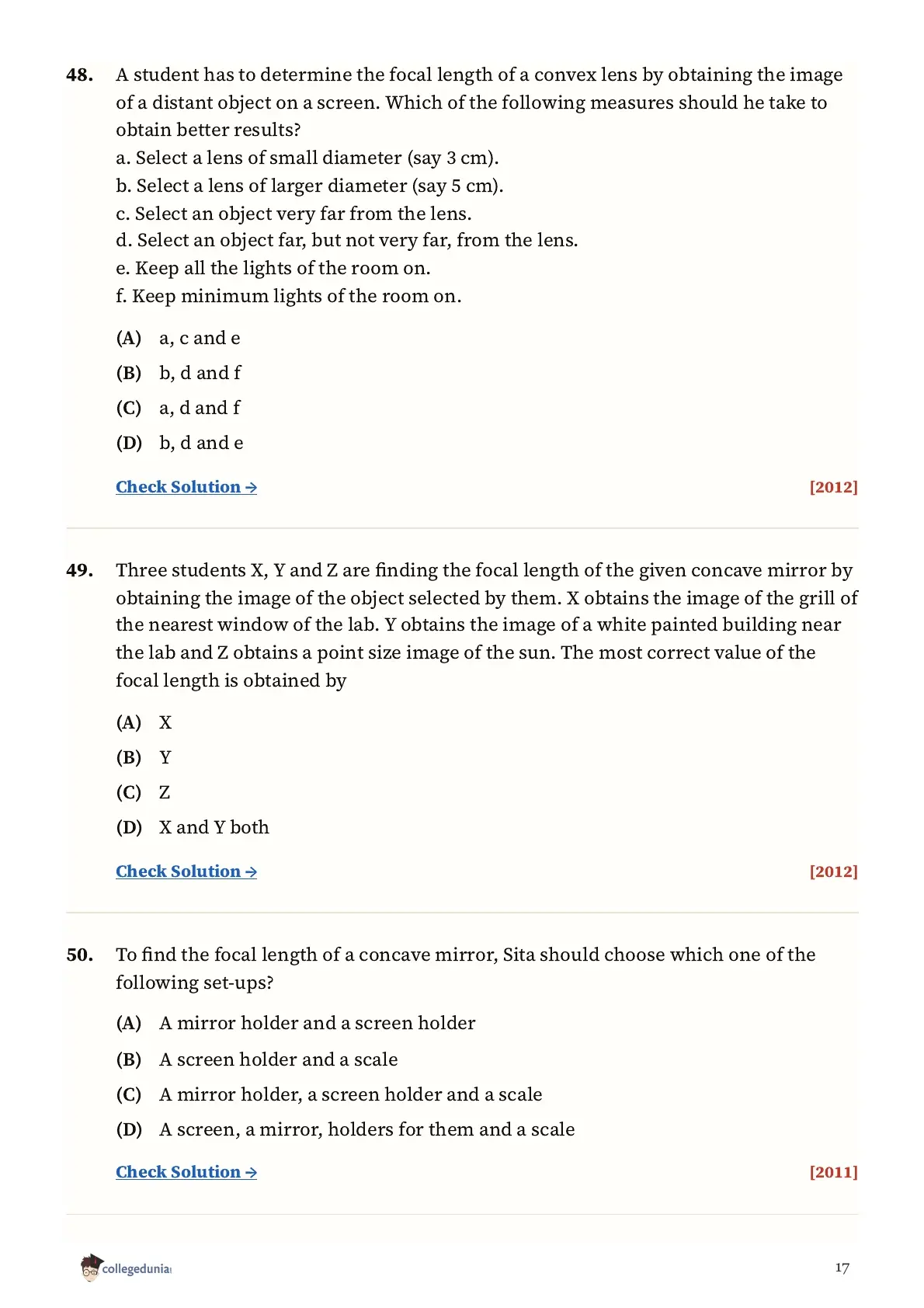
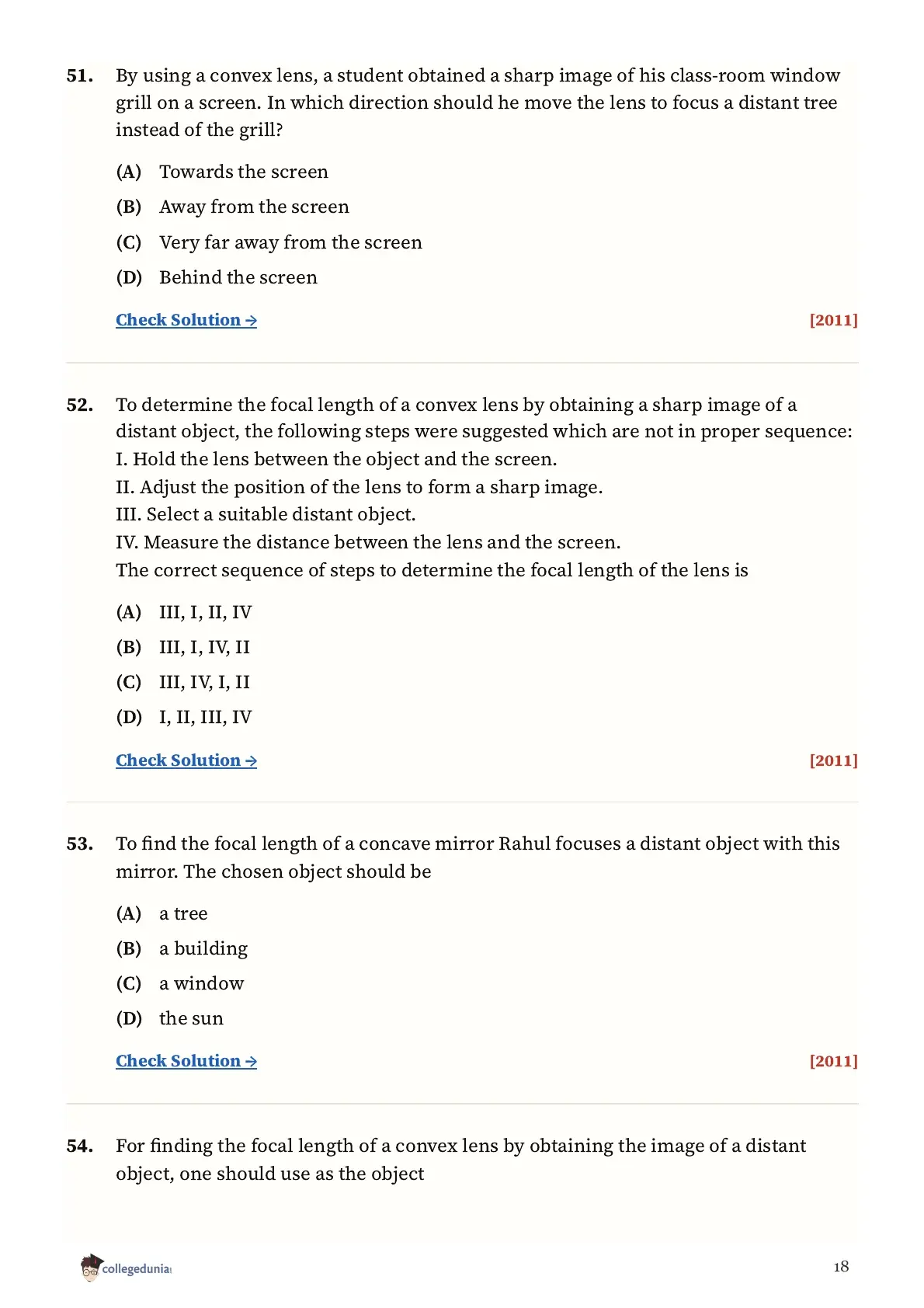
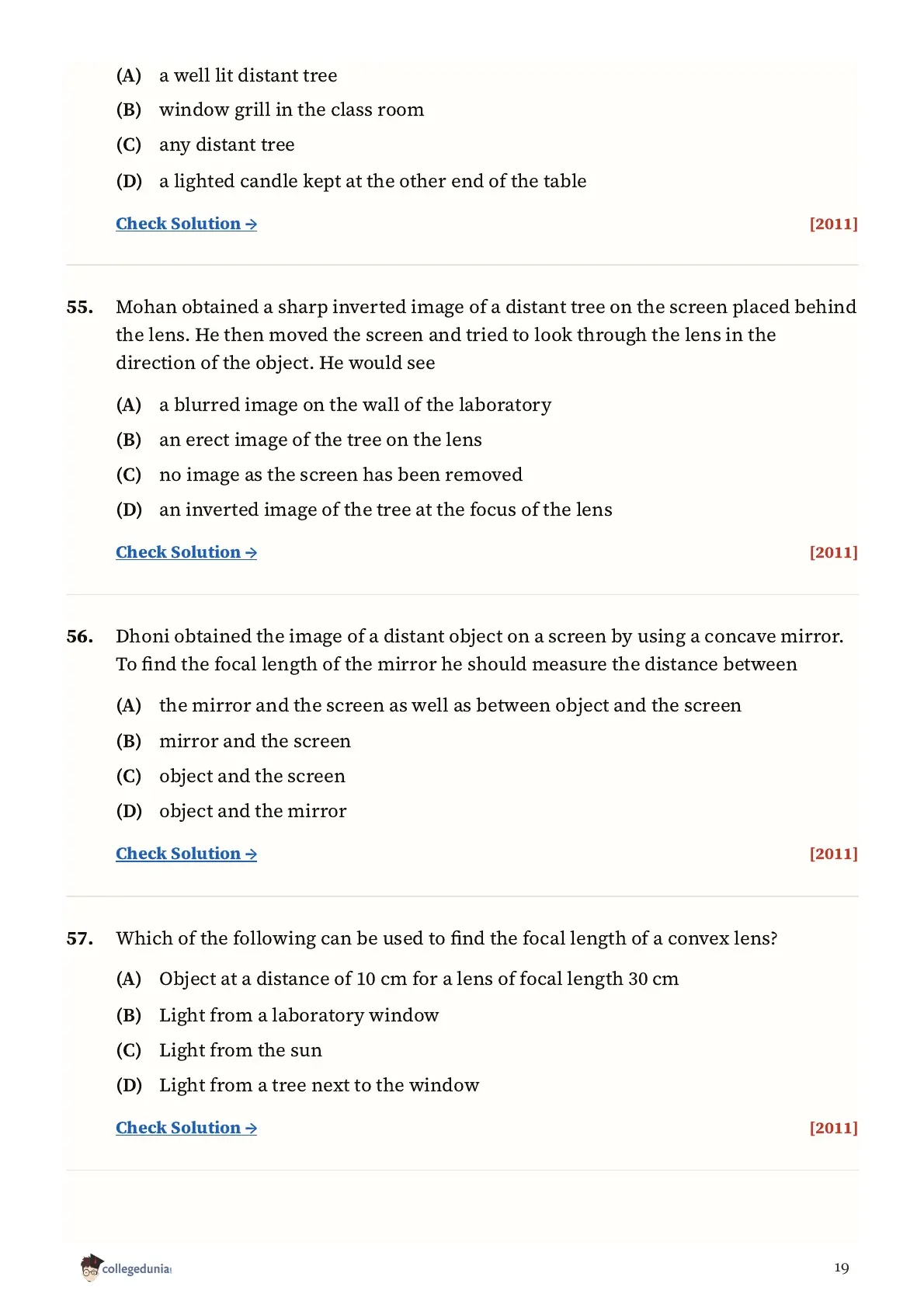
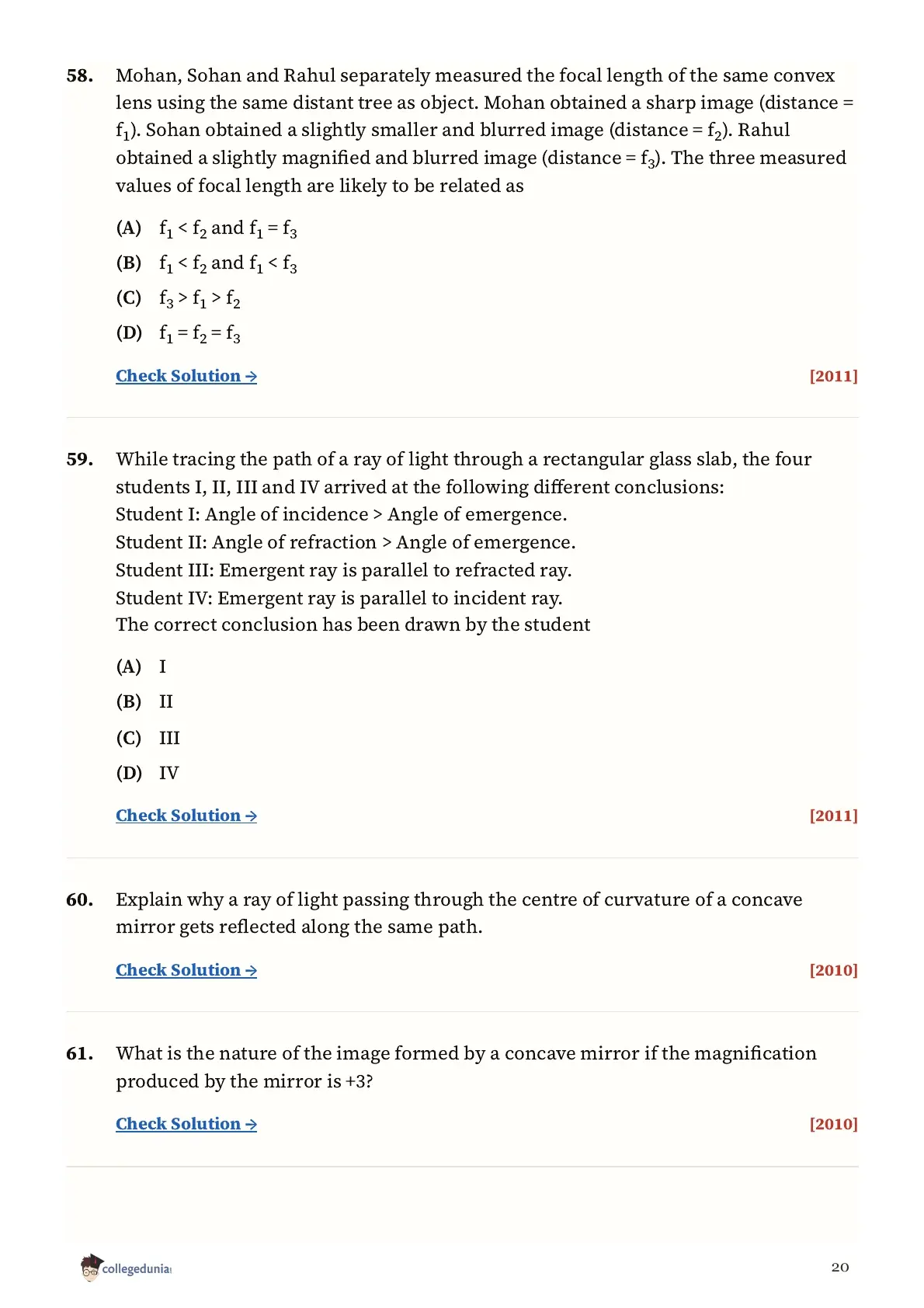
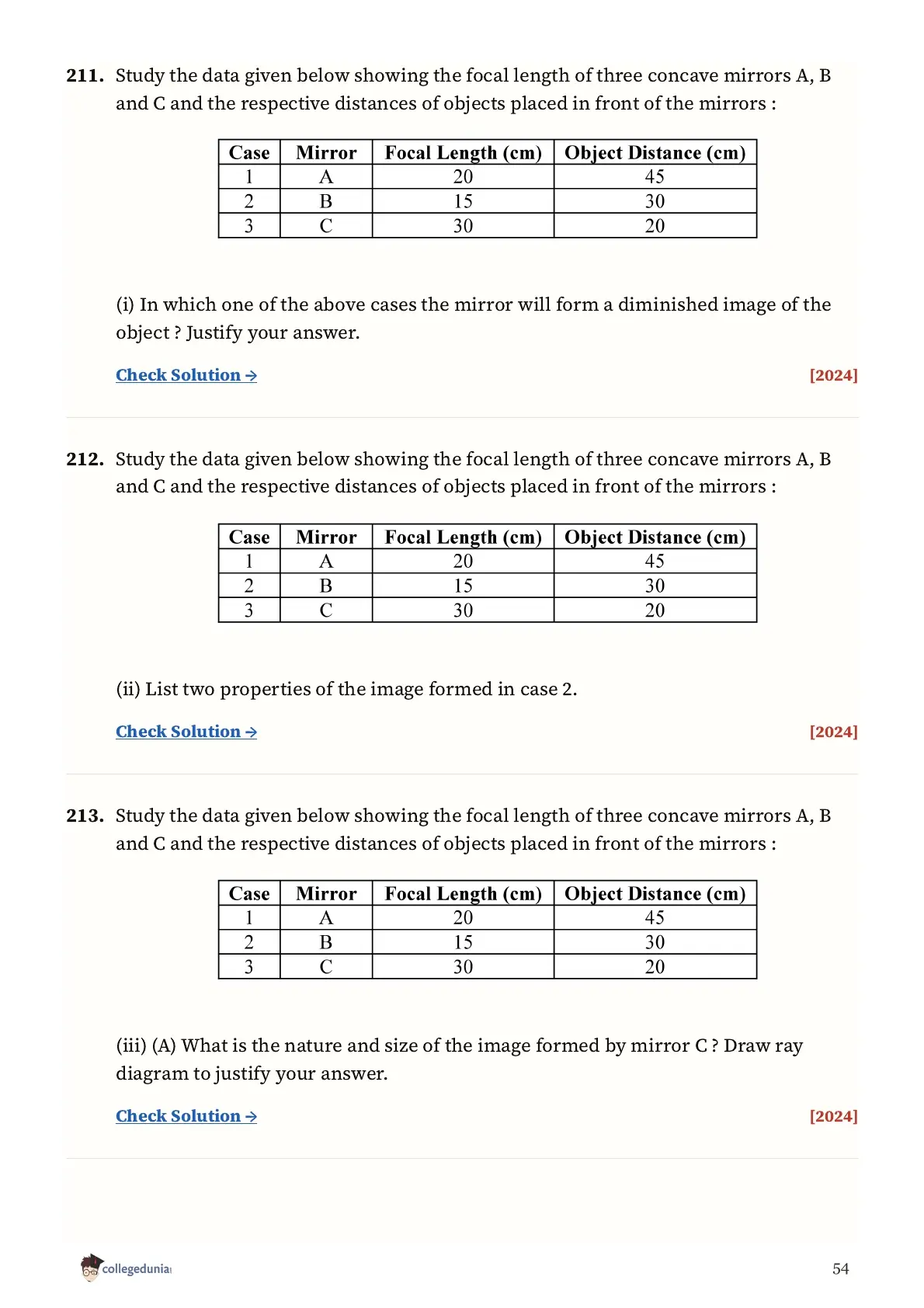
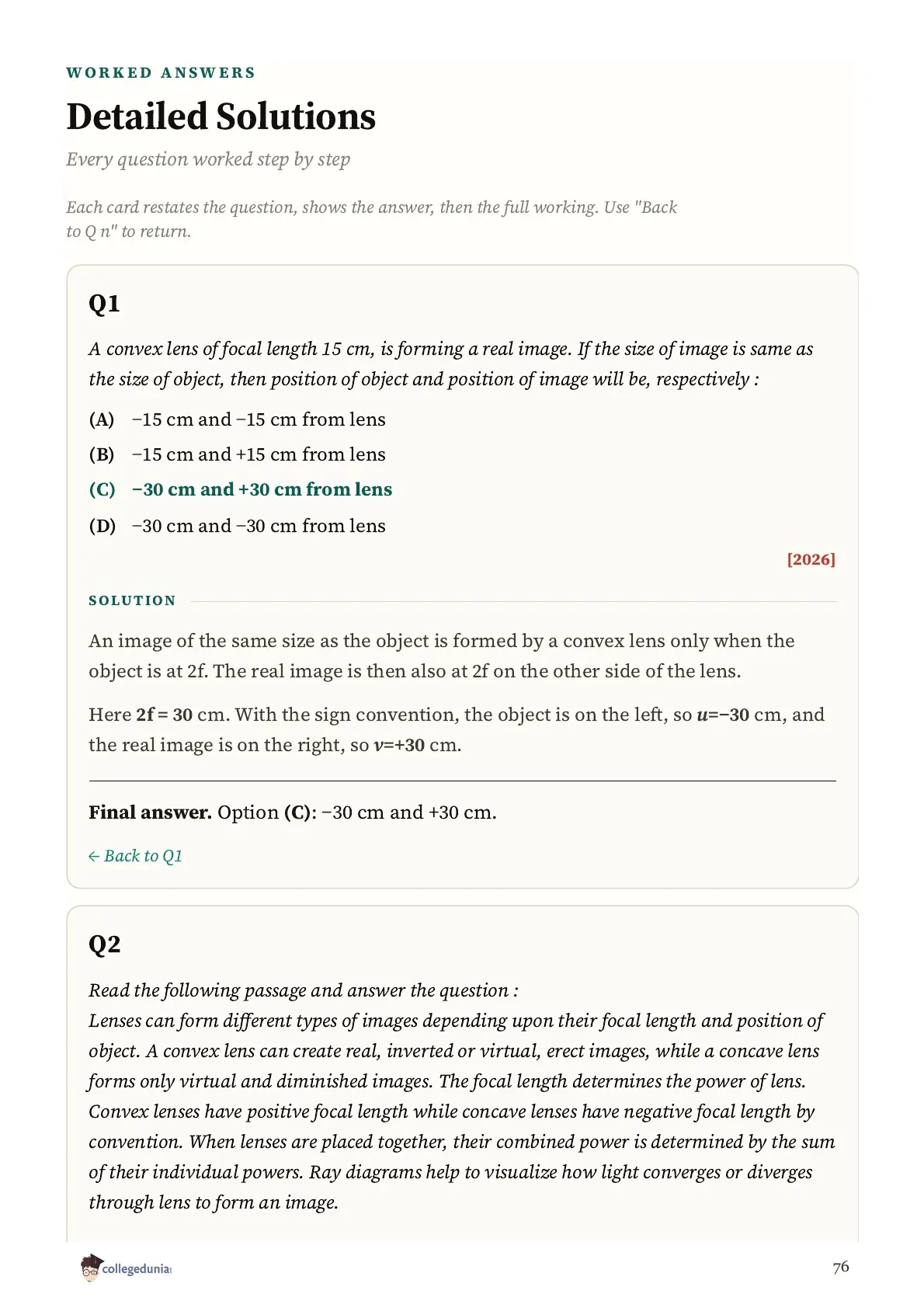
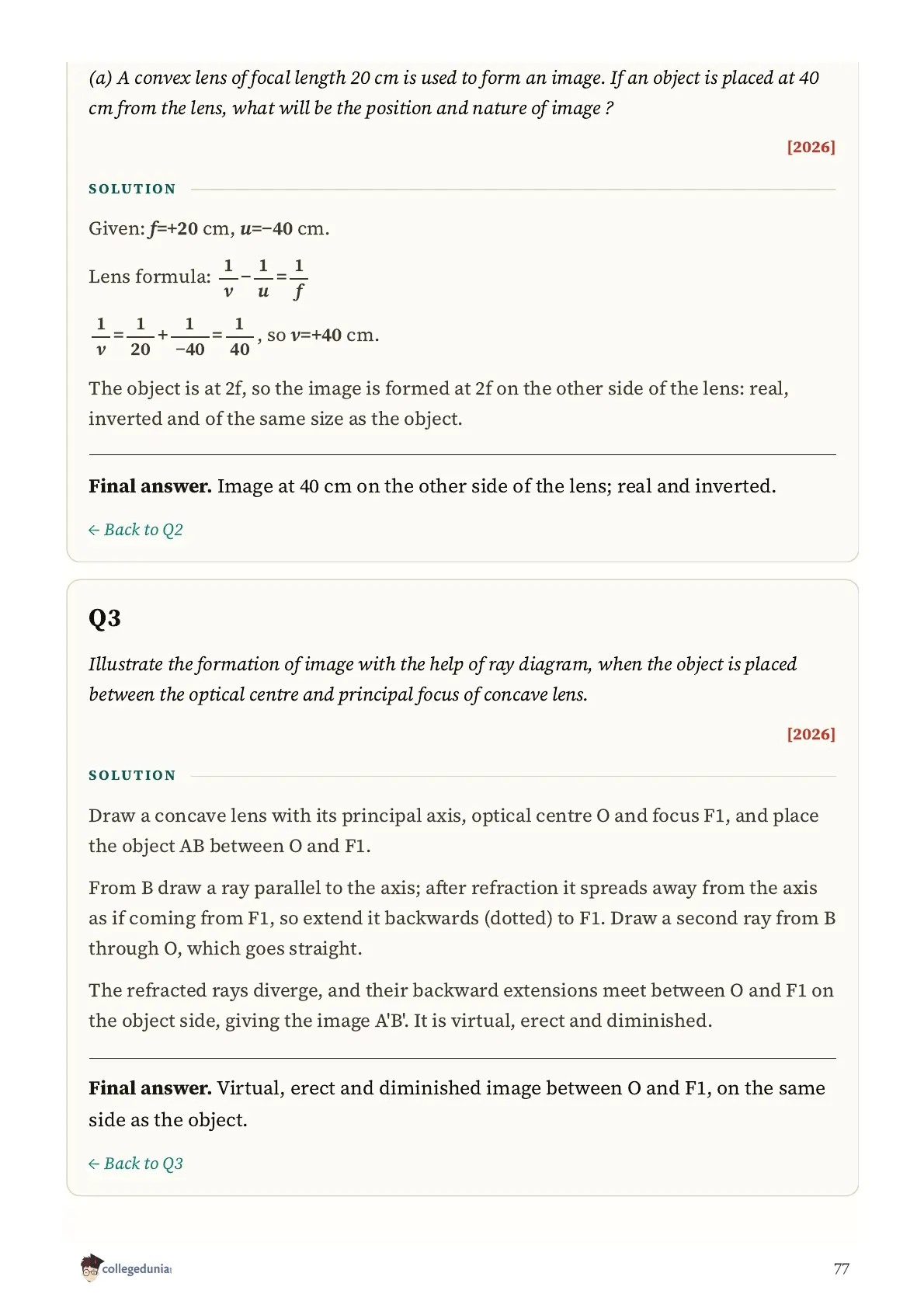
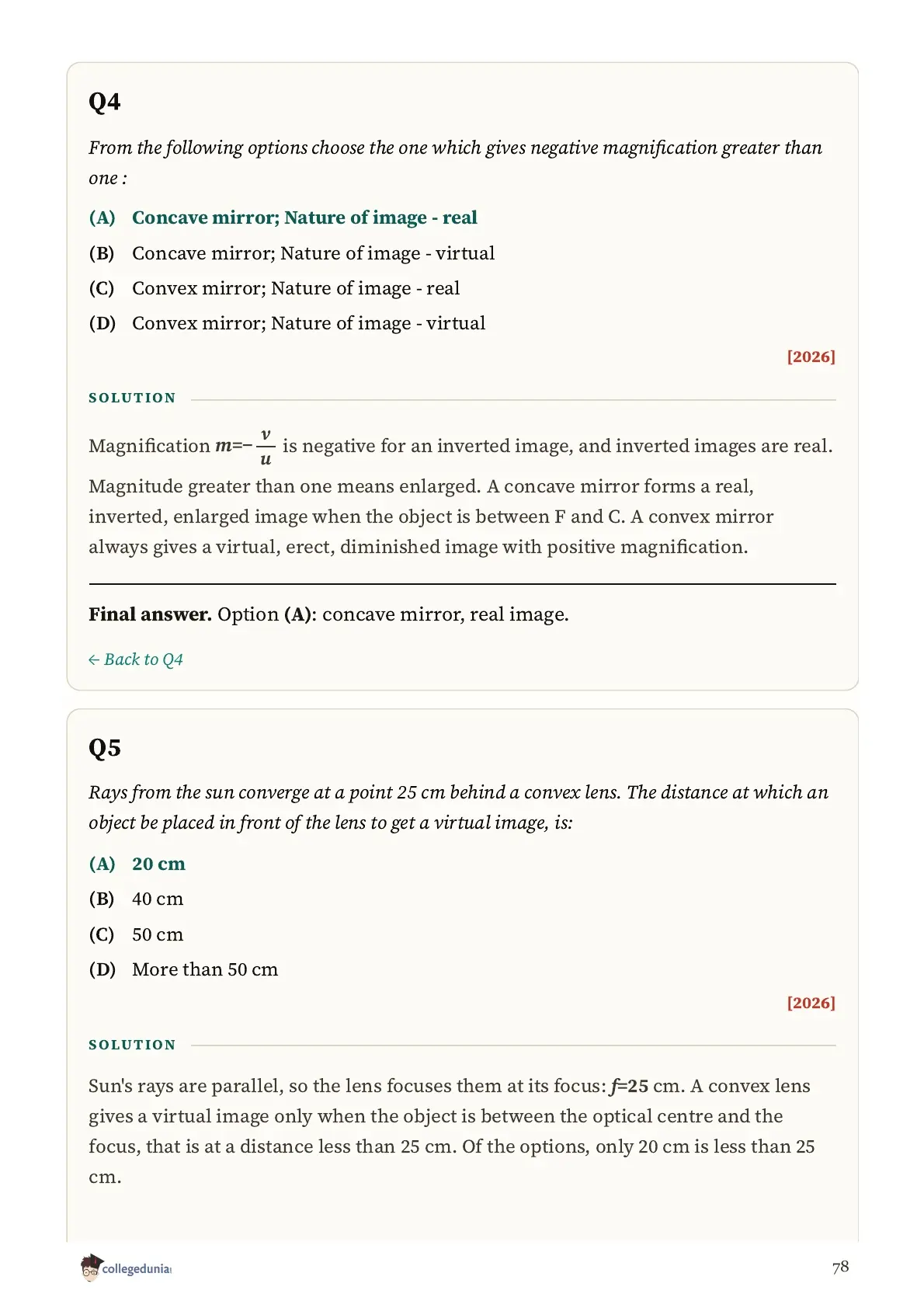
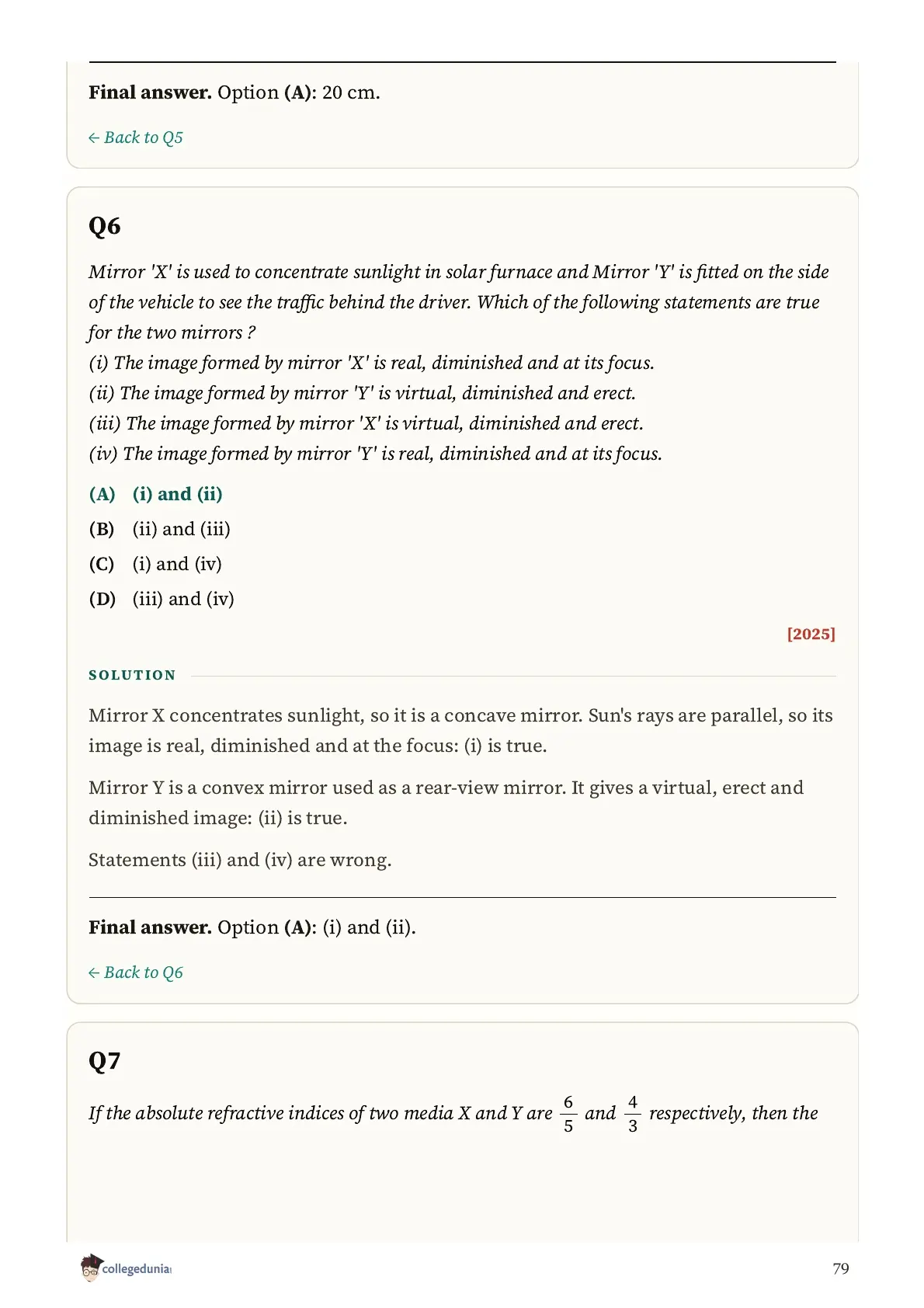
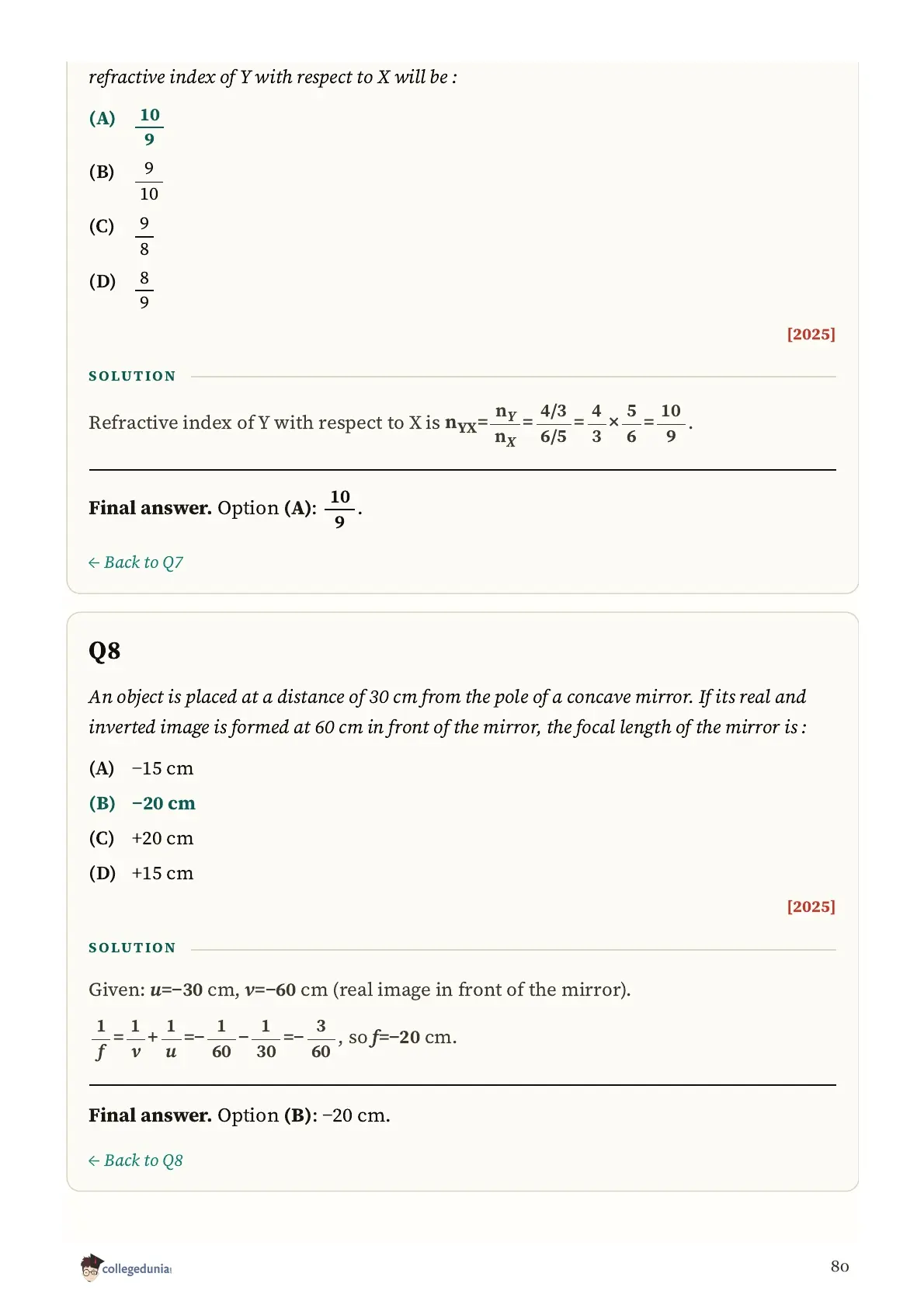
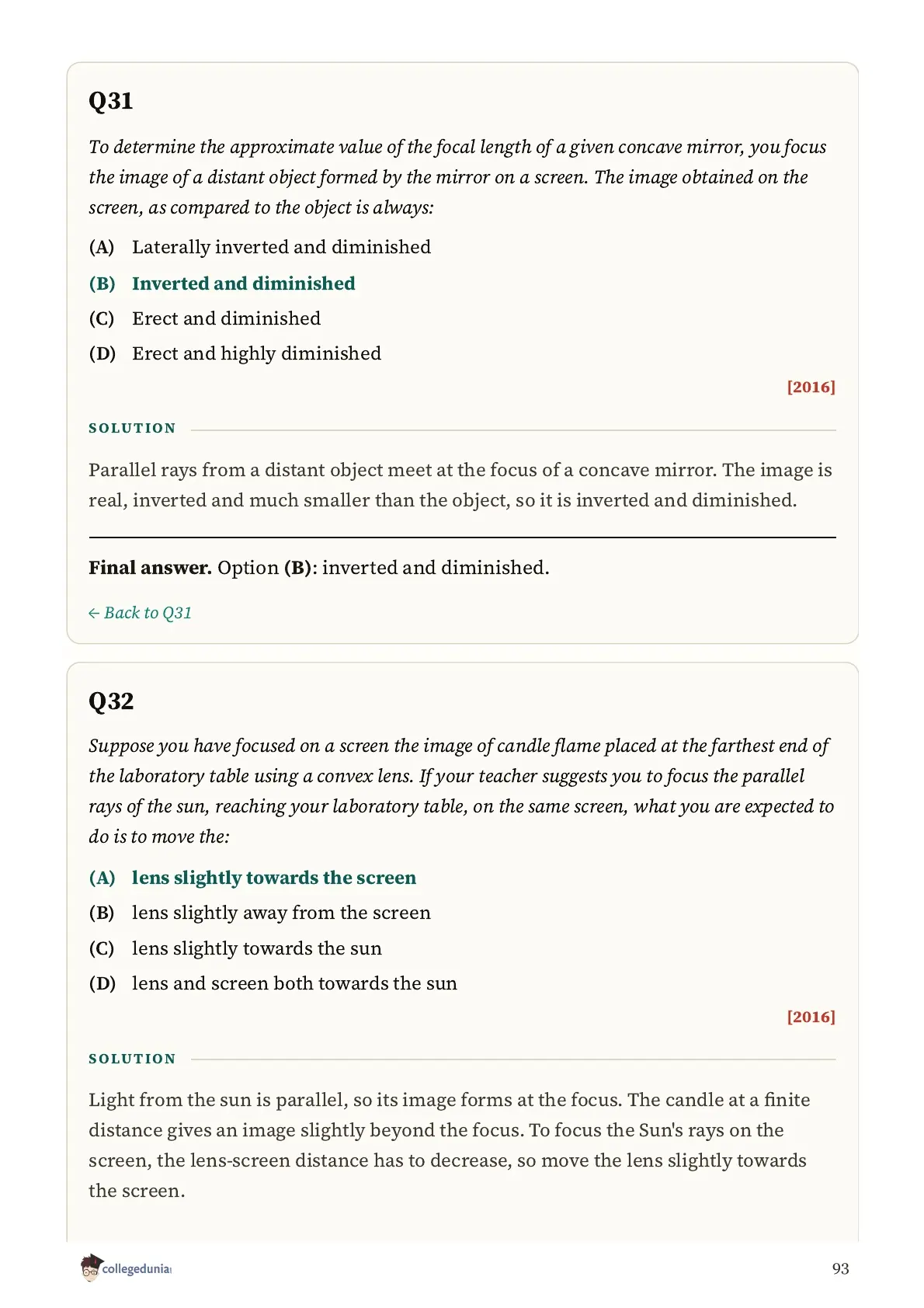
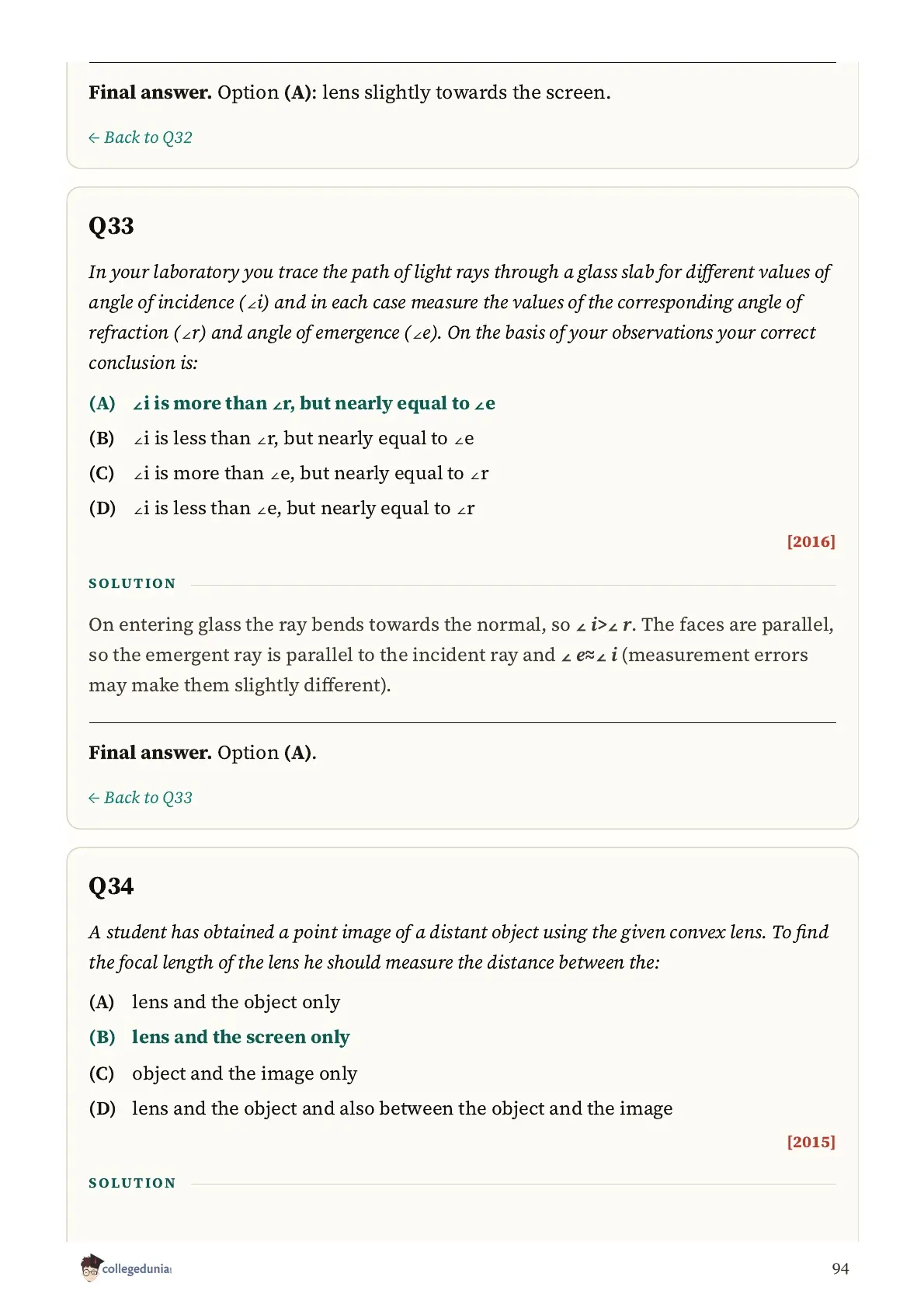
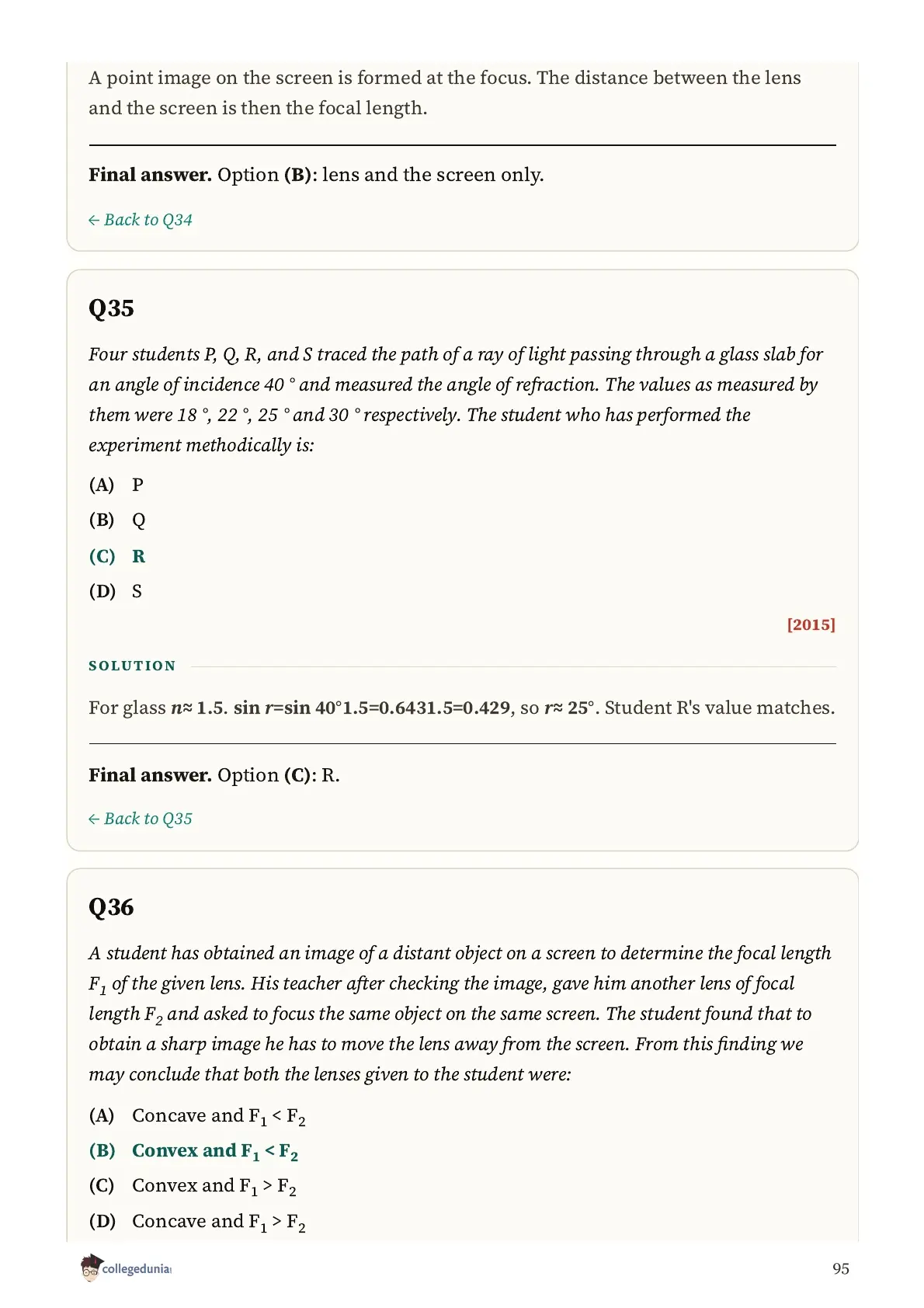
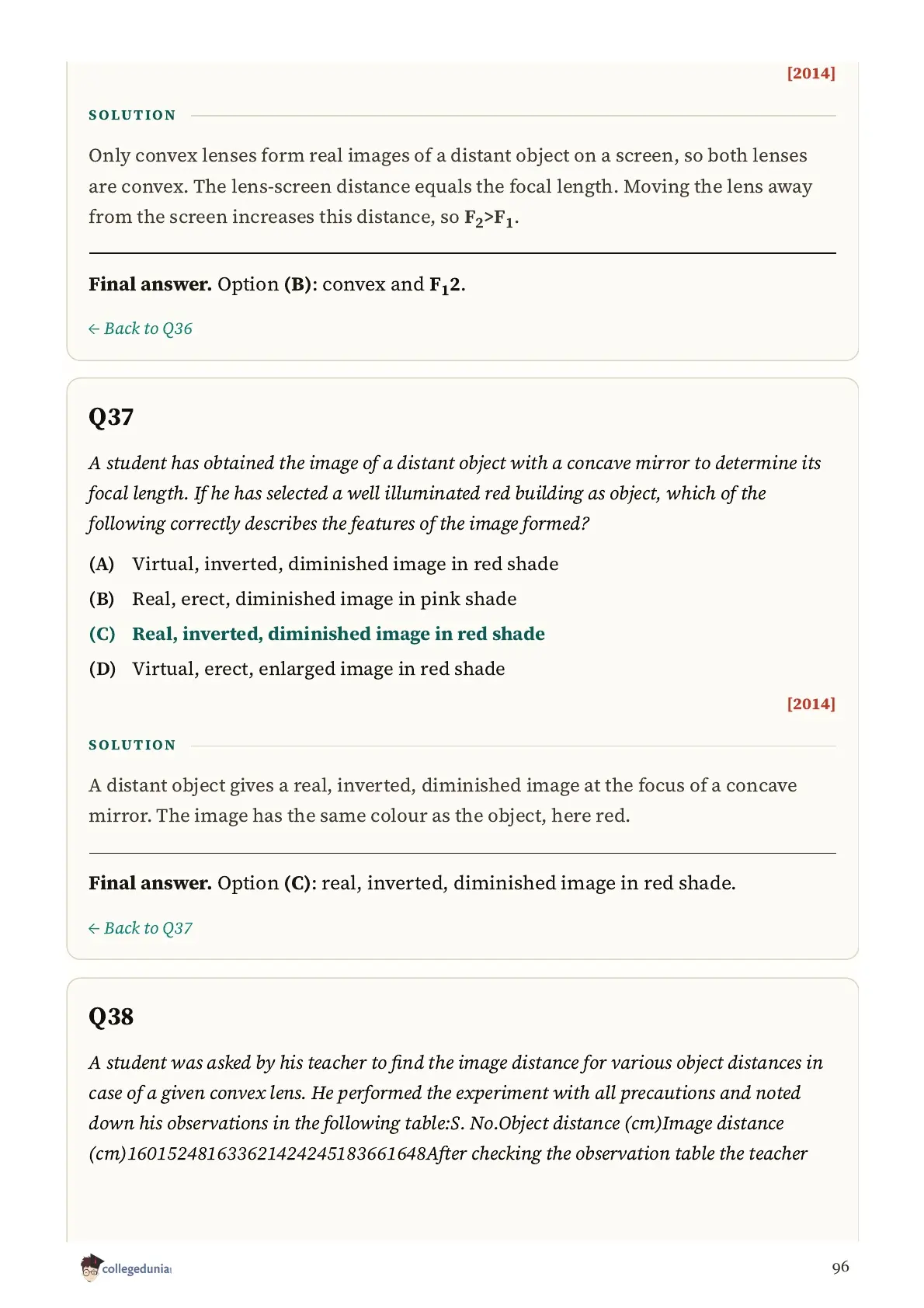
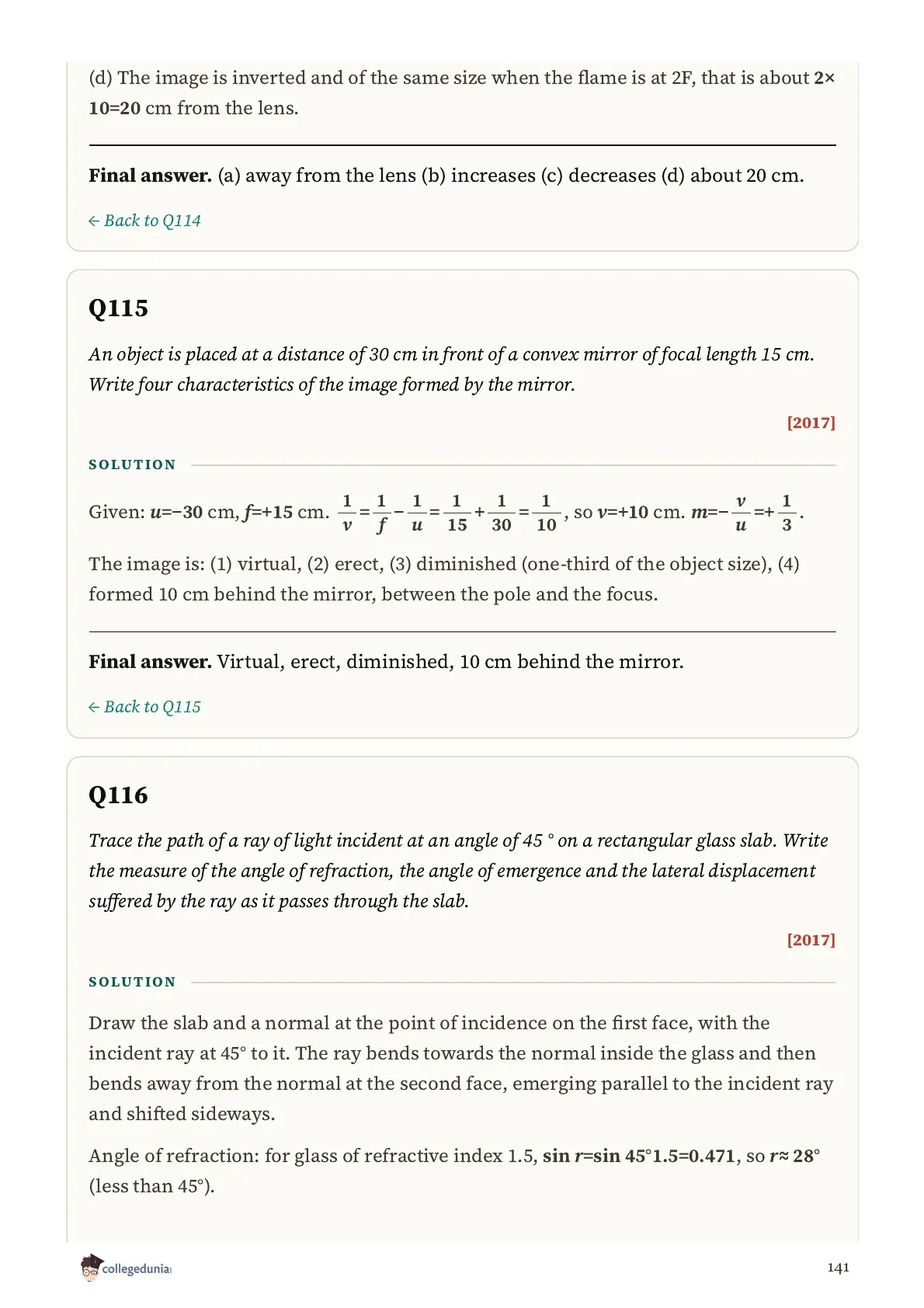
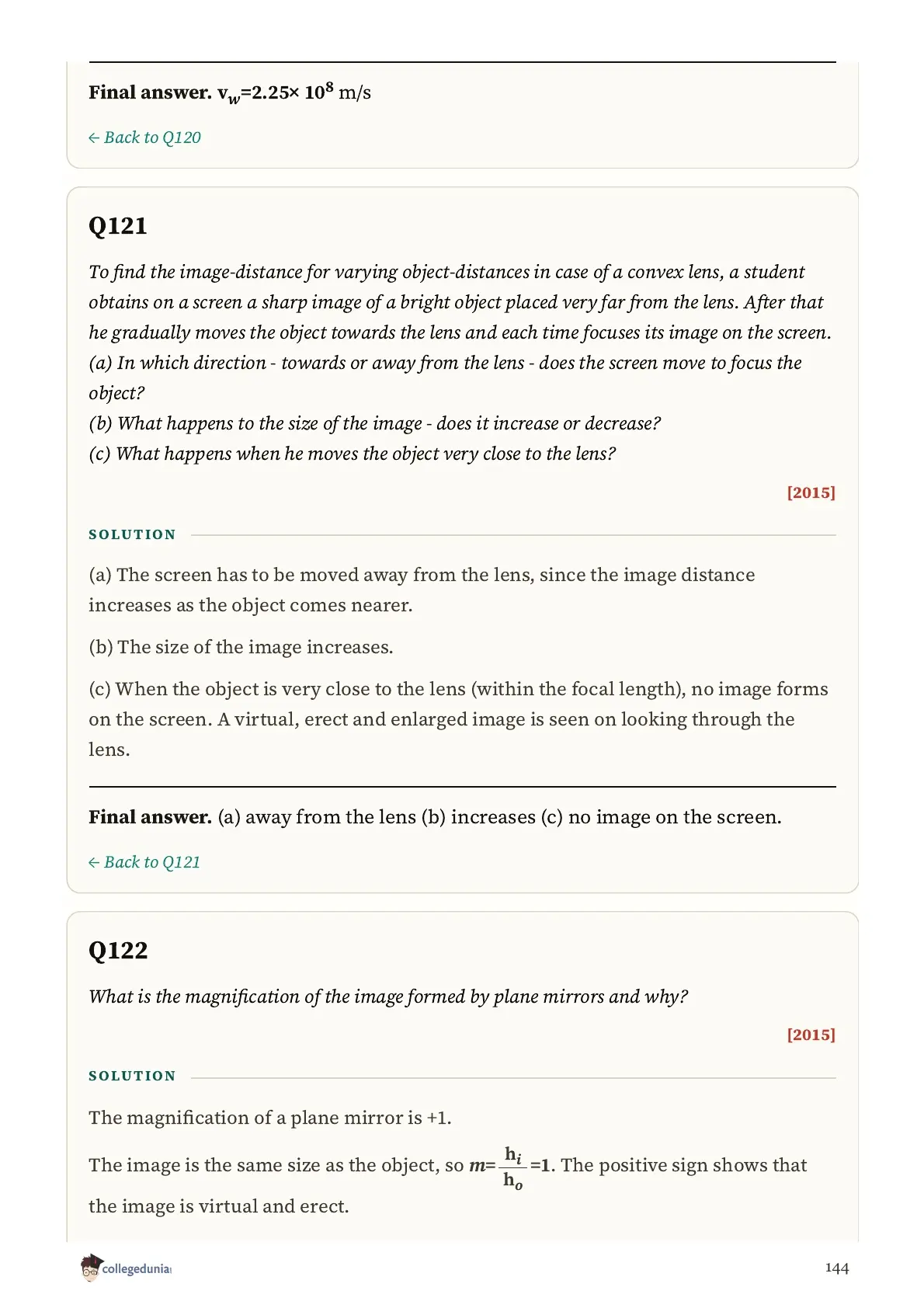
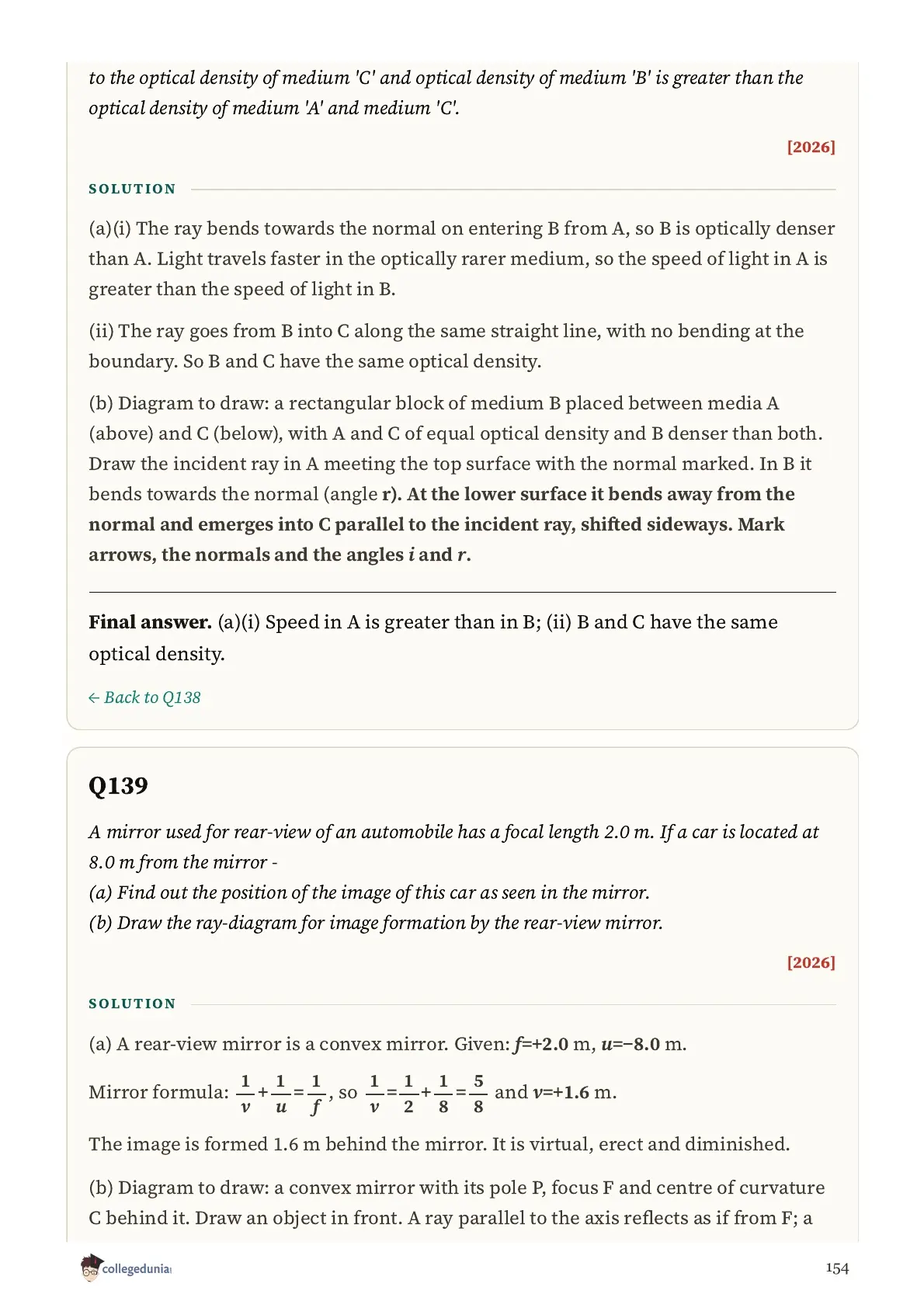
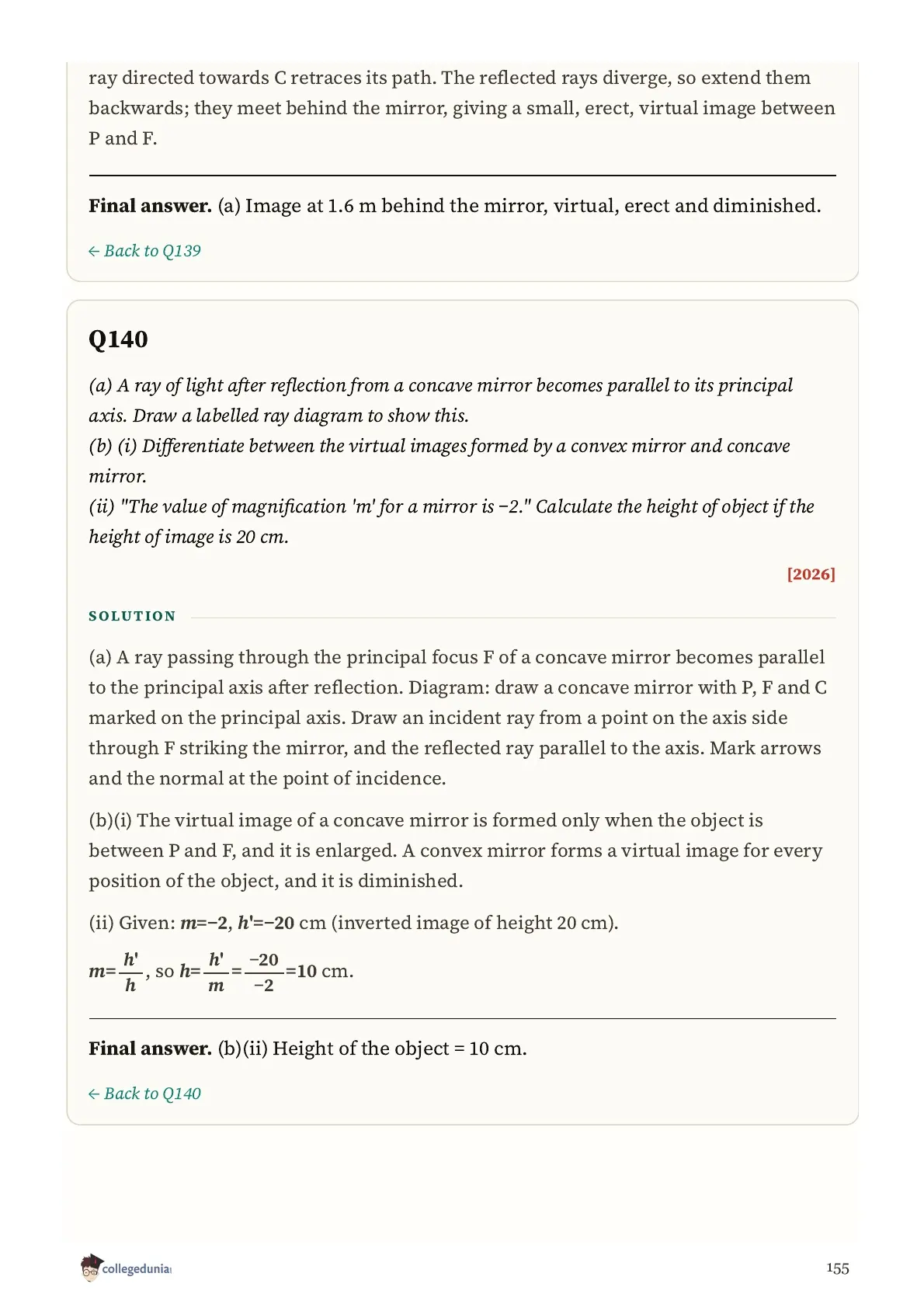
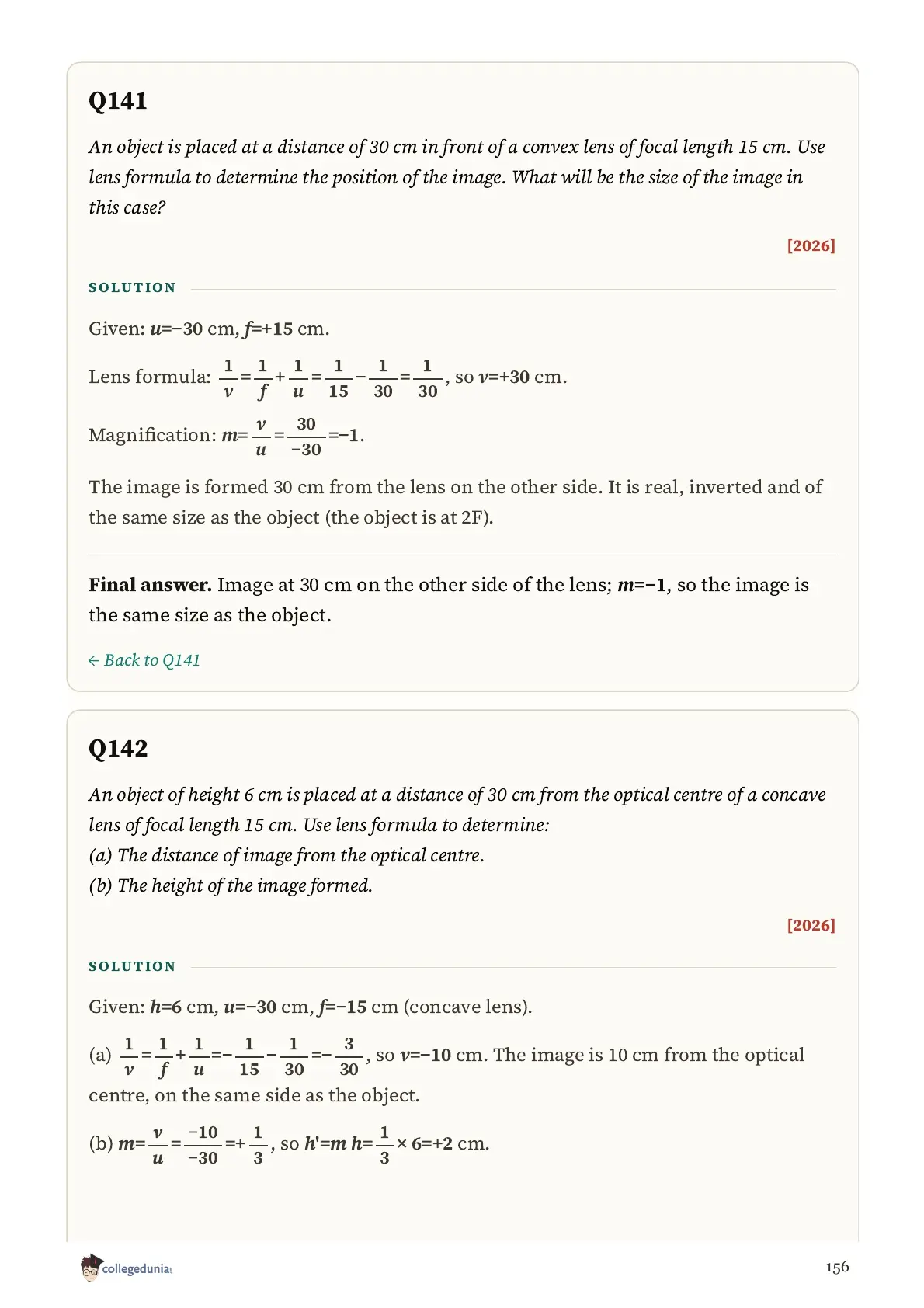
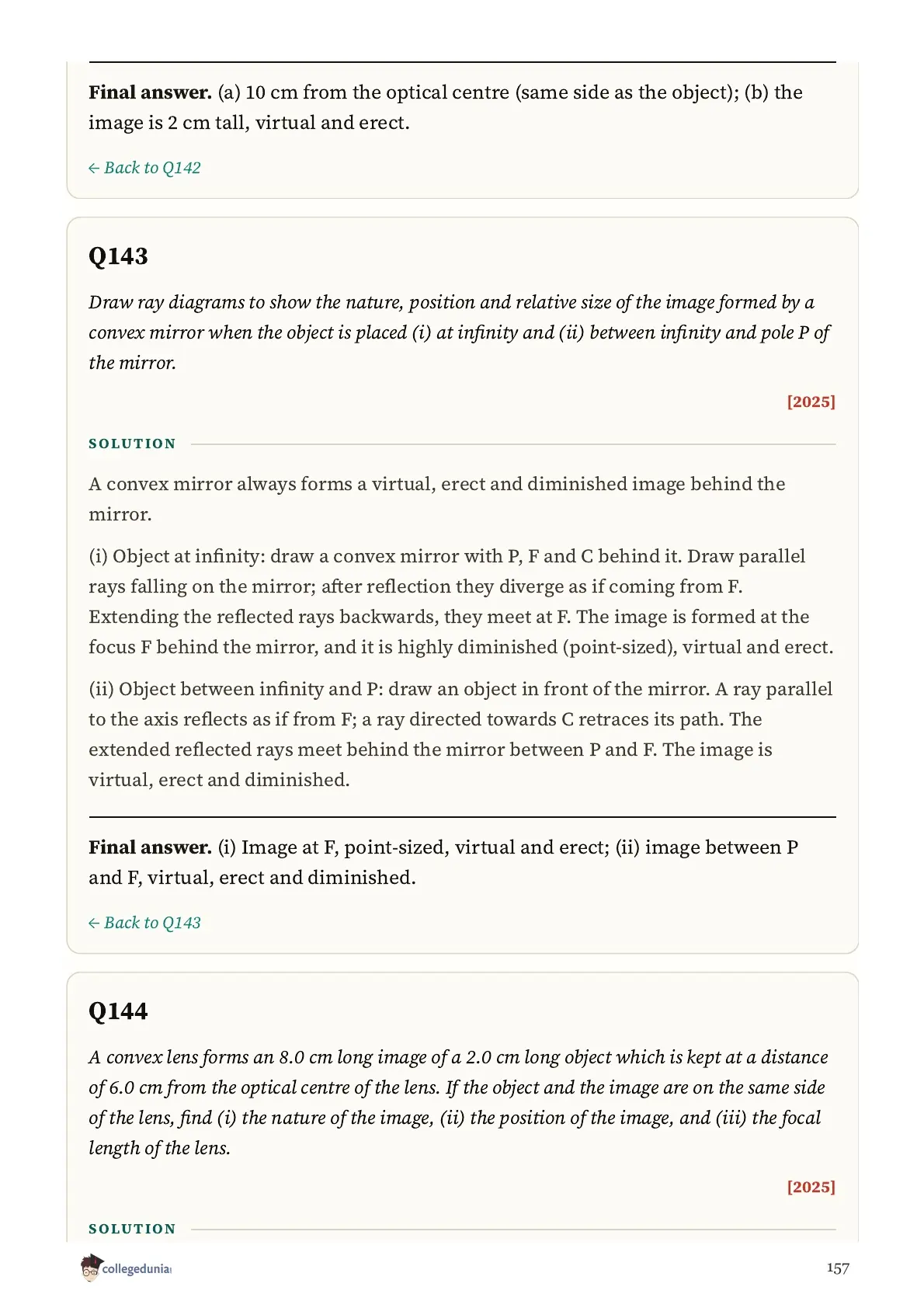
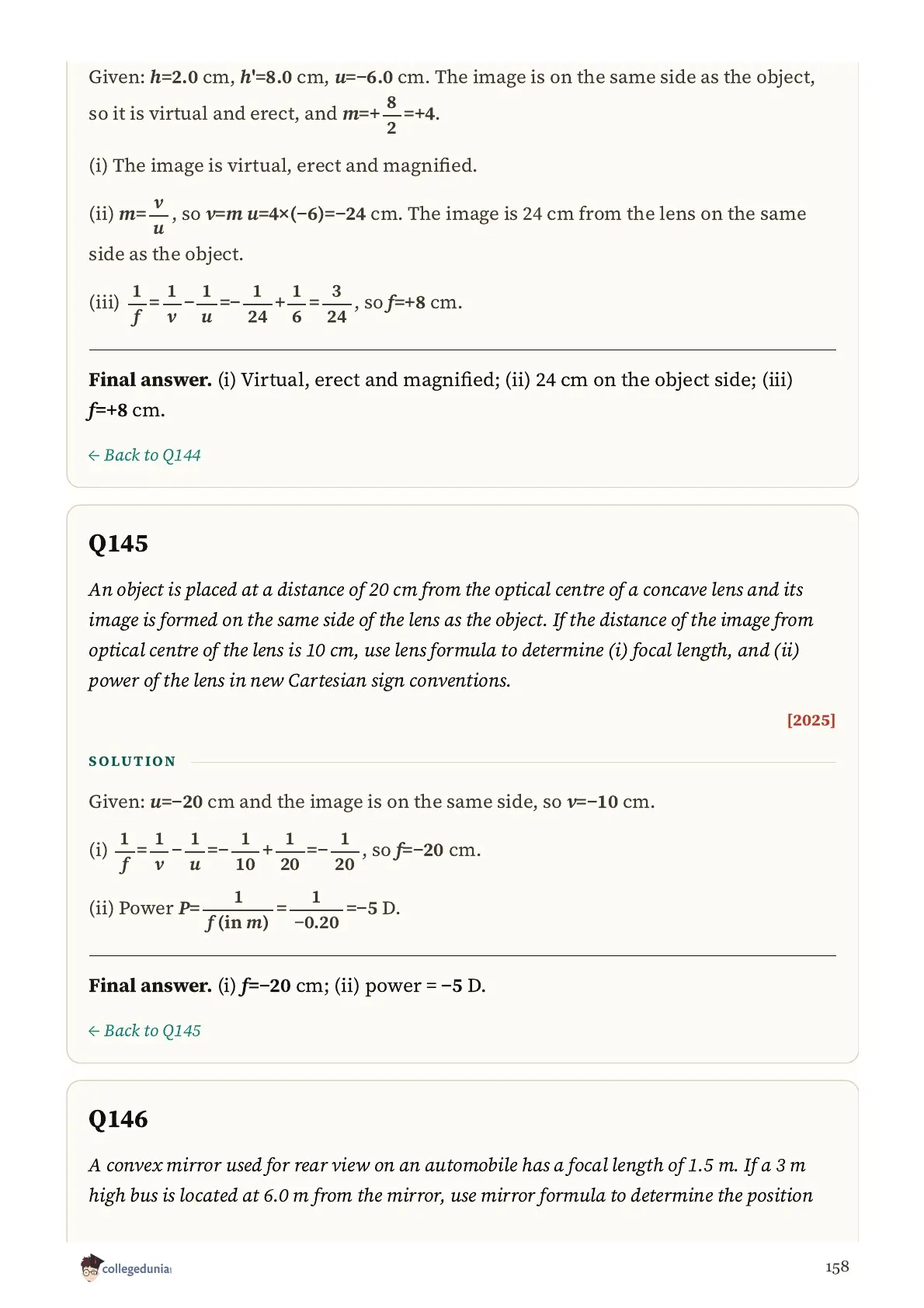
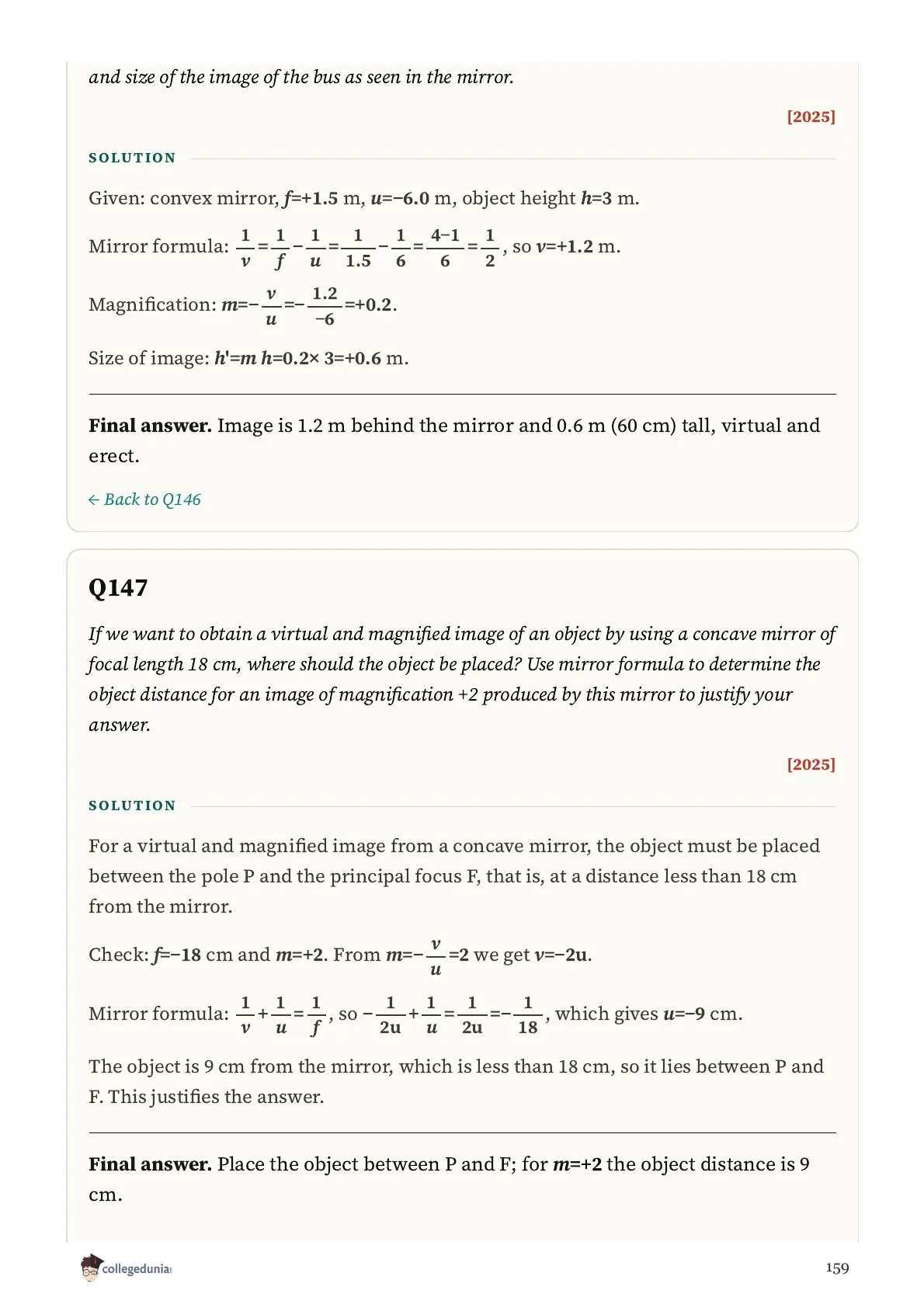
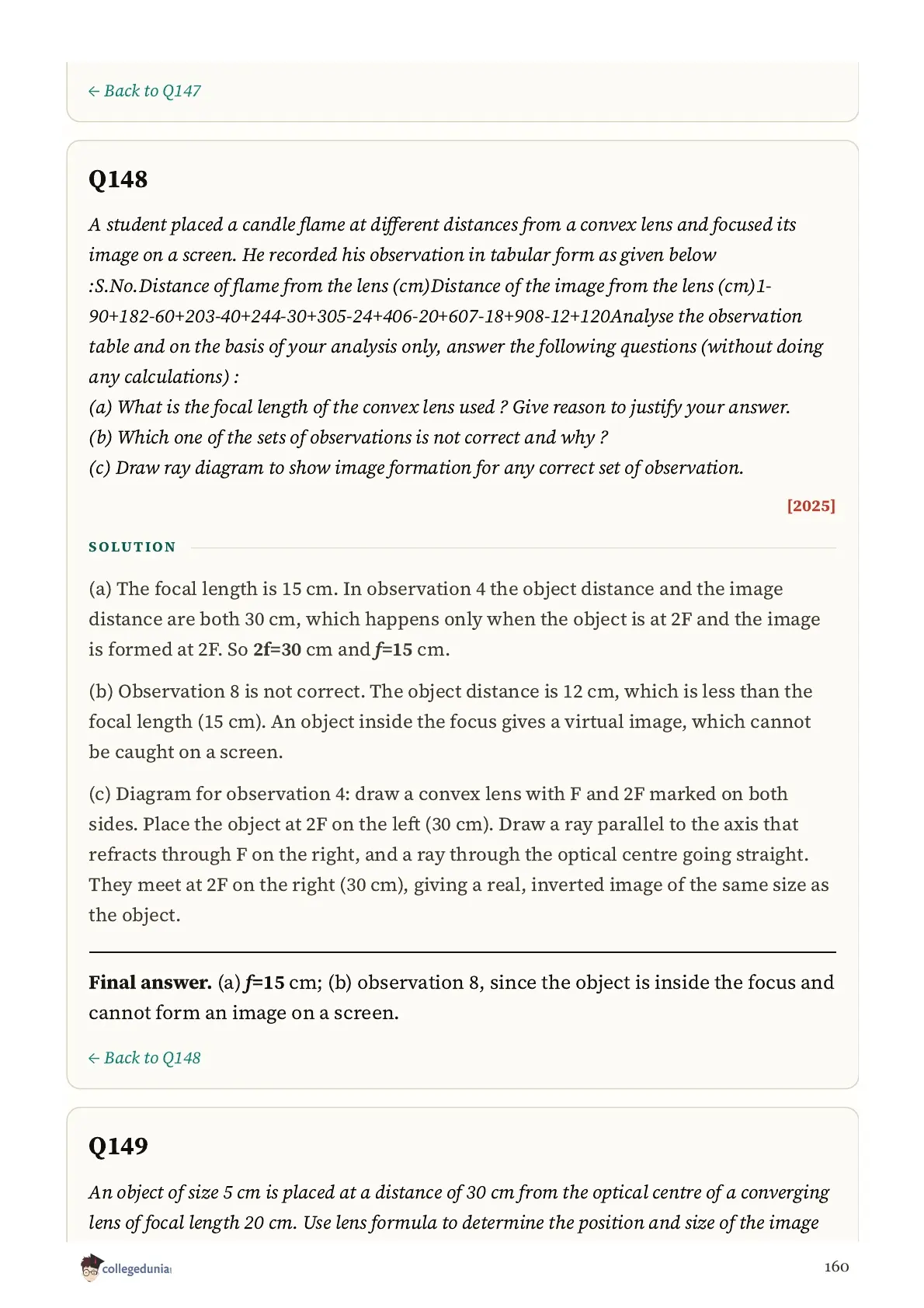
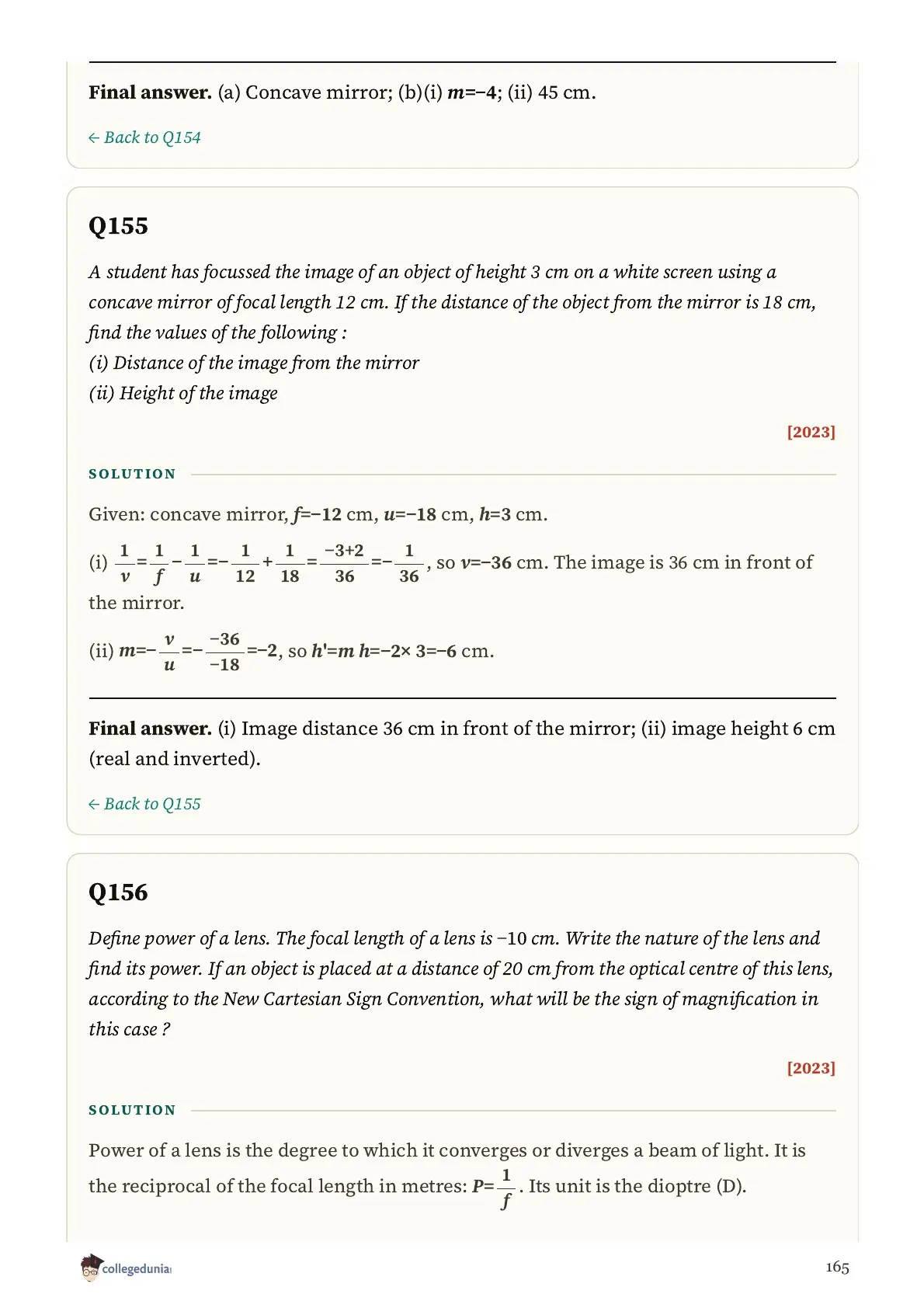
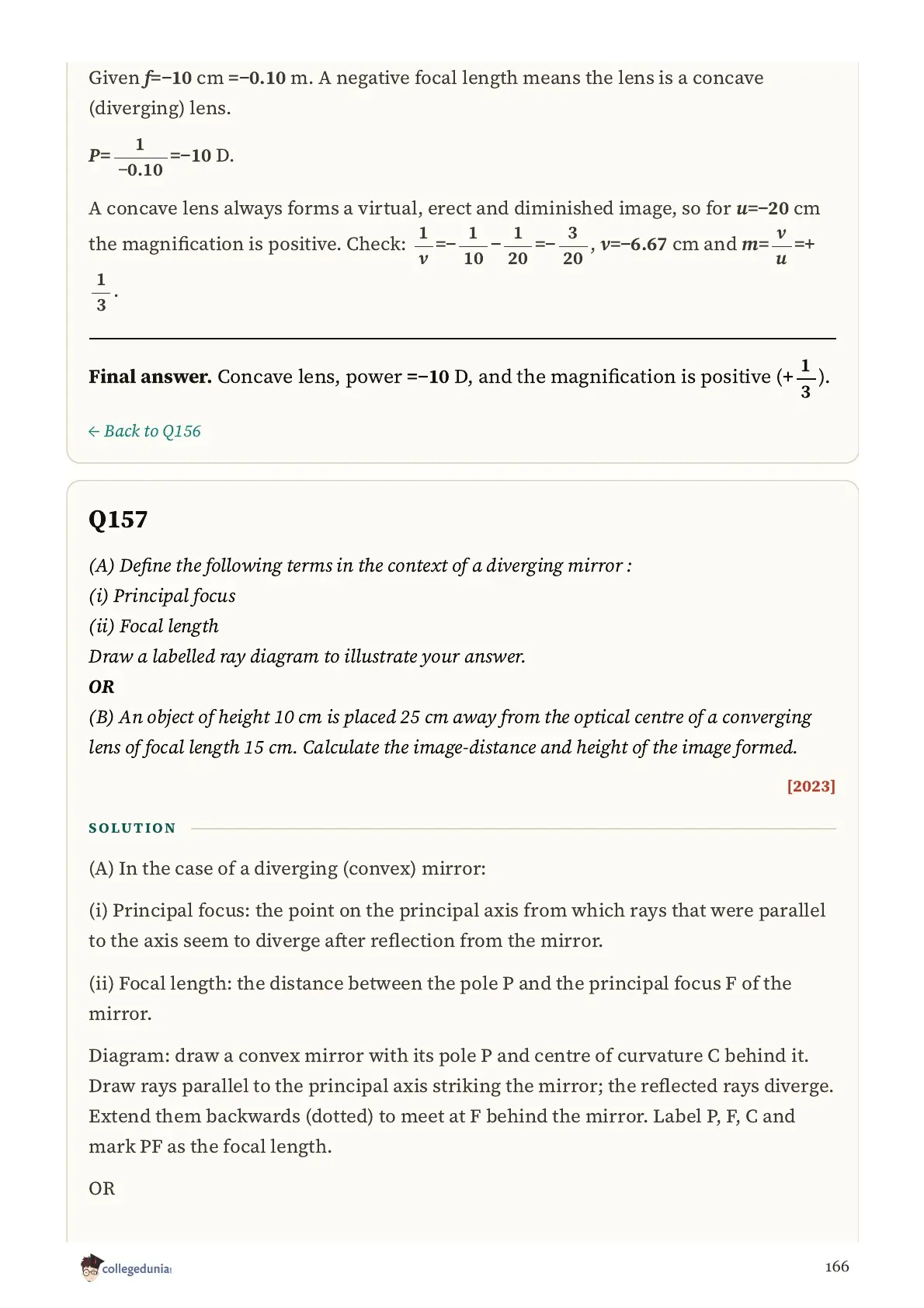
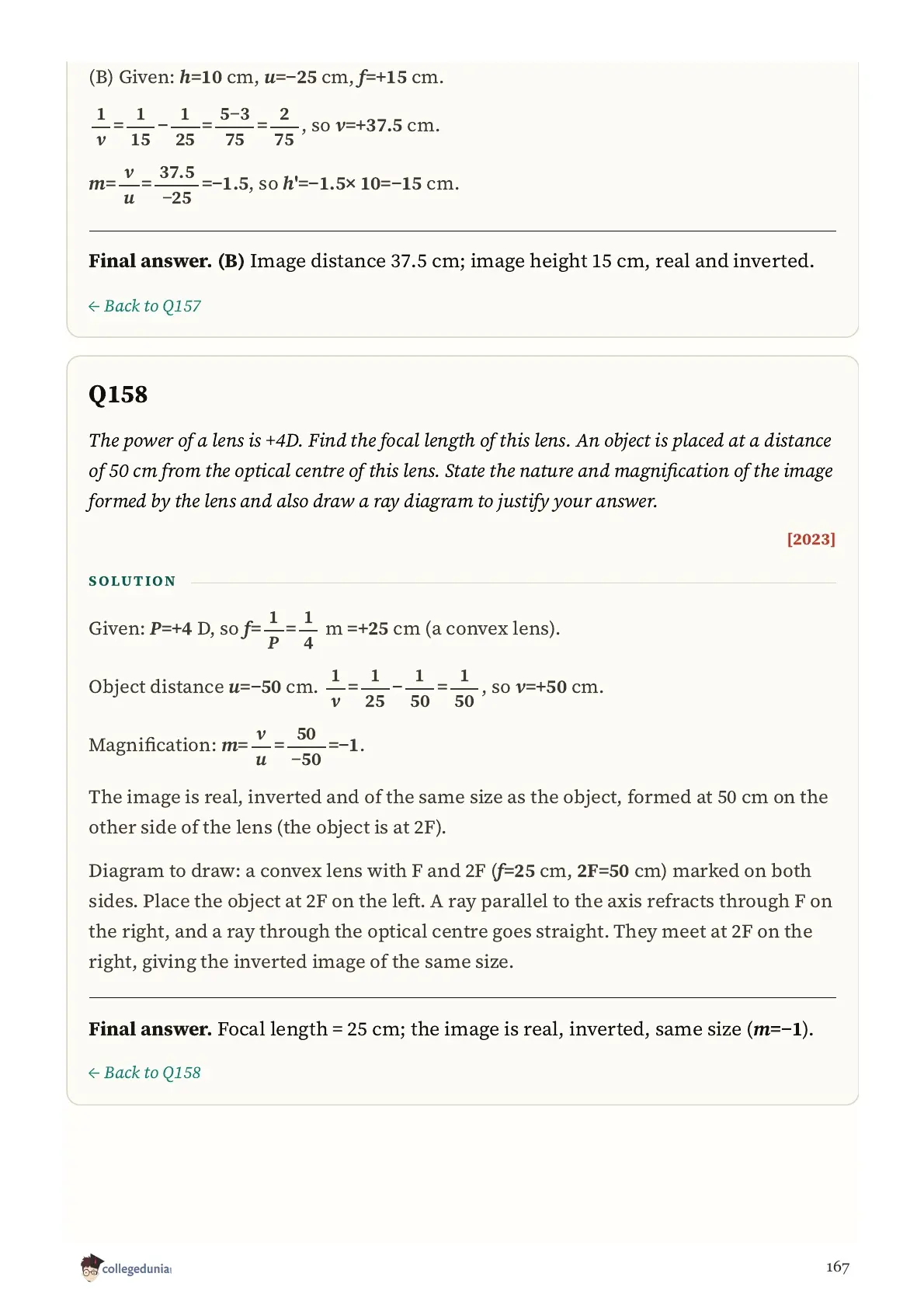
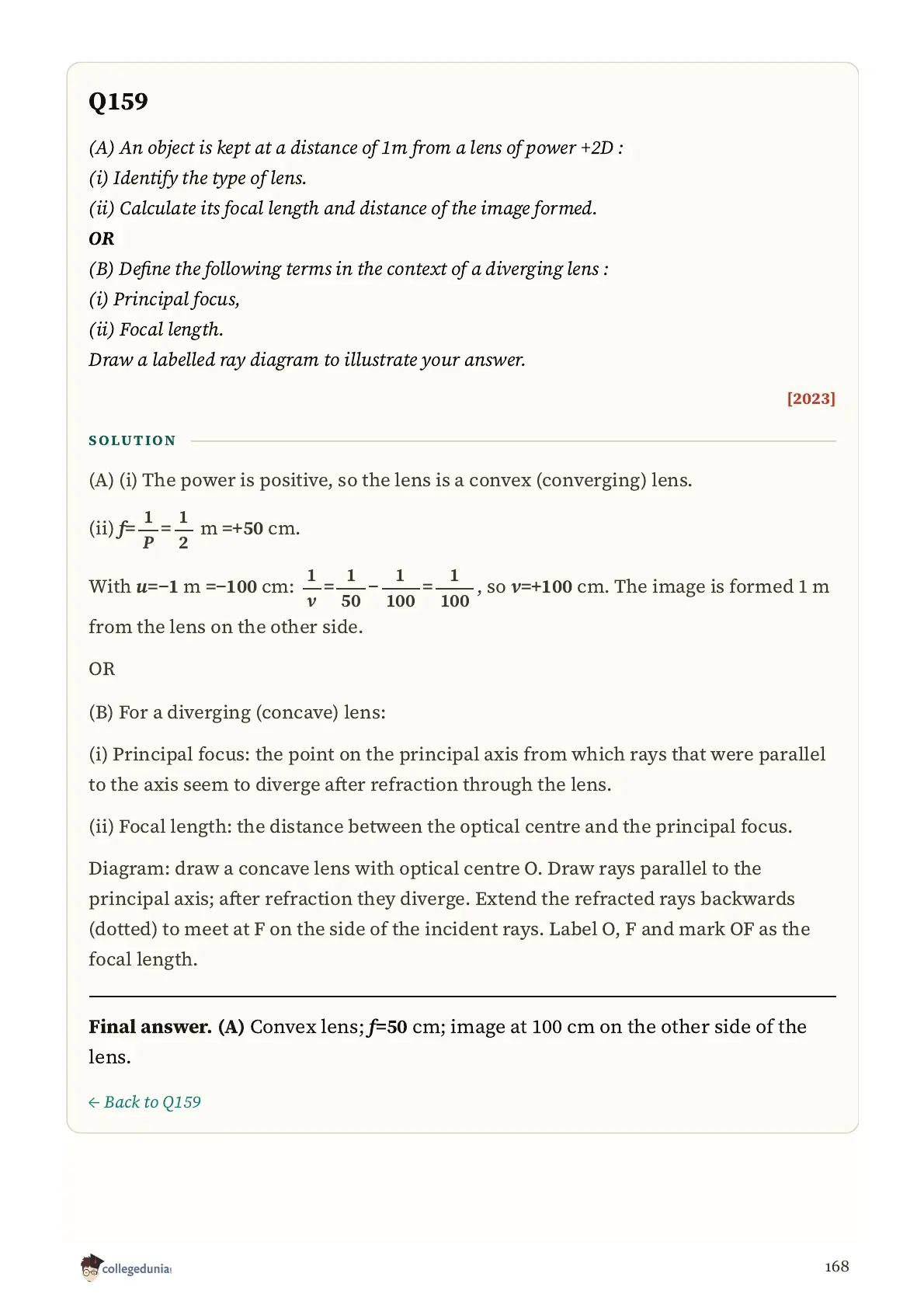
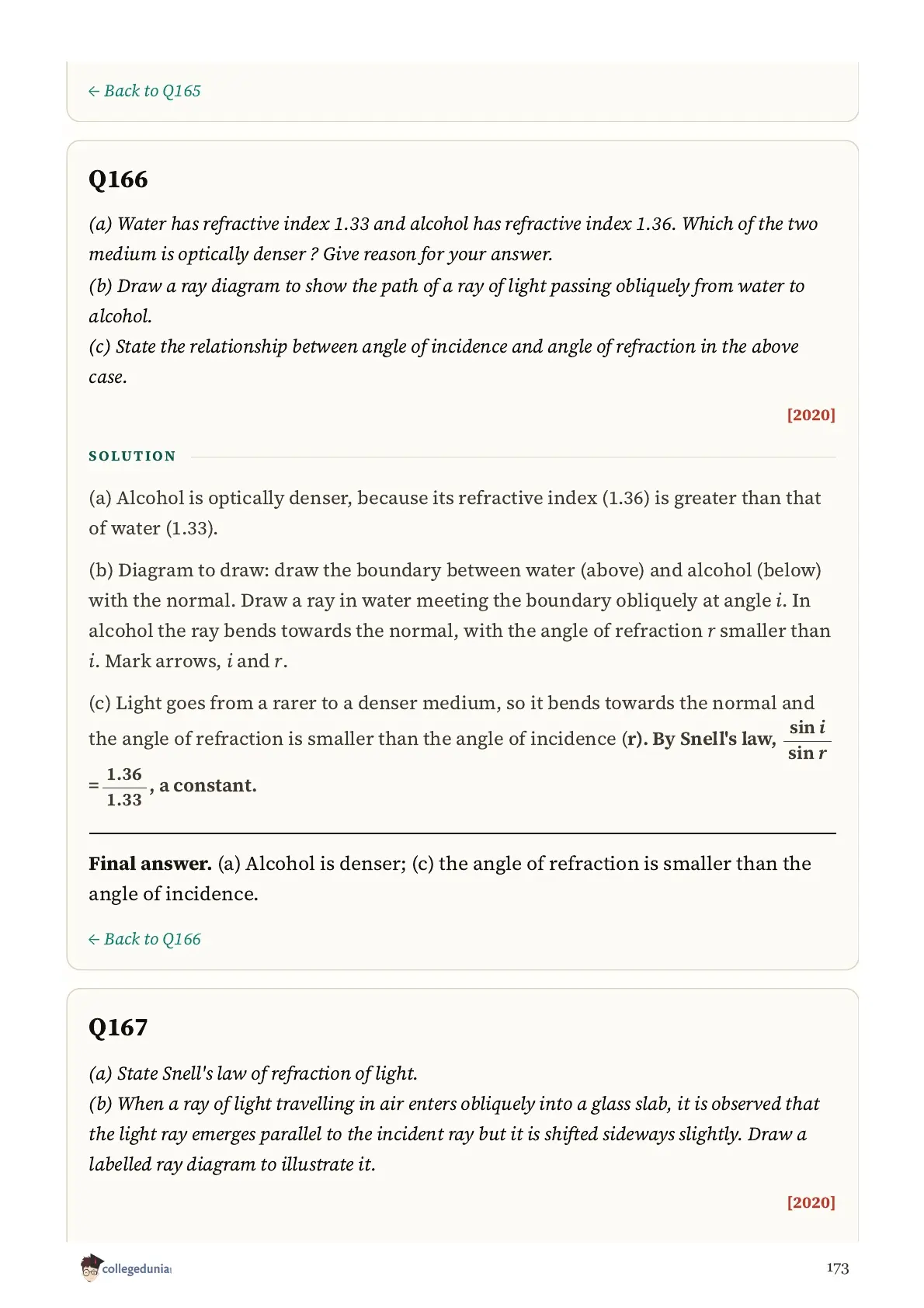
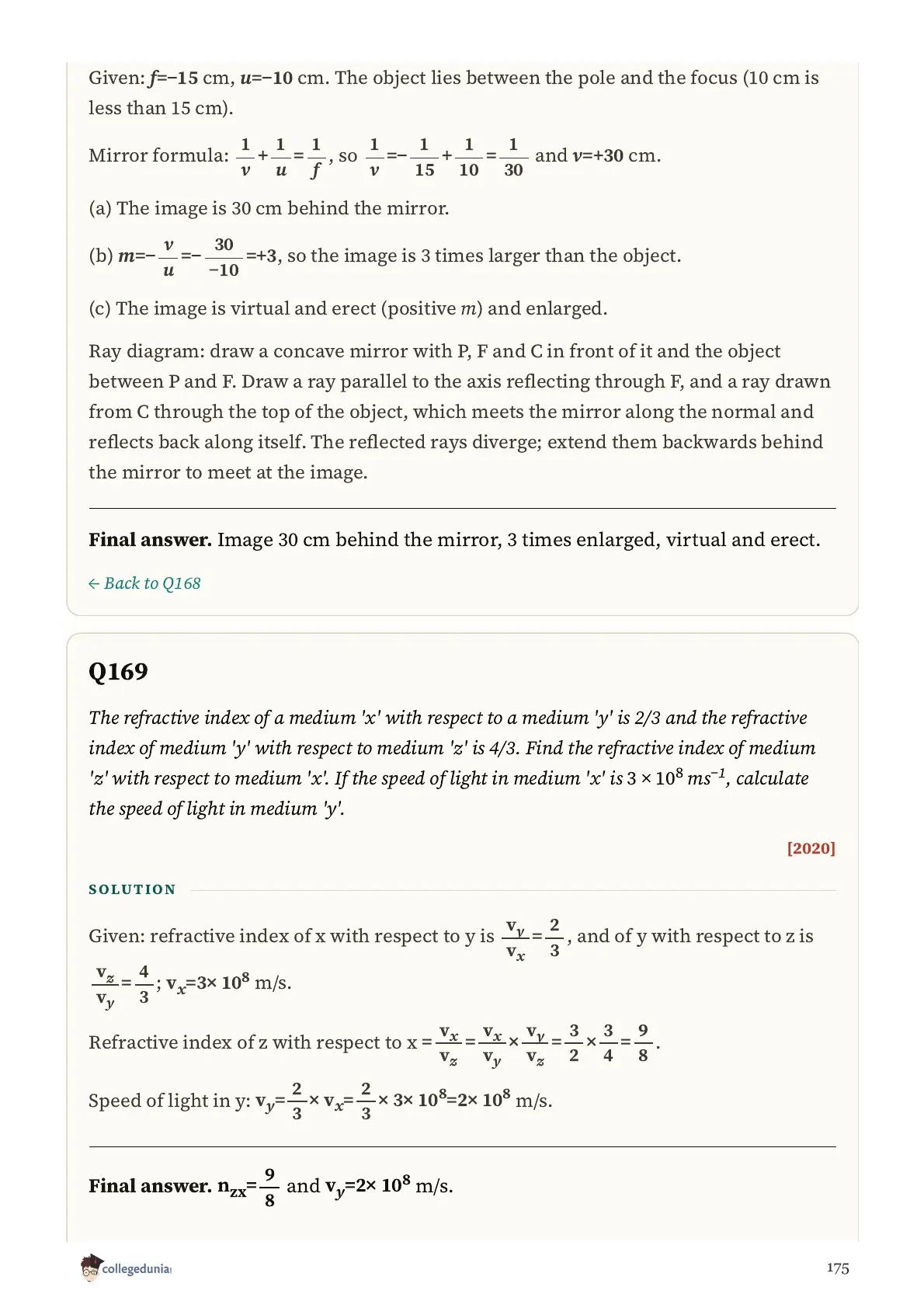
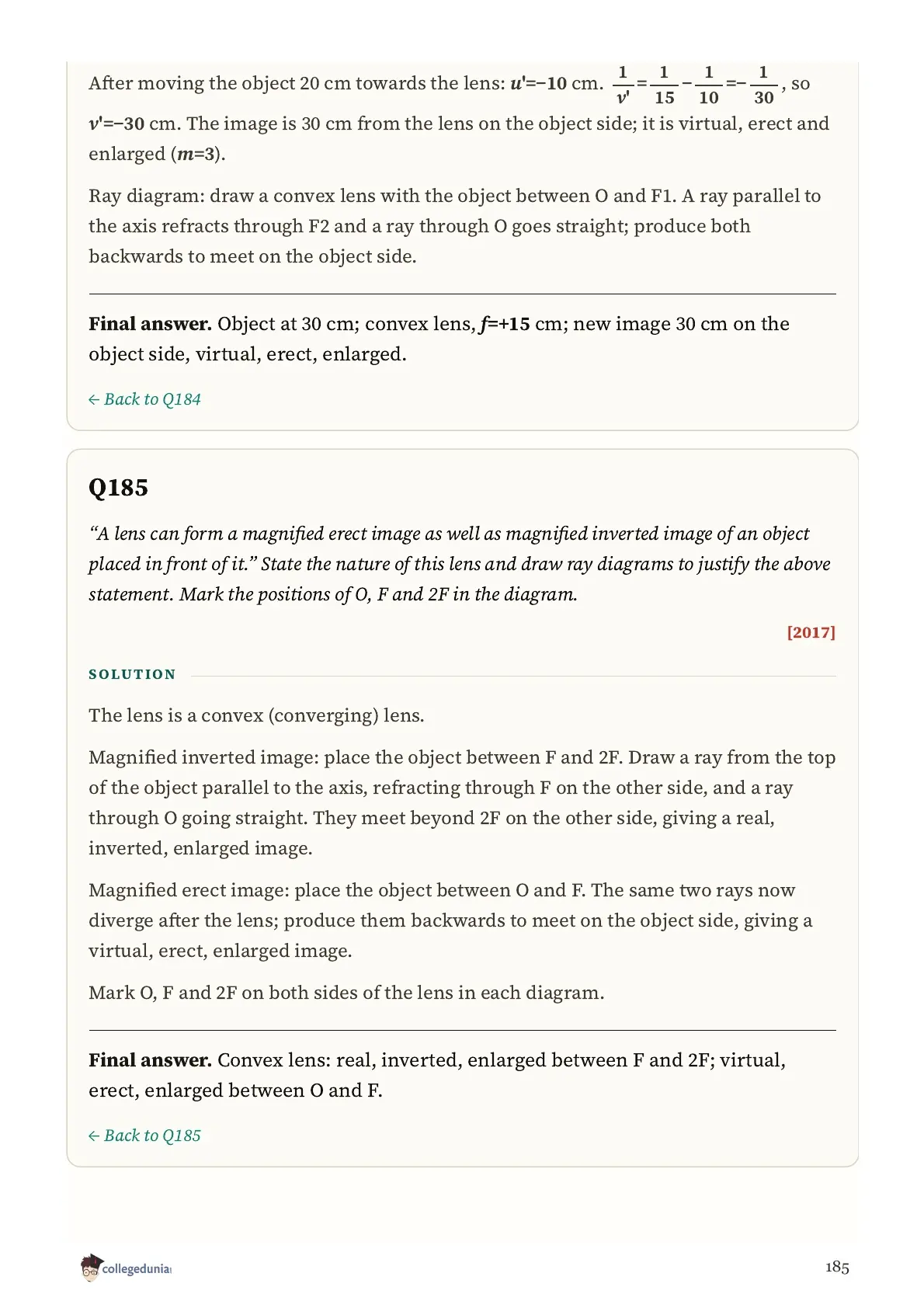
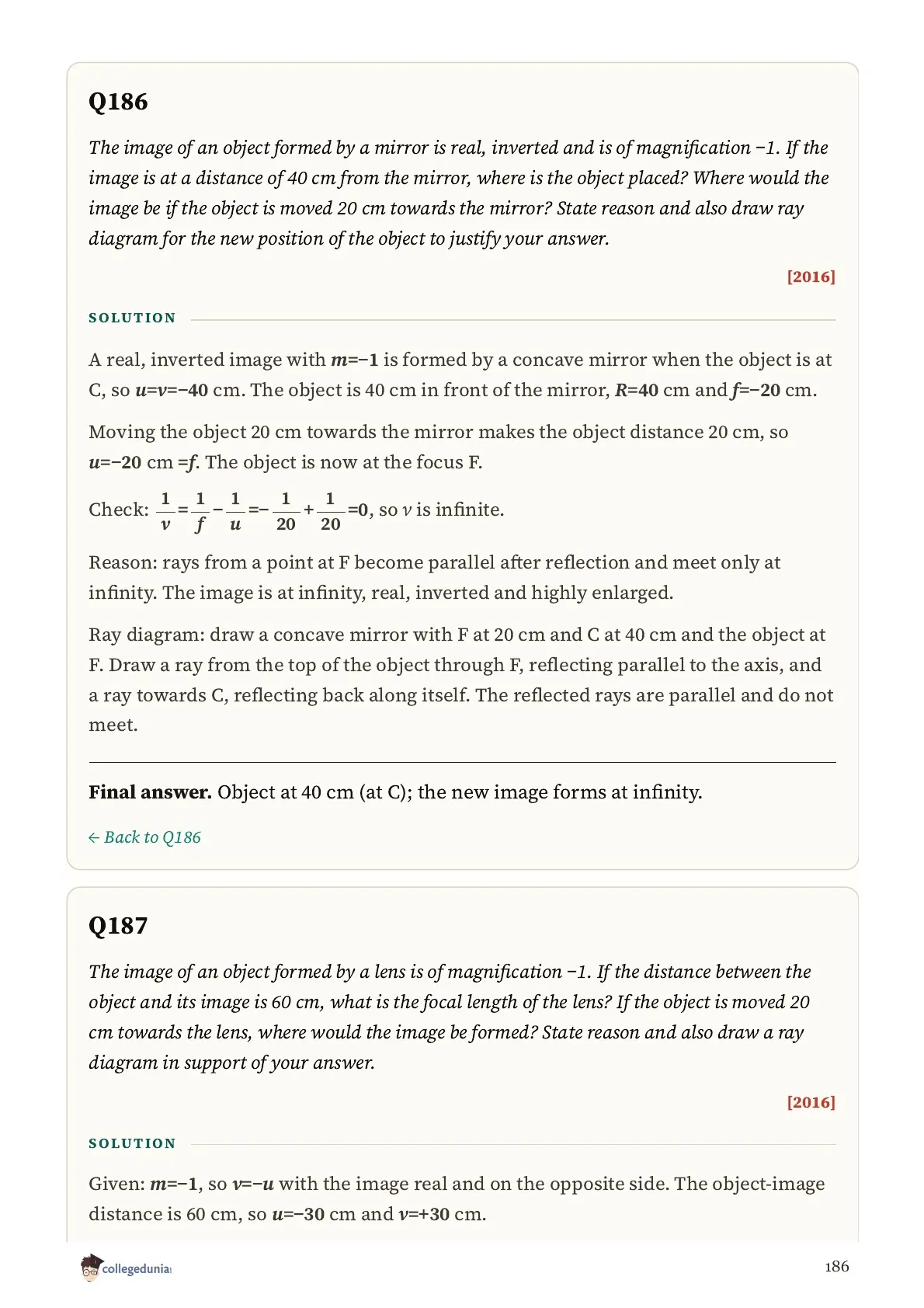
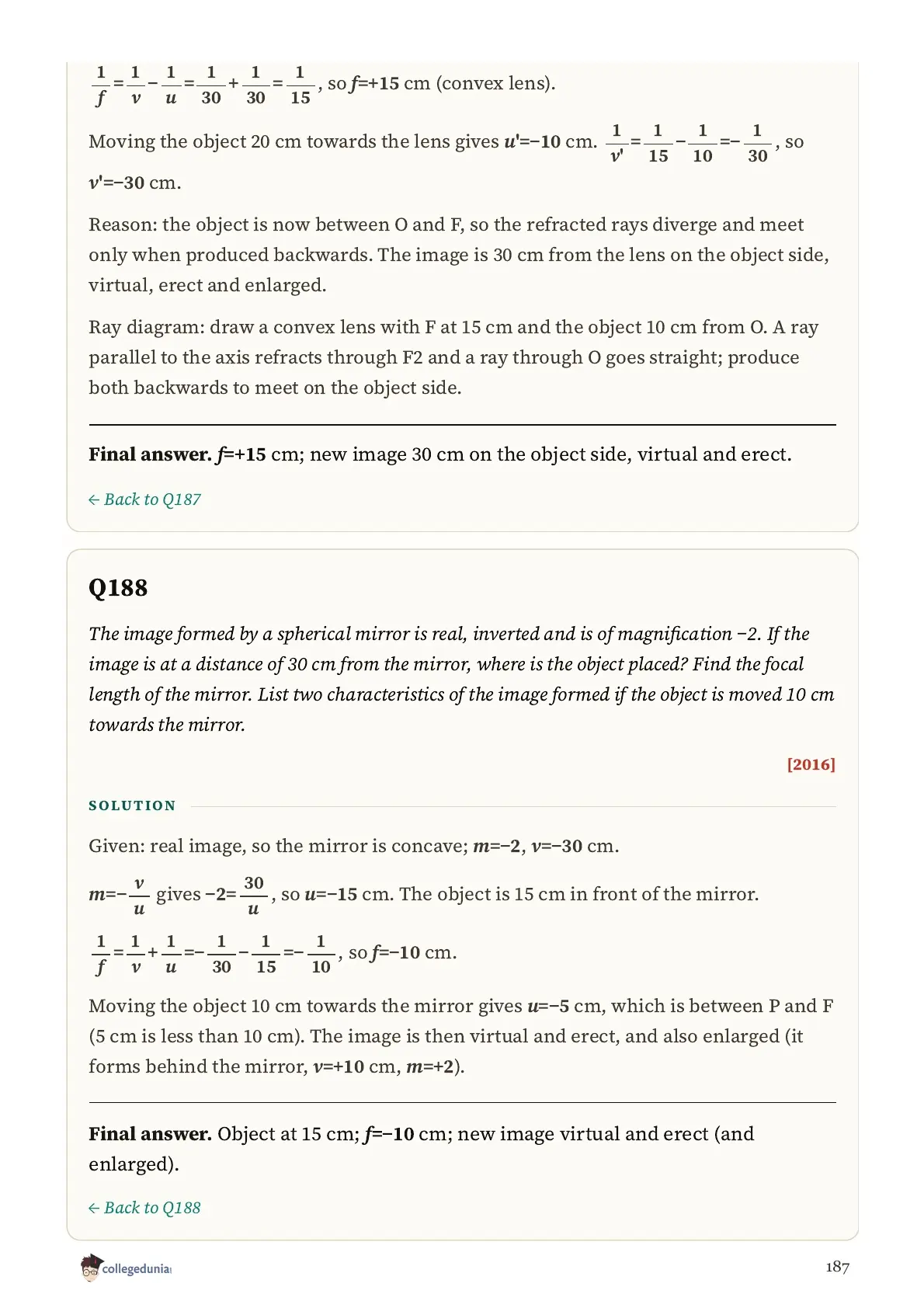
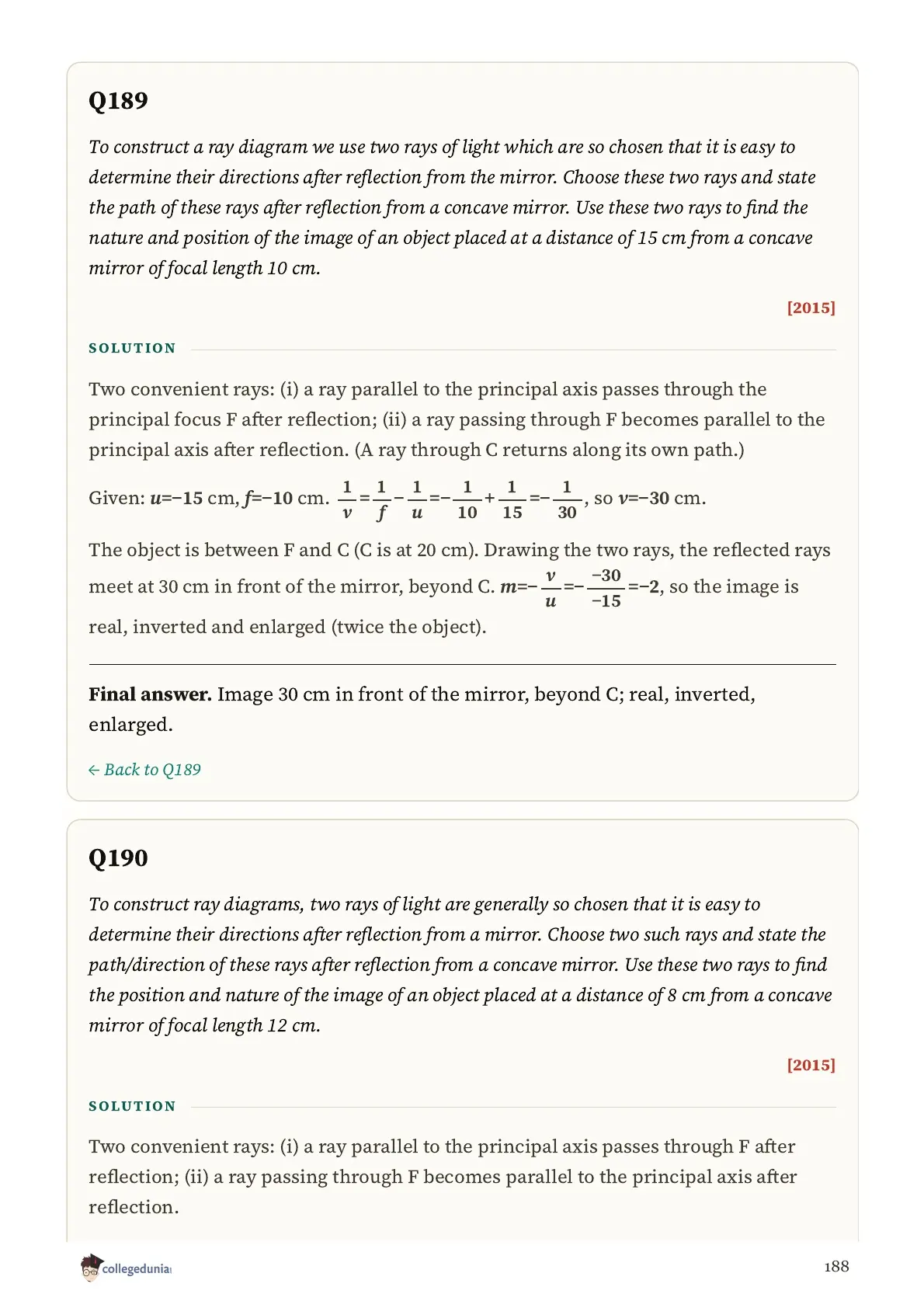
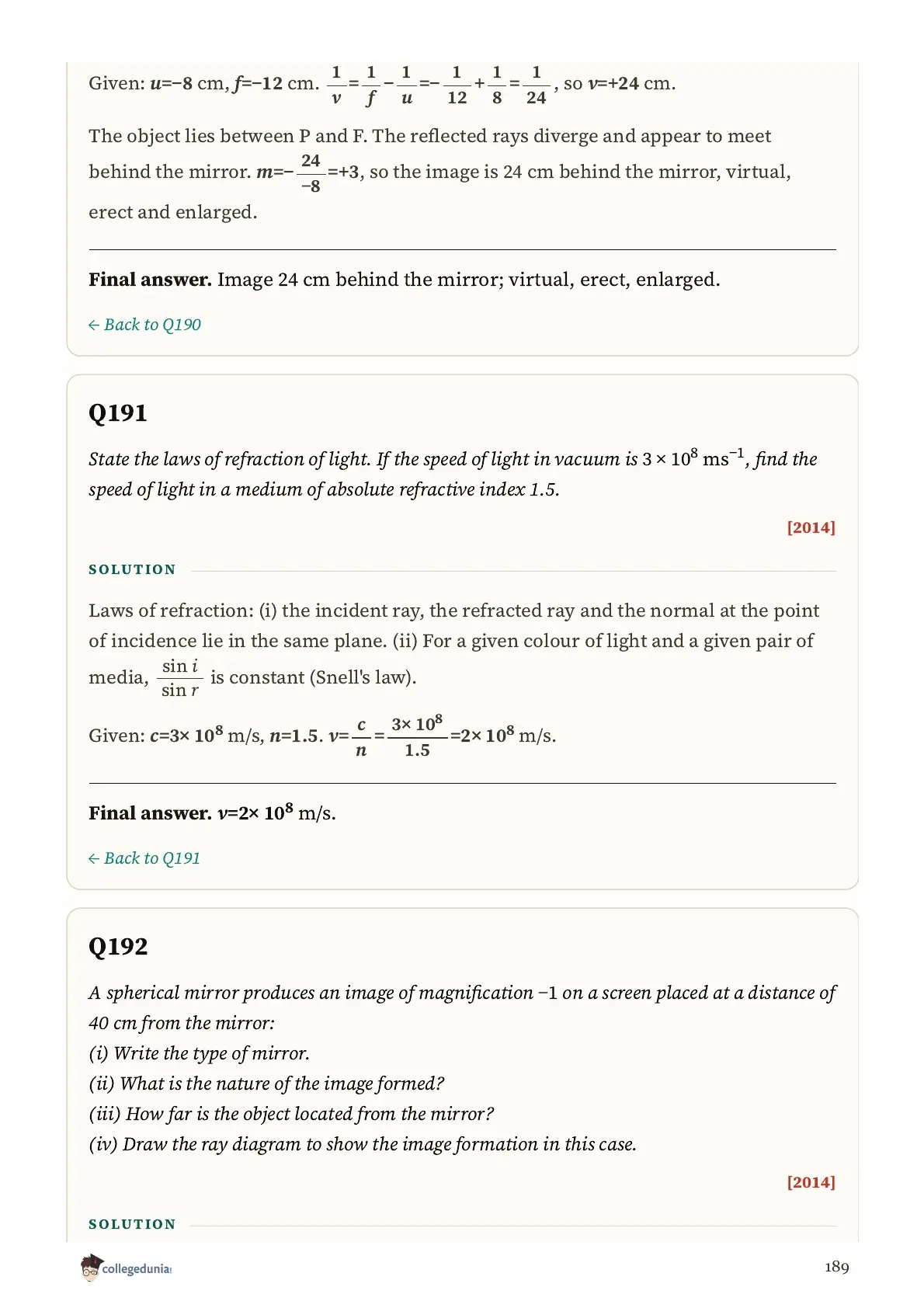
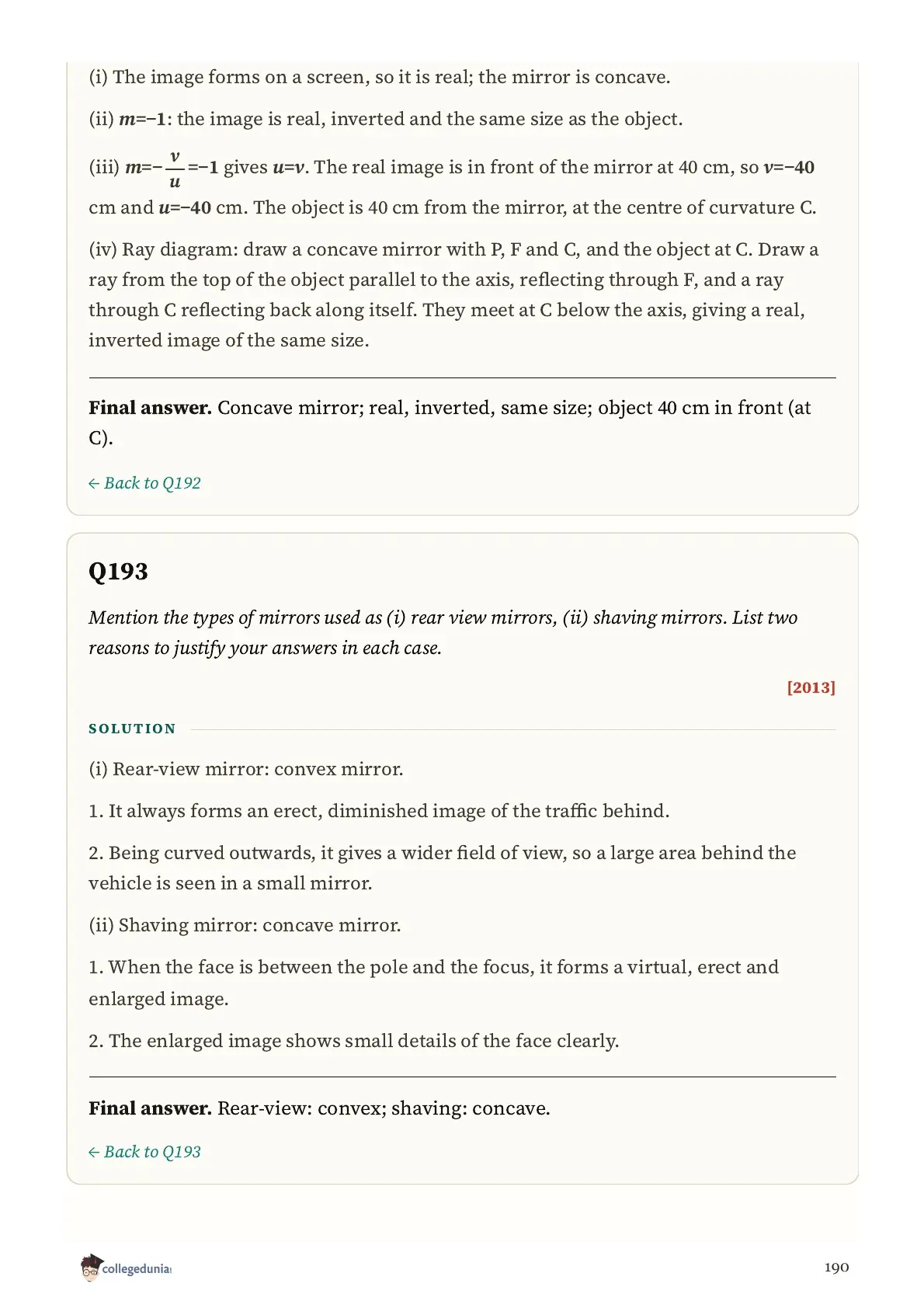
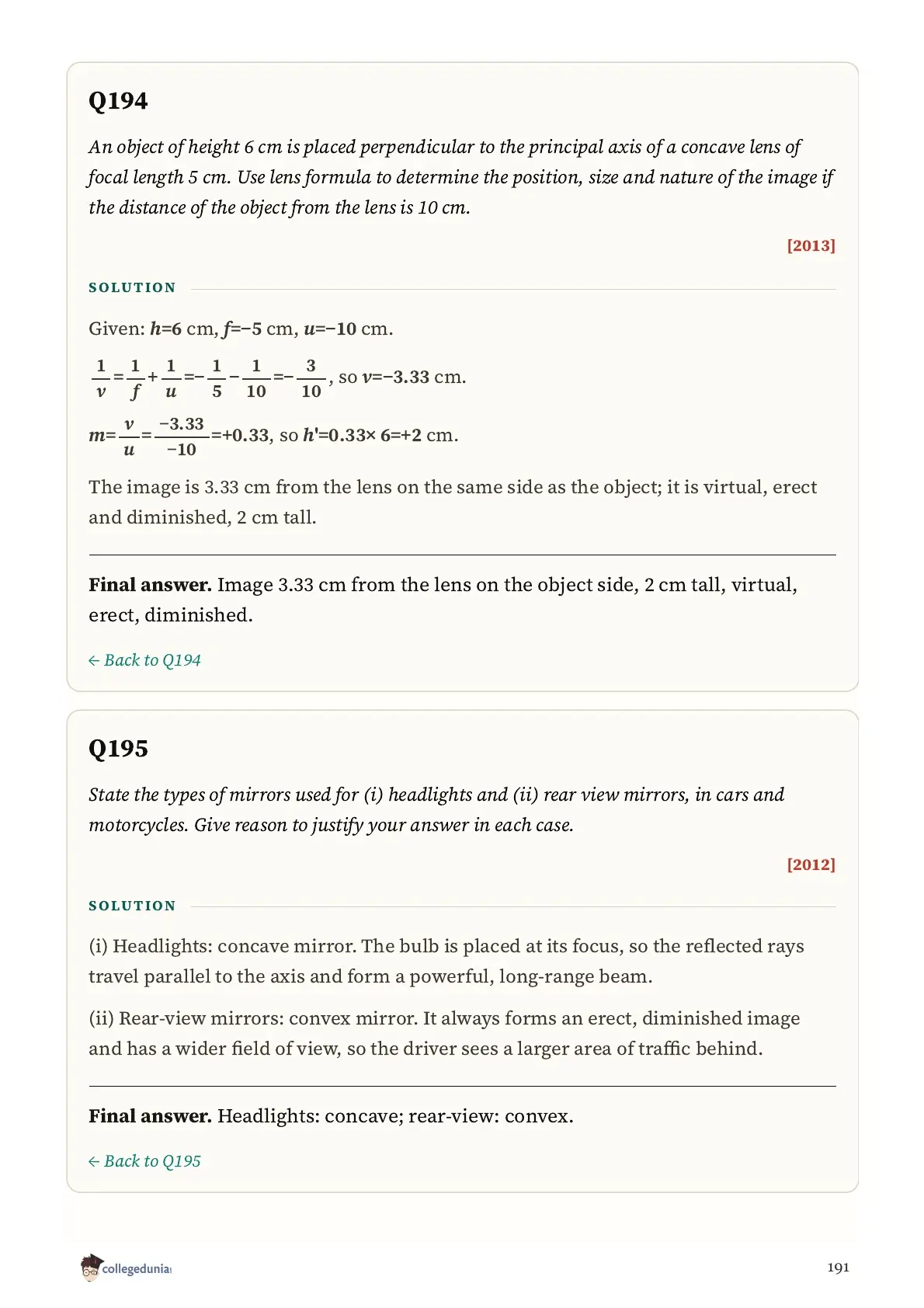
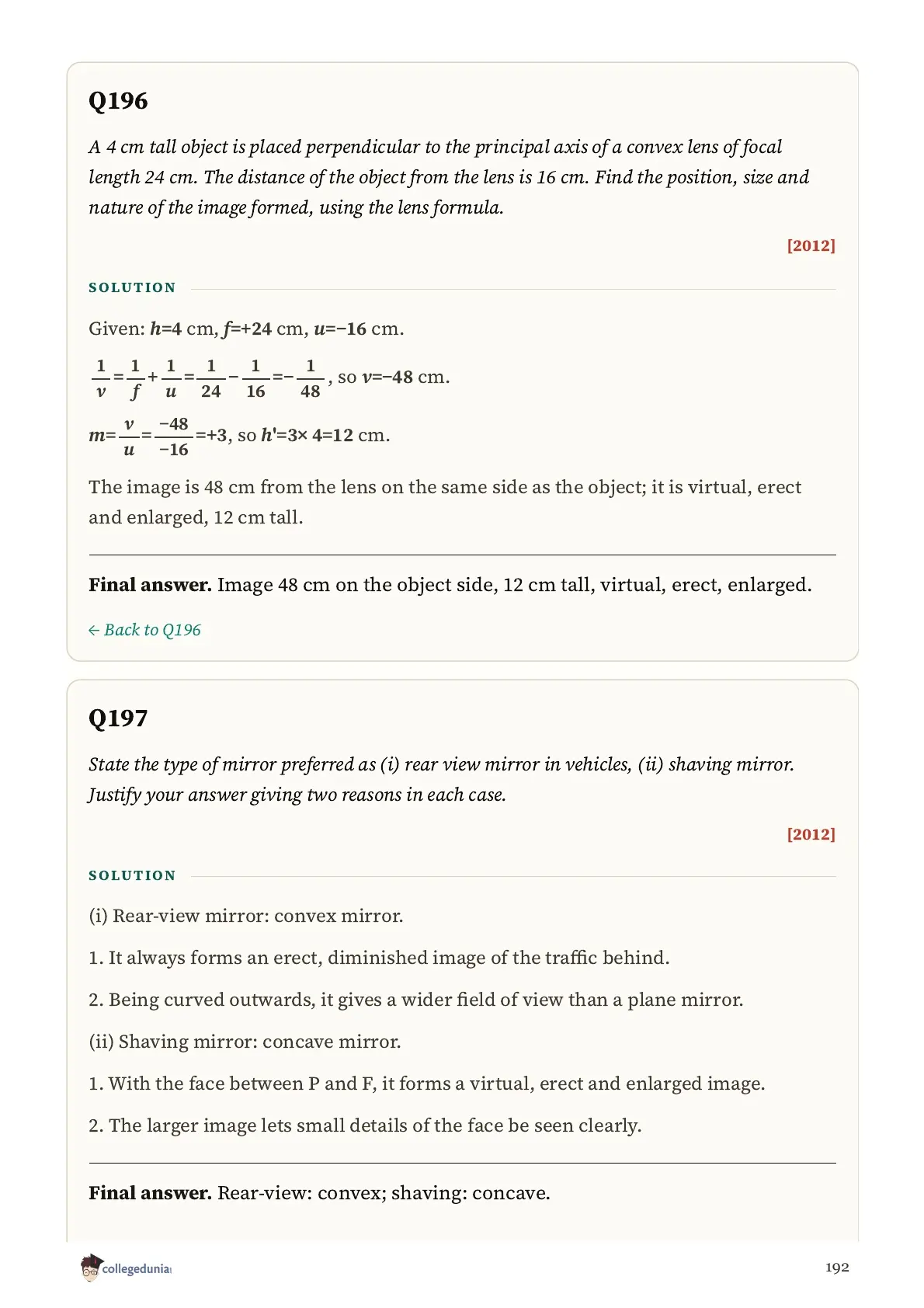
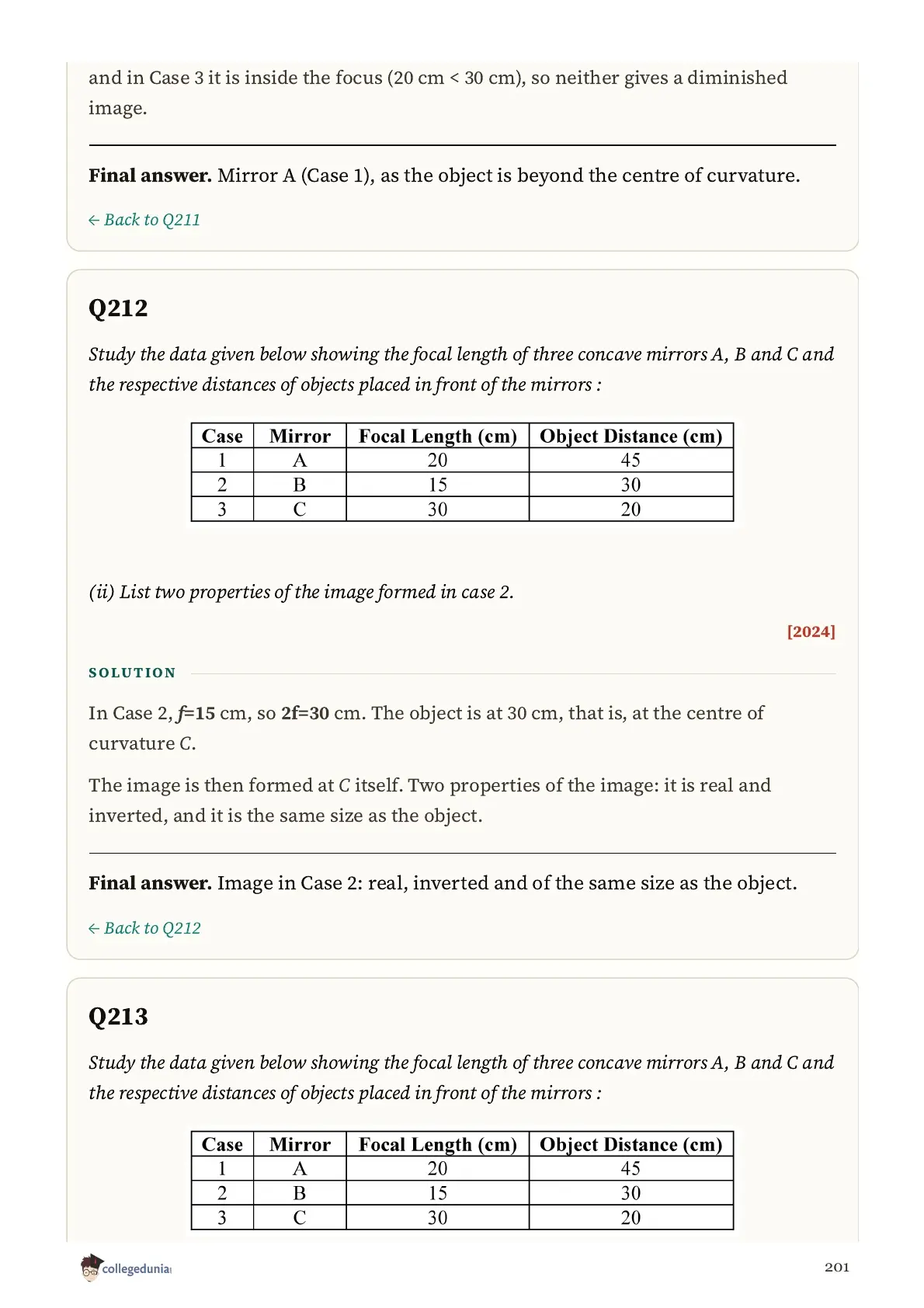
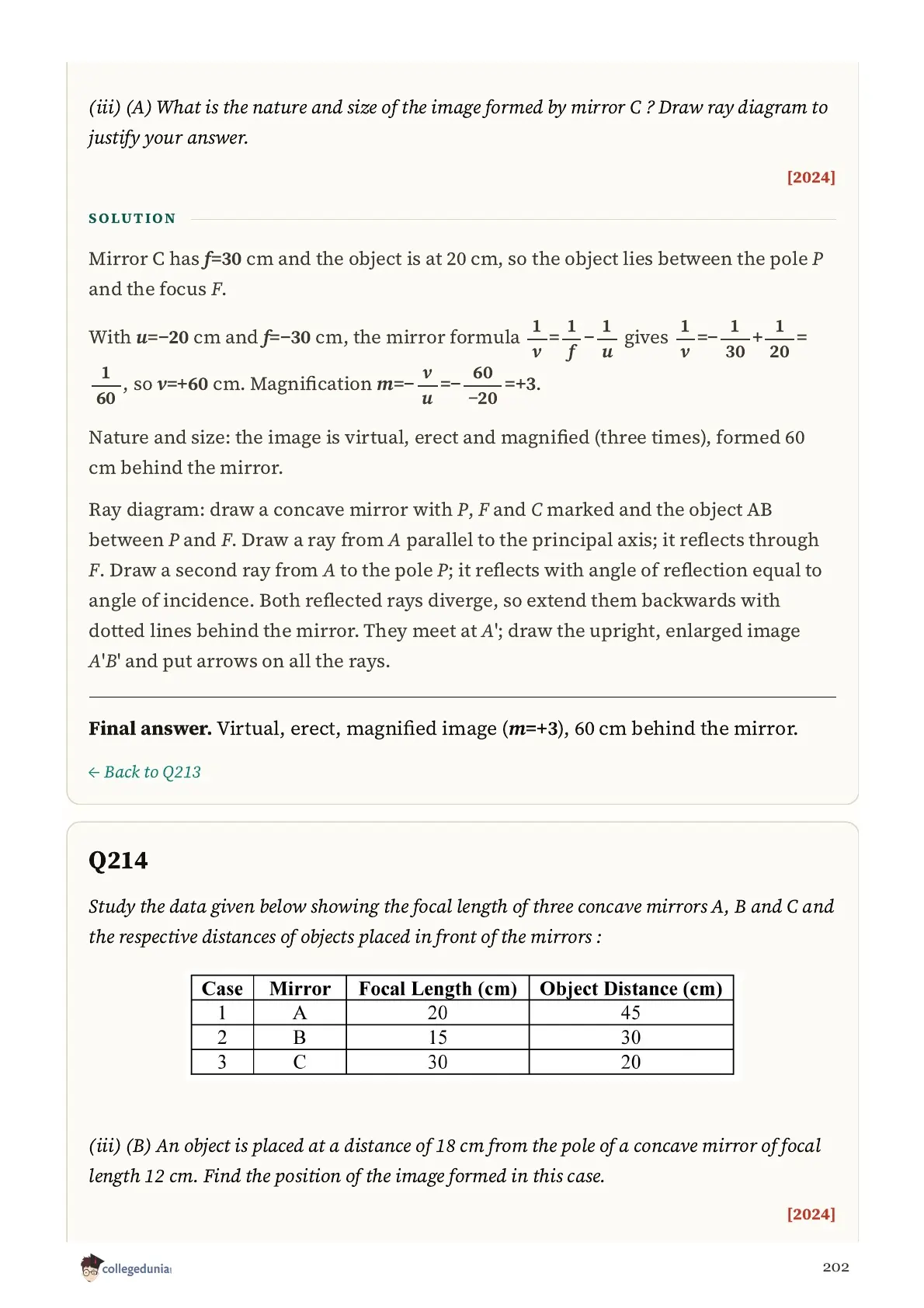
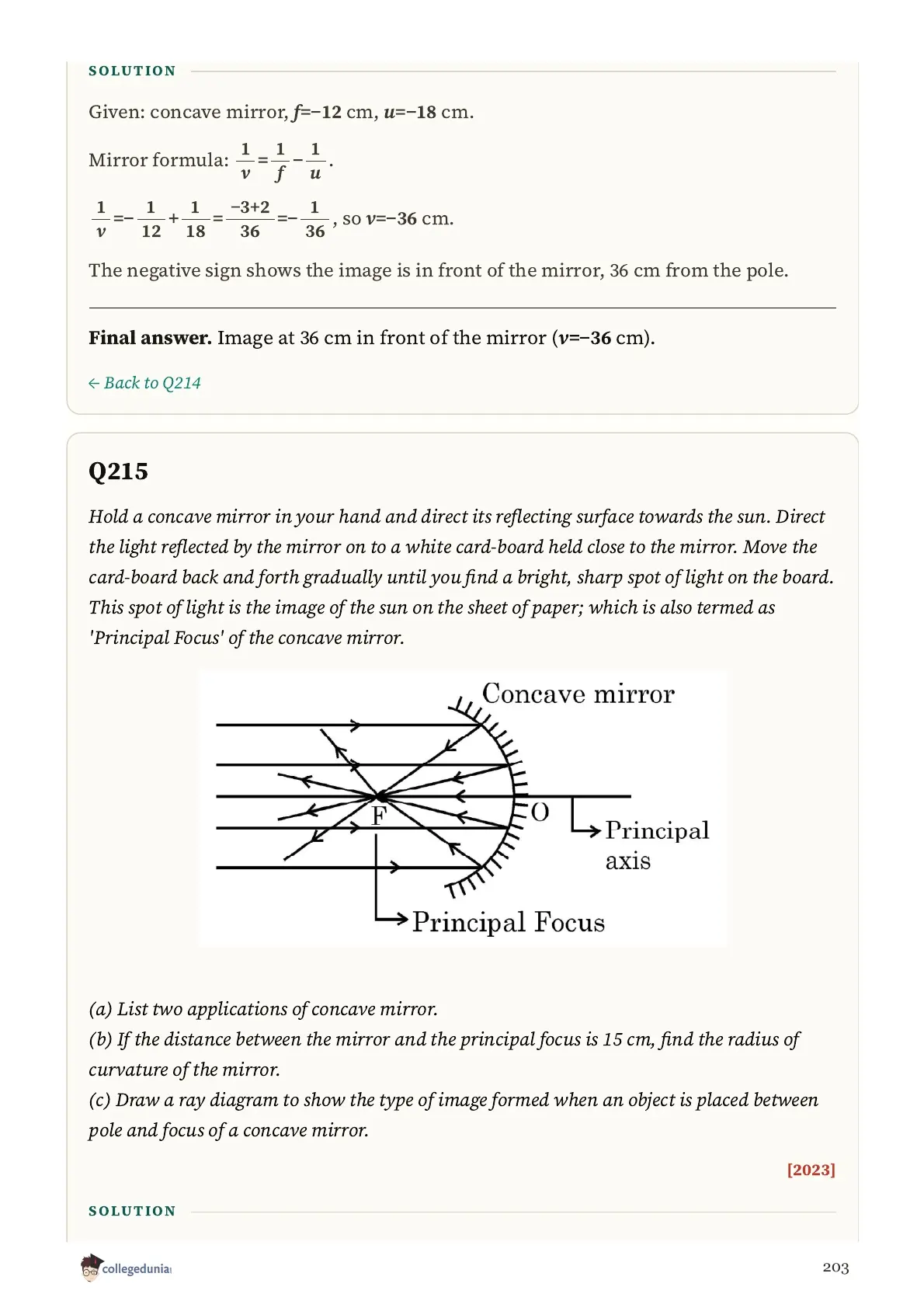
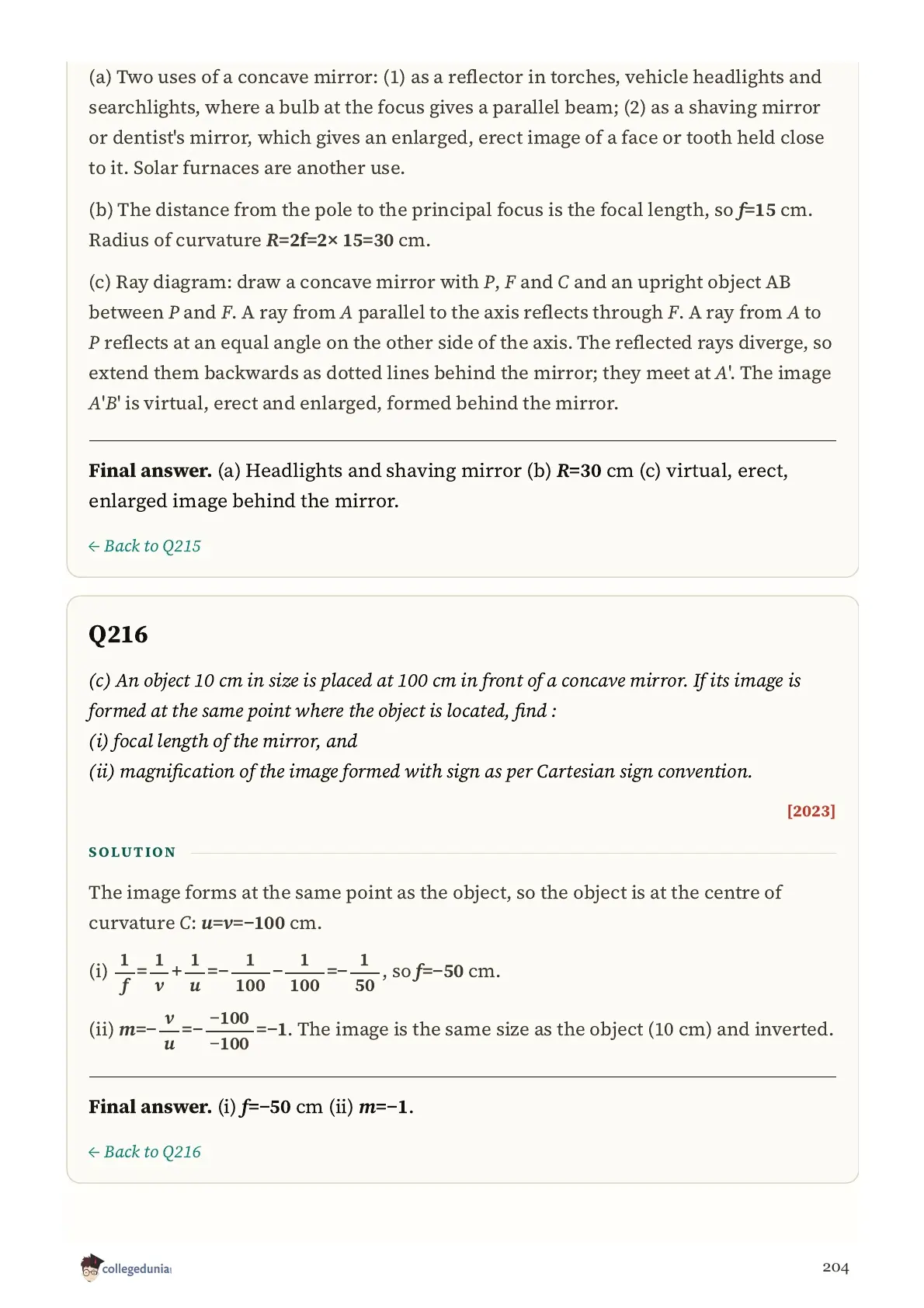
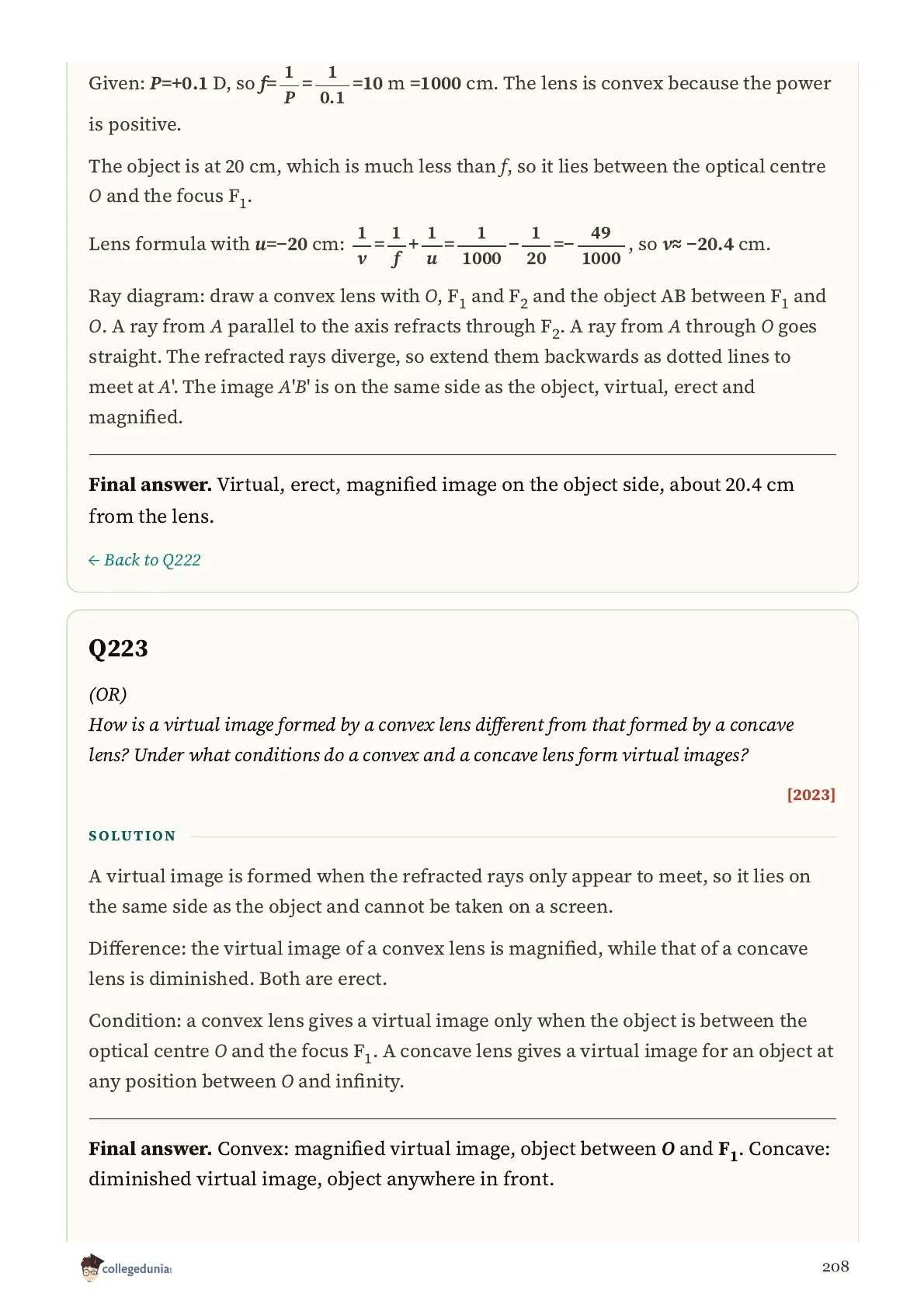
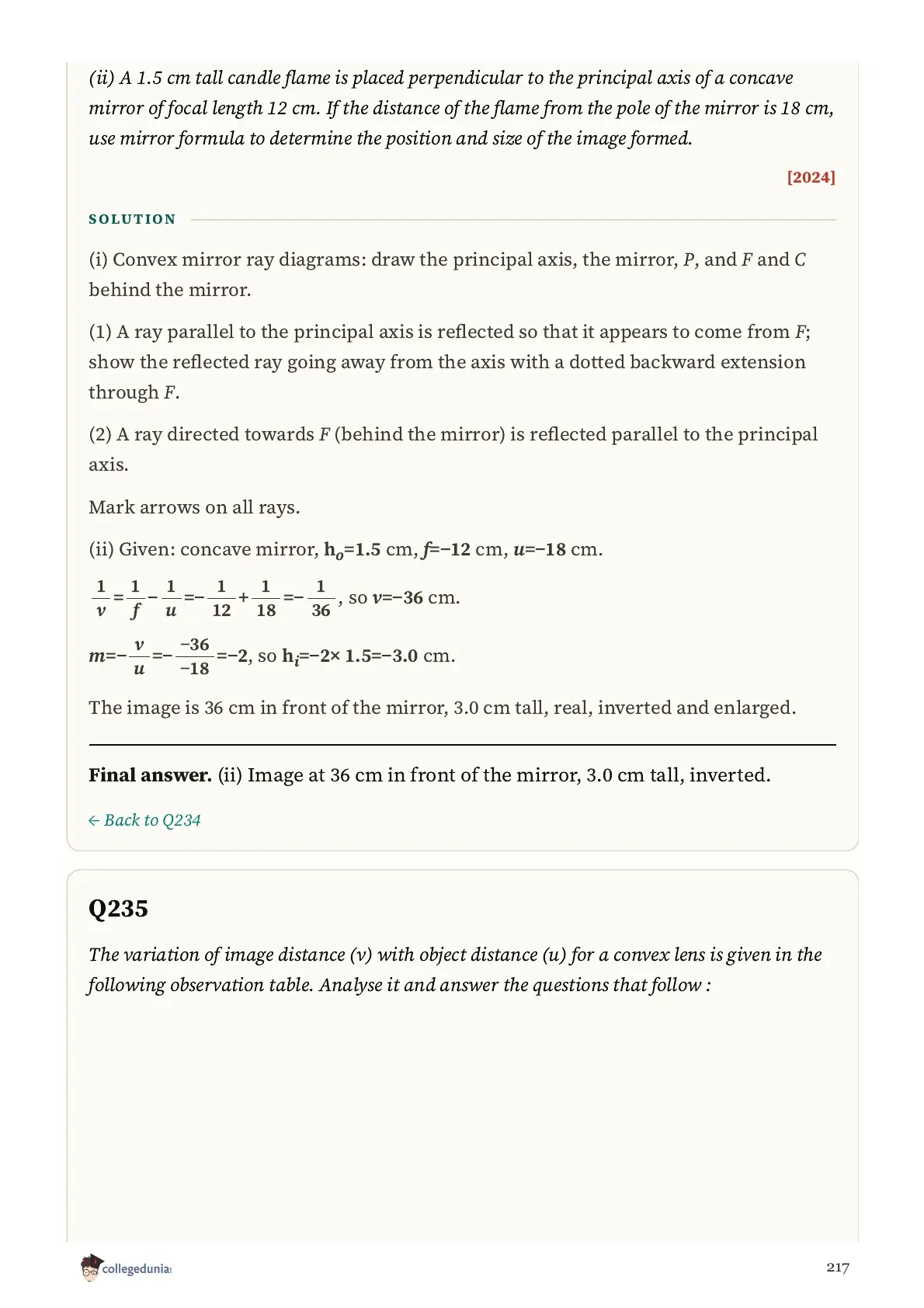
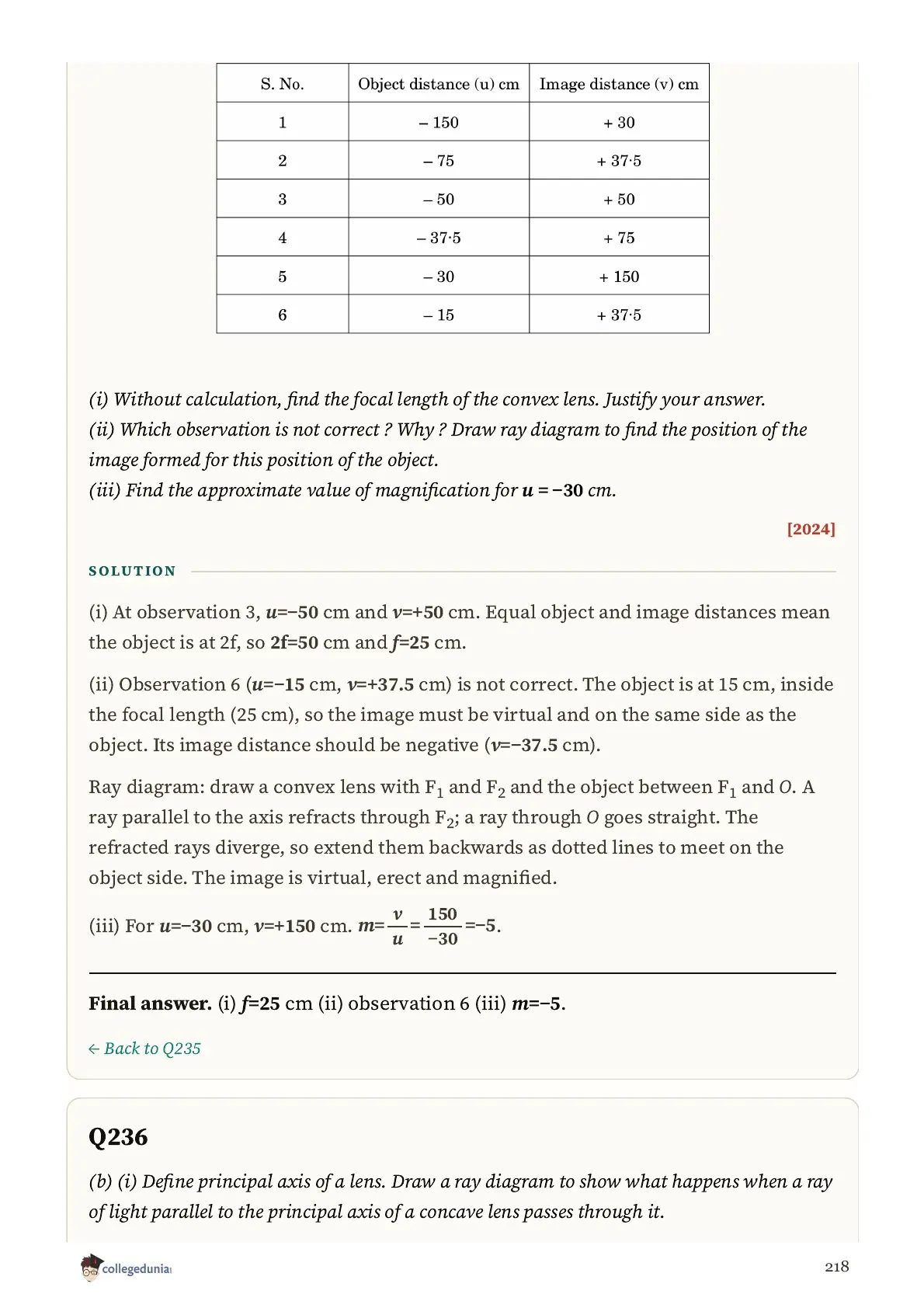
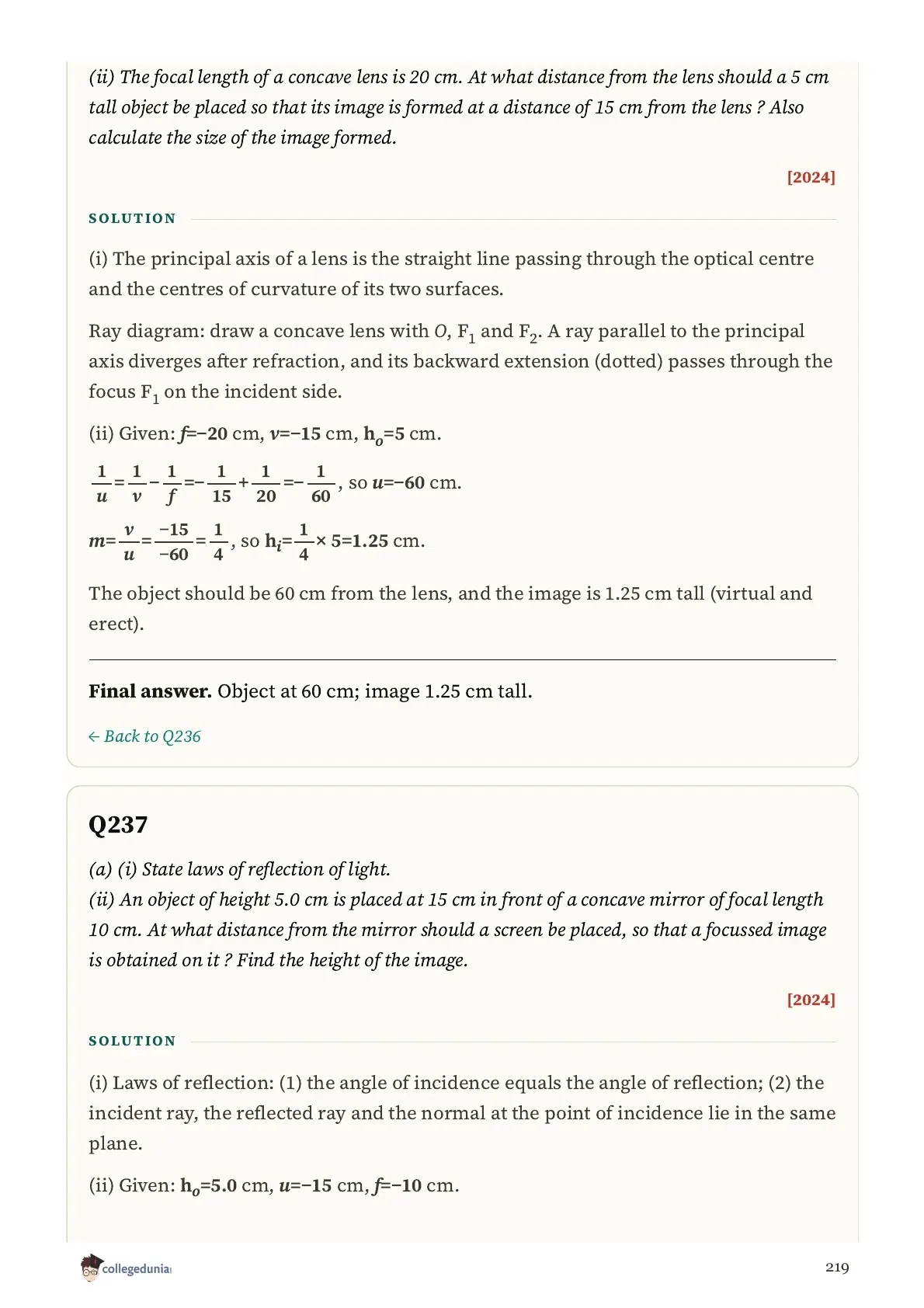
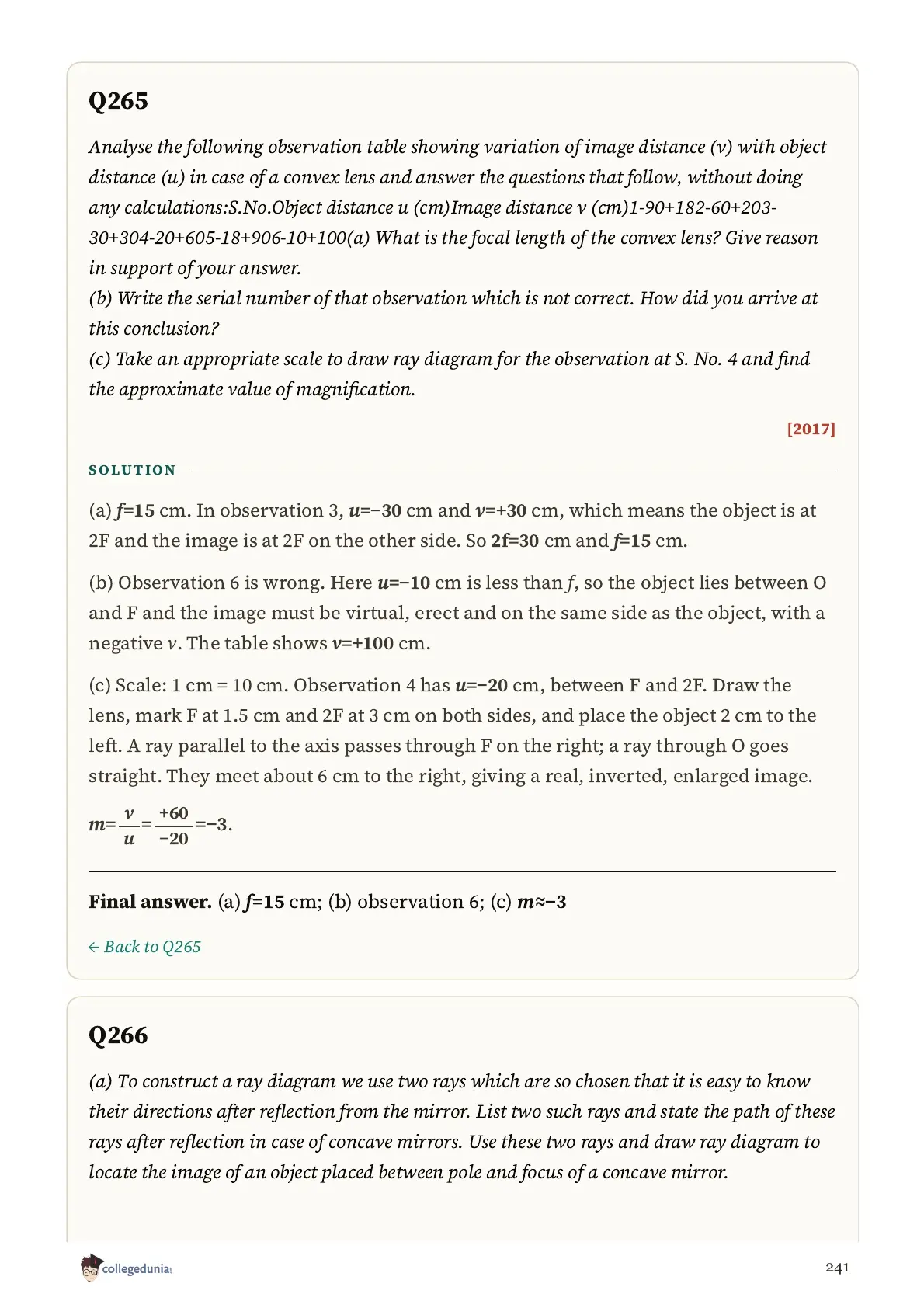
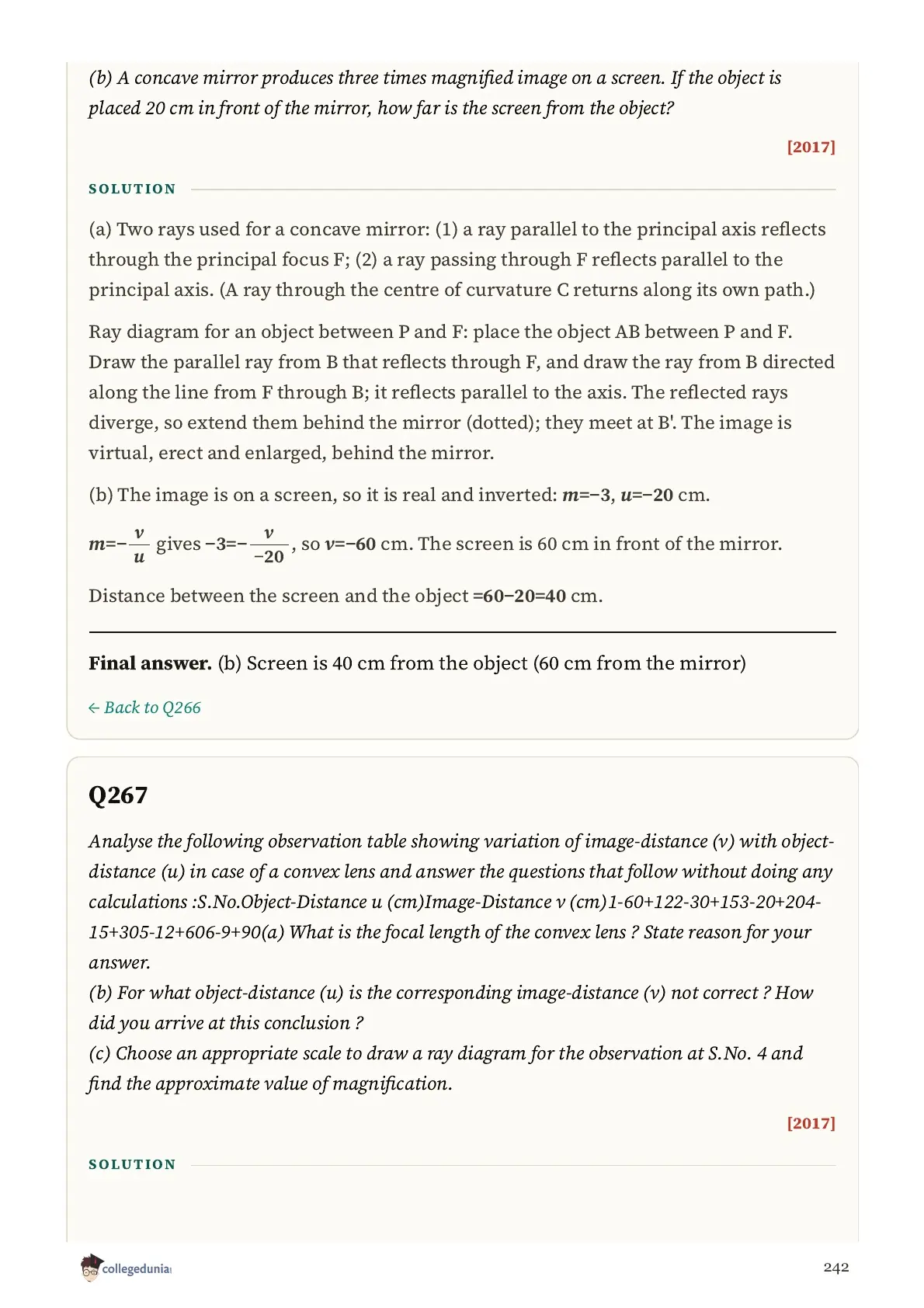
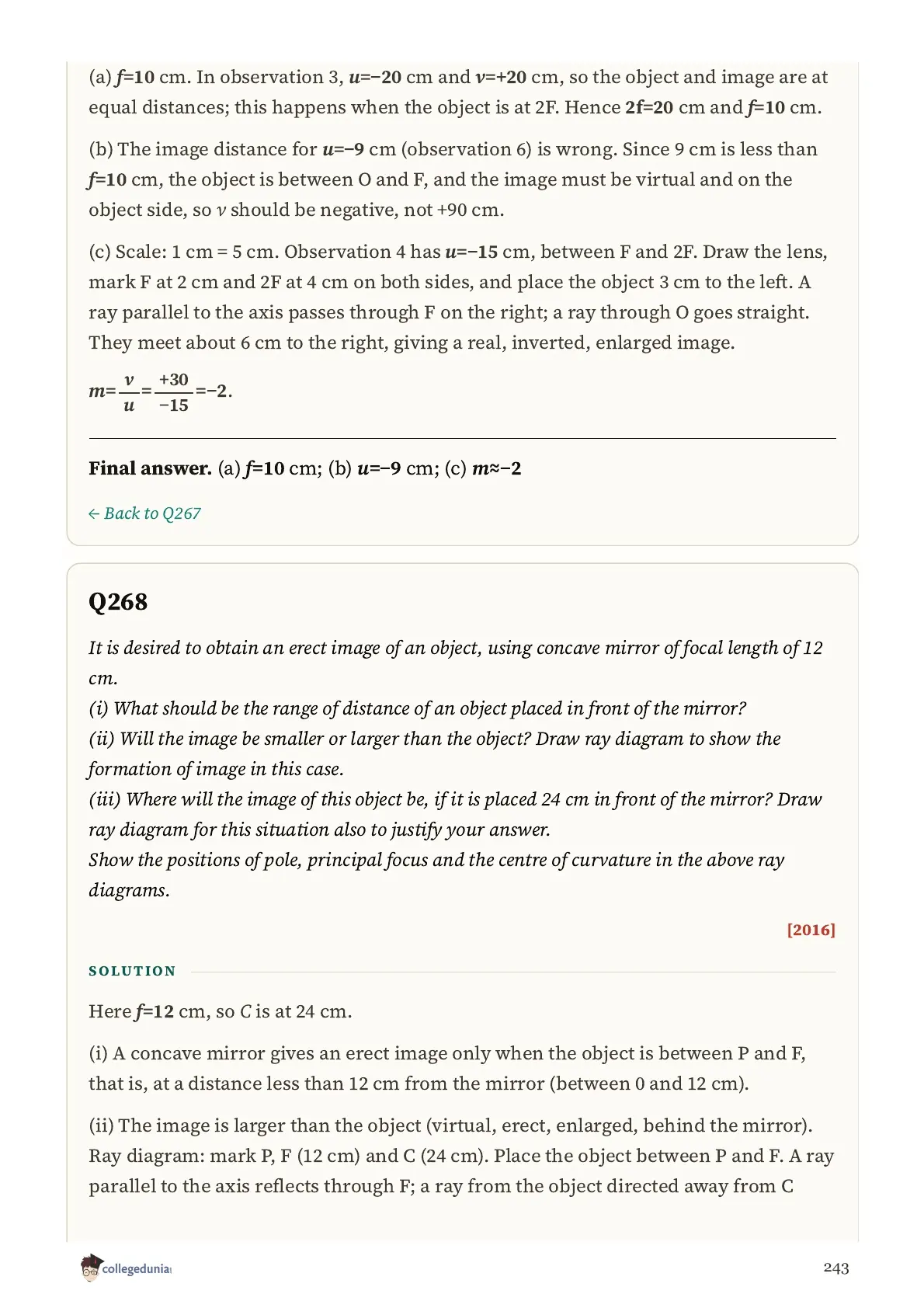
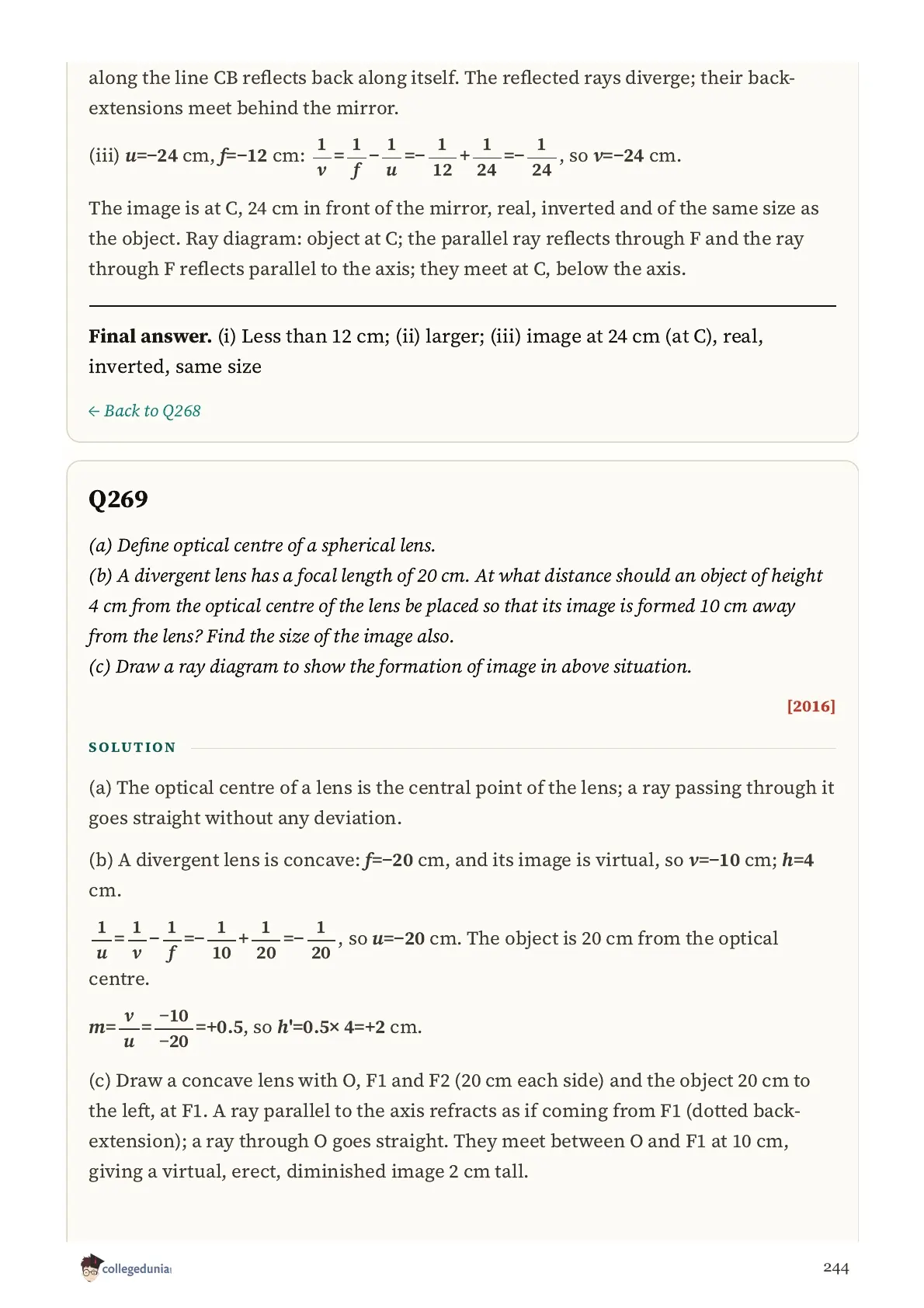
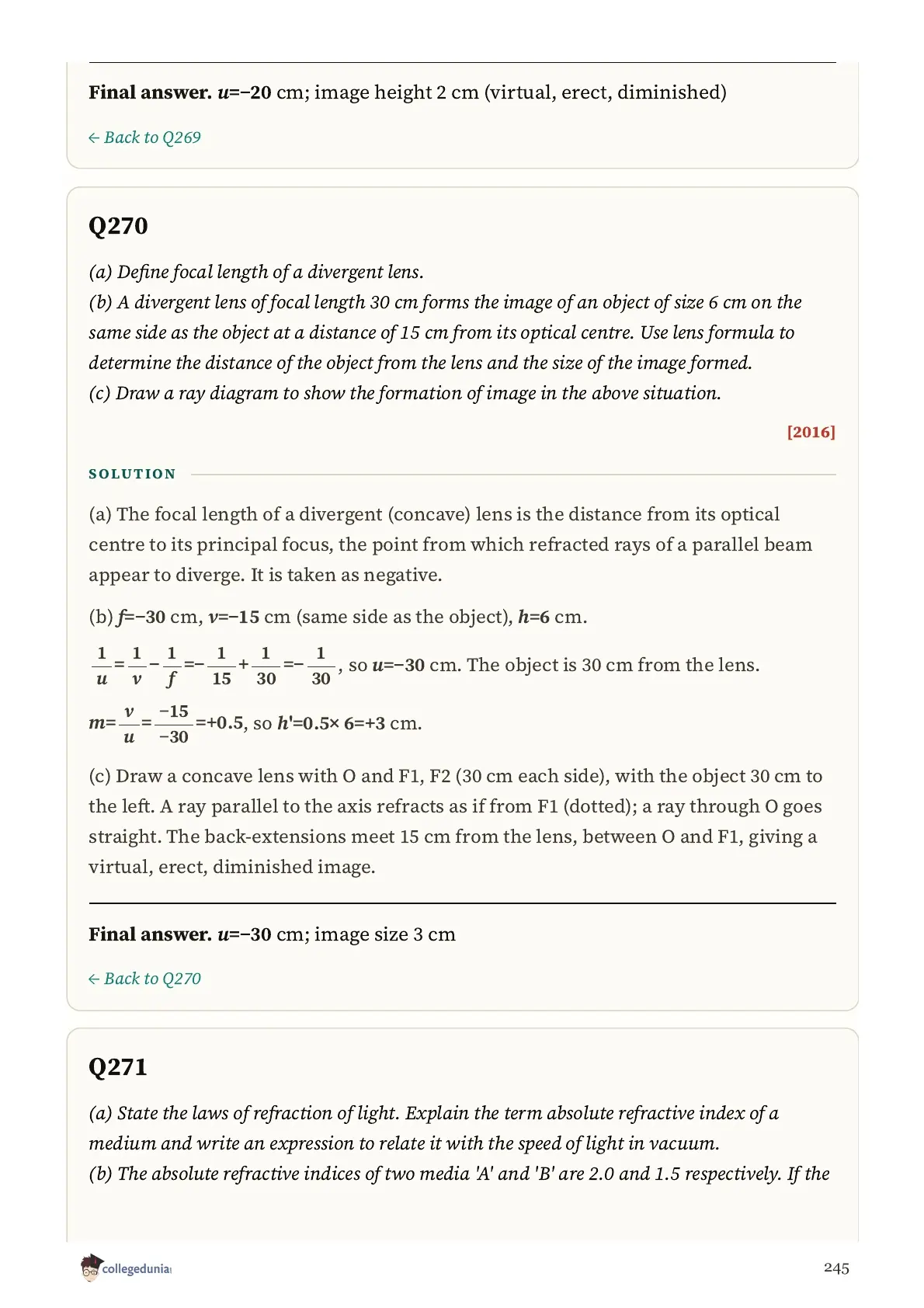
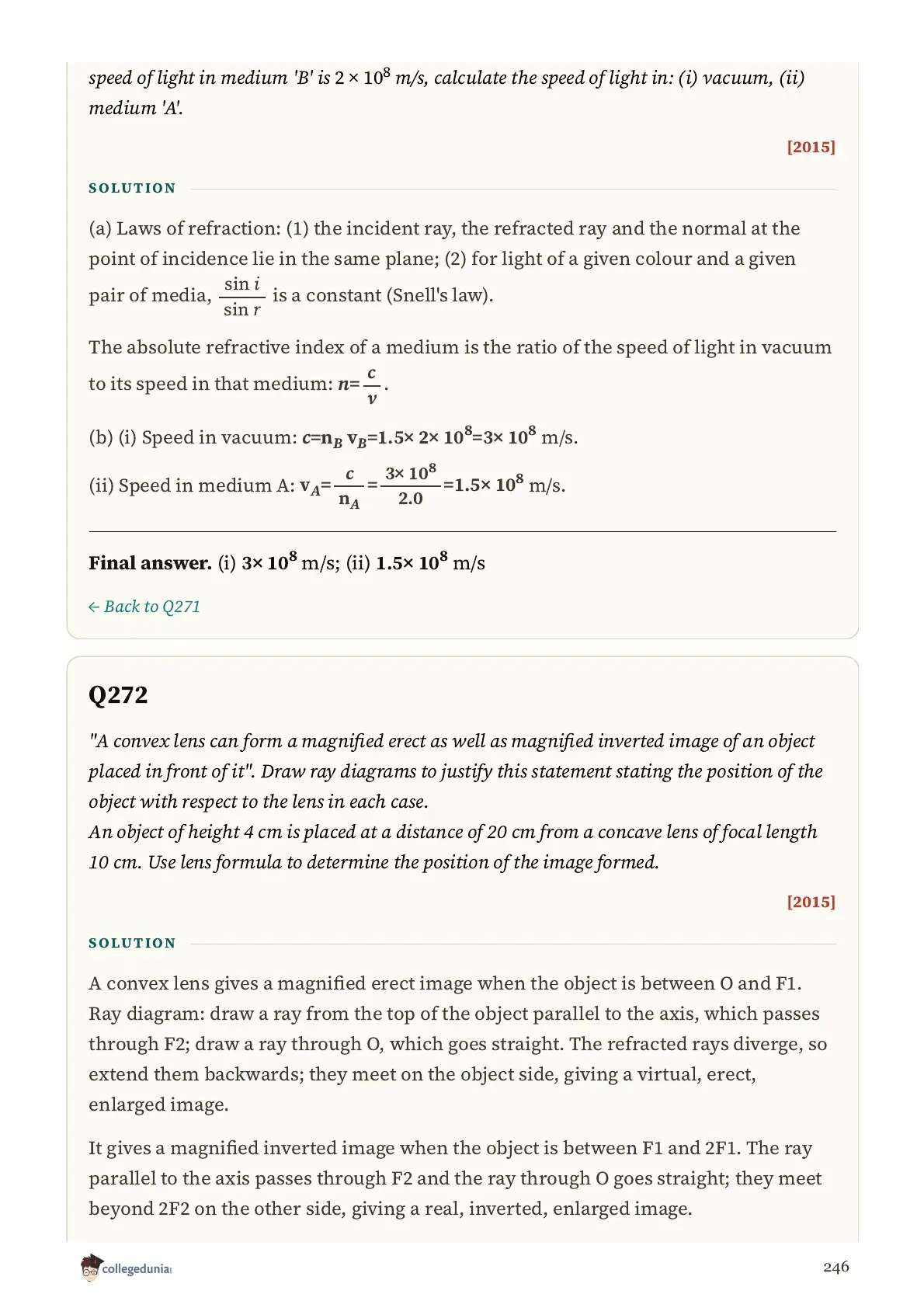
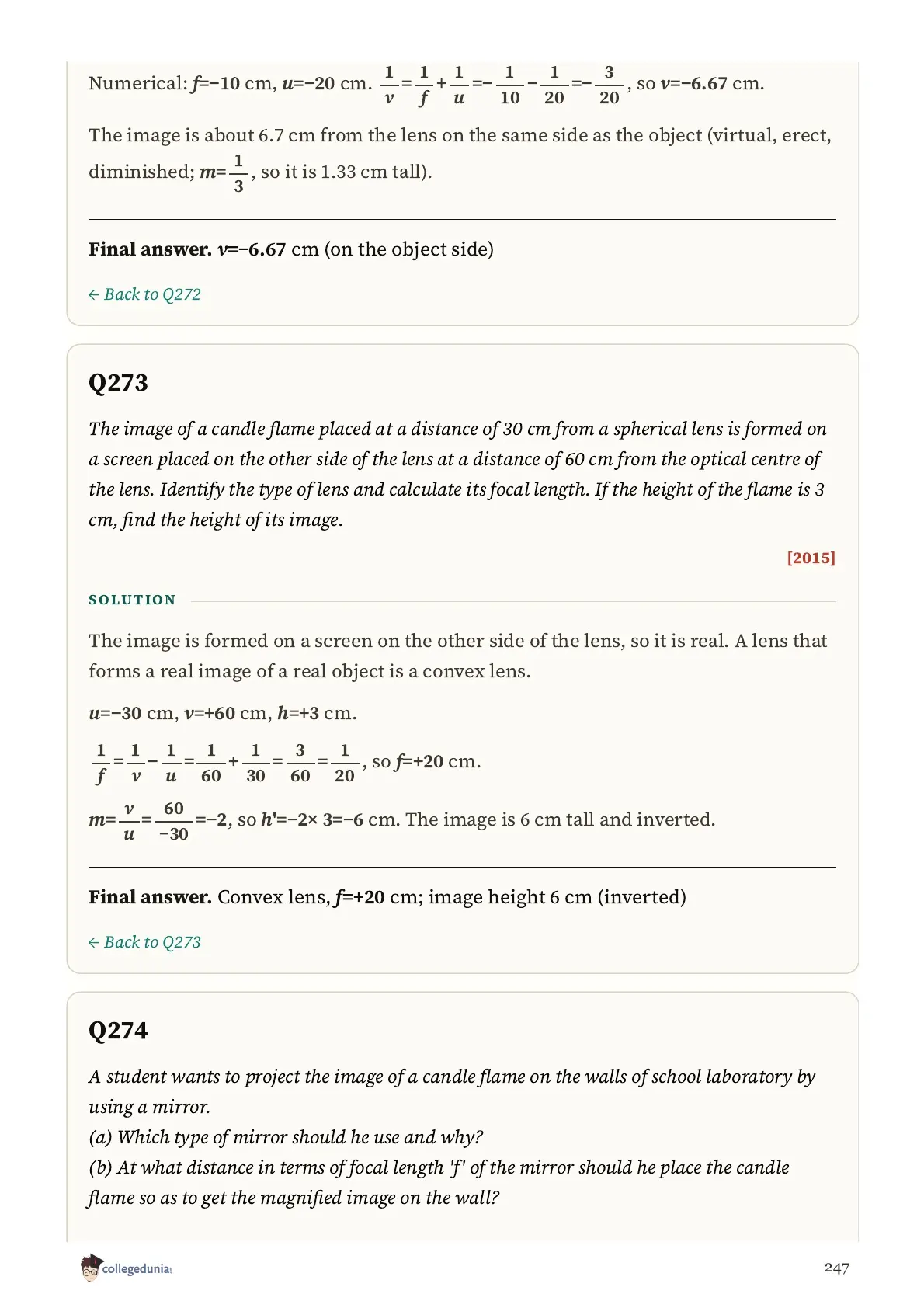
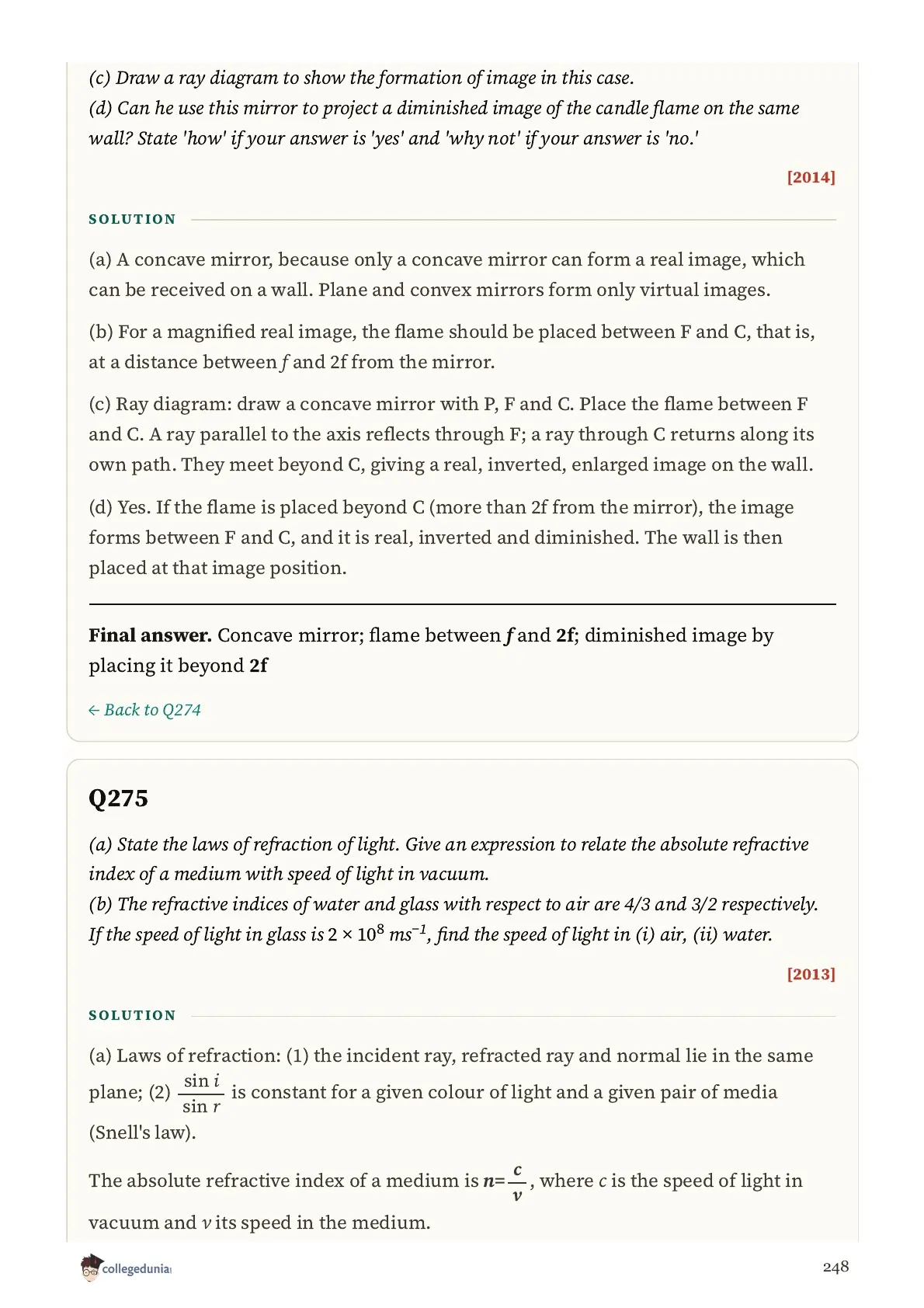
Most questions give you a mirror or a lens and ask where the image forms and what it looks like. 125 of the 286 ask you to calculate or find something, and 73 ask for the nature of the image: real or virtual, erect or inverted, enlarged or diminished. Typical cases are a convex lens of focal length 15 cm forming a real image the same size as the object (2026), a concave mirror with a linear magnification of +3 (2024), and an object placed between the pole and the focus of a concave mirror.
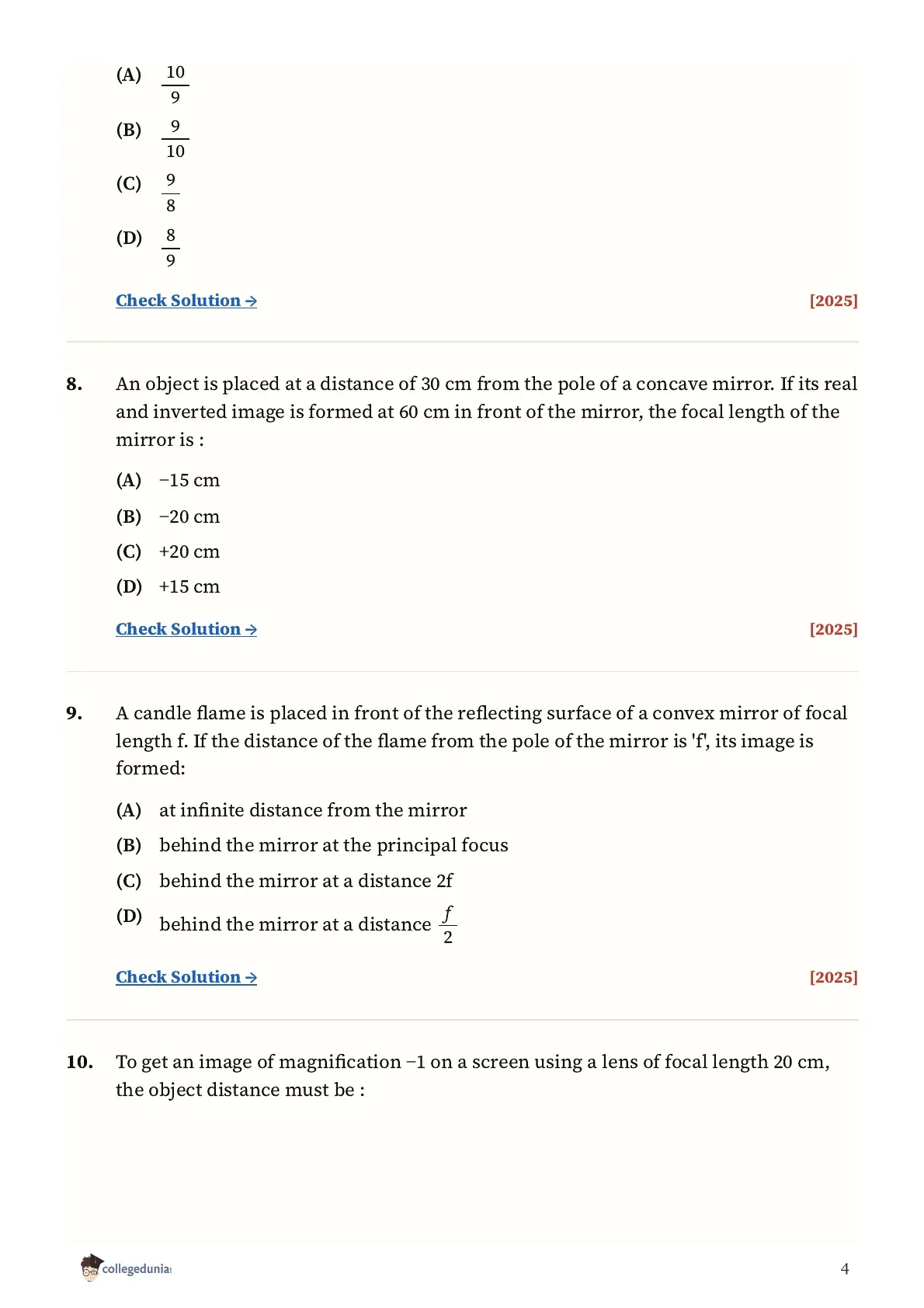
Mirrors and lenses split the set closely. Concave mirrors appear in 67 questions and convex mirrors in 22, while convex lenses appear in 70 and concave lenses in 30. 25 questions use the mirror formula or the lens formula directly, 15 ask for the power of a lens in dioptres, and 54 involve magnification.
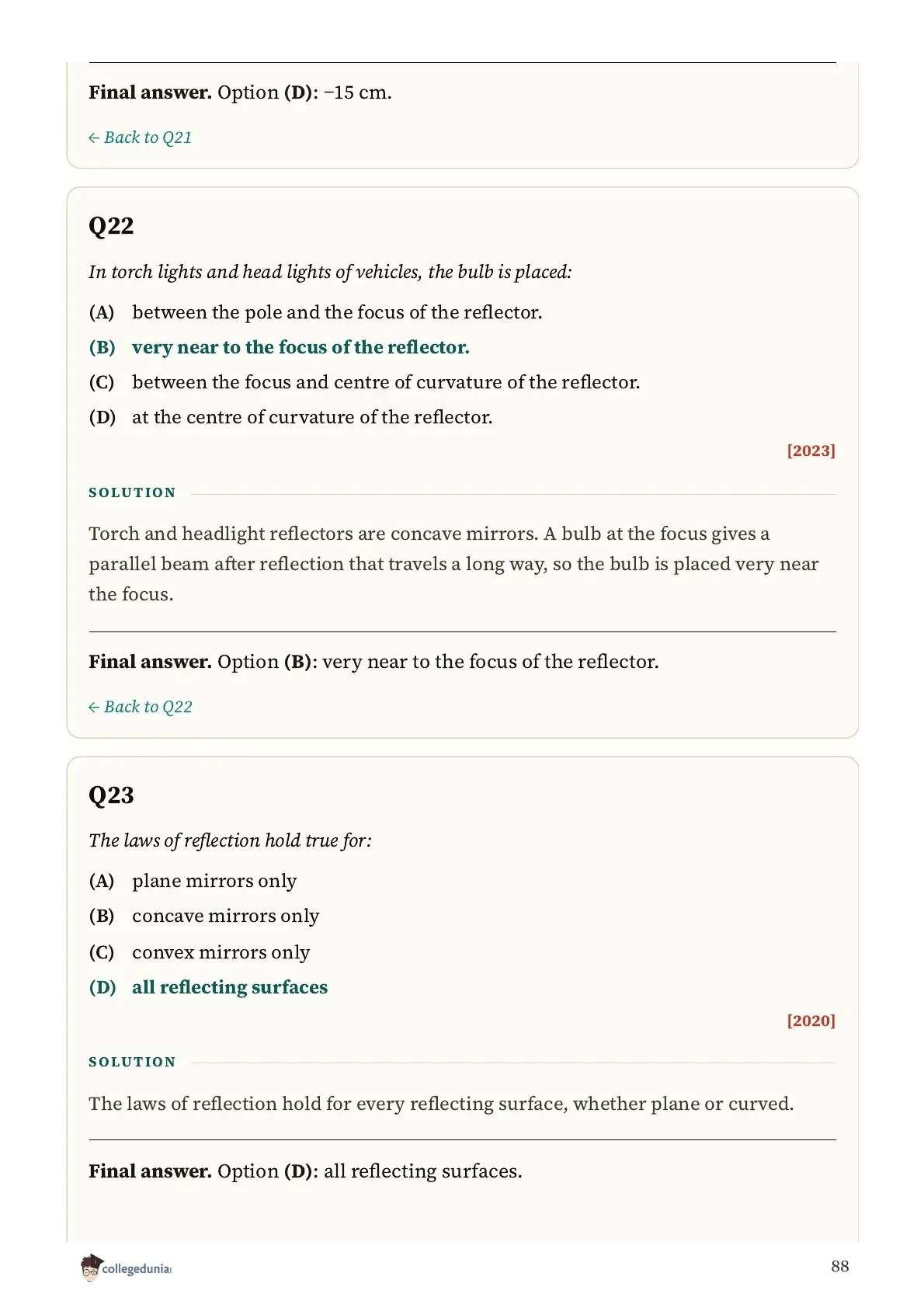
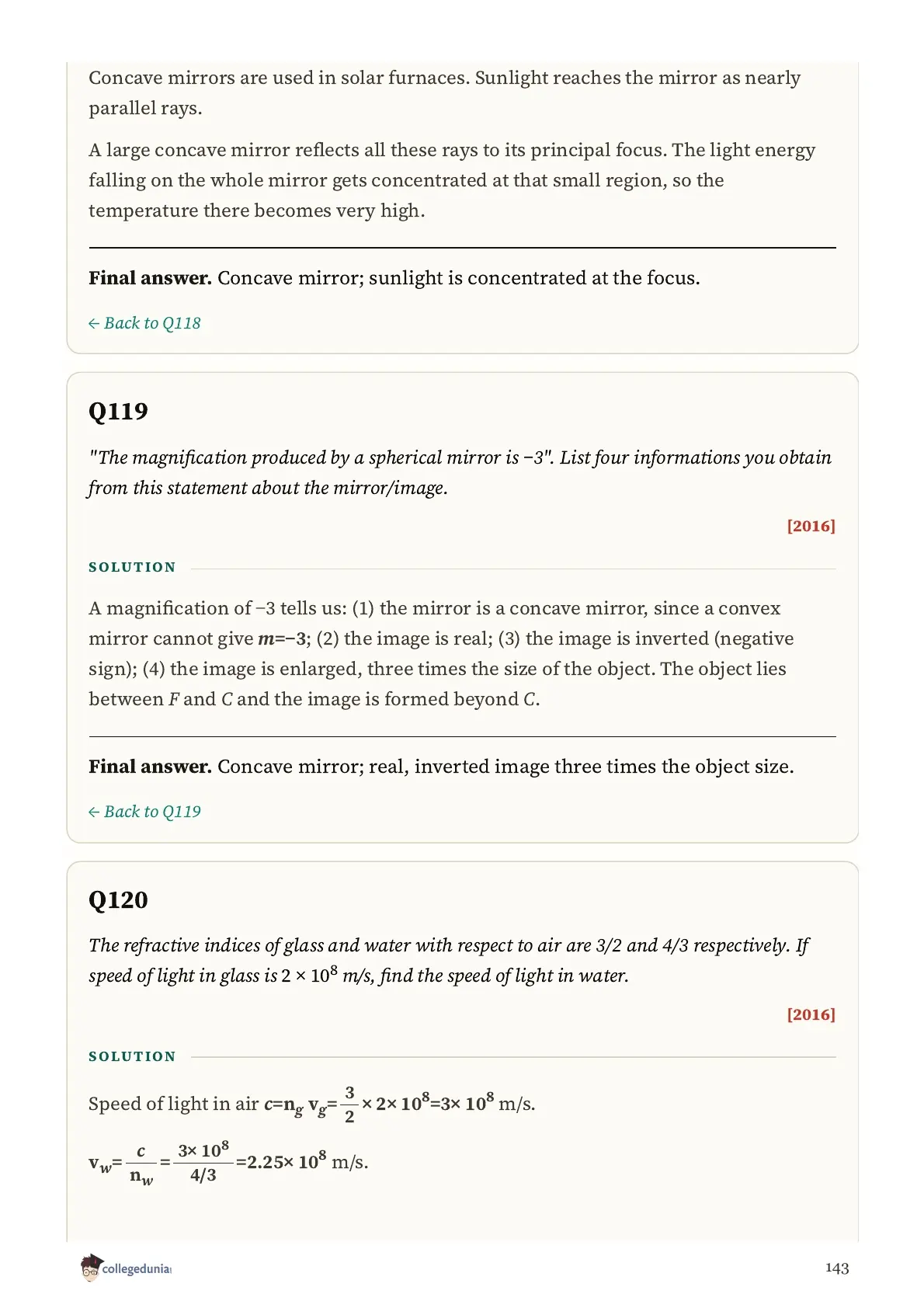
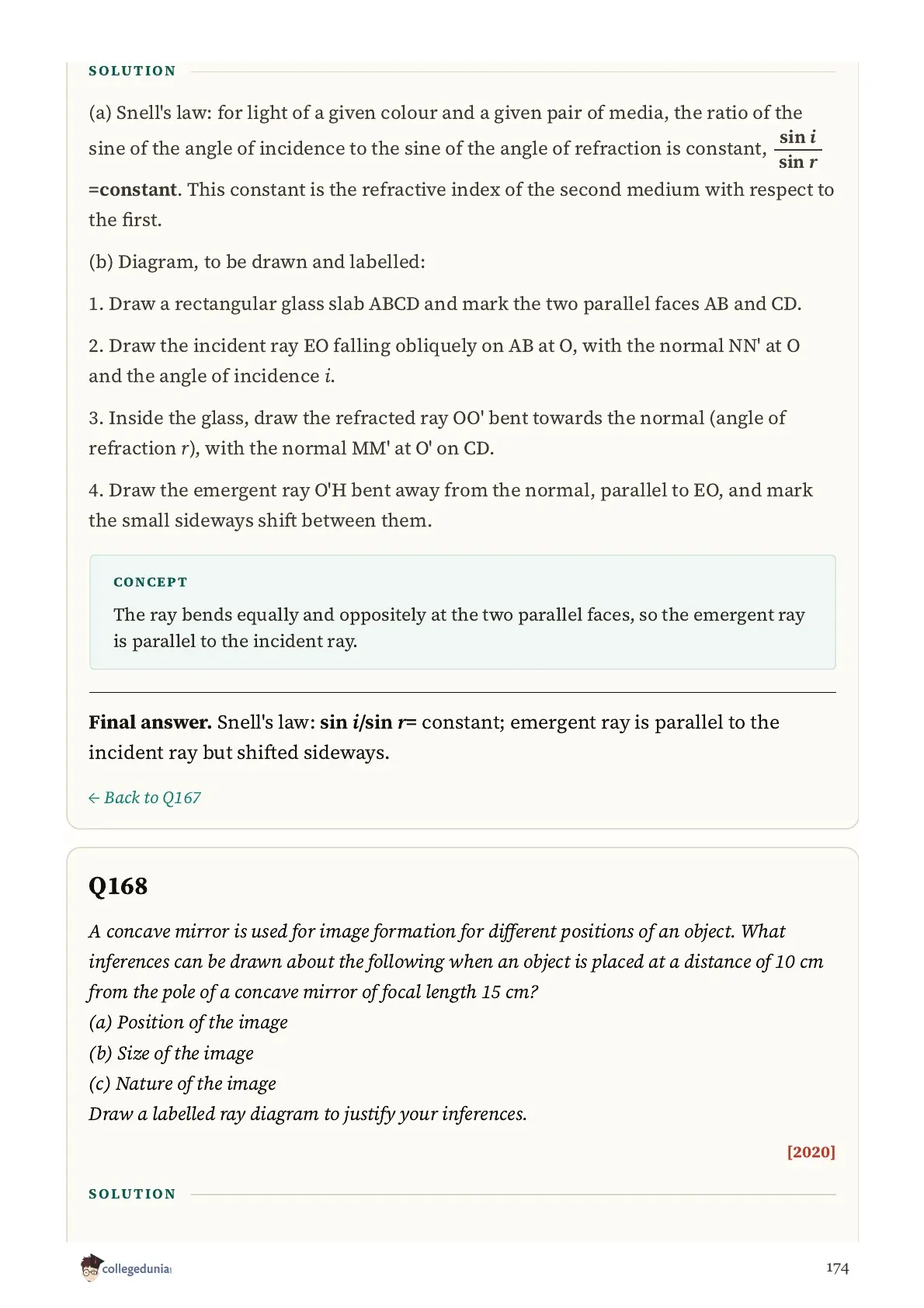
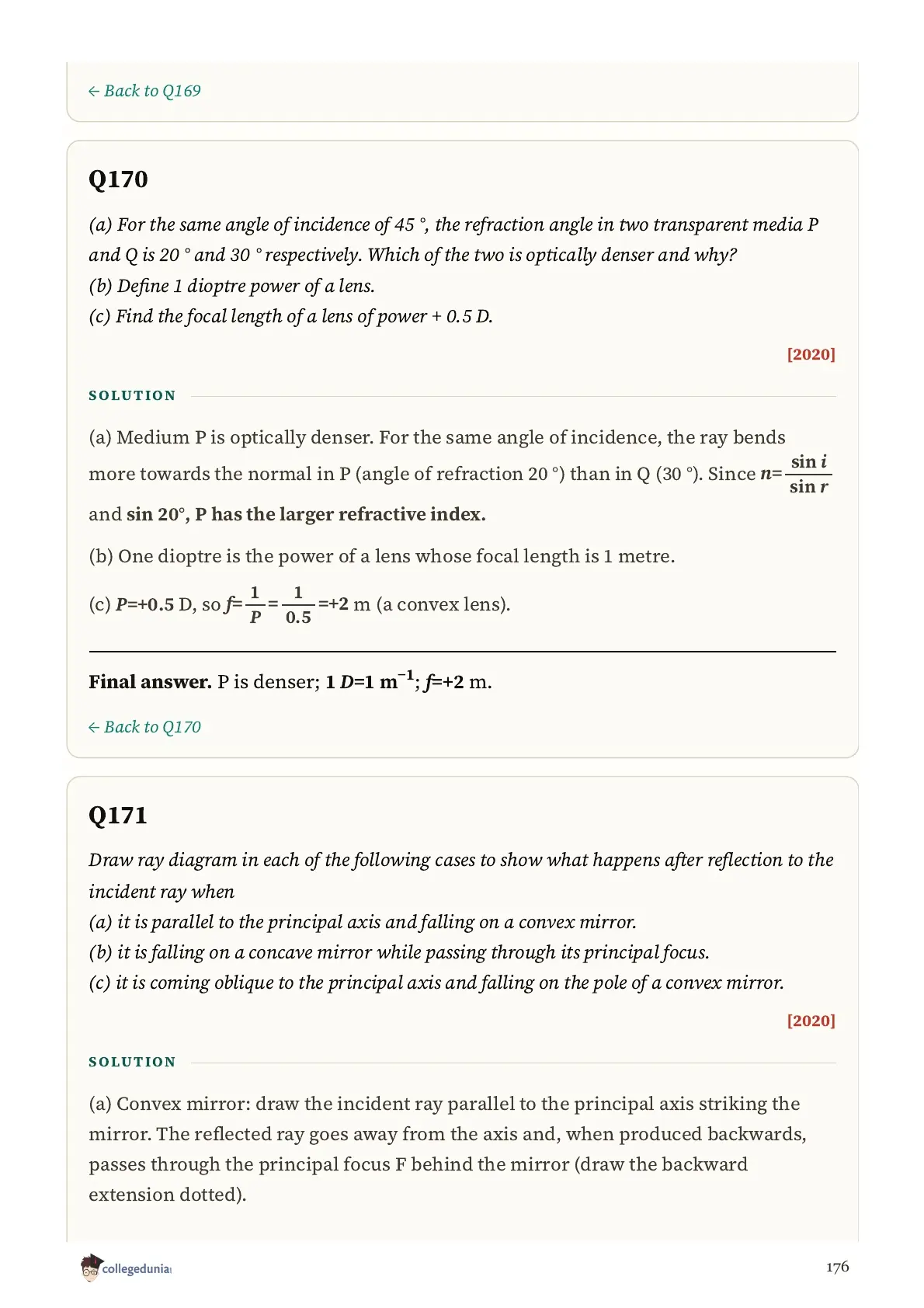
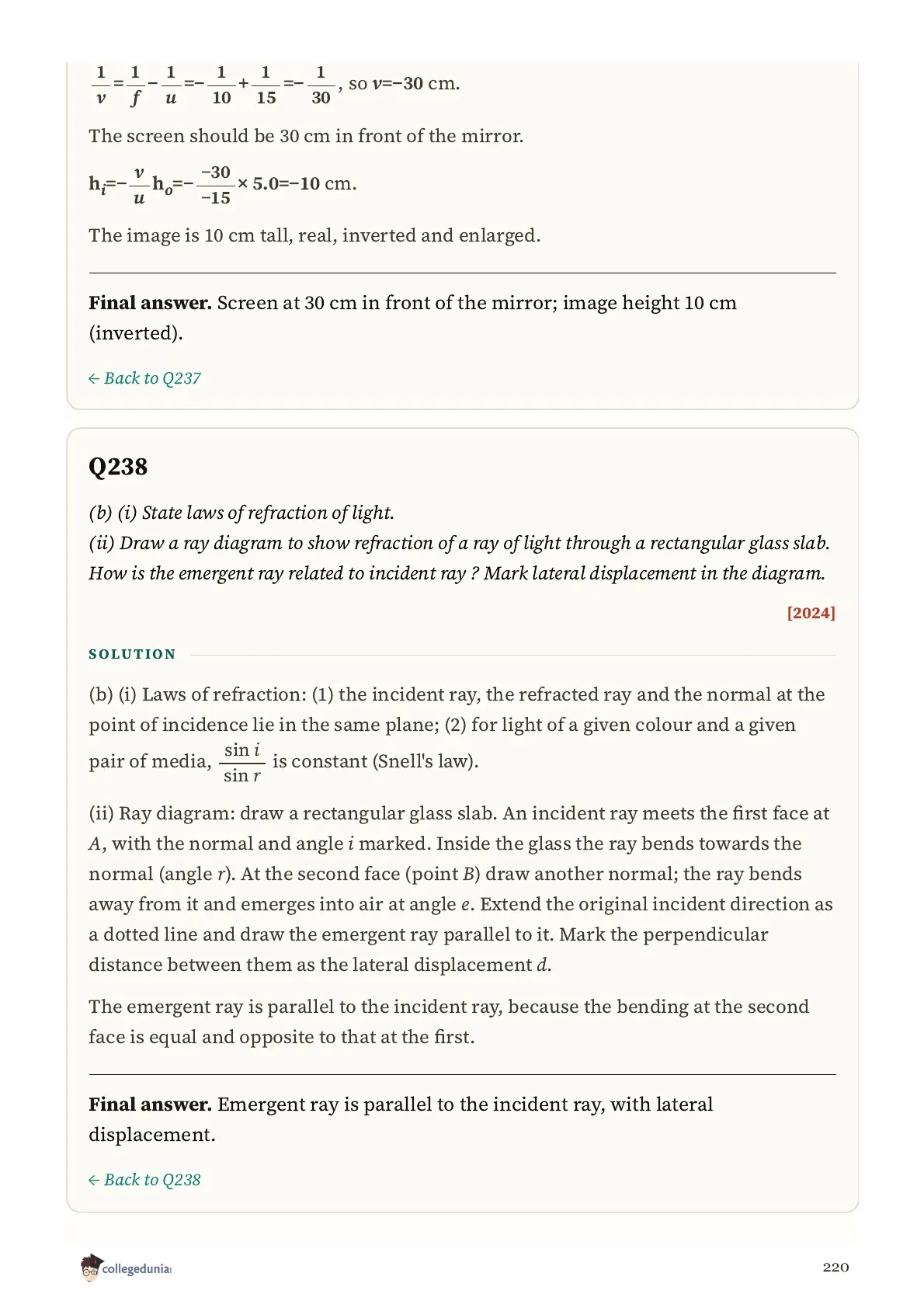
Refraction forms the other block. 29 questions use refractive index, 27 talk about the speed of light in a medium, 19 are about a glass slab and the lateral shift, and 14 tie the topic to a real device such as a rear-view mirror, a dentist's mirror or a vehicle headlight. 66 are practical-based or describe a screen, a candle and a lens set up in the laboratory.
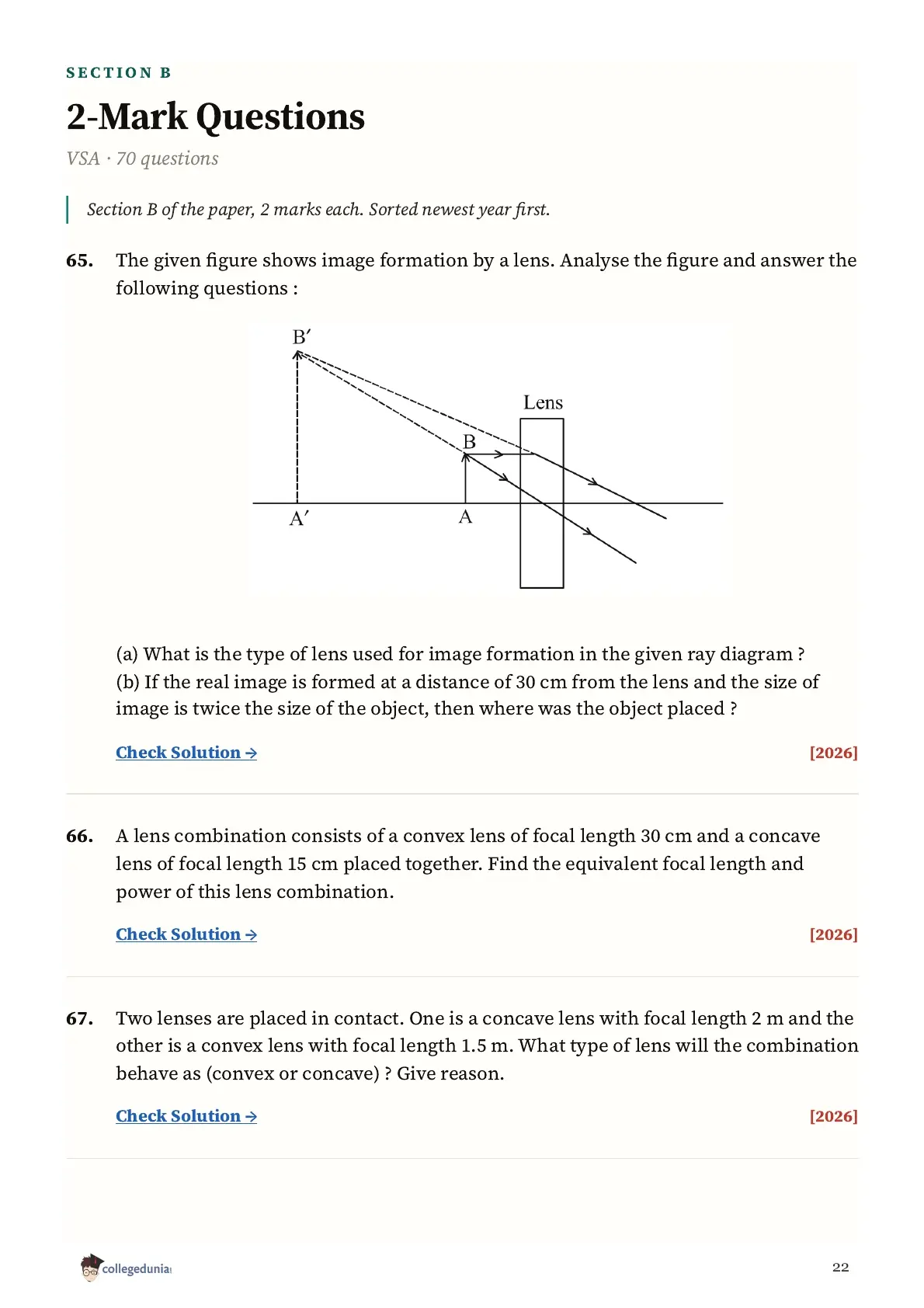
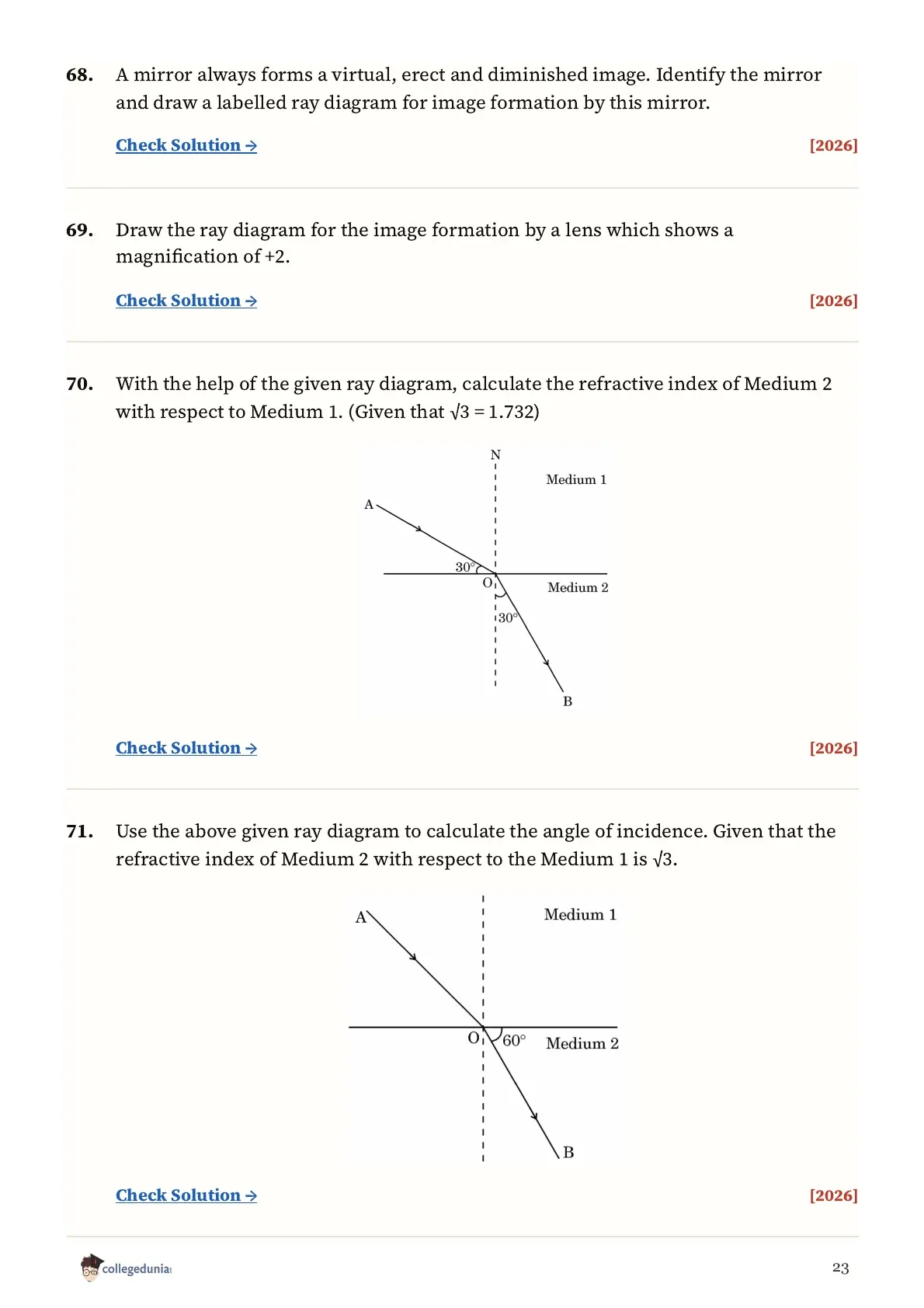
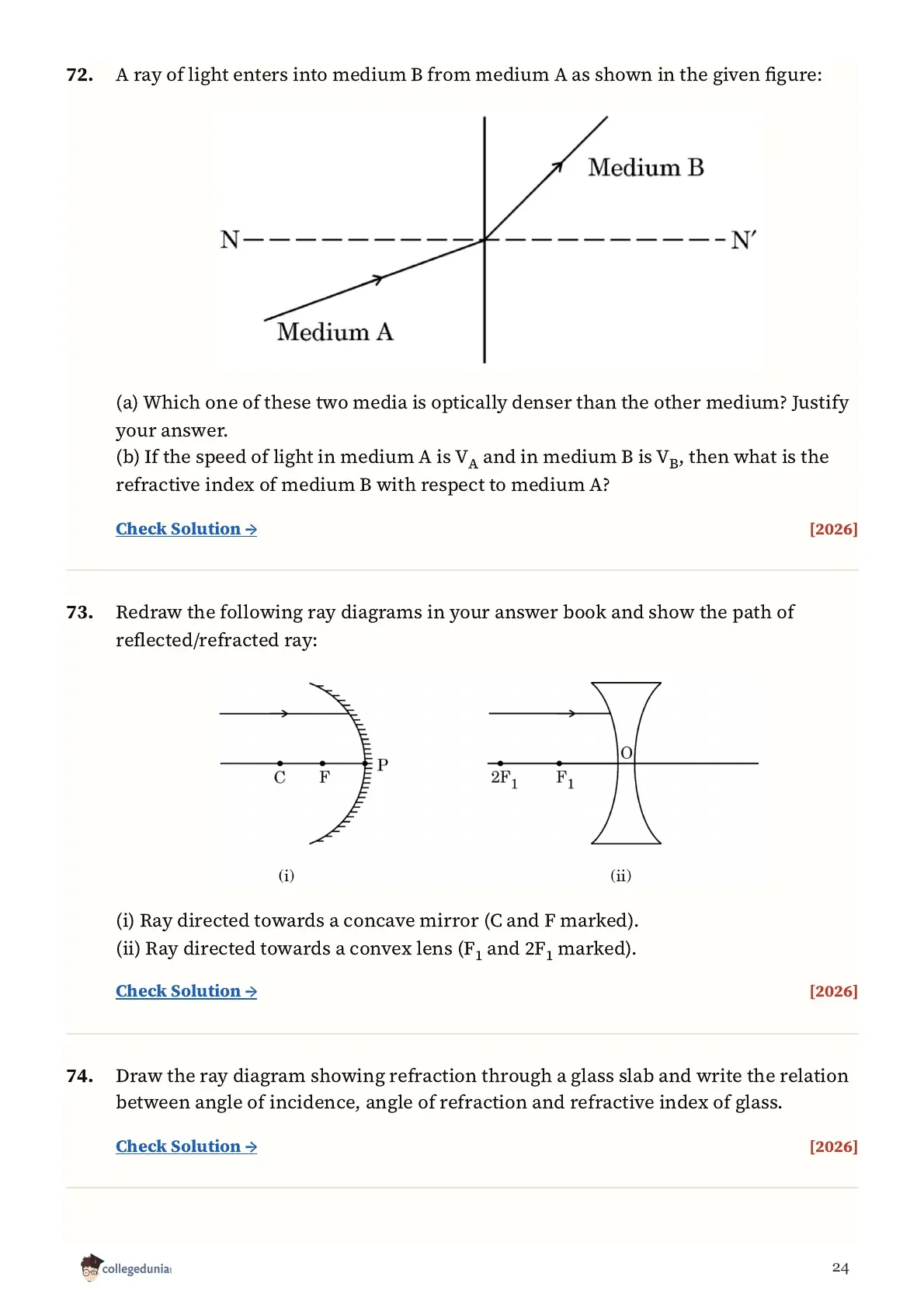
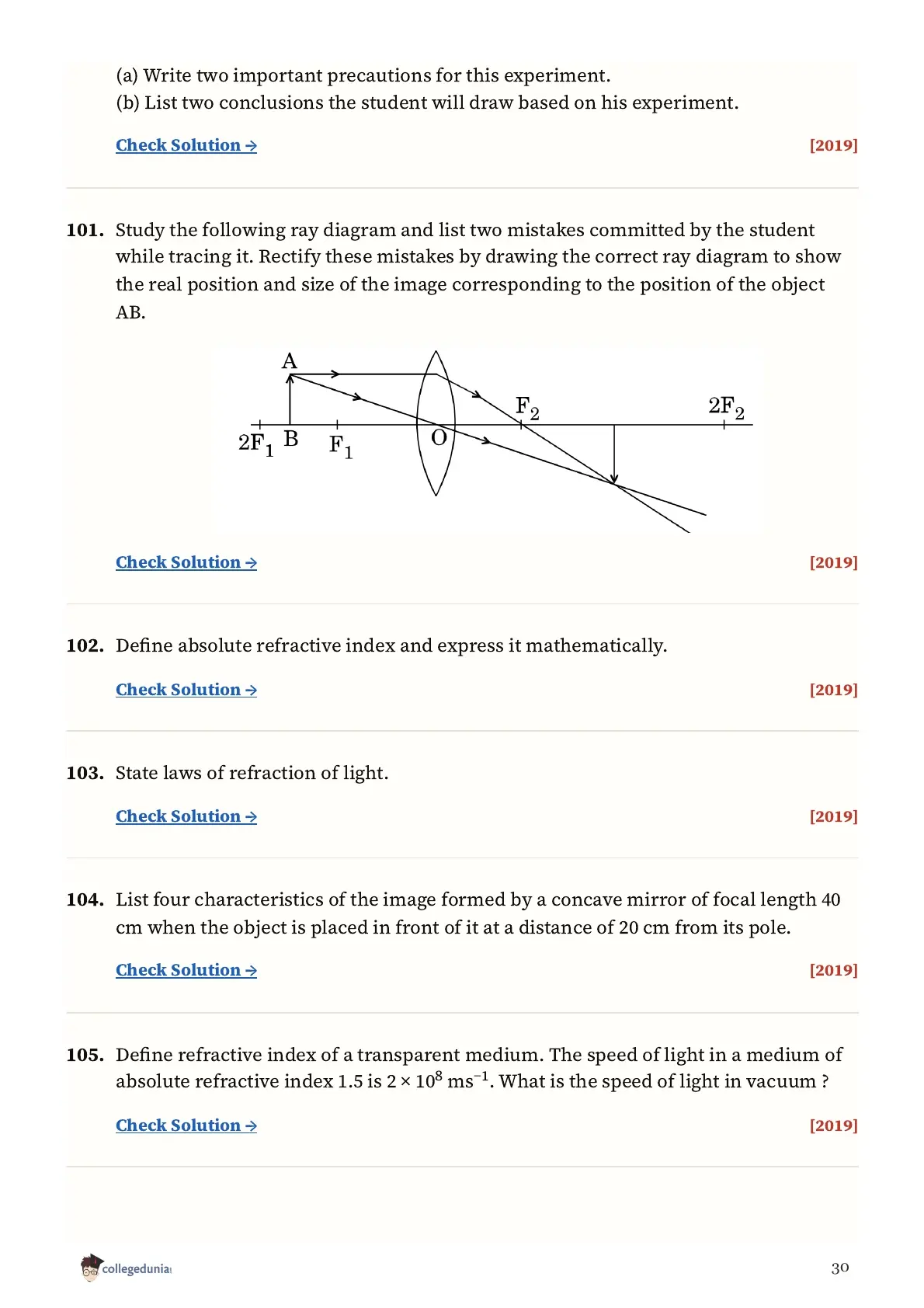
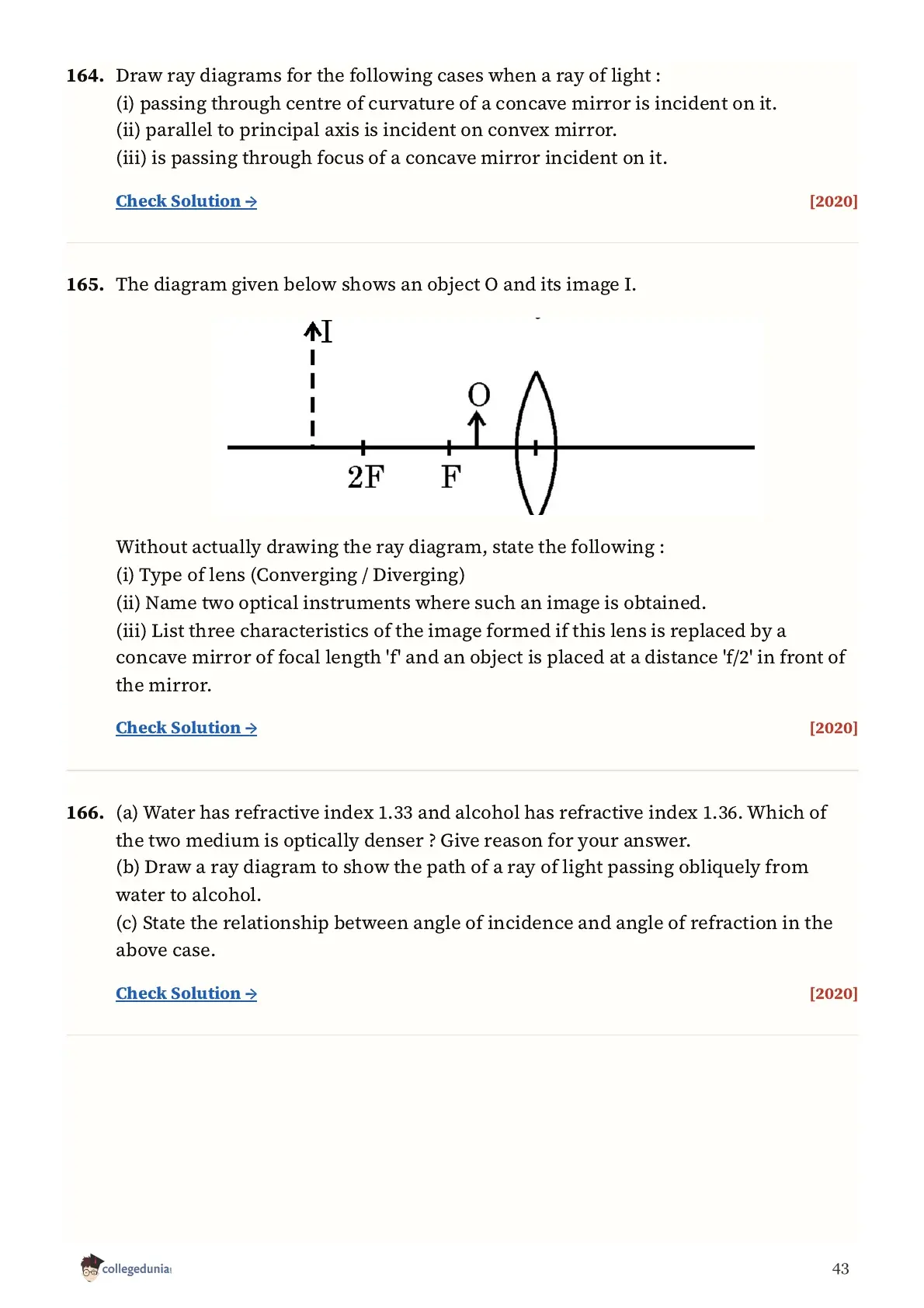
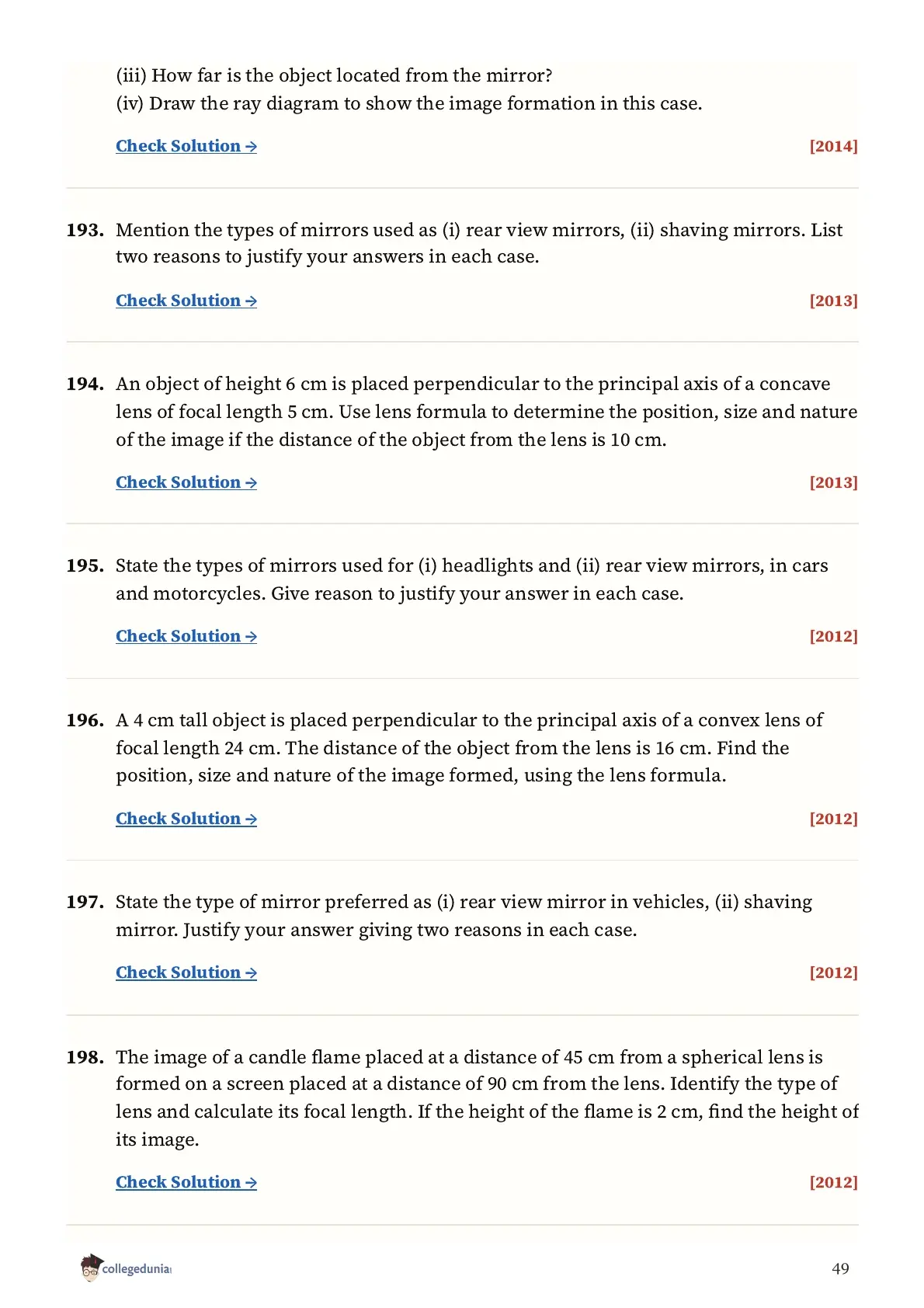
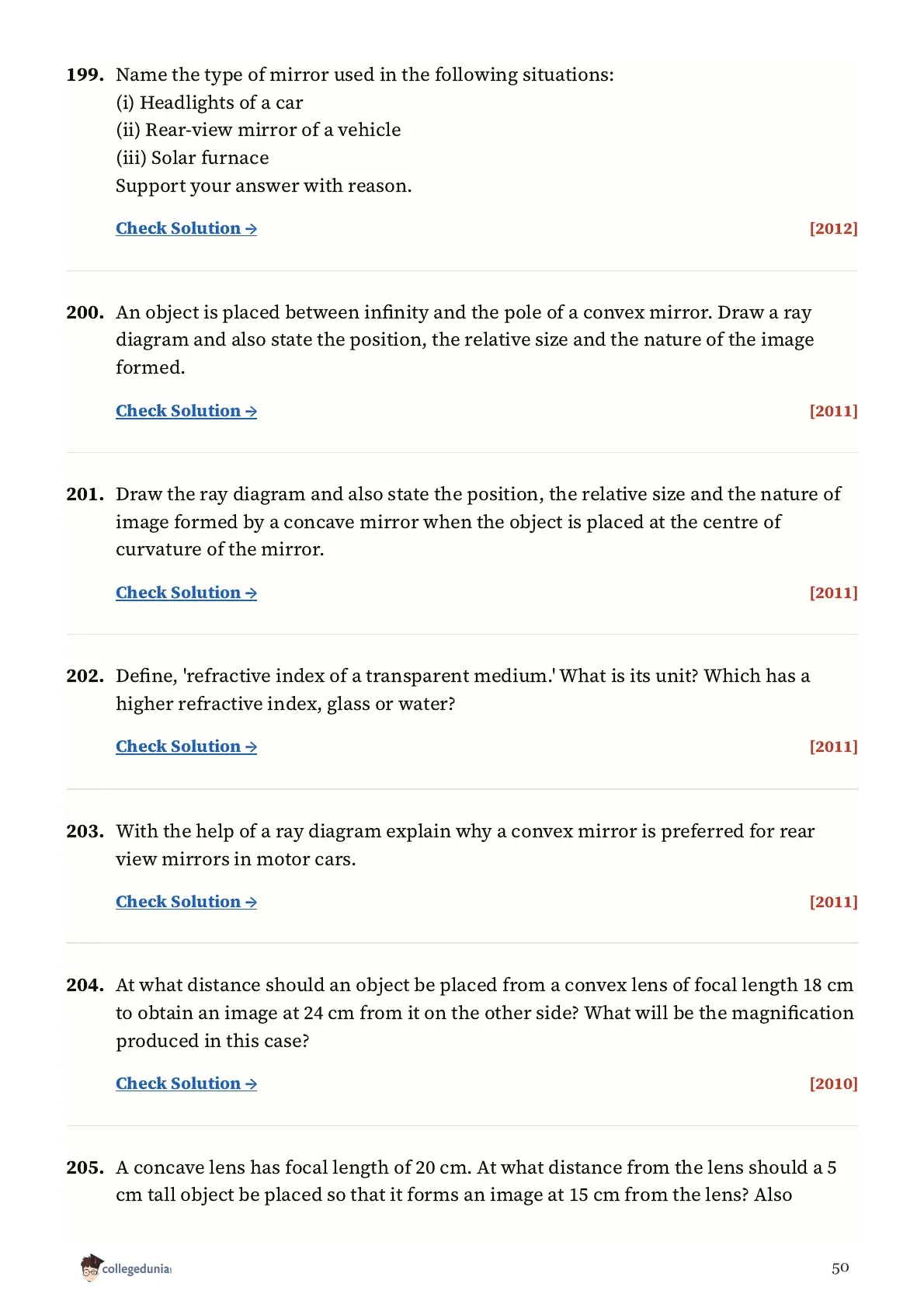
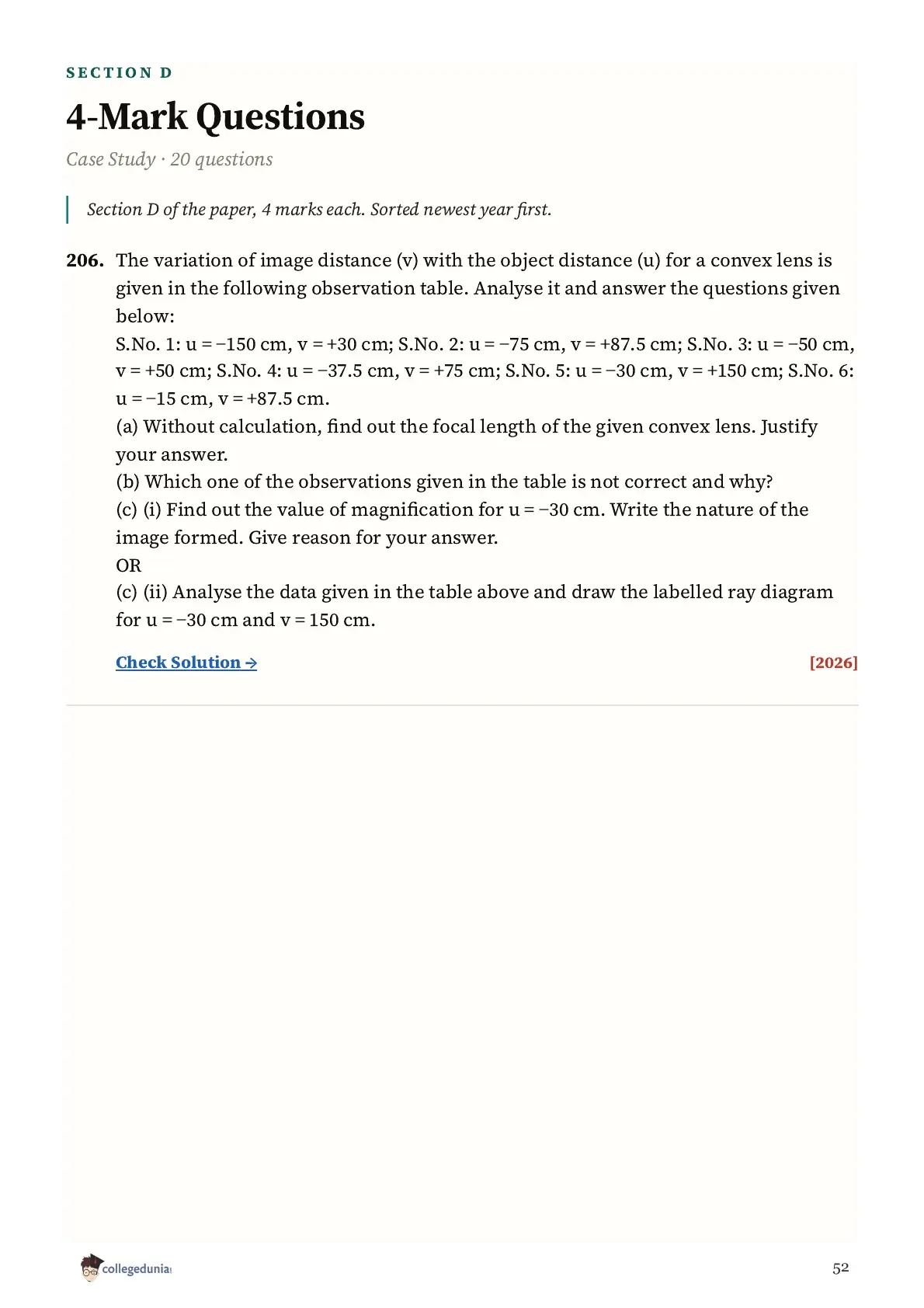
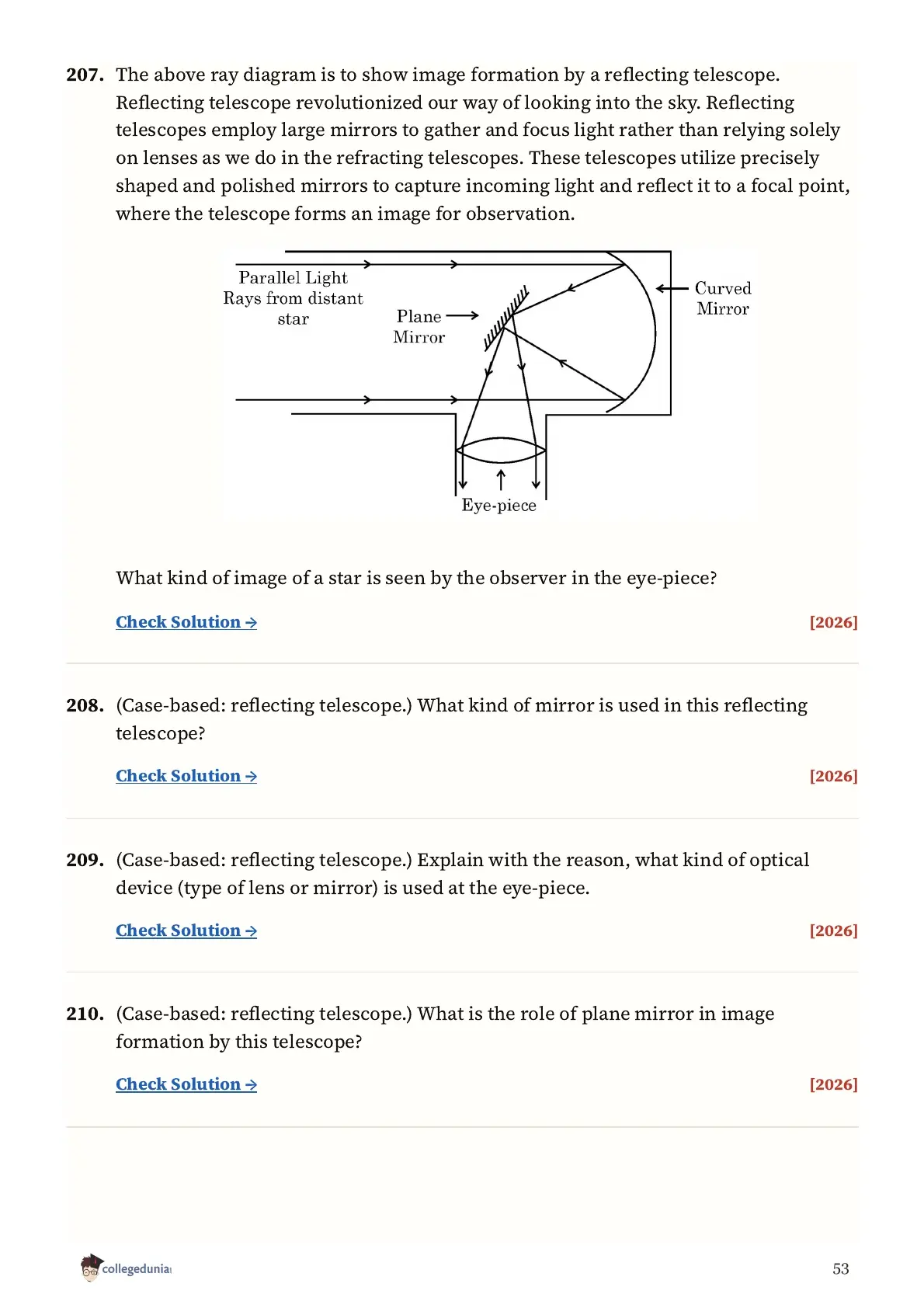
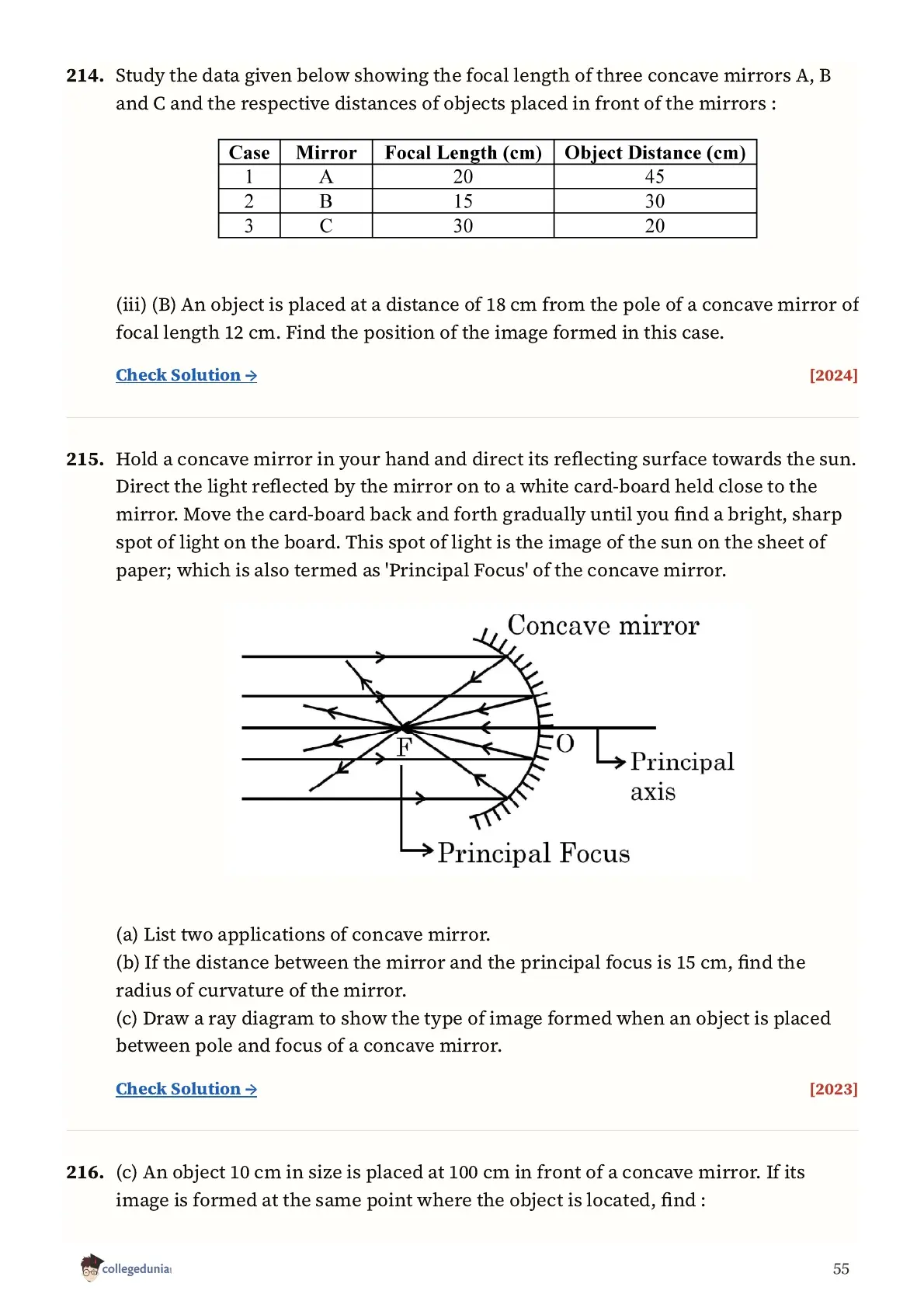
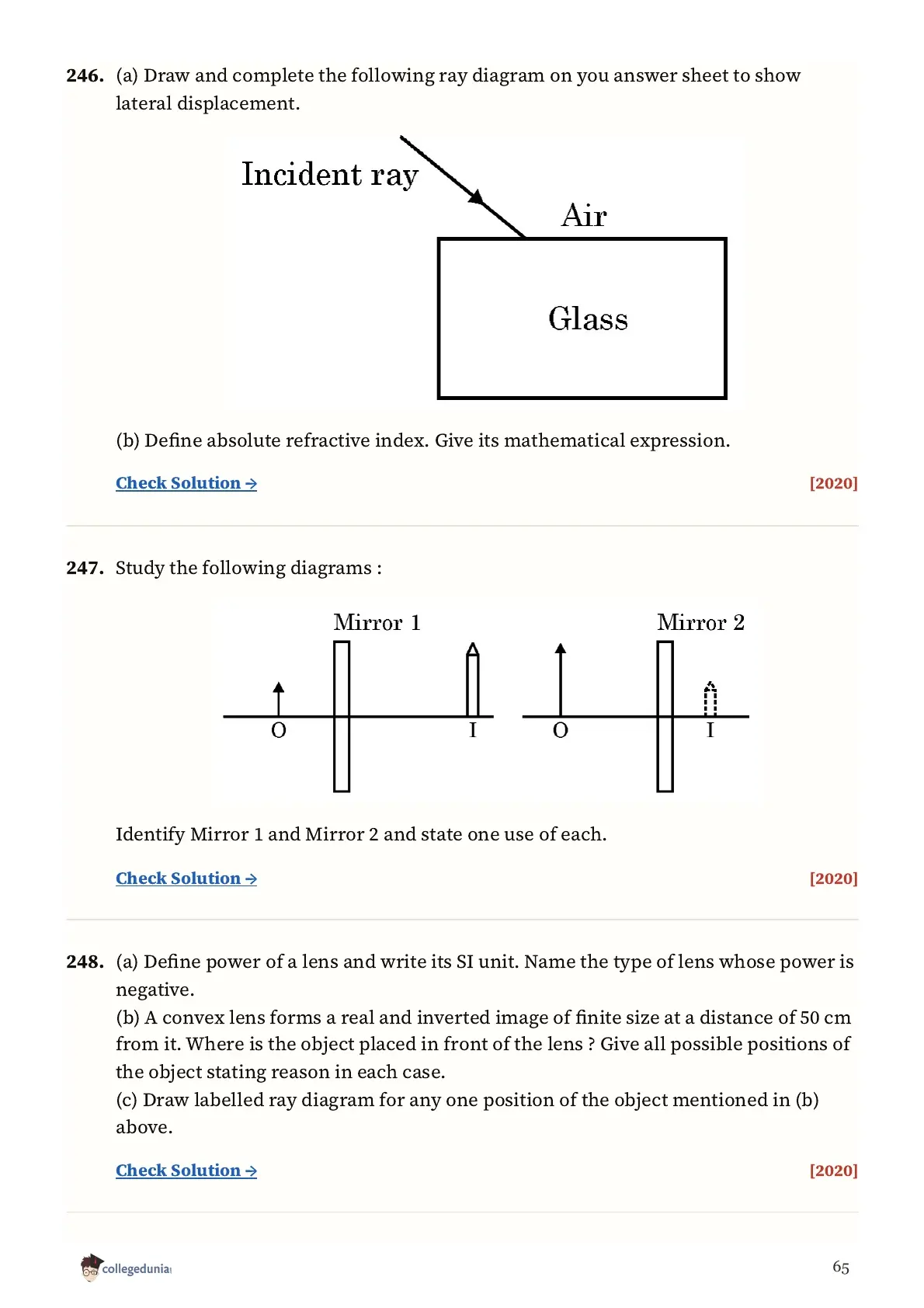
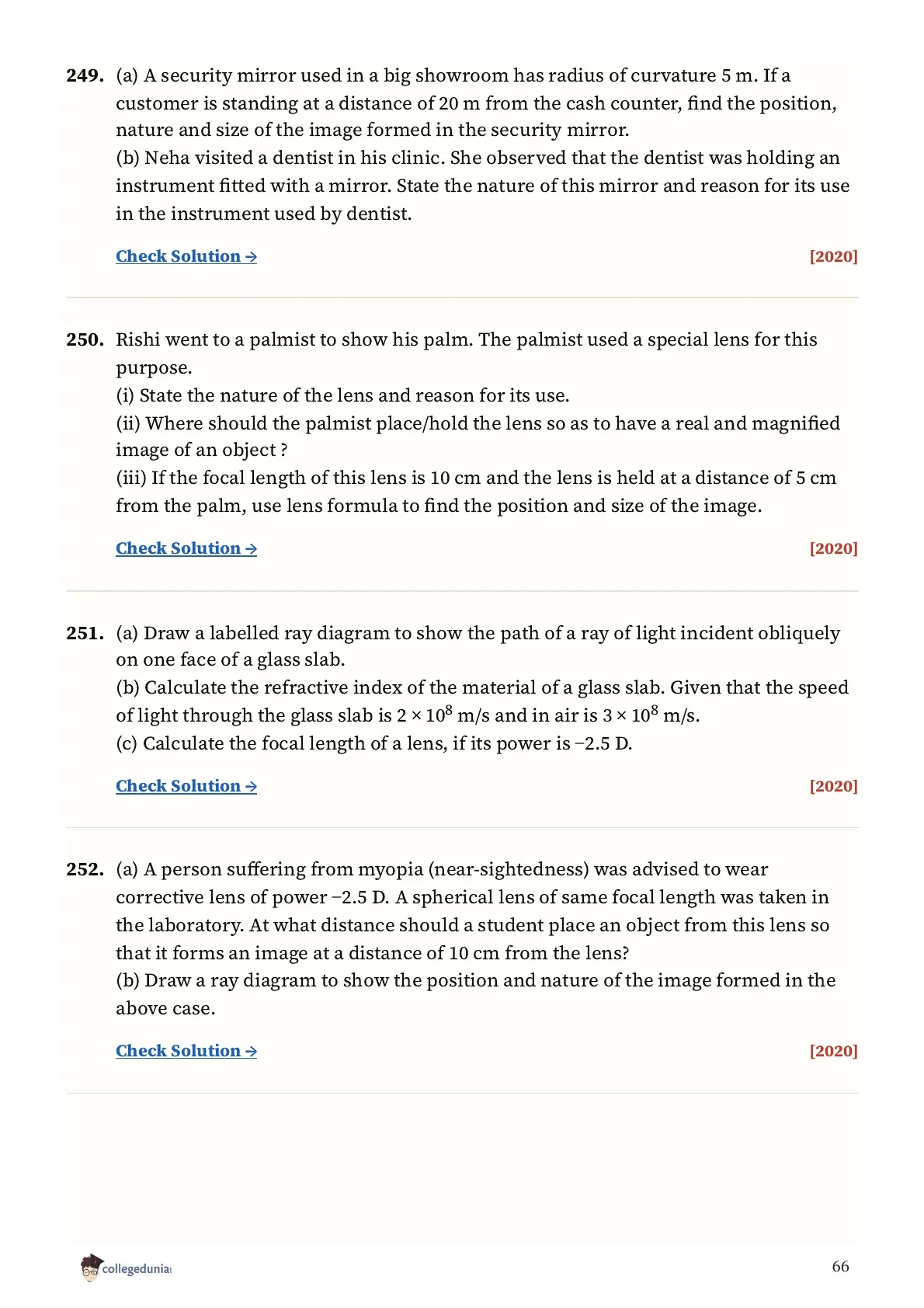
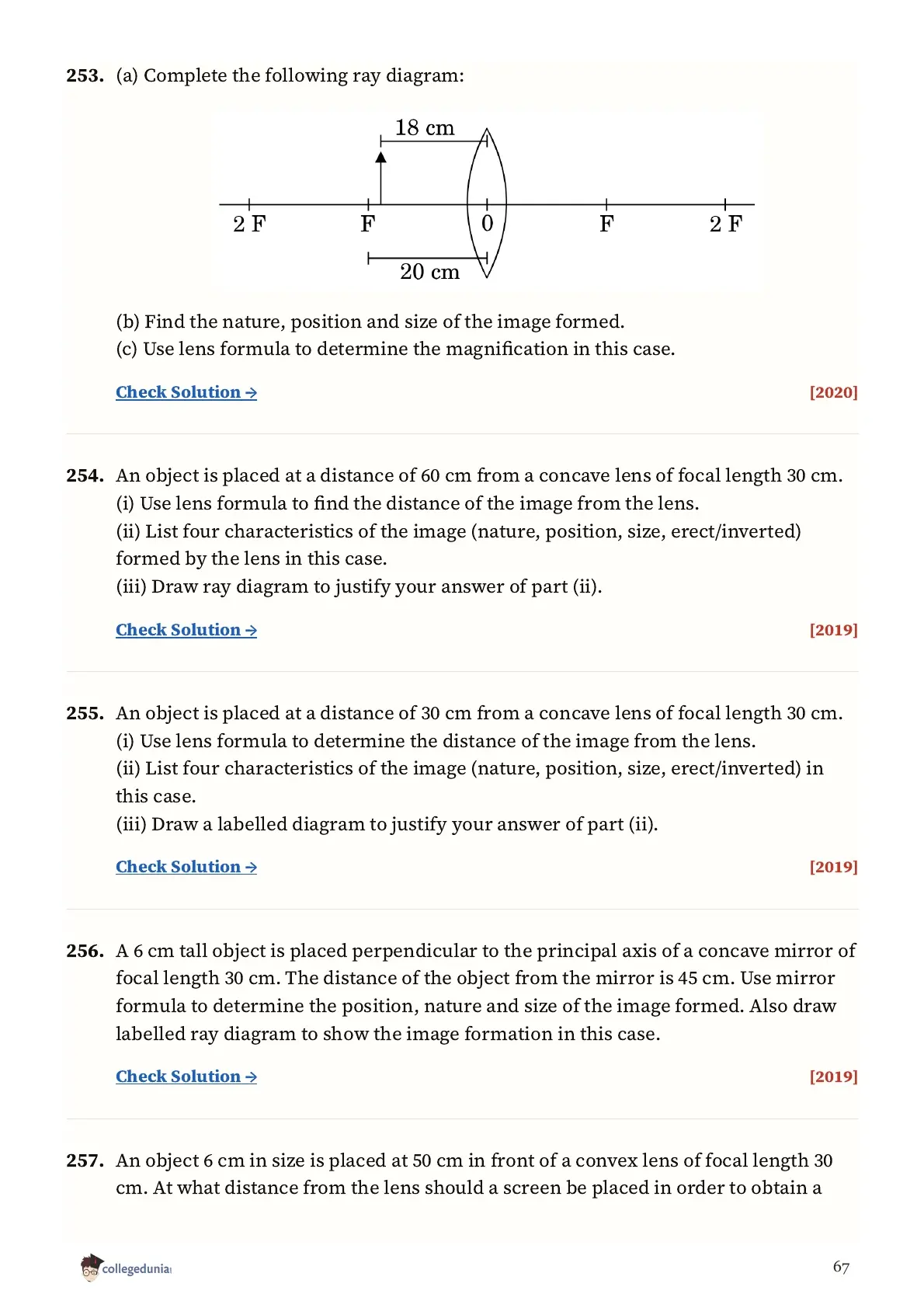
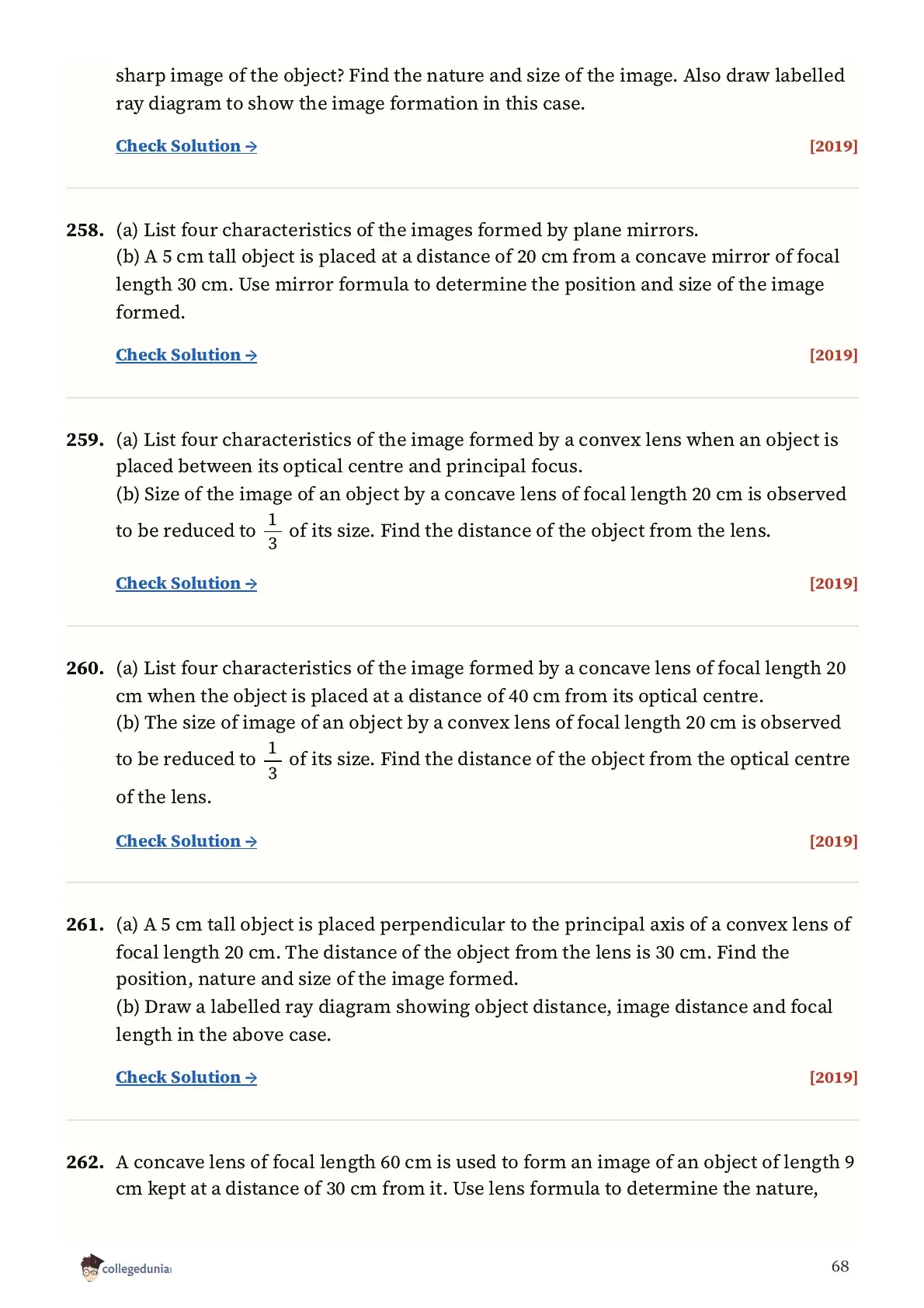
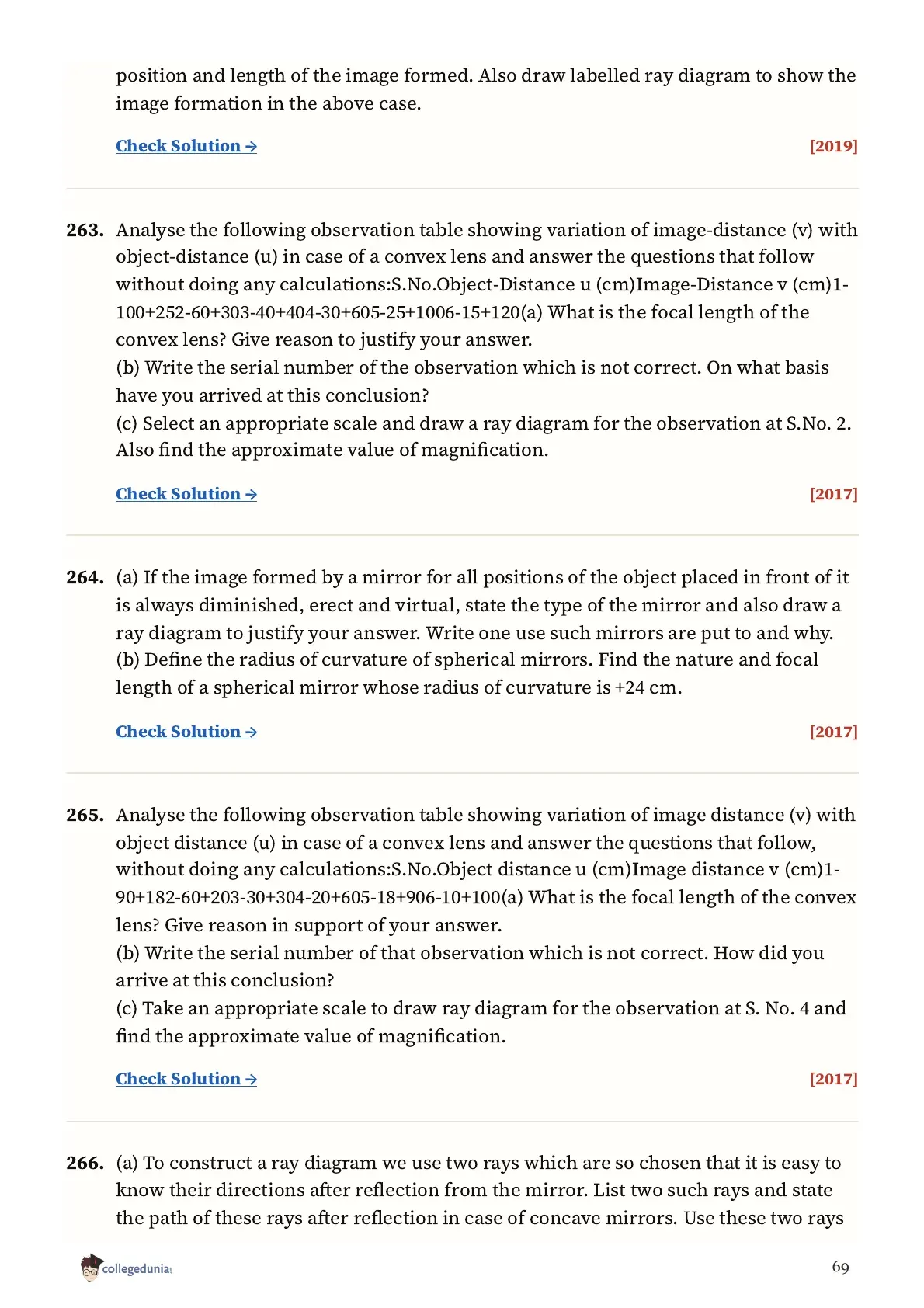
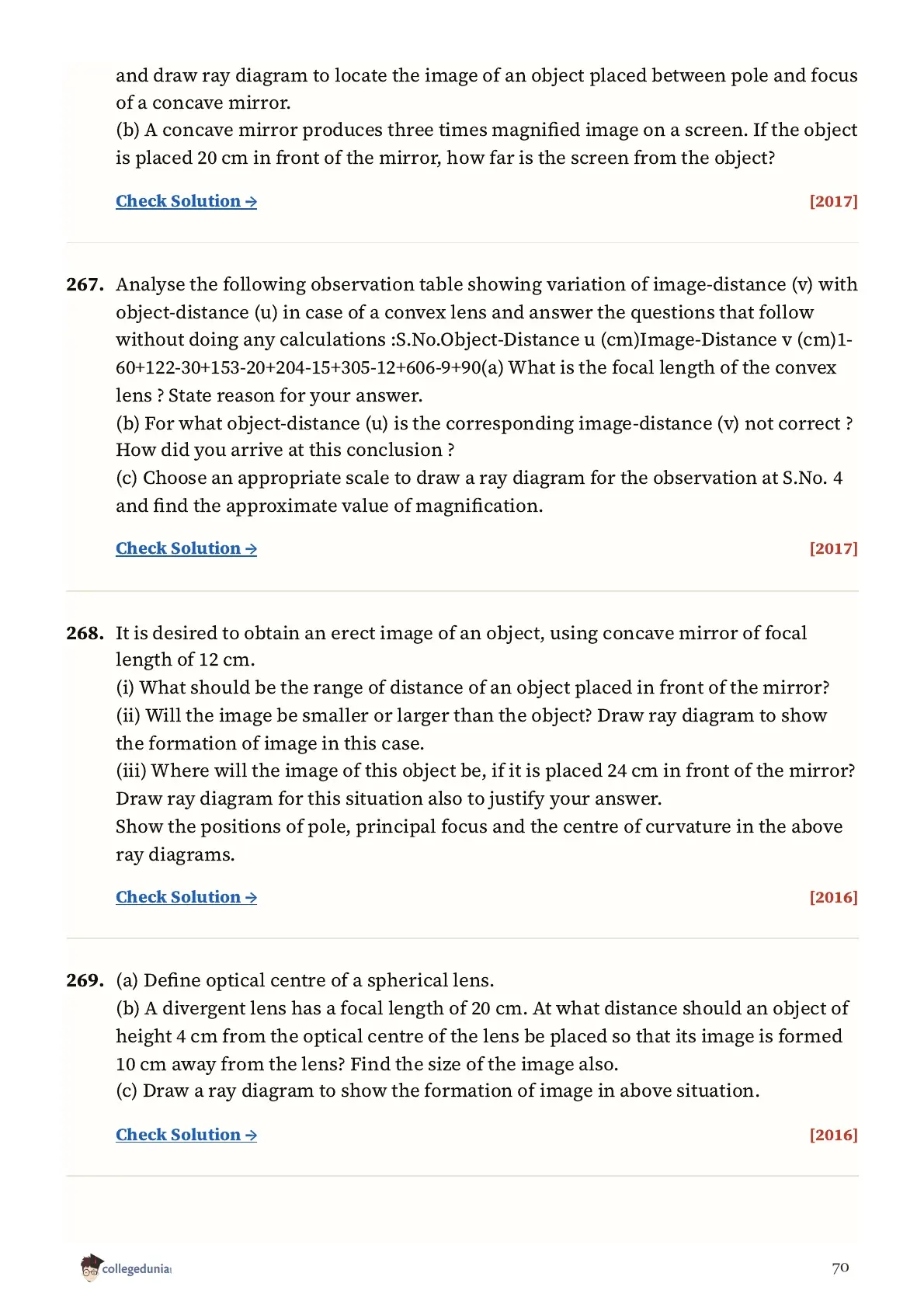
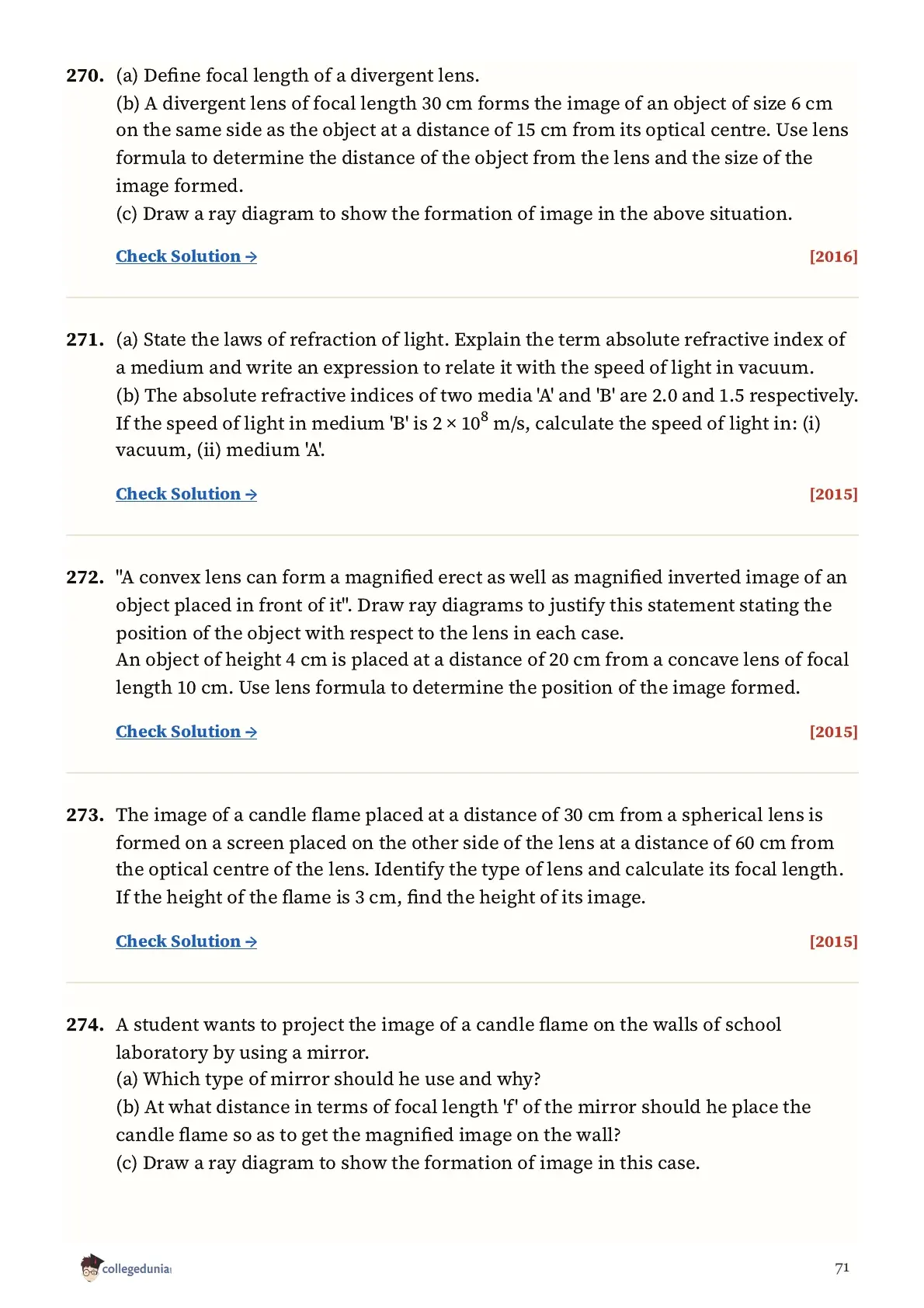
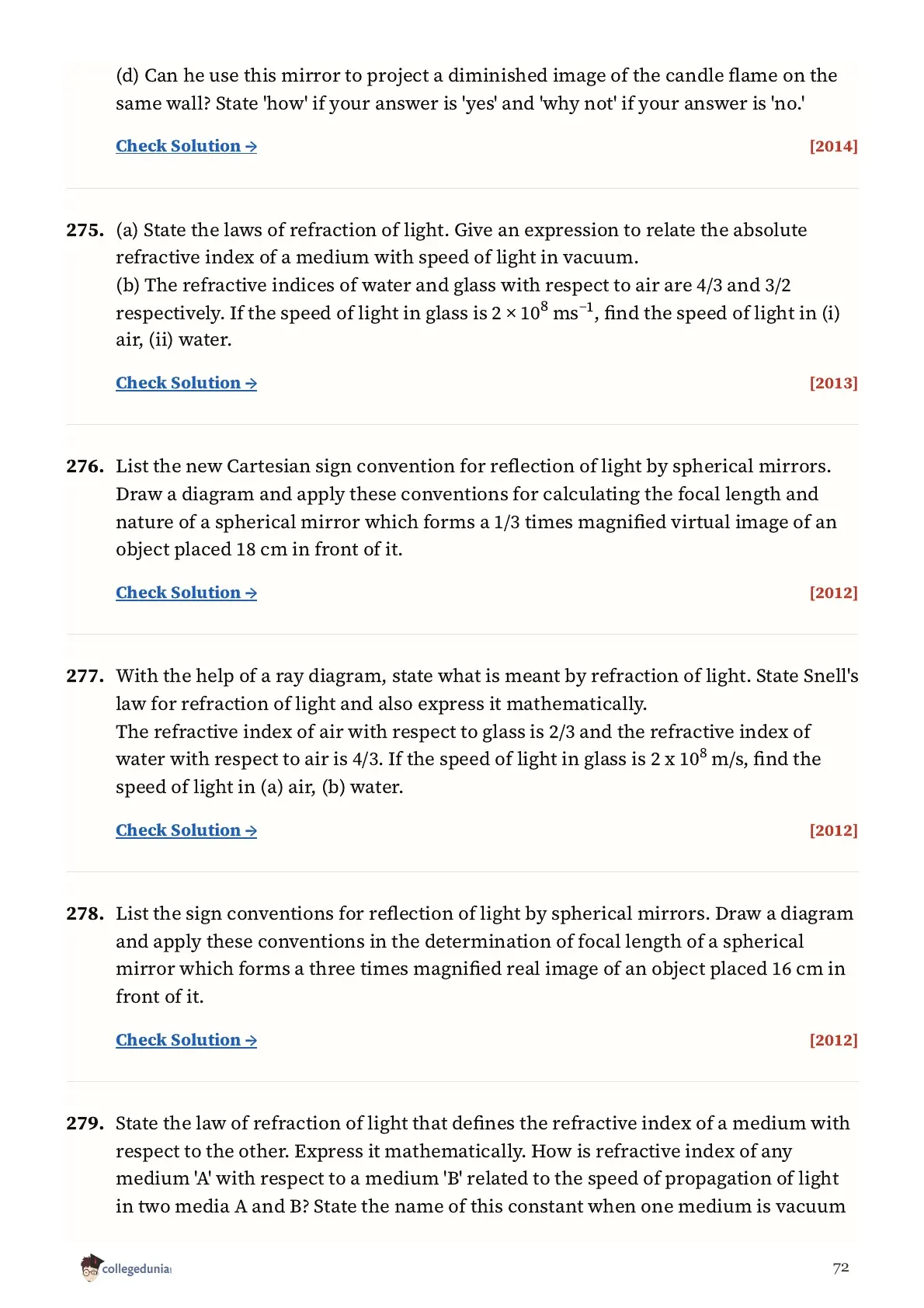
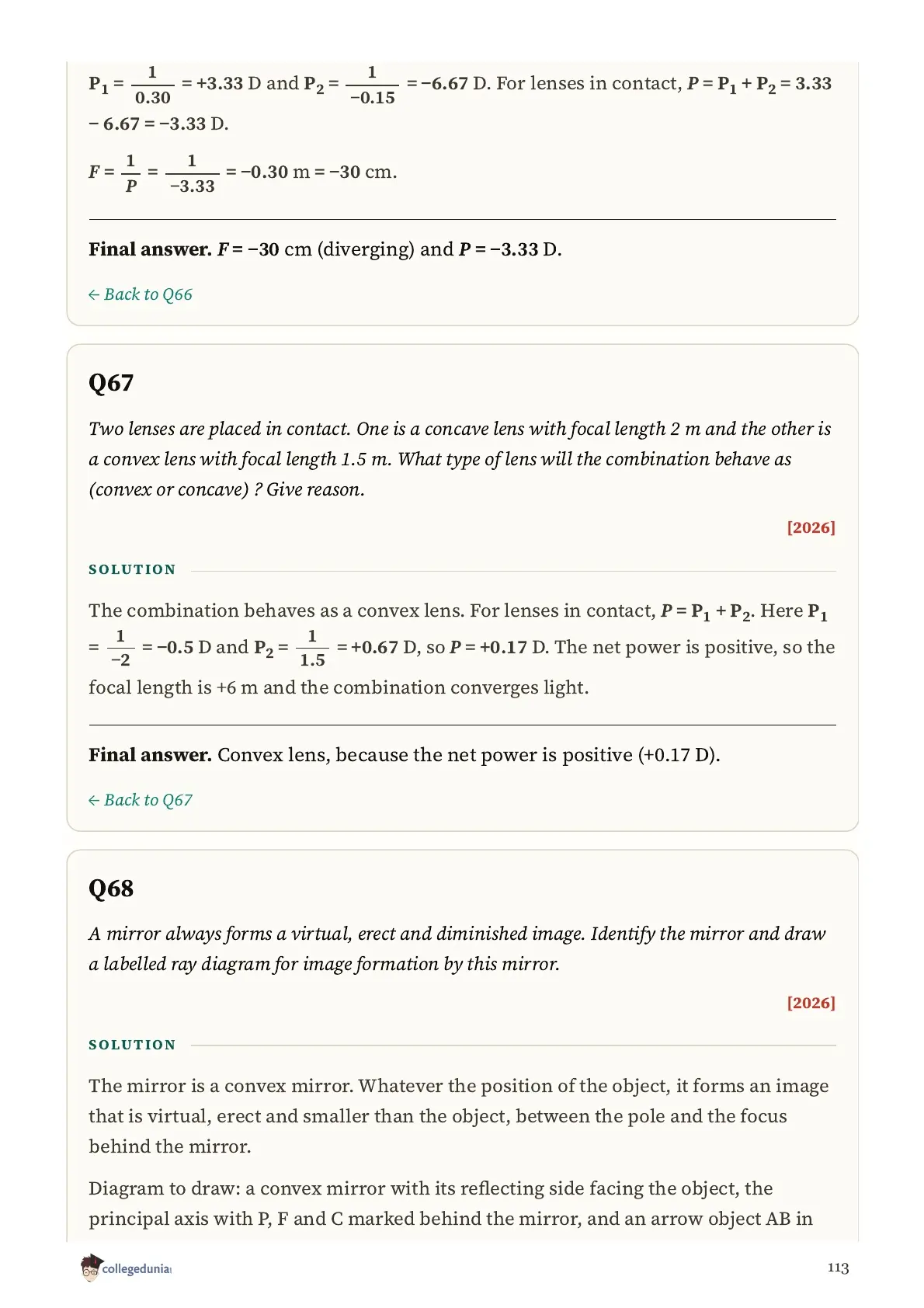
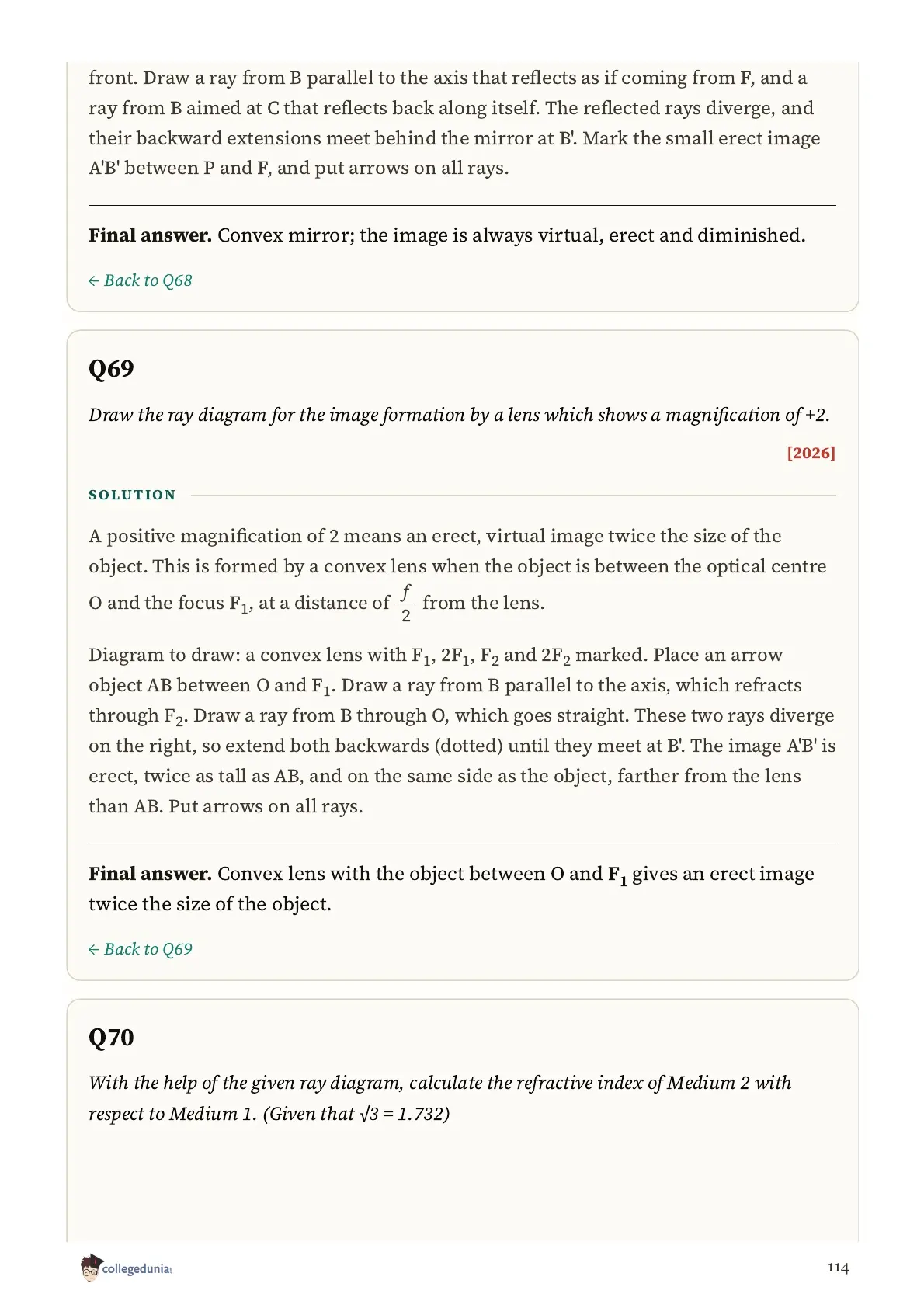
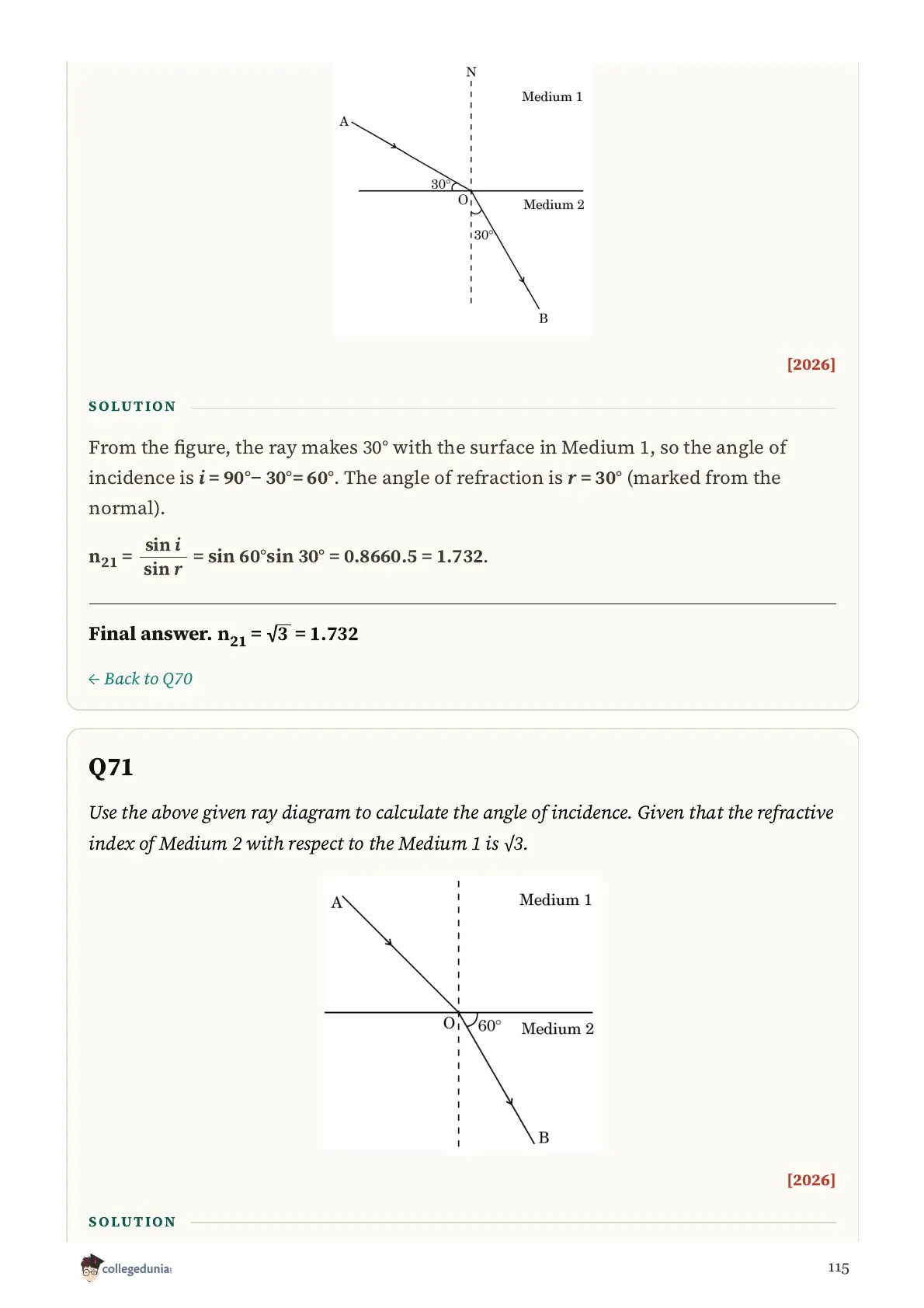
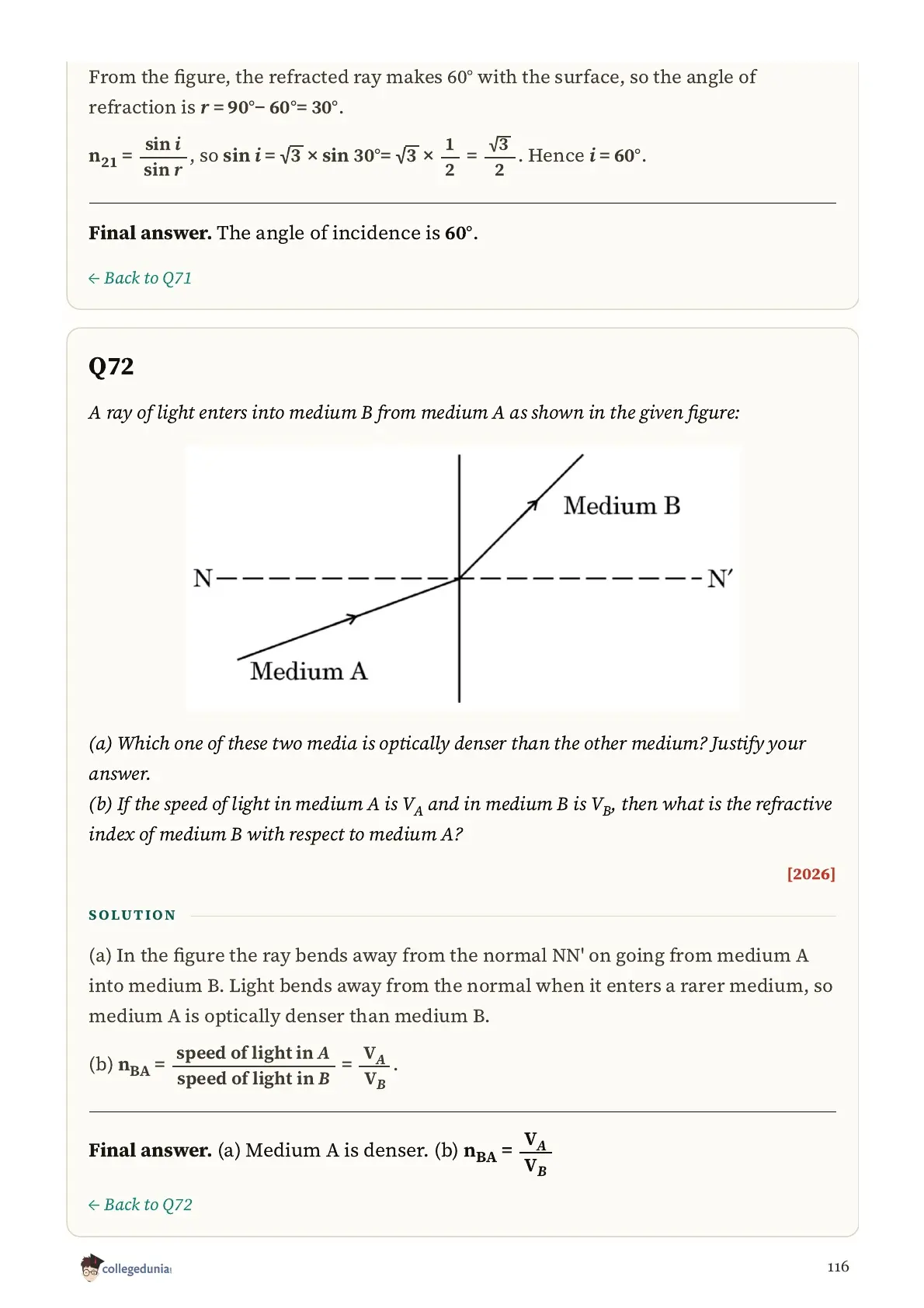
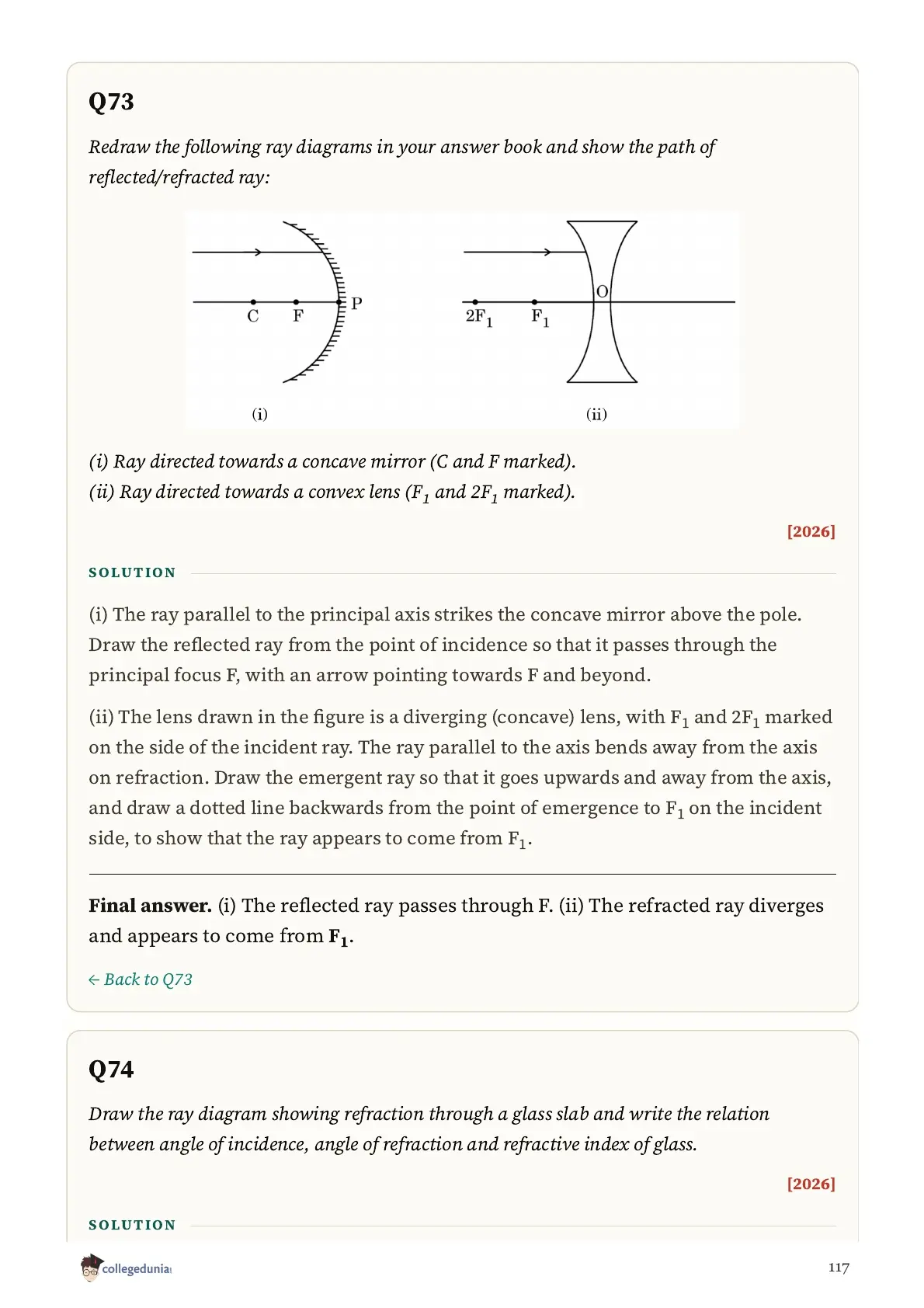
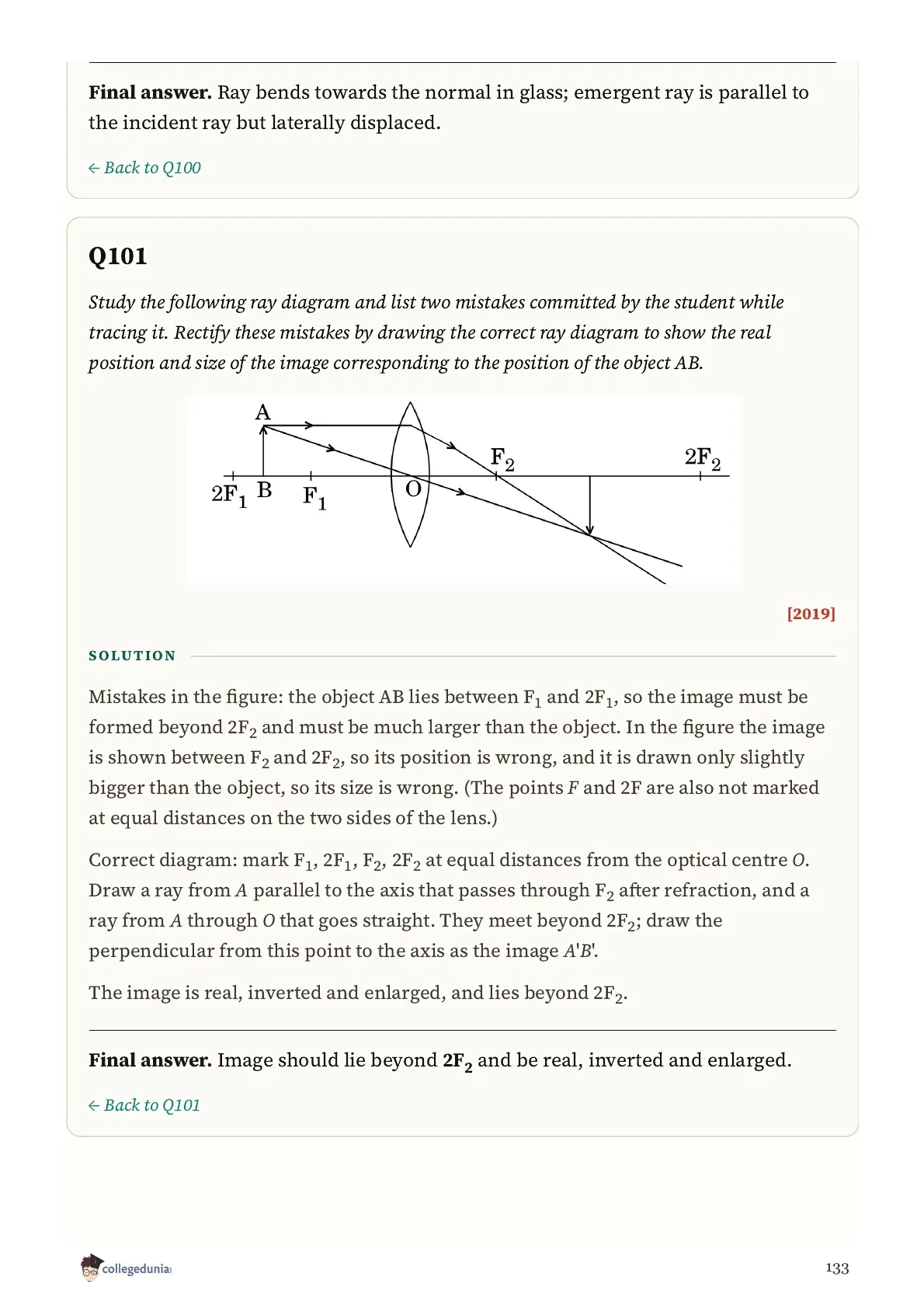
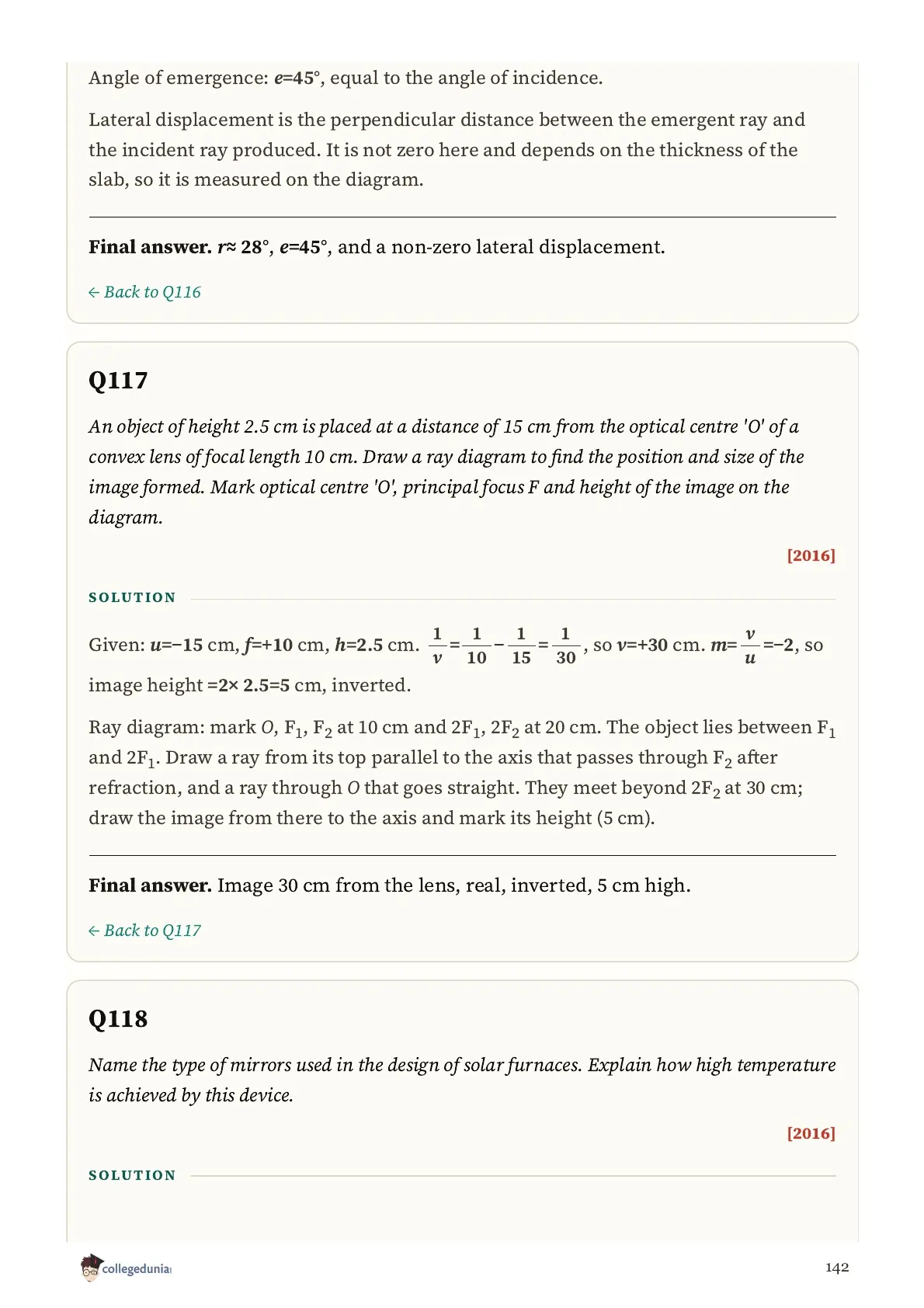
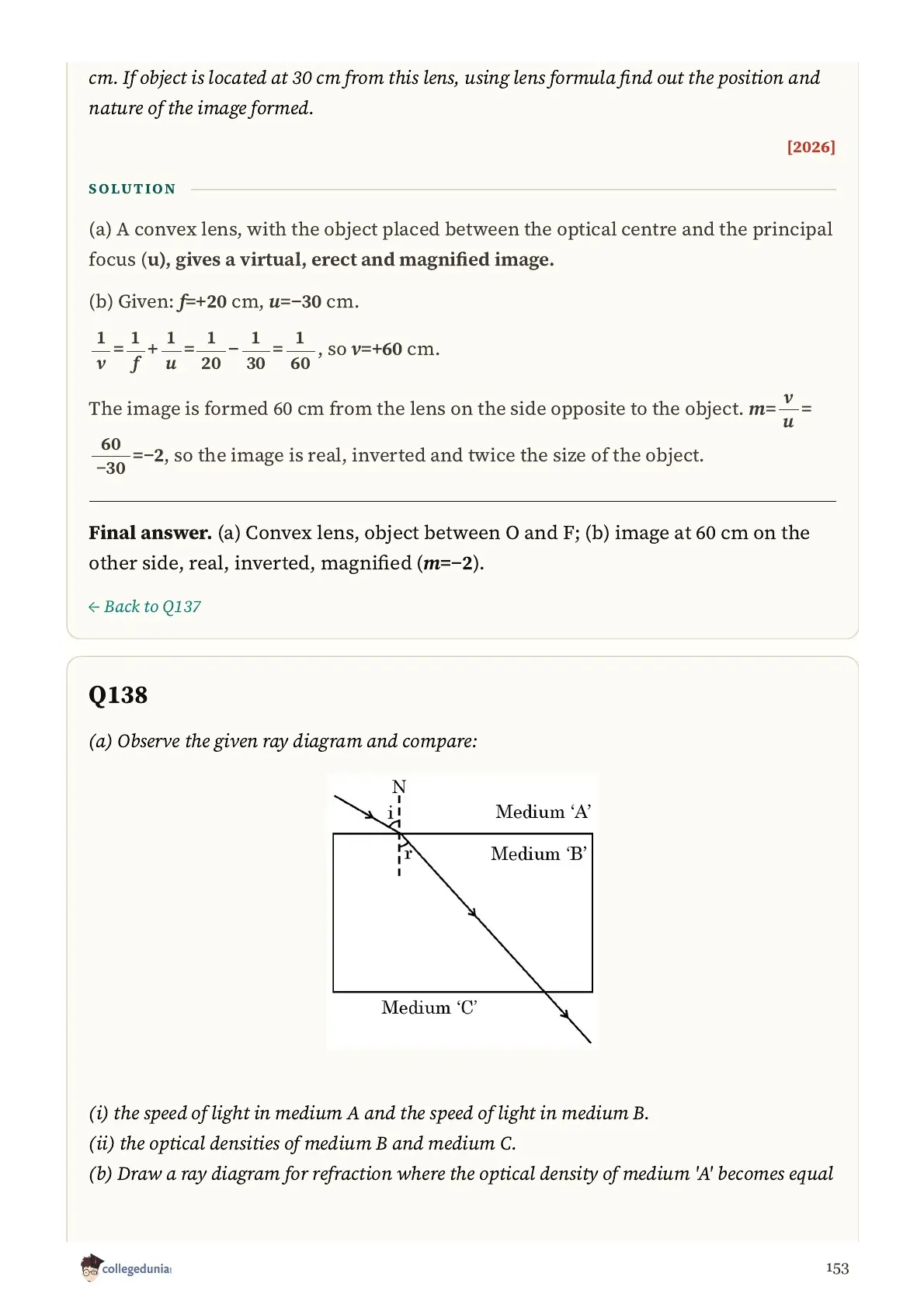
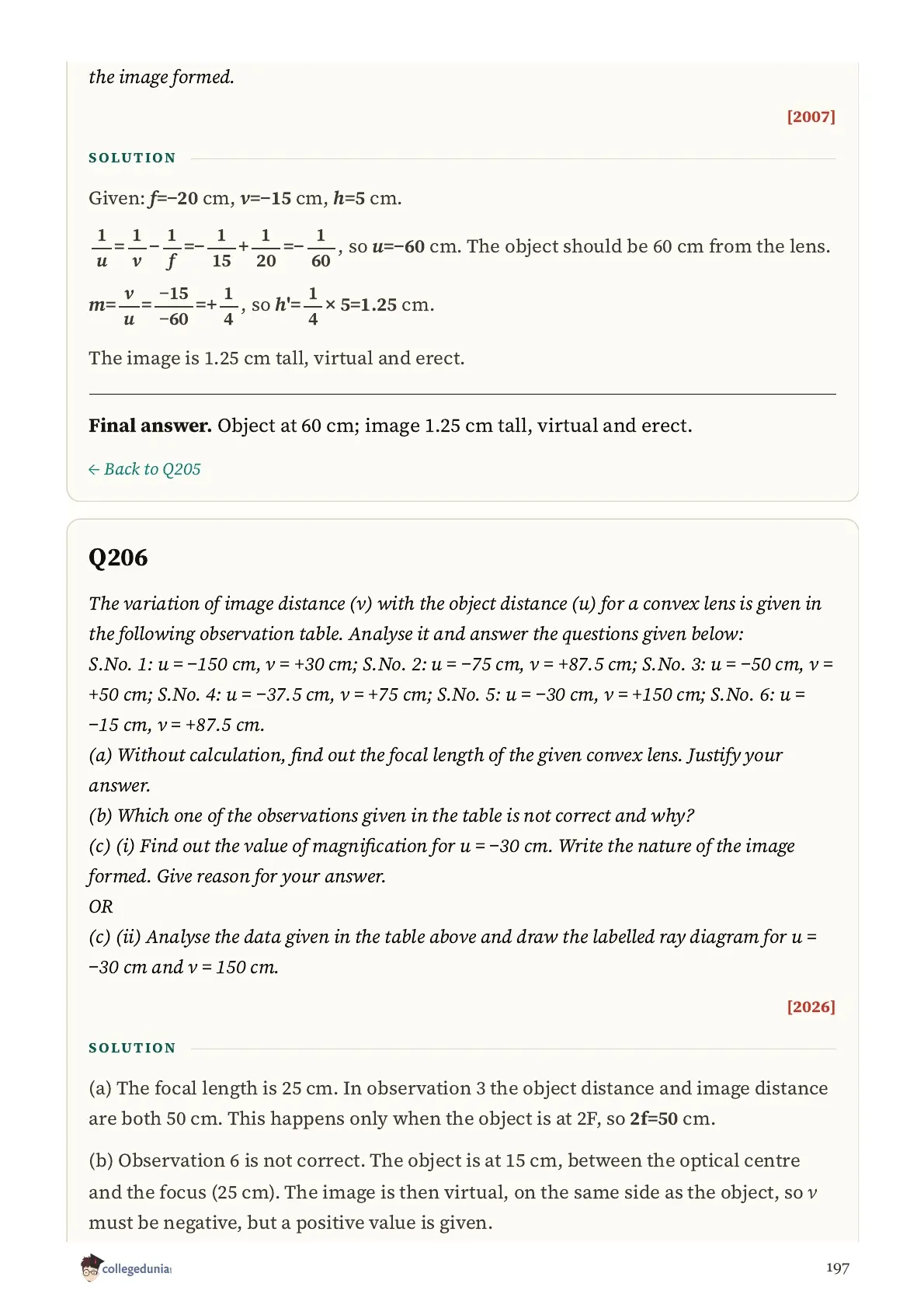
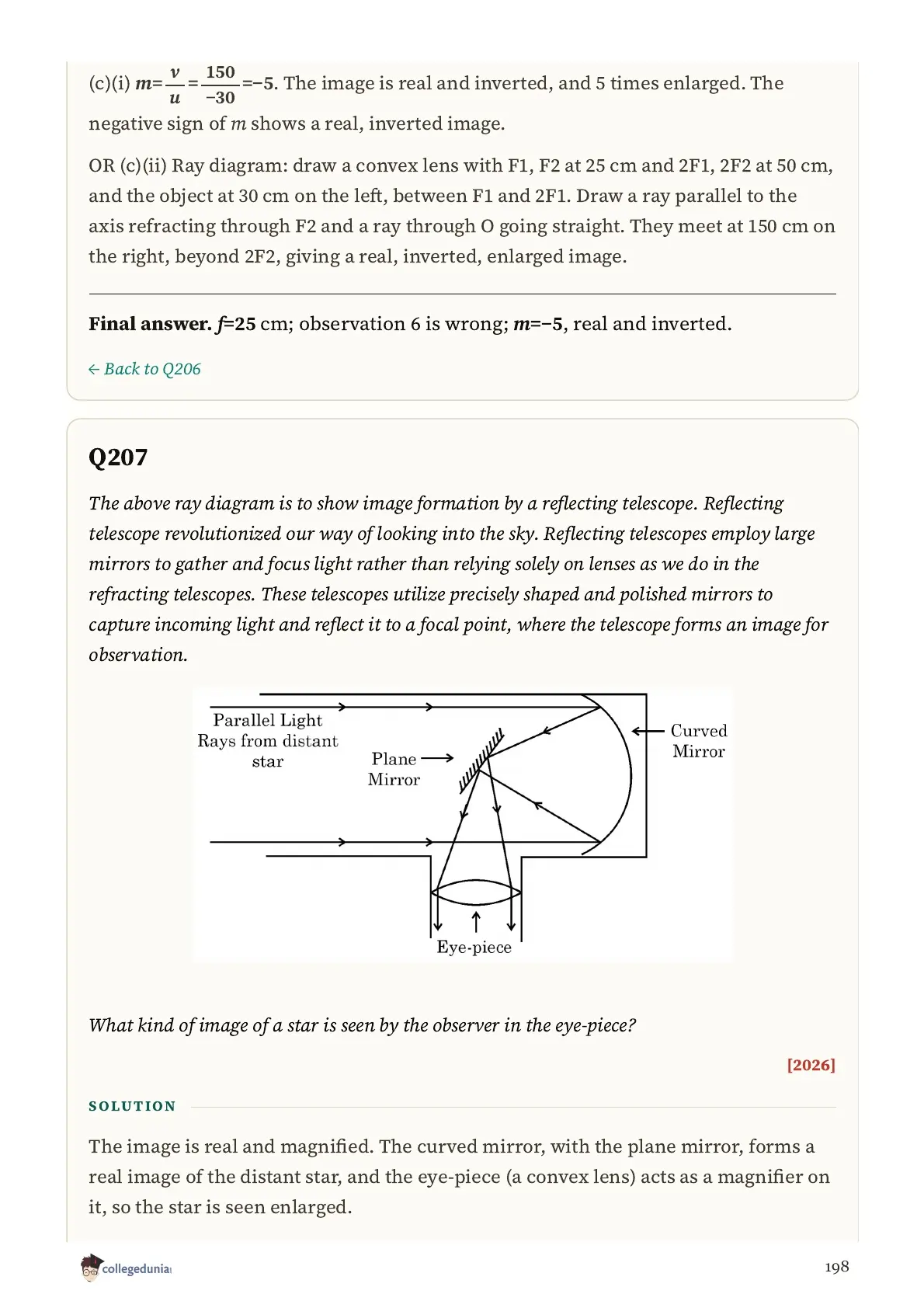
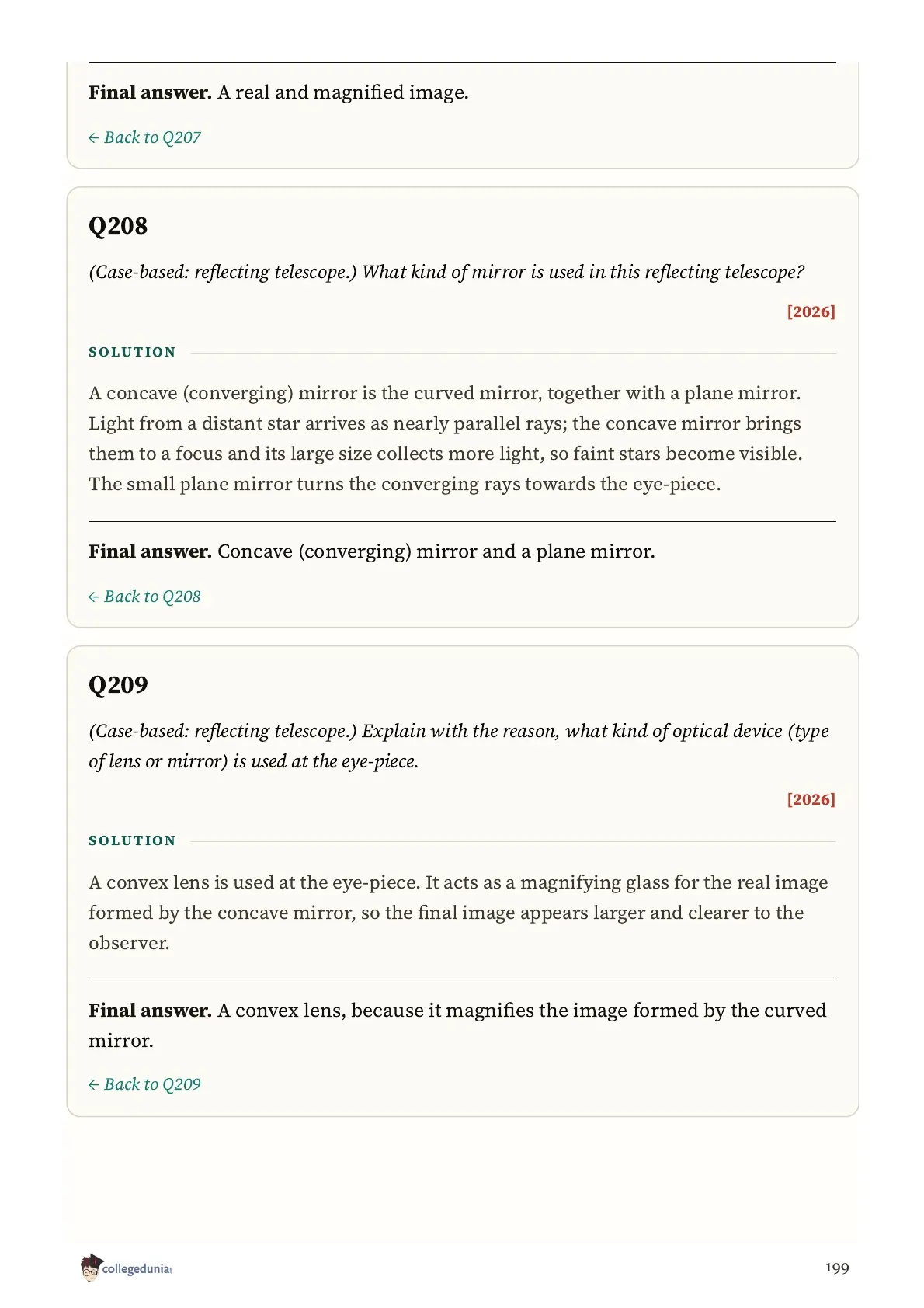
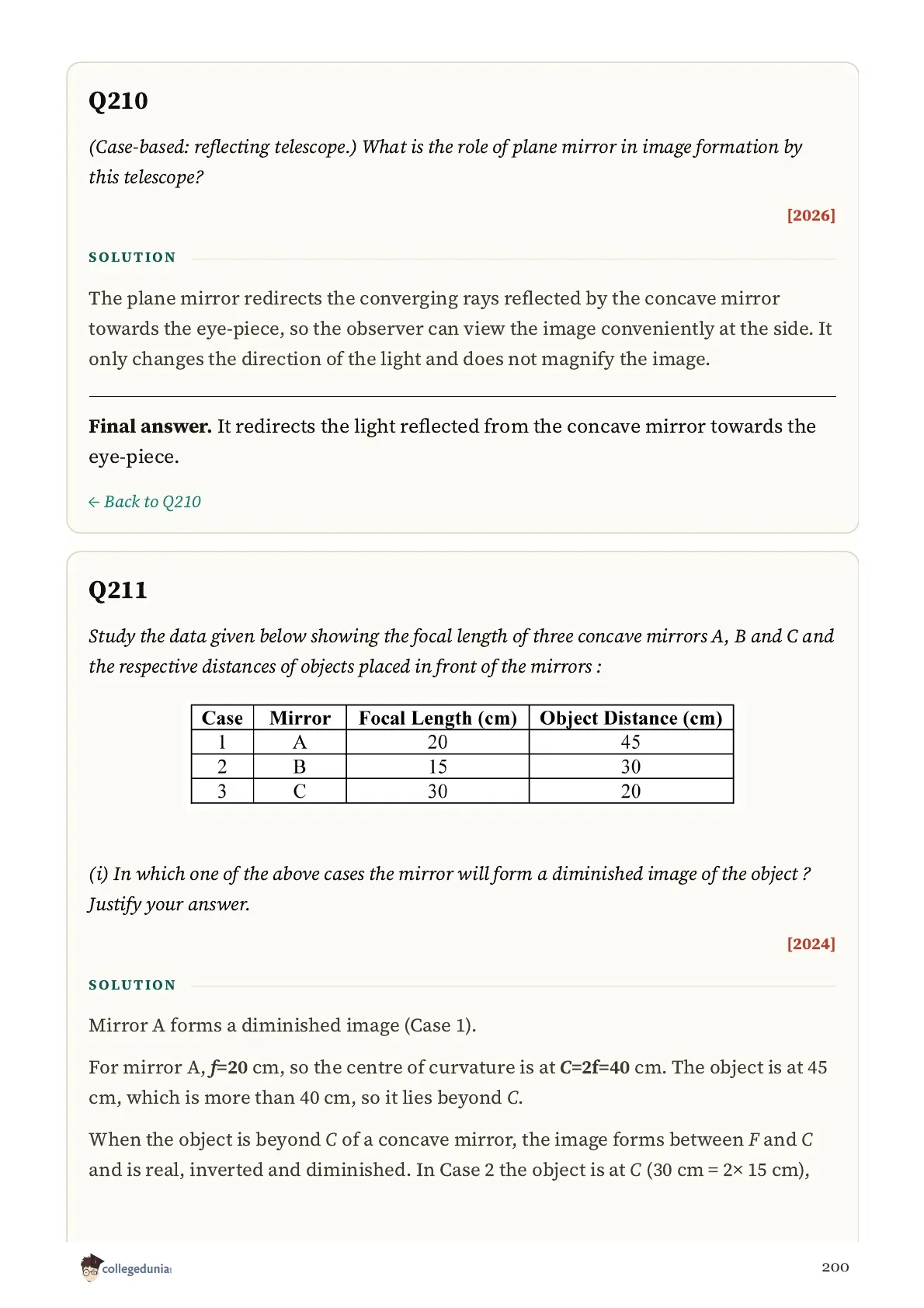
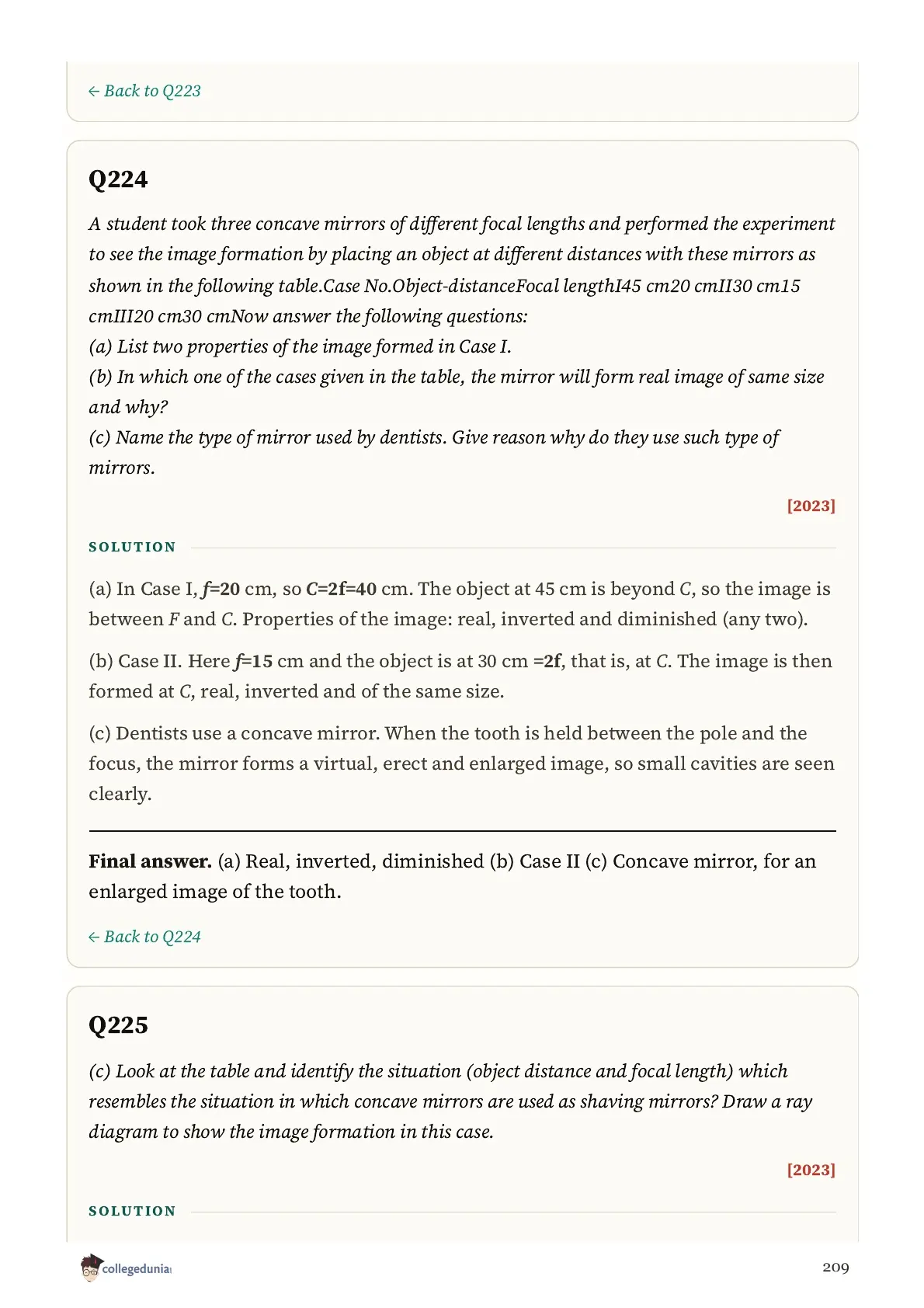
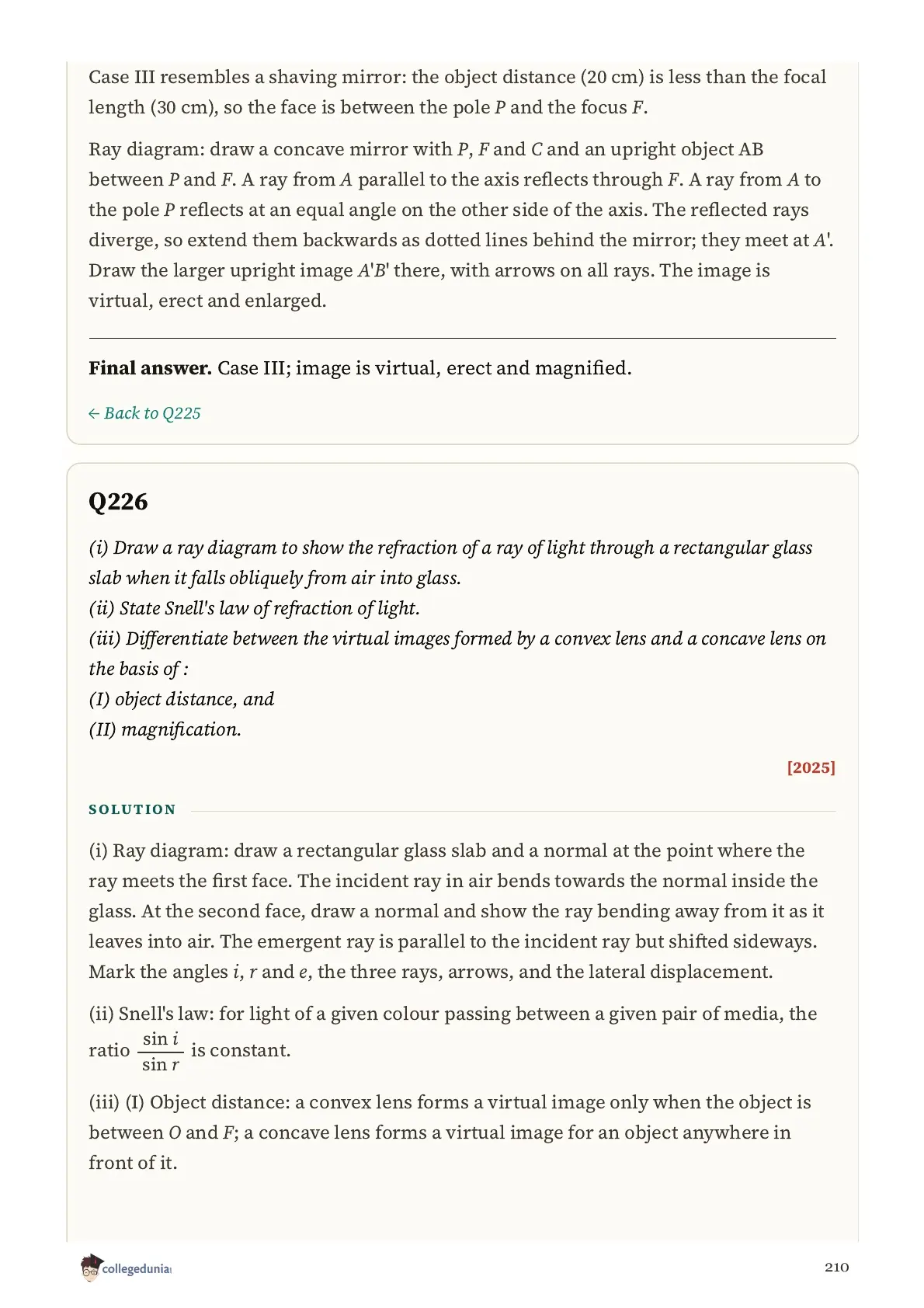
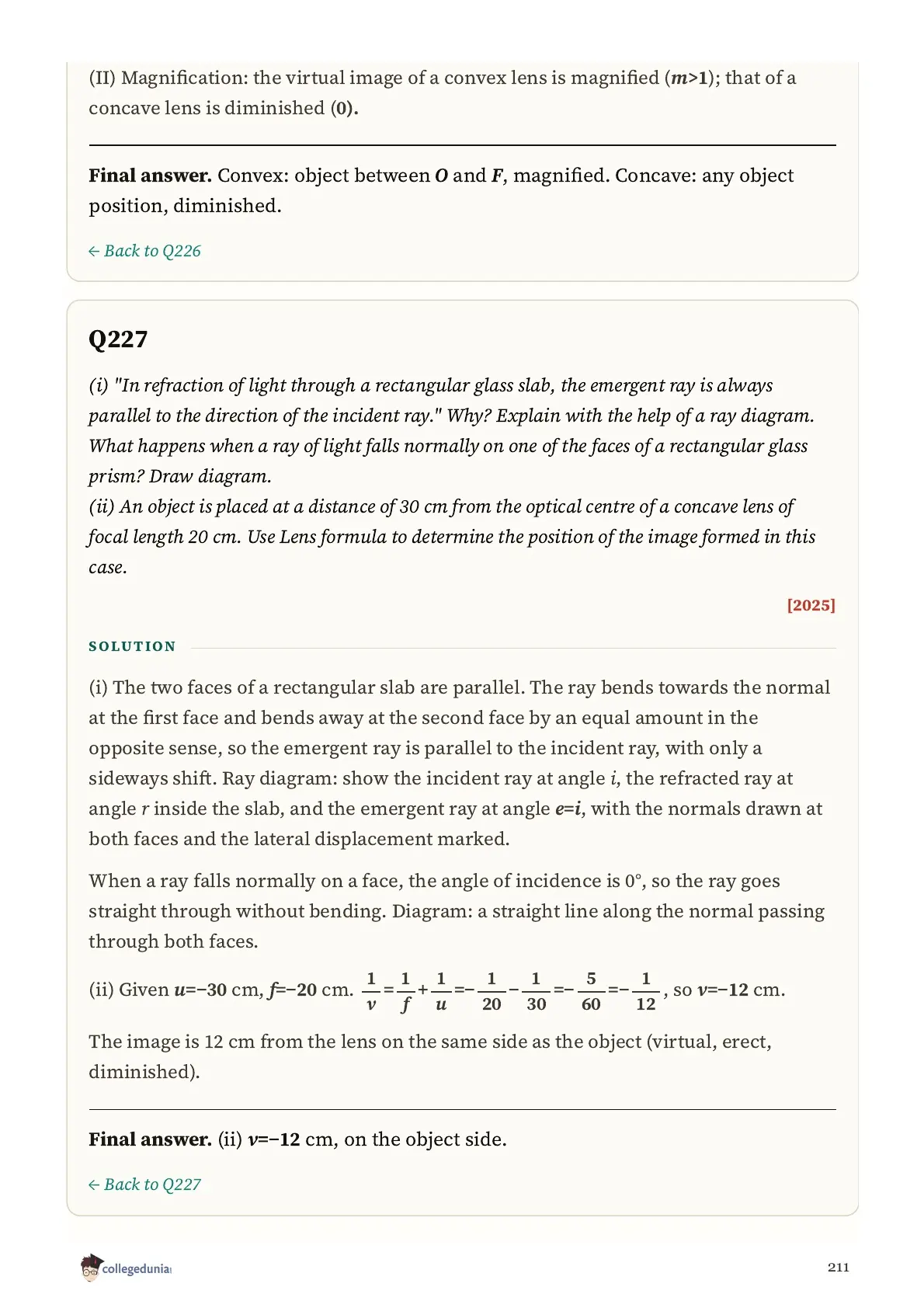
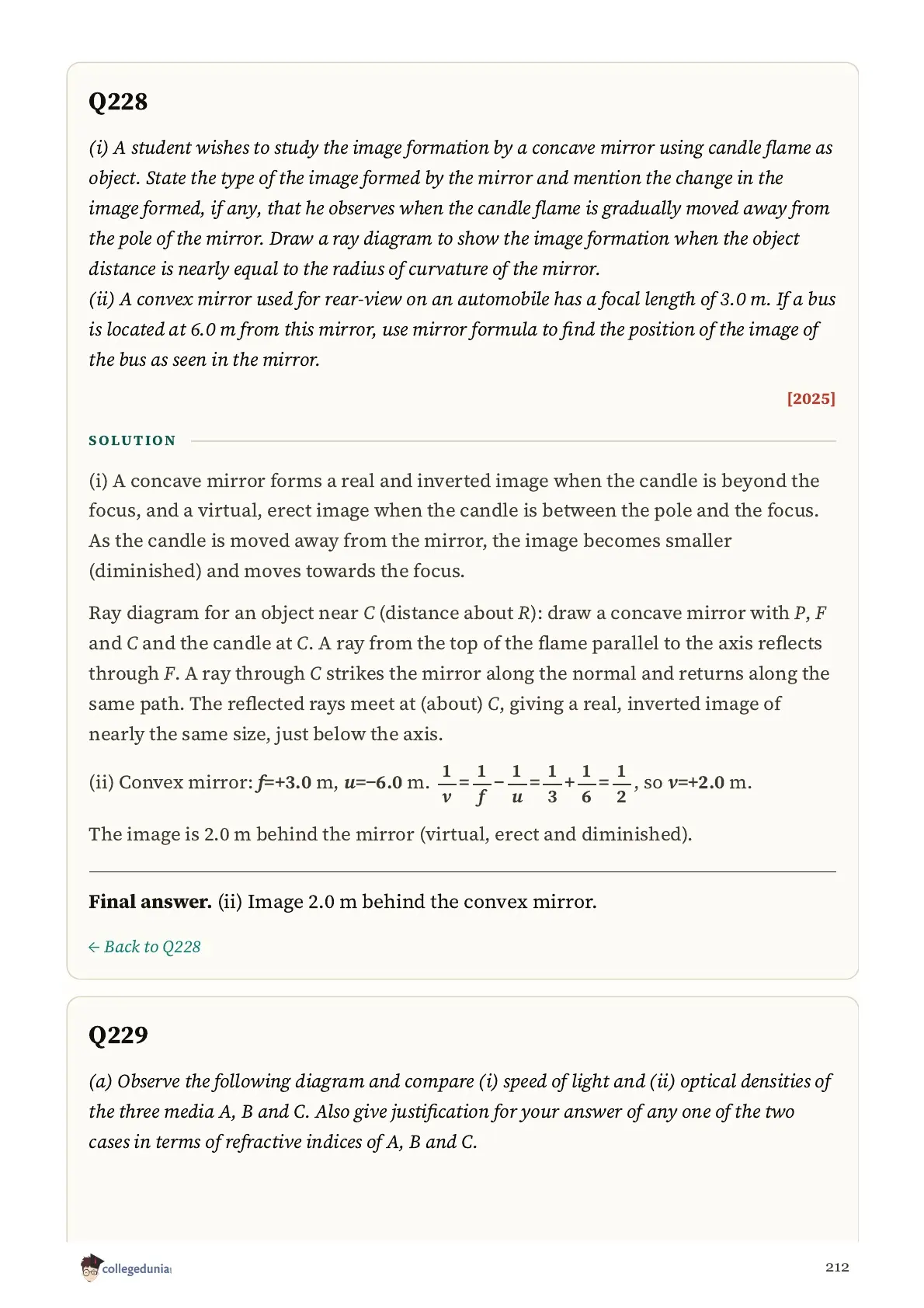
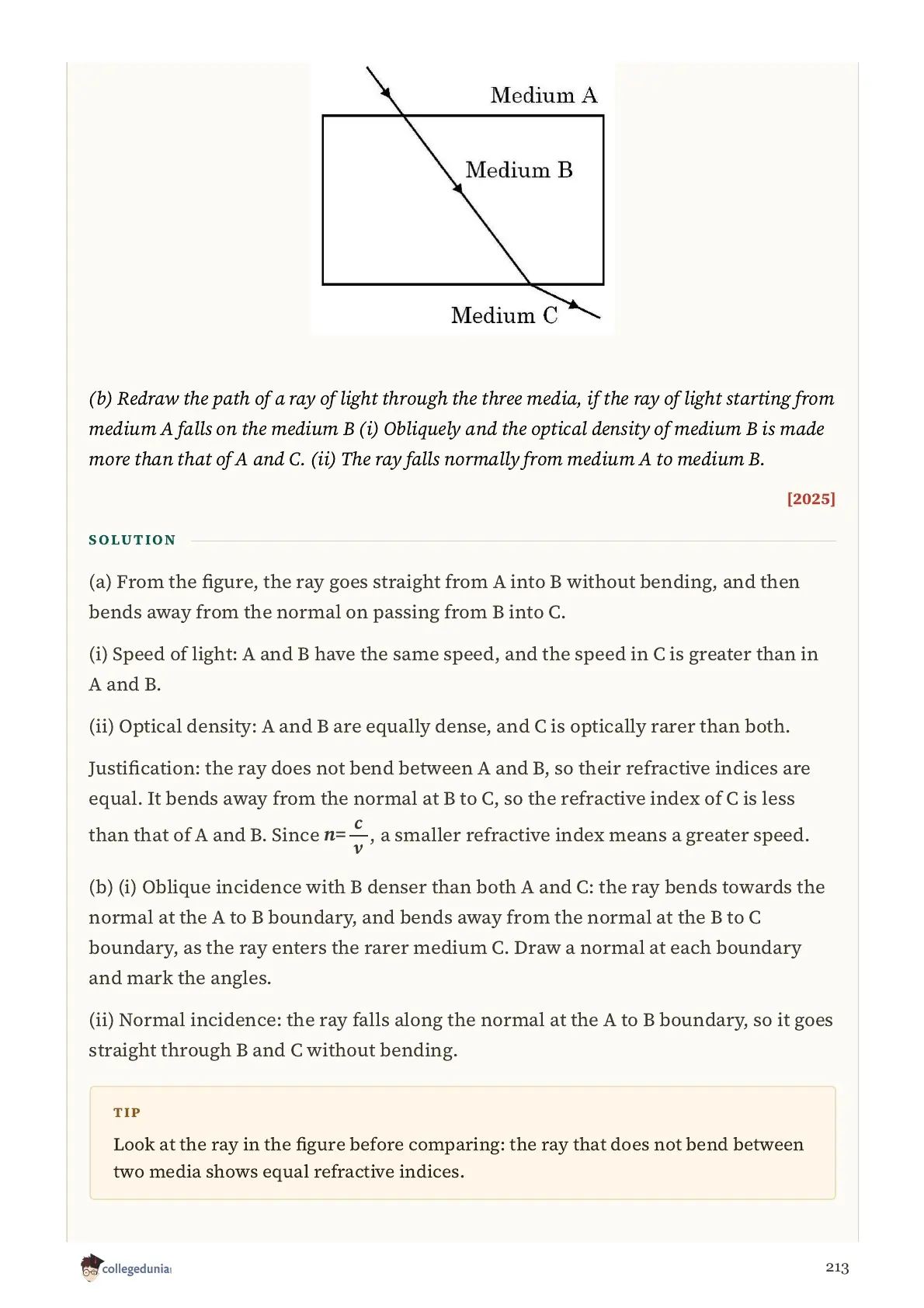
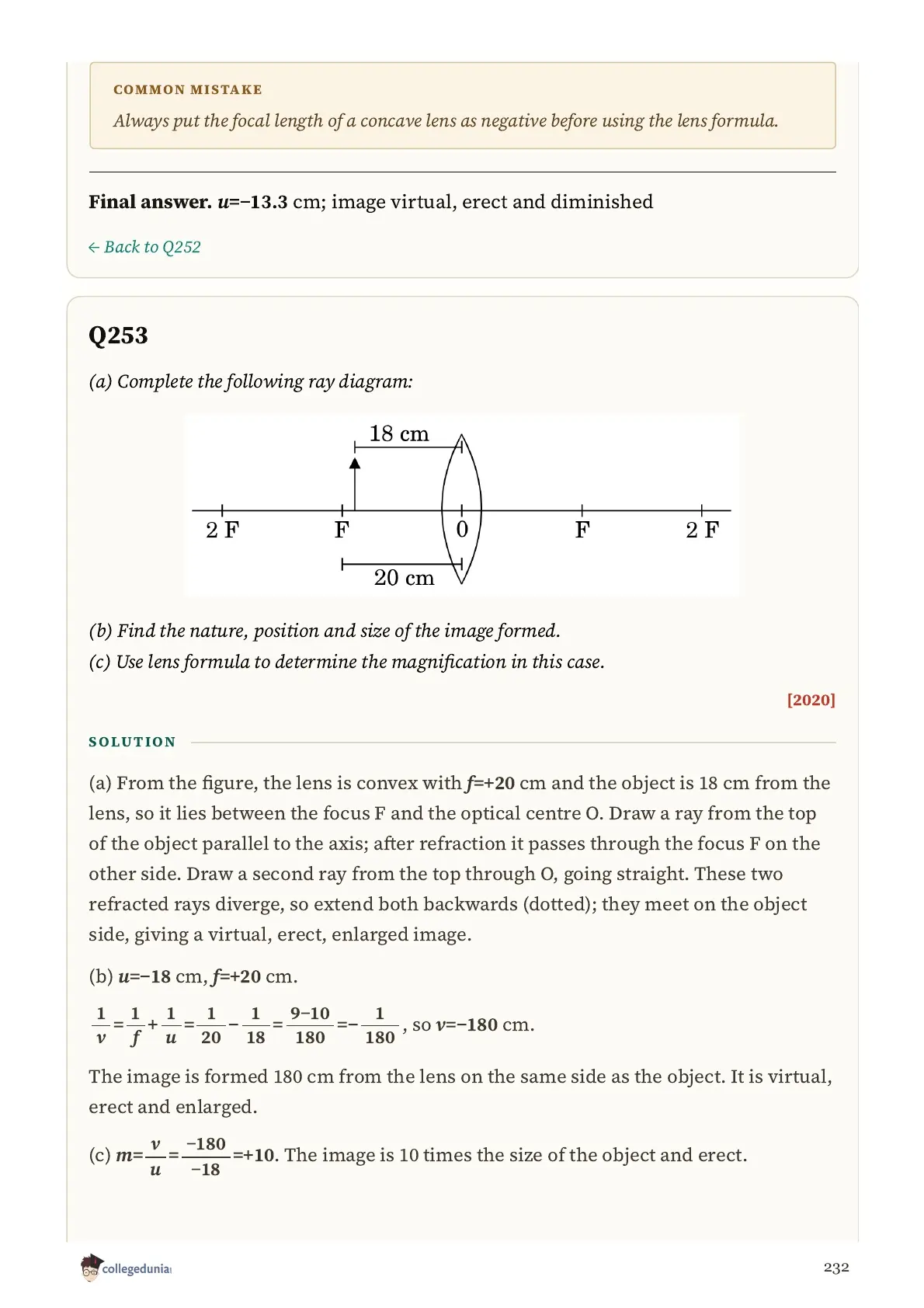
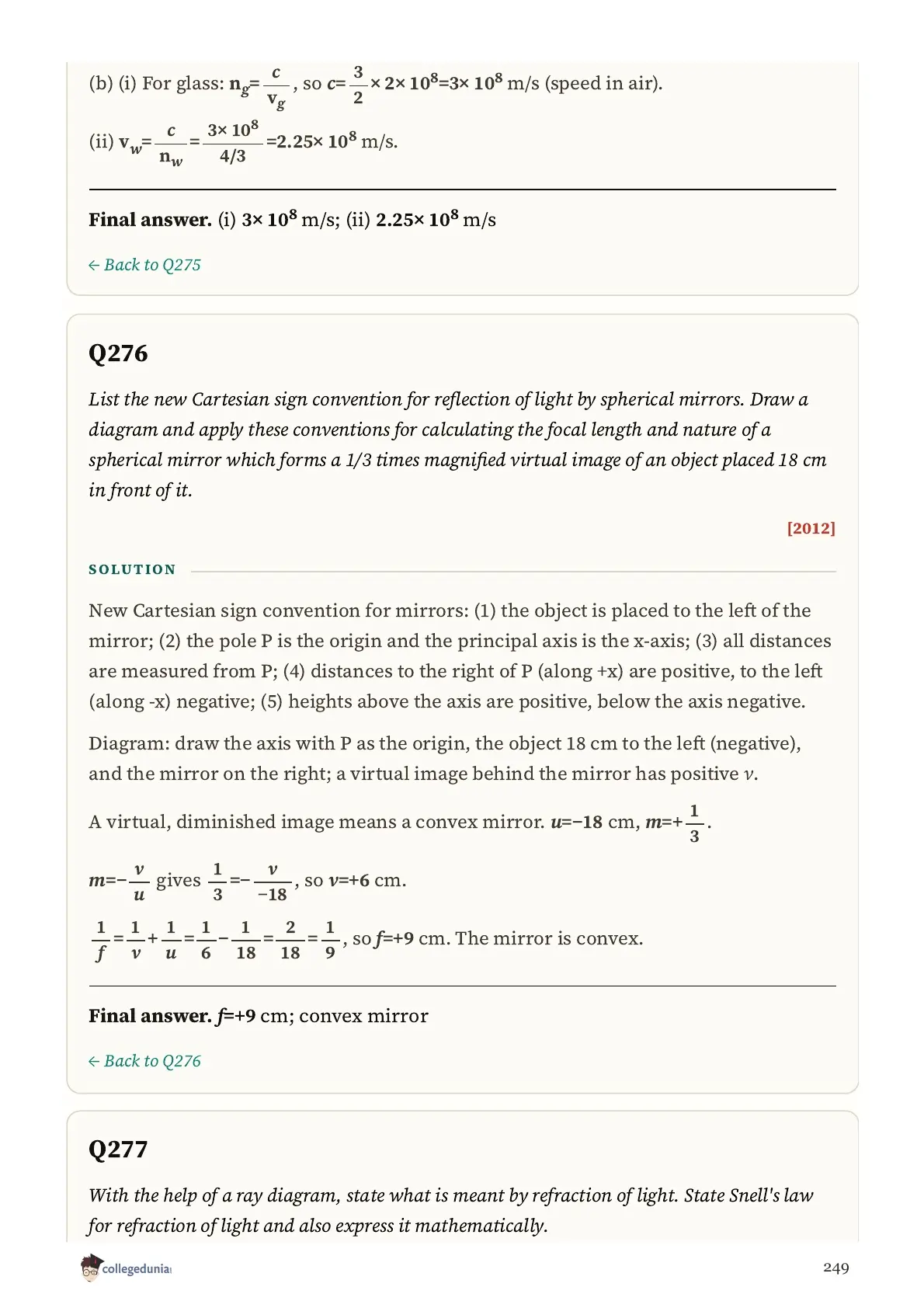
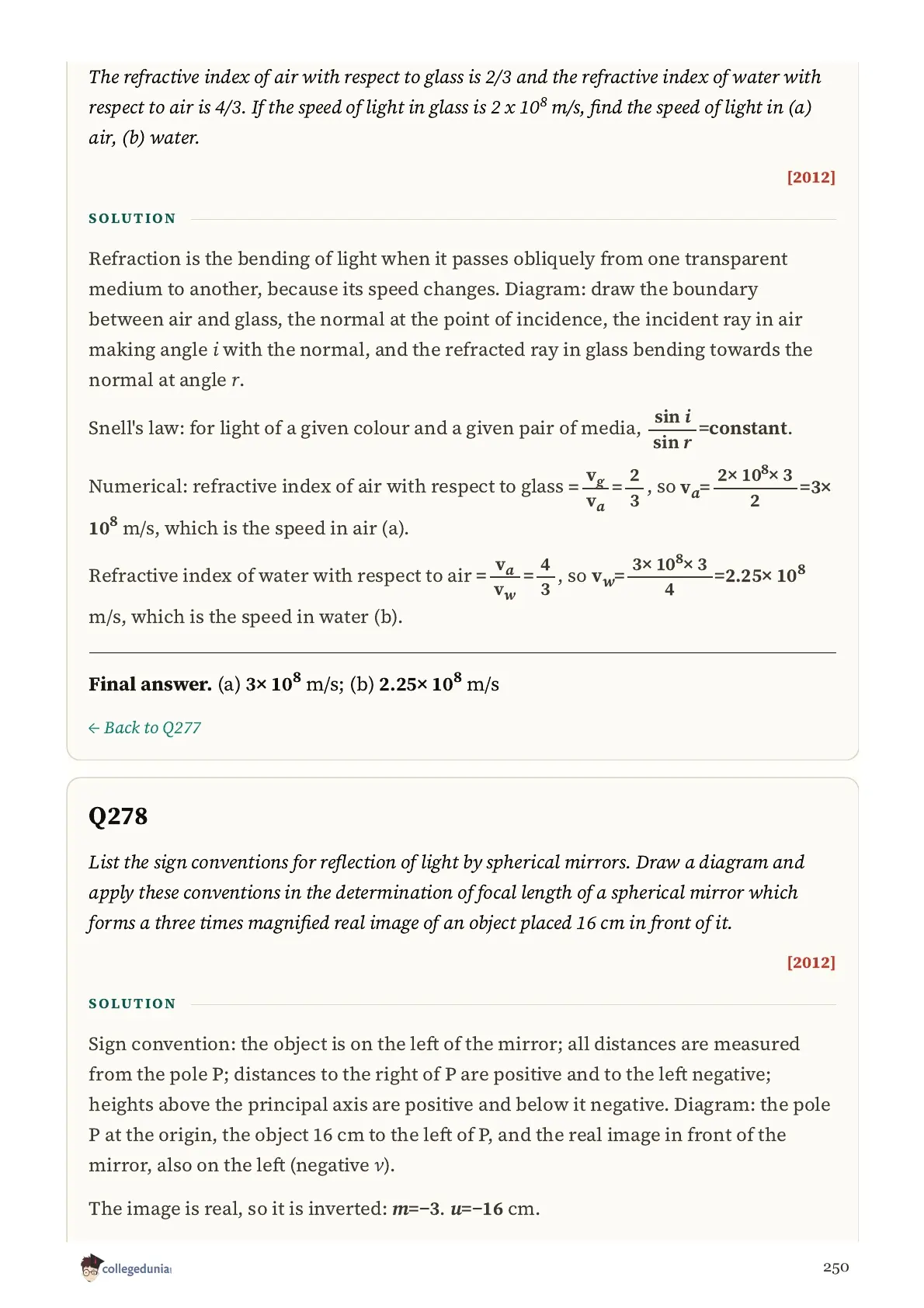
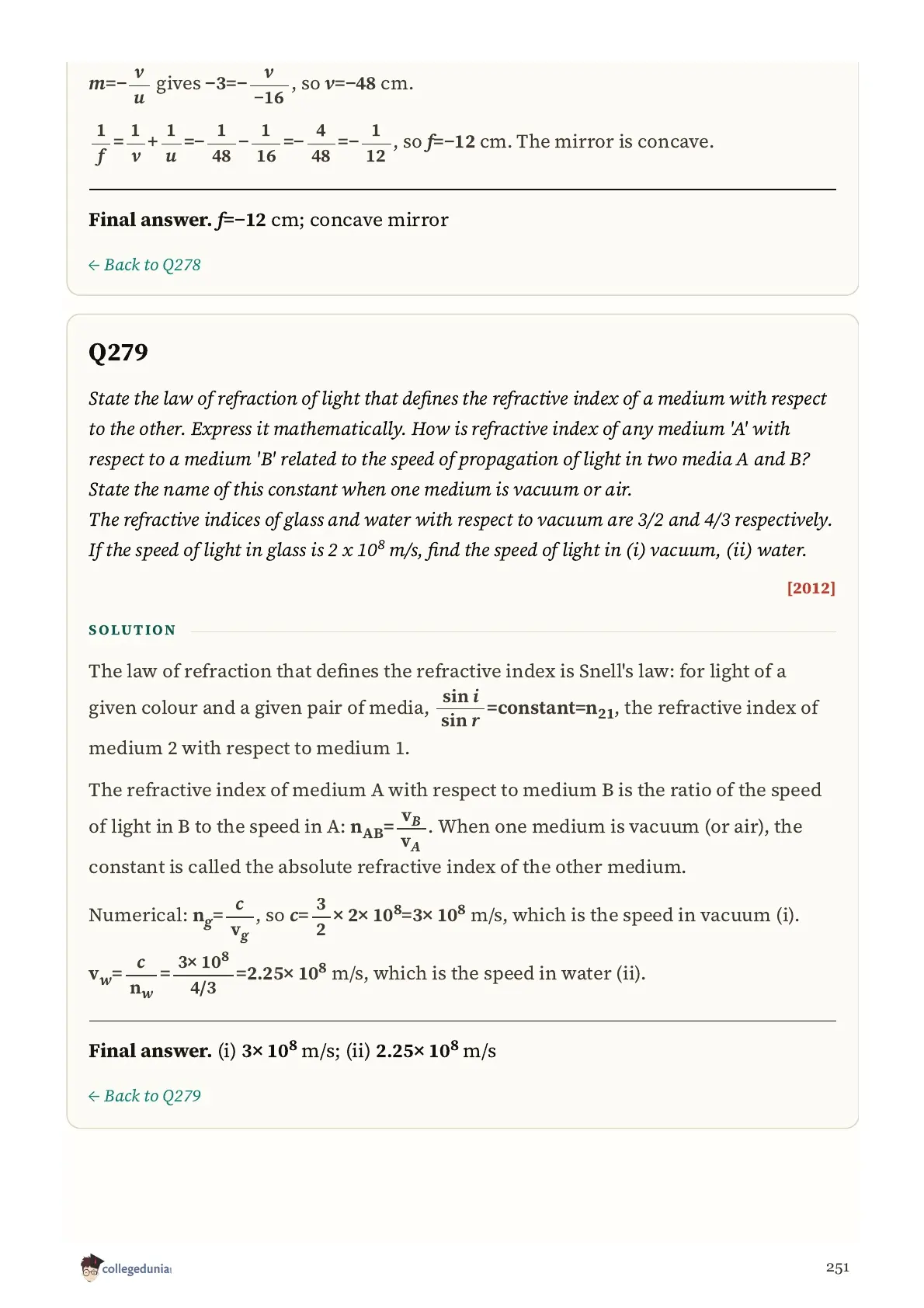
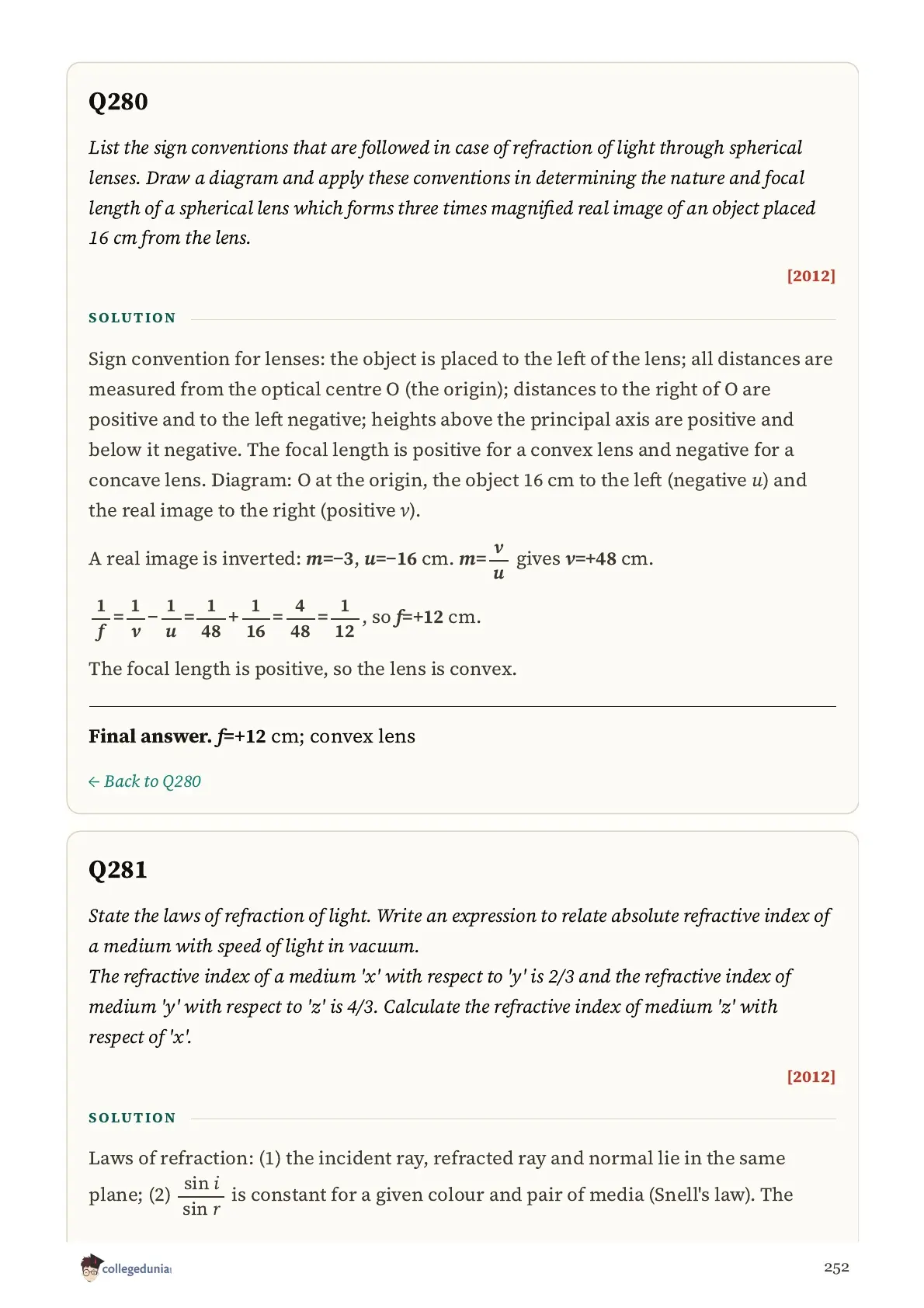
24 of the 286 questions, 1 of them at 1 mark, 8 at 2 marks, 4 at 3 marks, 6 at 4 marks and 5 at 5 marks, are printed with the diagram from the original board paper. The 4-mark case-based items, 20 in all, usually quote a passage on lenses or mirrors and then ask several short parts.
Counts come from keyword matches over the question text, so a question that names two things is counted under both.
Source: Math by punam mam
How to Approach the Set
Start with the 56 MCQs, then the 1-mark and 2-mark questions, which usually need a definition or a single formula. Next take the 71 three-mark questions and the 20 case-based items. Keep the 61 five-mark questions for last, since many ask for two or three ray diagrams along with a calculation. Learn the mirror formula 1/v + 1/u = 1/f, the lens formula 1/v - 1/u = 1/f, and the magnification m = -v/u for mirrors and v/u for lenses, until you can pick the right one from the data given. Practise the 2026 and 2025 papers closely, as they hold 59 of the 286 questions.
Common Mistakes in Light - Reflection and Refraction Questions
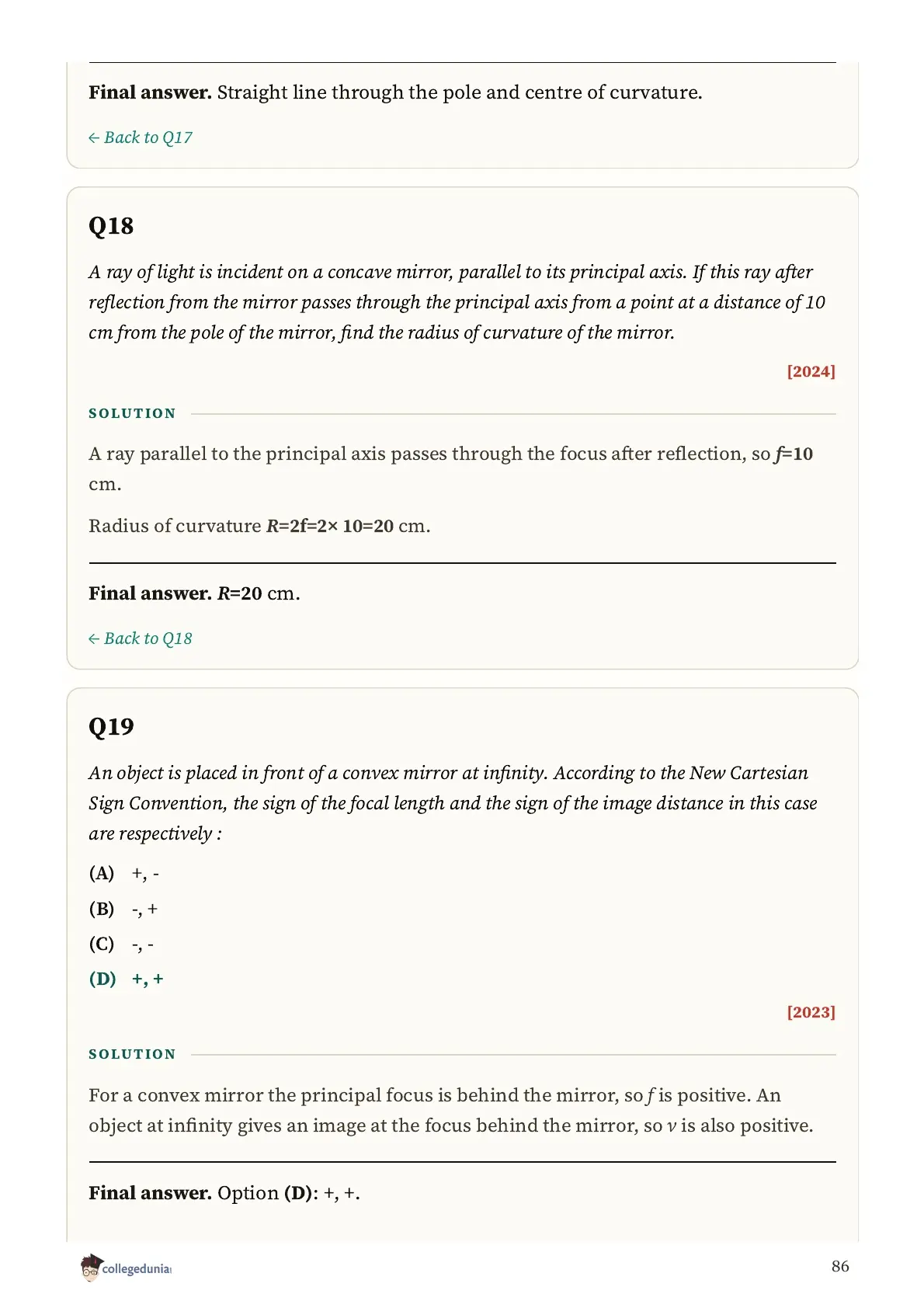
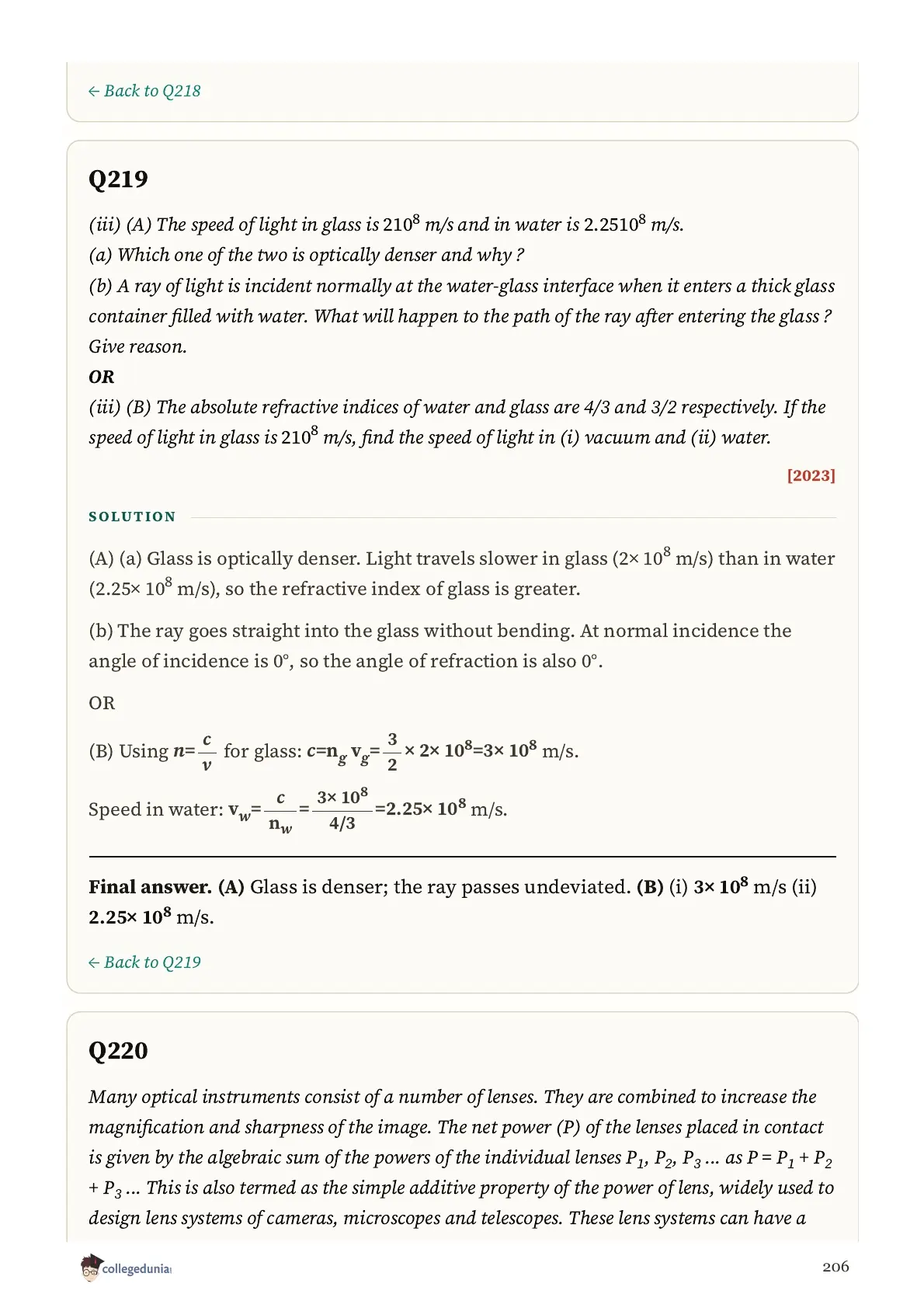
- Choosing -15 cm and +15 cm for a real image the same size as the object. The object and image sit at 2f, which is -30 cm and +30 cm for a lens of focal length 15 cm.
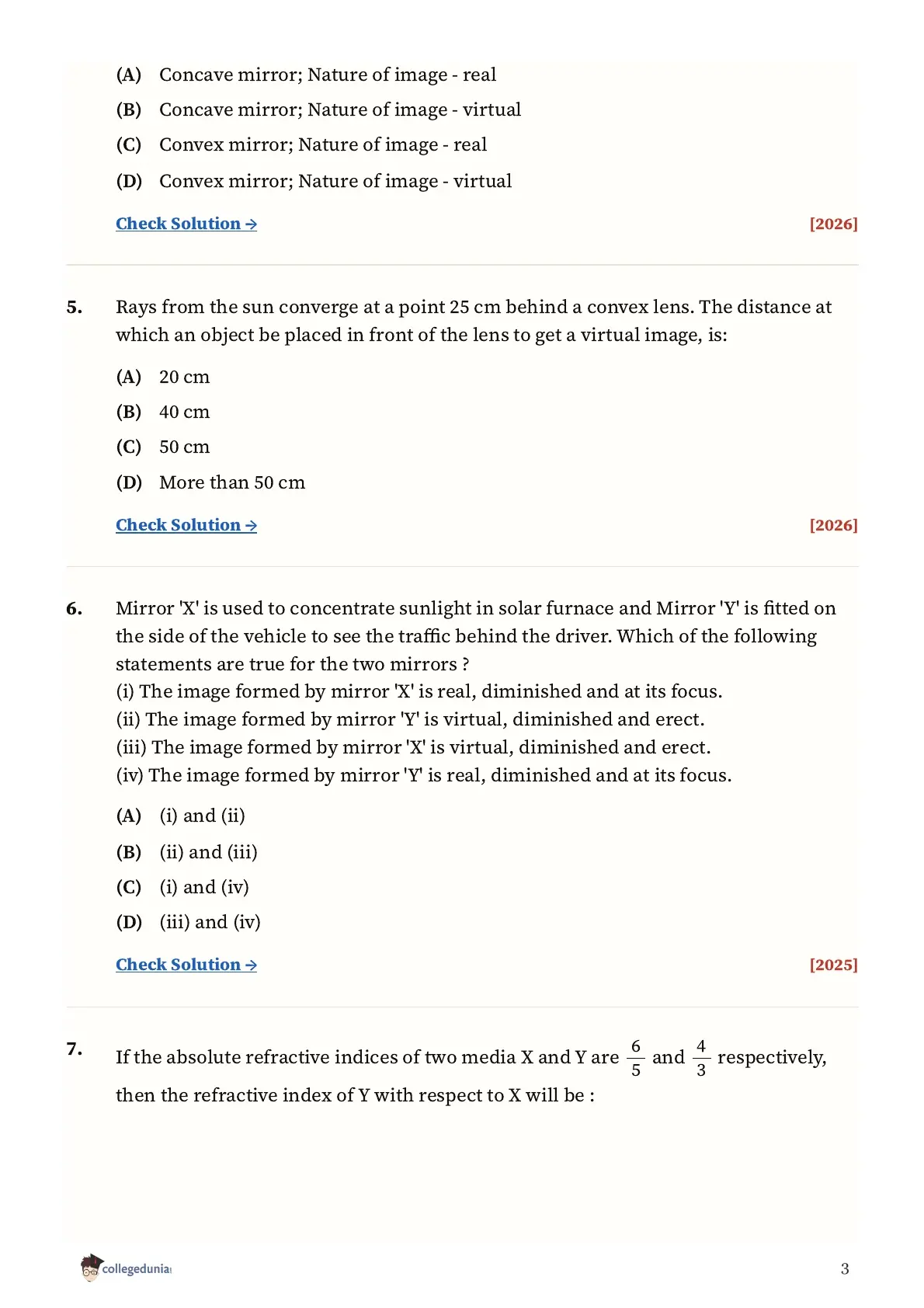
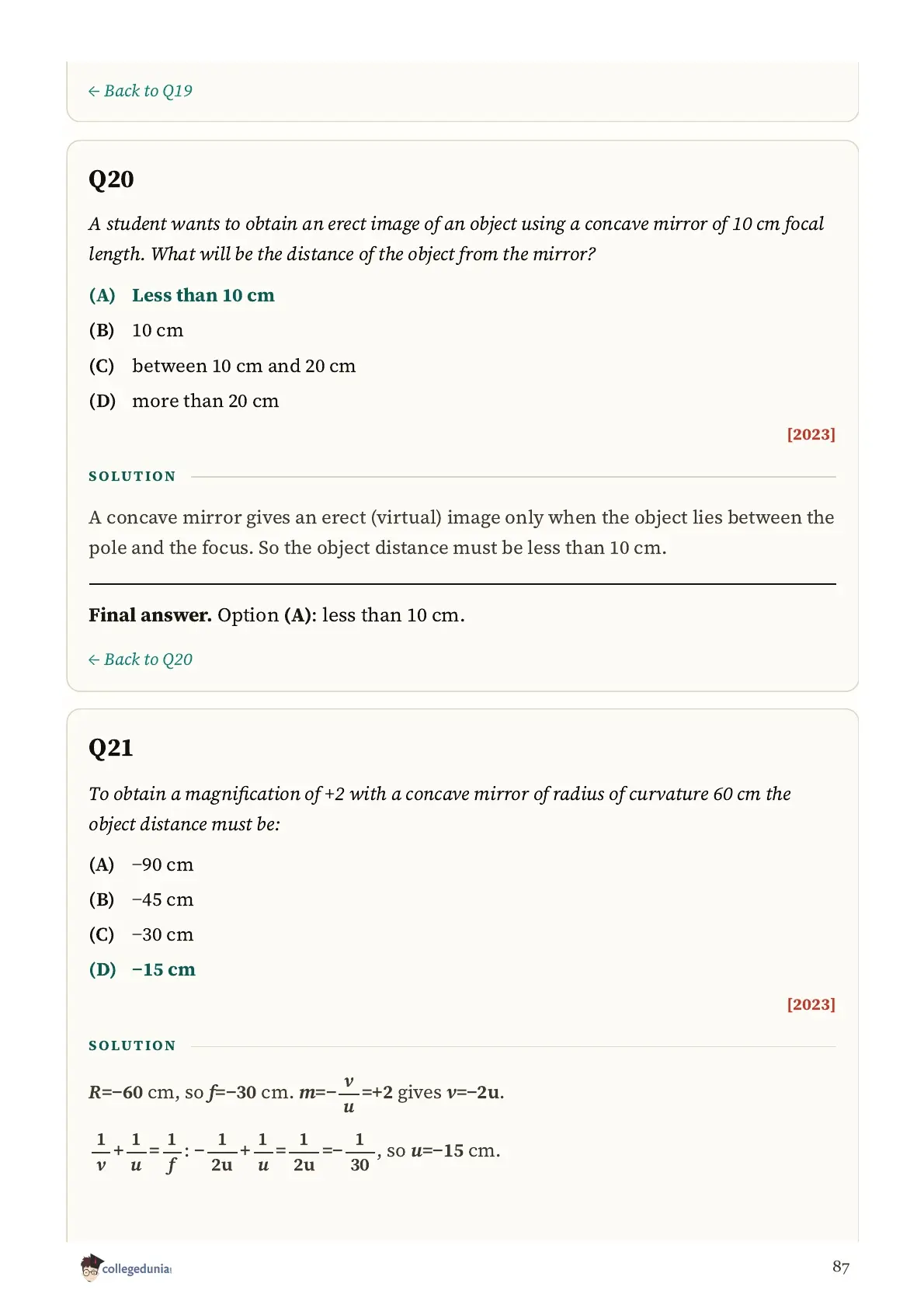
- Reading a magnification of +3 as a real image. A positive sign means an erect, virtual image, and for a mirror it means the mirror is concave and the object lies between the pole and the focus.
- Taking the 10 cm point where a parallel ray crosses the axis as the radius of curvature. That point is the focus, so f = 10 cm and R = 20 cm.
- Leaving out the arrows on the rays in a ray diagram, or drawing the refracted ray straight through. Marks are given for each correct ray and its arrow.
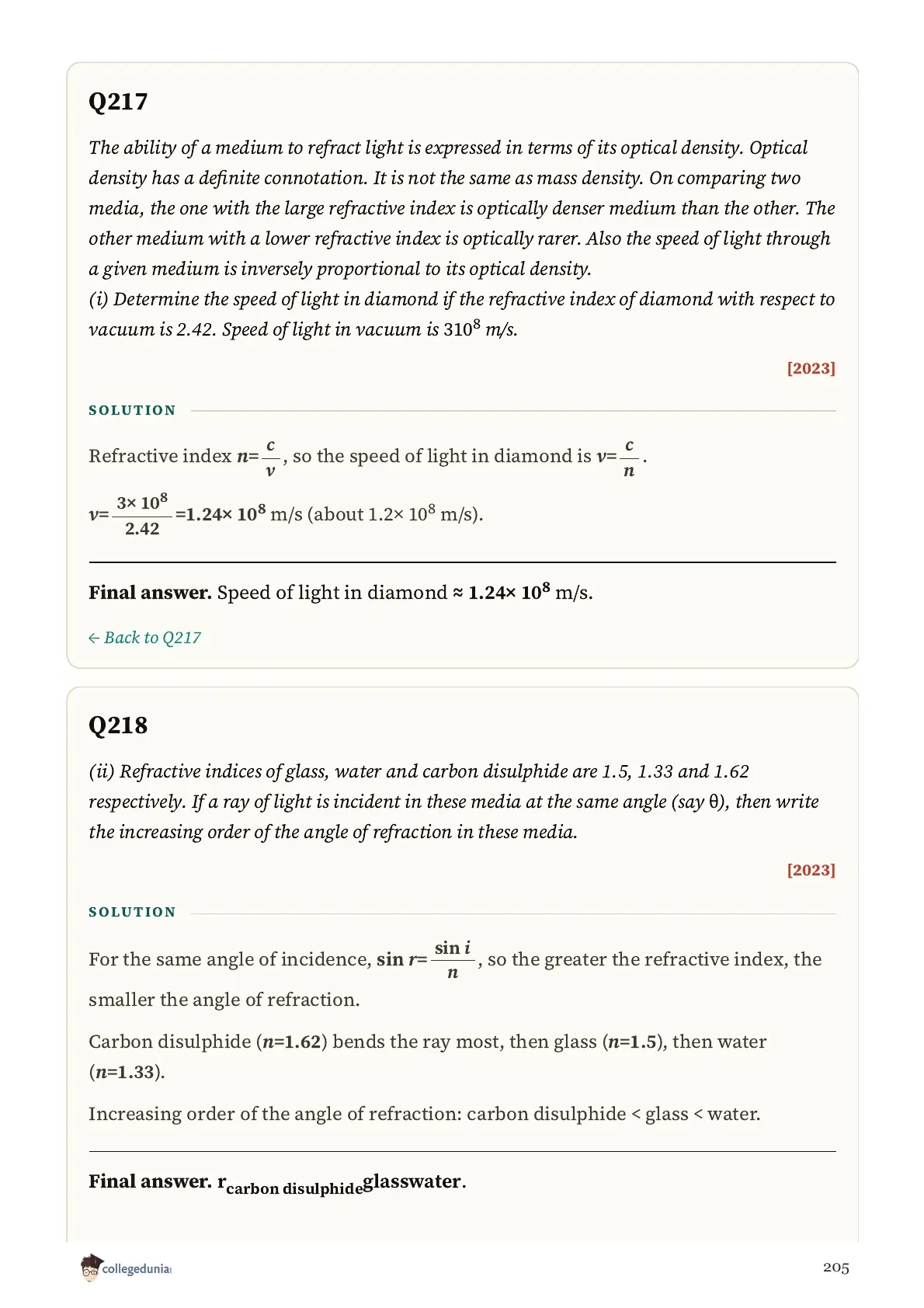
- Writing that the refractive index of diamond is 2.42 because it is "heavier". The statement means light travels 2.42 times slower in diamond than in vacuum.
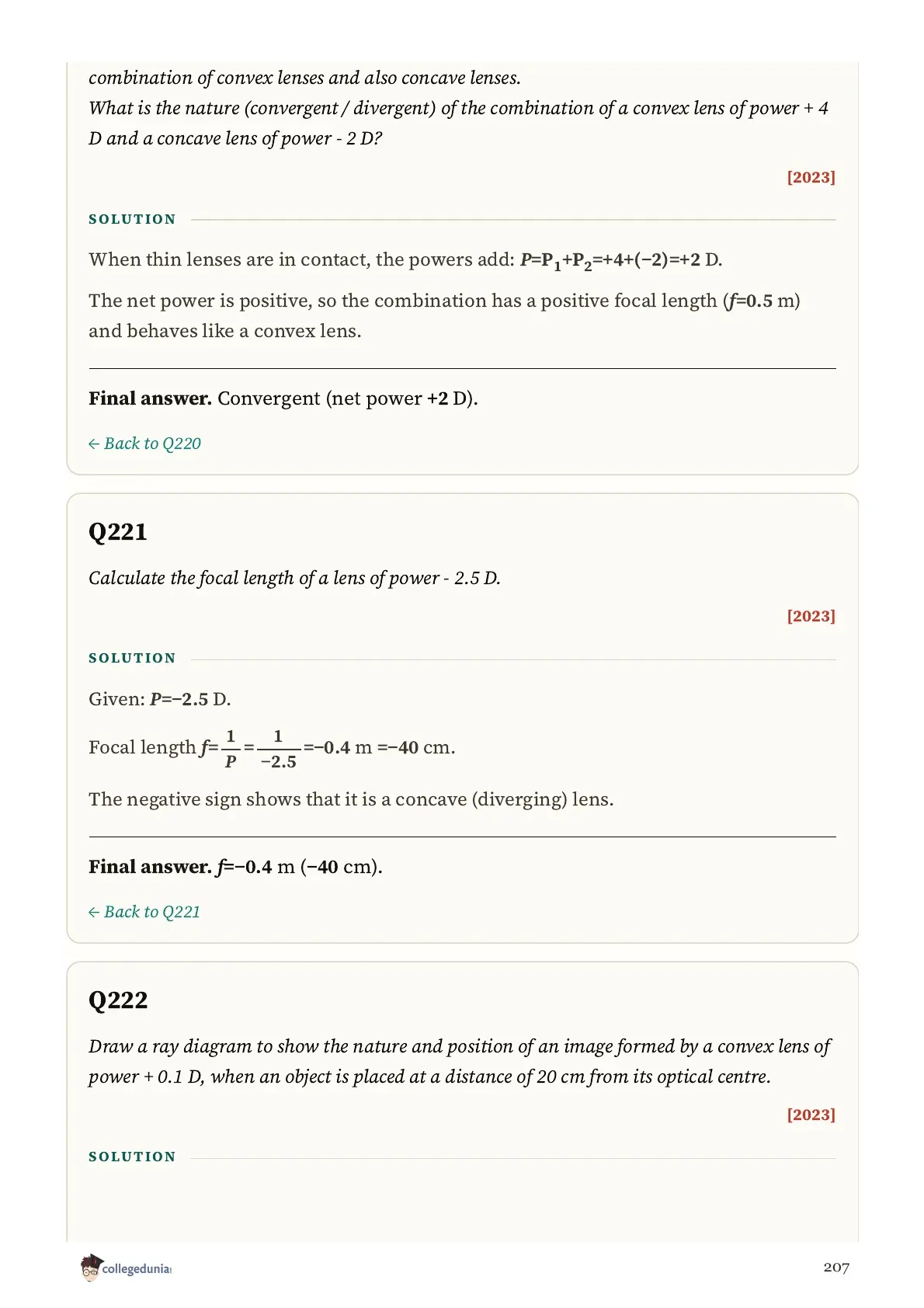
- Giving a concave lens a positive power. Its focal length is negative, so its power in dioptres is negative as well.
Using the Answer Key and Solutions
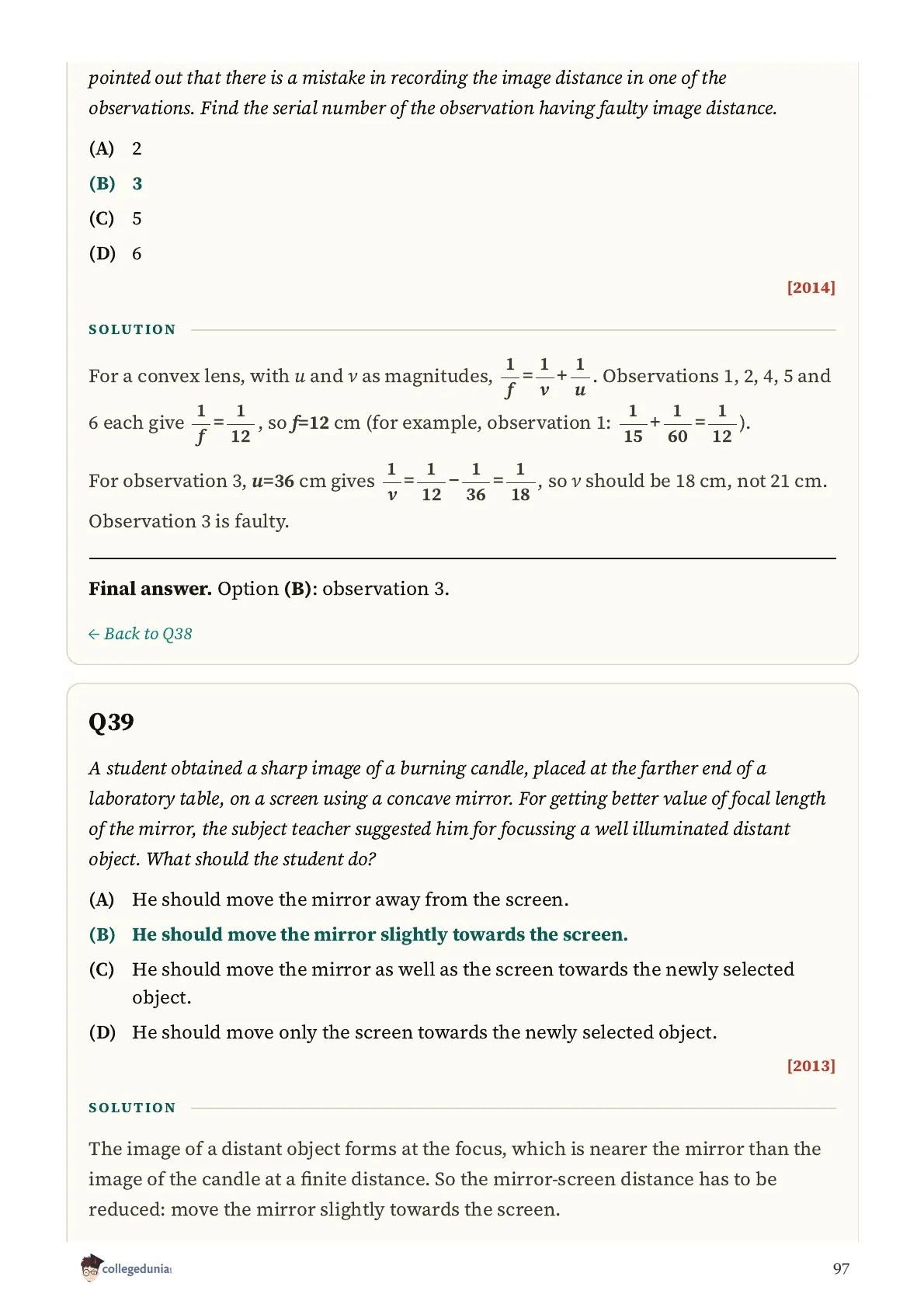
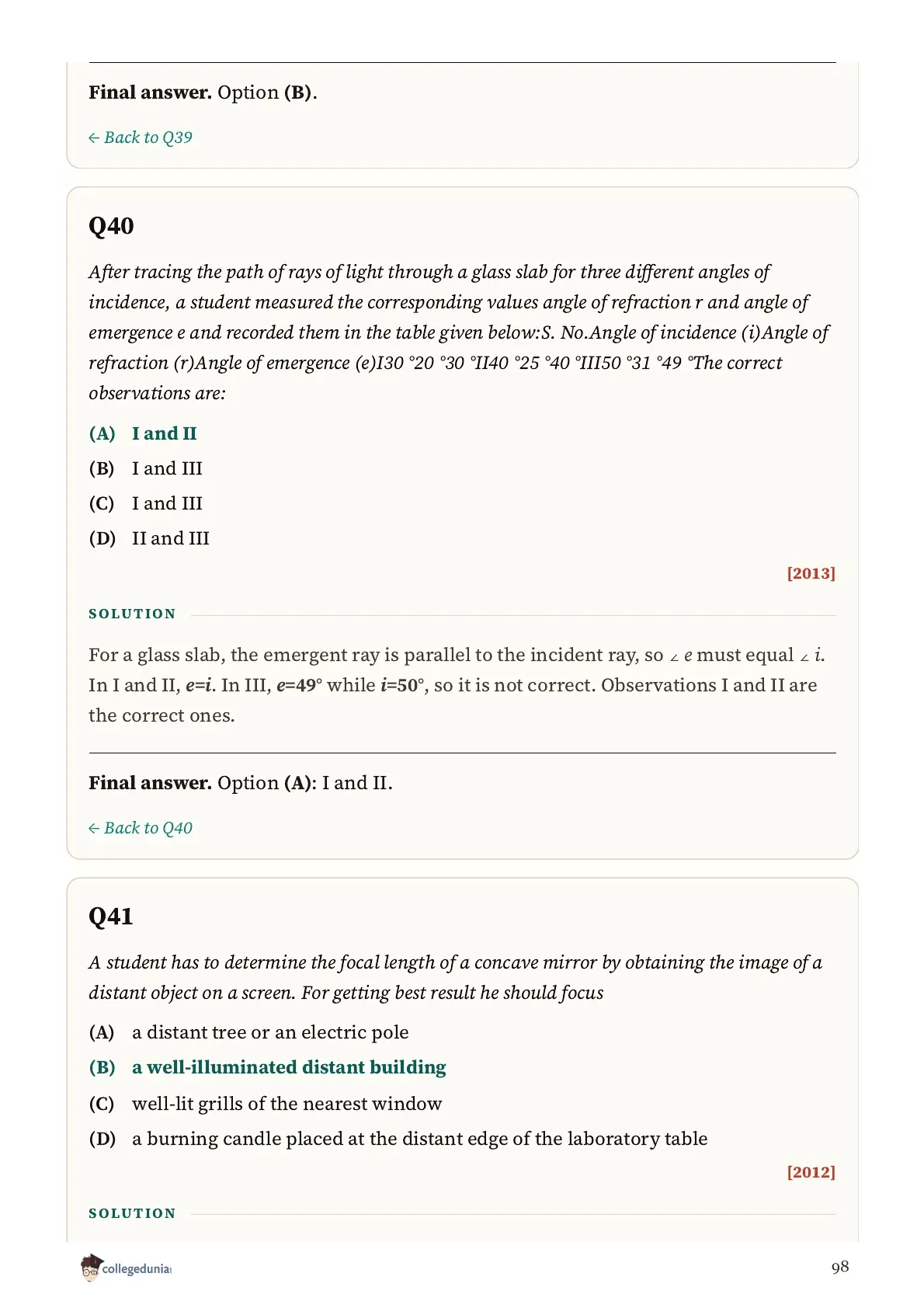
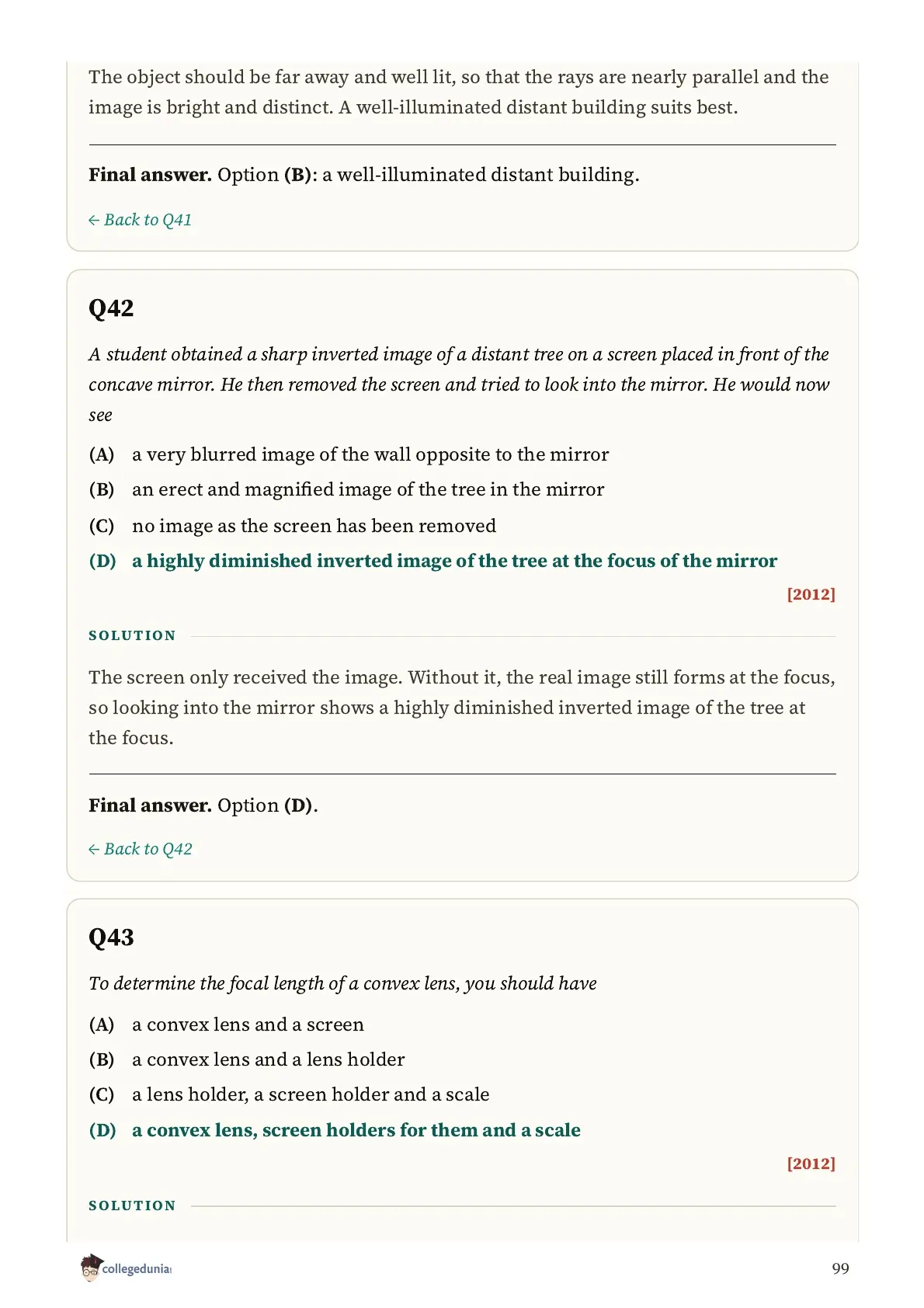
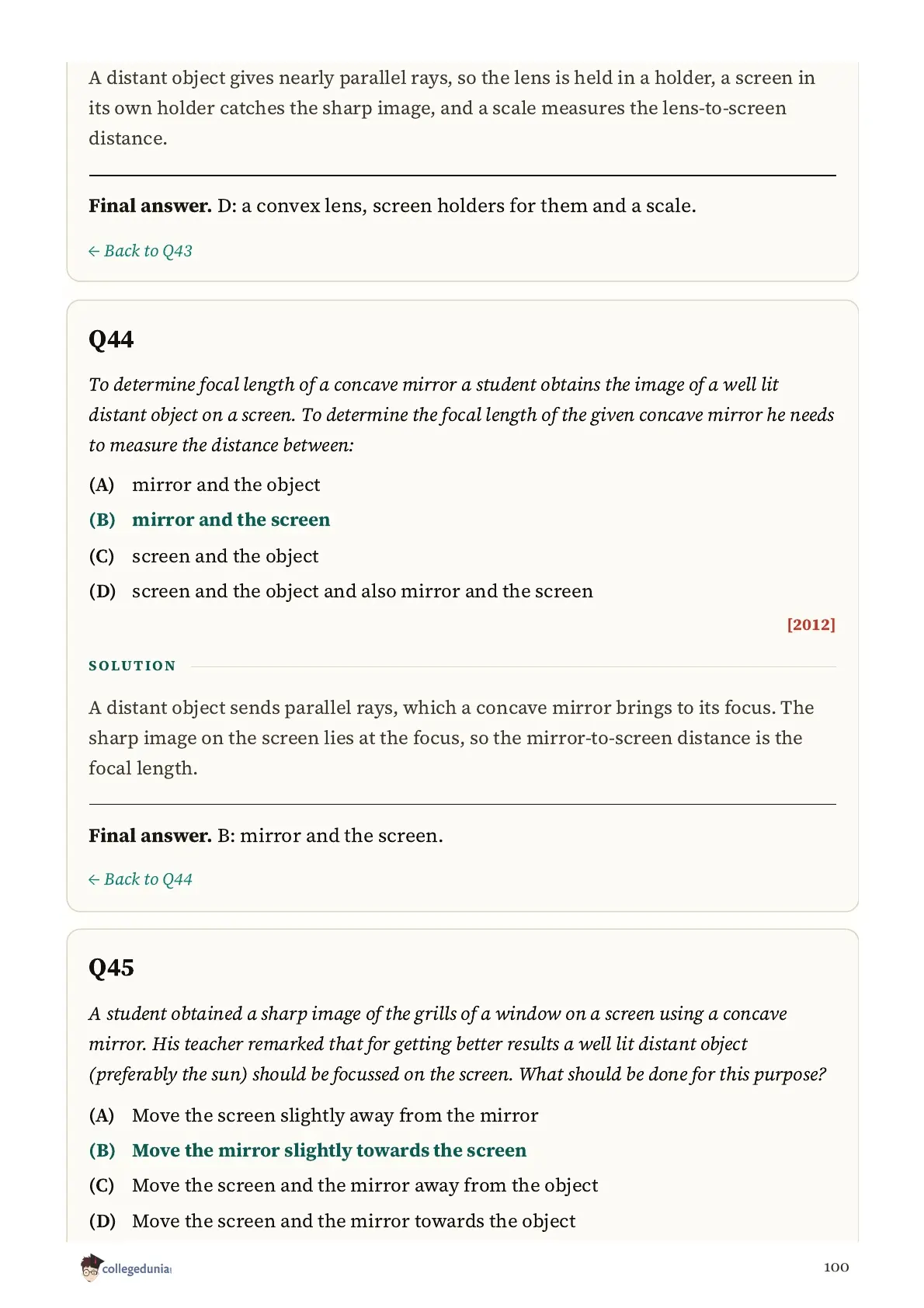
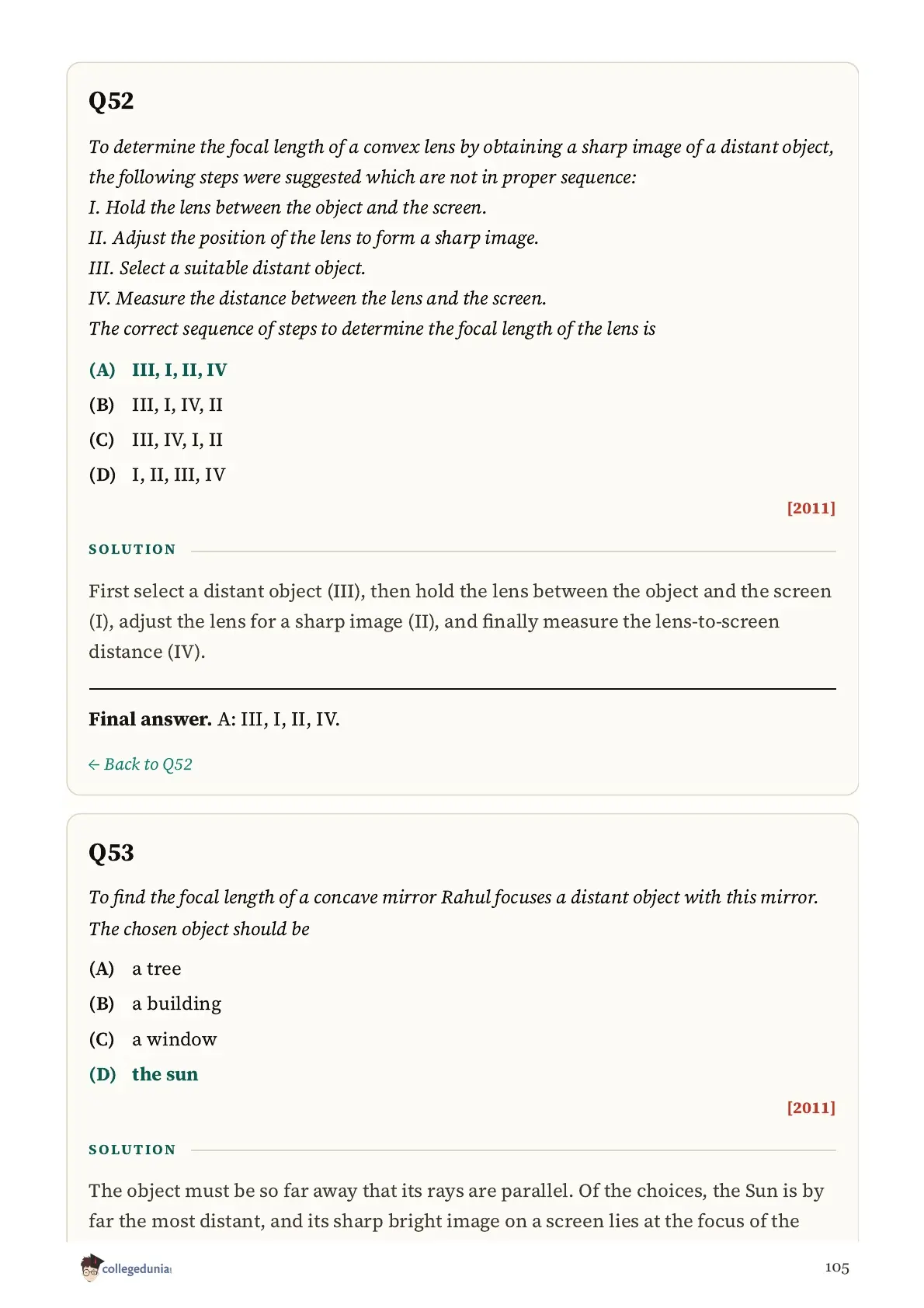
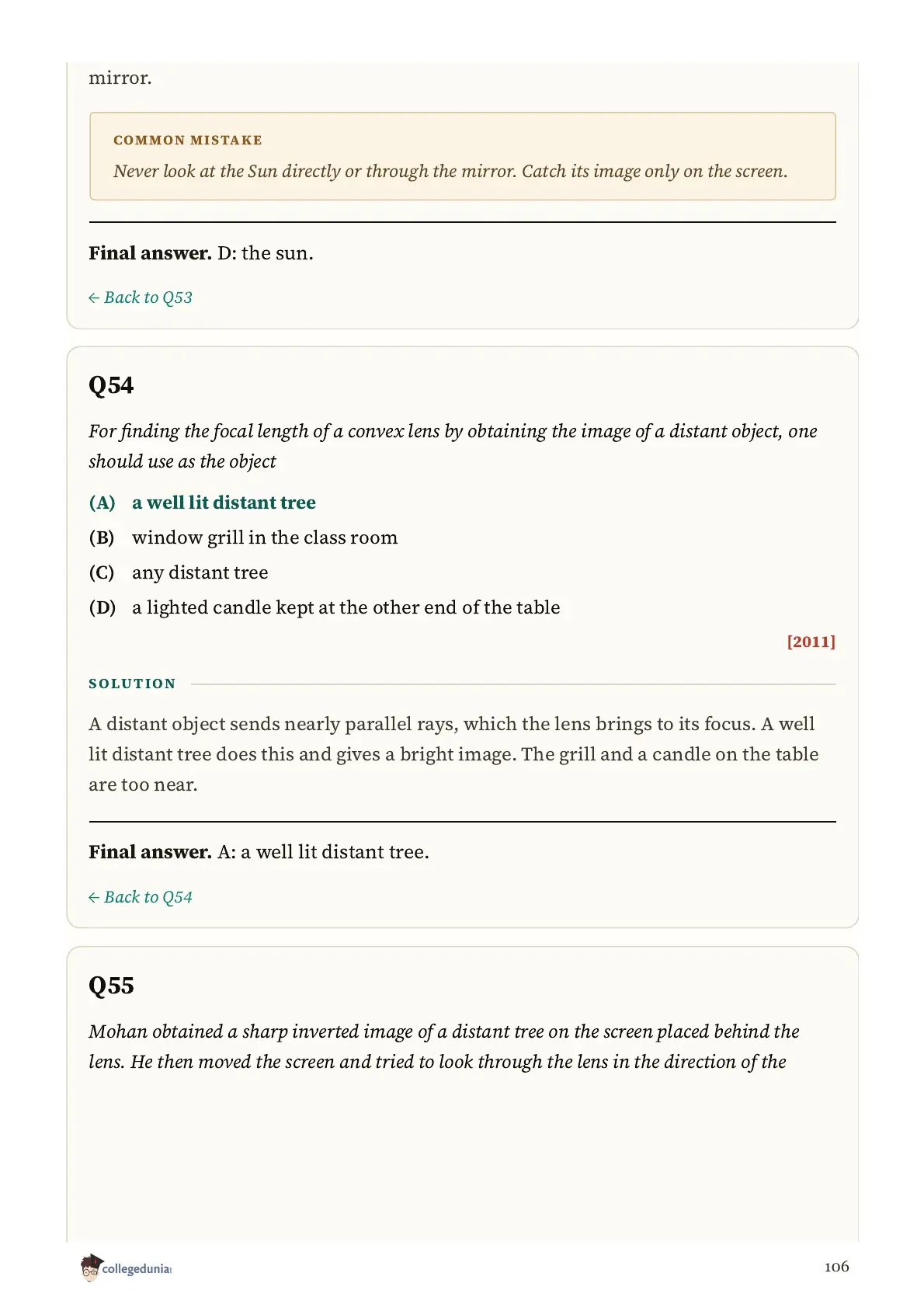
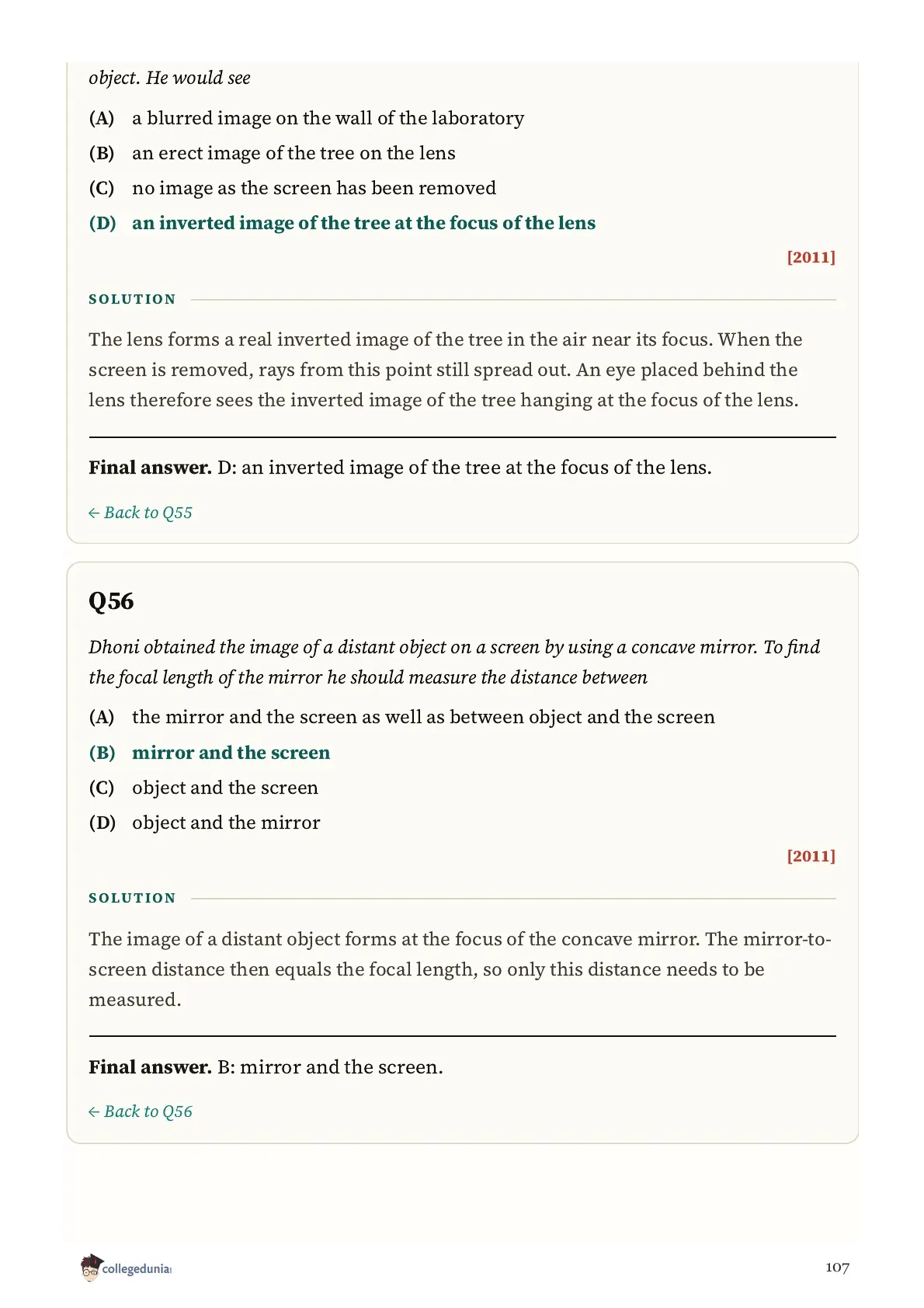
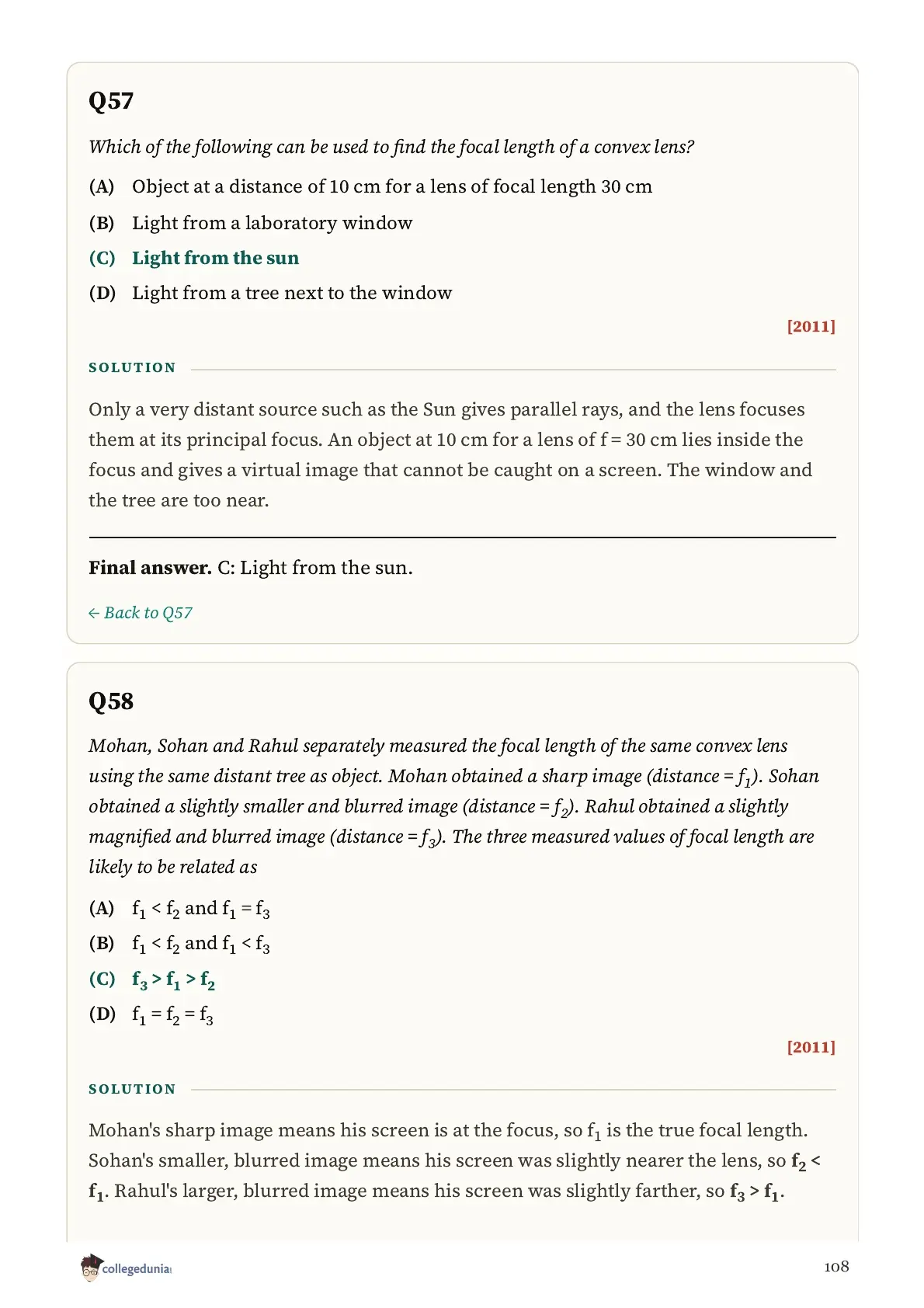
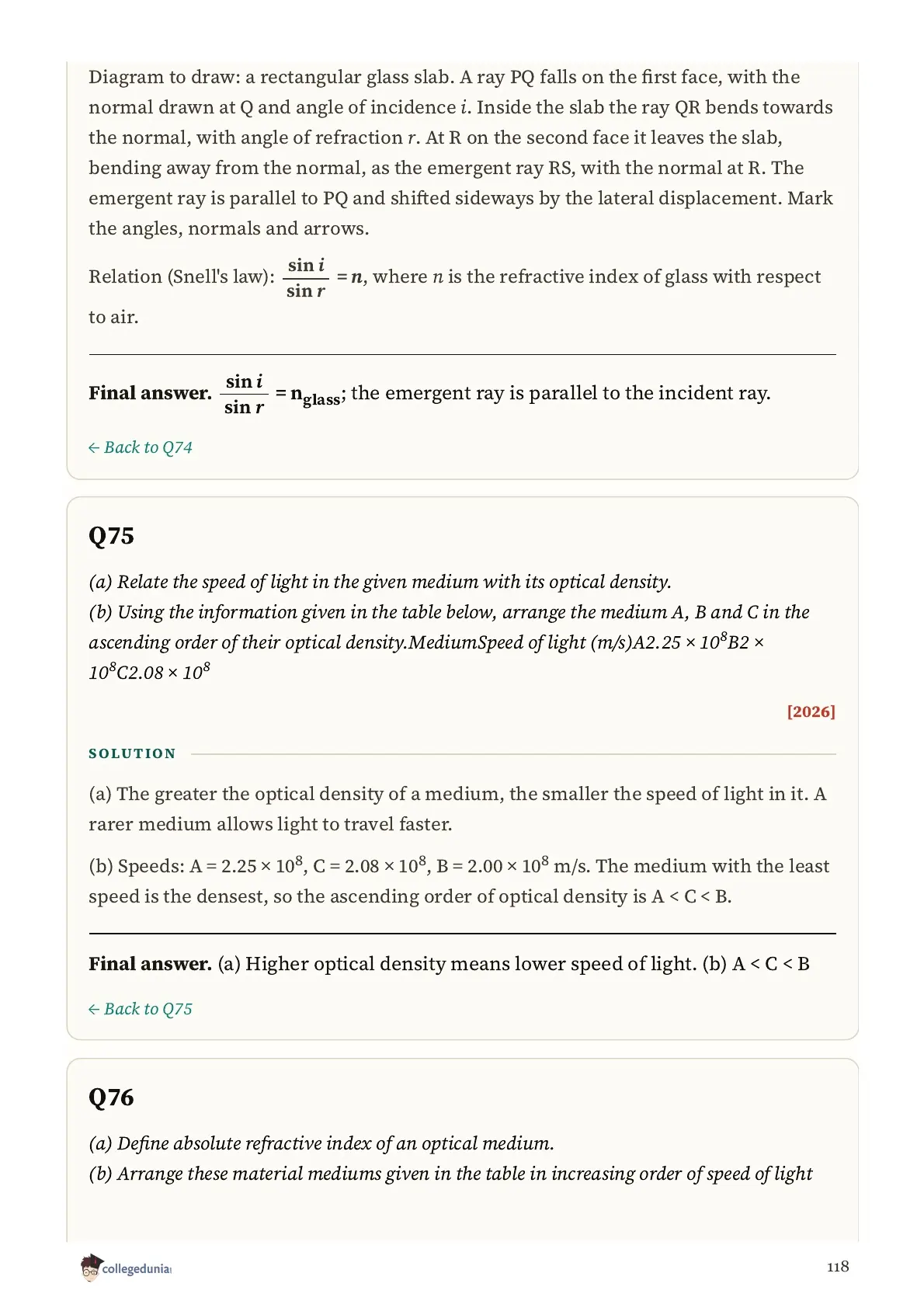
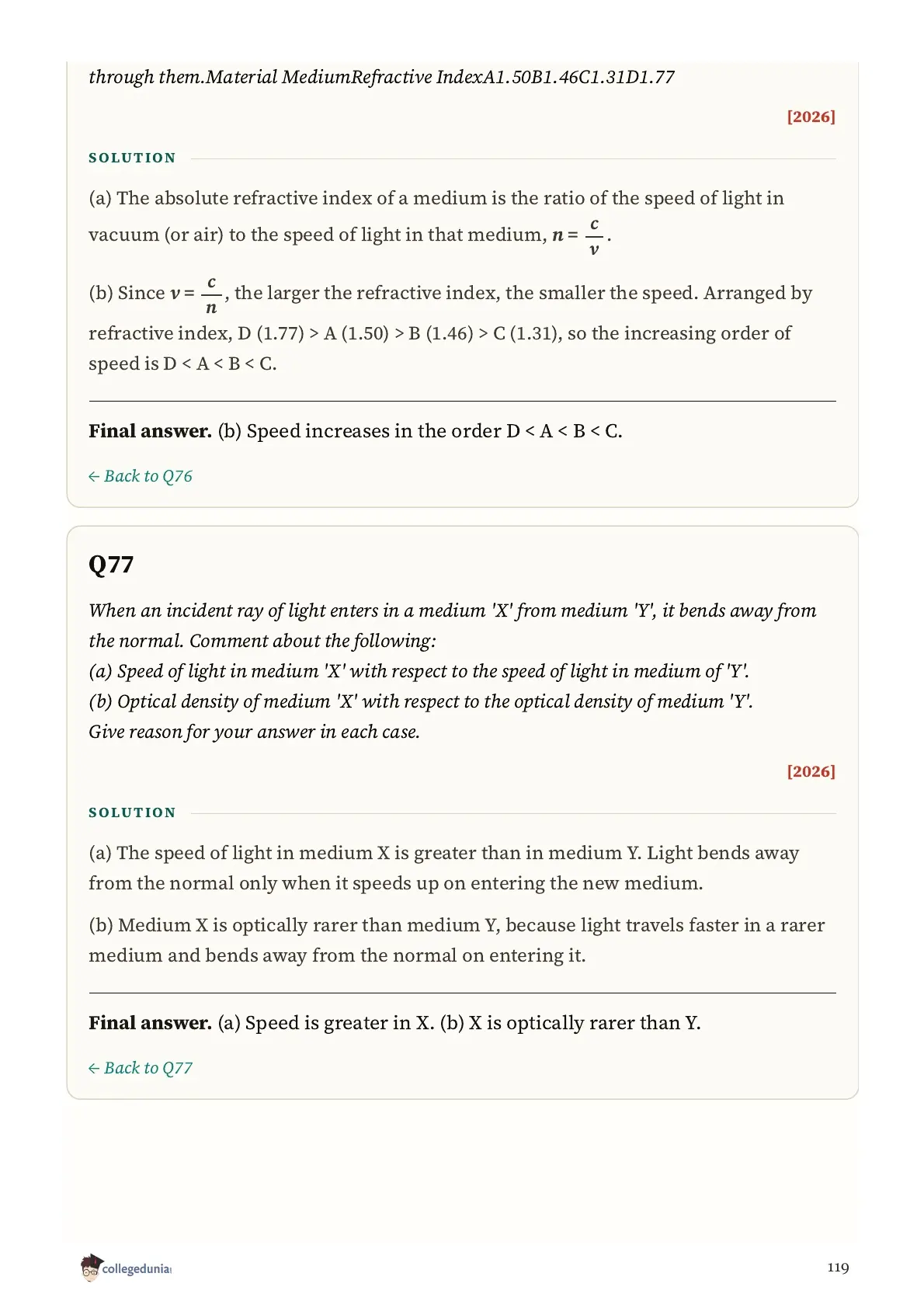
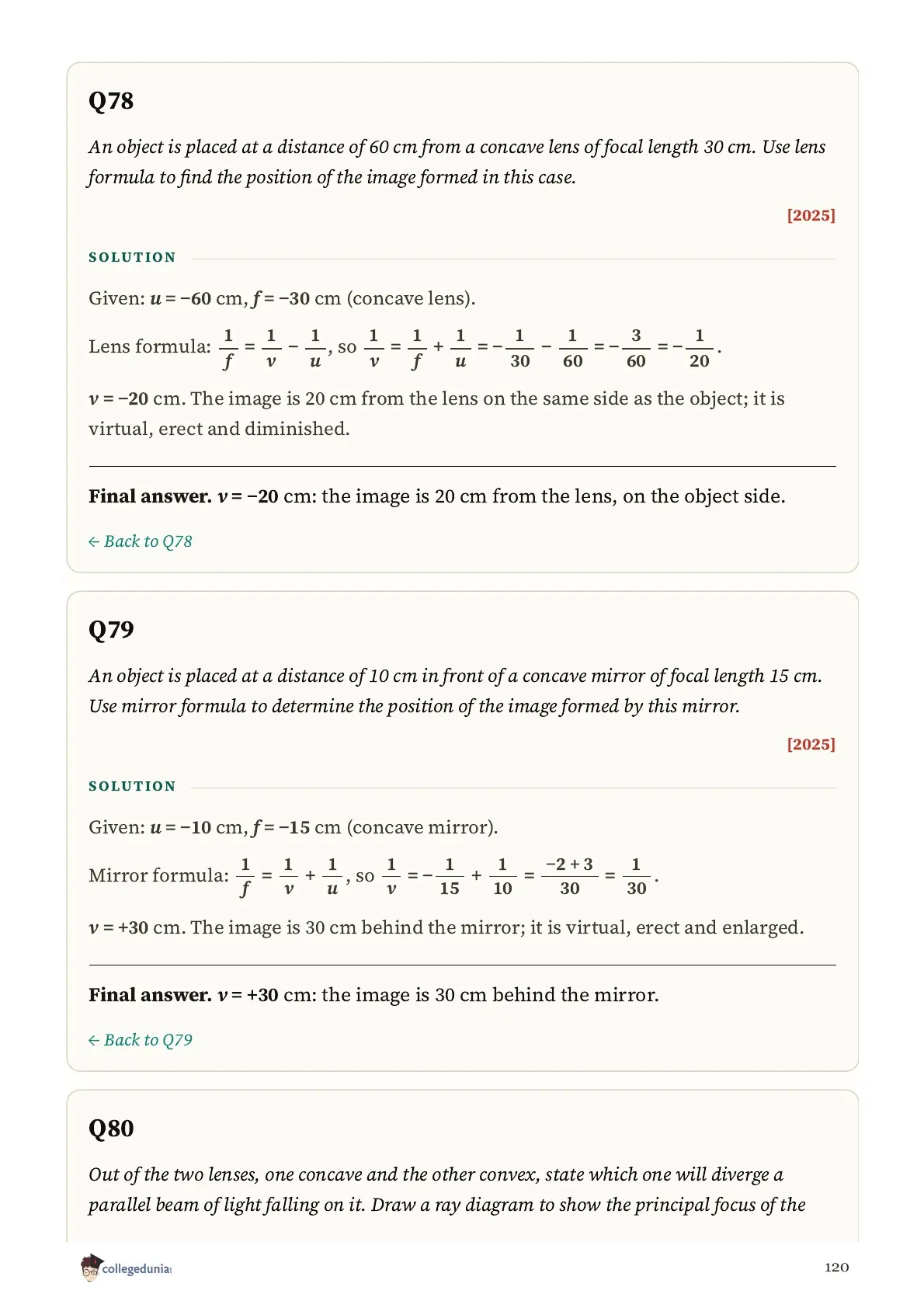
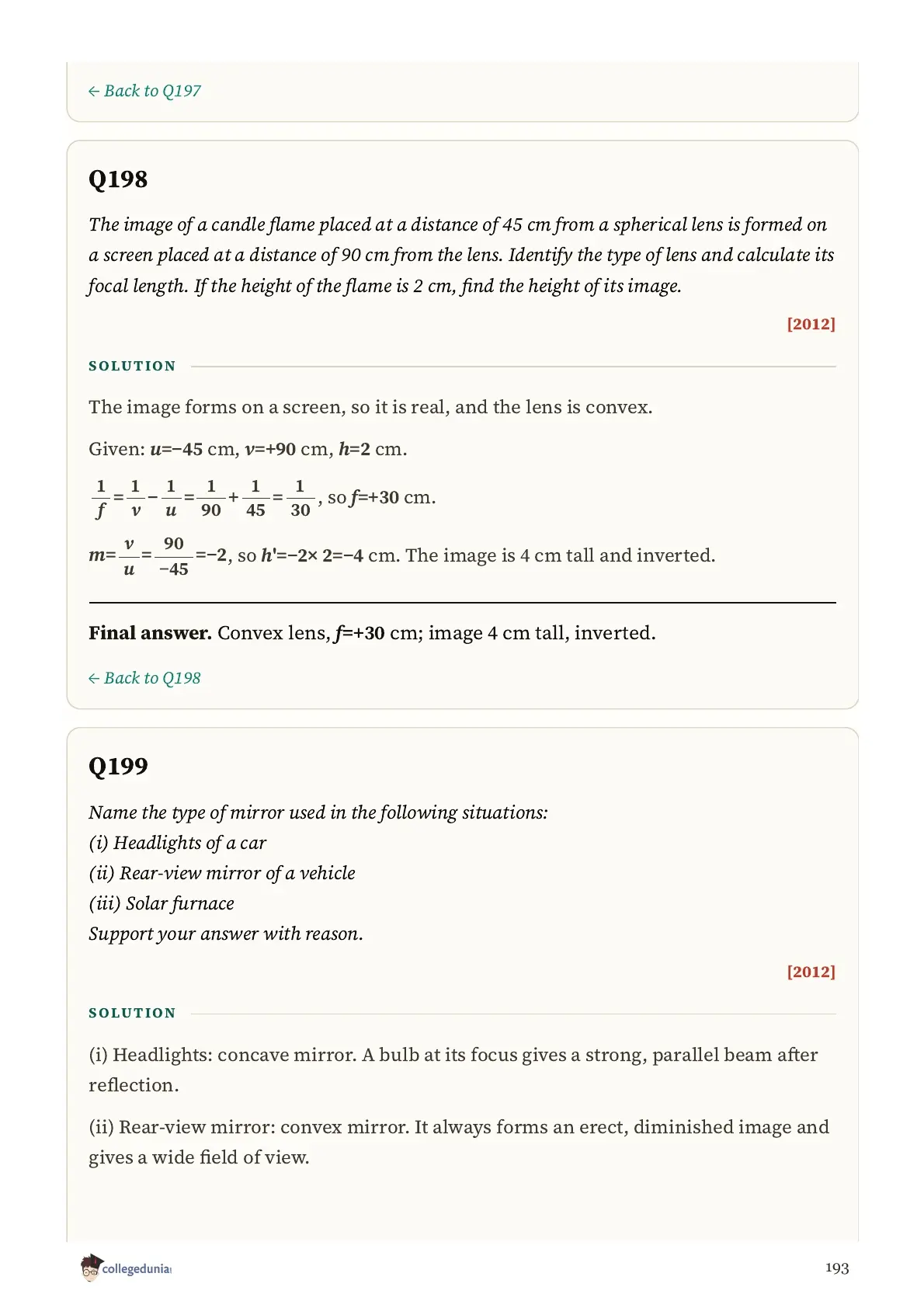
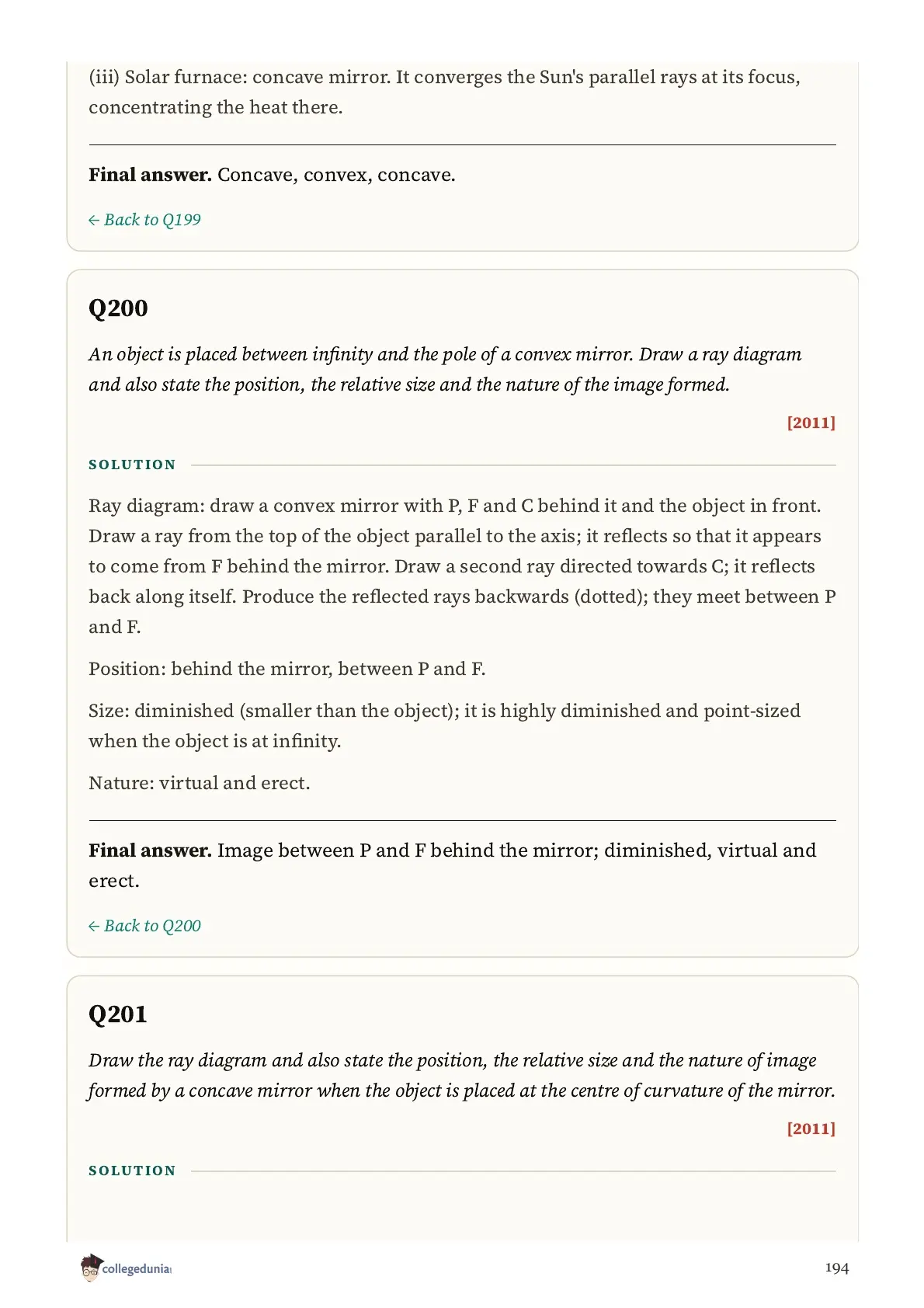
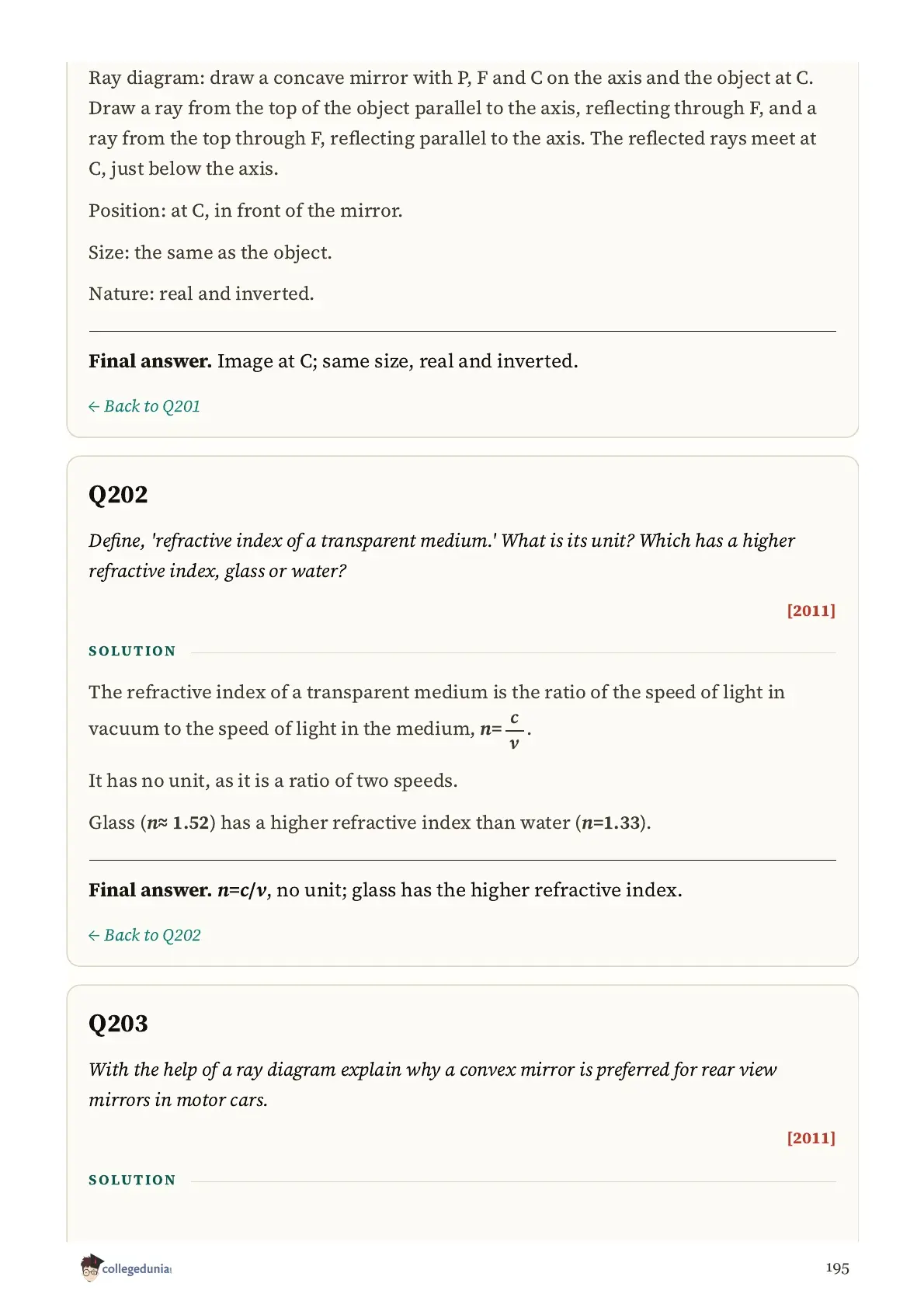
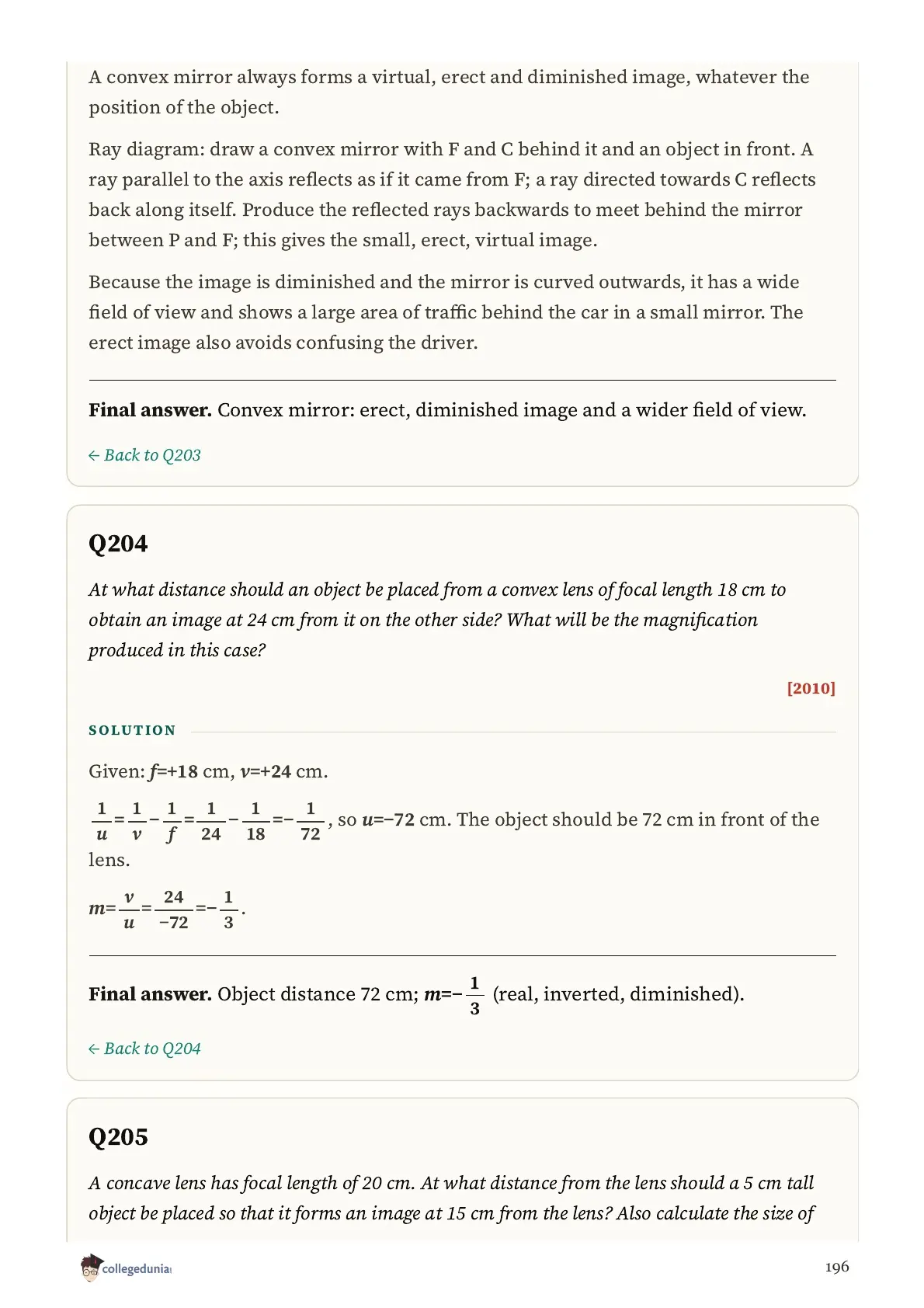
The PDF is 256 pages and free to download. Each section is sorted newest year first, the Answer Key lists the 56 MCQs at a glance, and each question links to its worked solution and back. Attempt a ray diagram or numerical yourself first, check the key, then read the solution. The solutions are written by Collegedunia's Science experts and are not official CBSE marking schemes.
Class 10 Science PYQs by Chapter
| Unit | PYQ Page |
|---|---|
| Chemical Substances | Chemical Reactions and Equations Class 10 Science PYQ |
| Chemical Substances | Acids, Bases and Salts Class 10 Science PYQ |
| Chemical Substances | Metals and Non-metals Class 10 Science PYQ |
| Chemical Substances | Carbon and its Compounds Class 10 Science PYQ |
| World of Living | Life Processes Class 10 Science PYQ |
| World of Living | Control and Coordination Class 10 Science PYQ |
| World of Living | How do Organisms Reproduce? Class 10 Science PYQ |
| World of Living | Heredity Class 10 Science PYQ |
| Natural Phenomena | Light - Reflection and Refraction Class 10 Science PYQ |
| Natural Phenomena | The Human Eye and the Colourful World Class 10 Science PYQ |
| Effects of Current | Electricity Class 10 Science PYQ |
| Effects of Current | Magnetic Effects of Electric Current Class 10 Science PYQ |
| Natural Resources | Our Environment Class 10 Science PYQ |
Light - Reflection and Refraction Class 10 Science PYQ FAQs
Ques. How many questions are in the Light - Reflection and Refraction Class 10 Science PYQ PDF?
Ans. The PDF has 286 questions from the 2005 to 2026 board papers: 64 at 1 mark, 70 at 2 marks, 71 at 3 marks, 20 case-based items at 4 marks and 61 long answers at 5 marks.
Ques. Does this PYQ PDF include solutions, or only the questions?
Ans. All 286 questions have a worked solution in the PDF. The 56 MCQs are also listed in the Answer Key before the solutions.
Ques. Are the solutions official?
Ans. No. They are written by Collegedunia's Science experts and checked against the NCERT chapter and, for the 2022 to 2026 papers, against CBSE's published marking schemes; older answers are checked against the NCERT text. They are not an official CBSE marking scheme, so the board's wording of an answer may differ.
Ques. How many marks does Light - Reflection and Refraction carry in the Class 10 Science paper?
Ans. CBSE publishes marks per unit, not per chapter. Light - Reflection and Refraction and The Human Eye and the Colourful World together form the unit Natural Phenomena, which prep sites report at 12 of the 80 theory marks. That figure is unofficial, so check cbseacademic.nic.in for the current syllabus.
Ques. What kind of questions are asked from Light - Reflection and Refraction?
Ans. Image formation dominates: 187 of the 286 questions deal with an image, 125 ask you to calculate or find a value and 120 ask for a ray diagram. Others cover refractive index, the glass slab, lens power and case-based passages.
Ques. Which years does the set cover?
Ans. The questions come from 19 board years between 2005 and 2026. 2023 and 2026 have the most questions (31 each), followed by 2019 and 2025 (28 each).



Comments