




Inside this compilation you will find every type of d- and f-block question CBSE has set, from one-line reasoning to full 5-mark equation answers.
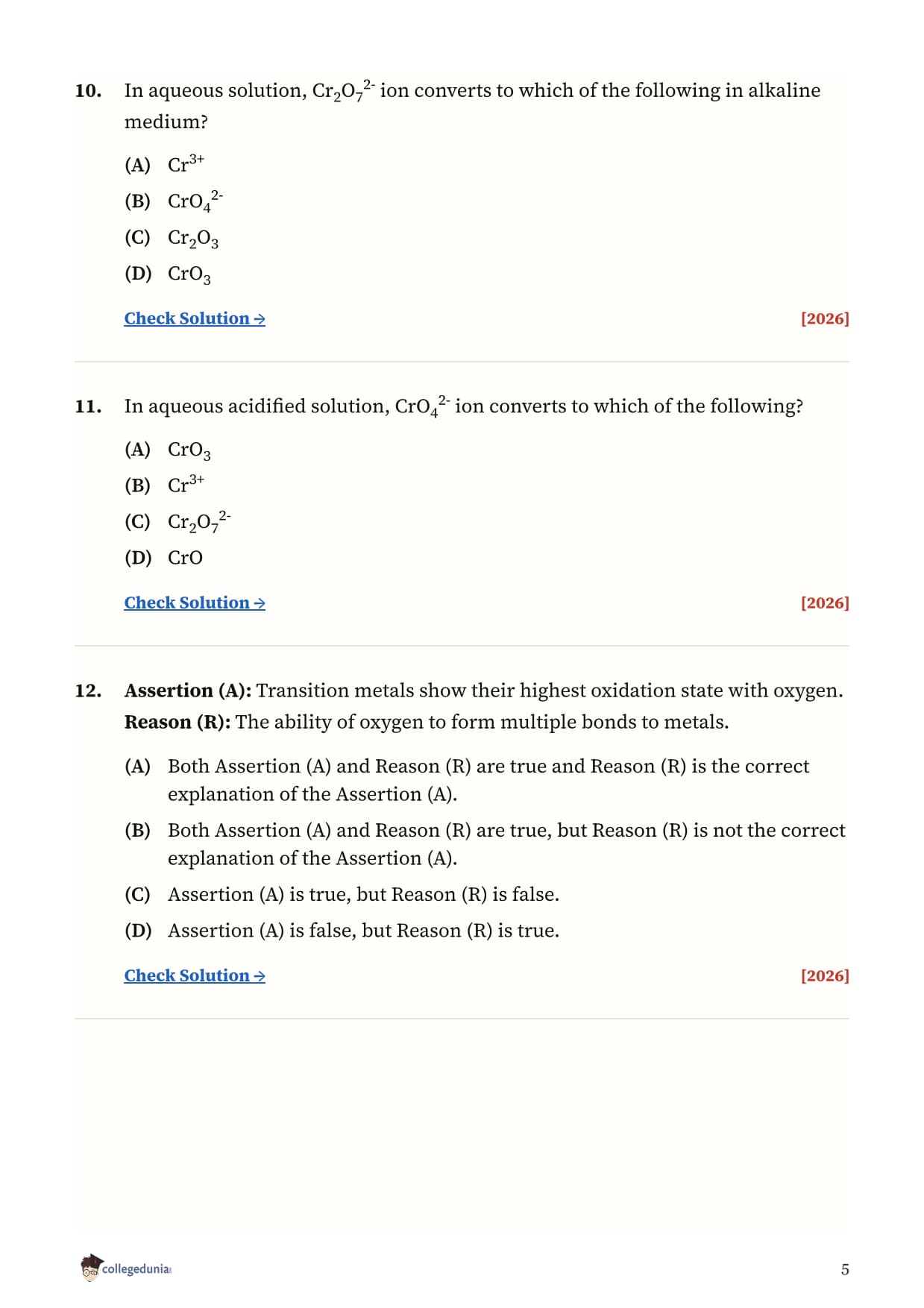
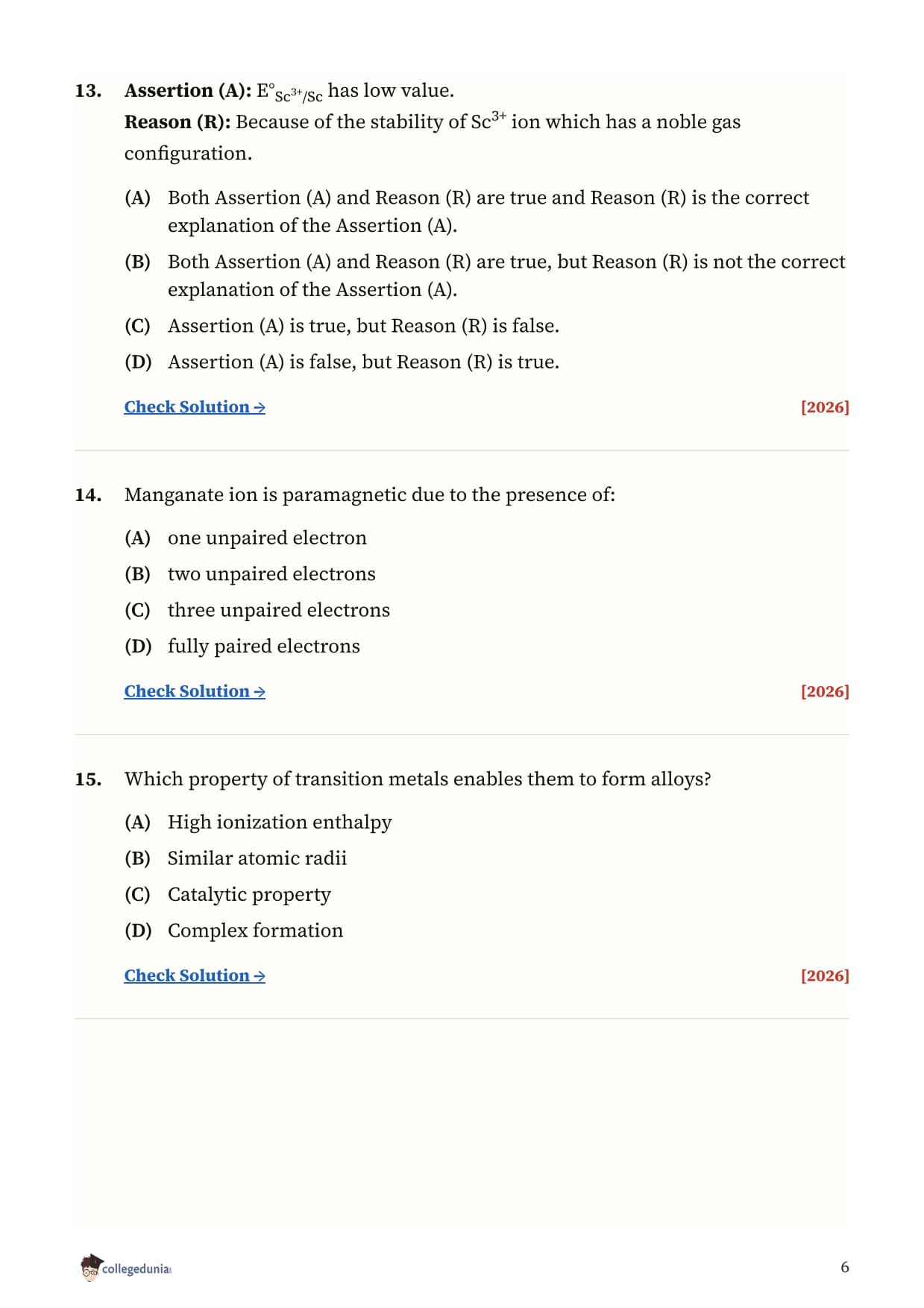
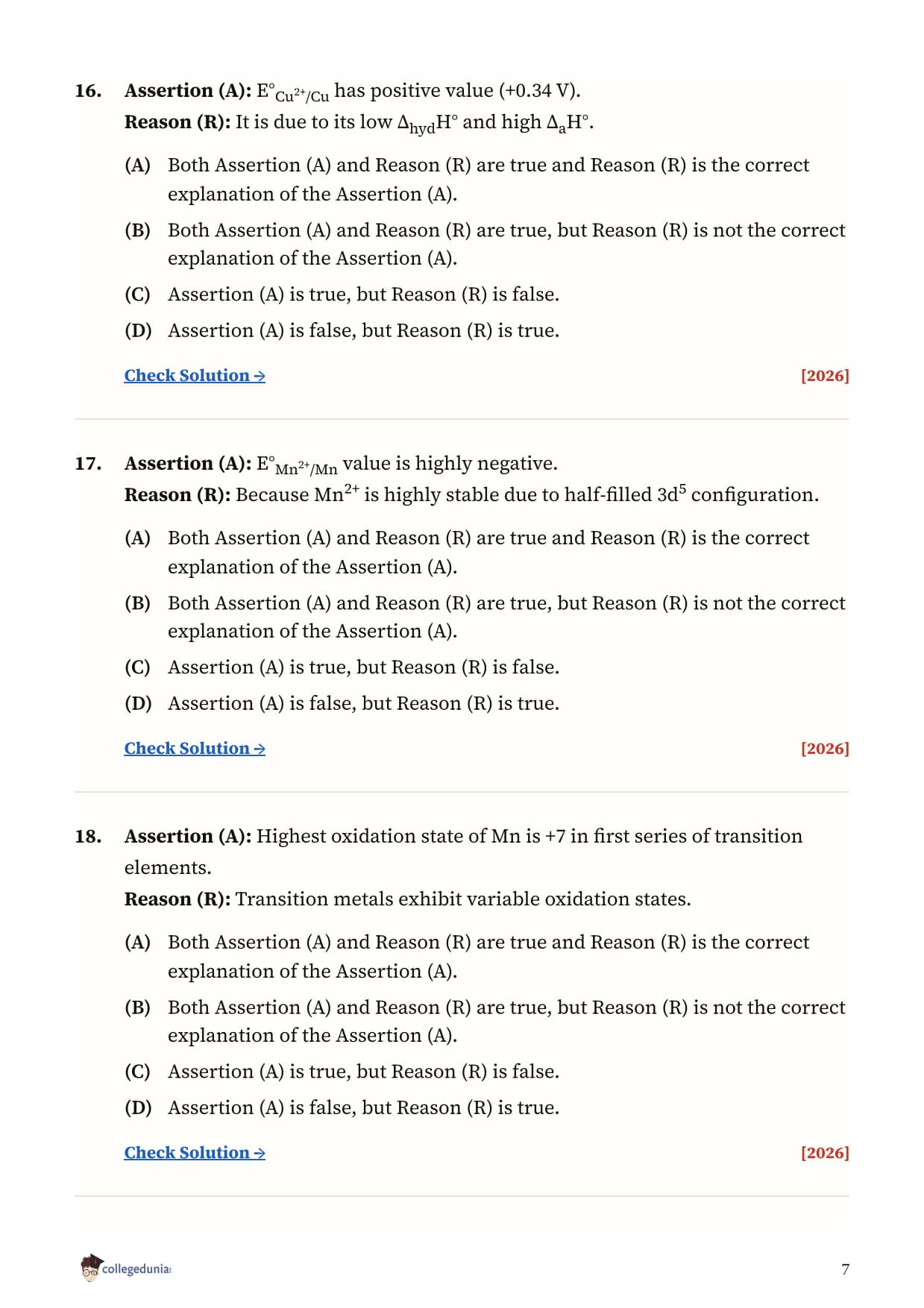
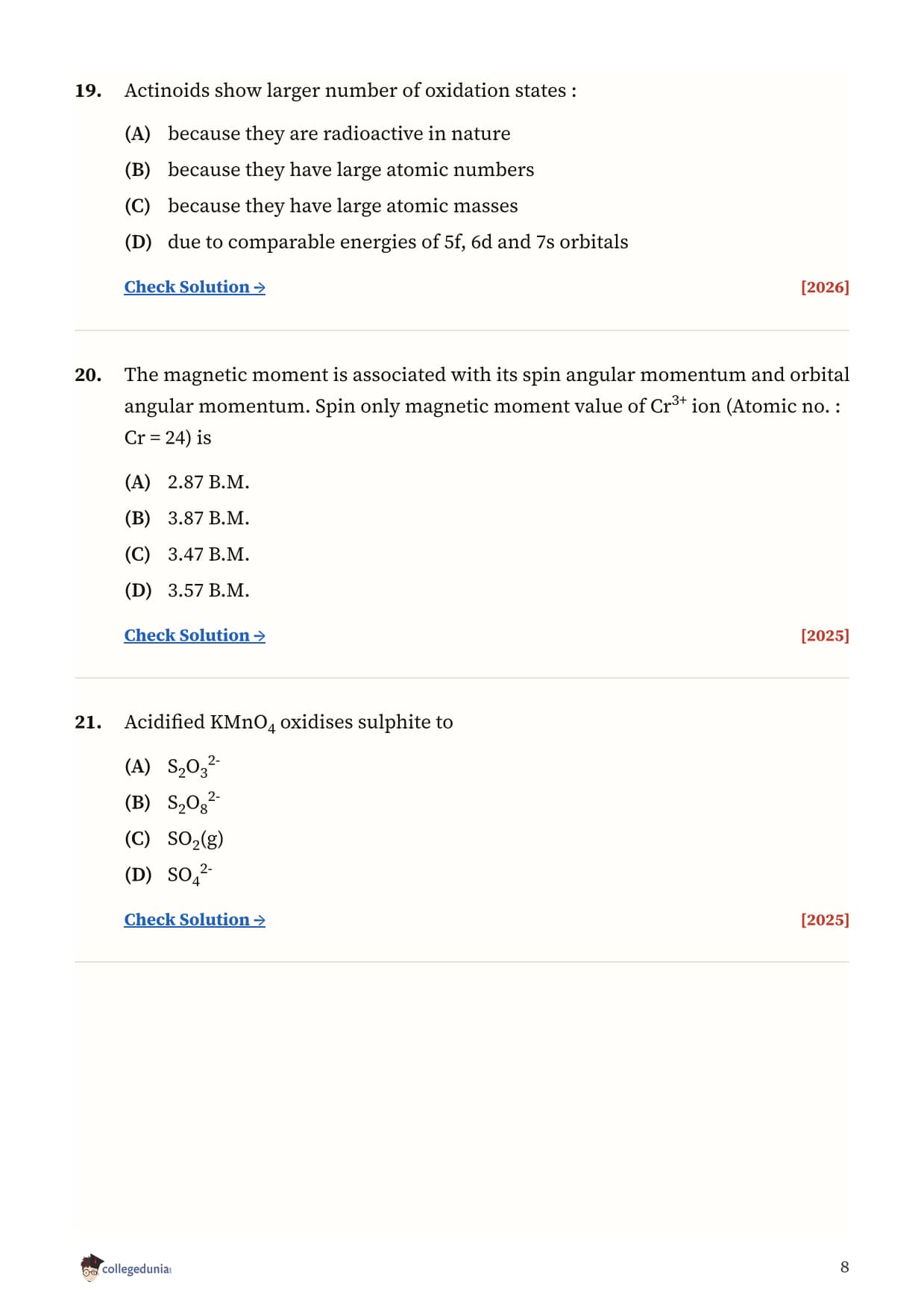
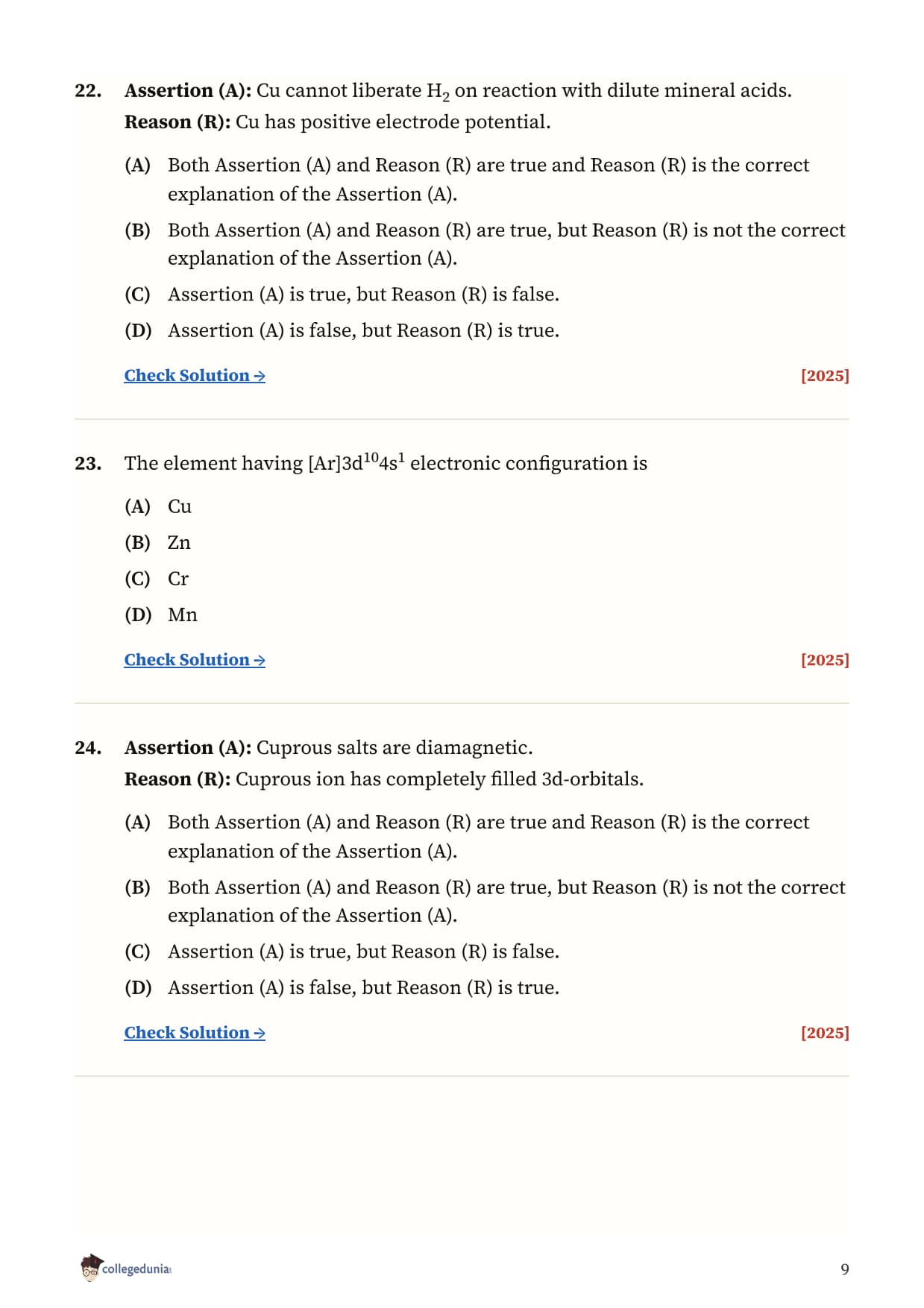
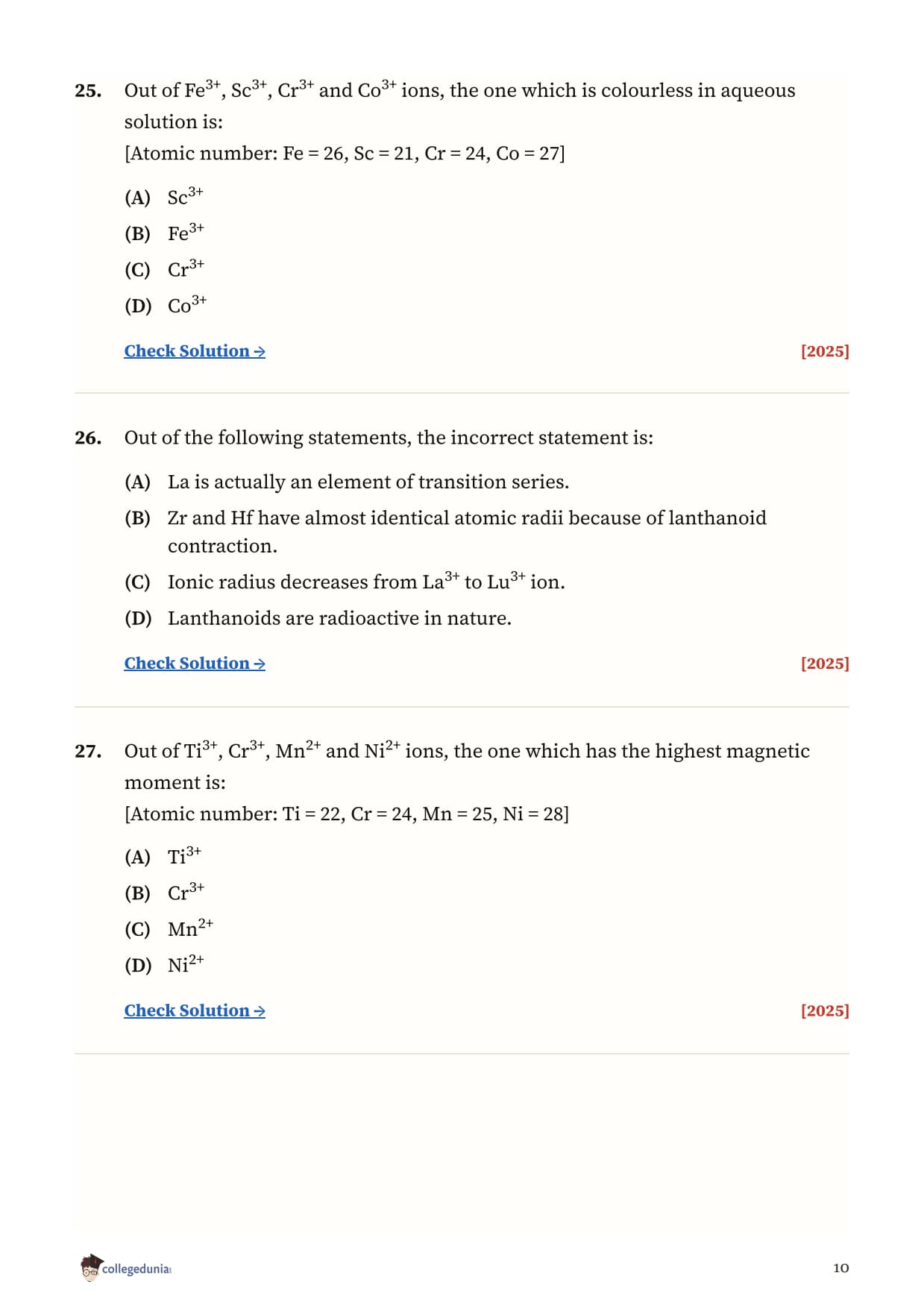
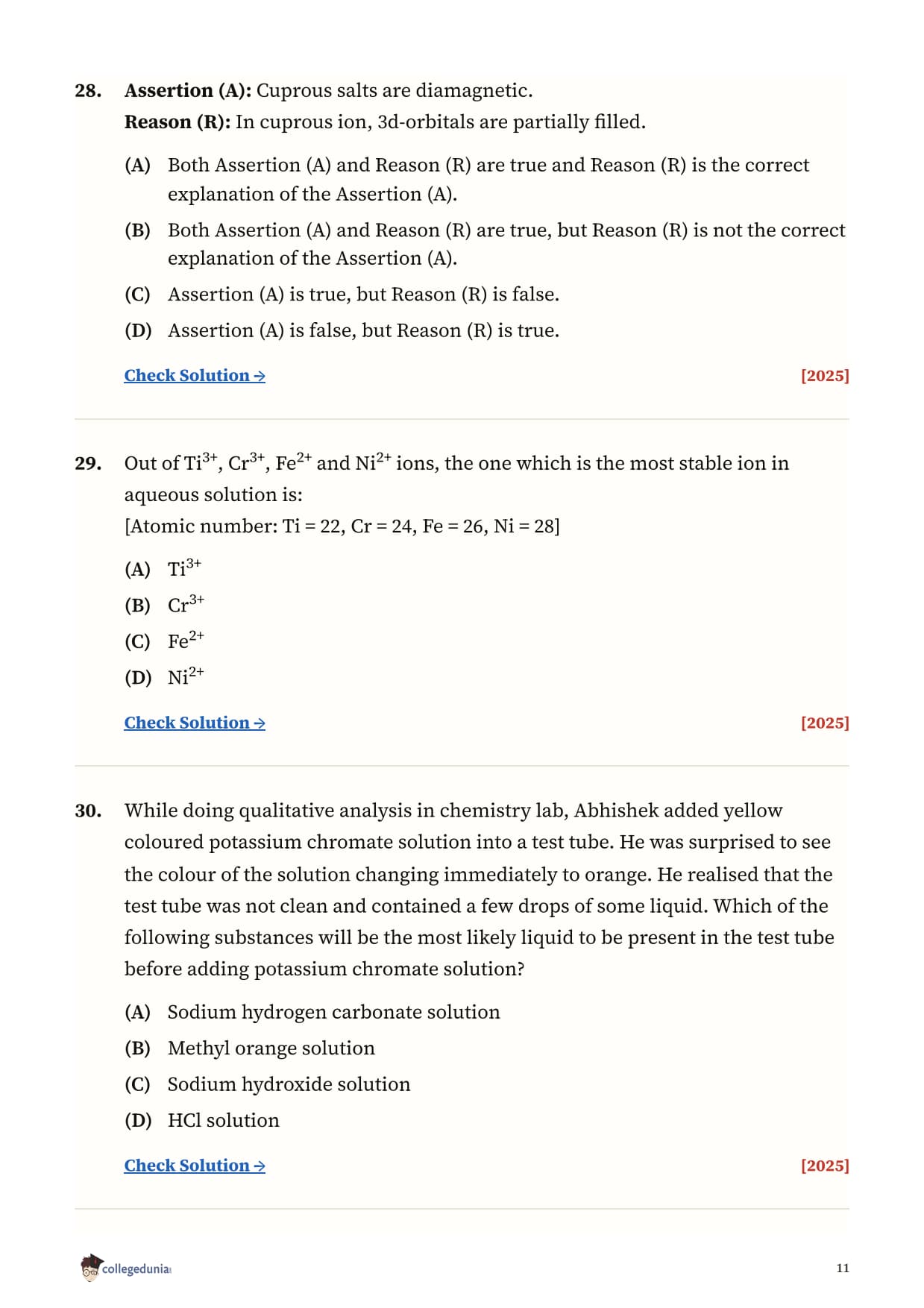
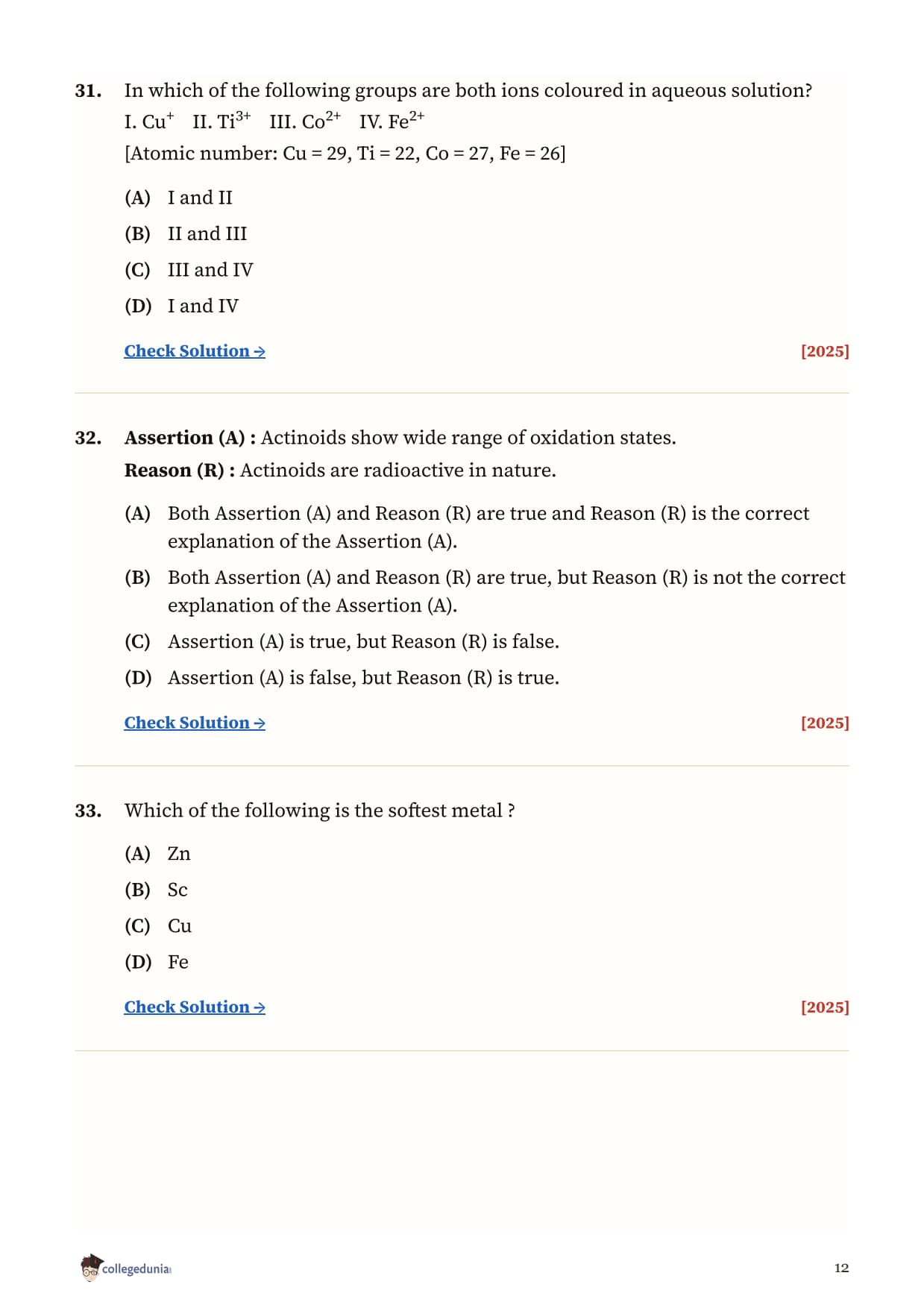
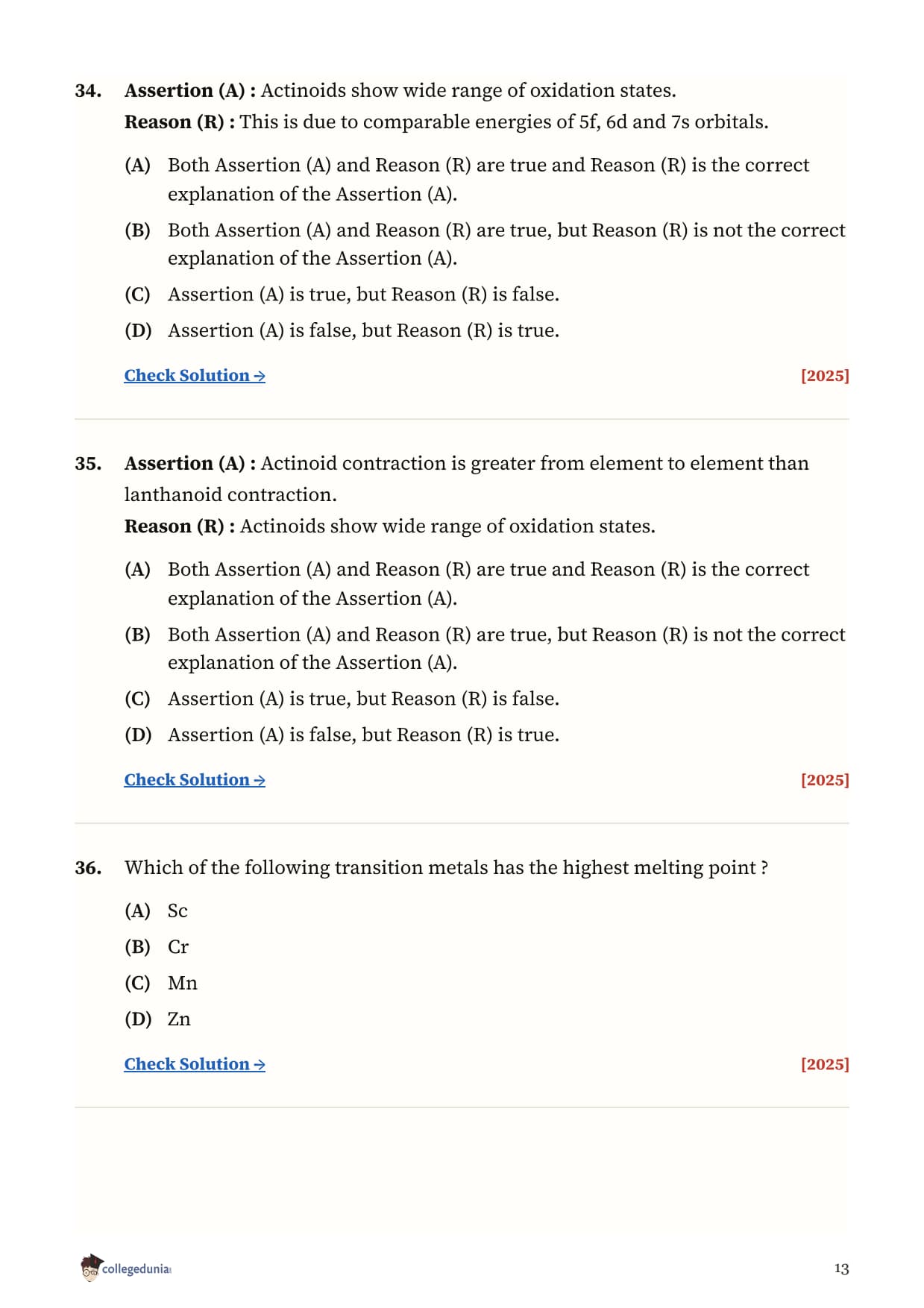
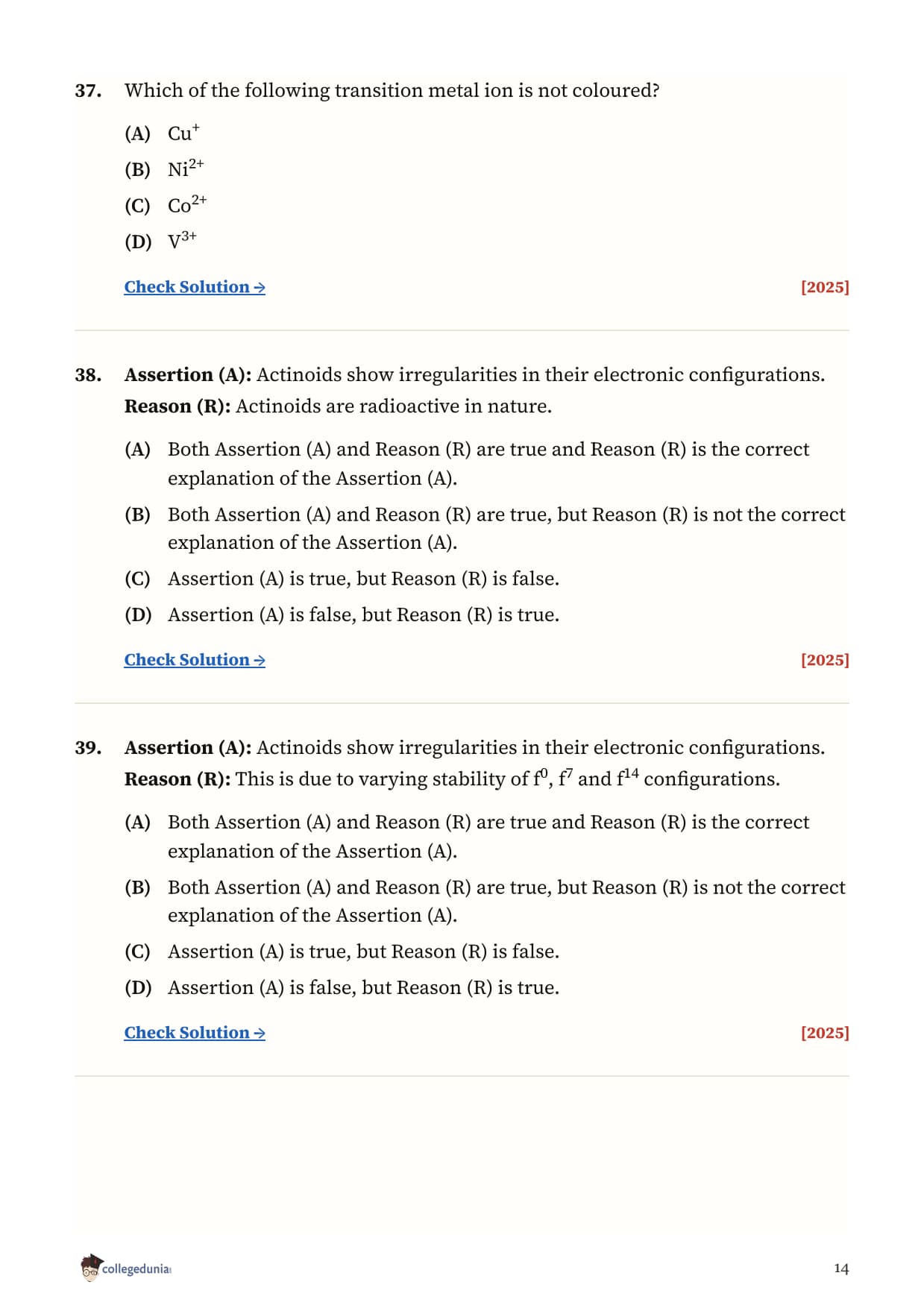
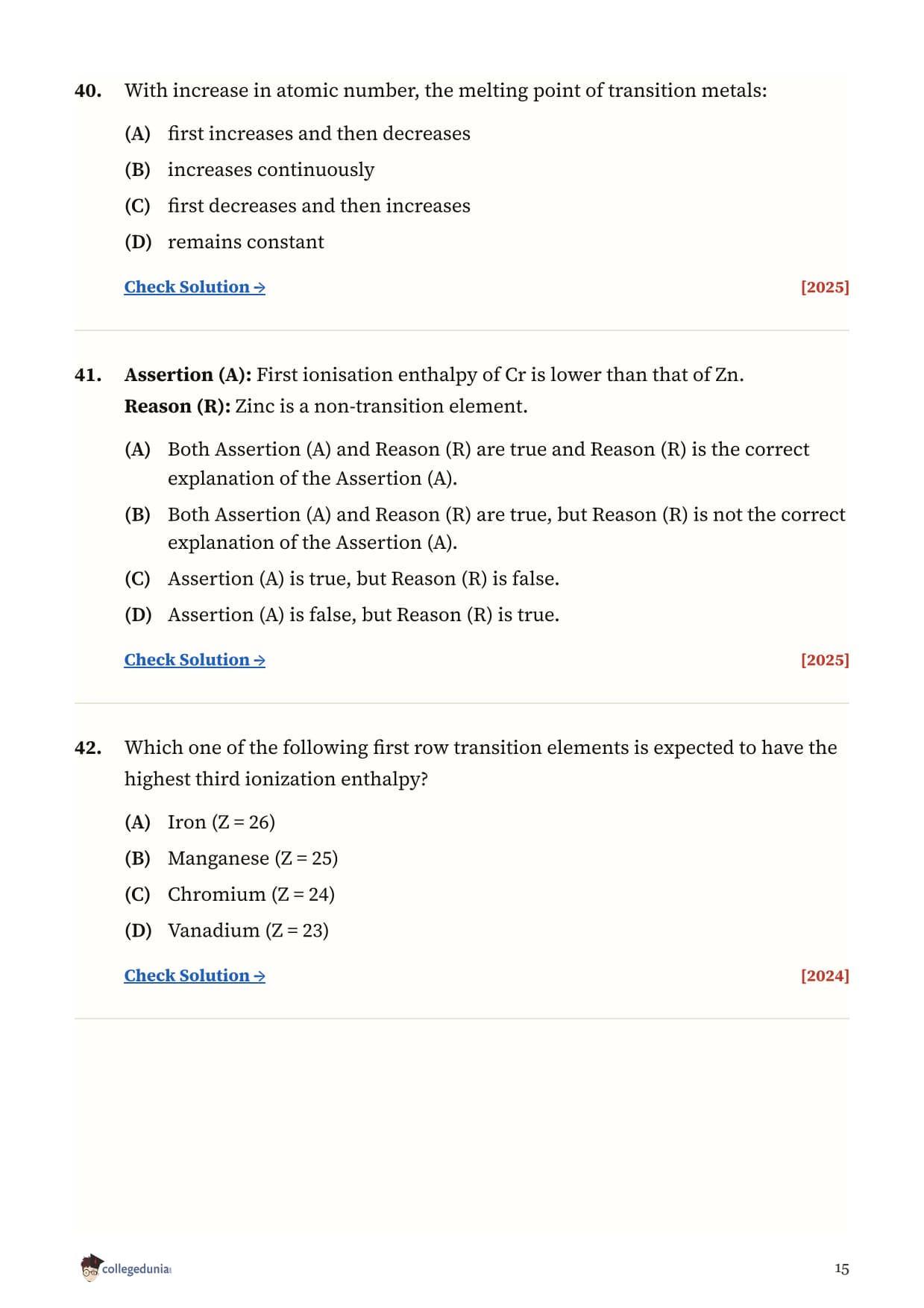
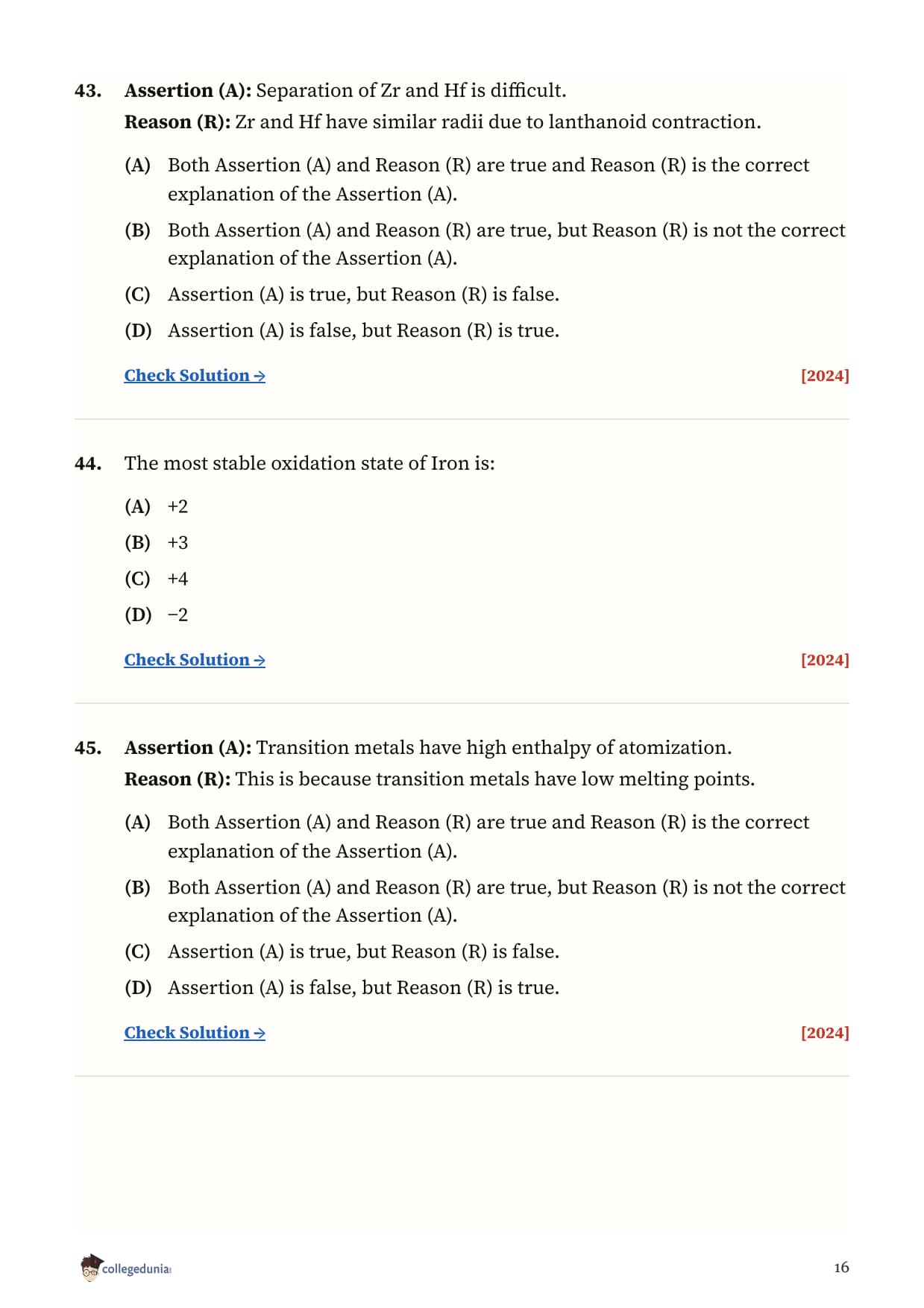
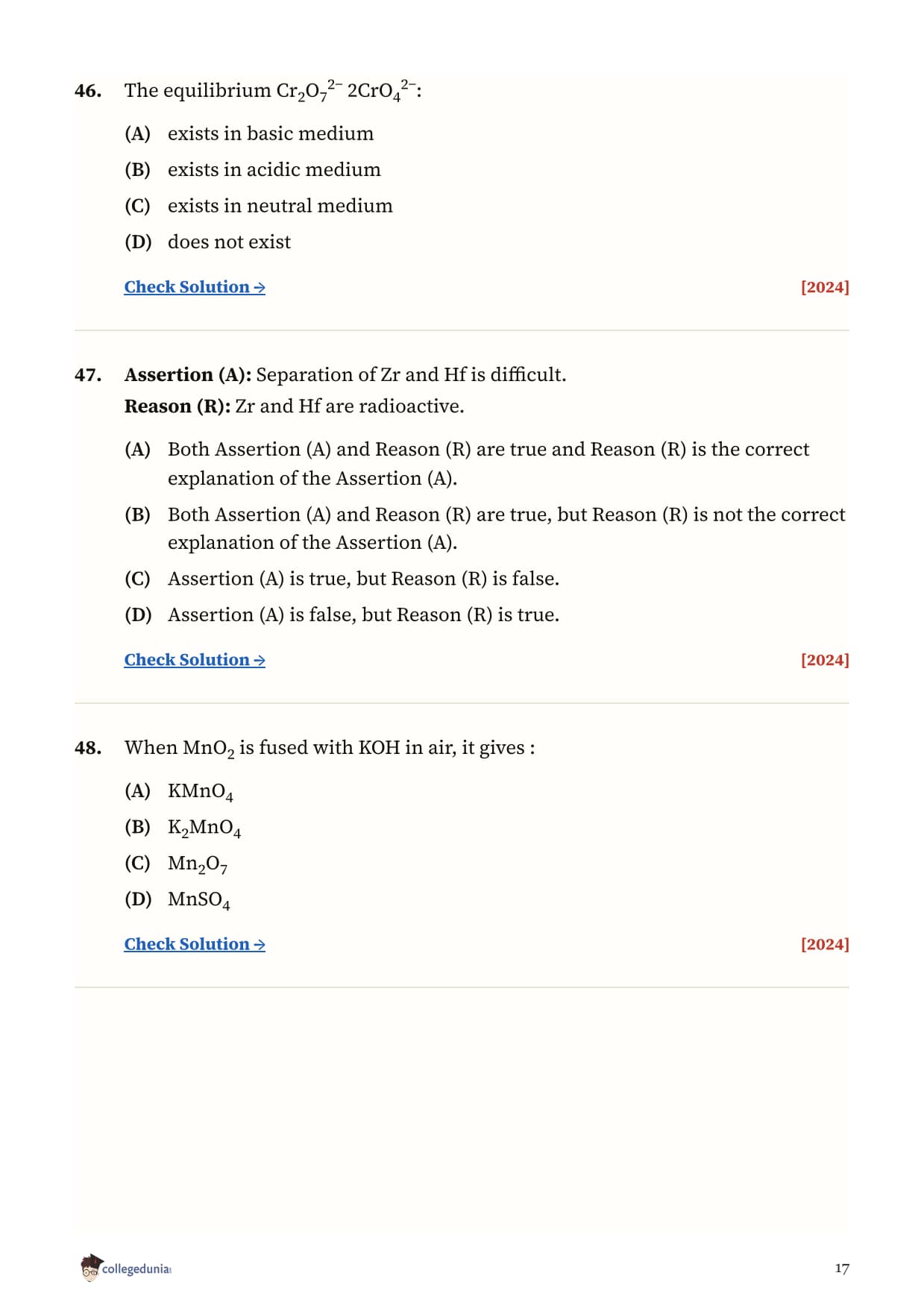
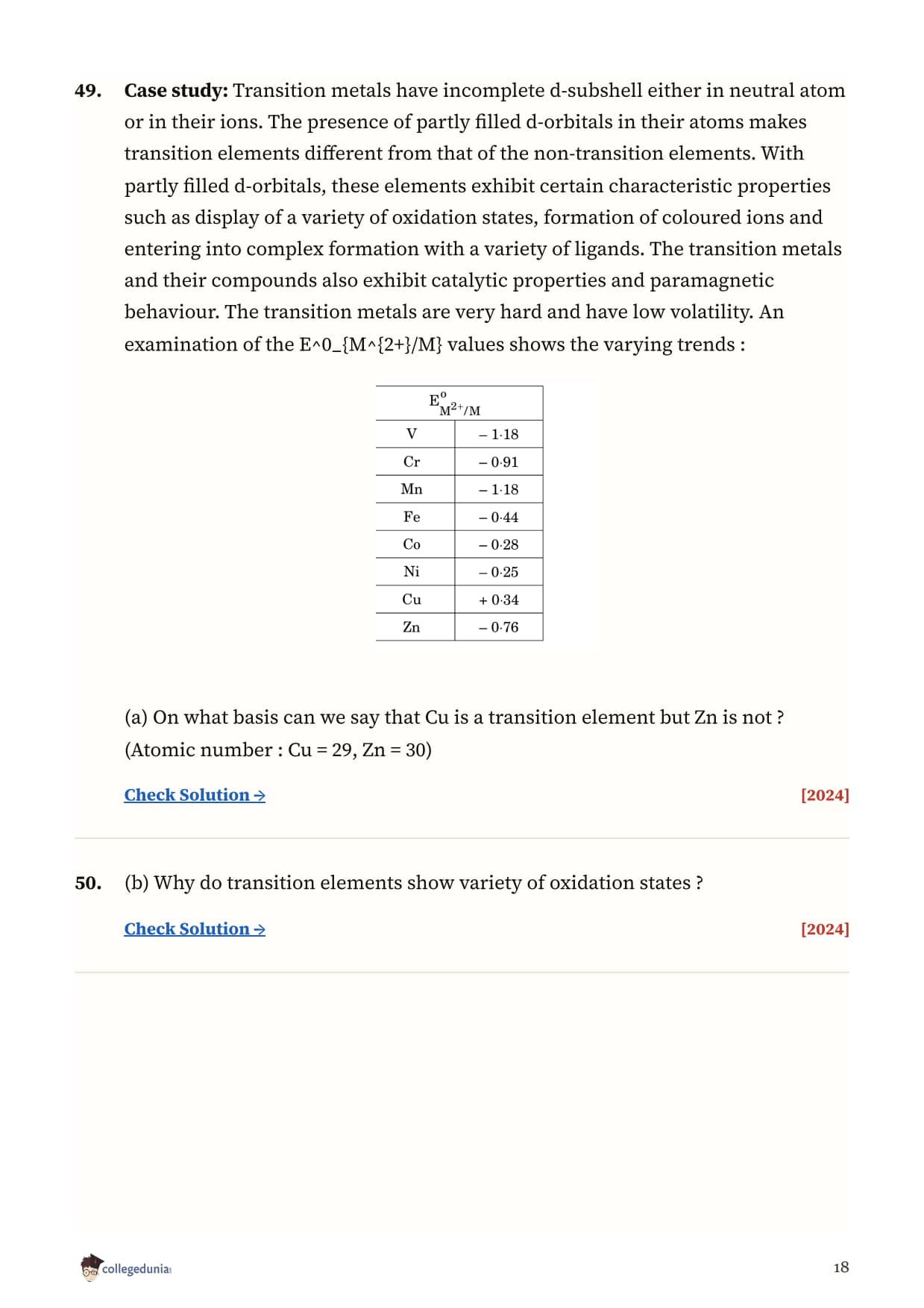
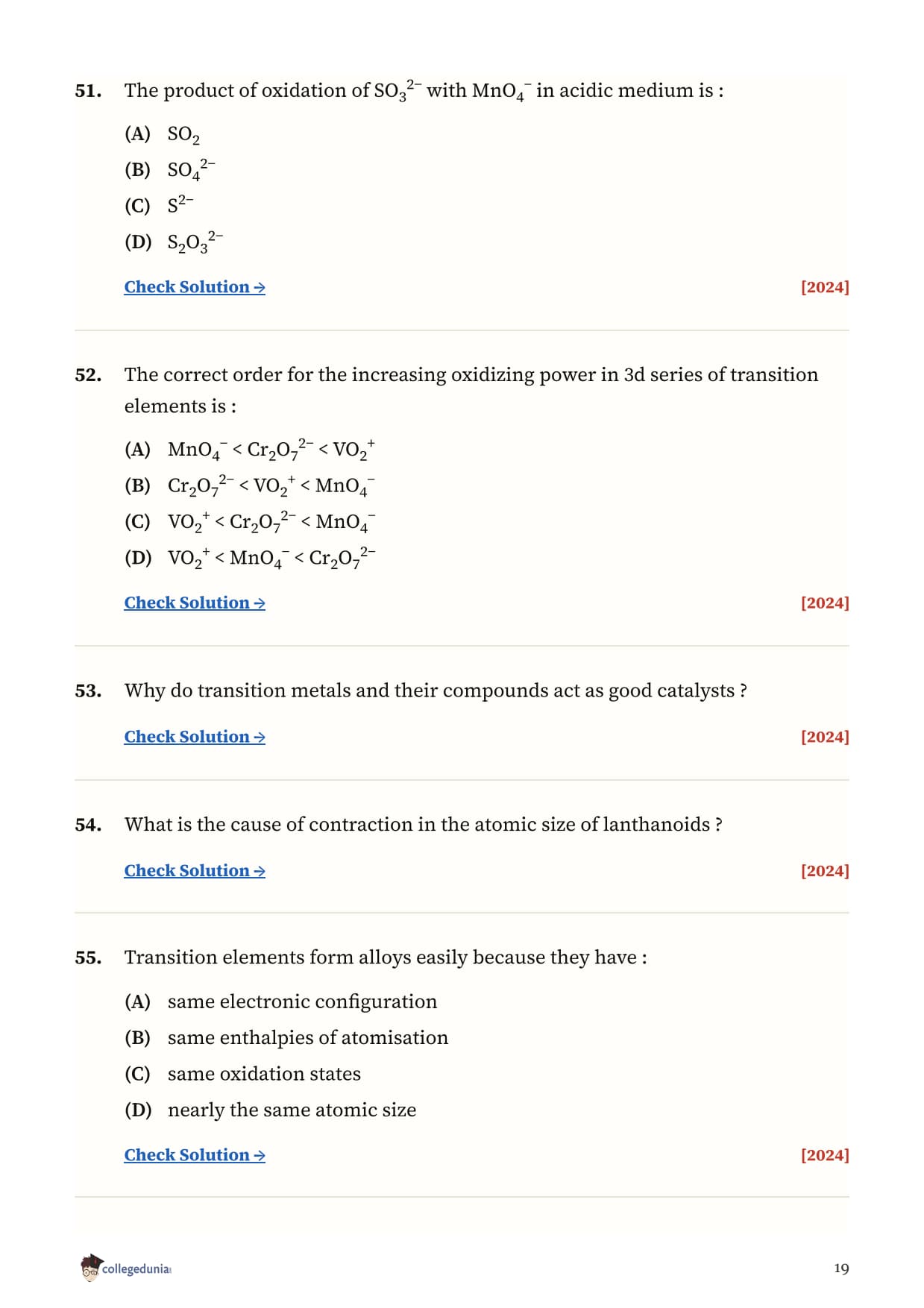
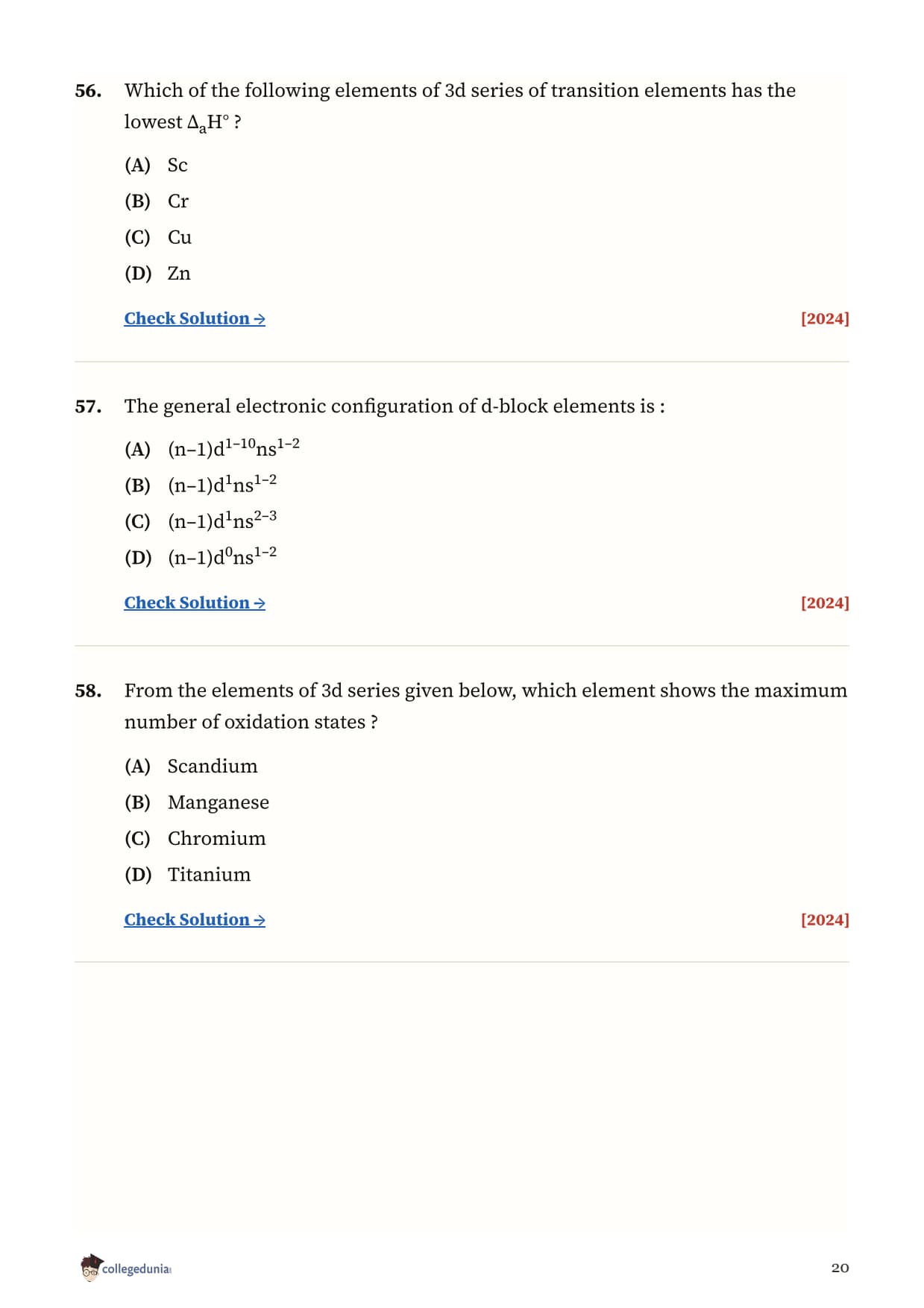
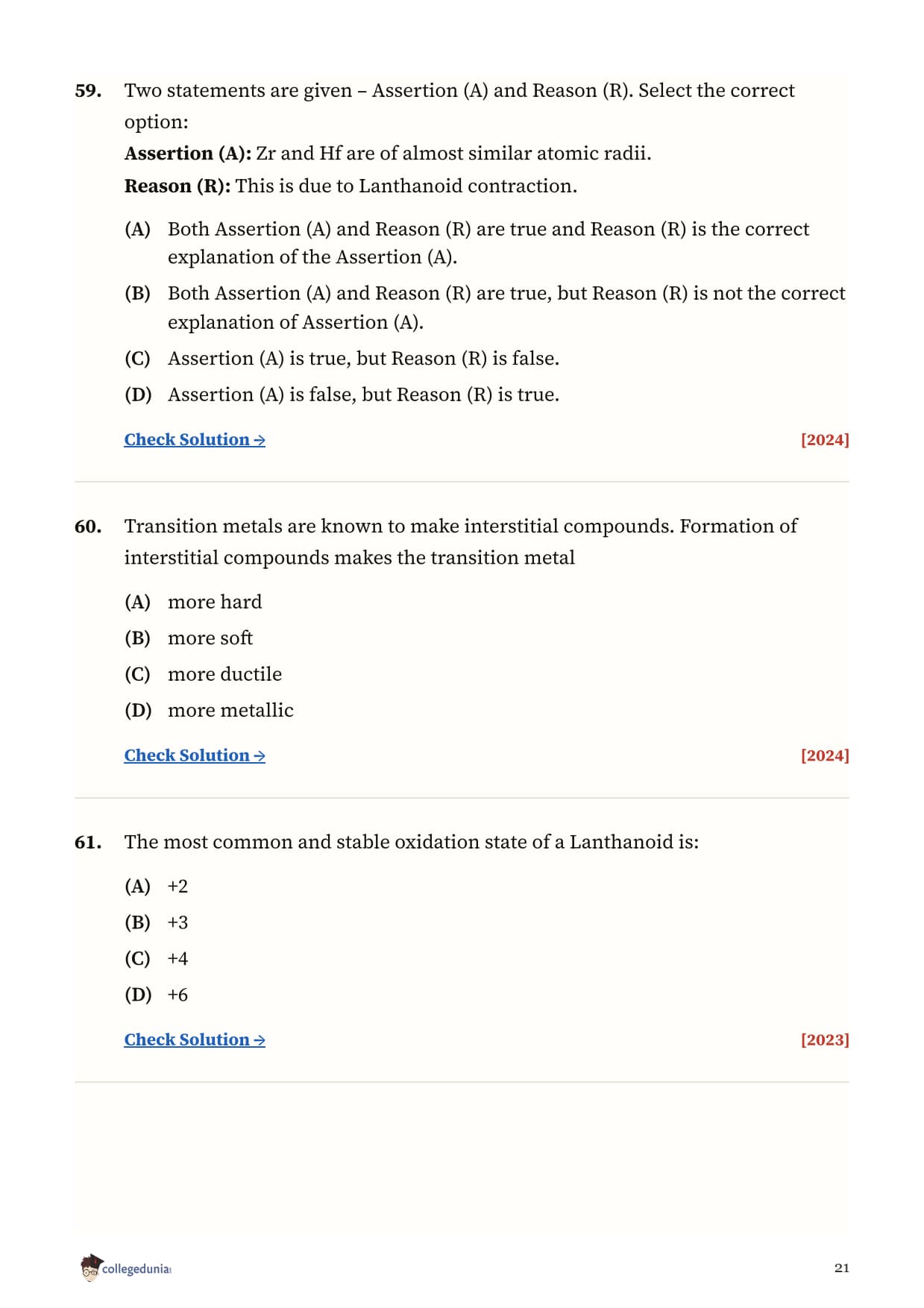
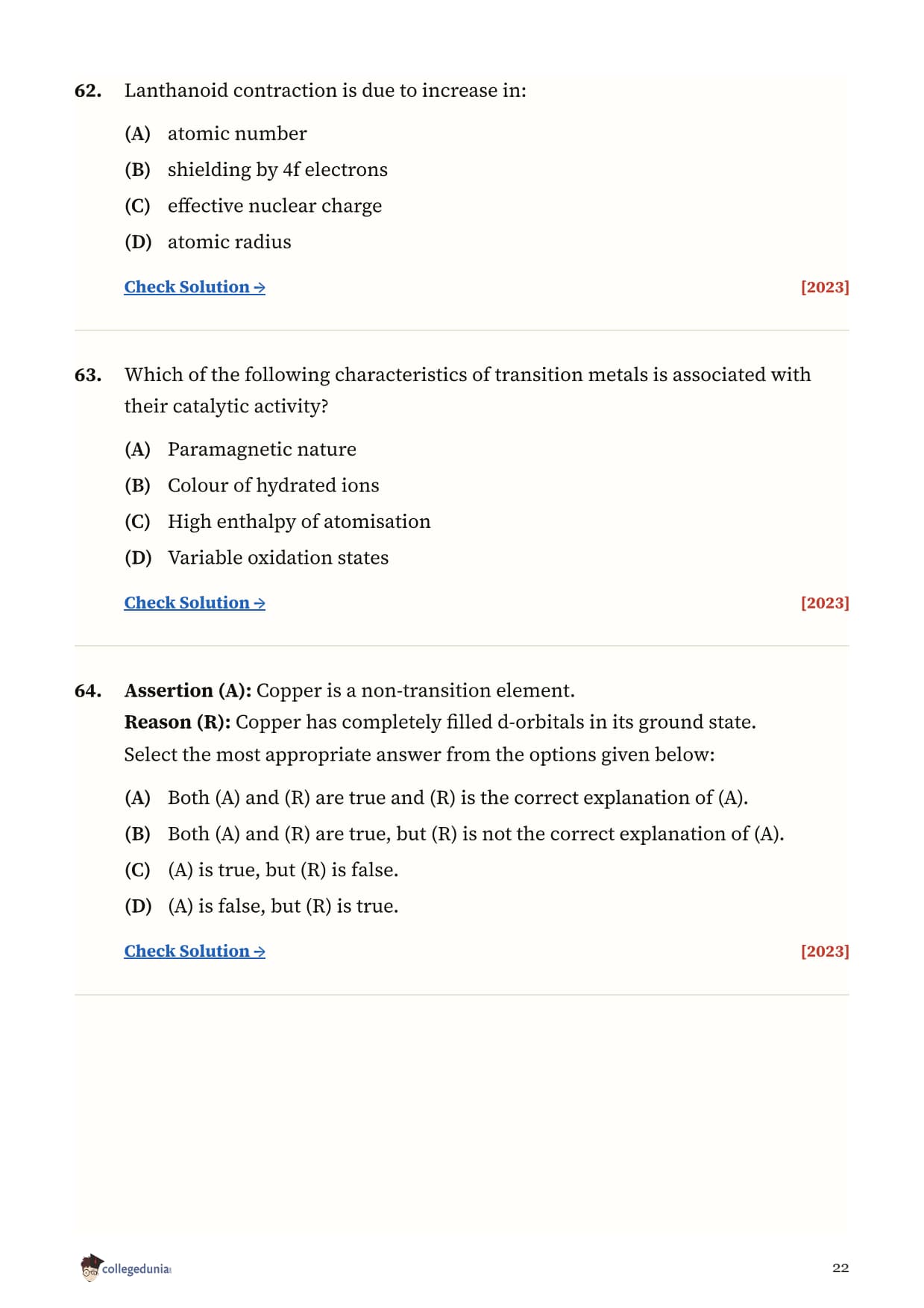
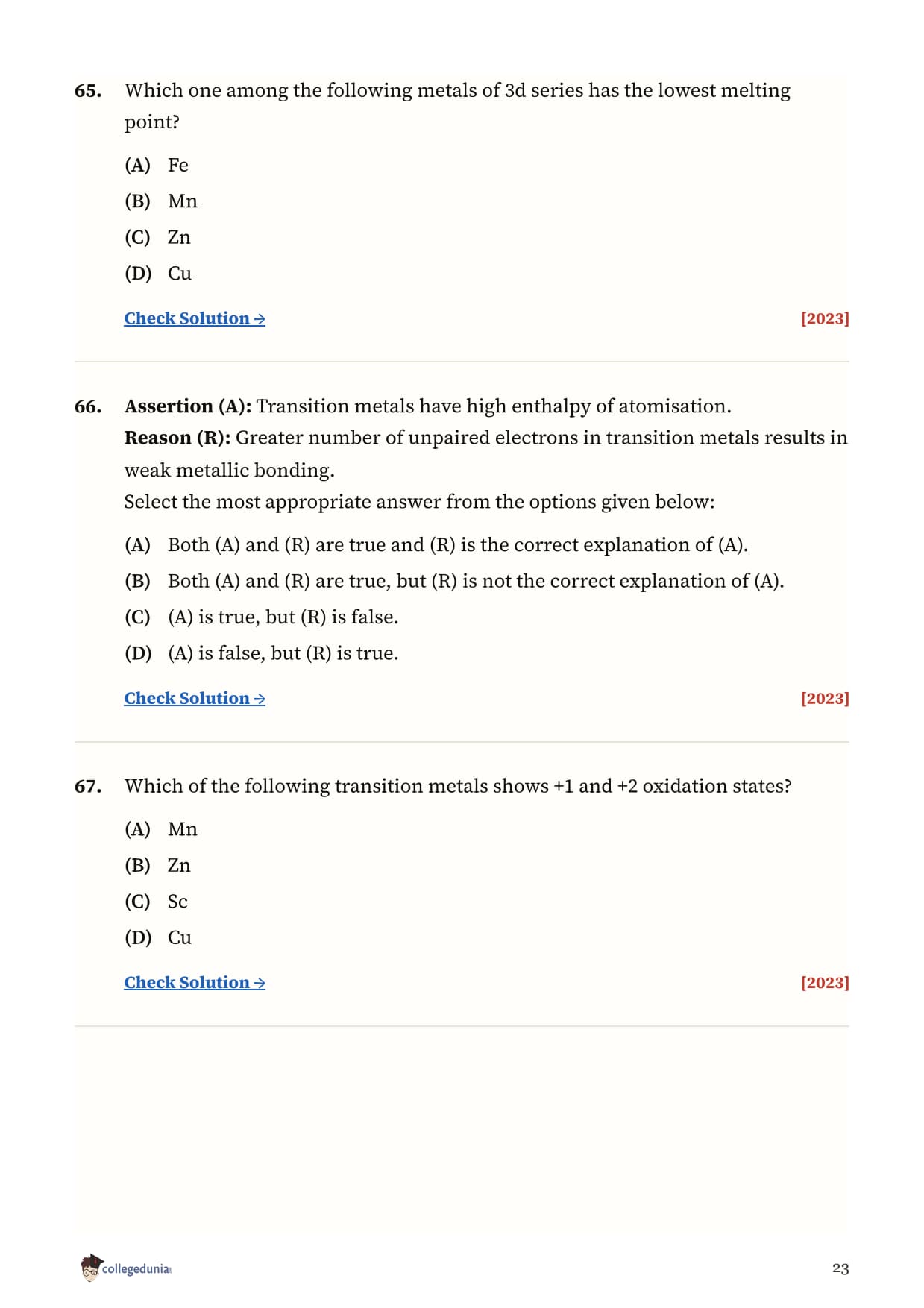
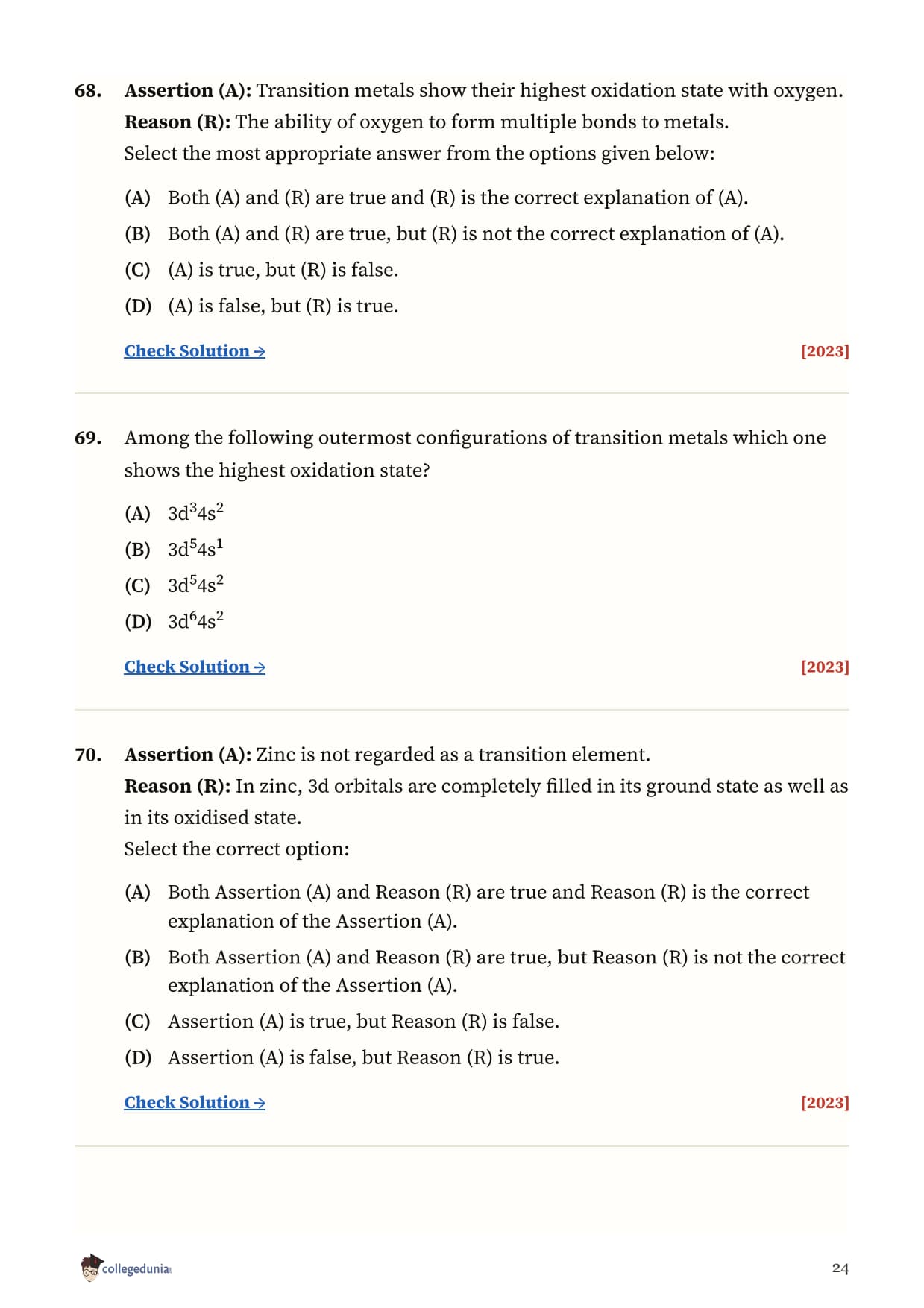
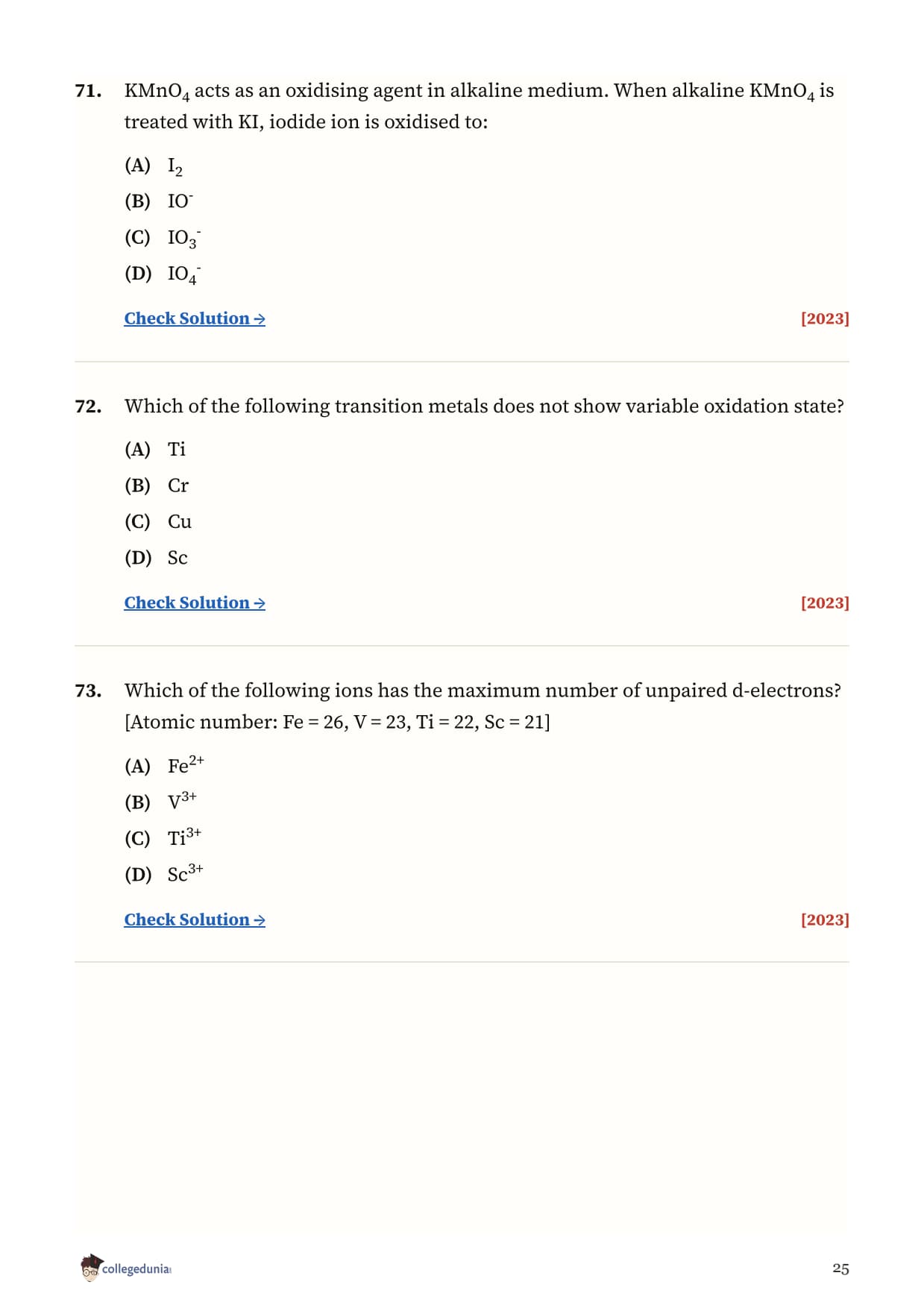
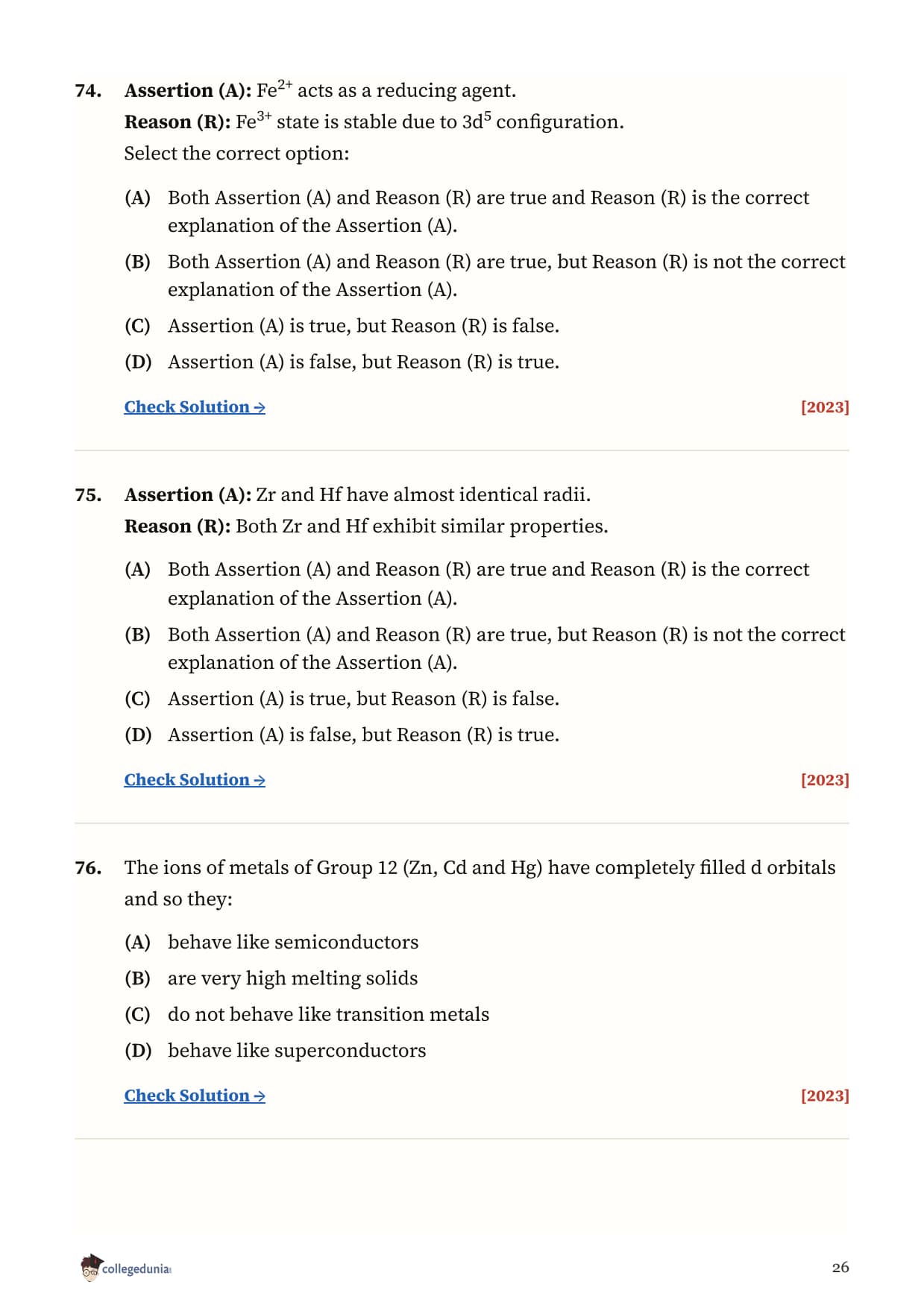
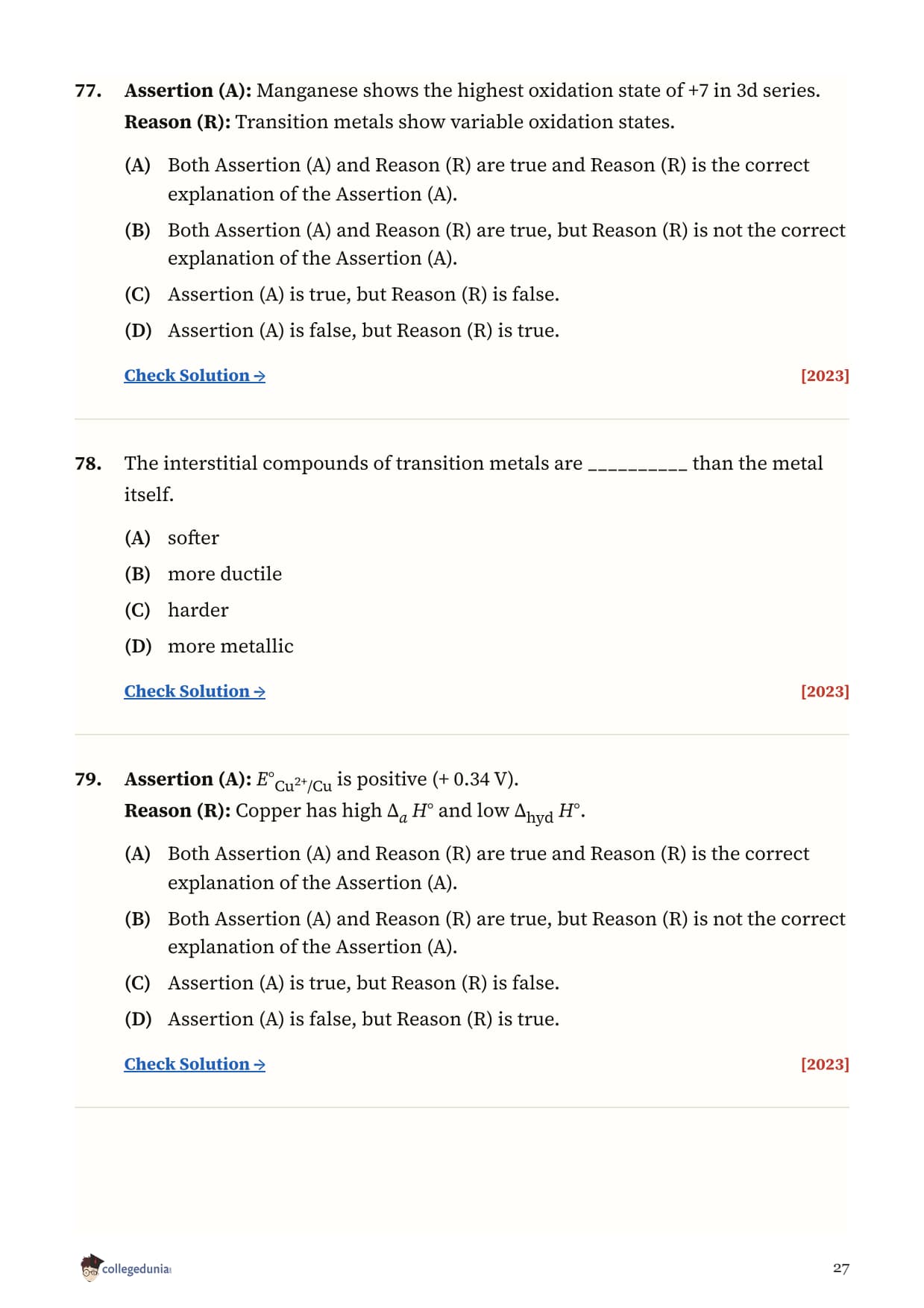
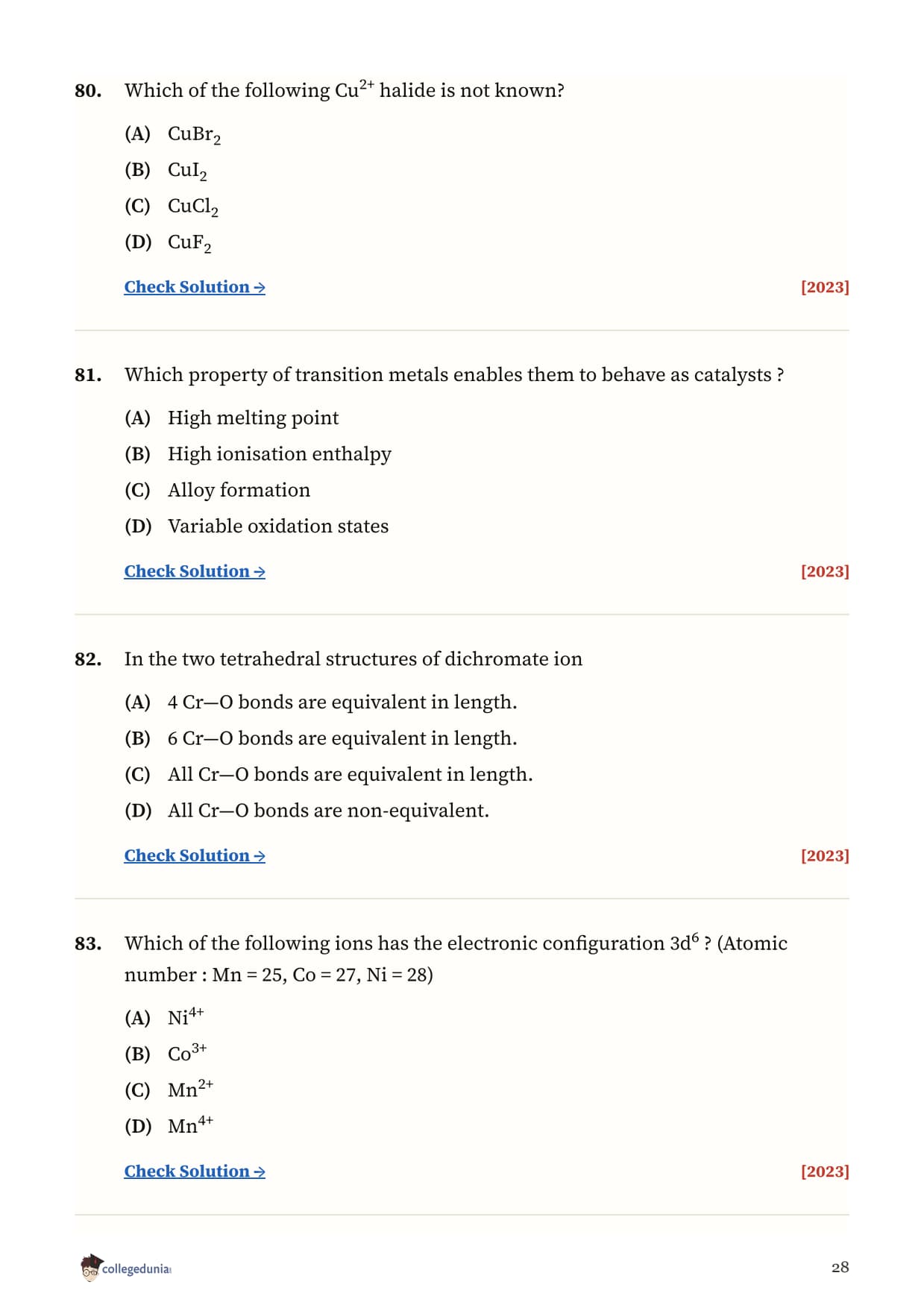
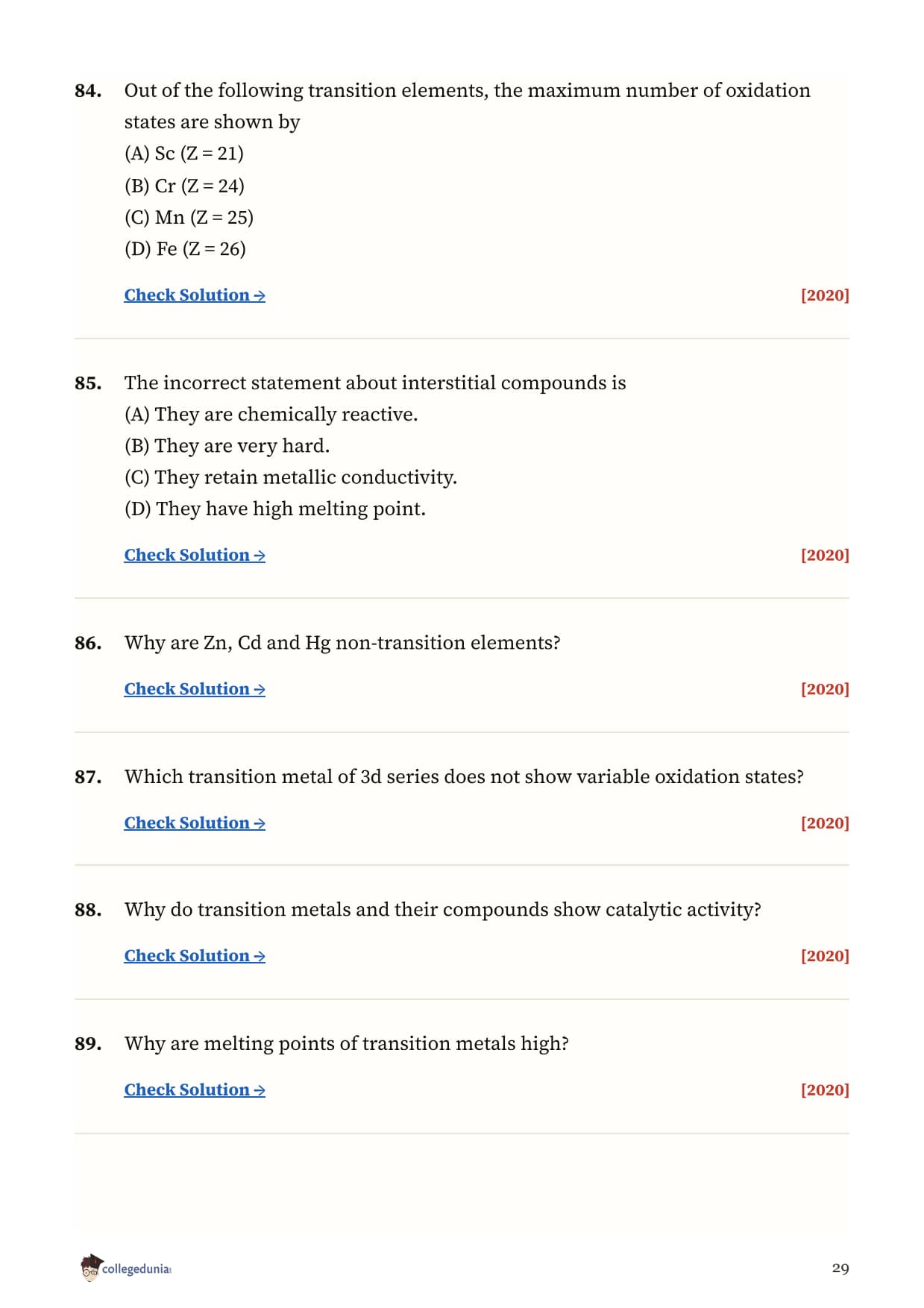
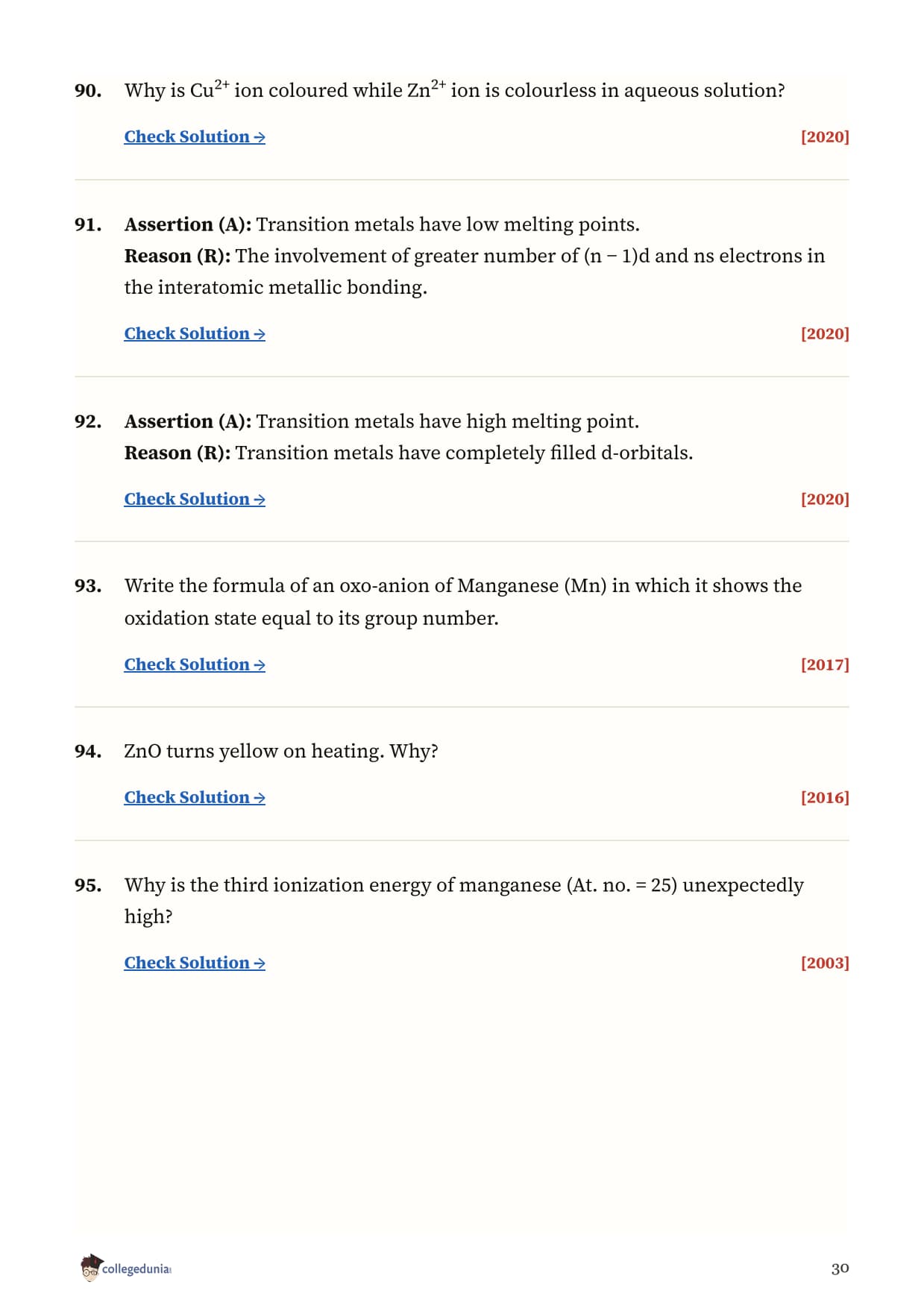
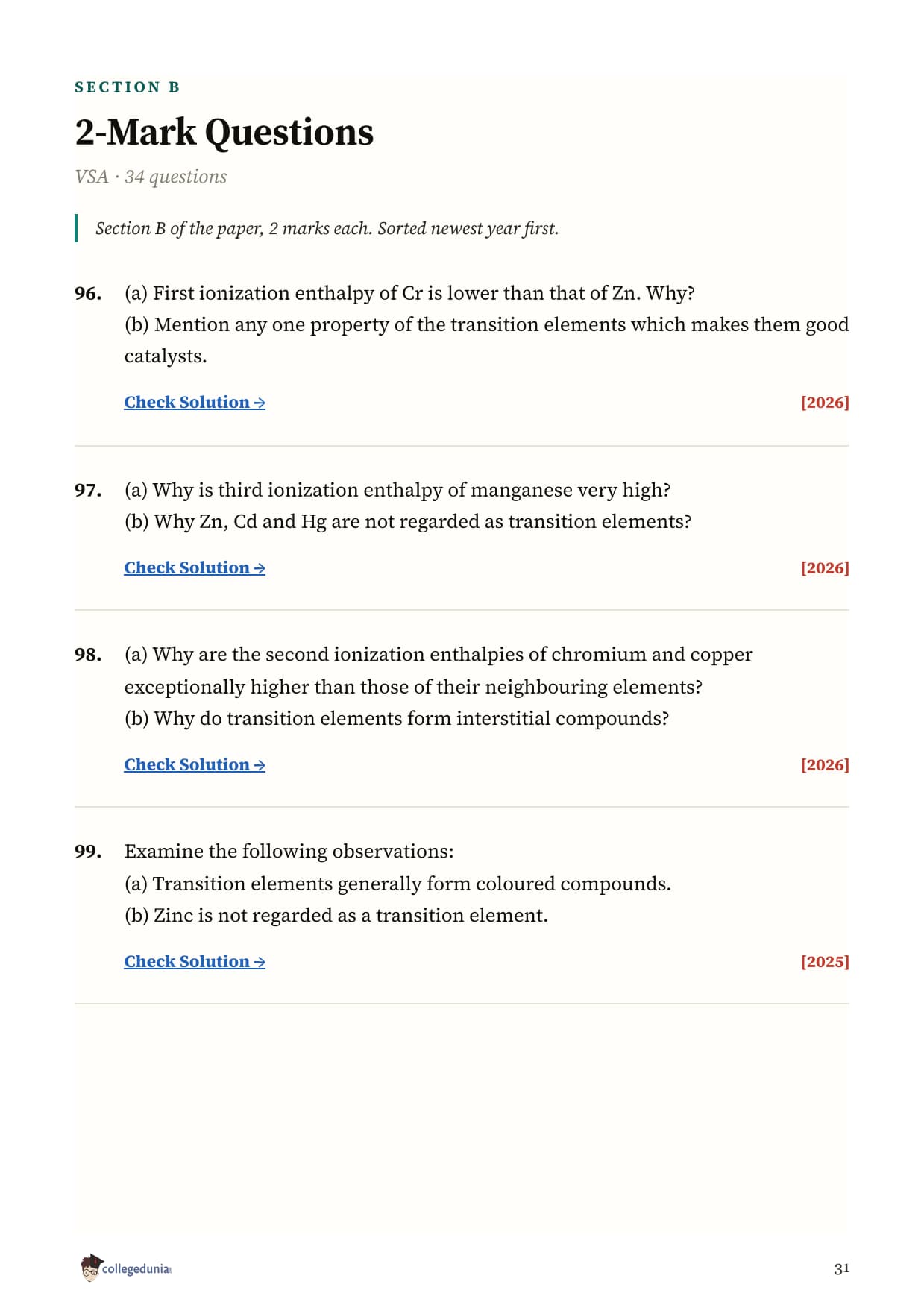
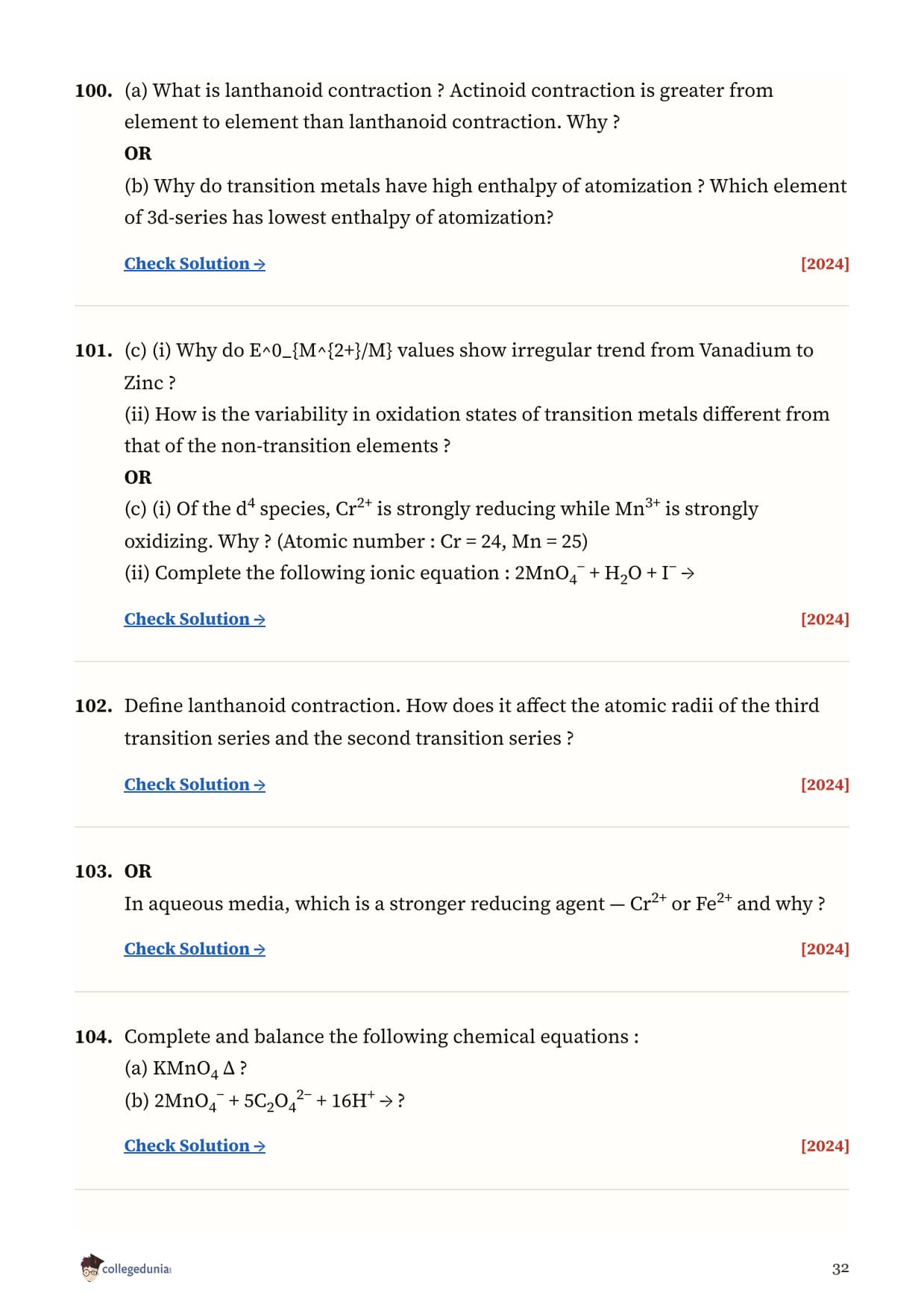
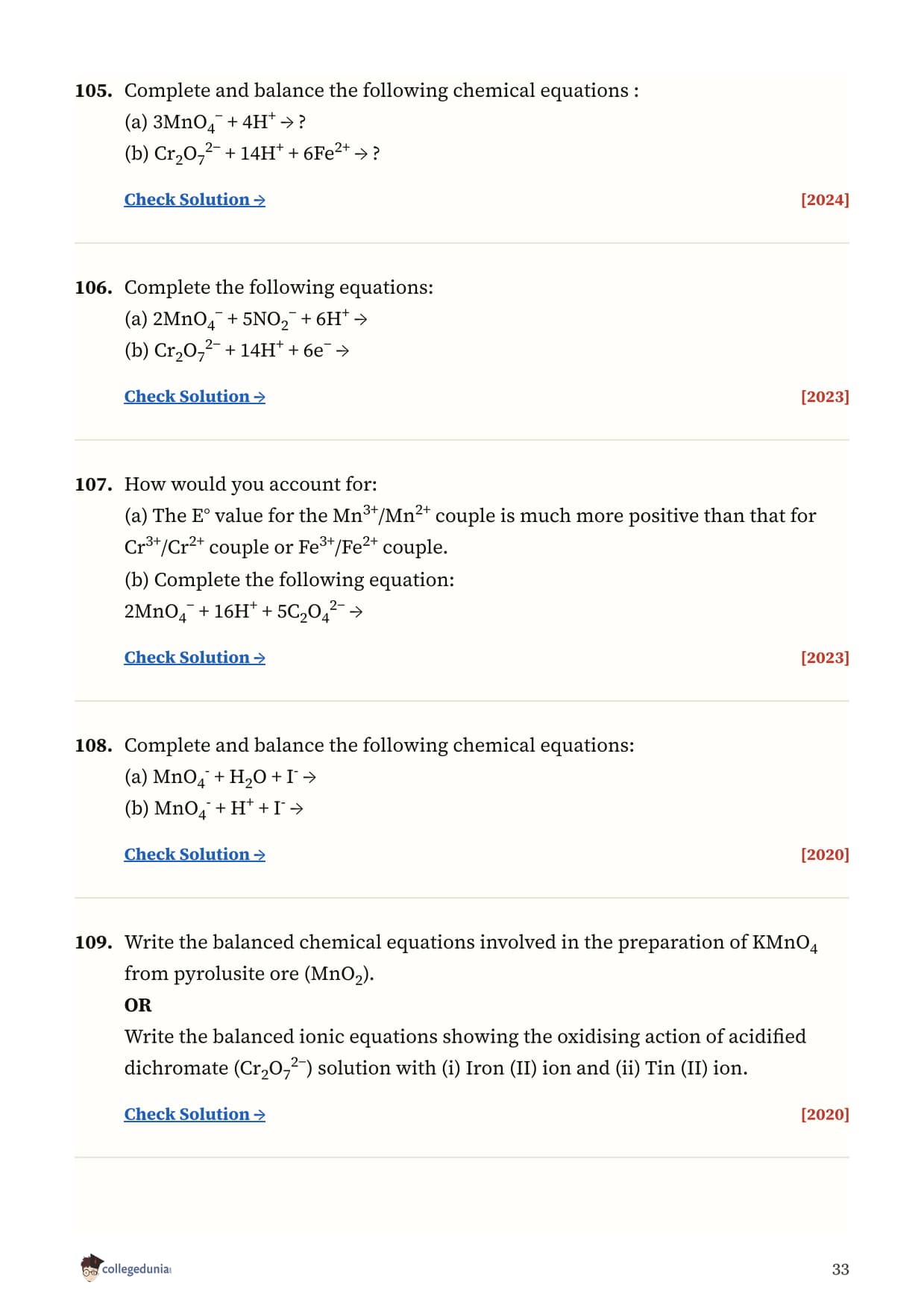
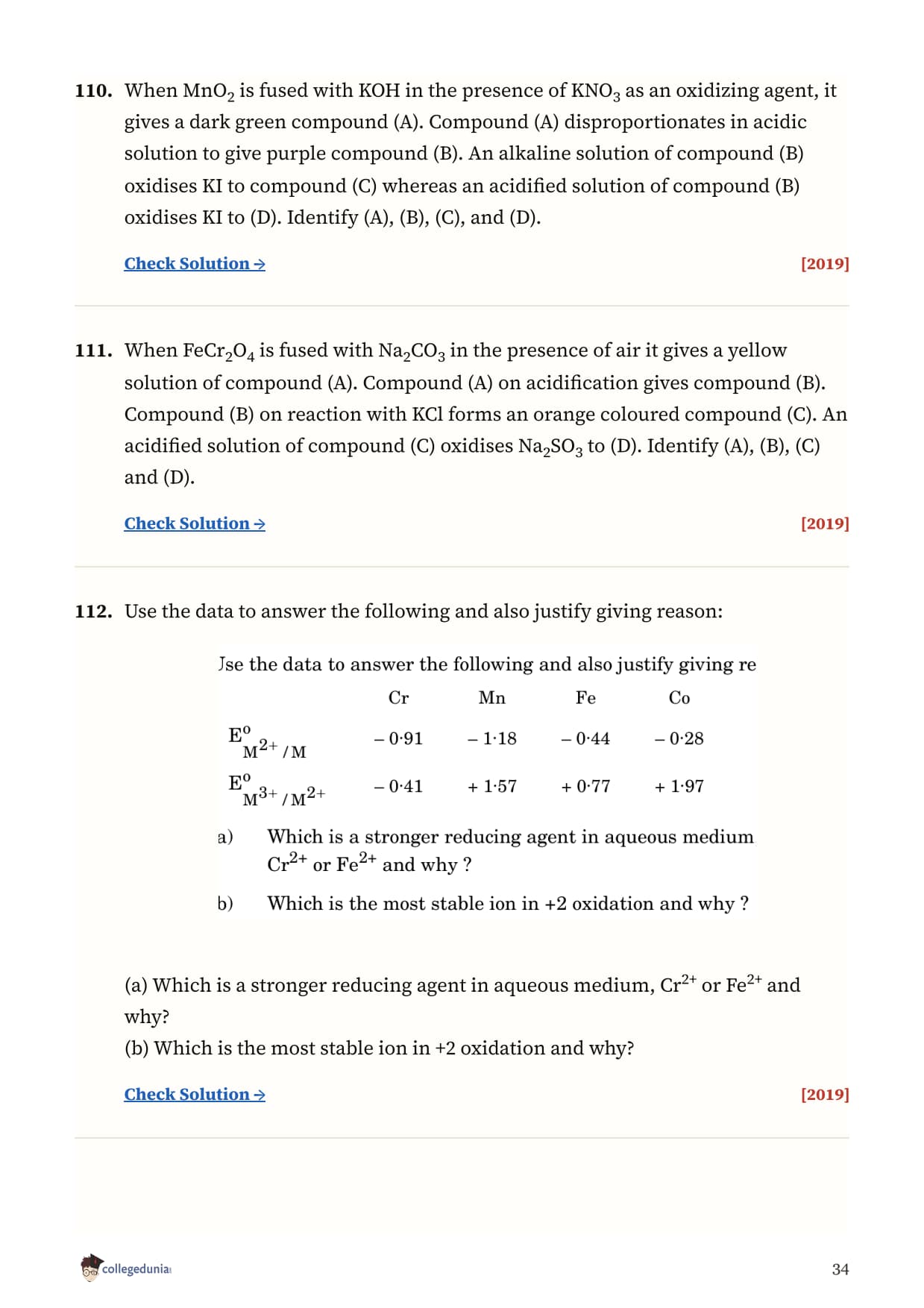
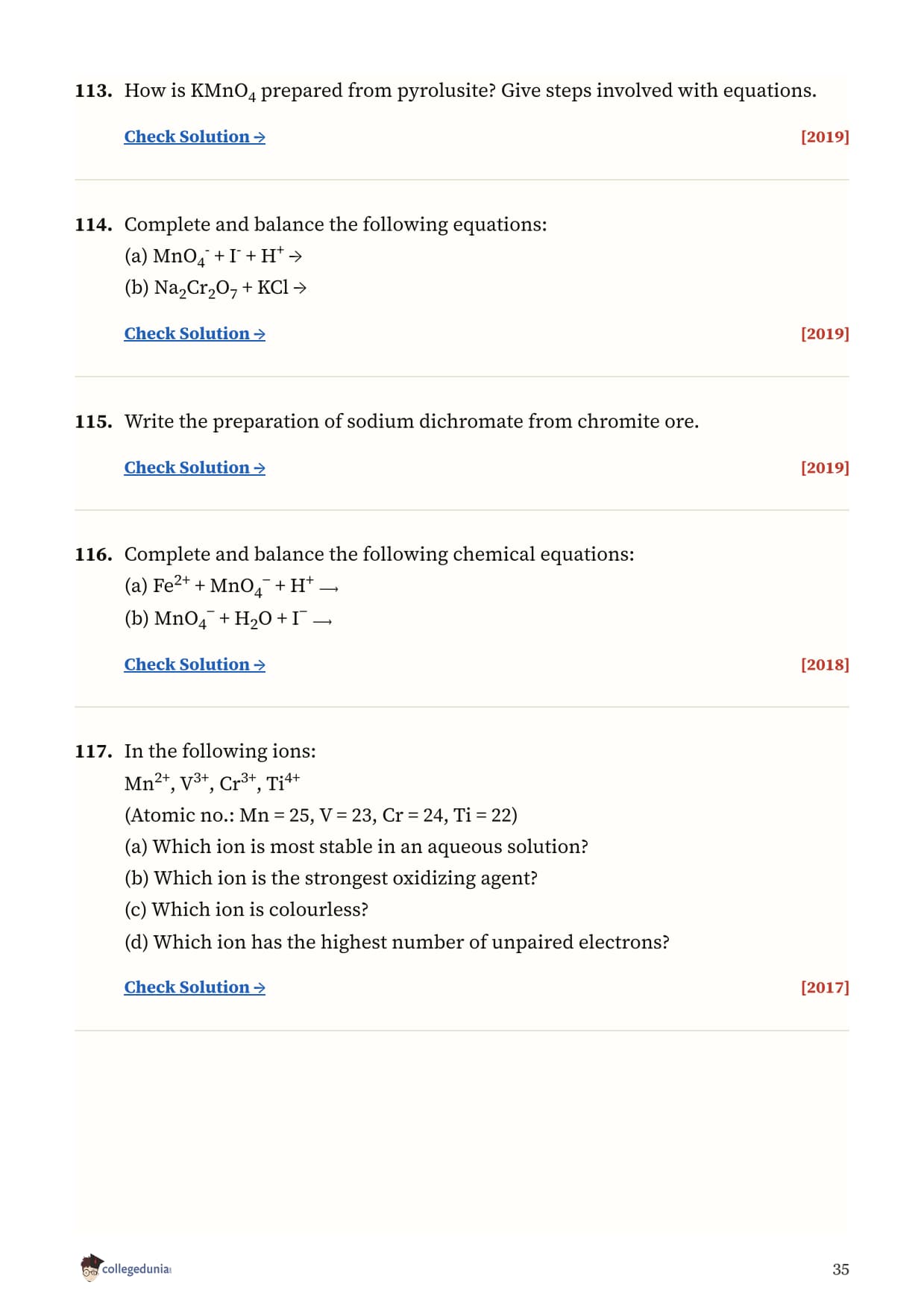
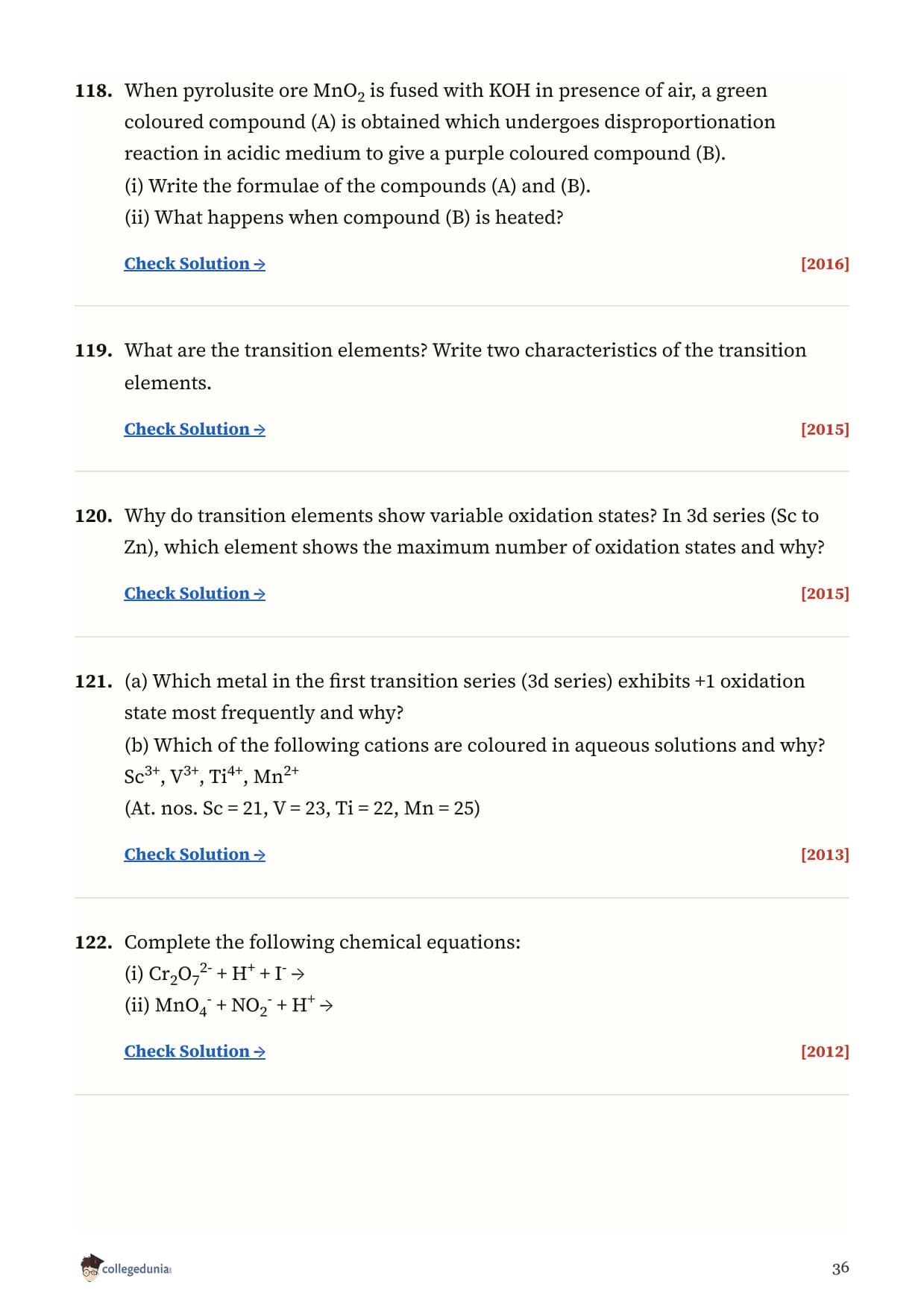
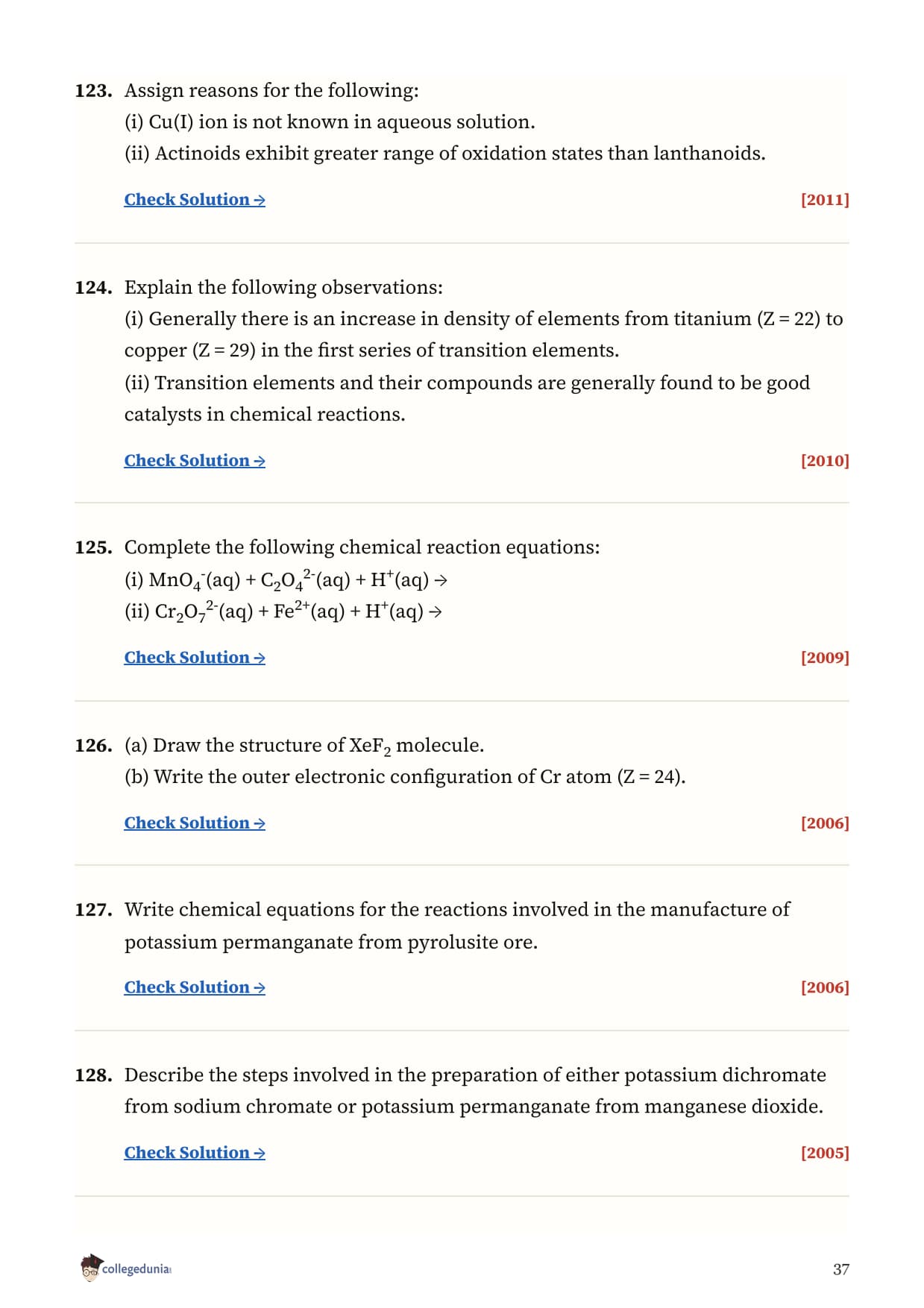
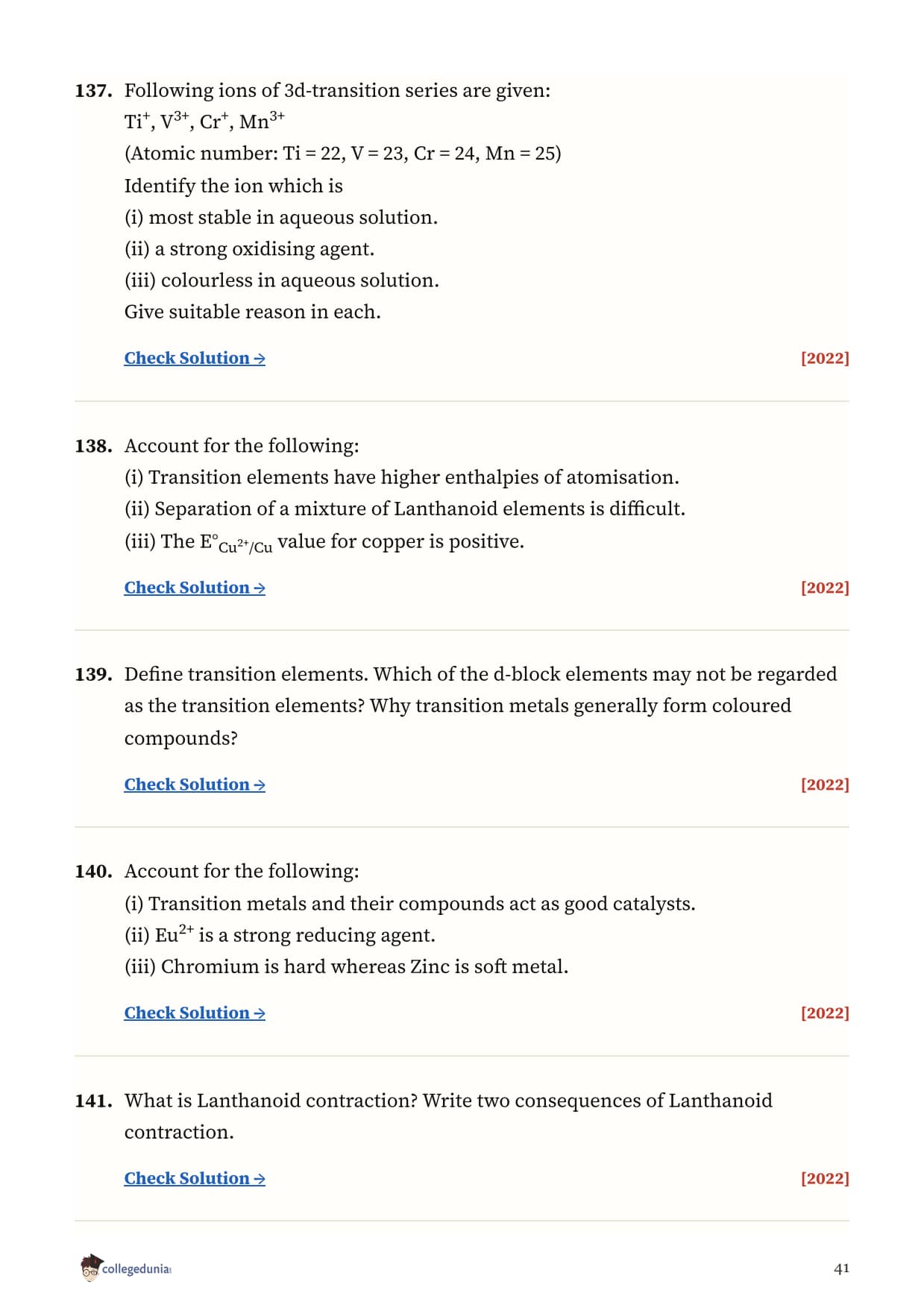
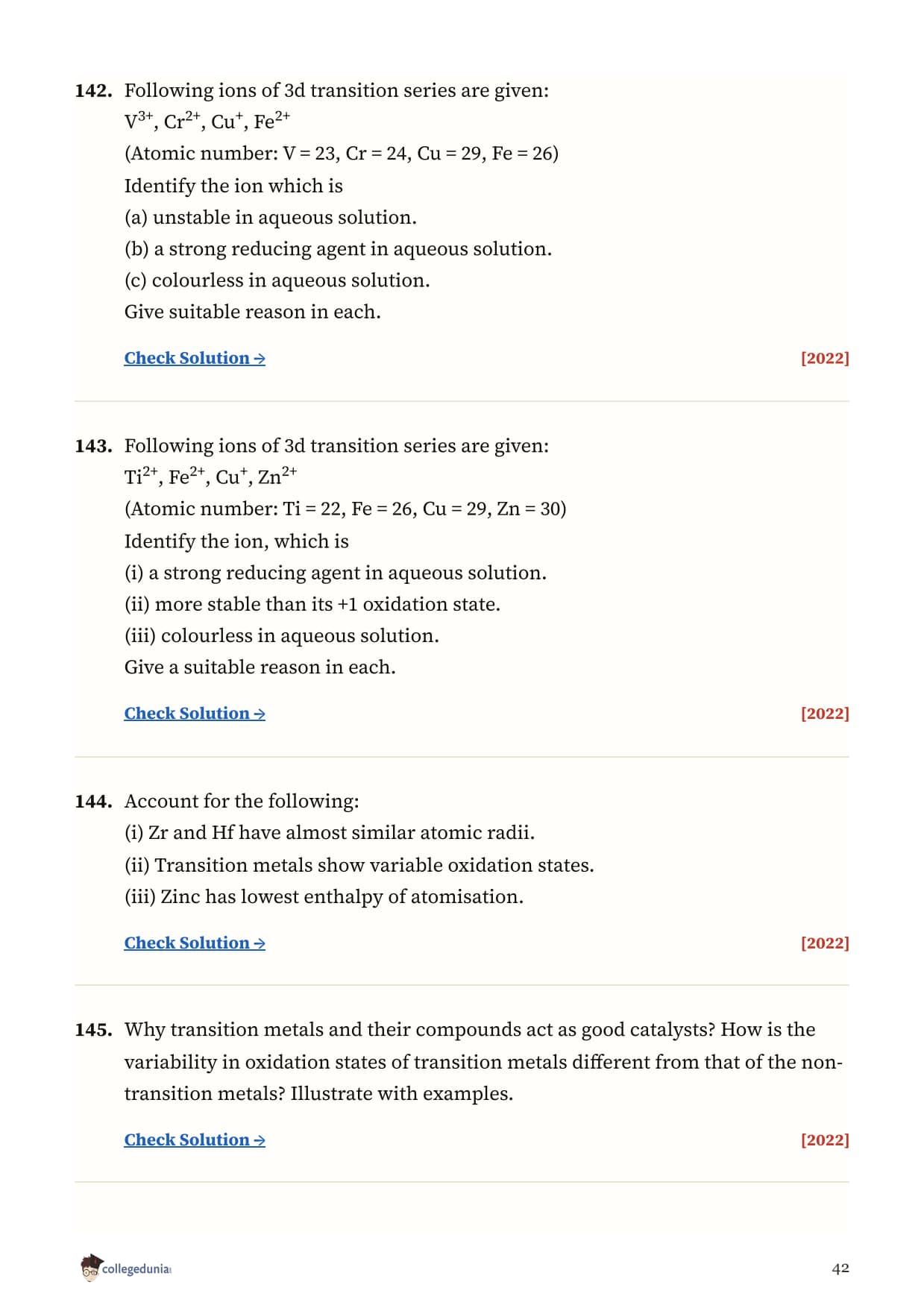
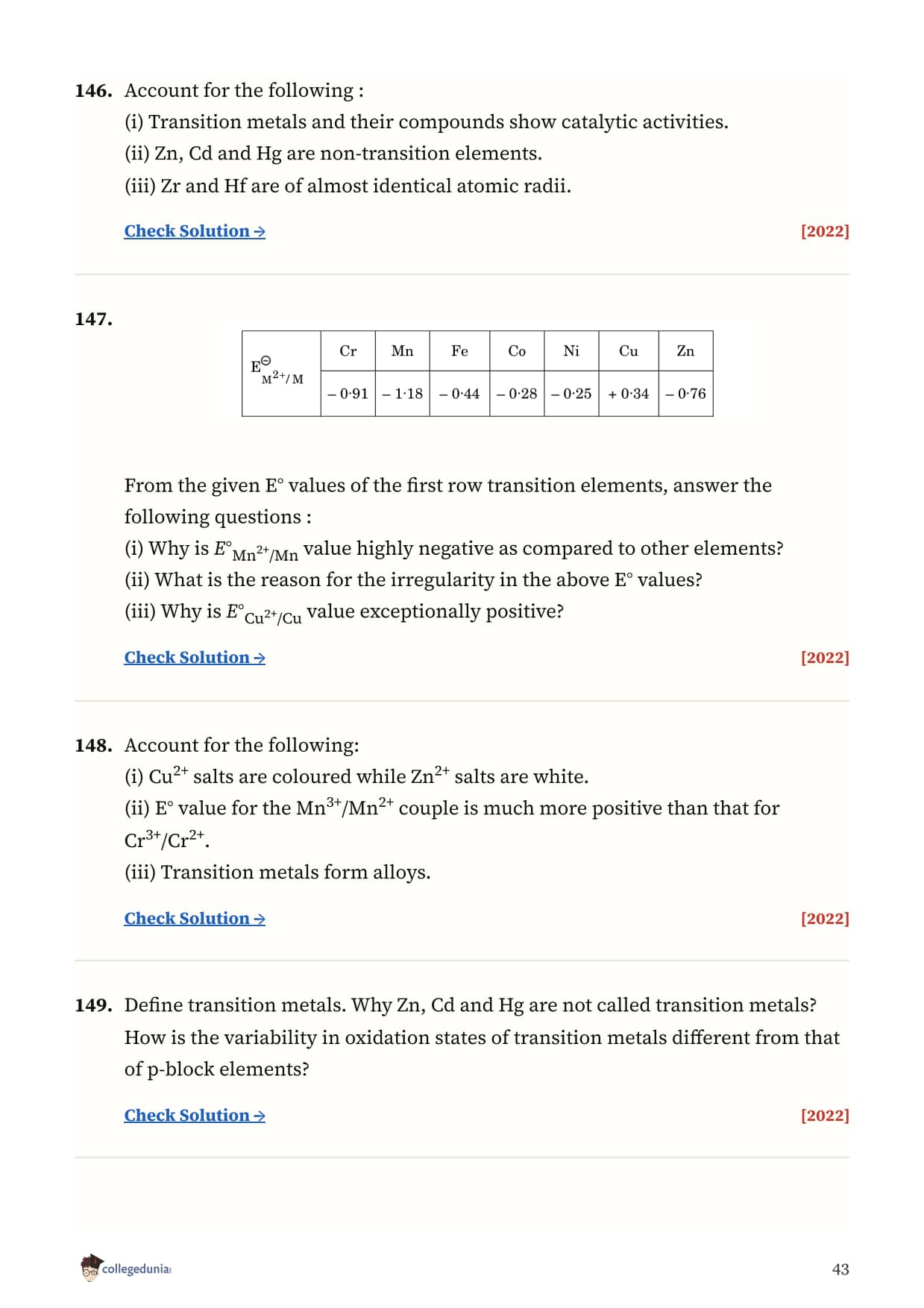
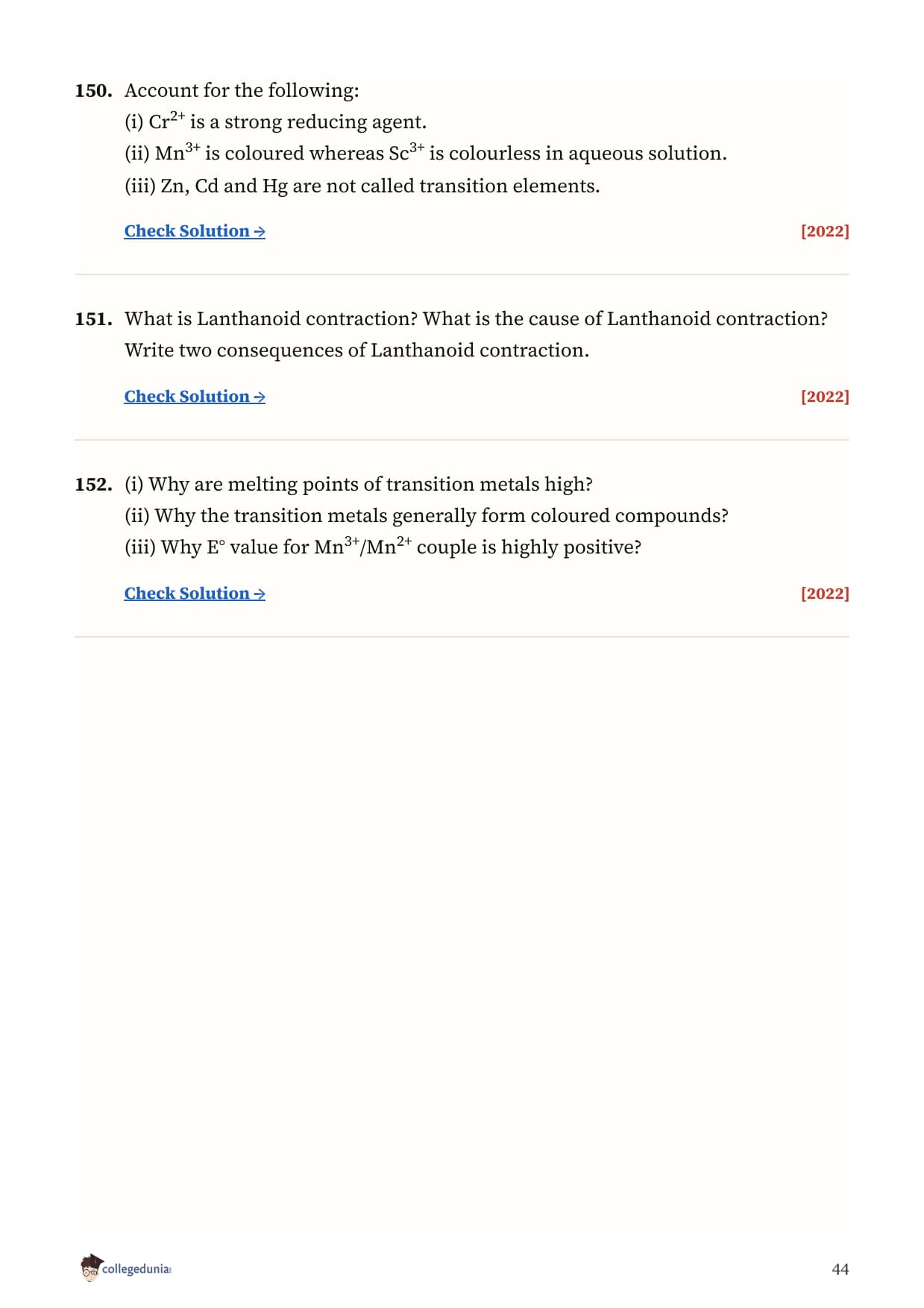
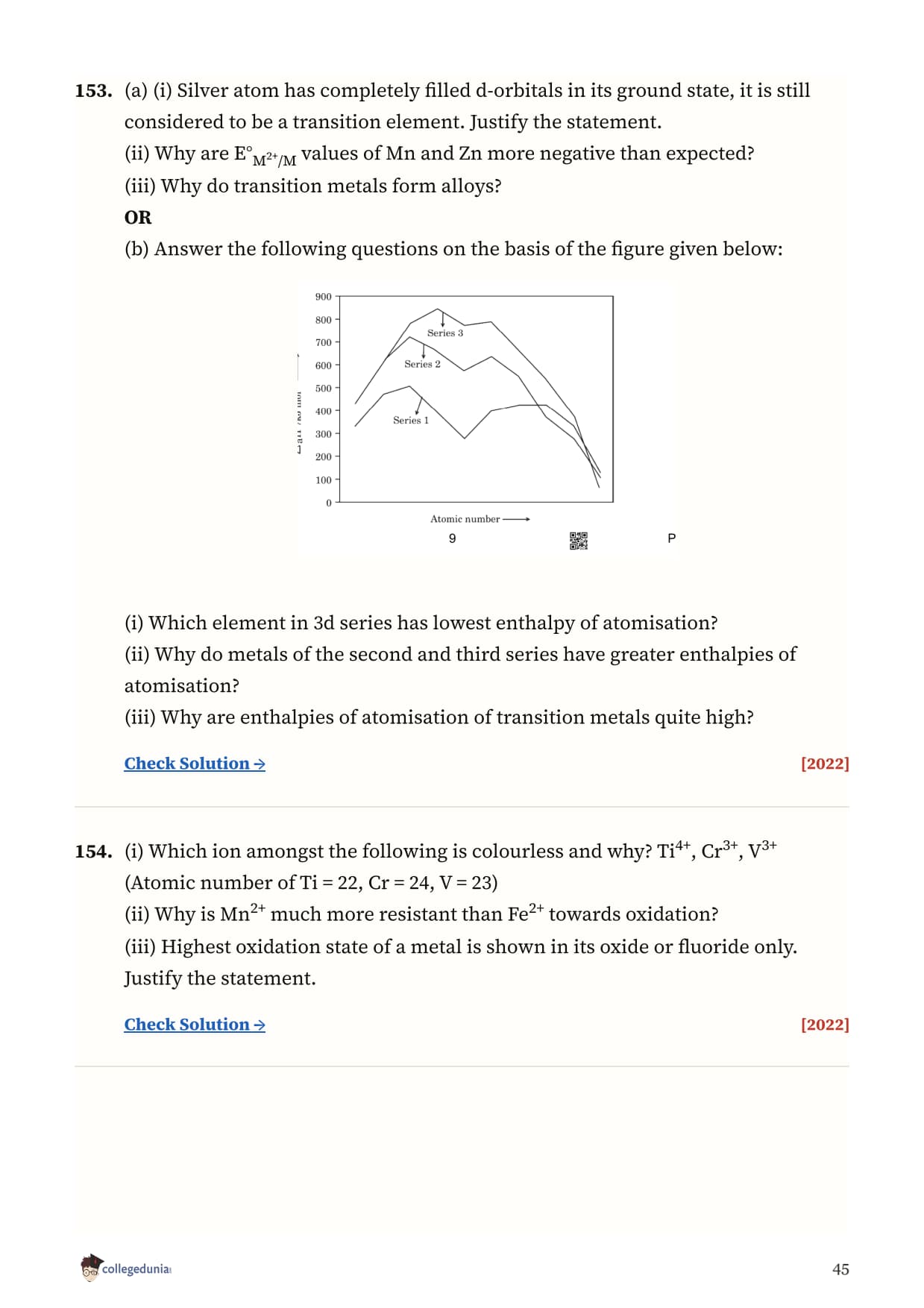
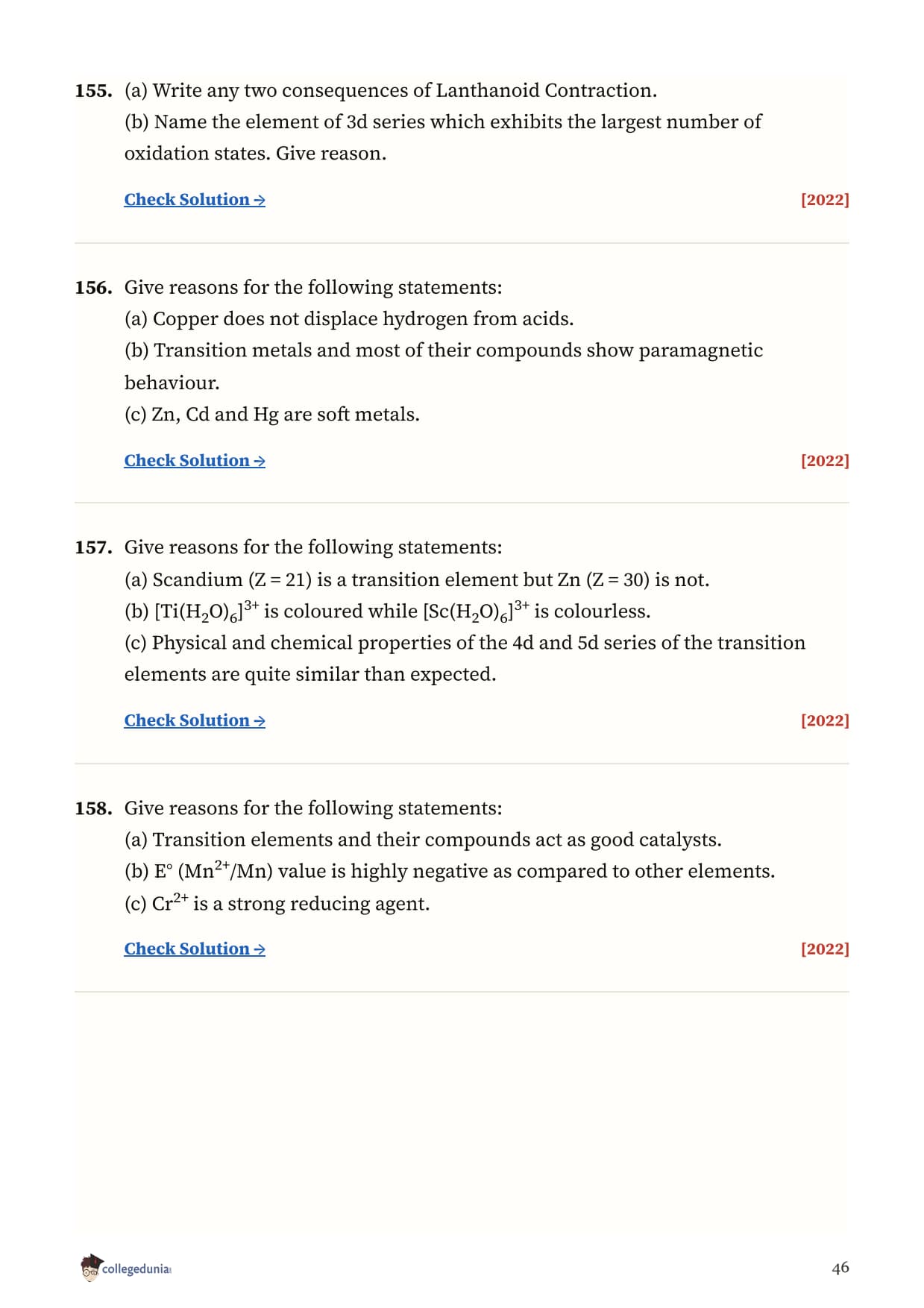
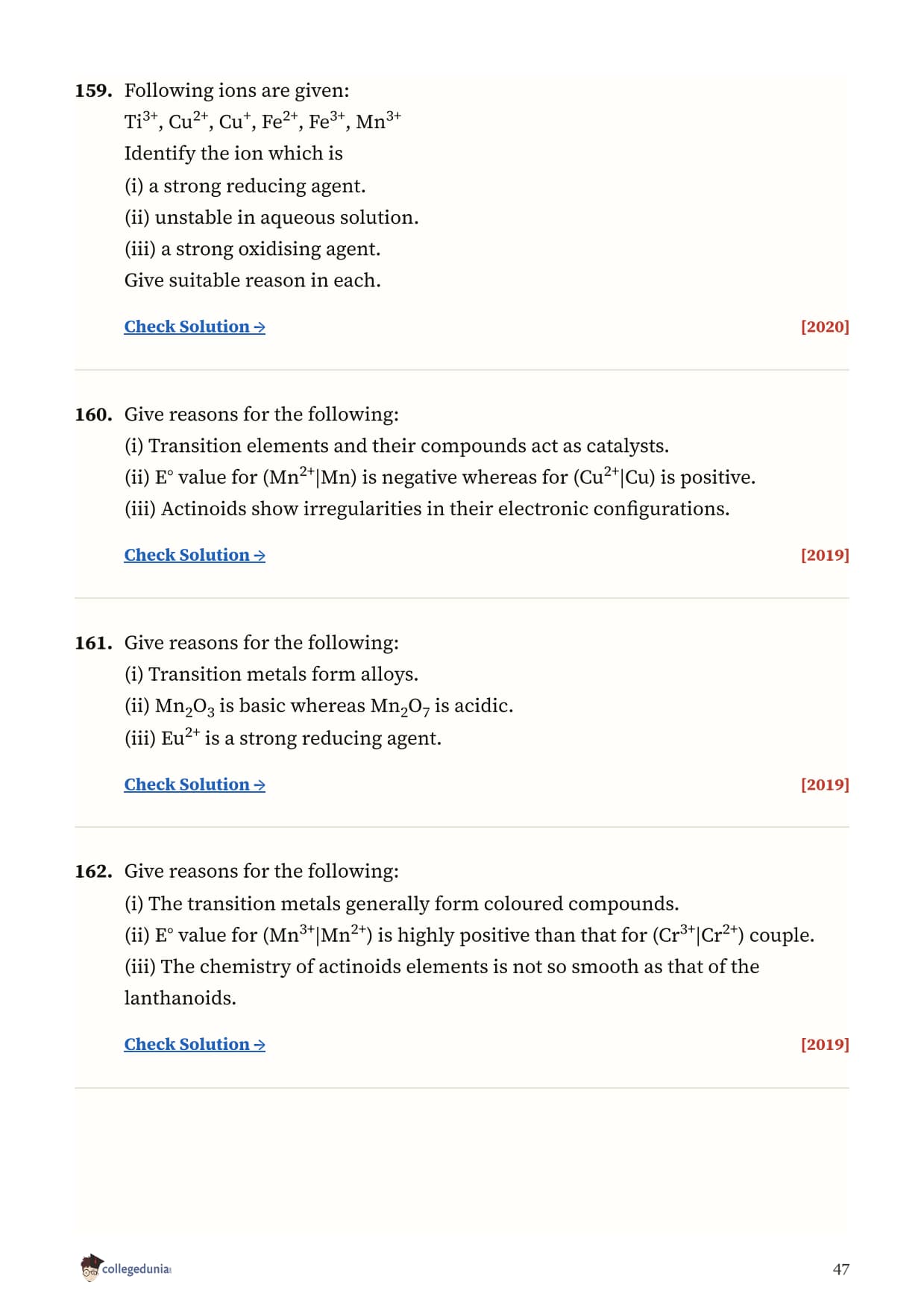
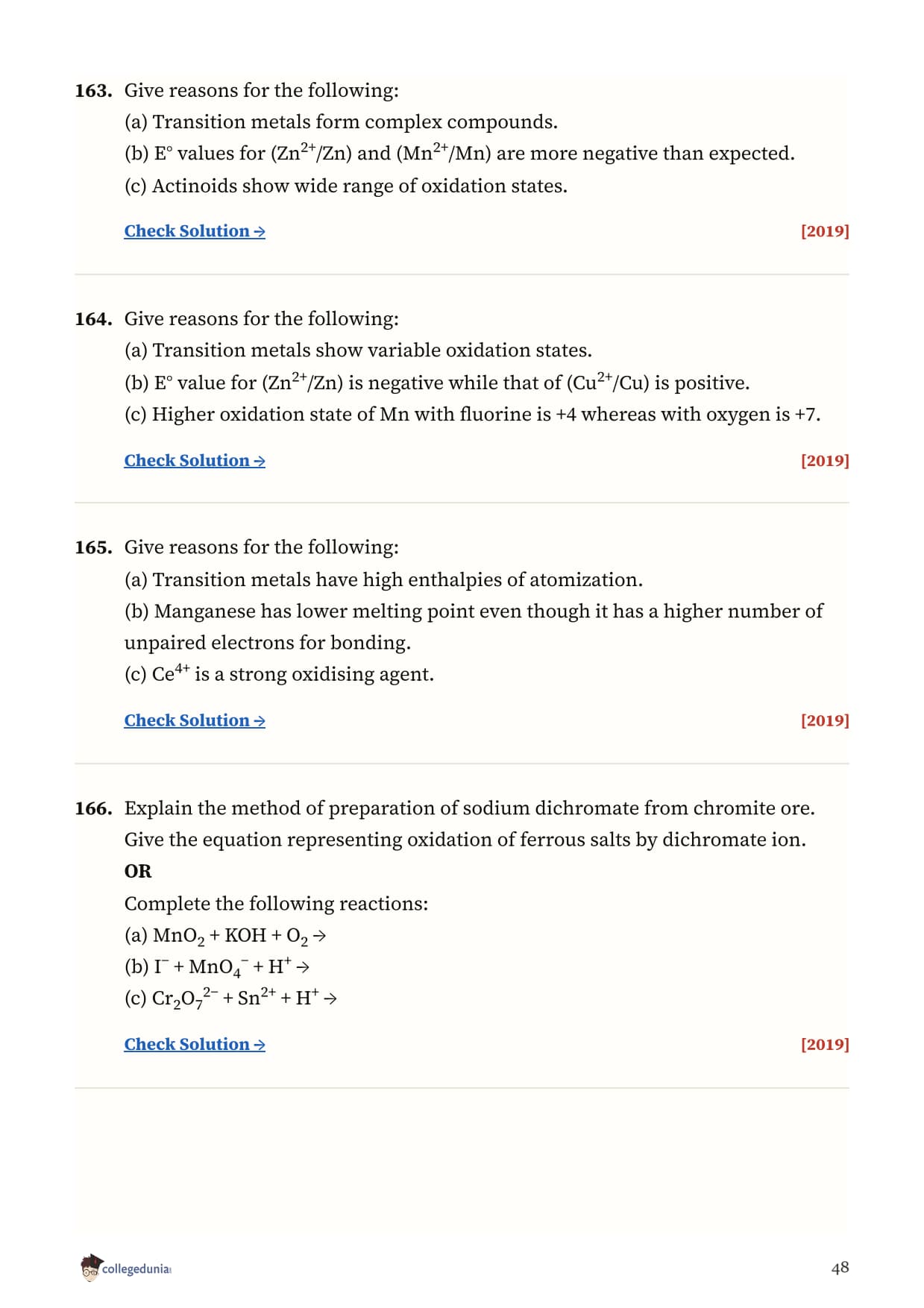
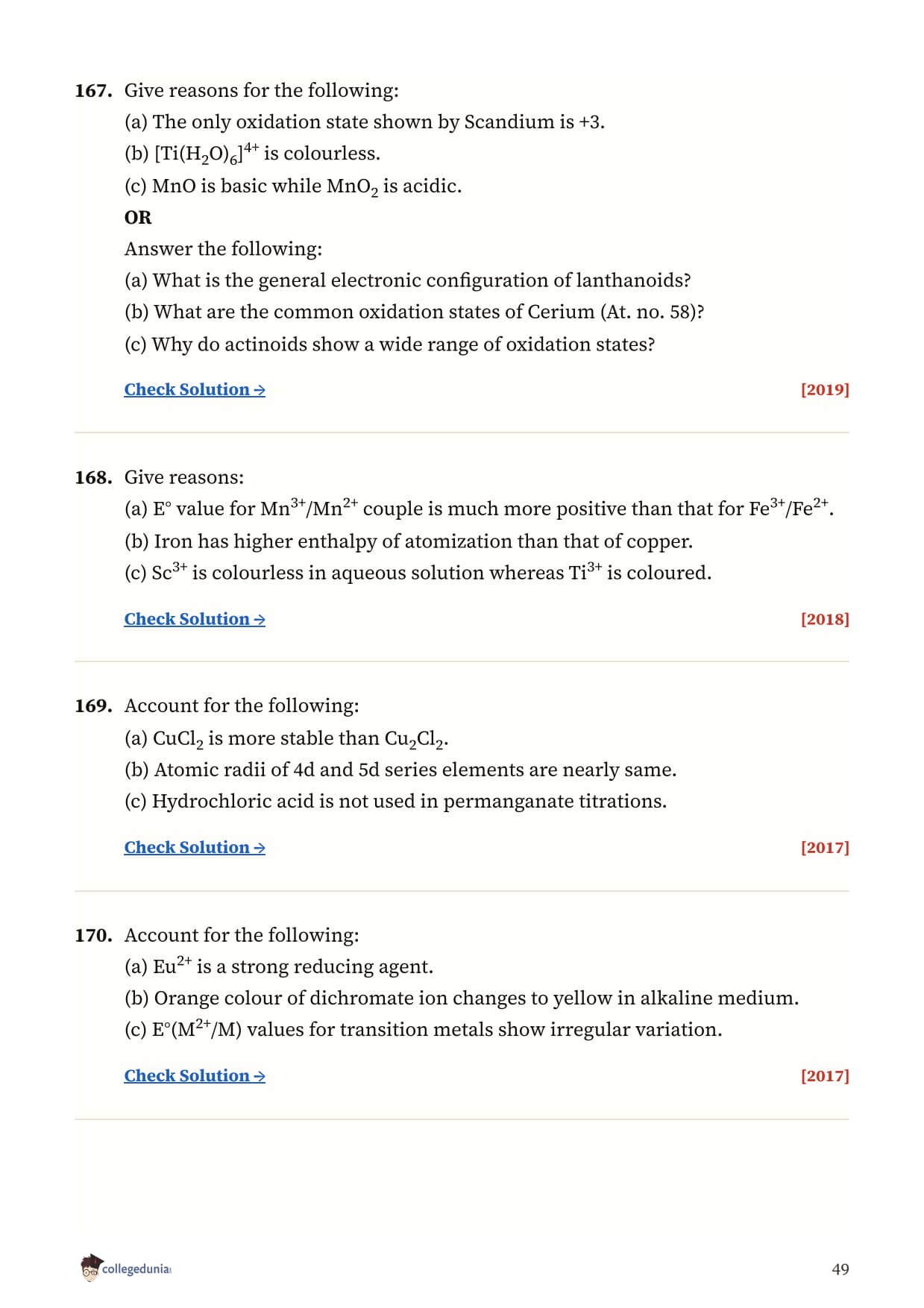
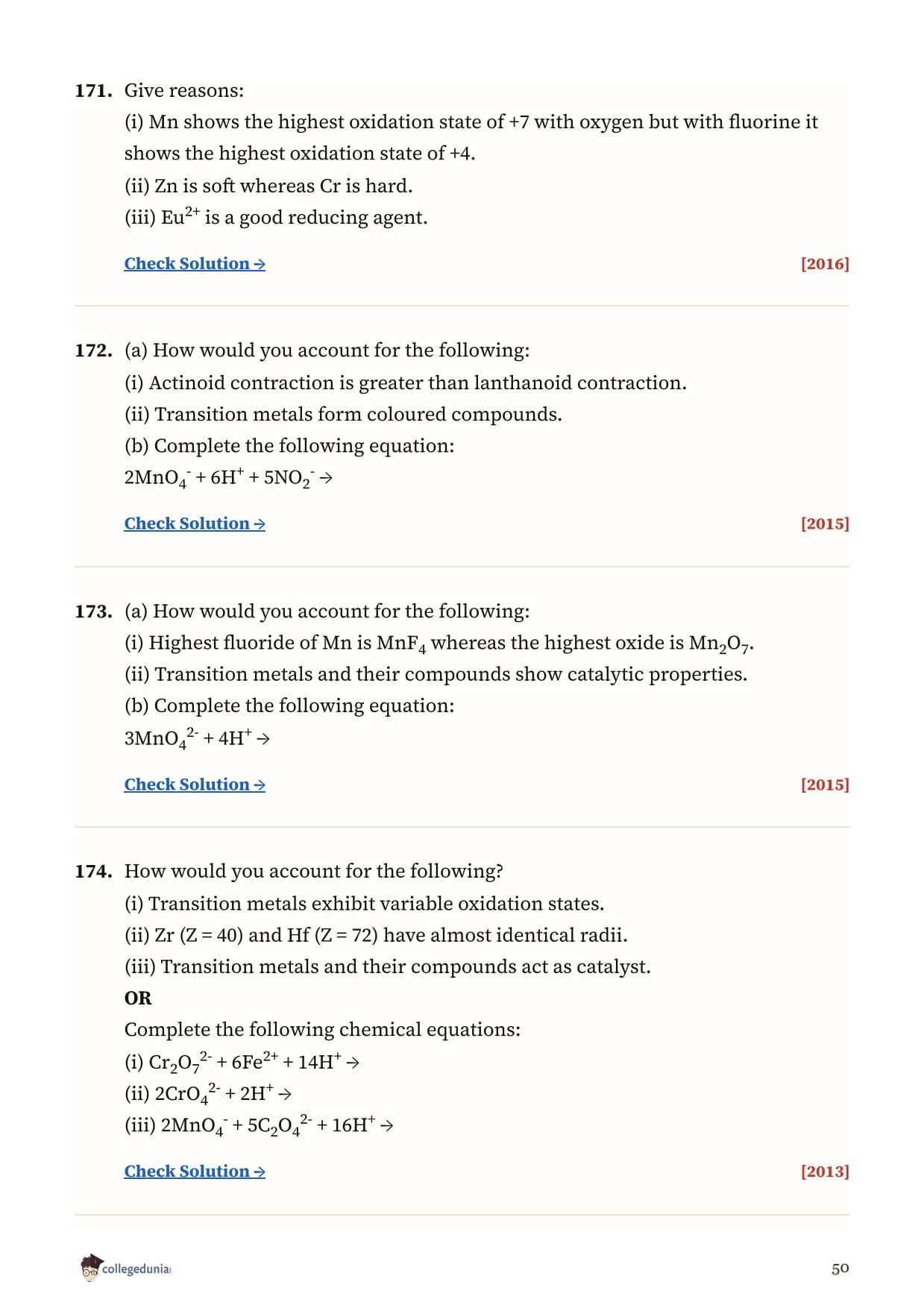
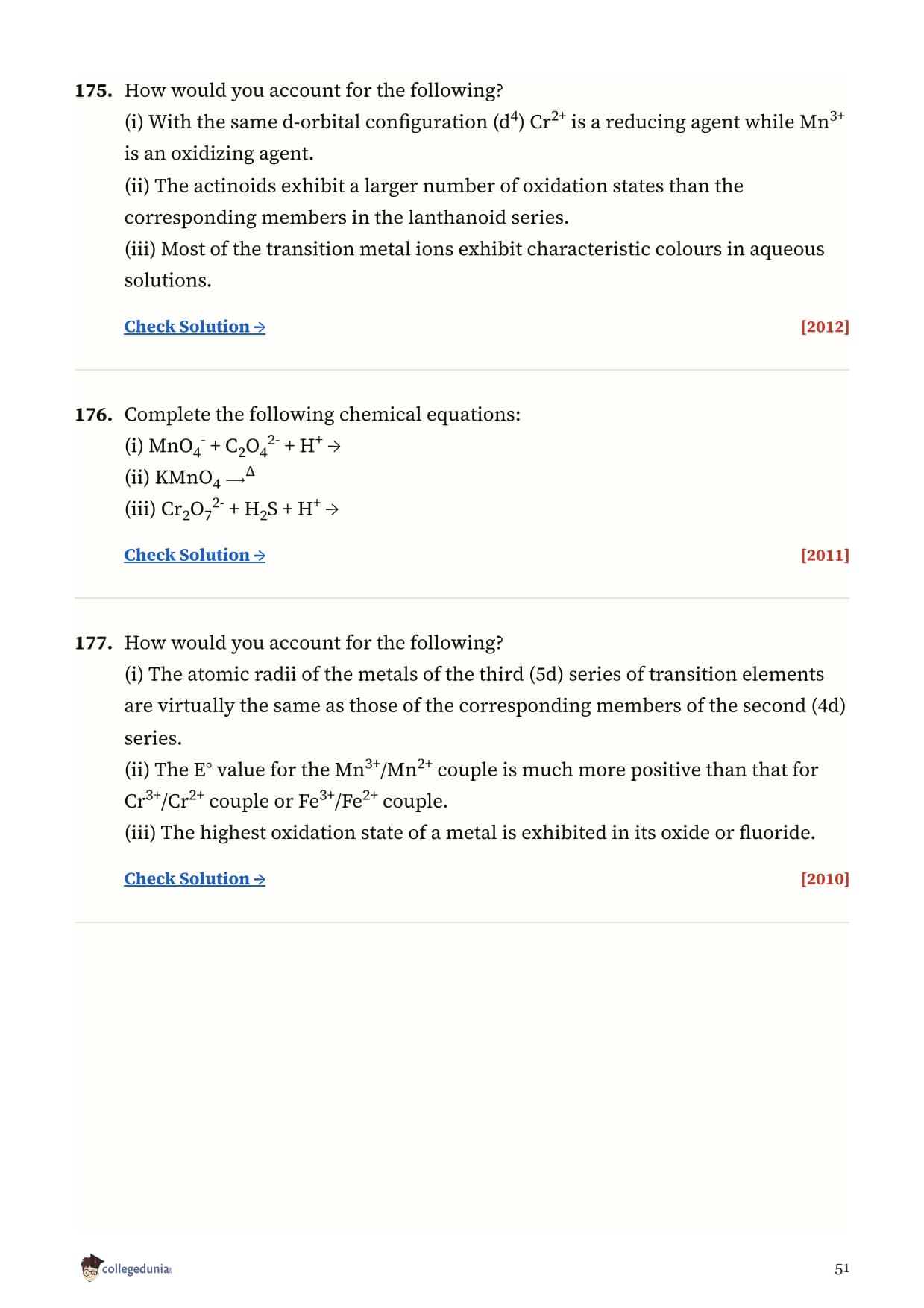
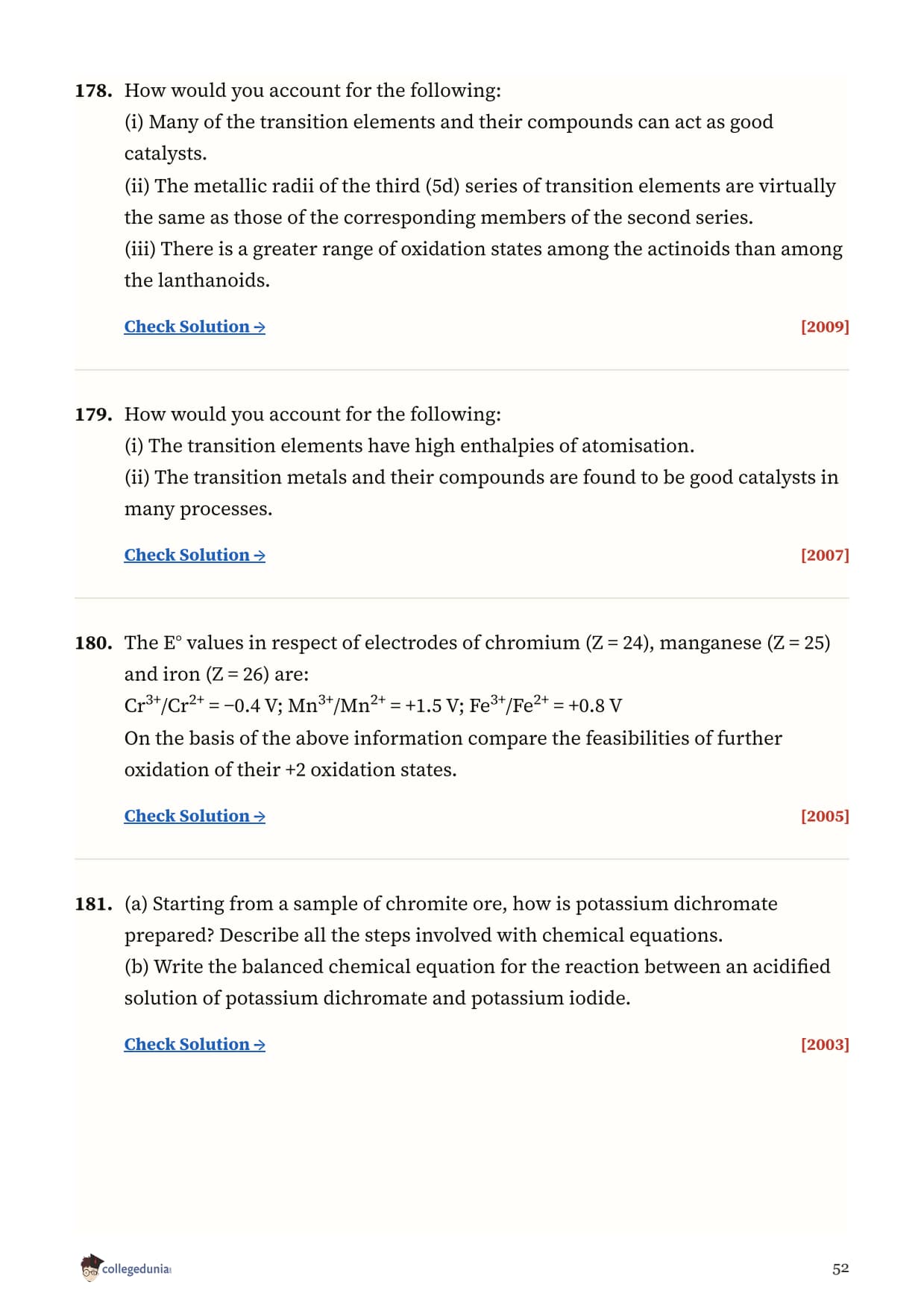
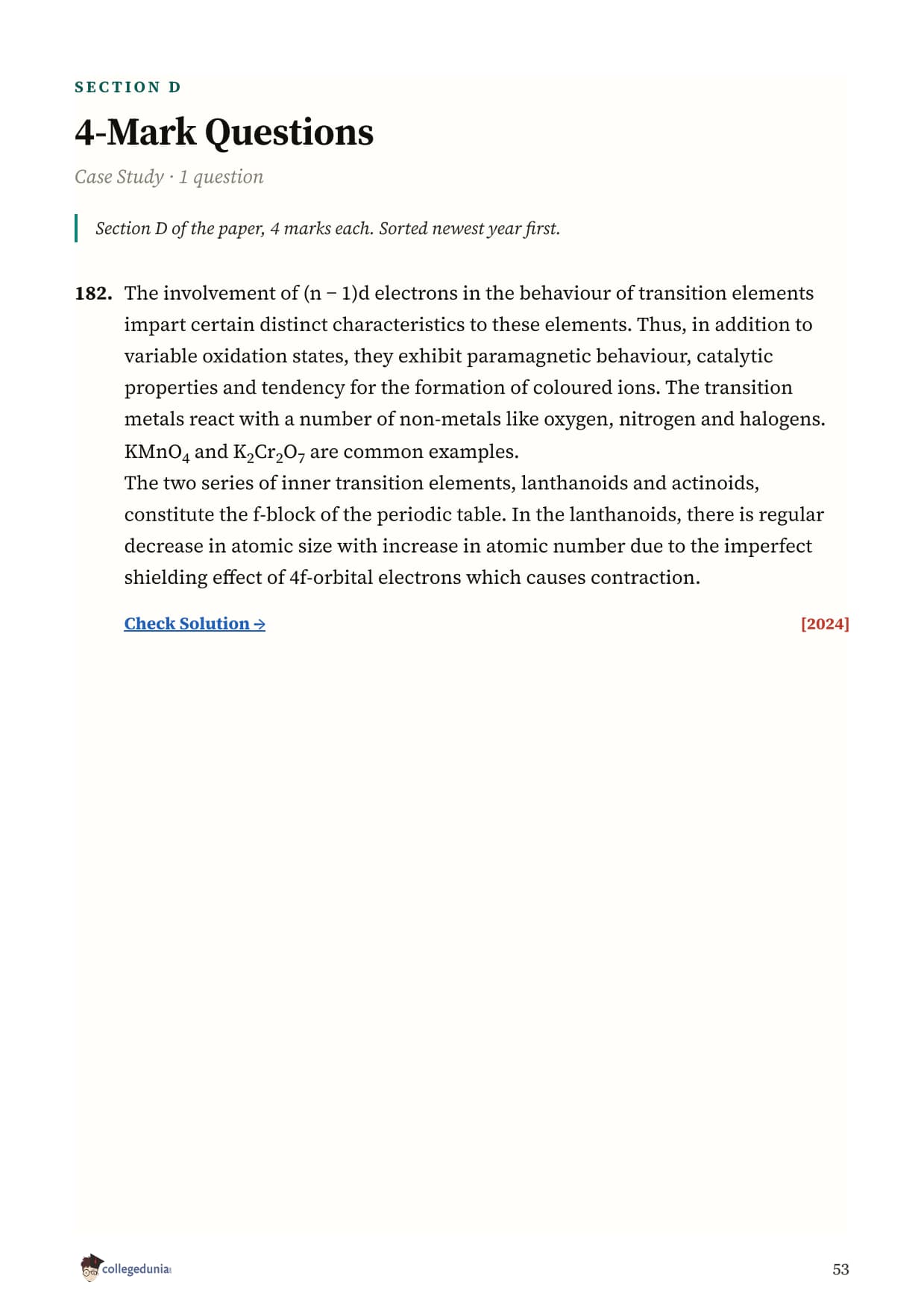
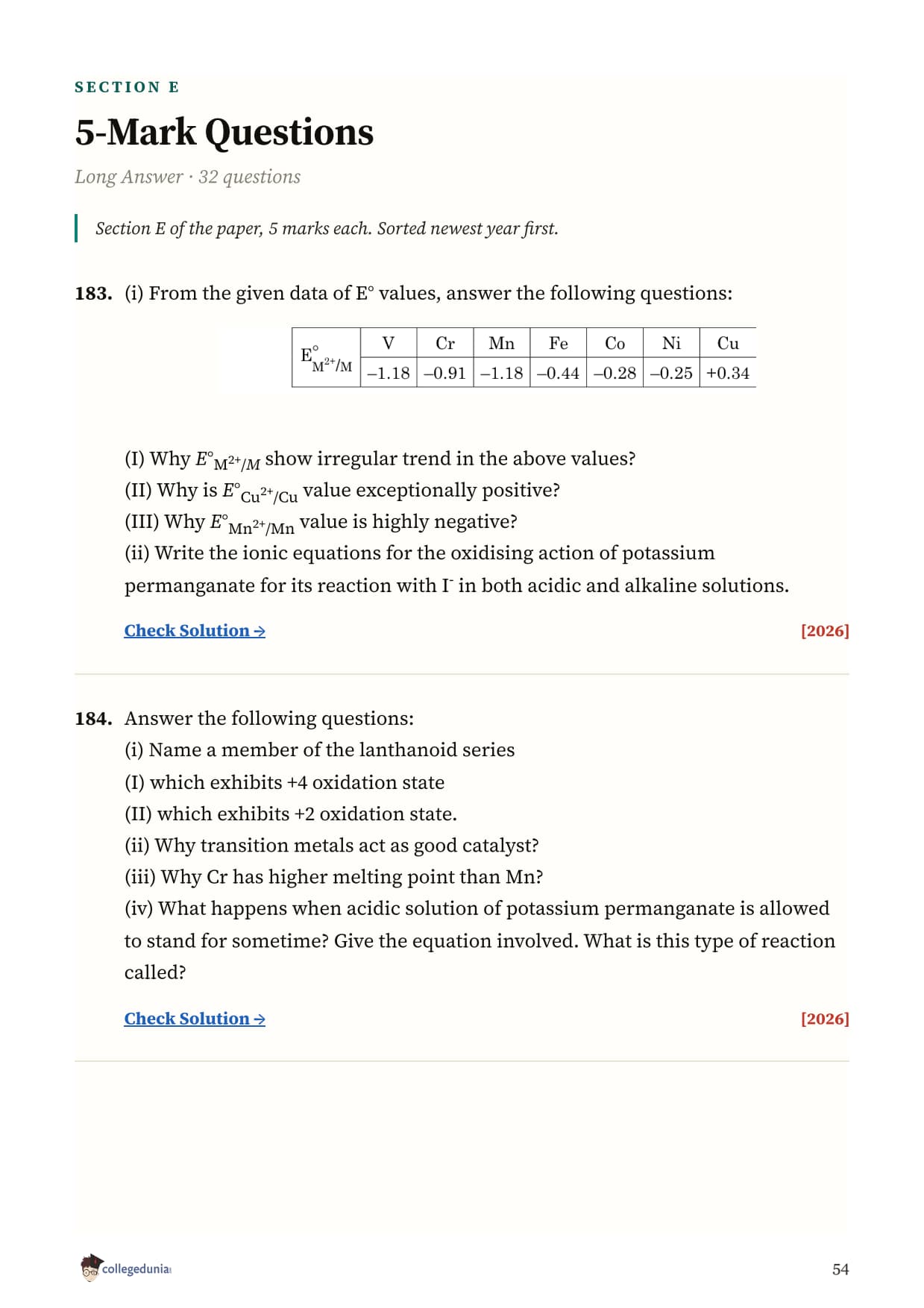
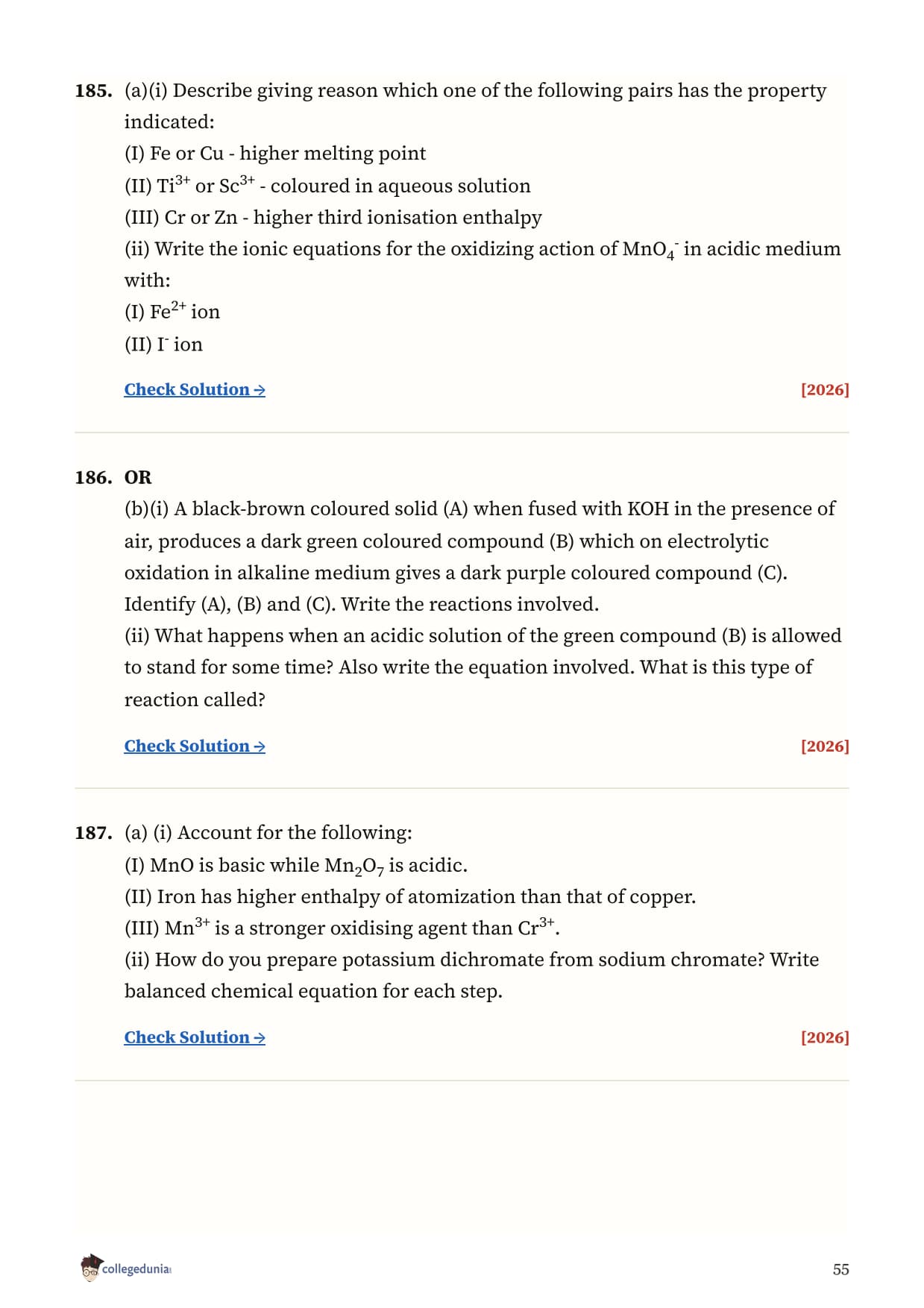
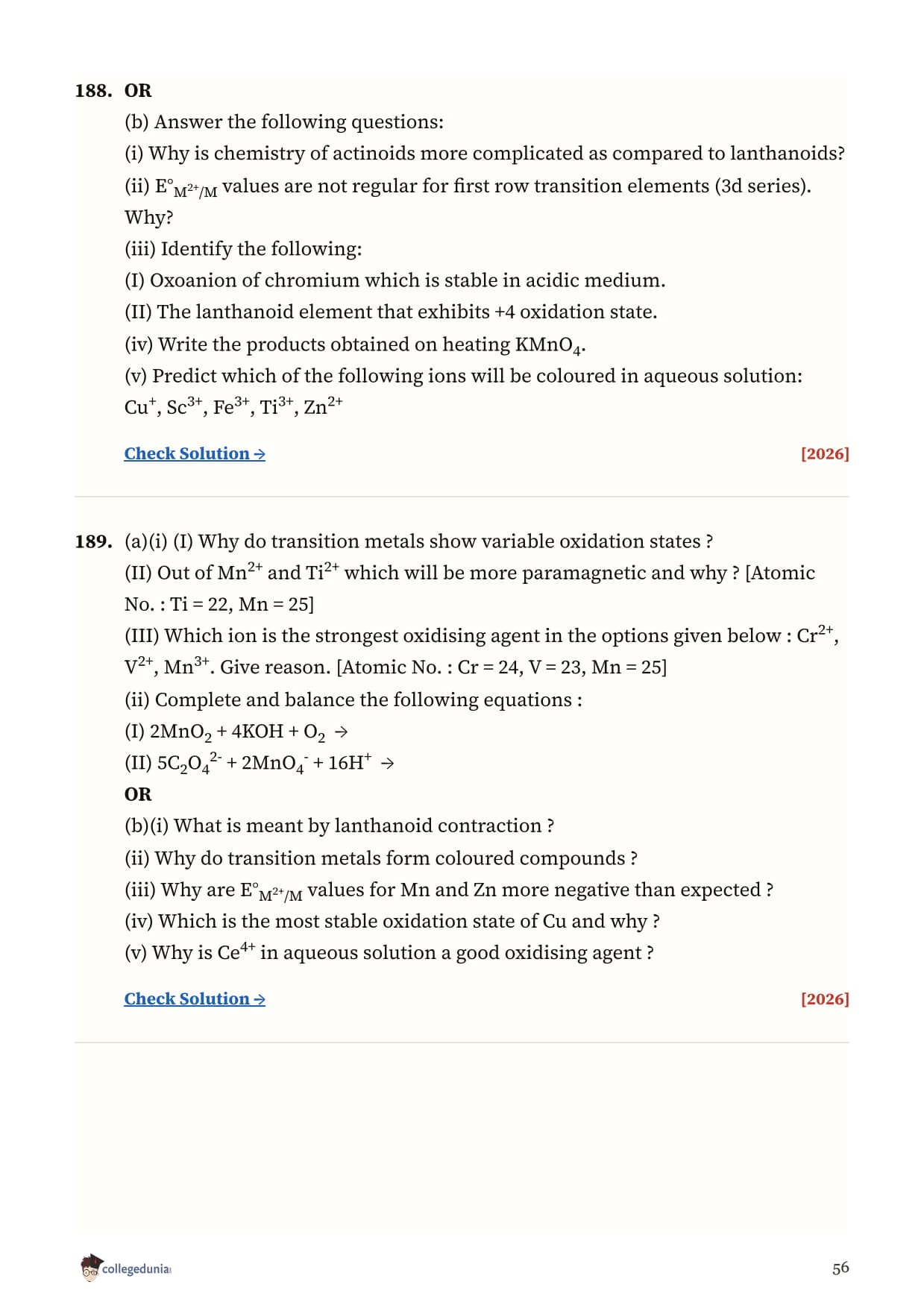
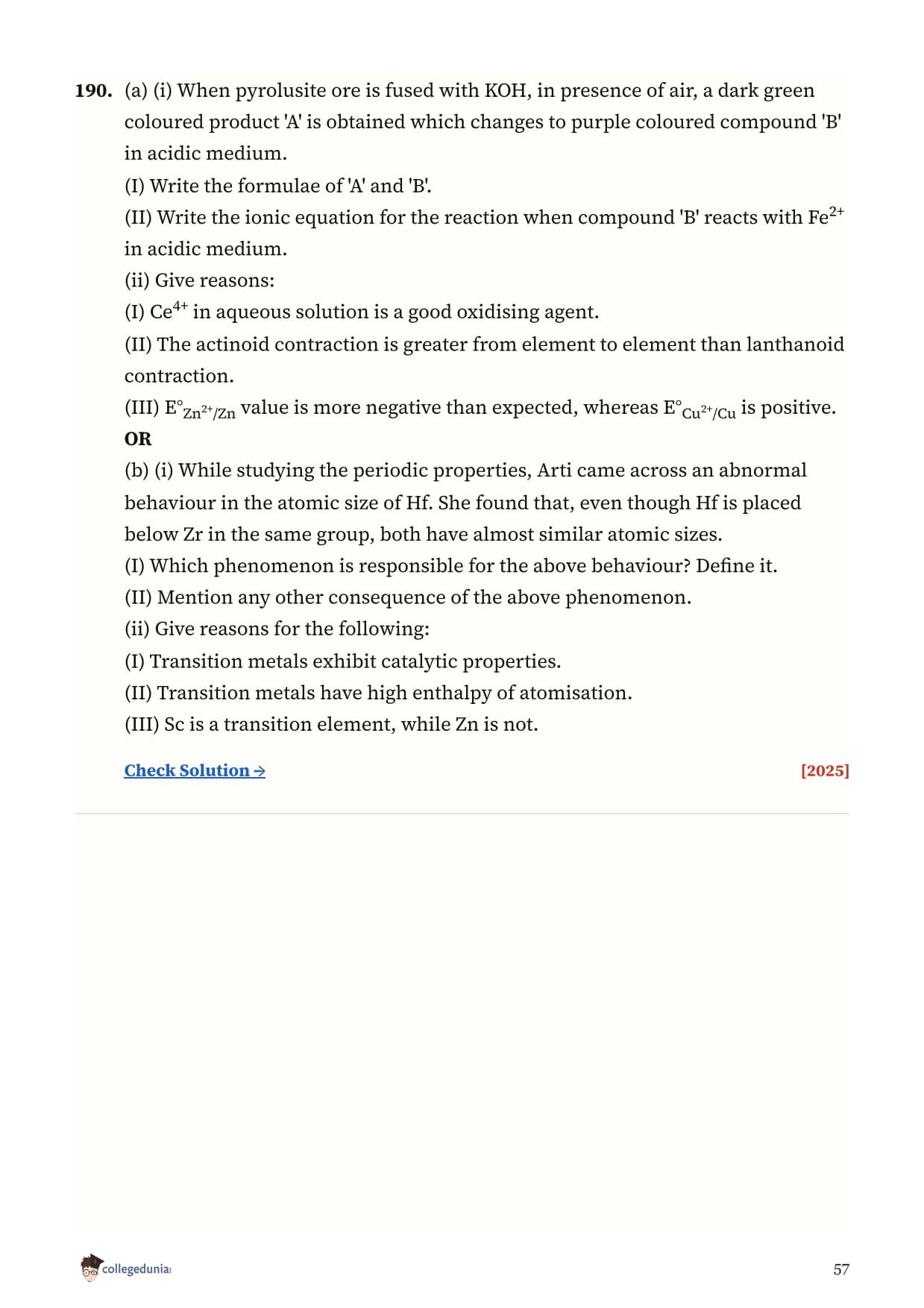
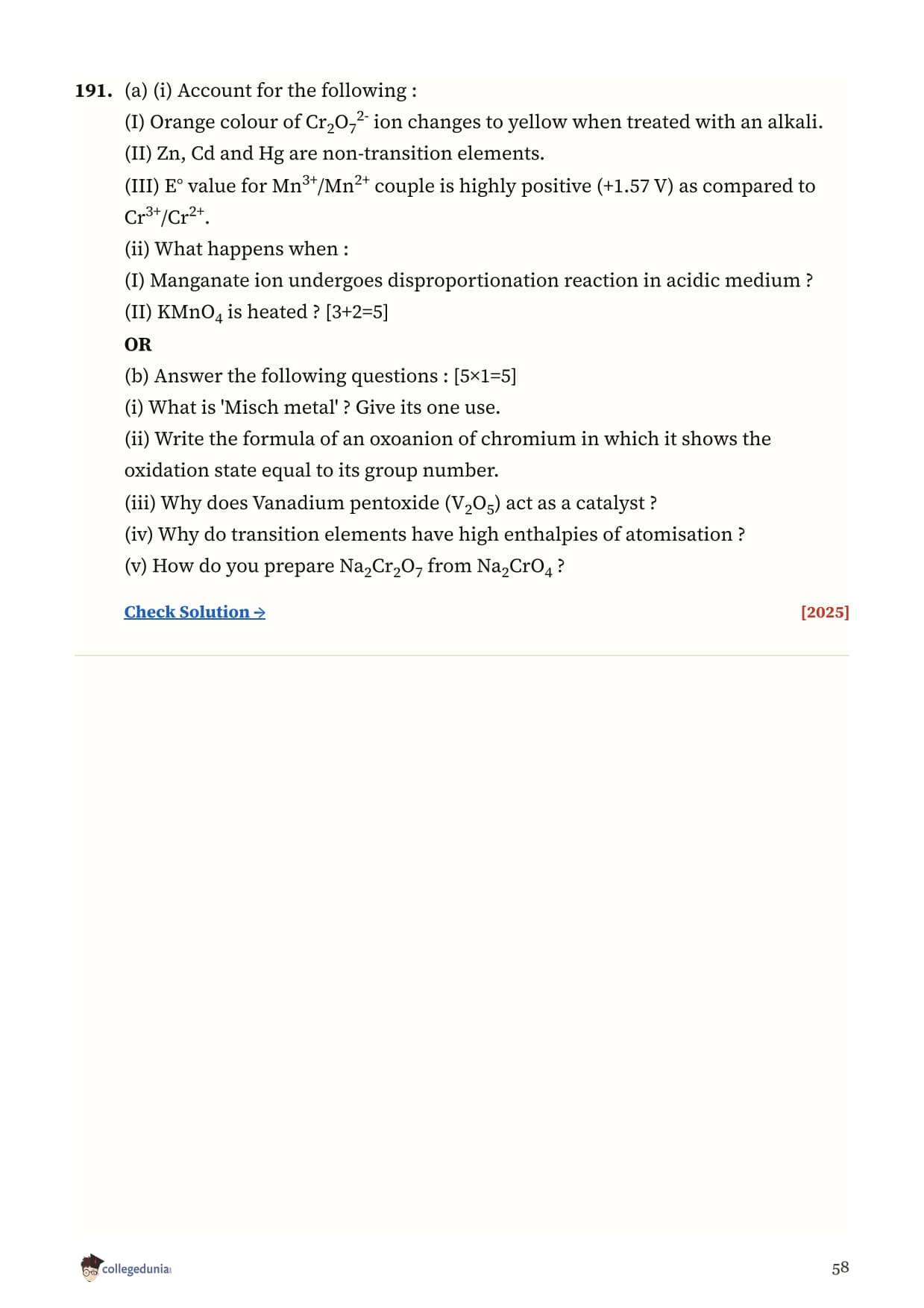
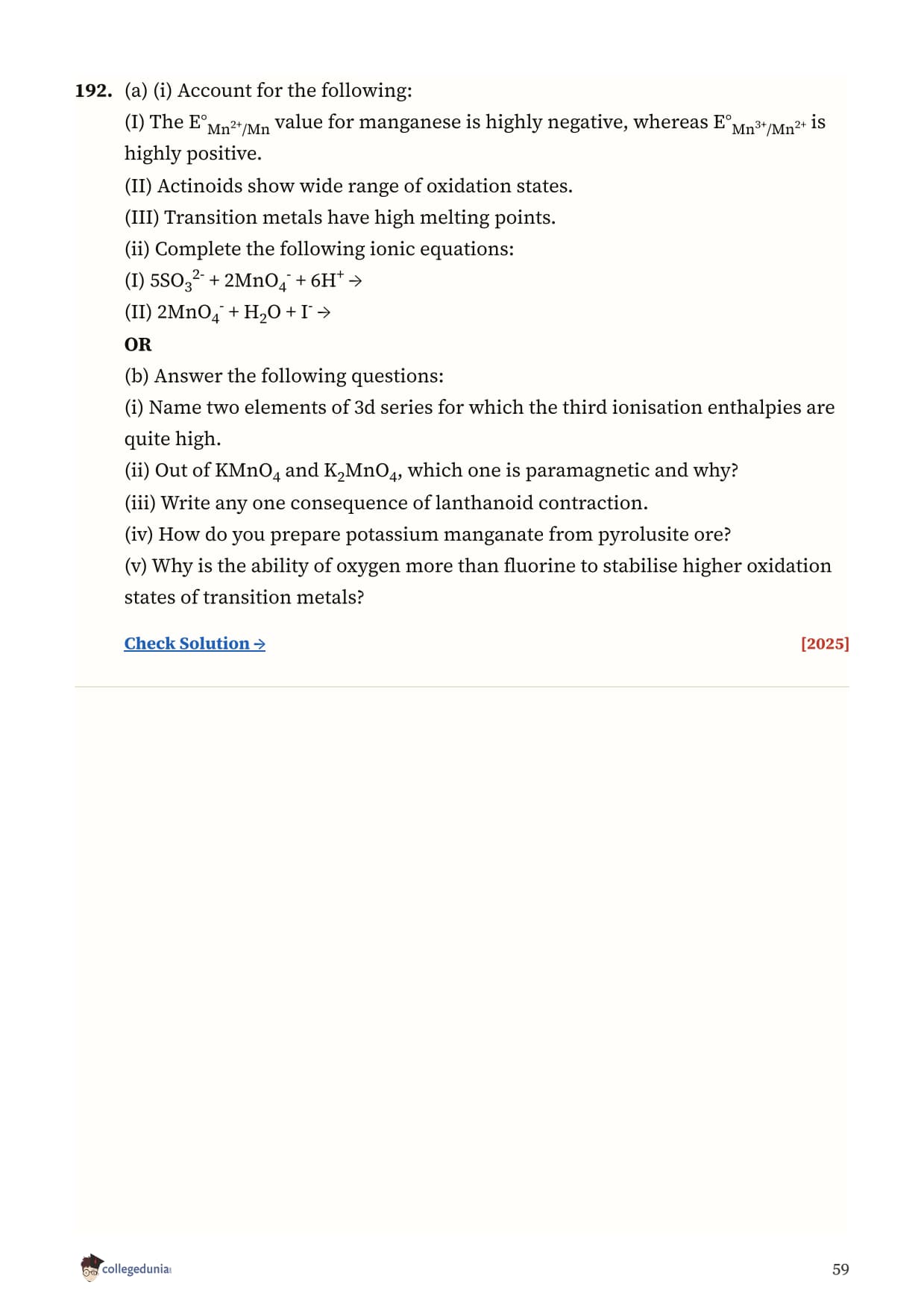
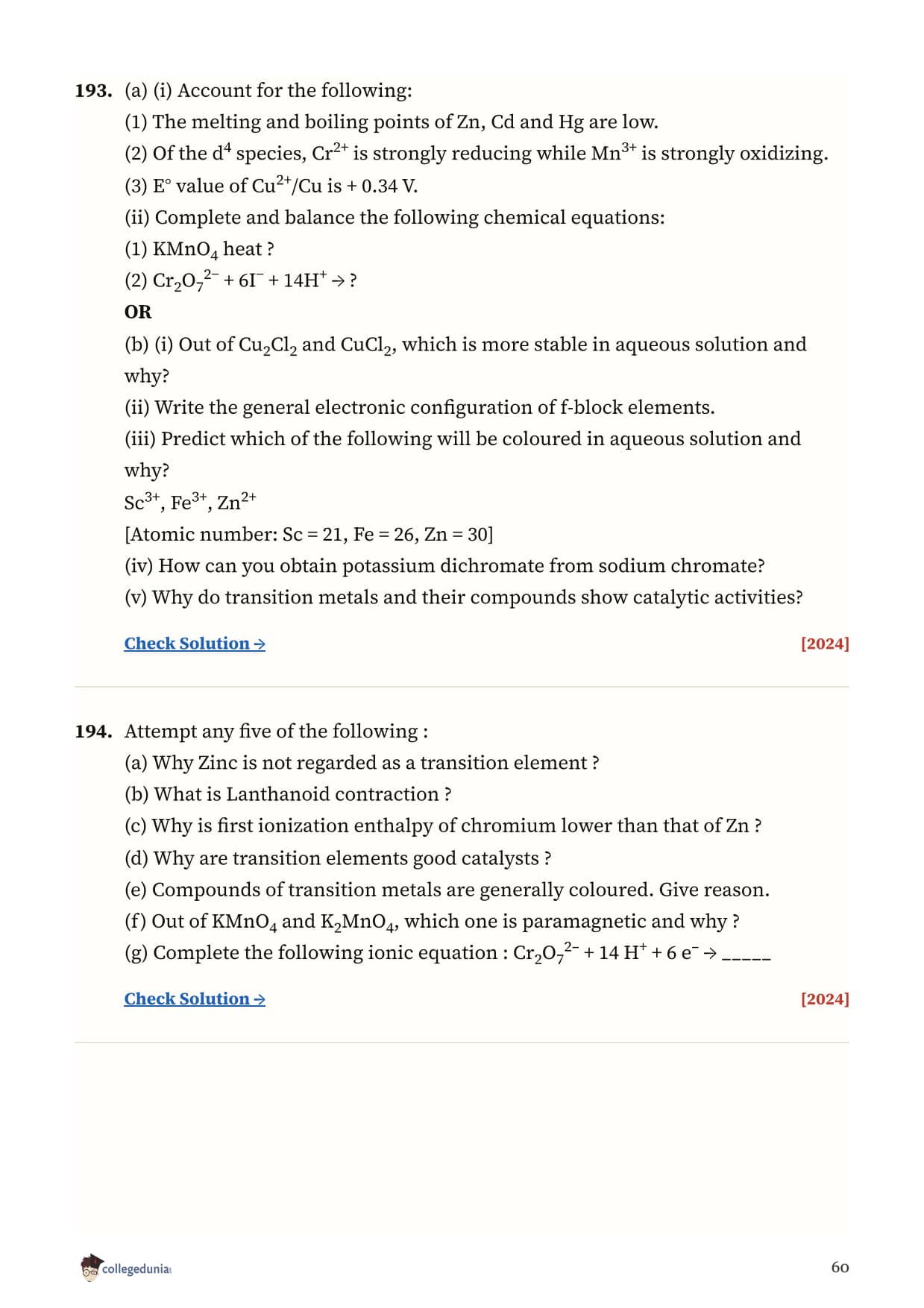
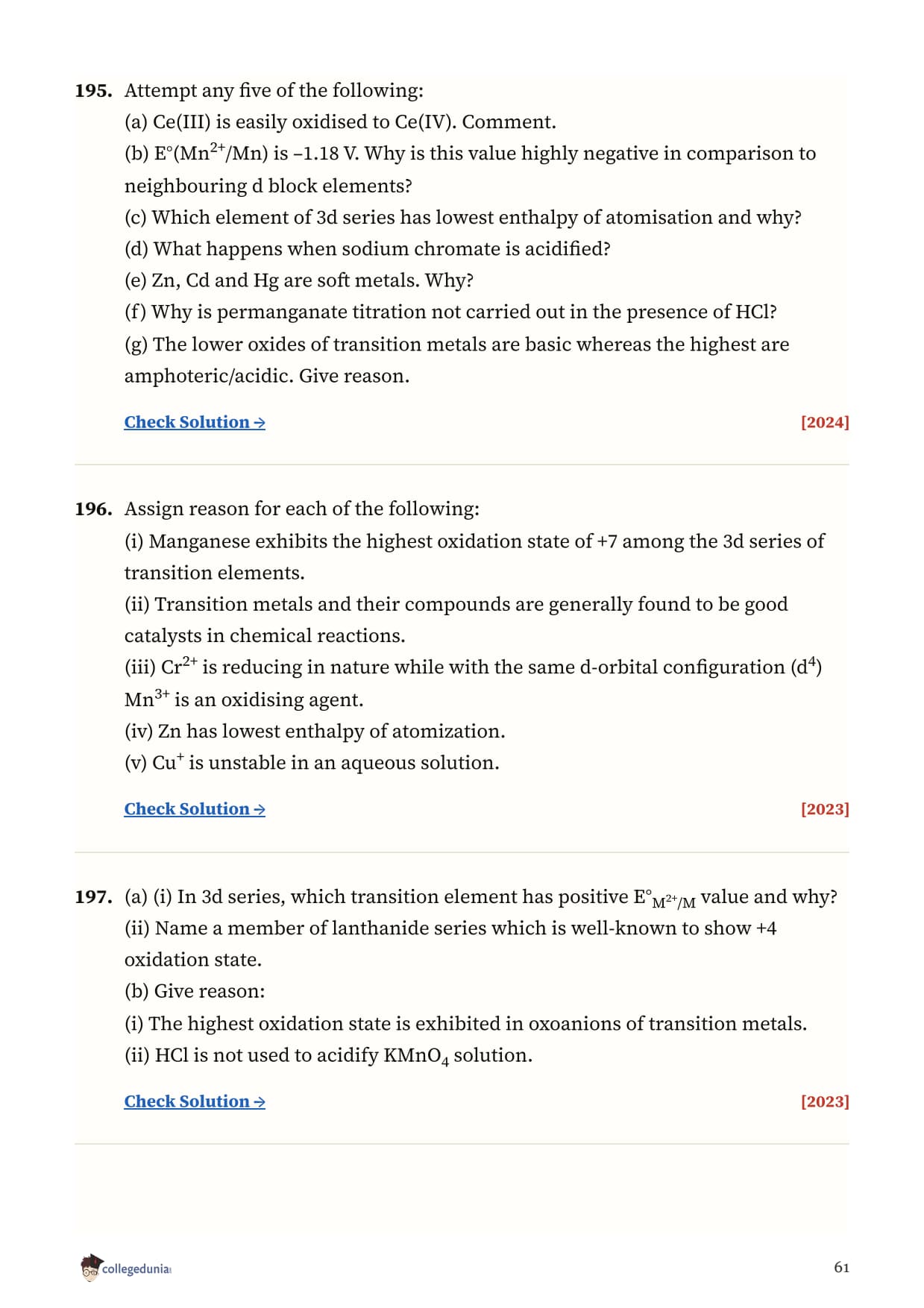
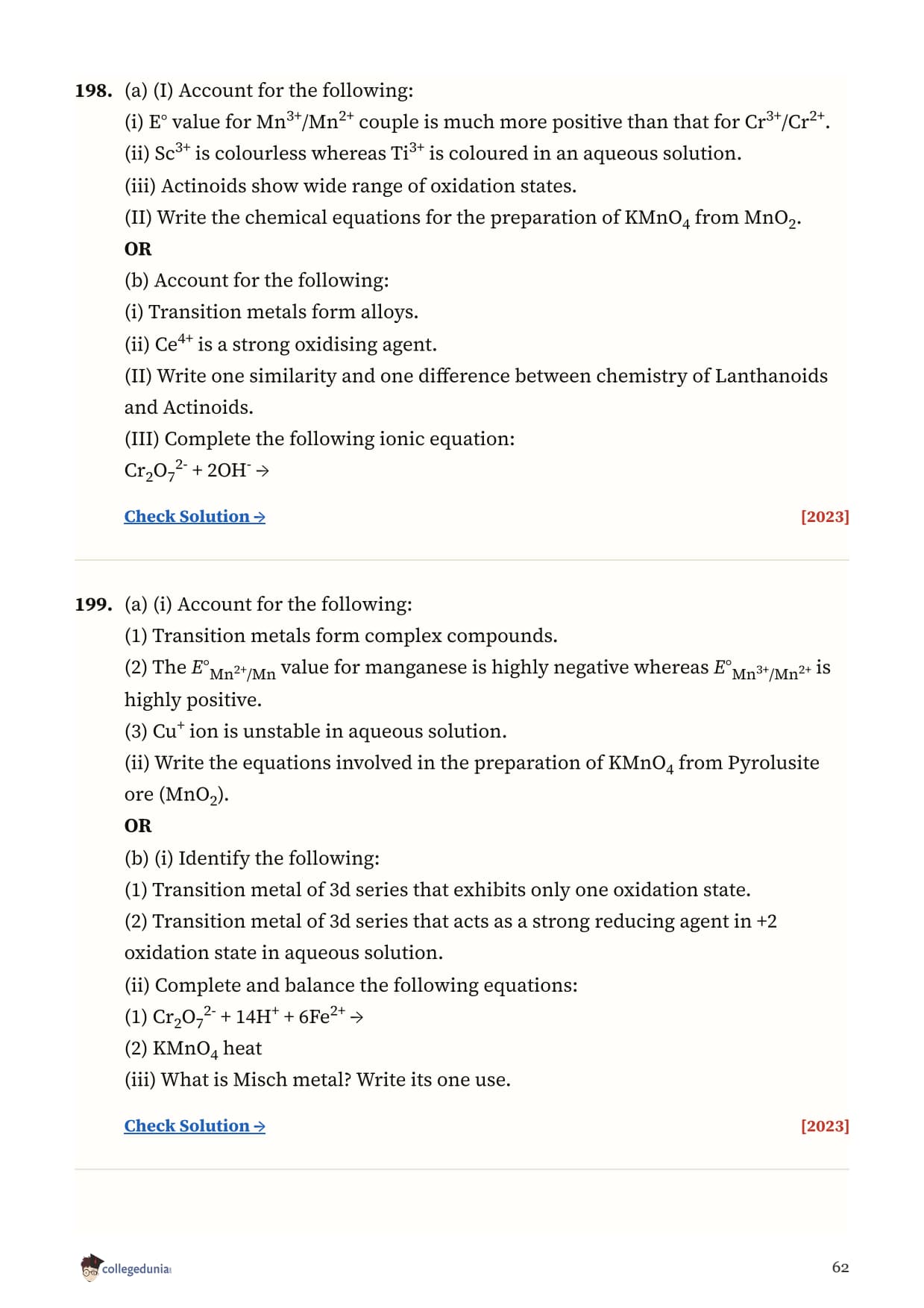
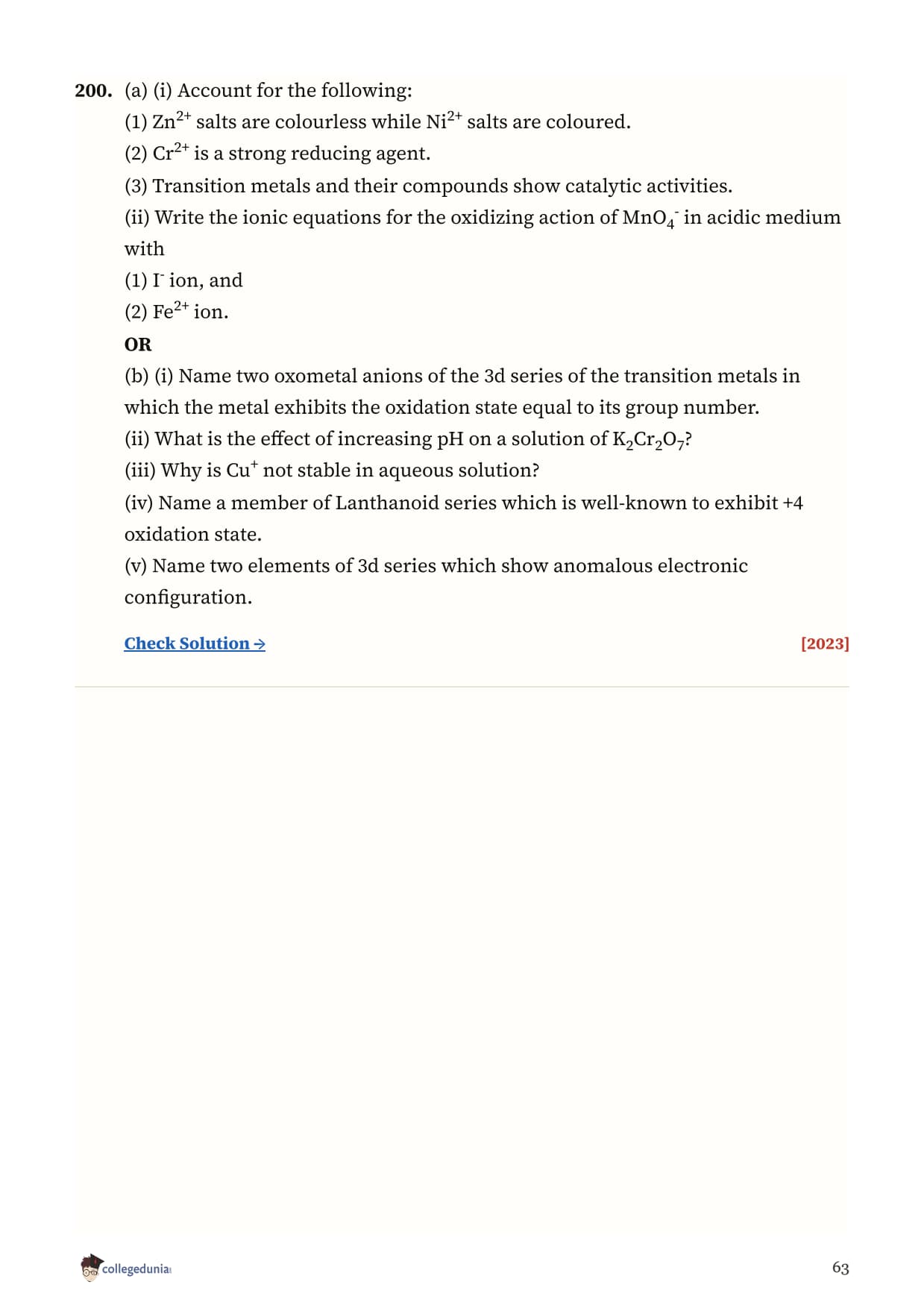
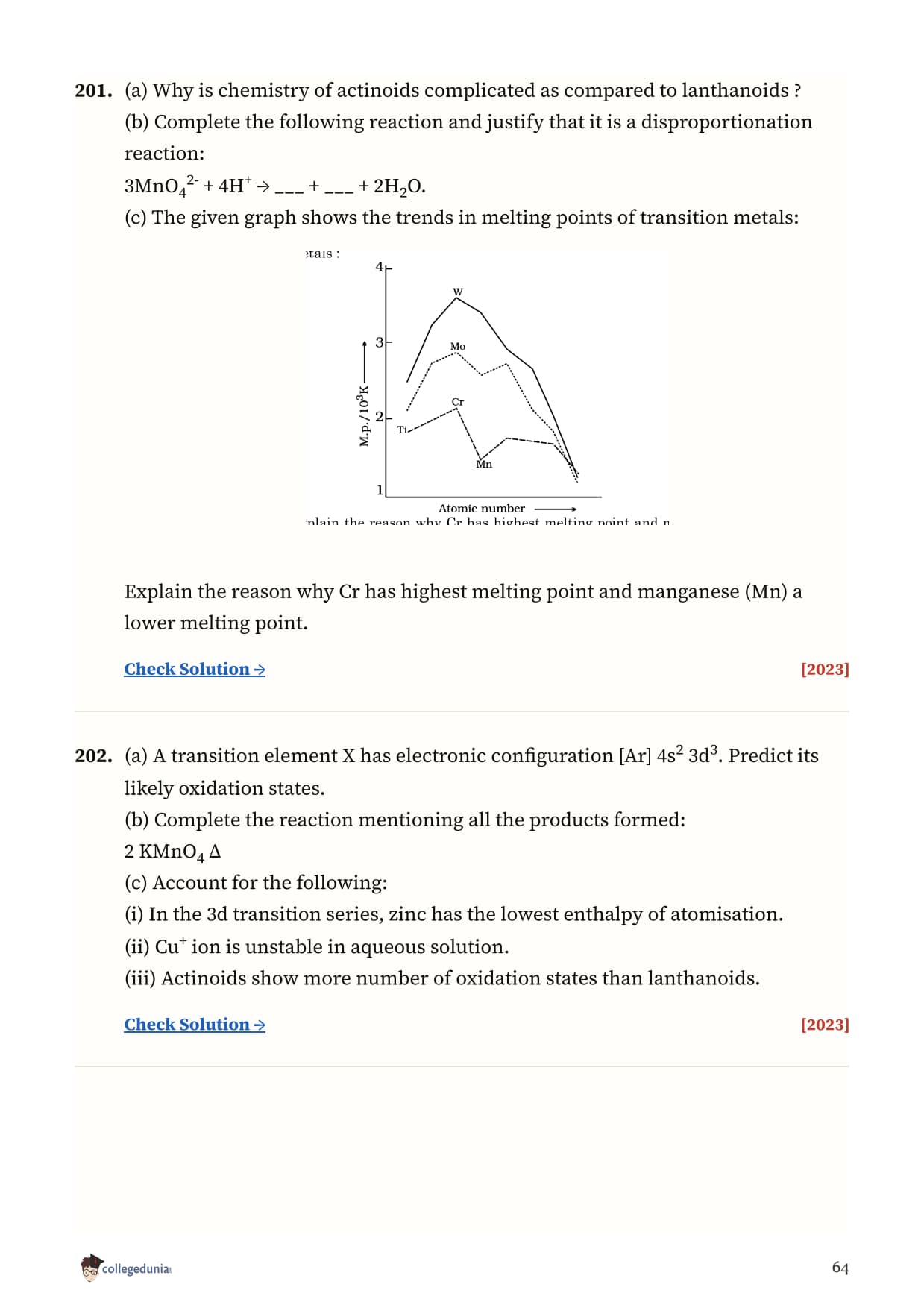
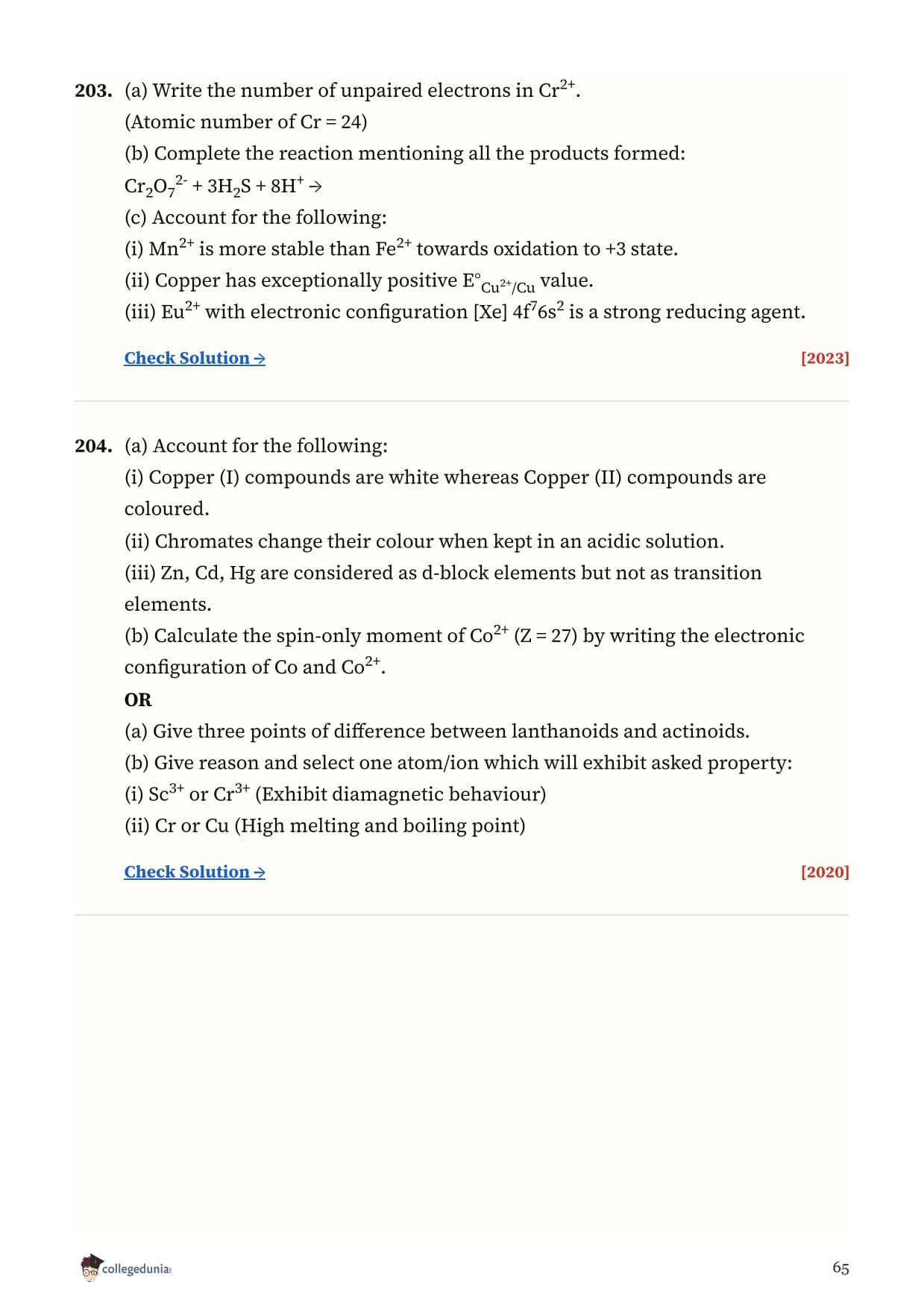
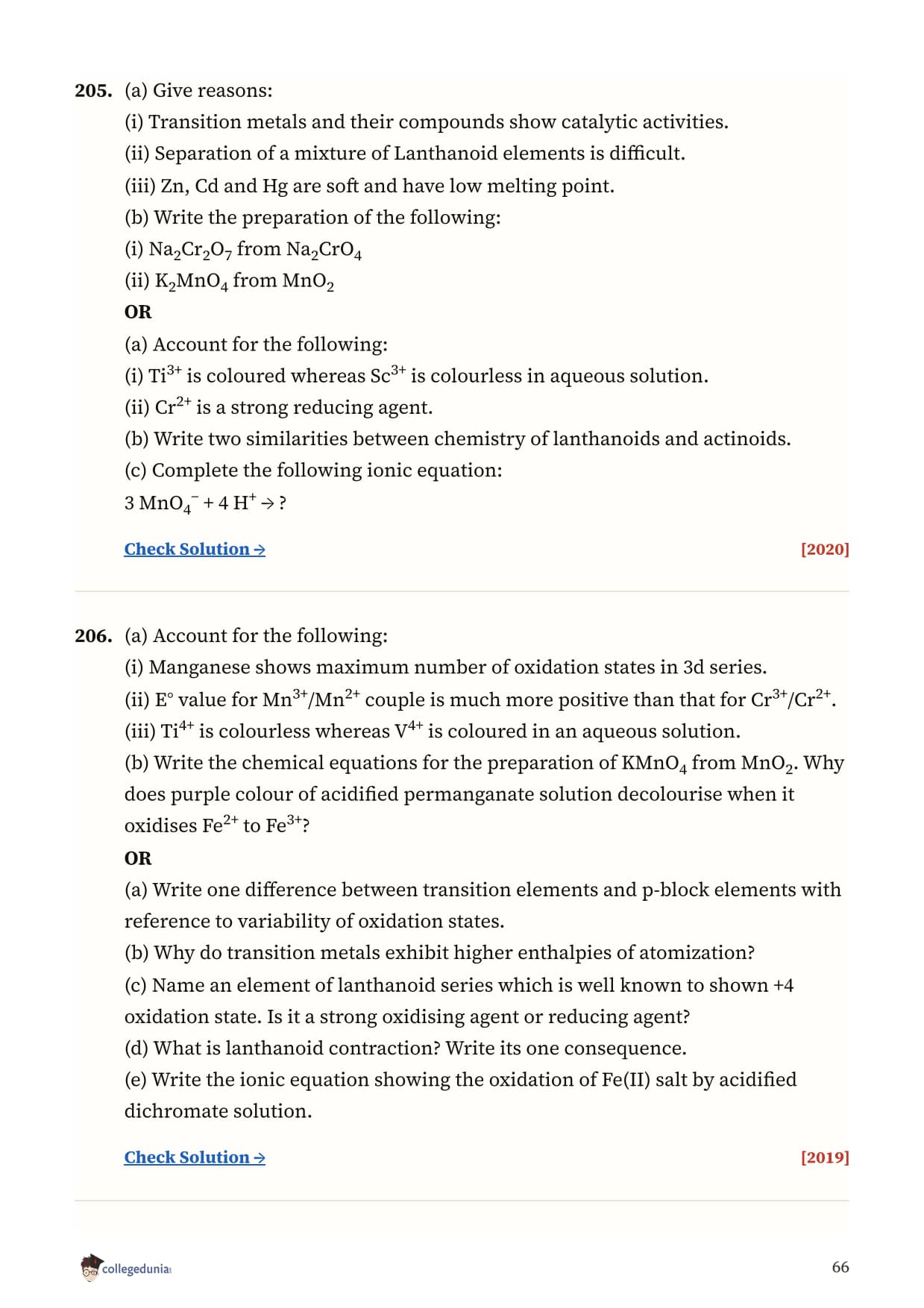
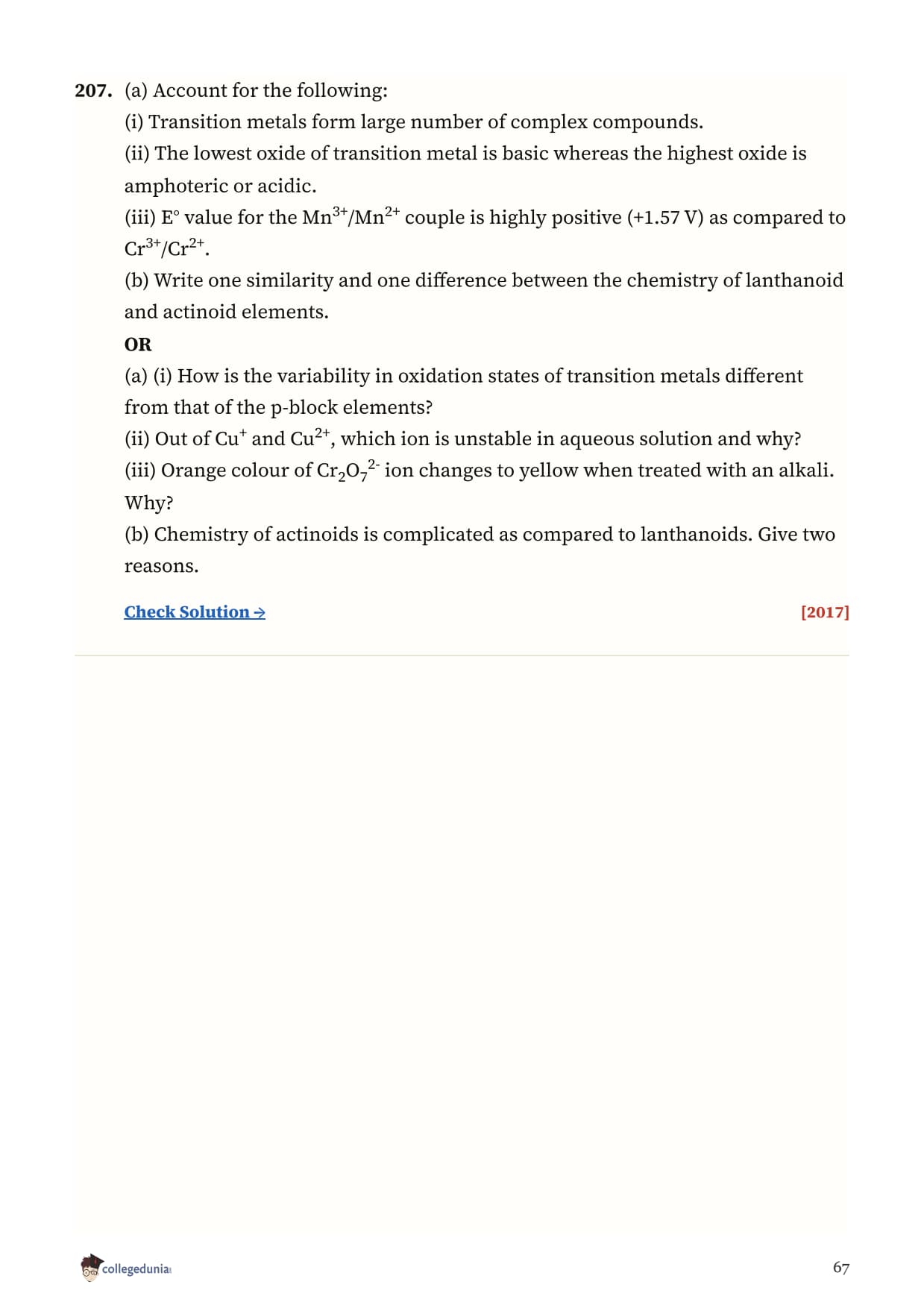
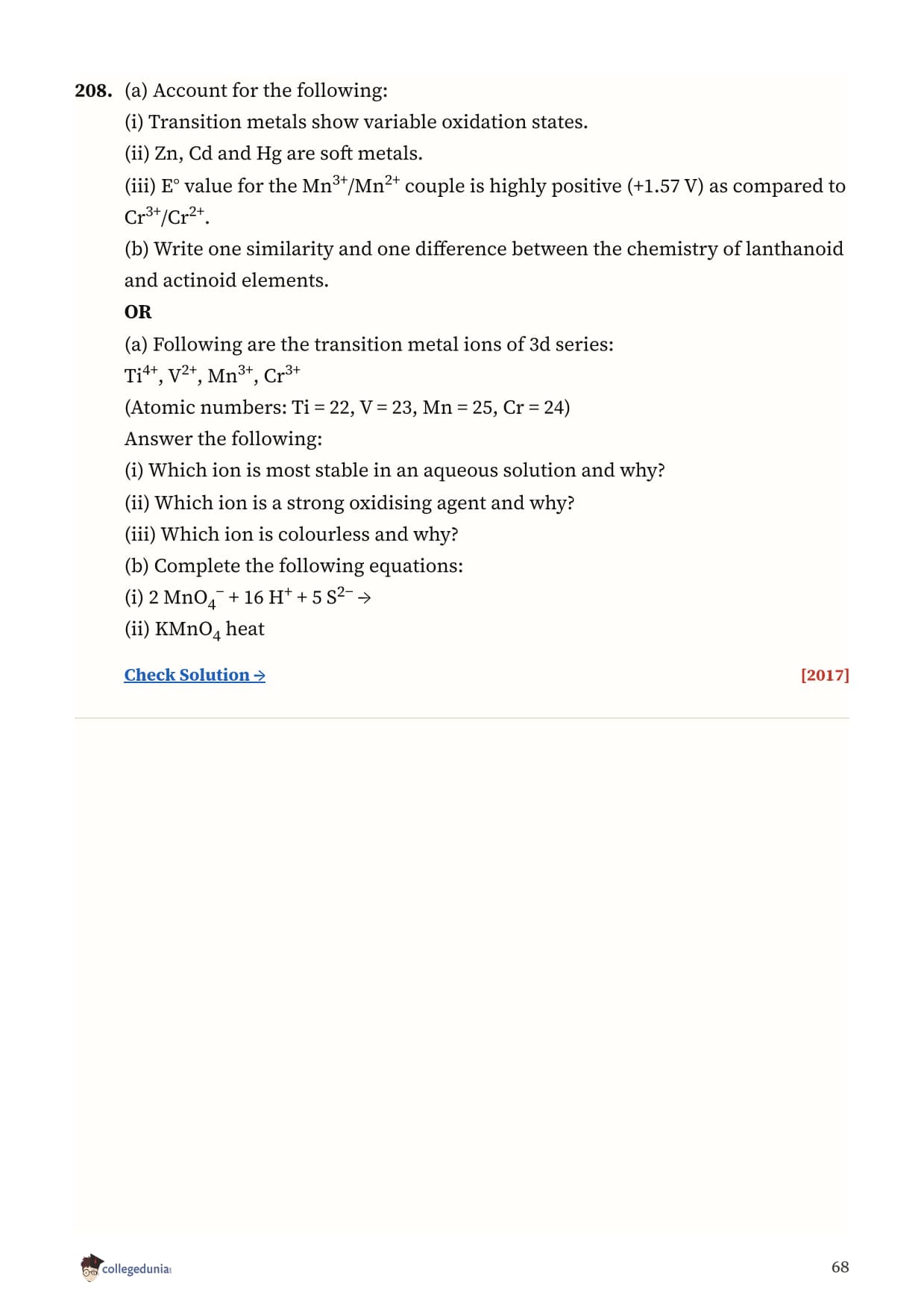
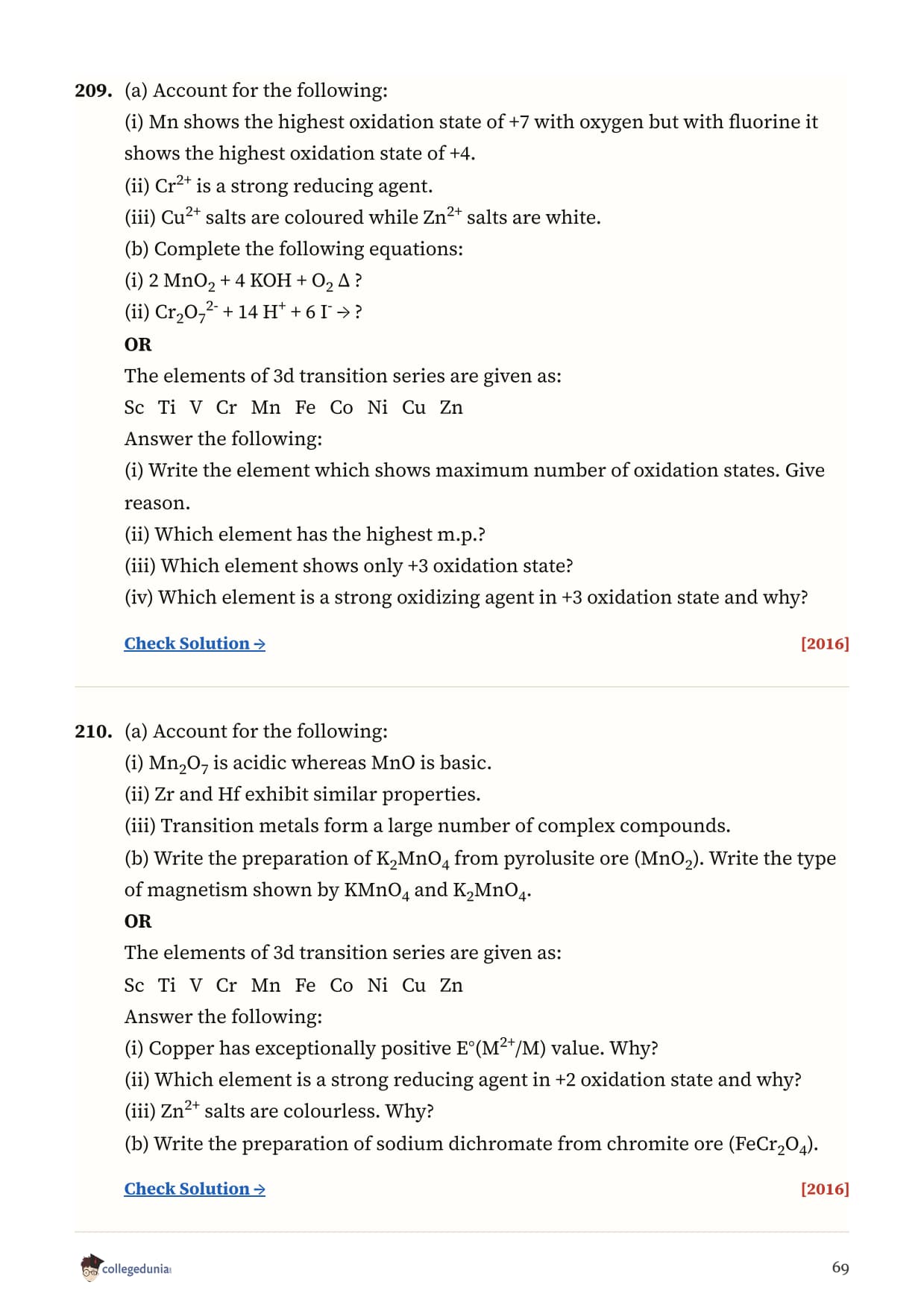
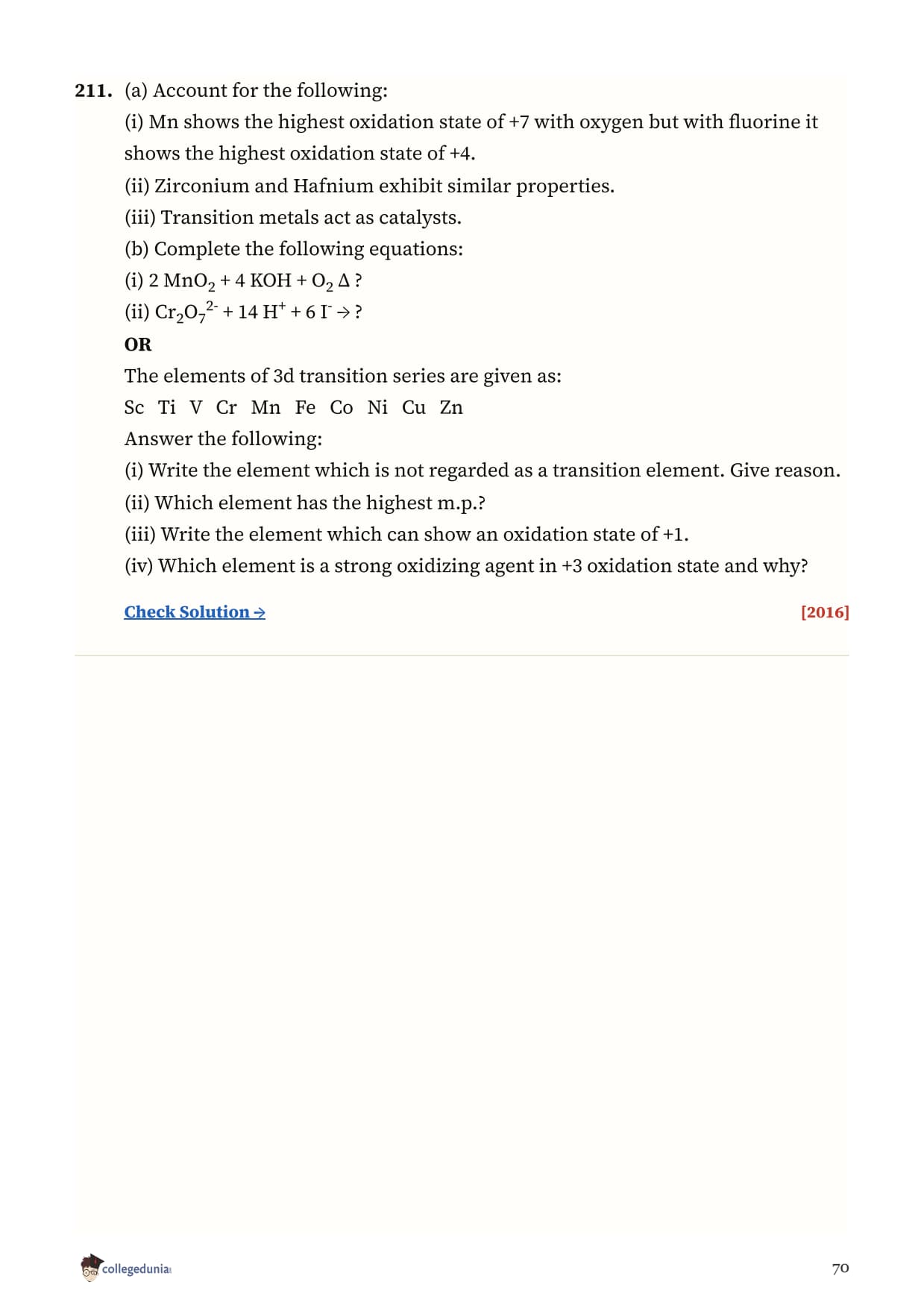
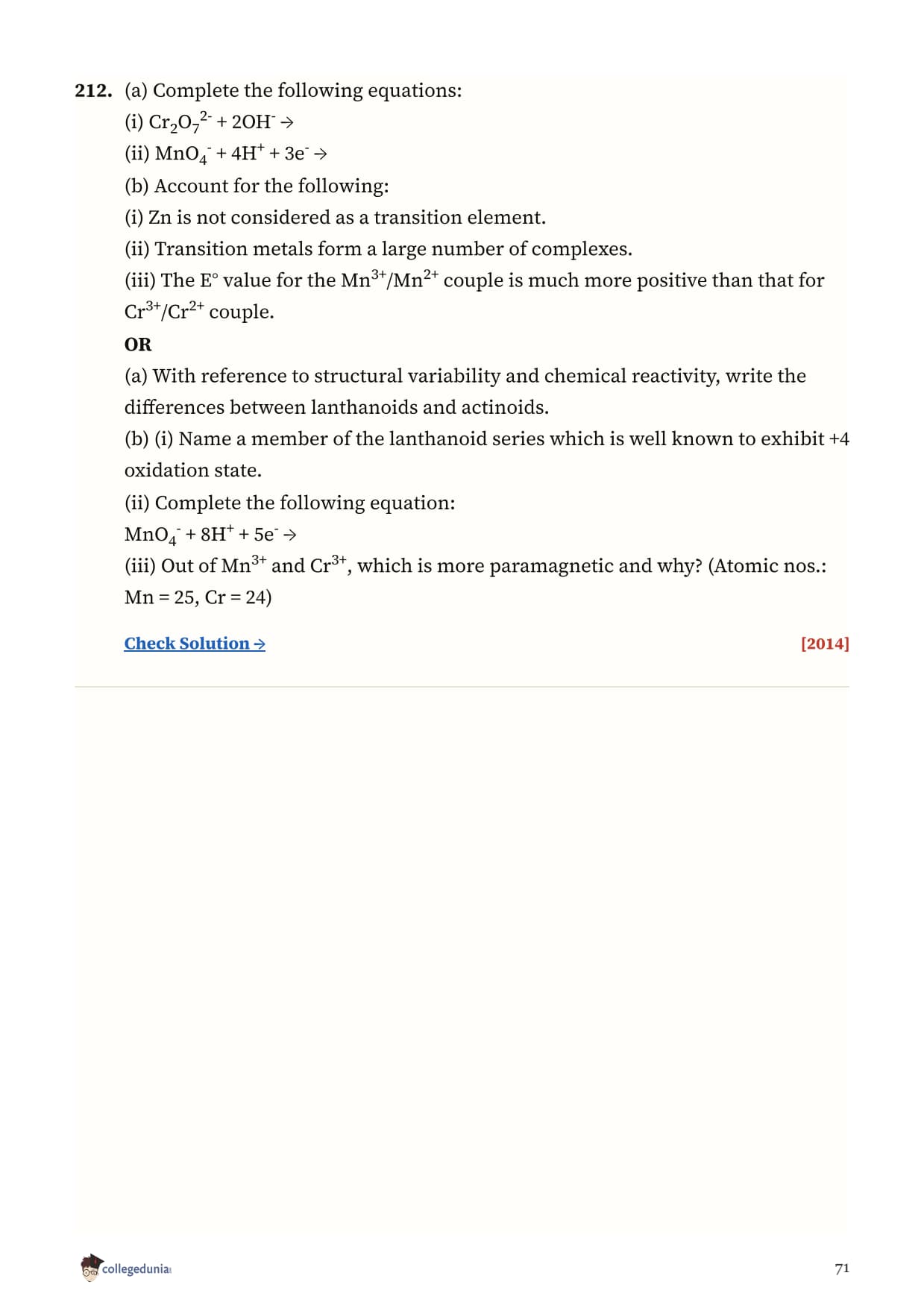
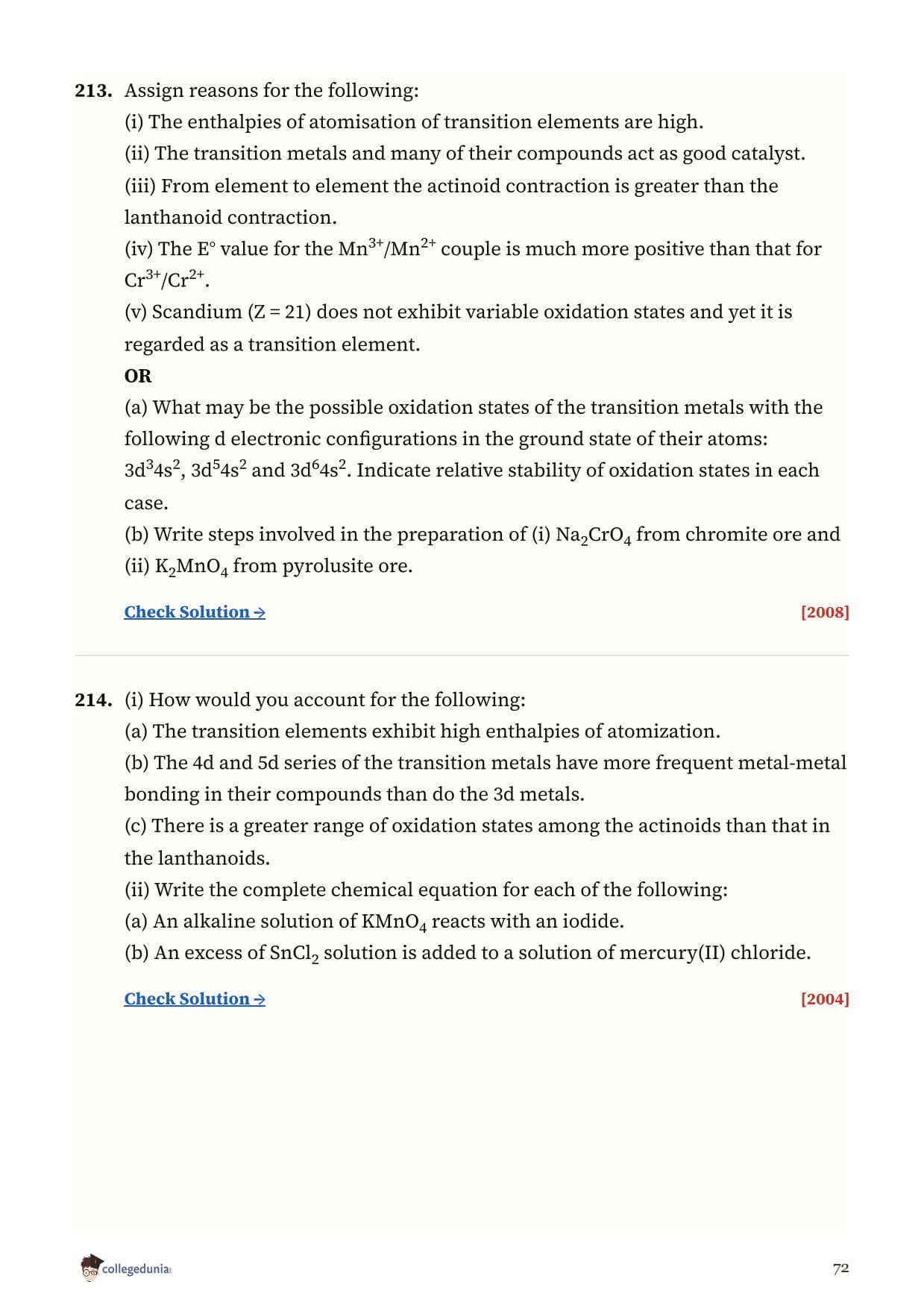
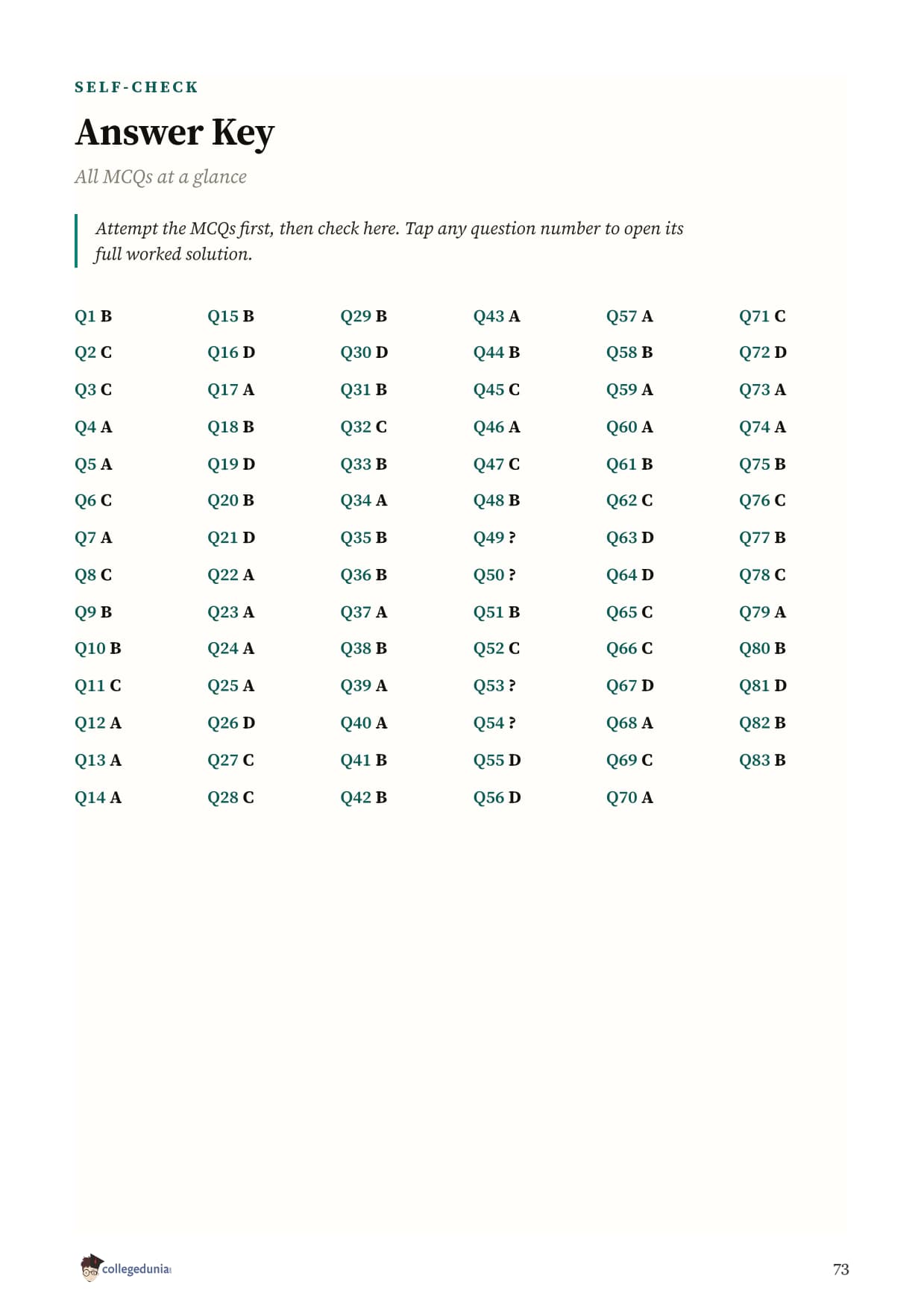
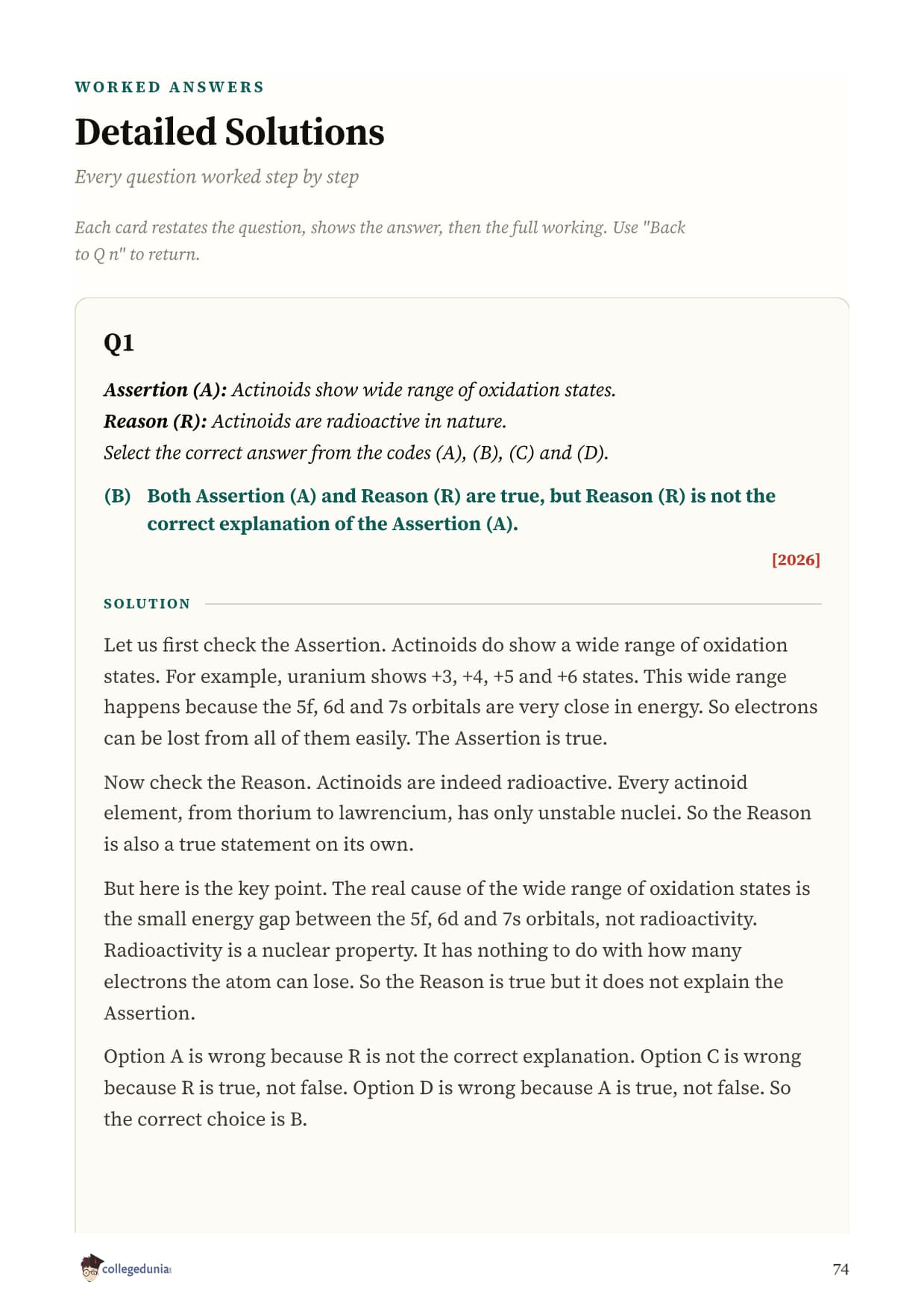
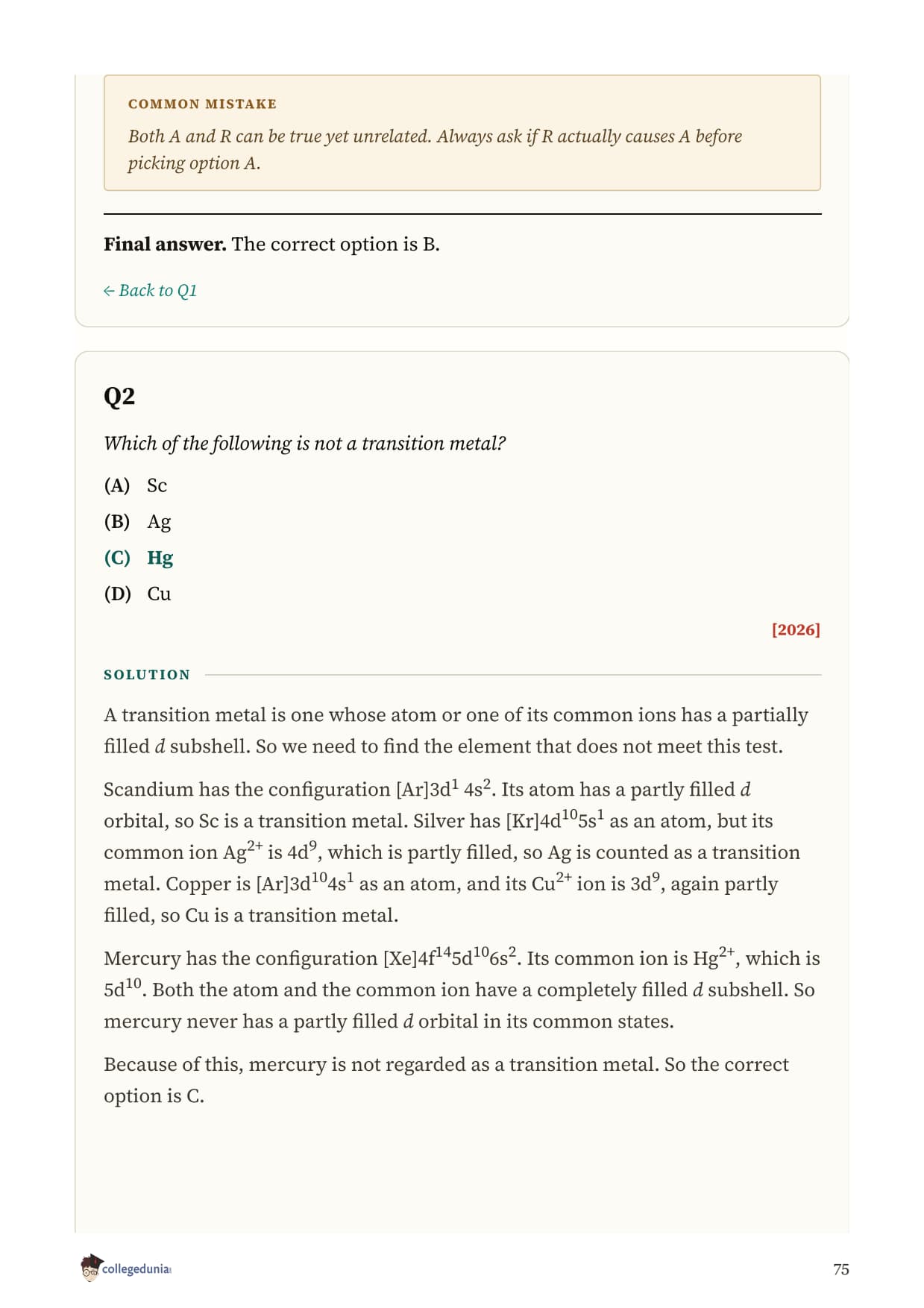
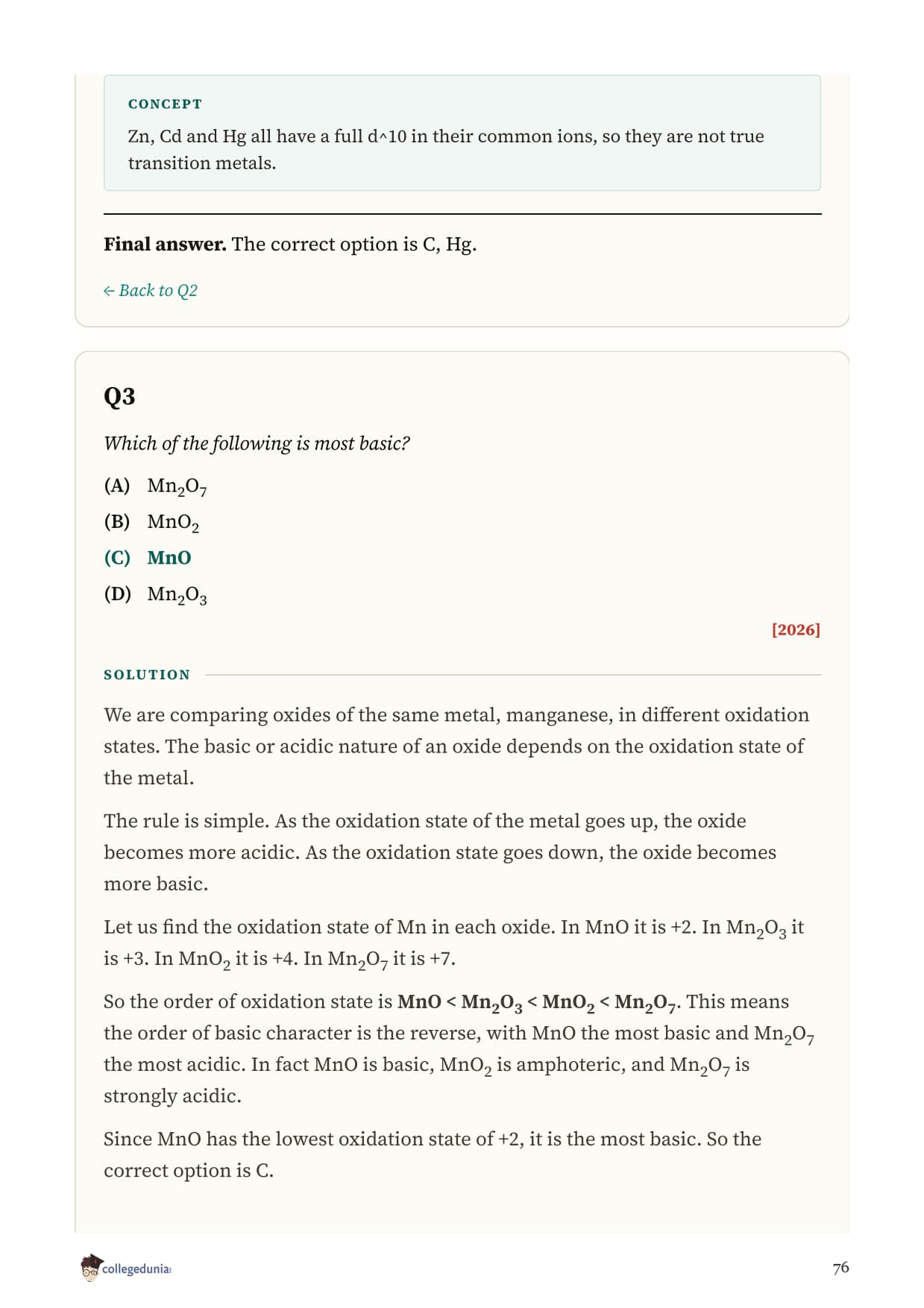
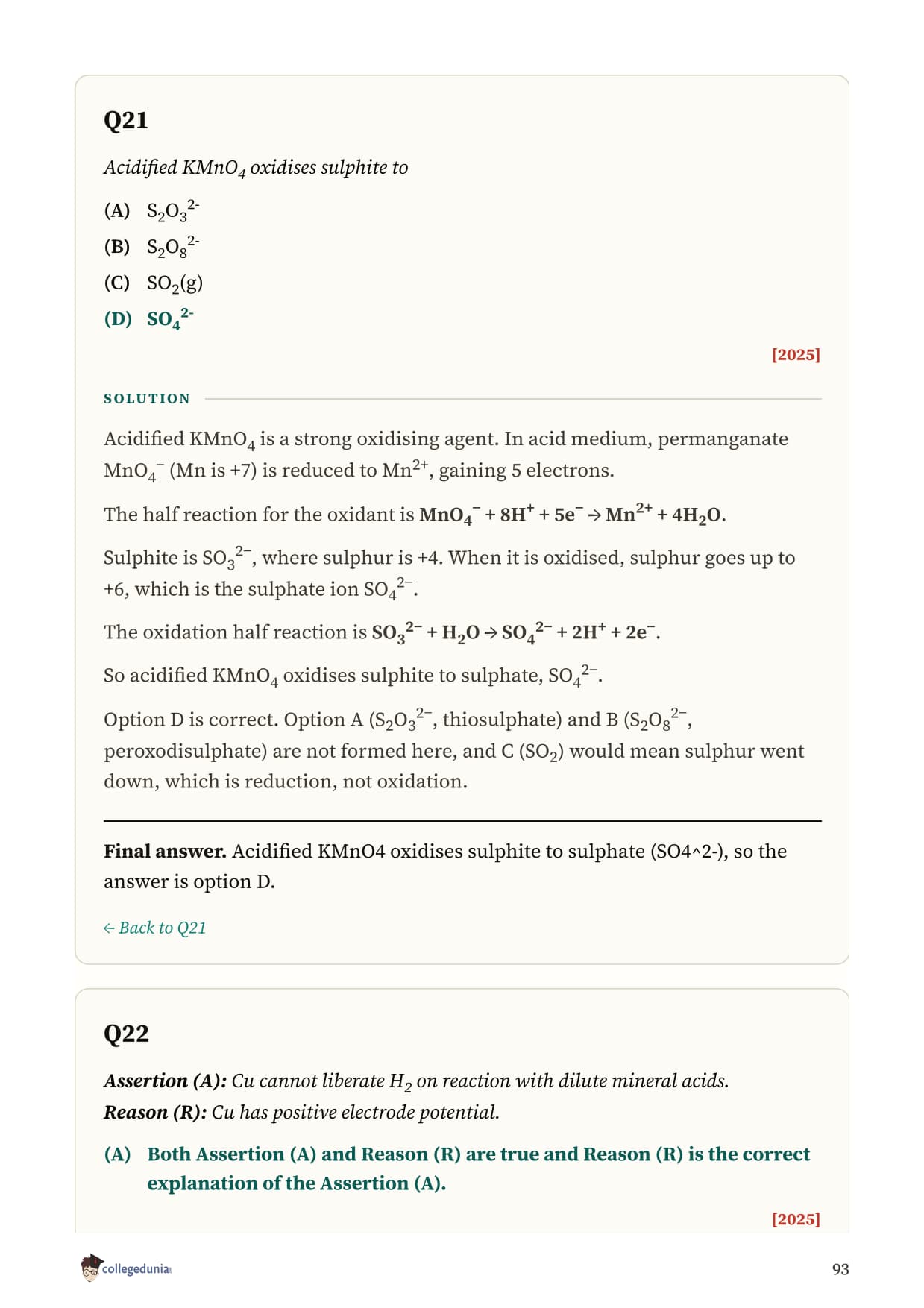
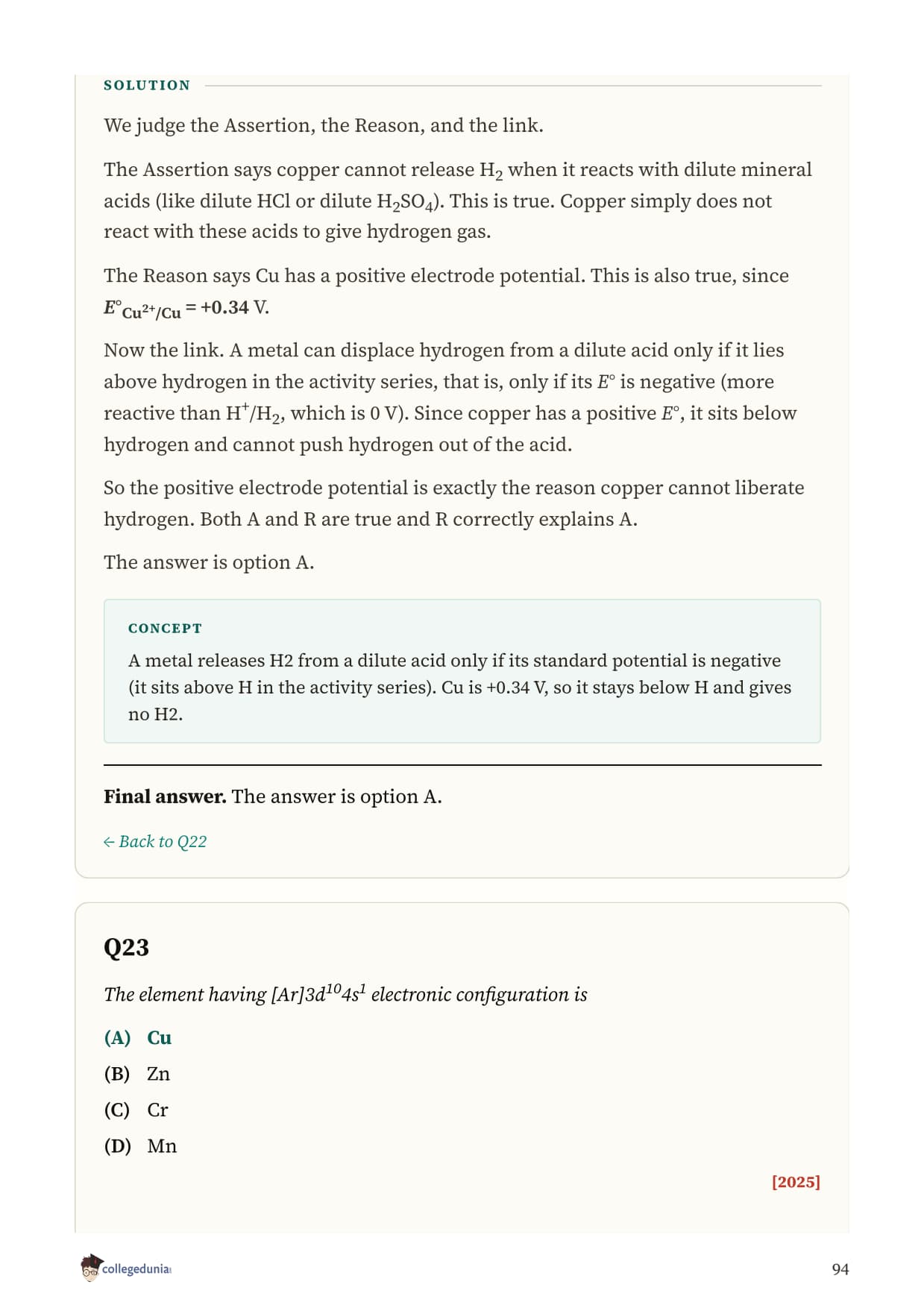
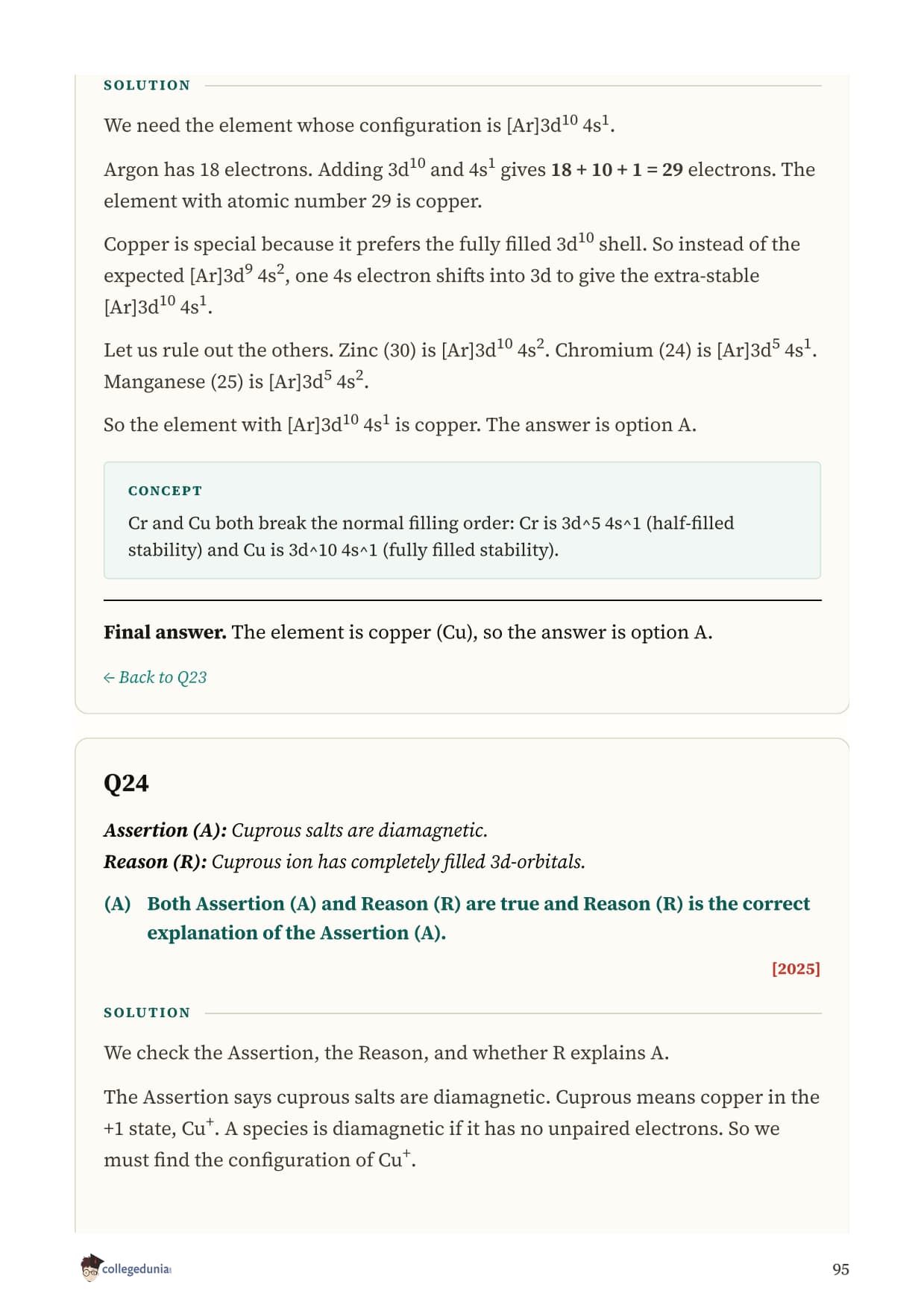
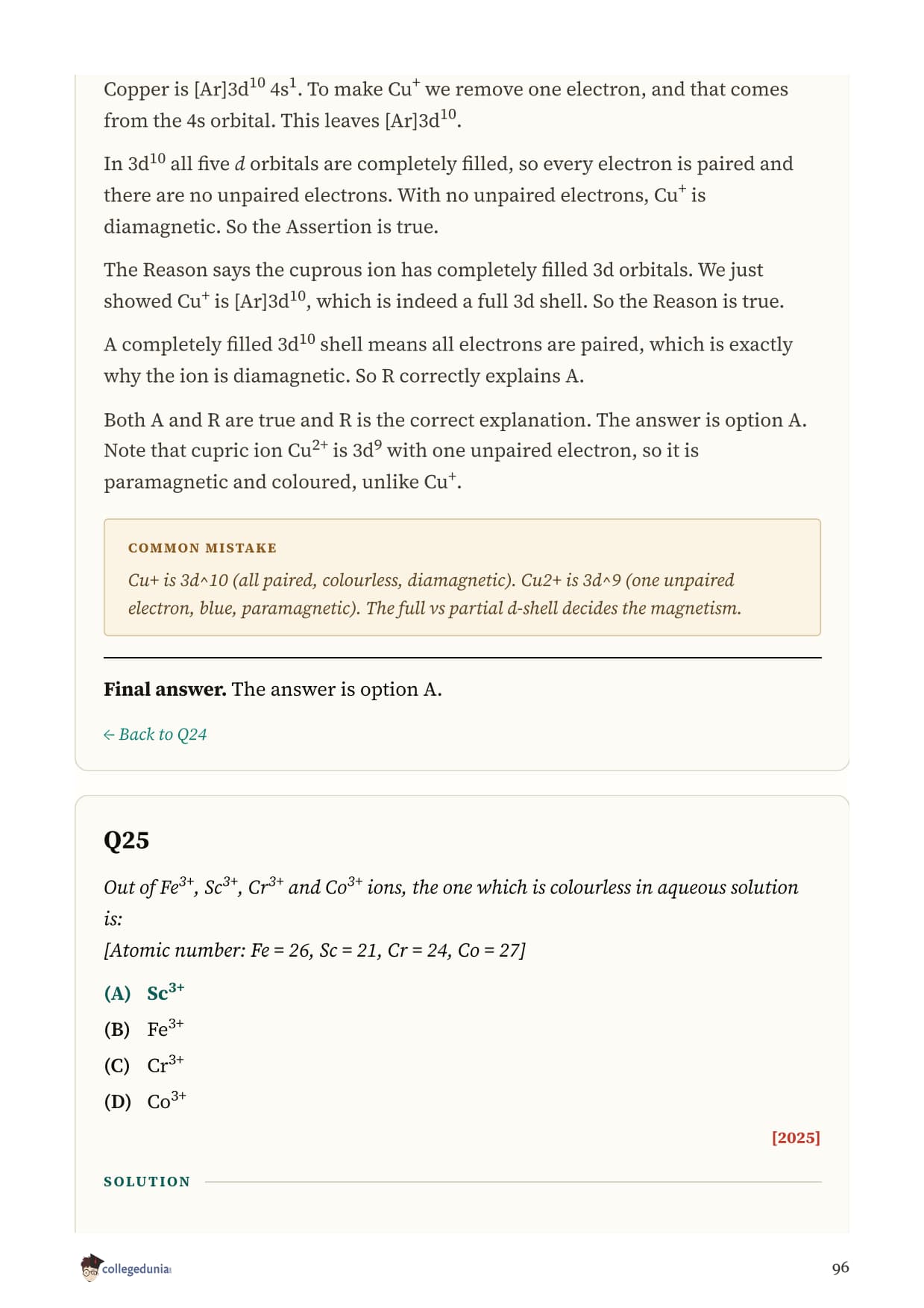
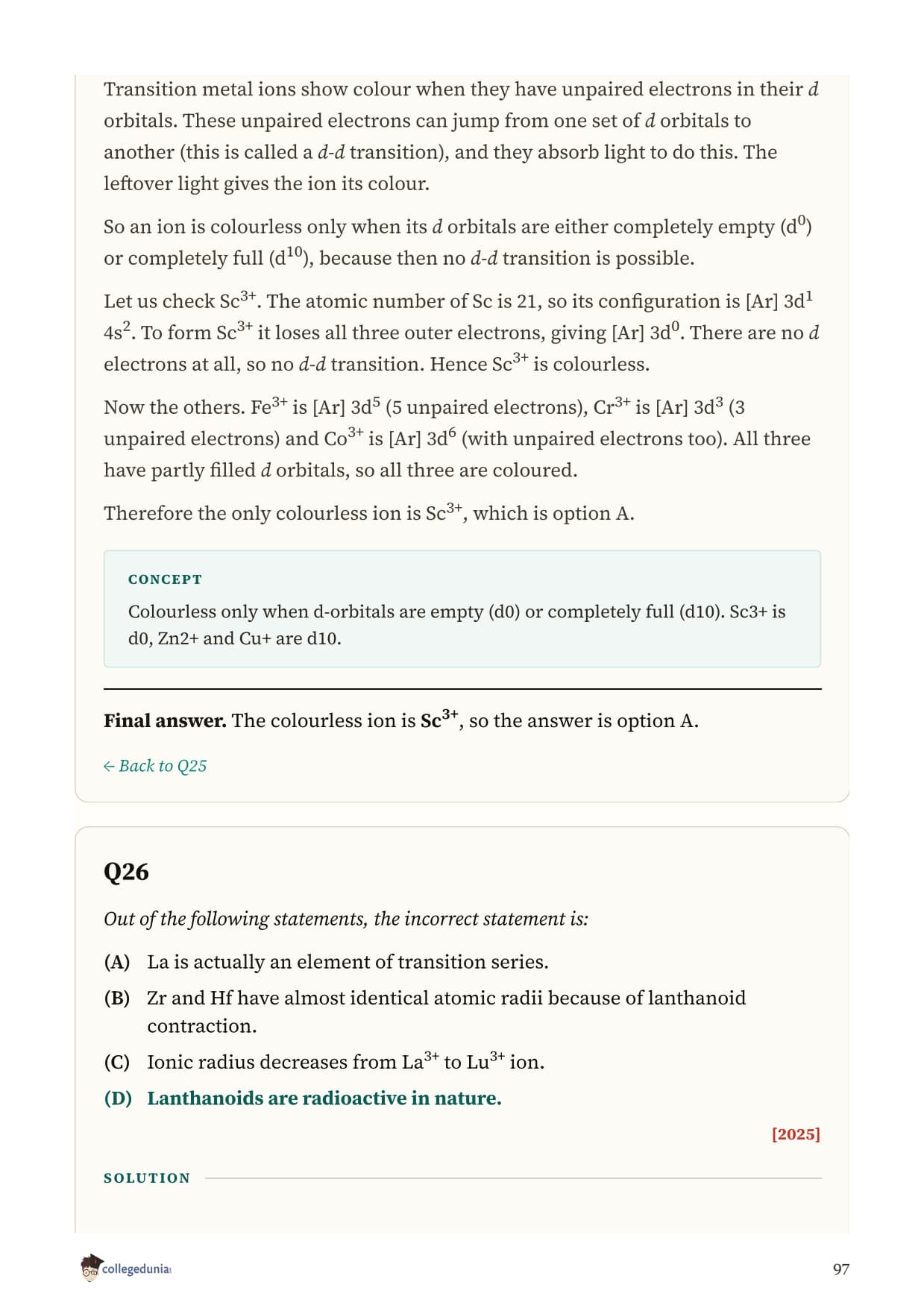
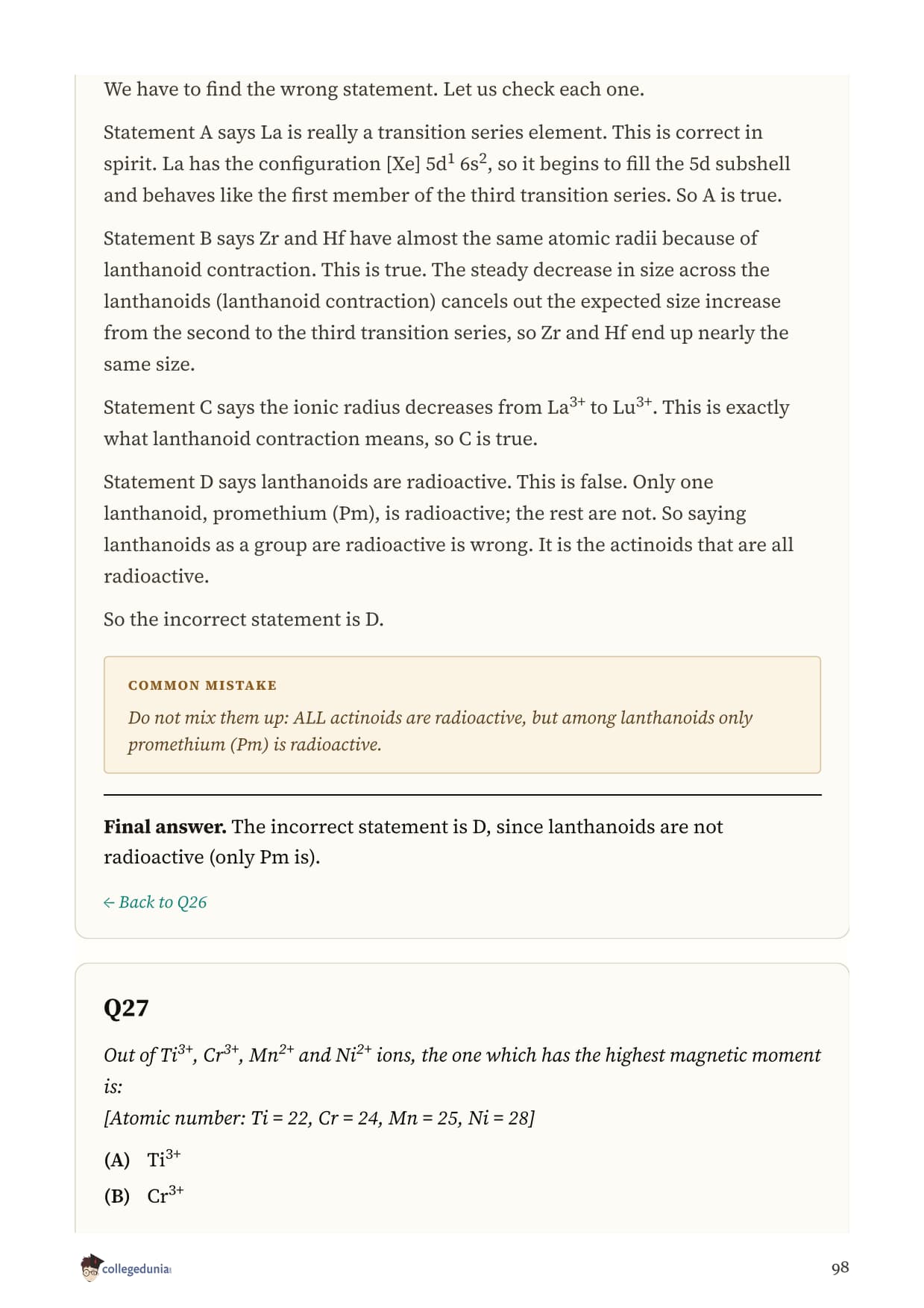
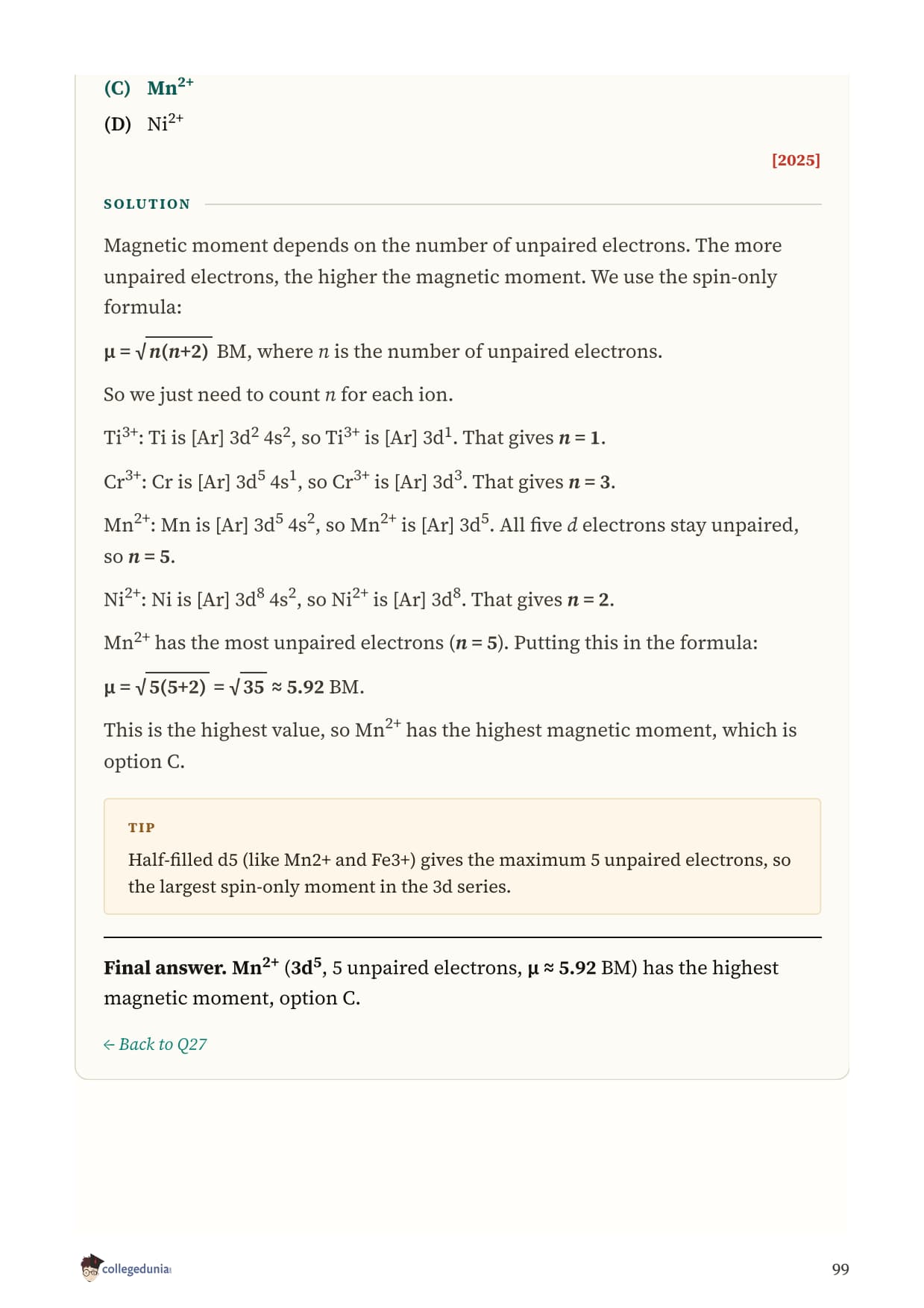
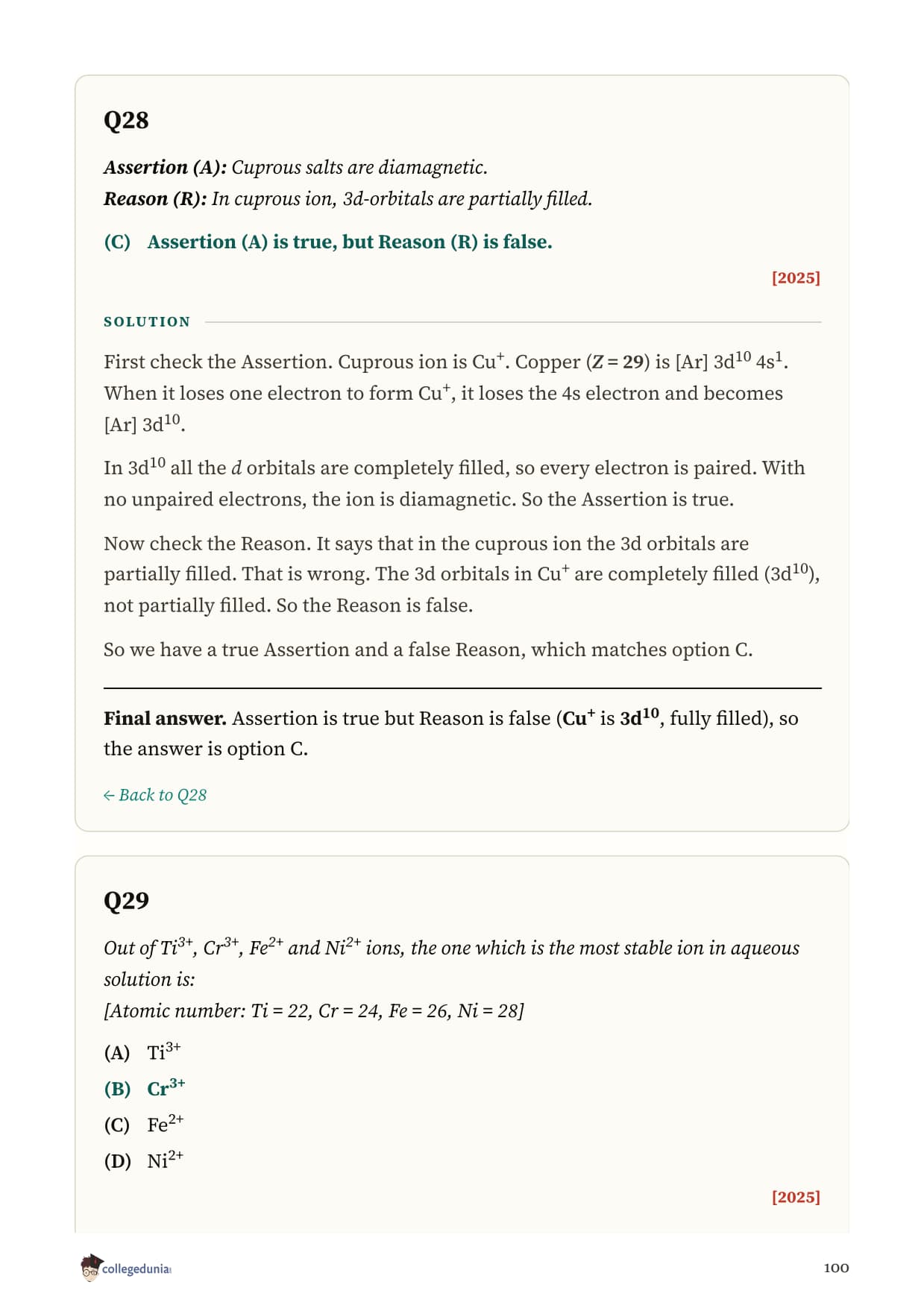
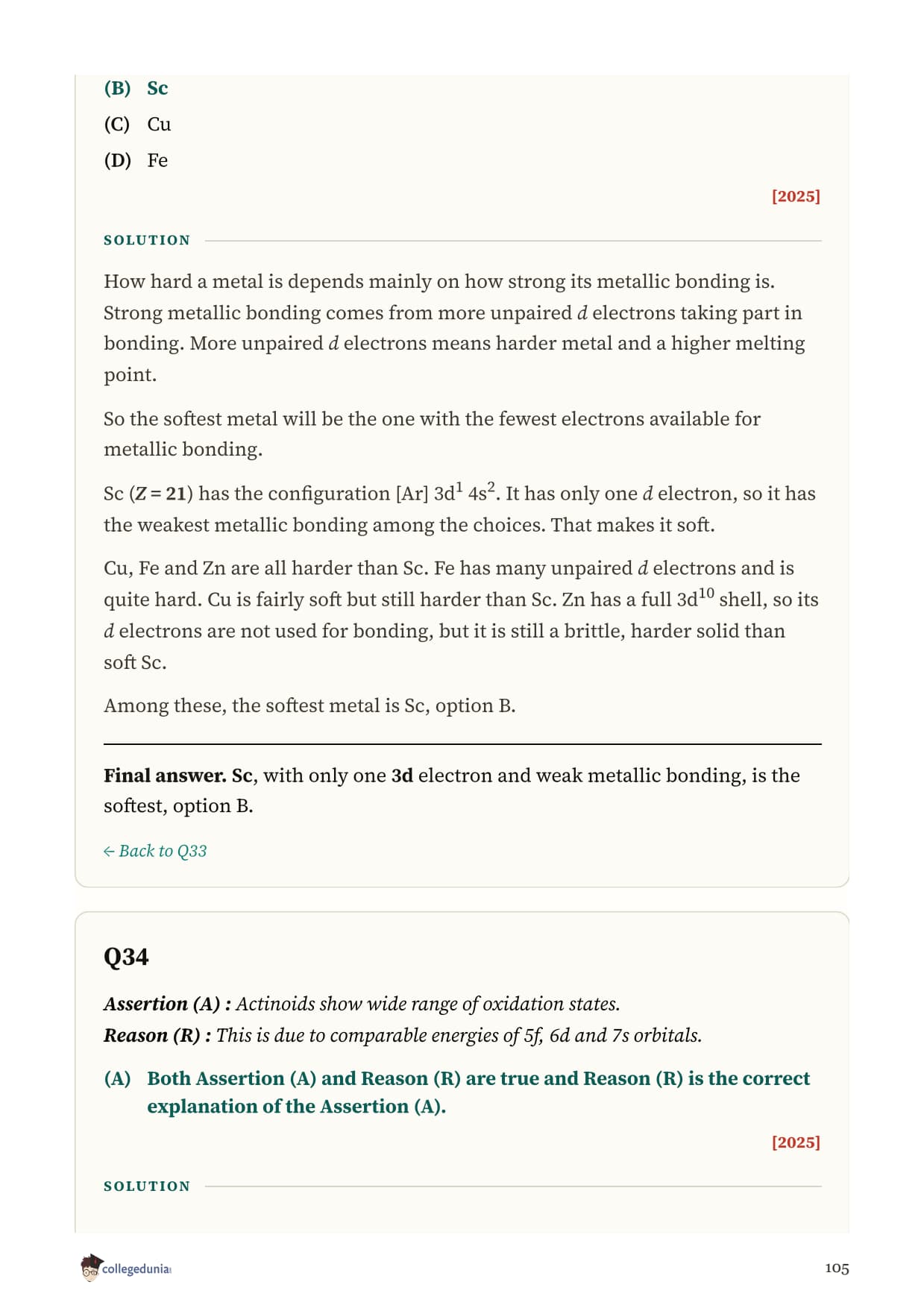
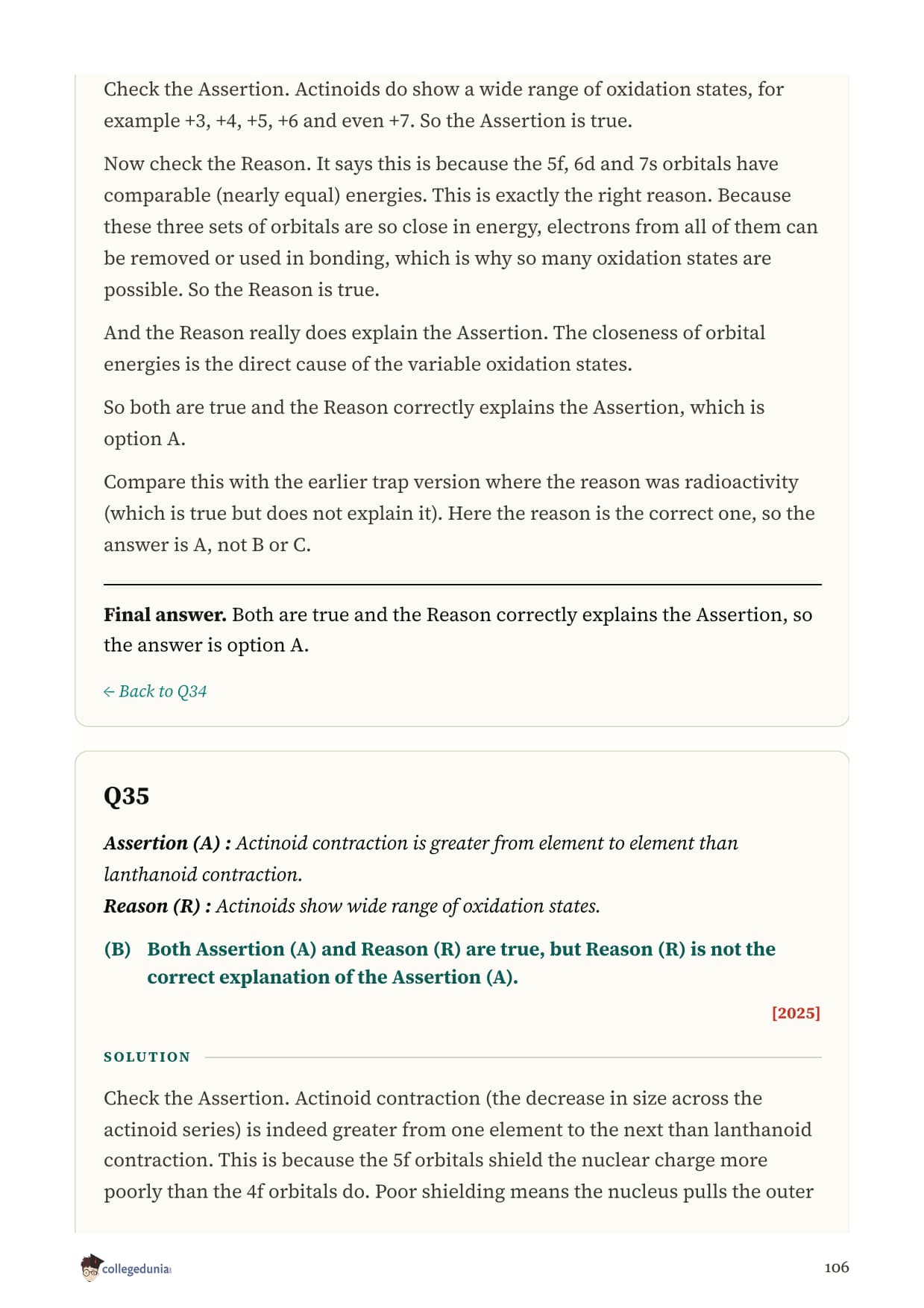
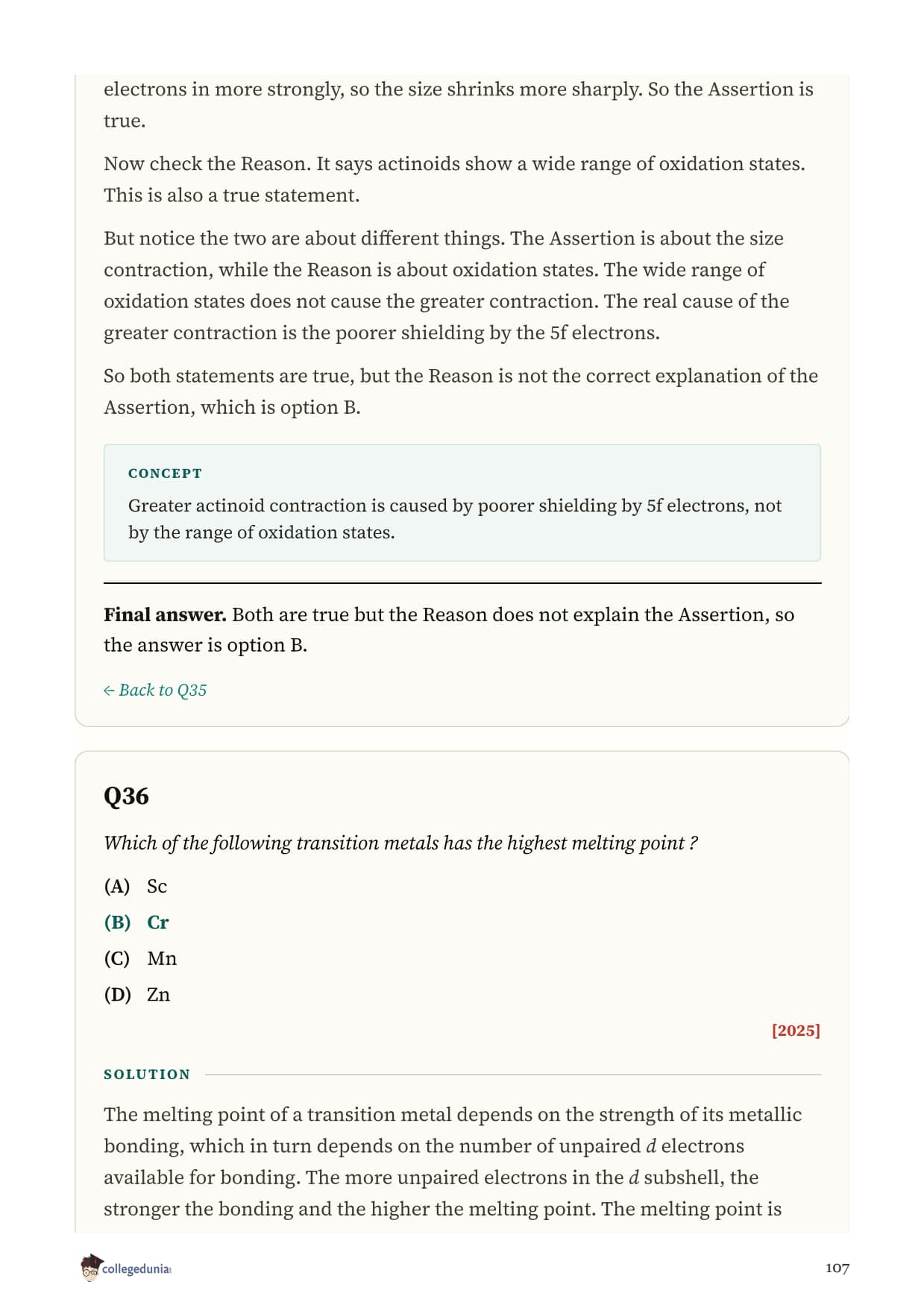
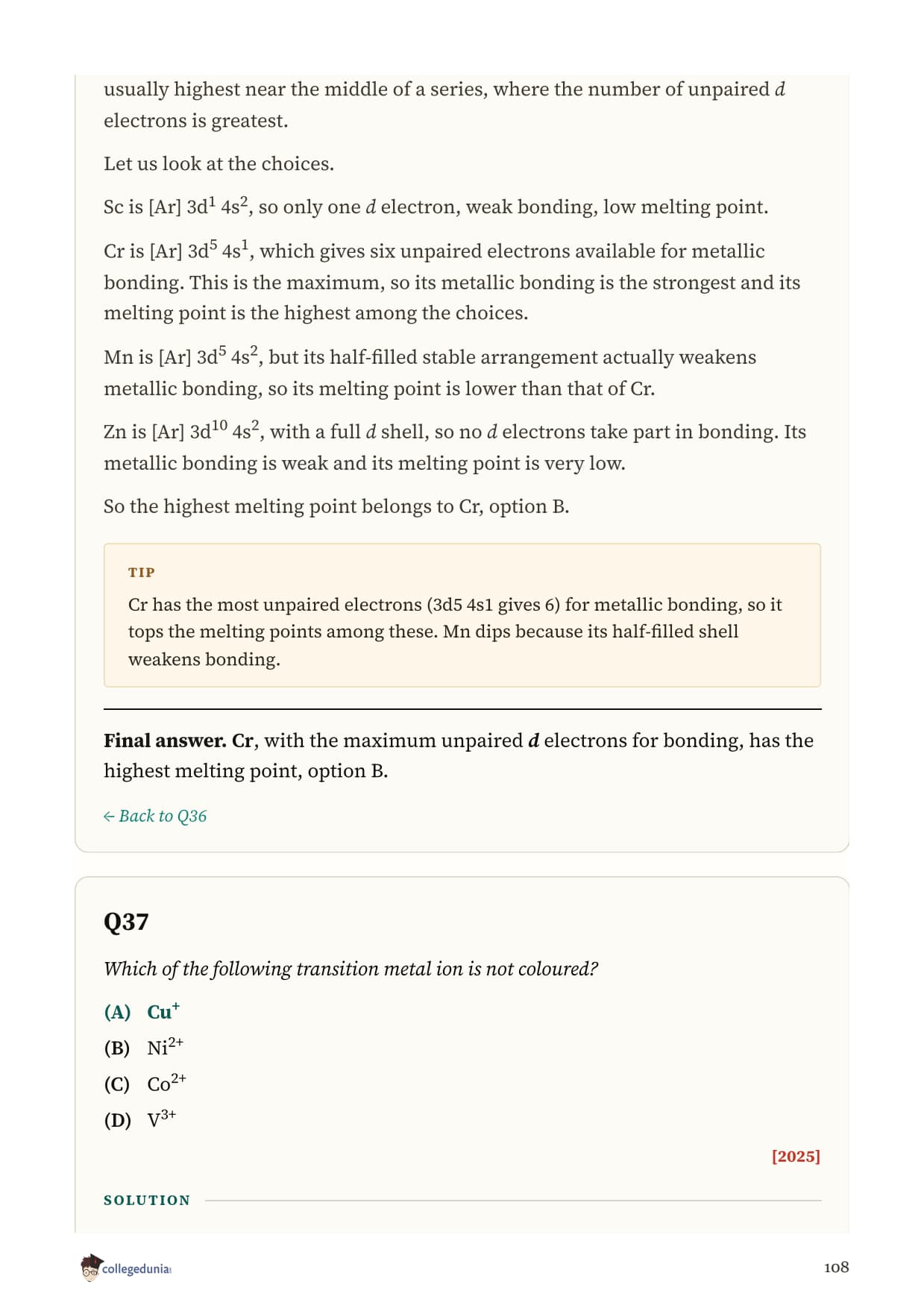
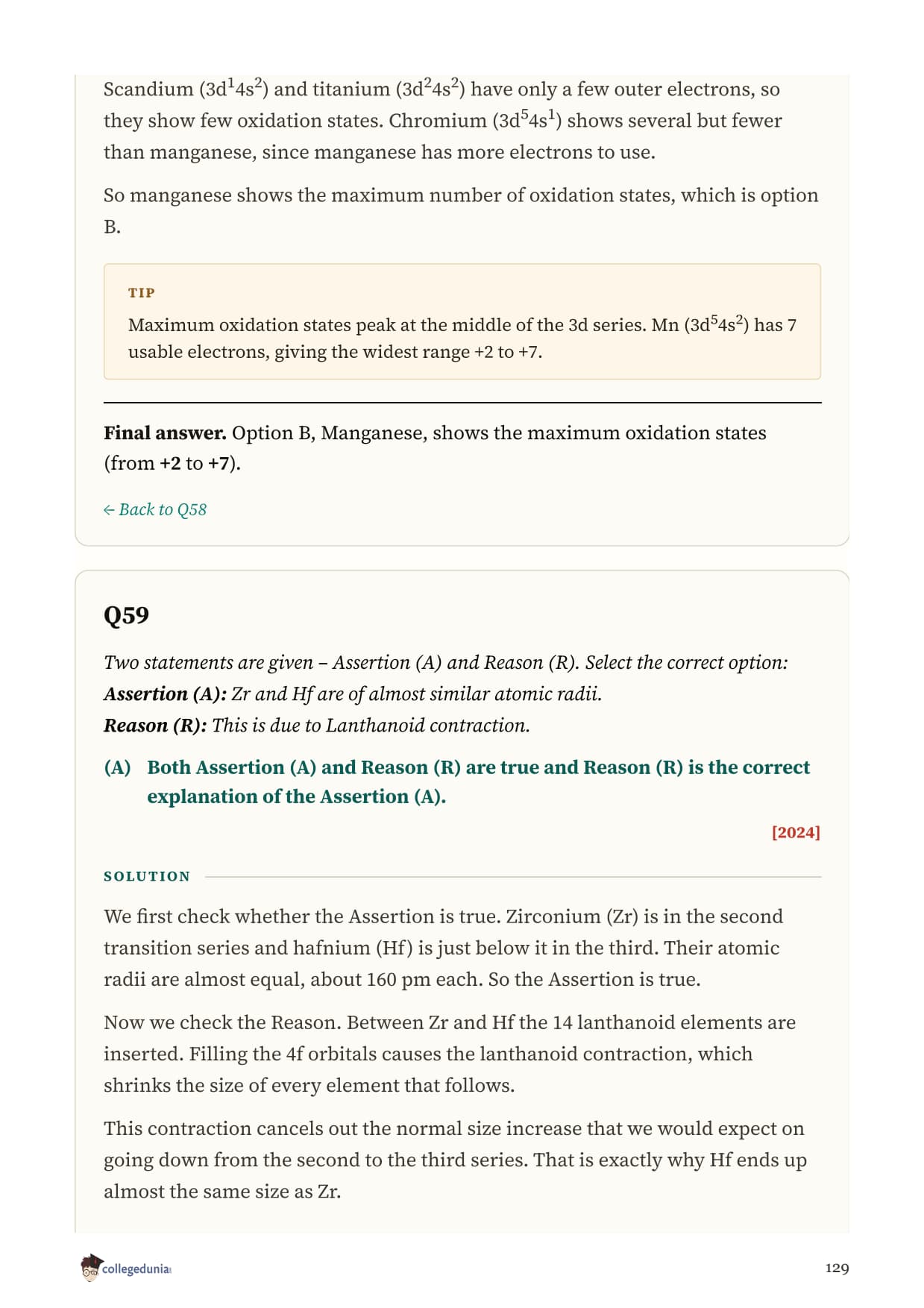
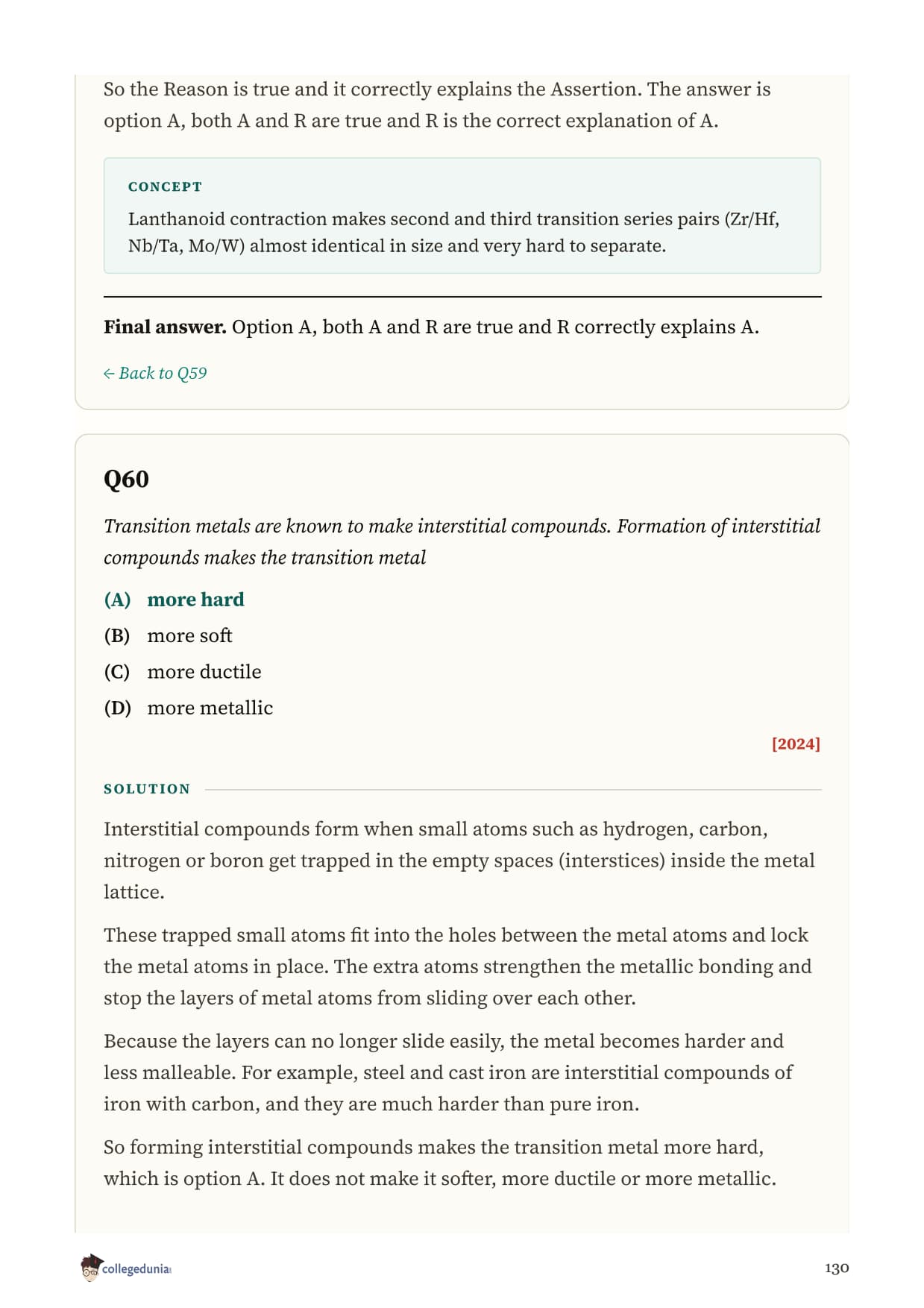
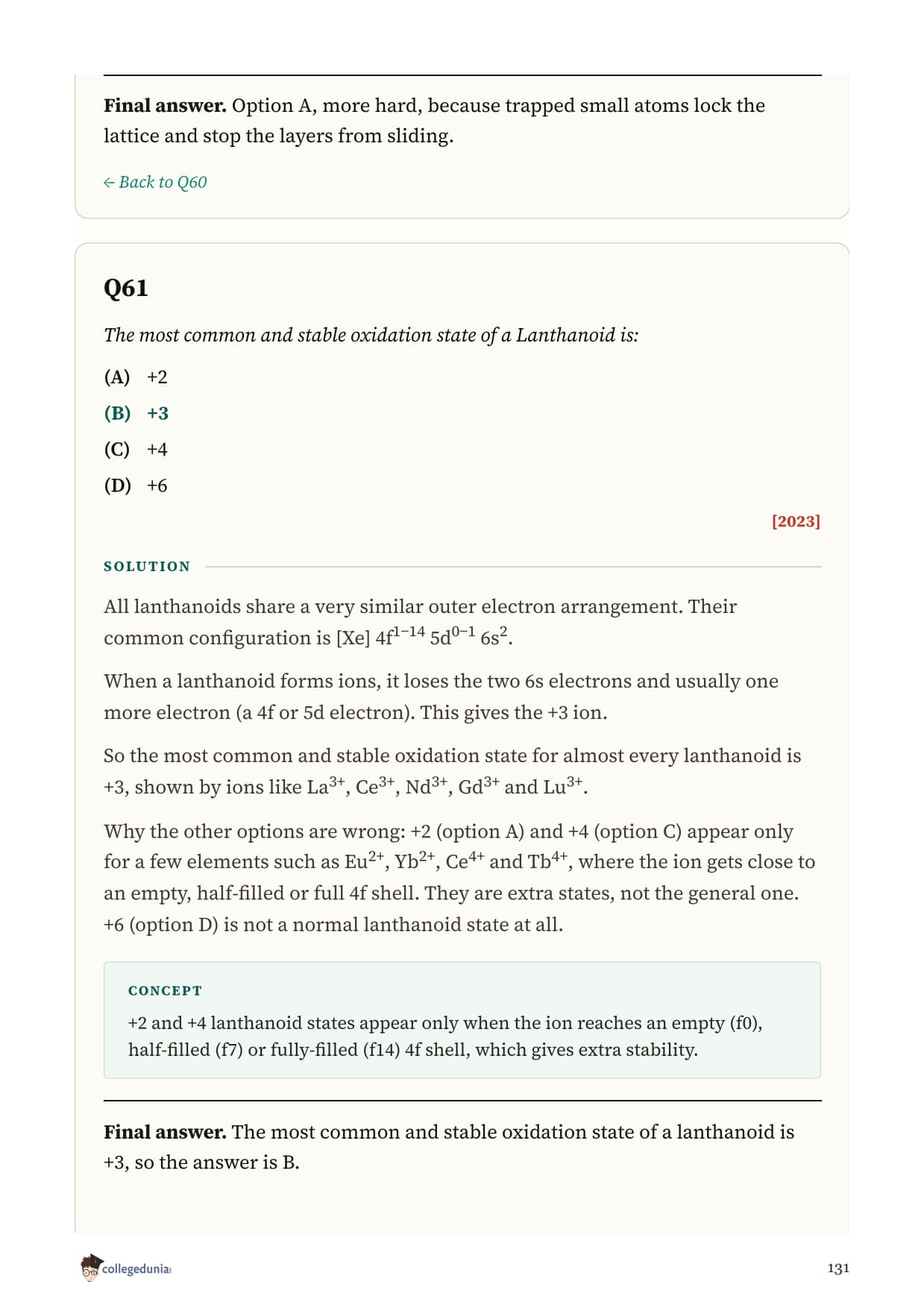
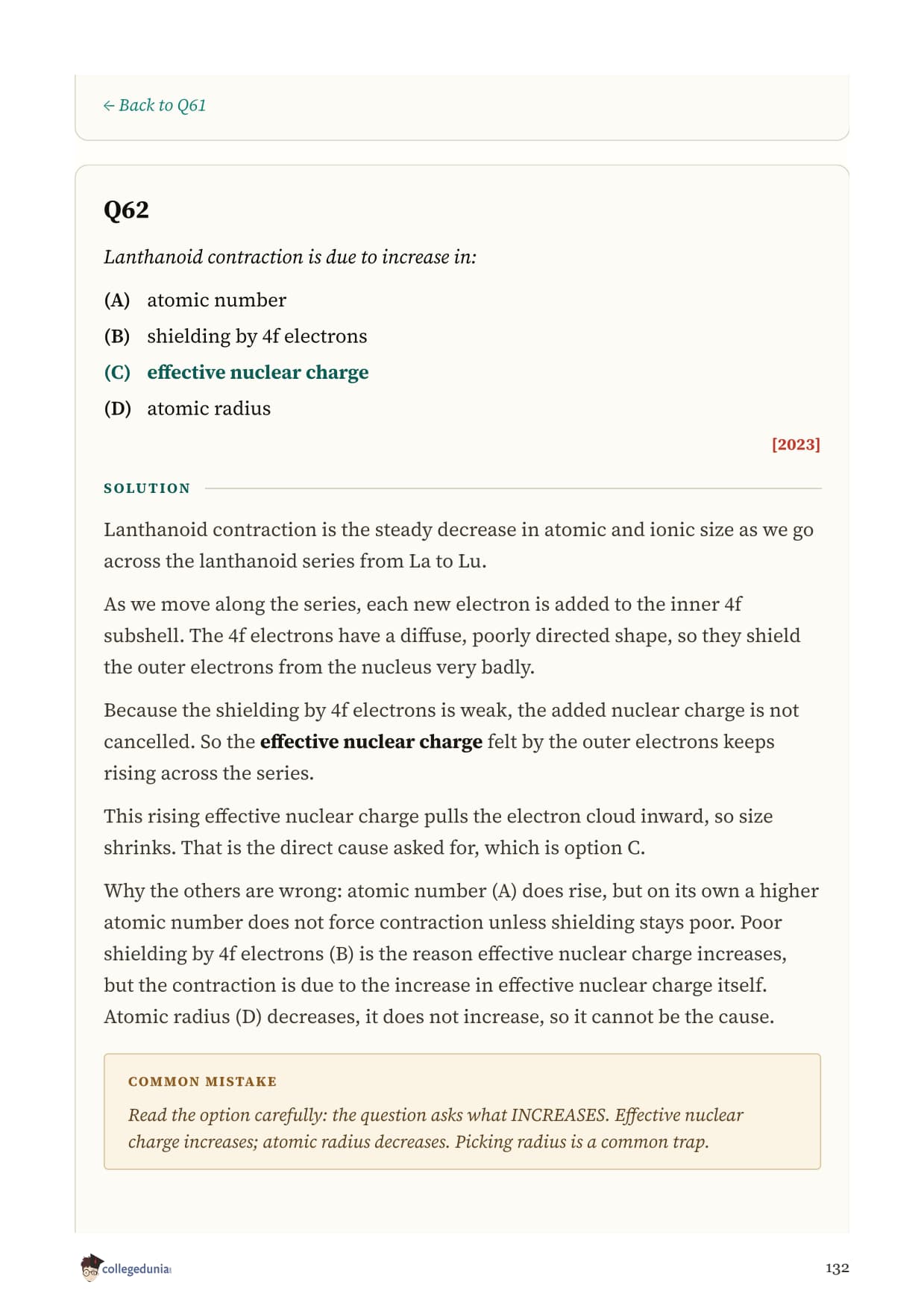
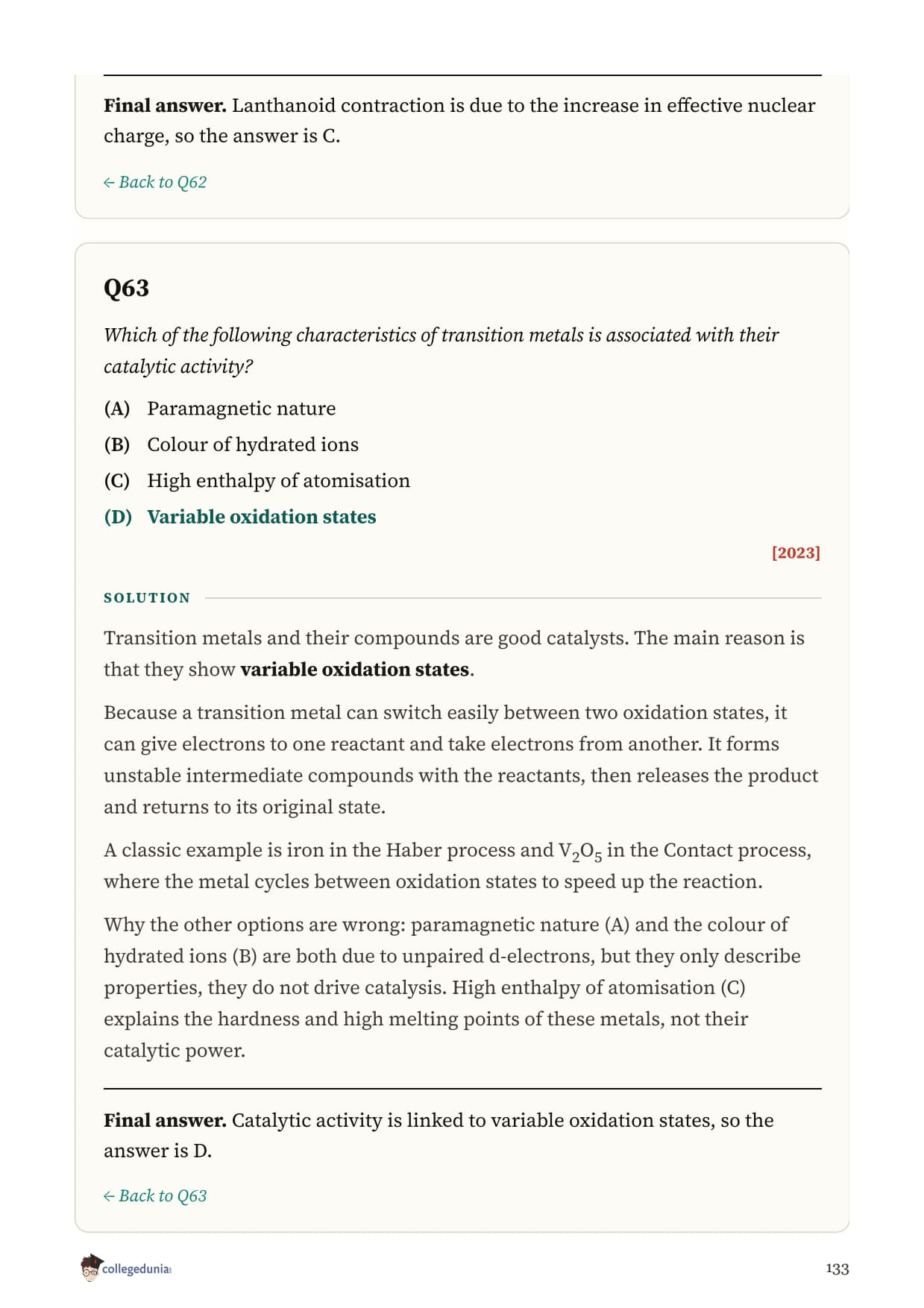
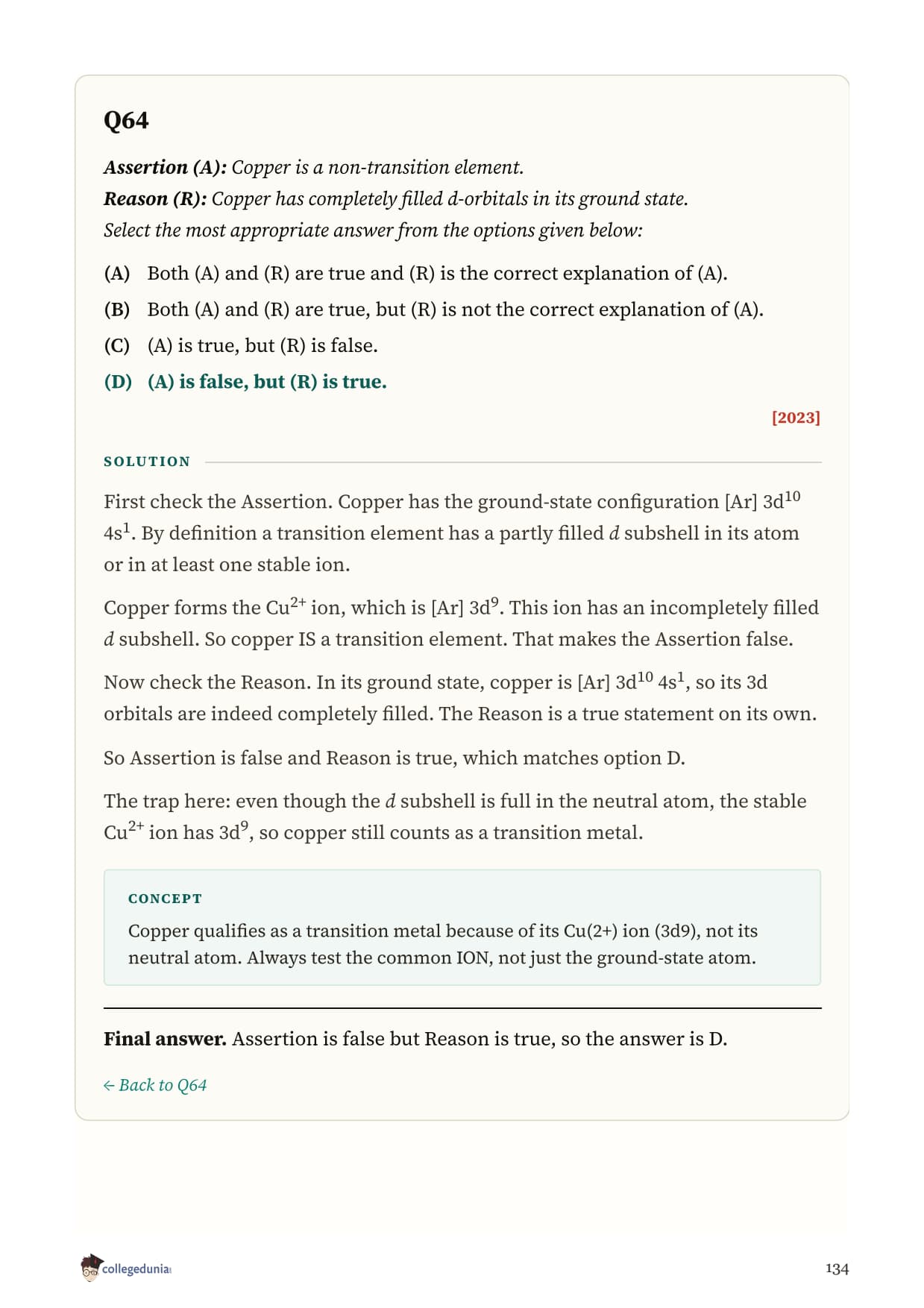
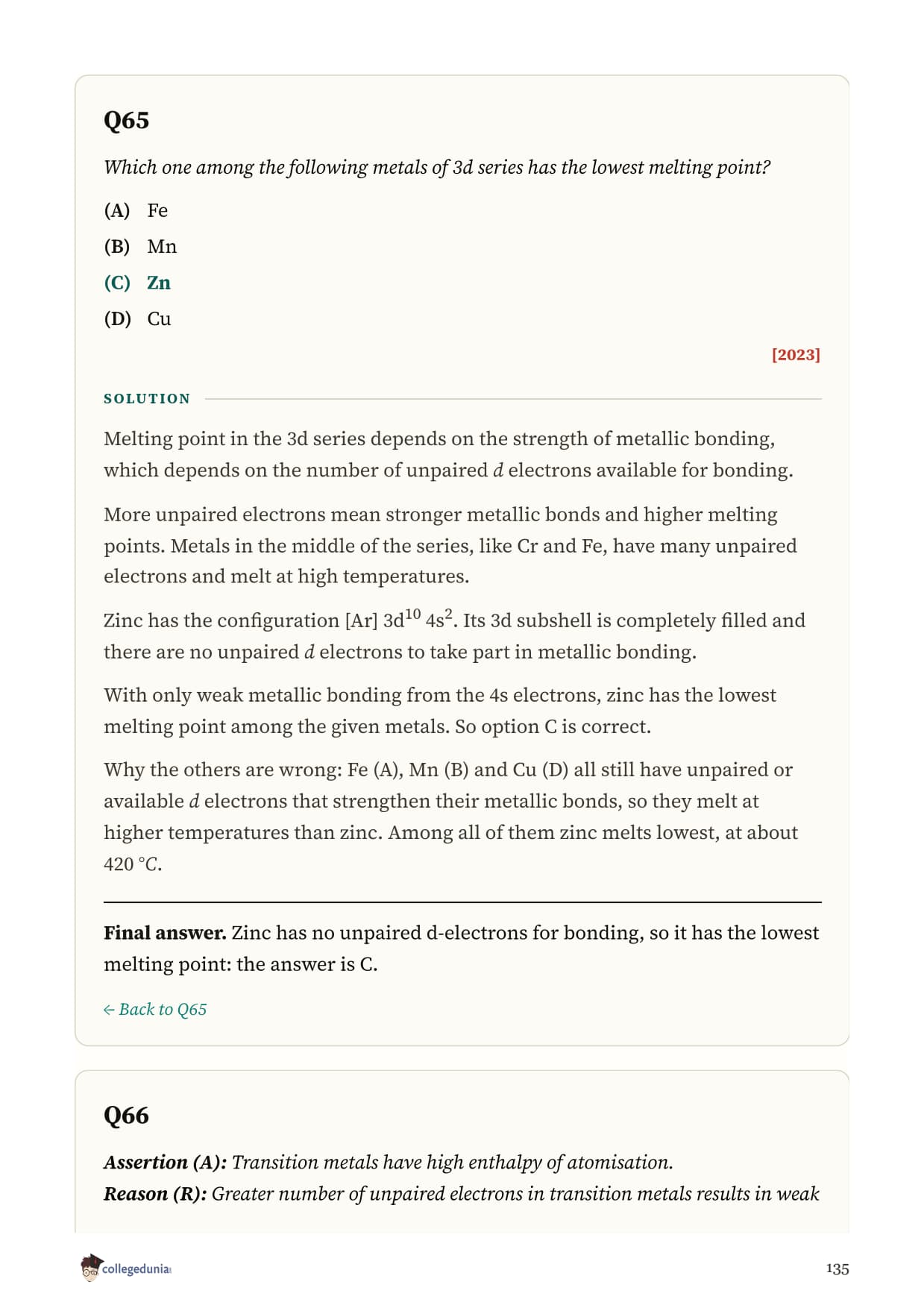
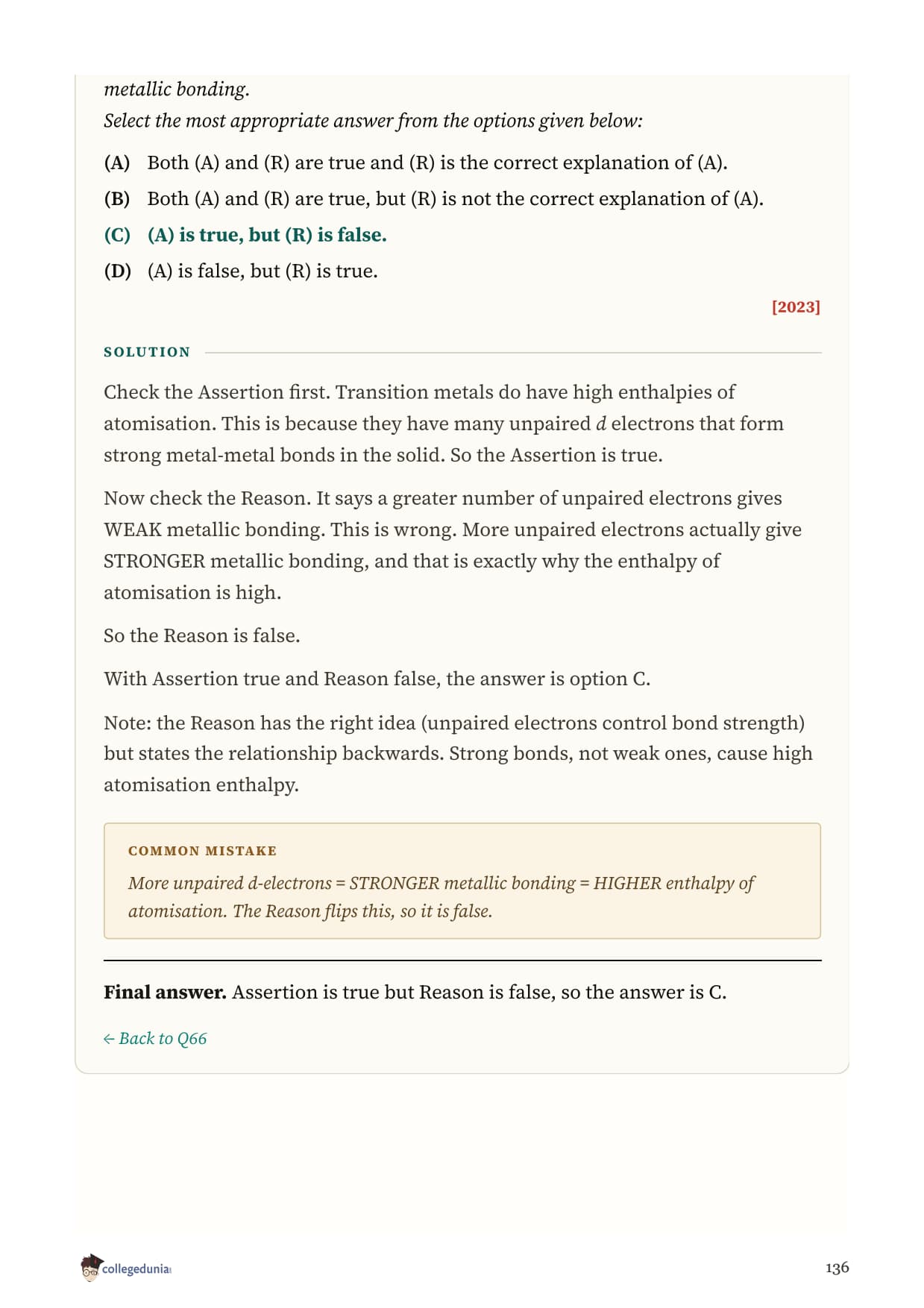
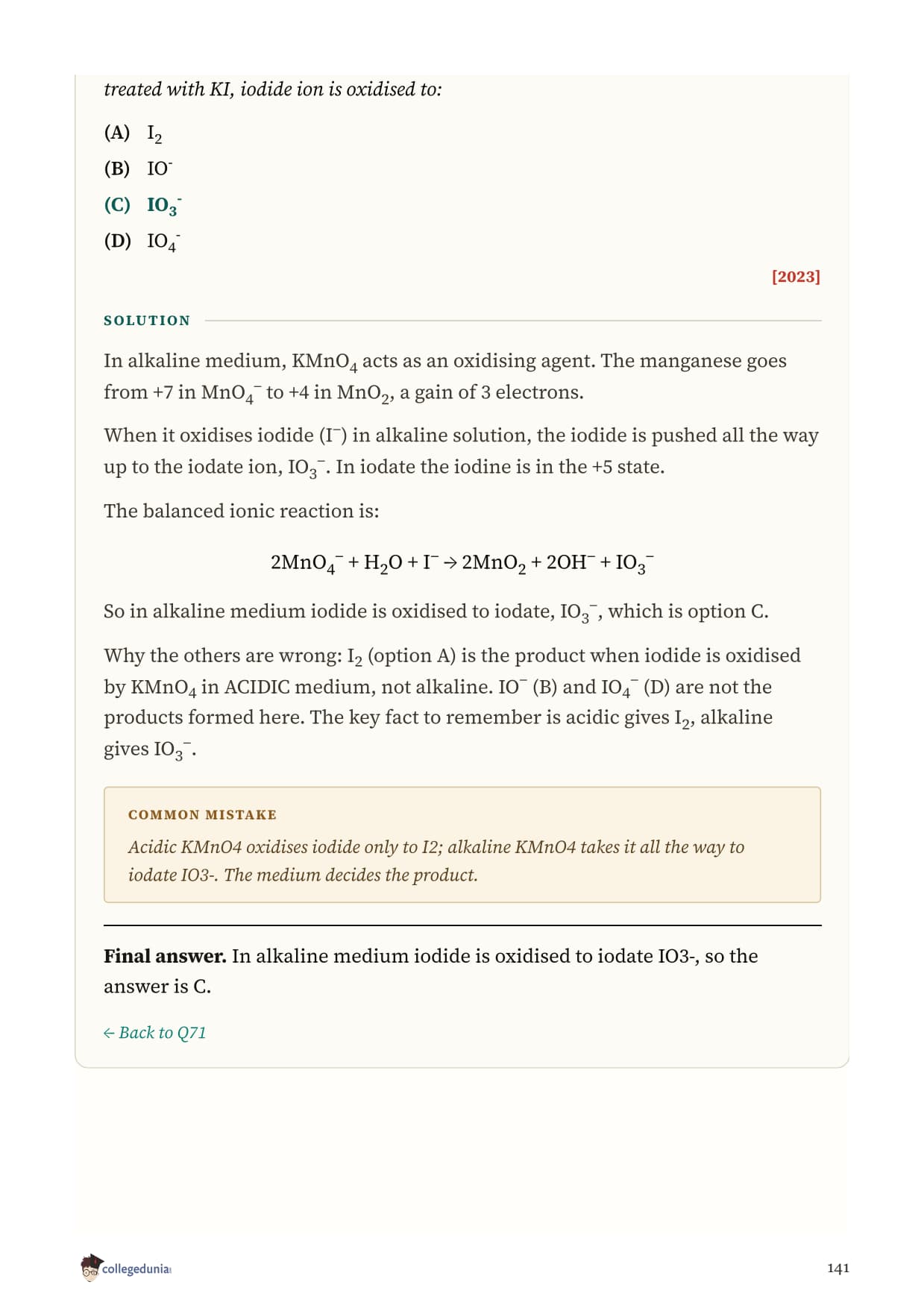
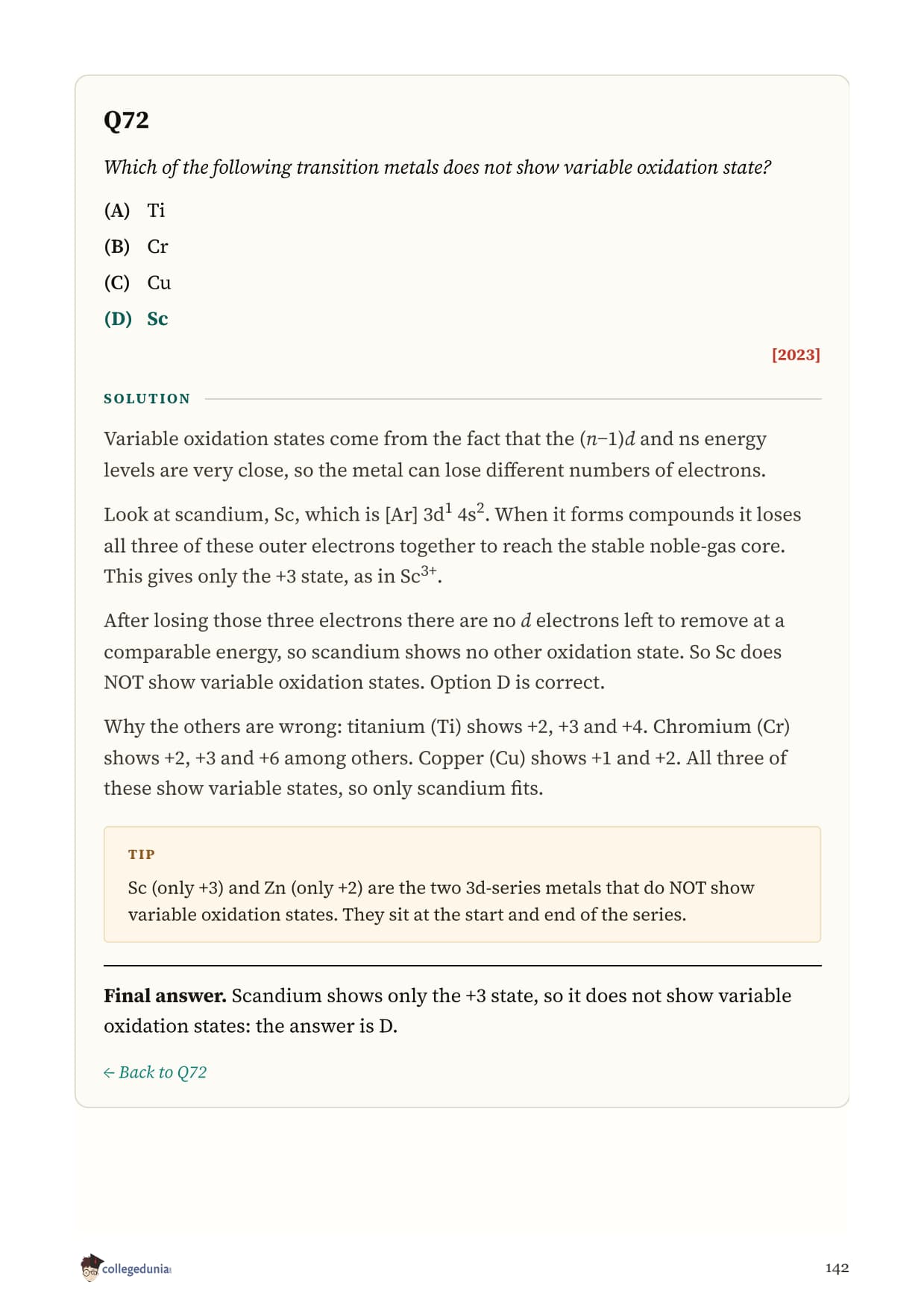
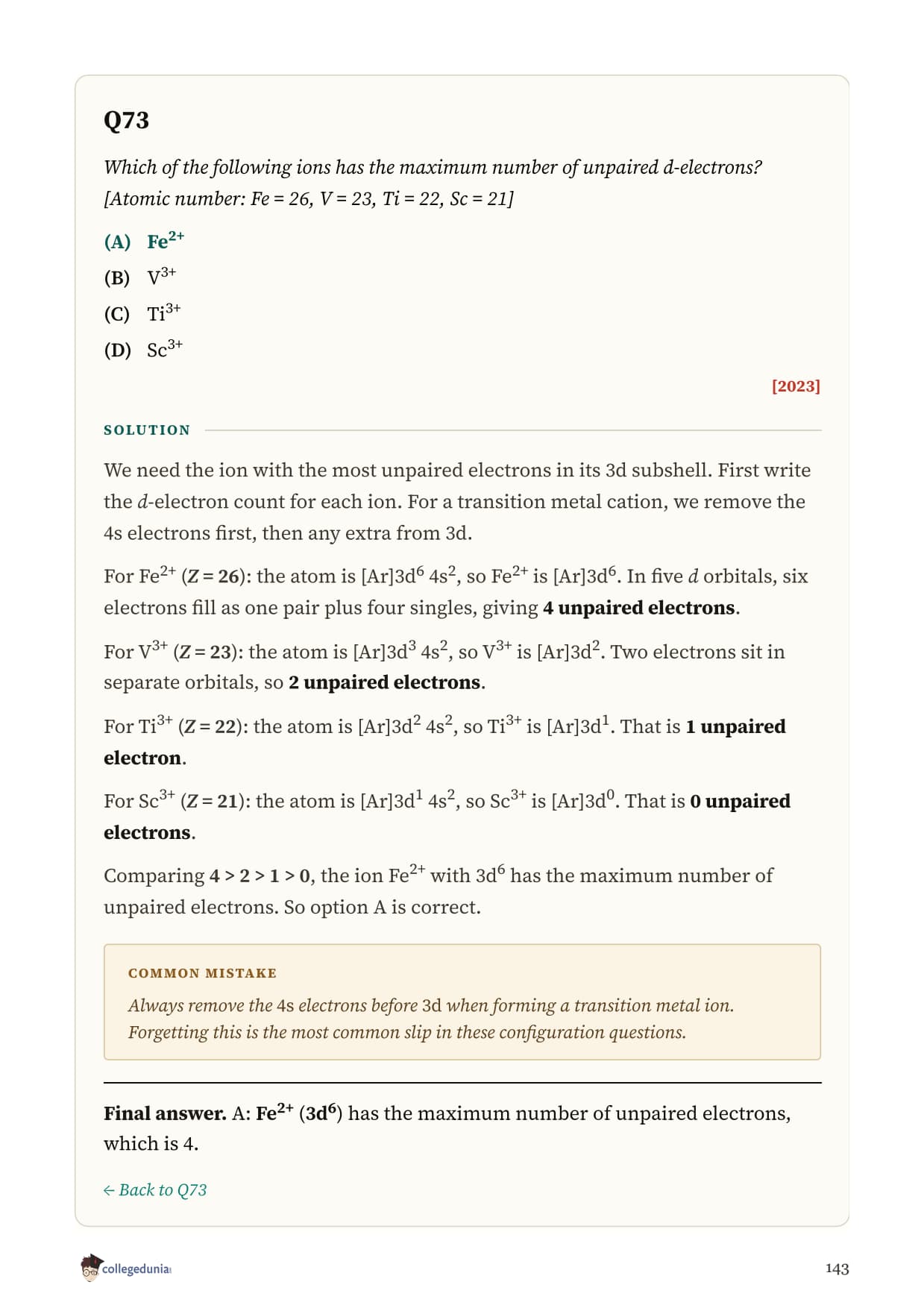
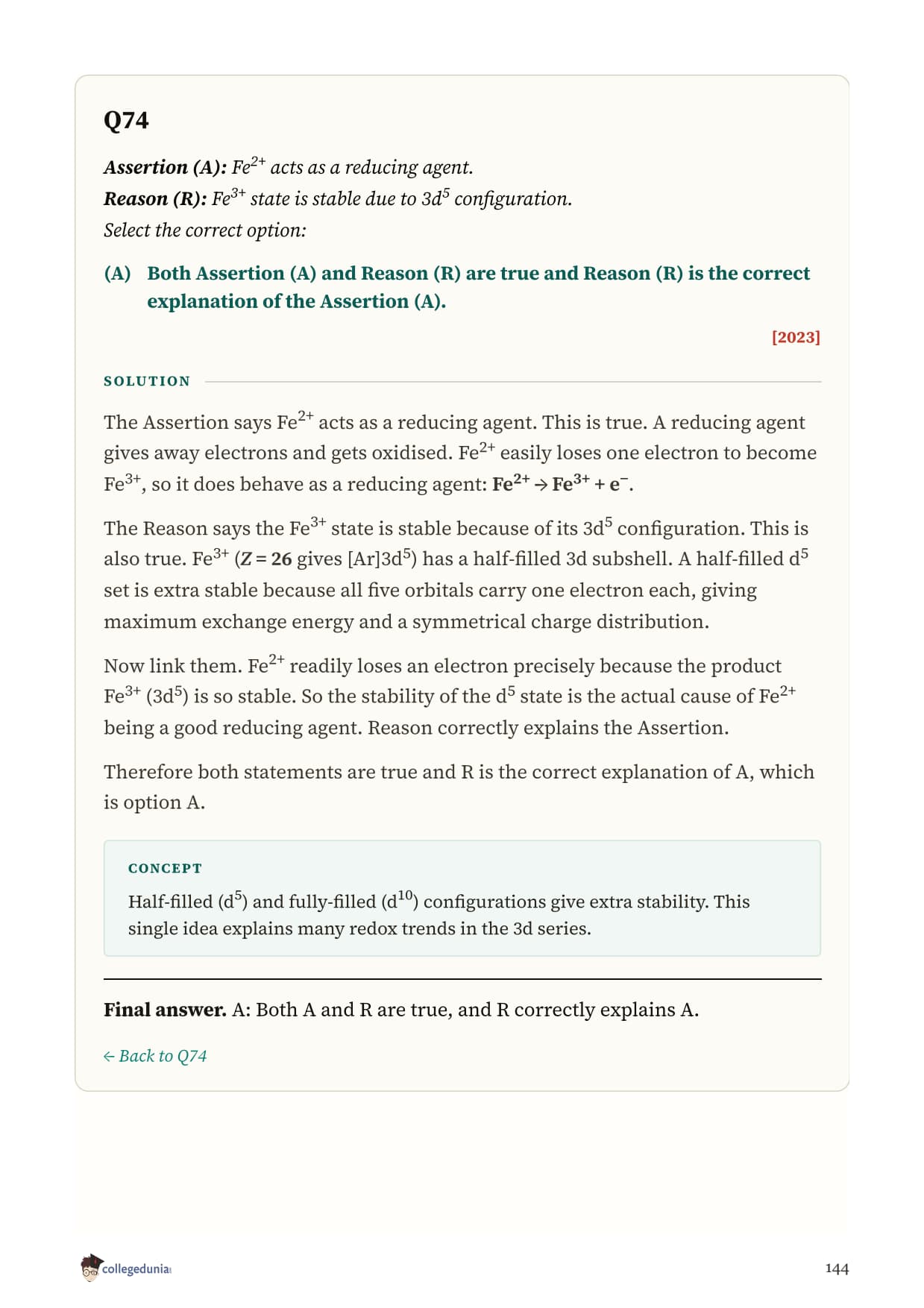
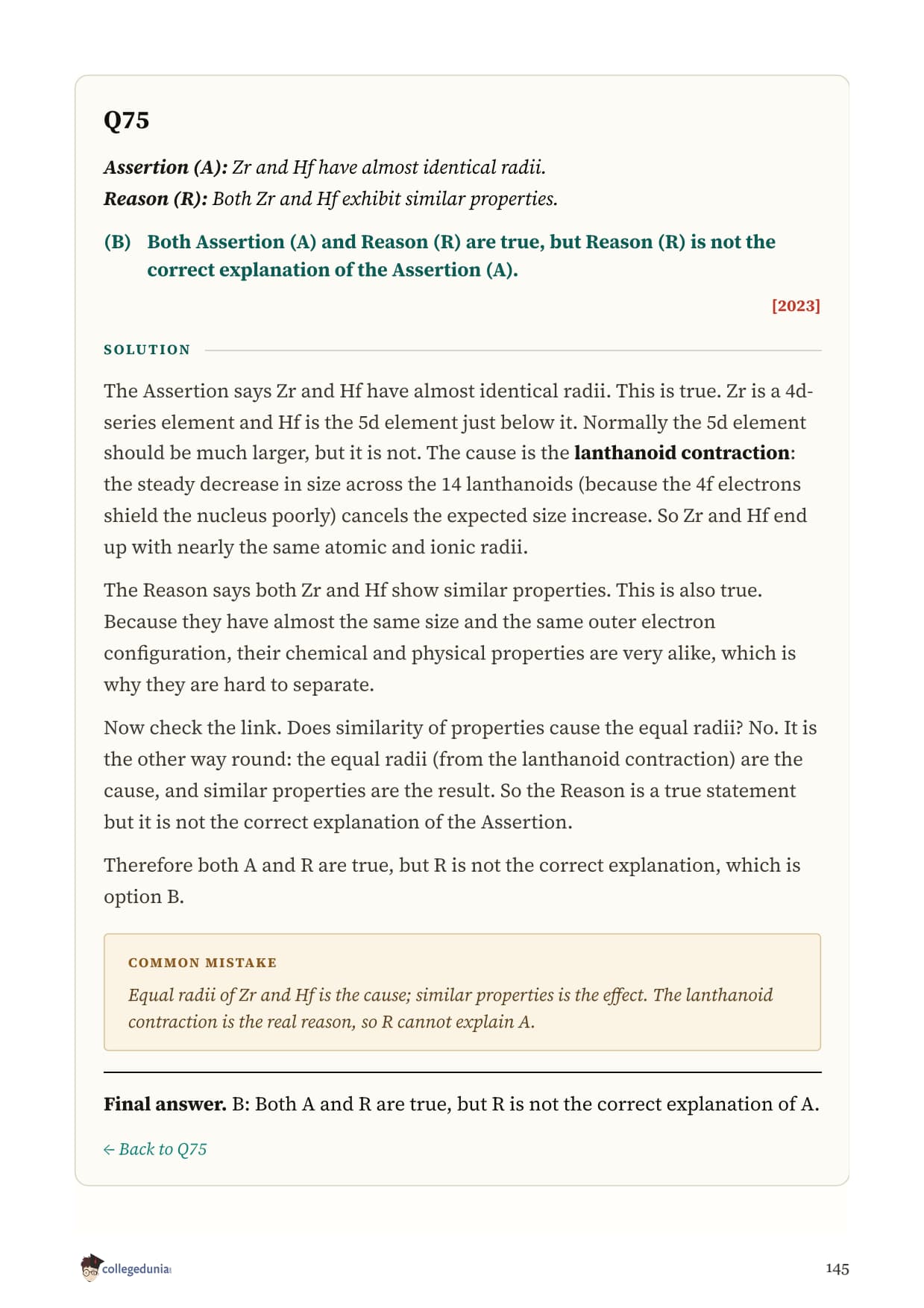
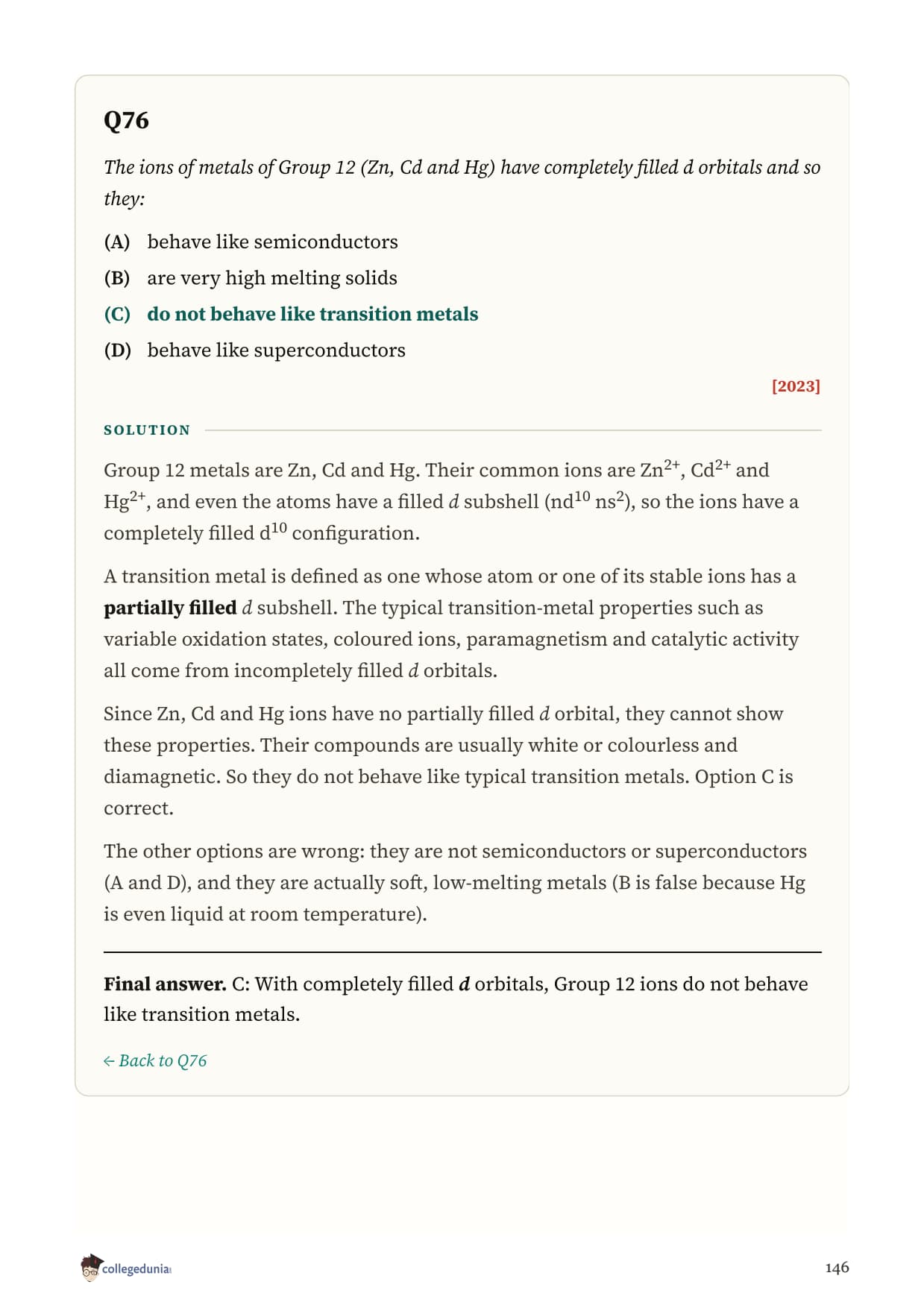
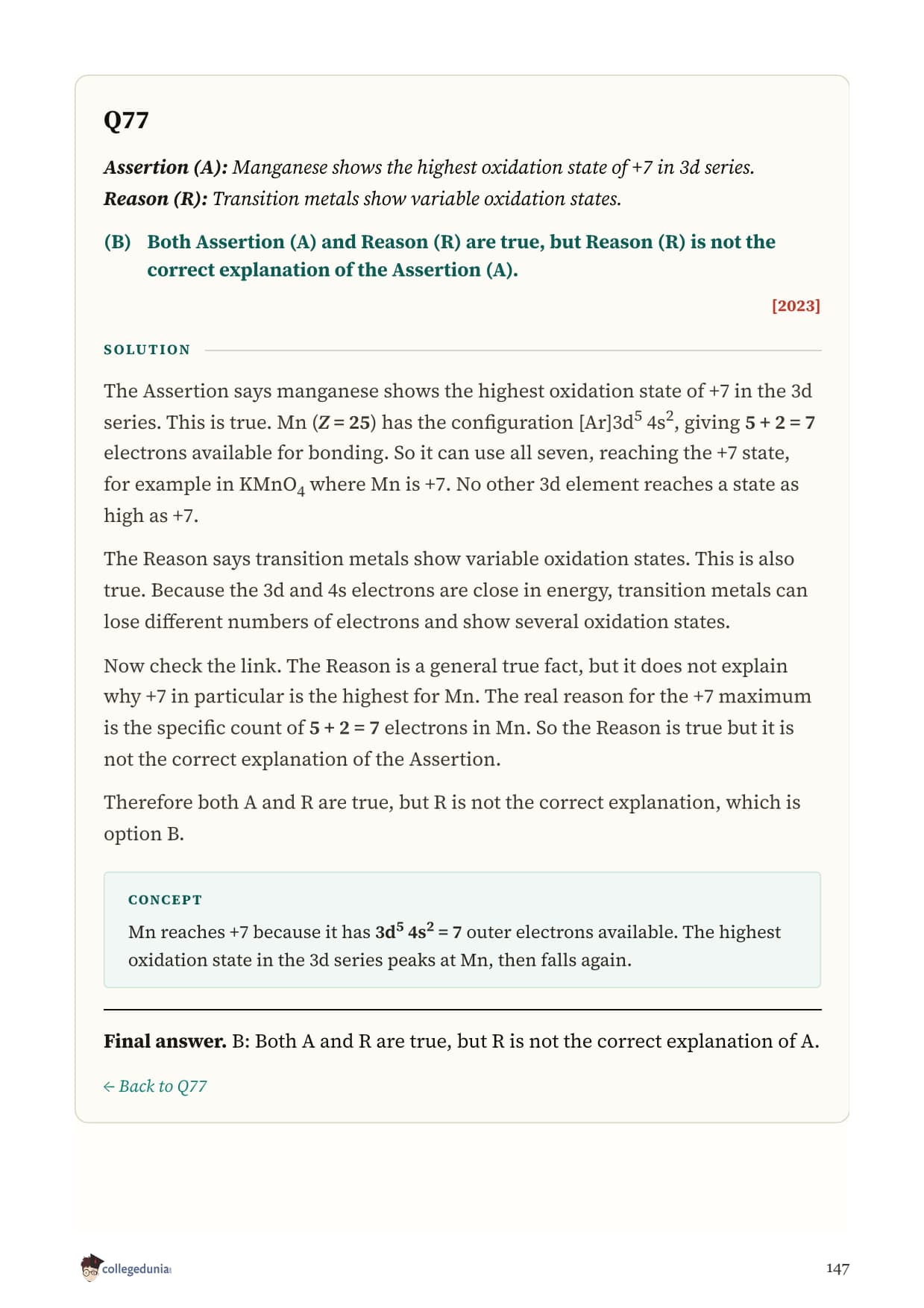
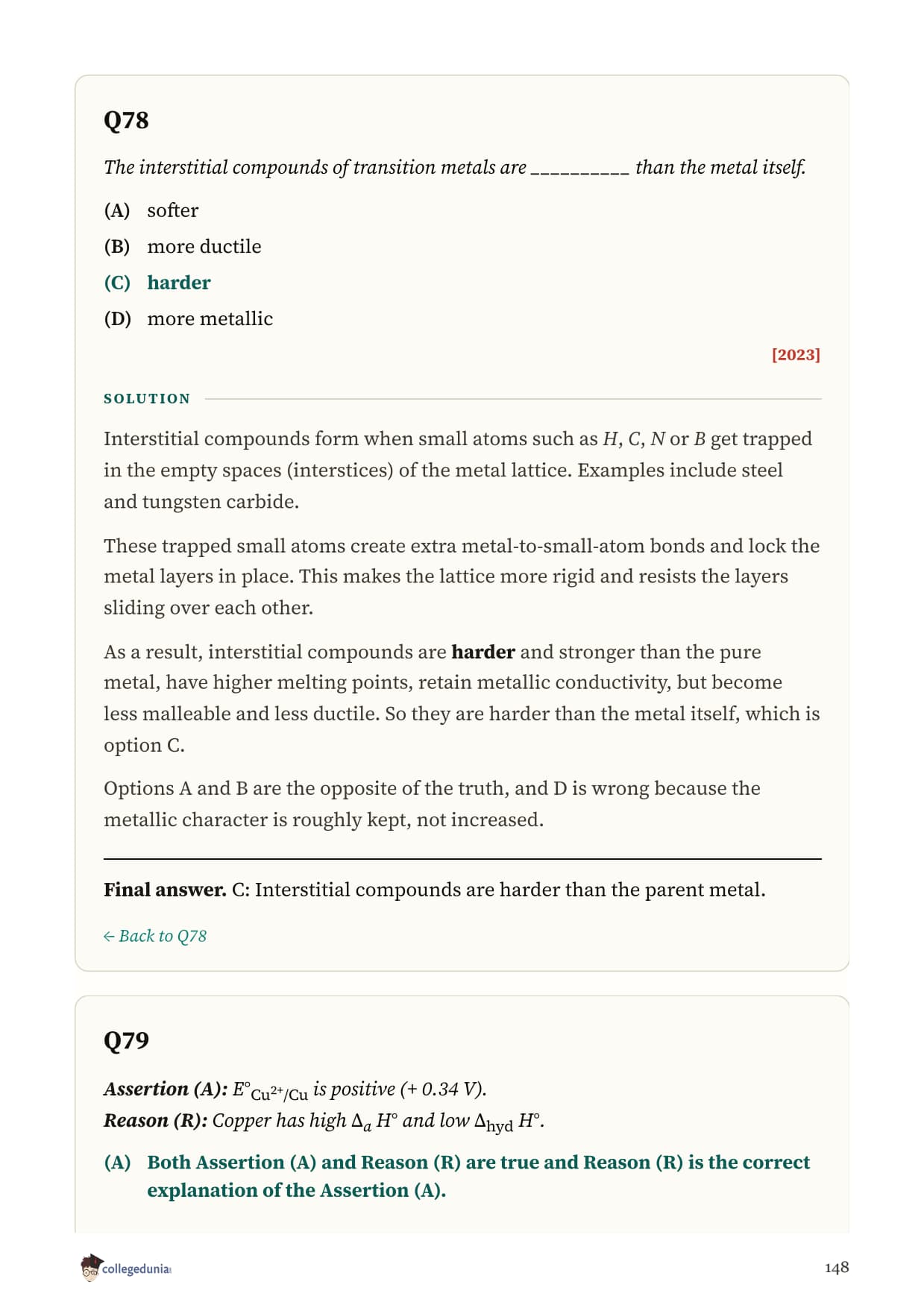
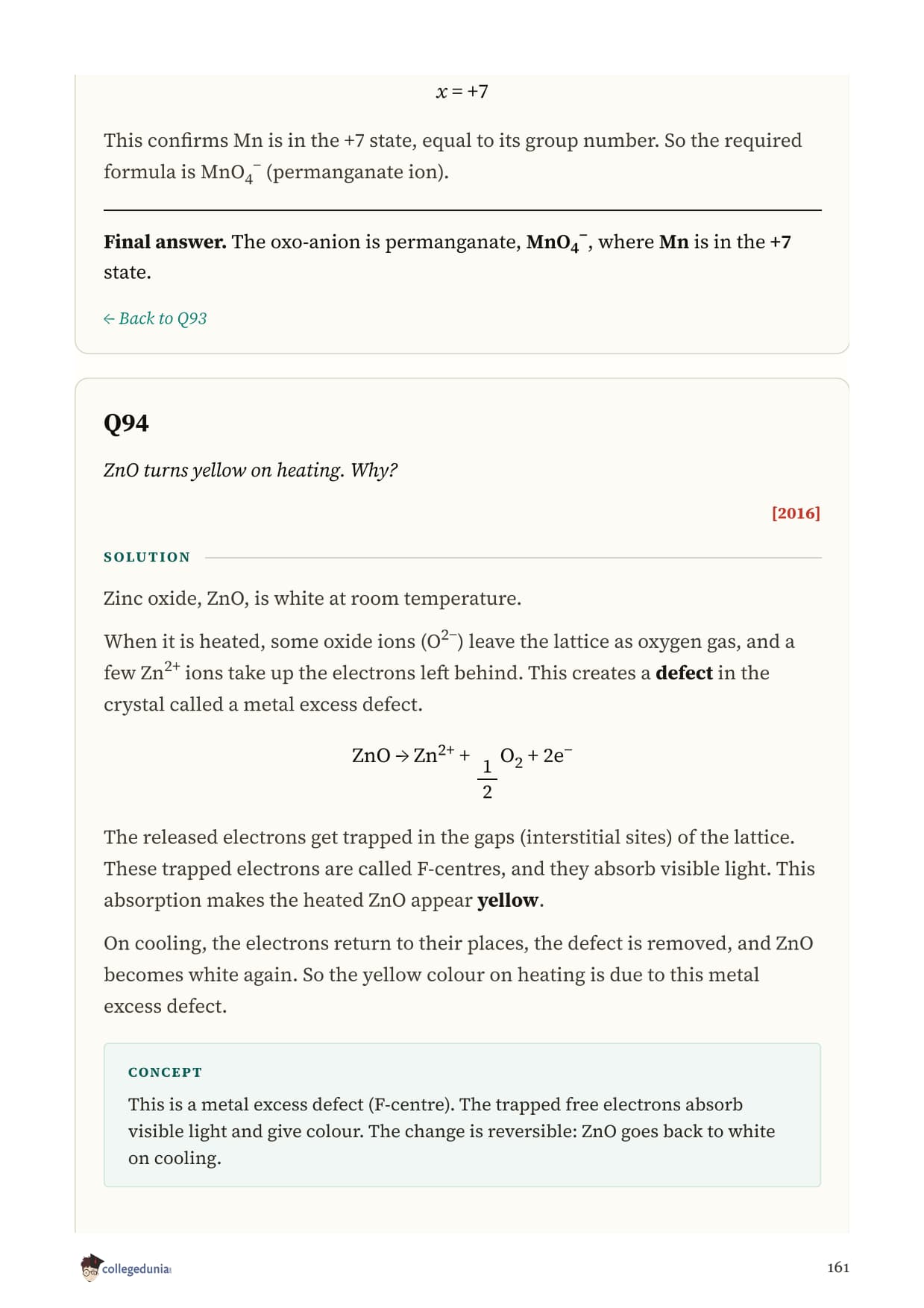
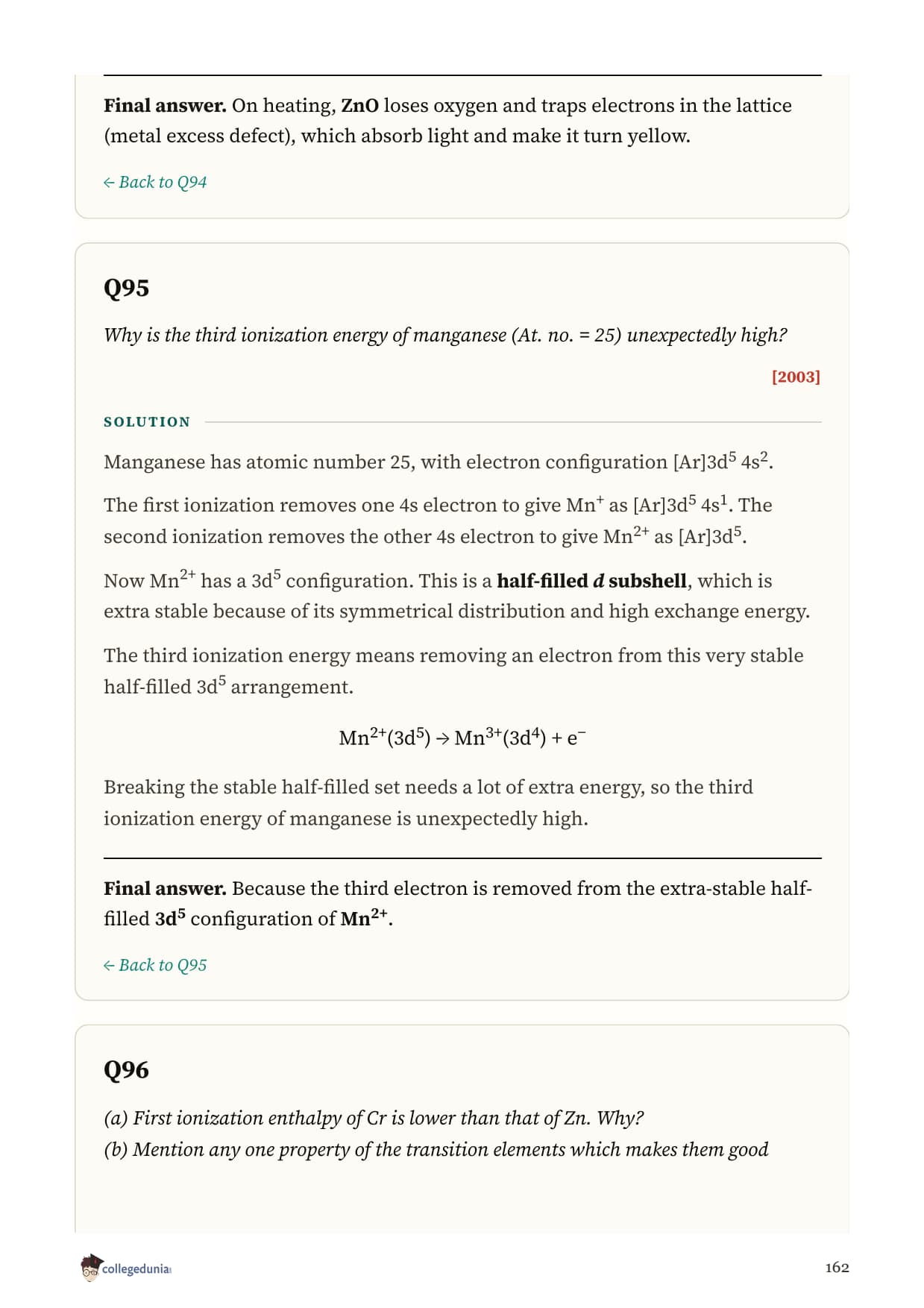
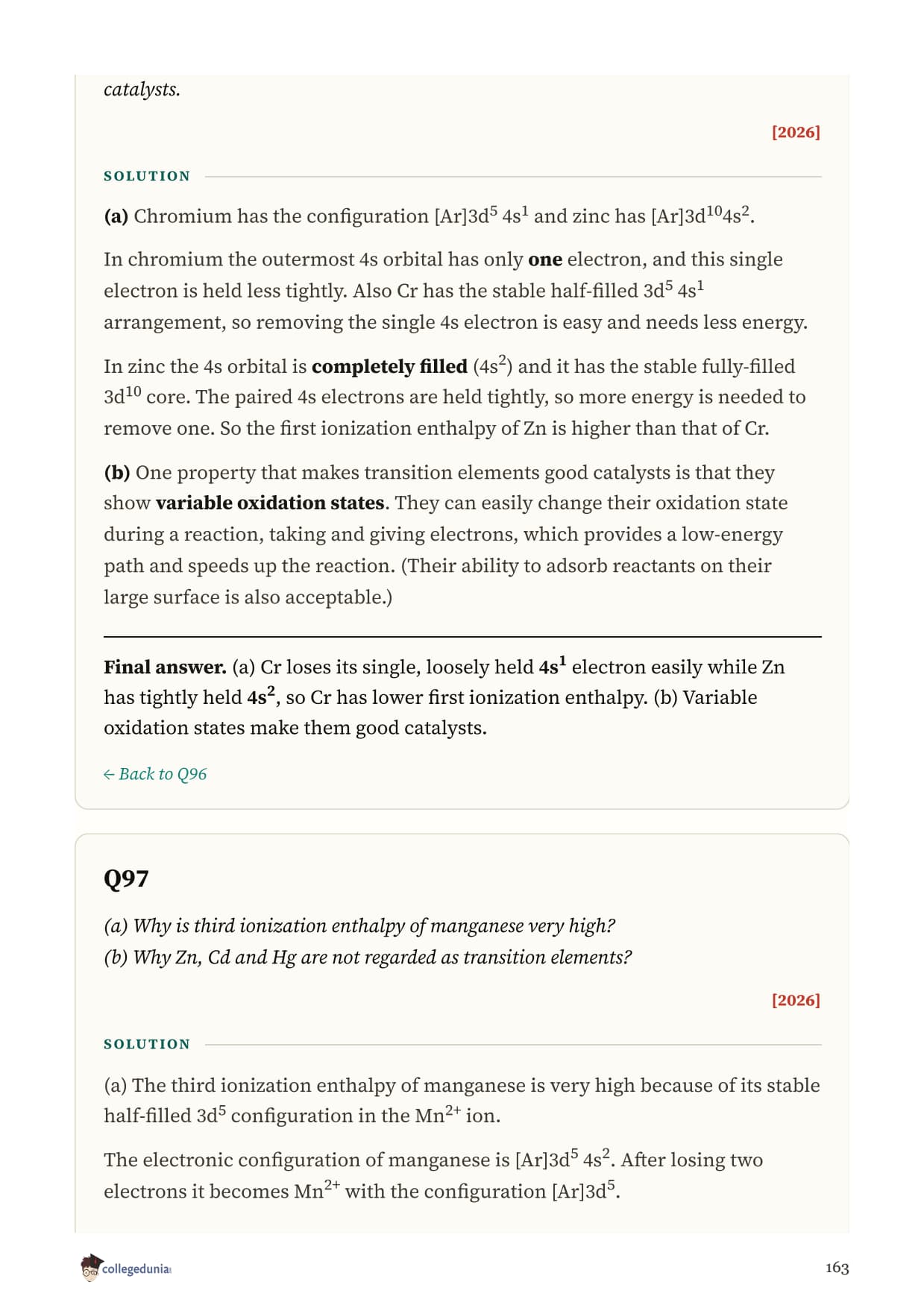
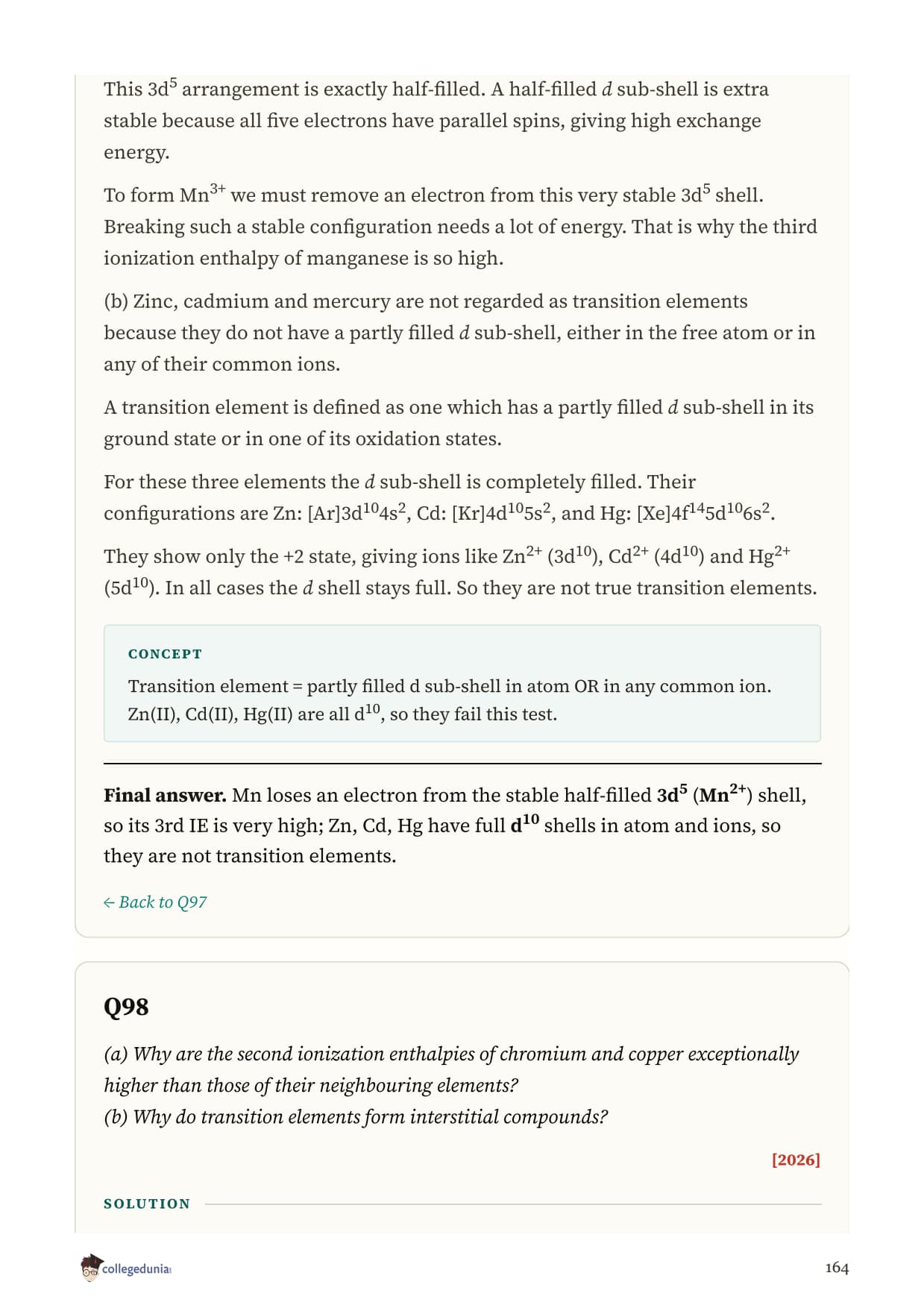
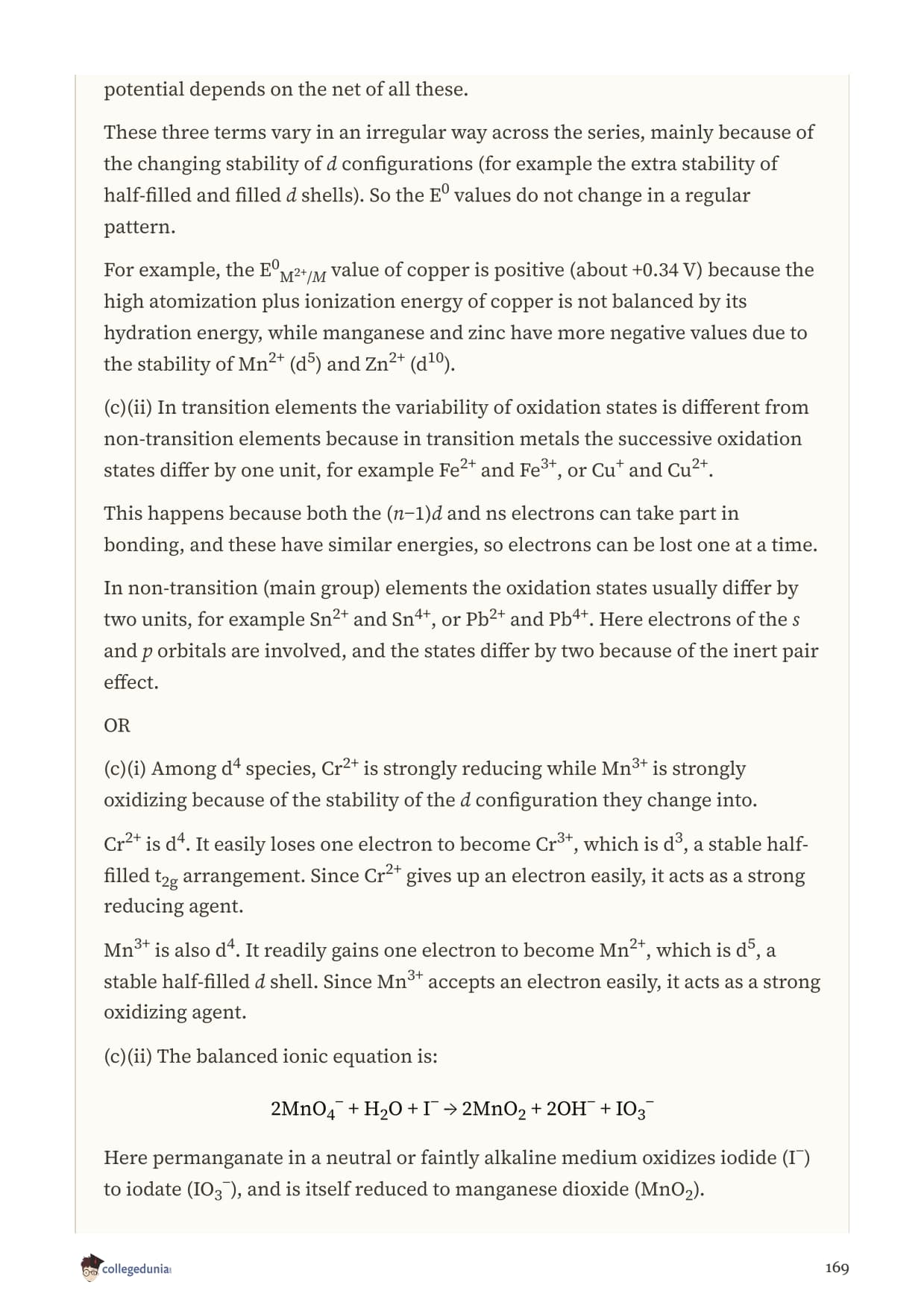
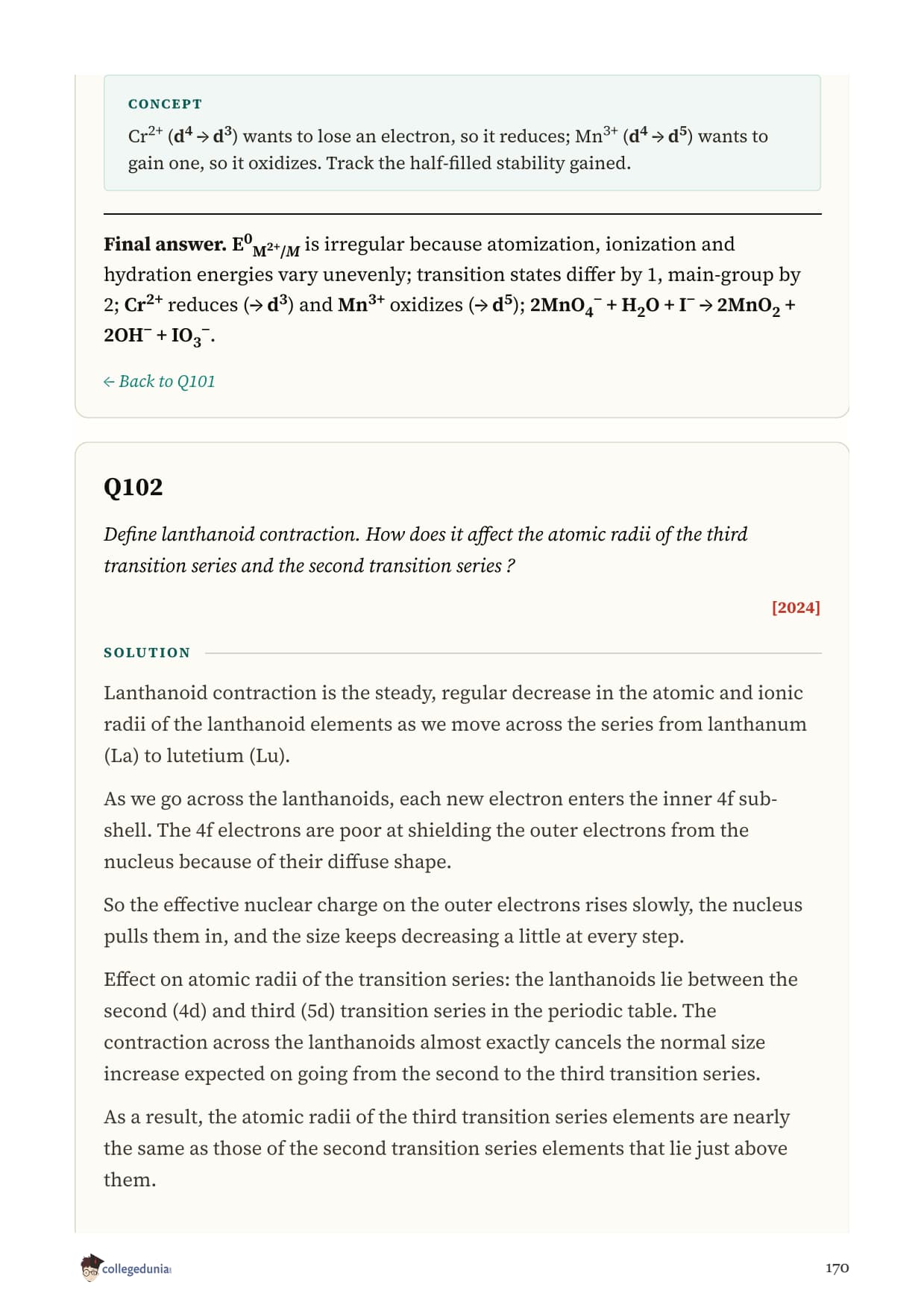
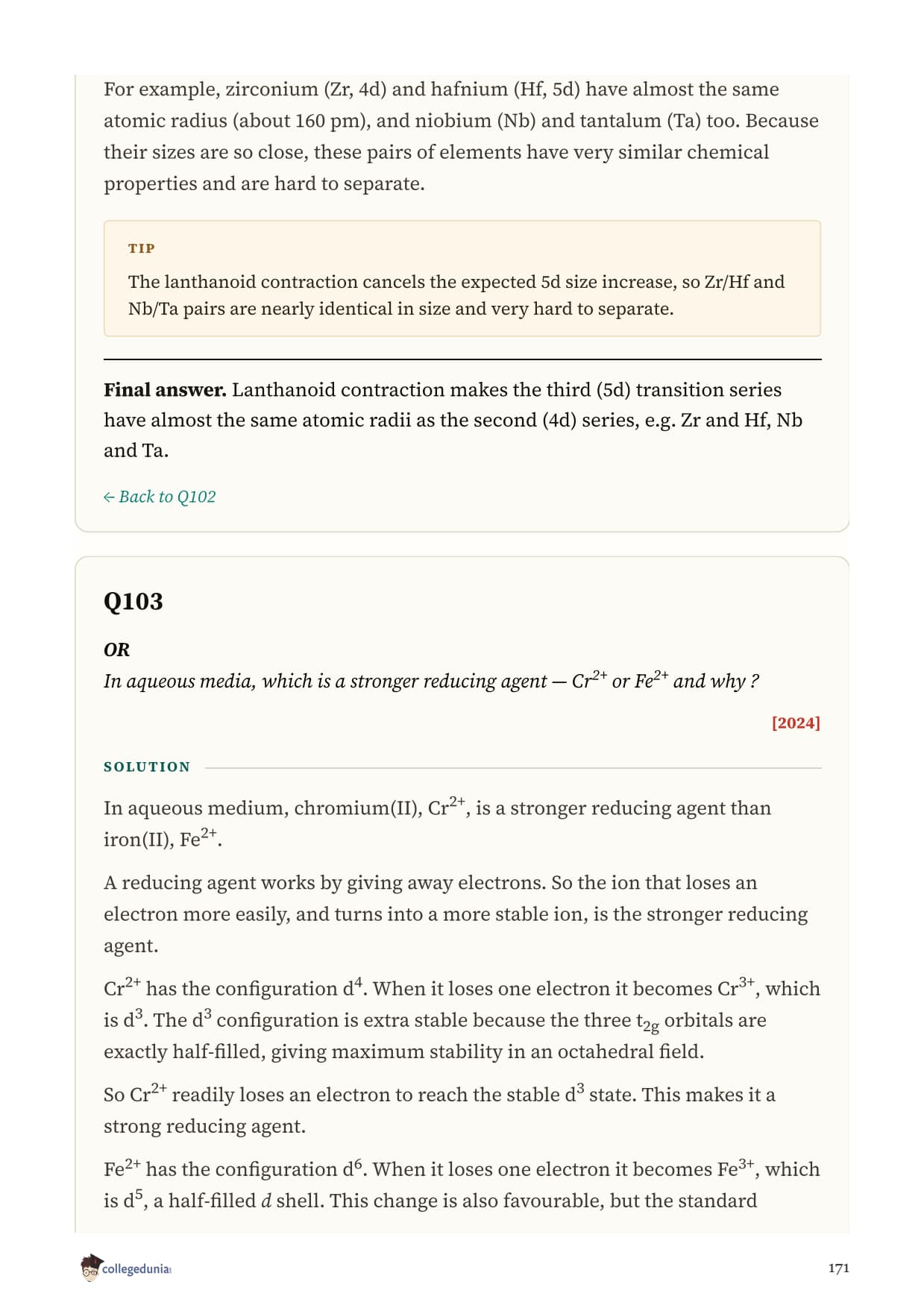
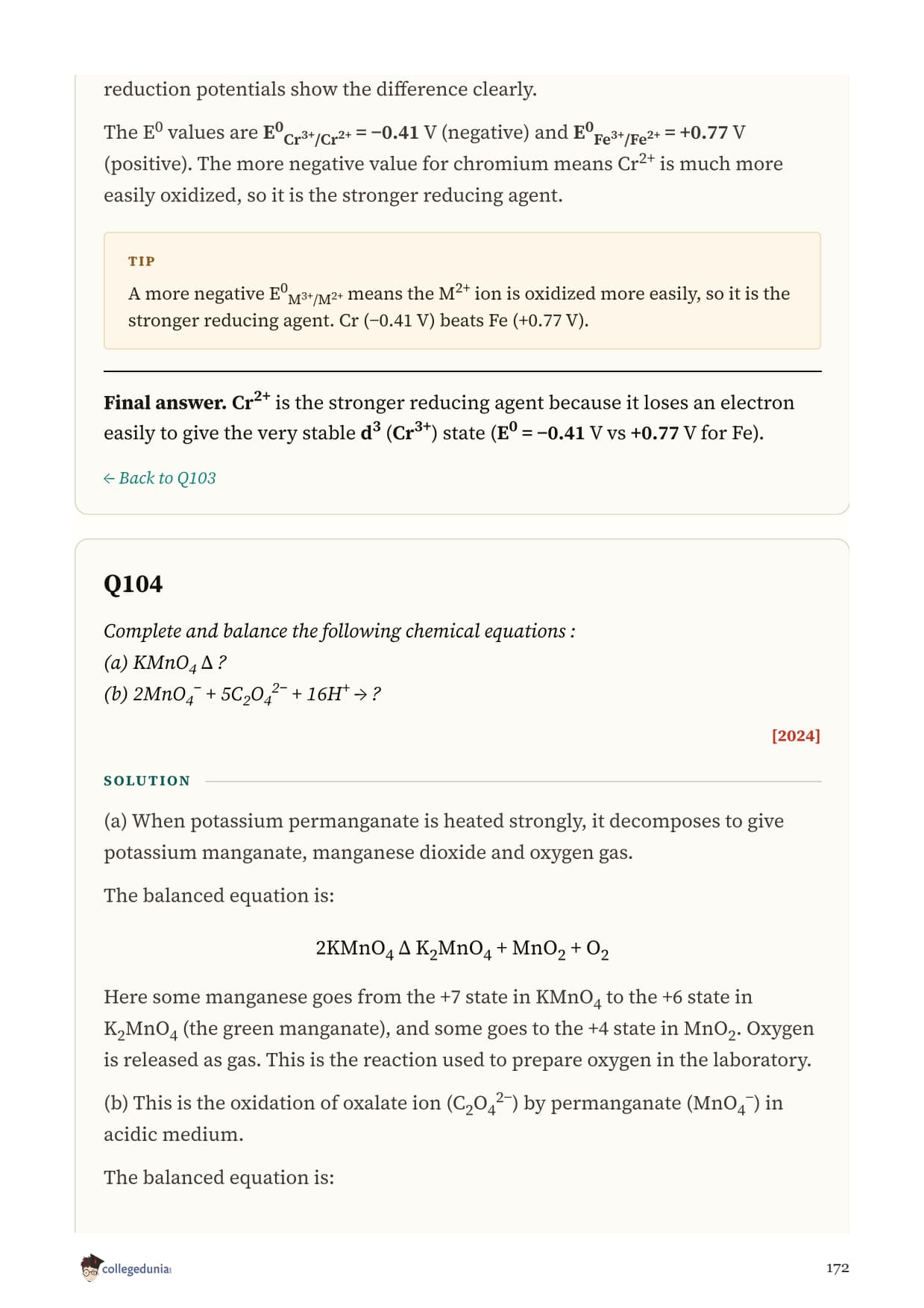
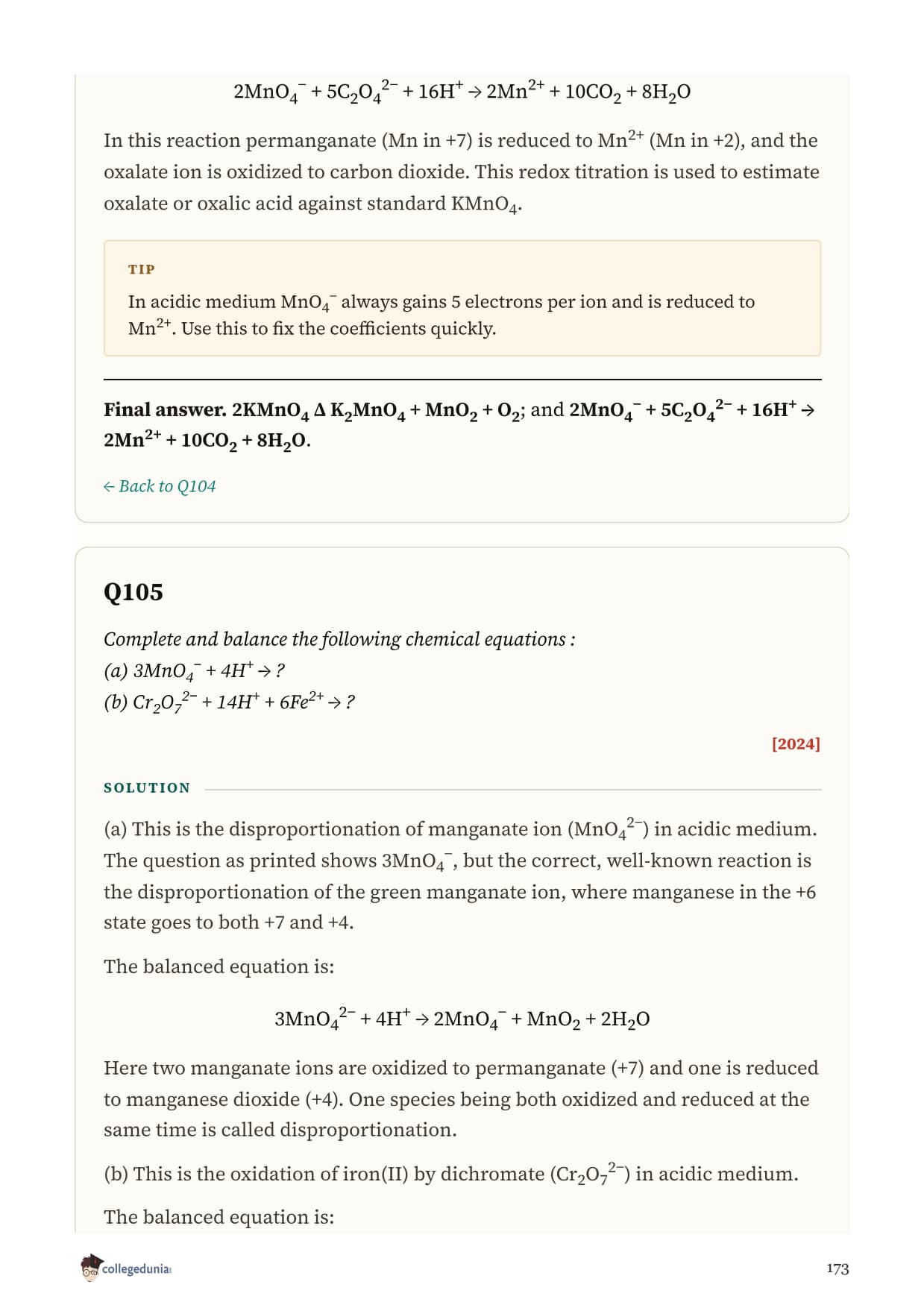
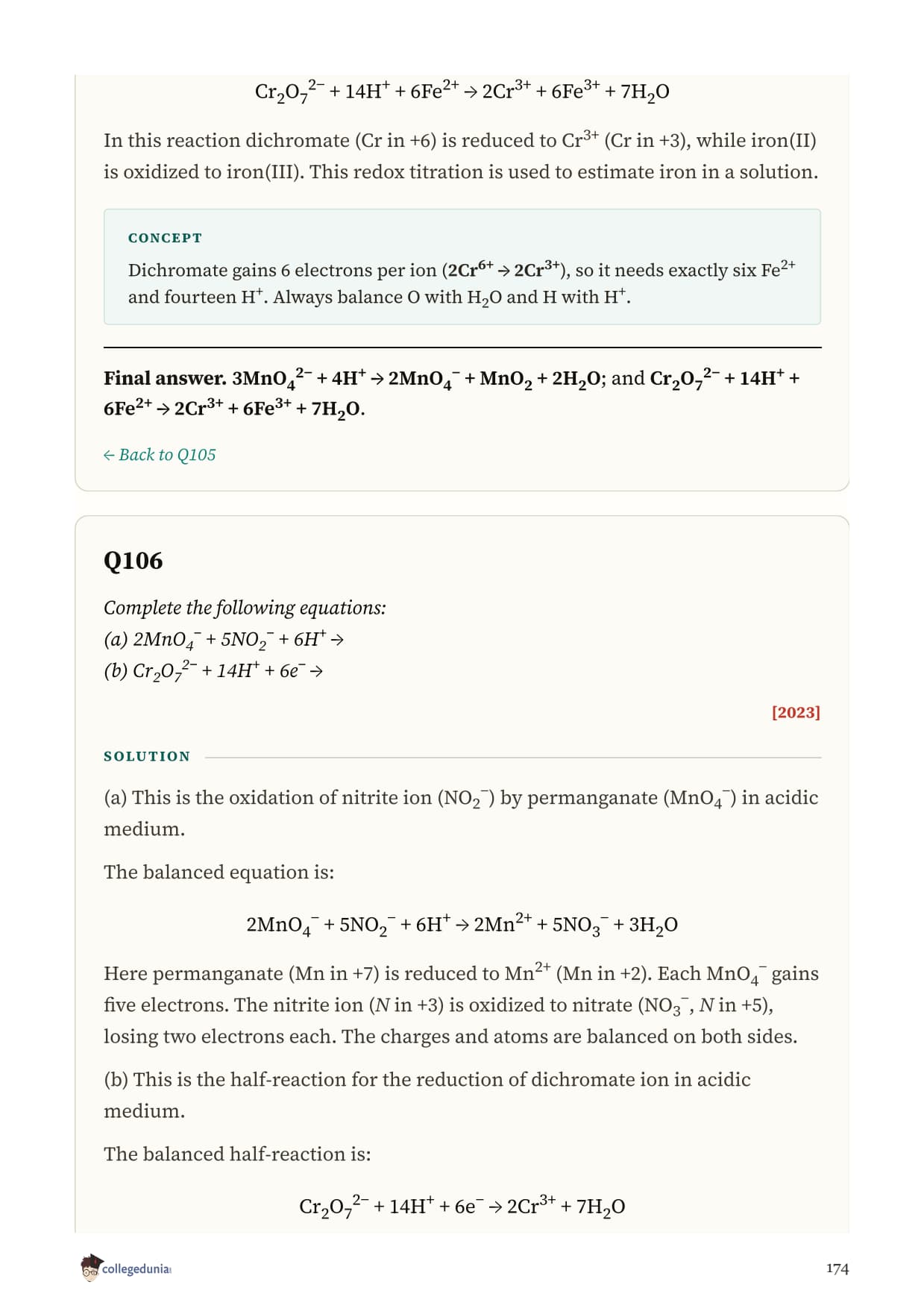
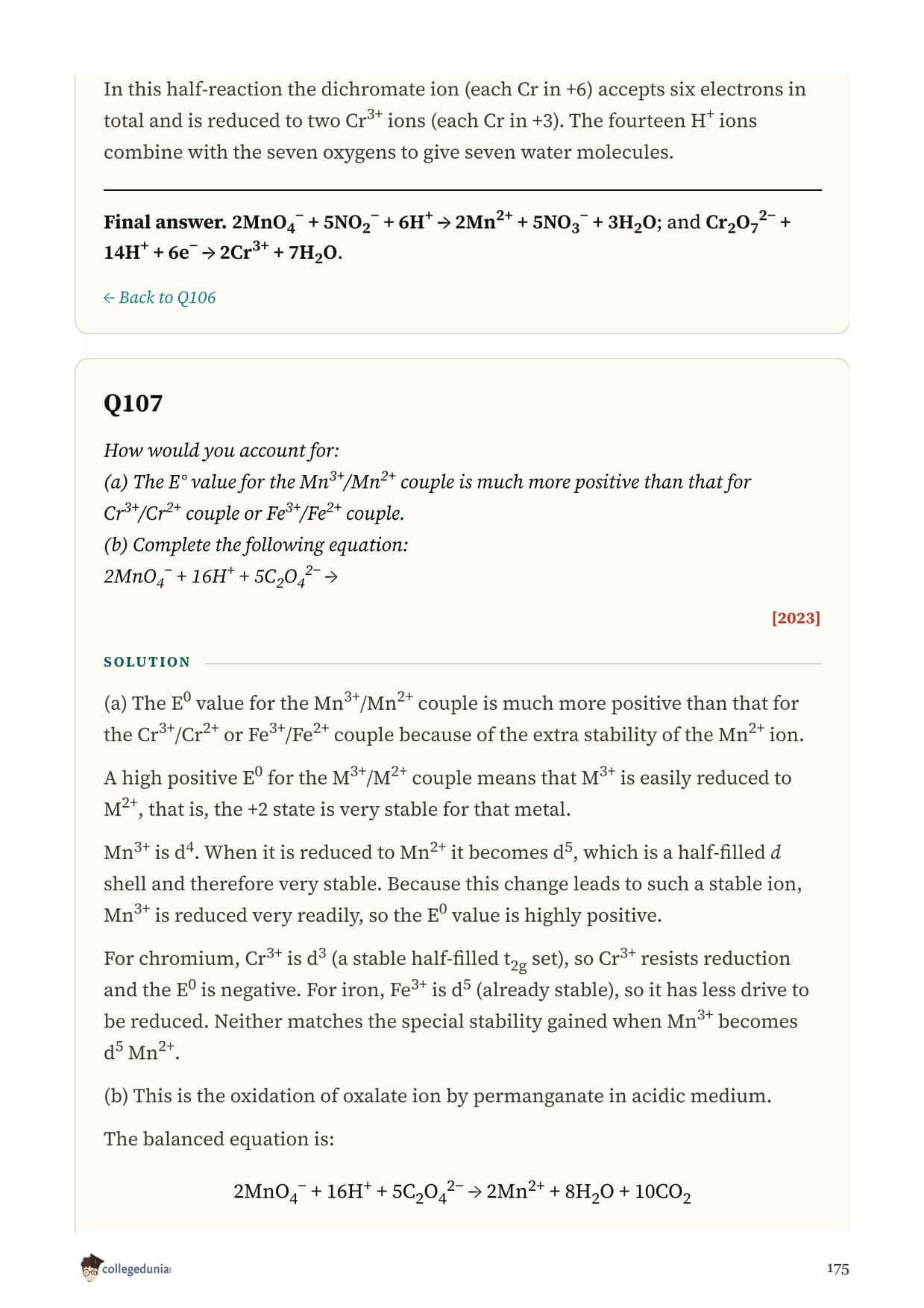
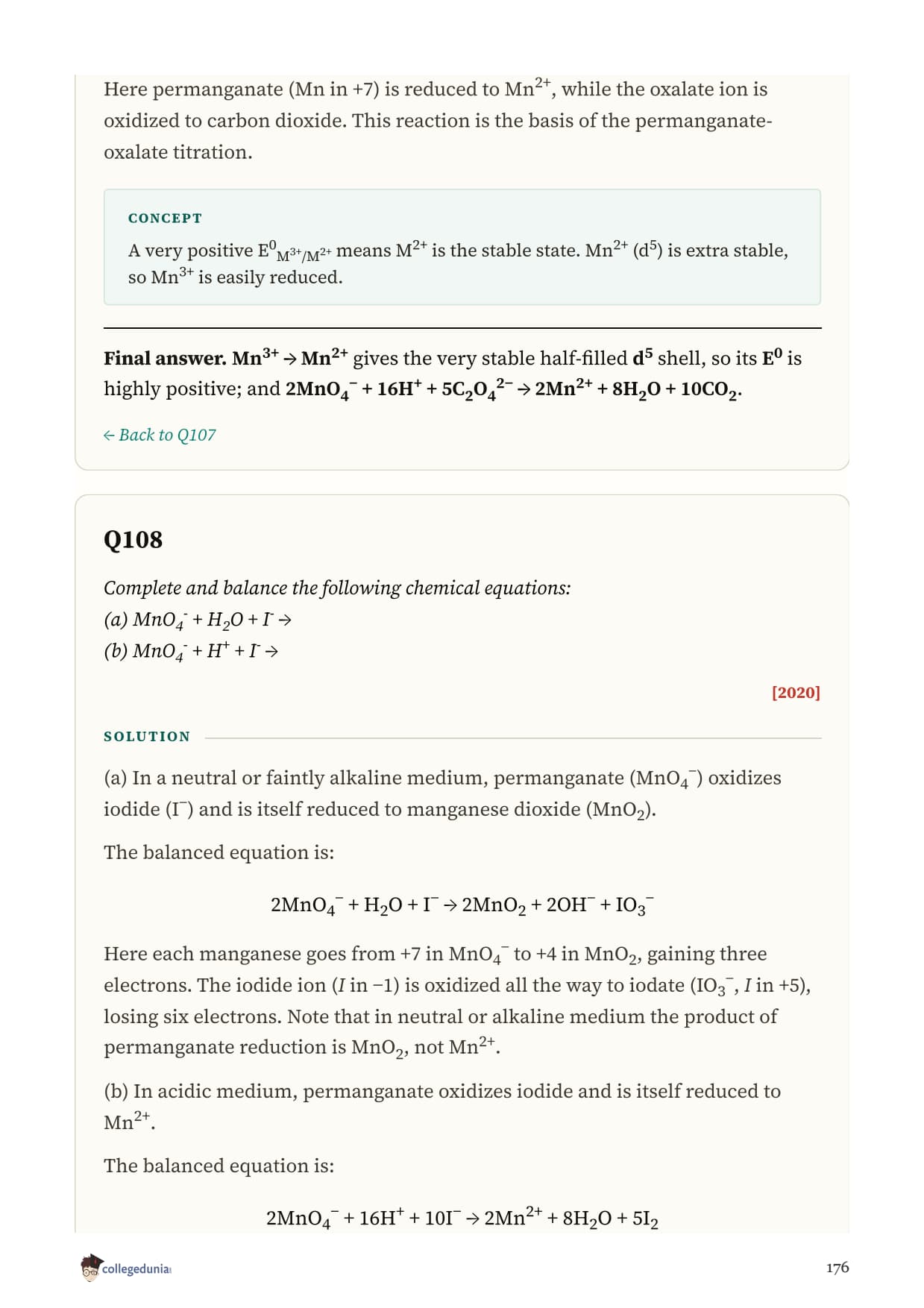
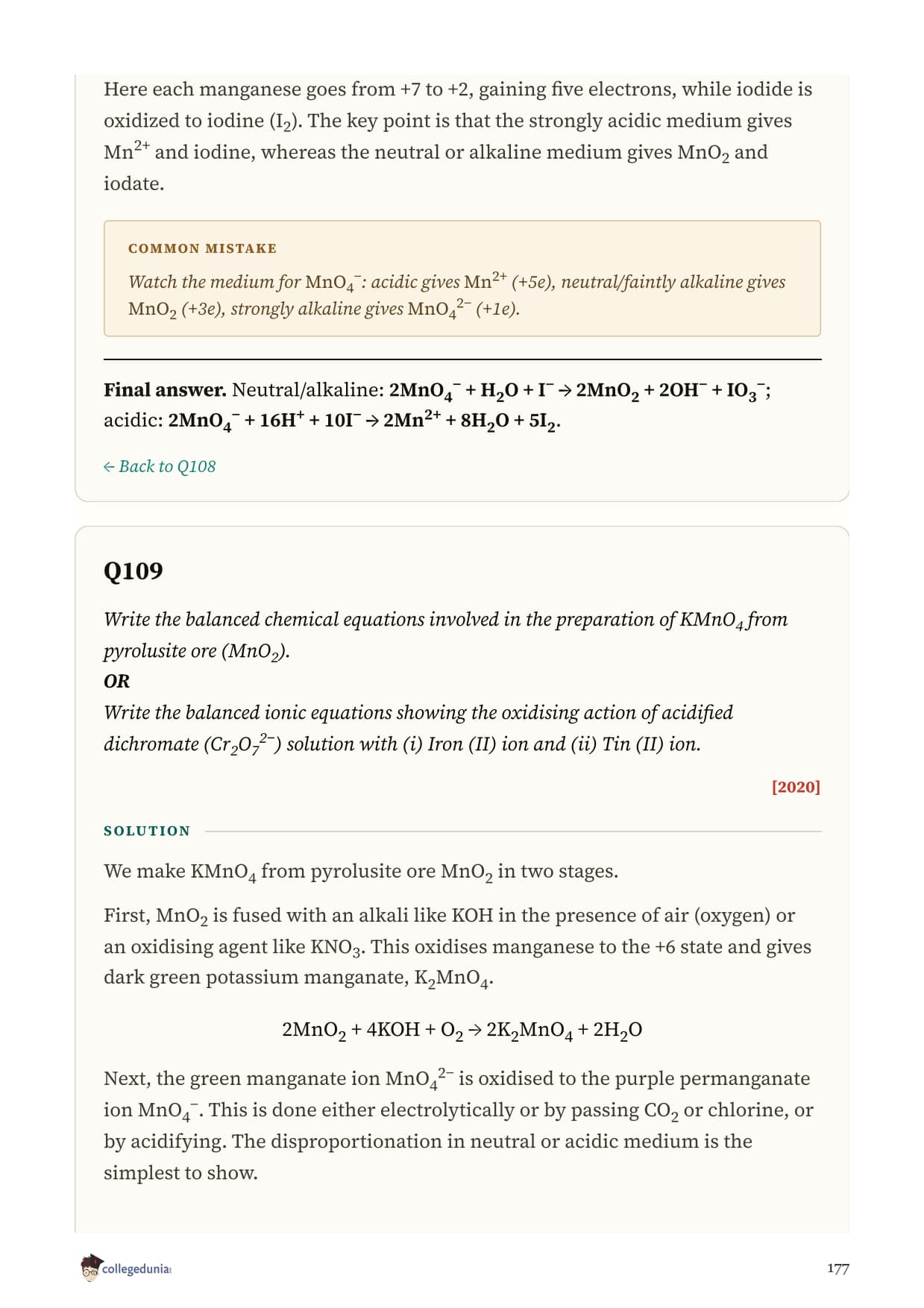
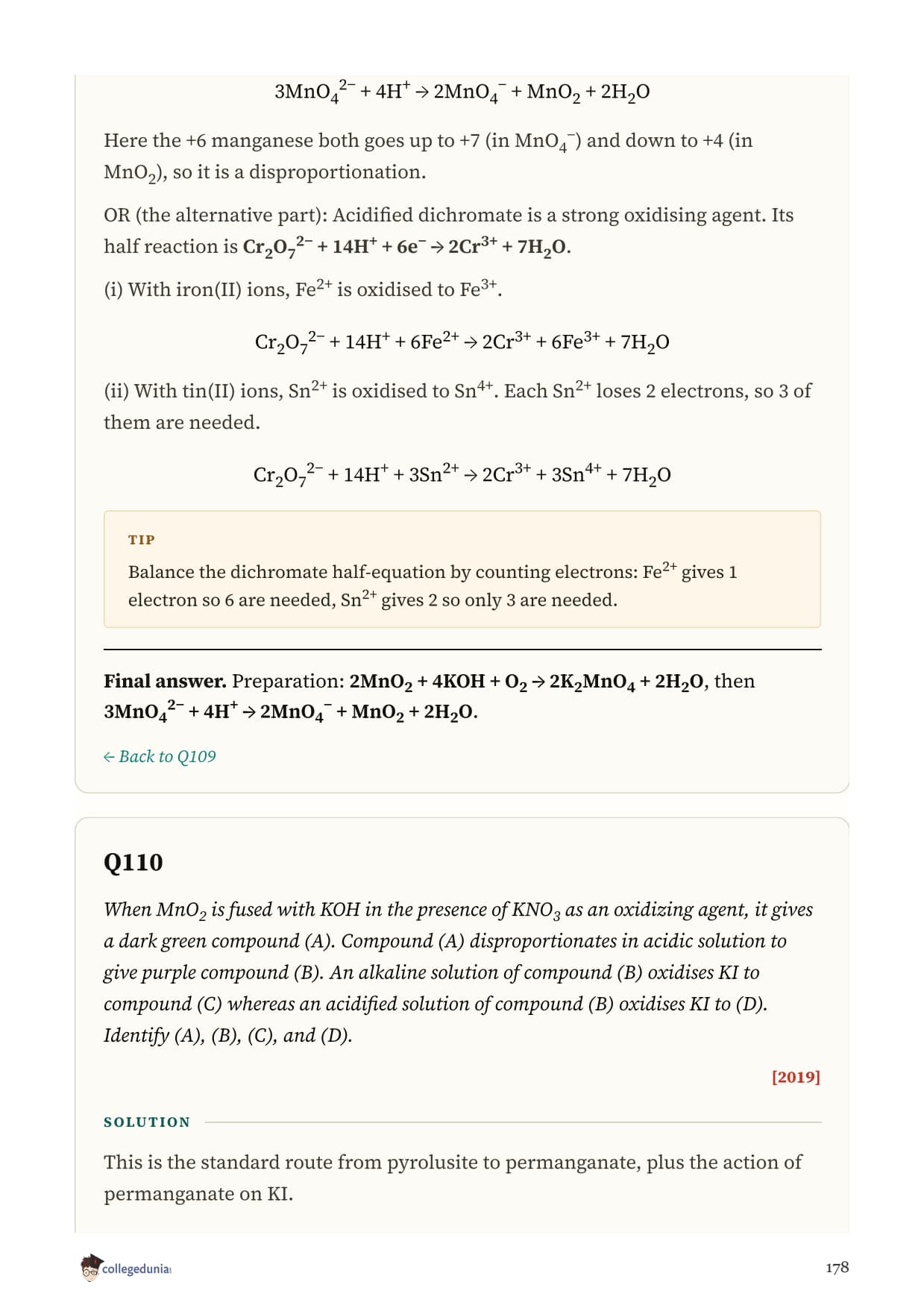
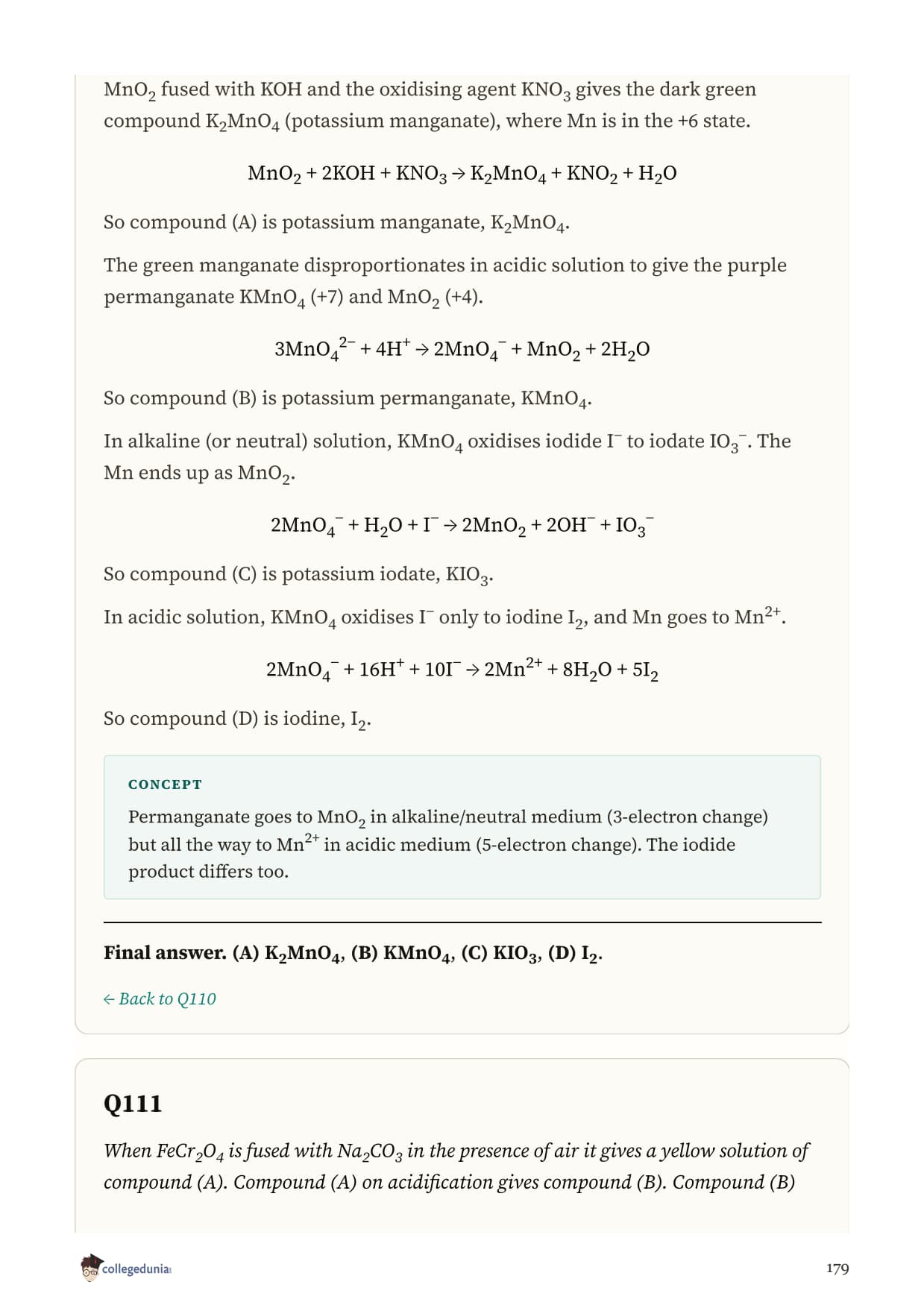
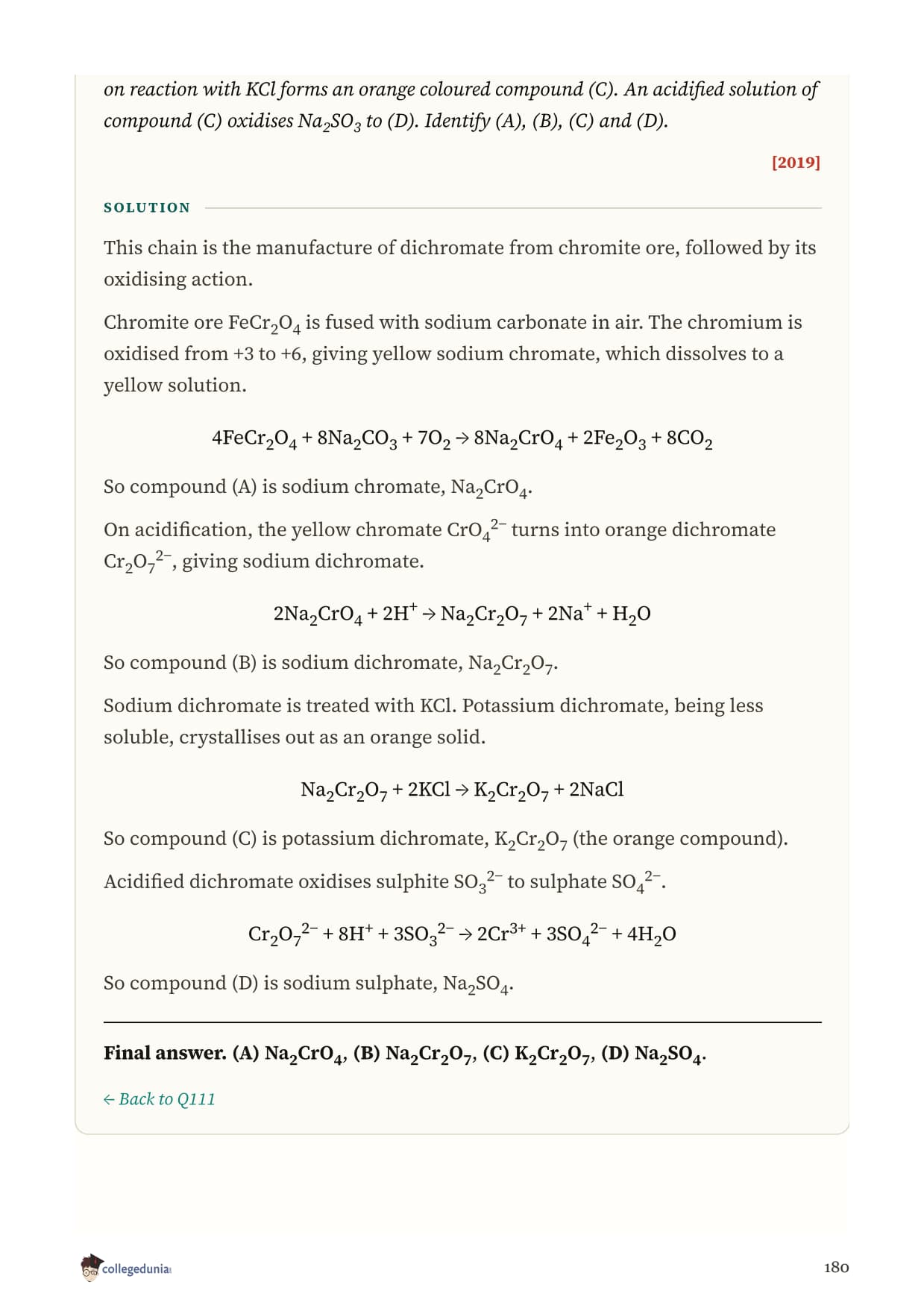
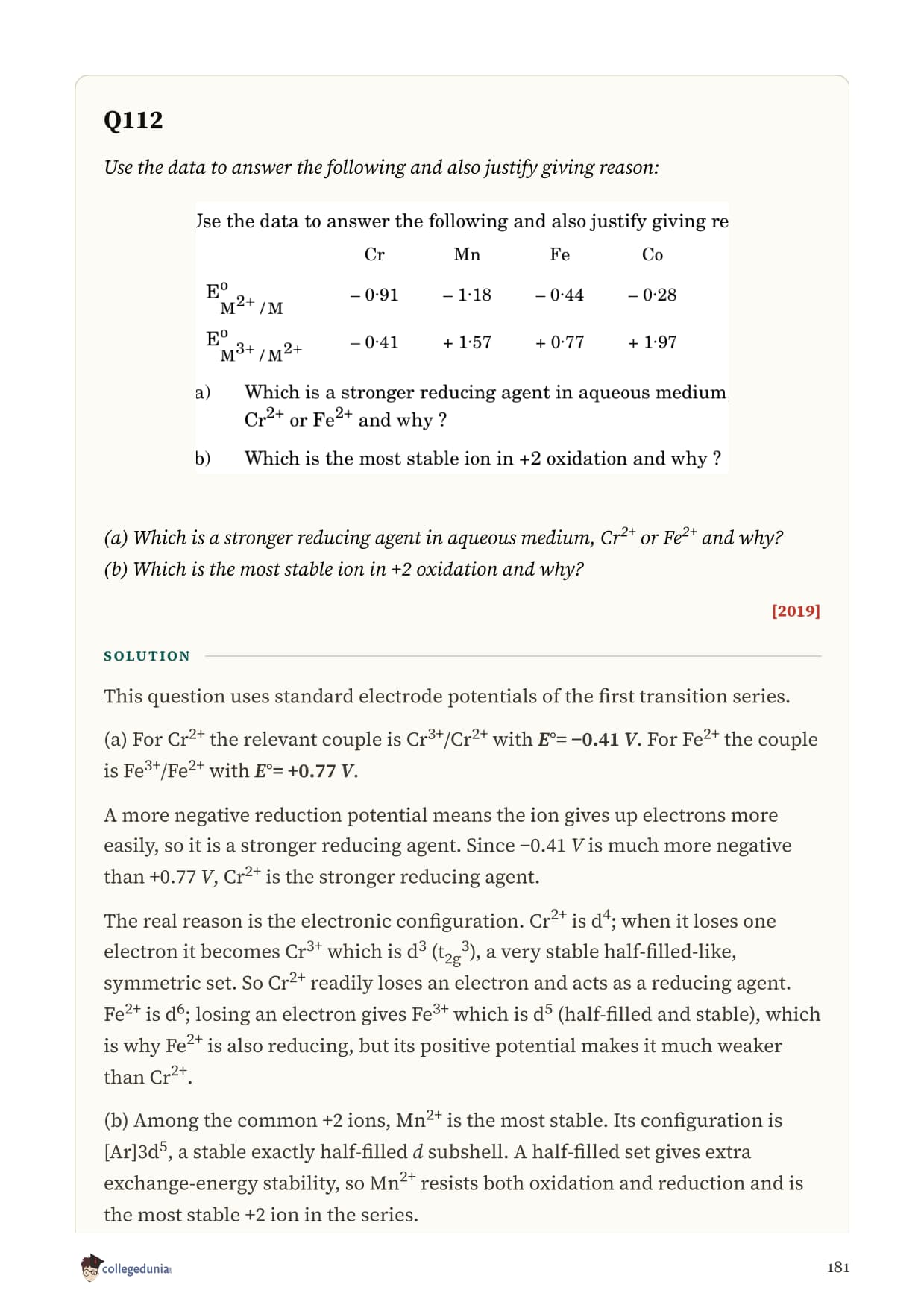
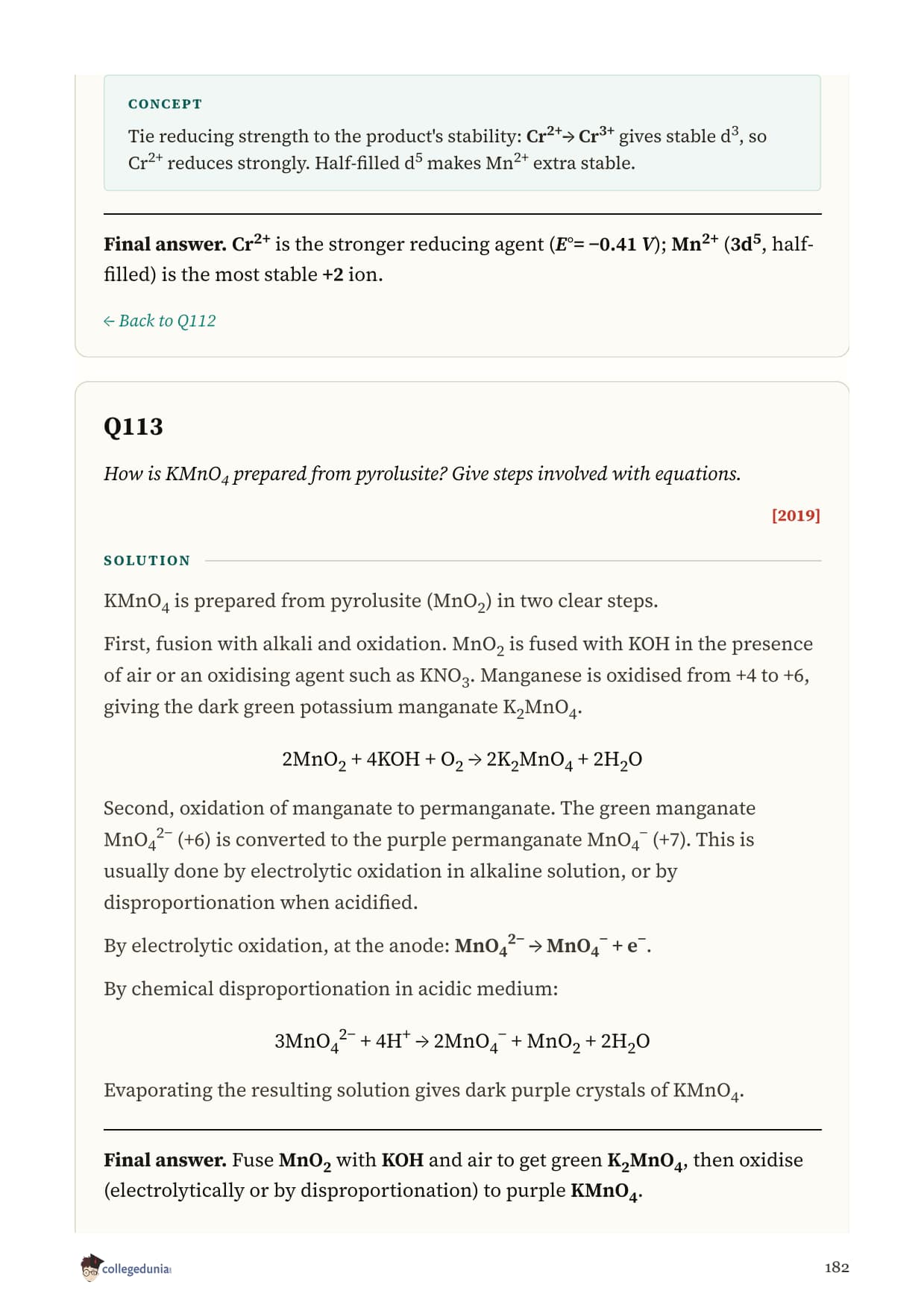
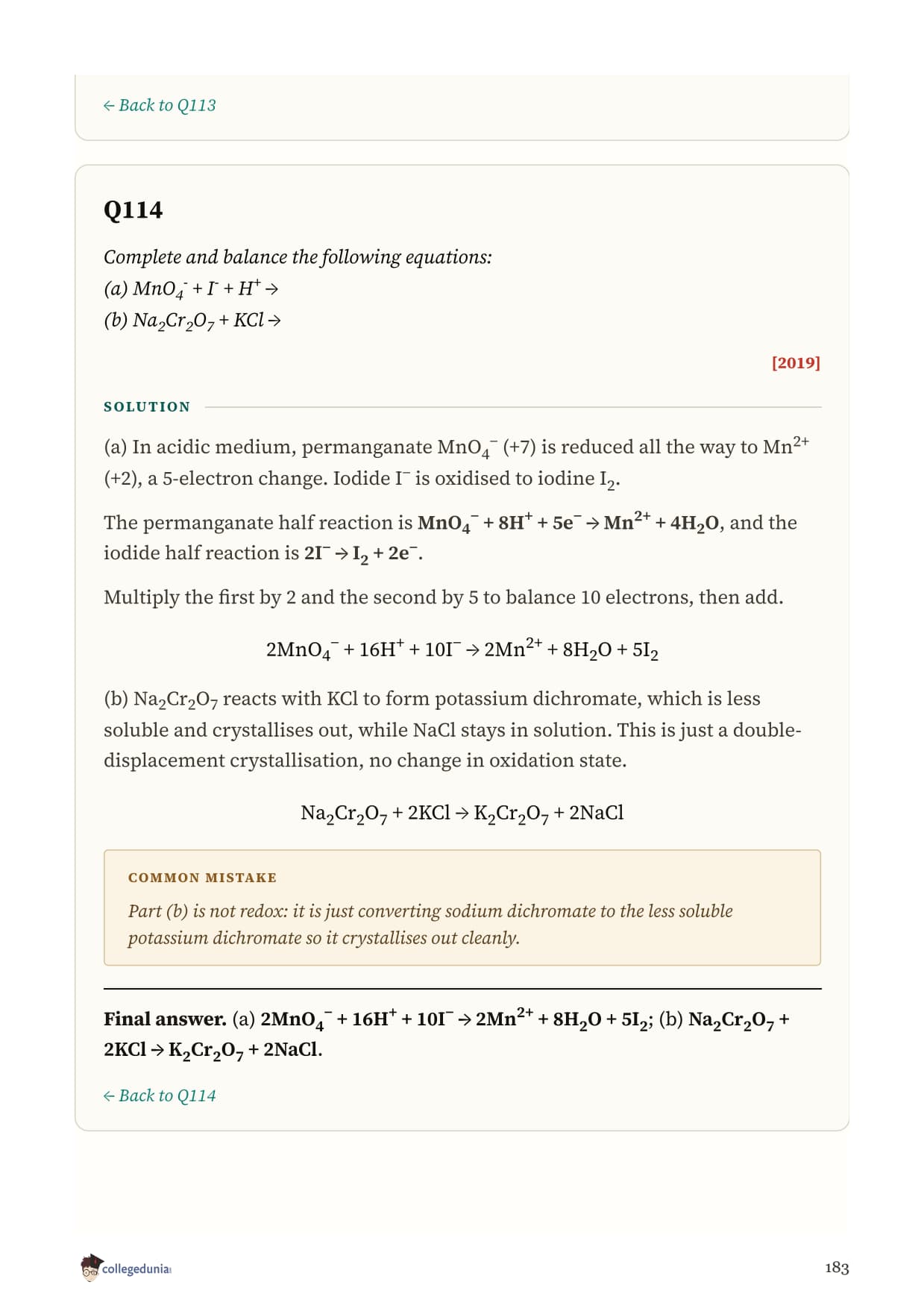
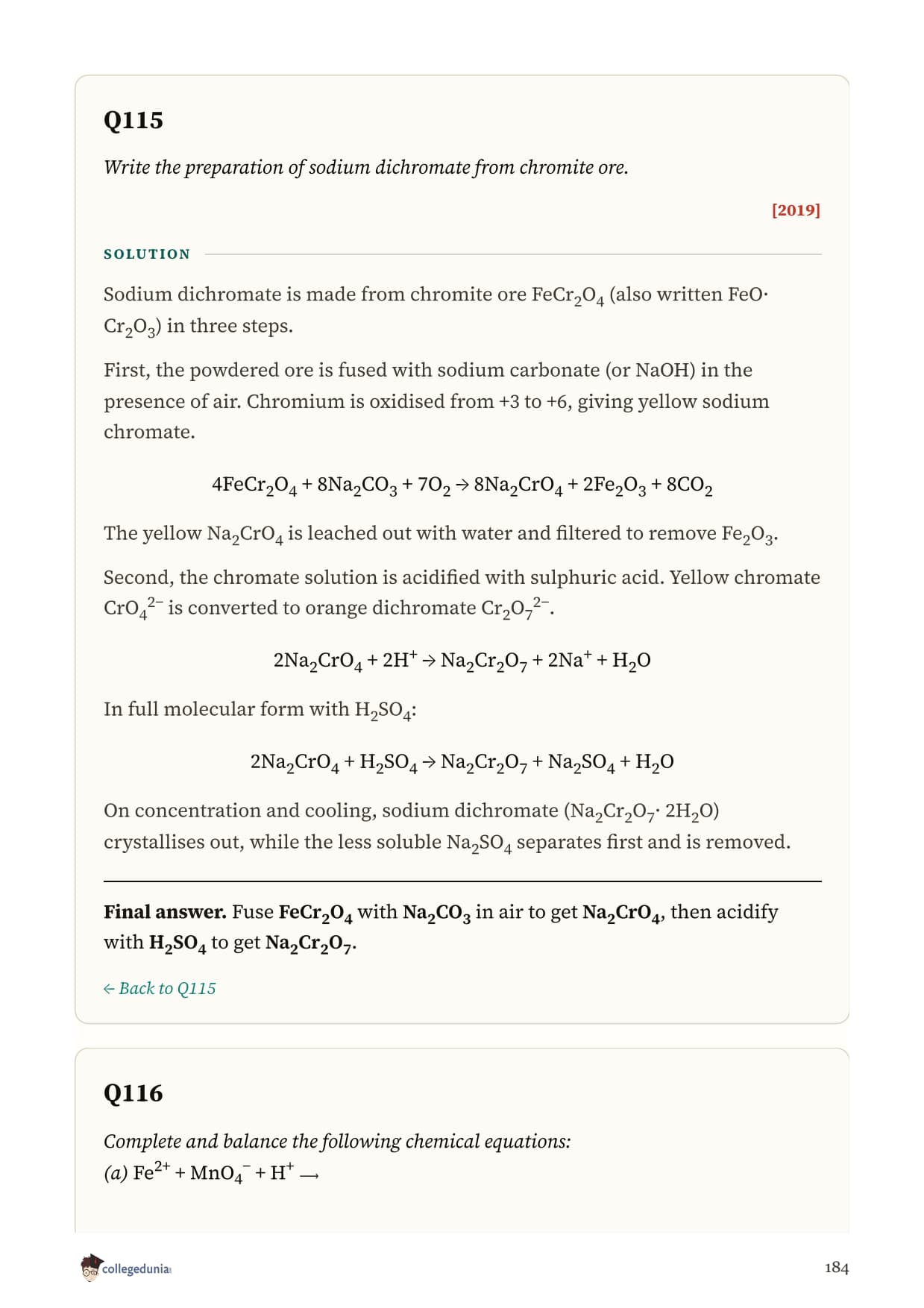
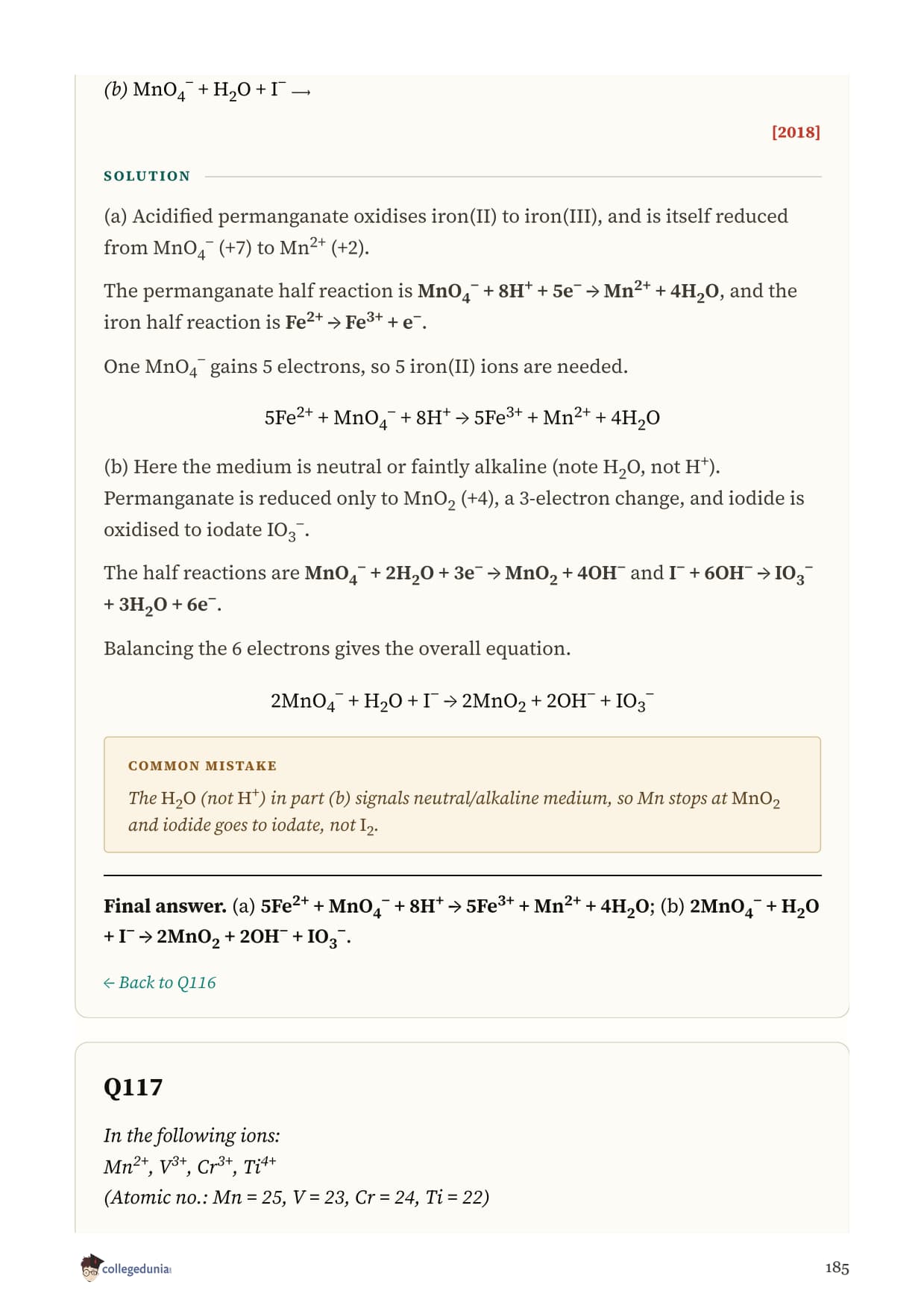
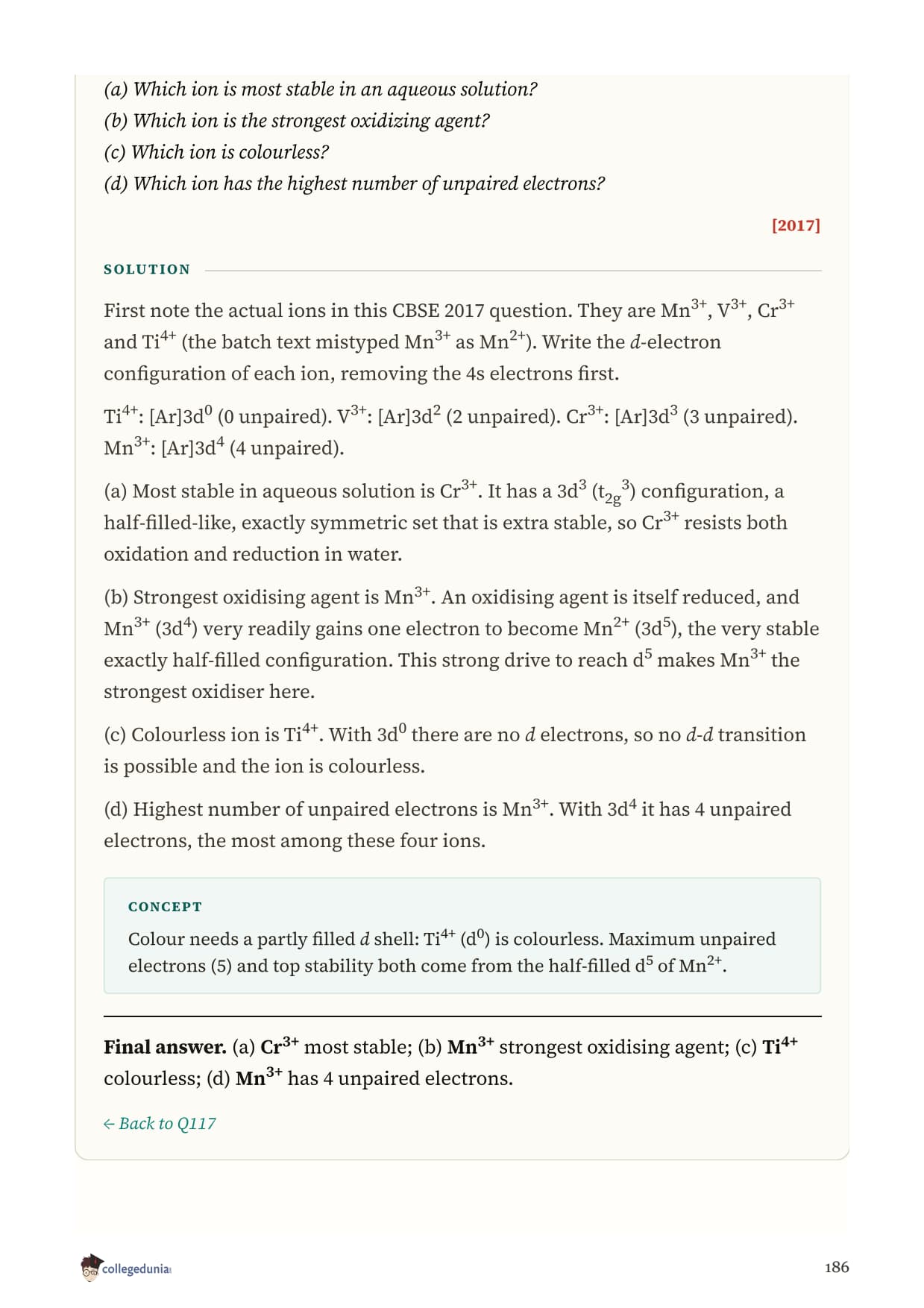
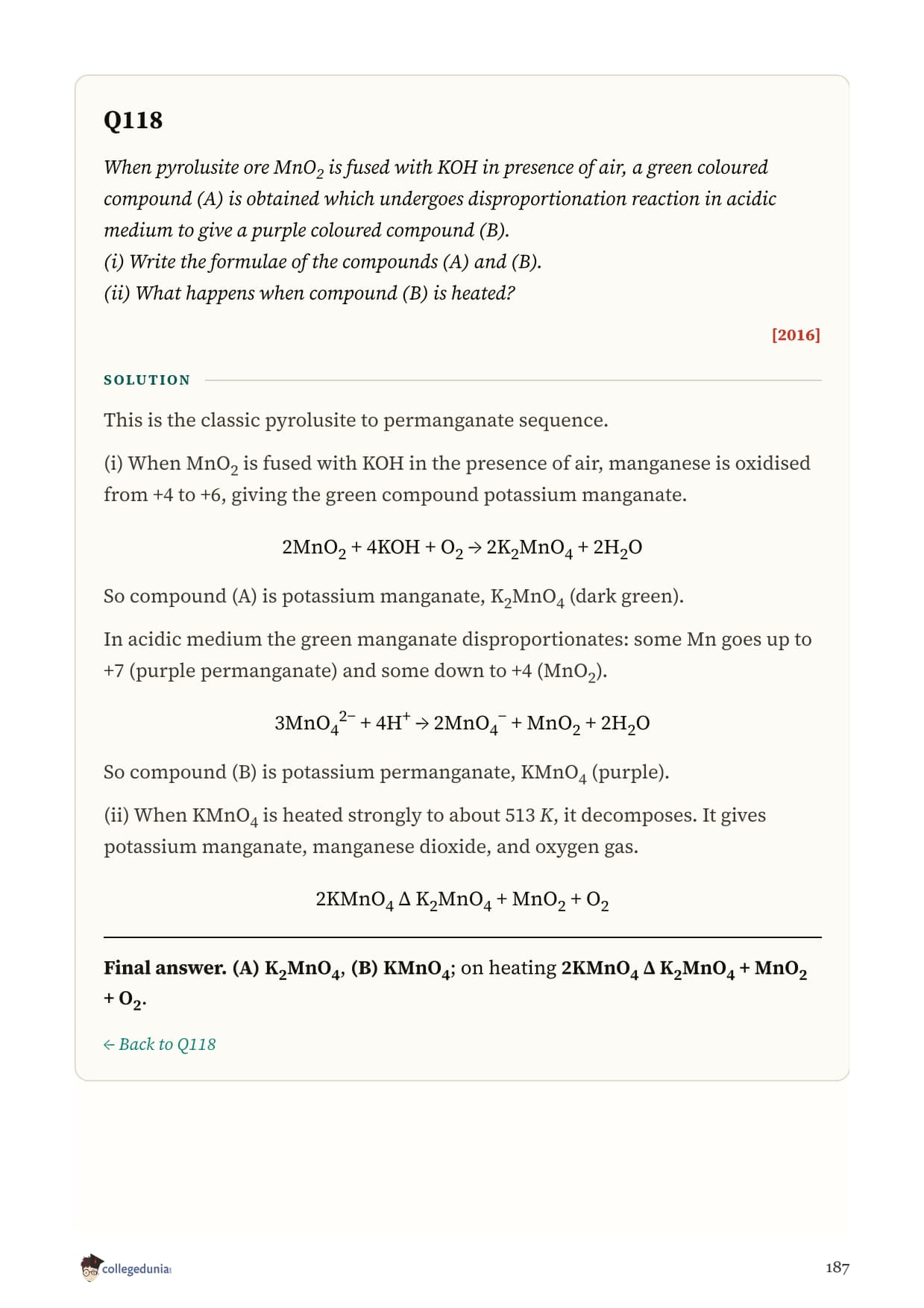
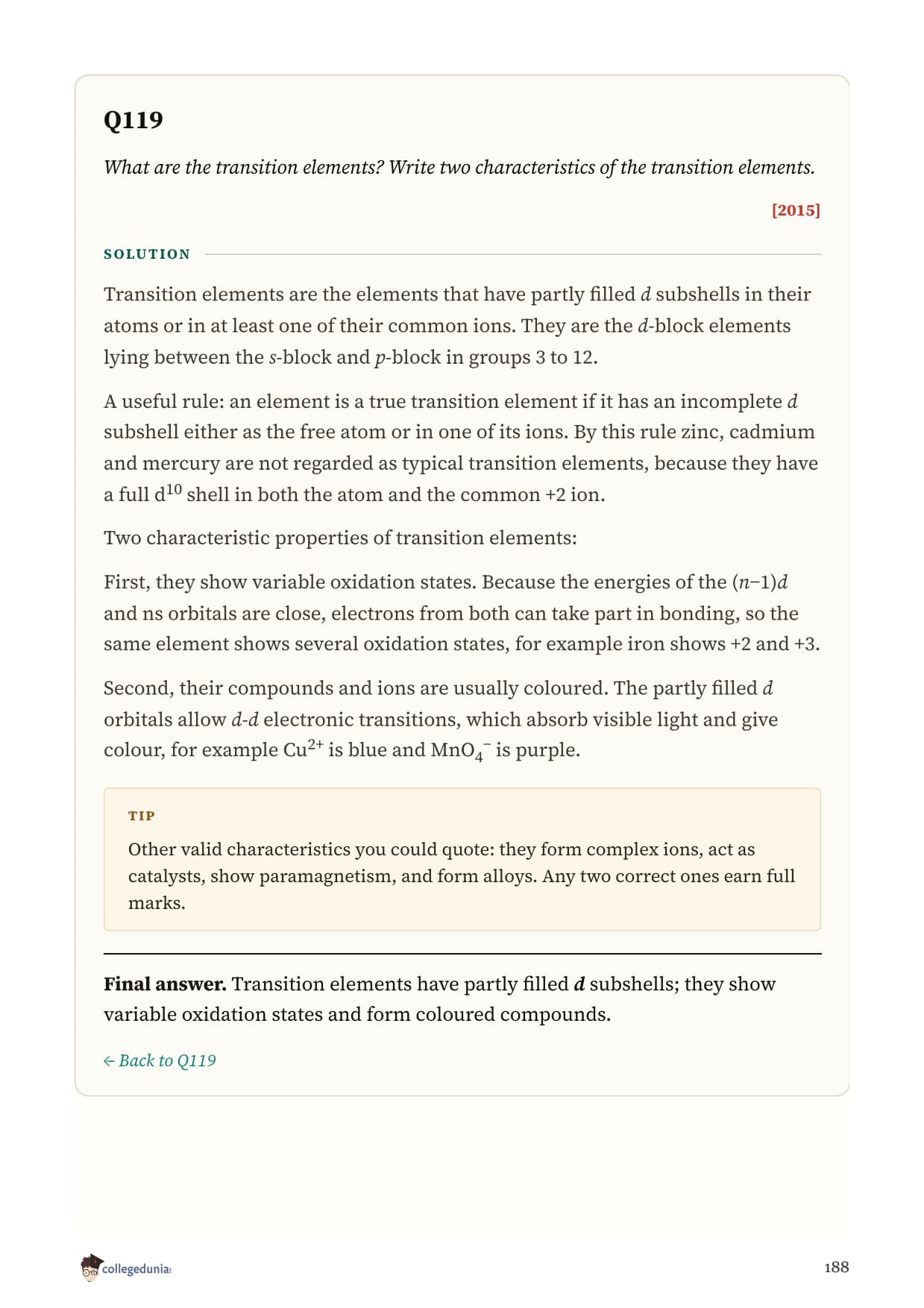
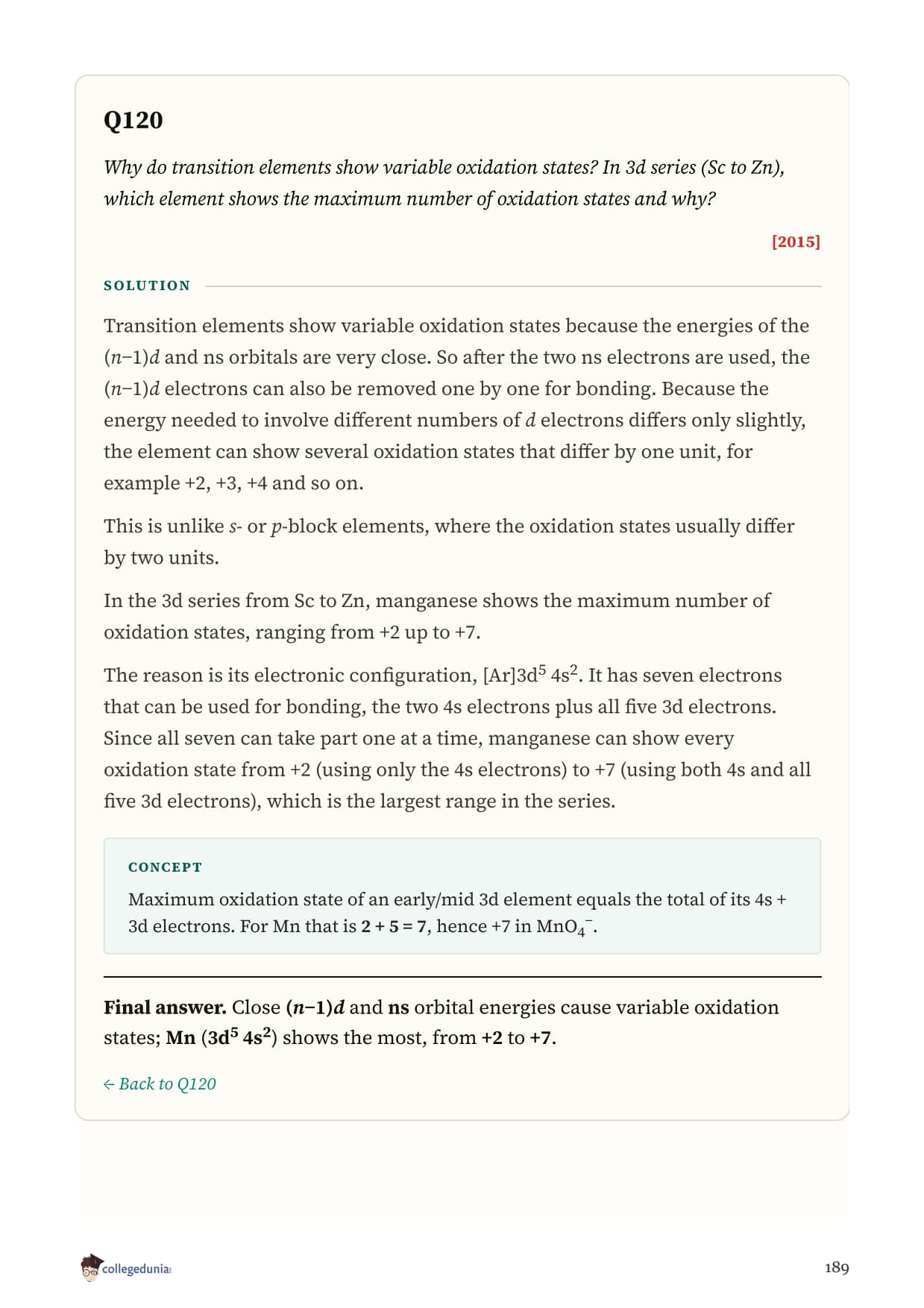
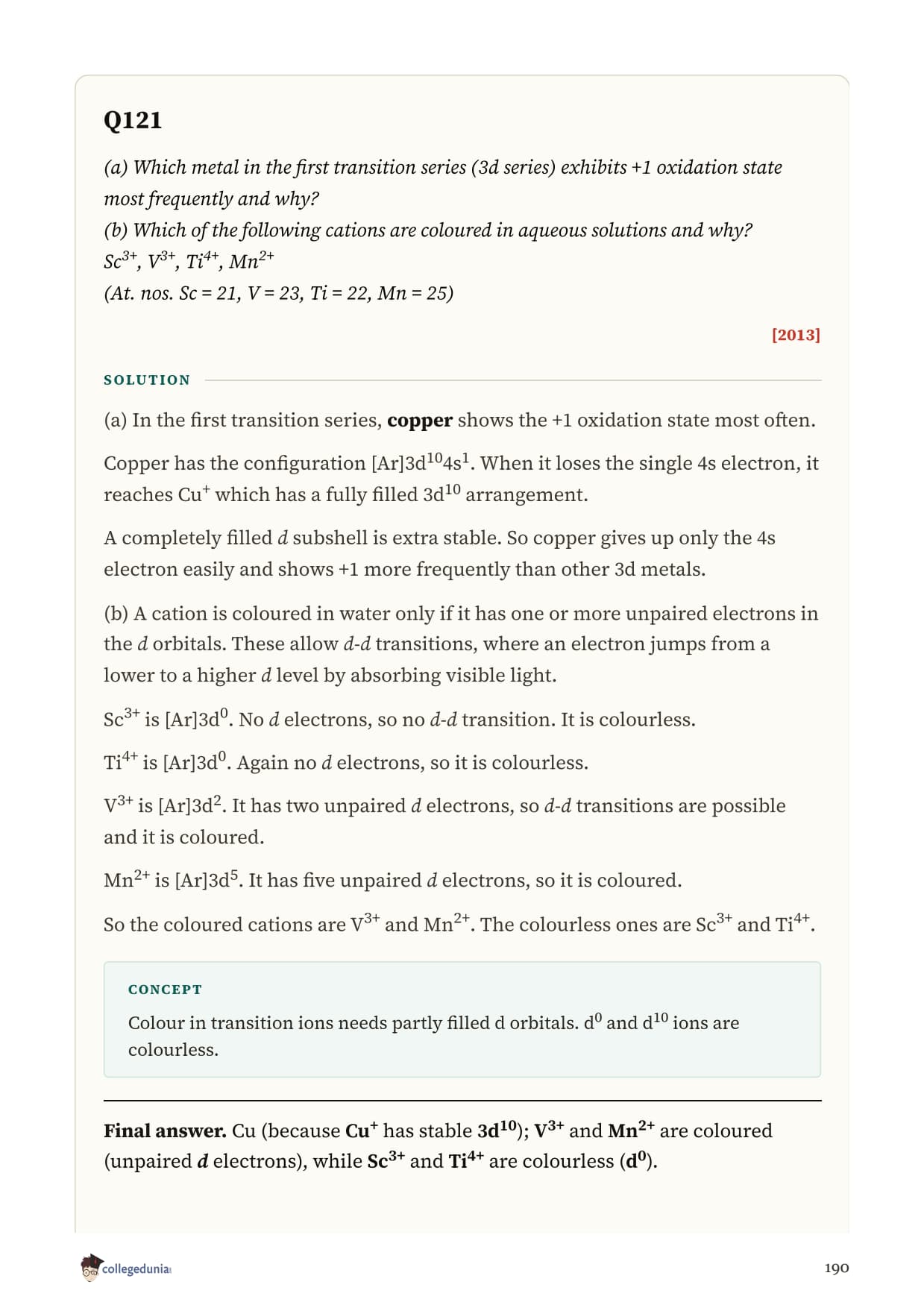
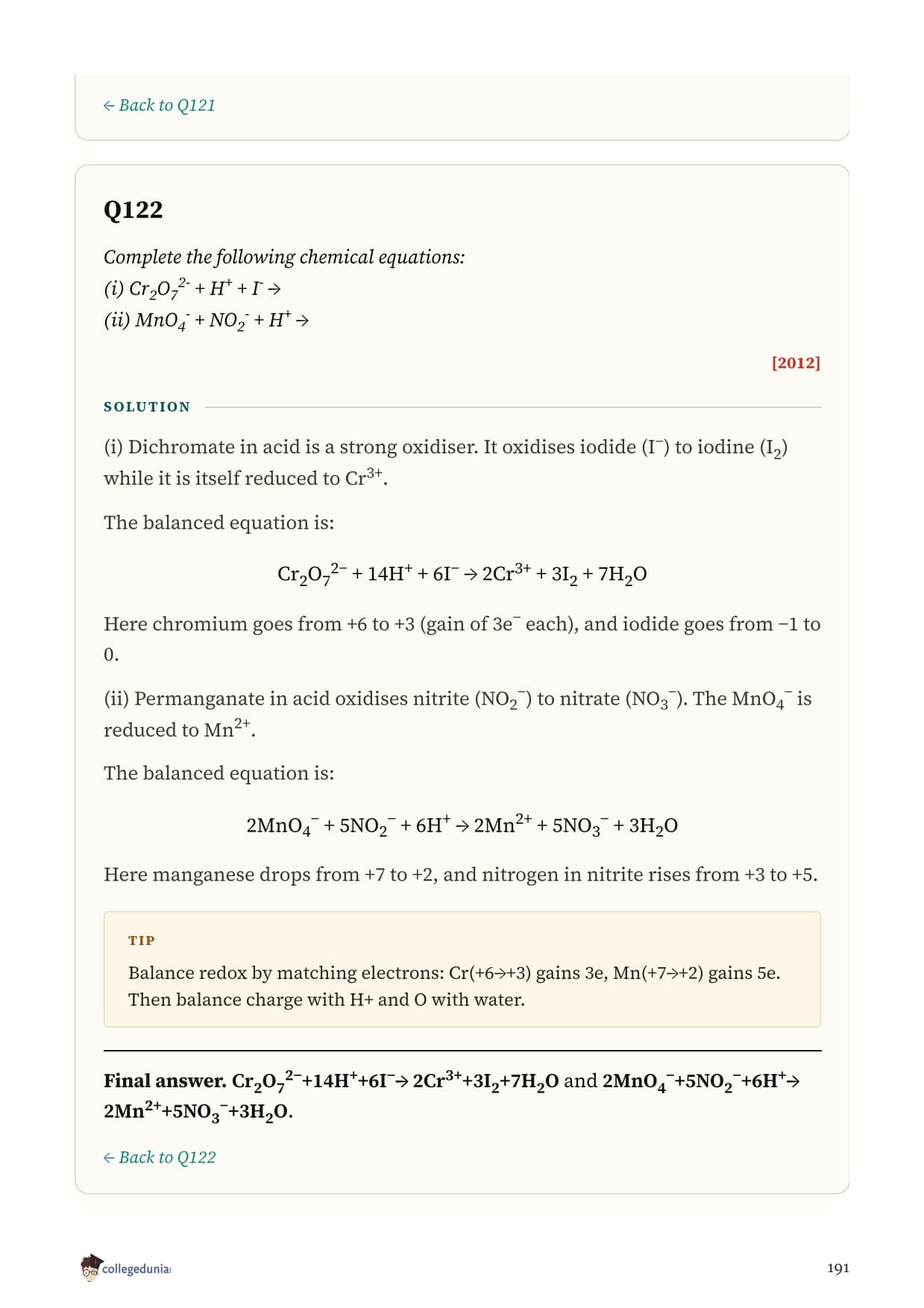
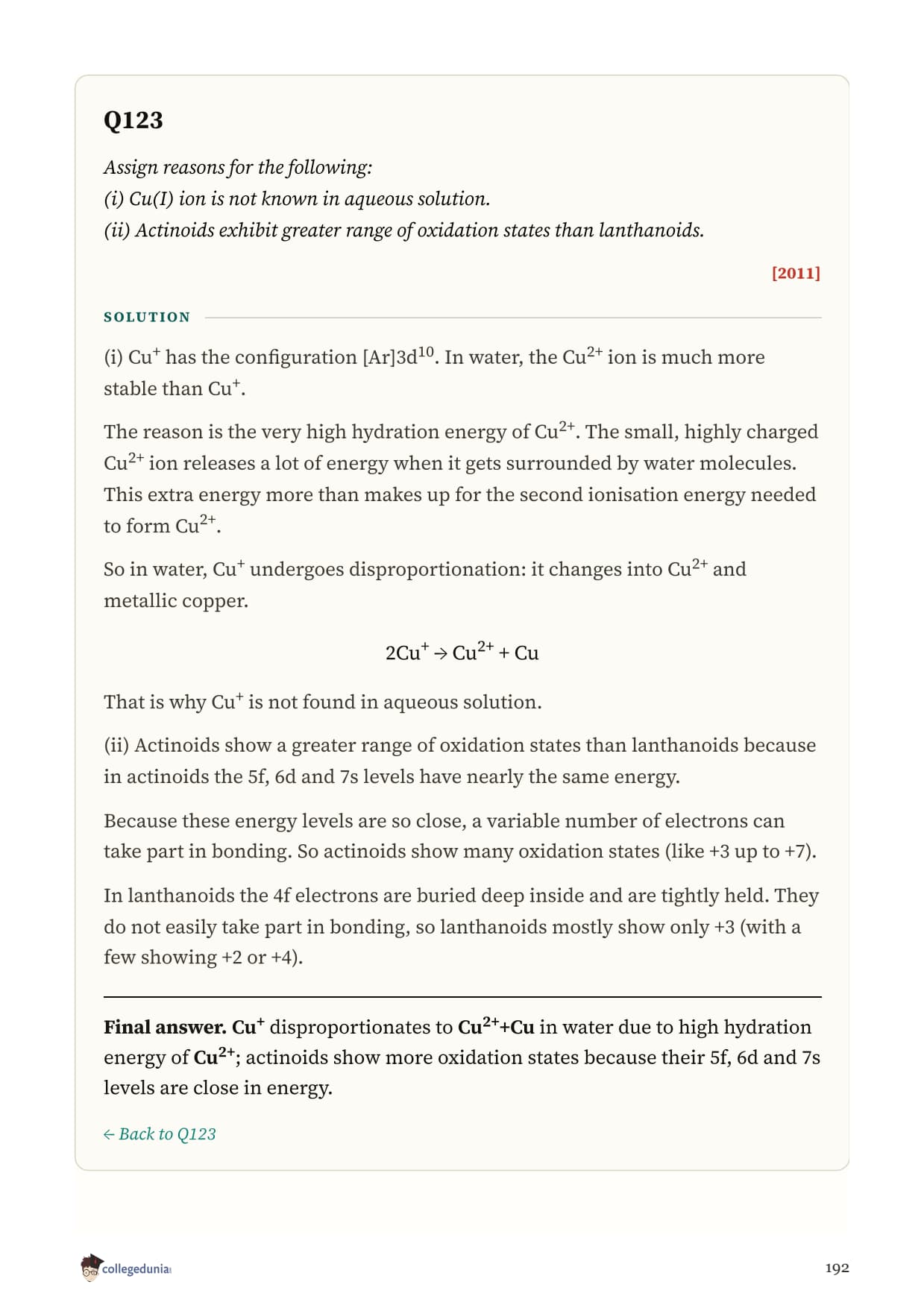
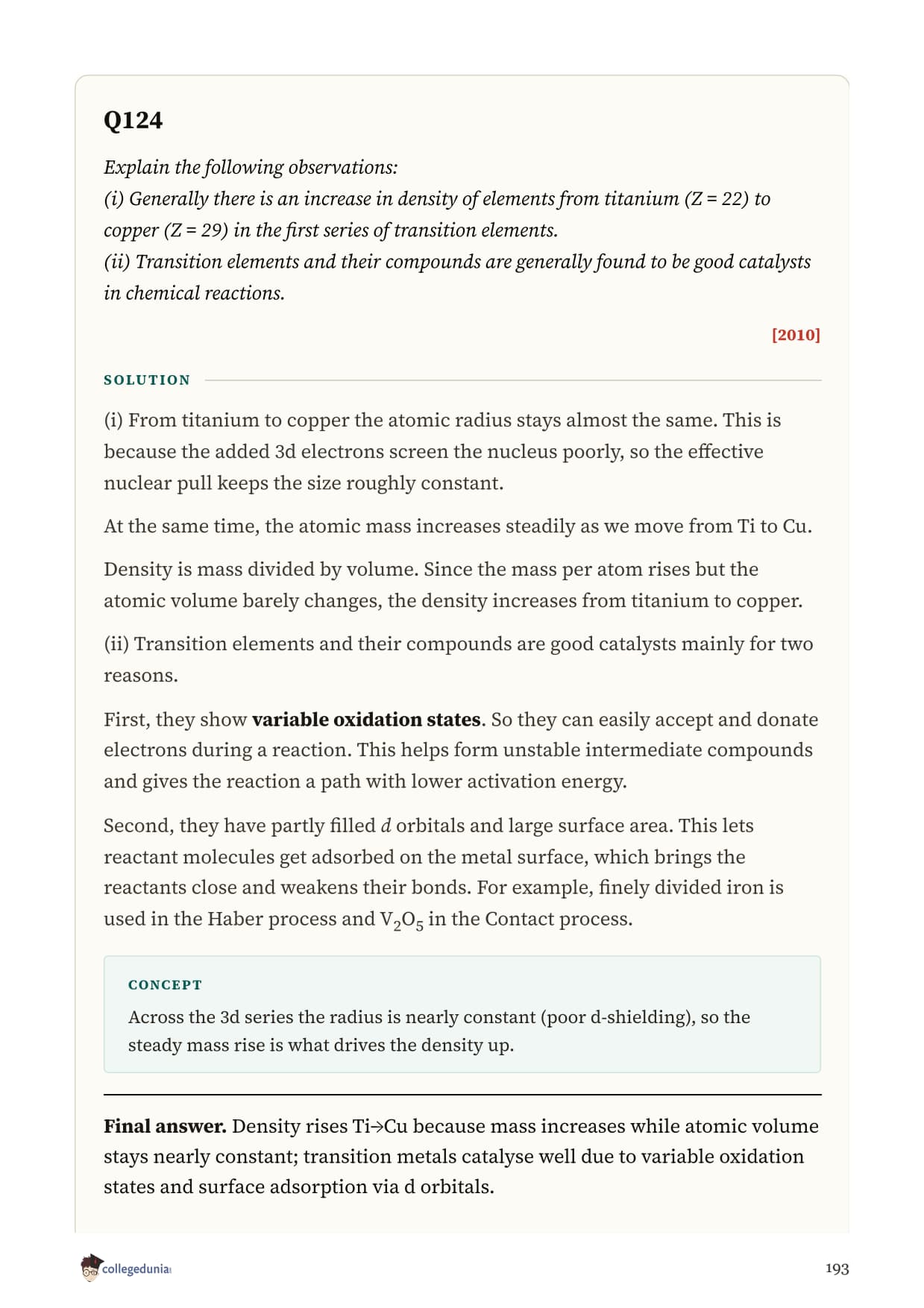
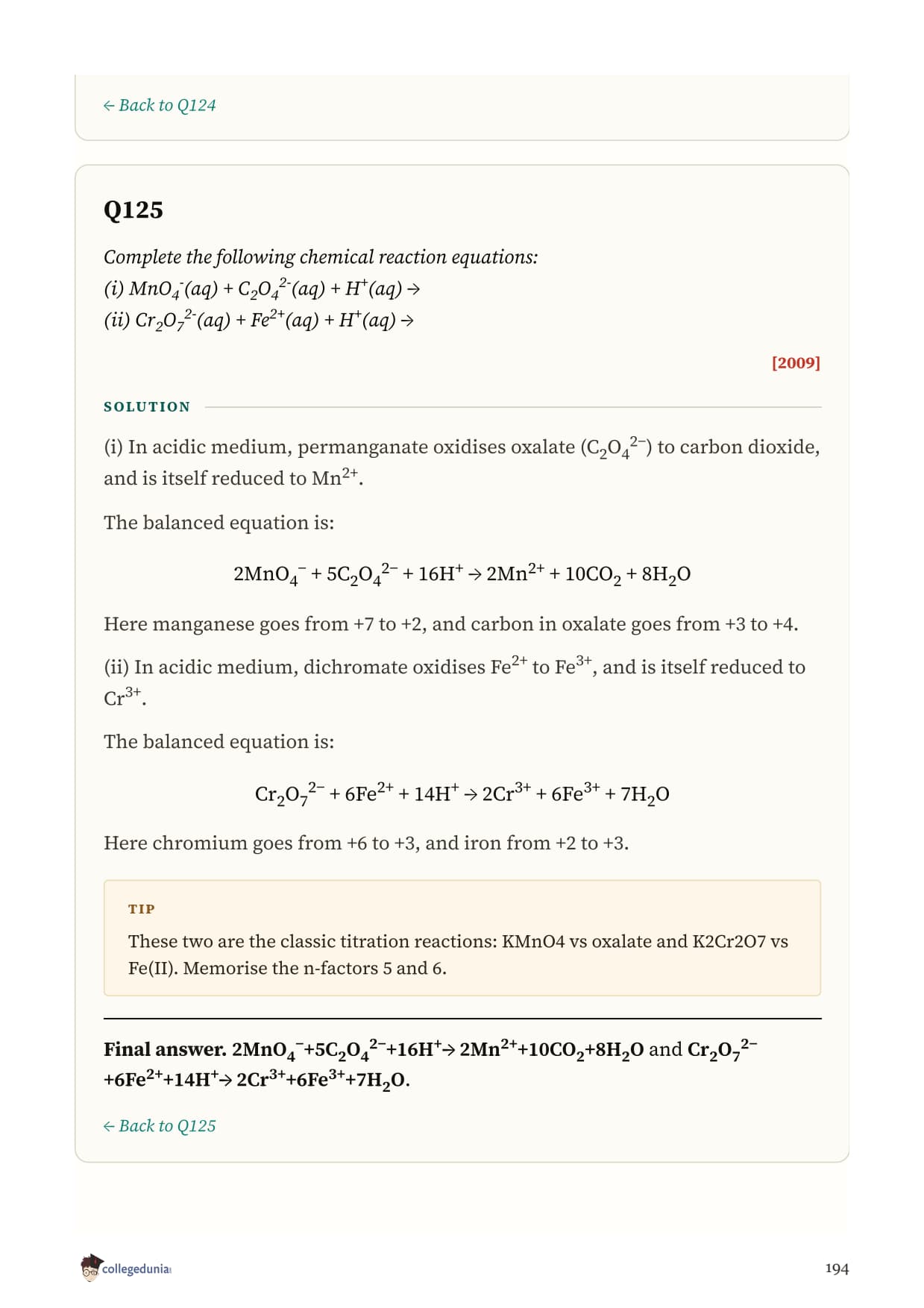
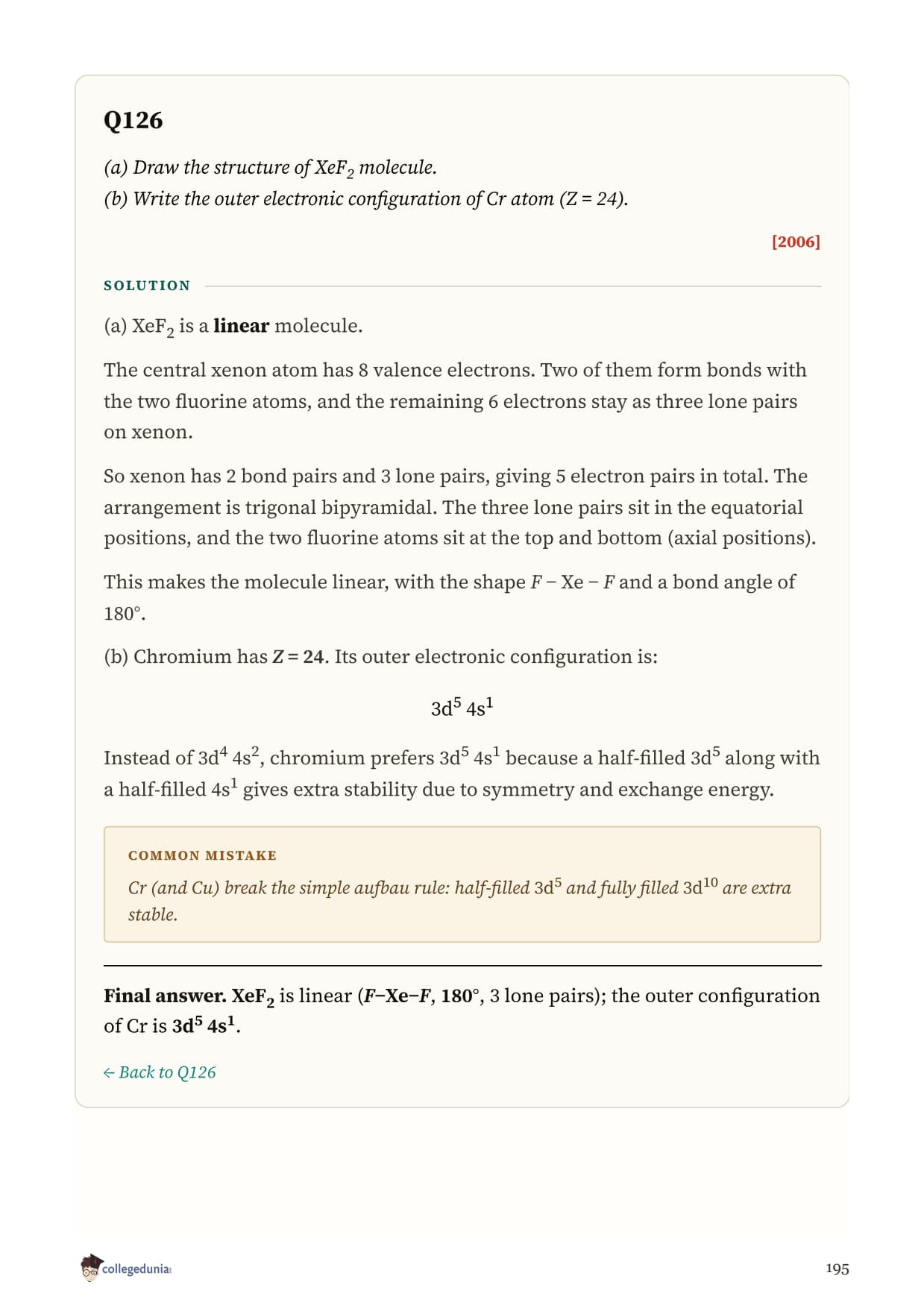
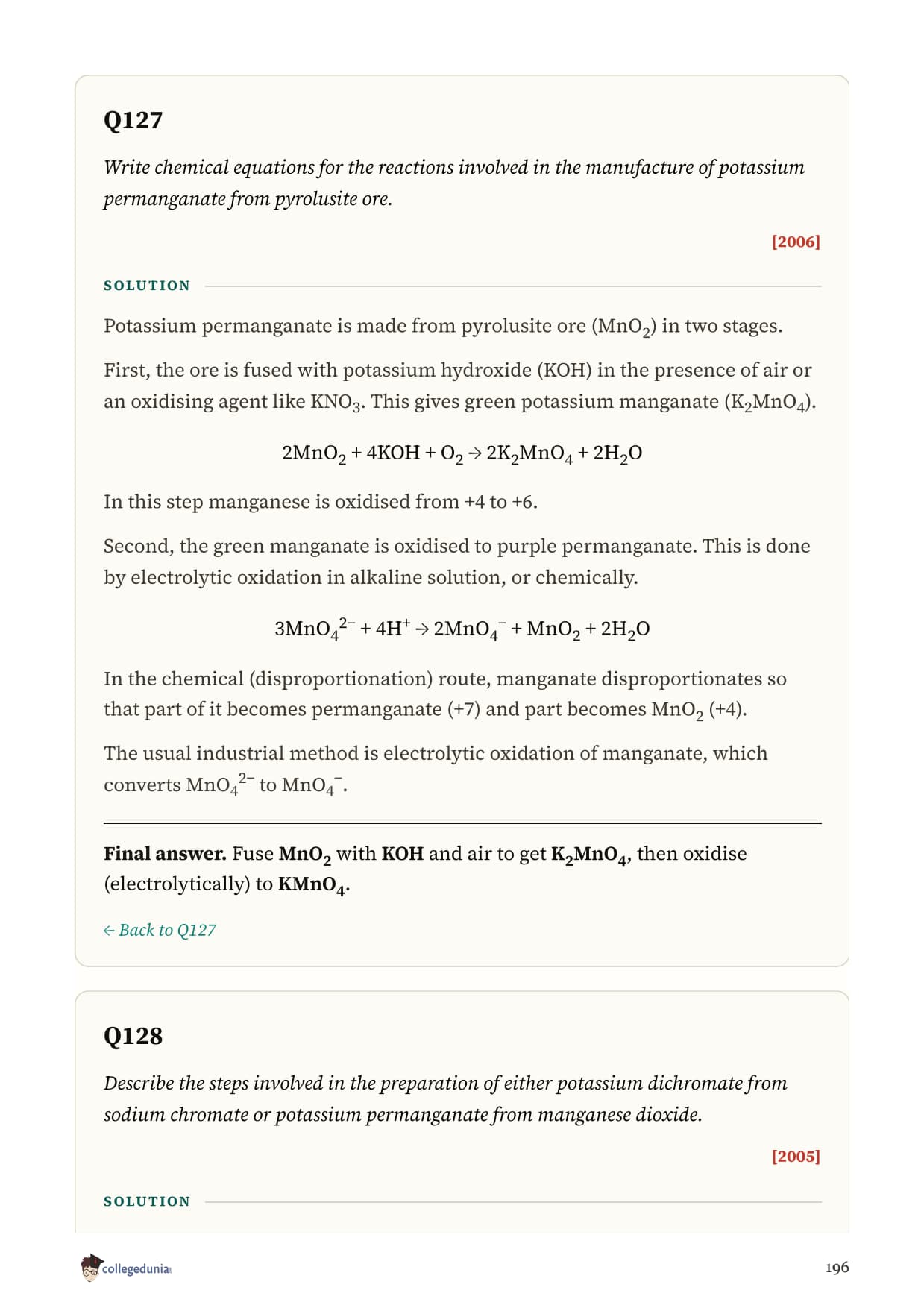
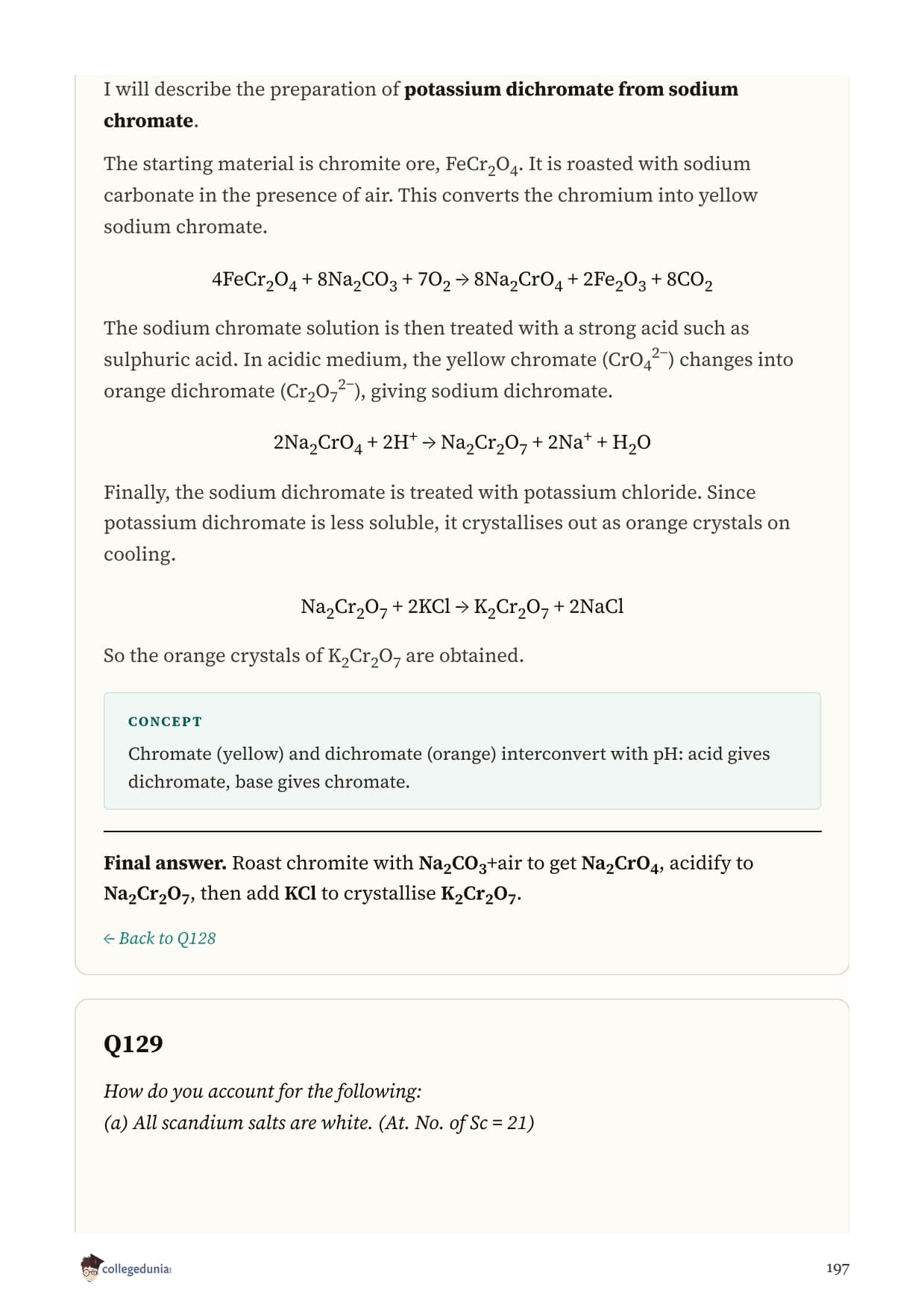
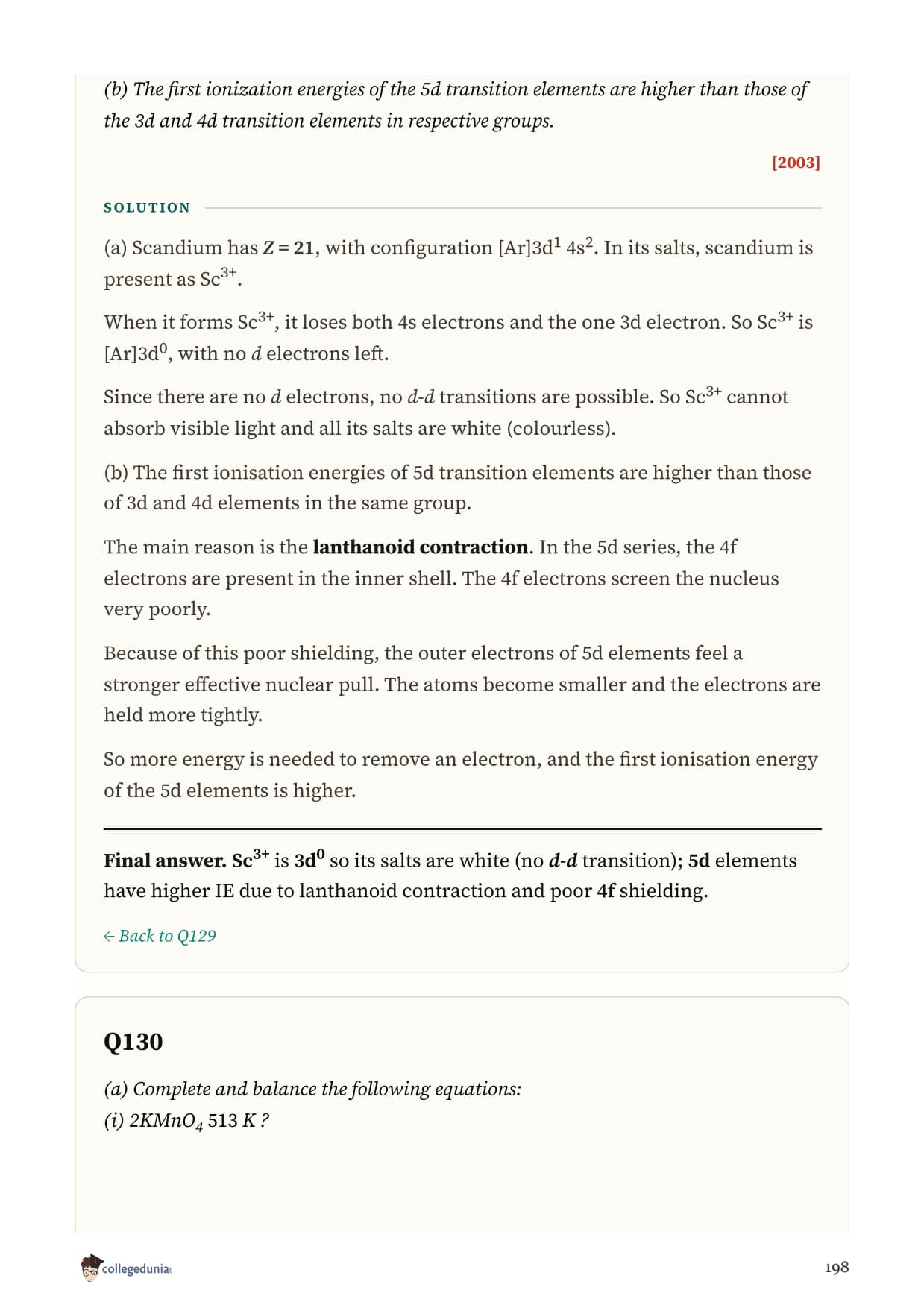
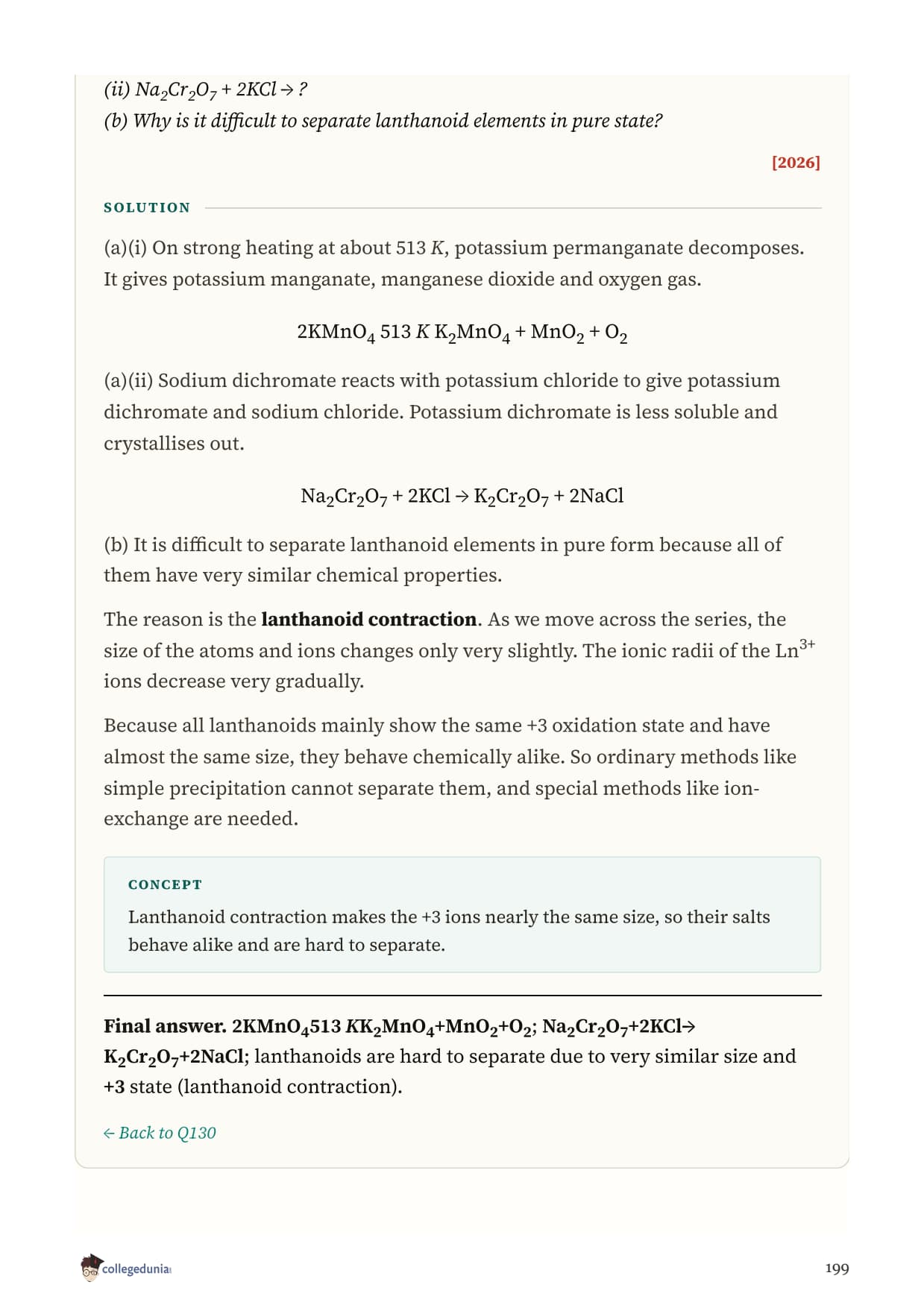
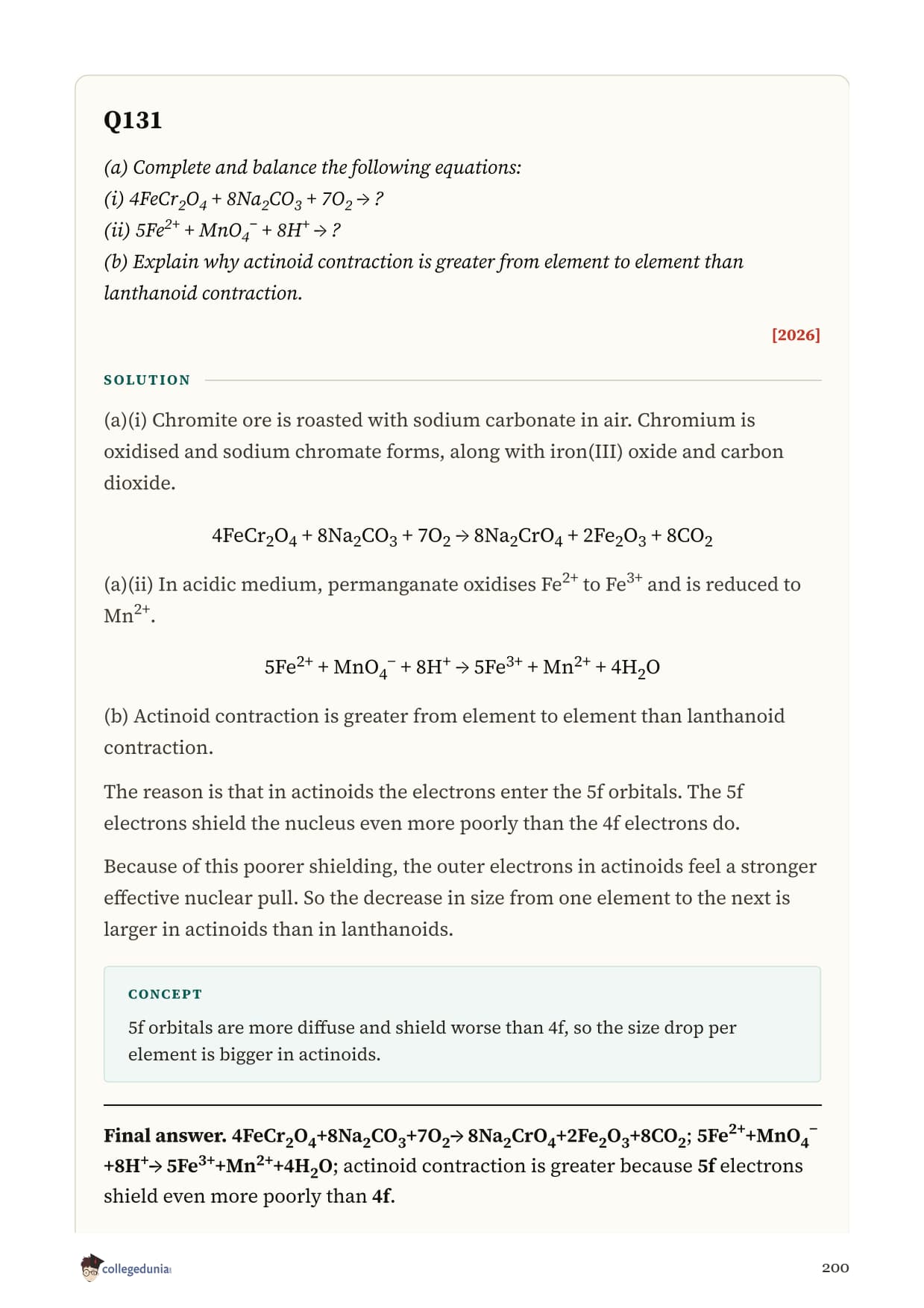
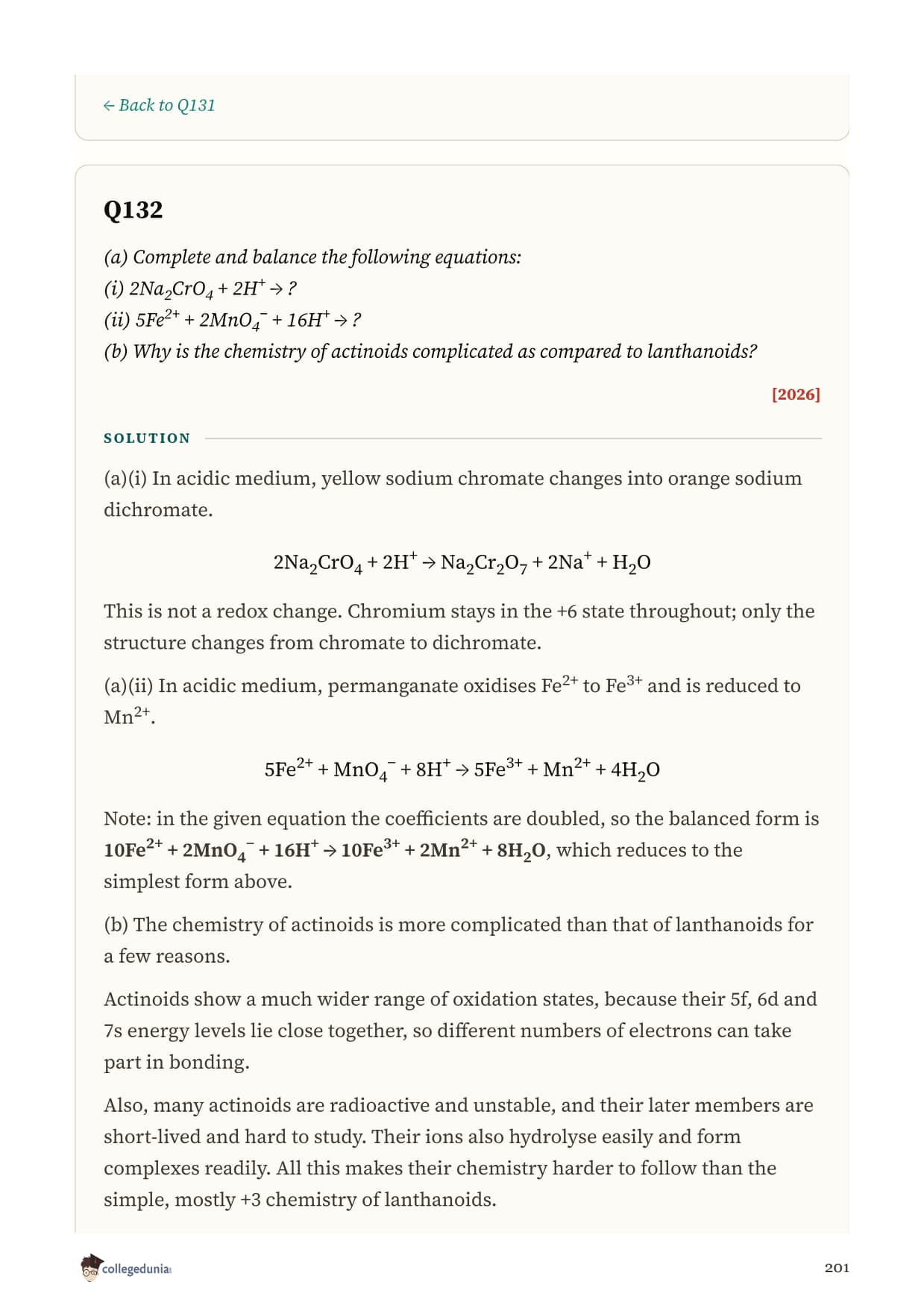
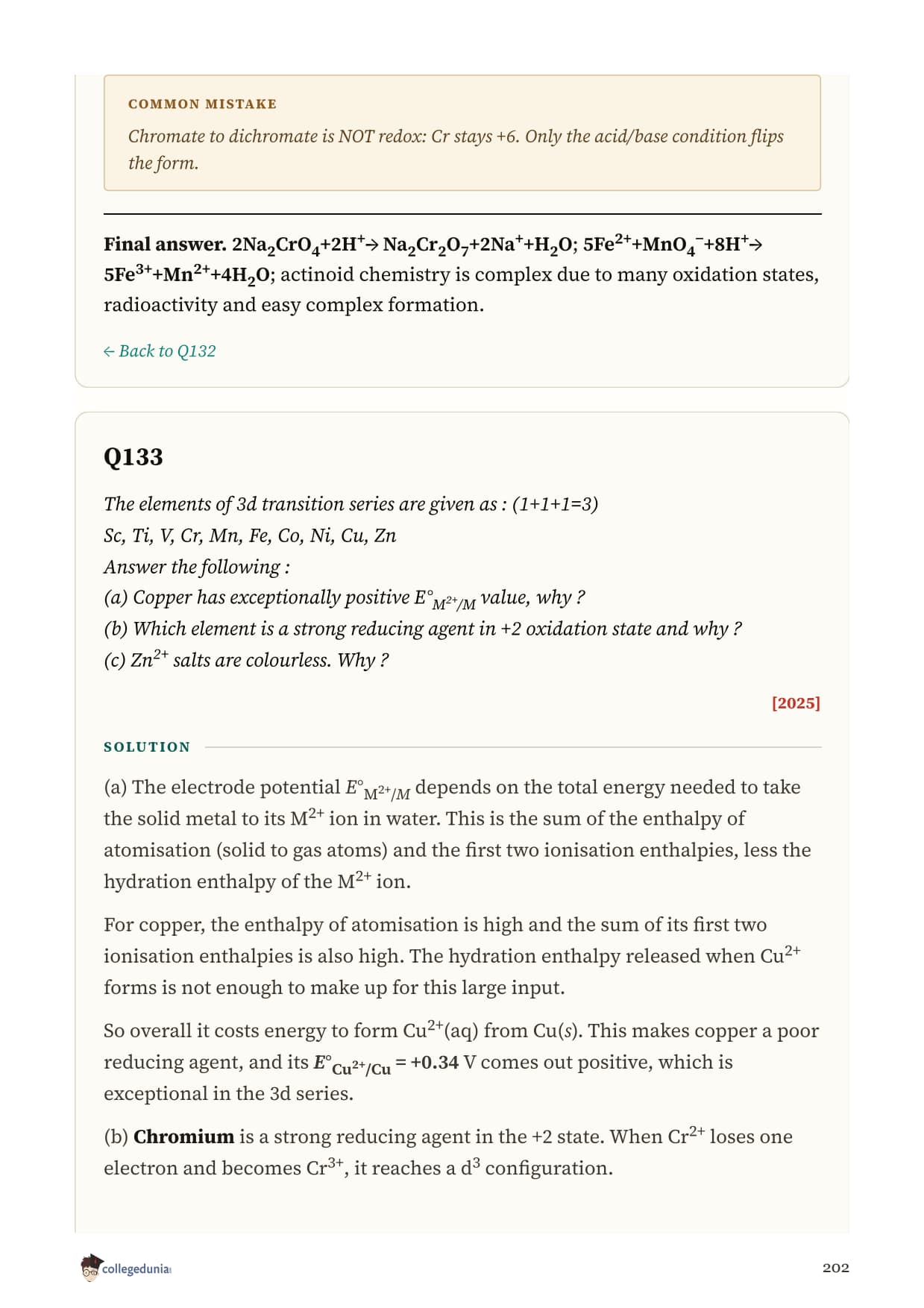
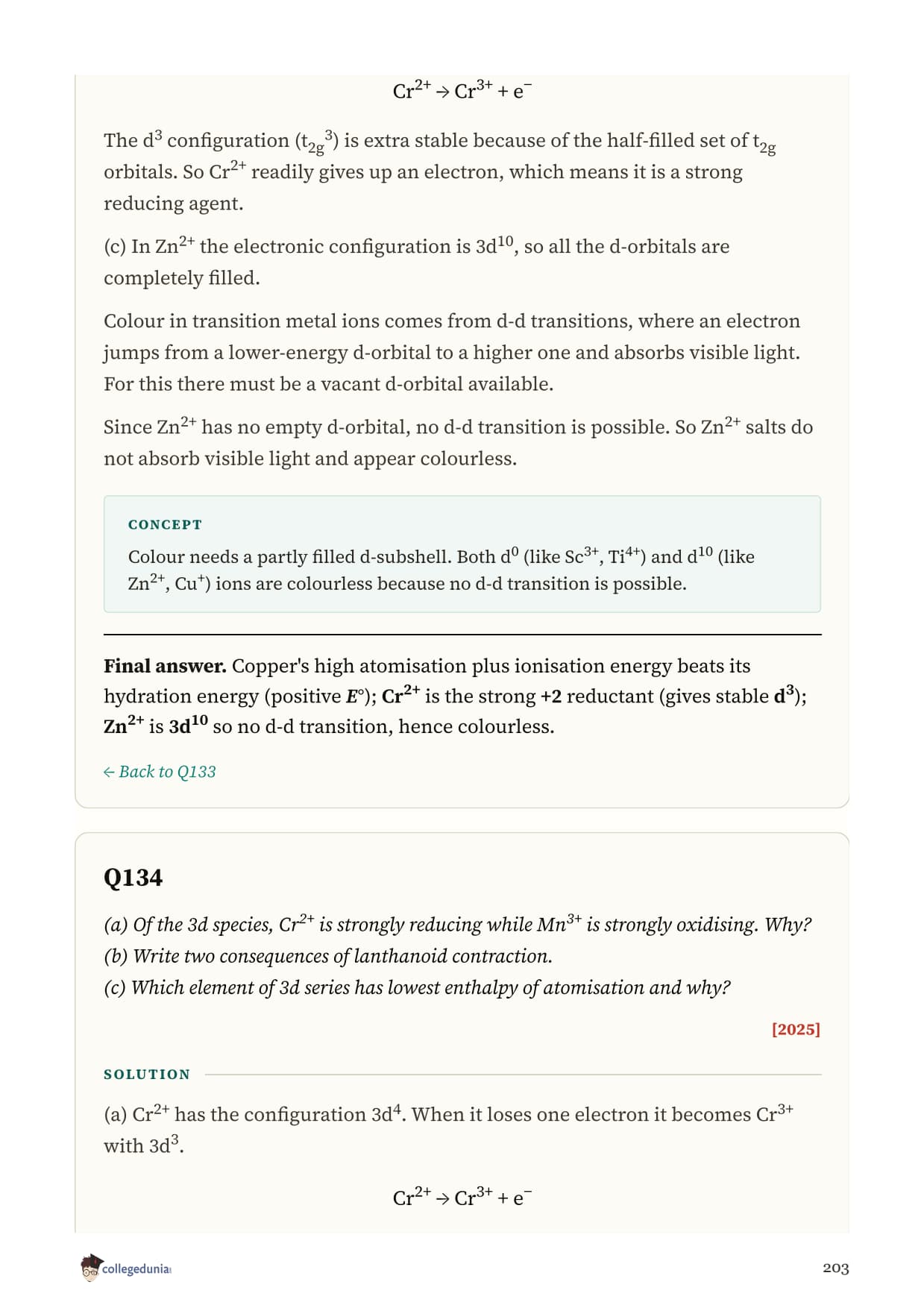
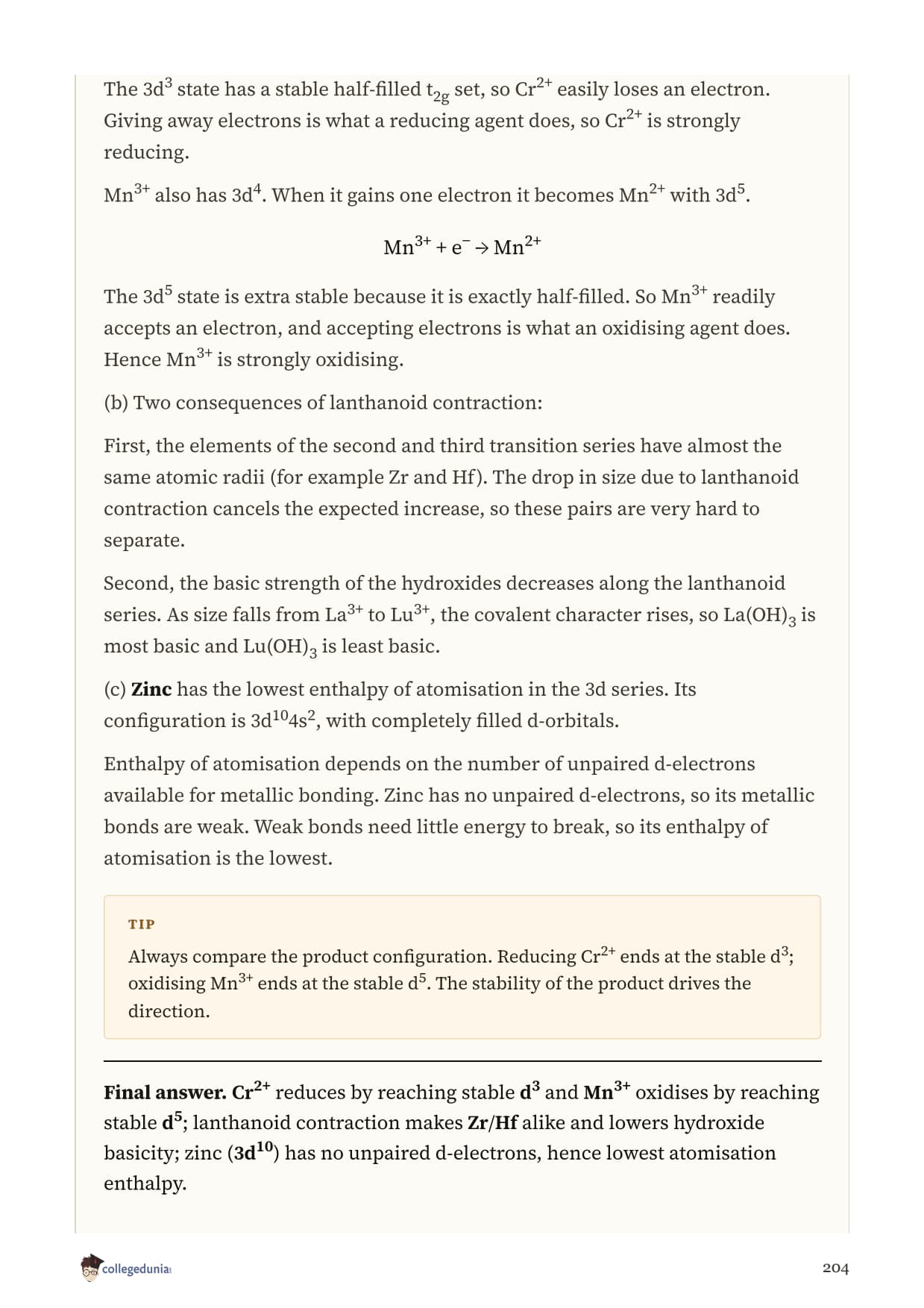
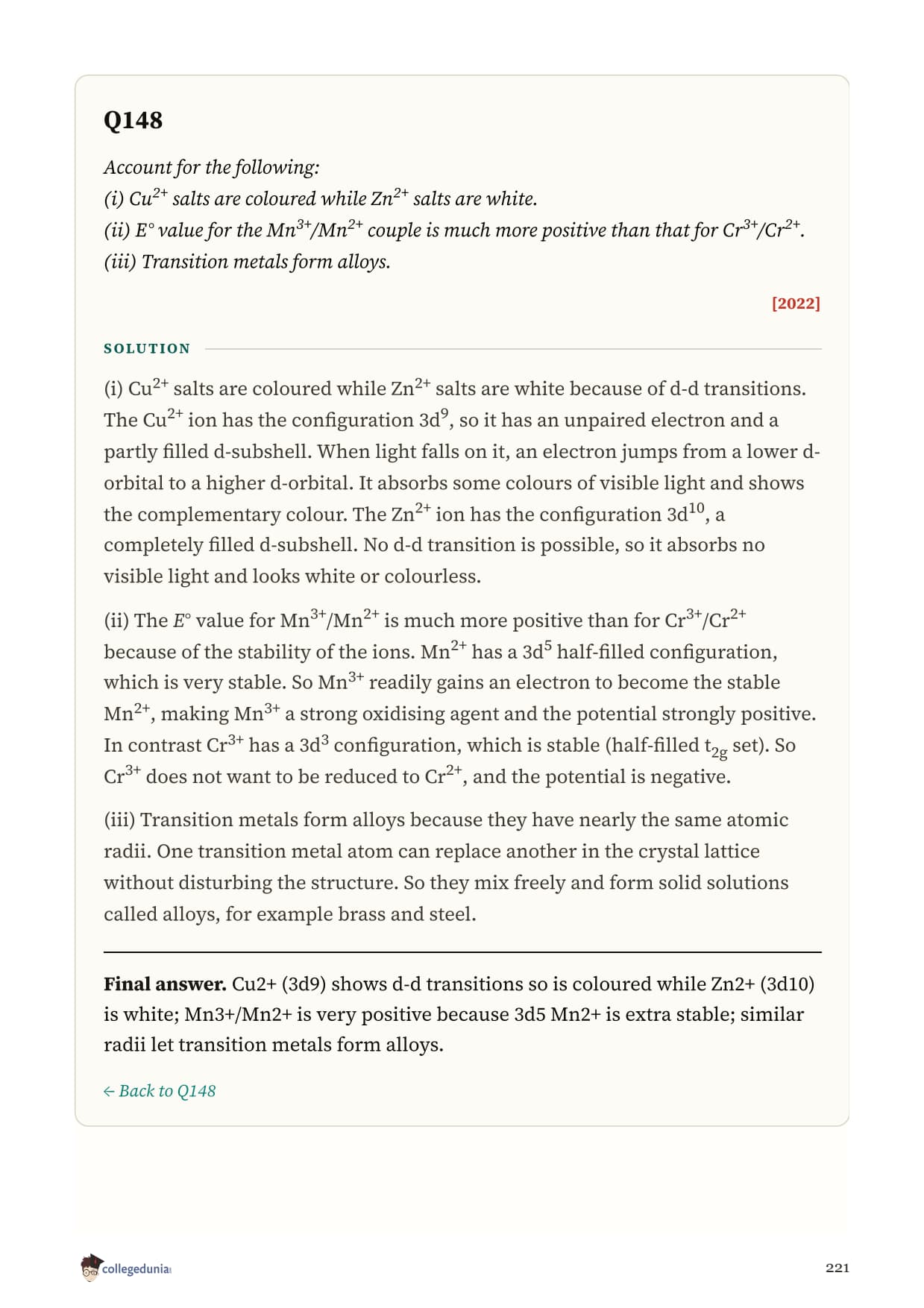
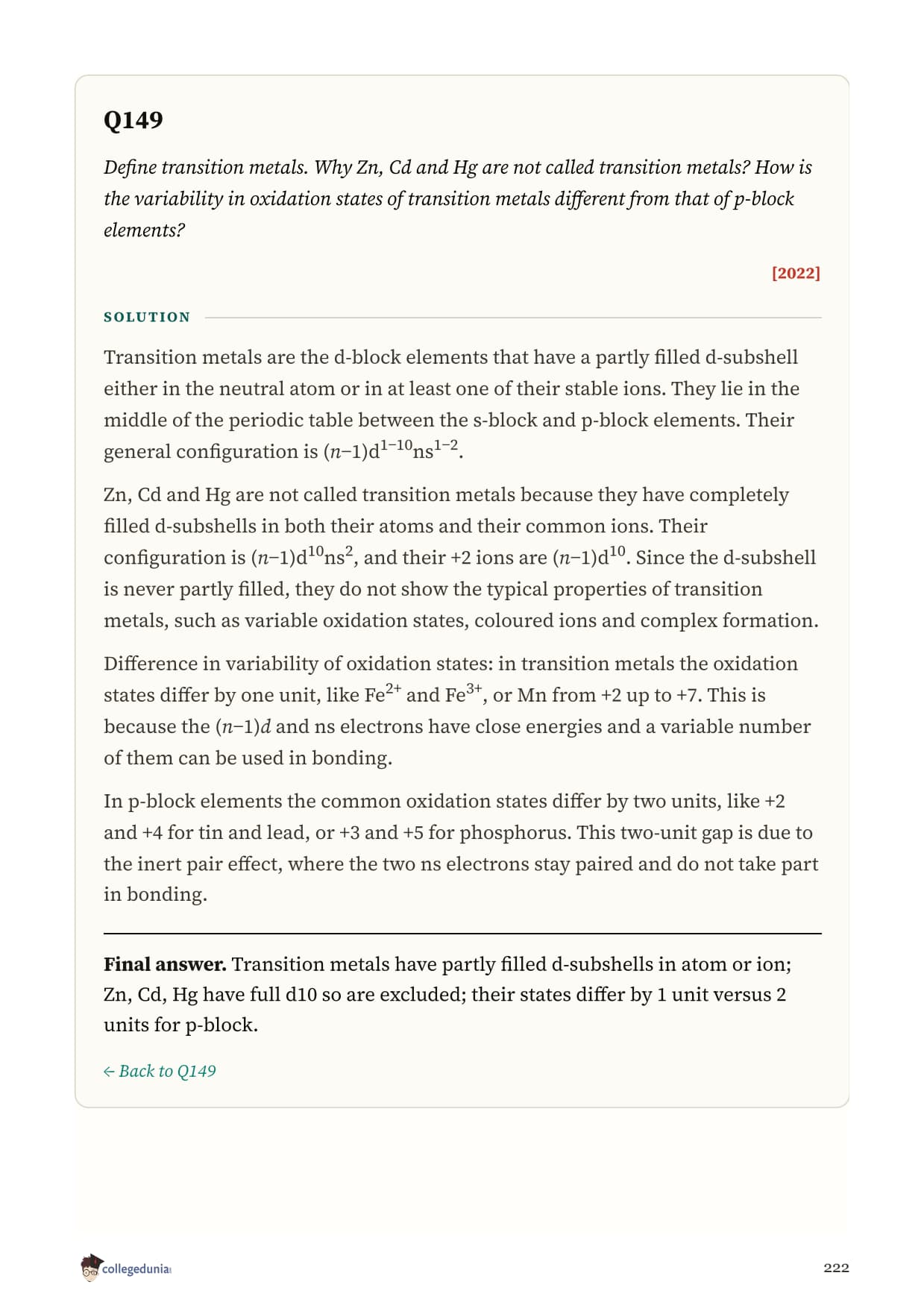
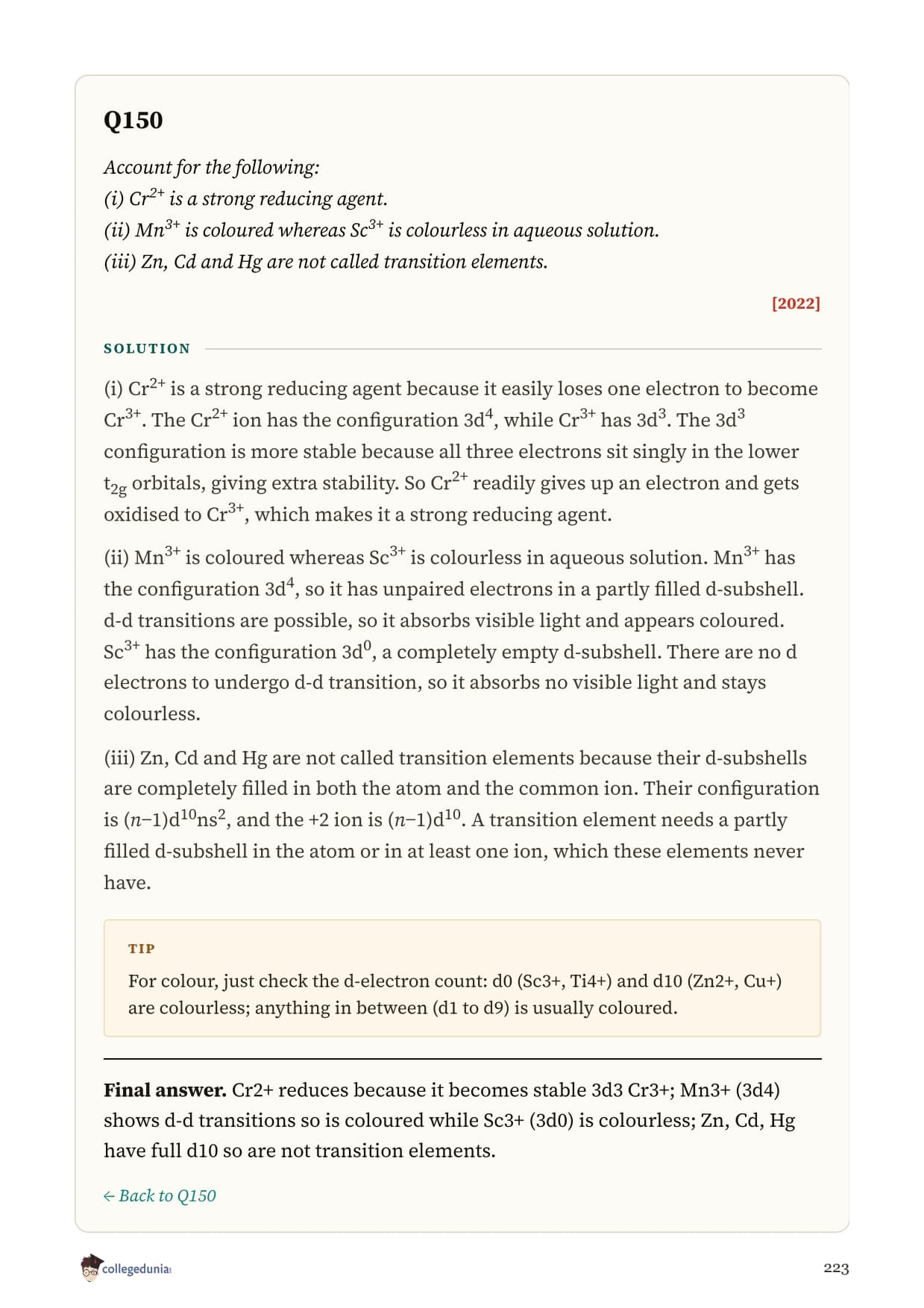
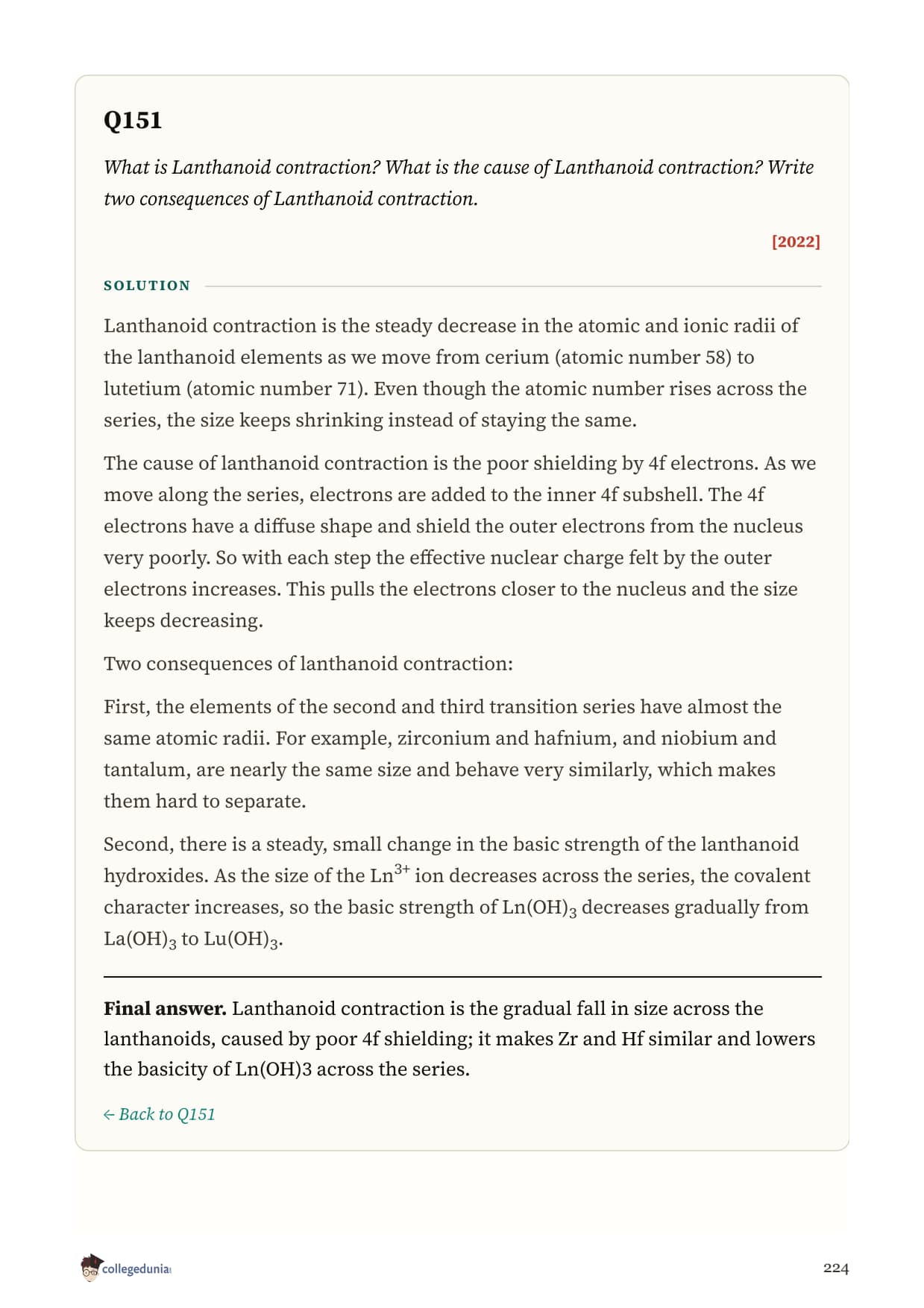
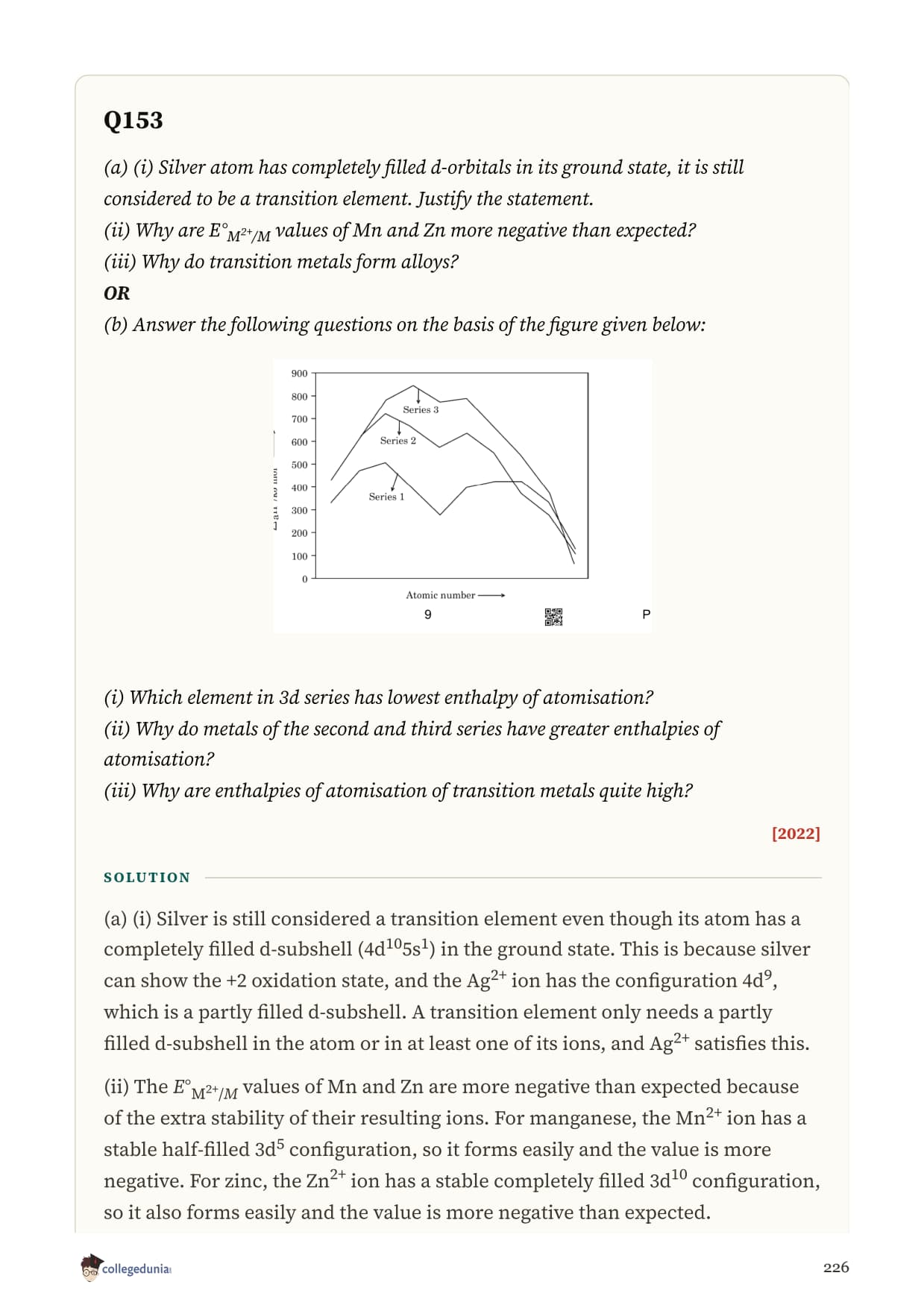
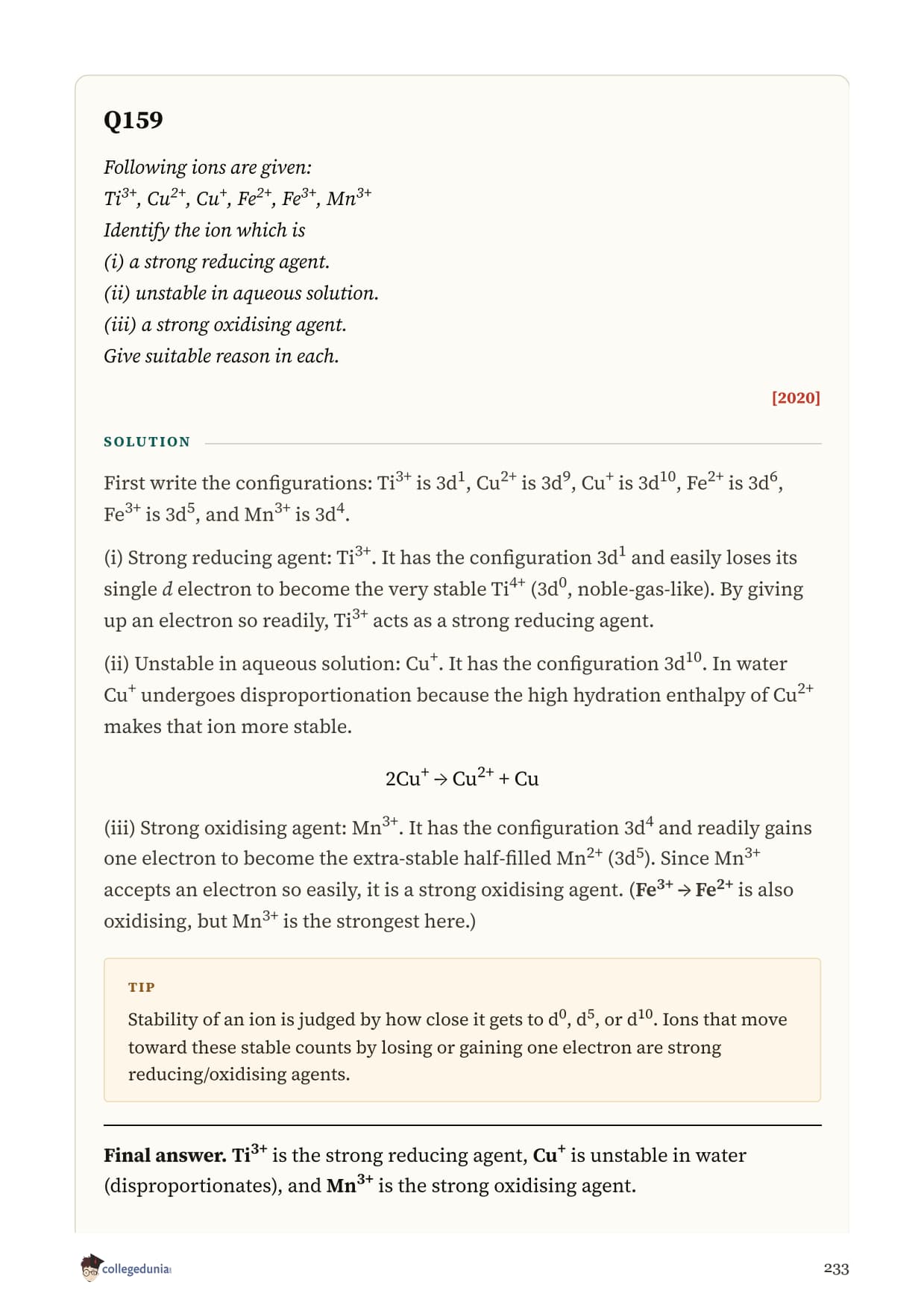
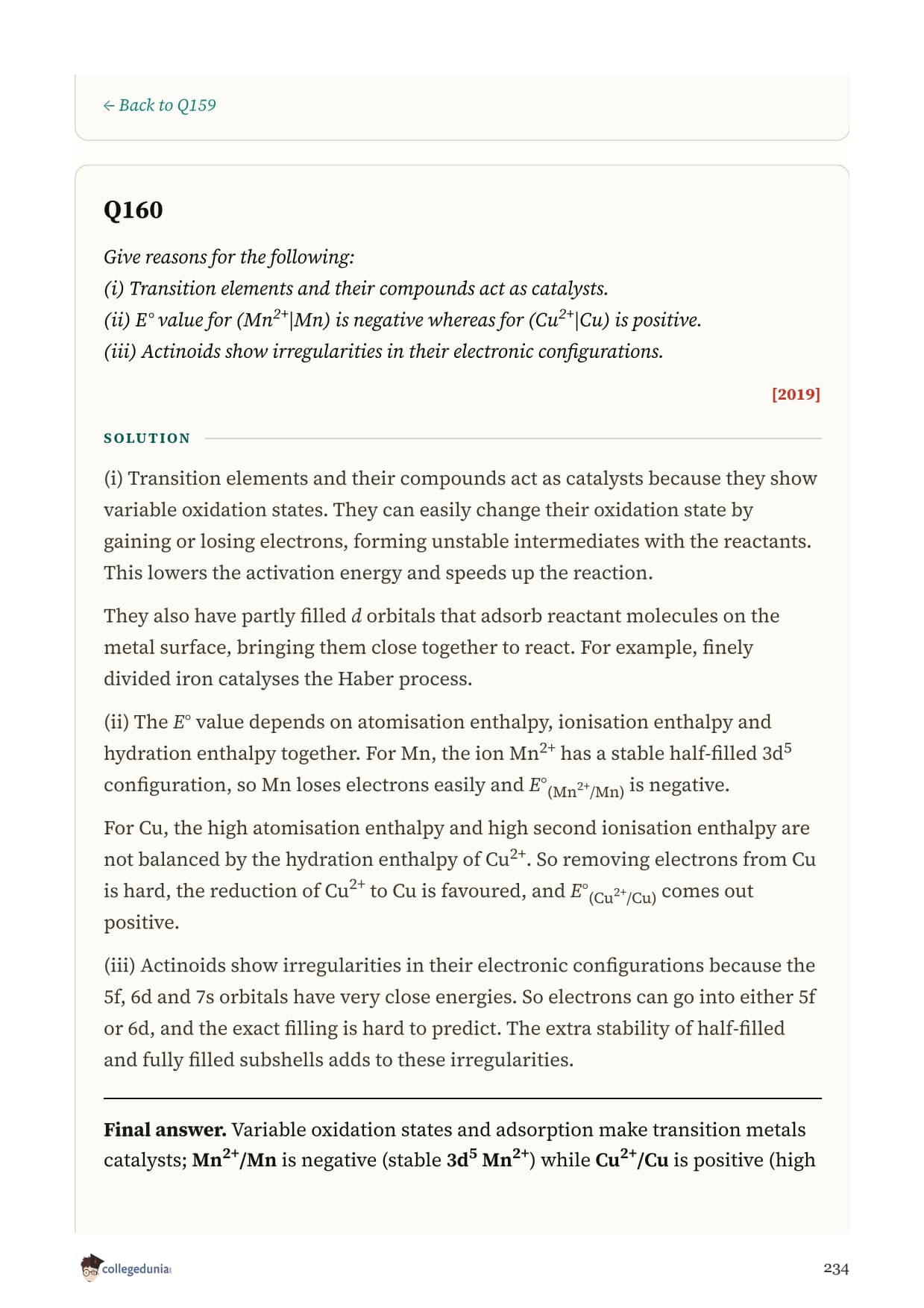
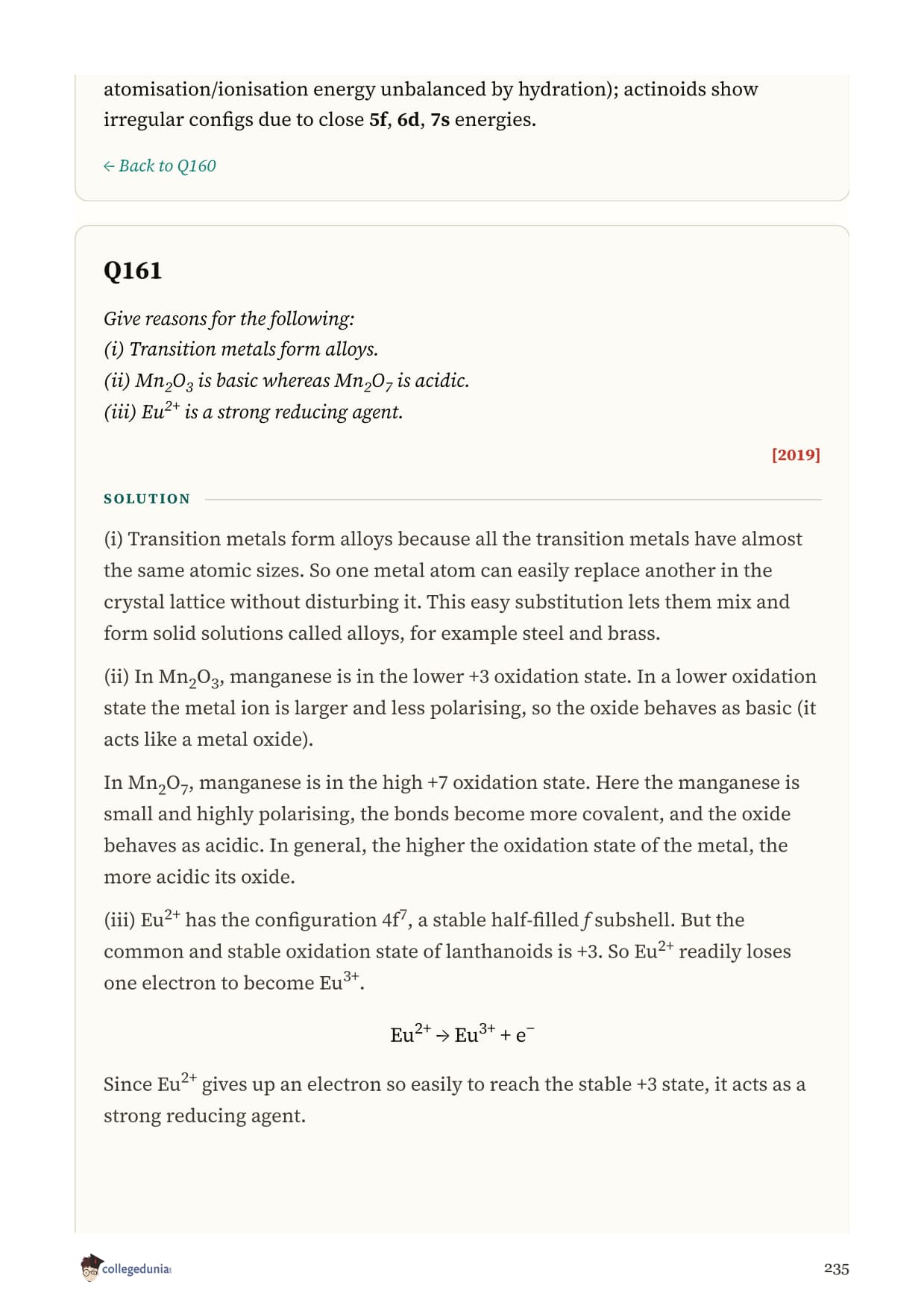
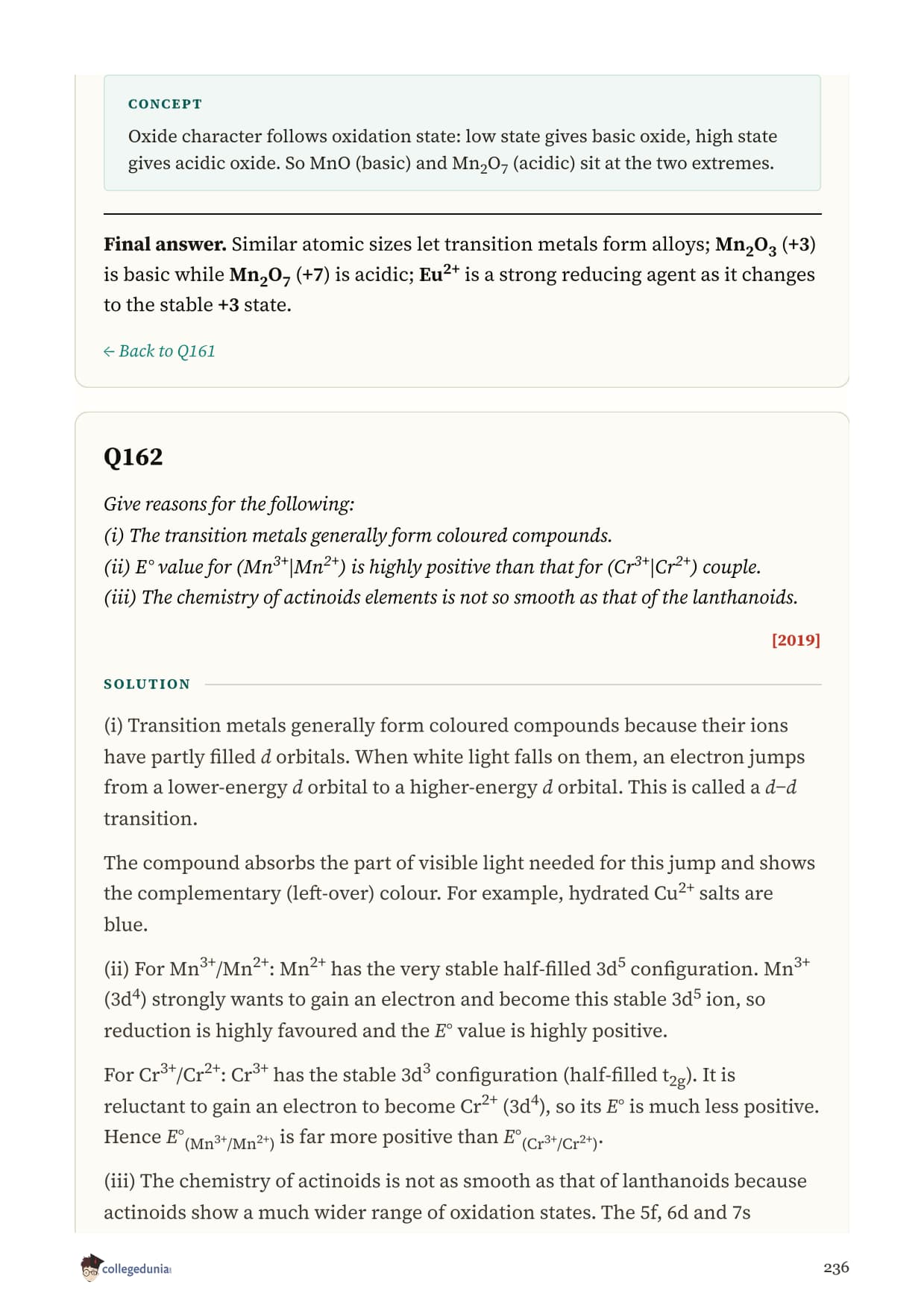
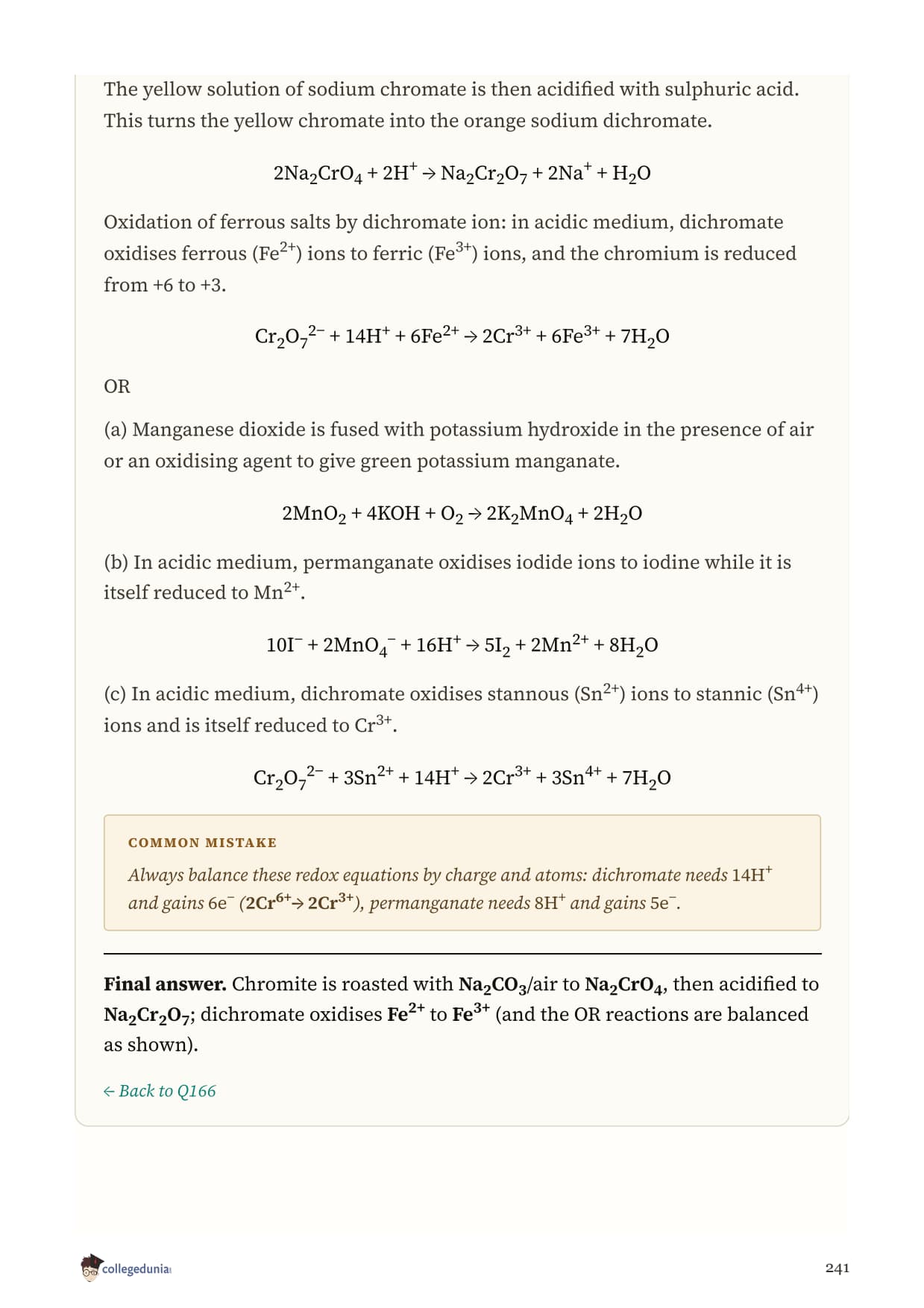
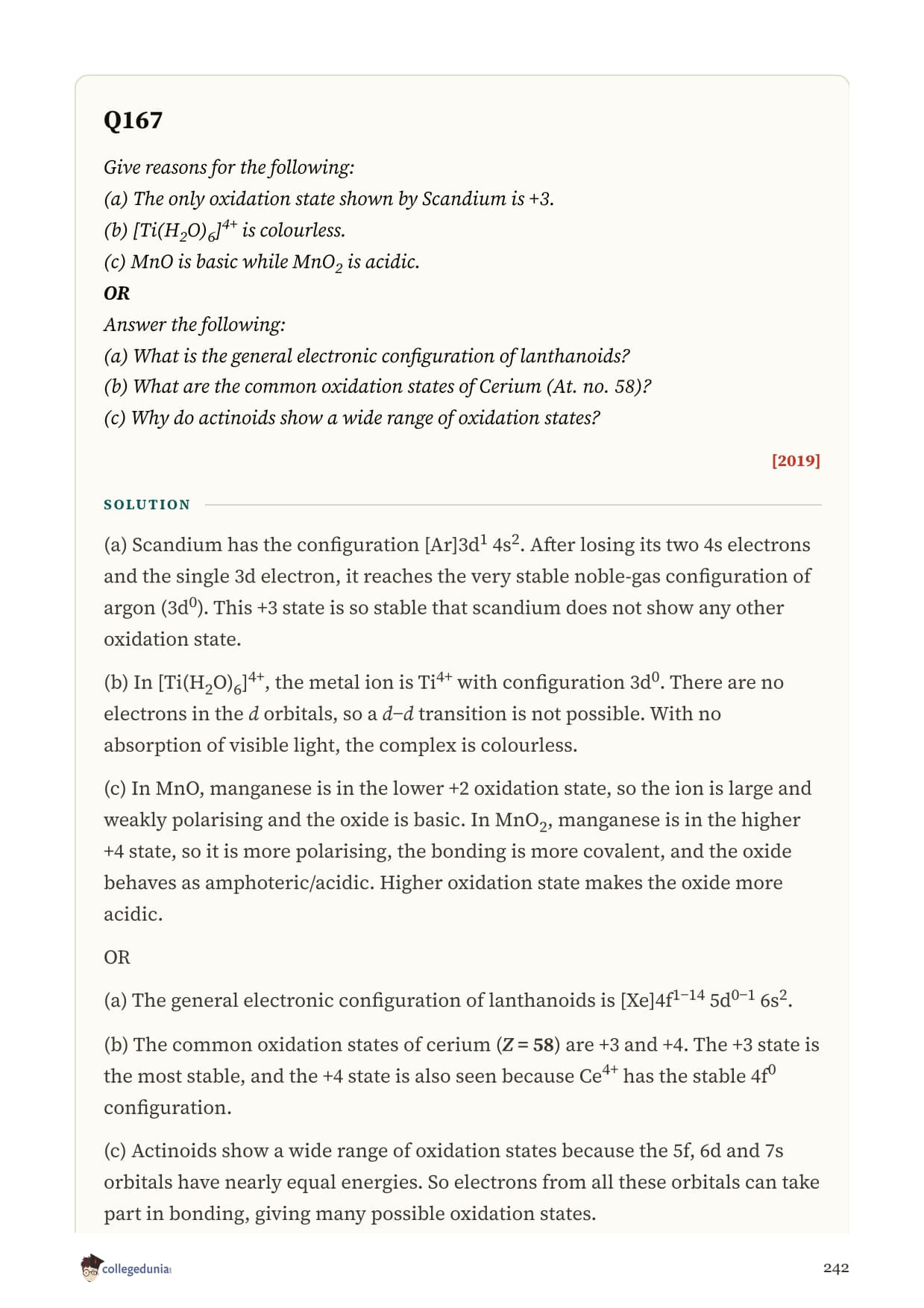
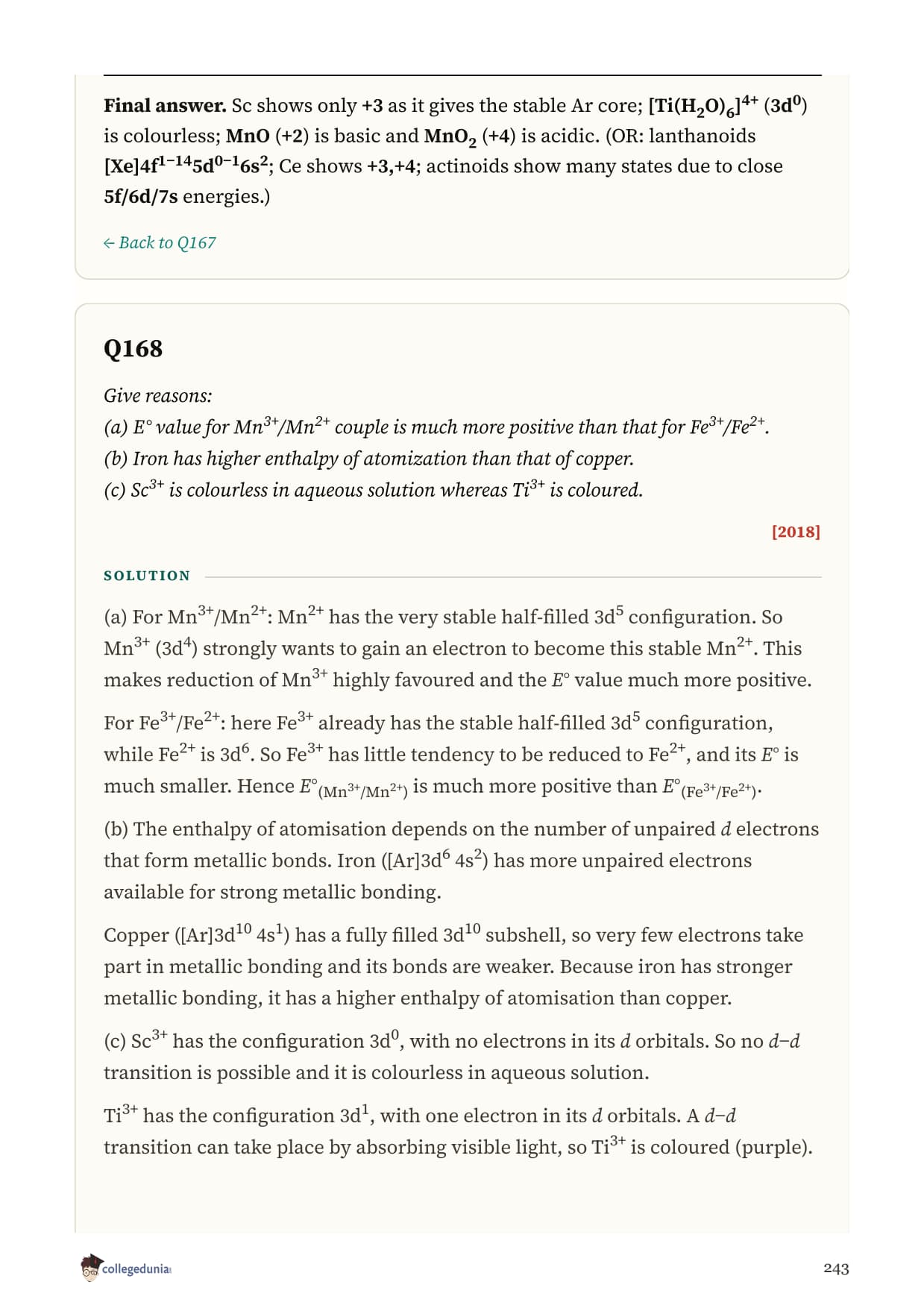
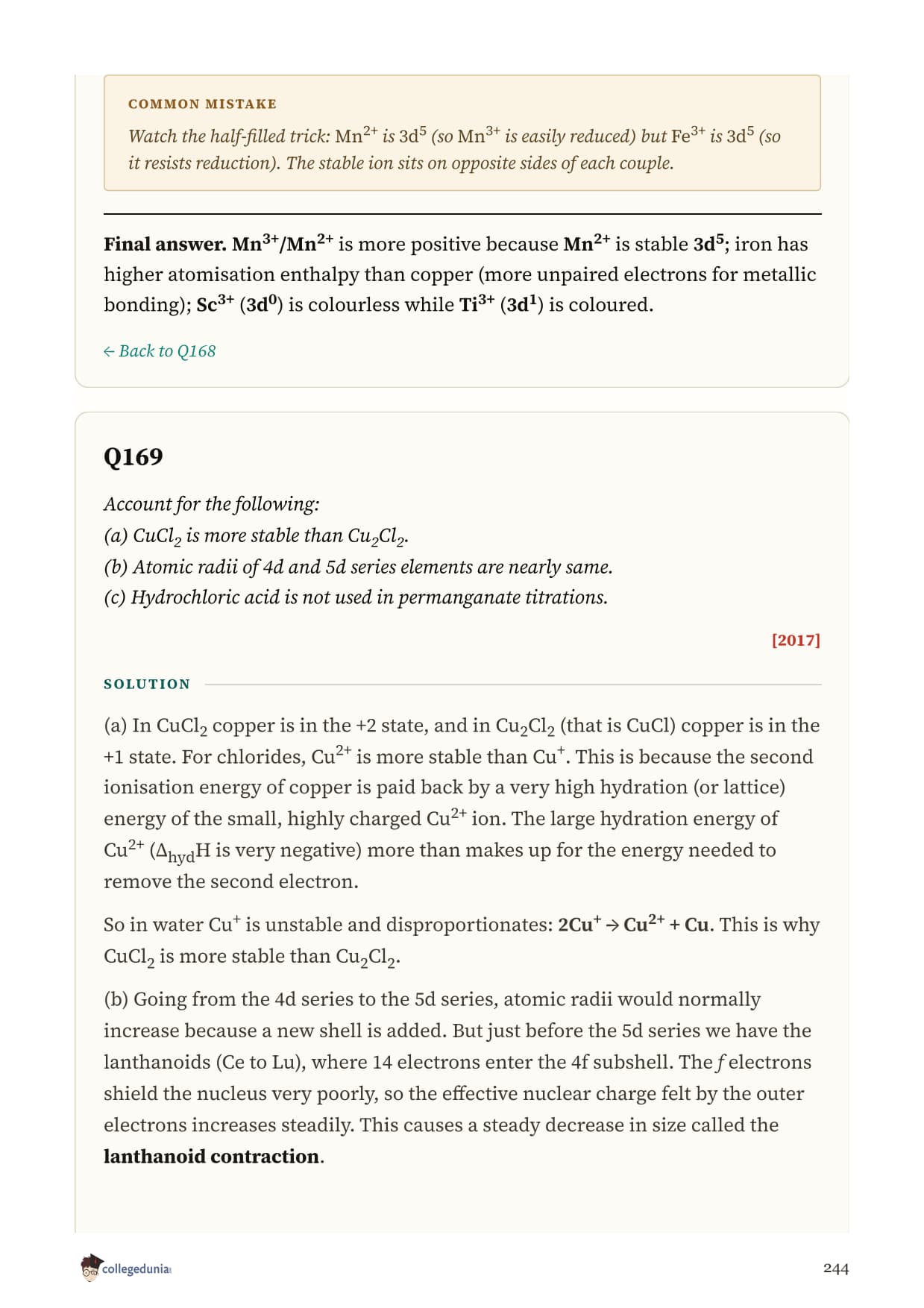
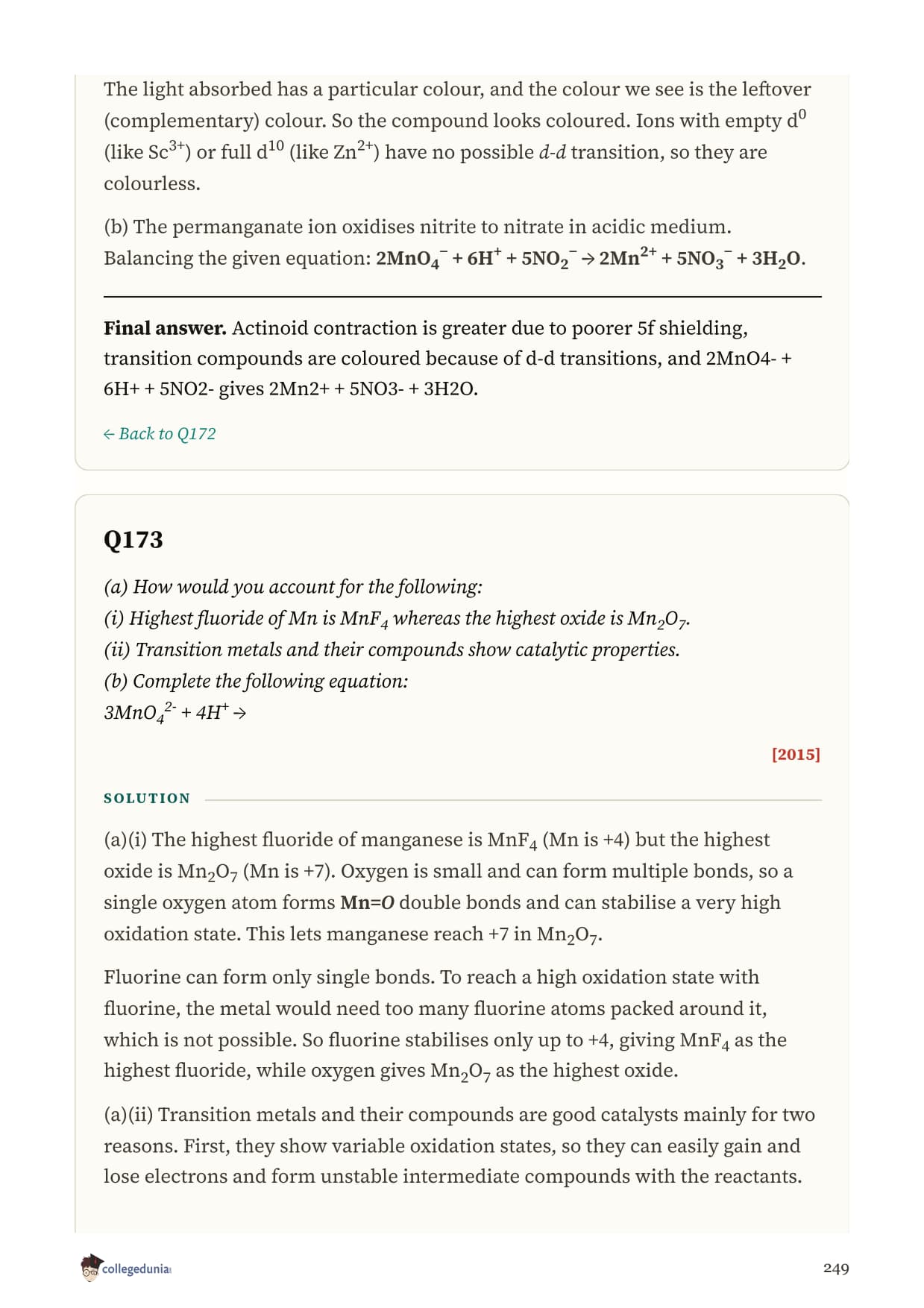
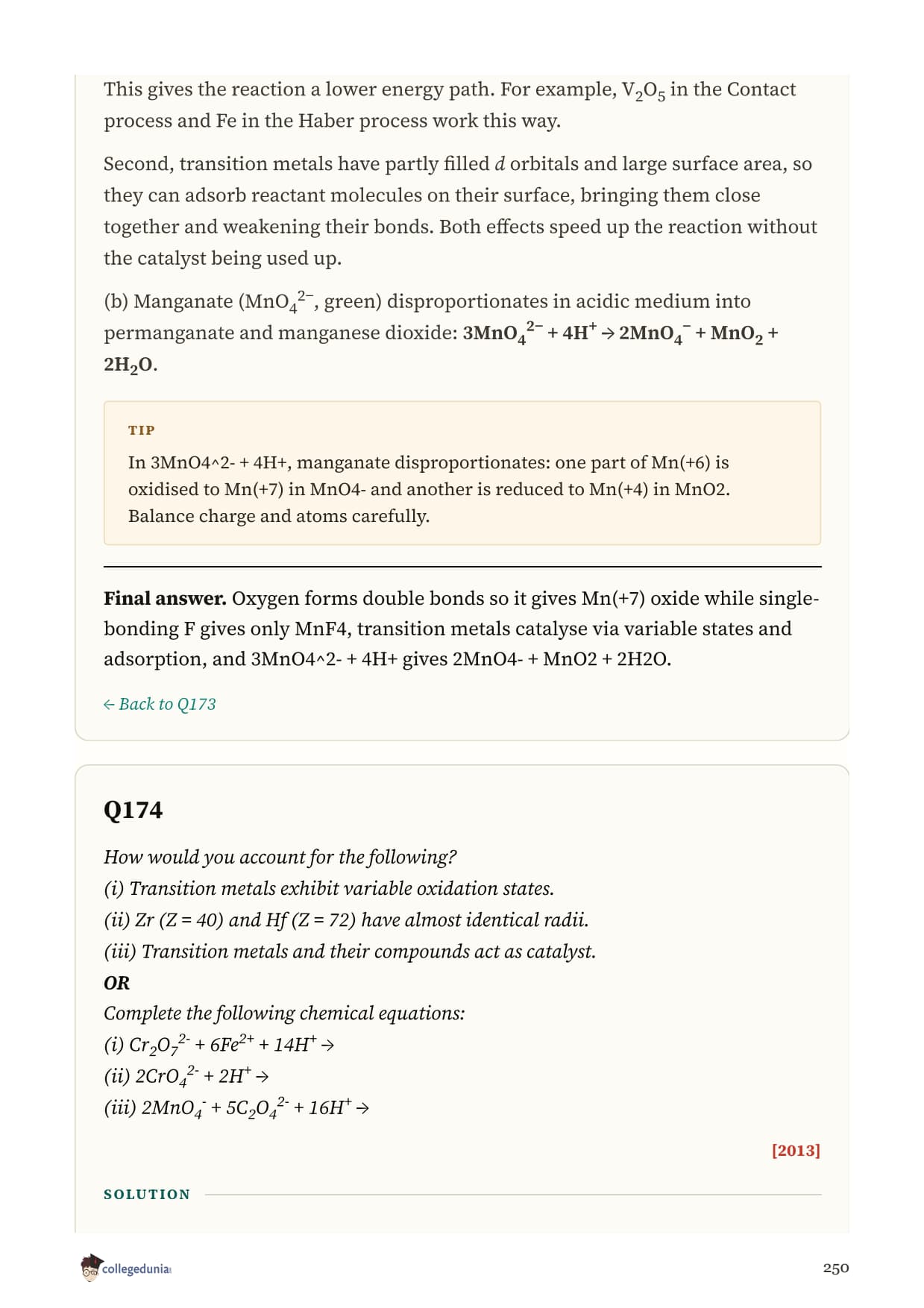
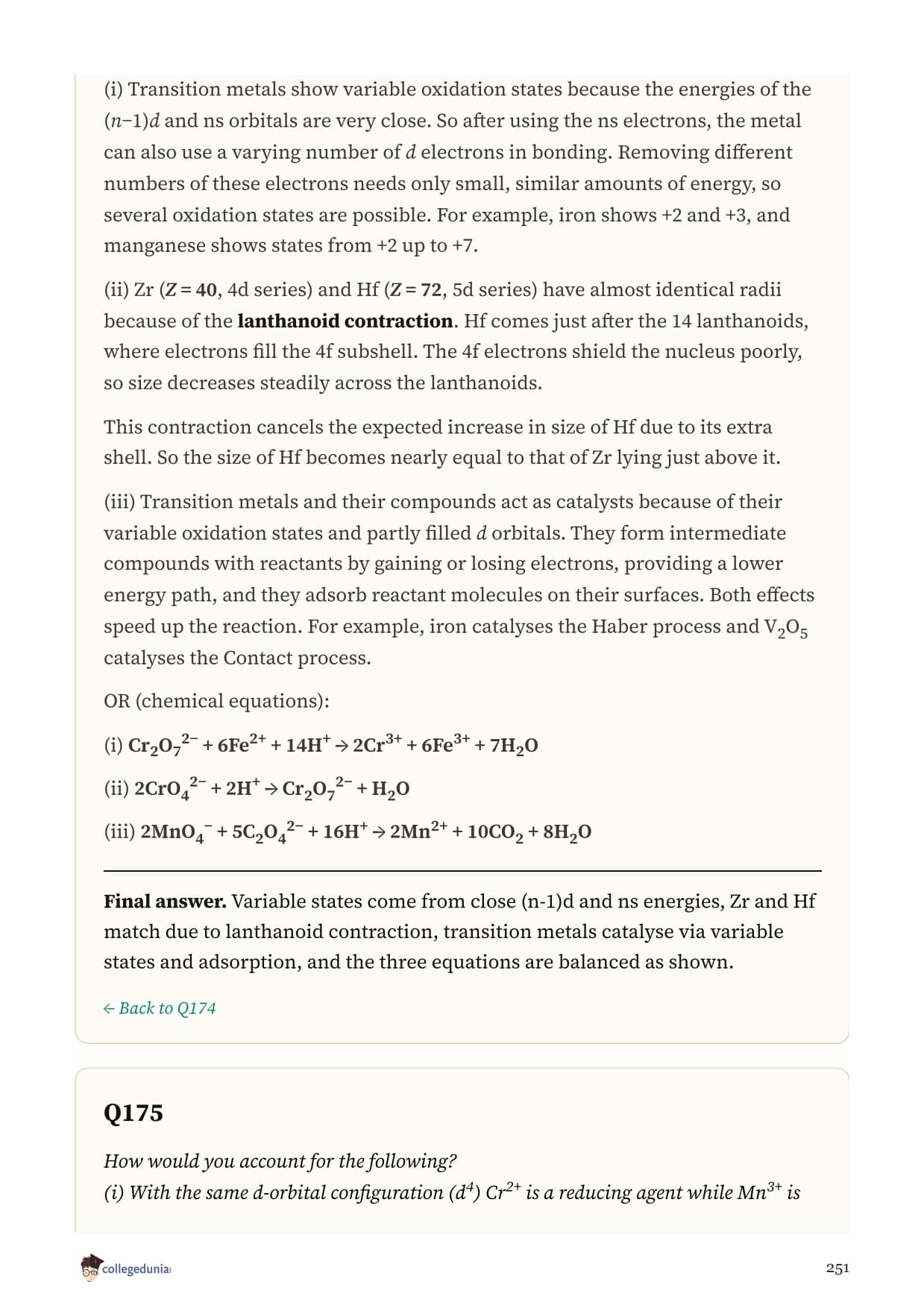
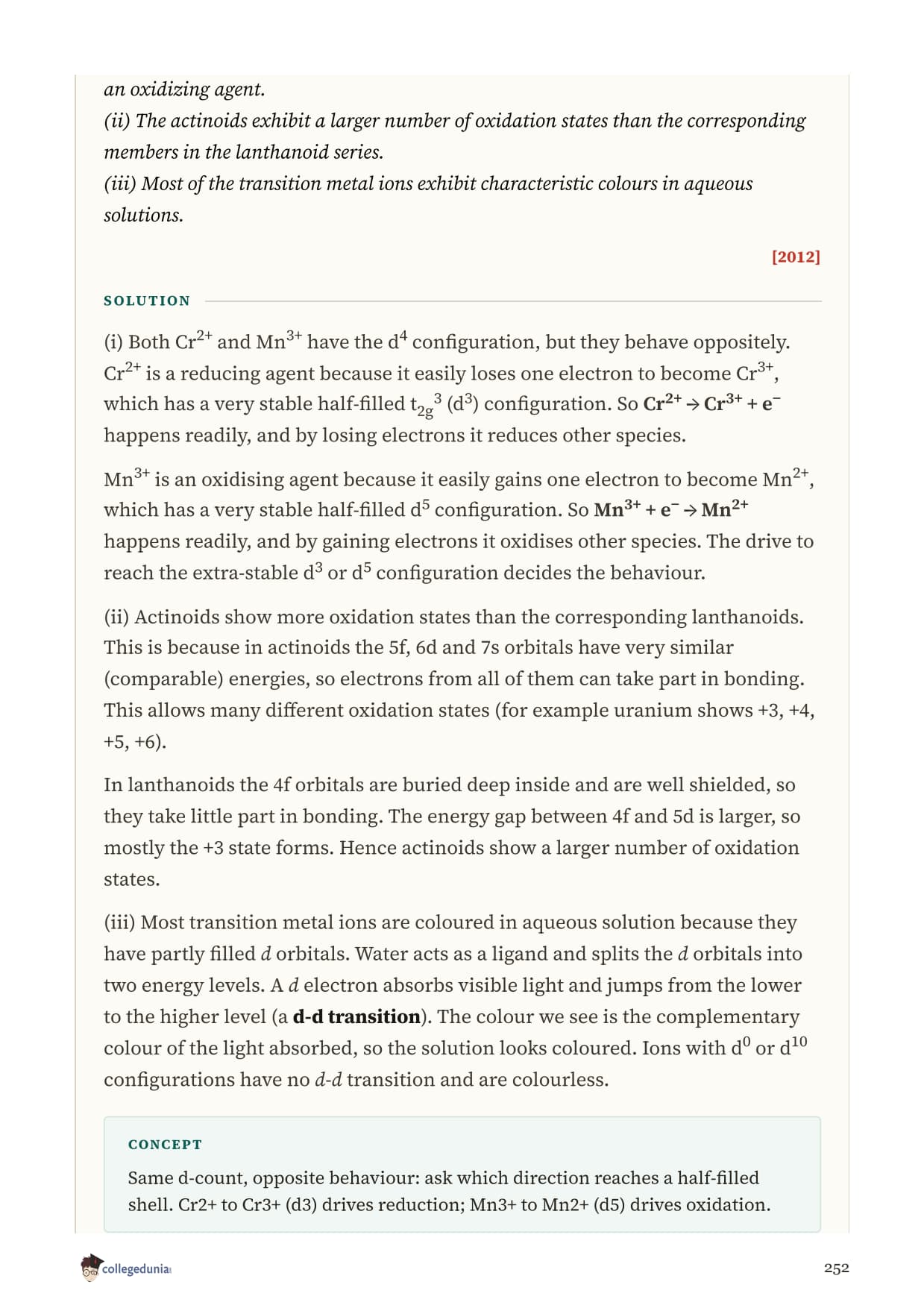
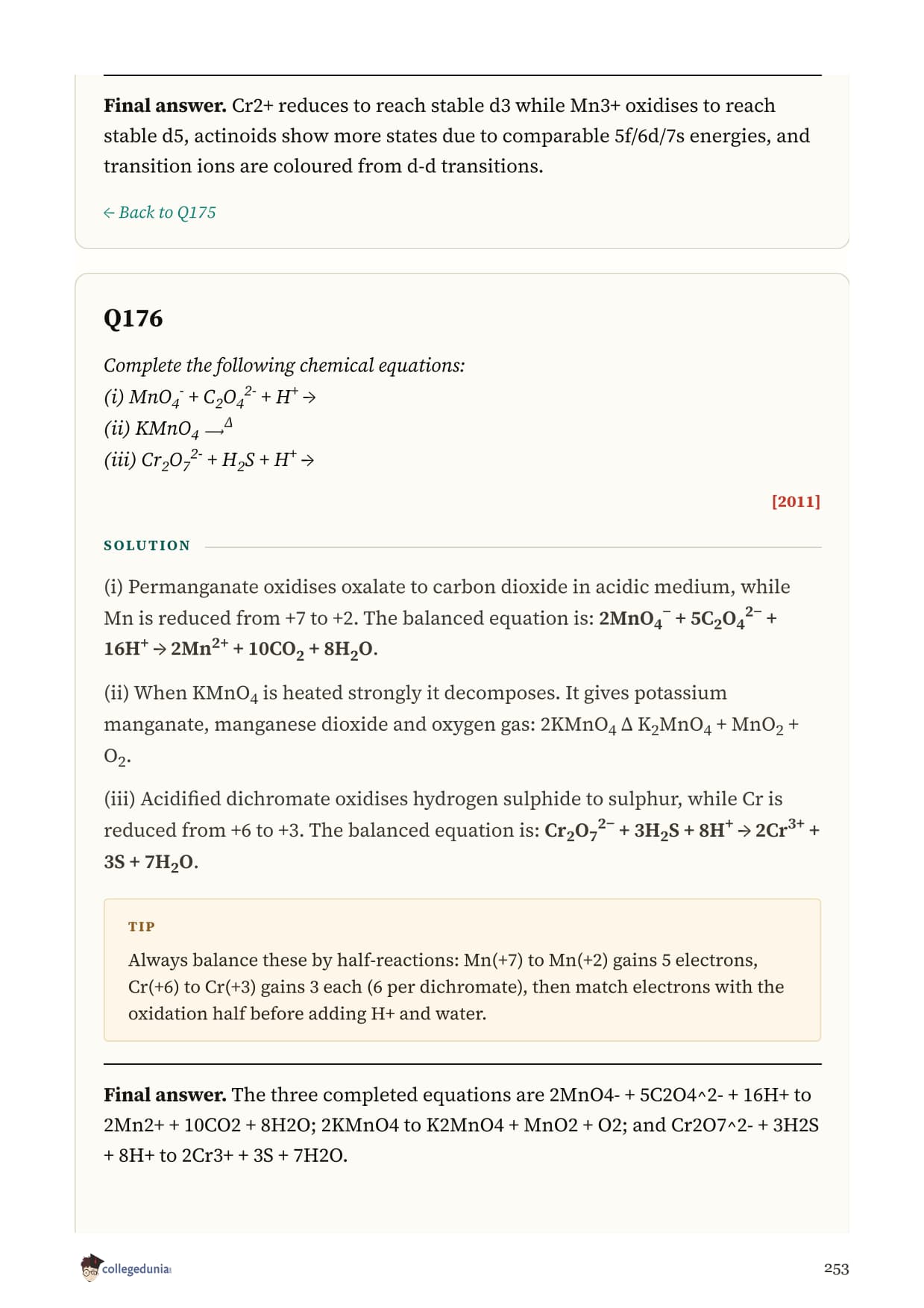
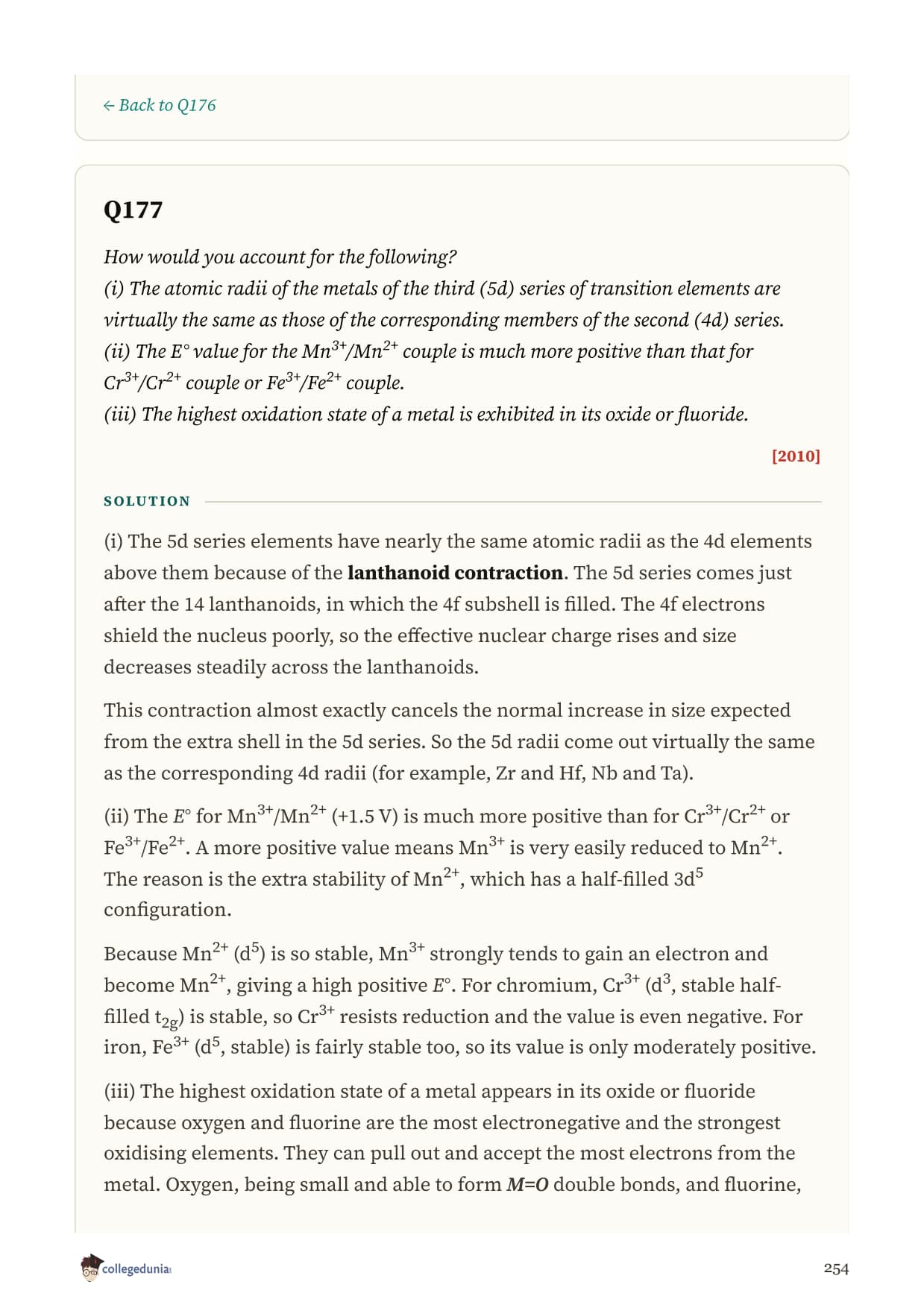
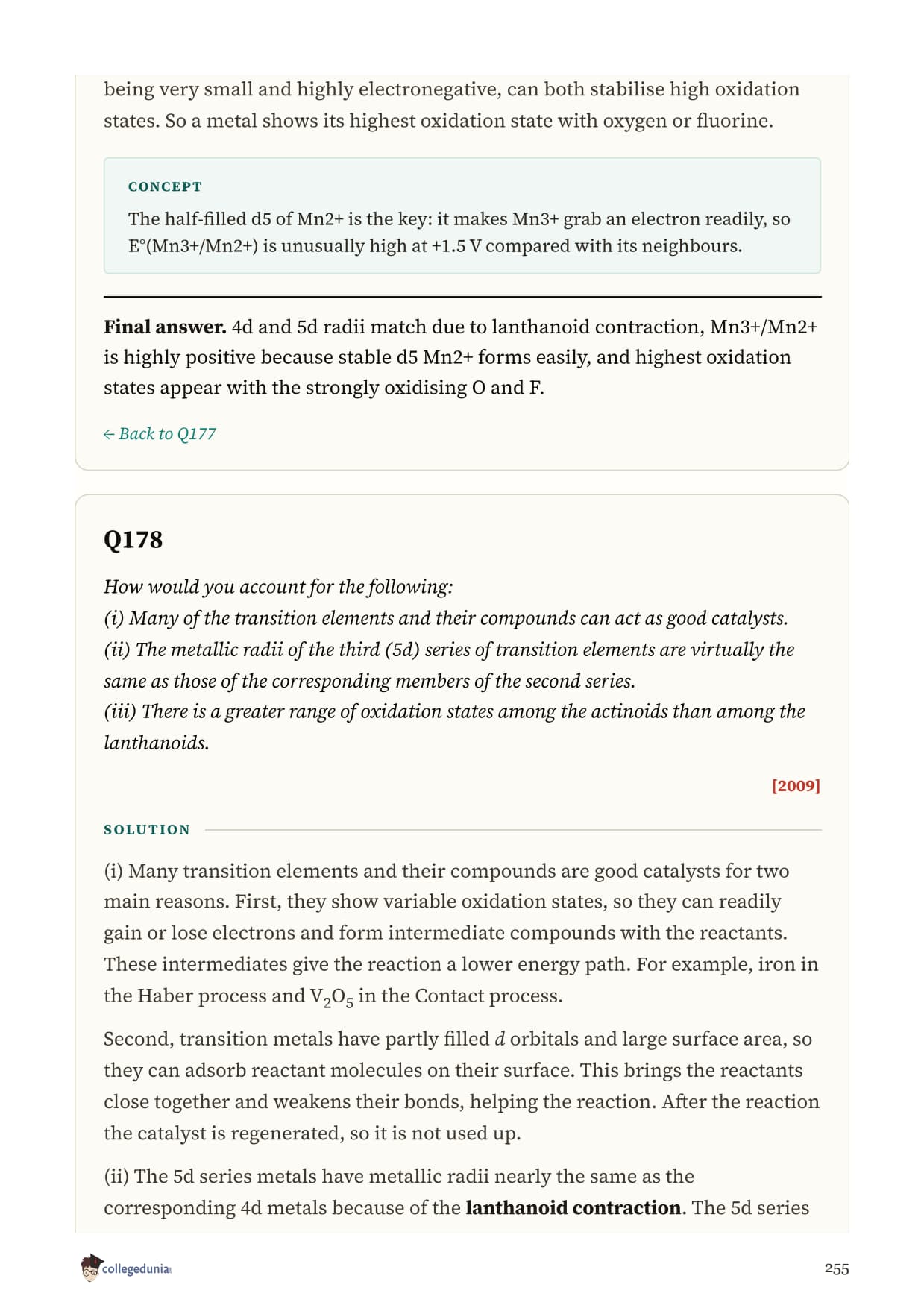
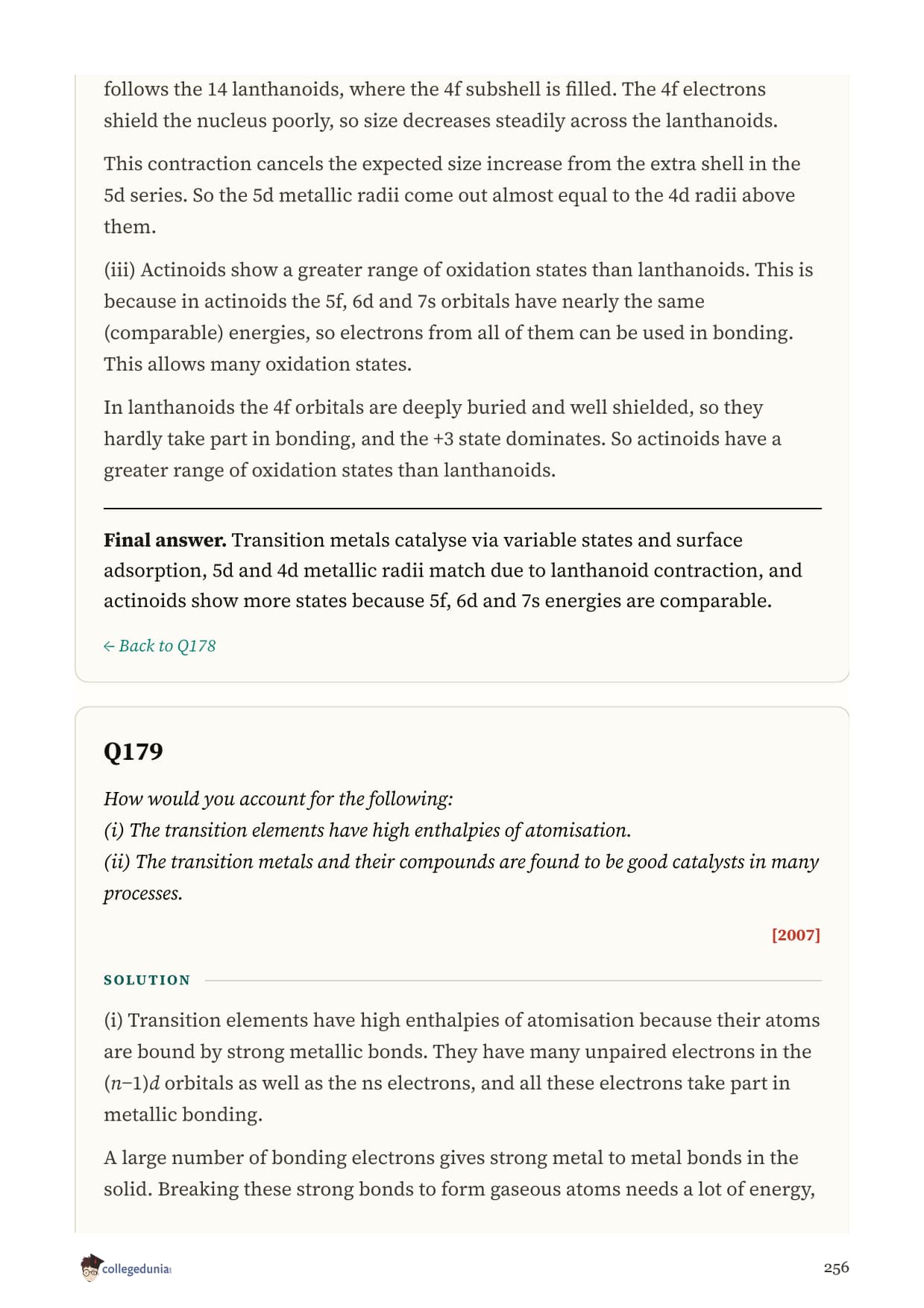
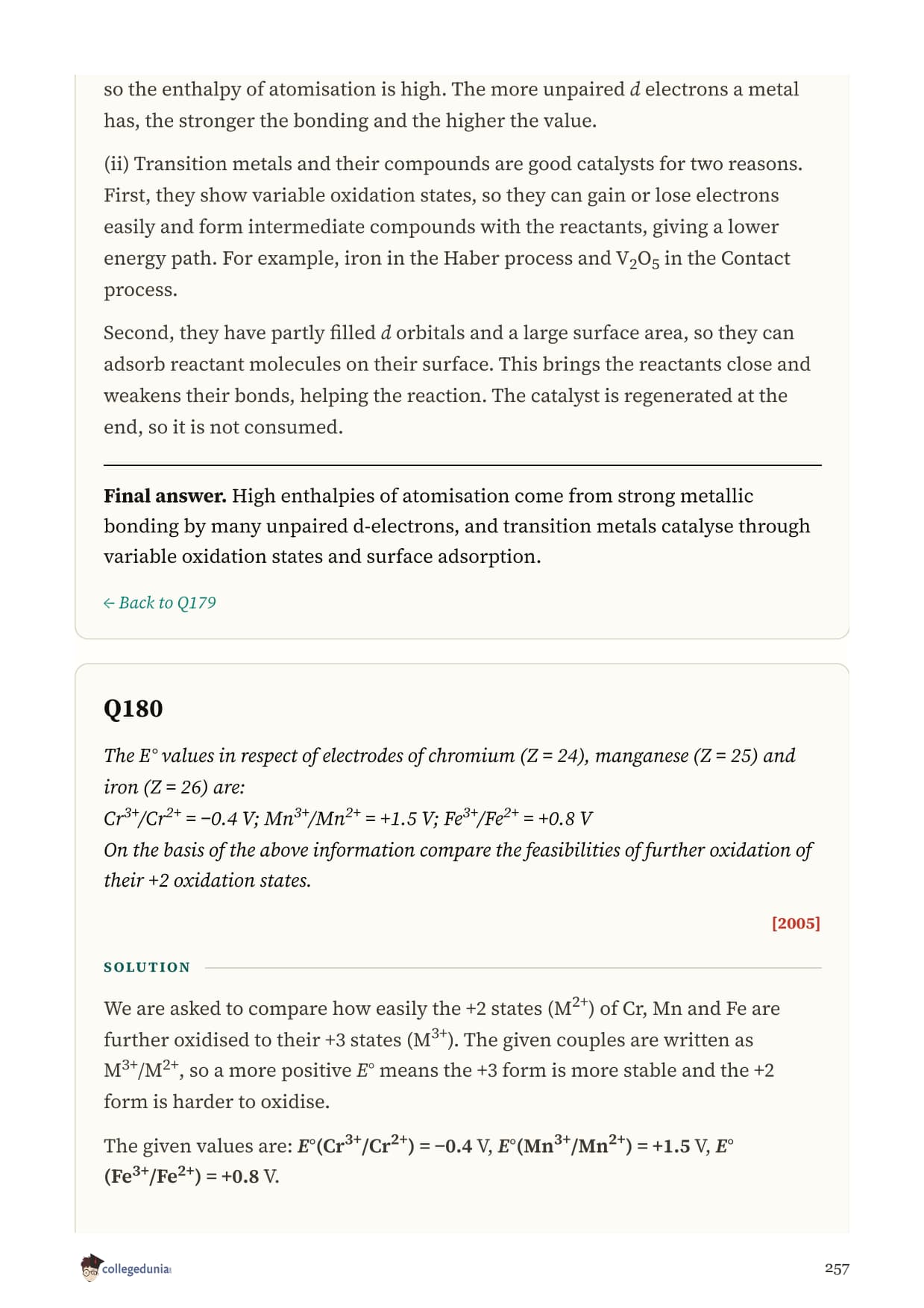
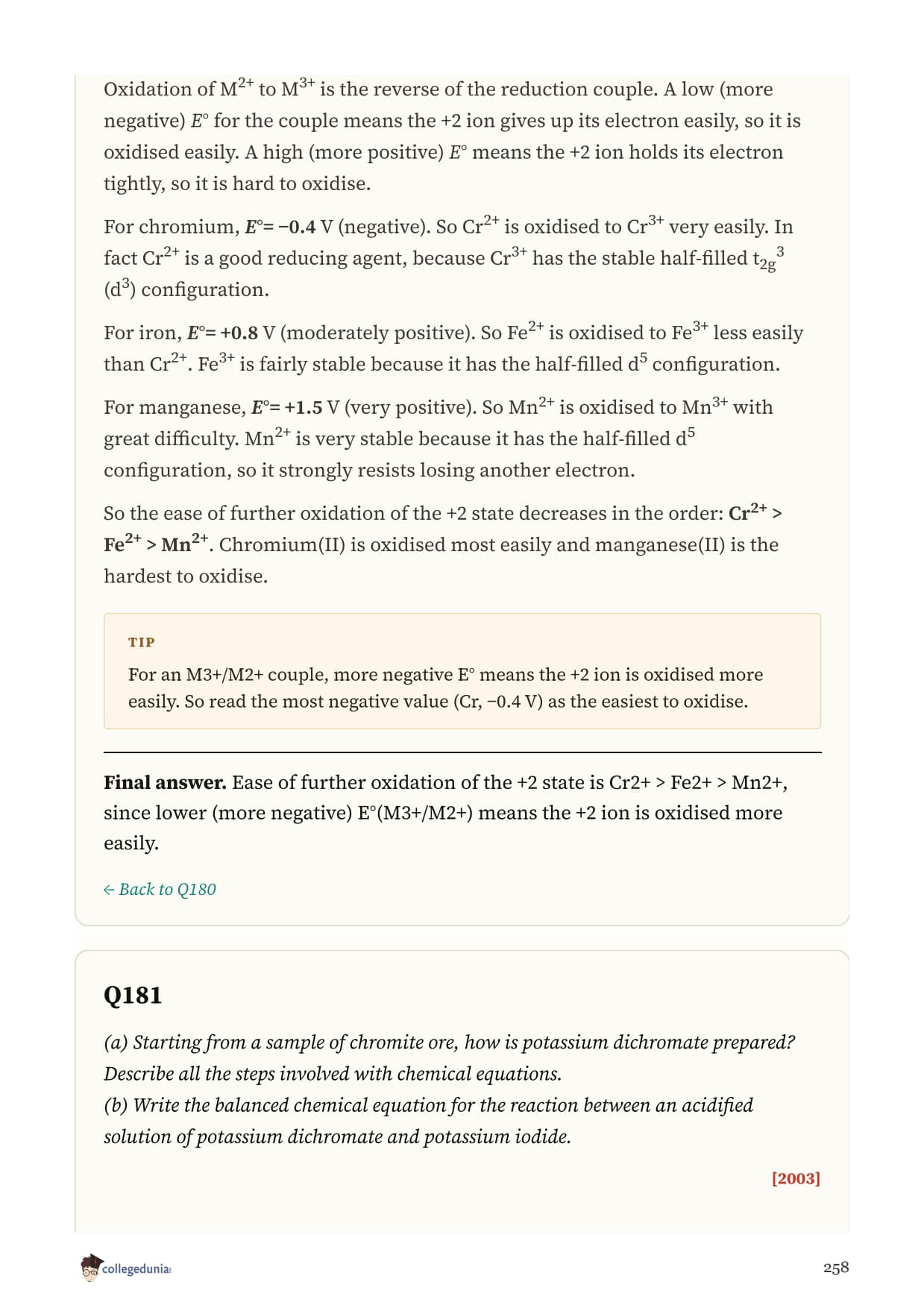
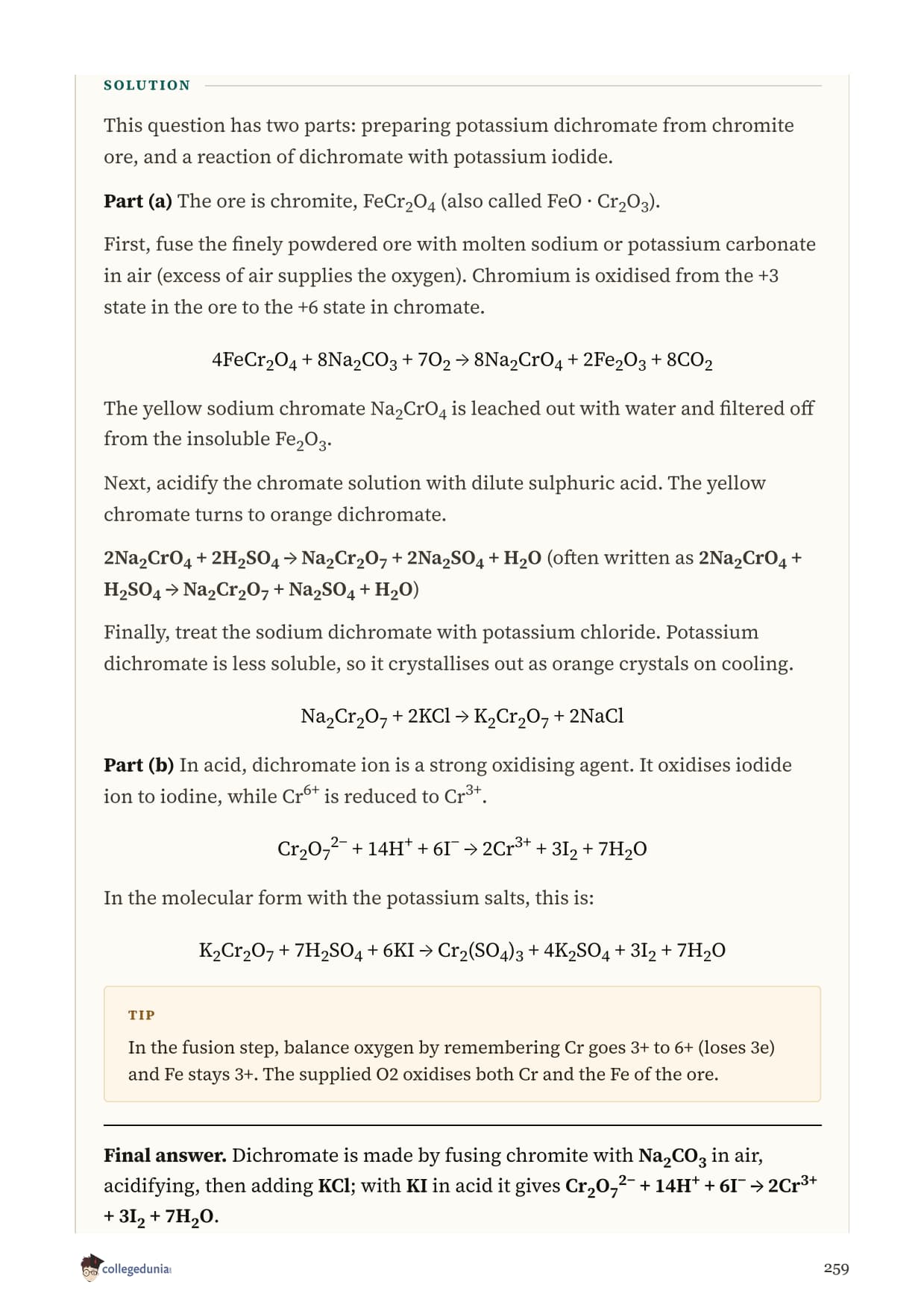
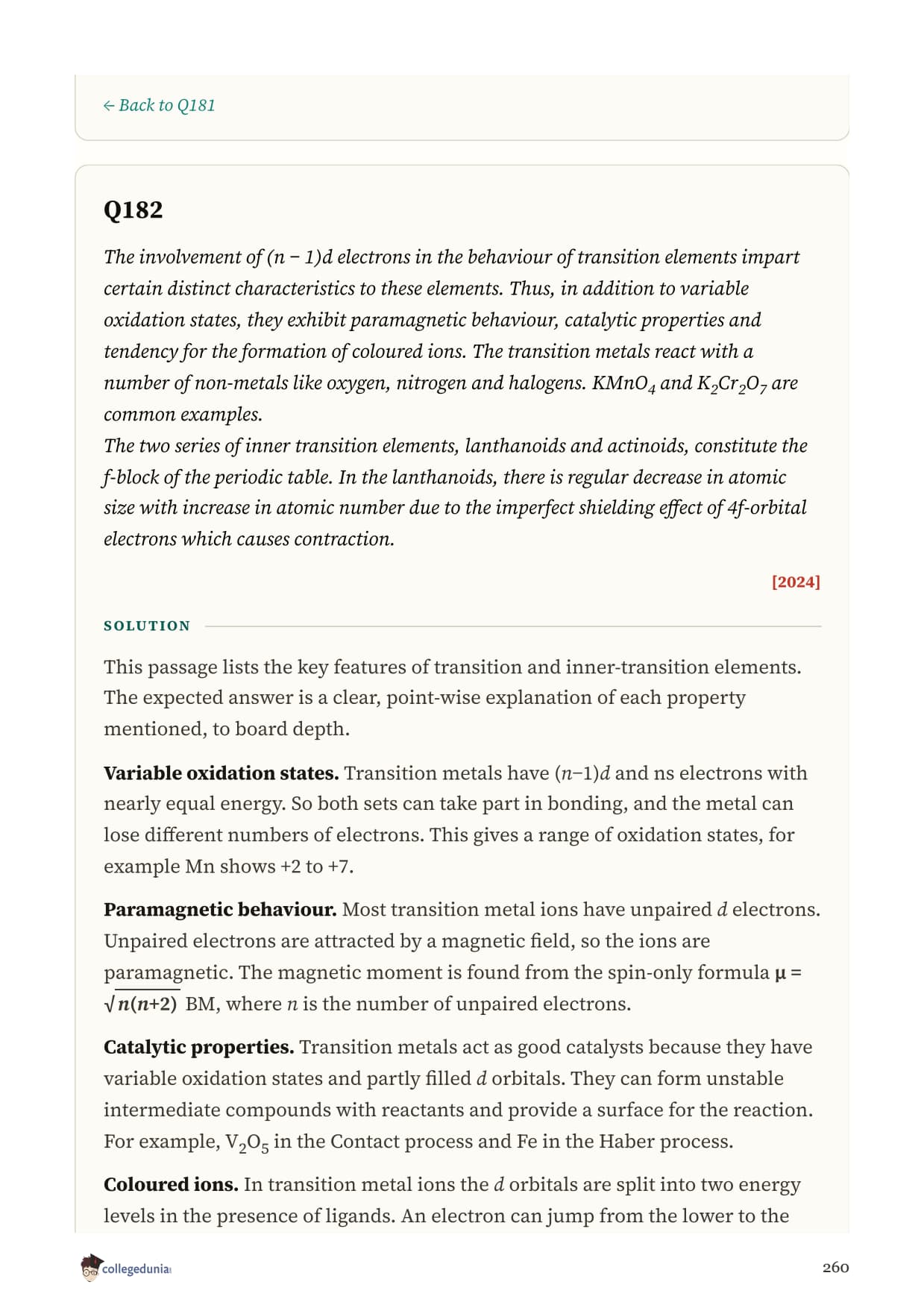
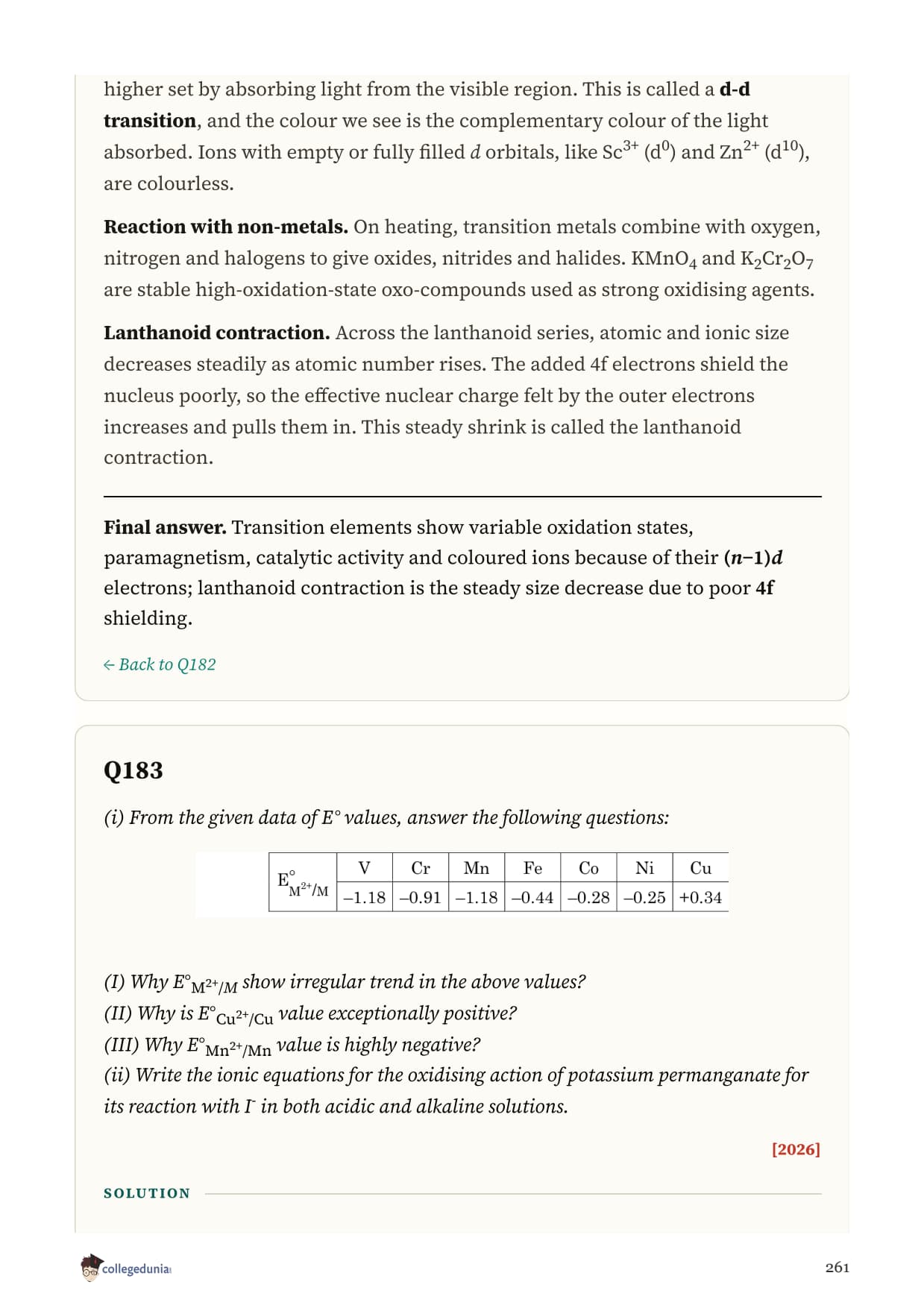
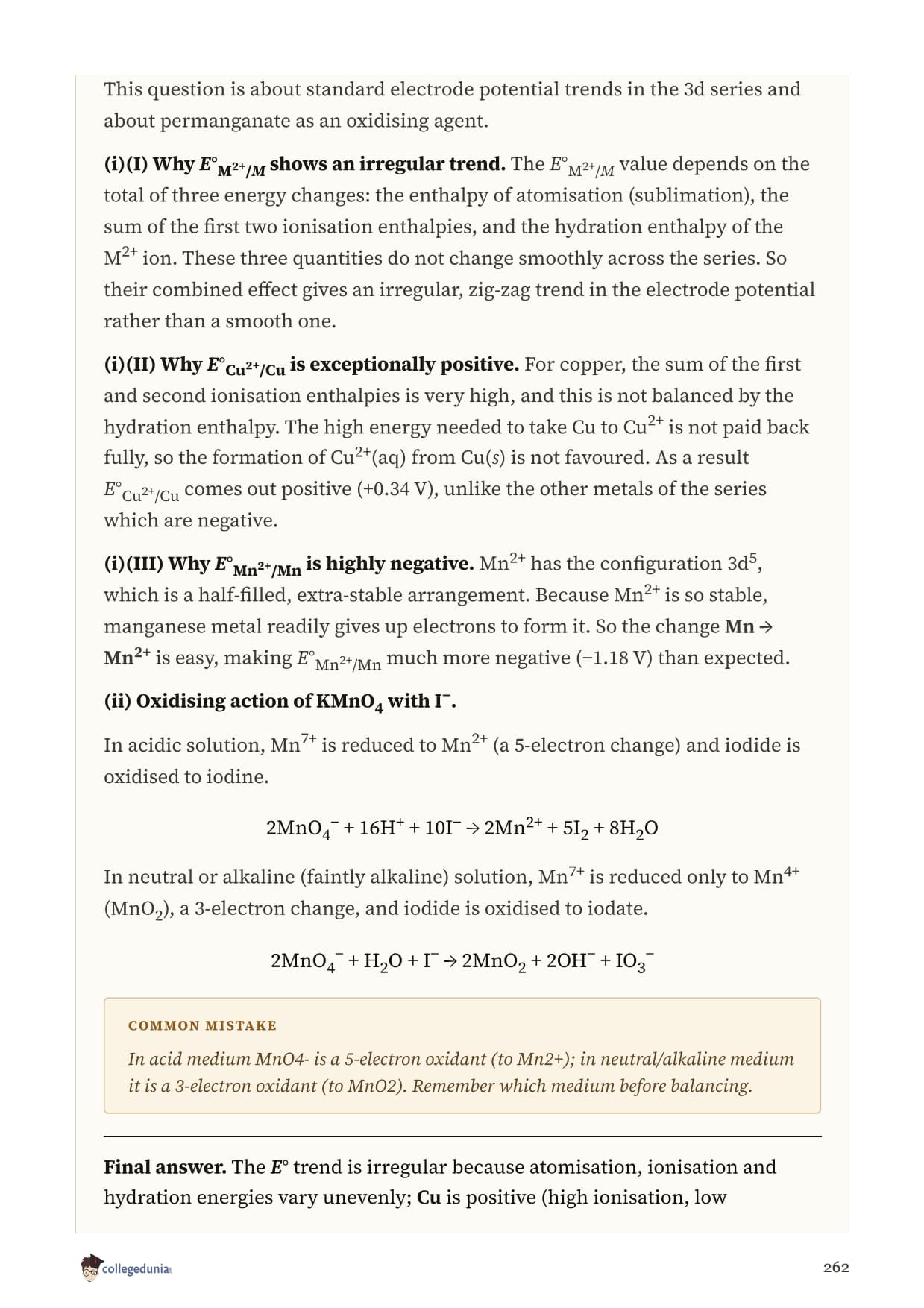
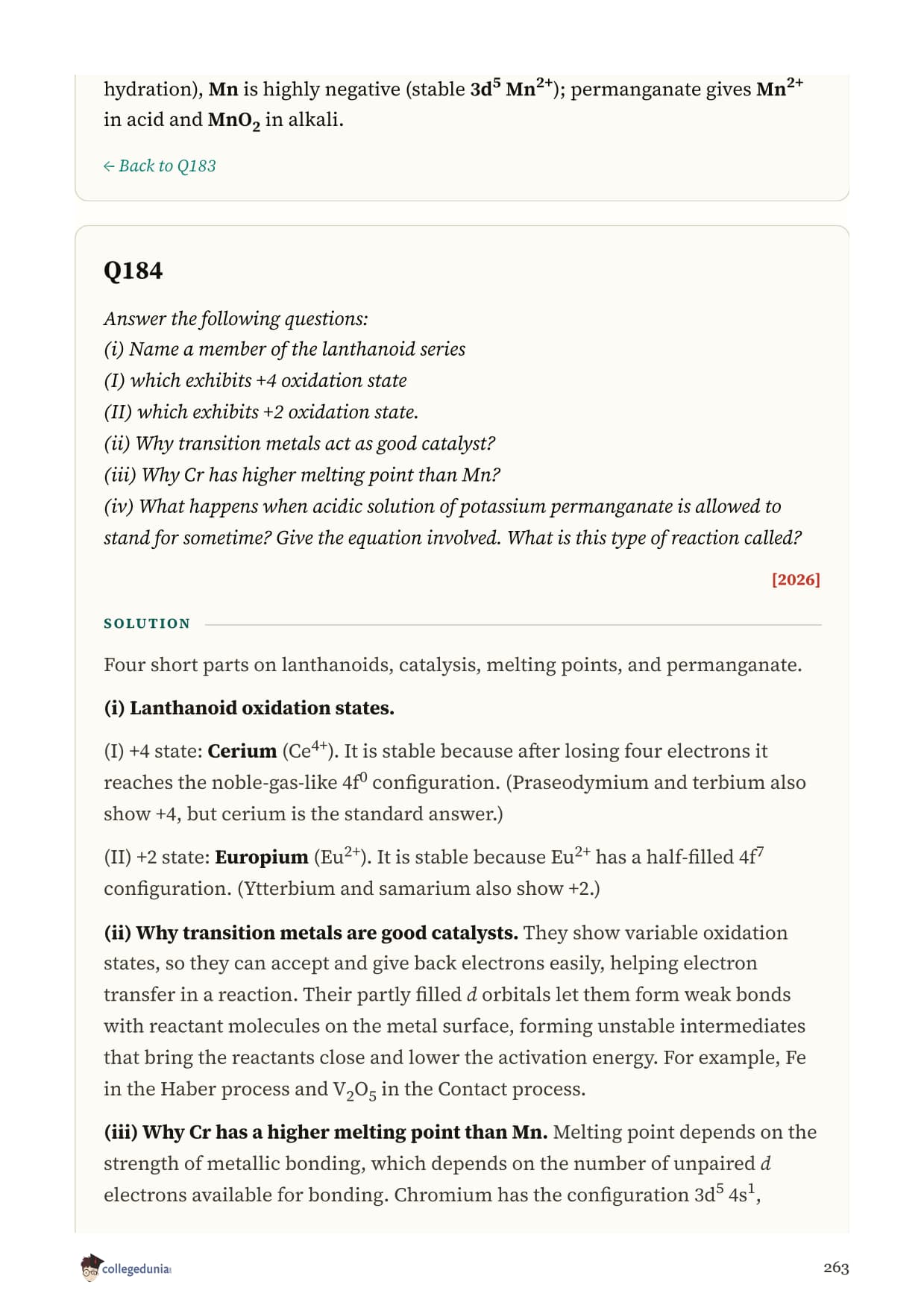
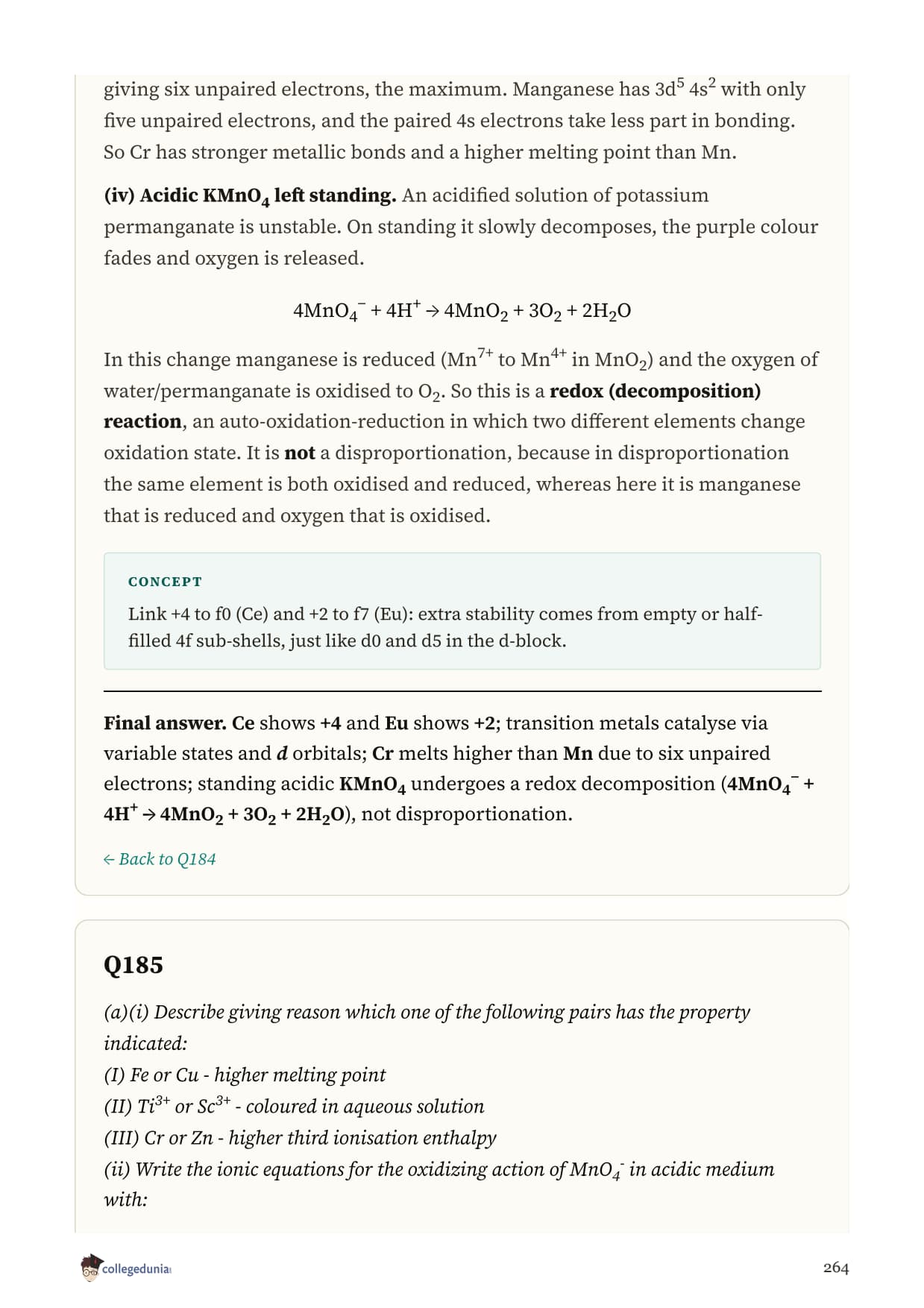
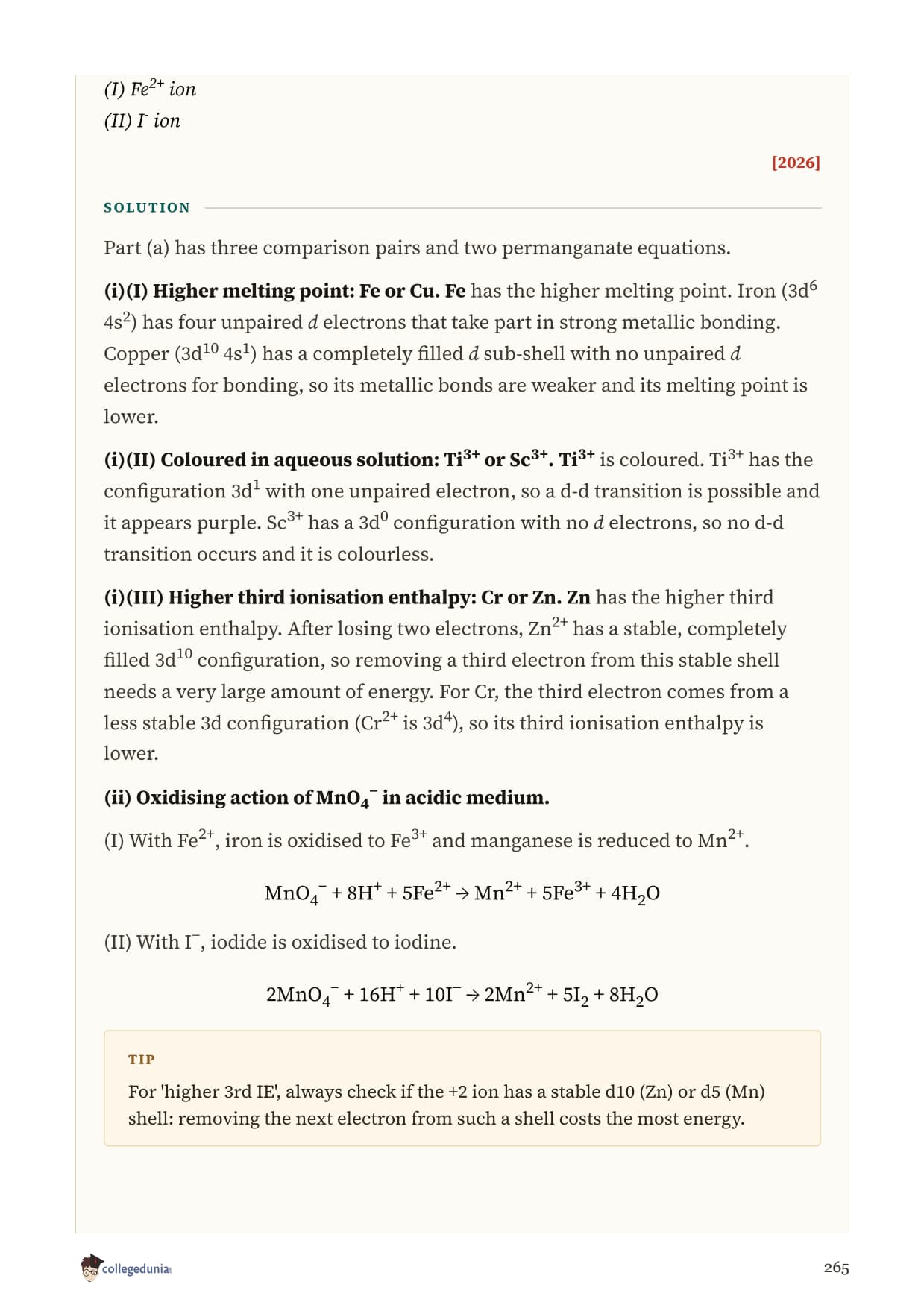
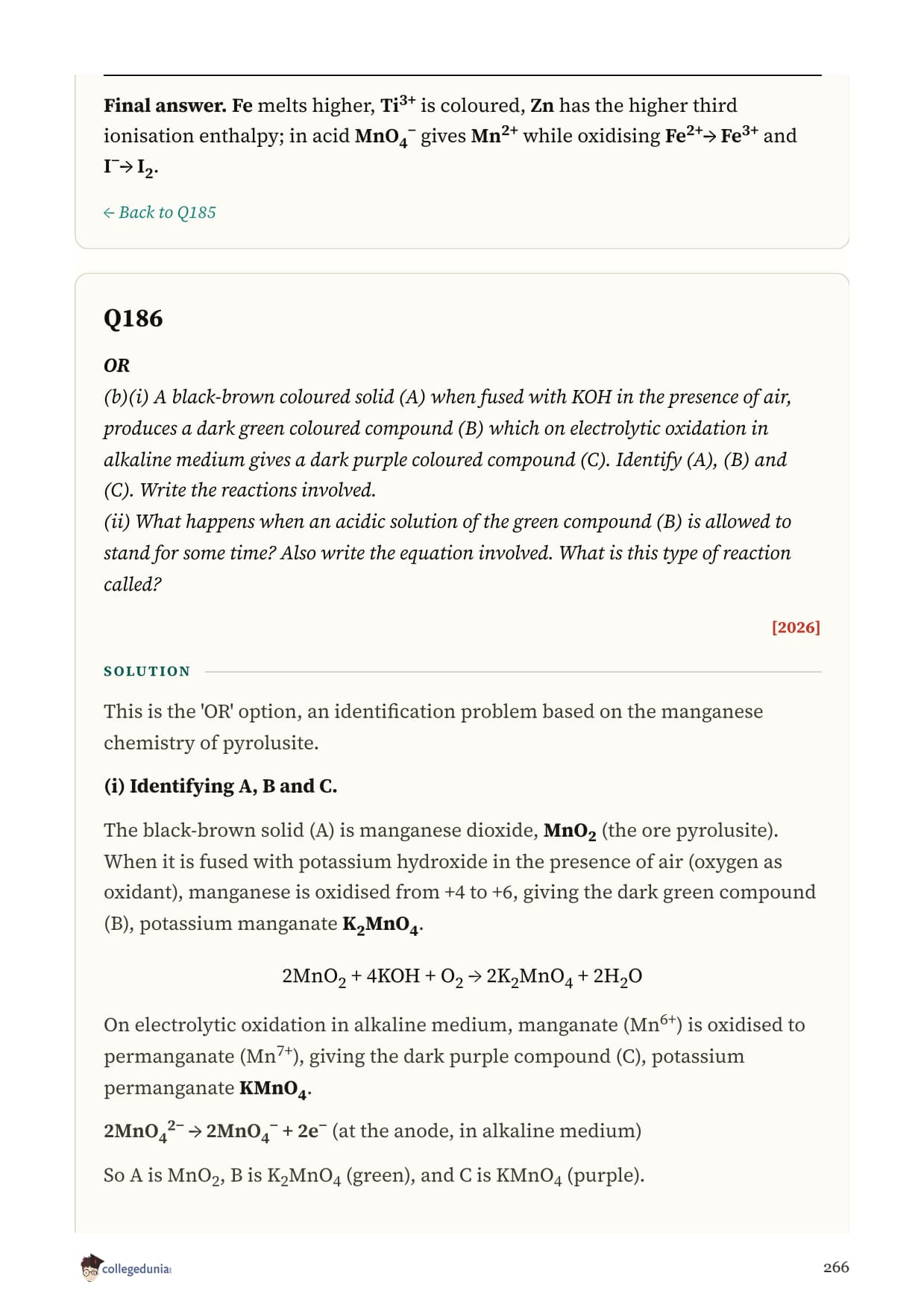
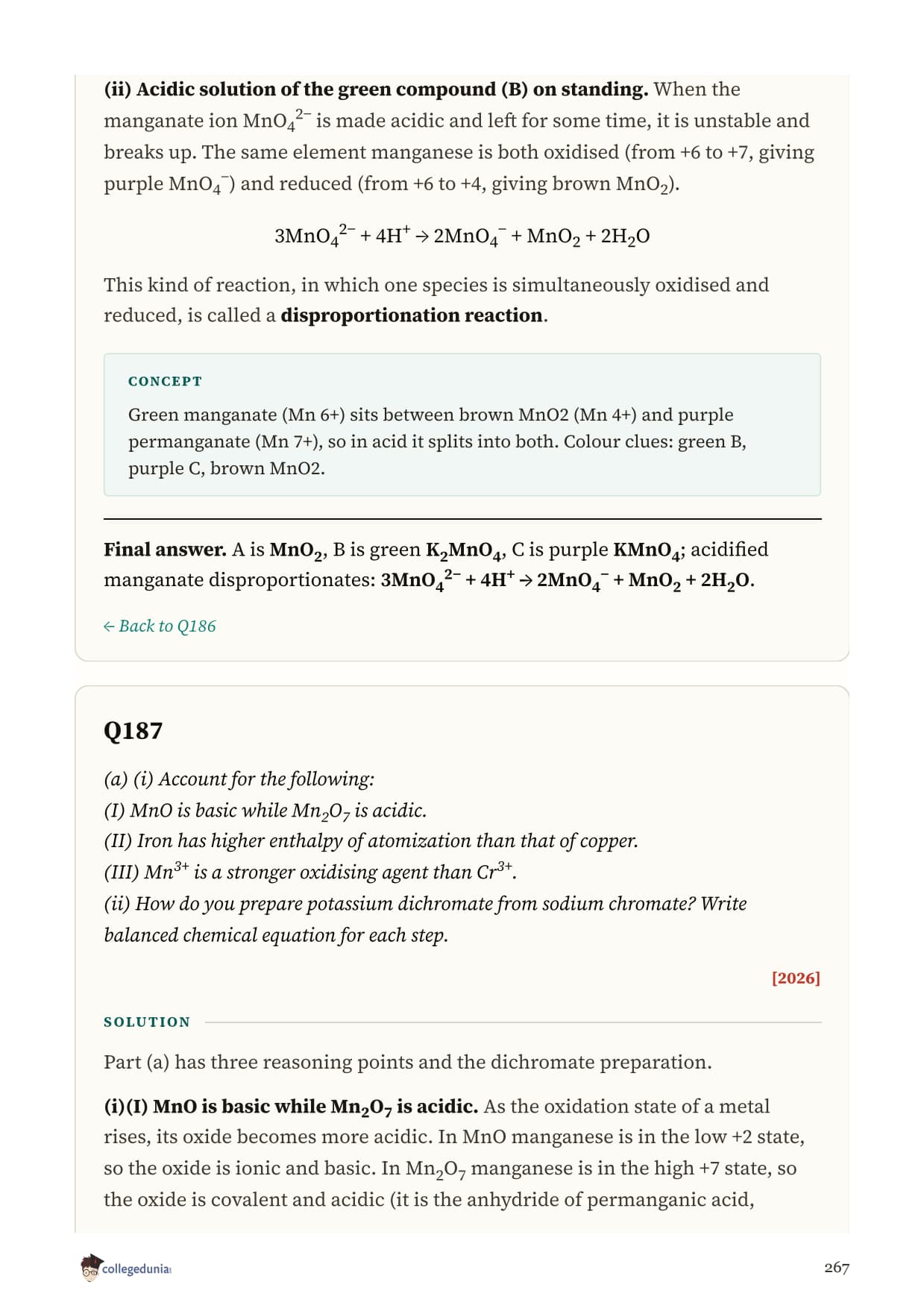
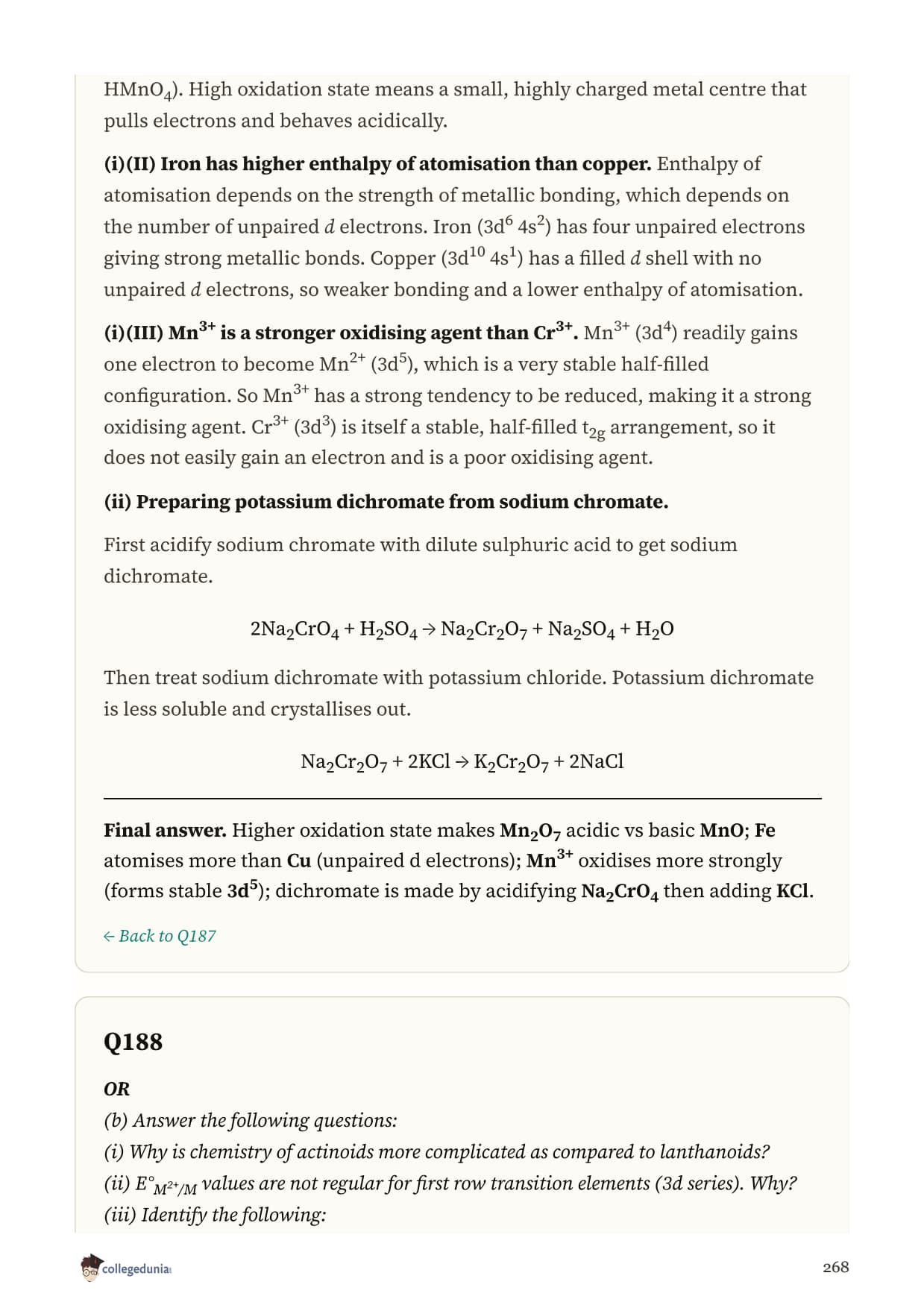
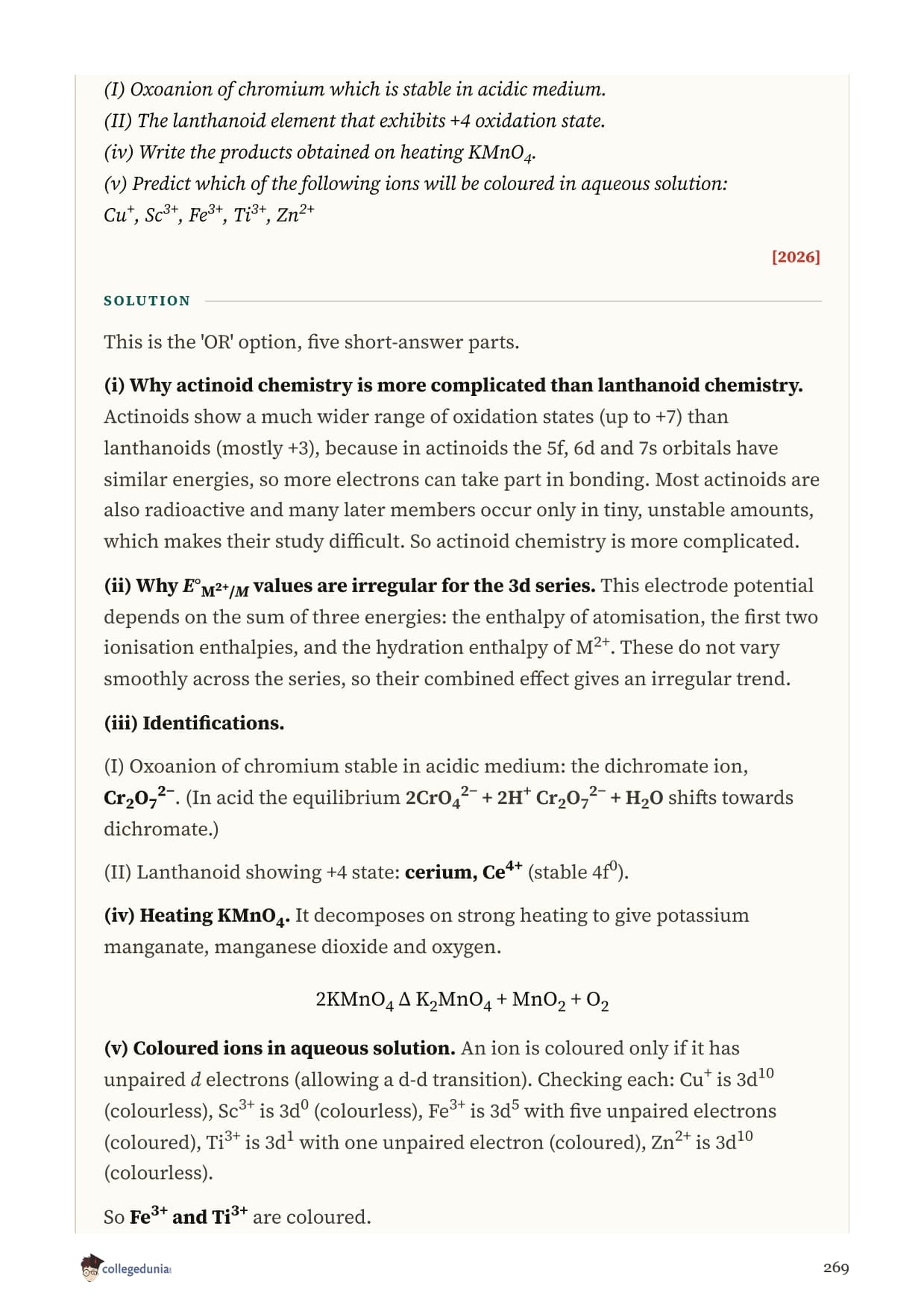
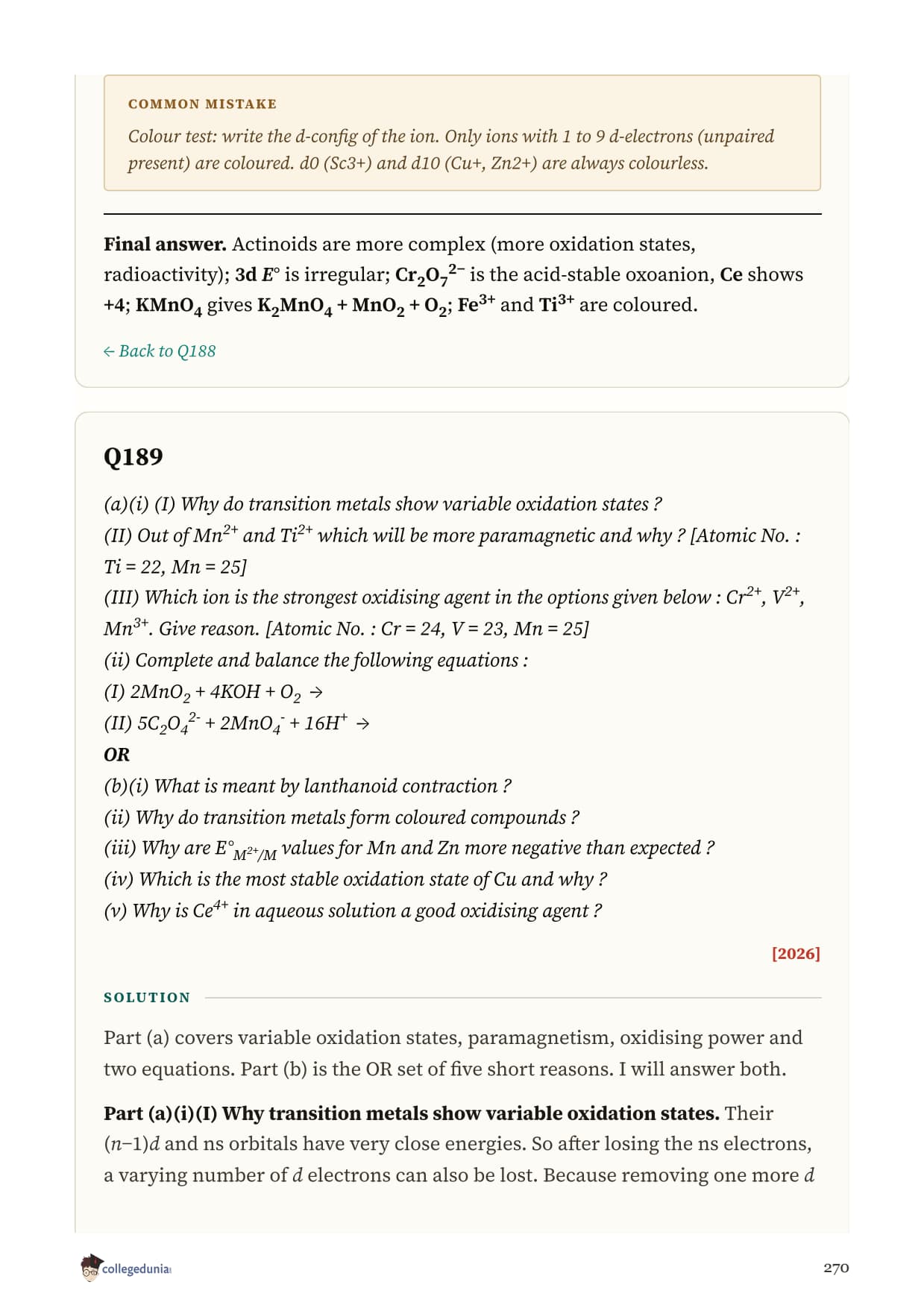
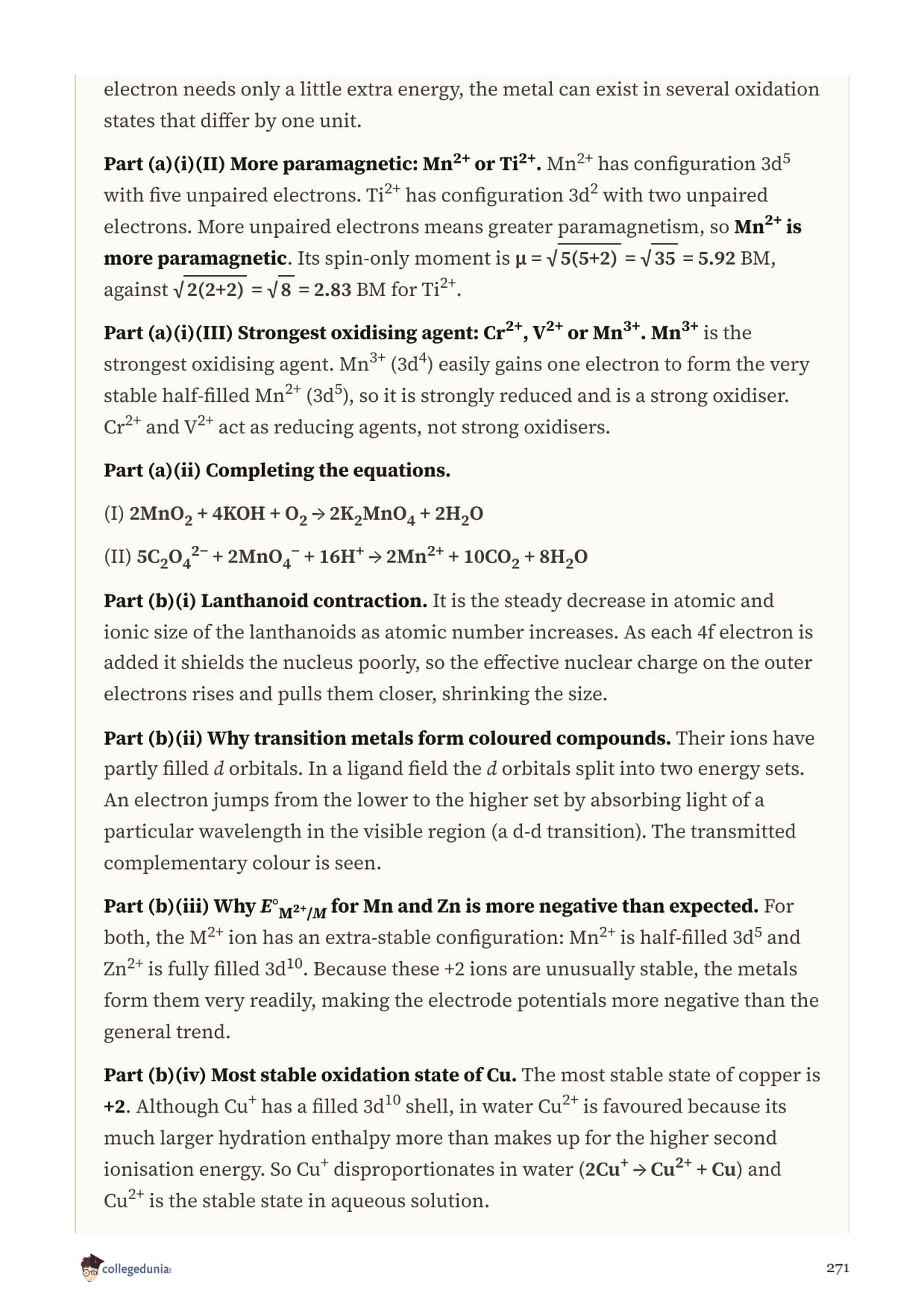
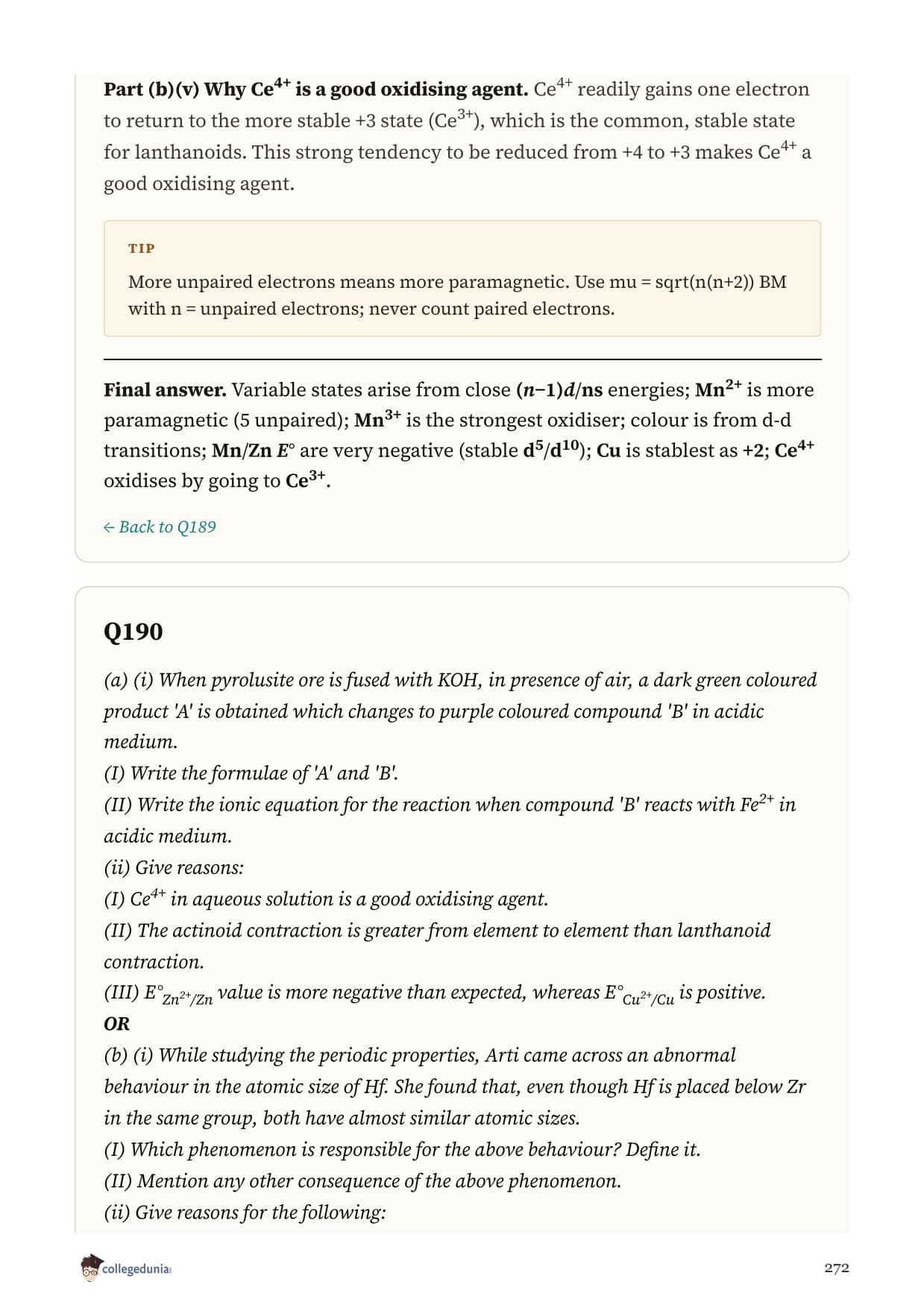
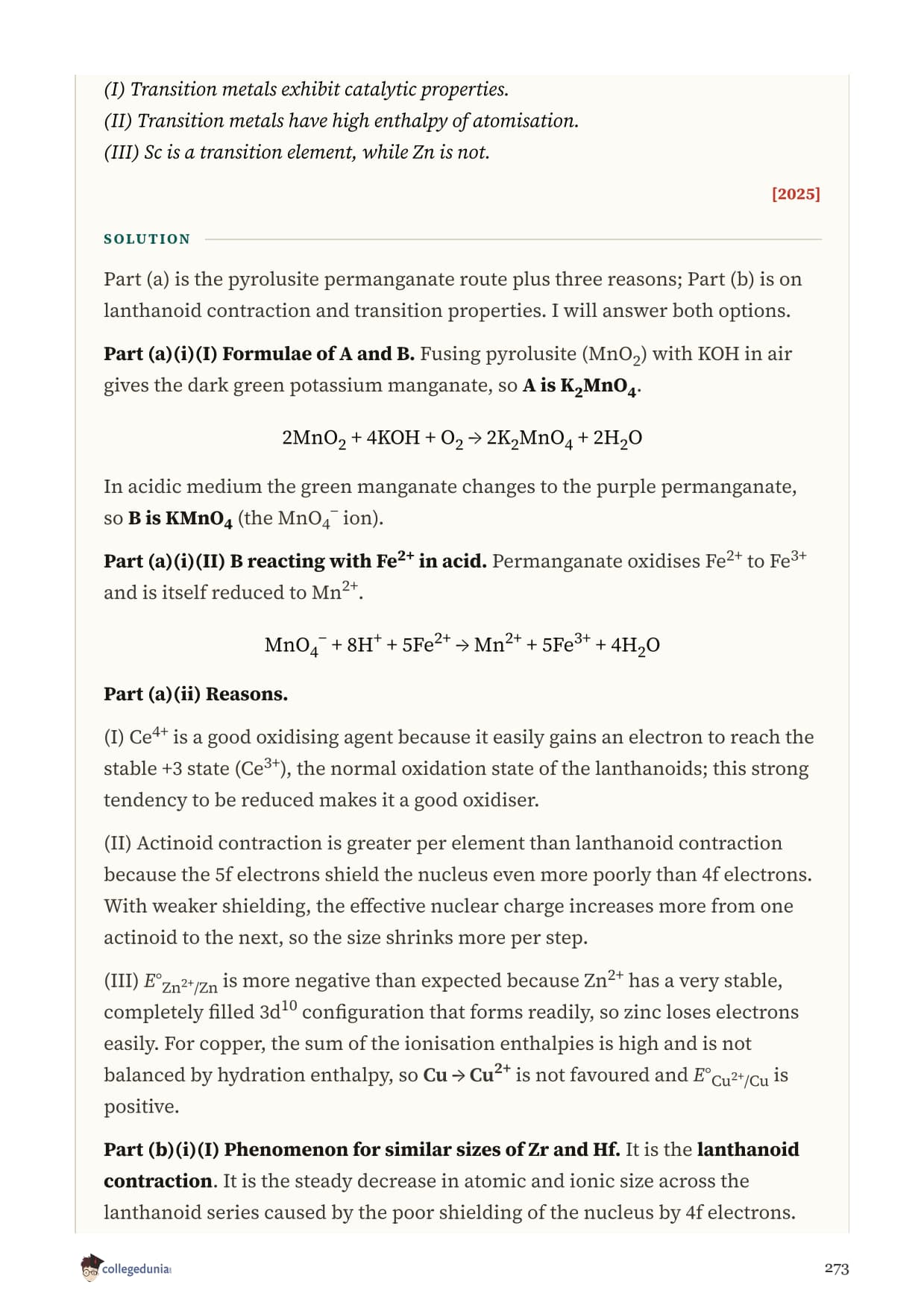
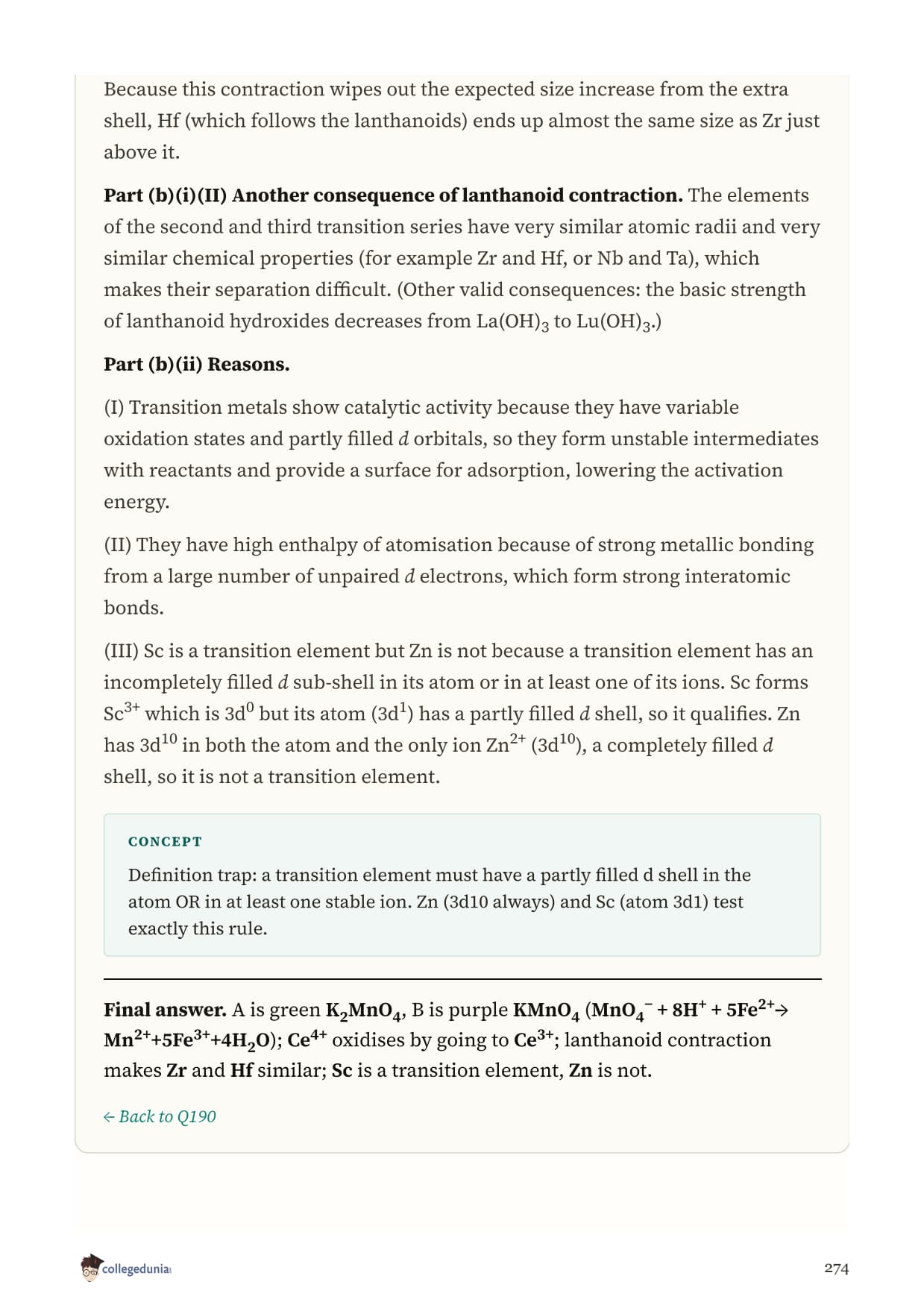
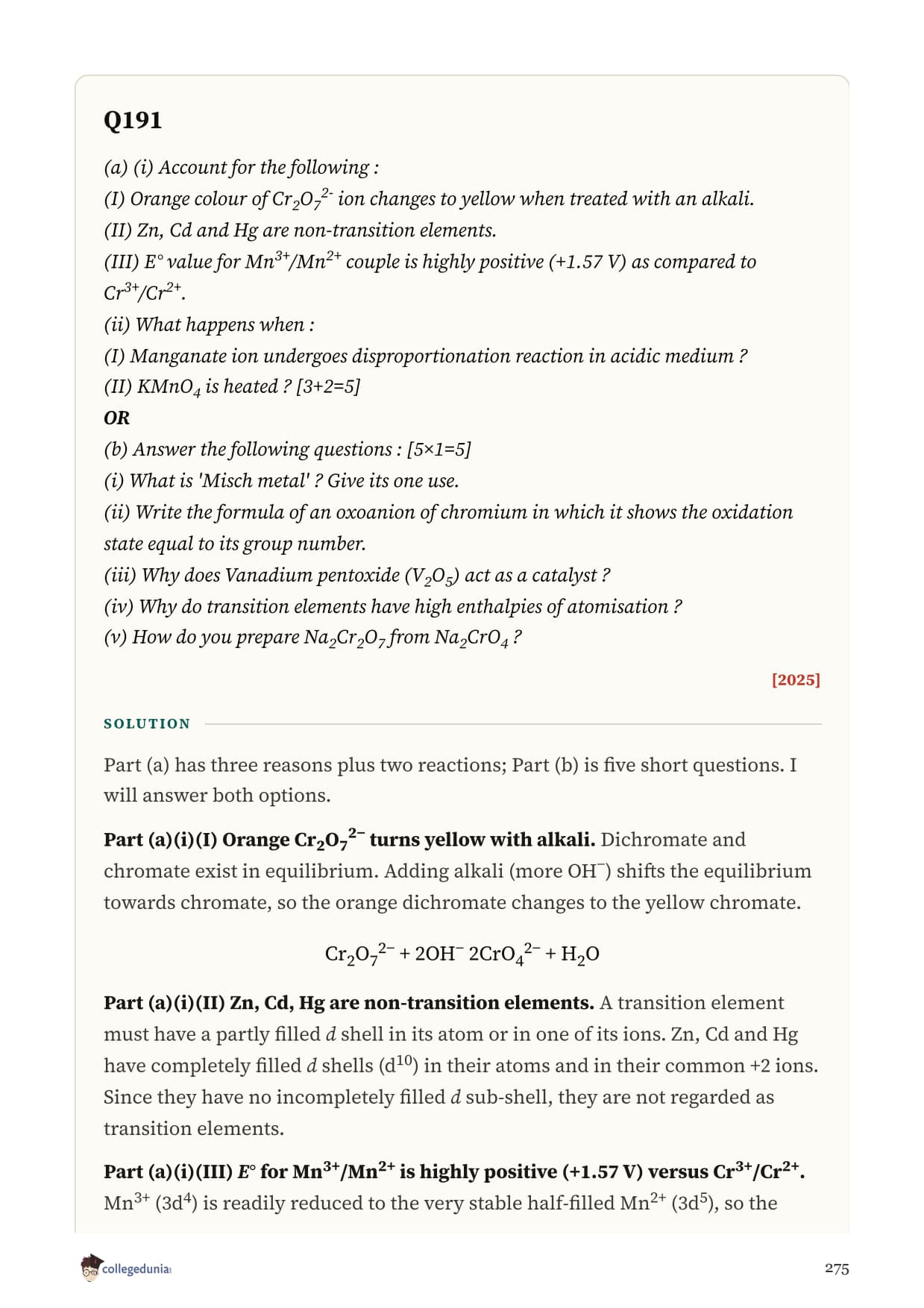
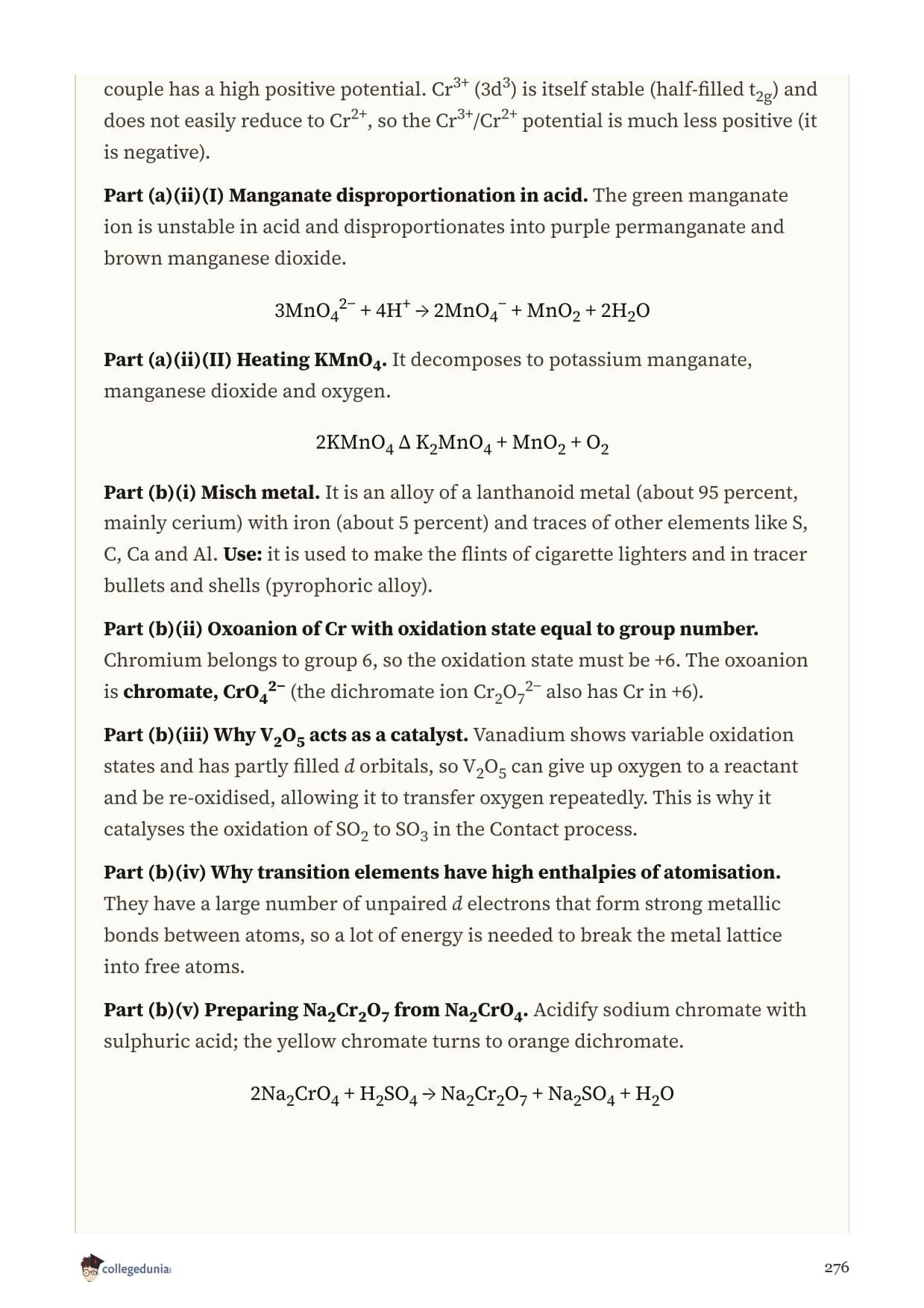
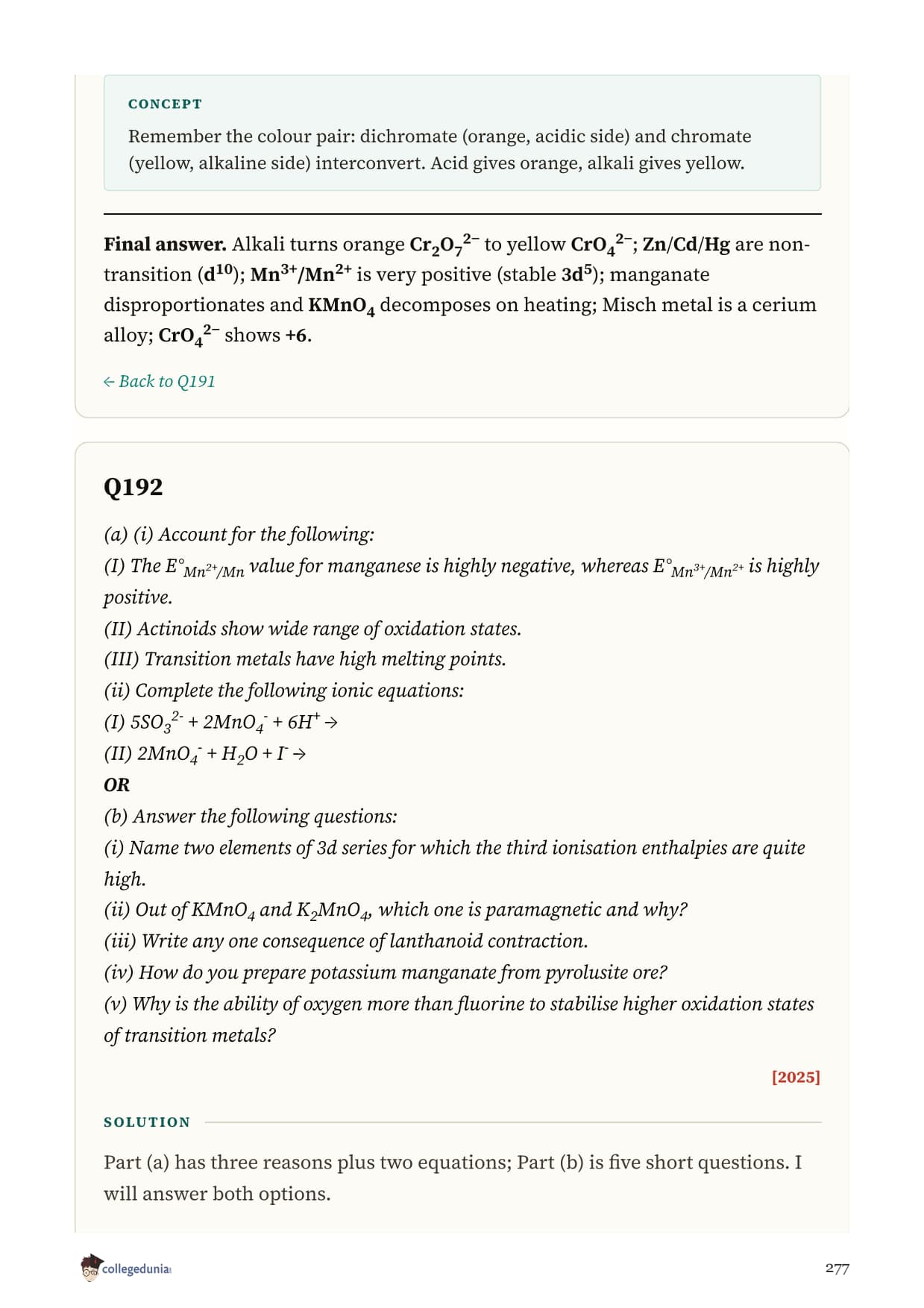
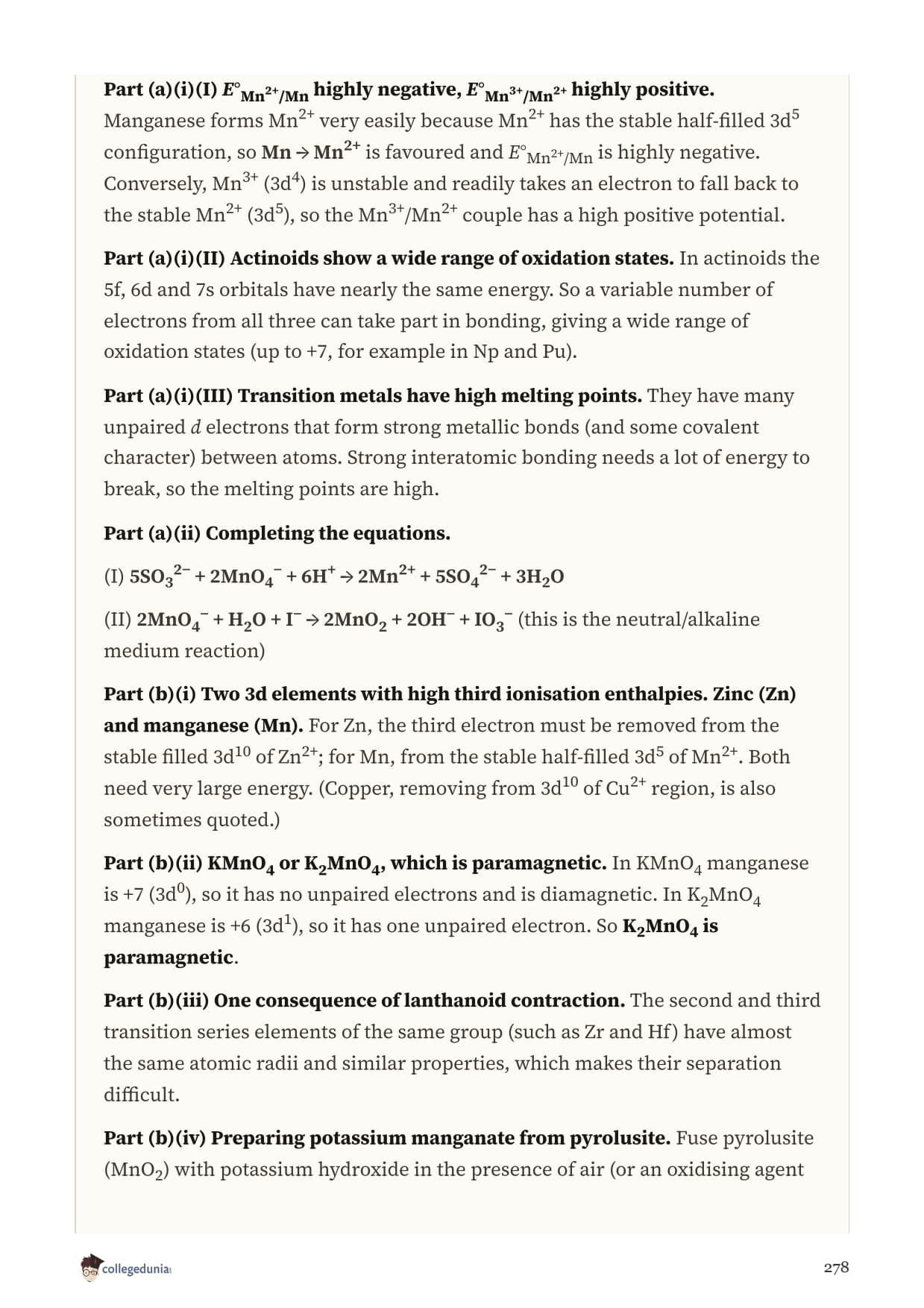
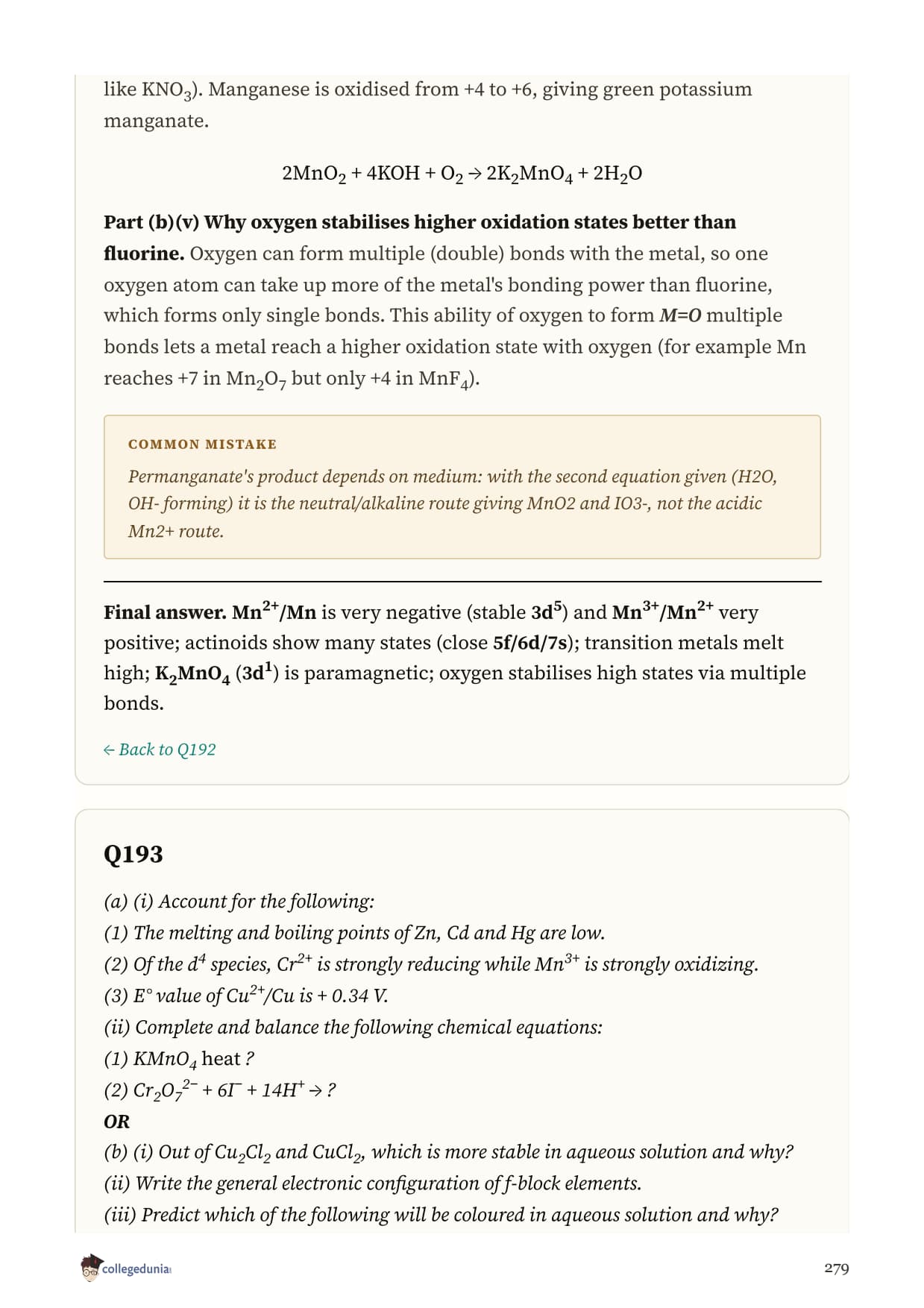
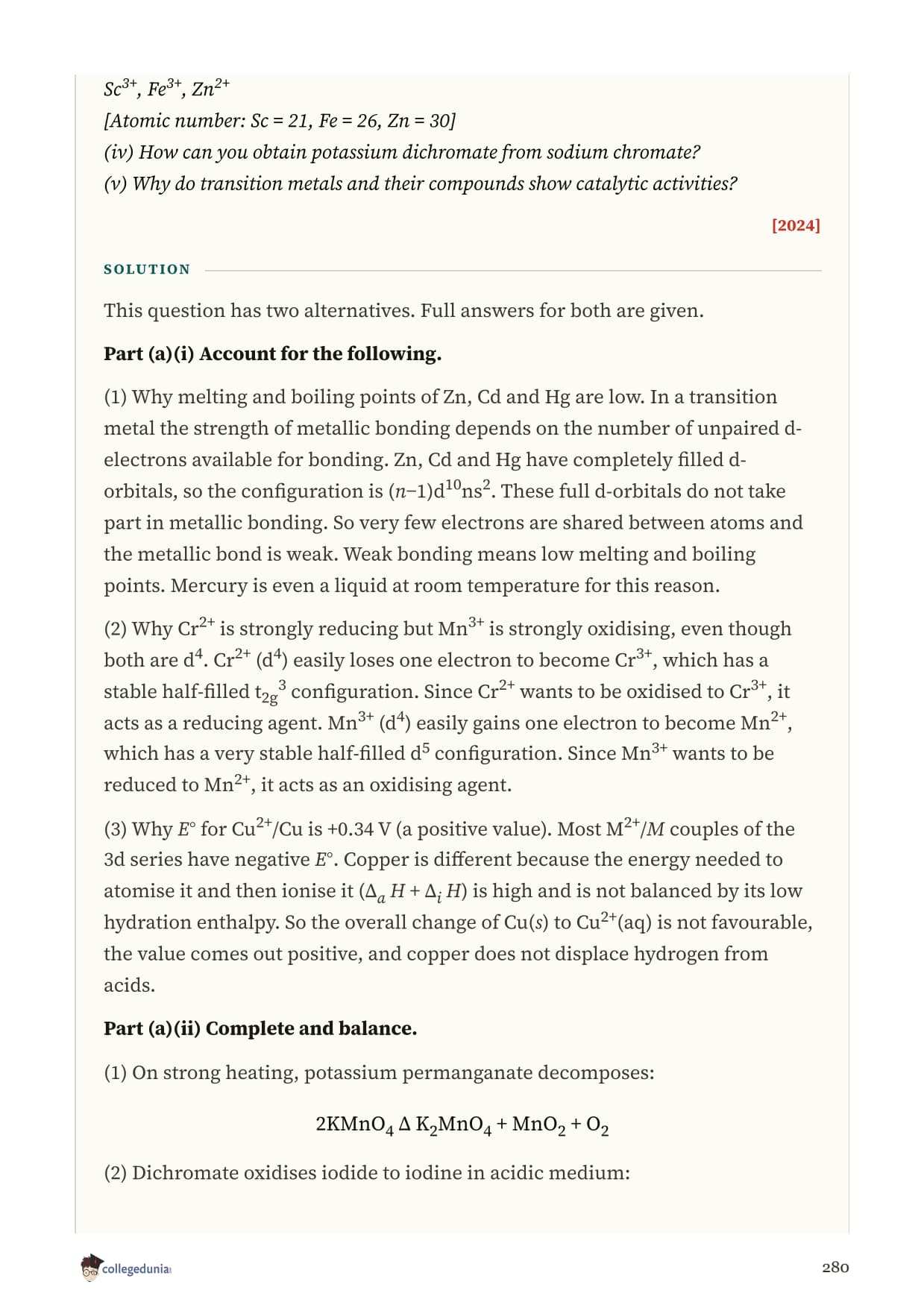
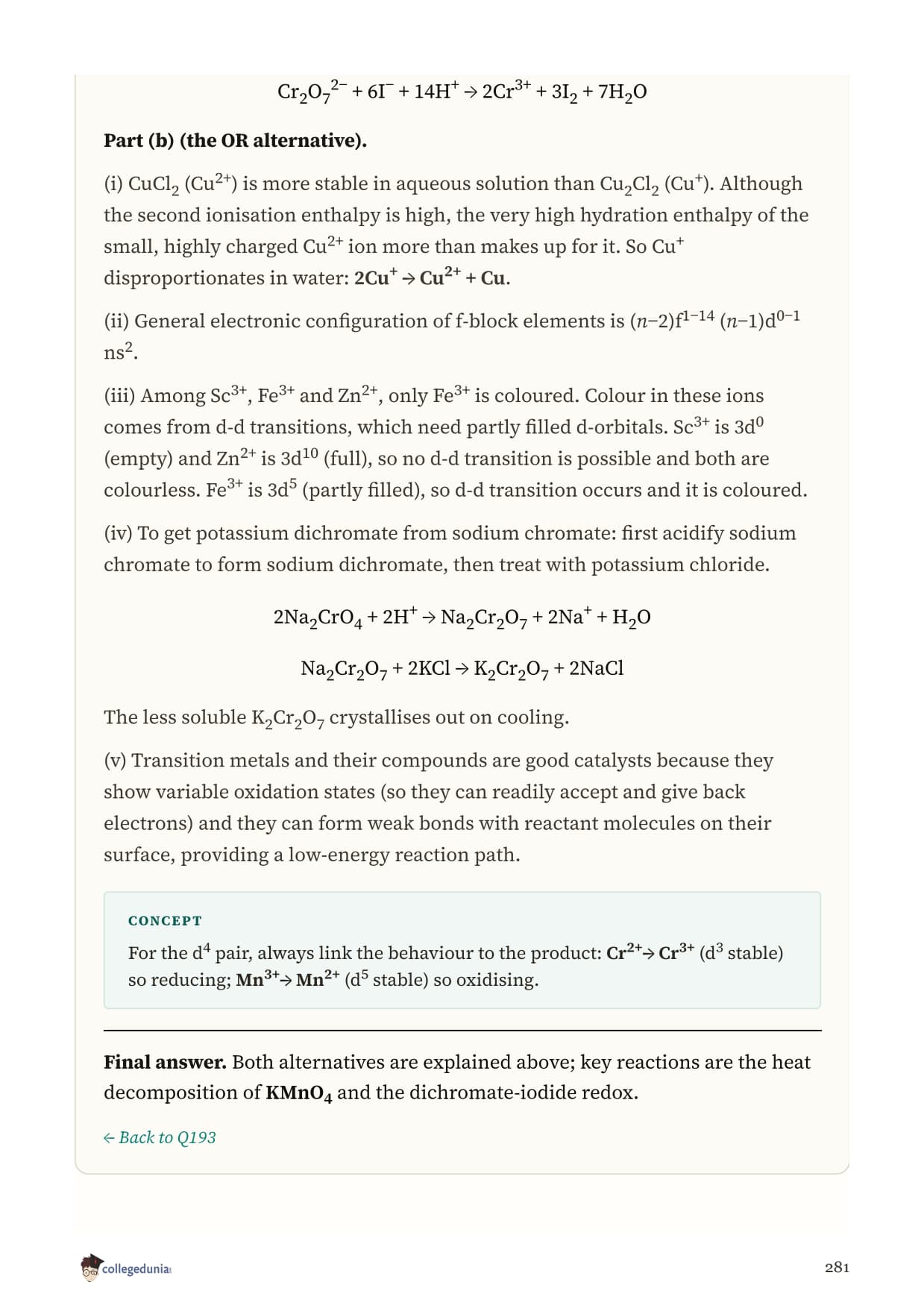
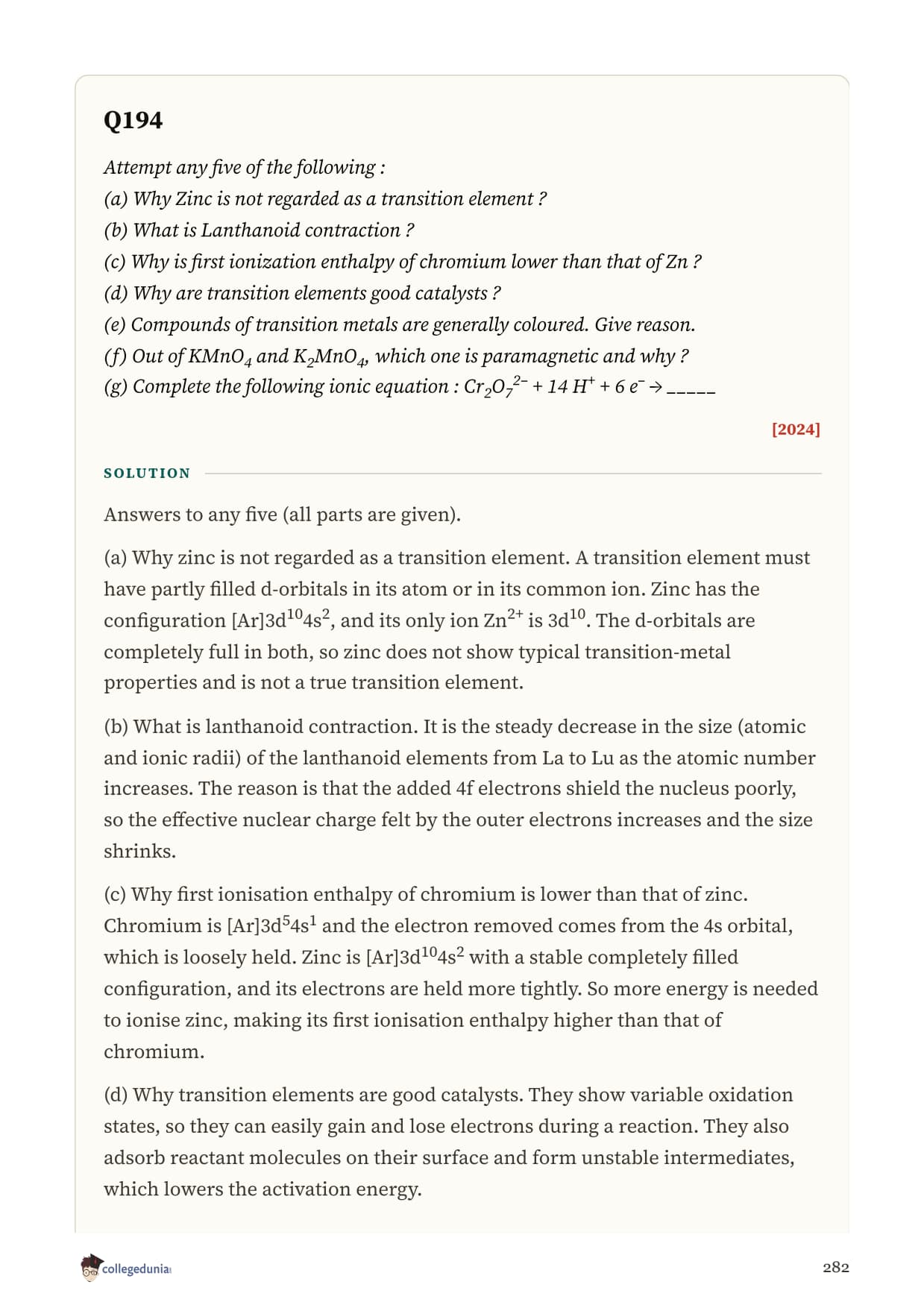
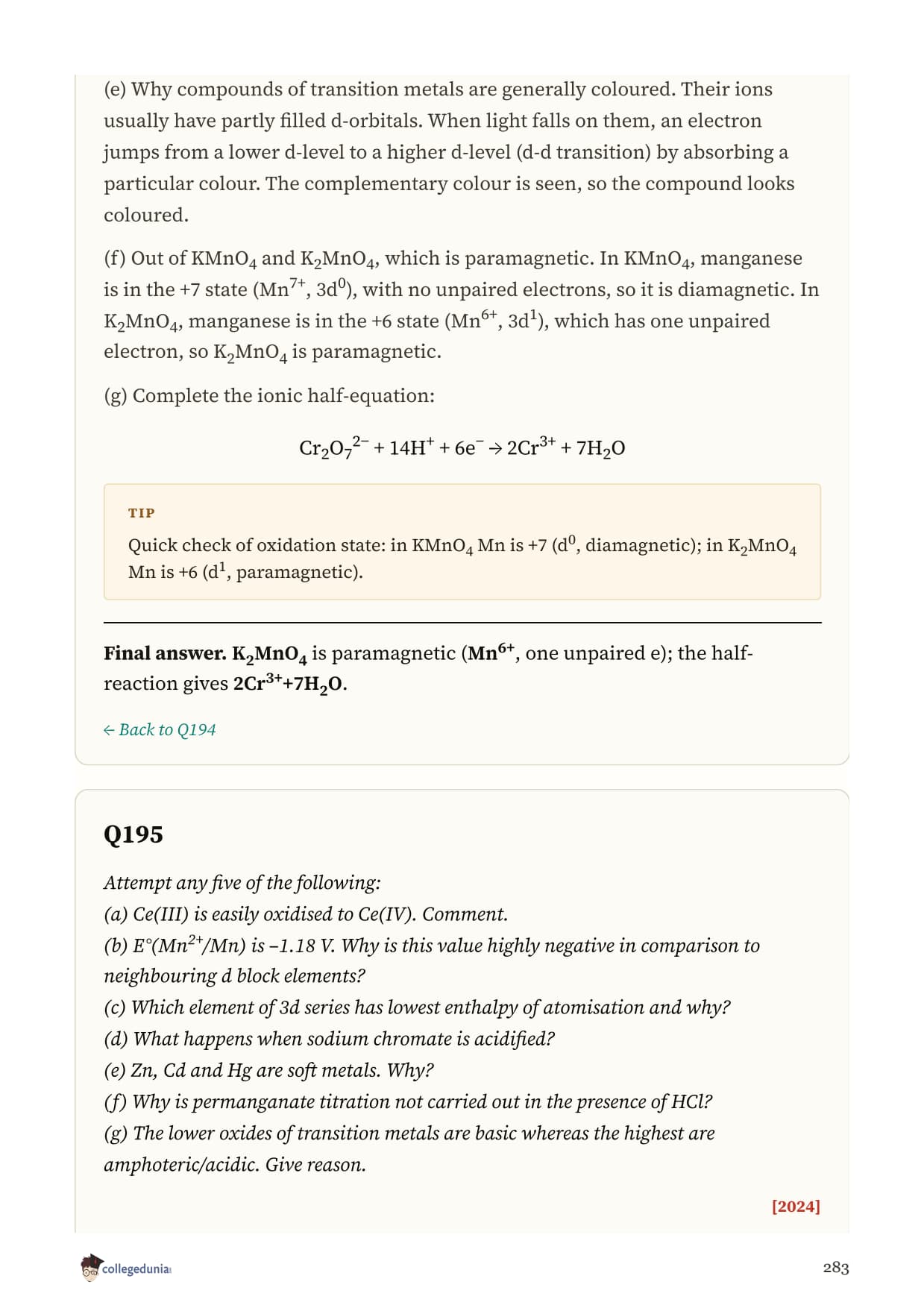
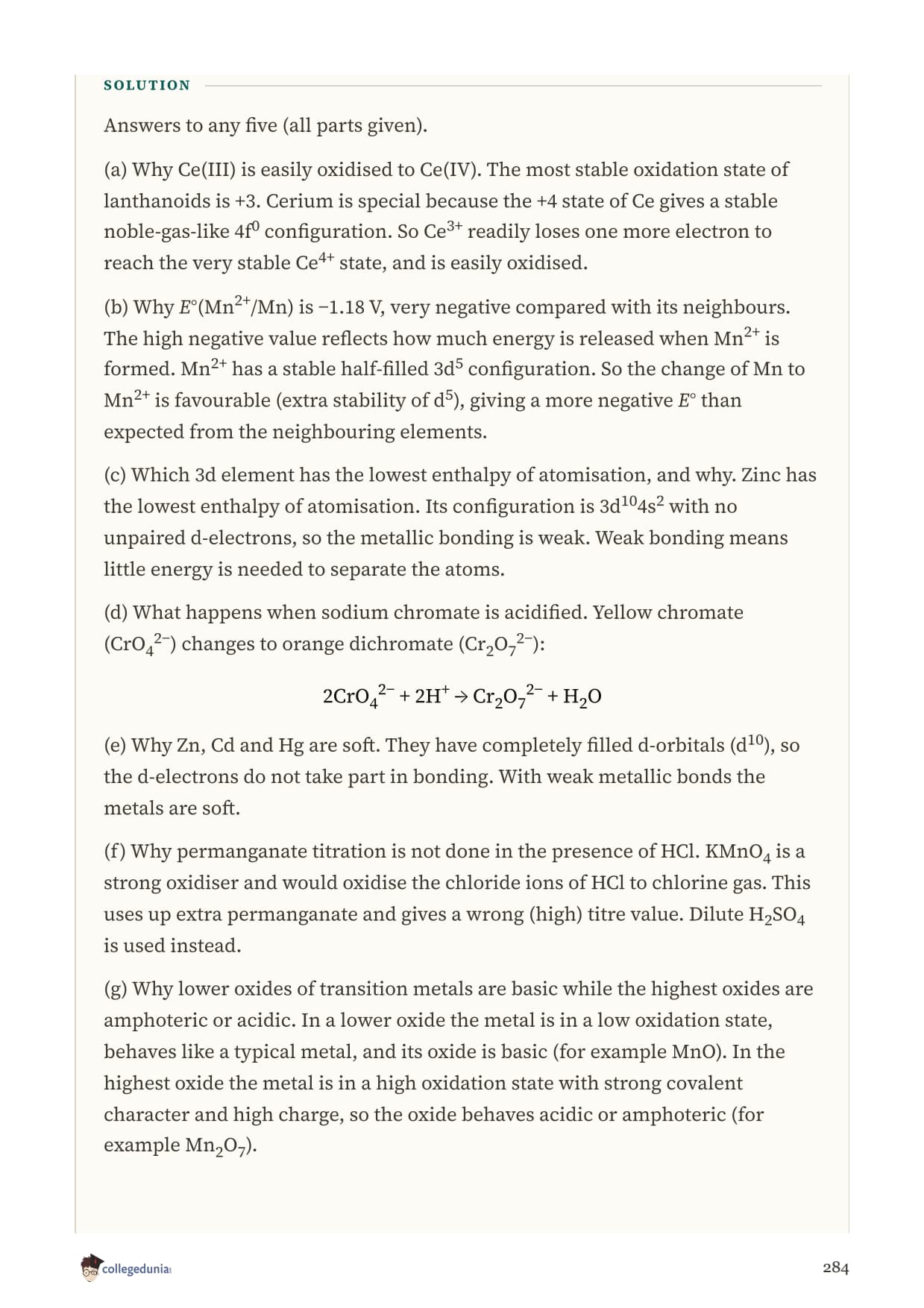
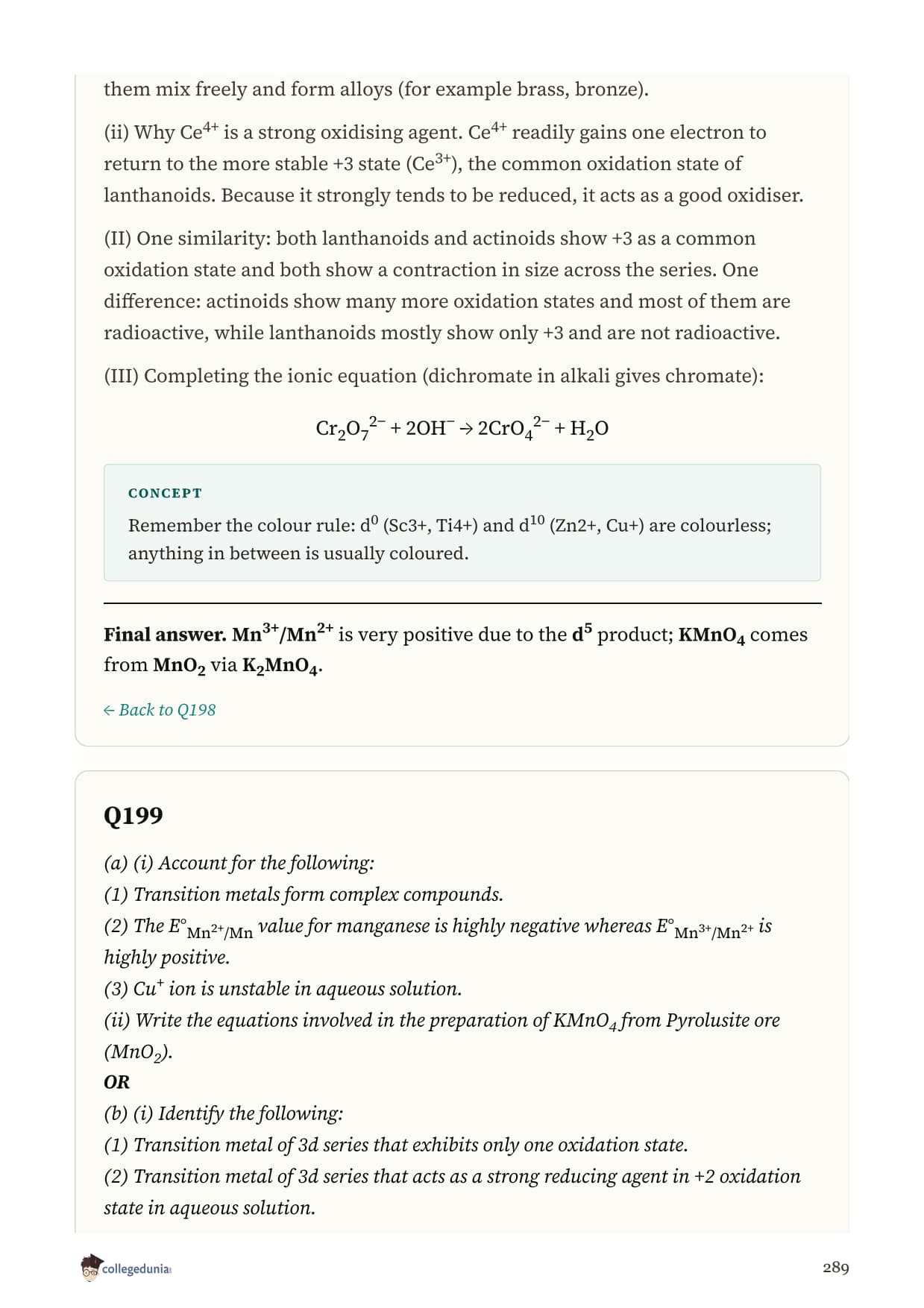
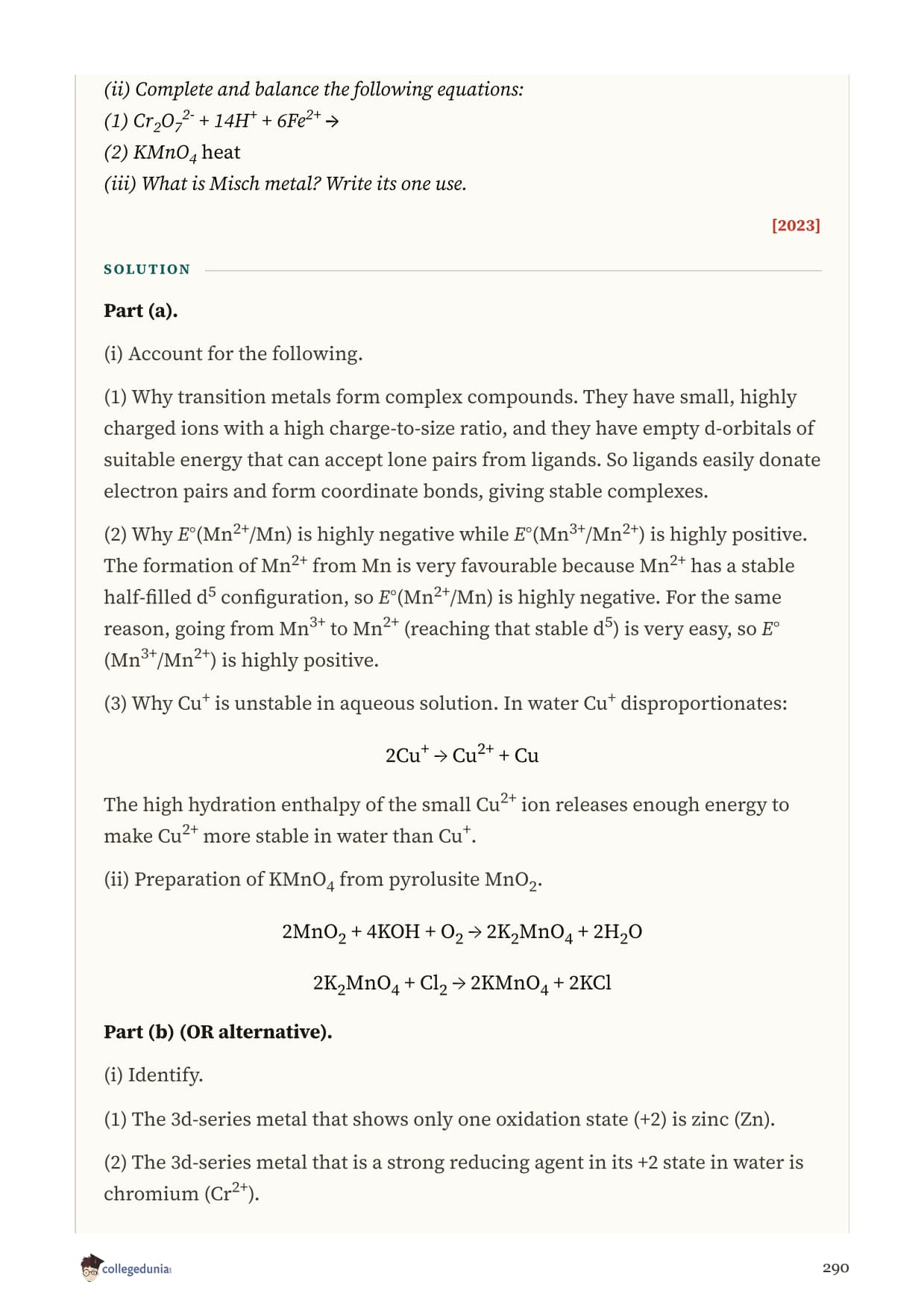
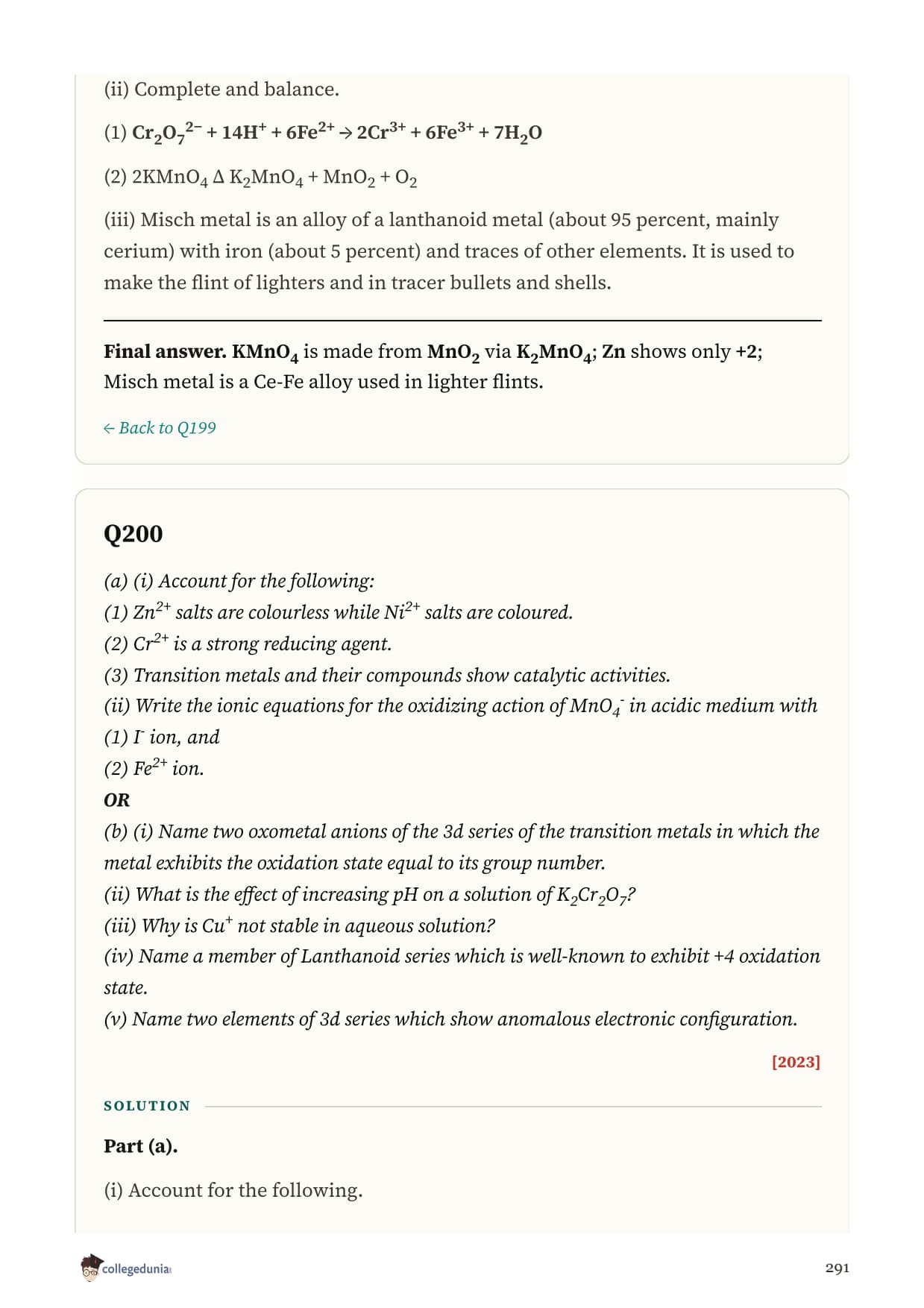
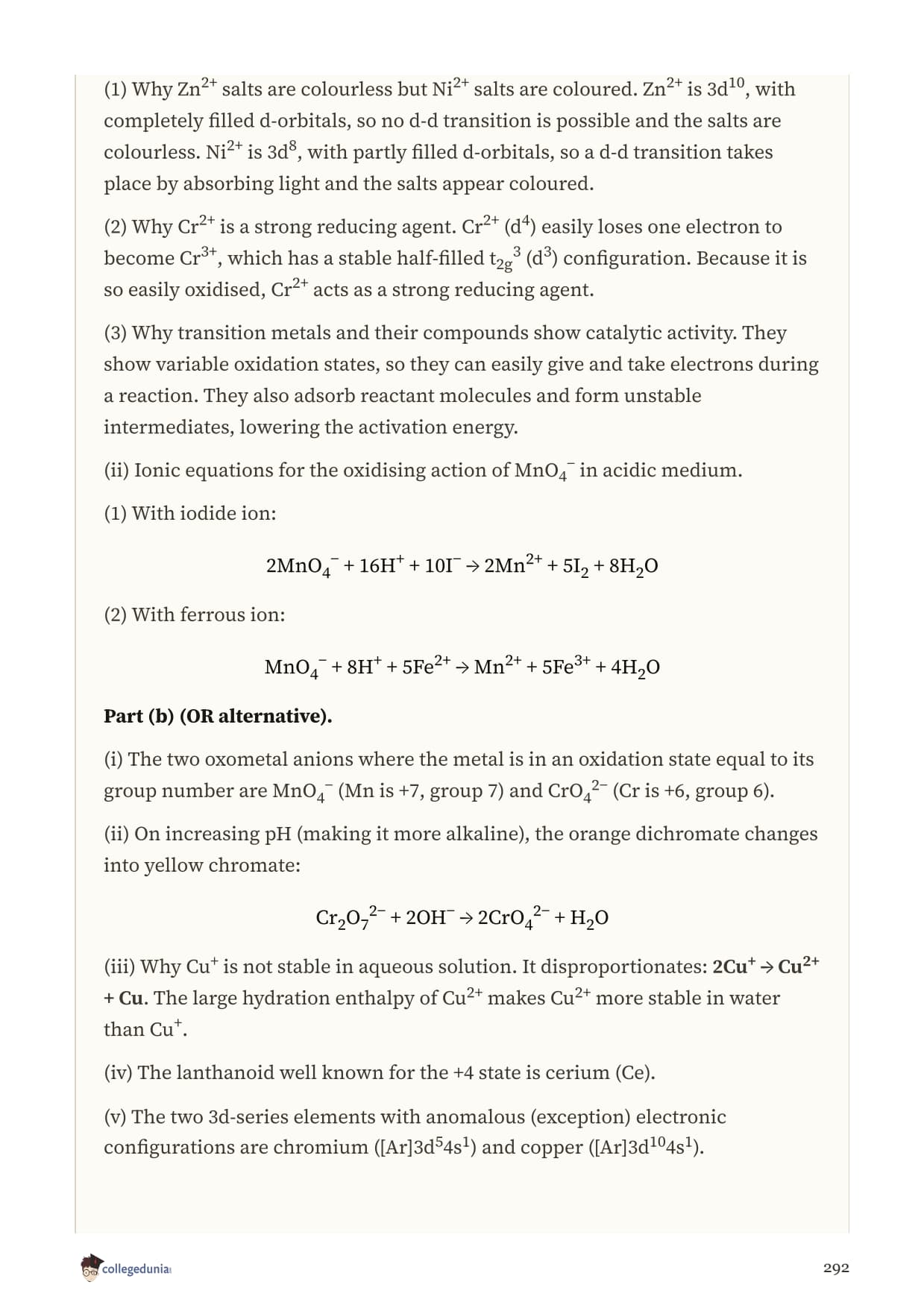
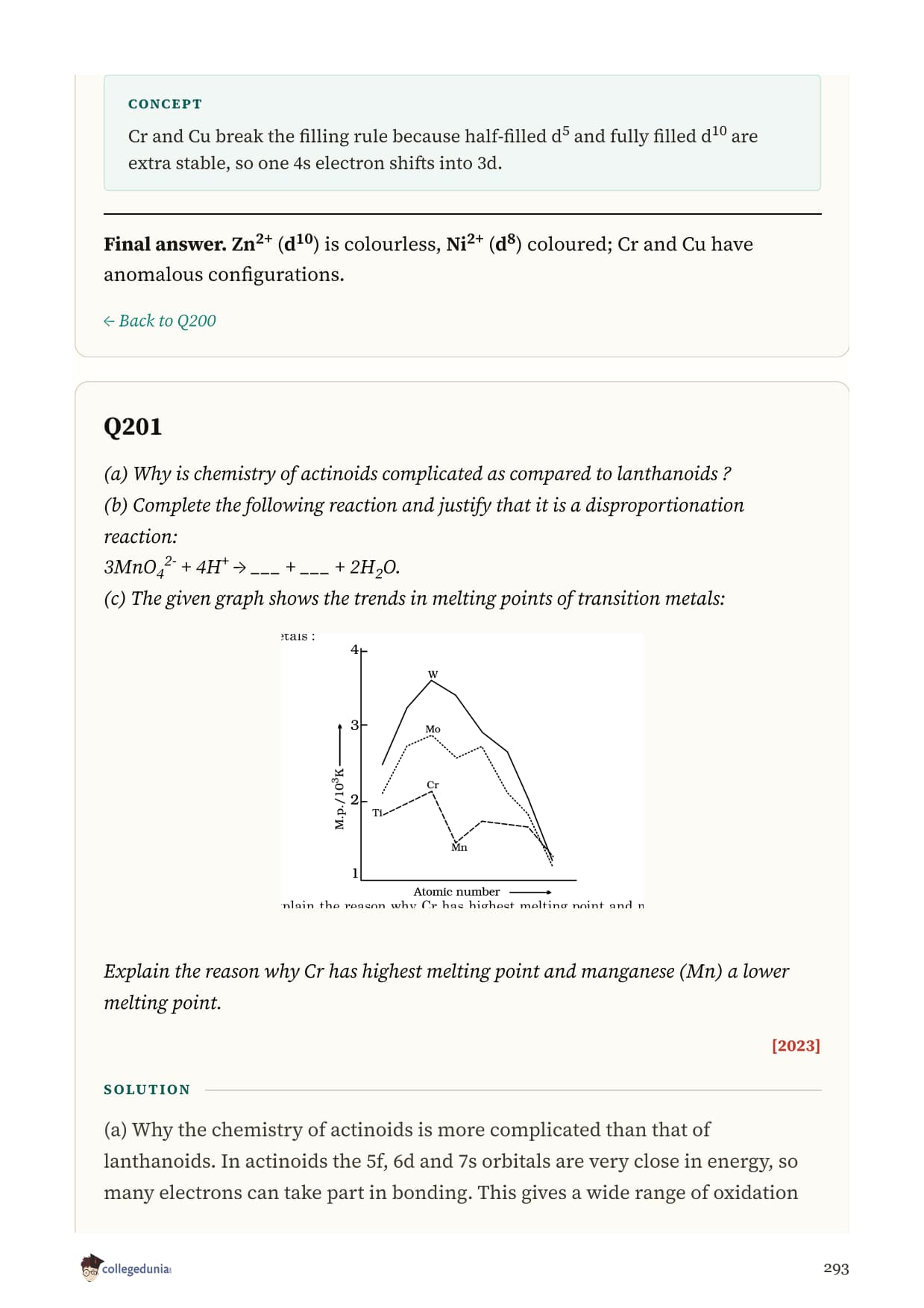
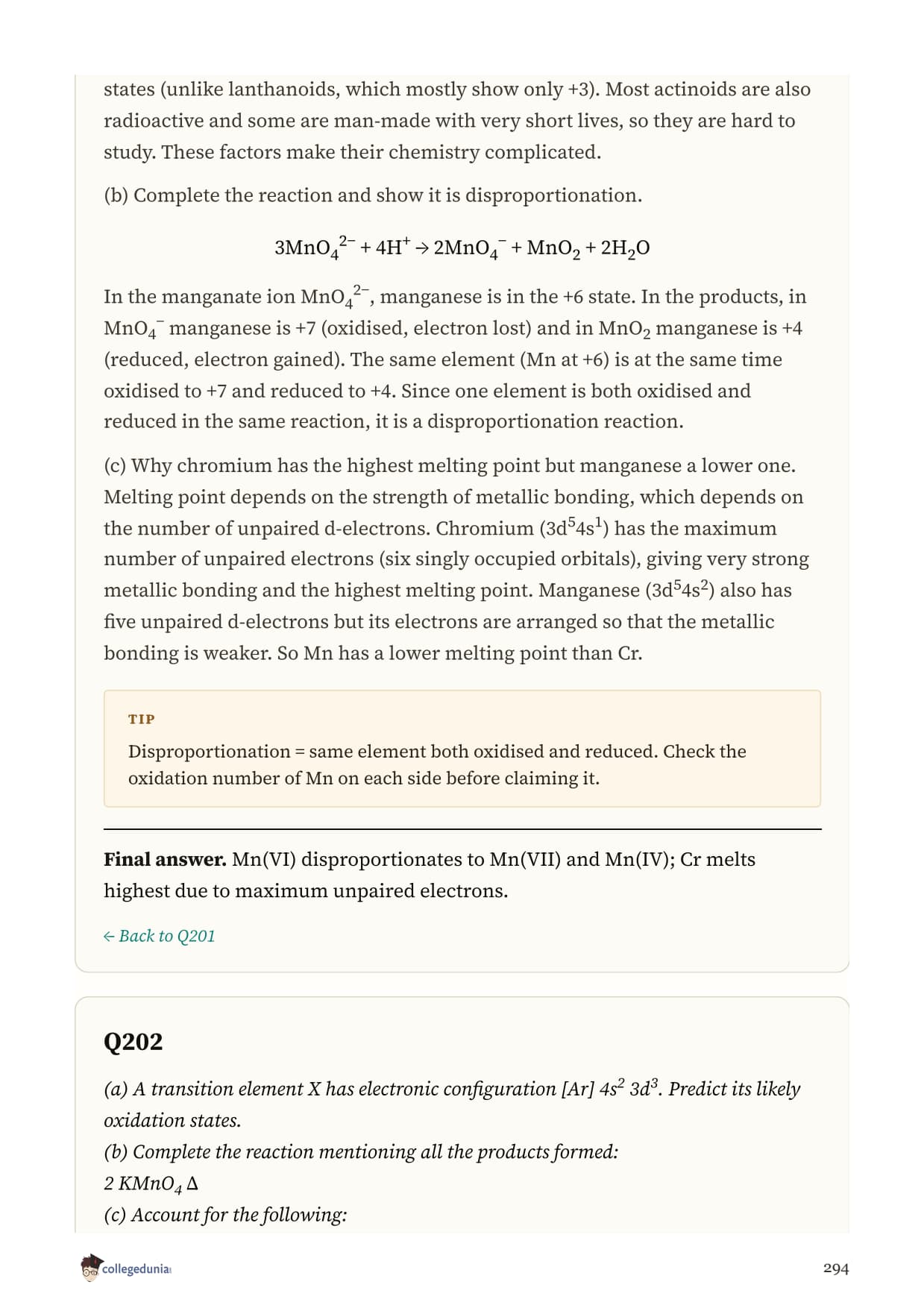
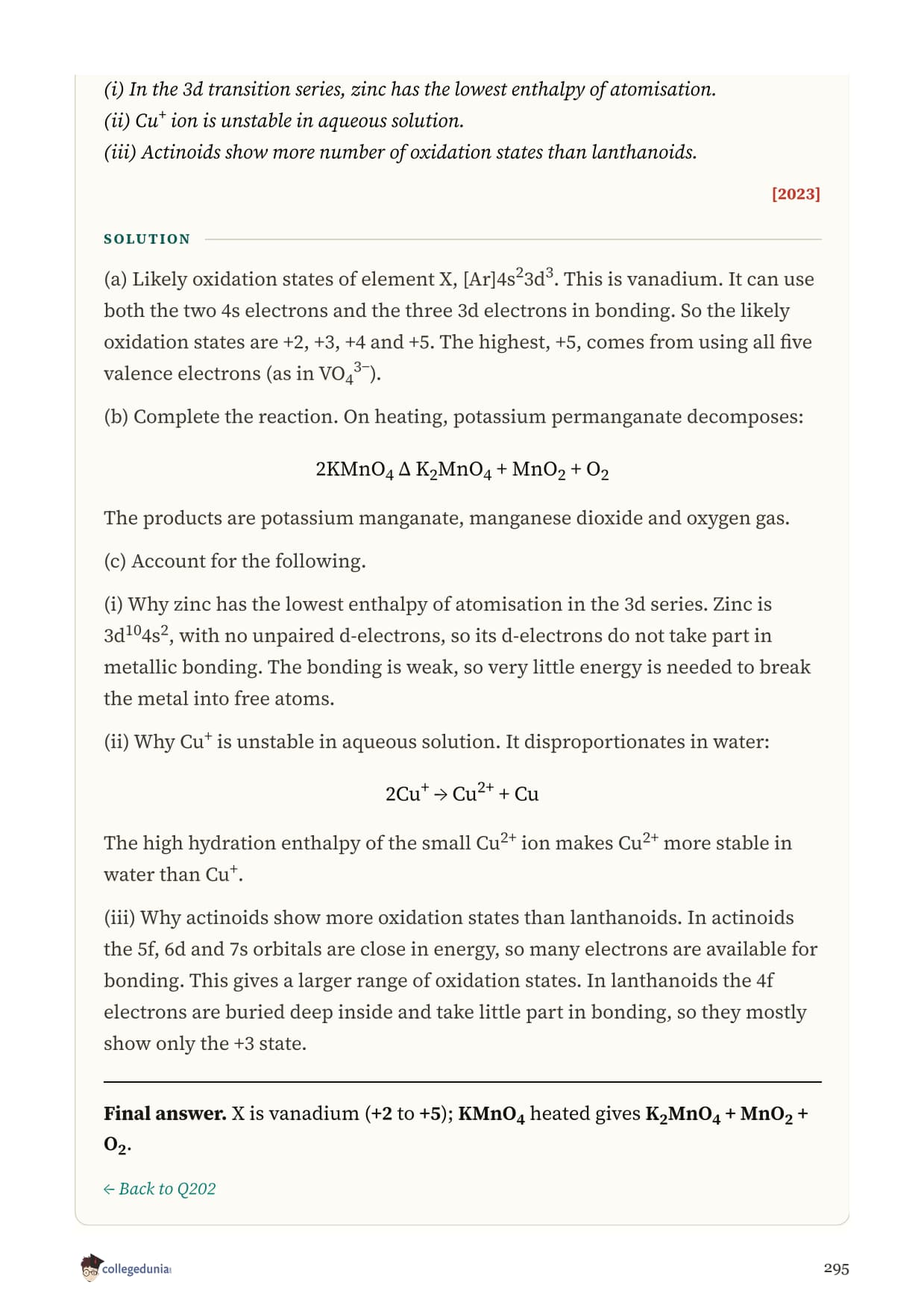
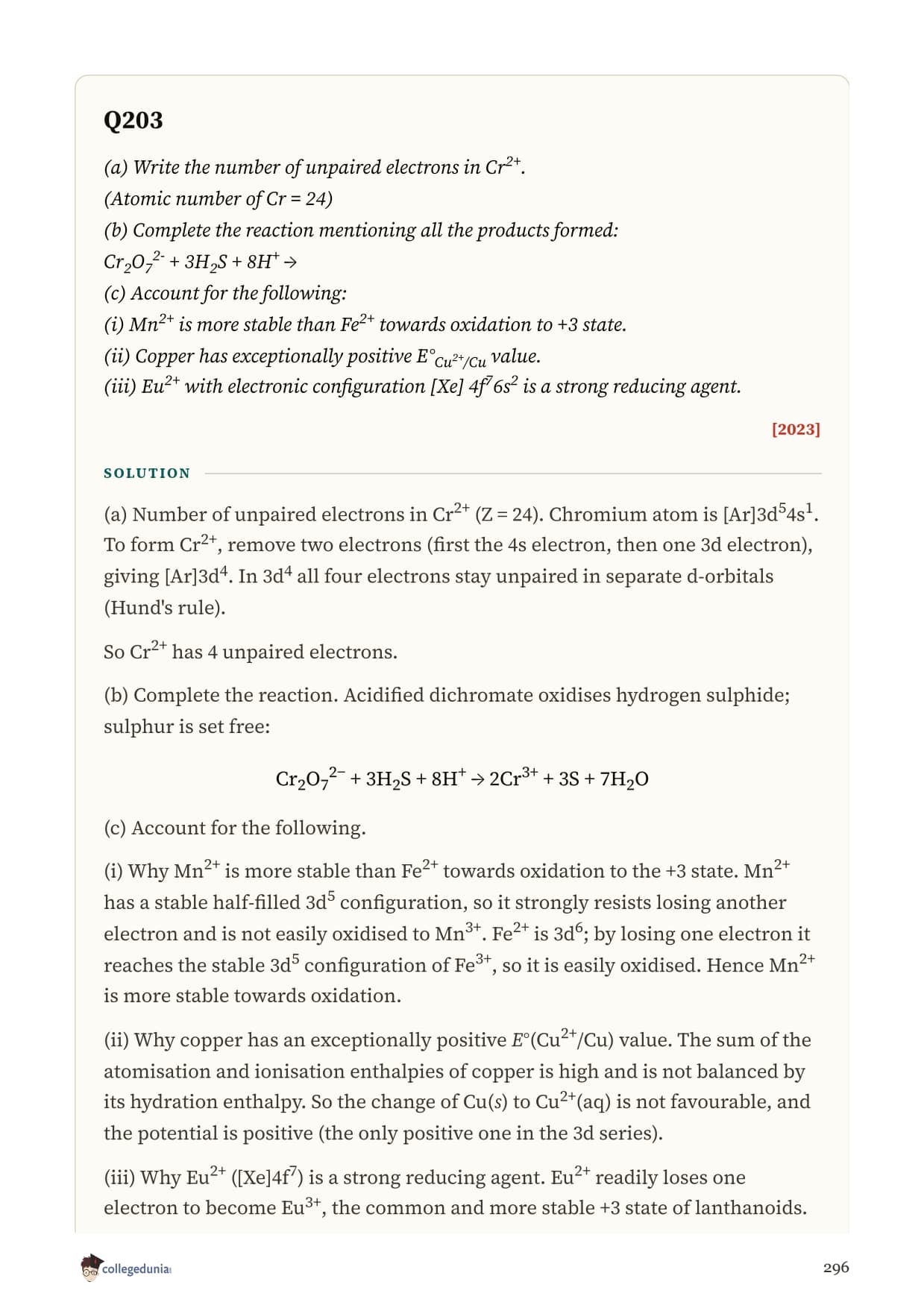
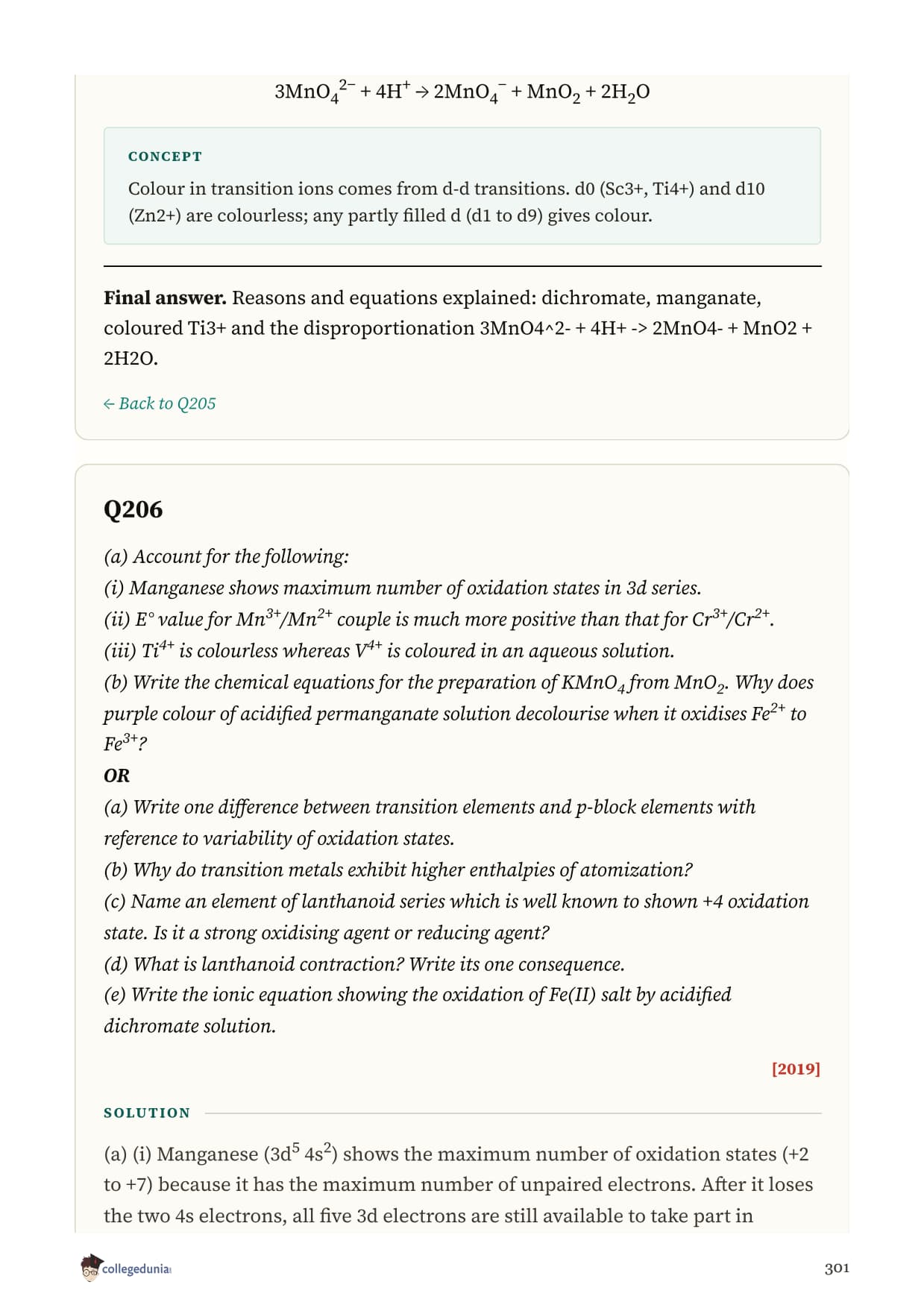
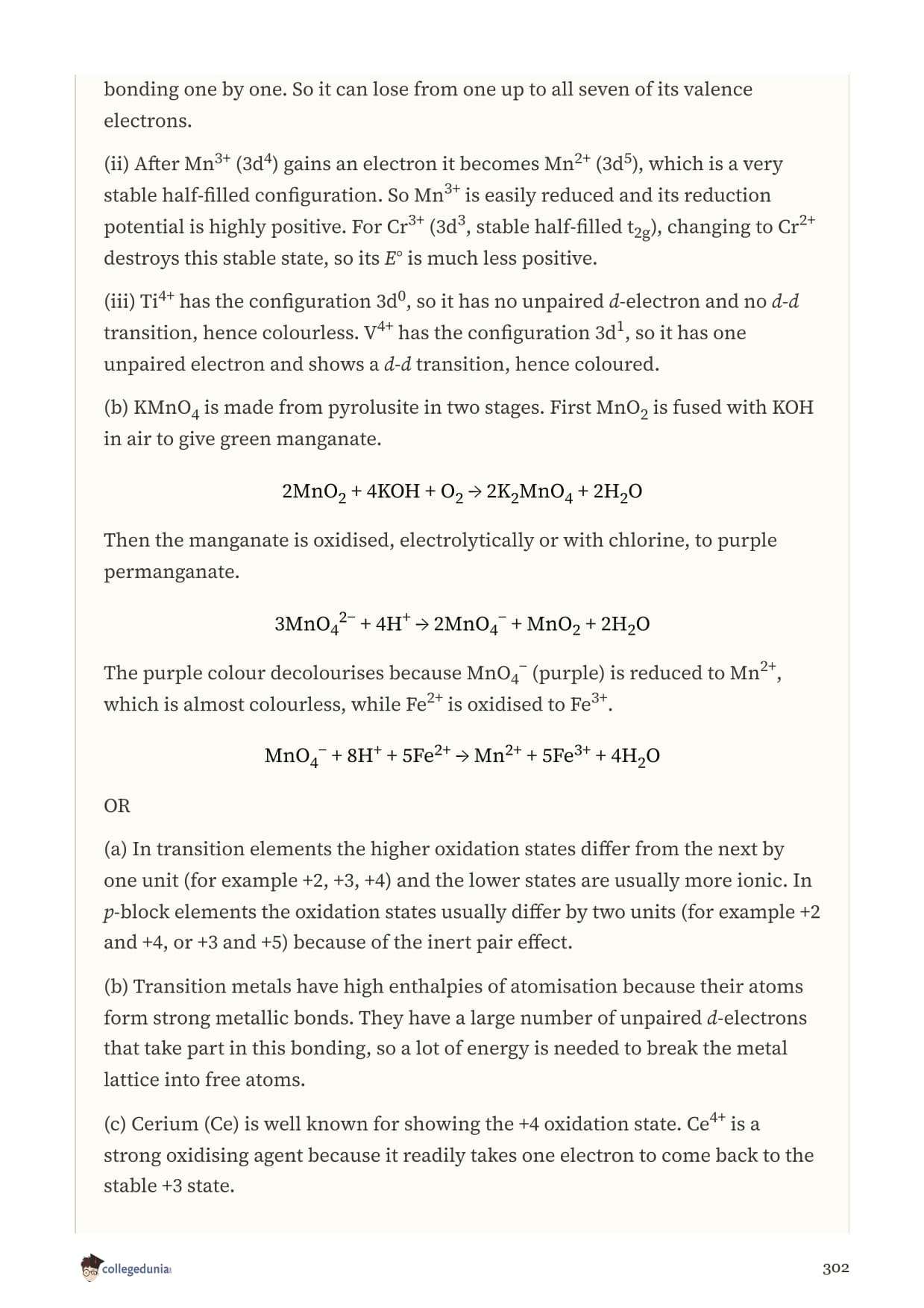
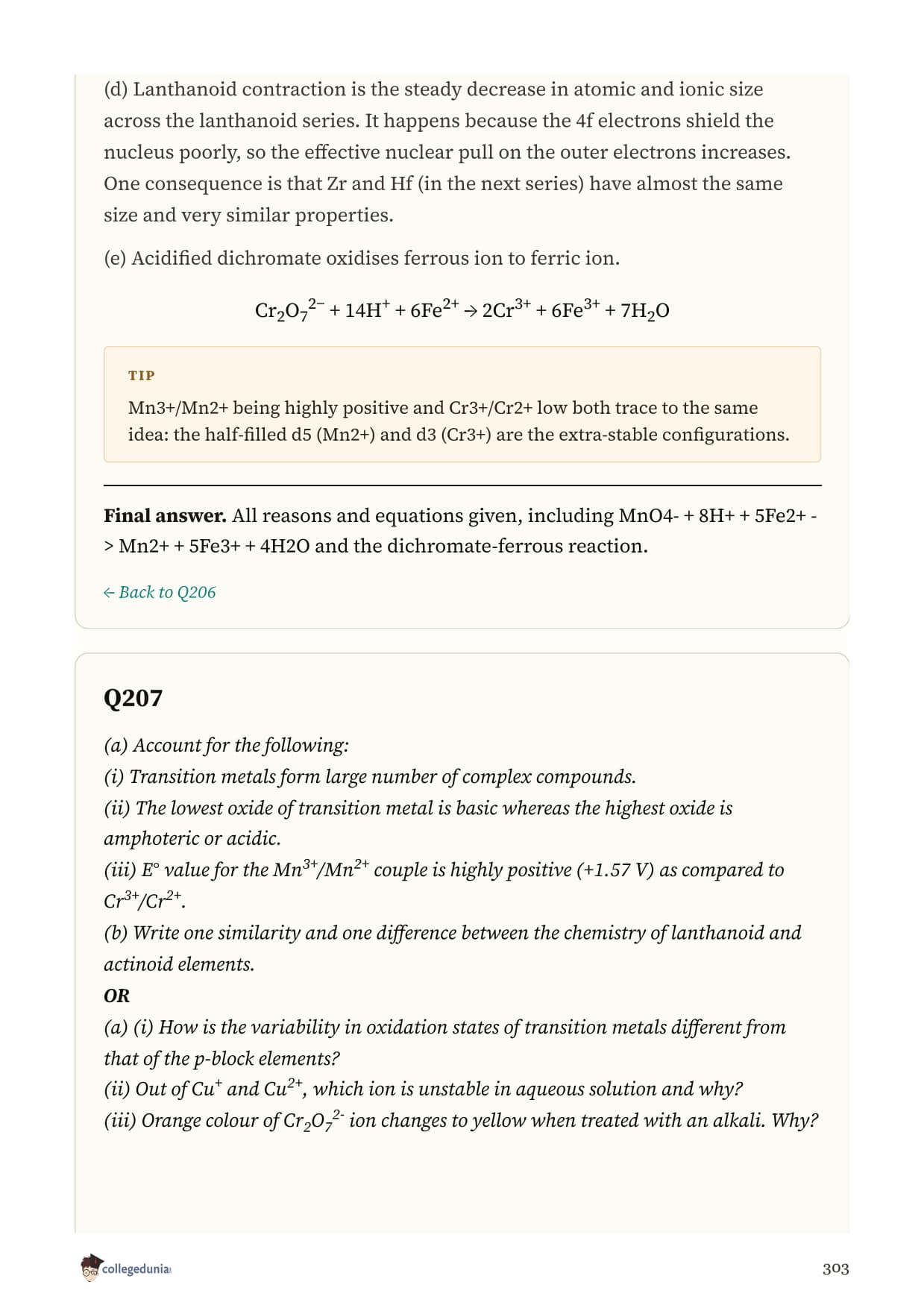
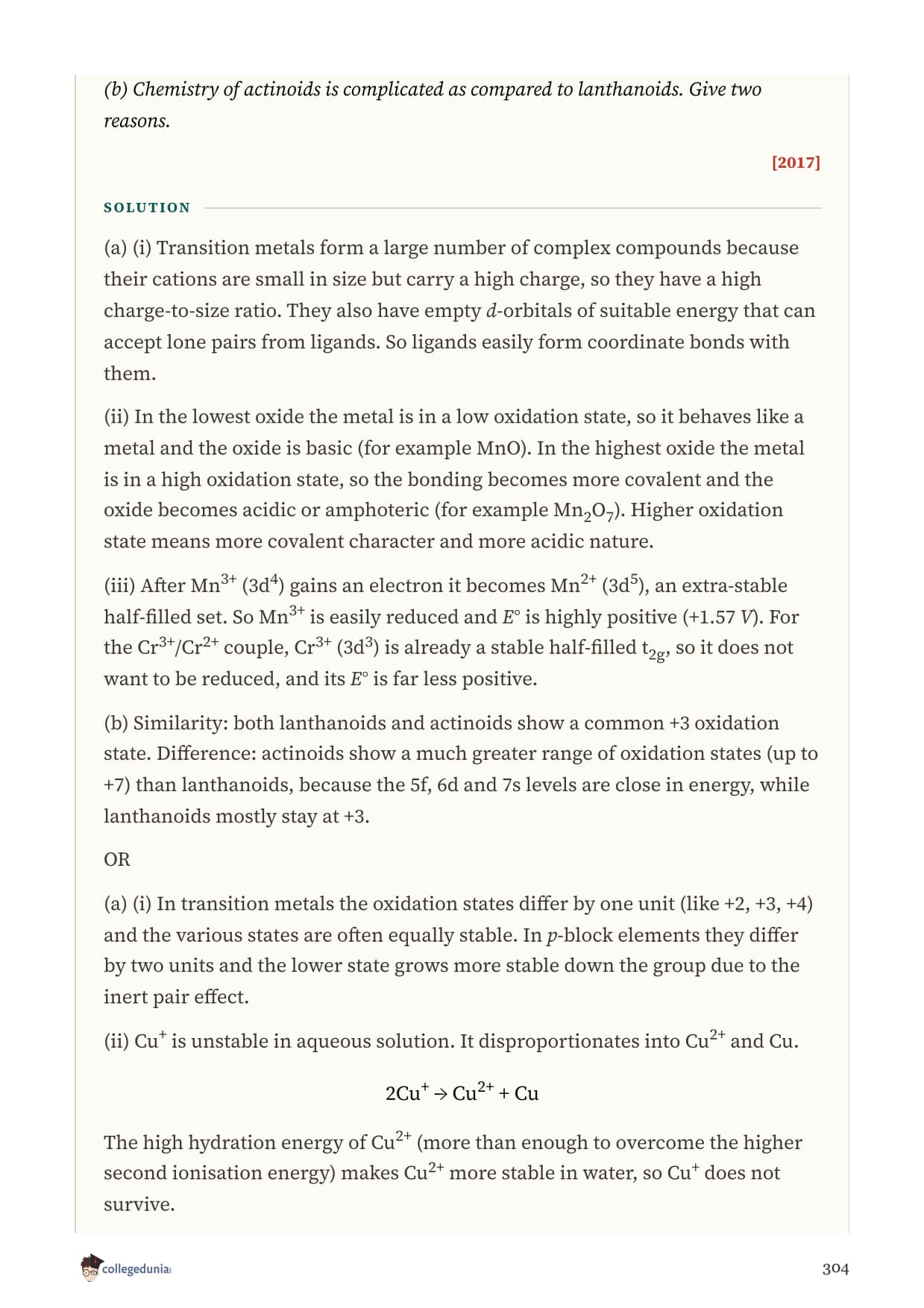
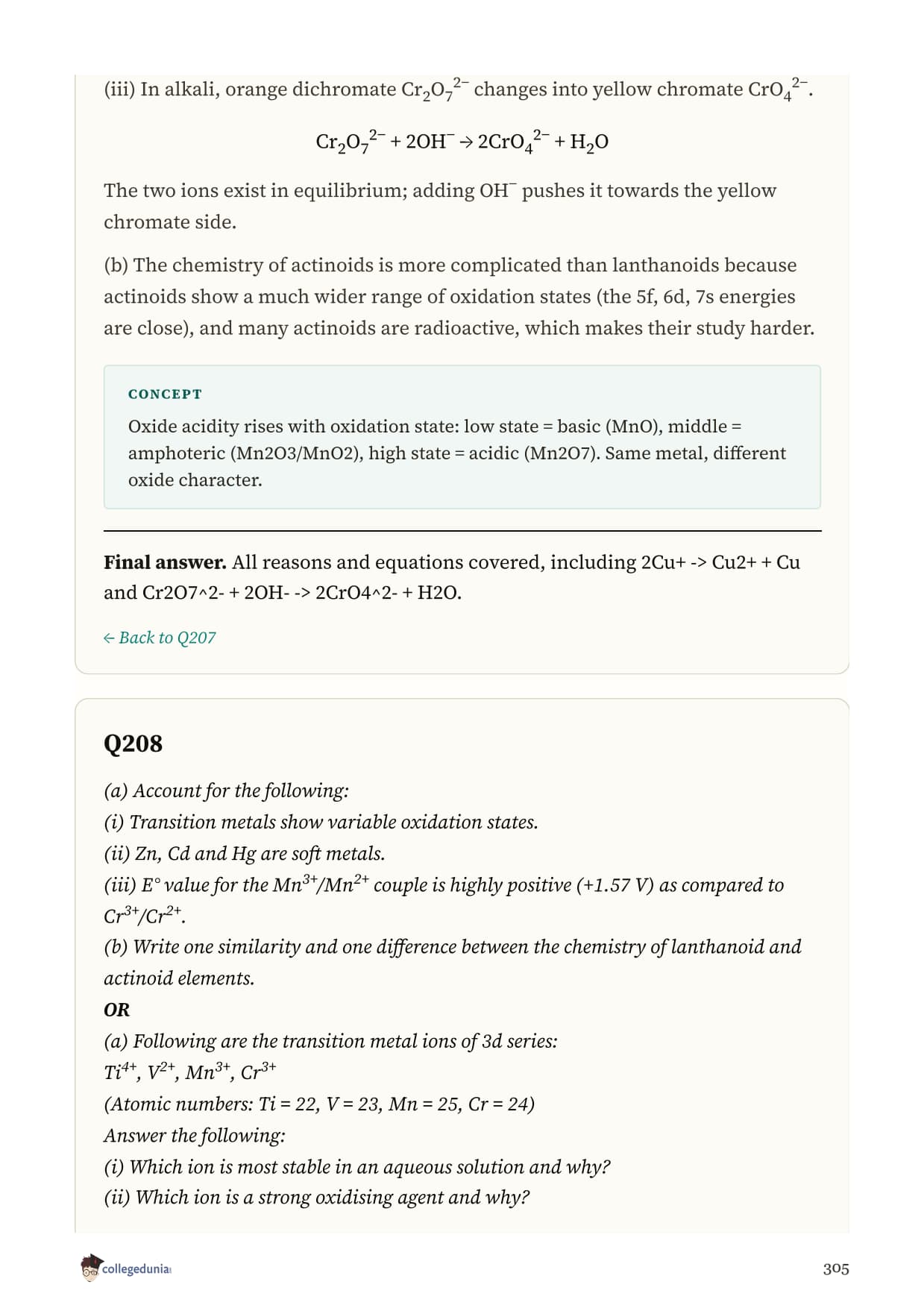
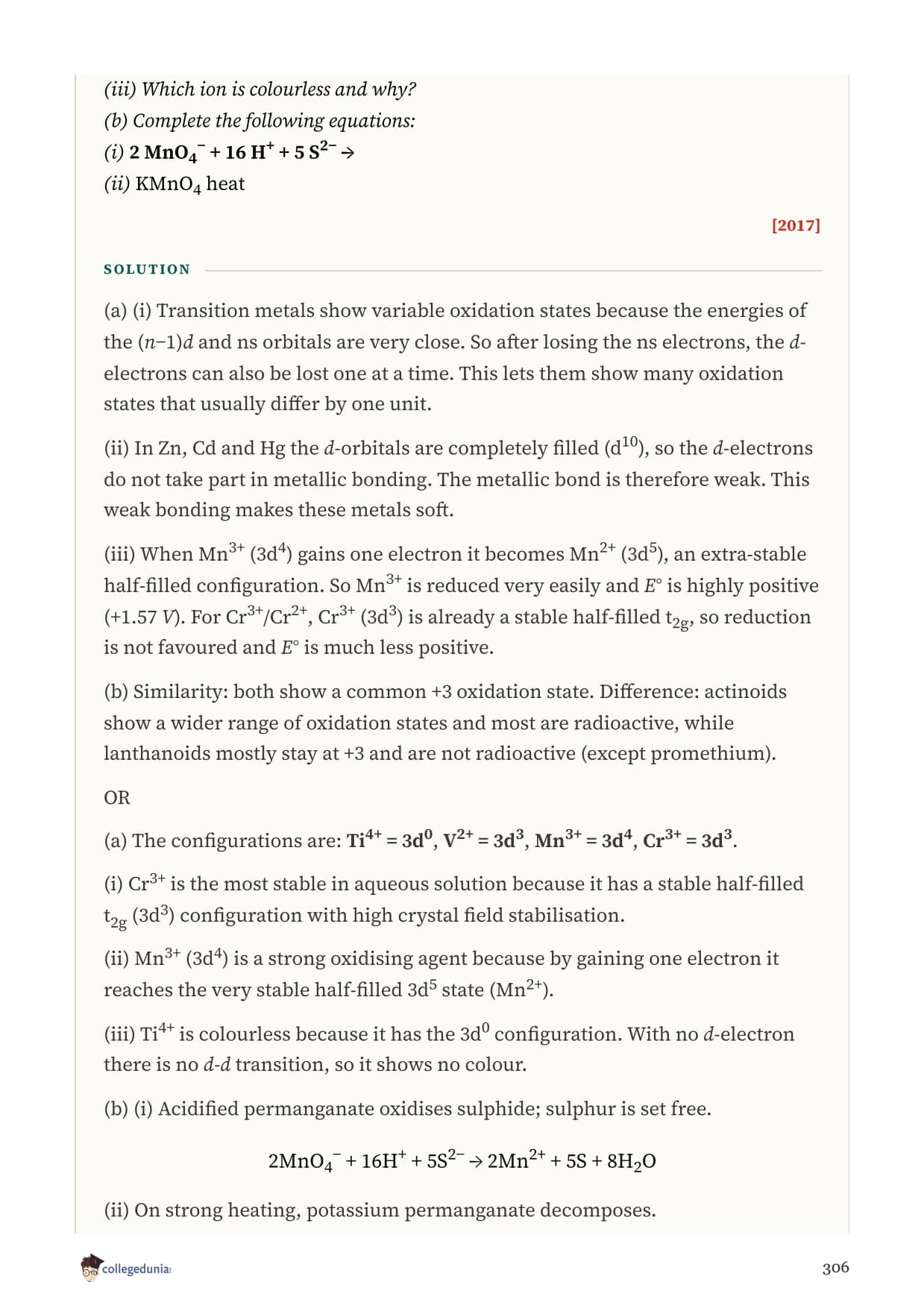
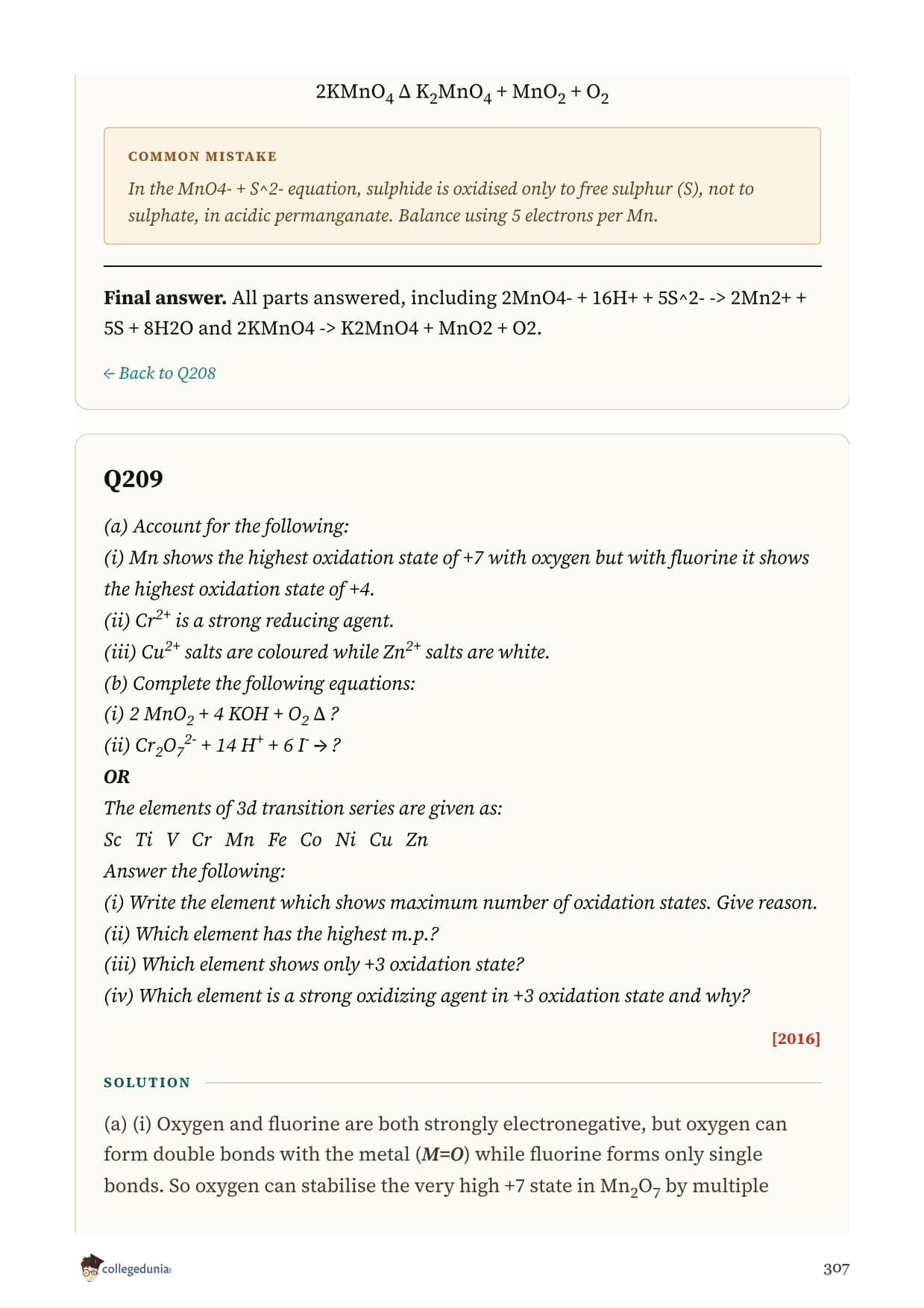
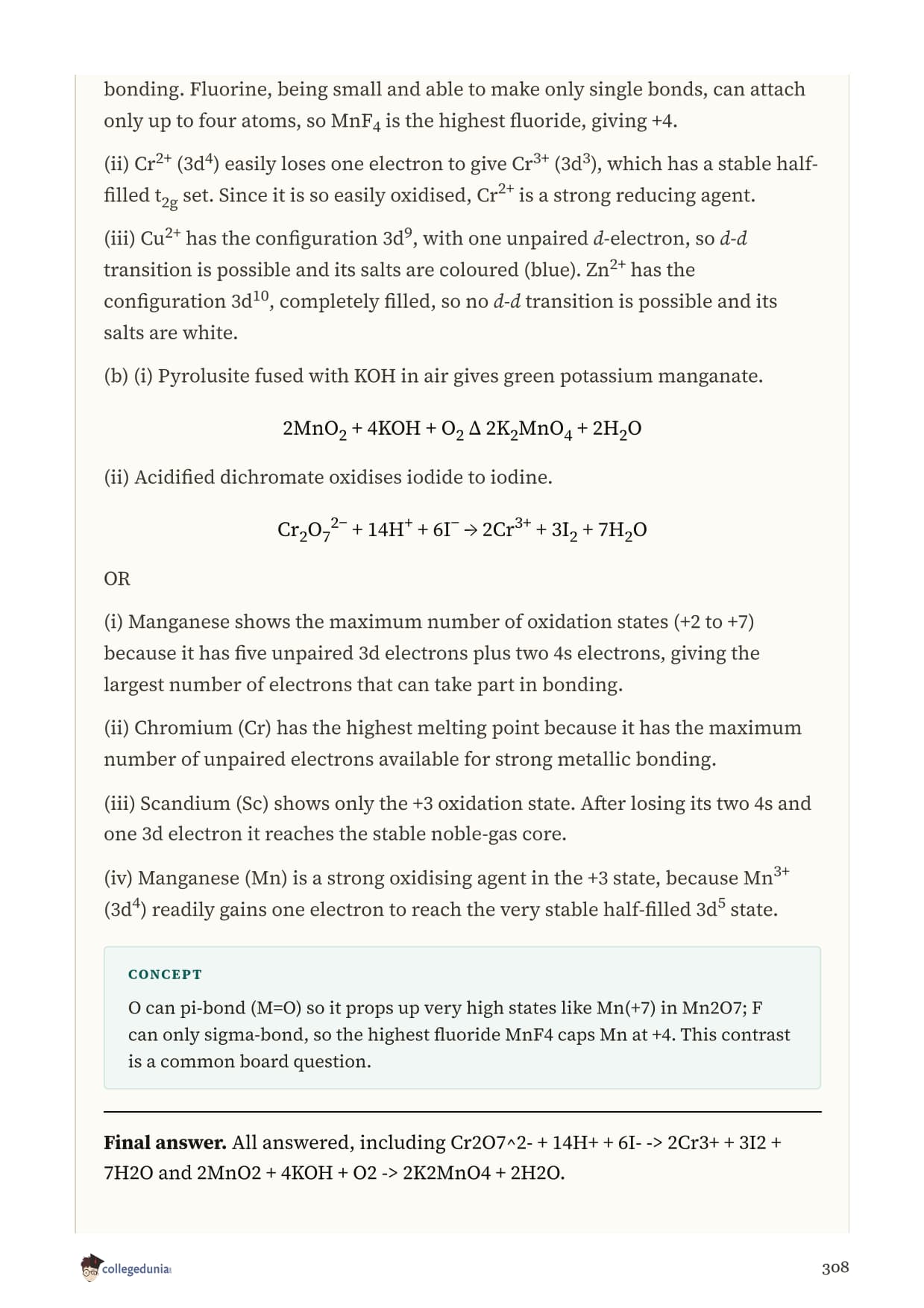
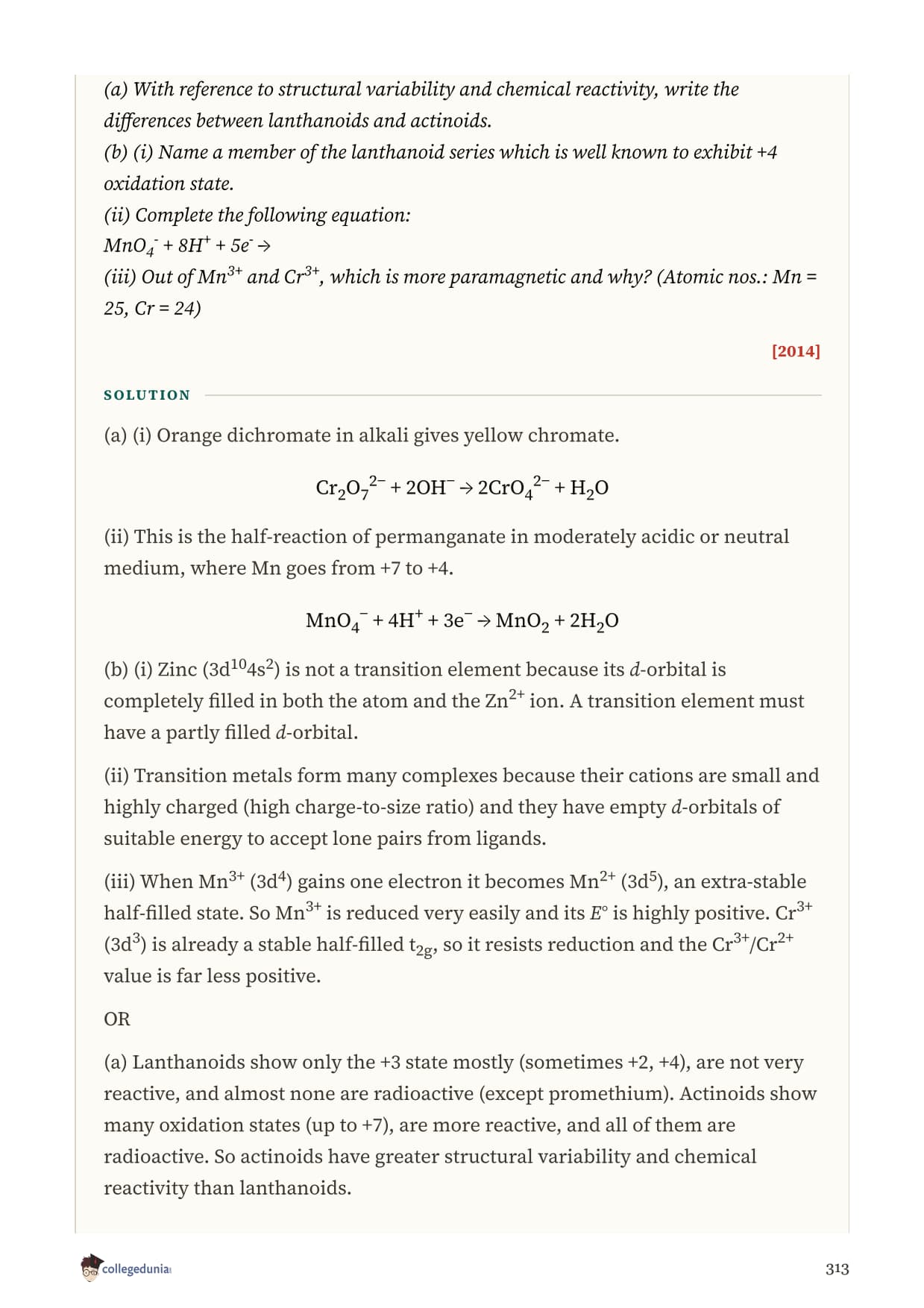
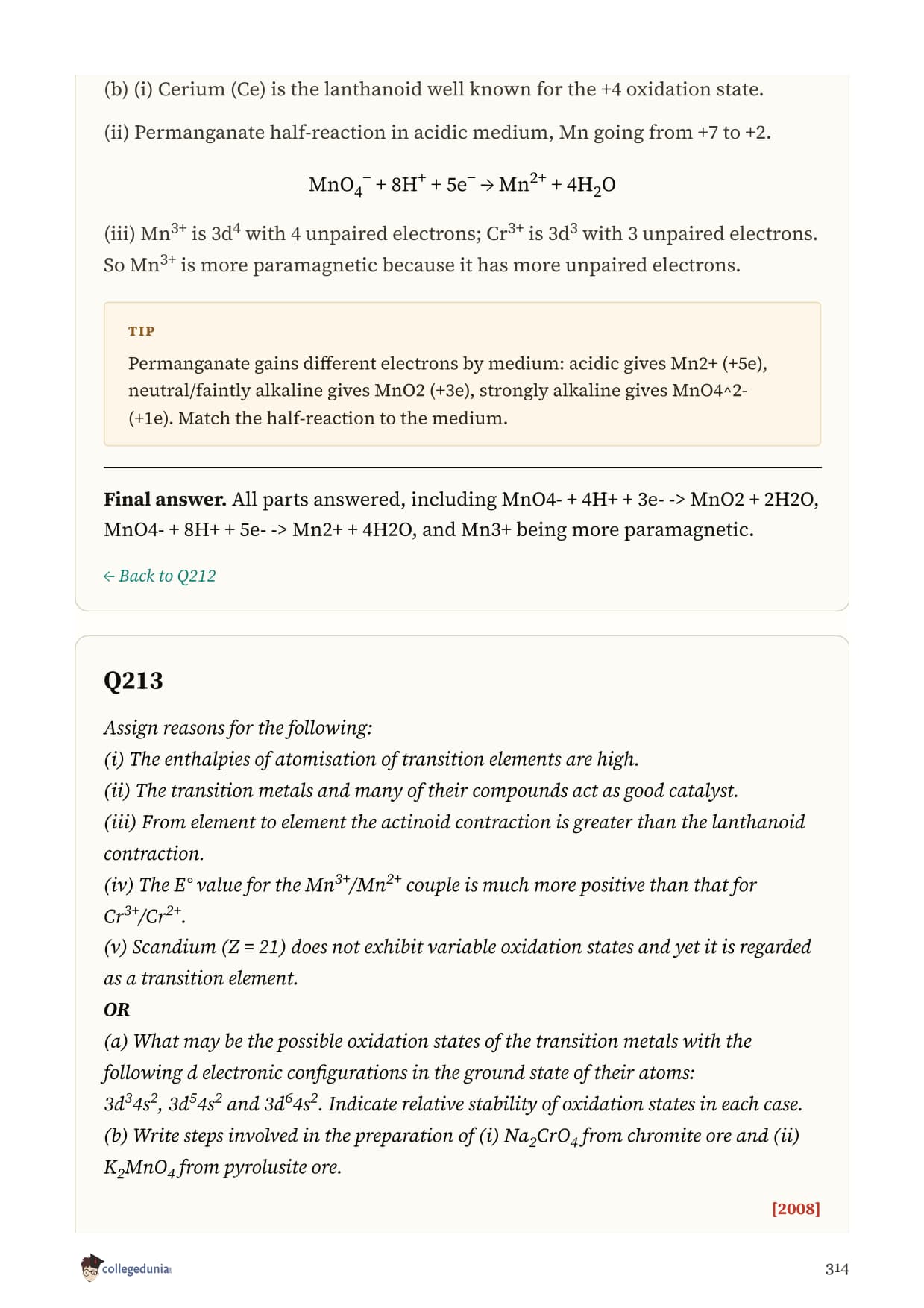
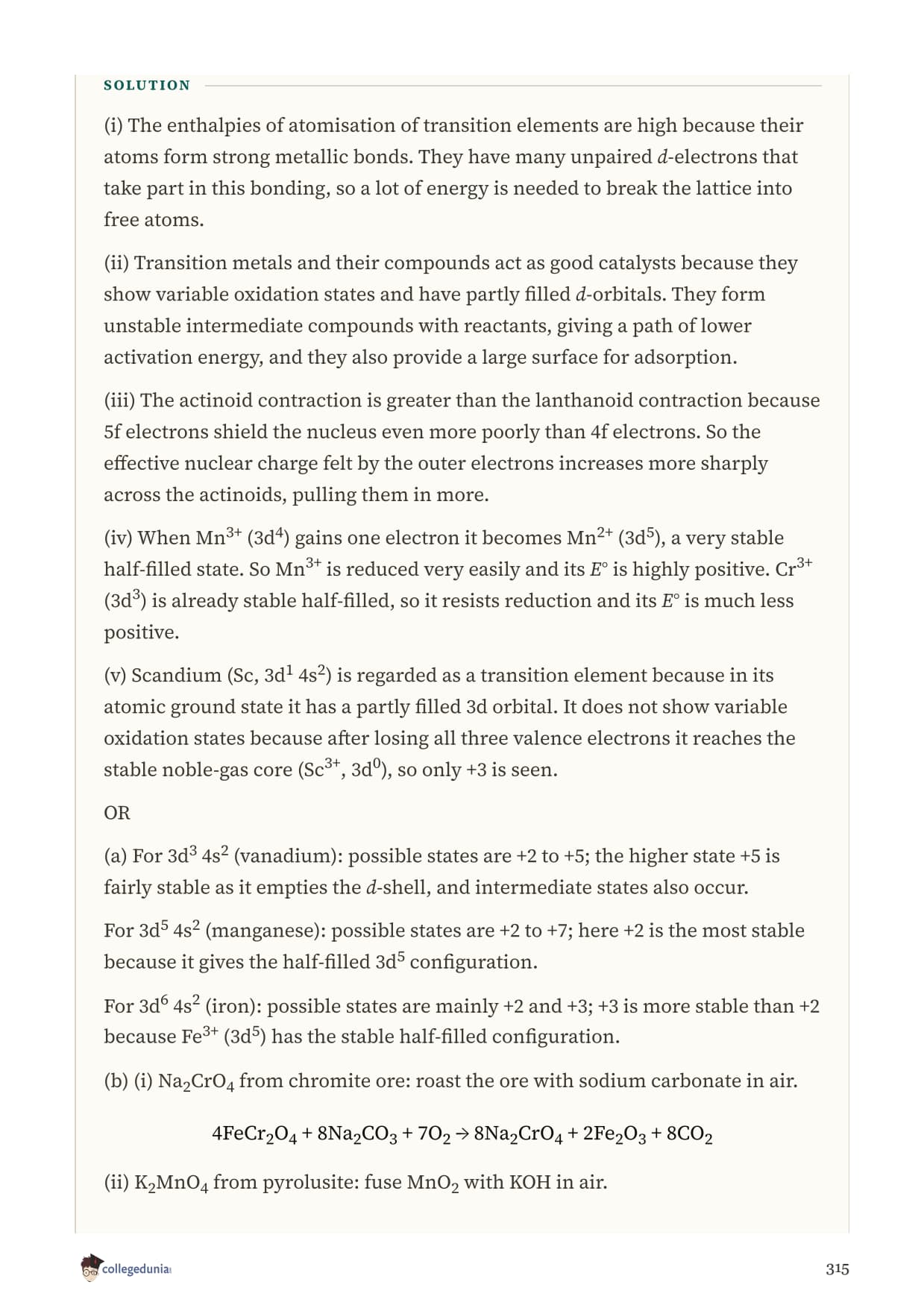
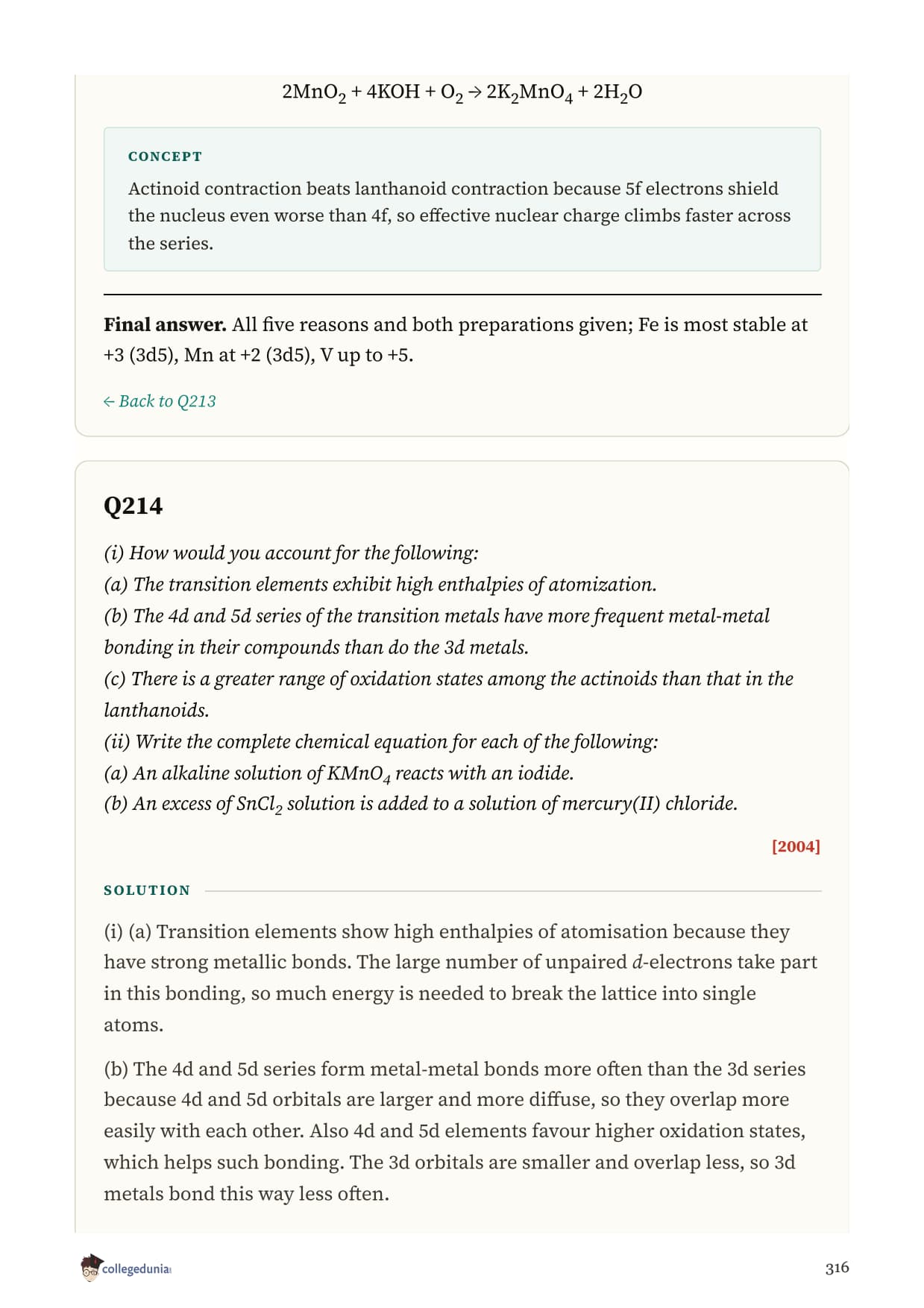
- 1-mark questions: 95 questions, mostly MCQ and assertion-reason on transition-metal identity, colour and oxidation states.
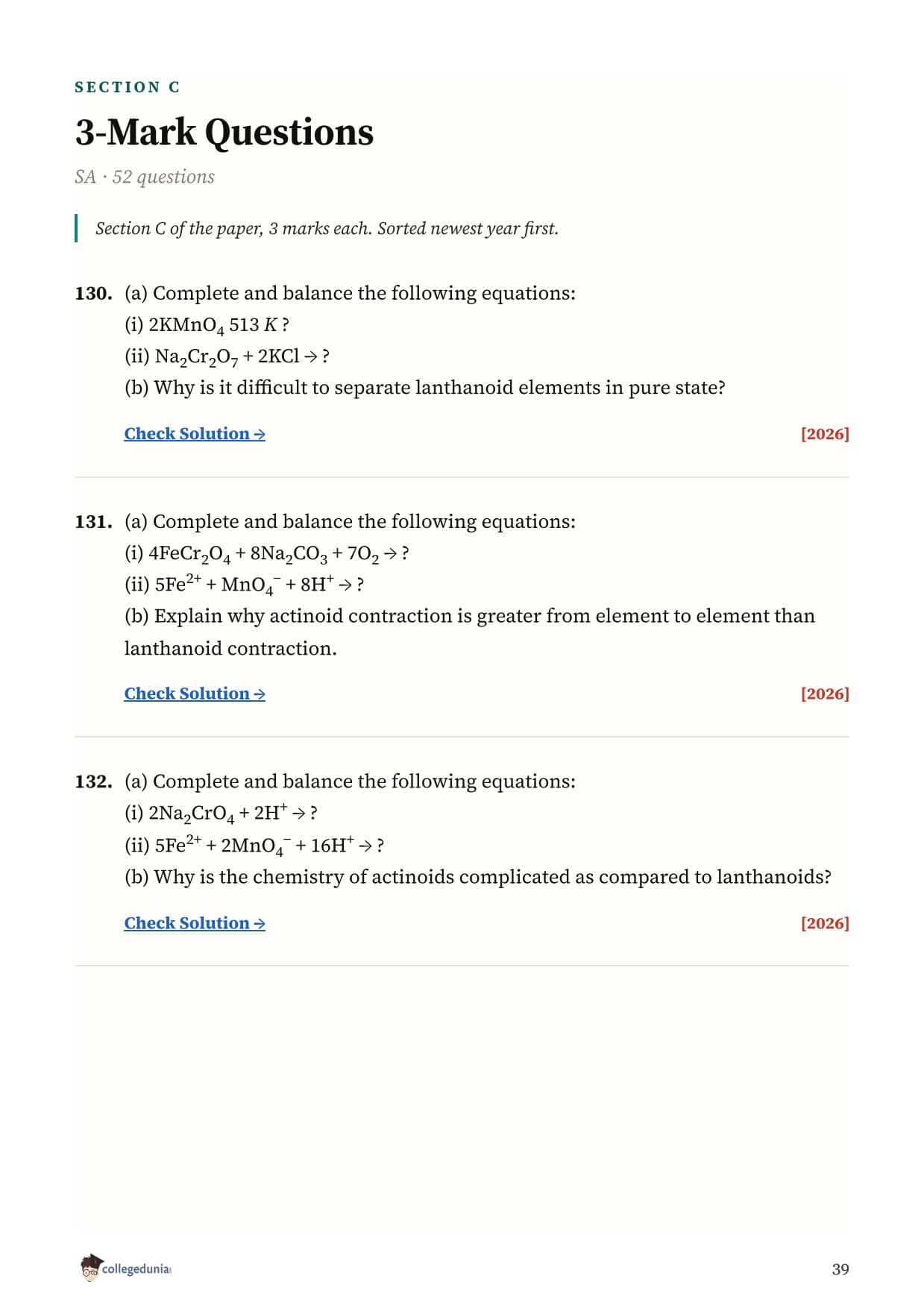
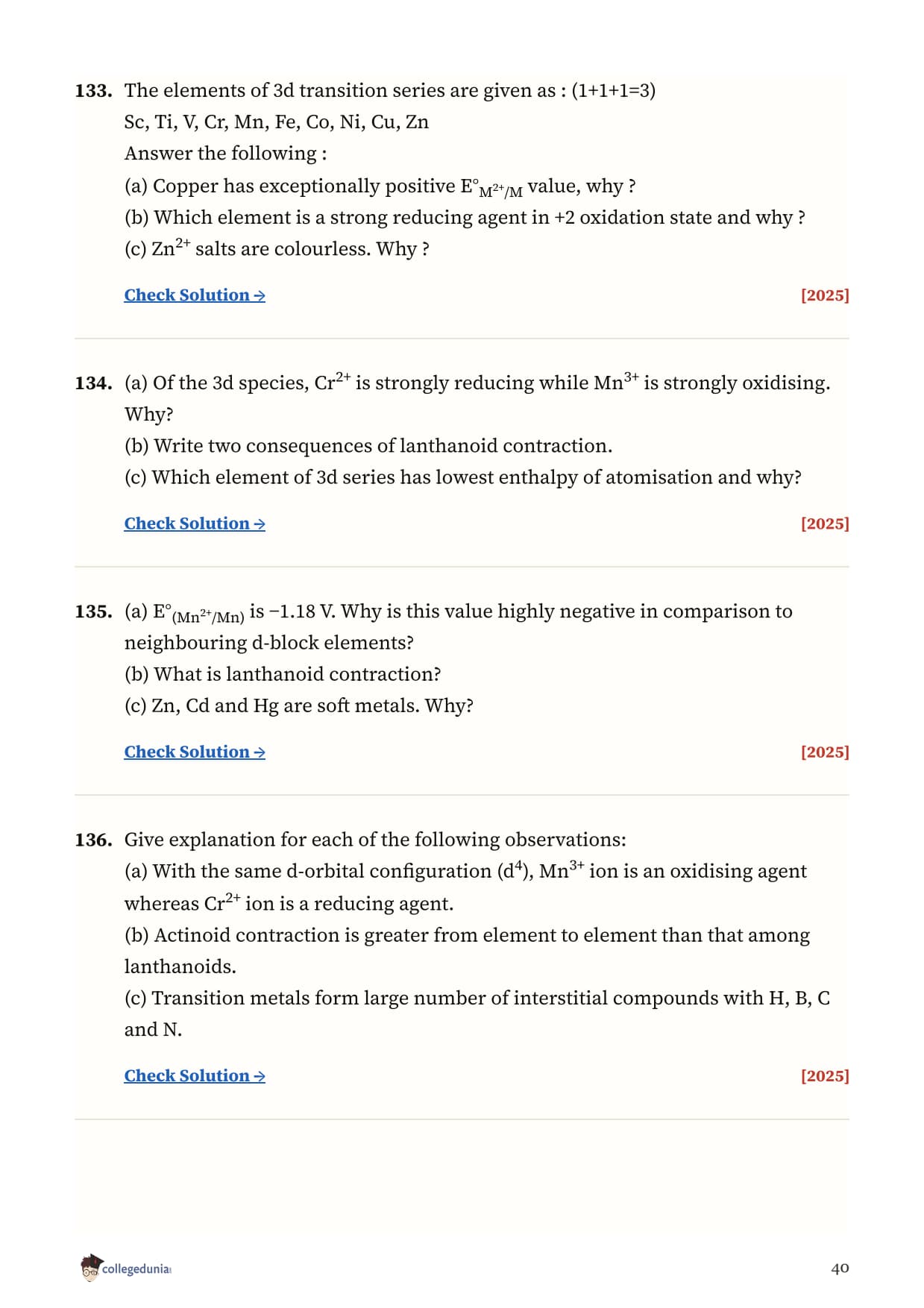
- 2 and 3-mark questions: 34 and 52 questions, built around reasoning on 3d-series trends and equations for K2Cr2O7 and KMnO4.
- 5-mark long answers: 32 questions, where almost every year sets a mix of trend reasoning and the preparation or oxidising action of dichromate or permanganate.
The The d- and f-Block Elements PYQ set gathers 214 board-paper questions across 2003 to 2026, sorted by marks and then by year. It is the largest Chemistry PYQ bank on this site, because this chapter packs both theory and oxidation-state reasoning.
Every question in this Class 12 Chemistry The d- and f-Block Elements PYQ compilation is sourced from CBSE board papers (Delhi, Outside Delhi, Foreign and Compartment) and cross-checked against the official mark scheme, with near-duplicate questions removed.
What the The d- and f-Block Elements Previous Year Questions Cover
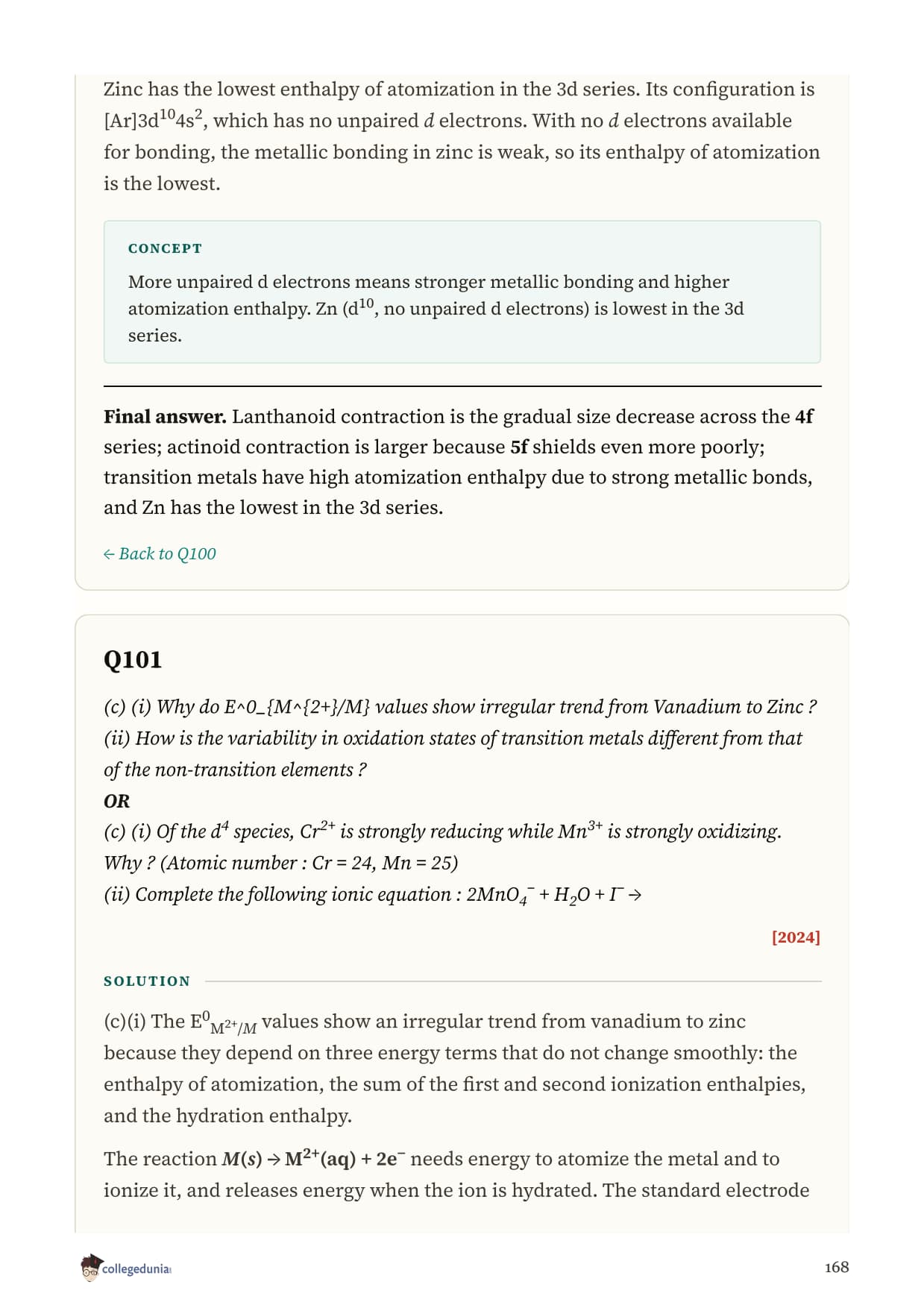
The 214-question set maps every concept the NCERT chapter introduces. Variable oxidation states and standard electrode potentials of the 3d series drive most of the reasoning answers. Lanthanoid contraction and its consequences appear repeatedly in the 2 and 3-mark band. Preparation, structure and oxidising action of K2Cr2O7 and KMnO4 dominate the 3 and 5-mark band. Short reasoning on colour, magnetic behaviour, interstitial compounds and catalytic property fills the 1-mark MCQs.
Marks-wise Distribution of the The d- and f-Block Elements PYQs
The table below shows how the 214 questions split across the CBSE marks bands. Use it to decide how much revision time each band deserves.
| Marks | Questions | Total Marks | CBSE Section | Type |
|---|---|---|---|---|
| 1 mark | 95 | 95 | Section A | MCQ / Assertion-Reason |
| 2 mark | 34 | 68 | Section B | VSA (Very Short Answer) |
| 3 mark | 52 | 156 | Section C | SA (Short Answer) |
| 4 mark | 1 | 4 | Section D | Case Study |
| 5 mark | 32 | 160 | Section E | Long Answer |
Year-wise Spread of Class 12 Chemistry The d- and f-Block Elements PYQs
The compilation draws from 23 CBSE board years. About 58 per cent of the questions come from 2023 onwards, while a strong base of older reasoning questions keeps the long-answer practice rich.
- 2026: A which-is-not-a-transition-metal MCQ, an actinoid oxidation-state assertion-reason, and a Cr-versus-Zn ionisation-enthalpy plus catalyst reasoning question.
- 2024 to 2025: The largest contribution years, with MCQ banks on colour, oxidation states and electronic configuration.
- 2020 to 2023: Reduced-syllabus papers, but 3d-series trend reasoning and dichromate or permanganate equations still appear.
- 2003 to 2019: Older long answers on lanthanoid contraction, interstitial compounds and the preparation of K2Cr2O7, all still relevant today.
Topic Frequency in the The d- and f-Block Elements Board Paper Questions
The 214 questions cluster into the six topic buckets below, ranked by how often CBSE has set them between 2003 and 2026.
| Rank | Topic Cluster | Frequency | Typical Marks Band |
|---|---|---|---|
| 1 | Oxidation states and electrode potentials (3d-series trends, stability reasoning) | ~23 per cent | 1, 2, 3, 5 mark |
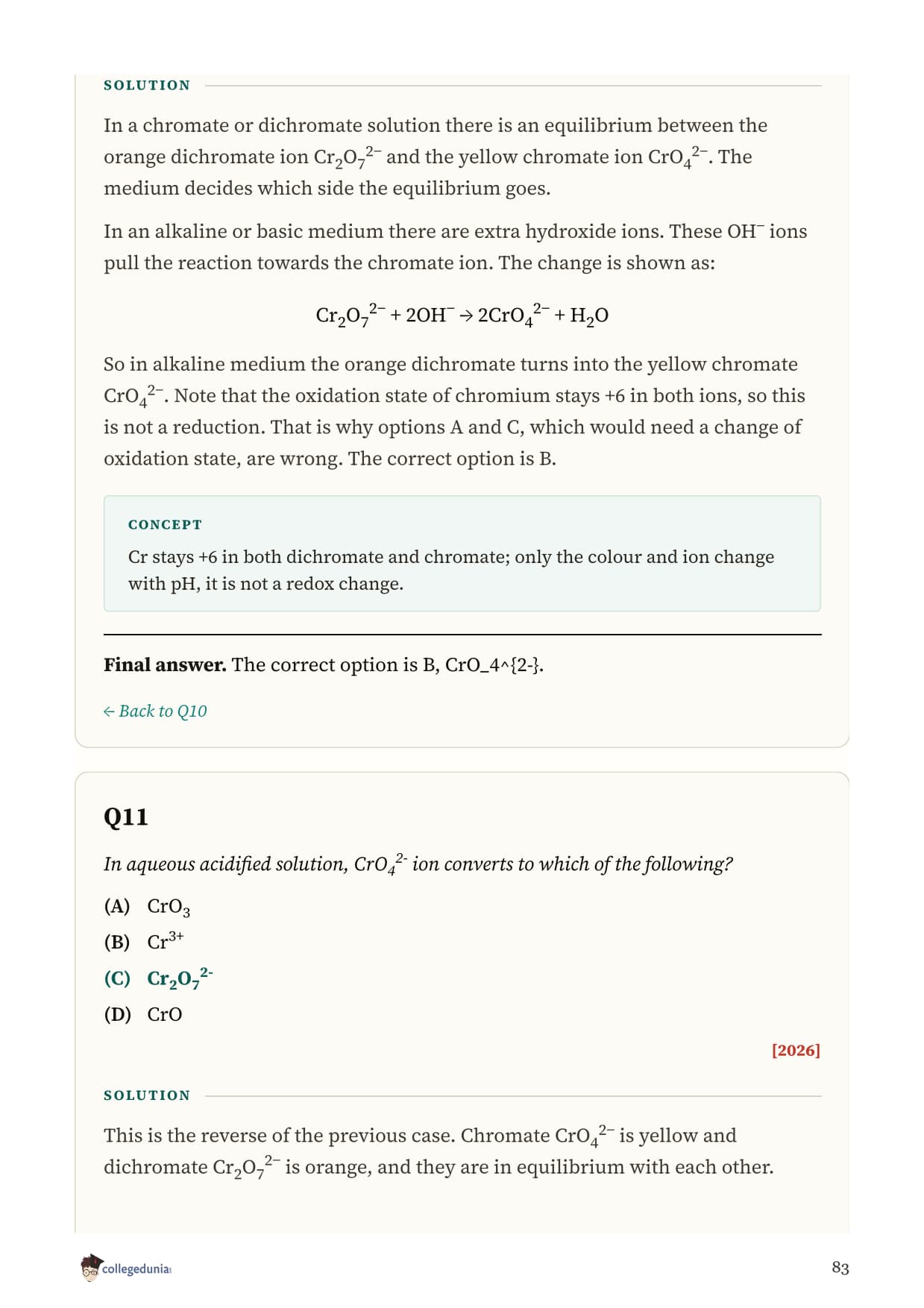
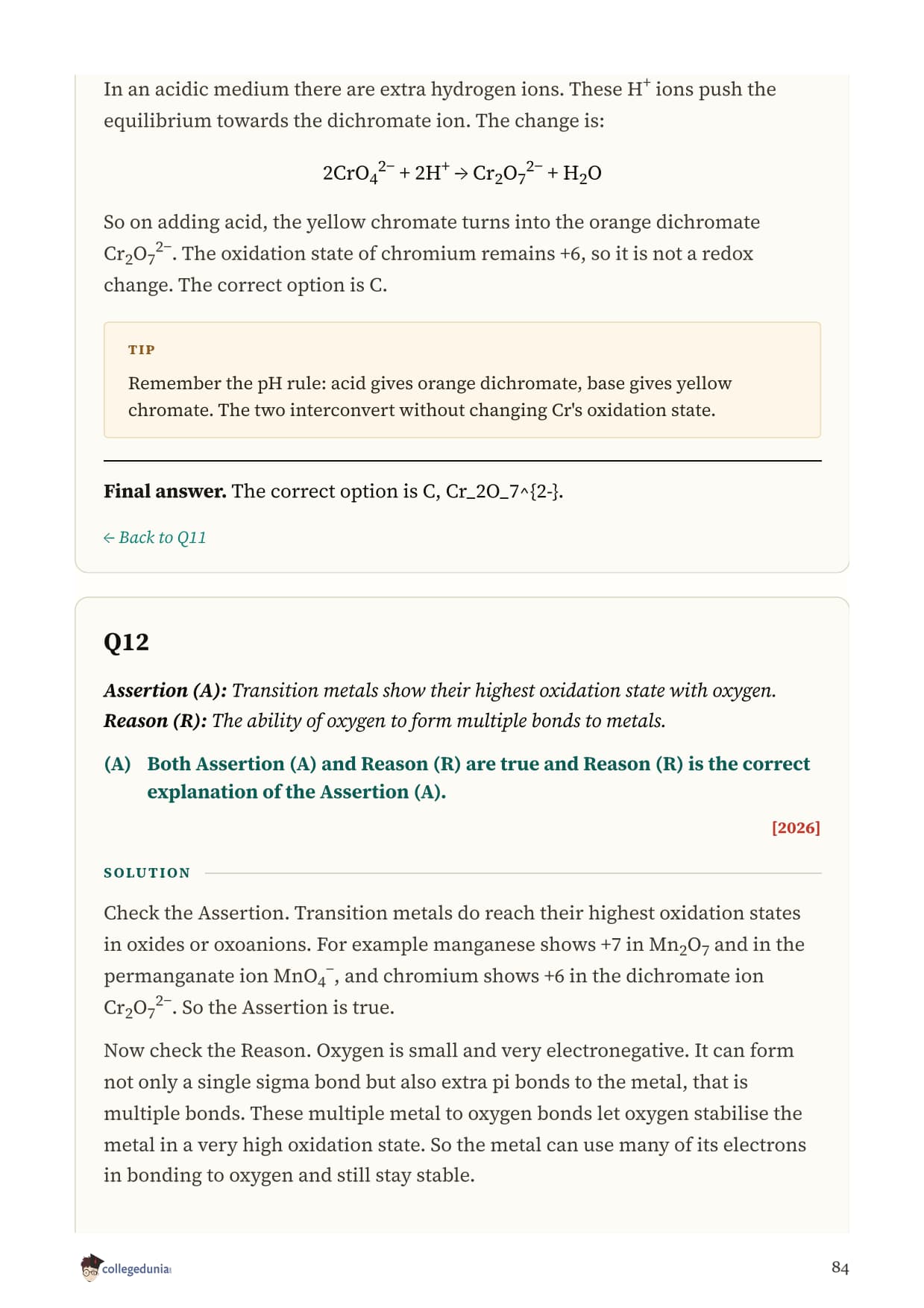
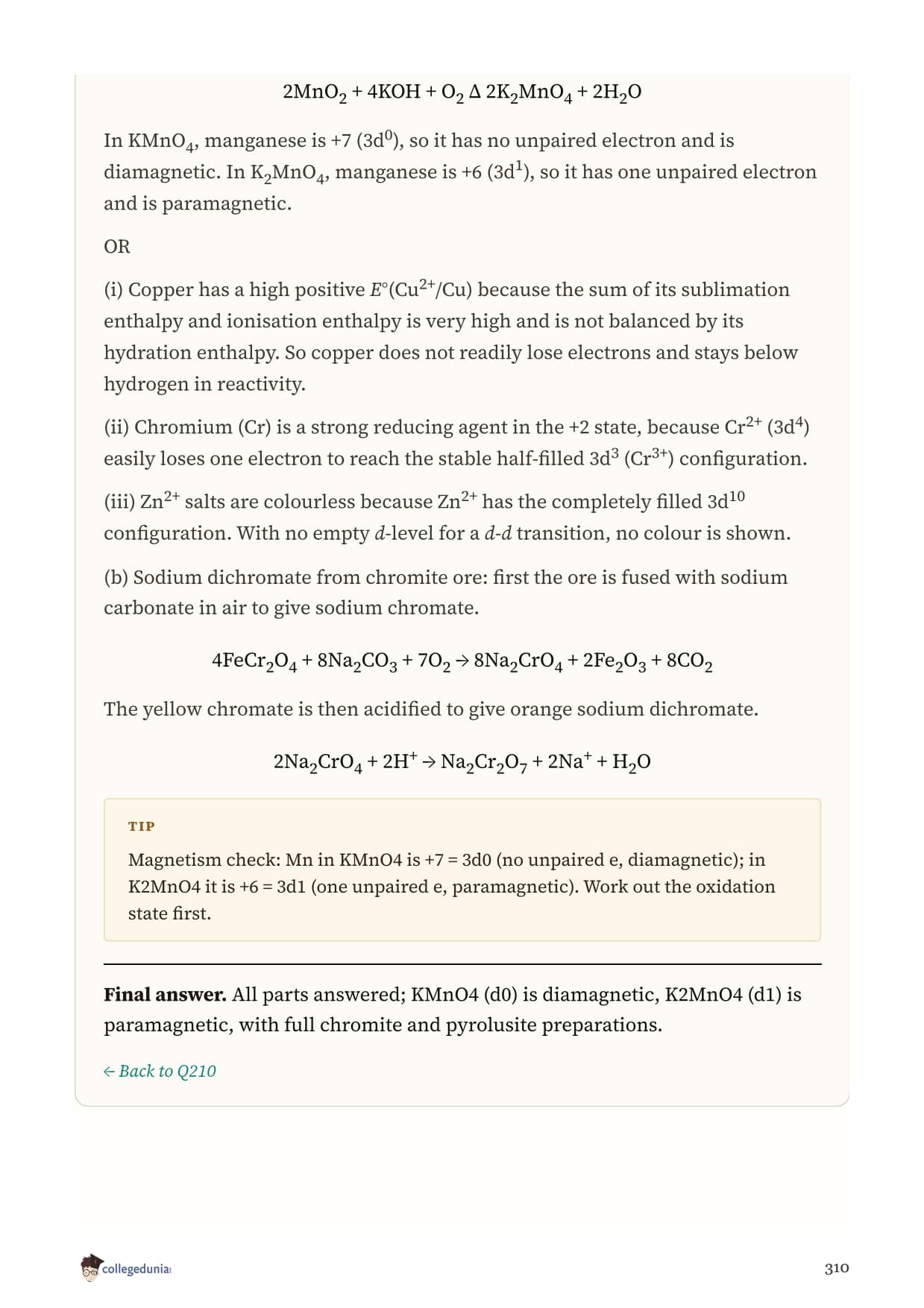
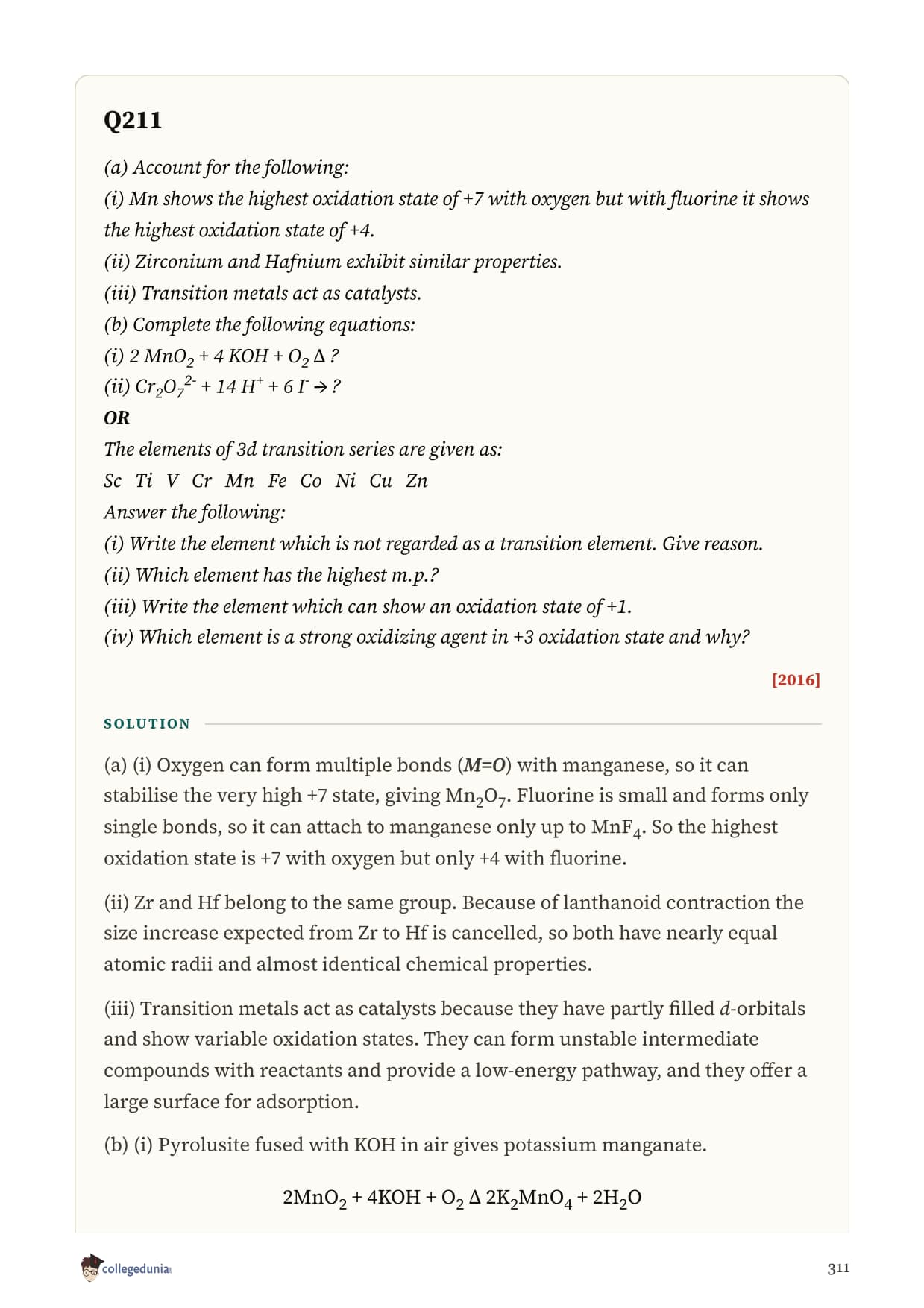
| 2 | Potassium dichromate and permanganate (preparation, structure, oxidising action) | ~20 per cent | 3 and 5 mark |
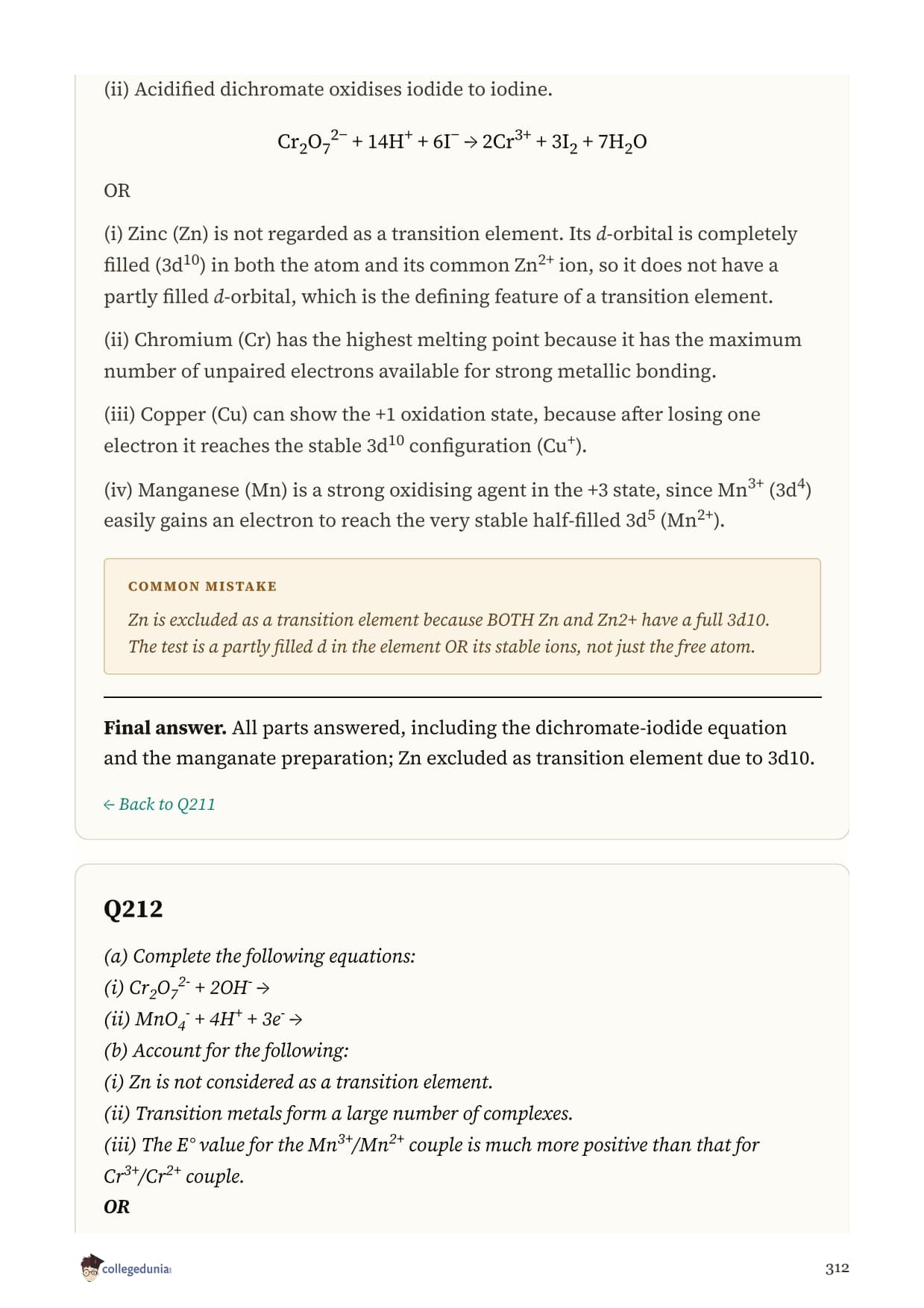
| 3 | Colour and magnetic behaviour (d0/d10 species, unpaired electrons) | ~17 per cent | 1 and 2 mark |
| 4 | Lanthanoid contraction (cause and consequences) | ~15 per cent | 2 and 3 mark |
| 5 | General properties of transition metals (ionisation enthalpy, catalysis, alloys) | ~14 per cent | 1, 2, 3 mark |
| 6 | f-block: lanthanoids and actinoids (configuration, oxidation states, comparison) | ~11 per cent | 1, 2, 5 mark |
Marks-Band Attempt Strategy for the The d- and f-Block Elements PYQs
The 214 PYQs are arranged marks-ascending inside the PDF so you can attempt them in the same order the CBSE paper presents them.
- 1-mark MCQs: Spend no more than 45 seconds each. Many test which element is not a transition metal or the colour of a given ion.
- 2-mark questions: A short trend reason plus one example. Aim for 3 minutes and always give the cause, not just the trend.
- 3-mark questions: Usually two reasoning parts or a balanced equation. Always balance the dichromate and permanganate equations fully.
- 5-mark long answers: A block of trend reasoning plus the preparation or oxidising action of K2Cr2O7 or KMnO4. Allocate 12 to 15 minutes.
Recent CBSE Trend: 2024 to 2026 Pattern Shift in The d- and f-Block Elements
Three things have changed in the recent CBSE cycles that the d- and f-block previous year questions now reflect:
- Section A now carries a fixed block of 1-mark MCQ and assertion-reason items. The compilation includes 95 such questions, most from 2023 onwards.
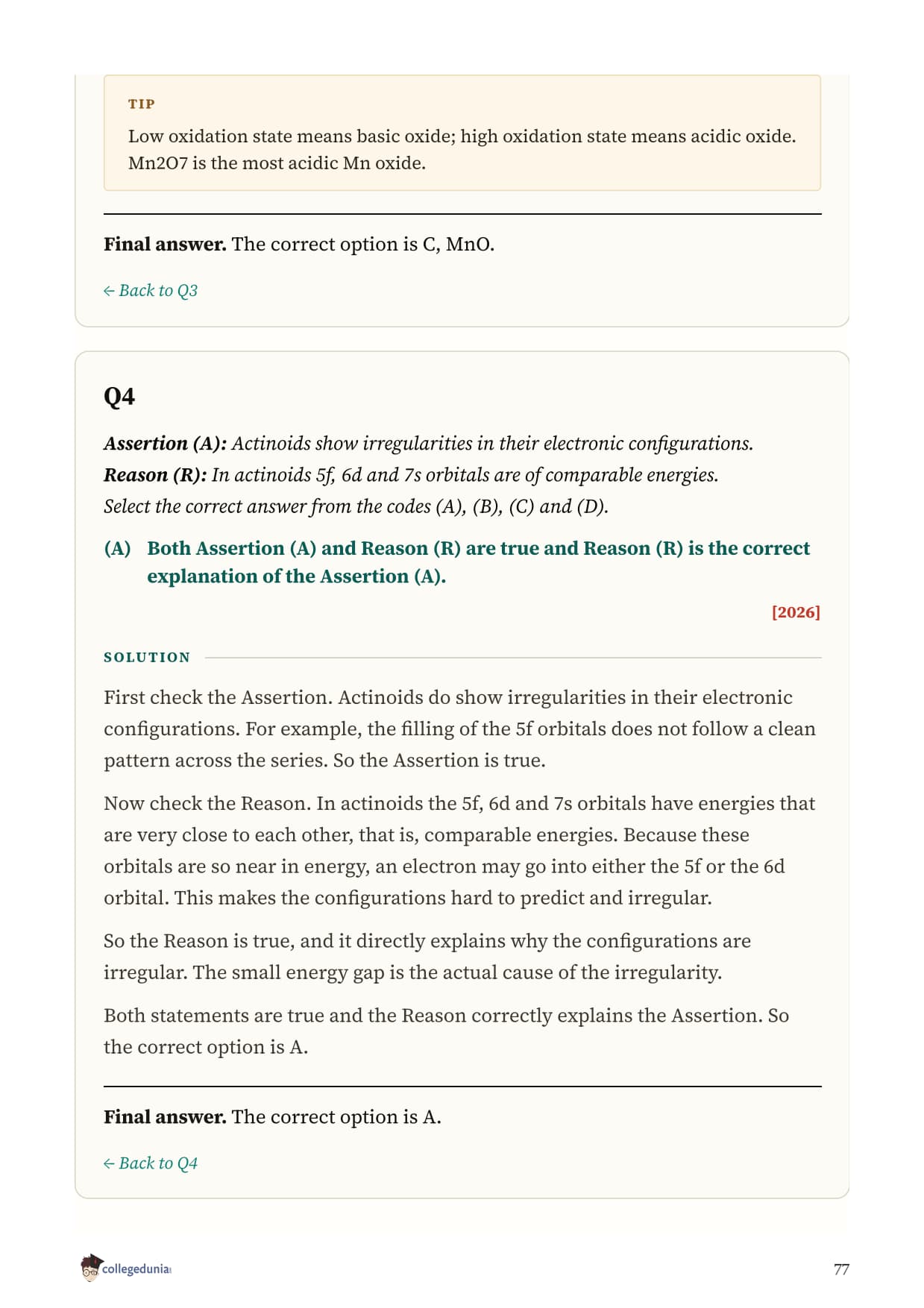
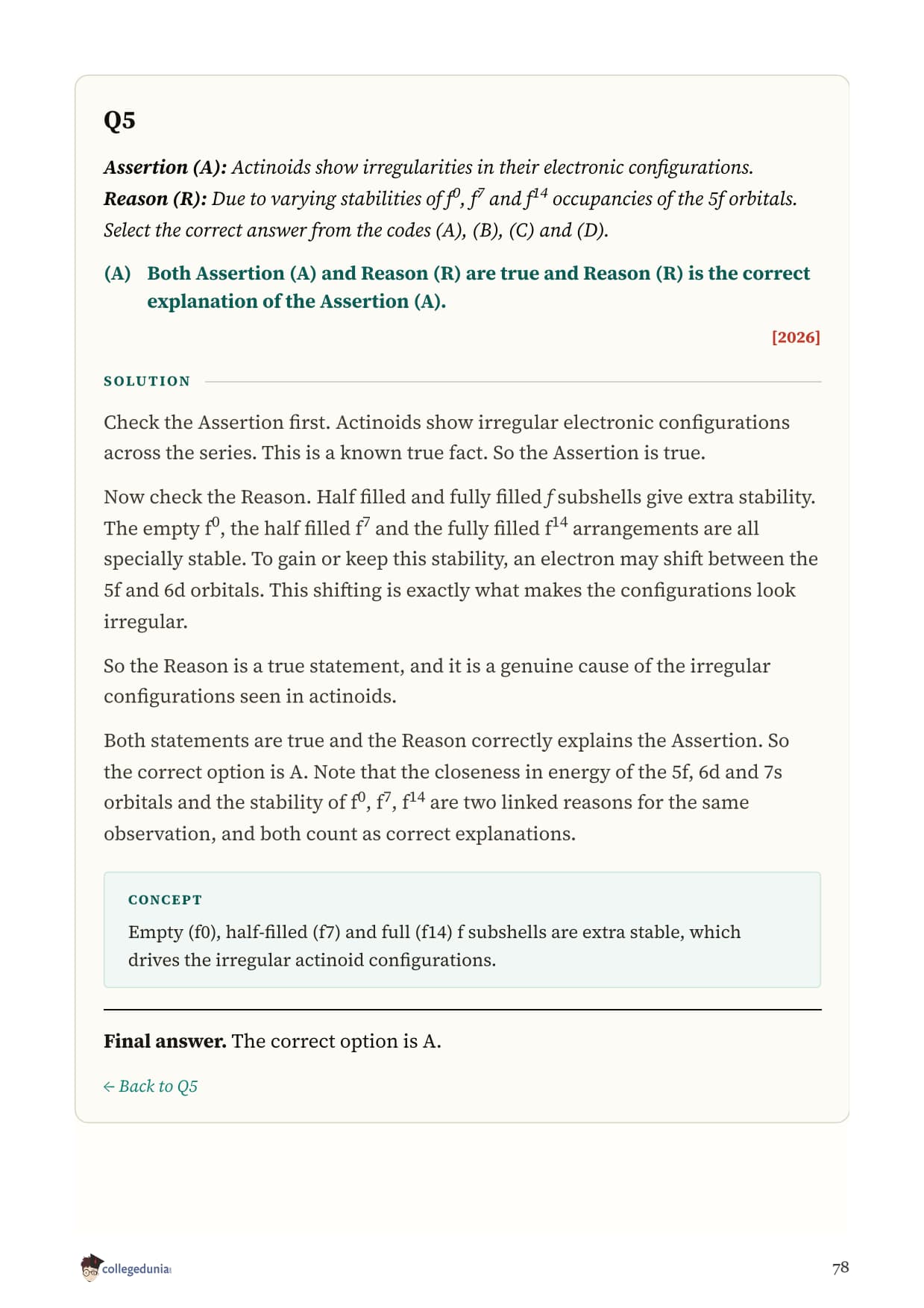
- Assertion-reason items increasingly target f-block facts, for example the 2026 question on actinoids showing a wide range of oxidation states.
- 3 and 5-mark questions now mix a quick trend reason with a structure or equation, as in the 2026 Cr-versus-Zn ionisation enthalpy plus catalyst question.
Sample Previous Year Questions from The d- and f-Block Elements
Here are a few real previous year questions from the The d- and f-Block Elements board papers, taken straight from the compilation. The full set is in the downloadable PDF.
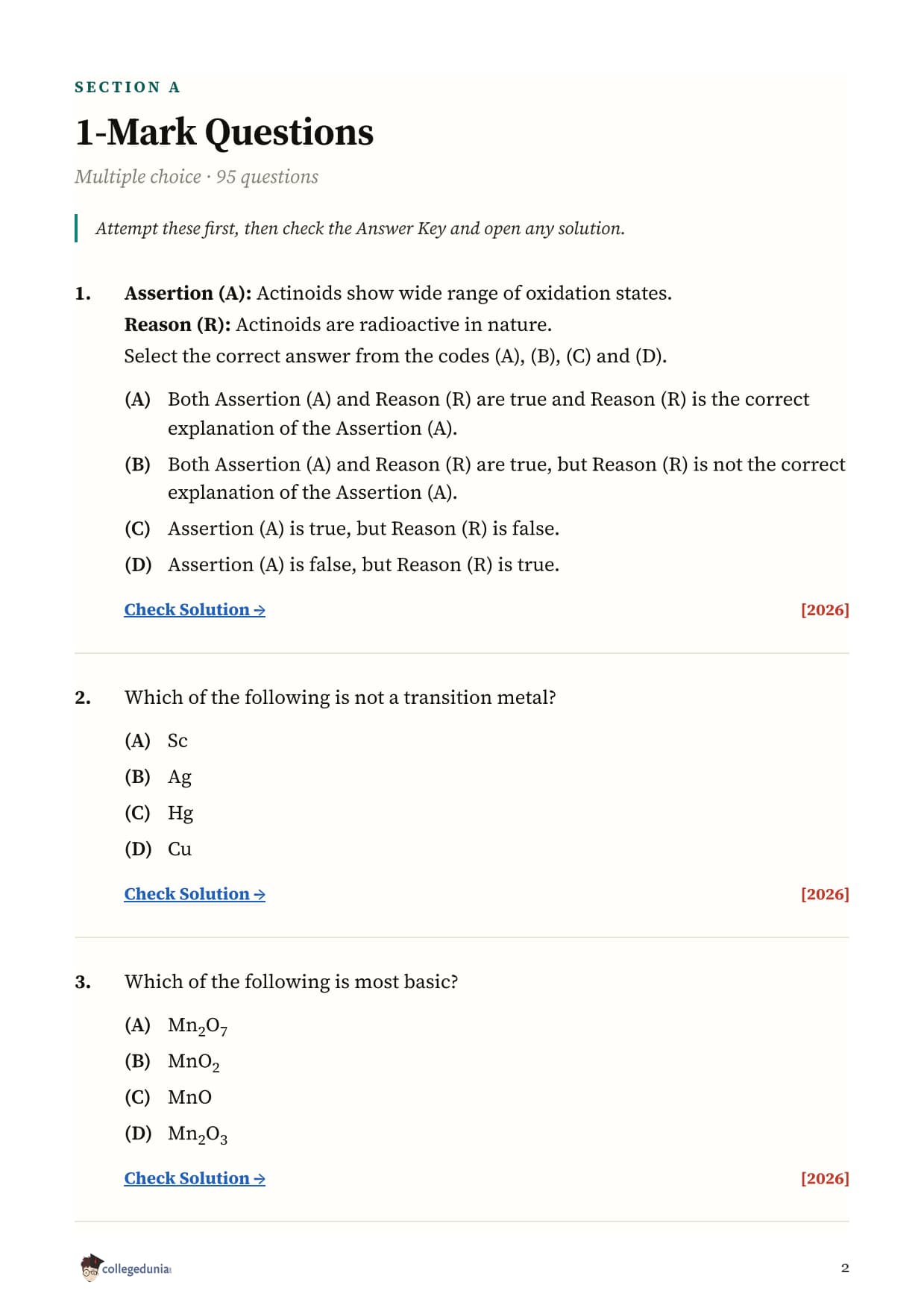
Which of the following is not a transition metal?
- Sc
- Ag
- Hg
- Cu
[2026 • 1 mark]
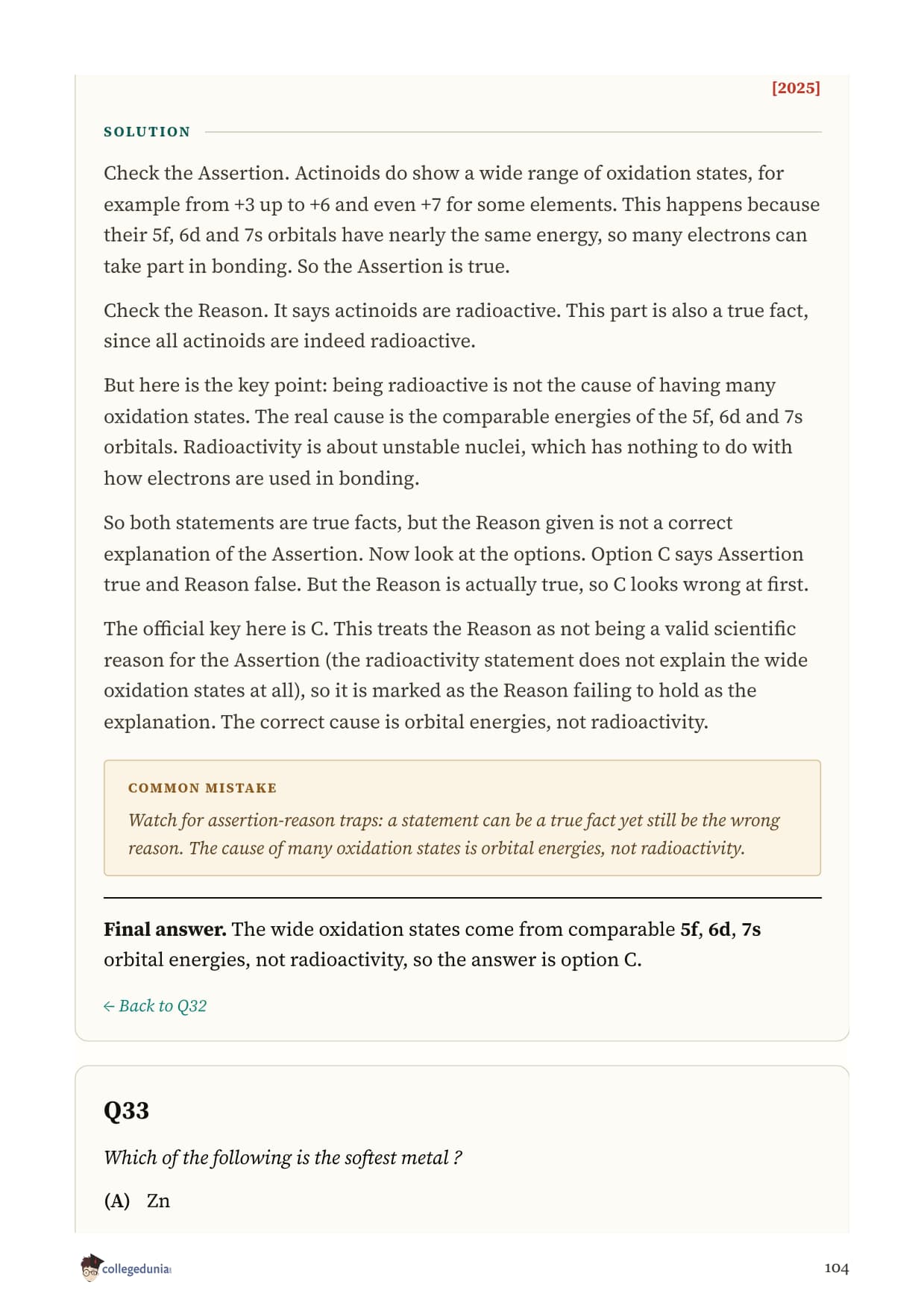
Assertion (A): Actinoids show wide range of oxidation states. Reason (R): Actinoids are radioactive in nature. Select the correct answer from the codes (A), (B), (C) and (D).
- Both Assertion (A) and Reason (R) are true and Reason (R) is the correct explanation of the Assertion (A).
- Both Assertion (A) and Reason (R) are true, but Reason (R) is not the correct explanation of the Assertion (A).
- Assertion (A) is true, but Reason (R) is false.
- Assertion (A) is false, but Reason (R) is true.
[2026 • 1 mark]
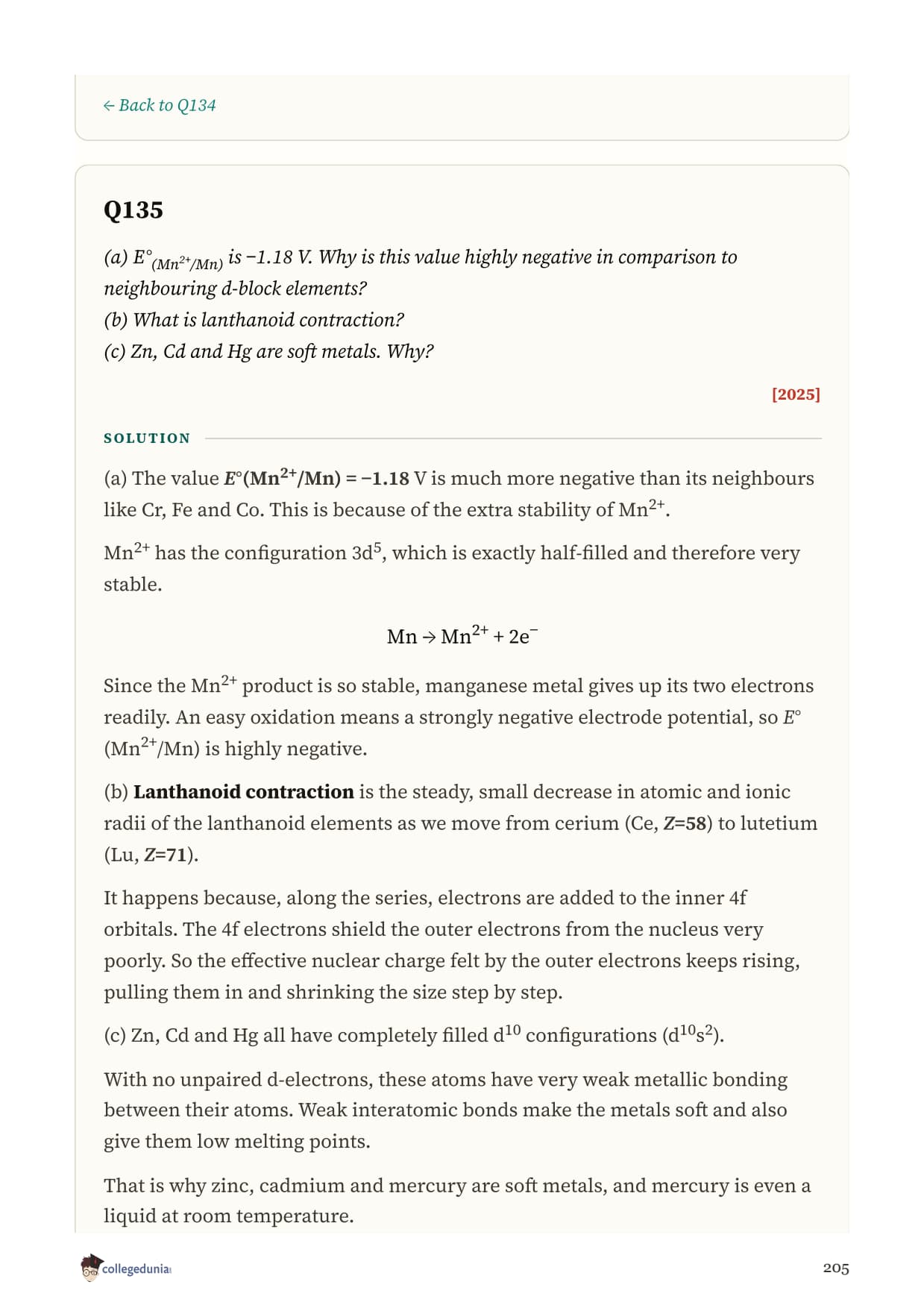
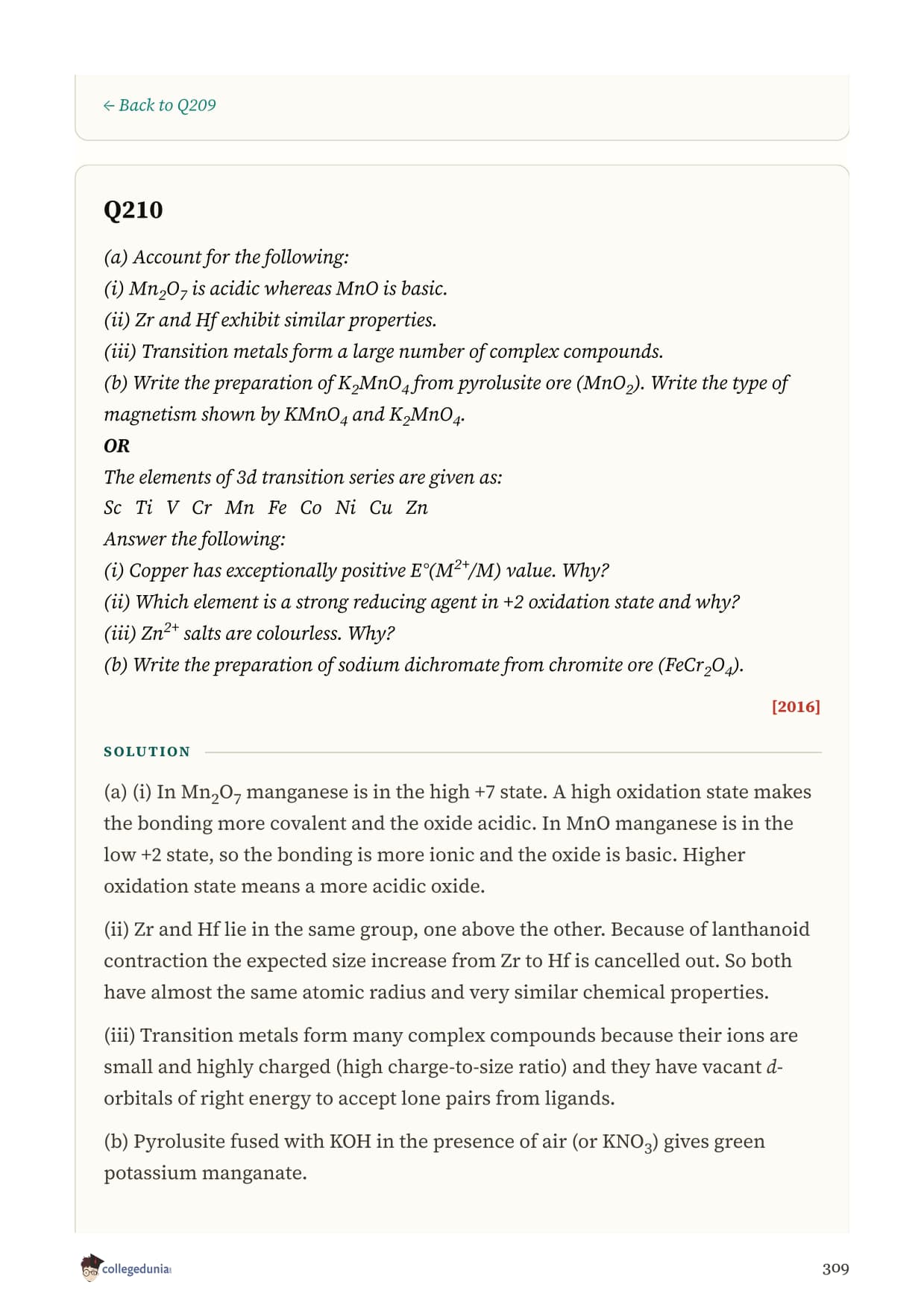
(a) First ionization enthalpy of Cr is lower than that of Zn. Why? (b) Mention any one property of the transition elements which makes them good catalysts.
[2026 • 2 mark]
Common Mistakes in the The d- and f-Block Elements Board Questions
- Stating a trend without giving the cause, for example writing the lanthanoid contraction exists but not that it comes from poor shielding by 4f electrons.
- Writing an unbalanced equation for the oxidising action of K2Cr2O7 or KMnO4.
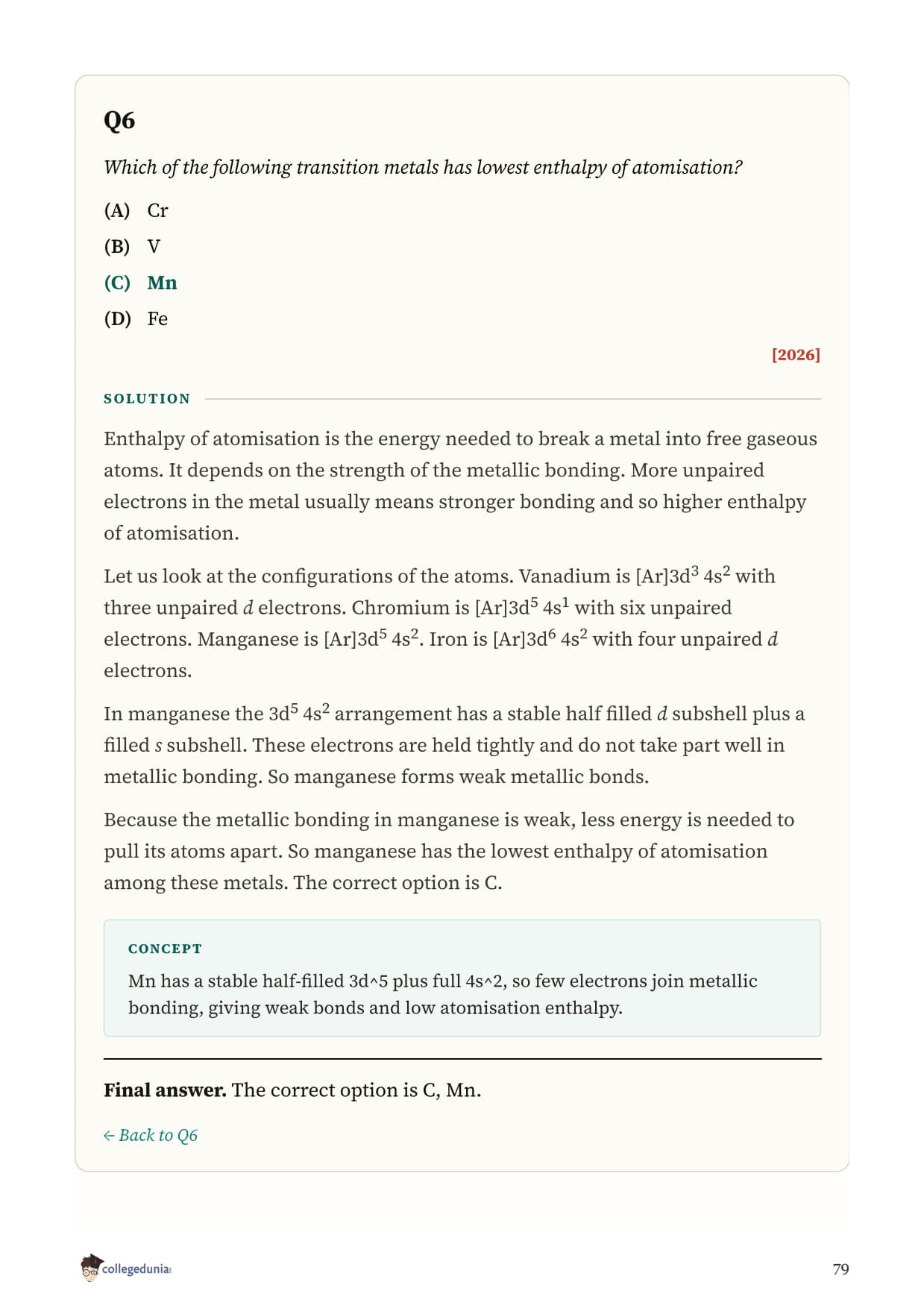
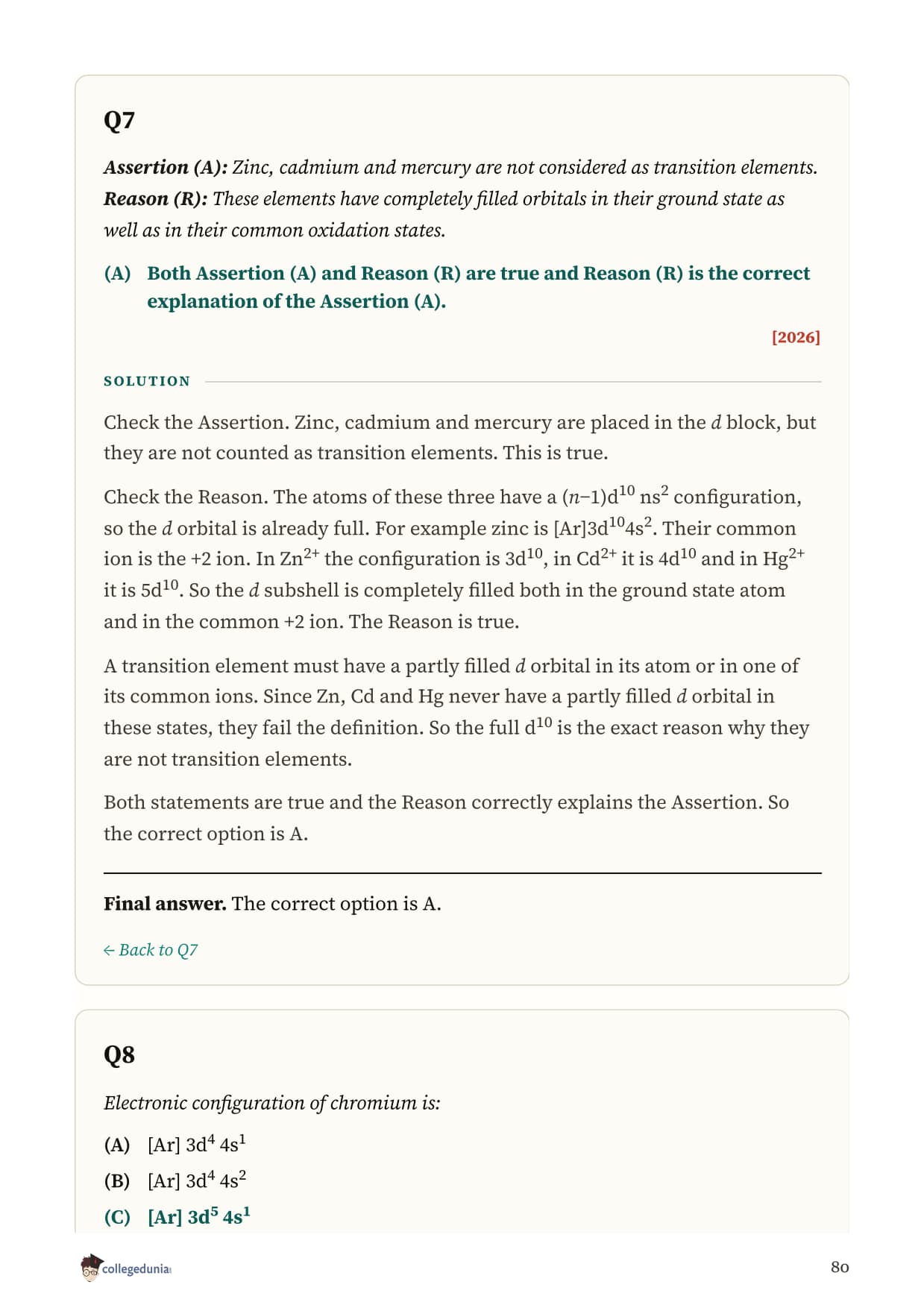
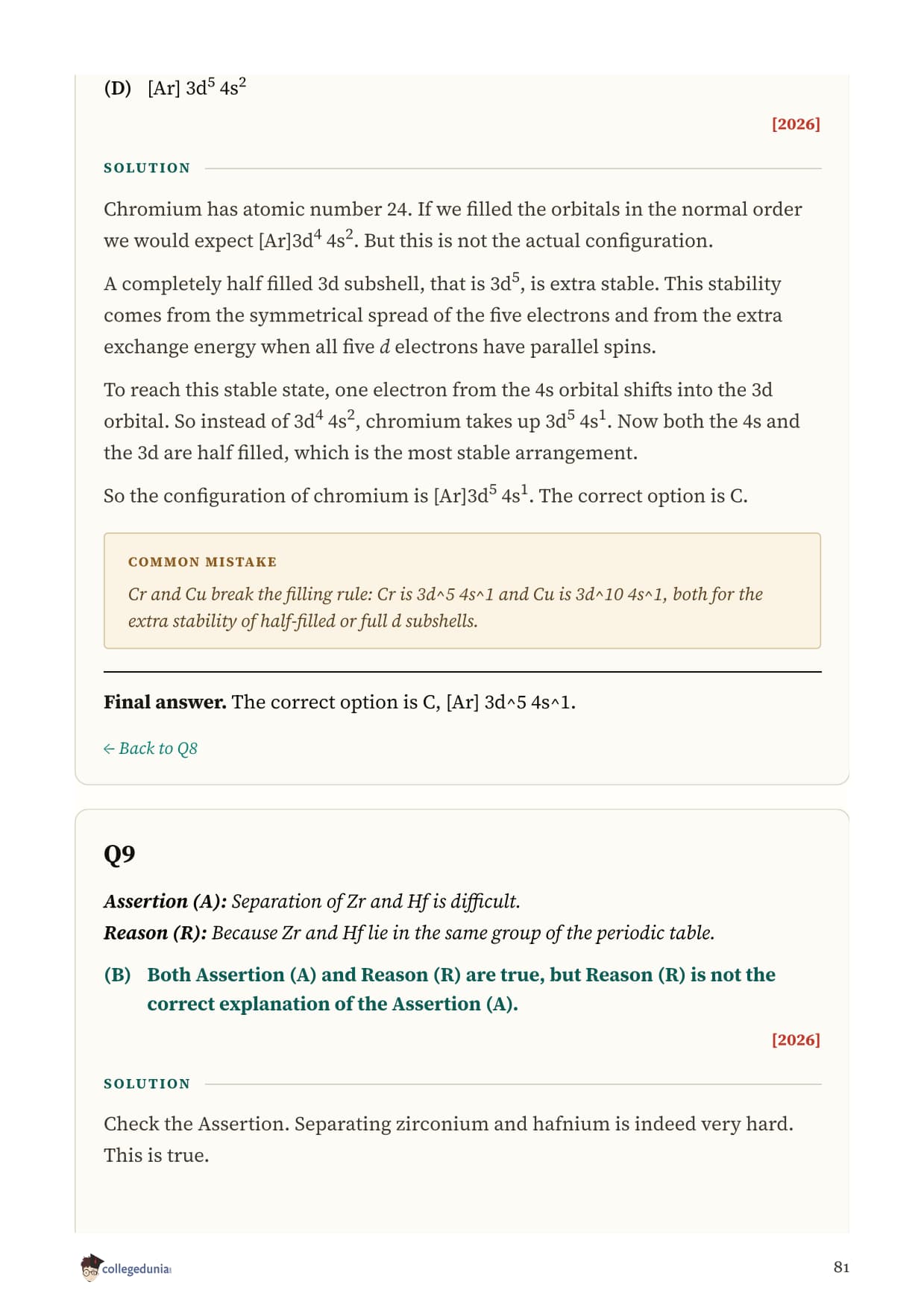
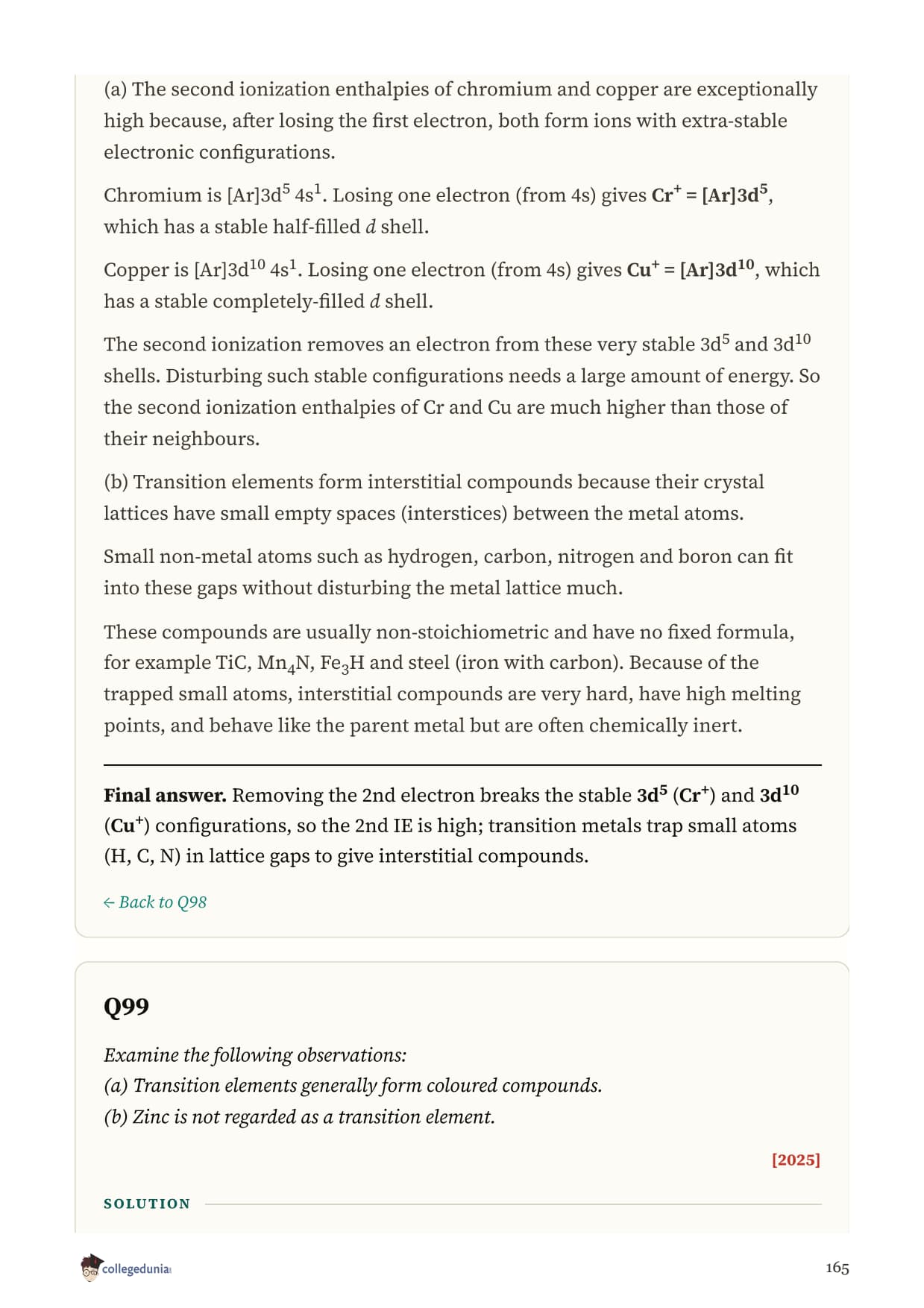
- Getting the electronic configuration of Cr and Cu wrong by ignoring the stability of half-filled and fully-filled d orbitals.
- Confusing lanthanoids with actinoids when comparing oxidation states or radioactivity.
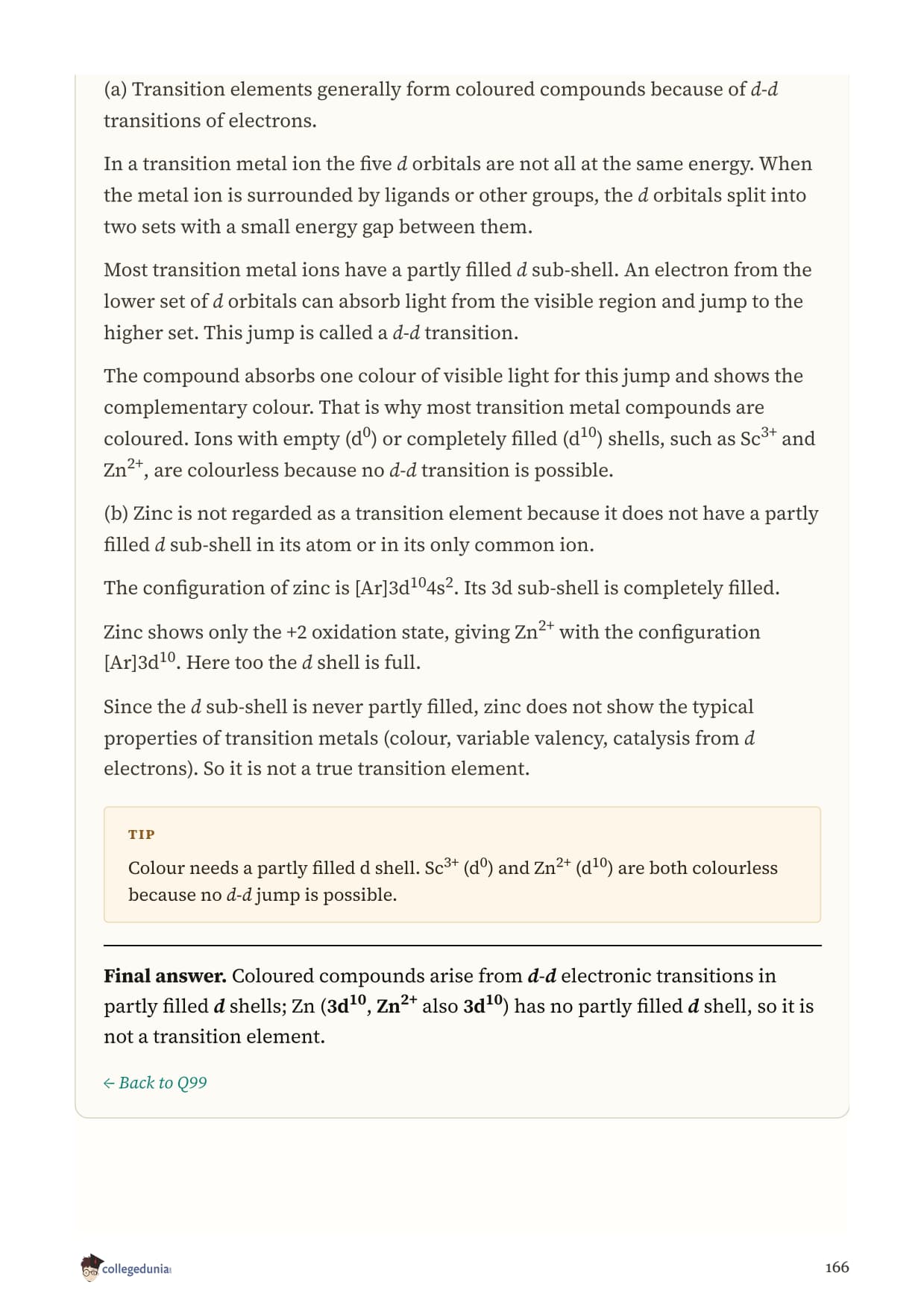
- Saying a d0 or d10 ion is coloured, when species with no unpaired d electrons are colourless.
Student Feedback on The d- and f-Block Elements PYQ Practice
- 70 per cent said the dichromate and permanganate equations were the hardest part of the 3 and 5-mark bands.
- 61 per cent reported gaining 4 to 6 marks after solving all 32 five-mark PYQs from this PDF before the boards.
- 48 per cent said a 3d-series trend reasoning question appeared in their actual 2026 paper.
- Average time to finish all 214 PYQs: about 16 hours across 8 study sessions.
How These PYQs Pair with the Other The d- and f-Block Elements Resources
Solving previous year questions alone gives you only half the prep. Pair the PYQ PDF with the matching concept, formula and solution resources for The d- and f-Block Elements.
| Resource | What It Gives You | Open |
|---|---|---|
| NCERT Solutions | Step-by-step worked answers to every NCERT back-exercise question of The d- and f-Block Elements | NCERT Solutions for The d- and f-Block Elements |
| Notes | Concept revision notes covering every topic in the The d- and f-Block Elements chapter | The d- and f-Block Elements Class 12 Notes |
| Formula Sheet | All key formulas and results of The d- and f-Block Elements on one page for last-day revision | The d- and f-Block Elements Formula Sheet |
| Handwritten Notes | Scanned handwritten notes of The d- and f-Block Elements for quick one-shot revision | The d- and f-Block Elements Handwritten Notes |
| Exemplar Solutions | NCERT Exemplar problems of The d- and f-Block Elements solved in full for extra practice | NCERT Exemplar Solutions for The d- and f-Block Elements |
| NCERT Book | Official NCERT The d- and f-Block Elements chapter PDF for free download | The d- and f-Block Elements NCERT Book PDF |
| Exemplar Book | NCERT Exemplar The d- and f-Block Elements problem book PDF for free download | The d- and f-Block Elements Exemplar Book PDF |
How to Use the The d- and f-Block Elements PYQ PDF Most Effectively
The 214 questions are sequenced for a three-pass revision plan:
- Pass 1 (Day 1 to 2): Attempt all 95 one-mark MCQs. Mark every wrong answer and re-read the relevant NCERT paragraph.
- Pass 2 (Day 3 to 5): Solve the 34 two-mark and 52 three-mark questions. Time yourself: 3 minutes per 2-mark, 5 minutes per 3-mark.
- Pass 3 (Day 6 to 10): Work through the 32 five-mark long answers, writing each trend reason in full and balancing every dichromate and permanganate equation.
All Class 12 Chemistry Chapter PYQ PDFs
Every Class 12 Chemistry chapter has its own PYQ compilation built the same way, sorted by marks and tagged by year.
| Chapter | Topic | Previous Year Questions |
|---|---|---|
| Chapter 1 | Solutions | PYQ PDF |
| Chapter 2 | Electrochemistry | PYQ PDF |
| Chapter 3 | Chemical Kinetics | PYQ PDF |
| Chapter 4 | The d- and f-Block Elements | PYQ PDF |
| Chapter 5 | Coordination Compounds | PYQ PDF |
| Chapter 6 | Haloalkanes and Haloarenes | PYQ PDF |
| Chapter 7 | Alcohols, Phenols and Ethers | PYQ PDF |
| Chapter 8 | Aldehydes, Ketones and Carboxylic Acids | PYQ PDF |
| Chapter 9 | Amines | PYQ PDF |
| Chapter 10 | Biomolecules | PYQ PDF |
Also Check: NCERT Solutions for Class 12 Chemistry
Class 12 Chemistry The d- and f-Block Elements PYQ FAQs
Ques. How many previous year questions are in the Class 12 Chemistry The d- and f-Block Elements PYQ PDF?
Ans. The PDF has 214 previous year questions from CBSE board papers between 2003 and 2026, sorted by marks (1 to 5) and then by year, latest first. Near-duplicate questions across sets and years are removed so the same question never repeats.
Ques. Are these d- and f-block PYQs based on the 2026-27 CBSE syllabus?
Ans. Yes. Every question is based on the 2026-27 CBSE Class 12 Chemistry syllabus. Older long-form questions are kept because the core ideas (oxidation states, lanthanoid contraction, K2Cr2O7 and KMnO4) are unchanged in the current syllabus.
Ques. Which topics of The d- and f-Block Elements appear most often in CBSE board papers?
Ans. From the 214-question set: oxidation states and electrode potentials (about 23 per cent), potassium dichromate and permanganate (about 20 per cent), colour and magnetic behaviour (about 17 per cent), lanthanoid contraction (about 15 per cent), and reasoning on general transition-metal properties and the f-block.
Ques. How is this PYQ PDF different from a CBSE sample paper?
Ans. A sample paper gives you one paper. This PDF stitches together 23 years of questions across every set and region (Delhi, Outside Delhi, Foreign and Compartment) for the d- and f-block alone, so you can see which topics CBSE repeats and how each idea is usually phrased.
Ques. Does the d- and f-block PYQ PDF include MCQs?
Ans. Yes. 95 of the 214 questions are 1-mark questions, mostly MCQ and assertion-reason from 2023 onwards, when CBSE introduced the Section A objective block.
Ques. Where can I download the d- and f-block Class 12 PYQ PDF for free?
Ans. The full The d- and f-Block Elements PYQ PDF is free to download from the PDF button at the top of this page. No sign-up is needed.
Ques. How should I use these PYQs to revise the d- and f-block in the last 10 days?
Ans. Use the three-pass plan: Day 1 to 2 attempt all 95 MCQs, Day 3 to 5 solve the 2 and 3-mark questions, Day 6 to 10 attempt all 32 long answers under a 12-minute timer. Always give the cause behind every trend and balance every equation.
Ques. Does the PDF give answers or only the questions?
Ans. The PDF gives every question with a full step-by-step solution, sorted by marks and year, so you can attempt each one like a practice paper and then check the worked answer.
Ques. Are dichromate and permanganate questions important for this chapter?
Ans. Very. The preparation and oxidising action of K2Cr2O7 and KMnO4 drive about a fifth of all the questions in the compilation, mostly in the 3 and 5-mark band. Practising the balanced equations in the PDF is one of the best uses of your time for this chapter.
Ques. What is lanthanoid contraction?
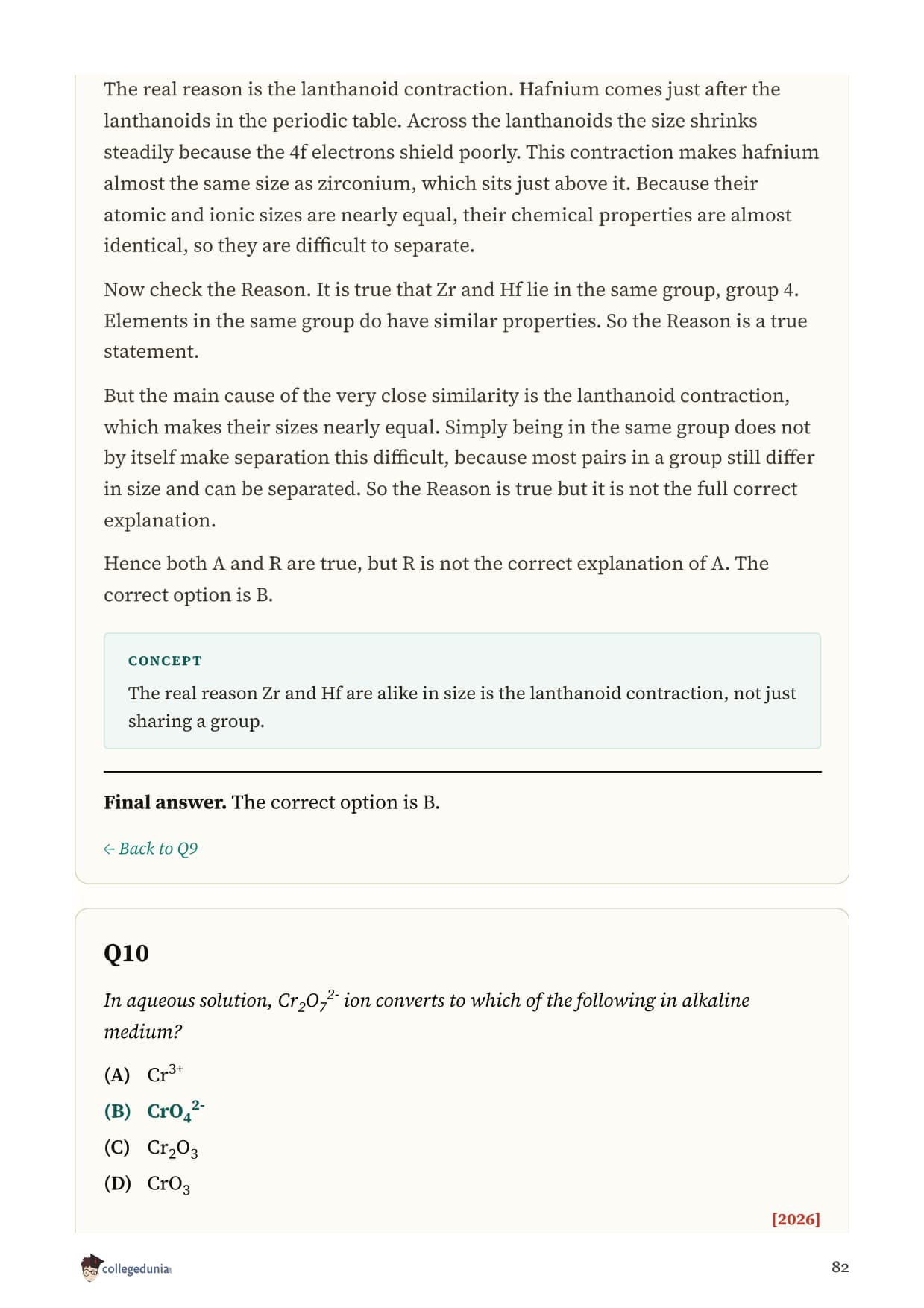
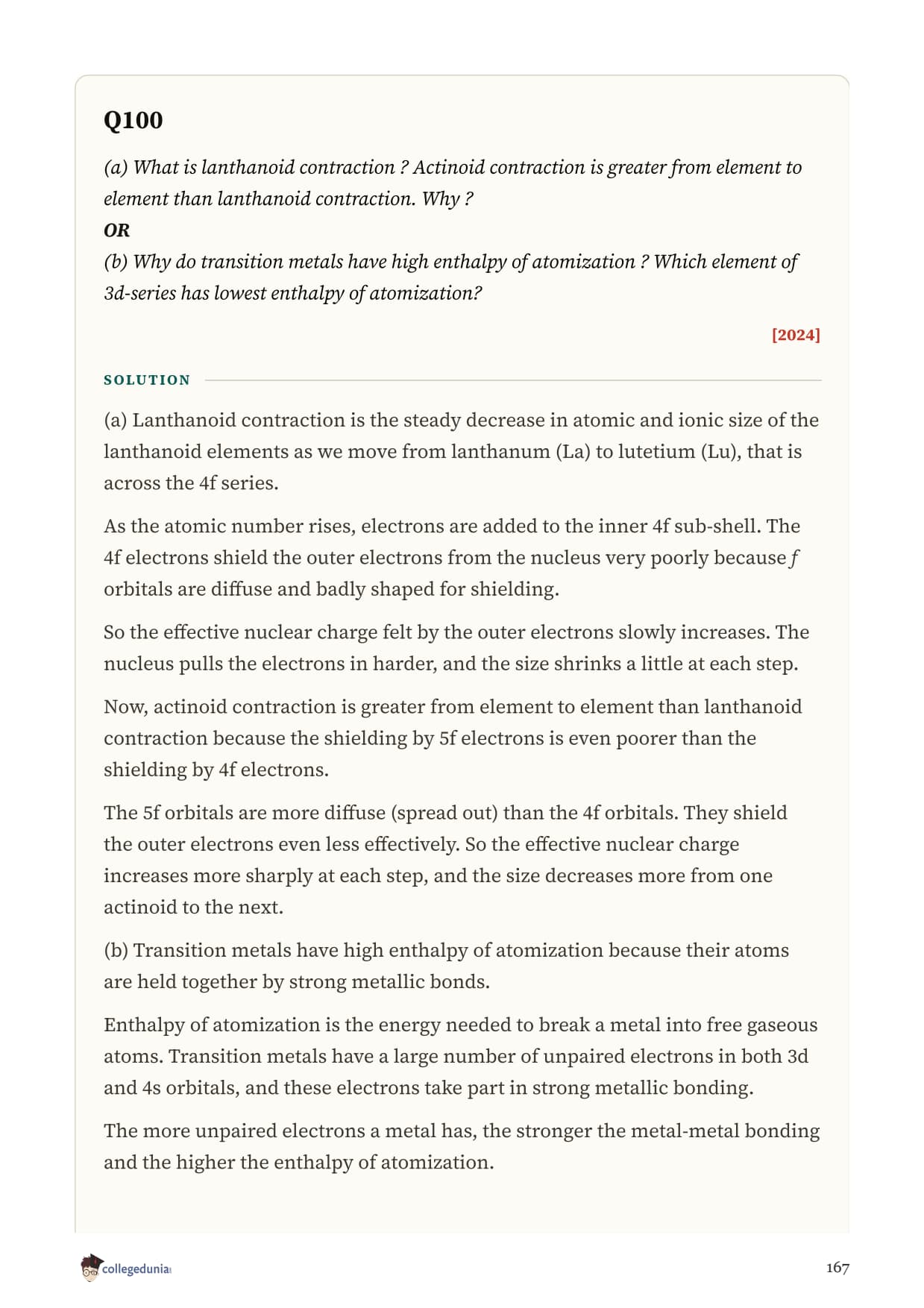
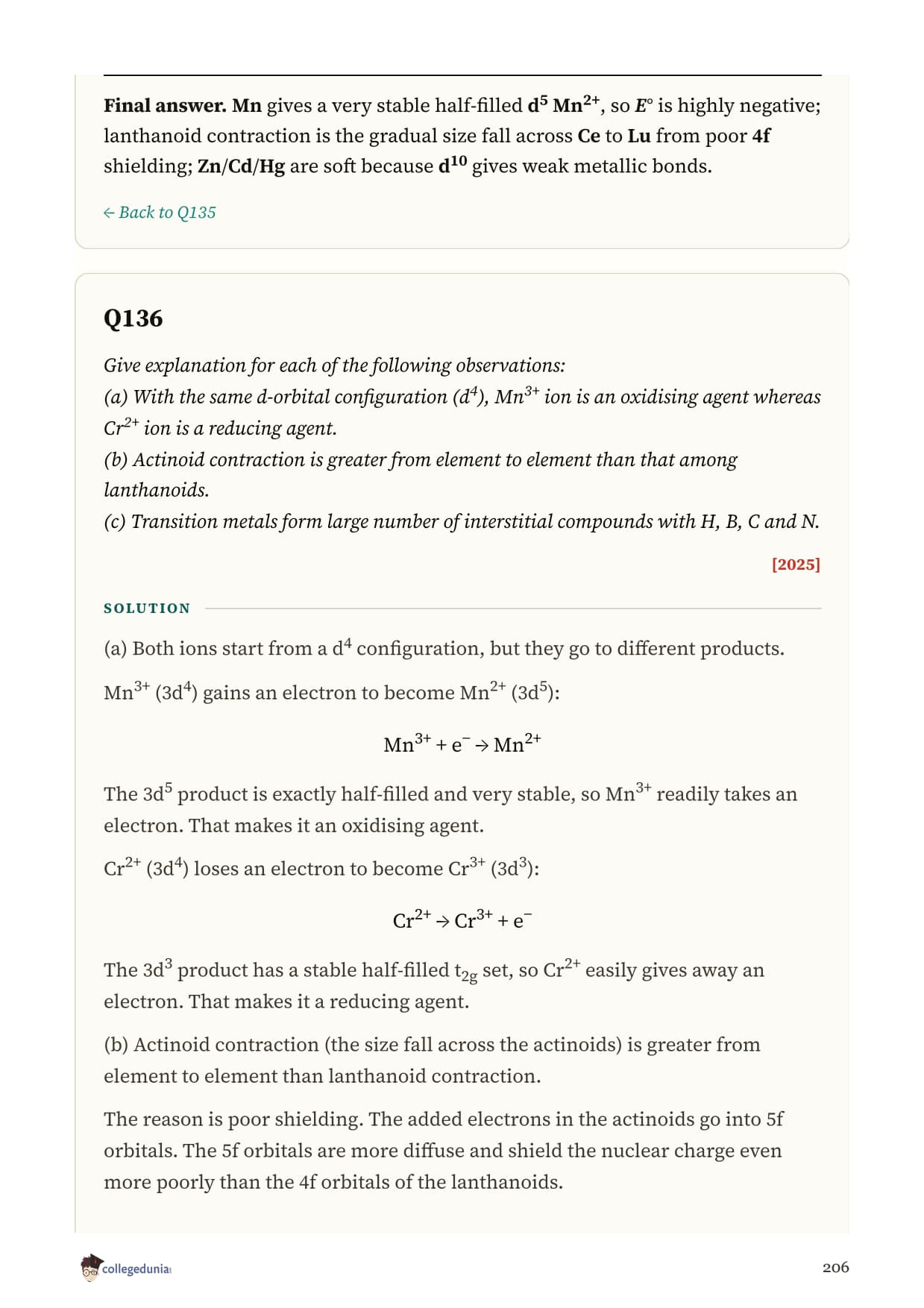
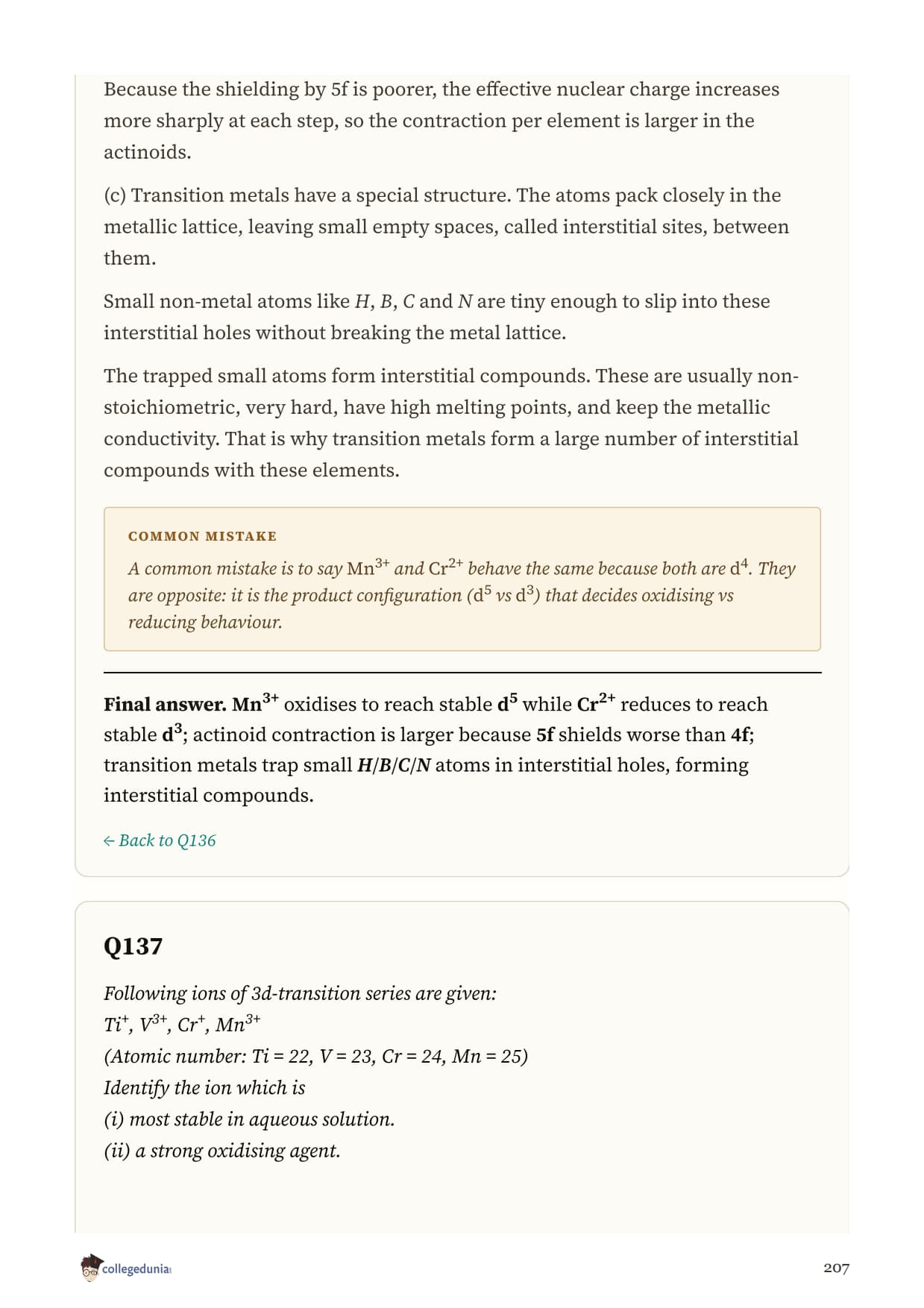
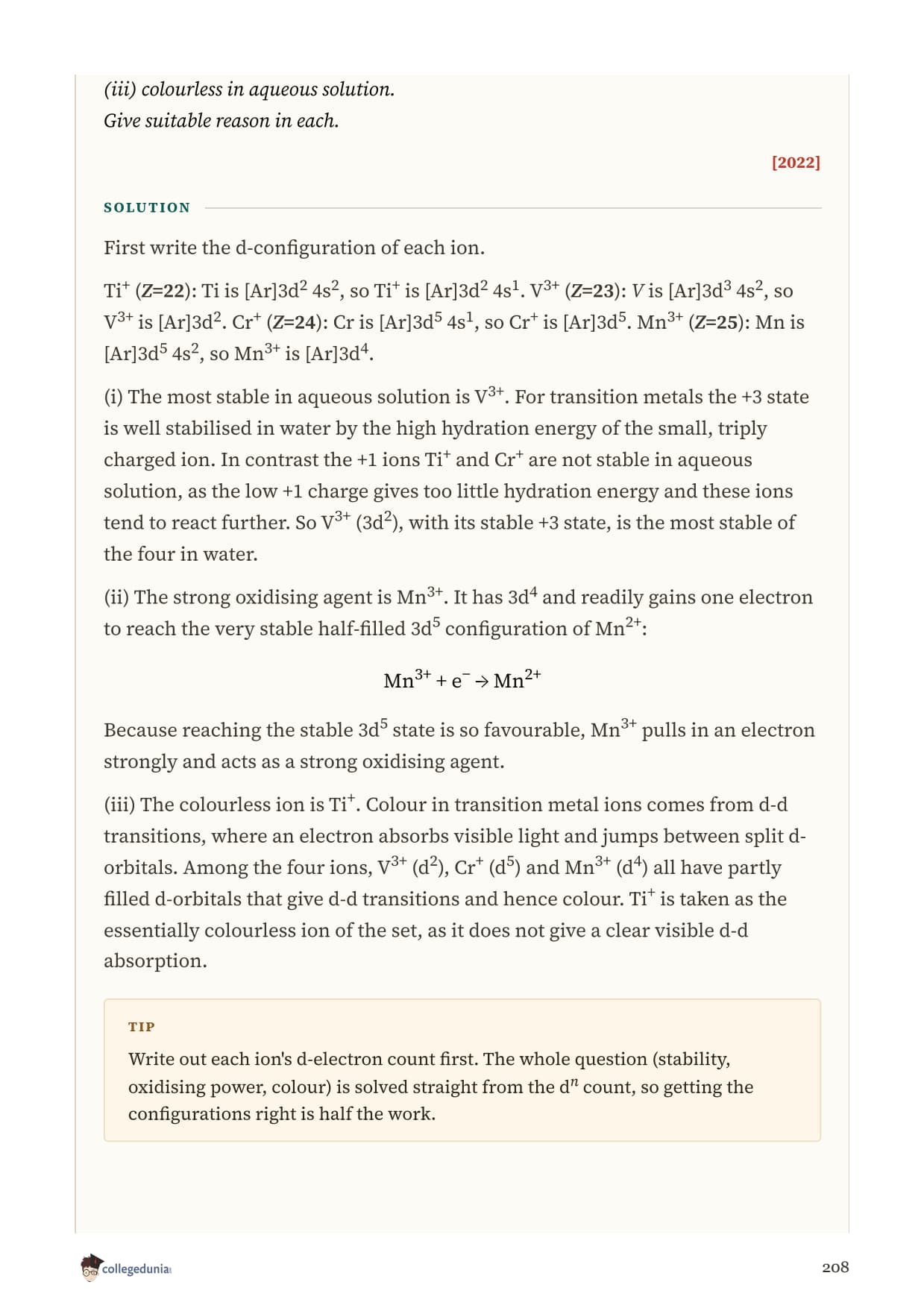
Ans. Lanthanoid contraction is the steady decrease in atomic and ionic size across the lanthanoid series. It happens because the 4f electrons shield the nuclear charge poorly, so the effective nuclear charge rises across the series. It makes the second and third transition series have very similar sizes.
Ques. How is a transition element defined?
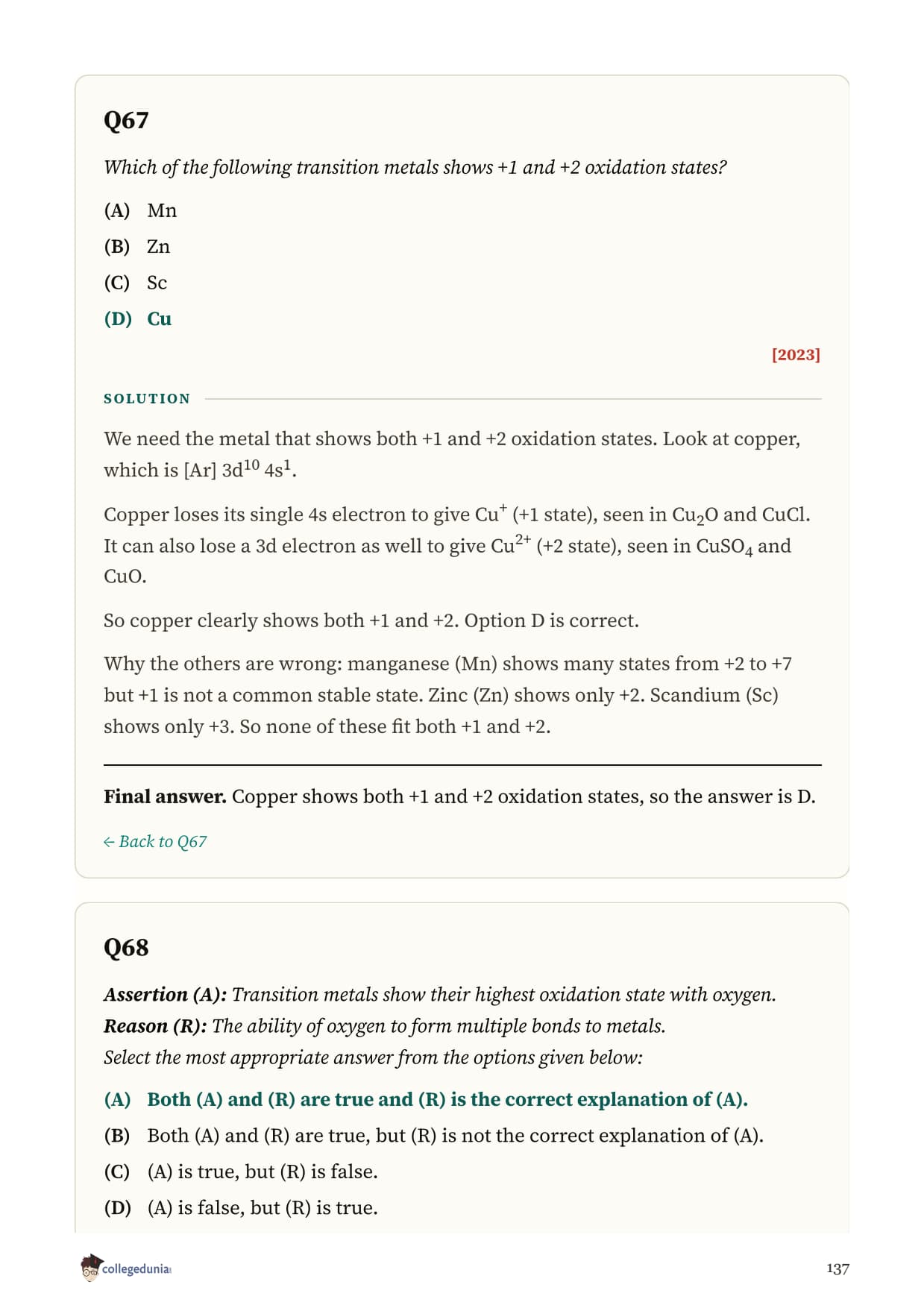
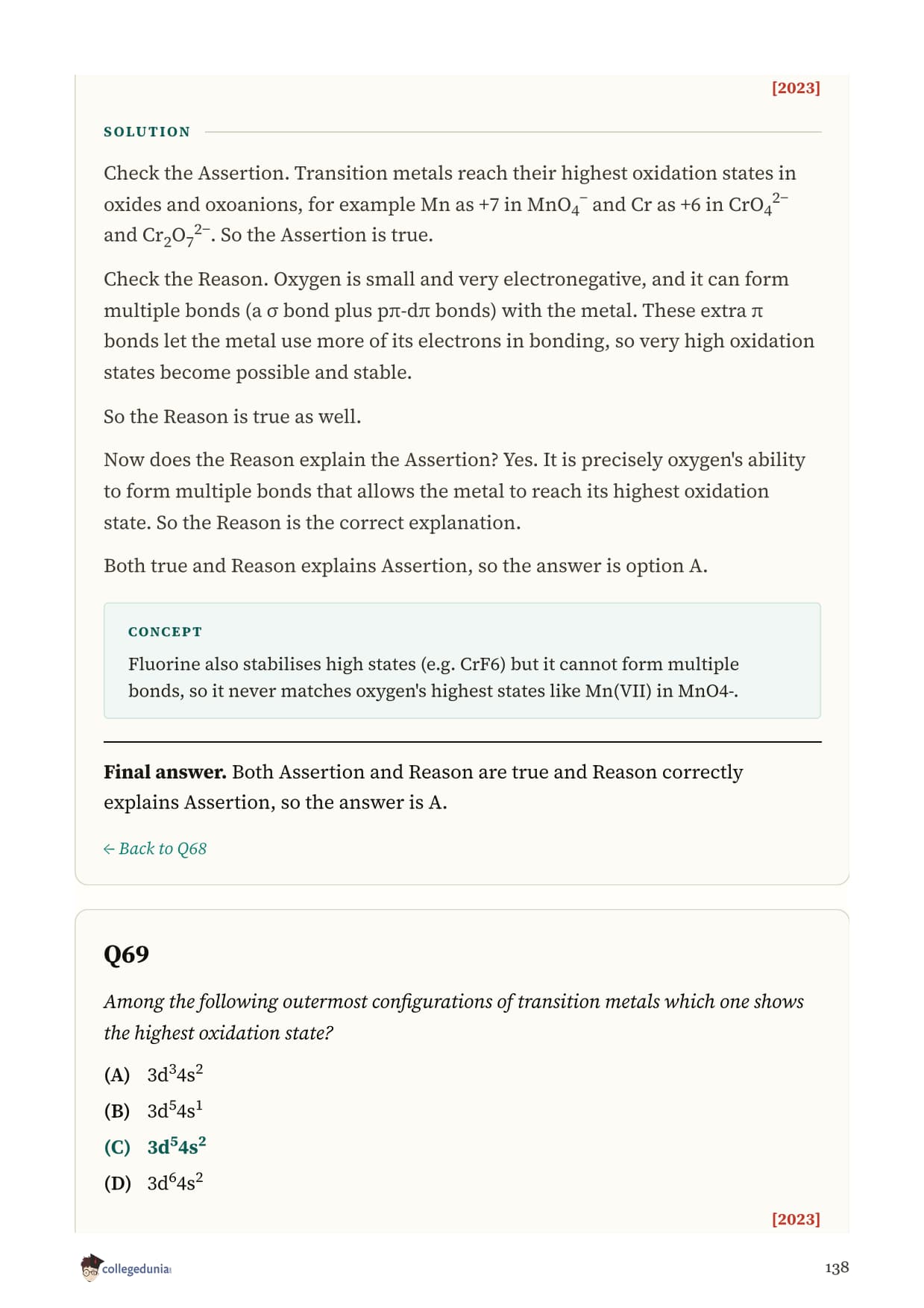
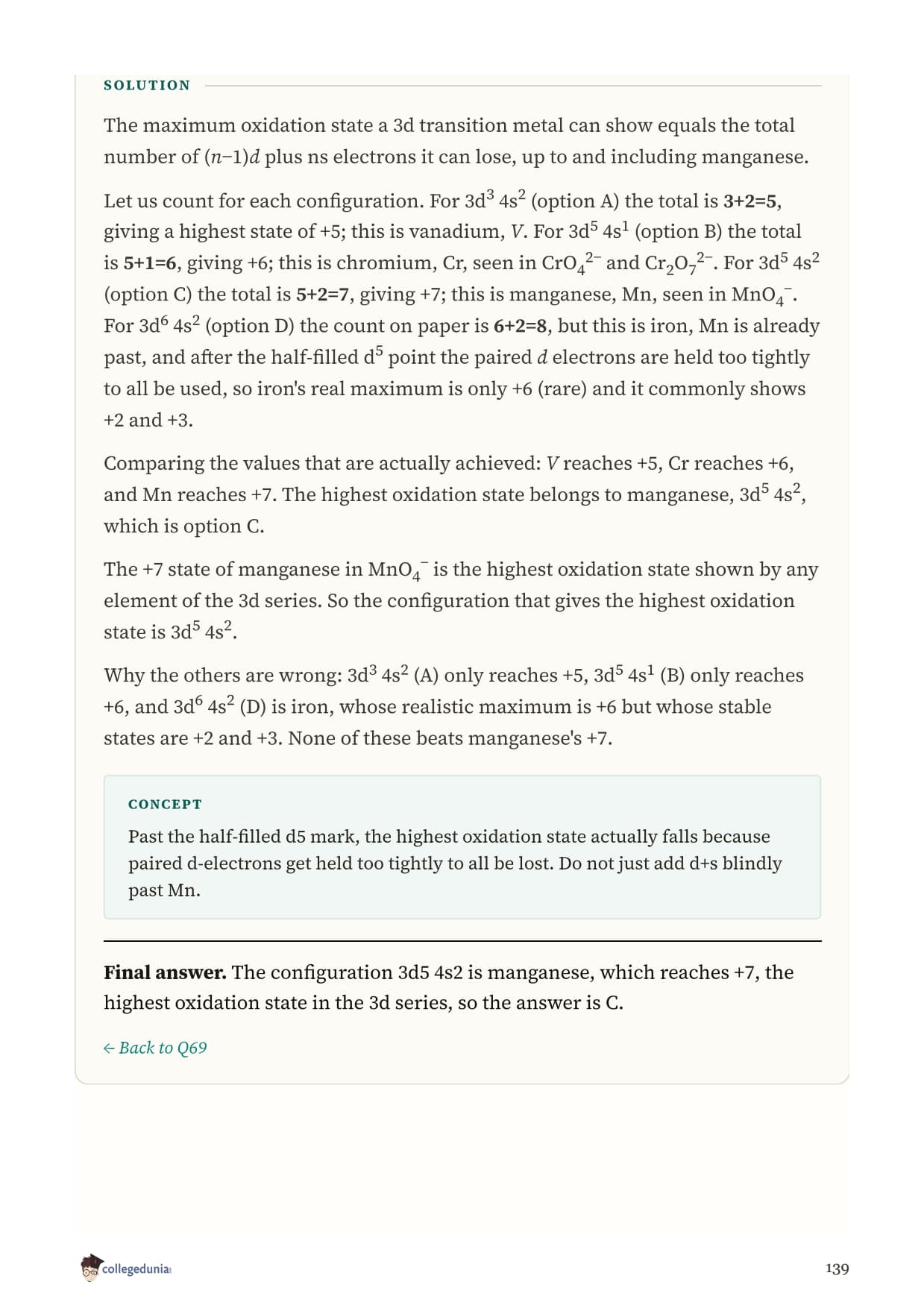
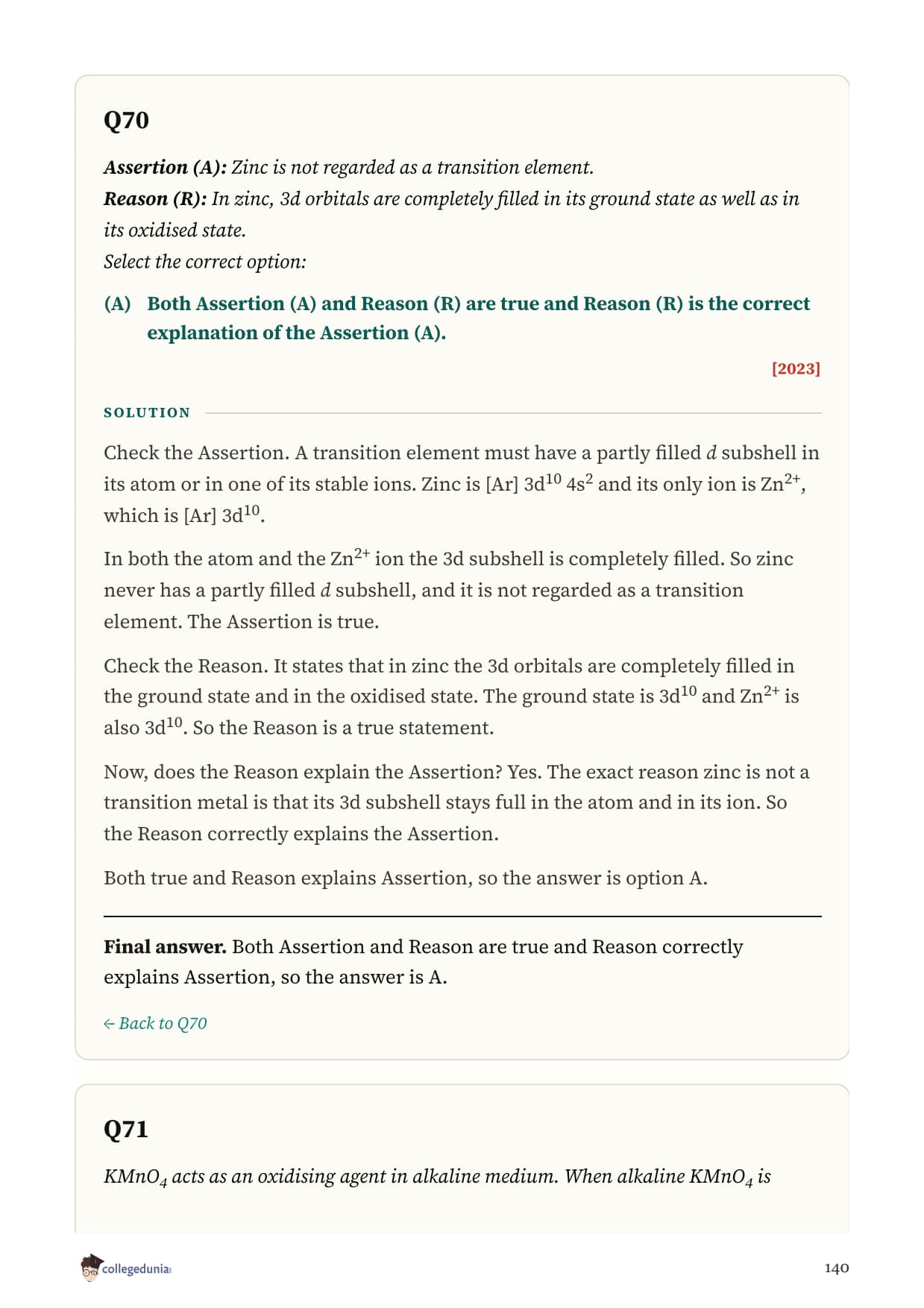
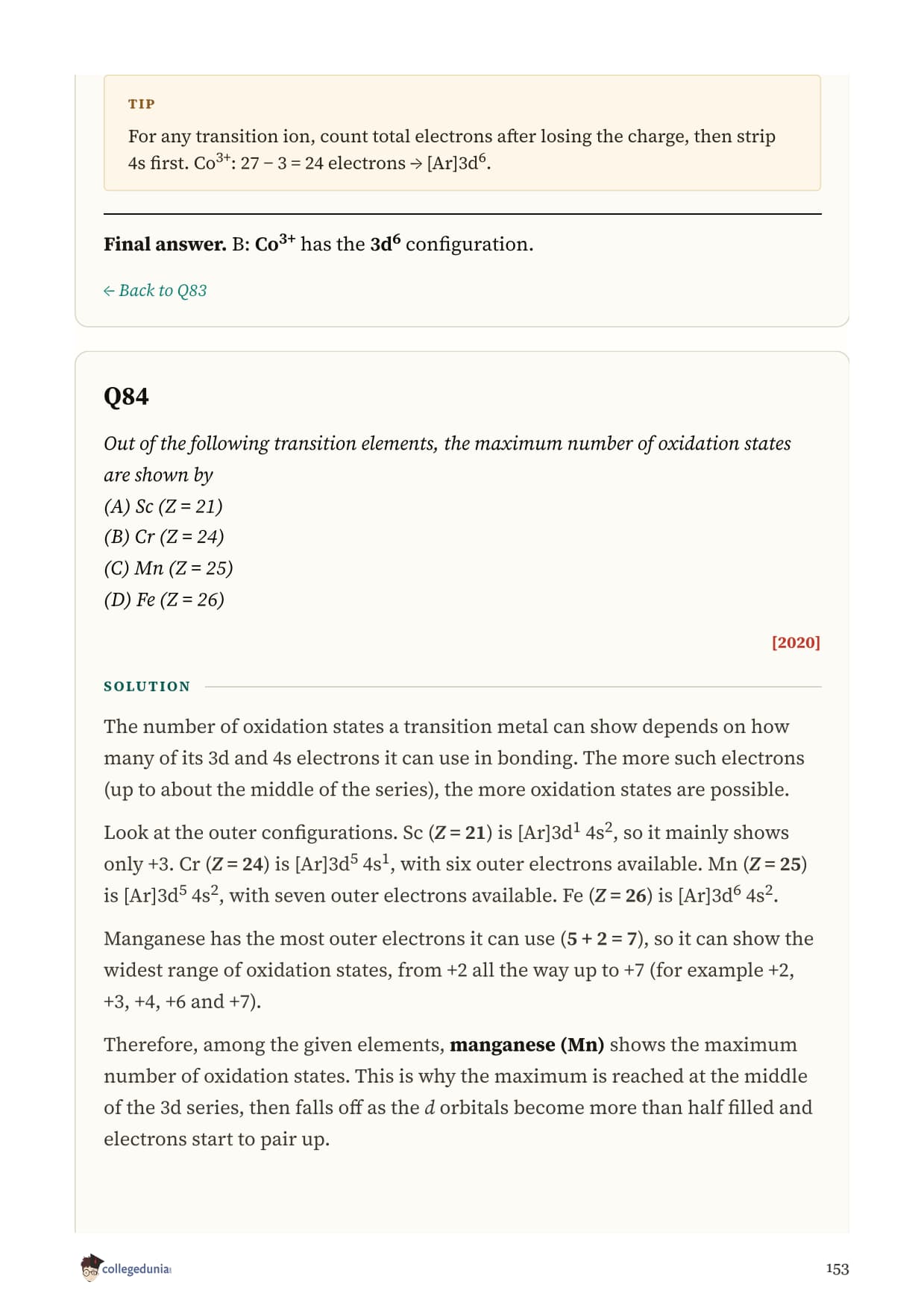
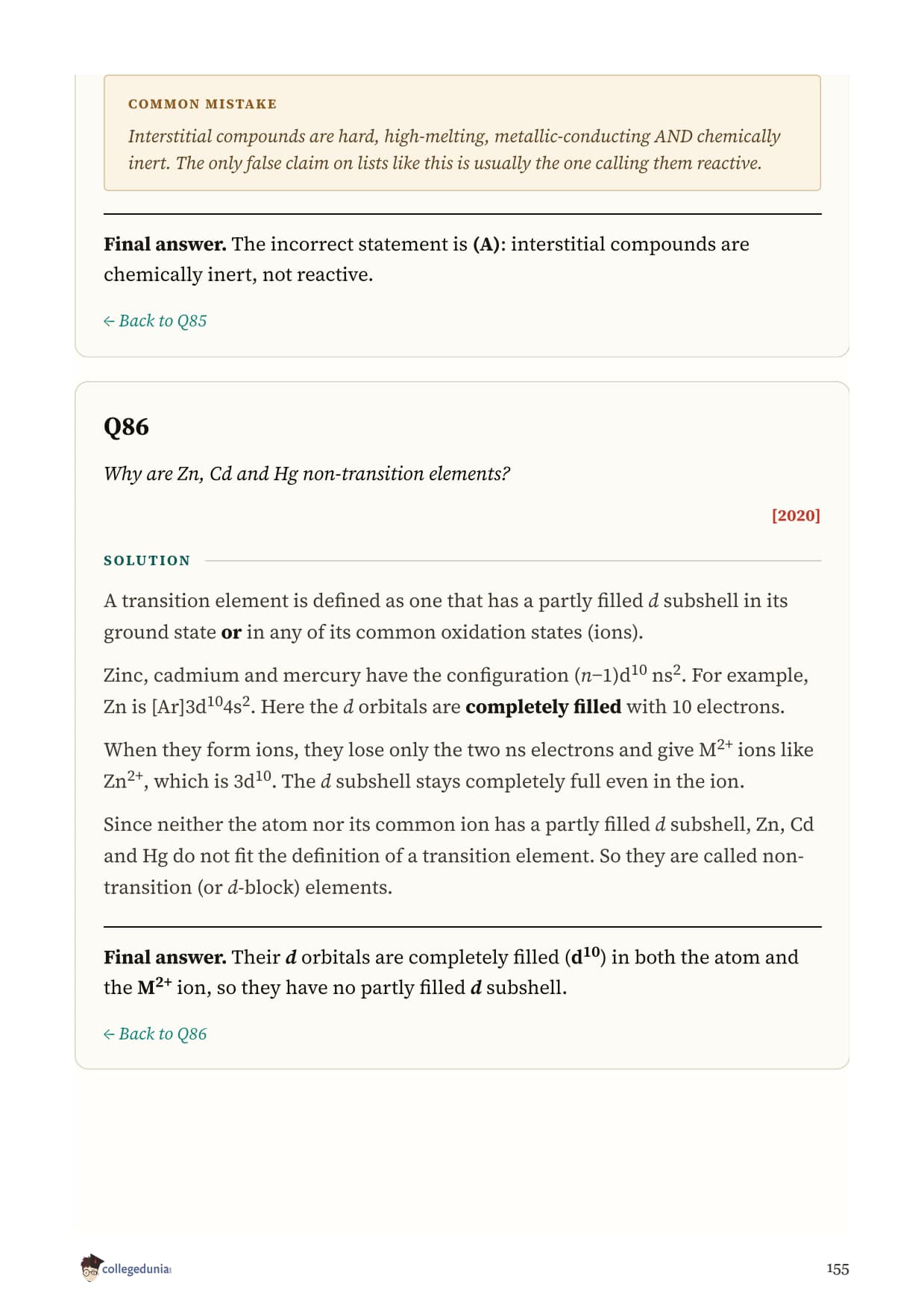
Ans. A transition element is one whose atom or one of its common ions has a partly filled d subshell. By this definition zinc, cadmium and mercury are not true transition metals, because their d subshell is completely filled in both the atom and the common ion.
Ques. What are interstitial compounds?
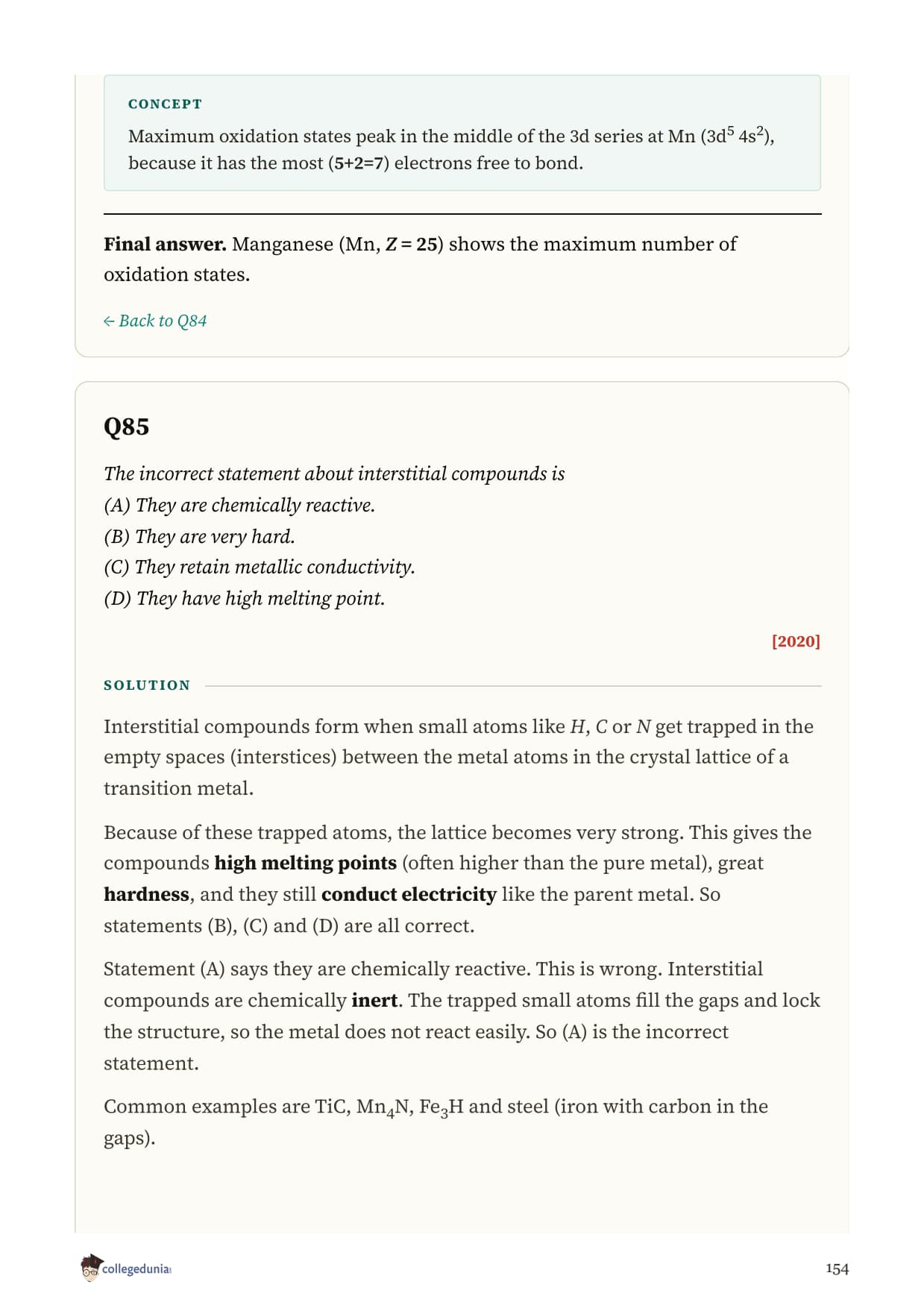
Ans. Interstitial compounds form when small atoms such as hydrogen, carbon, nitrogen or boron occupy the empty spaces in the crystal lattice of a transition metal. They are usually hard, high-melting and chemically inert, and they keep metallic conductivity. Steel is a familiar example involving carbon in iron.



Comments