




Download the Class 11 Chemistry Chapter 8 Organic Chemistry: Some Basic Principles and Techniques NCERT Book PDF, the official 2026-27 NCERT textbook chapter. It sets up nomenclature, isomerism and reaction mechanism, the base for all of organic chemistry in the Boards, JEE Main, JEE Advanced and NEET.
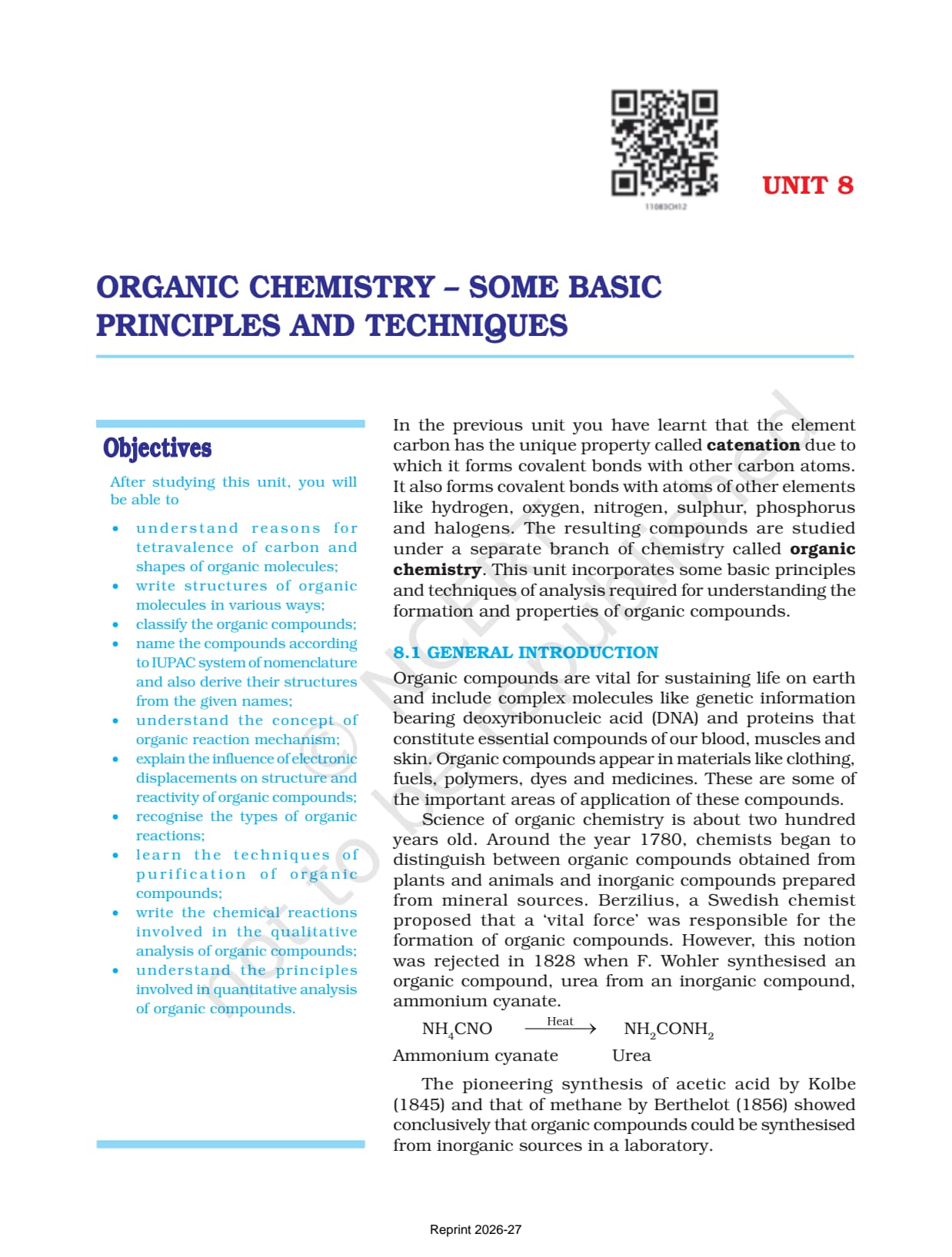
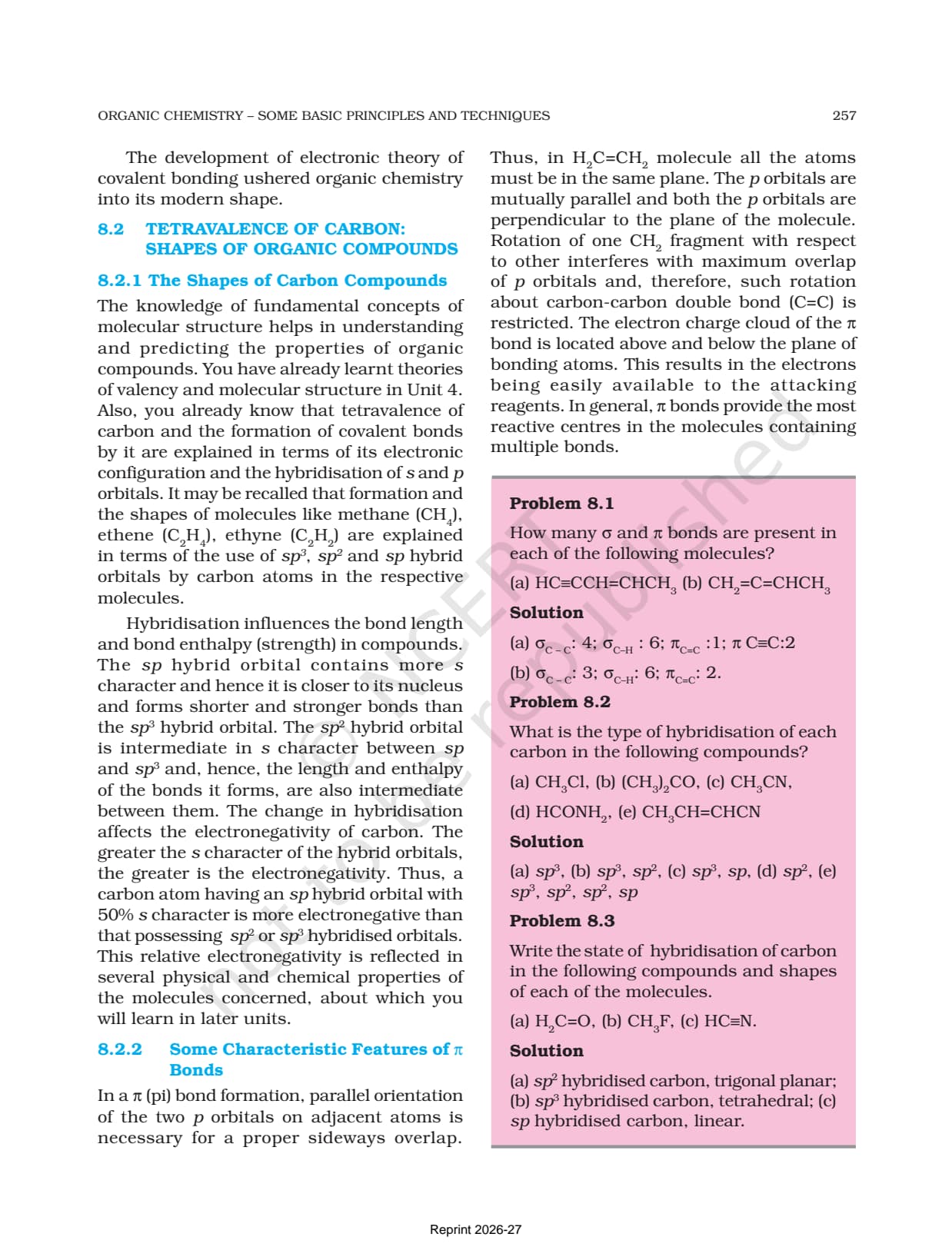
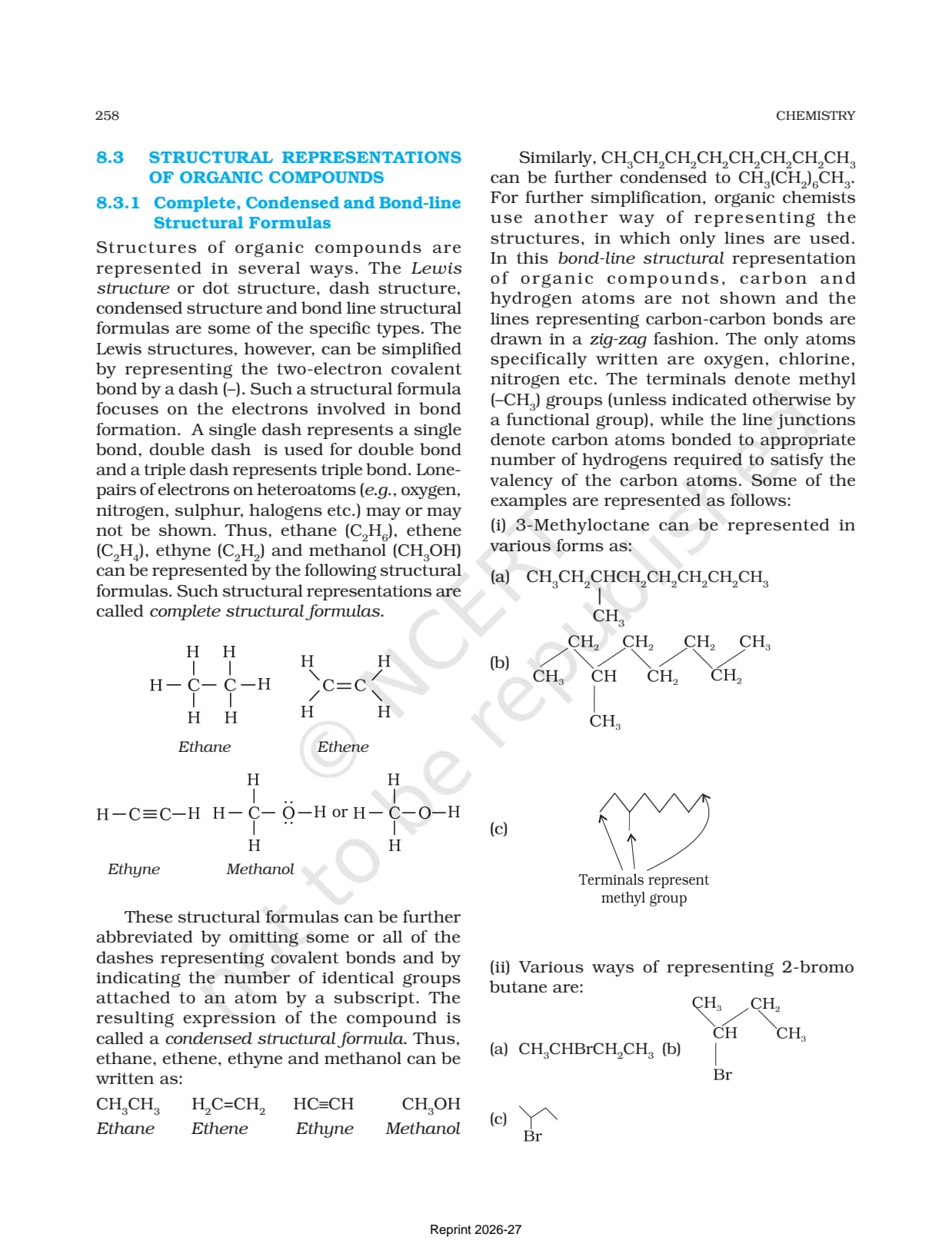
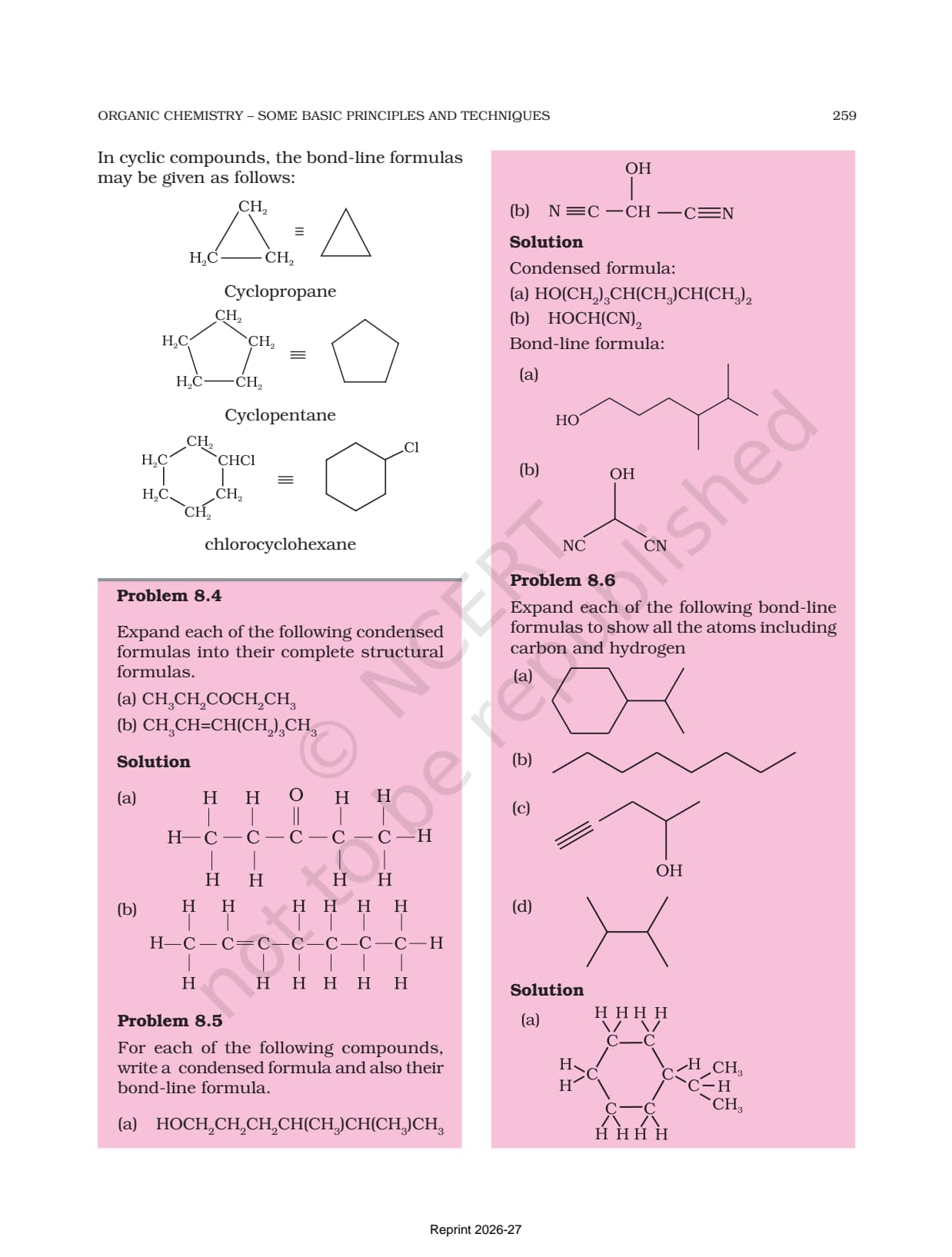
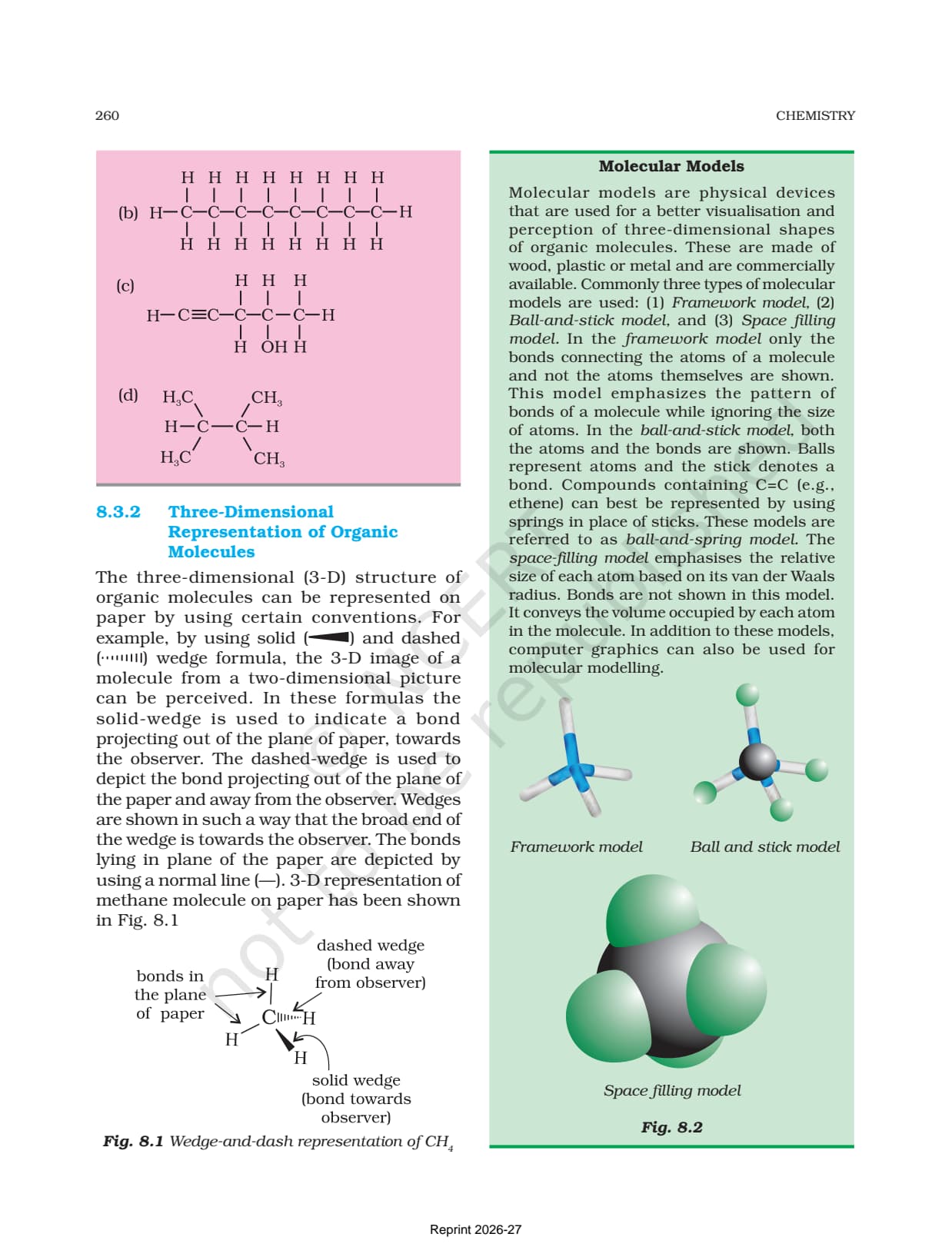
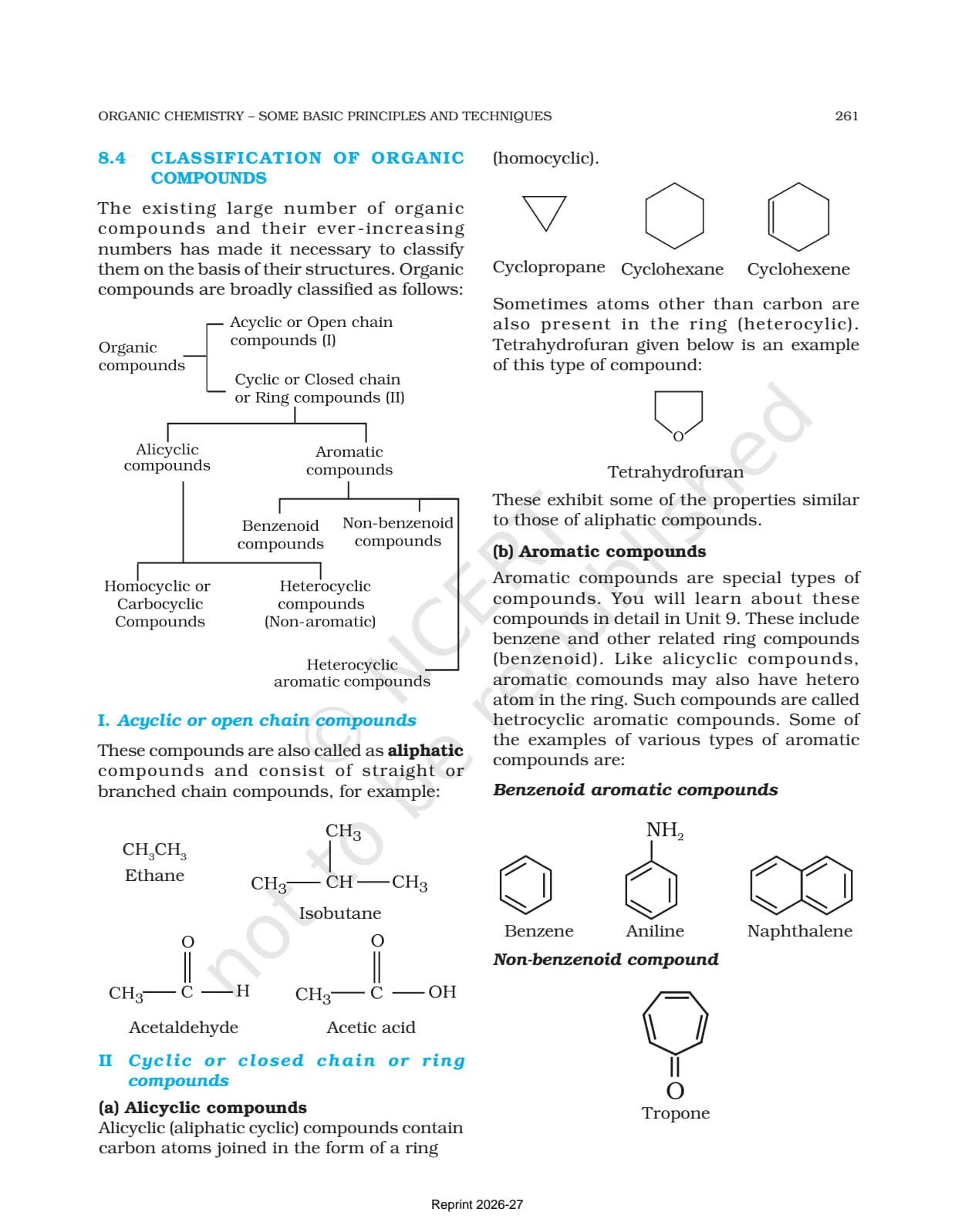
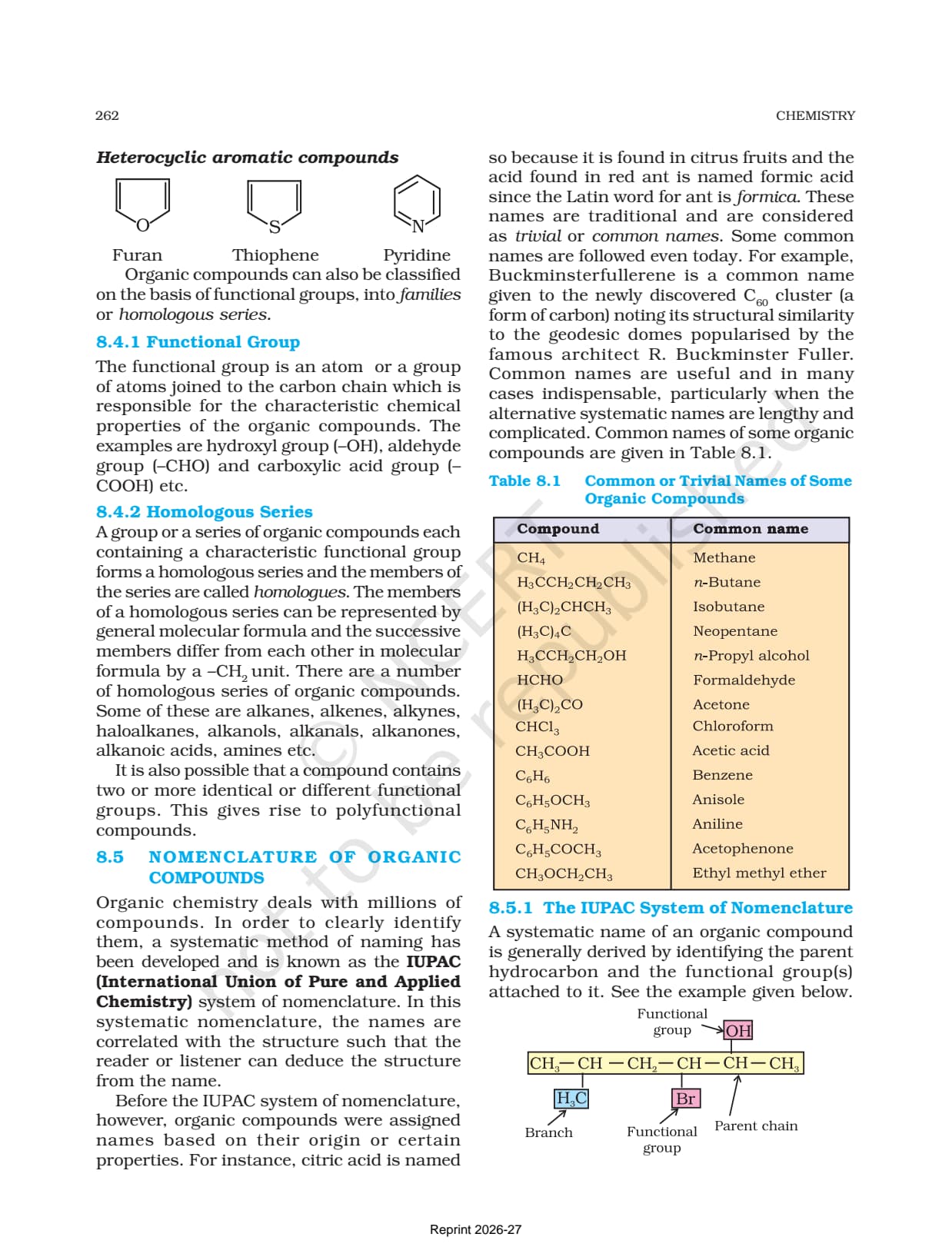
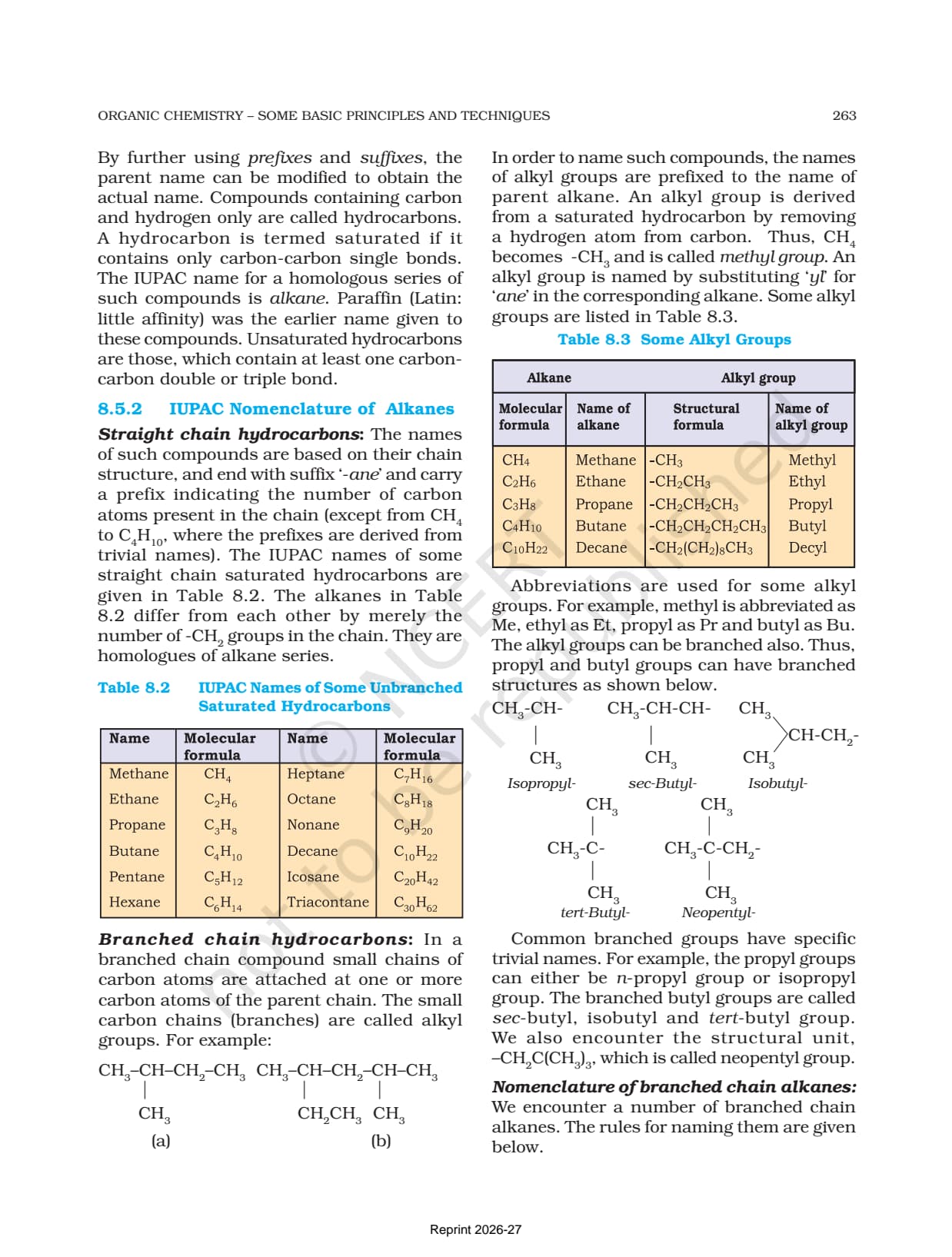
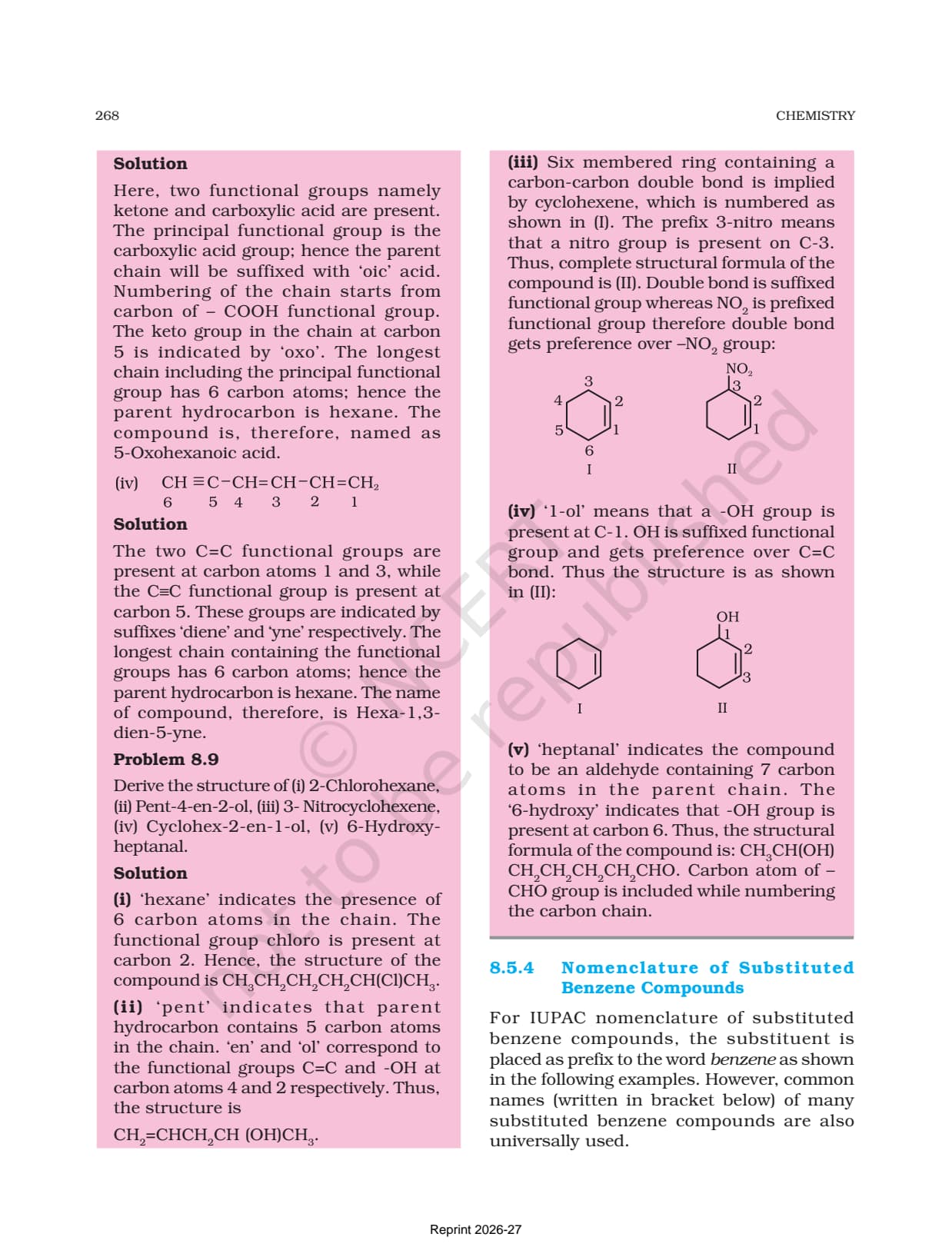
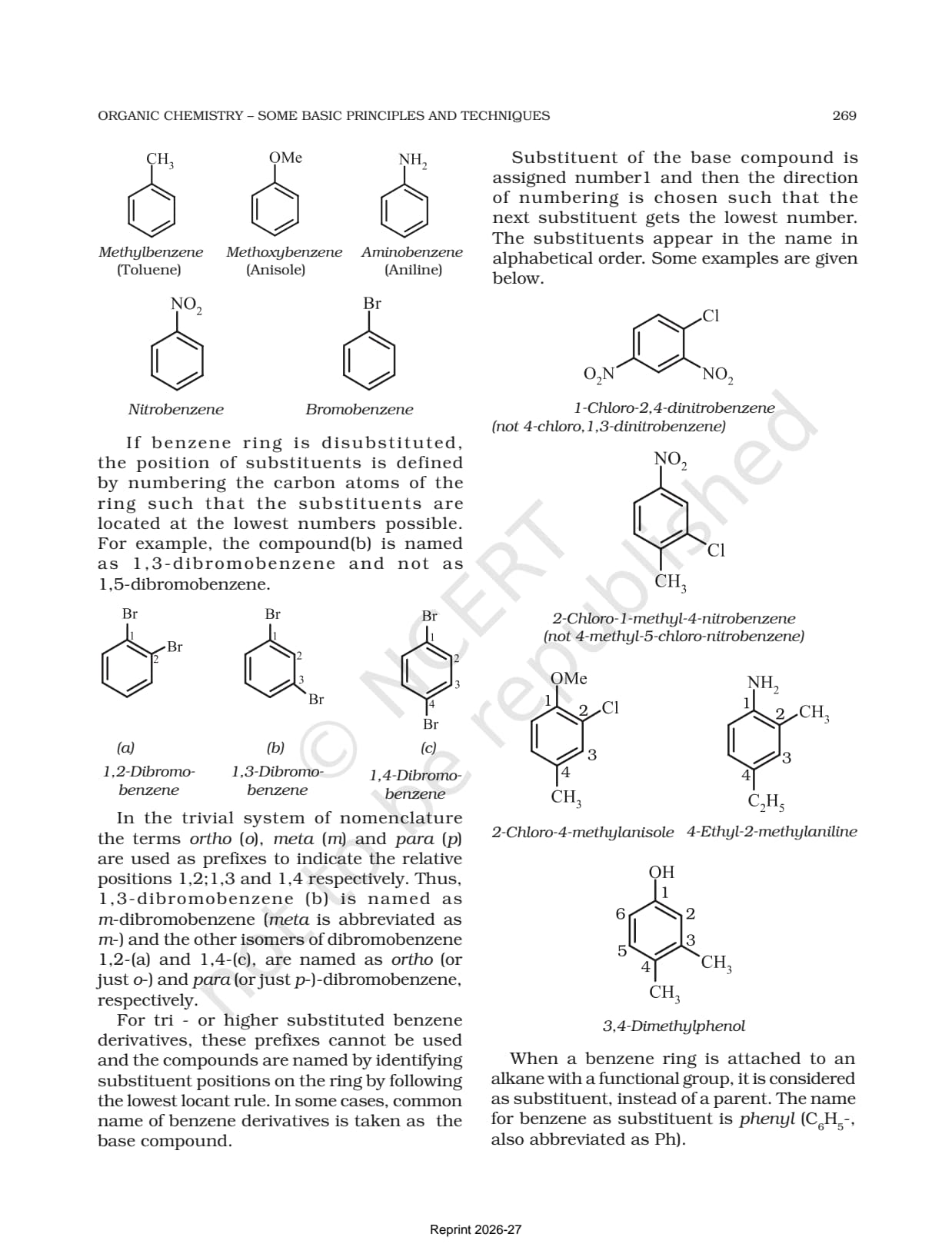
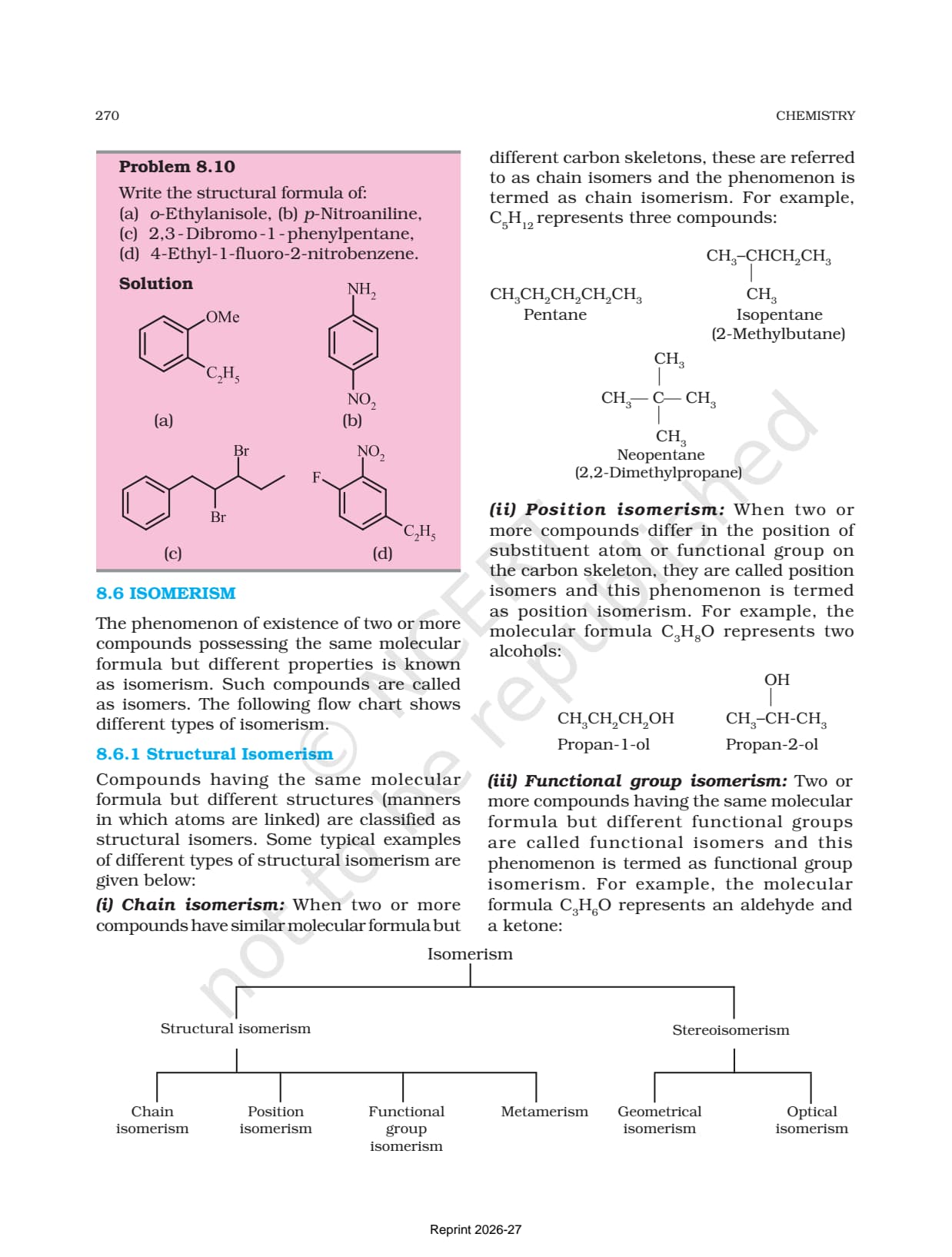

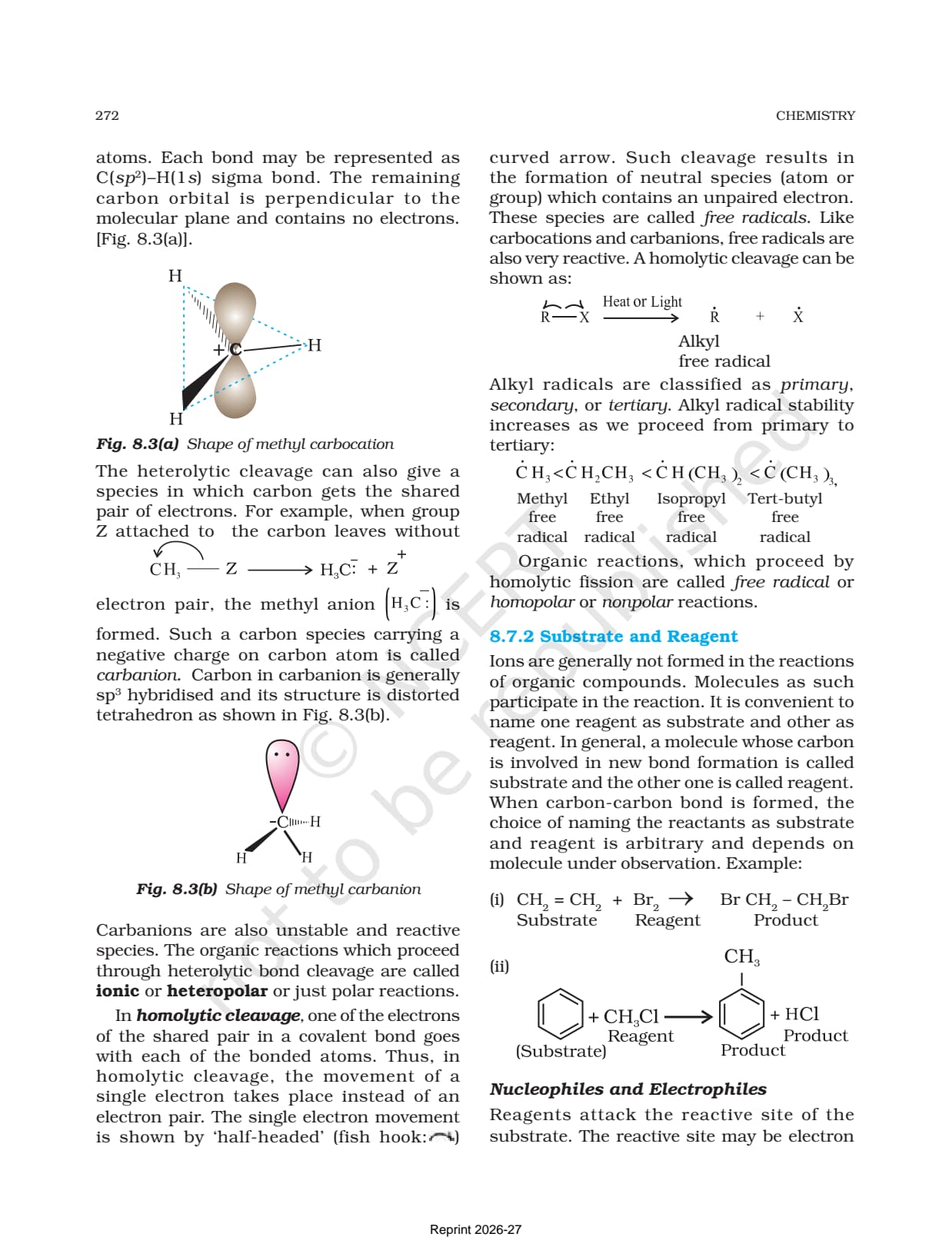
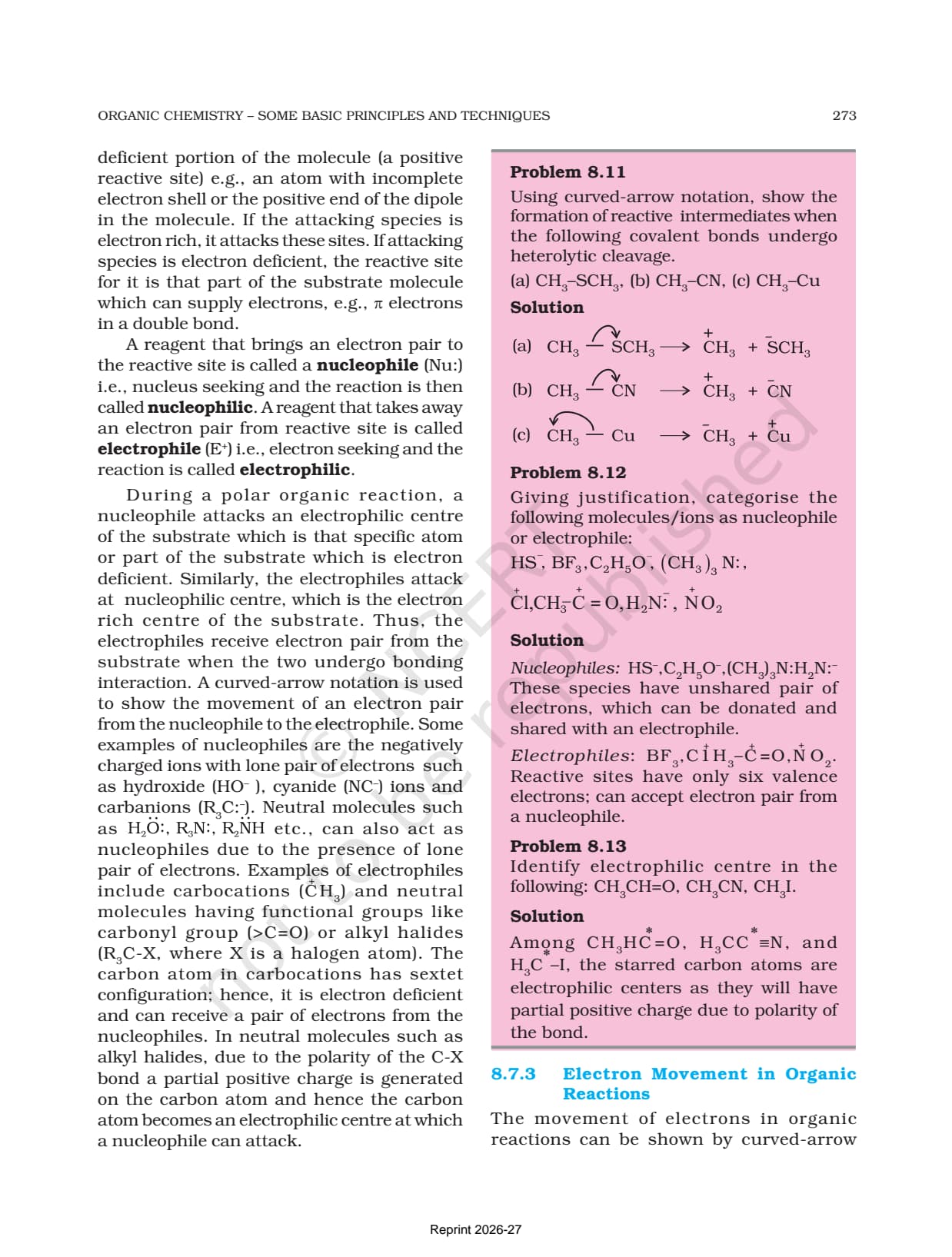
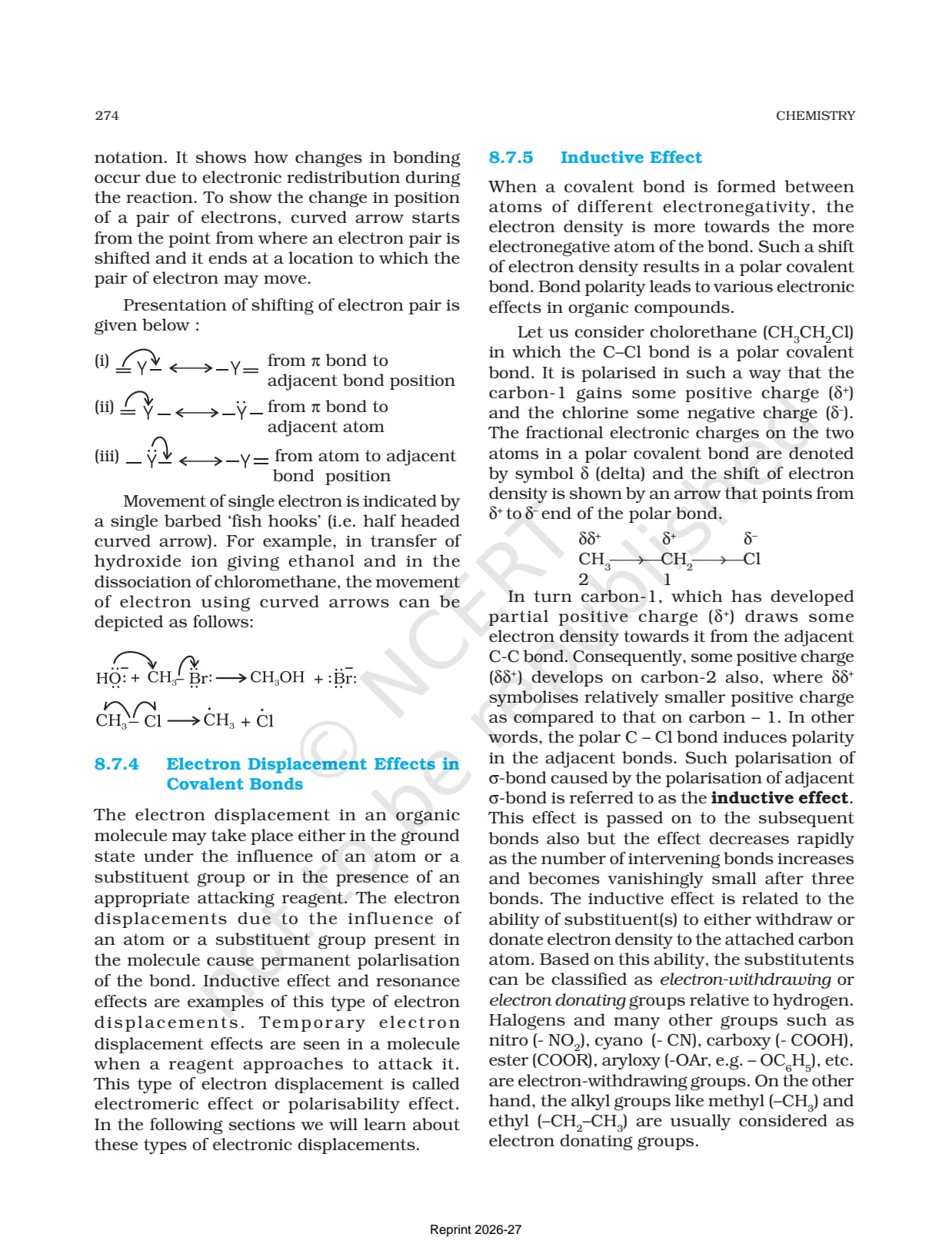
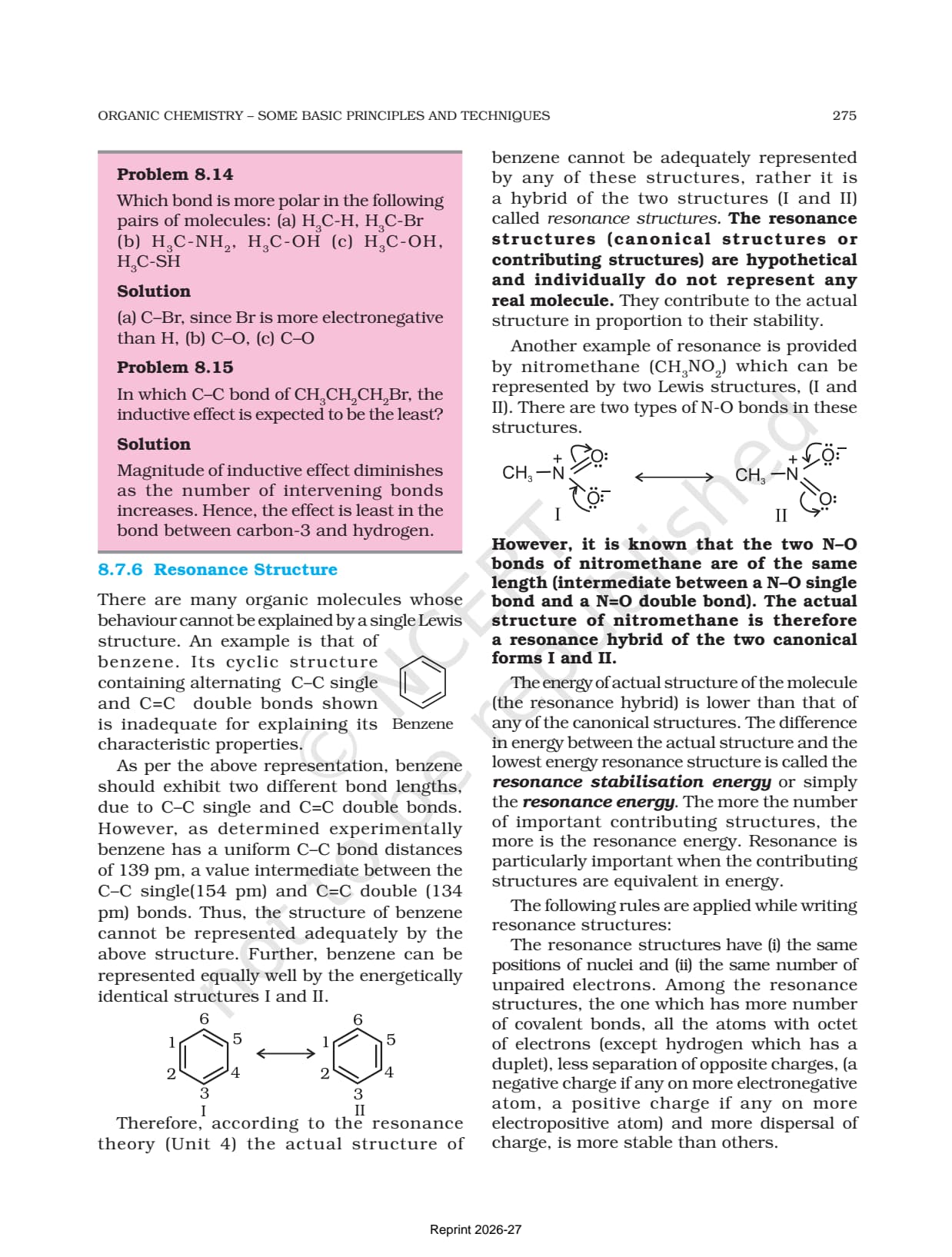
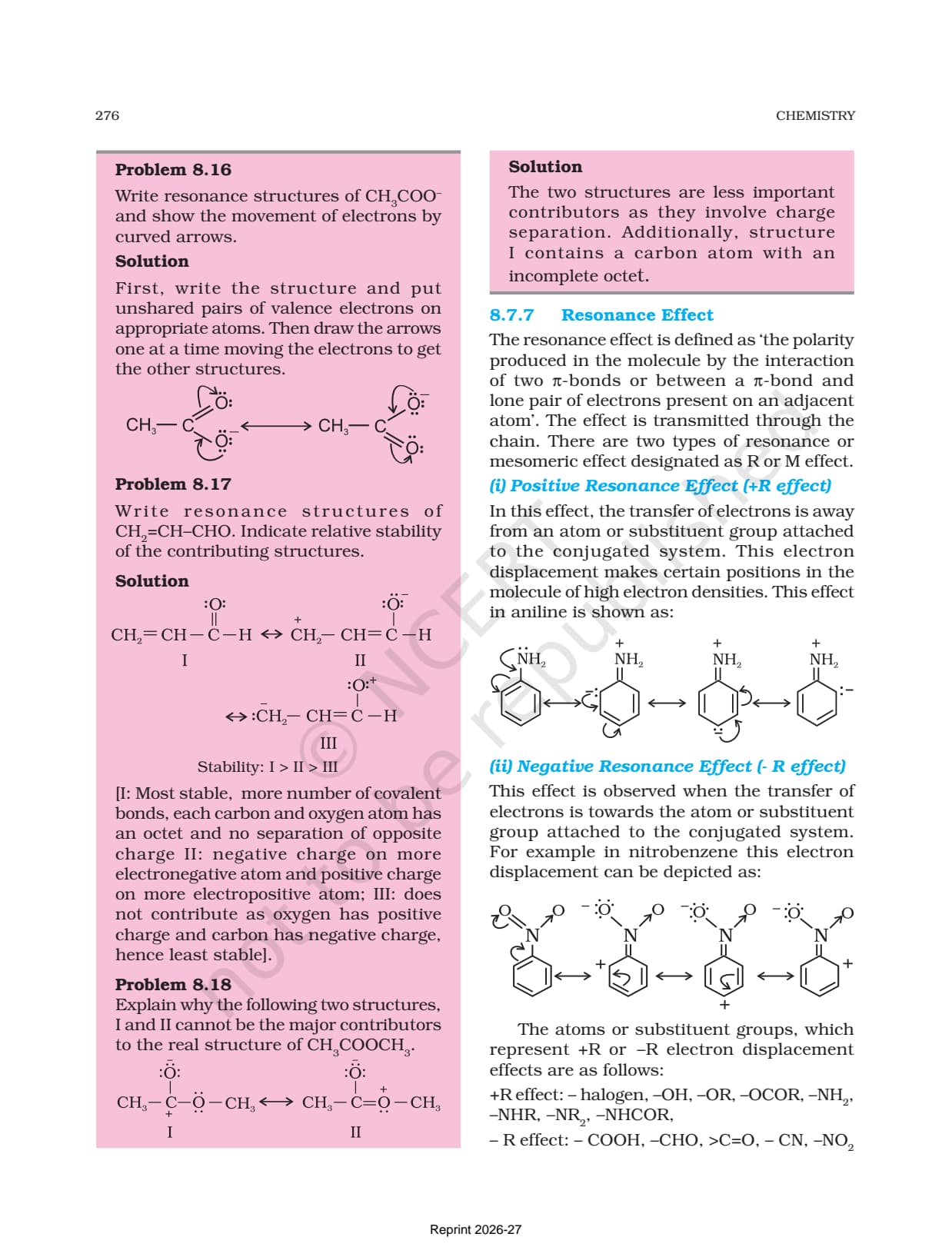
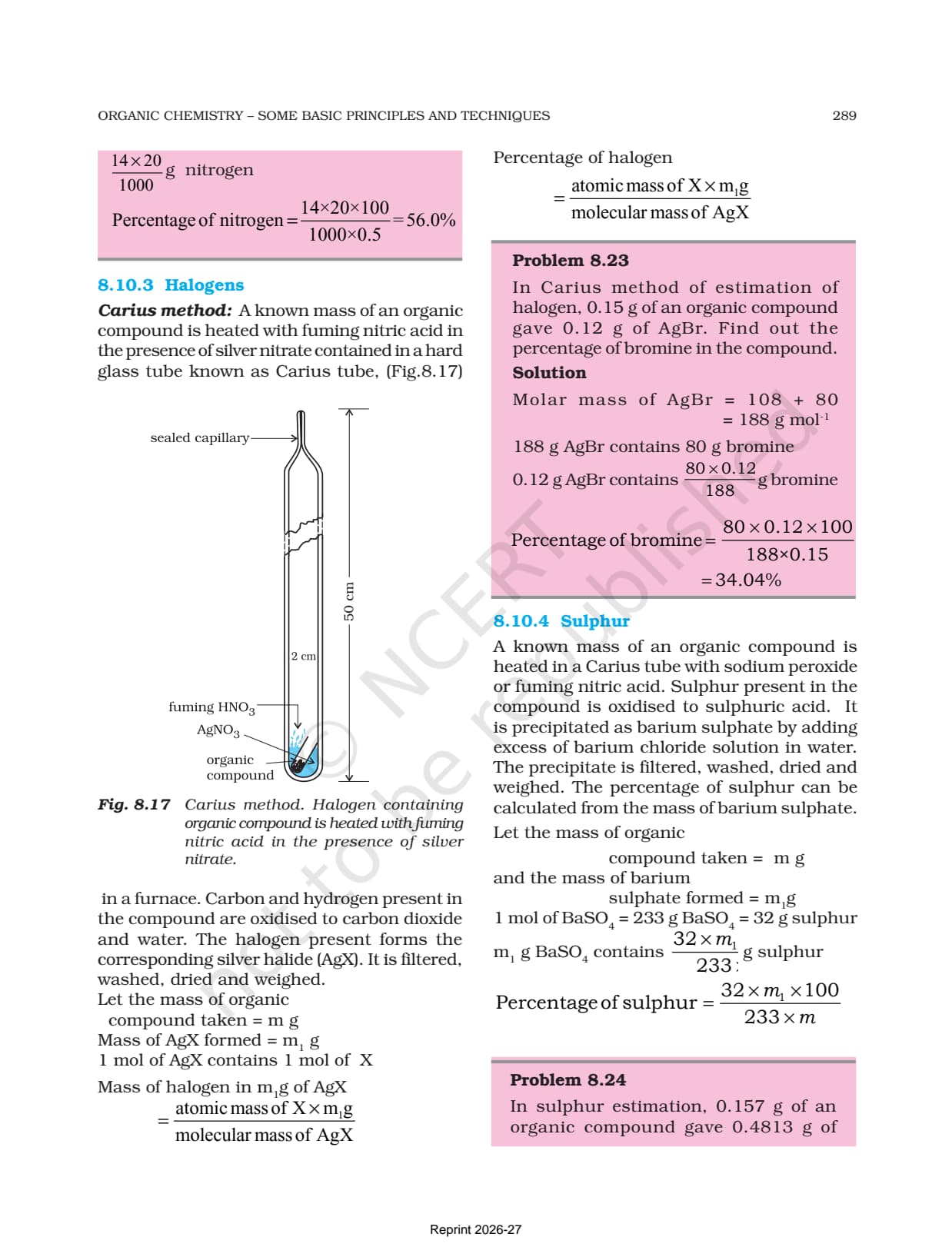
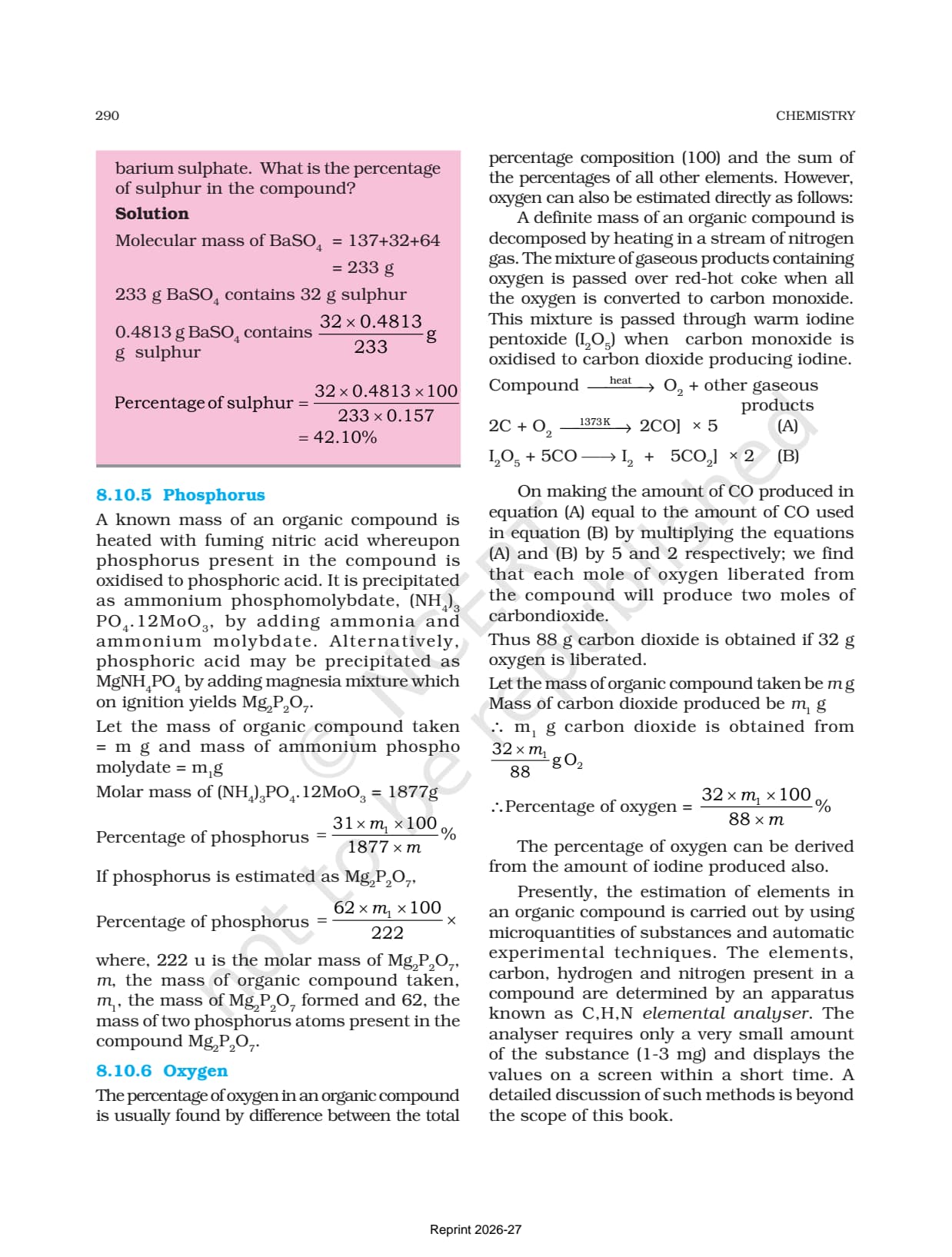
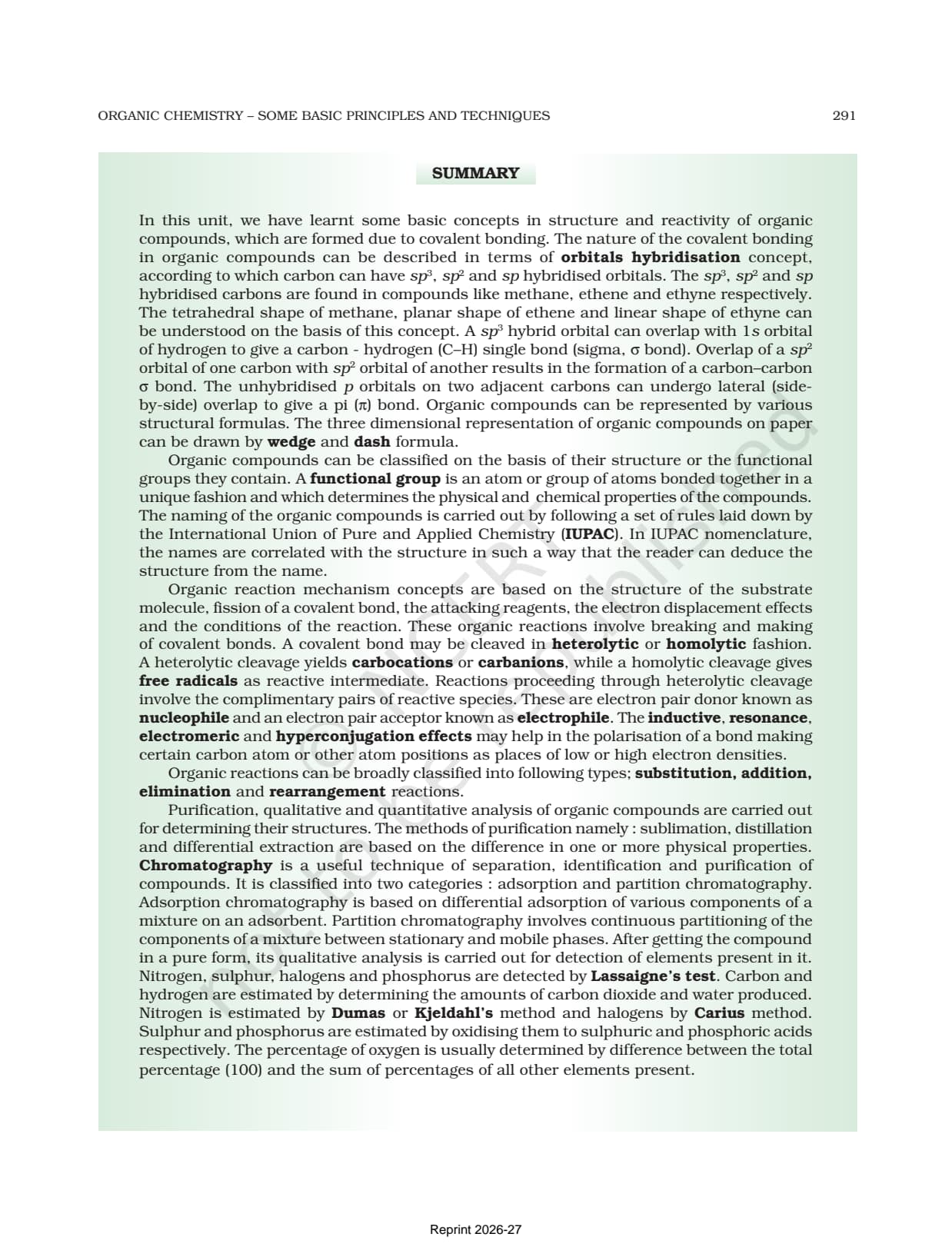
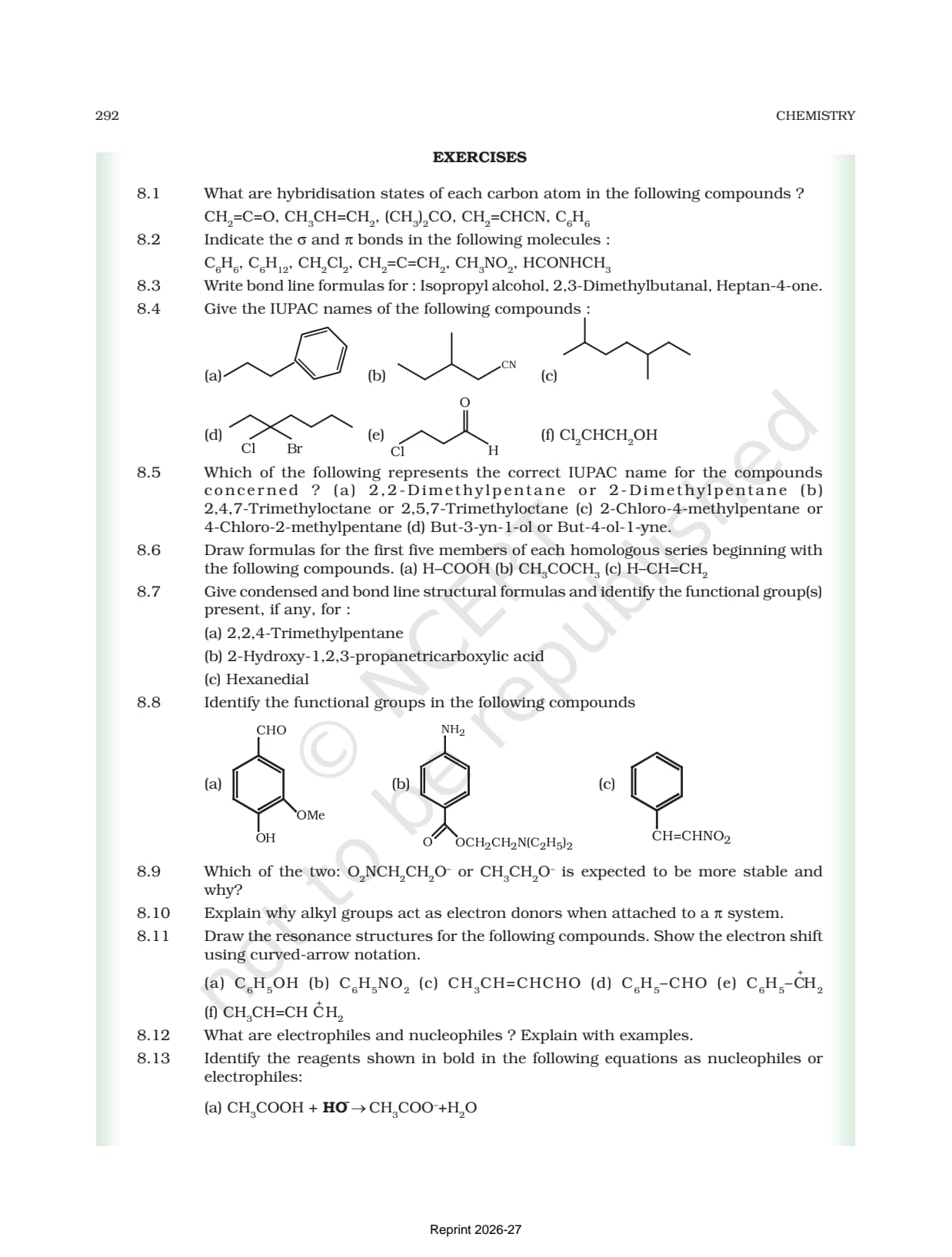
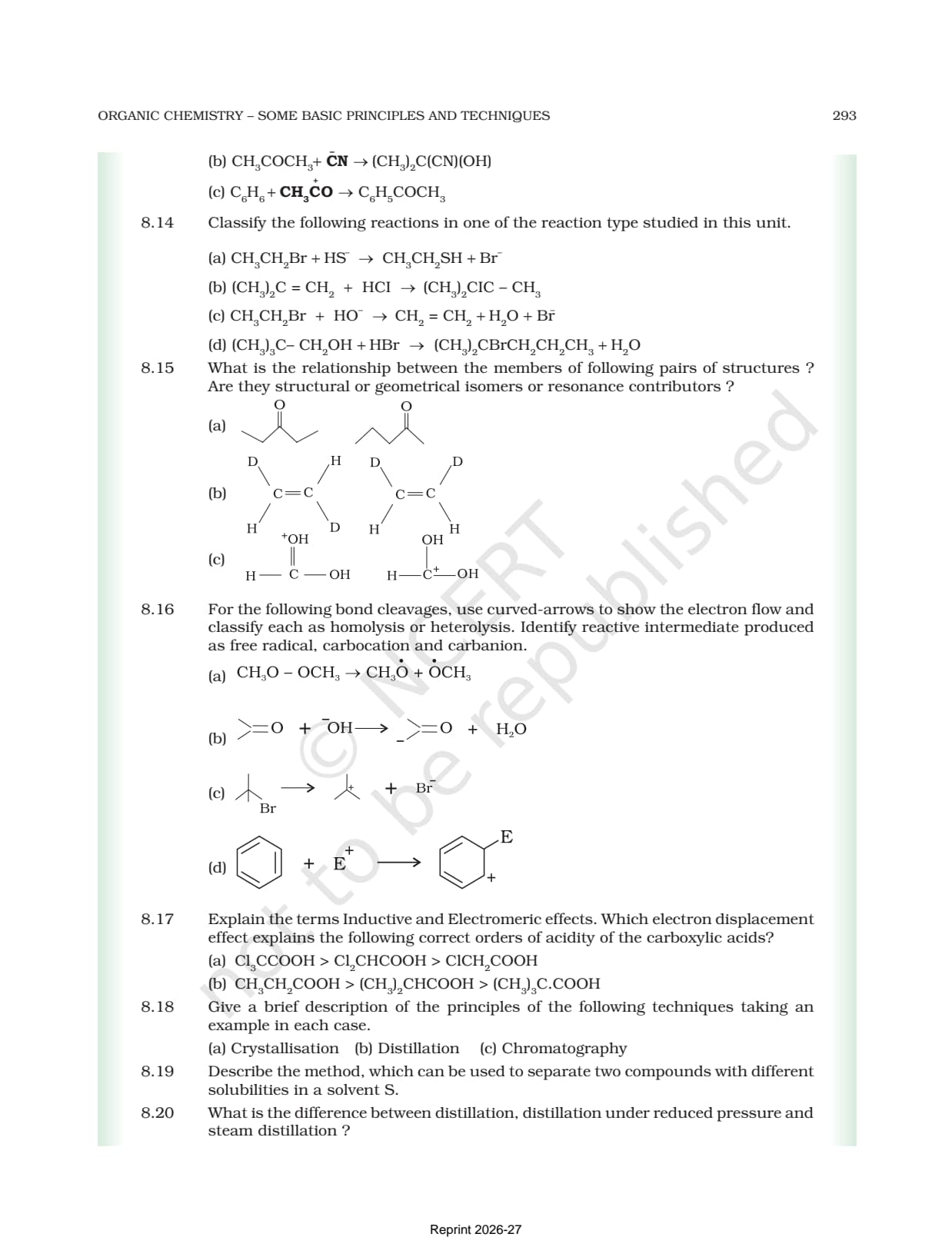
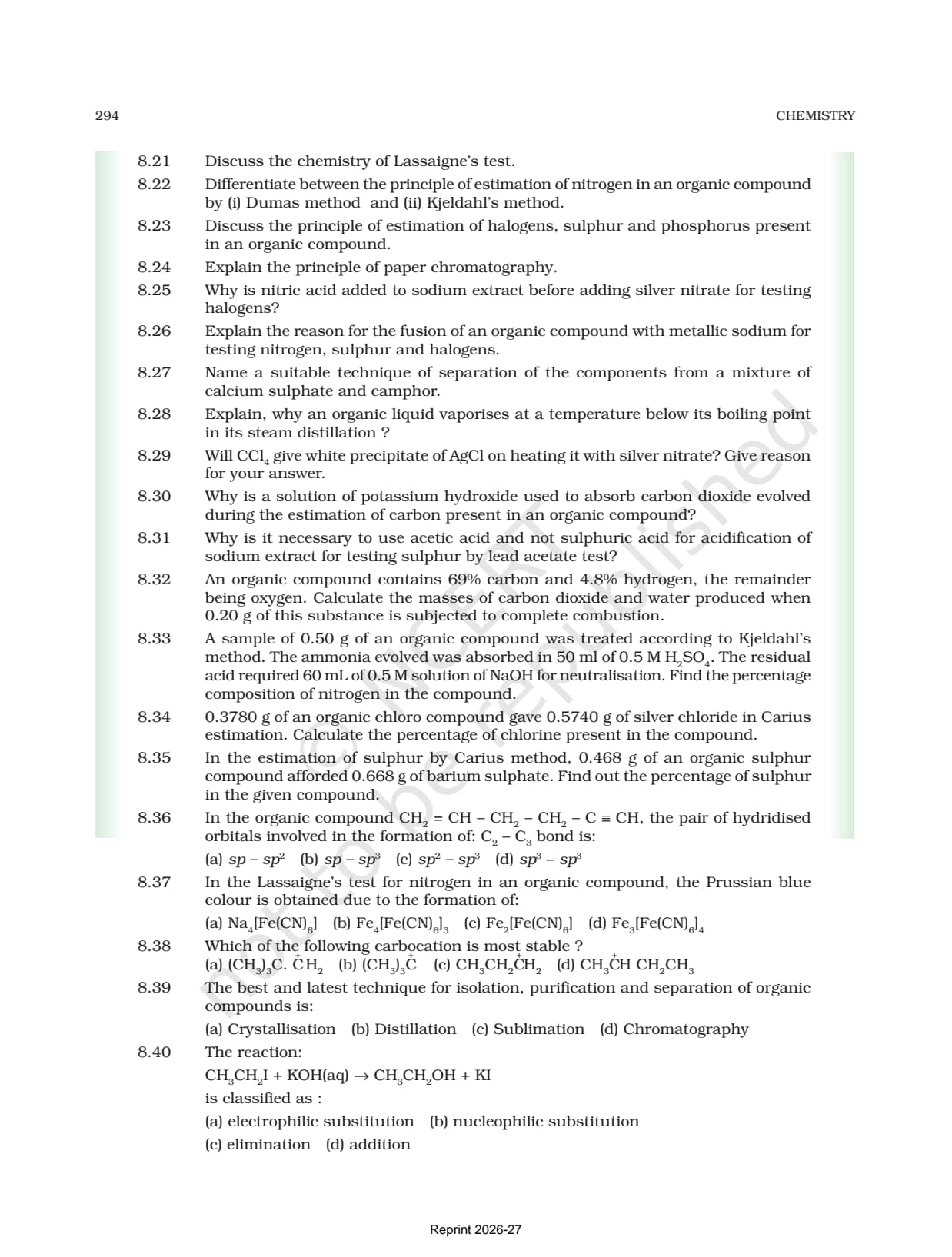
- Official NCERT 2026-27 chapter, clean and print-ready.
- Covers IUPAC nomenclature, isomerism, electronic effects and purification methods.
- Read it alongside the solved exercises and the formula sheet linked below.
This Class 11 Chemistry Chapter 8 Organic Chemistry: Some Basic Principles and Techniques NCERT Book PDF is the official 2026-27 NCERT text, checked page by page against the latest edition.
What Class 11 Chemistry Chapter 8 Organic Chemistry: Some Basic Principles and Techniques Covers
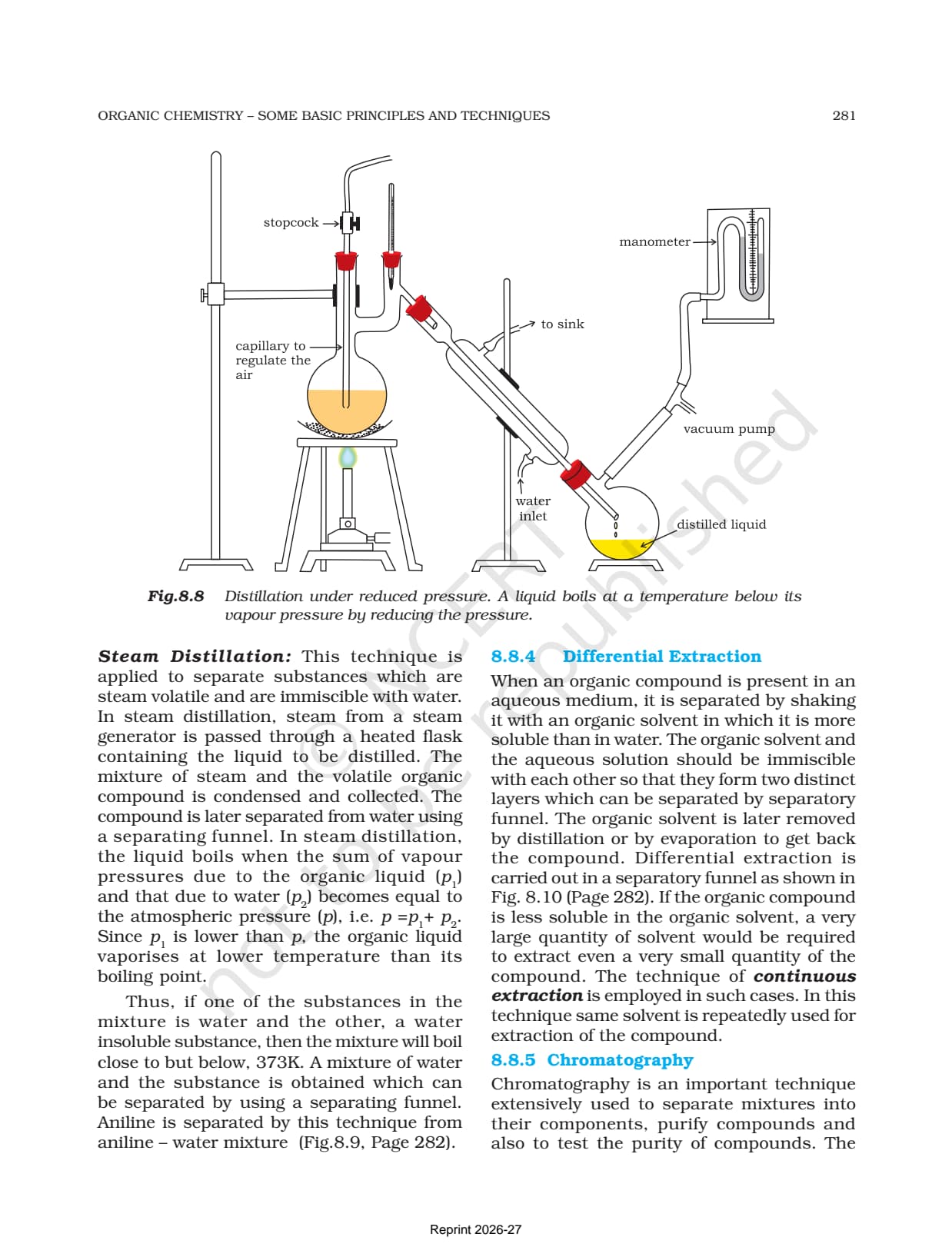
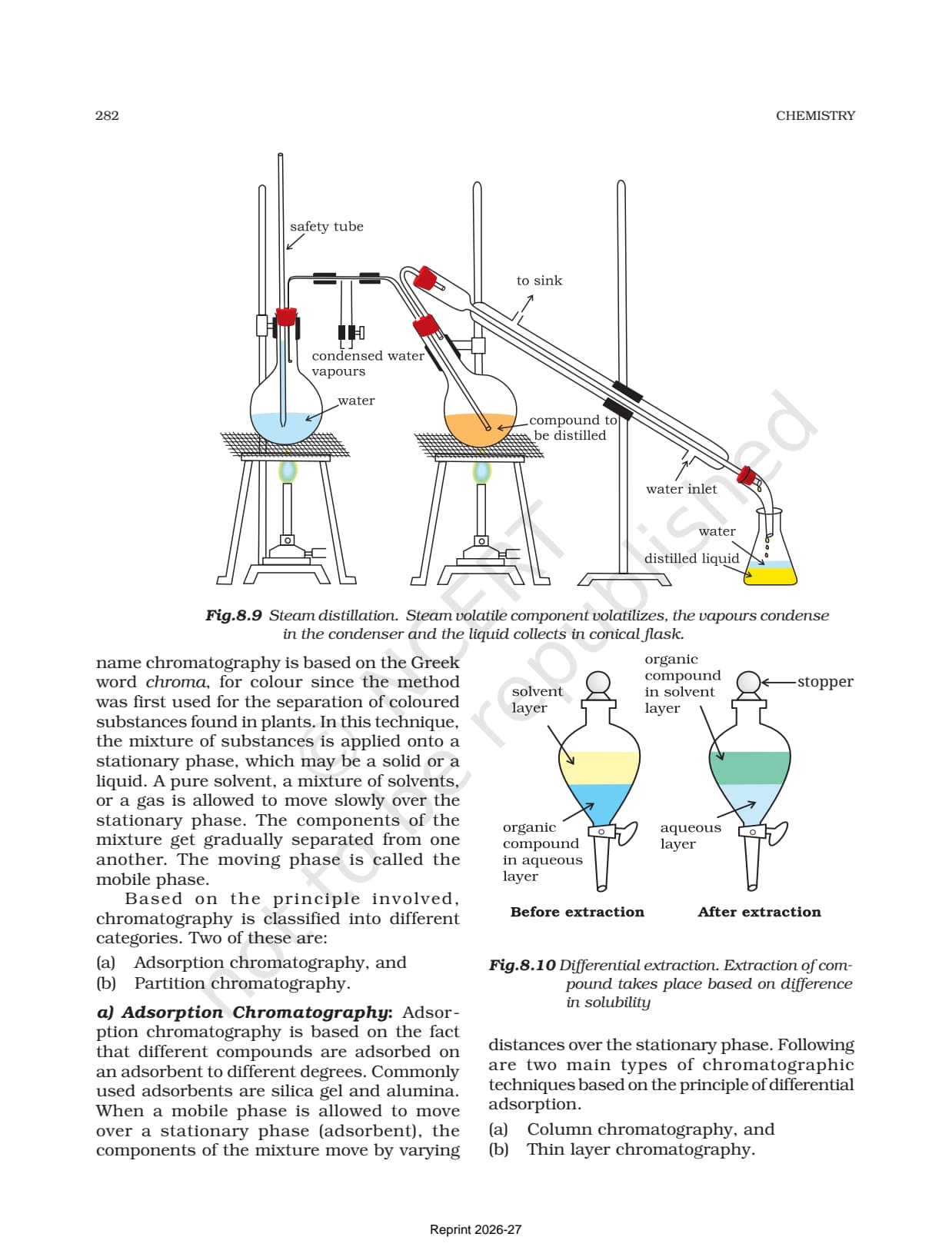
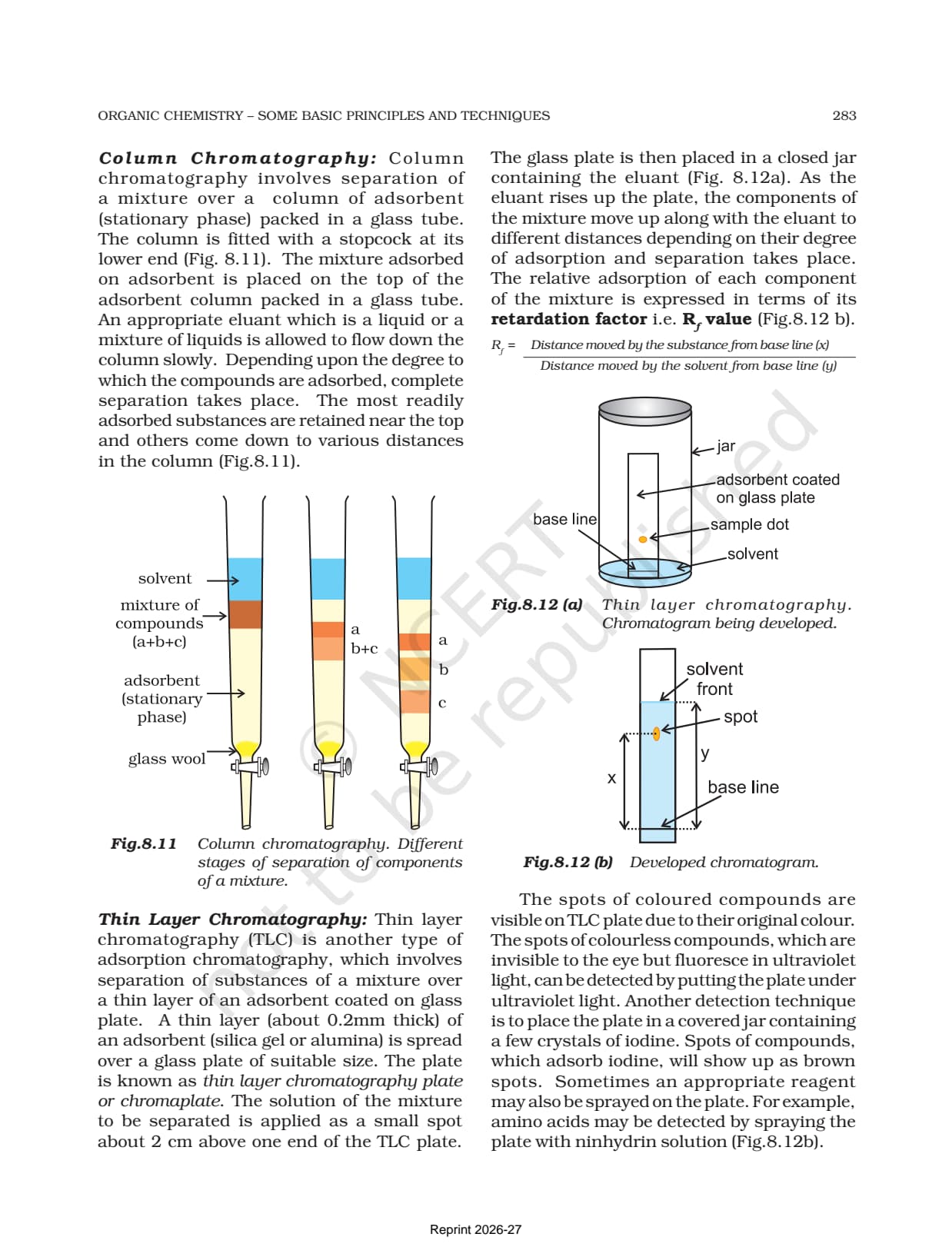
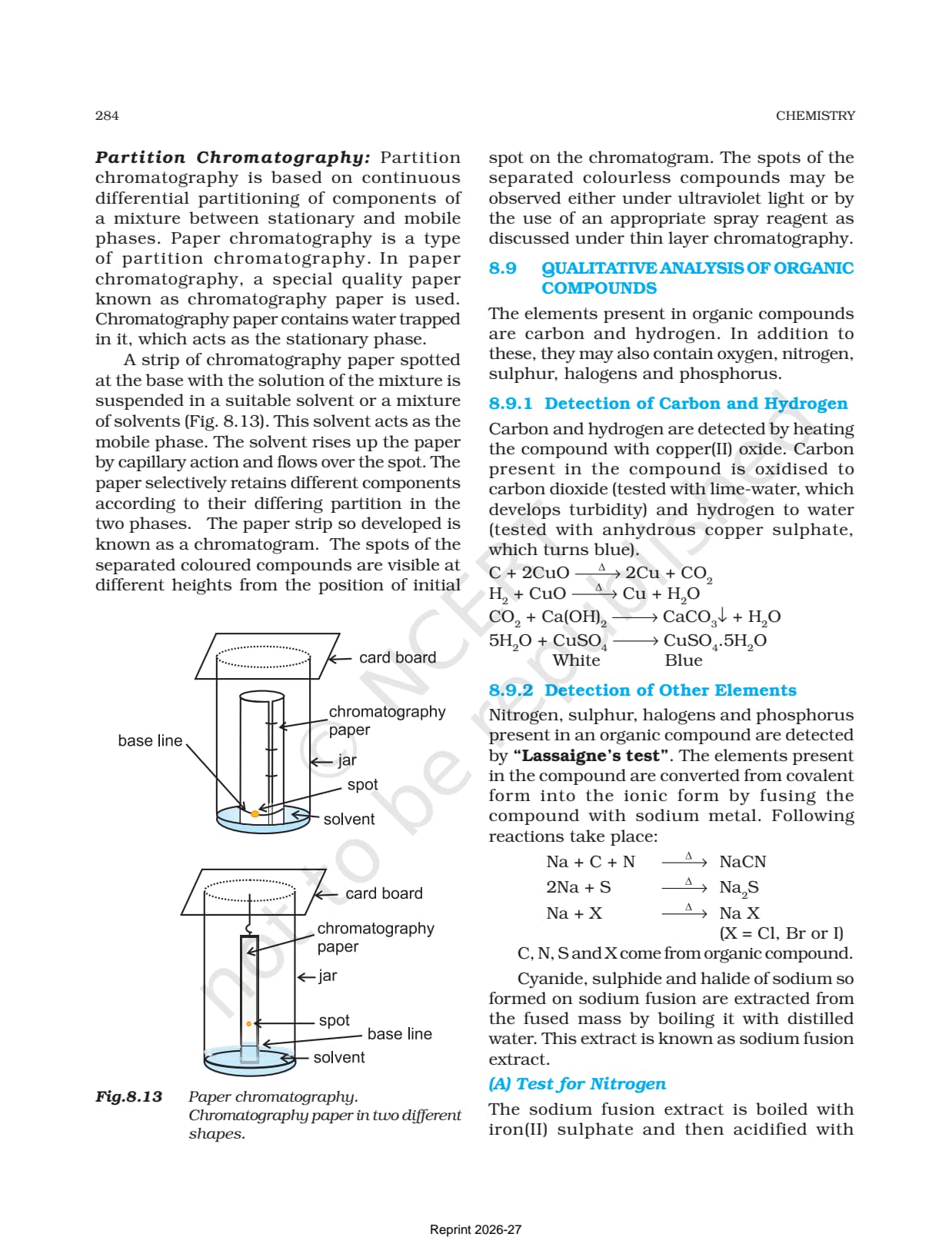
The chapter builds from the tetravalence of carbon and structural representation to classification, IUPAC nomenclature, isomerism, reaction mechanism and the methods used to purify and analyse organic compounds. The official NCERT sections are listed below.
| Section | Topic |
|---|---|
| 8.1 | General Introduction |
| 8.2 | Tetravalence of Carbon: Shapes of Organic Compounds |
| 8.3 | Structural Representations of Organic Compounds |
| 8.4 | Classification of Organic Compounds |
| 8.5 | Nomenclature of Organic Compounds |
| 8.6 | Isomerism |
| 8.7 | Fundamental Concepts in Organic Reaction Mechanism |
| 8.8 | Methods of Purification of Organic Compounds |
| 8.9 | Qualitative Analysis of Organic Compounds |
Key Concepts You Will Study
Students should read the chapter with a pen and note each rule as it appears. Every later organic chapter rests on the naming and mechanism ideas introduced here.
- The tetravalence of carbon and ways to draw structures, including condensed and bond-line forms.
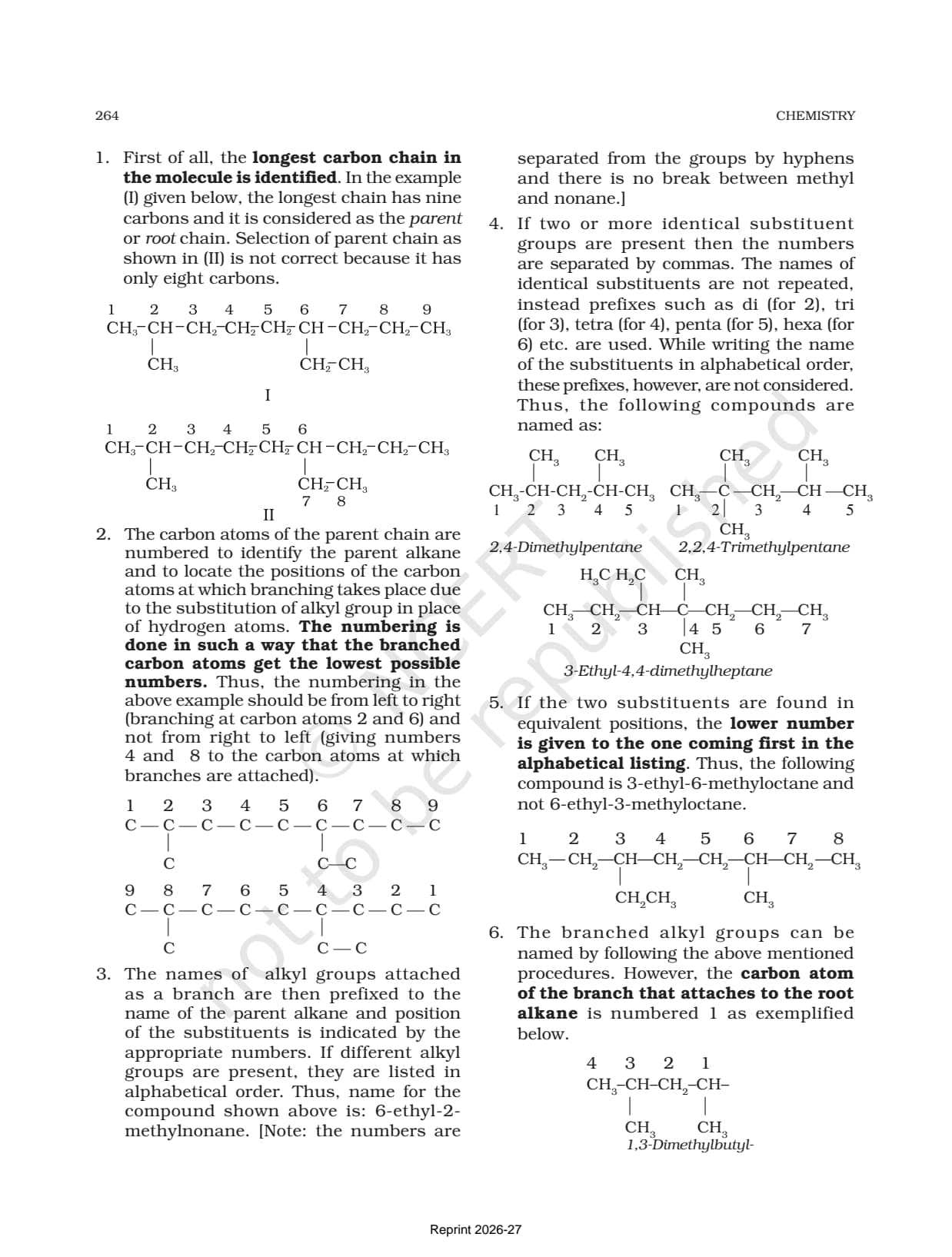
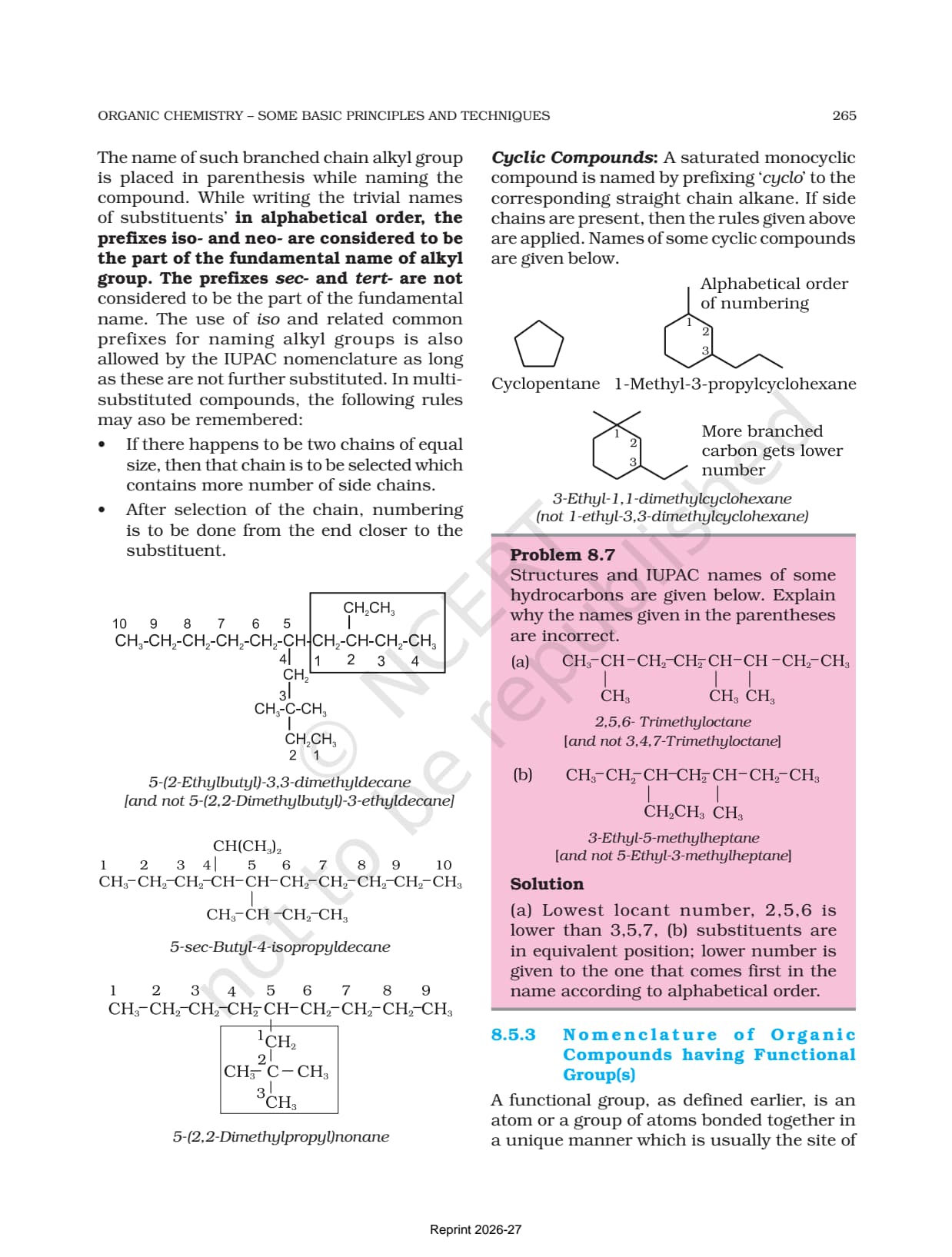
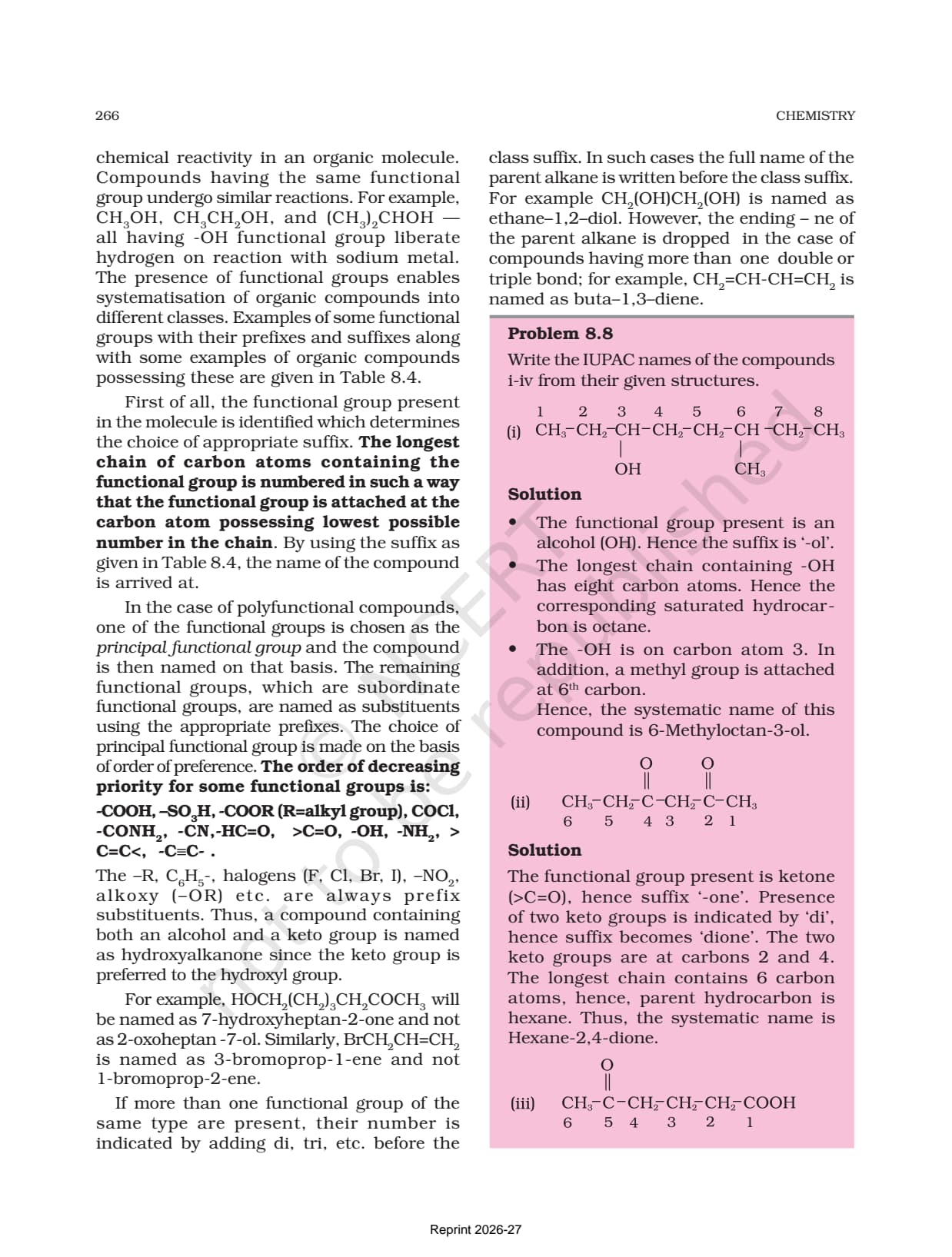
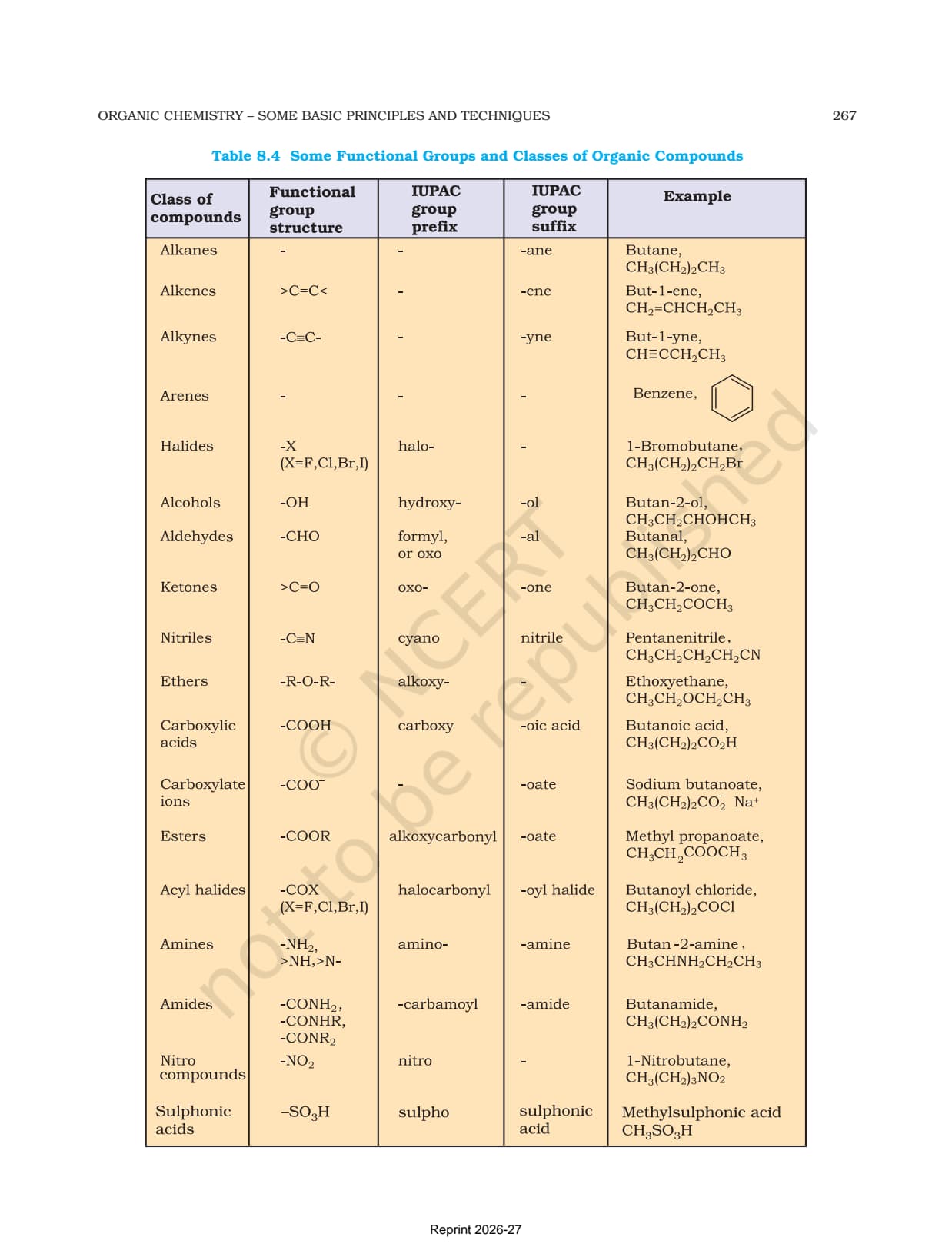
- IUPAC nomenclature of hydrocarbons and compounds with functional groups.
- Structural and stereo isomerism in organic molecules.
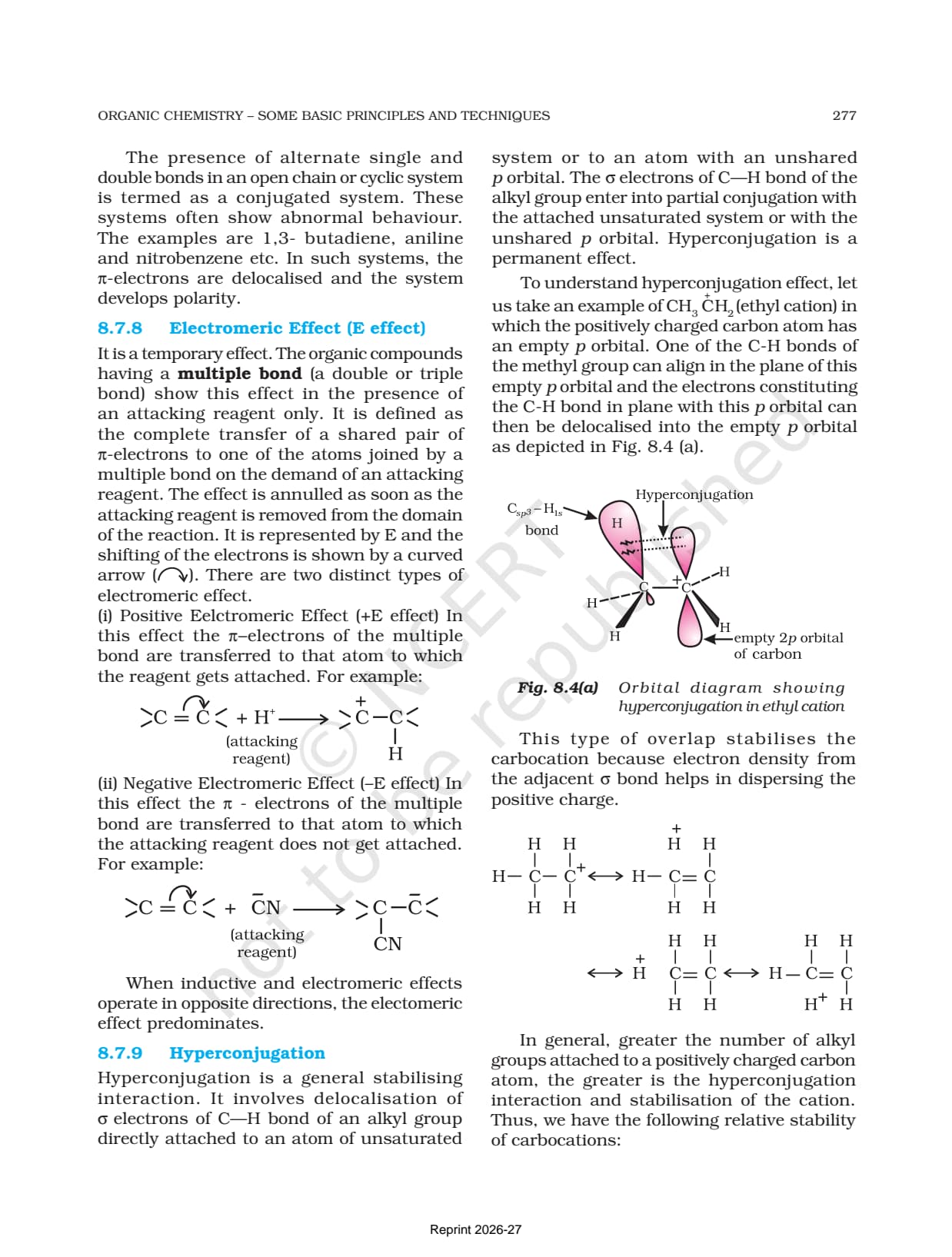
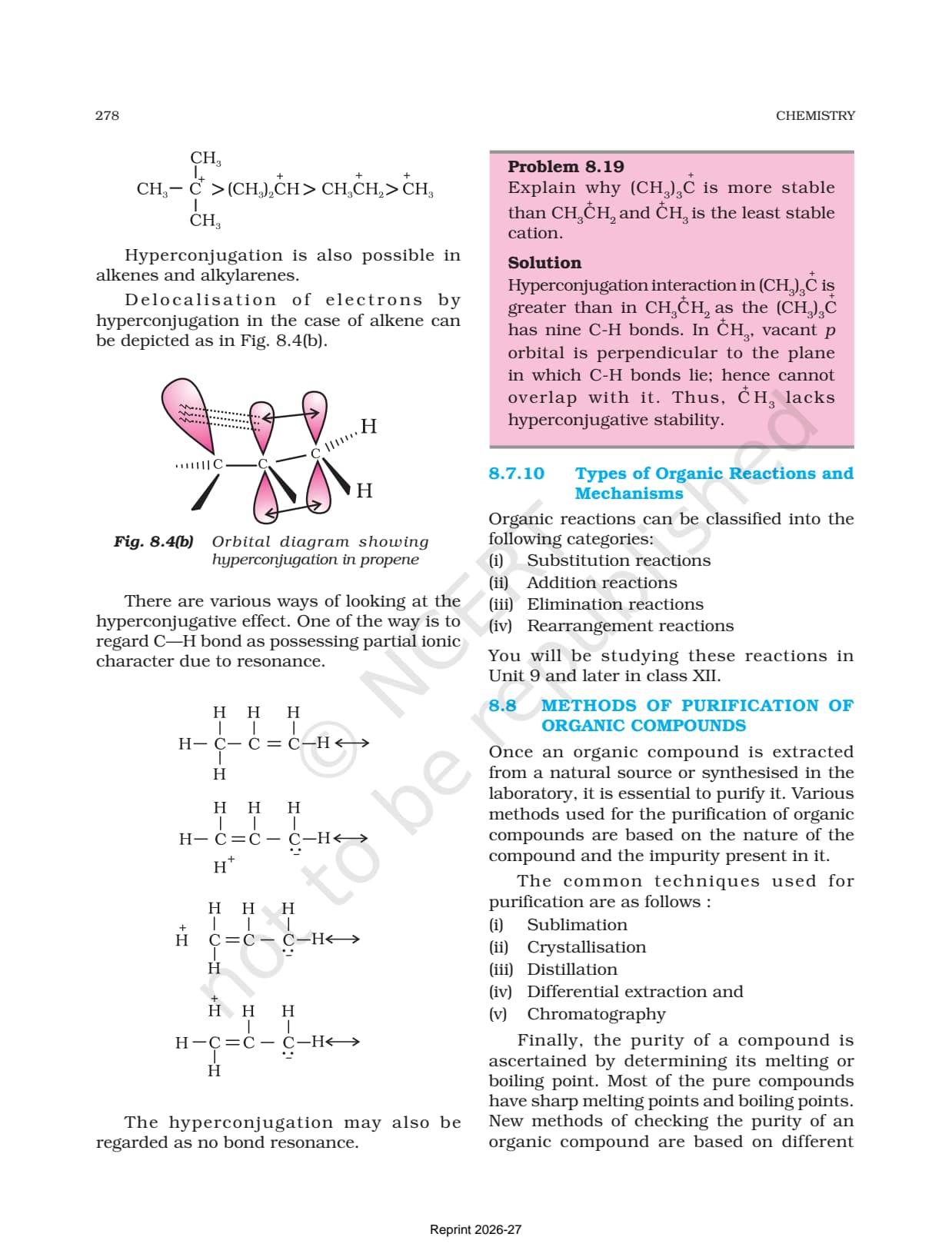
- Electronic effects: inductive, resonance, electromeric and hyperconjugation.
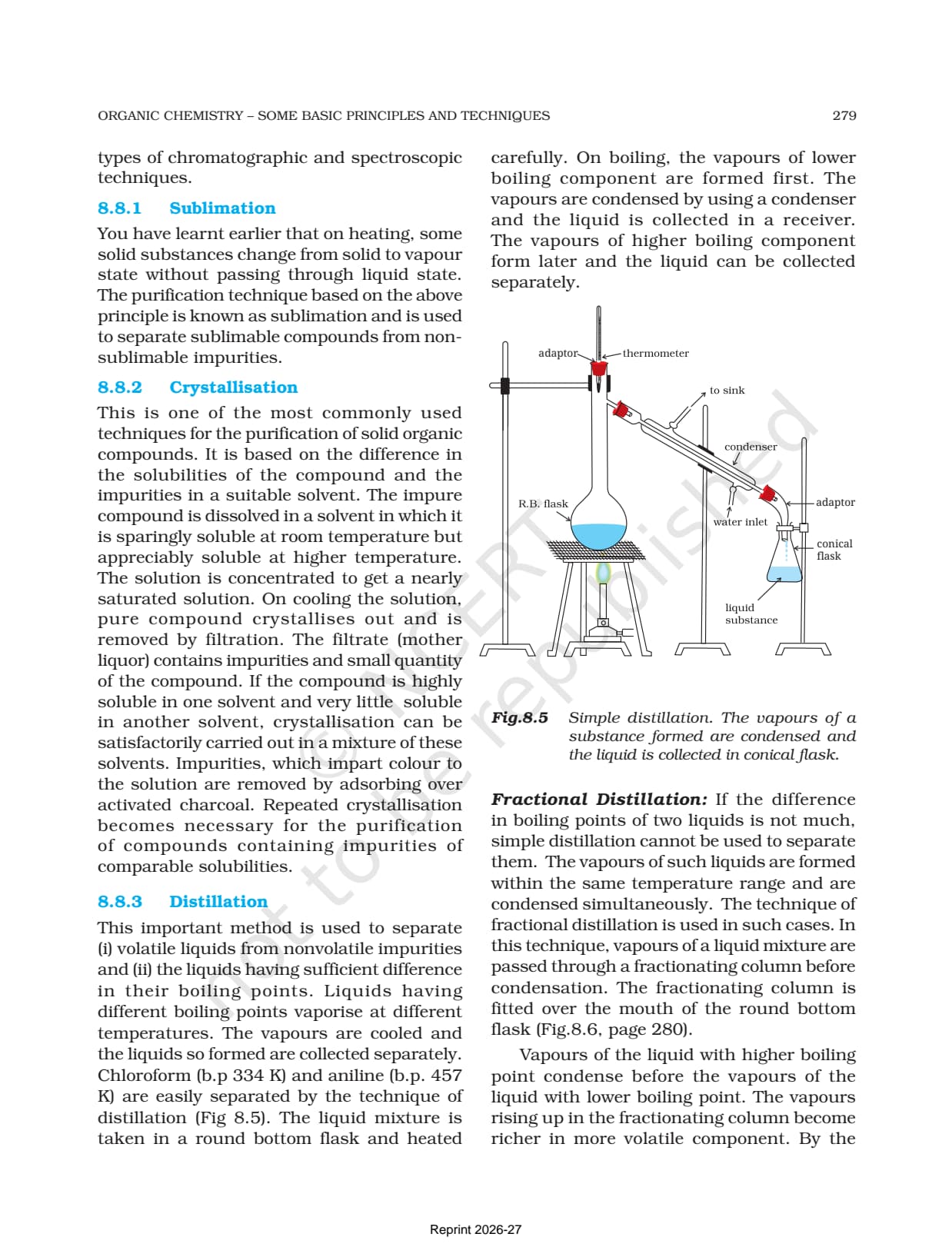
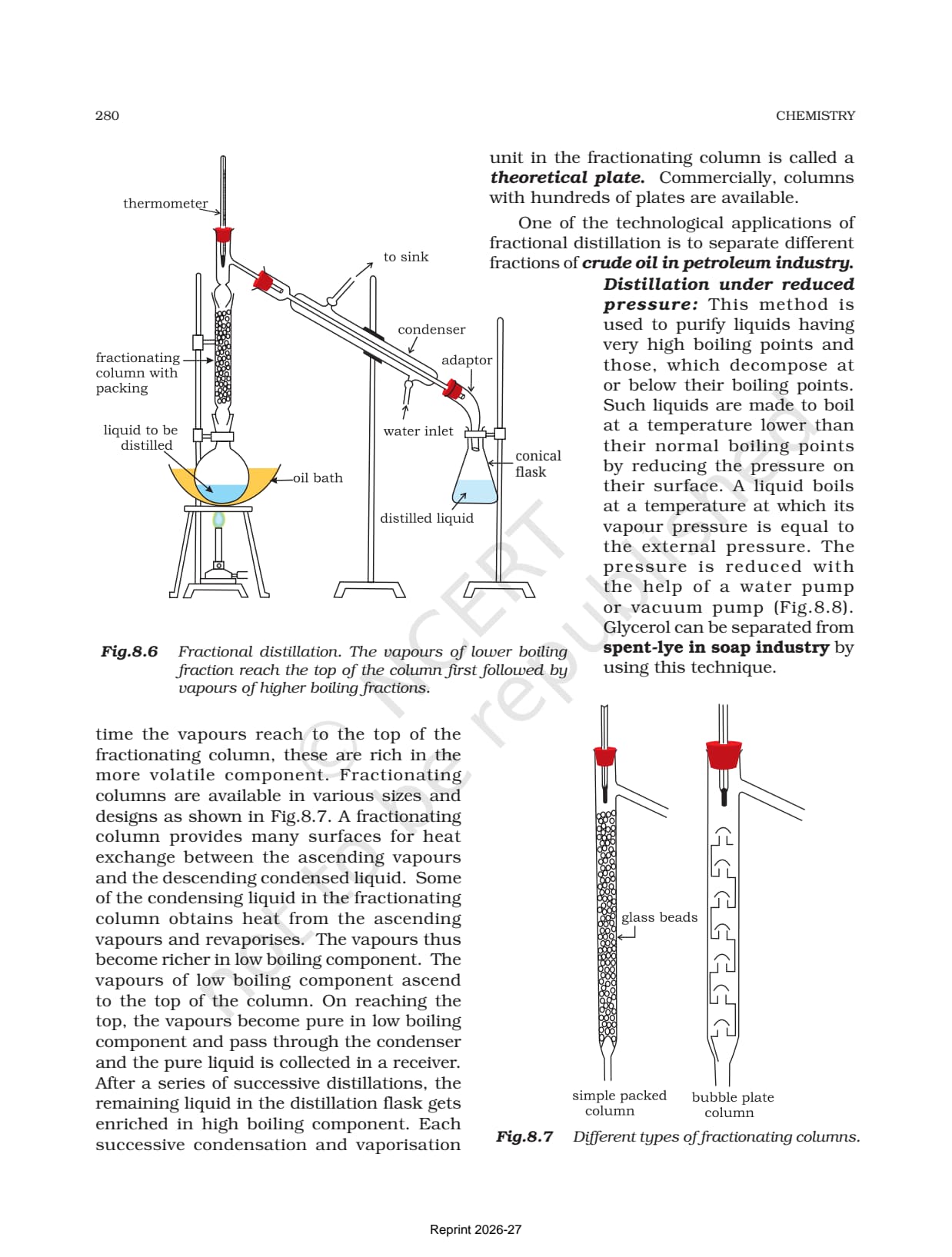
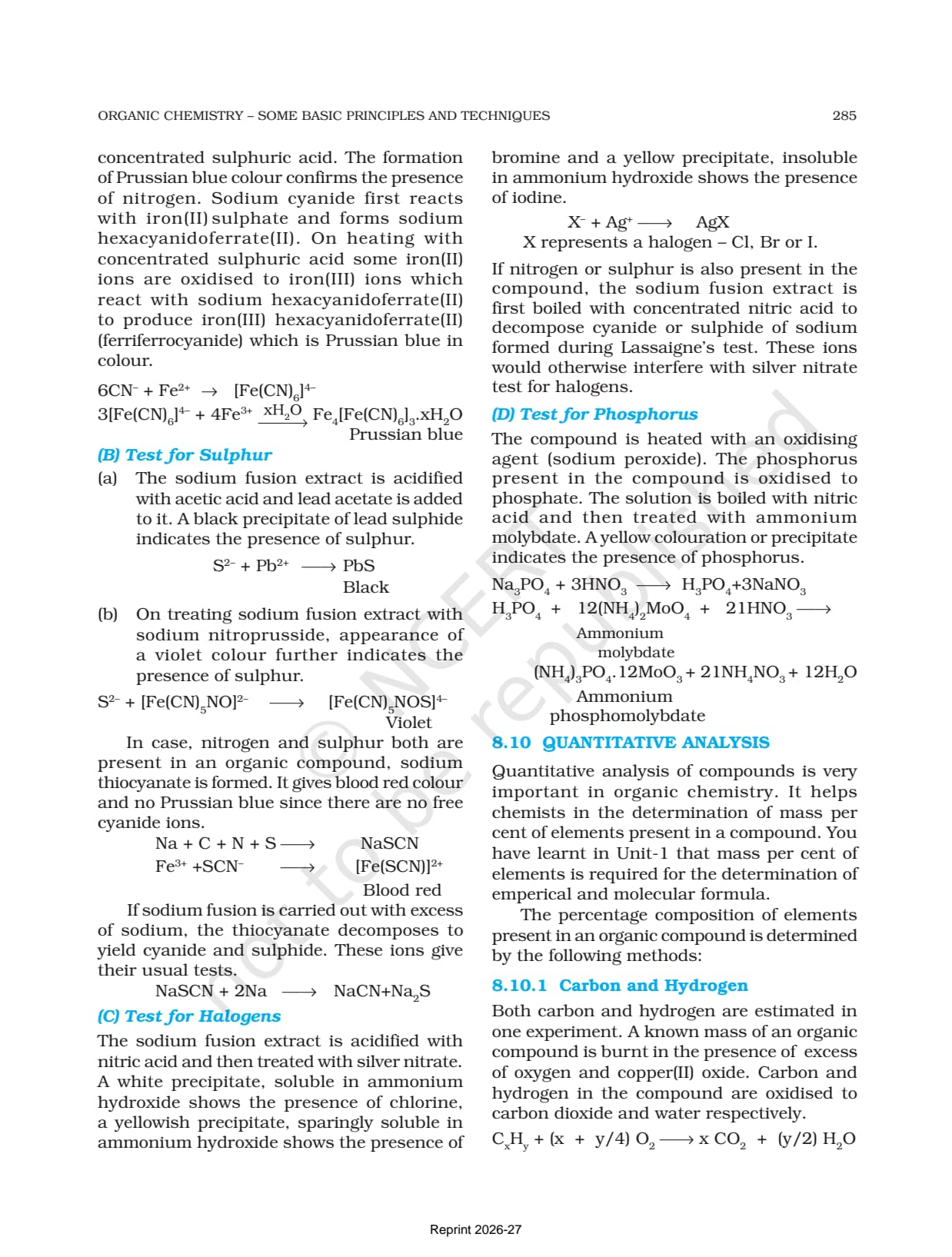
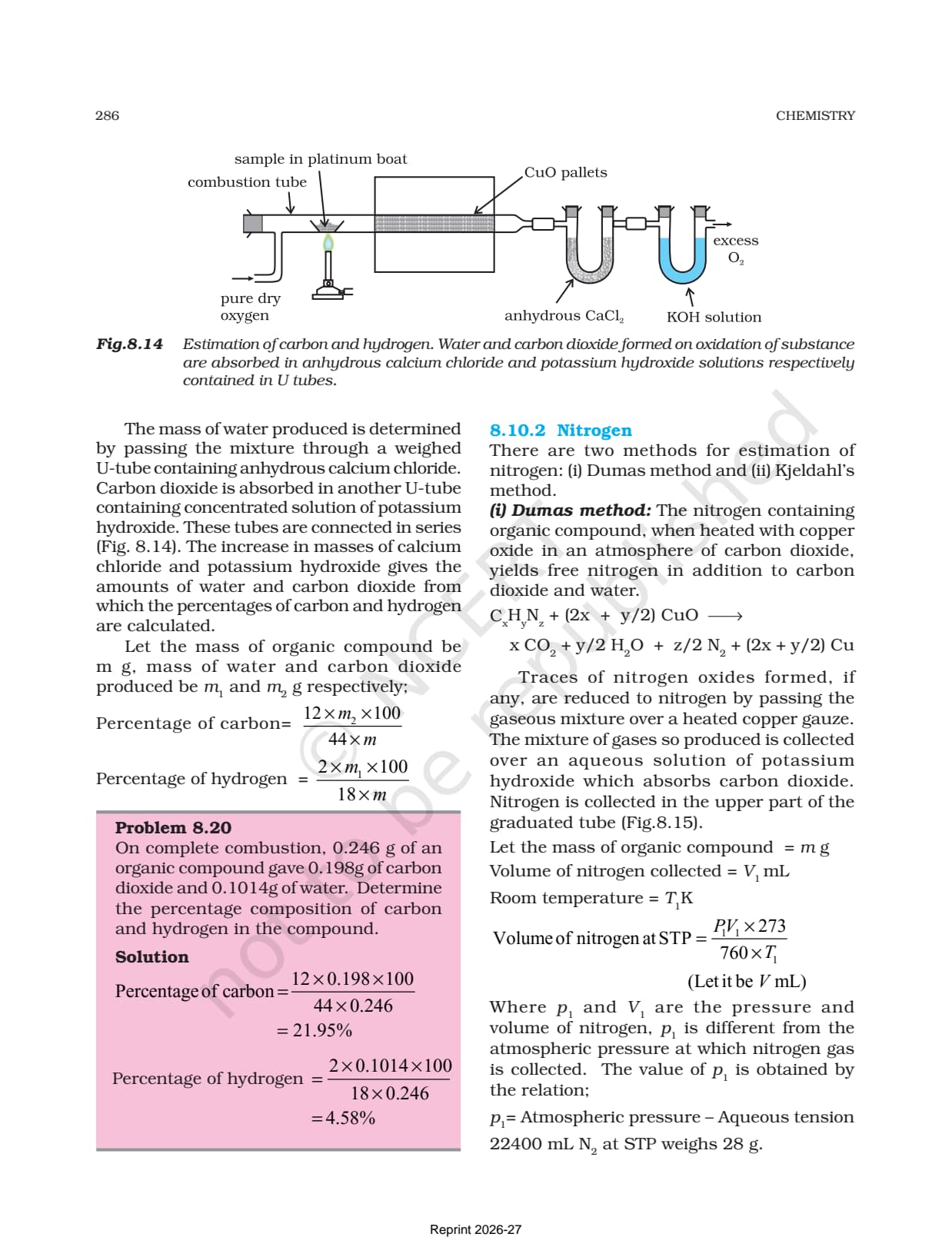
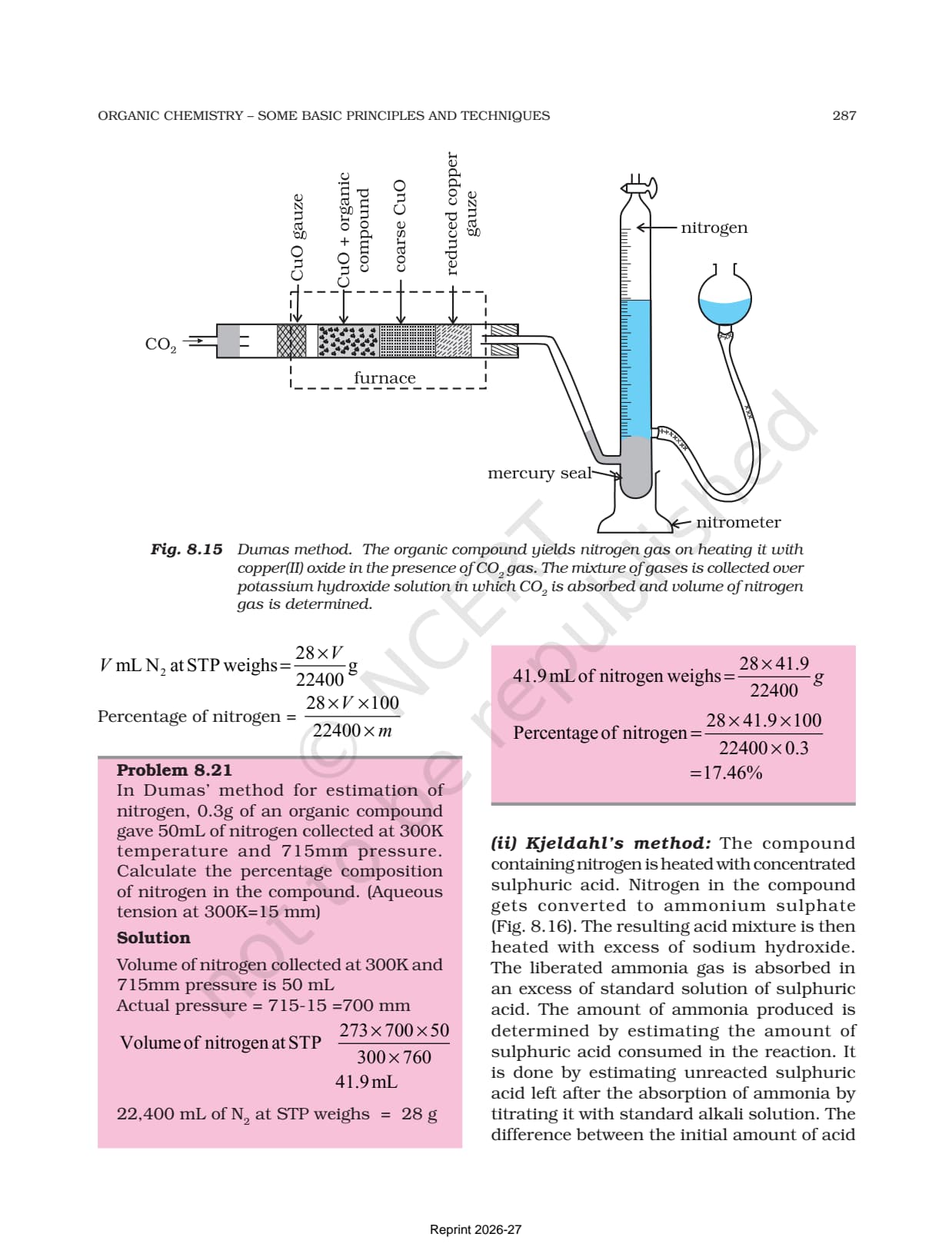
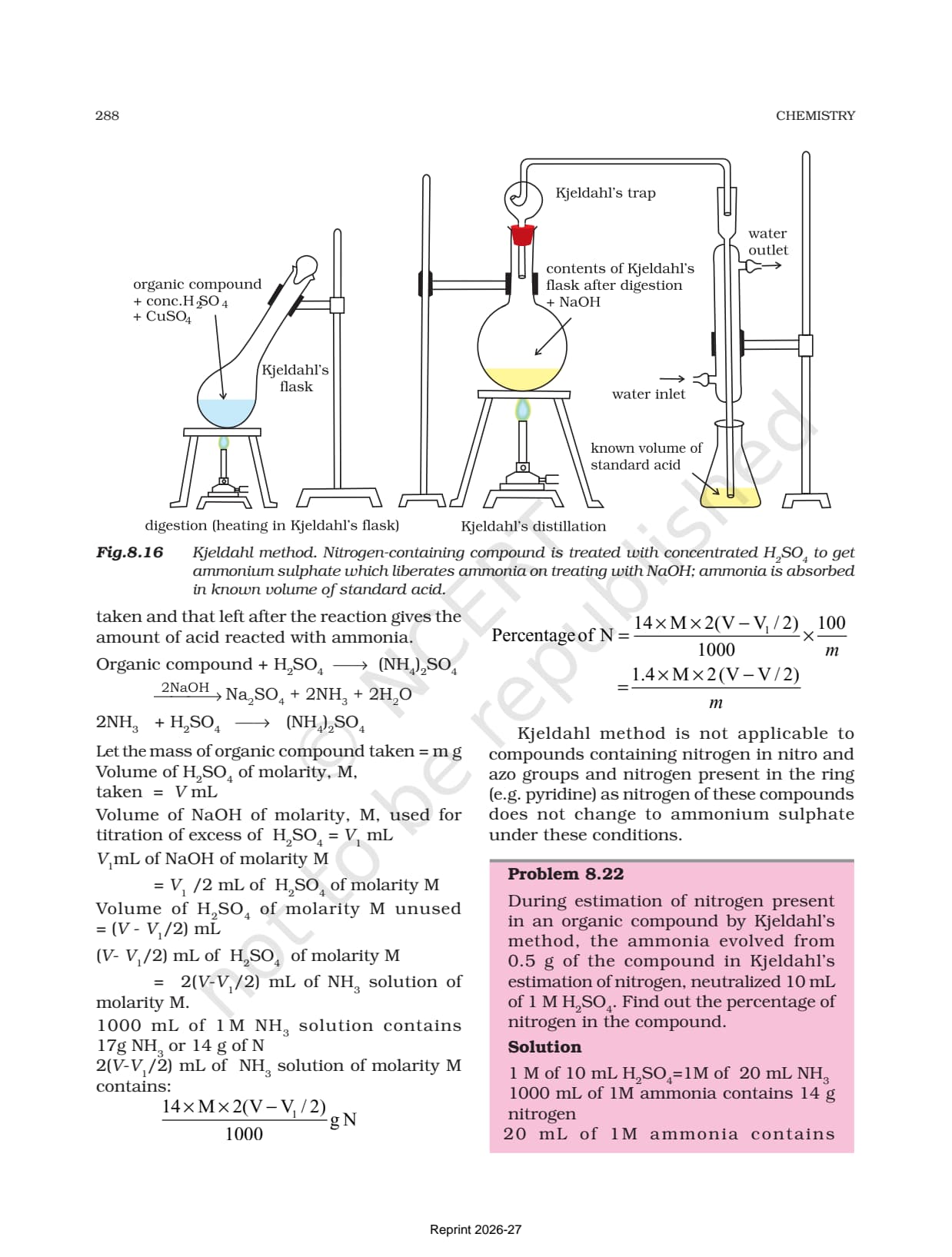
- Purification and qualitative analysis, including detection of elements.
Why Download the NCERT Book PDF for This Chapter
The NCERT textbook is the single most important source for the CBSE exam, and most JEE and NEET questions from this chapter are built directly on its examples.
- Every Board question on IUPAC naming and mechanism comes from this text or its exercises.
- The worked examples show the correct way to name and draw organic structures.
- Reading offline from the PDF avoids missing any small rule of nomenclature.
How to Use the NCERT Book PDF for Organic Chemistry: Some Basic Principles and Techniques
Read the chapter once fully, then work through it a second time with the exercises open. A short, ordered plan keeps the naming rules and effects from blurring together.
- Read each section, then write its rule in your own words in a single line.
- Solve the in-text examples before looking at the given solution.
- Attempt the back exercises, then check them against the NCERT Solutions below.
- Revise the IUPAC priority table and electronic effects the night before the exam.
Other Class 11 Chemistry Organic Chemistry: Some Basic Principles and Techniques Resources
Pair the textbook PDF with the solved answers, revision notes and formula sheet for the same chapter.
| Resource | Link |
|---|---|
| NCERT Solutions | Organic Chemistry: Some Basic Principles and Techniques NCERT Solutions |
| Revision Notes | Organic Chemistry: Some Basic Principles and Techniques Notes |
| Formula Sheet | Organic Chemistry: Some Basic Principles and Techniques Formula Sheet |
| Exemplar Book PDF | Organic Chemistry: Some Basic Principles and Techniques Exemplar Book PDF |
FAQs on Class 11 Chemistry Chapter 8 NCERT Book PDF
Organic Chemistry Some Basic Principles and Techniques NCERT PDF - Frequently Asked Questions
Ques. Is this the latest 2026-27 NCERT Book for Class 11 Chemistry Chapter 8?
Ans. Yes. This is the official NCERT 2026-27 textbook chapter for Class 11 Chemistry Chapter 8 Organic Chemistry: Some Basic Principles and Techniques, matched page by page against the latest edition.
Ques. What topics are in Class 11 Chemistry Chapter 8?
Ans. The chapter covers the tetravalence of carbon, structural representations, classification of organic compounds, IUPAC nomenclature, isomerism, fundamental concepts in reaction mechanism, and methods of purification and qualitative analysis of organic compounds.
Ques. Is the NCERT Book enough for this chapter in JEE and NEET?
Ans. The NCERT Book is the base for this chapter, and most JEE and NEET questions on nomenclature and electronic effects are built on its examples. Pair it with the Exemplar for extra higher-order practice.
Ques. Where can I download the Class 11 Chemistry Chapter 8 NCERT Book PDF?
Ans. You can download the Class 11 Chemistry Chapter 8 Organic Chemistry: Some Basic Principles and Techniques NCERT Book PDF free from the download card at the top of this page, in both standard and HD quality.



Comments