




The class 10 economics handwritten notes chapter 4 Globalisation and the Indian Economy turn the whole chapter into clean, scanned notebook pages for fast last-minute revision.
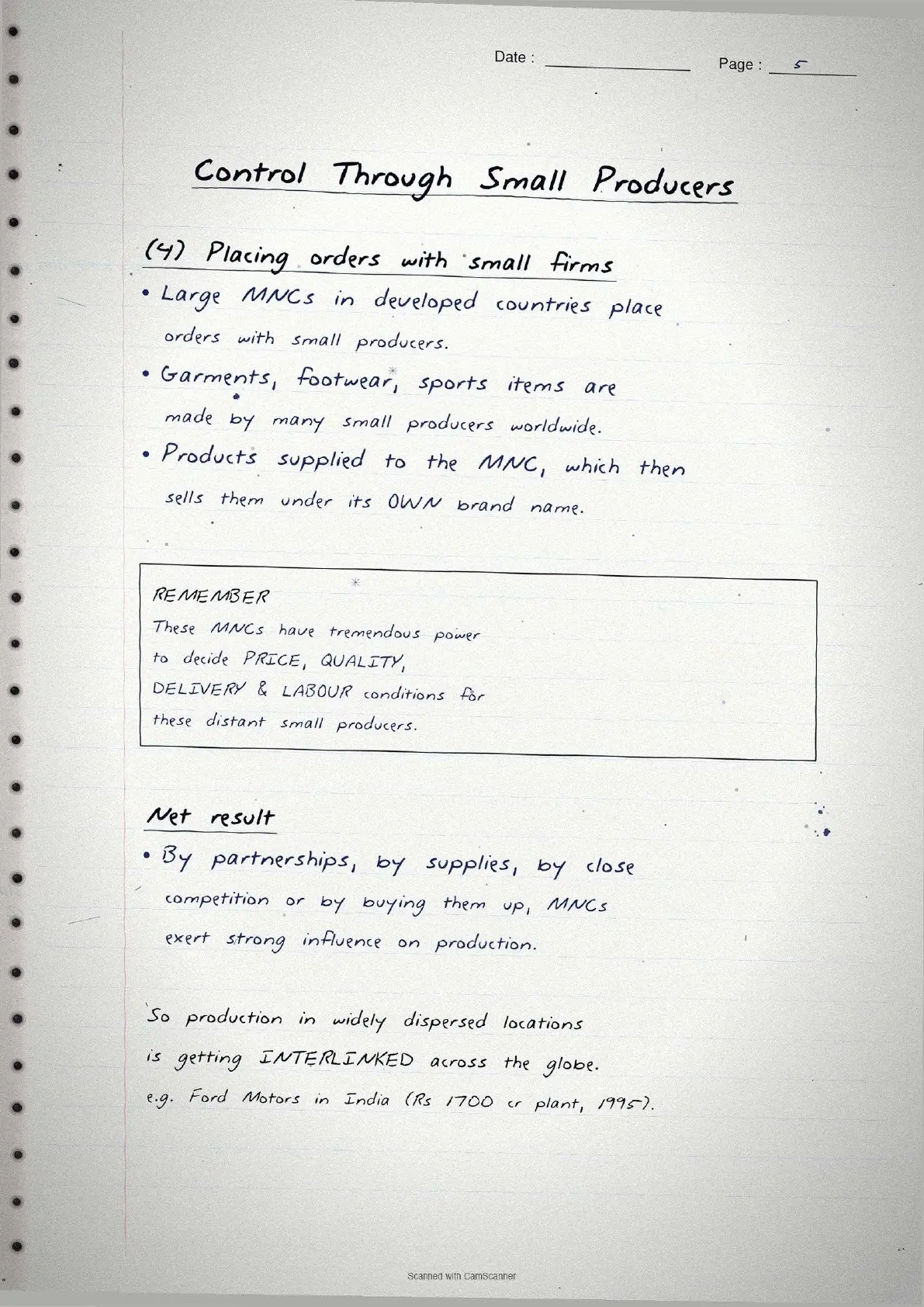
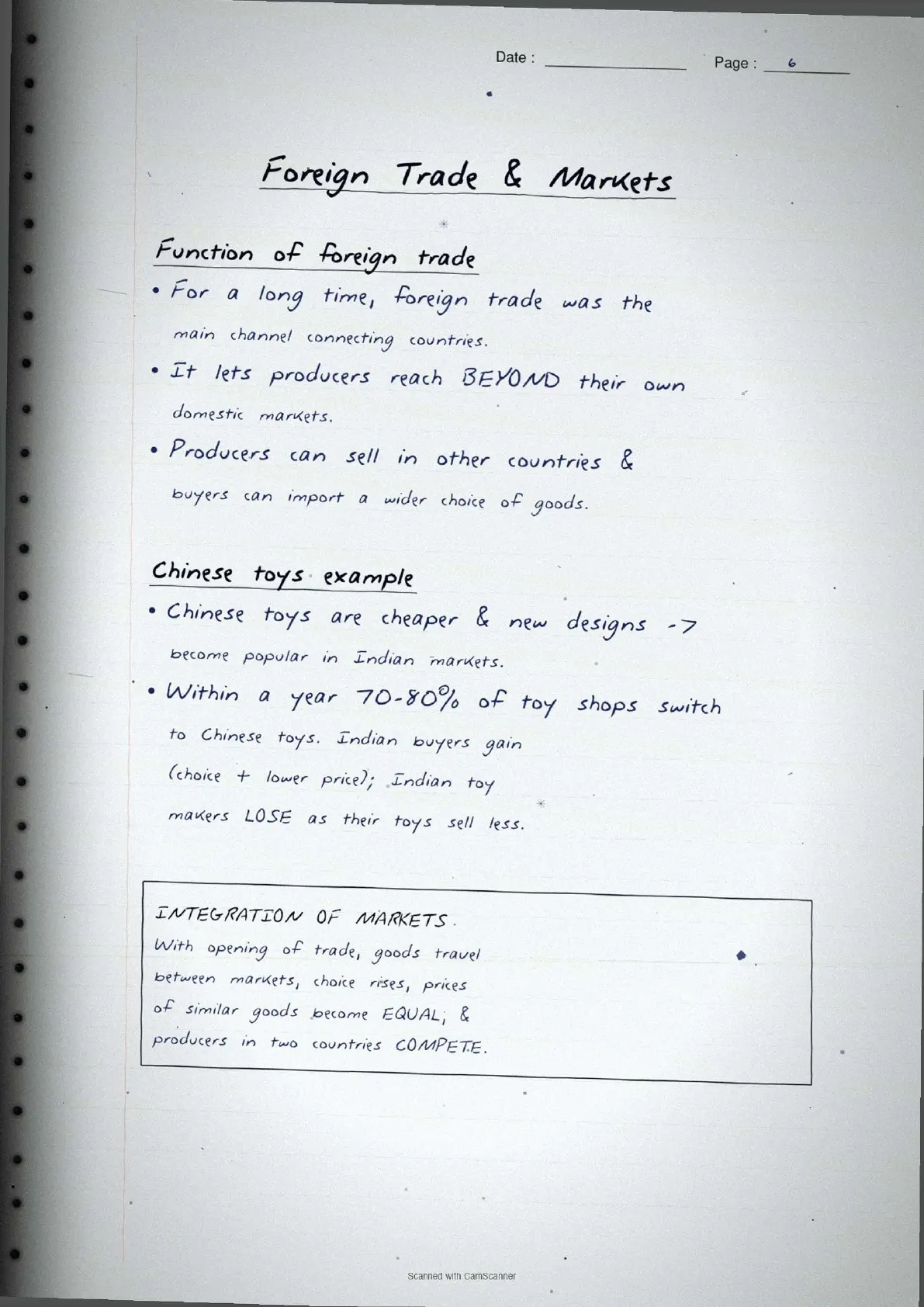
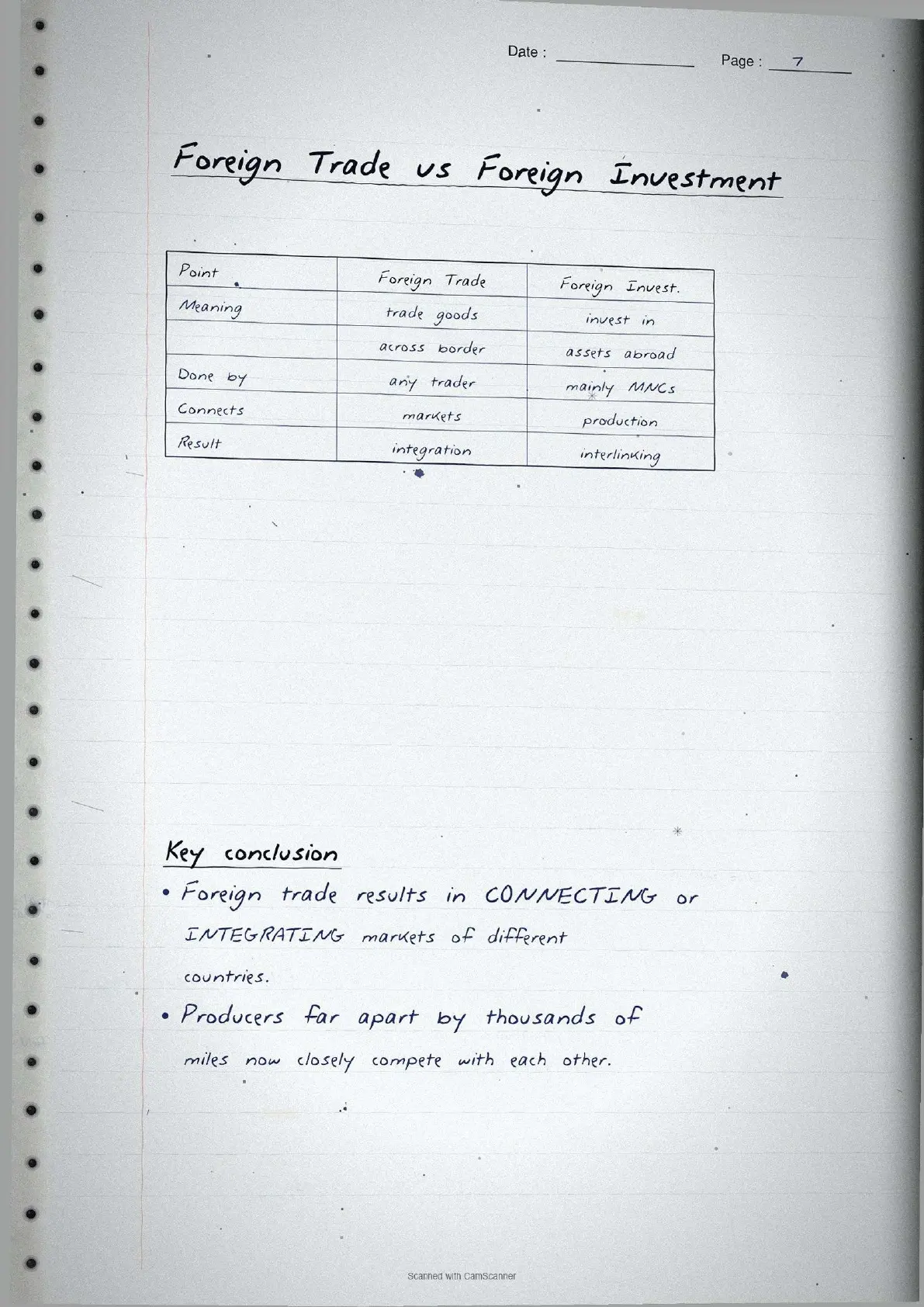
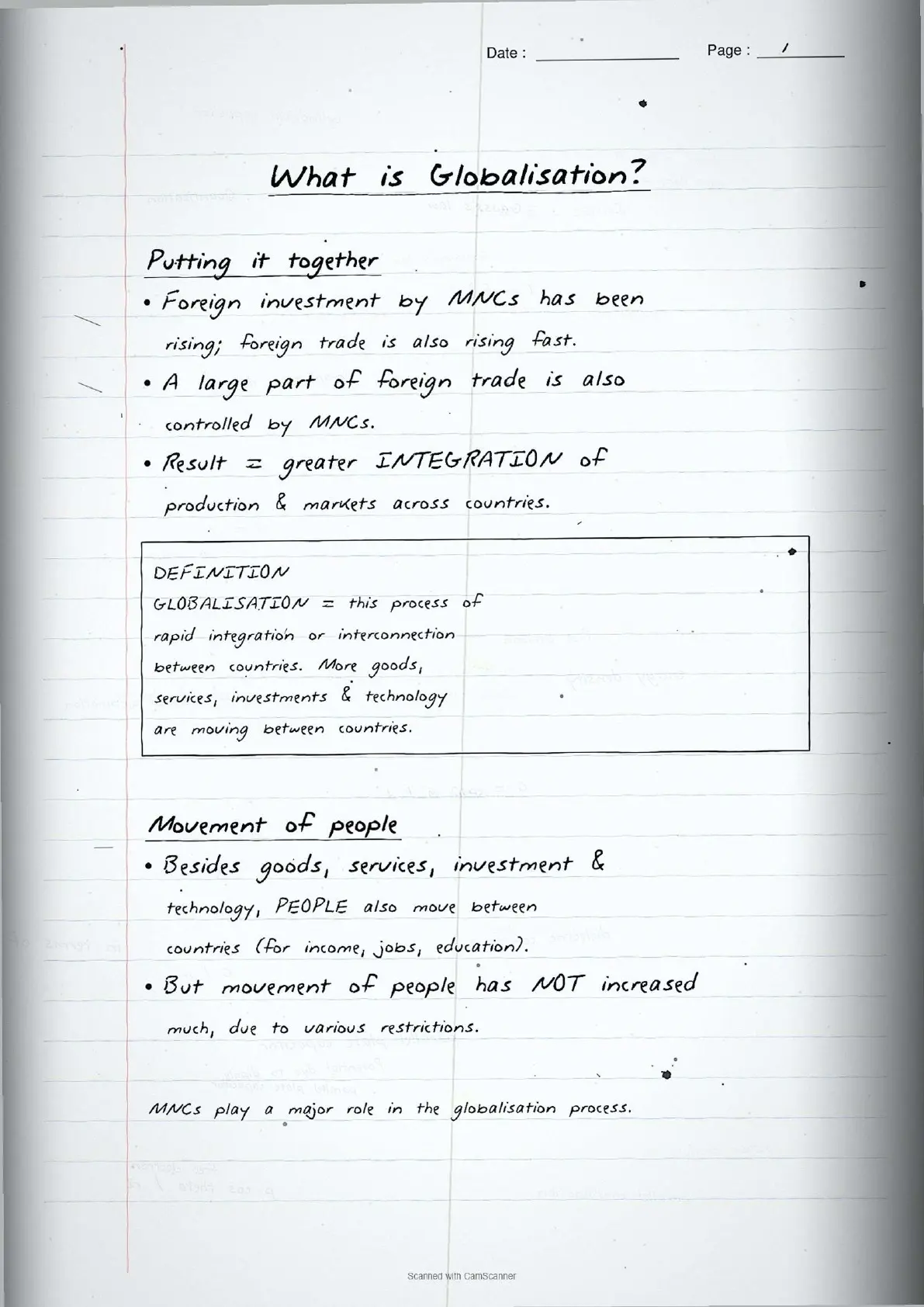
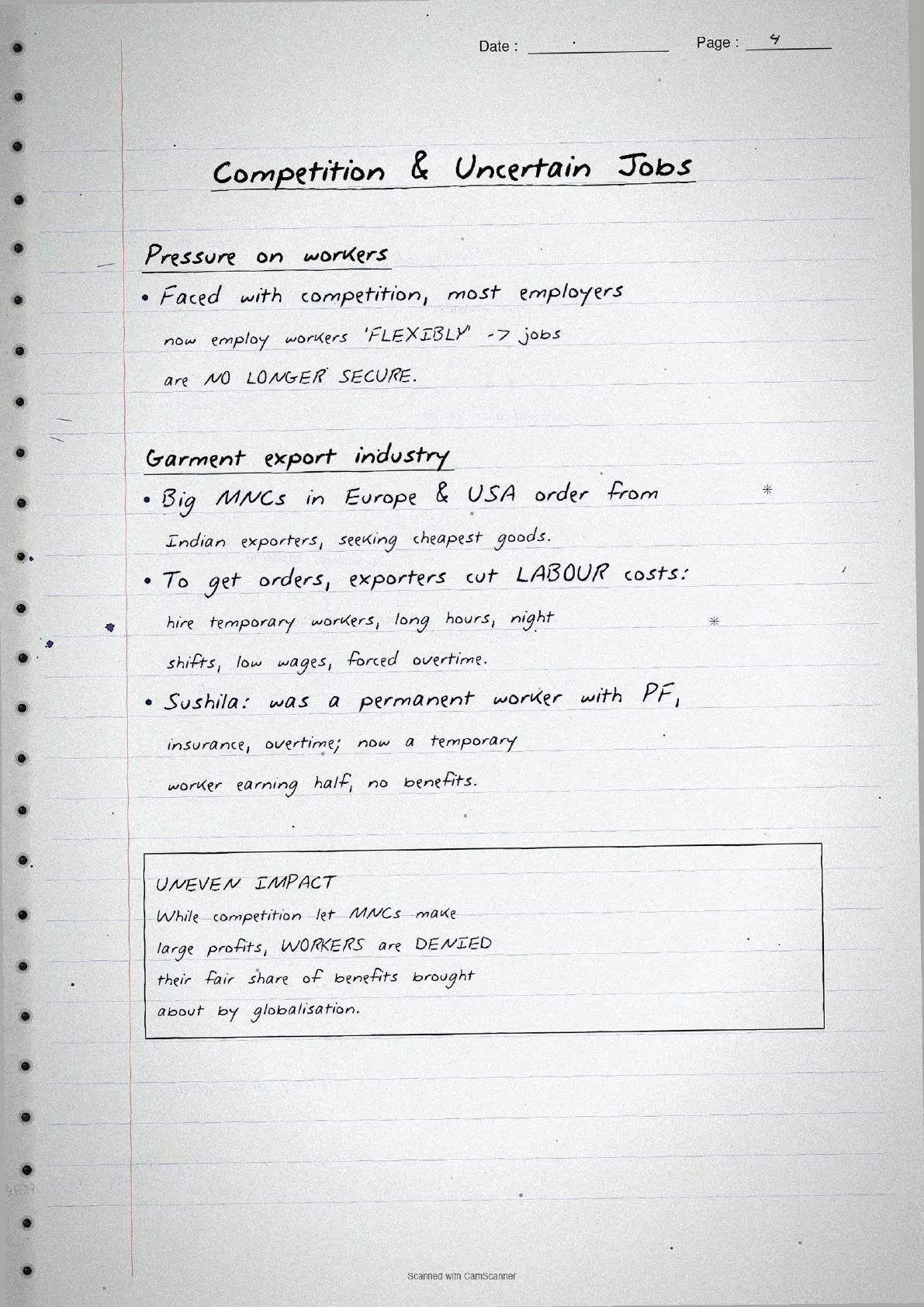
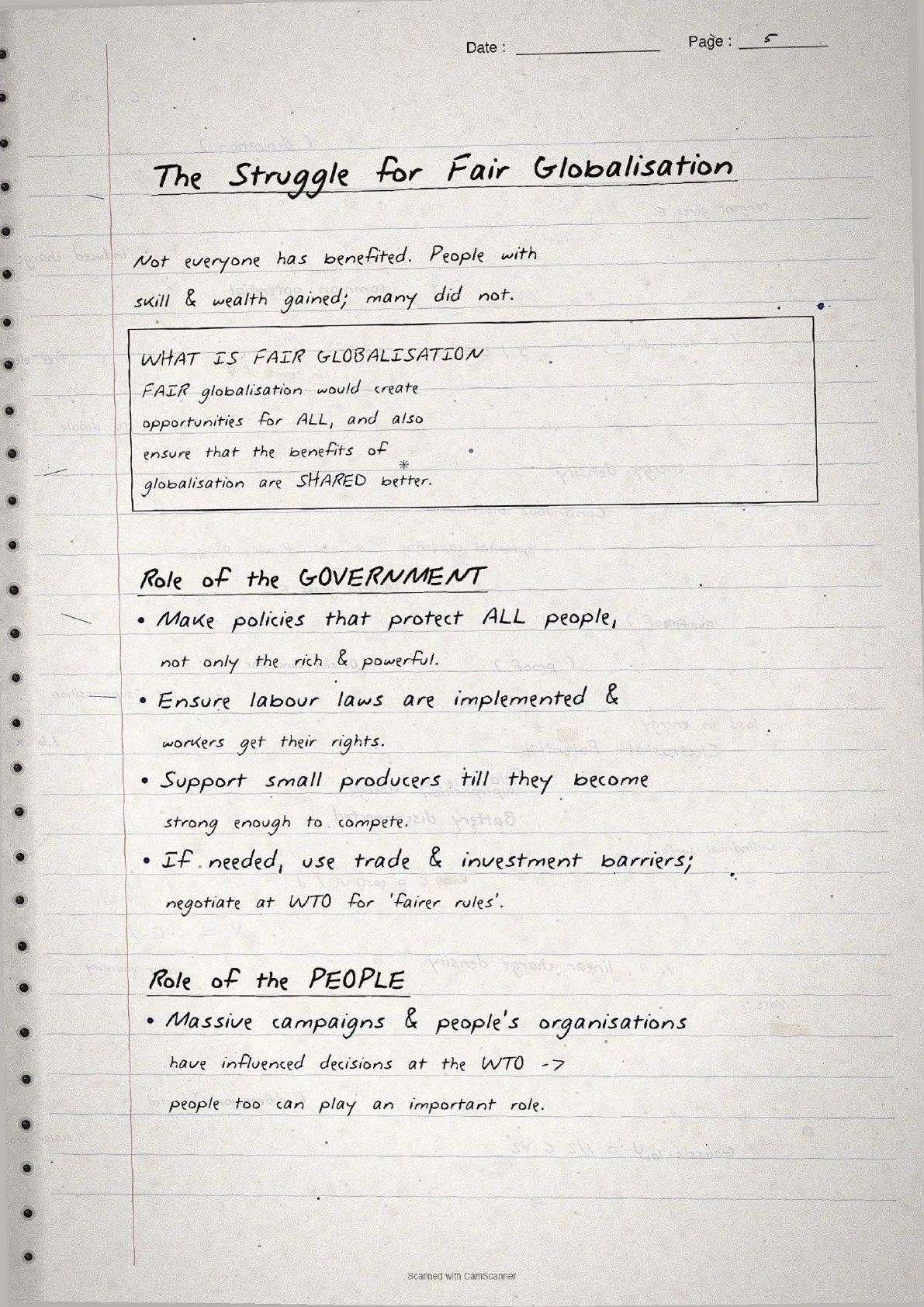
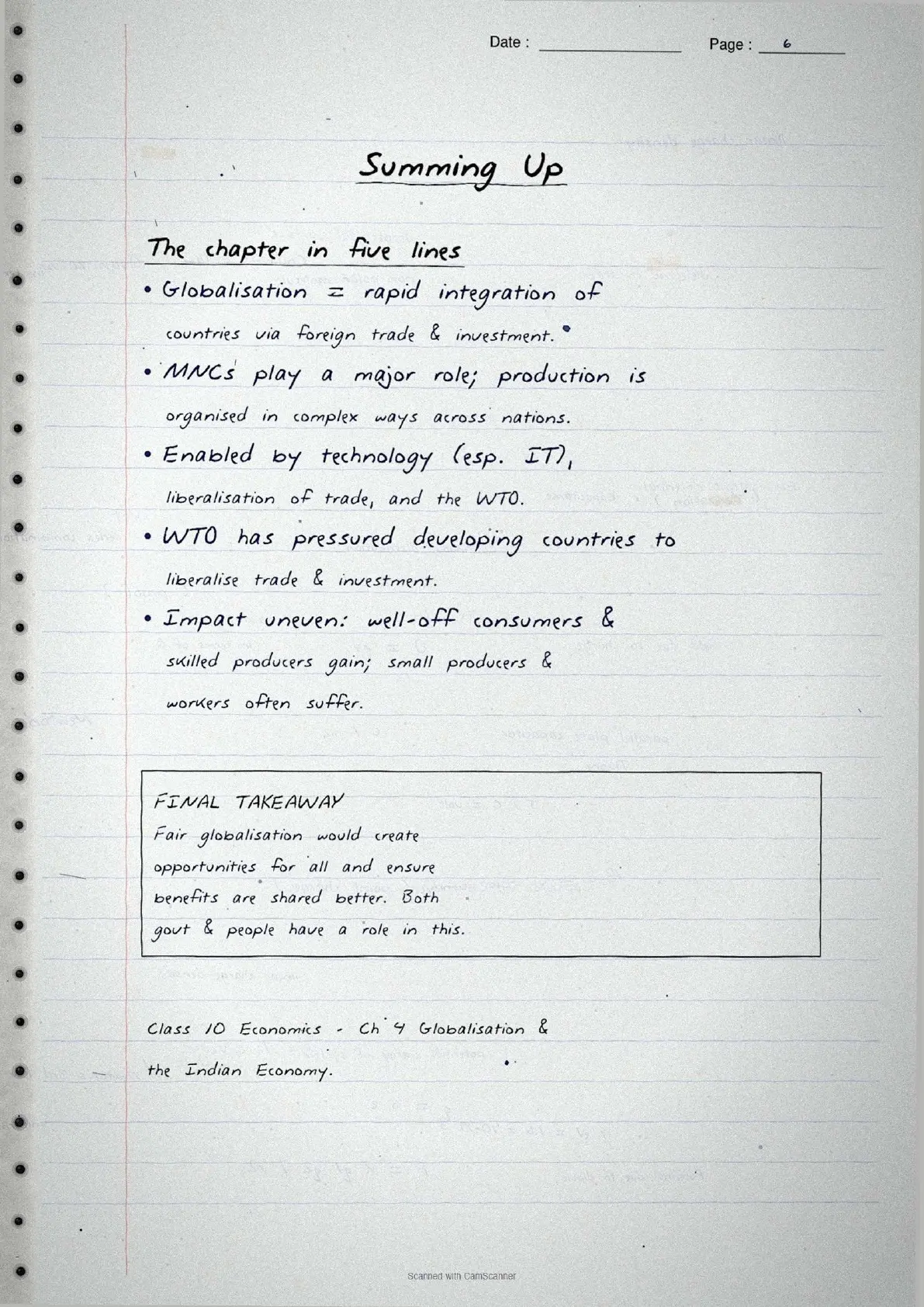
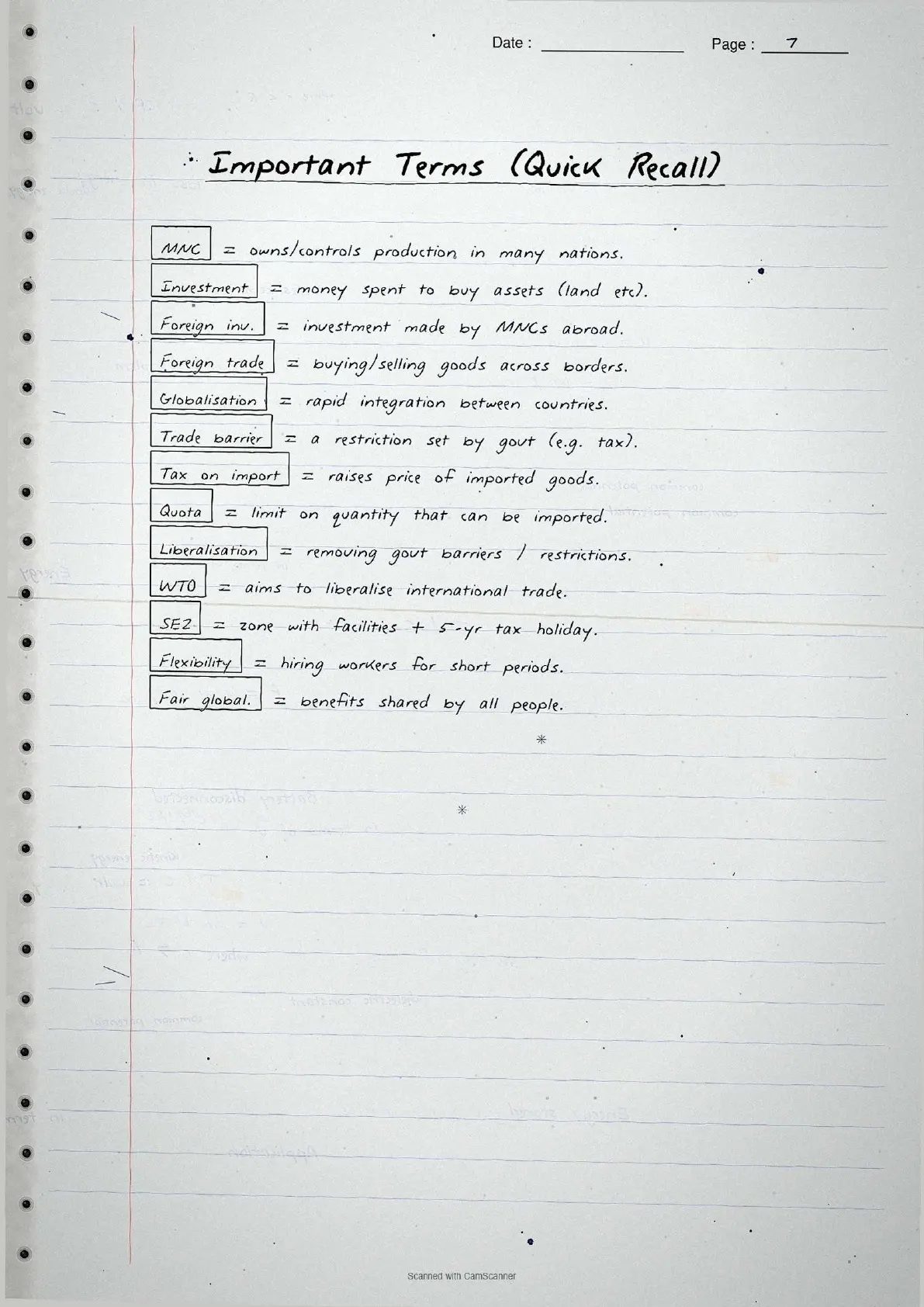
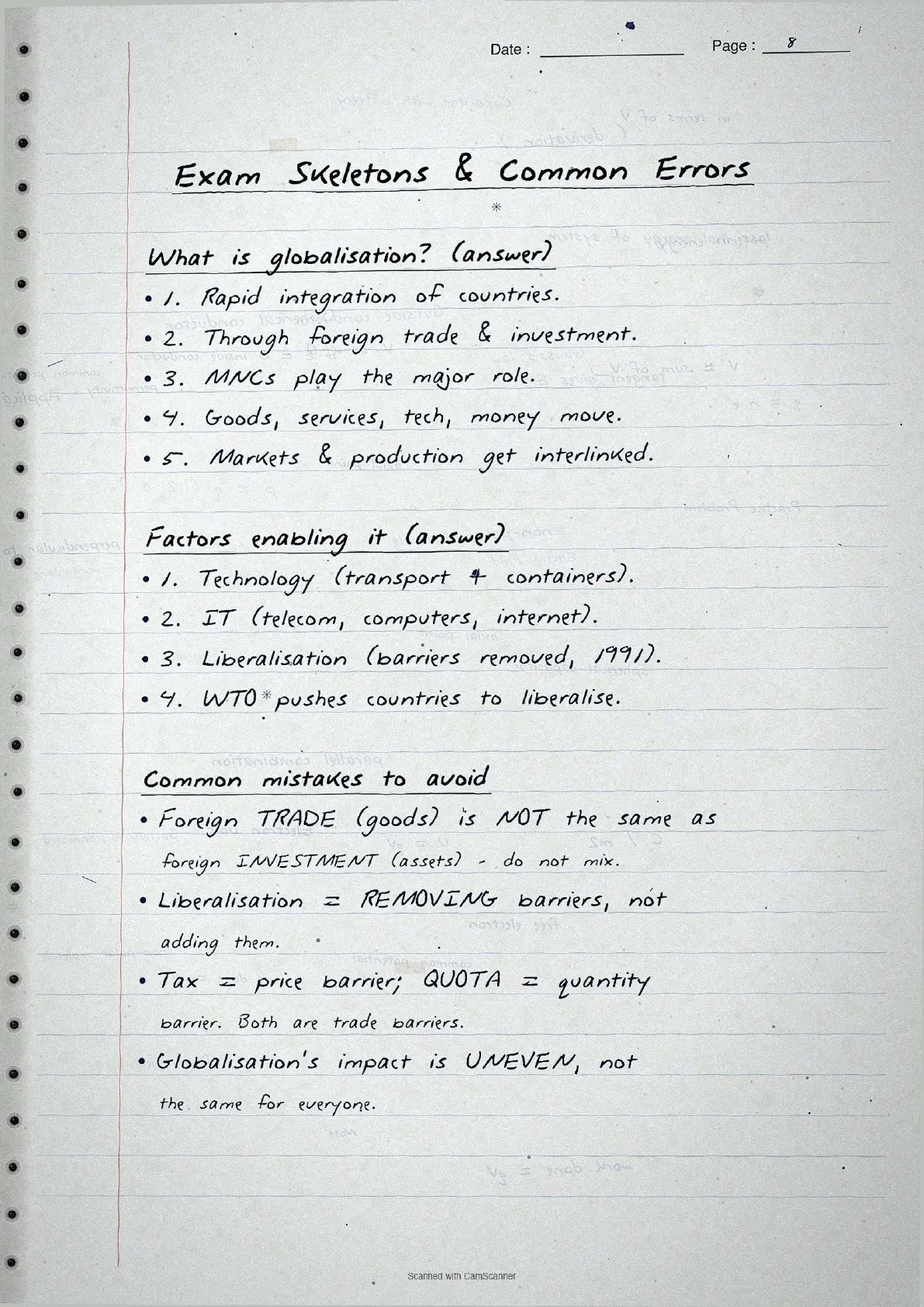
They follow the 2026-27 CBSE syllabus and Chapter 4 of Understanding Economic Development. Students get MNCs, foreign trade, the factors behind globalisation, the WTO and the impact on Indian workers in a pen-on-paper format that is easy to skim before a test.
- Handwritten, scanned-style pages with boxed key terms and a colour-coded globalisation flow chart.
- This Class 10 Economics chapter usually carries 5 to 6 marks in the board paper.
- Pairs with the NCERT Solutions, Notes and Book PDF linked lower on this page.
These Globalisation and the Indian Economy handwritten notes are prepared from the official NCERT Understanding Economic Development textbook and checked against the last five years of CBSE board papers.
Student Feedback: In a Collegedunia poll of 6,180 Class 10 Social Science students before the 2026 boards, 78% of students said handwritten, scanned-style notes felt faster to revise from than printed text for this chapter. Most students used the boxed MNC flow chart to recall how production spreads across countries.
Source: 2026-27 Class 10 Social Science student poll. Sample of 6,180 students from CBSE schools across 11 states.
|
Table of Contents |
What These Handwritten Notes Include
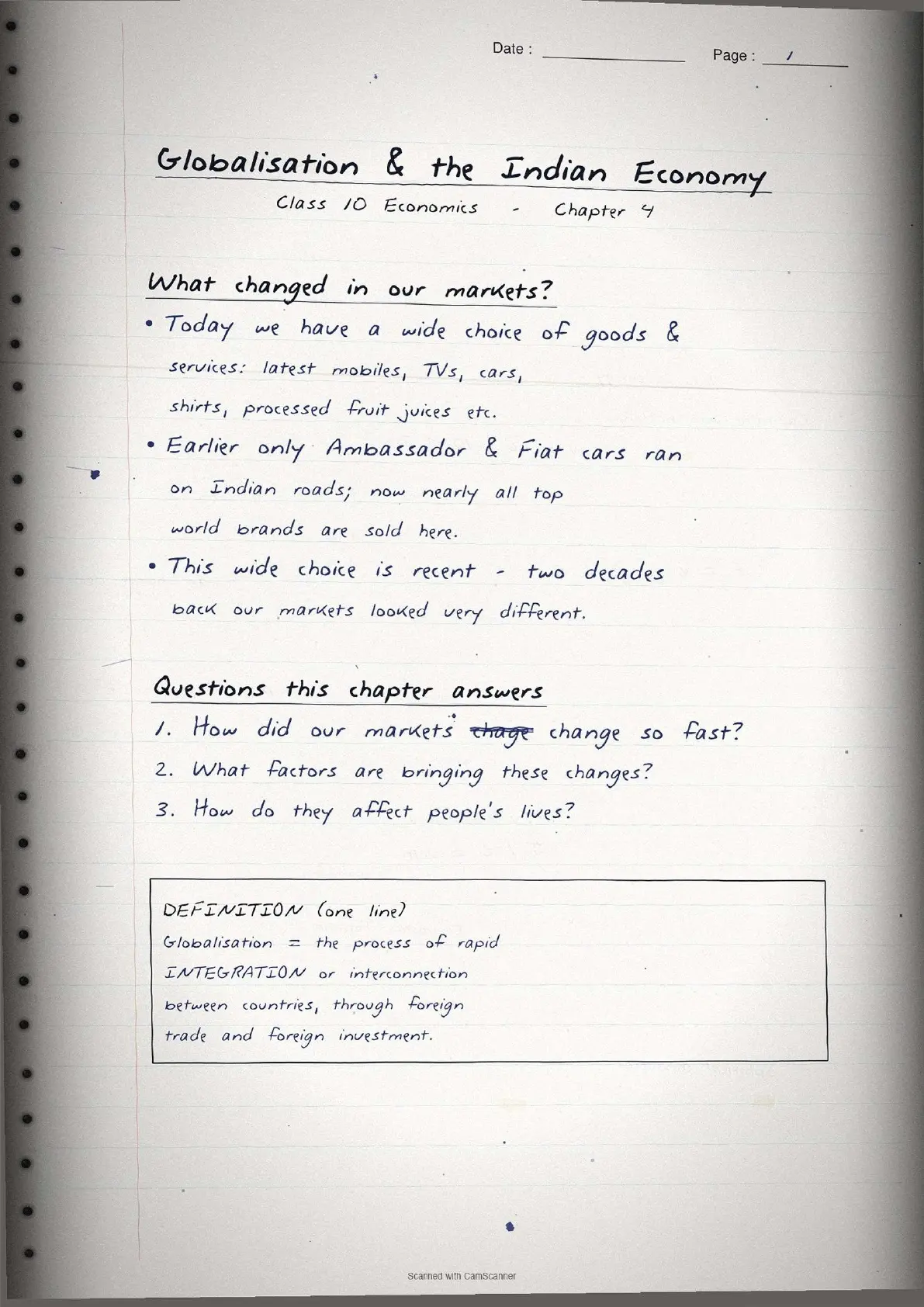
Globalisation and the Indian Economy is the fourth chapter of Understanding Economic Development. It studies how multinational companies (MNCs), foreign trade and new technology have tied India into a single world market, and who has gained or lost from it. These class 10 economics handwritten notes chapter 4 Globalisation and the Indian Economy condense the chapter into pages a student can read in one sitting.
Every page is built around the five things the chapter wants you to explain:
- How MNCs work covers production spread across countries and foreign investment.
- How markets connect covers foreign trade and the integration of markets.
- What drives globalisation covers technology, liberalisation and the WTO.
- Who is affected covers the impact on Indian producers, workers and consumers.
Because the notes are handwritten, the key terms sit in boxes and the important arrows are drawn in by hand, so the eye jumps straight to the cause-and-effect chain. Follow each arrow from MNC to investment to trade to impact, and the whole chapter falls into place. The notes follow the 2026-27 CBSE syllabus so nothing extra is added.
Globalisation and the Indian Economy Class 10 Video Lesson
Source: Magnet Brains on YouTube
MNCs and Foreign Investment Pages
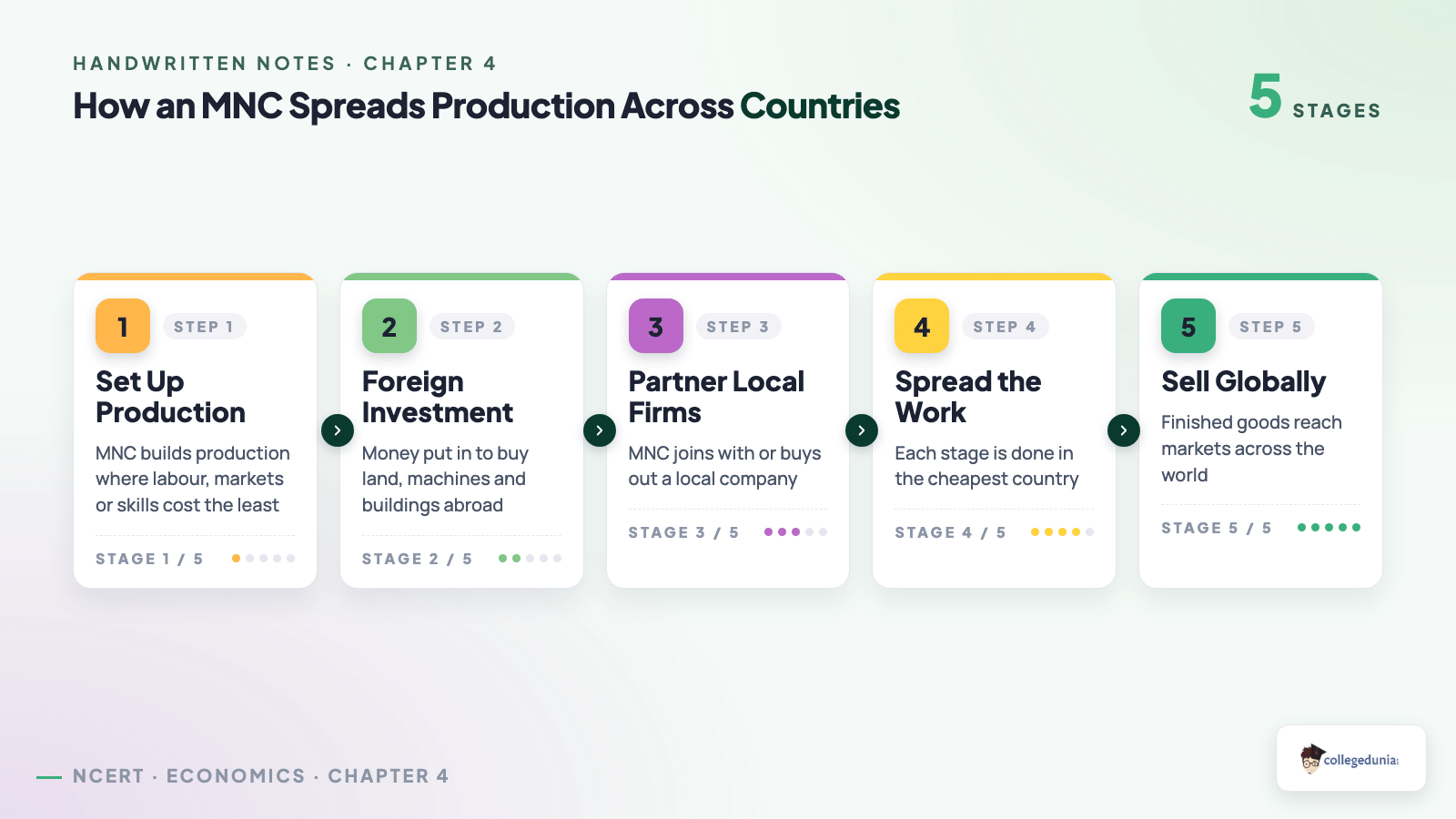
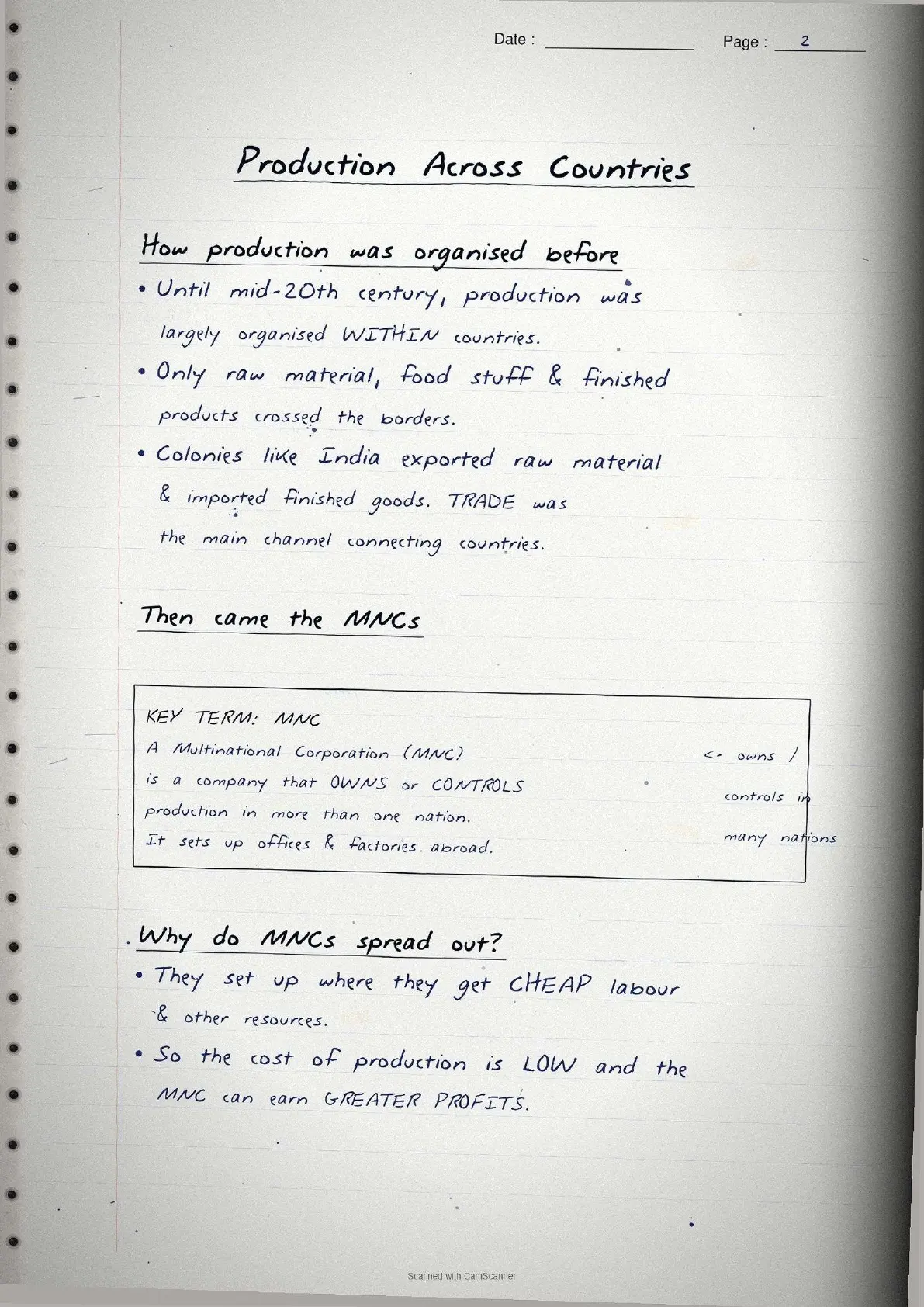
These pages open the chapter because the most common question asks what an MNC is and how it spreads production. The notes give a boxed definition and a hand-drawn arrow chain, so the answer is easy to recall in the class 10 economics handwritten notes chapter 4 Globalisation and the Indian Economy.
- MNC: a company that owns or controls production in more than one country.
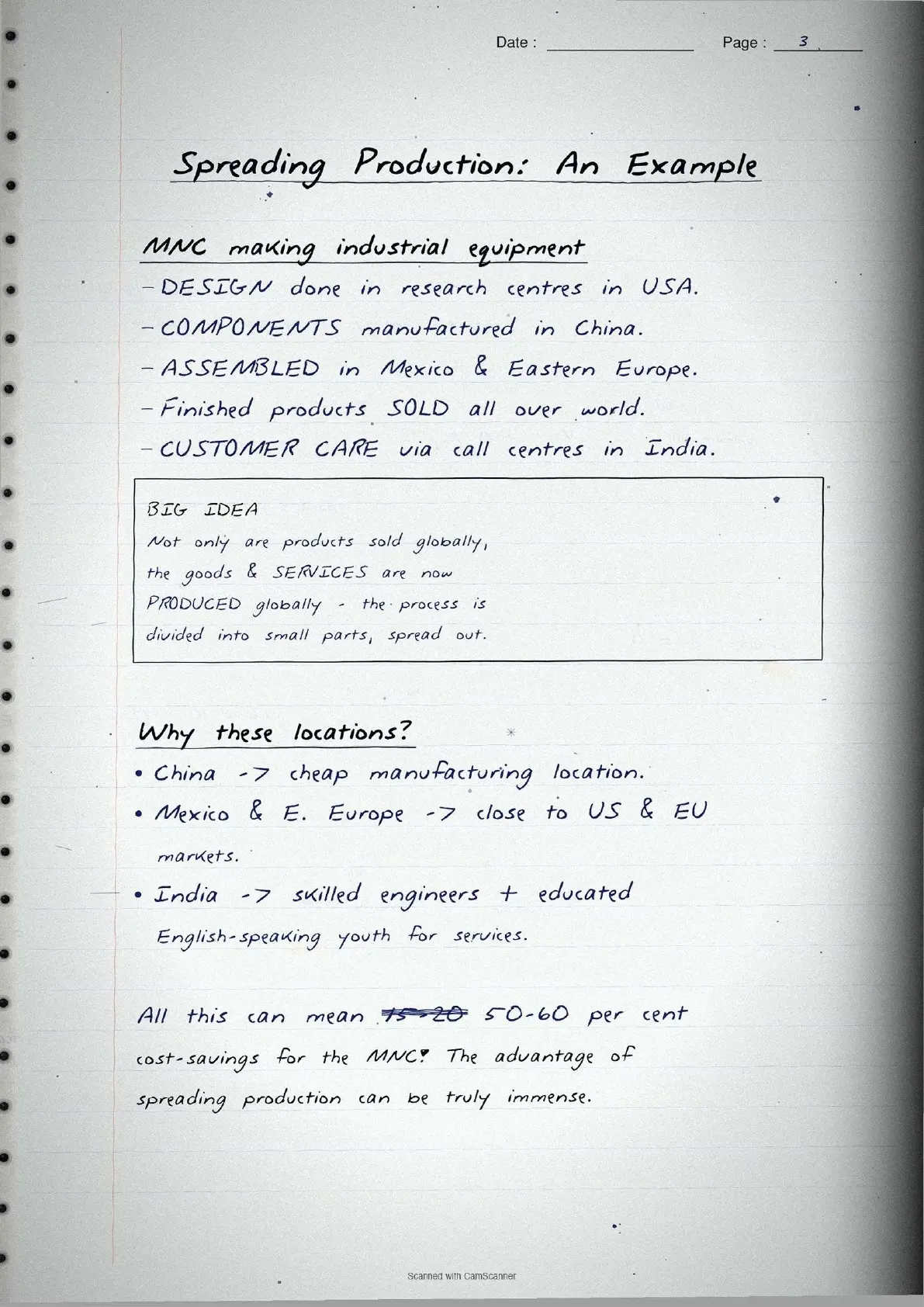
- Why MNCs set up abroad: cheap labour, nearby markets and skilled workers lower the total cost.
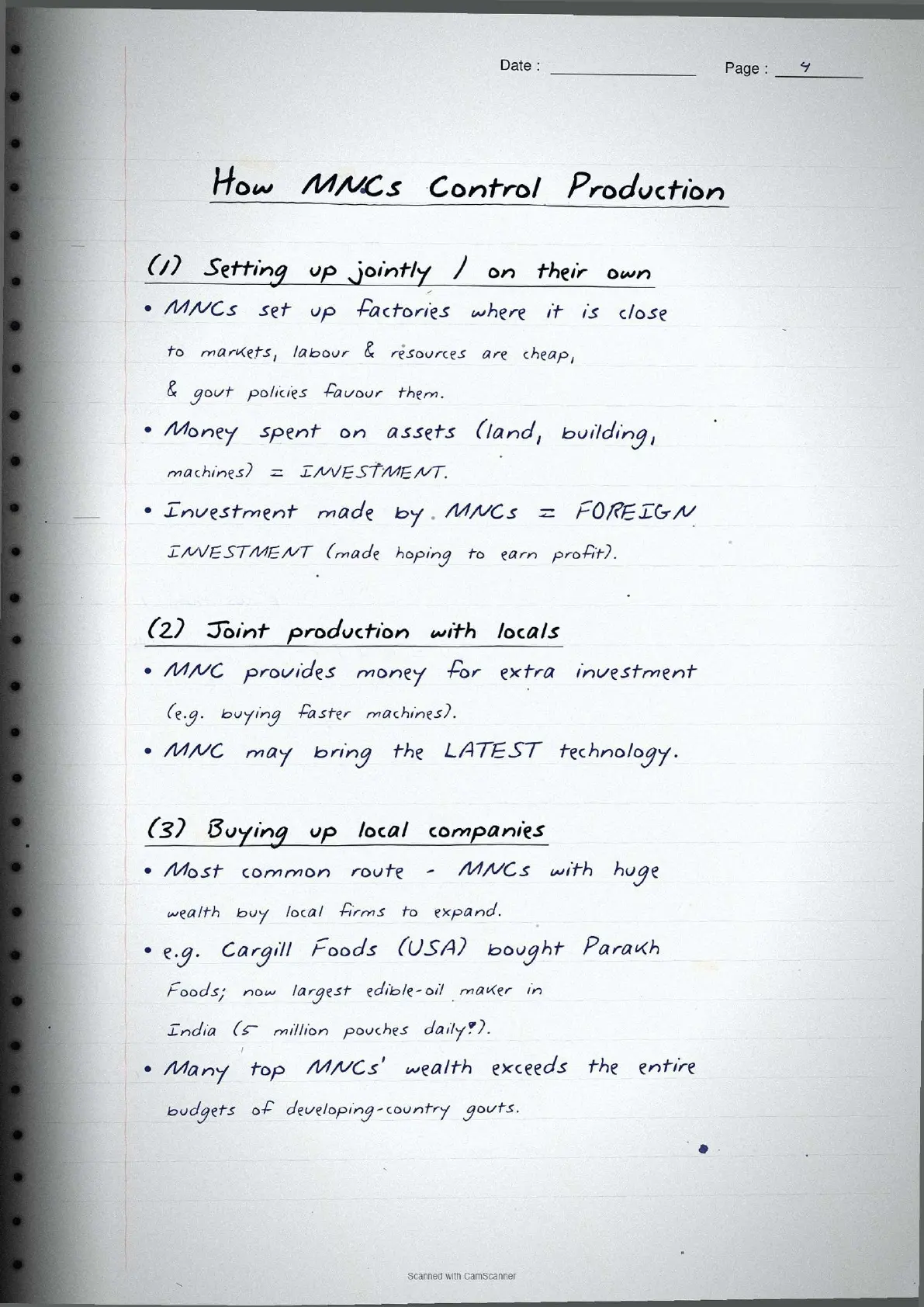
- Foreign investment: money put in by MNCs to buy assets like land, machines and buildings.
- Joint production: MNCs often partner with local firms or buy them outright.
The pages box the single sharpest point in red ink: an MNC keeps its production spread across countries so that each step is done where it costs the least. A small arrow links the MNC to the local firm it partners with, so students never confuse investment with simple trade.
| Term | What it means in the chapter |
|---|---|
| MNC | Owns or controls production in more than one country. |
| Foreign investment | Money MNCs put in to buy assets and set up production. |
| Foreign trade | Buying and selling of goods and services across borders. |
| Globalisation | Rapid integration of countries through trade, investment and people. |
Foreign Trade and Market Integration Pages
These pages explain how foreign trade links markets in different countries and why prices and choices change because of it. The notes keep the cause-and-effect chain in a box and add a simple arrow idea so students can describe market integration in one line. Learn the chain, and the data question is easy.
- Foreign trade gives producers a chance to reach markets beyond their own country.
- It connects markets so that prices of similar goods in different countries move closer.
- Buyers get a wider choice of goods and producers face more competition.
- This linking of markets across countries is the heart of globalisation.
The margin note underlines the line the exam loves: foreign trade integrates markets by tying the price and choice in one country to producers in another. A hand-drawn arrow ties cheaper imports to tougher competition for local producers, which is the consumer-versus-producer angle examiners reward.
Factors, the WTO and Impact Pages
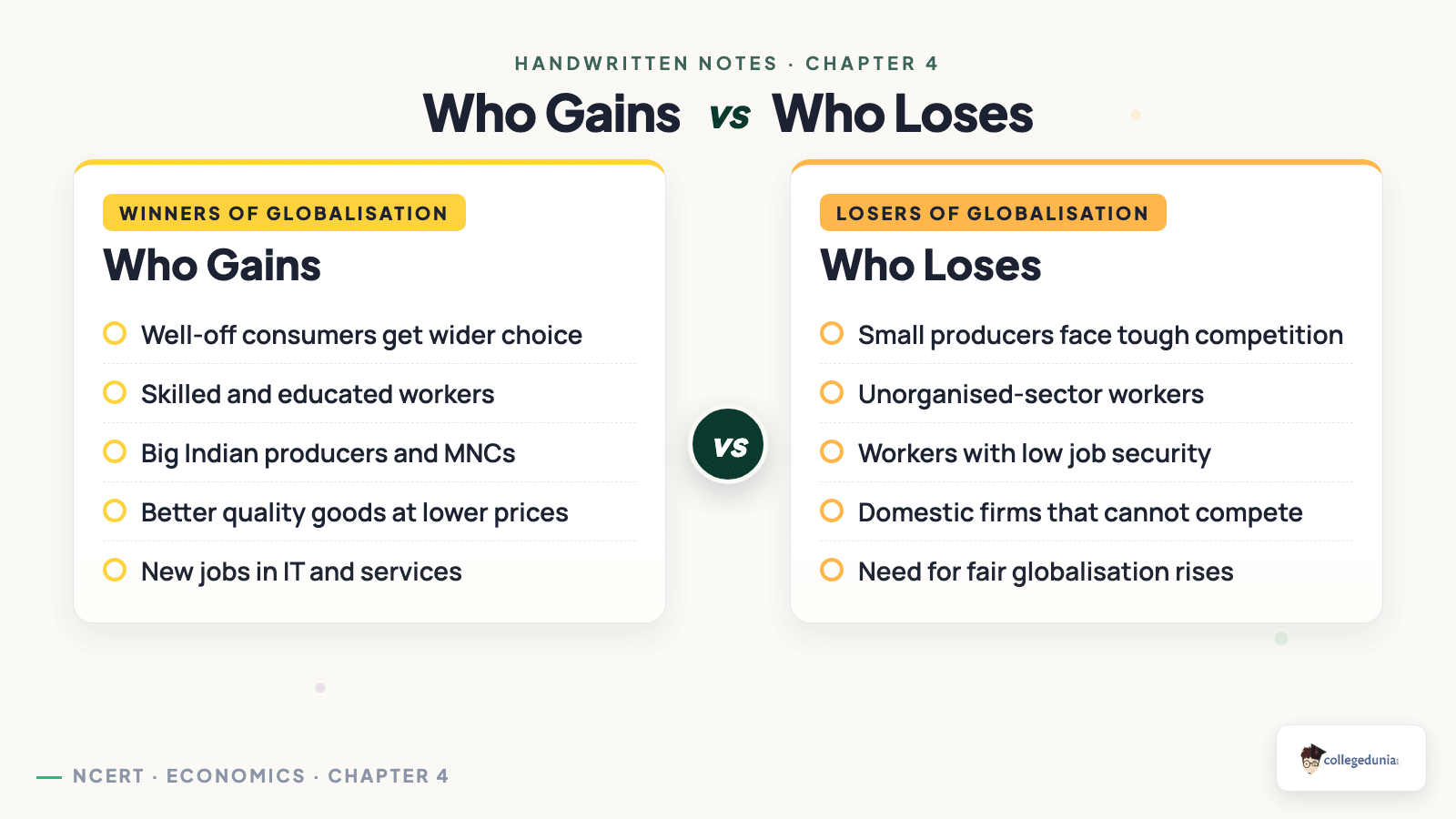
These pages keep the drivers and the effects of globalisation next to each other, because the board often asks both. The notes give one boxed point for each driver and one for each affected group, so students can copy the contrast straight onto the answer sheet.
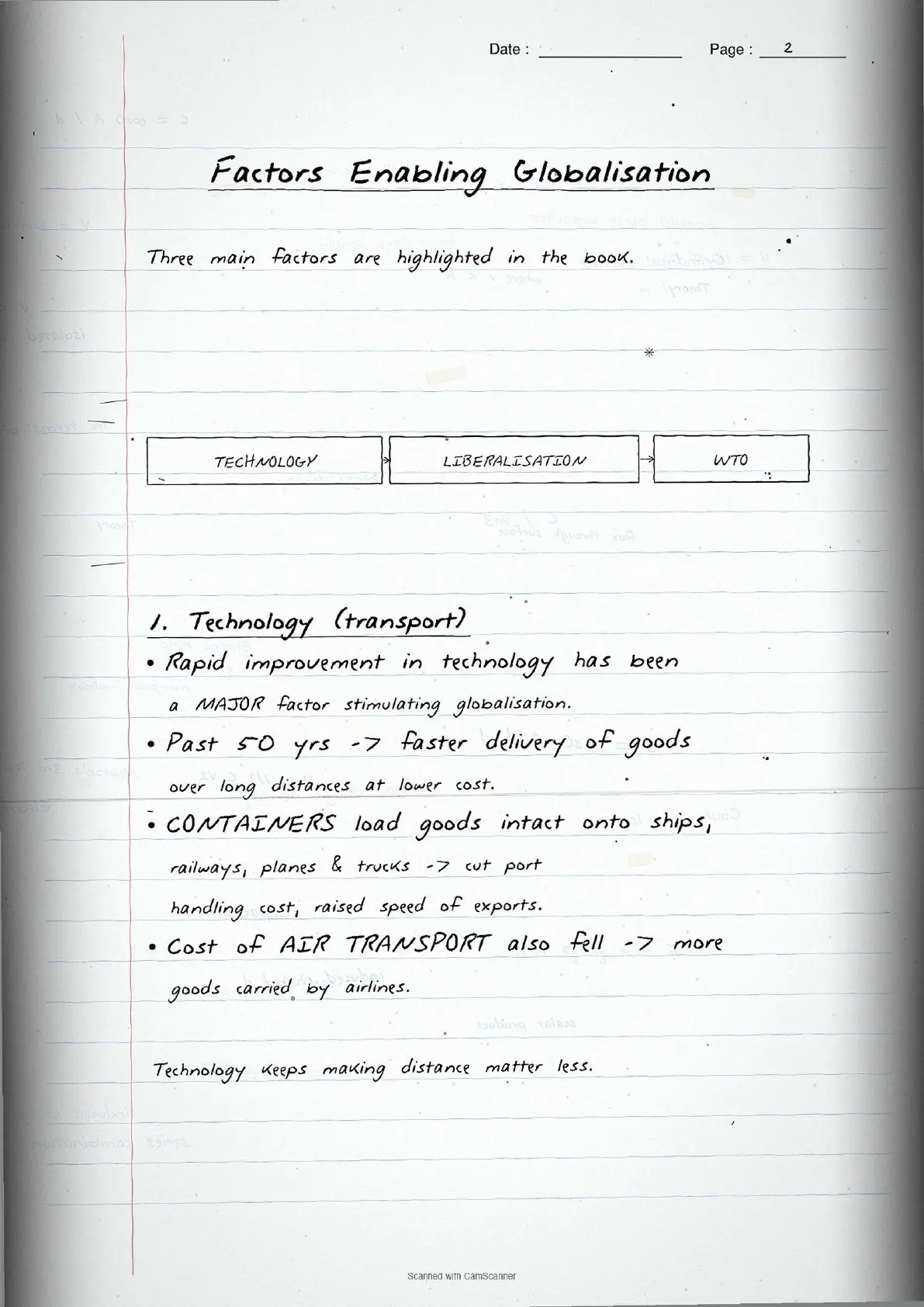
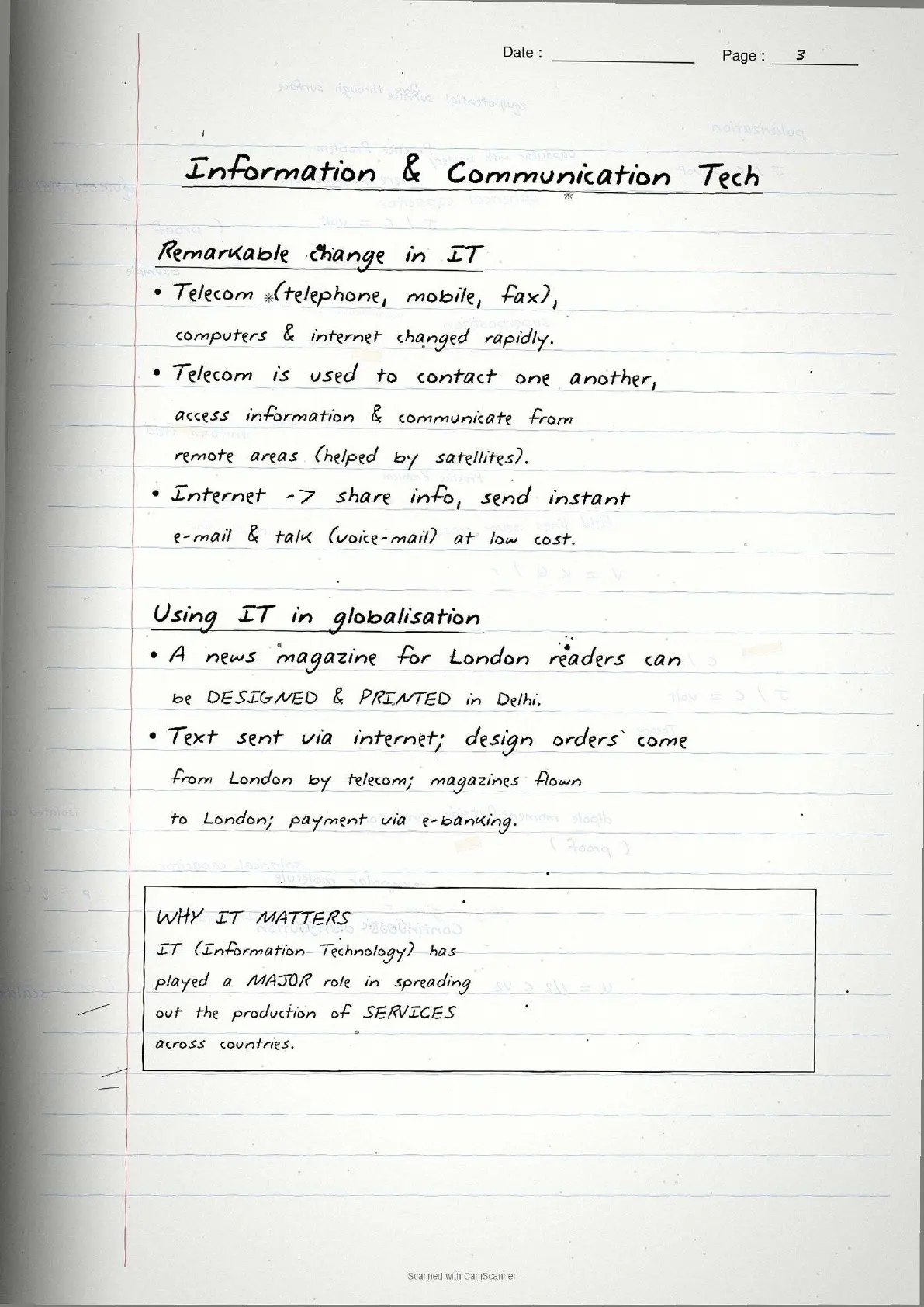
- Technology: faster transport and IT let production and services spread across countries.
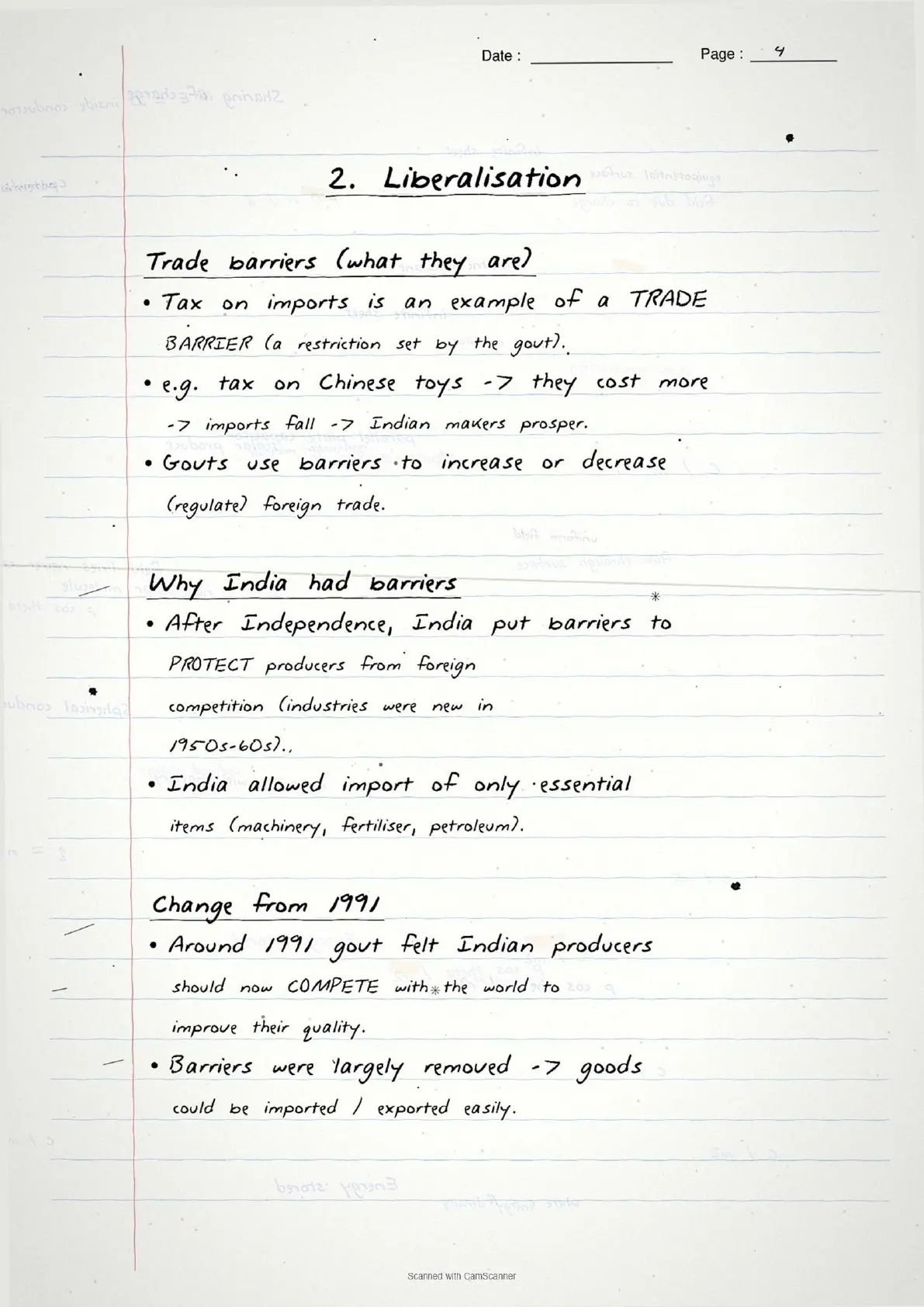
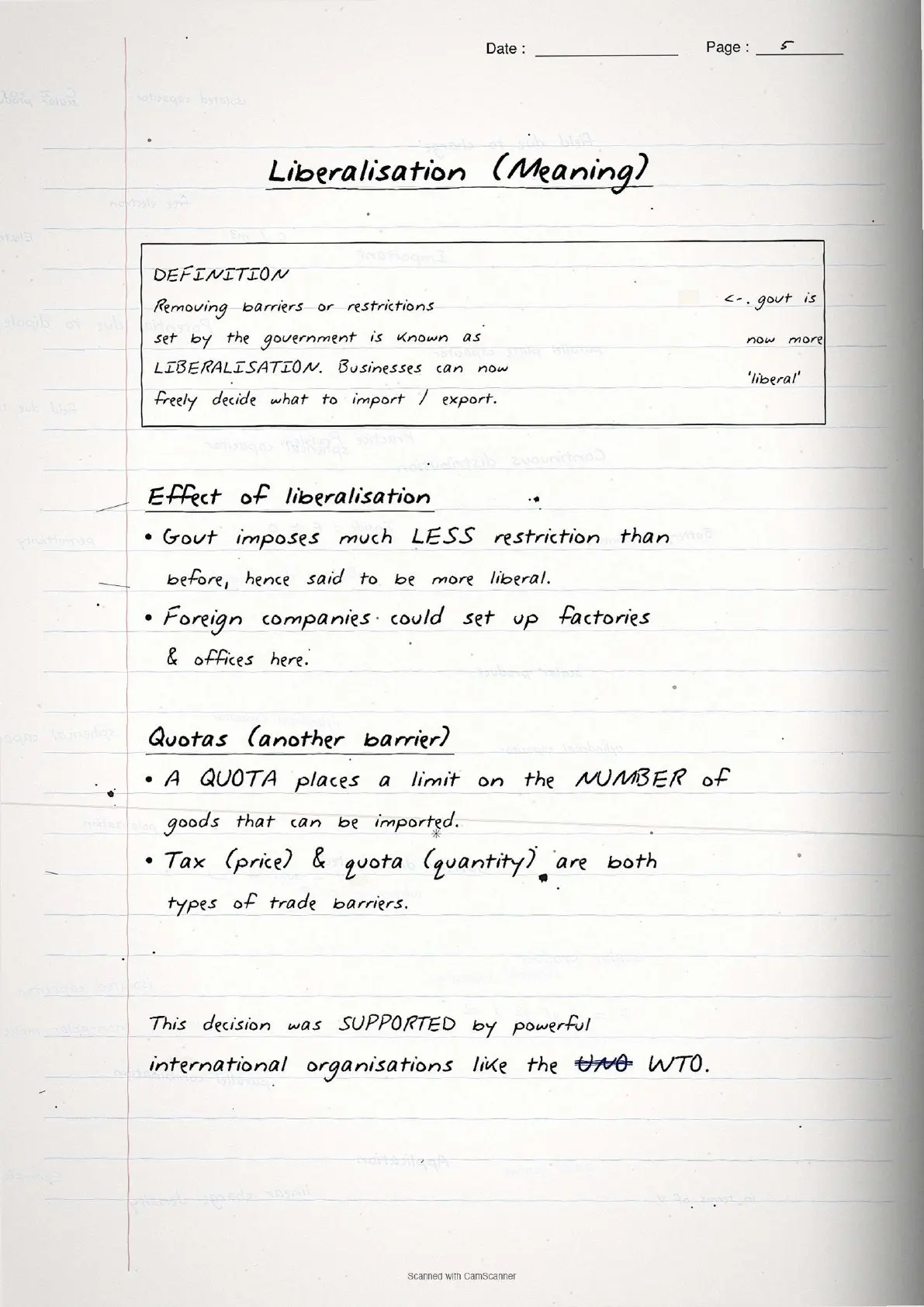
- Liberalisation: removing trade barriers and tariffs after 1991 opened India to foreign goods.
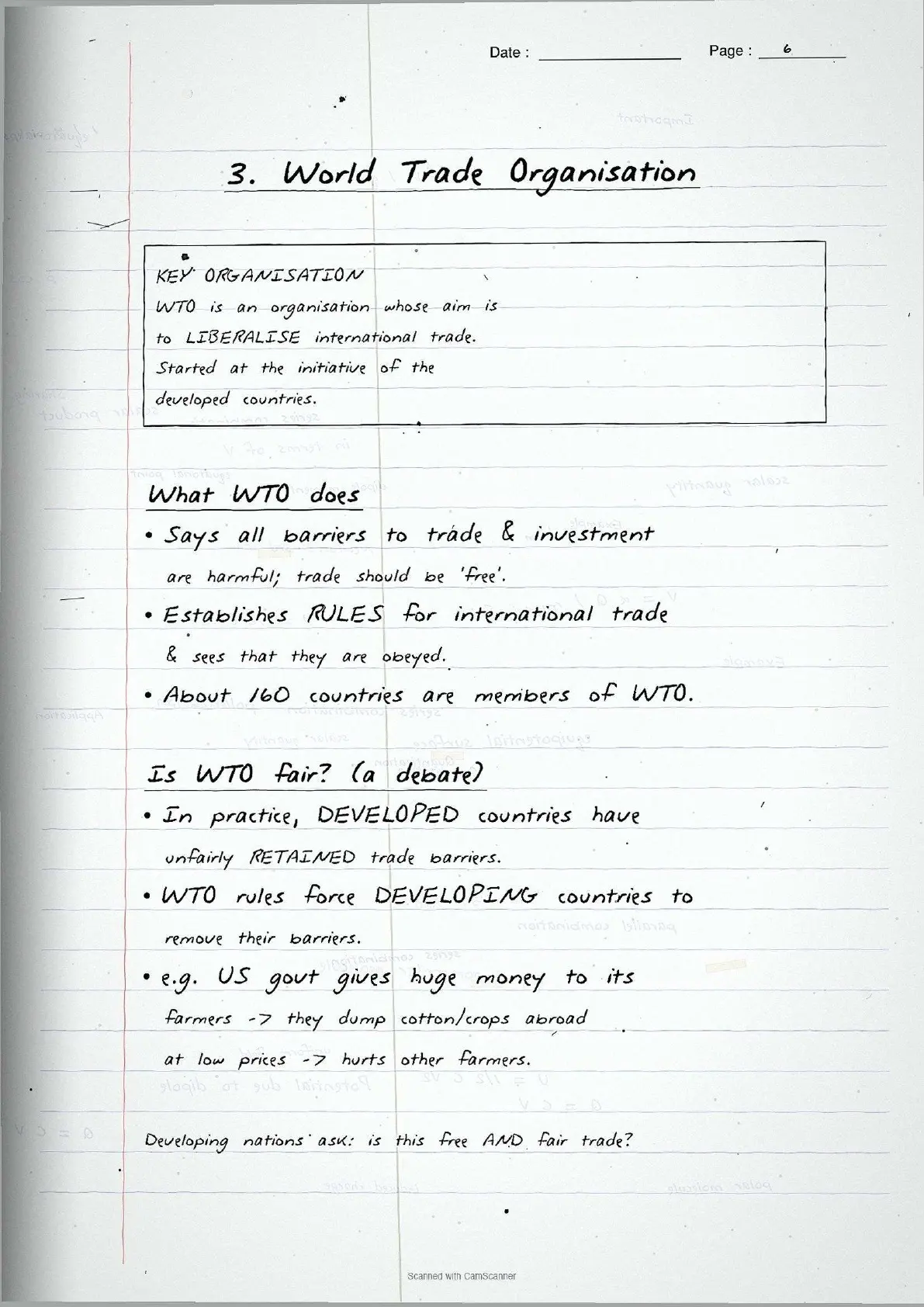
- WTO: the World Trade Organisation pushes countries to free their trade and lays the rules.
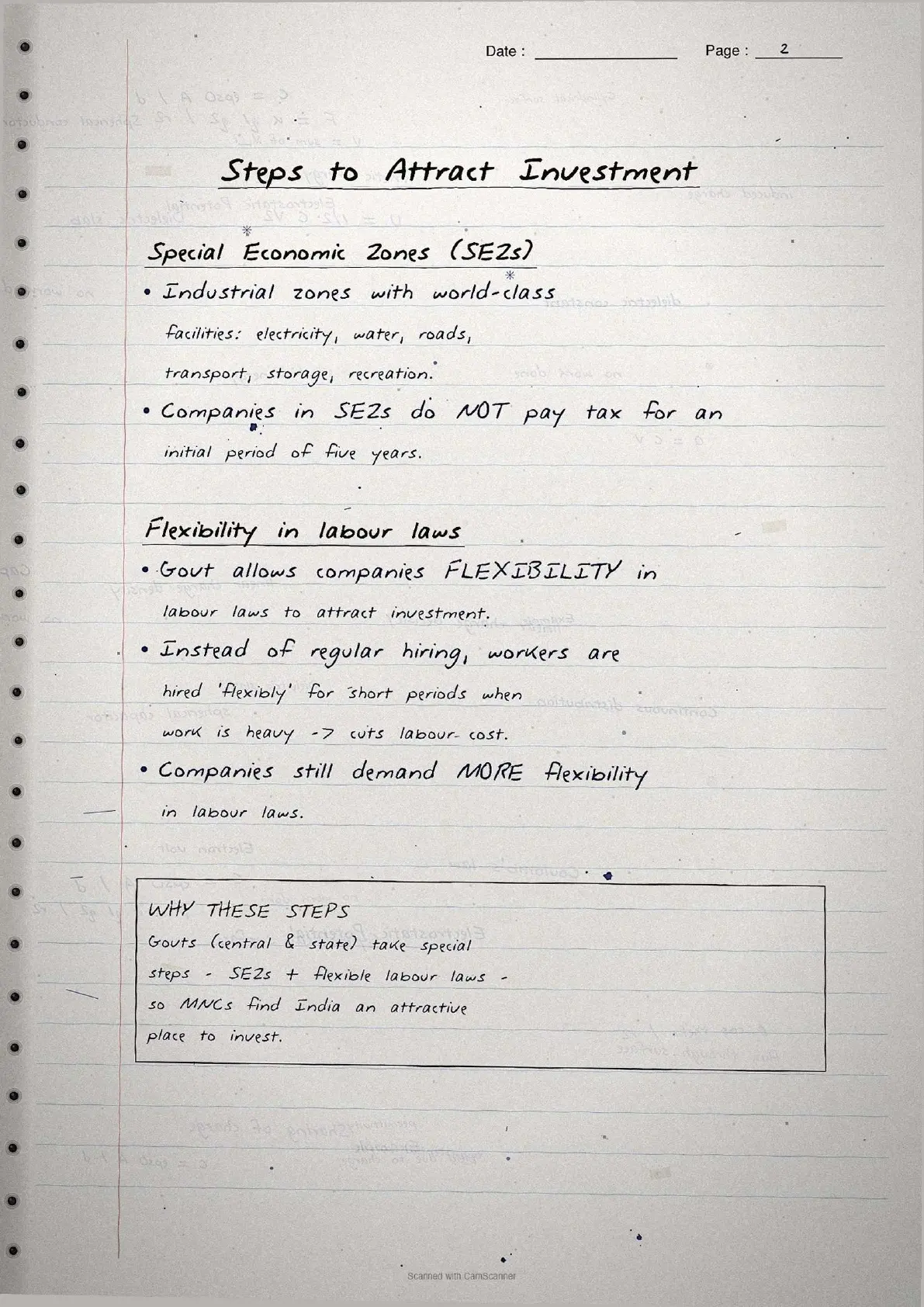
- Special Economic Zones (SEZs): areas with world-class facilities set up to attract foreign companies.
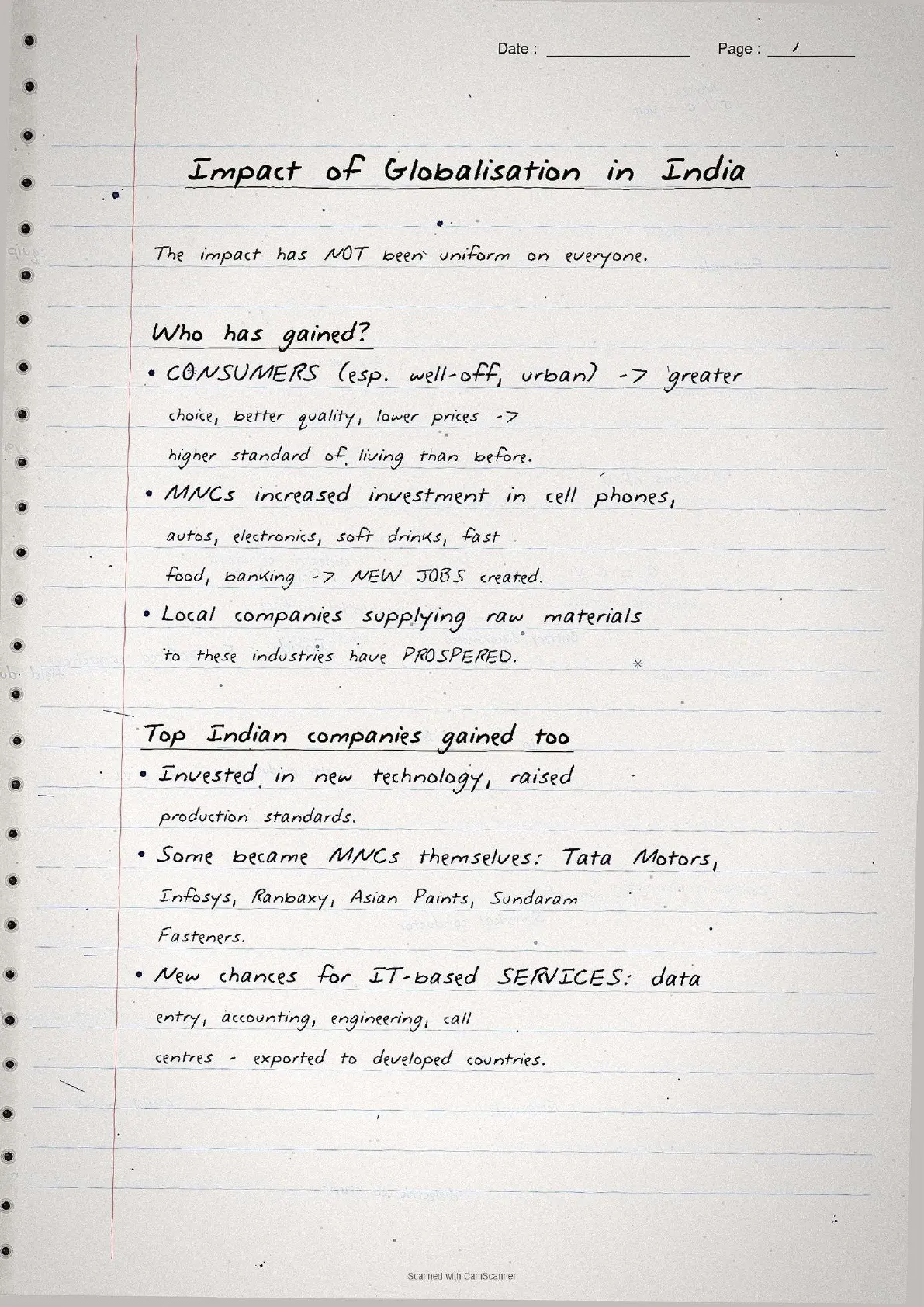
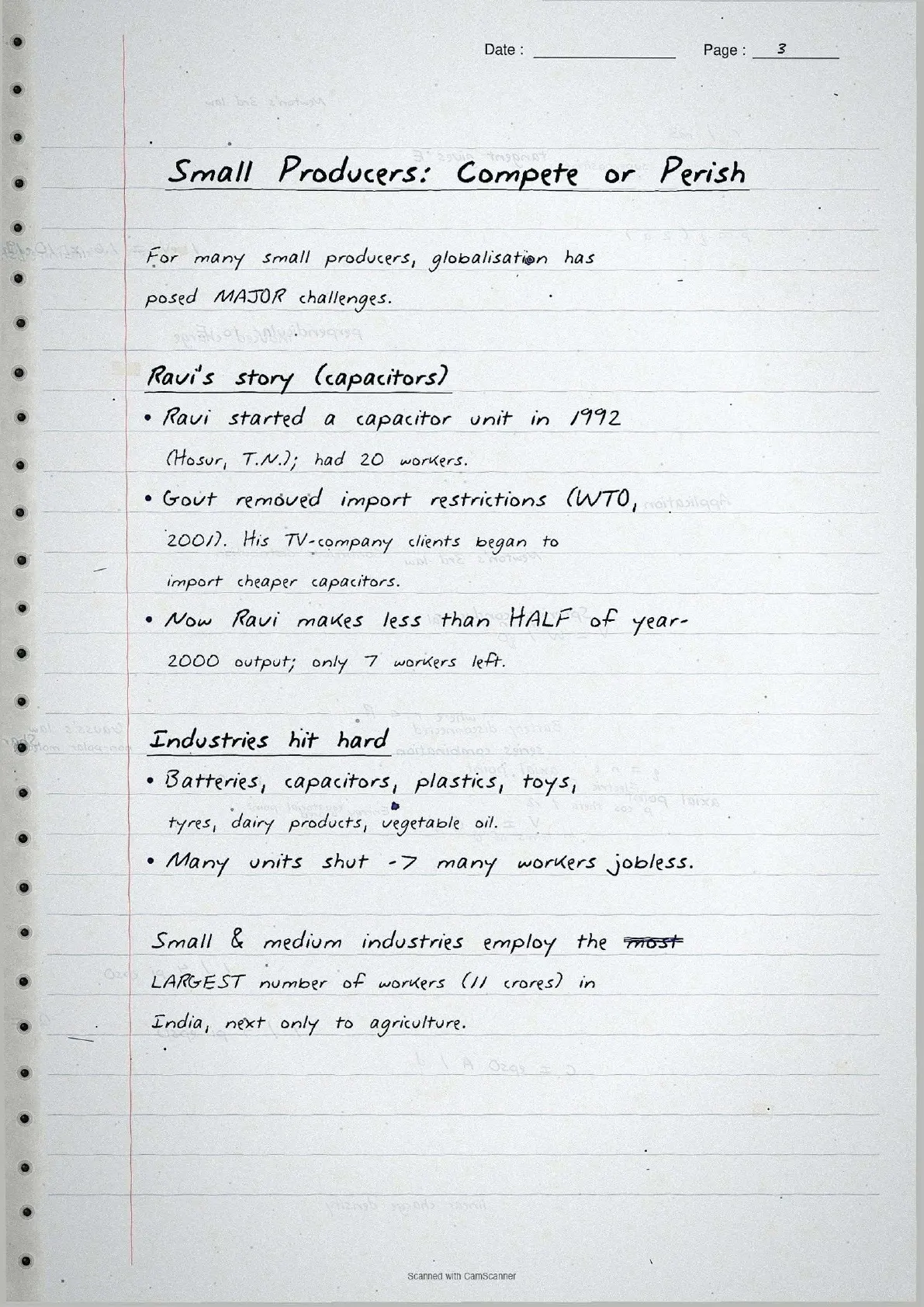
The pages box the most-tested fairness point in the margin: globalisation has helped well-off consumers and skilled workers, but small producers and unorganised workers have often lost out. A linking arrow ties this to the demand for fair globalisation, where the government protects small producers and labour rights. This who-gains-who-loses angle is the point examiners reward in the long-answer question on Globalisation and the Indian Economy.
How to Use These Handwritten Notes
Handwritten notes work best as a final layer of revision, not as your first read. The plan below helps students get the most out of the class 10 economics handwritten notes chapter 4 Globalisation and the Indian Economy before the board exam. Follow it once a week in the run-up to the test.
- First pass: read the notes once, following the MNC, trade, drivers and impact order.
- Active recall: cover the boxed definitions and try to explain how an MNC spreads production from memory.
- Chain practice: redraw the globalisation flow chart and explain the WTO and liberalisation link without looking.
- Self-test: attempt a short class 10 economics chapter 4 mcq drill to check the small facts.
Because the pages are scanned, students can save them on a phone and revise offline on the way to the exam centre. Pair these pages with the full solutions to check your written answers against model points.
Common Mistakes These Notes Help You Avoid
A few errors cost marks in this chapter every year. Most come from confusing foreign trade with foreign investment, or naming the wrong body for trade rules. The notes flag each soft point in the margin so students phrase it safely on the answer sheet.
- Confusing foreign trade with foreign investment - trade is buying and selling, investment is putting in money to own assets.
- Saying the WTO stops globalisation - it actually pushes countries to free their trade.
- Writing that globalisation helps everyone equally - small producers and unorganised workers often lose out.
- Forgetting that an MNC spreads production across more than one country, not just sells abroad.
- Mixing liberalisation with privatisation - liberalisation means removing trade barriers and tariffs.
Students who fix these five points usually move from average to high marks. The exam rewards a clear cause-and-effect chain, so always state what an MNC does before you explain its impact. The handwritten margin notes nudge you to keep that clarity in the right places.
How These Notes Pair with the Solutions and Book PDF
These handwritten notes are a revision layer. To prepare fully, students should use them with the other resources for the same chapter, all linked in the table below. Read the notes, then test yourself with the solutions, and open the book PDF for the original text, data tables and figures.
| Resource | Best used for |
|---|---|
| Globalisation and the Indian Economy NCERT Solutions | Step-by-step answers to all the back-exercise questions |
| Globalisation and the Indian Economy Class 10 Notes | Quick chapter summary with MNCs, trade, the WTO and key terms in one place |
| Globalisation and the Indian Economy NCERT Book PDF | Reading the original NCERT chapter text, data tables and figures |
Tip: use the handwritten globalisation flow chart to memorise how an MNC spreads production, then write the full answer in your own words. Drawing the chart once from memory fixes the cause-and-effect question for good.
All Class 10 Economics Handwritten Notes by Chapter
The table links the handwritten notes for every chapter in Class 10 Economics, so students can move across the course in one click. Globalisation and the Indian Economy is highlighted.
| Chapter | Handwritten Notes |
|---|---|
| Understanding Economic Development | |
| Chapter 1 | Development |
| Chapter 2 | Sectors of the Indian Economy |
| Chapter 3 | Money and Credit |
| Chapter 4 | Globalisation and the Indian Economy |
| Chapter 5 | Consumer Rights |
Globalisation and the Indian Economy Class 10 Handwritten Notes Common Questions
Ques. Where can I download the class 10 economics handwritten notes chapter 4 Globalisation and the Indian Economy PDF?
Ans. You can download the Globalisation and the Indian Economy handwritten notes PDF directly from this page. It is free, follows the 2026-27 NCERT, and gives the chapter as clean scanned notebook pages with boxed terms and a colour-coded globalisation flow chart.
Ques. Are handwritten notes good enough for the class 10 economics board exam?
Ans. Yes, for revision. Handwritten notes are best used as a final layer after you have read the chapter and practised the solutions. They make MNCs, foreign trade, the WTO and the impact on workers quick to recall in the exam.
Ques. What is an MNC in this chapter?
Ans. An MNC, or multinational company, is a company that owns or controls production in more than one country. It sets up production where labour, markets or skills lower the total cost, and often partners with or buys local firms. The notes box this definition so it is easy to recall.
Ques. What factors have driven globalisation in India?
Ans. The main factors are improved technology like faster transport and IT, liberalisation that removed trade barriers and tariffs after 1991, and the WTO that pushes countries to free their trade. The notes box each driver with a hand-drawn arrow to the effect it has.
Ques. How should I use these notes for quick revision?
Ans. Read the pages once in the MNC, trade, drivers and impact order, cover the boxed definitions and explain how an MNC spreads production from memory, redraw the globalisation flow chart, then attempt a short class 10 economics chapter 4 mcq drill to test the small facts.



Comments